DEEPTOKYO
magazine

EN


AREA
DEEPTOKYO
magazine
EN
AREA
2026.06.05
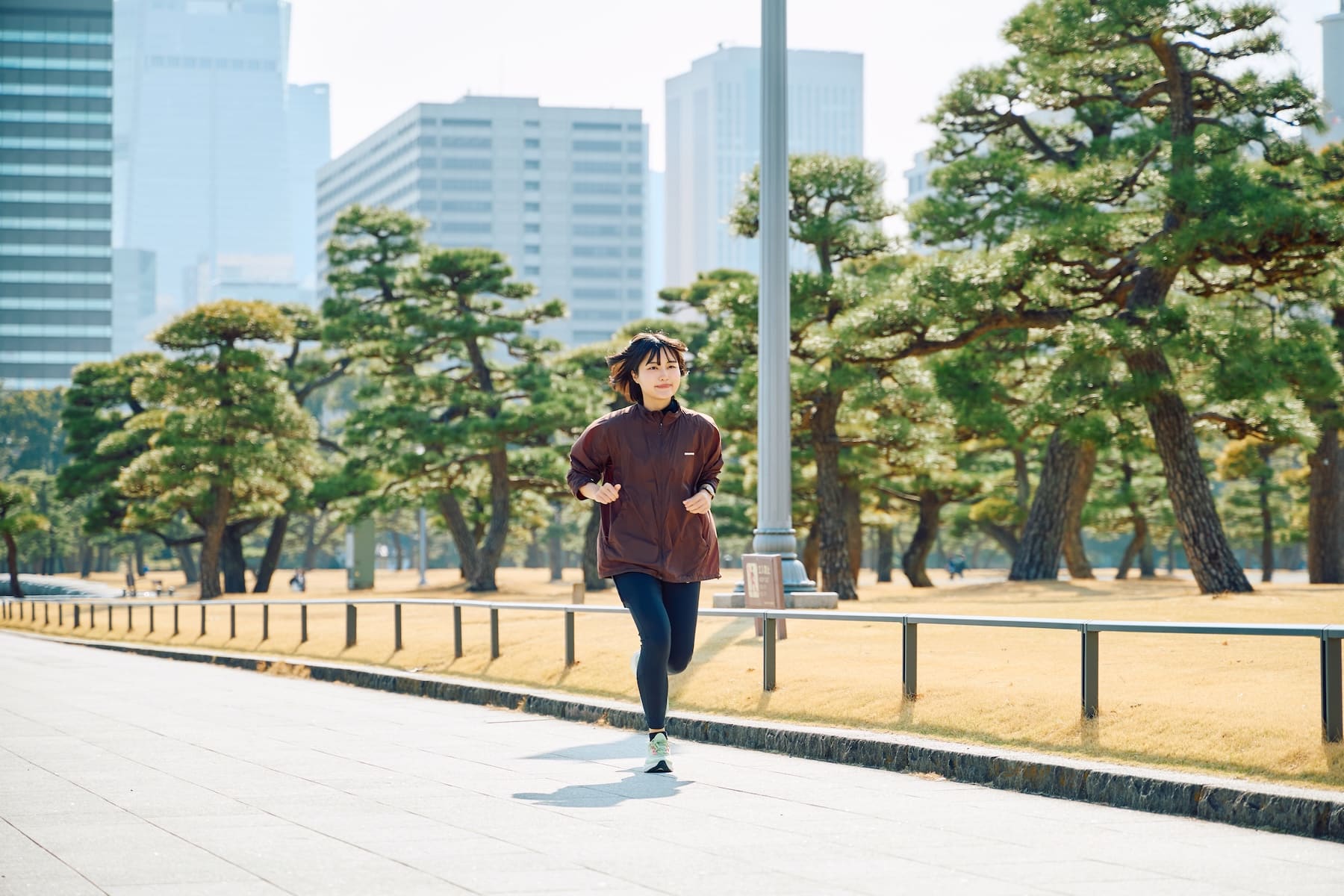
When it comes to a must-try classic for a “travel run” in Tokyo, a city with an excellent running environment that includes neatly maintained sidewalks and parks full of greenery, “Kokyo Run” stands out above the rest. Although located in the very center of Tokyo, the Imperial Palace area is blessed with abundant nature, where Marunouchi’s modern office district coexists with traces of what was once Edo Castle. Here, you can enjoy outstanding running conditions and dramatic changes in scenery. In this article, we introduce a running course around the Imperial Palace, along with blissful recovery spots to visit afterward.
SHARE


The Imperial Palace is the residence of the Emperor in the center of Tokyo and the site of the former Edo Castle. It is a popular oasis in the heart of the city that combines the remains of an Edo period castle, a modern palace, and abundant nature, and running here is known as the "Imperial Palace Run. The greatest interest lies in the special feeling that the setting is the former "Edo Castle. During the Edo period (1603~), this place was the center of Japan as the base of the Tokugawa Shogunate, and is dotted with historical sites such as the moat, massive stone walls, Nijubashi Bridge, and Sakuradamon Gate that have remained from that time. And just outside the moat are the towering skyscrapers of Marunouchi and Otemachi, two of the world's most prominent business districts, offering a beautiful contrast between historical legacy and modern city.
The Imperial Palace area also functions as a highly accessible hub, easy to reach by subway from any part of Tokyo, and has become a “sacred place for runners” where many people gather every day, from beginners to serious runners. It is lively with people training before or after work, running in groups with running teams, or fitting in a run while sightseeing. Most runners are in their 20s to 40s, and the welcoming atmosphere, where even beginners can feel at ease, is also part of its appeal.
It is also said in feng shui that ki—spiritual energy—flows in from Mt. Fuji, and the area is known as one of Tokyo’s leading power spots. You can feel a sacred, clear atmosphere here that is quite different from simply running in an ordinary park.
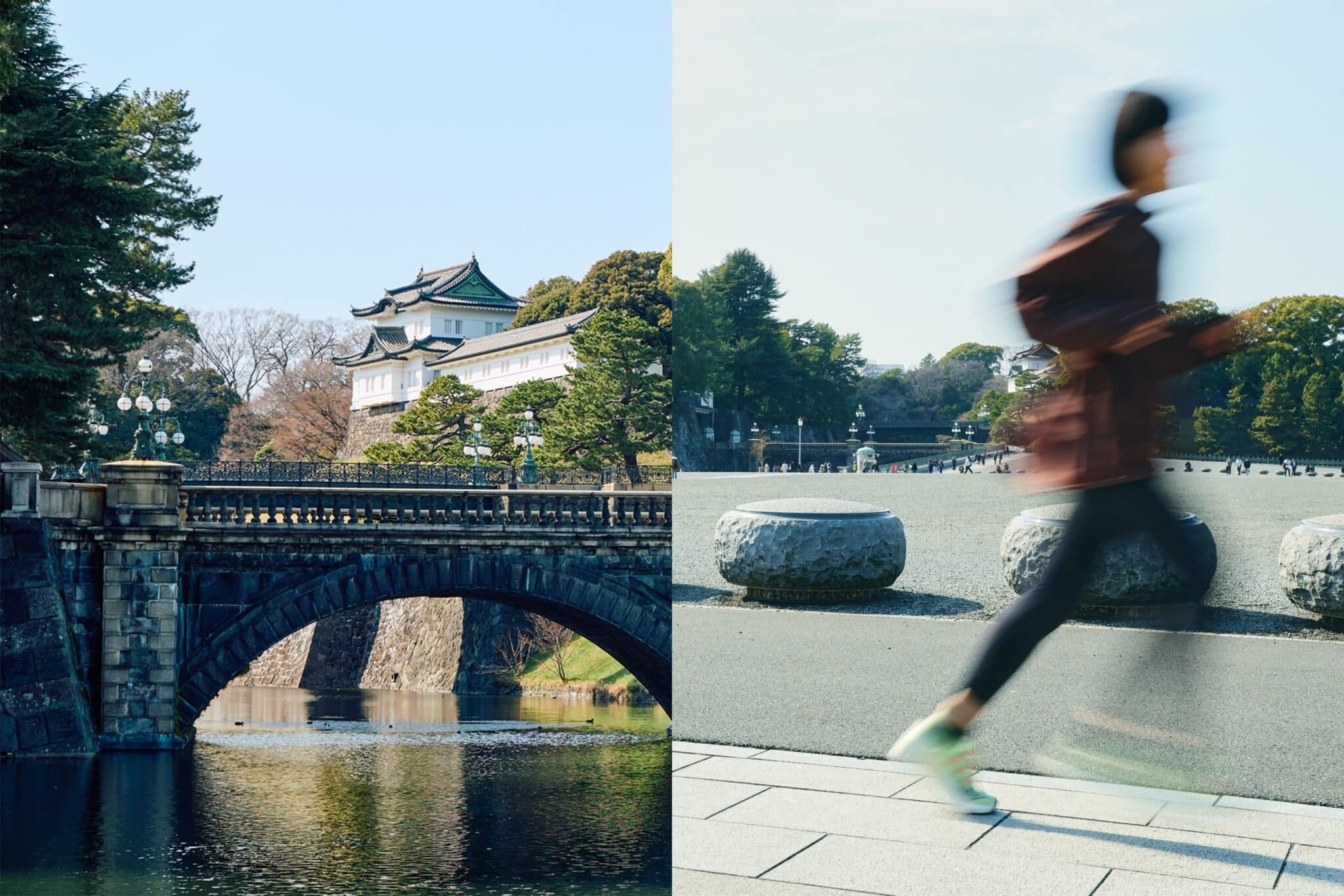
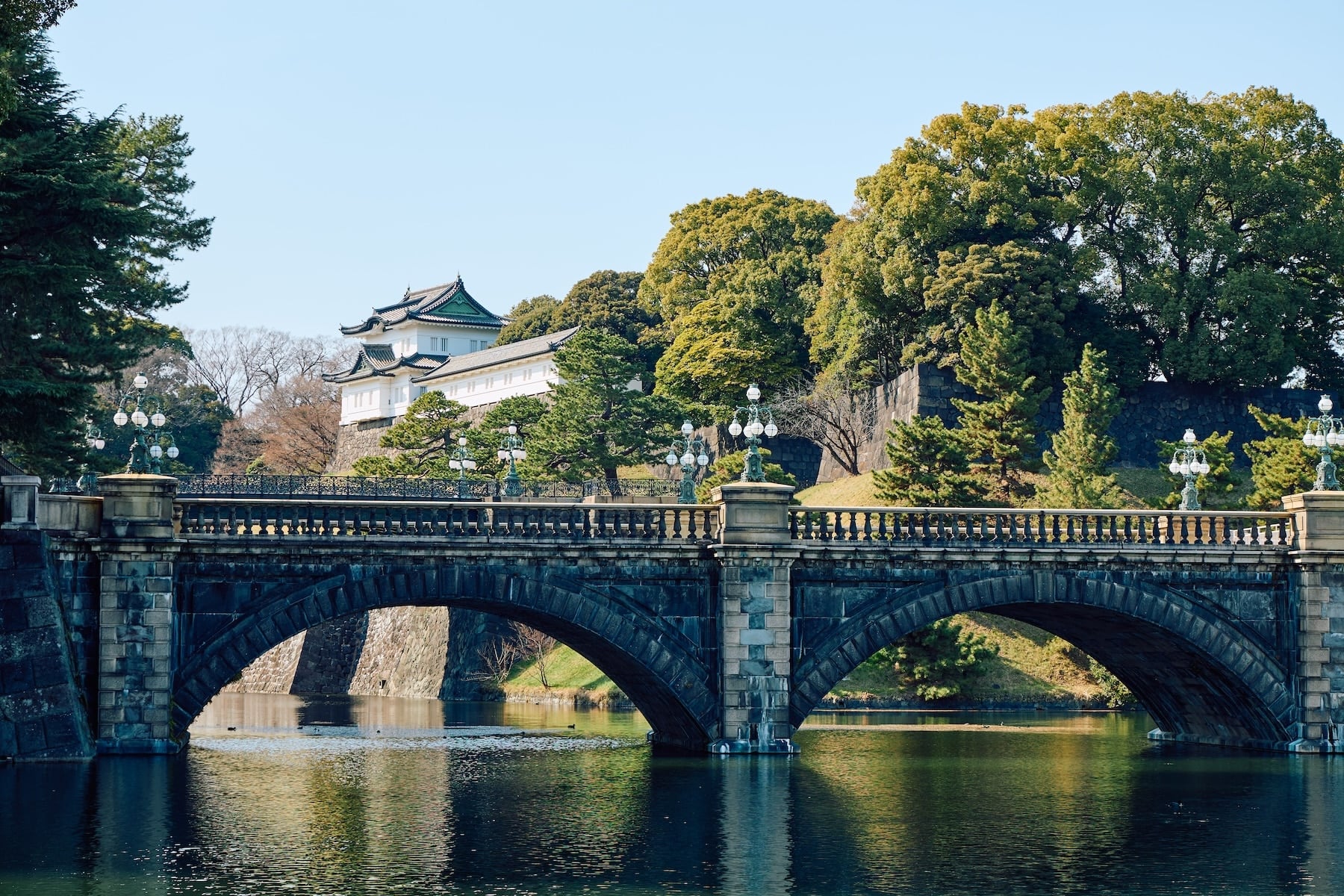
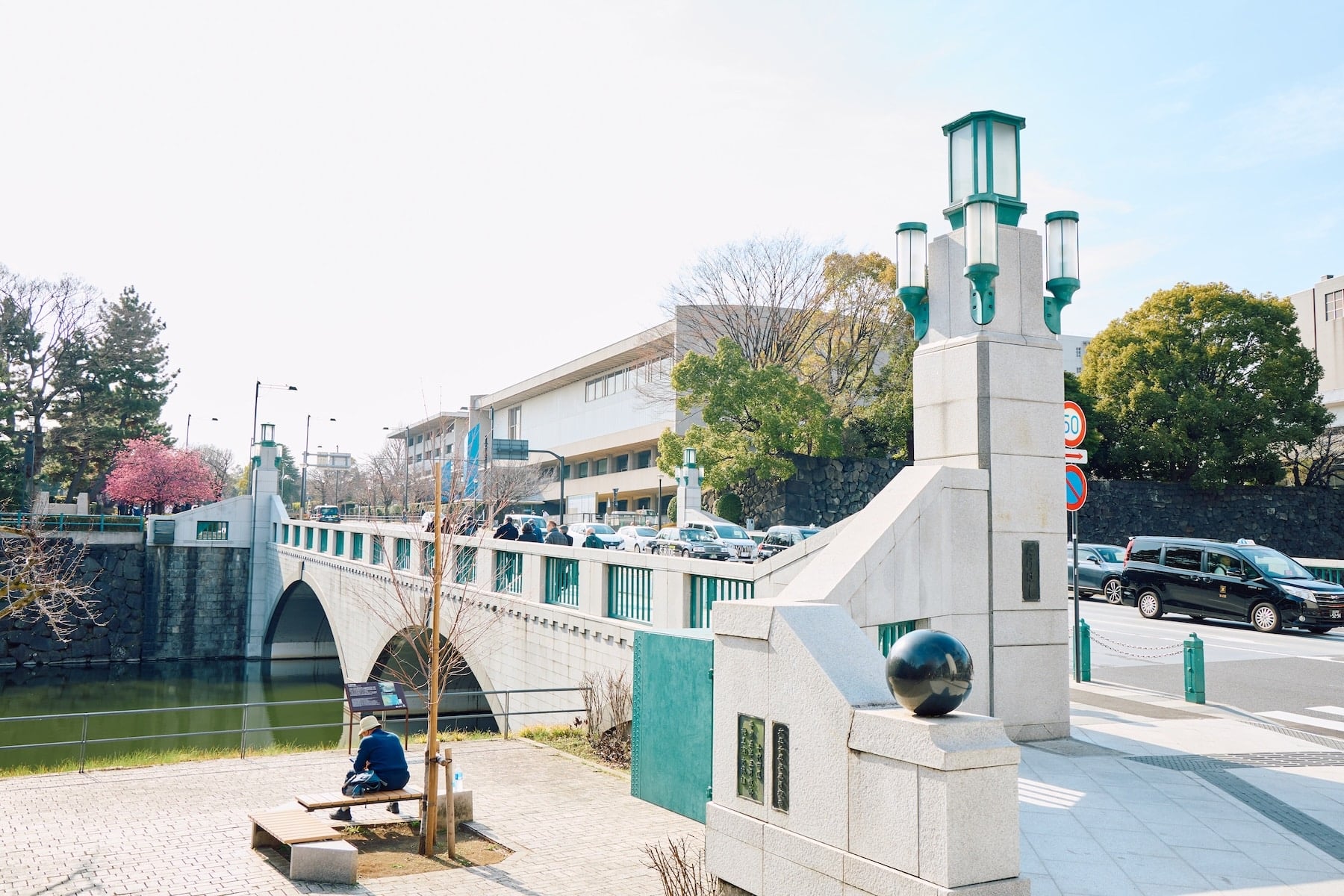
Nijubashi Bridge, a symbol of the Imperial Palace, with Fushimi Yagura standing quietly in the background. A scenic spot that still conveys the historical traces of Edo Castle.
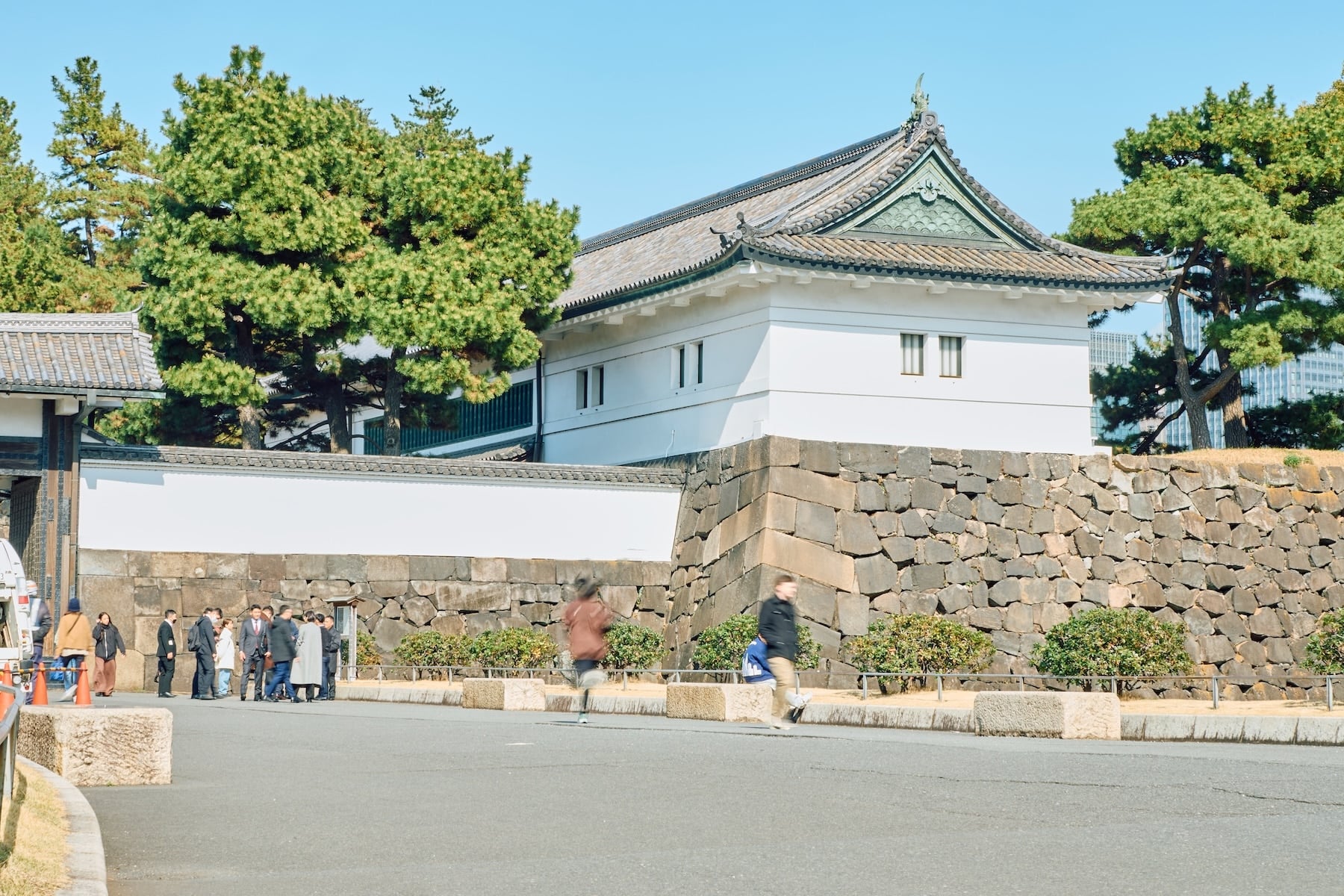
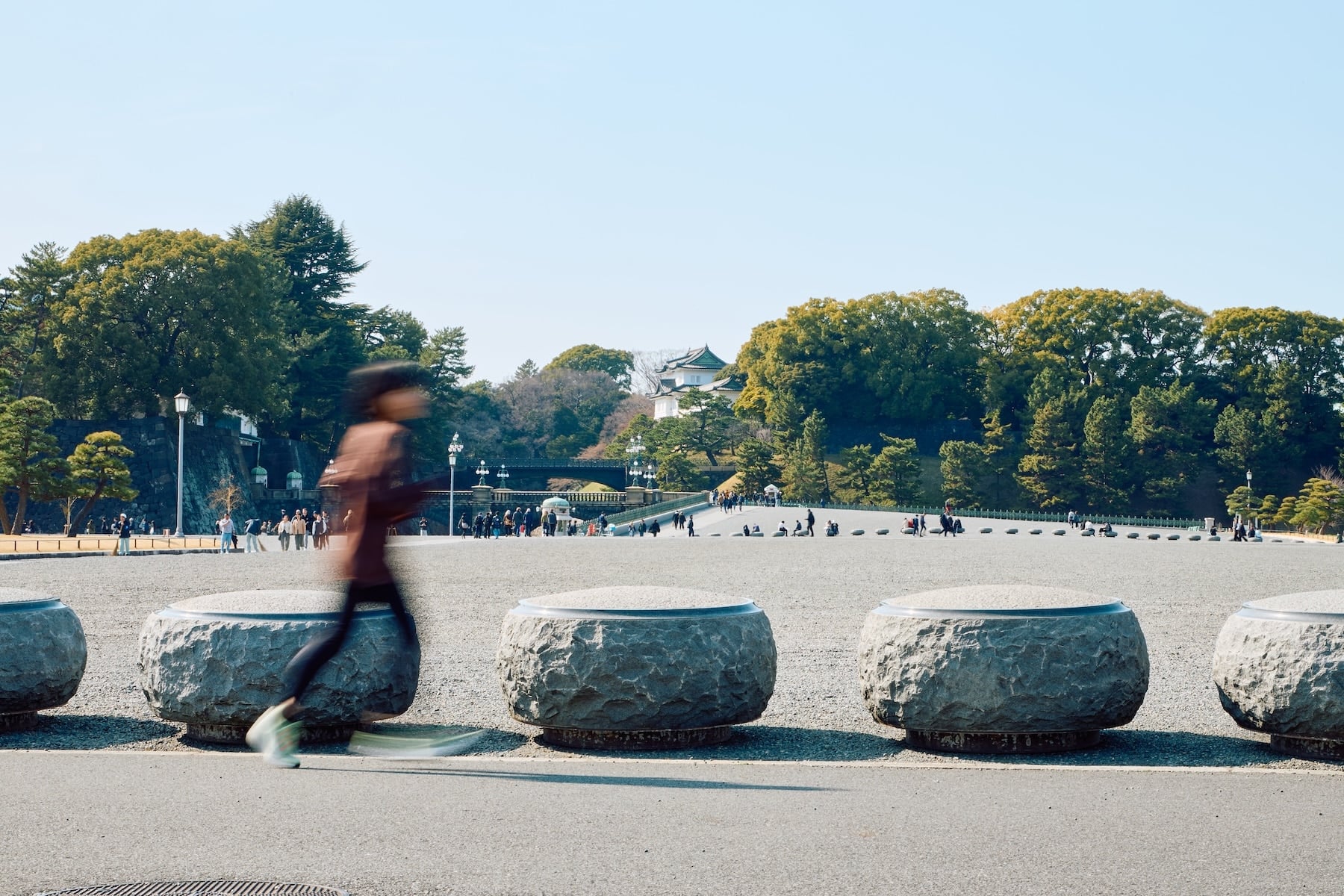
Sakuradamon Gate. The road inside the stone walls is wide and also functions as an open plaza, so many runners use this as their start/finish point.
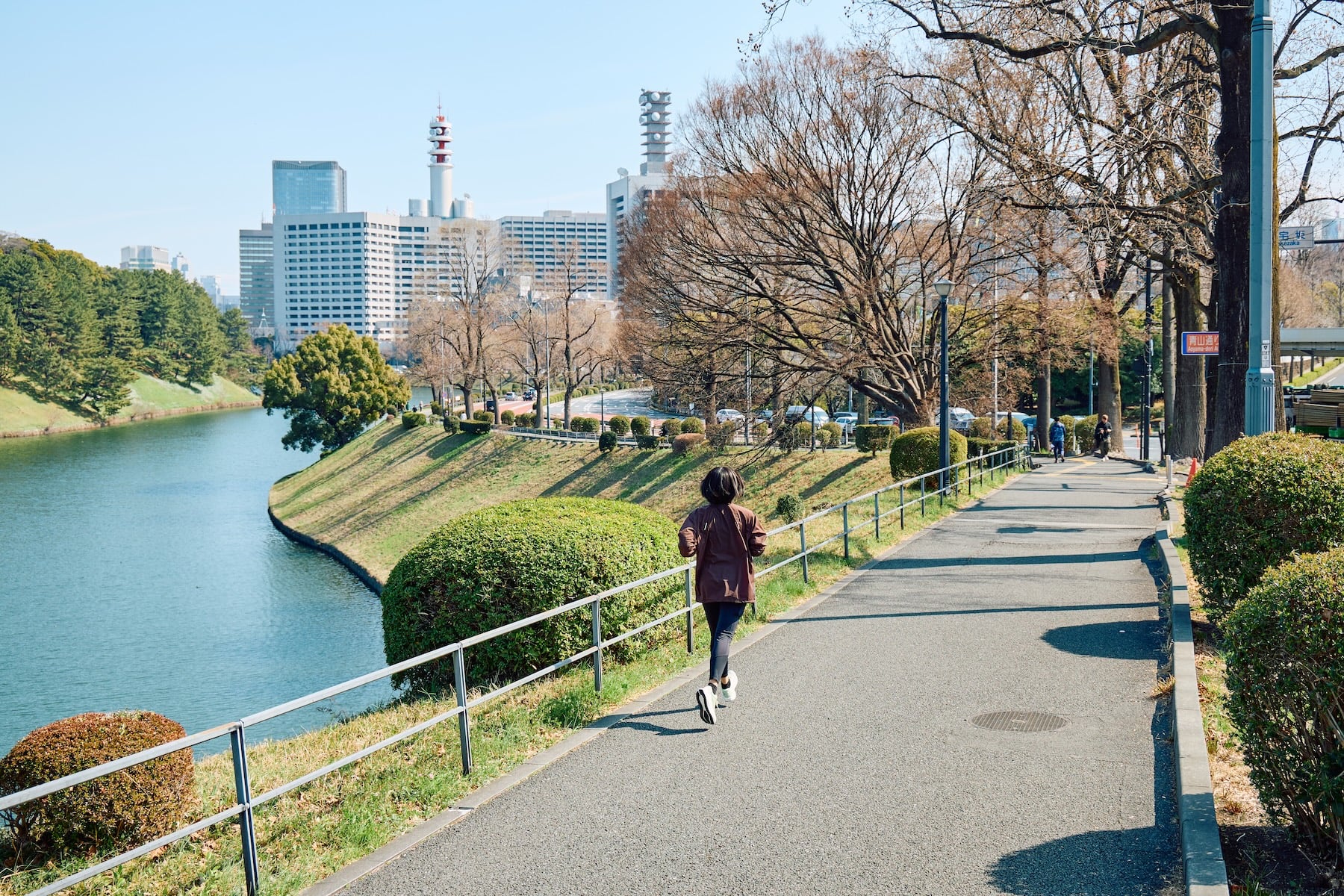
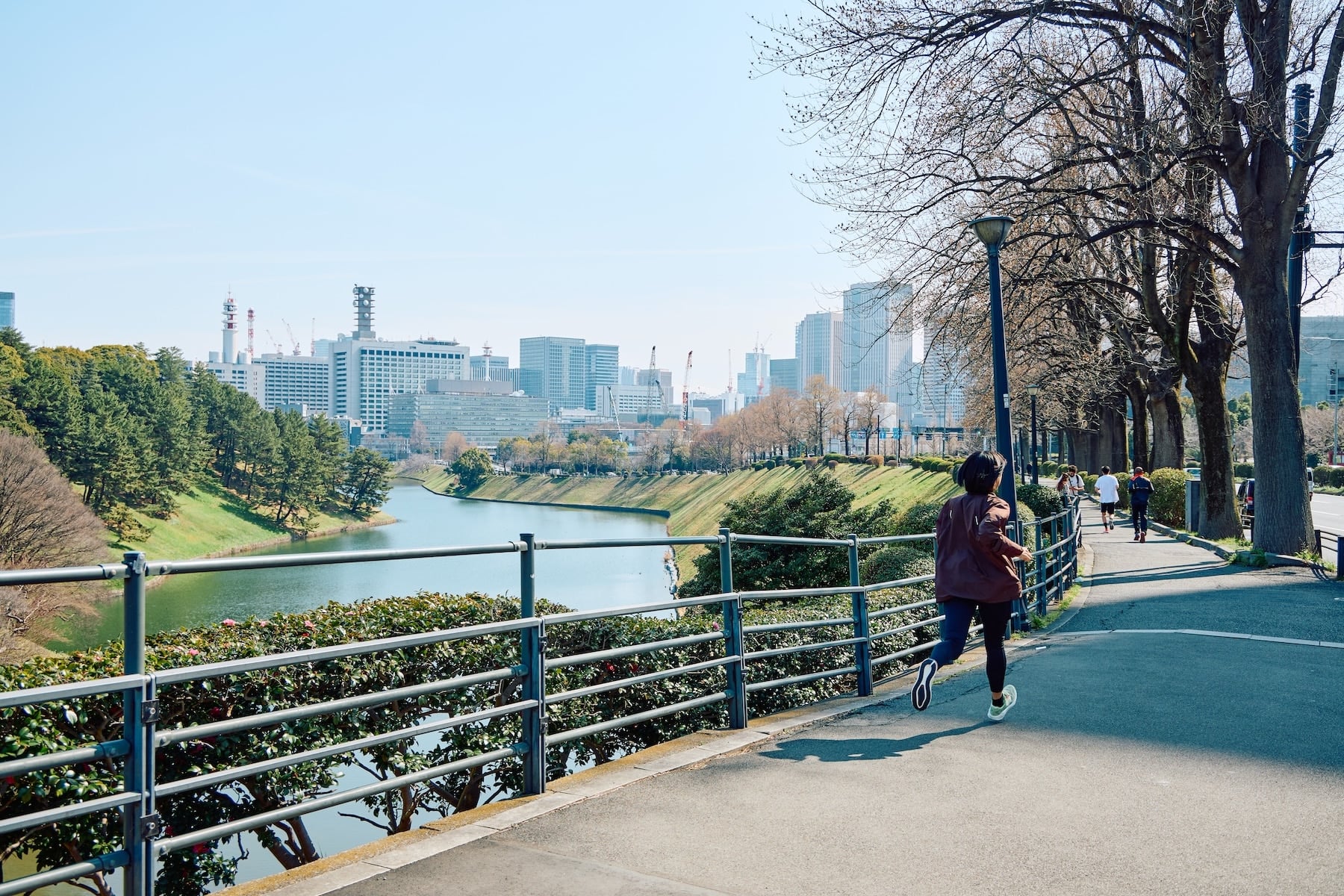
A view that feels quintessentially like Kokyo Run, with the skyscrapers visible beyond the moat.
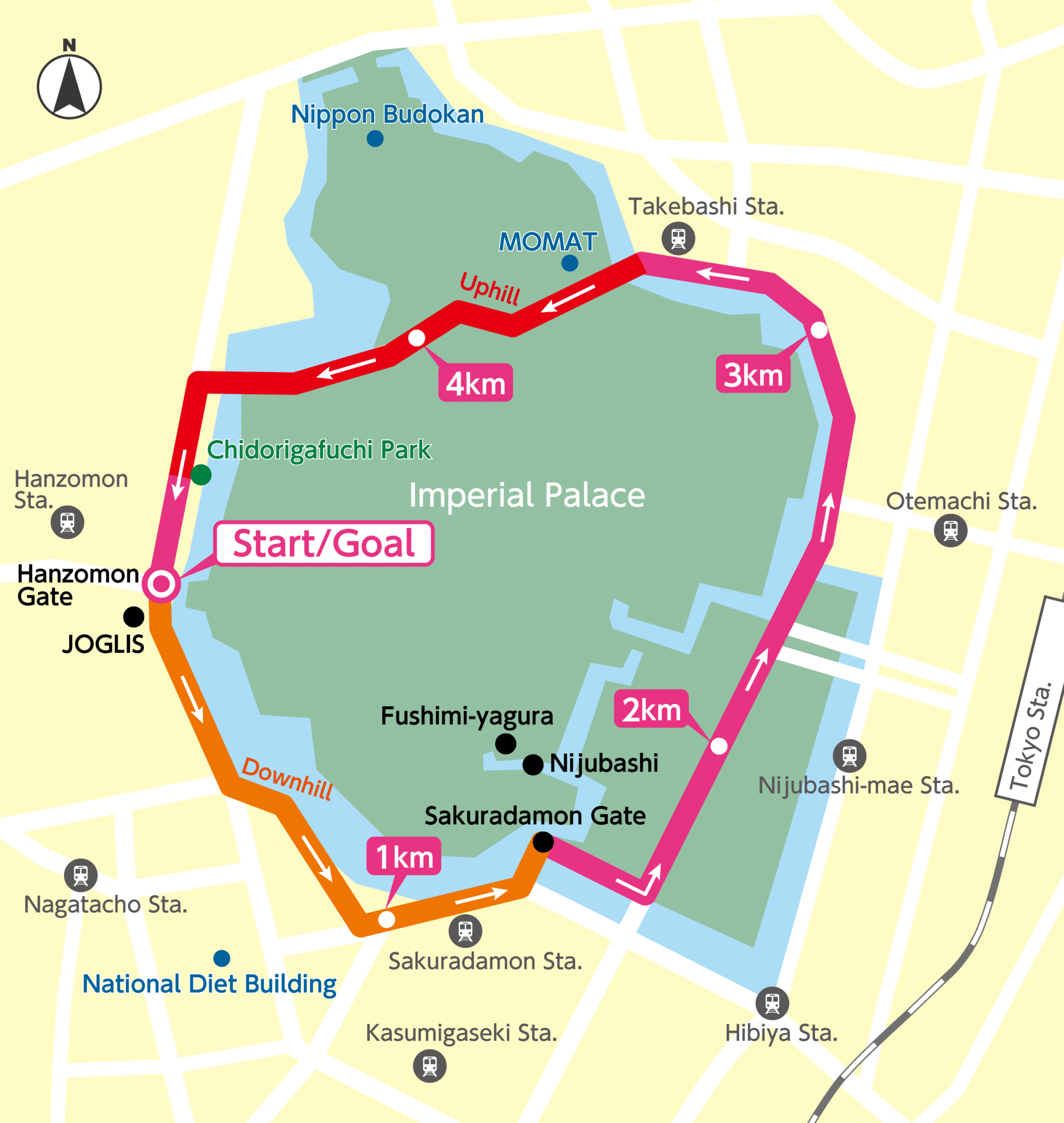
The route introduced here is the standard course that circles the outer perimeter of the Imperial Palace, covering about 5 km per loop. You can freely choose any point as your start/finish, but here we introduce a route that starts from “Hanzomon,” the closest point to the running station.
Course Profile
Start / Finish: Hanzomon
Distance: Approx. 5 km (about 35–40 minutes at 7–8 min/km)
Elevation: Uphill section from Takebashi to Hanzomon
Surface: Asphalt
Night run: △ (streetlights are available, but some areas are still dark)
Convenience stores: ○ (inside buildings near the course)
Traffic lights: None
Restrooms: ○ (available in several locations)
Recommended times: Morning ○ / Daytime ○ / Night ○
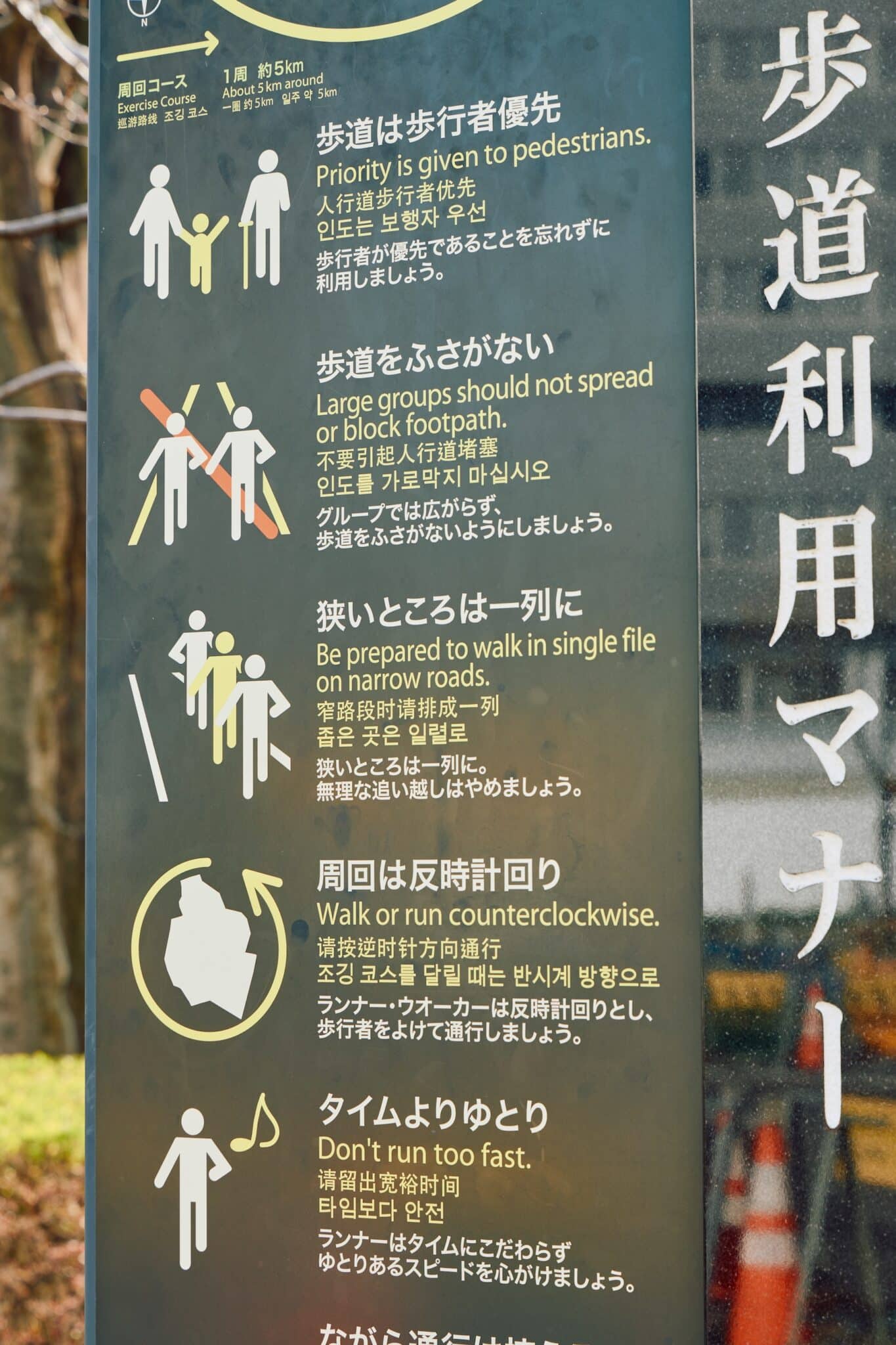
The biggest advantage of Kokyo Run is that one loop is about 5 km, making it easy to calculate distance. Another is that there are no traffic lights anywhere on the course, so you can keep your own pace and run nonstop. Chiyoda City also has a relatively small nighttime population, and police officers are stationed in various areas, which is another characteristic. It can truly be described as one of the safest running courses in the world. Basic rules for the course include running counterclockwise, not focusing excessively on time, giving priority to pedestrians, and not blocking the sidewalk. Since ordinary pedestrians also use the area, be sure to follow the rules and enjoy your run safely.
Nine rules have been established for using the Imperial Palace sidewalks, from the standpoint of accident prevention.
This is the starting point. The early part of the route continues downhill toward Sakuradamon.
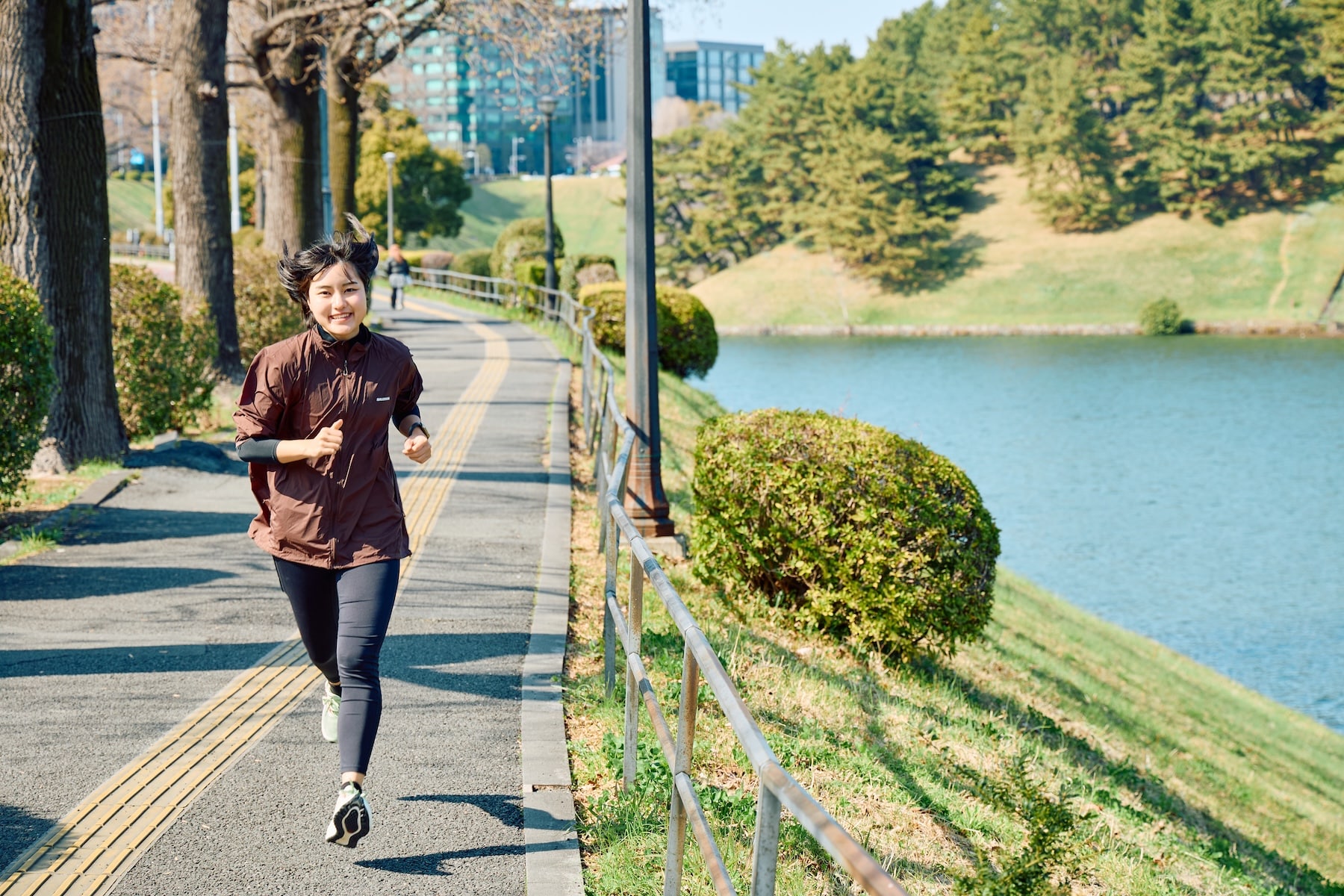
It is a beautiful road lined with water and greenery, but be careful of spots where tree roots have caused the pavement to rise.
Starting from Hanzomon, you first enter an invigorating downhill section with sweeping views of the Imperial Palace greenery and the skyscrapers of Marunouchi. After comfortably picking up speed, you pass through the historic “Sakuradamon” and run along a flat stretch with the sightseeing landmark “Nijubashi Bridge” to one side.
Gyoko-dori Avenue, which faces the front of the Imperial Palace, is wide and easy to run on.
Lined with beautifully maintained pine trees, Gyoko-dori Avenue is one of the most pleasant sections of the course.
Once you pass through the Marunouchi area and cross Takebashi, the latter half turns into an uphill climb of about 30 meters in elevation toward Hanzomon, the highest point on the course. Many runners find this section tough, but it also makes the course more effective as a training run.
The uphill stretch beginning at Takebashi is the course’s biggest test of endurance.
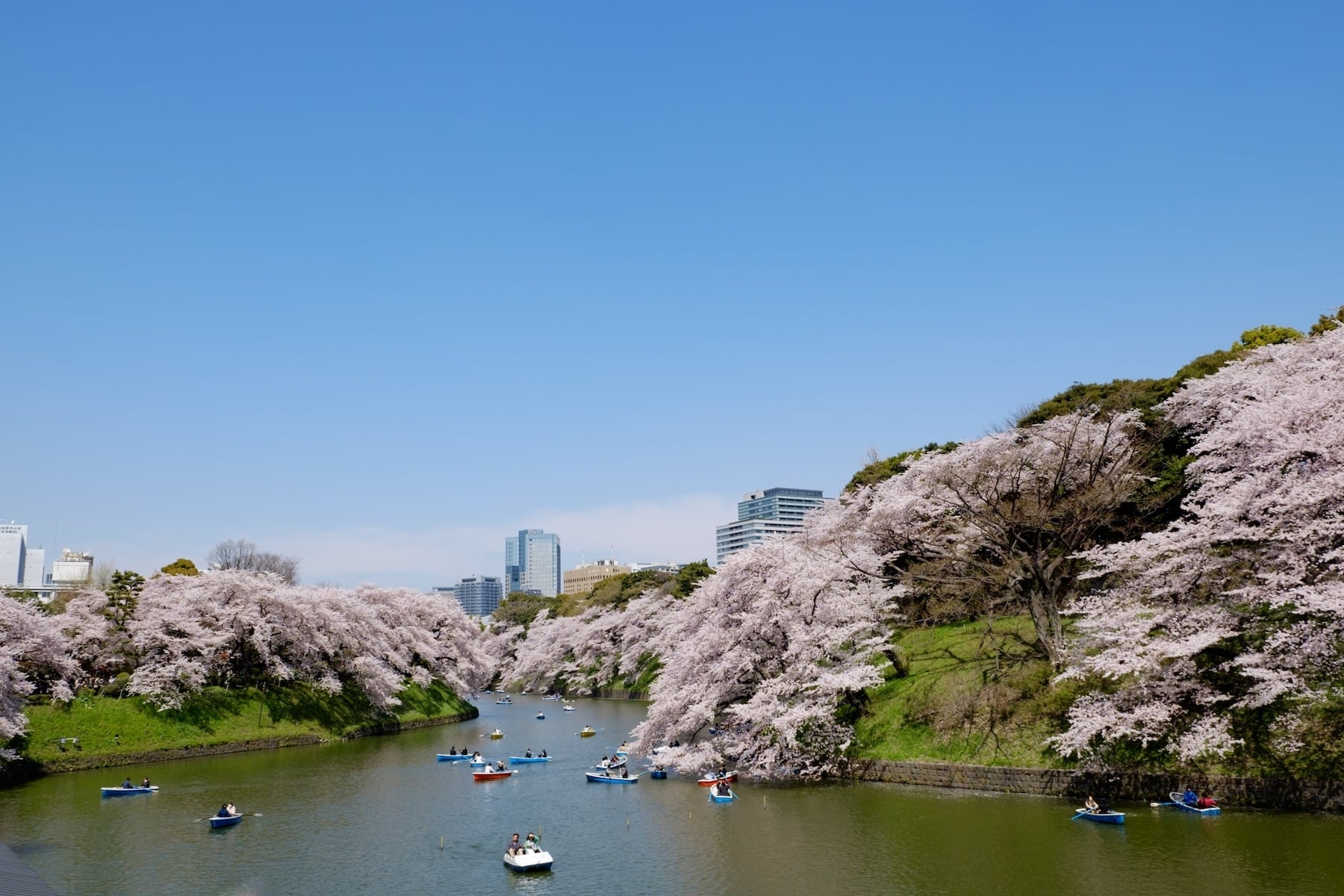
Chidorigafuchi is famous for its cherry blossoms, and in season, many people come here for hanami, or cherry blossom viewing.
The scenery also changes beautifully with the seasons. In spring, the area around Chidorigafuchi turns pink with cherry blossoms in full bloom, while in autumn, the ginkgo trees along Gyoko-dori Avenue shine in gold. Even though it is the same 5 km route, it is a course you will want to run again and again.
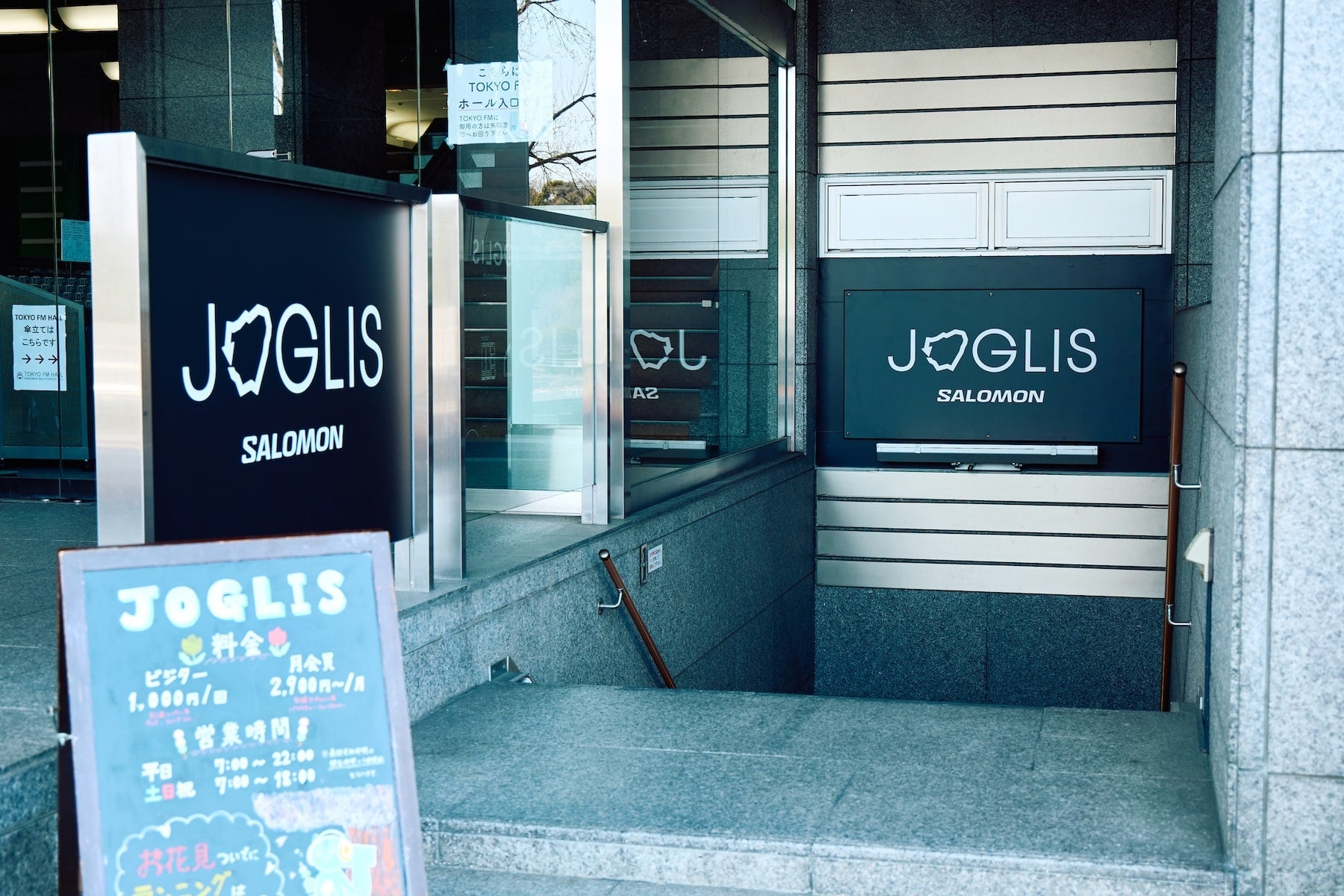
The area around the Imperial Palace is well supplied with “running stations” that support runners. One of the most notable is “JOGLIS,” located a three-minute walk from Hanzomon Station. It lies almost directly on the Kokyo Run course and boasts an exceptional location: you can leave the building, cross the street, and join the course immediately, making it one of the closest facilities to the Imperial Palace.
The facility is located in the basement of the TOKYO FM building, home to one of Tokyo’s radio stations. The Kokyo Run course is right in front.
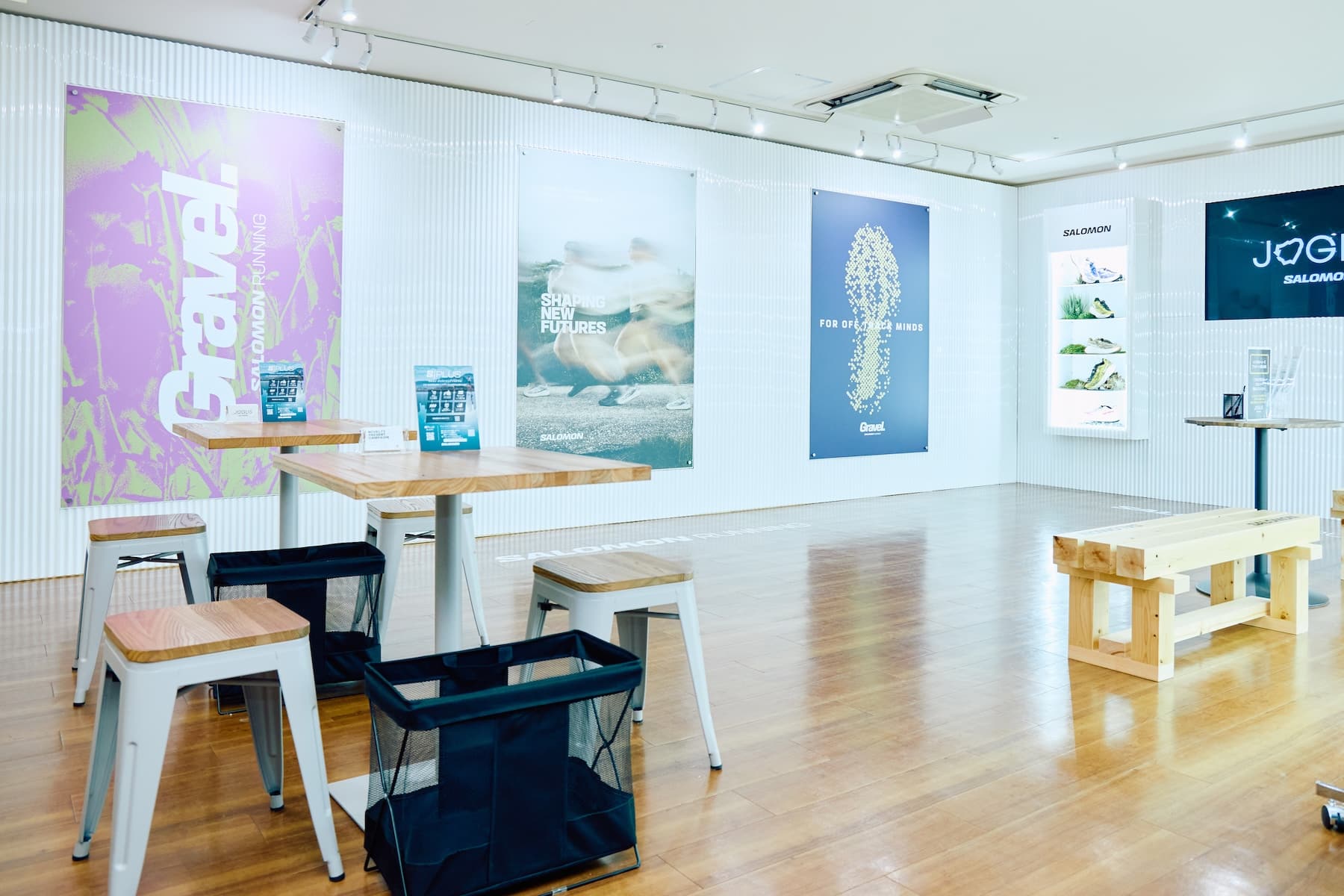
A spacious free space where you can also stretch using complimentary rental yoga mats.
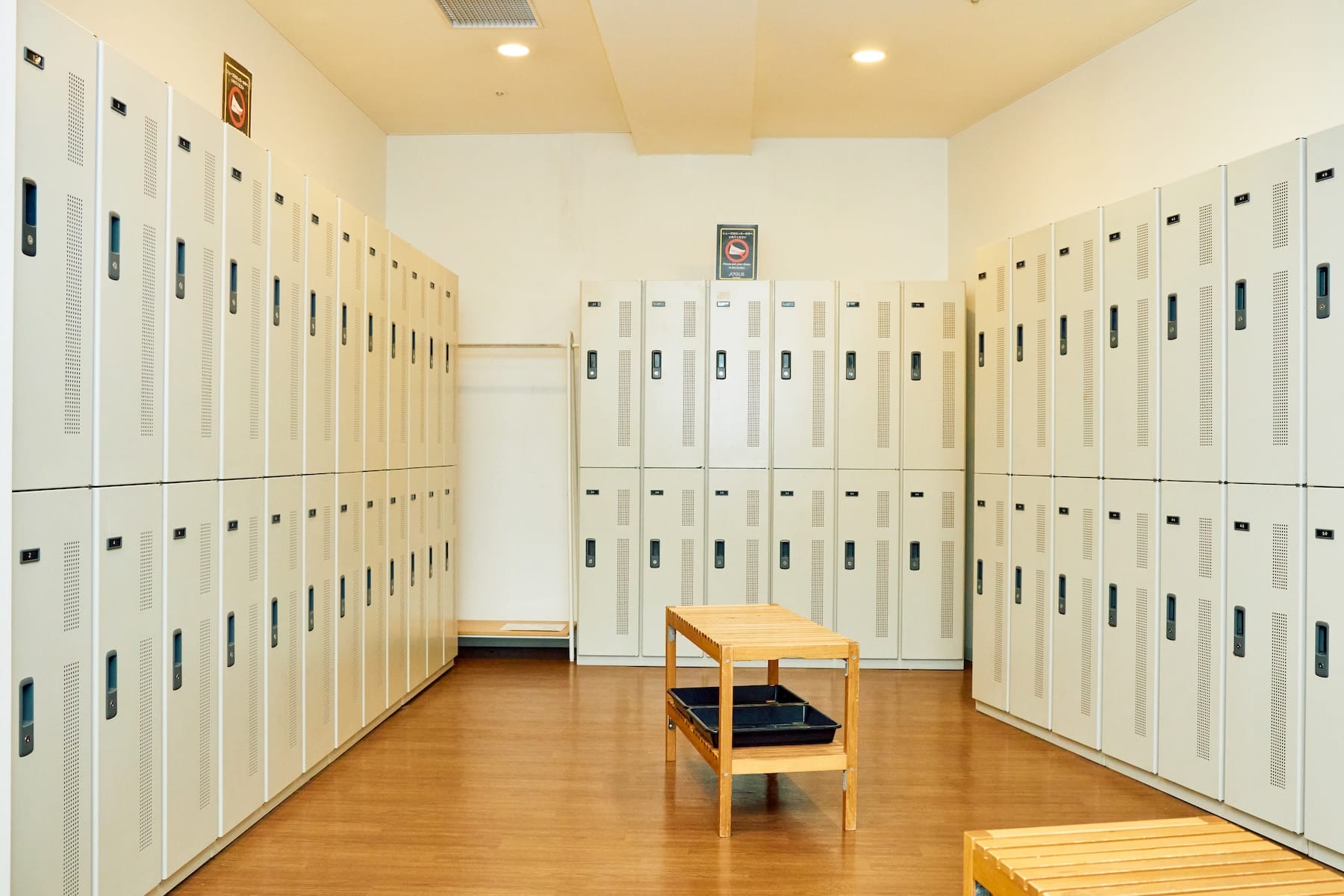
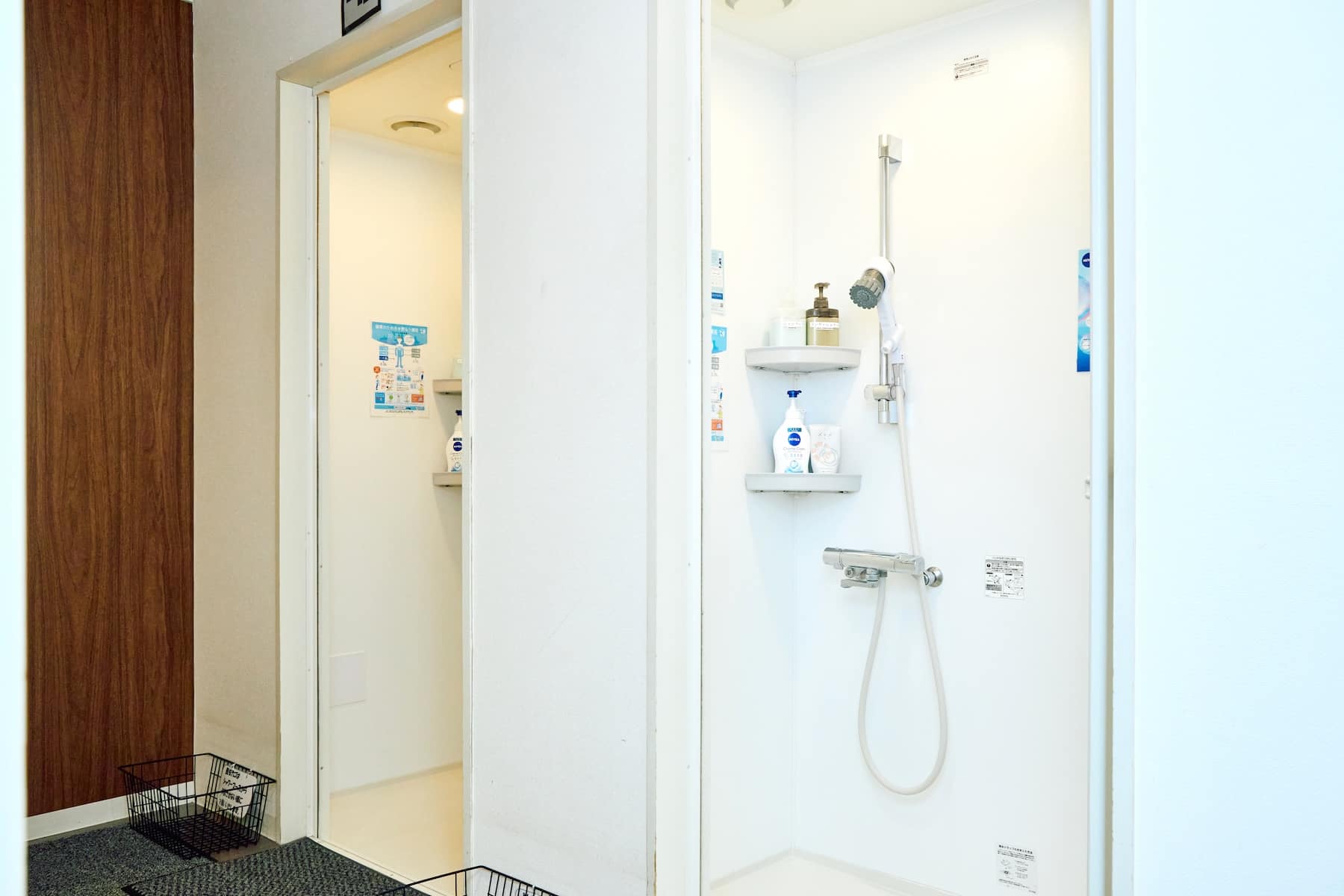
Since opening in 2009, it has continued to support Kokyo runners and remains one of the area’s long-established facilities. The interior is spacious, among the largest in the area, and fully equipped with 180 lockers in total for men and women, as well as clean shower rooms with six booths for men and seven for women.
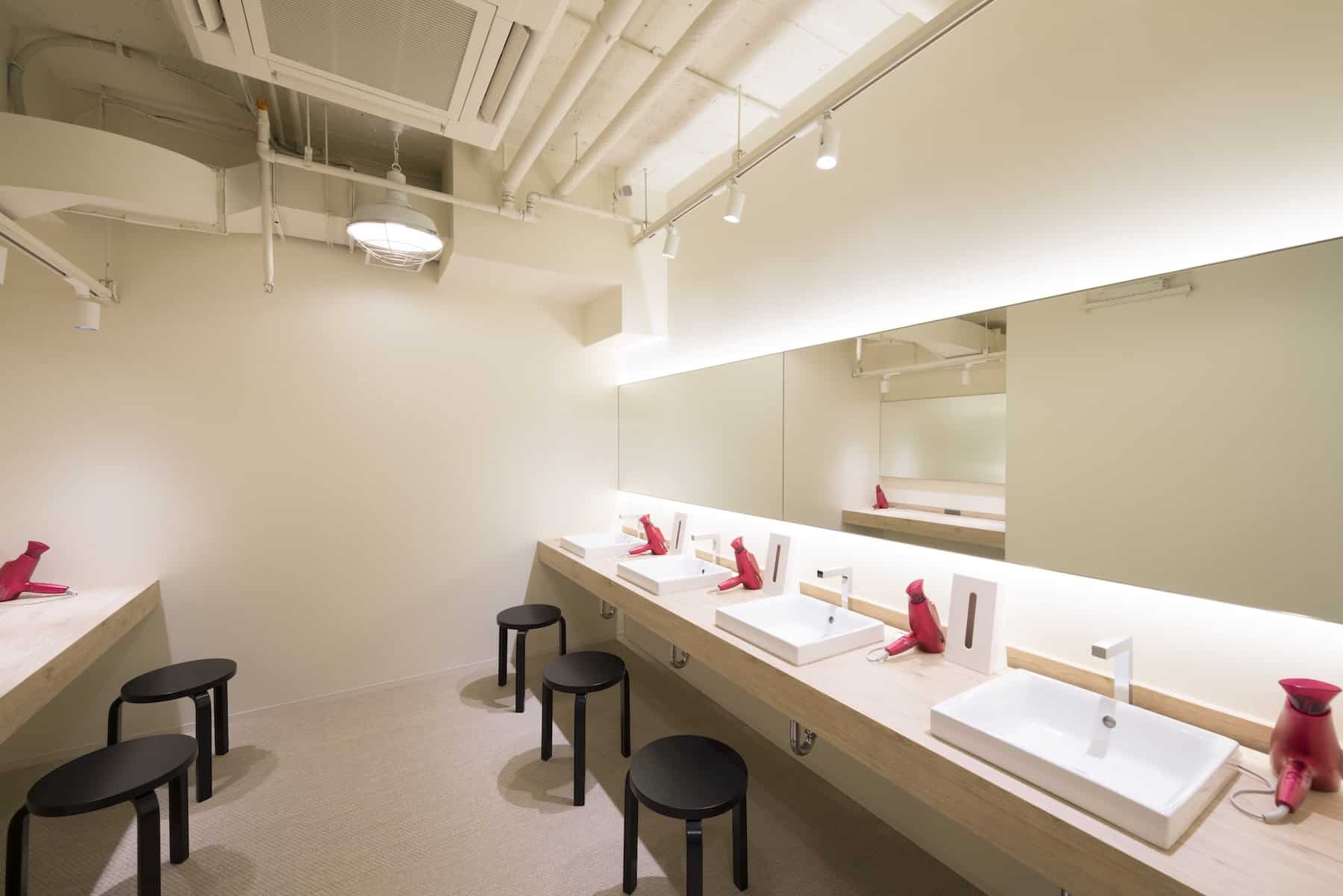
The women’s locker room. There are also separate monthly rental shoe lockers available.
The shower booths are wider than usual and easy to use.
For international travelers, there is also a drop-in “International Traveler Plan” for 2,500 yen. In addition, the facility offers clothing rentals and free trial rentals of the latest SALOMON shoes. Even if you come directly from your hotel room empty-handed, you can still enjoy a comfortable Kokyo Run with the latest gear.
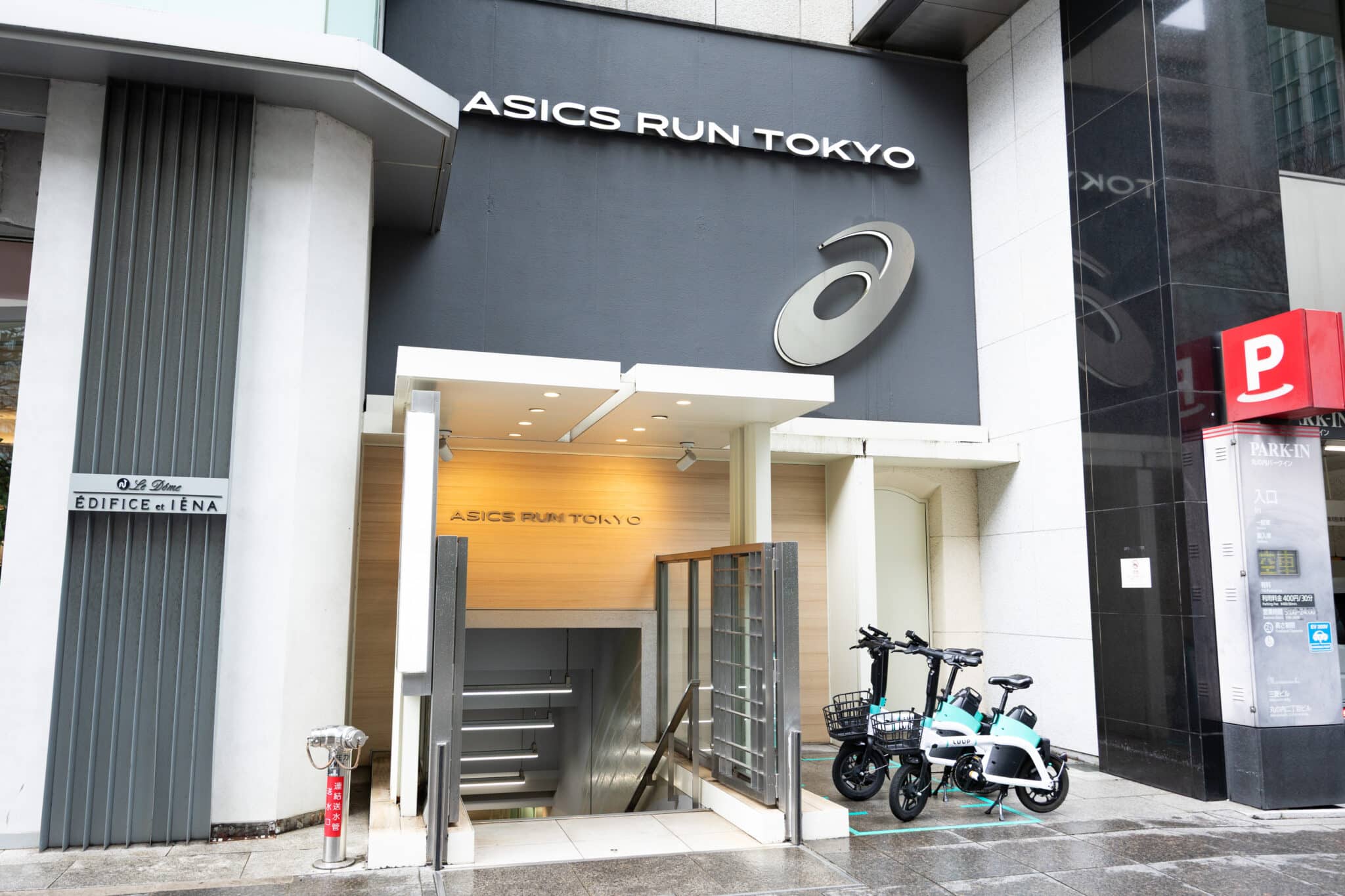
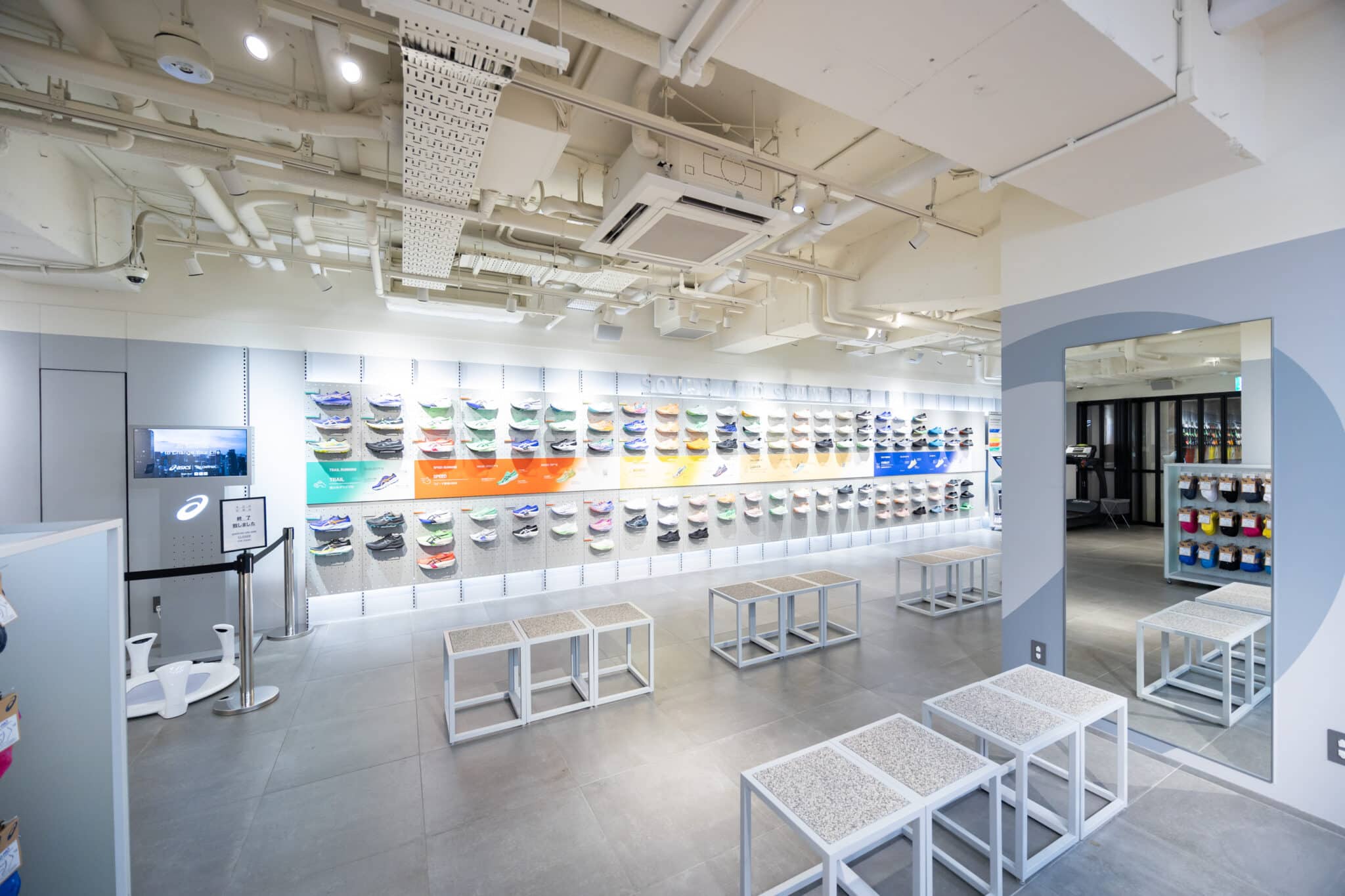
There is another running station well suited to Kokyo Run. Located a three-minute walk from the Marunouchi South Exit of Tokyo Station, “ASICS RUN TOKYO MARUNOUCHI” is a comprehensive running station attached to an ASICS direct-run store. It offers excellent access as a base for Kokyo Run as well as runs that take in nearby sightseeing spots.
It is a nine-minute walk from here to the Kokyo Run course. It is a standard running station for businesspeople in the Marunouchi area.
Because it also functions as a shop, you can check out the latest ASICS shoes and wear here. Some models are also available for rental.
It is equipped with clean lockers and showers, and also offers a full range of rental items including wear and towels, making it easy to stop by empty-handed before or after work or while sightseeing. You can also rent the latest ASICS shoes and put them to the test on an actual run.
Use of the running station is limited to three hours per visit: 1,100 yen for OneASICS members and 1,500 yen for general users (basic rentals are generally 330 yen each, with some items priced at 1,100 yen).
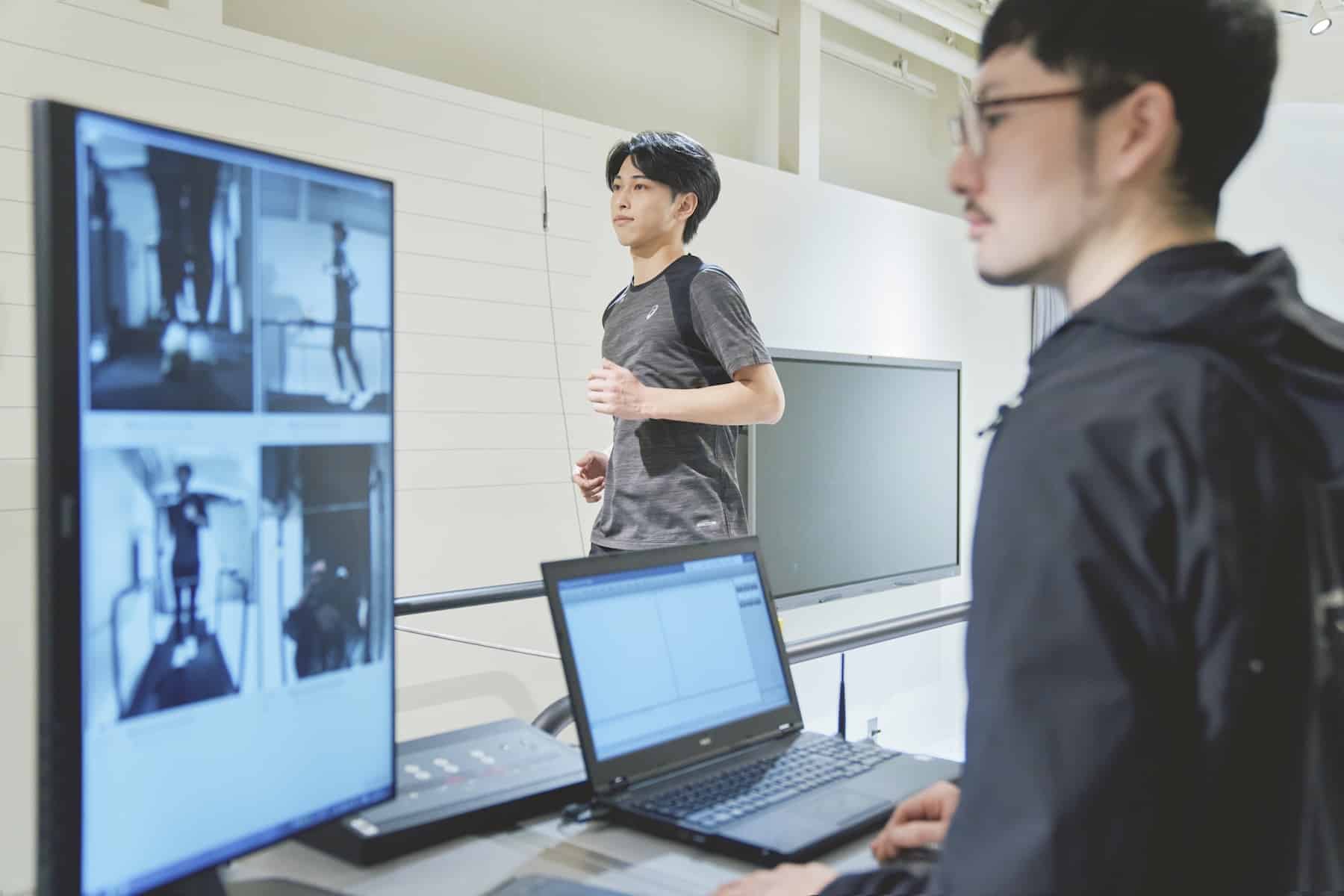
At the attached lab, you can undergo running form analysis and AT testing based on scientific data. Form analysis only: 5,090 yen; AT test (first session): from 13,200 yen.
There is also an attached “ASICS RUNNING LAB,” where you can receive more specialized assessments. Services such as camera-based form analysis help determine the most suitable training intensity for you. The facility also offers concierge services that allow one-on-one consultation with specialist staff, making it a comprehensive support base for everyone from beginners to serious runners.
The Marunouchi and Hibiya areas around the Imperial Palace are full of cafés, but as a special reward after a hard run, one place worth walking a little farther for is “HOCUS POCUS,” a doughnut café in Nagatacho. It is about a 12-minute walk from “JOGLIS,” making it a perfect stop as part of your cool-down.
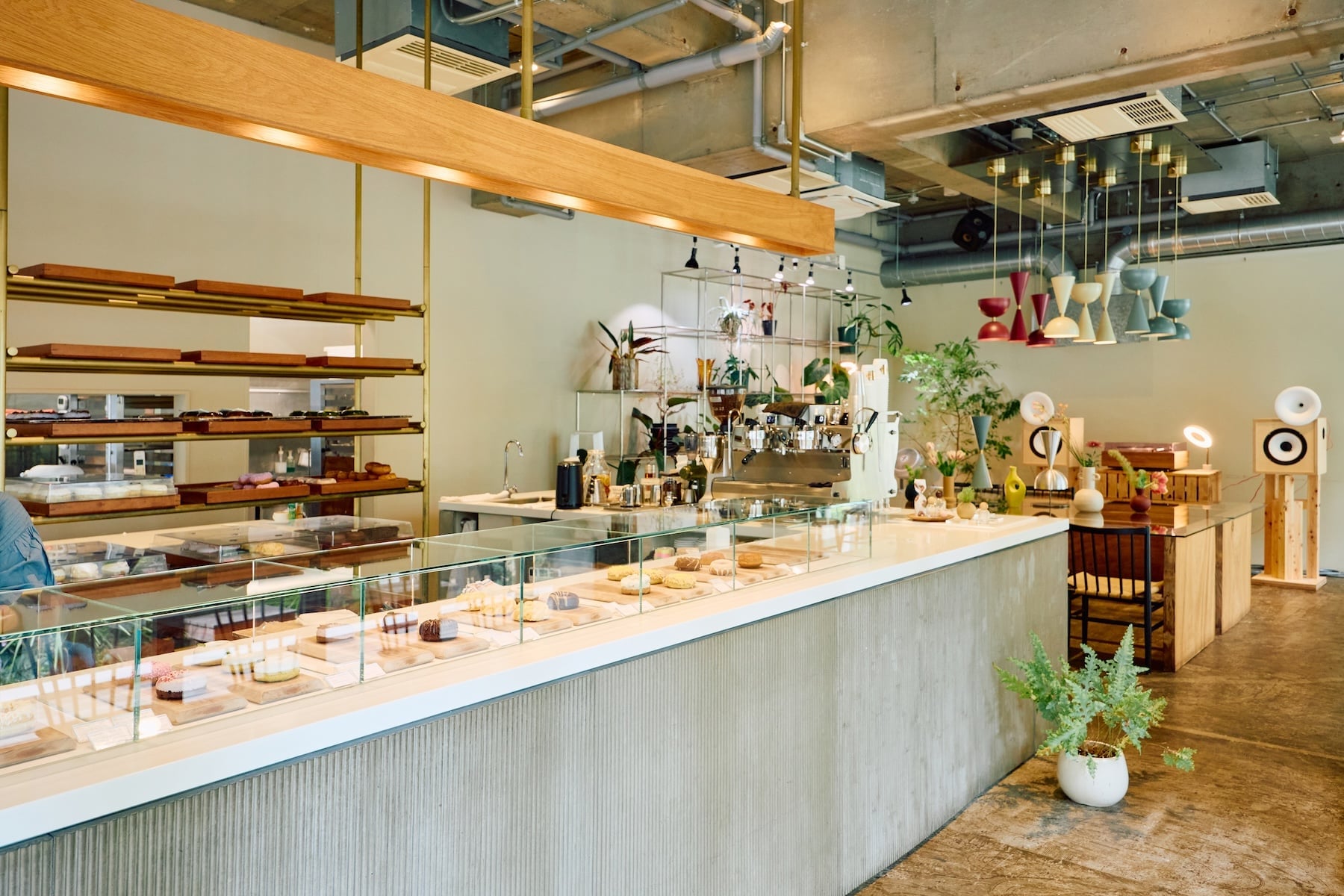
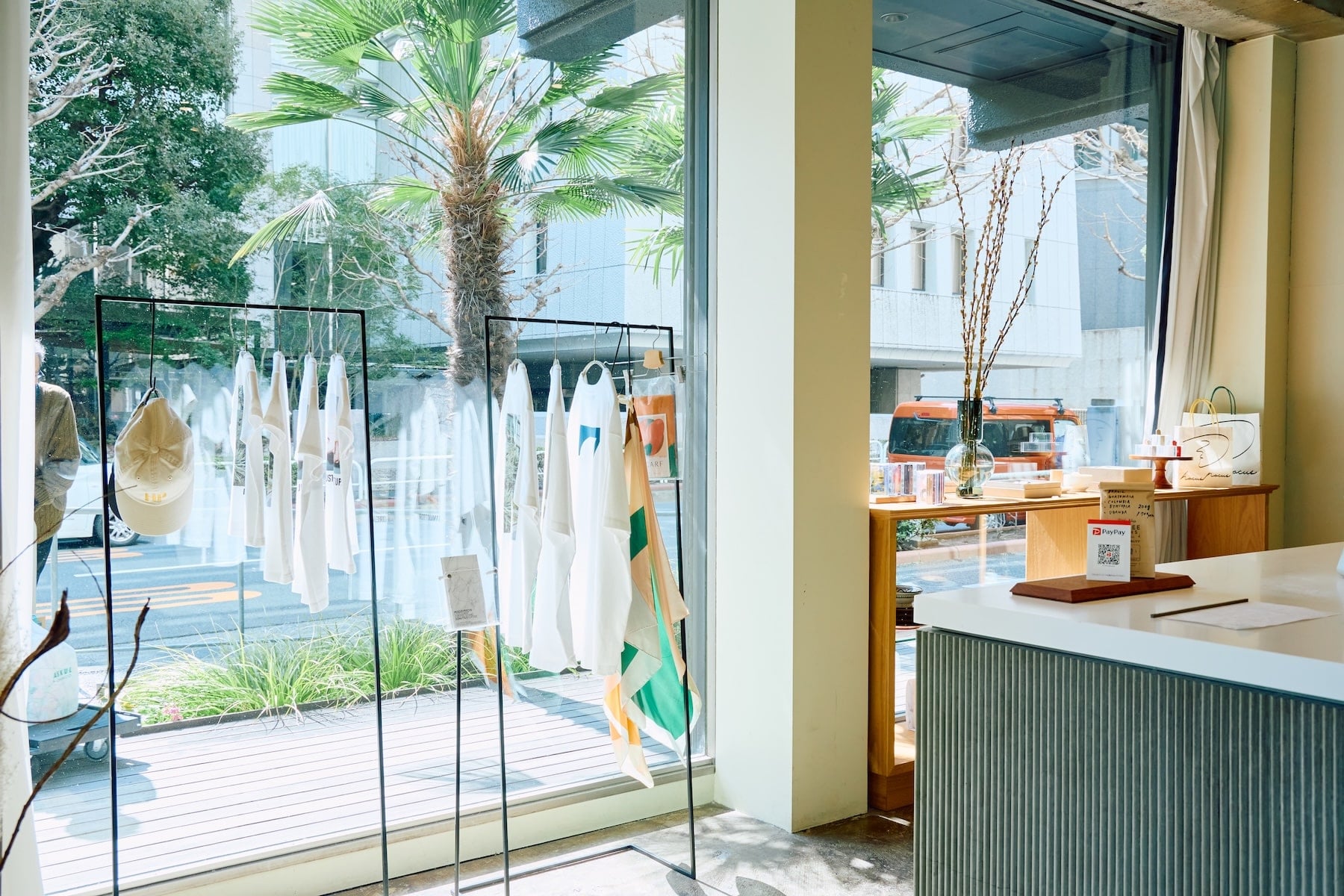
A bright interior filled with light from two directions. The distinctive interior gives the space a stylish atmosphere.
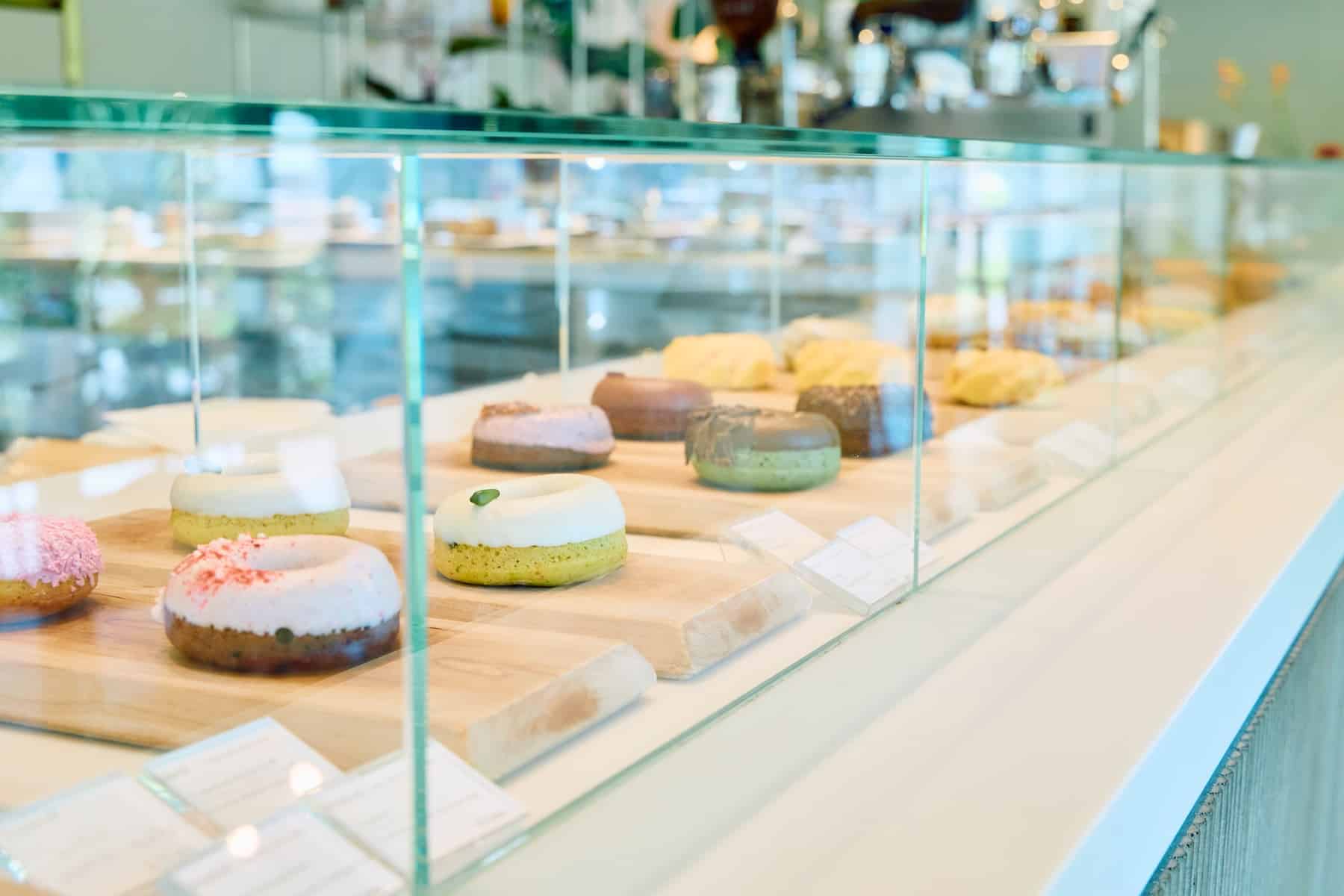
Colorful doughnuts line the display case.
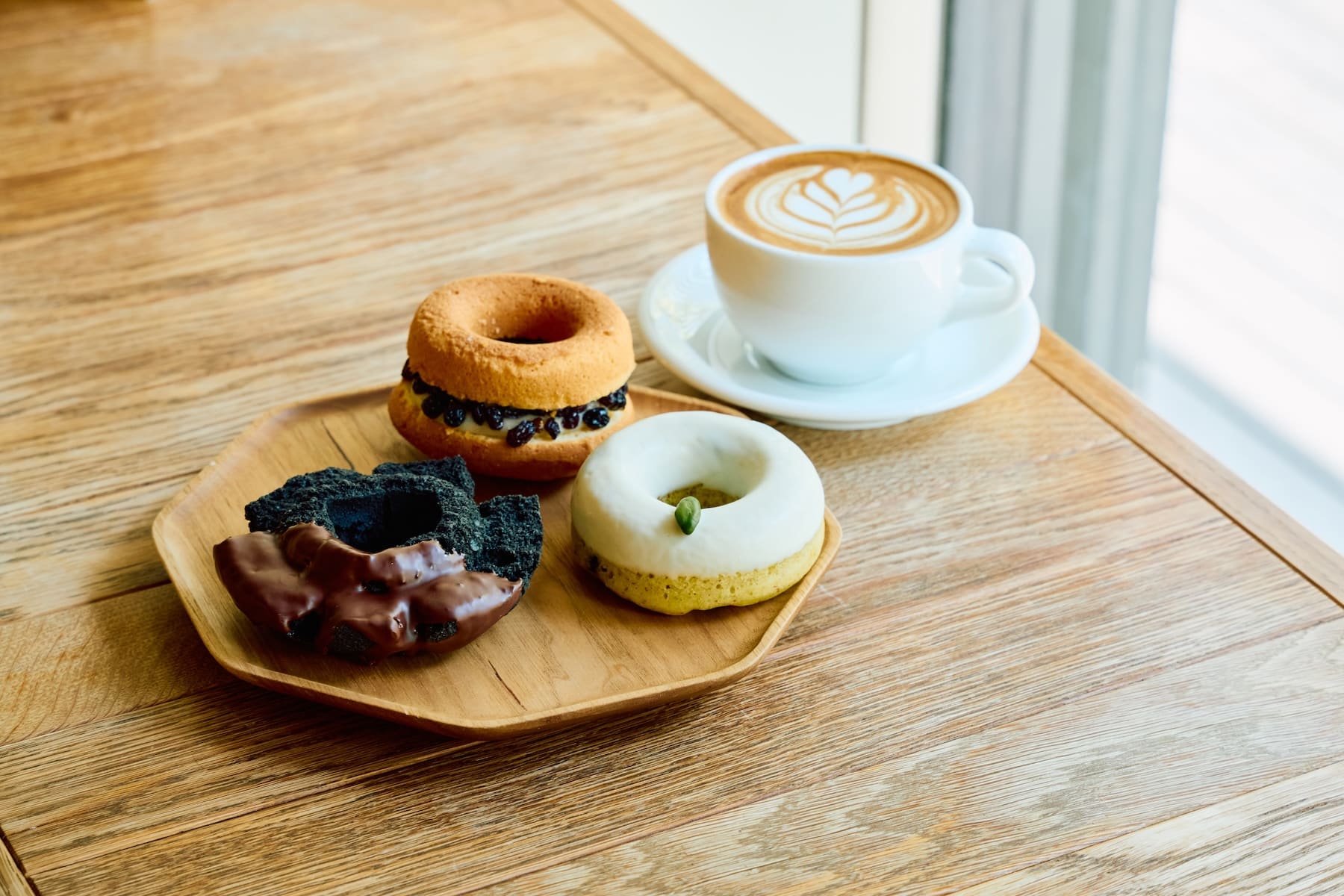
Located in Nagatacho, the heart of Japanese politics, this shop is a refined space built around the concept of a “doughnut laboratory.” The display case is filled with brilliantly colorful and beautiful doughnuts that look almost like cakes. Alongside classics such as the “Pistachio White Chocolate,” the shop offers items such as an “Old Fashioned” made with bamboo charcoal, pursuing new approaches to flavor and texture. Different methods—frying, baking, and steaming—are used depending on the doughnut. Despite their appearance, they are not too heavy, making them gentle on the body even after a run.
Clockwise from the top: “Currants,” 530 yen, filled with cream cheese and house-made rum raisins; “Old Fashioned Chocolate,” 550 yen, made by mixing bamboo charcoal into the dough and coating the crisp fried dough with chocolate; and “Pistachio,” 650 yen, made with pistachio in crushed, powdered, and paste form kneaded into the dough. Café latte: 650 yen.
The shop also sells merchandise such as T-shirts, room fragrances, and accessories. According to the shop, the selection focuses on artists and brands that have a personal connection to the owner, such as friends.
Although it is located in the heart of Tokyo, Kokyo Run offers exceptional running conditions, abundant greenery, and historic scenery. Through the activity of running, it provides a fulfilling day of “running plus something extra,” allowing you to discover a new side of Tokyo.



.jpg)
スマホ.jpg)