DEEPTOKYO
magazine

EN

DEEPTOKYO
magazine
EN
2026.08.11
A Vintage Clothing Store Offering a New Way to Enjoy Football Shirts


 Nearest Station

Located in a quiet residential area slightly removed from central Shimokitazawa, “KIMAMA” is a vintage clothing store specializing mainly in football game shirts. The shop proposes a unique way to enjoy vintage uniforms from European clubs and national teams: choosing them through shirt numbers, player names, and the memories attached to them. Inside, visitors can also discover non-sale archives and handmade interior details created by the owner himself, allowing them to experience football culture in a multidimensional way.
SHARE


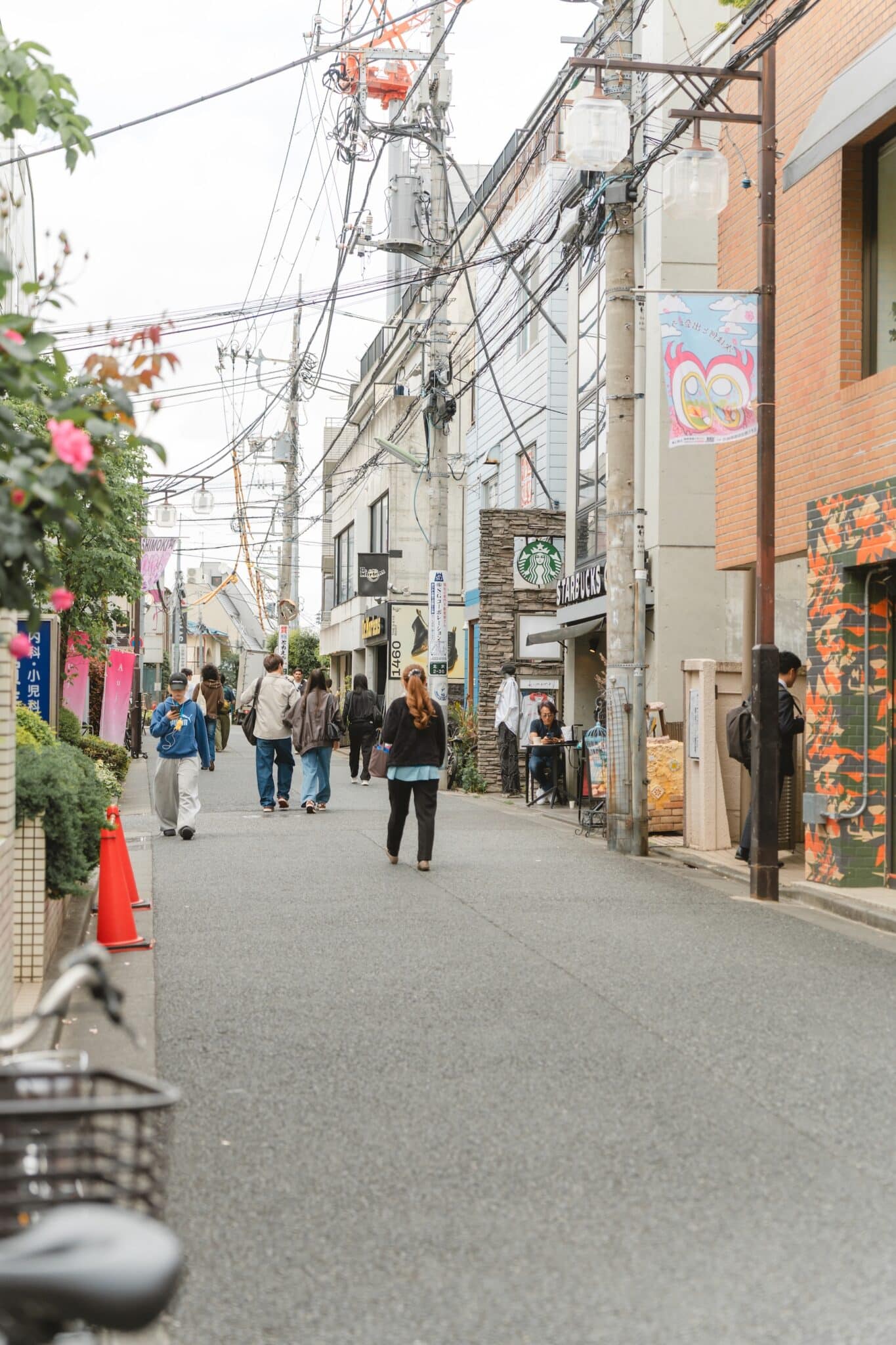
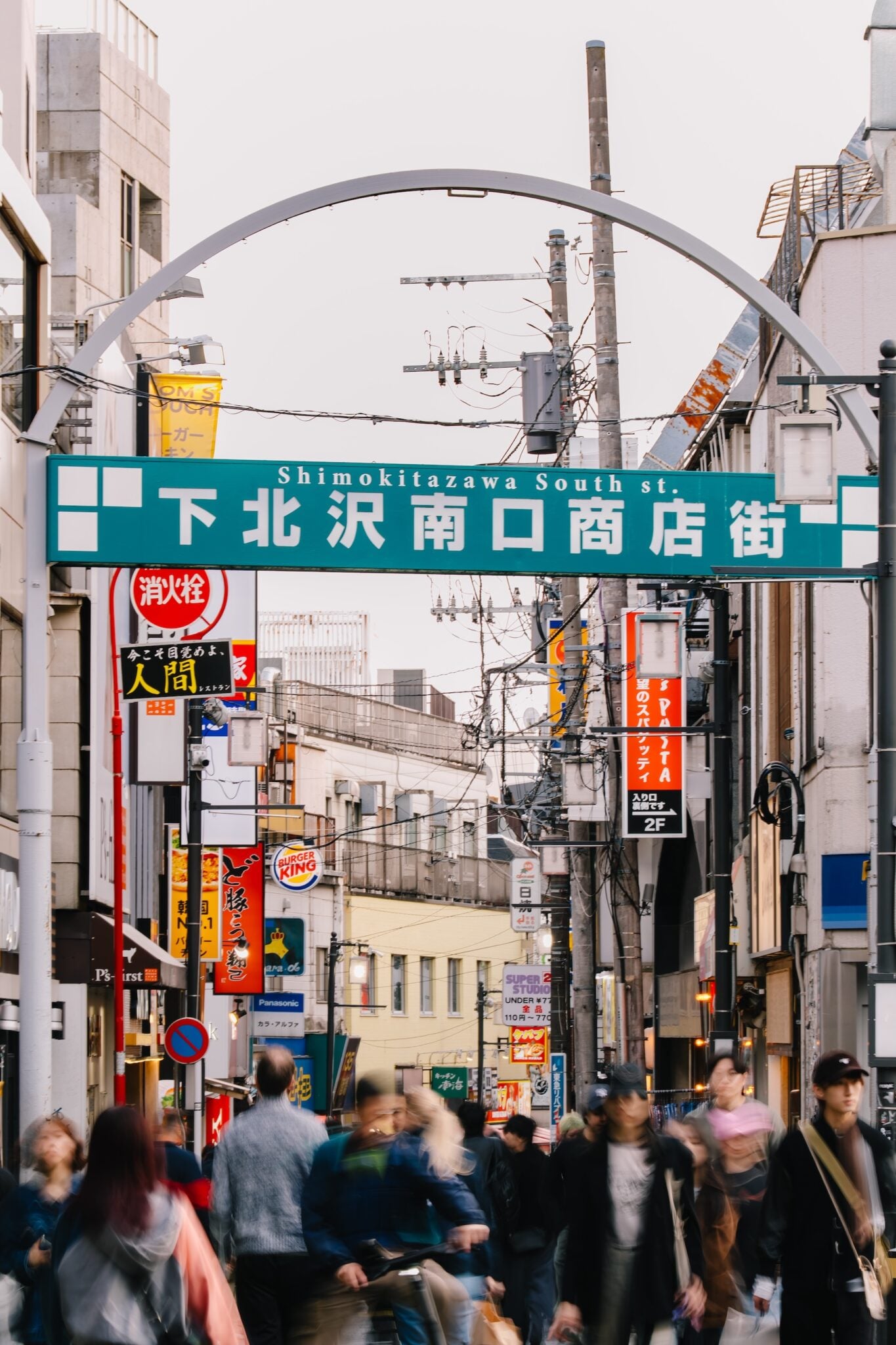
“KIMAMA” is located in the calm residential area of Daizawa, Setagaya, slightly away from the central Shimokitazawa area where many vintage clothing stores gather. After passing through the lively station-front streets and walking down a gentle slope, the atmosphere suddenly shifts into something surprisingly quiet and peaceful.
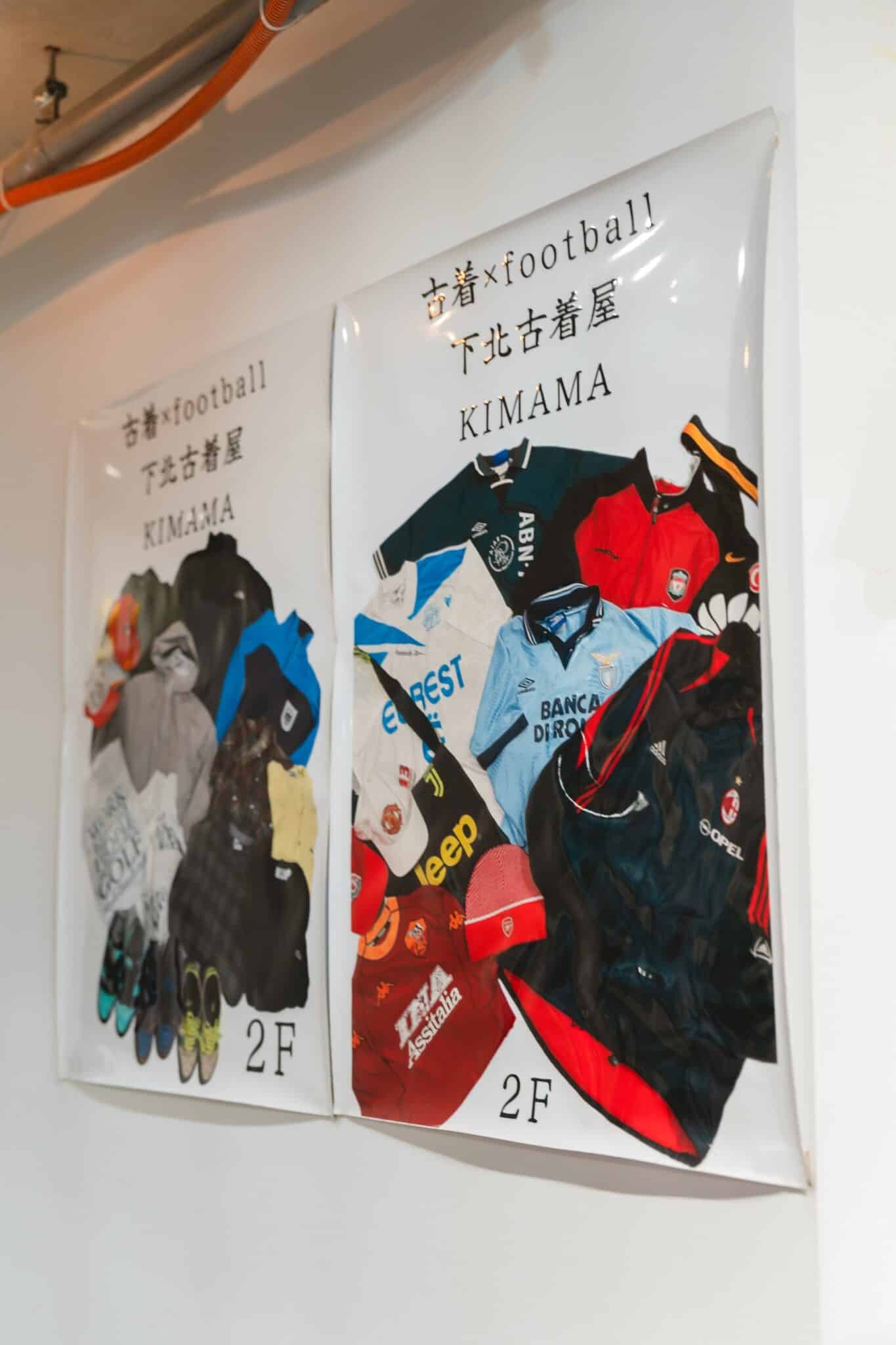
The shop mainly carries vintage football shirts from European clubs and national teams. In particular, it offers a wide selection of “game shirts” based on the football uniforms actually worn by players in matches.
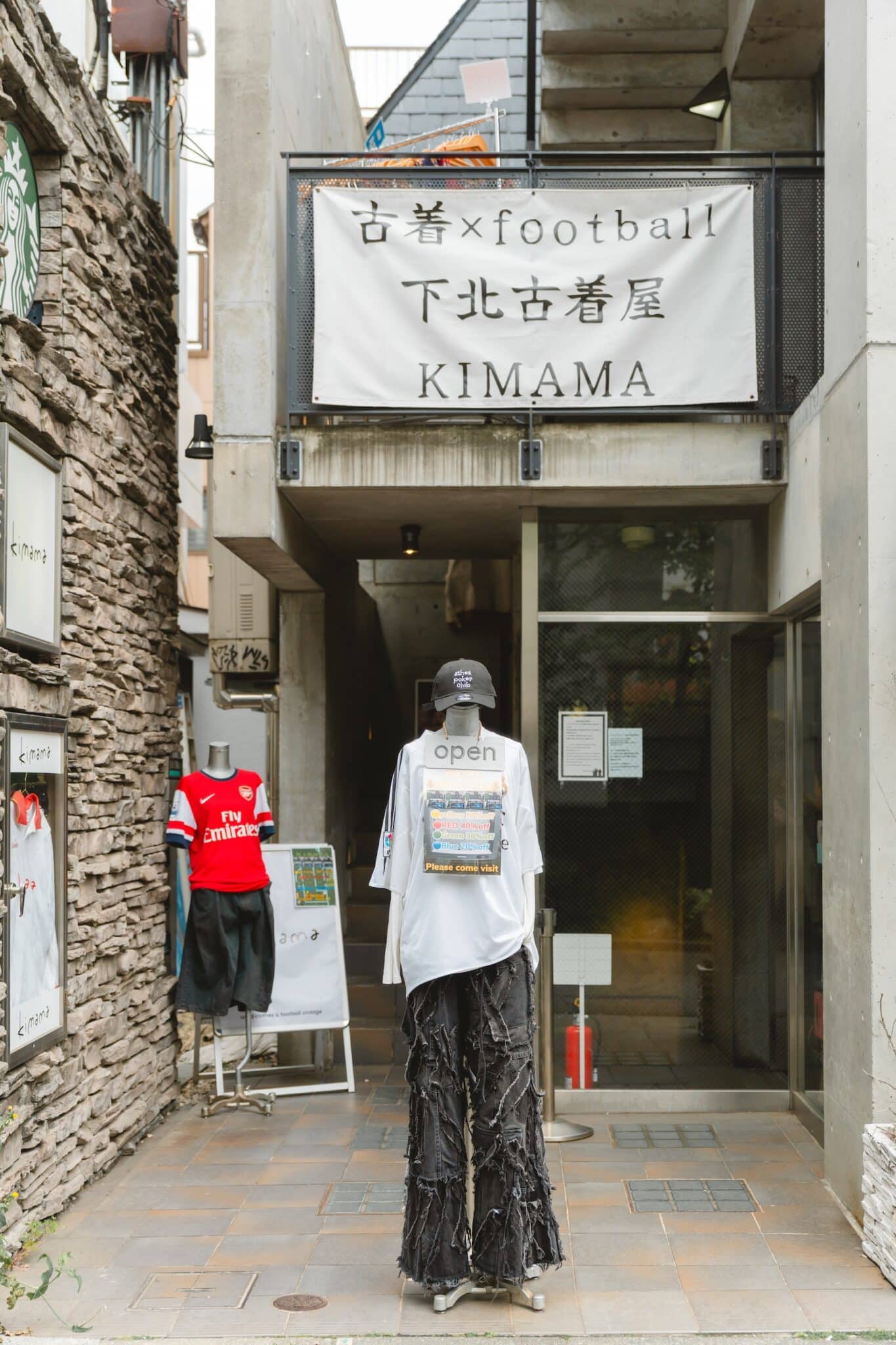
According to the owner, Rikiju, “People who come here for the first time often get a little lost trying to find it,” he says with a laugh. Although the shop is tucked away, a game shirt displayed on the first floor of the building serves as its landmark.
From the East Exit of Shimokitazawa Station on the Odakyu Line and Keio Inokashira Line, it is a five-minute walk toward Chazawa-dori.
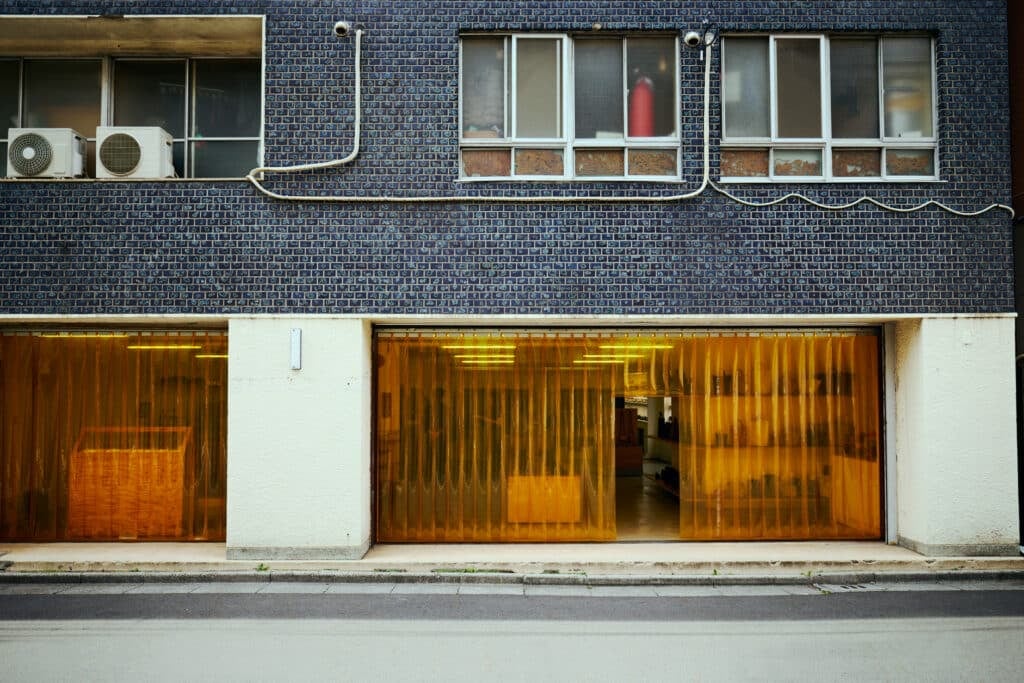
A raw concrete building that blends into the surrounding residential neighborhood.
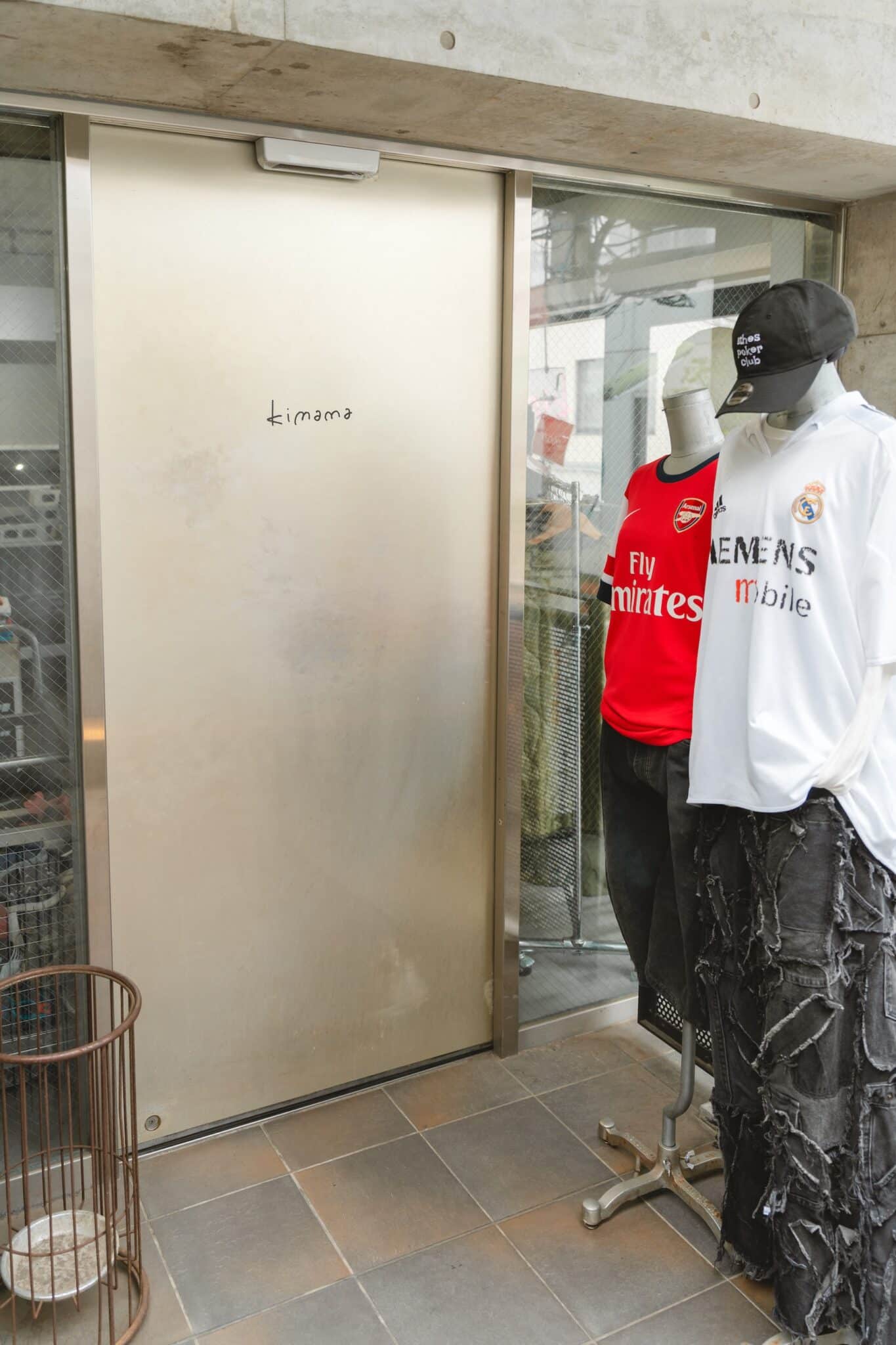
The game shirt displayed on the first floor serves as a signboard, with the selection changing according to the owner’s mood that day.
The entrance to “KIMAMA,” located at the top of the stairs.
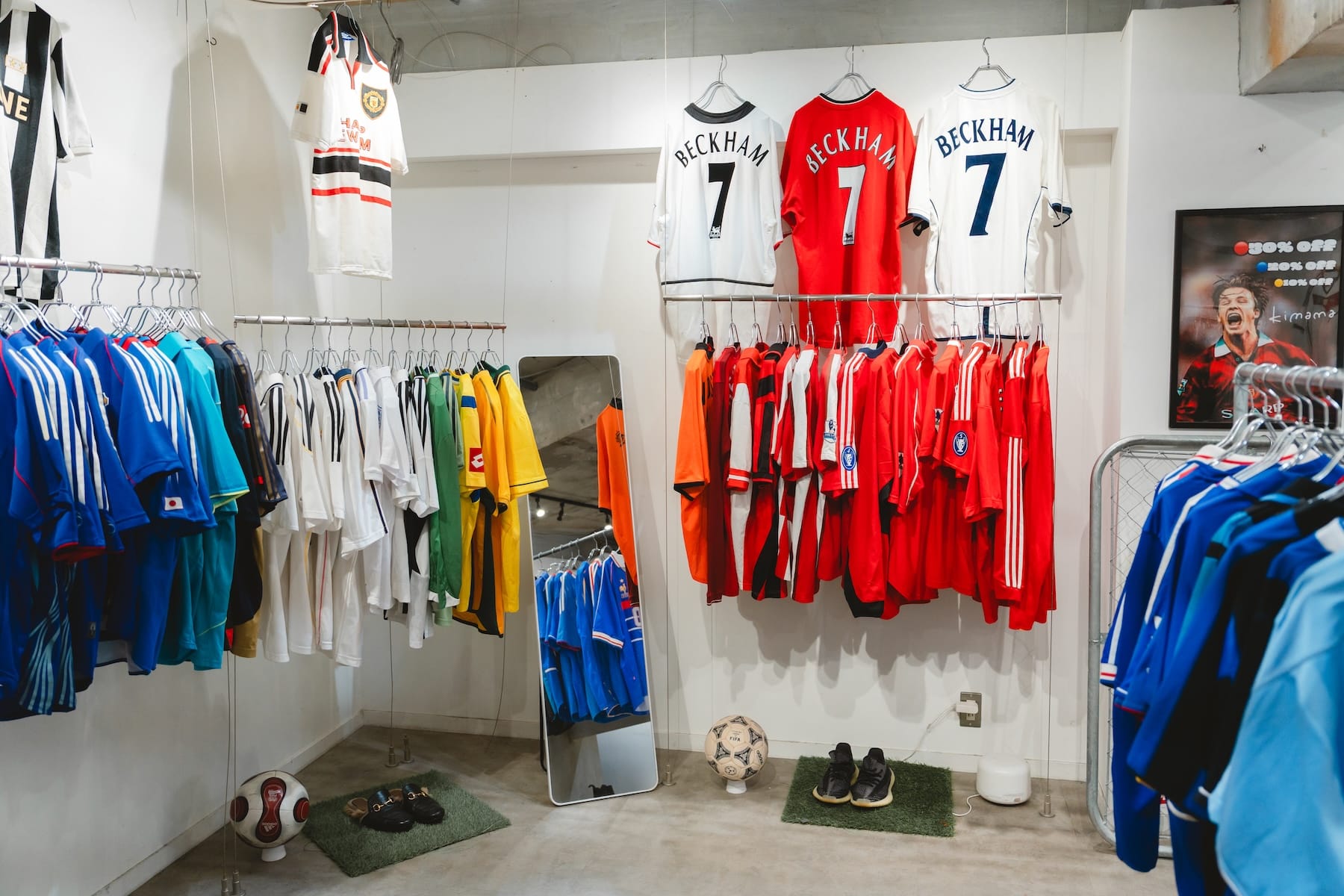
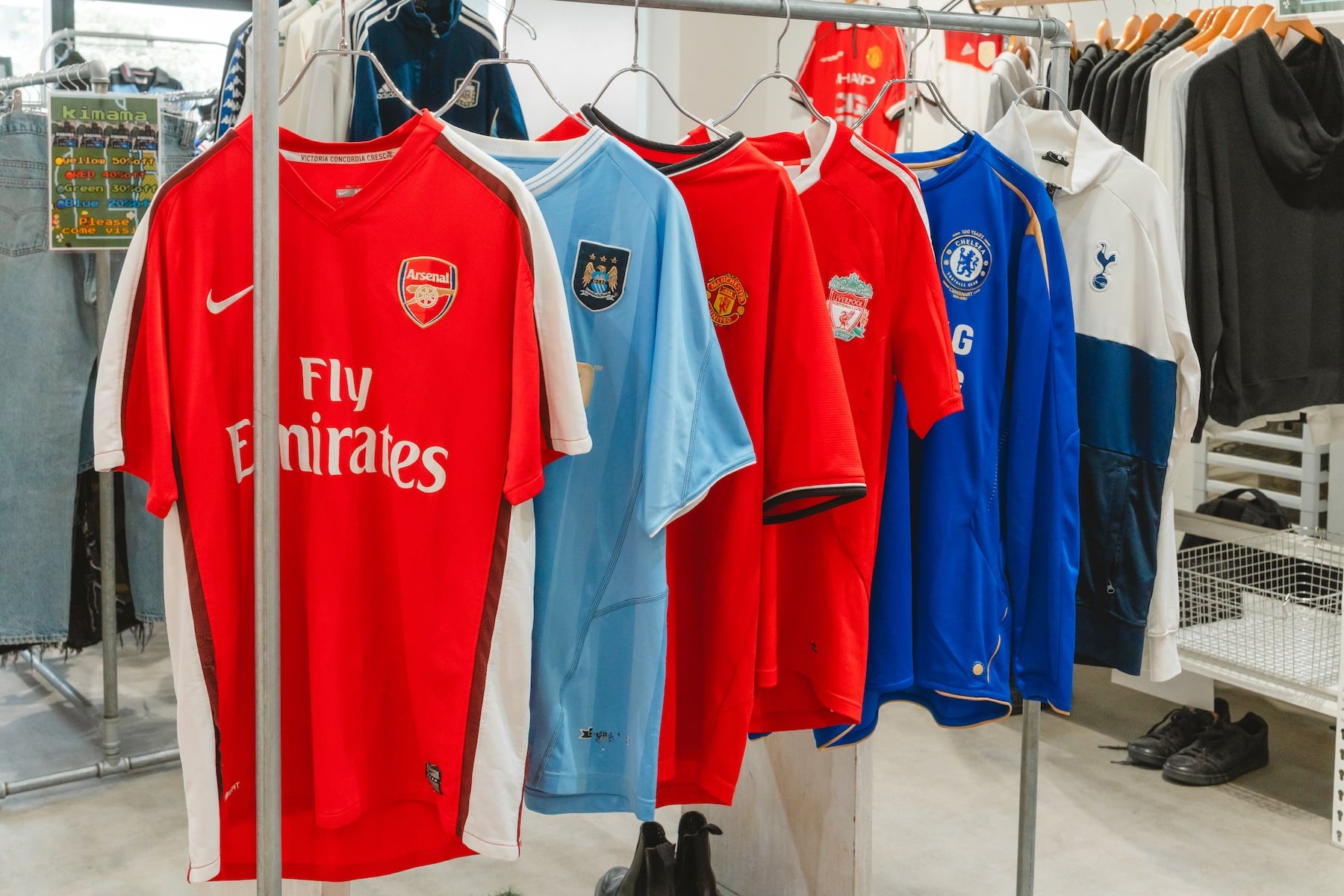
The racks in the store are lined with historic classics, including jerseys from the “Big 6” teams that lead the English Premier League. What stands out is that many of the jerseys are deliberately displayed with the back (where the jersey number is) facing forward.
“Football kids want to look at the numbers and names of their favorite players the way they would look at a poster in their room. If the shirts are facing front, you can’t tell at a glance whose shirt it is.”
Just as he says, the names and numbers printed on the back act as triggers, vividly bringing back memories of the stars who once electrified the pitch and the excitement of matches from that era. The true pleasure of game shirts lies not only in team colors or sponsor logos on the chest, but in choosing a piece through the story of who wore it, and when.
The shirts are deliberately displayed inside out, with the back-number side facing forward. This playful display, unique to “KIMAMA,” lets visitors intuitively search for their favorite players.
Supporting this romance around football is the owner’s highly disciplined commitment to identifying eras accurately. He pays close attention not only to season labels such as “2007–08,” but also to the texture of chest sponsors, the distinctive templates adopted by suppliers in each era, and even the subtle differences in fonts used between league matches and cup competitions.
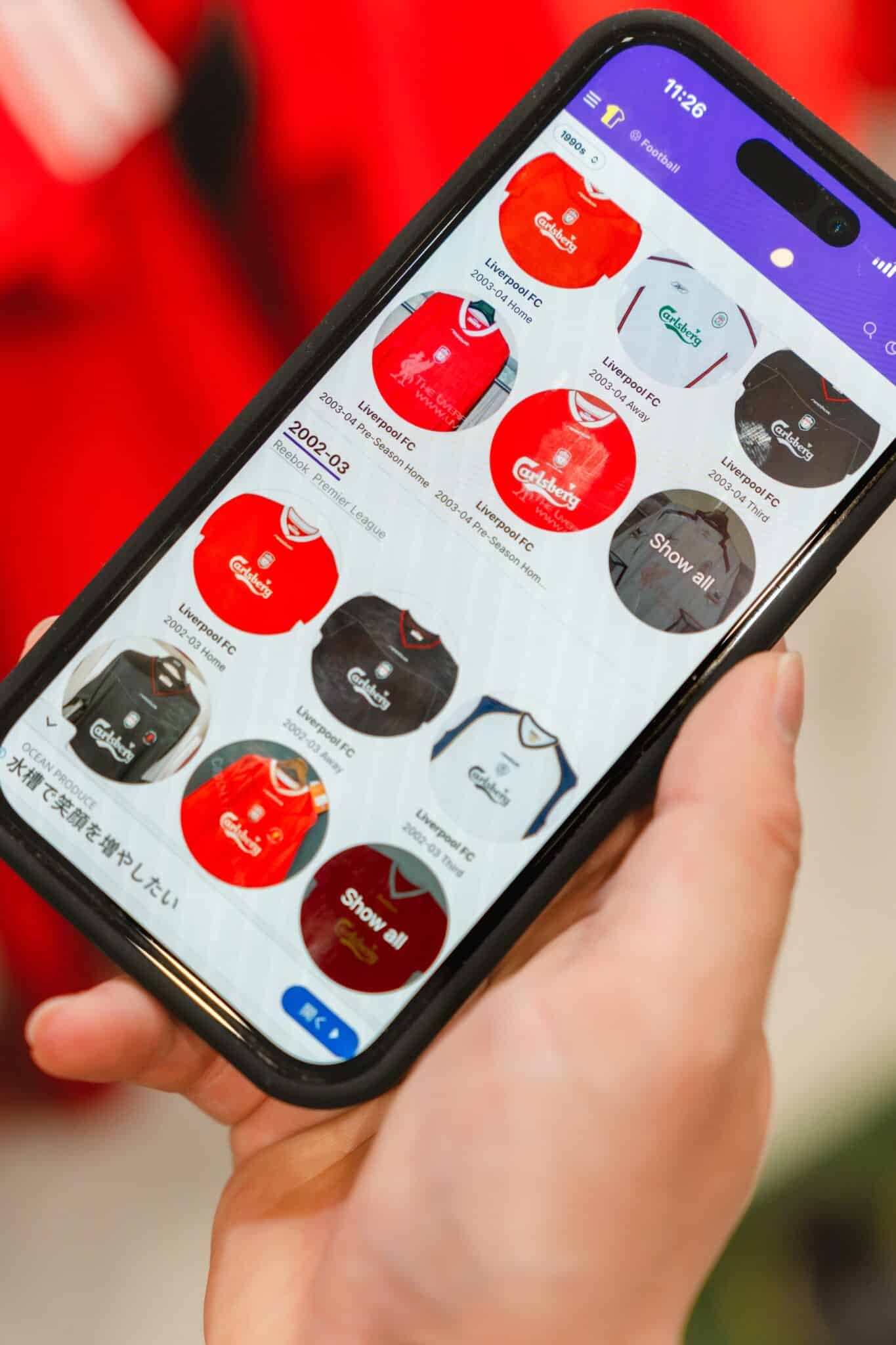
His approach of checking each item against specialist archive sites overseas reflects a deep sense of inquiry, similar to tracing the history of vintage denim or military wear.
The process of identifying season and model information using overseas archive sites and other resources.
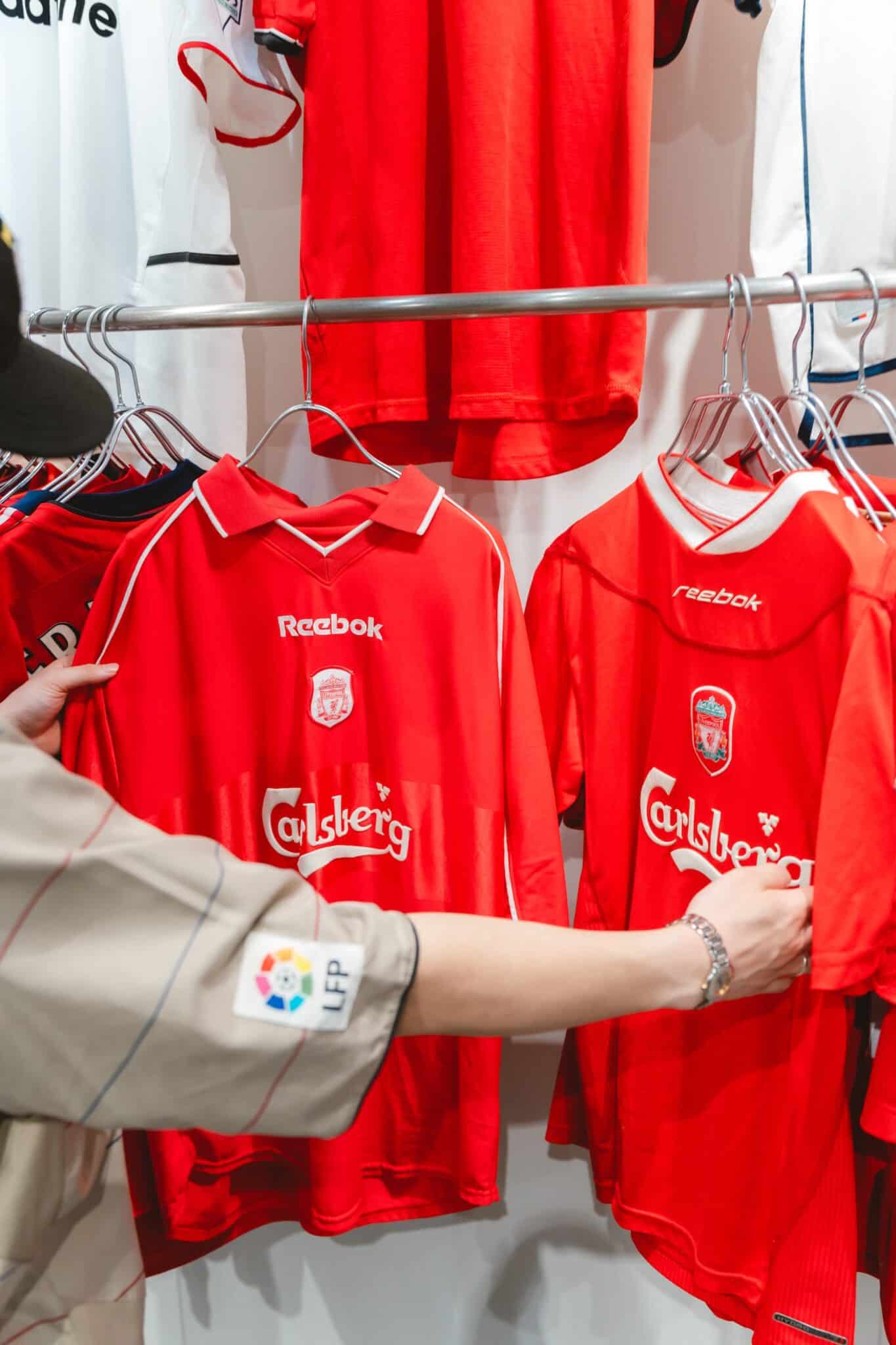
Historic Liverpool uniforms, symbolic of the club. Even within the same club, the dimensionality of the logo, cutting, and detailed specifications differ depending on the era.
The game shirts lined up at “KIMAMA” are all valuable premium pieces that have colored the history of football. Yet despite their high level of expertise and archival quality, the prices are kept just within reach as a serious hobby purchase.
“I’m not denying the idea of collecting them, but as long as they are clothes, I want people to actually wear them out in the city. I want to keep them at a price point where high school and university students can work hard at part-time jobs and buy one for themselves. That is one thing I don’t want to compromise on.”
Delivering the joy of wearing a rare piece that carries football history as part of everyday styling—and making such pieces available at realistic prices—is the commitment the owner values above all else.
Models from the period when Manchester United’s sponsor changed from “SHARP” to “Vodafone,” Liverpool’s iconic golden pairing of “Reebok × Carlsberg,” and the “O2” sponsor era when Arsenal achieved their unbeaten championship season are among the historic classics from the so-called “Big Six” lined up here.
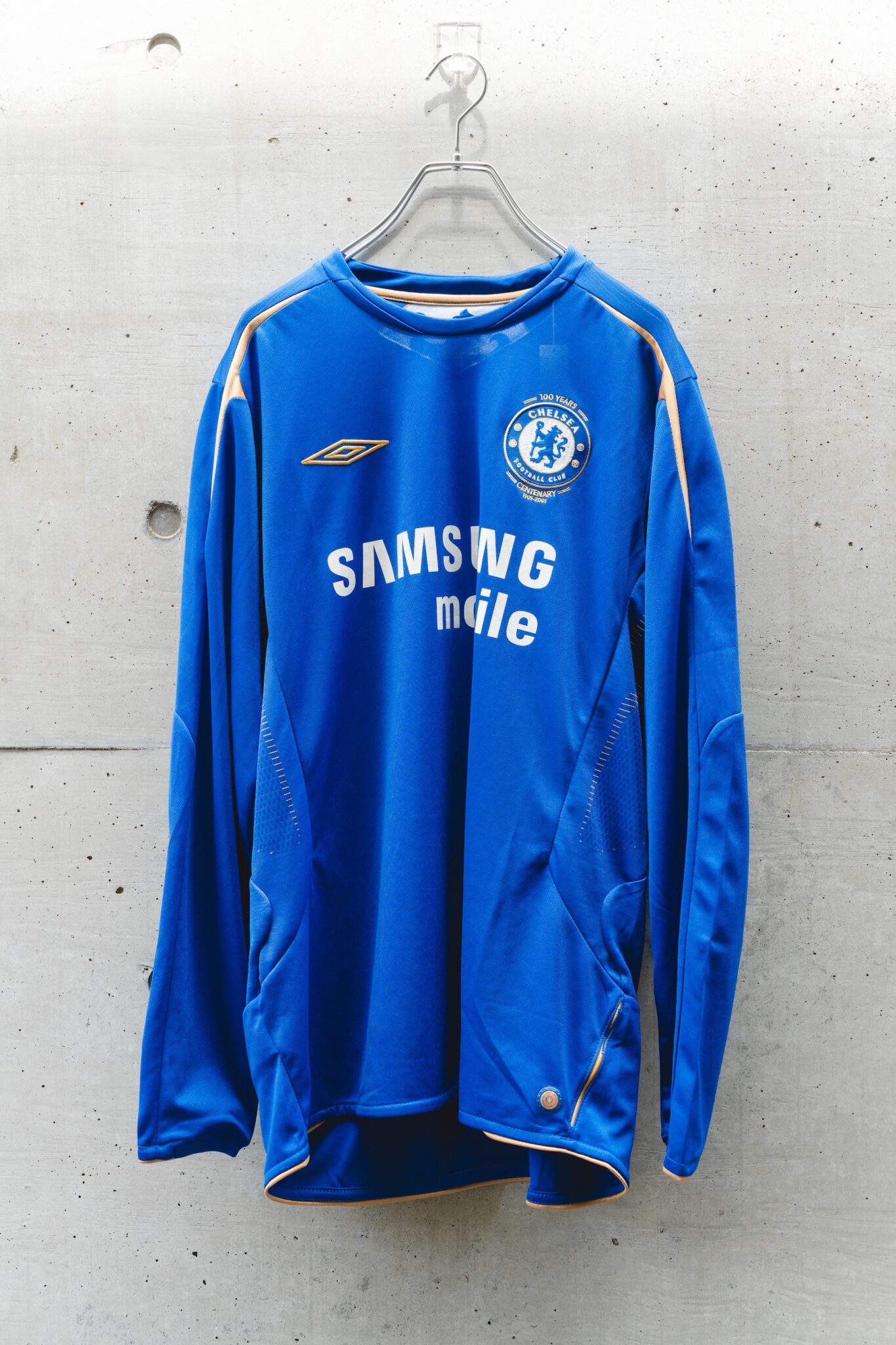
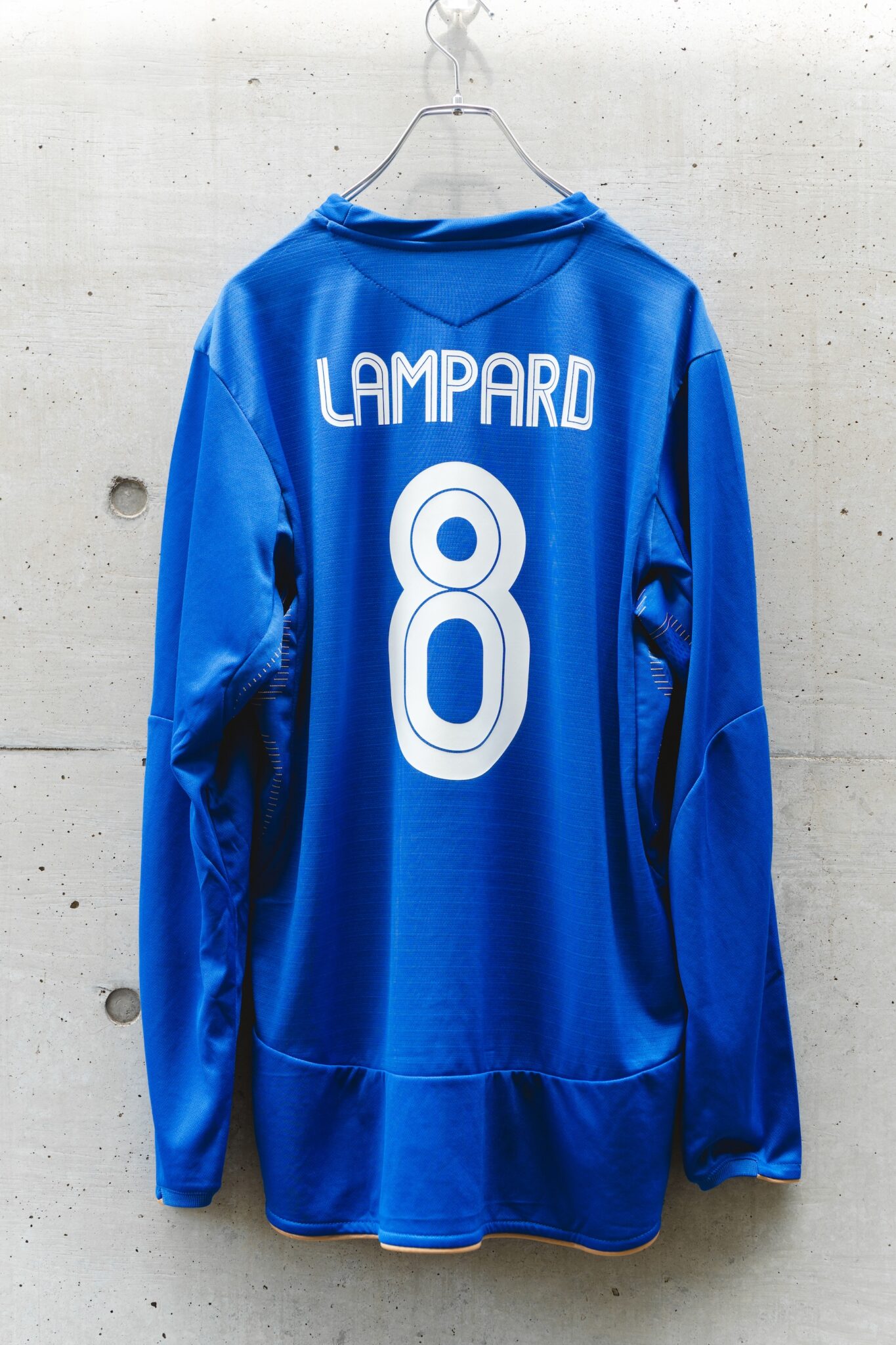
A 2005–06 Chelsea shirt by Umbro, with “SAMSUNG mobile” shining across the chest and “100 YEARS CENTENARY” marking the club’s 100th anniversary on the crest. This Frank Lampard model, number 8, still carries the overwhelming weight of the flocked number material characteristic of the Premier League at the time.
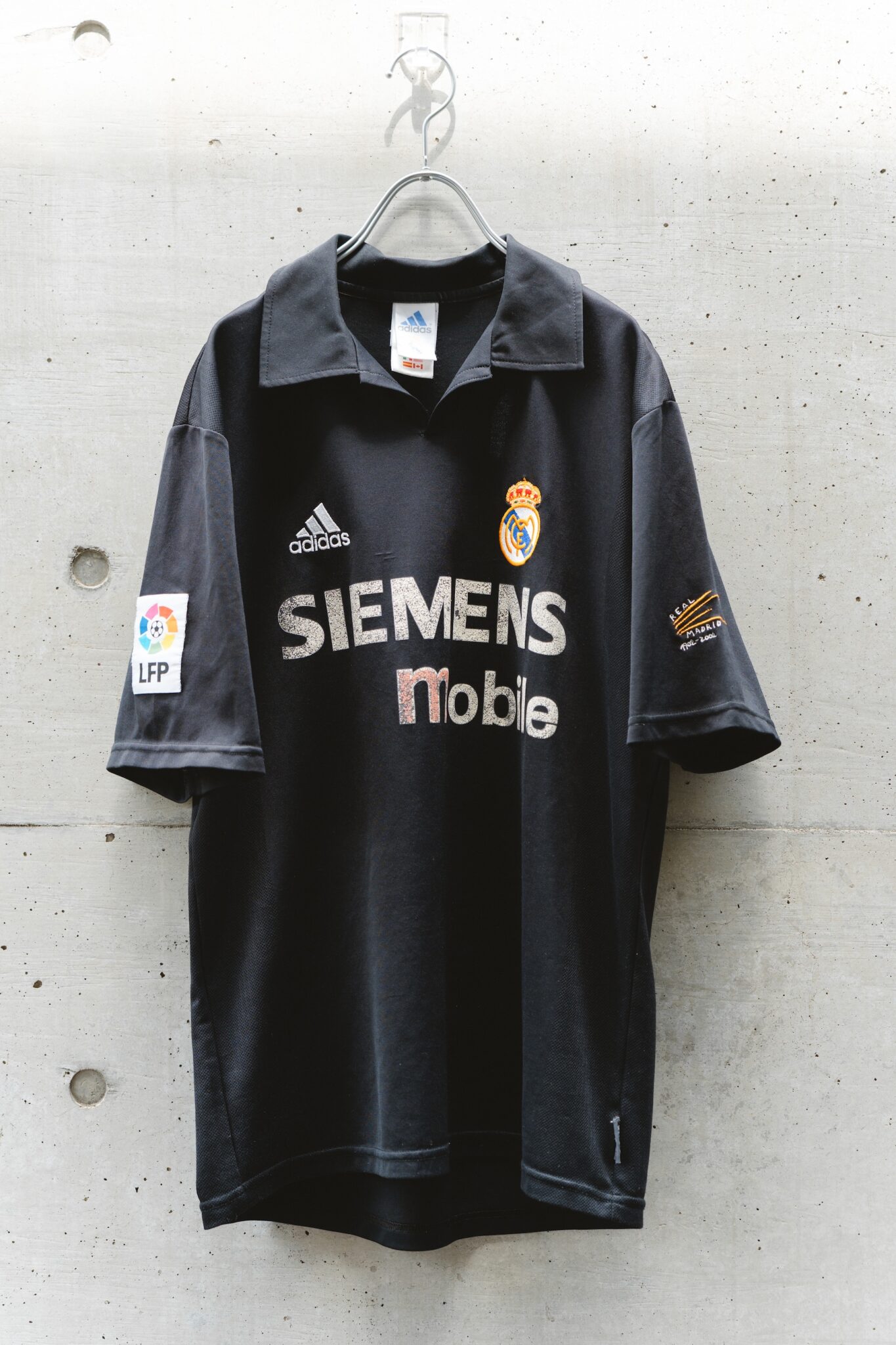
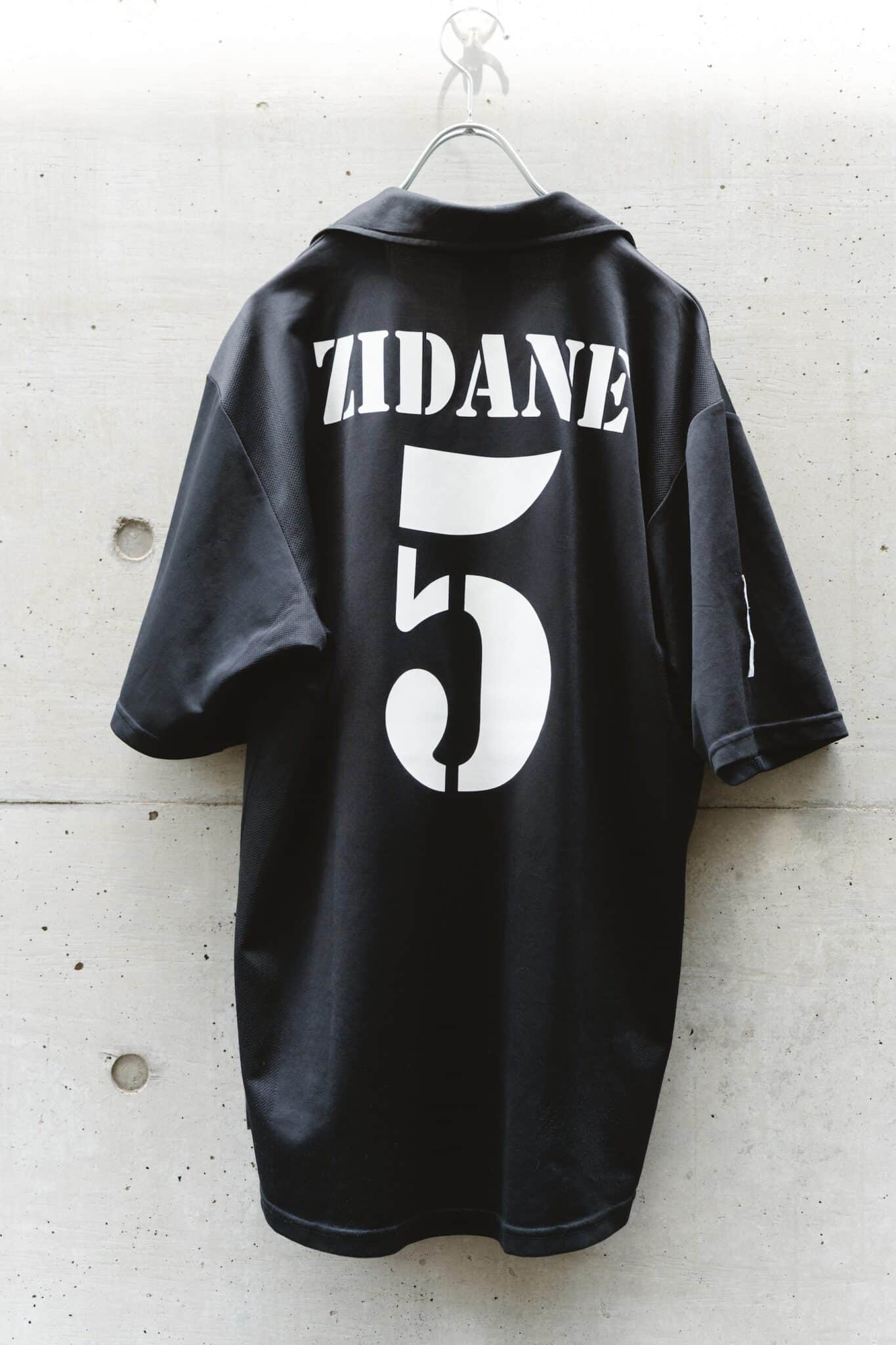
A 2002–03 Real Madrid away model, featuring a “1902–2002” patch on the left sleeve commemorating the club’s centenary and the “SIEMENS mobile” logo on the chest. Worn by Zinedine Zidane, number 5, this away shirt symbolizes the star-studded squad then known as the “Galácticos.”
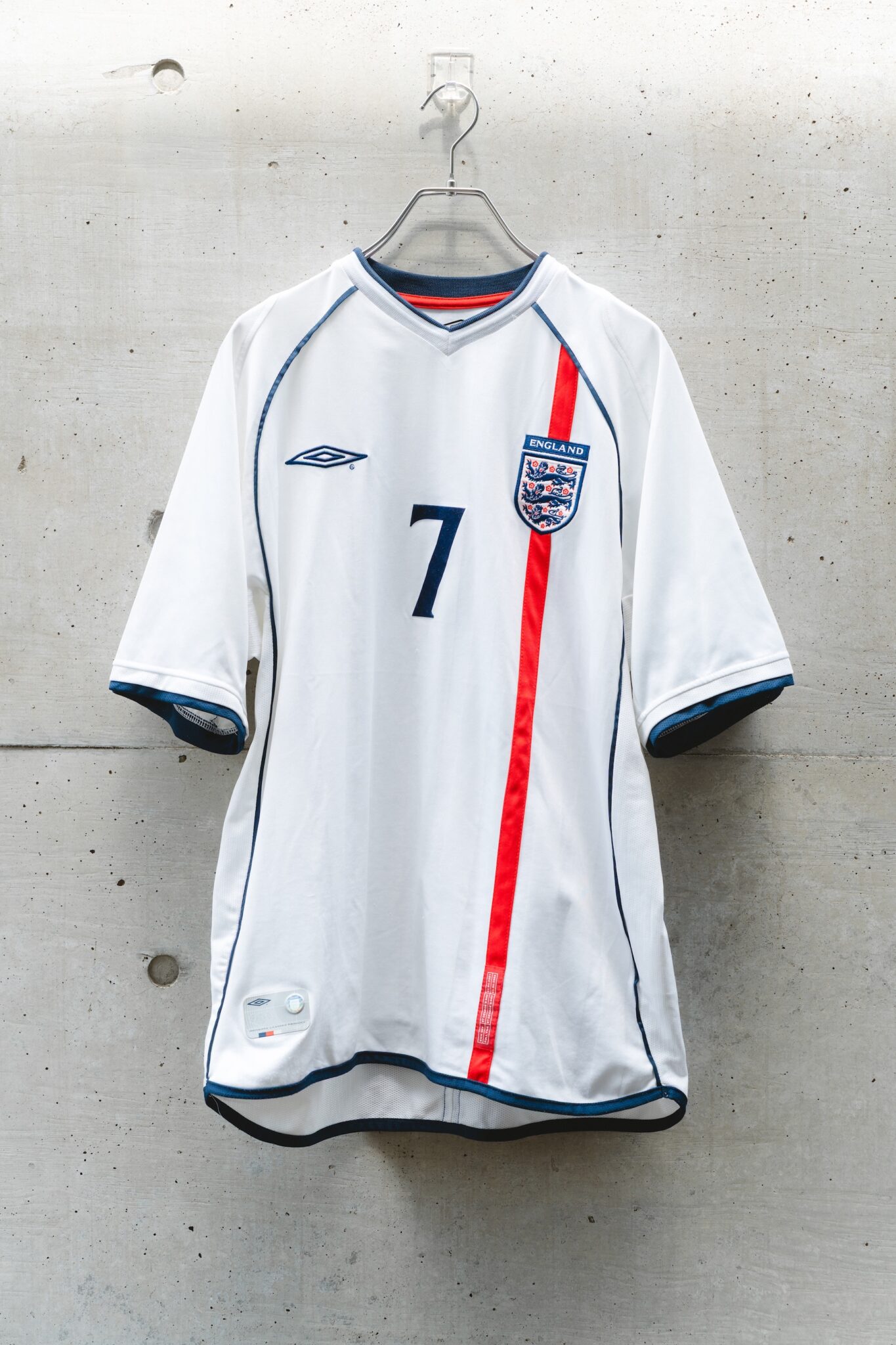
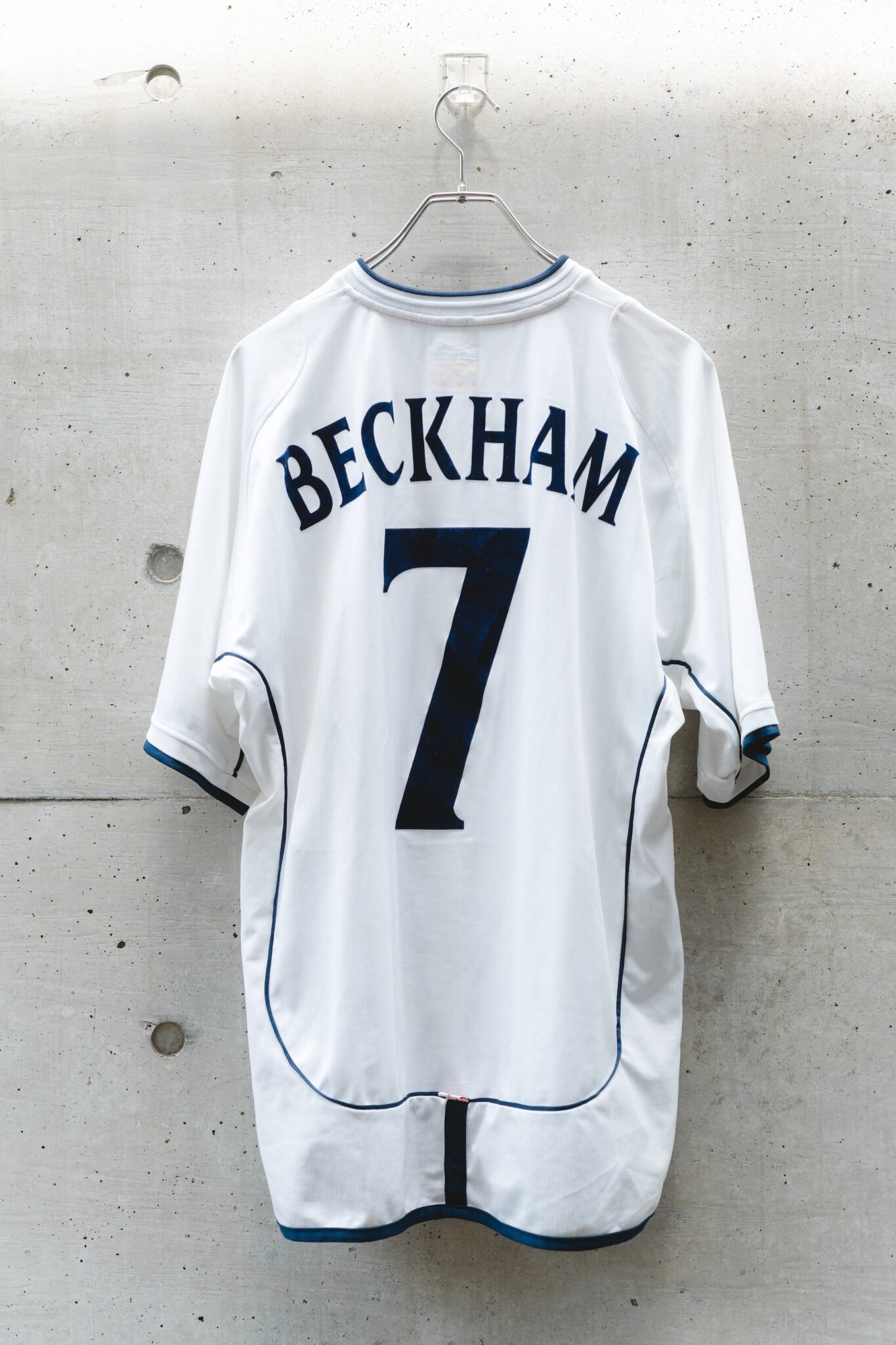
This is the England national team home jersey from the 2002 Japan-Korea World Cup, featuring David Beckham’s No. 7. It’s a popular model that stands out for its striking single red vertical stripe running down the left side and its excellent condition.
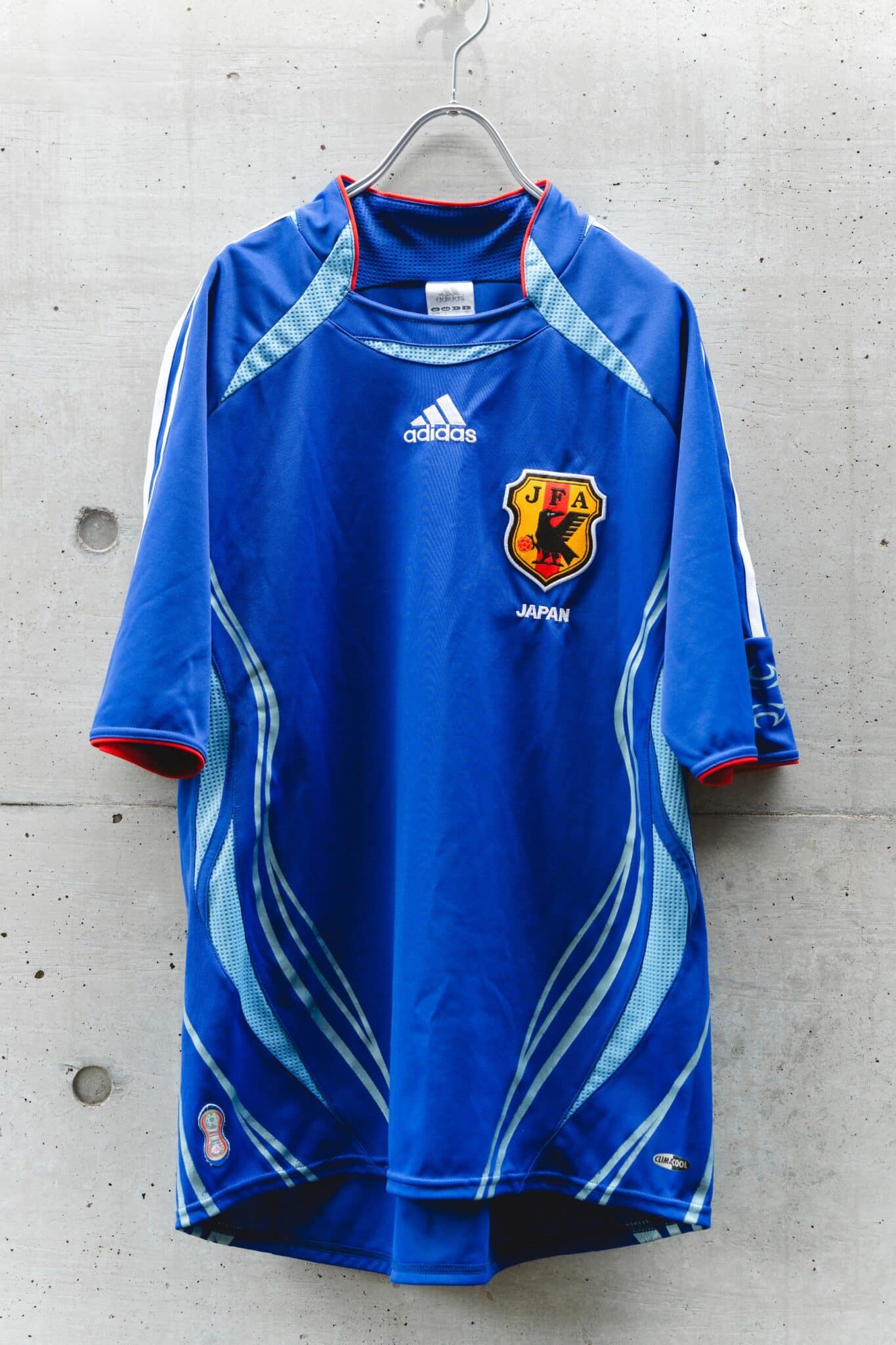
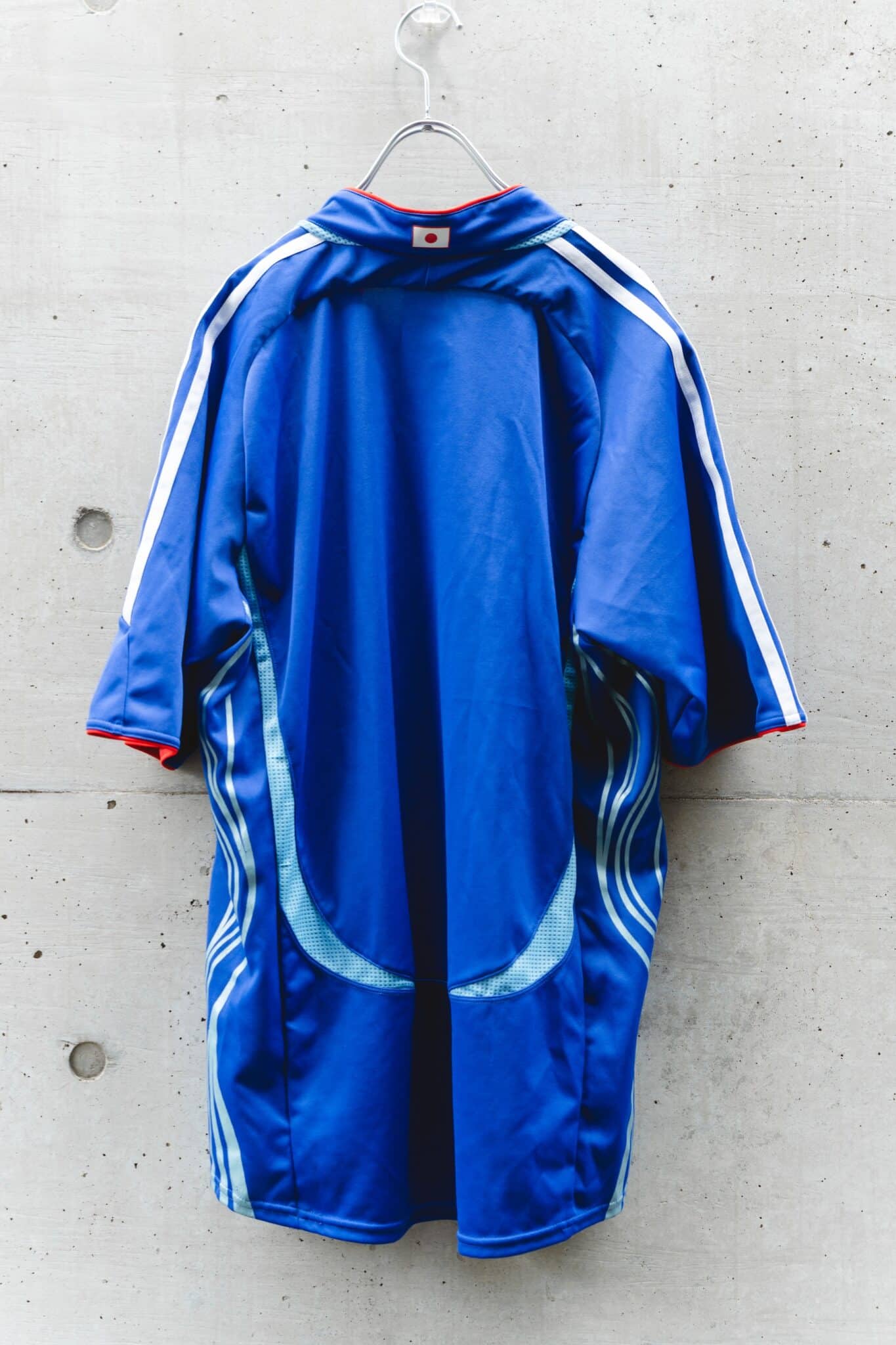
A Japan national team model from the 2006 FIFA World Cup Germany, featuring adidas’s distinctive and beautiful cutting. It is a special piece that carries the memory of Hidetoshi Nakata’s final match as an active player, with details that are sure to appeal to enthusiasts.
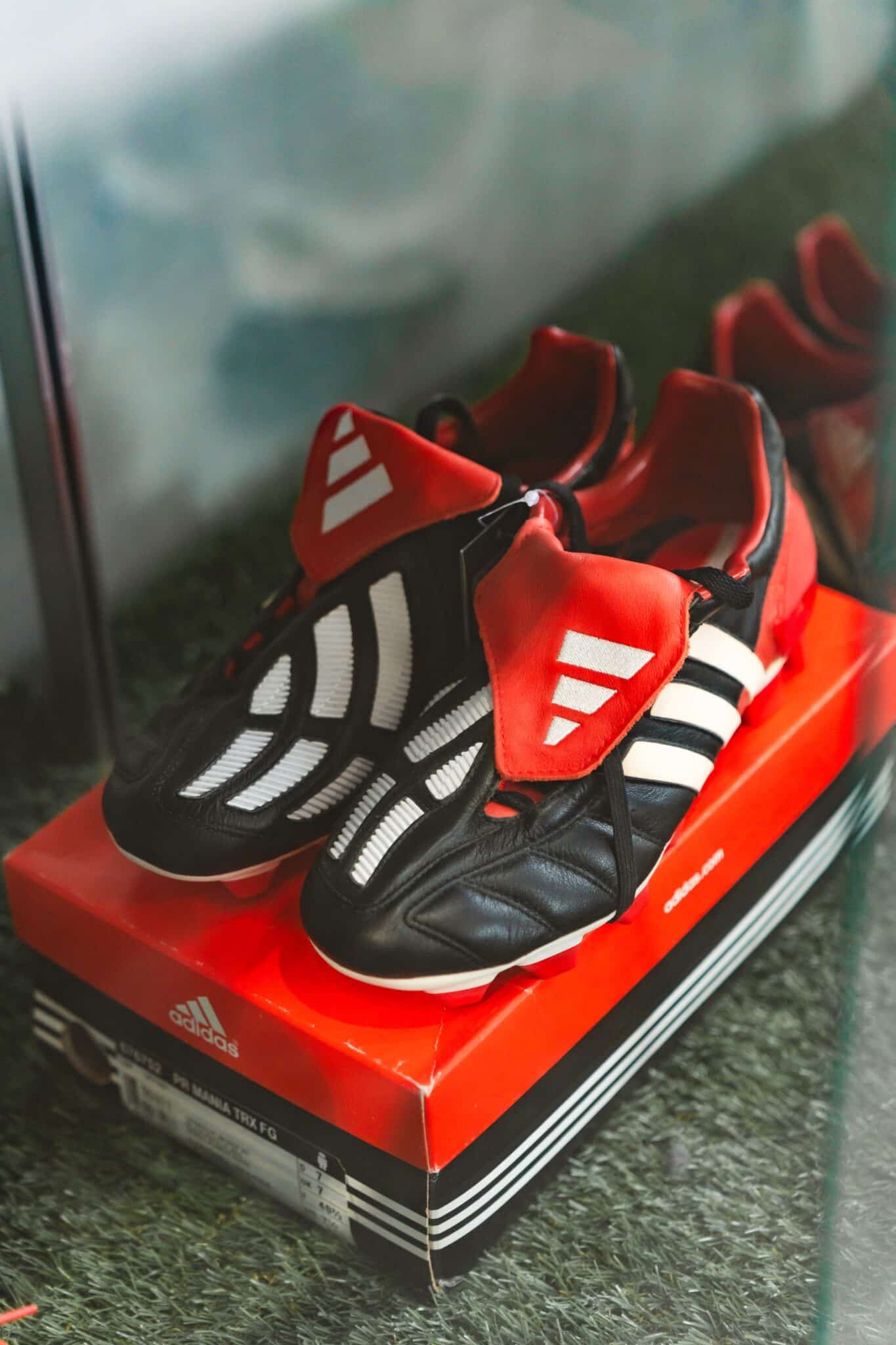
The passion for football that fills “KIMAMA” is not limited to the game shirts for sale. Signed uniforms, boots, and an original pair of adidas “Predator Mania” shoes displayed with their original box from the time are among the items arranged throughout the space. Precisely because they are not for sale, these pieces quietly tell the story of the football memories flowing through this place. As visitors choose items, they also come into contact with the accumulated passion embedded in the space called “KIMAMA.”
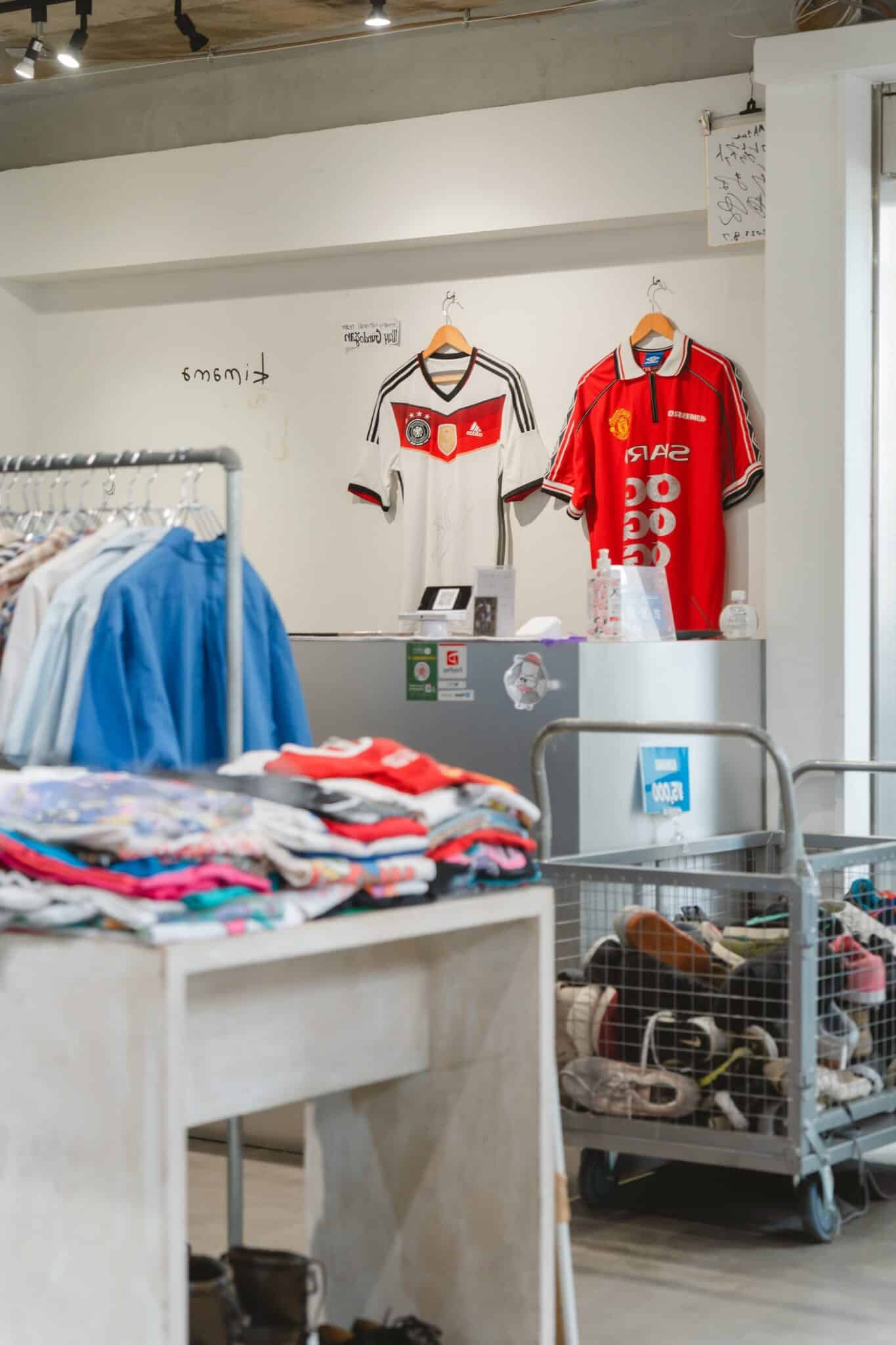
A uniform near the register signed by former Germany international İlkay Gündoğan. It is not for sale, but is one of the collections that shapes the atmosphere of the shop.
Boots signed by former Japan international Shinji Kagawa. Displayed on artificial turf inside a glass case, their vivid coloring evokes his time at Dortmund.
An original pair of adidas “Predator Mania” shoes from 2002, displayed next to Kagawa’s boots. They come with the original box from the time, and their excellent condition is also worth noting.
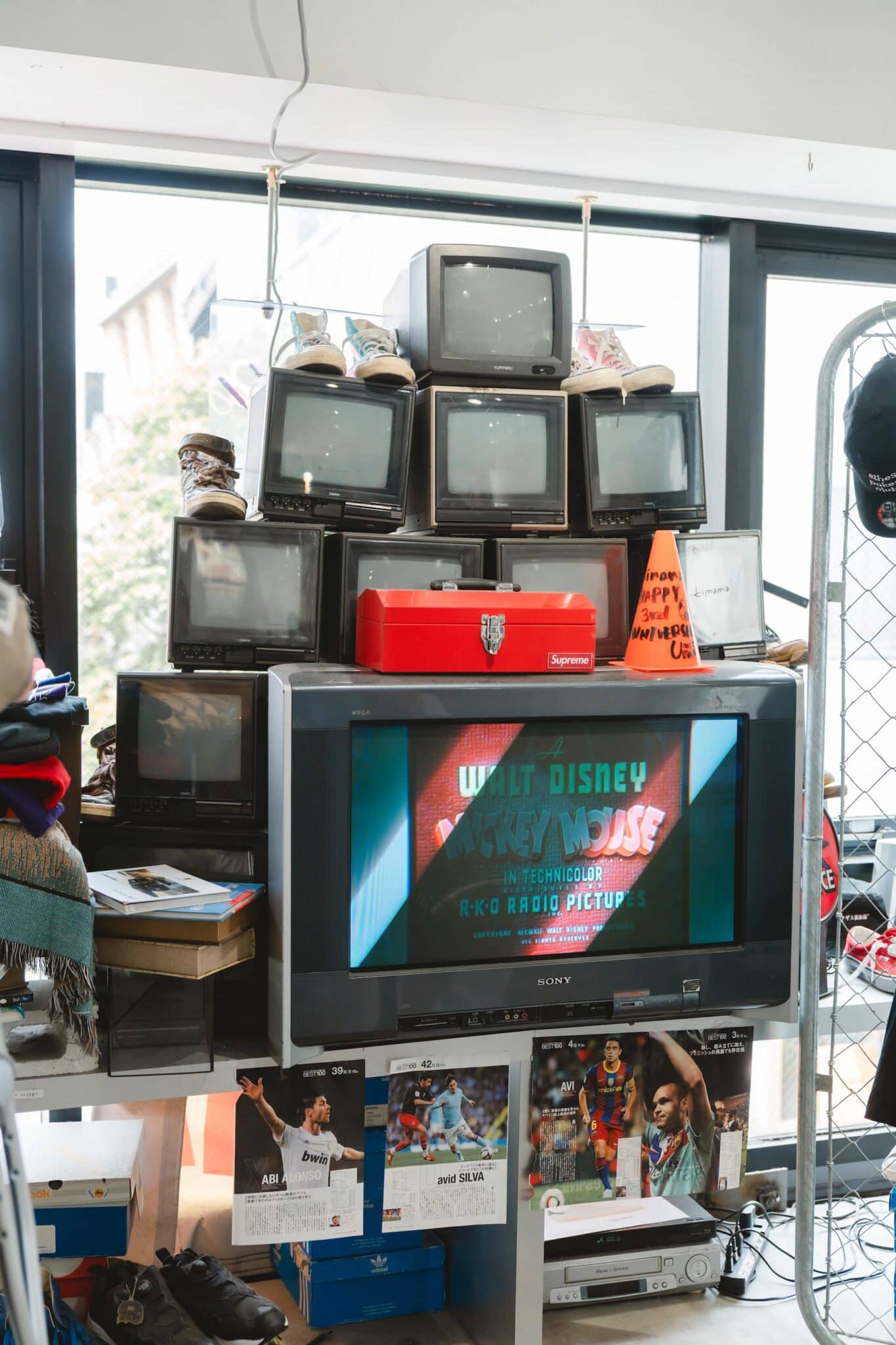
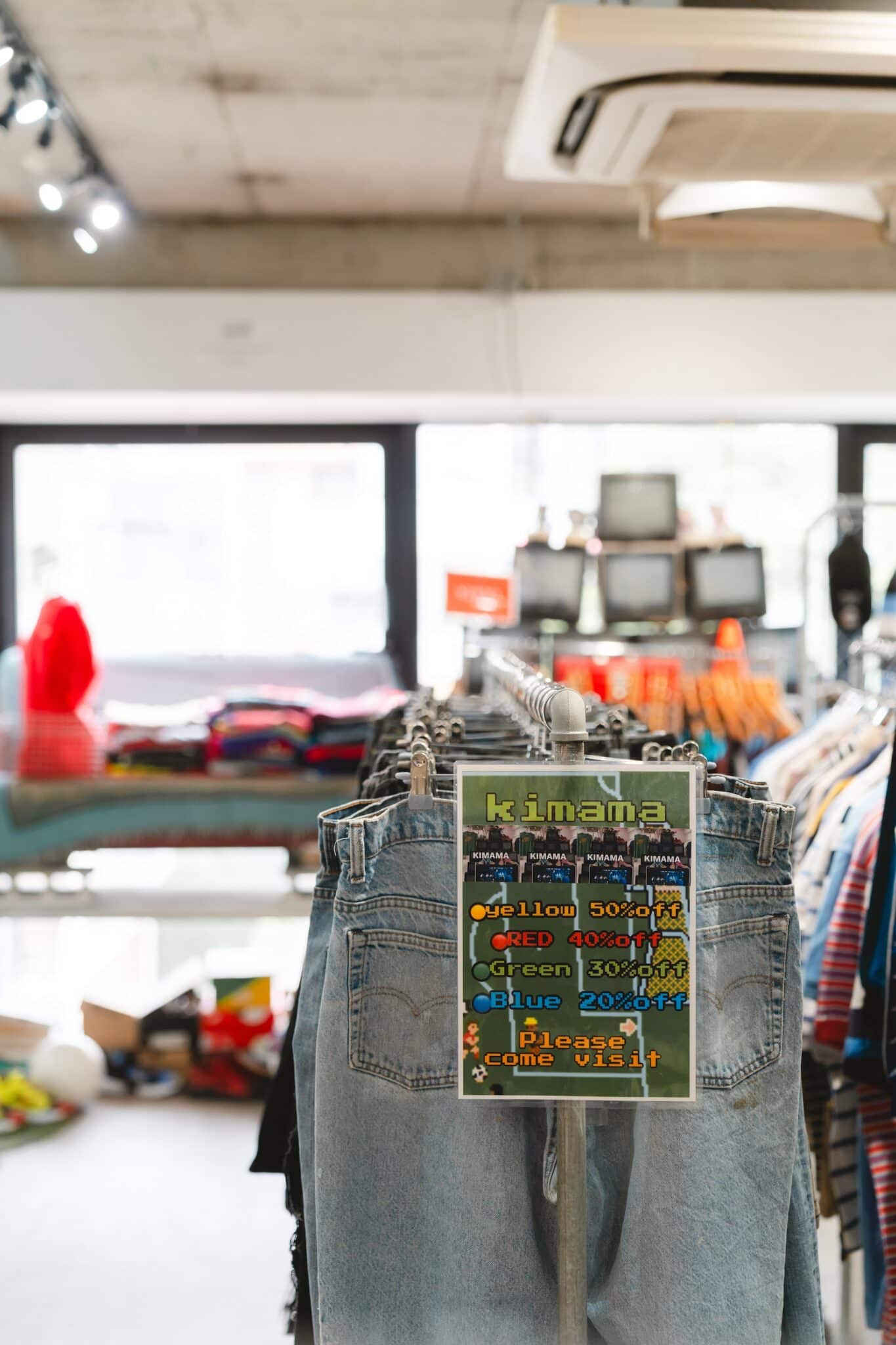
The space at “KIMAMA,” imbued with a love of soccer, bears the distinct mark of the owner’s own touch. The first thing that catches your eye upon entering the store is the tower of analog TVs stacked by the window. These rugged, small CRT sets—once used in karaoke booths—were collected and assembled by the owner himself as he traveled throughout the Kanto region. This monument, which he says began as a result of his own collecting hobby, has become the shop’s unique icon.
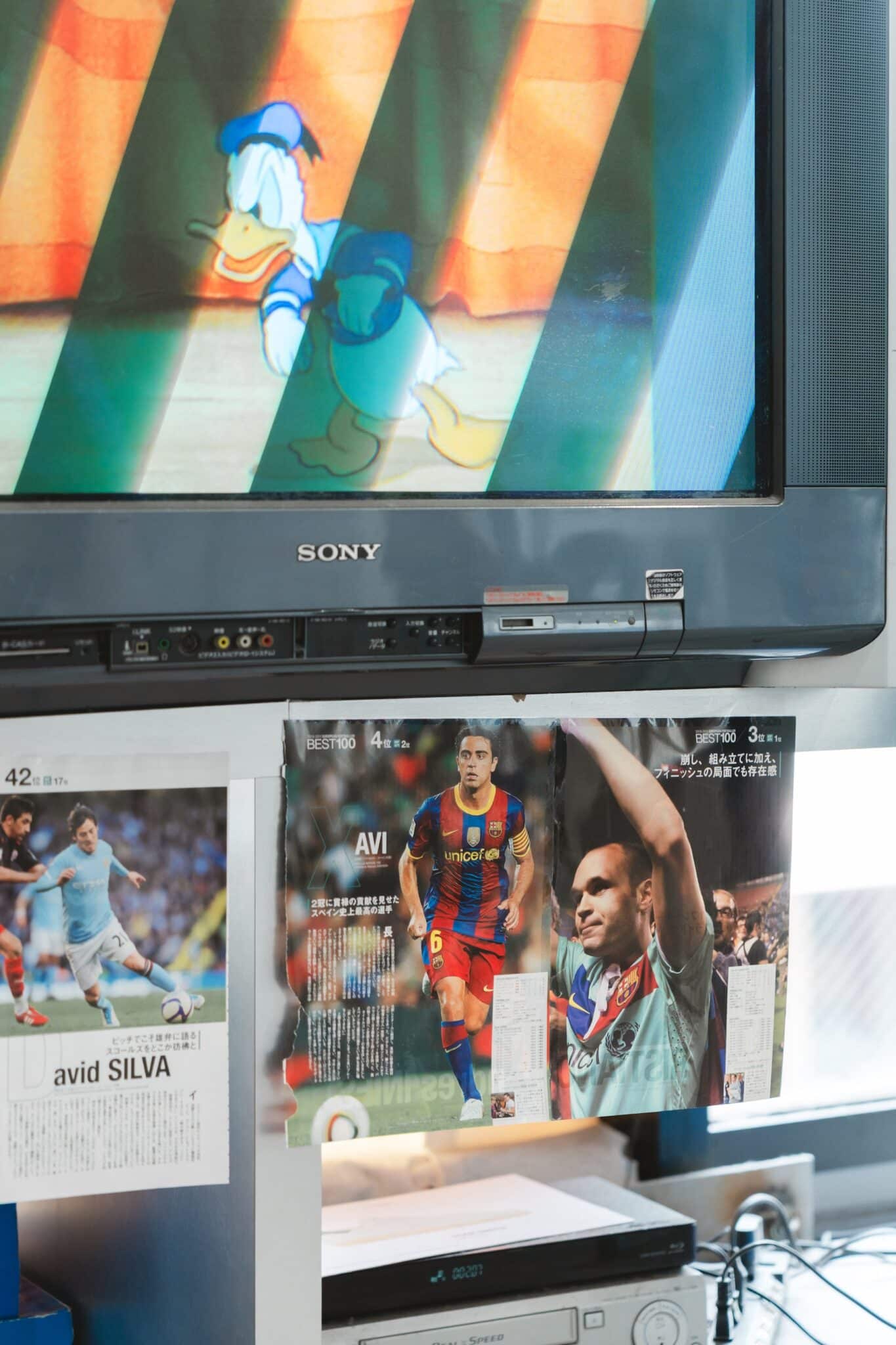
Playing on the handmade analog TV tower are “Disney films.” Behind this detail is the owner’s gentle perspective, like that of a midfield playmaker: while adults return to a childlike state and become absorbed in game shirts, children can stay entertained without getting bored.
Football magazine clippings attached at the foot of the TV tower. They reveal the owner’s affection for genius midfielders such as Xavi, Iniesta, and David Silva.
The owner, who still belongs to a football club and continues to play on the pitch. His own experience and perspective as a player form the foundation of every proposal the shop makes.
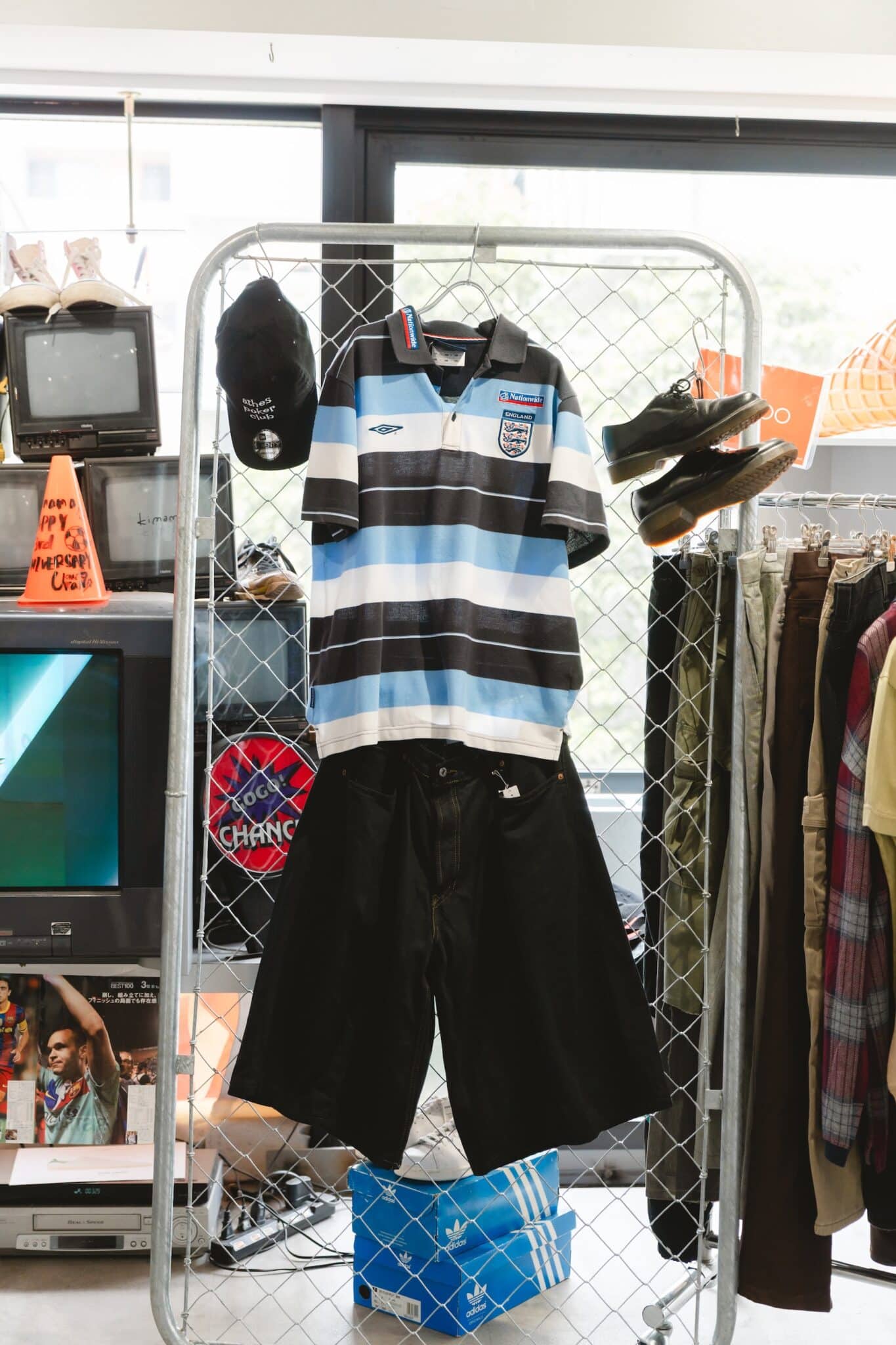
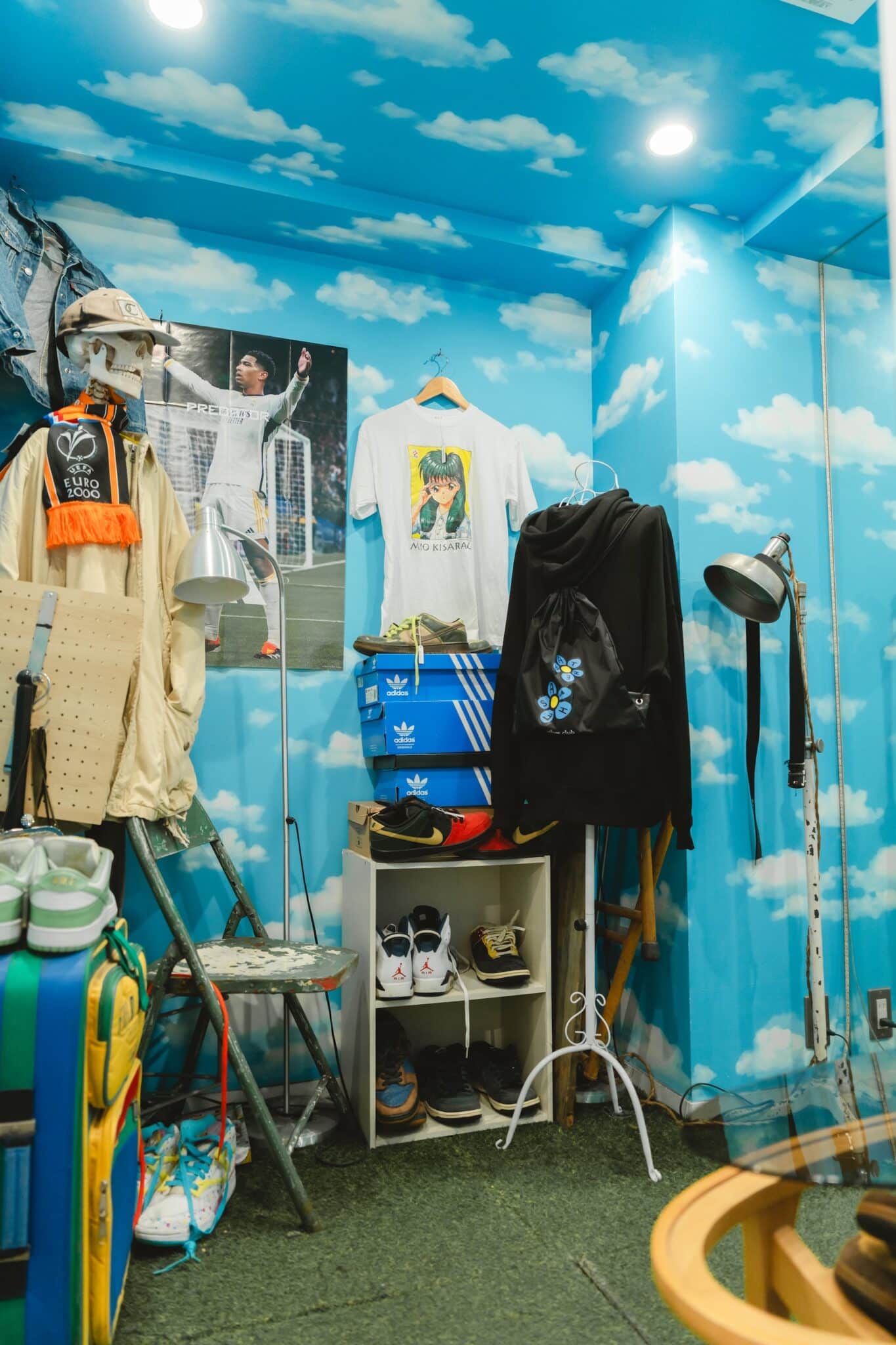
The comfort of the shop is not created by this sharp sensibility alone. Lockers and mesh fencing received from acquaintances, a fitting room inspired by “Toy Story” with artificial turf laid across the floor, and an old carry case given to him by his grandmother all blur the boundary between personal belongings and items for sale.
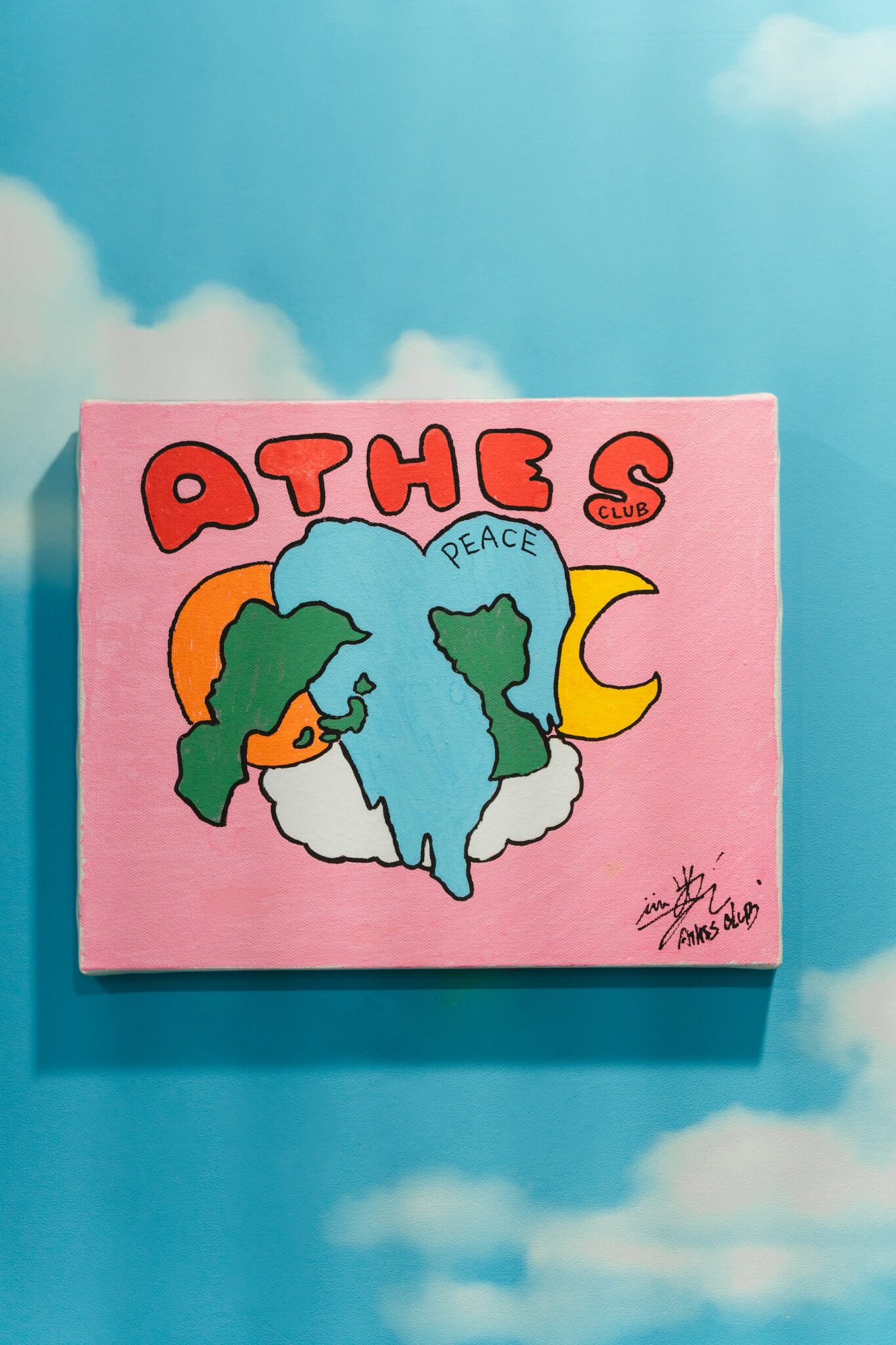
In addition, the owner’s sensibility is also expressed in the paintings and graphics displayed throughout the shop, as well as in the artwork for his original brand, “ATHES.” The brand motif is a distorted Earth. Embedded in it is the message that “any shape is fine,” overlapping with “KIMAMA”’s values of accepting individuality and imperfection as forms of appeal.
Mesh fencing received from an acquaintance’s vintage shop. It brings an industrial atmosphere to the space.
A playful fitting room with artificial turf covering the floor. Inspired by “Toy Story,” it is full of a sense of fun.
An illustration of a distorted “Earth” painted on a canvas made by the owner himself. It is a work that symbolizes the identity of the shop.
Handmade collages and graphics scattered throughout the space.
They heighten the energy of the self-built interior from within.
“KIMAMA”’s deep affection for football is reflected not only in its distinctive spatial design, but also in specific styling proposals.
“Used clothing with faded colors and age-worn changes whose origins and eras are hard to identify, and vivid game shirts carrying the excitement and history of stadiums. The fun of vintage clothing lies in figuring out how to combine these two seemingly unrelated things and make them fit naturally into streetwear.”
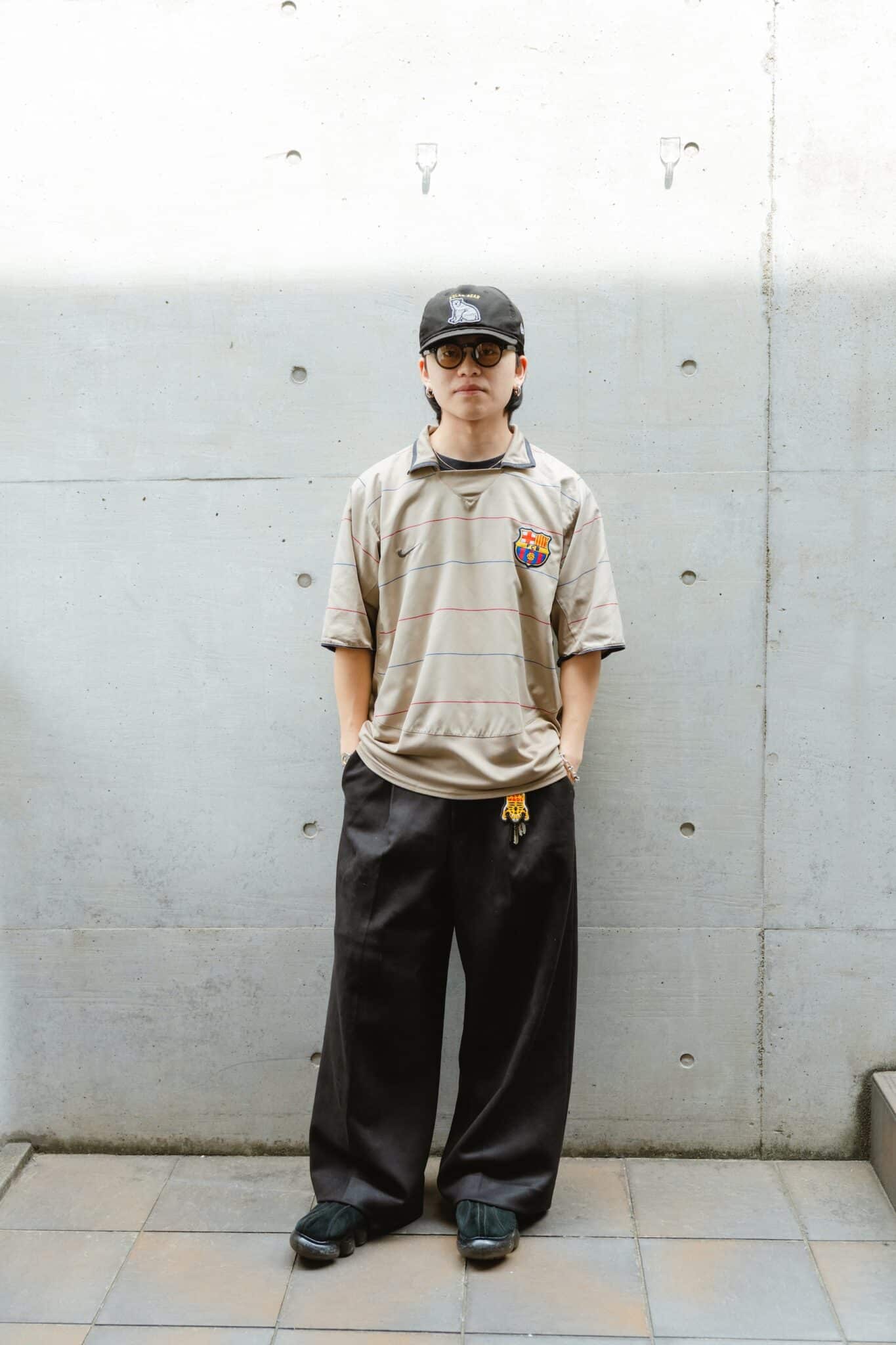
Just as he says, the styles proposed here make the vivid colors and street feel of game shirts the focal point, while pairing them with everyday wardrobe staples such as chinos, slacks, and eyewear to bring them into city use. Rather than simply admiring historic archive pieces, “KIMAMA” proposes enjoying them freely and lightly as fashion. That is exactly the new way of wearing game shirts that the vintage shop “KIMAMA” has consistently continued to share.
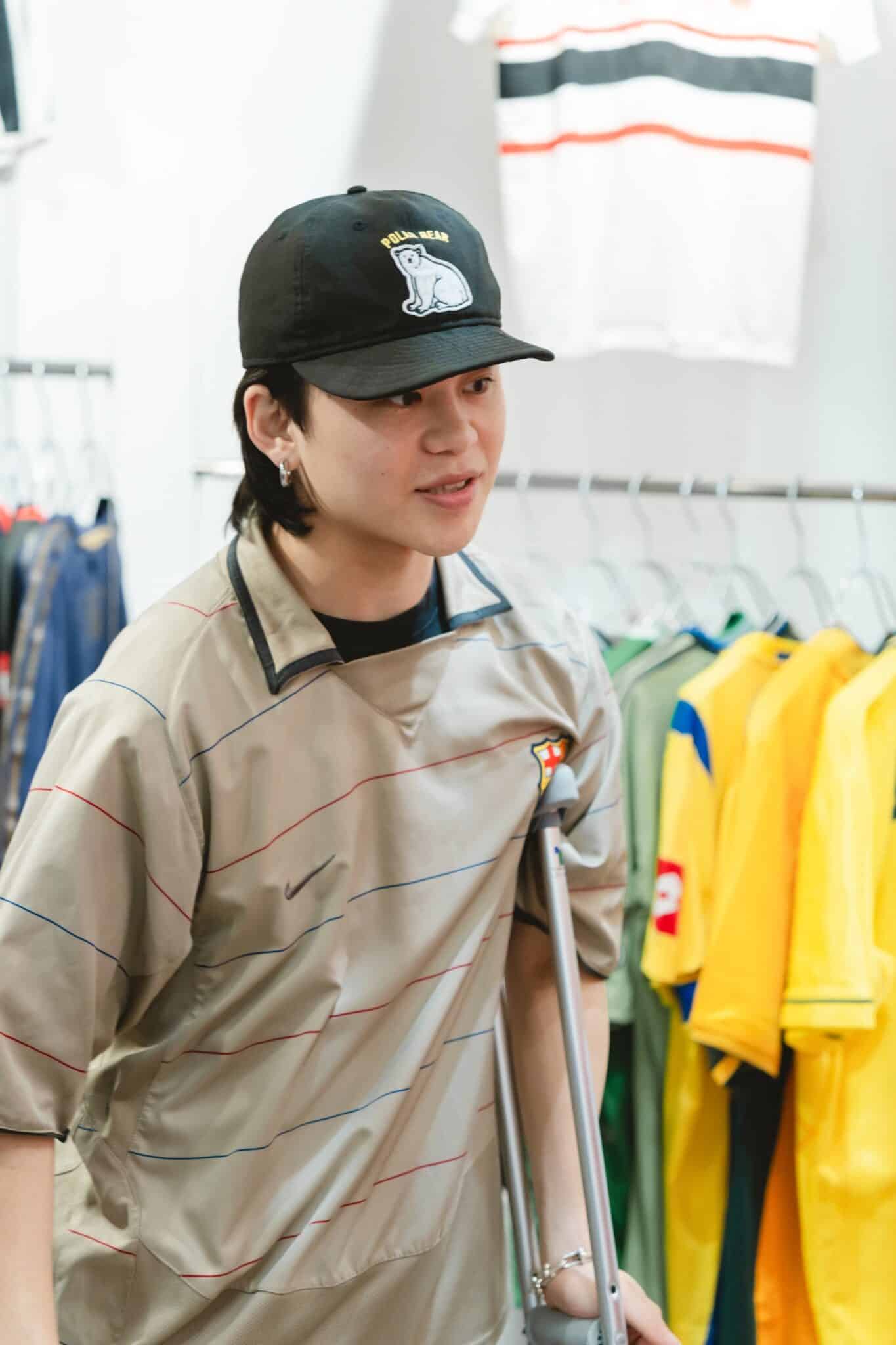
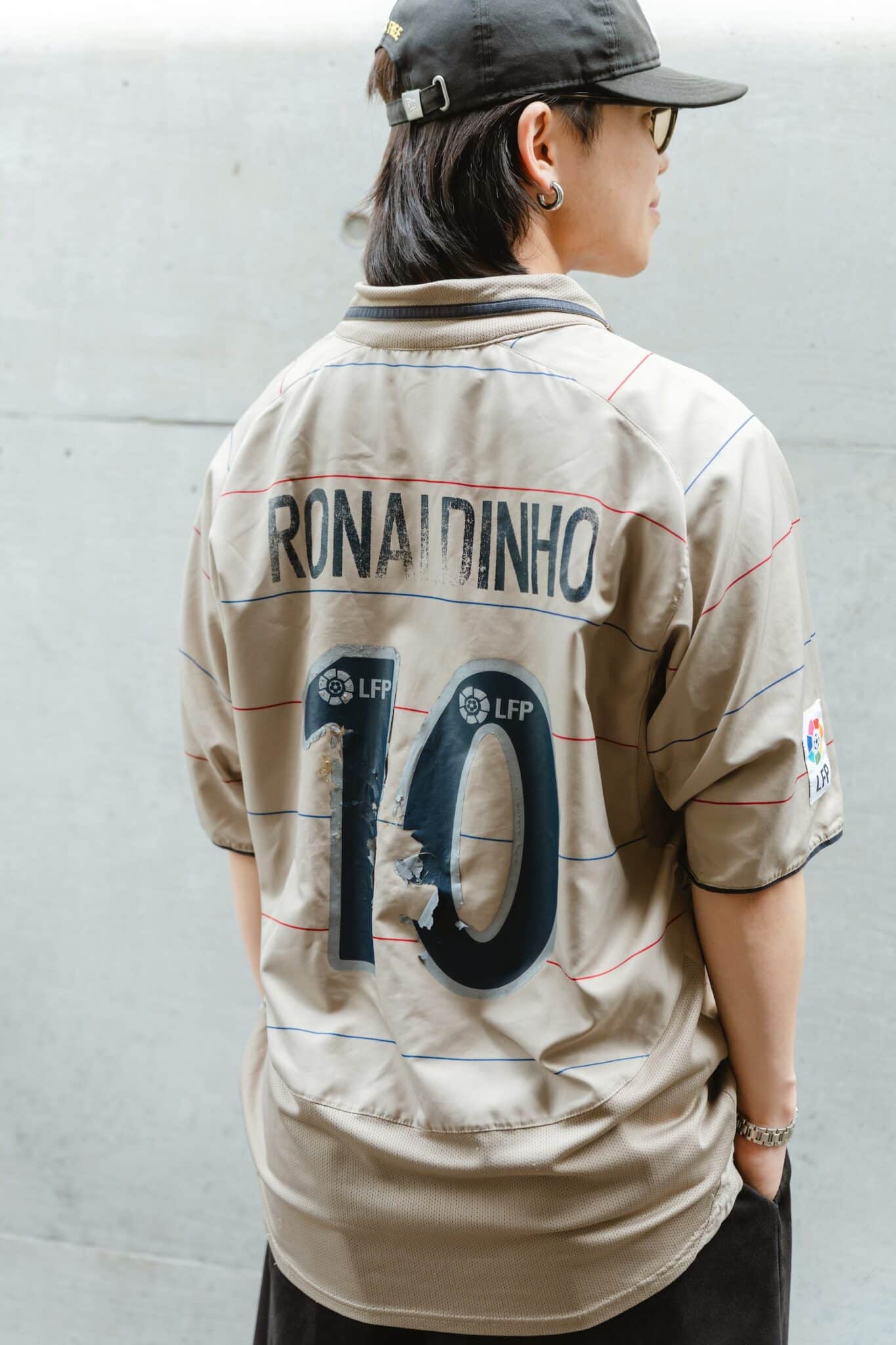
Styling by the owner. He wears Barcelona’s away, or third, model from the 2003–04 season, when Ronaldinho joined the club and ushered in a new era. The elegant beige-gold shirt is paired with voluminous black bottoms and modern eyewear, elevating the game shirt into citywear.
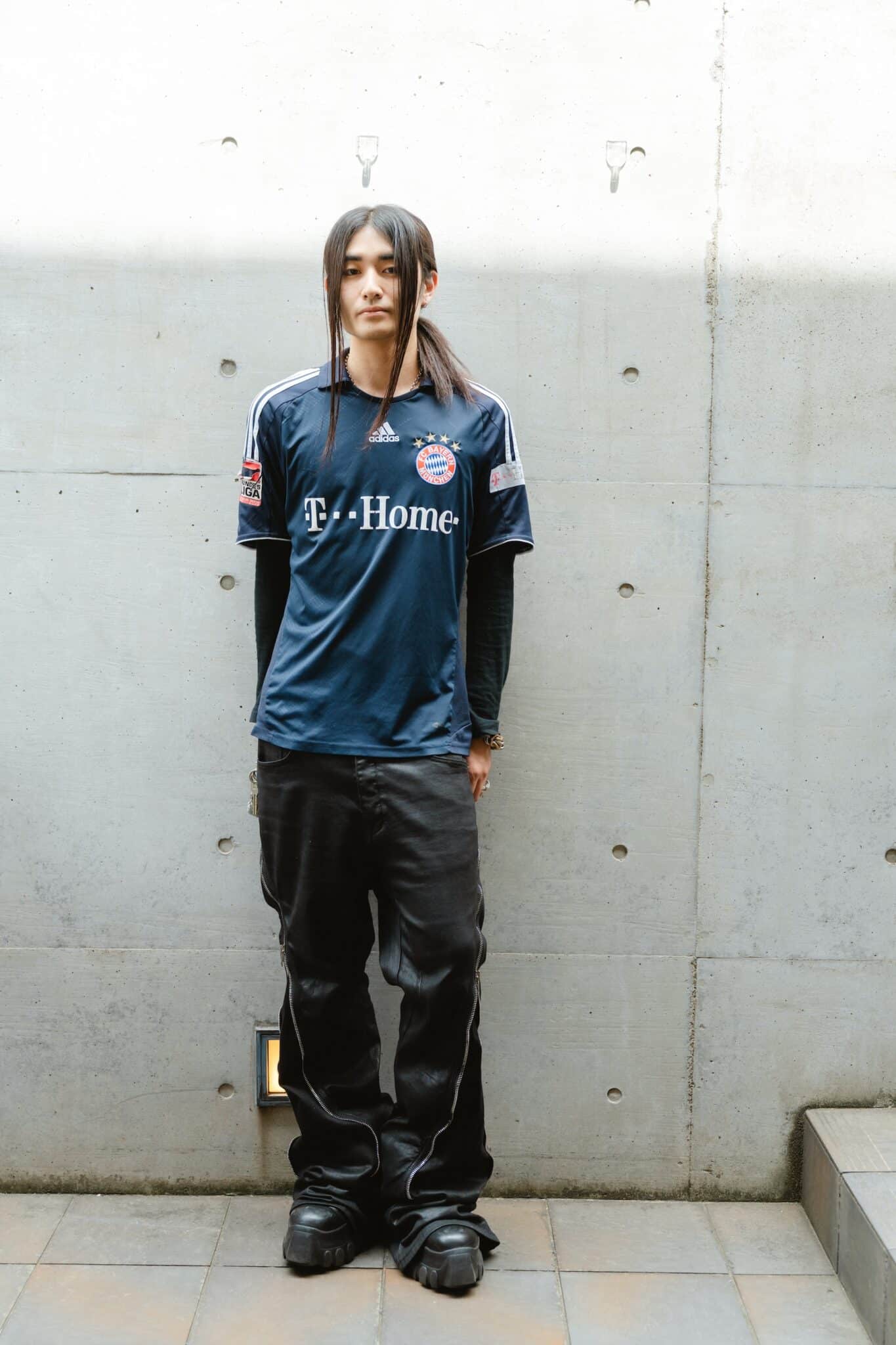
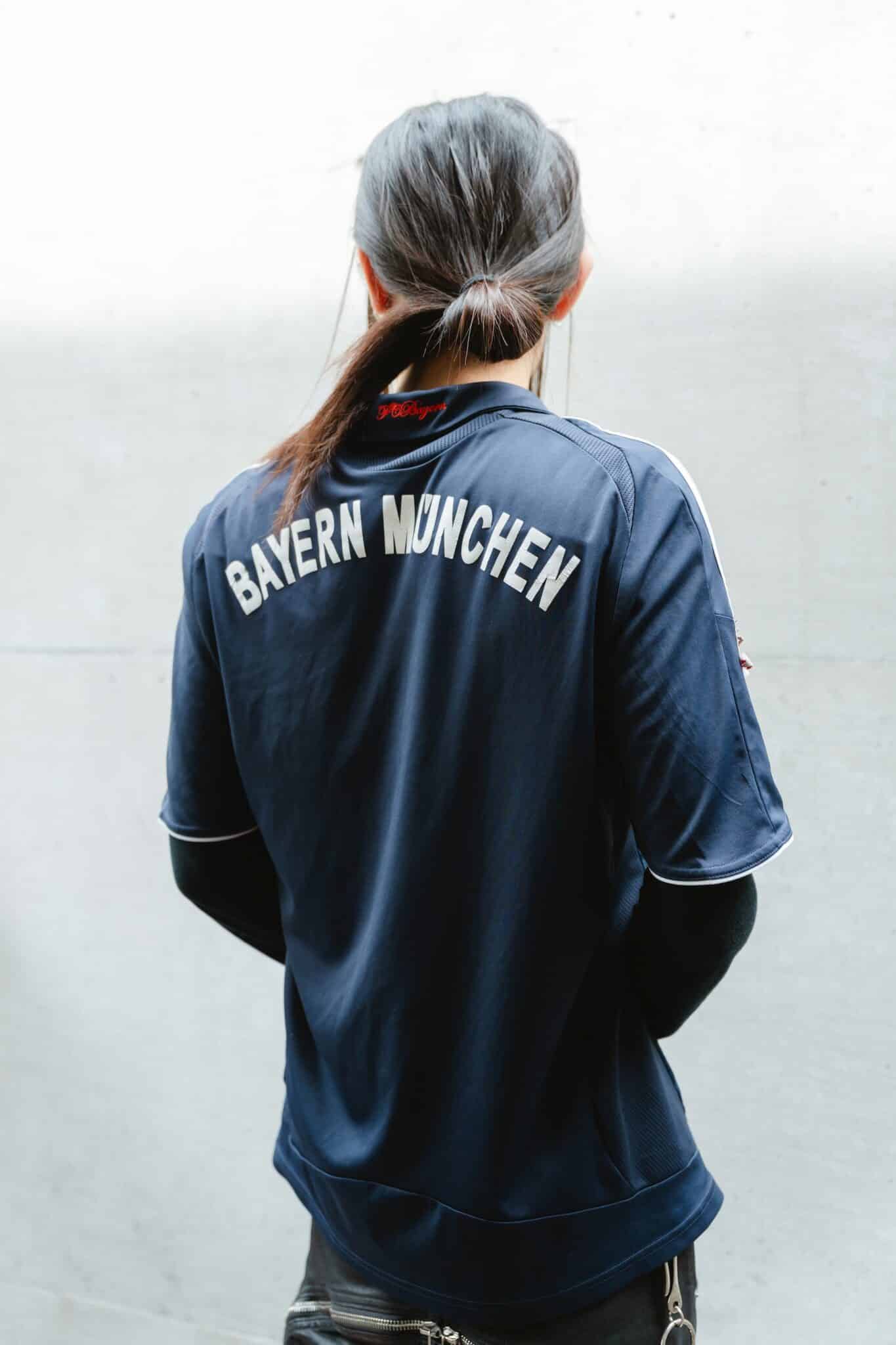
Styling by staff member Ryuto. He wears Bayern Munich’s away model from the 2009–10 season, featuring the “T-Home” logo on the chest. Layered with a dark-toned fitted inner layer and zip pants with technical detailing, the look proposes an edgy and distinctive street style.
The information in this article is current as of August 11, 2026 (at the time of publication).



.jpg)
スマホ.jpg)