DEEPTOKYO
magazine

EN

DEEPTOKYO
magazine
EN
2026.04.10
Over 1,000 Vintage Accessories in One Store


 Nearest Station

Abesho 2nd, located in a back alley of Ichibangai Shopping Street in Shimokitazawa, is a vintage clothing store where American secondhand clothing and vintage goods coexist. The space has an atmosphere reminiscent of a souvenir shop. The store’s style lies in discovering new meaning even in items that were once considered to have “no value,” such as remade goods and paper napkins. It is a place that can even change how you perceive objects and value itself.
SHARE


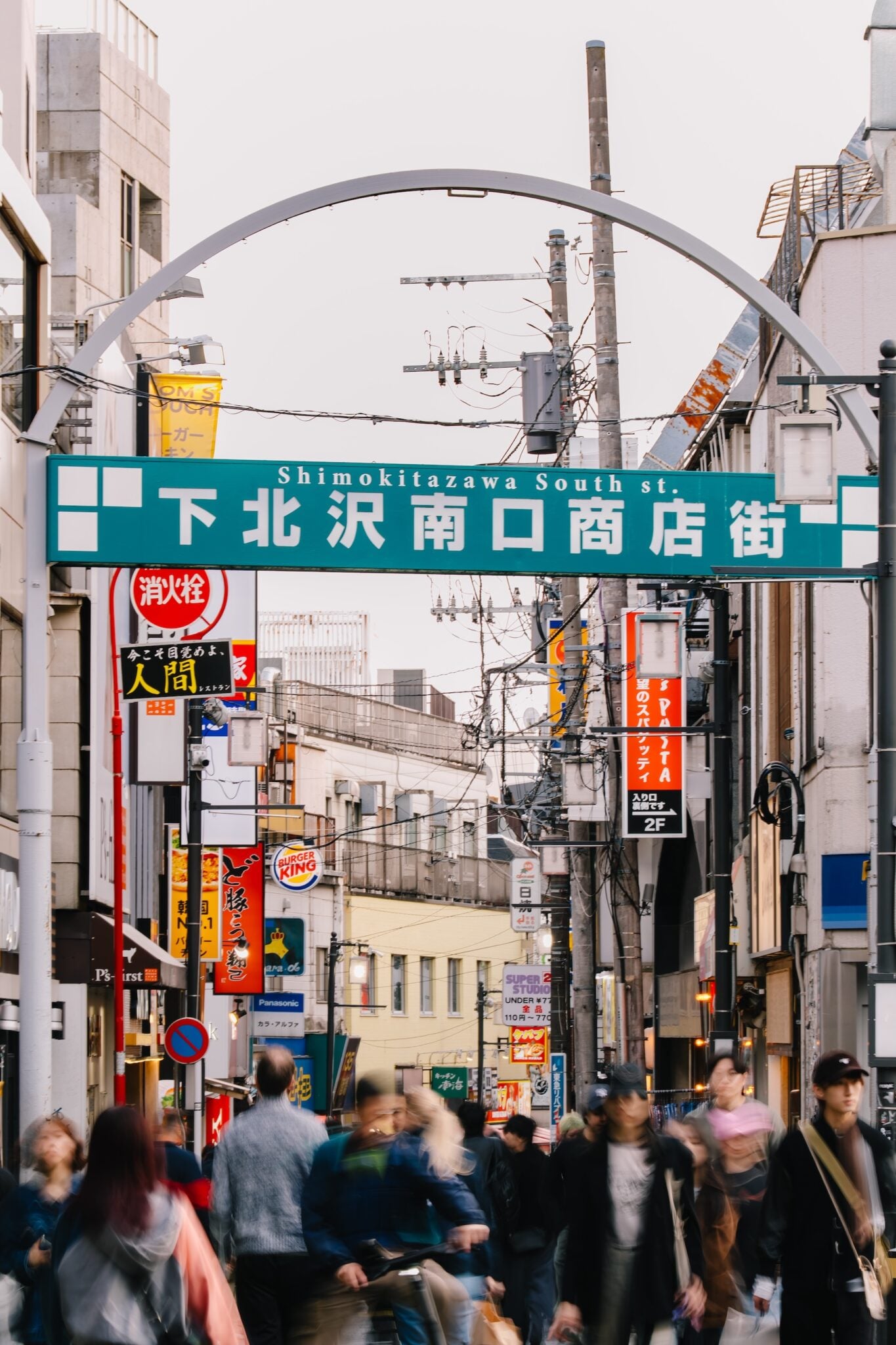
Ichibangai Shopping Street is the oldest shopping street in Shimokitazawa. At the end of a narrow alley within it stands Abesho 2nd. Inside the store, casual American vintage clothing sourced from the U.S. and pop-style vintage goods are sold. It has been about eight years since the shop relocated to this location. It has been loved by a wide range of customers, from students to stylists and people in the entertainment industry.
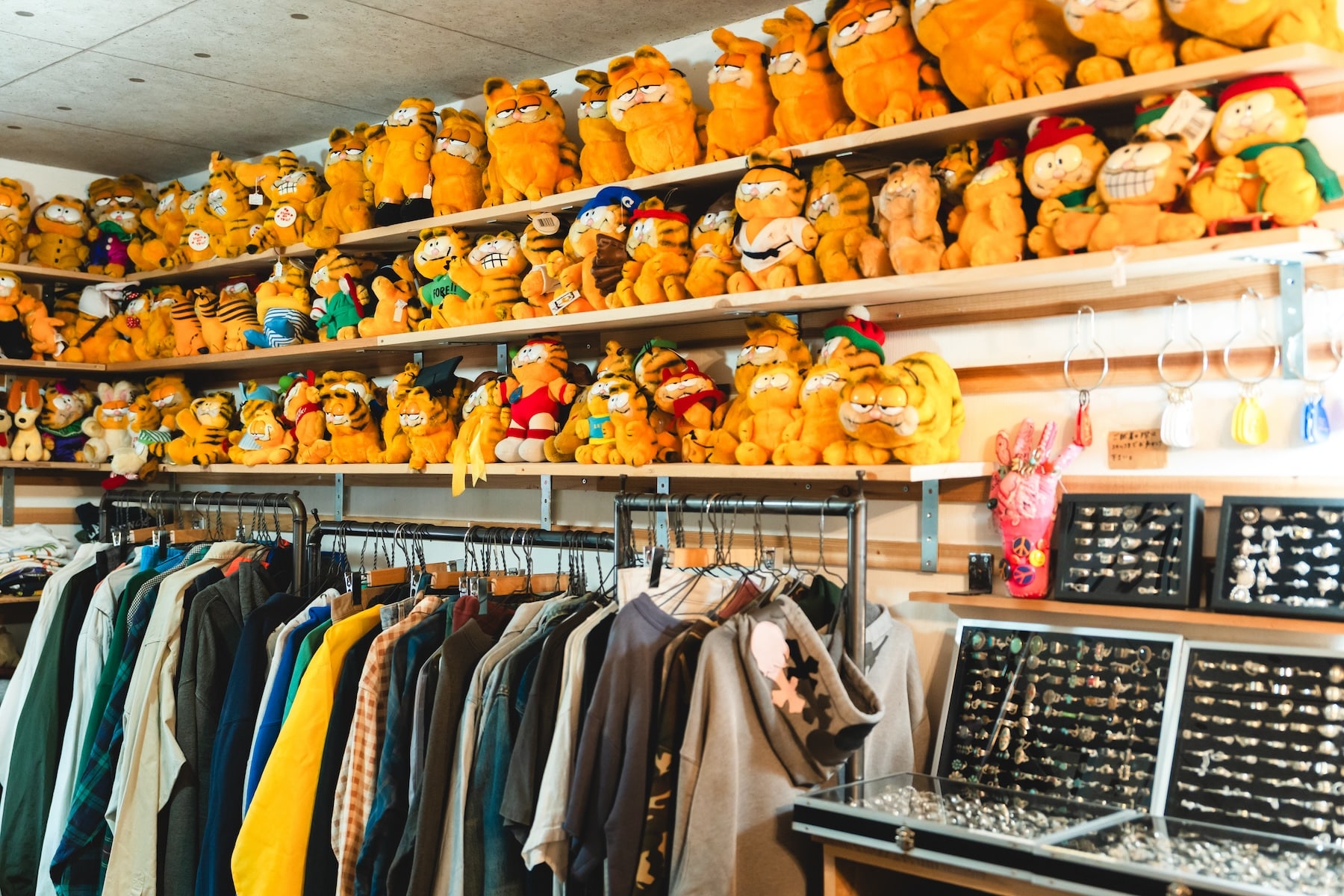
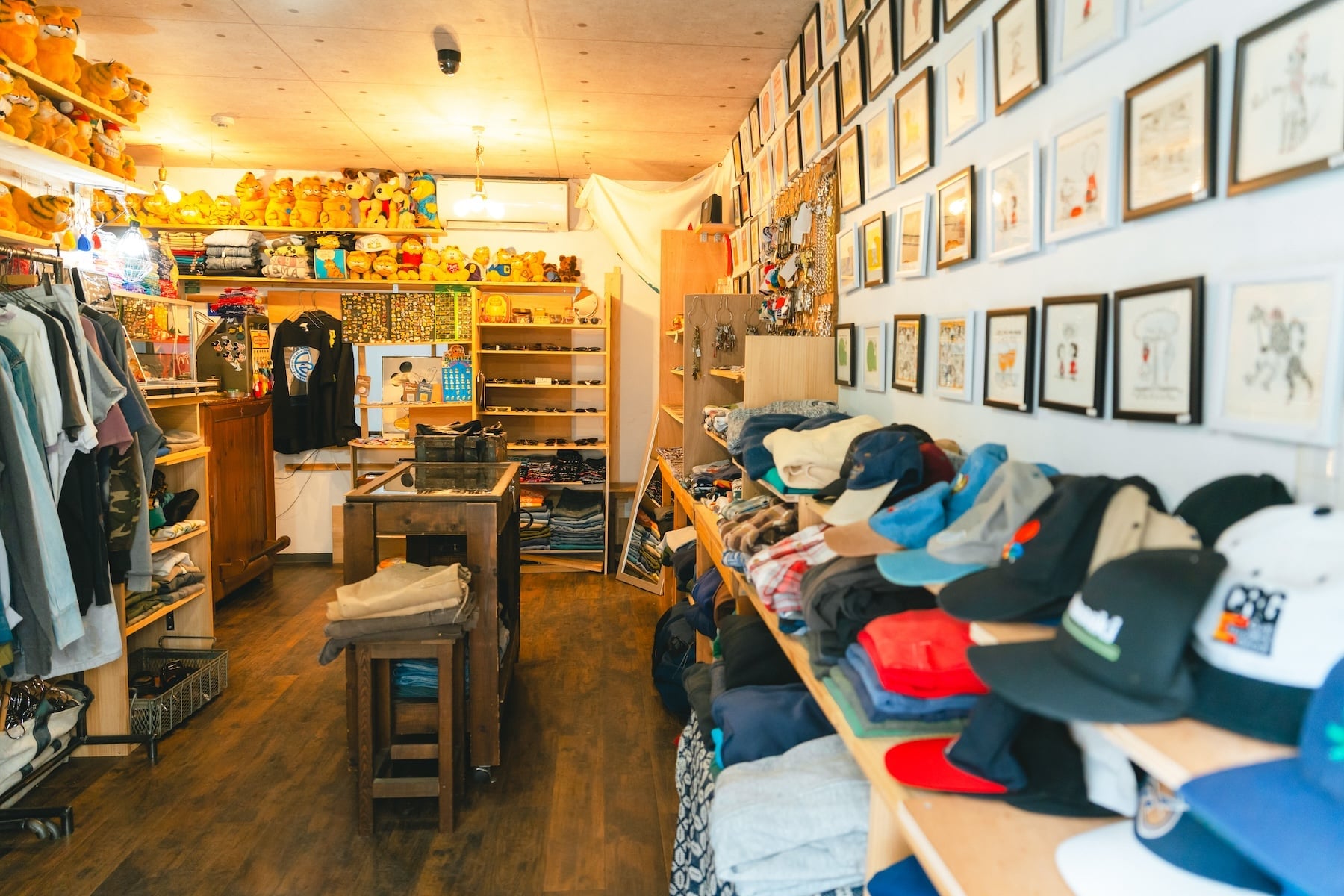
When you open the heavy vintage door, the first thing that catches your eye is the overwhelming volume of goods. Garfield plush toys and vintage art line the walls, and accessories fill the display windows. The entire space is composed according to the owner Abe’s personal taste, and its atmosphere feels more like an overseas souvenir shop than a typical vintage clothing store.
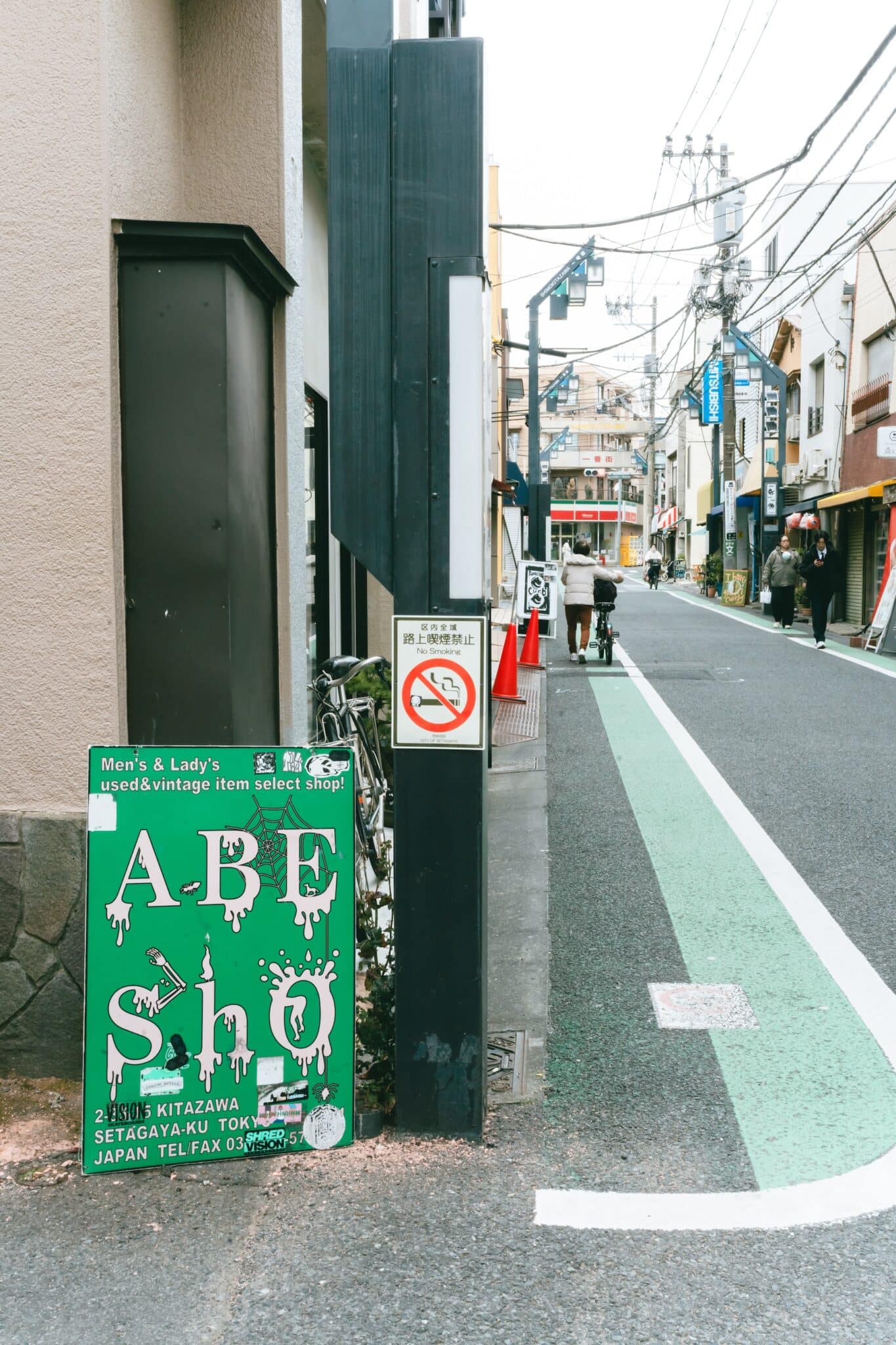
Rather than being located in a busy area near the station, Abesho 2nd stands deep inside Ichibangai Shopping Street, where foot traffic is lighter. Use the green sign placed along the street as a landmark and turn into the alley.
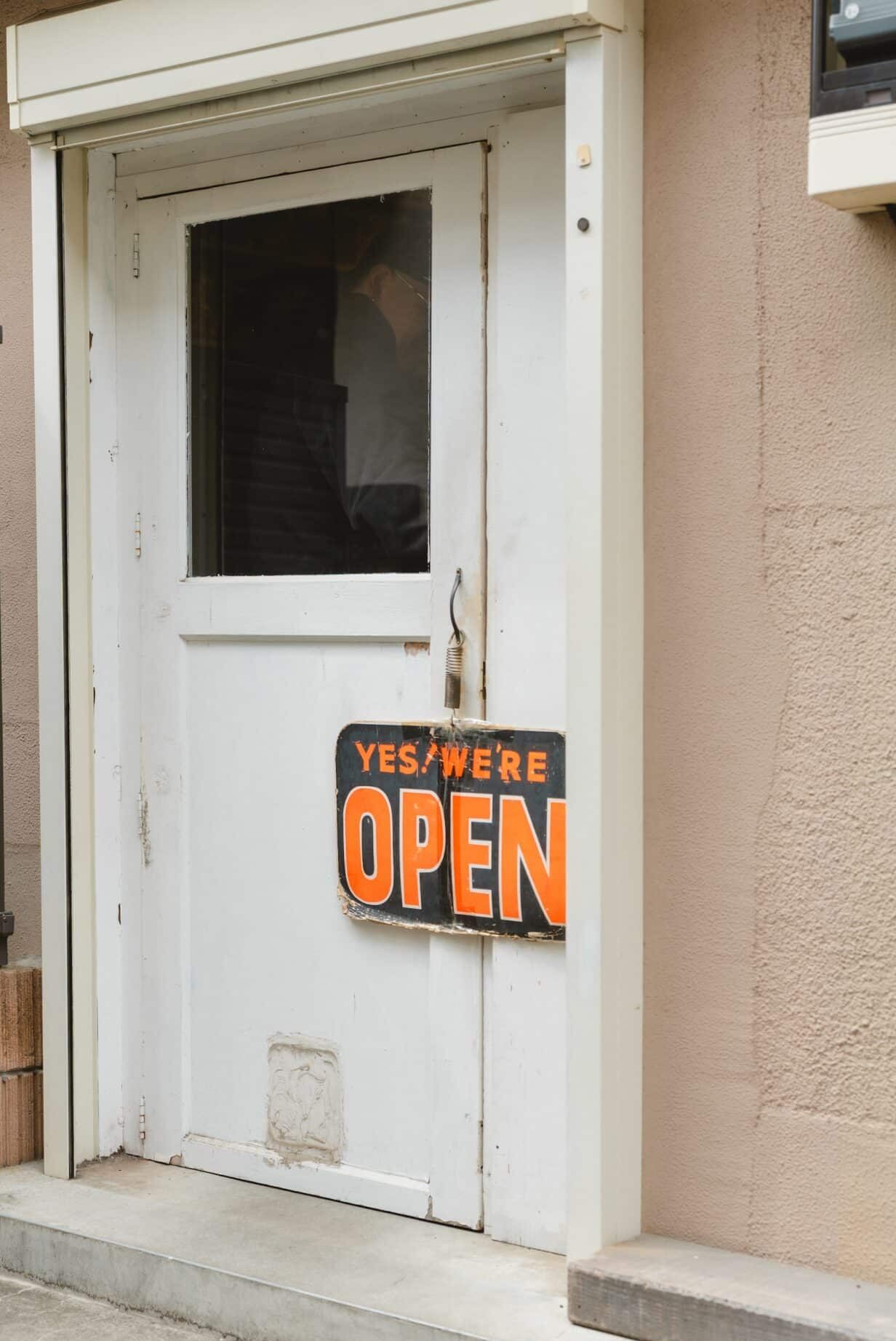
In a quiet residential corner, a white vintage door suddenly appears. Its hidden, tucked-away presence makes it easy to pass by if you don’t know it is there.
Opening the door reveals a compact space of just under 20 square meters, built around wood tones.
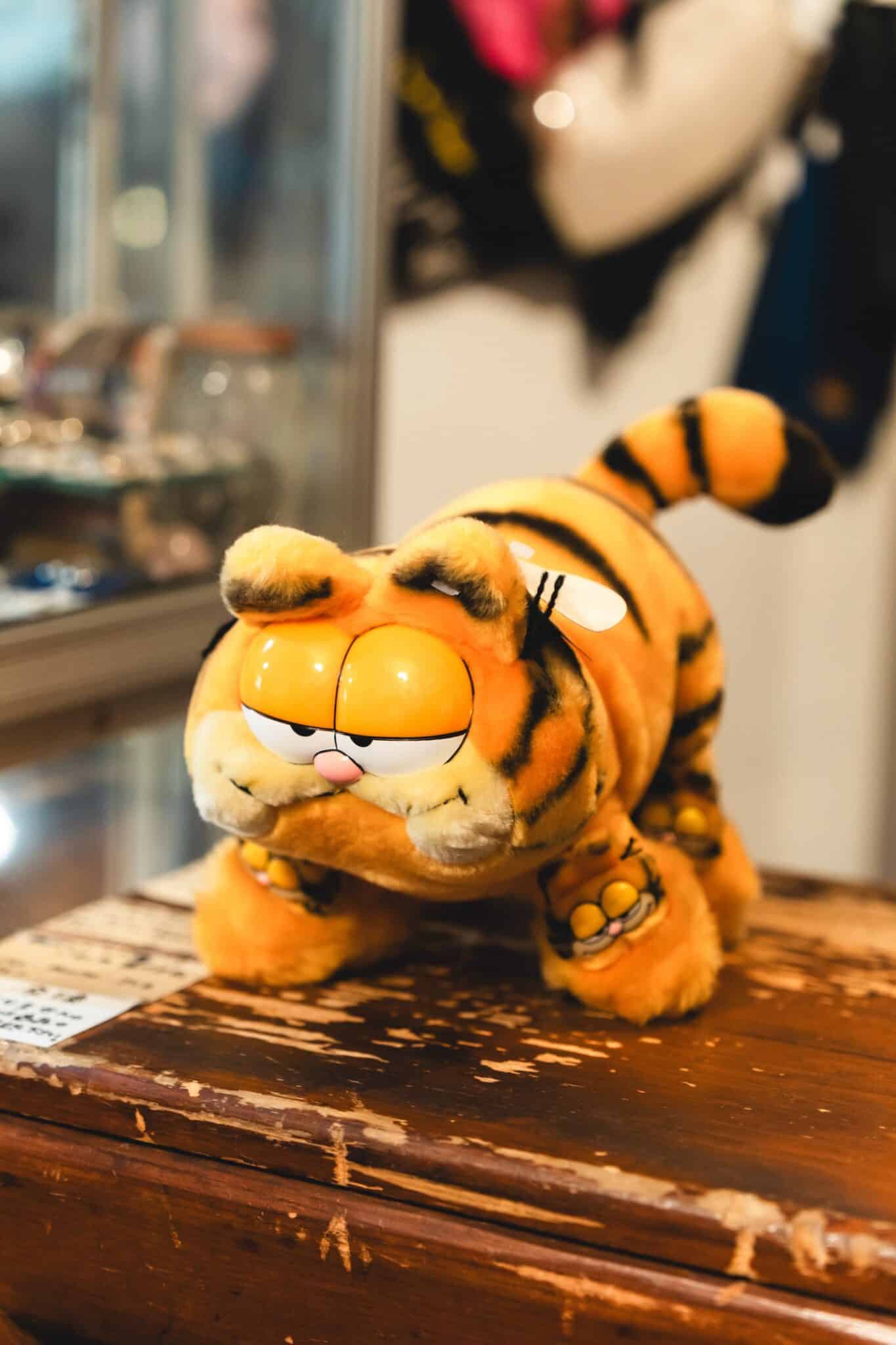
The Garfield plush toys lined up on the shelves were originally part of the owner’s wife’s collection. They are now a symbolic presence in the store. Prices range from around ¥3,000 to ¥15,000. Various costumes are available. The clothing selection is based on American casual style, while also including designer items such as COMME des GARÇONS.
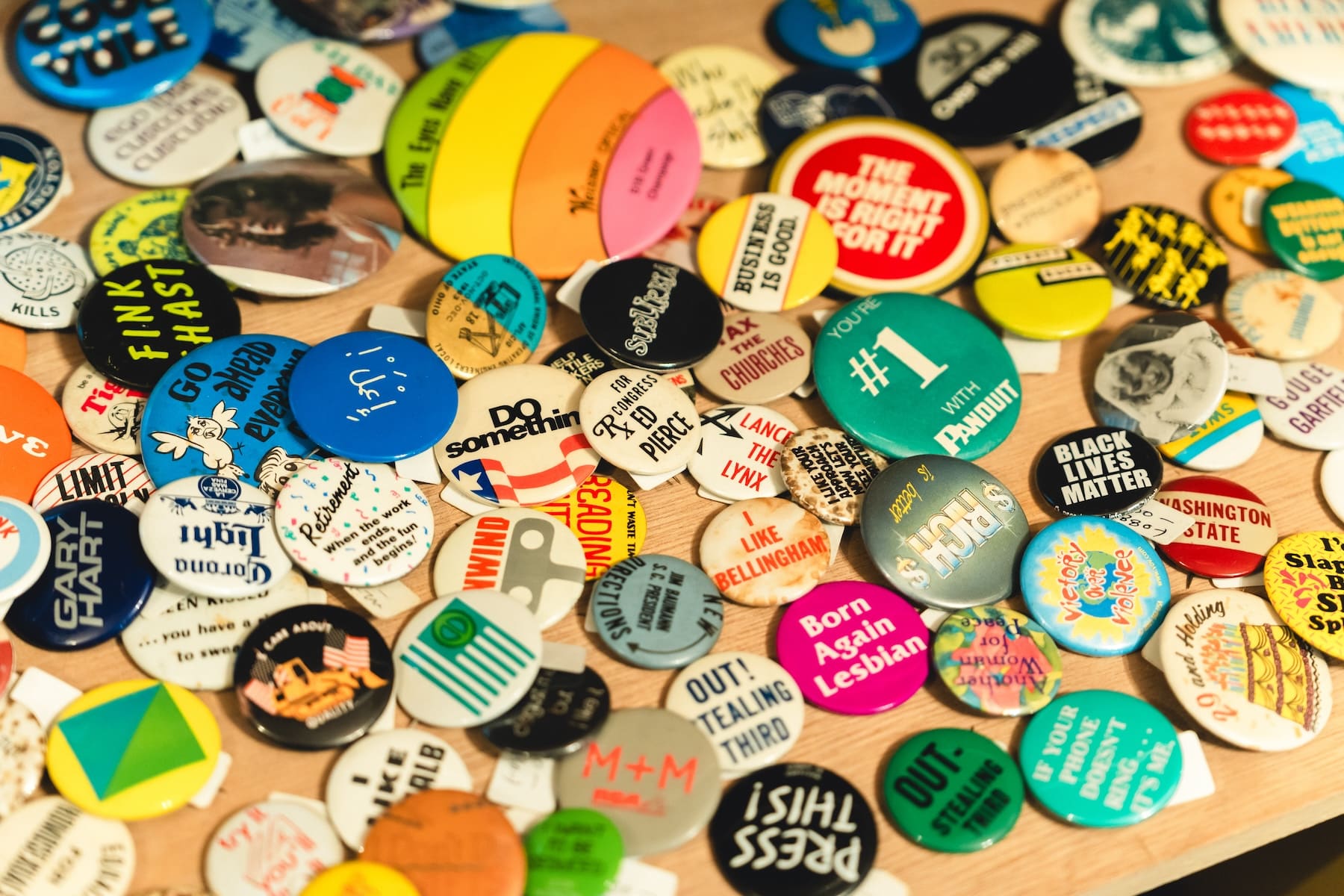
Keychains, can badges, and pins featuring corporate logos and city designs are also popular.
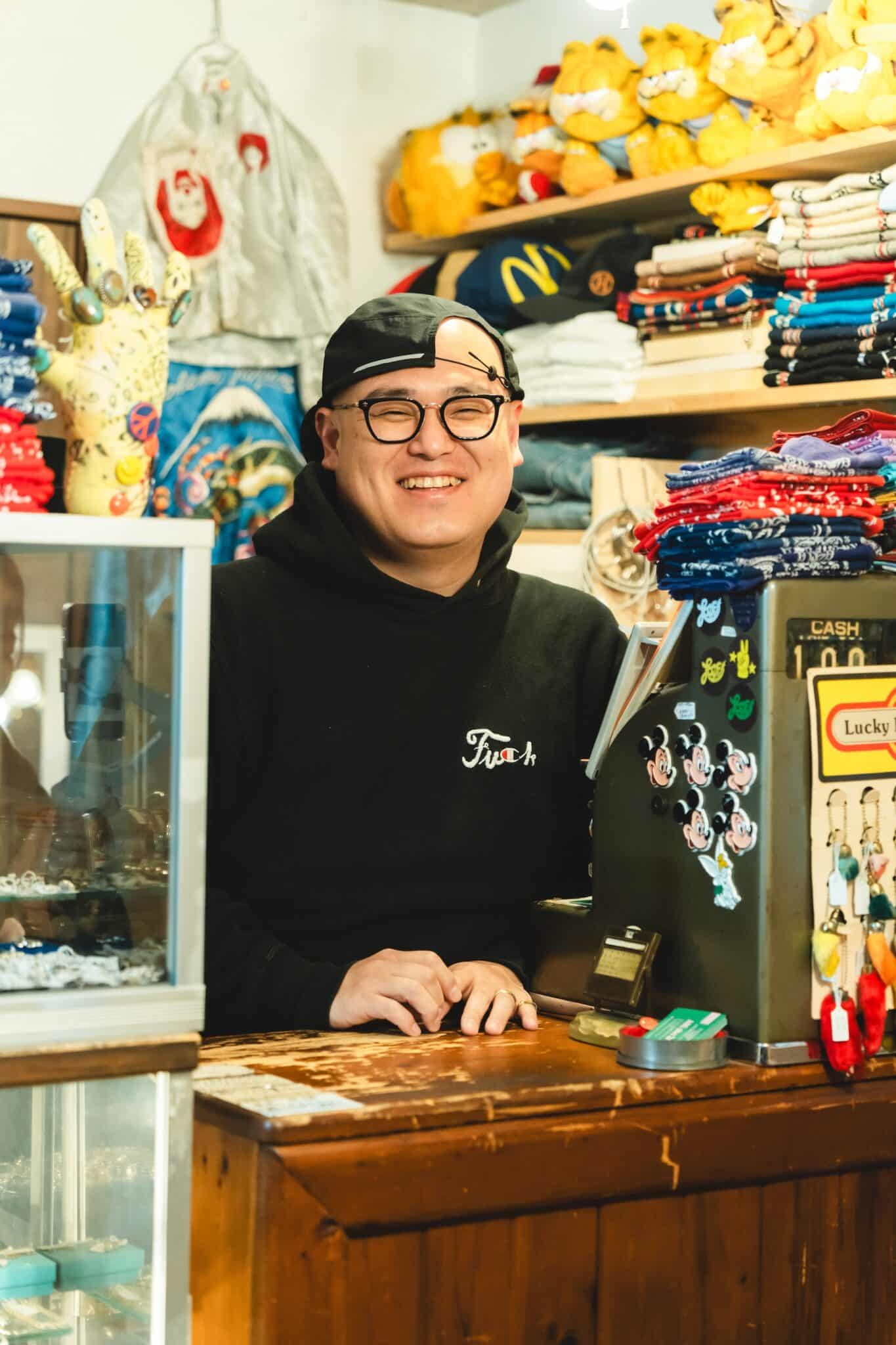
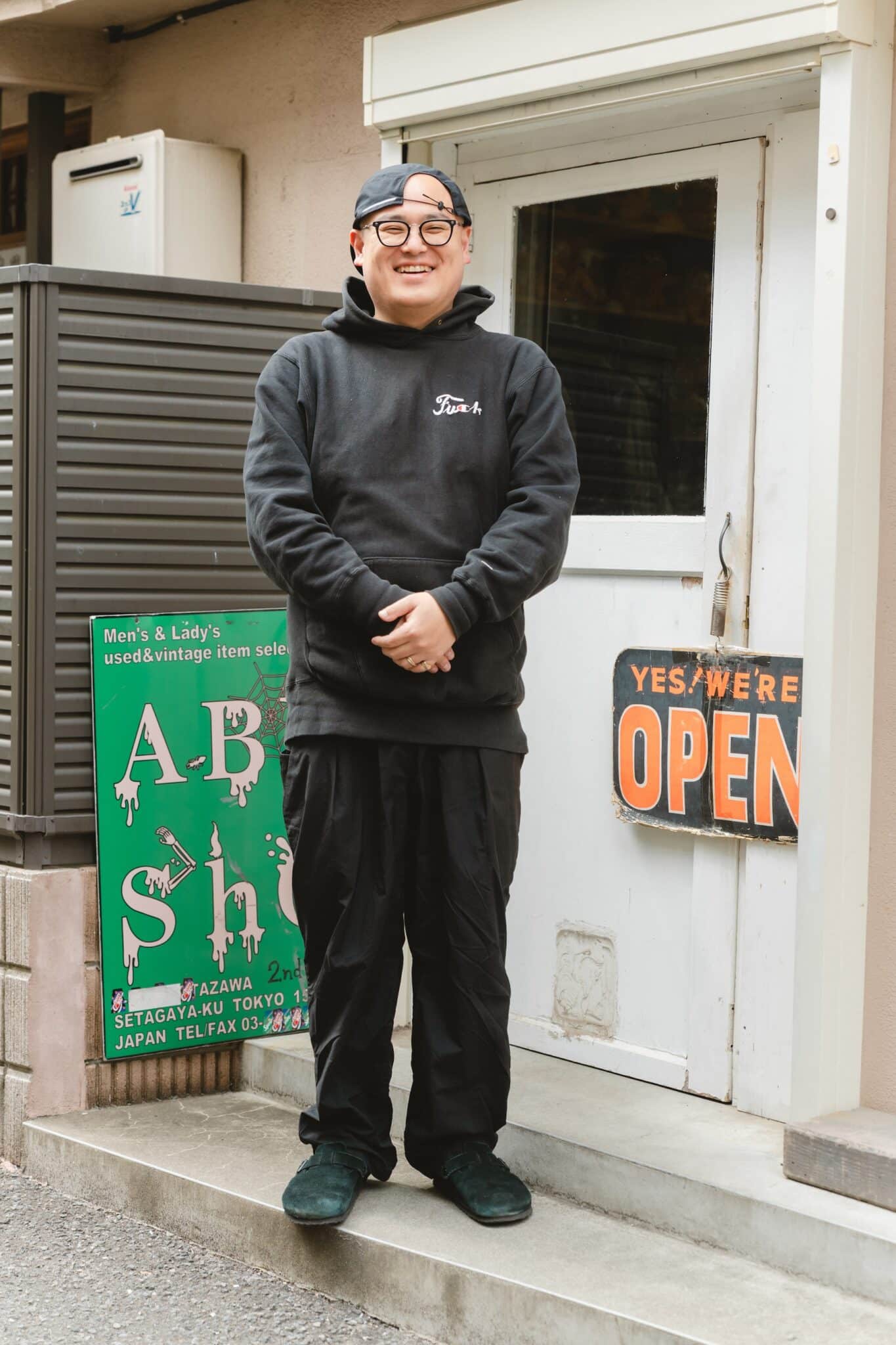
The owner Abe, known for his gentle smile. Although he initially struggled to attract customers after opening, the shop gradually gained attention through word of mouth as fashion-forward visitors—like those seen in street snap magazines—began to frequent it.
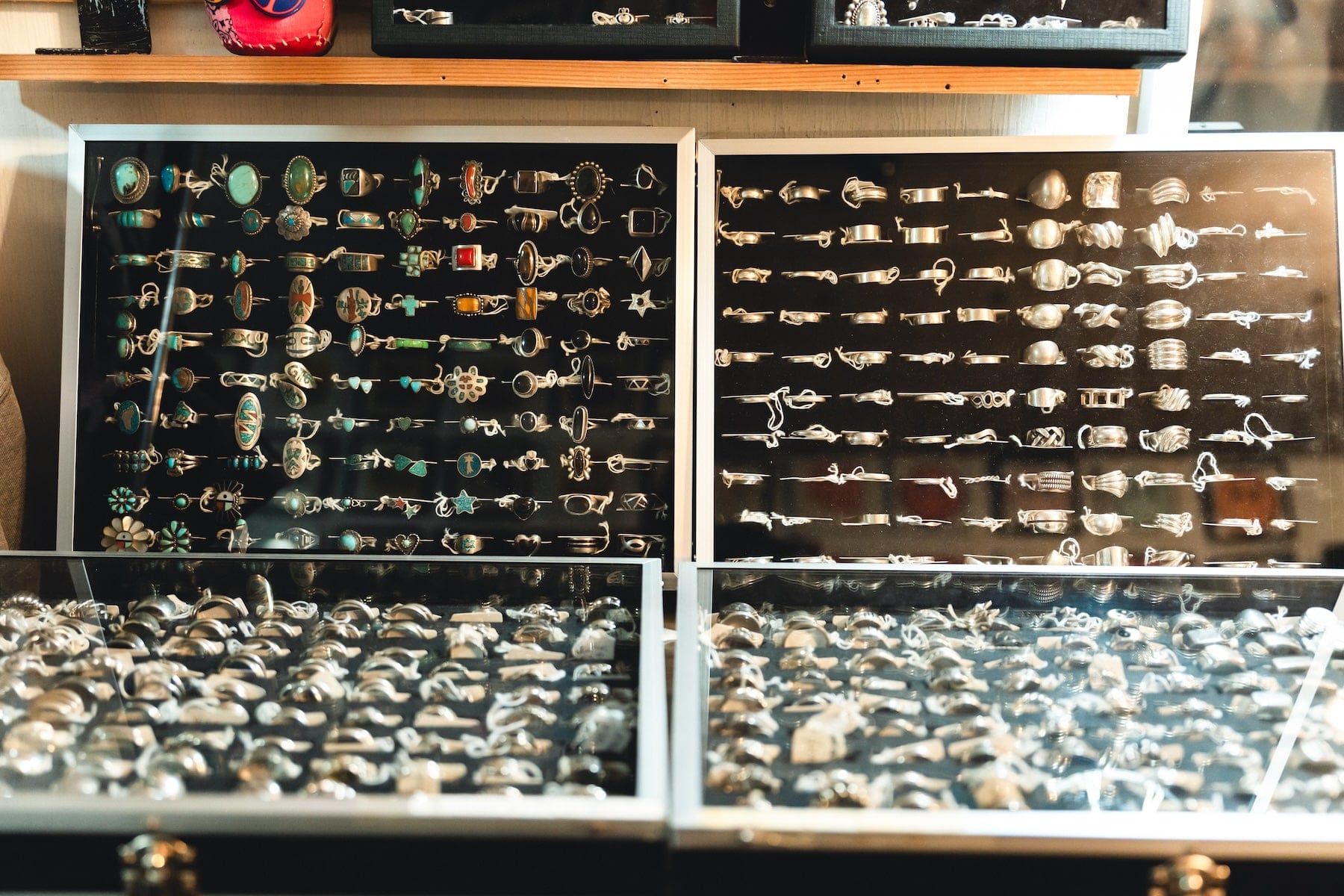
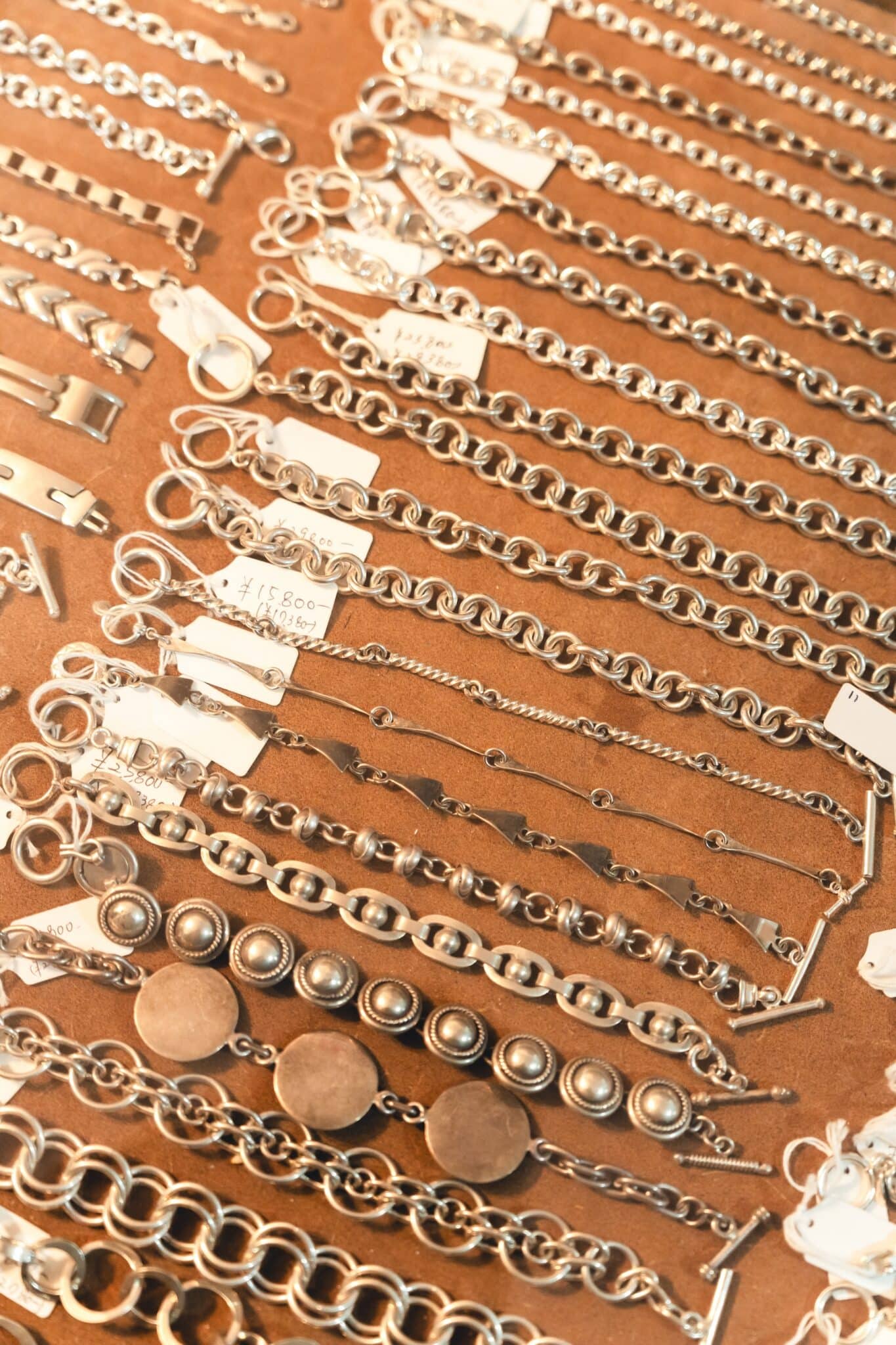
One of the highlights of Abesho 2nd is its collection of over 1,000 vintage accessories. The lineup ranges from weighty Mexican jewelry and distinctive spoon rings to high-end brands such as Tiffany & Co. and Cartier.
The appeal of vintage clothing lies in being able to read its era and background through tags and details, and Abe says that the same enjoyment can be found in accessories.
“For example, accessories from the 1960s and 1970s, when hippie culture was thriving, often have a handcrafted feel. In the 1990s, bootleg rings from sneaker brands also circulated. It’s interesting because the atmosphere of each era takes shape in these items,” says Abe.
More than 1,000 vintage accessories are displayed in the showcase next to the register. If you ask the staff, you can try them all on.
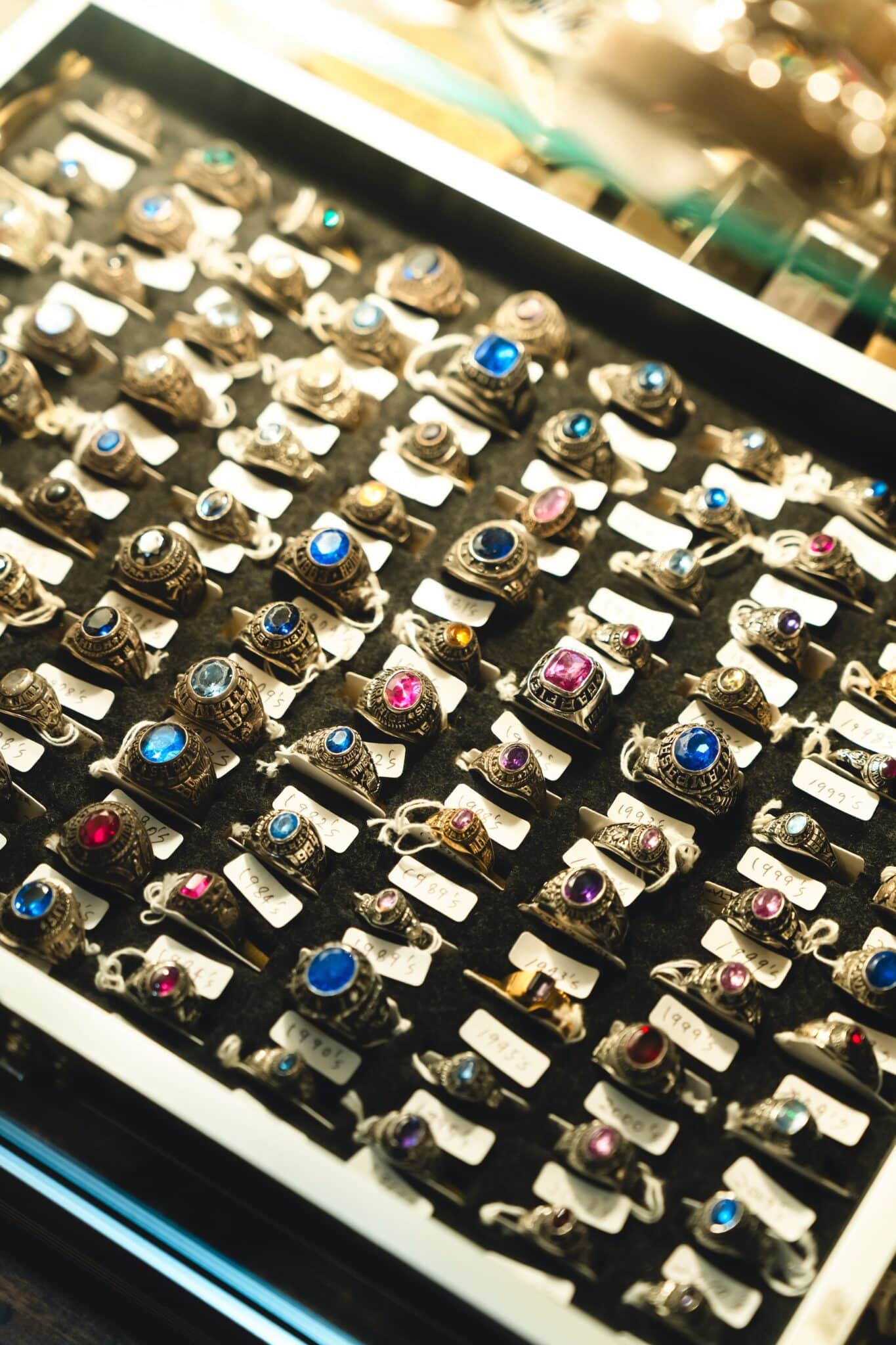
Among them, especially notable are the American vintage class rings, with more than 100 pieces available.Because class rings vary greatly in size and are difficult to manage as inventory, it is said to be rare to find a store where such a large number can be seen at once.
“Class rings are made to commemorate someone’s graduation. But everyone experiences graduation at some point. Beyond fashion, looking at the ring can remind you of who you were at that time. That’s part of their appeal,” says Abe.
Prices for accessories start from a few thousand yen. They are set at a level that is accessible even to students who gather in Shimokitazawa. This pricing is based on Abe’s own experience of buying vintage clothing in this area when he was a student.At the same time, by carrying high-end brand items, the store also hopes visitors will encounter things they would not usually have access to and broaden their perspective on fashion.
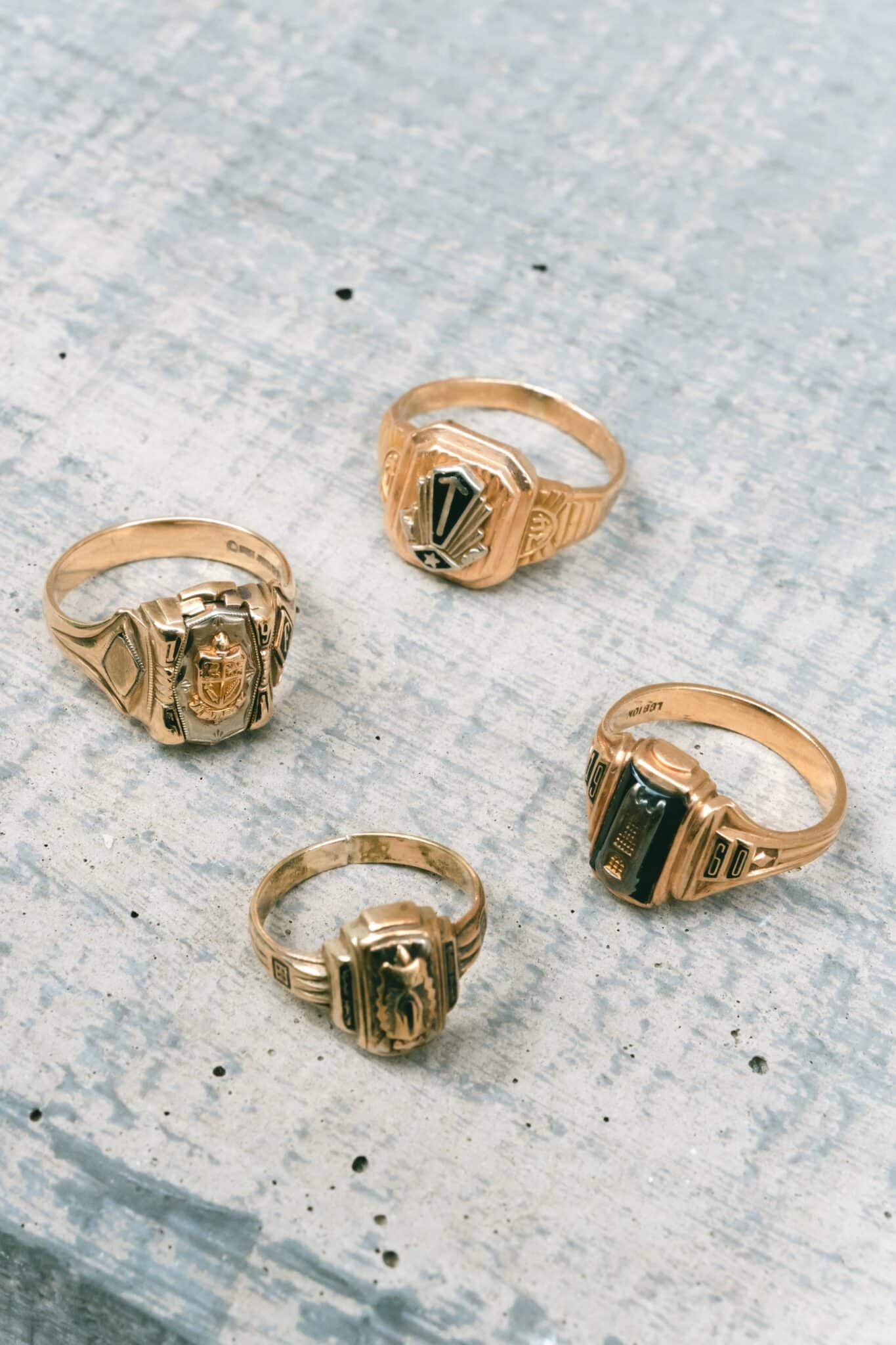
Class rings feature birthstones, school colors, and emblems set at the center, with the school name and graduation year engraved around them.
Materials vary, including silver, gold, and alloys. (From top, clockwise) 1934 10K ring ¥61,380, 1960 10K ring ¥43,780, 1943 10K ring ¥50,380, 1961 10K ring ¥63,580.
Mexican jewelry, often featuring casual designs, is easy for women to incorporate. These pieces were sold as tourist souvenirs from around the 1940s–50s, and are also said to have inspired European maison brands.
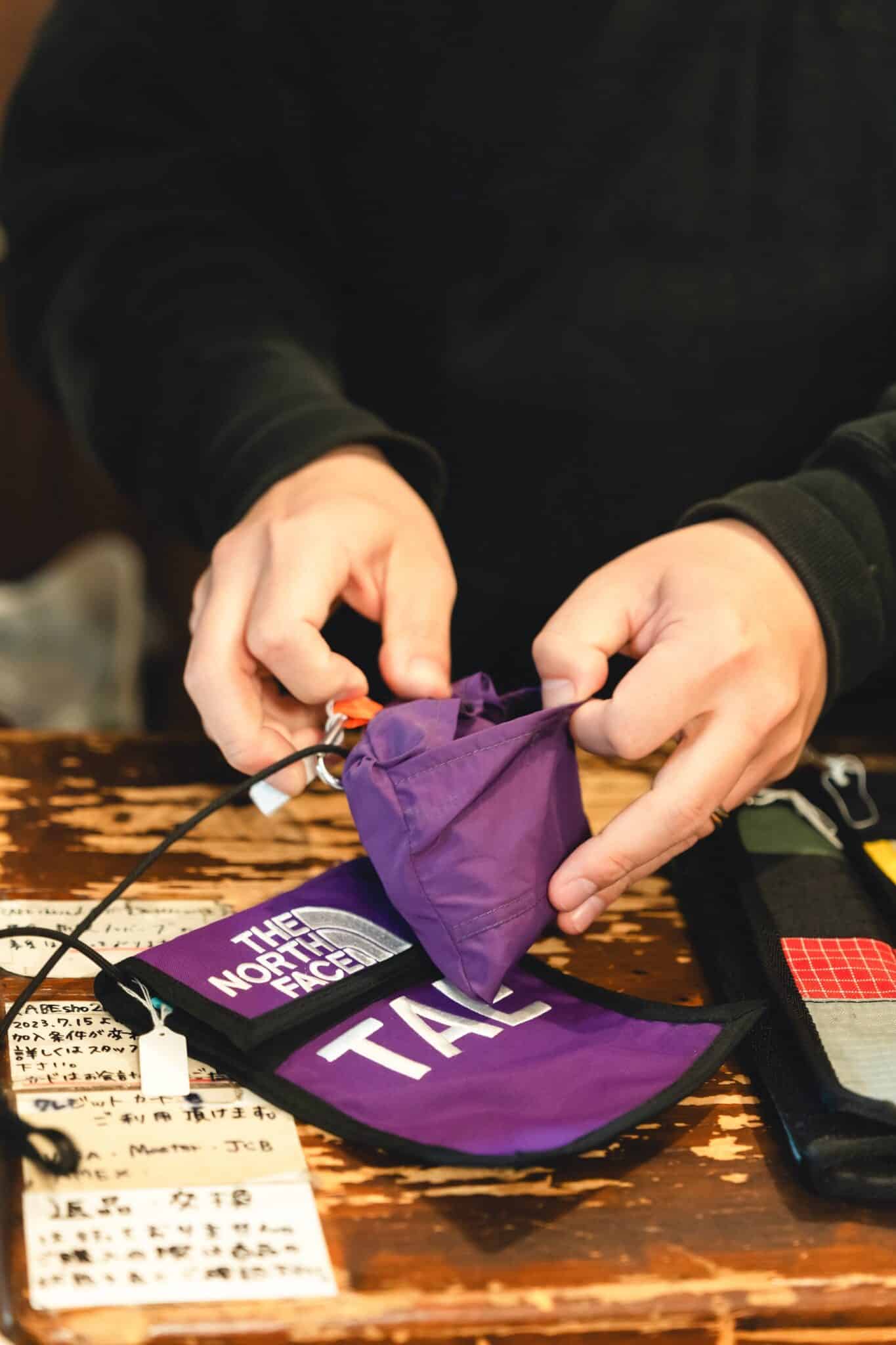
Owner Abe pays attention to items that would otherwise be discarded or seem to have no value at first glance, giving them new roles. This approach is symbolized by remade goods created from vintage clothing. Even pieces that can no longer be worn due to deterioration are selected if they have strong design or sufficient durability, and are remade into bags or pouches. Abe says he values creating items that are not eccentric, but can be used daily and loved for a long time.
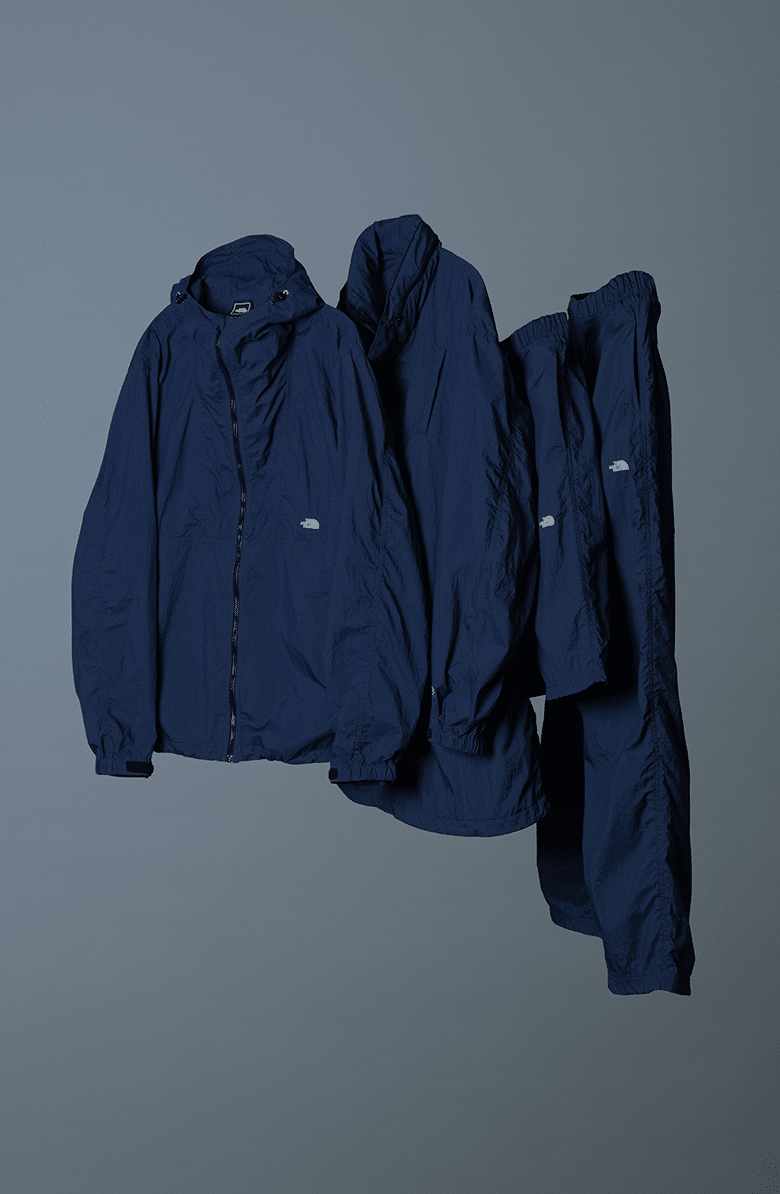
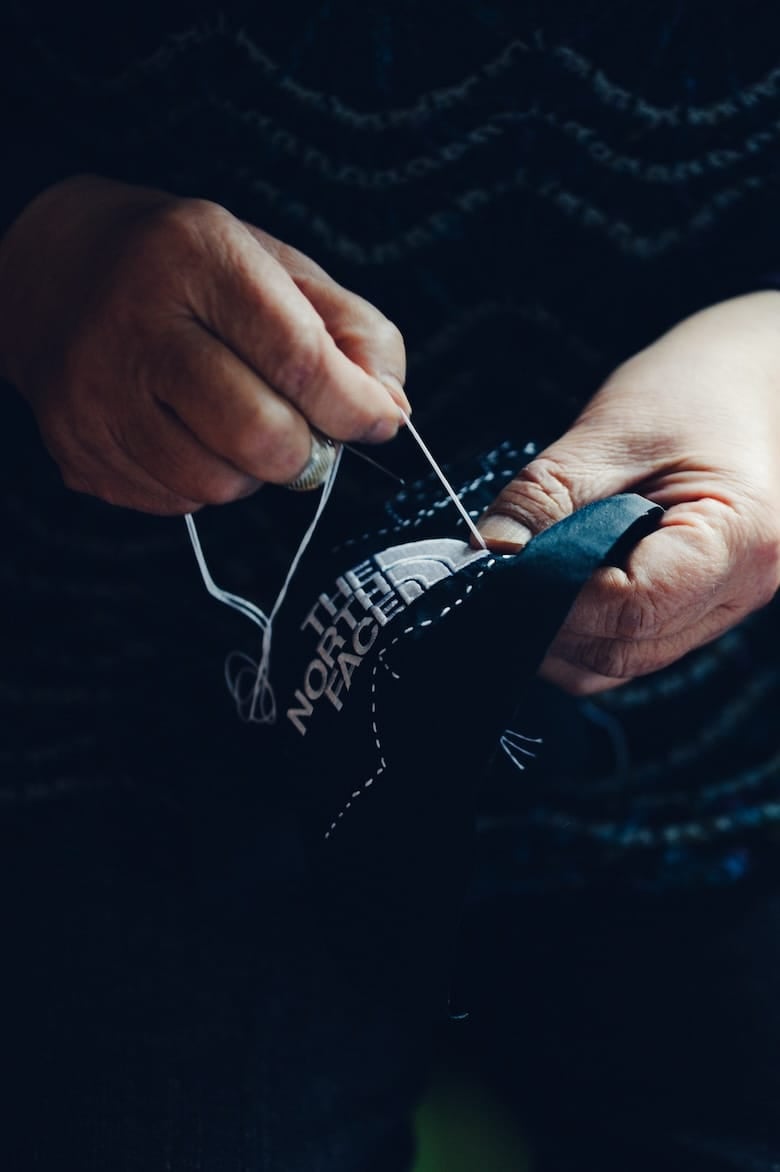
A wallet pouch and eco bag remade from a THE NORTH FACE nylon bag. Abe develops the concepts, while his wife handles the sewing.
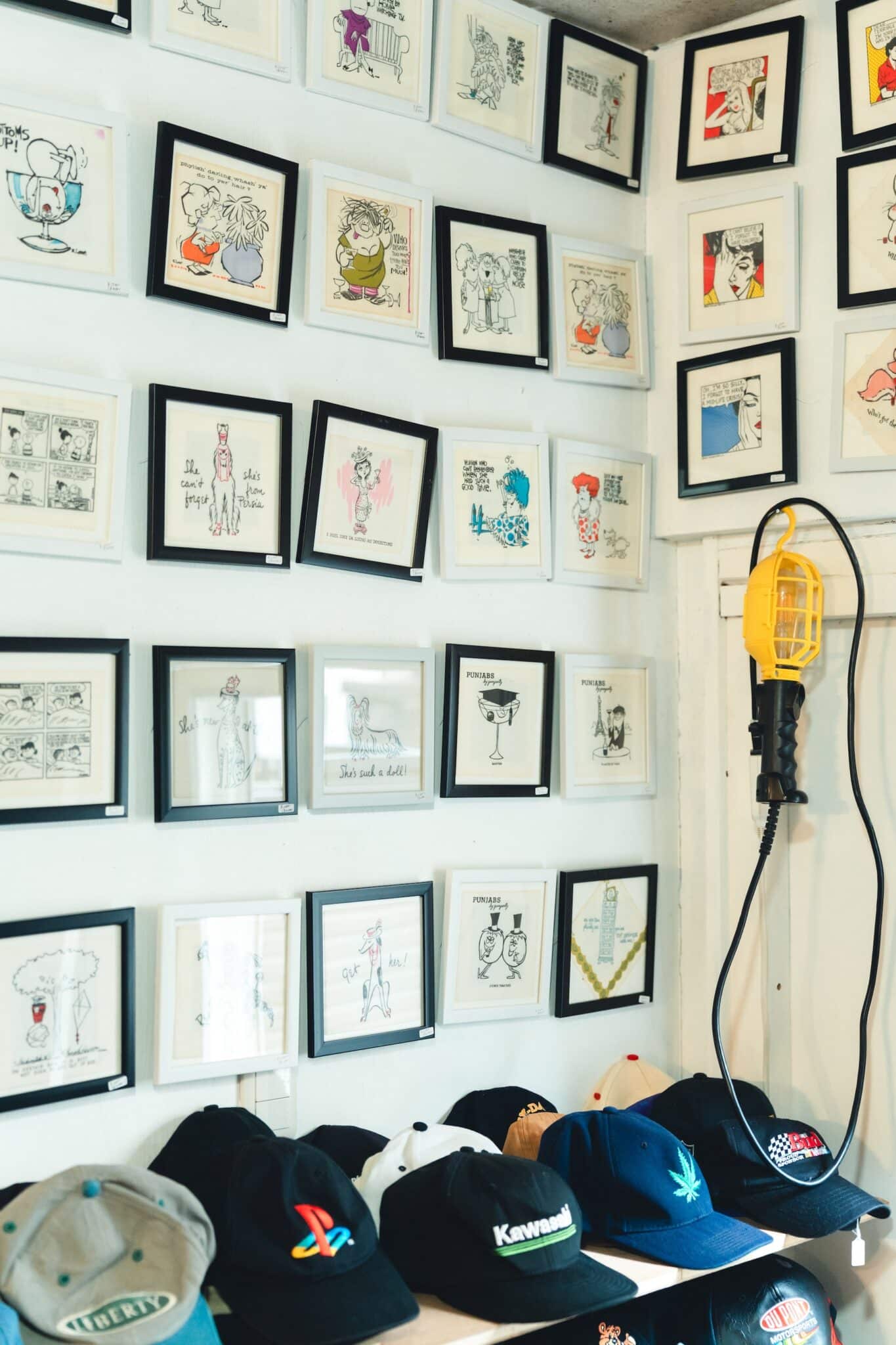
The unique artwork displayed on the walls of the store also symbolizes this philosophy. All of these are paper napkins that were originally used in American restaurants and bars. Although they were meant to be disposable, Abesho 2nd frames deadstock napkins and sells them as small interior pieces.Abe explains:
“In the U.S., there are many paper napkins with elaborate designs. Even people who aren’t interested in vintage clothing can enjoy them. Through these designs, some people become interested in old characters, or start looking for vintage furniture that matches them, and eventually become interested in vintage clothing as well. On the other hand, people who were only interested in clothing may start paying attention to goods. I’m happy if this helps people discover new ways to enjoy things,” says Abe.
Paper napkins are sold framed for around ¥1,500 to ¥2,000. Many feature characters or stylized illustrations. From the 2000s onward, more American comic-style designs can be seen, showing differences across eras.
Finding new value in items that were originally meant to be consumed. This is the philosophy that Abesho 2nd has always valued. Because he holds this perspective, Abe reflects on the current state of the vintage market as follows:
“Vintage today has become like a card game, where people compete over how rare and expensive their items are. But originally, it should be part of everyday life—clothing, food, and living. The items we carry are not trendy, and may be considered to have no value in the market. But if you can find value in them in your own way, they can become things you’ll love for a long time. I want to continue offering items that exist only here—things that make you remember, ‘I bought this at that shop,’ every time you see them,” says Abe.
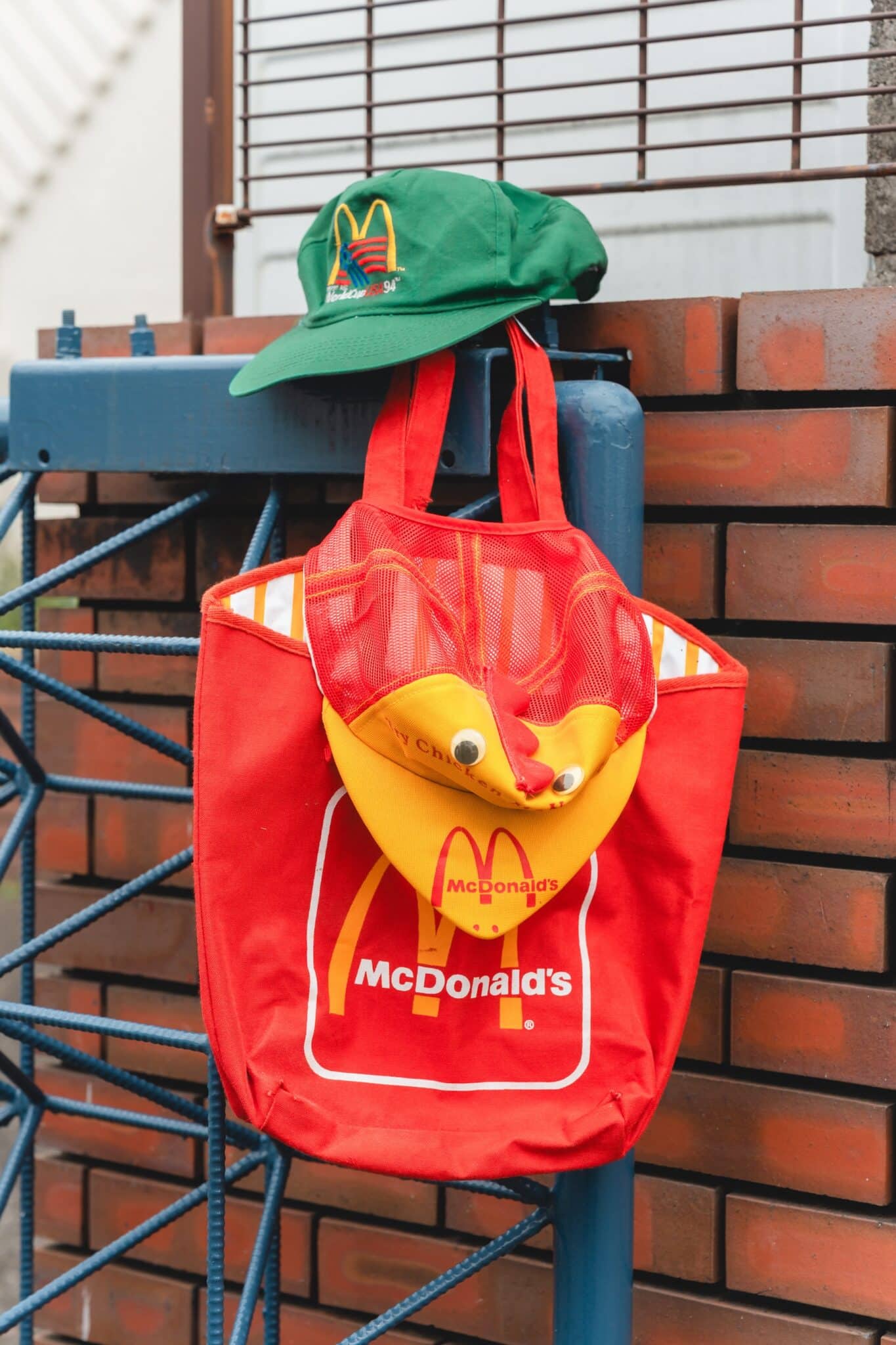
Abe collects McDonald’s goods. From behind the register, he brought out a tote bag shaped like a fries box (¥7,590), a cap with a chicken comb (¥17,380), and a 1994 World Cup commemorative logo cap (¥6,490).
A humorous Garfield plush wearing Garfield slippers (¥14,080).
Abe says, “I want to remain in the background and support the shop.” For this reason, he keeps his own clothing understated and values a stance where the products take center stage.
This philosophy is also reflected in how the items are handled. At Abesho 2nd, purchased items are never placed directly on display. All products go through careful processes such as washing, adjustment, and inspection before being sold. In particular, vintage eyewear is polished and adjusted by Abe’s wife, who previously worked at a specialty shop, and only then displayed for sale.
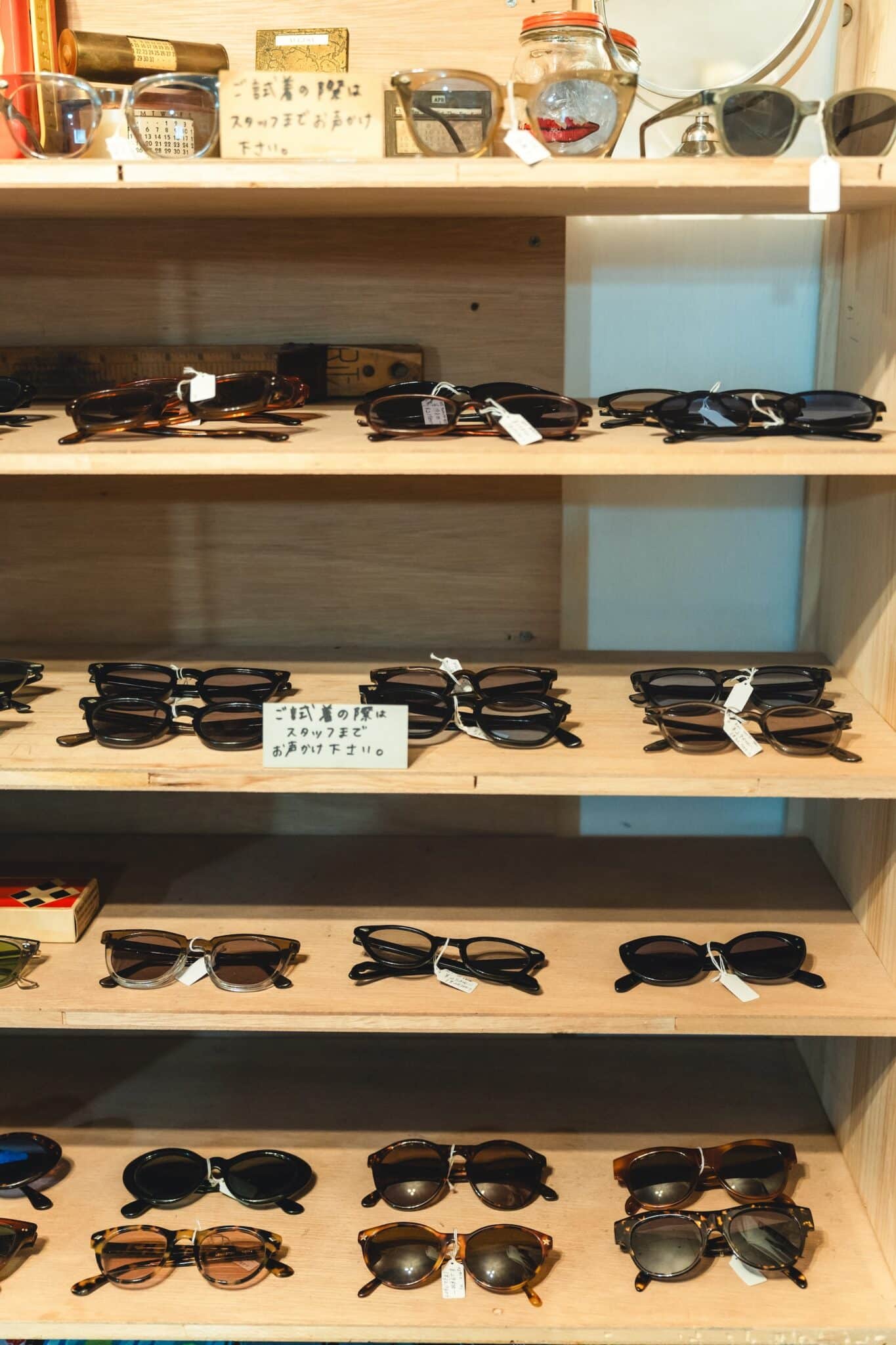
Vintage eyewear focuses on American brands from the 1970s to 1990s. Classic celluloid frames from brands such as American Optical and Bausch & Lomb are available.
Because these preparations and remake processes take time, the shop currently operates on irregular days. Business days are set between the first and second half of the week and announced on Instagram. It is recommended to check before visiting.
Abesho 2nd is a place that helps you discover new appeal in things that were once considered worthless or overlooked. As you look around the store, you begin to feel your perception of objects gradually changing.
Abe’s styling, which reflects his desire to remain in the background, is a minimal outfit based on black. Within his understated presence, the F-word detail on the chest of his remade hoodie adds a subtle touch of individuality.
The information contained this article was correct as of 04/10/2026 (the time of publication)


.jpg)
スマホ.jpg)