DEEPTOKYO
magazine

EN

DEEPTOKYO
magazine
EN
2026.07.22
Specialty Shop in Nihonbashi Handling Over 3,000 Types of Hake and Brushes


 Nearest Station


Founded in 1718 in Odenma-cho, Nihonbashi, Edoya is Japan’s oldest specialty shop for hake and brushes. It was founded by a hake artisan who served the shogun’s household, and today it handles more than 3,000 types of products, ranging from hairbrushes, toothbrushes, and clothes brushes to cooking brushes. Through carefully selected natural bristles from around the world, artisan handwork, and meticulous finishing at the store, Edoya continues to create high-quality tools.
SHARE


Edoya was founded in 1718 in Odenma-cho, Nihonbashi, and continues to operate in the same location today. It is Japan’s oldest specialty shop for hake and brushes. The founder was a hake artisan who received the Edoya shop name from Tokugawa Ietsugu, the seventh shogun. He supplied brushes used to spread paste when applying paper to shoji screens and fusuma sliding doors, as well as brushes used for makeup by women of the Ooku.
During the Edo period (1603–1868), Nihonbashi was the center of logistics and commerce.Because many cotton wholesalers and dye shops were concentrated in Odenma-cho, demand for hake was also high, which became the foundation for Edoya to continue doing business in this area.
In the Meiji period(1868–1912), brush culture was introduced from the West. Edoya then began making a wide variety of brushes, including daily-use items such as hairbrushes, clothes brushes, and toothbrushes, as well as deck brushes for ships and polishing brushes for industrial use.
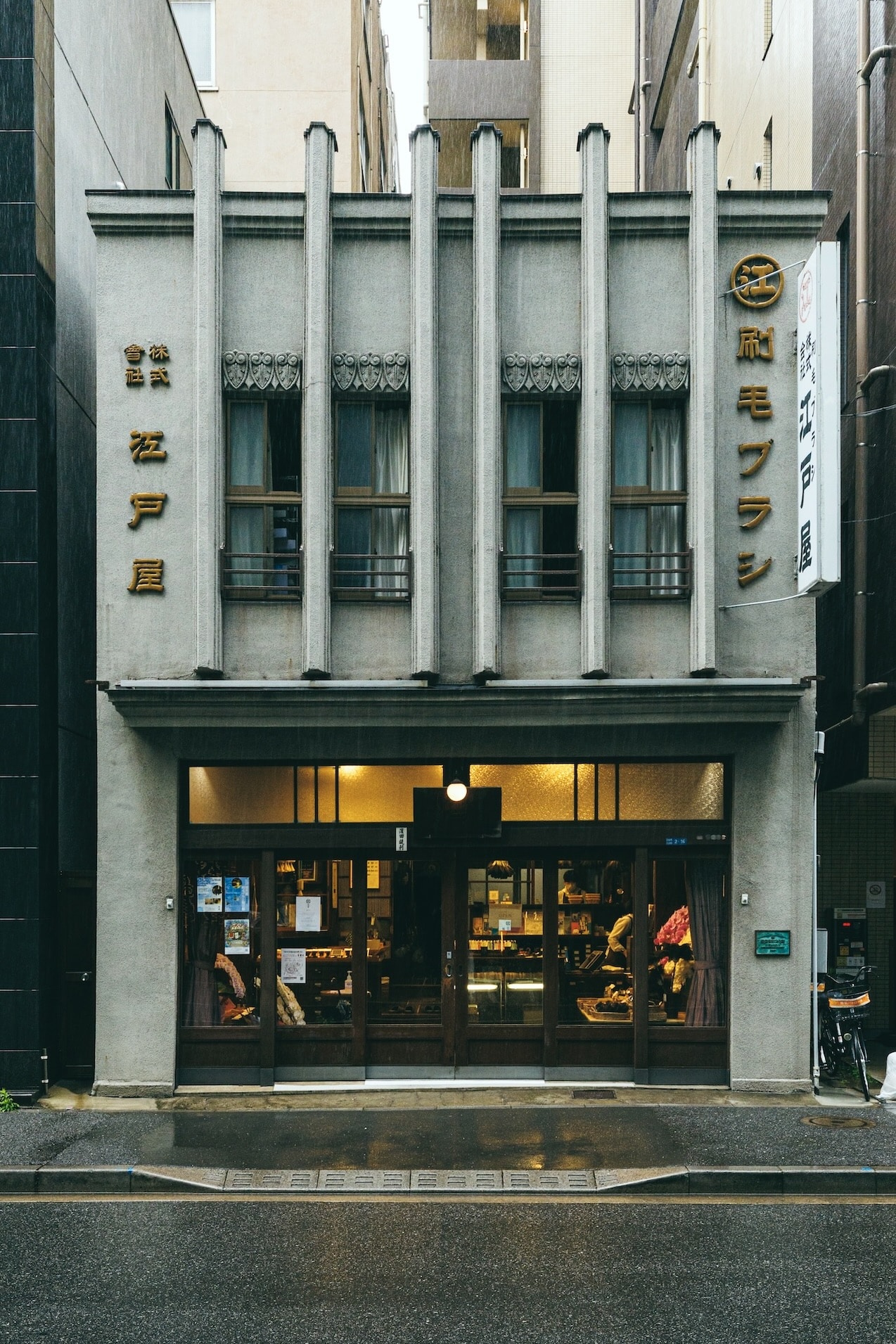
Edoya’s store is a kanban kenchiku building constructed in the Taishō period(1912–1926). It is a combined shop and residence with a Western-style exterior and is registered as a National Tangible Cultural Property. The six lattice pieces projecting from the eaves are said to be designed to resemble hake brushes.
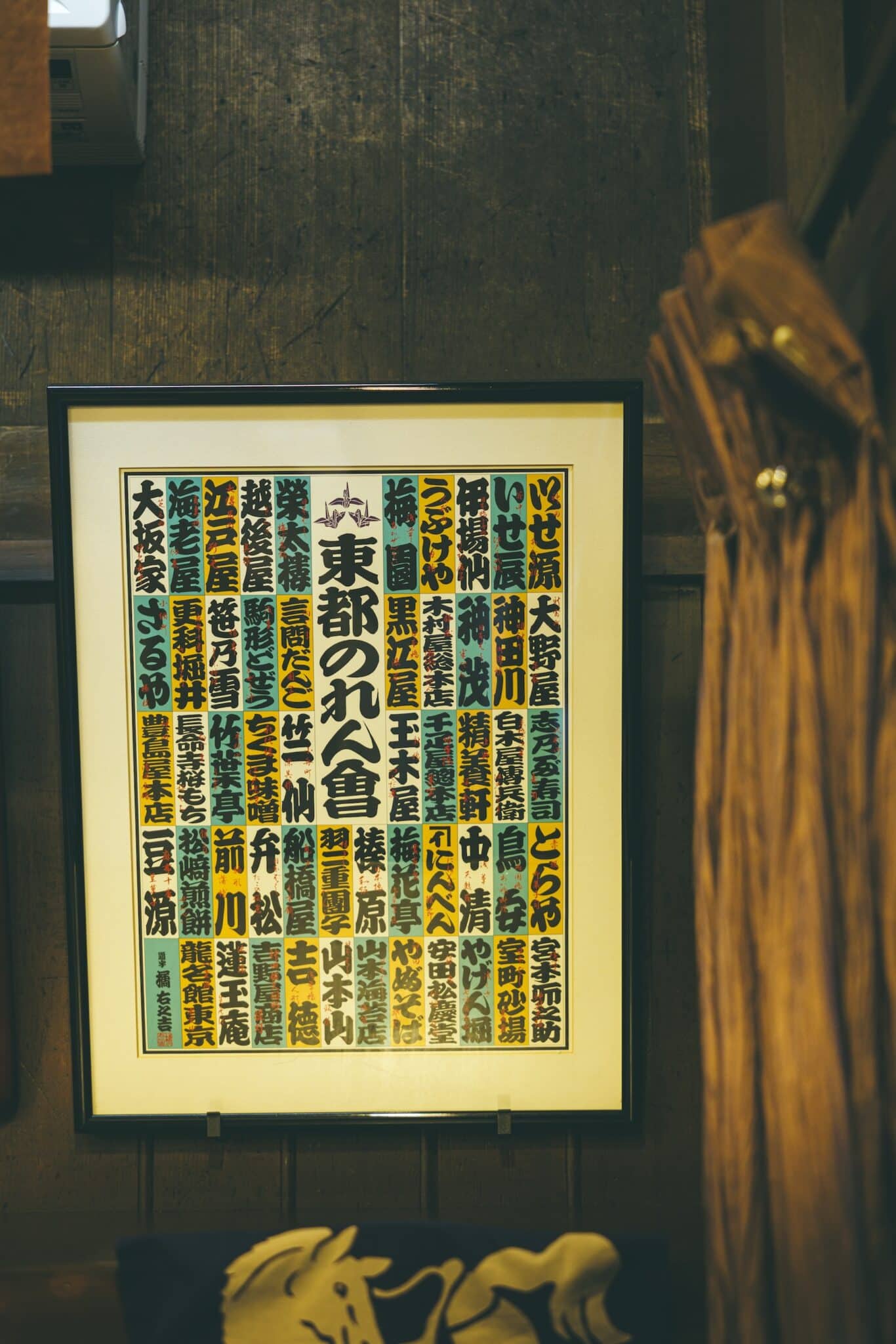
The photo shows a poster of the Toto Norenkai association, of which Edoya is a member. The association is made up of long-established shops that have continued in the same line of business for at least three generations and more than 100 years, and include leading Nihonbashi names such as Ubukeya, Saruya, Ninben, and Yamamoto Noriten.
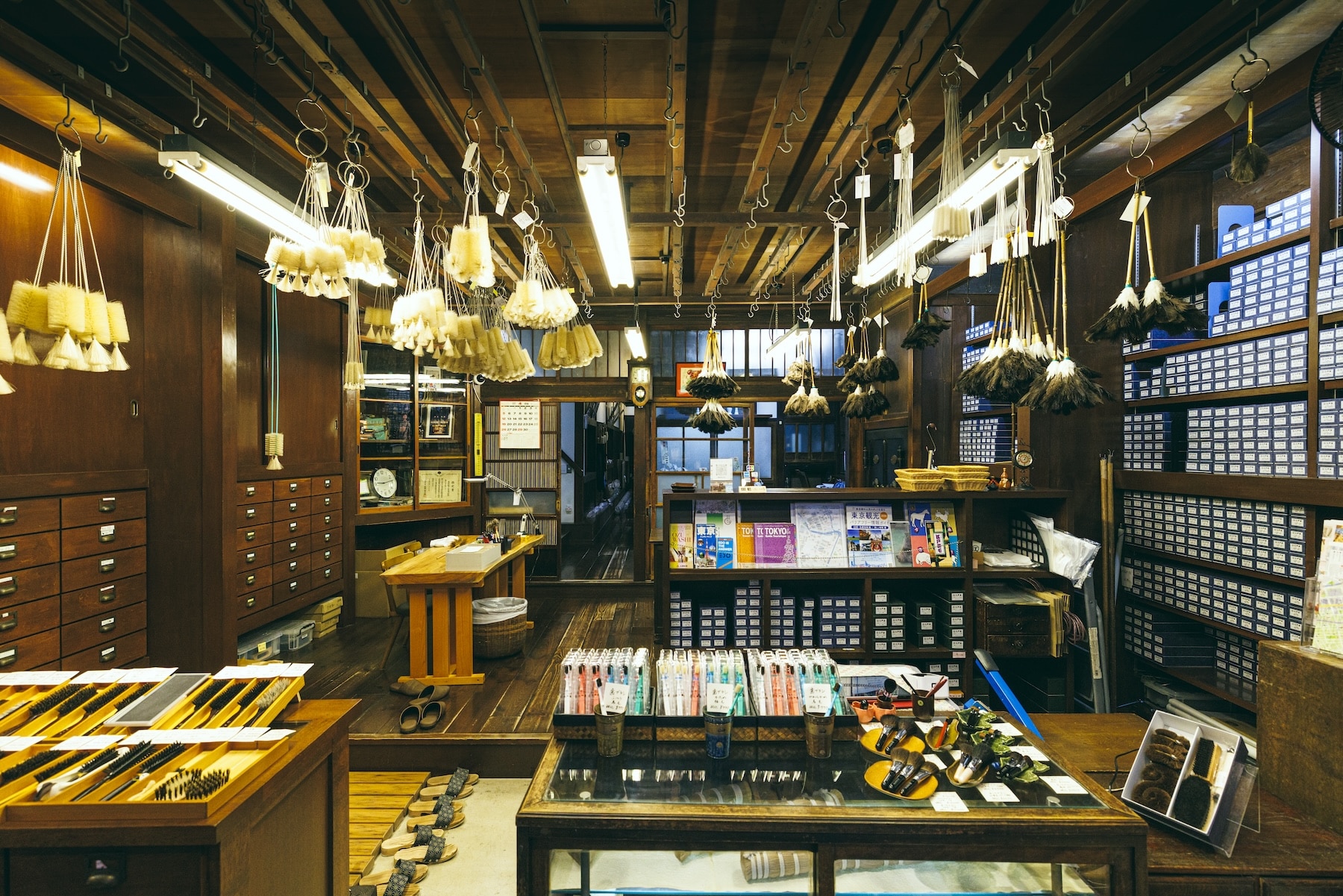
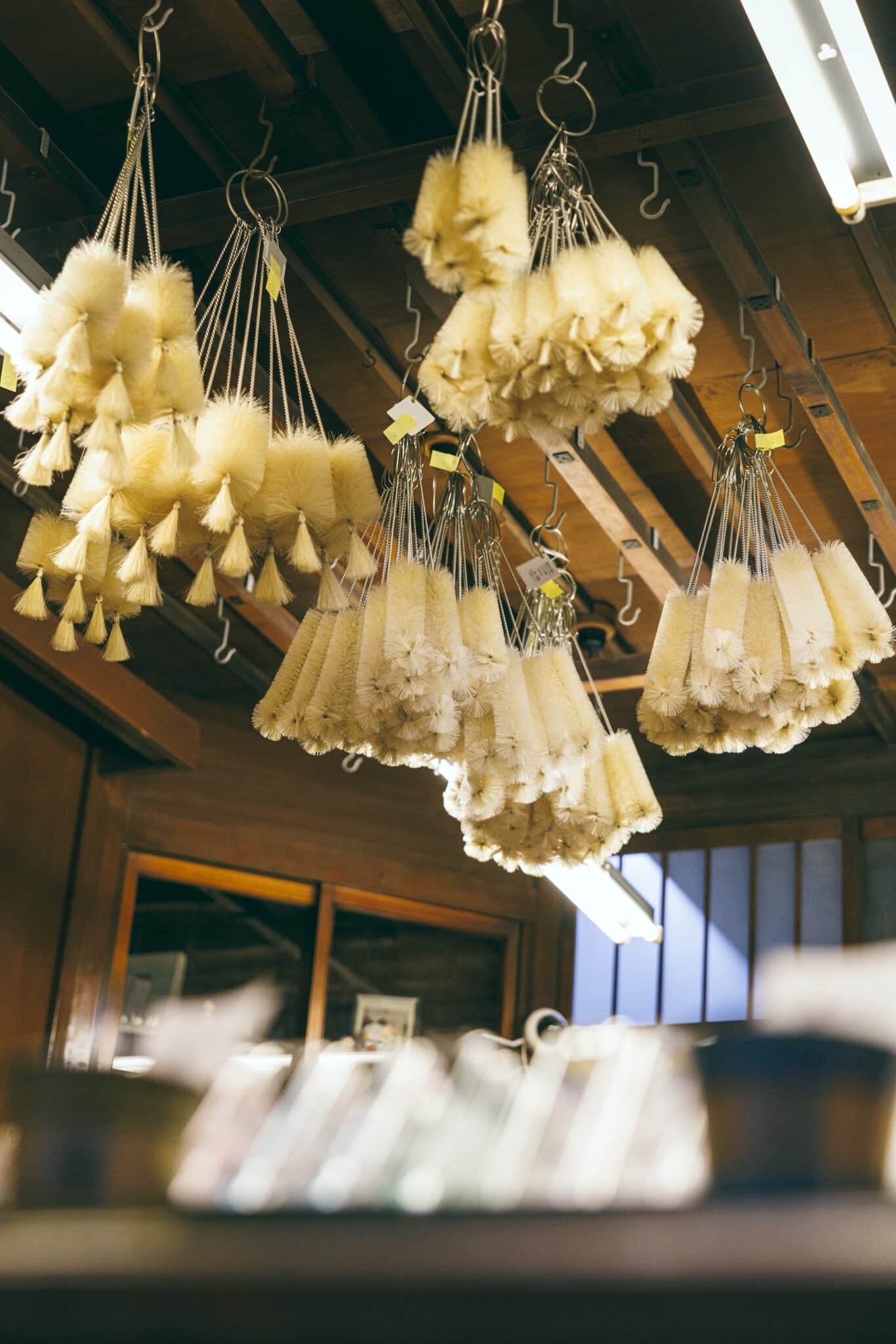
When you open the entrance door, countless brushes are displayed in front of you, while dusters and cleaning brushes hang from the ceiling. The sheer variety of products is overwhelming.
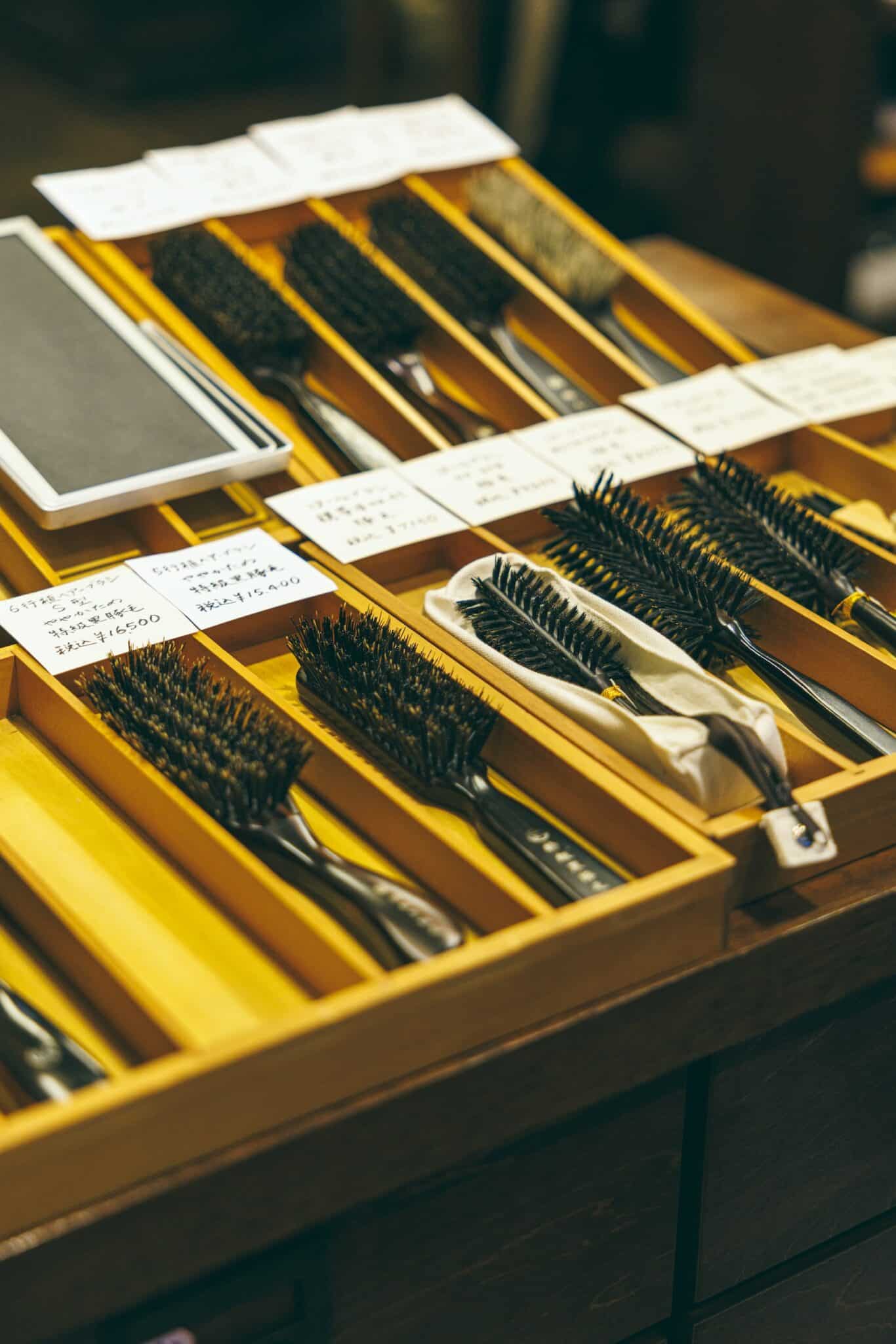
More than 20 types of hairbrushes are available, differing in bristle material and the way the bristles are set.
Cleaning brushes hang from the ceiling. There are many types for different purposes, including brushes for plastic bottles, glass bottles, and straws.
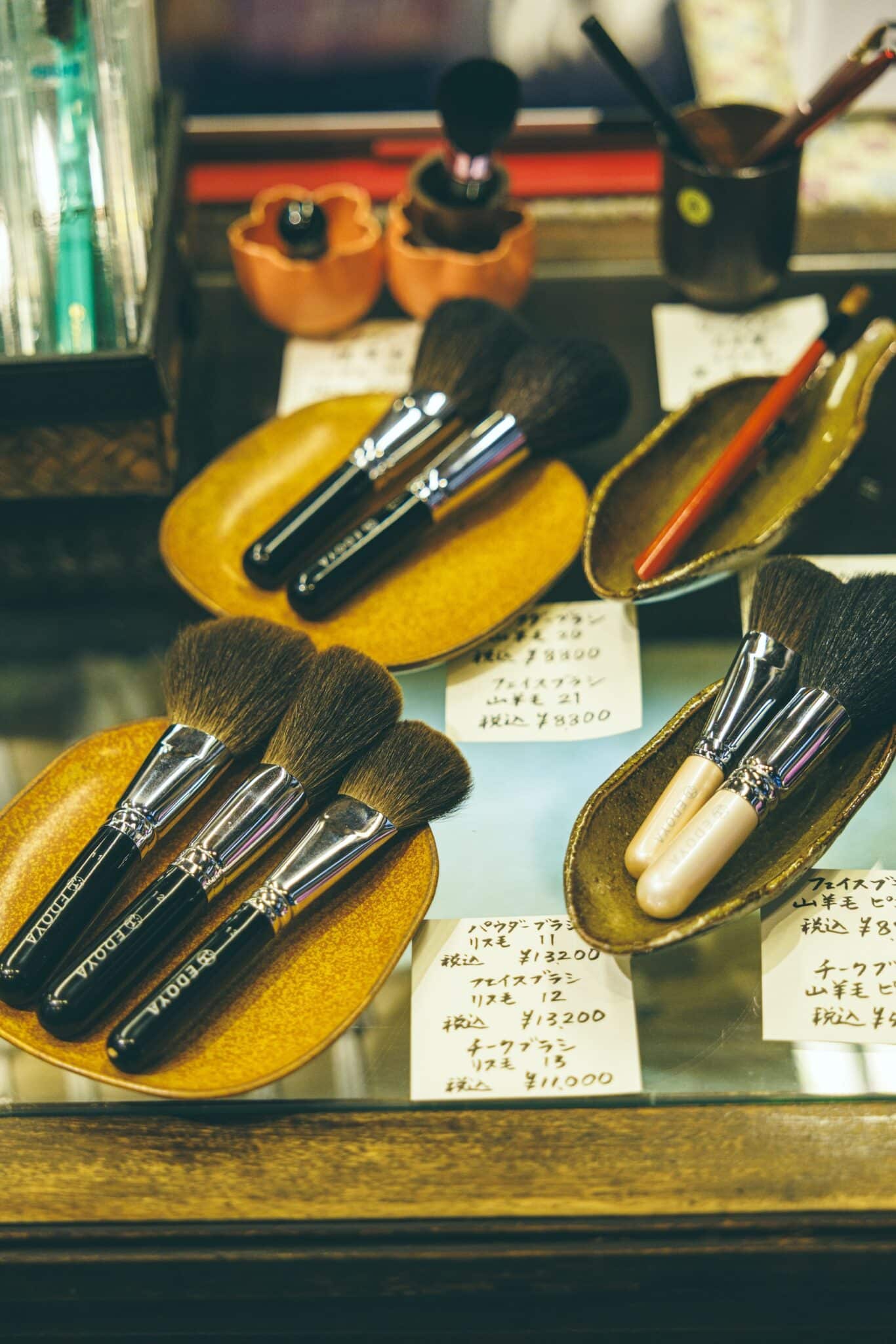
Makeup brushes use various types of natural hair, including goat hair and squirrel hair. The shop also focuses on how softly they feel against the skin.
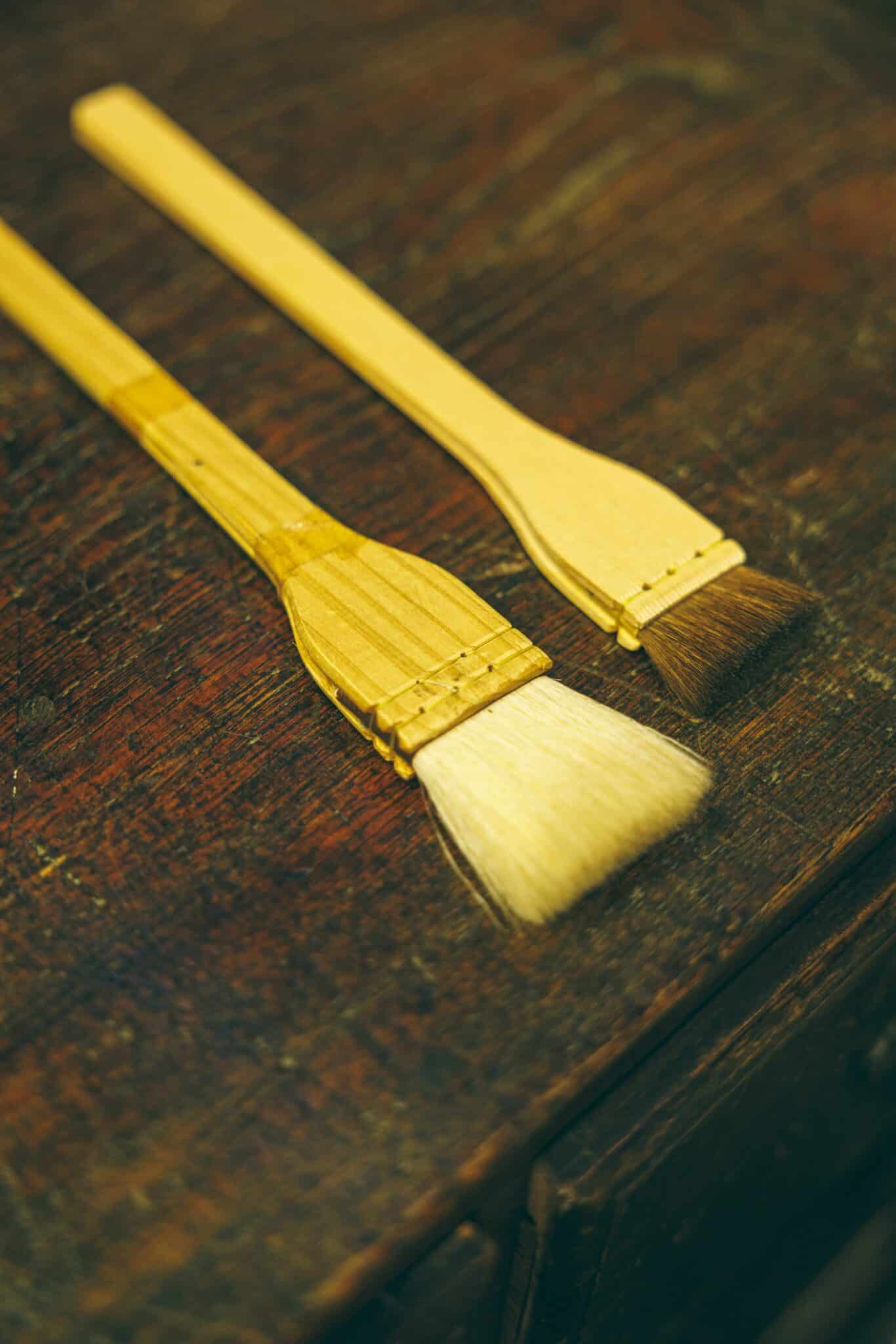
Cooking brushes are also used by professional chefs. The brushes in front are used to apply egg wash or butter to bread dough, while the brushes in the back are used to apply sauce to sushi and other foods.
Edoya uses natural bristles such as horsehair, pig bristles, boar bristles, and squirrel hair sourced from around the world. After determining the amount of hair, the shape of the tips, and compatibility with the wood, artisans across Japan produce the hake and brushes. Brushes set by hand by artisans are especially known for being less likely to shed bristles compared with machine-made brushes.
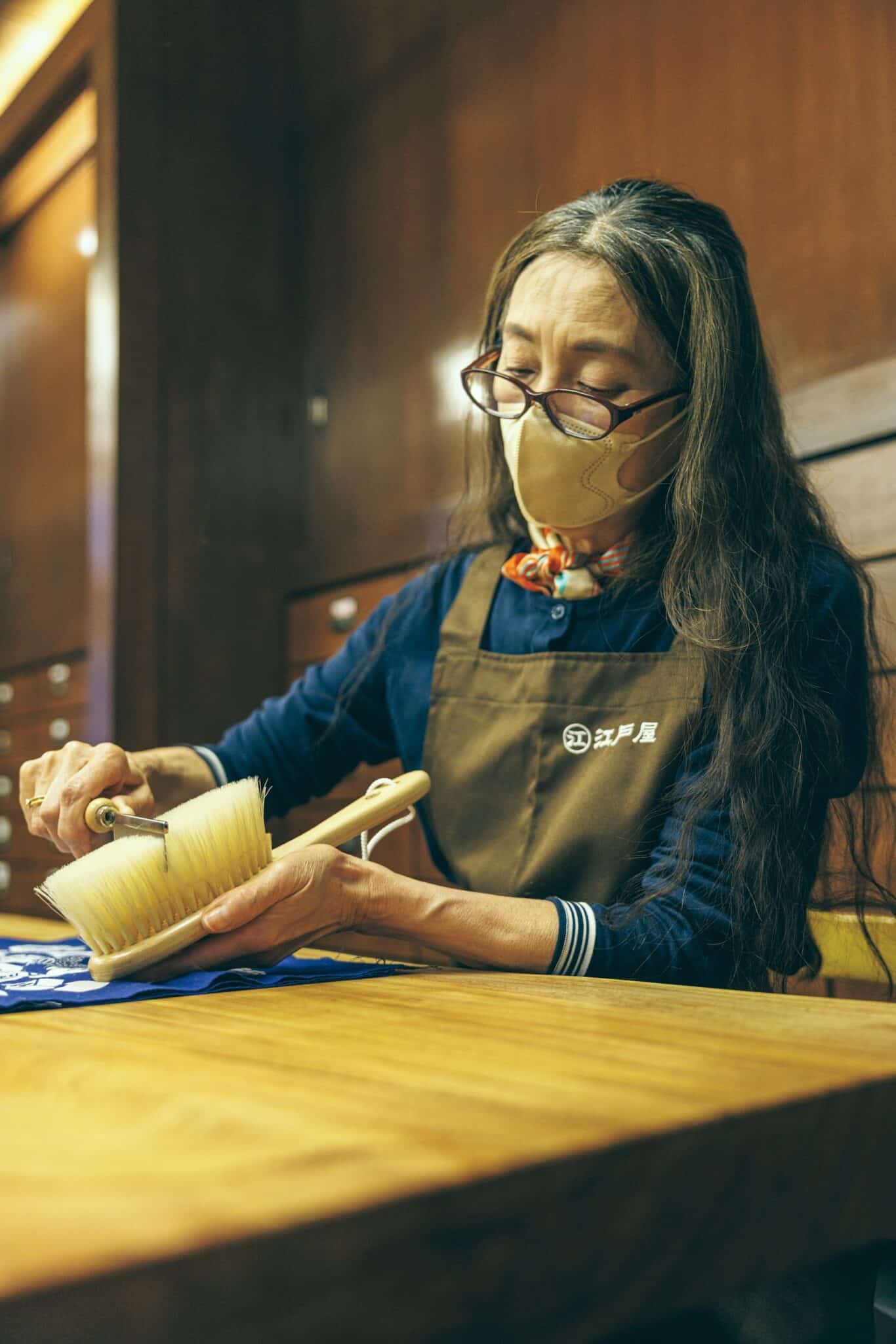
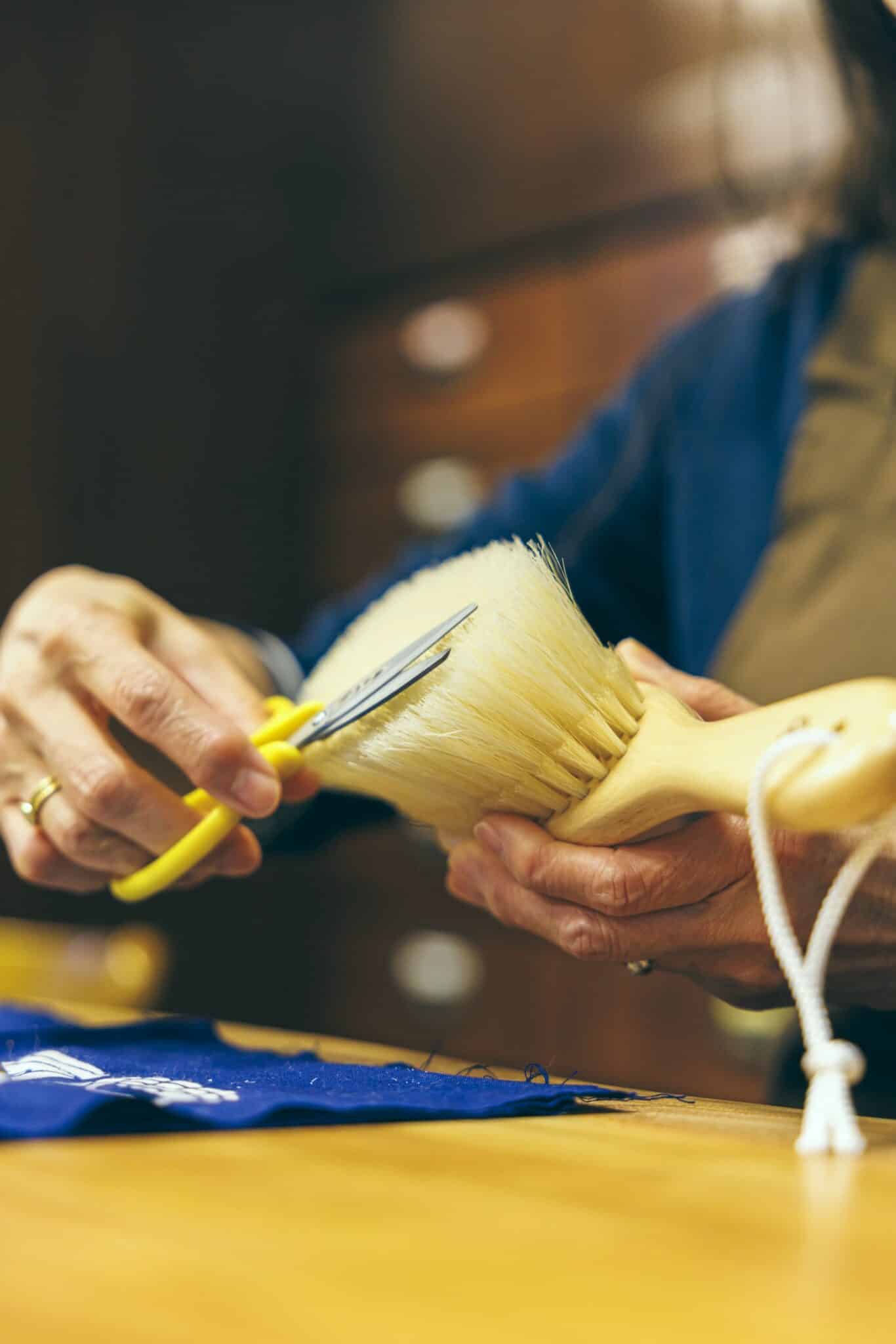
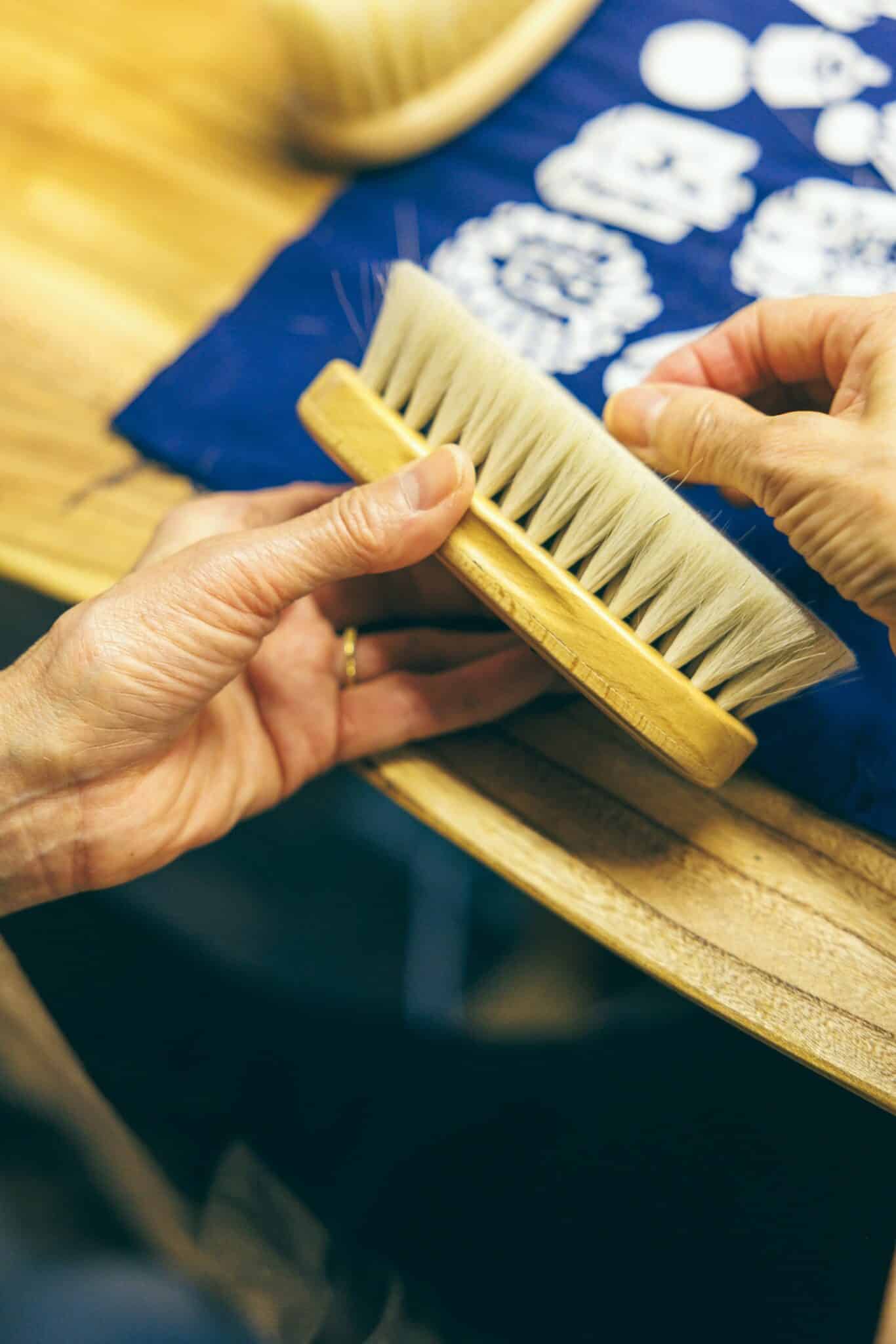
Brushes delivered to the store are combed one by one by finishing artisans to remove unnecessary hairs. After that, the tips are trimmed to the millimeter to complete the finishing process. By finishing each brush carefully by hand in this way, the bristles not only become beautifully aligned but are also prevented from shedding immediately after use begins.
A finishing artisan at work. The combs used on the brushes are selected with different tooth spacing depending on the type of bristles.
Long bristle tips that emerge after combing are trimmed even.
A dense shoe-polishing brush is being trimmed. The denser the brush, the more skill and time are required.
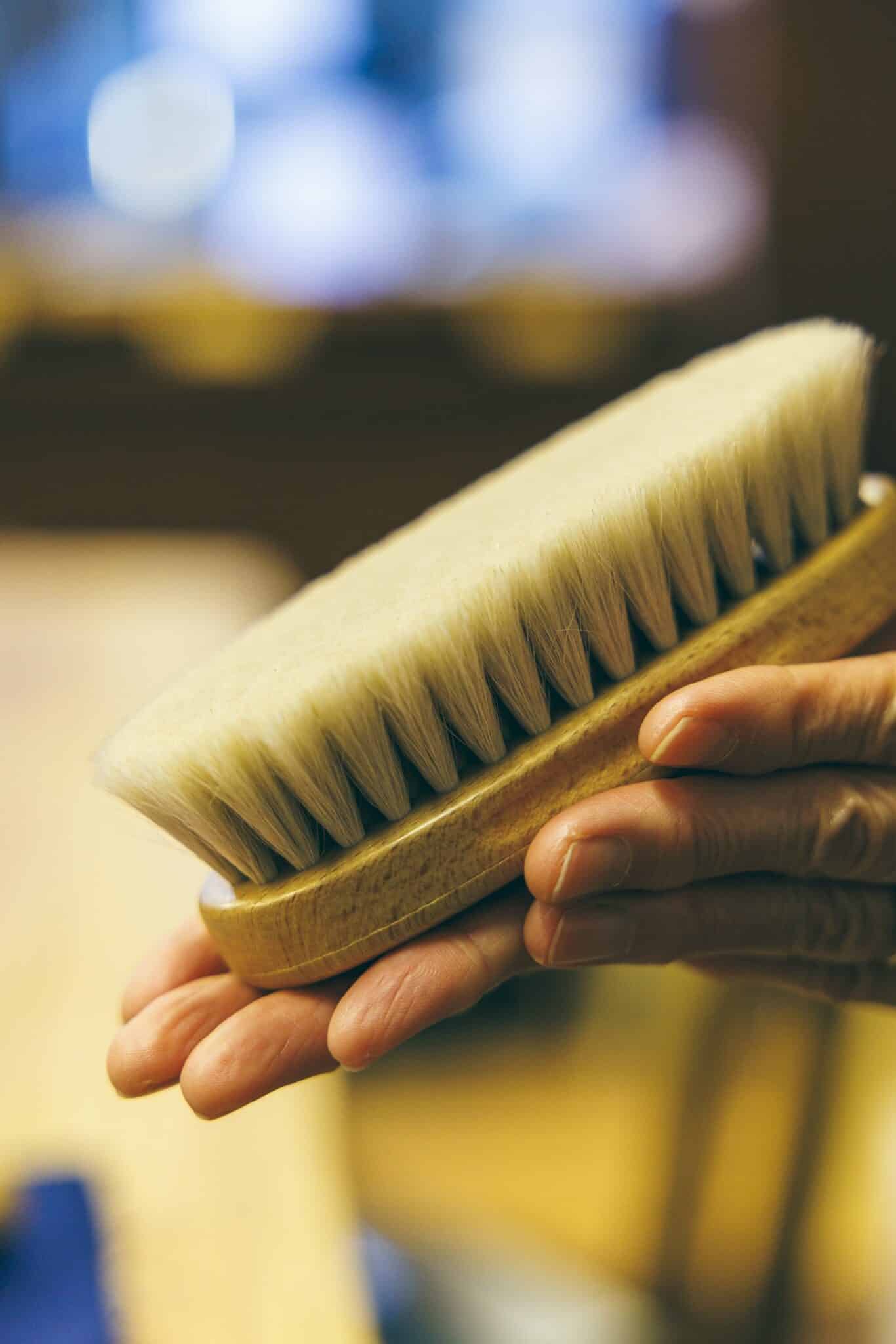
A completed shoe-polishing brush. Some customers are said to be so impressed by the beautifully arranged bristles that they rub the brush against their cheek the moment they pick it up.
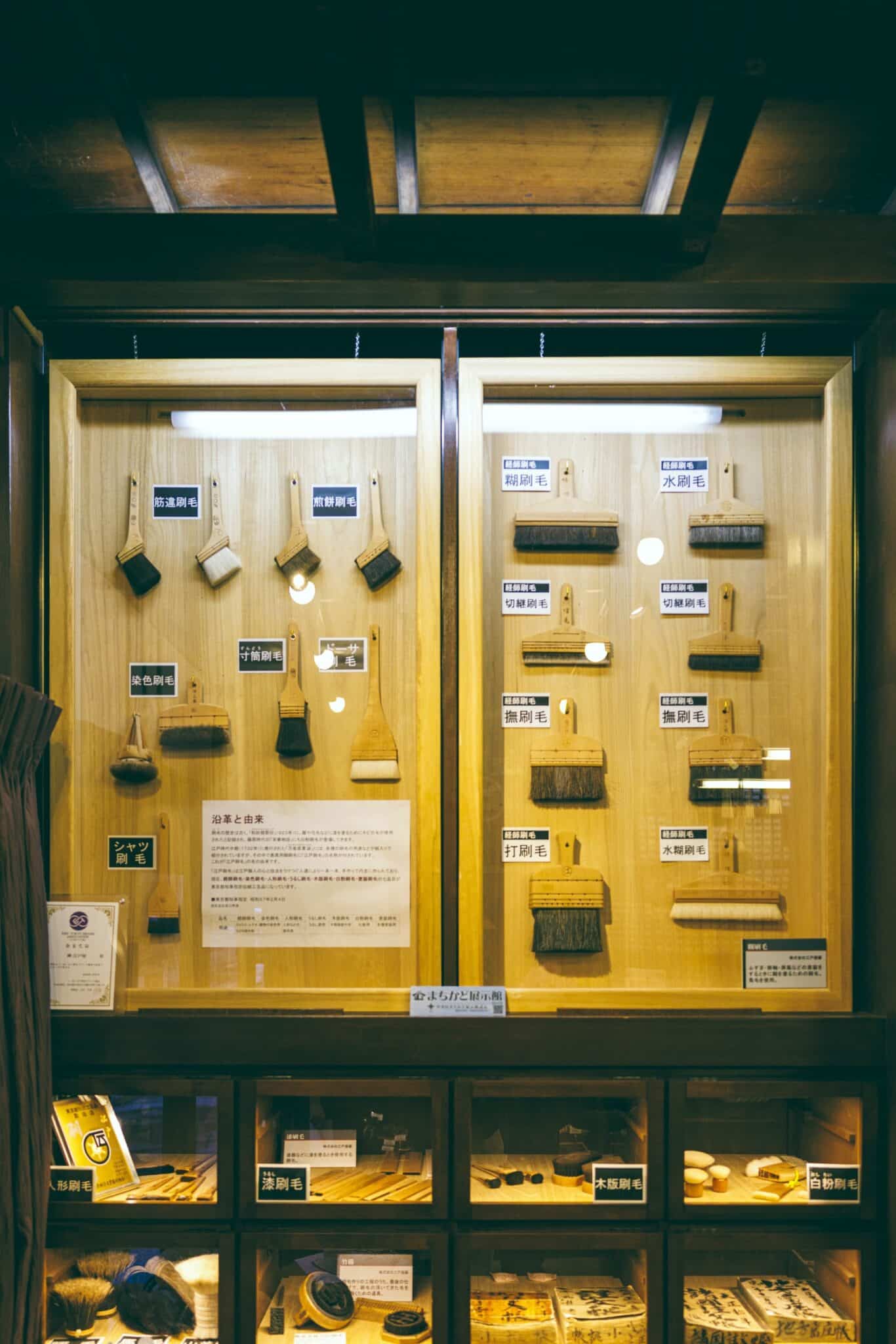
Traditional hake used in the production of traditional crafts are called Edo hake and are designated as a Traditional Craft of Tokyo.
Immediately to the left after entering the store is a small museum-like space displaying these Edo hake. A variety of hake are on display, including kyoji-bake used for fusuma sliding doors and hanging scrolls, mokuhan-bake used to apply paint to woodblocks in printmaking, kona-bake used by Kabuki actors to apply white face powder, ningyo-bake used to apply pigment to the faces of dolls, and urushi-bake used in lacquerware production. Even within kyoji-bake alone, there are many types depending on differences in material and length. You can see that each one has been carefully handmade to match the needs of the person placing the order.
In recent years, mass-produced products at affordable prices have become widely available, and handmade hake made by artisans have become luxury items. Even so, high-quality hake are essential tools for producing and restoring furnishings and craft objects. Edoya hopes that many people will come to understand the value of these tools.
The showcase displays various Edo hake, as well as products that Edoya produced in the past.
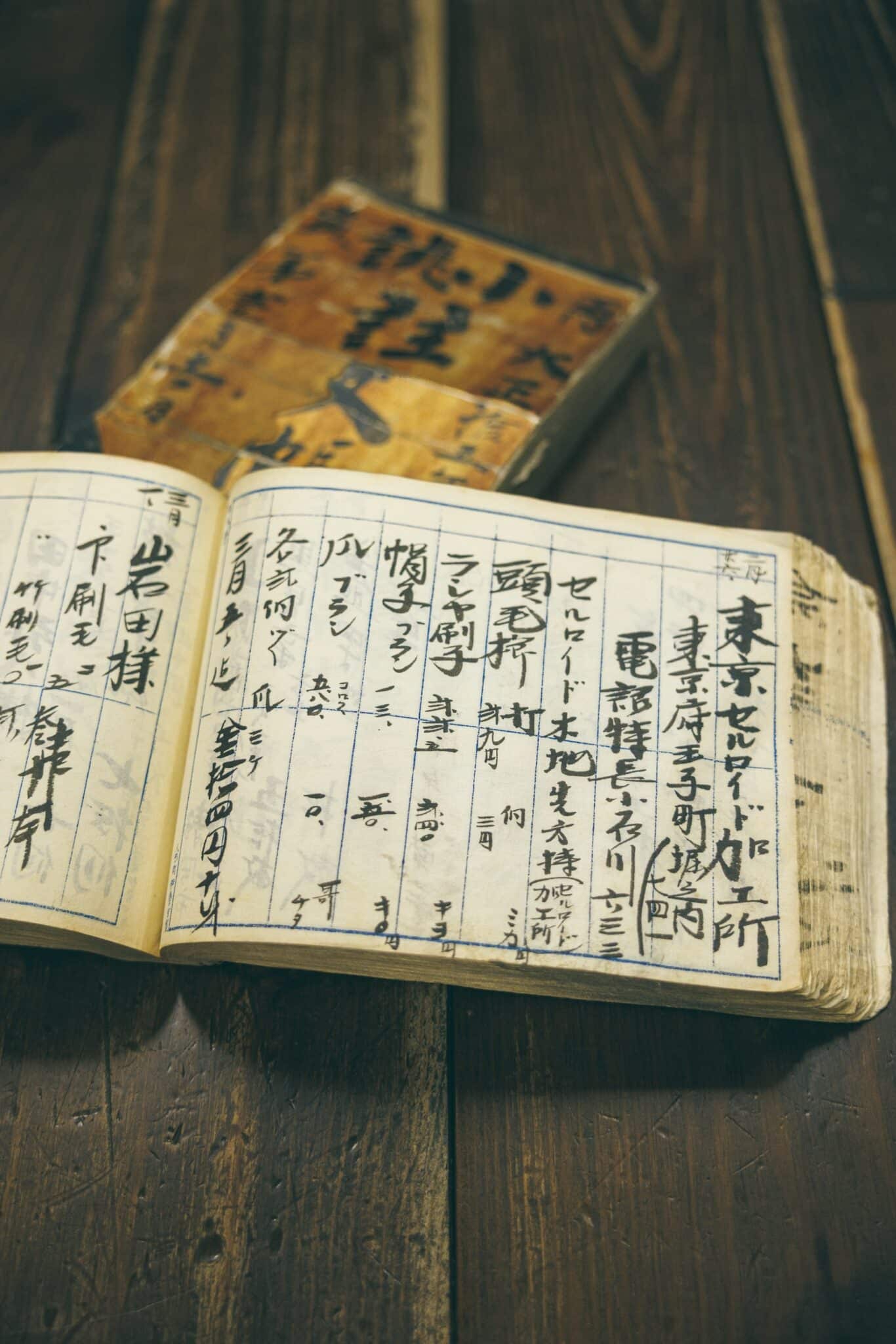
A handwritten order book used in the Taishō period(1912–1926). It shows that the shop had a wide range of customers even then, including craft artisans and material-processing workshops.
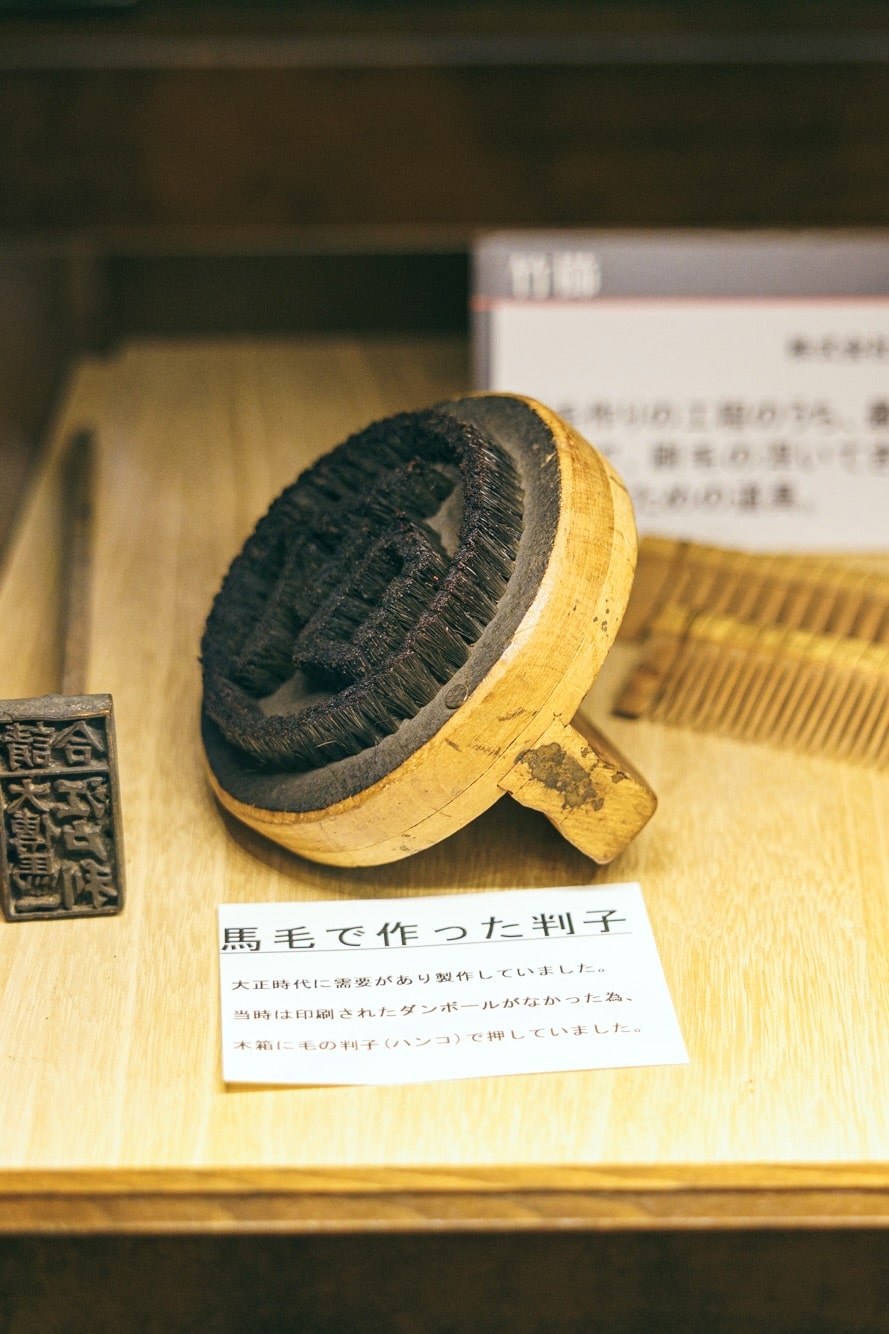
A horsehair stamp made in the Taishō period (1912–1926). Stamps are generally made from hard materials such as ivory or stone, but horsehair stamps were used as shop-name stamps or inspection stamps on uneven surfaces such as wooden boxes and mats woven from plant fibers.
Today, Edoya handles more than 3,000 types of hake and brushes. Its products range widely, including hairbrushes, clothes brushes, shoe brushes, and cleaning brushes.
Hairbrushes are especially popular. They can be chosen according to preferred firmness and hair type, and because even light brushing brings out shine, they are also supported by professional hair and makeup artists. Clothes brushes and shoe brushes are also popular as gifts. Made with flexible yet resilient pig bristles, they thoroughly brush out dust and debris. The product with the highest number of repeat customers is the toothbrush. Its compact head, measuring about two centimeters, easily reaches the back teeth, and because it uses natural bristles, the tips are less likely to wear down, allowing it to be used for three to four months.
In addition, the shop offers many tools that respond to the small needs of daily life, including brushes for scratching the back, stain-removal brushes, and brushes for cleaning narrow gaps.
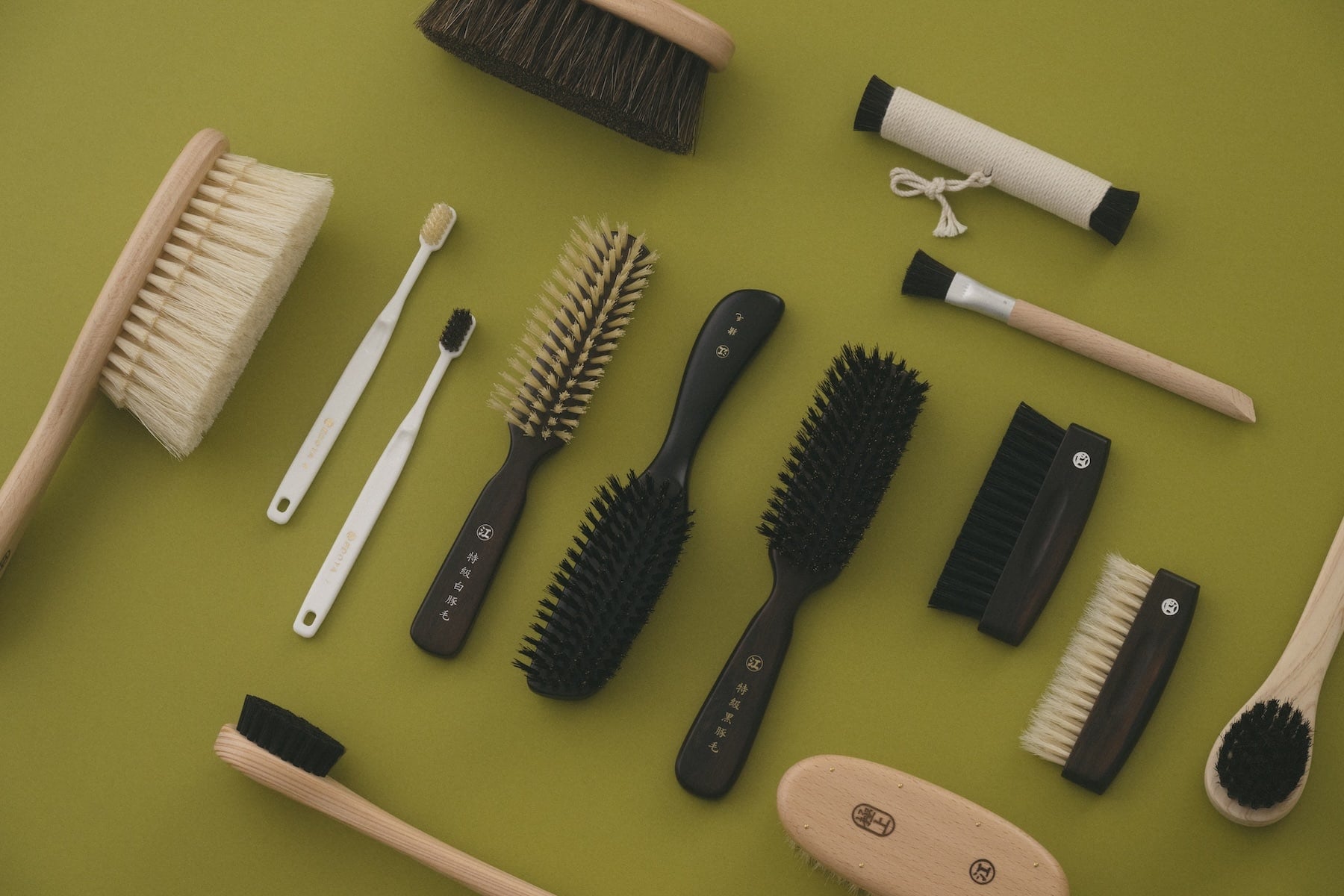
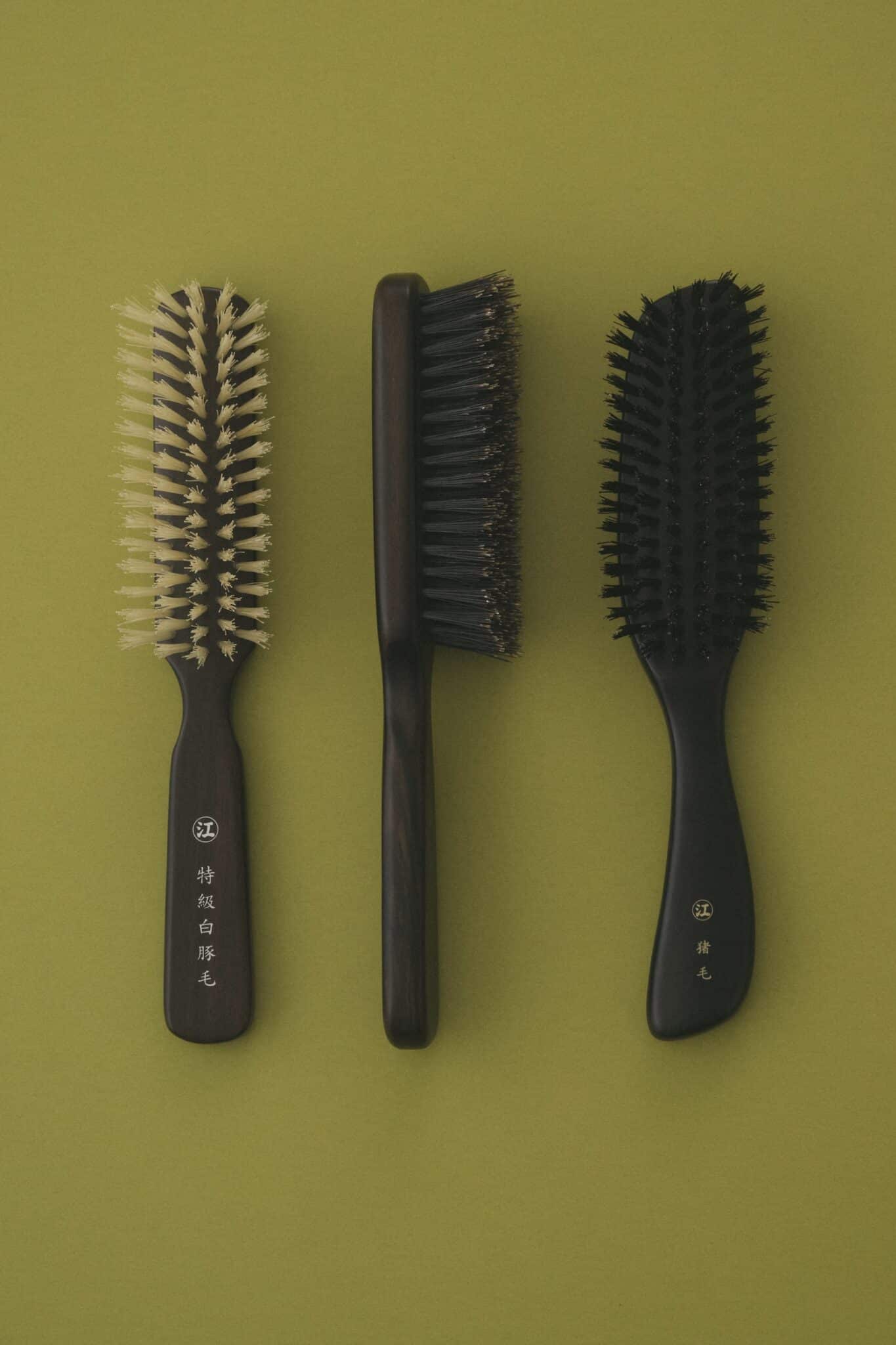
On the left is a hairbrush with soft white pig bristles set in five rows, priced at ¥15,400. It is suited for fine, soft hair and straight hair. In the center is a hairbrush with black pig bristles densely set in seven rows, priced at ¥17,600. It is a type that is relatively easy to use for many hair types. On the right is a hairbrush with hard boar bristles set in six rows, priced at ¥14,300. It is suited for people with a large amount of hair, and the S-shaped handle is designed to make brushing long hair easier.
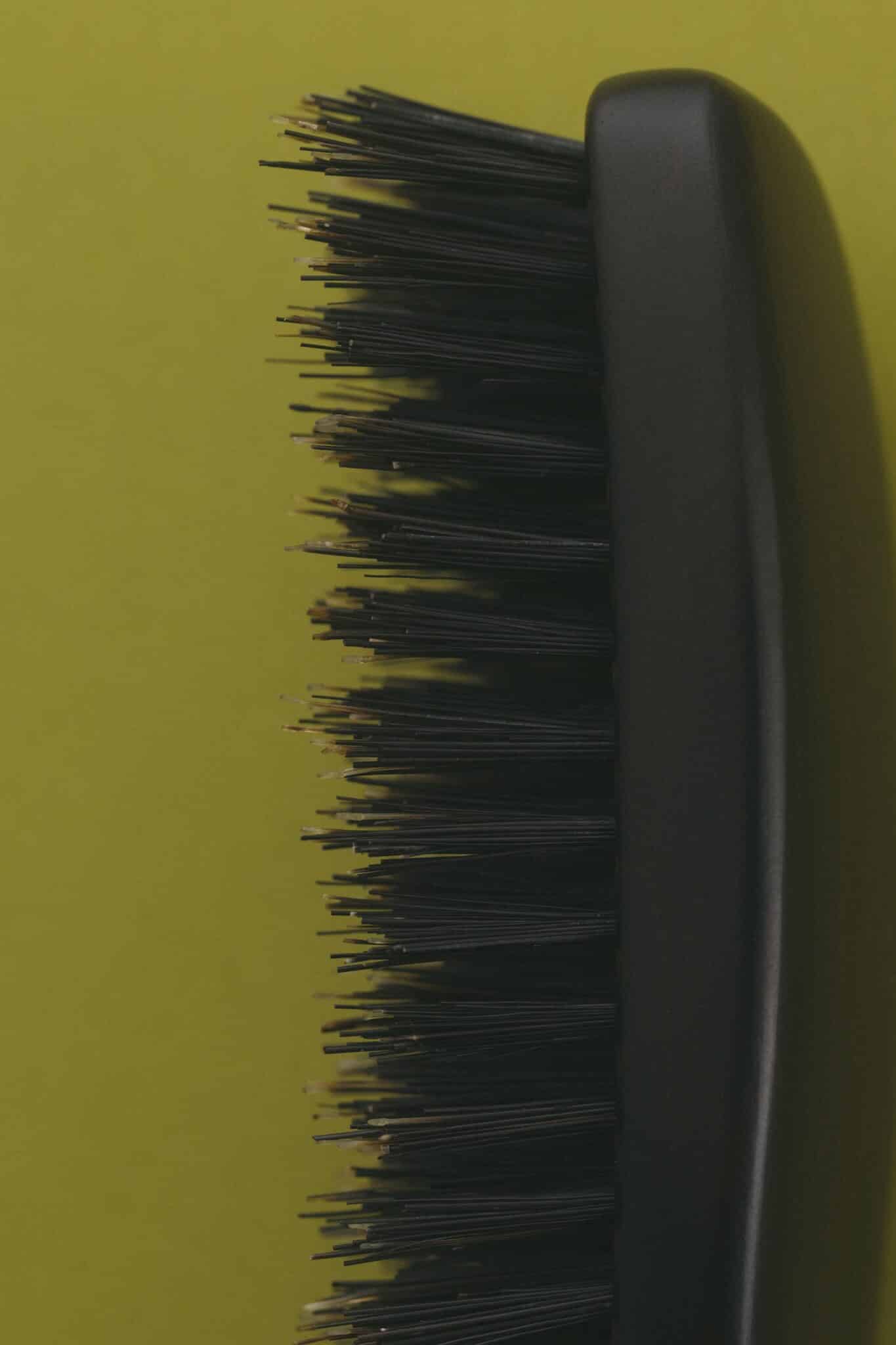
Hairbrushes achieve an exquisite glide through the hair by intentionally setting the bristles at uneven lengths.
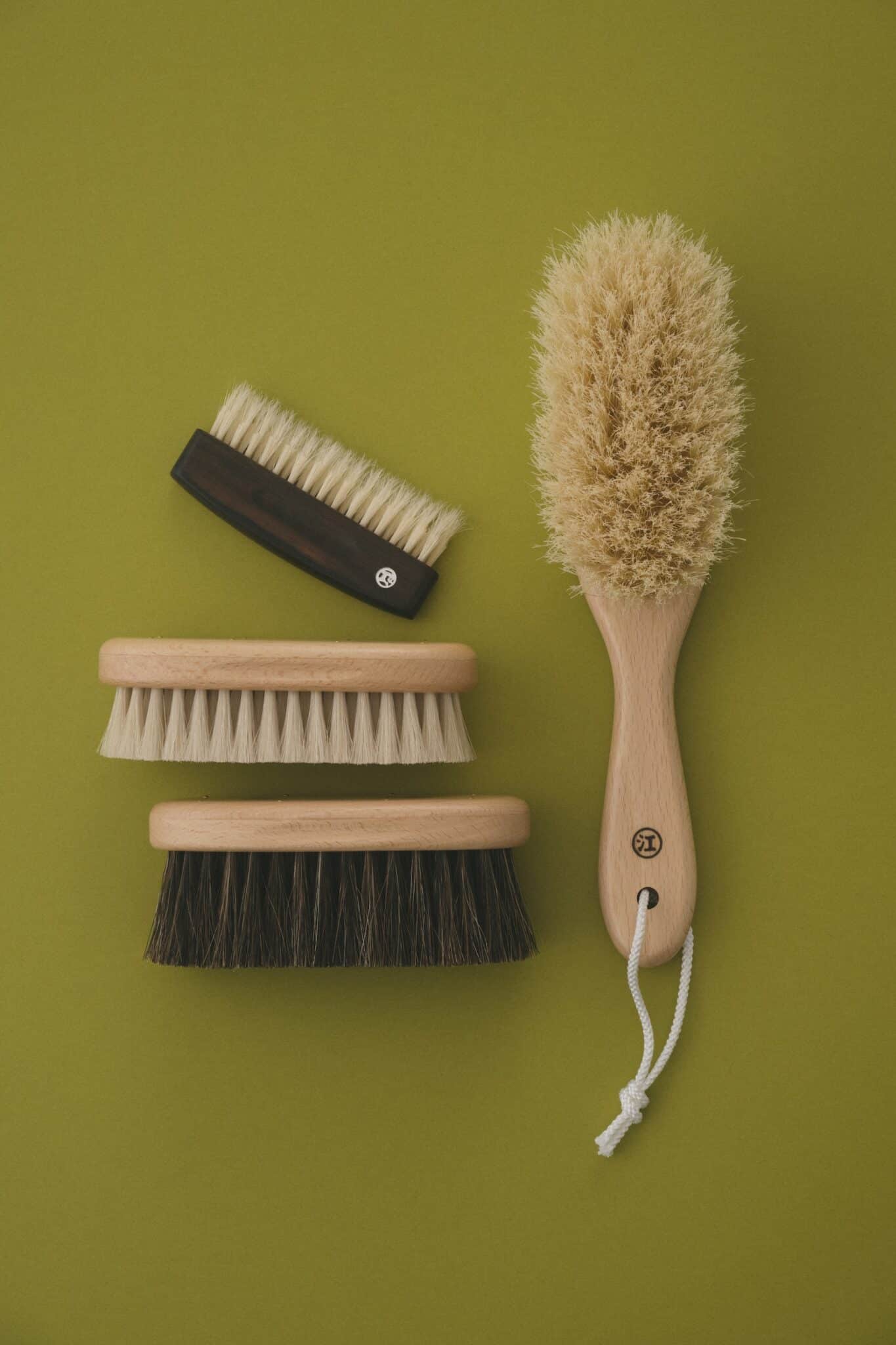
At upper left is a comb-shaped portable clothes brush that fits into the breast pocket of a suit jacket, priced at ¥4,840. At center left is a shoe-polishing brush, priced at ¥15,400. At lower left is a brush for removing dust from shoes, priced at ¥16,500. On the right is a versatile clothes brush that can be used on any fabric, priced at ¥30,800. By increasing the amount of bristles, it improves the efficiency of brushing.
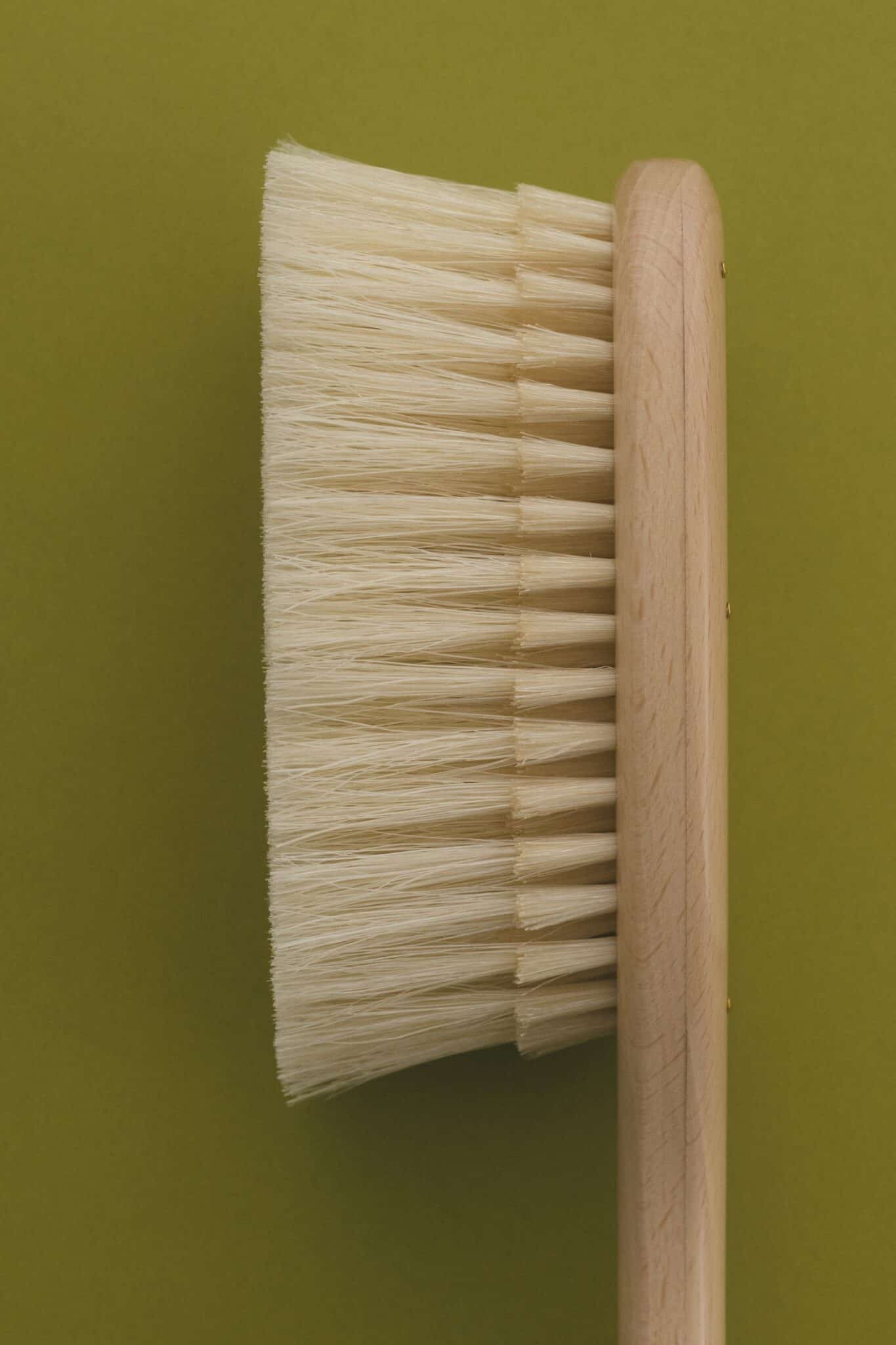
Clothes brushes are designed with shorter bristles surrounding longer bristles, giving them just the right amount of resilience.
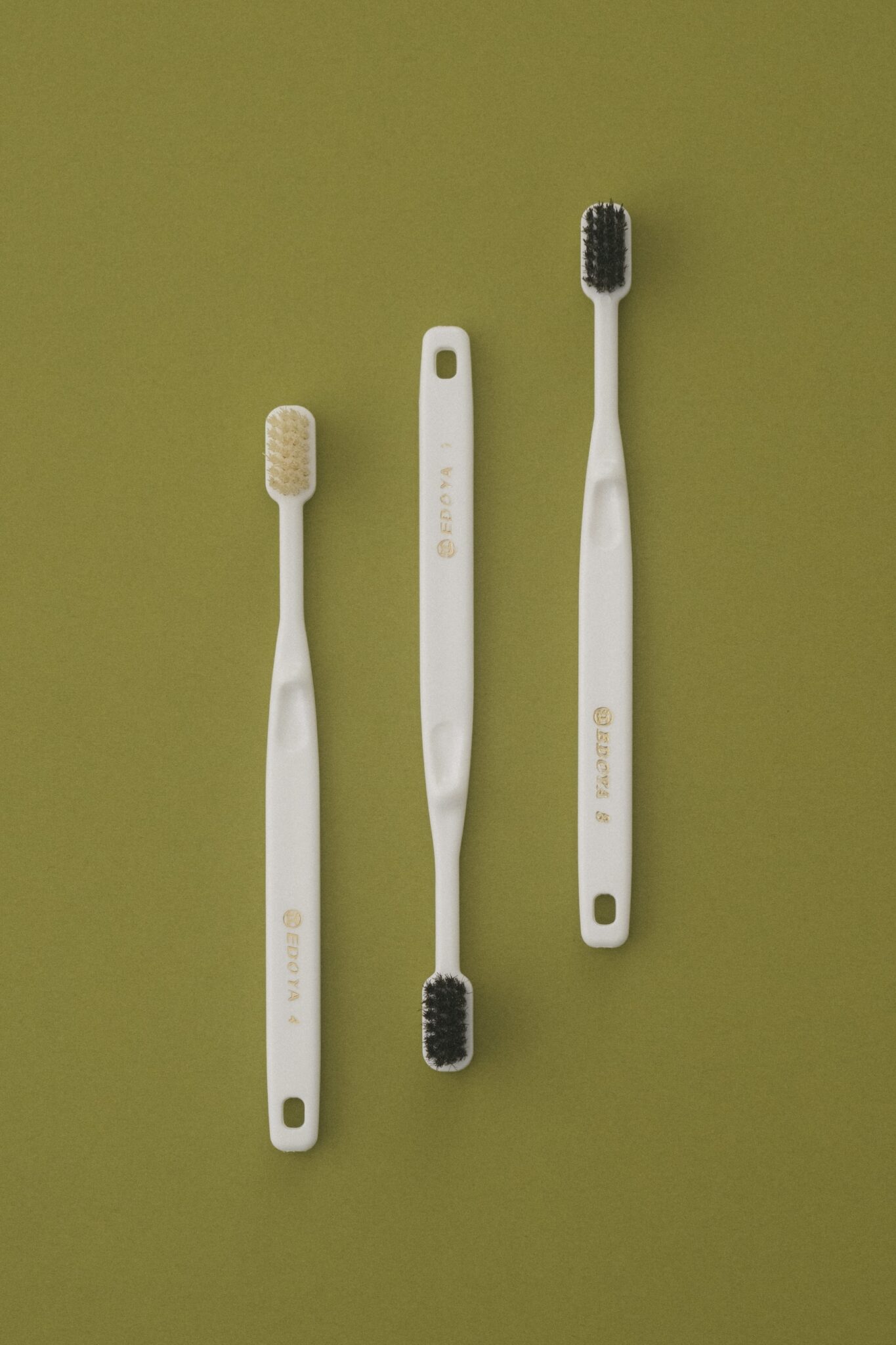
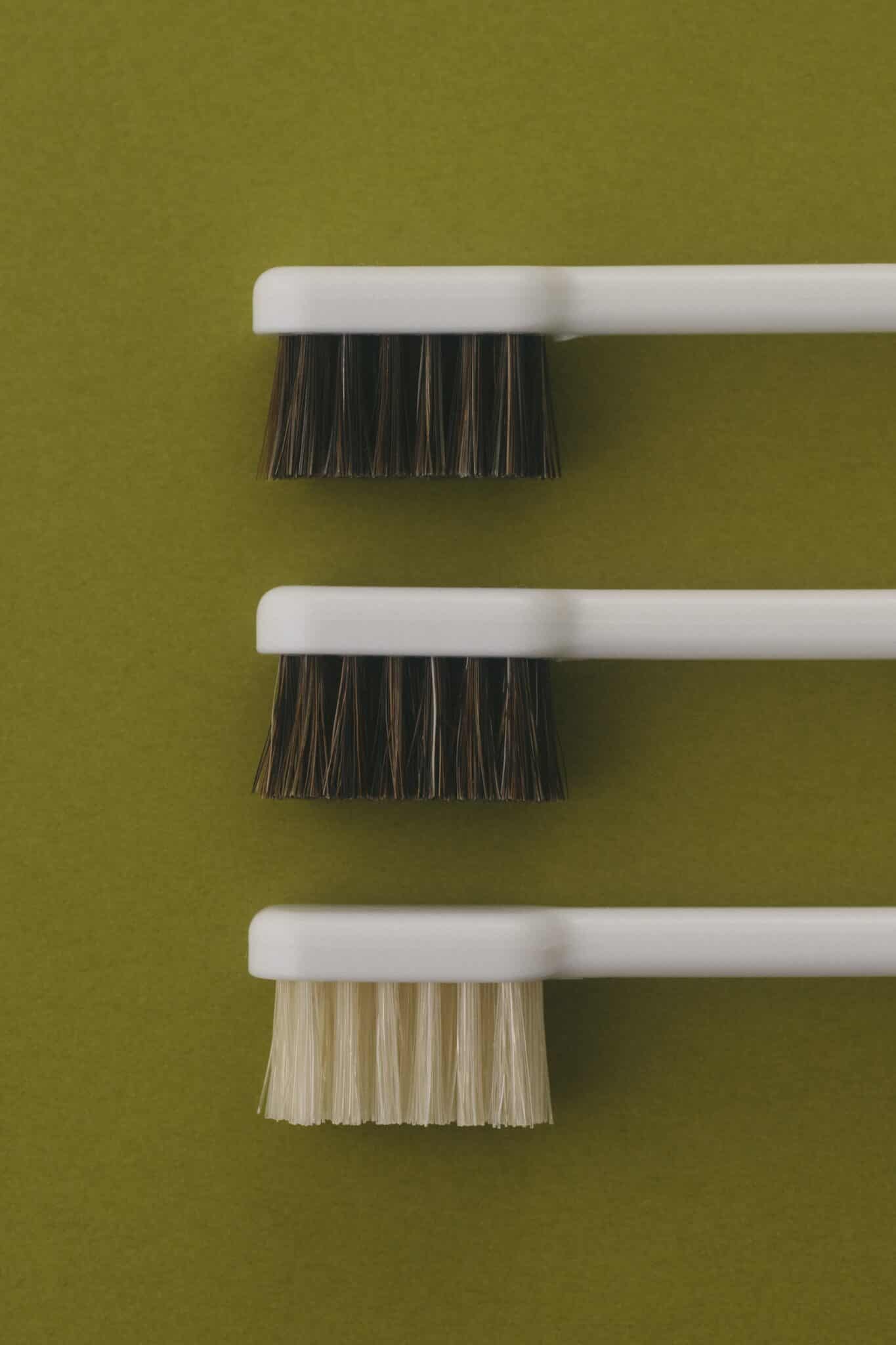
Toothbrushes are available in three levels of firmness. Each is ¥770. They also come in pink, blue, and green.
They are divided into three types according to bristle softness. The soft type at the top uses horse mane hair, the regular type in the center uses horse tail hair, and the firm type at the bottom uses pig bristles.
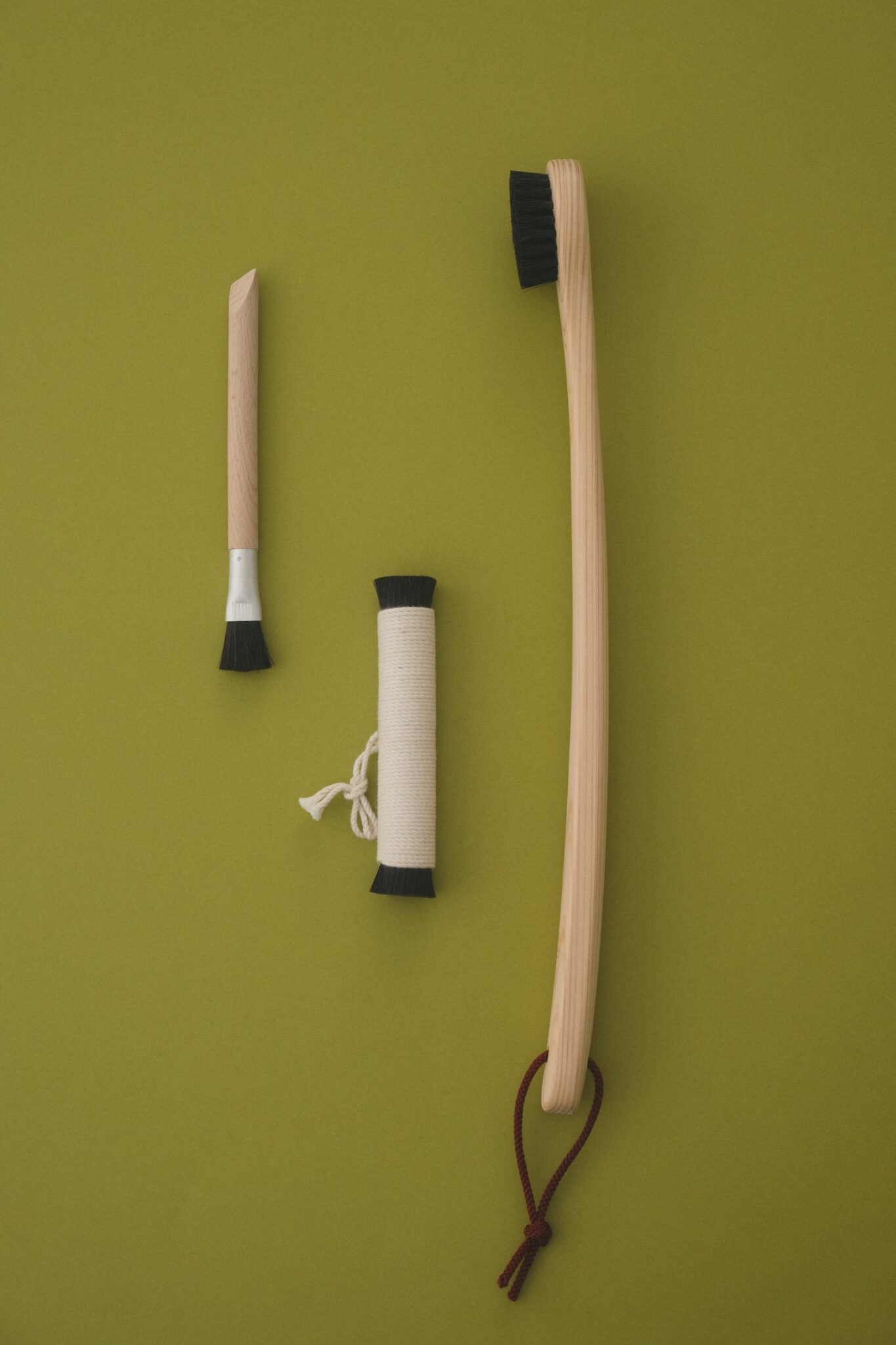
On the left is a cleaning brush made with horsehair. It is suited for cleaning narrow gaps such as window sashes, priced at ¥770. In the center is a stain-removal brush made by bundling horsehair with cotton string. It is gentle on fibers and is also used by dry cleaners, priced at ¥1,870. On the right is a brush for scratching the back. Two types with different bristle firmness are available, priced at ¥3,850.
The information in this article is current as of July 22, 2026 (at the time of publication).



.jpg)
スマホ.jpg)