DEEPTOKYO
magazine

EN

DEEPTOKYO
magazine
EN
2026.08.18
A Specialty Broom Shop Keeping a 200-Year-Old Tool Alive Today


 Nearest Station
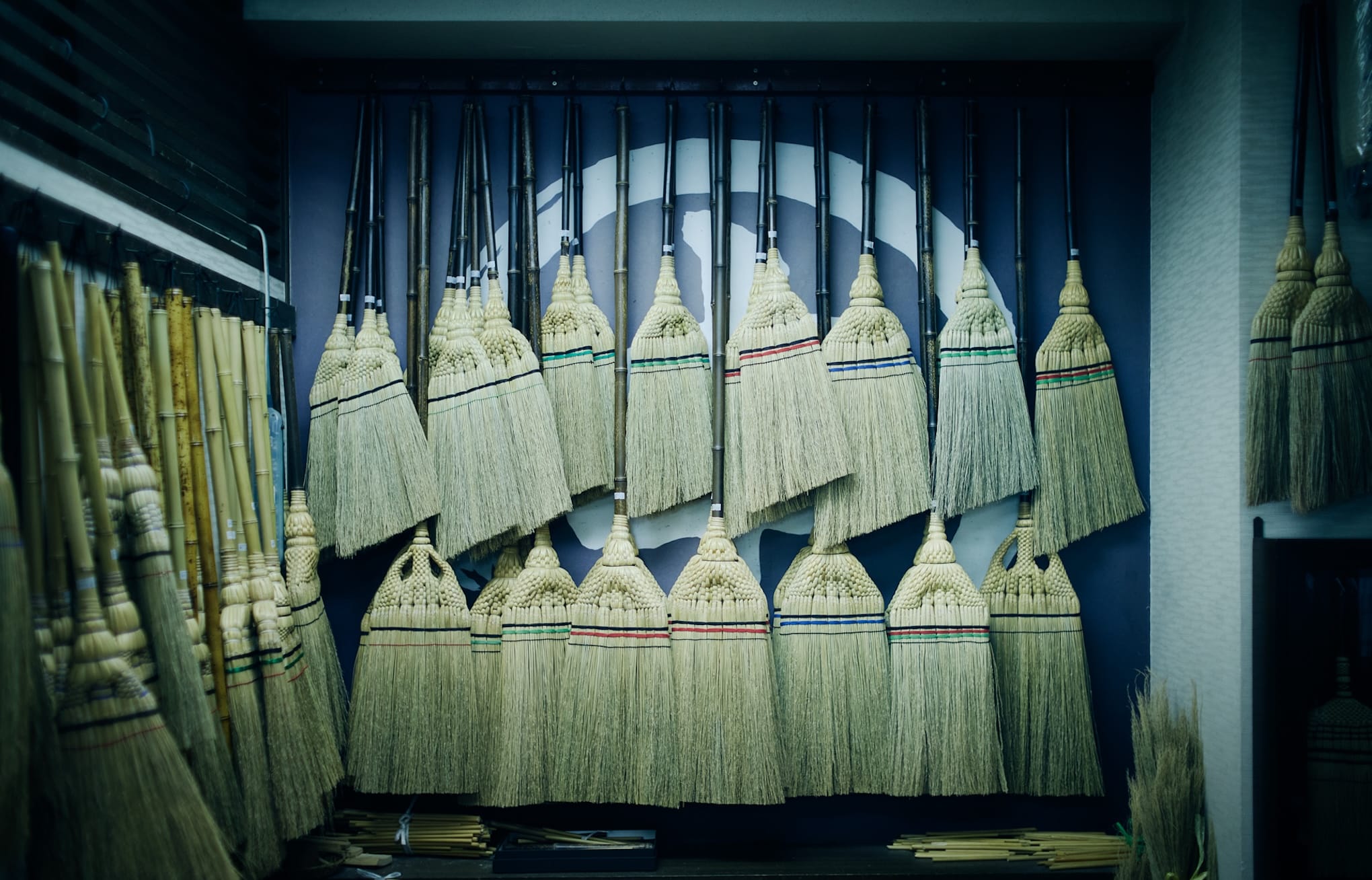
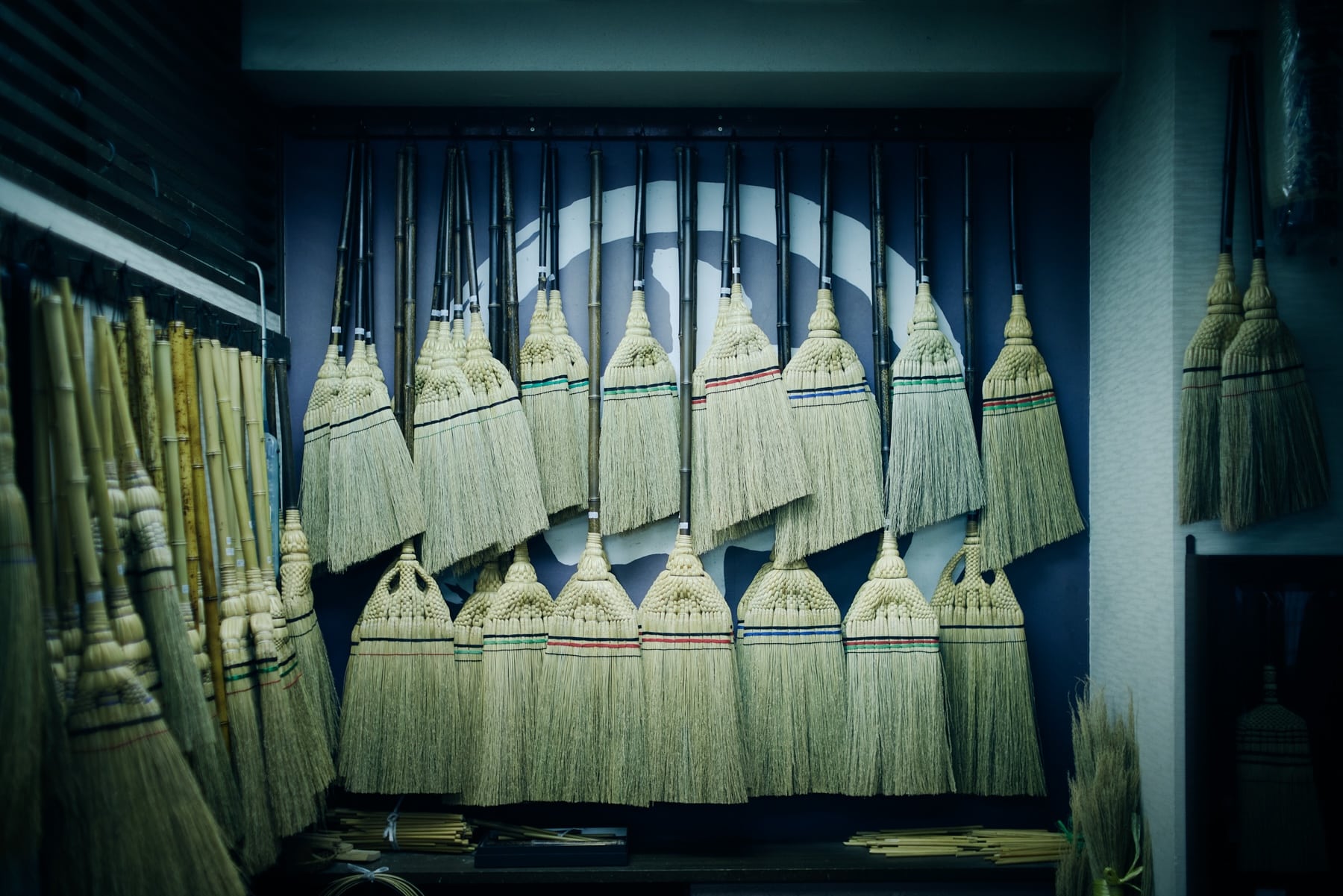
Established in 1830, “Shirokiya Denbē” is a specialty broom shop in Kyobashi, Tokyo. Its brooms are made with broomcorn, a plant in the grass family, and each one is carefully handcrafted using techniques passed down since the Edo period. The shop offers a wide variety of brooms for different purposes, including wooden floors, dining tables, and clothing.
SHARE


“Shirokiya Denbē” was established in 1830. The shop originally sold tatami-omote—woven rush coverings for the cores of tatami mats—near what is now Ginza, Tokyo. It began making and selling brooms about 30 years after its founding. Until then, most homes had wooden floors, and soft shuro palm brooms with little flexibility were commonly used for cleaning. As tatami flooring began to spread among ordinary households, the owner anticipated growing demand for more resilient brooms suited to tatami and changed the business from a matting shop to a broom shop. The shop later moved to its present location in Kyobashi, Tokyo. At the time, Kyobashi was home to a market known as Takegashi, or the Bamboo Wharf, where bamboo materials and products from across Japan were gathered. Since relocating, the shop has continued to operate as a specialty broom shop to this day.
Later, the business relocated to what is now Kyobashi in Tokyo, home to Takegashi—a market where bamboo and bamboo products from all over the country are gathered—and has continued to operate as a specialty broom shop to this day.
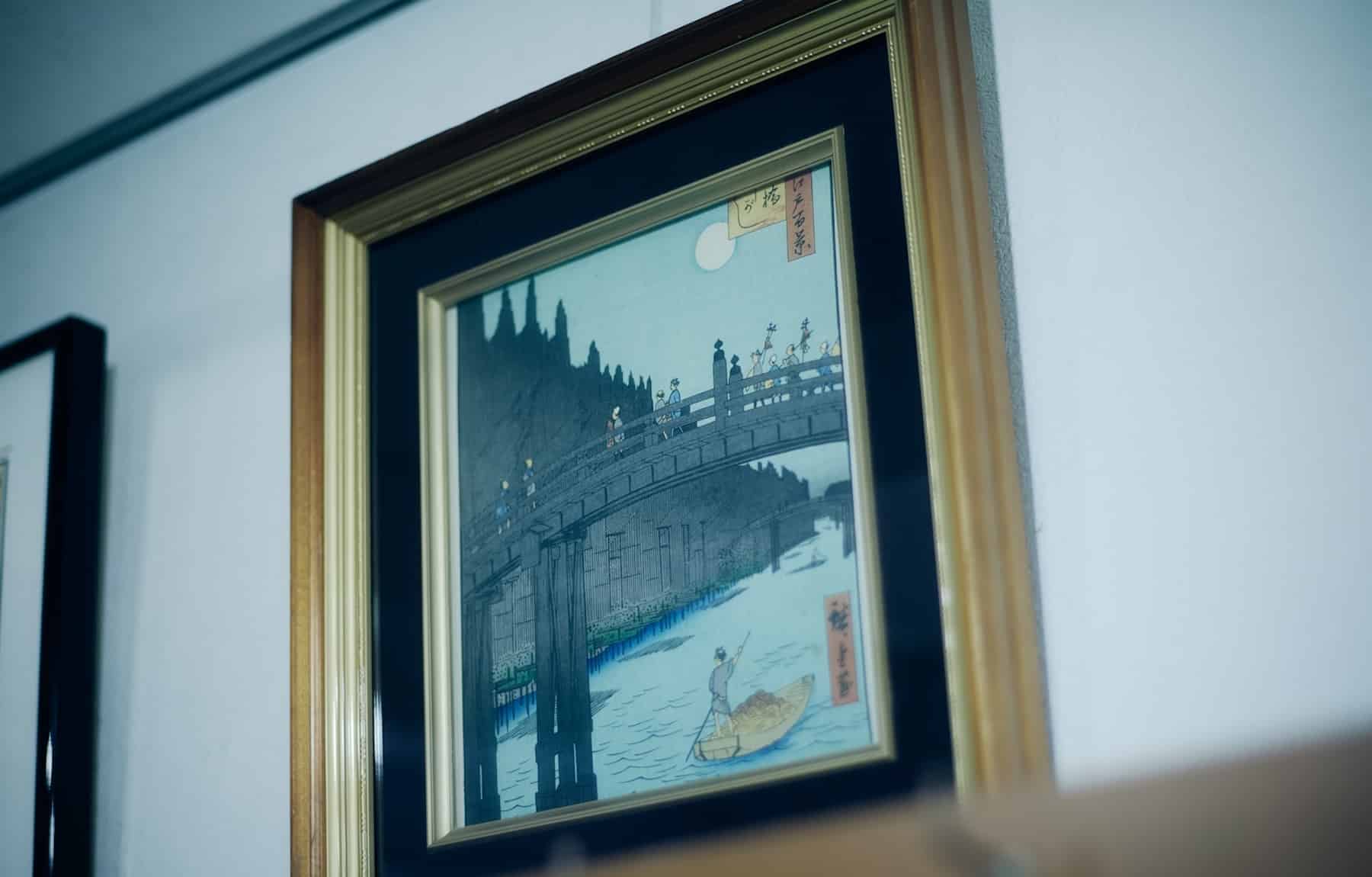
An ukiyo-e print by Utagawa Hiroshige is displayed inside the shop. It depicts Takegashi as it appeared at the time. In the background, to the left of the bridge, bamboo that had been transported to the market can be seen propped upright.
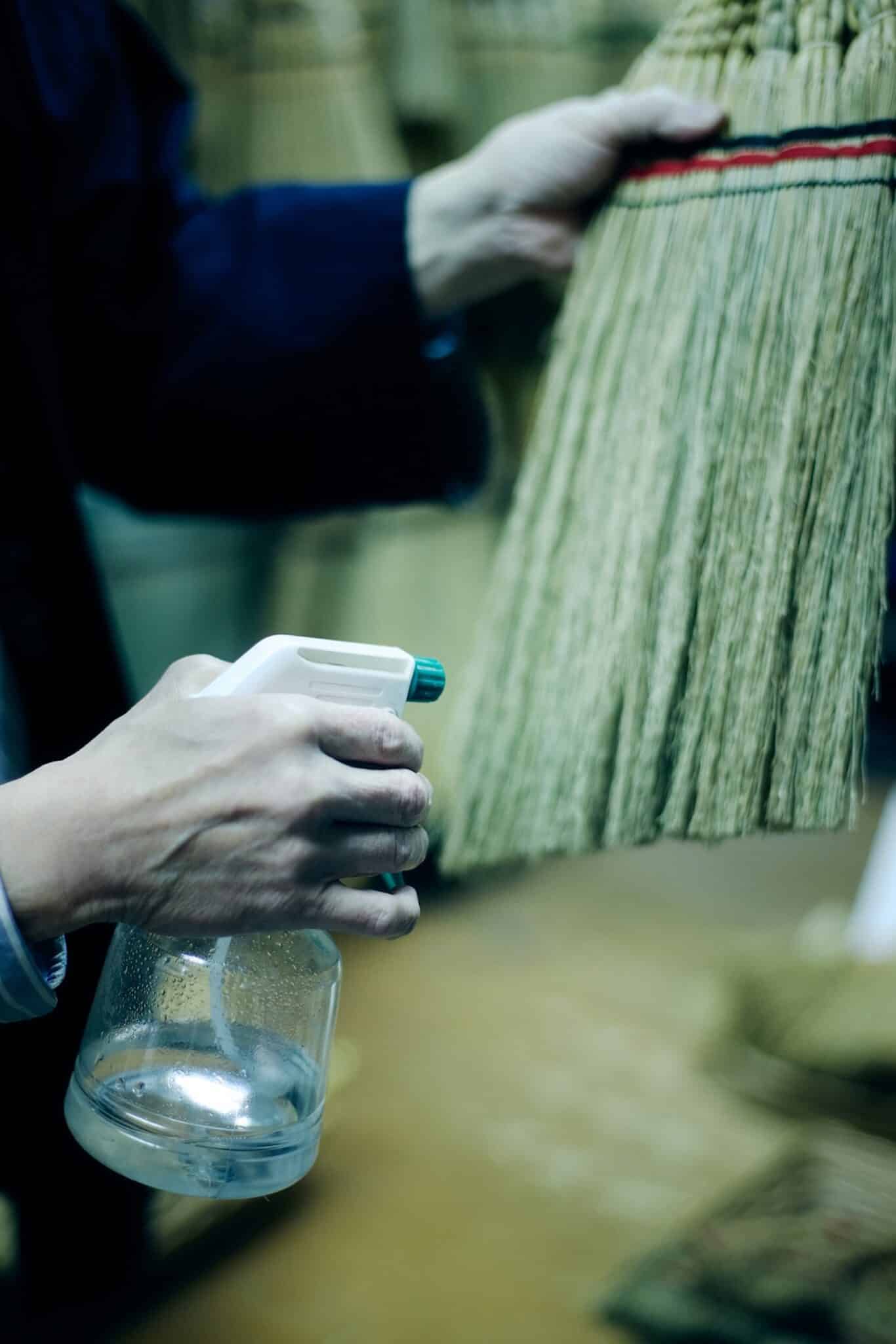
The flexibility of the bristle tips is what makes Edo brooms easy to use. Their resilience creates a spring-back action, allowing users to sweep with little effort. Craftspeople sort broomcorn, a plant in the grass family used for the bristles, according to its firmness. They then combine firmer and softer stalks in a carefully judged balance to create a smooth, flexible sweeping action. According to Satoru Nakamura, the shop’s seventh-generation owner, every stage of broommaking is still carried out by hand. It takes about ten years to master the entire process. The most difficult skill to acquire is sorting the broomcorn. Using their fingertips, craftspeople assess the thickness and flexibility of each individual stalk and sort it according to its intended use. This process improves both the broom’s sweeping performance and its durability. When the bristle tips begin to bend after prolonged use, moisten them with a spray bottle. Then reshape the tips so that they are straight and hang the broom up to dry. The bristles will return to their original shape, restoring the broom’s sweeping performance.
Also, if the bristles start to bend after continued use, moisten them with a spray bottle, reshape them so they’re straight, and hang them up—this will allow the bristles to return to their original shape, restoring the broom’s cleaning performance.
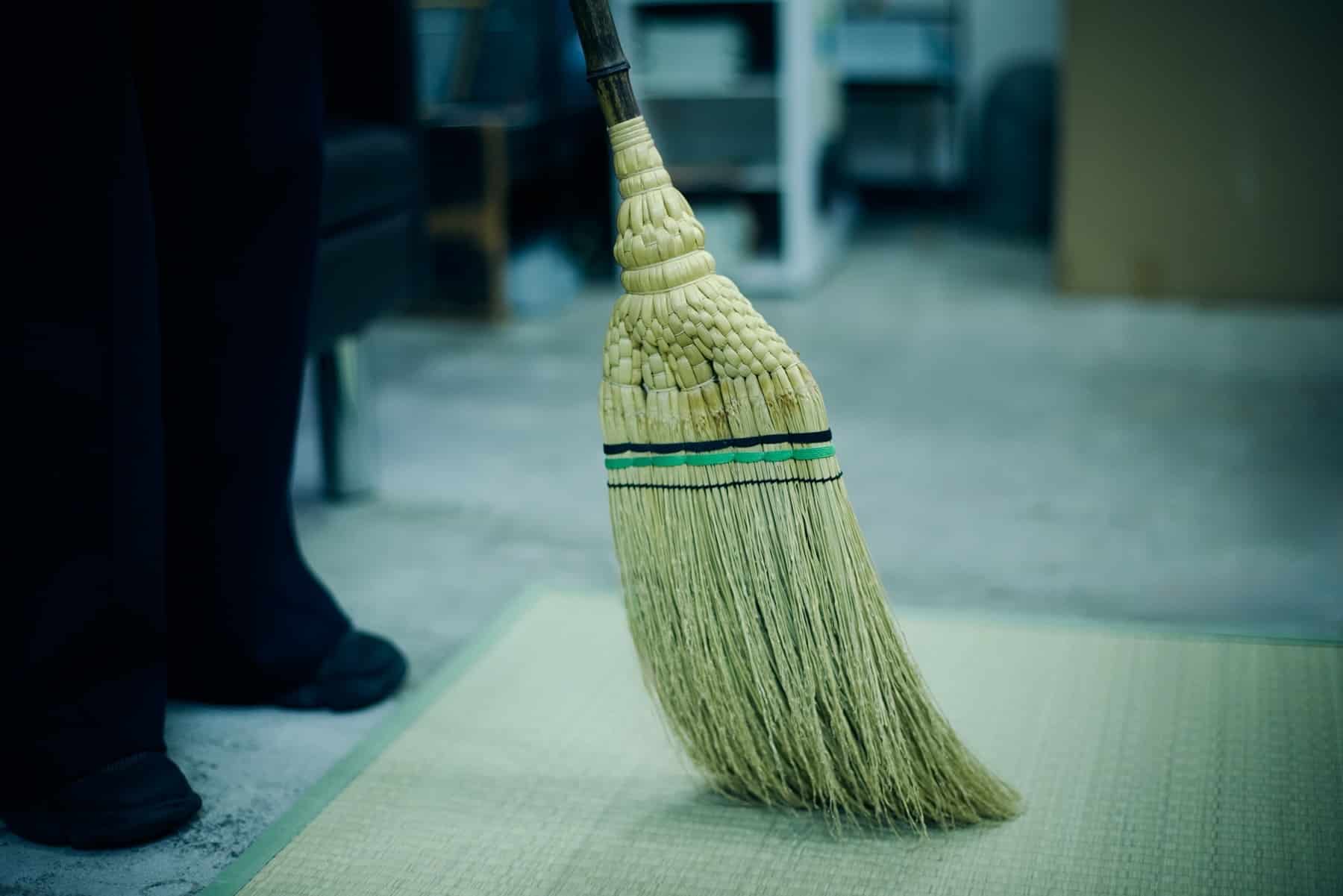
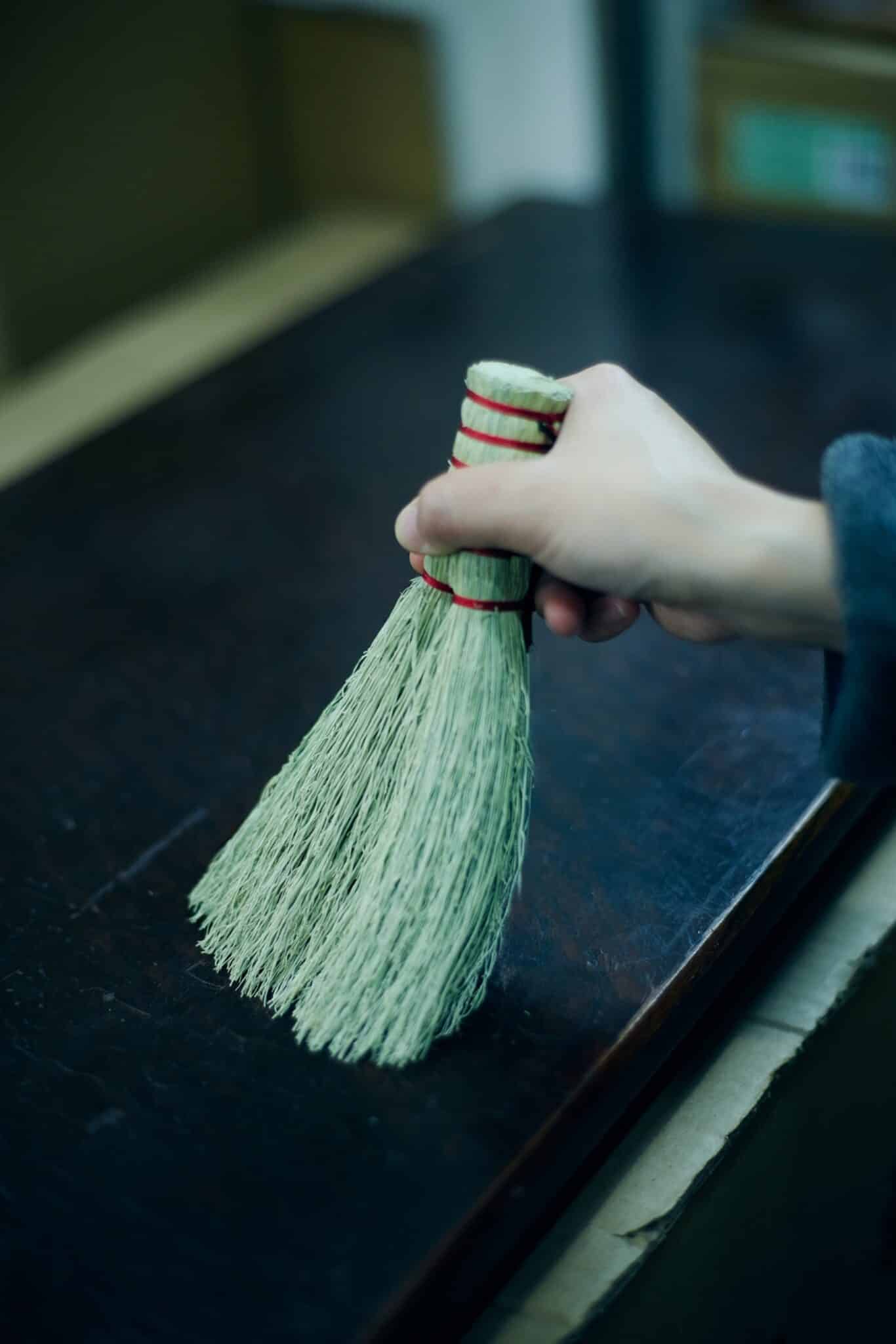
The flexible bristle tips act like springs, efficiently sweeping away debris with only a light touch.
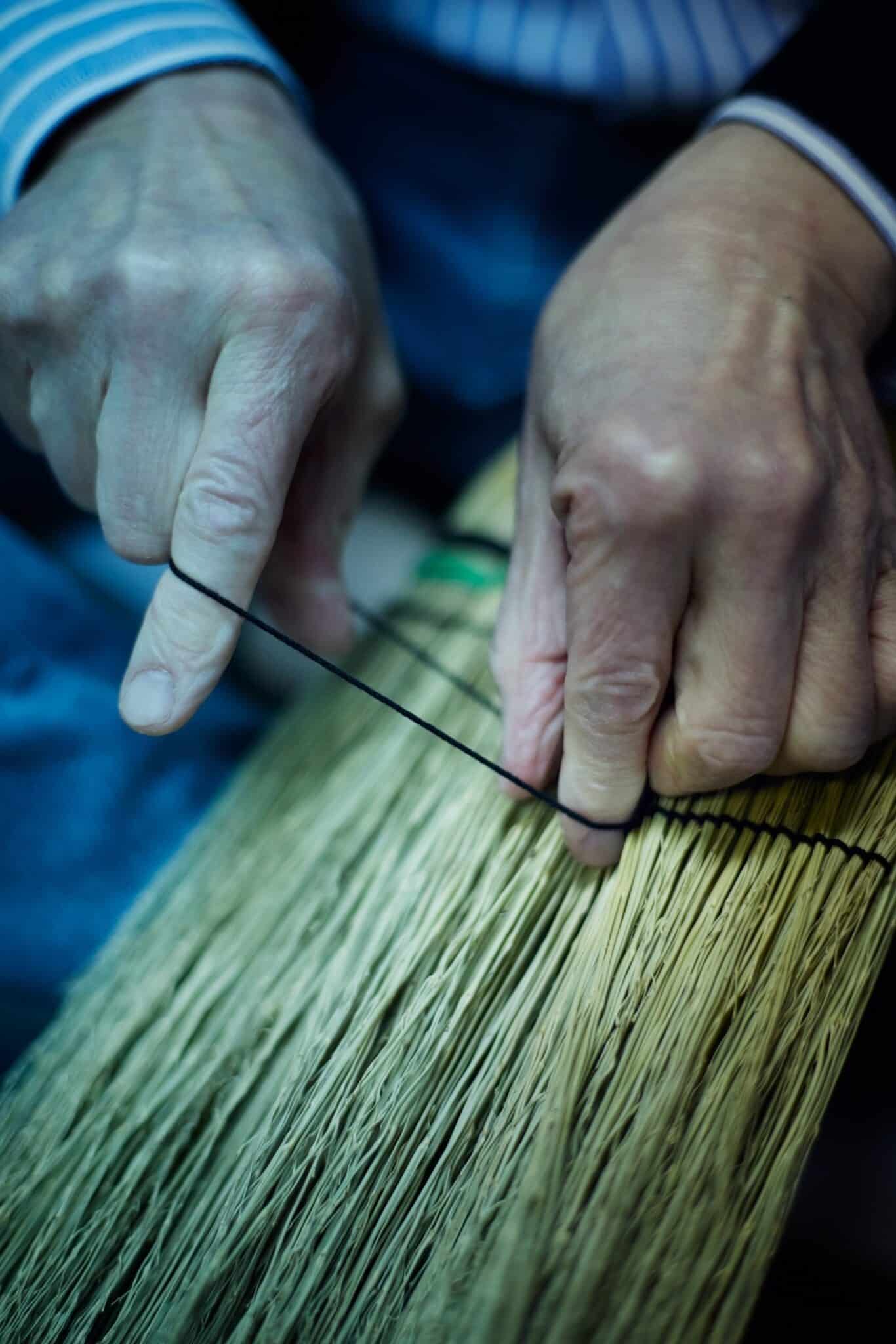
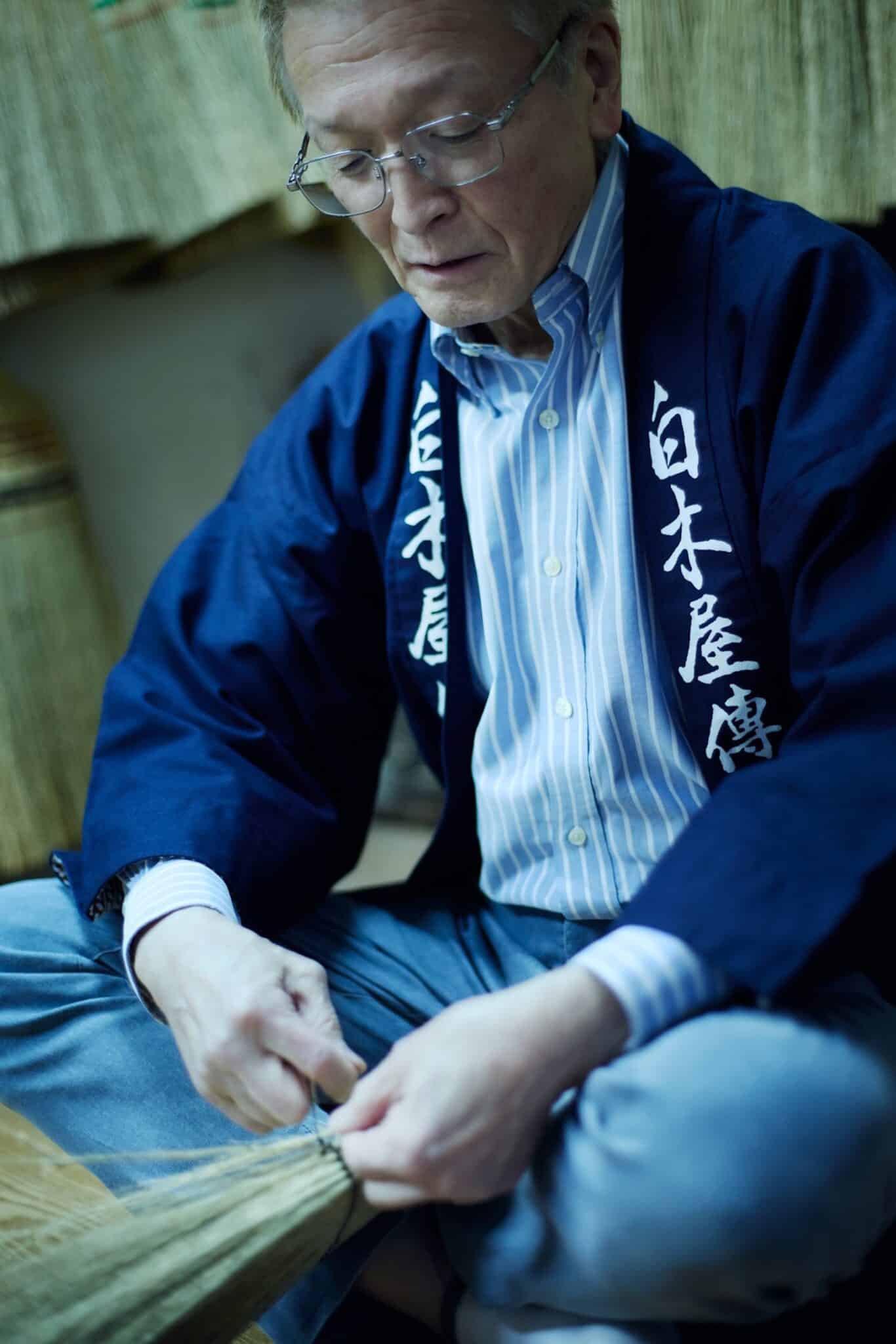
A finishing step performed in the shop. Thread is woven through the bristle tips to prevent them from spreading.
Satoru Nakamura, the shop’s seventh-generation owner. He took over the business about 30 years ago and continues to preserve the tradition of Edo brooms passed down through generations.
Moistening the bristle tips softens the grass and makes it easier to reshape.
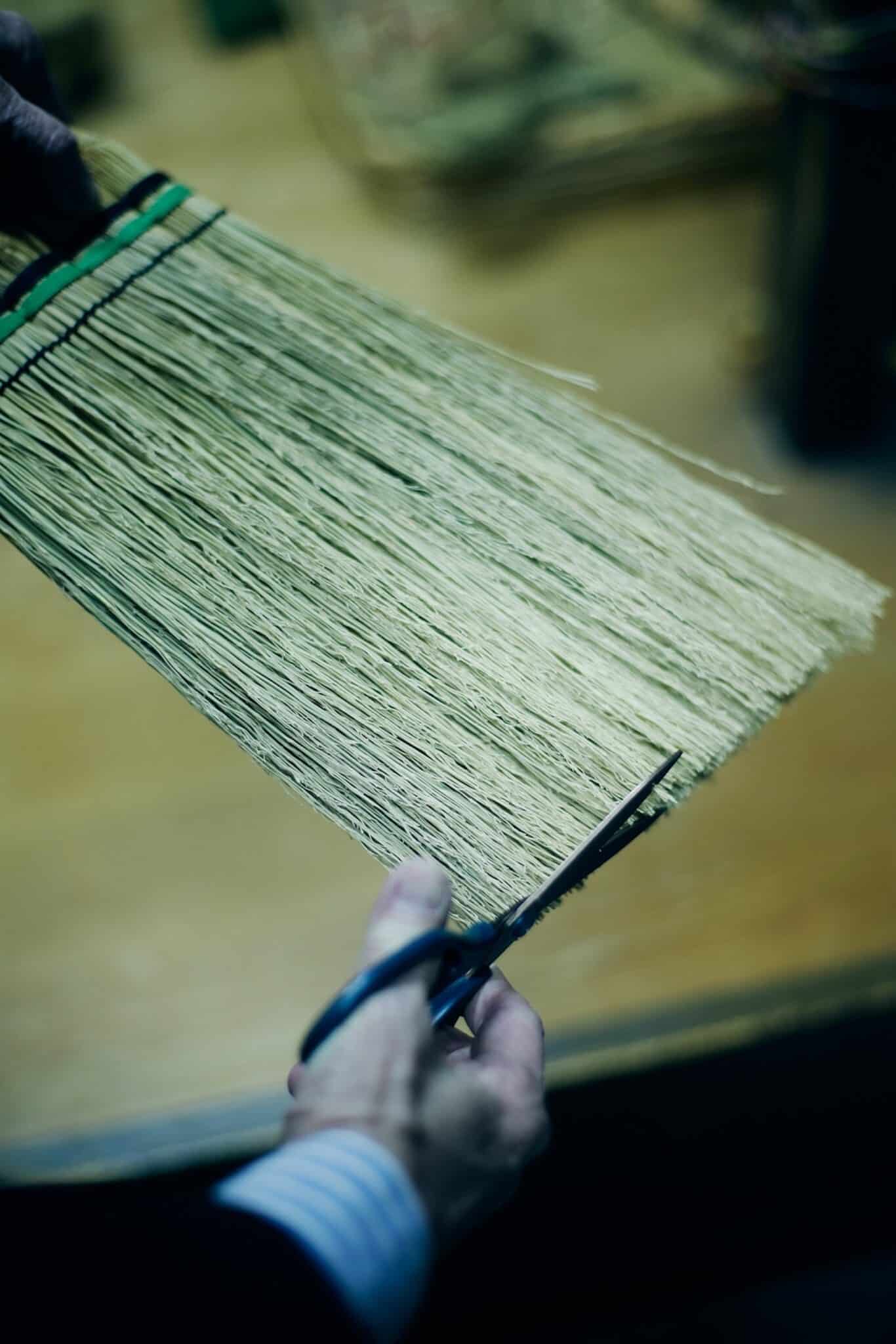
When the bristle tips no longer feel resilient, it is time to trim them evenly.
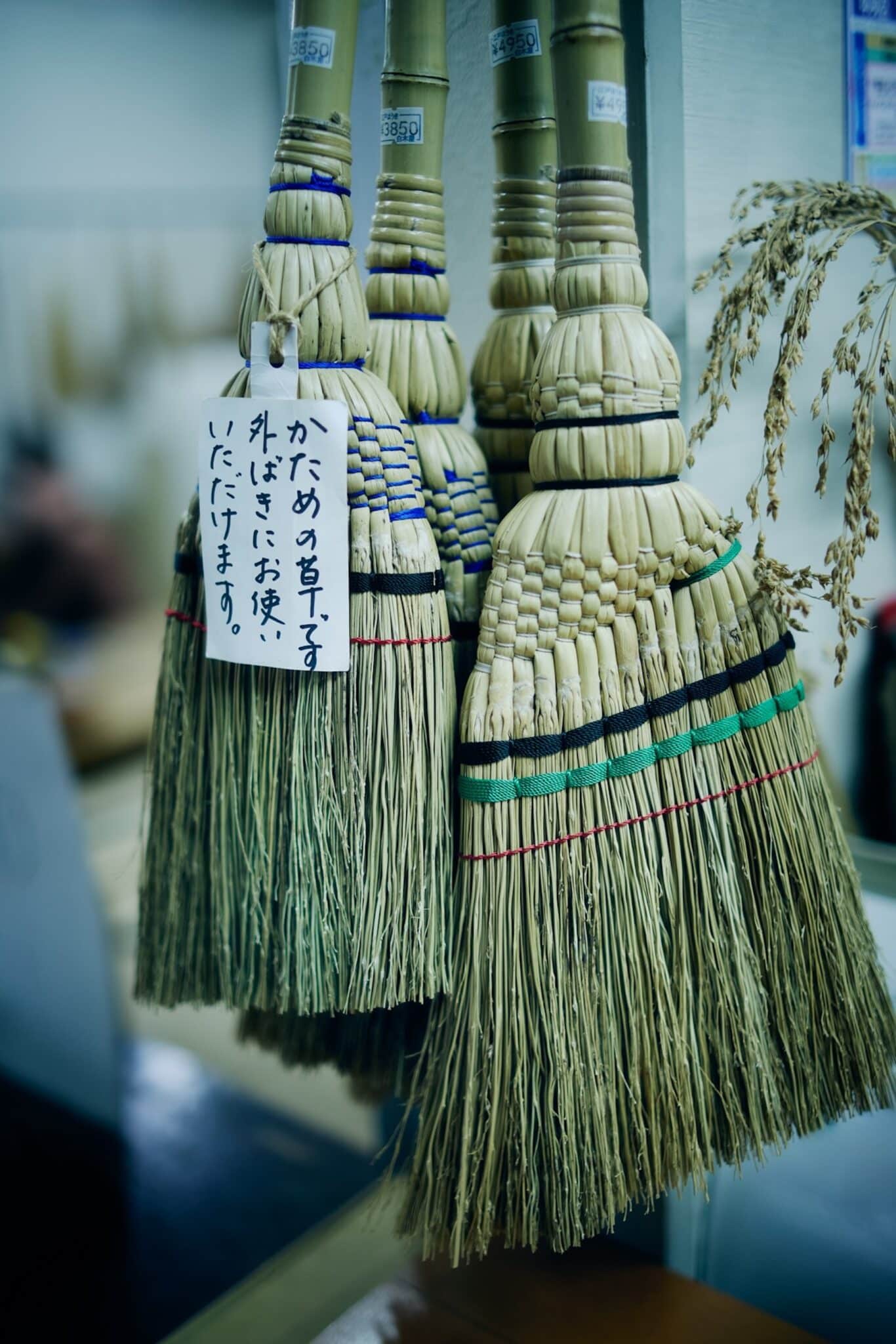
After repeated trimming, the bristle tips eventually become about half their original length and lose their spring. At that point, the broom is best used outdoors.
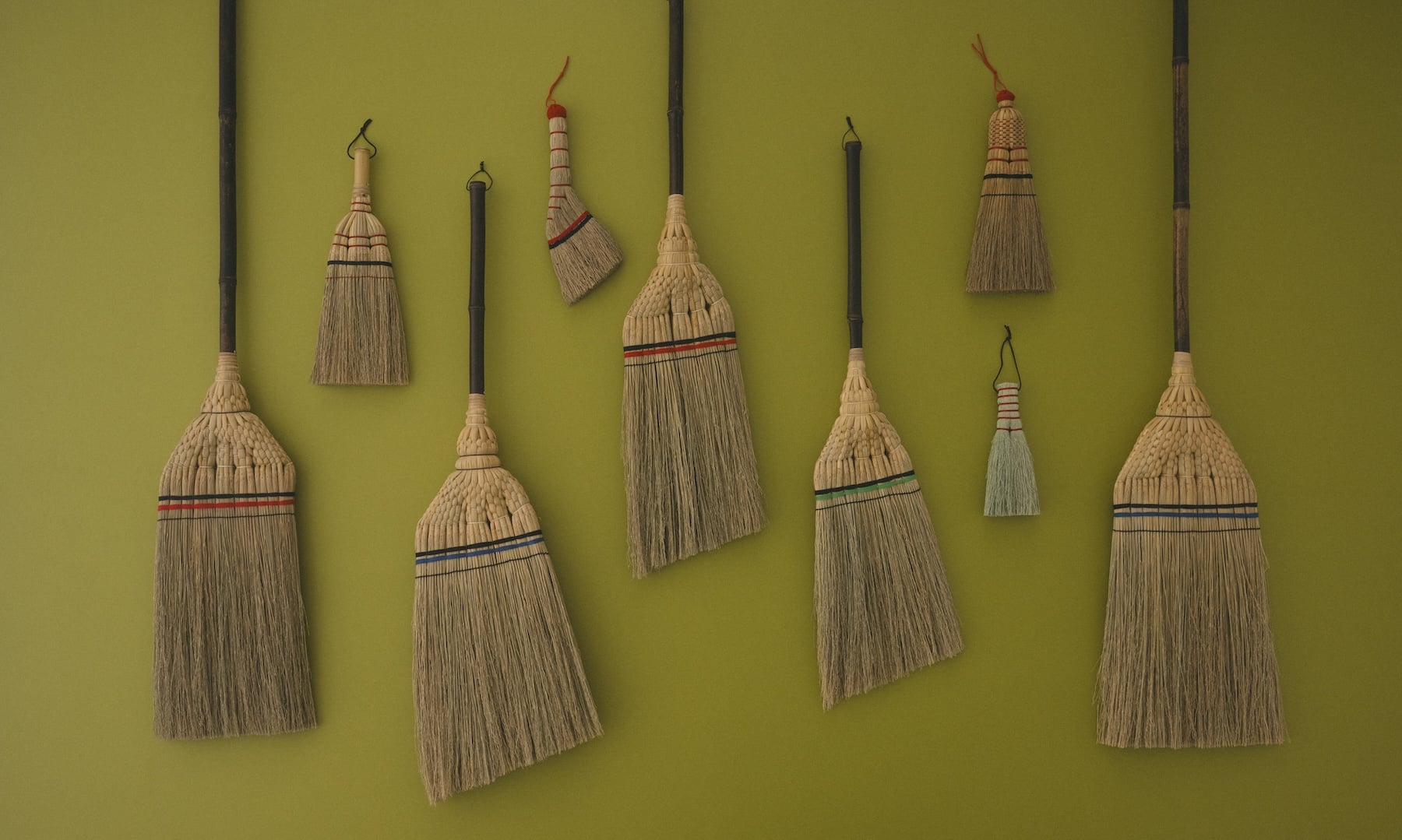
The shop carries about 30 types of brooms, with different lengths, sizes, and bristle shapes to suit specific places and purposes—an extensive selection made possible by its specialization. For carpets, there are firm brooms that can brush out debris caught in the fibers. For wooden floors, there are lightweight brooms designed to reduce arm fatigue when sweeping large areas. The shop also offers tabletop brooms for gathering breadcrumbs and clothing brooms that can be used like garment brushes, among many other products.
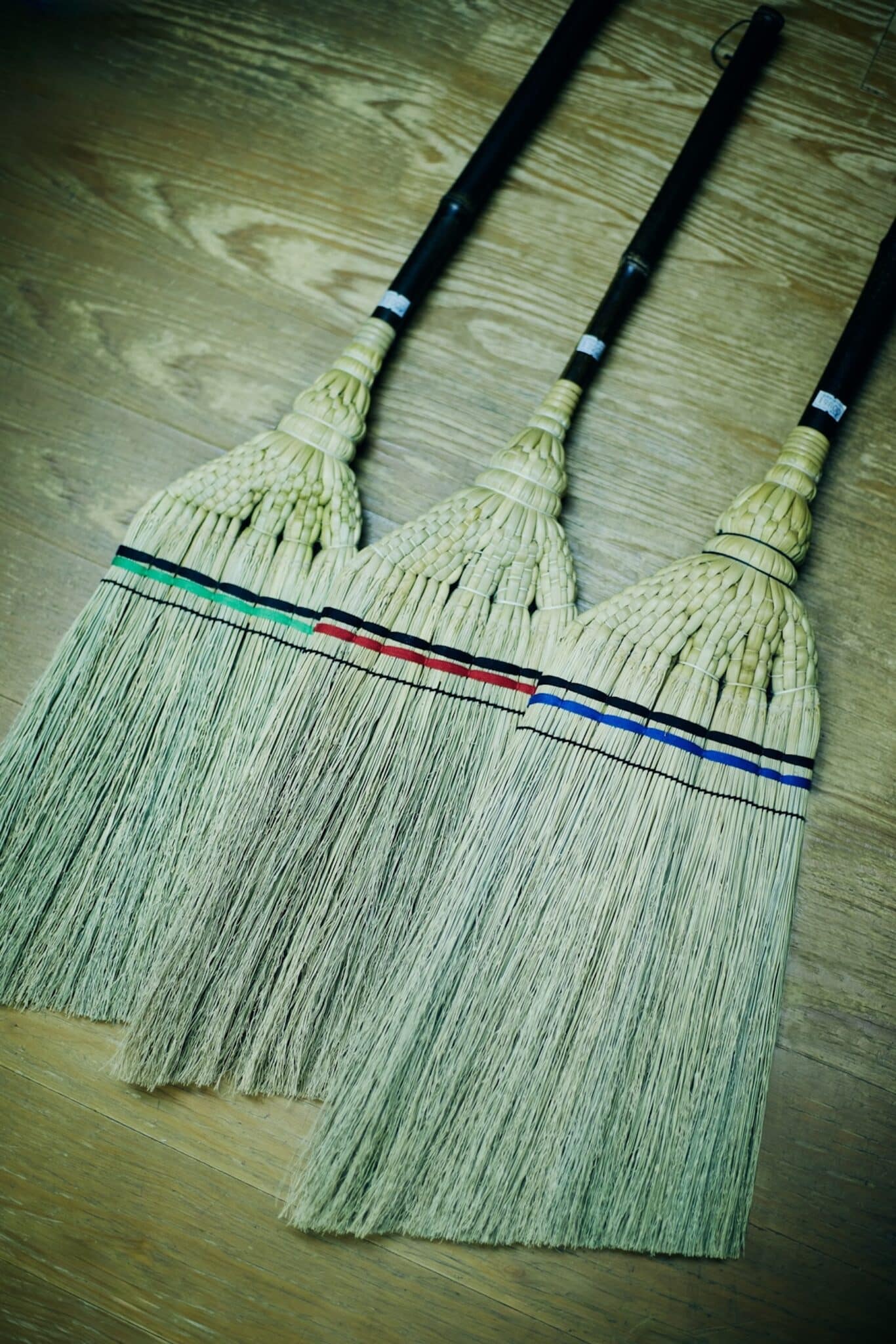
Brooms designed for one-handed use have short handles. (Front) An all-purpose broom with a generous amount of bristles, suitable for a wide range of uses: ¥19,800. (Center) A broom with a good balance of lightness and bristle volume: ¥13,200. (Back) A lightweight broom for wooden floors, designed to reduce fatigue during extended use: ¥11,000.
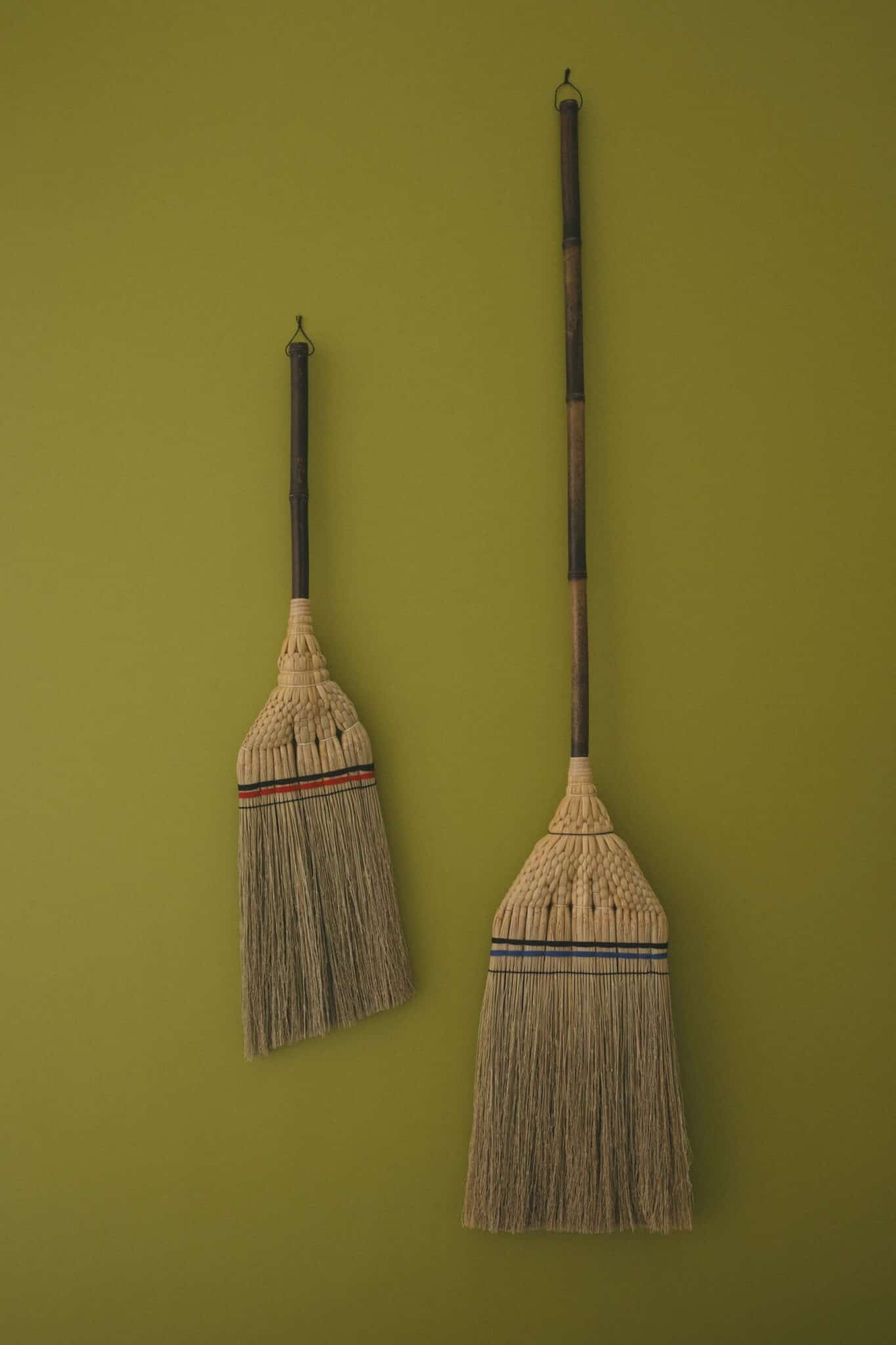
Two of the shop’s most popular brooms. The shorter-handled model is designed for one-handed use, while the longer-handled model is designed for two-handed use. When sweeping a large area, the two-handed broom is less tiring to use. Left: ¥13,200. Right: ¥22,000.
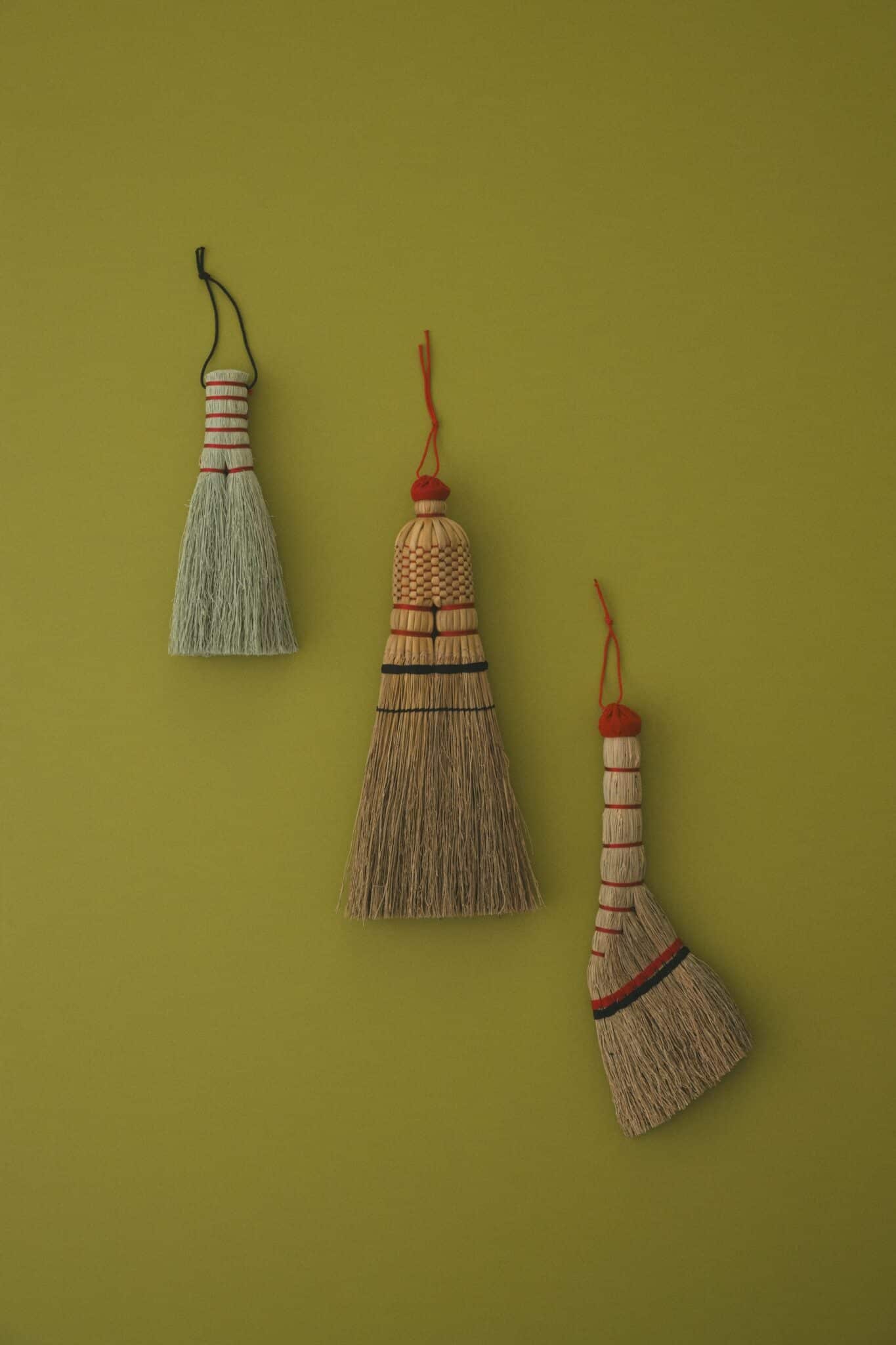
Small brooms for various uses around the home. From left: tabletop broom, ¥1,320; clothing broom, ¥2,750; broom for narrow spaces, ¥2,090.
The tabletop broom is made with soft, dyed grass.
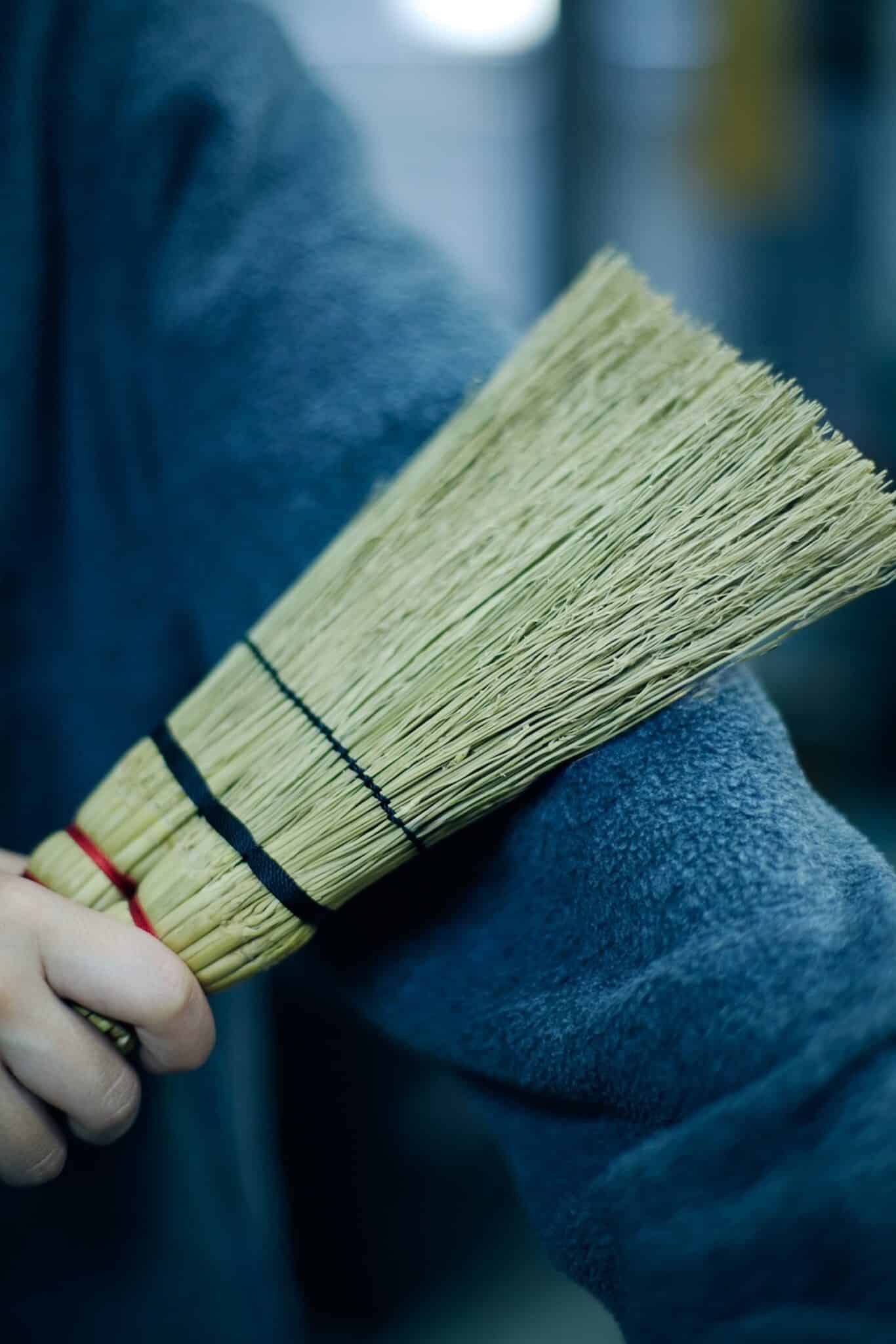
A broom for removing dust from clothing. Use the sides of the bristles to brush away dust and hair, and the tips to remove debris that is difficult to dislodge.
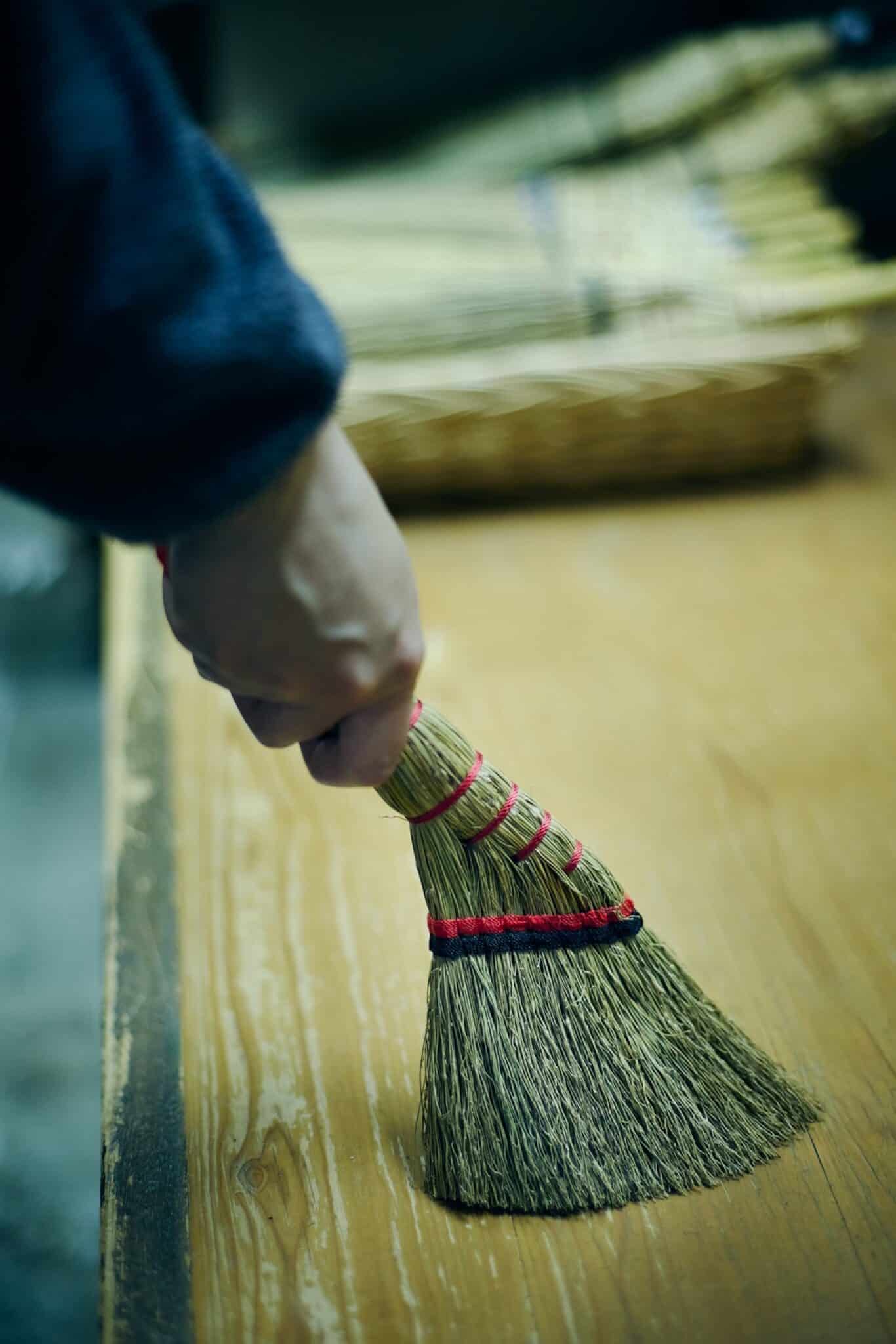
The angled handle makes this broom useful for cleaning the corners of stairs and narrow, hard-to-reach spaces.
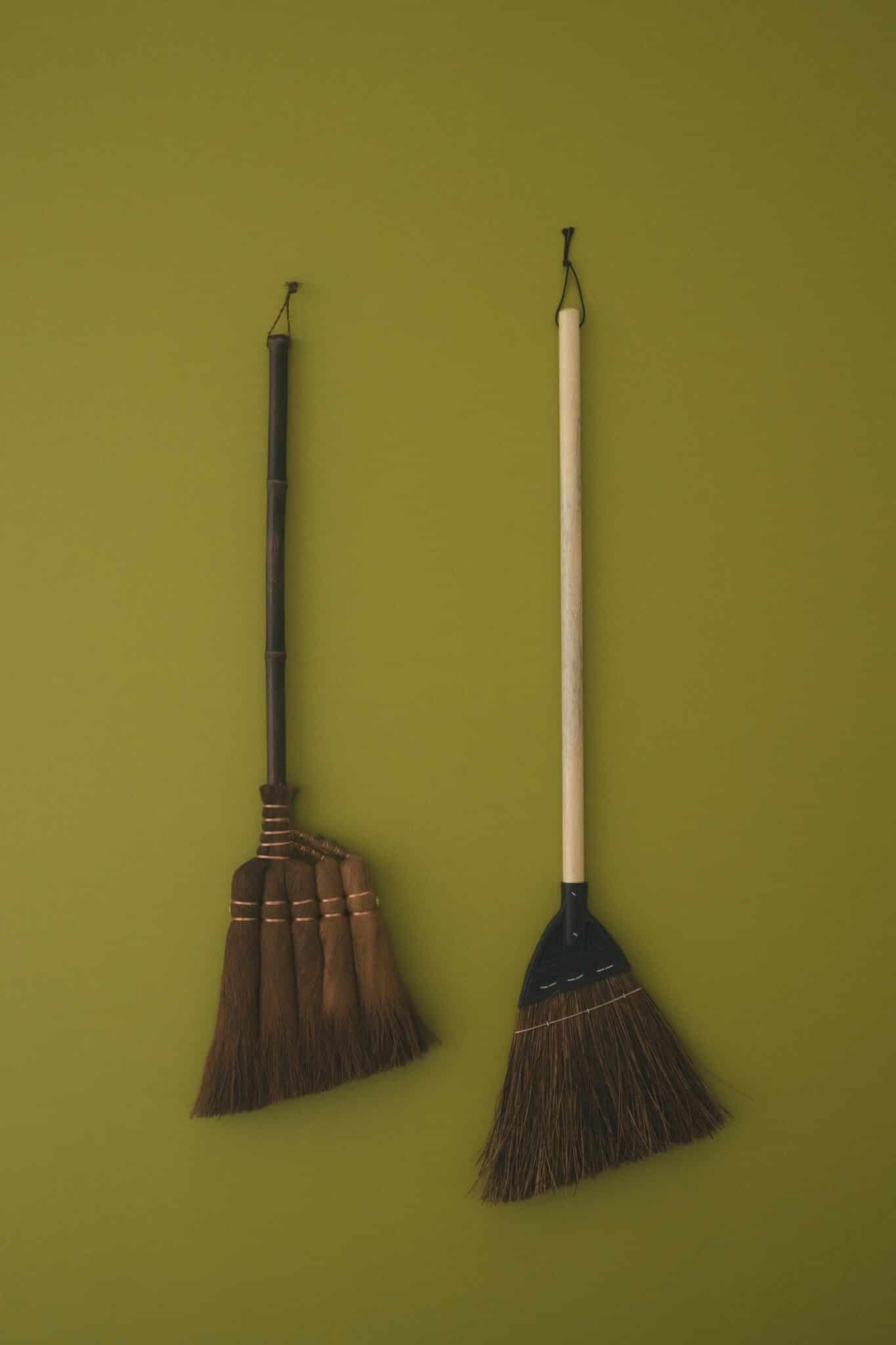
In addition to Edo brooms, the shop carries other traditional brooms made by craftspeople. (Left) The shuro palm broom is more affordable than an Edo broom and is recommended for wooden floors. Natural oils in the shuro palm bark give wooden floors a gentle sheen. ¥6,600. (Right) An outdoor broom made from stiff fern fibers. It contains 20 to 30 percent more bristles than a standard model, helping it retain its shape. ¥1,650.
The information in this article is current as of August 18, 2026 (at the time of publication).



.jpg)
スマホ.jpg)