DEEPTOKYO
magazine

EN

DEEPTOKYO
magazine
EN
2026.07.09
Japan’s Only Specialty Toothpick Shop, Continuing Since the Edo Period


 Nearest Station


“Saruya” is a specialty toothpick shop founded in 1704. It offers a selection of high-quality toothpicks made from kuromoji, a tree native to Japan. In addition to toothpicks for everyday use, the shop also carries gift items, including toothpicks presented in paulownia boxes. Visitors can also watch toothpick-making demonstrations up close and use a personalization service provided by a calligrapher.
SHARE


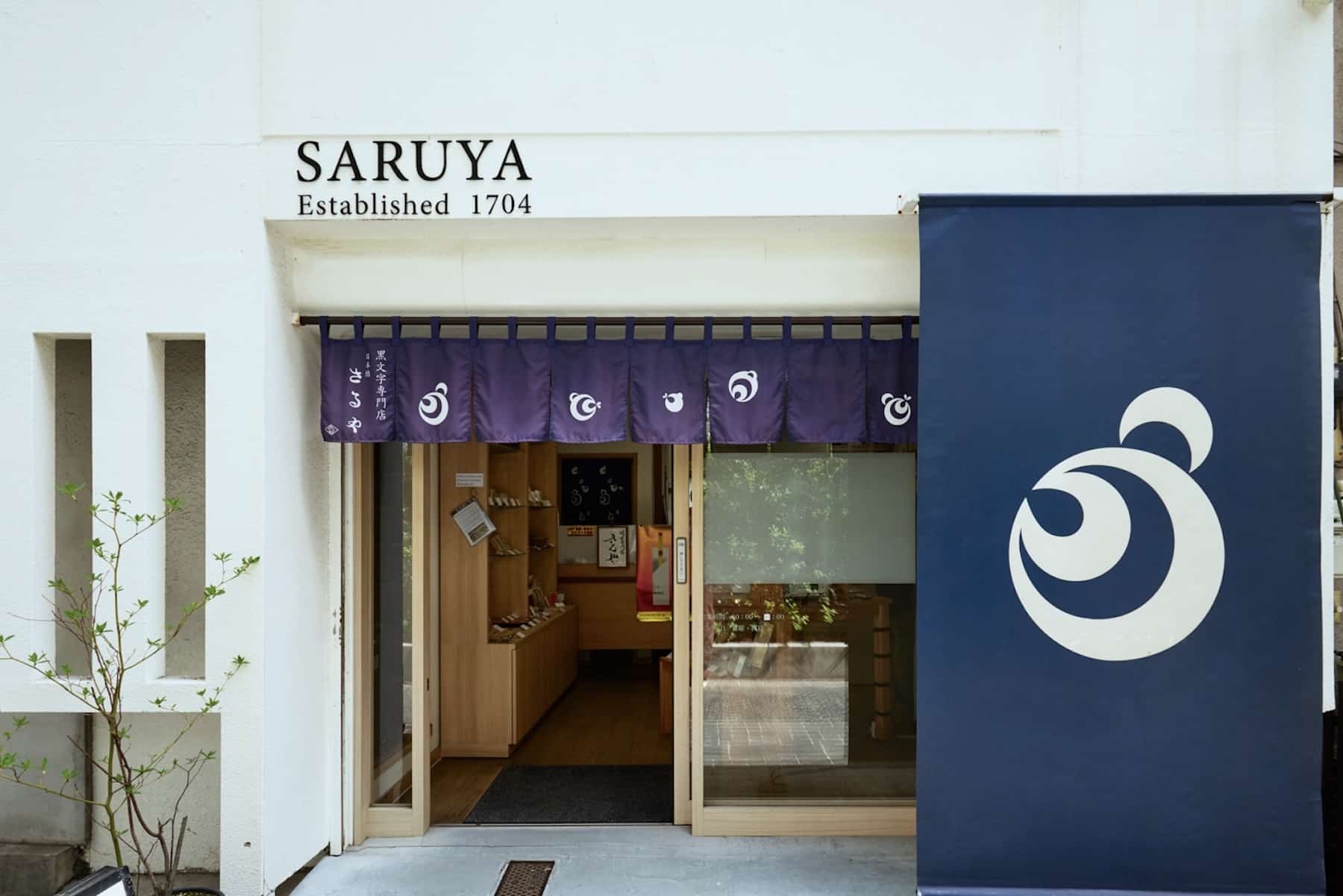
“Saruya” was founded in Koamicho, Nihonbashi, where hundreds of toothpick shops are said to have lined the streets during the Edo period. Nihonbashi was a starting point that connected Edo with other regions, and many people and goods passed through the area. Koamicho, in particular, was home to many shops selling everyday goods. The name “saru” means “monkey” in Japanese. It comes from the idea that monkeys have white teeth and no cavities. At the time, many toothpick shops used the same trade name and are said to have walked around selling their products with monkeys in place of shop signs. Later, as toothbrushes became more widespread, many toothpick shops disappeared. Today, “Saruya” remains Japan’s only specialty toothpick shop.
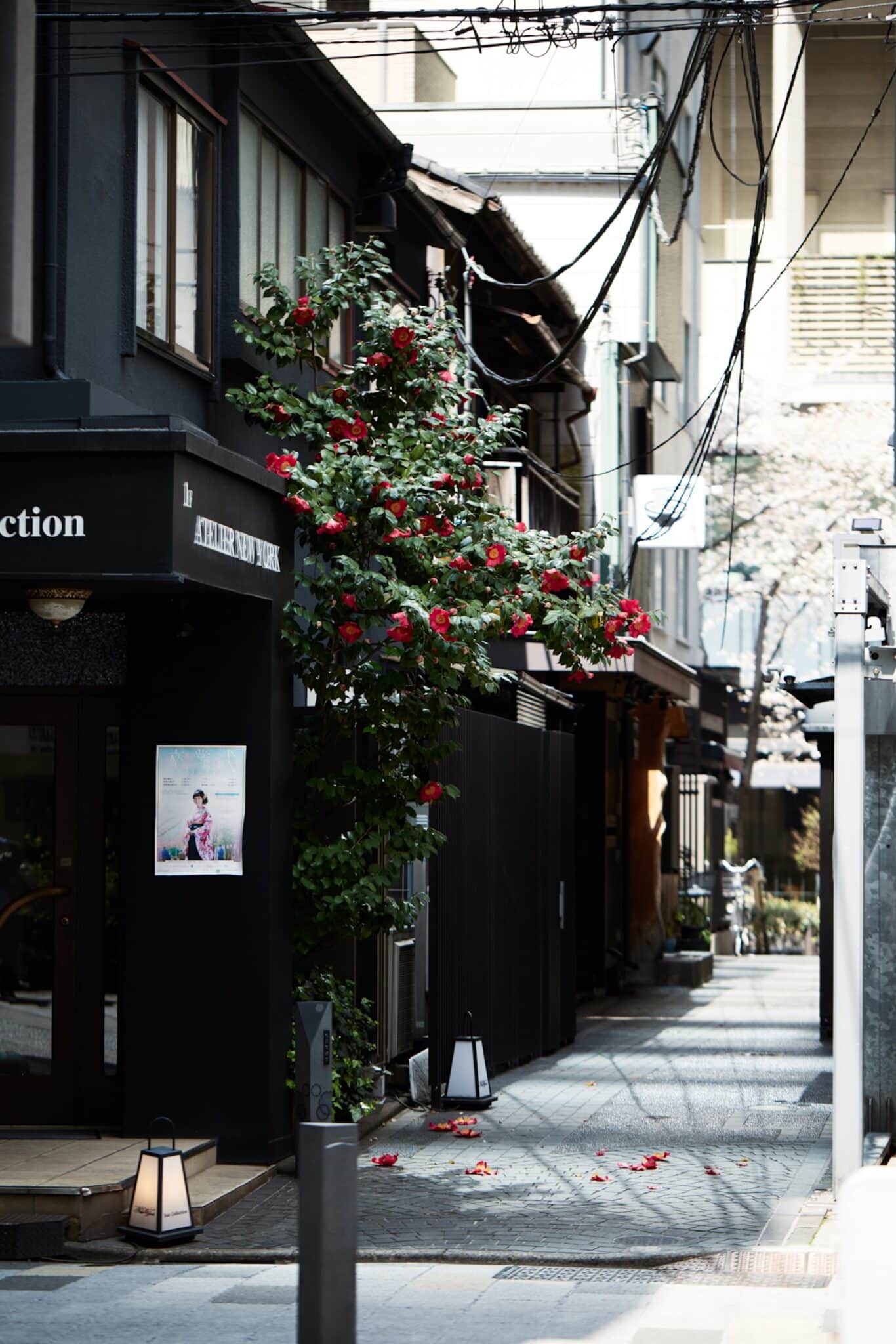
Today, the shop is located in a back alley in Muromachi, Nihonbashi, about 1 km from Koamicho, Nihonbashi, where it was originally founded. The quiet atmosphere feels far removed from the bustle of the nearby main street lined with large commercial facilities.
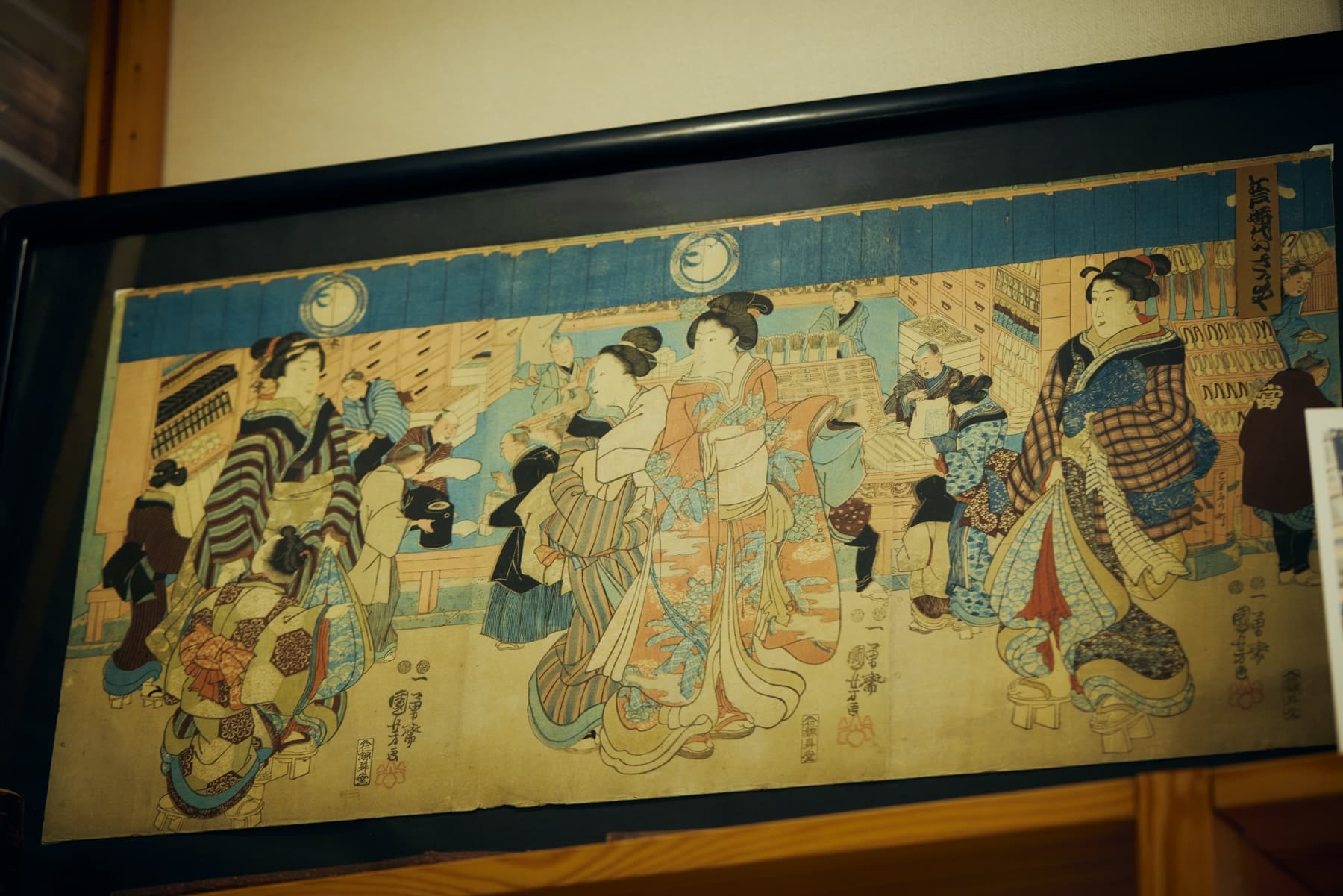
The ukiyo-e print displayed in the shop depicts the lively atmosphere of an Edo-period toothpick shop. It was created by the famous ukiyo-e artist Utagawa Kuniyoshi.
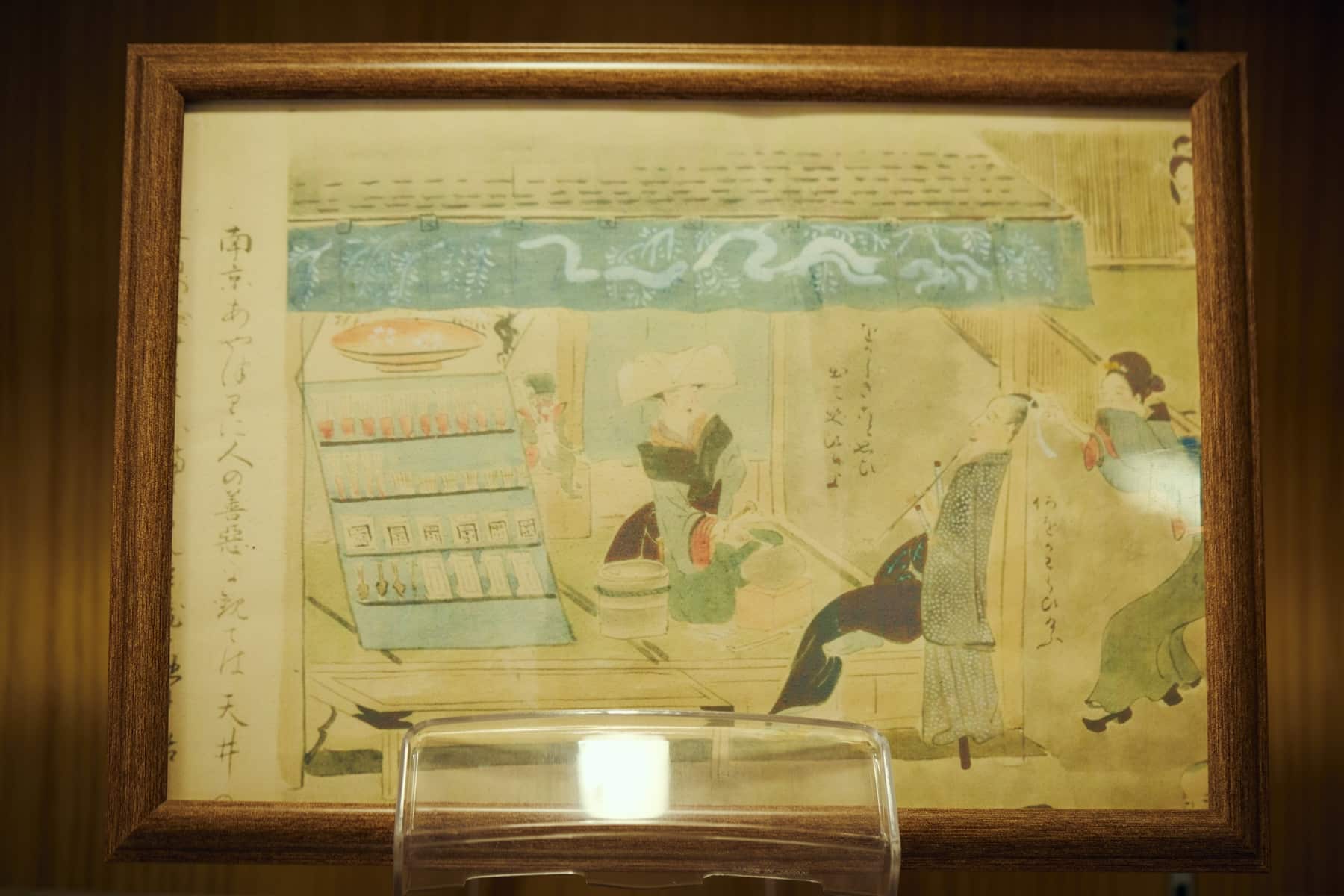
The shop also displays a framed section of an illustrated handscroll depicting various craftsmen of Edo. The section shows a toothpick shop, and at the center is a monkey standing in front of the shop to attract customers.
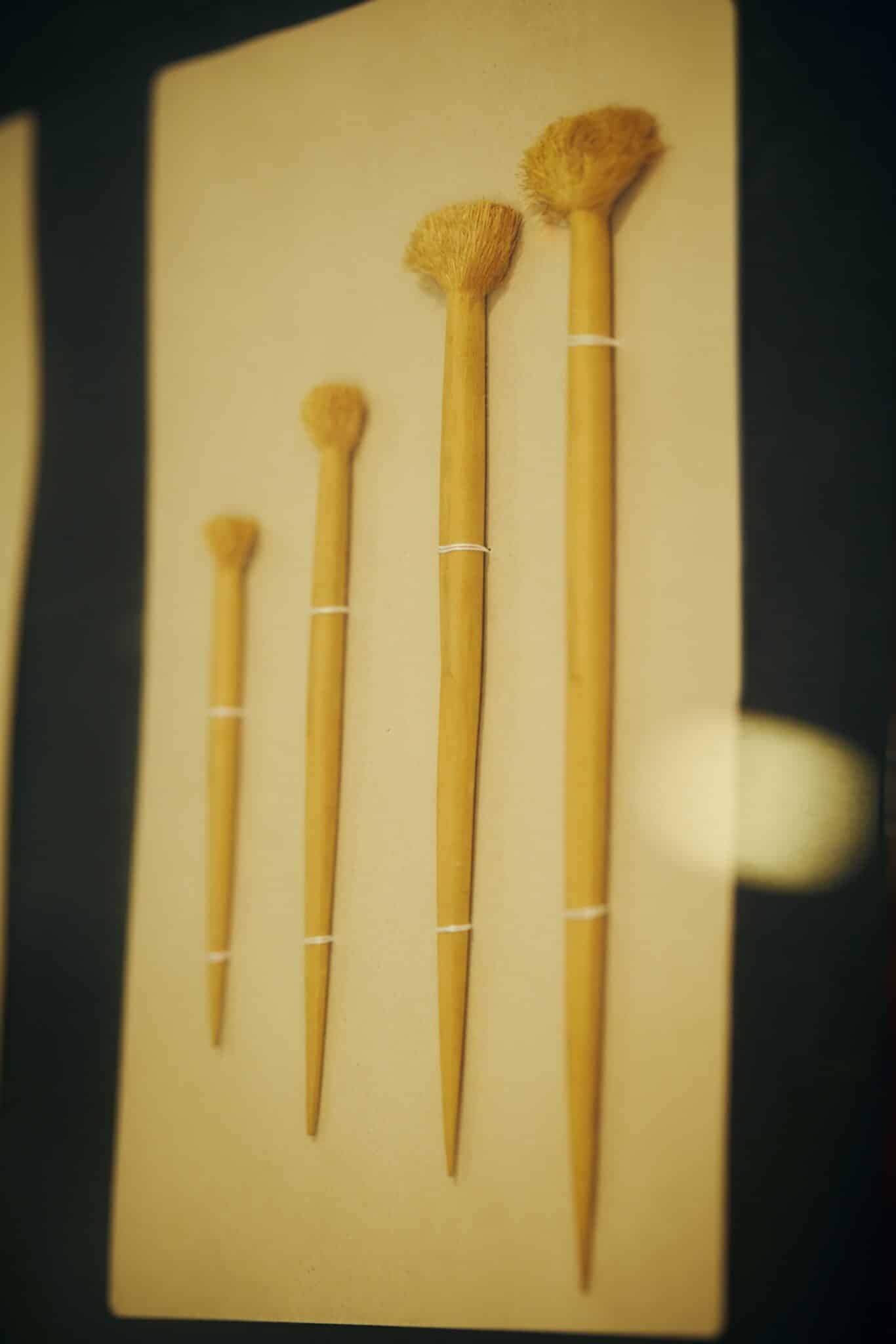
Among the exhibits is a replica of a "fusa-yoji", a type of tooth-cleaning tool used as a toothbrush during the Edo period. The frayed end, made by beating the fibers loose, was used to brush the teeth, while the pointed end was used to clean between the teeth.
Today, most commonly used toothpicks are made from birch, but “Saruya” offers toothpicks made from kuromoji. Kuromoji is a tree native to Japan. It is flexible, resistant to breaking, and known for its refreshing fragrance.
Handmade by skilled craftsmen, these toothpicks are valued for their quality and are also used by long-established Japanese confectionery shops and traditional restaurants. A craftsman can make about 400 toothpicks a day. When you hold one in your hand, you can feel the fine detail of the handwork.
These handcrafted toothpicks, made by skilled artisans, are used by long-established Japanese confectionery shops and traditional restaurants alike due to their high quality. An artisan can produce about 400 toothpicks a day. When you hold one in your hand, you’re sure to feel the meticulous craftsmanship that went into it.
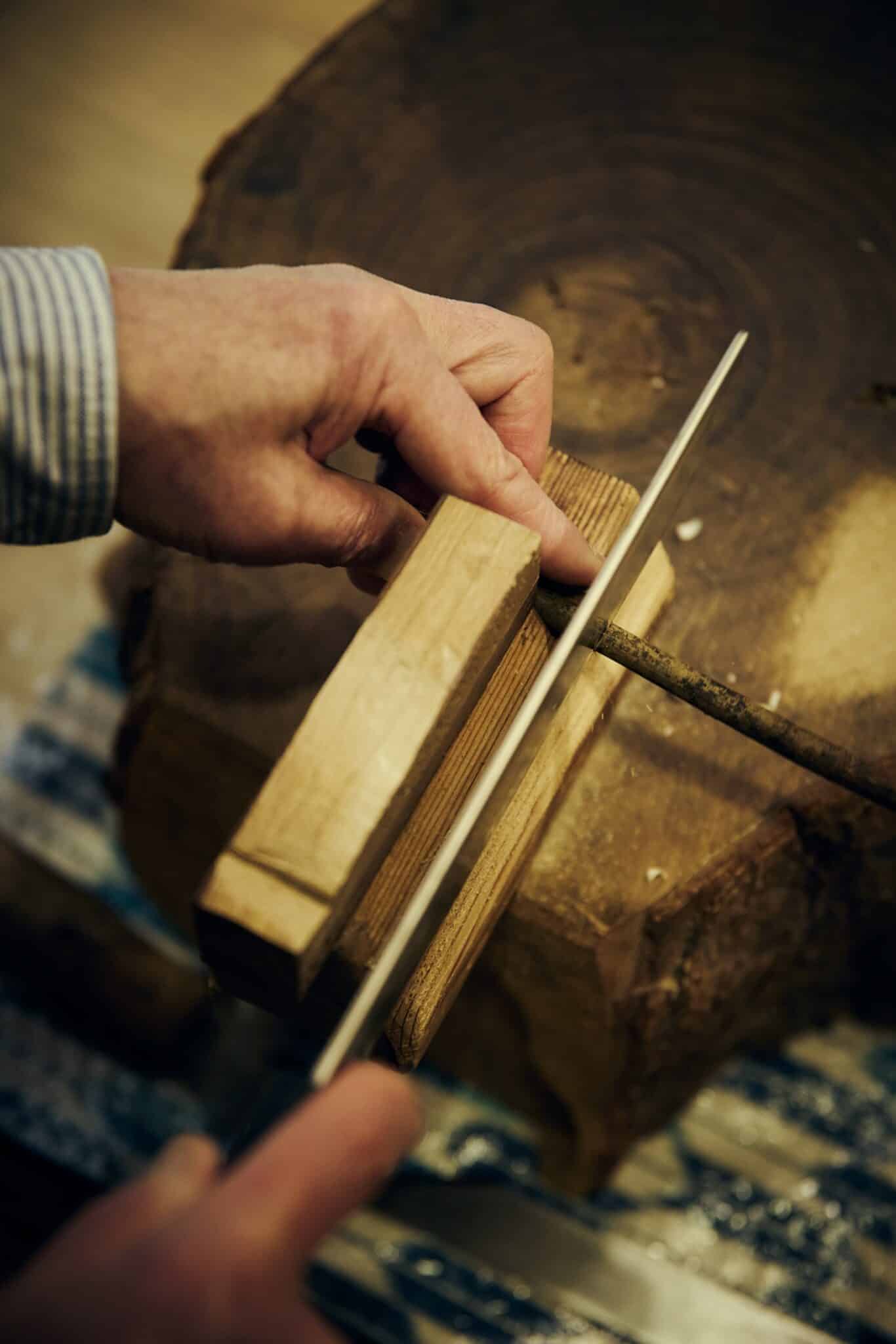
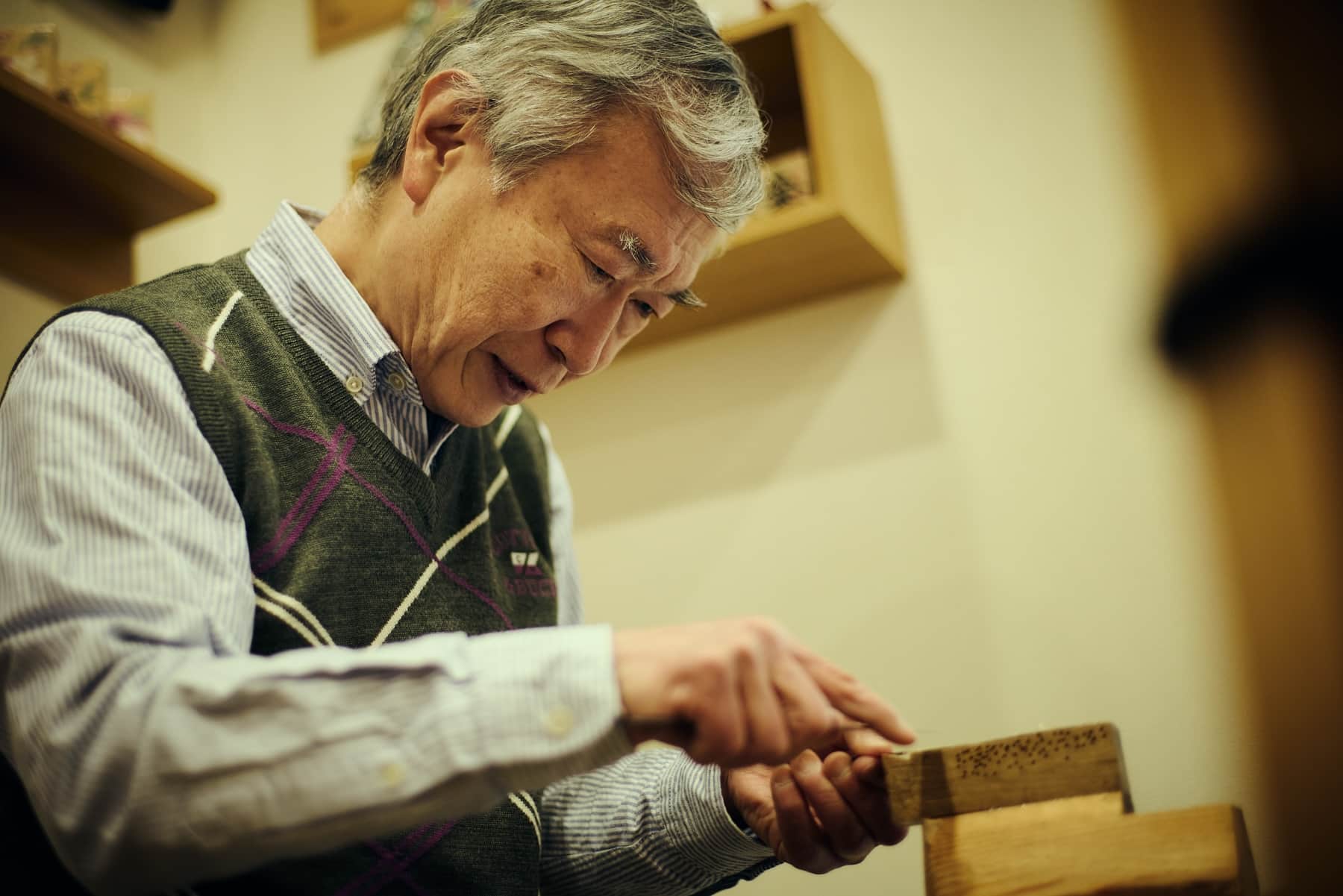
Toothpick-making demonstrations can be seen inside the shop once a week. The process begins by cutting the kuromoji wood with a saw.
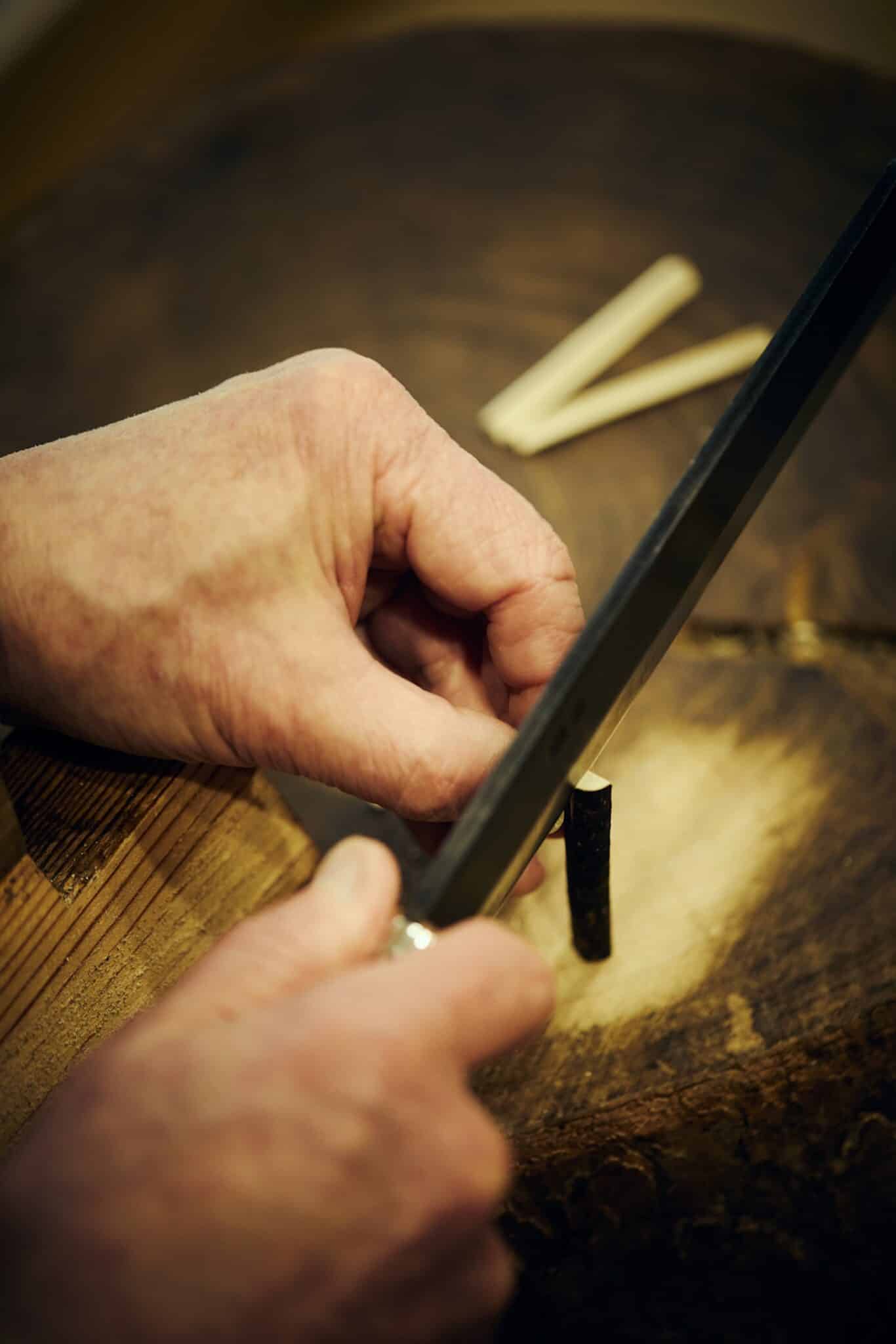
The kuromoji pieces are cut to an even length and then split lengthwise.
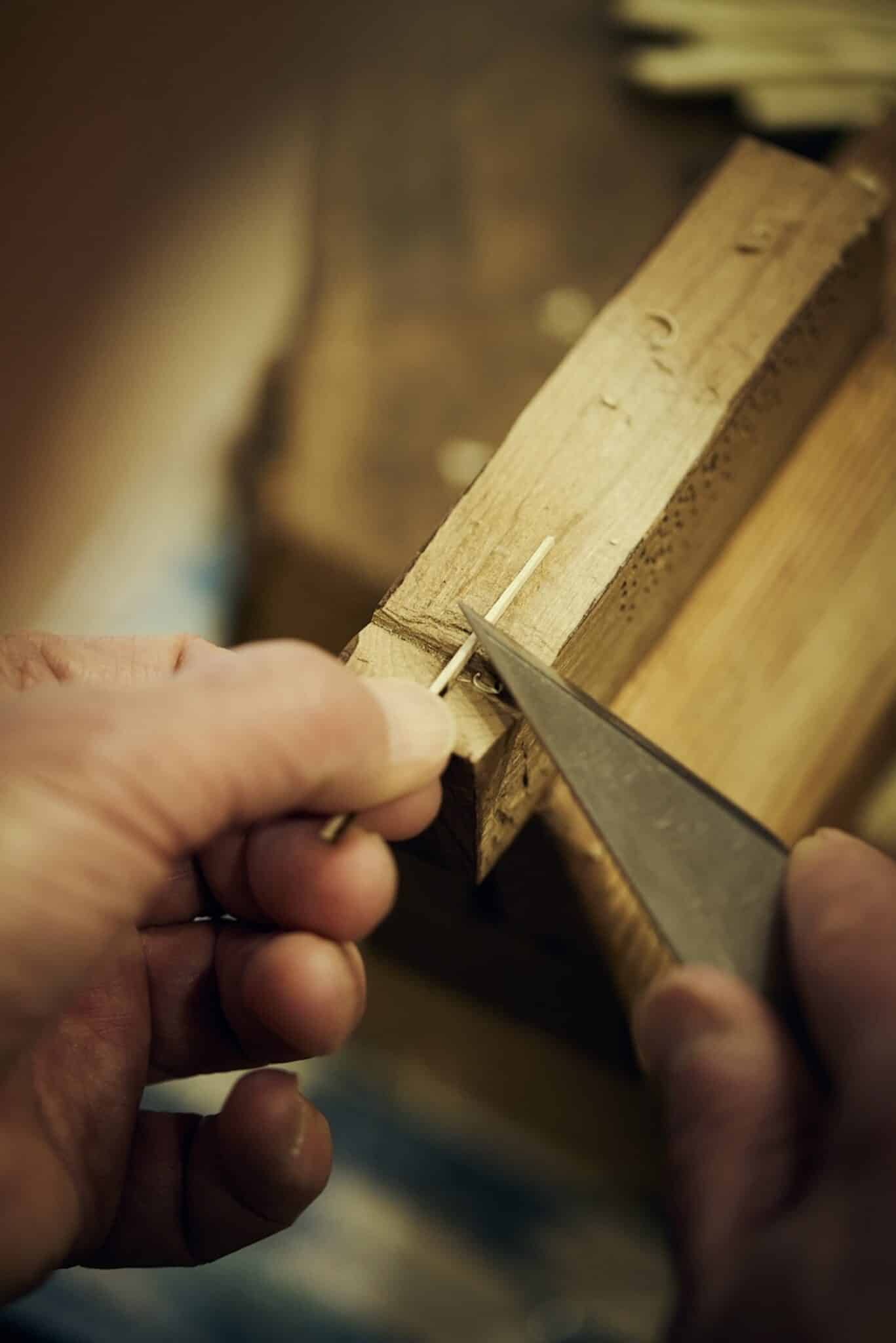
The width is shaped with a small knife, and the tip is sharpened. The knife used for this work is a custom-made piece from “Ubukeya,” a long-established cutlery shop also located in Nihonbashi.
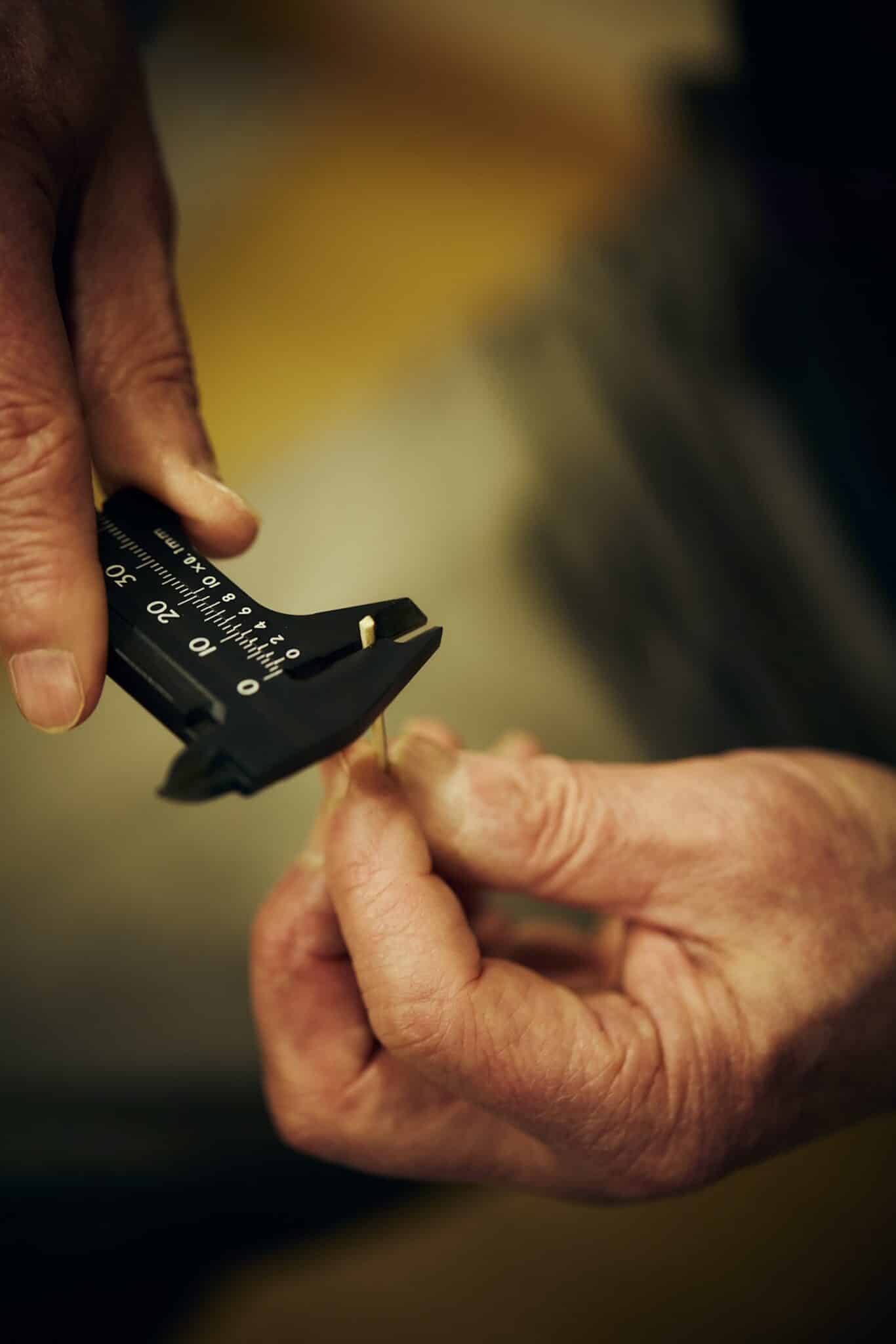
Measuring tools are used to check that the finished pieces are consistent.
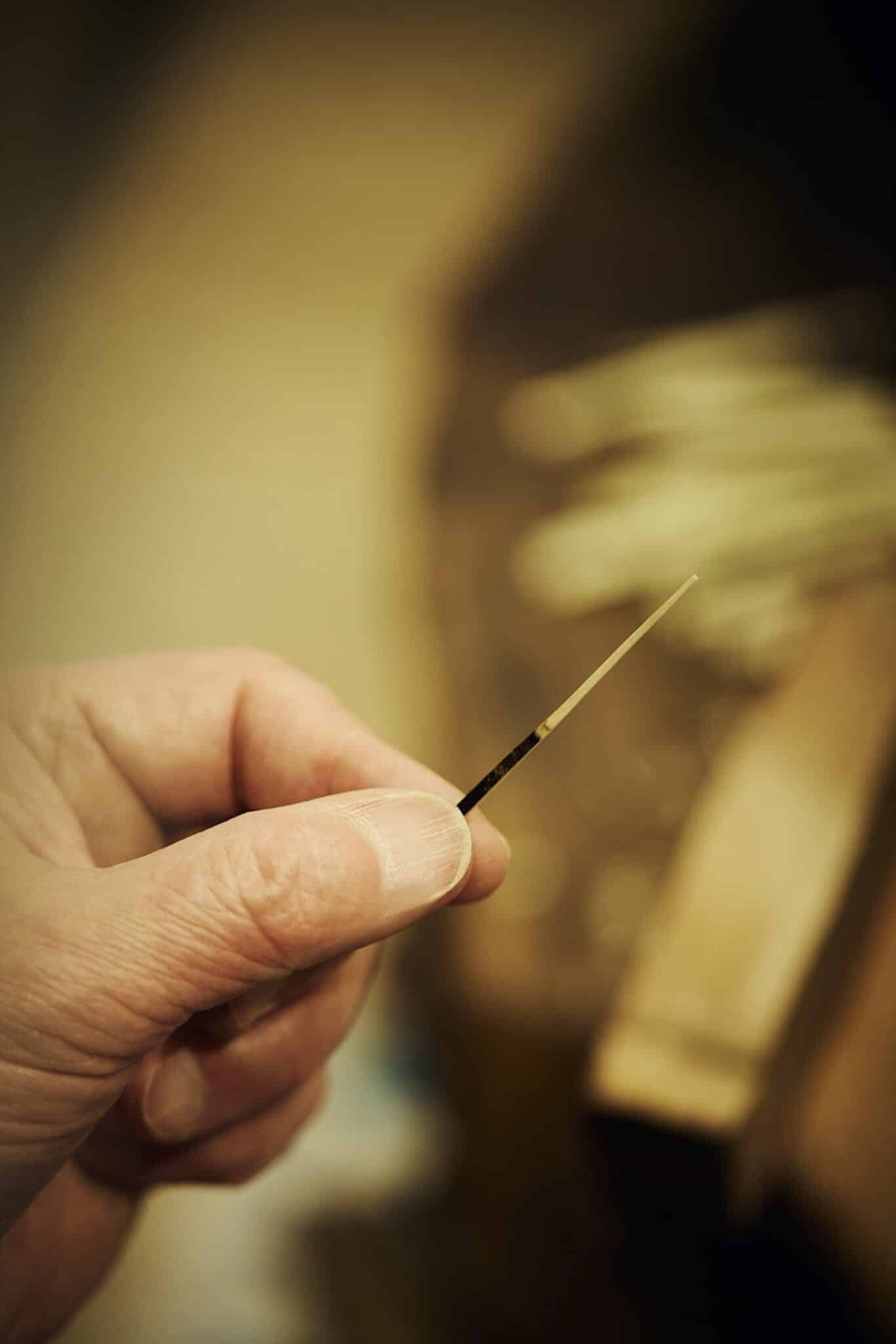
A finished toothpick. It is only 1.5 mm wide.
The demonstration is performed by Kazuo Yamamoto, the previous owner and eighth-generation head of the shop.
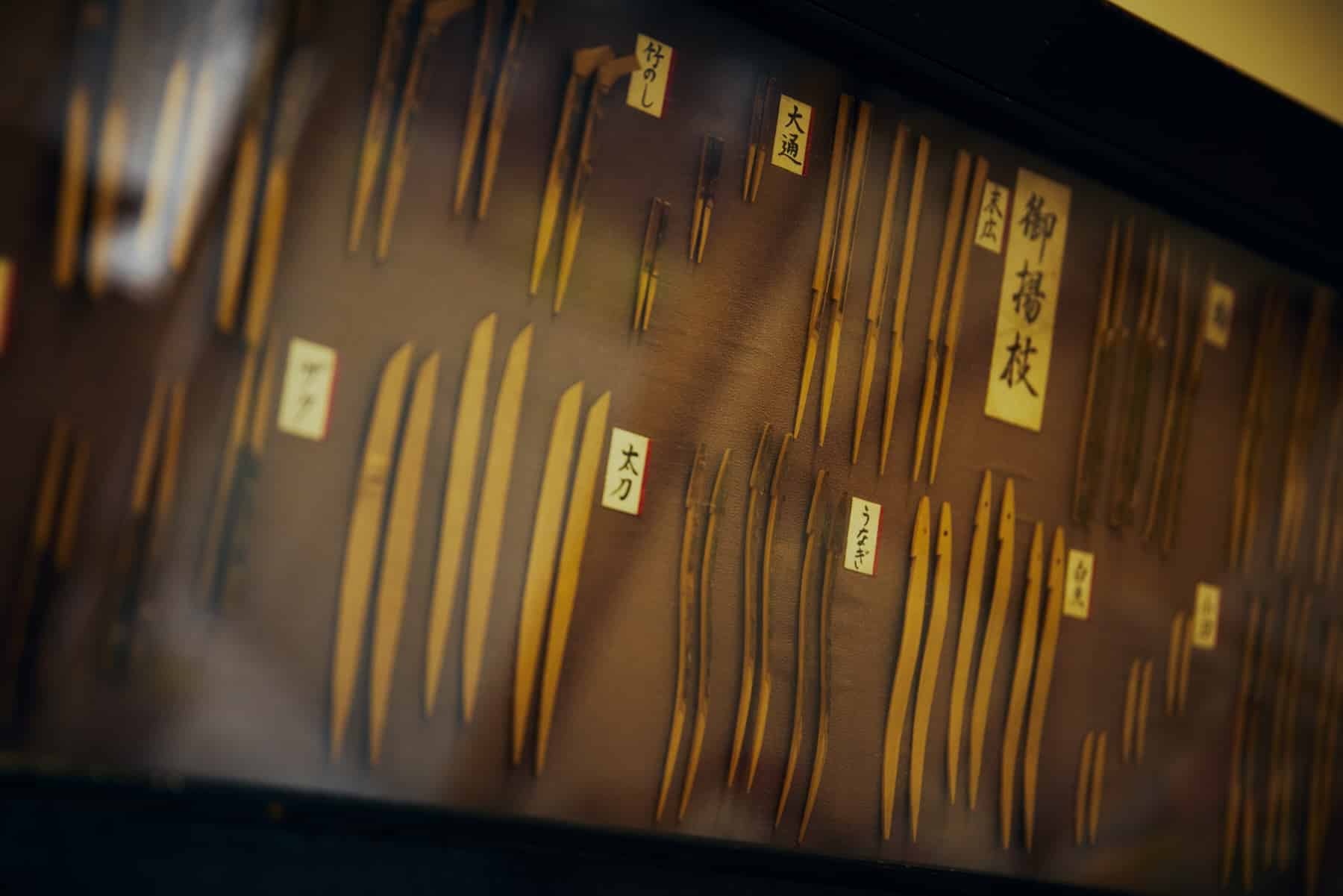
The shop also displays decorative toothpicks created from the playful spirit of craftsmen in the past. Toothpicks shaped like swords, eels, and icefish reveal the high level of skill involved.
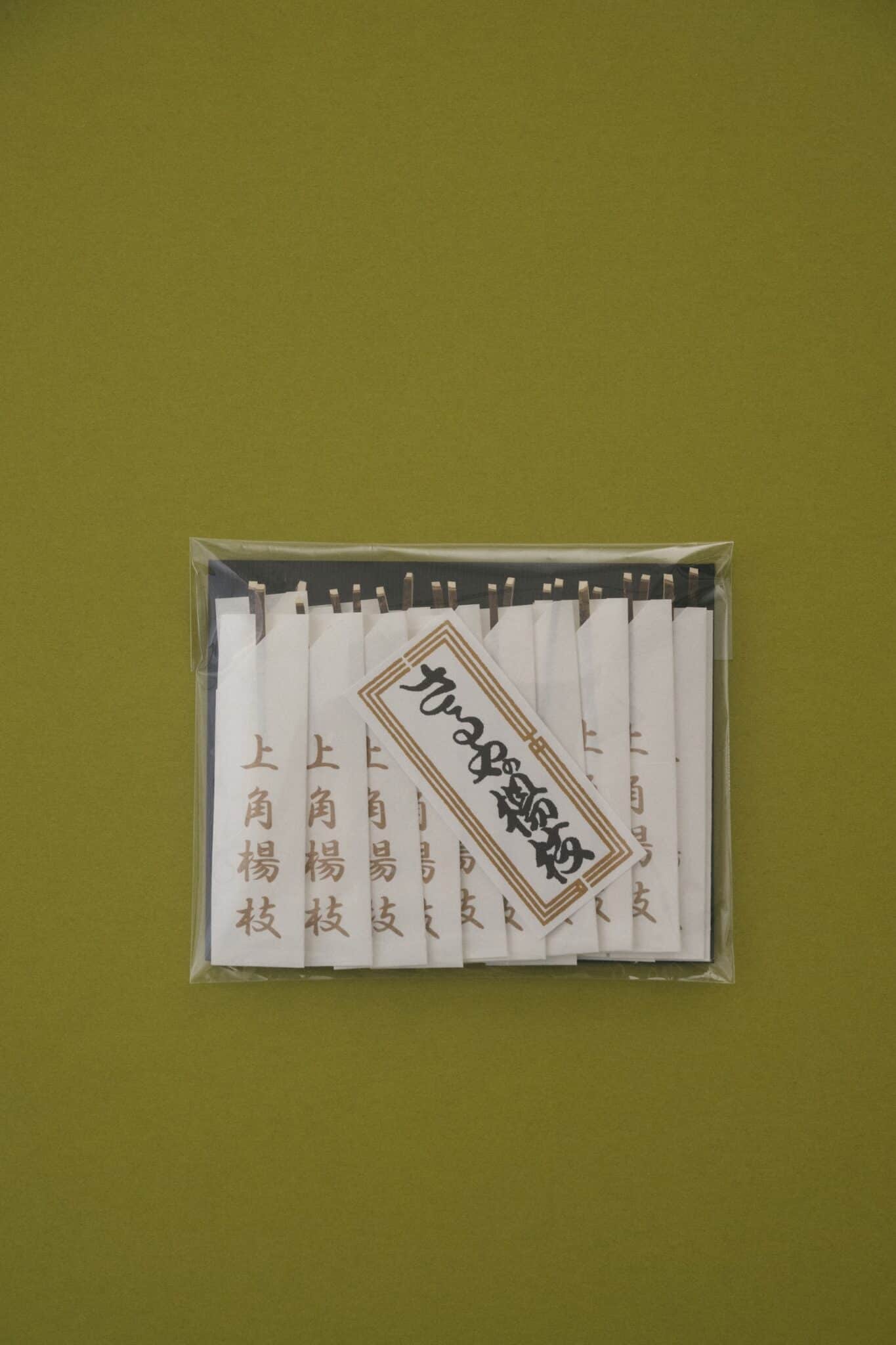
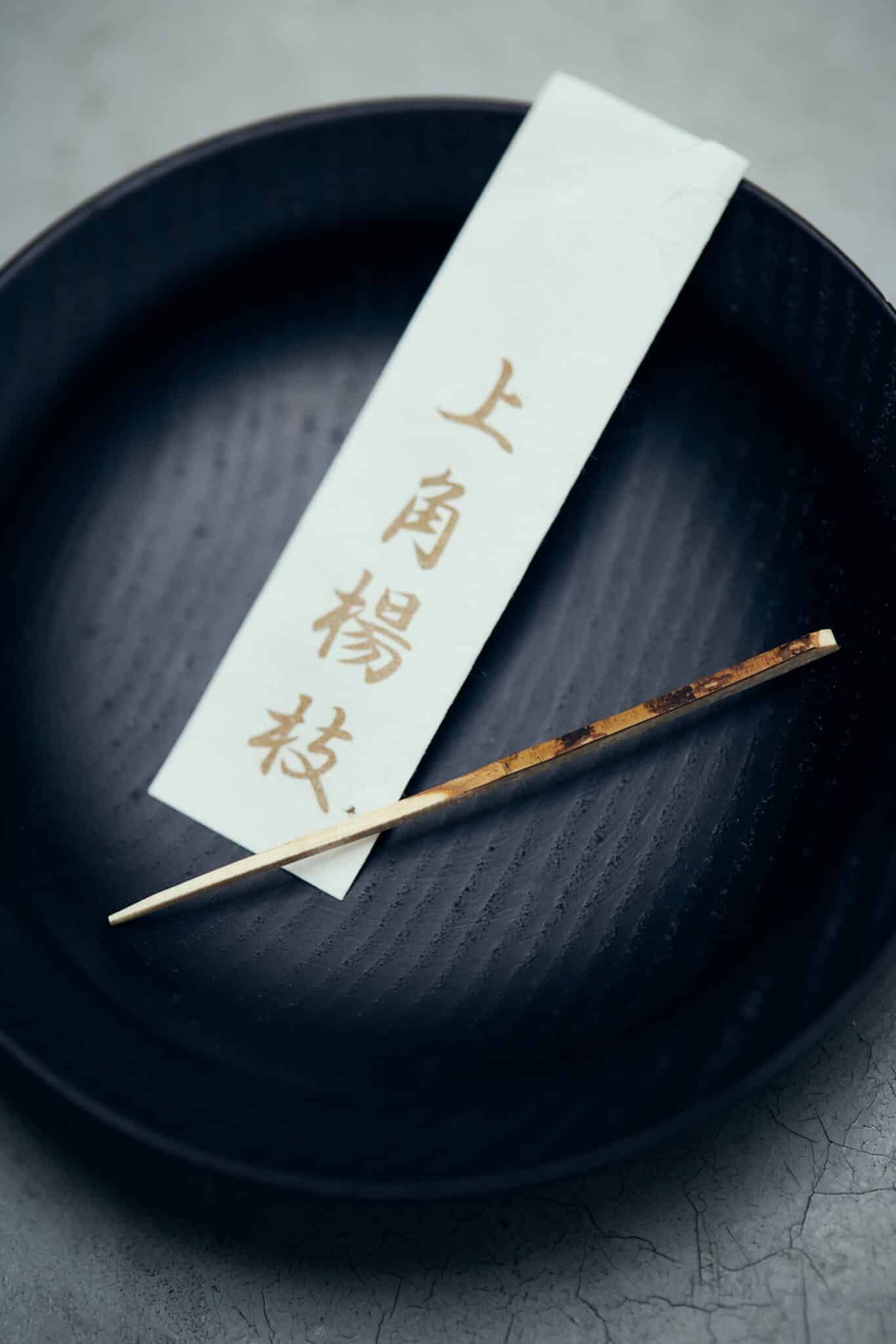
Individually wrapped toothpicks, handcrafted through every step of the process, are one of the shop’s signature products. 20 pieces, ¥1,320.
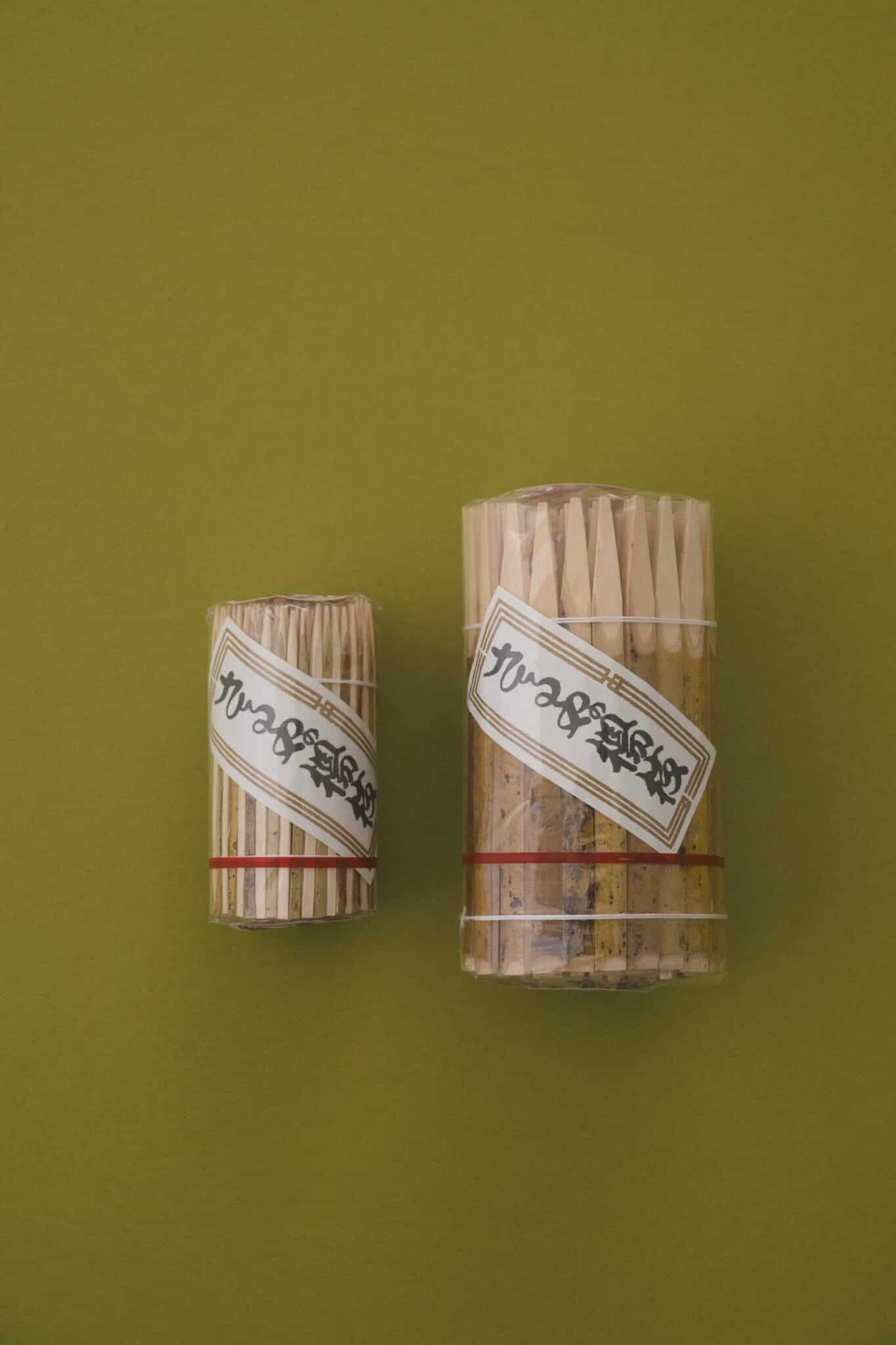
These toothpicks are finished by hand only at the tip, making them more affordable. The longer toothpick on the right is used to cut and eat Japanese sweets. Left: 6 cm, 150 pieces, ¥1,100. Right: 10.5 cm, 80 pieces, ¥1,430.
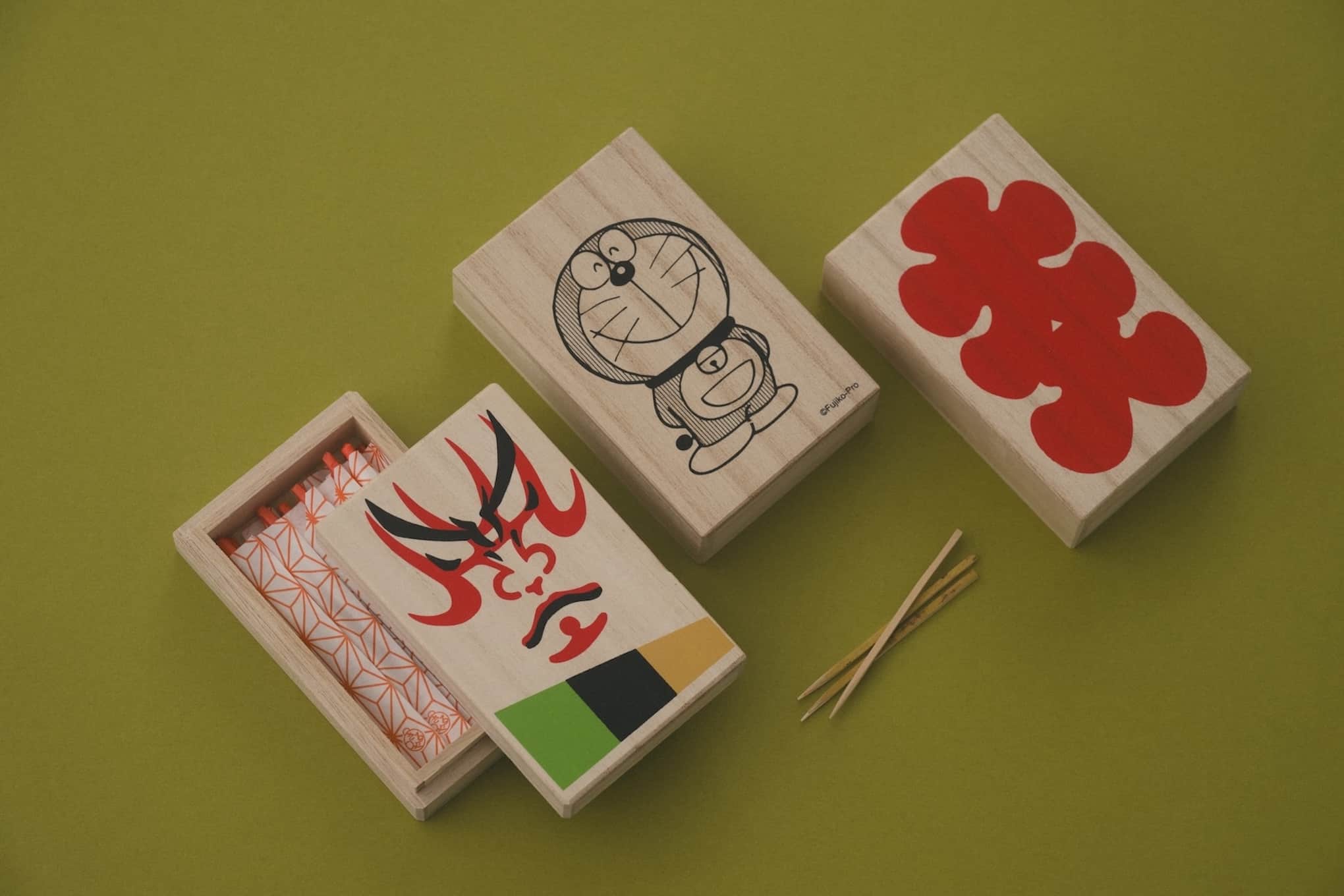
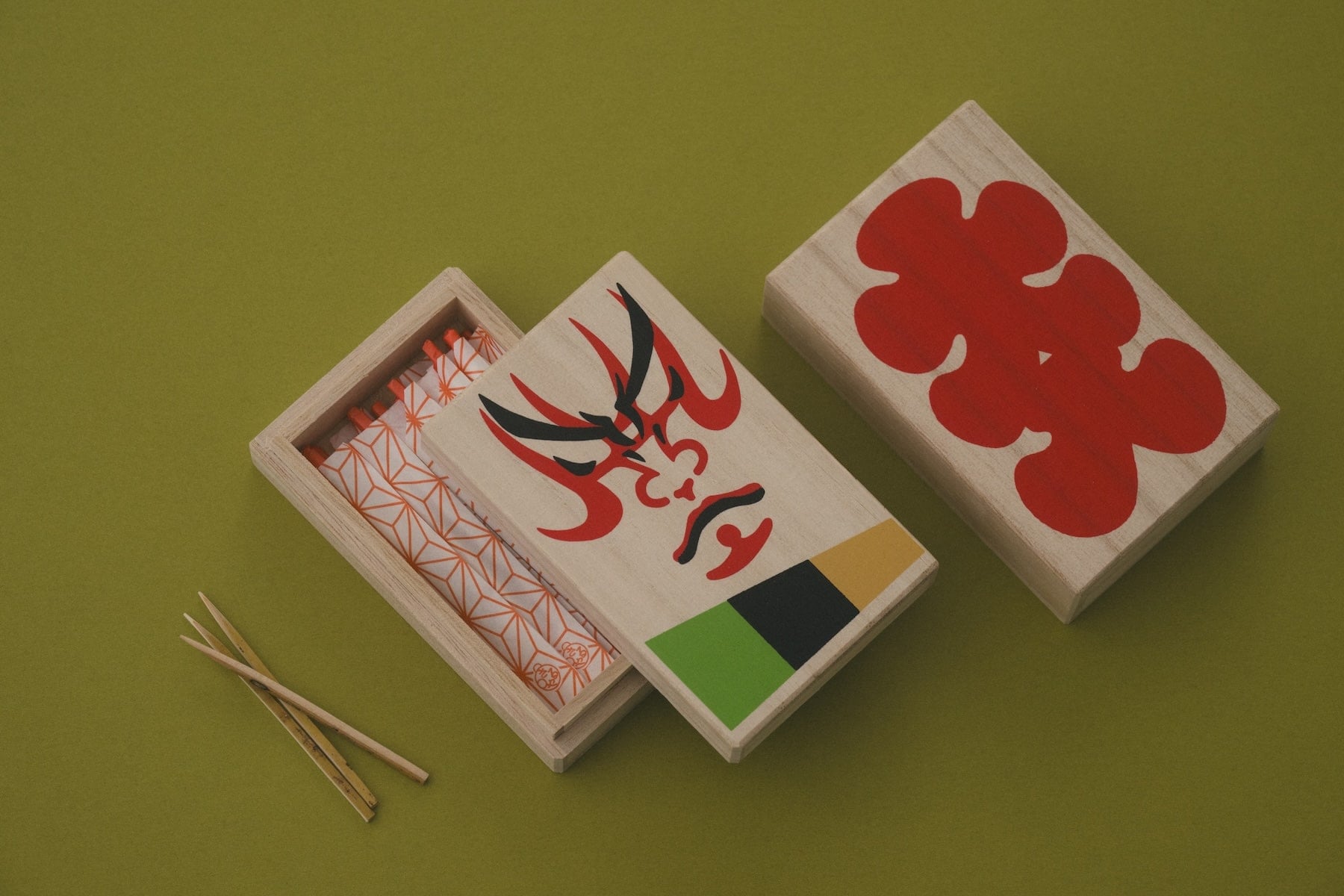
The most popular items are toothpicks presented in paulownia boxes. They are appreciated in a wide range of situations, including birthdays, anniversaries, milestone celebrations, gifts that express gratitude, New Year’s greetings, and commemorative gifts for business anniversaries or unveilings. The boxes come in designs that appeal to a wide range of generations, including illustrations of samurai, kabuki actors, and popular characters. The shop also offers a service in which a calligraphy artist inscribes names or messages on these paulownia boxes.
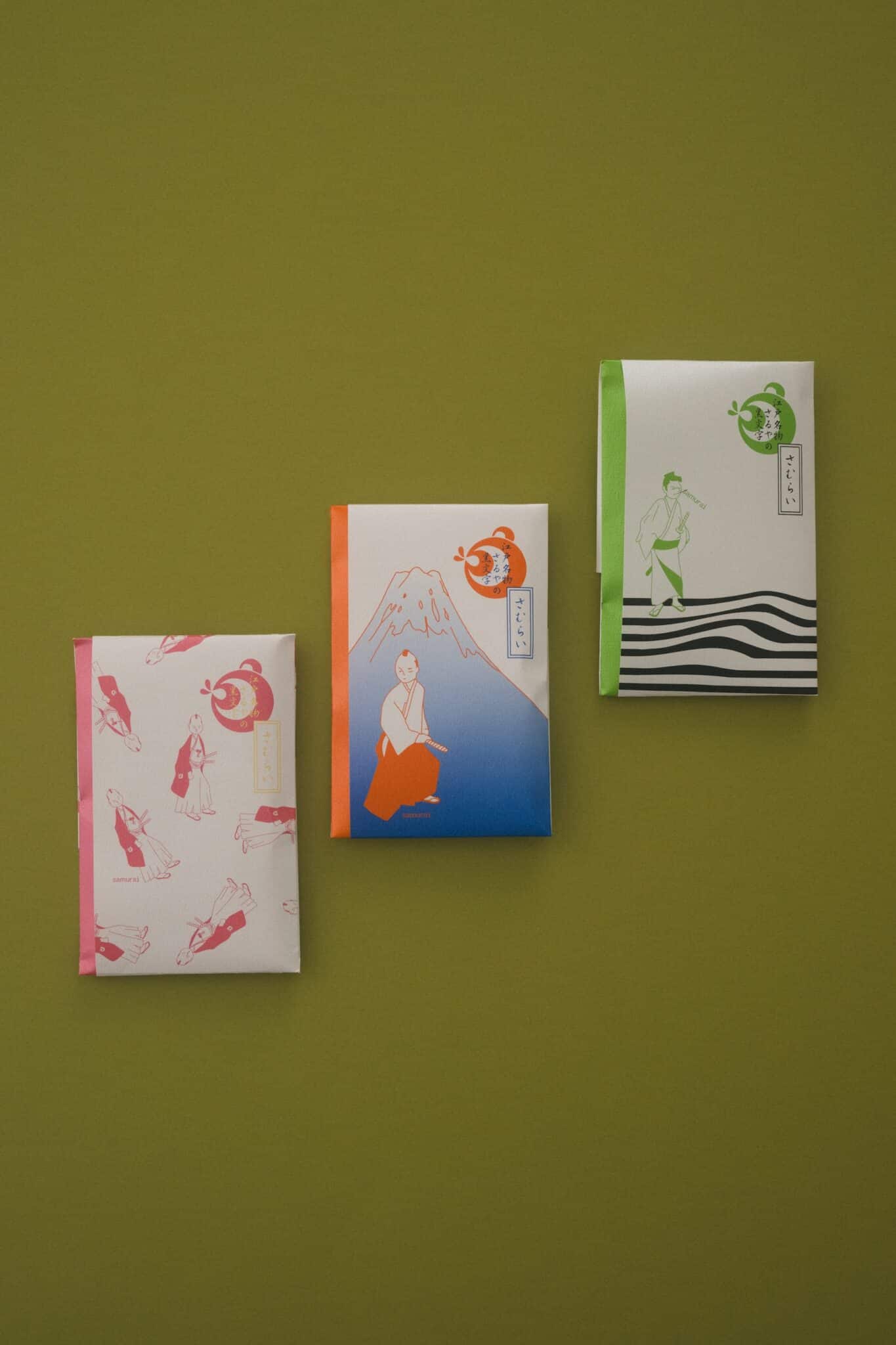
This paper package features a samurai illustration and contains 40 individually wrapped toothpicks. ¥1,320.
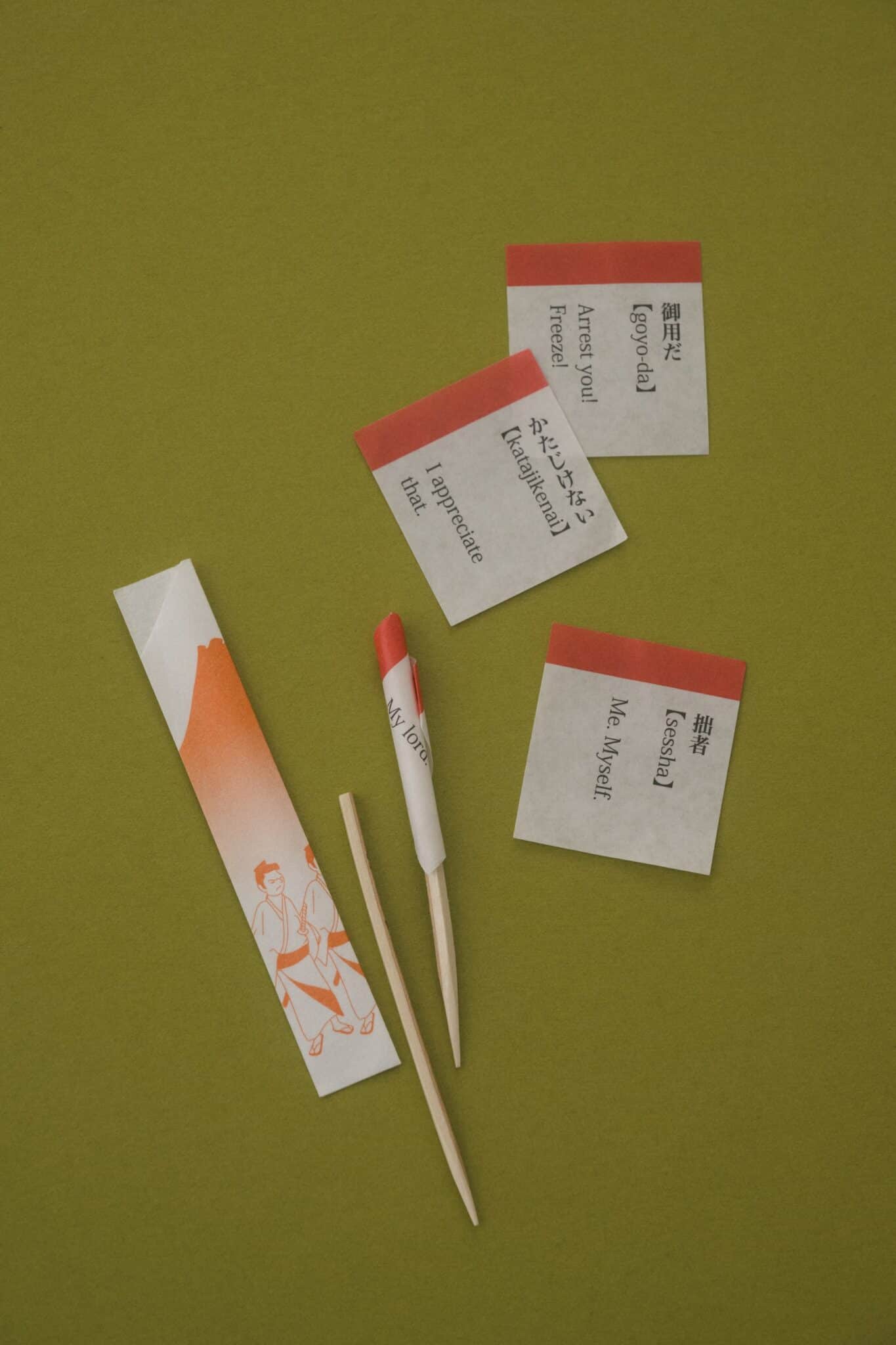
The package includes a sheet with words once used by samurai, written in both Japanese and English. Some of the words are so specialized that even Japanese readers may not know them.
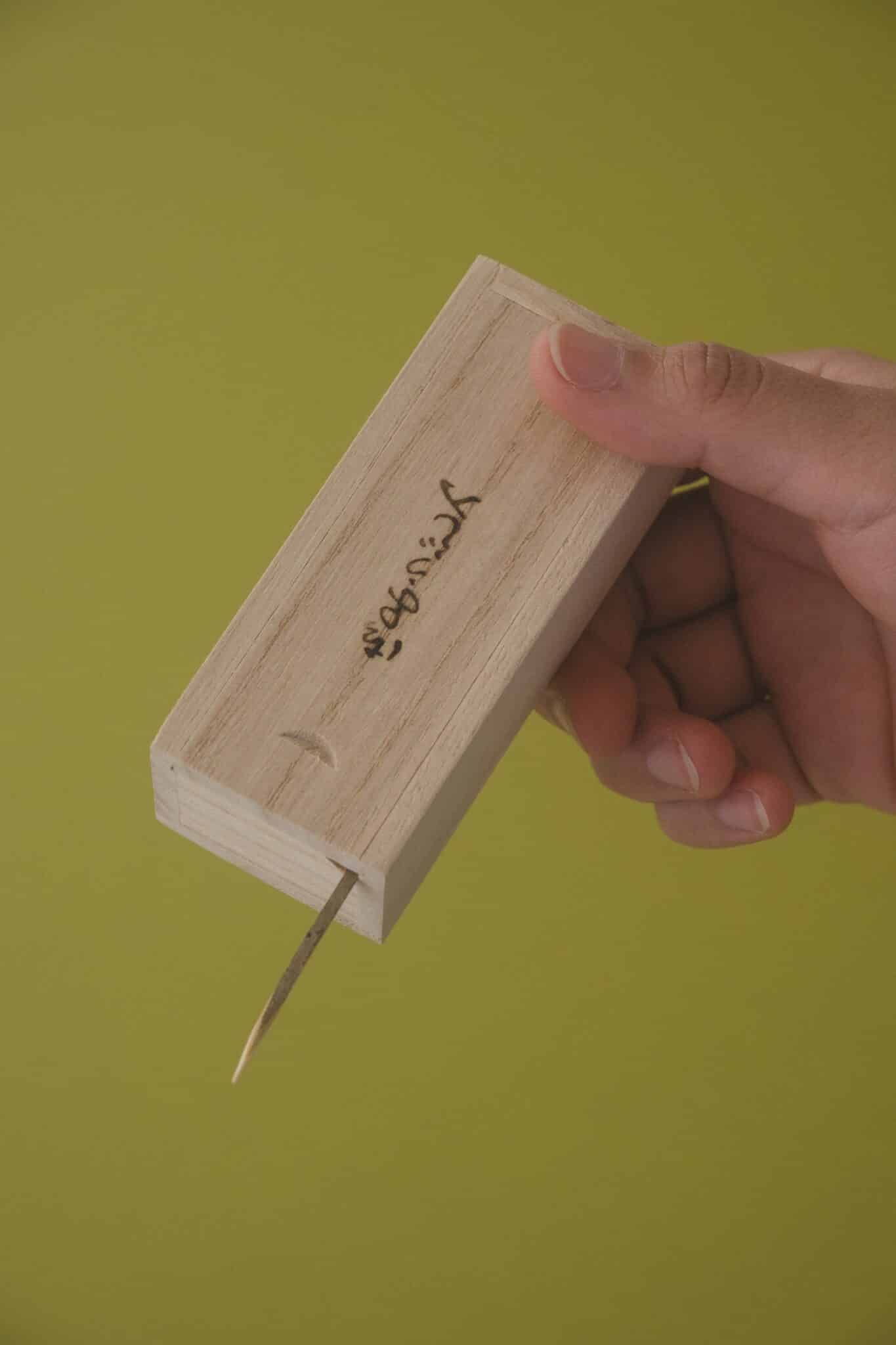
When this paulownia box is turned upside down, a toothpick comes out through a small hole in the corner. This is a dispenser-style box. ¥990.
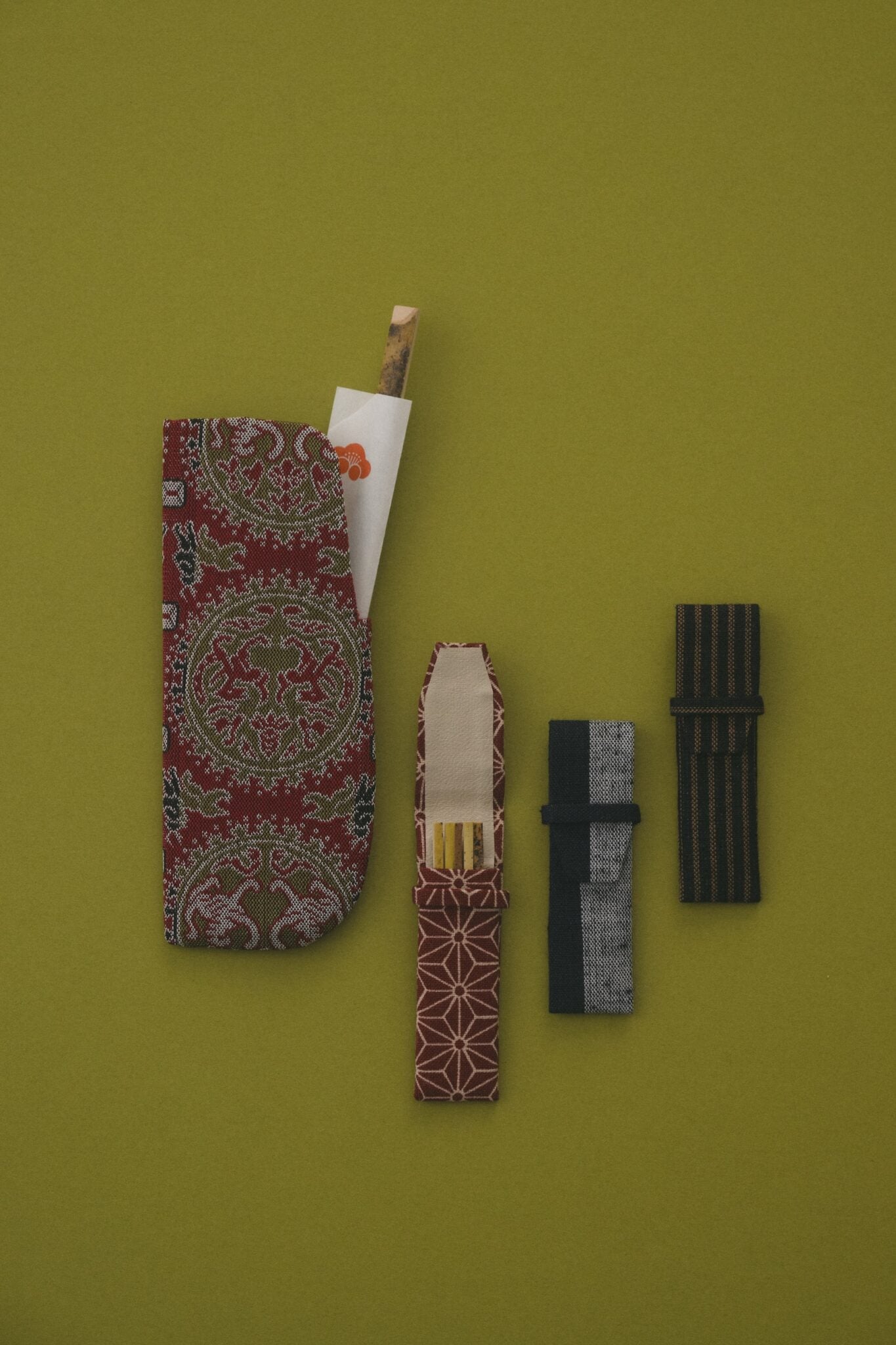
A portable toothpick case. Each one is handmade with fabric in a traditional Japanese pattern. From ¥1,100 each.
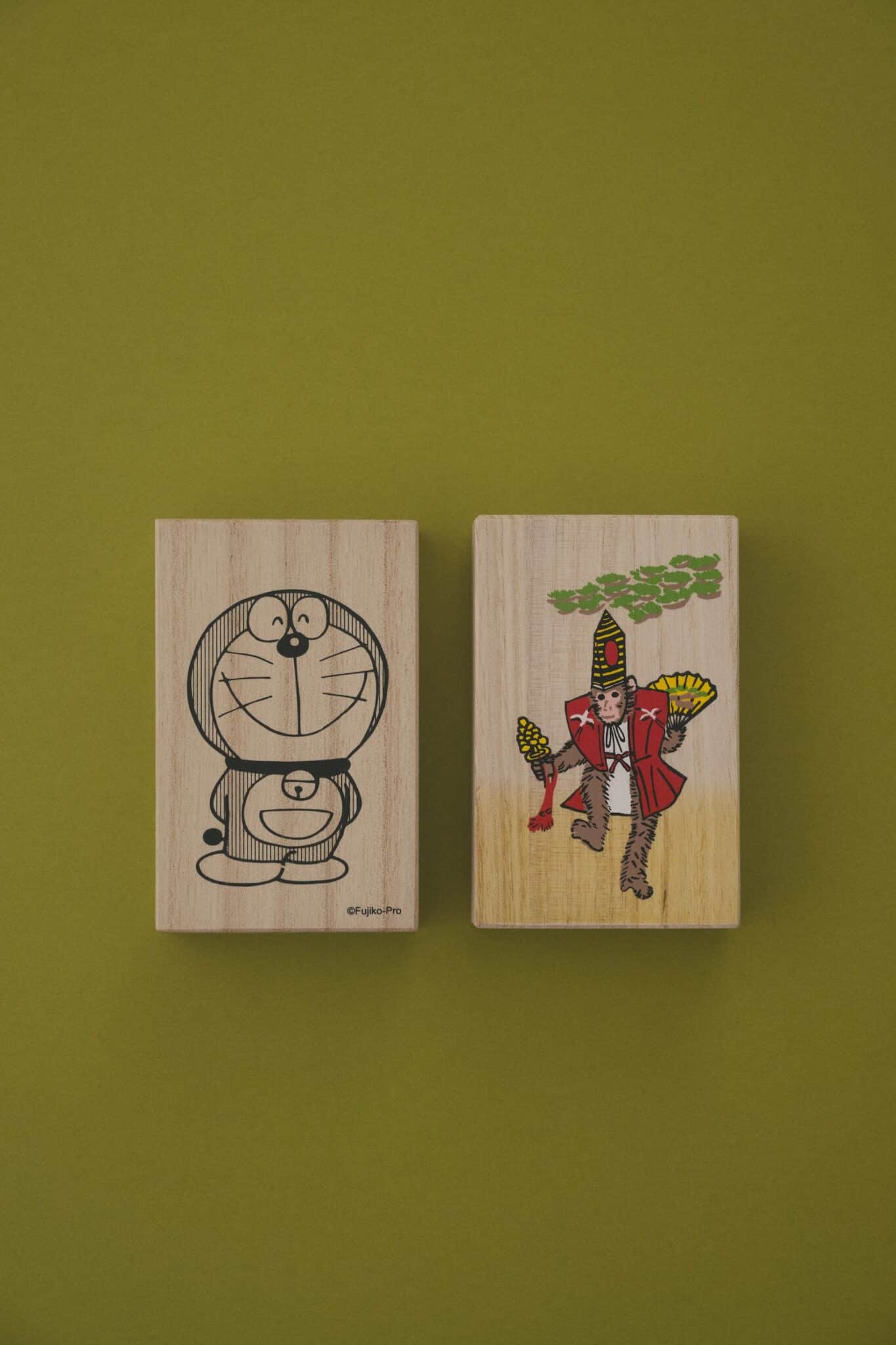
Paulownia boxes featuring characters and illustrations, including Doraemon, are popular. The box on the right depicts a monkey performing a celebratory dance from Noh, a traditional Japanese performing art. It carries the meaning of celebrating the beginning of something new. Left: 70 pieces, ¥1,320. Right: 15 pieces, ¥1,540.
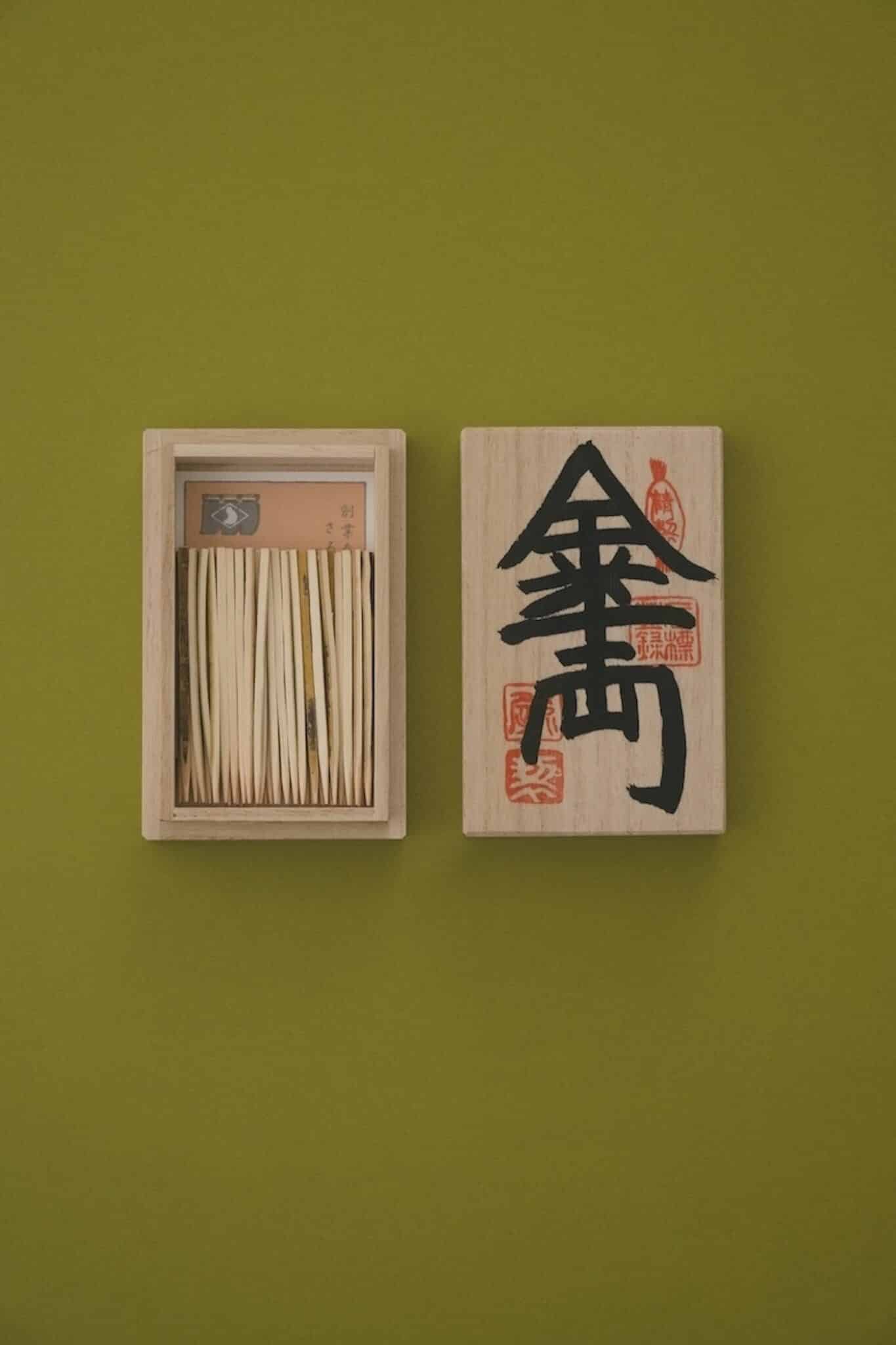
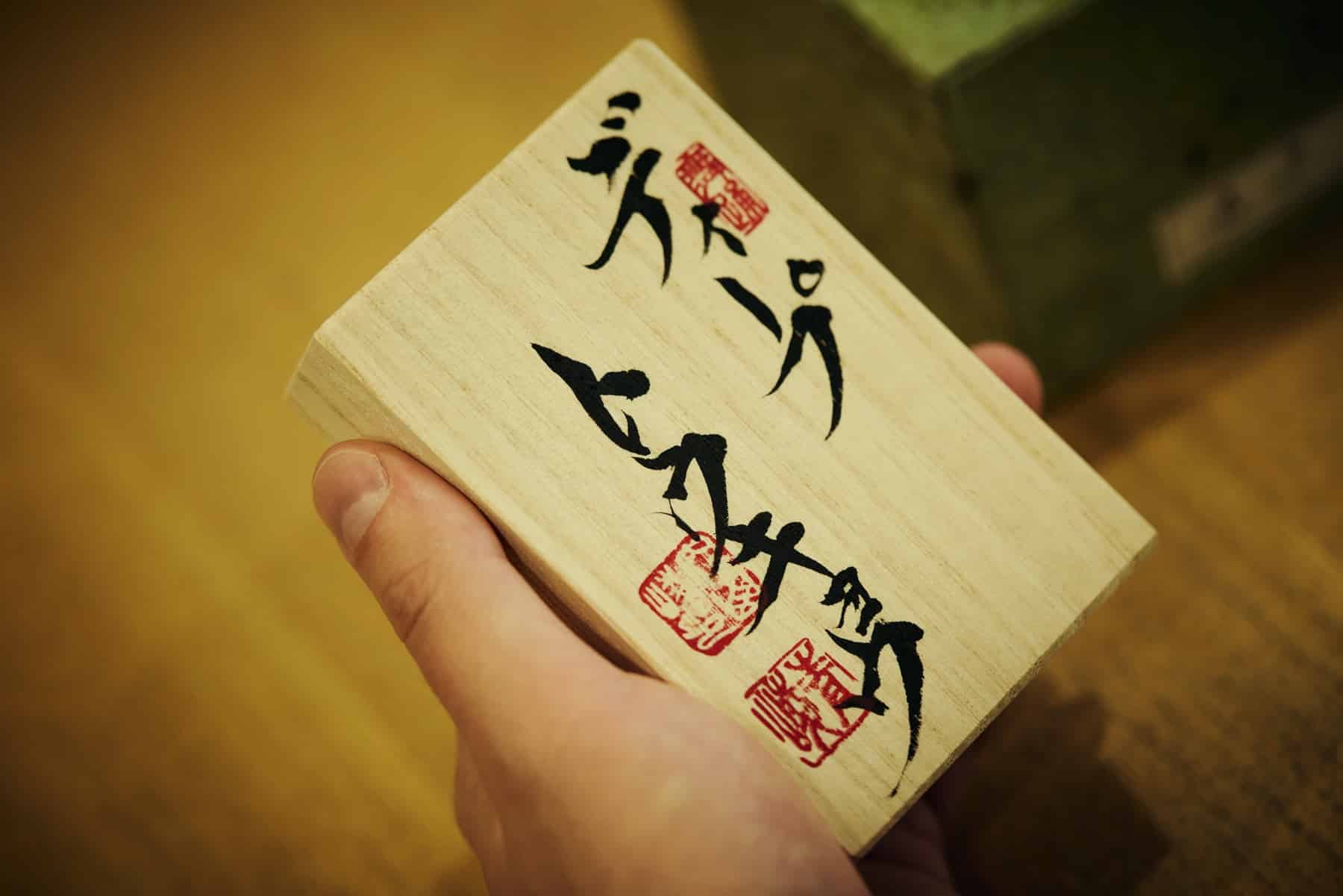
The characters written on the box express wishes for business prosperity and good fortune. Each one is handwritten by the previous owner.
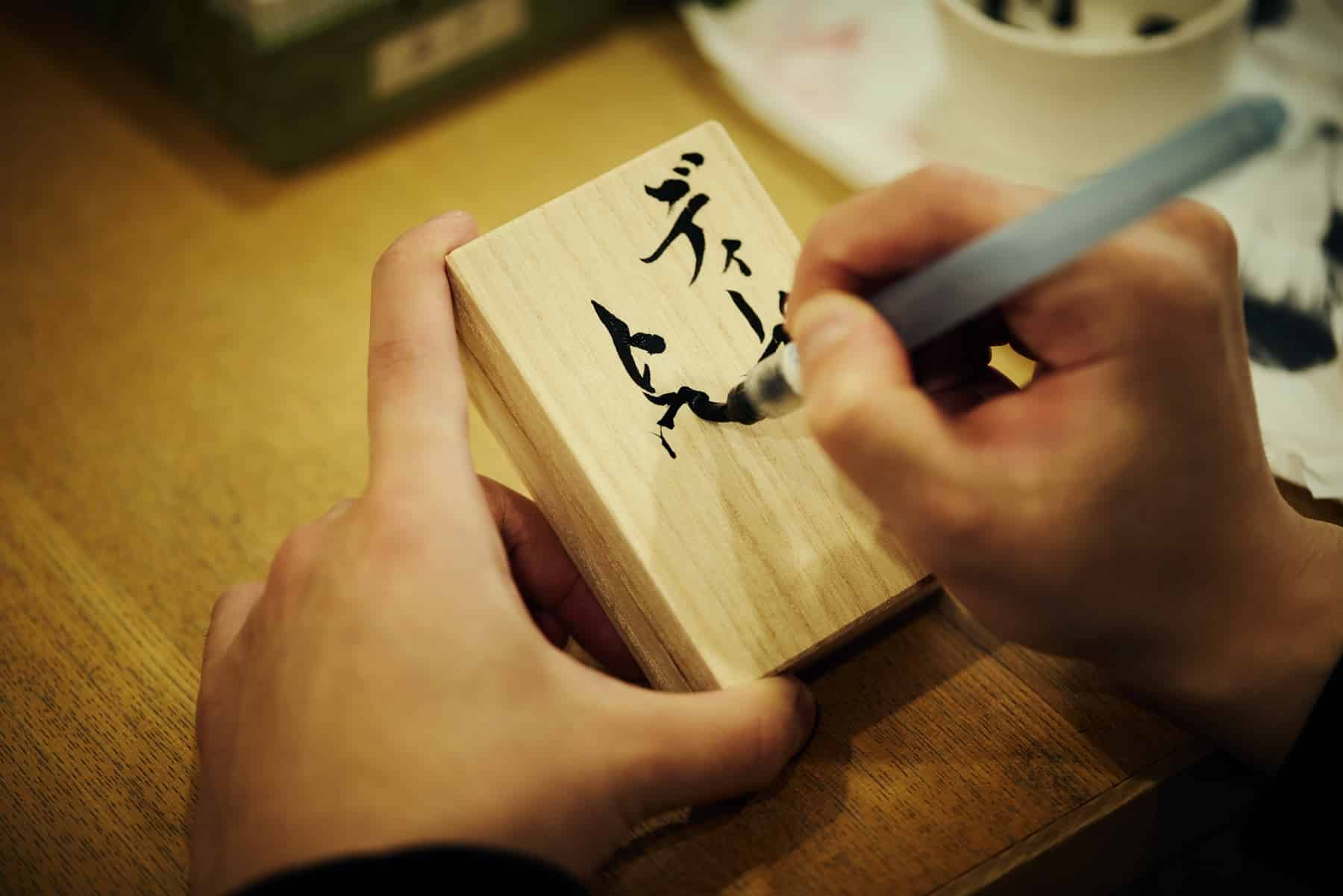
Customers can freely choose the text, such as a name, company name, or favorite phrase. For personalized items, it is recommended to order online in advance and pick them up at the shop.
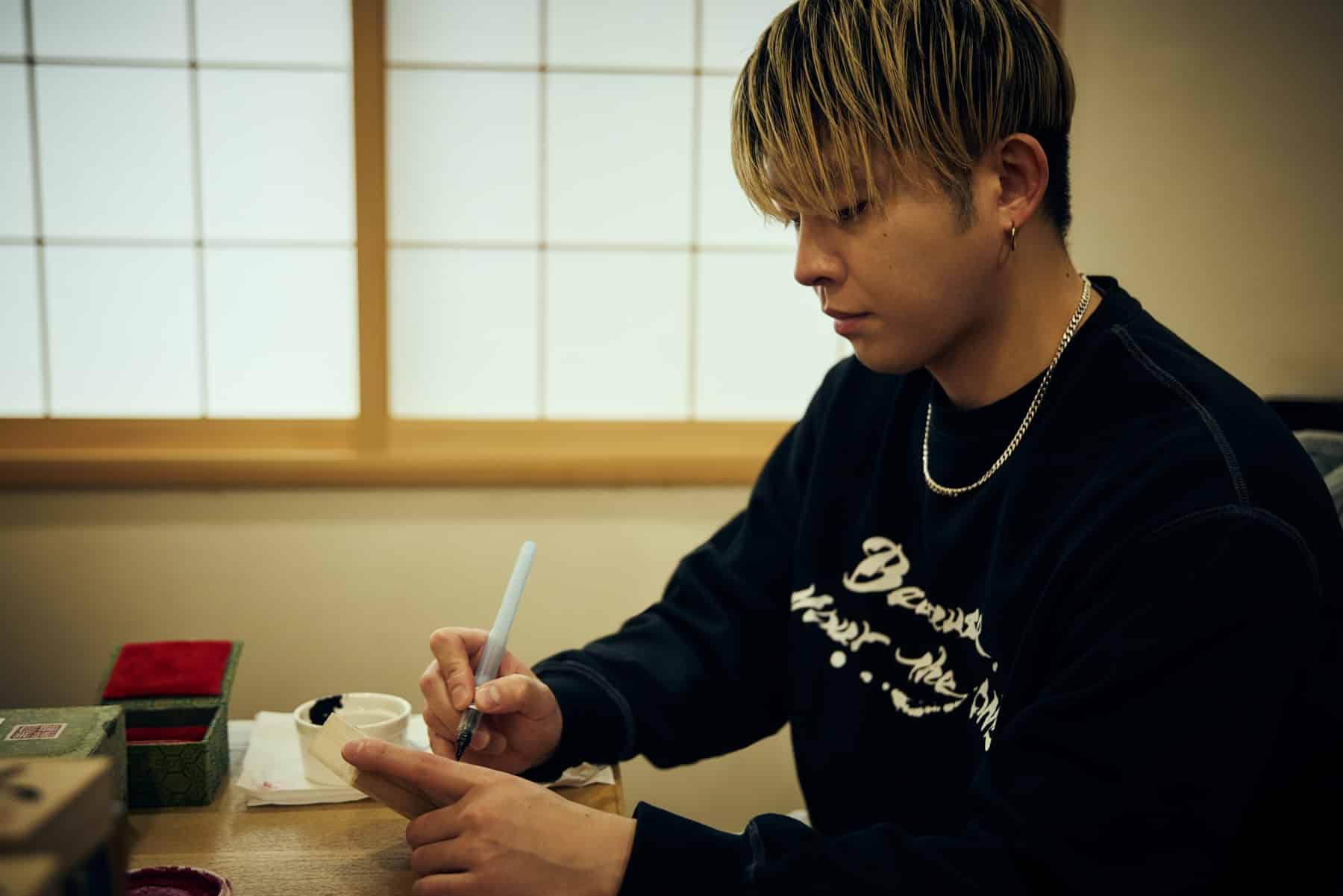
Ryo Uchiyama, the calligraphy artist who handles the personalization service, is also active as a dancer.
His bold and dignified brushwork leaves a strong impression. The piece is completed with the artist’s seal.
The information in this article is current as of July 9, 2026 (at the time of publication).



.jpg)
スマホ.jpg)