DEEPTOKYO
magazine

EN


AREA
DEEPTOKYO
magazine
EN
AREA
2026.06.12
Edo Lantern Shop Bringing Traditional Craftsmanship into the Present


 Nearest Station


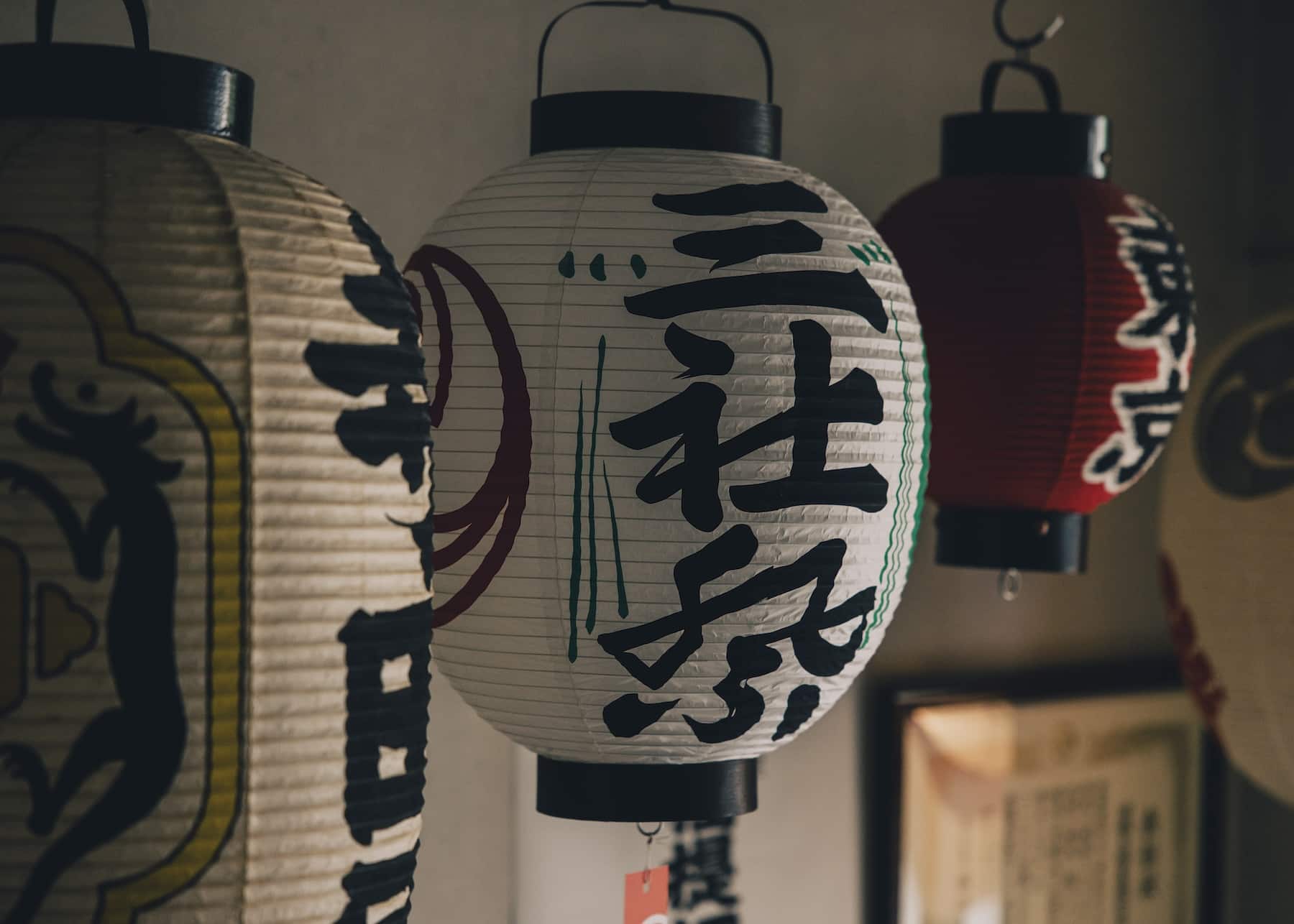
Edo hand-painted lanterns were once used as lights to illuminate nighttime roads. They later developed into cultural symbols that decorated festivals, stages, and storefronts. Namidabashi Oshimaya Chochin-ten, located in Minami-Senju, is a long-established shop that has passed down the traditional techniques of hand-painted lanterns for four generations. The letters and family crests painted one by one by artisans have a strength and individuality that cannot be expressed through printing. In recent years, the shop has also worked on developing products that fit contemporary lifestyles and offering hands-on programs, sharing the appeal of Edo lanterns with a wide range of generations.
SHARE


Namidabashi Oshimaya Chochin-ten, located in Minami-Senju in Tokyo’s shitamachi area, is a long-established shop that has passed down the traditional hand-painting techniques of Edo lanterns for four generations.
A chochin lantern is originally a lighting tool made to protect a candle flame from the wind. It has a fire bag, known as a hibukuro, made by attaching washi paper to a frame built with bamboo strips and other materials. The andon lamp, which is considered one of its roots, is said to have been introduced from China. However, the foldable and portable structure was developed through uniquely Japanese techniques. Because it could be carried inside one’s clothing, the chochin developed as an essential item for traveling and going out at night.
The history of chochin is long, and the name appears in documents from the early 16th century during the Muromachi period. During the Edo period, as the production of Japanese candles spread, chochin became widely used in the daily lives of ordinary people. Eventually, many artisans who painted letters and family crests on the fire bags began to appear, especially around Asakusa.
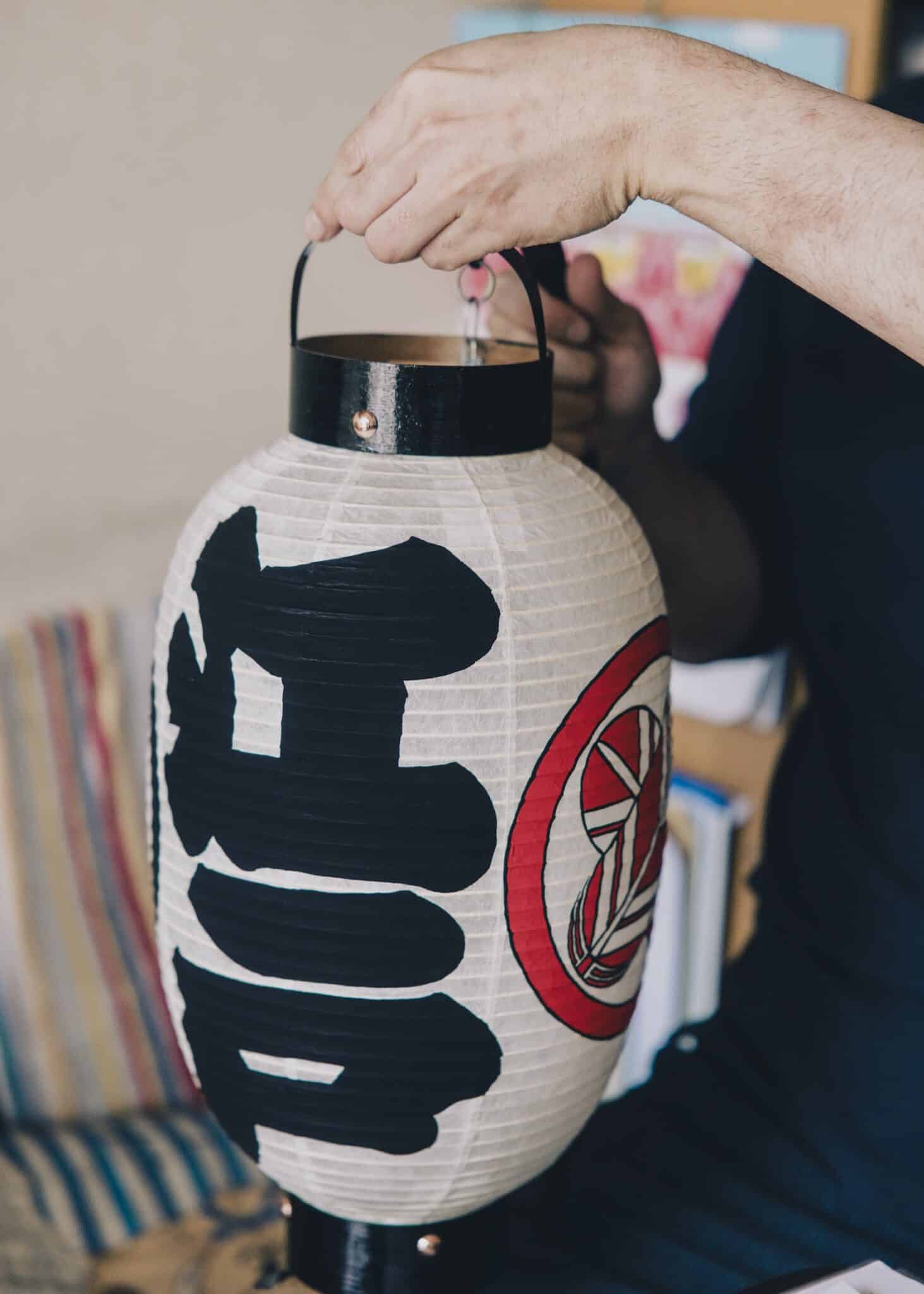
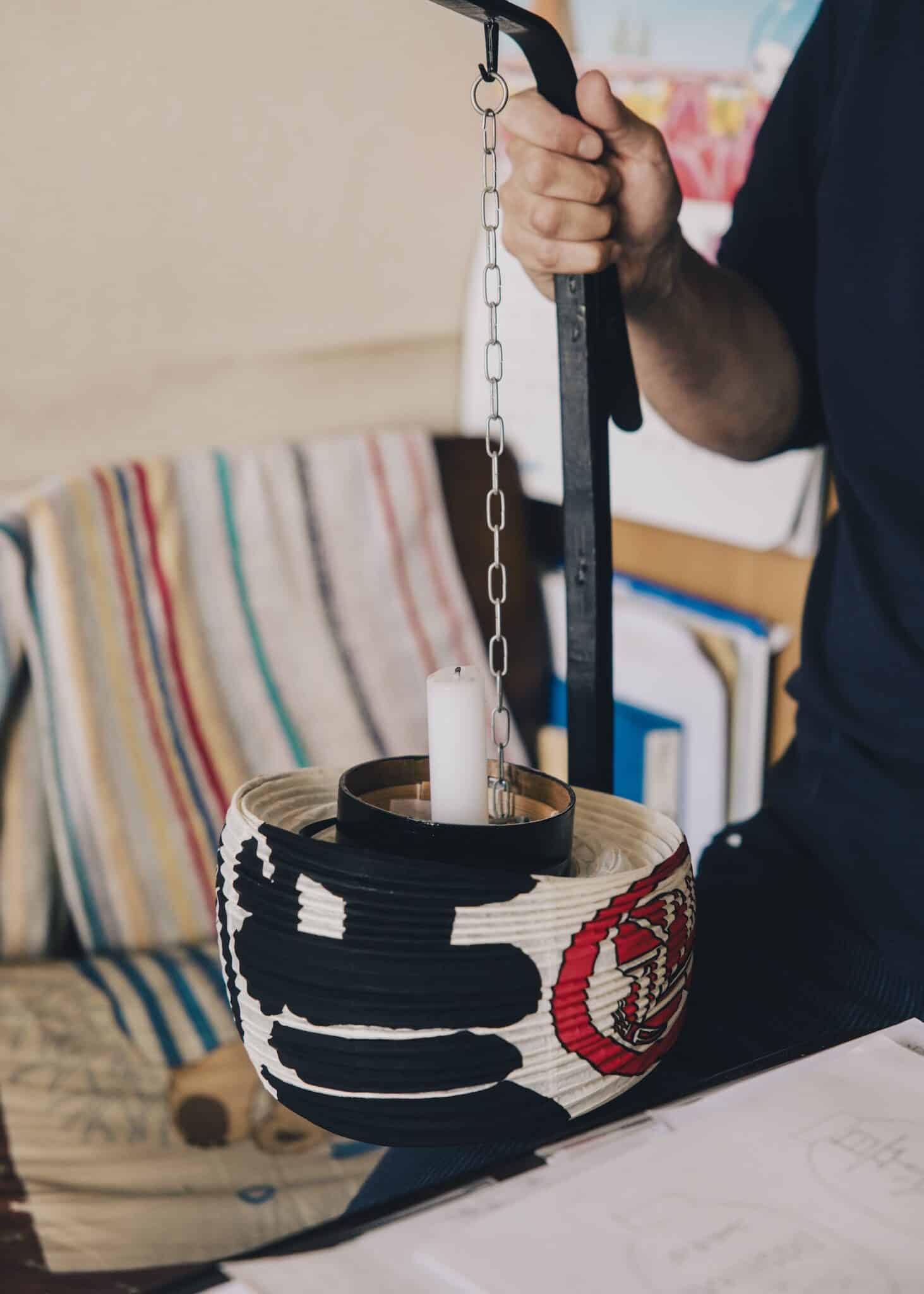
The photo shows a yumihari chochin, a lantern whose fire bag is stretched and fixed in place with a bamboo bow. Because it is highly stable and can be placed on the floor while the candle remains lit, it was once used by firefighters and errand messengers as lighting for nighttime travel.
A yumihari chochin with its fire bag folded down.
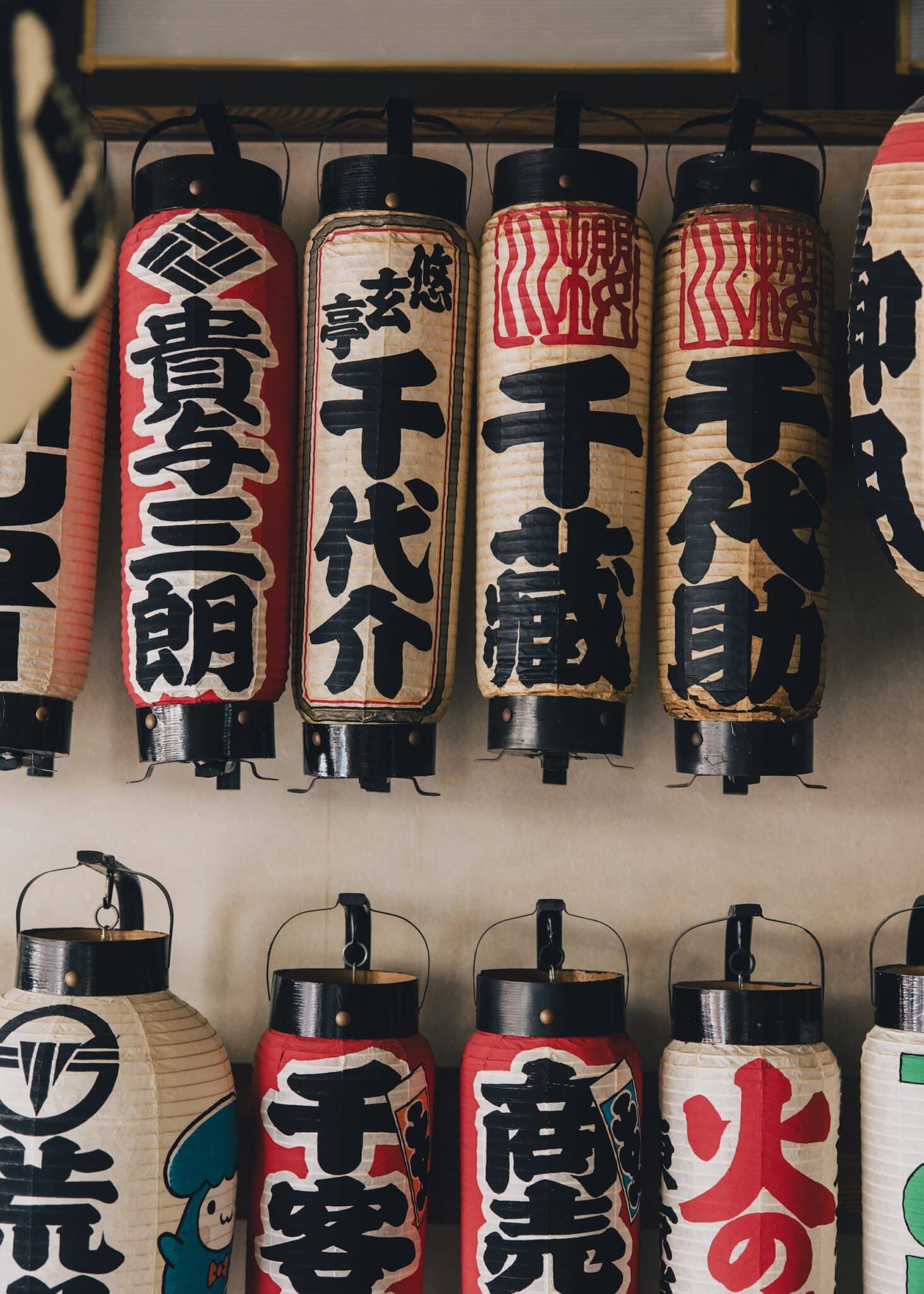
The Edo hand-painted lanterns passed down by Namidabashi Oshimaya Chochin-ten refer to lanterns with family crests and Edo-style lettering painted on their fire bags. Because chochin lanterns are lit from the inside, the outlines of letters and pictures appear blurred by the light. For this reason, Edo hand-painted lanterns are designed to be easy to see even from a distance, with thick lines and reduced blank space. Today, this technique is also certified as a traditional craft of Tokyo.
The history of the Oshimaya name dates back to the Horeki era of the Edo period. The original Oshimaya family line was lost due to wartime damage, but the shop name remained in various places through branch establishments. Namidabashi Oshimaya Chochin-ten began in 1913. The first-generation owner, Yoshizo Murata, became independent after receiving permission to use the name from the main Oshimaya family. Today, while third-generation owner Shuichi Murata serves as master, his son, fourth-generation owner Kenichiro Murata, continues to inherit the techniques.
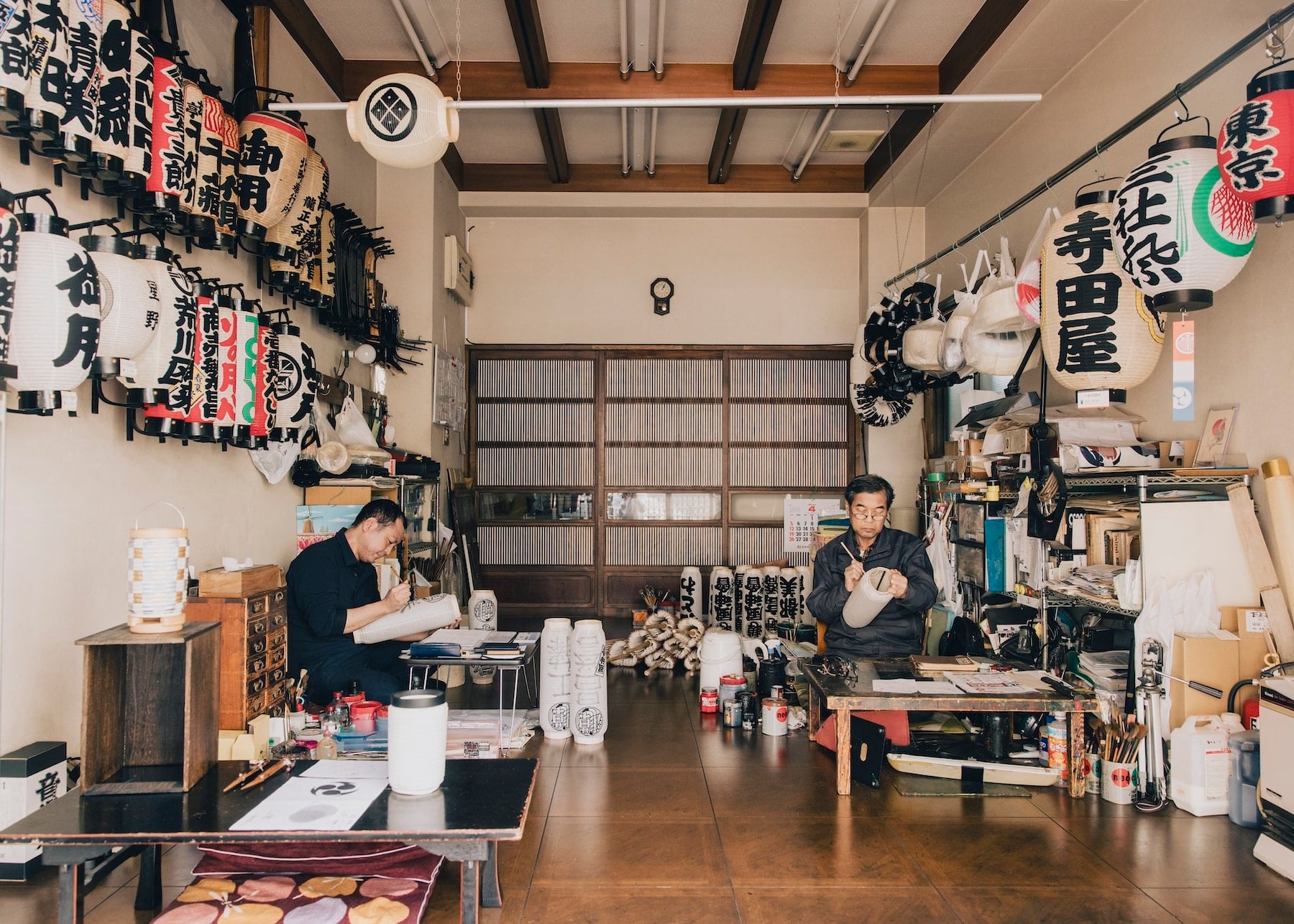
Inside the shop, third-generation owner Shuichi and fourth-generation owner Kenichiro sit on wooden platforms and quietly paint pictures and letters onto lanterns.
Namidabashi Oshimaya Chochin-ten has created lanterns for festivals such as Asakusa’s Sanja Matsuri, as well as lanterns and traditional umbrellas used on Kabuki stages.
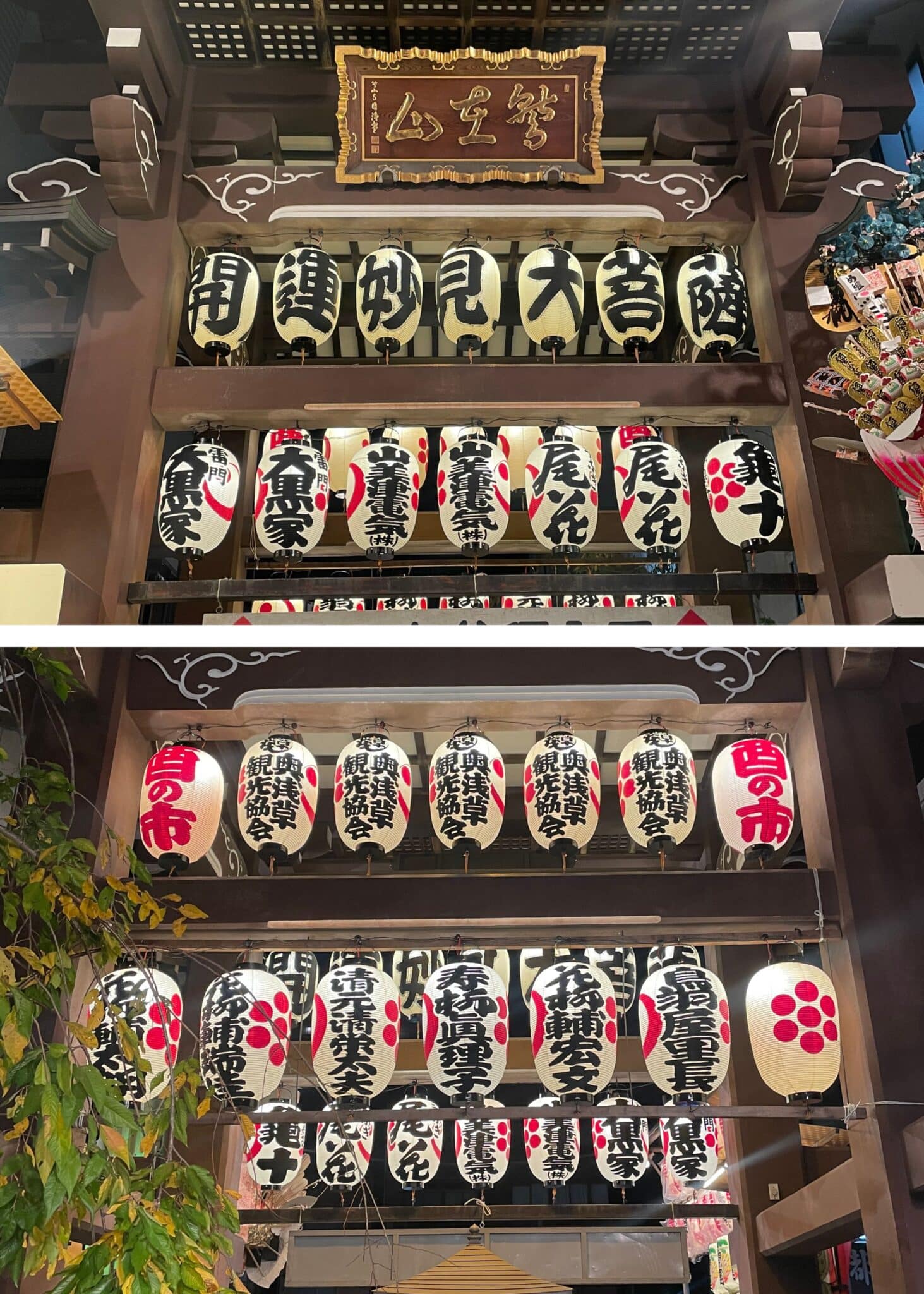
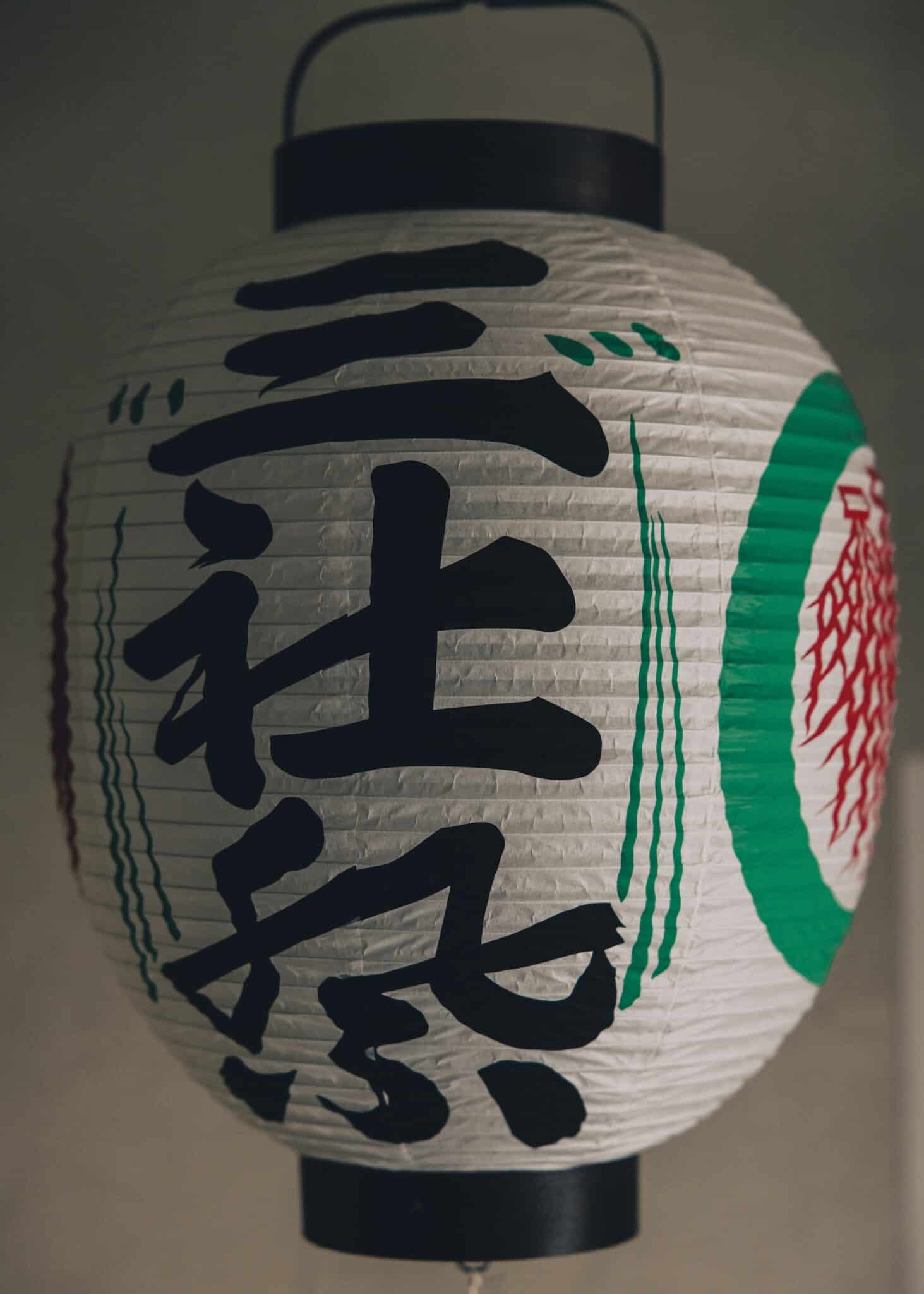
Tori no Ichi at Chokokuji Temple in Asakusa is known as a festival that prays for prosperous business. The lanterns decorating the temple grounds are made by Namidabashi Oshimaya Chochin-ten.
Today, the shop also accepts orders from individuals for a wide range of purposes, including celebratory gifts and presents. It also offers reservation-only hand-painting experiences, introducing traditional techniques to the public in an accessible way.
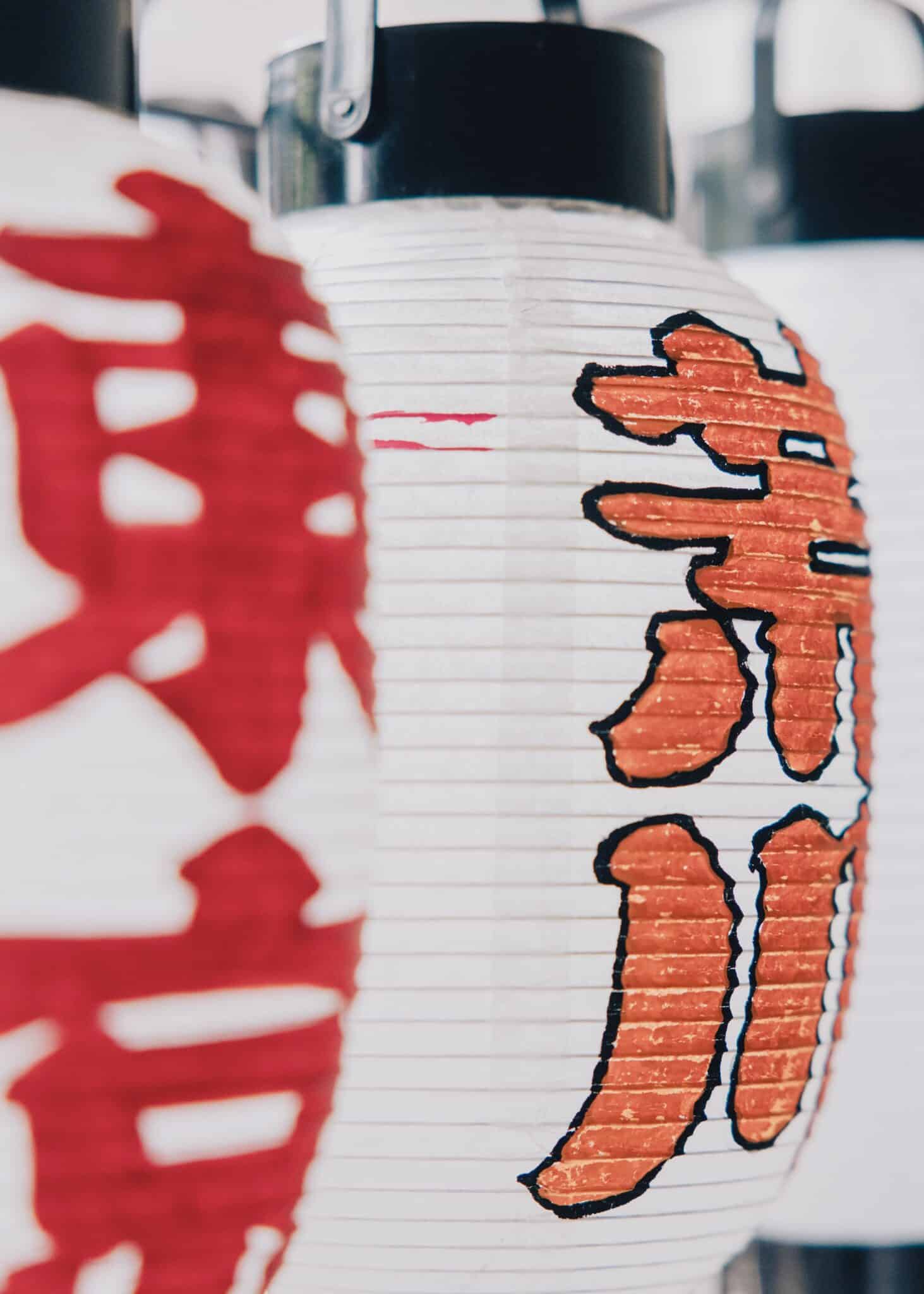
Yumihari chochin lanterns vary depending on the motif and size, but orders start from ¥15,000. Red lanterns are made by layering red paint over washi paper.
The photo shows a takabari chochin, a lantern used as a lighting tool by samurai families in the early Edo period.
Lanterns displayed under the eaves during festival seasons are called noki chochin.
Mini lantern-making experiences, available from ¥4,000, are also popular. Participants simply trace a sketch drawn by Kenichiro with paint, making it easy to join. The experience takes about one hour.
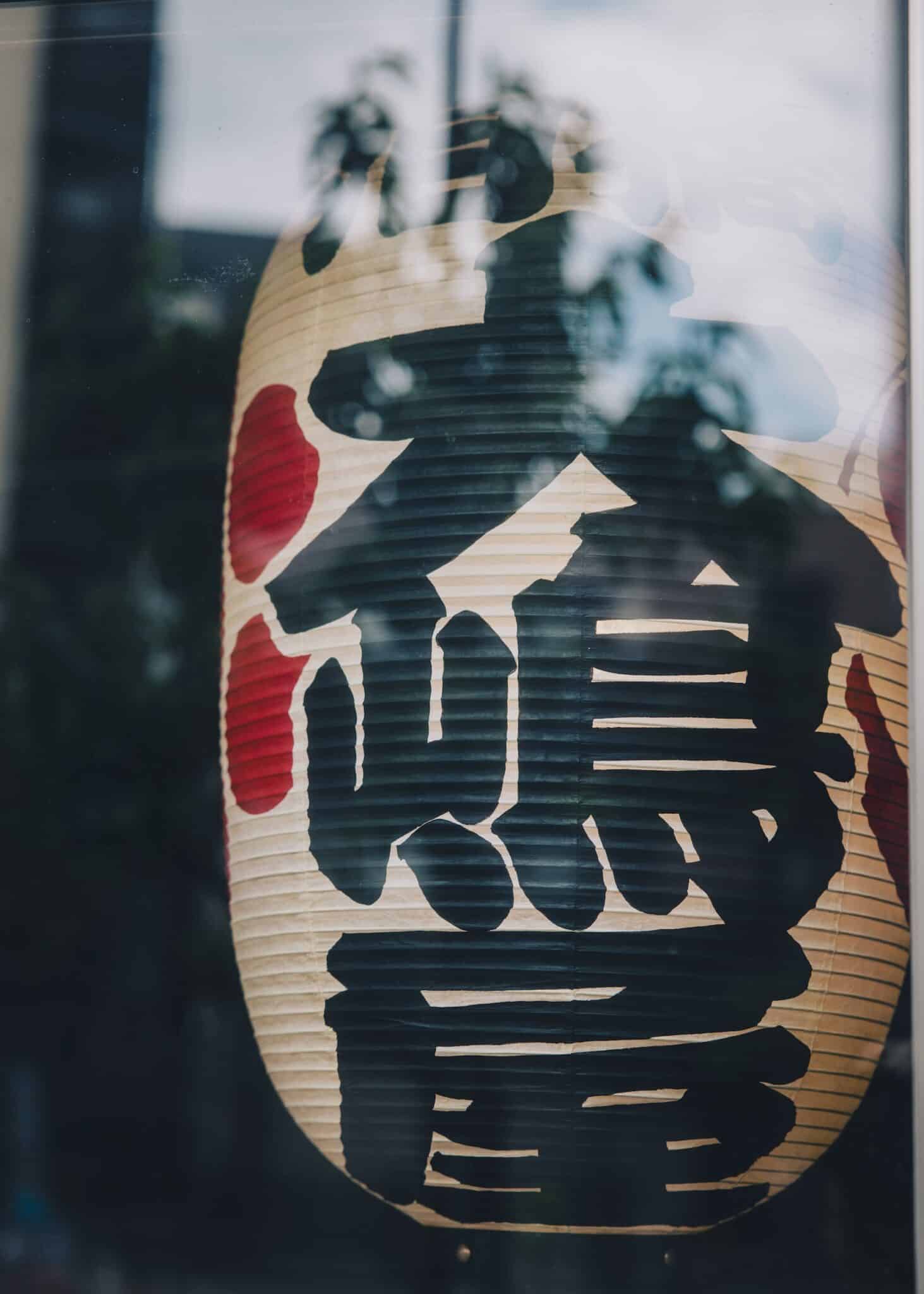
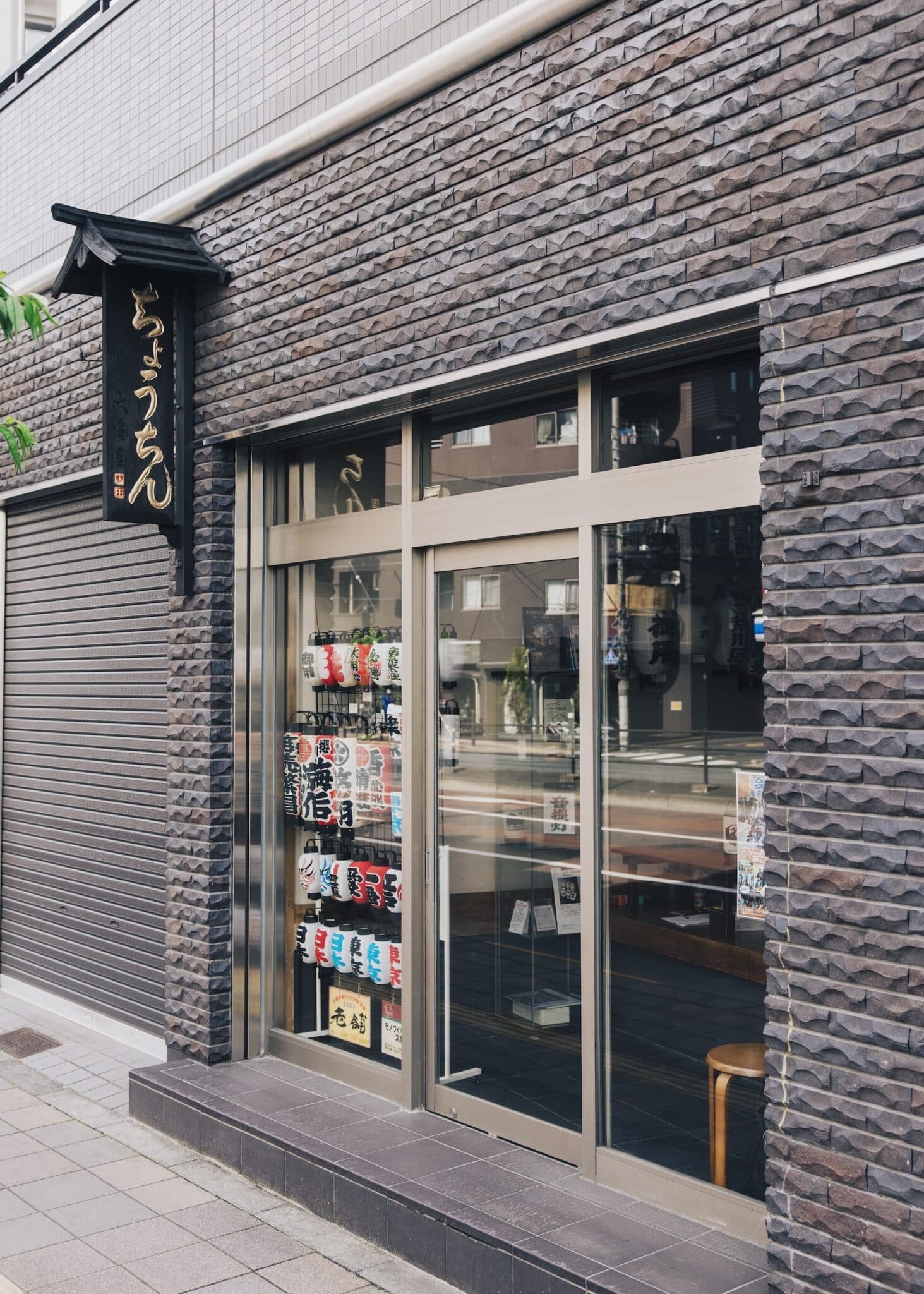
The stone exterior and the colorful lanterns visible through the glass serve as landmarks.
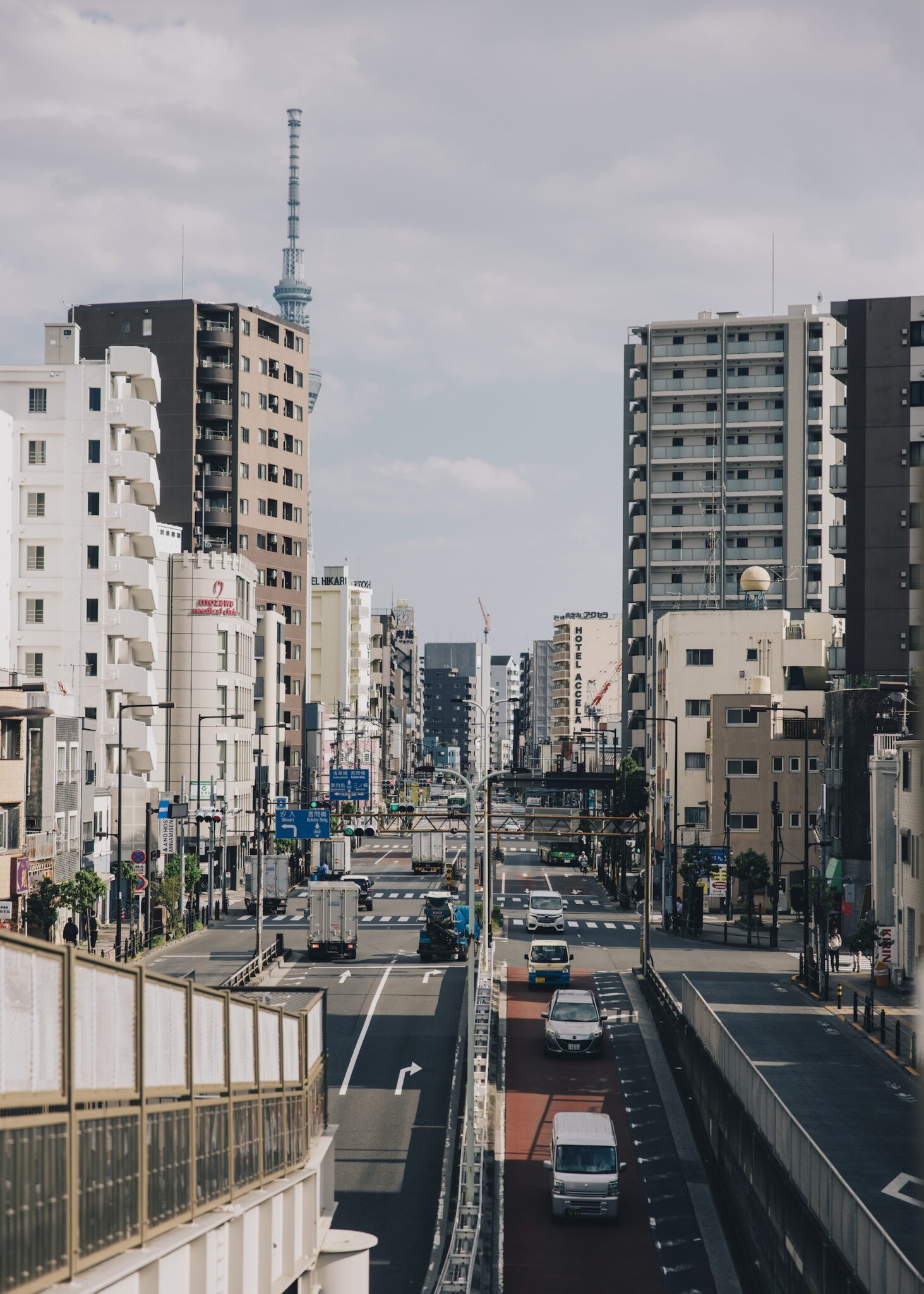
The shop is located along the old Nikko Kaido road extending from the south exit of Minami-Senju Station.
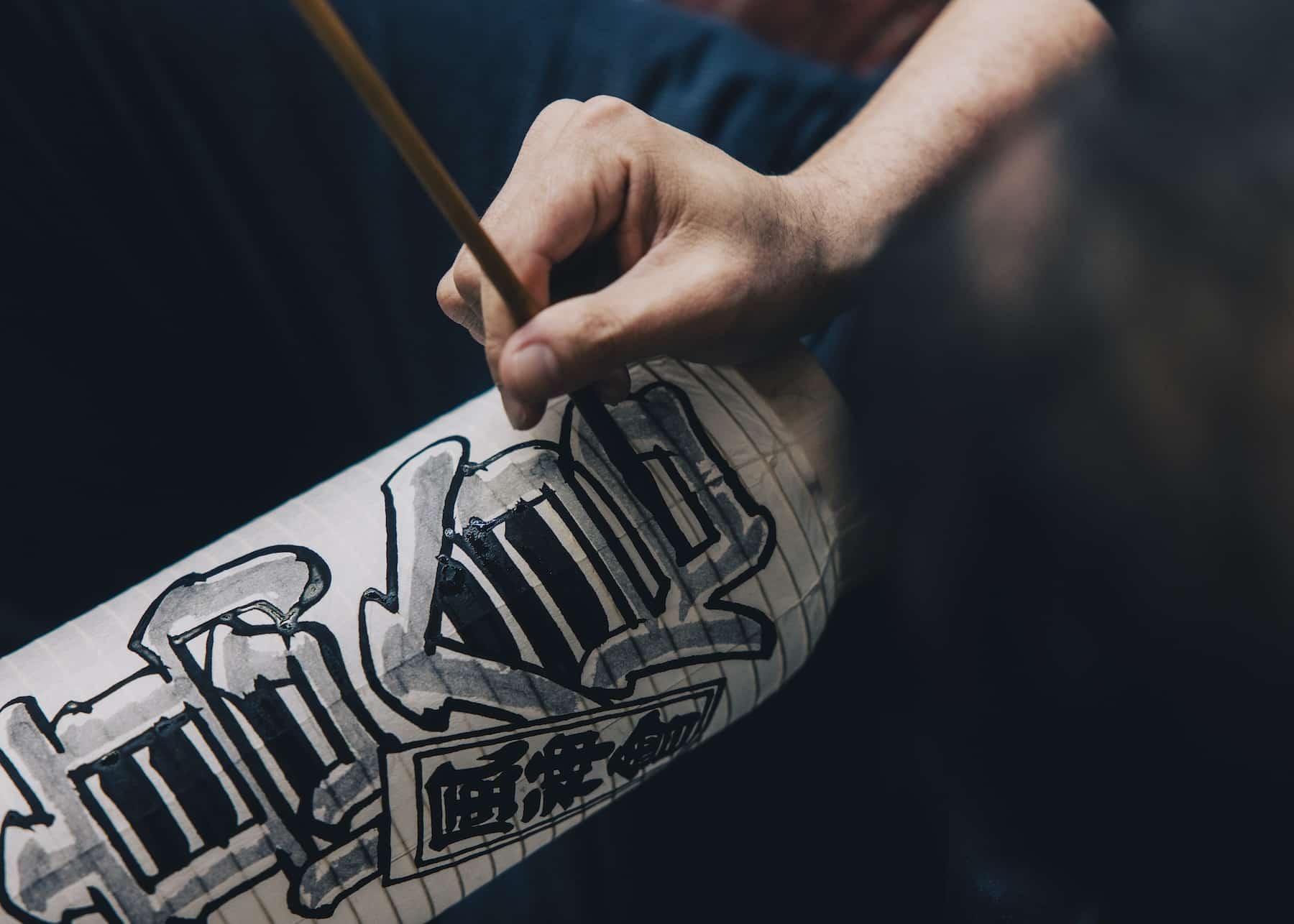
Unlike printed letters, which tend to create a uniform impression, Edo lettering reflects the individuality of each shop and artisan. The letters painted by the Murata father and son are especially smooth and powerful. Even from a distance, the letters convey a strong sense of energy. Kenichiro spent ten years refining his technique while watching the letters painted by his father, Shuichi. Today, he is able to complete lanterns on his own and deliver them as finished products.
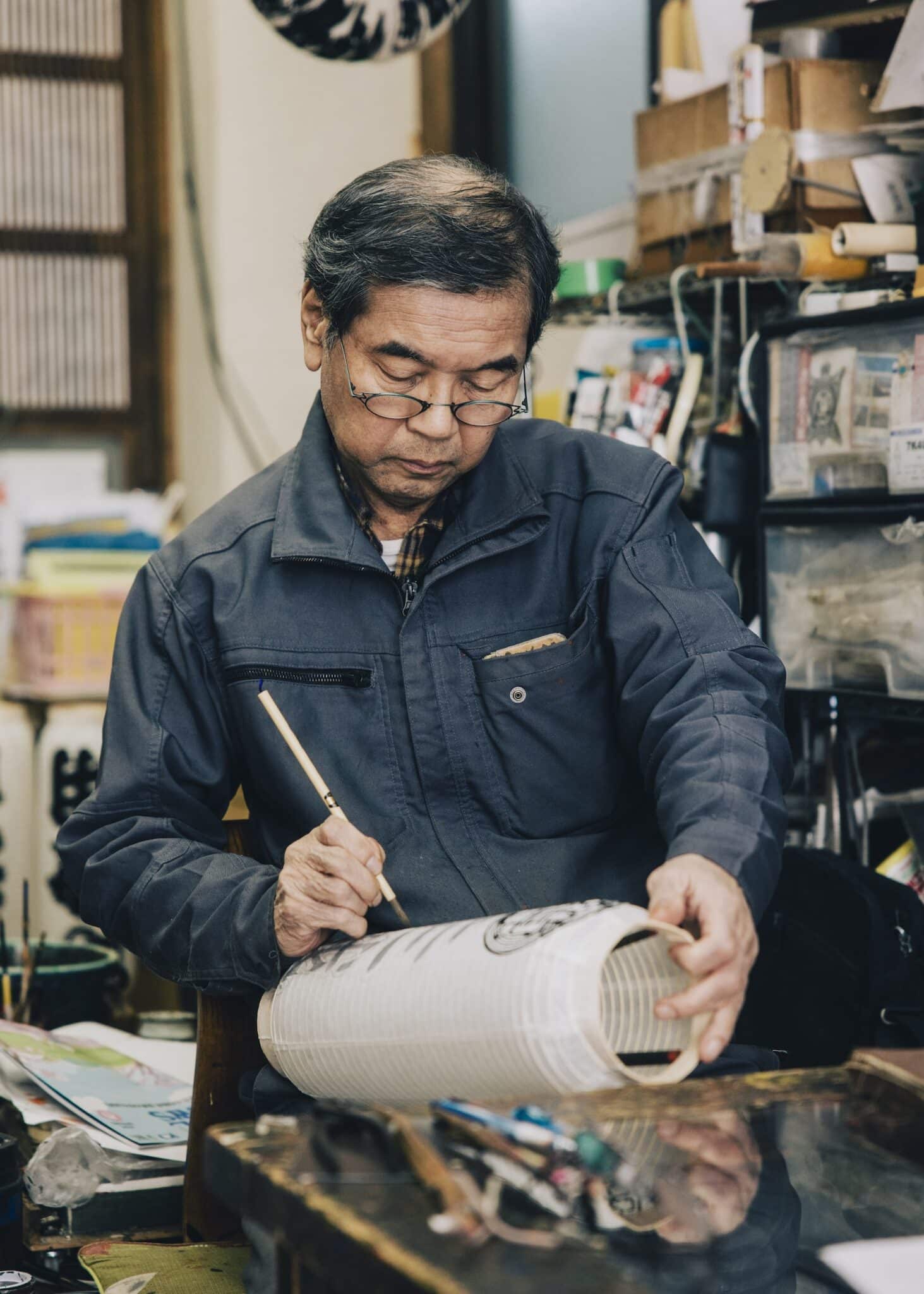
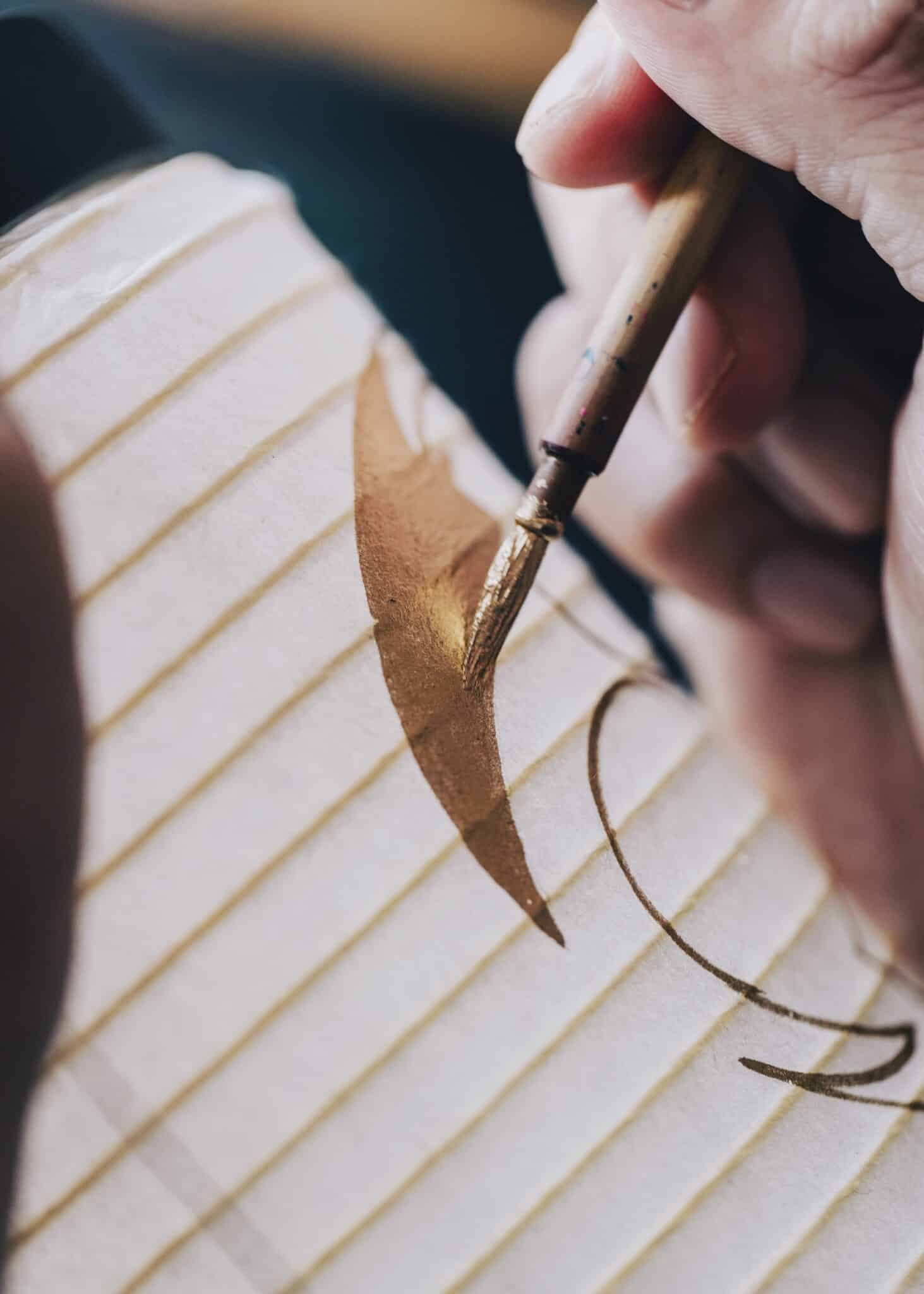
A scene of Edo lettering being painted onto a lantern. First, the outline is sketched in pencil, then traced with a brush, and finally filled in with paint.
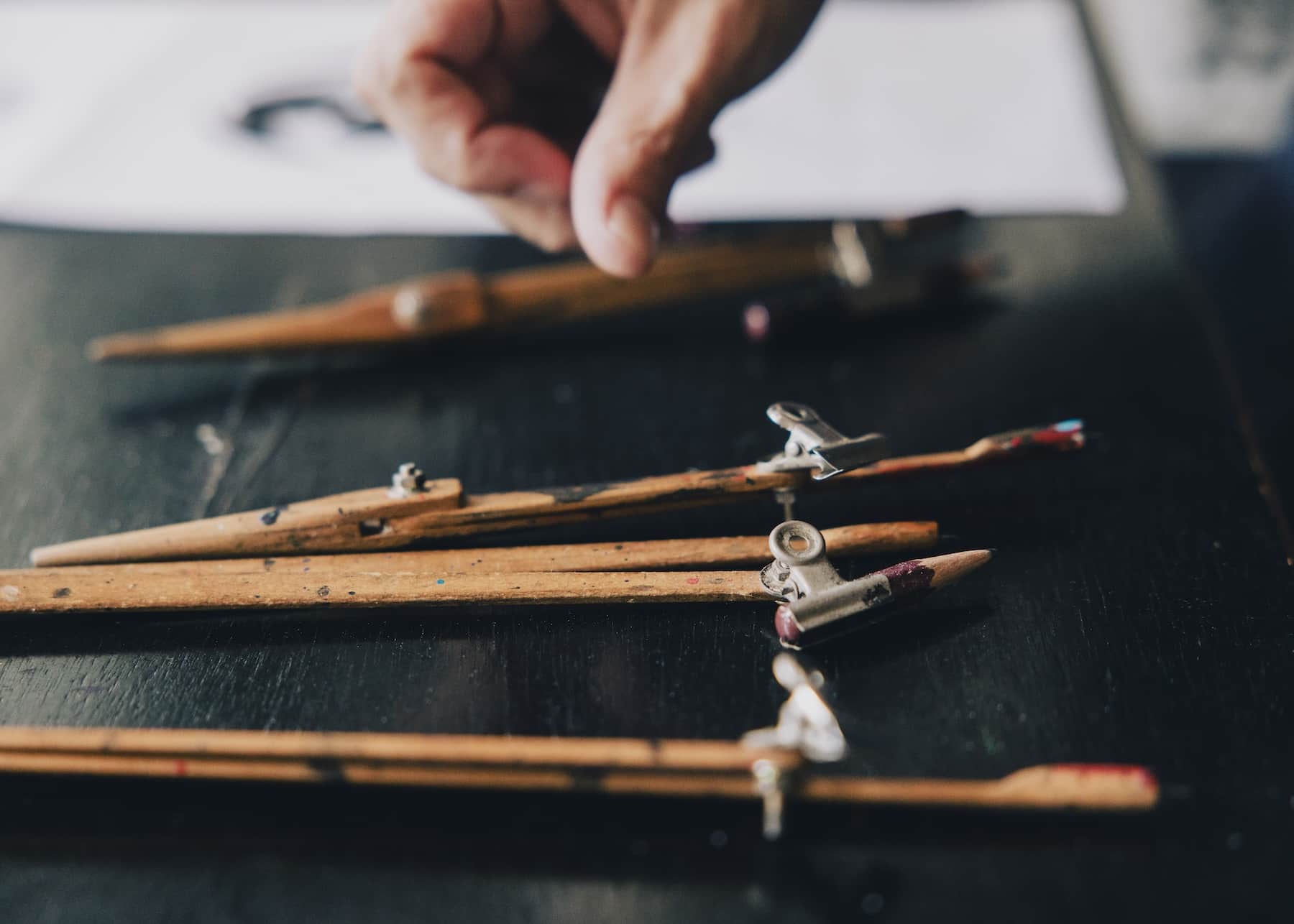
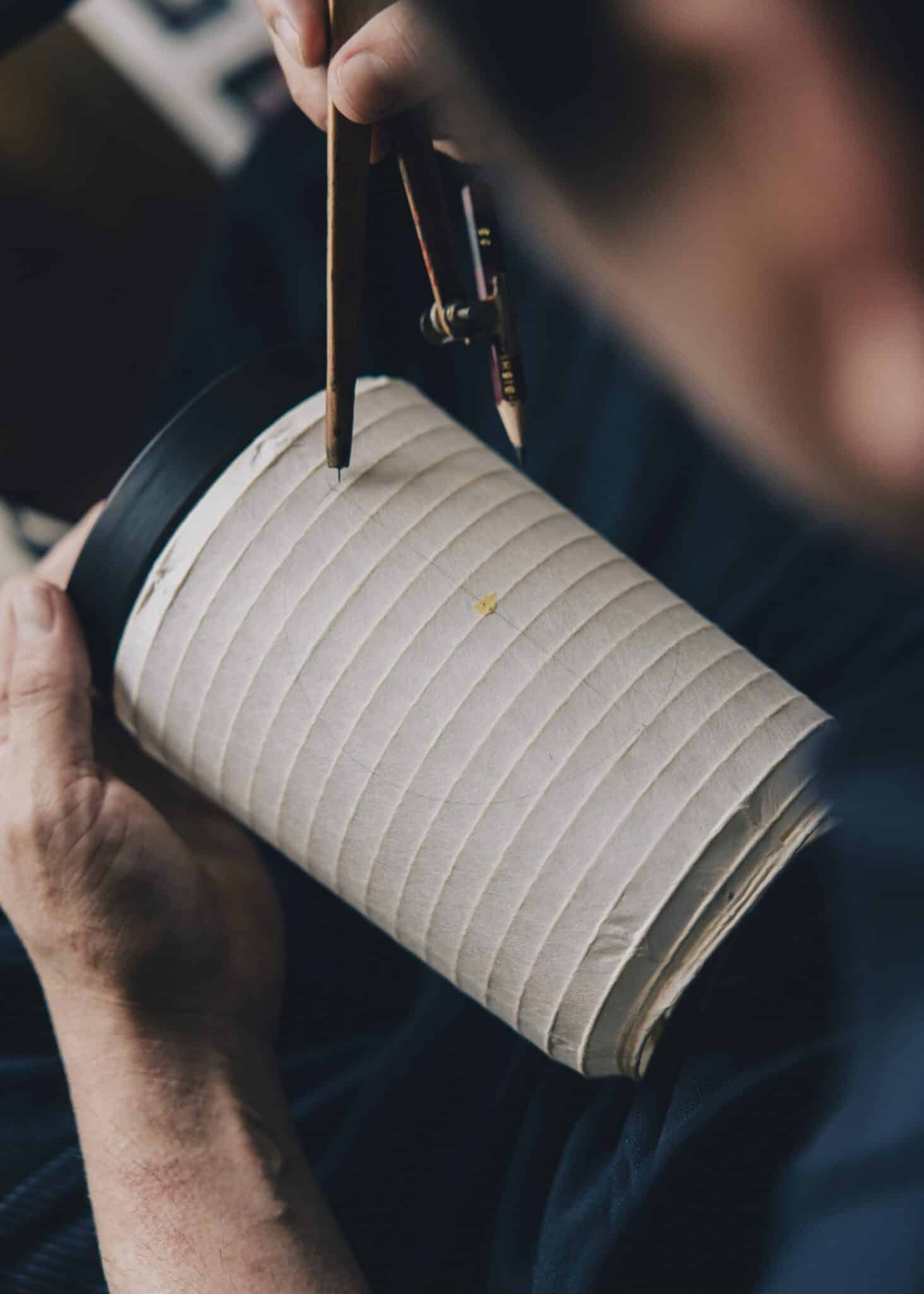
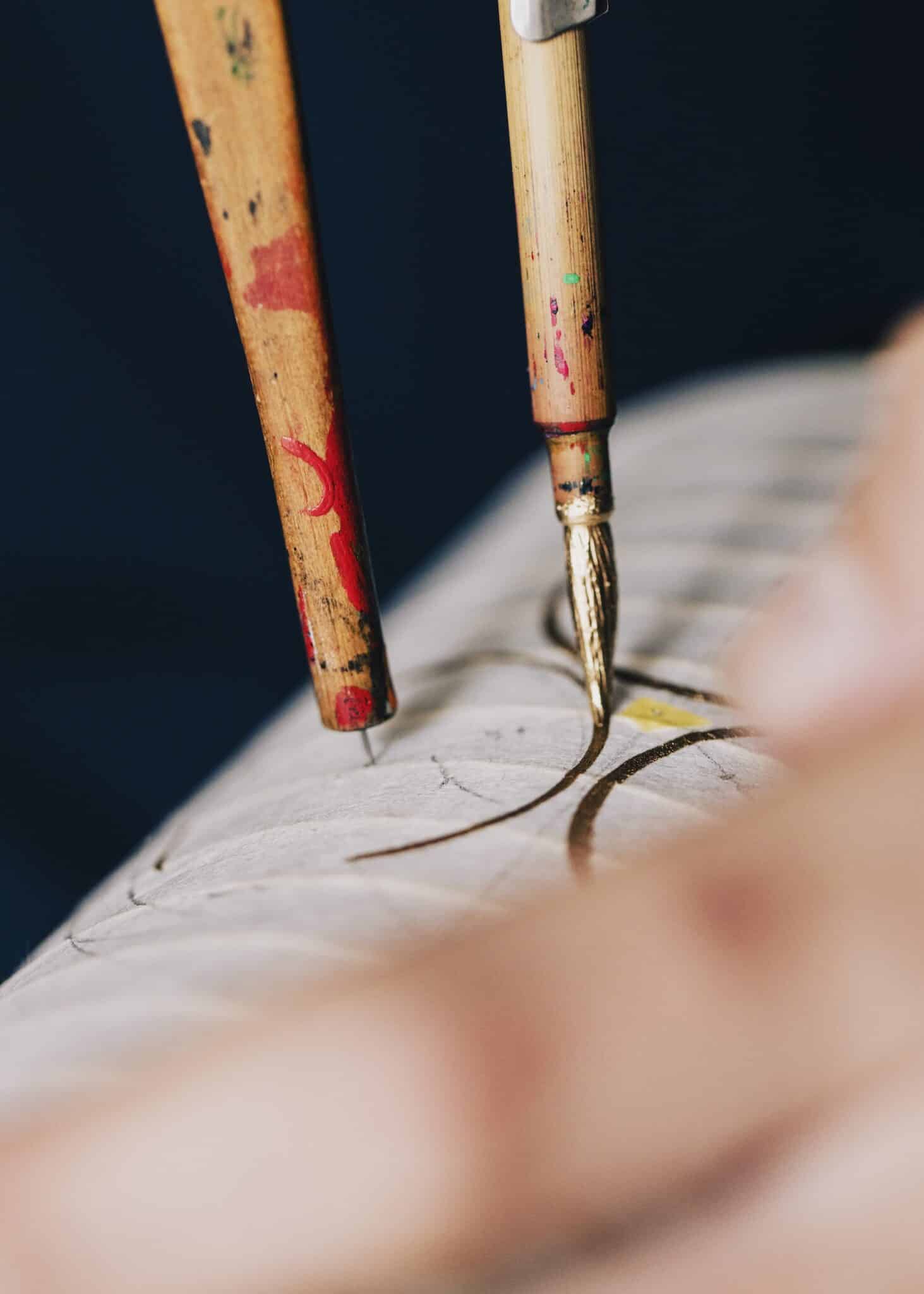
The tool known in Japanese as a bunmawashi, the traditional name for a compass, is essential to lantern making. It is used not only when drawing circular motifs such as family crests, but also when marking guides to evenly distribute the size of letters. Commercial compasses have thick needles that would leave large holes in the fire bag, so the shop makes all of its own using thin needles.
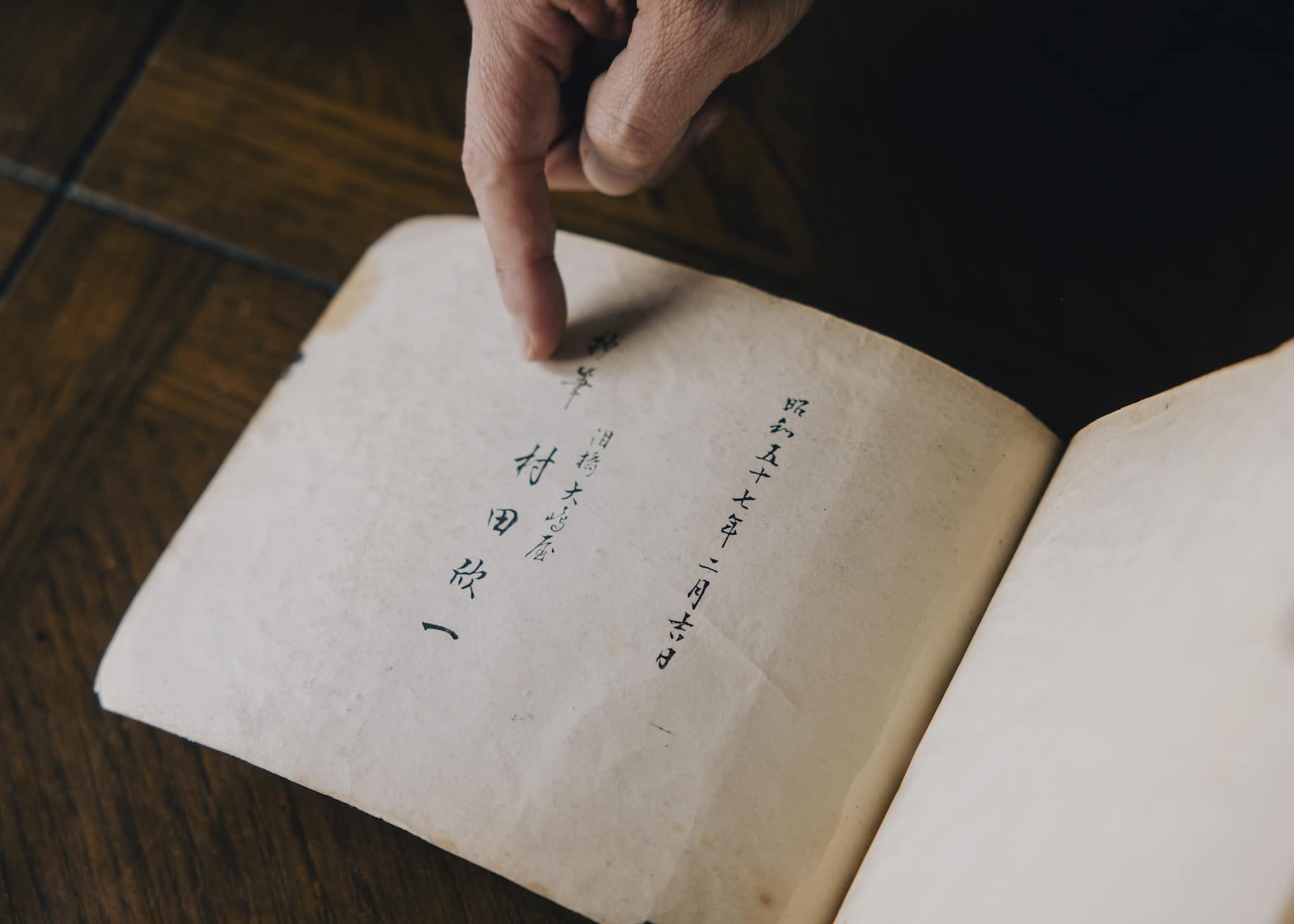
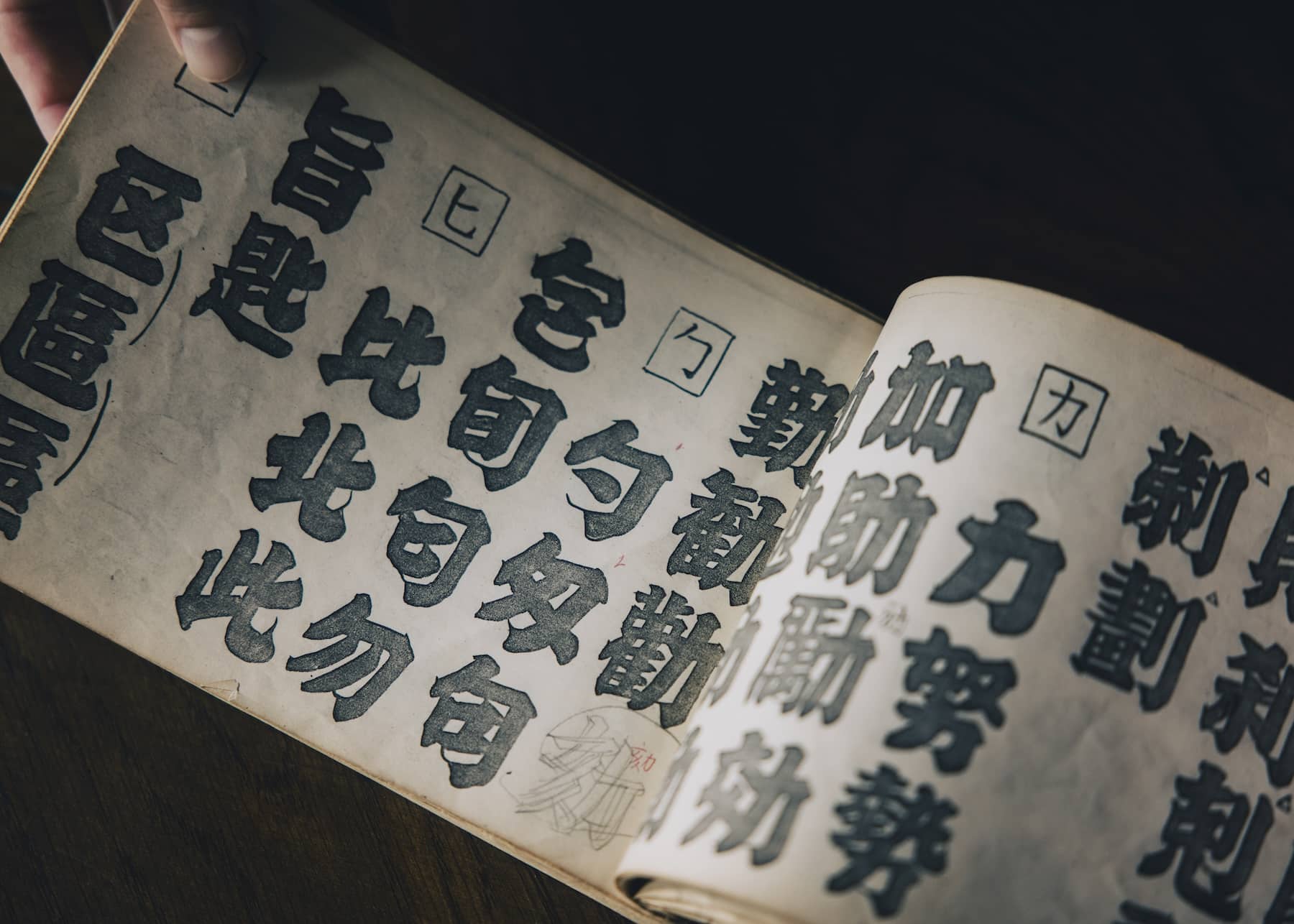
A sample book of Edo lettering created by the second-generation owner, Kenichiro’s grandfather. It was distributed among the artisan association of hand-painted lantern makers, and many artisans are said to have trained by studying it.
“My father must have learned from this sample book, but for some reason, his lettering is a little different,” Kenichiro says with a laugh. Even when a sample exists, it is not the only “correct” form. That is why the subtle individuality that emerges from each painter’s habits is part of what makes Edo lettering interesting.
Fourth-generation owner Kenichiro decided to take over the family business when he was in high school. He wanted to preserve the traditional craft of Edo lanterns for the next generation. With that in mind, after graduating, he used a ward-run artisan training program and studied under his father, Shuichi. Training to become a painter is demanding, and at first he repeatedly practiced drawing family crests on paper. It takes about three years before one can draw family crests on uneven lantern surfaces. Only after that does training in Edo lettering finally begin.
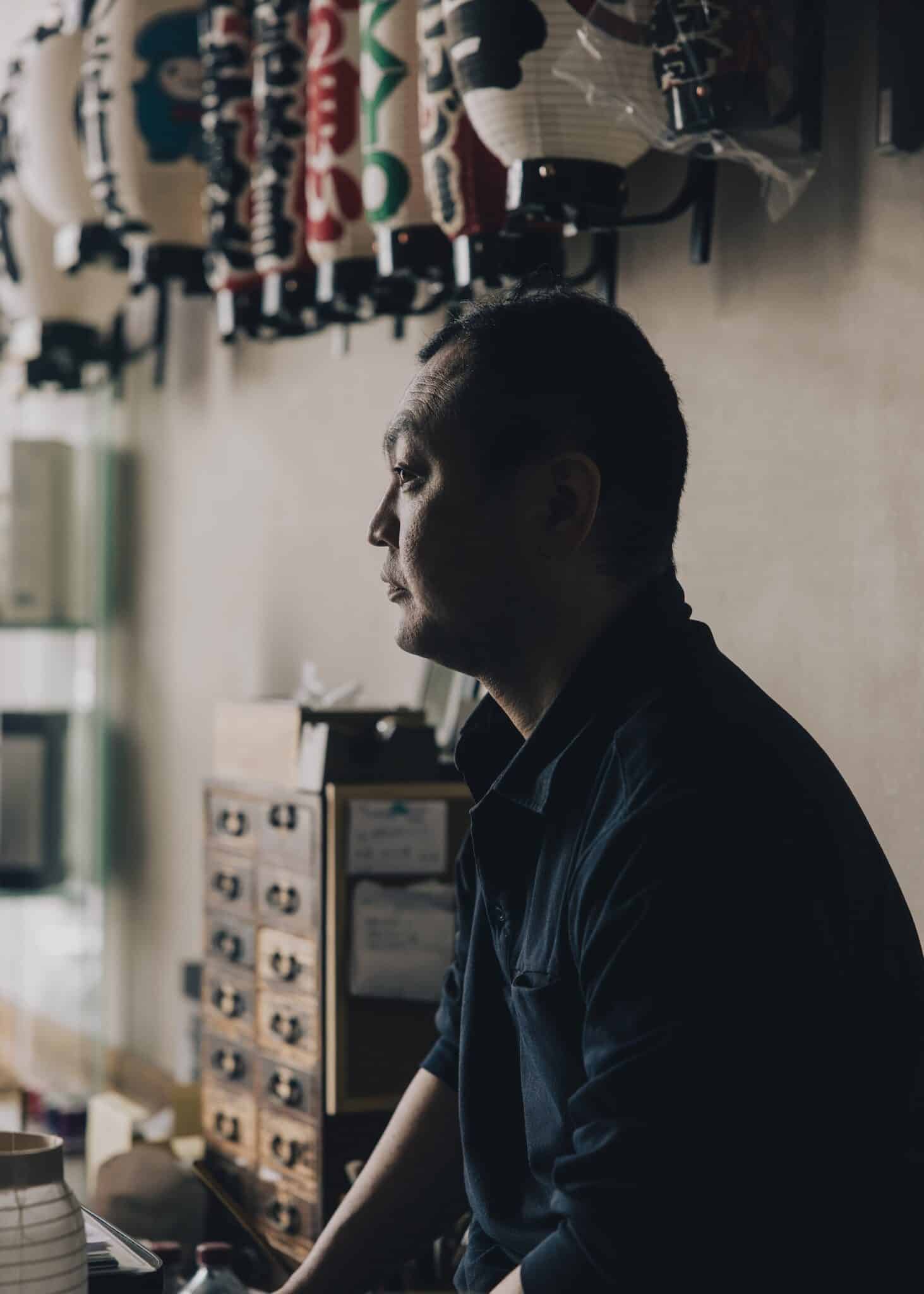
Fourth-generation owner Kenichiro Murata.
Third-generation owner Shuichi, who is both Kenichiro’s master and father.
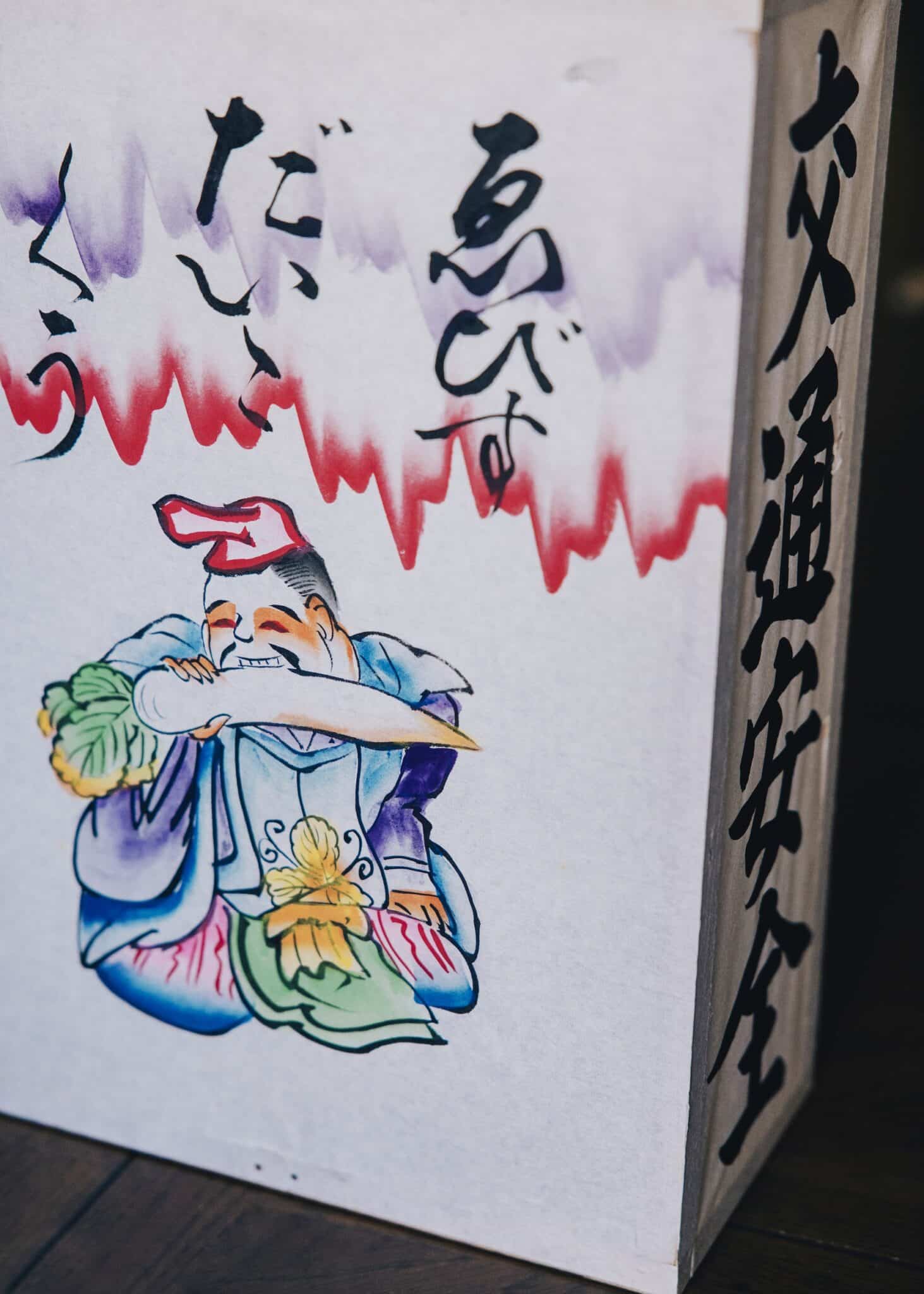
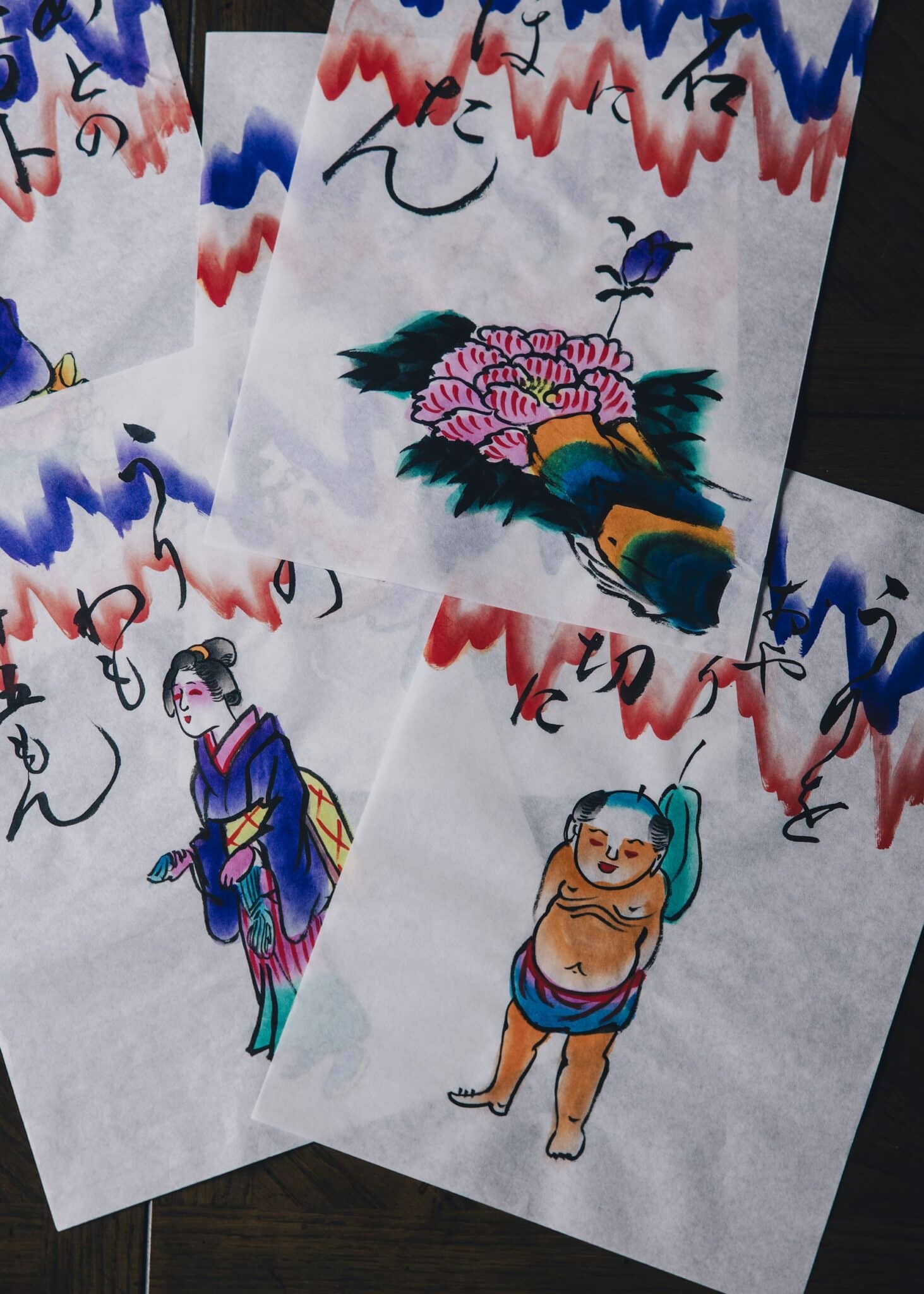
The Murata father and son are also among the few artisans who carry on jiguchi-e, a combination of pictures and wordplay based on puns of sayings and proverbs.
At the Hatsuuma Festival held at Inari shrines in February, the custom of displaying these jiguchi-e as andon lamps still remains. Because they use different dyes from those used for lanterns, special techniques are needed to create gradations of color.
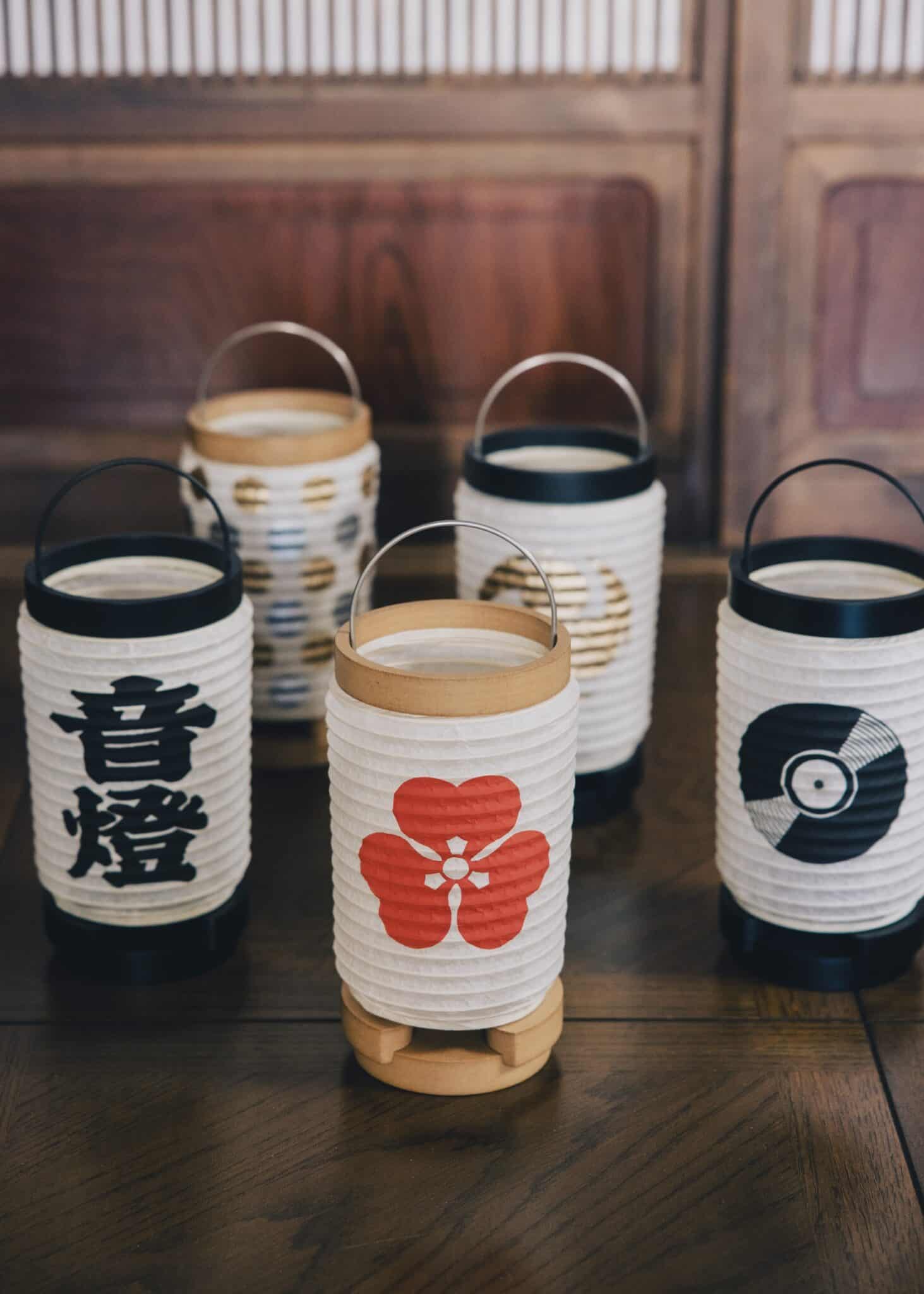
Fourth-generation owner Kenichiro launched a website and social media accounts to share the appeal of Edo lanterns, especially with younger generations. He also began offering workshops for tourists. Through these efforts, a new lantern design called OTO CHOCHIN was born. OTO CHOCHIN is a product that allows people to enjoy the light of a chochin lantern anywhere by placing a smartphone with a lighting app activated inside it. Another feature is that sound resonates through the wooden parts, allowing it to be used like a speaker. The designs based on gold and silver, as well as the logo resembling a music-related family crest, are also striking. It allows people to enjoy the beauty of traditional craft in a contemporary form.
OTO CHOCHIN was created after Kenichiro participated in the Tokyo Teshigoto Project. This project is an initiative in which Tokyo artisans and designers spend about one year developing products together. Kenichiro developed OTO CHOCHIN together with product designer Toshiyuki Kawada. They aimed to create a compact, modern lantern that would suit younger generations living in apartments and also blend naturally with Western interiors.
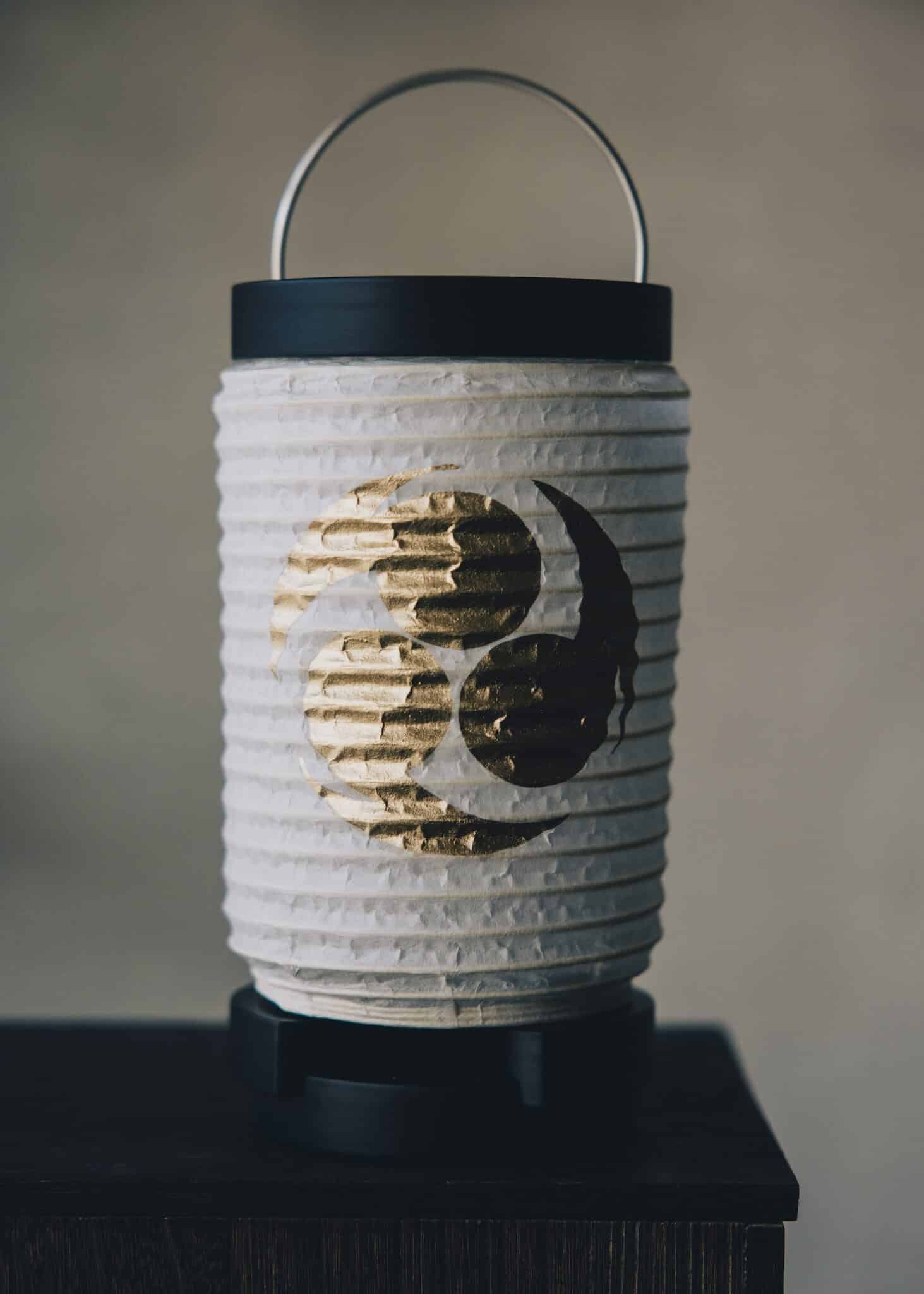
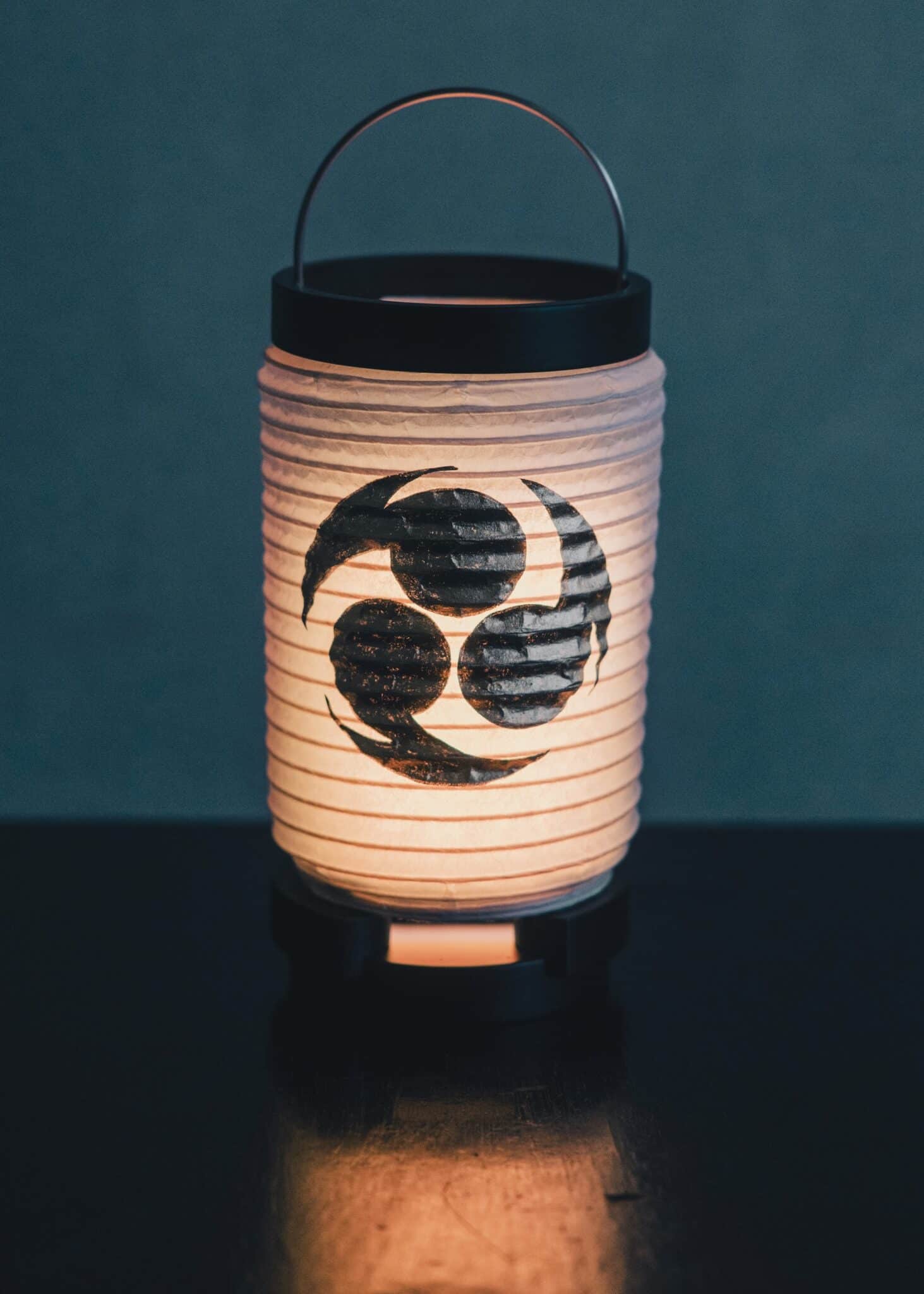
Once the parts are combined with the patterned fire bag, OTO CHOCHIN is complete. The design is attractive even when displayed as it is, without anything placed inside. ¥22,000.
To use it, activate a smartphone lighting app and set the phone into the recessed area inside the body.
By using a lighting app that recreates candlelight, you can also enjoy a flickering, atmospheric glow.
There are seven designs that can be painted on OTO CHOCHIN. The wooden frame can be chosen in either black or natural wood.
In addition, this OTO CHOCHIN can also be made through a hands-on experience by making an advance reservation on the shop’s website. The experience takes about two hours. While experiencing the difficulty and depth of hand painting, participants can take home traditional culture as a contemporary memory of their trip. Be sure to try this stylish experience.
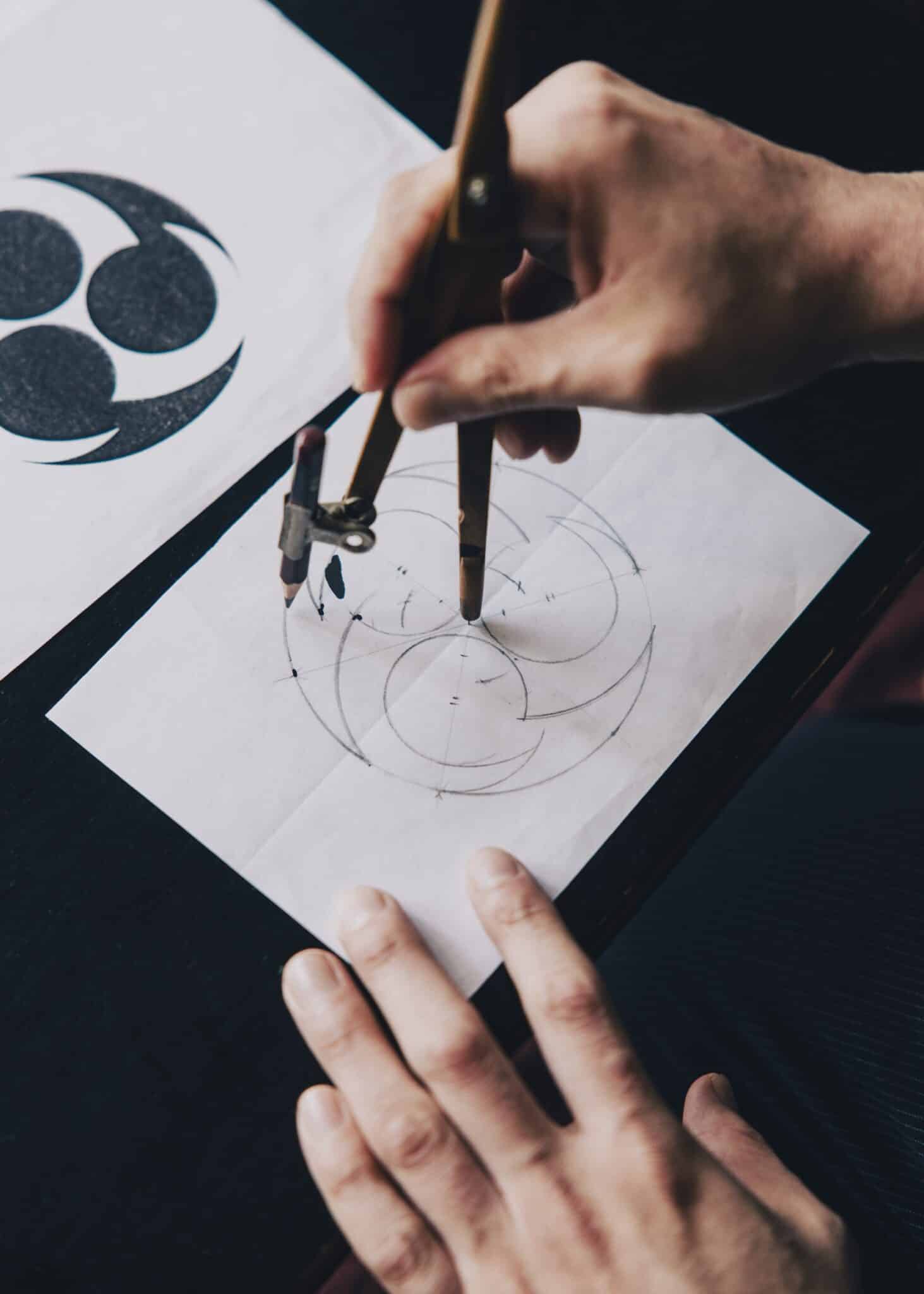
First, draw a sketch on paper. This time, an original logo is drawn using the bunmawashi, with a three-comma mitsudomoe mark inspired by magatama beads reimagined as musical notes.
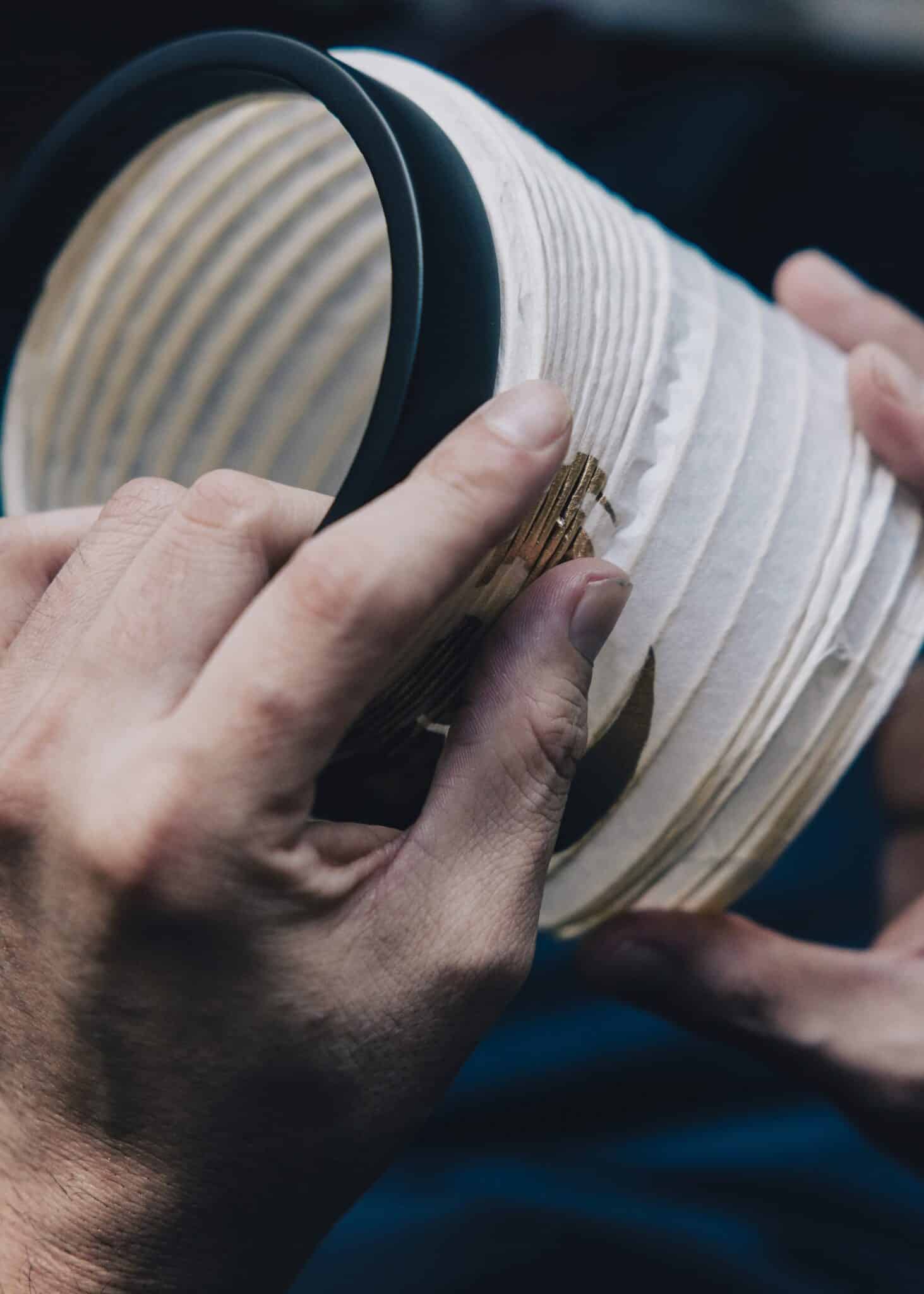
Marks are made with the bunmawashi along the design drawn on paper and transferred onto the lantern. Pressing the lantern against your stomach helps stabilize it and makes the lines less likely to wobble.
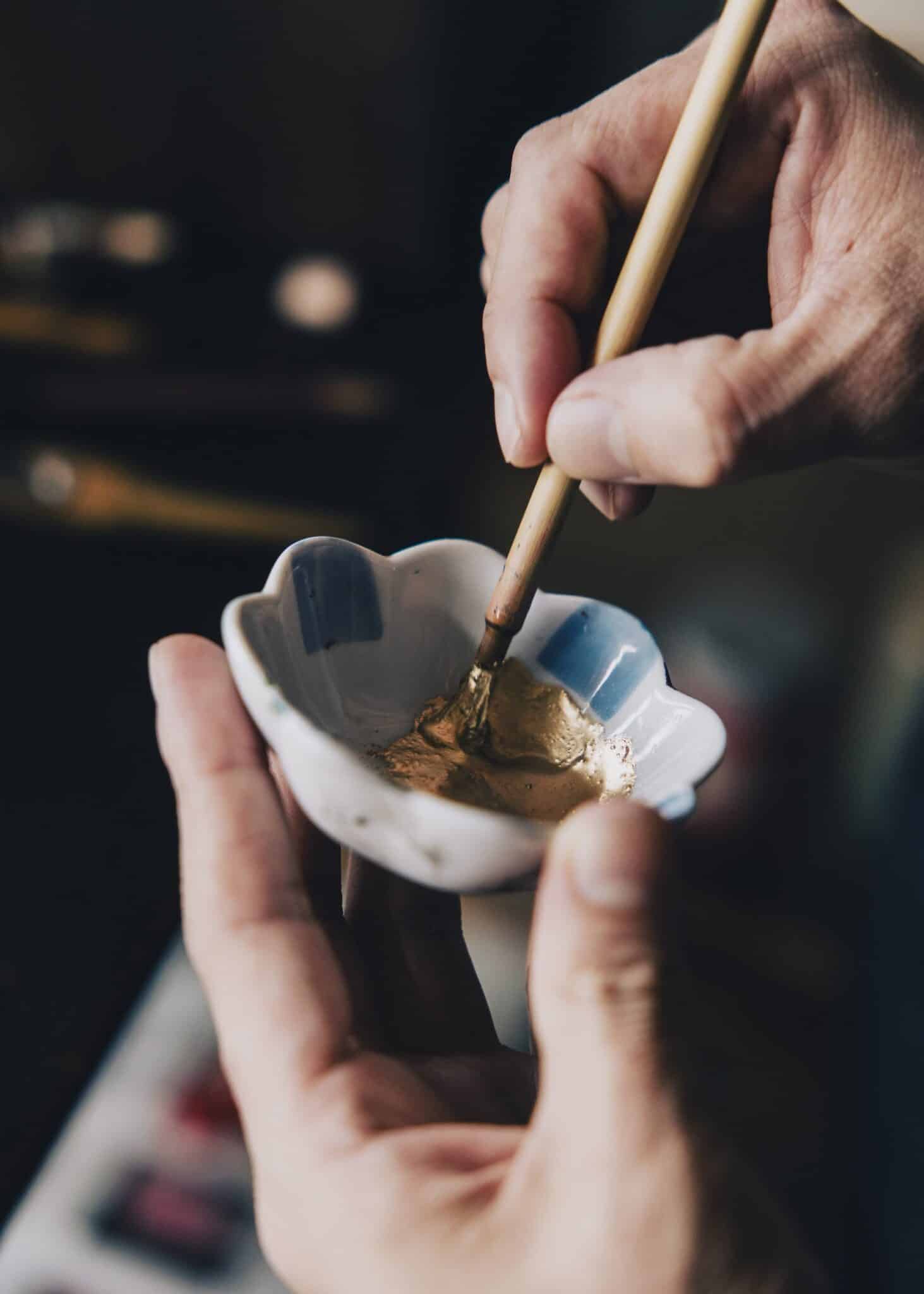
Because the gold paint comes in powder form, it is made by mixing the powder with water and a solvent.
A brush is attached to the bunmawashi, and the sketch lines are traced.
After the lines have been traced, the inside is carefully filled in. Unevenness becomes noticeable when light is placed inside, so painting evenly is the key to a beautiful finish.
Once the paint has dried, the lantern is folded along its ribs.
The information in this article is current as of 06/12/2026 (at the time of publication)