DEEPTOKYO
magazine

EN

DEEPTOKYO
magazine
EN
2026.01.30
PRA traditional folk craft that has long been passed down in Japan’s Tohoku region is now attracting attention from around the world. That craft is “Sashiko,” a form of hand stitching that originated as a practical method for warmth, reinforcement, and repair, and has been passed down to the present day. We visited Otsuchi Town in Iwate Prefecture, home to the artisan collective “Sashiko Gals,” and traced their journey, which began in the aftermath of the Great East Japan Earthquake.
SHARE


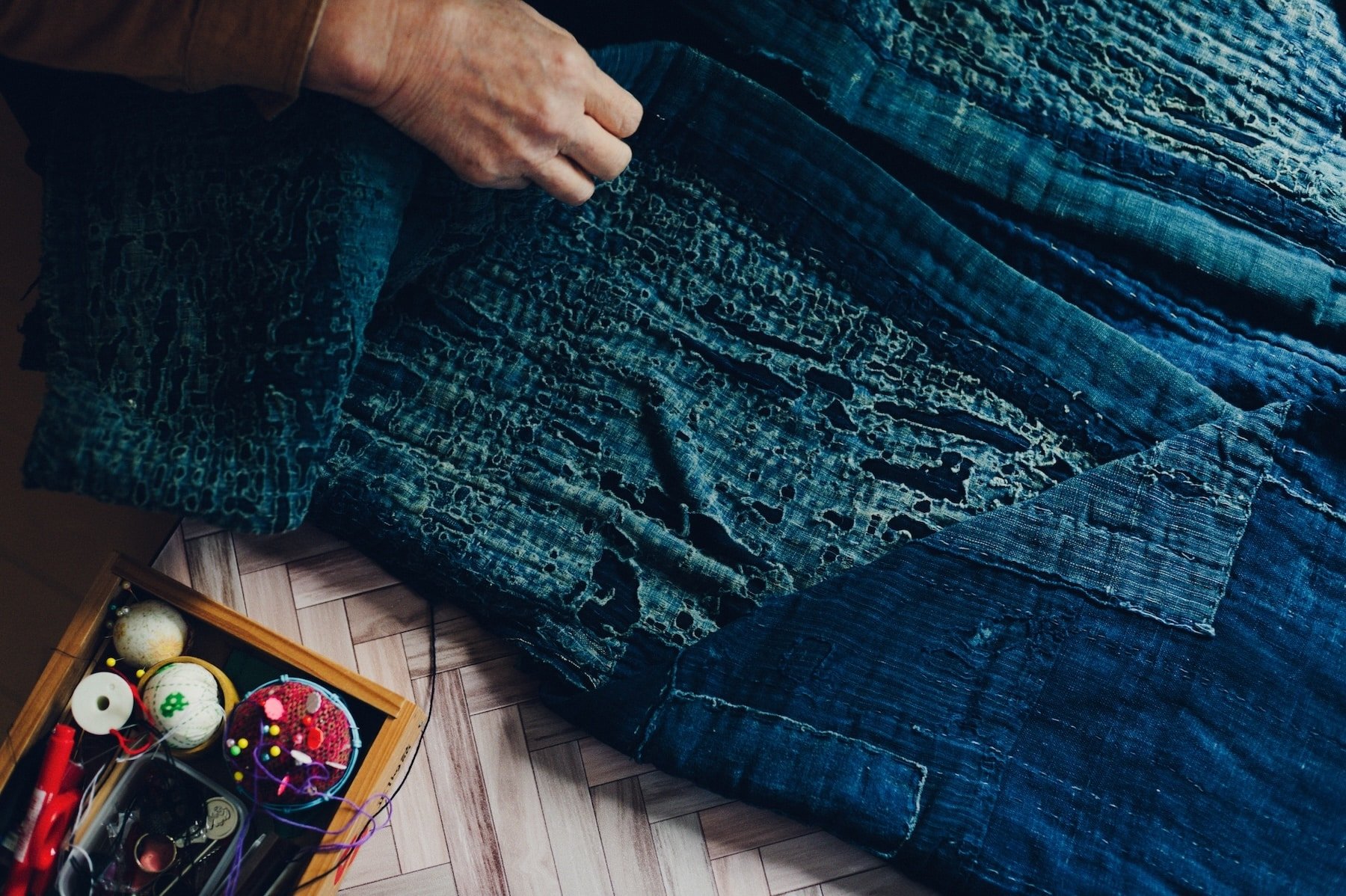
Sashiko originated during the Edo period in the Tohoku region, where winters are severe. This handcraft involves layering old pieces of fabric onto worn garments and reinforcing them with dense, fine stitches. In rural communities where cotton was a valuable resource, Sashiko developed as a way to keep clothing warm and usable for as long as possible.
The rhythm of the needle varies from one maker to another, creating subtle differences in the finished work. As the technique was passed down, visual beauty was also gradually refined. Through geometric patterns and auspicious motifs formed by the stitches, Sashiko acquired artistic and decorative qualities and came to be handed down as a cultural tradition rather than merely a means of repair. Styles such as Tsugaru Kogin-zashi and Nanbu Hishi-zashi from Aomori Prefecture, as well as Shonai Sashiko from Yamagata Prefecture, are all forms of Sashiko, each with distinct regional characteristics even within the same Tohoku area.
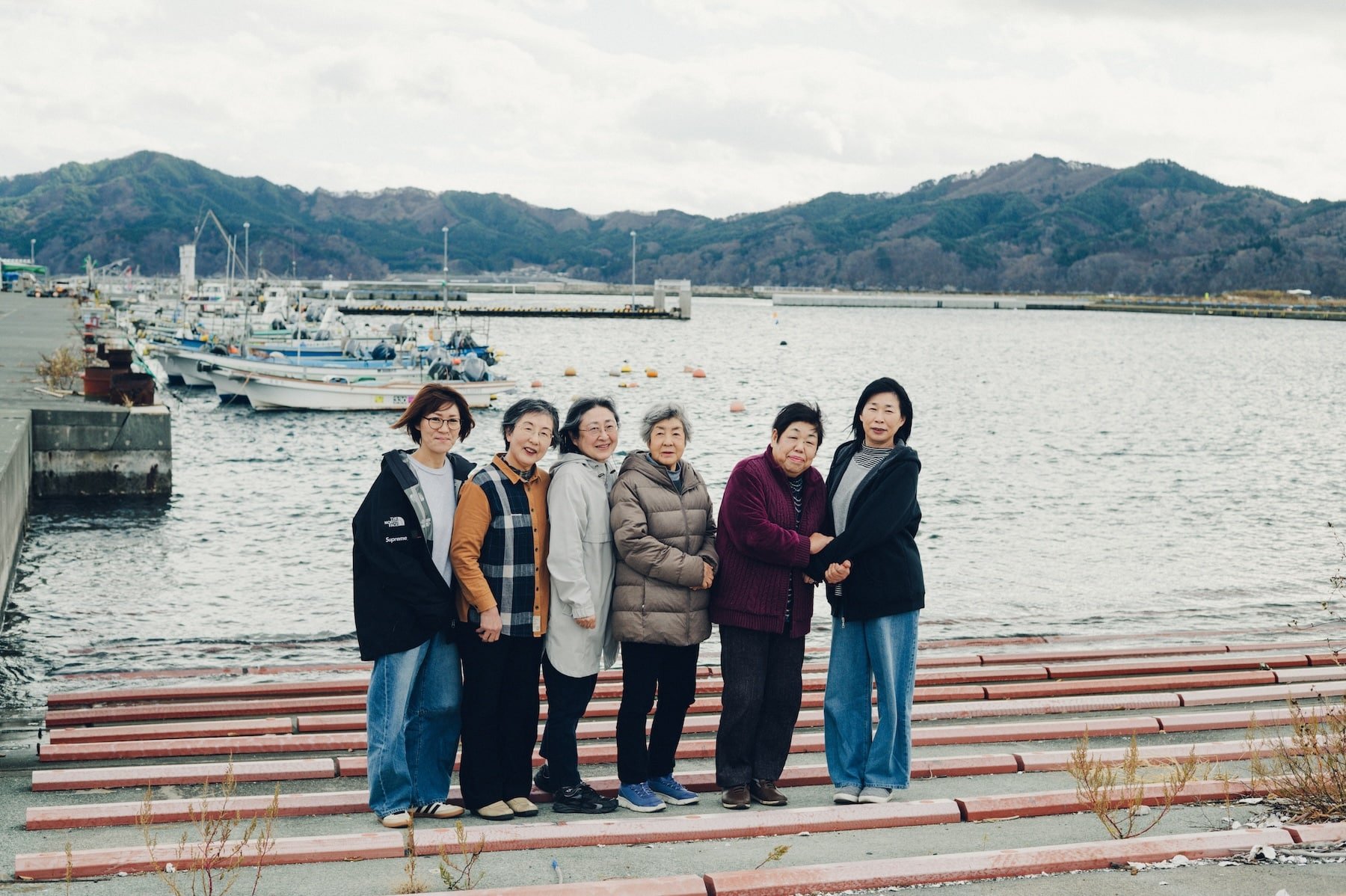
In the region where Sashiko originated, an artisan collective now drawing attention from around the world is “Sashiko Gals.” The group is made up of women in their forties to eighties who live in Otsuchi Town, Iwate Prefecture. By exploring expressions that go beyond the conventional framework of Sashiko, they are expanding the possibilities of this traditional handcraft.
By applying Sashiko stitching to existing products such as sneakers and stuffed toys, the members transform them into one-of-a-kind works. Their activities have spread not only throughout Japan but also overseas, leading to collaborations with well-known companies and brands, as well as support from celebrities in Japan and abroad.
Current members of Sashiko Gals. Kanako Sasaki, who participated in the interview, is on the far left.
The origins of Sashiko Gals date back to the Great East Japan Earthquake of 2011. In Otsuchi Town, which suffered extensive damage, volunteers launched the “Otsuchi Recovery Sashiko Project.” The project was created to support the emotional well-being of women, who often spent long hours in evacuation shelters, in contrast to men who were engaged in physically demanding work such as debris removal. Beginners practiced to acquire Sashiko skills, and as they improved, they were able to take on paid work. Their main activities included producing original items such as dishcloths and coasters decorated with Sashiko, while also undertaking OEM production for well-known brands including “MUJI,” “Nakagawa Masashichi Shoten,” and “Onward Kashiyama.”
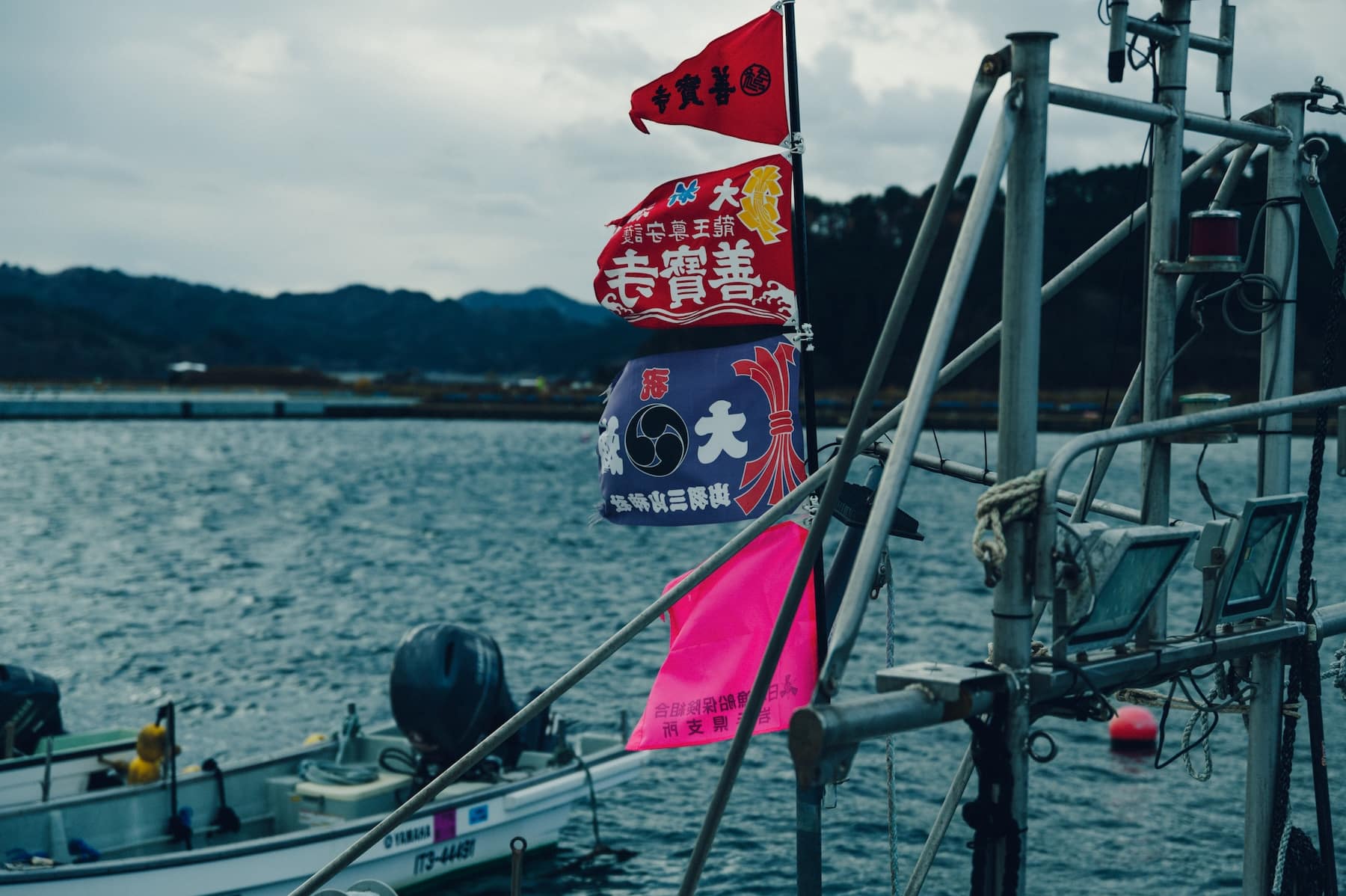
Brightly colored fishing flags raised on boats at Otsuchi Port. They signal a good catch to those waiting on shore and also carry wishes for a safe return.
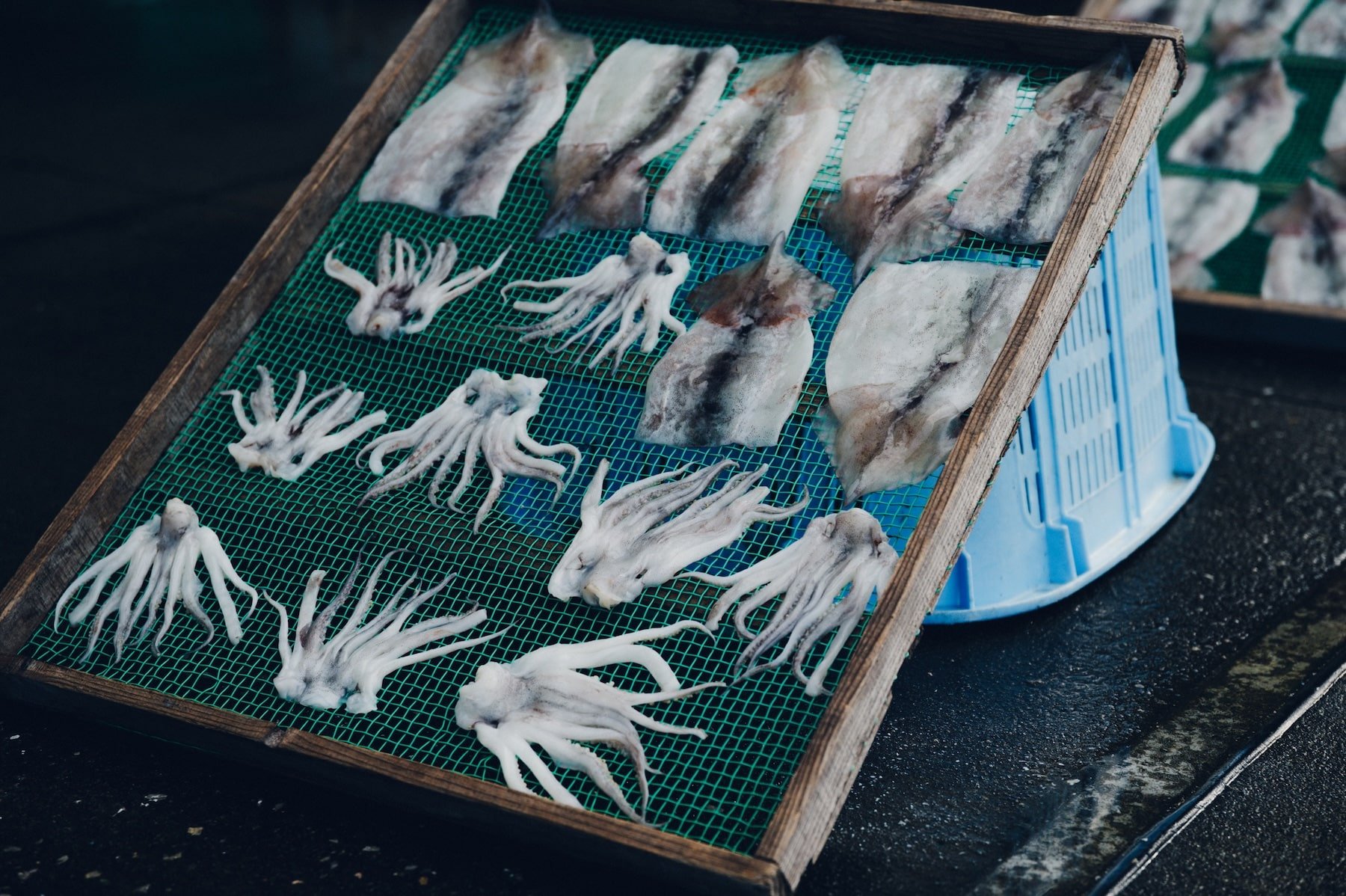
Prepared squid laid out to dry on nets stretched over wooden frames.
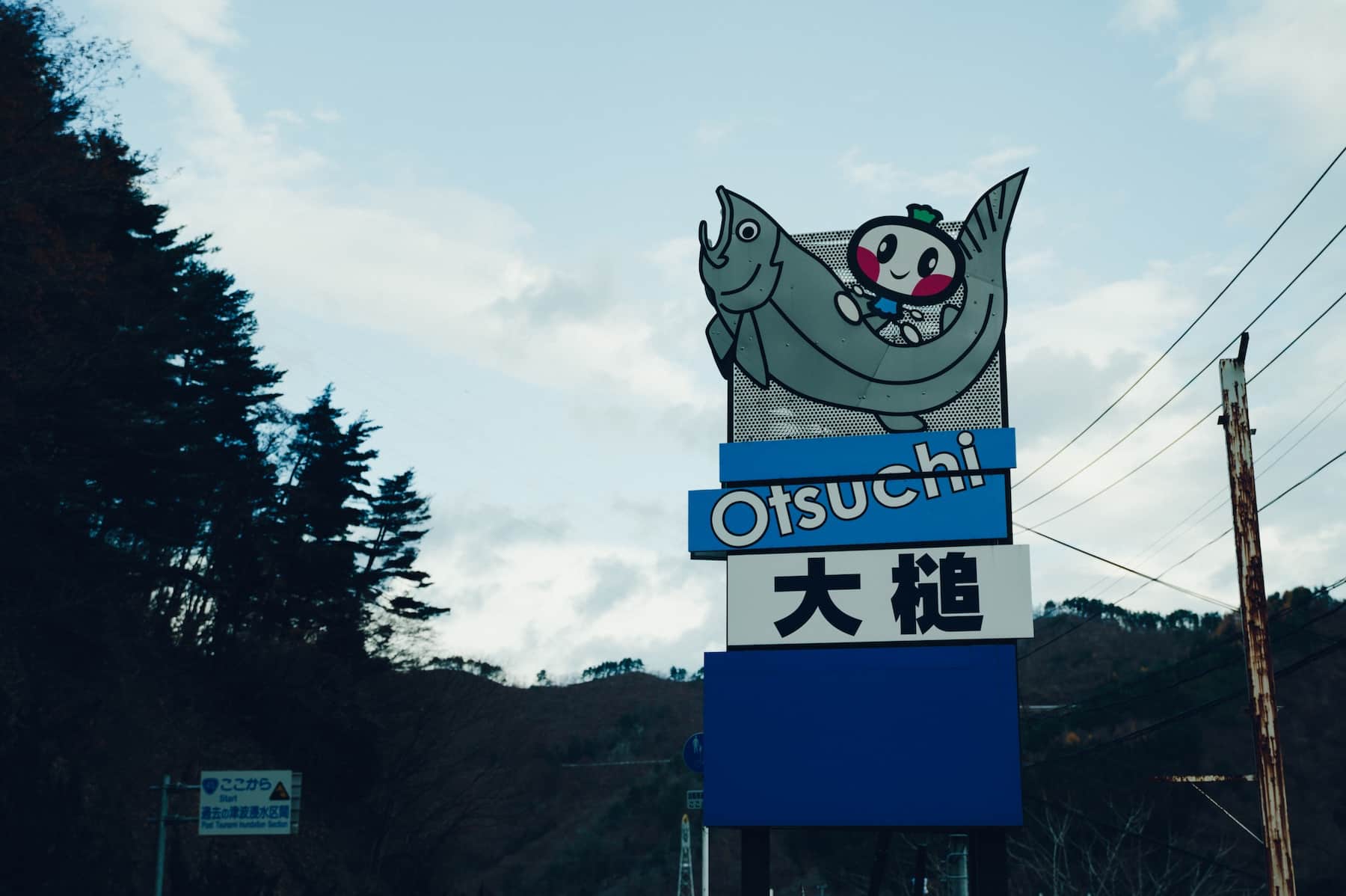
“O-chan,” the town’s mascot character, welcomes visitors at the entrance to Otsuchi Town.
A seawall built after the disaster, rising far above head level and blocking the surrounding view.
At its peak, the project involved around 200 participants. Over time, however, the number gradually declined, leaving a core group of just over a dozen members before its renewal. The spread of COVID-19 then put the continuation of the project at risk.In response, the group consulted Arata Fujiwara, representative of the apparel company “MOON SHOT,” which had long worked closely with the Otsuchi Sashiko Project. In 2024, Sashiko Gals was launched as a joint venture with MOON SHOT. While inheriting techniques from the original project, the new initiative aims to expand the potential of Otsuchi Sashiko, establish it as a brand, and share it with the world. Another goal is to show what lies beyond recovery for a craft that was born out of disaster.
Through their activities, Sashiko Gals have drawn on the skills they cultivated over many years while challenging themselves to create more contemporary works. According to Sasaki, these expressions were completely different from what they had produced during the Otsuchi Sashiko Project, making the experience feel fresh and stimulating.
“Until then, most of our work involved stitching precisely according to fixed patterns. Stitching freely onto existing products or three-dimensional objects like sneakers and stuffed toys was surprising, but also exciting. At first, I wondered whether it was really acceptable to call this Sashiko. Now, I feel that this free approach is what helps introduce Sashiko to the next generation and to people around the world.”
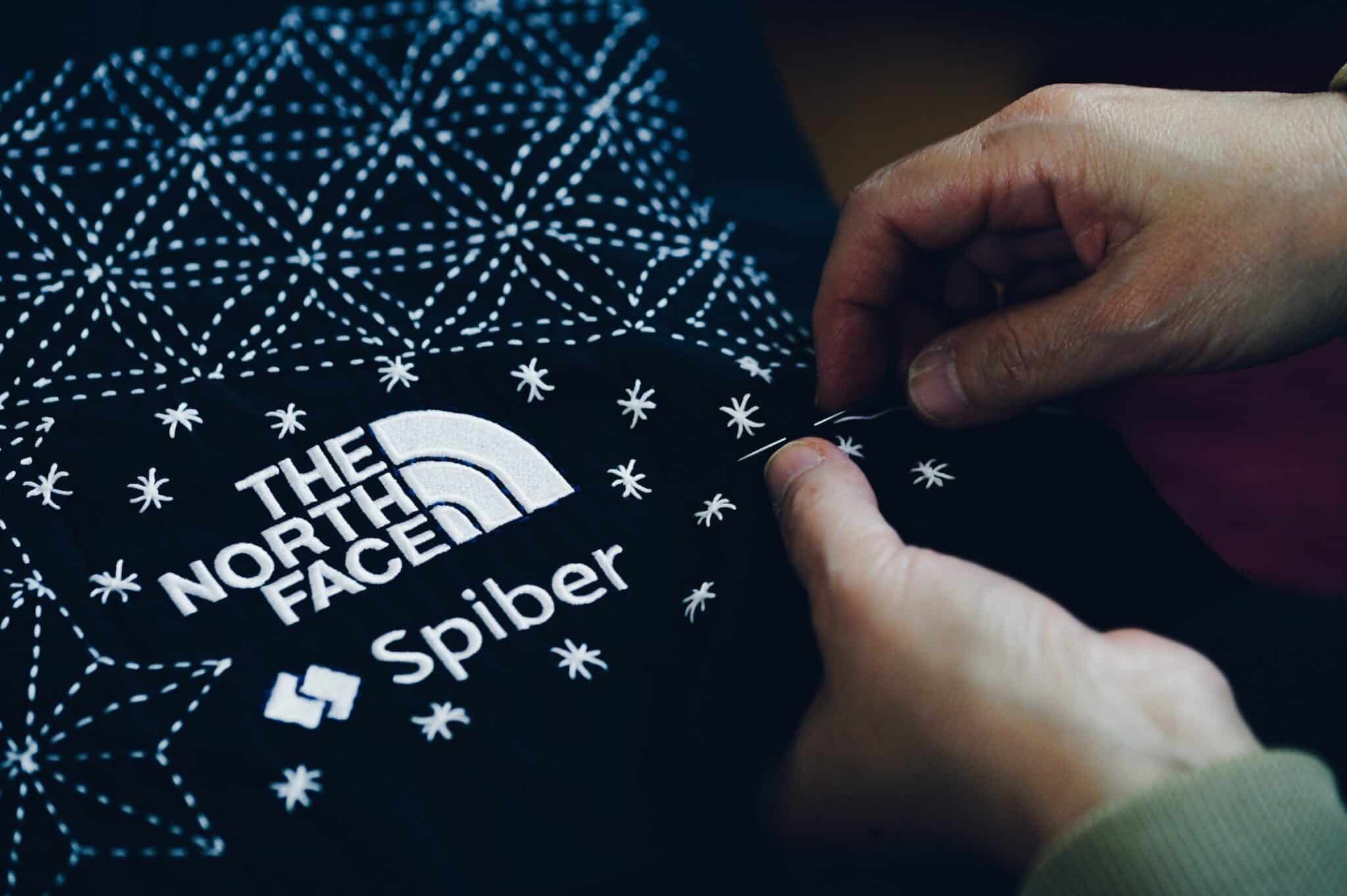
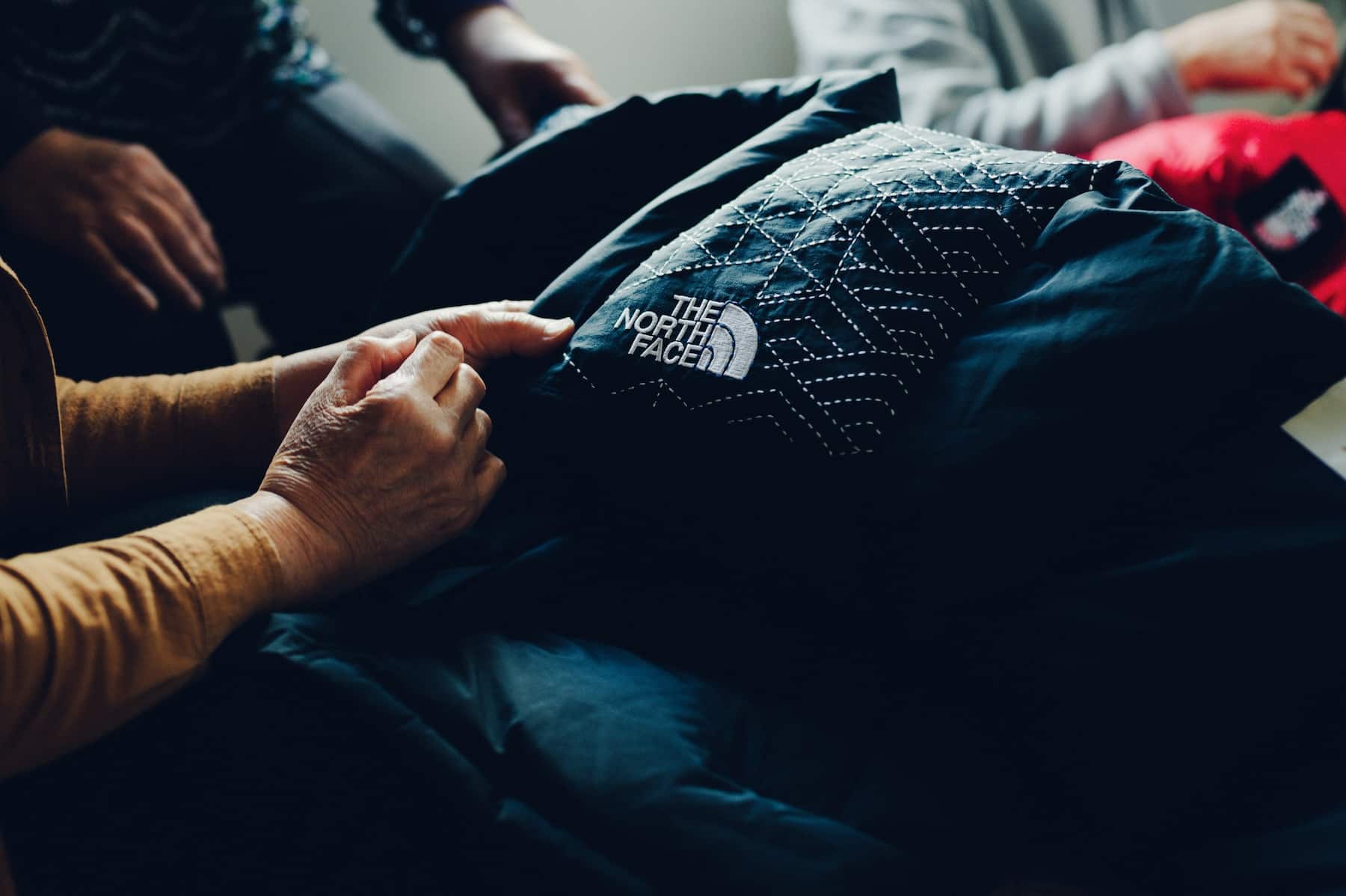
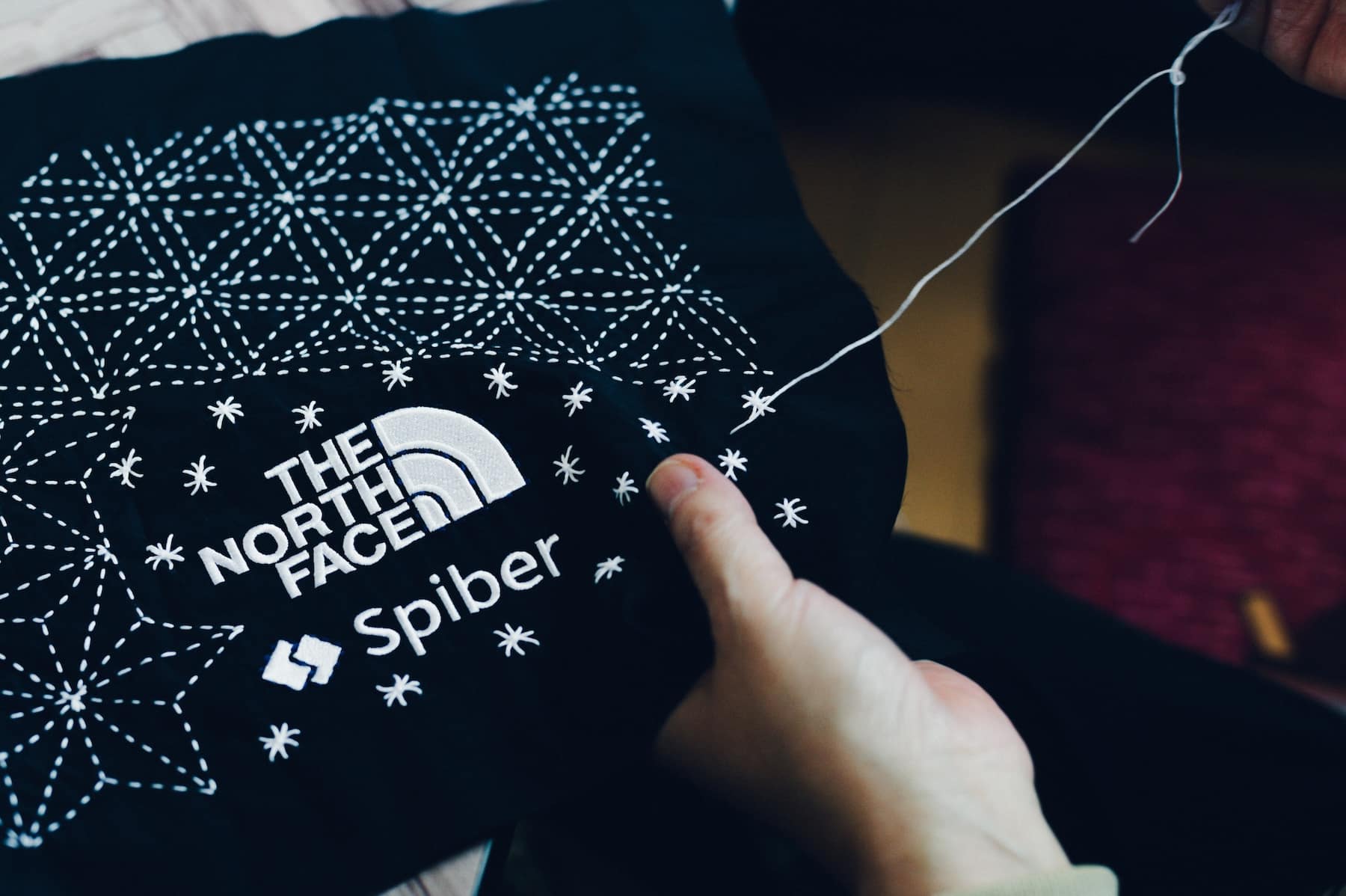
Works created with this mindset gradually attracted attention, leading to a growing number of collaboration requests from brands in Japan and overseas. In a collaboration with “THE NORTH FACE,” Sashiko was applied to full-scale down jackets and down boots.
Applying Sashiko stitching to the shoulder yoke fabric of a down jacket produced in collaboration with “THE NORTH FACE.” Traditional patterns requested by the brand are combined in the design.
Today, Sashiko Gals aim to connect Sashiko to the future of Otsuchi Town. As part of their goal to nurture Sashiko as an industry, they have also begun offering Sashiko classes for high school students.
“Our goal is to help Sashiko grow into one of the career options available to young people in Otsuchi. We hope to continue sharing its appeal in ways that inspire more young people to want to take up Sashiko.”
Sasaki also suggests trying a simple, one-point stitch on a favorite personal item. Even without advanced skills, adding a small handmade touch can deepen one’s attachment to an object.
“With just a needle and thread, anyone can get started, and basic stitching does not require special techniques. When you add something by hand yourself, you naturally grow more attached to it, which can lead to using your belongings for a longer time.”
Born from recovery and now spreading across the world, the activities of Sashiko Gals continue to illuminate the future of the local community.
Members see the finished jacket they worked on for the first time at their workshop.








.jpg)
スマホ.jpg)