DEEPTOKYO
magazine

EN


AREA
DEEPTOKYO
magazine
EN
AREA
A Museum Where You Can Discover the World of Katsushika Hokusai, the Ukiyo-e Artist Renowned around the World


 Nearest Station


Katsushika Hokusai is an ukiyo-e artist beloved not only in Japan, but also around the world. His bold compositions and powerful depictions had a profound impact on European painters such as Monet and Van Gogh, helping to spark the boom in Japonism and, ultimately, the birth of Impressionism. The Sumida Hokusai Museum is a museum where visitors can explore Hokusai’s life and artistic achievements through its exhibitions.
SHARE


Originally, ukiyo-e meant “pictures of the floating world,” in other words, images of contemporary life and culture. It refers to works depicting the culture and everyday life of a given era. In the early days, ukiyo-e consisted only of nikuhitsu—hand-painted works—but it later developed dramatically through a technique known as nishiki-e.
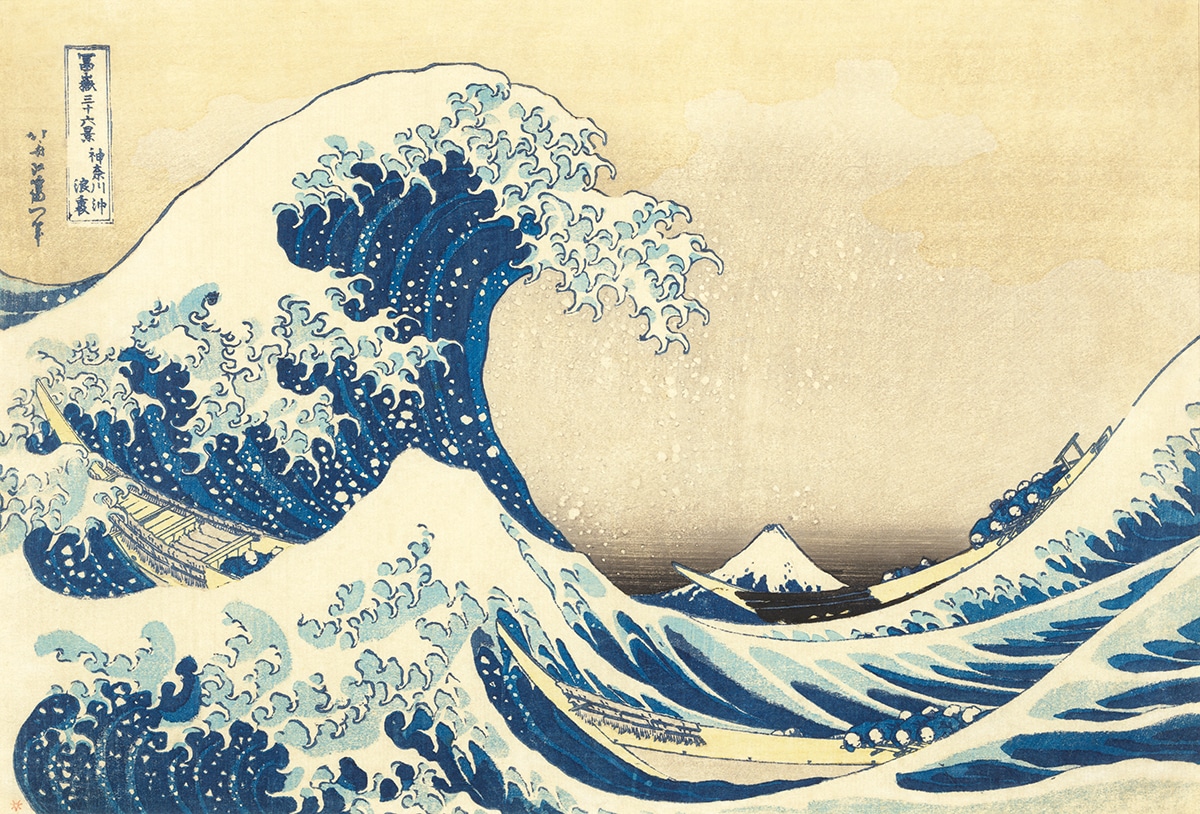
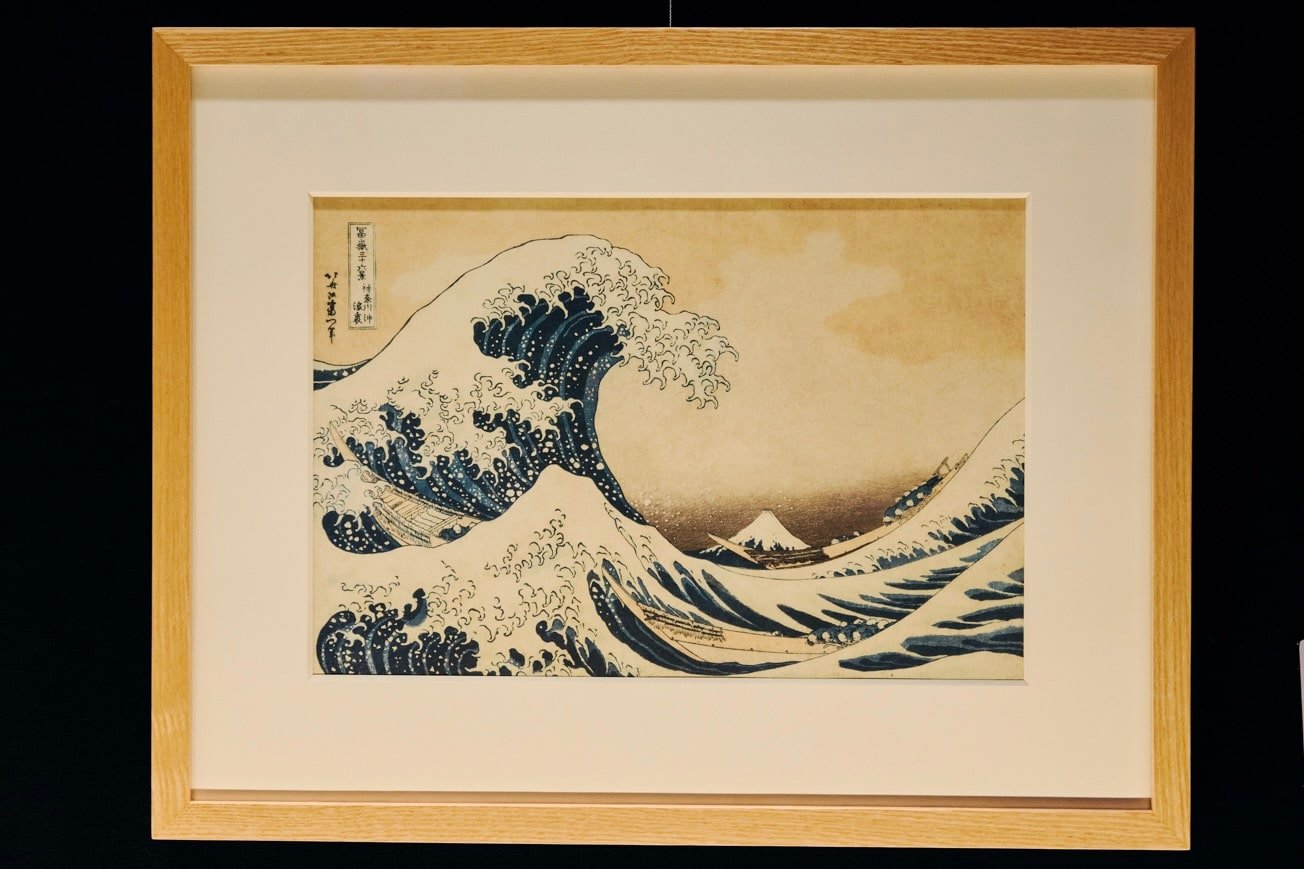
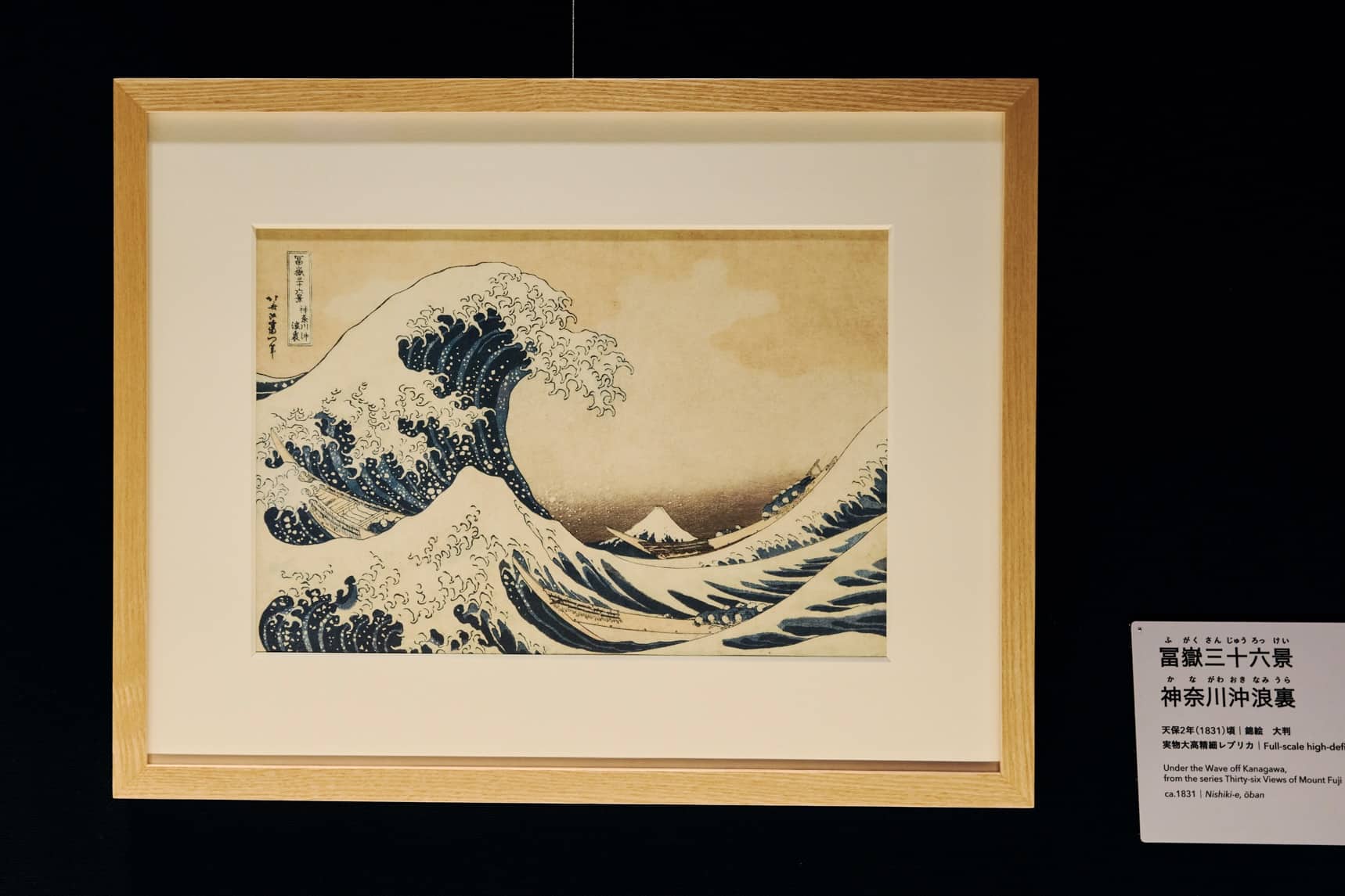
Nishiki-e refers to the vivid, multicolored woodblock prints that many people imagine when they hear the word ukiyo-e. Under the Wave off Kanagawa, from the series Thirty-six Views of Mount Fuji, which captures the violent motion of the waves, Mount Fuji standing calm in the distance, and boatmen rowing against the swell, is one of the iconic masterpieces of both ukiyo-e and nishiki-e.
The artist who created this print, Katsushika Hokusai, was selected in 1999 by the American magazine LIFE as the only Japanese person included in “The 100 Most Important People of the Millennium.”
One of the most famous works of Japanese art in the world, it is distinguished by the bold contrast between the rough, towering wave in the foreground and the small Mount Fuji in the distance. Katsushika Hokusai, “Under the Wave off Kanagawa or The Great Wave, from the series Thirty-six Views of Mount Fuji” (Fugaku sanjūrokkei, Kanagawa oki nami ura) c. 1831 (Tenpo 2) Full-size high-definition replica
Katsushika Hokusai was born in 1760(Horeki 10), during the late Edo period. Although the average life expectancy in the Edo period is said to have been between 32 and 44 years, Hokusai lived to the age of 90 (all ages below are counted according to the traditional Japanese system) and produced a great many works. It is said that he moved more than 90 times over the course of his life and changed his gago (art name) more than 30 times, making him something of an eccentric figure. In his later years, he called himself Gakyo Rojin Manji (“The Old Man Mad About Painting, Manji”), and even after turning 90, he is said to have lamented, “If only I had five more years, I could become a true painter.”
The Sumida Hokusai Museum is located in Sumida City, Tokyo, where Hokusai spent most of his life. In addition to exhibitions looking back on the artistic career and life of Hokusai, who lived to a great age, the museum also hosts special exhibitions featuring works by Hokusai and his disciples.
Katsushika Hokusai was born in 1760(Horeki 10), during the late Edo period. Although the average life expectancy in the Edo period is said to have been between 32 and 44 years, Hokusai lived to the age of 90 (all ages below are counted according to the traditional Japanese system) and produced a great many works. It is said that he moved more than 90 times over the course of his life and changed his gago (art name) more than 30 times, making him something of an eccentric figure. In his later years, he called himself Gakyo Rojin Manji (“The Old Man Mad About Painting, Manji”), and even after turning 90, he is said to have lamented, “If only I had five more years, I could become a true painter.”
The Sumida Hokusai Museum is located in Sumida City, Tokyo, where Hokusai spent most of his life. In addition to exhibitions looking back on the artistic career and life of Hokusai, who lived to a great age, the museum also hosts special exhibitions featuring works by Hokusai and his disciples.
The "Sumida Hokusai Museum" has three exhibition spaces: the "Special Exhibition Room" where various special exhibitions are held, the "Room for Learning about Hokusai," and the "Permanent Exhibition Plus" (during special exhibitions, the Permanent Exhibition Plus room is also the Special Exhibition Room). The Special Exhibition Room, where the works on display change each time, is a space where visitors can view the works of Hokusai and his students.
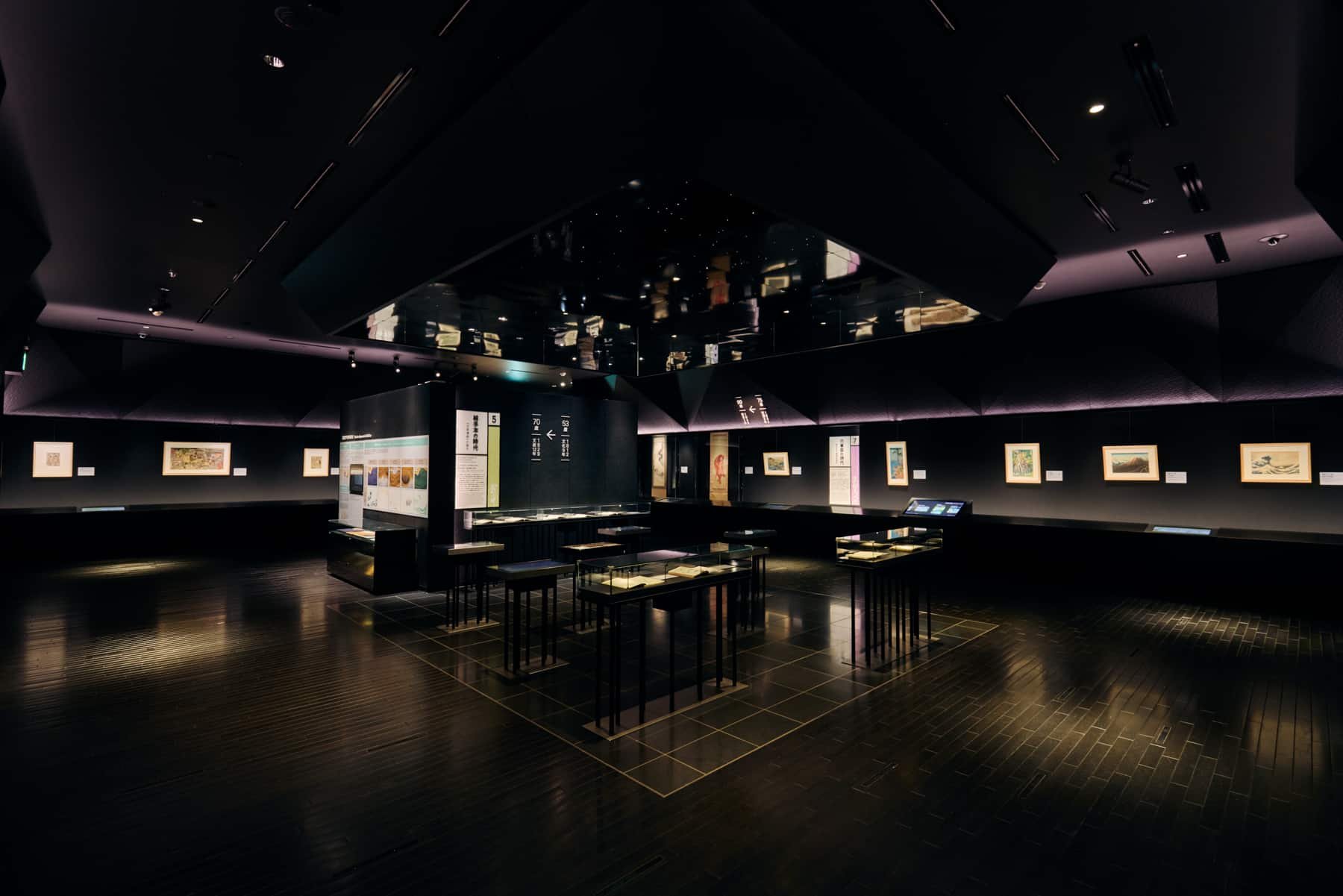
“Education Room—Discover Hokusai—,” featuring full-size high-definition replicas on the walls and touch-panel displays in the center.
“Education Room—Discover Hokusai—” consists of seven areas that clearly introduce Hokusai’s artistic career and life. Following the route through the gallery, visitors can encounter not only Hokusai’s life story, but also changes in his style, his spirit of inquiry, and his overflowing ideas. Because Hokusai’s original works are highly sensitive to light, they can only be exhibited for limited periods. For this reason, the works on display in “Education Room—Discover Hokusai—” are full-size, high-definition replicas.
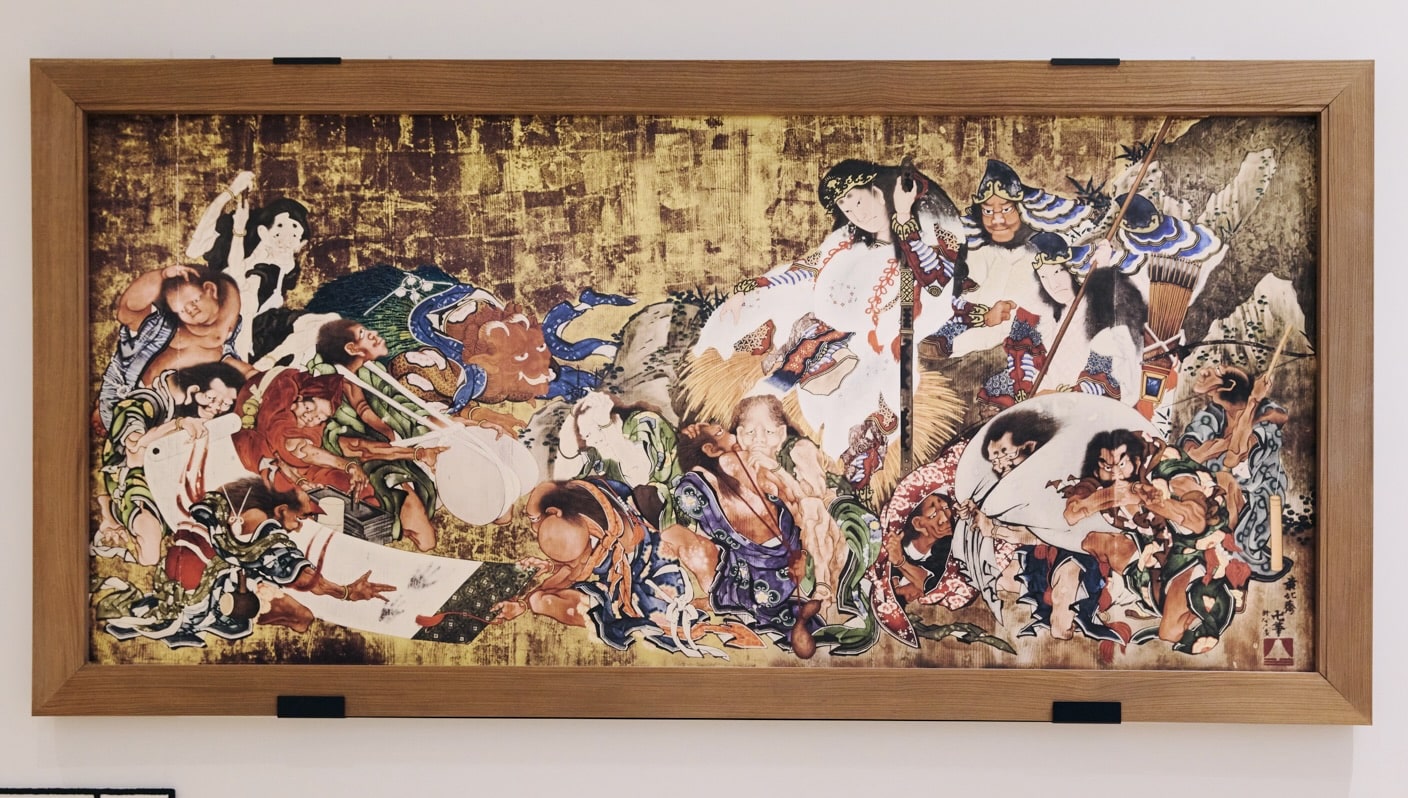
The first work visitors encounter is “Susano-o no Mikoto Making a Pact with the Spirits of Disease”(Susano-o no Mikoto Yakujin Taiji no Zu), a piece that symbolizes the connection between Sumida and Hokusai.
Katsushika Hokusai, “Susano-o no Mikoto Making a Pact with the Sprits of Disease” (estimated reconstruction) Produced by TOPPAN Inc.
This was a hengaku—a framed plaque or sign displayed in a high place, such as above a shrine gate—which Hokusai painted at the age of 86 and dedicated to Ushijima Shrine in 1845(Koka 2). Unfortunately, the original was destroyed in the Great Kanto Earthquake of 1923(Taisho 12), but it has been restored in color using the latest technology based on a monochrome photograph from the Meiji period.
“The period of practice” is an area introducing Hokusai’s path from around the age of 19 to 35 (1778–1794).
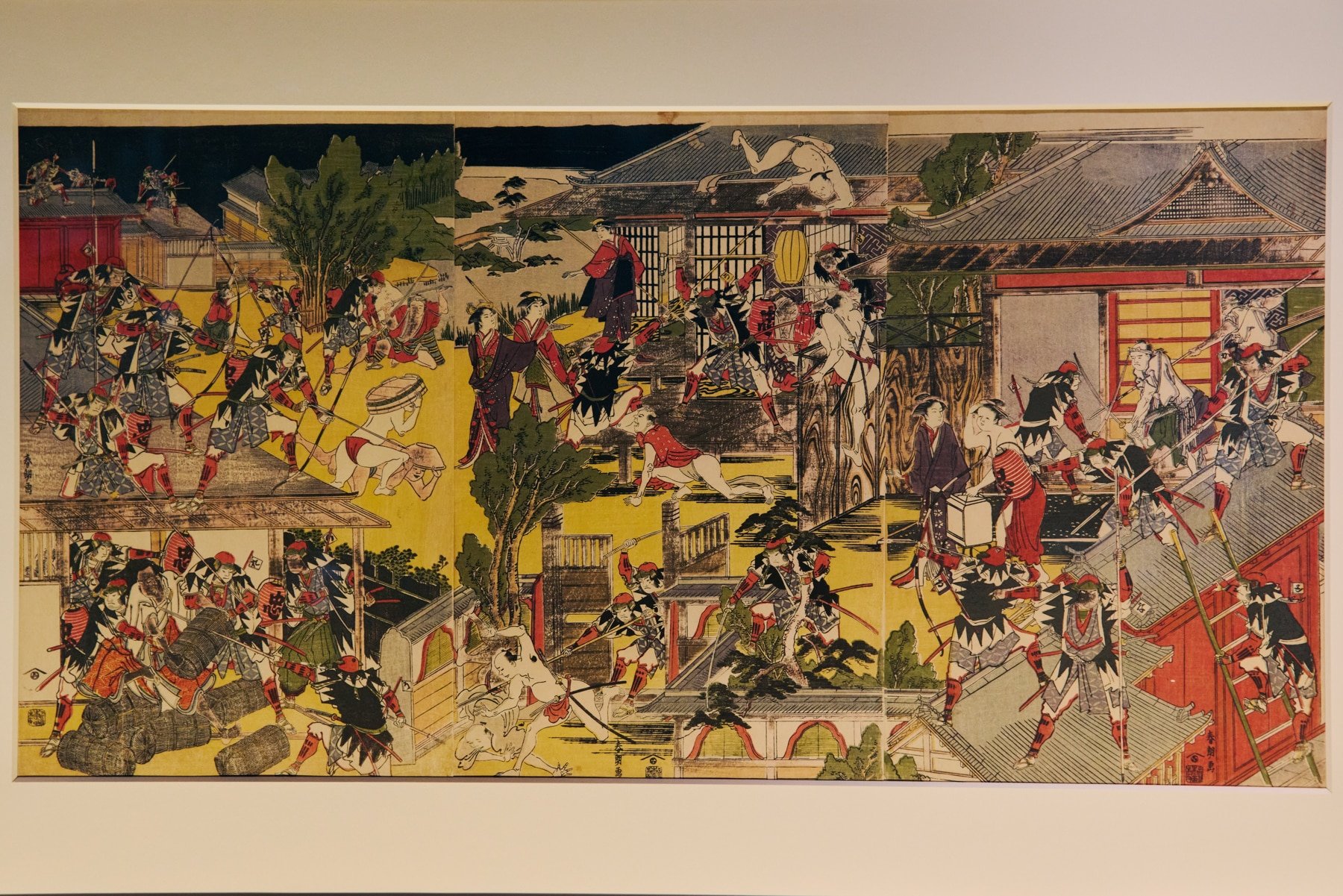
According to tradition, Hokusai was a child who drew pictures whenever he had free time from about the age of six. Around the age of 14 or 15, he entered a woodcarver’s workshop and seems to have been regarded as a promising talent. However, at 19 he left woodcarving and became a pupil of the popular ukiyo-e artist Katsukawa Shunsho. The following year, he made his debut under the name Katsukawa Shunro, producing mainly bijin-ga, actor prints, and illustrations for kibyoshi, illustrated booklets for adults. In this area, the nishiki-e work “Night Raid in Treasury of Loyal Retainers”(Chushingura Uchiiri)from his Shunro period is on display. This work depicts the night attack scene from Chushingura.
It even includes figures fleeing onto rooftops and a man escaping with a washbasin on his head. Within its powerful composition, there is also a humorous touch. Katsushika Hokusai, “Night Raid in Treasury of Loyal Retainers” 1781–1789 (Tenmei era) Full-size high-definition replica
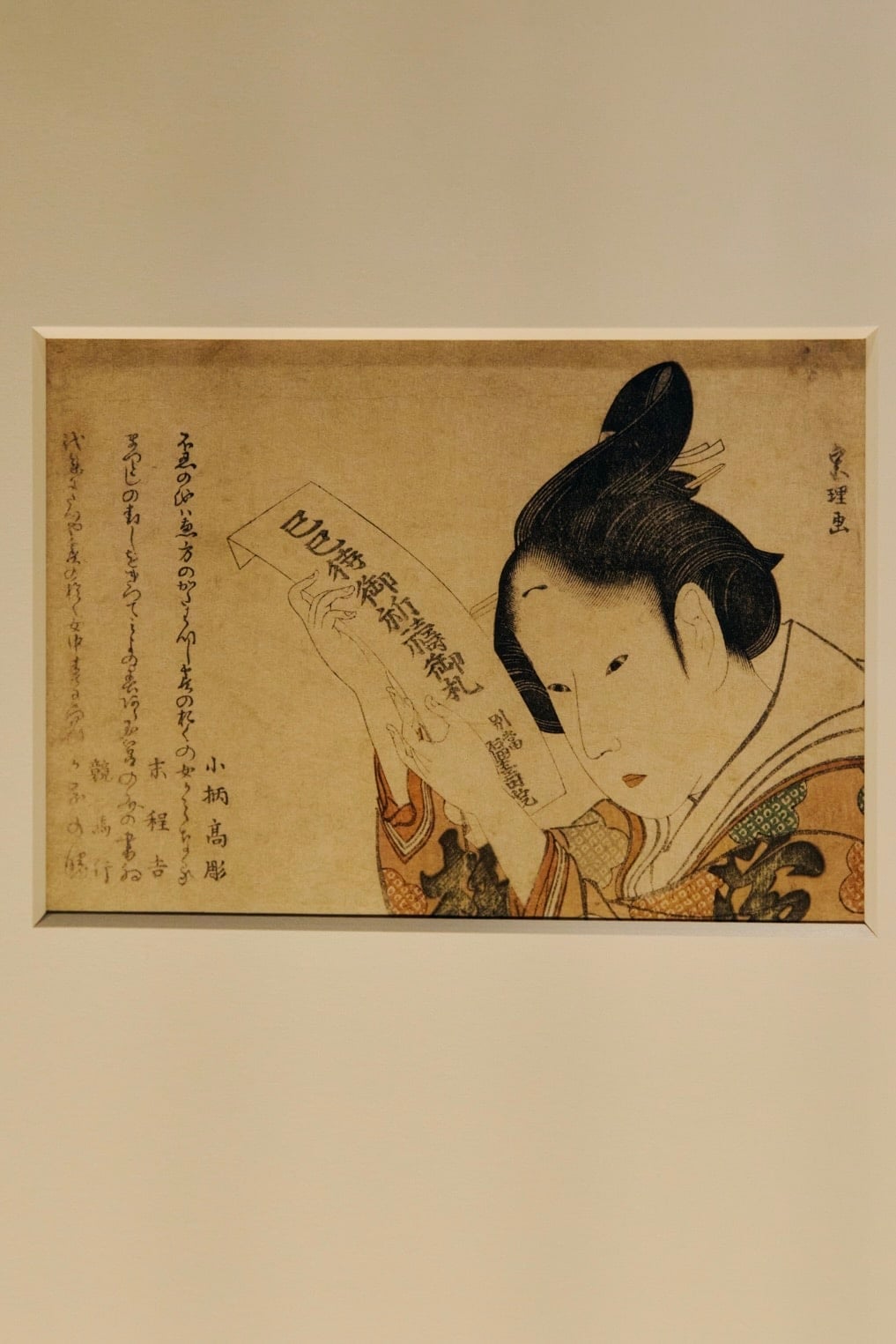
After leaving the Katsukawa school, Hokusai changed his name to Tawaraya Sori and shifted the focus of his work to kyoka picture books and surimono prints. During this period, he created bijin-ga featuring women with oval faces and Fuji-shaped hairlines, and these works became highly popular. In the “Sori Style Period” area, visitors can see the bijin-ga for which Hokusai became known. However, after only three years, he passed the name Sori on to a disciple and began calling himself Hokusai Tatsumasa. The name Hokusai was derived from Hokushin Myoken Bosatsu, a Buddhist deity associated with the North Star and the Big Dipper, in whom he had deep faith.
A work from the period when he used the name Sori. His bijin-ga with oval faces were extremely popular. Katsushika Hokusai, “Woman Holding a Charm from Benten Shrine”(Mimachi) 1797(Kansei 9)Peter Morse Collection Full-size high-definition replica
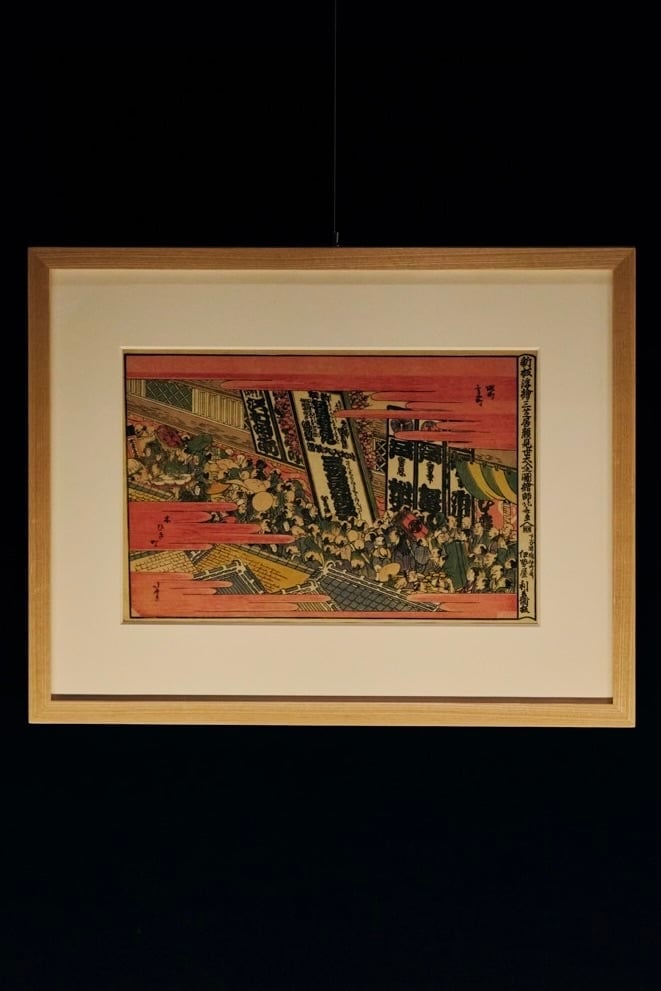
In the following sections, “The Period of Illustrated Yomihon Fiction” and “The Period of Drawing Manuals,” the scope of Hokusai’s activities expanded even further. Hokusai shifted the focus of his production to yomihon, a genre of illustrated fiction that emerged under the influence of the Kansei Reforms. His illustrations, with their strong compositions and descriptive power, won the support of readers. As a result, large numbers of aspiring students gathered around him.
This work depicts people gathering for a kaomise performance at Nakamura-za, a kabuki theater in Edo. The cheerful expressions on their faces are especially charming. Katsushika Hokusai, “Three Kabuki Theaters Thronged for the Eleventh Month Kaomise Performances, from the series Newly Published Perspective Pictures”(Shinpan Uki-e San Shibai Kaomise O-e no Zu)Mid-Bunka period(1804-1818) Peter Morse Collection Designated Tangible Cultural Property of Sumida City (Painting) Full-size high-definition replica
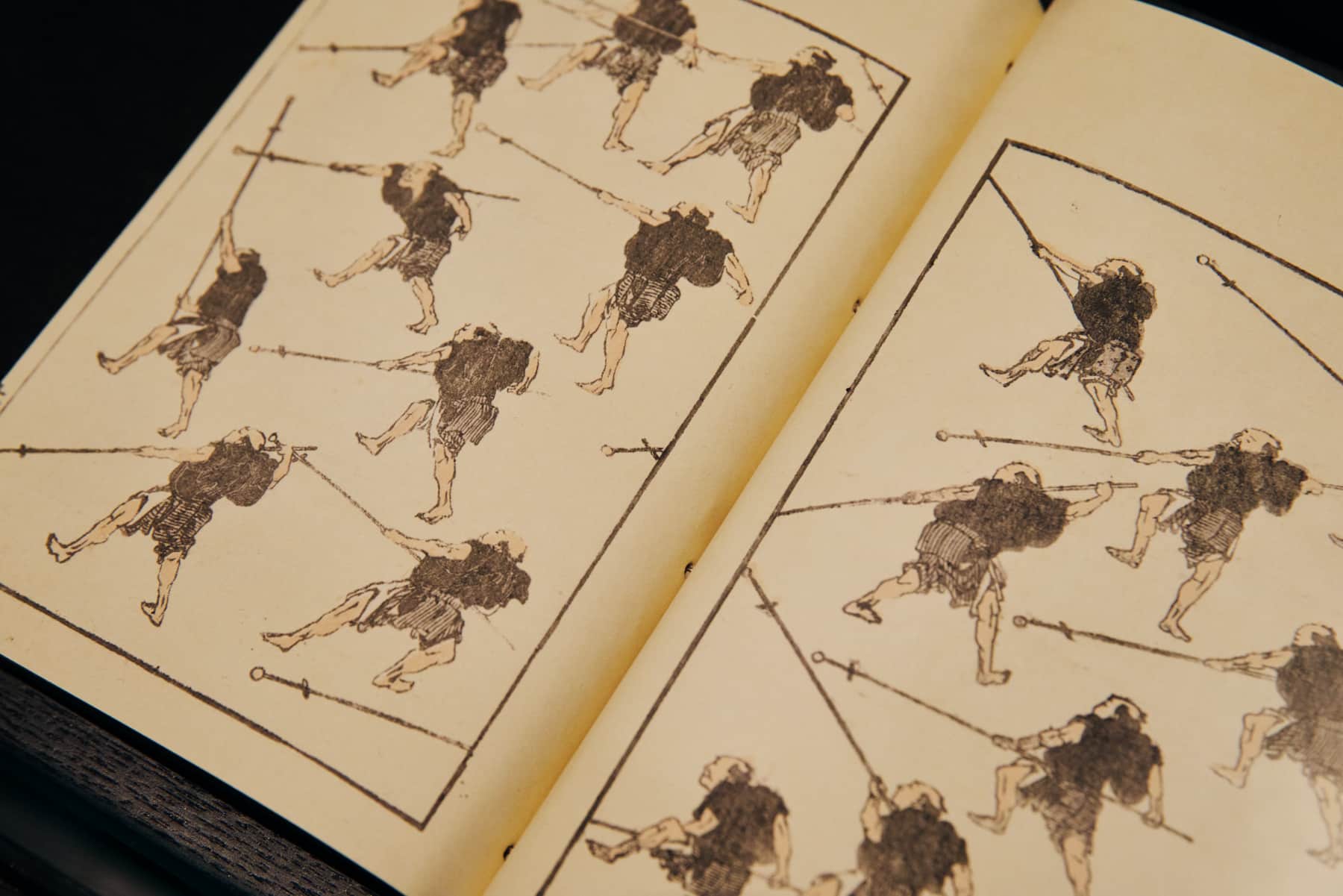
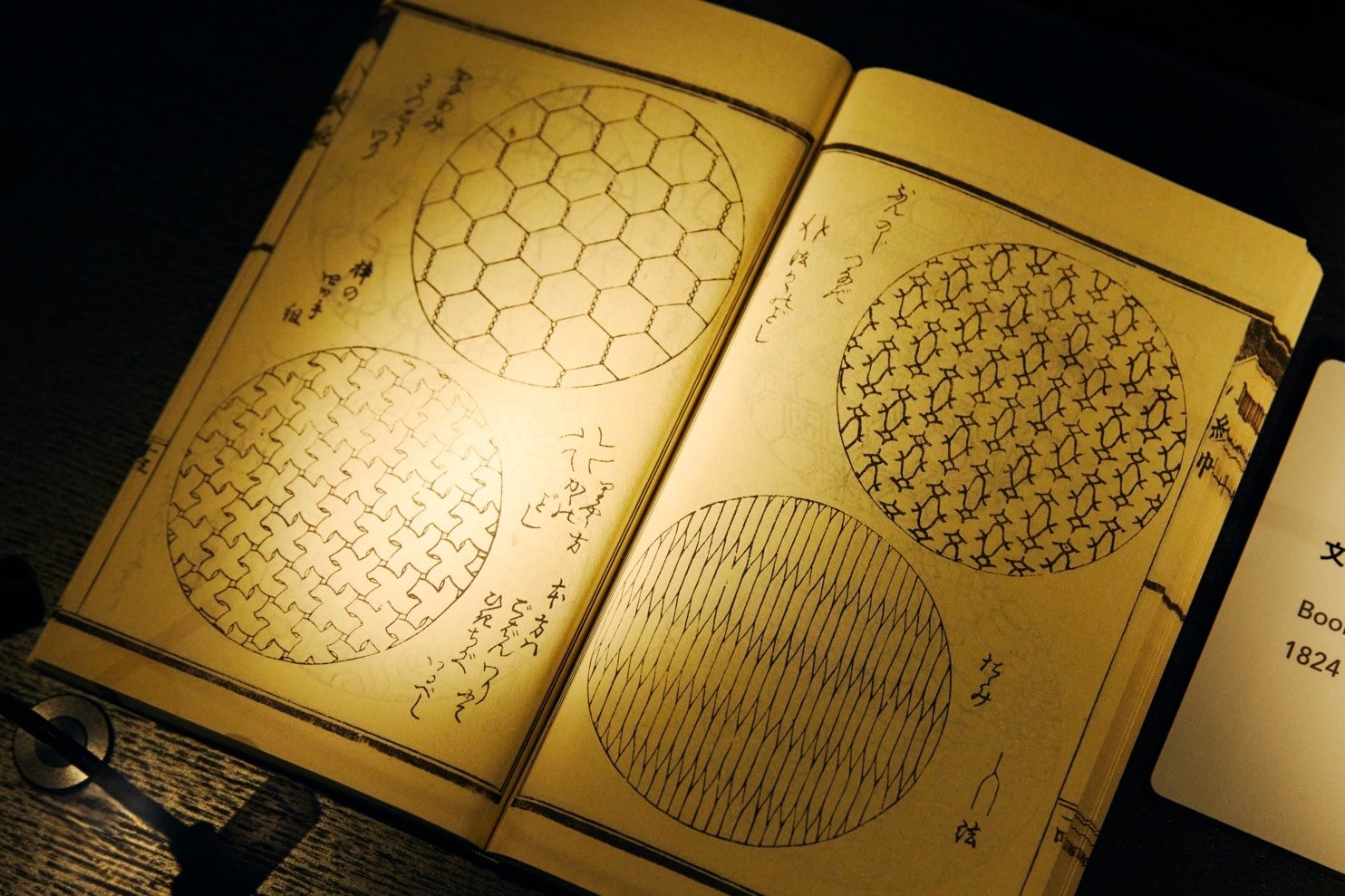
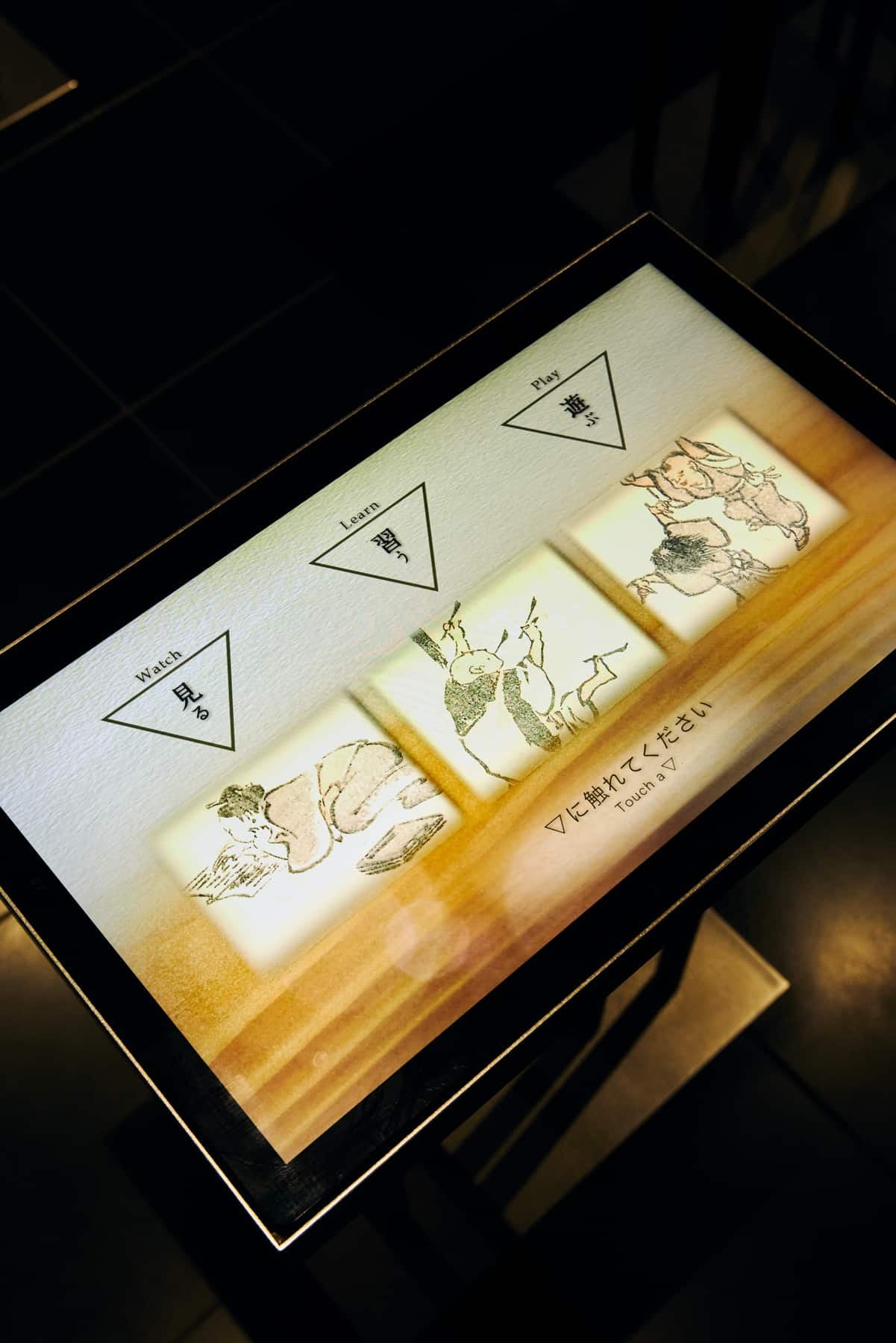
Eventually, Hokusai could no longer keep up with the growing number of applicants one by one, so he continued his energetic activities by publishing drawing manuals such as “Hokusai Manga,” introductory books for learning how to draw. These manuals were widely used not only as teaching materials for learning to draw, but also as collections of designs for craftworks. Hokusai was not only a painter, but also an outstanding designer. In “The Period of Drawing Manuals,” there is also a touch-panel feature that allows visitors to explore the world of these drawing manuals in an enjoyable way.
The hugely popular “Hokusai Manga” was followed by sequel after sequel, and the final volume was not published until the Meiji period. Katsushika Hokusai, “Hokusai Manga,” Volume 6 1817(Bunka 14) Full-size high-definition replica
A collection of textile designs created by Hokusai. Katsushika Hokusai, Book of New Patterns(Shingata Komoncho)1824(Bunsei 7) Full-size high-definition replica
There is also a touch-panel display called “The Great Illustrated Encyclopedia of Hokusai’s Drawing Manuals,” where visitors can enjoy a variety of activities, such as practicing one-stroke drawing using An Album of One Stroke Drawings(Ippitsugafu)as a model or designing a kimono using patterns created by Hokusai.
Next, the route leads into “The period of nishiki-e.” After becoming one of Edo’s most popular artists, Hokusai resumed producing surimono around the time he turned sixty. Then a vivid blue pigment, bero-ai (Prussian blue), began to be imported from overseas. Hokusai was quick to introduce this bero-ai into his series of meisho-e (landscape prints). Making full use of its deep blue tones, he expanded his expressive range even further. He went on to produce one incomparable nishiki-e masterpiece after another, including the world-famous Thirty-Six Views of Mount Fuji and A Tour of Waterfalls in Various Provinces.
A masterpiece that makes effective use of bero-ai (Prussian blue), a new pigment introduced to Japan at the time. Katsushika Hokusai, “Under the Wave off Kanagawa, from the series Thirty-six Views of Mount Fuji” c. 1831(Tenpo 2)Full-size high-definition replica
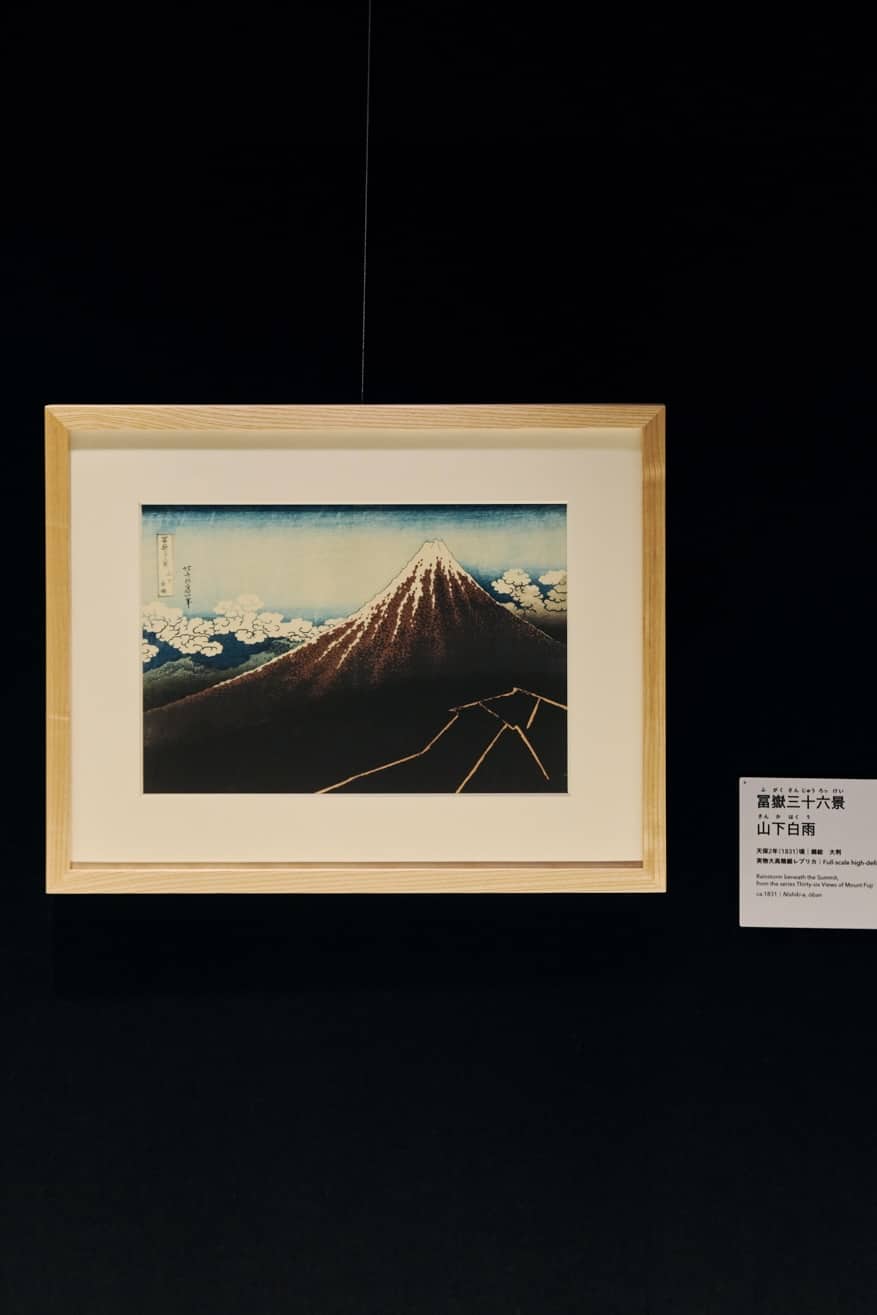
A work capturing the instant when lightning flashes at the foot of Mount Fuji. The zigzag lightning motif is also used in the museum’s logo. Katsushika Hokusai, “Rainstorm Beneath the Summit, from the series Thirty-six Views of Mount Fuji”(Fugaku sanju-rokkei, Sanka haku'u) c. 1831(Tenpo 2) Full-size high-definition replica
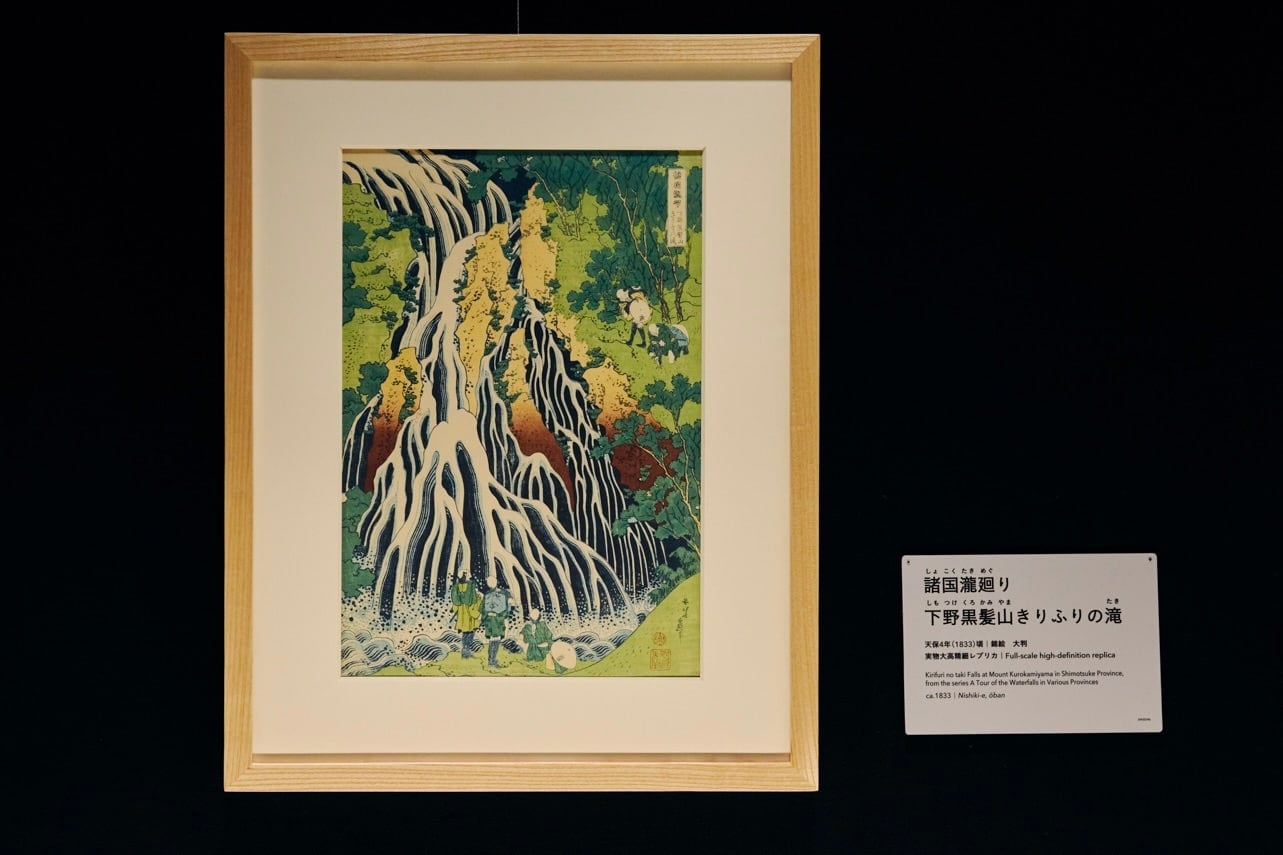
A Tour of Waterfalls in Various Provinces is a series of landscape prints featuring waterfalls from different parts of Japan. Its depiction of water twisting like a living creature is characteristically Hokusai. It was published at almost the same time as “Thirty-Six Views of Mount Fuji.” Katsushika Hokusai, “Kirifuri Waterfall at Kurokami Mountain in Shimotsuke” (Shimotsuke Kurokamiyama Kirifuri no taki), from the series “A Tour of Waterfalls in Various Provinces” (Shokoku taki meguri) c. 1833(Tenpo 4) Full-size high-definition replica
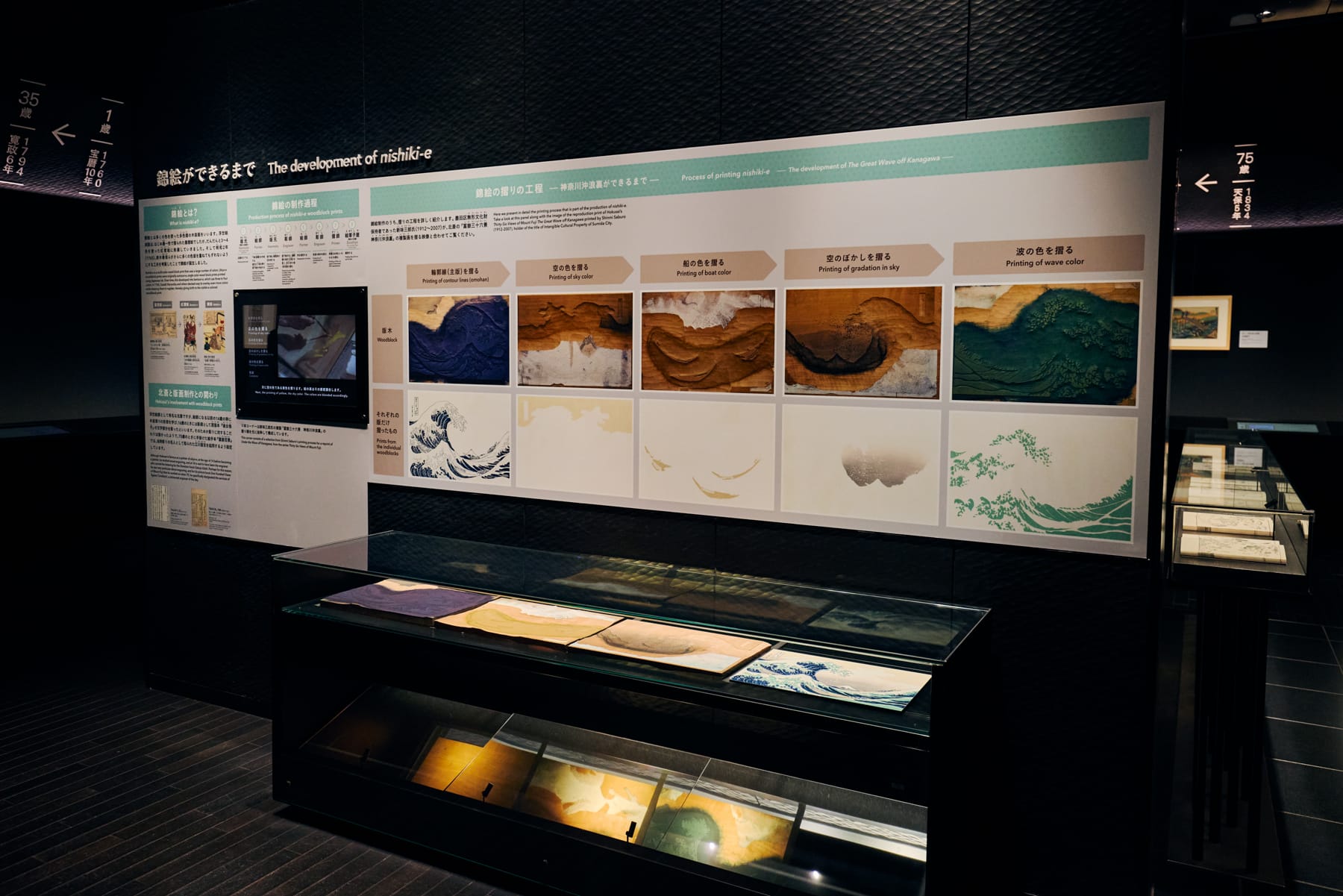
There is also a section that explains, step by step, how nishiki-e prints were made. It shows that Hokusai’s nishiki-e could only come into being through the work of skilled artisans: the carvers, who faithfully carved the artist’s preliminary drawings into woodblocks, and the printers, who printed from multiple blocks with perfect alignment.
Incidentally, nishiki-e generally required one woodblock for each color. However, it is said that in order to save woodblocks, printers sometimes printed multiple colors in separate areas from a single block or used both sides of the same block.
The production process of nishiki-e. “Under the Wave off Kanagawa, from the series Thirty-six Views of Mount Fuji” uses many woodblocks.
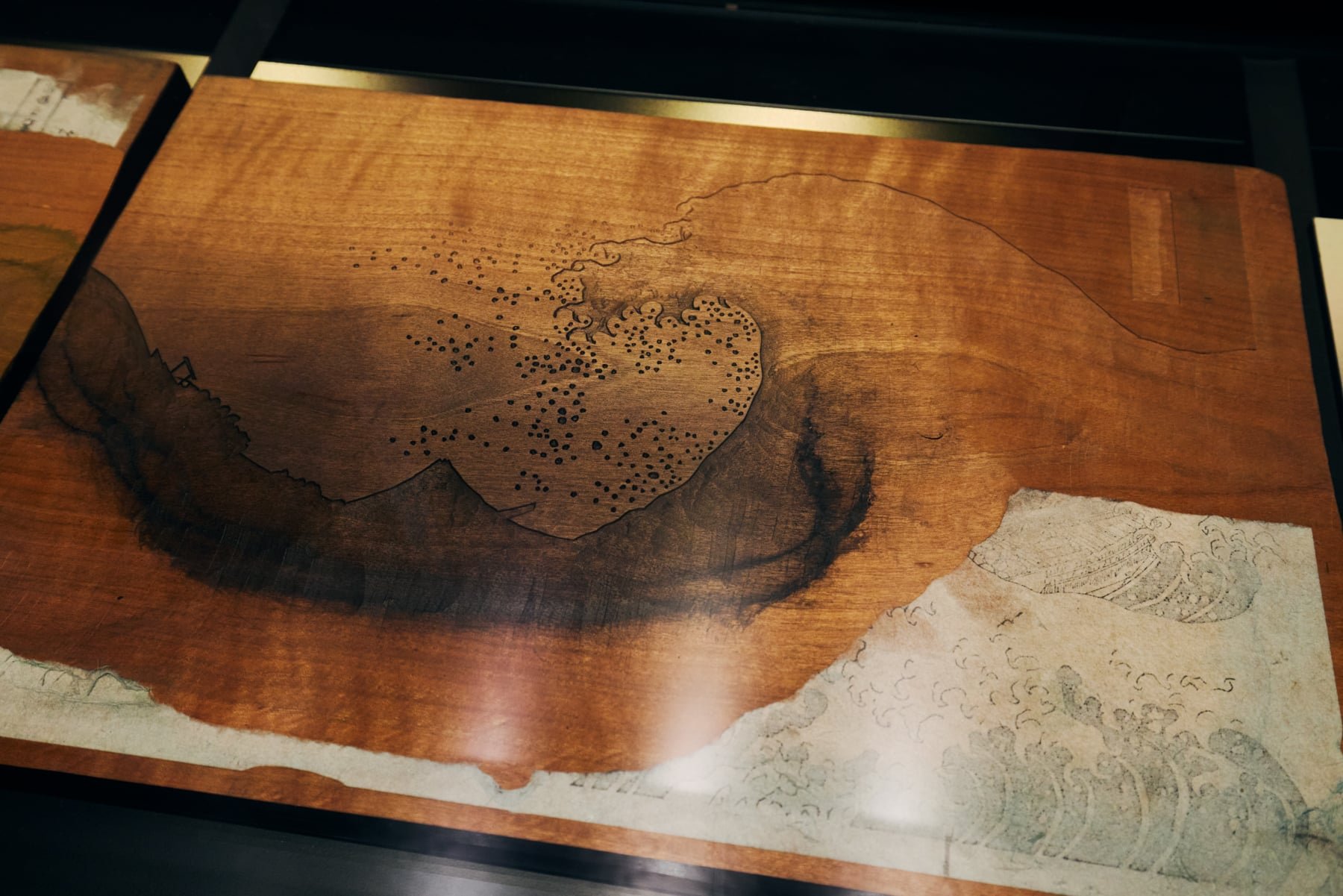
The woodblocks for “Under the Wave off Kanagawa, from the series Thirty-six Views of Mount Fuji.” Notice the fine depiction of the spray.
Although Hokusai had by then become a widely celebrated master, it is said that because he was not attached to material things, he always lived in poor row-house quarters. In his later years, Hokusai moved away from nishiki-e and shifted to the production of hand-painted works, continuing to paint energetically until his death at the age of 90.
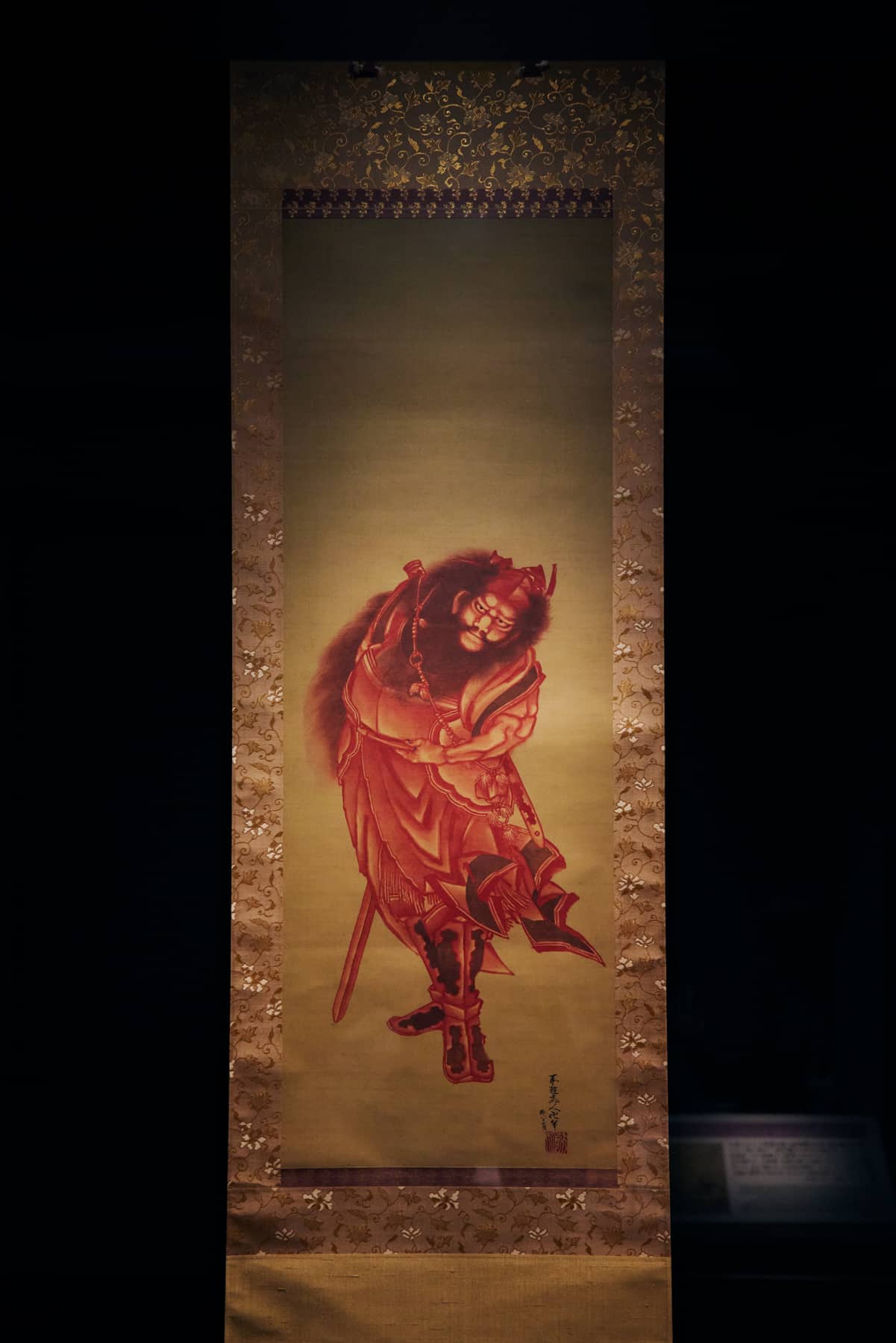
In “The period of original paintings” area, “The Red Demon Queller”(Shugaki Shoki-zu) is on display. Hokusai painted this work at the age of 87, taking as its subject Shoki, a protective deity from Chinese tradition. It was painted in vermilion, a color believed to ward off evil, with the wish that the smallpox epidemic would not spread.
Katsushika Hokusai, “The Red Demon Queller”(Shugaki Shoki-zu)1846(Koka 3)Full-size high-definition replica
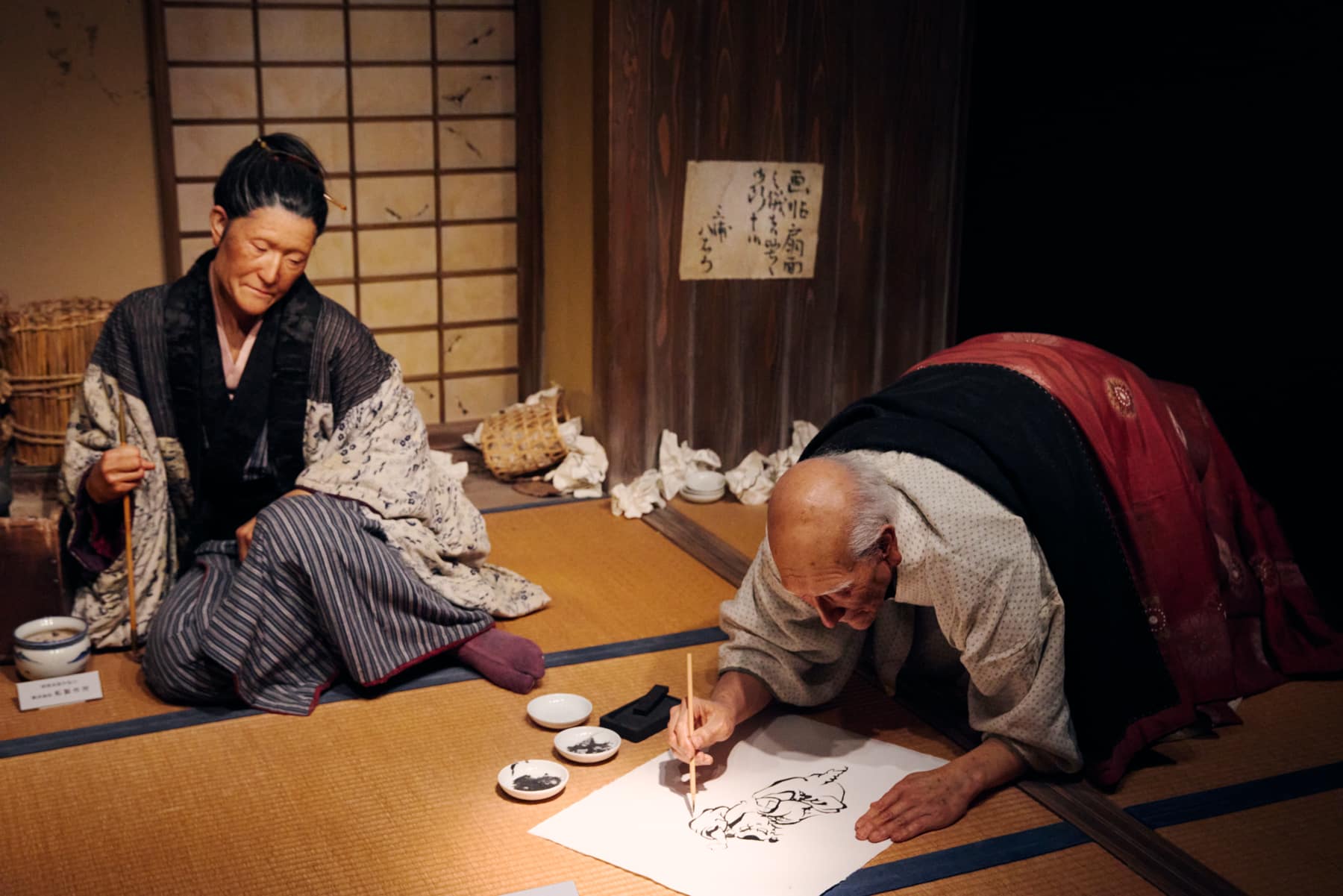
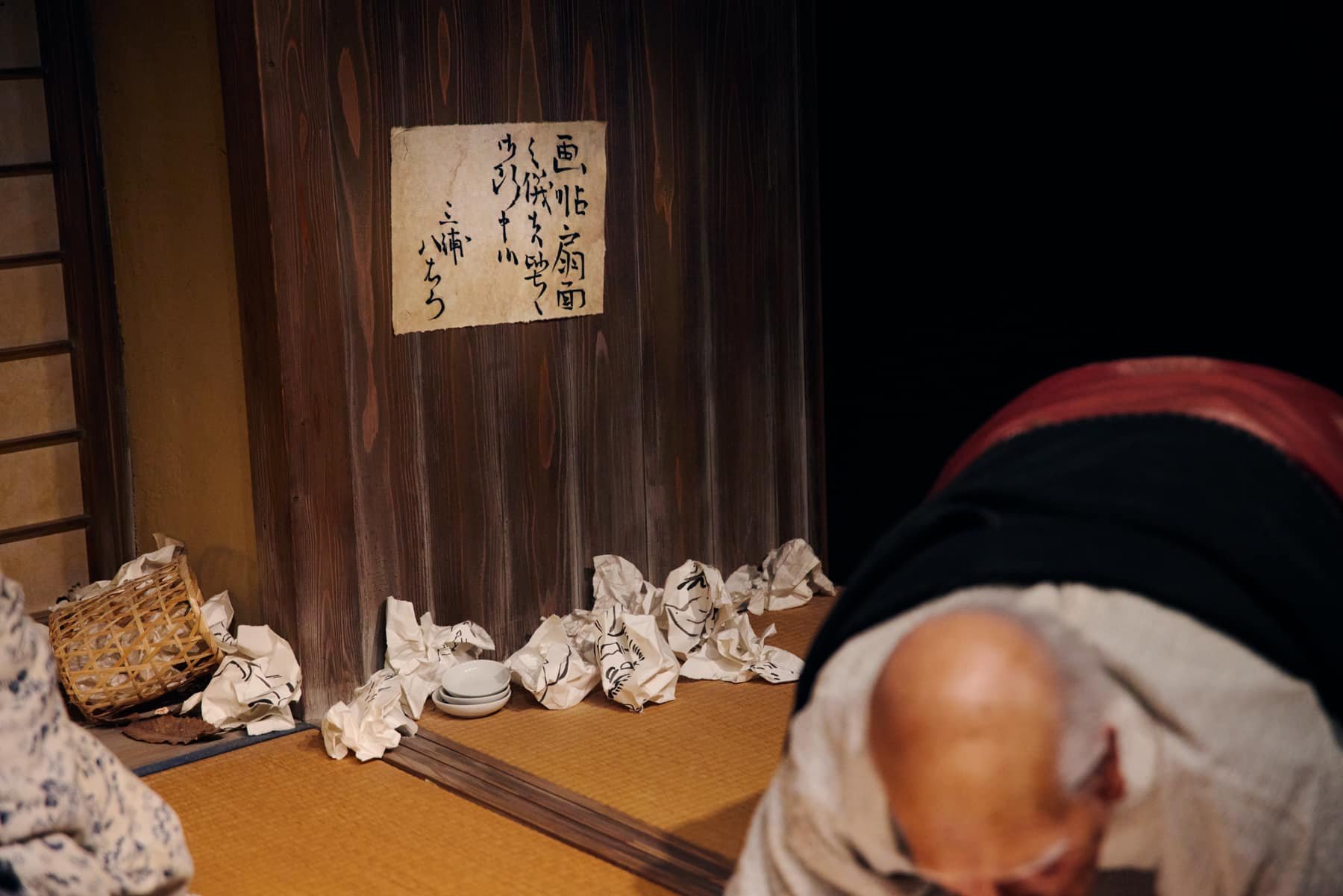
The exhibition room also includes a reconstruction of Hokusai’s Atelier based on historical materials. Hokusai, painting while wrapped in a futon in the cramped six-tatami studio, makes a striking impression.
Hokusai’s atelier, reconstructed based on historical materials. Hokusai lived there with his daughter Oei.
The room is cluttered with trash.
In an era before Western furnishings such as chairs and tables had become common, this kind of all-fours posture seems to have been the default working style. The woman beside Hokusai is his daughter Oei, who is also known to have been an accomplished painter. Incidentally, this reconstructed figure of Hokusai sometimes moves, surprising visitors.
The Sumida Hokusai Museum is also known as a museum visited by architecture lovers. The building was designed by Kazuyo Sejima, one of Japan’s leading architects. Sejima also heads the architectural unit SANAA together with fellow architect Ryue Nishizawa. Having worked on projects including the 21st Century Museum of Contemporary Art, Kanazawa, the two received the Pritzker Prize in 2010, an award often referred to as the Nobel Prize of architecture.
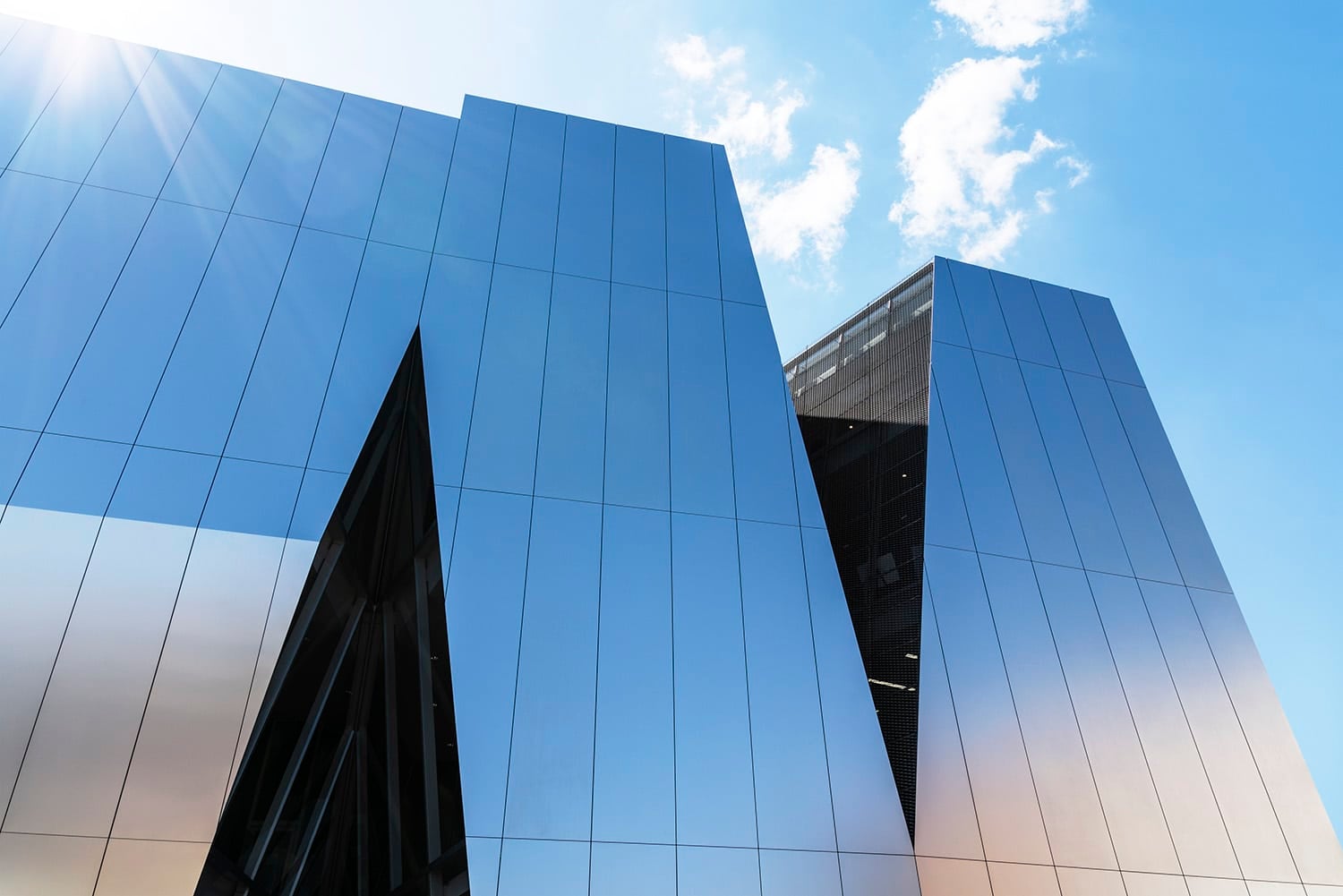
The exterior, covered in thin mirror-finished aluminum panels, is cut with large slits. By introducing these slits and visually dividing the facade, the design creates harmony with the surrounding buildings. The surface also reflects the colors of nearby buildings and the sky, allowing it to blend naturally into the surrounding streetscape. It is a building with a strong individuality, yet one that does not assert itself too strongly.
On fine days, the outer walls take on a blue tint. Photo: Yosuke Owashi
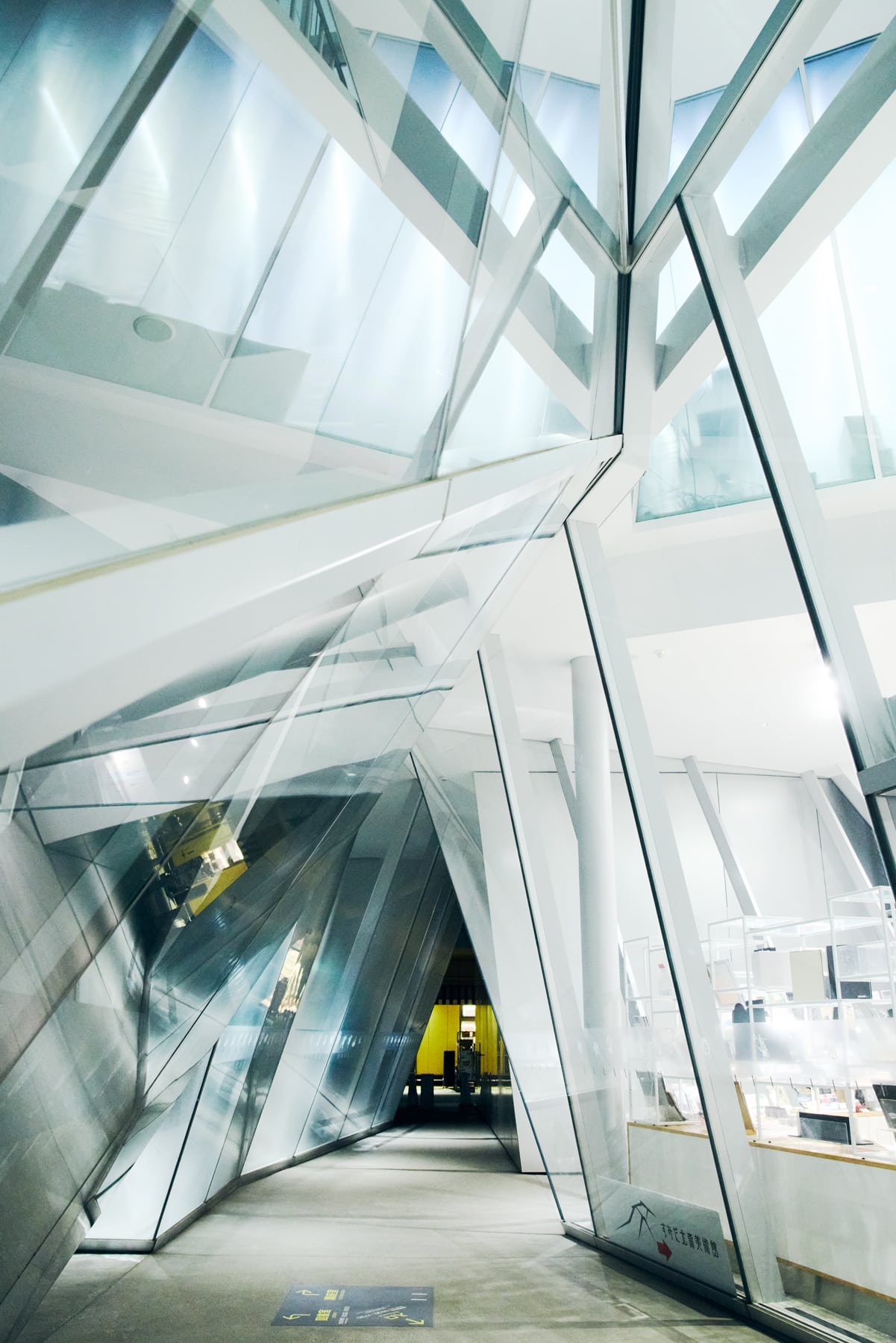
The area around the entrance, where the beauty of straight lines stands out.
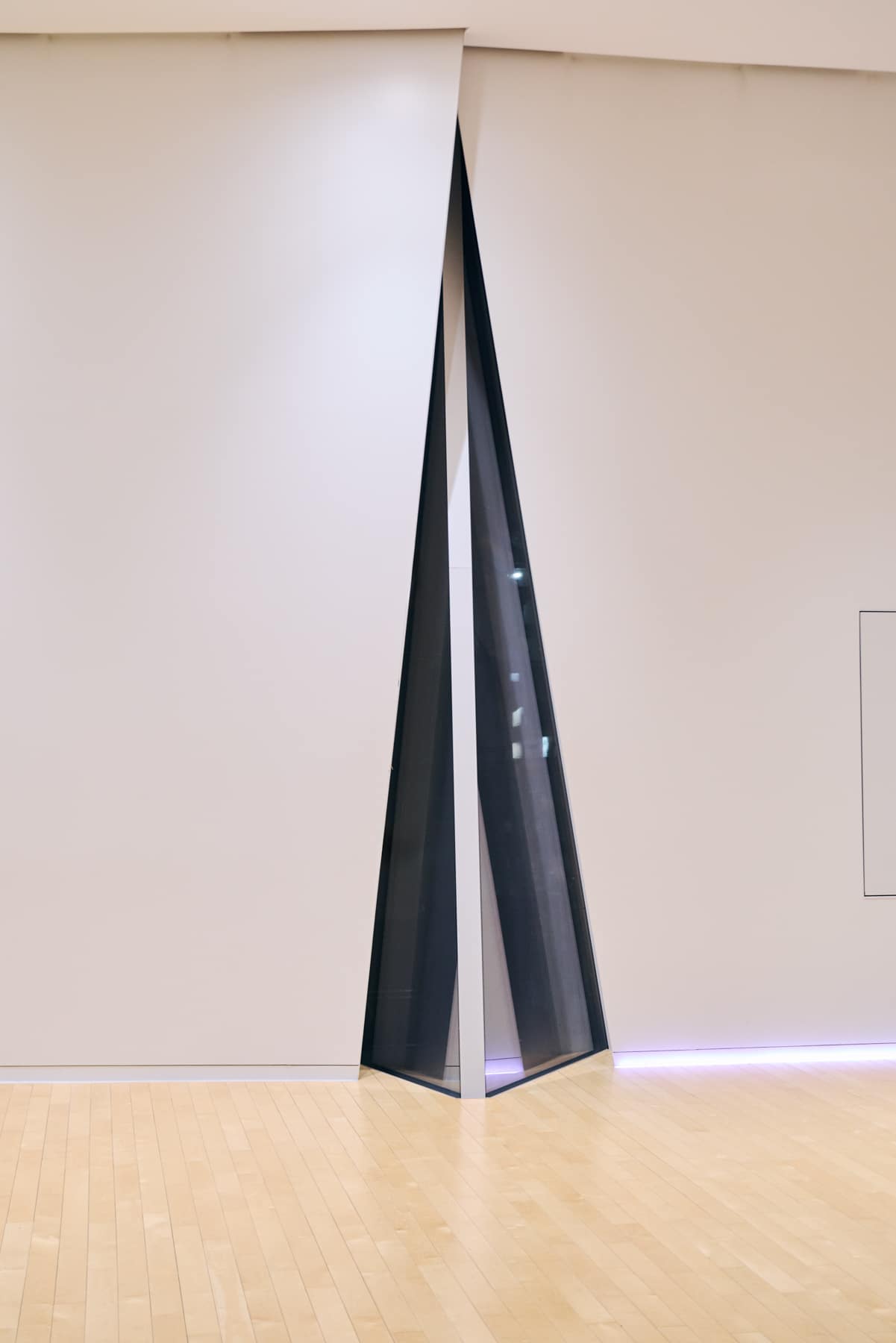
You can see outside through the slits placed throughout the interior.
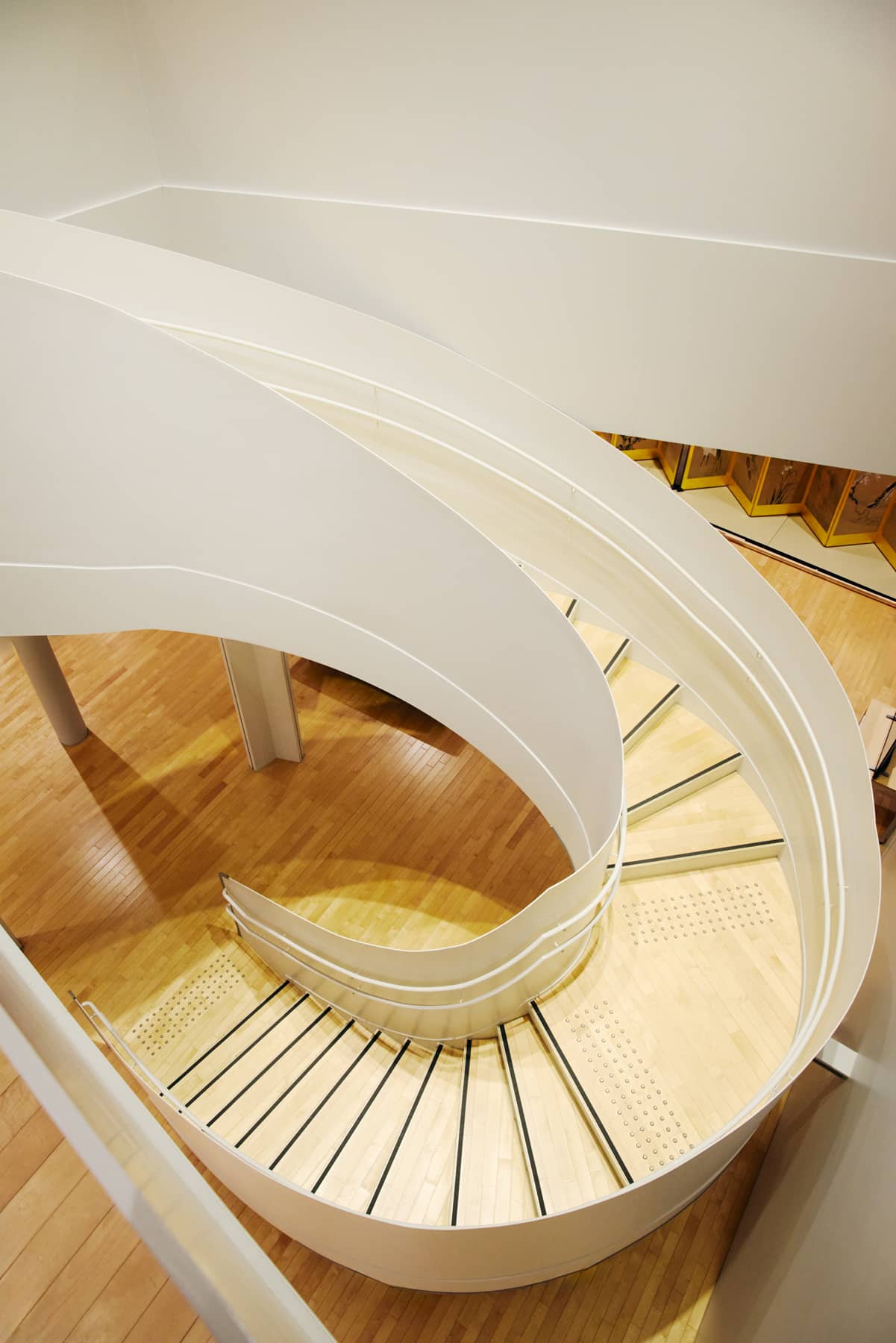
An irregular spiral staircase with beautiful seamless handrail walls.
The museum shop offers a rich selection of books and goods related to ukiyo-e and Hokusai. In addition to Japanese books, it also carries books on ukiyo-e and Hokusai in Western languages. Original goods inspired by works in the museum’s collection make perfect souvenirs. The museum shop is scheduled to reopen after renovation in April 2026, and visitors may discover even more new products there.
A museum where visitors can enjoy the world of the globally beloved Katsushika Hokusai throughout the year is, in fact, quite rare. Be sure to experience the works of Hokusai—who continued creating with tireless energy—at this museum.
The information contained this article was correct at the time of publication on 04/01/2026