DEEPTOKYO
magazine

EN


AREA
DEEPTOKYO
magazine
EN
AREA
2026.09.08
A Specialty Vintage Magazine Bookstore Reflecting the Music and Culture of Its Time


 Nearest Station


Located in Jimbocho, Tokyo’s famous book district, Bunken Rock Side is a secondhand bookstore specializing in magazines, with a collection of approximately 20,000 issues covering everything from rock music to film, fashion, art, idols, and anime. Its selection of music and culture magazines is particularly extensive, with back issues ranging from inaugural issues published in the 1970s to recent editions. Through these magazines, visitors can discover the music, trends, and values that defined each era.
SHARE


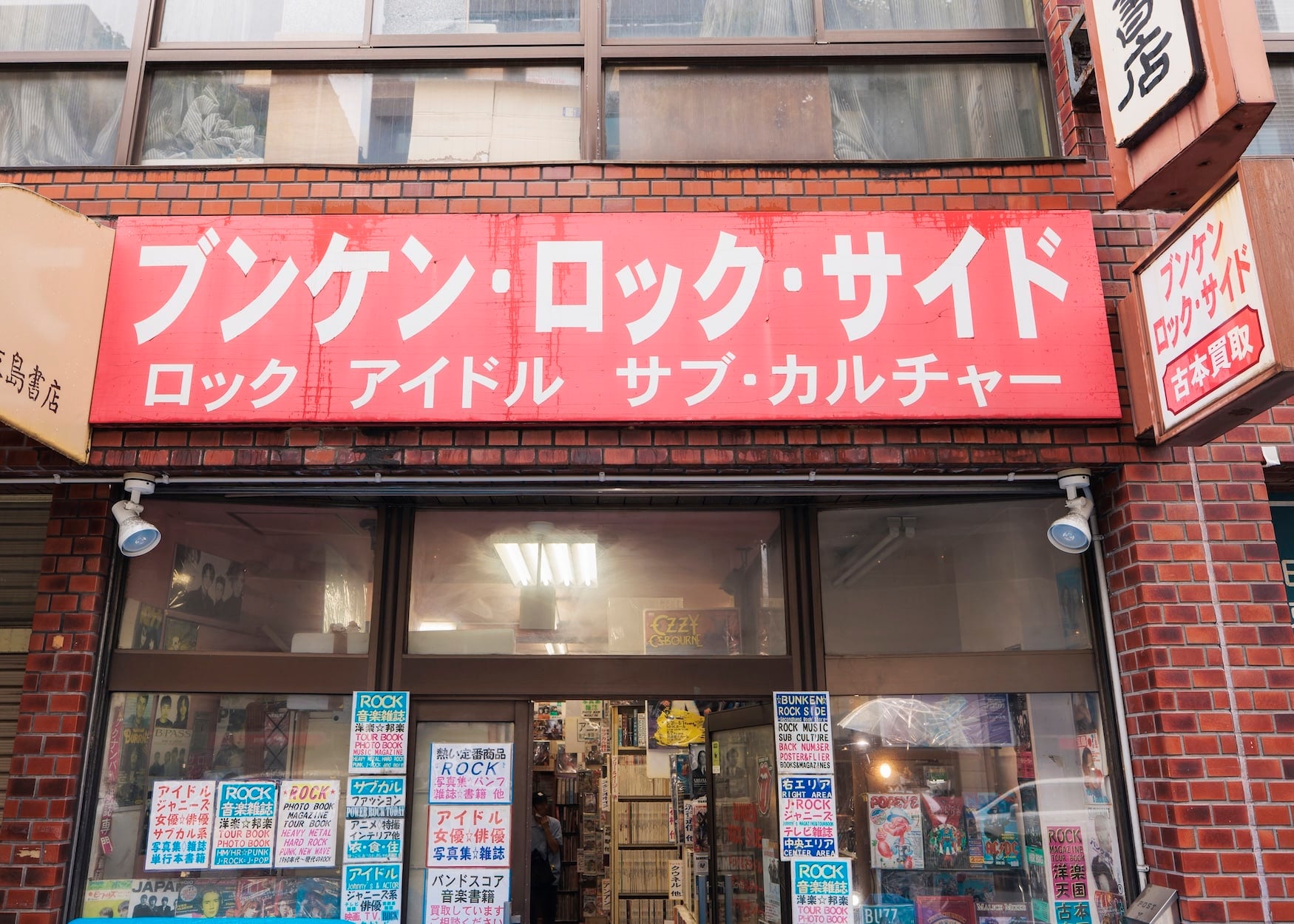
Jimbocho is known as one of the world’s leading districts for antiquarian and secondhand bookstores. Standing out along Yasukuni-dori, its main thoroughfare, is Bunken Rock Side, a secondhand bookstore specializing in magazines.
The store was founded in 1989 by the parents of its current owner, Reiko Yamada, originally as a secondhand bookstore specializing in haiku and literature. After Yamada, a music fan, took over the business, she began focusing on music magazines, which were still relatively uncommon at secondhand bookstores at the time. She renamed the store Bunken Rock Side, transforming it into the shop it is today.
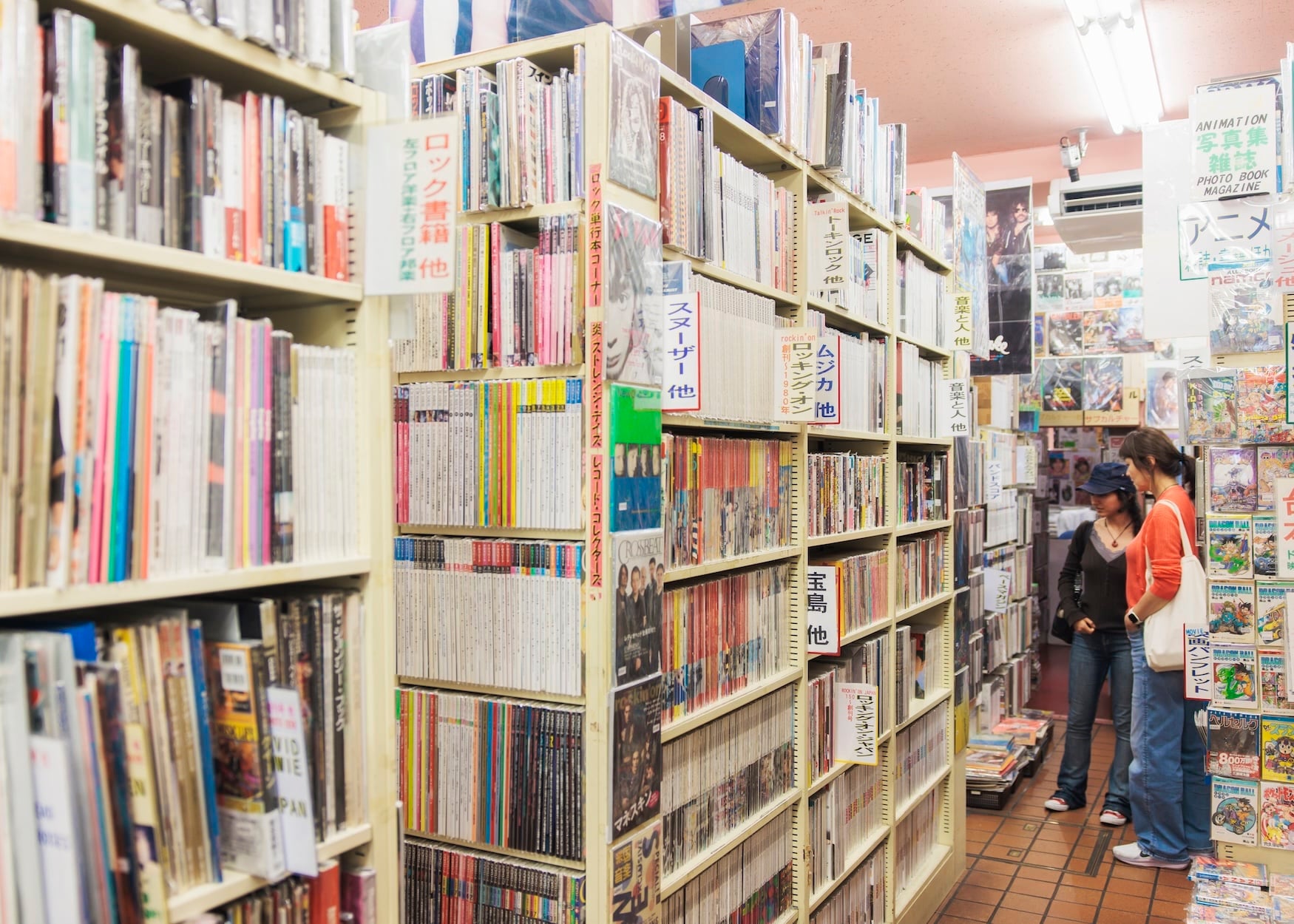
The store carries approximately 20,000 magazines and related books, centered on rock and other music publications and spanning a wide range of culture, including film, fashion, art, idols, and anime.
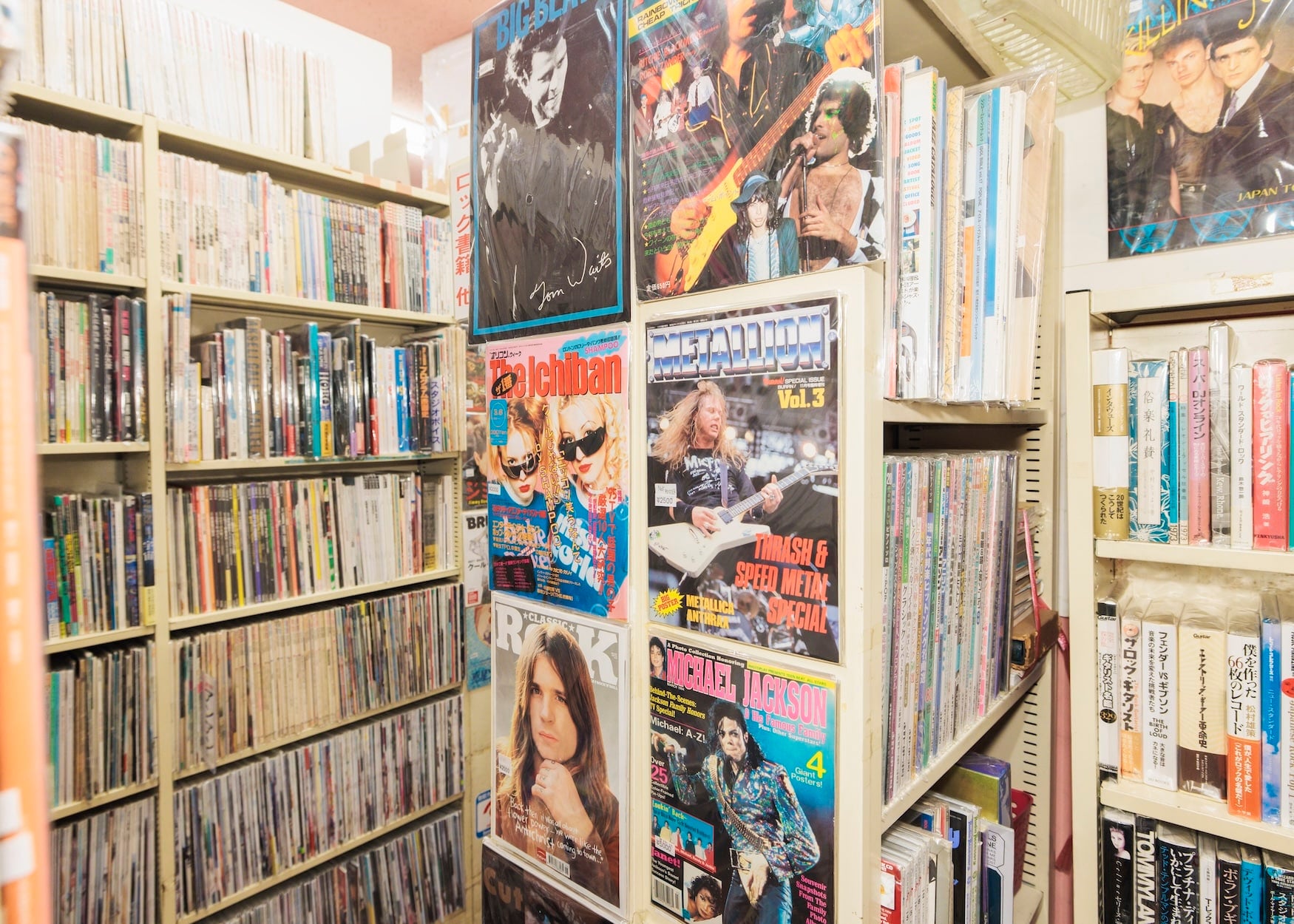
Its collection of back issues of music and culture magazines, ranging from inaugural issues to recent editions, is among the most extensive in Japan. This rich archive attracts visitors of all ages, from teenagers to people in their sixties and beyond. The store is loved by a diverse clientele: people hoping to rediscover magazines they once treasured, younger generations interested in exploring the roots of their favorite artists, and students and creators searching for research and reference materials.
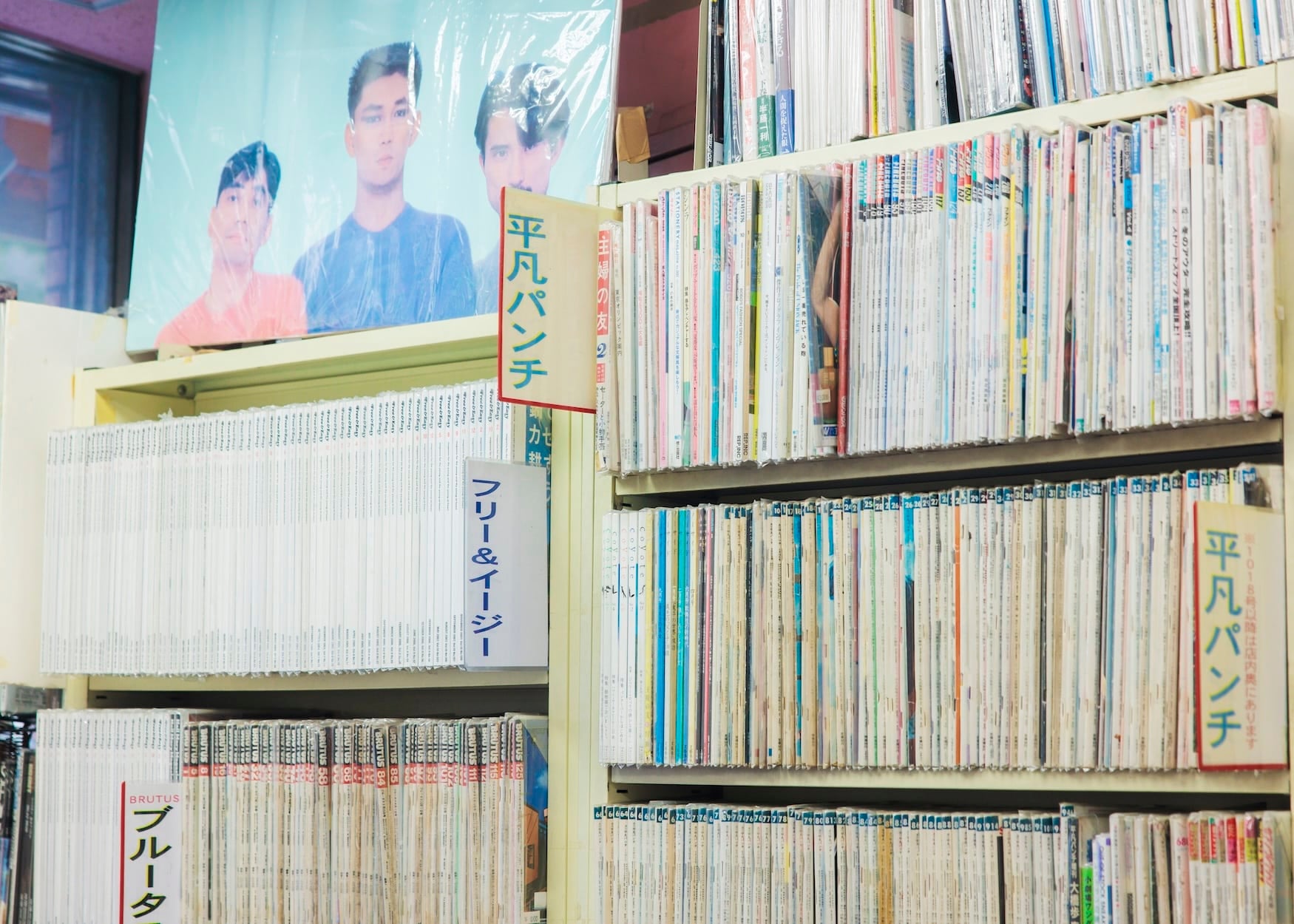
The shelves are organized by genre, including rock and other music, film, and fashion. Handwritten signs make it easy to find the magazine you are looking for.
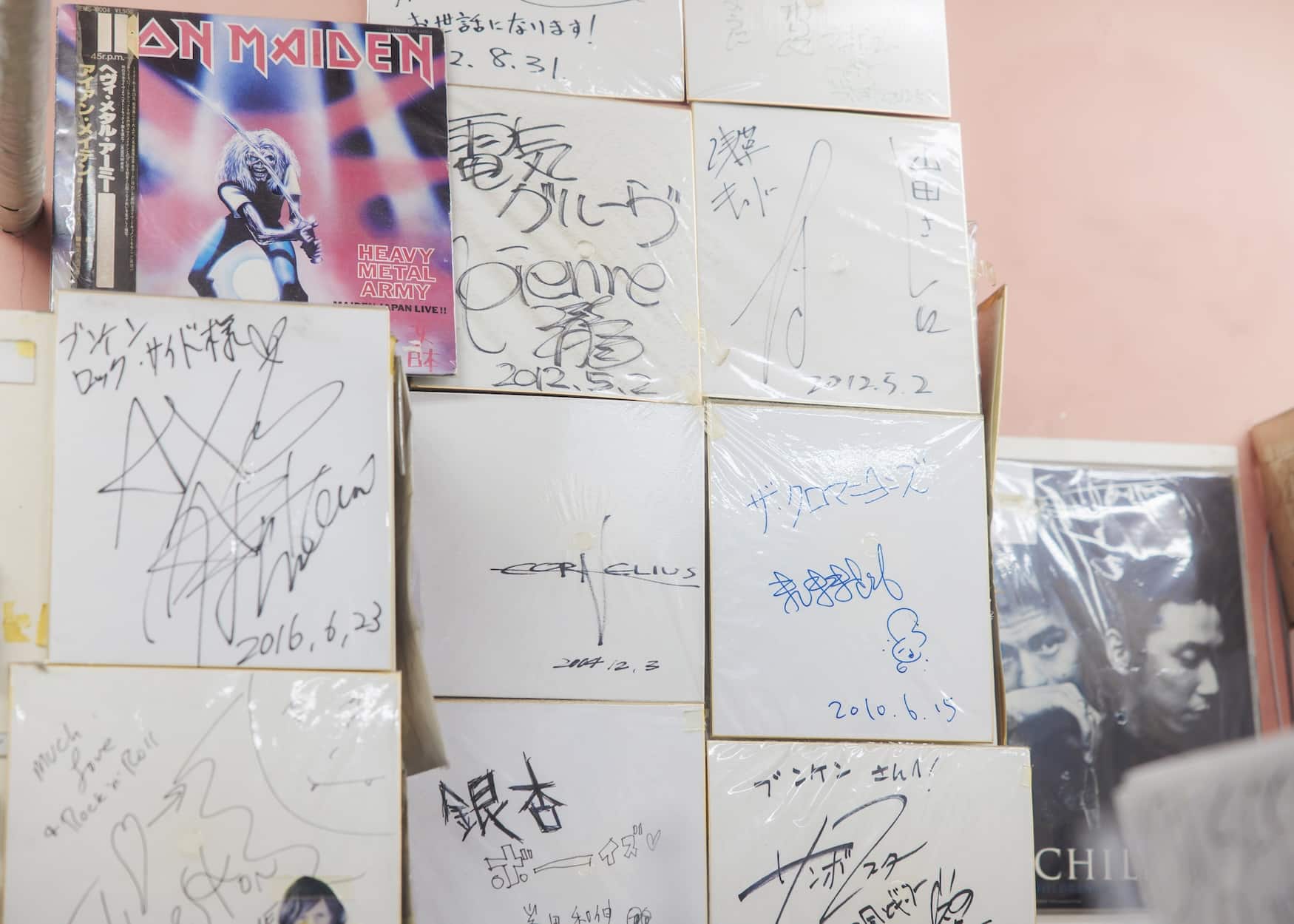
The store’s walls are covered with autographs from notable figures. Musicians and creators from Japan and abroad also visit in search of its valuable magazine archives.
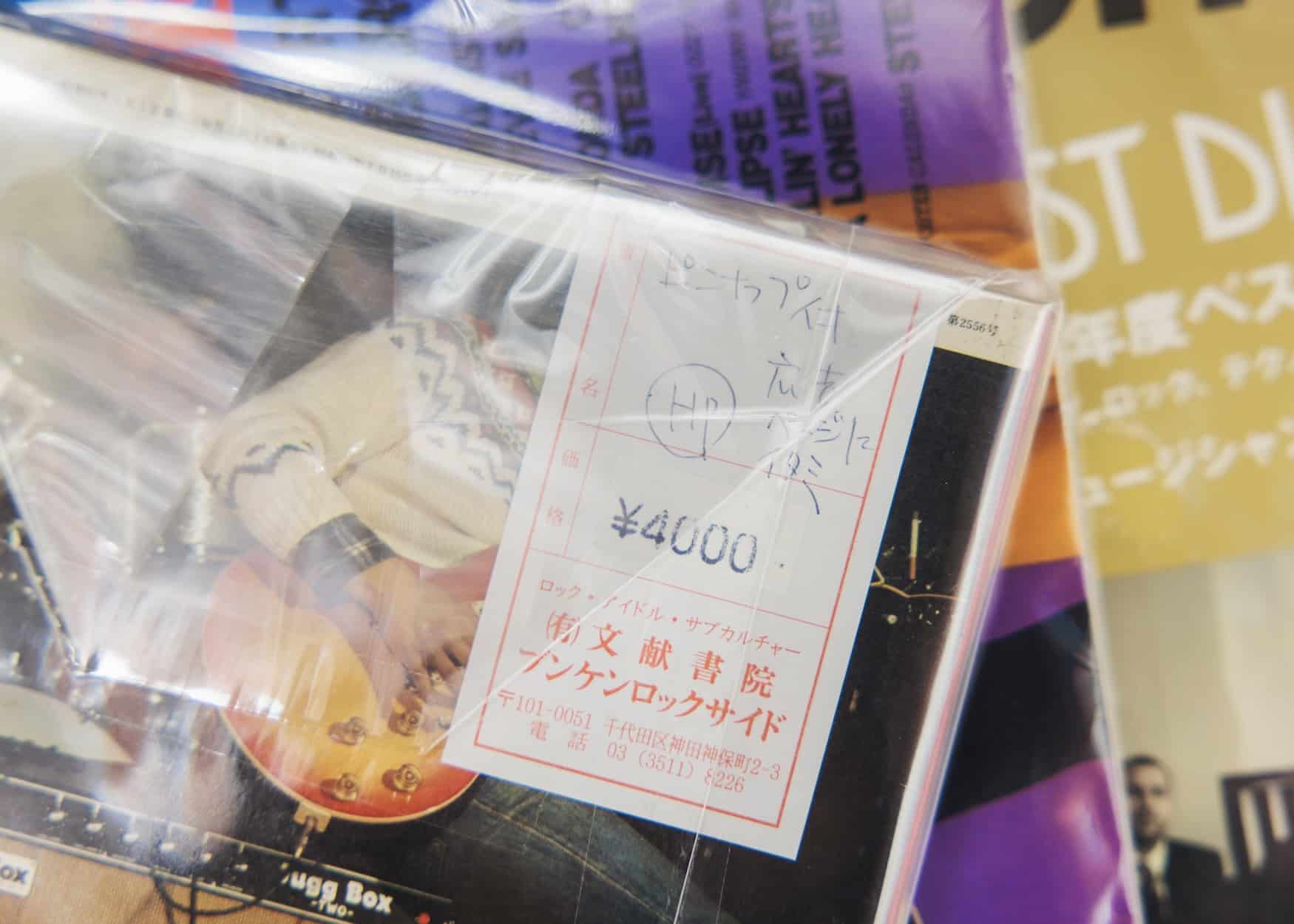
Yamada and her staff carefully check every page of each magazine, including whether any clippings or supplements are missing. Only copies in good condition are put on the shelves, and if a supplement or other item is missing, this is always noted on the price tag.
The store boasts one of Jimbocho’s finest selections of music magazines, with a broad range covering both international and Japanese music, as well as an extensive collection of pamphlets and photo books.
The store also has an extensive selection of fashion-focused culture magazines. Being able to browse so many back issues of a single publication, from its inaugural issue through recent editions, is an experience unique to this store.
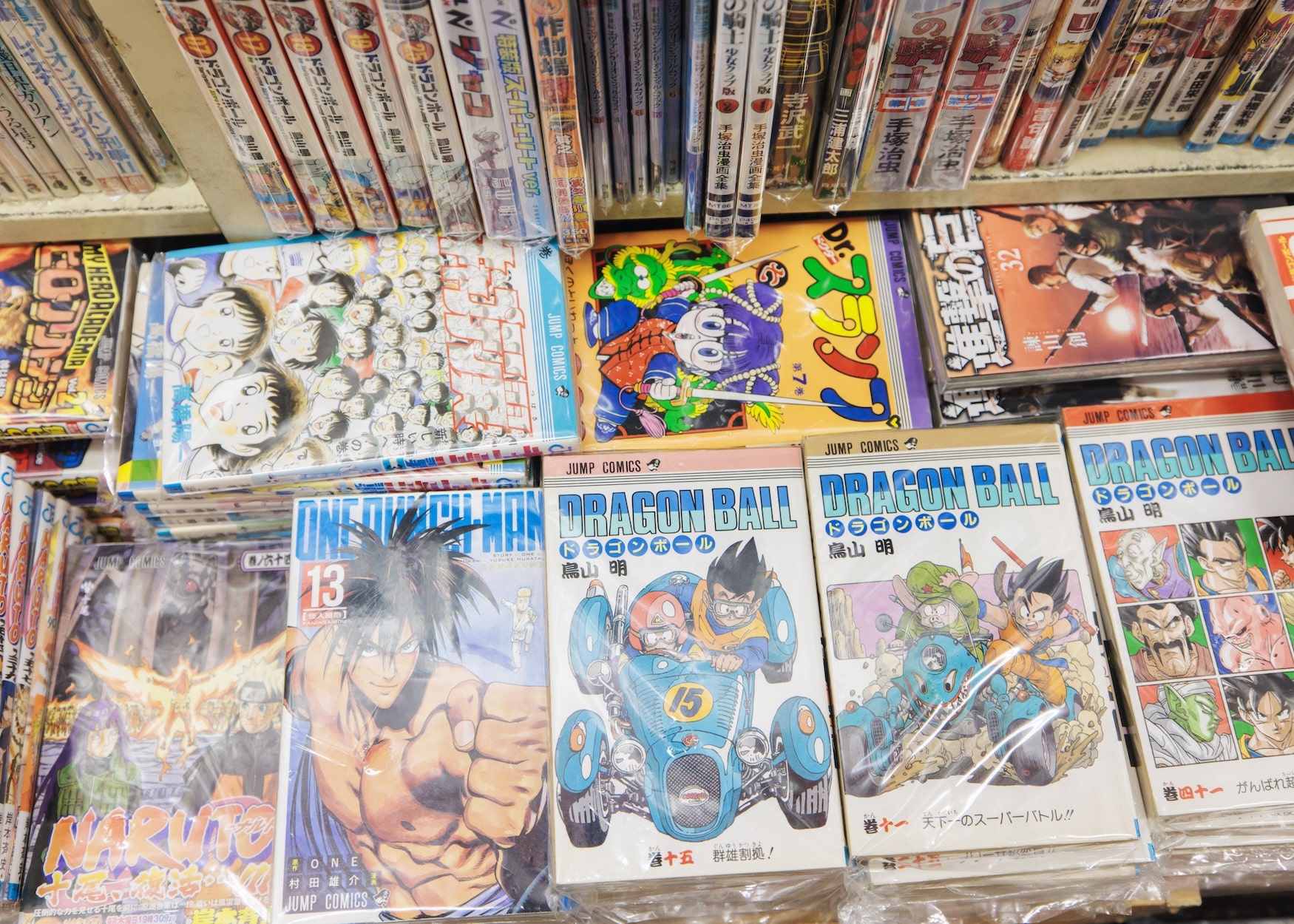
The manga, anime, and tokusatsu section, representing some of Japan’s best-known forms of pop culture, is also popular with international visitors.
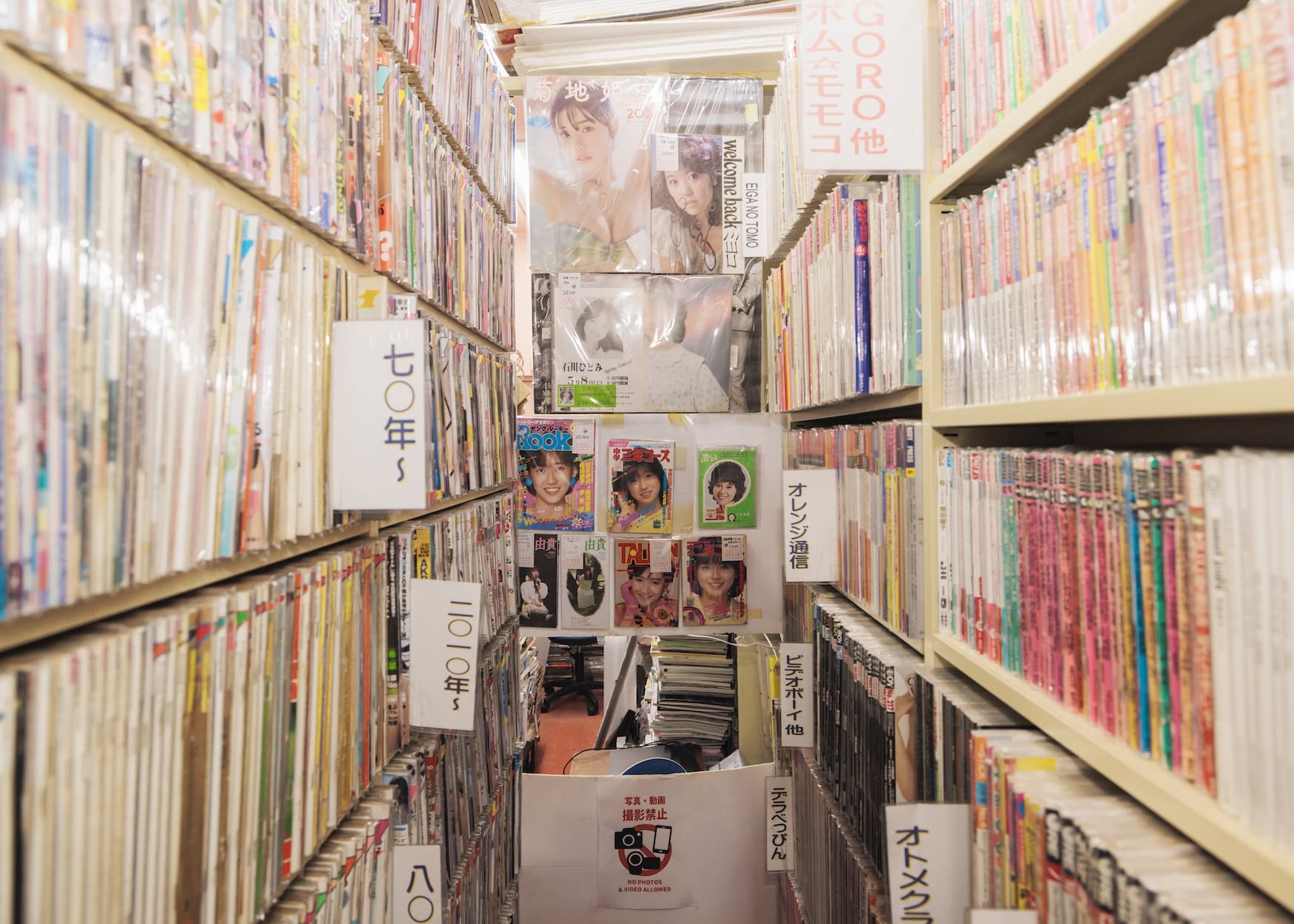
Toward the back of the store is a section devoted to idol magazines. Yamada began carrying them because her younger sister was an idol fan. Through idol magazines dating from the 1970s onward, visitors can trace the evolution of Japan’s idol culture.
“Before the internet, magazines were how we discovered different kinds of culture, including music, fashion, film, and art. Today, if you look up something you’re interested in on social media, you can find information immediately. But print magazines contain all kinds of information beyond the article you originally wanted to read, including columns. That means you can encounter information you weren’t looking for and discover new interests. I think that’s what makes magazines so fascinating,” says Yamada.
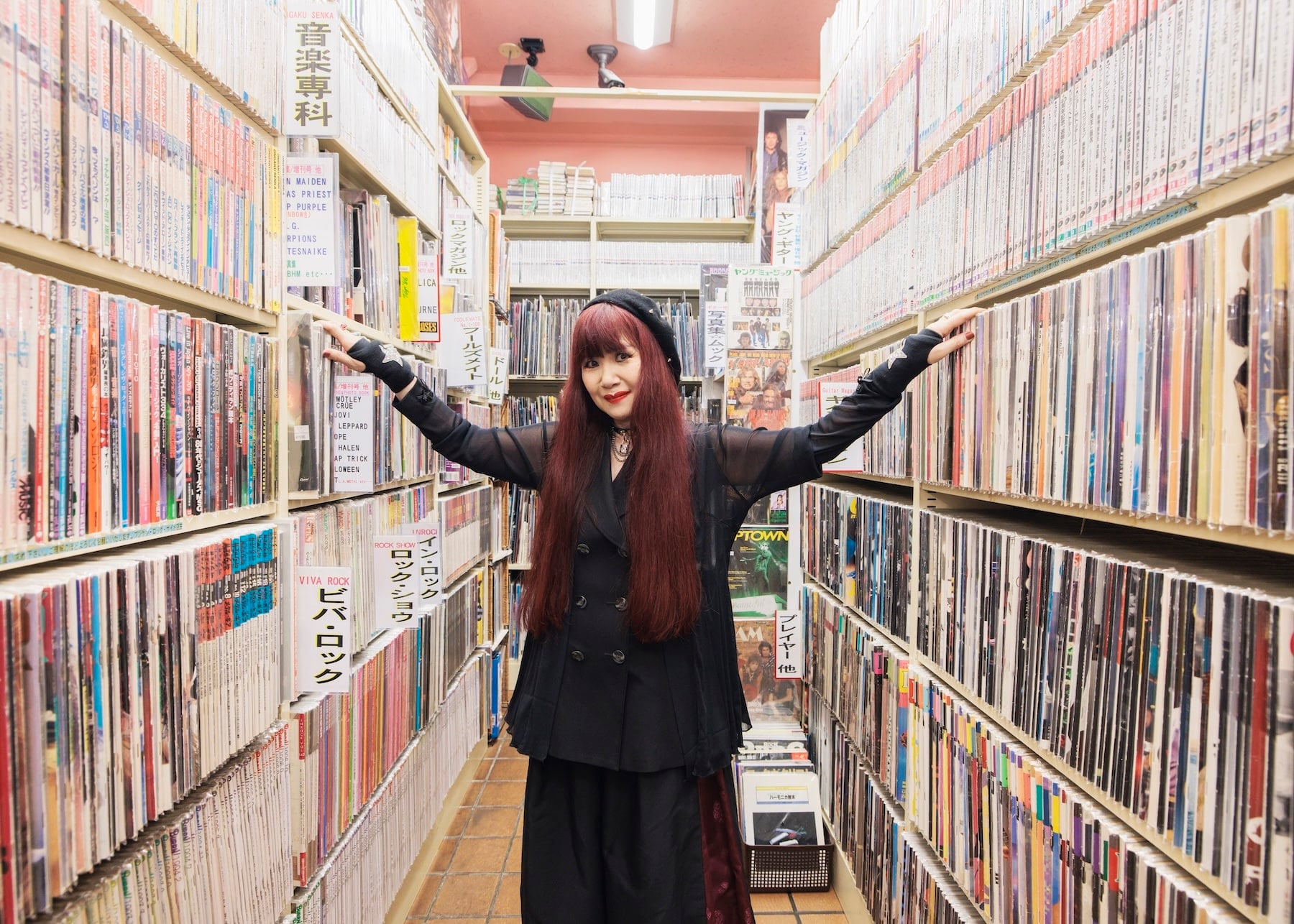
Owner Reiko Yamada is a devoted music fan who has loved hard rock and heavy metal for many years. When it comes to music magazines, Yamada is the person to ask.
The passion for music that Yamada has cultivated for nearly half a century lives on in the store’s magazine collection. Its shelves are lined with Japanese music magazines such as "MUSIC LIFE" and "BURRN!," which have chronicled the international rock scene, making the collection one of the finest in Jimbocho. The store also has a filing section featuring items such as promotional band stickers that were never sold commercially and concert flyers once handed out at live venues. These valuable materials preserve the excitement of the music scene at the time.
“When I was 12, I was drawn to the music I could hear coming from the record shop across from my house, and I started going there almost every day. The owner taught me all kinds of things, and that’s how I became completely immersed in music. Back then, we listened to entire albums on CD or vinyl, so I think we had an even stronger attachment to each individual song than we do today. We all taught ourselves to play instruments by looking at music magazines,” says Yamada.
For those hoping to rediscover a magazine they once loved or collectors looking to complete a run of back issues, Bunken Rock Side is an ideal place to visit.
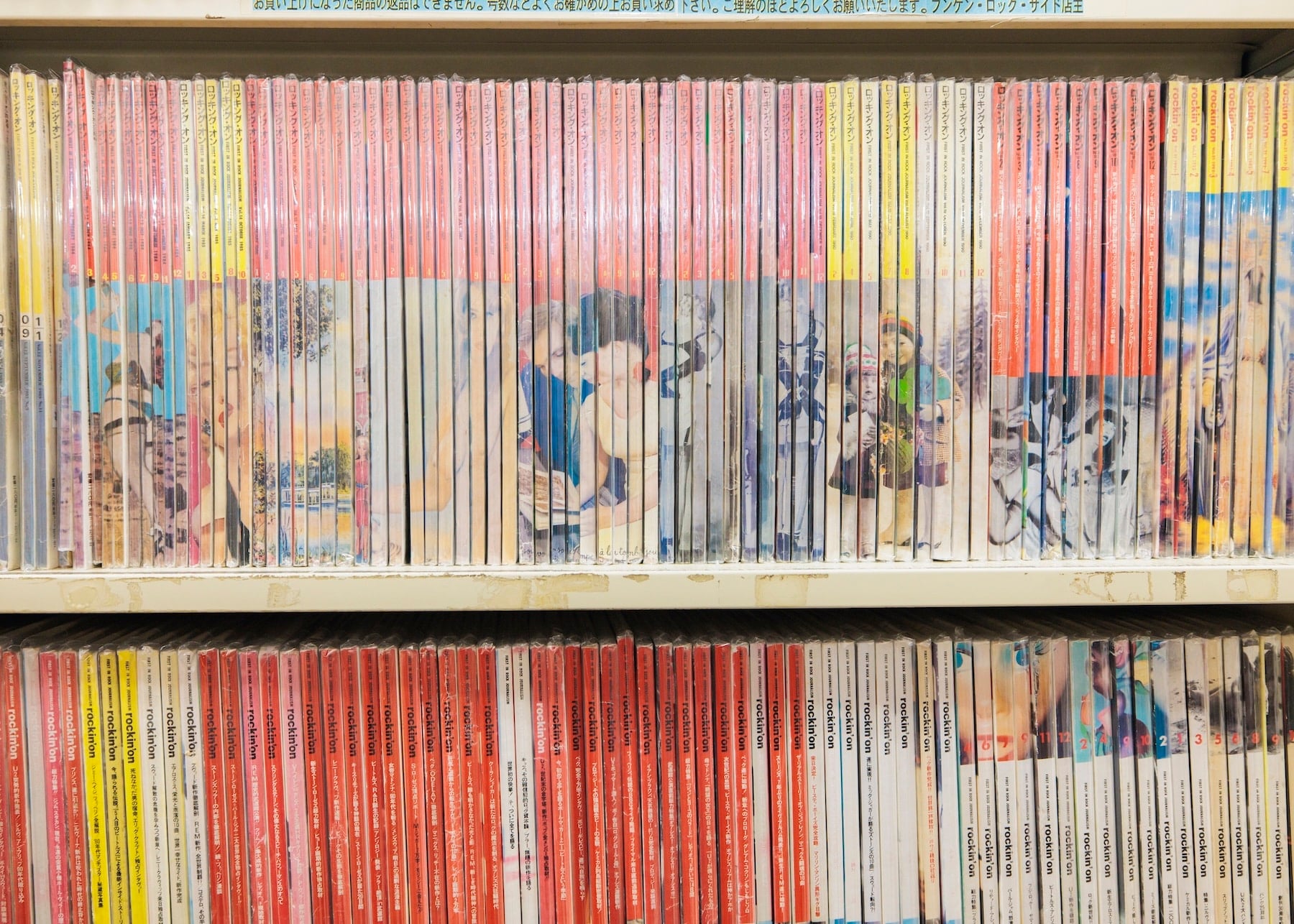
Back issues of "rockin'on," a music magazine focusing primarily on international rock. Issues from the 1980s were designed so that their spines form a single image when lined up together, a feature that continues to appeal to collectors today.
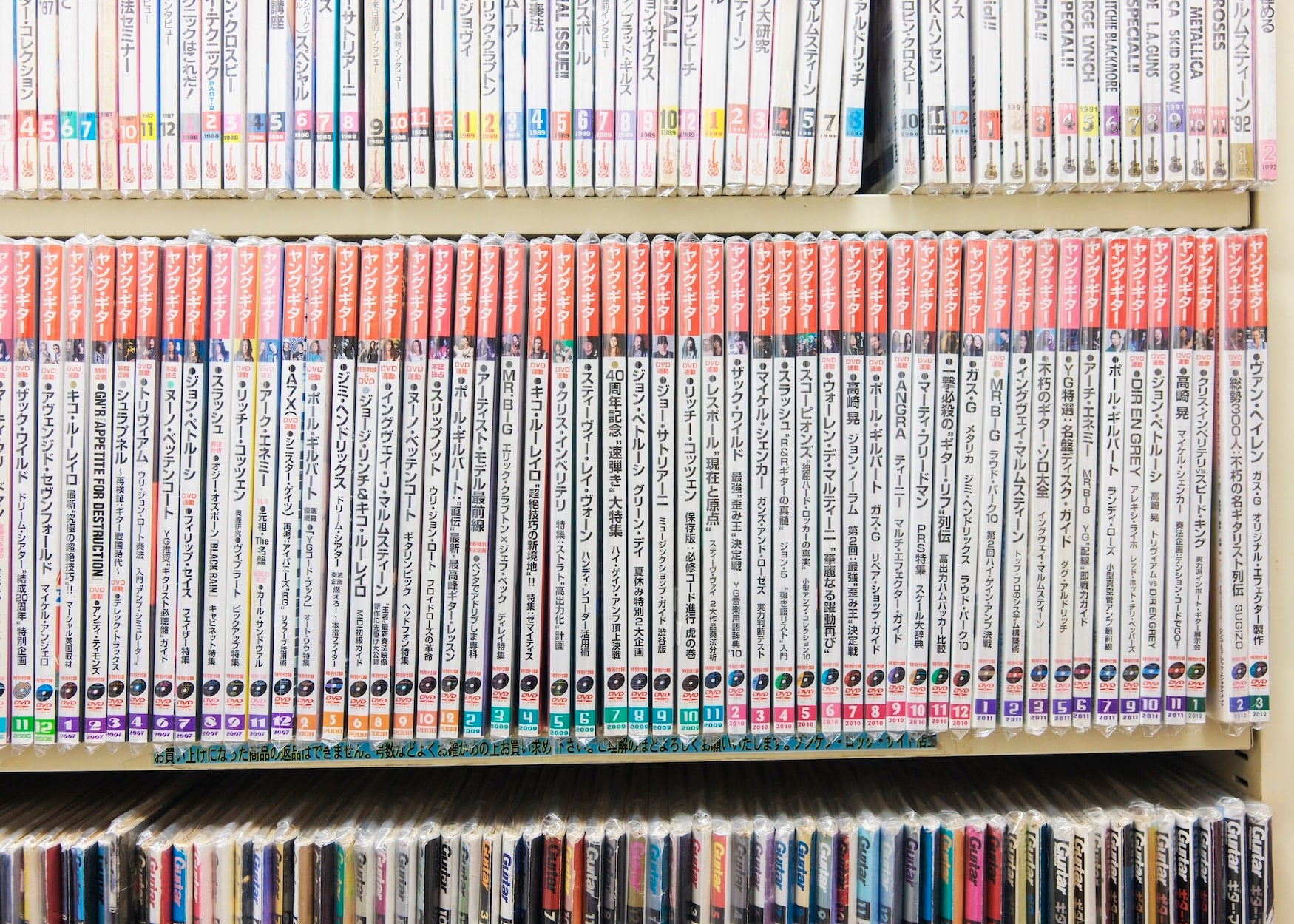
First published in 1969 and still in publication today, "YOUNG GUITAR" is a magazine dedicated to the guitar. Each issue features guitarists and includes explanations of playing techniques and musical scores. For generations of readers who learned to play by following its pages, the magazine has served as something of a textbook for guitarists.
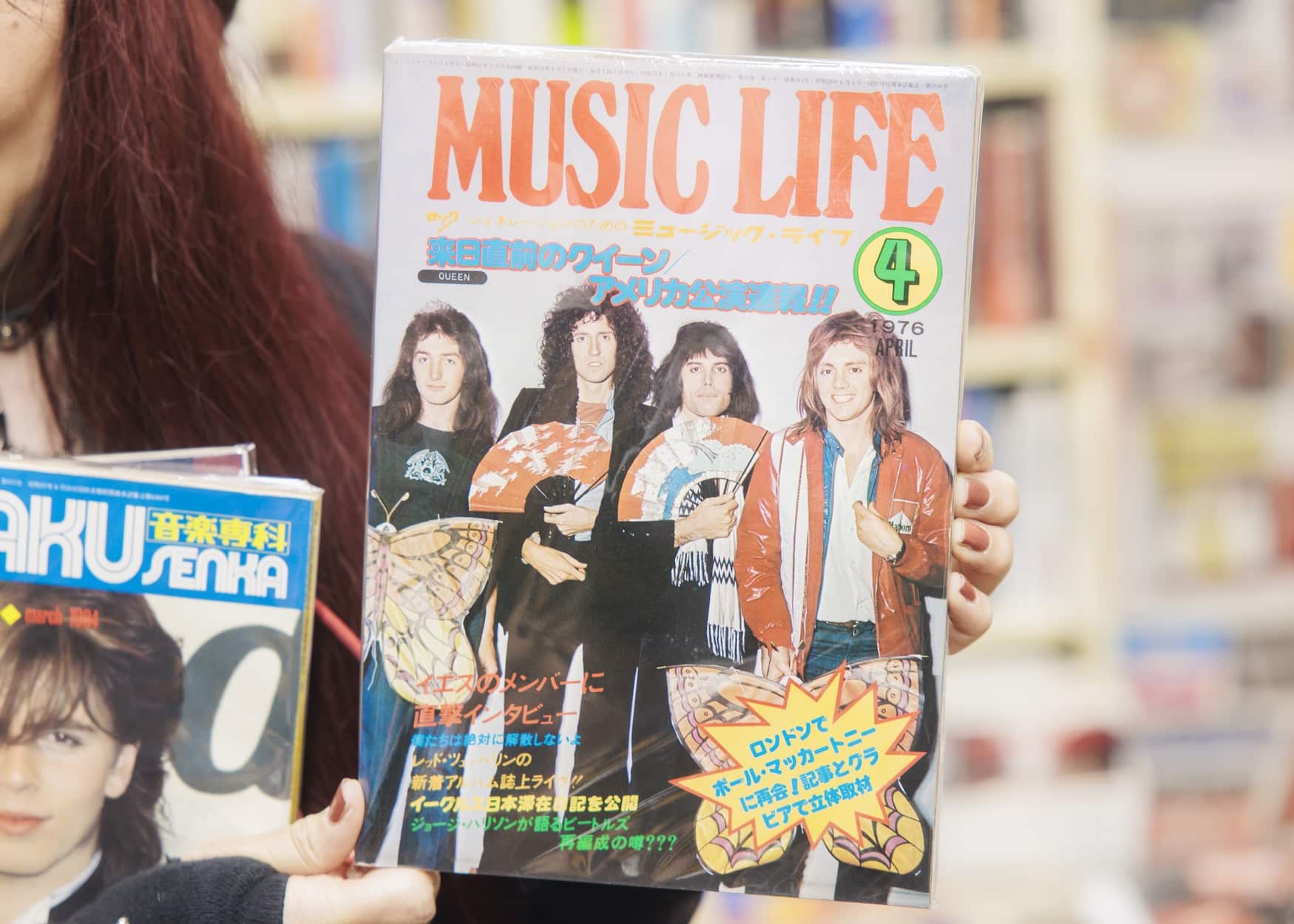
"MUSIC LIFE" is a magazine Yamada fondly remembers reading at the time. This Japanese music magazine featured numerous international artists. The April 1976 issue, with Queen on the cover, includes interviews with the band members during their U.S. tour, photo features, and other content not to be missed by fans.
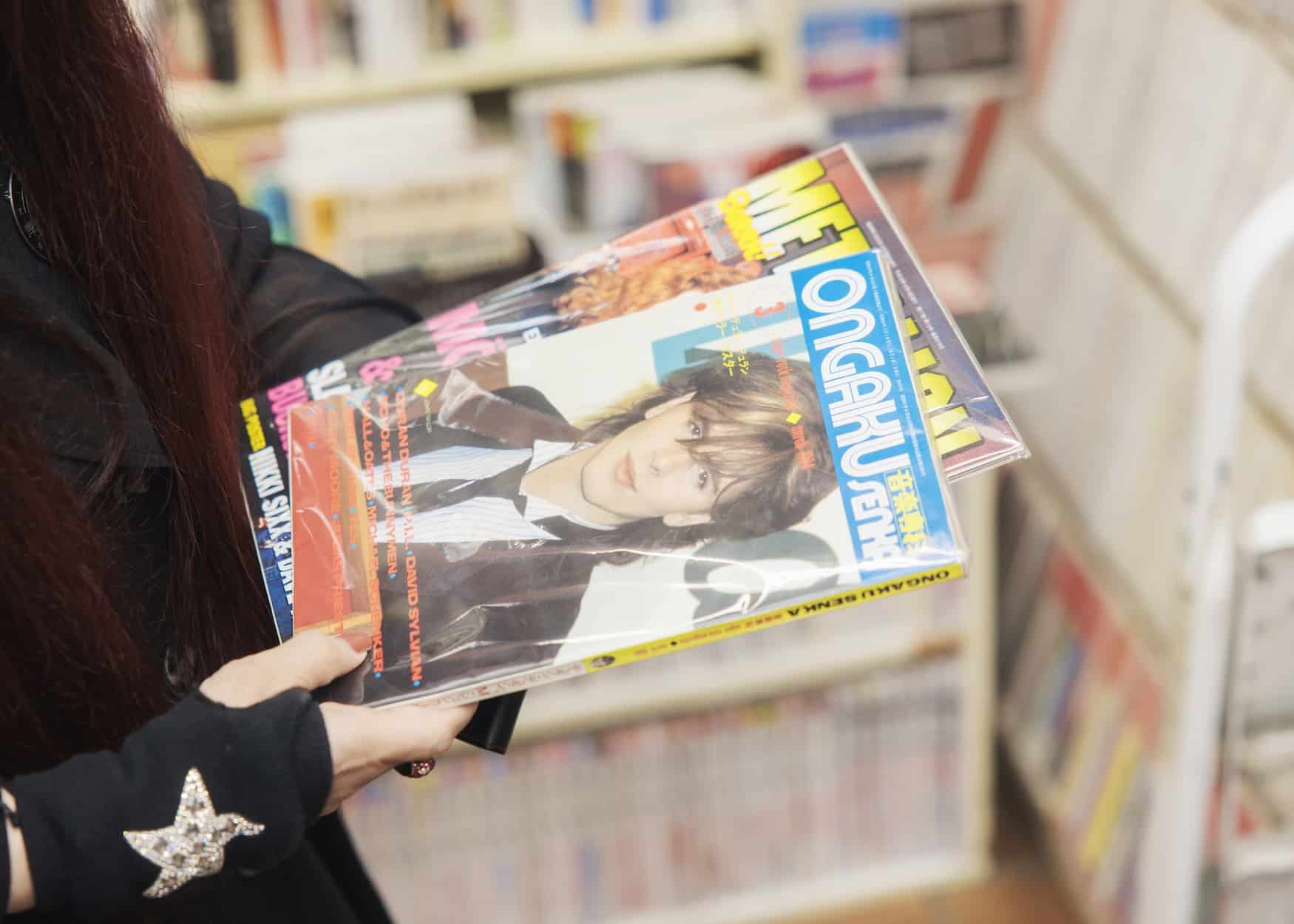
Duran Duran is a British rock band that achieved worldwide popularity in the 1980s. The March 1984 issue of "Ongaku Senka," featuring bassist John Taylor on the cover, remains so popular that some fans still visit the store specifically in search of this issue.
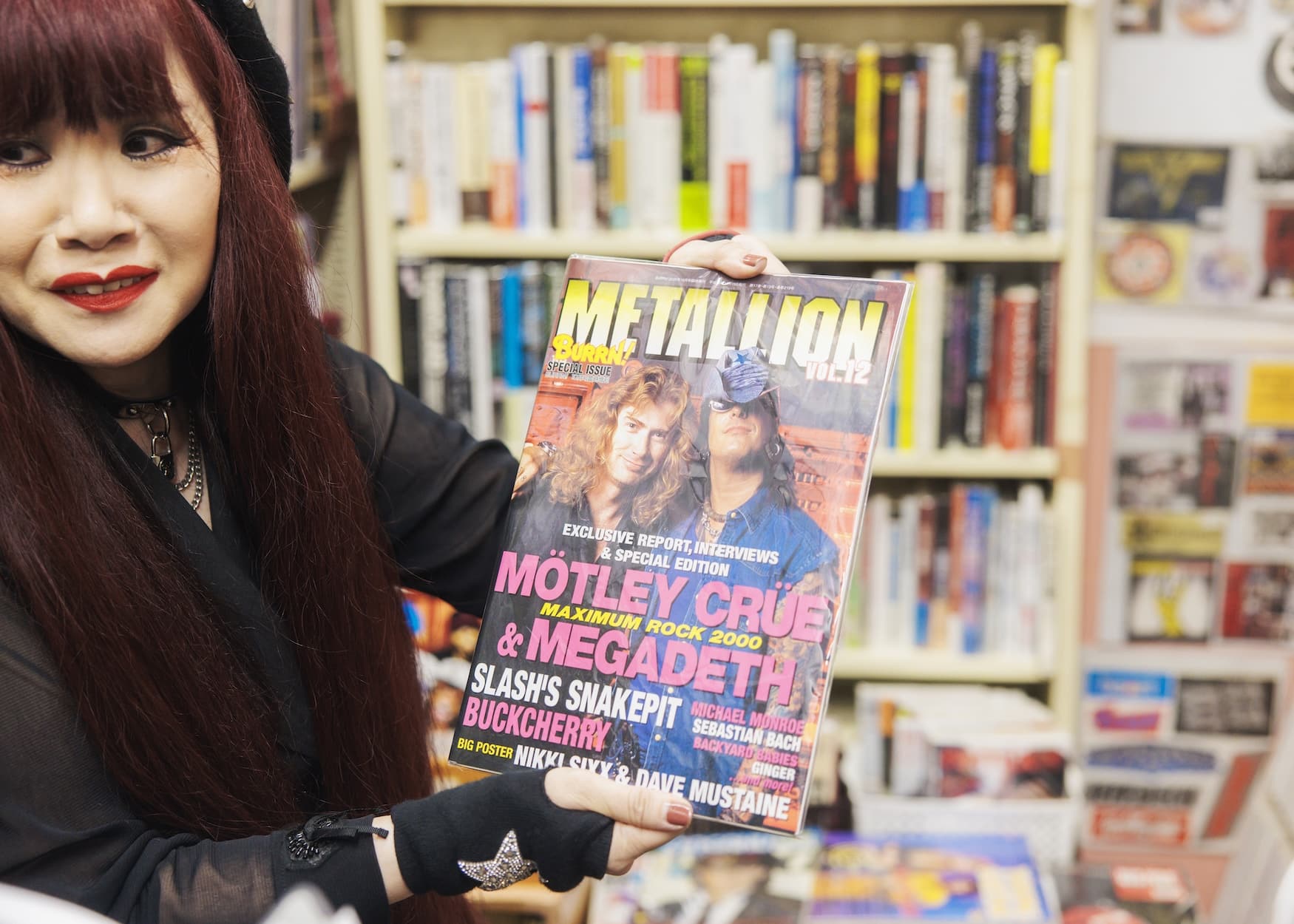
"METALLION" is a special-edition mook published as a supplement to the heavy metal magazine "BURRN!" This issue features Mötley Crüe’s Nikki Sixx and Megadeth’s Dave Mustaine on the cover and includes interviews with them as well as special reports.
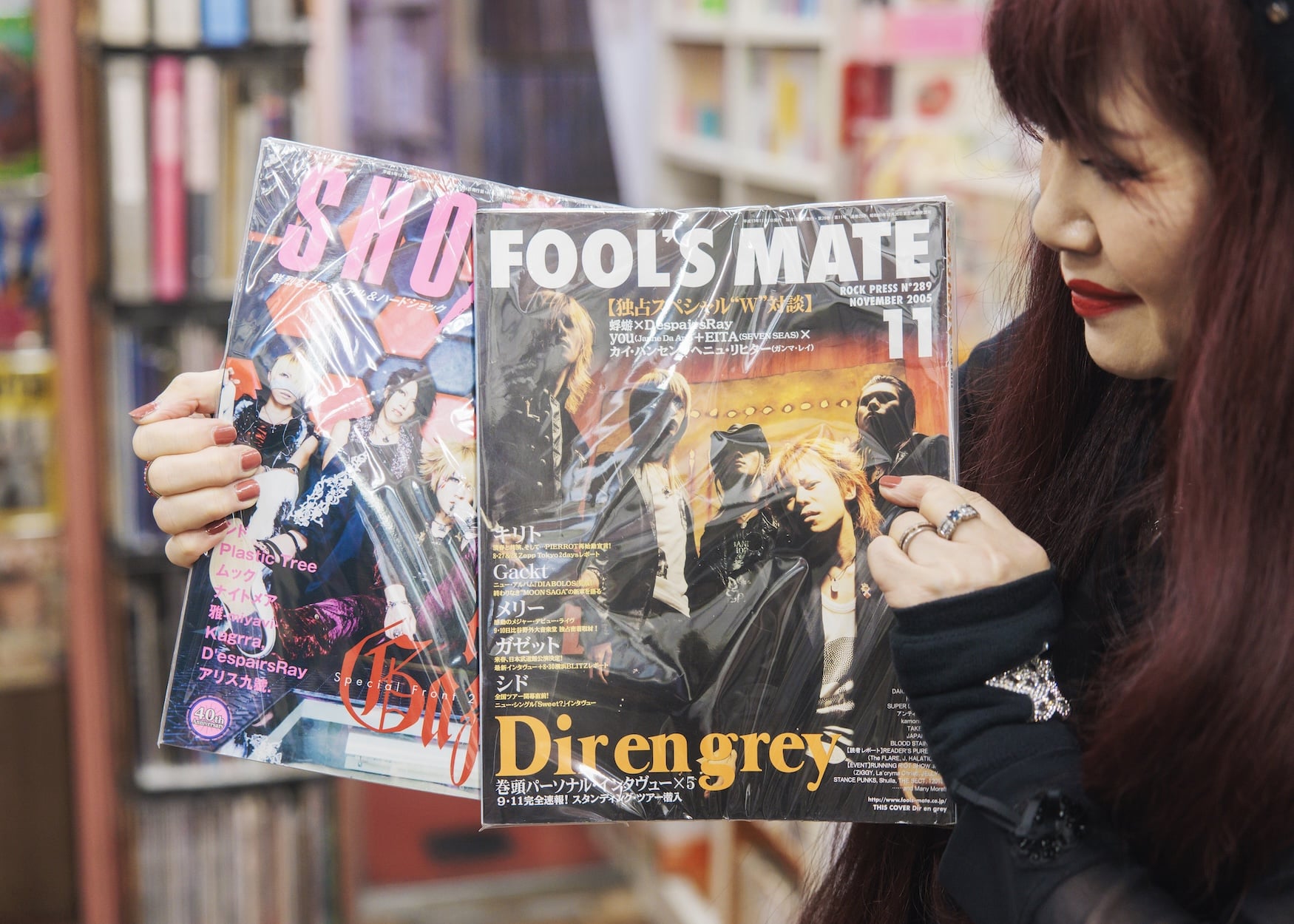
Visual kei rock magazines such as "FOOL’S MATE" and "SHOXX." In recent years, Japanese visual kei bands have gained popularity overseas, and some international fans visit the store while in Japan for concerts to search for past issues featuring their favorite bands.
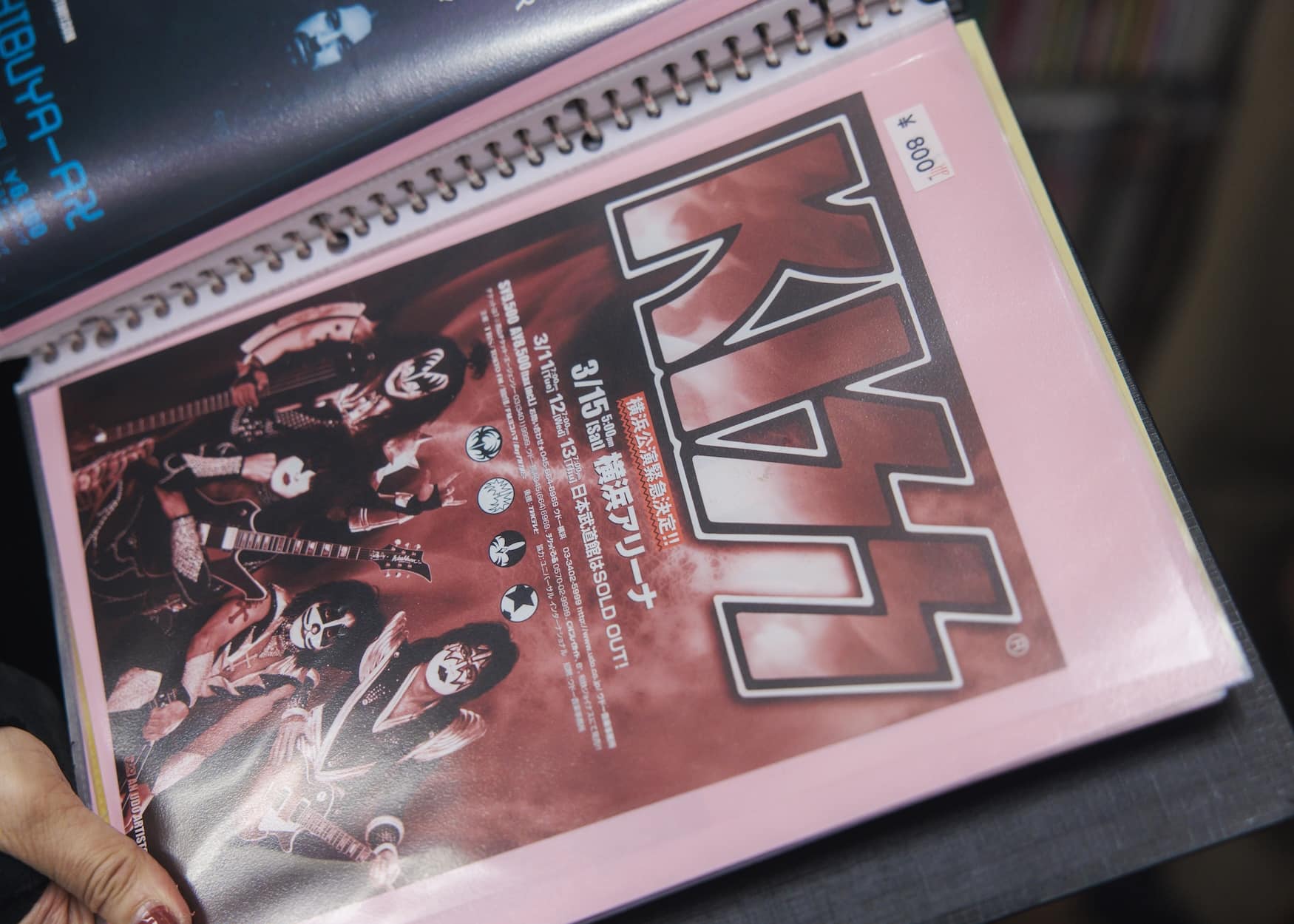
A flyer from the legendary American rock band KISS’s 2003 Japan tour. Carefully filed and preserved in its original condition, it is sold as a valuable collectible that conveys the excitement of the live music scene at the time.
Bunken Rock Side also carries a large selection of culture magazines covering film, fashion, art, and more. One of the store’s distinguishing features is that for some popular titles, the collection spans from the inaugural issue to recent editions, giving visitors the chance to discover unexpected gems.
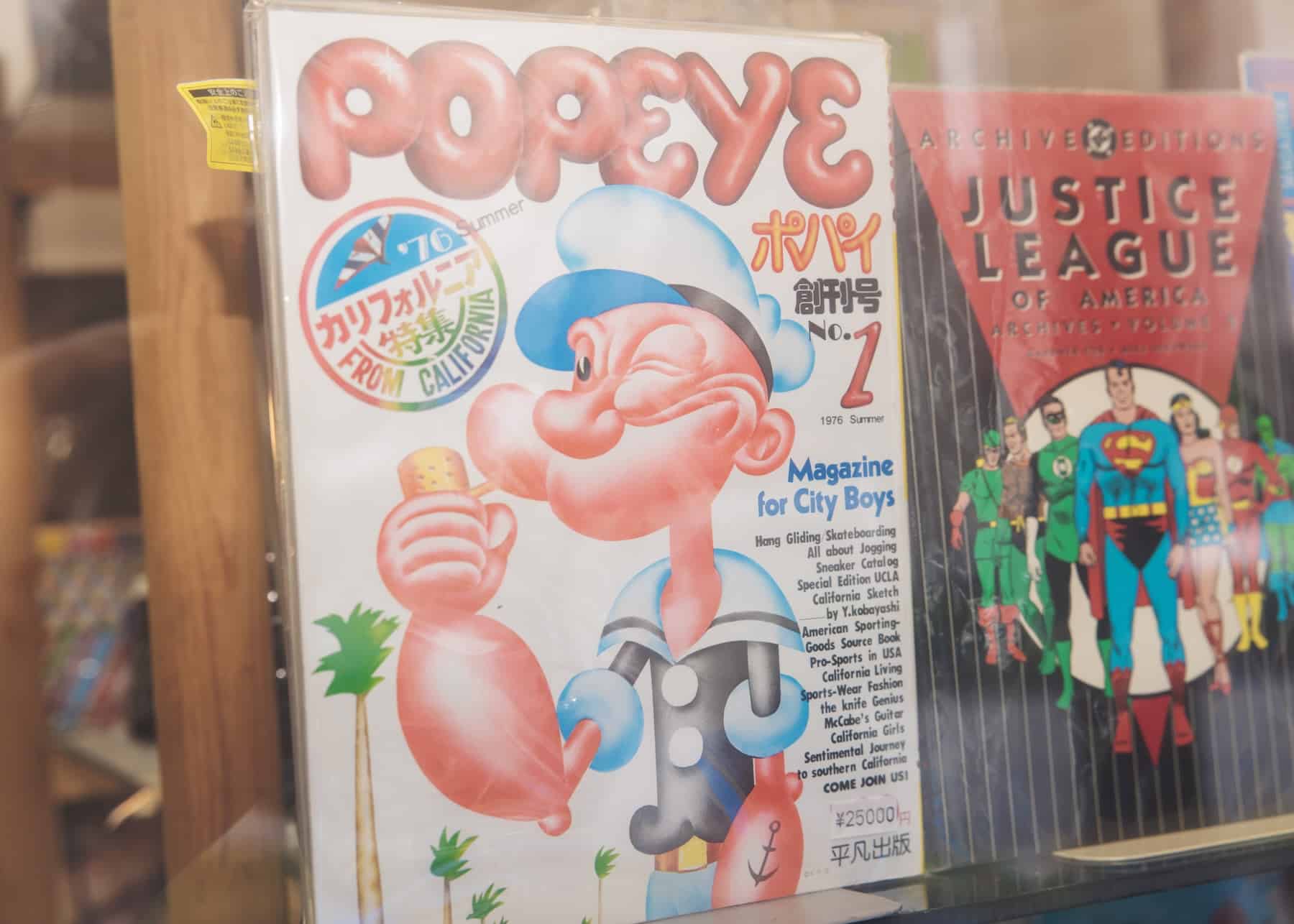
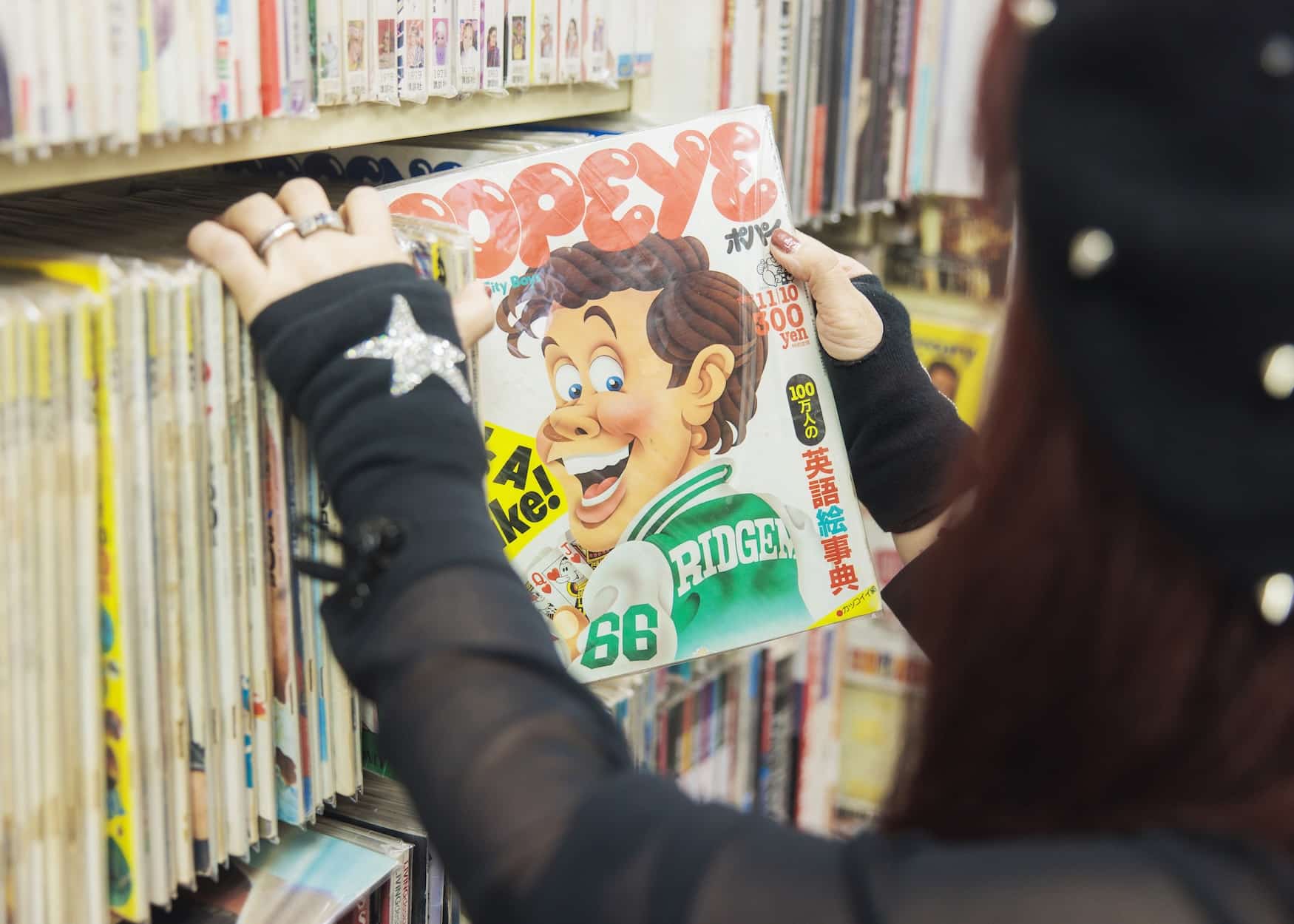
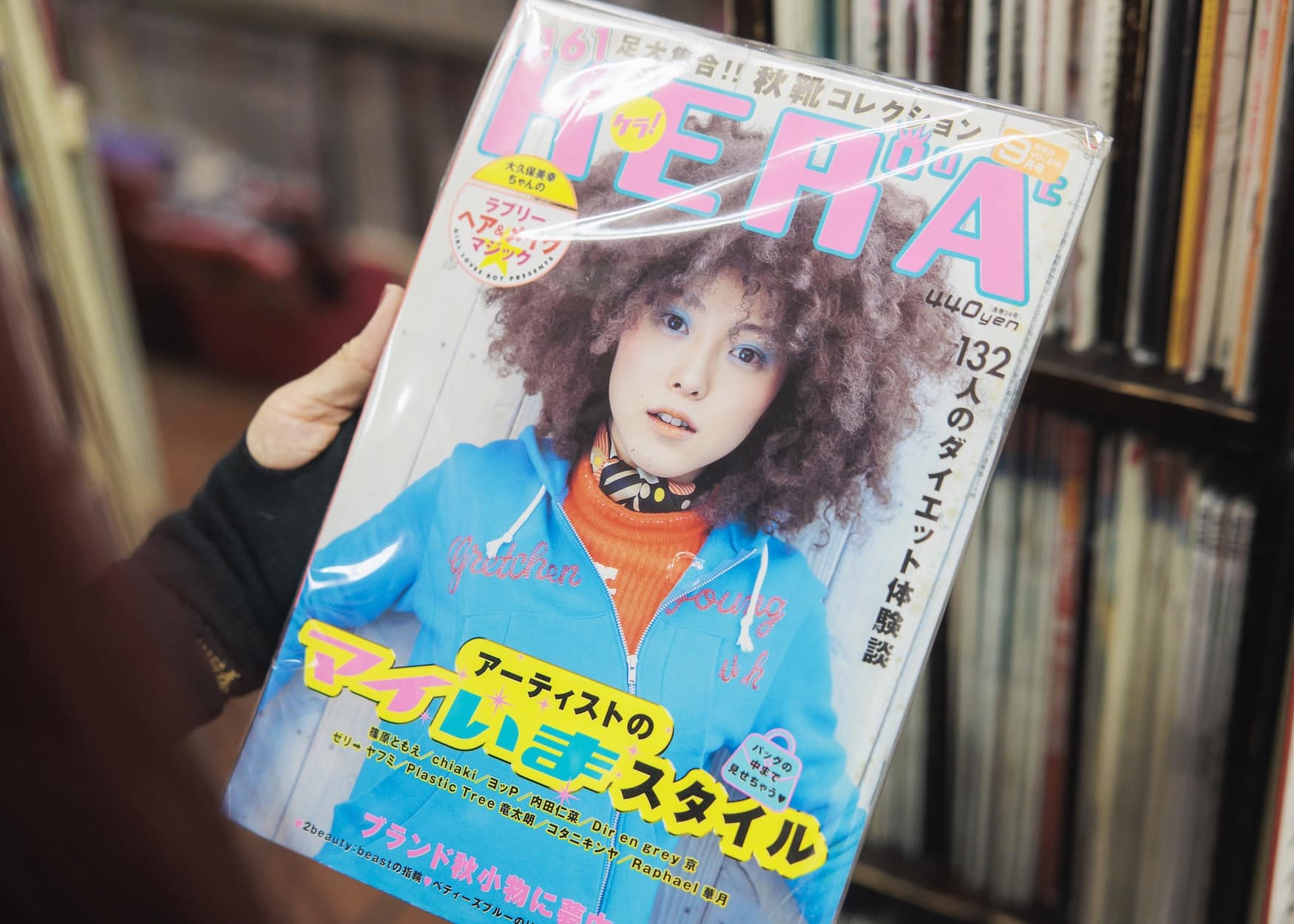
Before the internet became widespread, magazines were a valuable medium through which editorial teams could convey the atmosphere and excitement of the places and scenes they experienced firsthand. Issues of magazines such as "POPEYE," first published in 1976, that introduced overseas lifestyles—particularly those of the United States—brought new values and perspectives to young people in Japan and served as a gateway to worlds they admired. Fashion magazines such as "mc Sister" and "KERA" also captured the fashion of their respective eras, from international trends to the real-life styles seen on the streets.
Magazines did more than communicate trends. They recorded the atmosphere of their times, introduced readers to new cultures and values, and inspired a sense of aspiration. Bunken Rock Side is a place where visitors can experience the atmosphere preserved in these magazines and rediscover the culture and trends that captivated people at the time.
First published in 1976, "POPEYE" is one of Japan’s leading culture magazines, covering fashion and lifestyle. Pictured is a 1982 issue featuring an “English Picture Dictionary” special, a unique feature introducing local slang encountered by the editorial team in New York and Los Angeles.
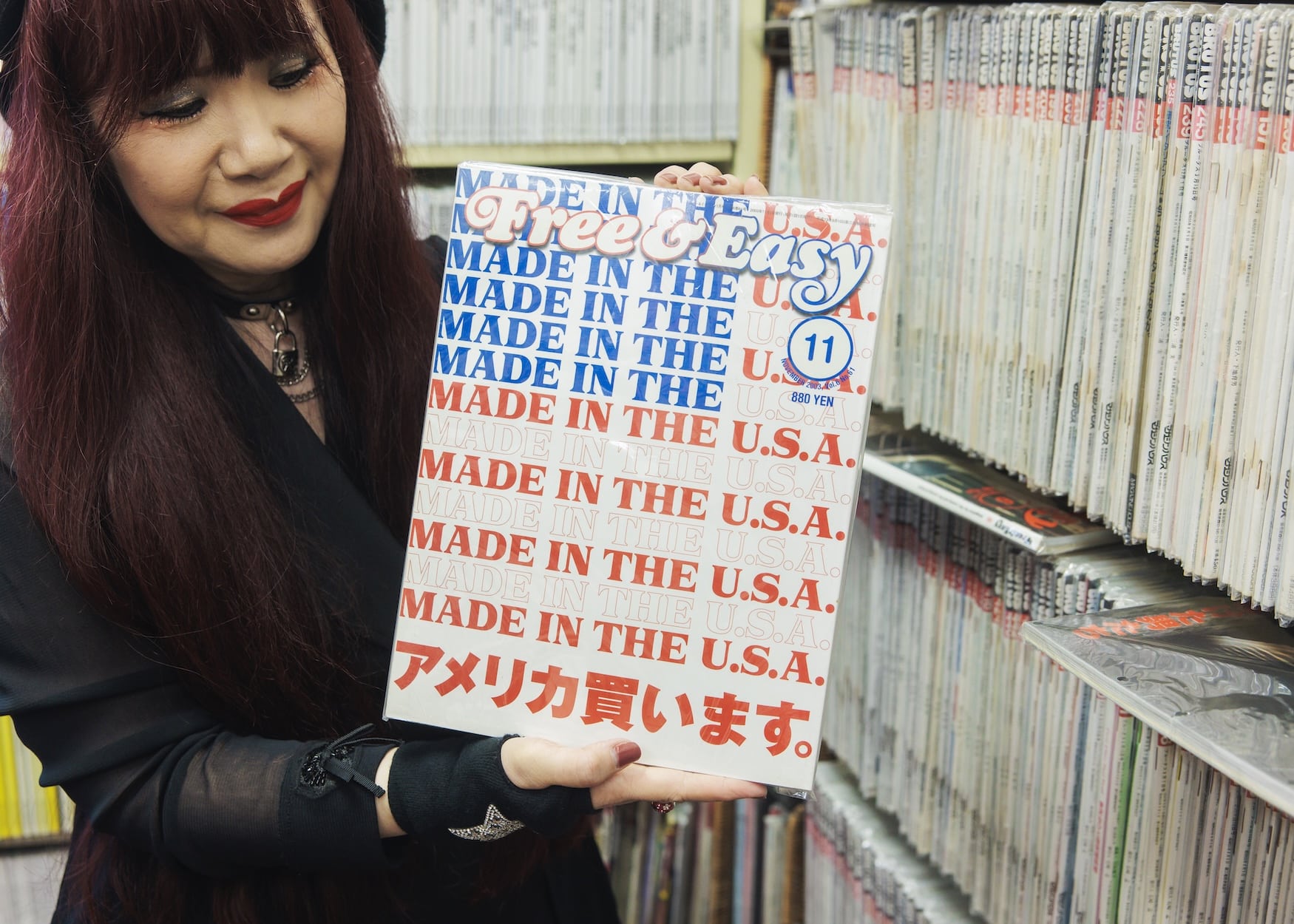
First published in 1998, "Free & Easy" was a men’s lifestyle and fashion magazine that extensively covered American casual and vintage styles. The pictured 2003 issue features products made in the United States, vividly reflecting the fascination with American culture at the time.
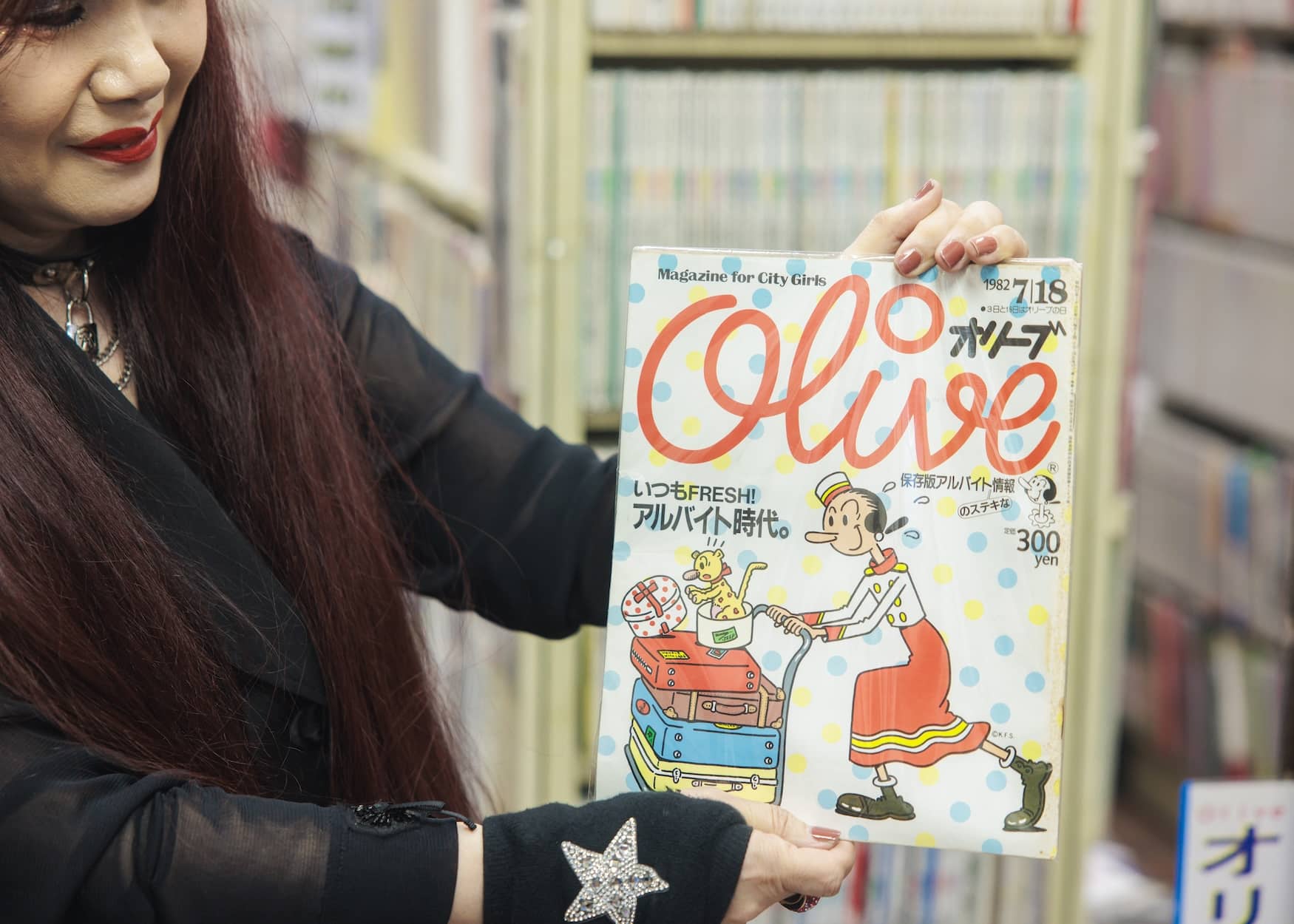
With illustrations that vividly evoke its era, "Olive" was a women’s fashion and culture magazine originally launched as a special issue of "POPEYE." Publication ceased in 2003, but during the 1990s it was regarded as a bible by many young women. It remains highly sought after on the secondhand market today. Pictured is a 1982 issue featuring a unique special on part-time job information, presented as a special edition to keep for future reference.
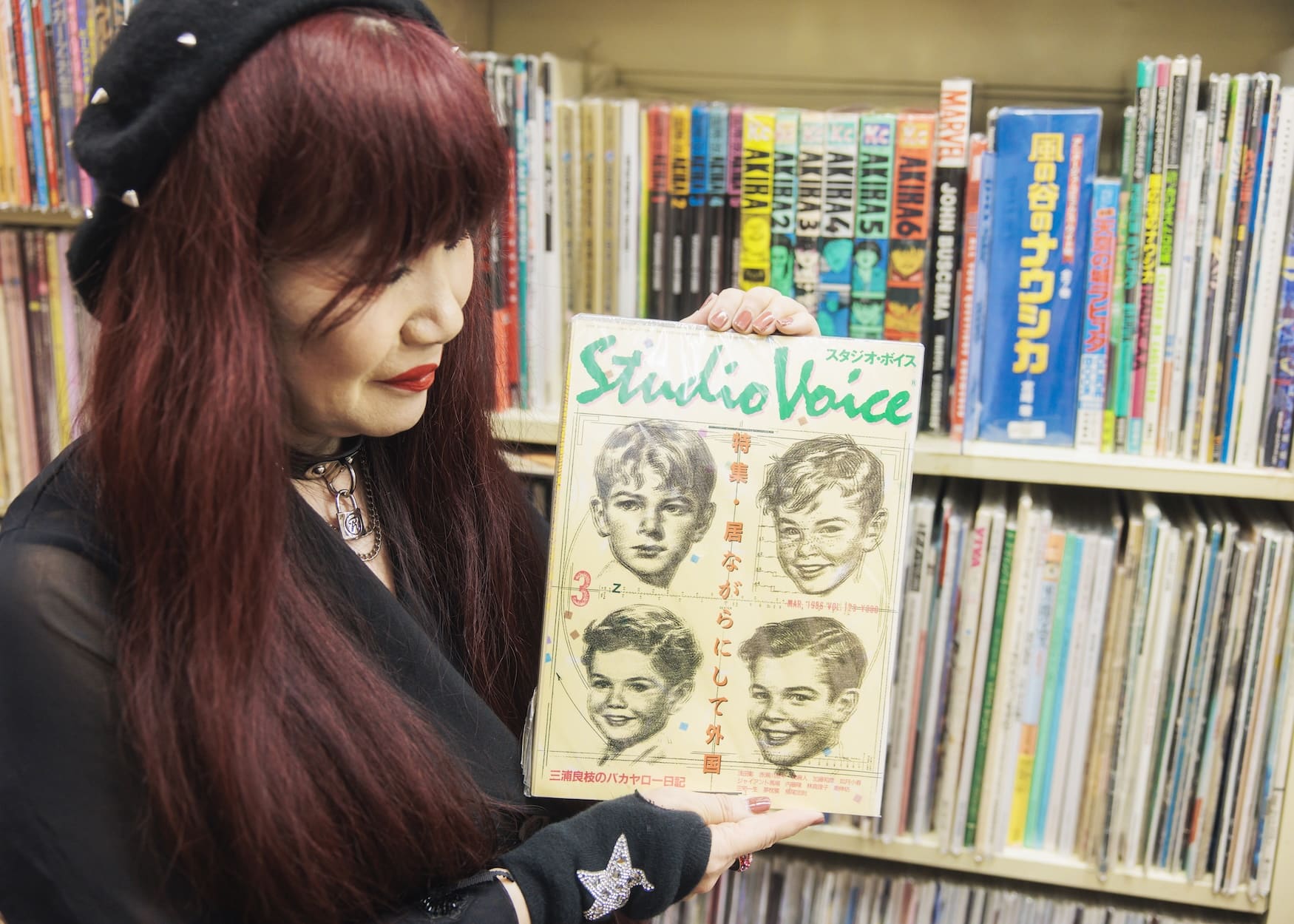
First published in 1976, the culture magazine "STUDIO VOICE" featured numerous contributions from leading cultural figures of the time, including Kazuhiko Kato and Jun Miura. Prominent Japanese artists such as Tadanori Yokoo were also featured in its special issues.
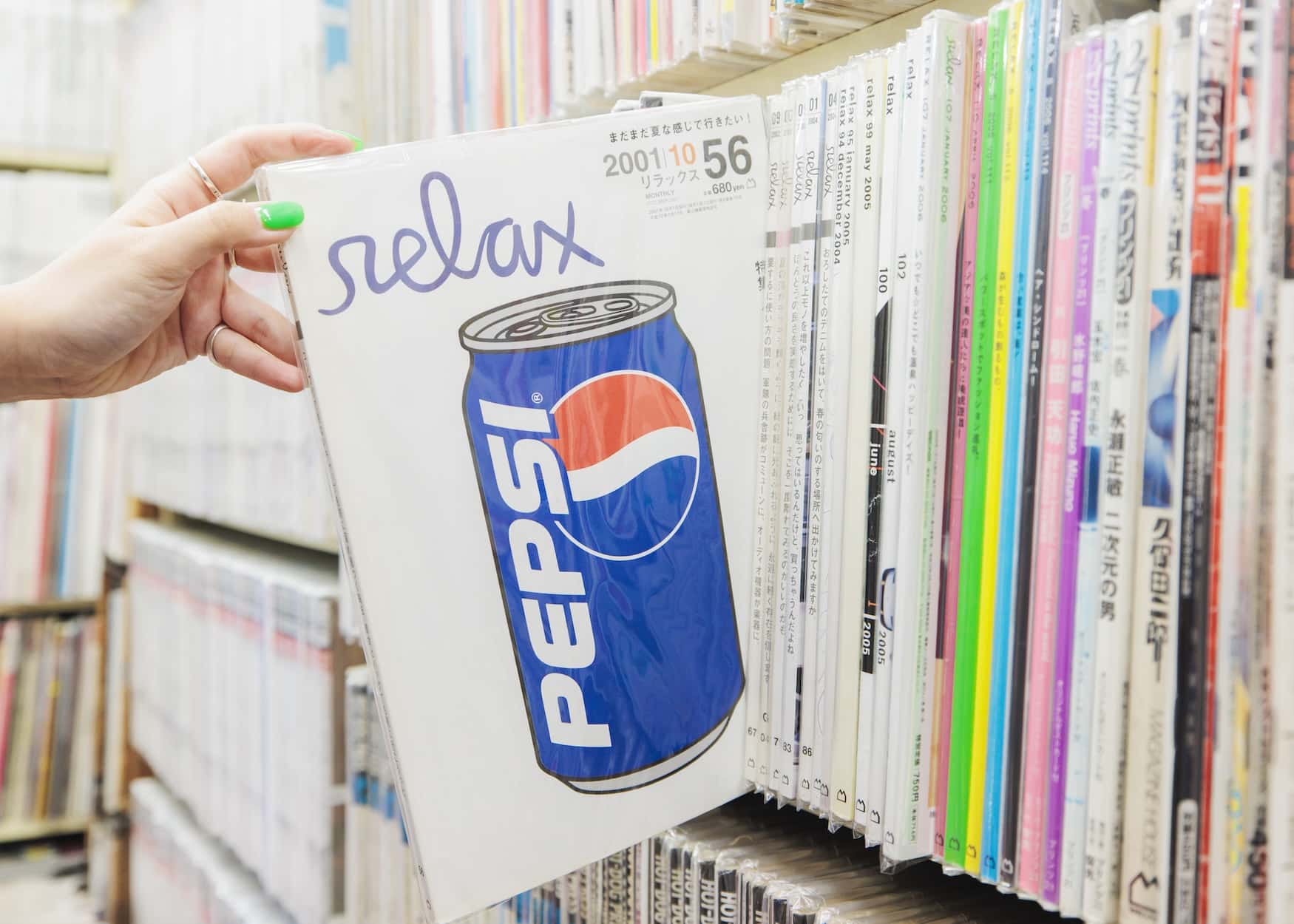
"relax" was a magazine that helped lead Japan’s street scene. Its 2001 “BAPEPSI” special featured a collaboration between streetwear brand "A BATHING APE" and Pepsi, including limited-edition camouflage Pepsi cans. The issue remains highly sought after by collectors today.
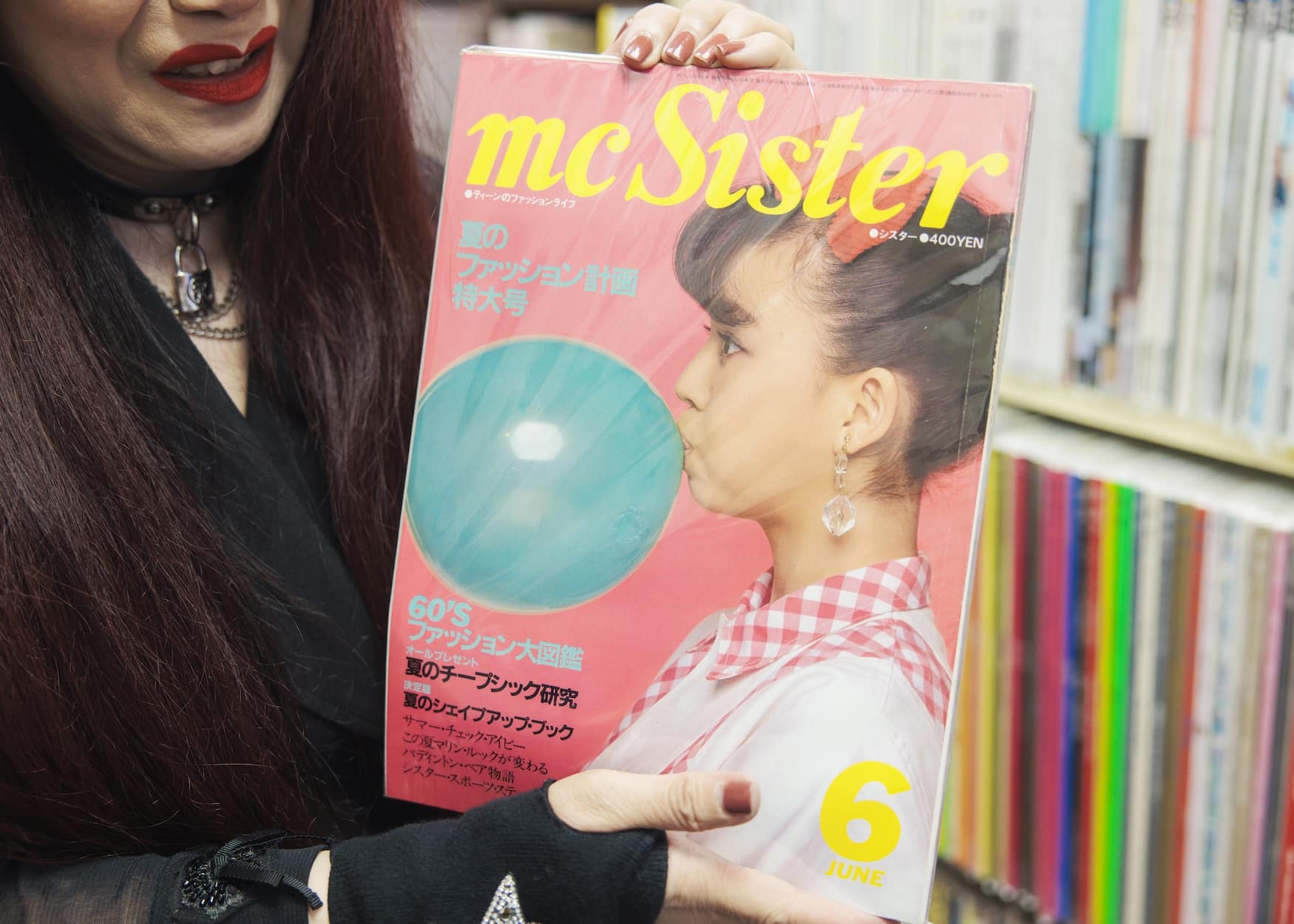
First published in 1966, "mc Sister" was a monthly fashion magazine that introduced Ivy League and preppy styles and enjoyed enormous popularity among junior high and high school students at the time. Pictured is an issue published in 1982, featuring an in-depth look at 1960s fashion, which was popular at the time.
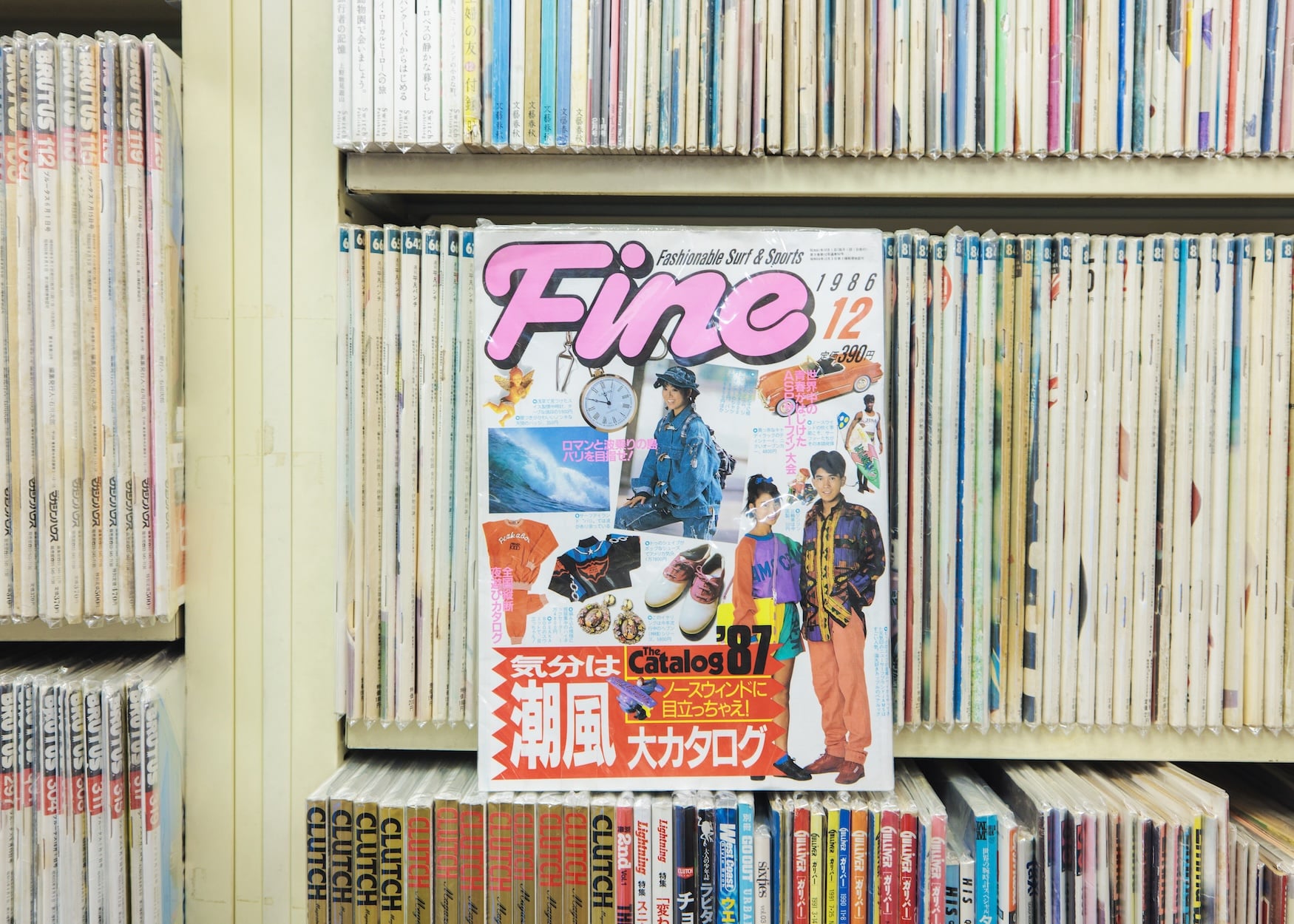
"Fine" covered the board sports known collectively as the “3S”—surfing, skateboarding, and snowboarding—as well as street fashion and lifestyle. Pictured is the December 1986 issue, which captures the mood of surf culture and casual fashion.
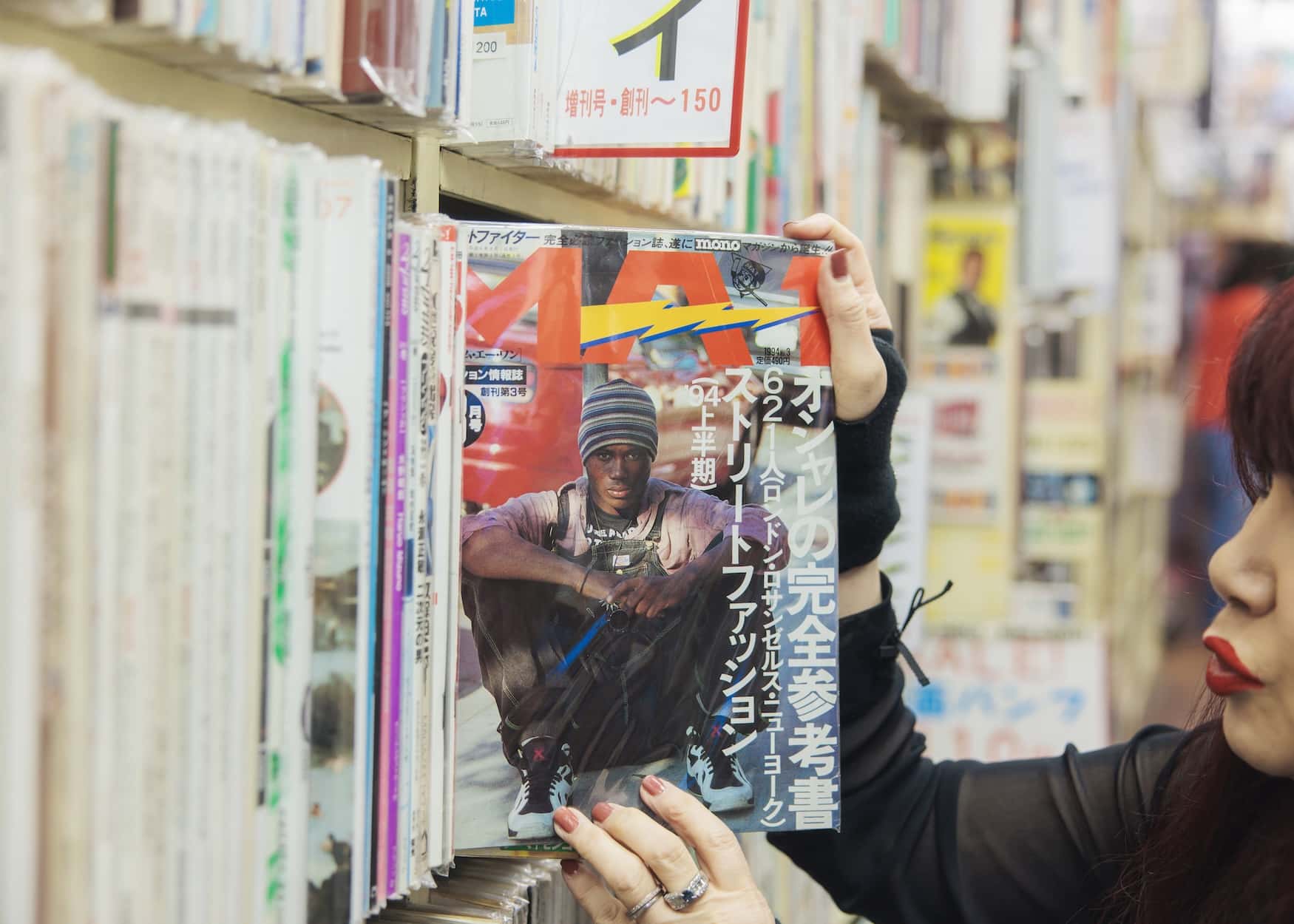
Published in 1994, the subculture magazine "mono MA-1" featured street fashion from London, Los Angeles, and New York. From the 1990s onward, many magazines emerged that captured real-life fashion and culture through street snapshots taken in Japan and abroad.
"KERA" was a fashion magazine that showcased street styles originating in Harajuku, including punk, rock, gothic, Lolita, and visual kei. As a magazine emblematic of Japan’s distinctive fashion culture, it remains highly popular internationally today.
The information in this article is current as of September 8, 2026 (at the time of publication).