DEEPTOKYO
magazine

EN

DEEPTOKYO
magazine
EN
2026.07.21
Long-Established Nori Specialty Shop That Created Seasoned Nori


 Nearest Station


Yamamoto Noriten Nihonbashi Main Store, located in Muromachi, Nihonbashi, is a long-established nori specialty shop founded here in 1849. It is also known as the first shop in Japan to create seasoned nori. Inside the spacious store, visitors can take their time comparing products that have long been popular as gifts. They can also enjoy experiences unique to a nori specialty shop, including live demonstrations of grilled nori sales and hand-roll menus made with nori warmed over charcoal.
SHARE

Nori is a traditional Japanese ingredient made by drying seaweed. It is widely known as an ingredient used in sushi and onigiri rice balls, but when eaten on its own, it also allows you to fully enjoy its aroma, melt-in-the-mouth texture, and umami.
Yamamoto Noriten is a nori specialty shop that carefully selects nori sourced from production regions and finishes it as products such as grilled nori and seasoned nori. In 1869, it became the first shop in Japan to create seasoned nori, made by flavoring nori with soy sauce, mirin, and other seasonings.Since then, it has also been loved as a gift item.
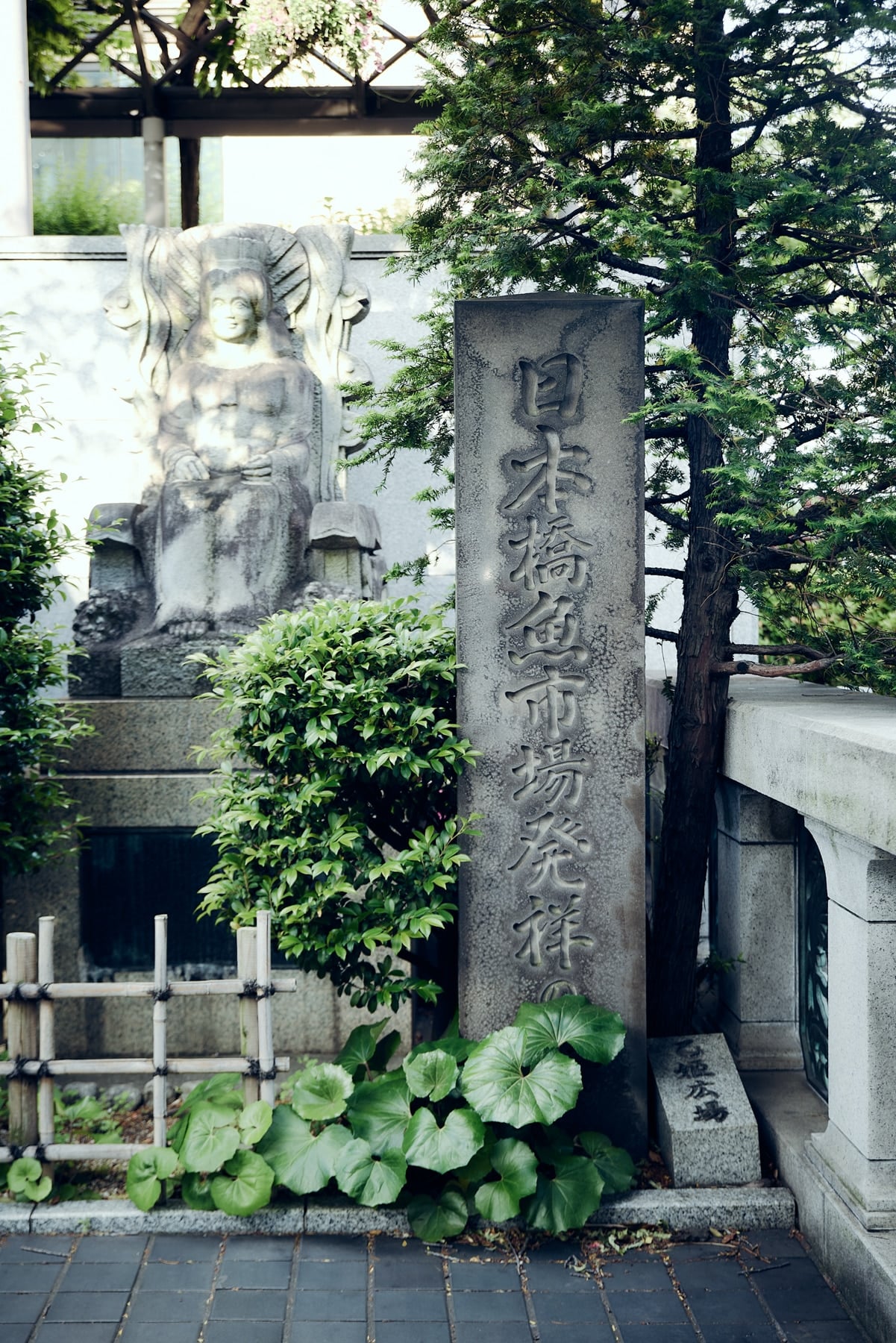
The main store is located in Nihonbashi Muromachi 1-chome, the place where the company was founded. The surrounding area is lined with department stores and office buildings, making it one of Nihonbashi’s representative commercial districts. At the time of the company’s founding, this location was home to a fish market and wholesale district known as Uogashi, and it was a lively place that supported Edo’s food culture and commerce. As if carrying on that legacy, many long-established wholesalers dealing in seafood still gather in the surrounding area today. Just behind Yamamoto Noriten, there is a stone monument marking the site of the former Nihonbashi Uogashi, conveying the deep connection between this land and seafood to the present day.
Nori contains the umami components glutamic acid, inosinic acid, and guanylic acid. It is said that nori is the only natural food that contains all three of these umami components.
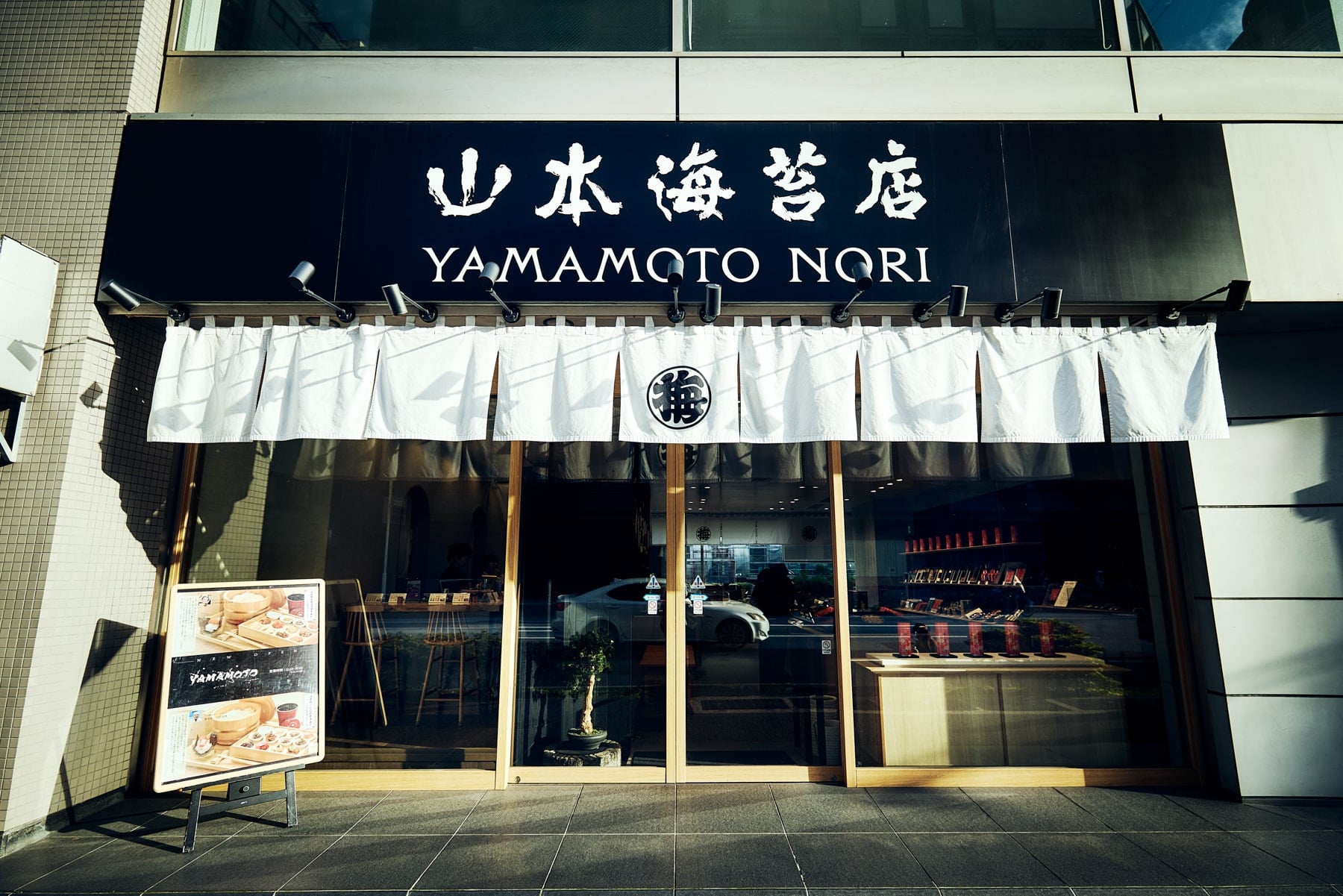
The main store has a glass exterior accented by a black sign and white noren curtain. Its dignified appearance leaves a strong impression.
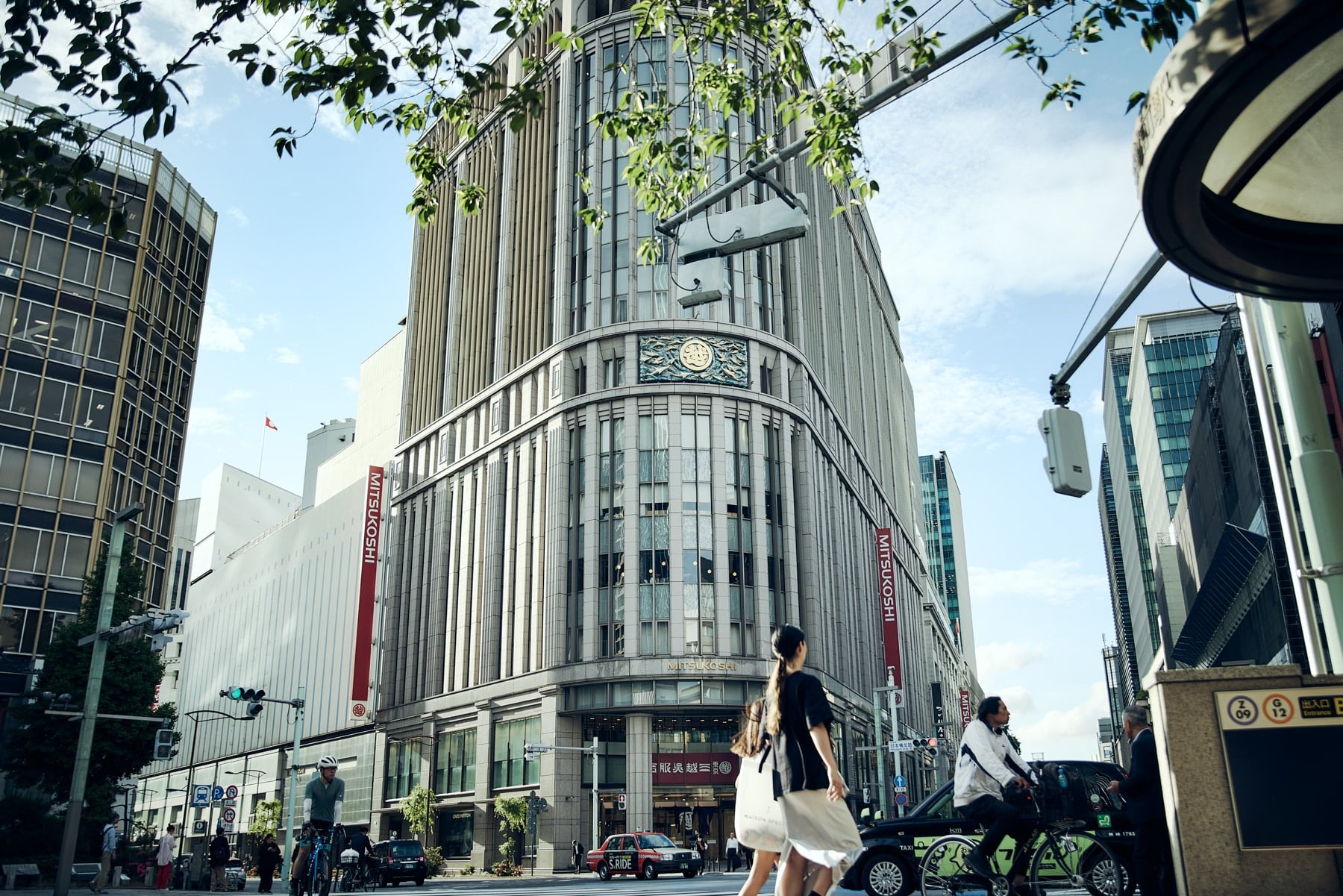
The store is located in the heart of Nihonbashi, where office buildings and Nihonbashi Mitsukoshi Main Store stand nearby, and where businesspeople and shoppers come and go.
Behind the shop stands a stone monument marking the site of the former Nihonbashi Uogashi. It expresses the idea that fish from Ryugu-jo, the undersea palace that appears in Japanese folktales, gathered in Nihonbashi, and features a statue inspired by the princess of Ryugu-jo.
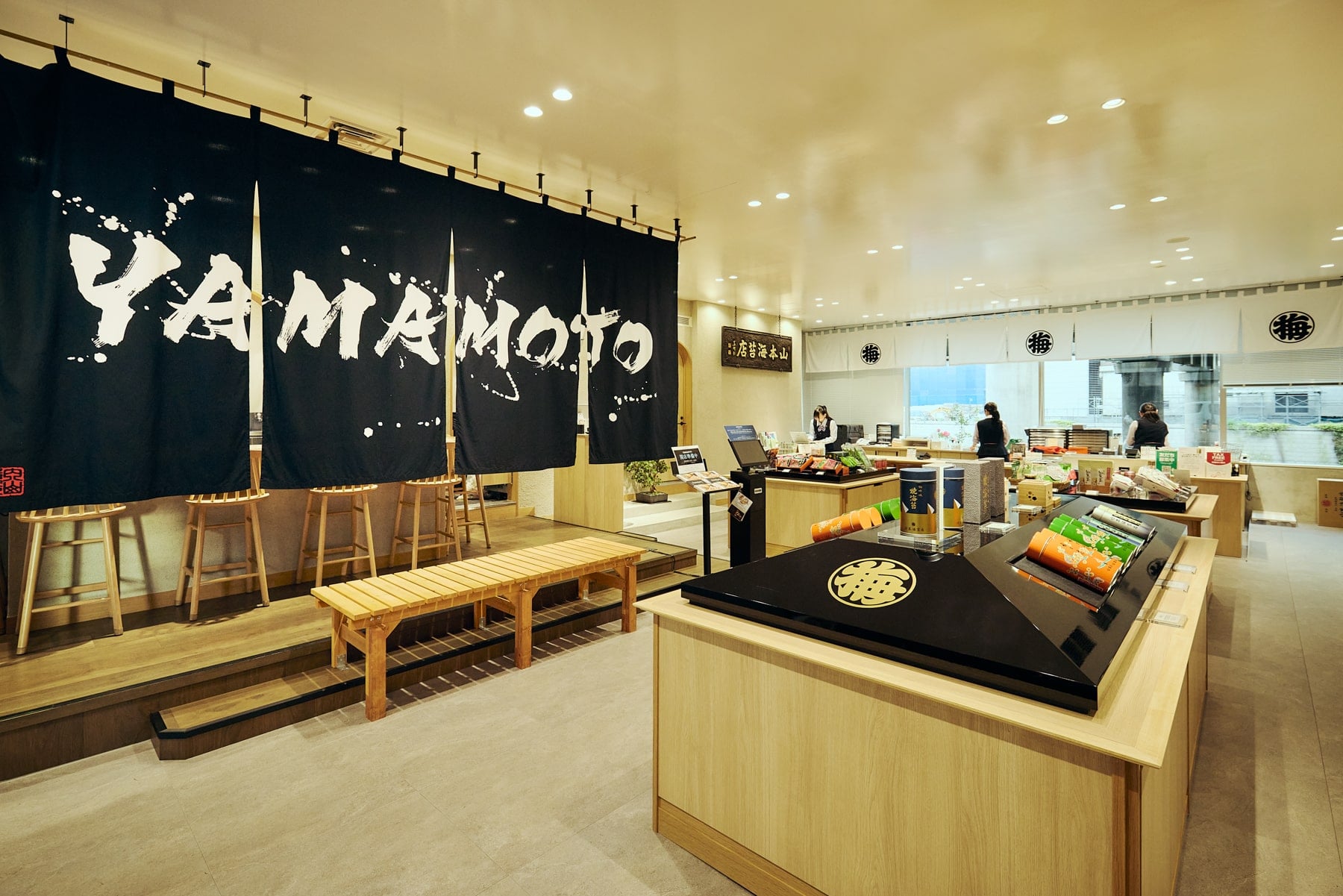
The interior is a modern, refined space based on black and white, with wood grain used as an accent. A wide variety of products are displayed, including the long-selling Ume no Hana series, nori with toppings suited for gifts, ochazuke, and assorted gift sets. The store also offers live demonstrations of grilled nori sales using a dedicated nori roaster with far-infrared effects. Visitors can also purchase freshly grilled nori.
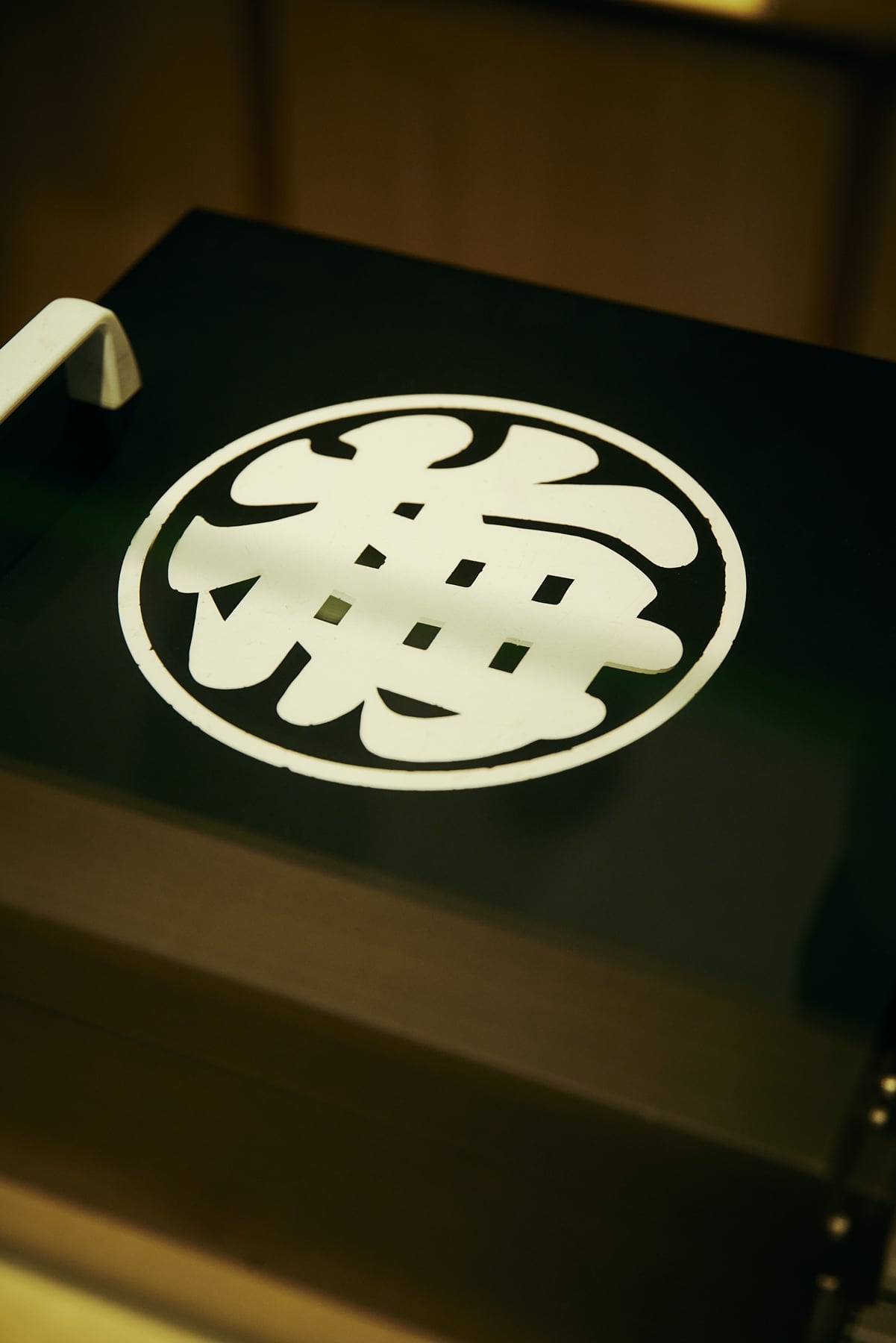
In addition, the store displays the shop sign that has been used since 1928, as well as noren curtains and store fixtures featuring the Maruume mark that has been used since the company’s founding. Within the modern space, visitors can also experience the history unique to a long-established shop.
The open interior is based on black and white. The “YAMAMOTO” noren curtain hanging in the dining area was created by calligrapher Ryo Uchiyama, who has worked on many store decorations in Nihonbashi.
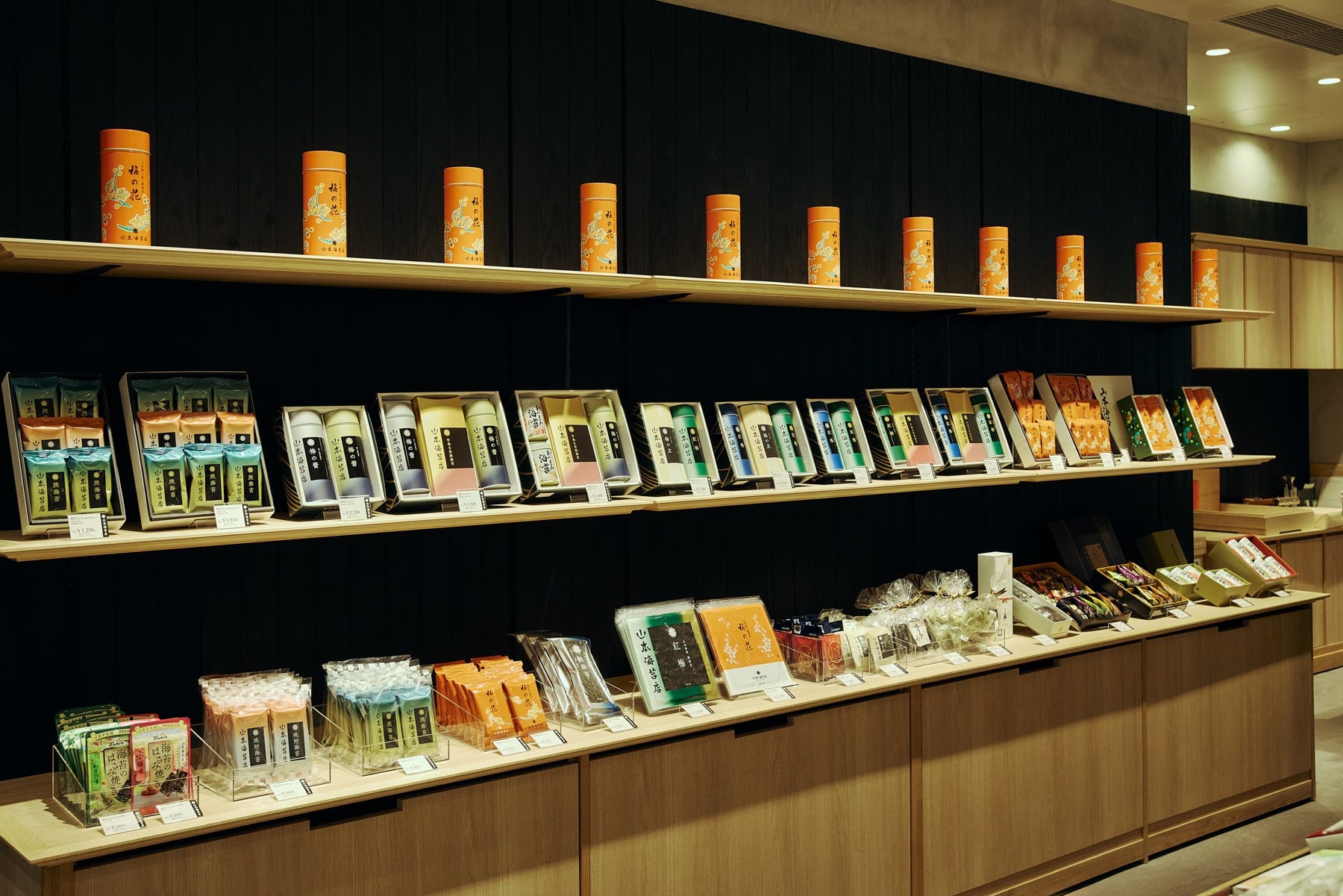
Wooden shelves display a variety of products, ranging from classic tins of nori to boxed gift items.
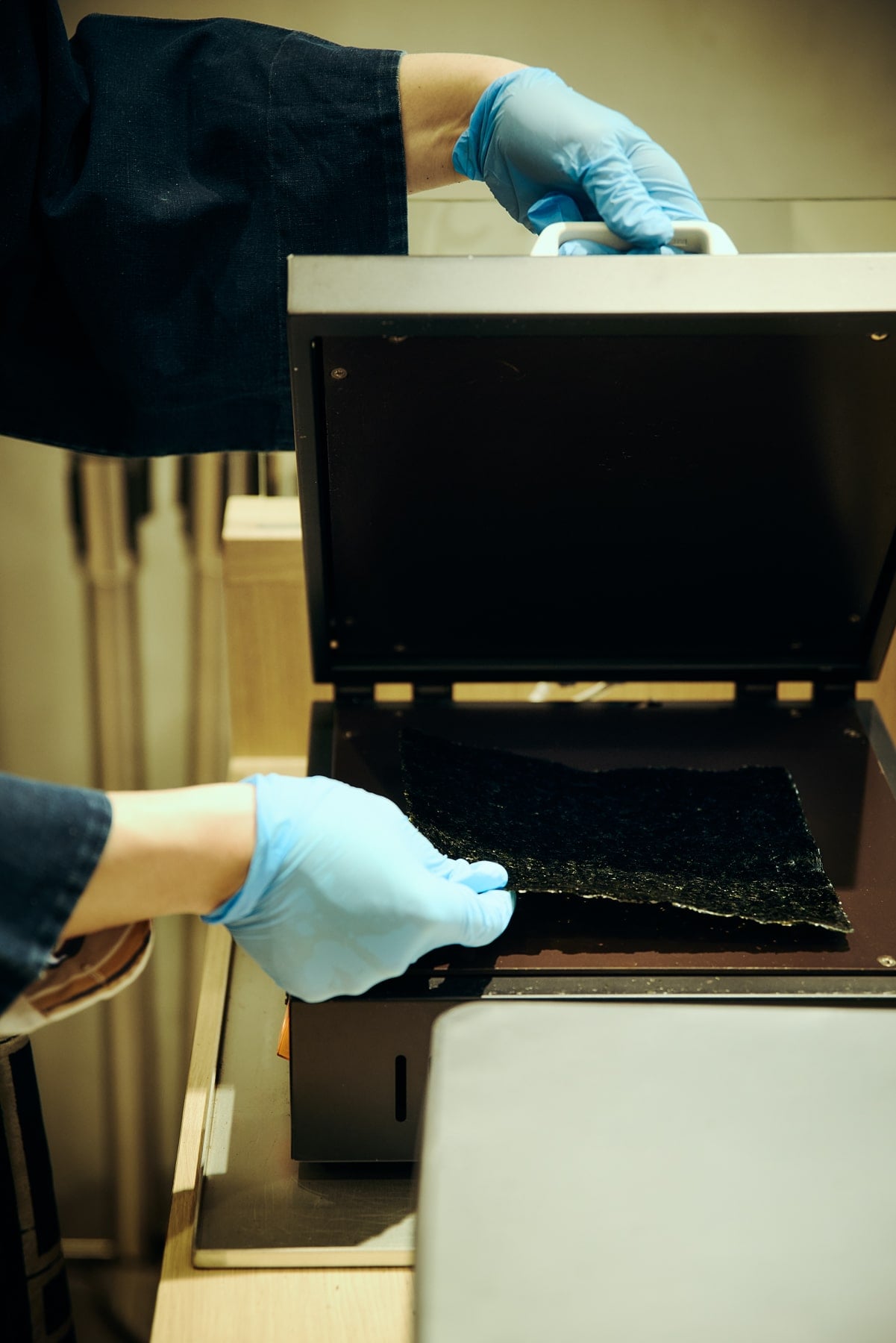
Inside the store, live demonstrations of grilled nori sales are held using a dedicated nori roaster with far-infrared effects.
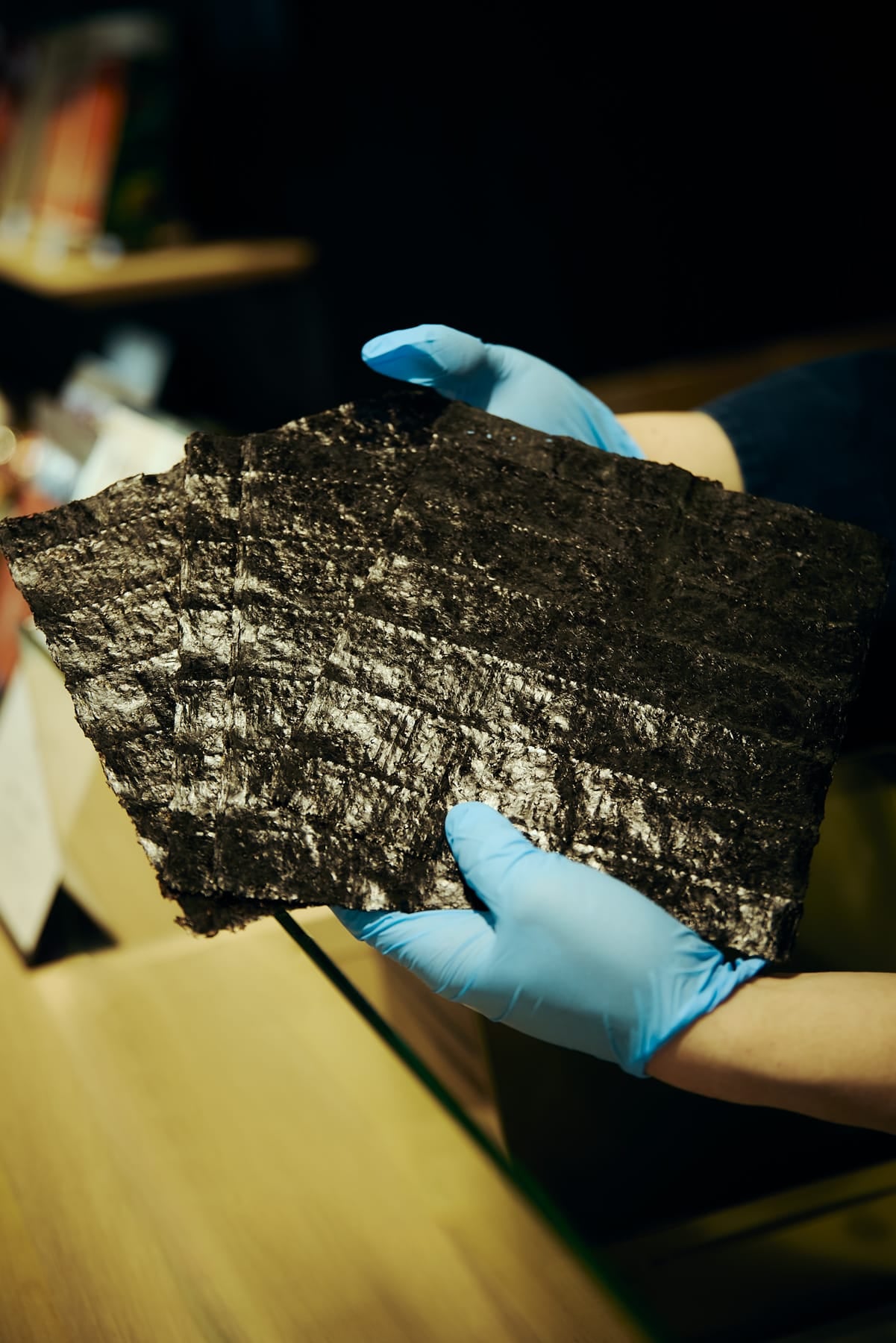
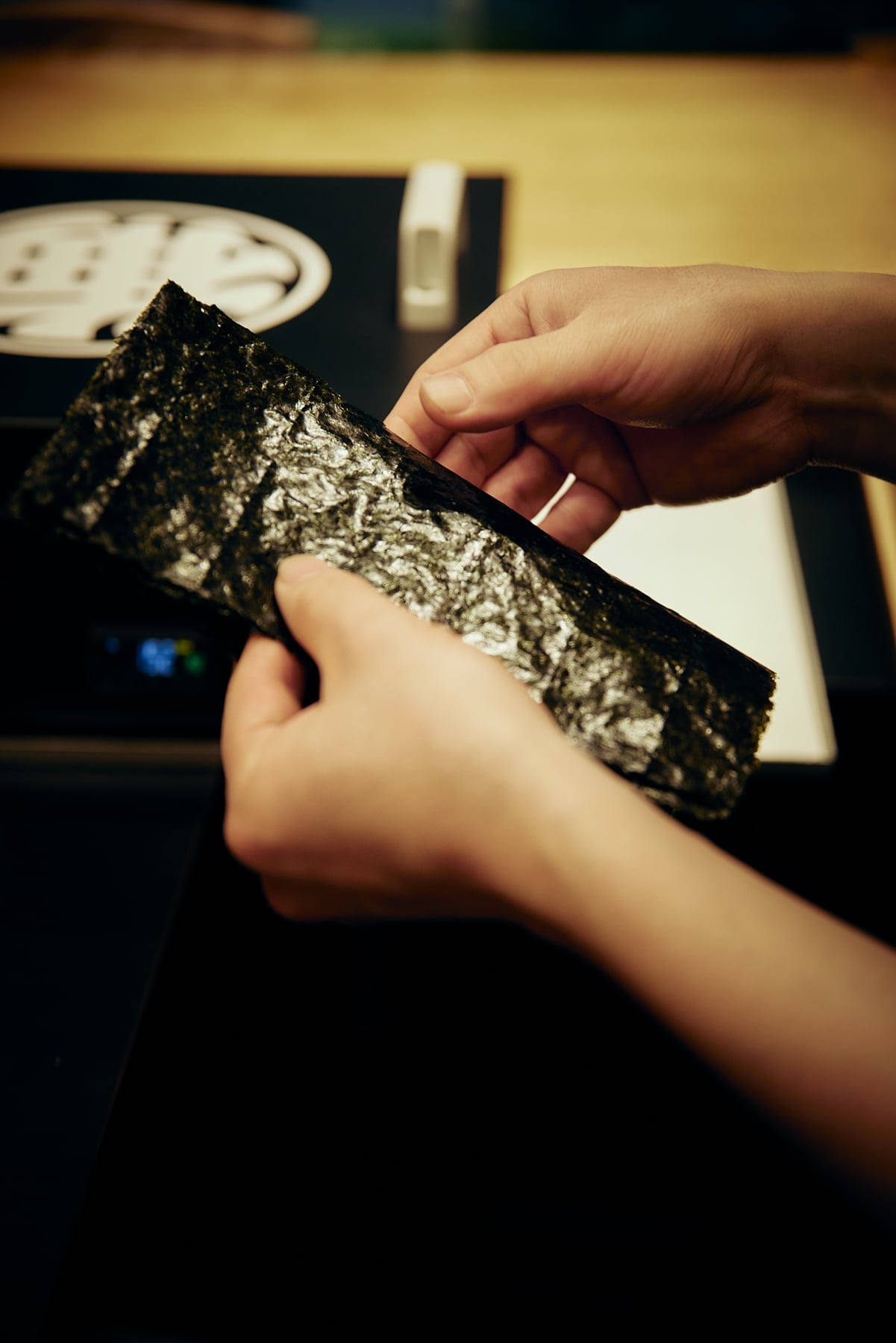
Staff grill the nori by placing two sheets at a time into the machine. This brings out the aroma and flavor of the sea more vividly and creates a crisp texture.
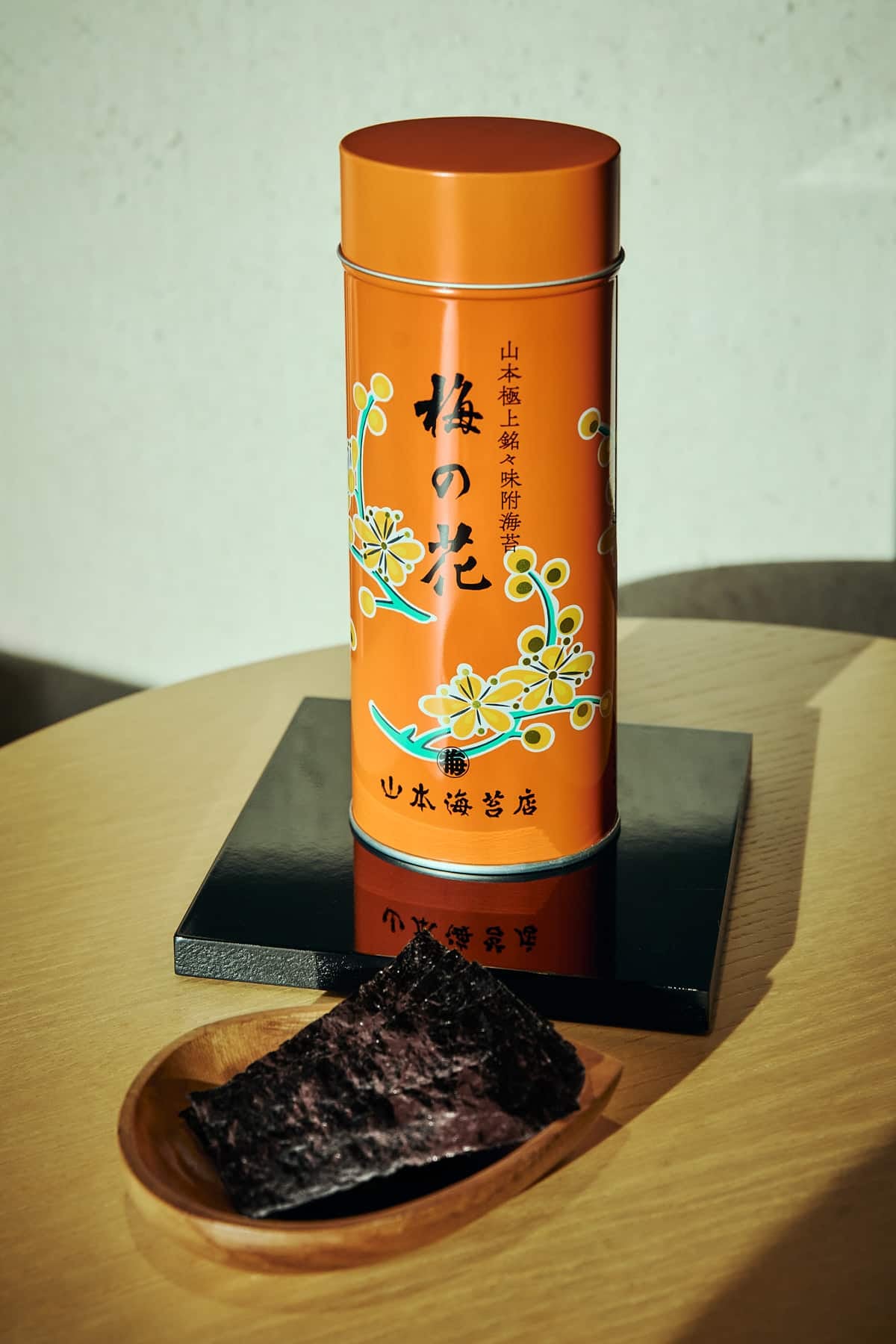
Ume no Hana seasoned nori, one of the shop’s signature products. When the package is opened, a fragrant aroma reminiscent of freshly grilled nori spreads out. Ume no Hana No. 2 tin, seasoned nori, ¥2,700.
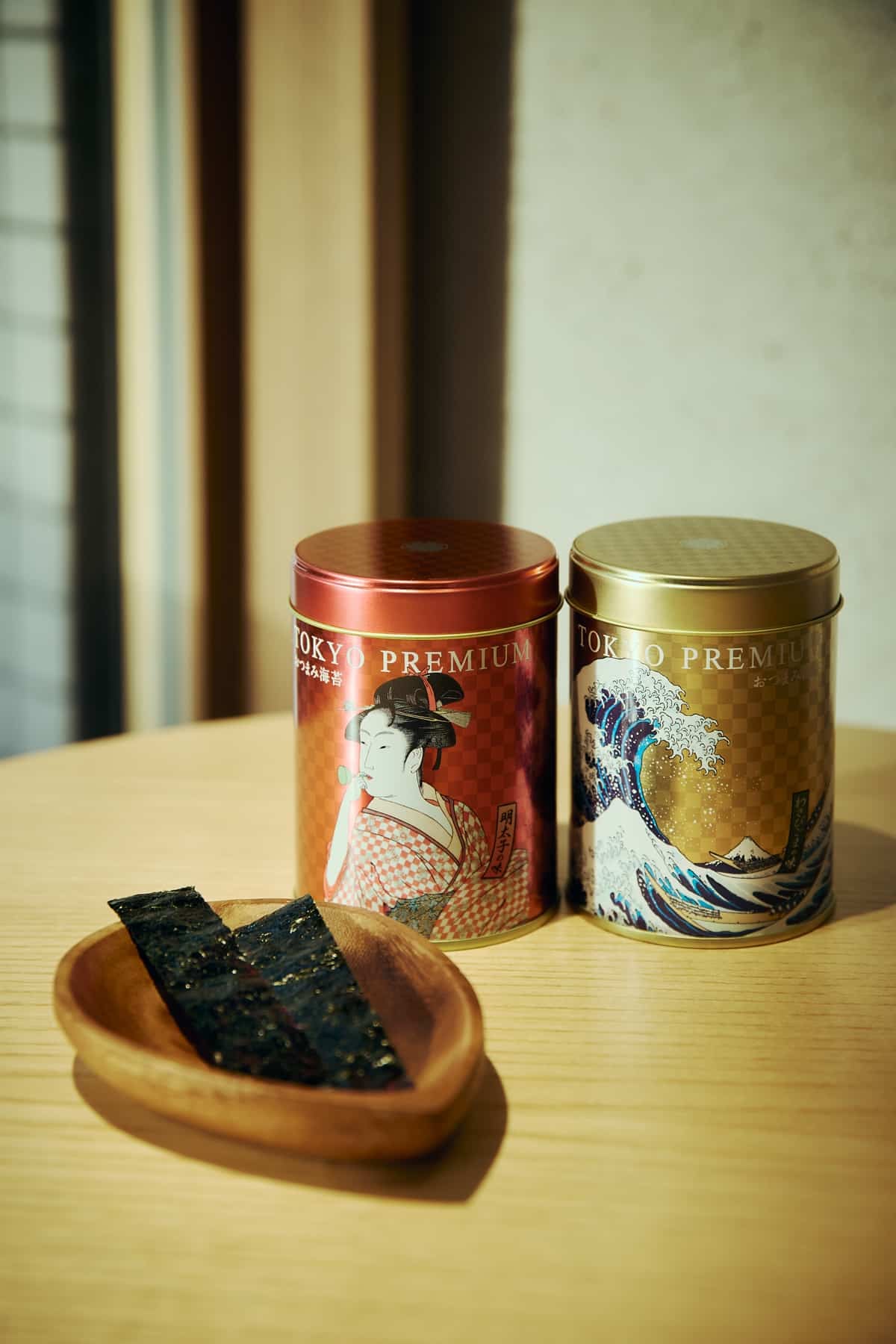
Snack-style nori in small tins decorated with ukiyo-e designs. Filled with granules such as mentaiko and wasabi, they are recommended as snacks to enjoy with alcohol or between meals. Tokyo Premium Otsumami Nori, ¥864 each.
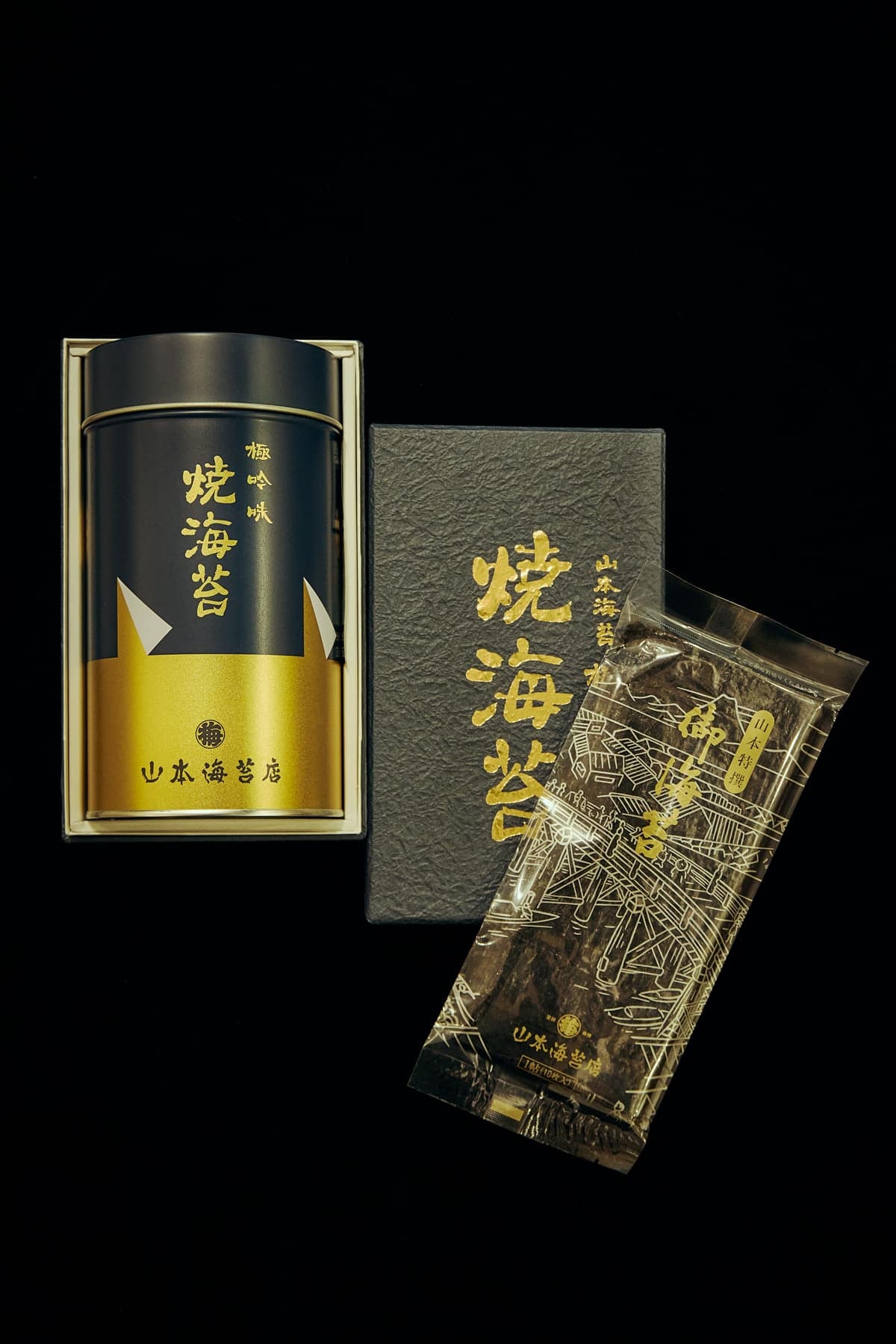
Premium grilled nori available only at the Nihonbashi Main Store. It melts smoothly in the mouth and offers a subtle sweetness. From left: Goku Ginmi Grilled Nori, 48 packets, ¥16,200; Dry Nori, 10 sheets, ¥6,264.
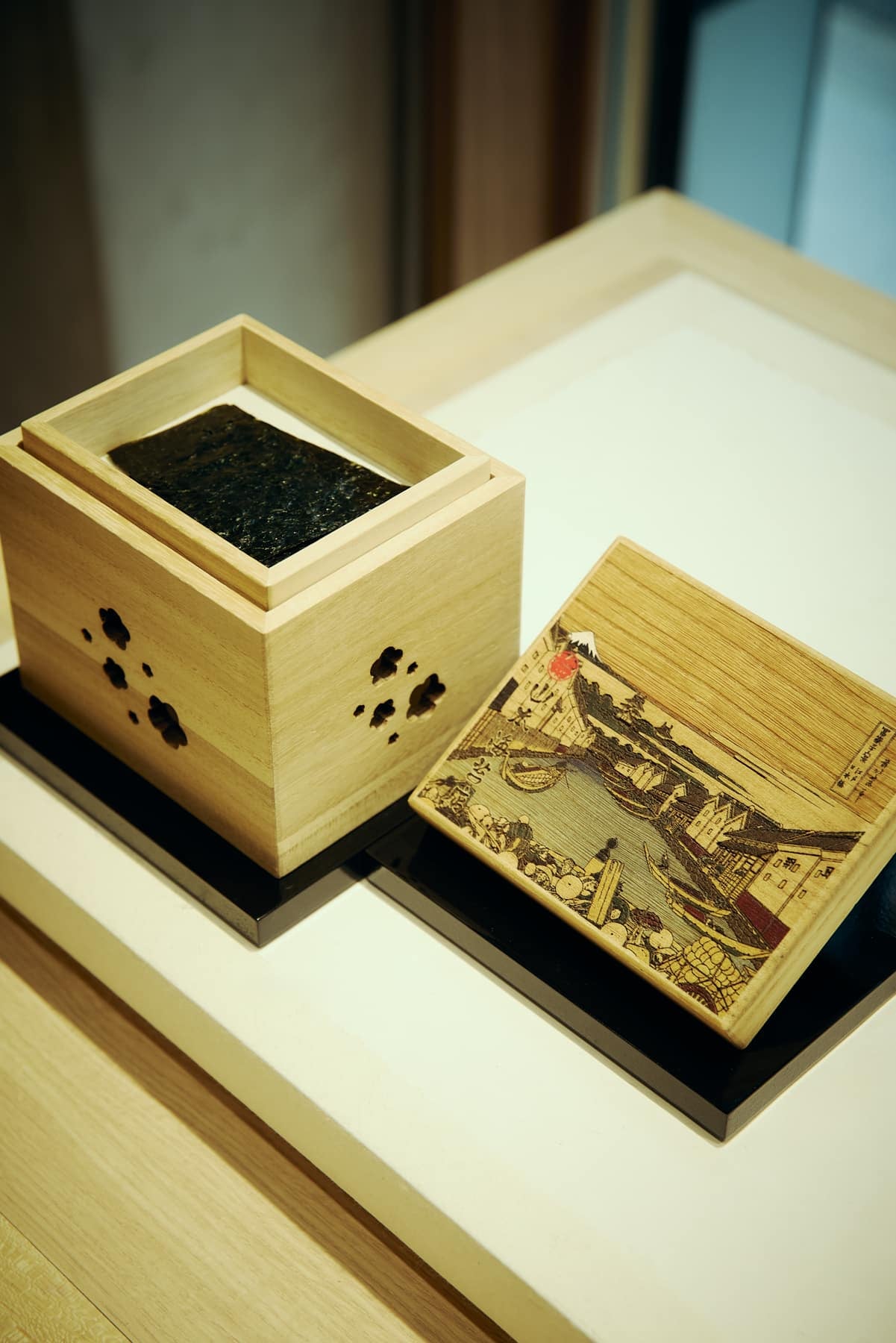
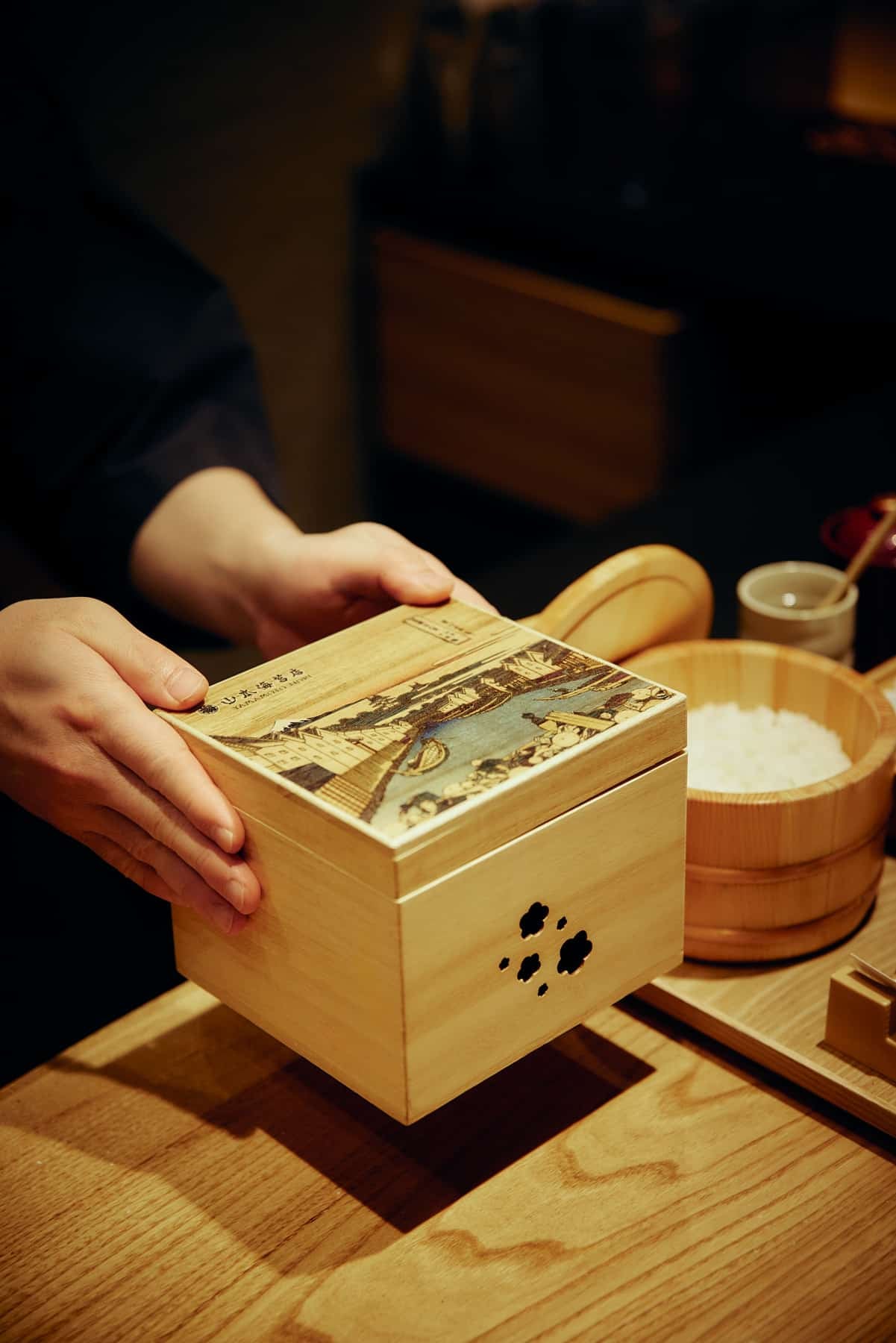
A grilled nori box, which warms nori with charcoal placed inside, is priced at ¥18,370 as a set with charcoal. The lid of the box features Katsushika Hokusai’s ukiyo-e print Thirty-six Views of Mount Fuji: Edo Nihonbashi.
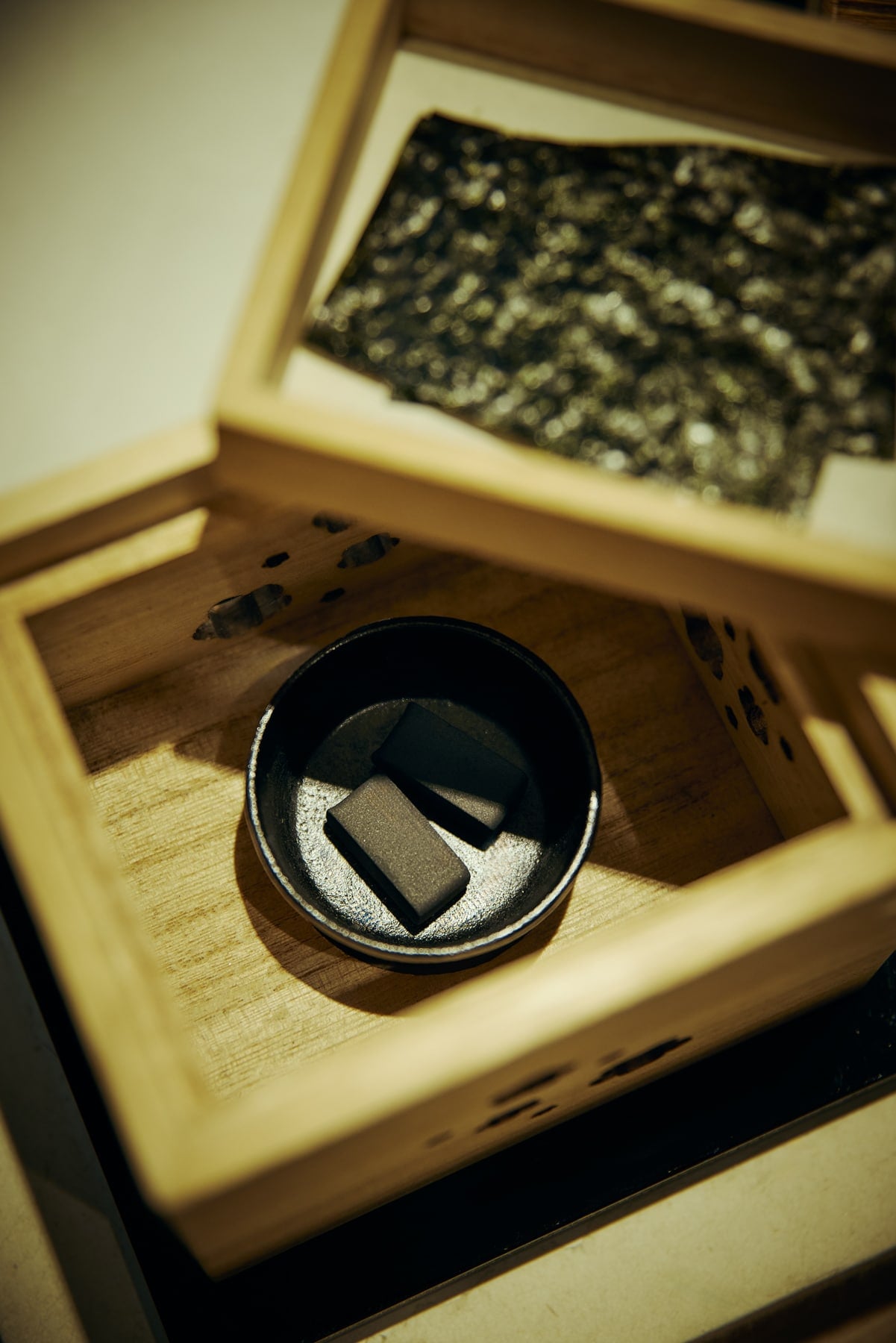
By placing a small piece of charcoal inside the box and lighting it, the aroma, flavor, and crisp texture of the grilled nori are preserved throughout the meal.
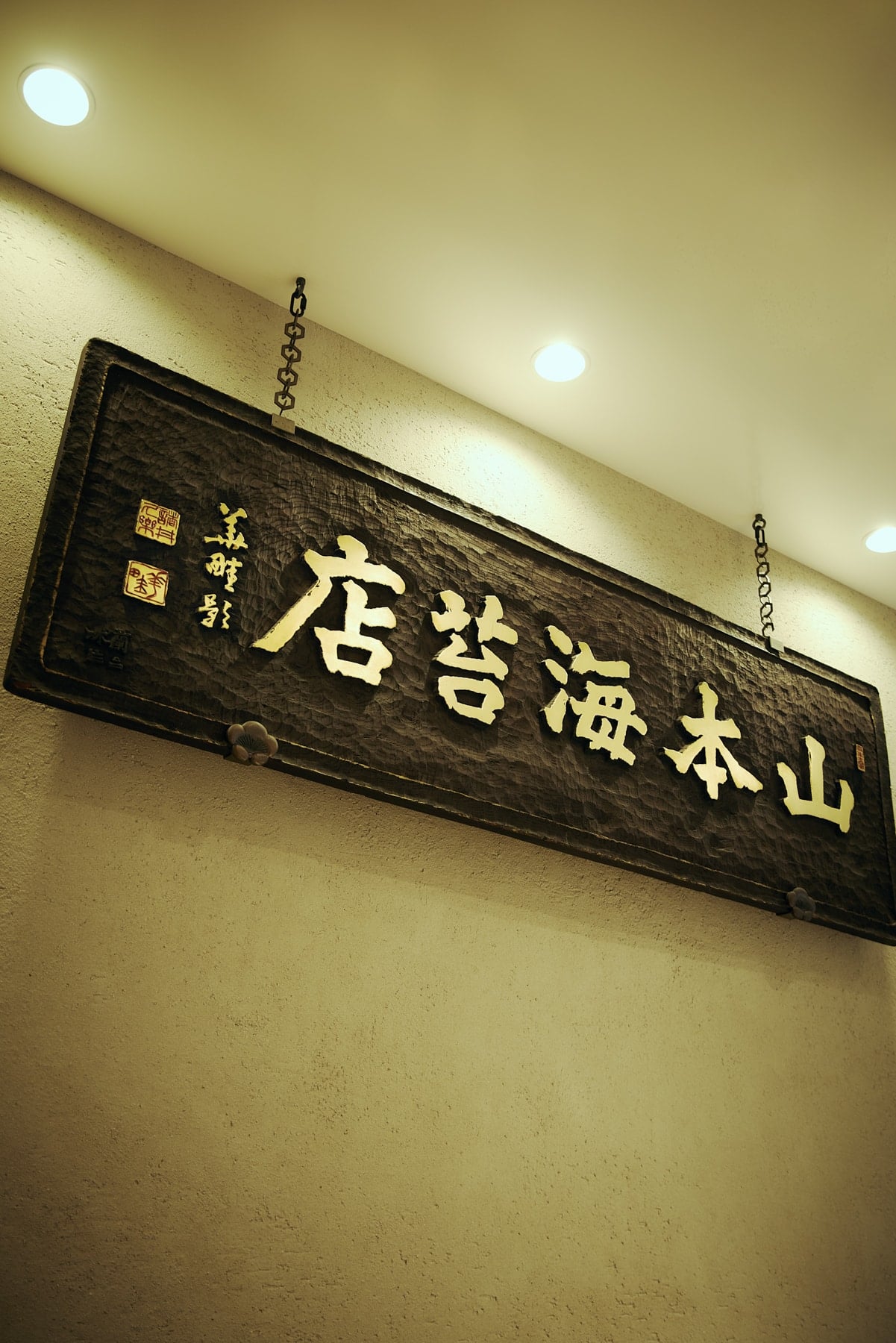
A sign with gold lettering displayed inside the store. It is a work by calligrapher Moroi Kakei, who was active during the Meiji era, and seal engraver Nakamura Randai.
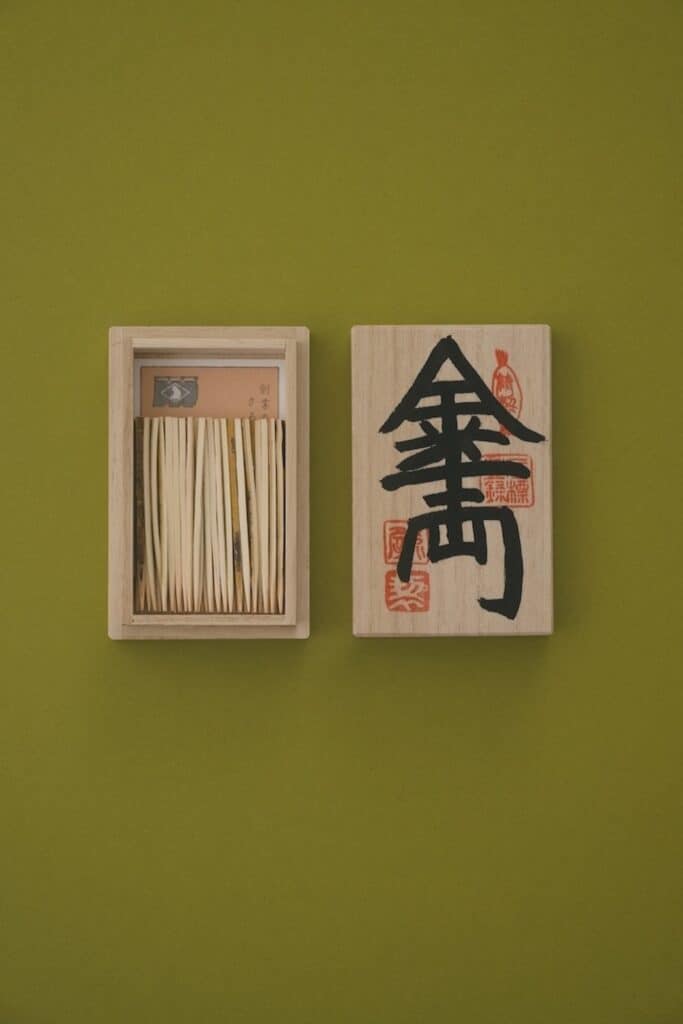
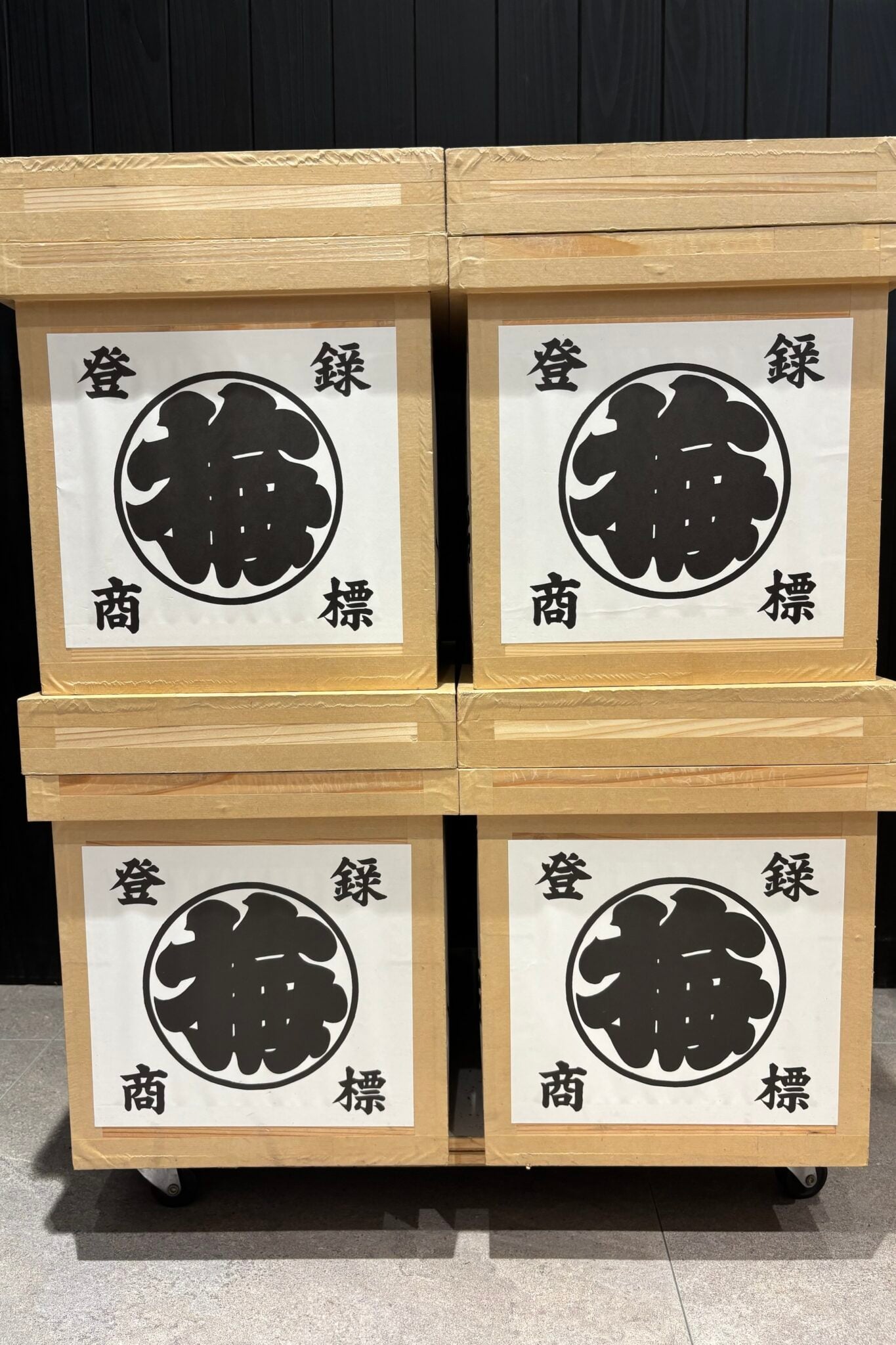
A wooden box used to hold nori before it is grilled for live demonstration sales. The Maruume mark comes from the fact that high-quality nori was harvested in Edo Bay during the cold season when plum blossoms bloomed, and from the idea that nori, like plum blossoms, was valued for its fragrance.
The flavor of Yamamoto Noriten is supported by the company’s thorough commitment to selecting nori, which has been passed down since its founding. After nori is produced in each region, it is divided into detailed grades and put up for auction. At Yamamoto Noriten, experienced buyers carefully assess the quality and select only high-quality nori. In addition, the purchased nori is sorted again sheet by sheet by specialists in the Sorting Technology Room inside the company’s own factory. This double selection system, which checks melt-in-the-mouth texture, flavor, color, shape, and other qualities according to the company’s own standards, supports the quality of Yamamoto Noriten.
Yamamoto Noriten is also known as the first shop in Japan to create seasoned nori. It began in 1869, when the company created a product to be presented as an Edo souvenir when Emperor Meiji returned to Tokyo from Kyoto. At the time, nori was generally eaten with soy sauce and other seasonings added separately. However, through repeated trial and error in pursuit of nori that could be eaten as it was, seasoned nori was born. Even today, the company adjusts the blend according to the nori itself, combining soy sauce, mirin, dashi, sugar, and other ingredients in an exquisite balance. It values seasoning that brings out the natural umami of the nori.
The Sorting Technology Room at the factory in Ariake, Saga Prefecture, Japan’s largest nori-producing region. Here, specialists sort the nori one sheet at a time.
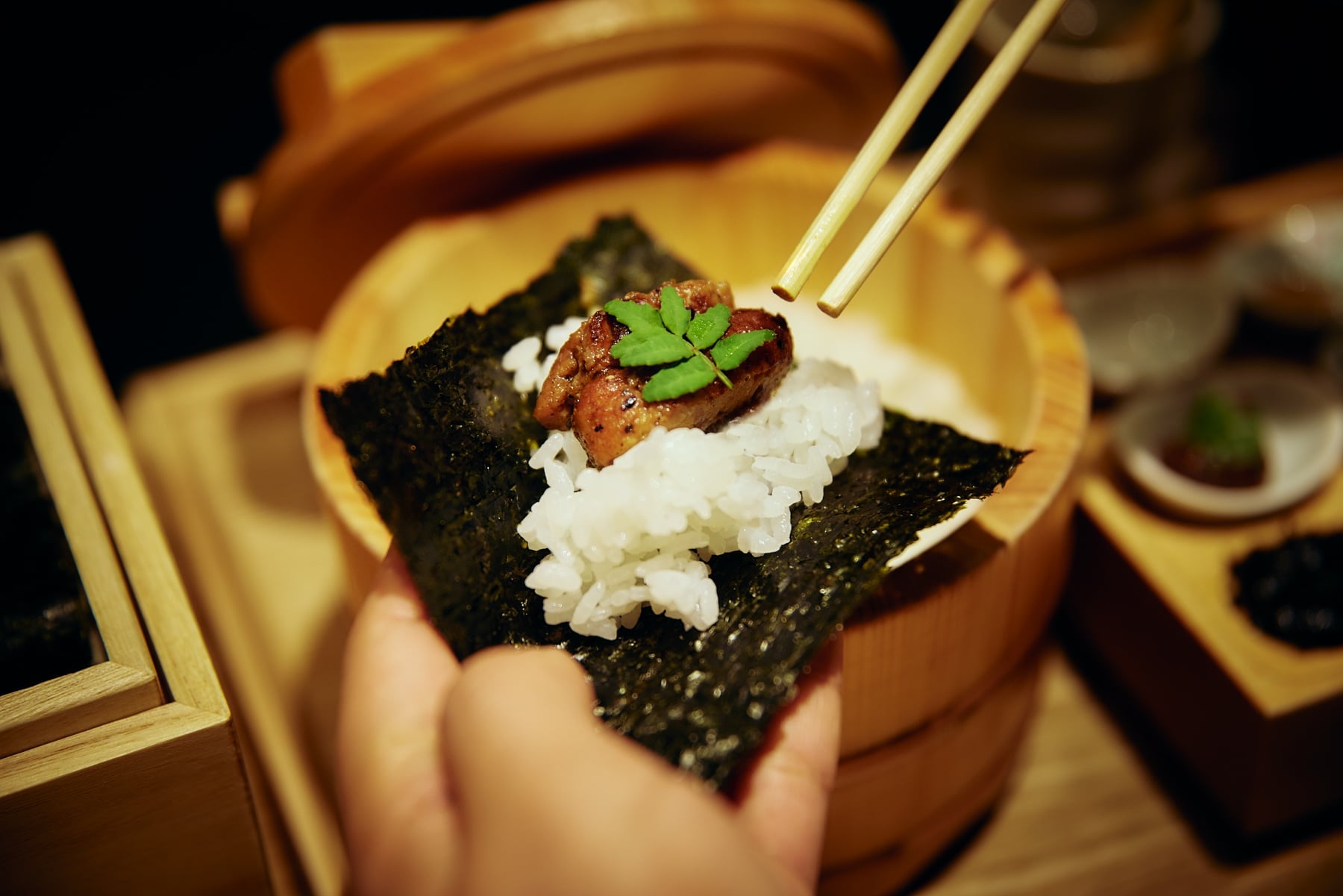
Temaki YAMAMOTO, a dining space inside the store, is where visitors can enjoy the carefully selected nori of Yamamoto Noriten on the spot. Here, you can enjoy temaki, or hand rolls, made by wrapping rice and ingredients in freshly grilled nori. There are two menu options: YAMAMOTO Temaki, supervised by the proprietress of Bongo, a famous onigiri shop, for ¥1,980, and Nihonbashi 1000-Year Temaki, supervised by the owner of Nihonbashi Yukari, a long-established Japanese restaurant in Nihonbashi, for ¥3,630. In particular, Nihonbashi 1000-Year Temaki allows visitors to enjoy the flavors of long-established Nihonbashi shops wrapped in freshly grilled nori, including kombu tsukudani prepared by Ninben, a specialty shop for katsuobushi and dashi, tsukudani from Kaishin, and beef soboro sakura-ni from Iseju, a long-established sukiyaki restaurant.
The nori used is Ume no Hana, the shop’s signature product. Just before it is served, each sheet is grilled one by one on the nori roaster in front of you. The freshly grilled nori is served in a grilled nori box containing charcoal, allowing you to enjoy it warm until the very end.
Being able not only to purchase products but also to taste freshly grilled nori in its most delicious state is a unique appeal of Yamamoto Noriten Nihonbashi Main Store.
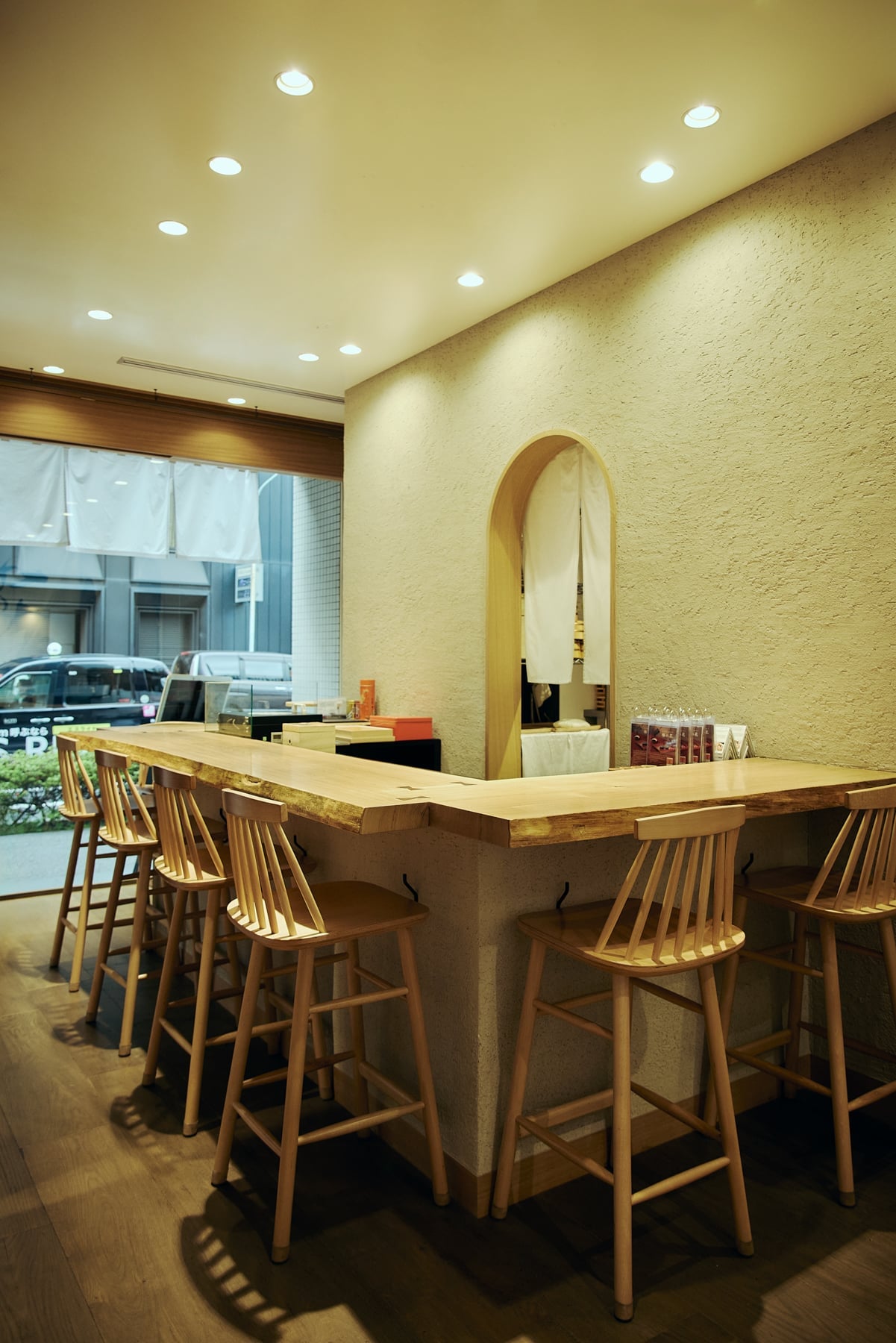
After entering the store, pass through the noren curtain immediately on the left to reach the dining space. It has counter seating for about eight people.
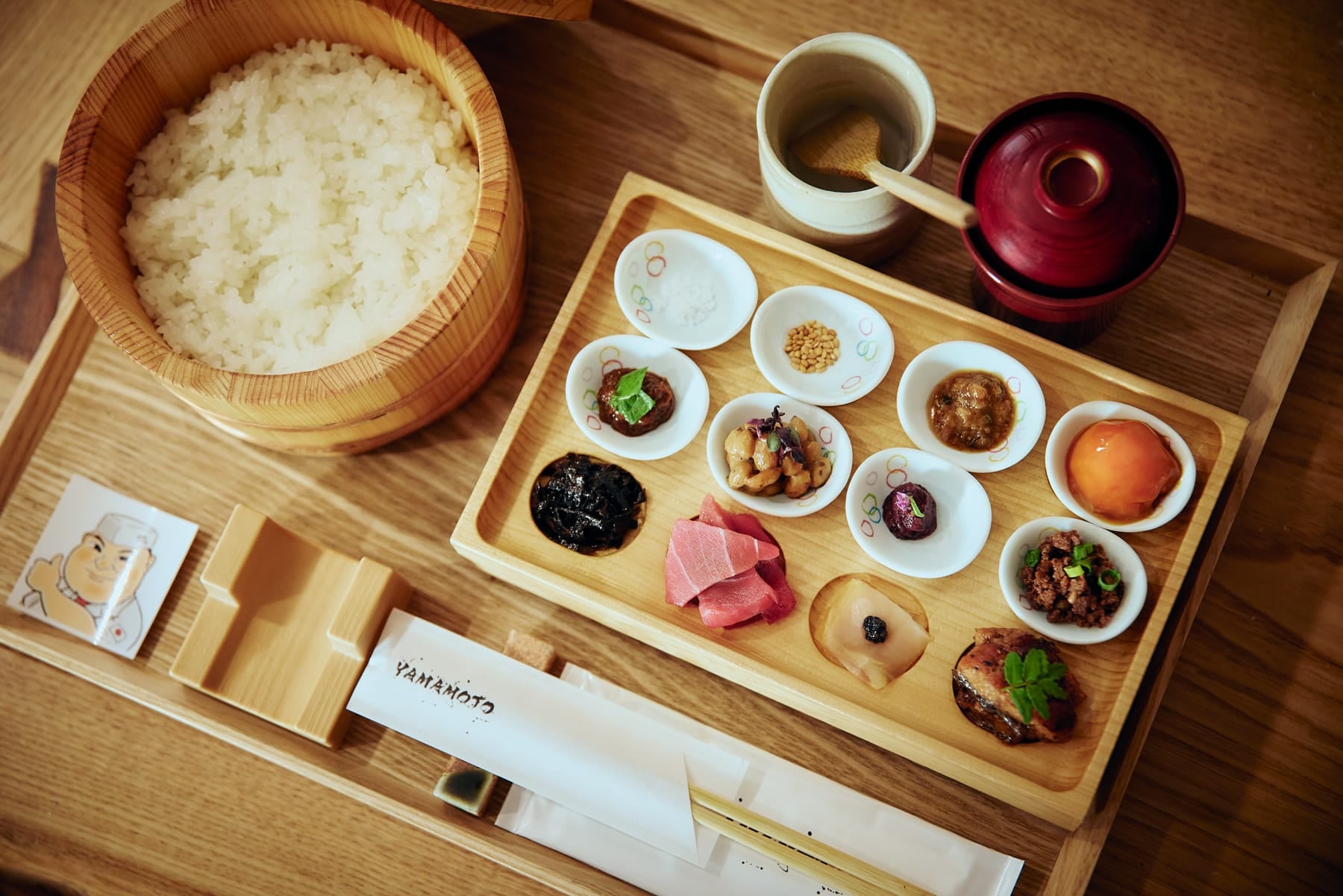
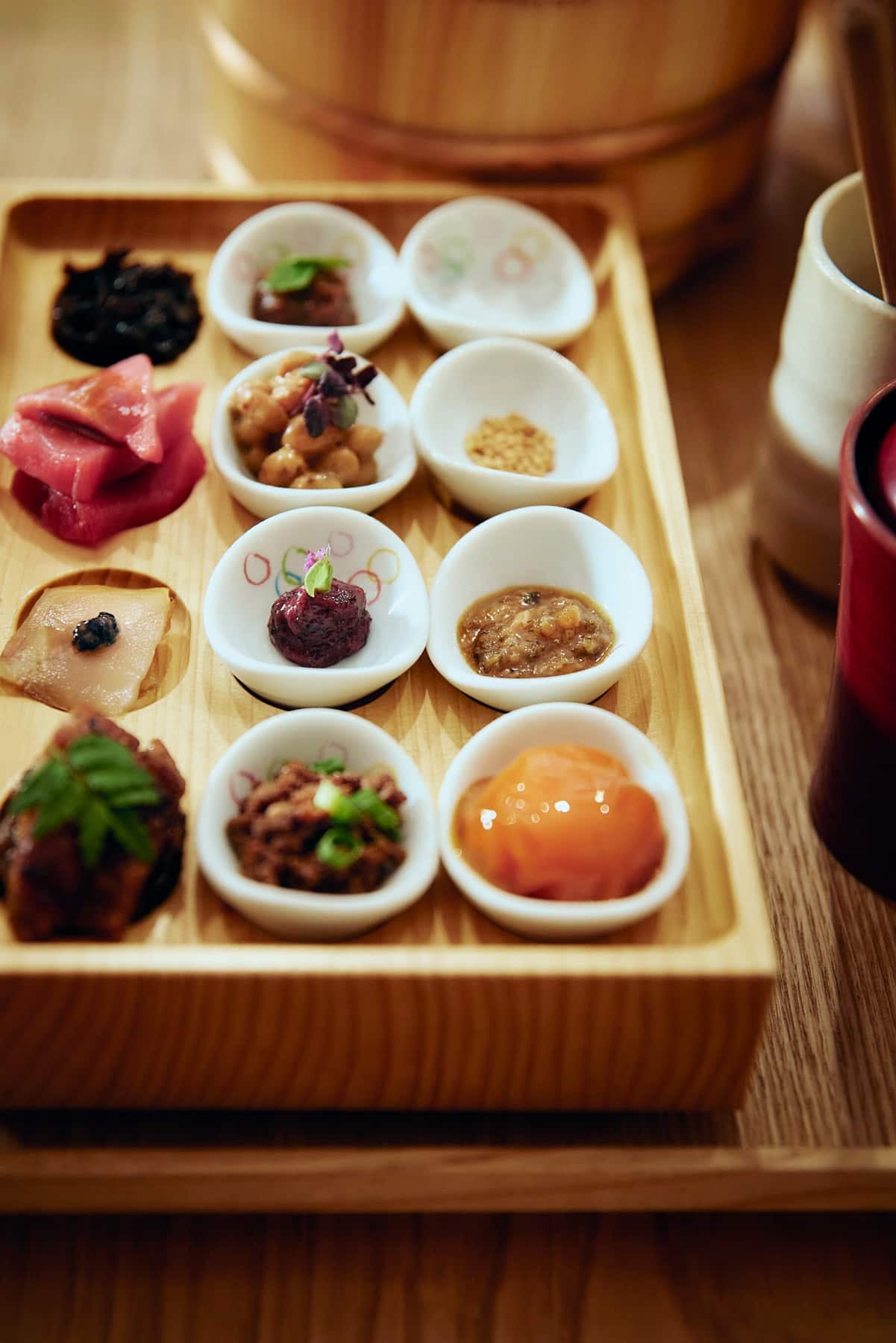
The photo shows the Nihonbashi 1000-Year Temaki. The set includes white rice served in an ohitsu rice container, miso soup, and ingredients to wrap in nori.
The nori used is Ume no Hana, the shop’s signature product. For an additional charge, it can also be changed to Yamamoto, the highest-grade grilled nori.
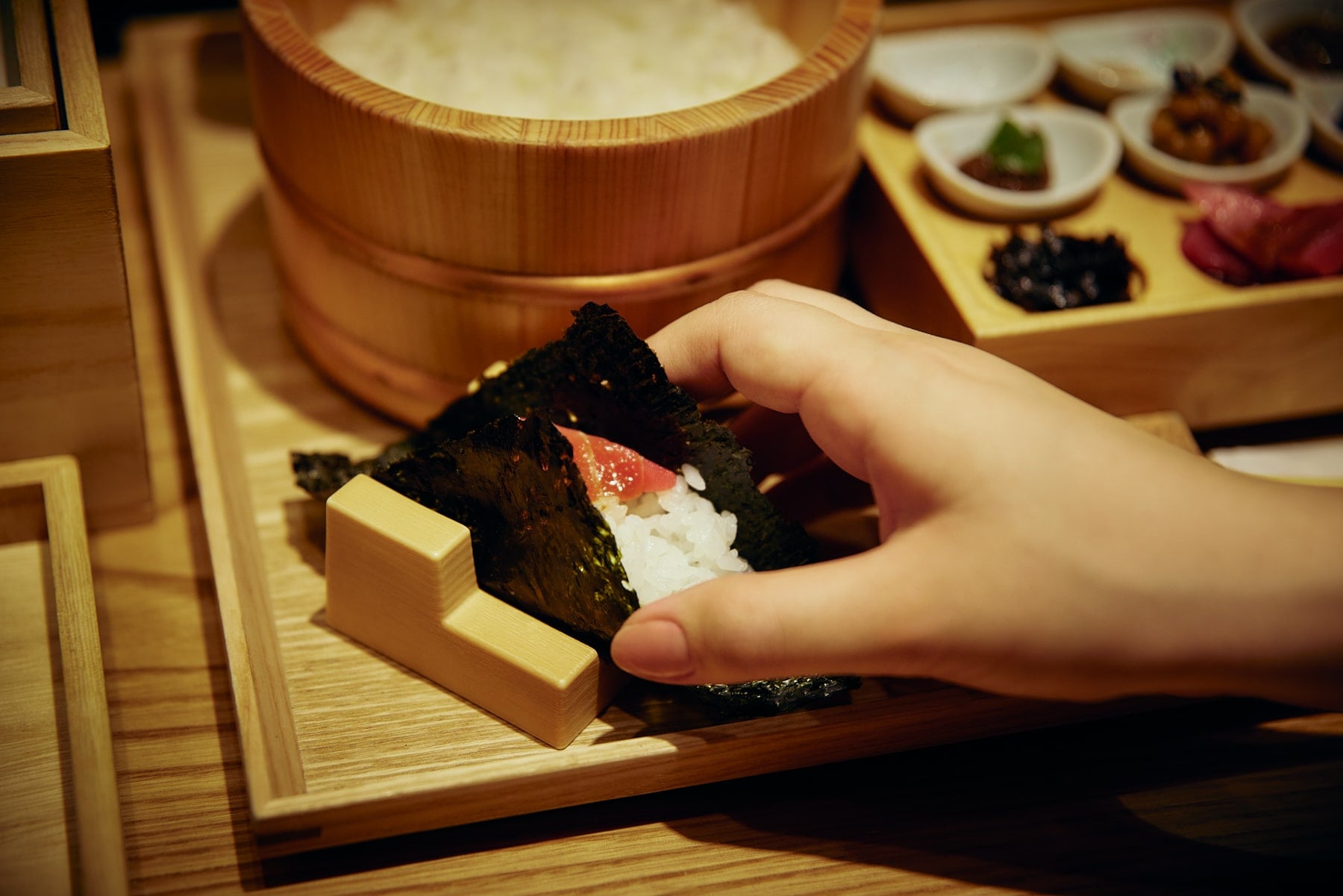
Freshly grilled nori is served in a dedicated grilled nori box containing charcoal. It can be enjoyed warm until the very end.
Nihonbashi 1000-Year Temaki comes with a total of 12 ingredients. You can enjoy a variety of Japanese flavors, including bluefin tuna chutoro and akami with soy-sauce koji, grilled eel finished with sansho pepper, egg yolk marinated in soy sauce, and Shin Natto.
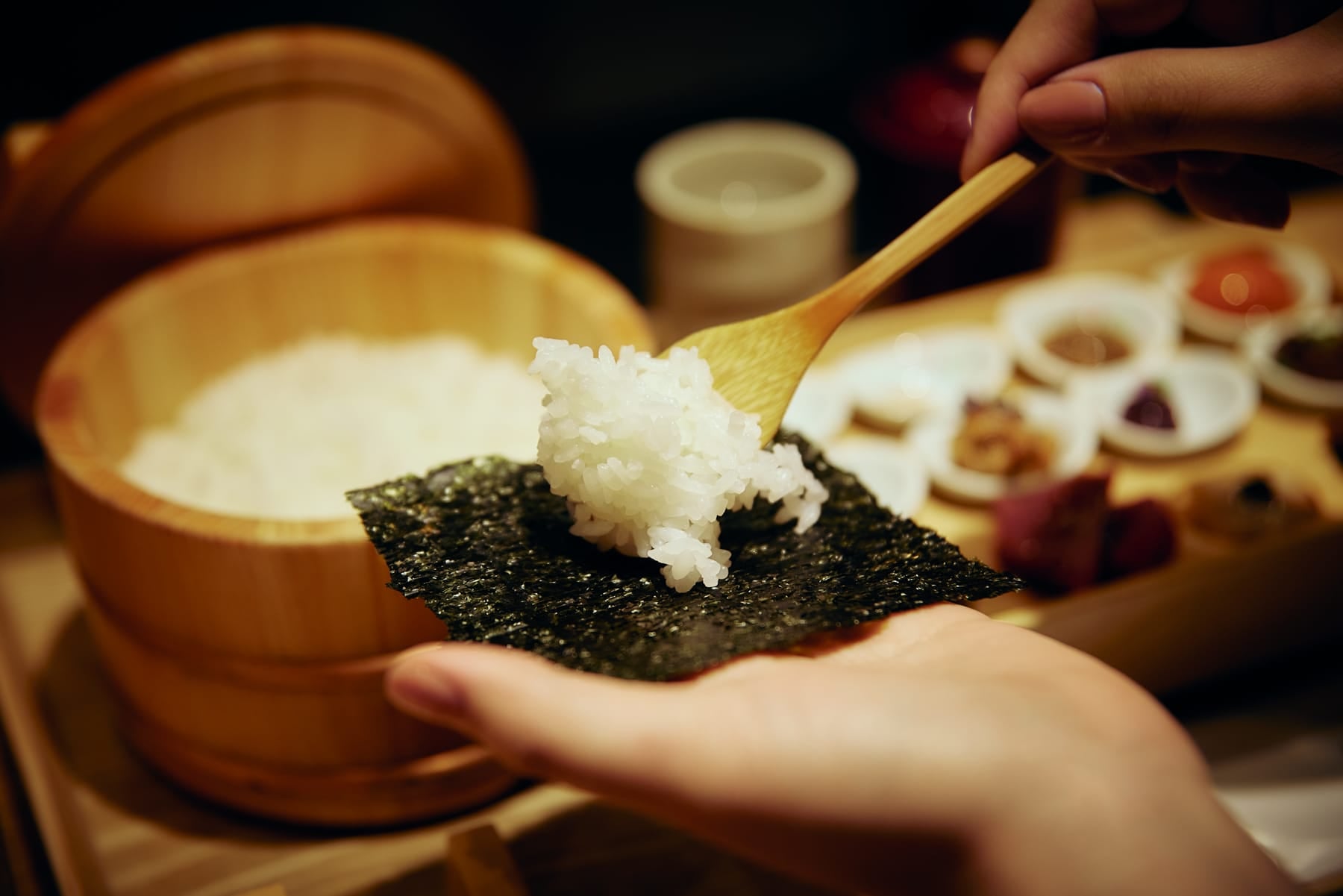
First, place a sheet of nori in your palm, then place white rice on top. Using a small amount of rice makes it easier to roll neatly.
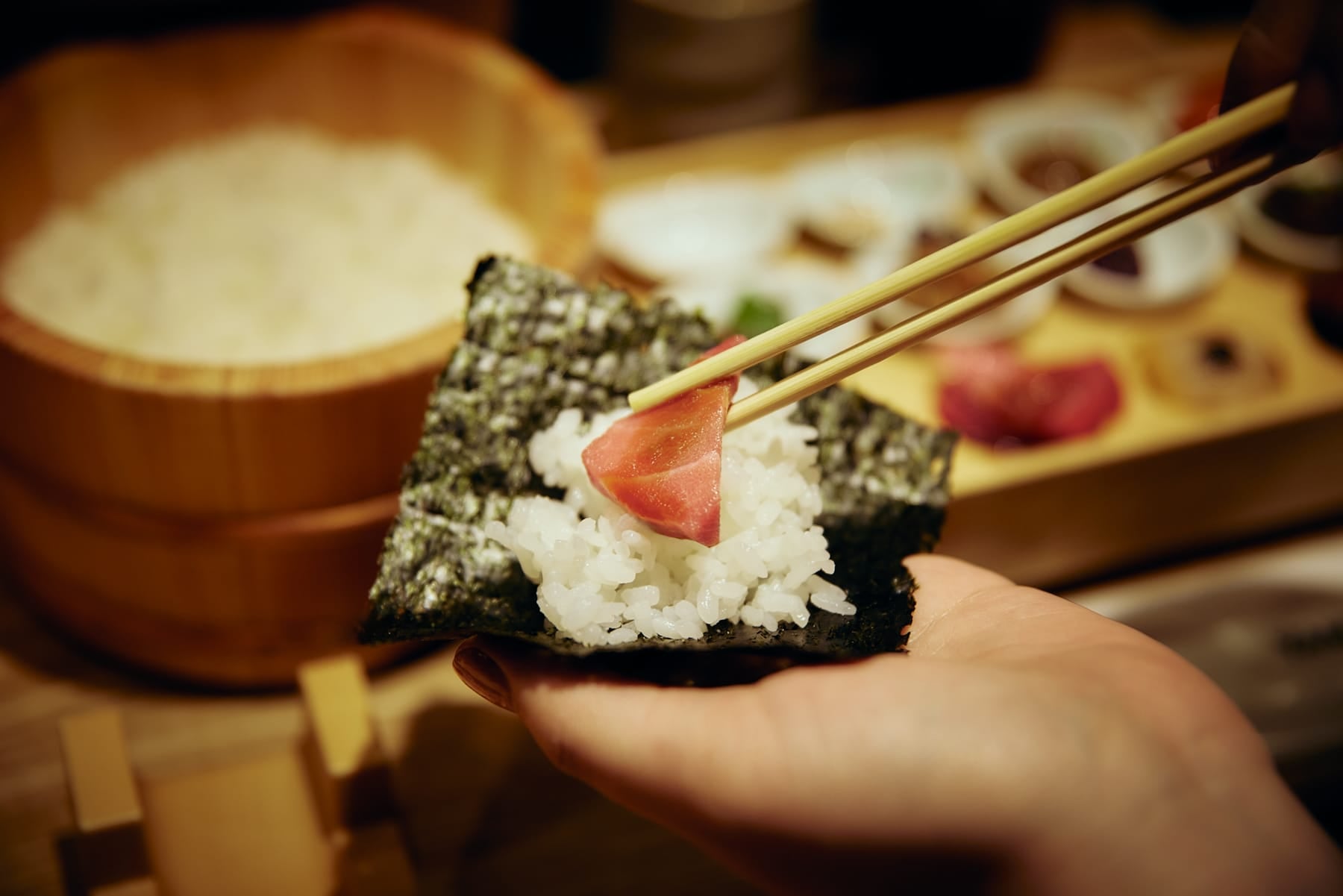
Place your preferred ingredients in the center of the rice.
If you place it directly on the stand included with the tray, the tip of the nori naturally lifts up, making it easier to roll.
The information in this article is current as of July 21, 2026 (at the time of publication).



.jpg)
スマホ.jpg)