DEEPTOKYO
magazine

EN

DEEPTOKYO
magazine
EN
A Museum of Tokyo’s Underground Culture by Kyoichi Tsuzuki


 Nearest Station


Since opening in Tokyo’s downtown district in 2022, Daido Geijutsukan (Museum of Roadside Art) has attracted attention for its distinctive exhibitions and immersive atmosphere. Curated by editor, writer, and photographer Kyoichi Tsuzuki—long known for his exploration of roadside culture—the museum brings together an eclectic collection of objects spanning eras and genres. From Showa-era signboards and everyday curiosities to boldly expressive works of art, the displays fill the space from floor to ceiling. Step inside, and visitors are drawn into a strange and fascinating world where retro and contemporary sensibilities collide.
SHARE


The “Daido Art Museum” is a unique space where retro and neo are mixed. The museum is located "across the river" from the chic Asakusa across the Sumida River. It is a 15-minute walk from Oshiage Station, where the Tokyo Skytree towers above, in the relaxed downtown area of Mukojima.
Mukojima has flourished as a hanamachi—an entertainment district centered around geisha culture—since the Edo period, with rows of ryotei restaurants lining its streets. After the Great Kantō Earthquake in 1923, the surrounding area developed into an industrial zone, and it is said that workers from nearby small factories helped sustain the district’s ryotei culture.
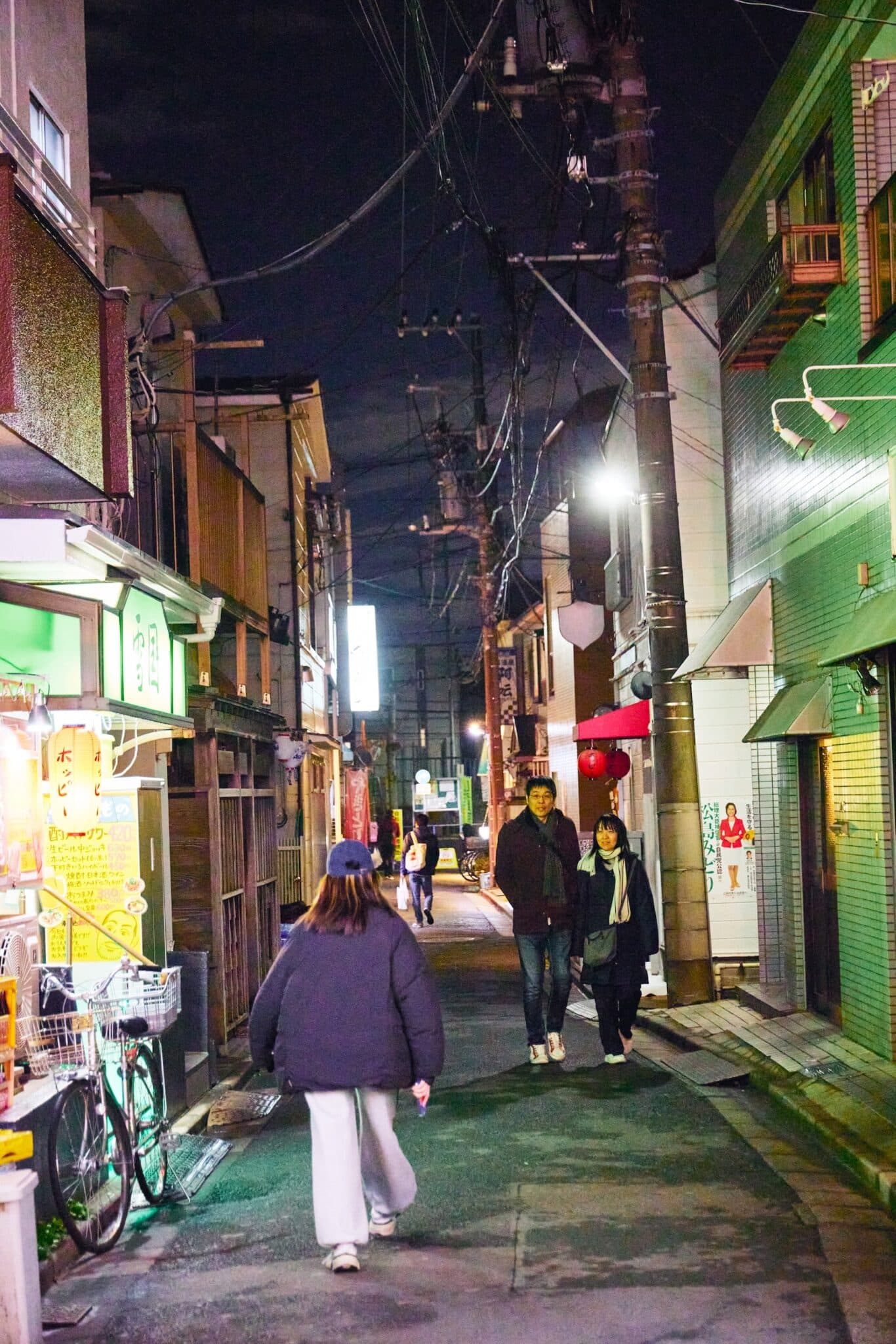
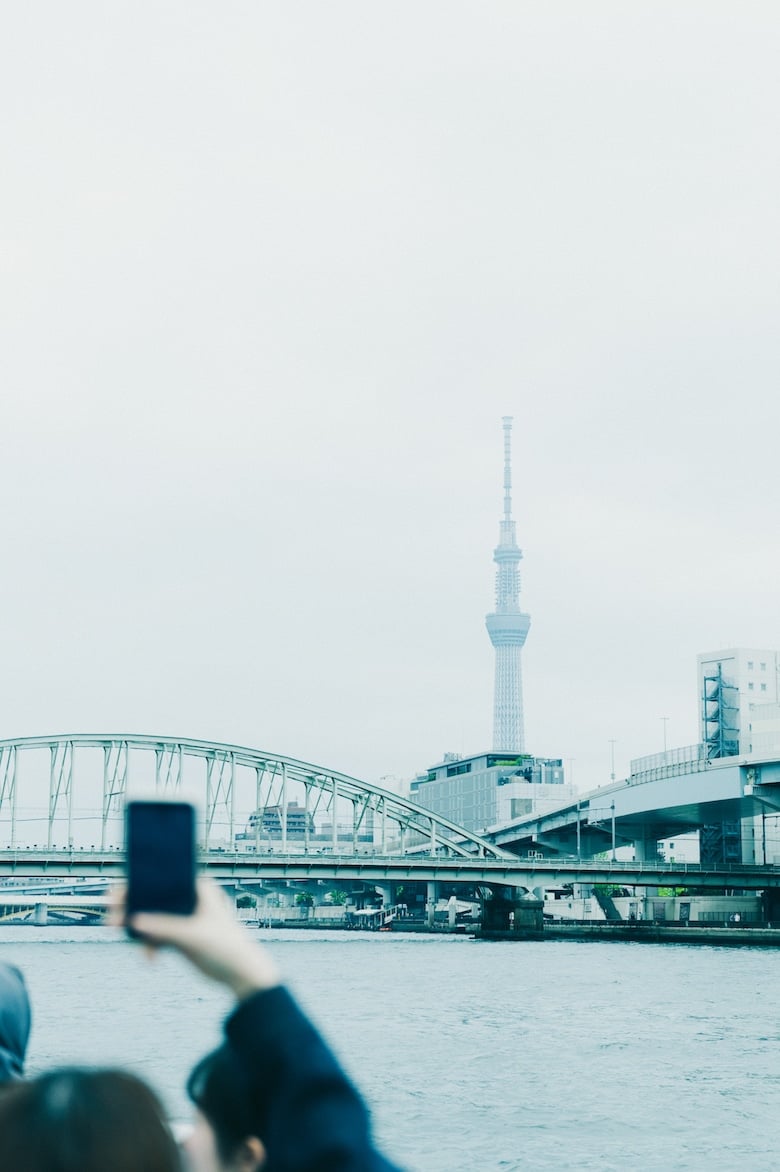
Streets of Mukojima with Tokyo Skytree rising in the distance. Just across the Sumida River from the tourist district of Asakusa, the atmosphere shifts to a quieter shitamachi streetscape.
Between Mukojima and Higashi-Mukojima once stood an entertainment quarter known as Hatonomachi. The writer Kafū Nagai set his play Shunjō Hatonomachi there, and the work was later adapted into a film. Today, Mukojima is a quiet residential neighborhood with a strong sense of local community. Yet several ryotei where geisha still perform remain active, preserving the district’s long history as a hanamachi. Daido Geijutsukan stands within this historic quarter, housed in a building that once served as a traditional ryotei. The museum opened in October 2022.
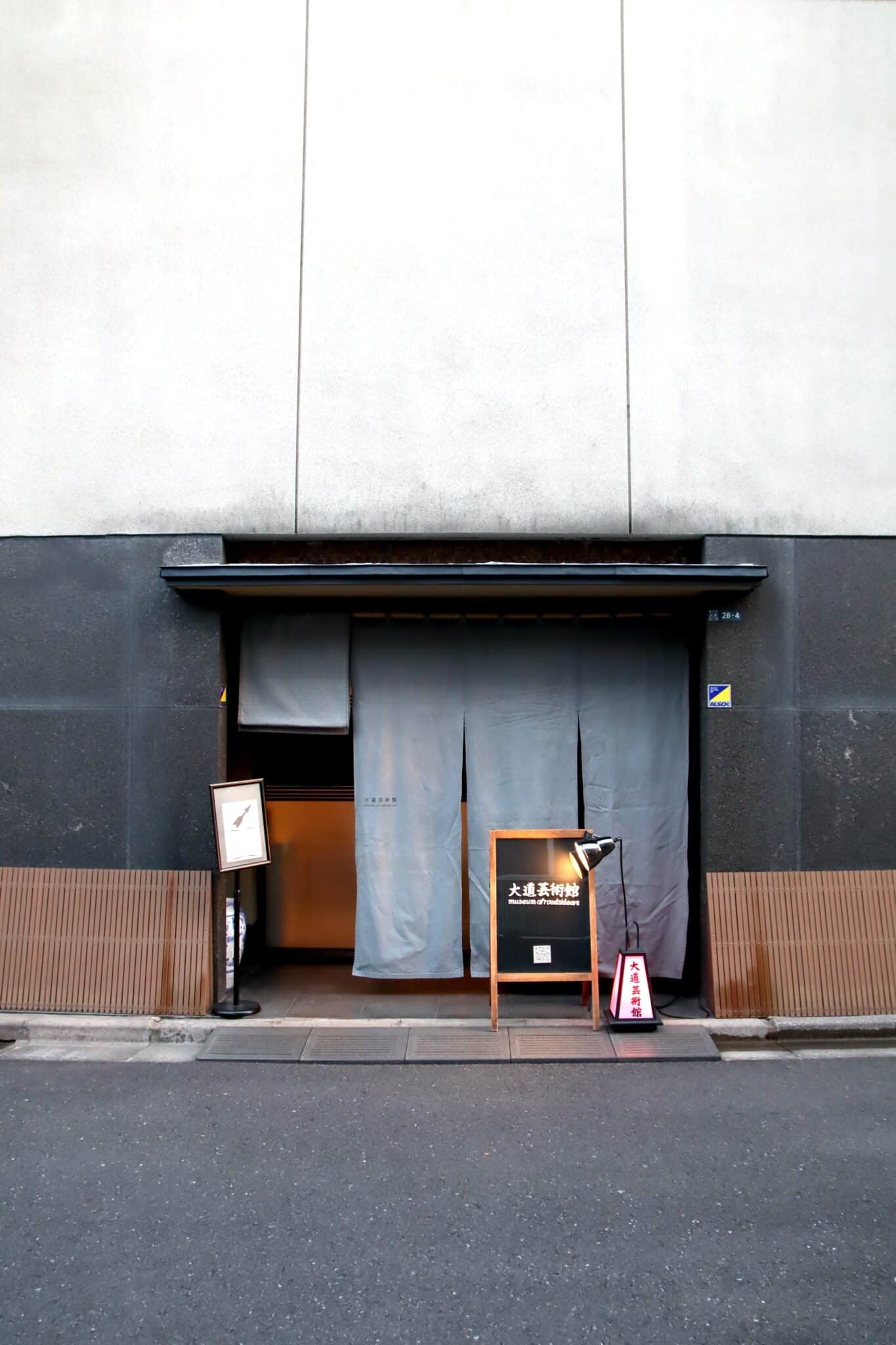
Daido Geijutsukan stands within Mukojima’s historic hanamachi district. The building was originally a traditional ryotei before being renovated and opened as a museum.
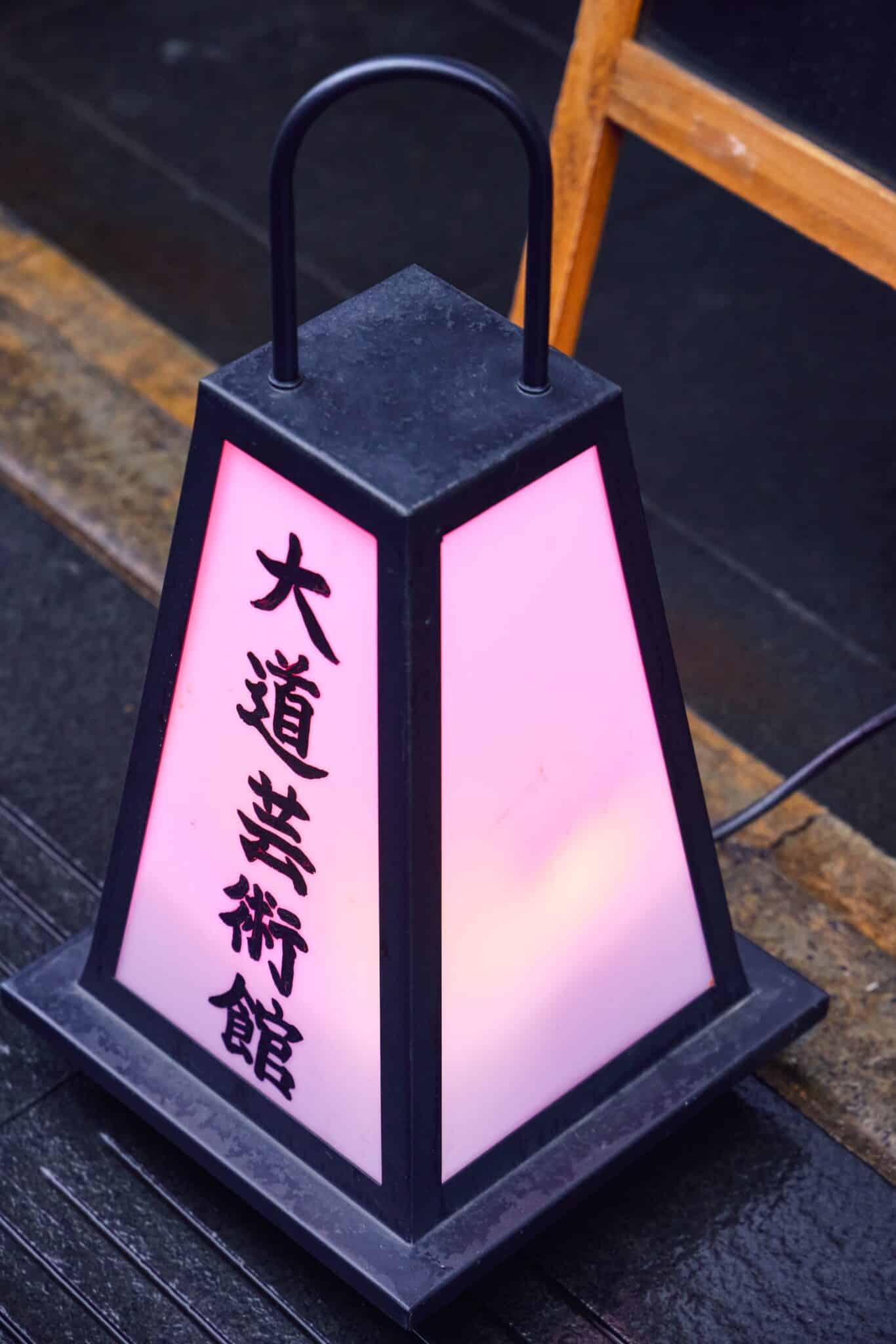
The softly illuminated entrance at night. A small sign marks the presence of this hidden museum.
The museum is curated by Kyoichi Tsuzuki, an editor, photographer, and journalist who has been active since the 1970s. Inside, artworks and objects that Tsuzuki has collected over many years are displayed almost as cultural artifacts. From disappearing forms of popular art such as hihōkan erotic museums and sideshow attractions, to cheap art, roadside art, and works that approach eroticism as culture, the three-story building unfolds as a space where retro and contemporary sensibilities intermingle.
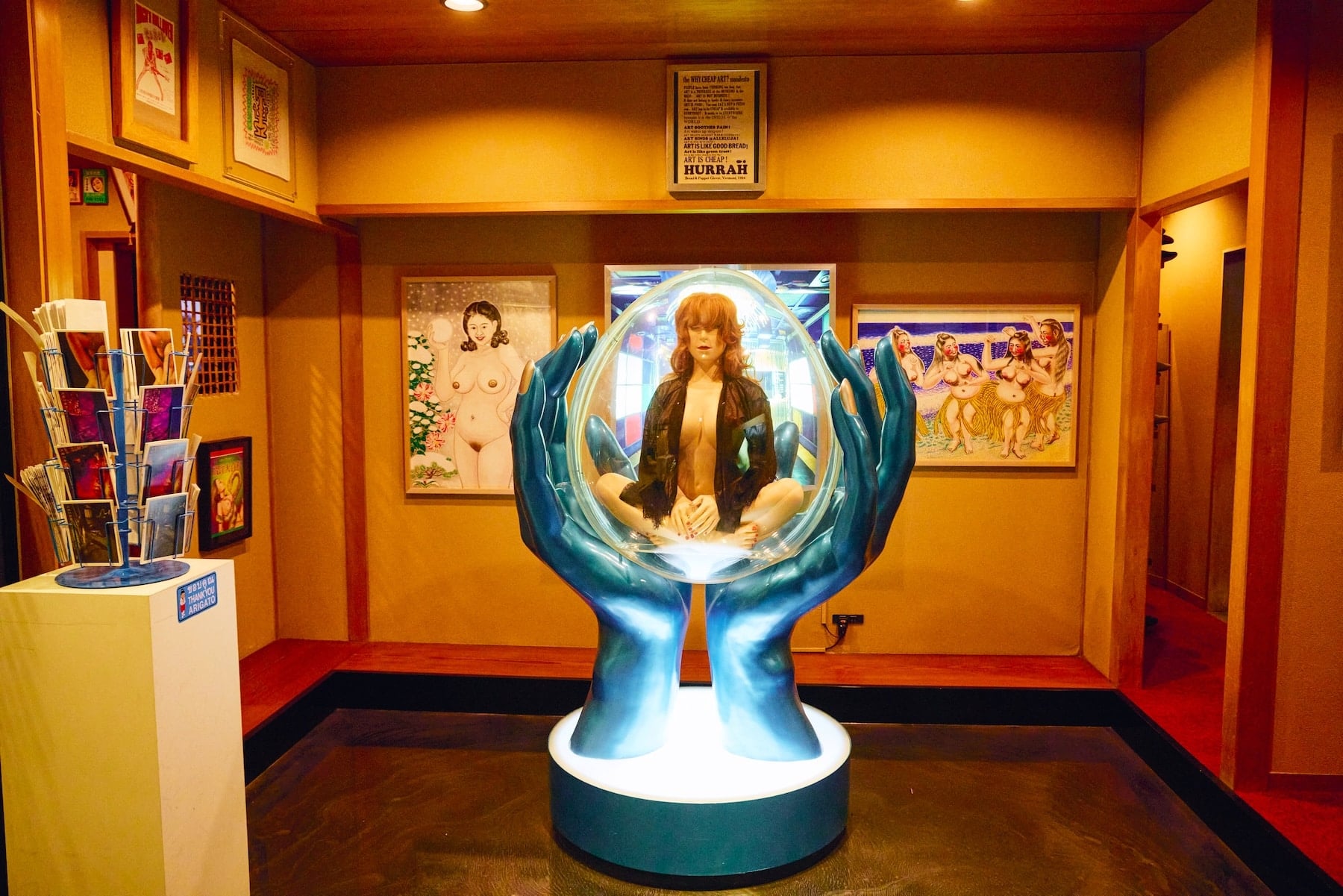
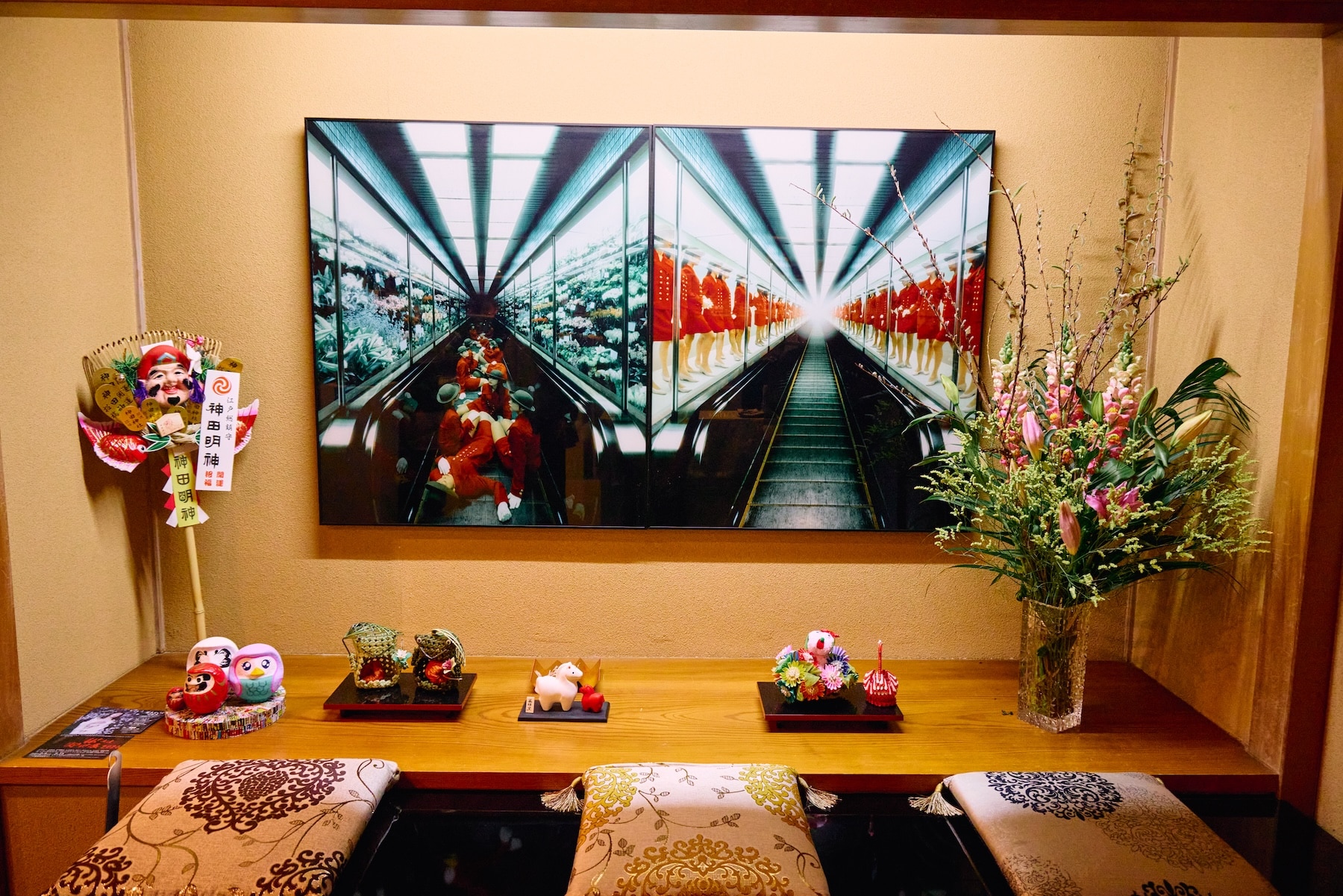
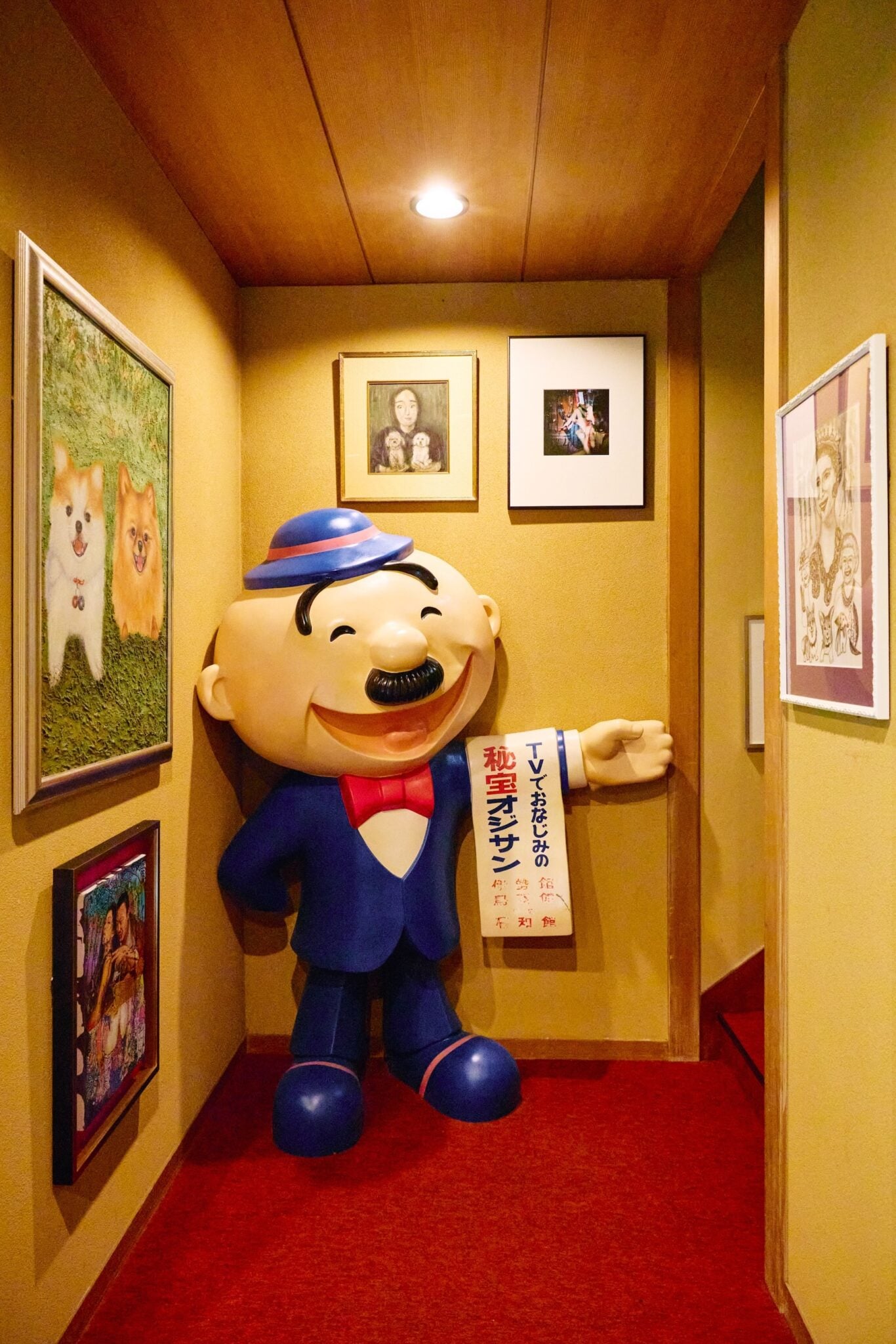
After passing through the entrance curtain and pressing the chime, a curator (staff member) will open the door for you. The curator (staff) will open the door and you will be greeted by “Tamago-san,” a unique three-dimensional objet d'art that came from the "Science Fiction Museum of the Future," a museum of hidden treasures. Another work, "Elevator Girl," by photographer Miwa Yanagi, is also on display. Since the building used to be a ryotei (Japanese-style restaurant), visitors take off their shoes at the entrance and change into slippers before entering the museum.
“Tamago-san,” a humorous sculptural object once displayed at SF Mirai-kan, an erotic museum in Toba, Mie Prefecture. An iconic piece representing Showa-era hihōkan culture.
Elevator Girl by photographer Miwa Yanagi, part of her well-known series exploring representations of women in contemporary Japan.
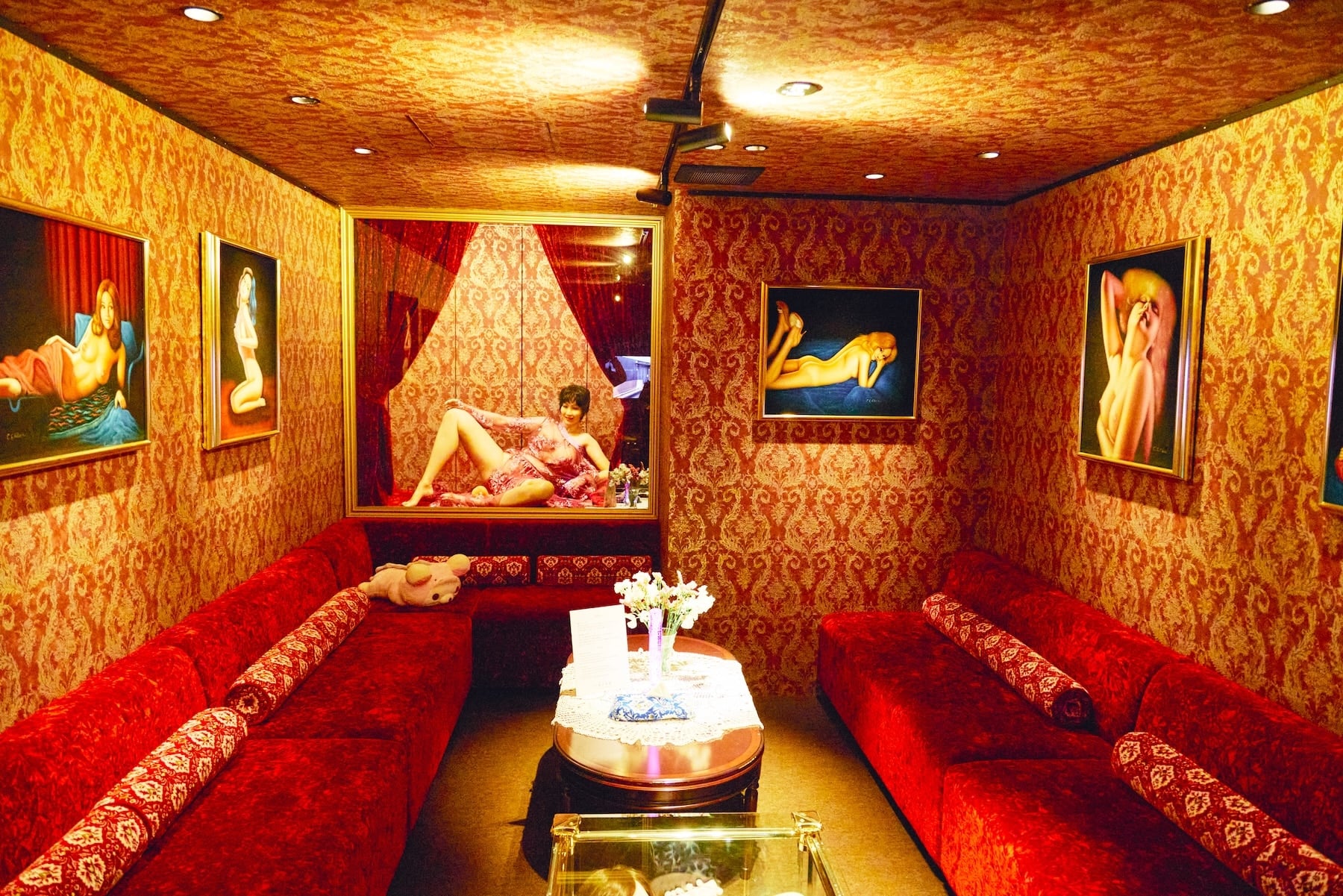
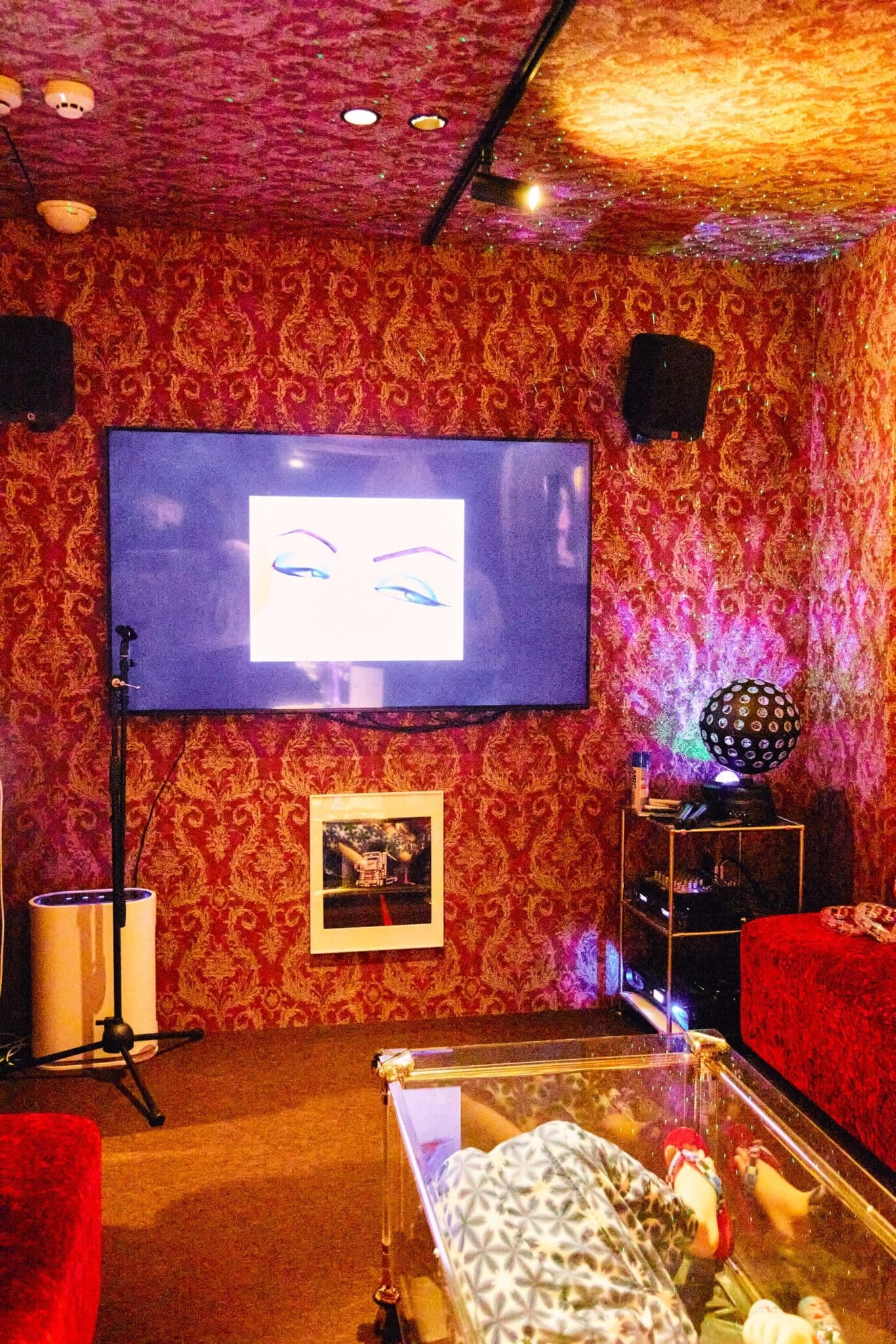
The first room you will be taken to is the cabaret-style VIP room on the first floor. The bright red velvet and patterned fabric walls are eye-catching. In the back of the room, a powerful wax figure of a sister called “Ootoro-san,” created by Satoru Matsuzaki, a wax figure maker who runs a wax production company, sits in a powerful manner.
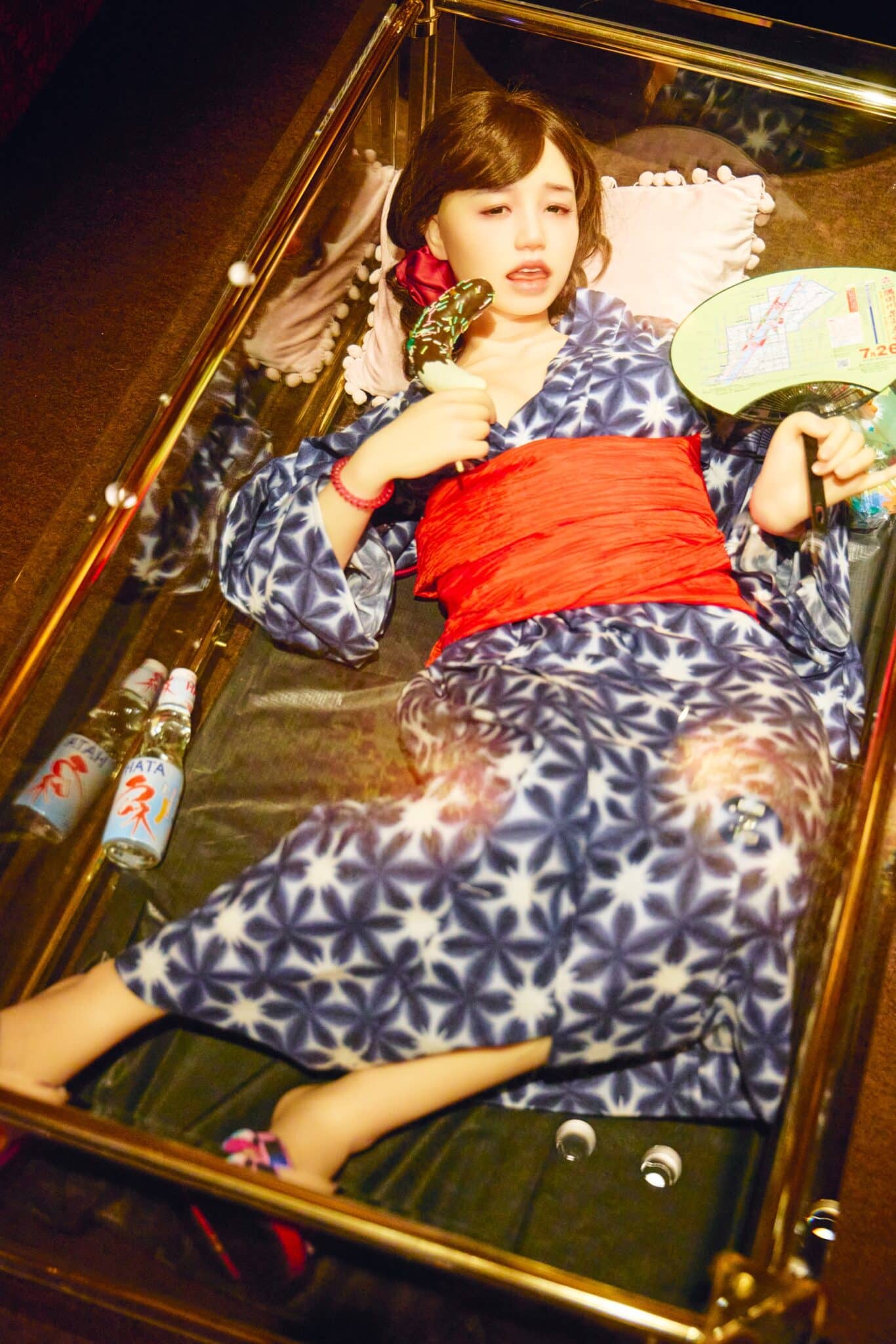
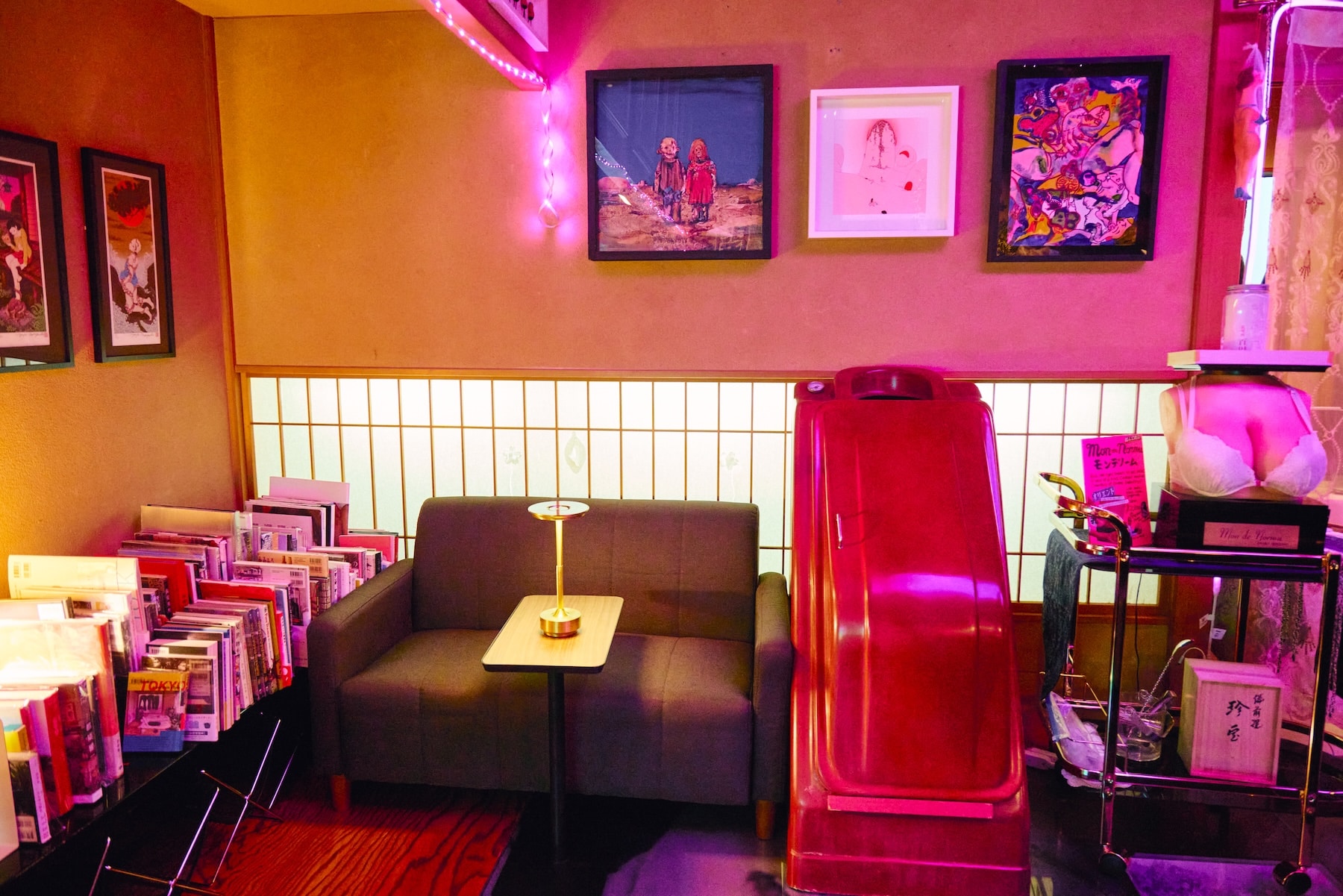
The walls display velvet paintings, a style associated with American “cheap art” popular in the 1970s. Inside a glass table lies a love doll produced by the Japanese manufacturer Orient Industry. These highly detailed dolls are internationally known and have become a distinctive symbol of Japanese subculture.
The VIP room wrapped in red velvet recreates the atmosphere of a Showa-era cabaret.
A love doll produced by the Japanese manufacturer Orient Industry.
This nostalgic room can also be used as a party space, where visitors can enjoy karaoke on a laserdisc system with quirky vintage videos playing in the background.
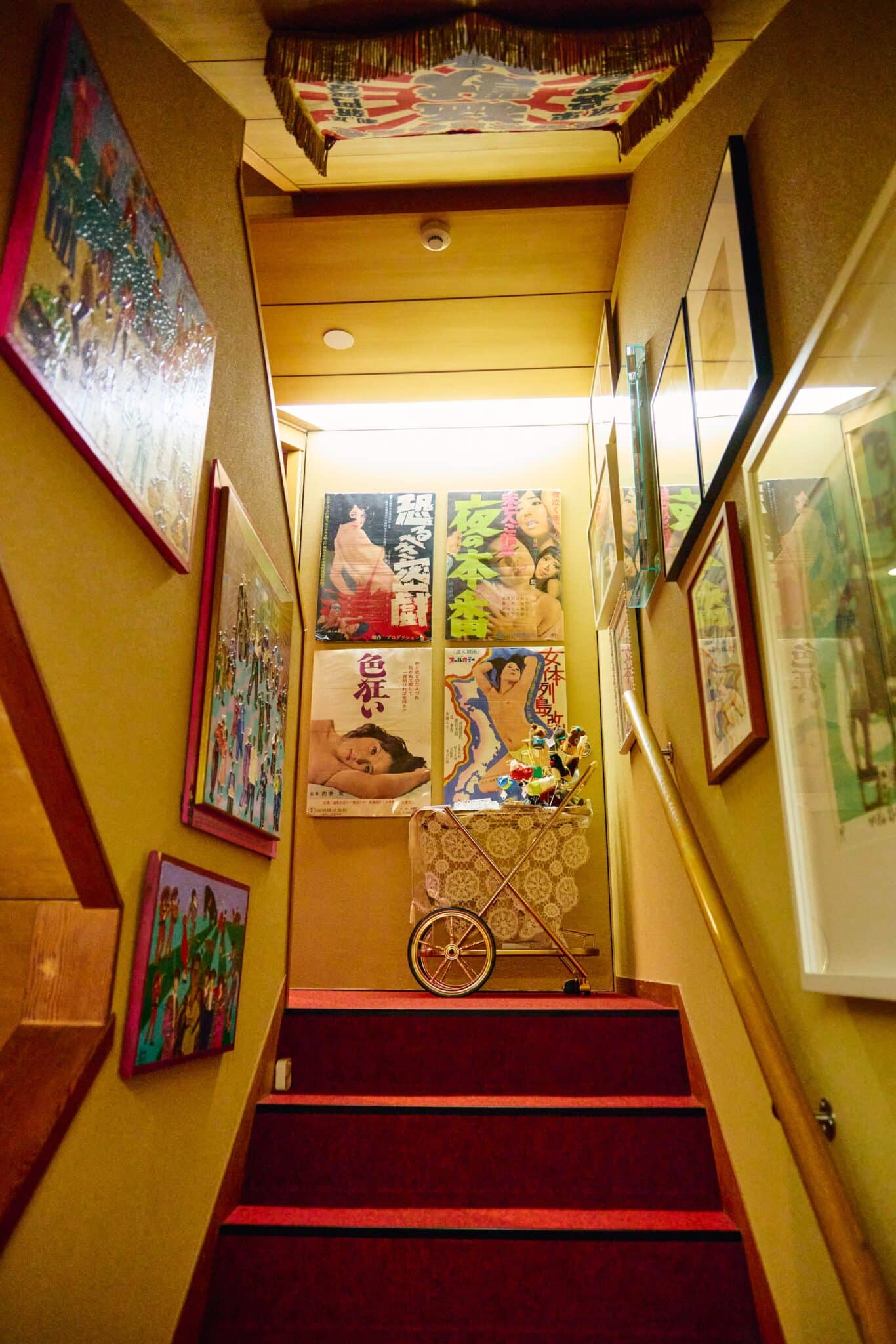
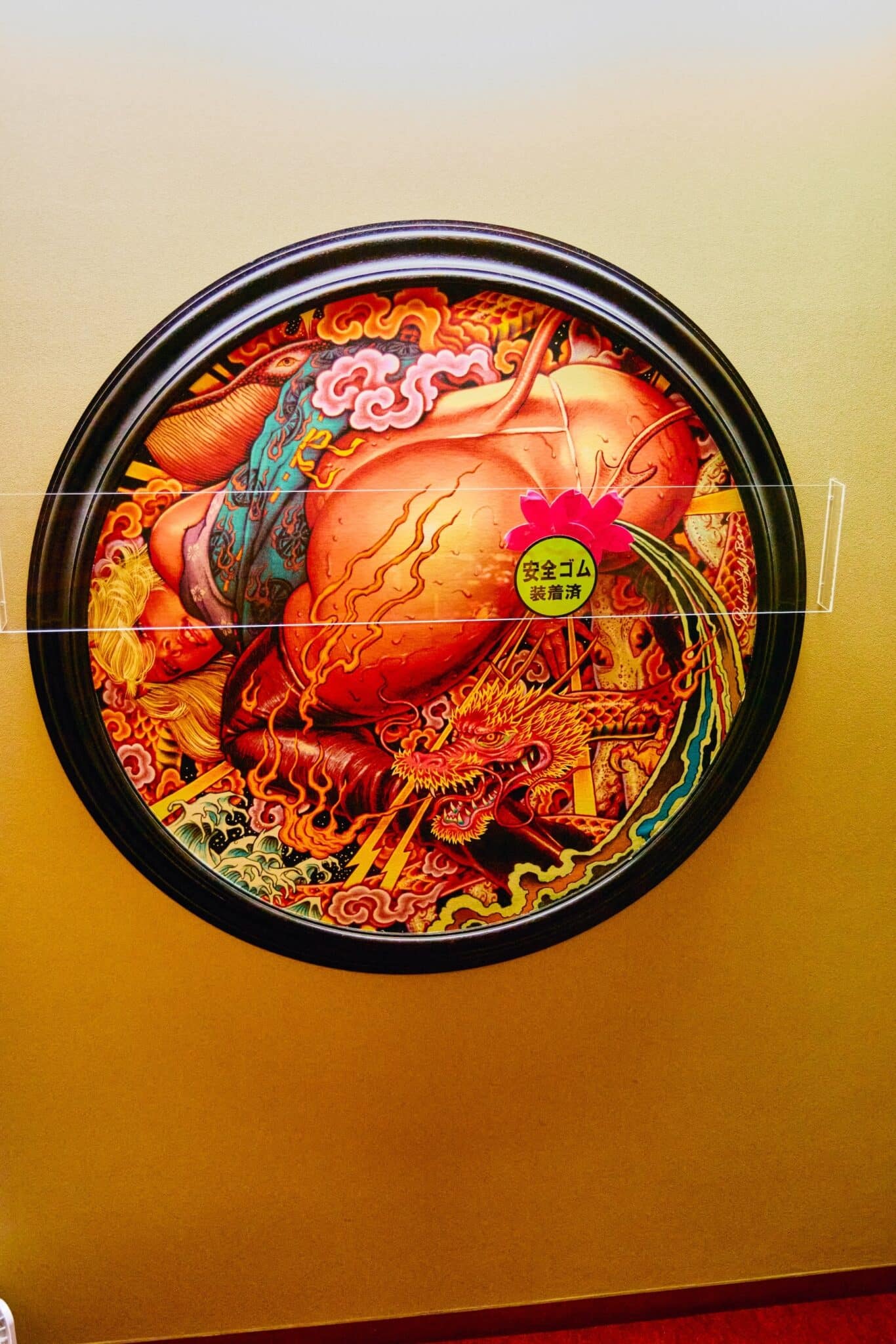
On the stairs leading up to the second floor, “Uncle Hibo,” a popular character from the International Museum of Hidden Treasures that once existed in Ise City, Mie Prefecture, stands ready to welcome you. The staircase displays the works of various artists, including Rockin' Jerry Bean, Shinro Ohtake, Junko Mizuno, and Hanayo. You will feel at home among these fascinating works of art, full of ideas.
“Hihō Ojisan,” a popular character from the former Kokusai Hihōkan in Ise City, now stands on the staircase welcoming visitors.
Works by artists from Japan and abroad line the staircase walls, transforming the path to the upper floor into an exhibition space.
A work by Rockin’ Jelly Bean, the masked artist known for blending rock culture with pin-up aesthetics.
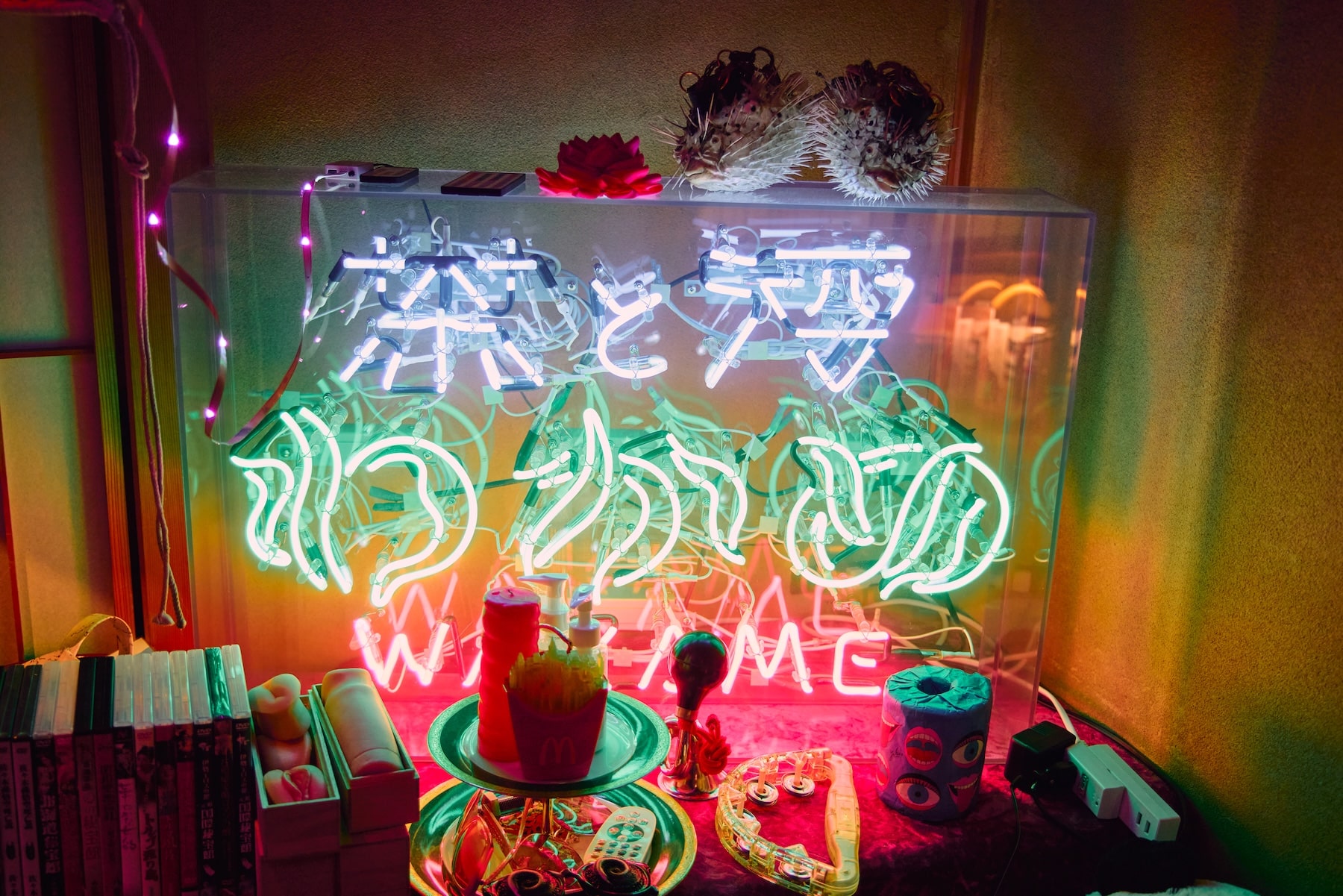
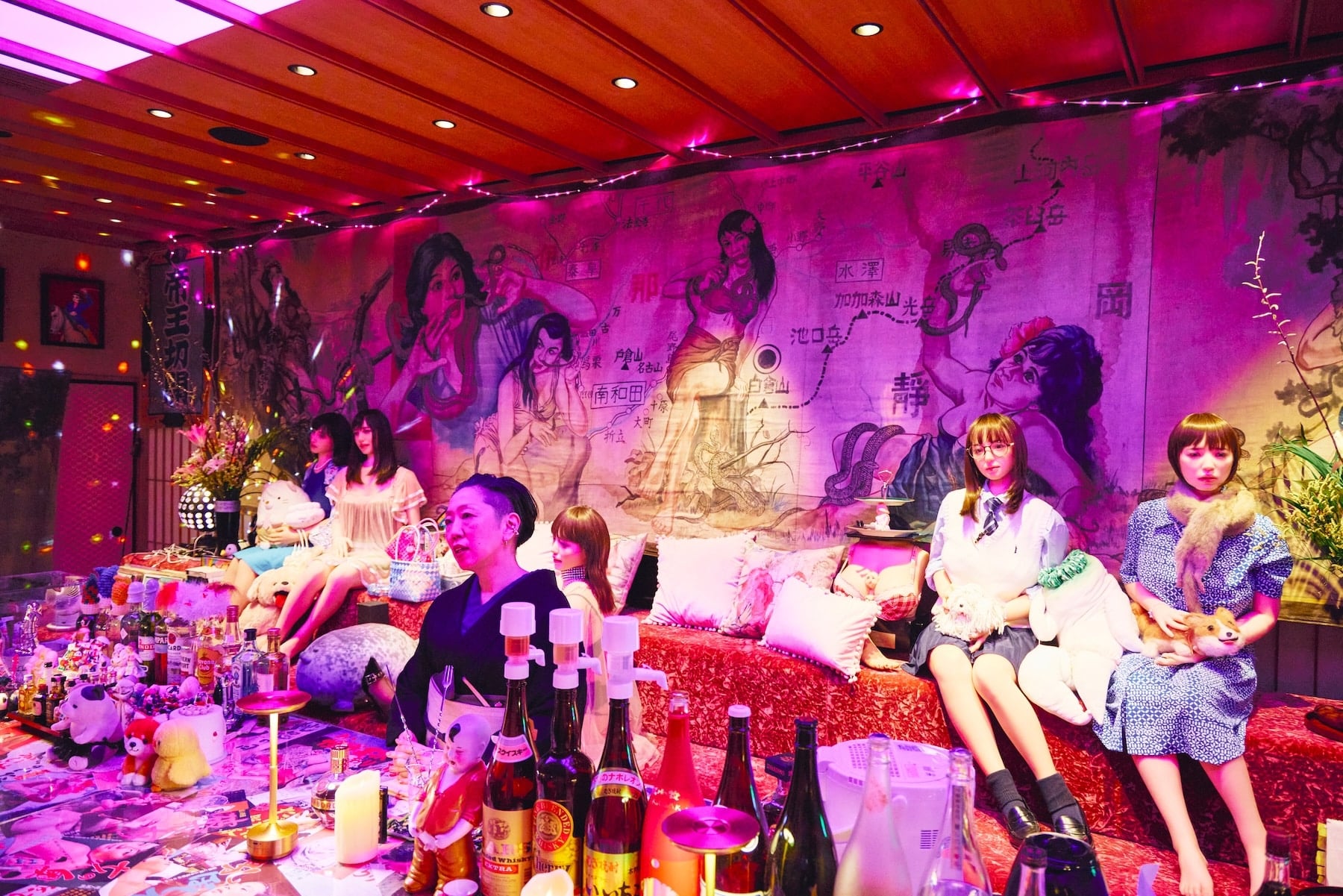
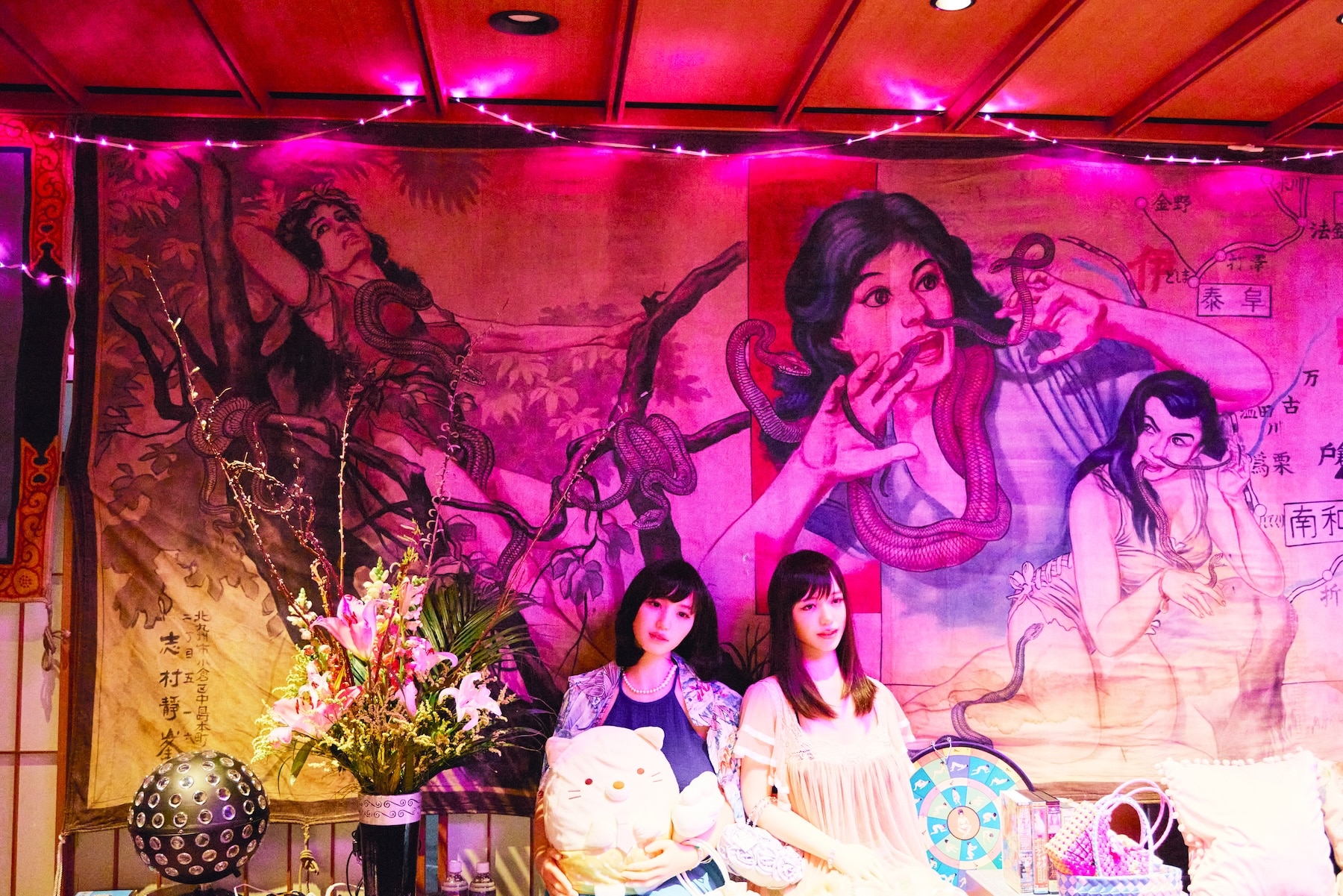
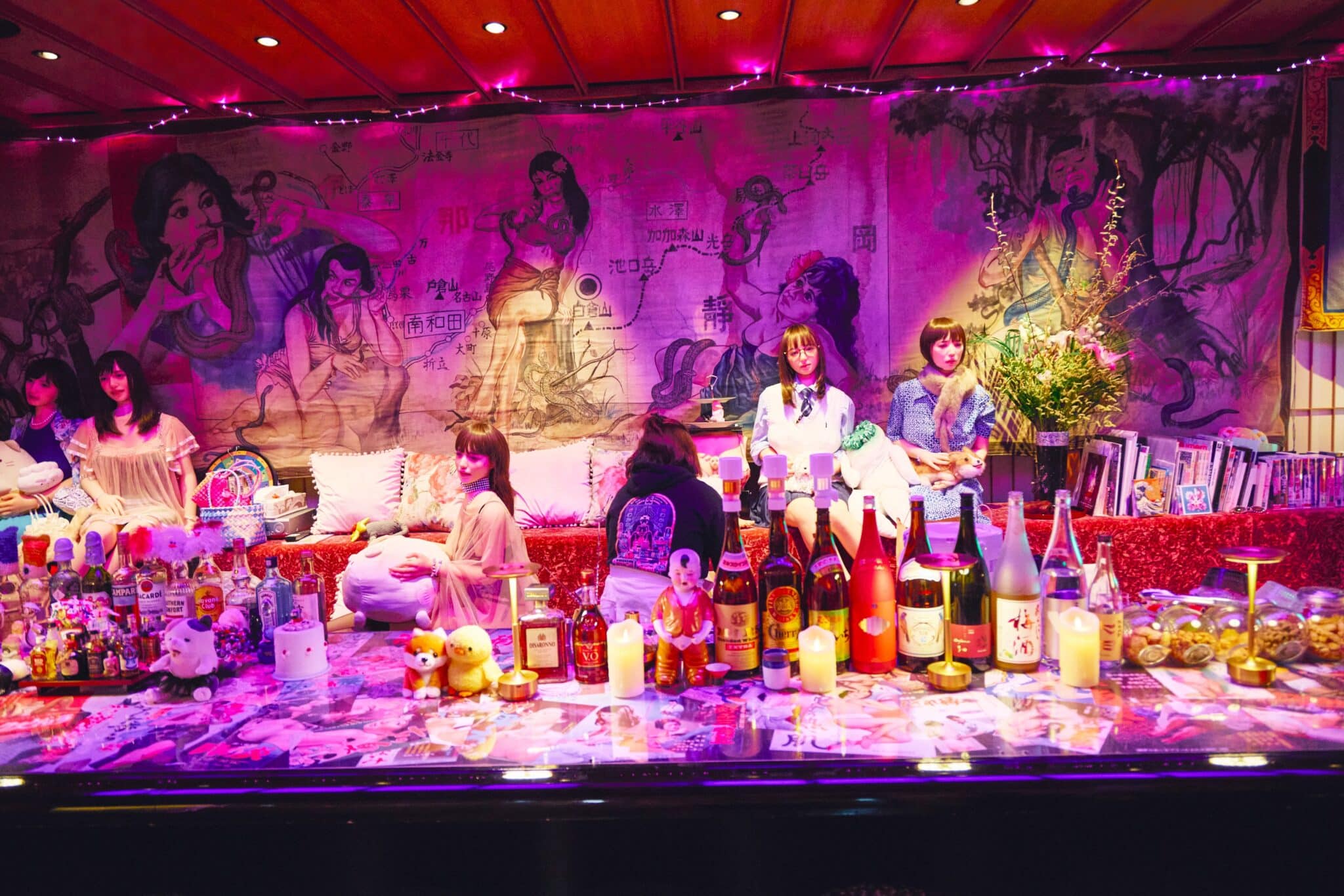
Arriving on the second floor and passing through the lace curtains, one enters the "Tea and Sake Wakame" bar. You will encounter a scene of love dolls produced by Orient Industries lined up in a row of dolls. Visitors are greeted by elaborate dolls created by Made in Japan technology. Behind the bar is an impressive freak show banner painted by the painter Shizuho Shimura about 70 years ago, and you will be surprised at first by the space.
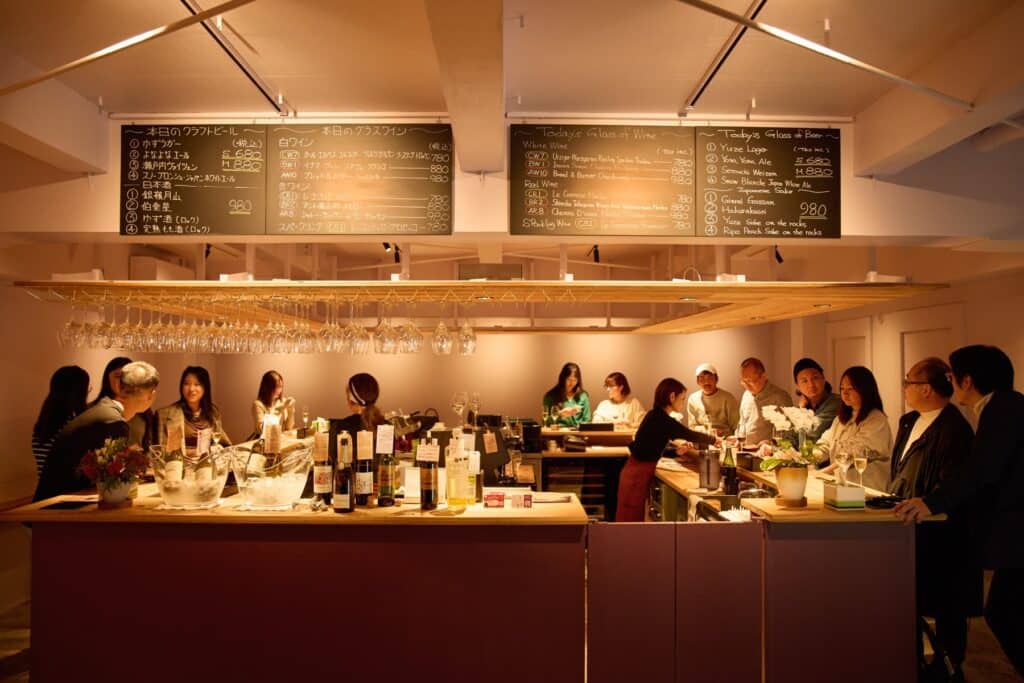
Cha to Sake Wakame, a bar where visitors can relax with drinks while surrounded by artworks.
A giant hand-painted banner by artist Seiho Shimura, representing Japan’s Showa-era sideshow culture.
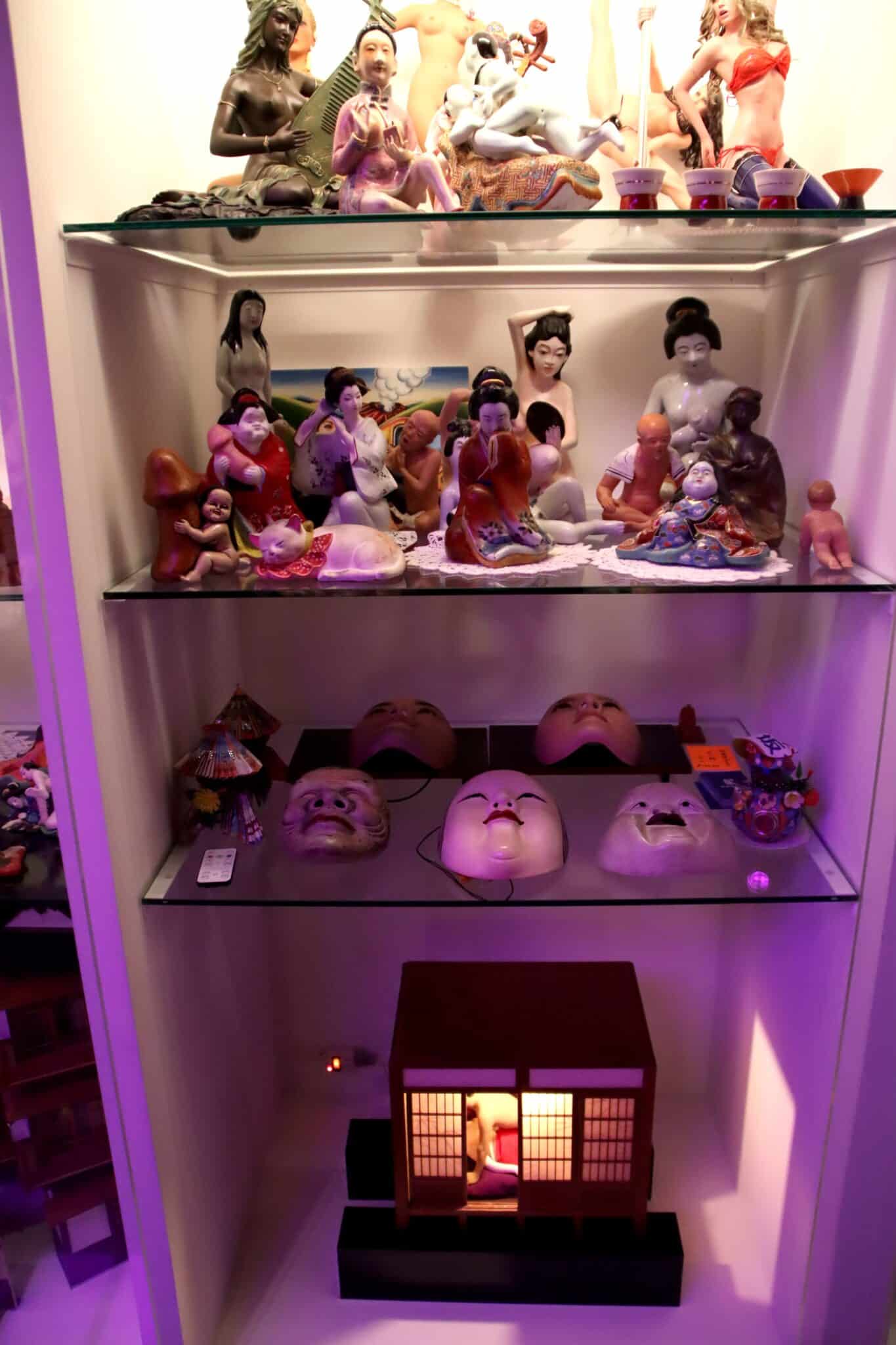
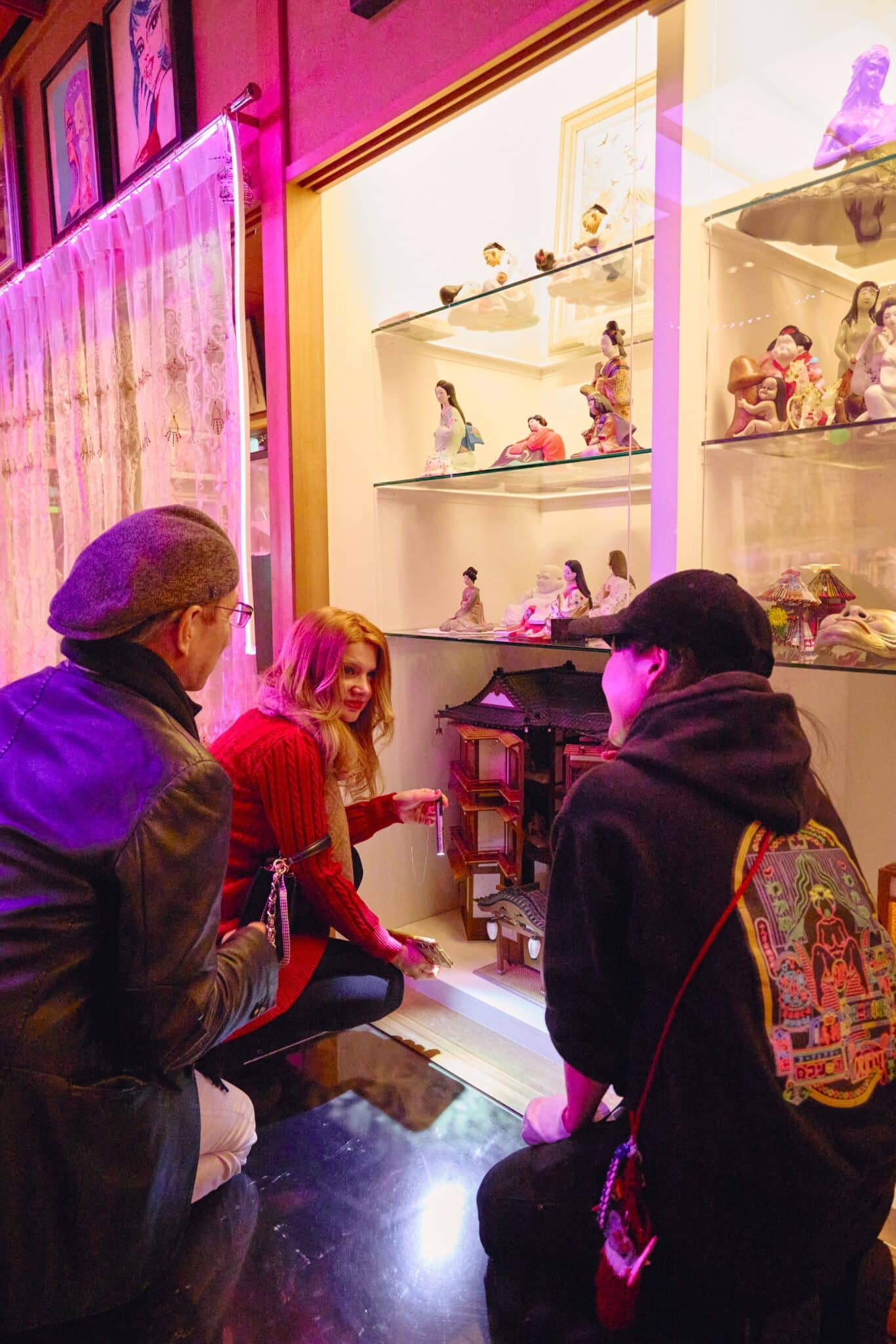
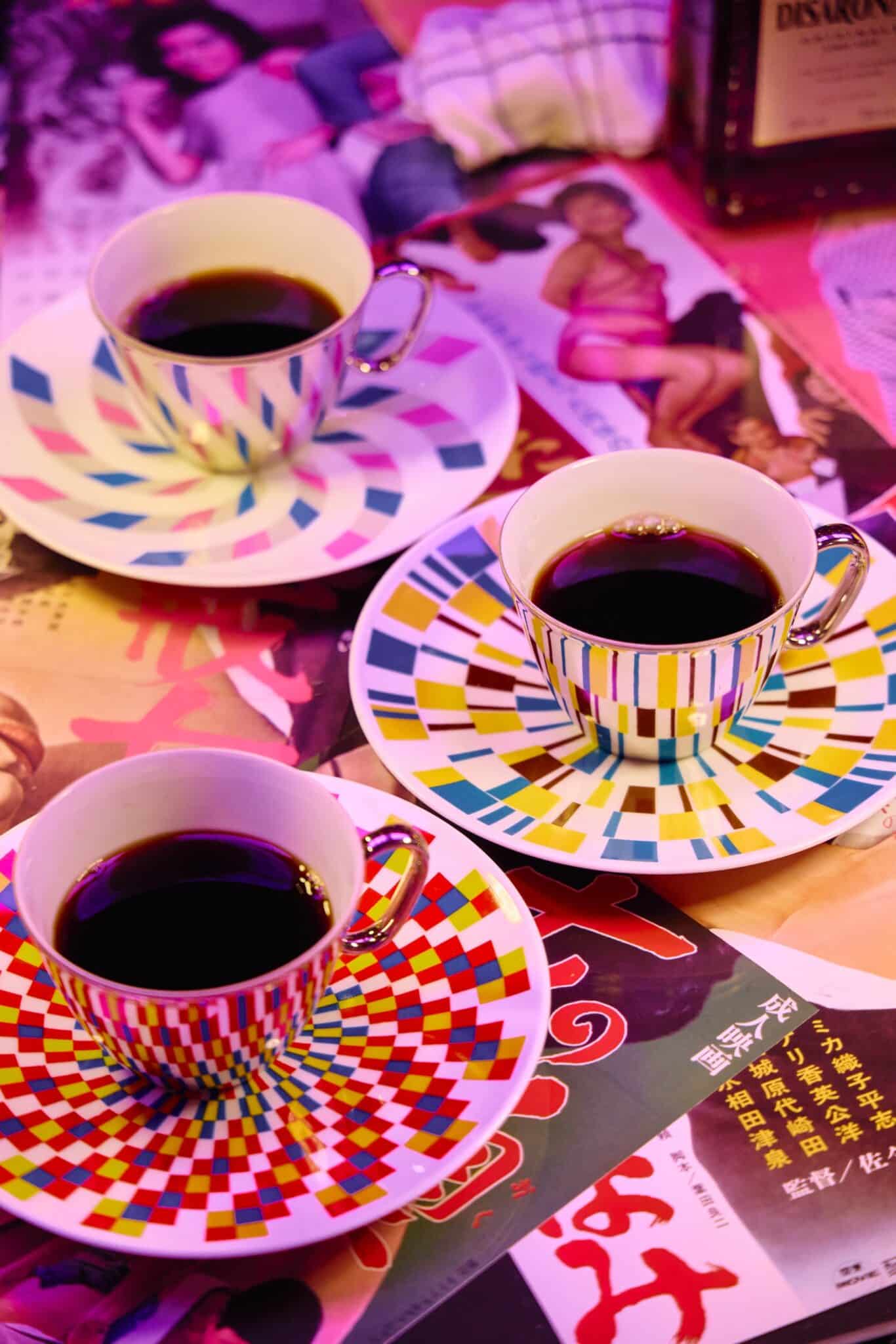
The bar tables display posters from “pink films,” a genre of Japanese erotic cinema that flourished from the 1950s through the 1960s. Nearby television-video sets play Showa-era adult films on VHS tapes. Display cases contain a collection of shunga dolls created by Kazunari Araki, a sculptor known for his dinosaur models.
Because artworks are displayed throughout the space, visitors can discover new details while relaxing at the bar. Spending time with a drink allows the museum’s atmosphere to unfold gradually.
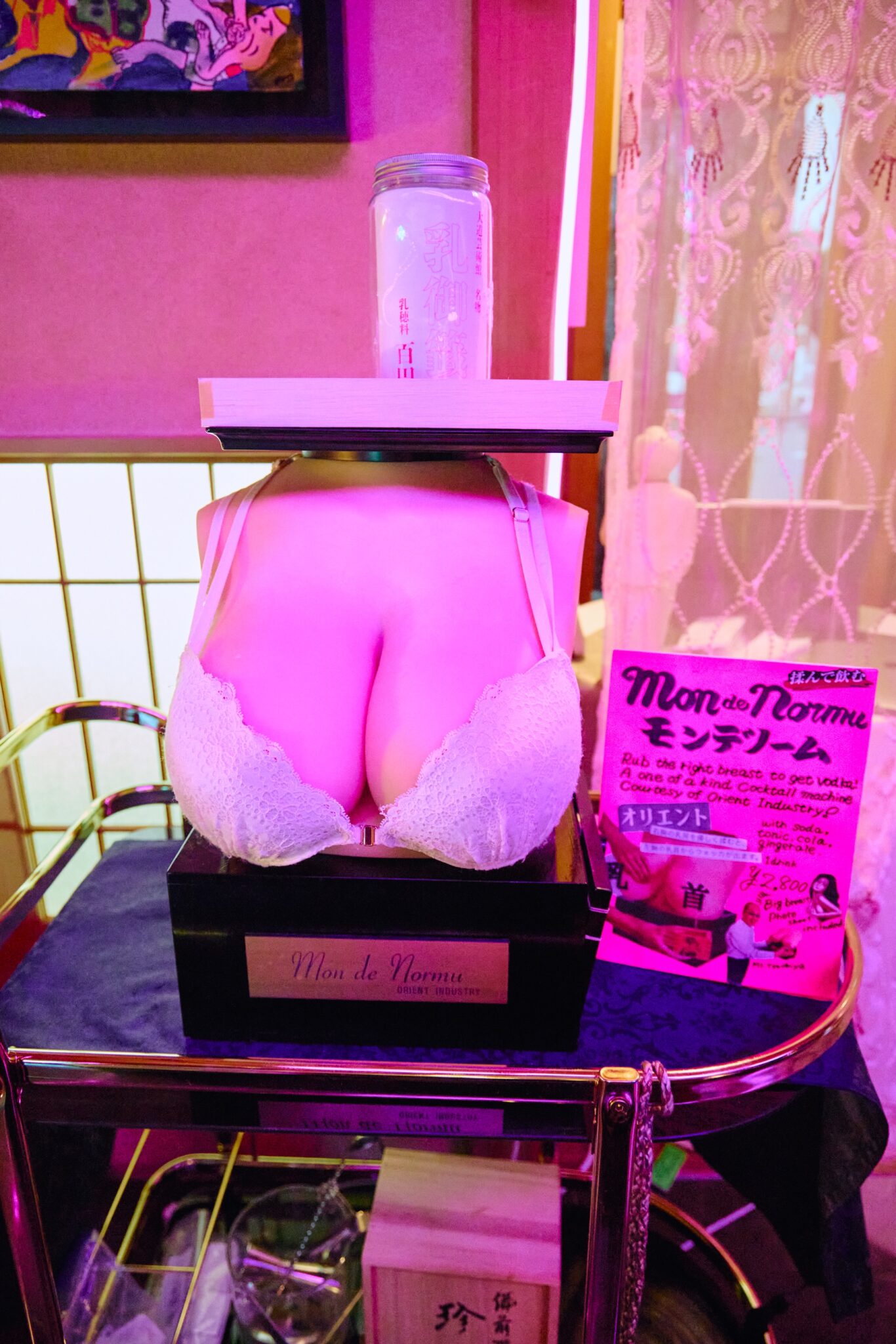
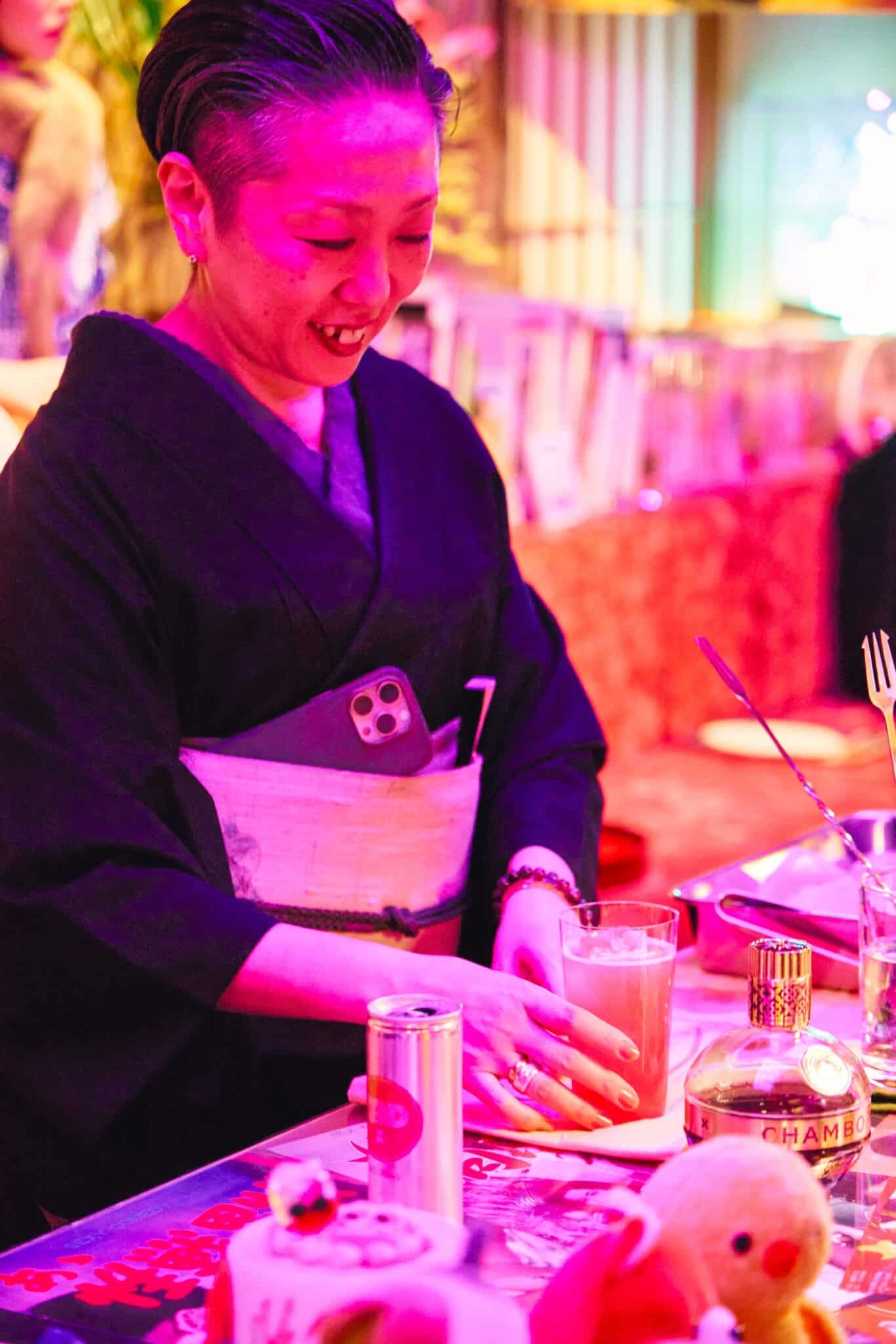
The drink menu includes a “Mon De Nome” (rub and drink) menu with customer participation, original cocktails and other specials, non-alcoholic cocktails, and soft drinks.
Display cases contain shunga dolls and various objects inspired by erotic imagery.
Staff members provide explanations of the artworks and exhibitions, and English guidance is available.
The participatory cocktail “Mon De Nome,” which guests help complete themselves. (2,800 yen)
The museum’s original cocktail “Sex Guerrilla.” (1,500 yen)
An original coffee blend from TORIBA COFFEE in Toba, also available at the bar. (1,200 yen)
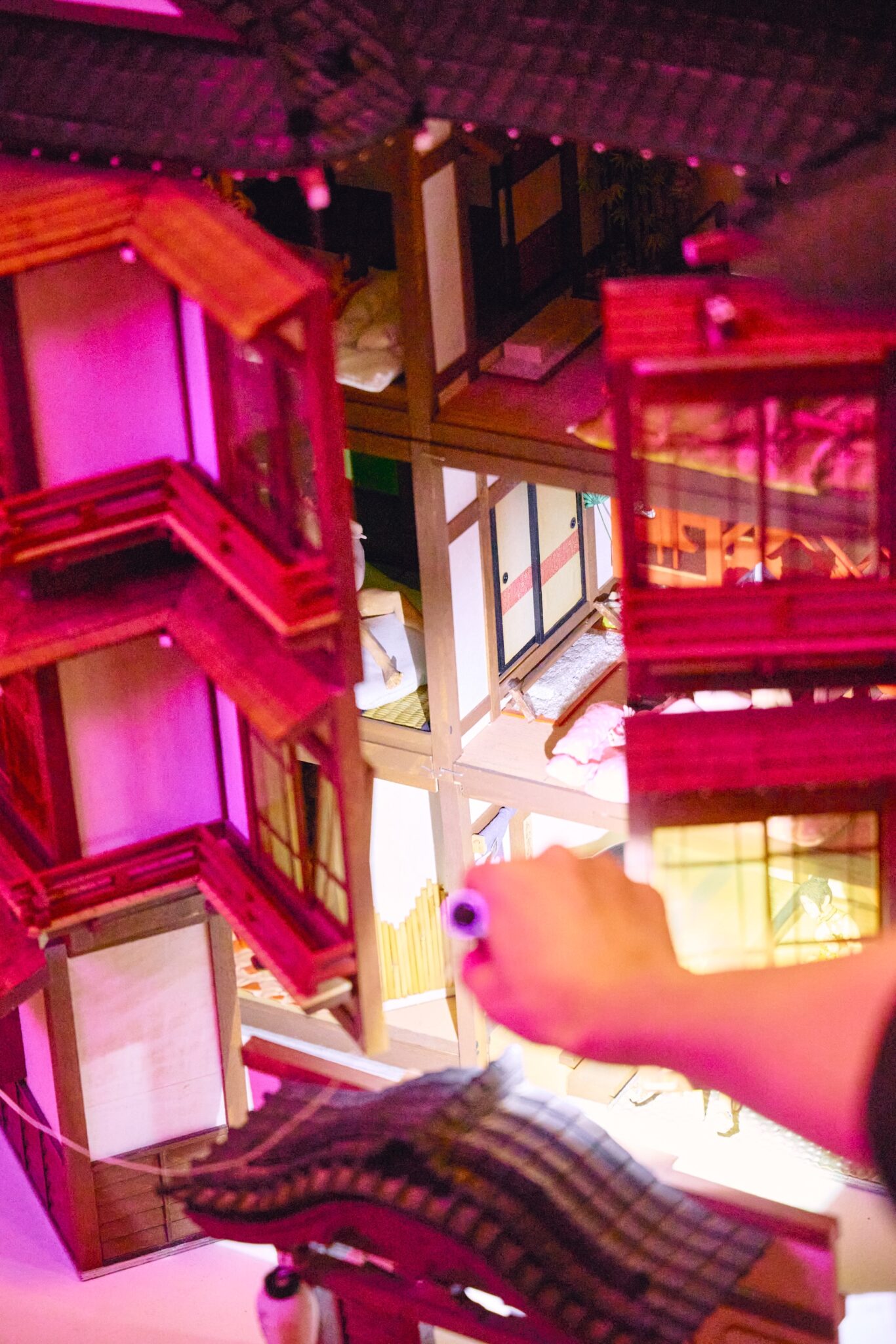
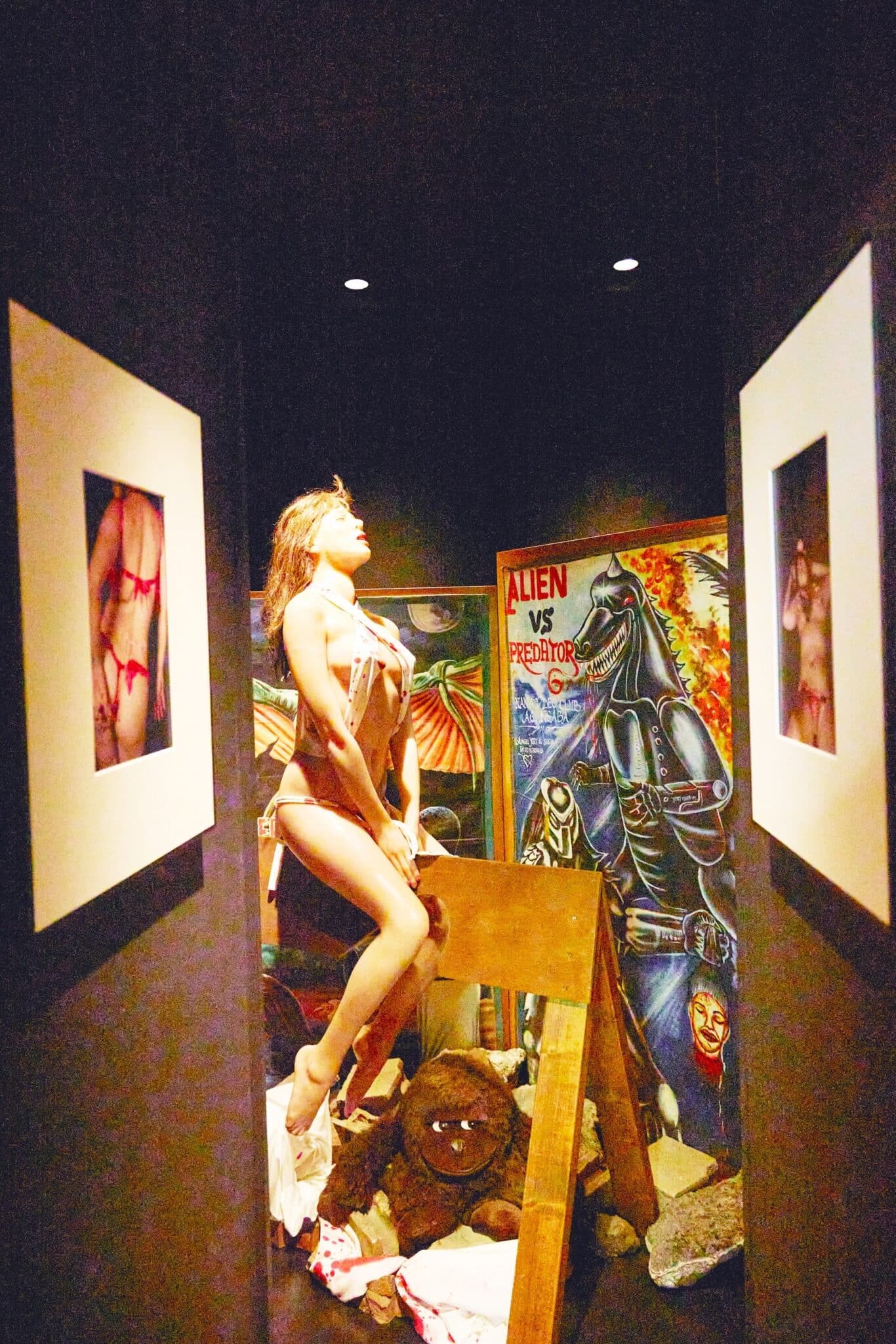
The “Hibokan” is an adult museum (18 banned) that was very popular from around the 1970s to the mid-2000s, and was aimed at the general public with the theme of eroticism. In order to convey the traces left by the museum to the present age, the third floor of the museum features a reproduction of the "SF Miraikan," a museum that was once located in Toba City, Mie Prefecture, with the theme of "erotic space science fiction futuristic degree. When the museum closed, Mr. Tsuzuki, who had covered hidden treasure museums throughout Japan over a long period of time, purchased the dolls on display in order to pass on the culture of hidden treasure museums to future generations. After about 20 years, the exhibition was finally realized, albeit on a small scale.
A work by Satoru Matsuzaki, one of Japan’s leading wax sculptors.
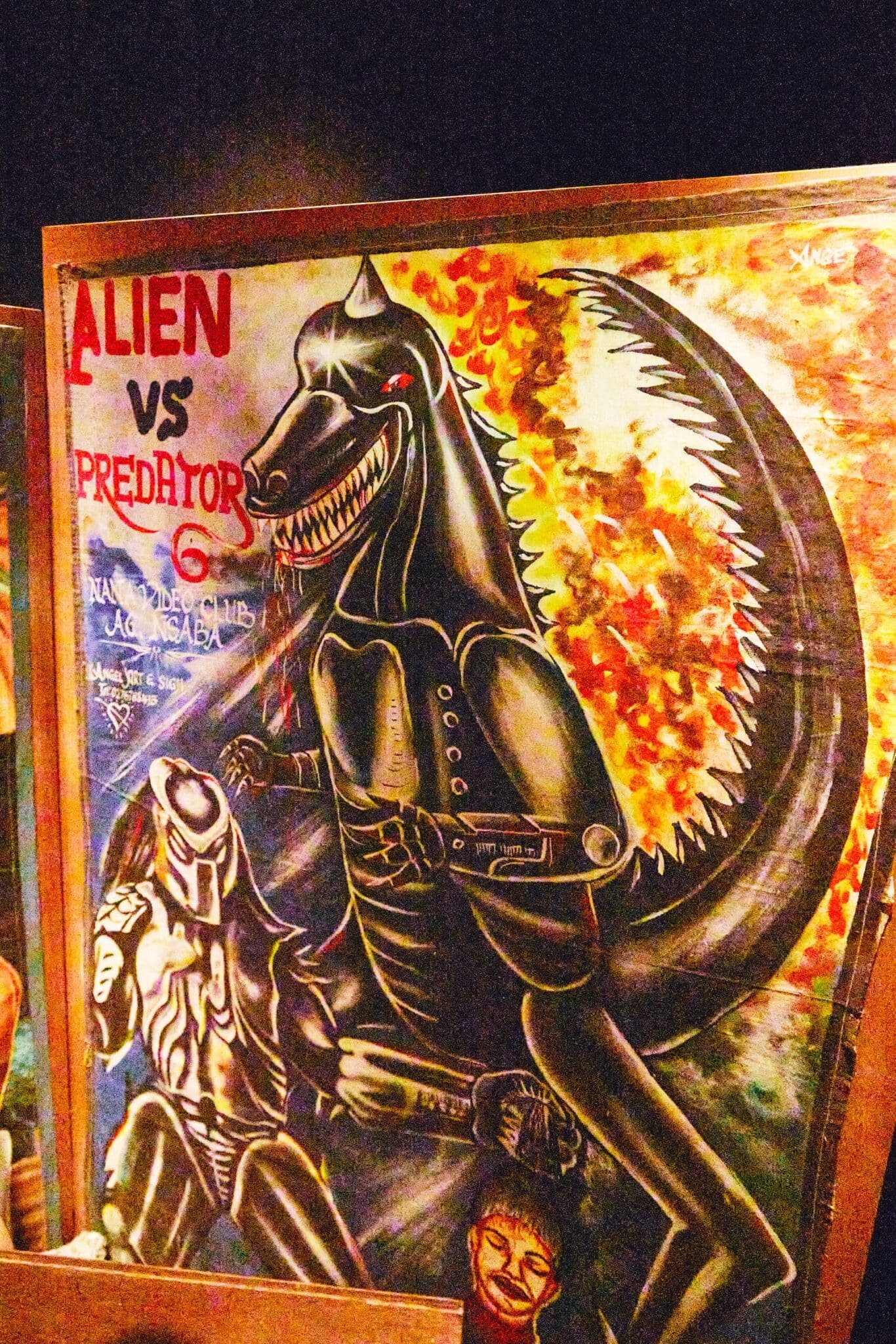
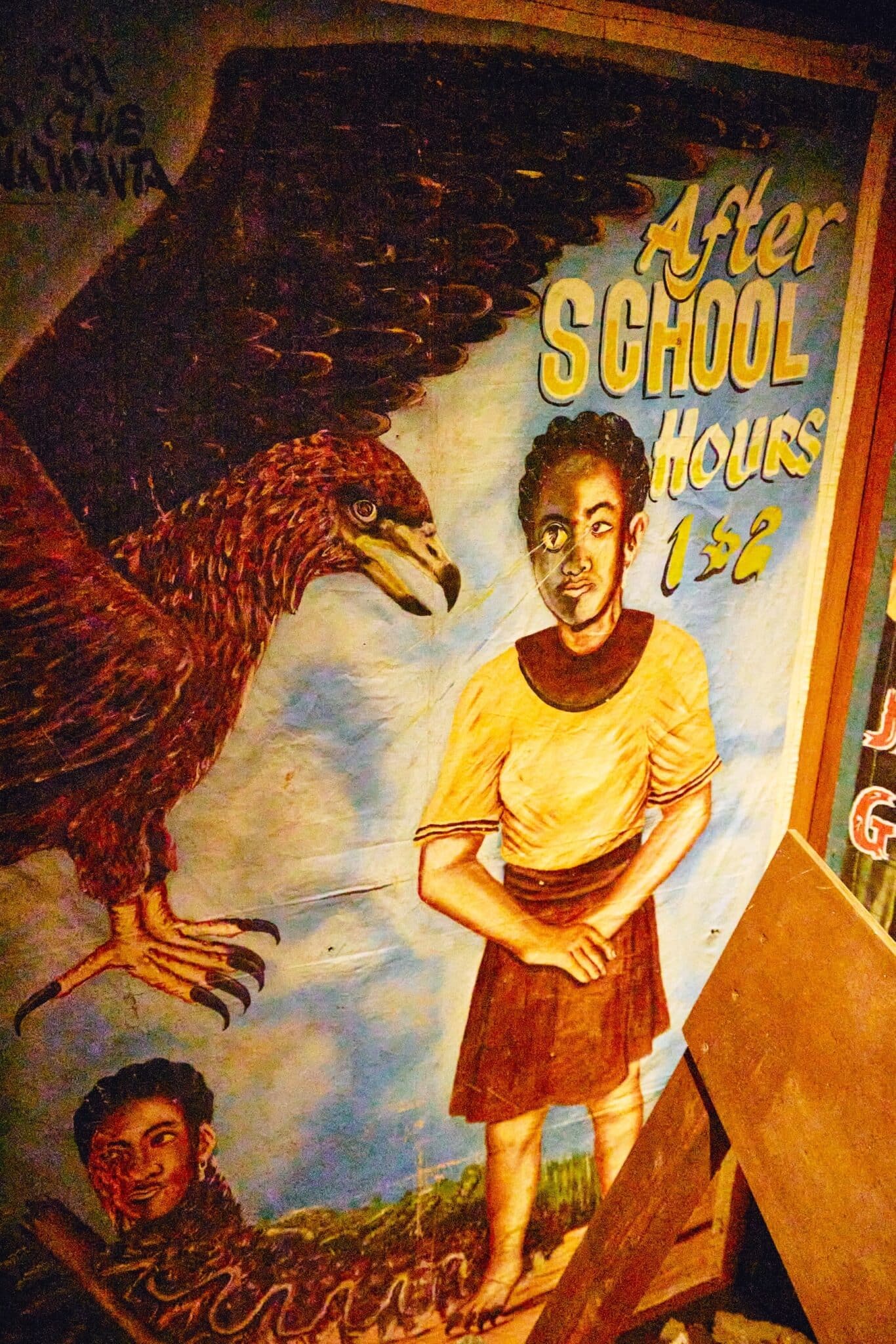
Hand-painted movie posters created on grain sacks by local artists in Ghana, a style now highly sought after by collectors worldwide.
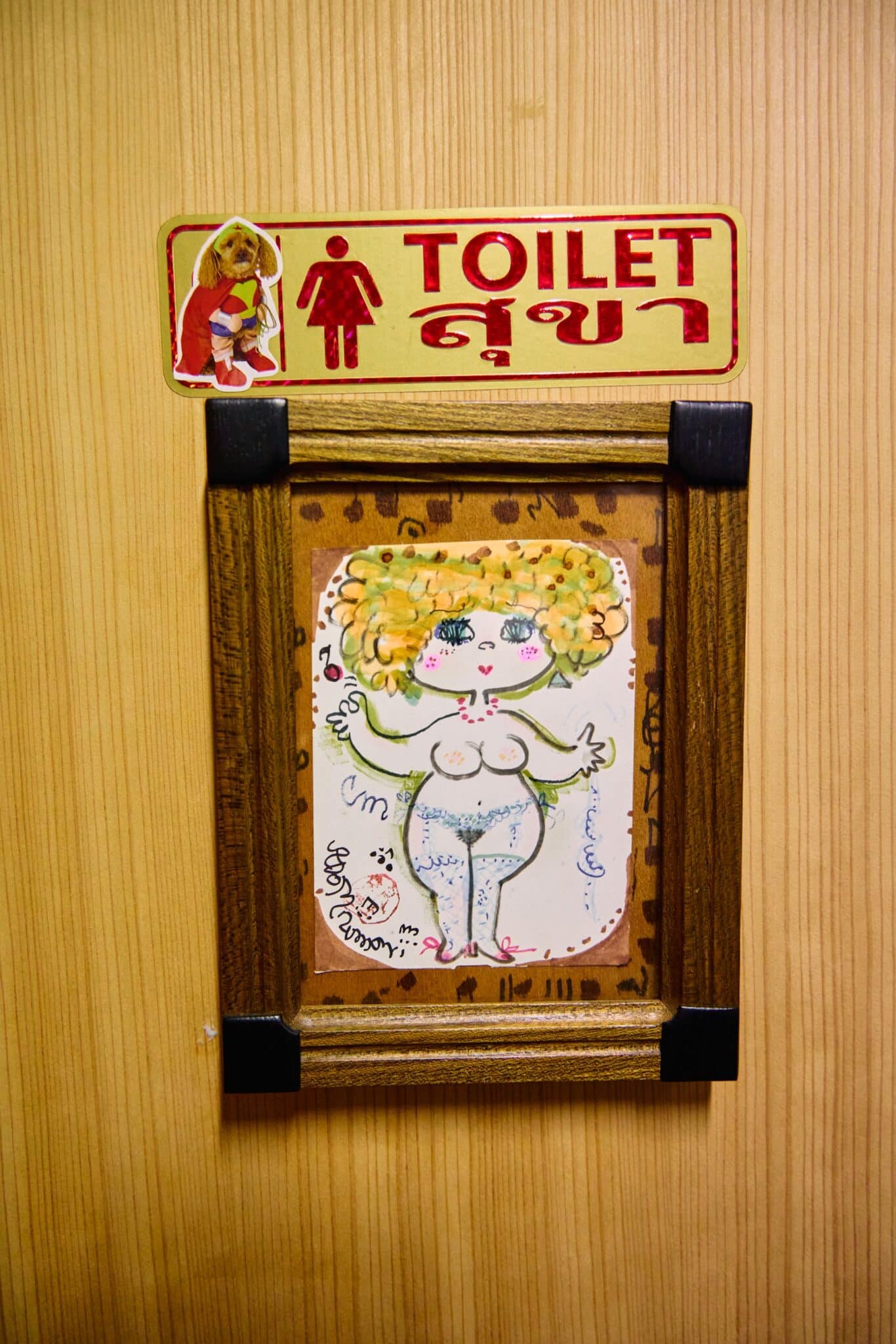
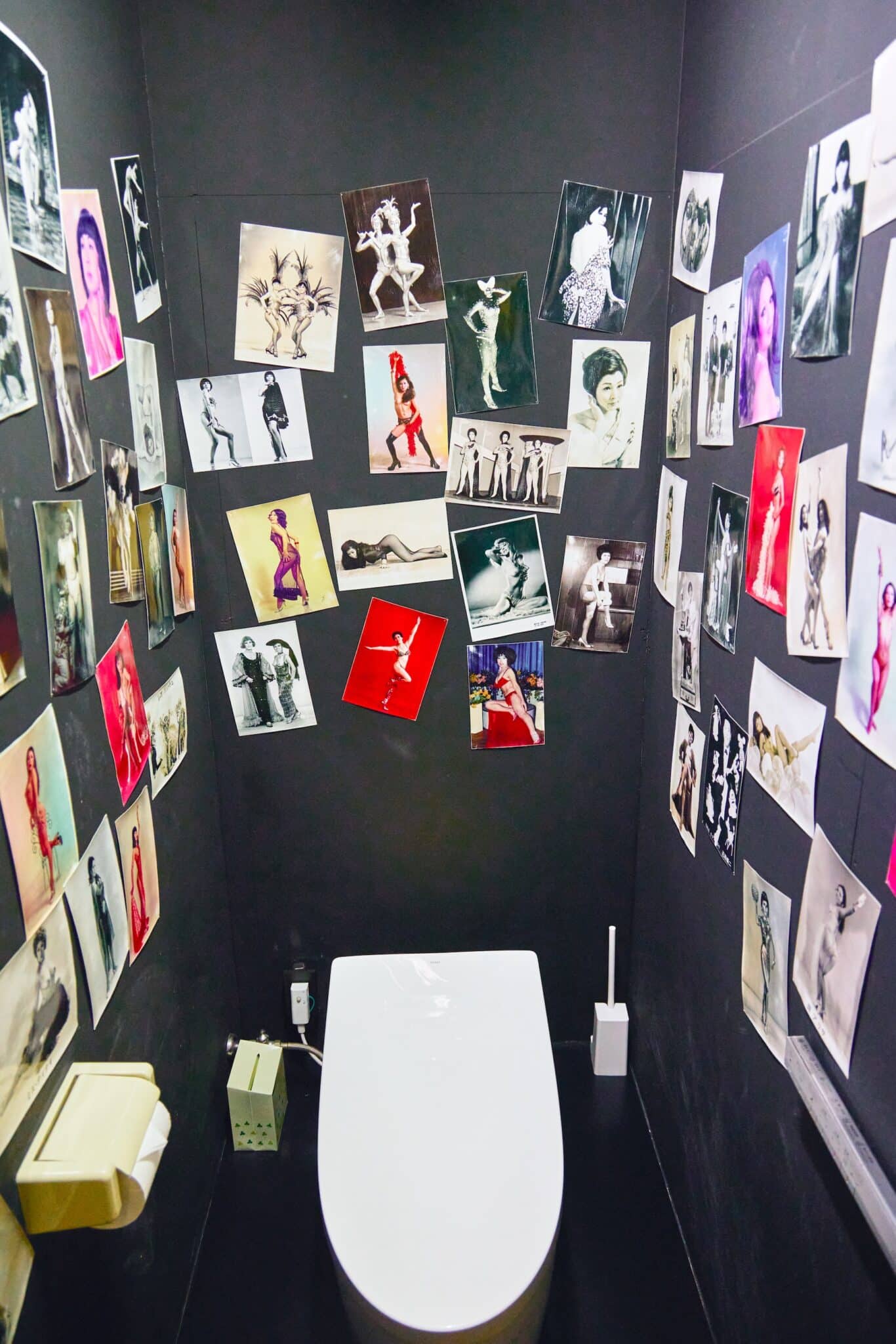
Another private room displays two wax figures and a poster of a Ghanaian movie that makes you laugh. Various works of art are also displayed in the restrooms, and the women's restroom is like a small gallery lined with pictures of Showa cabaret dancers. It is a space where you can linger for a long time.
A work by Ado Mizumori—affectionately known as “Ado-chan”—a beloved illustrator who represents the pop culture of the Showa era.
The women’s restroom walls are lined with photographs of Showa-era cabaret dancers, creating a space that feels like a small gallery.
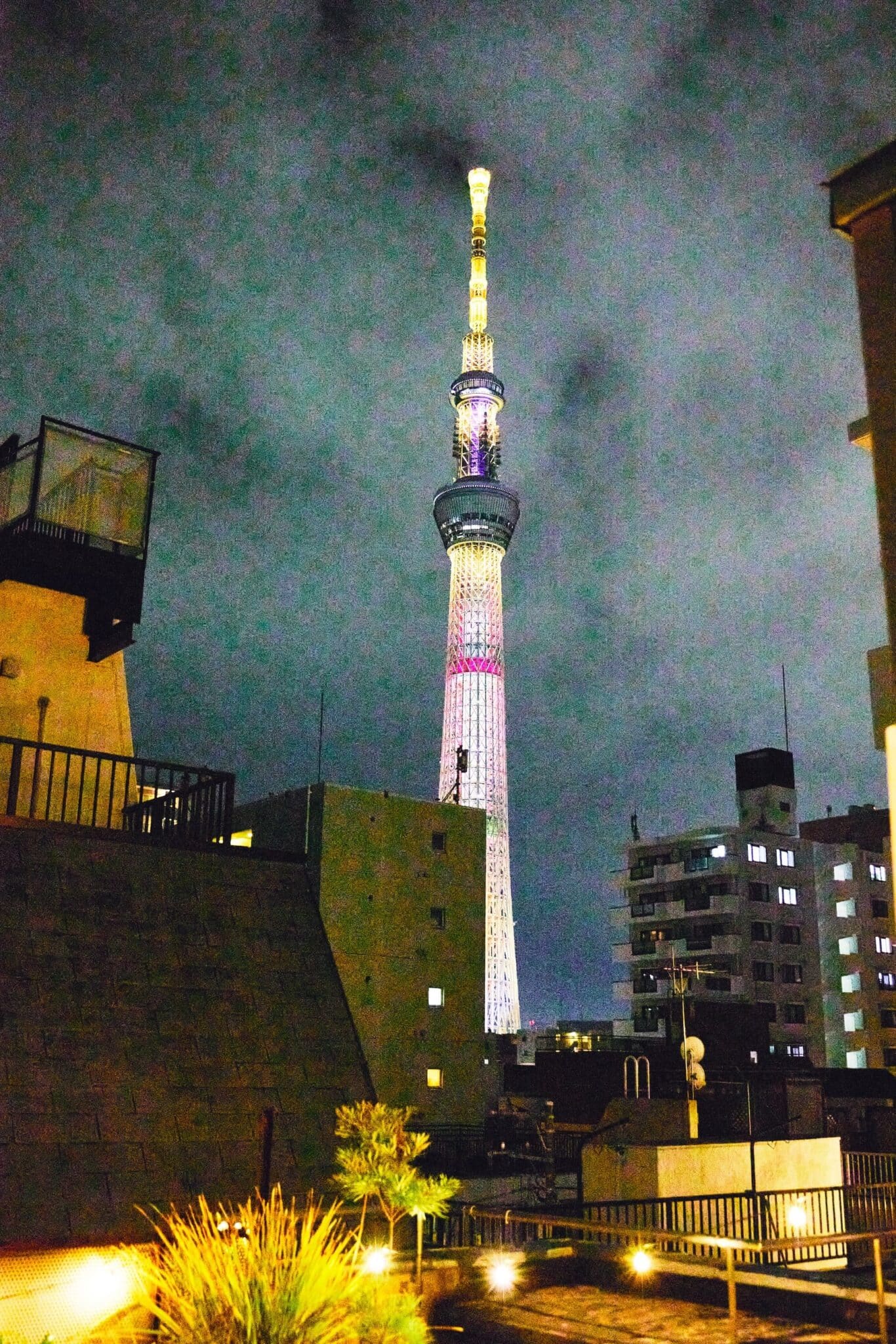
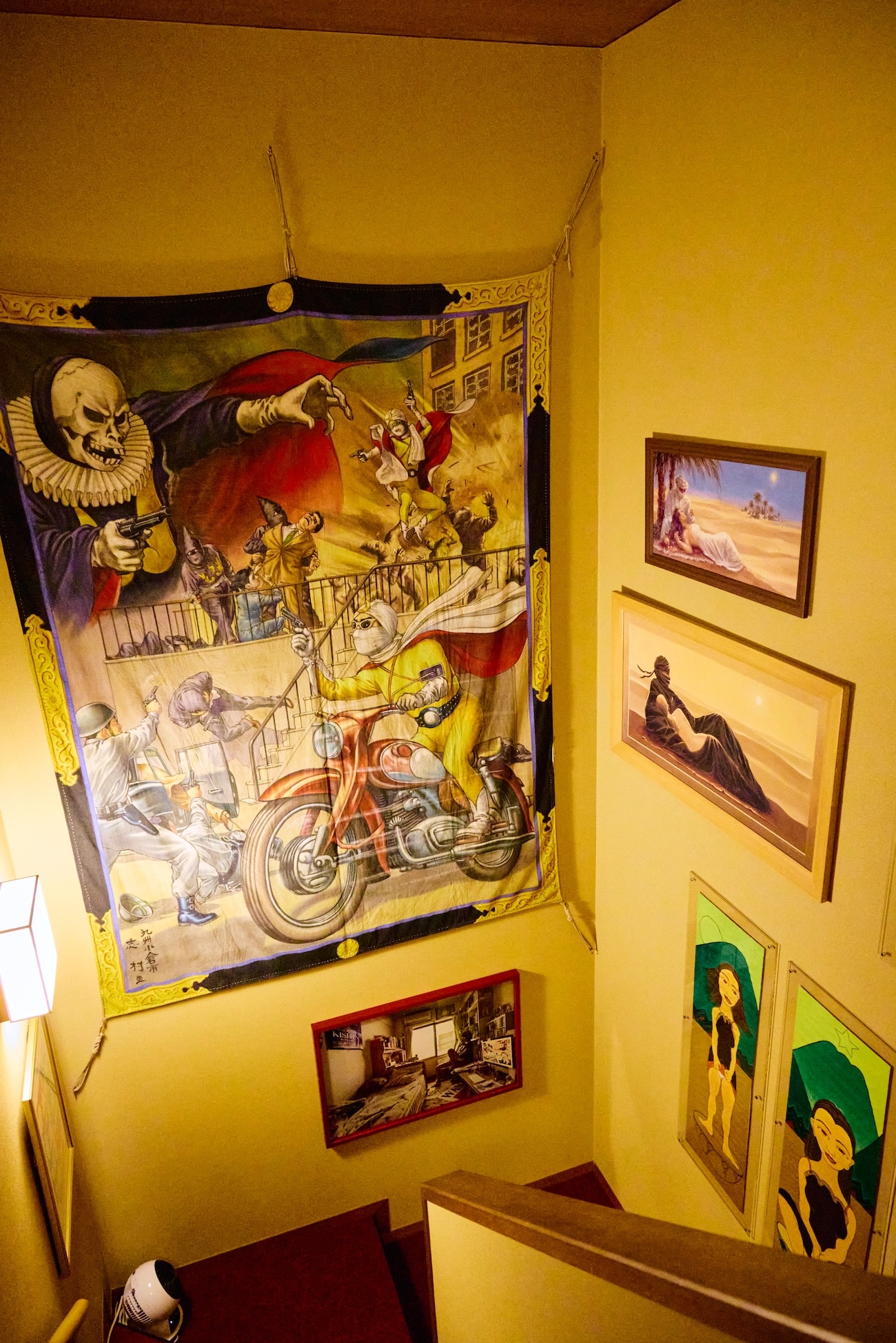
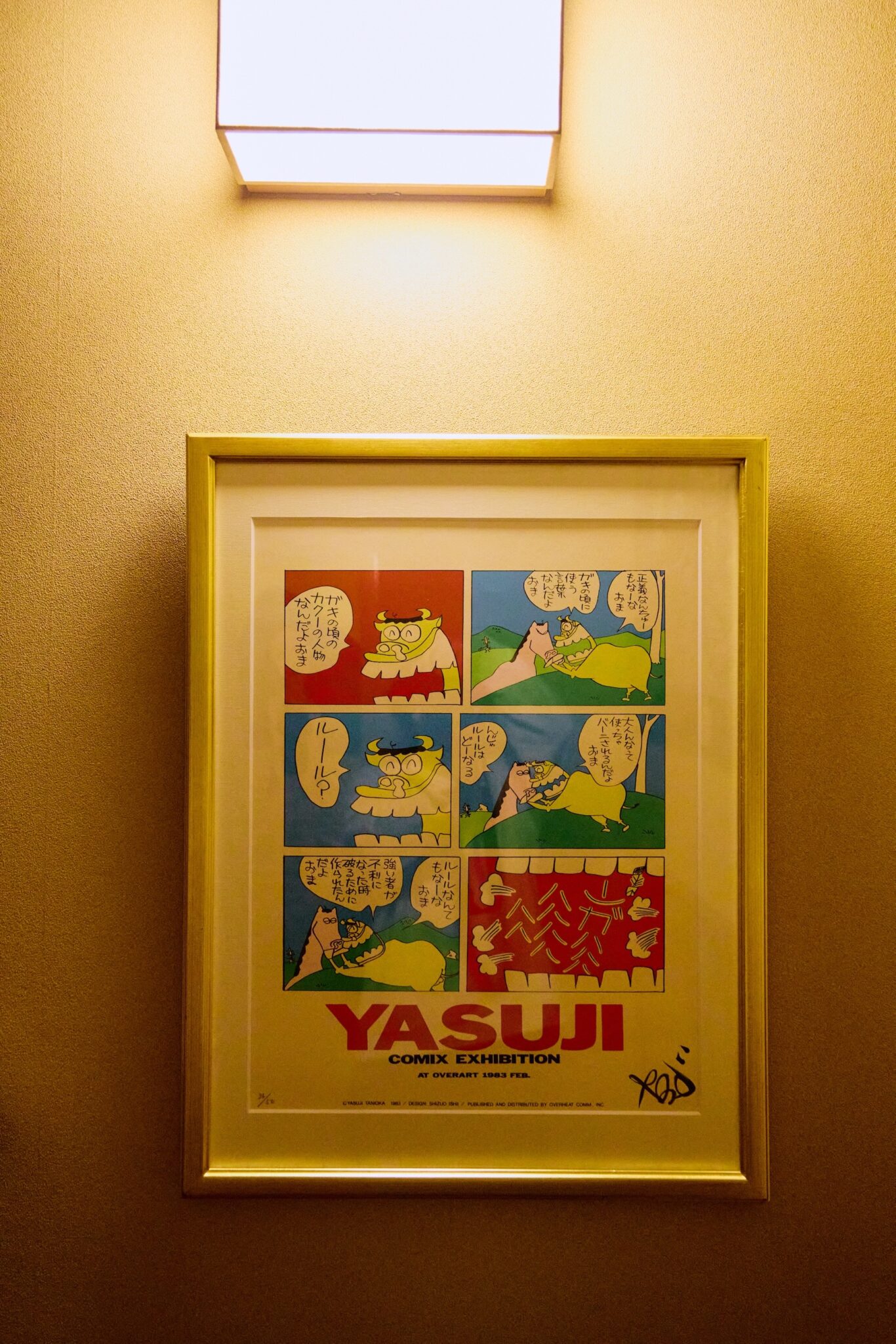
Artworks are also displayed on the stairs from the third floor to the rooftop, including a colorful freak show banner depicting the Showa-era hero "Gekko Mask" that is a highlight. Other works include silk screens by Yasuji Tanioka and paintings by unknown artists discovered by Mr. Tsuzuki. From the rooftop, where you can chill, you can enjoy a panoramic view of the Tokyo Sky Tree and the wide-open sky of Mukojima.
A massive banner representing Showa-era sideshow culture, hand-painted by artist Seiho Shimura.
A silkscreen work by legendary gag manga artist Yasushi Tanioka.
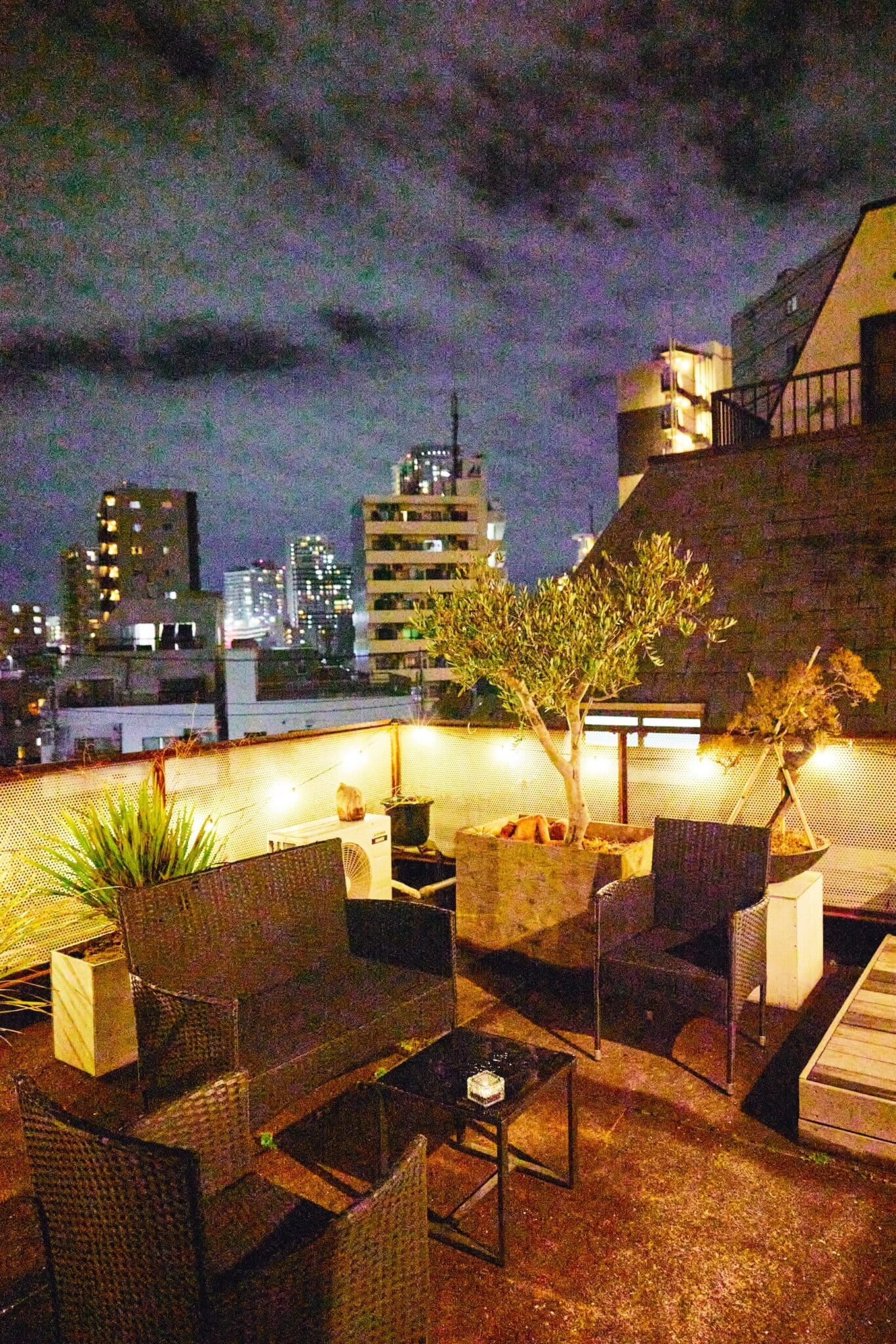
The rooftop terrace connected to the third floor offers a place to relax after exploring the exhibitions.
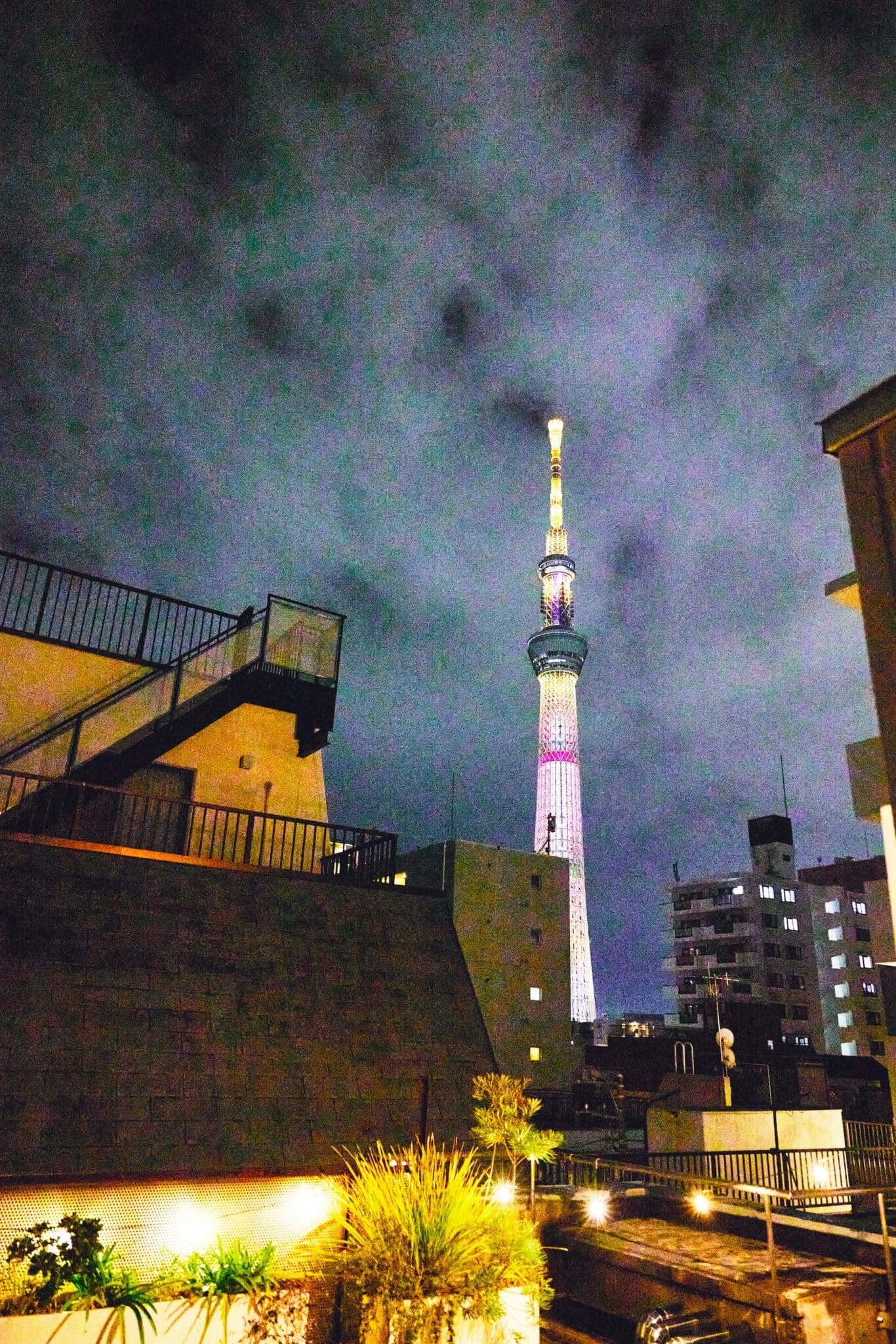
Tokyo Skytree and the wide skies above Mukojima as seen from the rooftop.
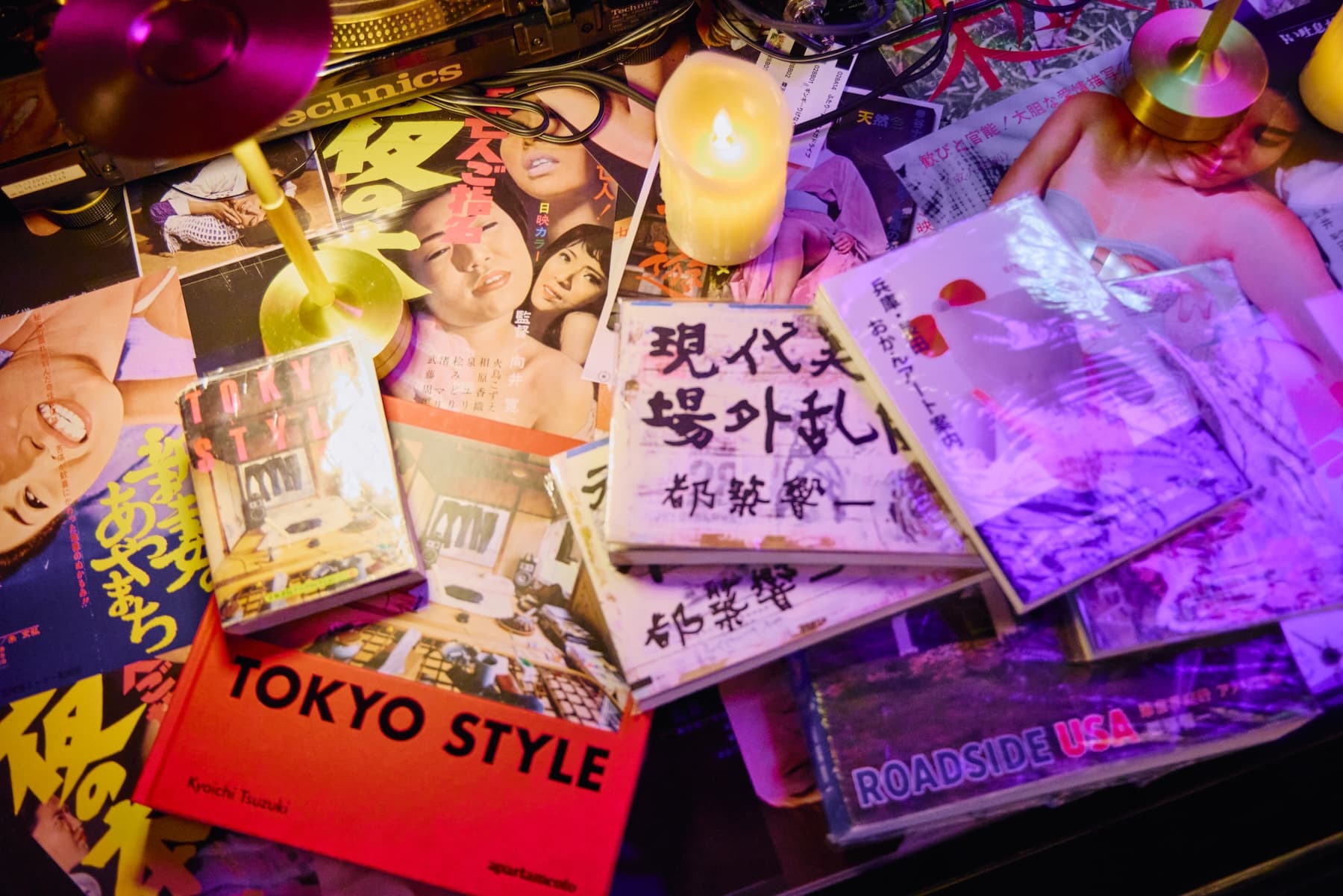
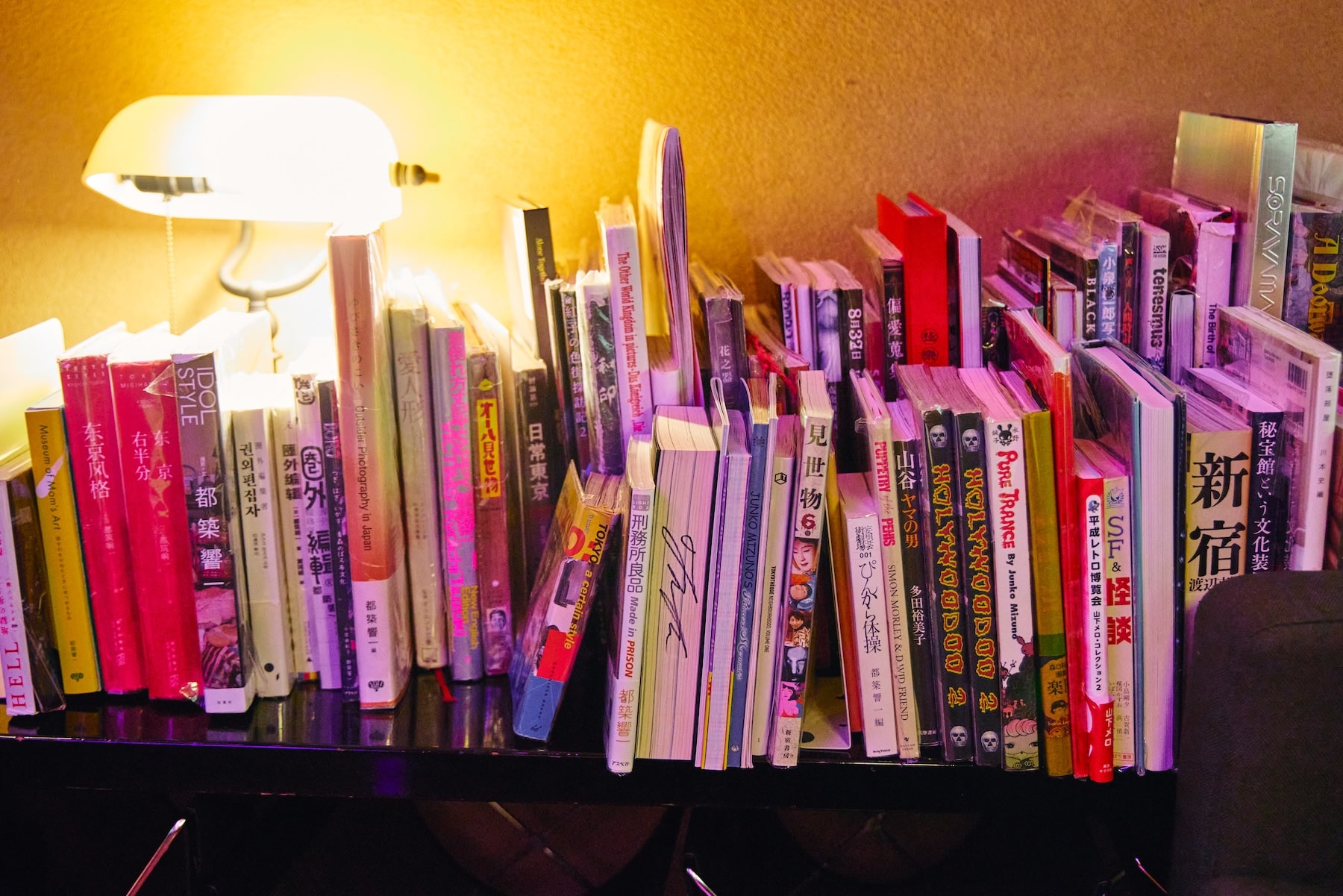
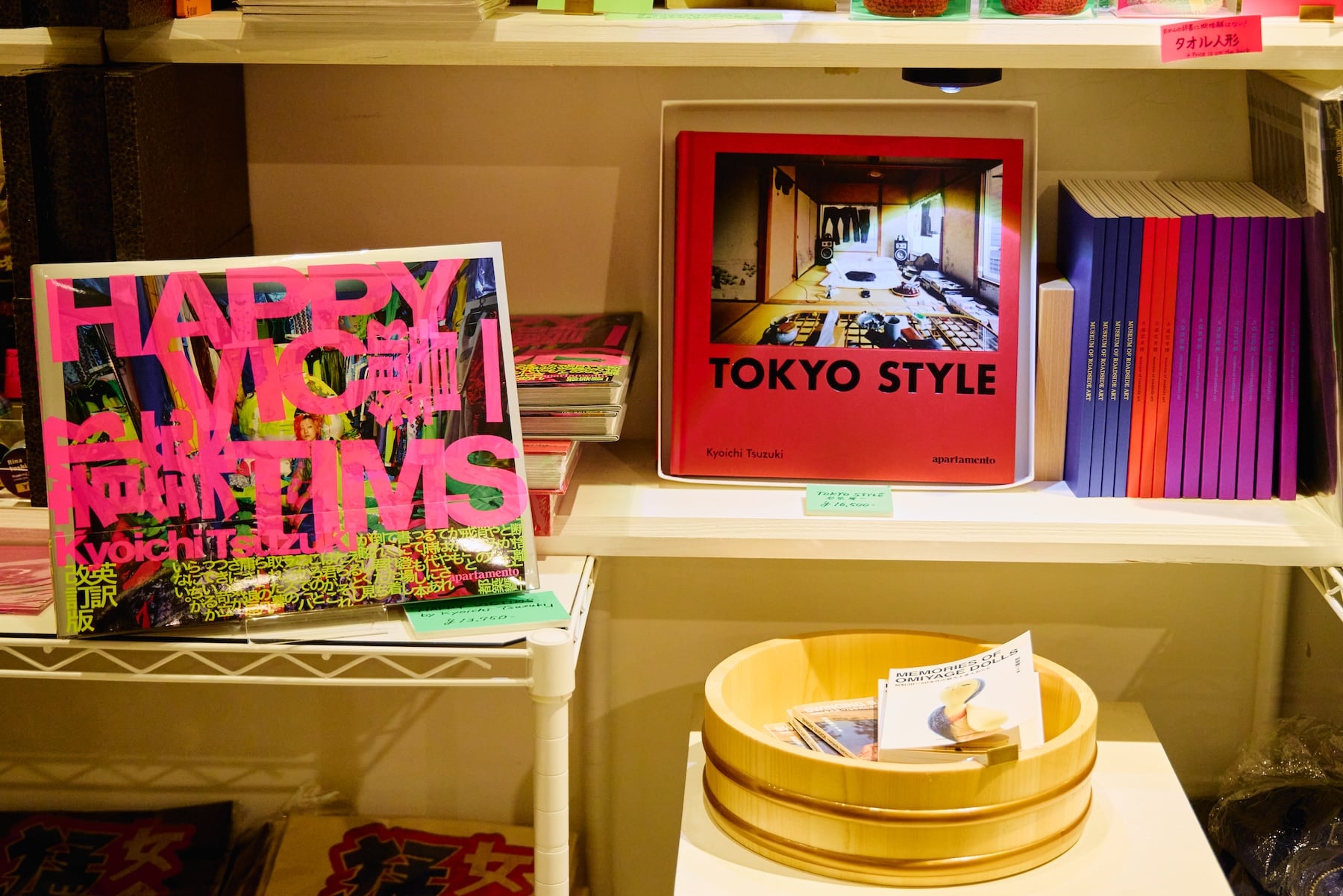
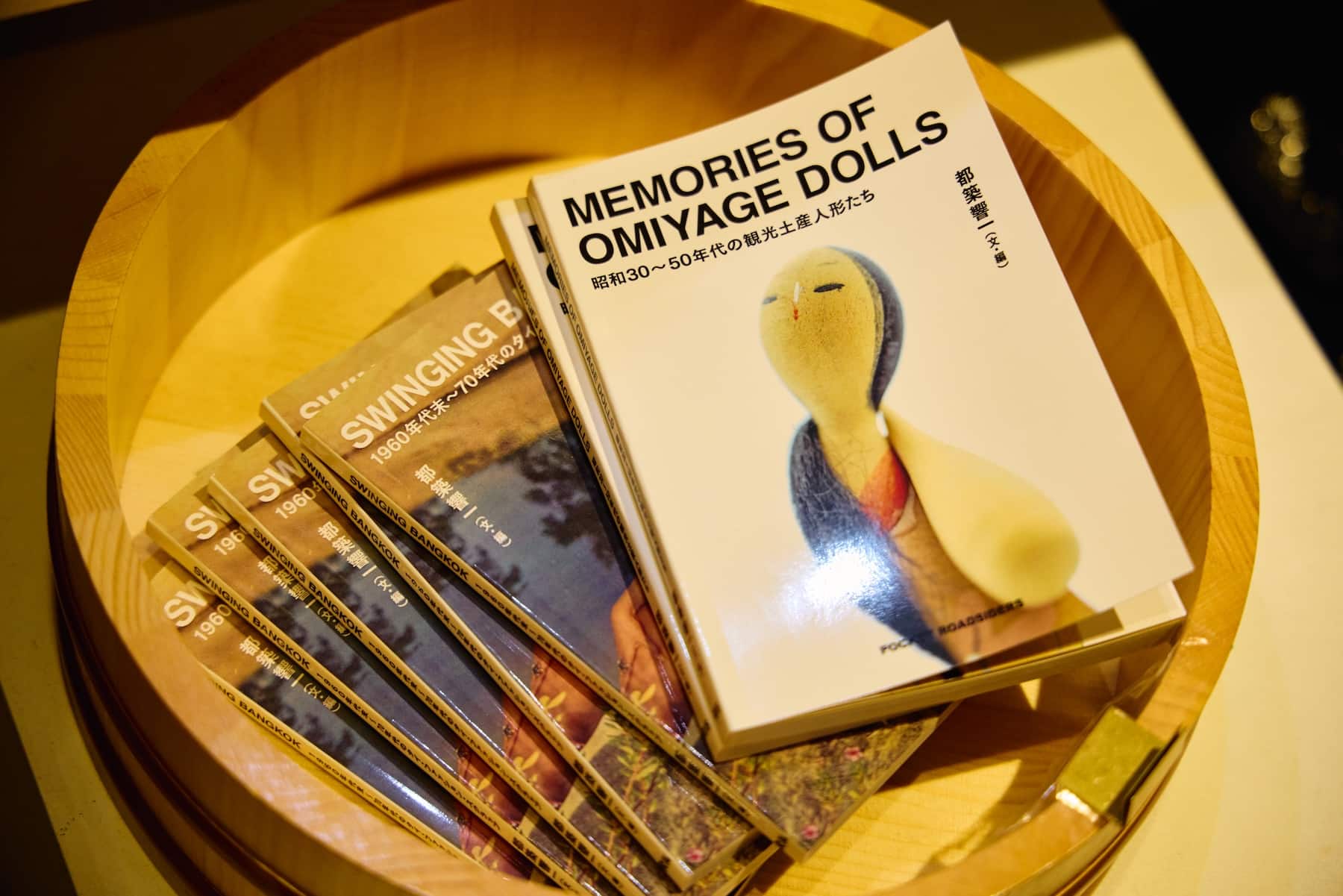
The book corner on the second floor features many of Tsuzuki’s publications. Visitors are free to browse them and read them while enjoying drinks at the bar. Titles include Roadside USA, Tokyo Style, Happy Victims: Kidaore Hojokii, Hell: Jigoku no Arukikata, and Chinsekai Kiko, among many others.
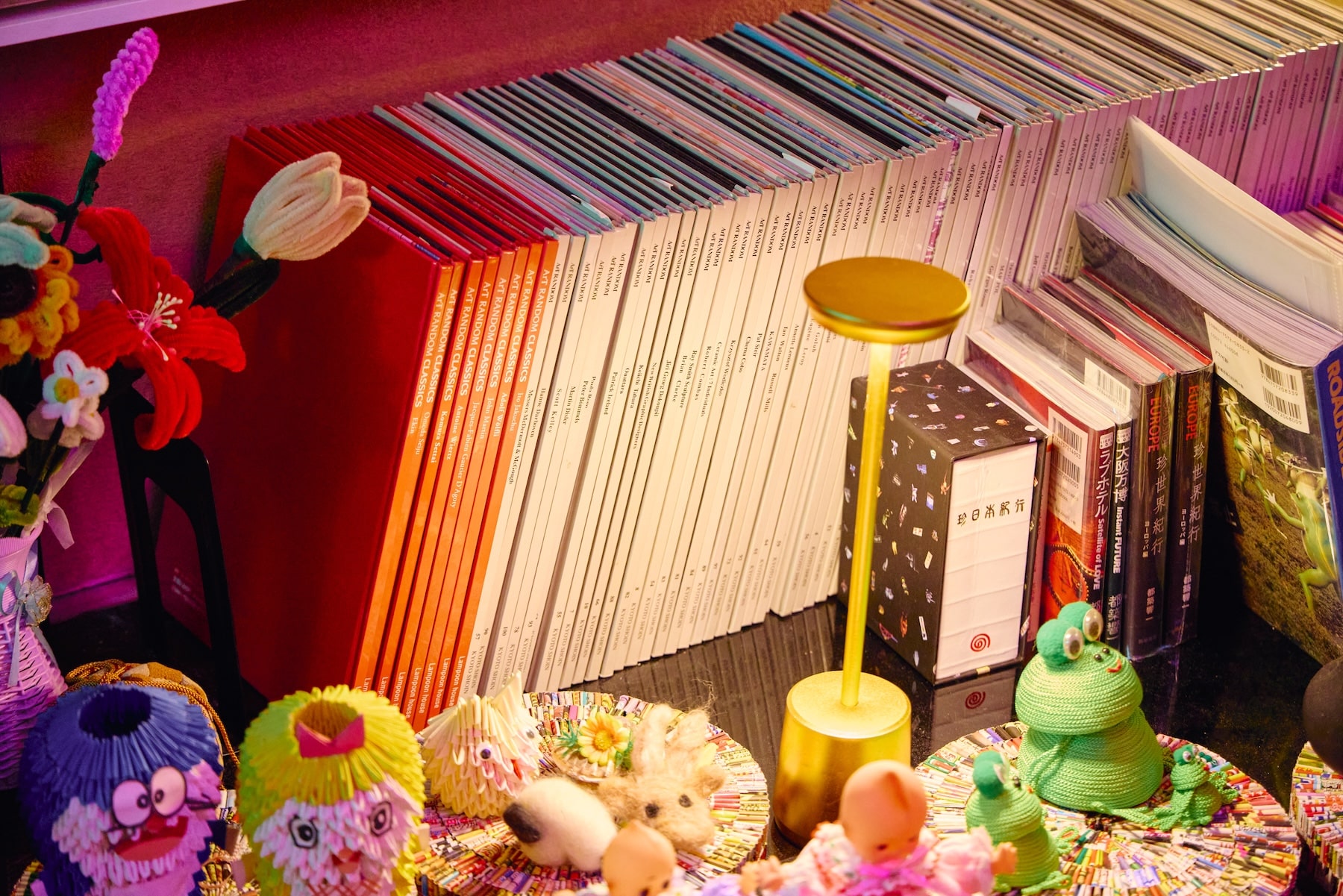
Also available is ARTANDOM, a 55-volume series edited by Tsuzuki that introduces artists from around the world.
Through these books and collections of works, you will not only get to know Mr. Tsuzuki, who delves deeply into culture from a unique perspective, but you will also be able to enjoy the exhibits at "Daido Geijutsukan" even more by turning the pages.
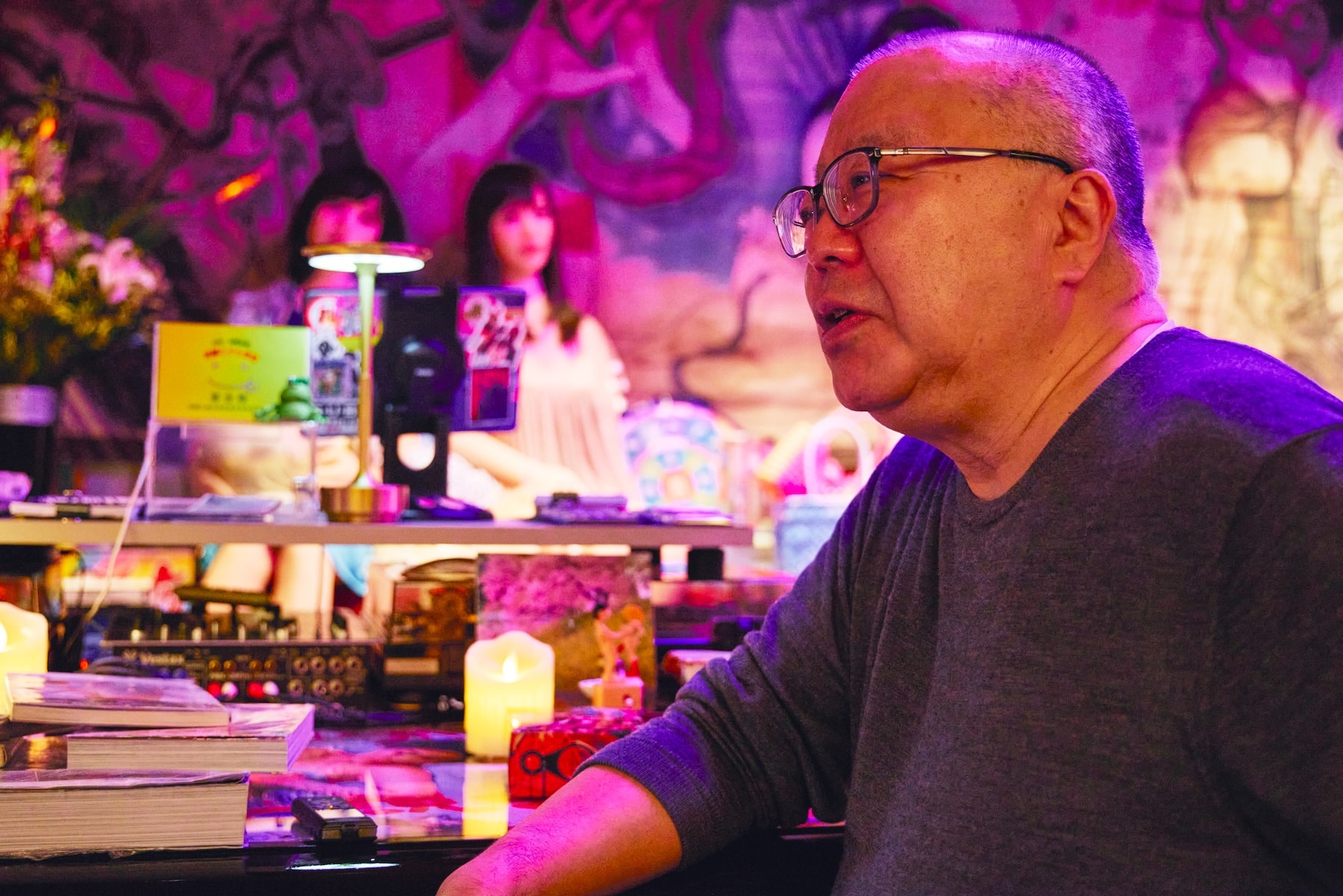
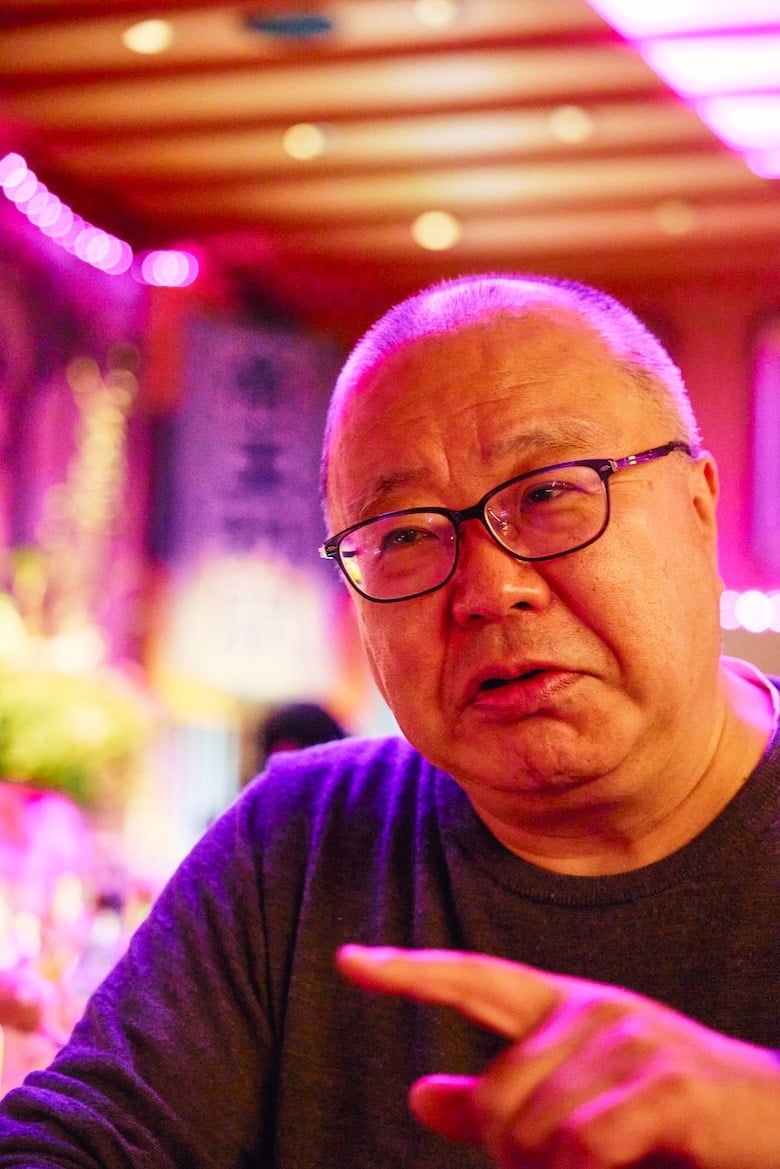
Kyoichi Tsuzuki, curator of Daido Geijutsukan, who has documented Japanese popular culture for decades as an editor and photographer.
Some of Tsuzuki’s representative publications focusing on roadside culture and everyday life in Japan.
Books in the bar’s reading corner are available for visitors to browse freely.
Shelves lined with Tsuzuki’s publications on Japanese popular and underground culture.
ARTANDOM, the 55-volume art book series edited by Tsuzuki introducing artists from around the world.
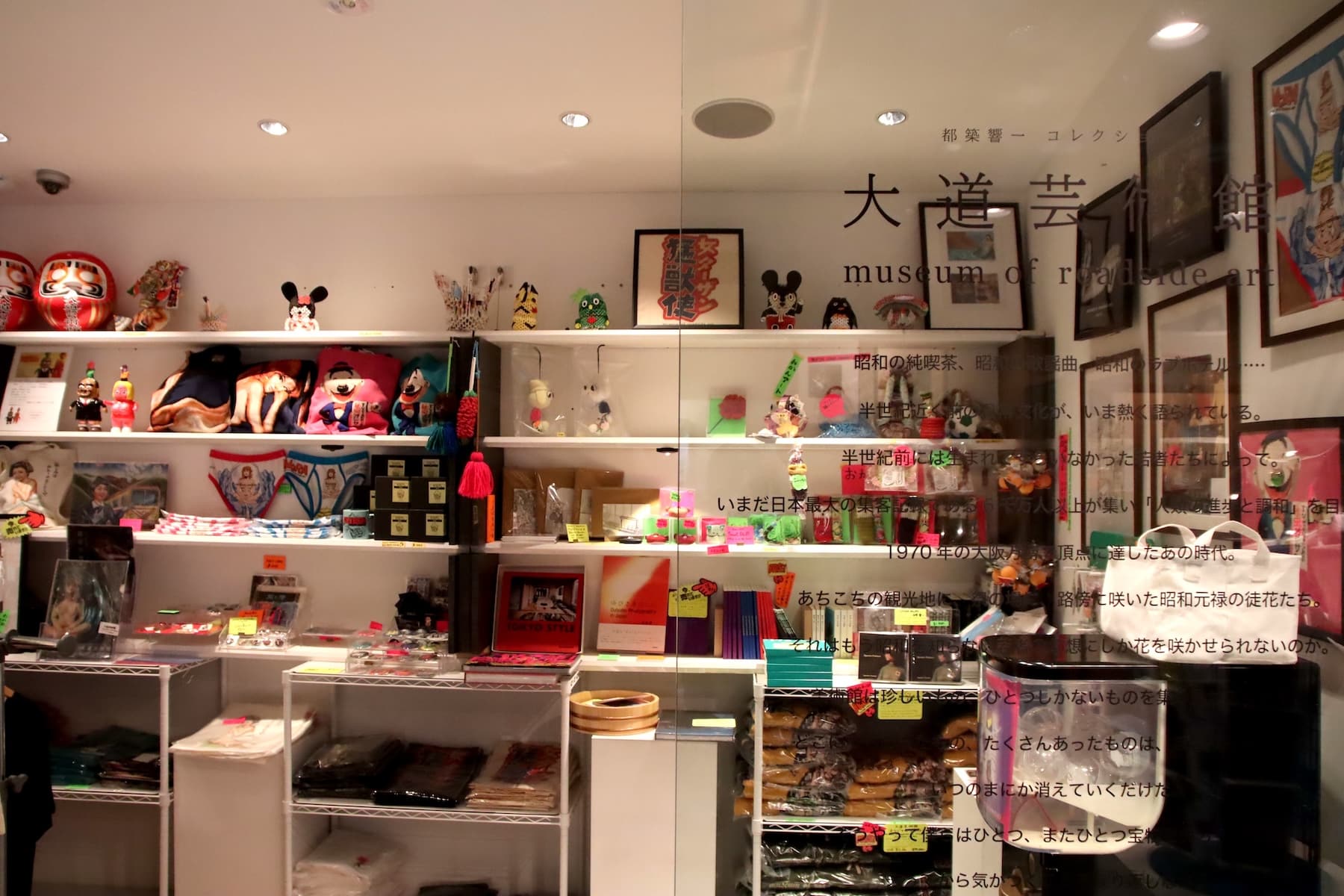
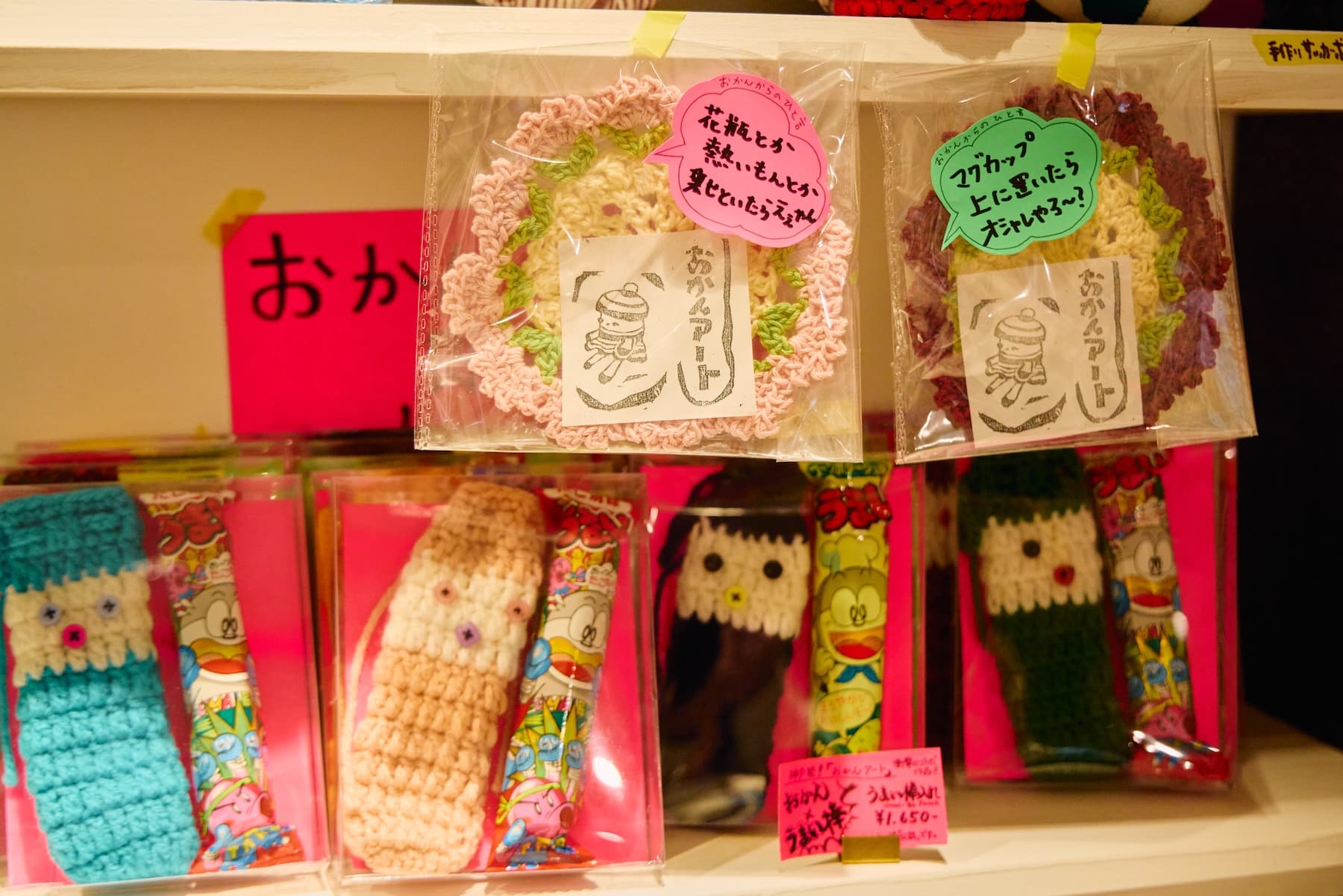
Near the entrance is a small museum shop selling original merchandise, collaboration items created with artists, books and catalogs edited by Tsuzuki, and handmade crafts known as “okan art”—quirky handicrafts made by mothers across Japan.
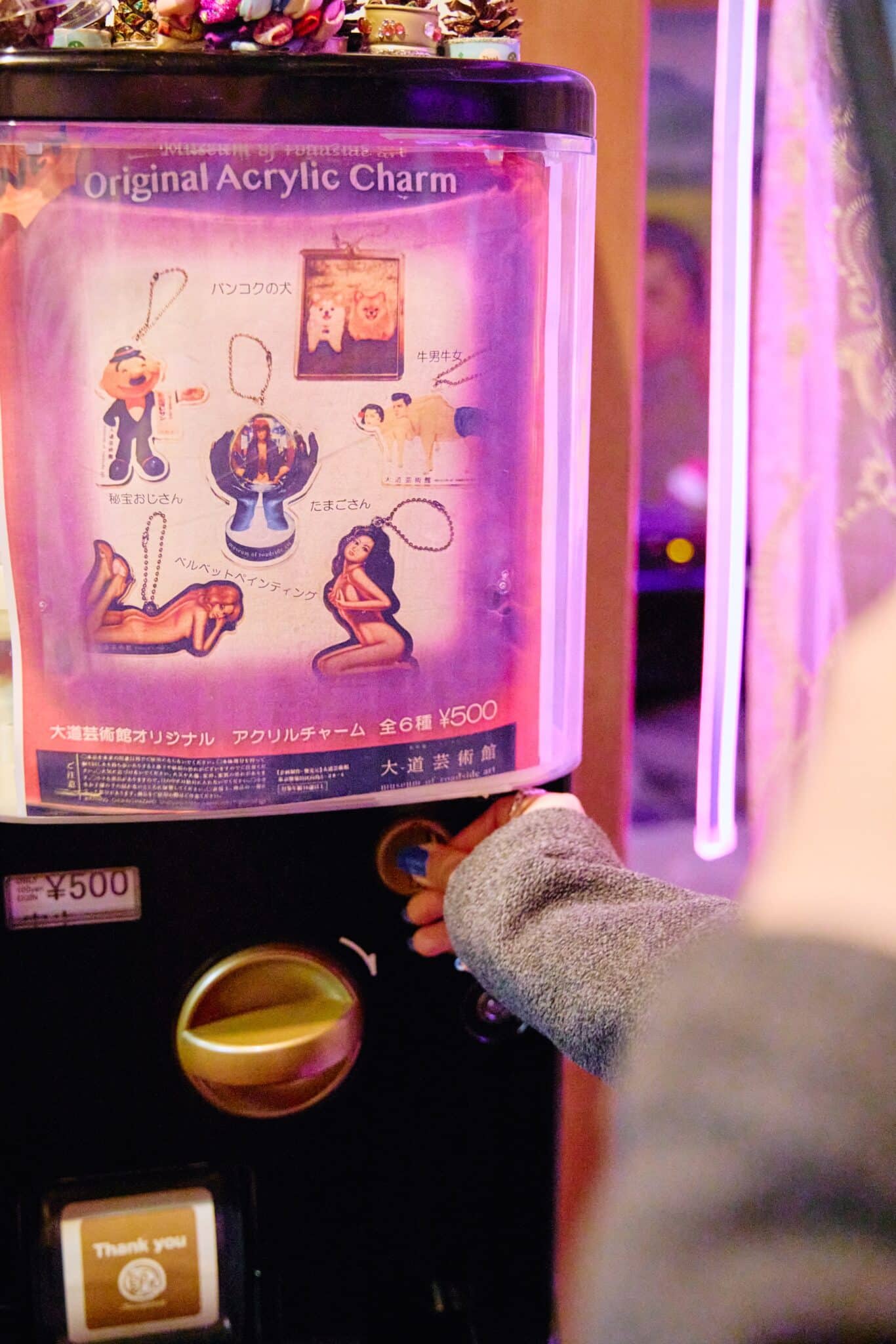
The exhibition catalog, which explains many of the works on display, is available in Japanese, English, and Chinese and is well worth picking up. The museum’s original capsule-toy machines are also popular with visitors.
Daido Geijutsukan also hosts occasional events. These include film screenings selected by Tsuzuki under the title “Friday Road Show,” the monthly DJ party “Night Mechanism” organized by Cosplay Koe-chan, as well as talk events, performances, and other programs held throughout the museum.
In addition to viewing the exhibitions, visitors can also enjoy participatory experiences—another distinctive aspect of the space.
The museum shop near the entrance sells books and original goods related to the exhibitions.
Books and publications edited by Tsuzuki introducing Japanese popular and underground culture.
Exhibition catalogs explaining the works on display are available in Japanese (1,500 yen) and in English and Chinese (1,100 yen).
Handcrafted works known as “okan art,” created by mothers across Japan.
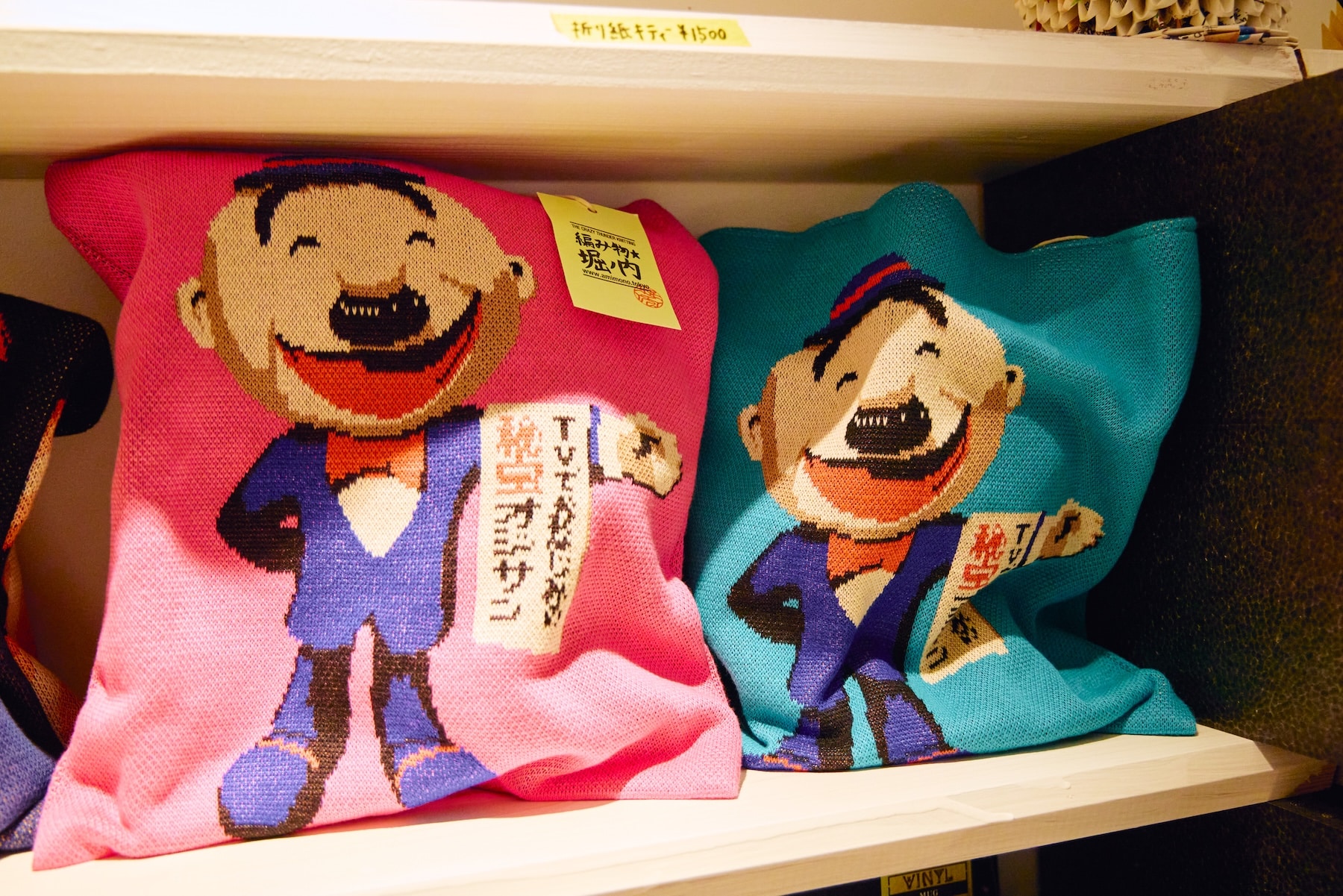
A knit bag created through a collaboration between knitting artist Horinouchi and Daido Geijutsukan. (13,500 yen)
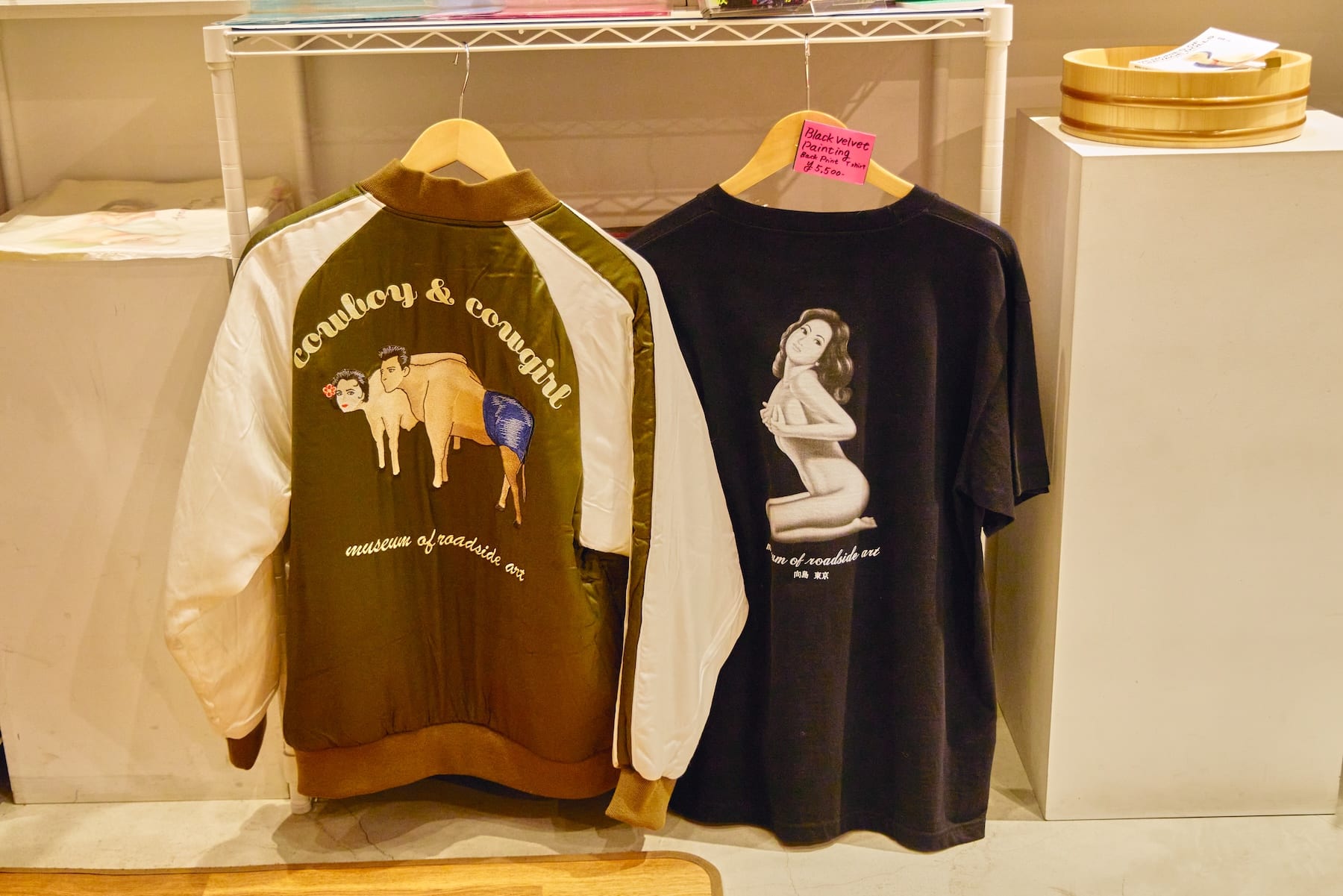
Original "Daido Geijutsukan" blouson (90,000 yen) and T-shirt (5,500 yen). Designed with the world of the exhibition as a motif.
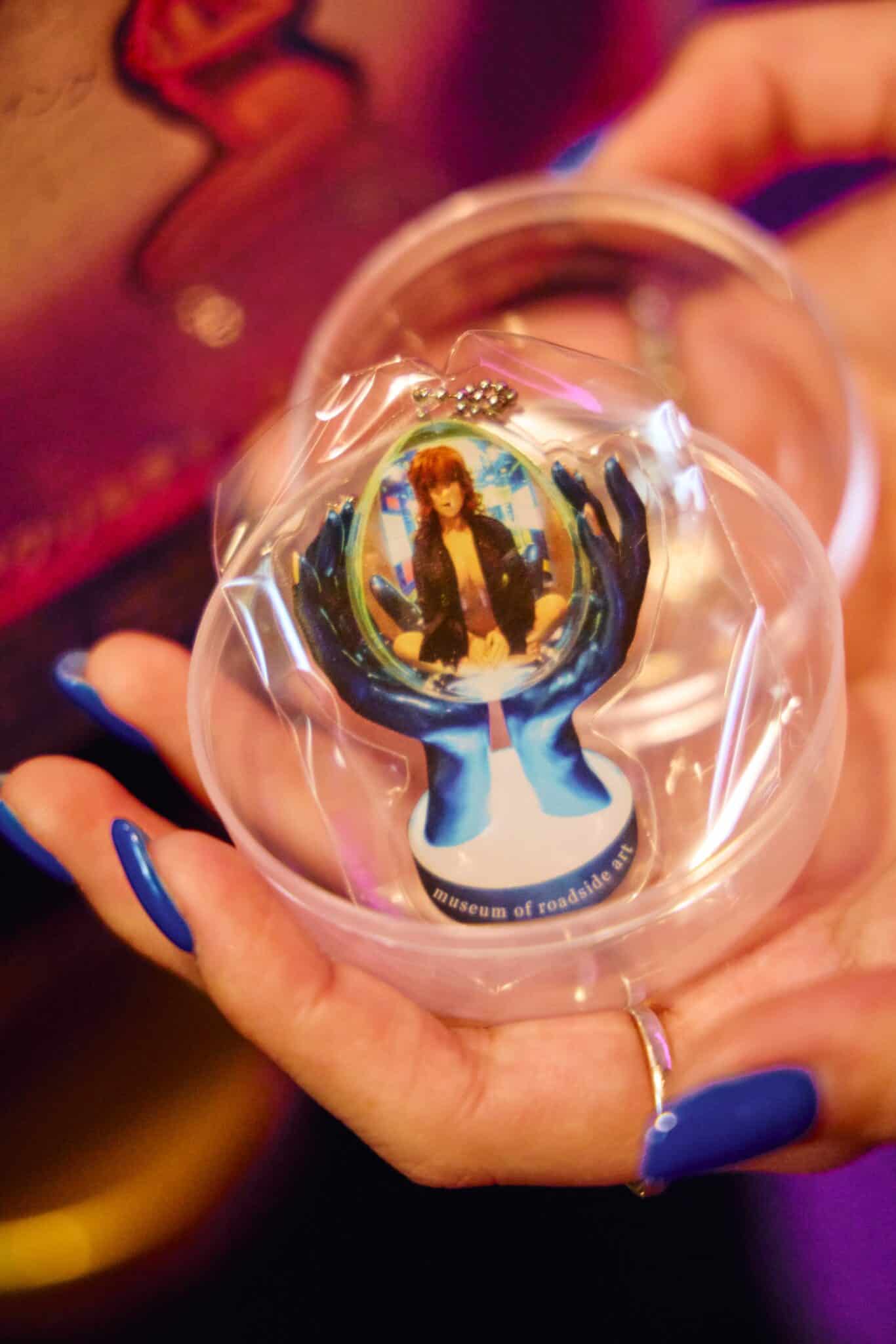
Original capsule toys available only inside the museum, popular as souvenirs for visitors. (500 yen per try)
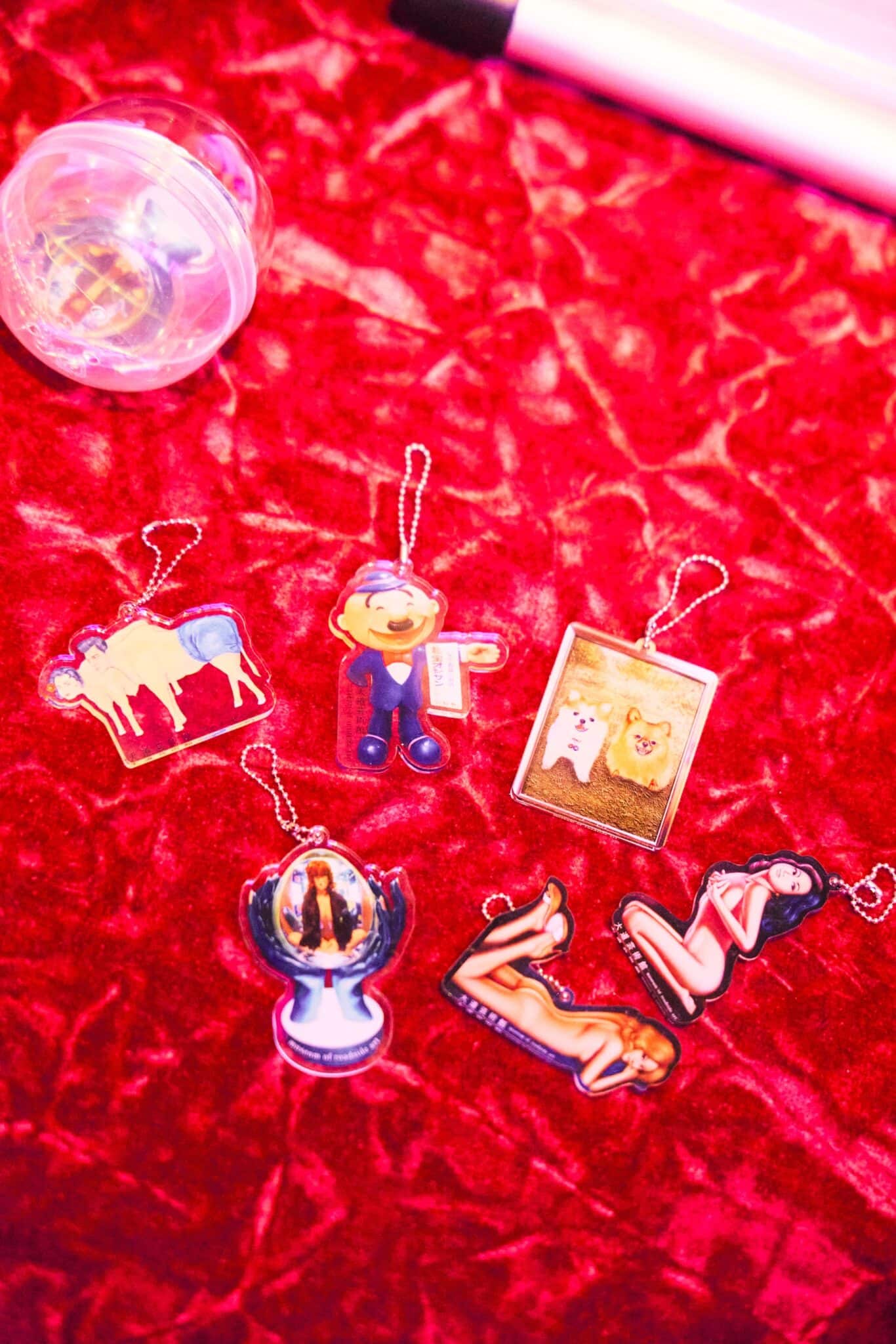
Prizes from the capsule toy machines featuring designs inspired by Daido Geijutsukan. (Five different designs)
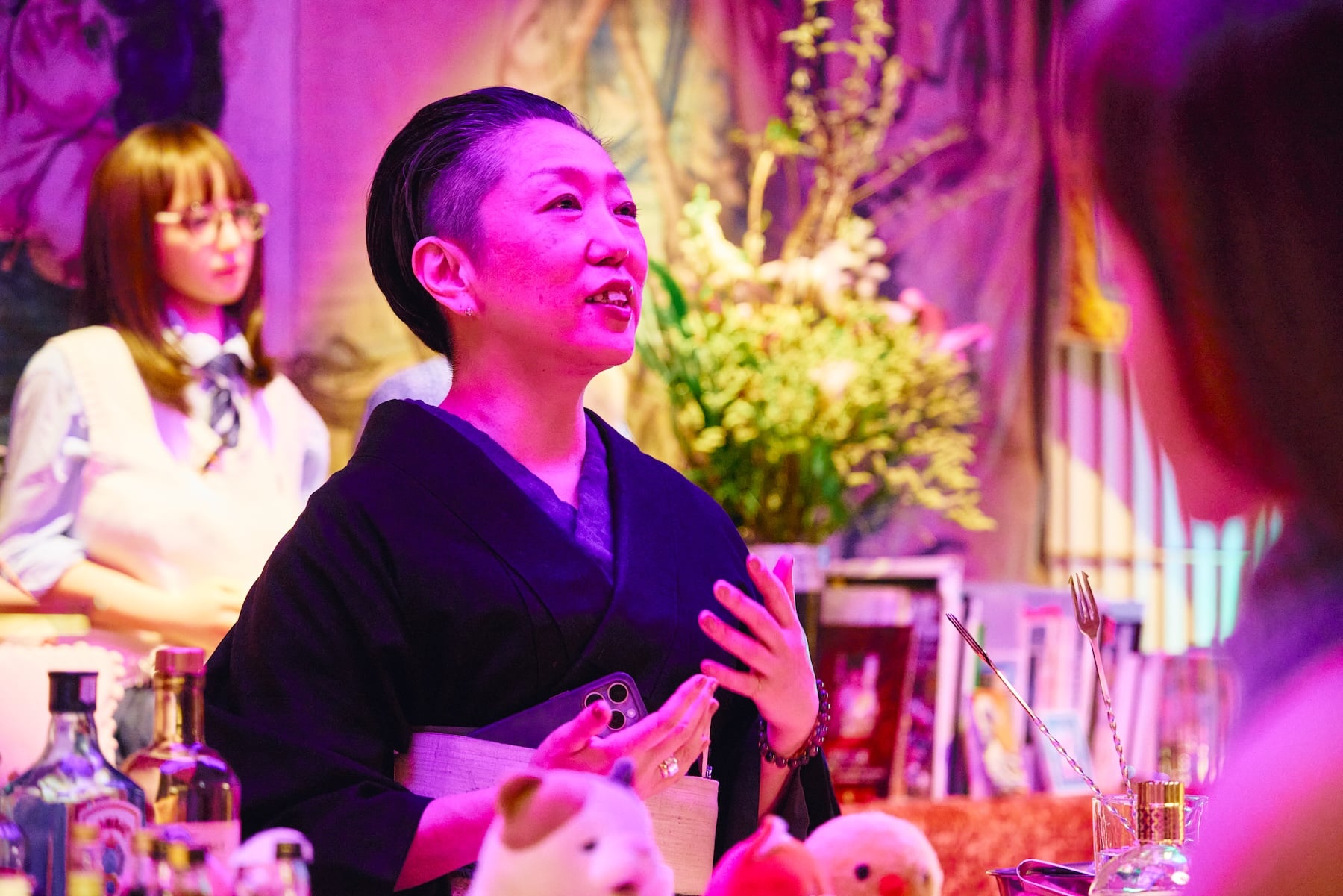
Atsuko Imada, proprietress of Daido Geijutsukan, shared the following message:
“Today, talking about erotic themes is often discouraged, and various restrictions have become stricter. Many people probably feel that things have become a bit constrained.
Daido Geijutsukan opened in 2022, just as the pandemic was beginning to ease. During the COVID years, social media spread even further, and people increasingly relied on their phones for information. Personally, I found it interesting that this place opened at exactly that moment.
The only thing that might feel a little intimidating is pressing the doorbell at the entrance. But once you do, everything becomes easy—so don’t hesitate to ring.” (Imada)
Atsuko Imada, proprietress of Daido Geijutsukan. She welcomes visitors and carefully explains the background and cultural context of the exhibitions.
The information contained this article was correct as of 04/21/2026 (the time of publication)