DEEPTOKYO
magazine

EN


AREA
DEEPTOKYO
magazine
EN
AREA
2025.12.15
Anisong, Japan’s globally recognized anime-music genre, has evolved alongside the nation’s pop culture—from the early days of Astro Boy to the worldwide phenomenon of Demon Slayer. Once created purely as “music for anime,” anisong has become a gateway for Japanese music to reach listeners worldwide, thanks to the simultaneous global distribution of anime. Here, we explore the current landscape of anisong by tracing its deep relationship with J-POP.
SHARE


Anisong, Japan’s globally admired cultural export, has grown hand in hand with the worldwide rise of J-POP. To unpack how anisong has evolved from its origins to the present—and where it is headed—we spoke with Ryuichi Sumikawa, a music journalist well-versed in the genre.
Traditionally, “anisong” referred to songs created as opening or ending themes—or insert tracks—for TV anime. But today, the genre has expanded far beyond that definition.
“Today, many artists identified as anisong singers or voice-actor performers release music that’s considered anisong even without anime tie-ins. It’s also common for songs originally created for games to become anime themes when those titles are adapted. While anisong may have begun as ‘anime theme songs,’ it has since grown into a culture of its own,” explains Sumikawa.
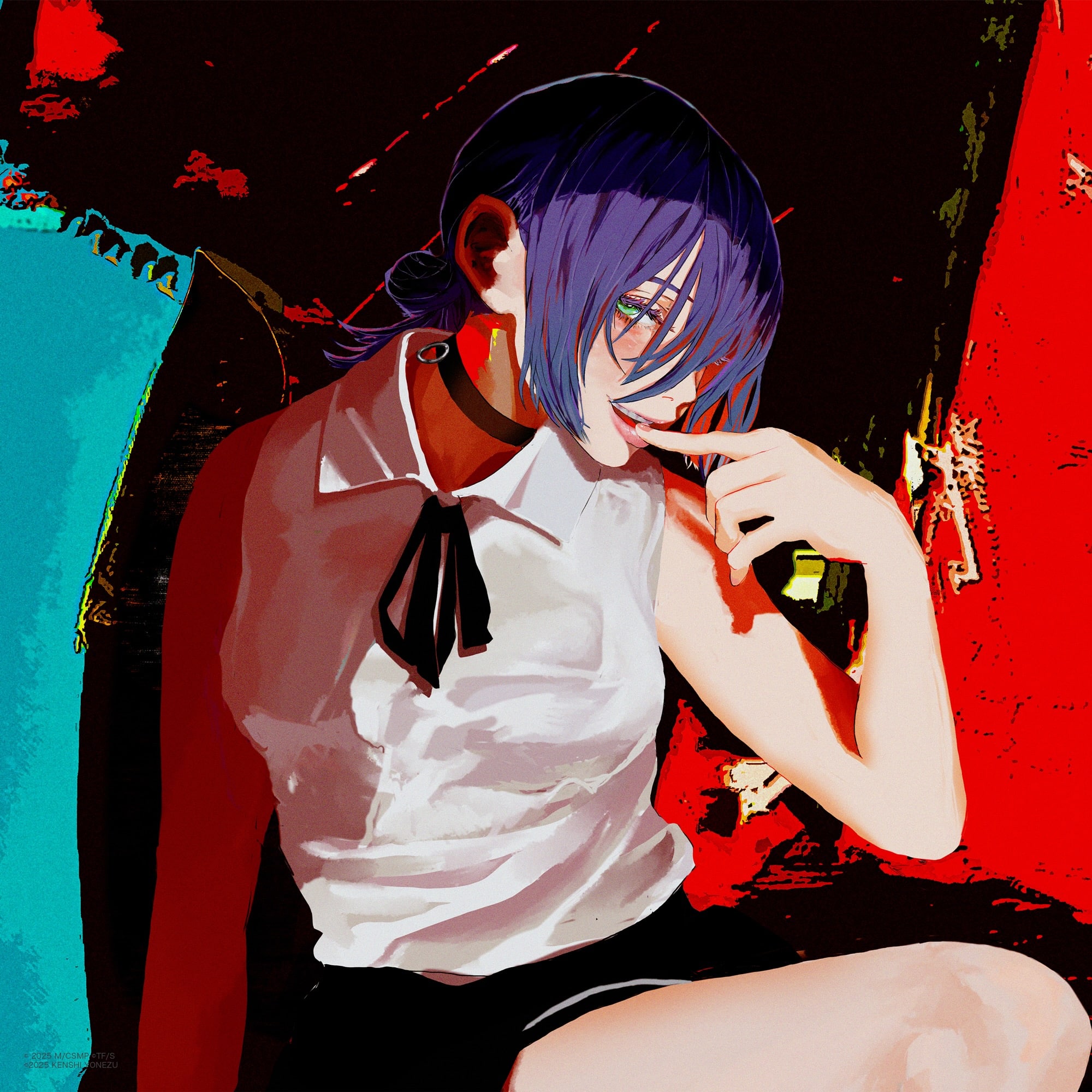
Kenshi Yonezu’s 16th single features the double A-side tracks Iris Out, the theme song for the upcoming Chainsaw Man – Reze Arc film, and Jane Doe, a collaboration with Hikaru Utada for the film’s ending theme. Illustration by Kenshi Yonezu
Anisong has also evolved from something you “listen to” into a culture you “experience.” In Japan, massive live events such as Animelo Summer Live and LisAni! LIVE draw tens of thousands of fans each year.
That excitement has spread far beyond Japan’s borders.
“Around the world, anisong has become a unifying form of entertainment—whether at Anime Expo in Los Angeles, Japan Expo in Paris, bilibili’s Macro Link in China, or Anime Festival Asia across Southeast Asia,” says Sumikawa. “Anisong resonates across cultures and languages.”
The roots of anisong in Japan trace back to 1963 with the theme song for Astro Boy.
“Early anisong was simply one component of children’s programs—catchy melodies and lyrics referencing the show or its characters. By the 1970s, dedicated anisong singers like Ichiro Mizuki and Mitsuko Horie emerged and helped establish the genre’s foundations.
By the 1980s and ’90s, major J-POP artists such as TM NETWORK and JUDY AND MARY began performing anime themes, gradually blurring the lines between anisong and pop music.”
↑The theme for Astro Boy, often considered the first anisong, debuted in 1963 as an instrumental track. Lyrics by poet Shuntaro Tanikawa were later added, with vocals performed by a boys’ choir.
↑In 1987, TM NETWORK’s Get Wild, produced by Tetsuya Komuro, was selected as the ending theme for the anime City Hunter, becoming a defining moment in the merging of anisong and J-POP.
In the 2000s, hit manga series—including NARUTO, BLEACH, Gintama, and Fullmetal Alchemist—were adapted into anime one after another.
“Because young J-POP artists often scored hits through anime tie-ins, anime themes became a gateway to mainstream success. In particular, adaptations of Weekly Shonen Jump titles—Japan’s leading weekly manga magazine—frequently featured high-energy band tracks,” notes Sumikawa.
↑ASIAN KUNG-FU GENERATION’s 2004 single Rewrite, the opening theme for Fullmetal Alchemist, won Best Theme Song at the first American Anime Awards held in New York in 2007.
UVERworld’s debut single, D-tecnoLife, served as the opening theme for BLEACH. In 2018, their track Odd Future, the opening theme for My Hero Academia, gained significant international attention.
↑Tommy heavenly6 experienced a resurgence after her older songs went viral on TikTok, earning praise from artists like Doja Cat and Charli XCX. Her signature track Pray was the first opening theme for Gintama.
Ikimonogakari’s 2008 single Blue Bird, an opening theme for NARUTO SHIPPUDEN: Ultimate Ninja Blazing, has surpassed 200 million streams worldwide and remains a beloved anthem even 17 years after its release.
Then came 2019–2020, when the anime world experienced an unprecedented shock: the record-breaking success of the Demon Slayer series.
↑Demon Slayer: Kimetsu no Yaiba – The Movie: Mugen Train was released in Japan on October 16, 2020, serving as a direct continuation of the Tanjiro Kamado: Unwavering Resolve Arc from the TV series.
Upon its 2020 release, Mugen Train surpassed 40.4 billion yen in domestic box-office revenue, becoming the highest-grossing film in Japanese history. Alongside the film itself, the music of LiSA—who performed the TV opening and the movie’s theme—drew immense attention.
The film’s theme song Homura debuted with 67,000 physical CD sales in its first week, claiming No. 1 on the Oricon Singles Chart. It also dominated digital charts, surpassing one million downloads in just one month. That same year, LiSA received the prestigious Japan Record Award and performed once again on NHK’s year-end national music program, Kōhaku Uta Gassen.
“The massive success of Gurenge (the opening theme of the Demon Slayer TV anime, 2019) and Homura (2020) marked a turning point in Japan, solidifying anisong as more than music for anime fans—it became a symbol of Japanese pop culture itself,” says Sumikawa.
The "Blade of Demon Perdition" phenomenon is not limited to the domestic market, but is also spreading to other parts of the world. Oni no Blade: Infinity Train Arc" has been screened in numerous countries and regions, including Taiwan, Hong Kong, South Korea, the United States, Australia, and Central and South America, and its worldwide box-office revenue, including Japan, has exceeded 51.7 billion yen. It set an unprecedented record for a Japanese film, and for an animated film as well. In the U.S., it ranked second in the North American box office in its first week of release, becoming the highest-grossing Japanese animation film of all time.
“Behind this global explosion is the rise of streaming platforms like Netflix and Crunchyroll. In the past, it was standard for anime to reach overseas audiences long after it had aired in Japan. Today, fans around the world watch new episodes in near real time, sharing the excitement together,” Sumikawa explains.
Naturally, this global shift also elevated international interest in anisong themes.
Homura reached No. 8 on the Billboard Global 200 chart, while its official music video surpassed 100 million YouTube views, signaling its worldwide impact.
“Music streaming services such as Spotify and Apple Music also played a major role. Listeners abroad no longer need to hunt for imported CDs—they can access Japanese releases instantly. This infrastructure has been key in propelling anisong to a global status.”
With the rise of Demon Slayer, the relationship between anisong and J-POP reached a new phase. Leading artists such as Official HIGE DANDism, YOASOBI, Creepy Nuts, and Kenshi Yonezu have all contributed anime themes—each release generating major hits both in Japan and overseas.
“Today, it is common for artists to use anime footage in official music videos or release songs digitally the moment an episode airs. Promotion now moves in lockstep with anime.”
Anime tie-ins have become a strategic gateway for artists aiming to reach a global audience.
↑Bling-Bang-Bang-Born, the opening theme for the anime Mashle: Magic and Muscles, sparked a global viral craze thanks to its addictive rap and TikTok dance challenge. It peaked at No. 8 on the Billboard Global 200.
↑YOASOBI’s Idol, the theme for Oshi no Ko, reached No. 7 on the Billboard Global 200 and has surpassed 500 million views on YouTube. Today, the duo performs solo concerts across Asia and Europe, solidifying their global status.
Yet these trends did not emerge overnight.
As we’ve seen, J-POP and anisong have grown together over decades. Some fans discover artists through anime, while others enter the anime world through the musicians they already love. The two cultures continually influence one another, expanding their shared fan base.
“Many of today’s leading artists grew up immersed in anime and naturally absorbed anisong. Meanwhile, internet-native musicians like Kenshi Yonezu and Ado already share stylistic DNA with the genre. It’s only natural that creators who understand anime culture are now using it as a platform to deliver high-quality music to the world,” says Sumikawa.
↑Kenshi Yonezu’s latest track Iris Out features footage from the film Chainsaw Man – Reze Arc, released in Japan on September 19, 2025. The movie is scheduled for theatrical screenings across Hong Kong, Singapore, France, the United States, and more.
Sumikawa believes the prominence of J-POP artists in anisong will continue for years to come.
He points to girl-band anime projects as the next major movement in the anisong world.
“Girl-band anime refers to series centered on band activities, where the music is performed by fictional groups of female characters. Voice actors once handled vocals while professional musicians performed the instrumentals—but today, these formats have diversified dramatically.”
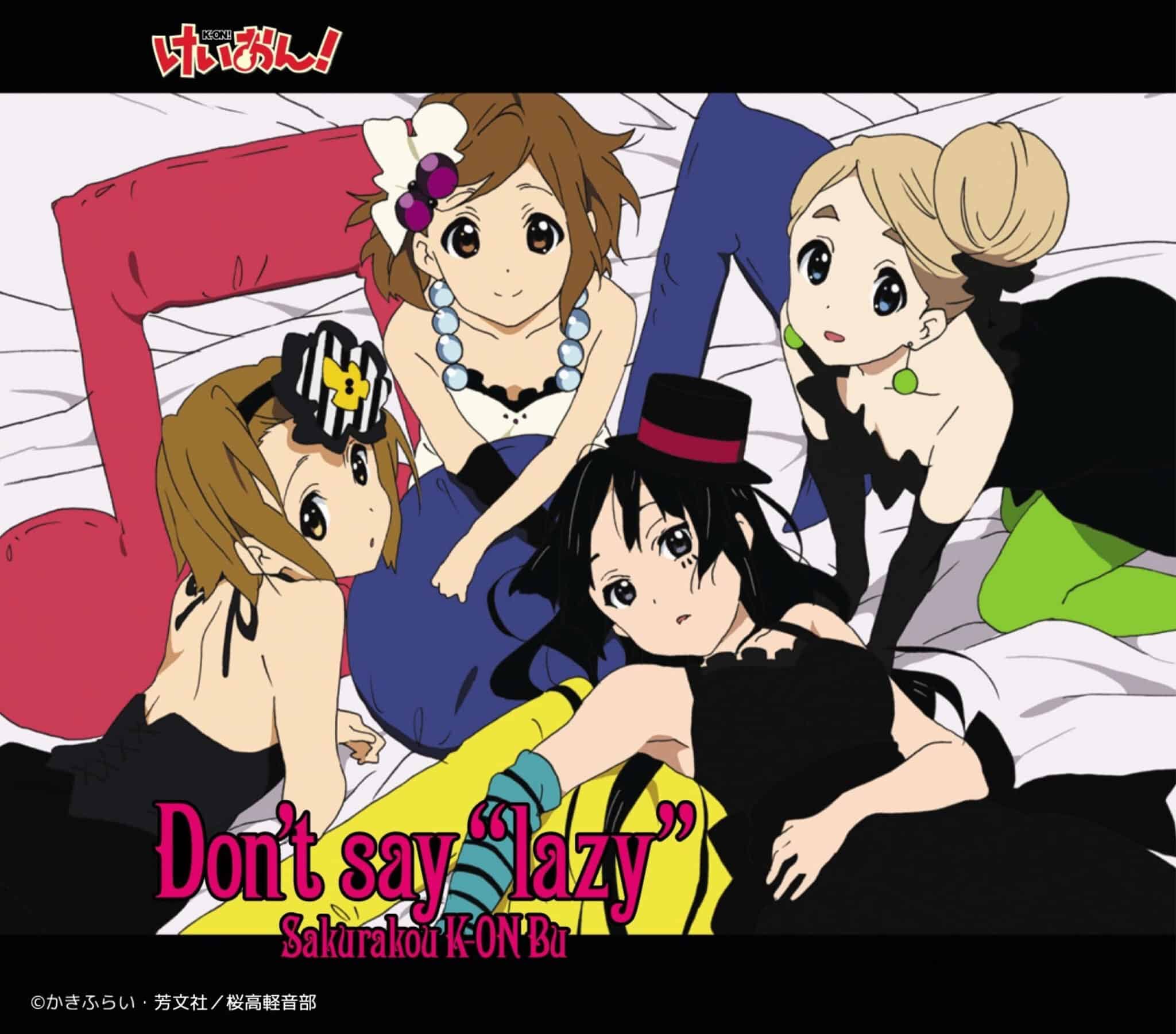
The origins of the trend trace back to the 2009 anime K-On!, an unexpected late-night hit that sparked a real-life boom in high-school light-music clubs across Japan. The show’s fictional band, Ho-kago Tea Time, became the first anime character unit to top Japan’s music charts with songs like Go! Go! Maniac, the opening theme of K-On!!.
The Sakuragaoka High School Light Music Club is made up of four members: Yui Hirasawa, Mio Akiyama, Ritsu Tainaka, and Tsumugi Kotobuki. The ending theme Don’t Say “Lazy” became a staple cover song for high-school bands across Japan.
In 2015, the BanG Dream! project cemented the girl-band genre by assembling voice actors who could perform live as real bands. This media-mix initiative seamlessly linked live concerts, anime adaptations, and mobile games.
If THE IDOLM@STER and Love Live! defined the era of “singing-and-dancing voice actors,” BanG Dream! ushered in the age of “instrument-playing voice actors.”
↑Roselia, the second real-life band born from the BanG Dream! project, is recognized for its dark, cool aesthetic. Their rise in popularity within the anime led to a 2021 feature film spotlighting the group.
↑The 2025 anime BanG Dream! Ave Mujica spotlights the members of the eponymous girl-metal band. Their live performances—featuring seven-string guitars and five-string bass—have drawn acclaim for their intensity and authenticity.
A major wave followed in 2022 with Bocchi the Rock!. The in-story band Kessoku Band released an album in December 2022 that topped the 2023 Oricon Digital Album charts—the first time a female group had achieved this milestone.
“While voice actors handle only the vocals for Kessoku Band, their guitar-rock sound resonates strongly with music fans. They’ve even appeared at major rock festivals like Rock in Japan, extending their presence far beyond anime circles.”
↑The in-anime song Seiza ni Naretara (If I Could Be a Constellation) features lyrics written under a different name by Ai Higuchi, best known for Akuma no Ko, the ending theme for Attack on Titan.
Another key title arrived in 2024: Girls Band Cry. The project began by forming a real band through open auditions, then developing the anime afterward—a reversal of the traditional process.
The main band, Togenashi Togeari, sold out their solo concert at Nippon Budokan in September. The first compilation film, Girls Band Cry: Seishun Kyōsōkyoku, released in October, also performed strongly, signaling even greater potential for the franchise moving forward.
↑Girls Band Cry’s music producer Kenji Tamai is a veteran known for his work on YUKI’s acclaimed album Joy and on Aimer’s hit Zankyo Sanka, the opening theme for the Demon Slayer: Entertainment District Arc.
The girl-band genre in anime has evolved into a collaborative space where characters, voice actors, and musicians come together to create music. With increasingly diverse formats and remarkably high-level performances, it now stands as a vivid indicator of where anisong may be headed next.
Anisong has become fully intertwined with J-POP, evolving into a form of music enjoyed by listeners around the world. As anime carries artists’ songs across borders—and music, in turn, brings anime to new audiences—the two now amplify one another in ways that were unimaginable before. No longer merely “music for anime,” anisong has become a gateway that connects Japanese creativity with the global stage. And as a distinctly Japanese cultural strength, it is poised to play a defining role in shaping the next chapter of the country’s music and pop culture.
Ryuichi Sumikawa is a music journalist born in 1978. After joining Tower Records Japan in 2002 as a buyer for international CD singles, he became a freelance writer in 2007, focusing on anime music interviews and criticism. Since 2010, he has contributed to the anime-music magazine LisAni!, becoming its editor-in-chief in 2016. Today, he works across writing, lecturing, music production, and DJing.
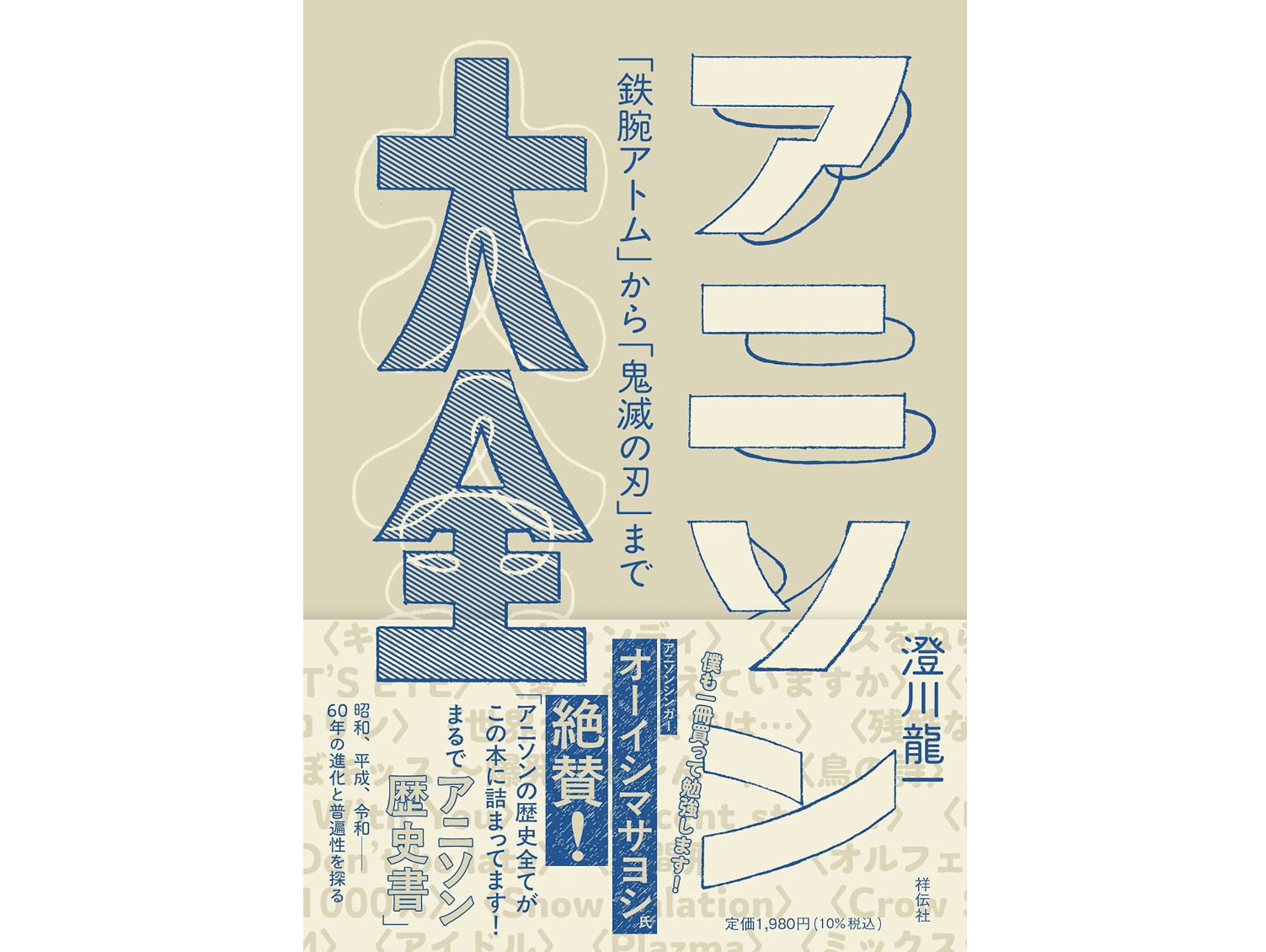
The Complete Guide to Anisong: From Astro Boy to Demon Slayer, the first book by Ryuichi Sumikawa, was released on November 4 by Shodensha. The volume offers a 60-year overview of anisong history through his unique perspective.
Purchase here: