DEEPTOKYO
magazine

EN


AREA
DEEPTOKYO
magazine
EN
AREA
2026.05.13
A workshop where you can discover “Tokyo Teue Brush,” a traditional craft with more than 100 years of history


 address
 Nearest Station


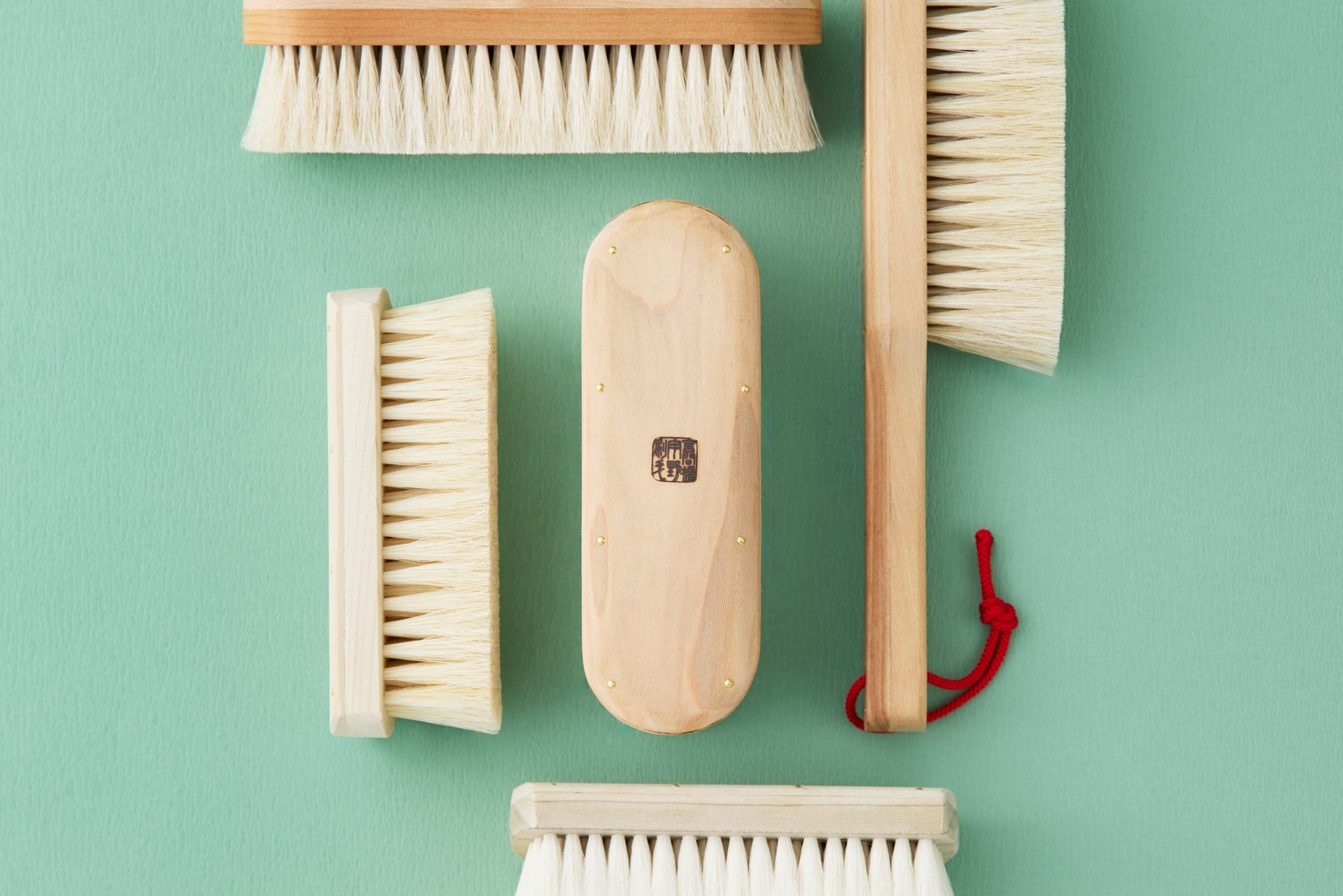
“UNO BRUSH” produces both Edo Hake and Tokyo Teue Brush, two traditional crafts of Tokyo. Rooted in the making of brushes that supported skilled trades, the workshop now produces not only hake and brushes for professional use but also a wide range of Tokyo Teue Brush items for everyday consumers, including clothes brushes and shoe brushes. Another attraction is that, although it is a working workshop, you can also purchase products on-site.
SHARE


“UNO BRUSH” carries on two traditional crafts of Tokyo: Edo Hake (traditional artisan brushes used for lacquerwork, dyeing, doll-making, and other trades) and Tokyo Teue Brush, the tradition of hand-planted brushes made in Tokyo. Its history began with the making of hake.
During the Edo period, Edo Hake were used in trades that demanded a high level of skill, including lacquerwork, dyeing, doll-making, and kabuki stage makeup. Carefully made by hand, they were highly trusted for their quality even then.
Later, around 1874, Western clothing and shoes became more common, and artisans and merchants increasingly needed tools to care for them. In response, hake makers created Western-style brushes modeled on French-made brushes. As time went on, brushes began to be mass-produced by machine. Even so, hand-planted brushes—with their durability, comfort in use, and beauty combined with functionality—remained highly valued, and in time that tradition was carried forward as Tokyo Teue Brush. In recent years, demand from the general public has grown, and a wide variety of items—including clothes brushes, shoe brushes, body brushes, hairbrushes, and pet brushes—are still made by hand as Tokyo Teue Brush, earning acclaim overseas as well.
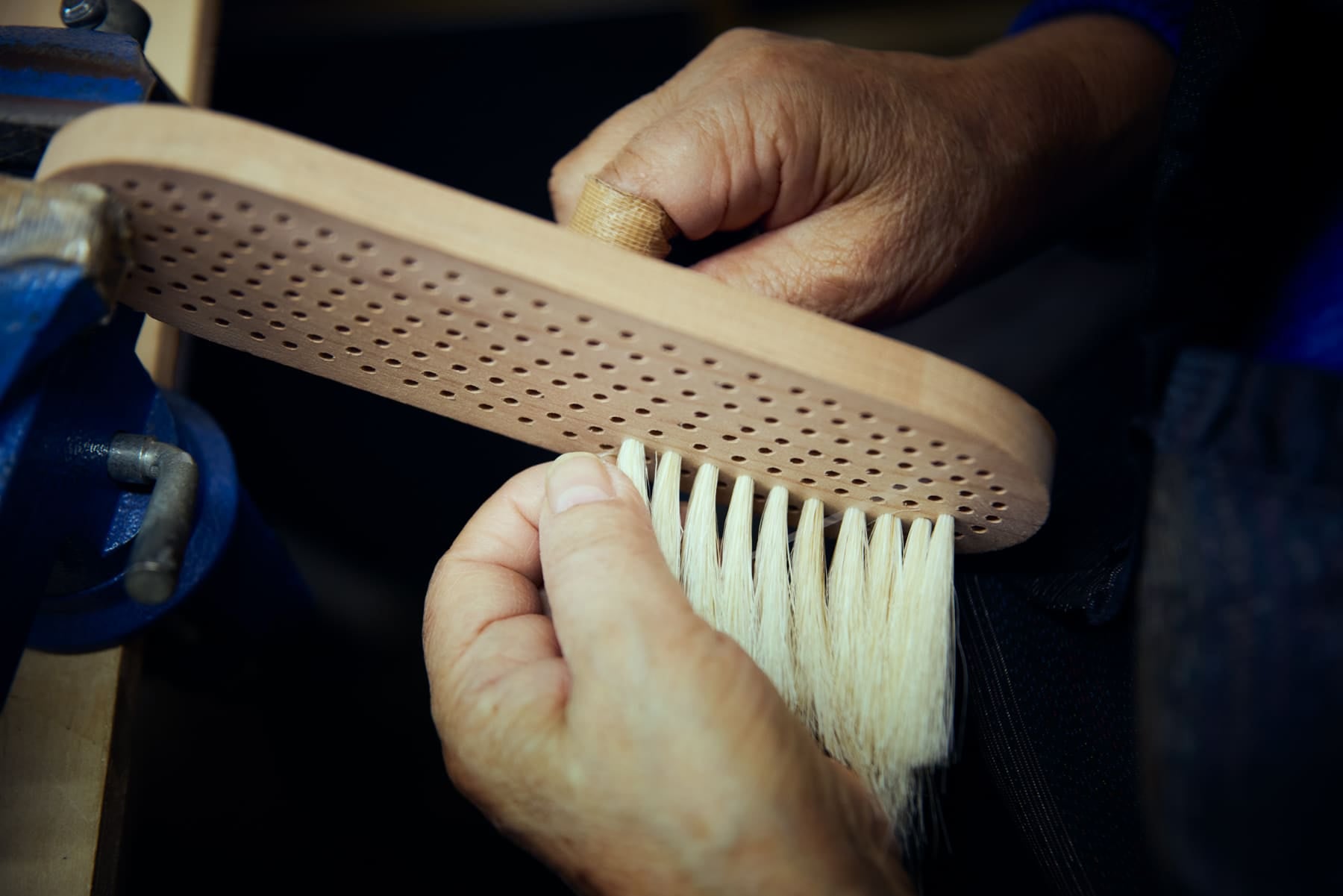
“Tokyo Teue Brush” is made entirely by hand, with each tuft planted one hole at a time.
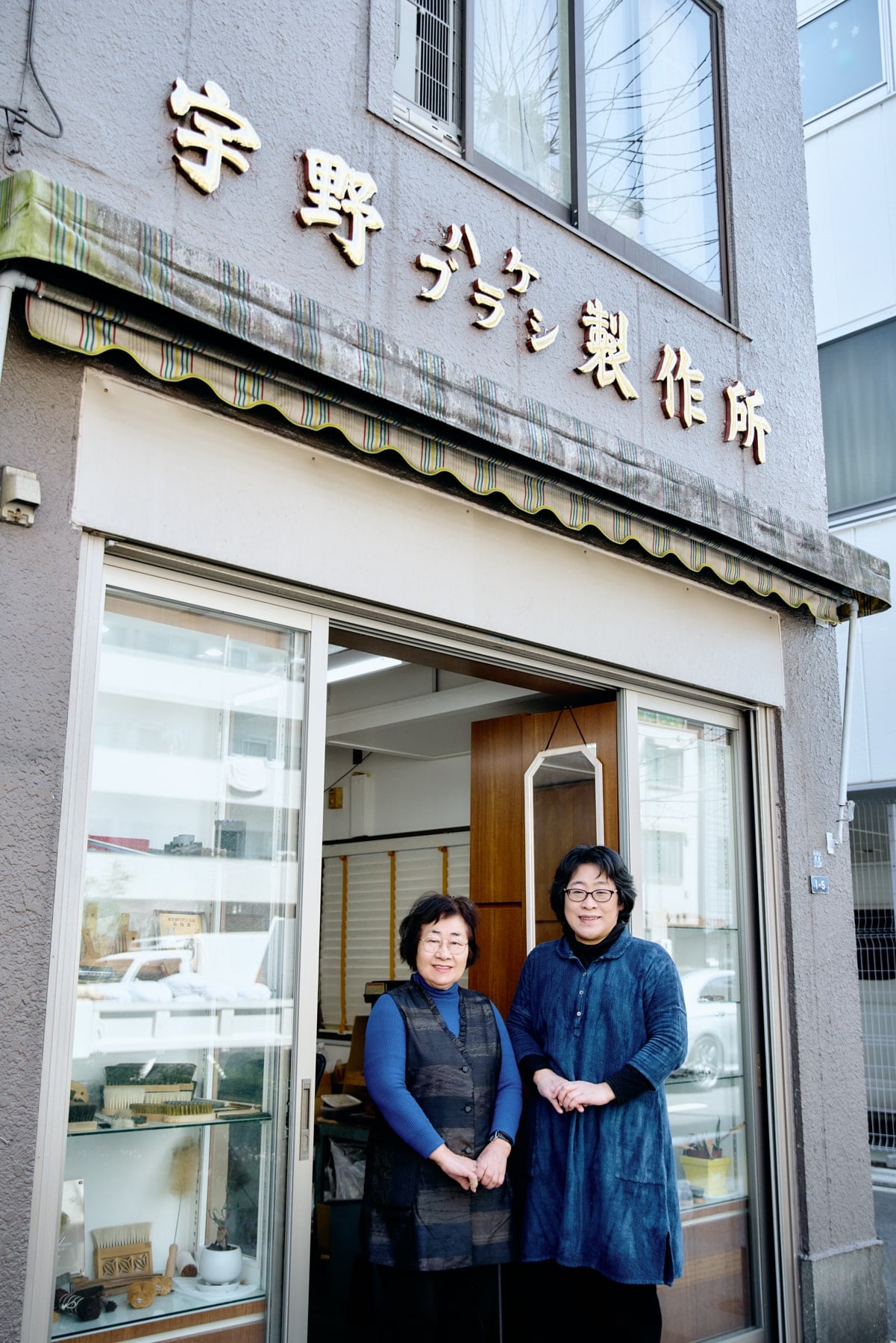
Founded in 1917 in Sumida City by the first generation, “UNO BRUSH” is a workshop that carries on the history and techniques passed down from Edo Hake to Western-style brushes and, ultimately, to Tokyo Teue Brush.
It began by making Edo Hake and started producing Western-style brushes in 1950. Today, the fourth generation, Michiyo Uno, has taken over the workshop. In addition to conventional hake and brushes for artisans and professional use, she has expanded the lineup to include a variety of brushes for everyday consumers, in step with the needs of the times.
At the workshop, the work is handled by a mother-and-daughter team: Chieko (left) and Michiyo (right).
As the name suggests, Tokyo Teue Brush is a traditional Tokyo craft in which artisans plant natural bristles—such as horsehair and pig bristles—by hand, one hole at a time. The wooden brush bases are made by a woodworking shop, but every step after that is carried out at this workshop and finished by hand. In areas such as Sumida and Taito, these traditional techniques have been passed down by many artisans, and because of their durability and ease of use, the brushes have long been trusted by craftspeople and related industries.
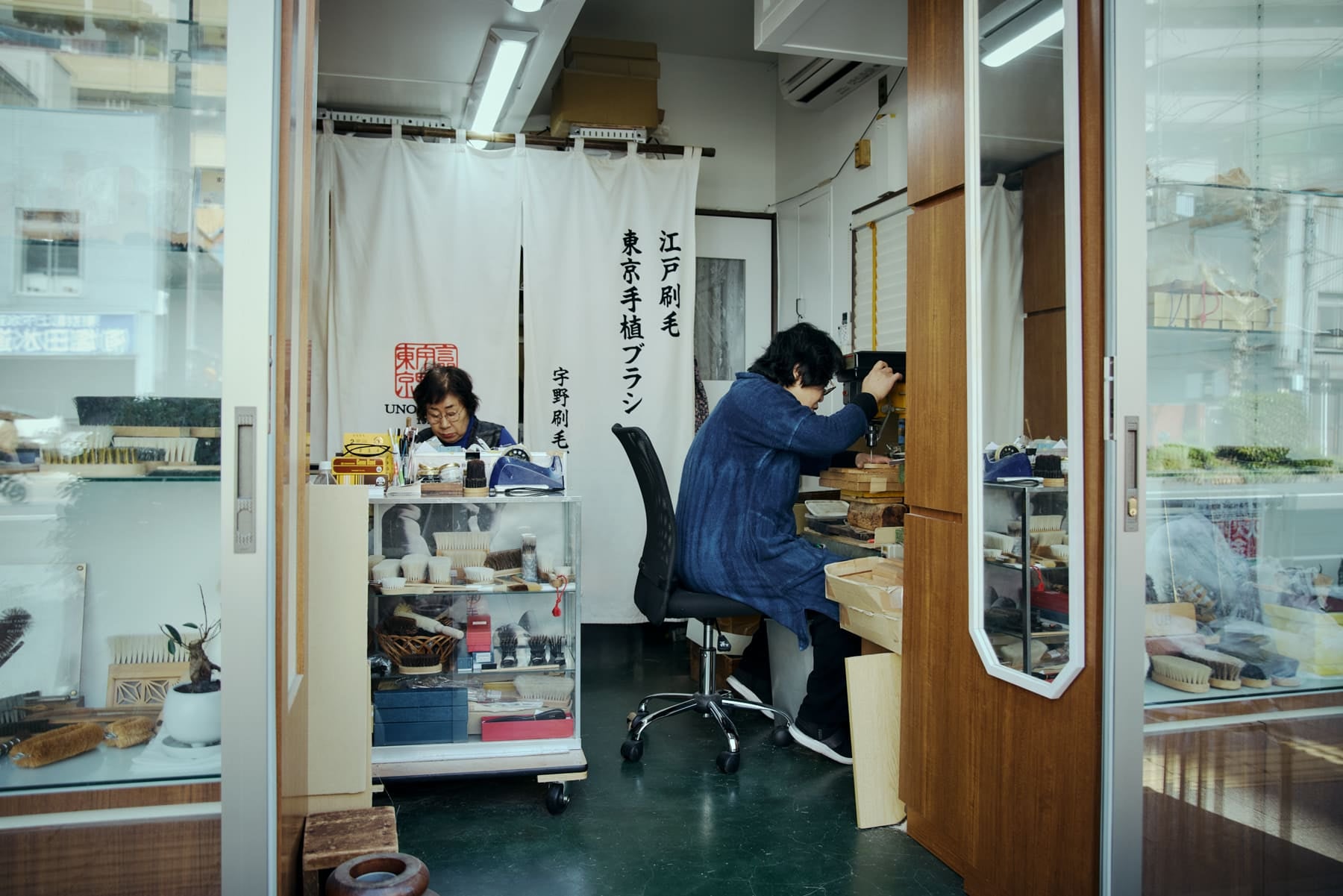
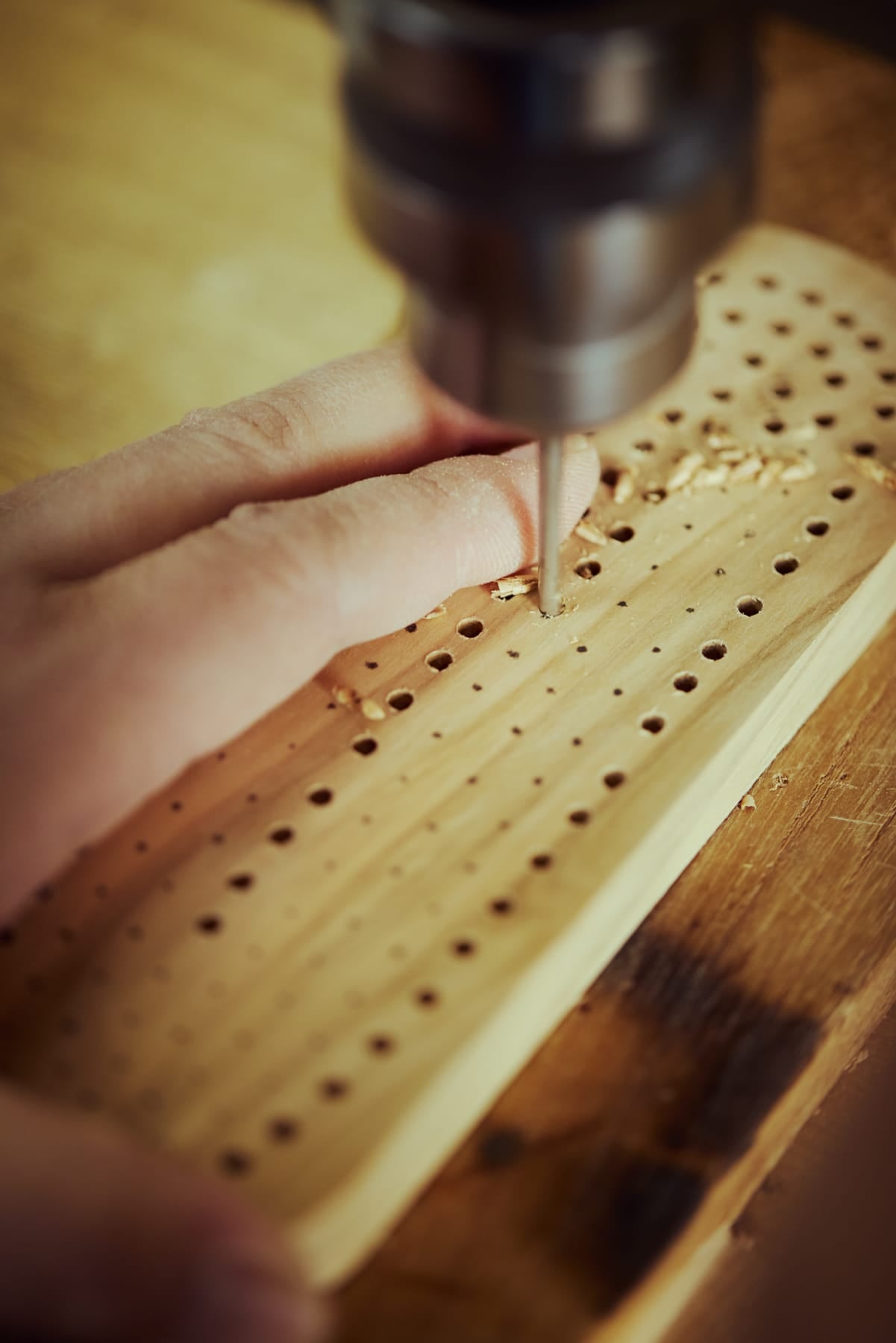
Michiyo drills the holes, while Chieko plants the bristles.
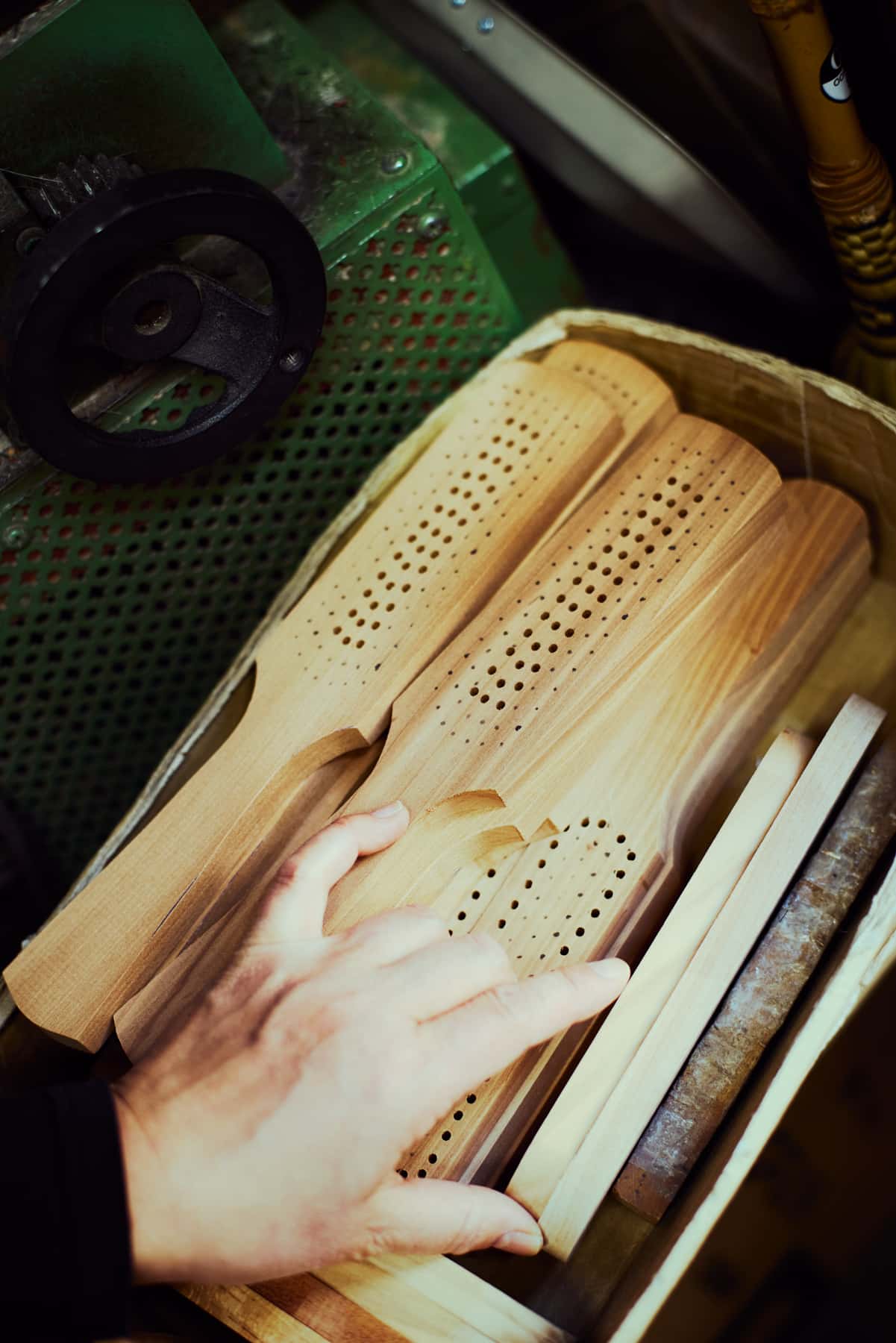
At “UNO BRUSH,” the process begins by marking the positions of the holes where the bristle tufts will be set into the wooden base supplied by the woodworking shop. The holes are then drilled one by one using a machine, and the tufts are planted by hand. Because every tuft is connected and firmly secured with wire—now usually stainless steel—the bristles are less likely to come loose than those in machine-made brushes, allowing the brush to be used for many years. The planting alone takes about an hour and a half per brush, and once all the other steps are included, the workshop can make only about three or four brushes a day.
Marks are first placed on the shaped wooden base to indicate where the bristles will be planted. The number and density of the holes are carefully designed according to the brush’s shape and the type of bristle used.
A machine is then used to drill the holes one by one at the marked points.
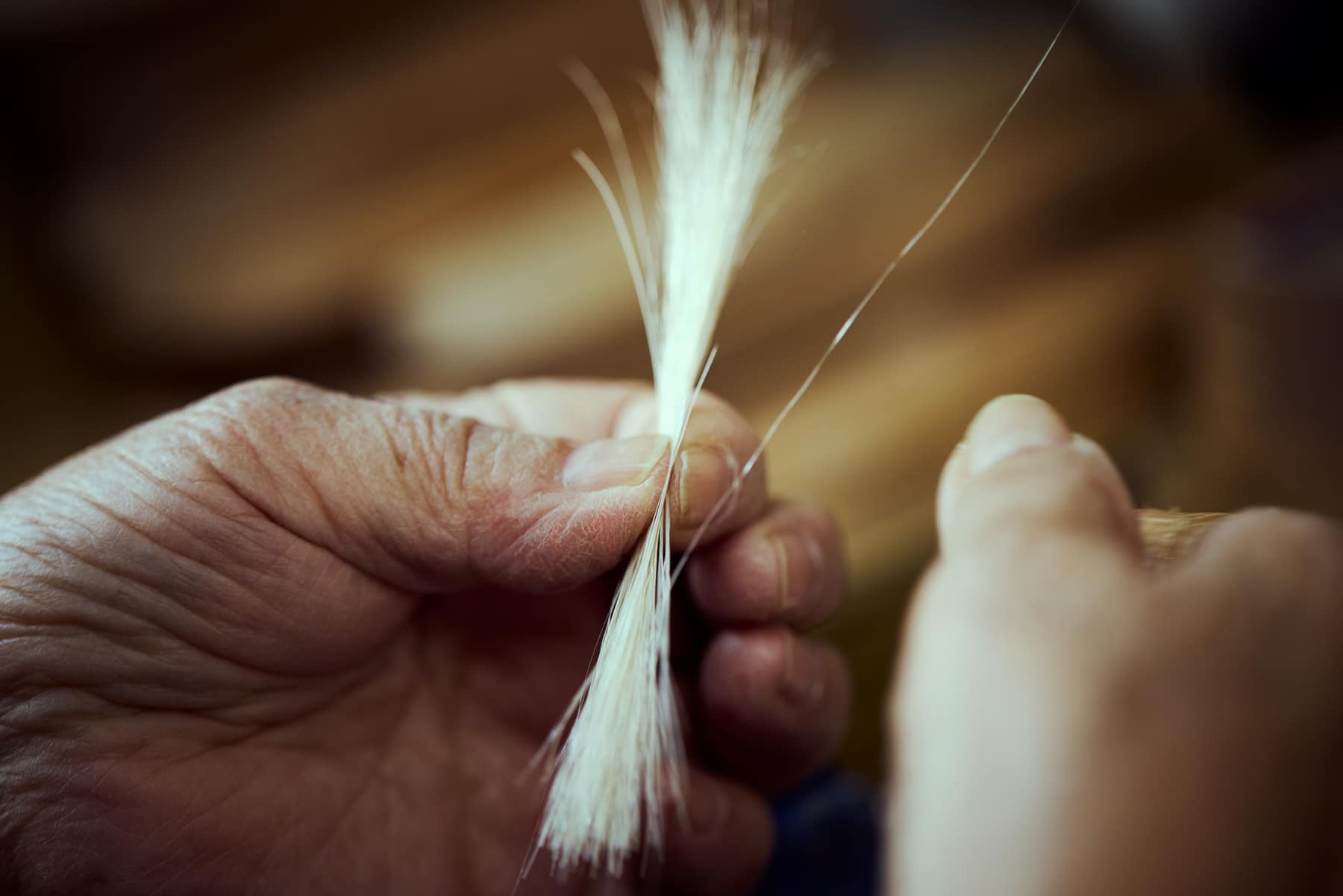
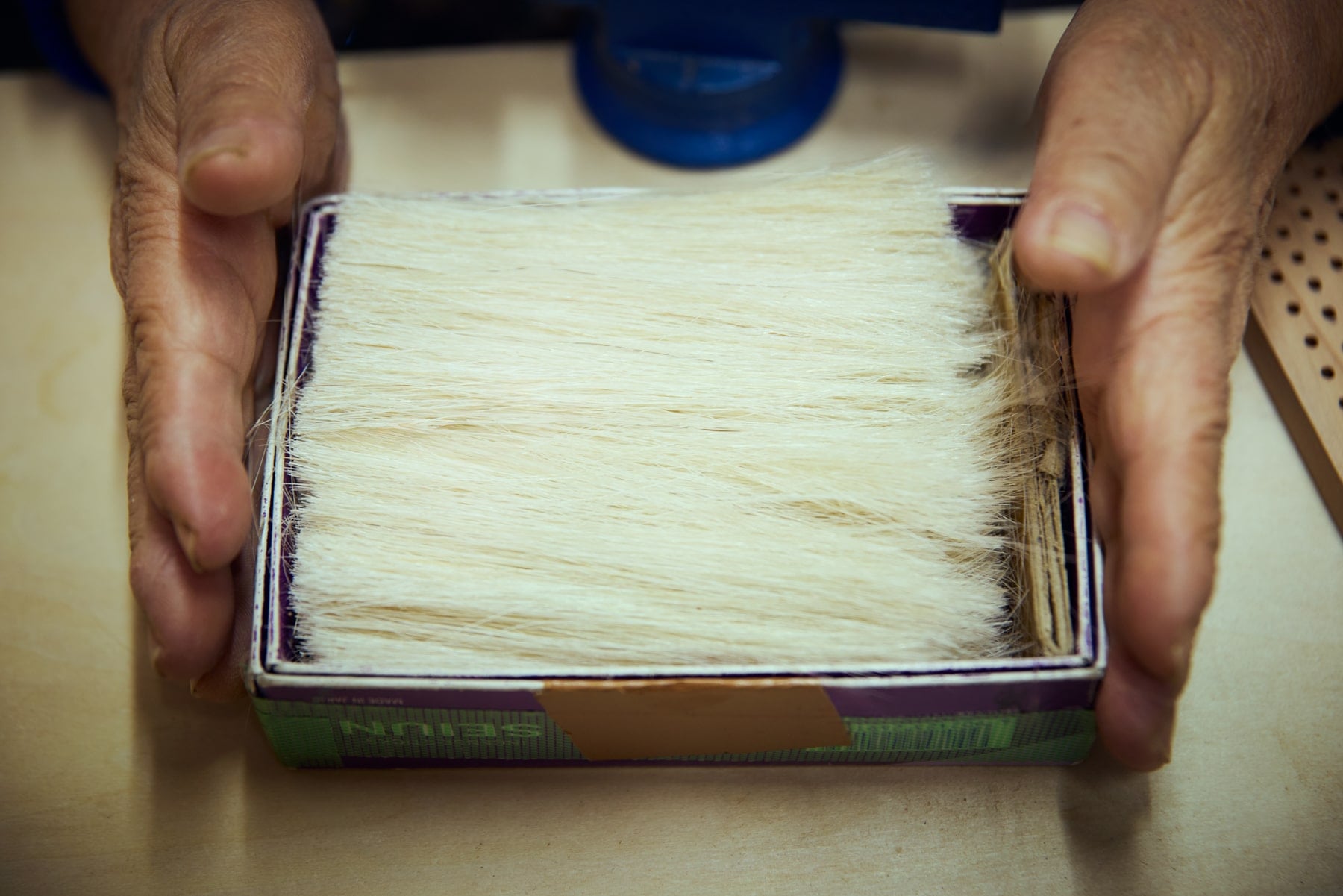
The amount of bristle used for each hole is determined by feel, using the artisan’s fingertips. Even though it is judged by eye, the tufts are planted with remarkable uniformity—a true sign of craftsmanship.
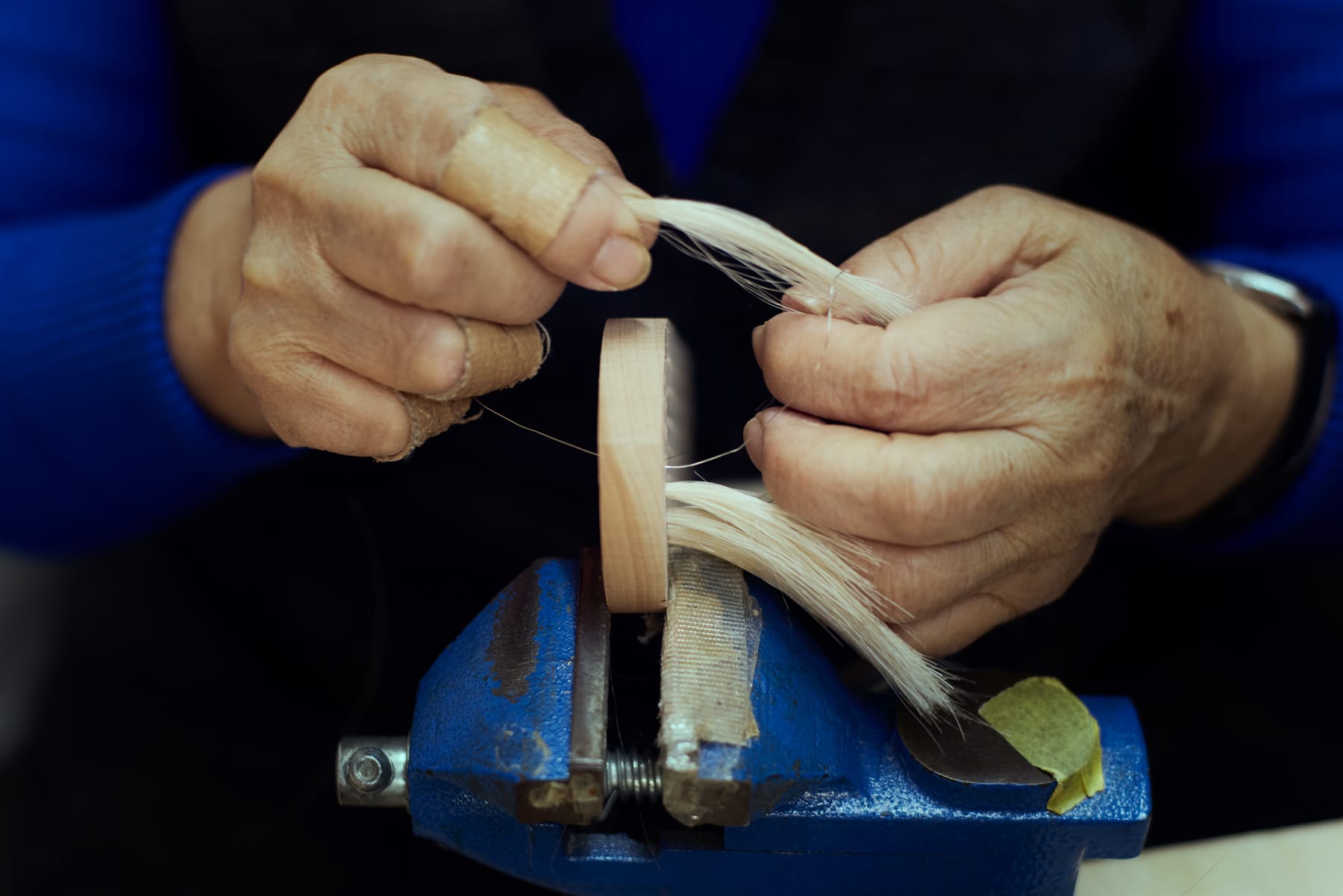
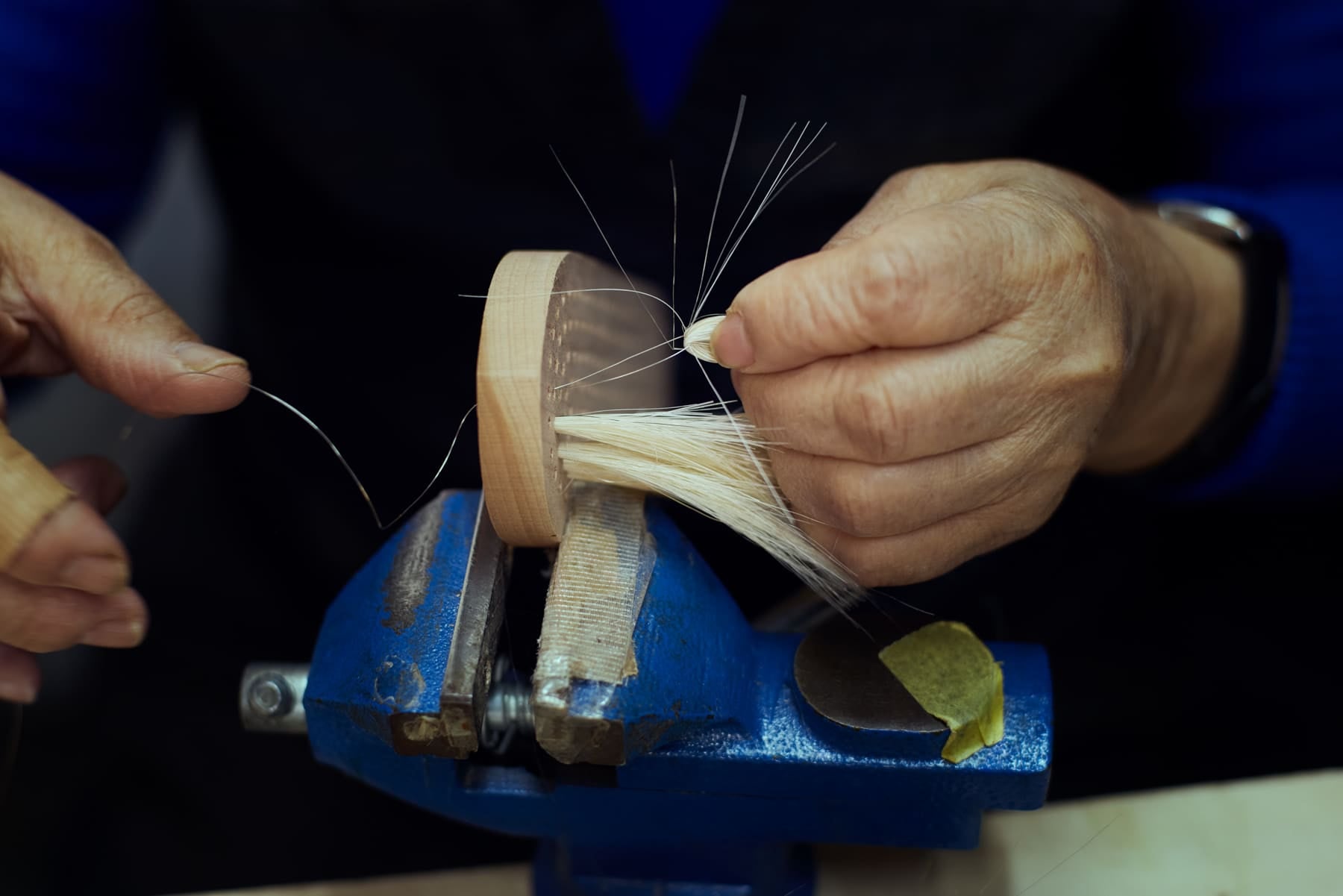
A stainless steel wire is threaded through the holes in the wooden base, and a tuft is hooked onto the wire and folded in half.
The folded root end of the tuft is then planted into the hole.
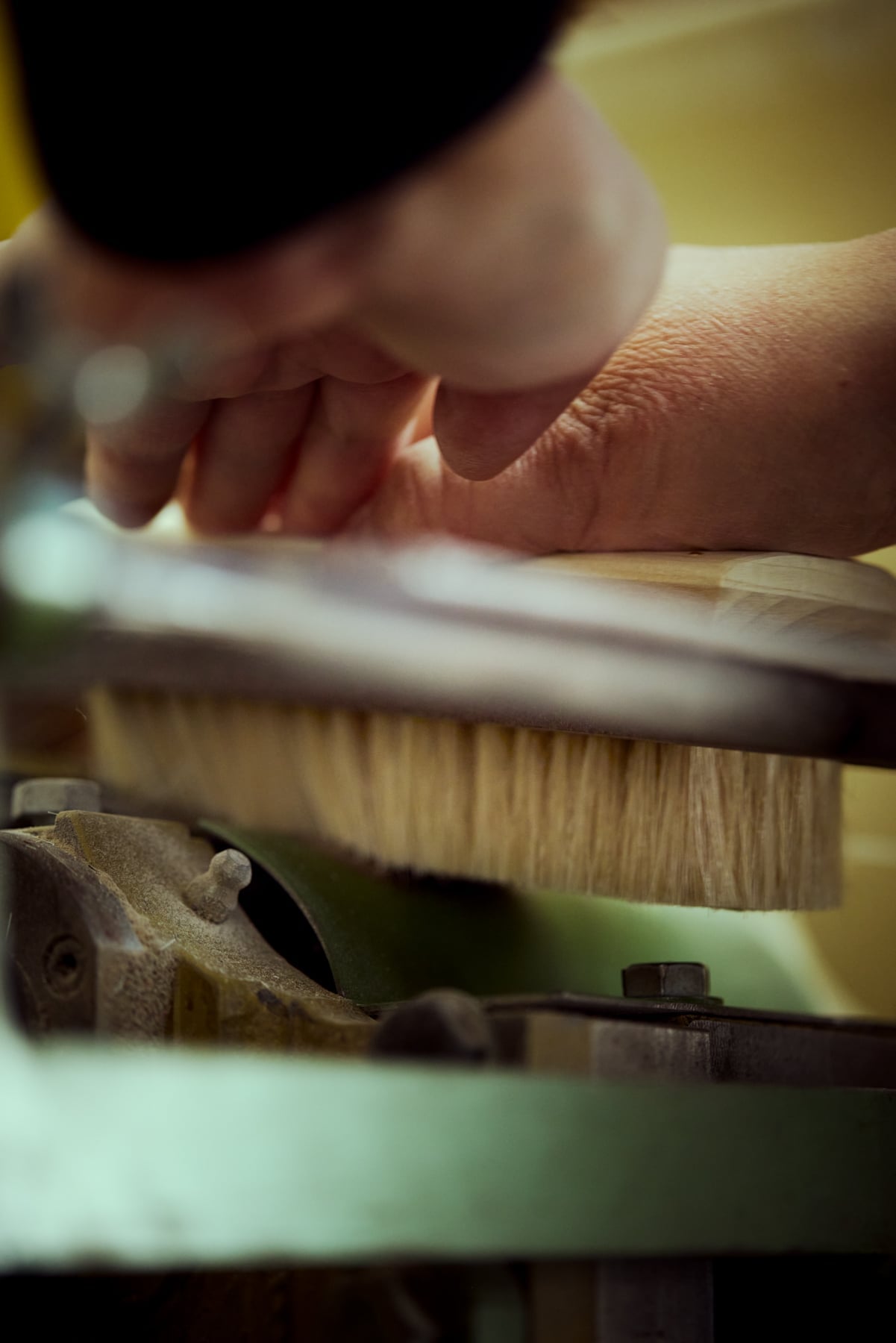
A cover is attached to conceal the stainless steel wire, and the planted bristles are trimmed to length with a clipping machine.
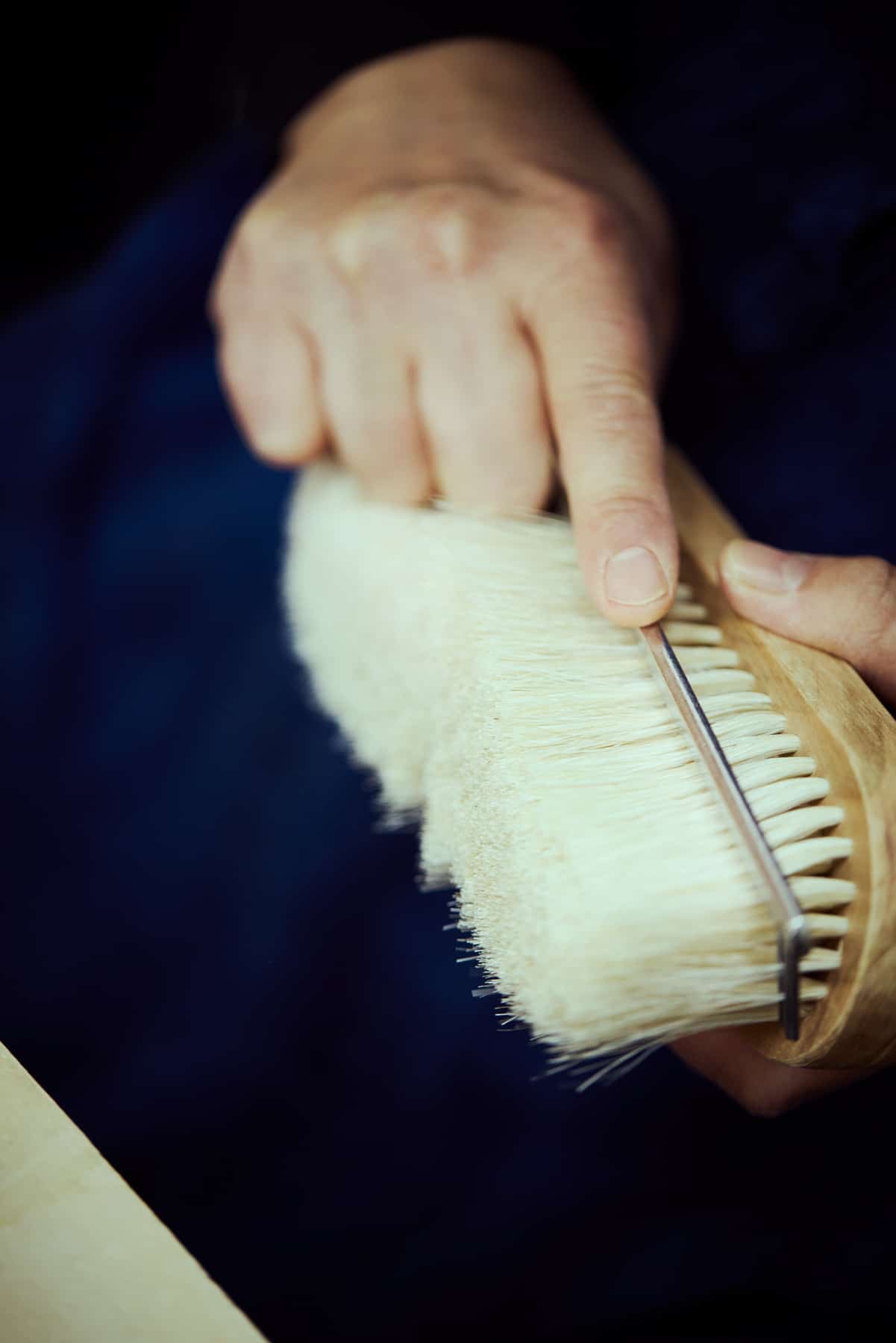
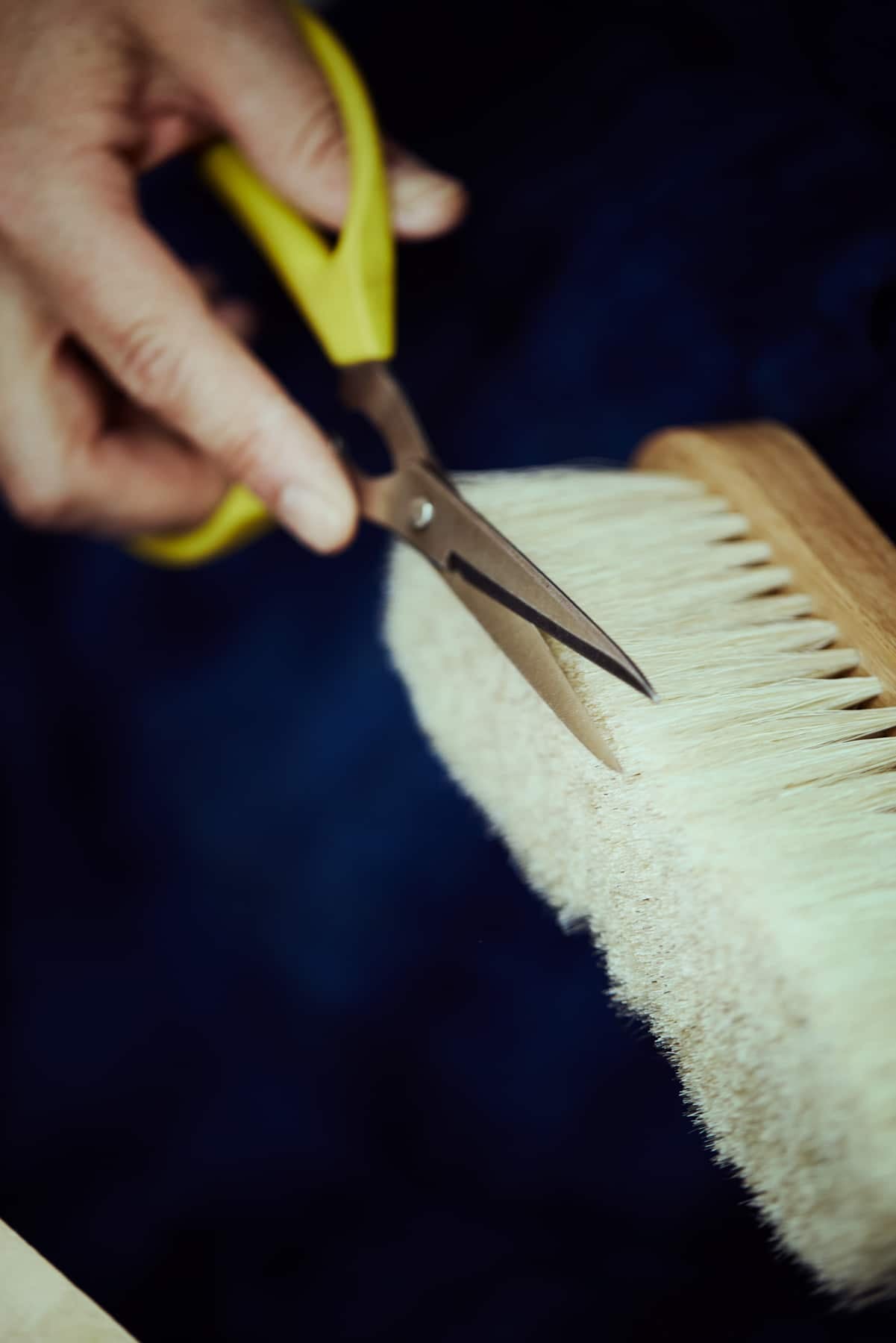
The bristles are carefully combed through, and any stray hairs are neatly trimmed.
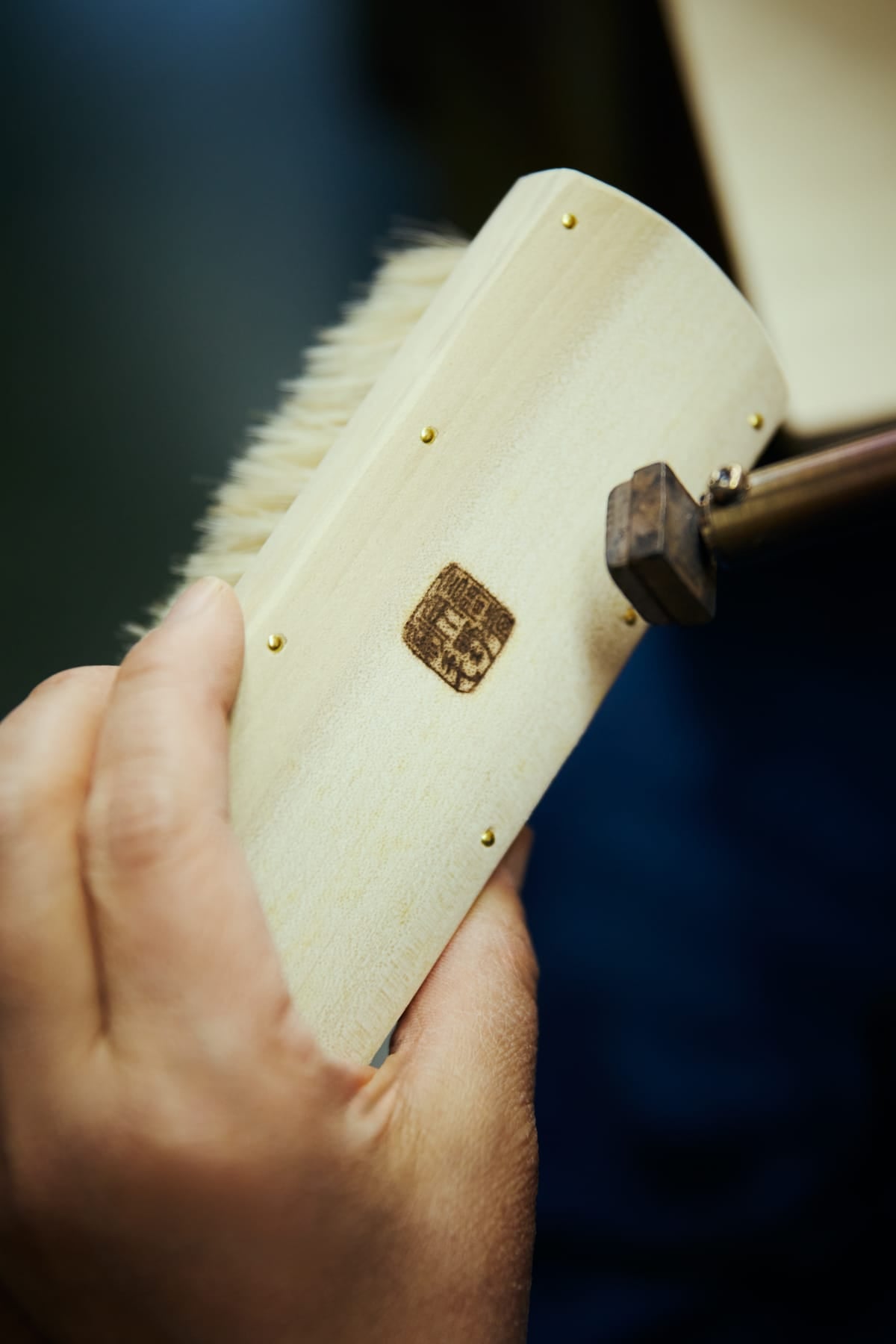
Finally, the UNO BRUSH brand mark is stamped onto the brush, and the brush is complete.
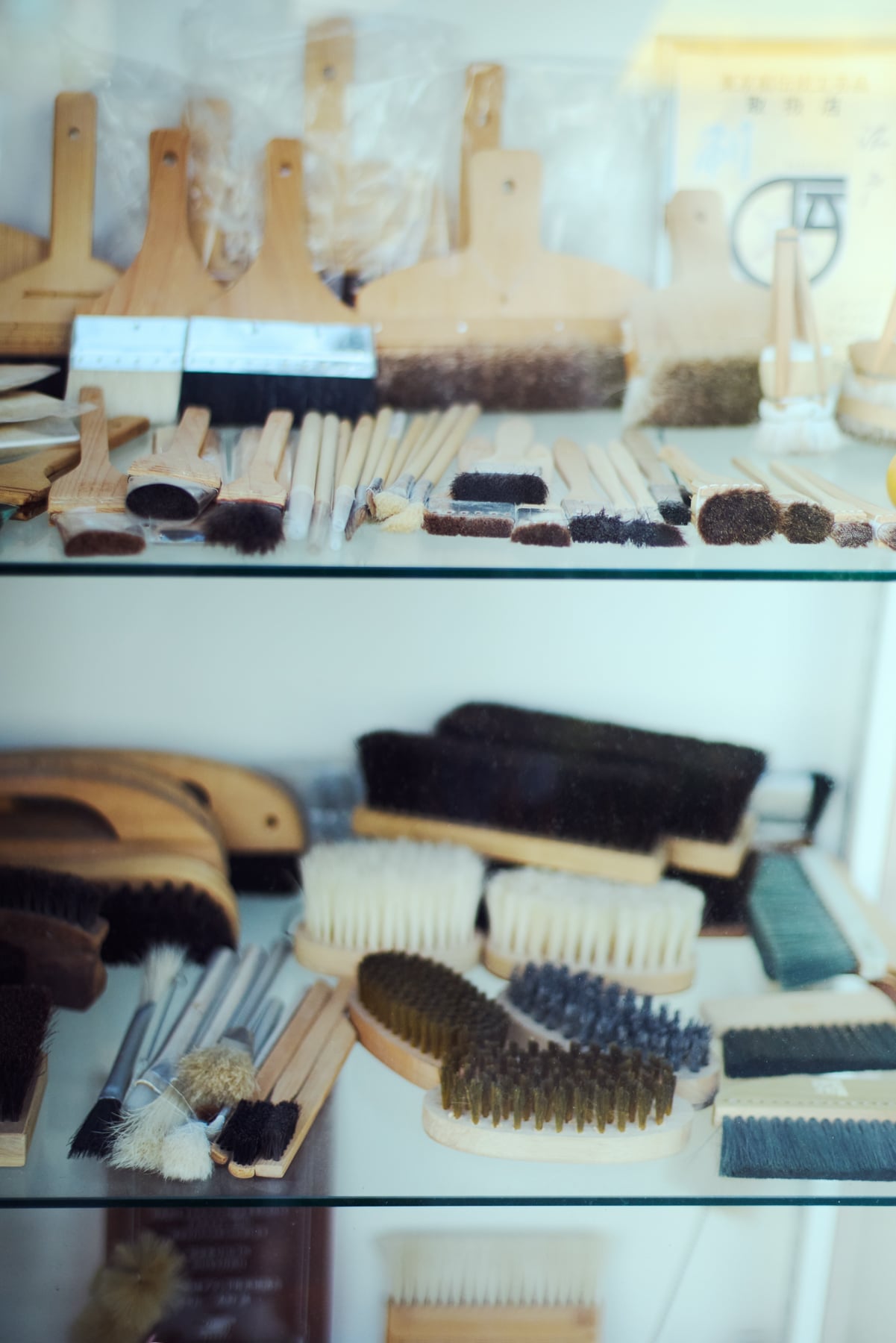
Edo Hake are also displayed in the shop window. Brushes for artisans are still made here today using traditional techniques.
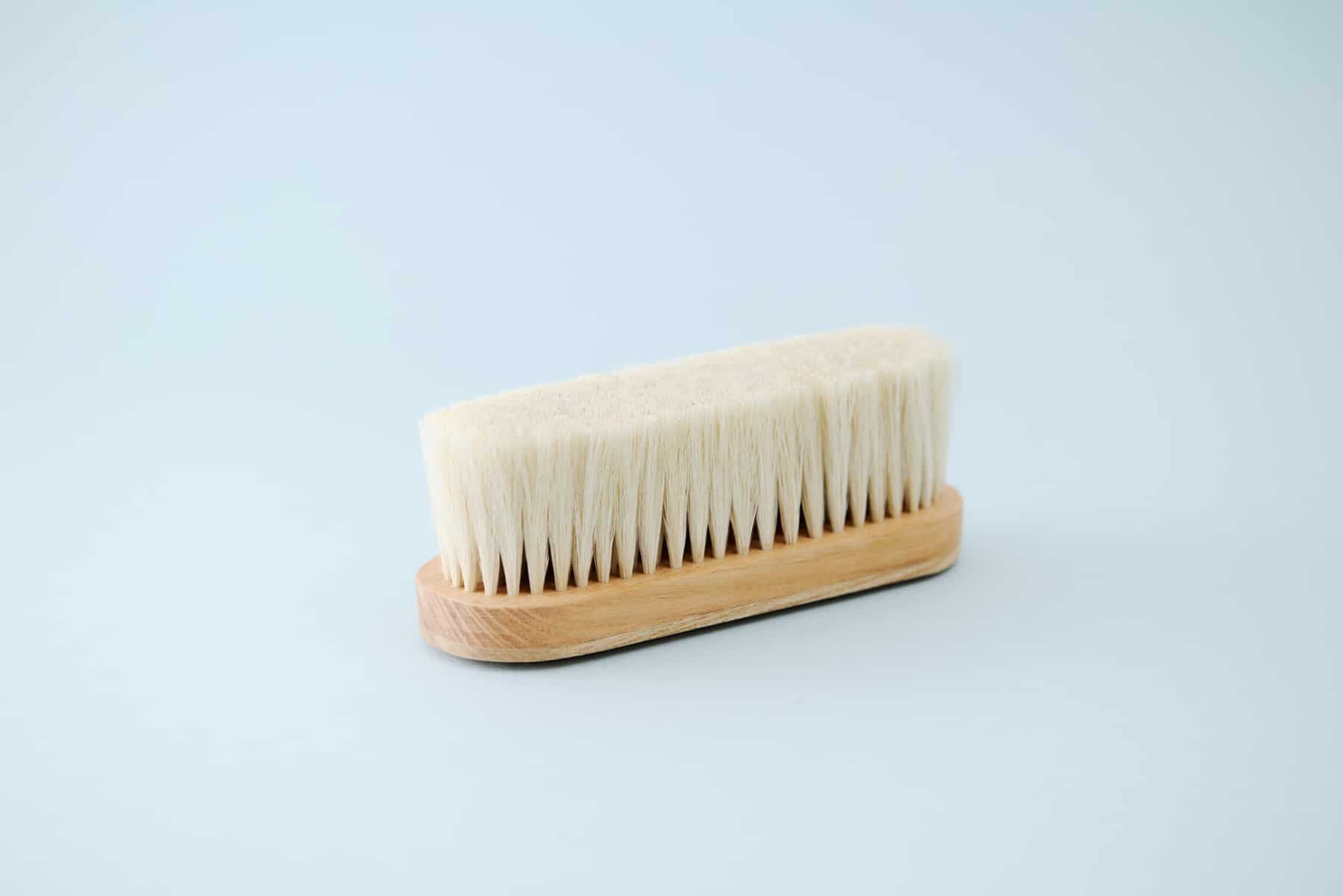
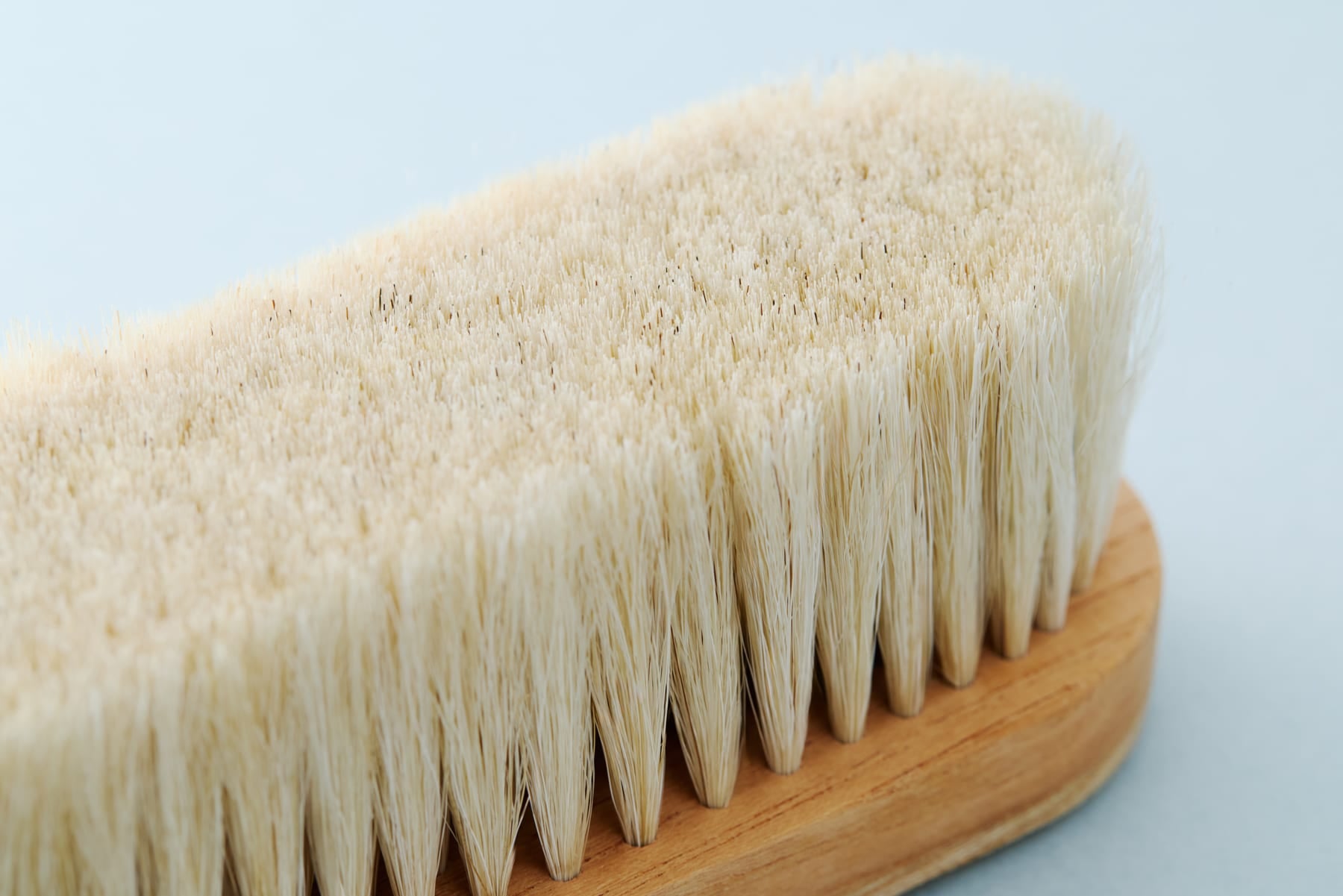
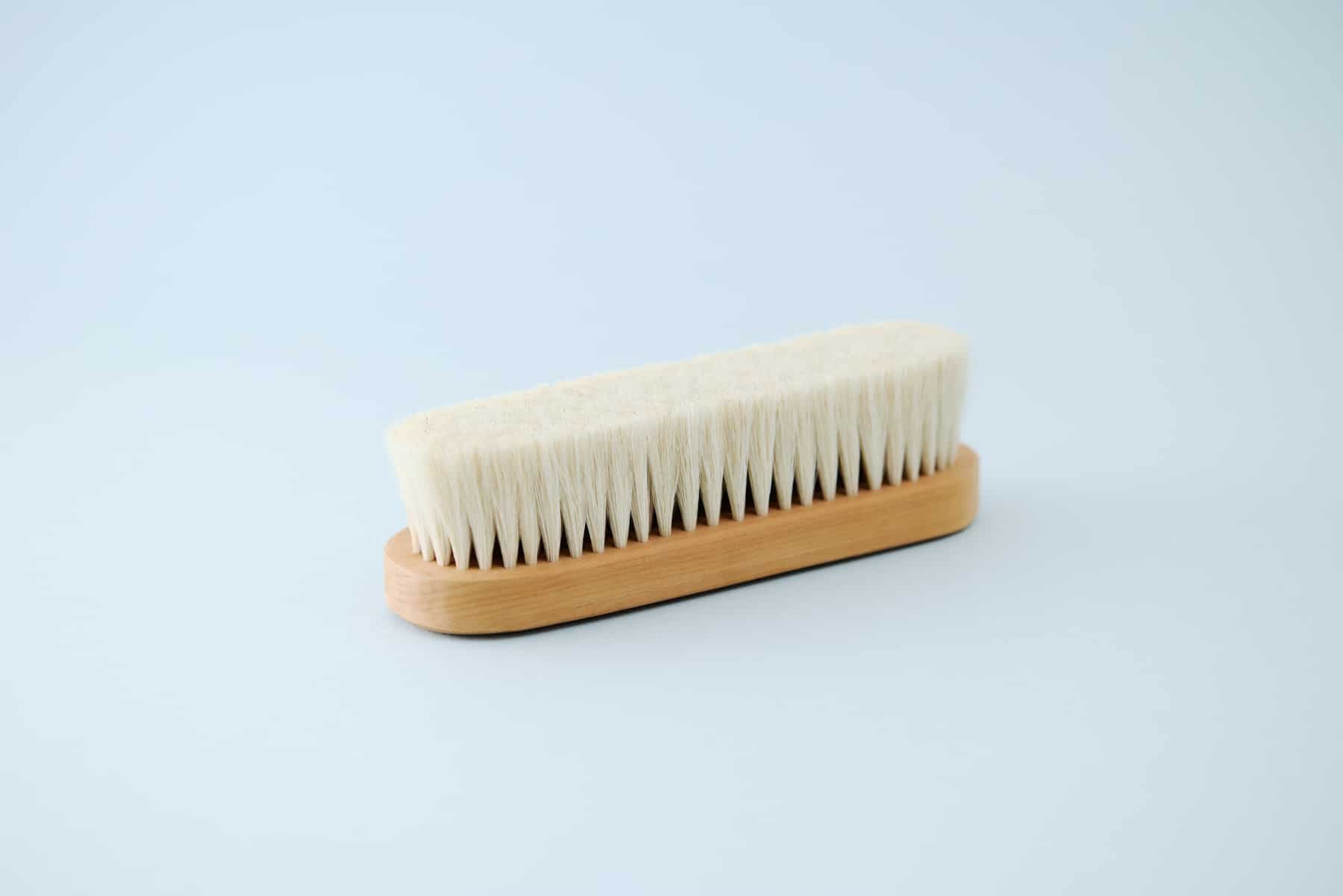
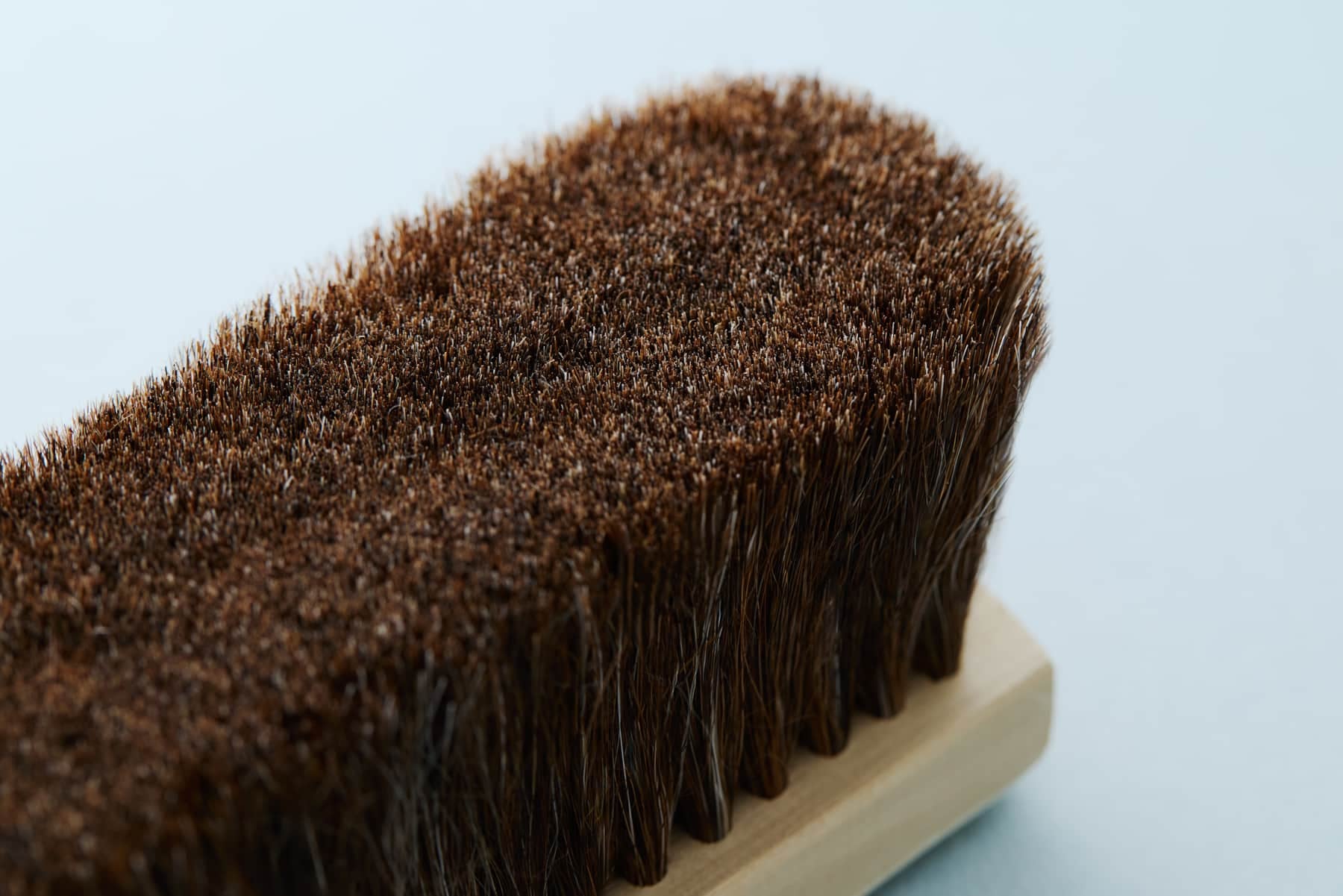
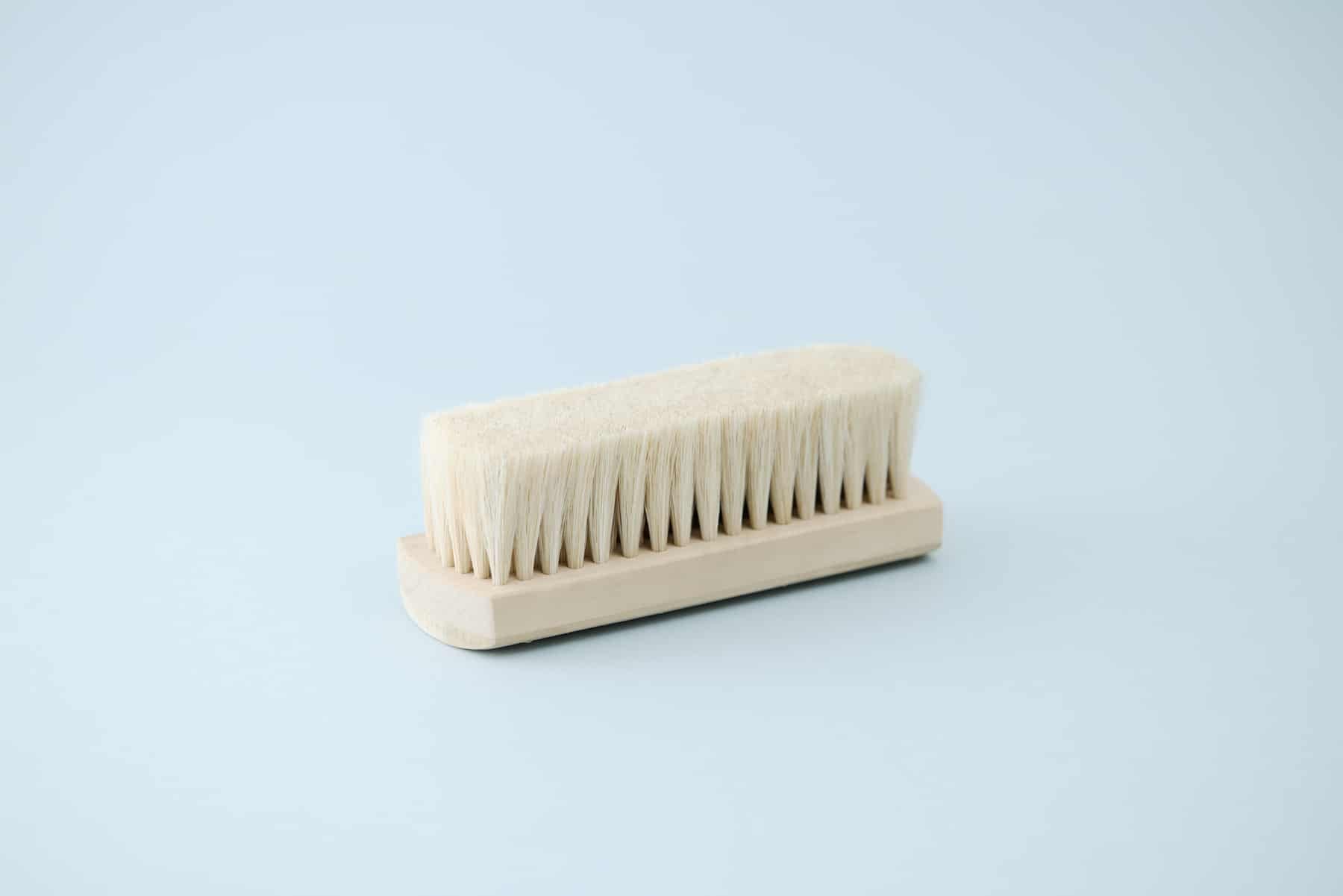
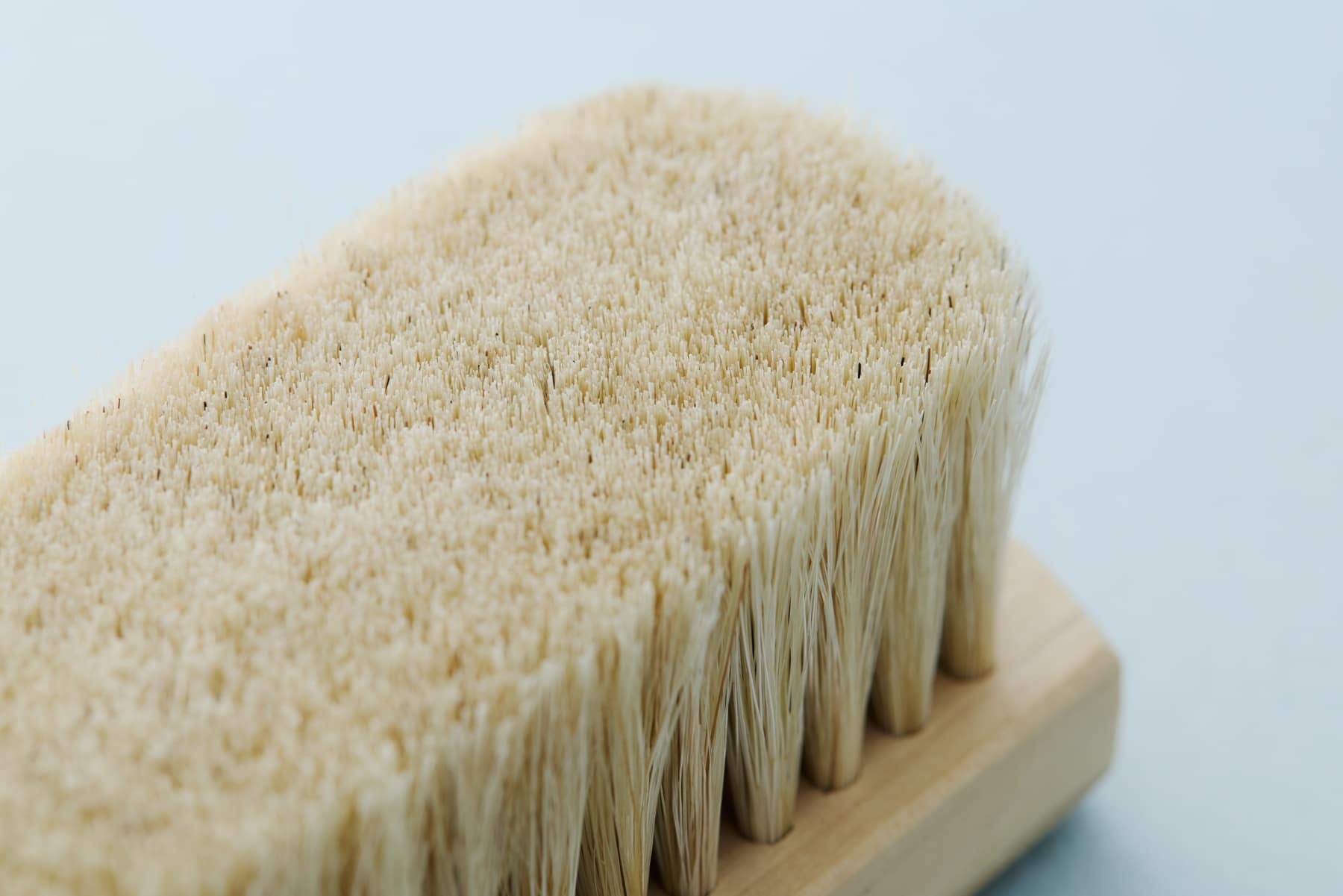
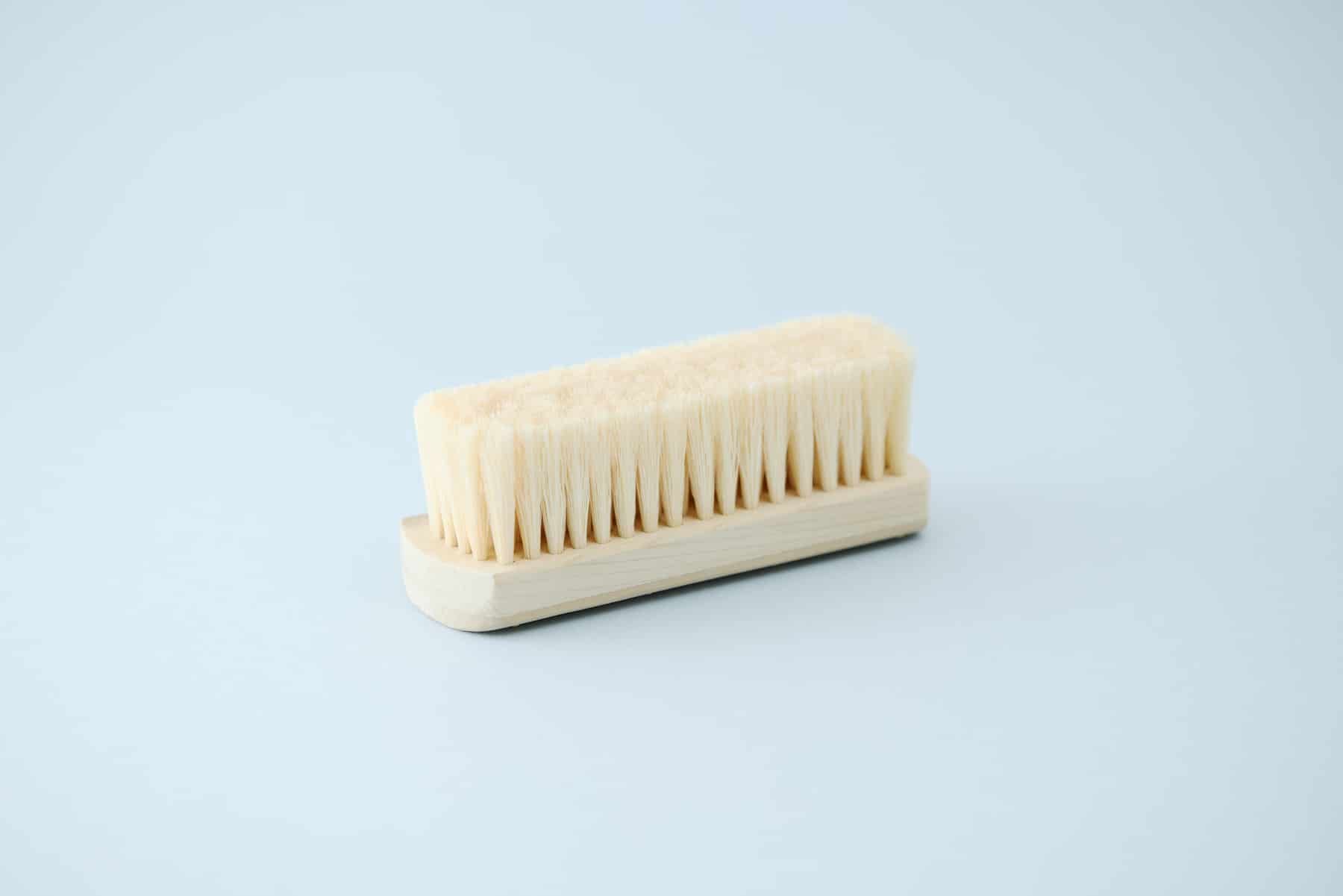
“UNO BRUSH”’s most popular item is its clothes brush made with the fine downy hairs from a horse’s tail. White horse tail hair, valued for its suppleness and resilience, is the standard material for clothes brushes, but brushes made with the softer downy hairs from the tail can also be used on more delicate fabrics. These brushes made with such fine tail hairs are rare and hard to find elsewhere, and they are now attracting a great deal of attention.
Michiyo Uno, the fourth-generation owner of “UNO BRUSH,” says:“As times have changed, more garments are being made from delicate materials such as cashmere, and more people want to care for their favorite clothes and keep them for a long time. That seems to be one reason clothes brushes have become more popular. We’re also seeing more male customers.”
By using a clothes brush to remove dust, pollen, and the like from garments and to smooth the nap of the fibers, clothes can last longer. It can also reduce the need for dry cleaning and help prevent damage.
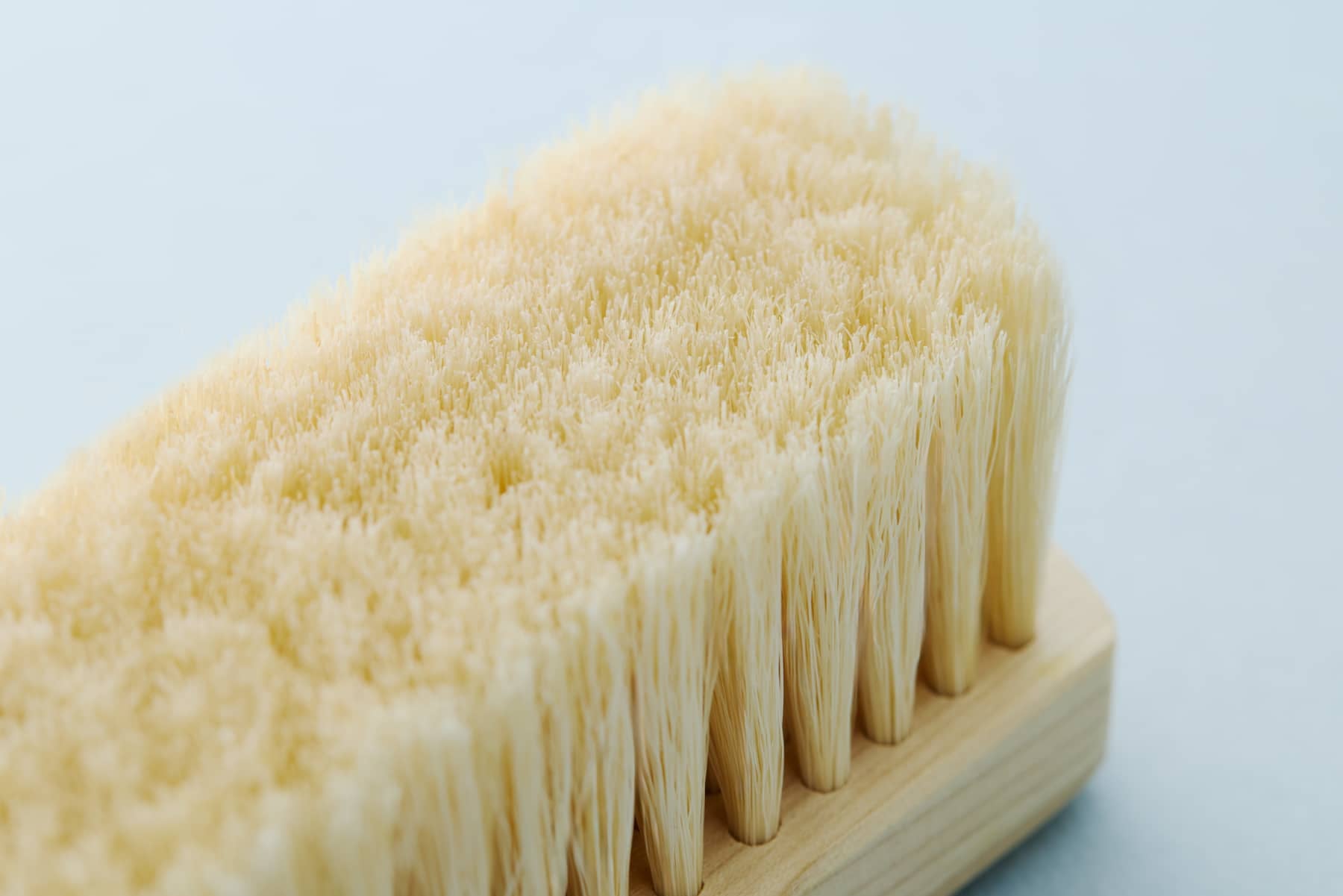
These rare fine hairs from a horse’s tail are exceptionally soft yet still springy. They are ideal for clothes brushes used on delicate materials such as knitwear.
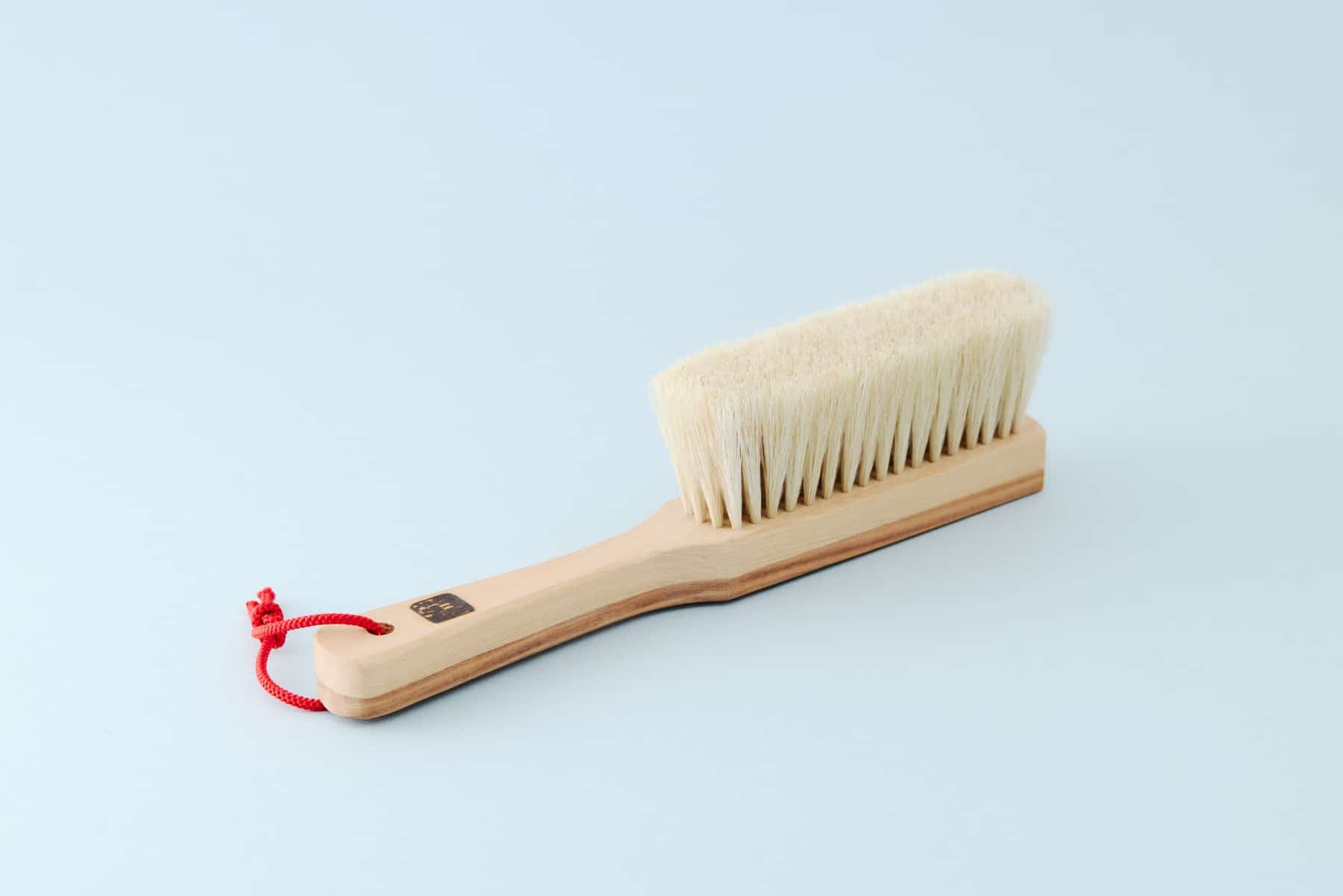
The most popular item is the “Cashmere Clothes Brush, Large” (27,500 yen). Its large surface area allows for quick brushing, while its soft bristles make it suitable even for silk and kimono.
The “Cashmere Clothes Brush, Slim Handle” (16,500 yen) is lightweight and easy to use, even for women with smaller hands. This used to be the more popular model, but with growing demand from men, the large version has recently attracted more attention.
The “Suit Clothes Brush, Large” (33,000 yen) is designed for suits. Its broad base lets you remove dust and dirt thoroughly in a single pass while smoothing the weave of the fabric.
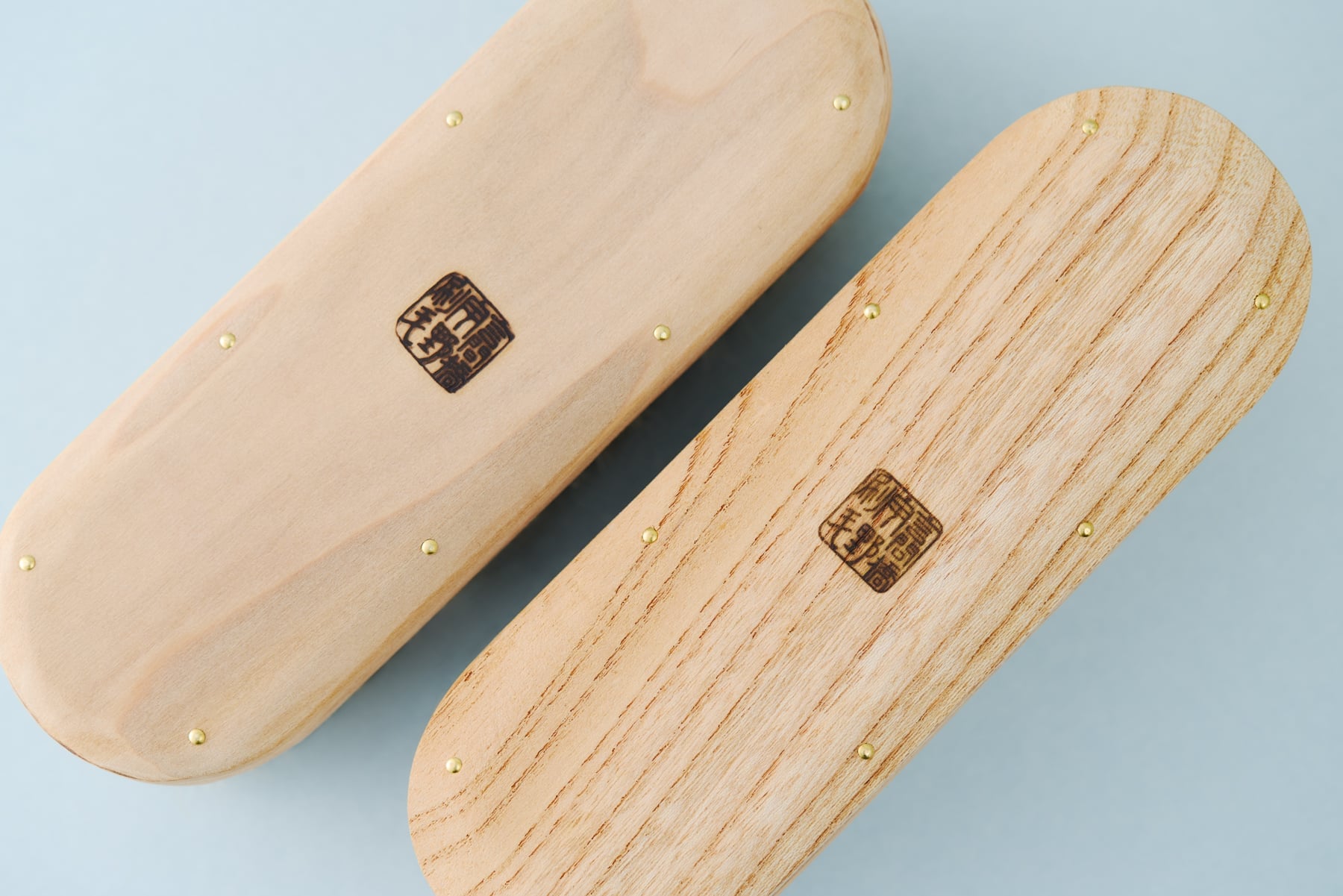
The most popular clothes brushes also come with a choice of wood for the base. Katsura is the standard material, but there is also a keyaki (Japanese zelkova) series that highlights the beauty of the grain.
Michiyo says:“Tokyo Teue Brush is sturdy and made to last, so I thought it would be nice to use a material whose aging can also be enjoyed over time. That’s why I decided to incorporate keyaki.”
The distinctive character of natural materials, together with their simple, functional, and beautiful design, is another reason these brushes have drawn attention in recent years.
The clothes brushes are available in simple katsura wood (left, 27,500 yen) or expressive keyaki wood (right, 33,000 yen).
At “UNO BRUSH,” another popular product, alongside its clothes brushes, is its range of shoe brushes. There are about four types, each designed for a different purpose, with different bristle types and lengths. Part of the appeal is the breadth of choice, allowing customers to select the brush that best suits their needs and preferred finish.
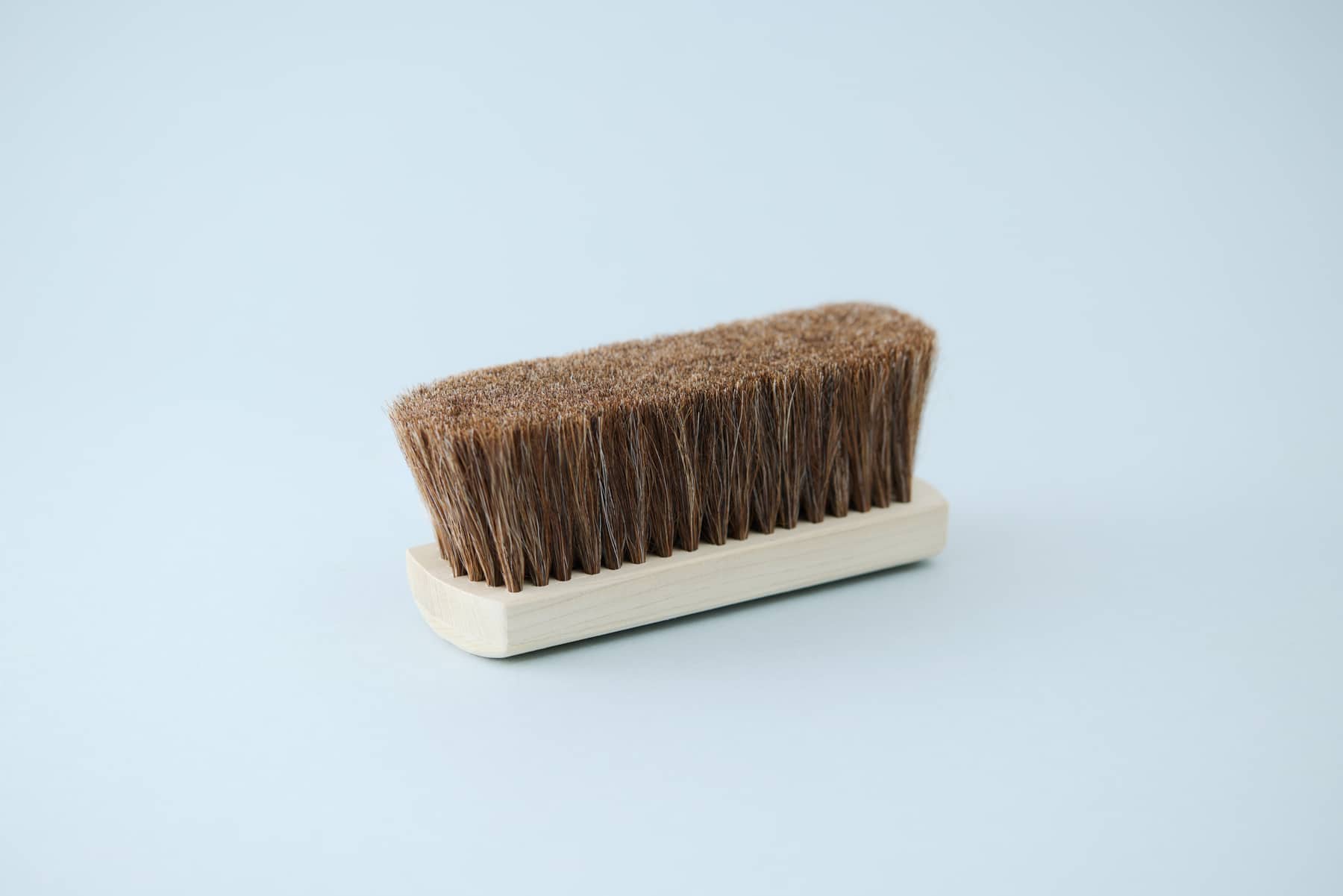
For dusting, long tufts of fine, soft black horse mane are ideal. “Shoe Brush for Dusting, Black Horse Mane” (9,900 yen)
For polishing, customers can choose from four types—horsehair, black horsehair, white horsehair, and white pig bristle—depending on their preferred feel and finish. The “Shoe Brush for Polishing, Horsehair” (9,900 yen) is resilient yet relatively soft.
White pig bristle is firmer and more springy, giving it a slightly harder feel. It is especially popular with customers who know exactly what they want. “Shoe Brush for Polishing, White Pig Bristle” (9,900 yen)
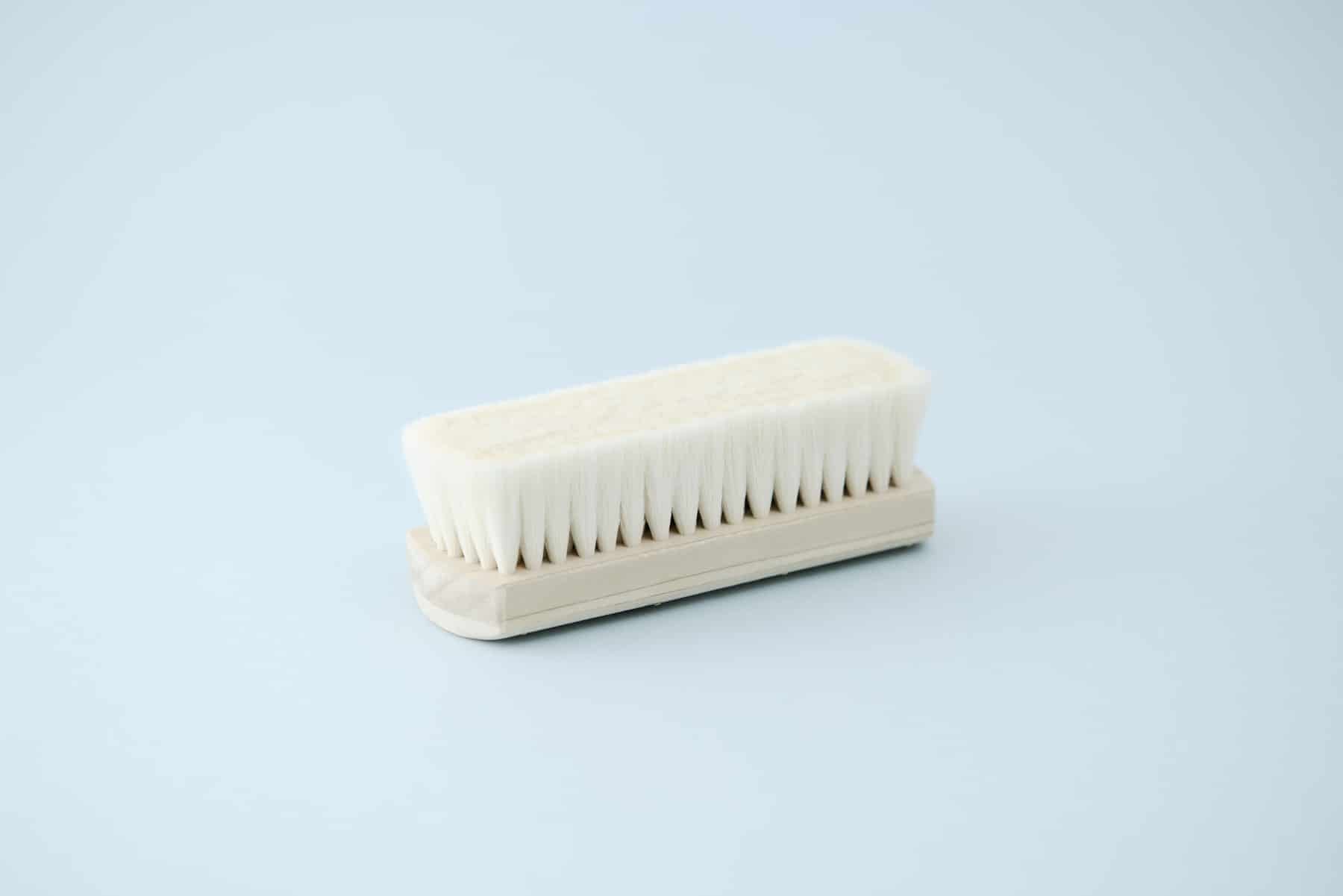
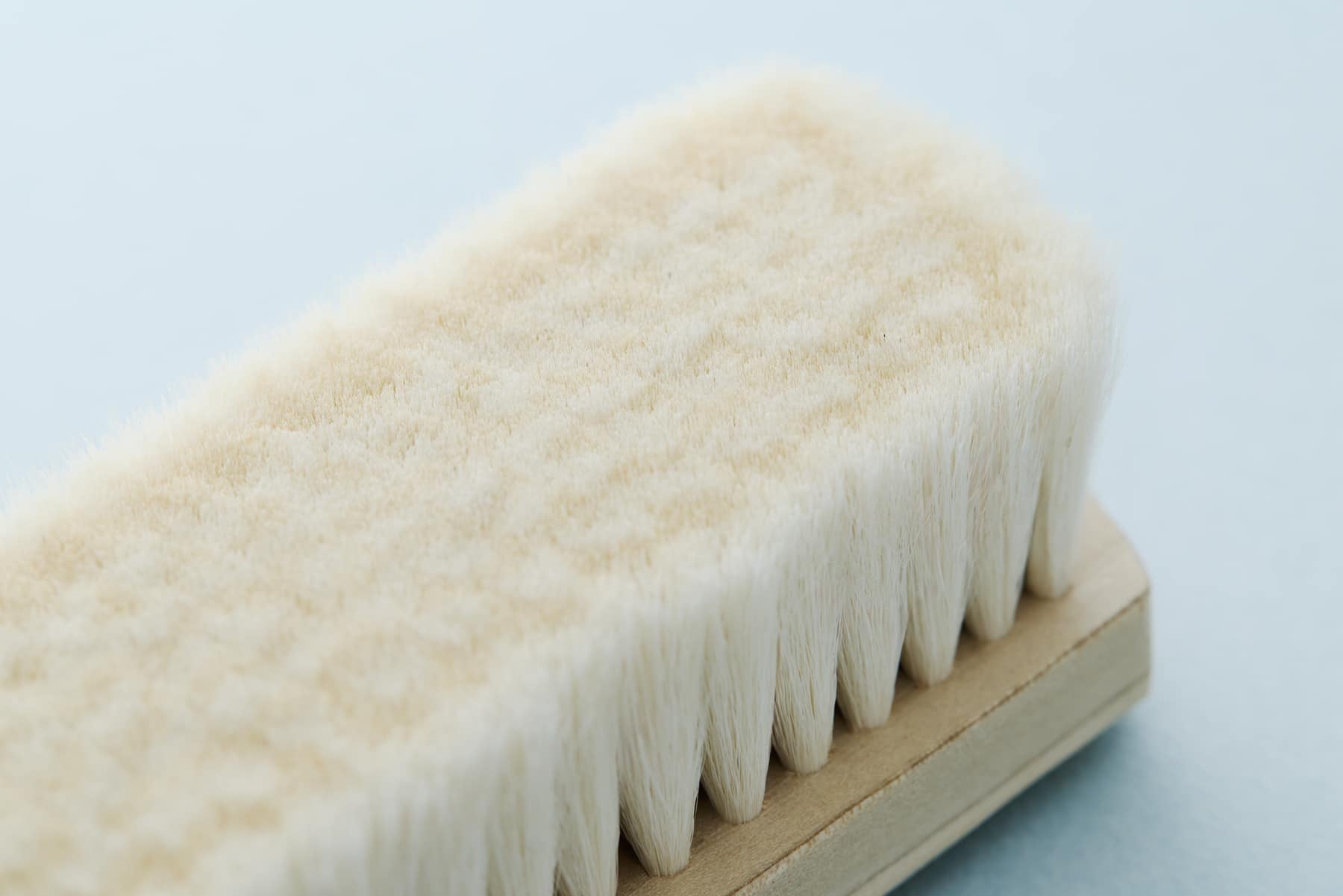
For finishing, the softest and most supple option is the “Shoe Brush for Finishing, Goat Hair” (9,350 yen).
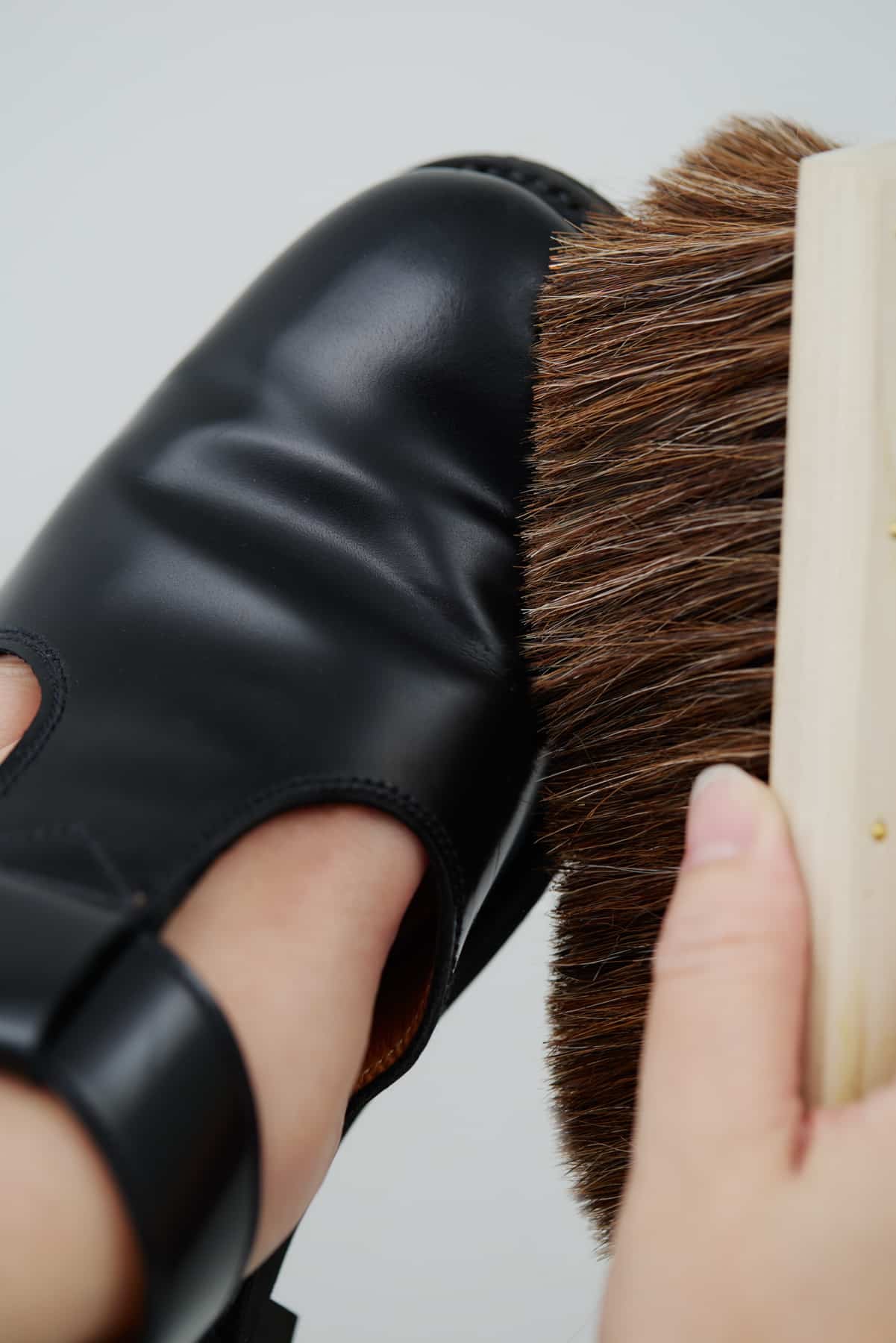
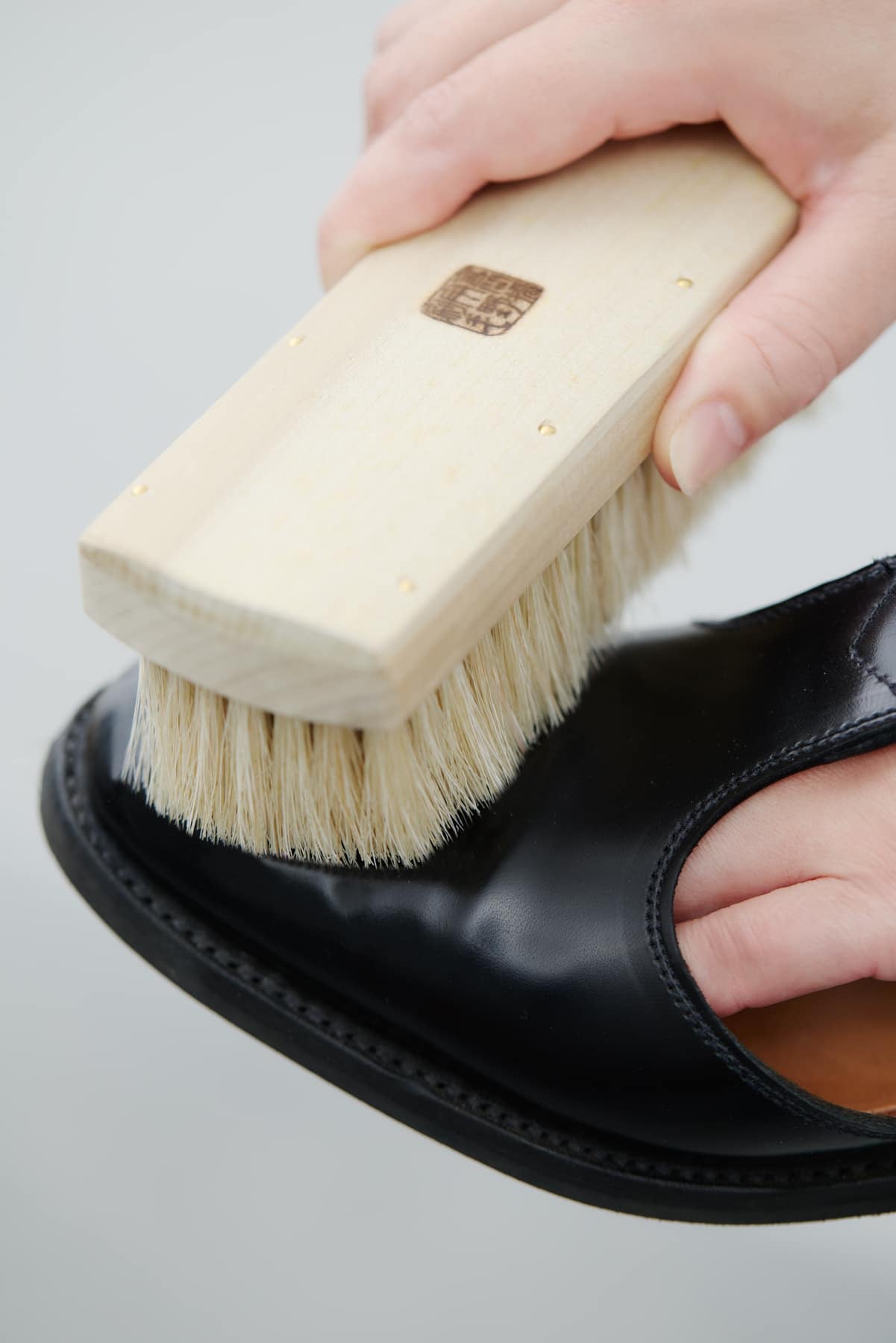
The key to using them well is to make sure the bristles hit the shoe straight on.
With the moderately firm pig-bristle polishing brush, using the brush with the bristles standing upright also helps the shoe cream blend in more easily.
Even when using a soft, long-bristled horsehair brush for removing dust, be sure to keep the bristle tips straight against the shoe.
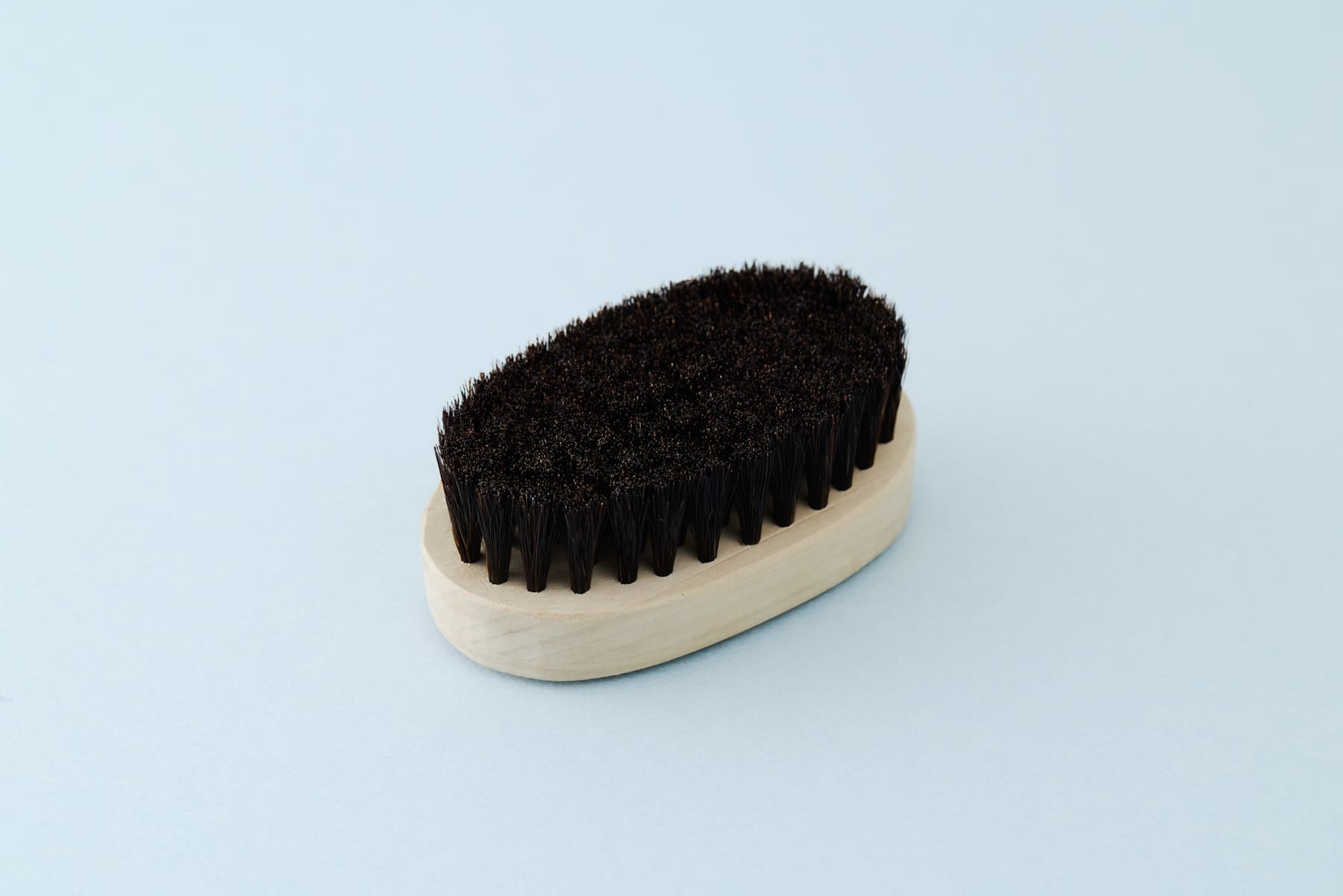
Other popular products include the “Body Brush, Oval, for Body” (4,400 yen), made with black horsehair. It has more resilience than white horsehair, so it feels firm on the skin without being too soft.
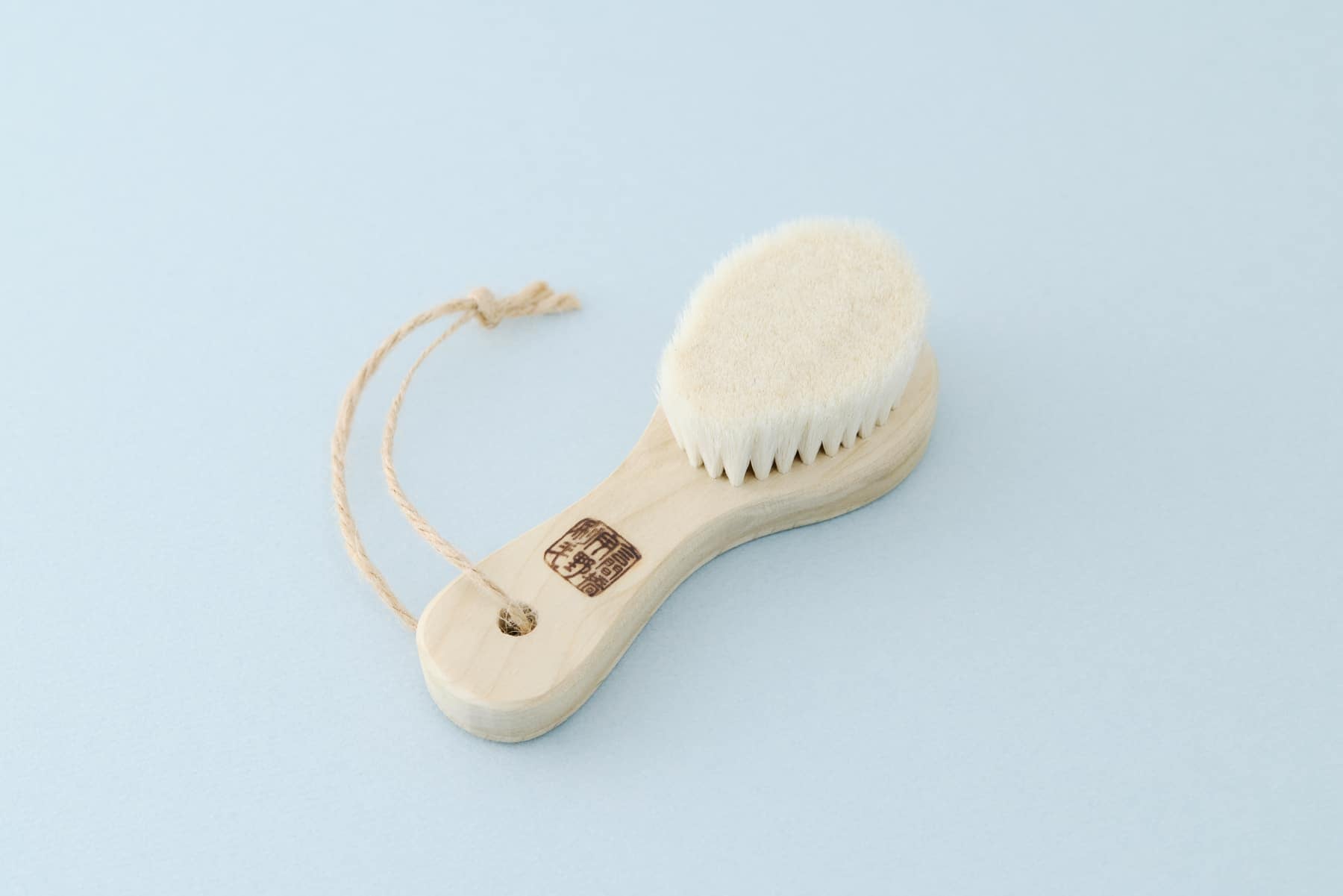
The “Face-Washing Brush, Goat Hair” (3,850 yen) is another item that has attracted particular attention in recent years. Its supple, soft goat hair lets you wash your face gently.
While carrying on traditional craftsmanship, “UNO BRUSH” continues to develop products that feel at home in modern life. Michiyo, the fourth-generation owner, has taken part in projects that share Tokyo craftsmanship with audiences in Japan and abroad, and has also collaborated with designers on new products.
Michiyo says:“I want to preserve traditional techniques, but at the same time I also wanted to create things that would catch the eye of people living in a new era. Hand-planted brushes are sturdy and long-lasting, and I felt it would be a waste for them to be treated as mere expendables. So, while consulting with designers, I developed designs that people could grow attached to and use for many years. I think we succeeded in creating products that can serve as part of the décor even when they are simply sitting out.”
Within the simple beauty of functional design, she is always looking for ways to add further value that will delight customers. Michiyo continues to think up new products.
“Because each piece takes so much time and care to make, the price inevitably ends up a little higher. These brushes have long been used by artisans and at job sites, but I always make them hoping they will also be appreciated by ordinary customers. They are not valuable simply because they are handmade. I want to keep creating products that people will genuinely value, in step with changing times.”
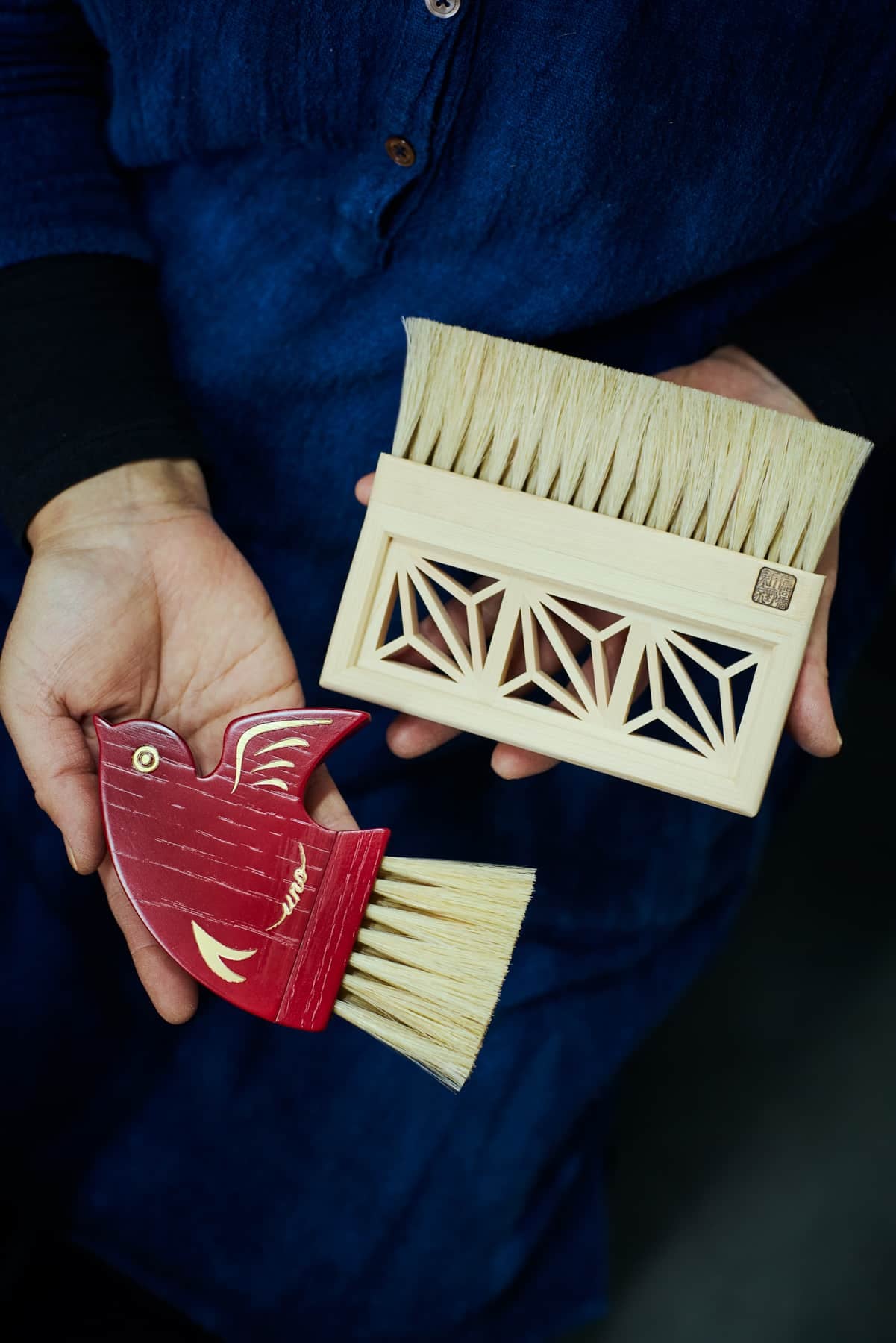
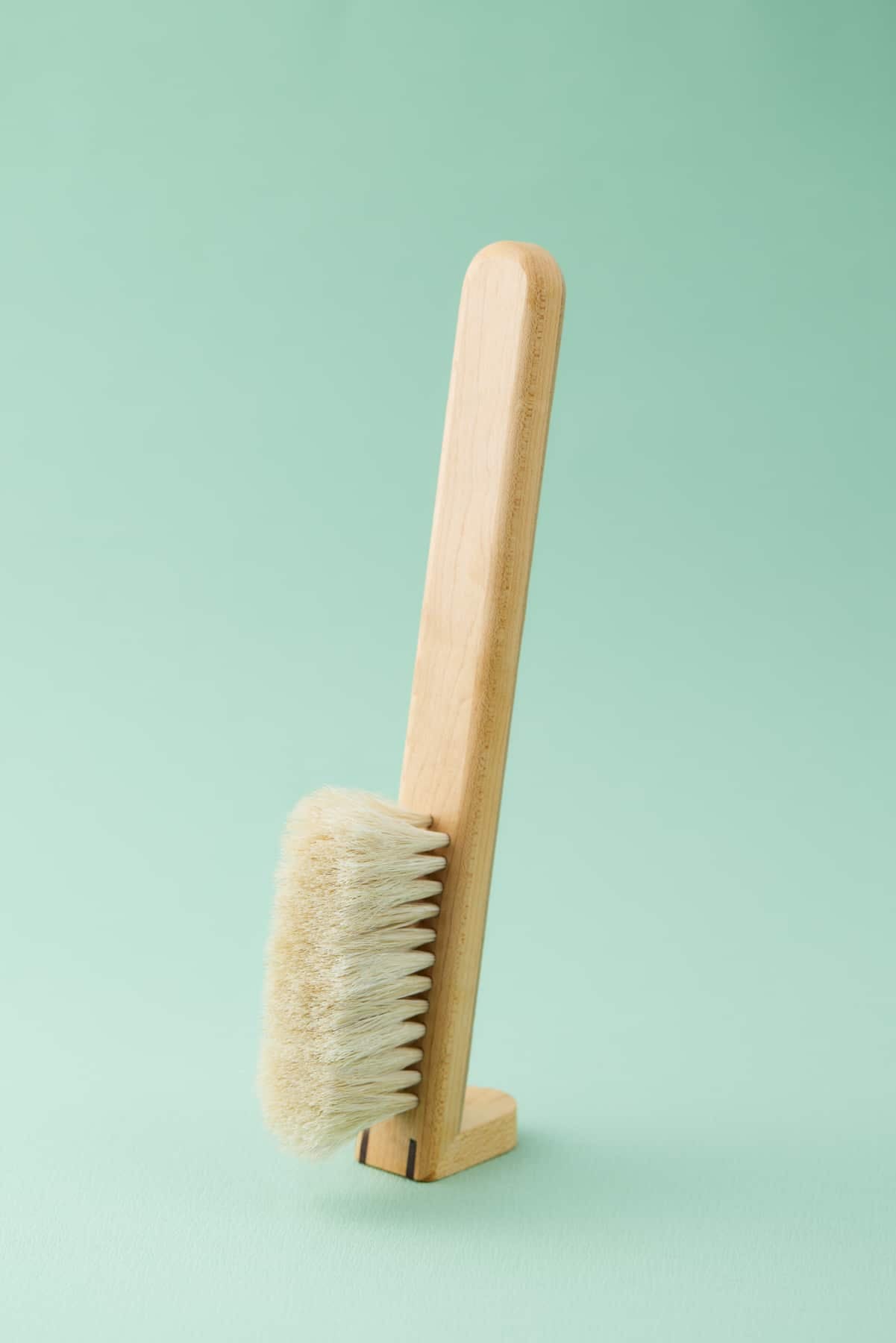
The collaborative Chidori Brush is a tabletop brush that can be kept on a table or desk for quick cleaning anytime (white horsehair, 13,200 yen). Another collaboration, the Miyabi Brush, incorporates motifs inspired by Edo Kumiko, a traditional style of geometric woodwork. It works beautifully as an interior accent by the entryway and is perfect for brushing dust from clothes (Asanoha pattern, horsehair, 18,040 yen).
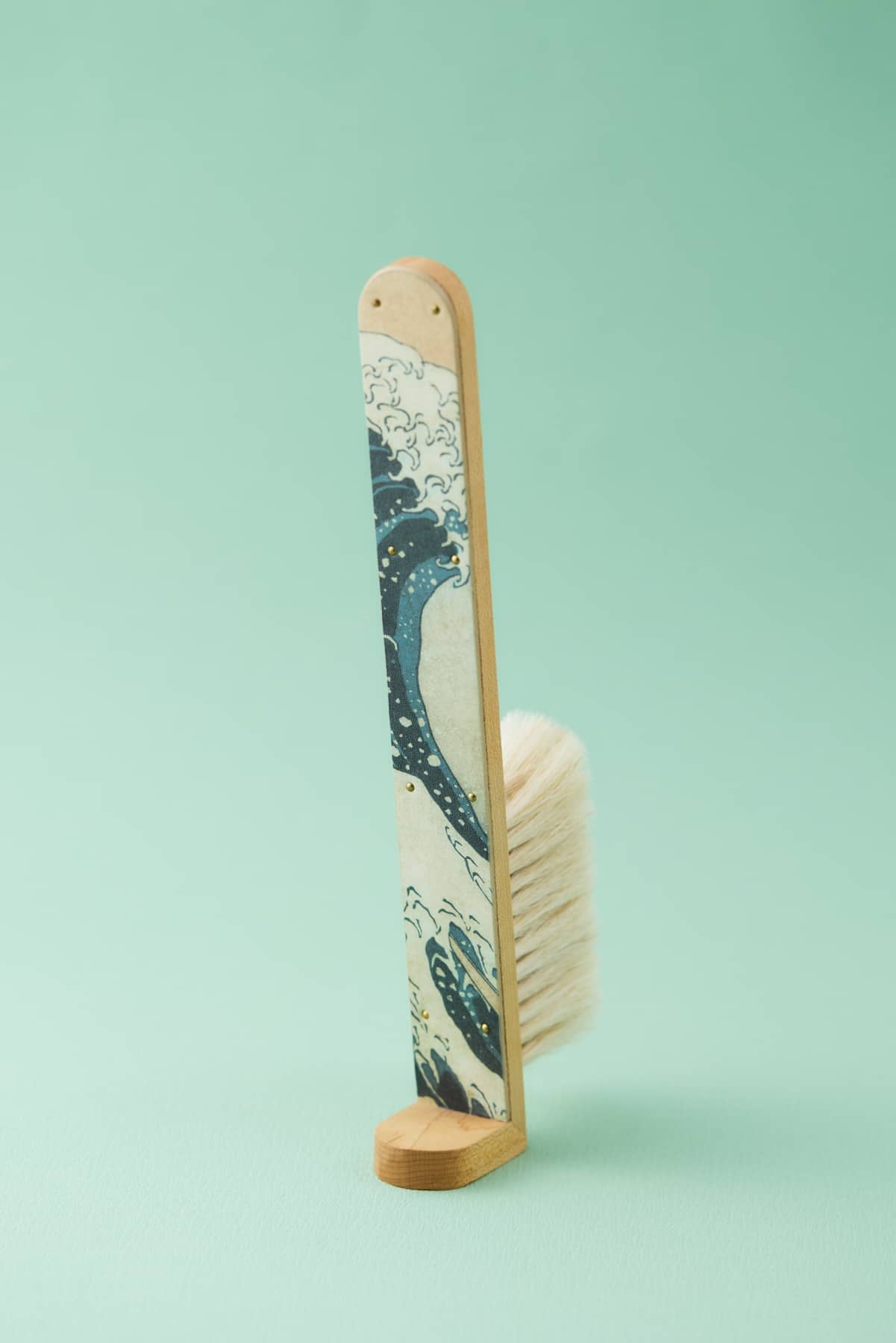
Stylish enough to leave on display and well suited to contemporary lifestyles, this versatile brush can be used as a clothes brush, shoe brush, or tabletop brush.
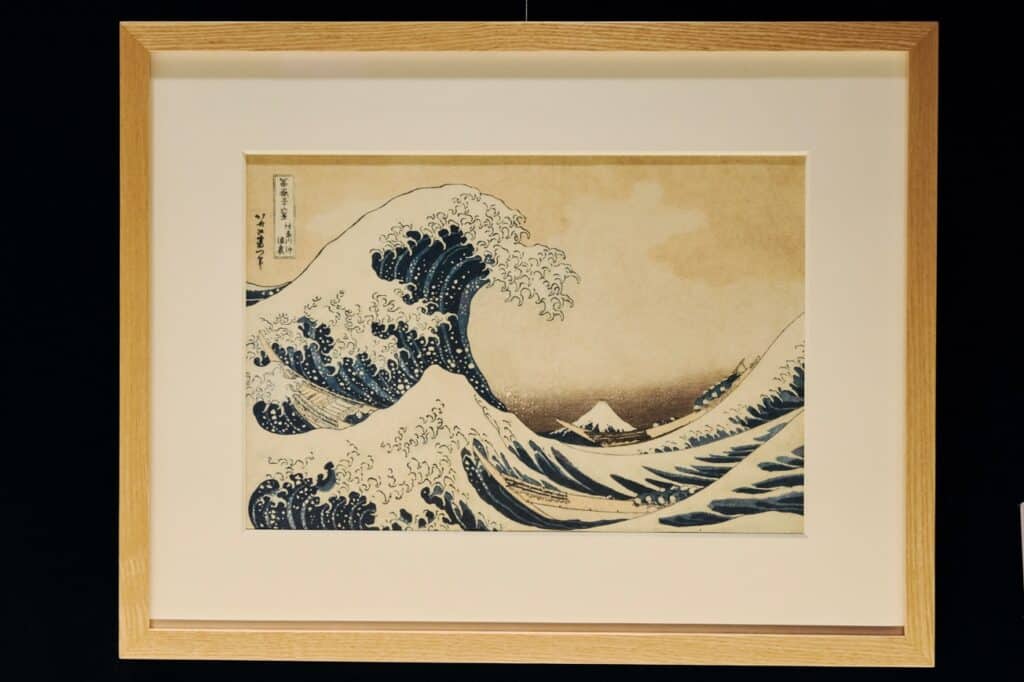
Its back is decorated with Under the Wave off Kanagawa (Kanagawa oki nami ura), also known as The Great Wave, the iconic work by Katsushika Hokusai, the ukiyo-e woodblock artist from Sumida. “Stand Brush Hokusai” (18,150 yen)
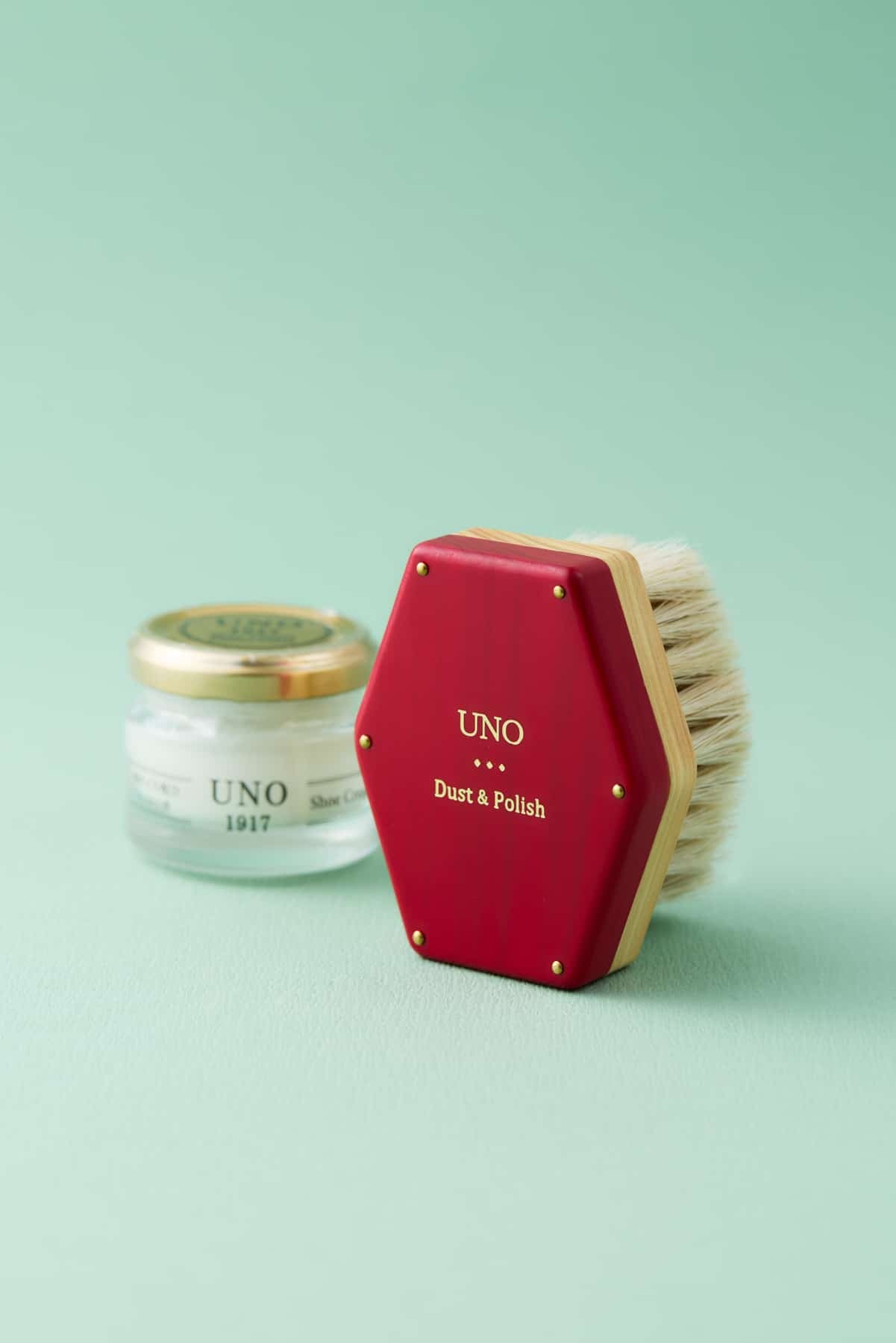
Created with the hope that “its colorful design will make care time more enjoyable,” the ROKKAKU brush is also recommended as a gift when paired with shoe cream. “ROKKAKU Dusting & Polishing, Horsehair” (26,600 yen)
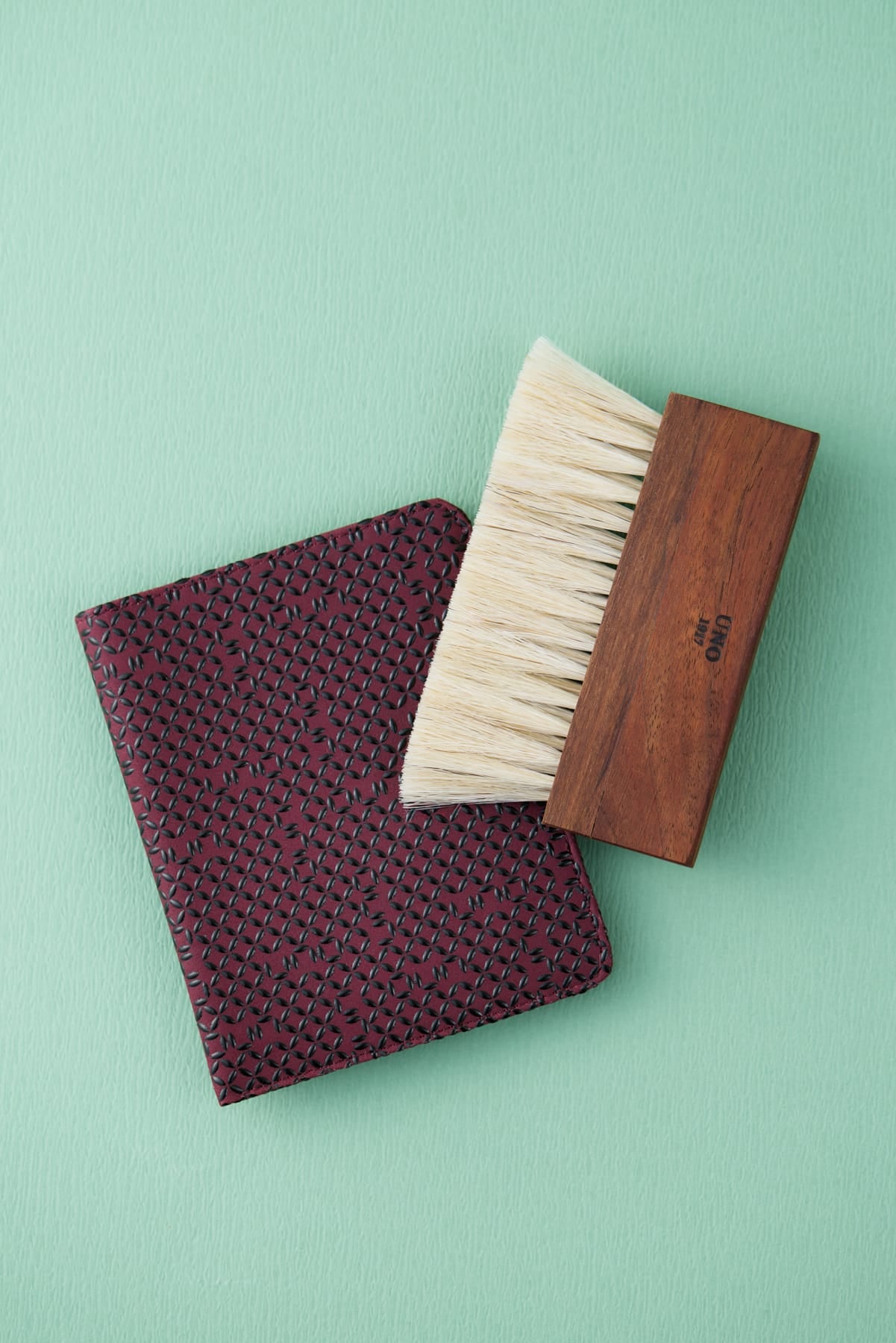
There is also a portable brush with a case for easy carrying. The case features an Inden pattern, drawn from a traditional Japanese leather craft. “Stand Brush with Portable Case” (17,600 yen)
Products from “UNO BRUSH” can also be purchased online.
ONLINE SHOP:https://unobrush.official.ec/
The information contained this article was correct as of 05/13/2026 (the time of publication)



.jpg)
スマホ.jpg)