DEEPTOKYO
magazine

EN

DEEPTOKYO
magazine
EN
2026.05.01
Leather Shoes That Feel Like Part of the Body, and Leather Goods for Everyday Use


 Nearest Station

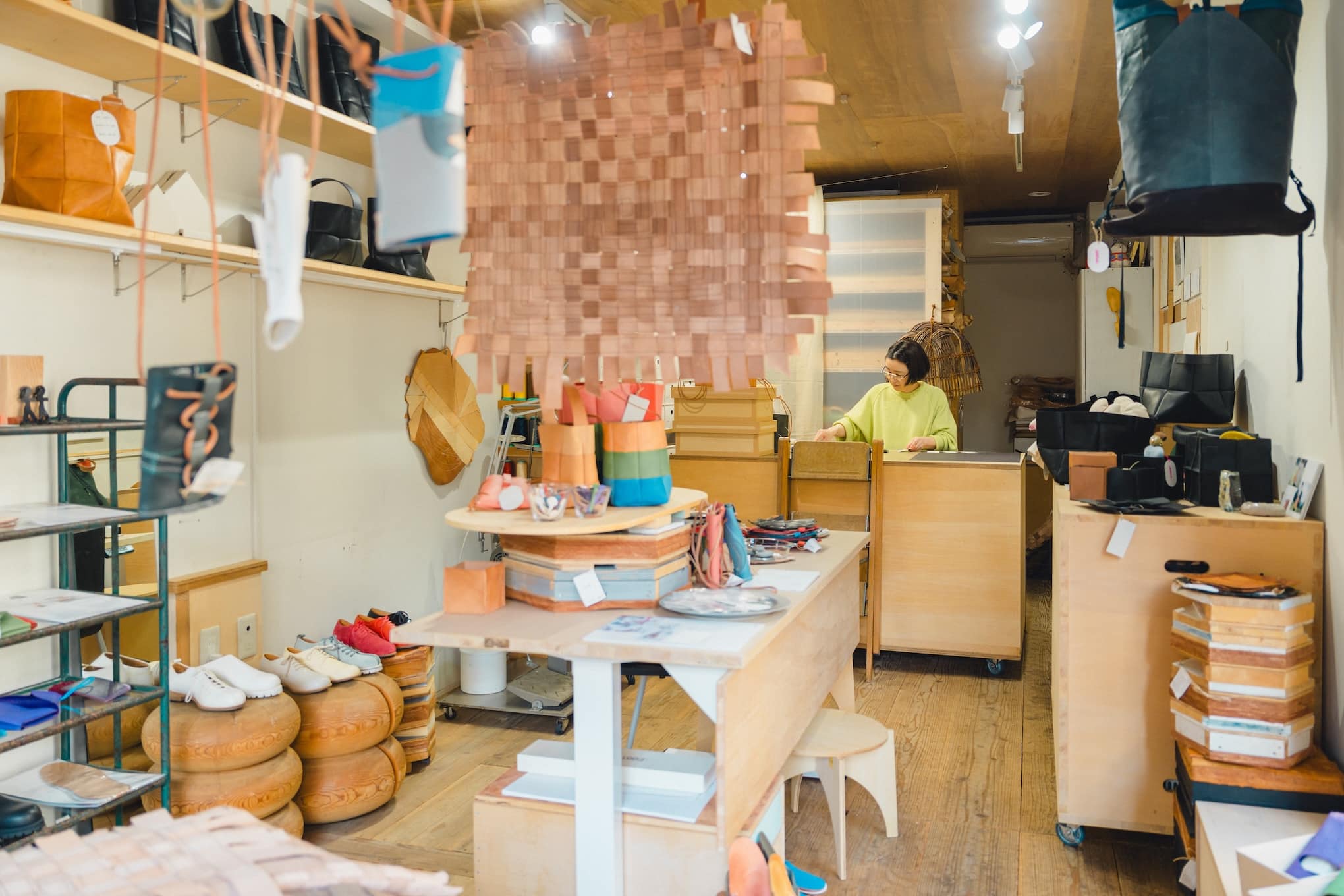
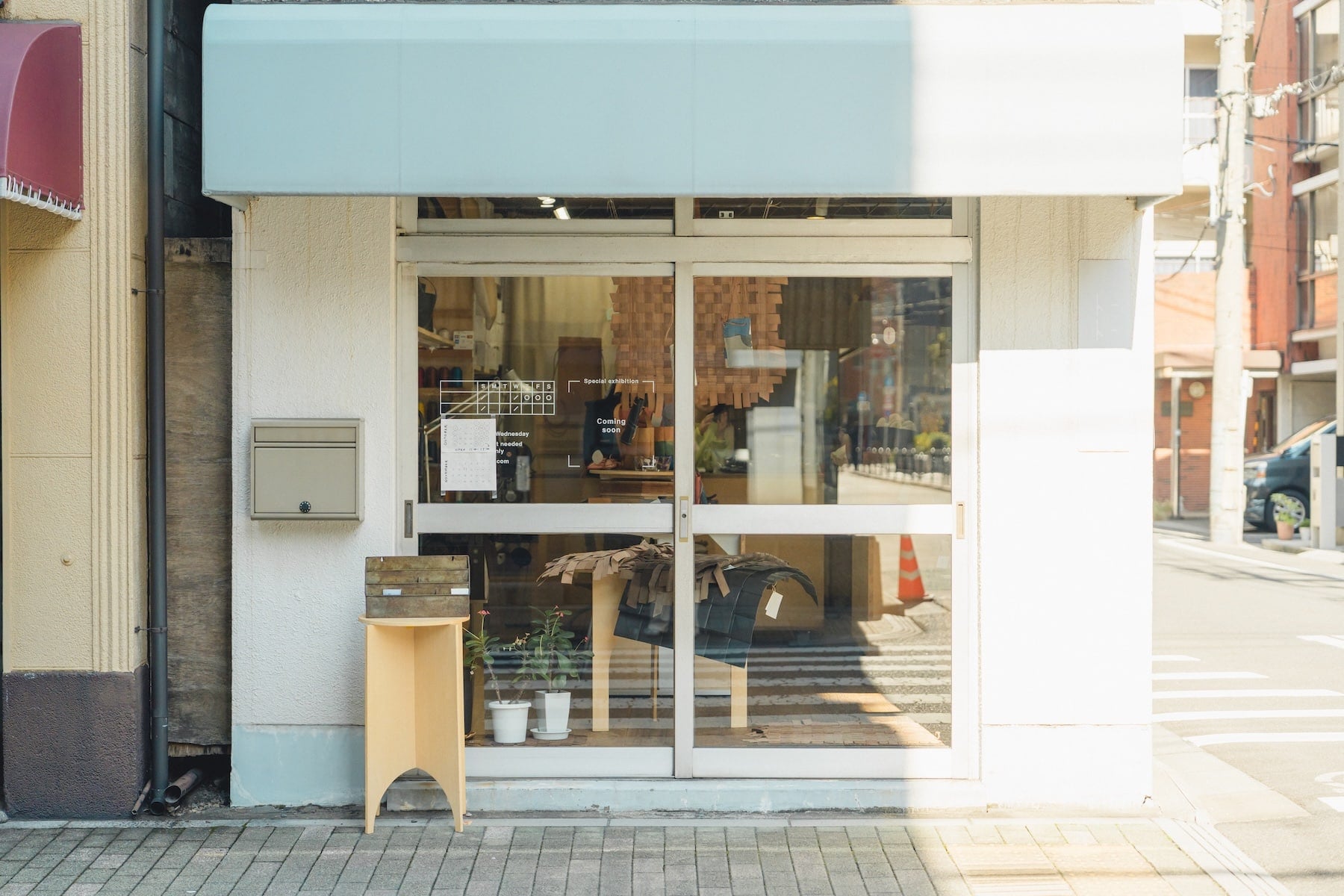
"toe to knee" is a shop in Asakusabashi, a neighborhood known for its community of craftspeople, specializing in leather shoes and leather accessories. Its appeal lies in designs so free and supple that they hardly seem to be made of leather. By combining the natural qualities of leather with simple construction, the shop aims to create products that can be used for many years. It also makes the most of being both a storefront and a workshop, offering custom orders and repairs whenever possible.
SHARE


"toe to knee" is a shop offering leather shoes, slippers, and other leather goods designed for everyday use, with a particular focus on comfort. The shop’s name, which means from toe to knee, reflects the background of owner and artisan Sayaka Kanda, who founded the business by drawing on her experience fitting comfort shoes to develop, produce, and sell her own original comfort shoes. The shop’s original products are all made of leather, yet they feel light and easy to use. Their comfort comes from many elements: colorful variations, unexpected color combinations, and slightly unusual forms. Each piece is appealing for its design, created with a free imagination unconstrained by conventional ideas of what leather should look like.
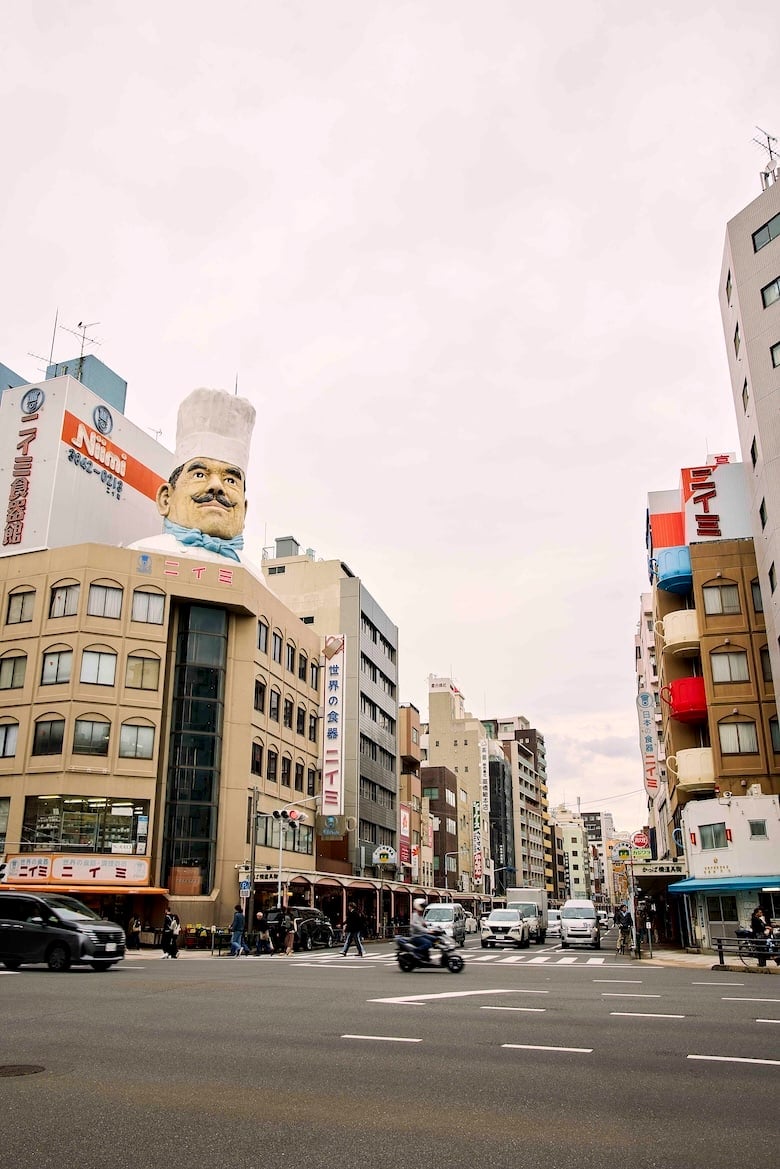
Asakusabashi, where the shop is located, has gradually been gaining more retail stores, partly under the influence of neighboring Kuramae, which has become a popular destination in recent years. Taito City, where both Asakusabashi and Kuramae are located, has been a center of commerce and industry since the Edo period, home to small-scale manufacturers and wholesalers dealing in leather goods, traditional crafts, tools used for festivals, precious metals, and gemstones. The owner says she chose this area because it was a convenient place for making things, allowing her to work closely with leather wholesalers, shoemakers, and leather-dyeing factories.
The shop is about a five-minute walk from Asakusabashi Station and about an eight-minute walk from Kuramae Station, making it easy to reach from either station.
One of the shop’s most popular items is its single-piece leather slipper, a long-selling product loved by many for its comfort. As the name suggests, it has a simple structure made from a single piece of cut leather sewn together at just one point. Unlike ordinary slippers, it has no stiff inner core, so the more you wear it, the more it conforms to the shape of your foot. It also retains one of leather’s natural advantages: even when worn barefoot, it is less likely to feel stuffy. In addition, the slipper is sewn so that the smooth outer surface of the leather faces the inside, where it touches the foot, while the reverse side faces the outside, where it touches the floor. This gives it a pleasant feel against the skin and better grip underfoot.
Available in five sizes in each color. With such a rich range of colors, you may want more than one pair. ¥5,390–¥7,480 each (depending on size). Prices will be revised to ¥6,270–¥7,480 from July 1, 2026.
Above is a well-worn slipper that has molded to the foot. You can enjoy the aging process unique to leather.
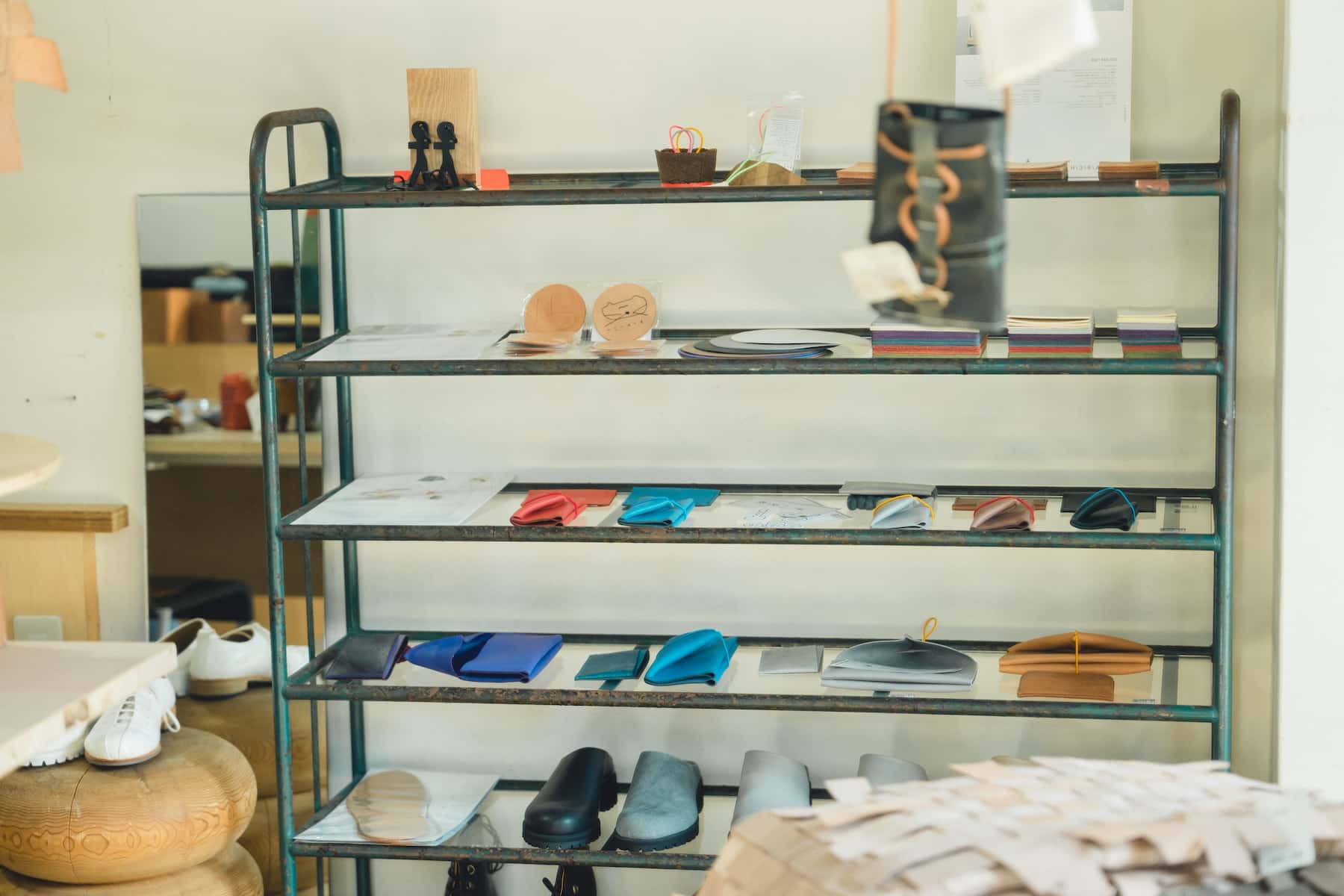
The accessories created by the owner have a free and supple quality that can make you forget they are made of leather at all. They have an easygoing feel that suits everyday use, making them ideal for people who want to live with comfortable objects in daily life. Their simple construction also reflects her desire not to waste the leather used as raw material. Fewer parts and fewer seams mean fewer points of failure, allowing carefully selected durable leather to last even longer. It also makes it easier to keep leftover offcuts to a minimum after cutting.
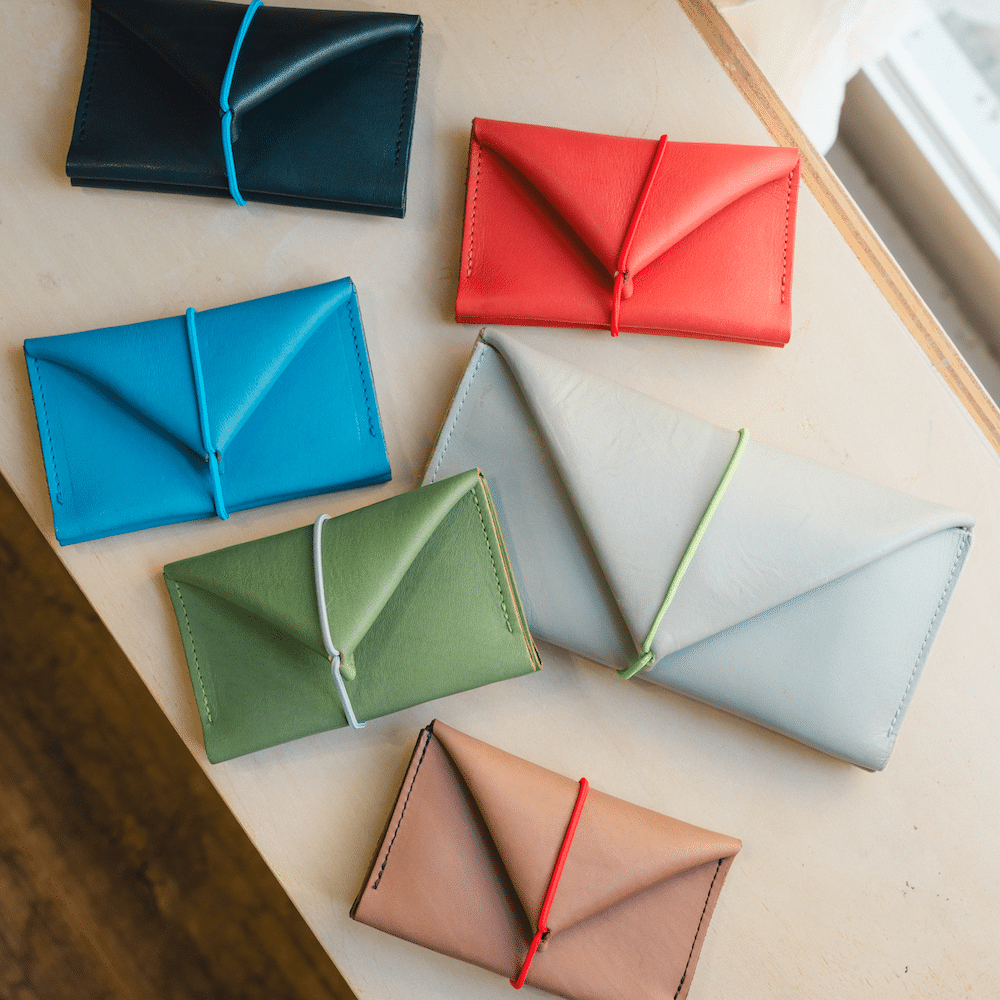
An origami-like wallet shaped by sewing a single piece of leather. Long wallet ¥17,600, small wallet ¥12,100
It closes by hooking the elastic cord extending from the tip of the flap onto the body.
To allow it to be used for many years, the elastic cord, which wears out faster than the leather, is designed to be easily replaceable.
This cushion was inspired by leftover leather offcuts and is made by combining leather and fabric. It preserves the original shape of the leather scraps. ¥8,800
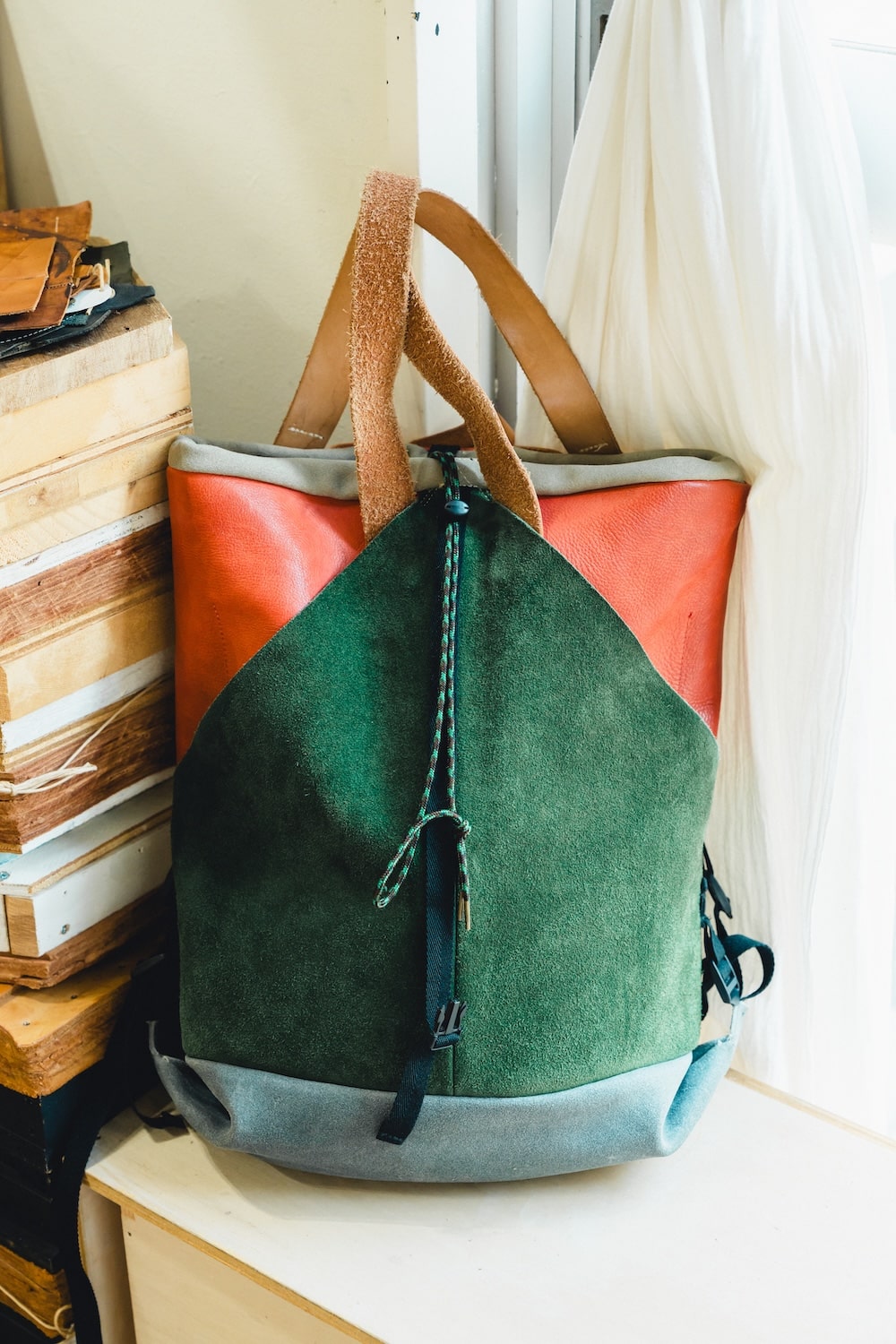
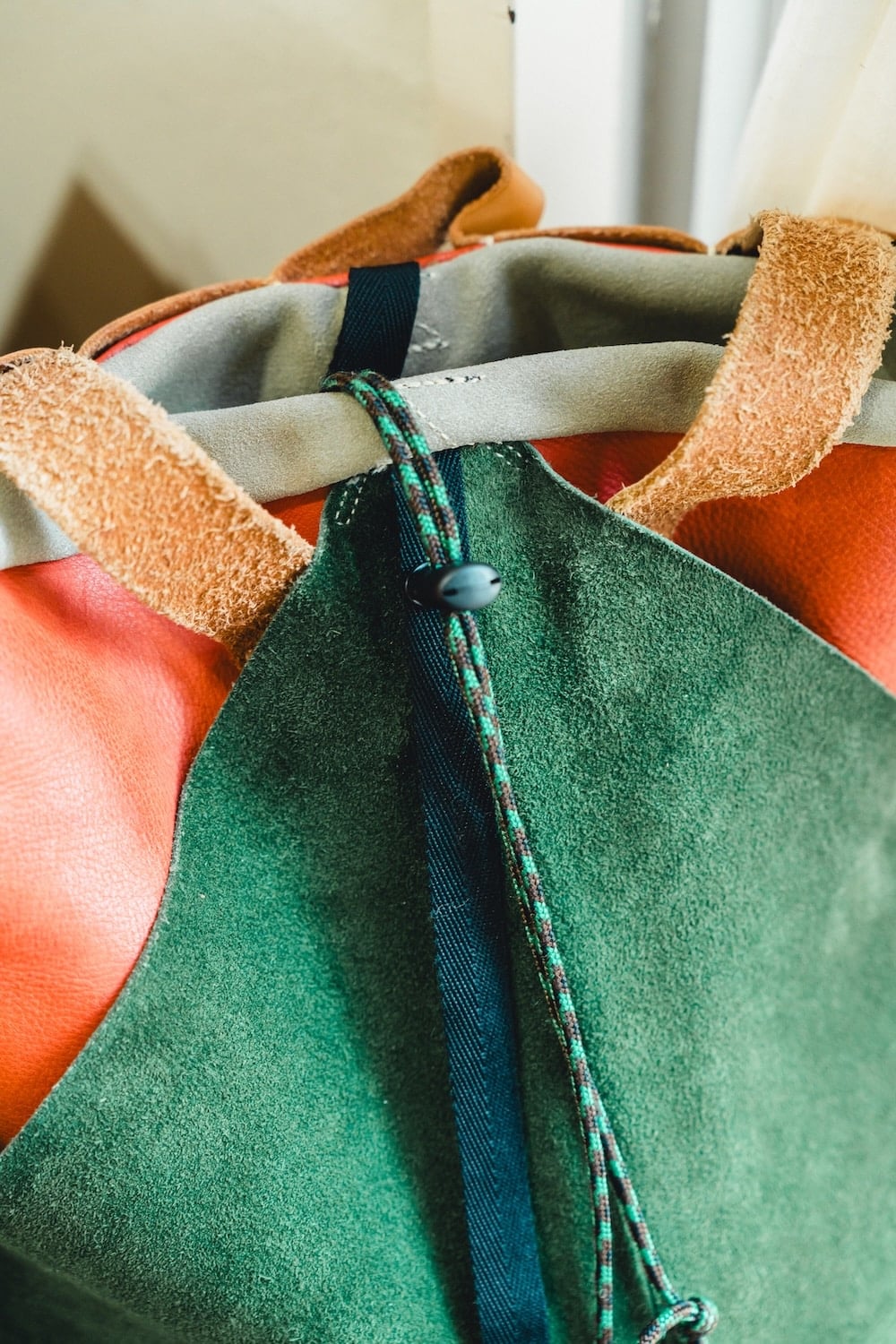
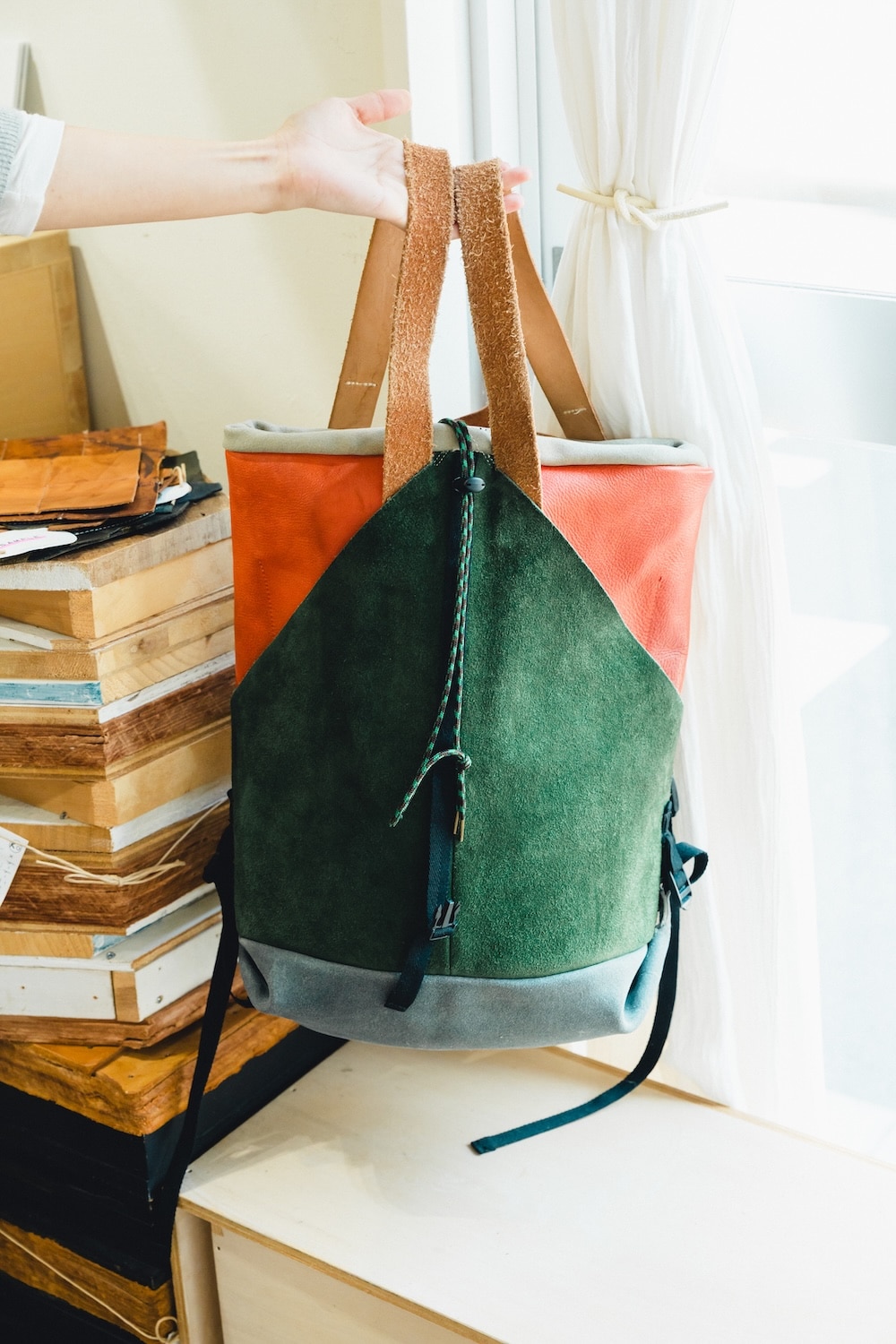
A bag with a striking combination of elements such as a drawcord and straps, giving it an unexpected outdoor-inspired feel. Capacity: 20L. ¥55,000–¥60,500 (depending on color)
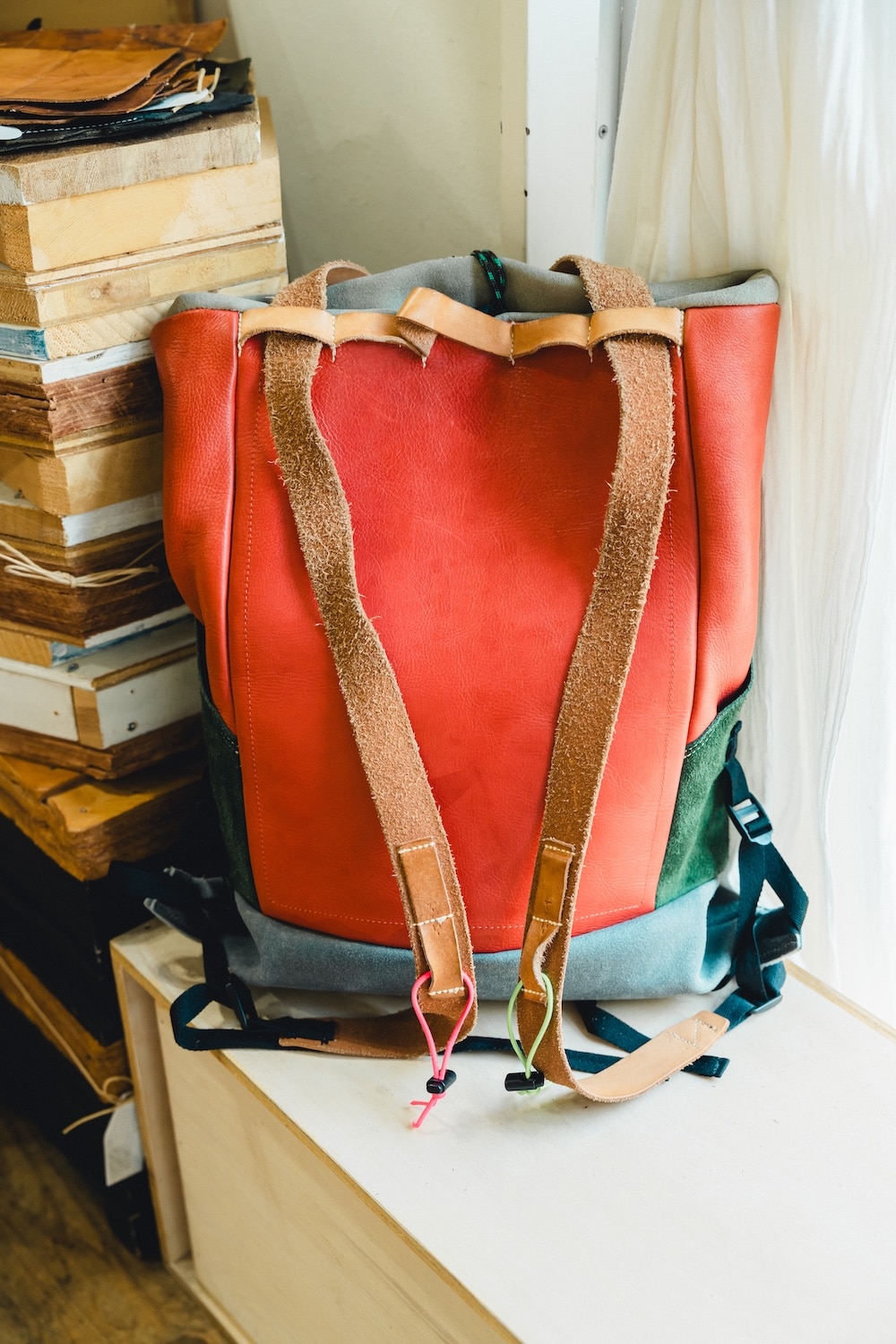
It has a harness on the back, so it can also be used as a backpack.
At the opening, there is a drawstring-style flap that can be folded back inside, which is especially useful when using the bag mainly as a backpack.
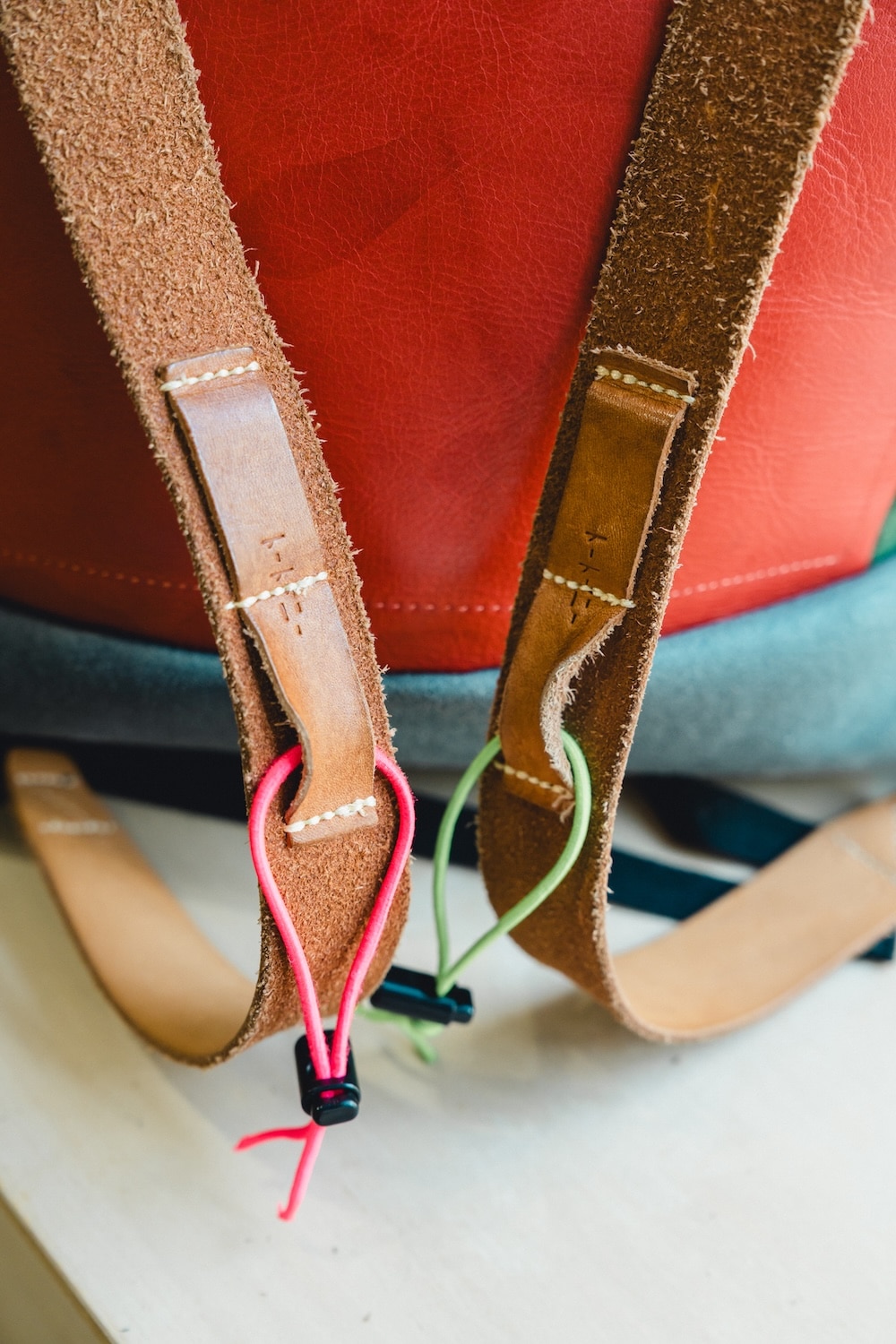
When worn on the back, the elastic cord attached to the shoulder harness functions as a chest strap. Twisting the cords together makes the bag more comfortable to carry, especially when it is heavily loaded.
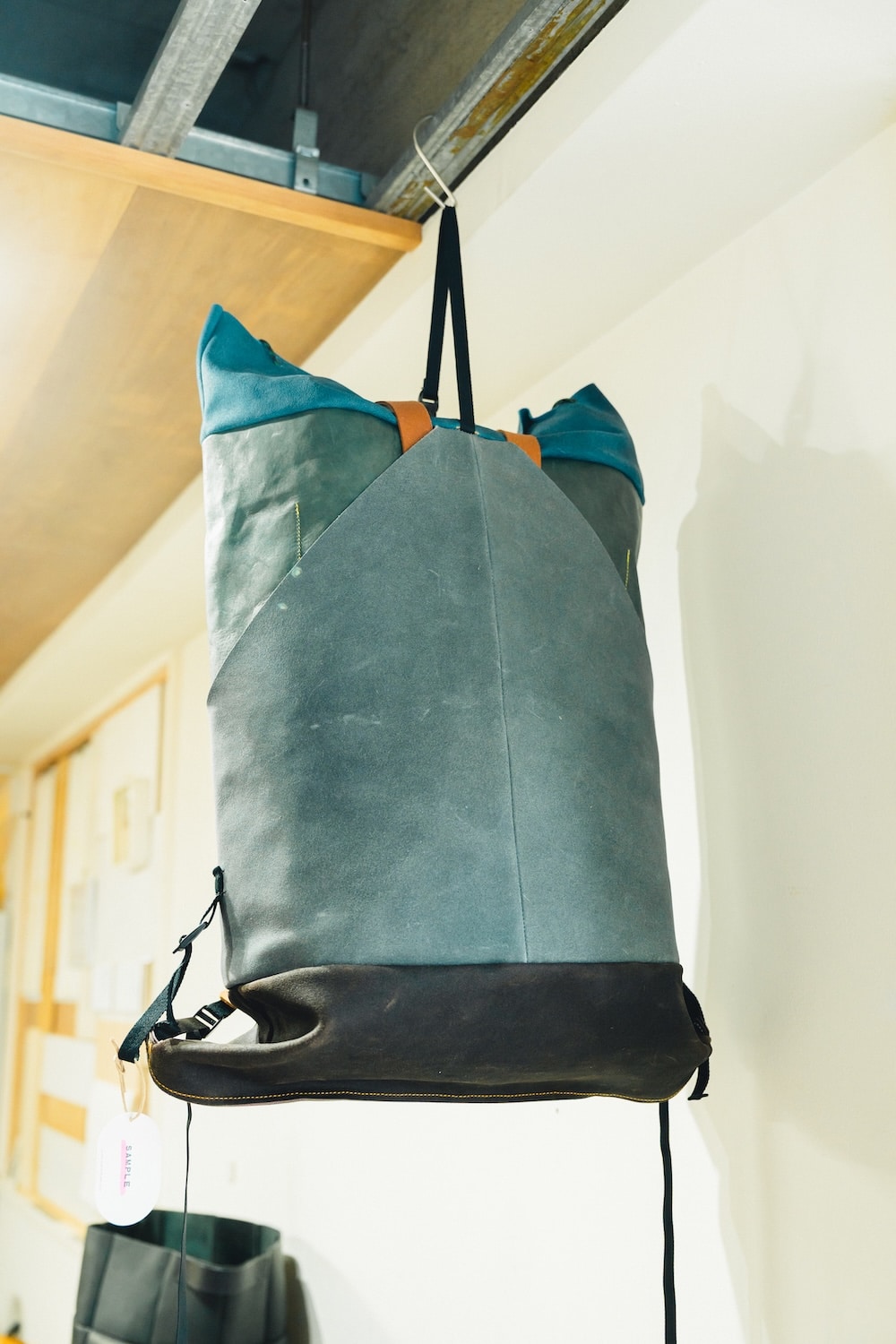
The drawstring-style flap at the opening can also be used in a roll-top closure. Capacity: 30L. ¥66,000–¥71,500 (depending on color)
A 20L bag that the owner has used for many years.
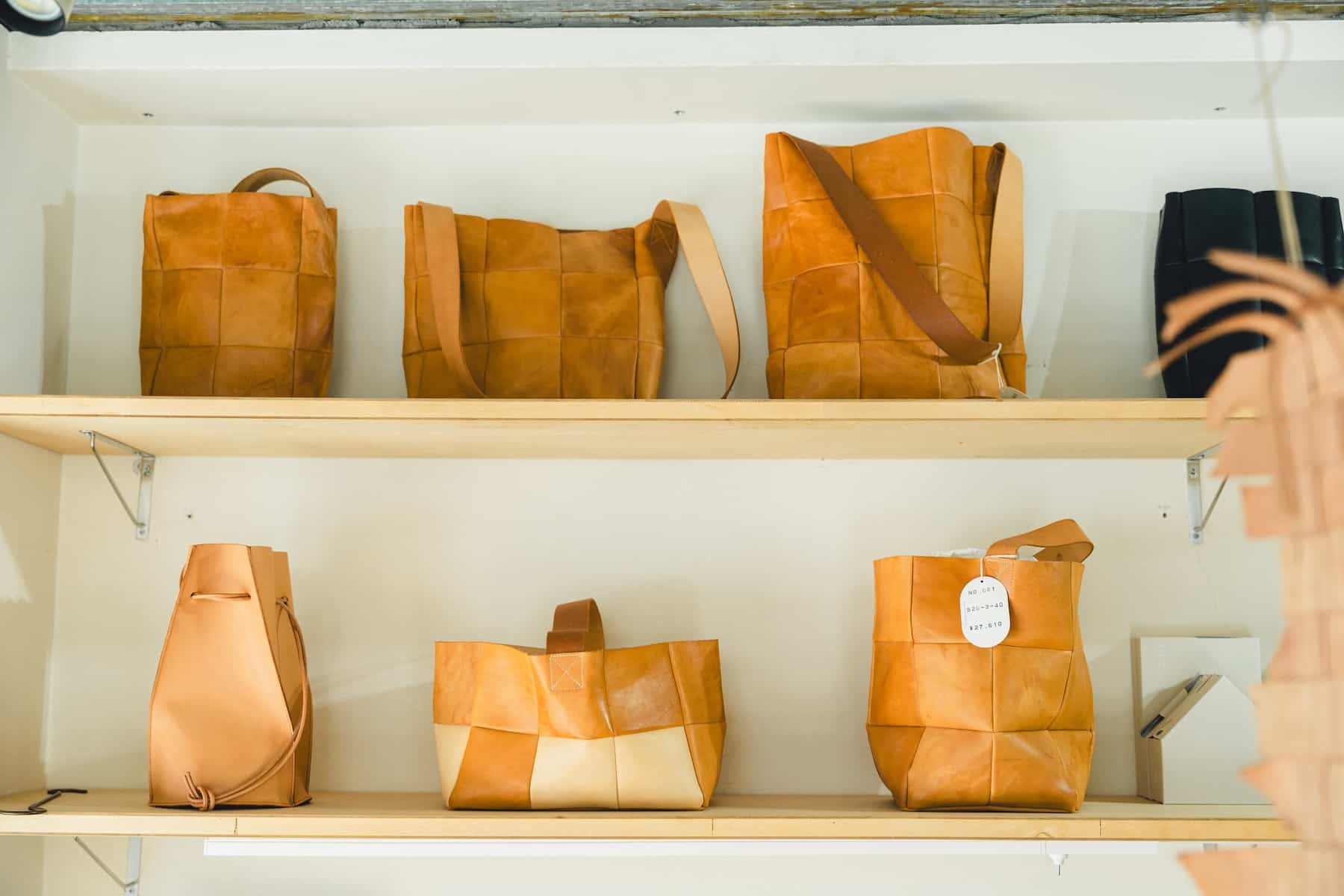
A basket-like bag made by stitching together square pieces of leather with subtly different tones and textures. It uses durable vegetable-tanned leather. The grain side shows scratches and wrinkles easily, but those, too, become part of its character and can be appreciated as the leather ages. Bags ¥17,050–¥52,800 each
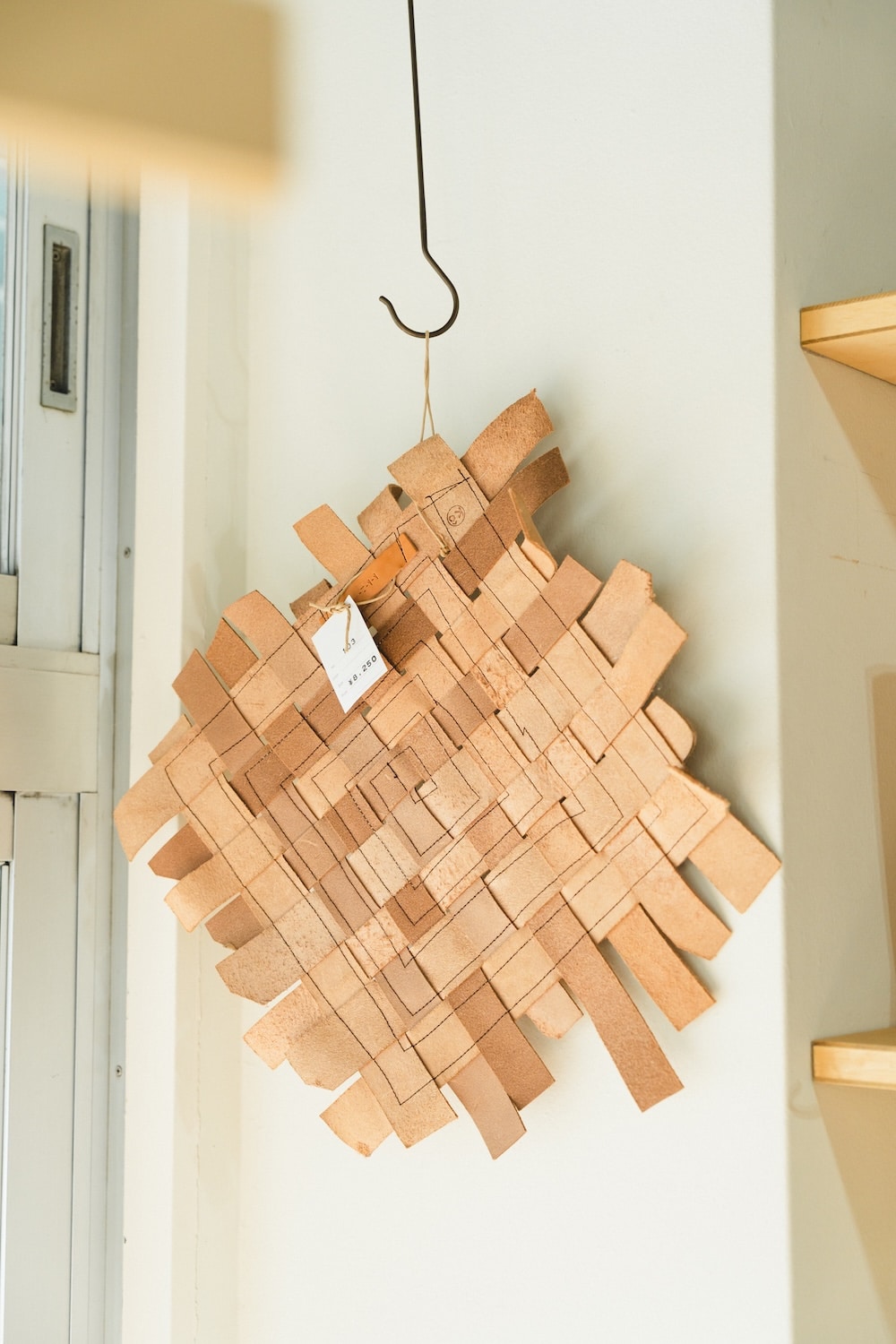
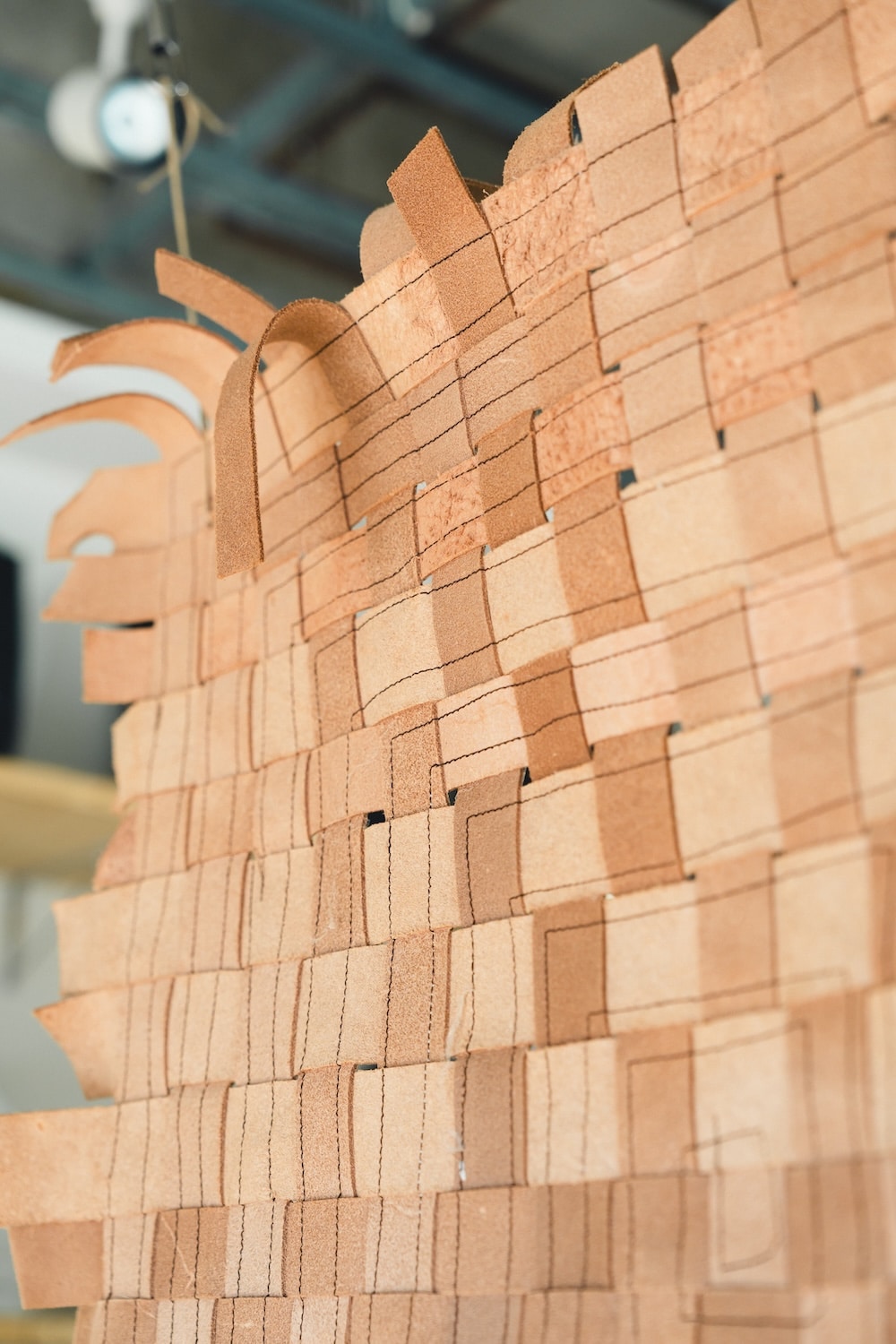
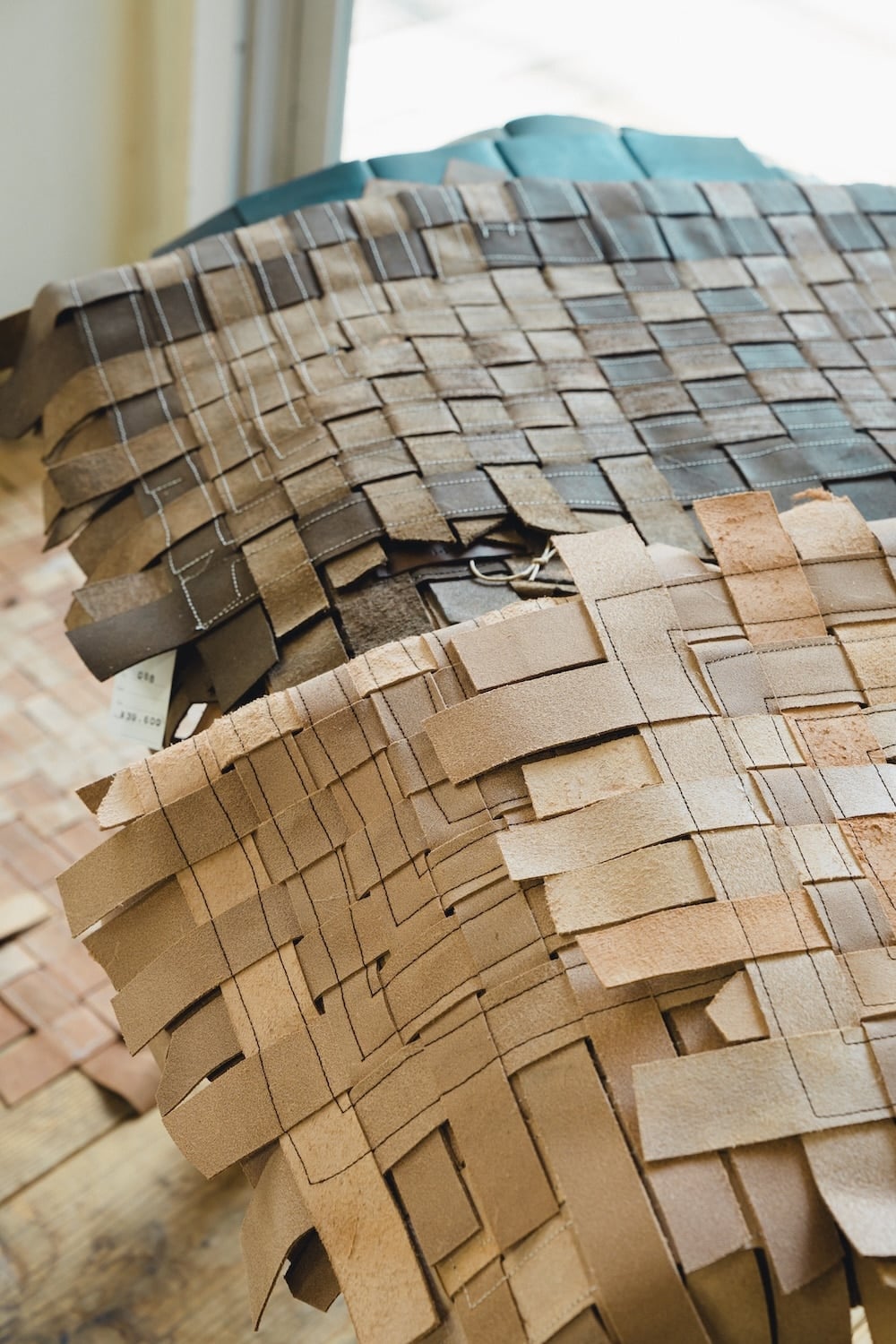
This mat by sculptural artist Ko Soda is made by weaving together belt-like strips of leather and sewing them by machine. ¥8,260–¥39,600 each
It is intentionally finished with a rough texture so that dirt and soil can catch on the surface more easily.
Color variations are available.
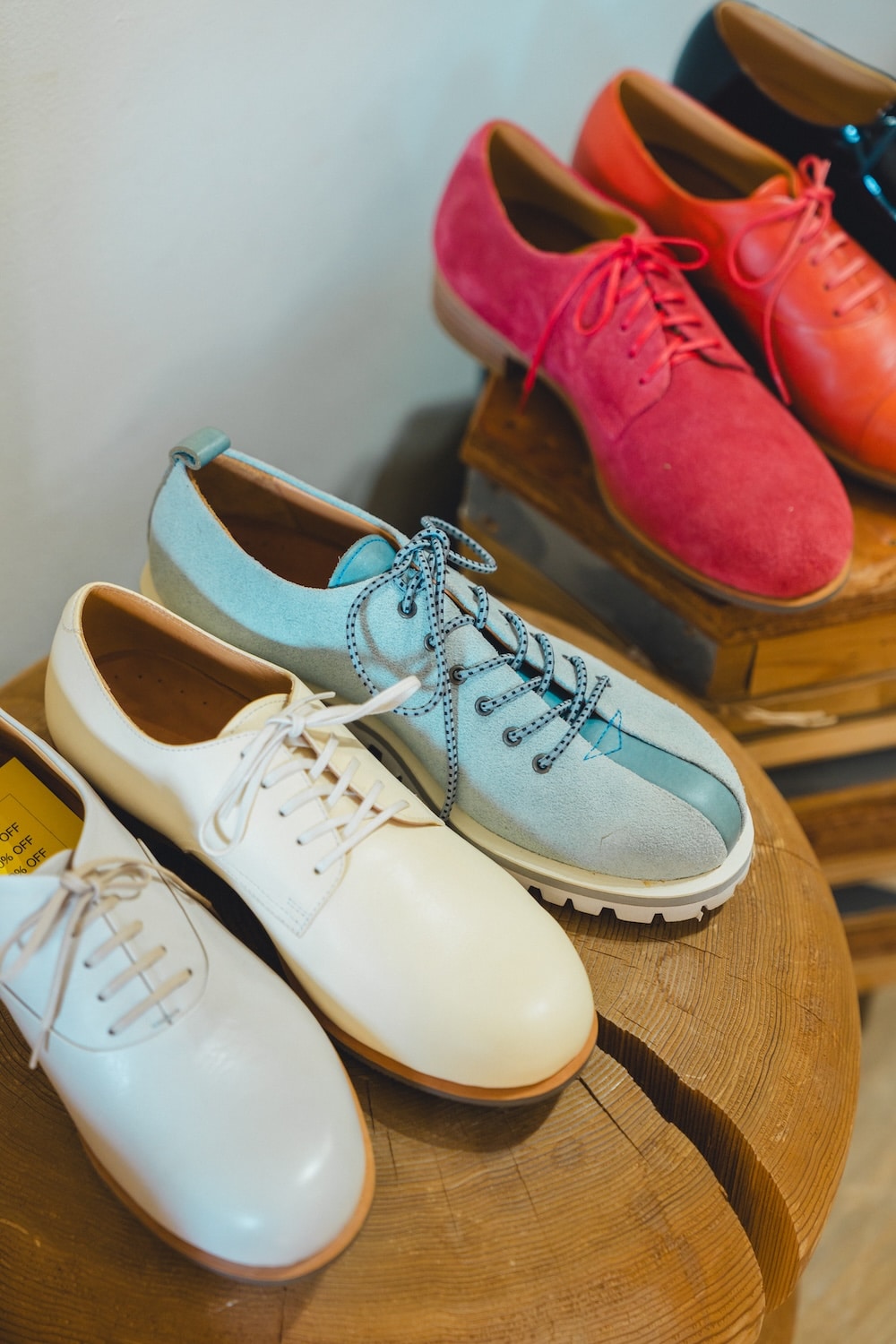
These comfort shoes, developed in collaboration with a certified prosthetist-orthotist, are priced from ¥66,000 to ¥121,000. They are made using two different lasts, and customers are fitted and measured in-store before purchase. If the ready-made stock does not fit, made-to-order production tailored to the customer’s feet is also available. However, production takes about ten months.
The shop accepts consultations for repairs to its own products only. the owner says she also wants to accommodate custom requests, such as adding parts or adjusting size and length, whenever possible. This attentive service, made possible by the fact that the shop is also a workshop, is another major part of its appeal.
This article was updated on May 01, 2026 (at the time of publication)






.jpg)
スマホ.jpg)