DEEPTOKYO
magazine

EN


AREA
DEEPTOKYO
magazine
EN
AREA
2026.06.18
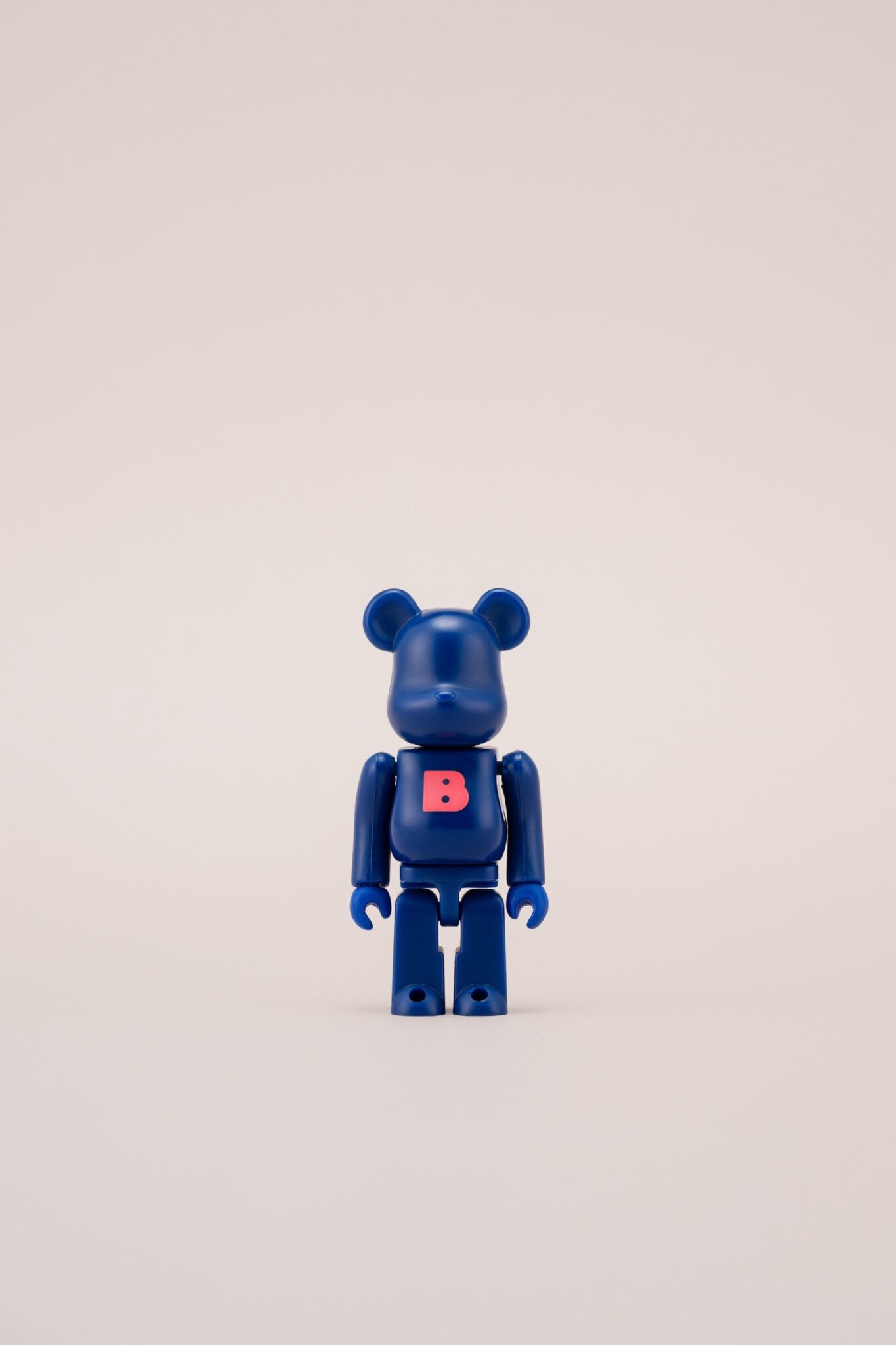
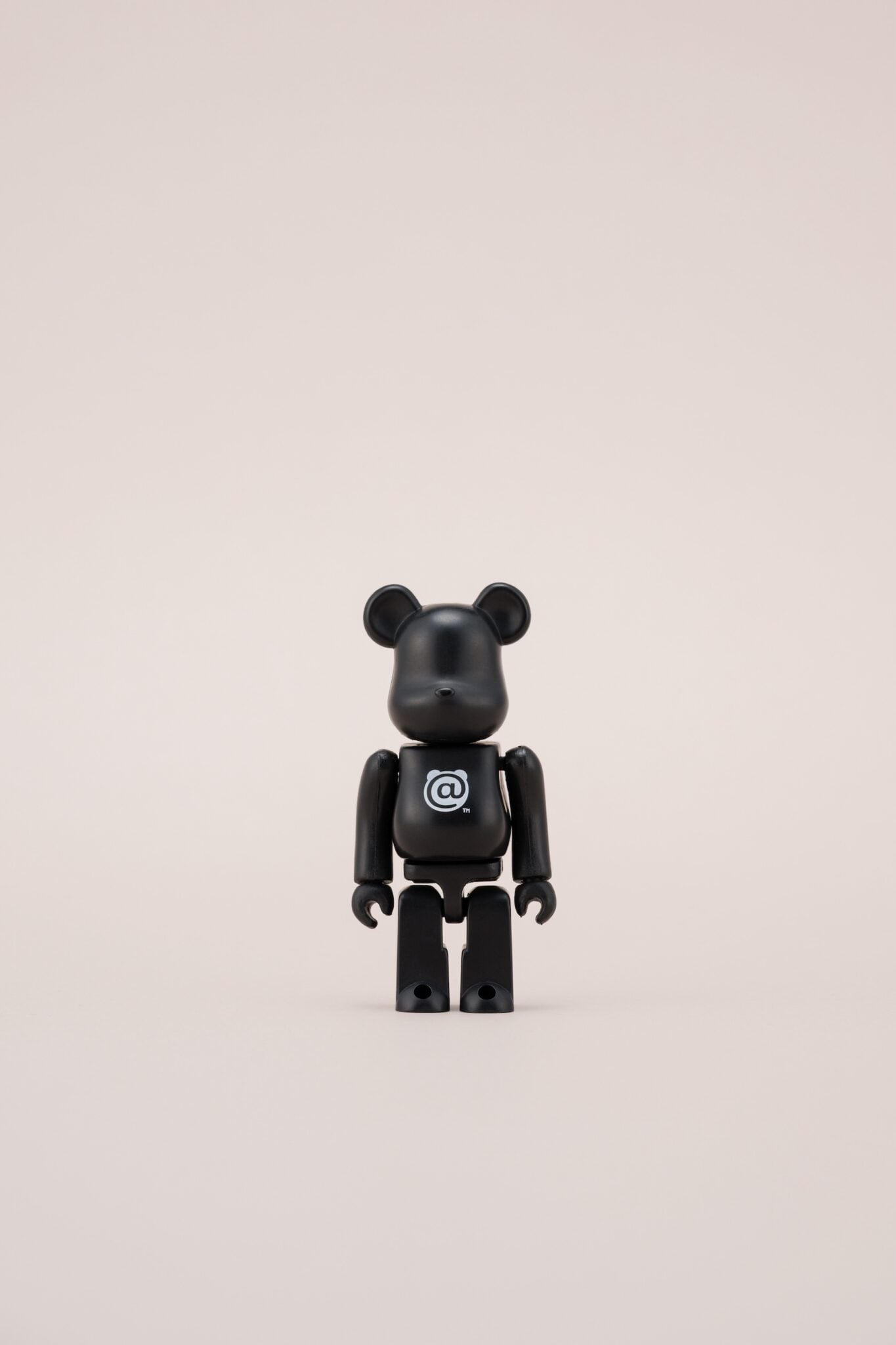
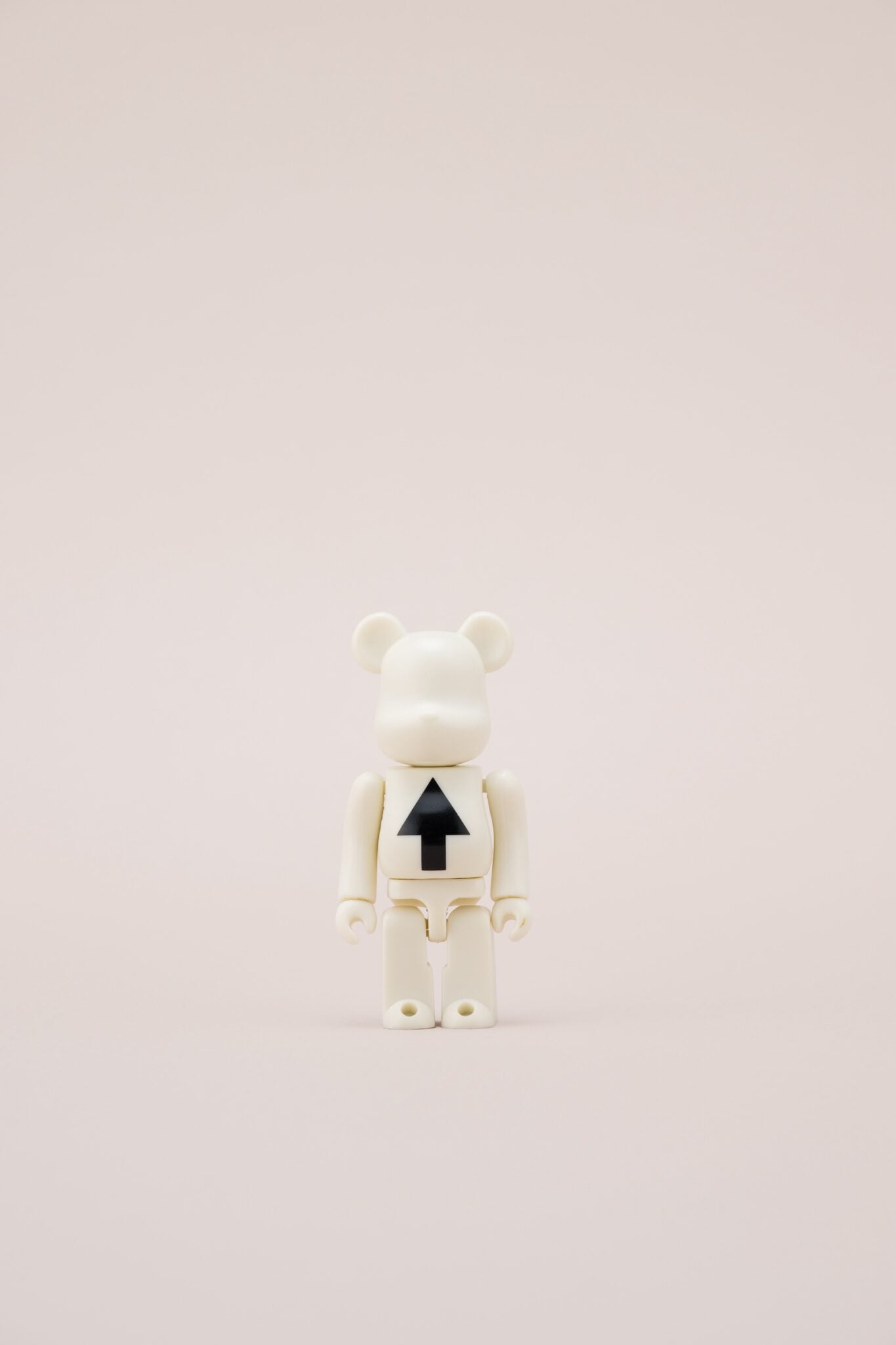
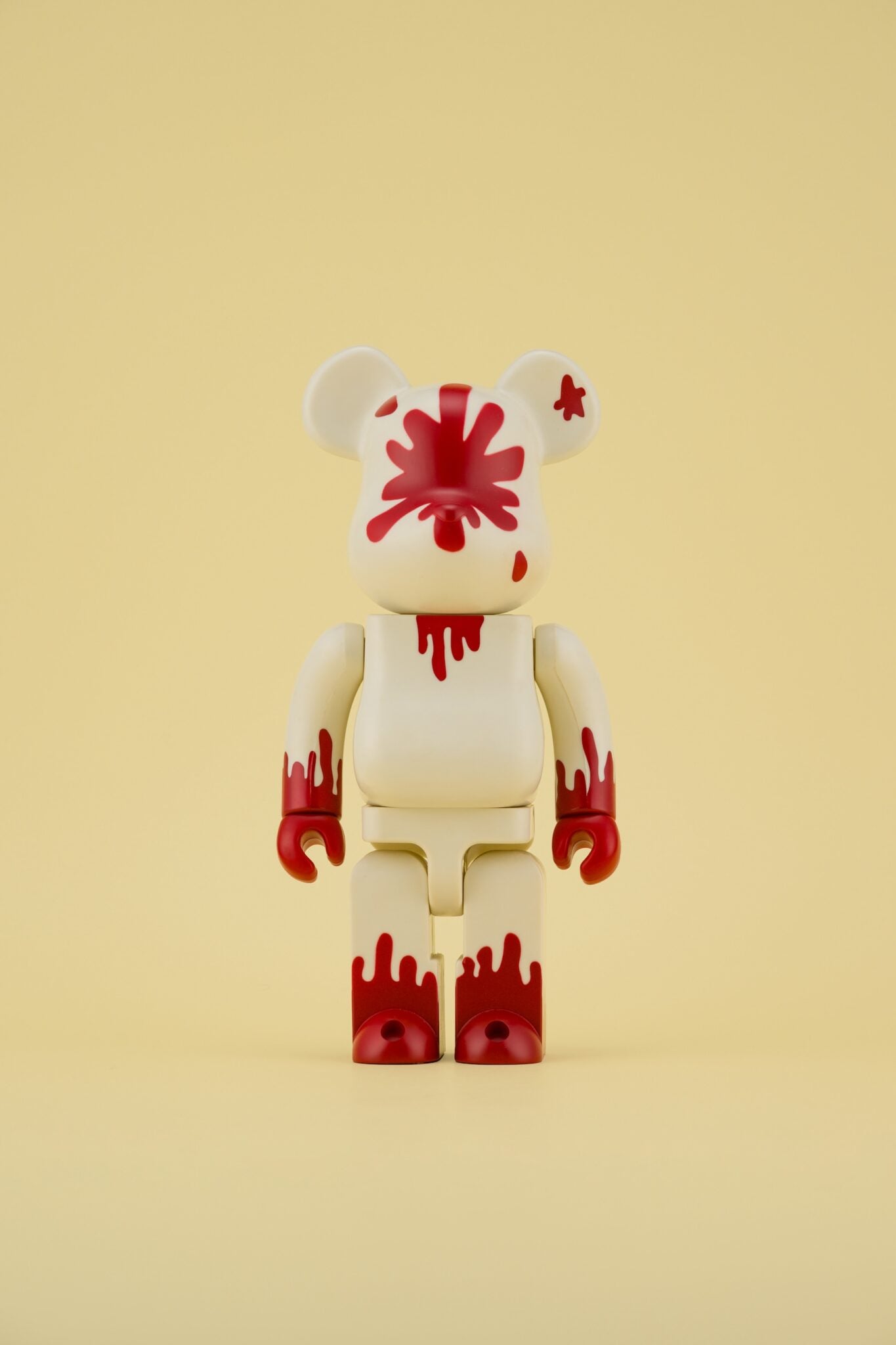
The bear-shaped block-style figure BE@RBRICK has become a familiar presence in clothing boutiques and lifestyle shops around the world. In 2026, BE@RBRICK celebrates its 25th anniversary, while MEDICOM TOY, the company behind it, marks 30 years since its founding. Now frequently associated with art and contemporary culture, how did MEDICOM TOY arrive at its unique position today? We spoke with president Tatsuhiko Akashi about the company’s journey.
SHARE


Based in Tokyo, MEDICOM TOY has spent decades creating products connected to a wide range of cultural fields, including film, music, fashion, and contemporary art. Since its founding in 1996, the company has earned a devoted following among collectors worldwide. Among its most iconic creations is BE@RBRICK, known for collaborations with internationally acclaimed artists and luxury brands alike. Born from Tokyo’s cultural scene, MEDICOM TOY’s distinctive approach to toy-making has spread across the world.
The company’s products are often discussed as “art toys.” Looking back, it almost feels as though MEDICOM TOY was exploring the space between toys, art, and culture from the very beginning.
But Akashi immediately rejects that interpretation.
“No, we weren’t thinking about anything like that at all.”
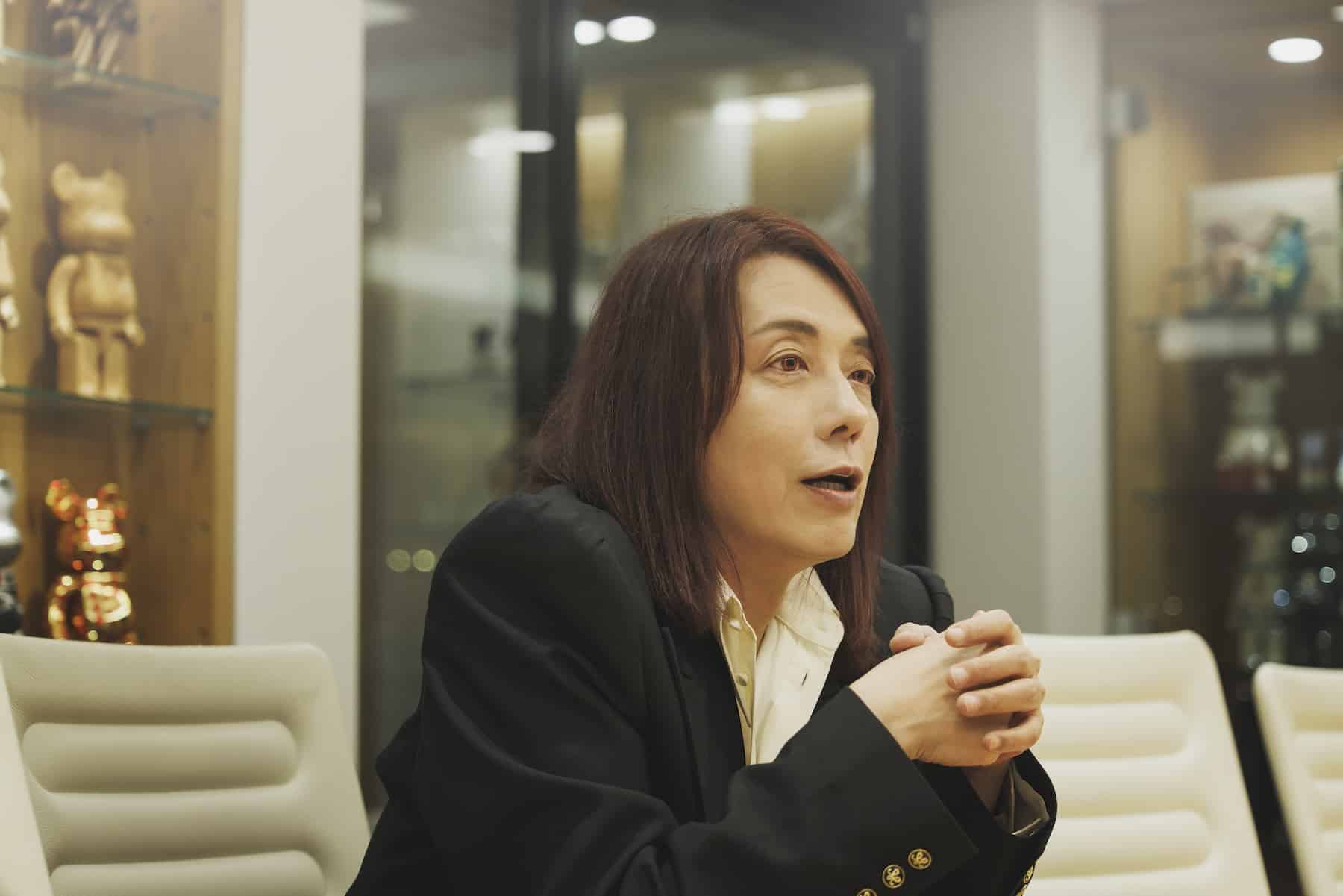
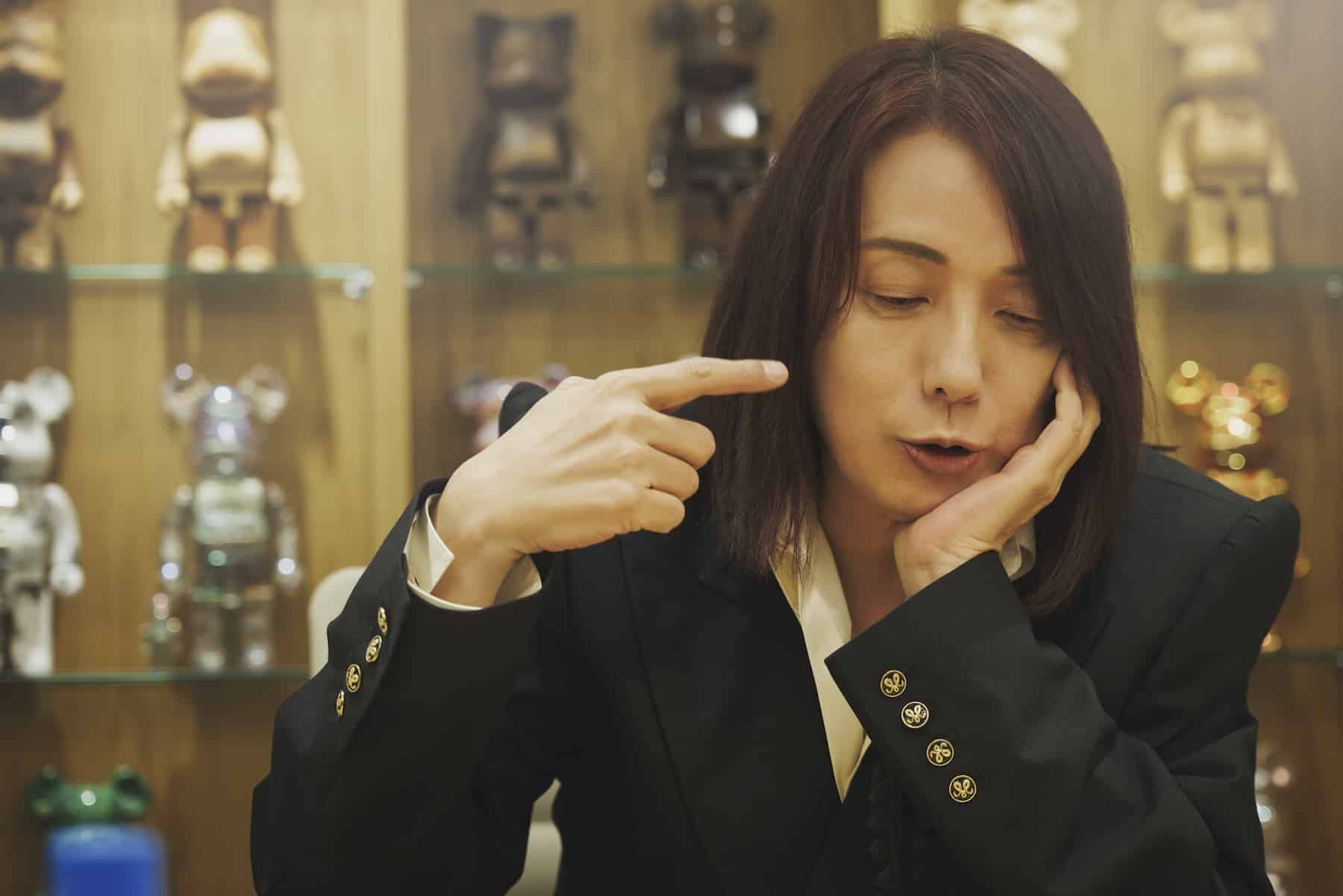
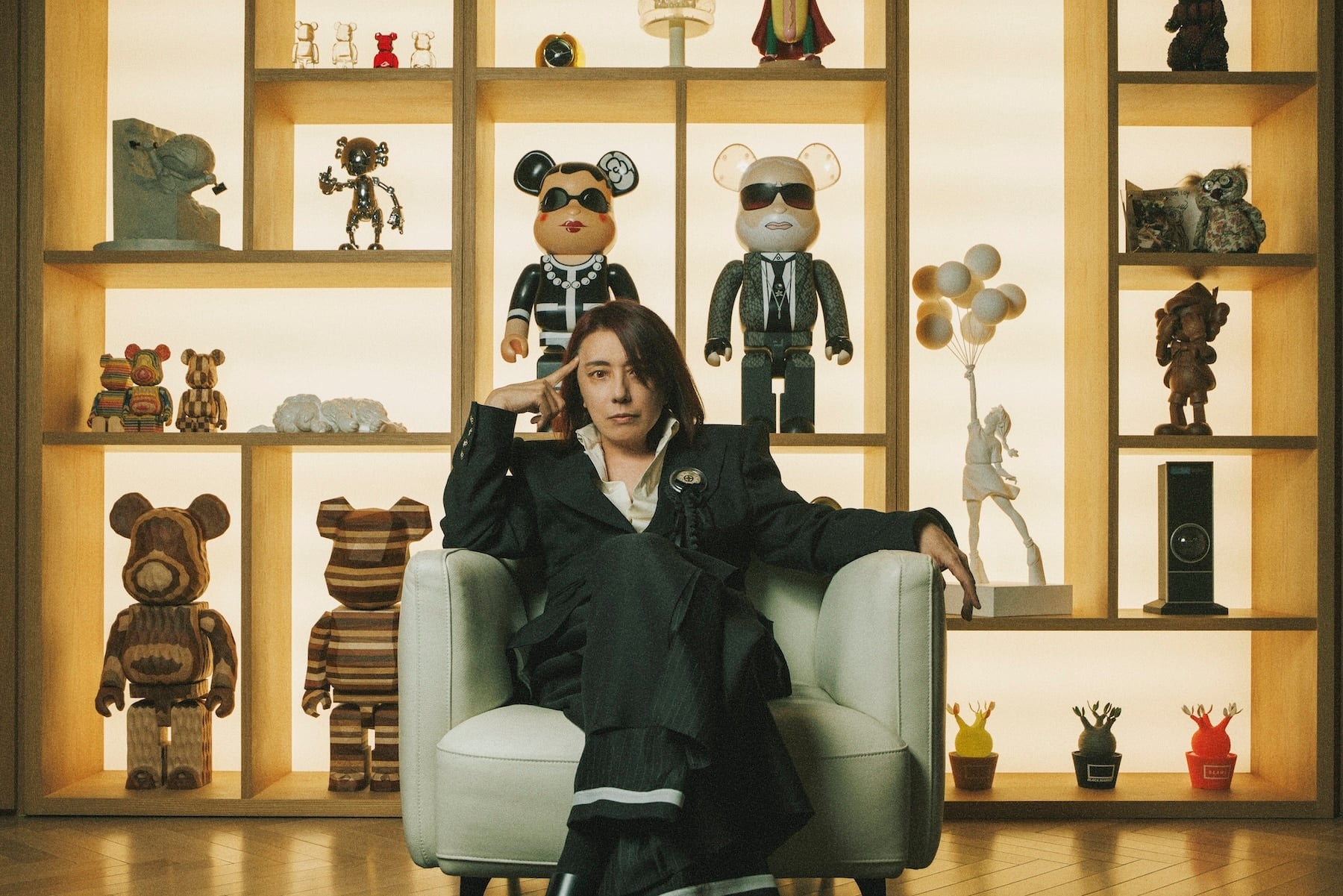
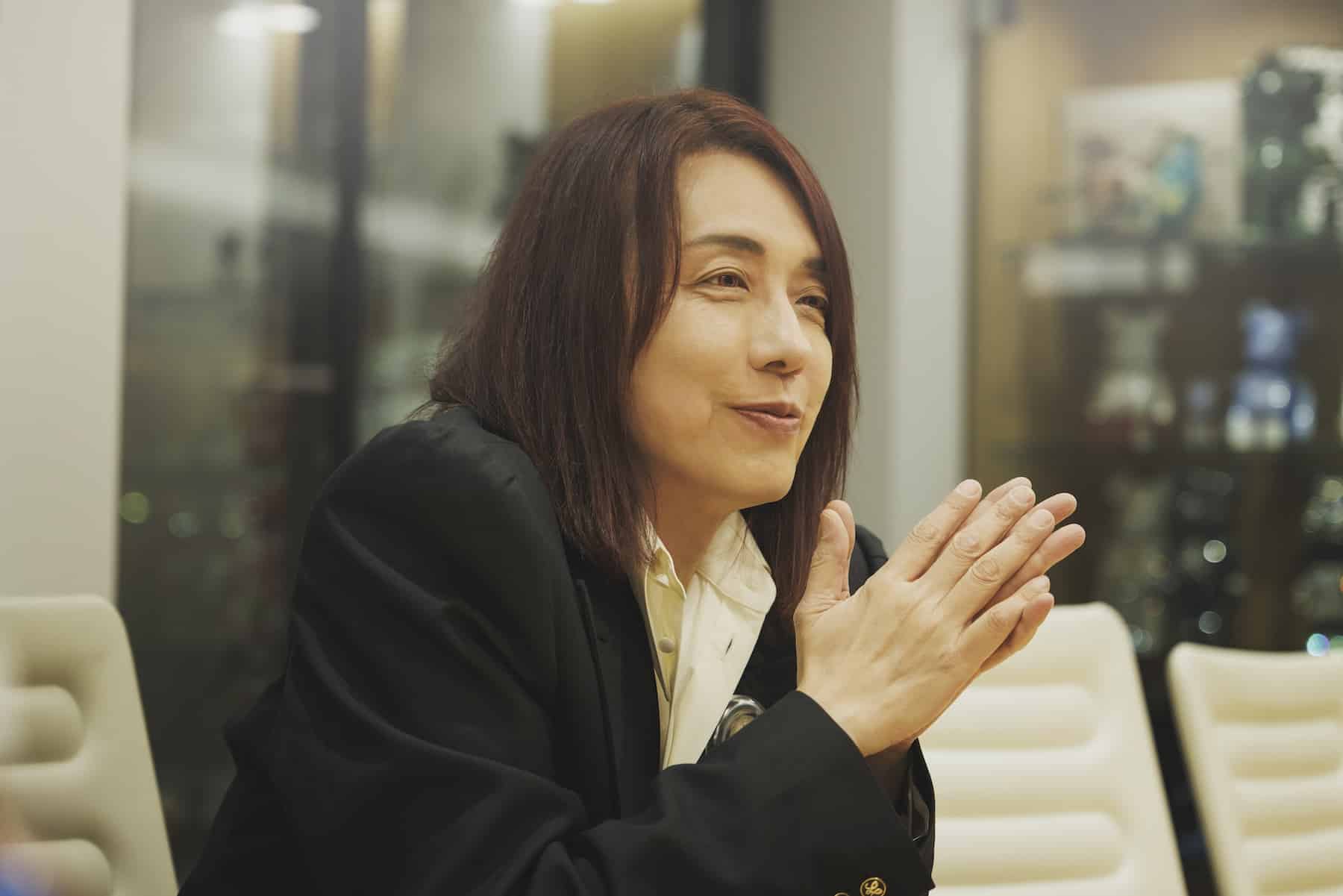
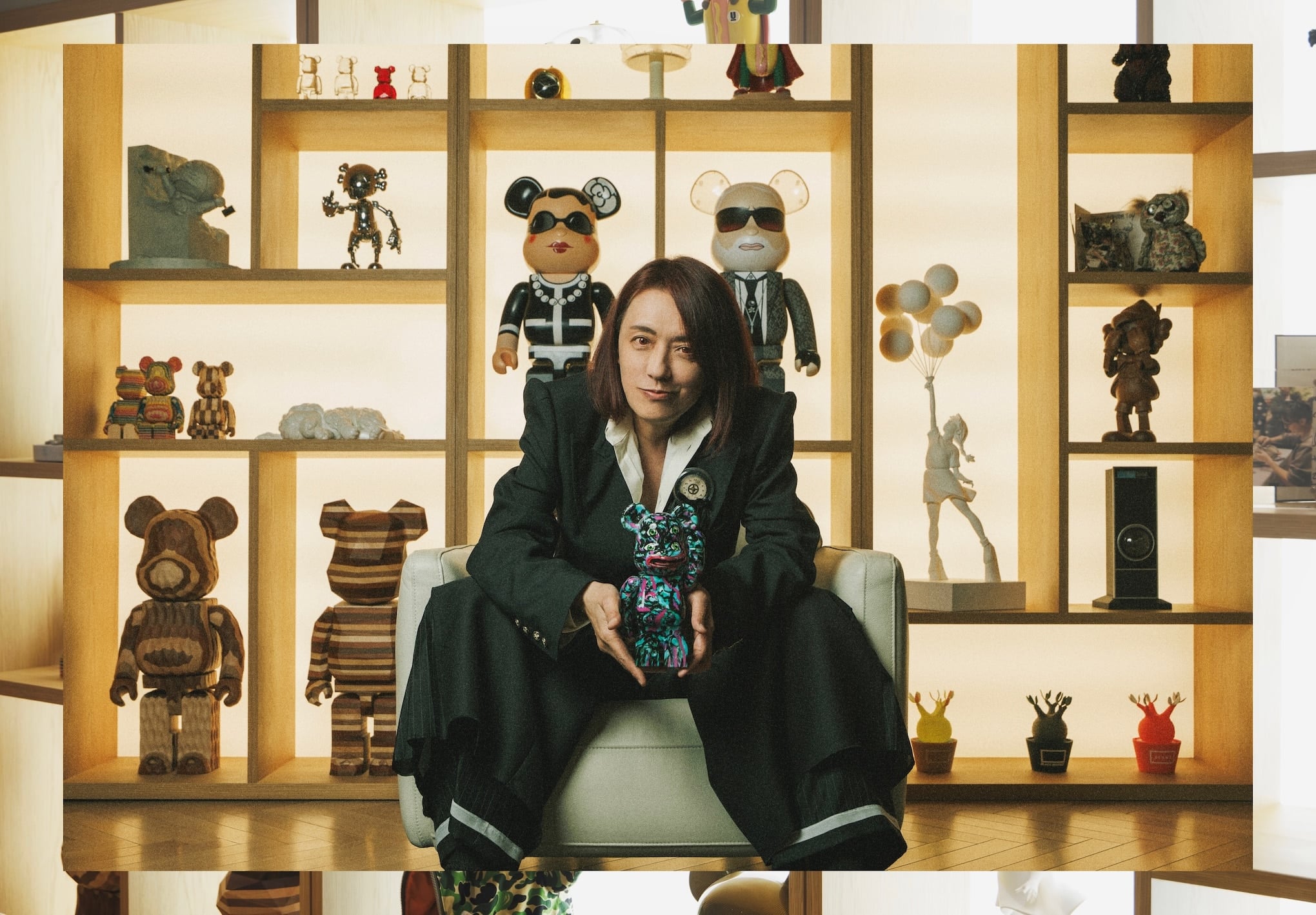
MEDICOM TOY president Tatsuhiko Akashi
So why do MEDICOM TOY’s products feel so closely tied to art and culture? According to Akashi, the answer lies partly in the era that shaped him.
“Japan in the 1970s, ’80s, and ’90s was a time when all kinds of cultural movements were emerging one after another. Experiencing those new cultures was simply exciting. I think I was just absorbing everything around me…”
Among the artists who left a strong impression on him were Yellow Magic Orchestra (YMO), ARB, Momoyo of LIZARD, and TH eROCKERS led by Takanori Jinnai — key figures in Japan’s rock and punk scene during the 1980s. Outside Japan, he also mentions musicians such as David Sylvian of the band Japan.
“Watching the way those people expressed themselves — the things they said, the way they carried themselves — I remember thinking, ‘They were so cool.’ I loved not only music, but fashion and film as well. I was interested in everything. It really was a great time.”
But this kind of openness toward different cultures was far from common among young people at the time. As Akashi explains, it was not yet an era where everything could simply exist side by side the way it does today.
“Back then, if you were from a different scene, you were almost considered the enemy (laughs). Music communities were divided strictly by genre, and they rarely mixed. In Japan at the time, people who hung out at live houses didn’t usually go to discos. But I went to discos too. I was always moving between different scenes like that.”
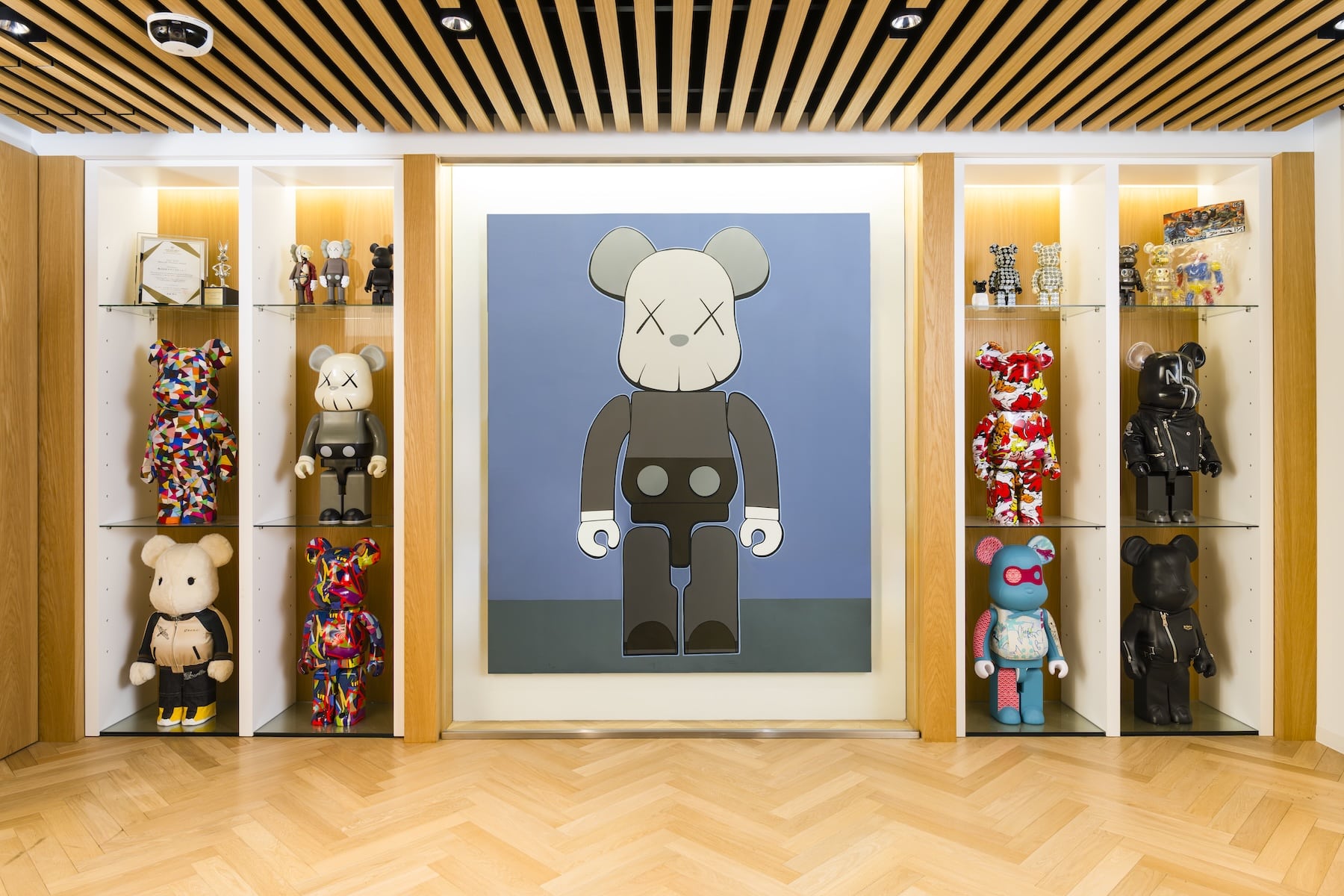
A massive KAWS artwork on display in the reception room at MEDICOM TOY headquarters.
That instinct for moving freely between different cultures and absorbing whatever felt interesting would later find its way into MEDICOM TOY’s products as well.
“Rather than using marketing to calculate what might become a hit, I think it’s more about taking something that catches my attention and refining it little by little…. That’s usually how our products are born.”
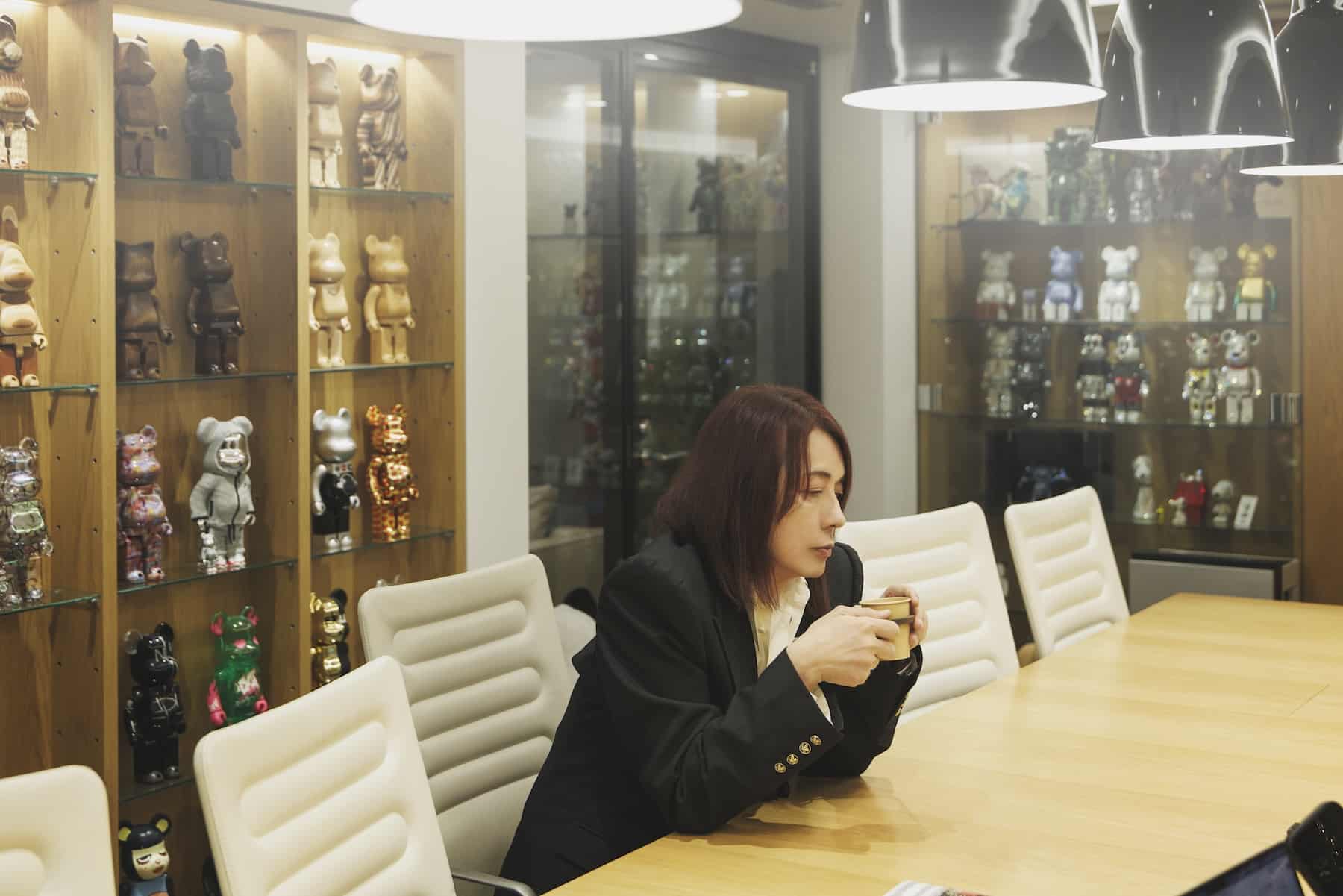
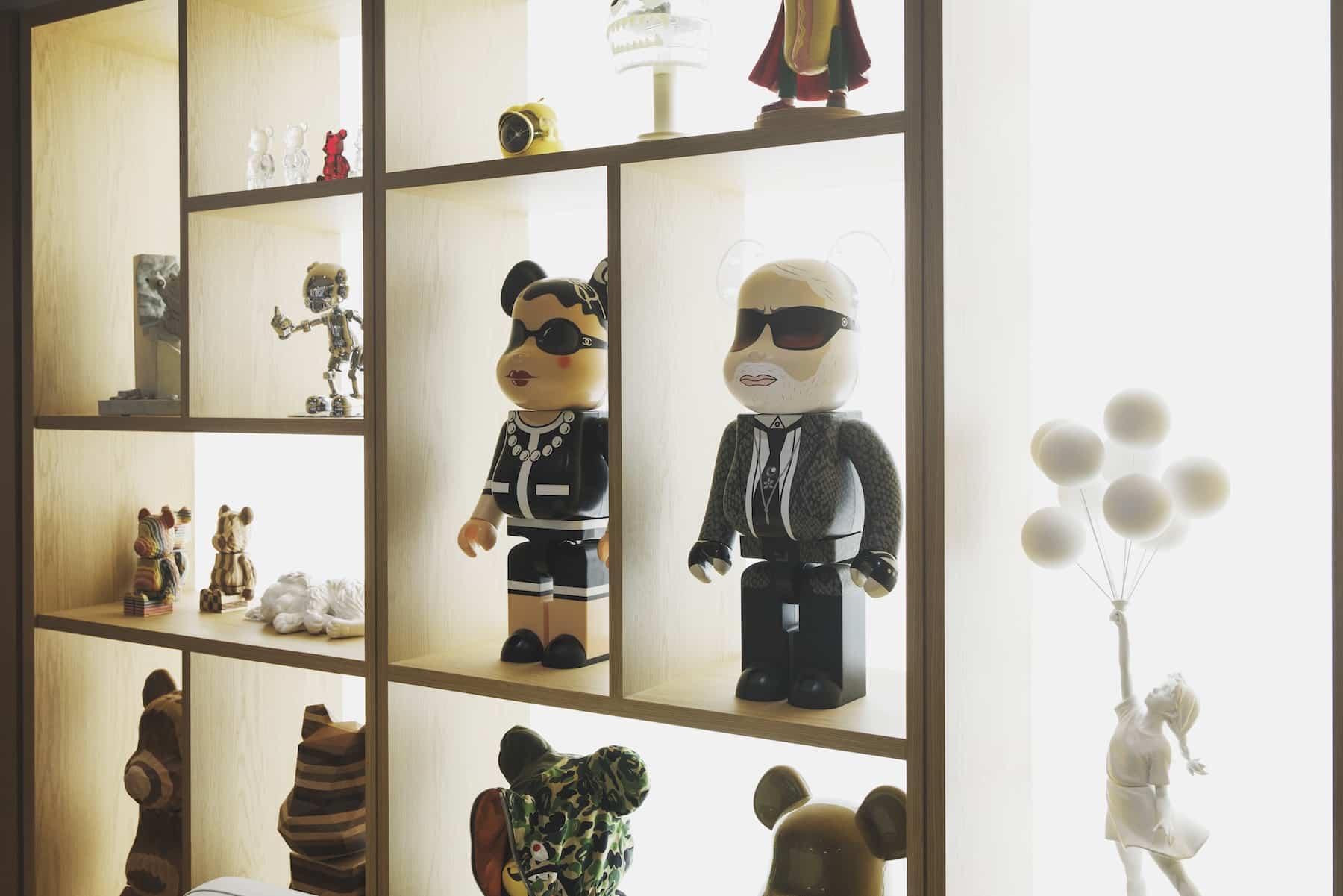
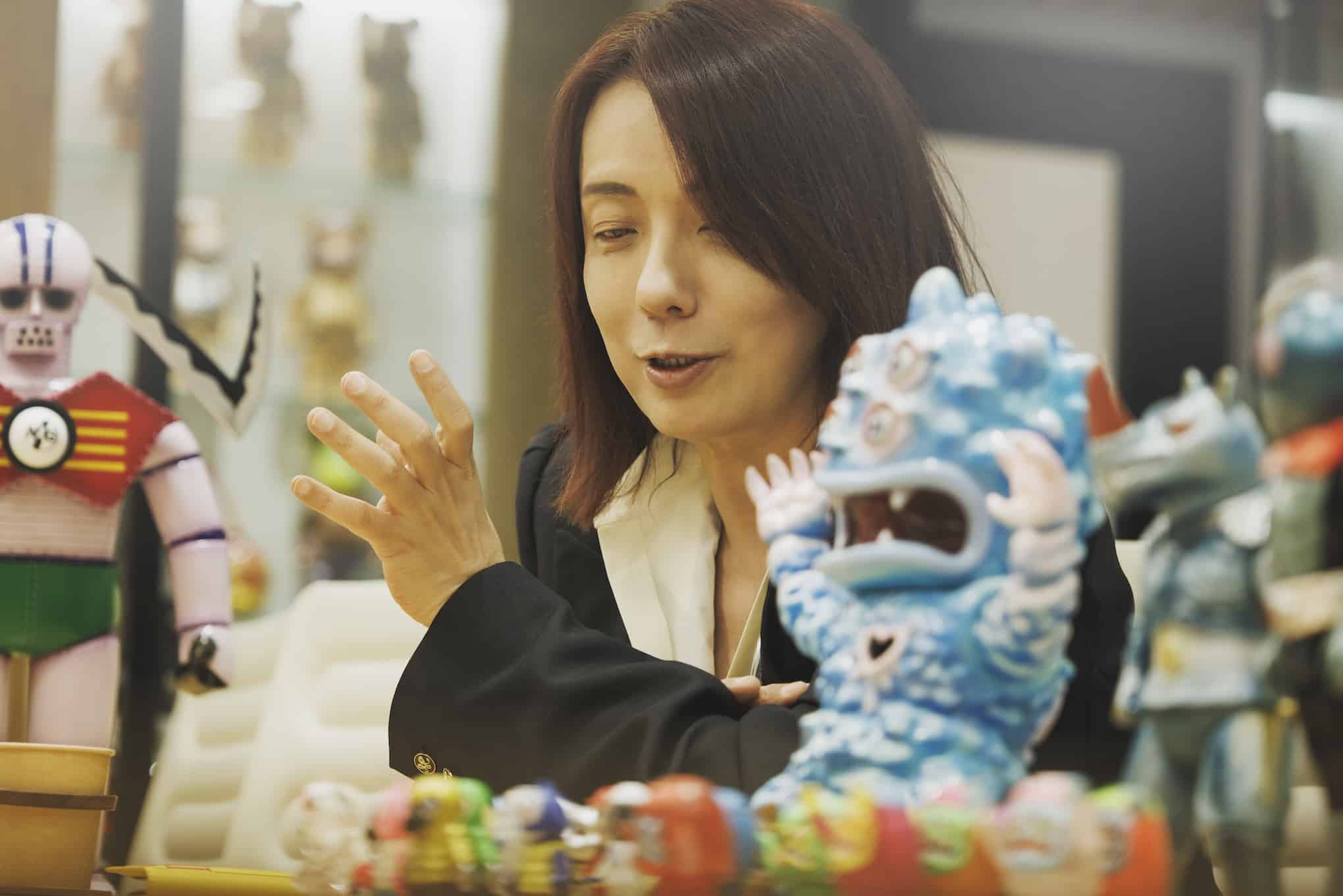
BE@RBRICK figures on display at MEDICOM TOY headquarters. Each reflects Akashi’s personal tastes and interests.
Akashi launched his first business in 1983, while still in his late teens. At the time, Nishiazabu was one of the hippest spots in Tokyo nightlife, and he opened a trendy café-bar there.
Later, after working at a vintage clothing shop and as a magazine editor, he joined a computer-related company at the invitation of its president. One of the company’s new business ventures involved toy production.
“Soon after joining the company, around 1991, a friend took me to ZAAP!, an import shop focused on American toys and collectibles. As a child, I had played with Ultraman and Masked Rider toys, of course, but this felt like a completely different world. I remember thinking, ‘There’s a whole world like this?’ I thought it would be fun just to collect them. But at that point, it still hadn’t led me to the idea of making toys myself.”
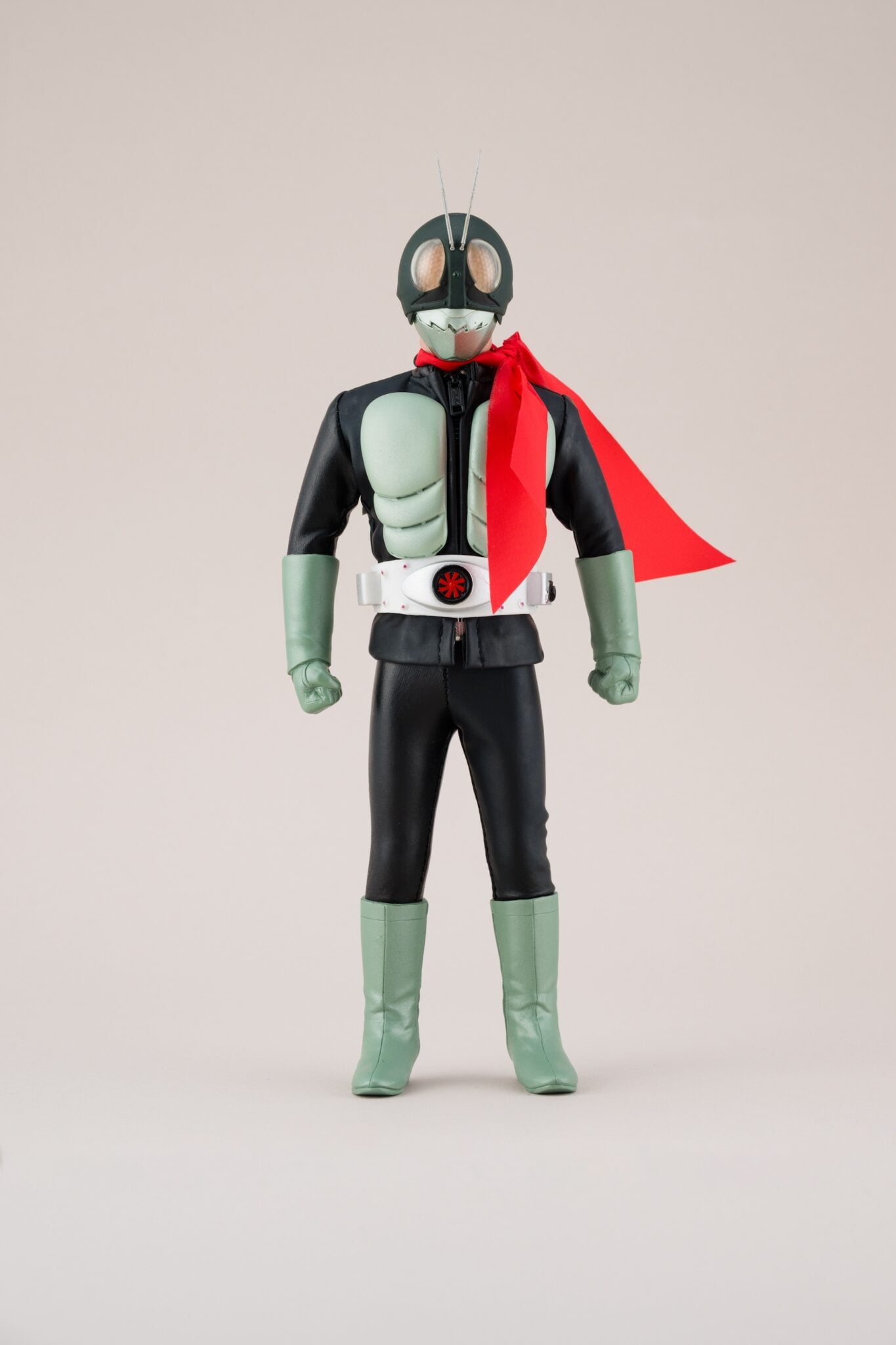
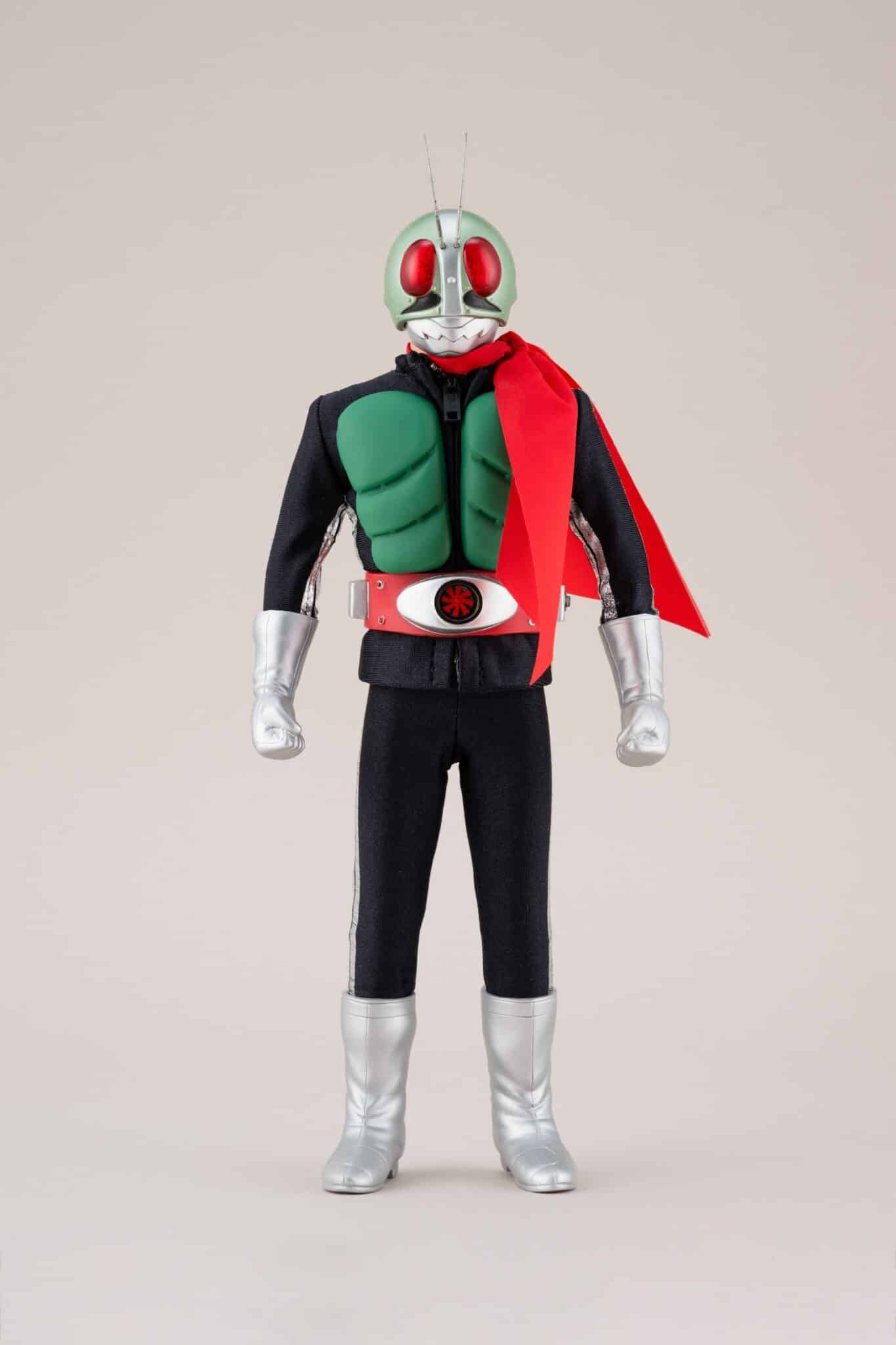
Later, immersed in the world of toys, he established a toy division within the company and opened a store dealing in American toys. Eventually, his desire to do what he would have done grew, and he officially produced the "PRE-ASSEMBLED COLLECTION," a 12-inch figure of Lupin III. The sales exceeded our expectations. Two years after the release of the first product, he decided to go independent.
RAH 003 Masked Rider Old No. 1 (Released January 1996) © Ishimori Pro / Toei
RAH 004 Masked Rider New No. 1 (Released January 1996) © Ishimori Pro / Toei
MEDICOM TOY was founded in 1996, at the height of Tokyo’s Ura-Harajuku street culture movement, associated with figures like Hiroshi Fujiwara and NIGO. With youth culture driving attention toward all kinds of trends, figures from franchises like SPAWN and STAR WARS were also booming at the time.
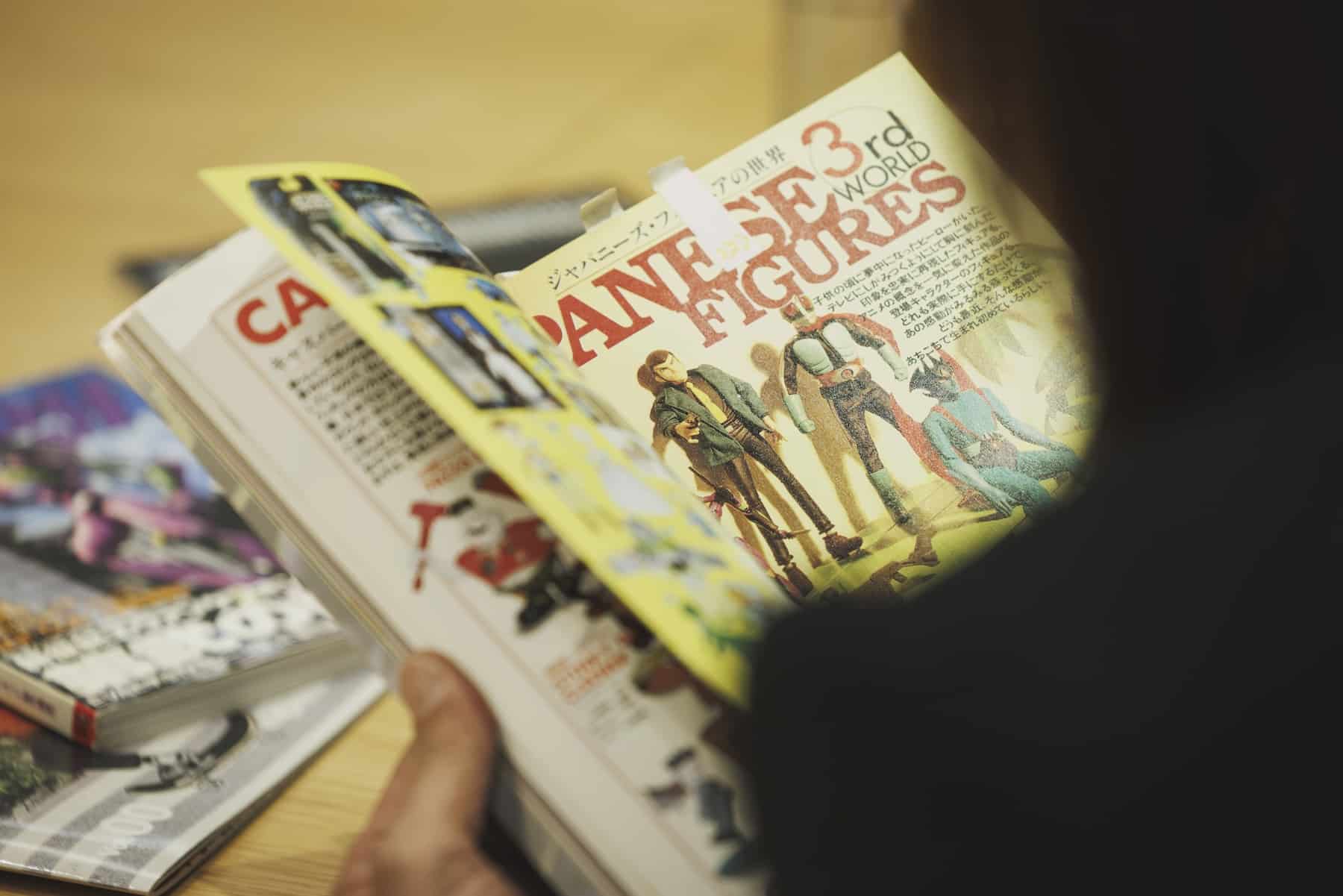
“It was a wild time. Almost every magazine publisher had launched a figure magazine. At the center of that whirlwind were companies like McFarlane Toys — back then still called Todd Toys — the company behind the SPAWN figures, along with all sorts of people. And somewhere at the edge of that movement, we had this feeling that maybe, if we did things right, we could become part of the mainstream too.”
Akashi looks back on the era while flipping through figure magazines from the 1990s.
From there, MEDICOM TOY continued expanding its presence through products such as the REAL ACTION HEROES series, Bruce Lee figures, and collaborations with creators from the Ura-Harajuku scene — steadily earning strong support from toy enthusiasts along the way.
At that time, we had to increase the volume of our products to keep the company running. At the same time, we had a connection with a manufacturer called Timehouse, and the former manager of the toy authority "ZAAP!
We met some excellent people, and finally, in 2001 or so, we felt that the market was beginning to be on the same wavelength as what our company was releasing," he said.
Known today for its collaborations with artists and brands around the world, BE@RBRICK traces its origins back to the early 2000s. At the root of the idea was an earlier toy called KUBRICK. At a time when toy makers competed to create increasingly detailed and realistic figures, KUBRICK moved in the opposite direction — with a deliberately simple design built from only a small number of parts.
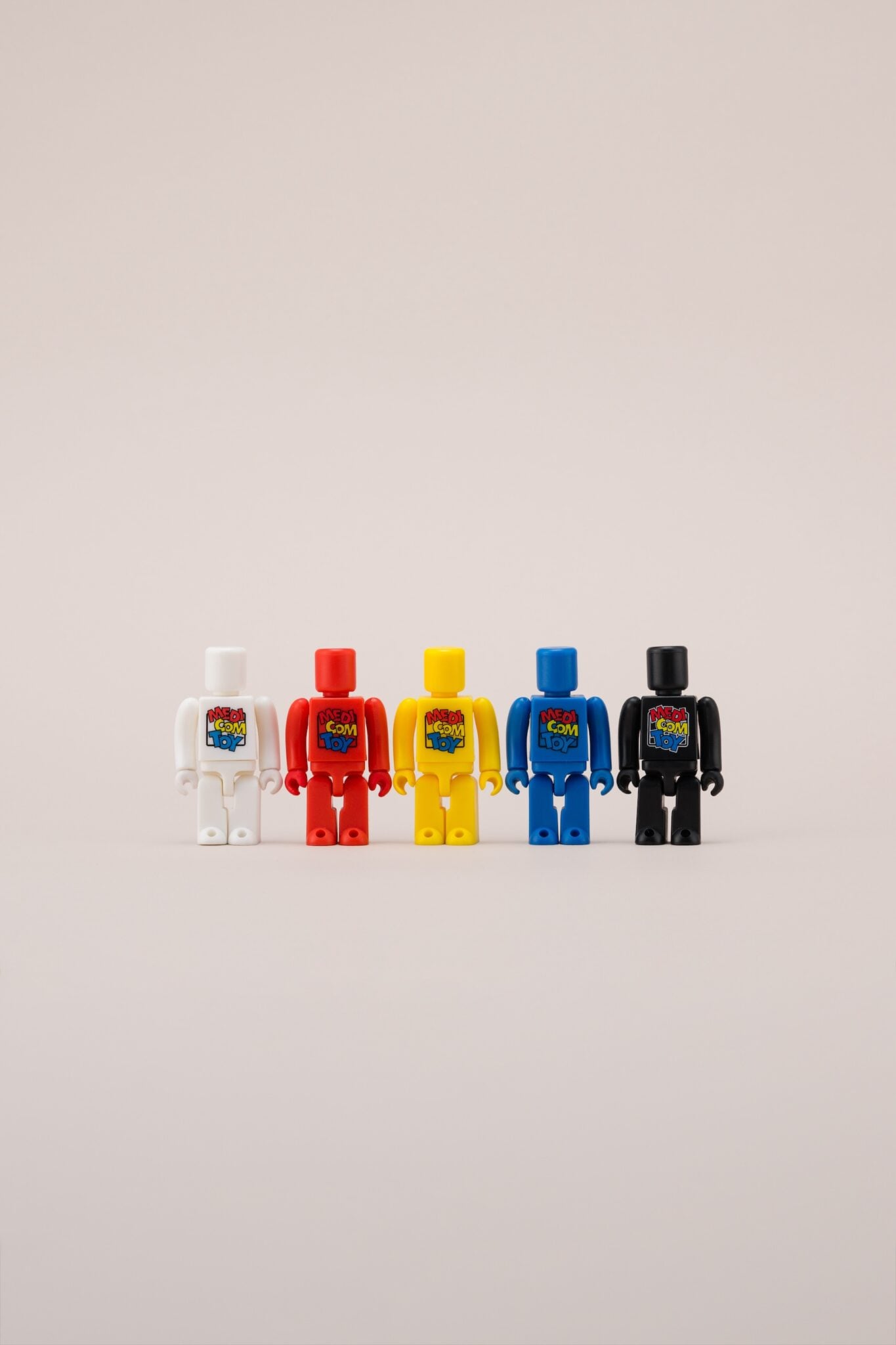
KUBRICK International Tokyo Toy Show 2000 (Distributed March 2000) The very first KUBRICK.
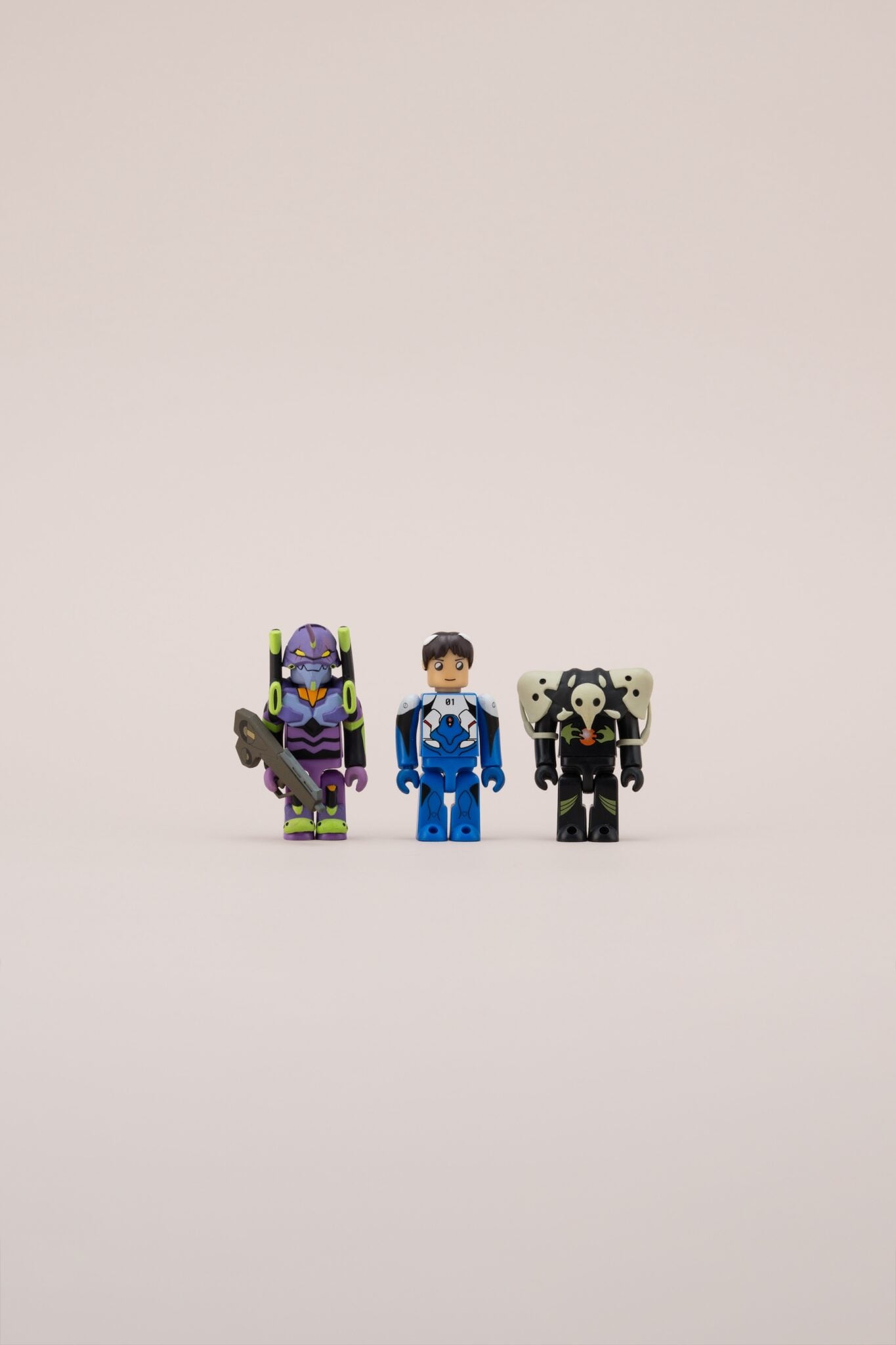
KUBRICK EVANGELION 3PCS SET (Evangelion Unit-01, Shinji Ikari, and Sachiel) (Released June 2000) The first KUBRICK collaboration based on an existing franchise. ©︎ khara/Project Eva.
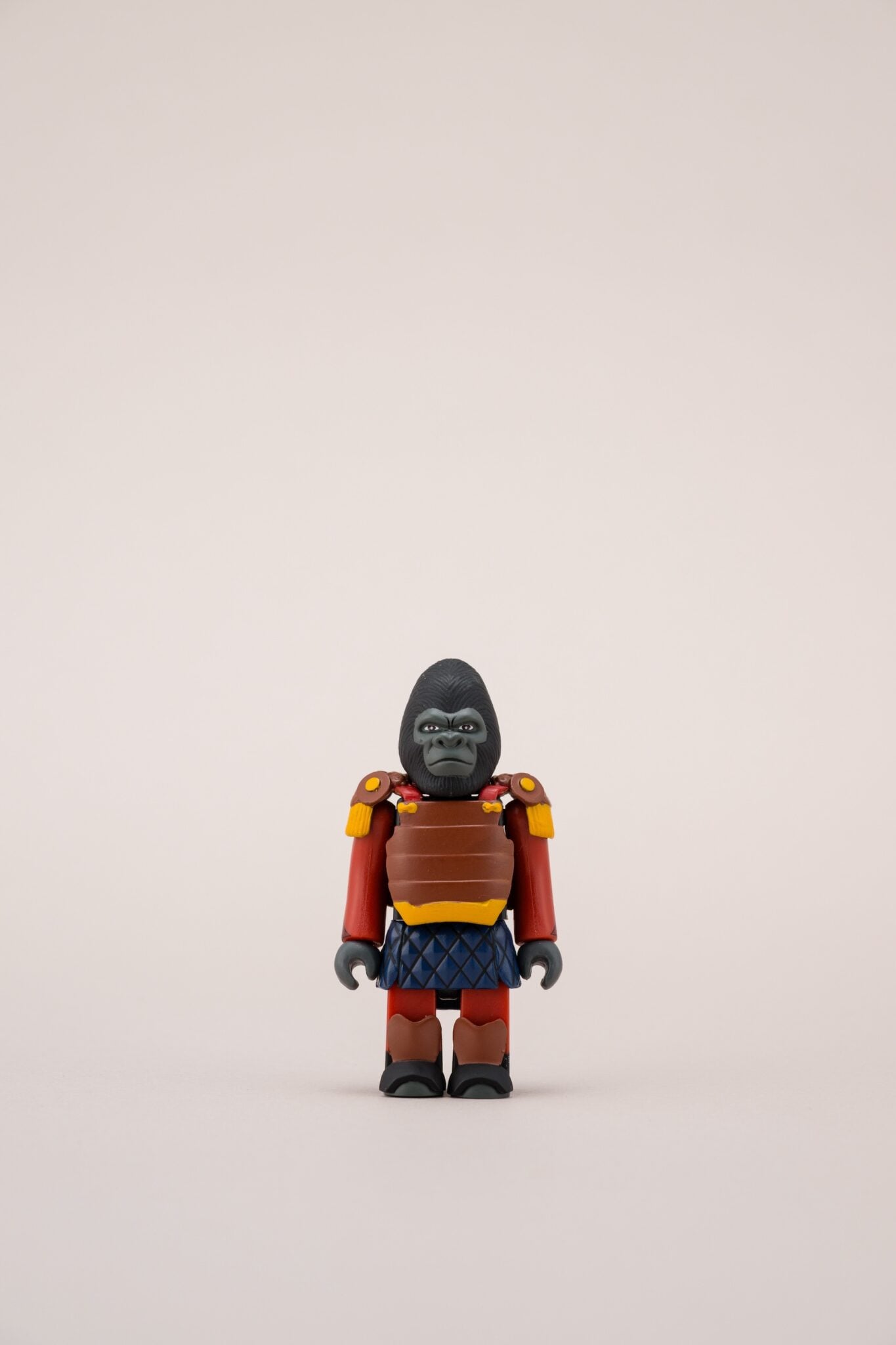
And it was the movie companies that first took notice of the KUBRICK. Tim Burton's "Planet of the Apes," released in the summer of 2001, set a new record for premium ticket sales at the time.
KUBRICK PR08 PLANET OF THE APES (Released April 2001 / bundled with advance movie tickets) The promotional item that helped put KUBRICK on the map. Planet of the Apes™ & © 2026 Twentieth Century Fox Film Corporation. All Rights Reserved.
“After that, we started getting orders from all kinds of movie studios and agencies. Eventually, it got to the point where we thought, ‘There’s no way we can handle all of this.’ But while talking about how fun it was to make products tied to new movies, someone said, ‘Why don’t we just make a bear by changing the head and torso?’ Then we realized, ‘We wouldn’t even need new molds — we could just switch the paint.’ And somehow, it became a hit. Which is why the arms and lower body are still basically KUBRICK parts (laughs).”
As a result, if you look closely, there’s something slightly off about BE@RBRICK’s proportions.
“Yeah, the balance is definitely strange. The first person to point that out was Gento Matsumoto (art director / graphic designer). Most good designers say the same thing. But they also say, ‘Maybe that’s exactly why it works.’”
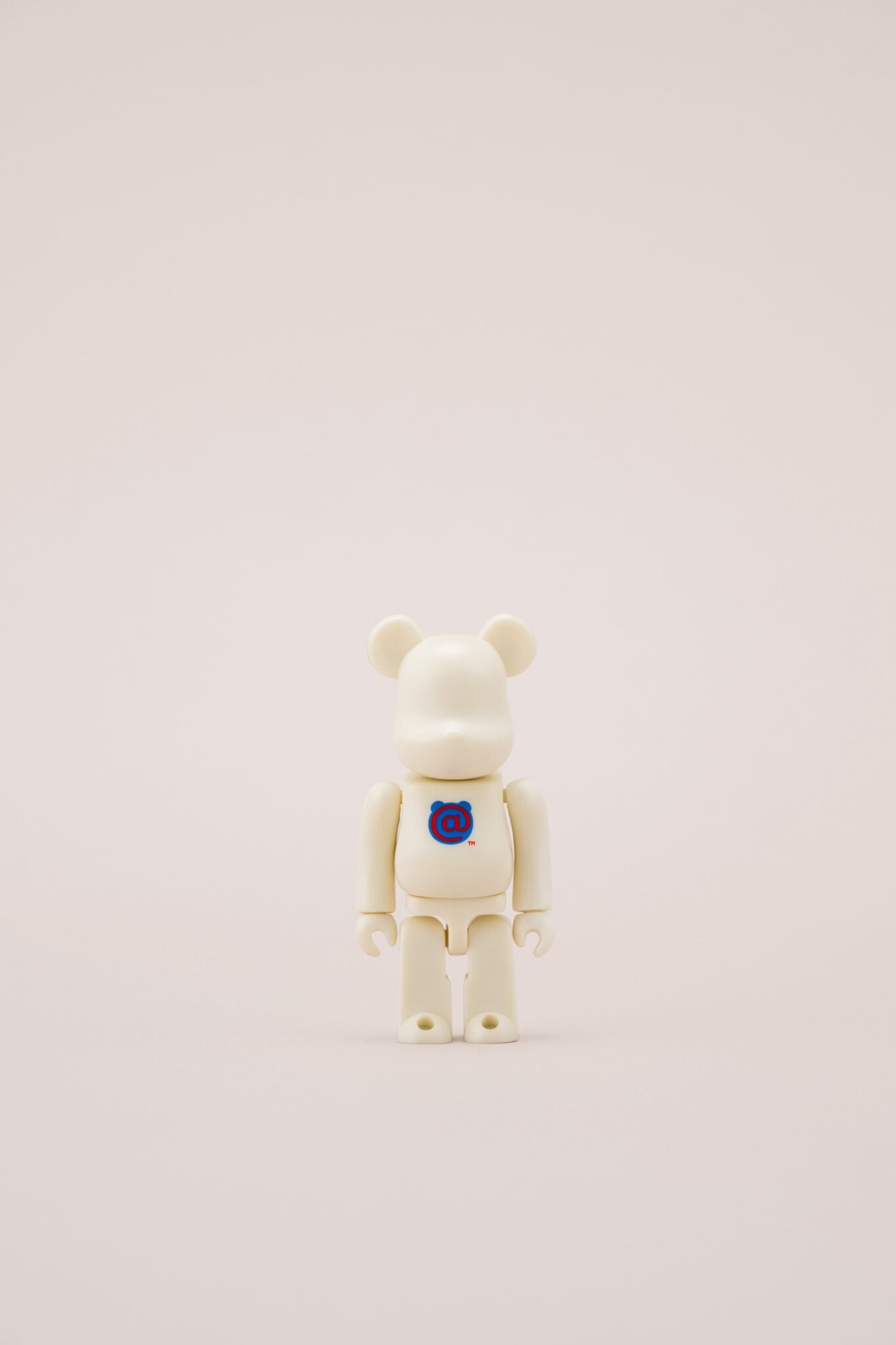
BE@RBRICK 000W WCC12 (Released May 2001) The very first BE@RBRICK, distributed at the WCC12 event.
BE@RBRICK SERIES 1 (Released June 2001) The debut release in the BE@RBRICK SERIES line.
BE@RBRICK 000B SF21 (Released June 2001) Distributed at SF21 following WCC12.
BE@RBRICK THE HIGH-LOWS Tour (Released May 2001) © HAPPY SONG
BE@RBRICK was also very much a product of its time. Its original catchphrase was: “A teddy bear for the digital age.”
“Around 2001, the internet was just starting to take off. It felt like it was going to change the world itself. Before that, you’d flip through thick American toy magazines and call shops asking them to put things aside for you. Then suddenly every shop had a website, and you could buy anything with a single click. I remember being amazed by how convenient it was.”
Even while recognizing how much the world was changing, Akashi had little interest in jumping directly into the internet or IT business.
“I wasn’t interested in that side of things at all. What interested me was how we could use it as a tool — how we could deliver toys in a new way. That’s where BE@RBRICK came from.”
What mattered was that BE@RBRICK was also a form perfectly suited to the age of online shopping. It was a moment where Akashi’s instincts as both a consumer and a creator naturally came together.
BE@RBRICK 400% HIROTO Model (Released February 2003) Designed by Hiroto Komoto. © HIROTO
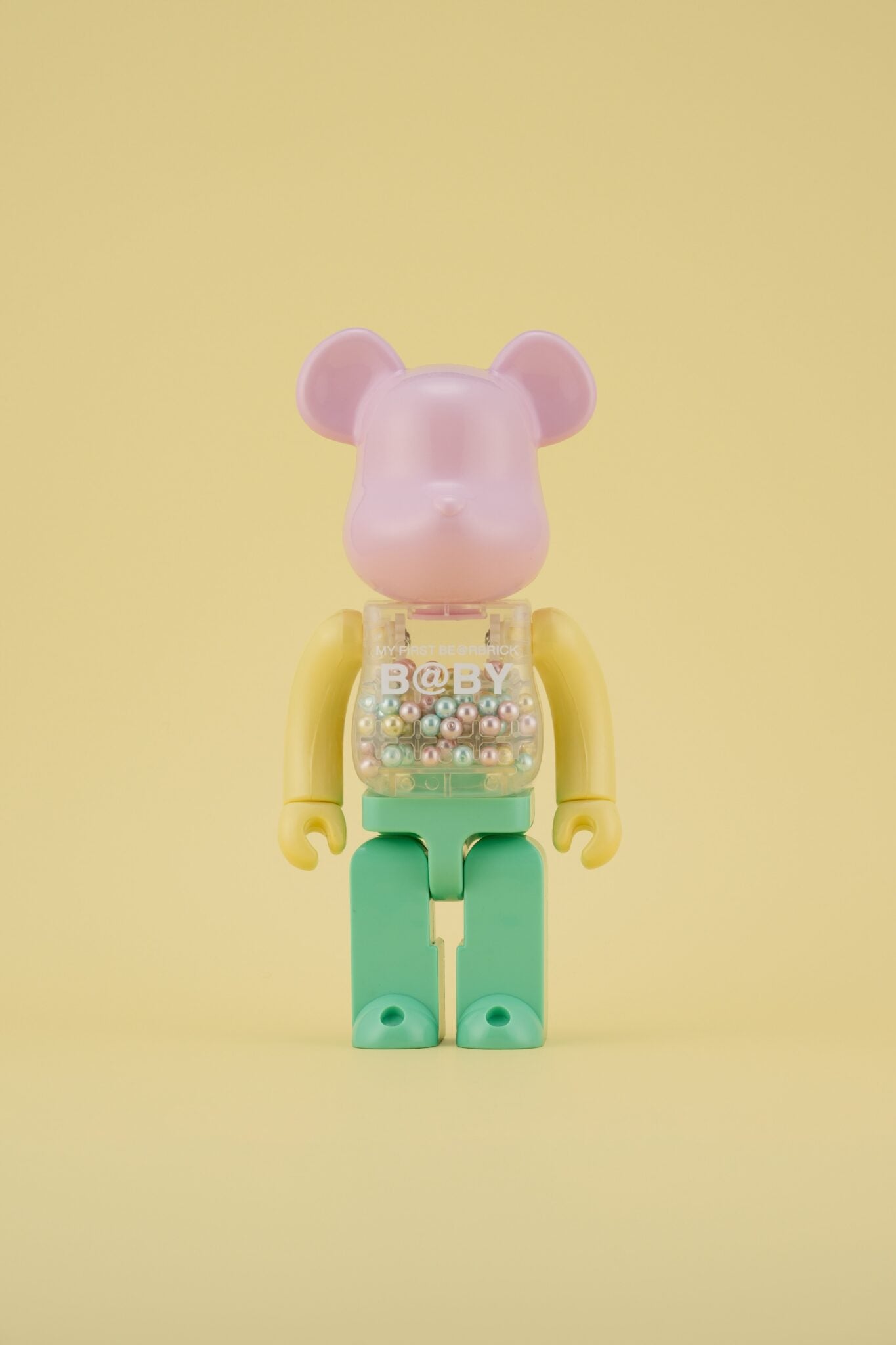
MY FIRST BE@RBRICK B@BY 400% (Released December 2007) The first release in the popular MY FIRST BE@RBRICK B@BY series created by Japanese TV personality Chiaki.
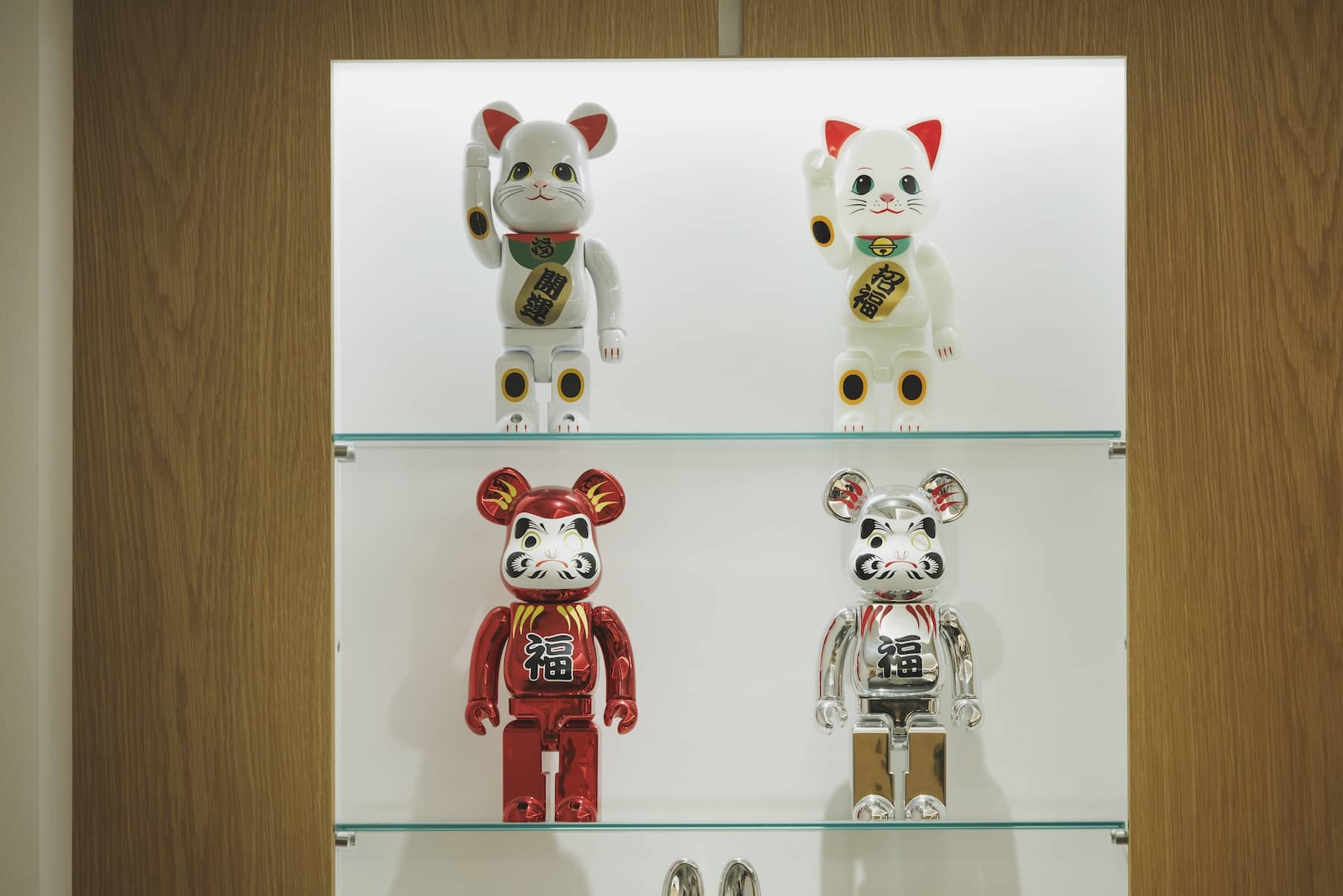
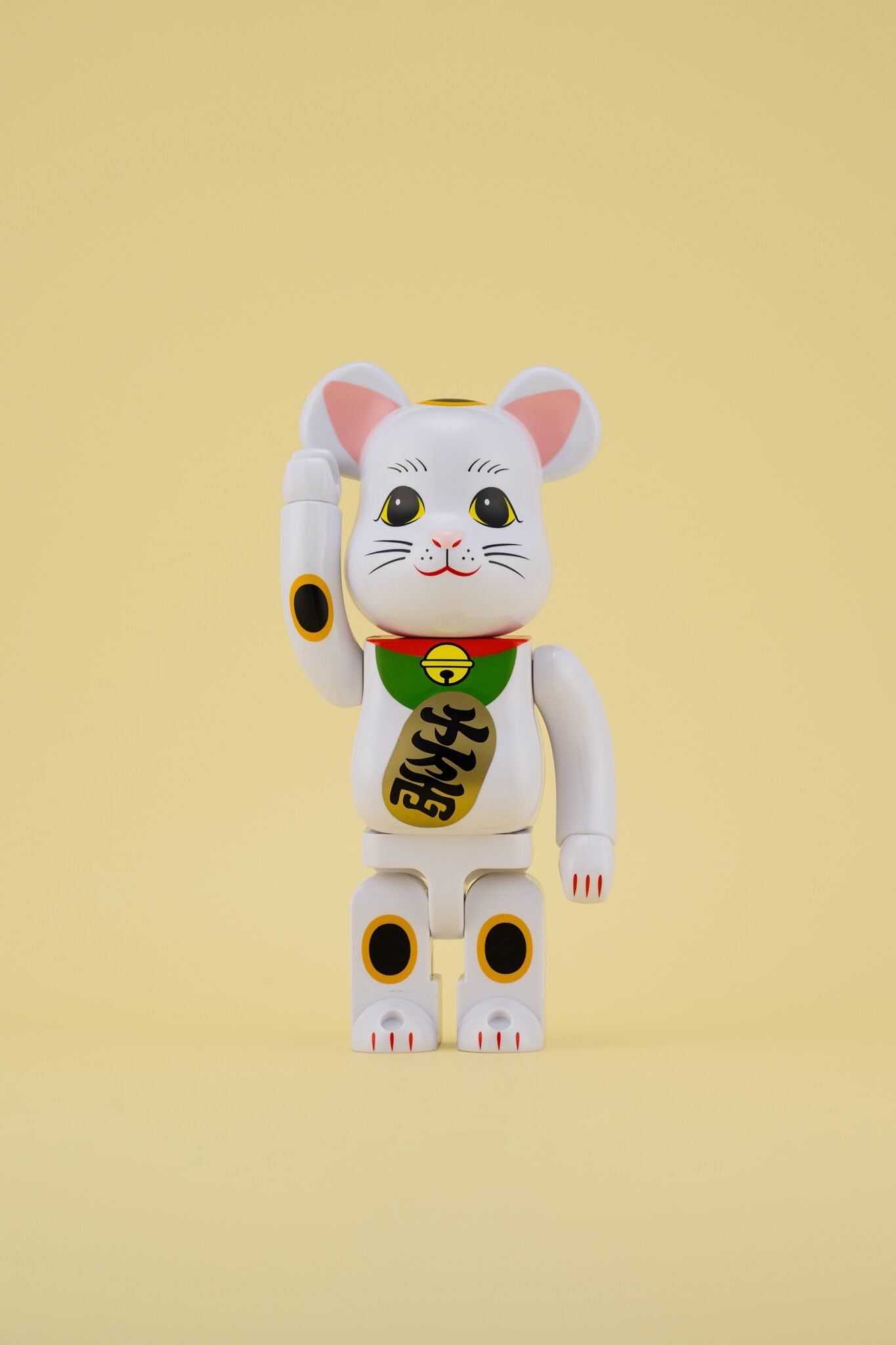
BE@RBRICK MANEKINEKO 400% (Released May 2012) Created to celebrate the opening of the MEDICOM TOY STORE at TOKYO Solamachi, this was the first Japanese-themed BE@RBRICK inspired by traditional Japanese culture.
“Because every BE@RBRICK shares the same basic form, once you understand its symbols, colors, background, or story, you can recognize it instantly without even going to a store. You could just buy them online one after another. I remember thinking, ‘This is incredible.’ In that sense, it really was a teddy bear for the digital age.”
Shitara, president of the select shop BEAMS, once described BE@RBRICK by saying, “It’s like inventing the T-shirt.” That T-shirt-like flexibility is precisely what later allowed BE@RBRICK to resonate so naturally with both art and fashion.
Following the birth of BE@RBRICK, MEDICOM TOY also began collaborating with more overseas artists.
As I mentioned earlier, many of the former "ZAAP!" staff members were connected with manufacturers in Uraharajuku. The key person is probably KAWS, since we worked together on the Original Fake brand.
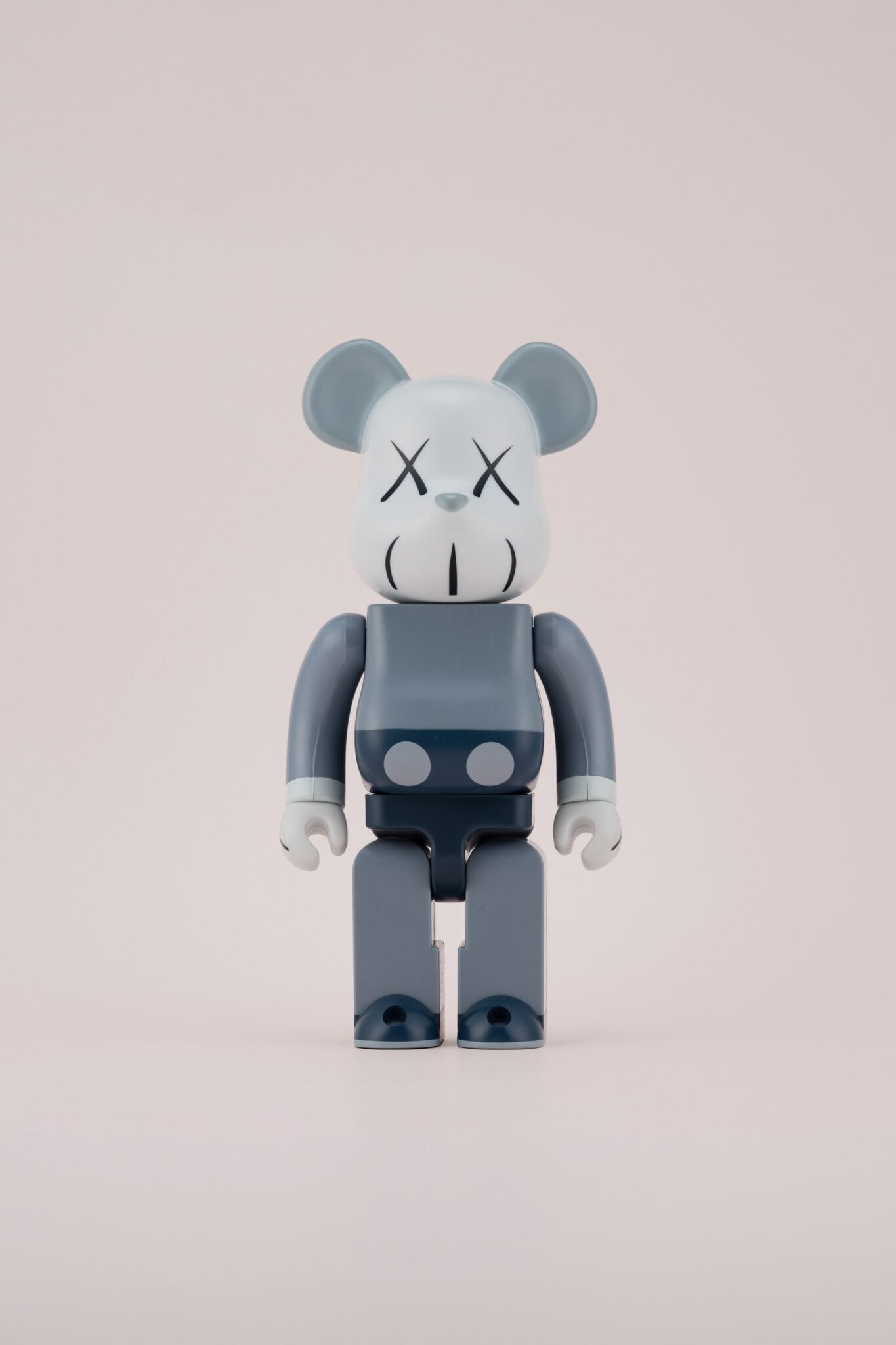
BE@RBRICK KAWS 400% (Released August 2002) © KAWS..26
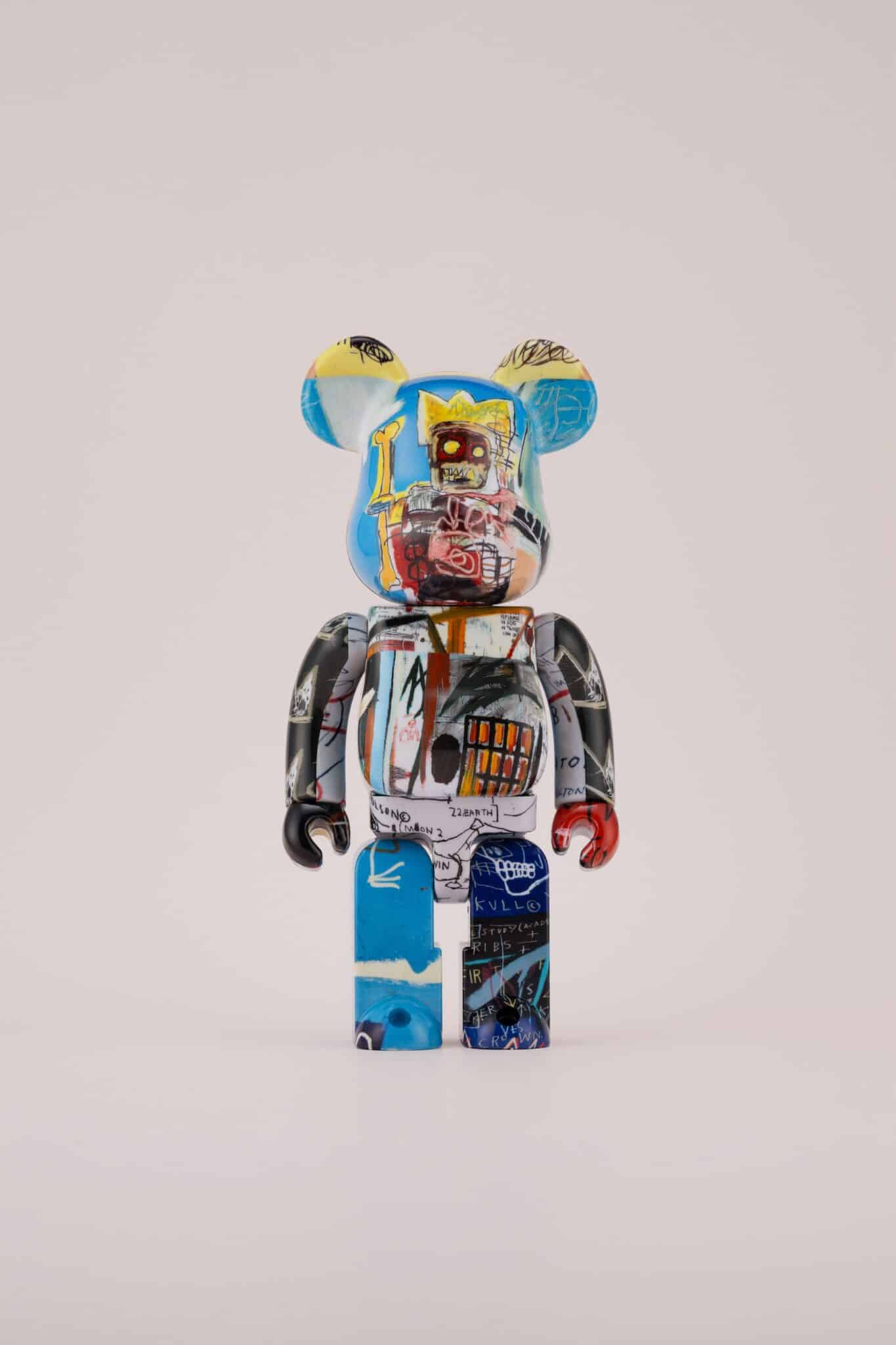
BE@RBRICK JEAN-MICHEL BASQUIAT "SPECIAL" 400% (Released December 2023) © Estate of Jean-Michel Basquiat Licensed by Artestar, New York
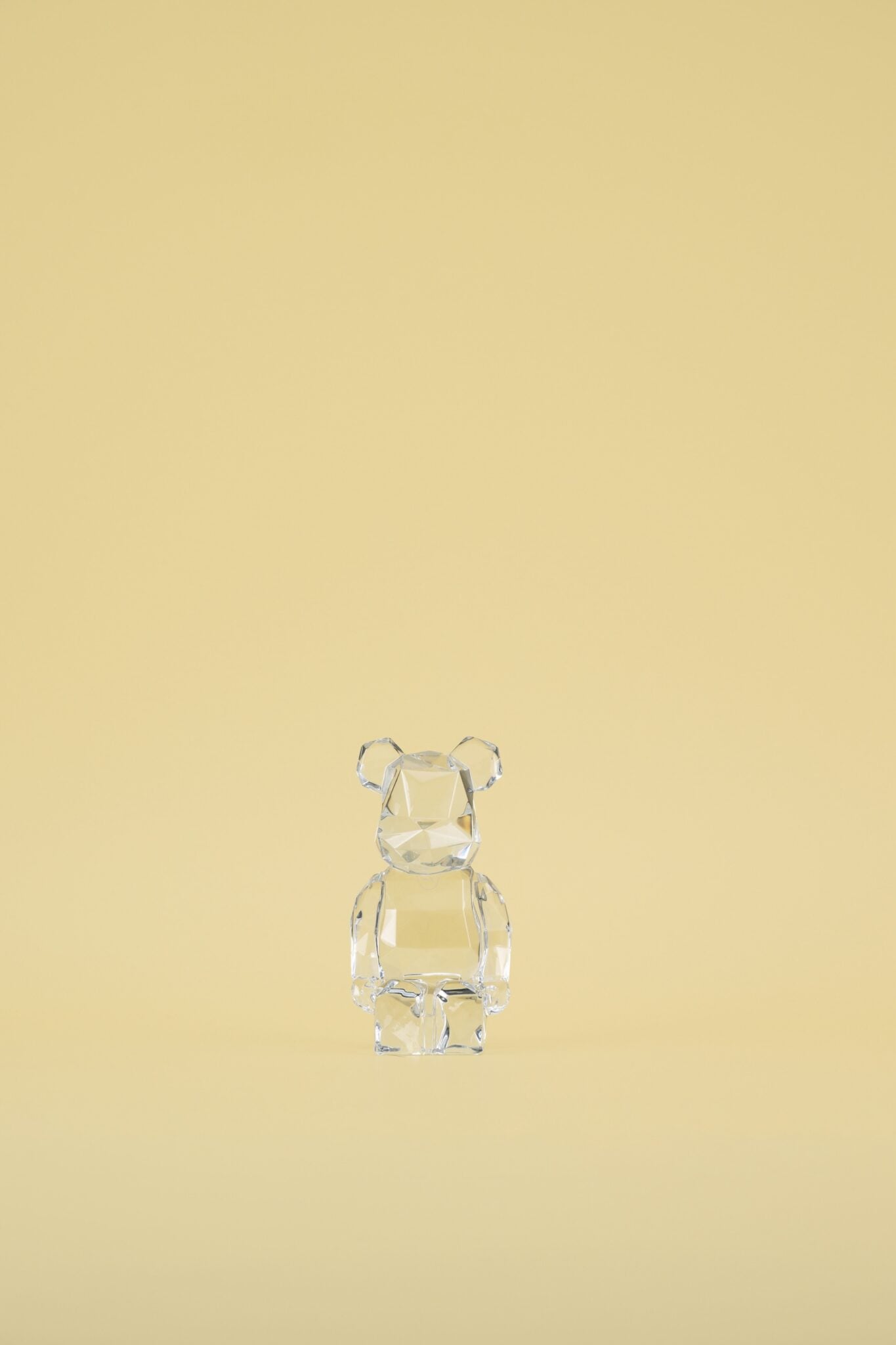
Baccarat fragmentdesign BE@RBRICK (Released November 2018)
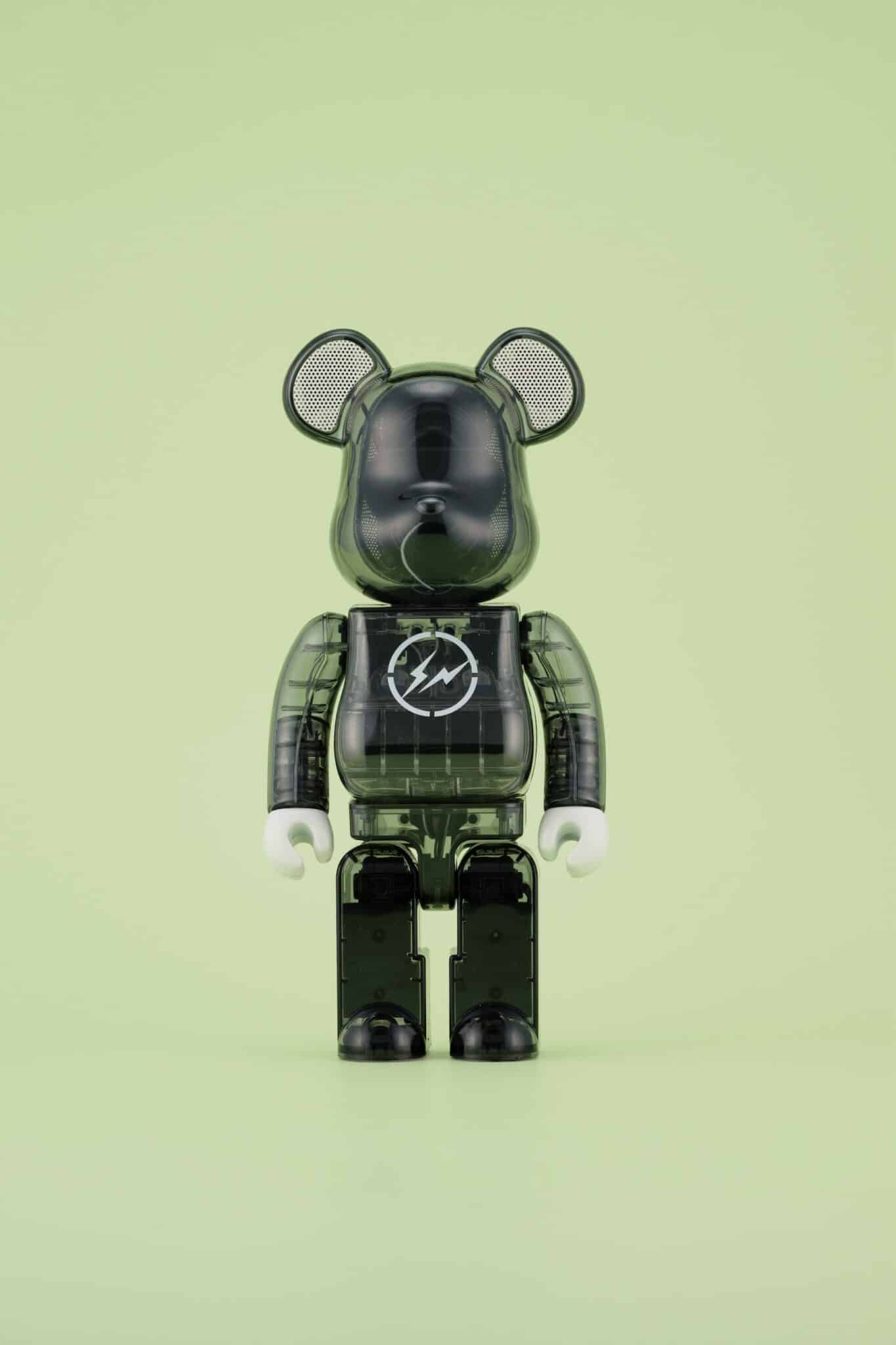
BE@RBRICK AUDIO Portable Bluetooth®︎ Speaker FRAGMENT 400% (Released February 2026)
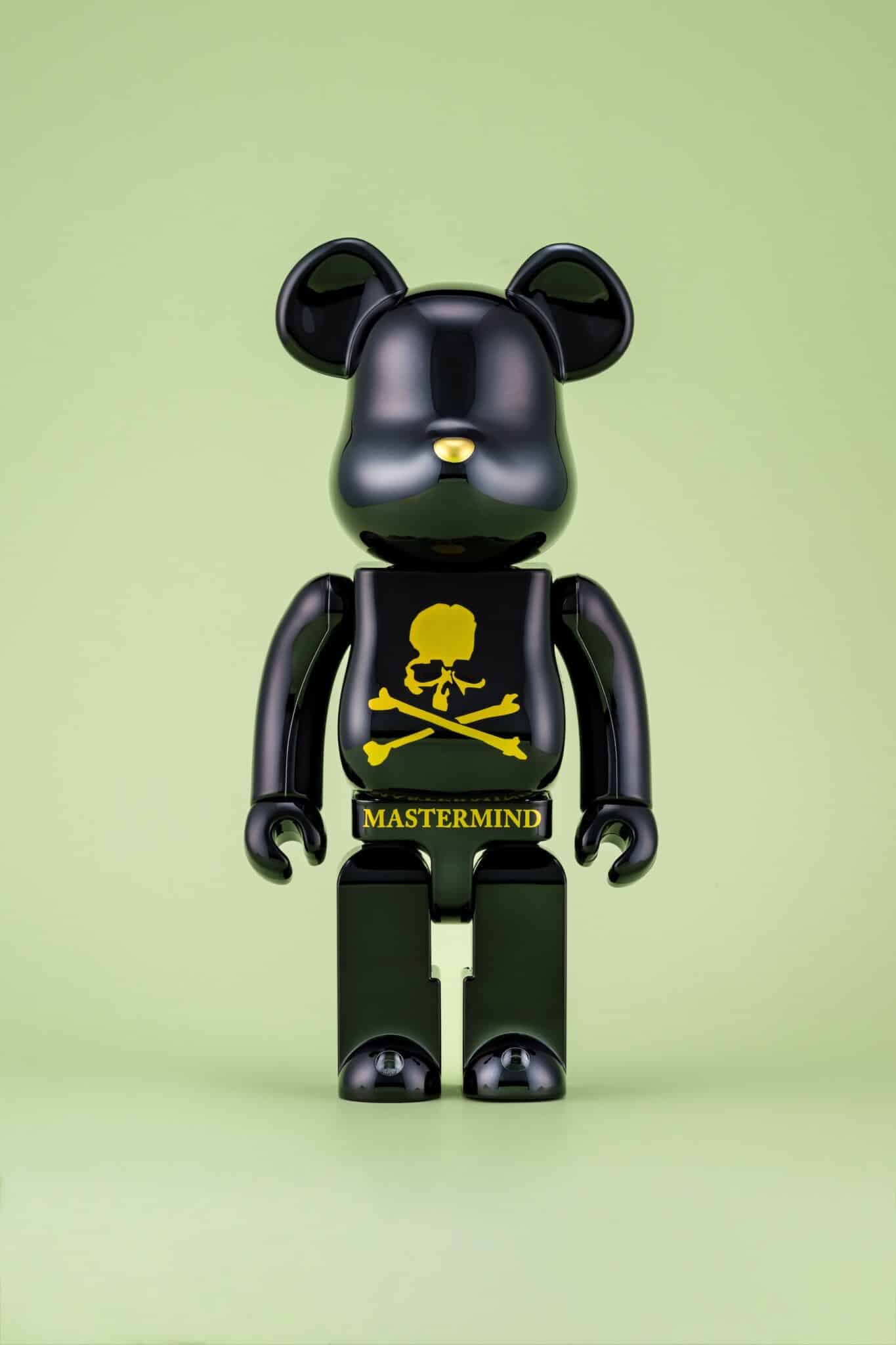
BE@RBRICK MASTERMIND WORLD 400% (Released December 2019)
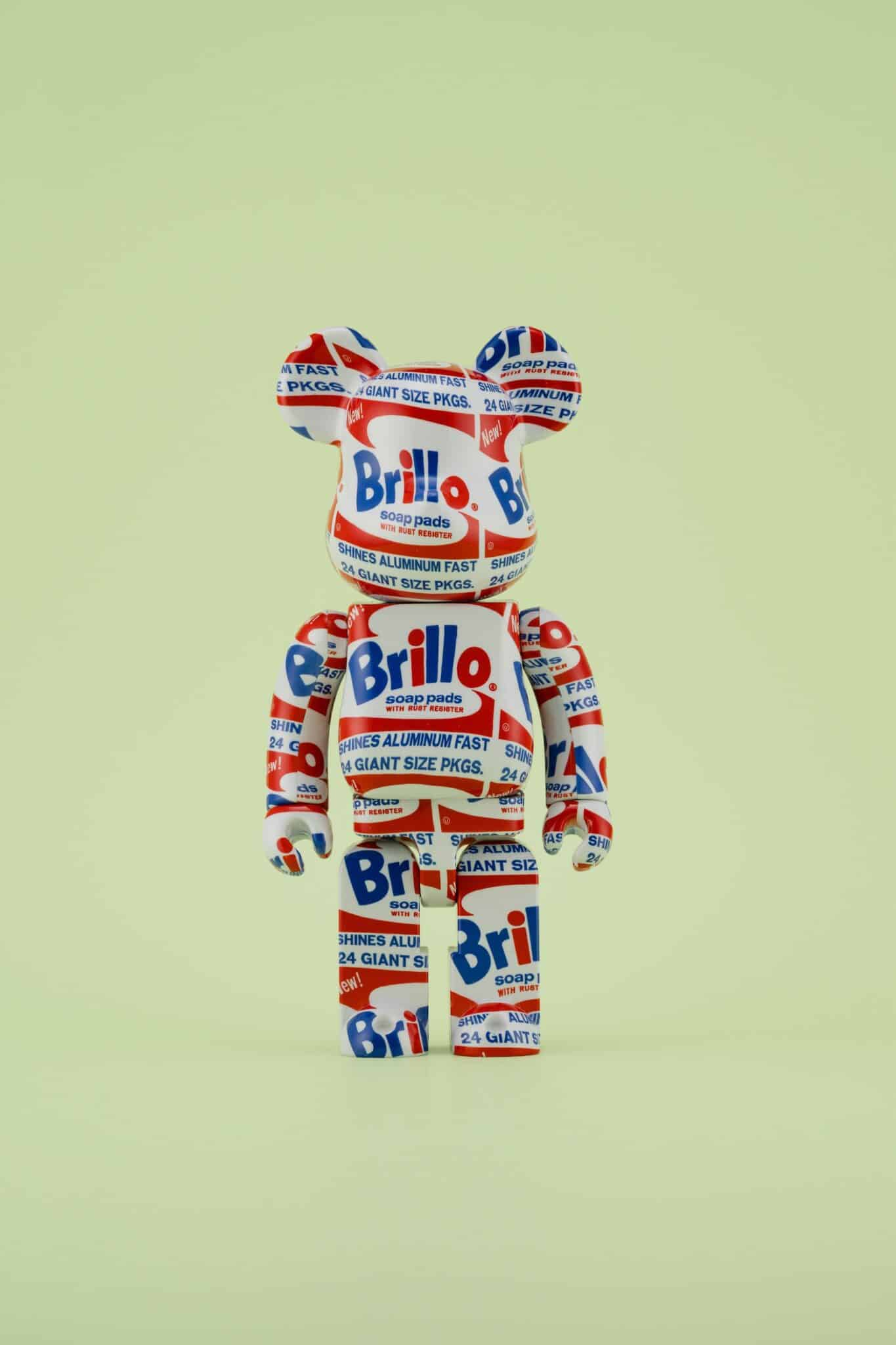
BE@RBRICK ANDY WARHOL "Brillo" 400% (on sale December 2020) is a portrait of Brillo, one of Andy Warhol's most iconic works. ©️/®︎/™ The Andy Warhol Foundation for the Visual Arts, Inc. Brillo®︎ is a registered trademark of the Armaly Sponge Company. All rights reserved.
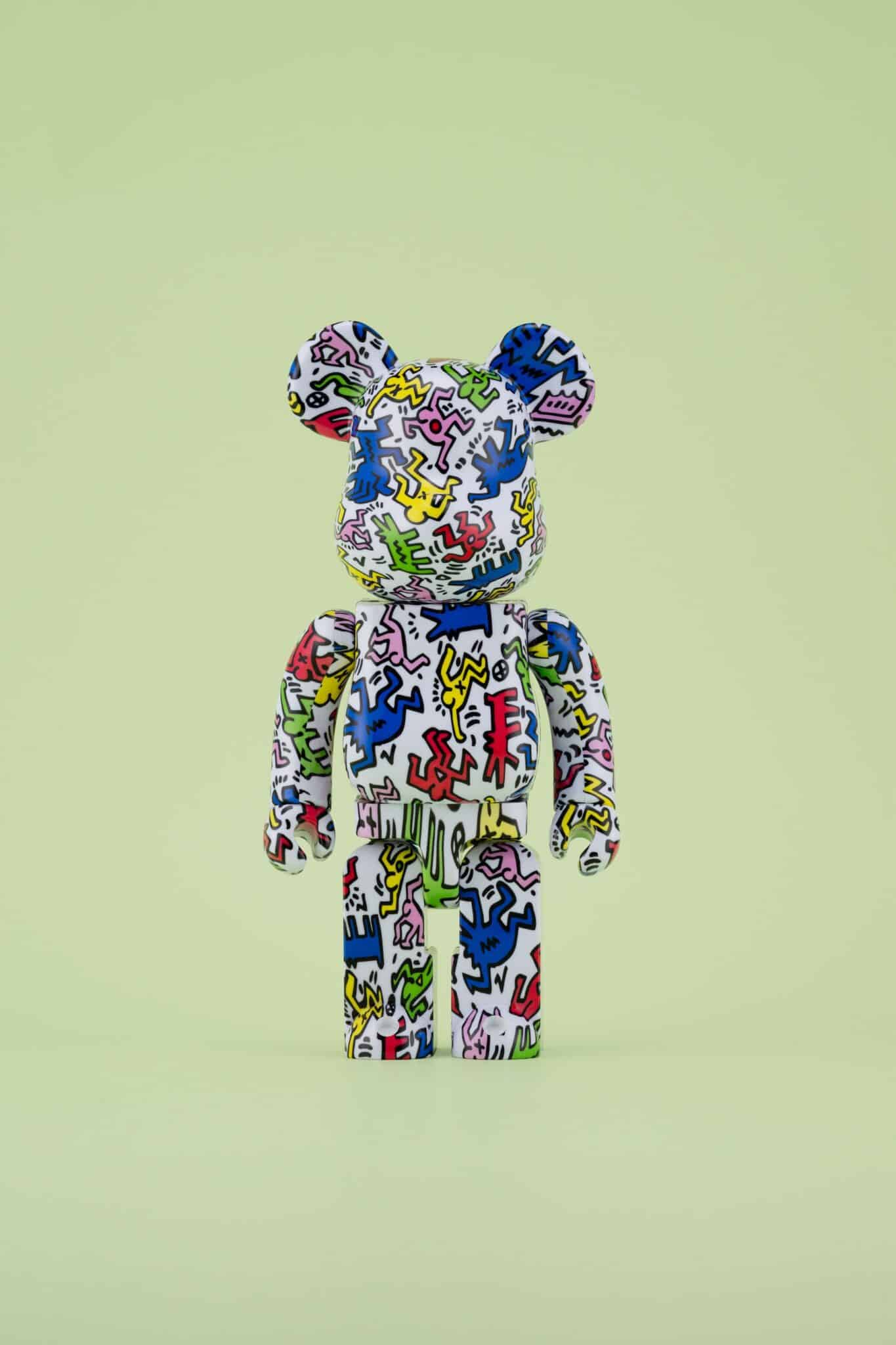
BE@RBRICK KEITH HARING 400% (Released February 2018) The first collaboration with Keith Haring. © Keith Haring Foundation Licensed by Artestar, New York
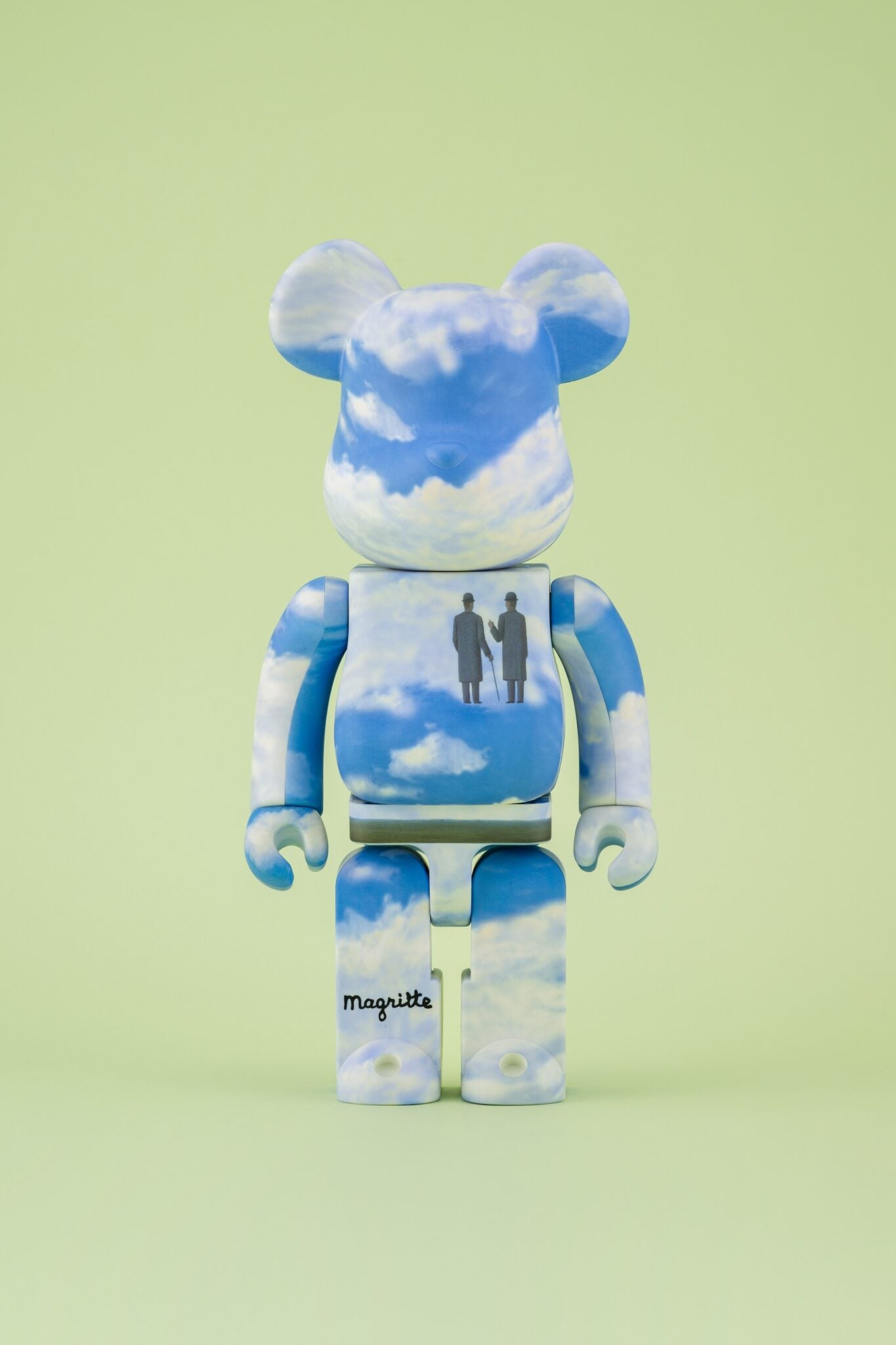
BE@RBRICK Rene Magritte "La Reconaissance Infinie (Infinite Recognition) 1963/ The Castle of the Pyrenees" 400% (Released November 2020) © C. Herscovici / ARS, NY
Interestingly, Akashi doesn’t seem particularly interested in becoming “a global company.”
“Maybe I thought, ‘It would be nice if people in other countries enjoyed buying our products too.’ But honestly, that was probably about it.”
Today, fans around the world eagerly await new MEDICOM TOY releases, especially BE@RBRICK. Why has the company become so widely loved?
“Whether it’s a romantic relationship or a marriage, you never completely understand the other person. And maybe that’s exactly what makes it enjoyable — and what allows it to last. To tell you the truth, I don’t fully understand what MEDICOM TOY really is myself (laughs).”
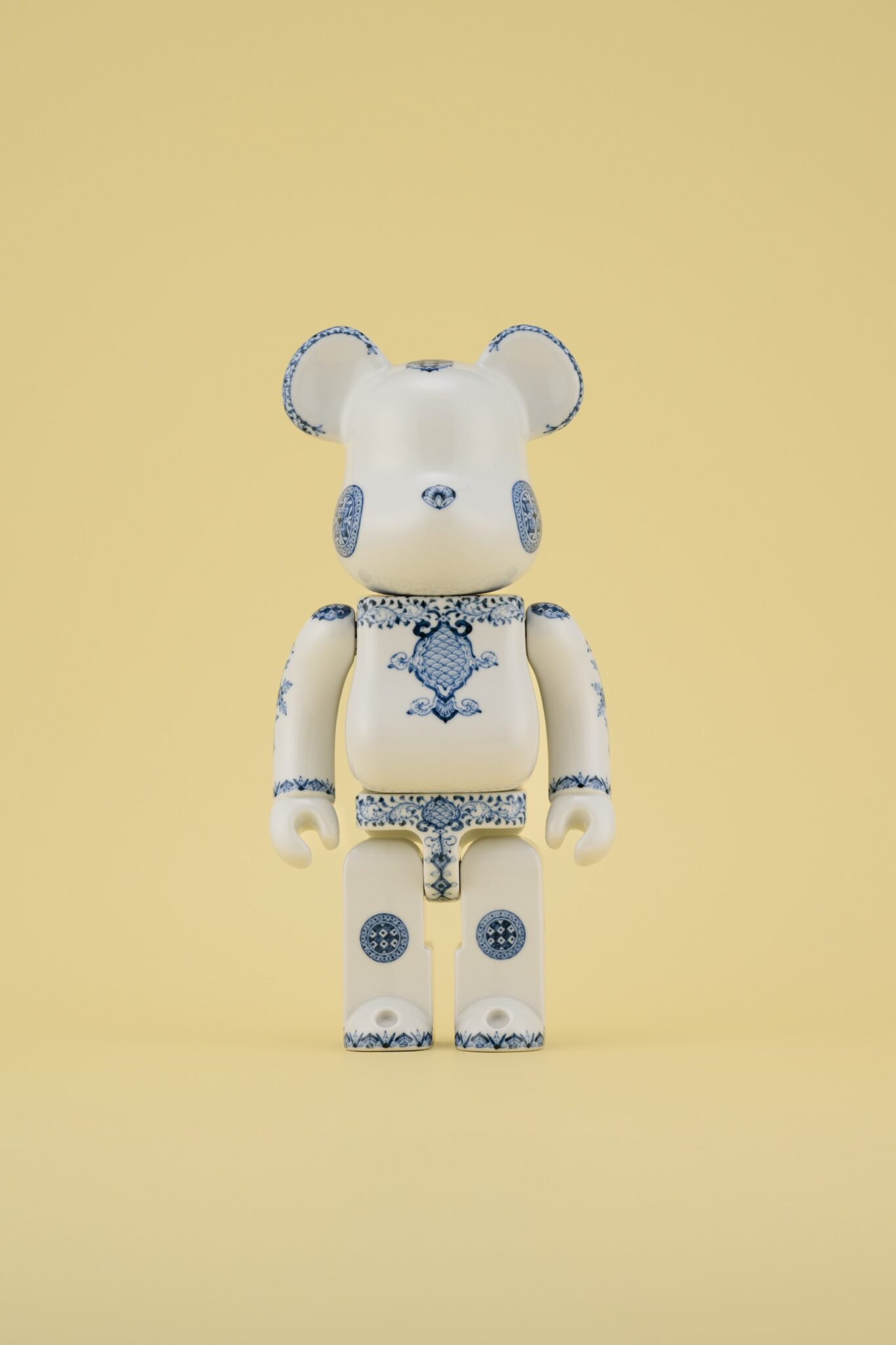
Kutani BE@RBRICK "Takumi" Seika Sarasamon (Released July 2022) Producer: Masato Naka (midland Creation) Painting: Ginsengama / Terutada Miura
BE@RBRICK ROYAL SELANGOR PINK COLOR Ver. (Released December 2018)
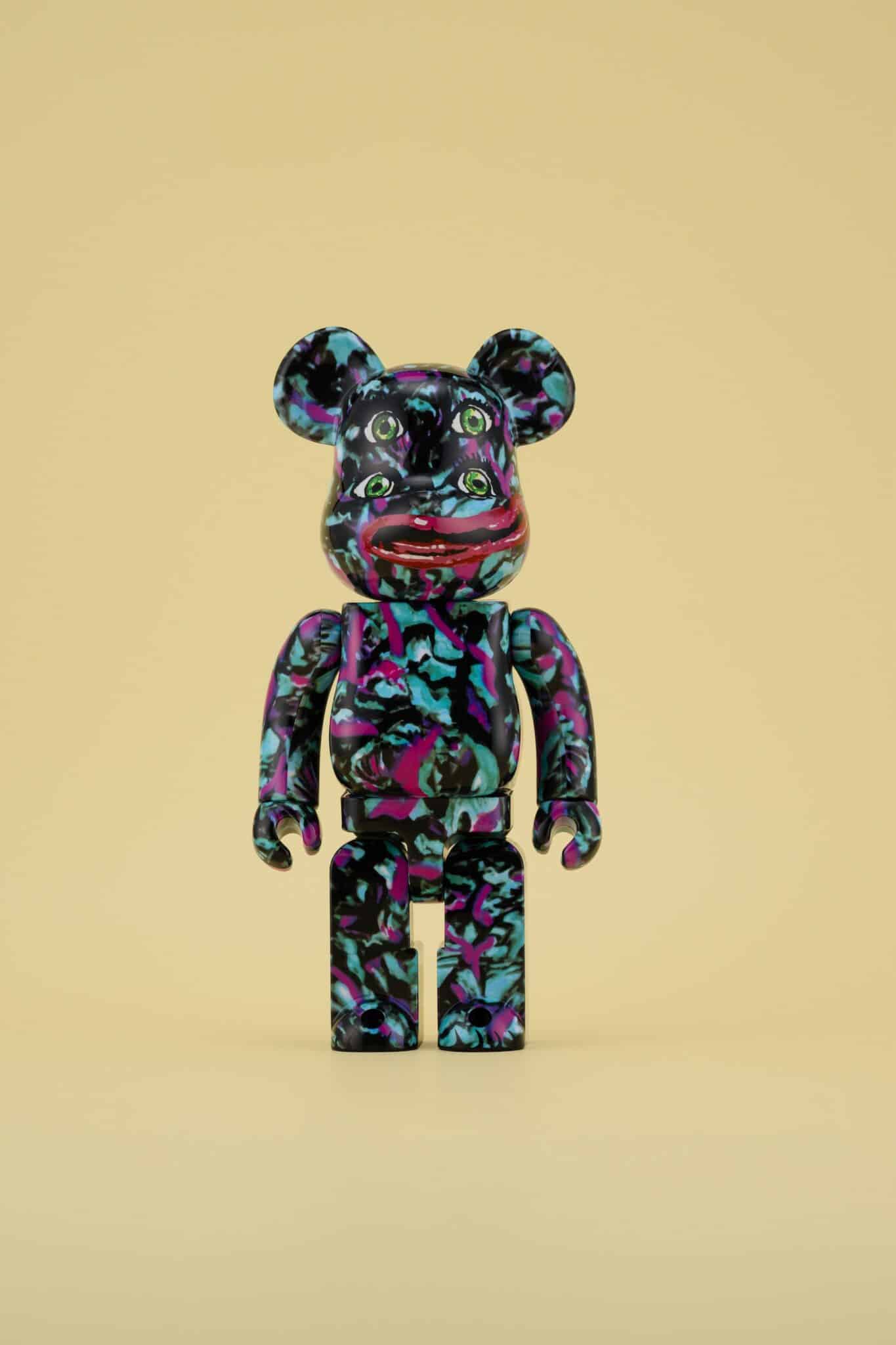
BE@RBRICK NAGNAGNAG FOUR EYES 400%(EDITION777) (Released May 2017) A collaboration with NAGNAGNAG. © NAGNAGNAG Shigeru Arai Ahokusa
“Our staff has grown, and we also receive more and more requests from outside collaborators. When that happens, projects often develop in ways I could never have imagined on my own. Different elements start mixing together, and before you know it, things begin mutating into something unexpected. I think that process of constant transformation may actually be MEDICOM TOY’s greatest appeal.”
The fact that we do not know who they are is, on the contrary, seen as an attraction. It is this sense that has long made MEDICOM TOY so appealing.
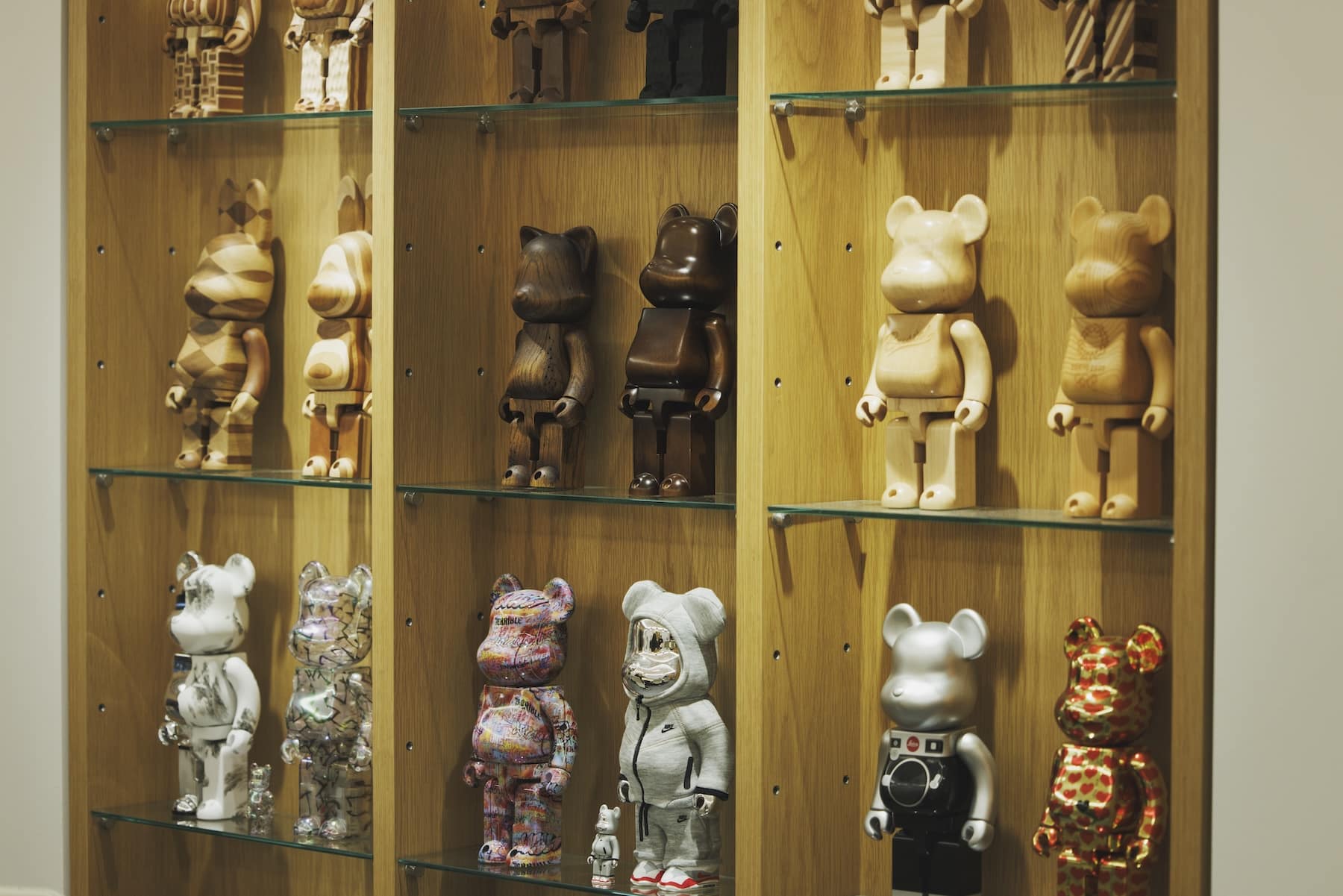
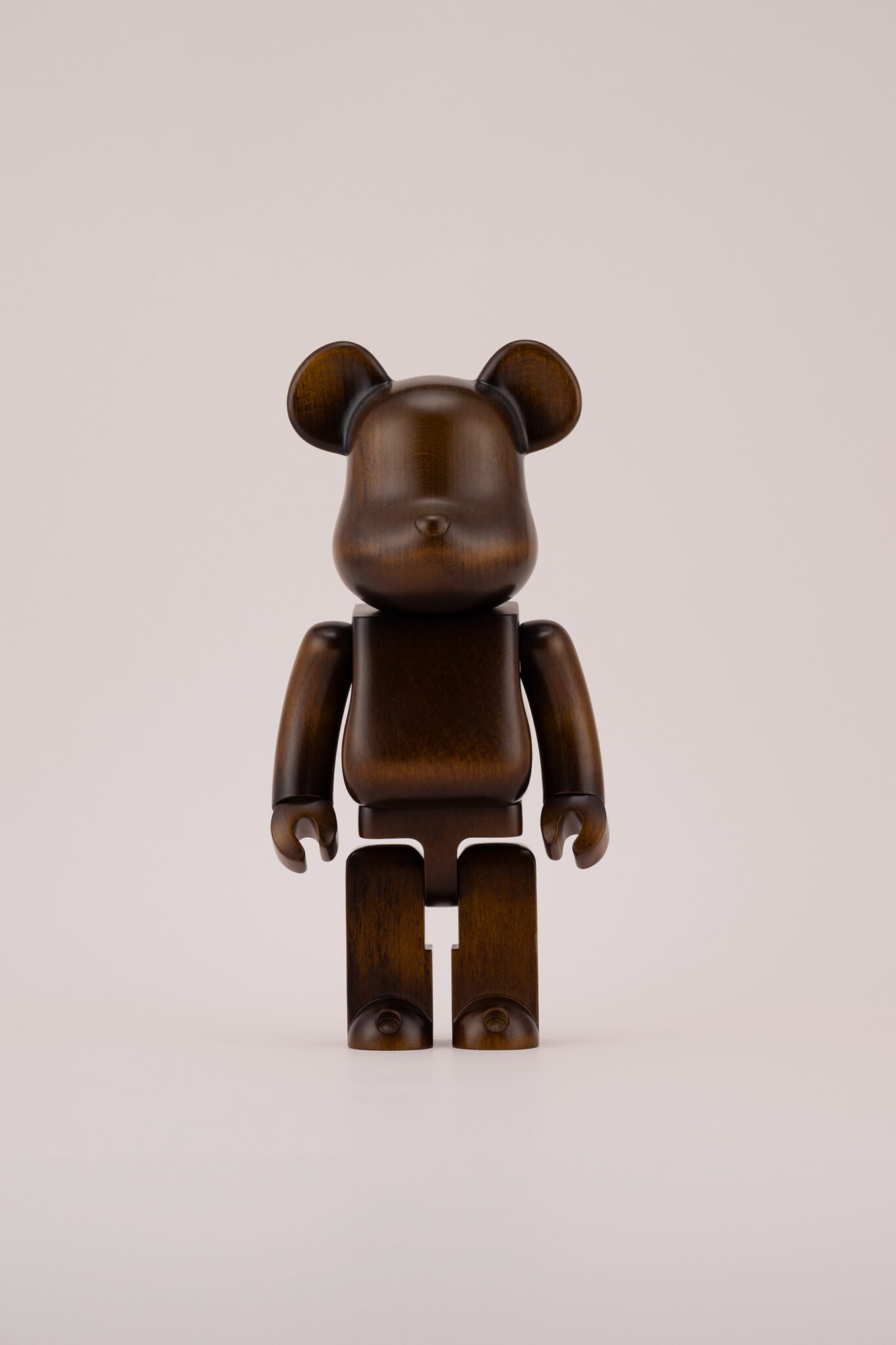
BE@RBRICK Karimoku 400% Modern Furniture (Released July 2018)
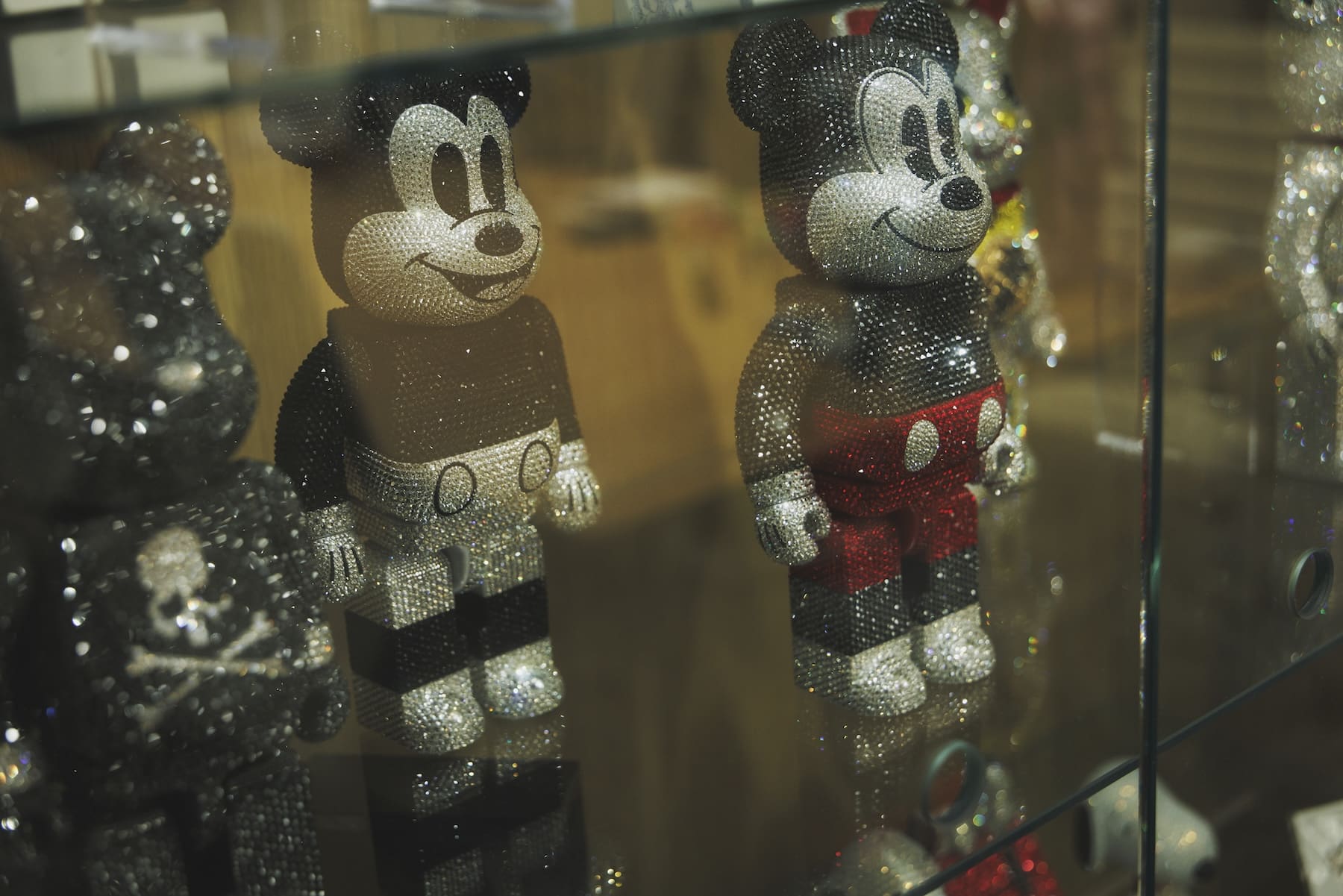
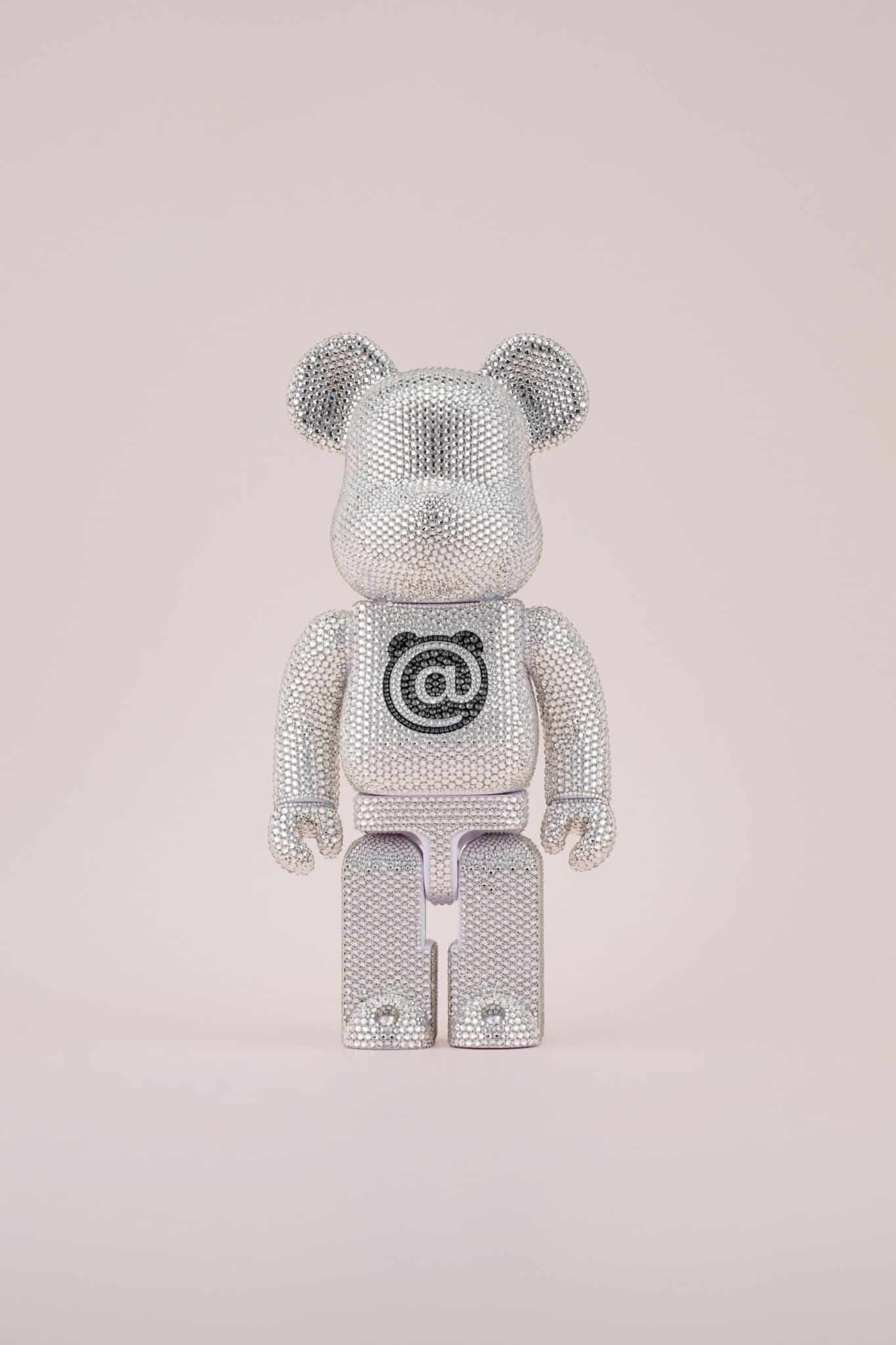
CRYSTAL DECORATE BE@RBRICK 400% (Released December 2018)
2026 marks the 25th anniversary of BE@RBRICK. When it comes to BE@RBRICK, are there any principles or ideas that Akashi has always held onto?
“I think one important thing is continuing without getting bored — continuing to let BE@RBRICK explore fresh and interesting ideas as an IP. Of course, there’s no point forcing it into things that don’t suit it, so we try not to do that. But he — BE@RBRICK — actually has a pretty wide range, so he naturally seems to work well with all kinds of different things.”
The way Akashi speaks about BE@RBRICK makes it clear that he sees it not simply as a character, but almost like a child.
“Actually, all of our products are like children to me — not just BE@RBRICK. If there’s one rule we follow when working with clients, it’s that we avoid projects where either side is likely to end up unhappy. Sometimes there are collaborations where the chemistry just doesn’t feel right, and in those cases we think it’s probably better not to move forward.”
That sense of judgment feels almost like the company’s internal “body temperature” — an instinctive sensibility that has quietly sustained MEDICOM TOY for thirty years. Could that natural way of working itself reflect something uniquely Japanese, or perhaps uniquely Tokyo?
“Most of the time it begins very naturally from the thought, ‘Wouldn’t it be nice if something like this existed?’ Then we start thinking about how we could actually make it. I think we often begin with the idea first and work backwards from there. So honestly, I’ve never really thought in terms of being ‘Tokyo-born’ or rooted in ‘Japanese culture.’”
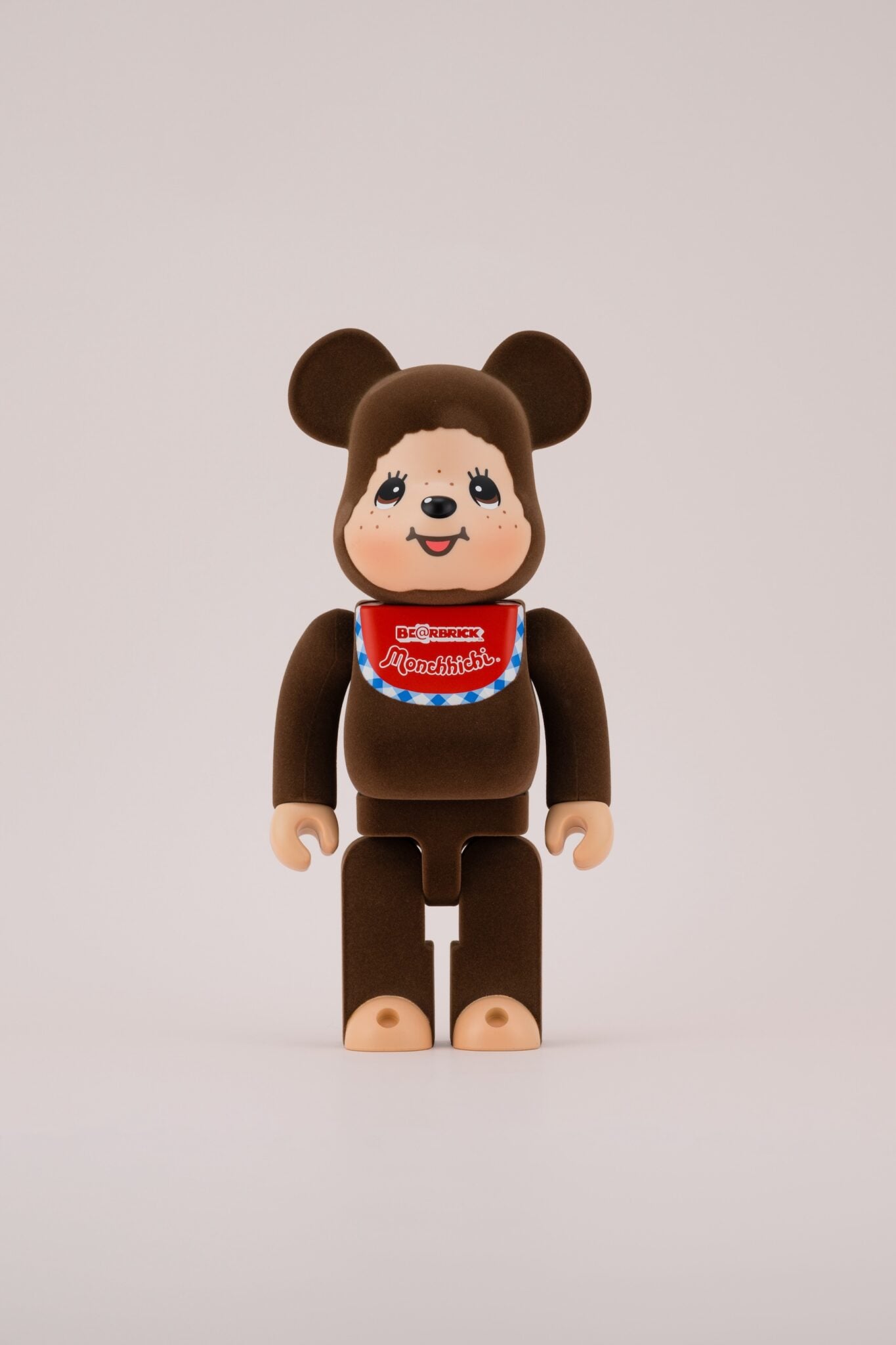
BE@RBRICK Monchhichi-kun (Flocky Ver.) 400% (Released January 2026) © 2026 Sekiguchi Co., Ltd.
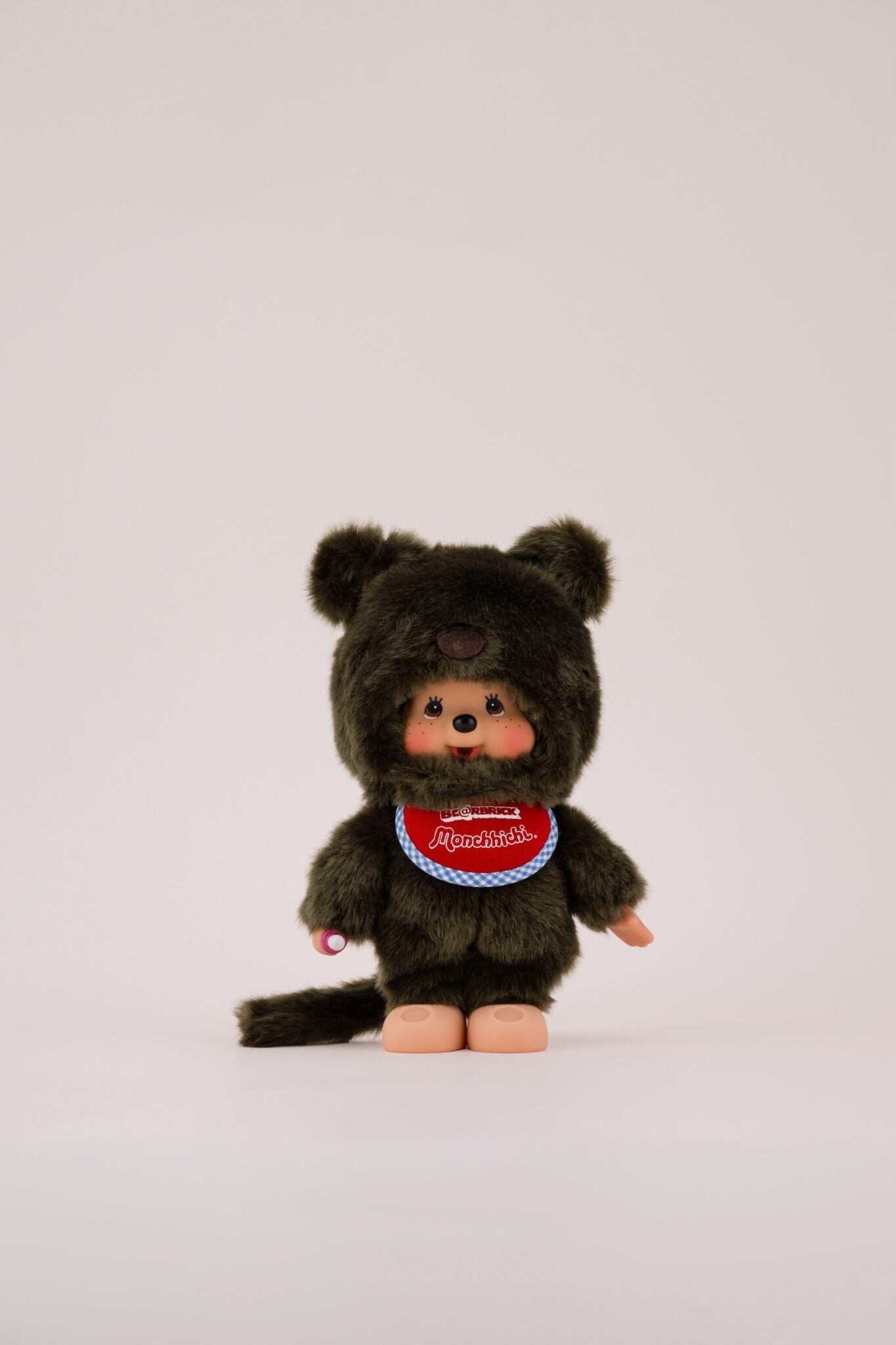
Monchhichi BE@RBRICK Costume Ver. (Released January 2026) Monchhichi dressed in a BE@RBRICK costume. © 2026 Sekiguchi Co., Ltd.
Various developments have been created around the world this year, including the announcement of a BE@RBRICK game (BE@RBRICK HEROES) from a Korean manufacturer and the opening of a large concept café (BE@RBRICK CONNECT) in Paju.
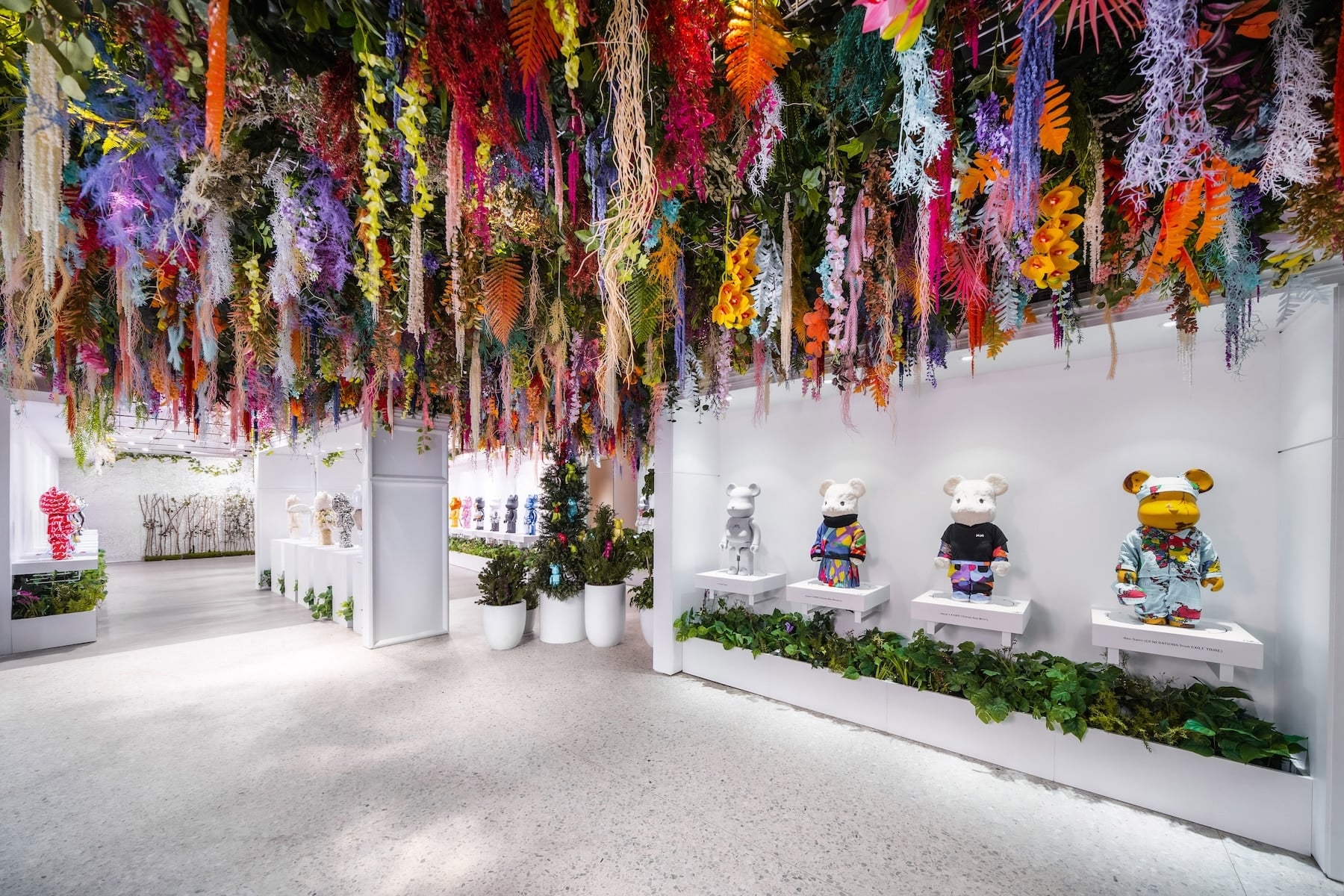
MEDICOM TOY has also launched its own international projects, including the BE@RBRICK WORLD WIDE TOUR — an art exhibition in which artists from around the world use 1000% BE@RBRICK figures as canvases.
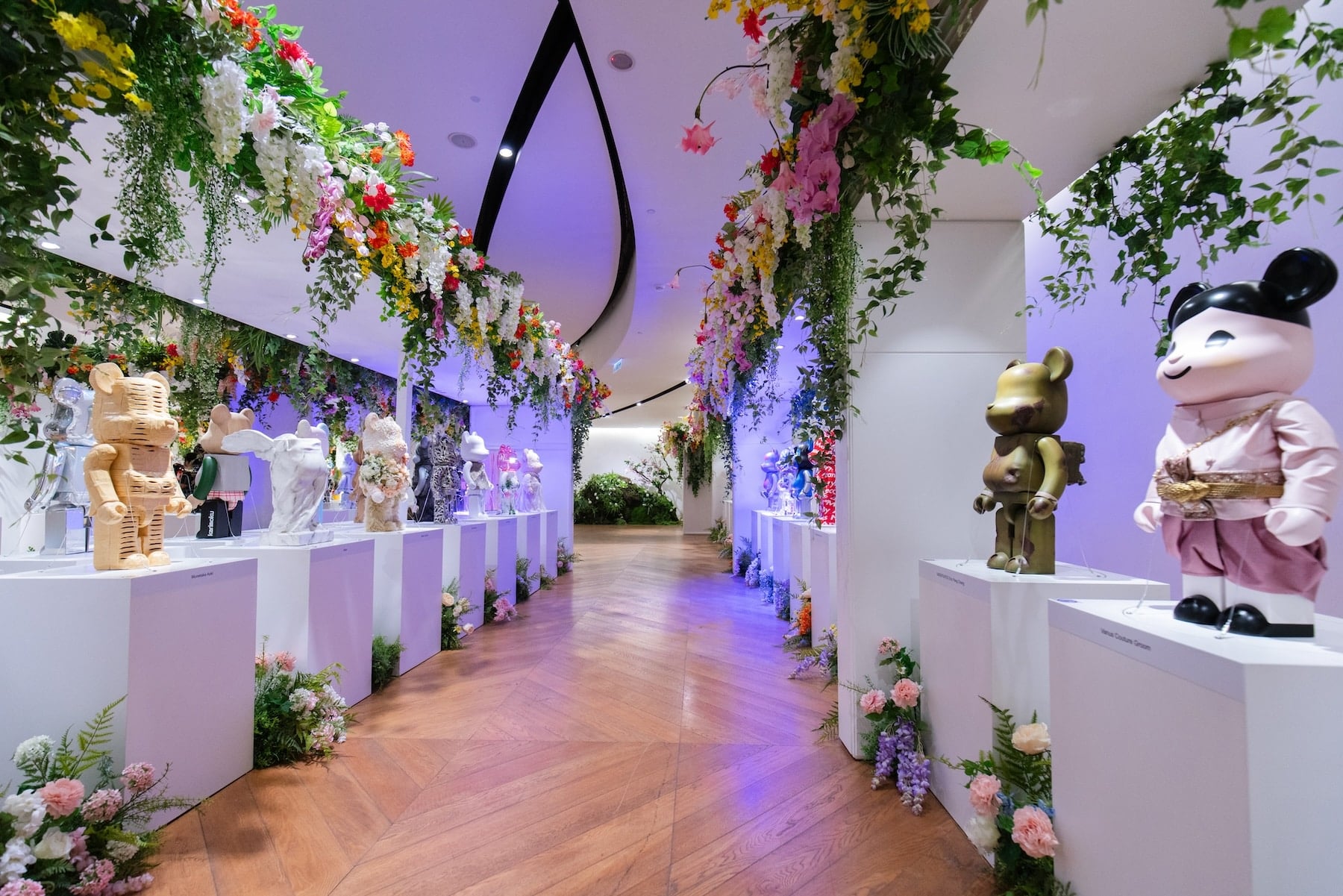
After beginning in Shibuya, Tokyo, Hong Kong became the next stop for the BE@RBRICK WORLD WIDE TOUR. Under the theme “GARDEN,” nearly 100 diverse art pieces were brought together in a botanically inspired space designed to engage the senses.
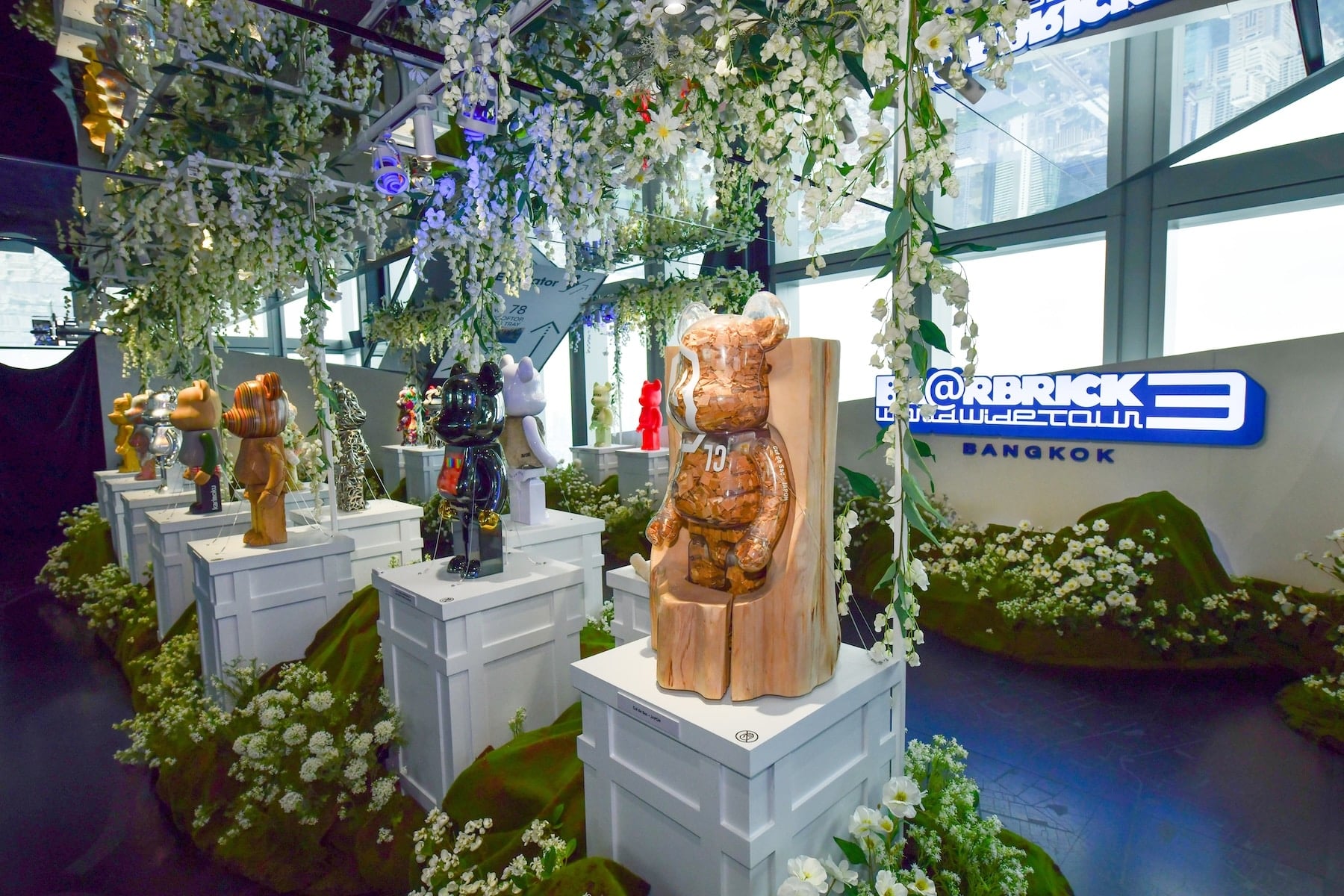
BE@RBRICK WORLD WIDE TOUR 3 in Bangkok was held in 2023 at the indoor observation deck on the 74th floor of the King Power Mahanakhon building. The exhibition also featured artists based in Thailand.
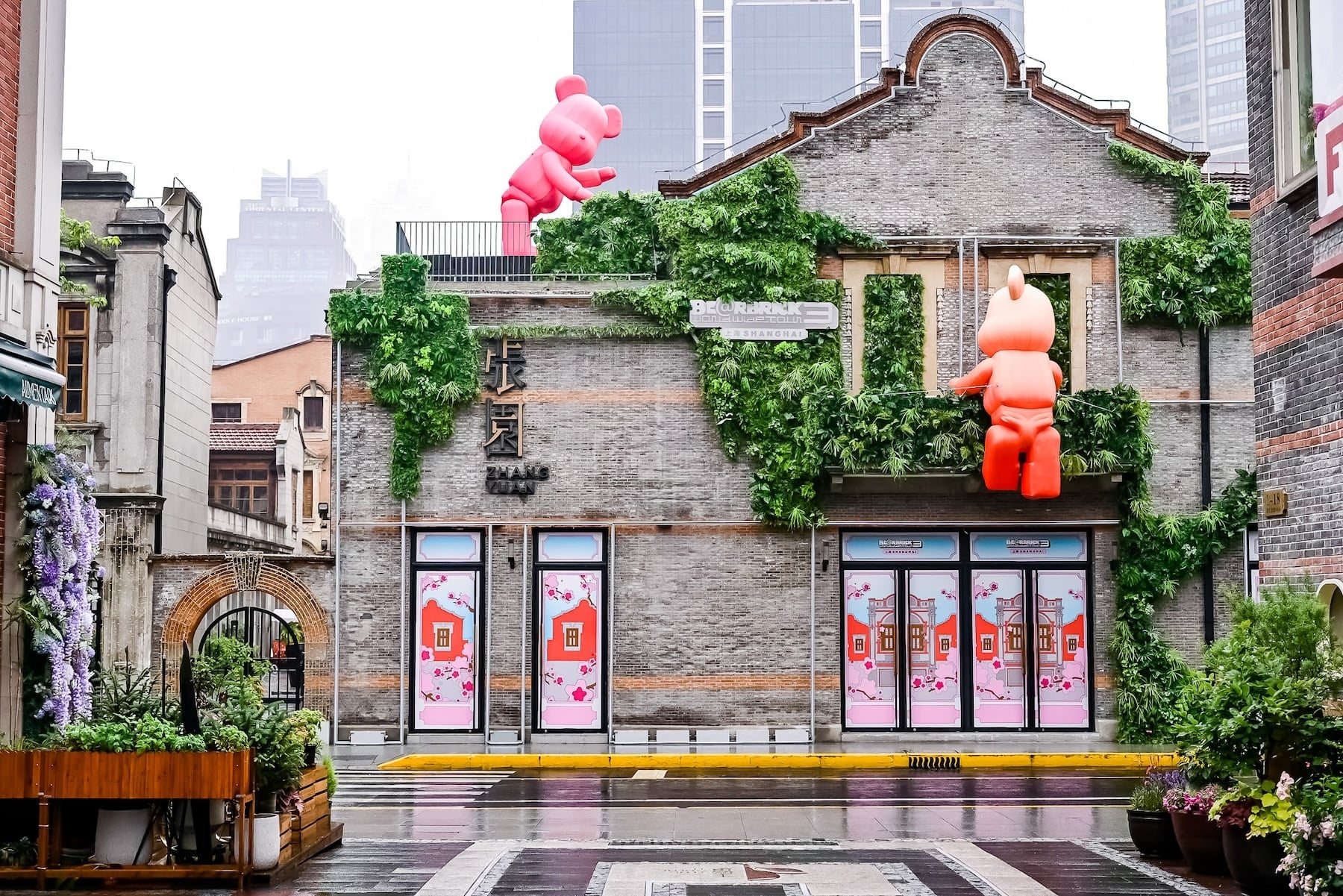
The fourth city, “BE@RBRICK WORLD WIDE TOUR 3 in Shanghai” held in 2024 in Shanghai, added new artists and brands such as CANOTWAIT_ William Chan, HAMCUS, Haruka Shimazaki "Paruru", MCZ_. Thomas, SMG : Still Movig Under Gunfire, and TuHongtao, new artists and brands were added.
Taipei, the fifth stop of the tour, hosted the exhibition at BELLAVITA, one of Asia’s leading luxury shopping malls. The exhibition also featured a rare design by the late Ryuichi Sakamoto.
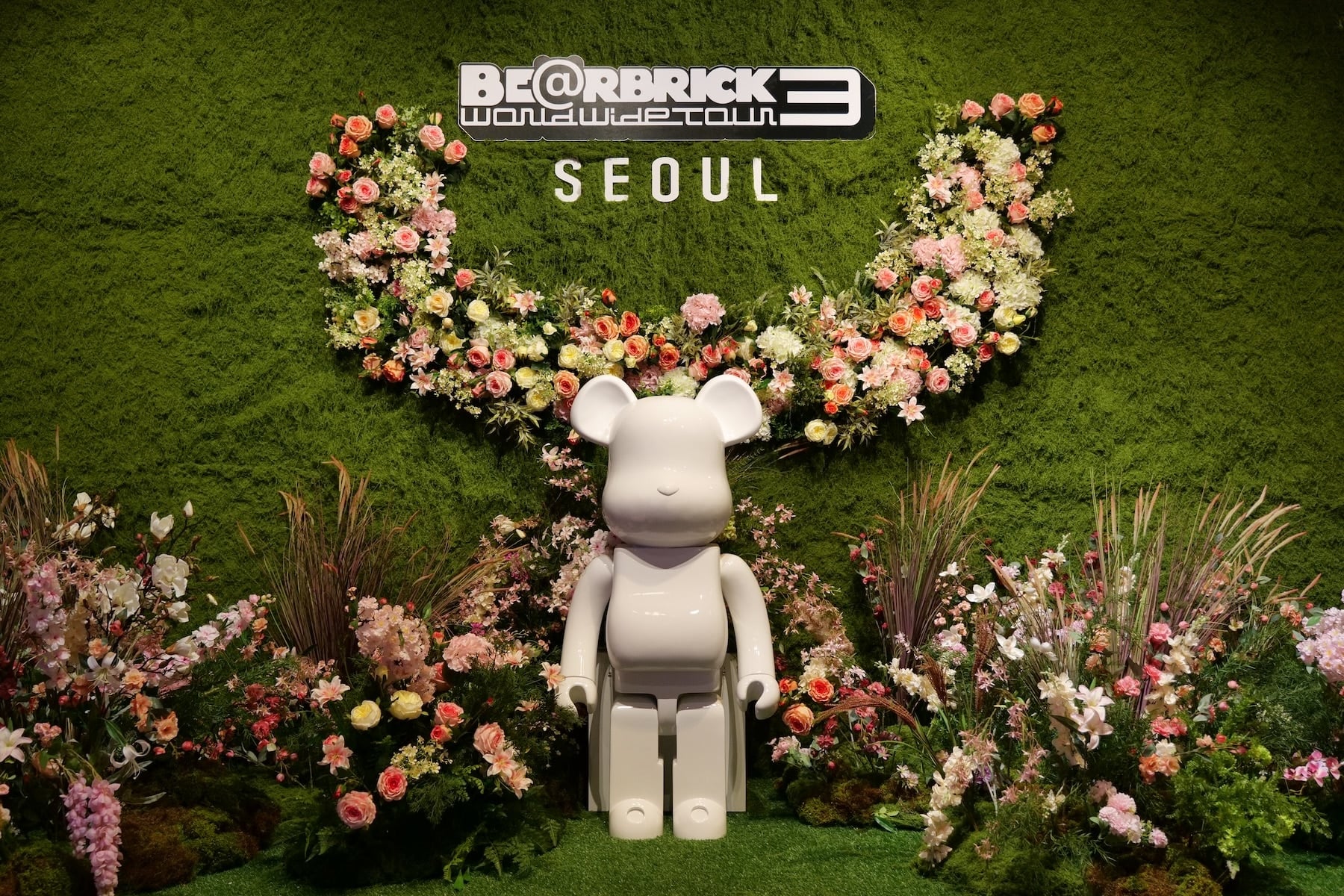
The Seoul edition was held in 2025. Eleven new artists from around the world joined the exhibition, bringing together more than 120 creative BE@RBRICK works within a limited-time “GARDEN” space inspired by a contemporary reinterpretation of traditional Korean gardens.
And in 2026, MEDICOM TOY itself celebrates its 30th anniversary.
This is an exhibition we hold every July, and this year we are commemorating our 30th anniversary by inviting 30 artists to participate."
The participating artists were chosen not according to categories or genres, but simply from the feeling of wanting to create something together. What kind of exhibition this approach will ultimately become is already generating anticipation.
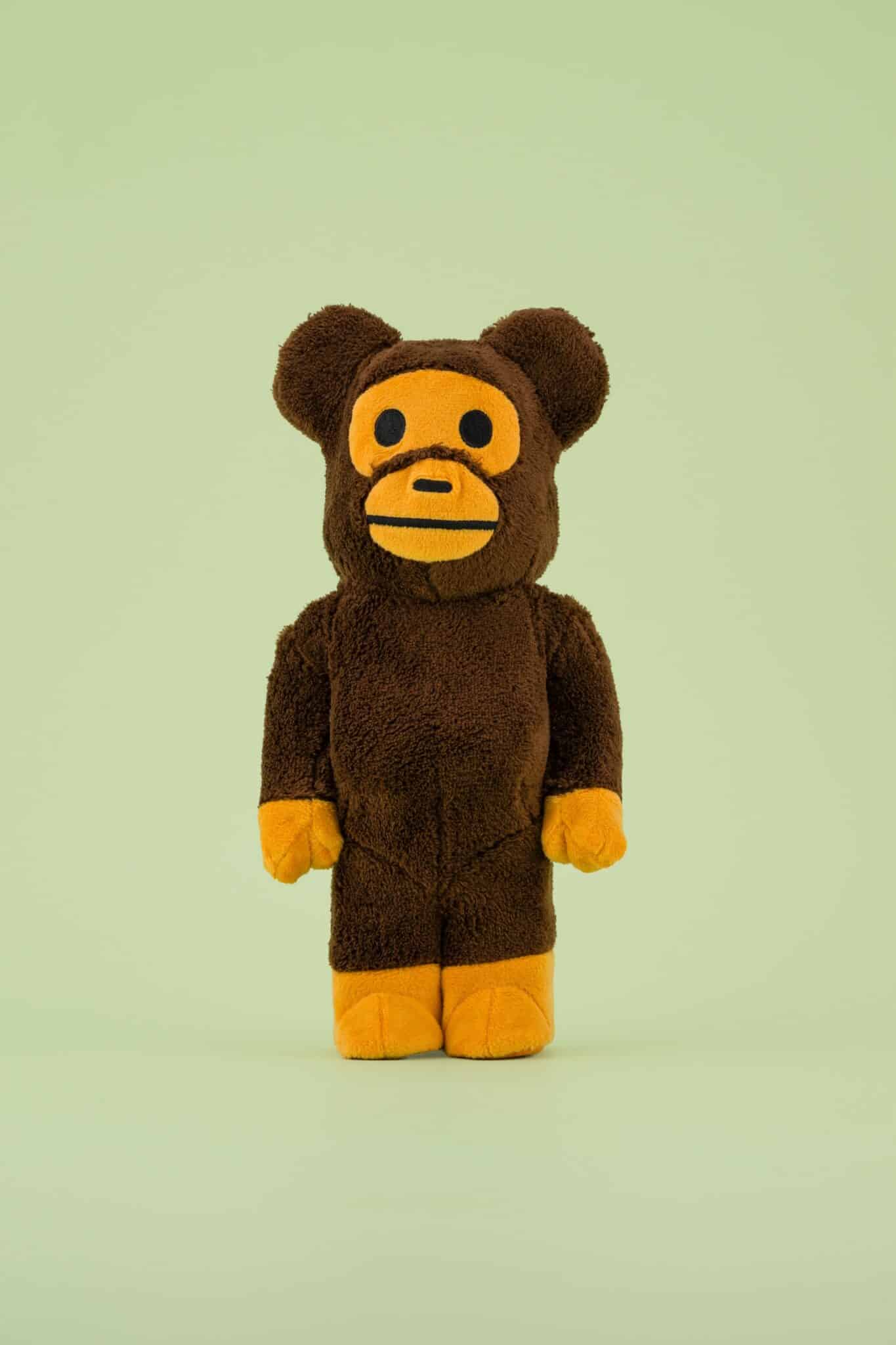
BE@RBRICK BABY MILO®︎ COSTUME Ver. 400% (Released December 2024) The latest BABY MILO® collaboration featuring a costume-style design. © NOWHERE Co., Ltd. All rights reserved. 1993/2026
BE@RBRICK SHELTERBANK THE HUMAN BEAR 400% (Released July 2025) © SHELTERBANK
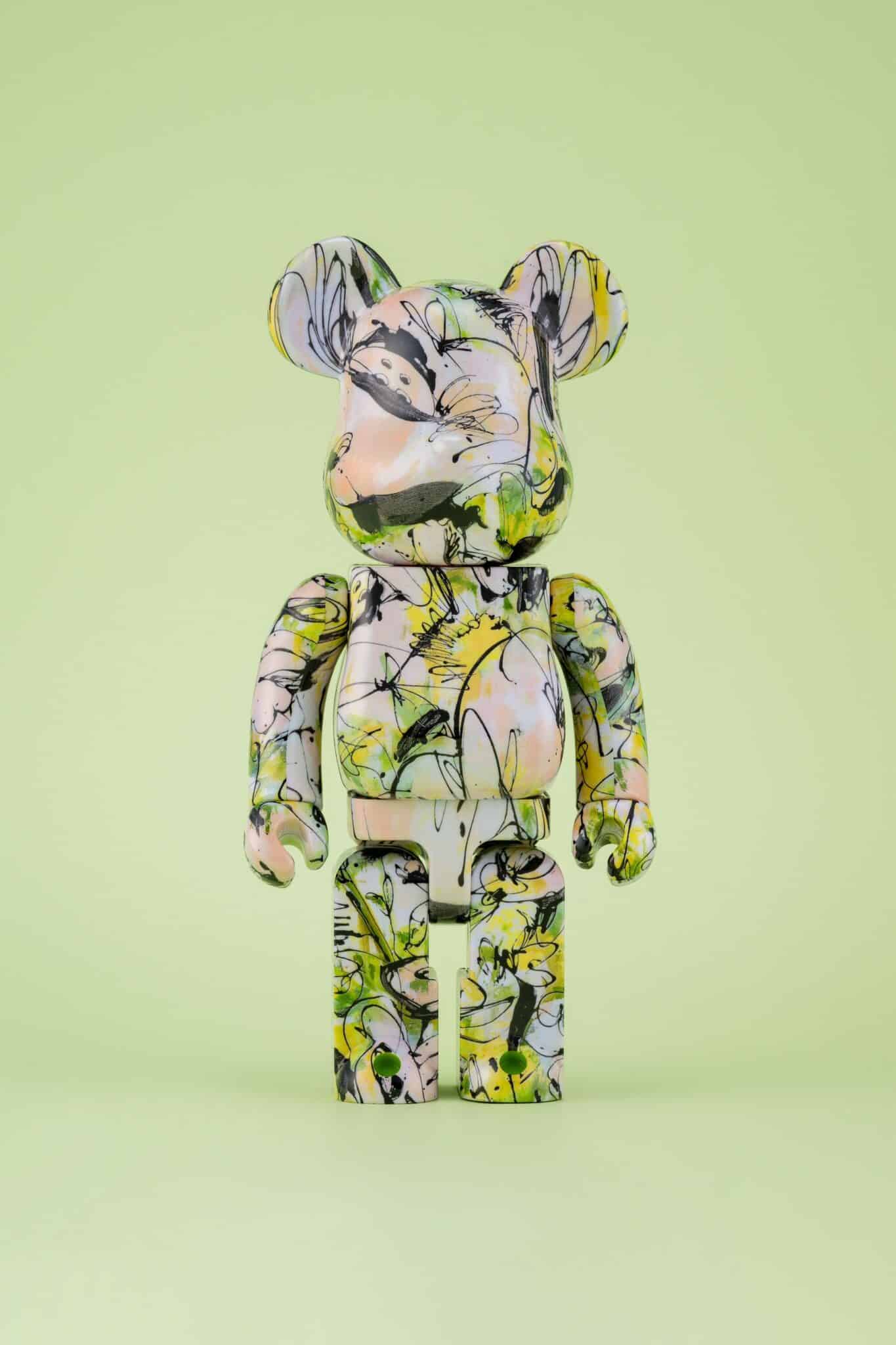
BE@RBRICK SHUN SUDO "Wind and Petals" 400%" (March 2026). This one incorporates artwork by contemporary artist SHUN SUDO. ©︎ SHUN SUDO
So what lies ahead for MEDICOM TOY?
“There’s a famous quote by Charles M. Schulz, the creator of Snoopy: ‘You play with the cards you’re dealt.’ Most people take that at face value. But if you actually lay out your five cards, you might realize, ‘Wait — maybe someone else would lend me their cards too.’ That possibility exists as well.
I realized fairly early on that the cards in your hand aren’t the only ones available to you. I think that realization helped many things — including BE@RBRICK — spread out into the world. But when I honestly think about what I really want to do, I think I simply want to do interesting things. I’ll be a toy maker for life.”
What emerges from those words is the sense that MEDICOM TOY is not simply a long-established manufacturer, but something still driven by passion in the present tense.
Finally, Akashi shared a message for readers around the world.
“Out here in the Far East, there’s this strange little company making all kinds of ridiculous, hard-to-explain things. And when you start digging deeper, you discover things like, ‘Wait, they worked with that person too?’ I think that sense of discovery is part of the fun. So I hope people simply enjoy exploring and shopping.”
BE@RBRICK TM & ©︎ 2001-2026 MEDICOM TOY CORPORATION. All rights reserved.
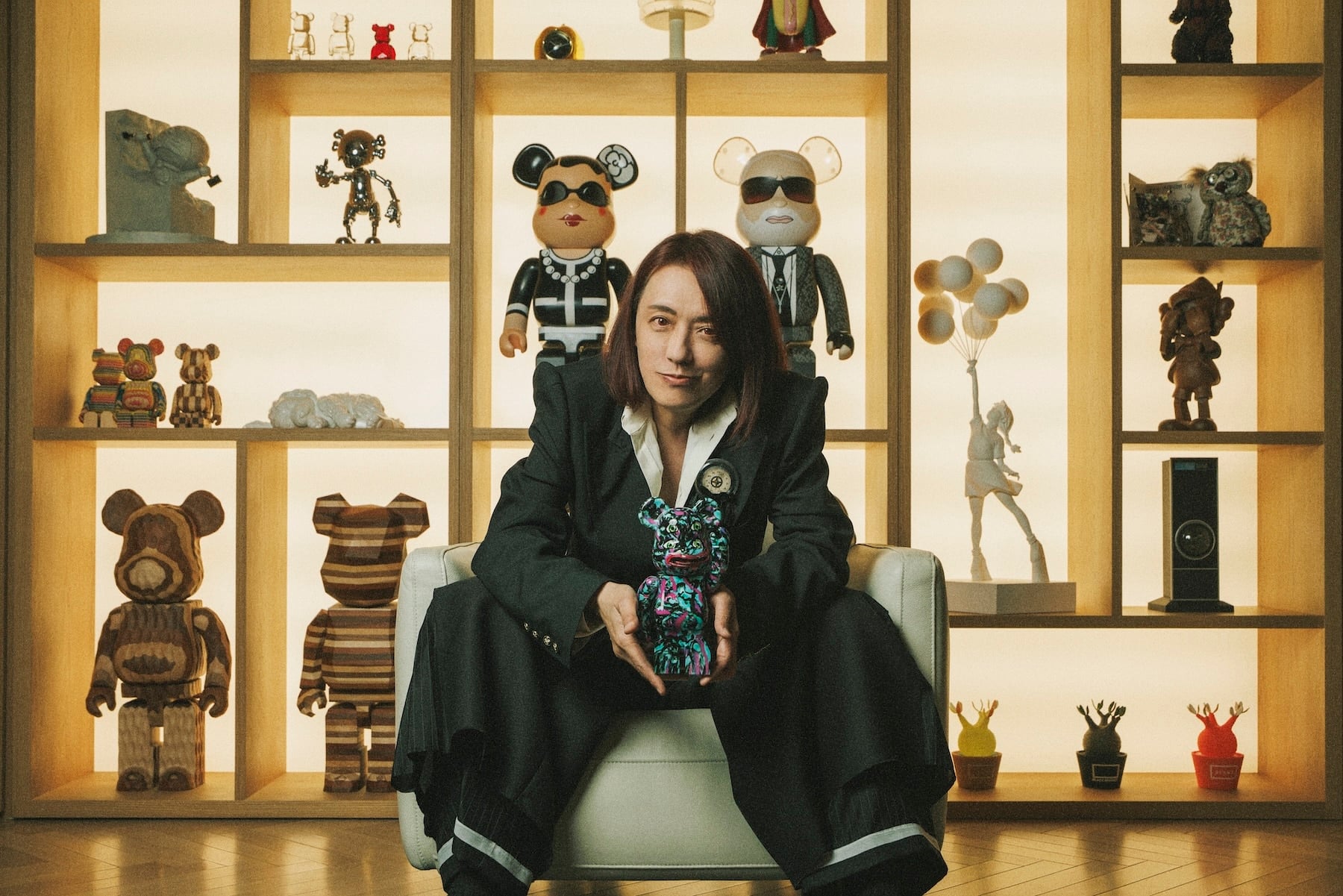
President & CEO, MEDICOM TOY CORPORATION
Born in Tokyo, Tatsuhiko Akashi founded MEDICOM TOY CORPORATION in 1996.
Based on the concept of “creating what we ourselves want, rather than developing products based on marketing,” MEDICOM TOY plans and manufactures character figures inspired by tokusatsu, anime, comics, films, and other genres. In 2000, the company released its original block-type figure “KUBRICK,” followed in 2001 by the bear-shaped “BE@RBRICK,” and has since developed a wide range of collaborations with artists, brands, and companies in Japan and overseas. The company also operates a diverse range of businesses, including the textile brand “FABRICK®” and the apparel line “MLE.” It currently operates six directly operated stores: “MEDICOM TOY TOKYO,” “Tokyo Skytree Town Solamachi Store,” “MEDICOM TOY PLUS,” “MEDICOM TOY NEXT,” “MEDICOM TOY PLUS NAGOYA,” and “MEDICOM TOY WEST.” In April 2026, it opened the gallery store and café “BE@RBRICK CONNECT” in South Korea.
HP:https://www.medicomtoy.co.jp