DEEPTOKYO
magazine

EN

DEEPTOKYO
magazine
EN
2026.06.01
A long-established chicken hot pot restaurant where you can enjoy premium oyakodon


 Nearest Station
Founded in 1760, the long-established restaurant “Tamahide” is a renowned restaurant in Nihonbashi Ningyocho, known as the birthplace of oyakodon. Oyakodon, which was created in 1891, is a Japanese dish made with chicken and egg. The chicken is regarded as the “parent,” and the egg laid by that chicken as the “child,” which is why the dish came to be called oyakodon, or “parent-and-child rice bowl.” The oyakodon at “Tamahide” uses carefully selected ingredients, including Tokyo Shamo chicken and eggs developed specifically for this one bowl. These ingredients create its delicate flavor.
SHARE


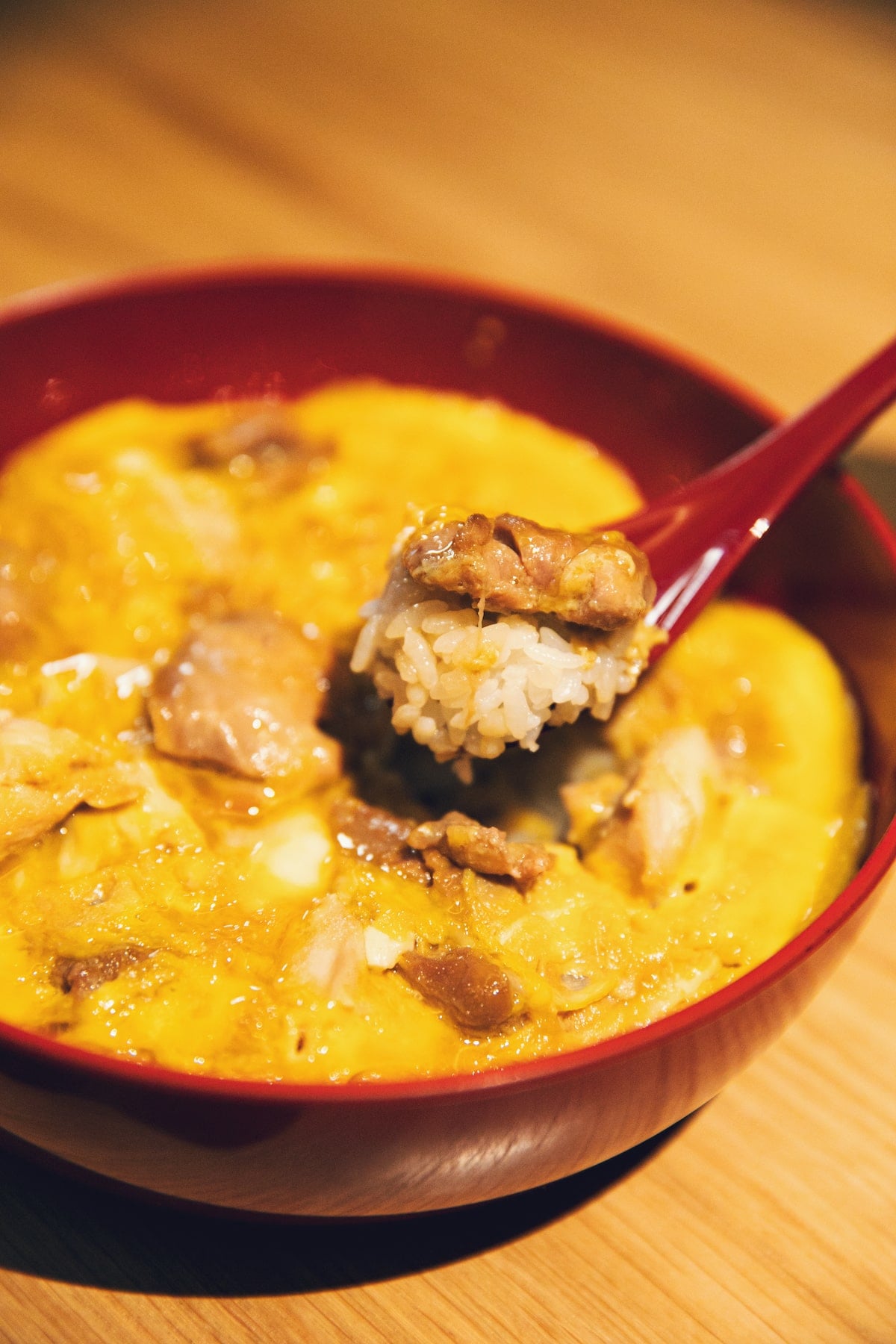
Oyakodon is a dish made by simmering chicken with beaten egg and placing it on top of rice. It is also widely loved as a Japanese home-style dish. The name “oyakodon” comes from the idea that the chicken is the “parent” and the egg is the “child.” The restaurant known as the birthplace of this oyakodon is “Tamahide,” located in Nihonbashi Ningyocho. Many of the ingredients used in this restaurant’s oyakodon were developed specifically for this one bowl. The chicken is Tokyo Shamo, which was jointly developed by the Tokyo Metropolitan Government and “Tamahide.” It is characterized by a pleasantly firm texture and strong umami. The eggs are also produced by a specific producer at the request of “Tamahide,” so that they pair well with the restaurant’s oyakodon. To bring out the deliciousness of the chicken, a delicate adjustment is made so that the flavor of the egg does not become too pronounced.
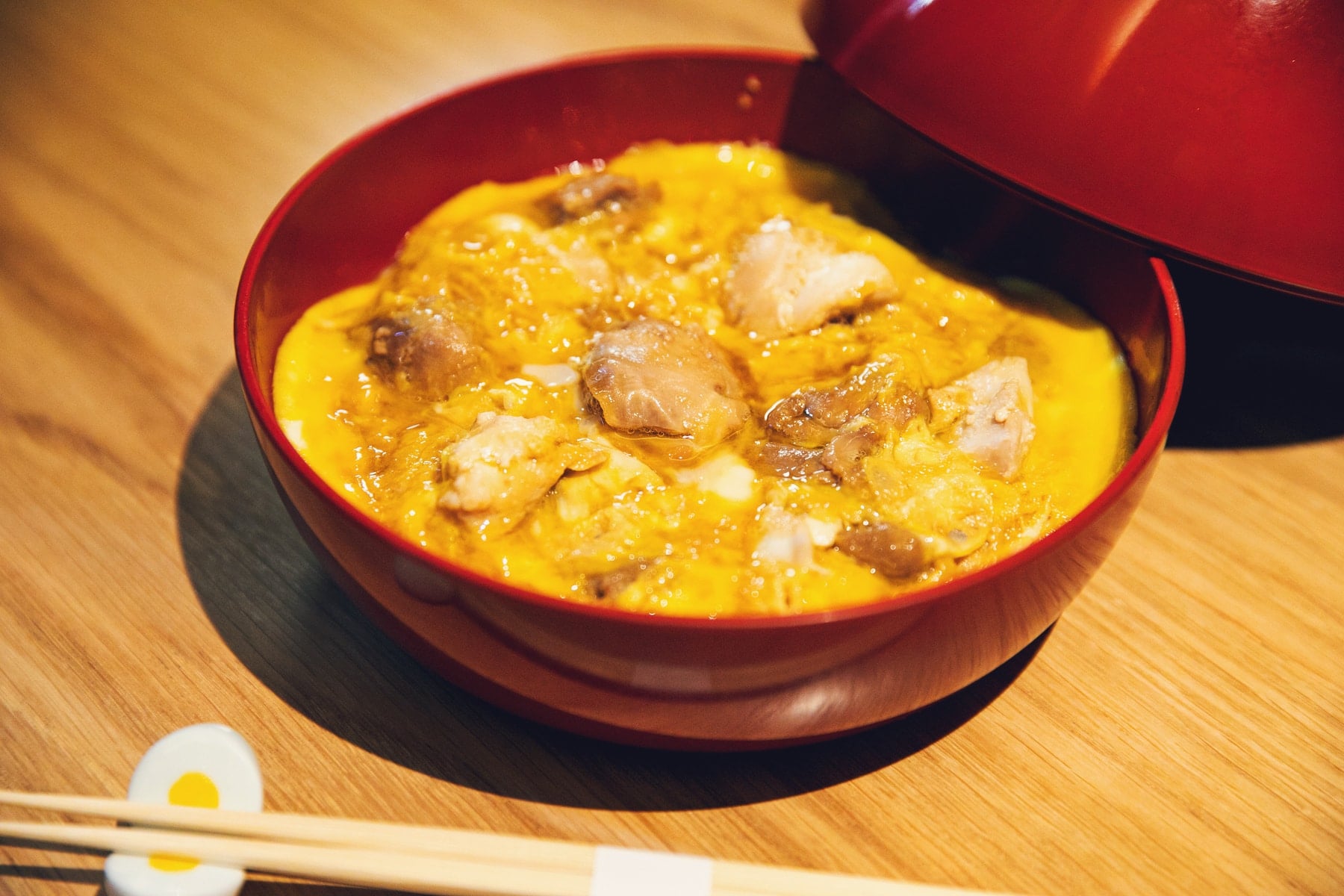
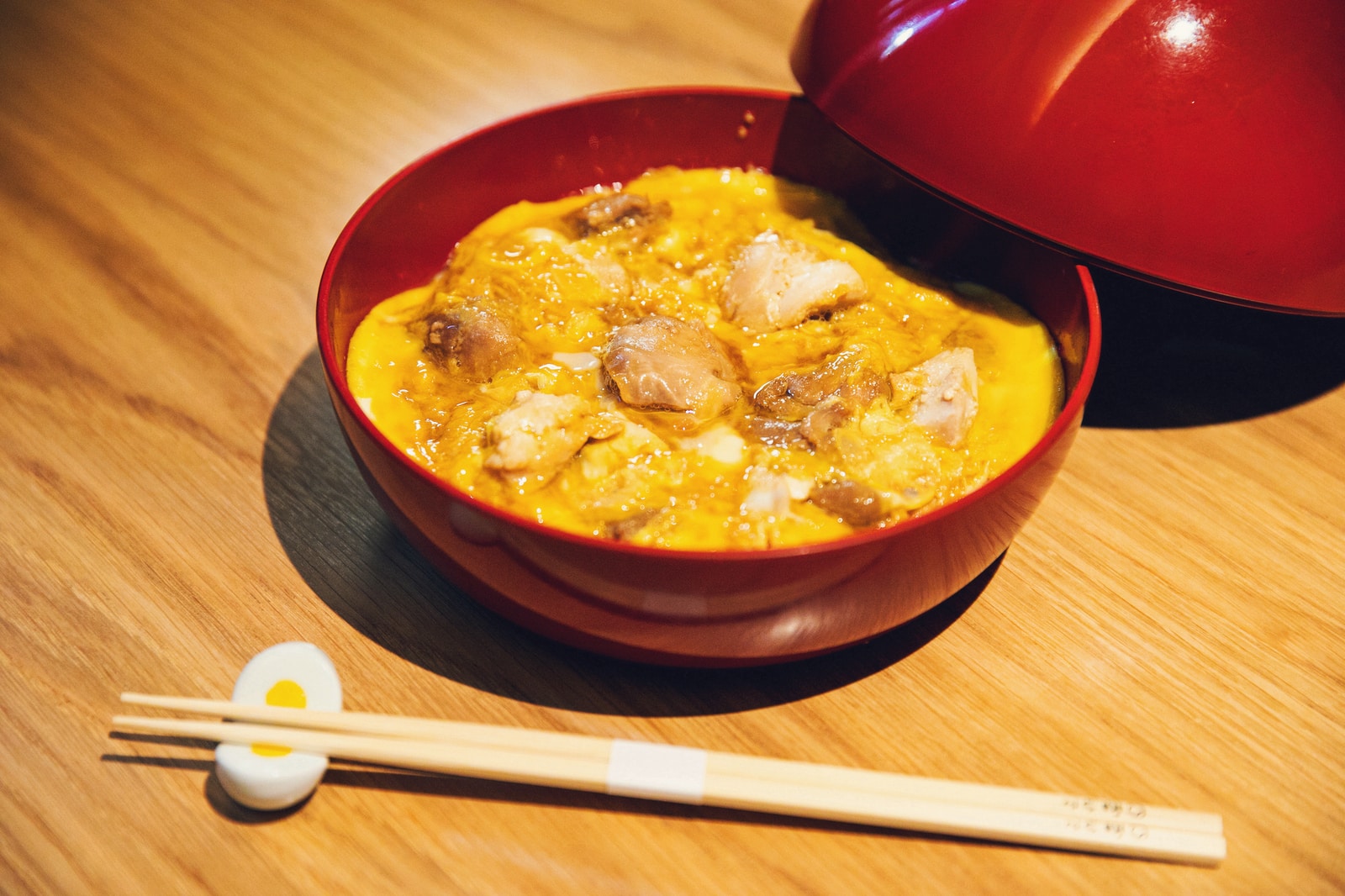
The "Original Oyakodon," ordered by many customers. 2,800 yen.
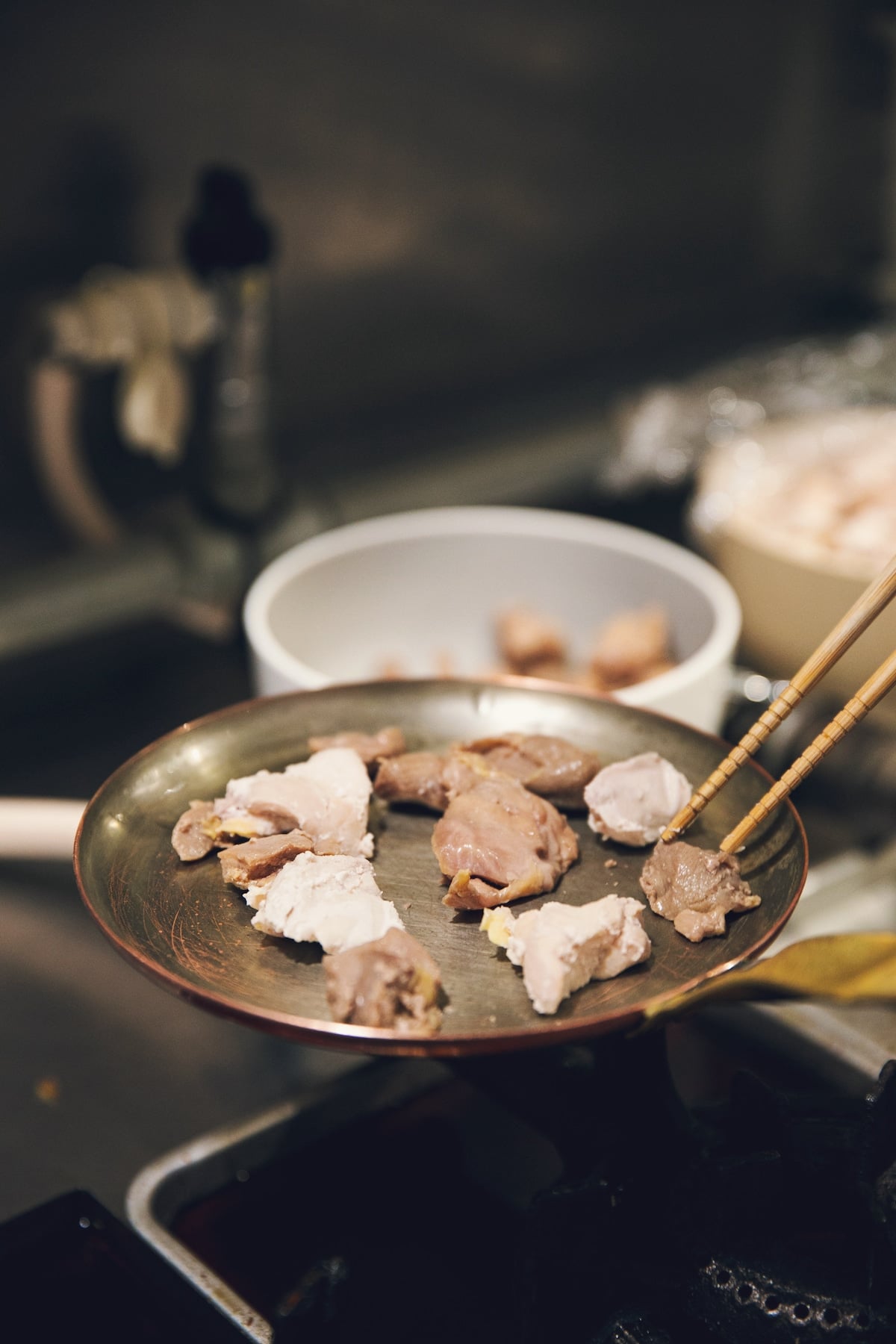
Shamo was originally a breed used for cockfighting. For that reason, it is characterized by firm flesh. Tokyo Shamo is produced by using shamo as the parent breed and crossbreeding it with other chickens.
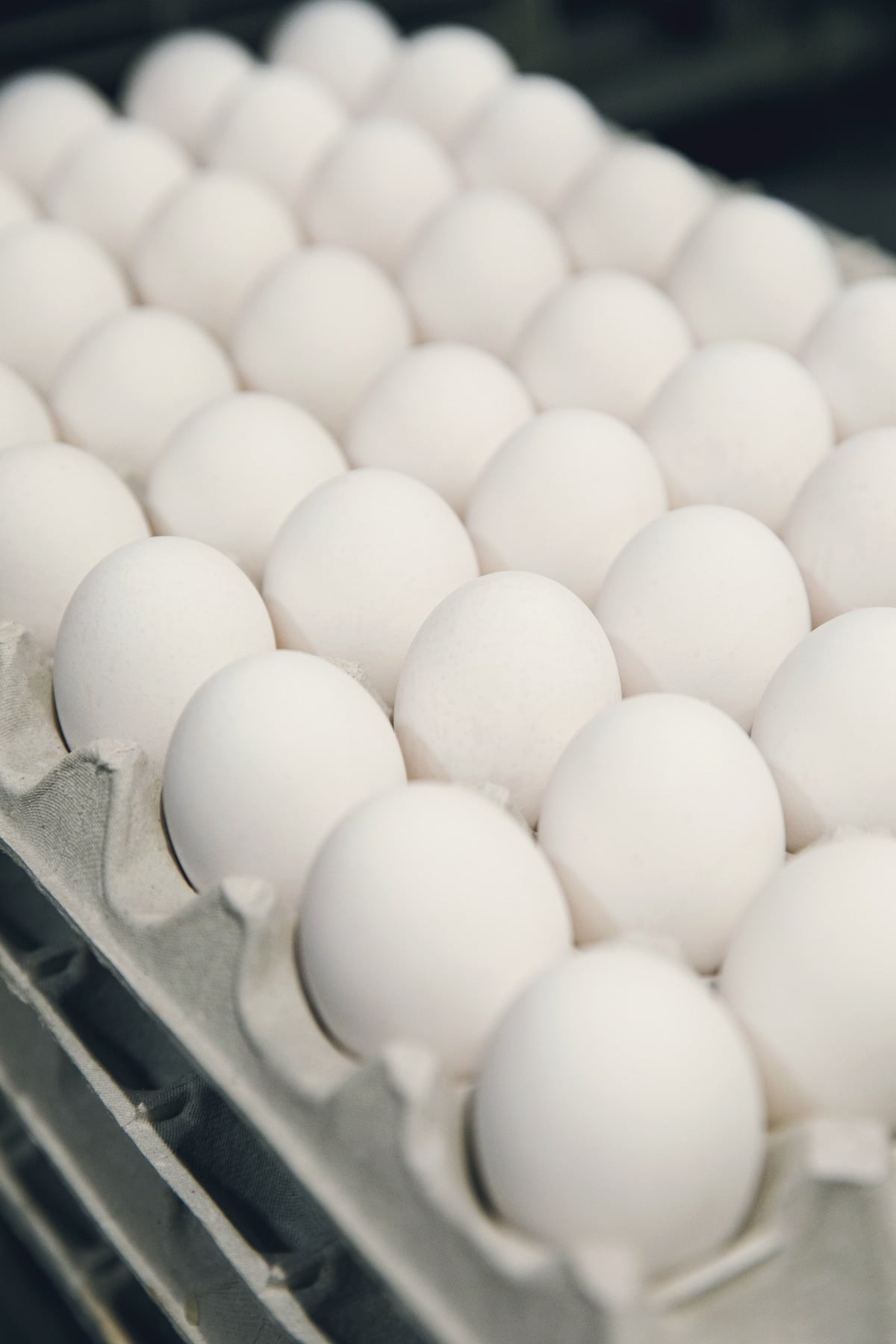
The eggs made exclusively for the oyakodon at "Tamahide" are characterized by yolks and whites that blend together easily.
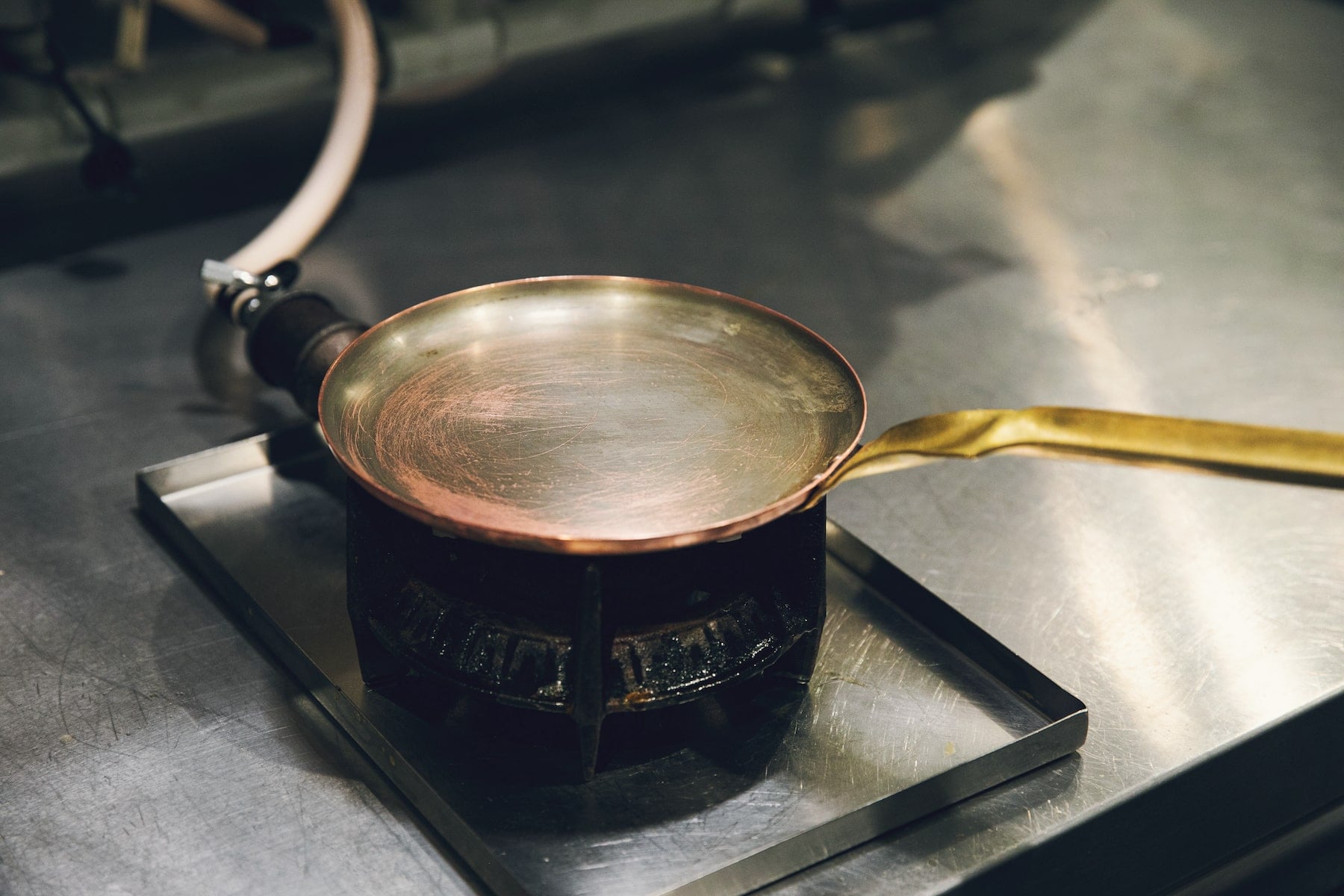
Not only the ingredients, but also the special pan used for oyakodon, called an oyako-nabe, is custom-made.
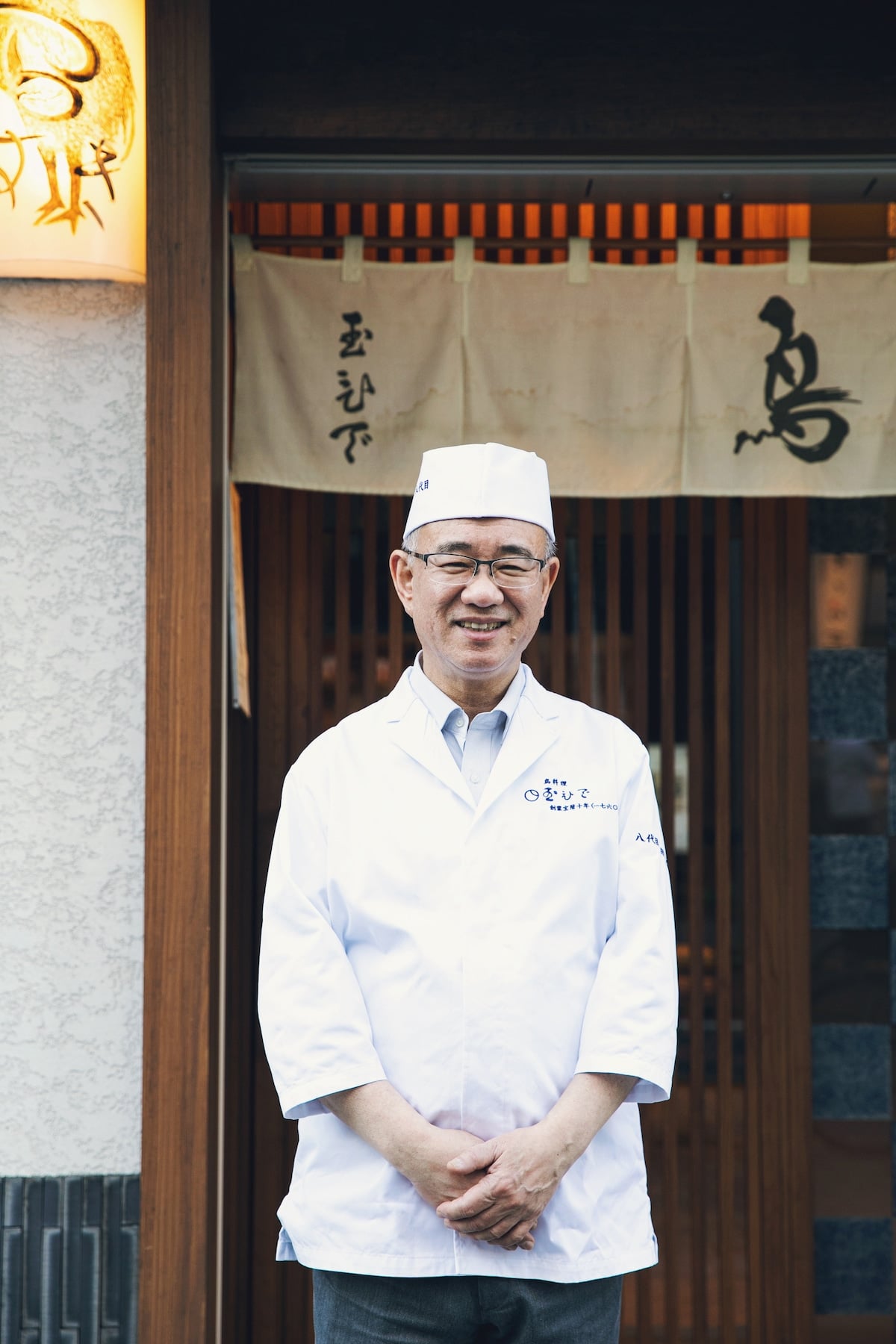
Kounosuke Yamada, the current owner and eighth-generation head of the restaurant, is active in a wide range of fields, including menu development at “Tamahide” and efforts to revitalize the Nihonbashi area.
seasoning liquid used when simmering the ingredients. A typical warishita is made with soy sauce, mirin, a sweet seasoning often used in Japanese cooking, and sugar. By contrast, the warishita used at “Tamahide” has been made only with mirin and soy sauce since the time of the restaurant’s founding. In the Edo period, mirin was a precious ingredient. While many restaurants could not obtain mirin as freely as they wished, “Tamahide,” which was an official purveyor to the shogun’s household, is said to have been able to use mirin throughout the year. Warishita made only with mirin and soy sauce is characterized by a clean sweetness and a rich aroma. When the umami of the chicken and the soft texture of the egg are layered onto this traditional flavor, the oyakodon unique to “Tamahide” is created.
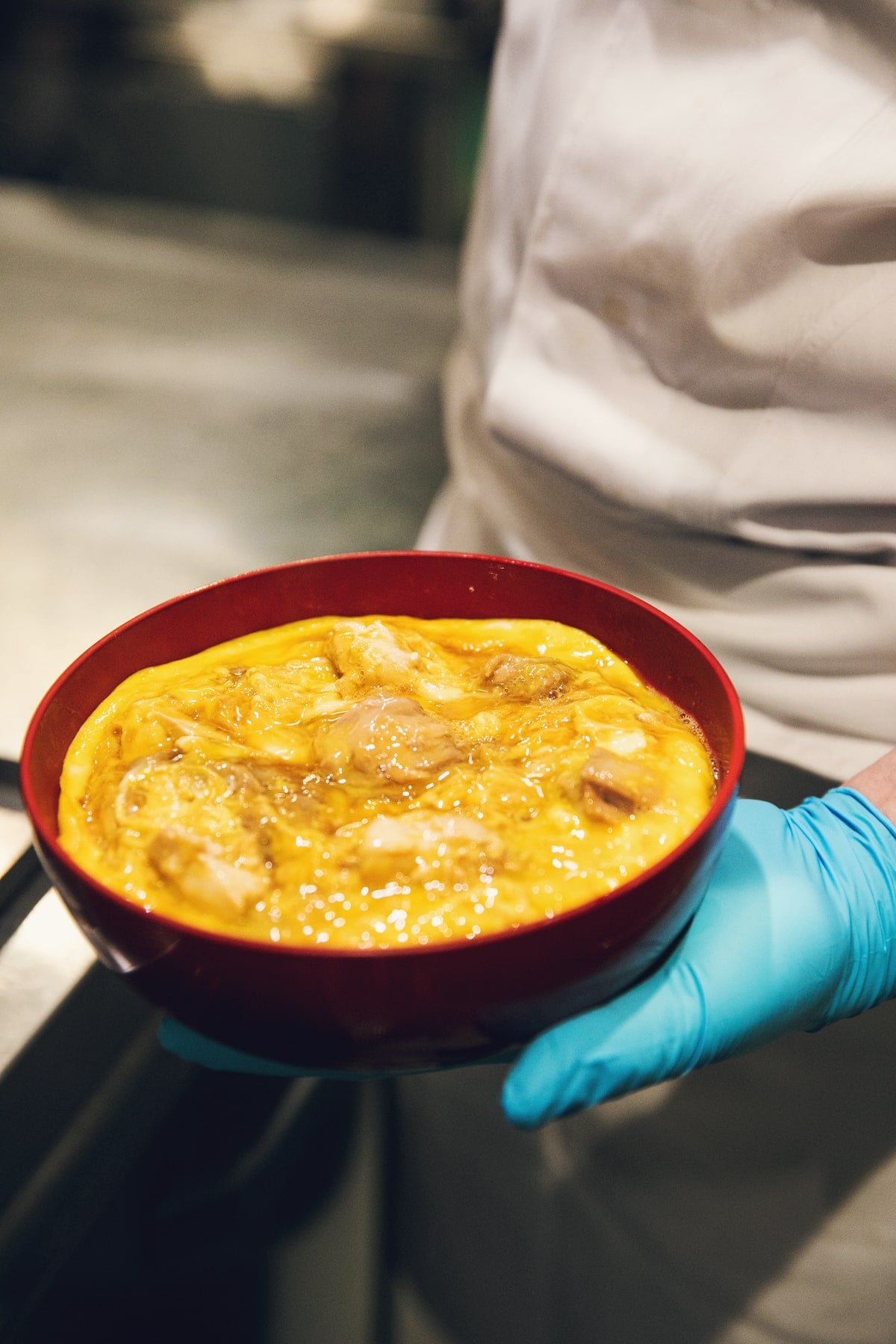
By covering the bowl with a lid and allowing it to steam, the flavor settles into the rice and the egg becomes fluffy. The bowl is served so that it is ready to eat at just the right moment when the customer opens the lid.
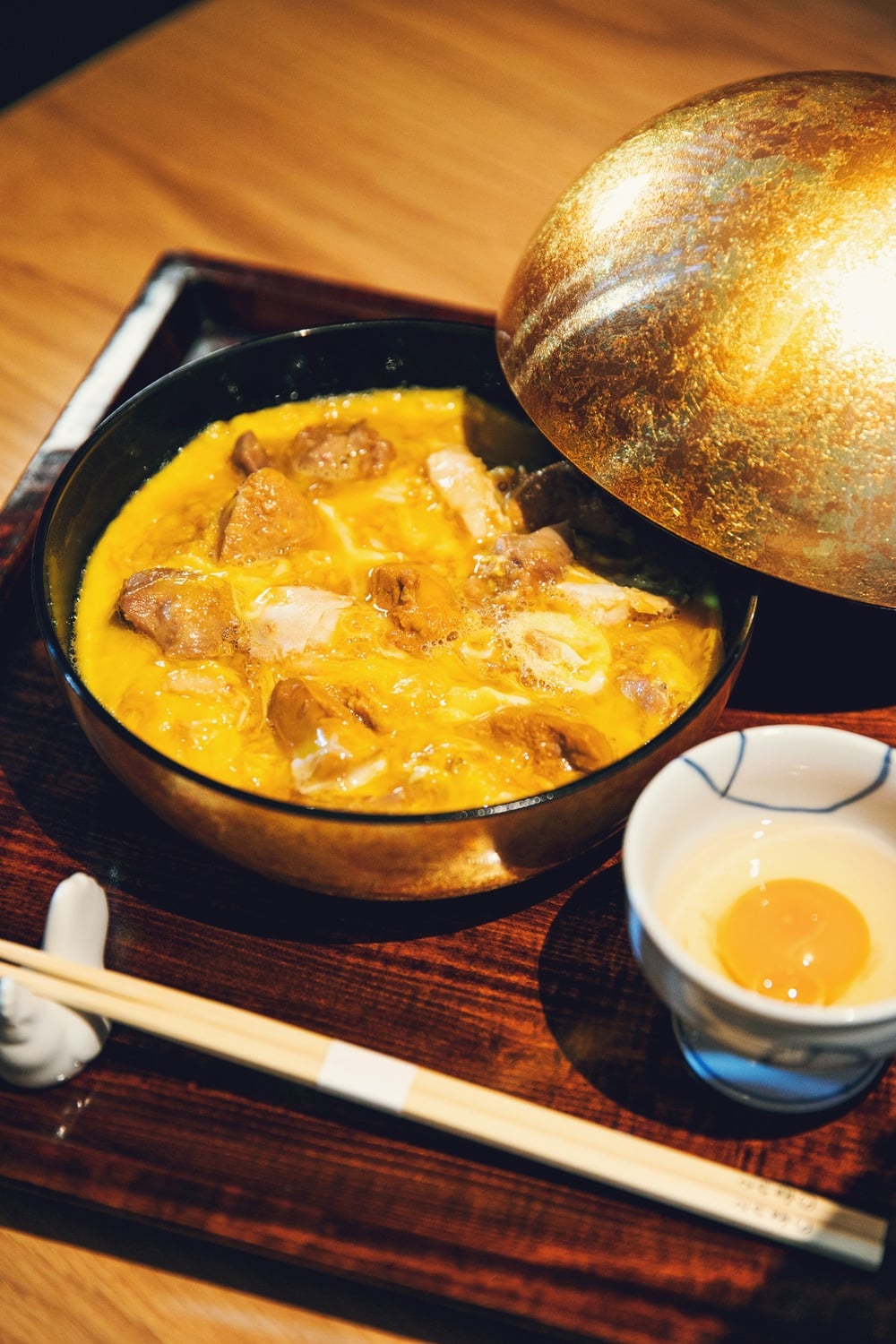
The "Natural White Liver Oyakodon," made with rare natural white liver, is a dish that cannot be tasted elsewhere. 5,500 yen
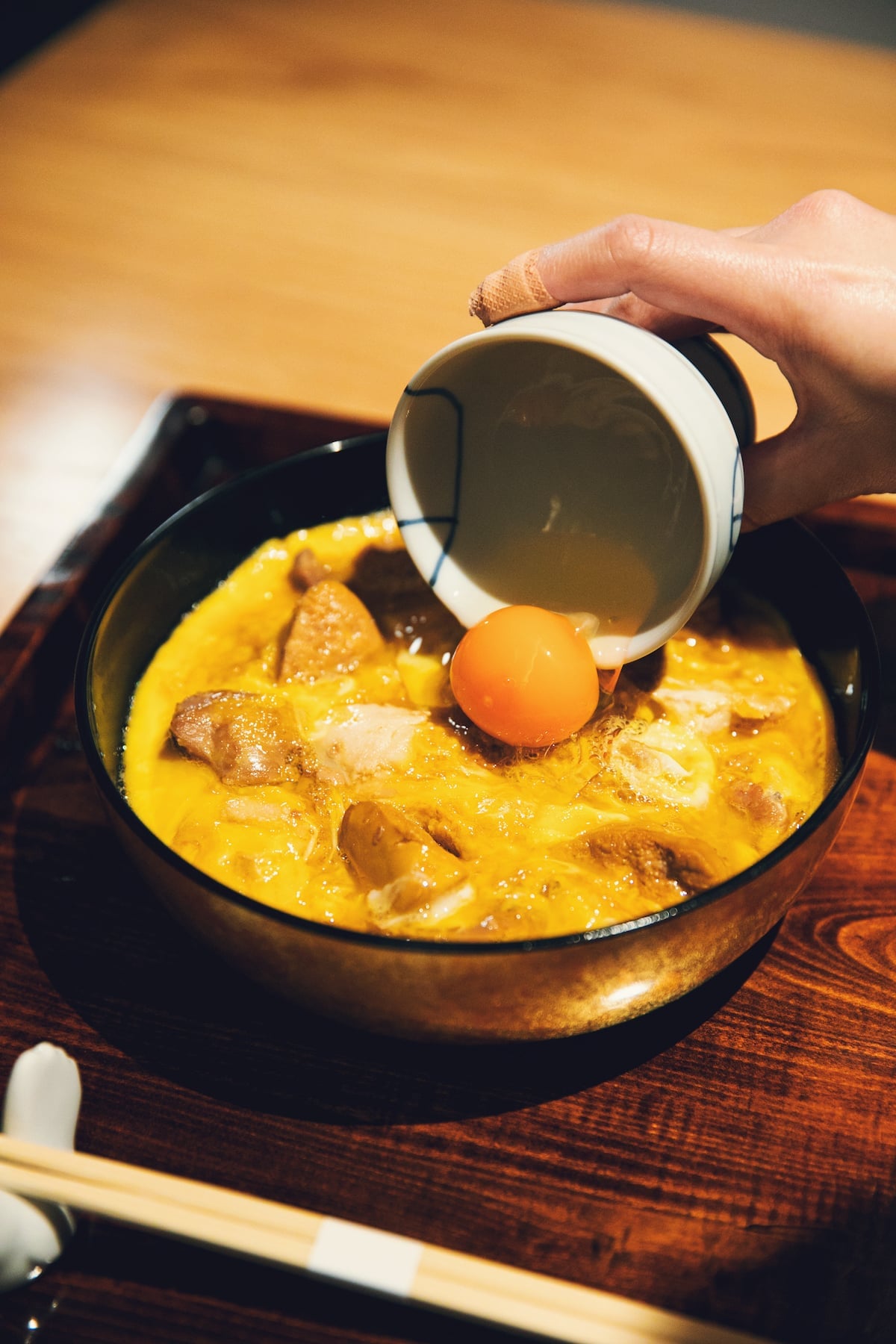
An egg from an Ukokkei, or Silkie, chicken, a premium ingredient, is served alongside the bowl. Customers can enjoy it in their preferred way, such as cracking it directly onto the bowl or beating it before pouring it over the dish.
The preparation begins by arranging the chicken in the oyako-nabe and simmering it in the warishita. While the chicken is simmering, the eggs are prepared. The key to making the eggs fluffy is not to mix them too much. Once the warishita comes to a simmer, the eggs are added in two stages and finished in a soft, runny state. Before the eggs become overcooked, the contents are quickly transferred to the bowl. Finally, the bowl is covered with a lid and left to steam, completing the dish.
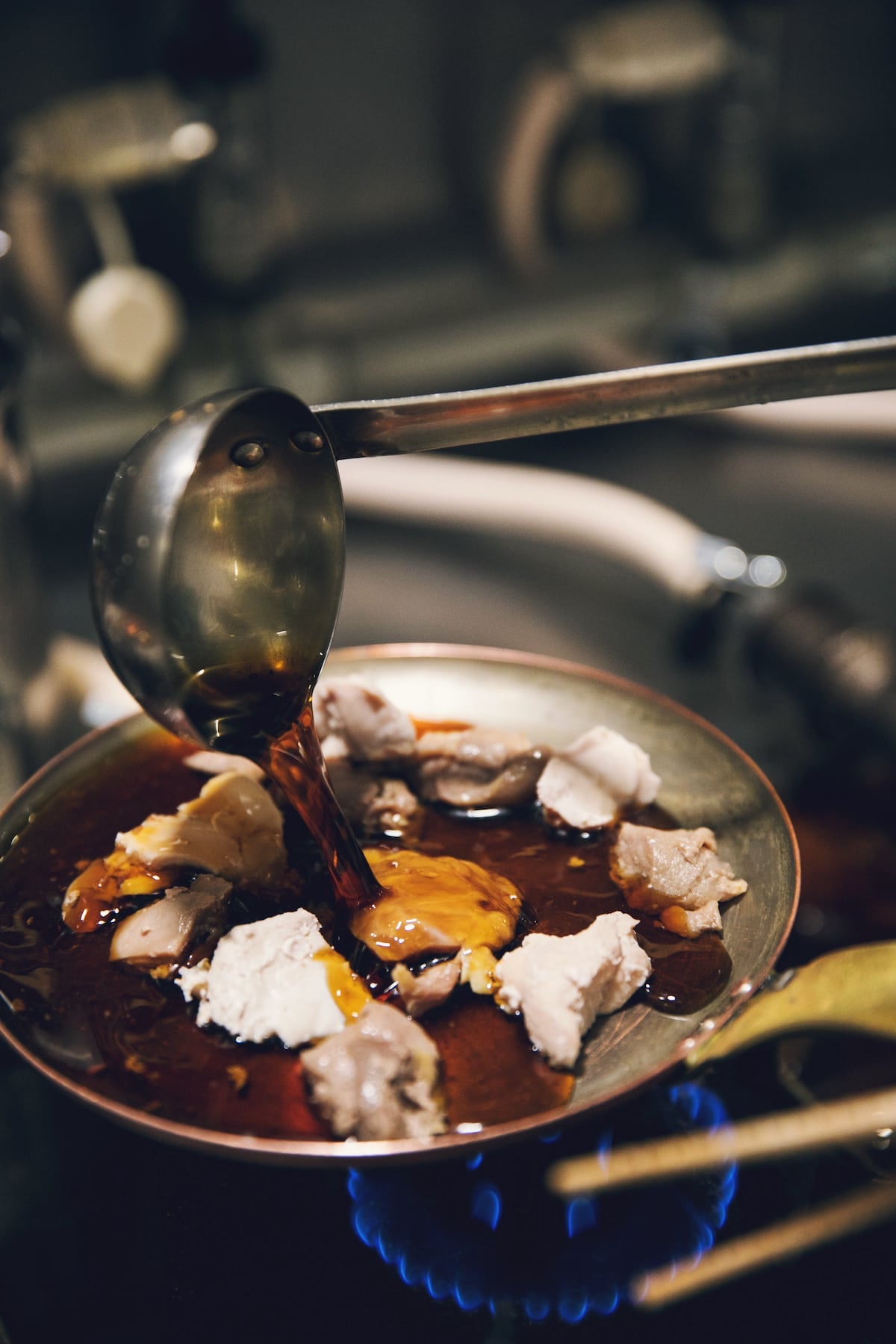
Warishita is poured into the pan in which the chicken has been arranged. The warishita at “Tamahide” does not use sugar. Because it uses mirin, it is characterized by a crisp, clean flavor.
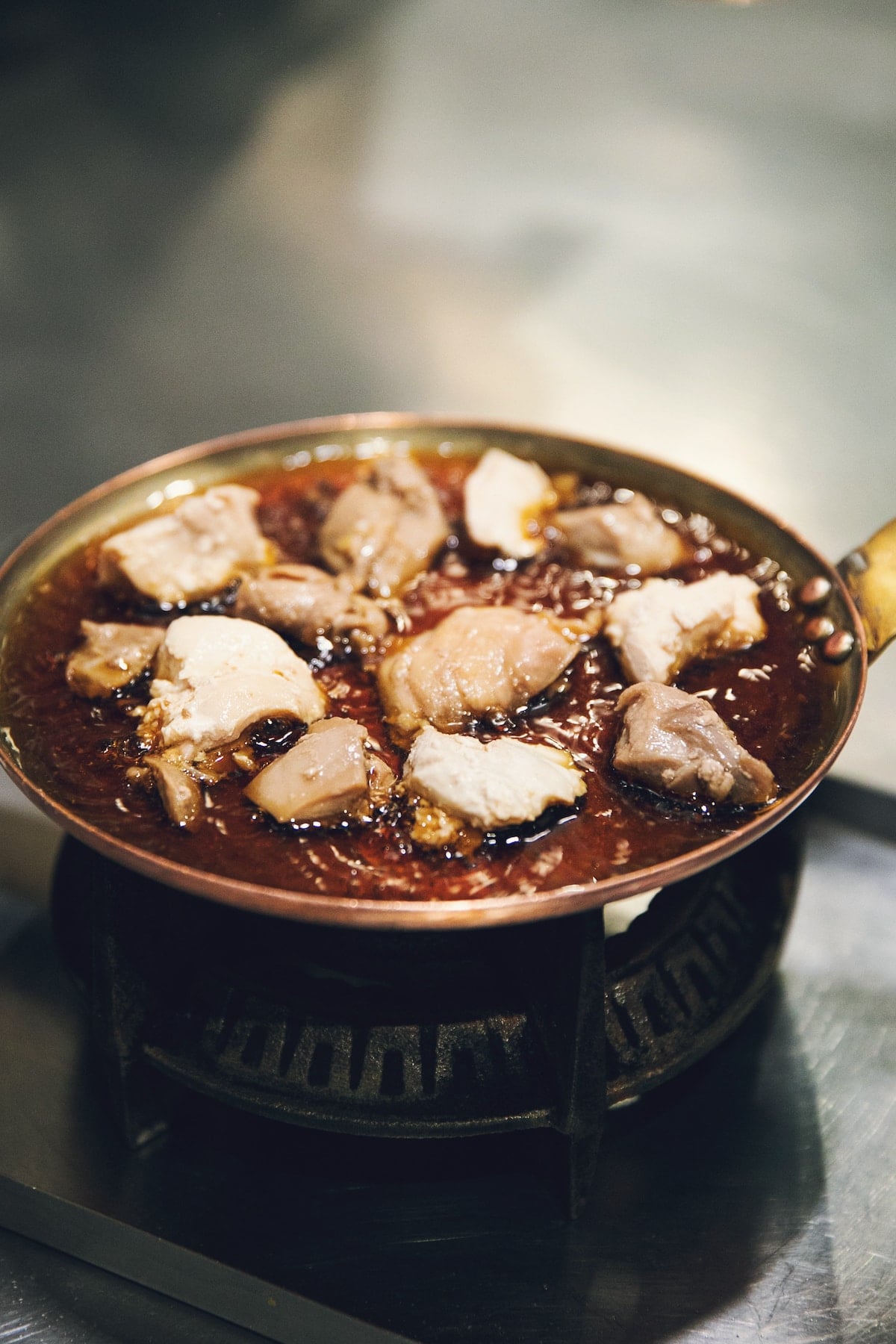
The chicken is cooked carefully over medium heat, without allowing it to come to a full boil. The pieces of chicken are arranged at equal intervals. This is designed so that, no matter where the customer eats from, the chicken and egg can be enjoyed together.
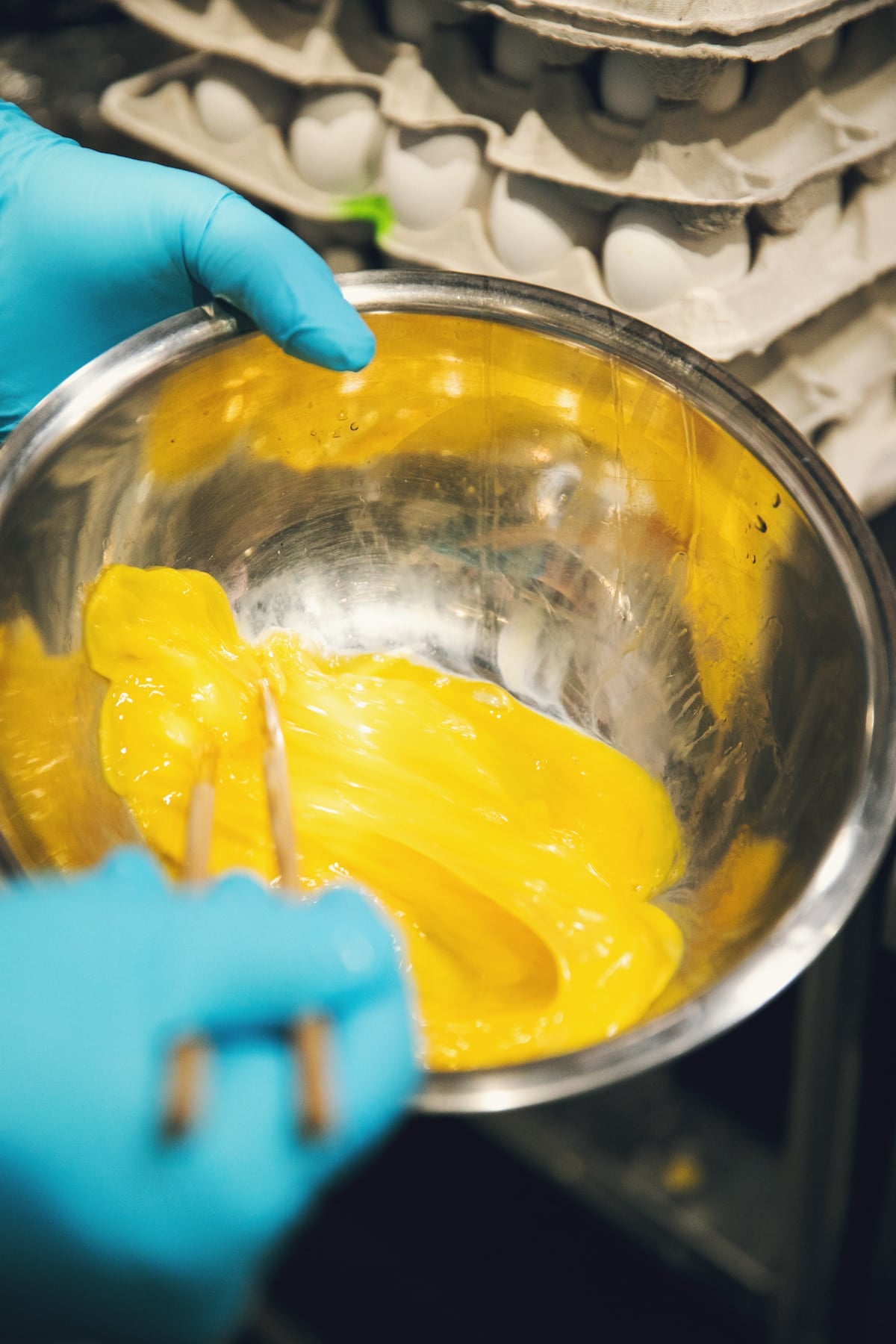
Three eggs are used. The key is to mix them lightly, just enough for the yolks and whites to come together.
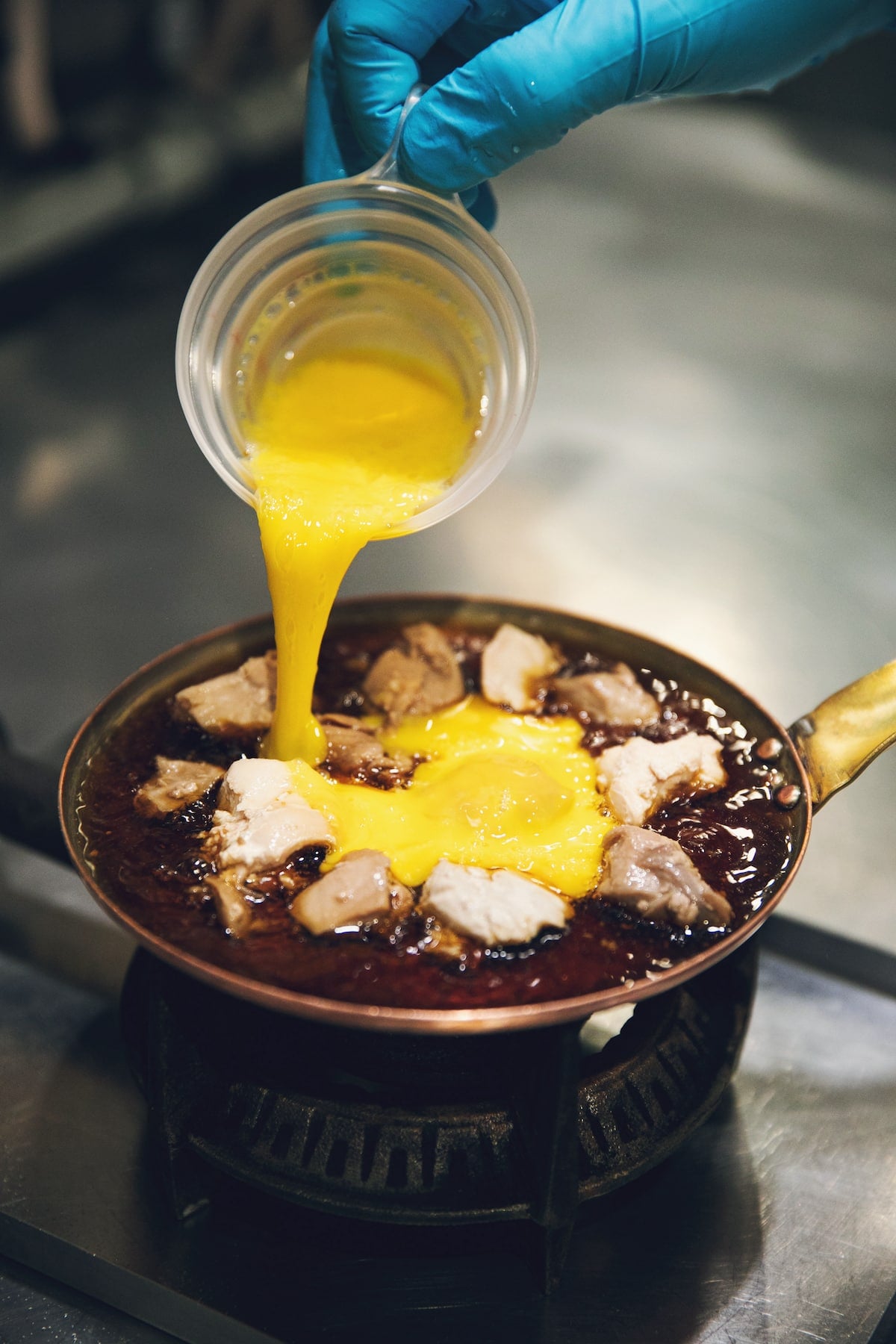
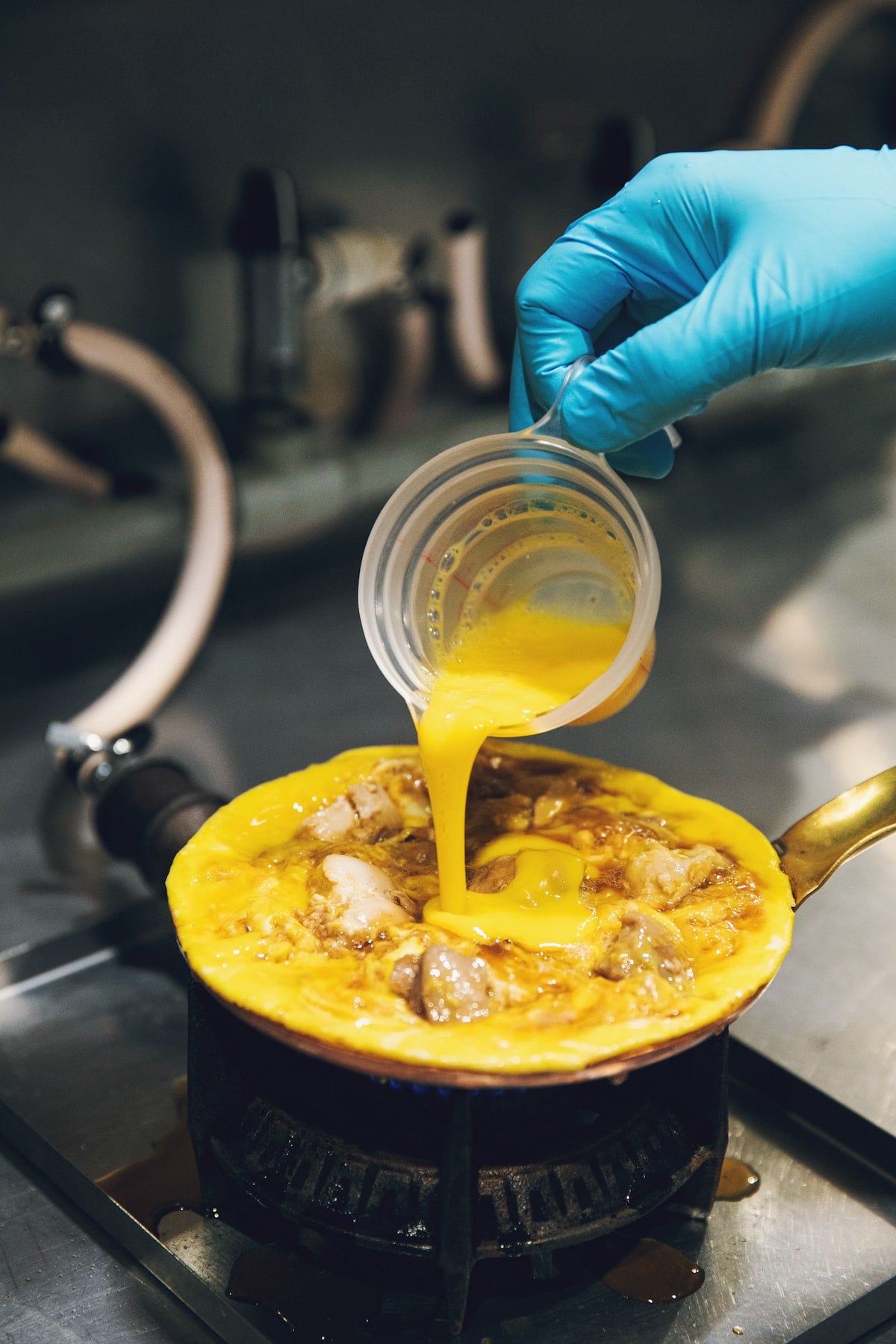
About three-quarters of the total amount of egg is used first. It is poured in a circular motion from the center toward the outside. Using slightly stronger heat is also said to be one of the keys to finishing the egg with a fluffy texture.
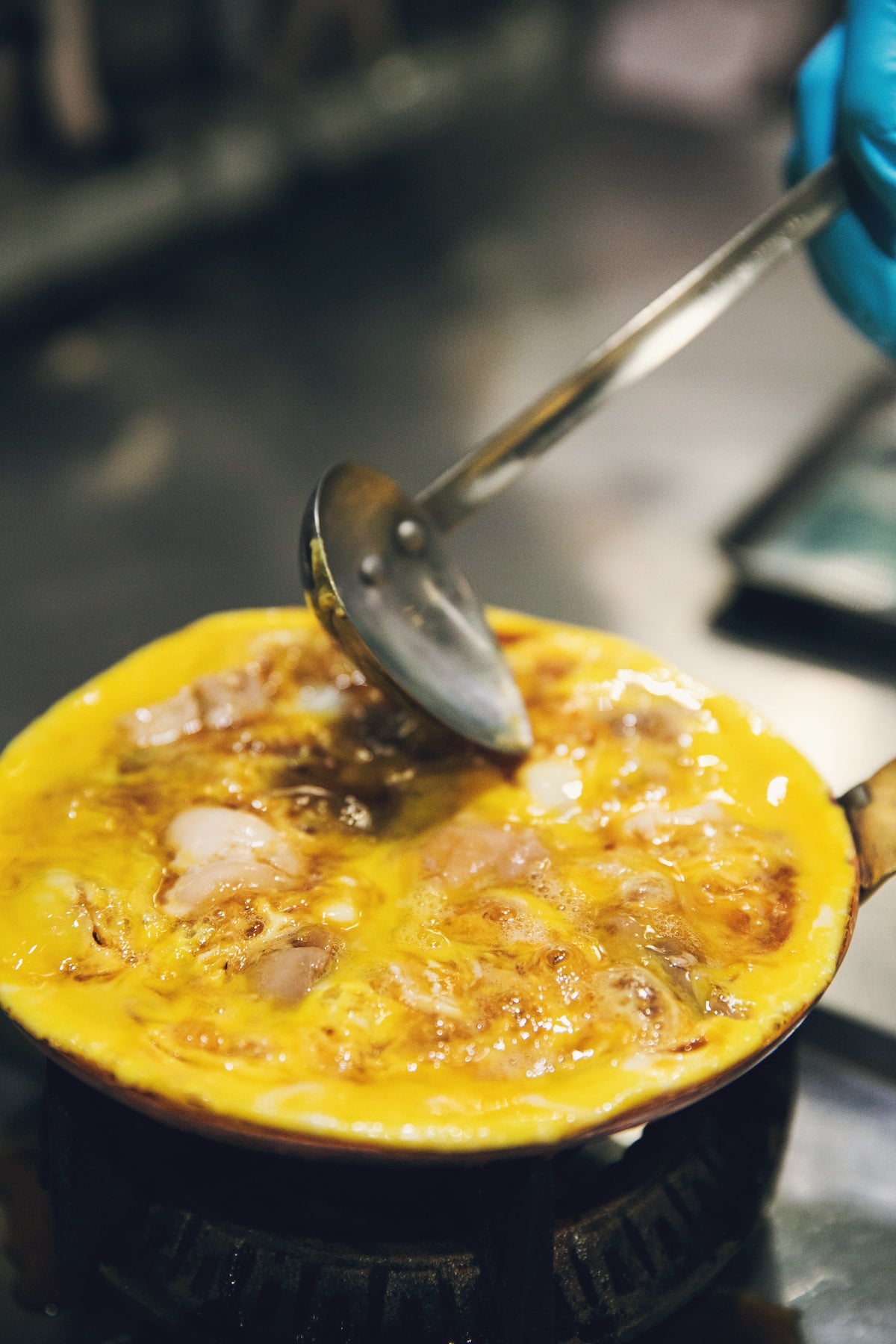
The surface is evened out with a ladle so that the thickness becomes uniform.dle.
When the edges of the egg set and begin to puff up gently, the remaining egg is poured in the same way as the first portion.
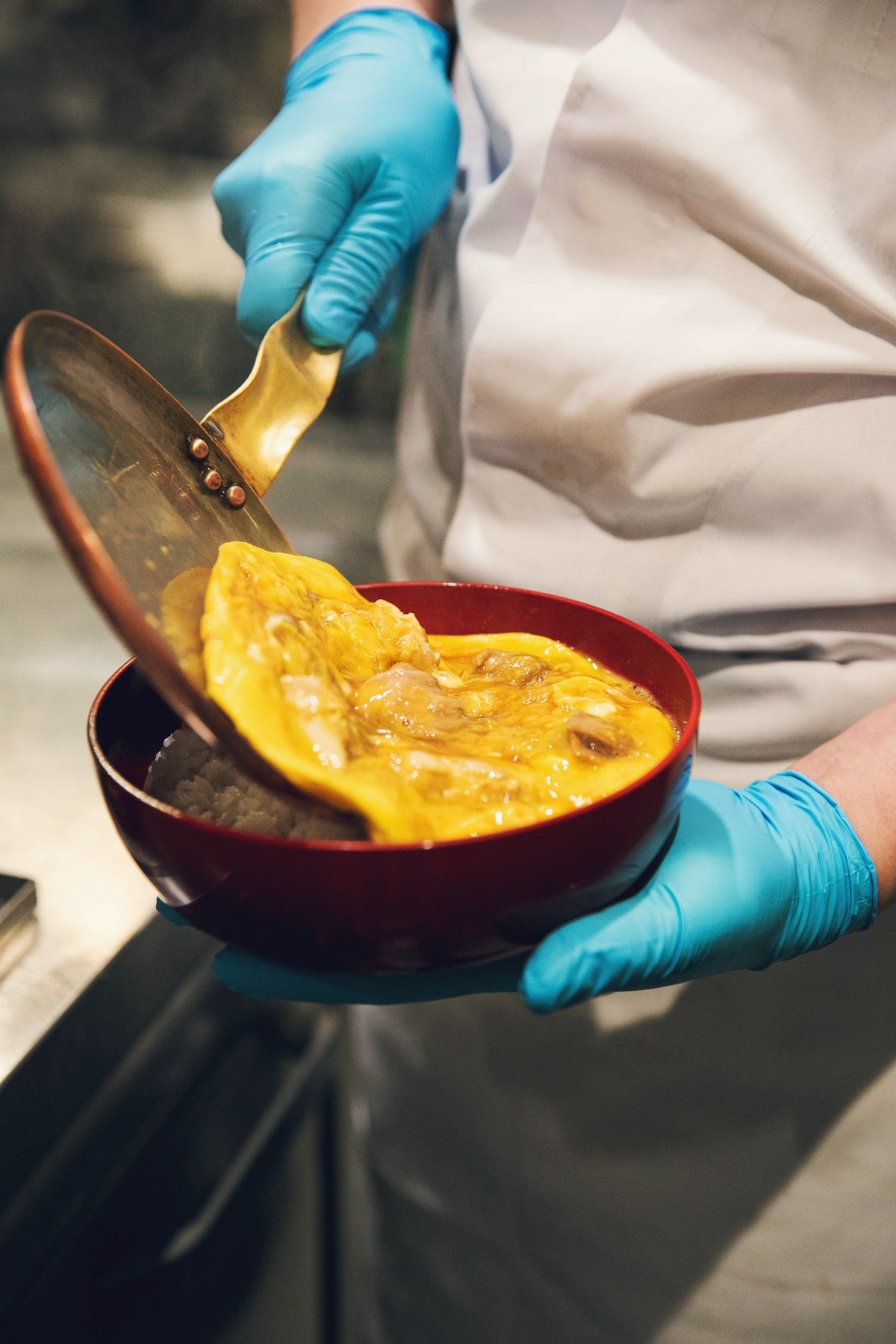
The dish is completed by sliding it out of the pan and onto the rice.
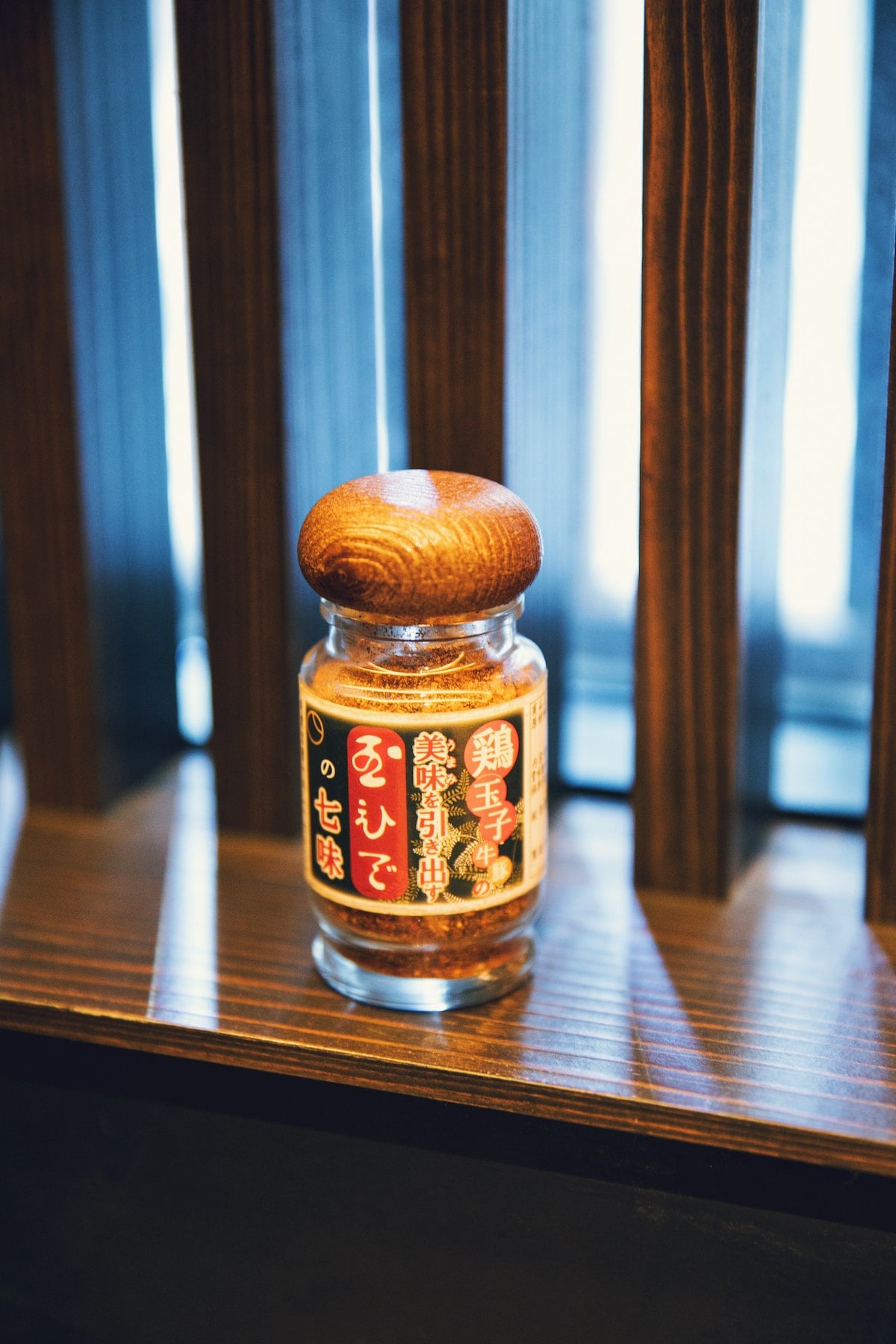
The condiments placed at each table are also original to “Tamahide.” This shichimi togarashi, a Japanese seven-spice blend, is made to bring out the flavor of the oyakodon and contains the distinct notes of sansho pepper and black pepper. Customers can enjoy the change in flavor.
Founded in 1760, “Tamahide” originally opened as a restaurant specializing in chicken hot pot. Oyakodon was created in 1891. The idea came from customers who were eating chicken hot pot and then added raw egg to the remaining broth in the pot, cooking it as an egg-bound dish. Based on that idea, the fifth-generation okami, or proprietress, is said to have created oyakodon.
At that time, Nihonbashi was a lively district that served as a center of finance. For the people who worked in that area, the oyakodon at “Tamahide” was a special treat eaten on days when business deals went well. The oyakodon created in this way spread together with the Nihonbashi district. Today, it is loved as one of Japan’s standard dishes.
Today, the restaurant continues to serve oyakodon during the day and oyakodon at night, as well as sukiyaki chicken and other dishes, conveying the delicious taste of chicken in a wide range of dishes.
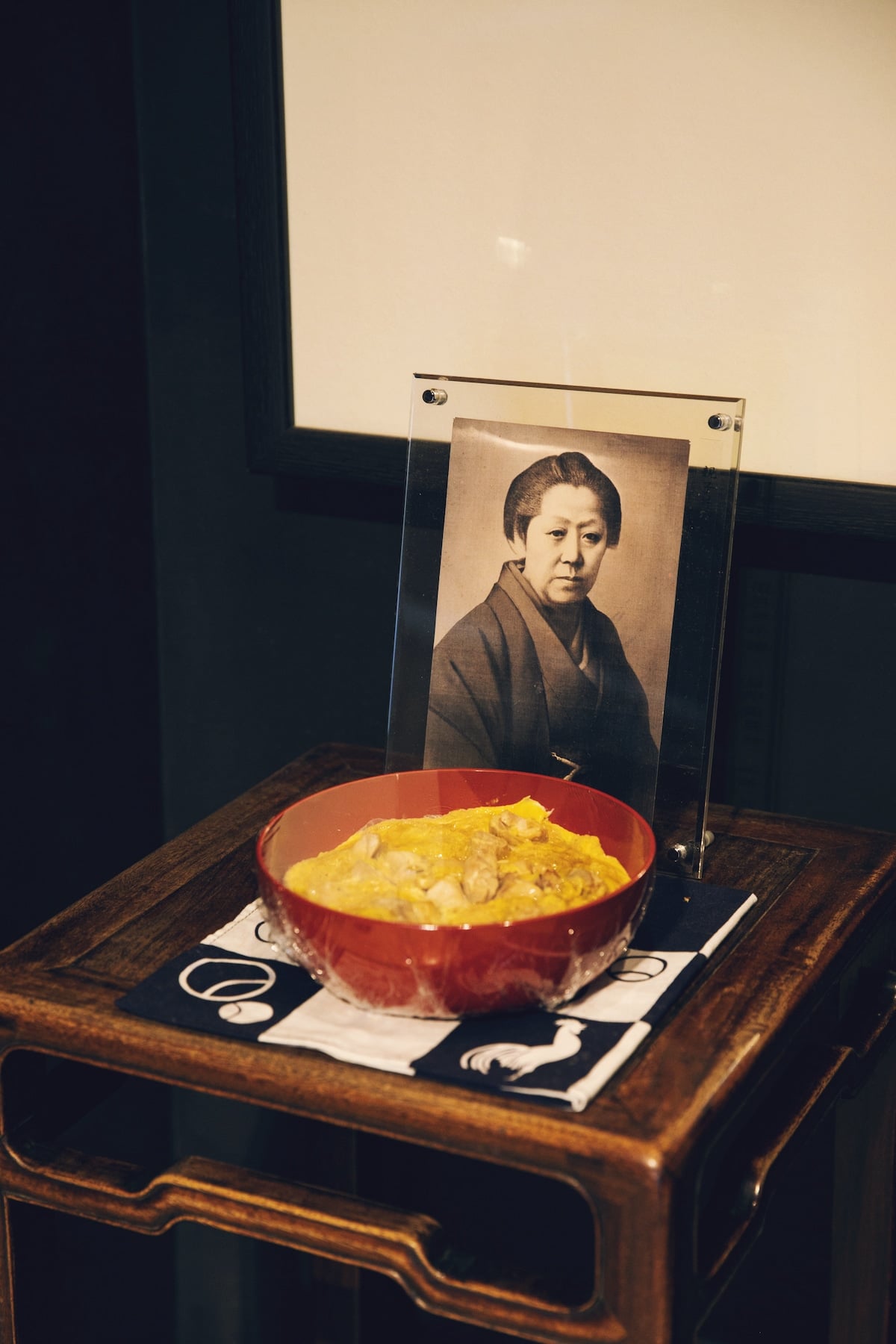
Inside the restaurant, a photograph of the fifth-generation okami, who created oyakodon, is displayed. Oyakodon is offered in front of it every day.
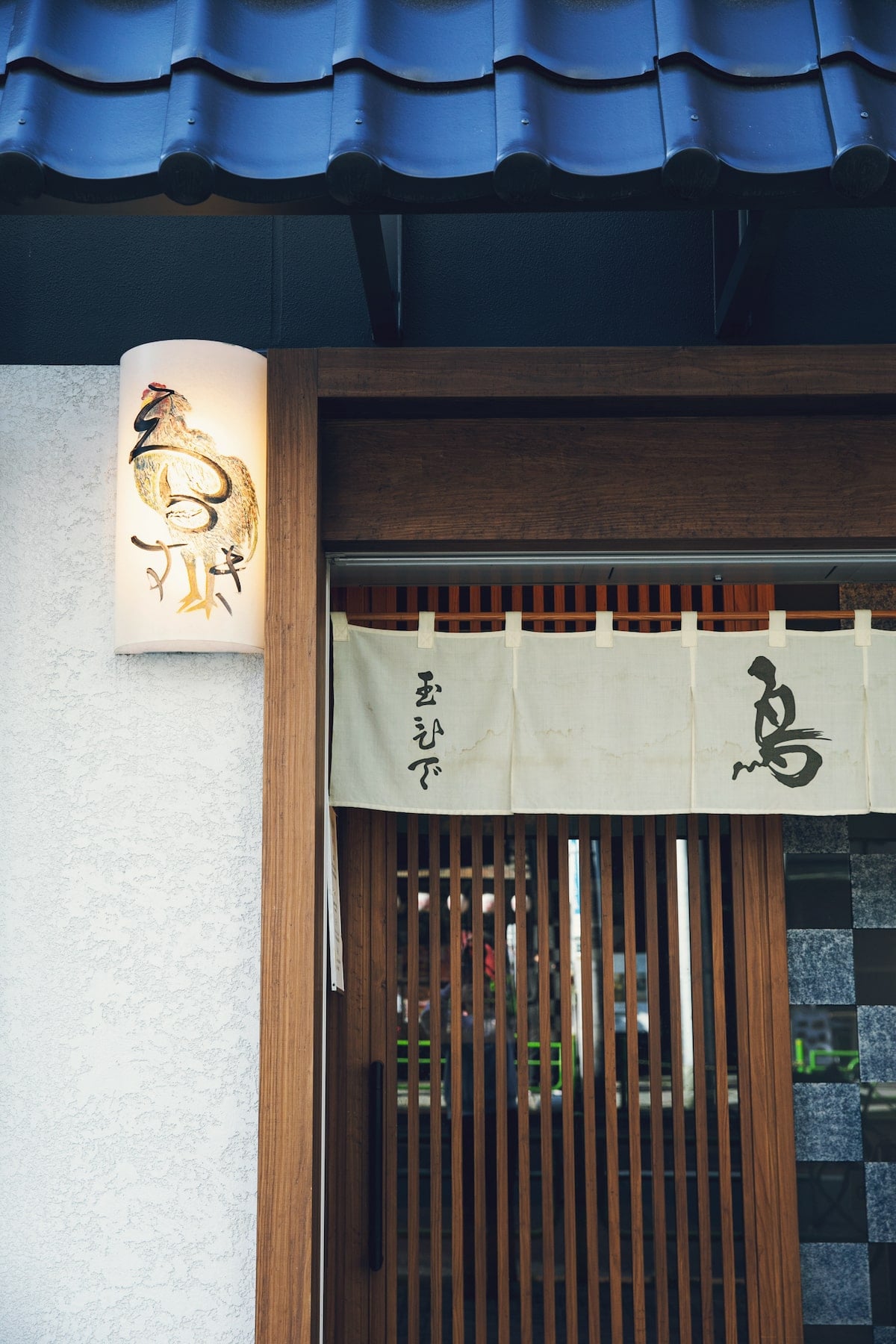
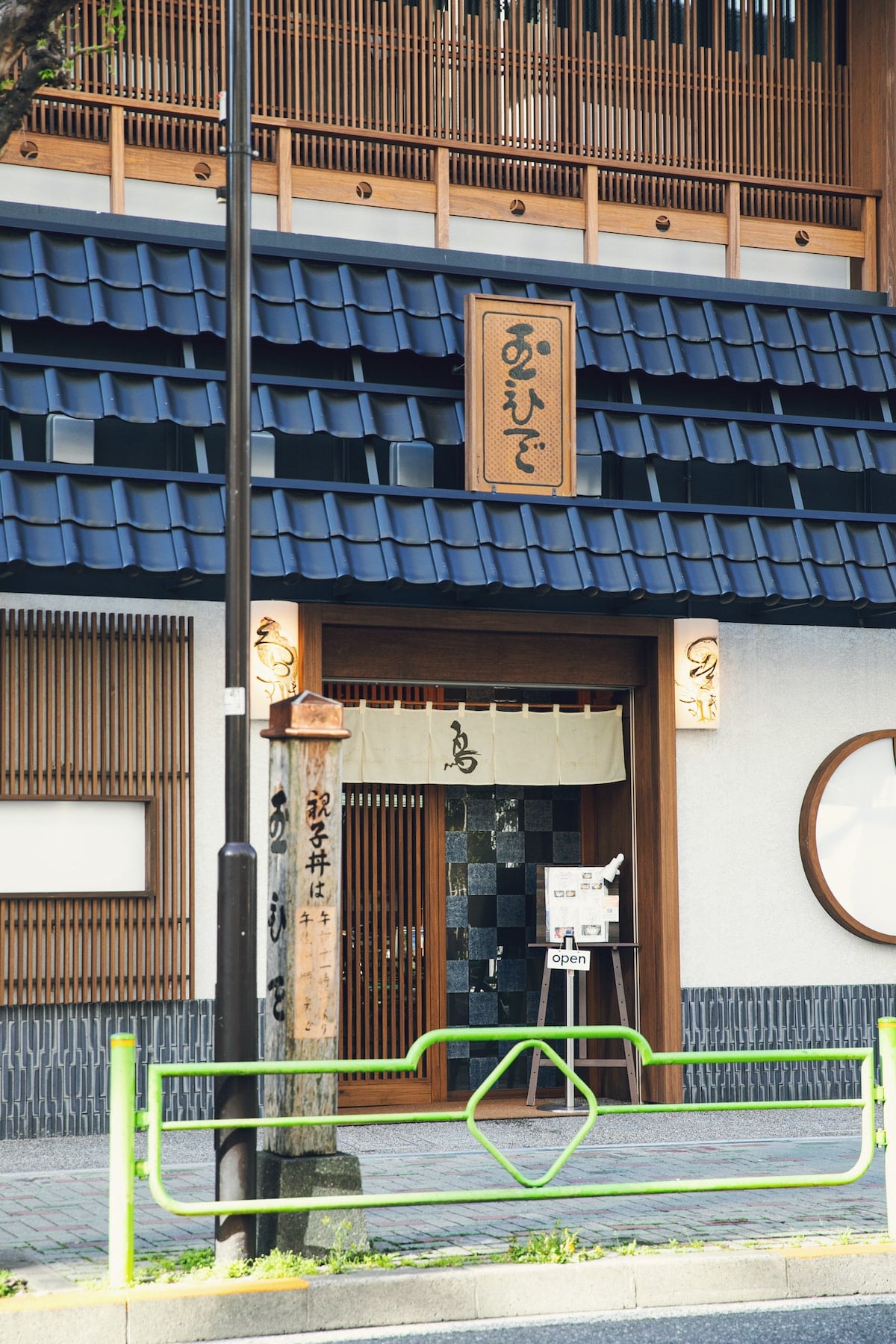
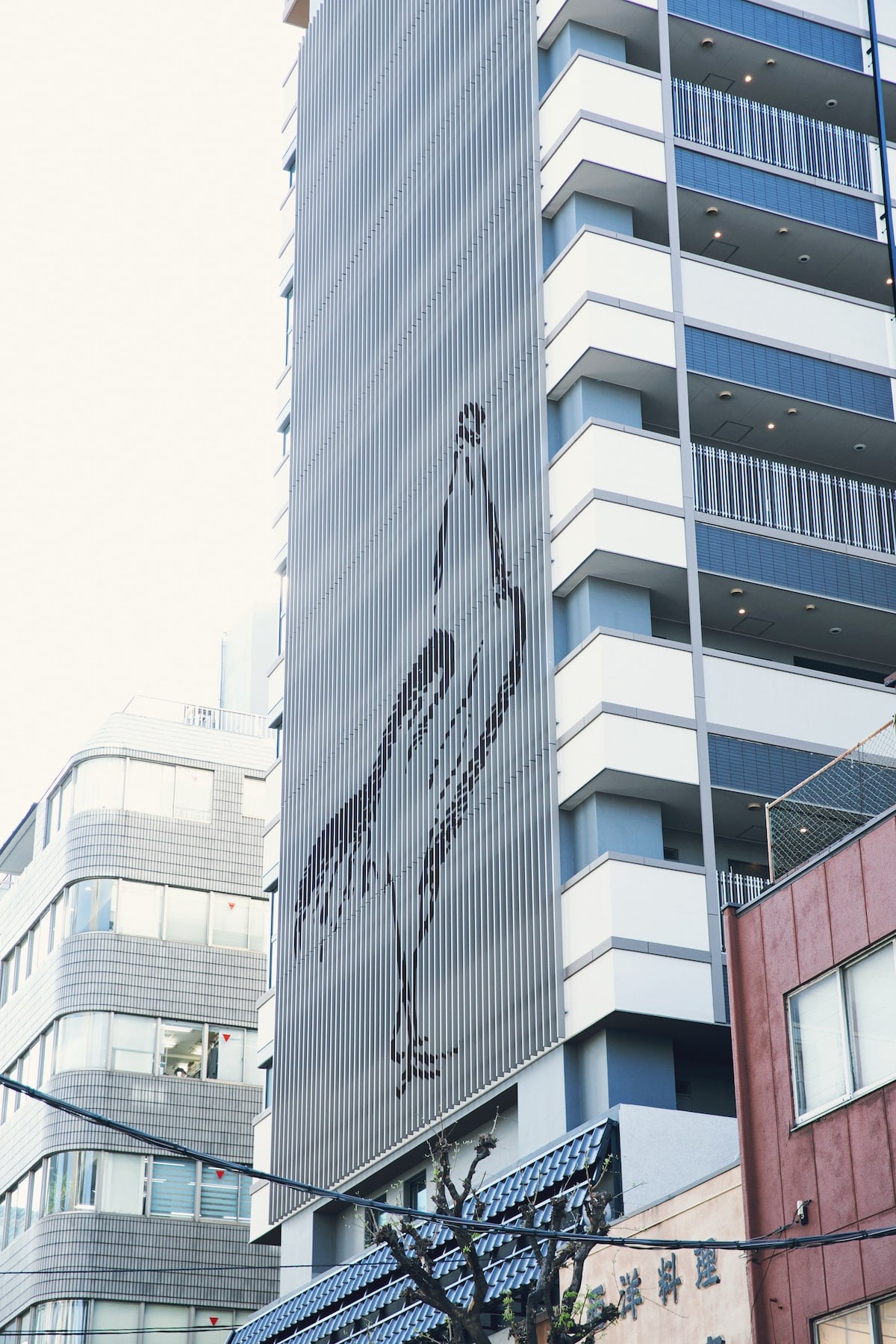
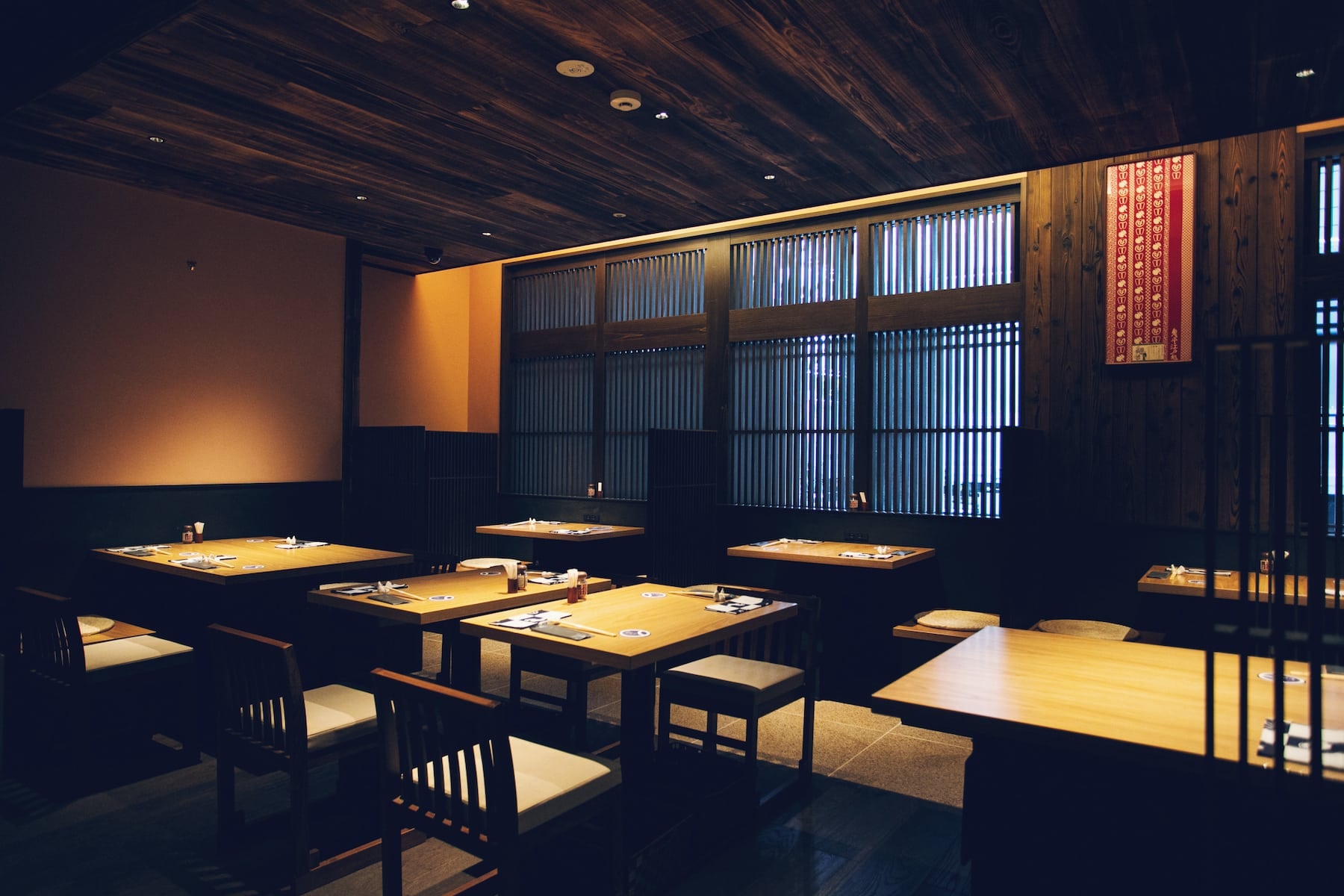
With the renovation in 2025, “Tamahide” renewed its appearance. The exterior of the first and second floors was designed based on sketches by the current okami, Miho Yamada. It conveys the dignity of a long-established restaurant. The lattice on the building’s exterior features a playful design in which the form of a shamo appears. This design reflects an idea by the eighth-generation owner. Inside the restaurant, traditional Japanese building materials are incorporated. The result is a calm space where visitors can feel a Japanese atmosphere. The seating area, which was originally tatami seating, has all been changed to tables. As a result, the space suits modern dining styles while also allowing tourists from overseas to spend their time comfortably.
The restaurant stands on a street lined with long-established shops and famous restaurants.
The design of the shamo floating on the lattice is a contrivance visible only from the Ningyocho Street side.
The tables are designed at a height that makes it easy to eat from the bowl while leaving it on the table, without having to hold it in the hand.
While passing down the history of the dish called oyakodon to the present day, "Tamahide" has continued to move forward with the times within the Nihonbashi district. In this one bowl, the traditions that the restaurant has continued to preserve as a long-established establishment and the refinements it continues to make as a restaurant of the present day are both alive.
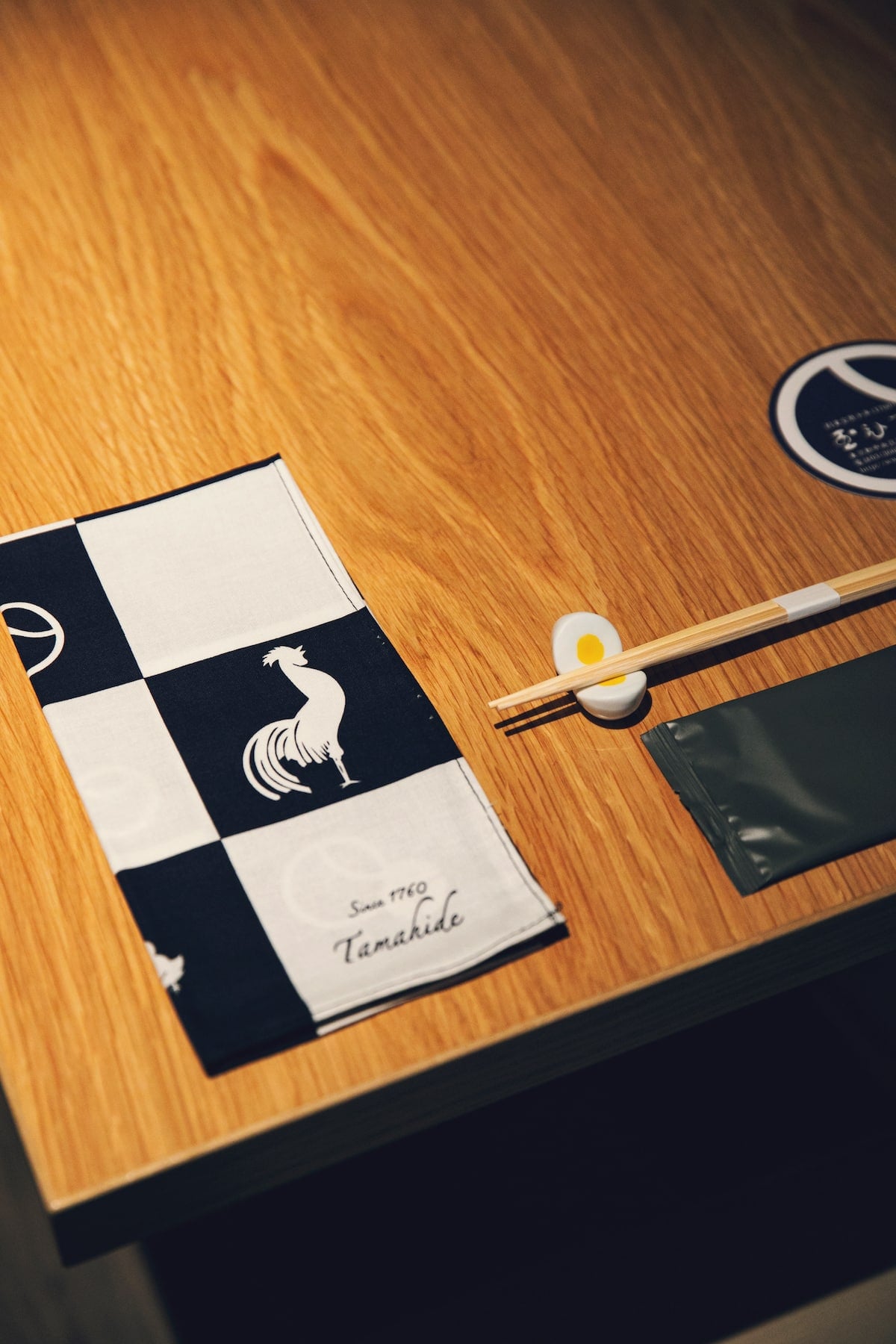
The checkered napkins placed at each seat can be taken home for dinner only.
The information contained this article was correct as of 06/01/2026 (the time of publication)