DEEPTOKYO
magazine

EN

DEEPTOKYO
magazine
EN
2026.05.20
A Concept Shop Where You Can Experience Izumo Matcha in a Special Space Removed from Everyday Life


 Nearest Station

Located in a quiet residential neighborhood in Hyakunincho, Shinjuku, “LAMBERT” is a fully reservation-only concept shop for matcha cans, created by renovating a 70-year-old sukiya-style Japanese house. The shop specializes in organic matcha produced in Izumo, Shimane Prefecture, where visitors can experience the differences in flavor between tea cultivars. The garden, interior space, and even the serving process are designed as one cohesive experience, allowing guests to sharpen their senses and enjoy not only the taste of matcha itself, but also the cultural and environmental background behind it, within a space where Japanese tradition and contemporary sensibilities resonate together.
SHARE


Just a five-minute walk from JR Okubo Station, the Shinjuku–Okubo area is lined with multicultural restaurants and filled with people at all hours of the day and night. Yet right beside this lively district lies the quiet residential neighborhood of Hyakunincho. “LAMBERT” stands precisely at the boundary where bustle and stillness coexist.
The name of the shop carries the meaning of “a radiant land,” and the space has been created as a sanctuary completely removed from the noise of the city. Here, guests can fully open all five senses—sight, taste, sound, scent, and touch—to deeply experience Izumo-grown organic matcha and carefully selected coffee.
“Only when you calm your mind and carefully focus on matcha can you truly perceive the delicate differences in color and aroma. That’s why I believe this quiet residential setting, slightly removed from the busy station area, is the ideal location,” says owner Mayuko Kobayashi.
Even the short walk through the narrow residential alleyways toward the shop functions as an important transition period, gently shifting the mind away from everyday life and preparing guests to quietly engage with matcha.
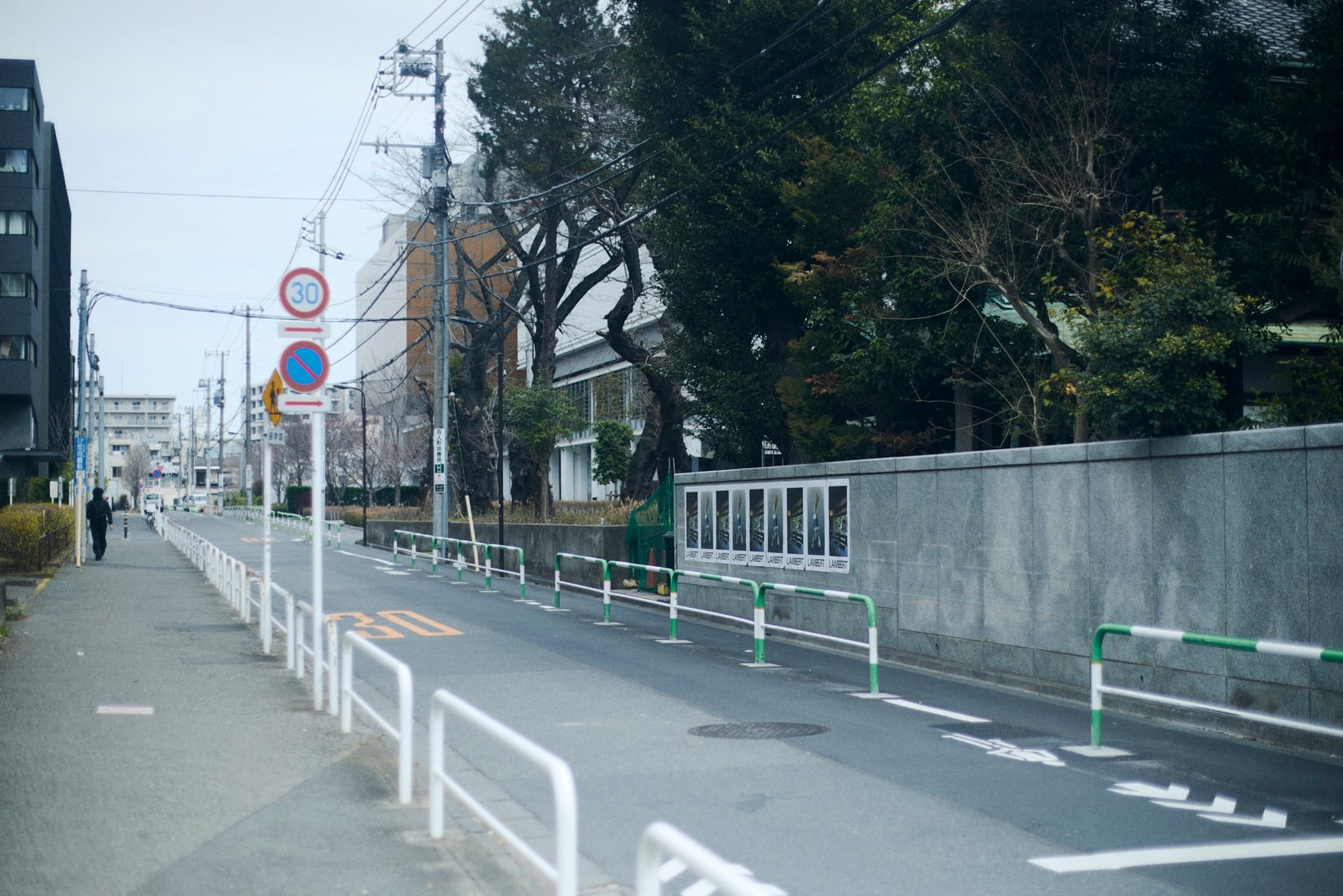
A quiet residential neighborhood in Hyakunincho, Shinjuku, revealed just one step away from the bustle. Despite being right beside the Okubo area, the atmosphere feels remarkably calm and serene.
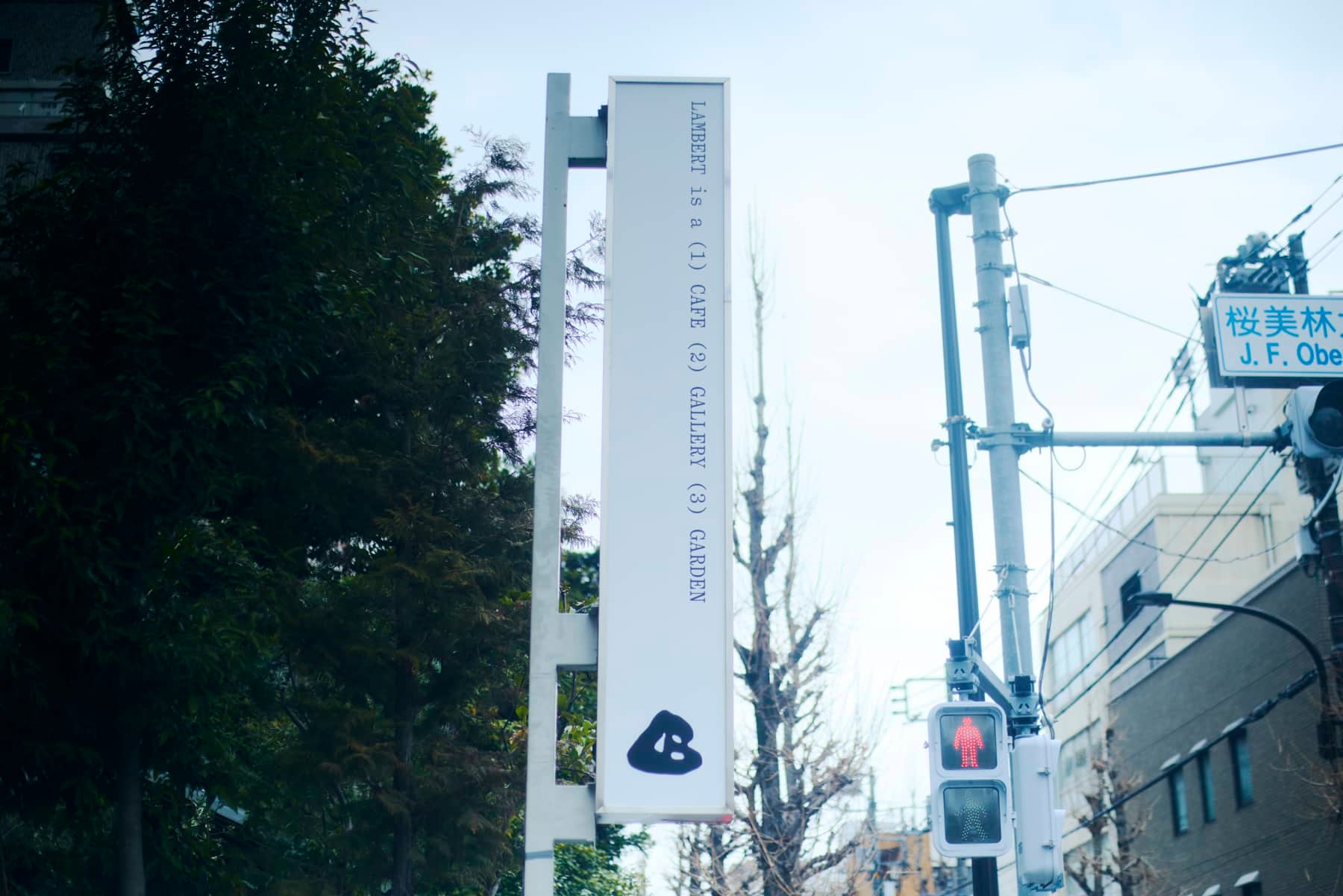
The signboard marking the entrance. The logo combines the letters “LB” from “LAMBERT” with the stone garden that symbolizes the space.
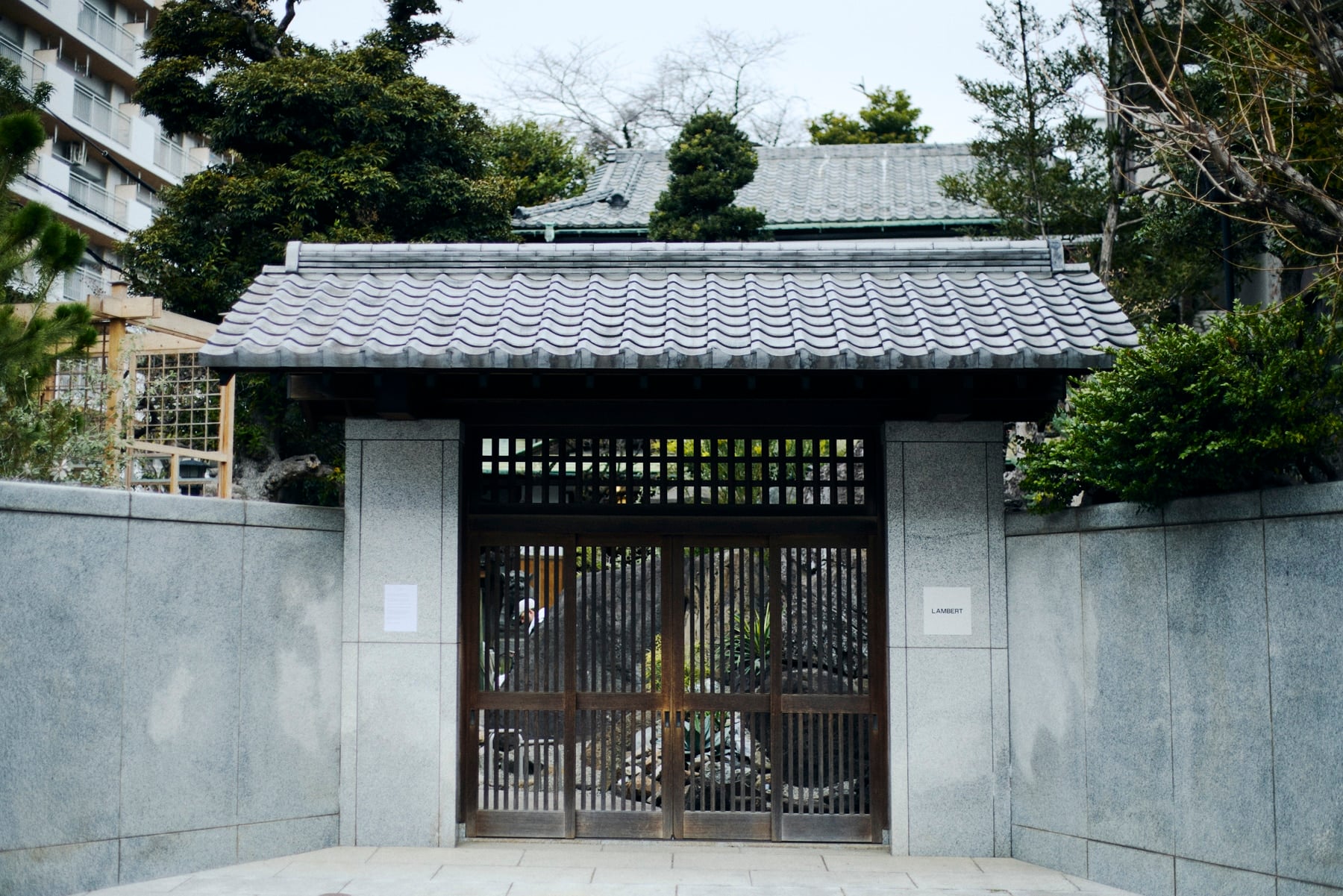
The dignified yakui-mon gate, topped with a traditional tiled roof and shaped by 70 years of history. Even during business hours, the gate is intentionally kept closed so that guests can feel as though they are stepping into a sacred space removed from daily life the moment they pass through it.
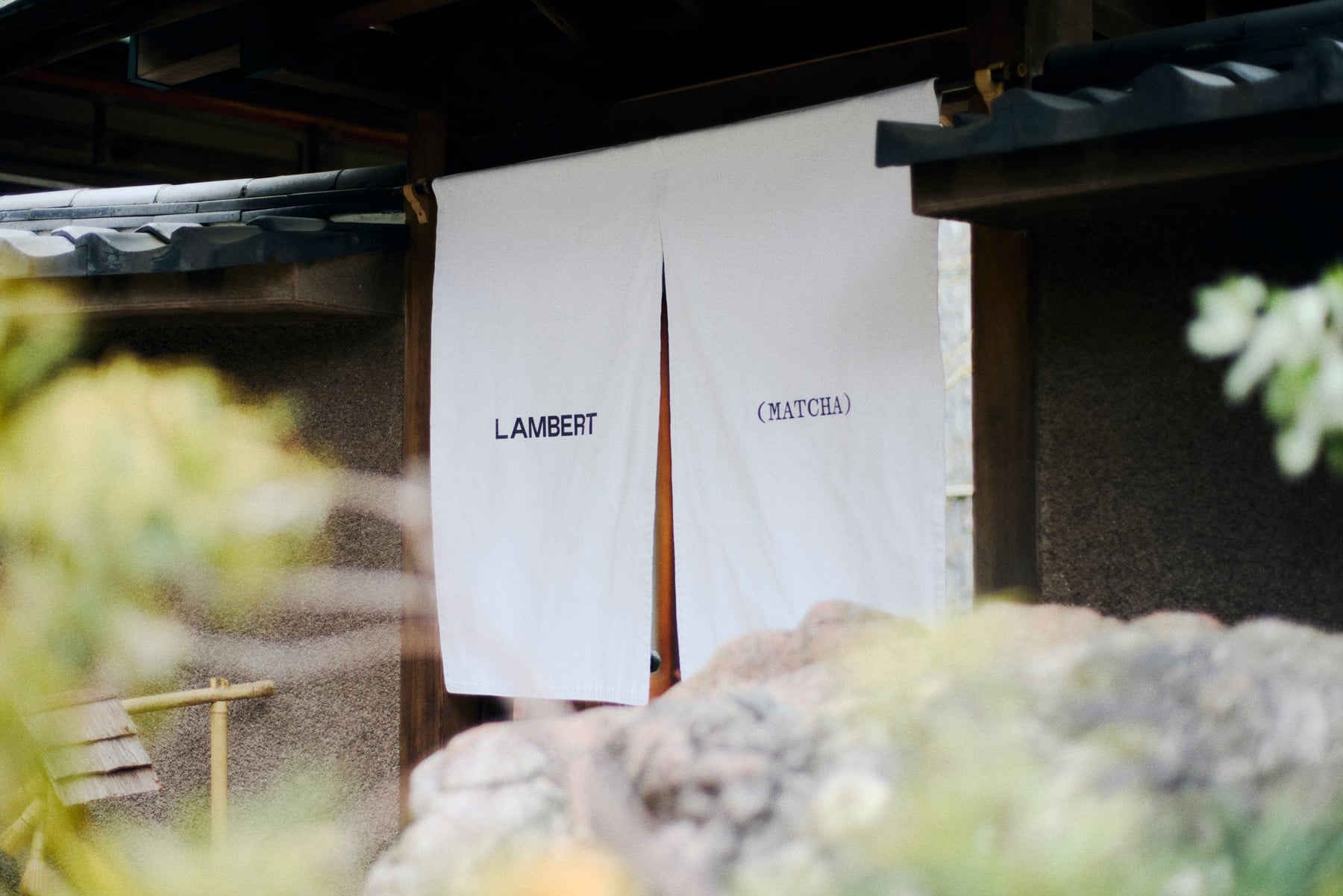
A noren curtain hanging at the entrance of the stately Japanese-style architecture. Its refined typography embodies the concept of a space where tradition and contemporary sensibilities intersect.
Beyond the noren curtain lies a pond inhabited by small koi said to have been born there, alongside a newly reconstructed garden created by landscape and spatial design studio “Yard Works,” led by Kei Amano. Existing artistic elements, the historic architecture, plum trees, and giant stones shaped by decades of time have all been carefully preserved.
Into this setting, Australian cacti and succulents—plants not native to Japan—and a contemporary tea room have been incorporated, introducing a sense of modernism and creating an entirely new landscape. Traditional Japanese rock gardens often express scenery through arrangements of sand and stone, whereas this newly created garden instead depicts a wilder natural landscape, where plants grow across rugged rock surfaces with dramatic elevation changes.
The tall surrounding walls also block outside noise and views, creating distance from the surrounding city environment. From the neighboring hotel garden, the faint sound of a waterfall can occasionally be heard. Through the combination of these sounds and plants, the atmosphere shifts completely, creating a quietness that makes visitors forget they are in the center of Shinjuku.
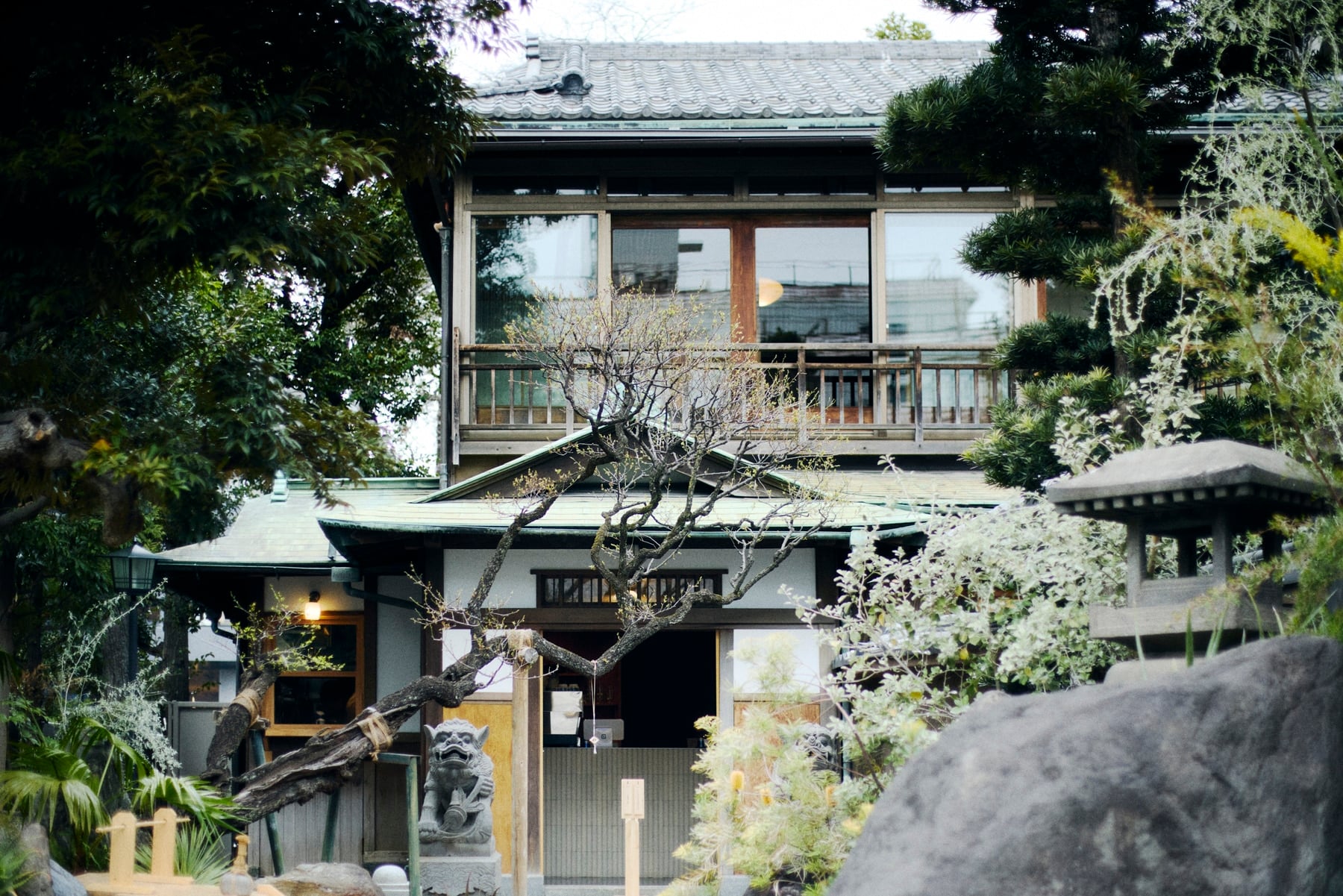
The exterior of the main house viewed across the garden. Details such as the copper eaves covered in verdigris, elegant Sanshu roof tiles, and traditional onigawara roof ornaments remaining from the 1950s give the space a deep sense of history and presence.
A garden reconstructed by “Yard Works,” where tradition and modernity merge together.
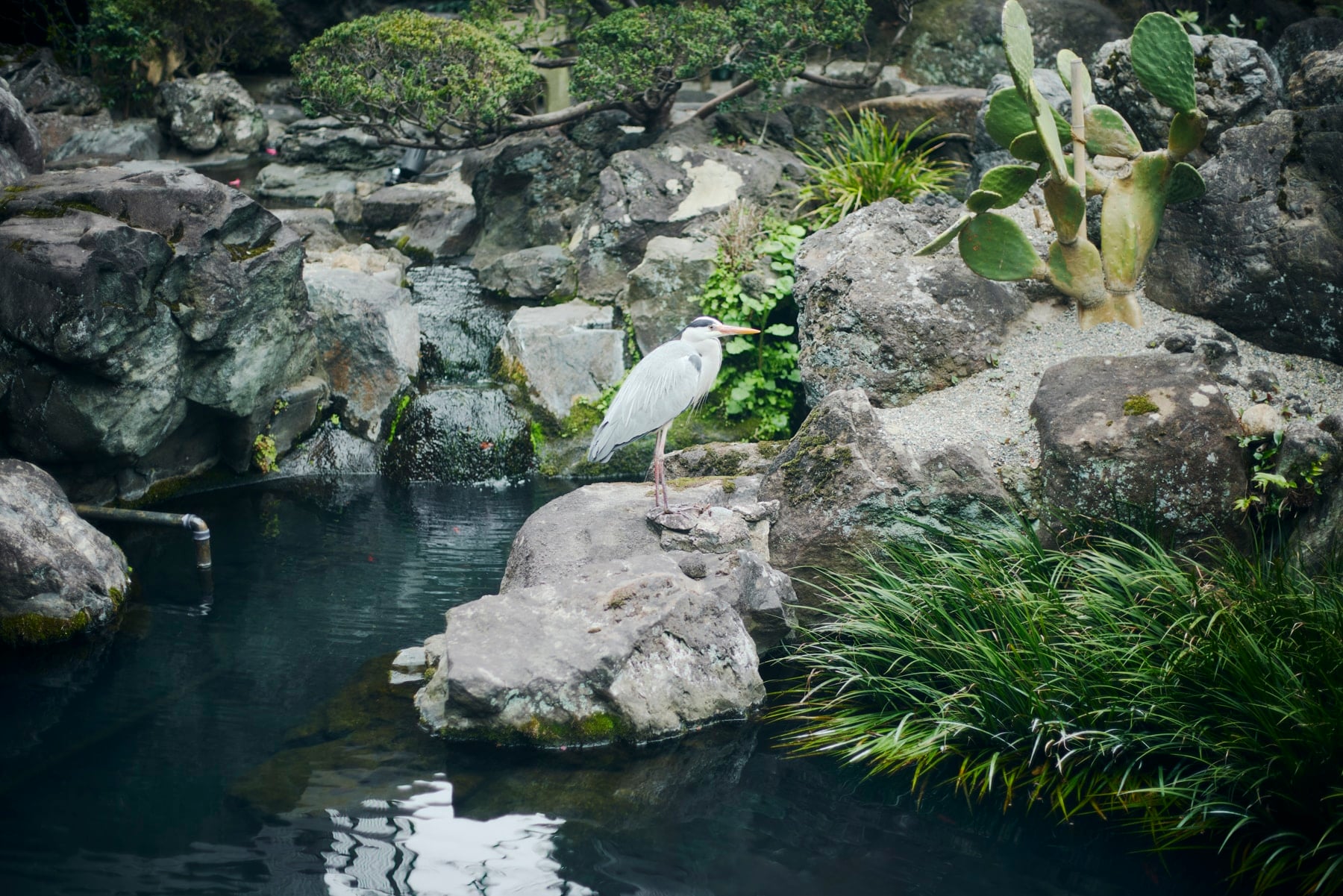
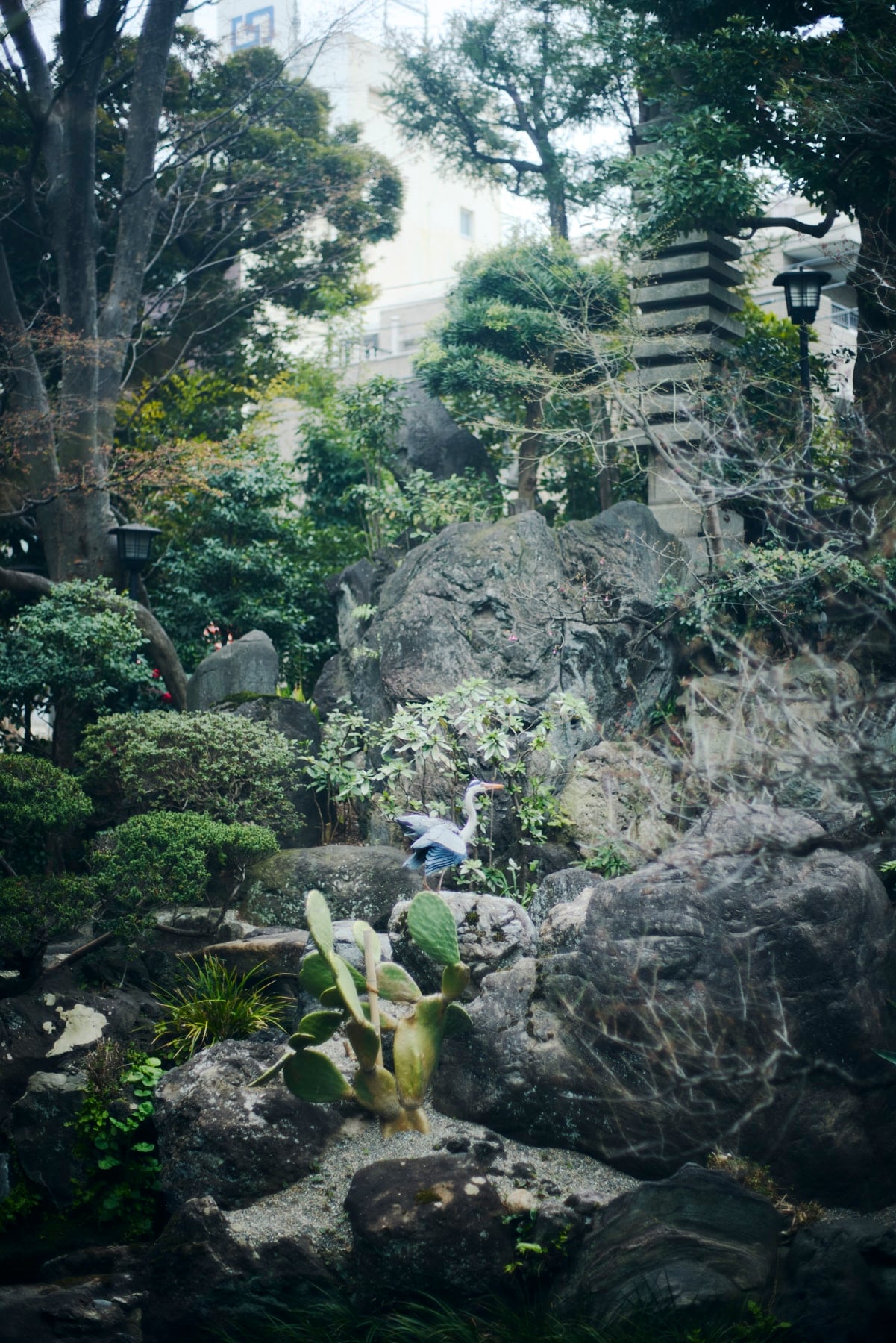
Wild herons sometimes stop by the pond to rest their wings. The faint sound of a waterfall drifting from the neighboring hotel garden serves as natural background music.
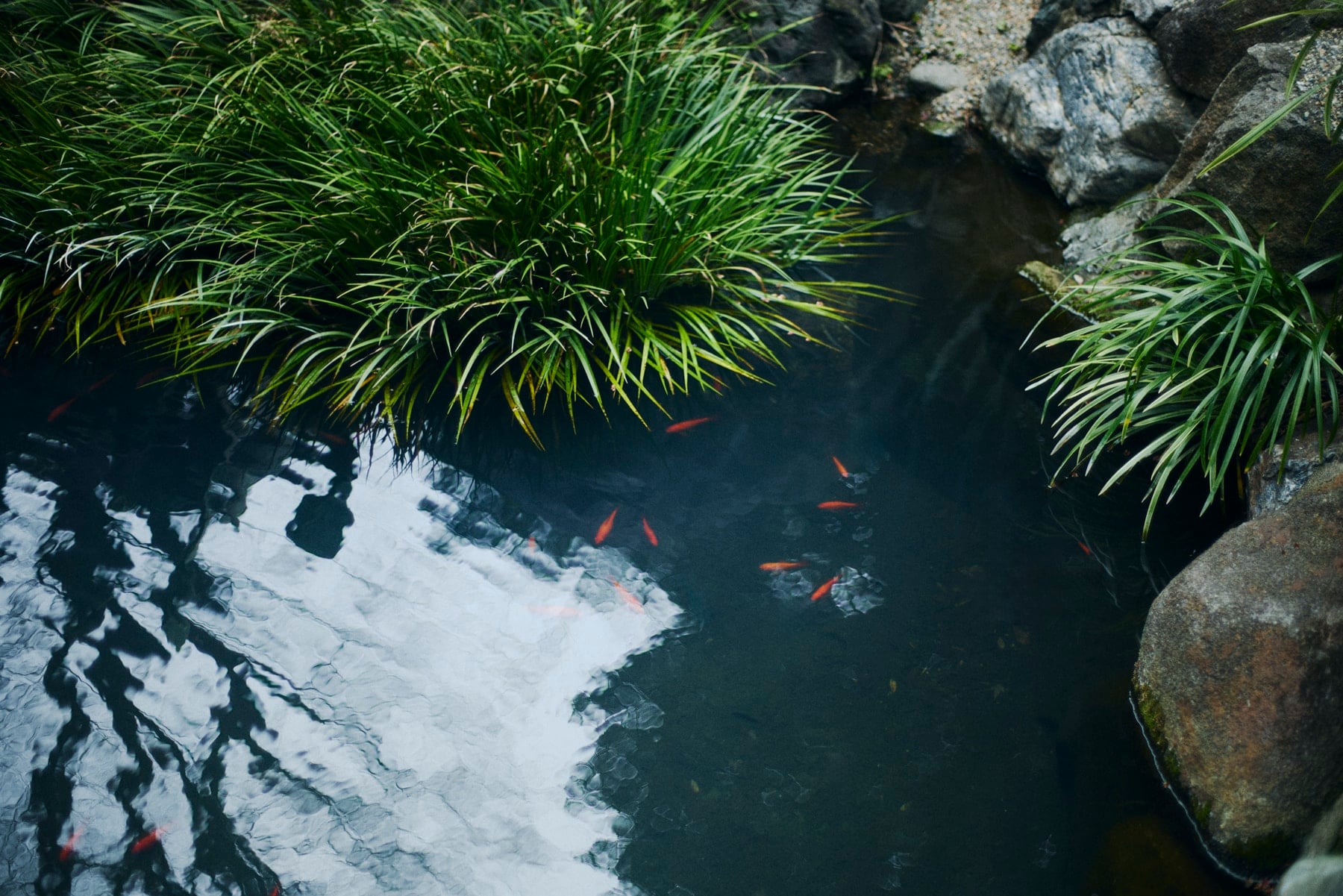
Colorful koi gracefully swimming through the pond. The movement of the water adds subtle motion to the tranquil space.
Unlike conventional Japanese gardens that represent scenery through sand and stone, this garden creates a more three-dimensional and untamed natural landscape where plants grow across rugged rock surfaces.
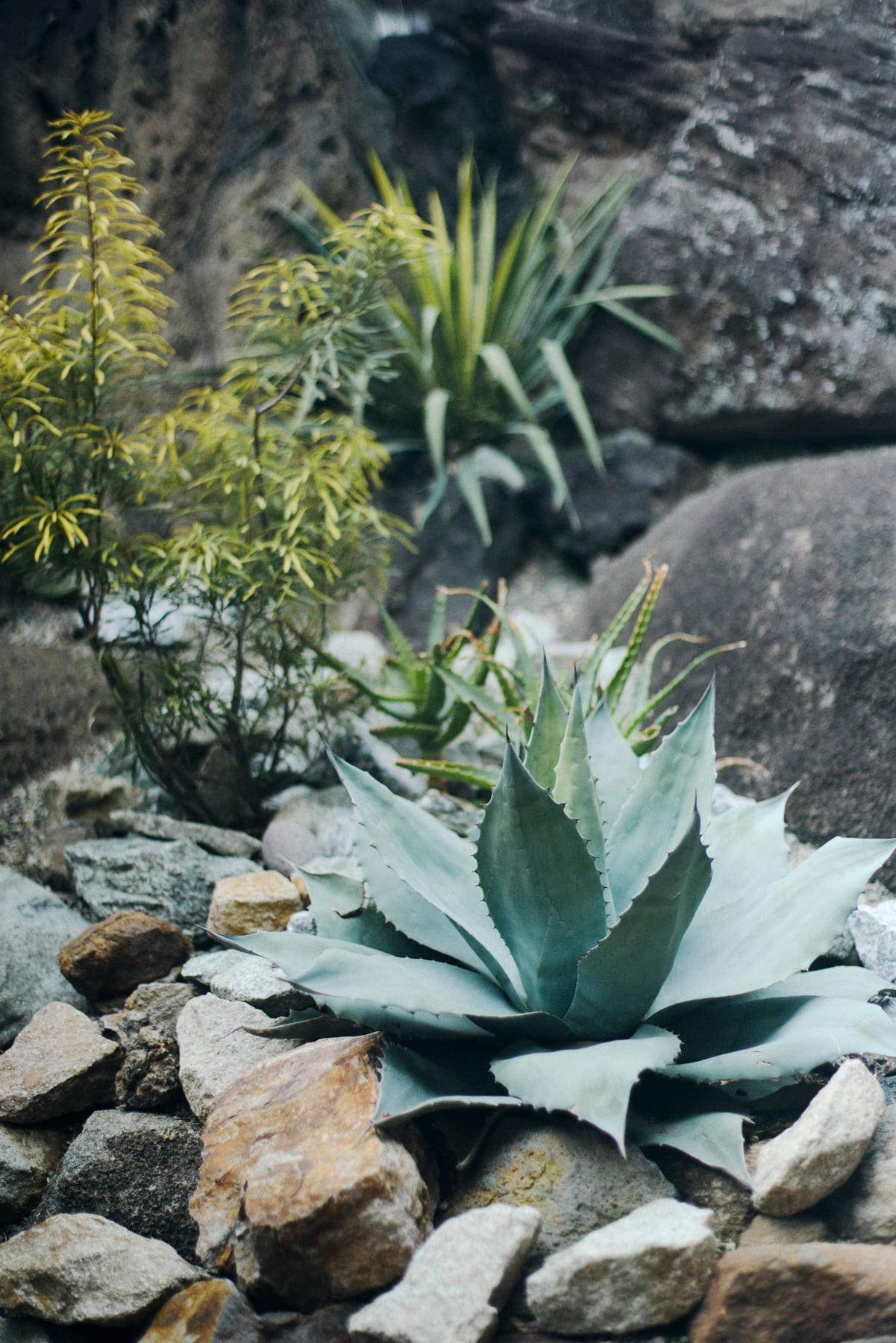
Succulent plants native to Australia are boldly incorporated into the garden. Massive Japanese stones and foreign plants blend naturally together, creating a unique landscape where tradition and modernity intersect.
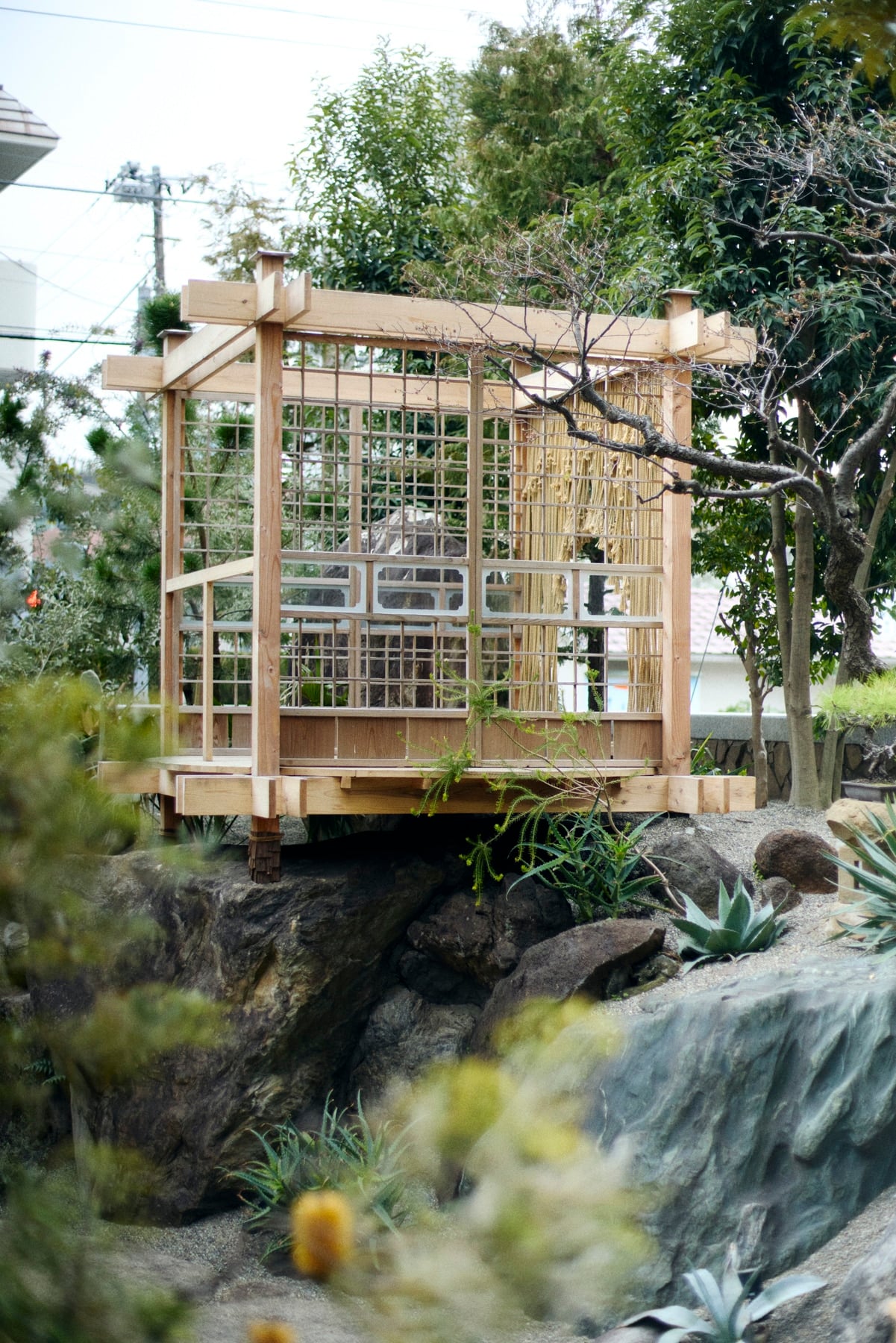
The semi-private “cabana” installed within the garden. It currently functions as an architectural accent piece within the space.
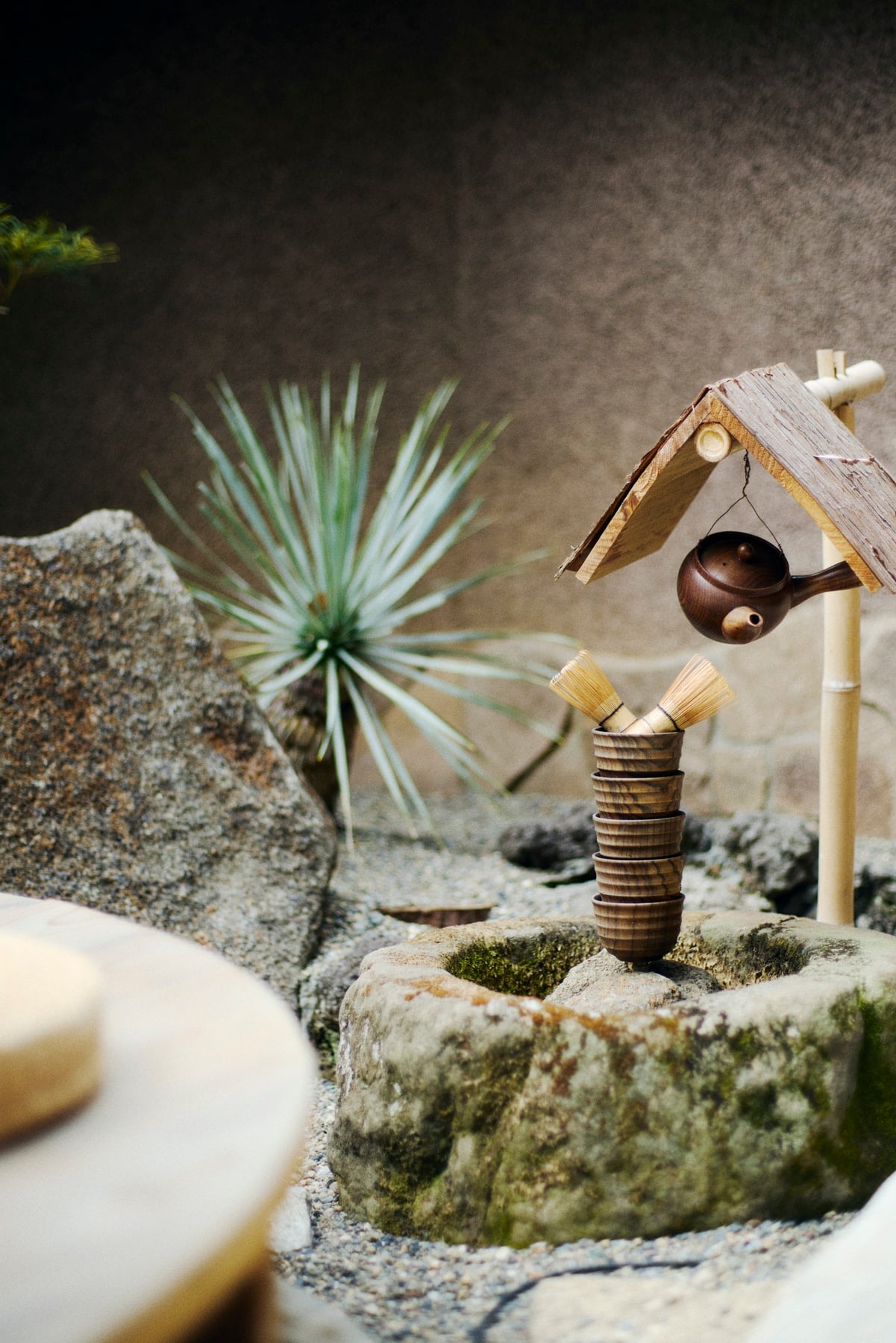
“Tea utensil art” proposed and created by Mr. Amano of “Yard Works,” inspired by tools used for matcha preparation. The garden itself functions like a large-scale installation space.
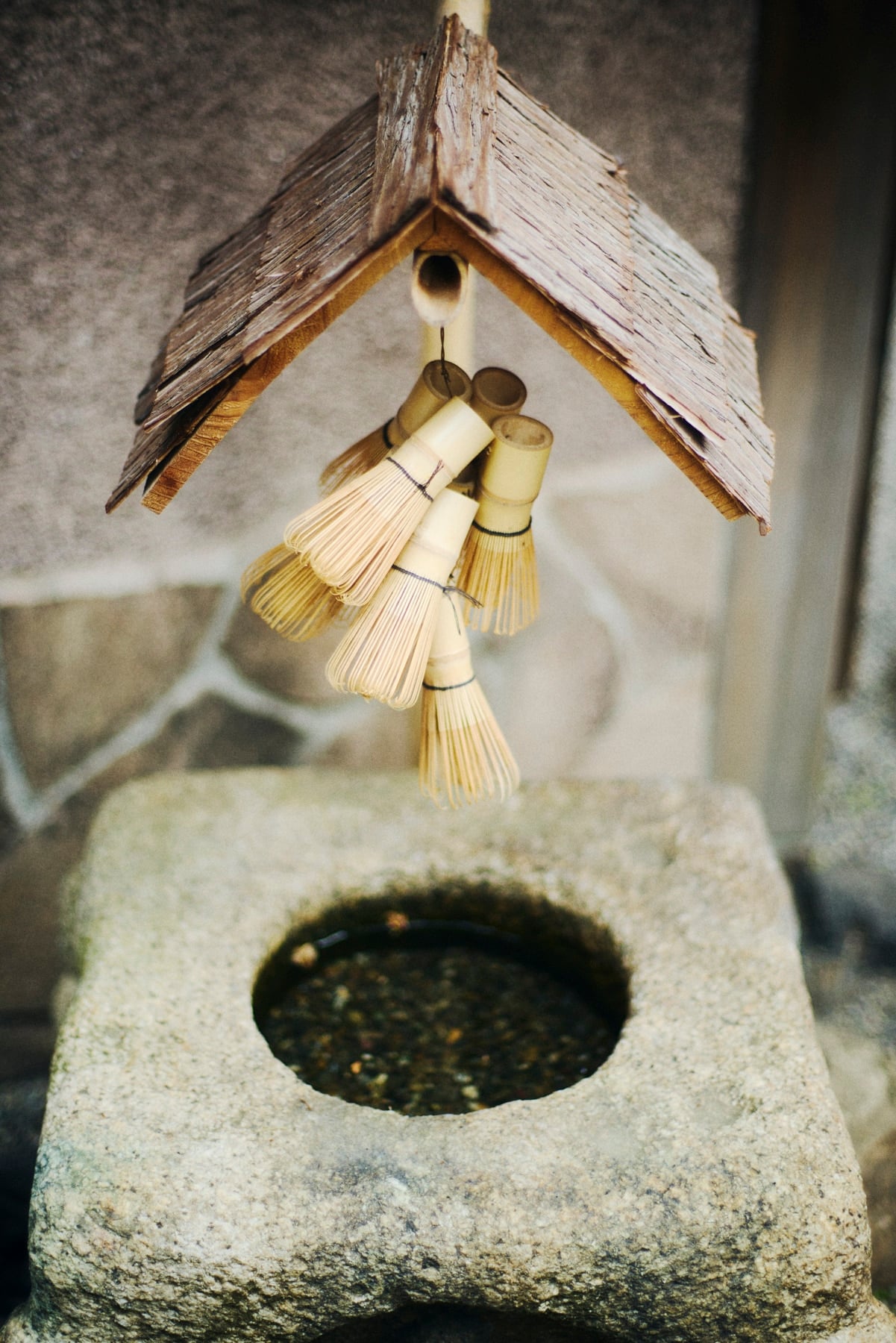
A unique object created using a tea whisk. It adds a playful visual element while walking through the garden.
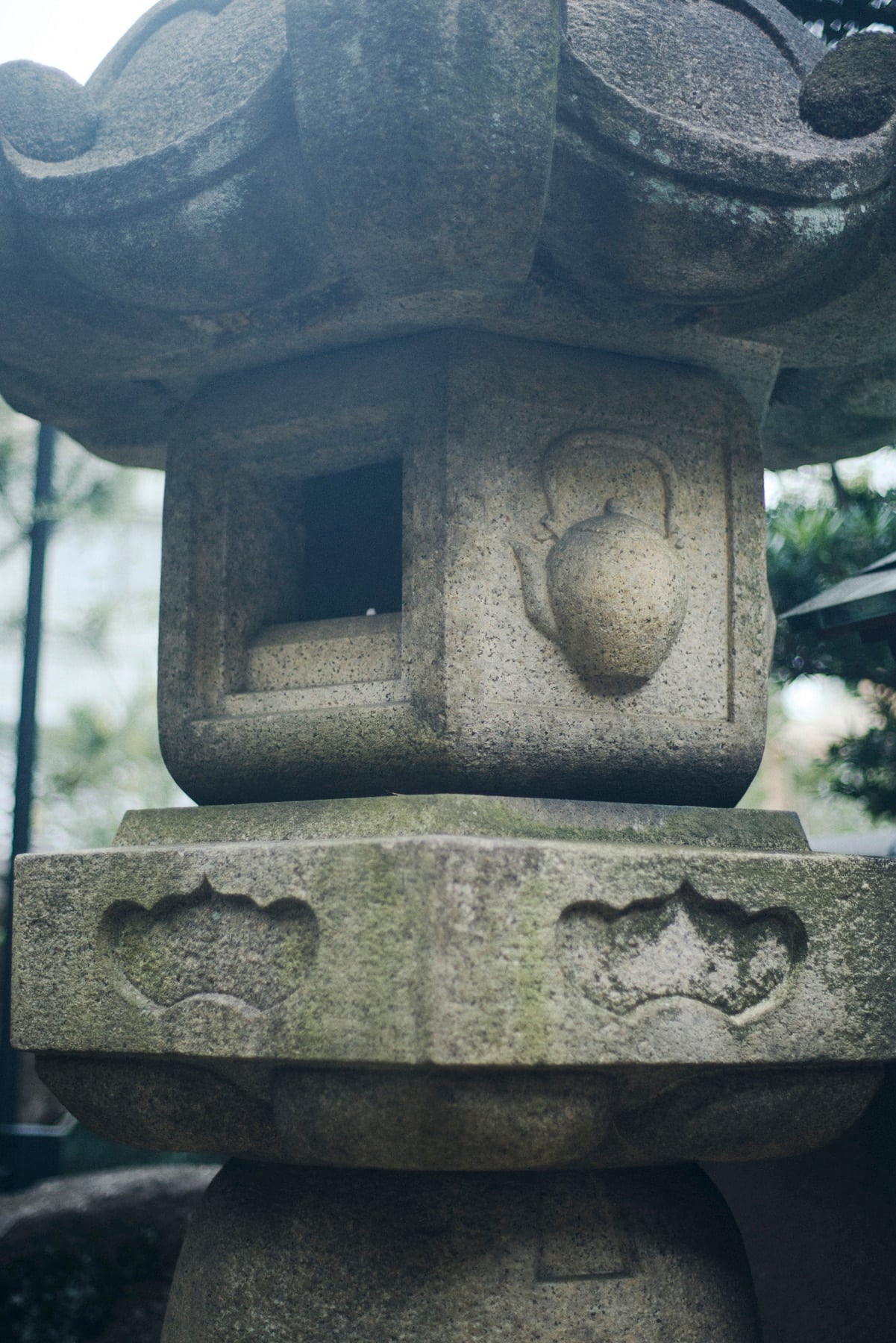
An old stone lantern featuring a charming teapot motif hidden within its details. The subtle sense of playfulness contrasts beautifully with the otherwise solemn atmosphere.
Passing through the garden and entering the building reveals a space created from a two-story traditional Japanese residence dating back to the 1950s. The art direction was handled by owner Mayuko Kobayashi, who oversees all creative aspects of “LAMBERT.” During the renovation process, she reportedly consulted with carpenters every day as the project progressed.
Rather than drastically altering the original structure, the design preserves the beams, pillars, and architectural framework of the Japanese house as much as possible, while combining them with contemporary minimal design. The result is a space carefully redesigned for quietly engaging with matcha.
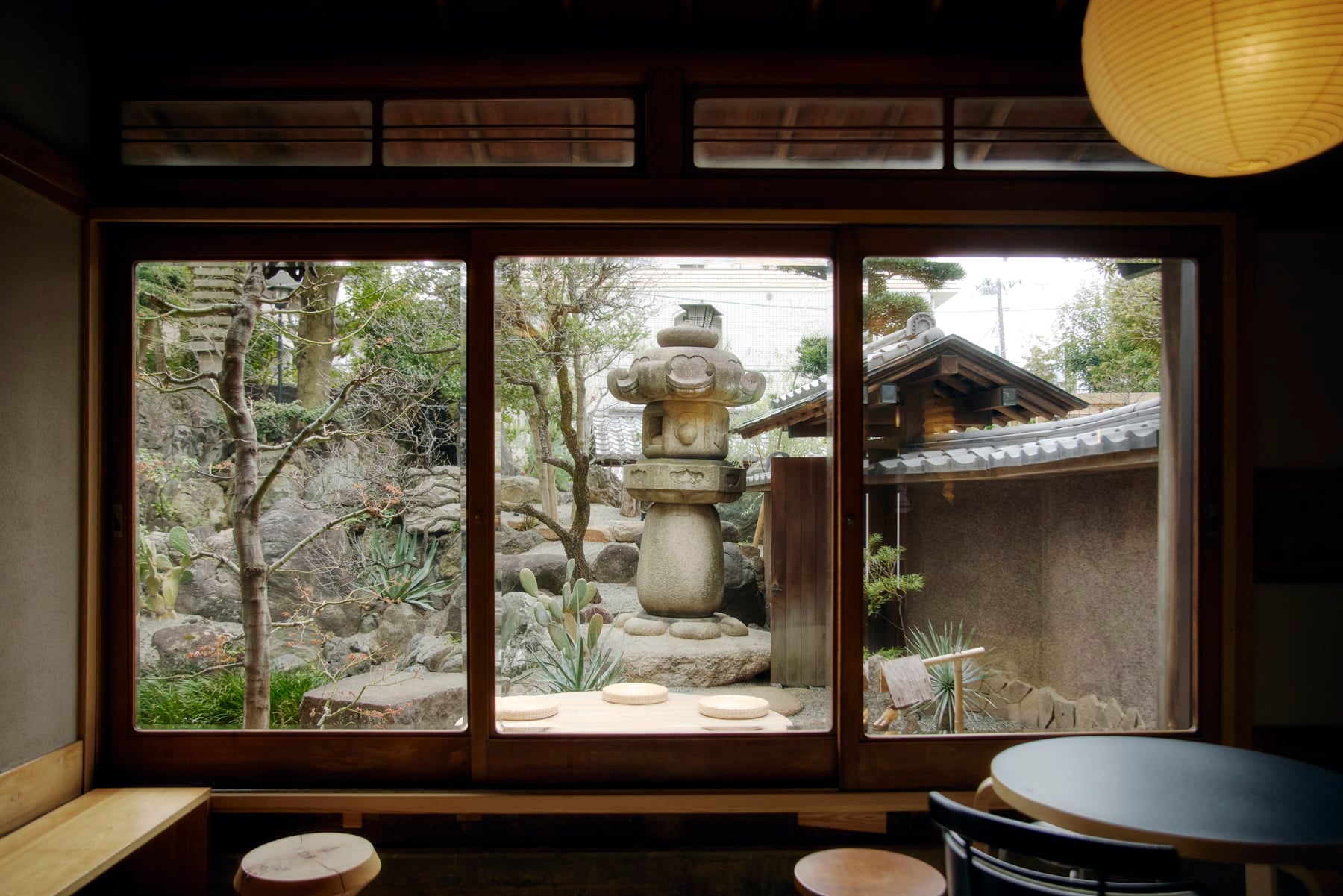
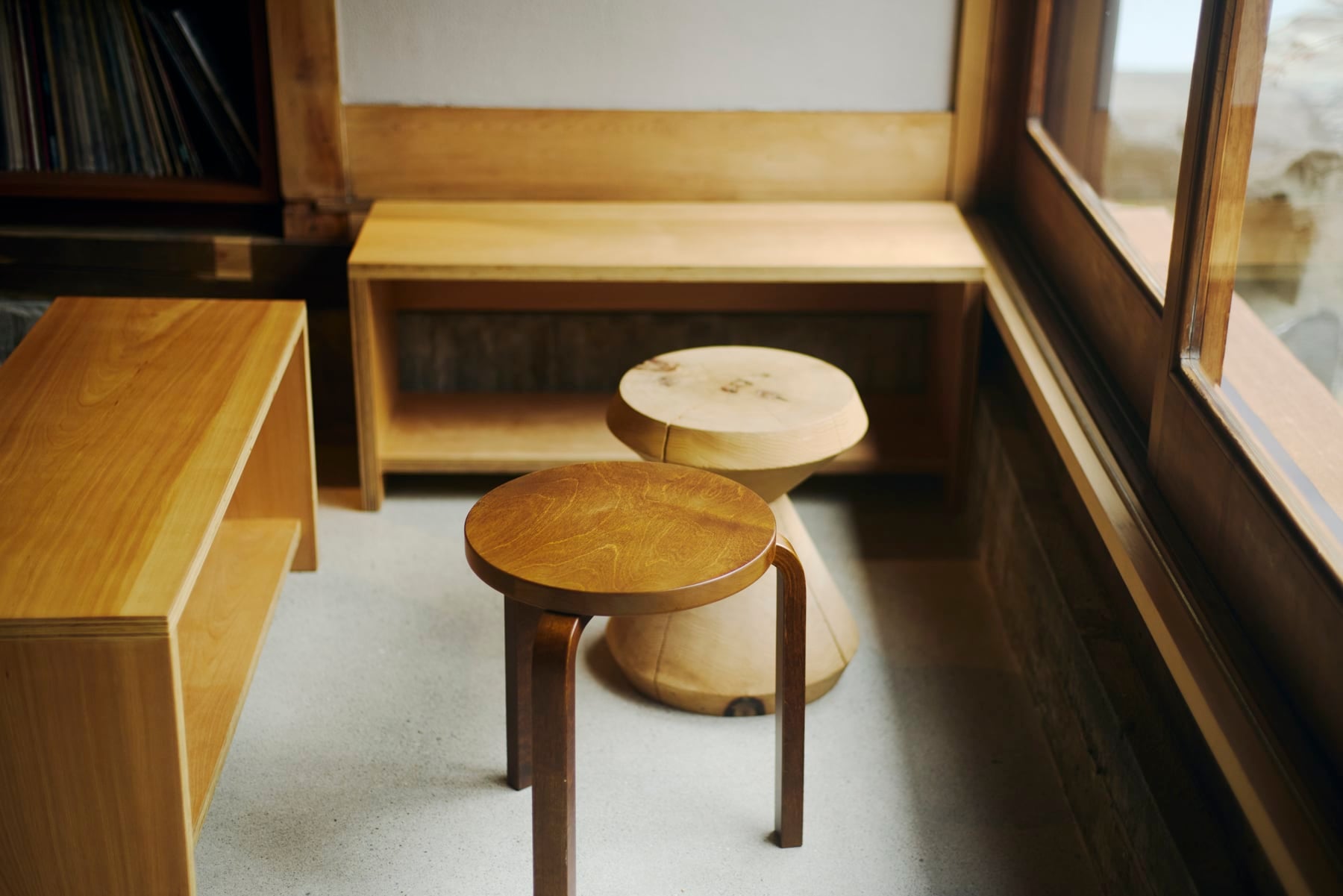
Inside the shop, guests can enjoy matcha while looking out over the garden, with the exterior scenery intentionally incorporated as part of the overall experience. Adding warmth to the space are stools created by woodworker Toshiaki Umemoto. Their forms, which make use of the natural characteristics of plywood and logs, serve as a bridge between the historic architecture and the modern design elements.
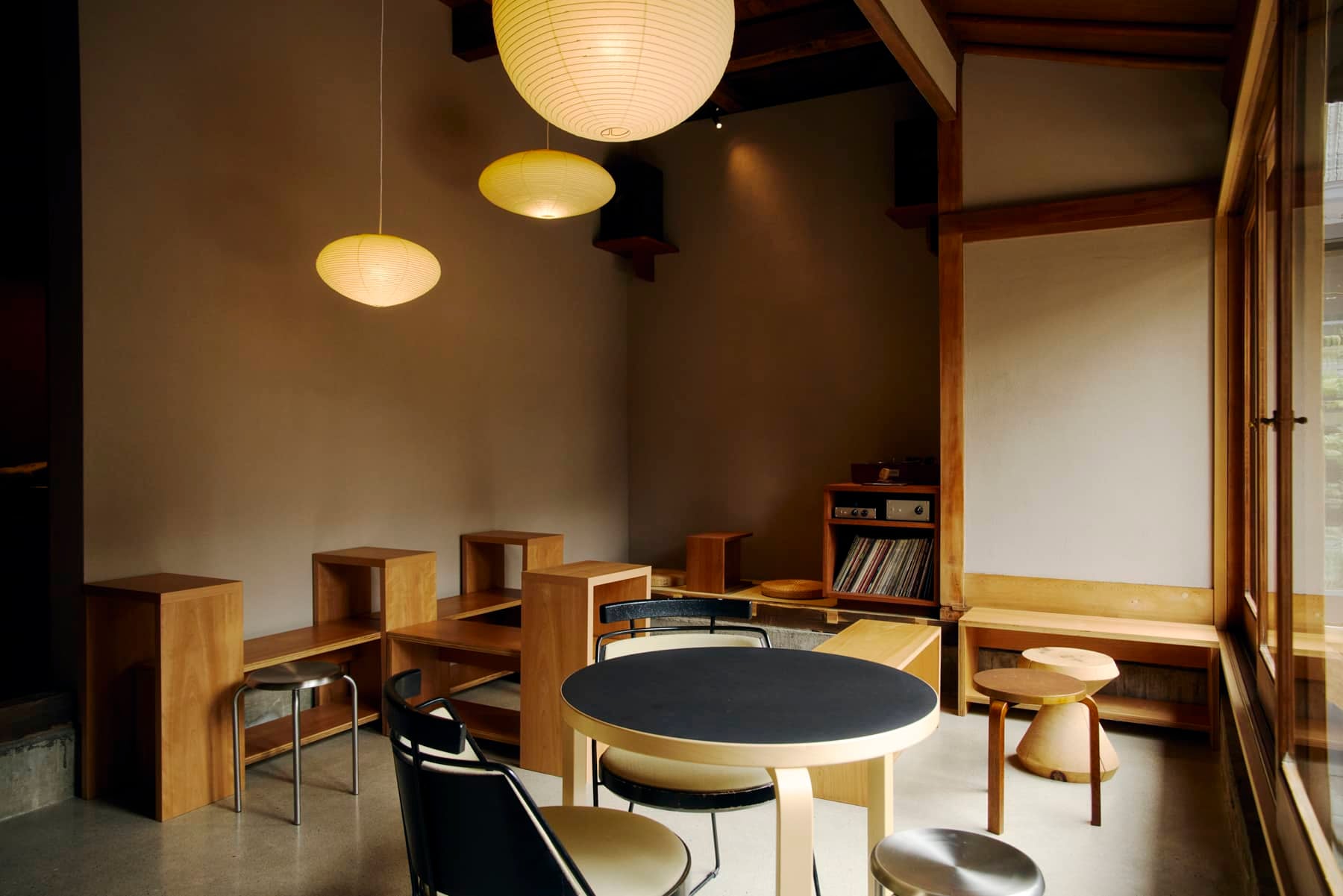
An interior space created from a traditional Japanese residence dating back to the 1950s.
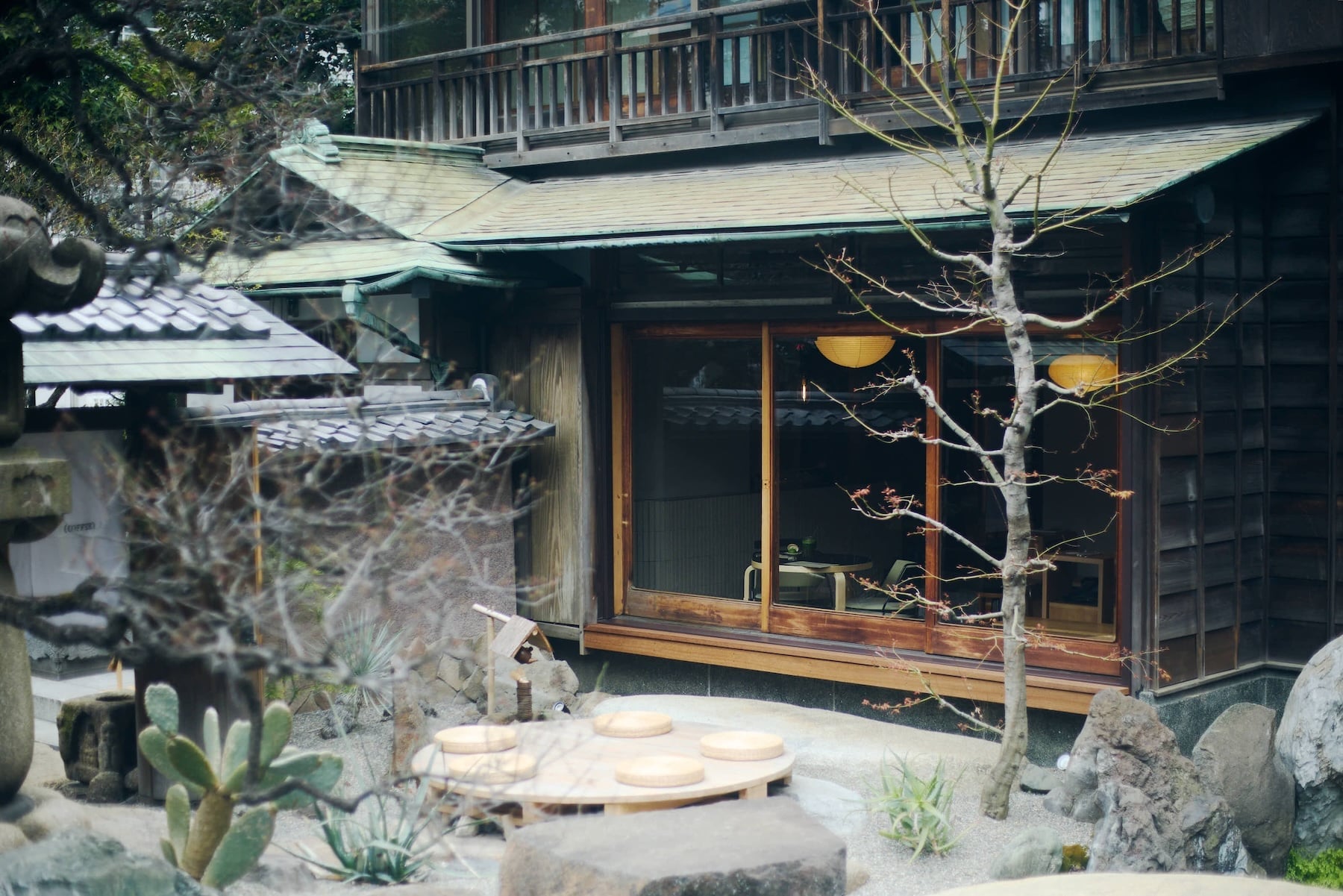
Viewed through the large windows, the landscape—where modernism and Japanese tradition intersect—resembles a living painting.
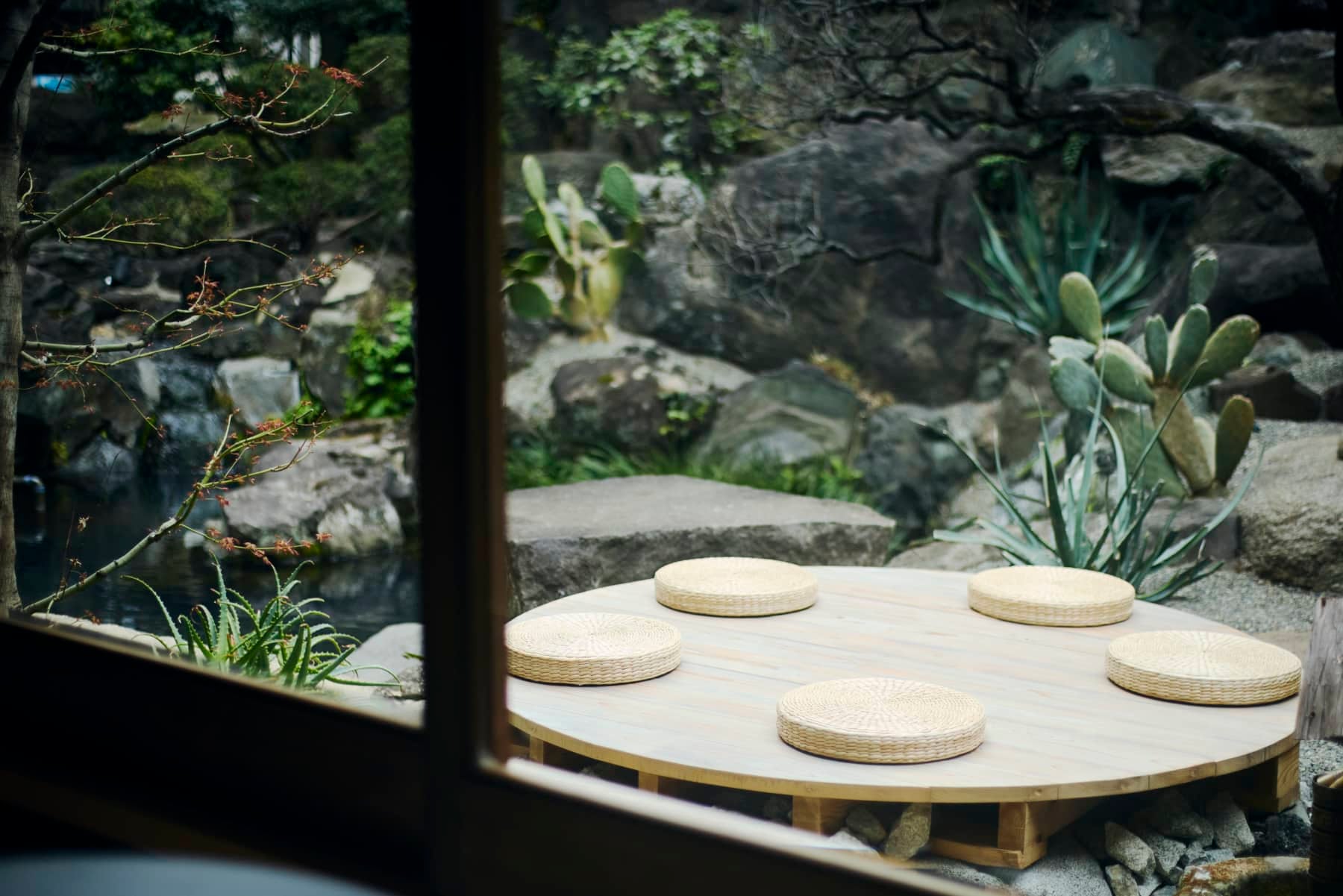
Guests with reservations may also sit on the round wooden bench in the garden while enjoying matcha.
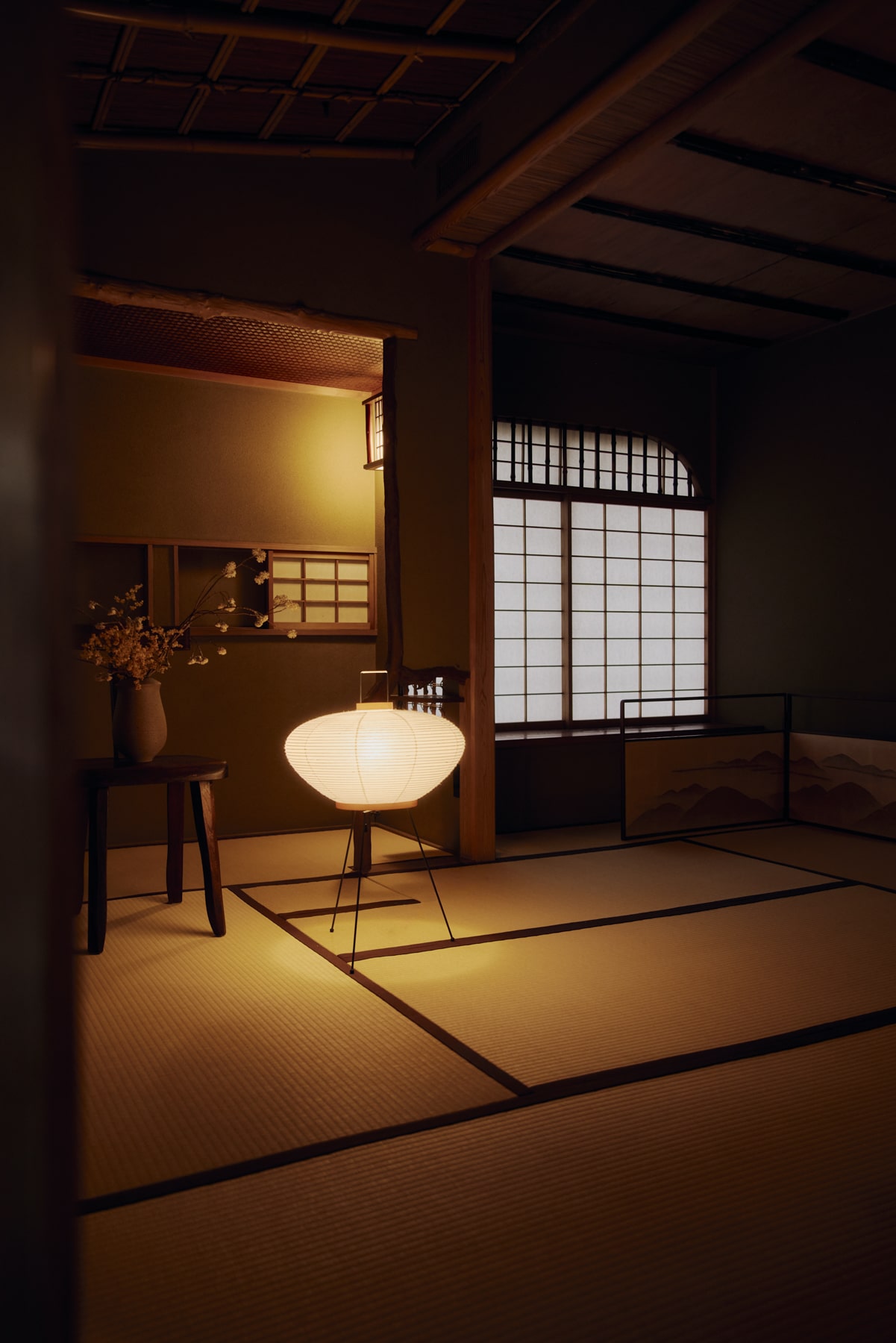
A Japanese-style room rich in shadows and subtle gradations of light. Soft lighting placed low to the floor gently illuminates the tatami, creating a deep sense of immersion separated from everyday life. (Currently view-only)
Light filtering through the shoji screens beautifully highlights the traditional Japanese interior.
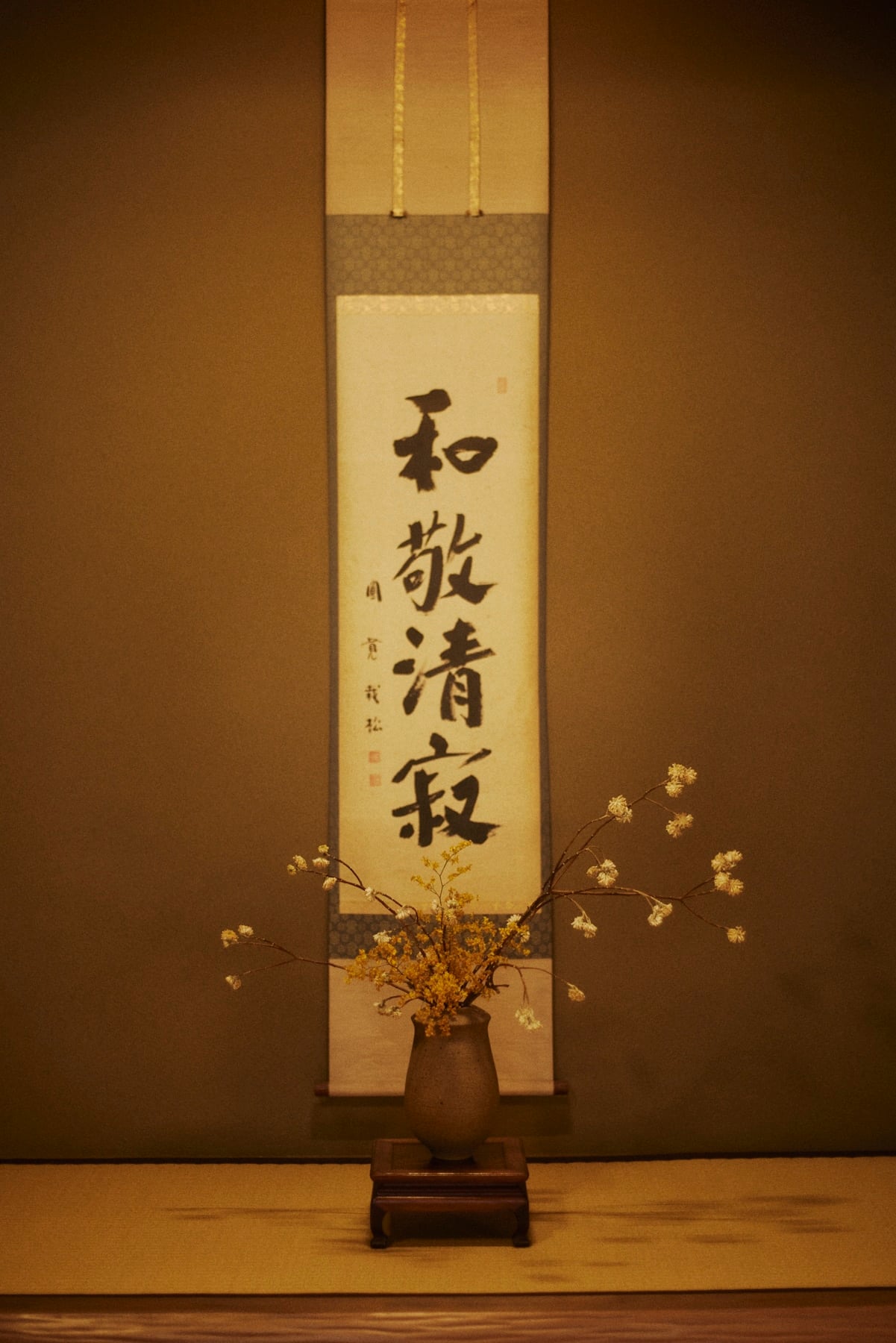
An alcove displaying the calligraphy “Wa-Kei-Sei-Jaku” (Harmony, Respect, Purity, and Tranquility), alongside seasonal flowers that reflect the spirit of the tea ceremony and traditional Japanese aesthetics.
Furniture created by woodworker Toshiaki Umemoto. The texture of the materials adds natural warmth to the space.
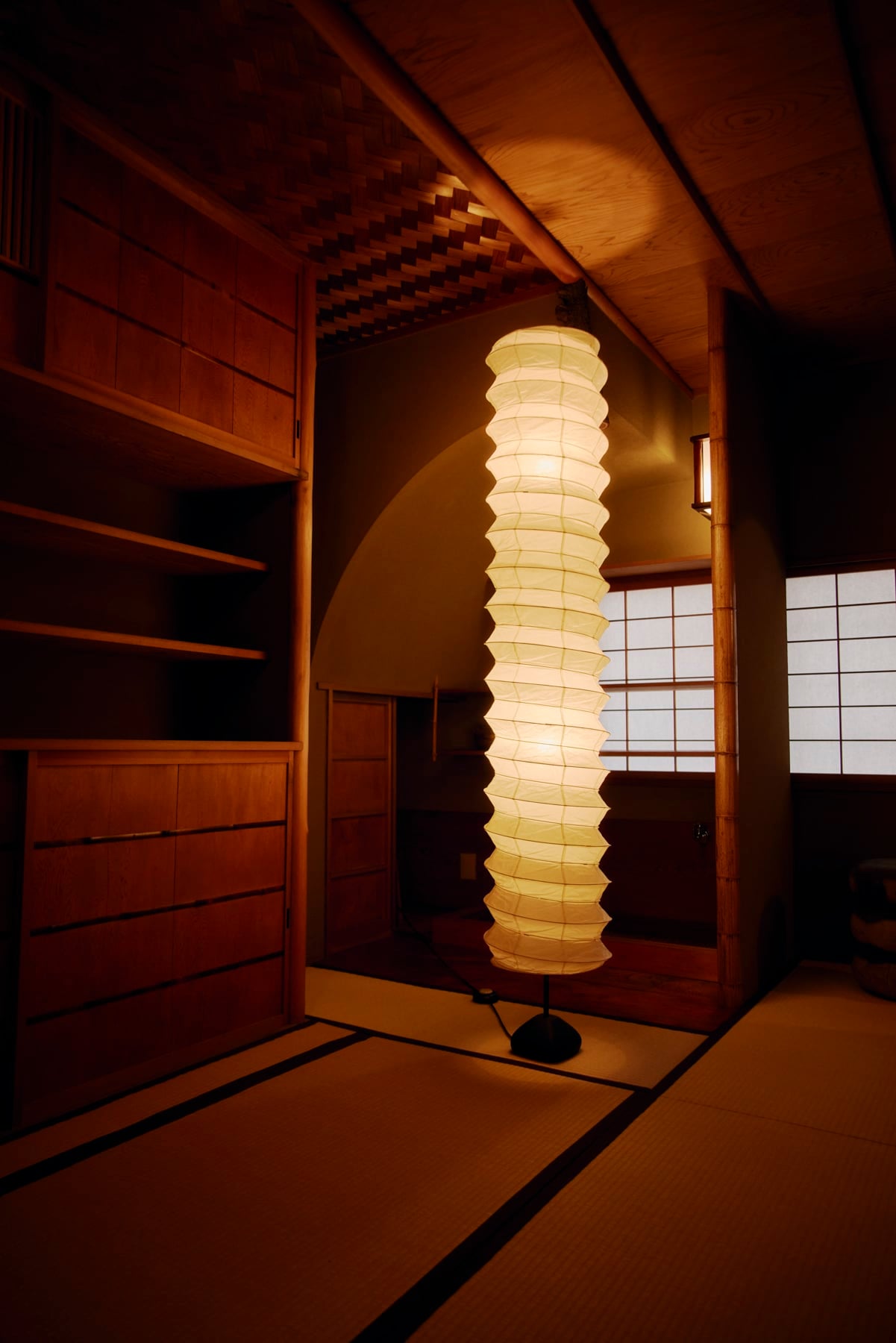
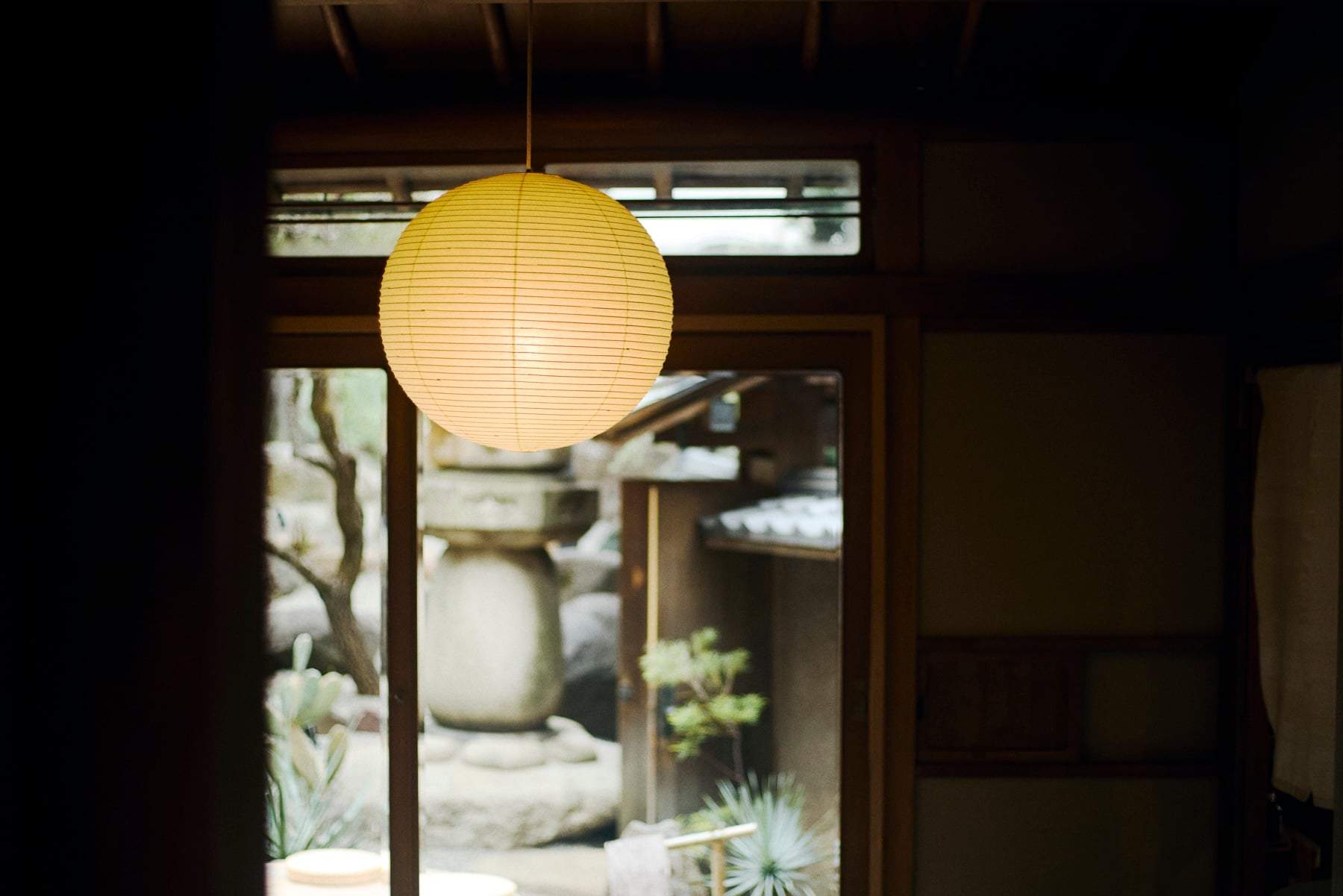
The “AKARI” lighting sculpture by Isamu Noguchi, serving as a striking accent within the interior.
At “LAMBERT,” guests are served organic matcha carefully cultivated in Izumo, Shimane Prefecture—a region long known in Japan as “the land of en-musubi,” or meaningful connections. Each cup is prepared individually in front of guests, with the barista carefully adjusting the water temperature according to the condition of the tea leaves that day.
At the core of the menu are two contrasting cultivars. “Yabukita,” grown in Izumo, has a pronounced aroma and delivers distinct bitterness and astringency, allowing guests to experience the classic character of matcha directly.
By contrast, “Okumidori” is a late-harvest cultivar picked later than Yabukita. It produces less bitterness, while emphasizing umami and sweetness. With its softer texture and lingering sweetness, it offers an approachable flavor even for those unfamiliar with matcha.
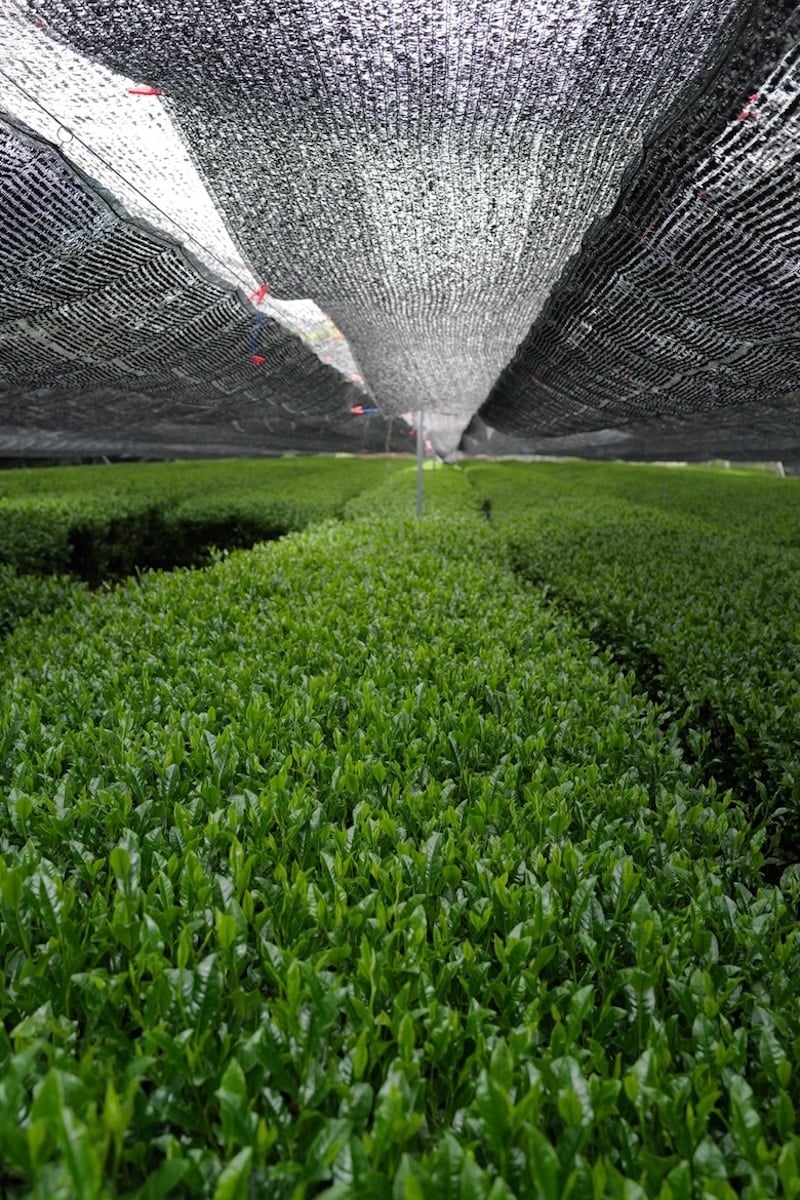
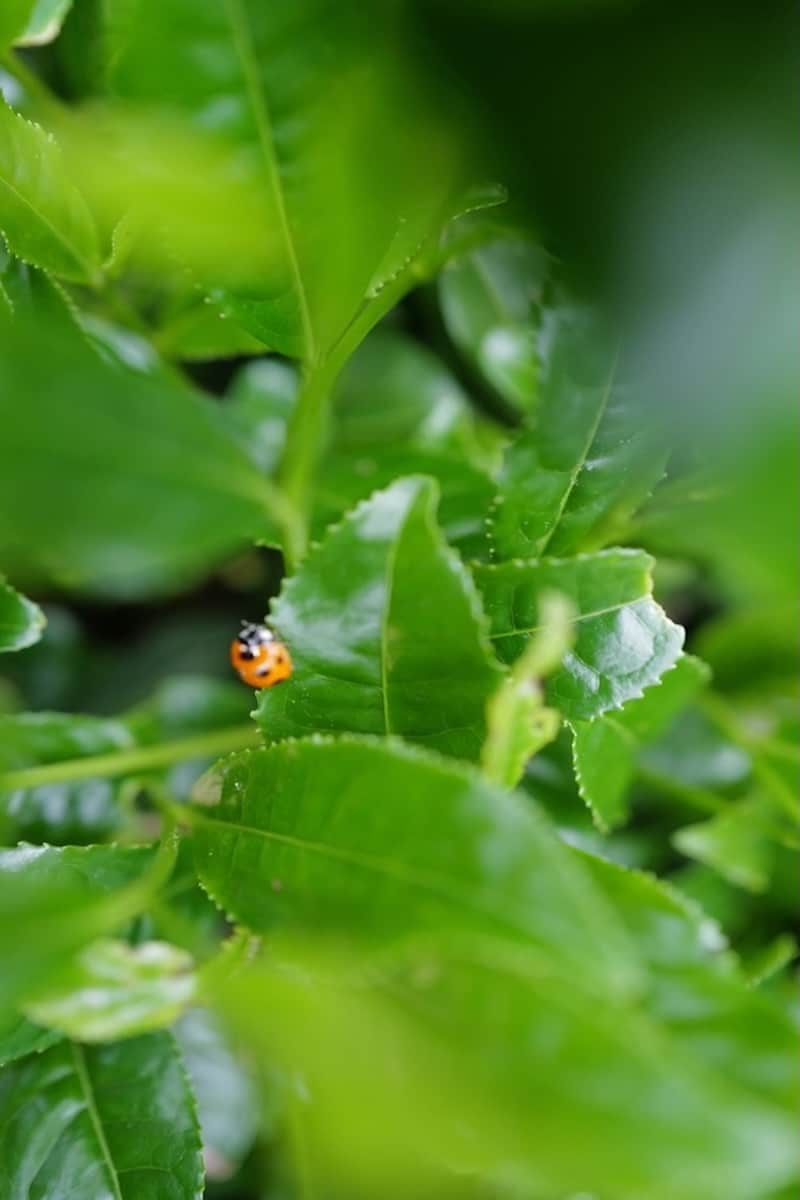
Tea leaves organically cultivated in Izumo, Shimane Prefecture.
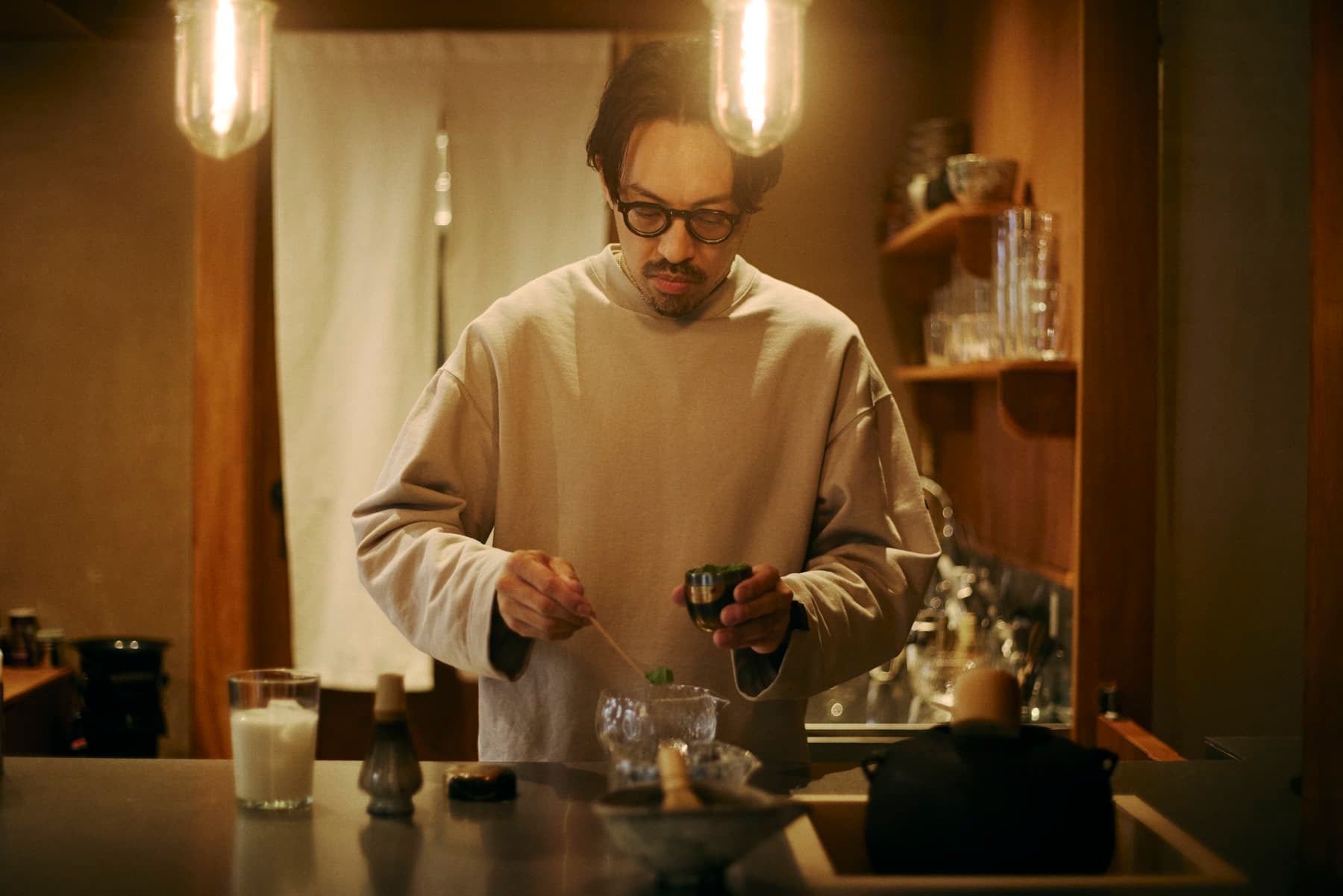
Matcha served across the counter. The preparation process performed cup by cup by owner Keitaro Suzuki is designed as part of the overall experience.
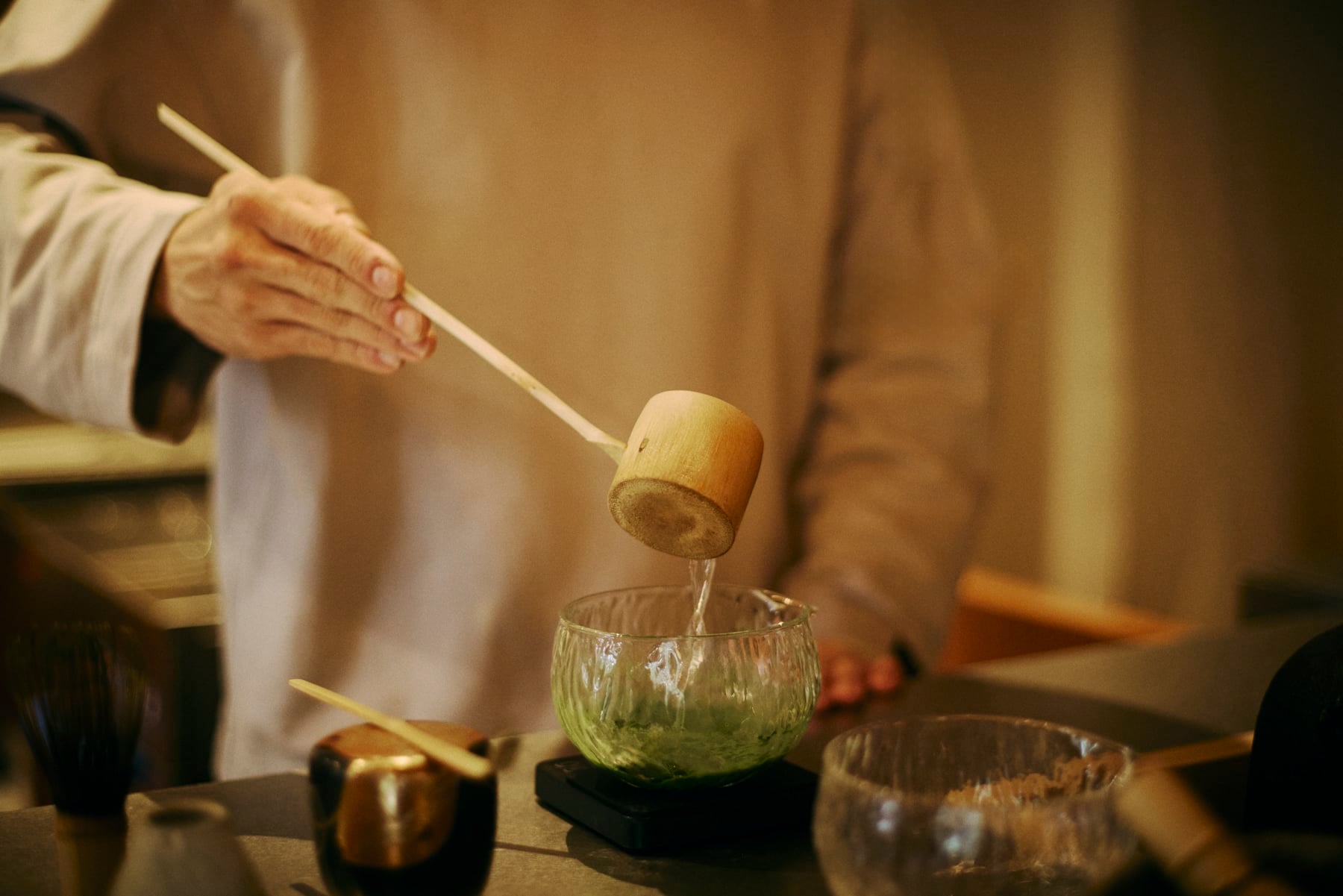
Water is poured into the tea bowl while carefully adjusting the temperature to achieve the ideal extraction.
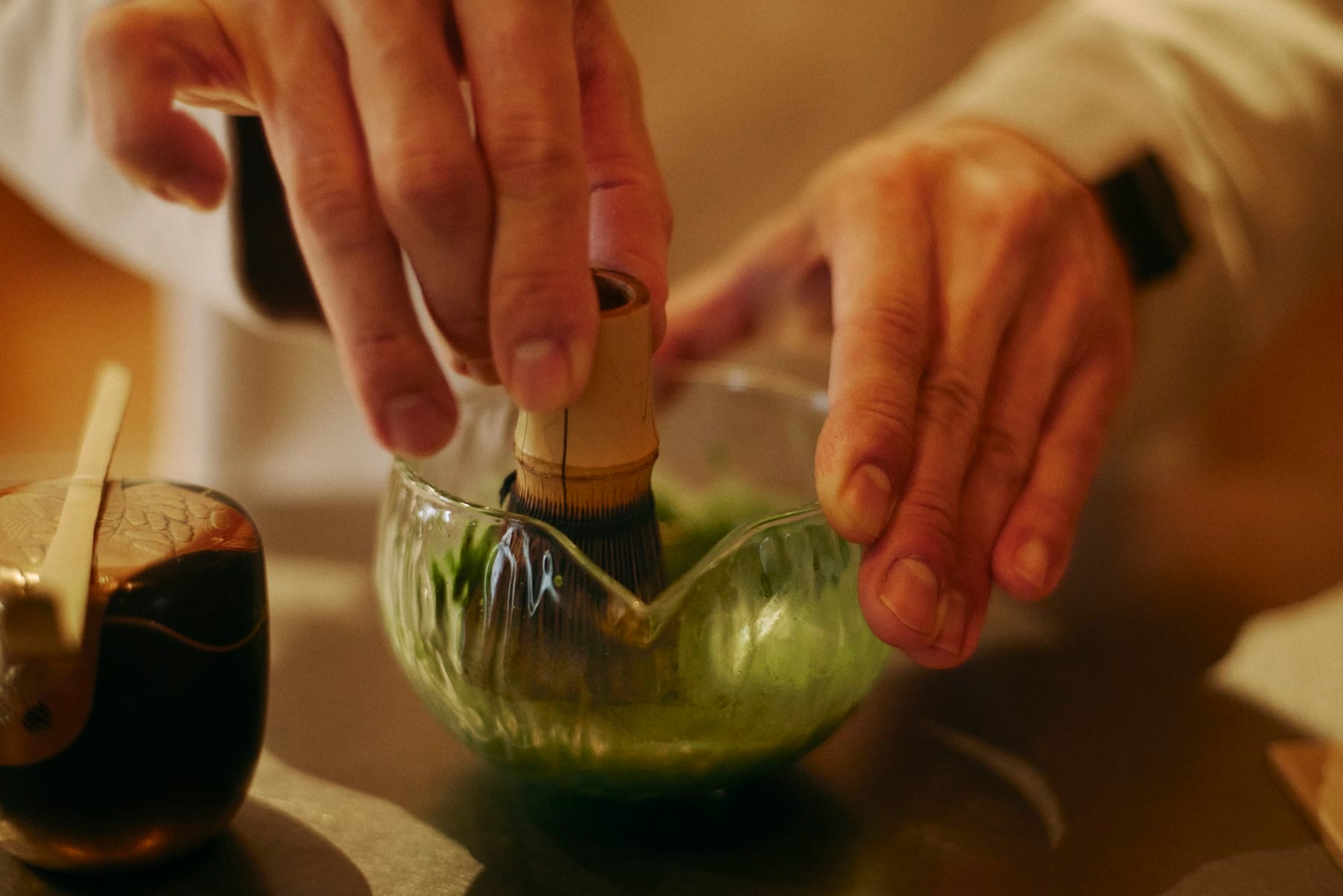
The graceful movements of whisking matcha with a chasen bamboo whisk. Even the sound echoing through the quiet space becomes part of the experience.
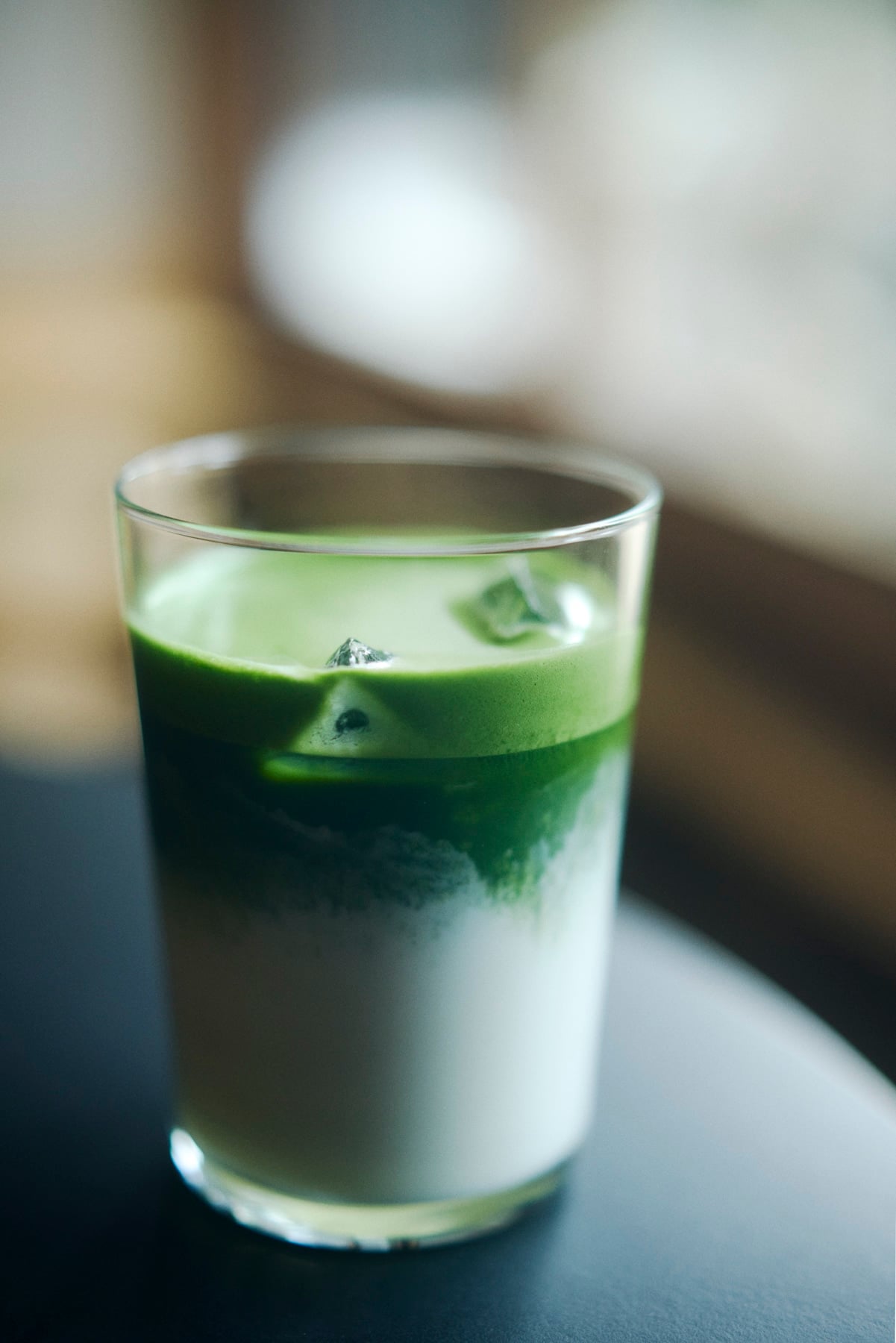
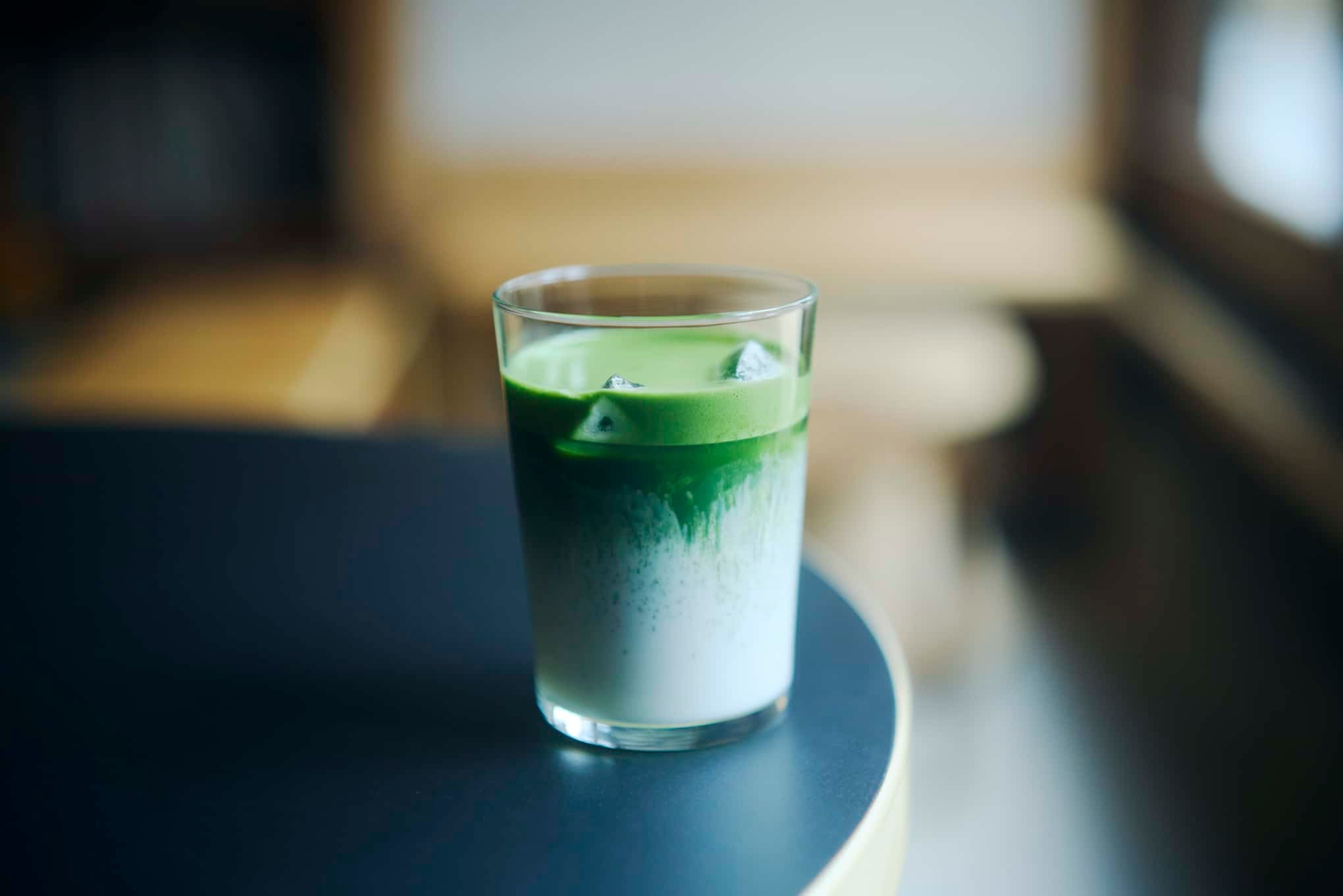
The “Iced Matcha Latte” (¥1,300), which allows guests to directly experience the depth of matcha flavor. The restrained amount of milk and gentle sweetness maximize the aroma of the organic tea leaves.
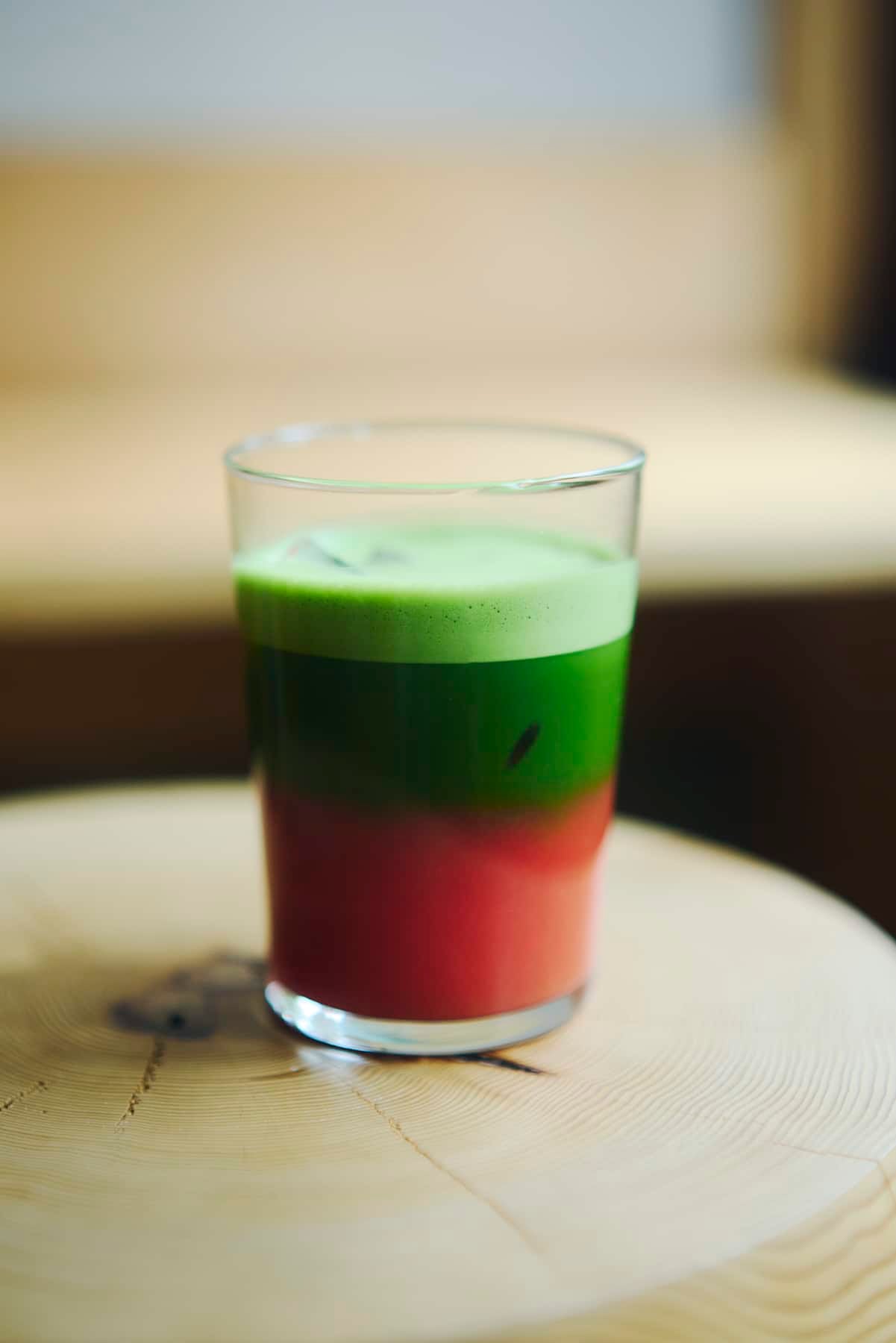
The unexpectedly paired “Watermelon Matcha” (¥1,500). The natural sweetness of juicy watermelon combines with the vivid astringency of Izumo matcha in a drink unique to this shop.
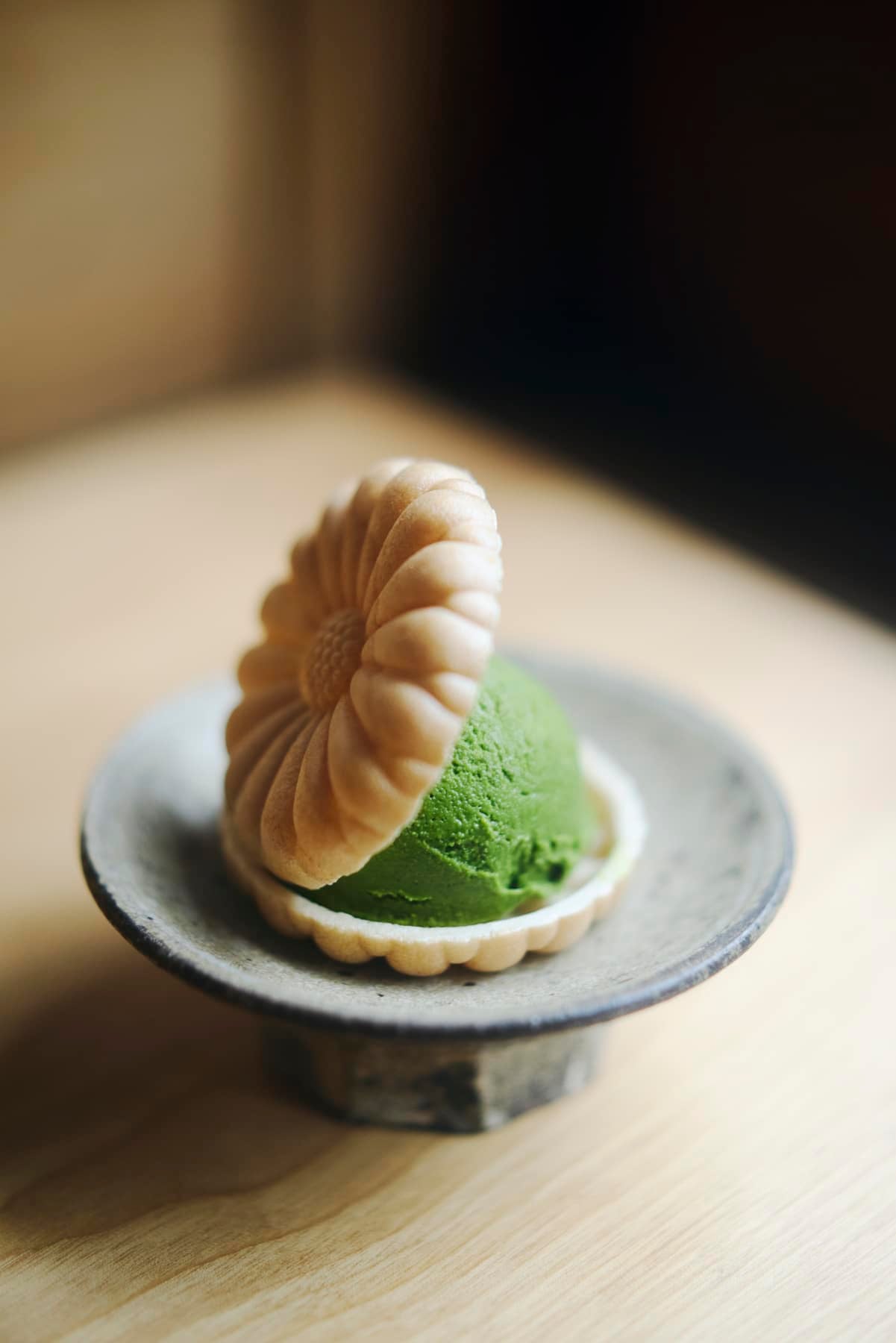
The “Matcha Ice Cream Monaka” (¥800), where the rich aroma of matcha can be enjoyed alongside a smooth texture.
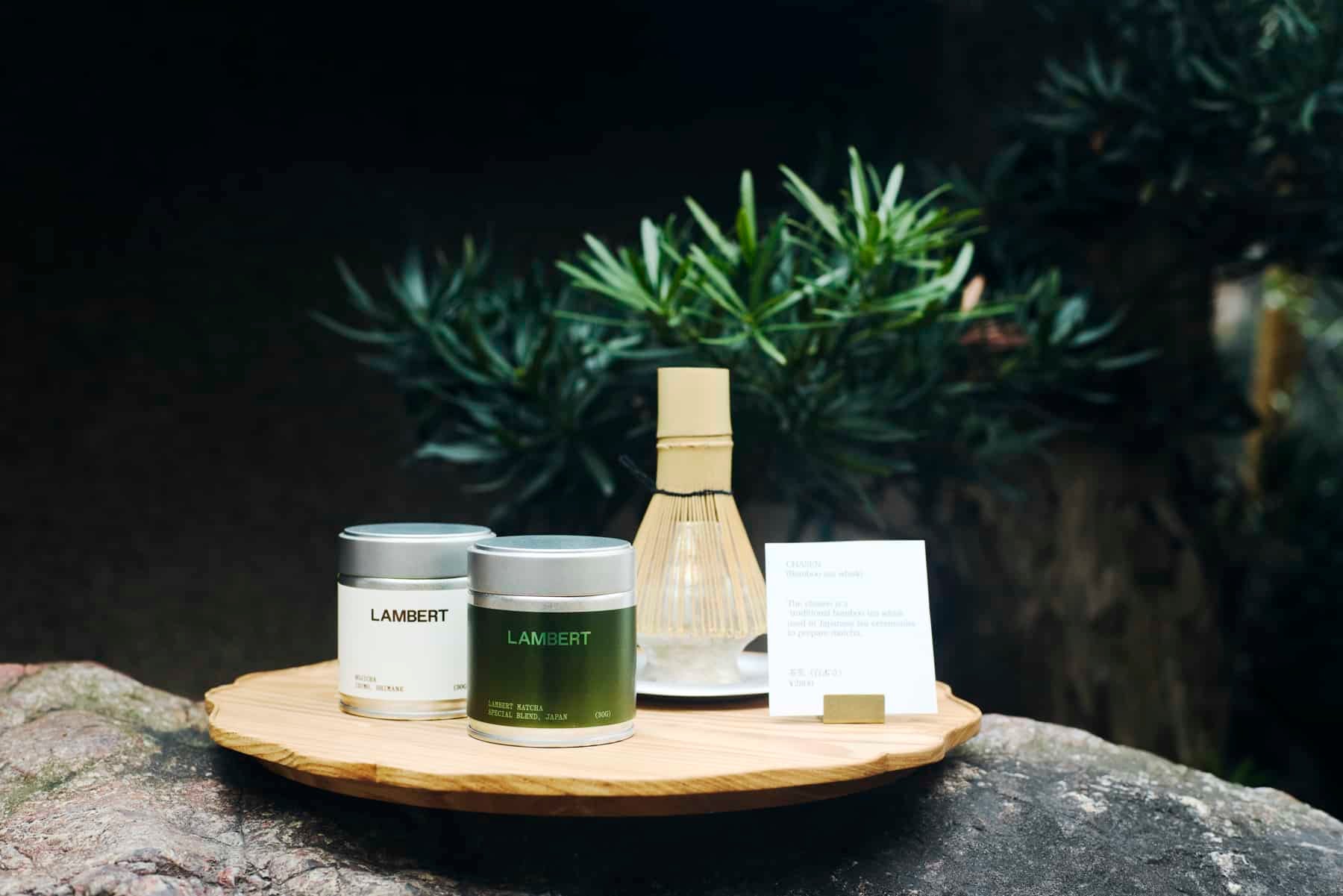
Original tea cans inspired by the rich land of Izumo. The “SPECIAL BLEND” (¥5,900) on the right is a signature blend balancing the deep umami and refined aroma unique to Izumo organic matcha. The “HOJICHA IZUMO” (¥3,700) on the left features the rich roasted aroma of carefully roasted tea leaves and a clean, refreshing finish.
The information contained this article was correct as of 05/20/2026 (the time of publication)