DEEPTOKYO
magazine

EN

DEEPTOKYO
magazine
EN
2026.05.03
A Record Store Carrying Shinjuku’s Music Culture into the Present


 Nearest Station

“Union Record Shinjuku” carries on the name first used by the music retail chain Disk Union in 1967, and today, in Shinjuku—a neighborhood with a long musical history—it is once again sharing the appeal of records. Inside, records from a wide range of genres fill the shelves, and by checking the detailed condition notes attached to each one, visitors can take their time searching for the record that suits them best. It is a place where you can engage with records while feeling the music culture that Shinjuku has built up over the years.
SHARE


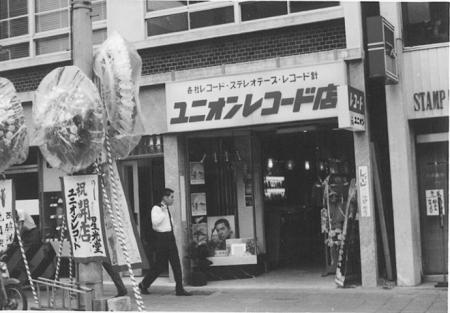
The name “Union Record” was the original shop name used when the music retail chain Disk Union began selling records in 1967. Today’s “Union Record Shinjuku” inherits that historic name and was created as a place to relaunch the transmission of record culture—something that began more than half a century ago—from Shinjuku once again.
The reason Shinjuku became so deeply connected to record culture lies in the long history of music culture rooted in this neighborhood.
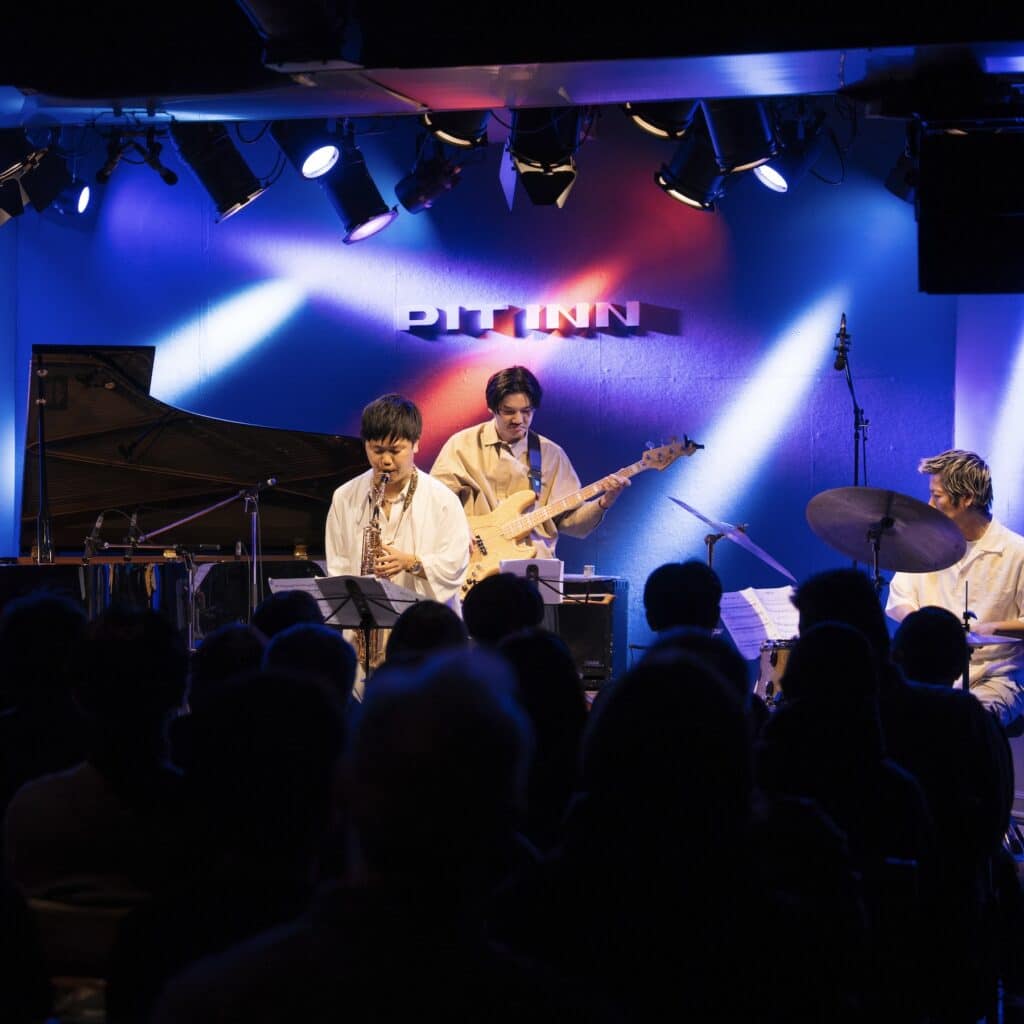
In the 1960s, Shinjuku was a cultural hub where students and intellectuals gathered. At the time, overseas rock and jazz records—imported pressings—were very expensive and difficult to obtain, so many jazz cafés existed as places where people could listen to them. In 1965, the jazz live house “Shinjuku PIT INN” opened, and a culture of enjoying music took firm root in Shinjuku.
In the 1970s, as records became more common, the buying and selling of secondhand records also flourished. Many record stores gathered in Shinjuku, and an environment where people could buy and sell records steadily took shape. Through this accumulation, Shinjuku became widely known as an area with a rich selection of records and evolved into a neighborhood where people could experience music as an “archive.”
Positioned on the continuation of this music culture in Shinjuku, “Union Record Shinjuku” takes on the role of passing the music culture accumulated in this neighborhood on to the next generation by deliberately reviving the original 1967 shop name.
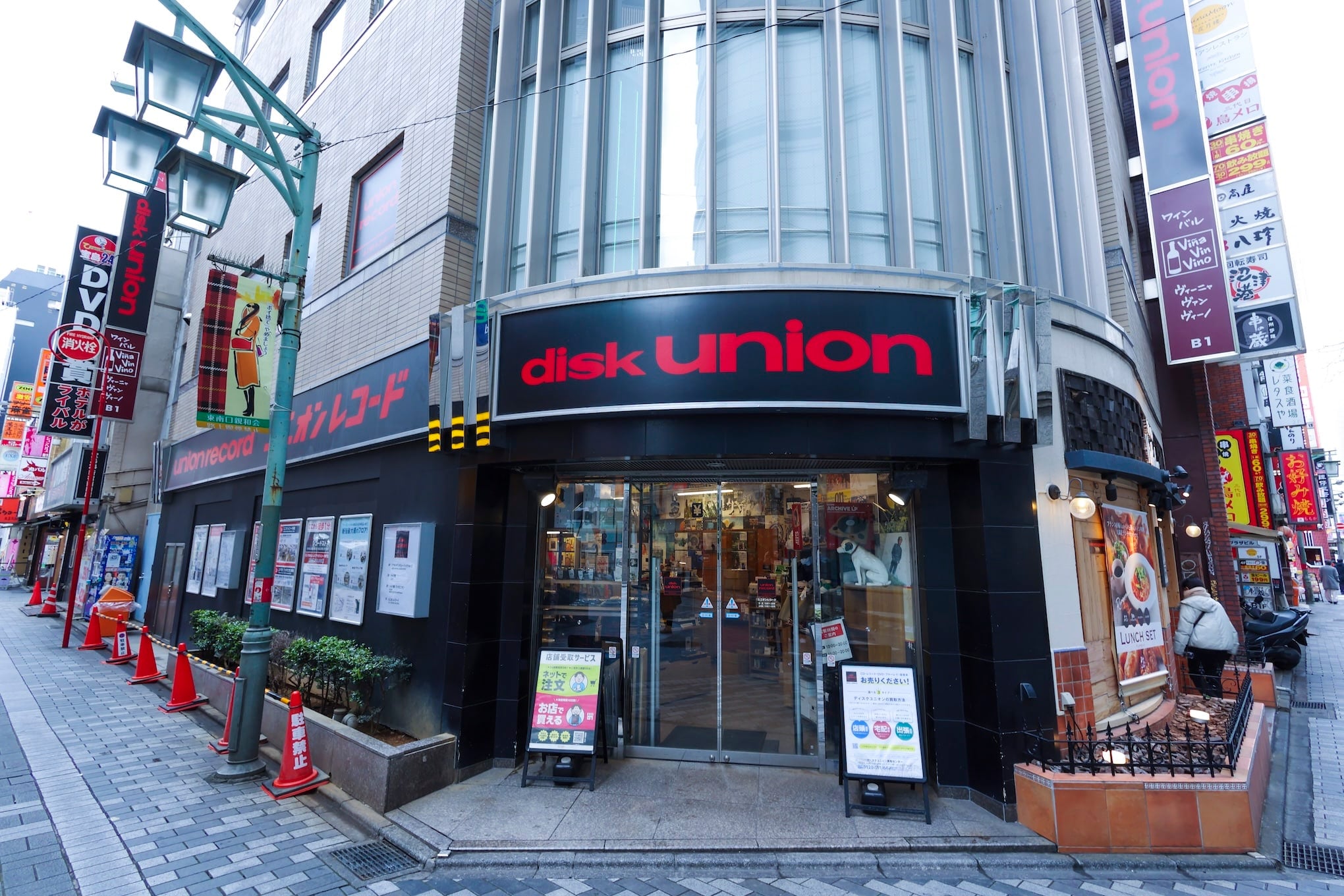
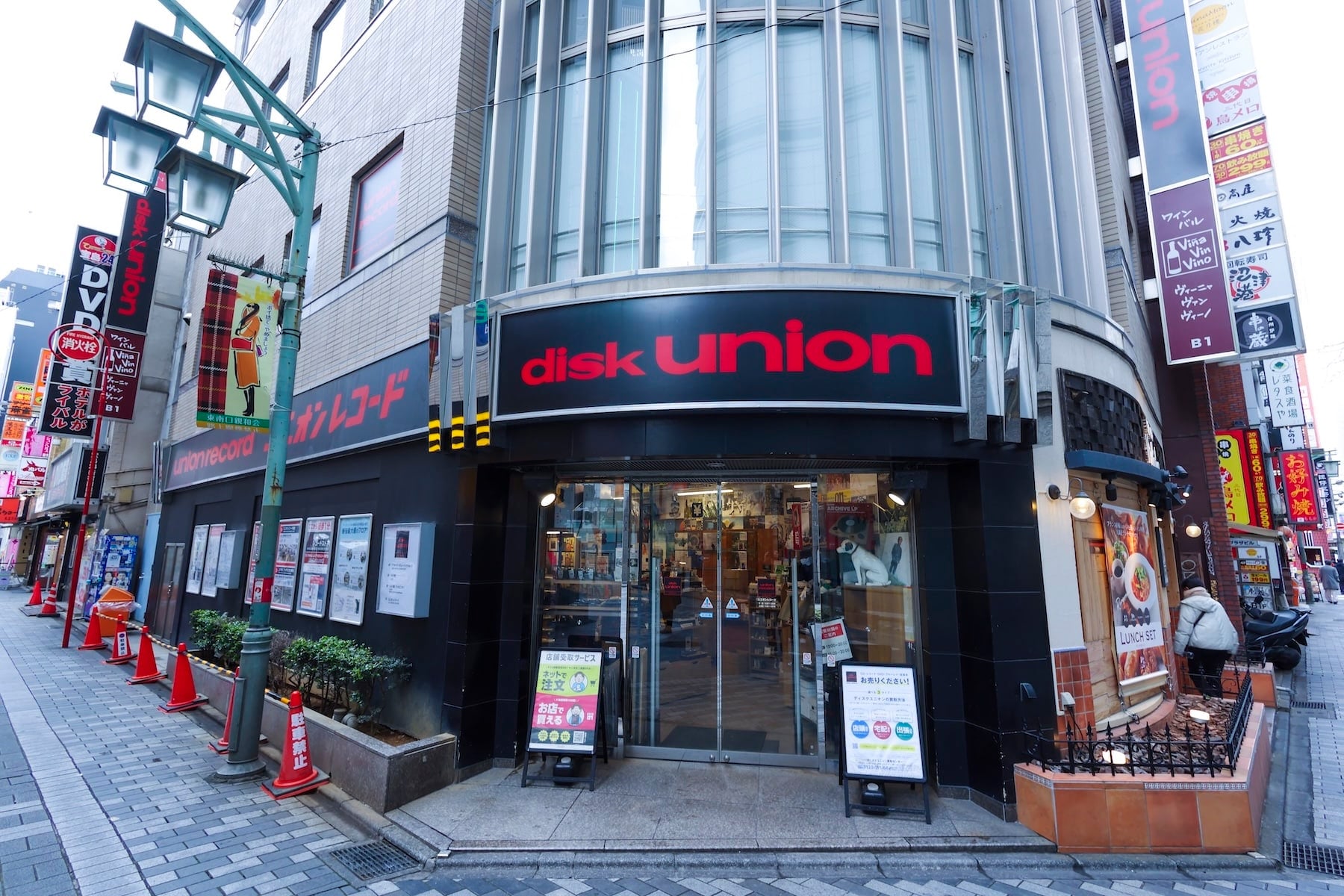
Exterior view of “Union Record Shinjuku,” located in Shinjuku Sanchome.
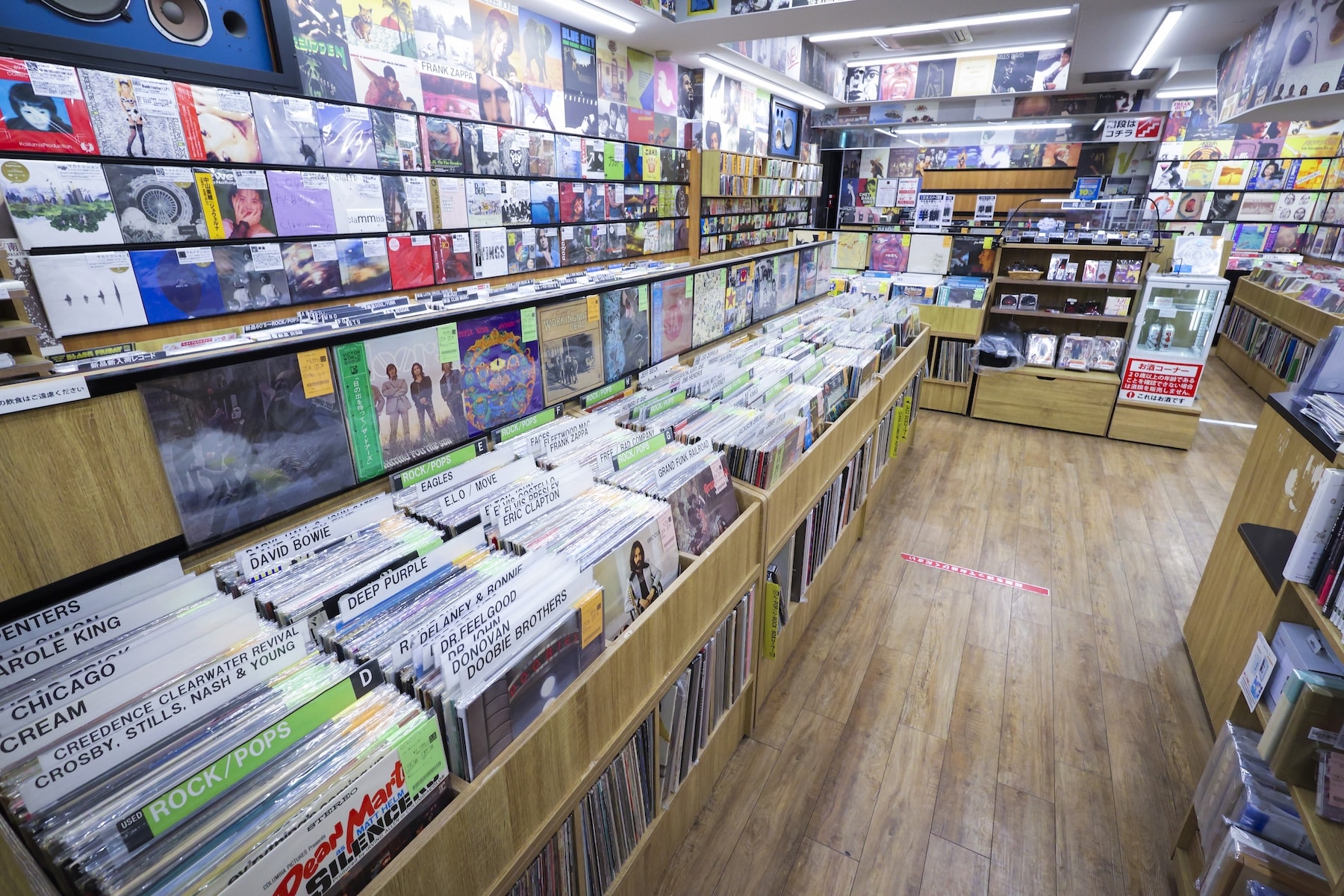
The first floor is a sea of records that transcends the boundaries of genres. The shelves, where the latest new releases and vintage vinyl coexist, symbolize Shinjuku, a city of archives where history is built up.
A major feature of “Union Record Shinjuku” is that analog records of every genre are lined up together. Normally, Disk Union stores in the Shinjuku area are divided into separate shops by genre, but here visitors can browse rock, jazz, soul, hip-hop, punk, and J-pop all on a single floor.
What is especially noteworthy is that even by the same artist, “original pressings,” which preserve the sound and specifications of the time of release, are shelved alongside “Japanese pressings,” which come with liner notes and an obi strip. Visitors can compare differences in specifications, sound quality, and record condition on the spot while choosing the copy that suits them best.
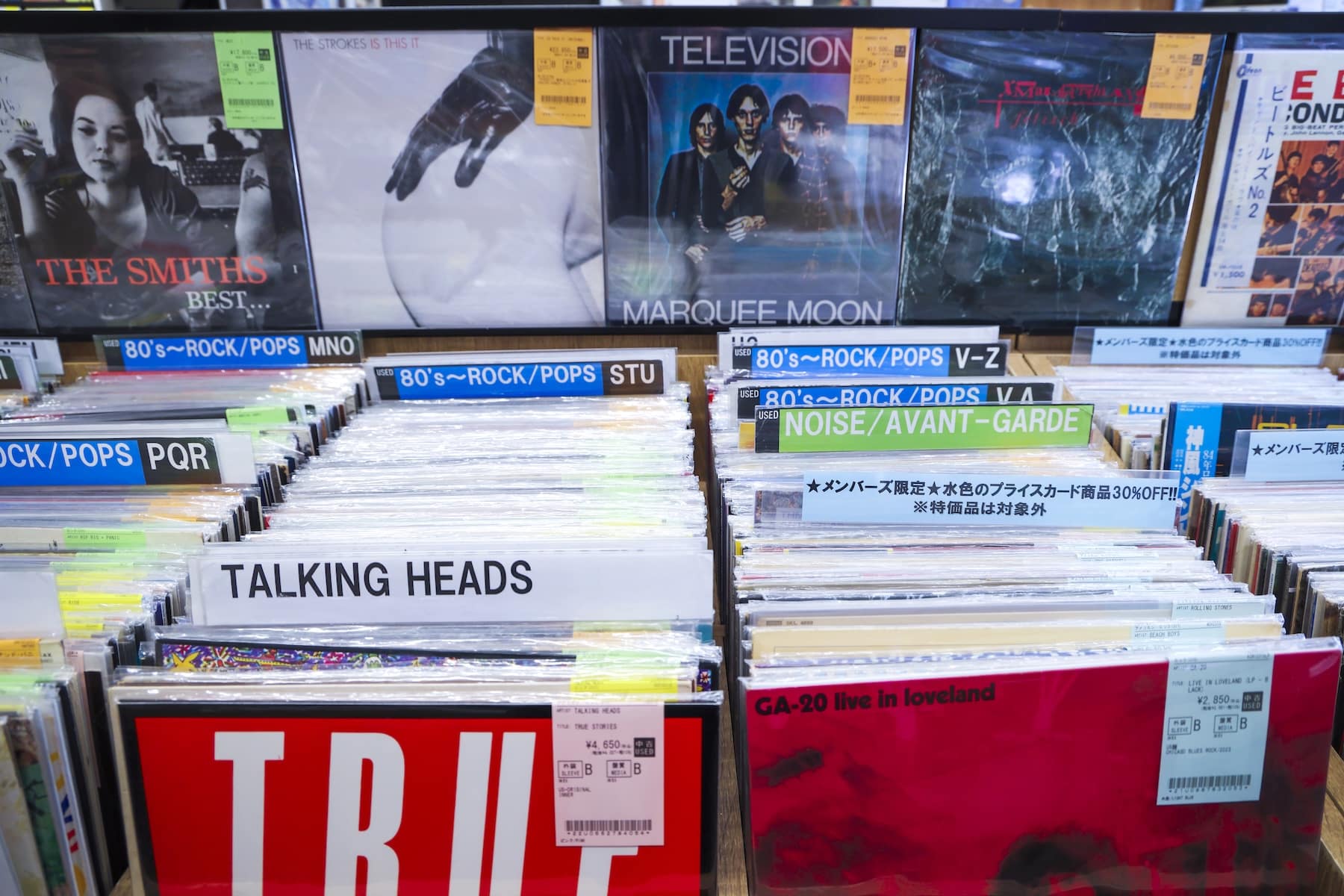
The rock/pop shelves. From masterpieces by The Beatles to recent indie rock, the records are neatly arranged in alphabetical order.
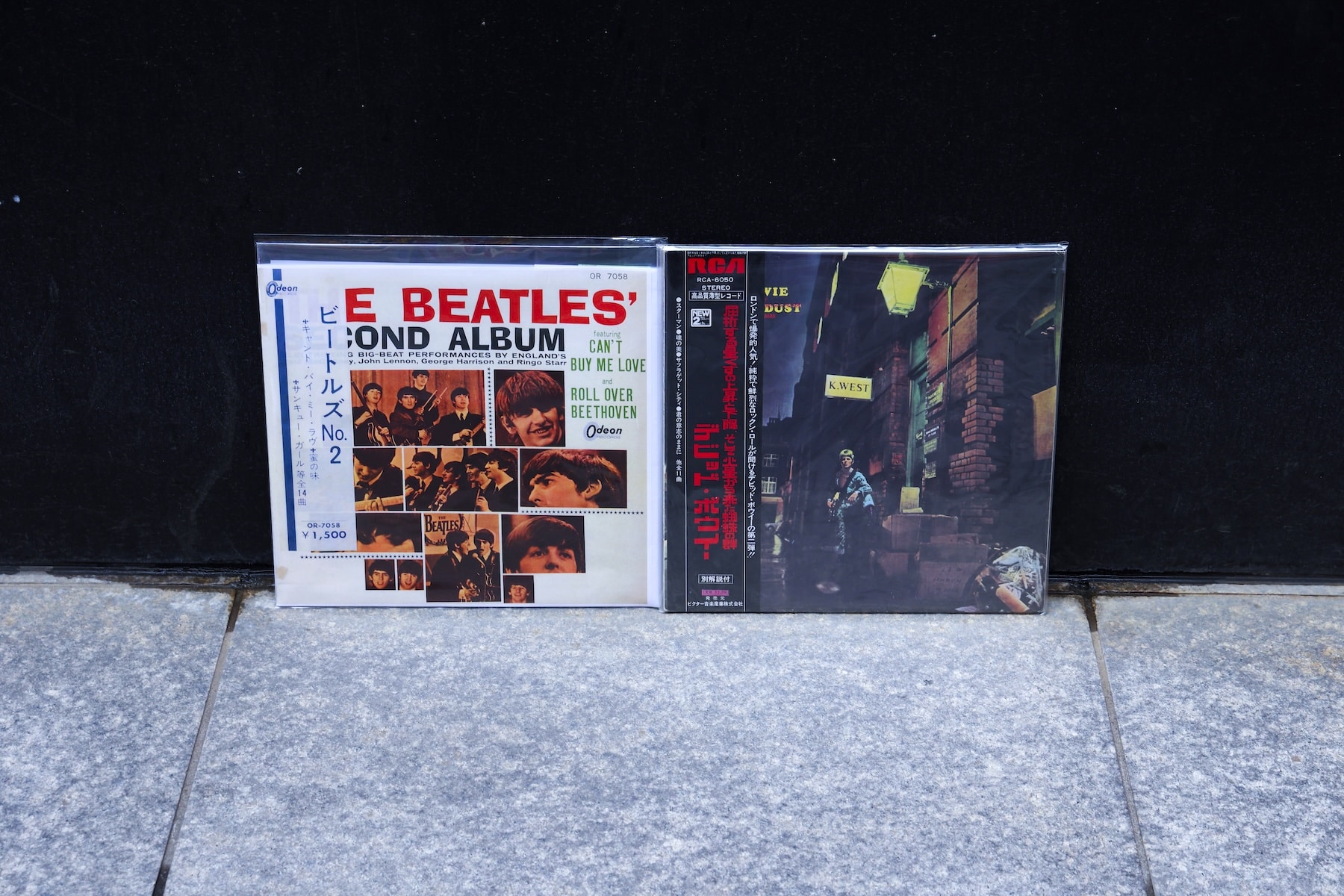
On the left is The Beatles’ “SECOND ALBUM,” an early pressing with a limiter-heavy, loudness-focused sound; on the right is David Bowie’s “Ziggy Stardust,” notable for Ken Scott’s richly dimensional mix. Even within rock, there is pleasure in reading the differences in recording philosophy.
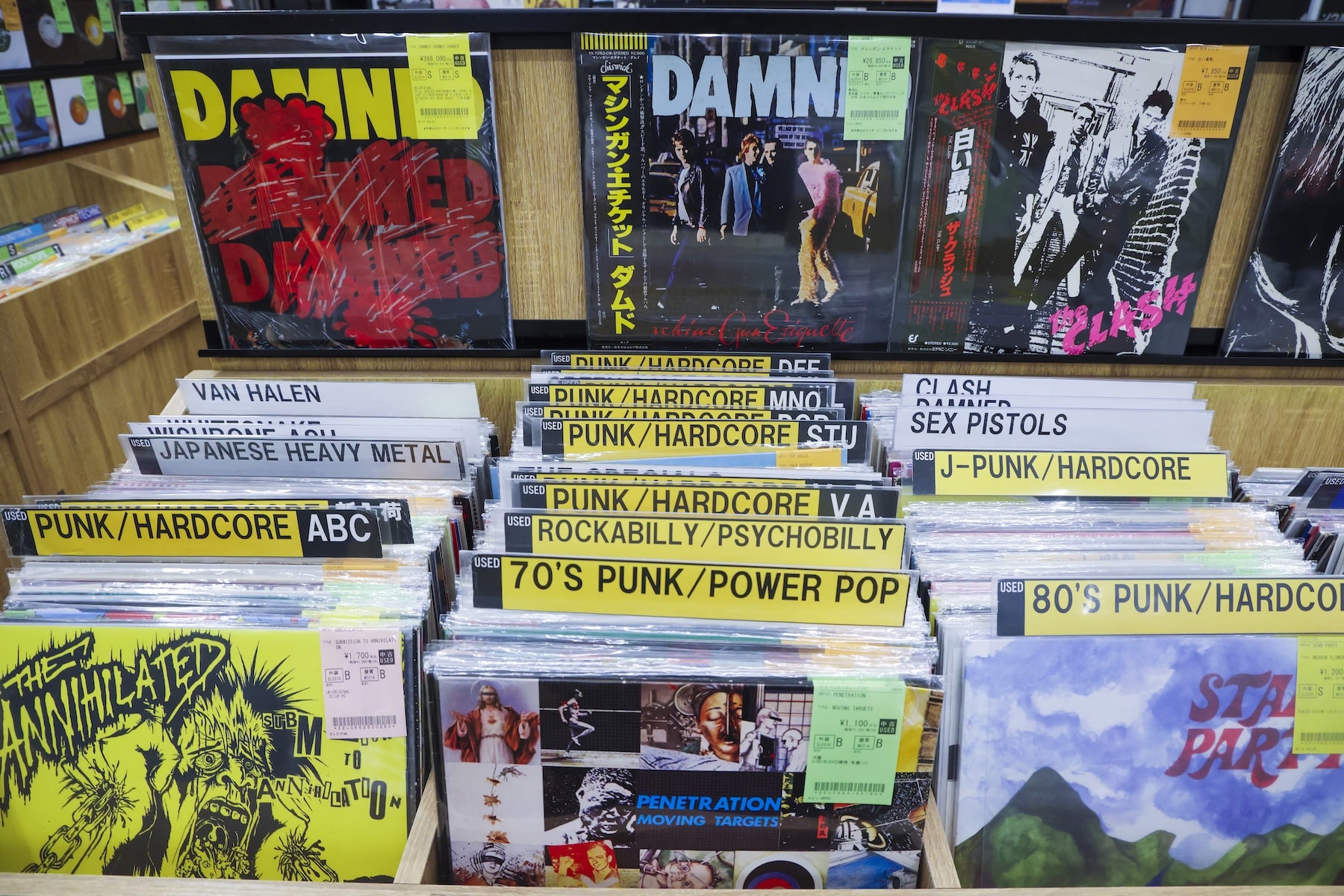
The punk/hardcore shelves, organized by style from 1970s punk to current releases.
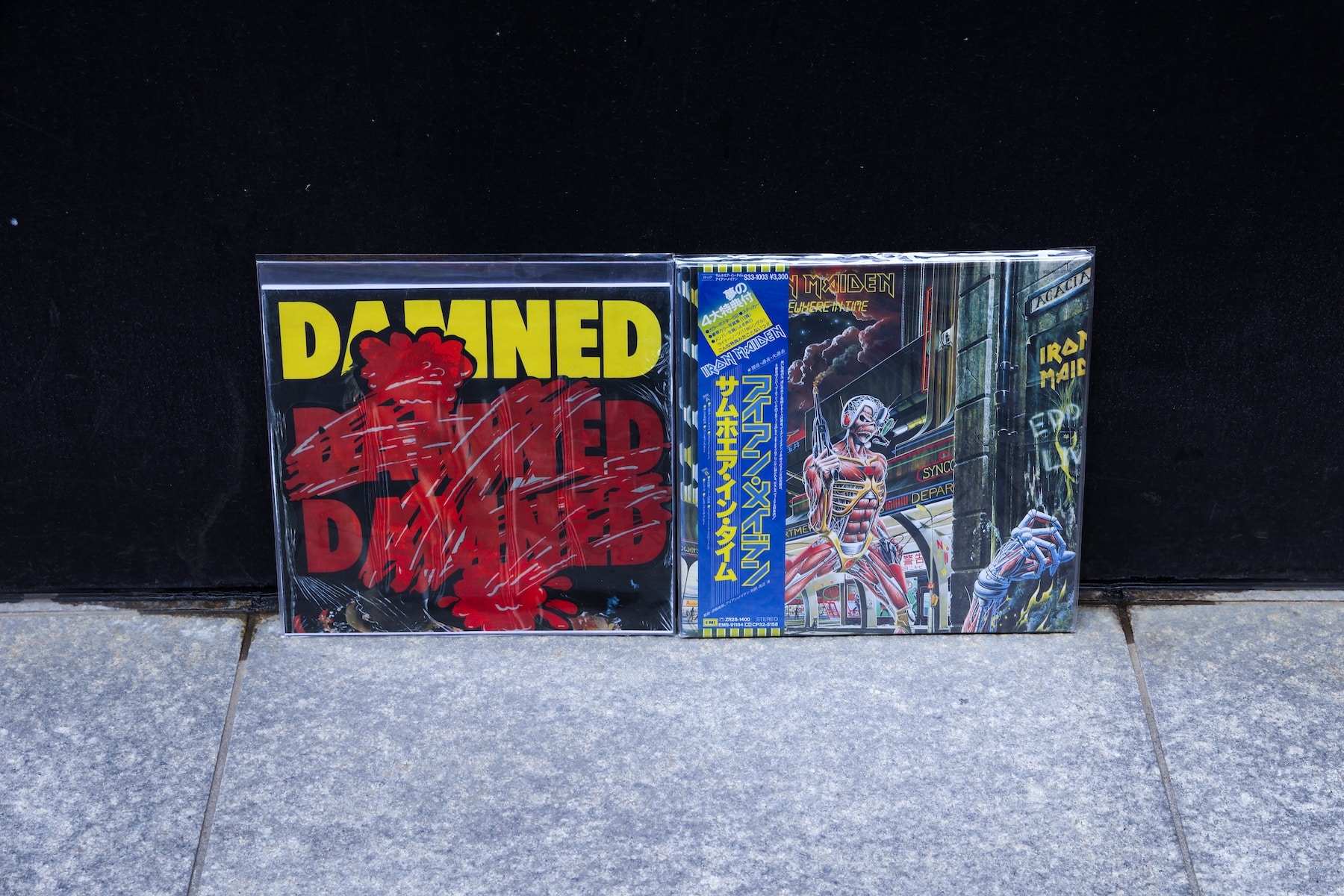
Early punk from Stiff Records, The Damned’s “DAMNED DAMNED DAMNED” (left), and Iron Maiden’s “Somewhere in Time” (right), a landmark of 1980s metal that made use of digital delay. The evolution of recording equipment is etched directly into the history of the sound.
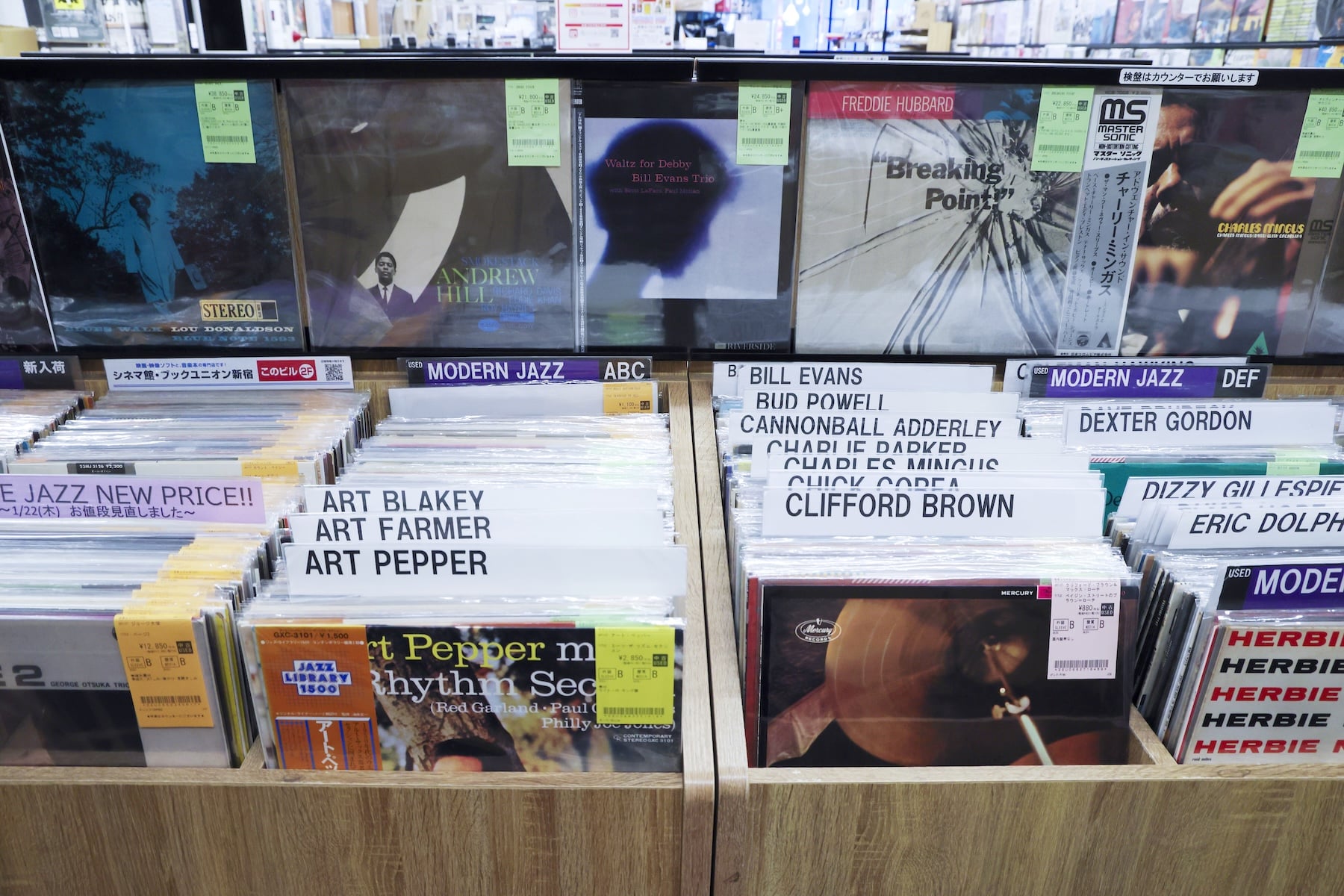
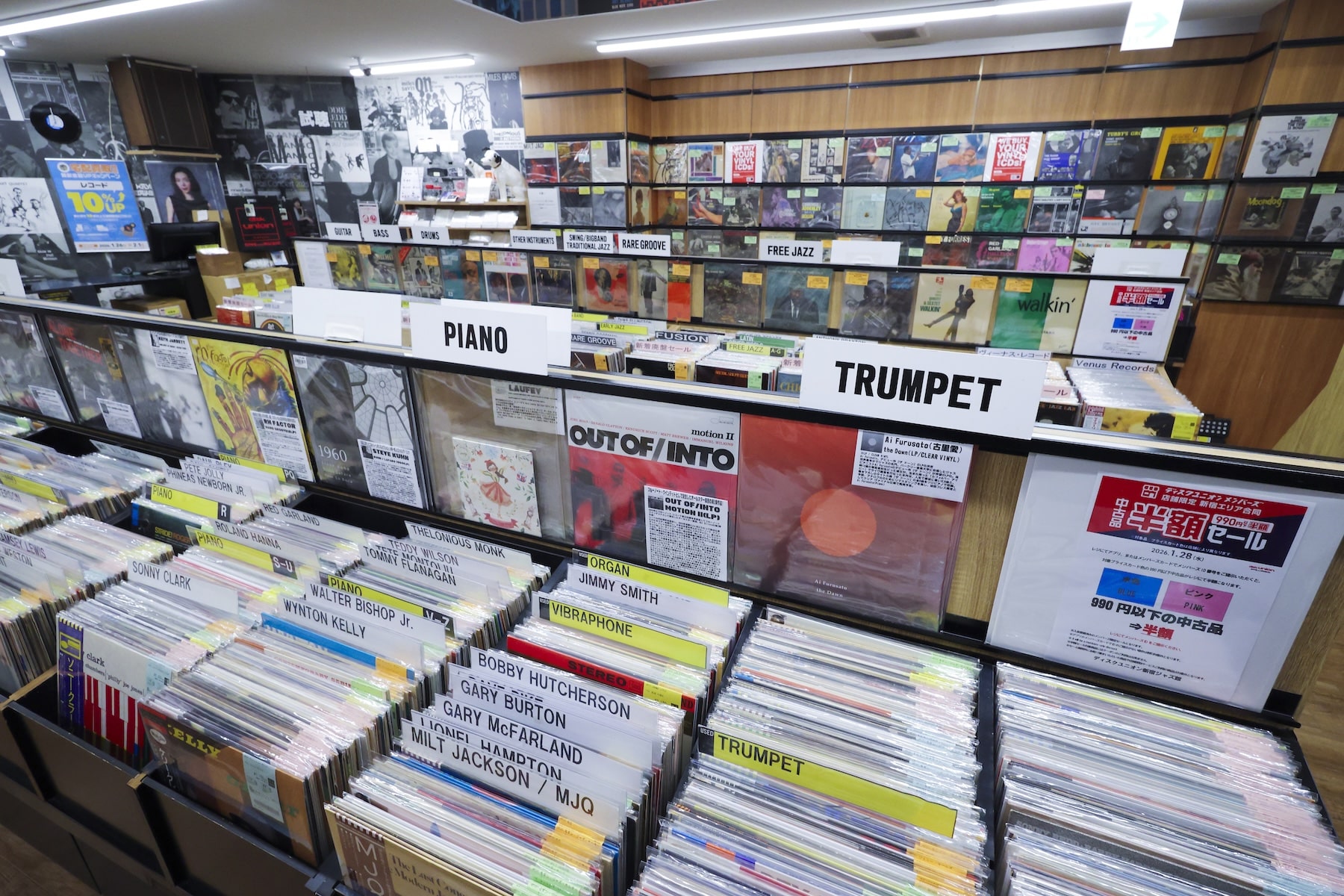
The jazz section, lined with masterpieces from Blue Note, Prestige, and other labels. The detailed condition notation on secondhand records is proof of the store’s reliability.
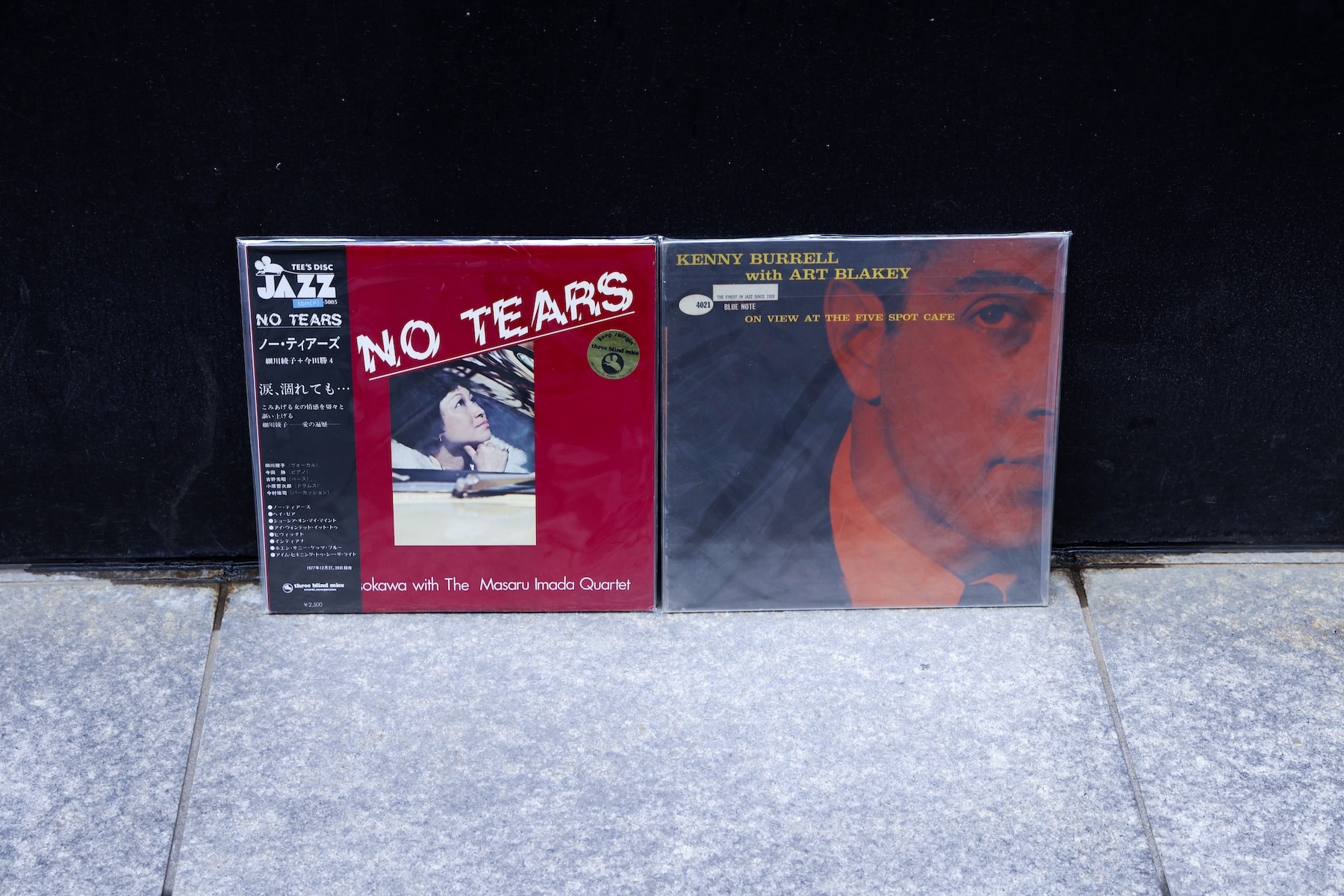
The live album “KENNY BURRELL WITH BLAKEY” (right), overflowing with the intensity of the hard-bop era, sits alongside “NO TEARS” (left), a landmark of Japanese jazz vocals by Ayako Hosokawa + Masaru Imada Quartet. The depths of Japanese and American jazz meet side by side.
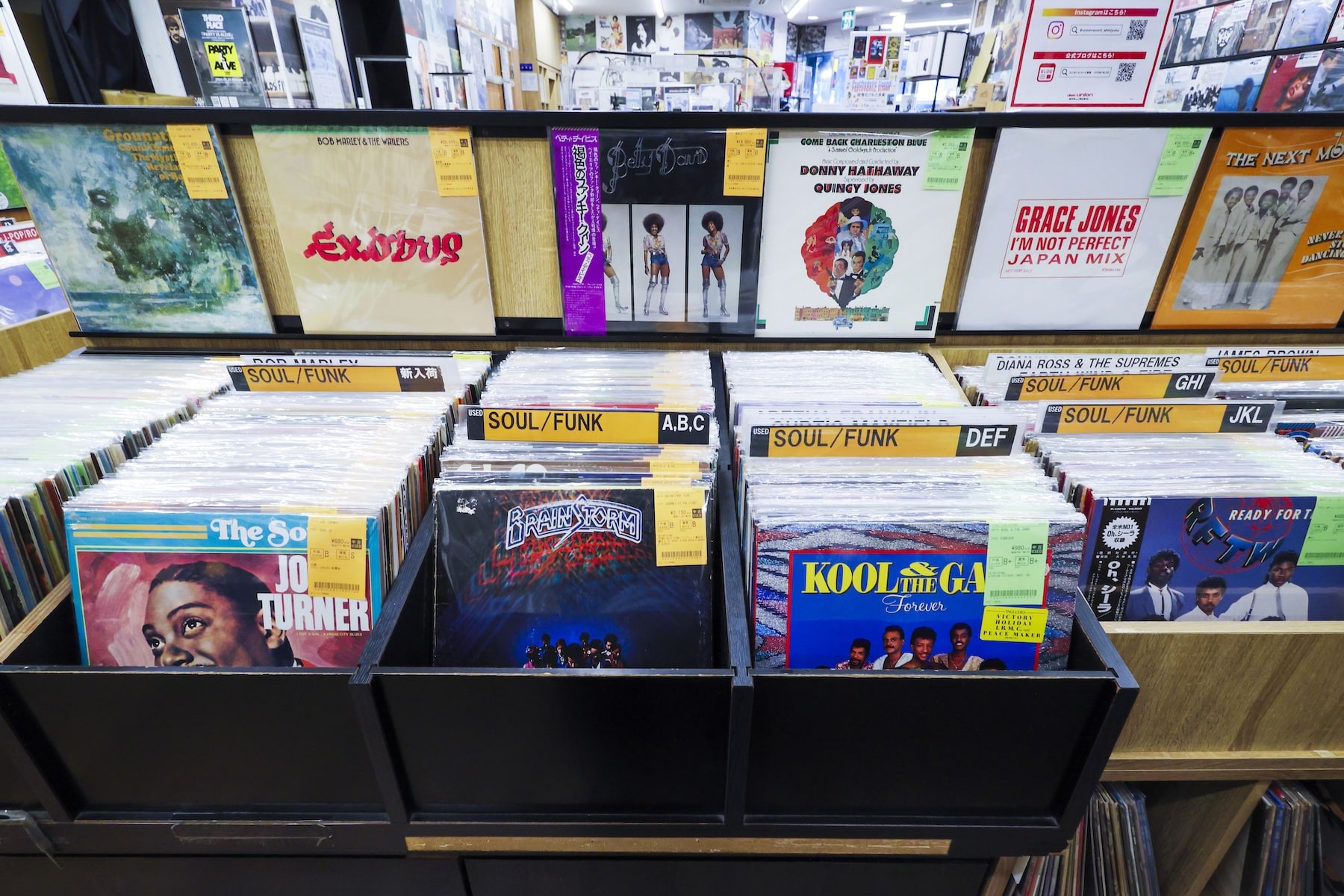
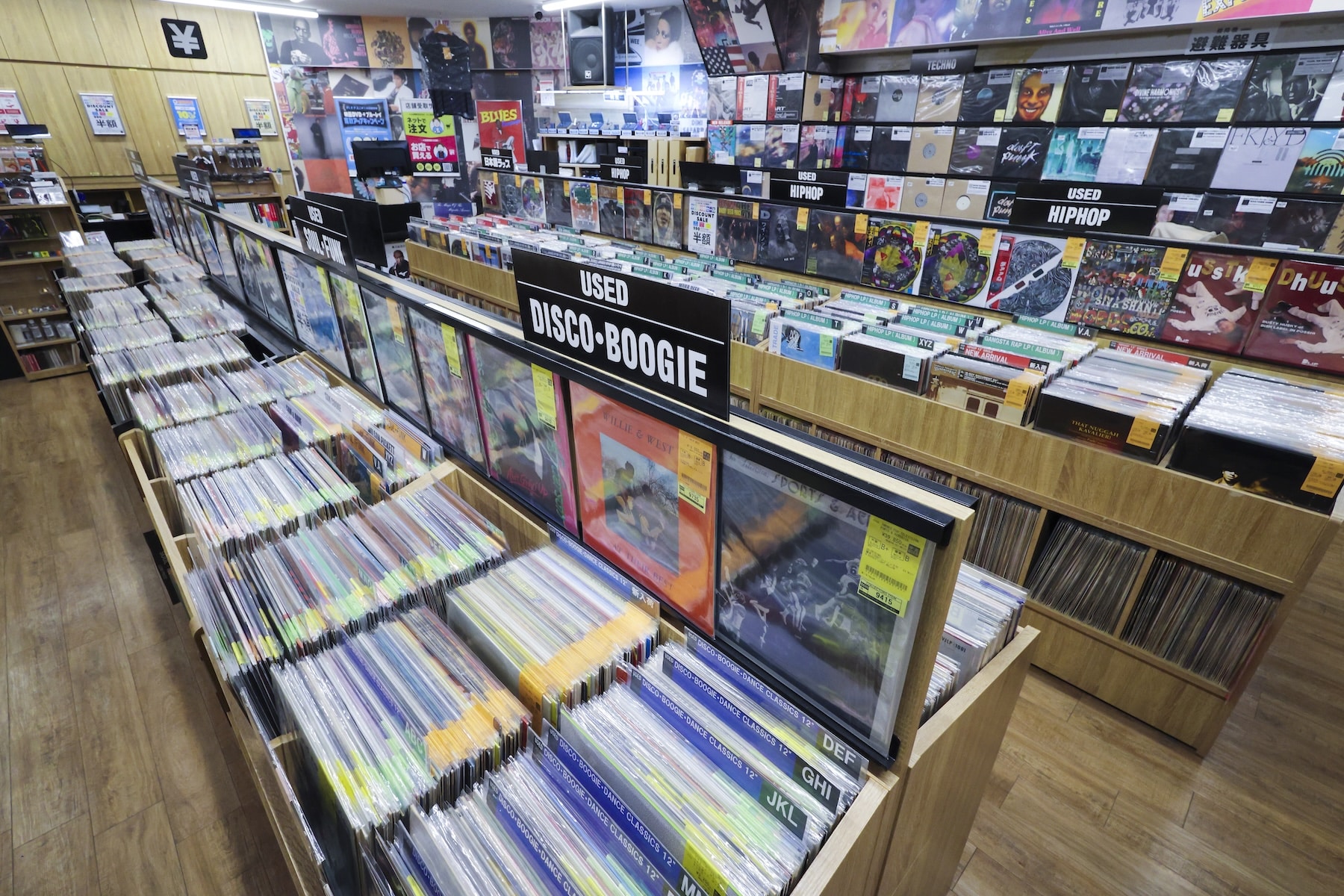
The soul/funk shelves, where grooves from around the world come together. They cover everything from rare original pressings to reissues that can ignite a dance floor.
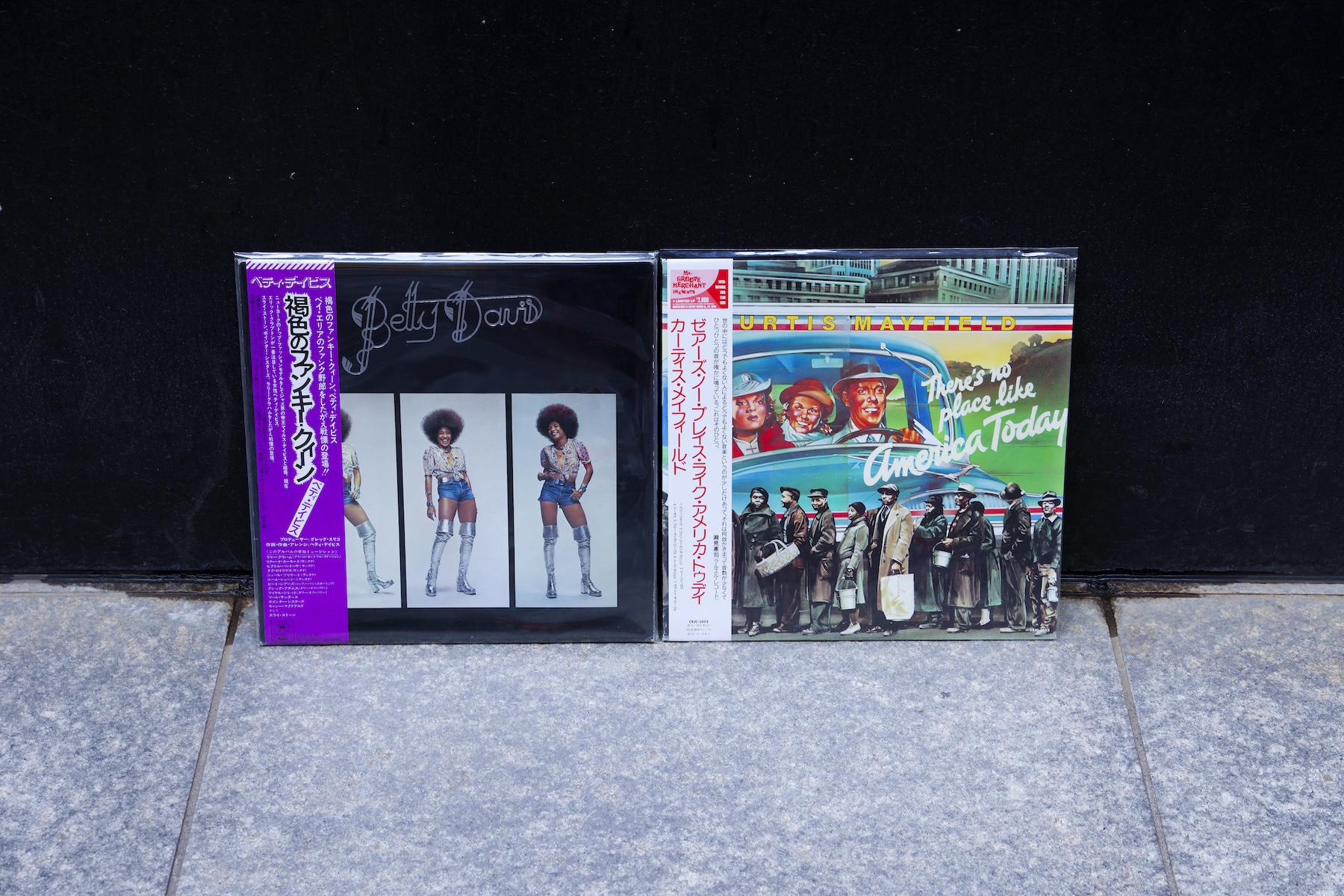
Betty Davis' wild funk "Nasty Gal" (left) and Curtis Mayfield's serene Chicago soul "There's No Place Like America Today" (right) were released in the same year, 1975. They illustrate the diverse directions that black music had taken at the time.
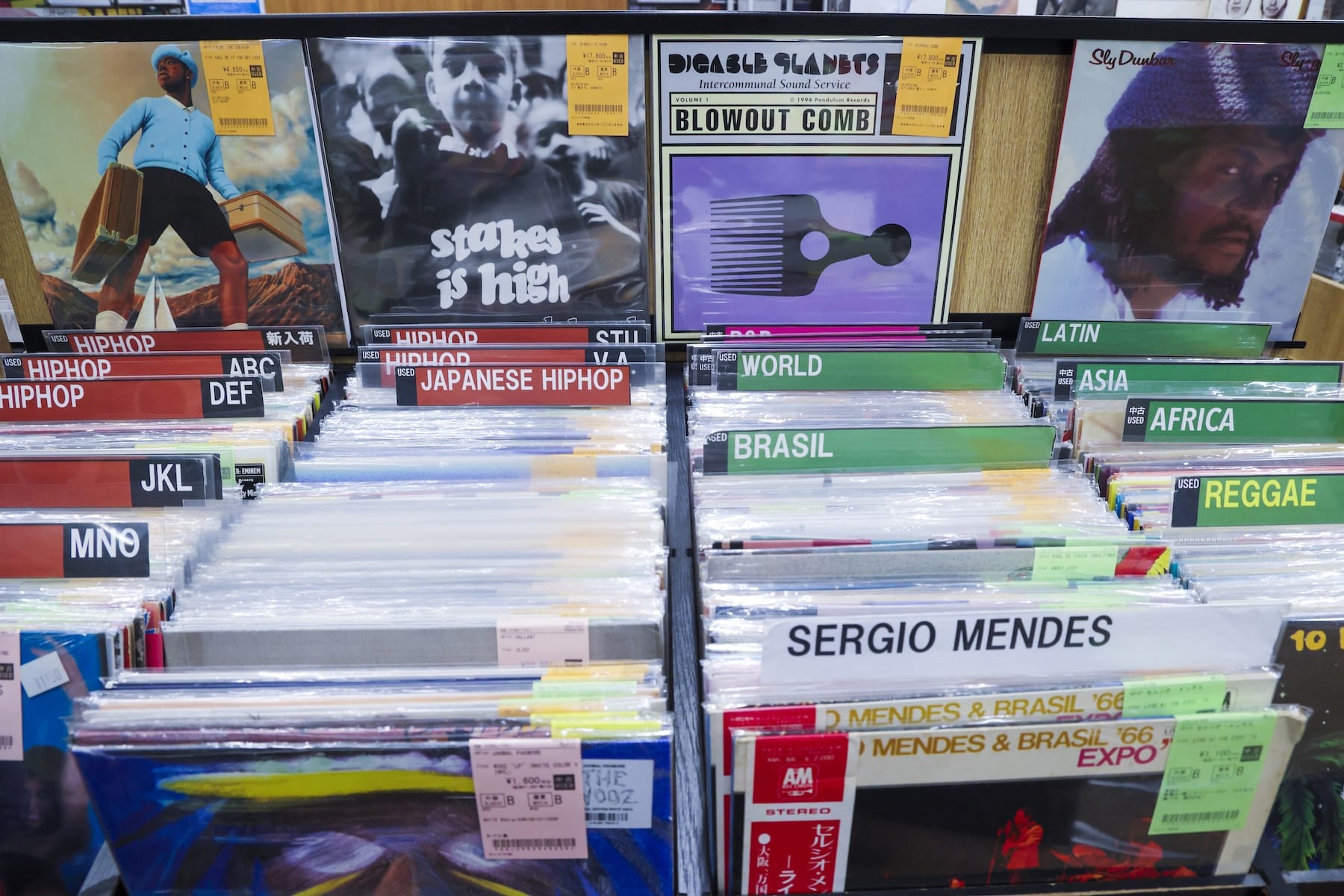
A section with a wide-ranging lineup, from U.S. releases to “Japanese hip-hop,” which continues to attract worldwide attention.
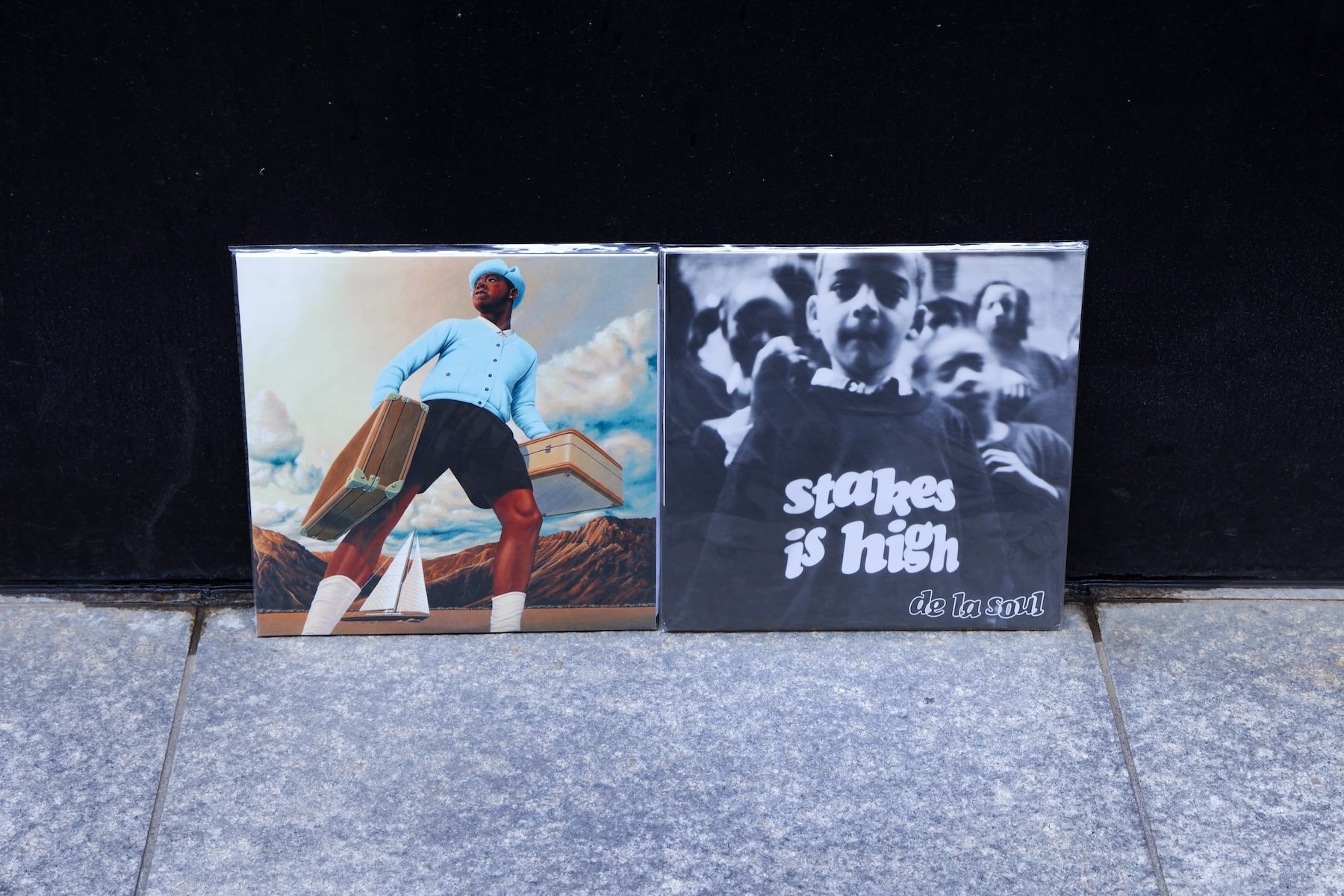
Tyler, The Creator’s “Call Me If You Get Lost” (left) and De La Soul’s “stakes are high” (right). These records allow visitors to view post-1990s U.S. hip-hop through works from different generations.
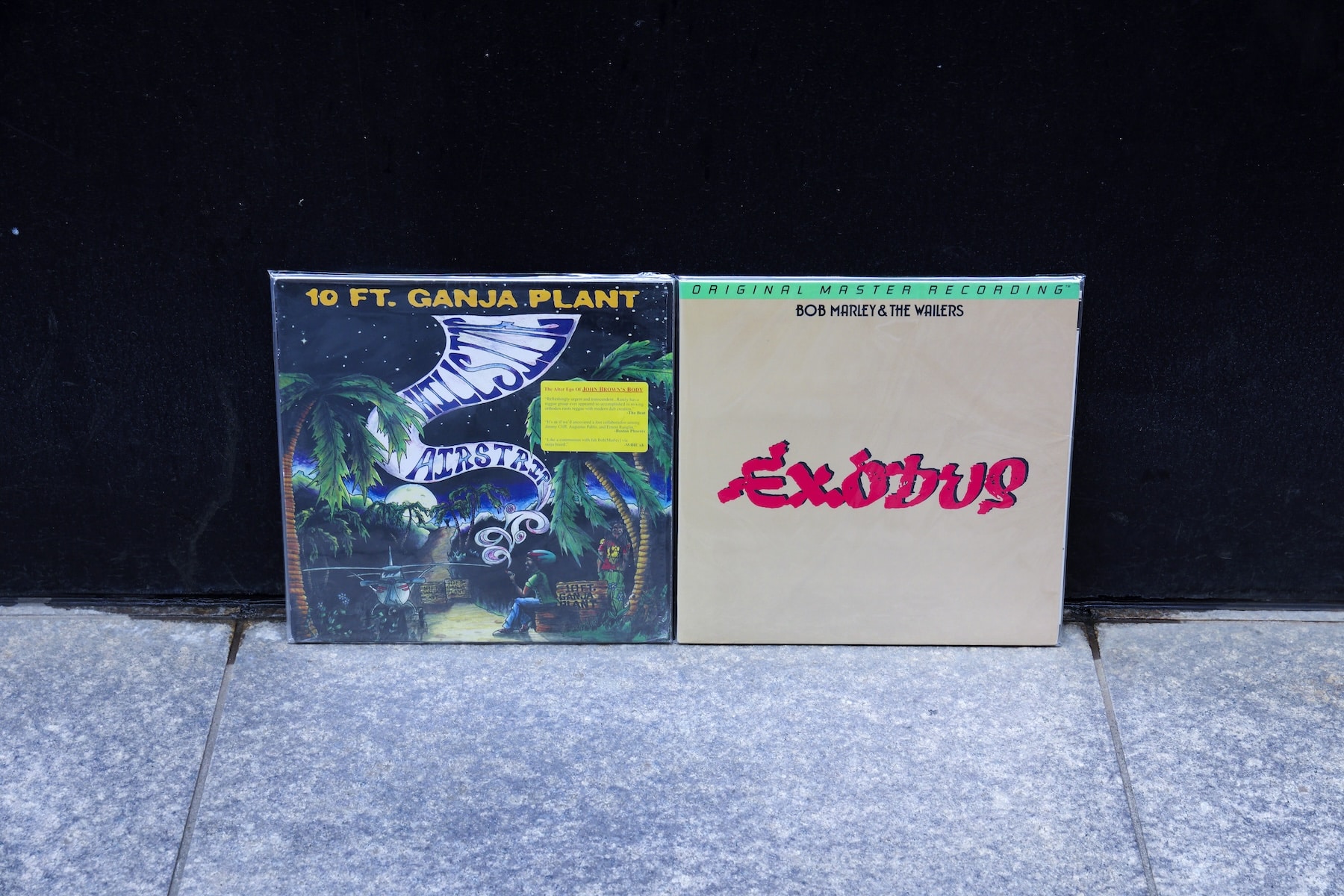
Bob Marley’s “EXODUS” (right), a towering monument of 1970s roots reggae, and 10 FT. GANJA PLANT's “Pure Sugar” (left), by one of the acts leading the reggae scene since the 2000s. Together they allow you to compare the history of rhythms that spread from Jamaica to the world.
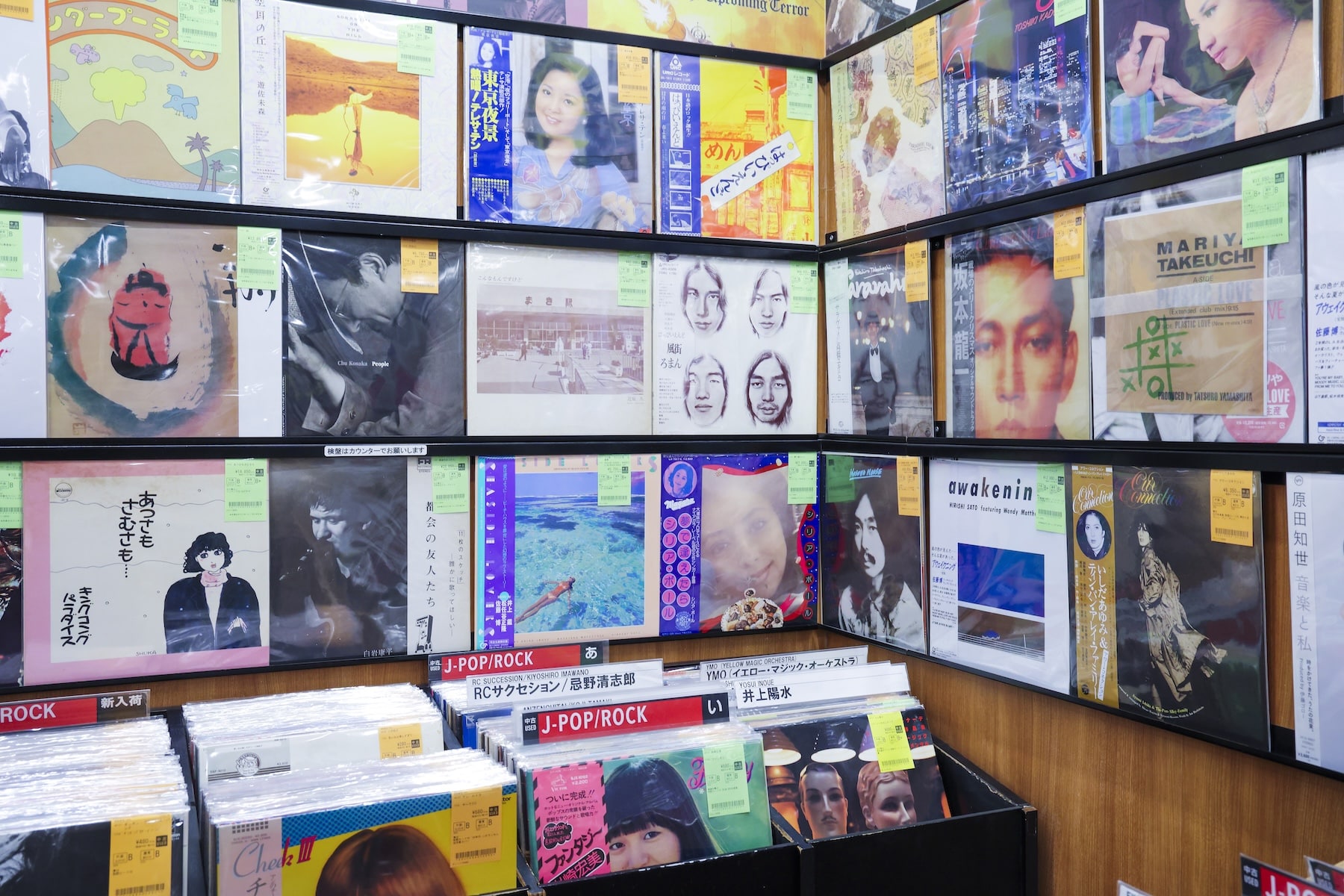
Each record on the shelves at “Union Record Shinjuku” comes with a “price card” listing the condition of the vinyl and the cover, the presence or absence of an obi, and any special notes.
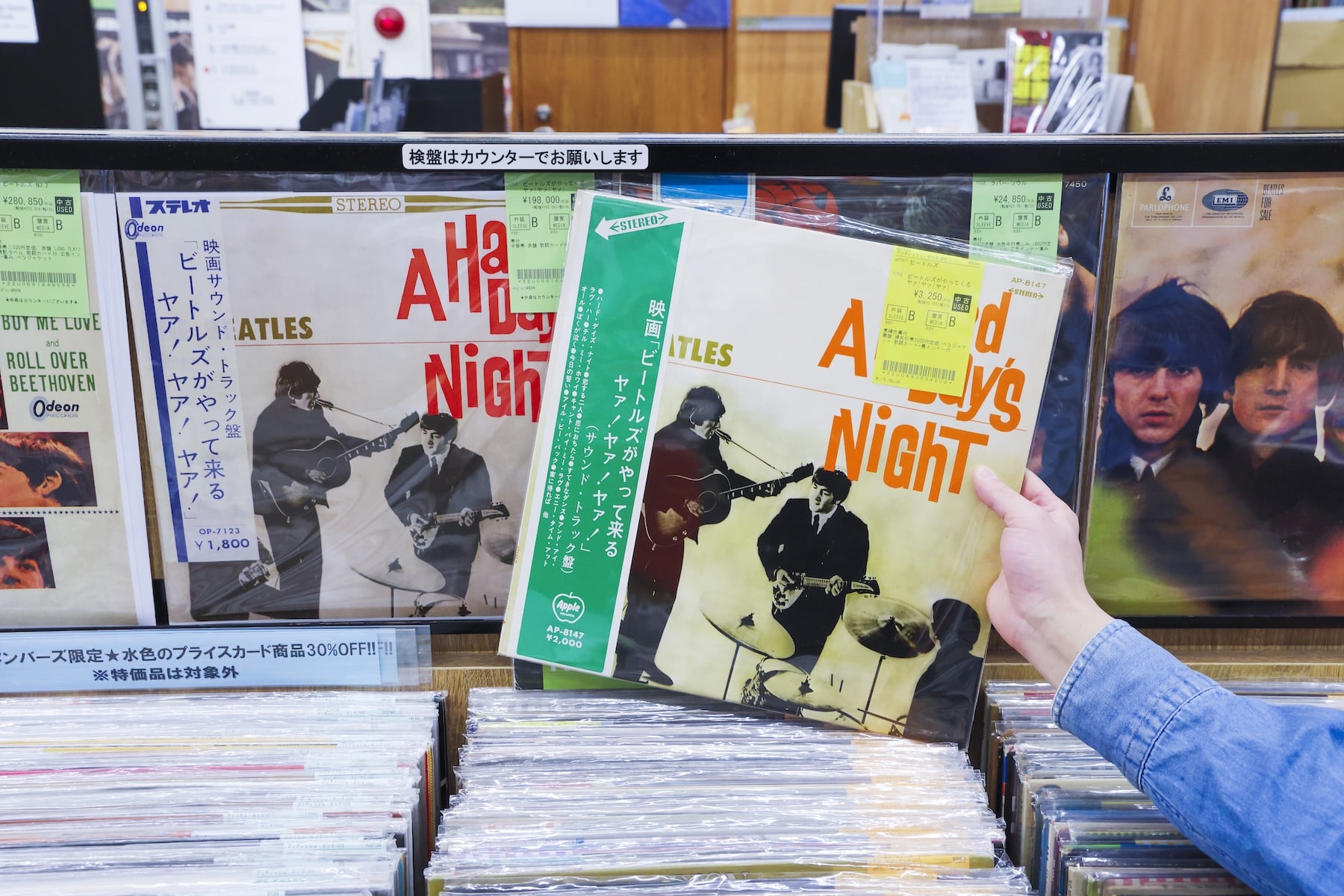
Among these details, whether or not the original obi strip remains is a major point when choosing a record. An obi is a narrow paper strip attached to Japanese records and CDs that contains information such as the title and price. It was once treated as a simple extra, but collectors around the world now recognize it as an important source of value.
Another distinctive feature of this store is that the colors of the price tags visually distinguish newly arrived items from discounted ones. Whether you are looking for a copy in “mint condition” to preserve, or an affordable one for everyday listening, the time spent comparing this information according to your purpose is itself part of the pleasure of digging through records here.
A carefully prepared price card for each individual record. The condition of the vinyl and the cover is graded according to the store’s own strict standards.
The “Obi,” a hallmark of Japanese pressings. This detail, which reflects Japan’s culture of careful preservation, is recognized by collectors around the world as something of significant value.
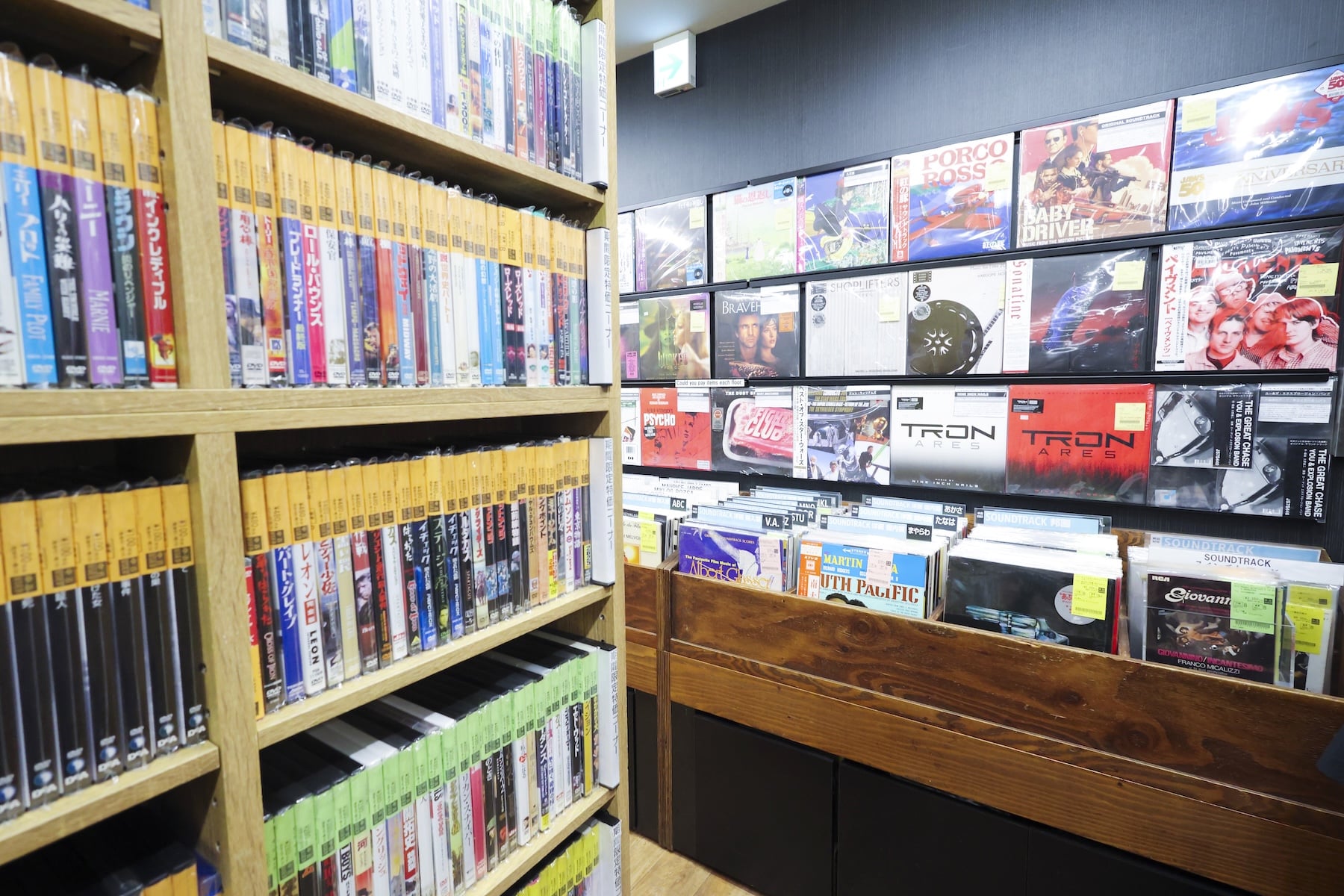
After experiencing the all-genre energy of “Union Record Shinjuku” on the first floor, you can continue upward through the building. On the second floor is “Cinemakan / Book Union Shinjuku,” which carries films and music books; on the third floor is “Shinjuku Jazz-kan”; and on the fourth floor is “Shinjuku Soul / Dance Music Shop.” As you move up through the floors, the specialization deepens. Starting from the first floor, you can follow your own interests and make your way deeper into the upper levels of the building.
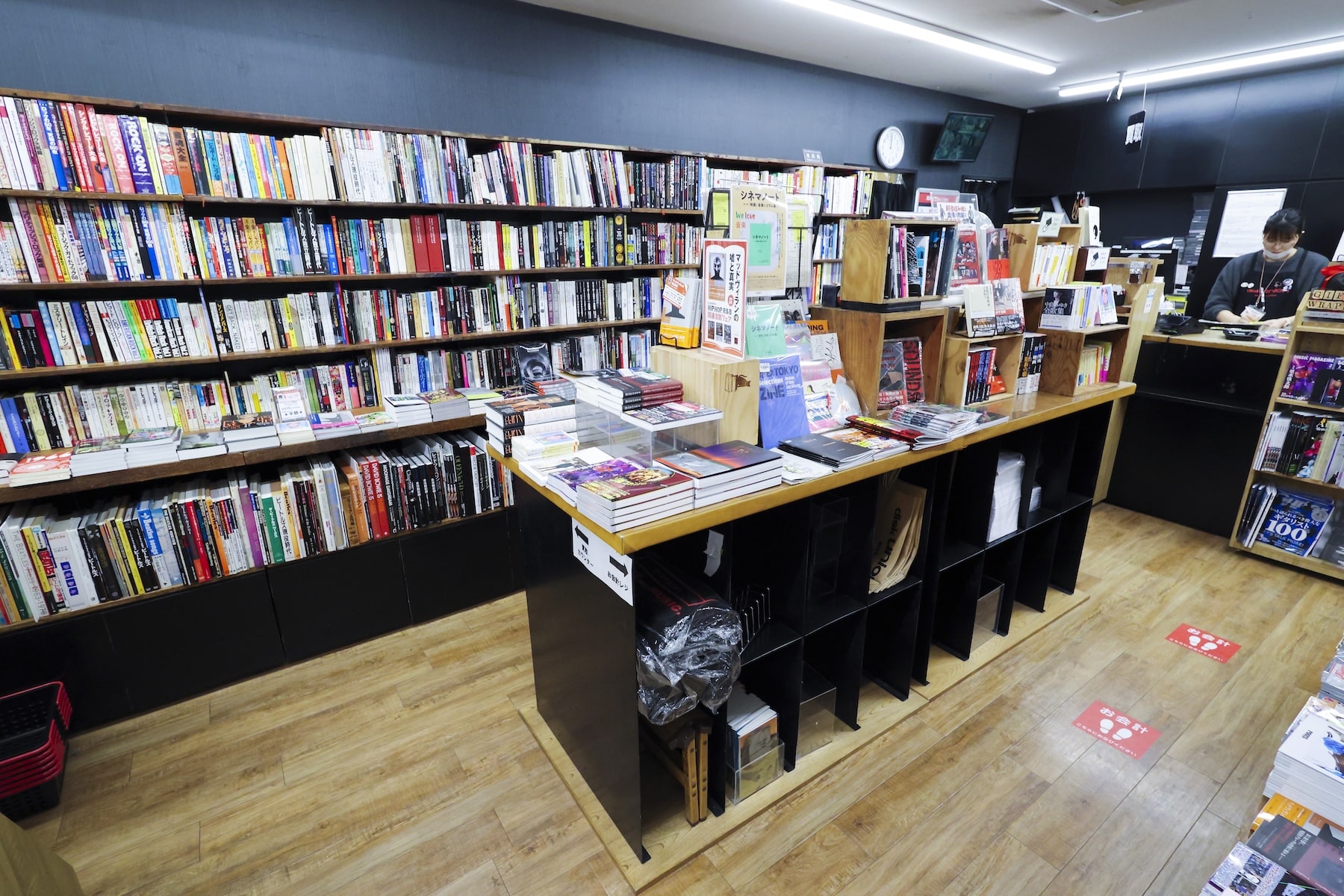
“Cinemakan / Book Union Shinjuku” on the second floor. In addition to music software, it carries rare music books, magazines, and even independent zines.
“Shinjuku Jazz-kan” on the third floor and “Shinjuku Soul / Dance Music Shop” on the fourth floor.
The information contained this article was correct as of 05/03/2026 (the time of publication)



.jpg)
スマホ.jpg)