DEEPTOKYO
magazine

EN

DEEPTOKYO
magazine
EN

2026.01.16
PRTHE NORTH FACE, known for its proactive use of upcycled materials, has released the Driftdye series as part of its JAPAN COLLECTION—an initiative that fuses Japanese craftsmanship with outdoor technology. The materials used include items that would otherwise be discarded, such as misshapen vegetables and plastic bottles washed ashore. Drawing on conversations with THE NORTH FACE’s project lead and Toyoshima & Co., the textile developer behind the materials, this article explores the origins of Driftdye and the philosophy that shaped its creation—revealing how local challenges, long-term environmental engagement, and shared values came together in a single fabric.
SHARE


At the heart of Driftdye are two proprietary materials developed by Toyoshima & Co., a lifestyle-focused trading company specializing in textiles. One is UpDRIFT®, a recycled fiber made from plastic bottles and other marine waste collected along Japan’s coastlines. The other is FOOD TEXTILE, a dyeing project that repurposes pigments extracted from unused or substandard vegetables. THE NORTH FACE was drawn to these materials not only for their environmental benefits, but because both originated from personal awareness and everyday encounters—an approach that closely aligns with the brand’s own philosophy of long-life manufacturing.
THE NORTH FACE ,Iijima (hereinafter TNF)
As we continued, we faced a major issue—Ishigaki has no incineration facilities. Collected waste had to be buried, which places limits on land use and increases environmental impact. That’s when we began exploring ways to transform what we collected into usable materials, leading to the creation of UpDRIFT®.
Teshima Corporation, Tanimura (hereinafter referred to as Teshima)
Ishigaki is known for its beautiful ocean, so the reality was shocking. That experience was shared internally, and in 2019, we began beach clean-up activities. What started small has now grown into an island-wide effort.
TNF
As an outdoor brand, we also conduct beach clean-ups, so we strongly resonated with Toyoshima’s initiative and joined the activities in Ishigaki.
Toyoshima
In the course of these activities, we were confronted with the reality that there are no incinerators on Ishigaki Island, and the collected PET bottles and other marine debris must be disposed of by burying them in the ground. Land for burial is limited and the environmental impact is great. The idea was to find a way to utilize the waste as a material, rather than just picking it up, and that is how UPDRift® was born.
“My interest began with my child’s leftovers. Through conversations with restaurants and food manufacturers, I realized the food industry faces the same mass-waste problem as the fashion industry. That led me to focus on traditional Japanese plant dyeing. By stabilizing pigment extraction and developing scalable techniques, we’ve grown into a project capable of producing over 500 colors from around 50 food sources—something virtually unmatched worldwide.”
Toyoshima
My interest began with my child’s leftovers. Through conversations with restaurants and food manufacturers, I realized the food industry faces the same mass-waste problem as the fashion industry. That led me to focus on traditional Japanese plant dyeing. By stabilizing pigment extraction and developing scalable techniques, we’ve grown into a project capable of producing over 500 colors from around 50 food sources—something virtually unmatched worldwide.
TNF
Marine waste and food loss aren’t distant problems—they exist right next to us. The willingness to act on issues encountered firsthand is something we deeply relate to as an outdoor brand.
Born from local challenges, long-term regional engagement, and strong relationships with producers, Driftdye embodies both storytelling and technical excellence. THE NORTH FACE positioned Driftdye as a signature material of the JAPAN COLLECTION—perfectly aligned with its goal of creating long-lasting everyday wear rooted in Japan’s natural environment and culture.
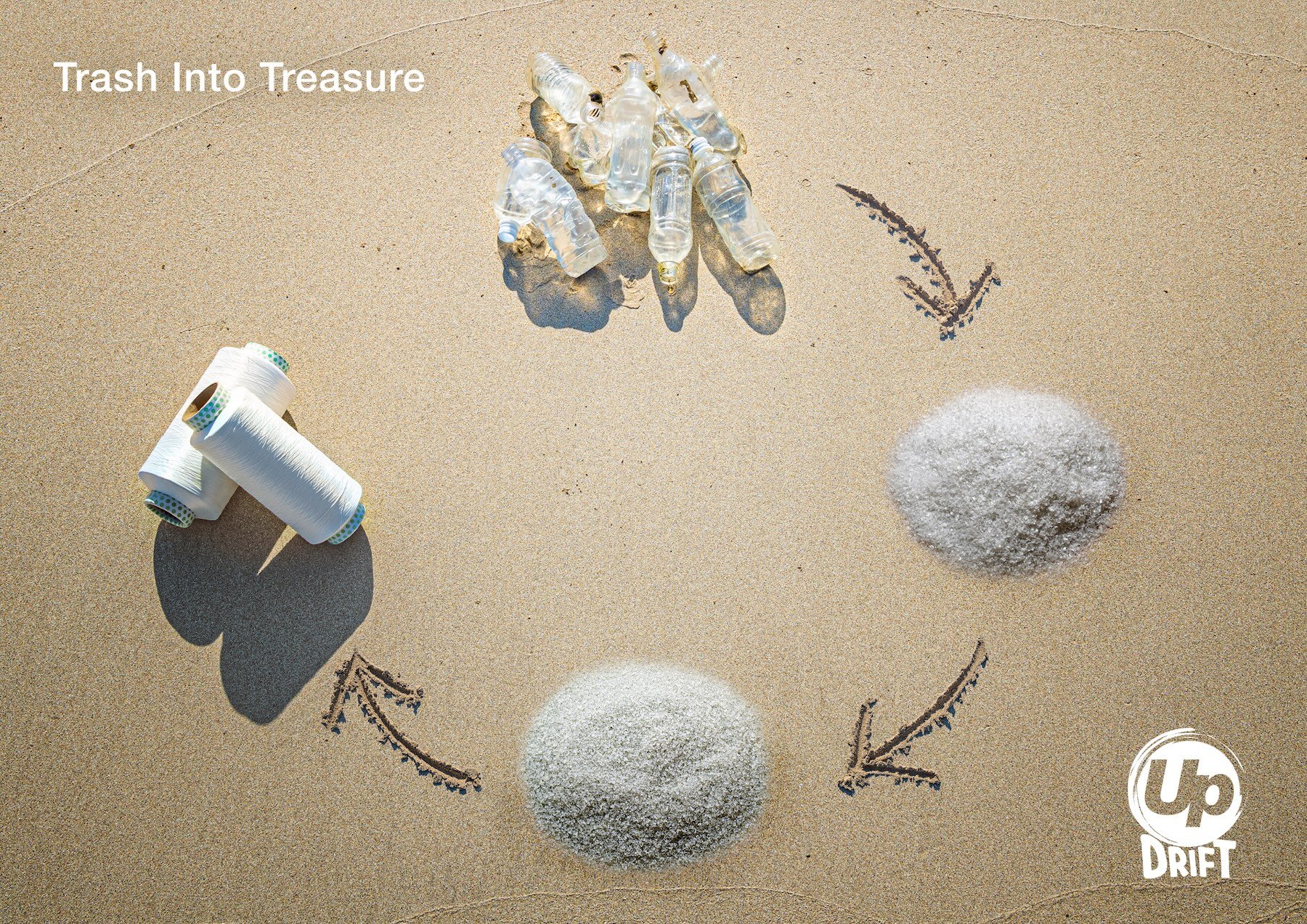
Collected marine waste is sorted, washed, pelletized, and processed into products—upcycling plastic bottles through four distinct stages.
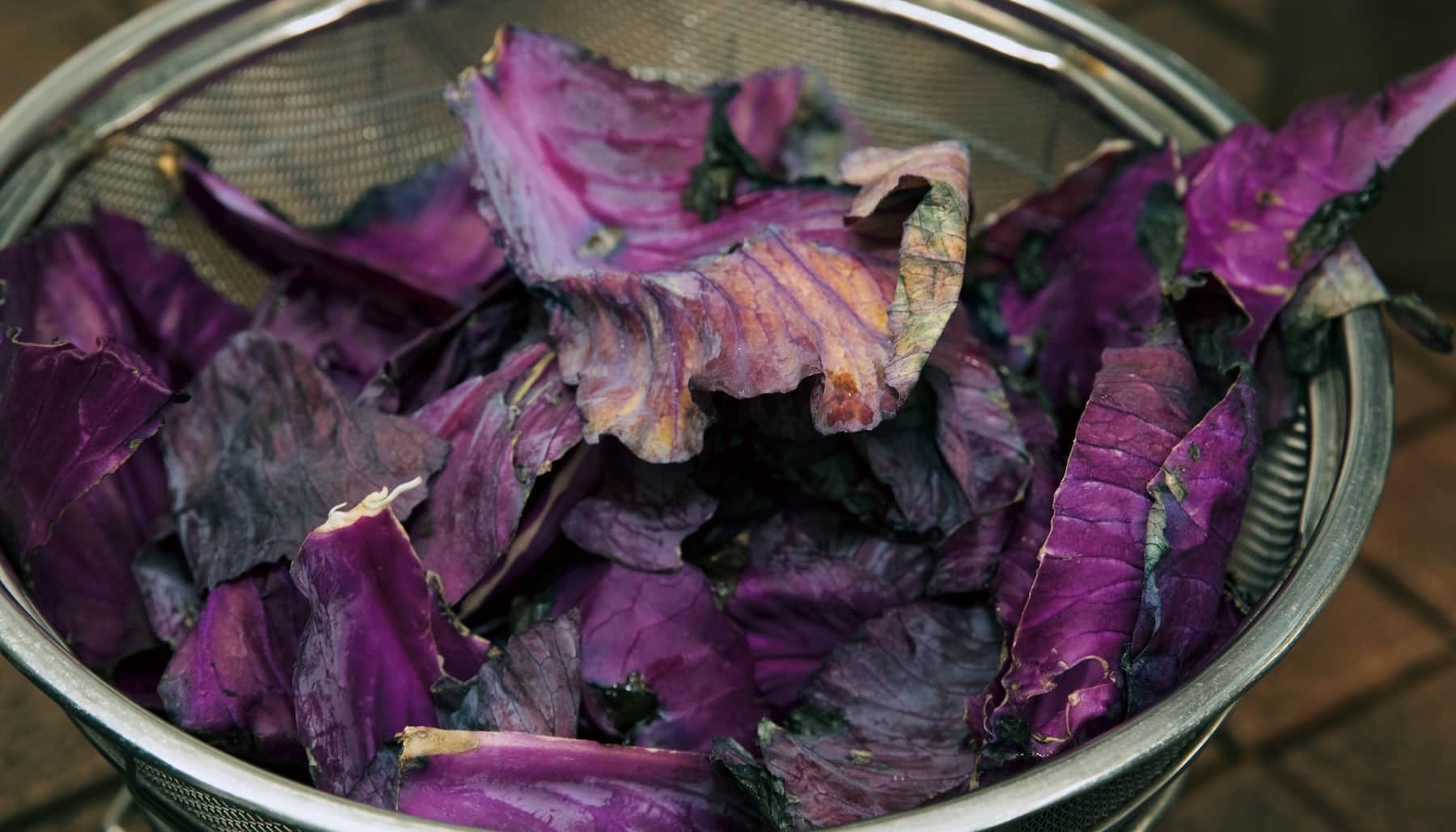
Outer leaves of purple cabbage, one example of dye ingredients. The vegetables are sourced fresh and immediately boiled to extract pigments.
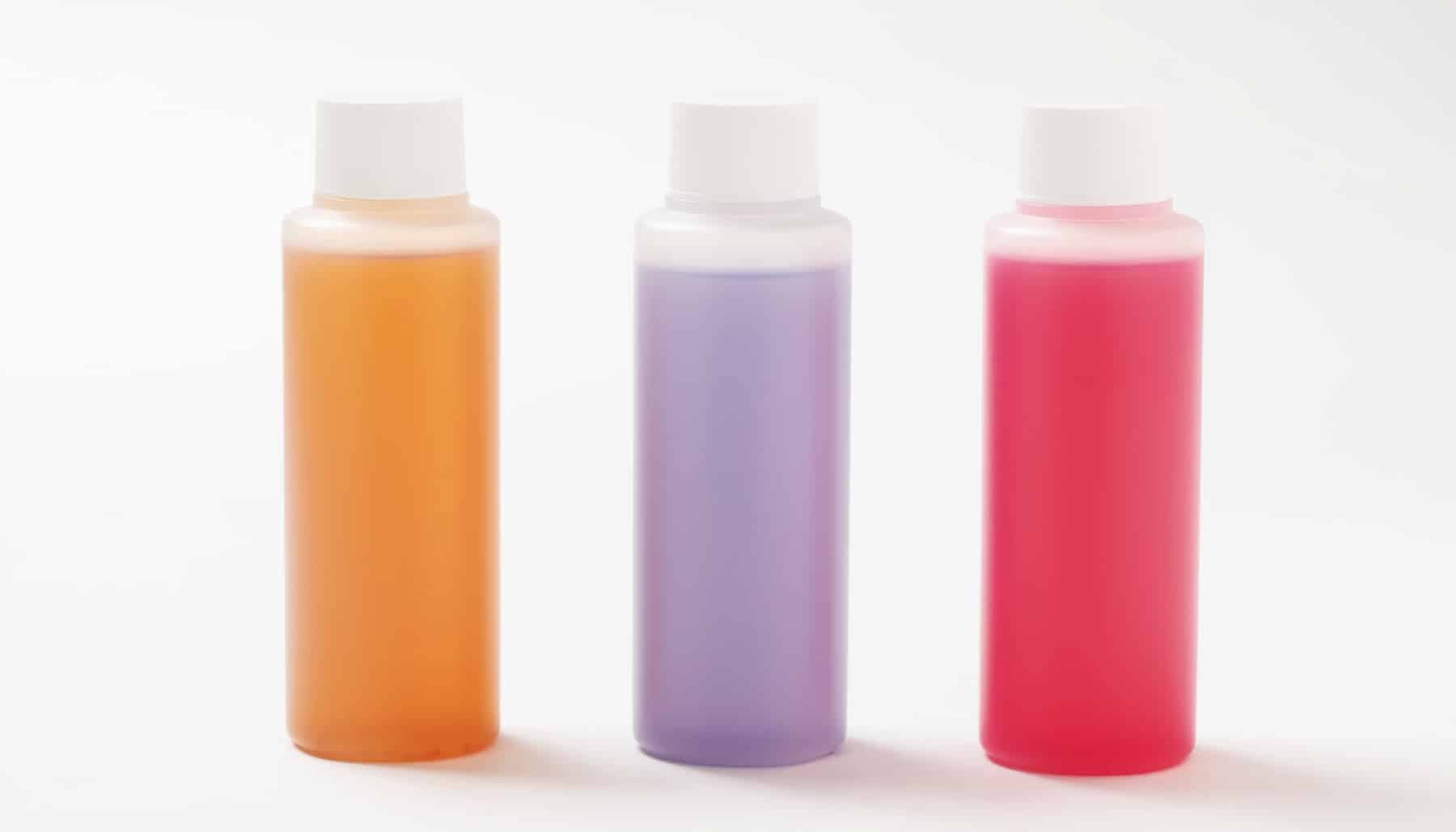
Dyes extracted from a single ingredient. Some materials yield up to ten color variations. Today, over 500 colors can be created from 50 ingredients.
Subtle color nuances are achieved through multiple dyeing techniques. Four dyeing methods are used, compatible with cotton, yarn, fabric, and finished products. Small amounts of chemical dye are added to improve color fastness.
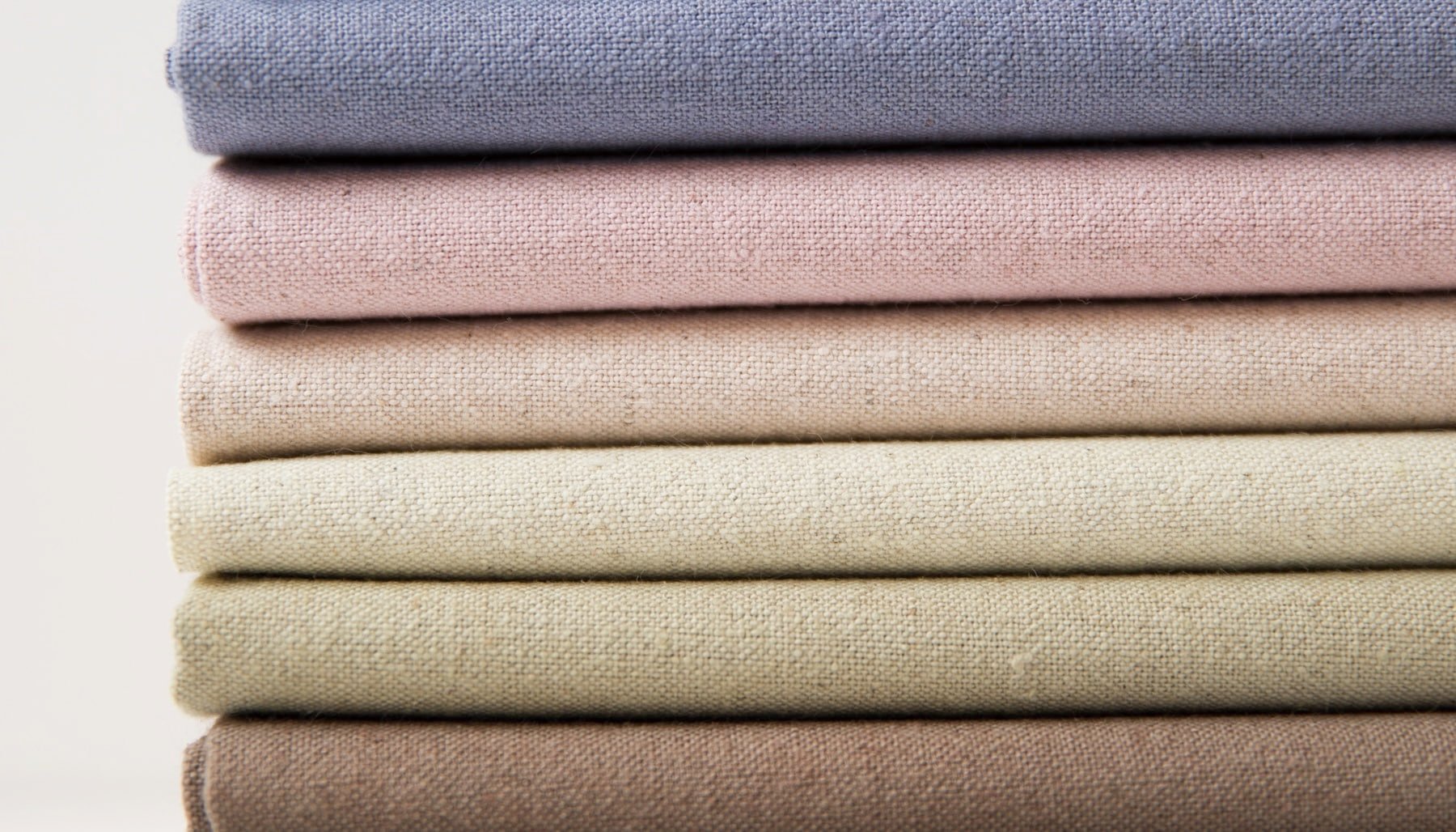
One of Driftdye’s defining features is its three natural color variations. FOOD TEXTILE’s palette exceeds 500 colors, made possible by extracting multiple tones from a single ingredient and blending fibers dyed in different shades to create depth.
TNF
When selecting colors for the JAPAN COLLECTION, we focused on tones that blend naturally into everyday life—colors you want to wear for years. The dyes used come from red turnip, ginger, and Swertia japonica. We wanted classic shades with subtle individuality. The red turnip-derived light gray feels soft and universal, while ginger and swertia reveal nuanced shifts under natural light.
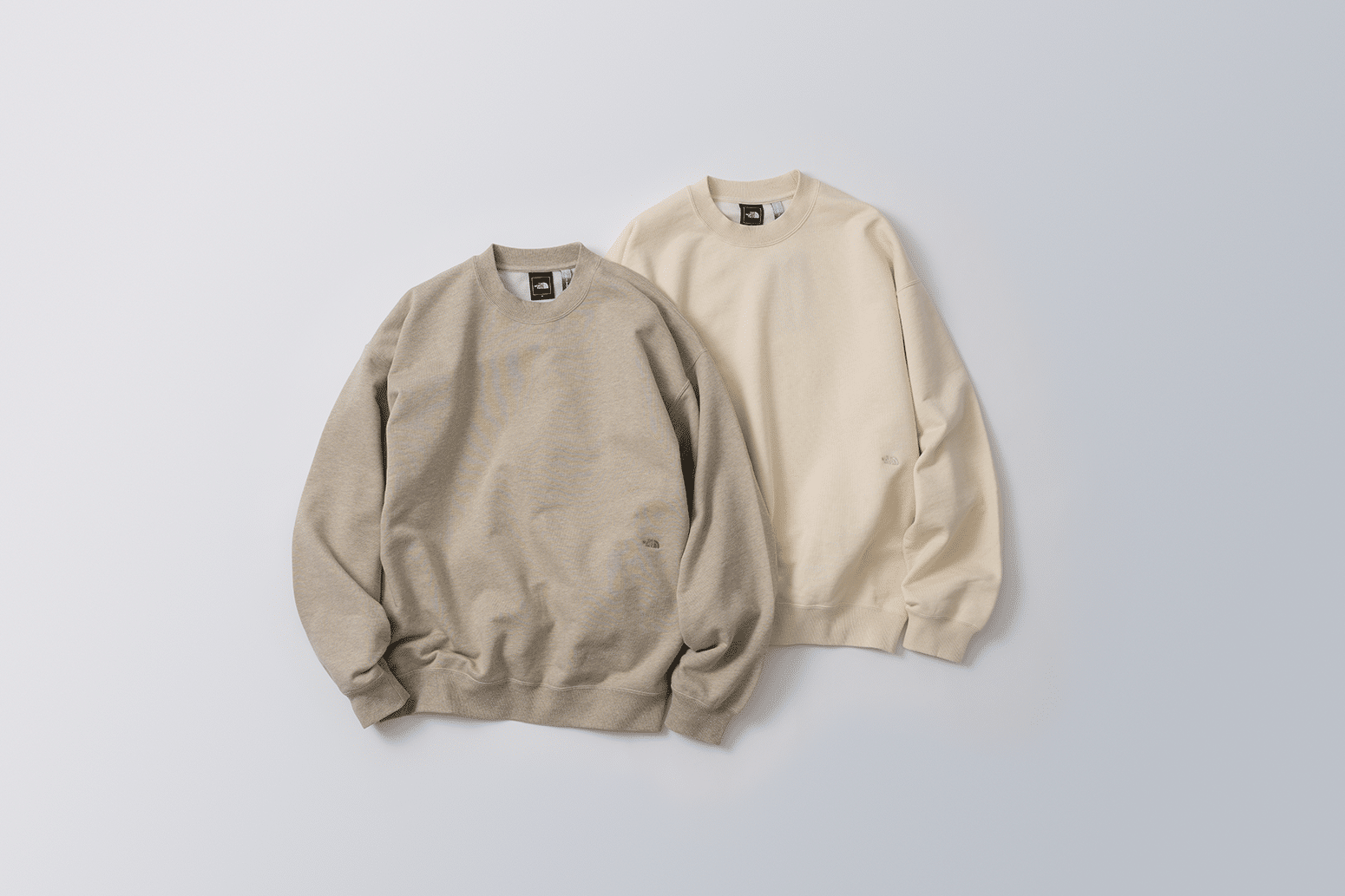
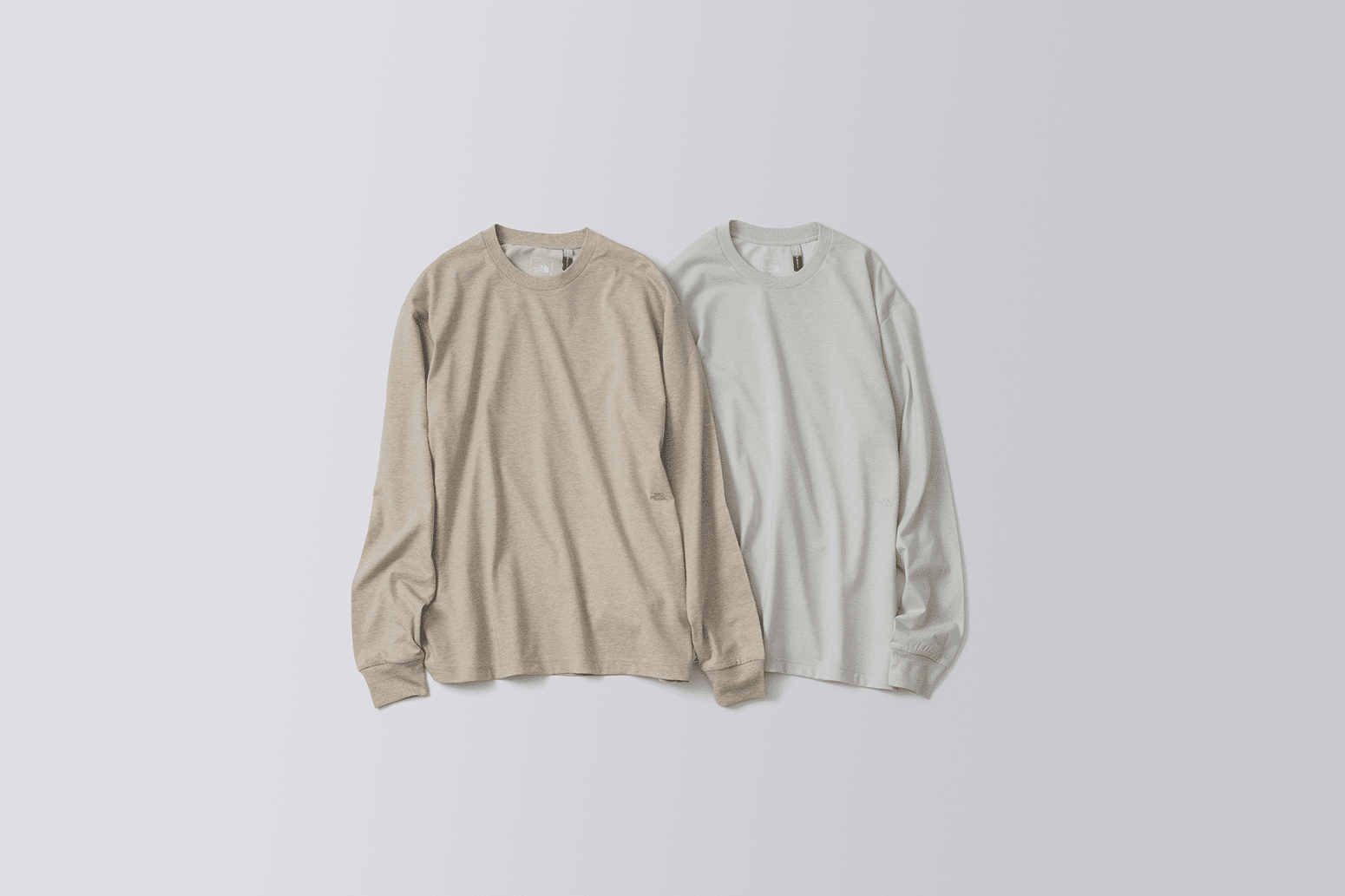
Three color variations, each named after its raw ingredient. From left: Driftdye Crew Swertia, Ginger. ¥14,850 each.
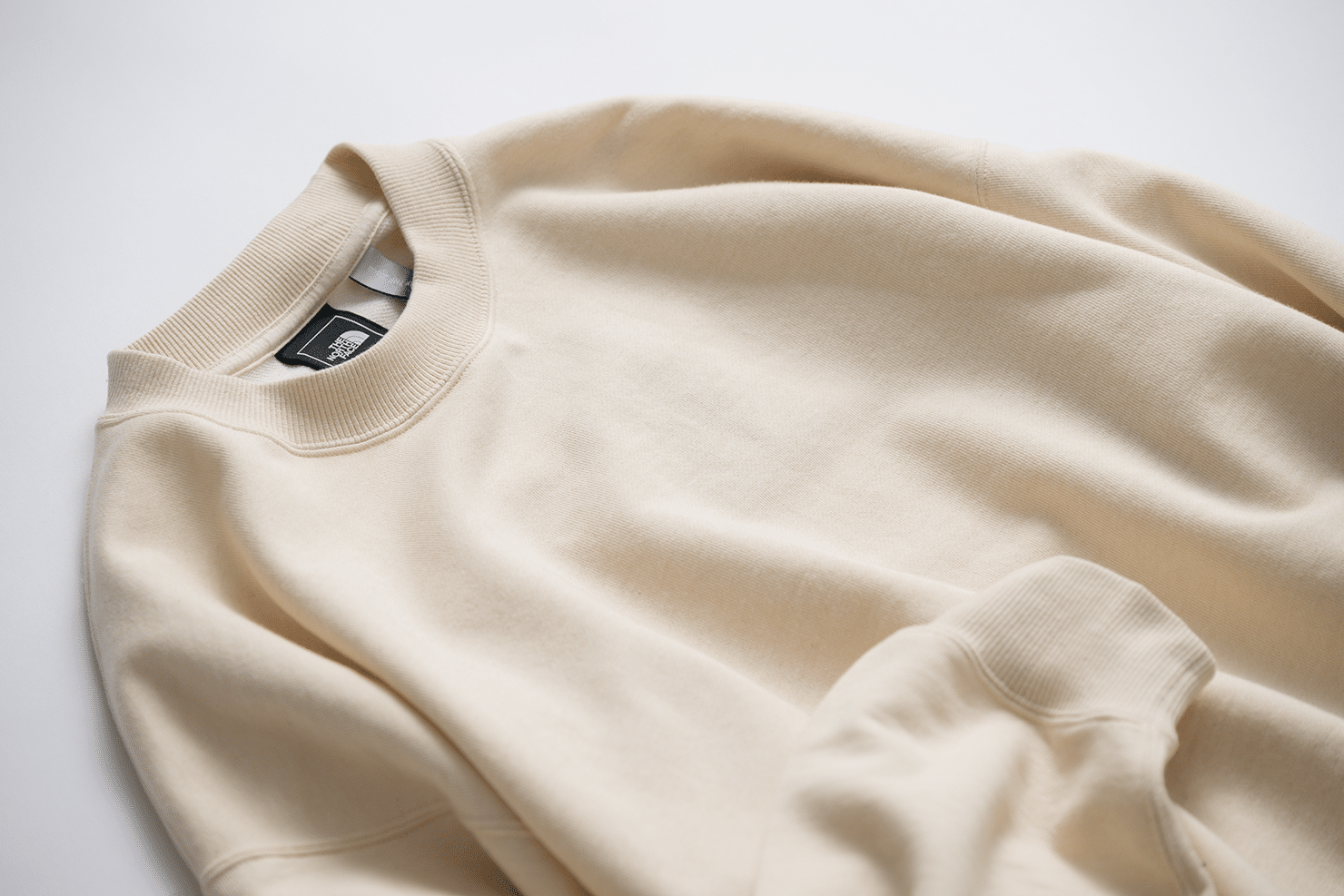
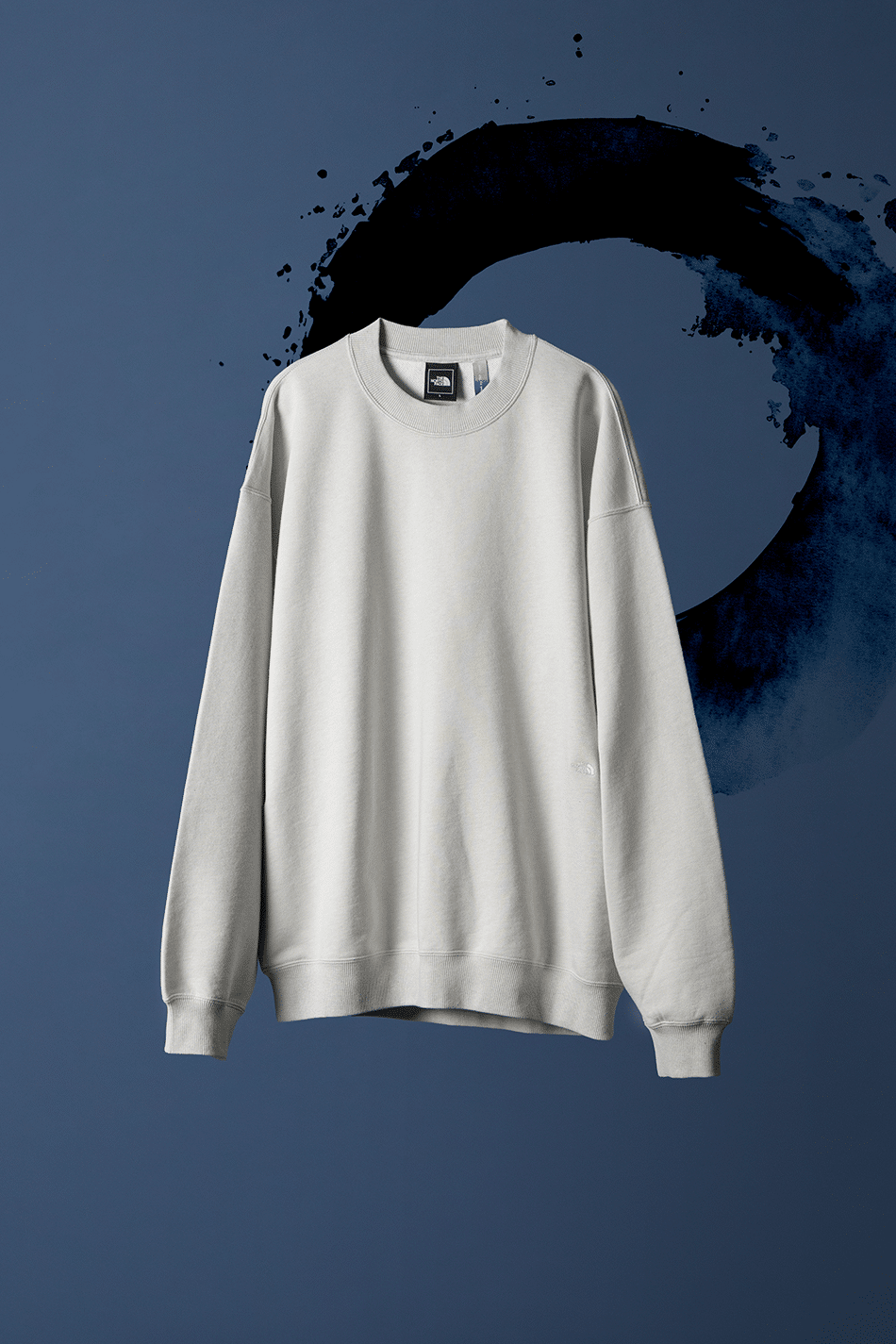
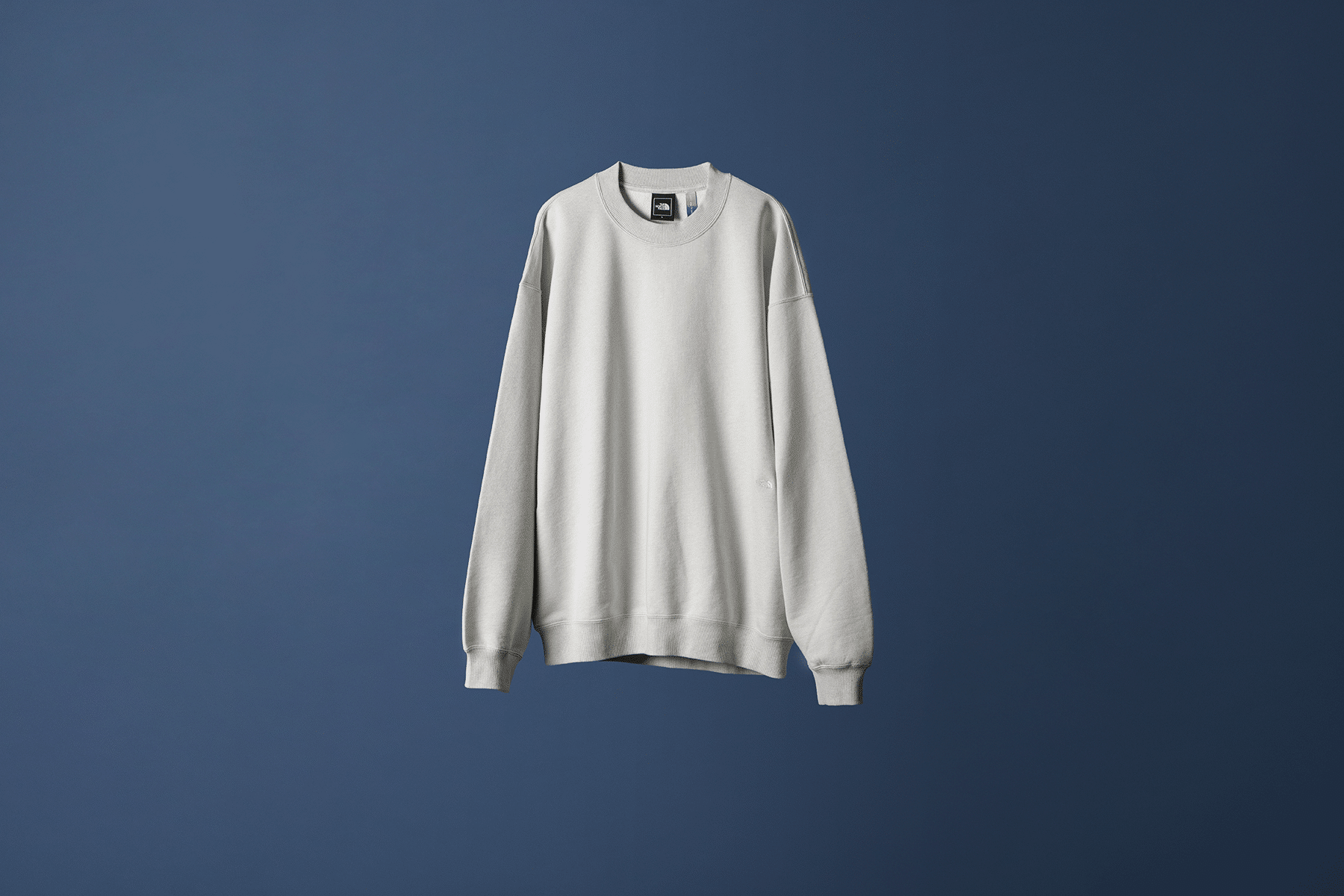
Driftdye Crew red turnip ¥14,850
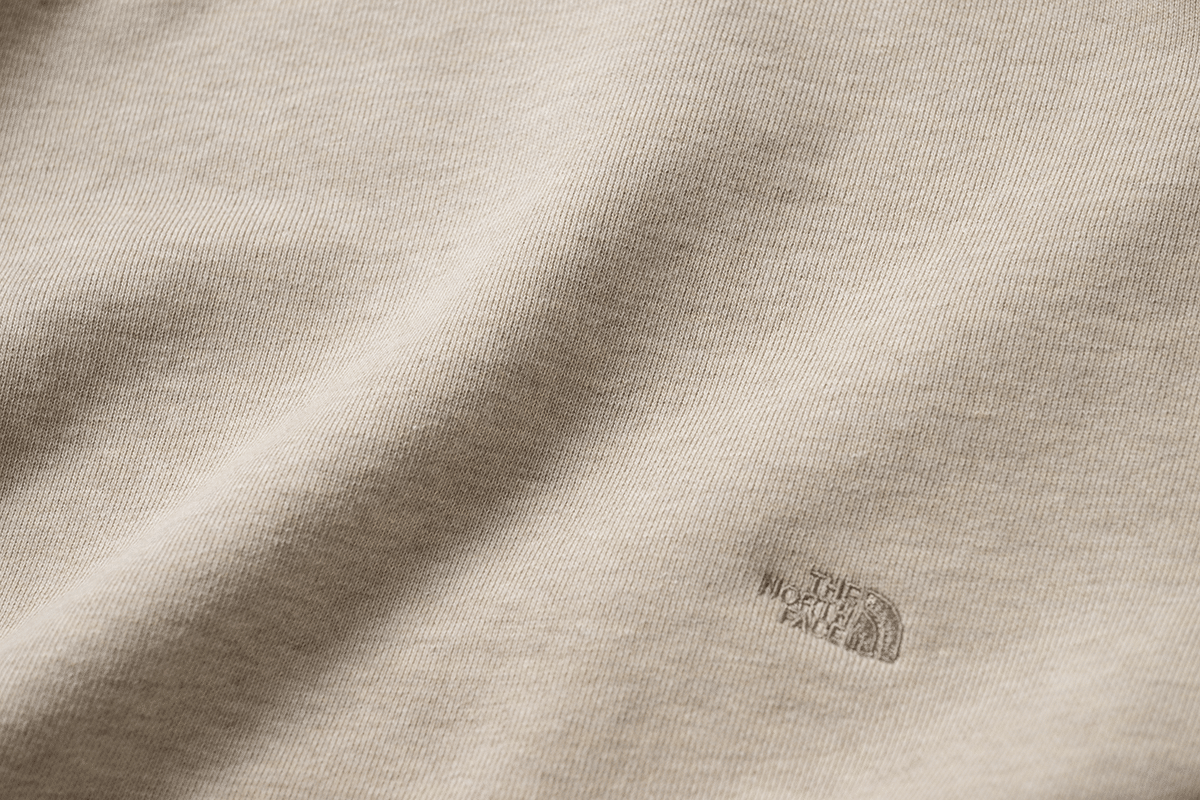
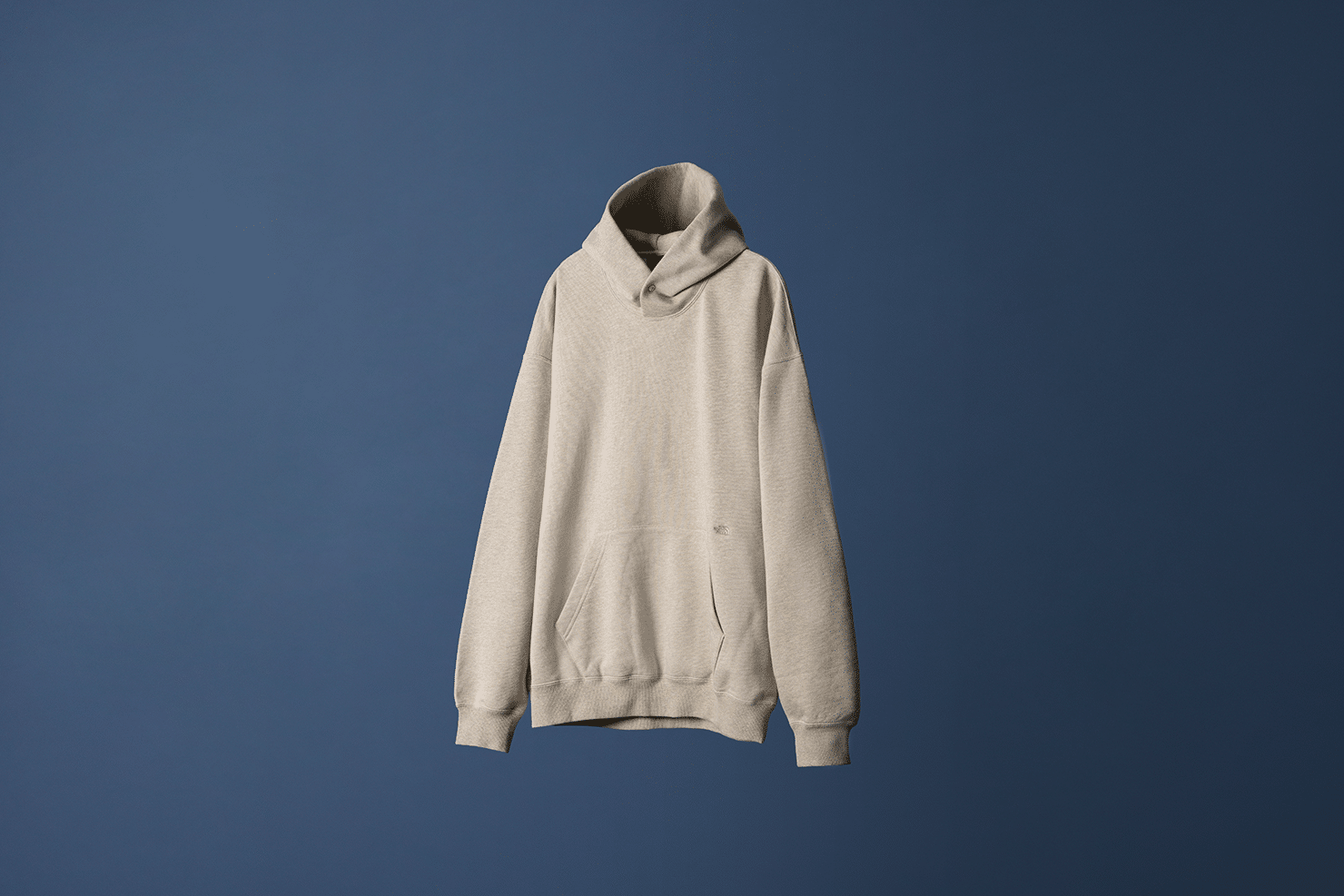
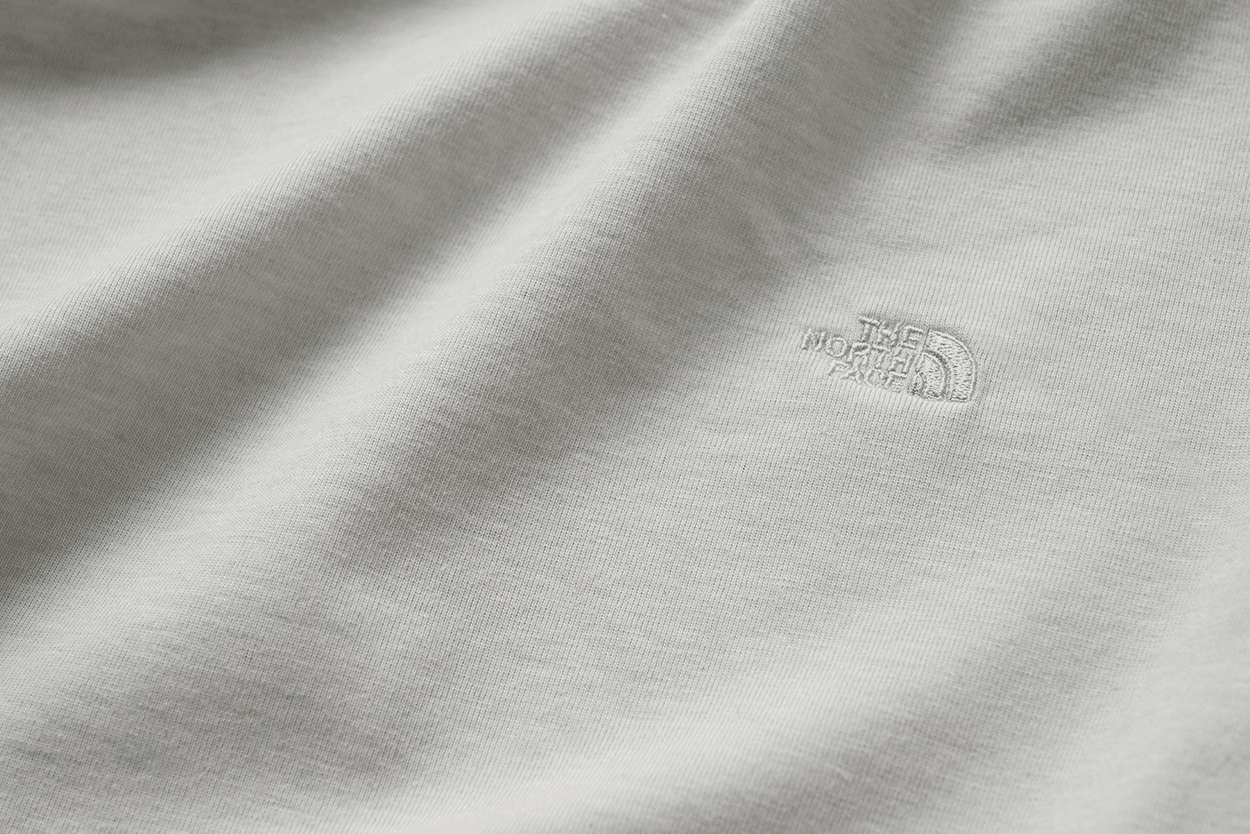
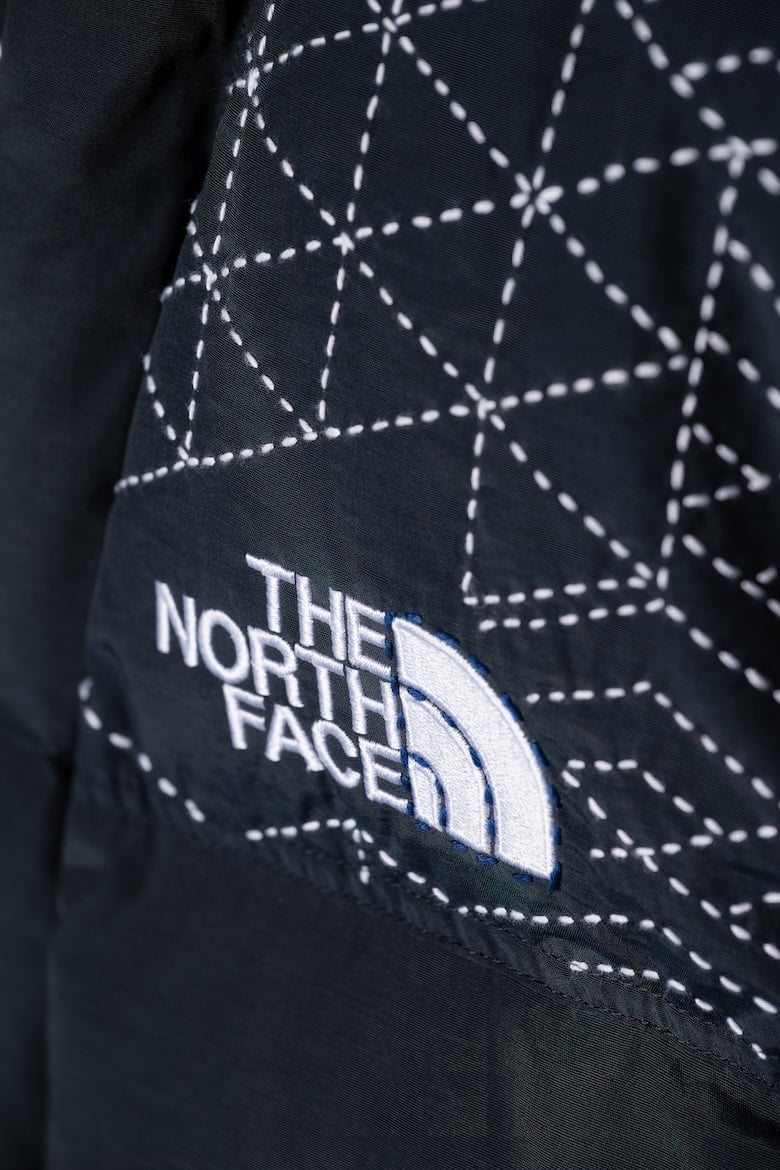
Loopback sweatshirt fabric utilizes the properties of cotton and polyester—lightweight, soft, and quick-drying. A tonal embroidered logo adds a subtle accent.
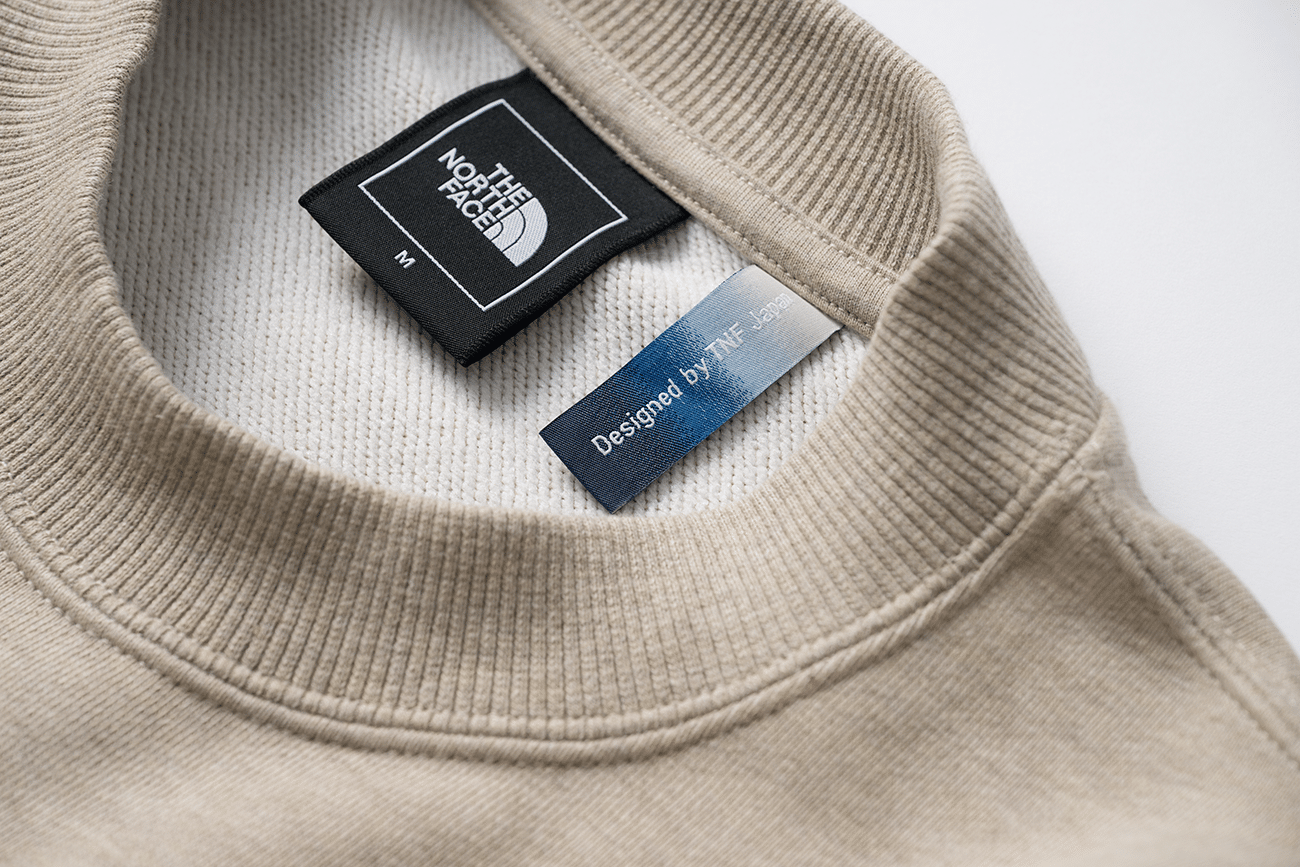
The JAPAN COLLECTION’s signature tag features a gradient inspired by traditional Japan blue, expressing Japanese identity even in unseen details.
Toyoshima’s high level of traceability was another major strength.
TNF
For the JAPAN COLLECTION, it’s essential to identify where materials come from within Japan clearly. That traceability allows us to communicate the transformation process as part of the product’s value.
Toyoshima
Red turnips are sourced from Nagano, ginger from Tokushima, and swertia from a long-established herbal medicine company in Nara. Clear sourcing not only conveys Japan’s climate and culture, but also reduces transportation costs.
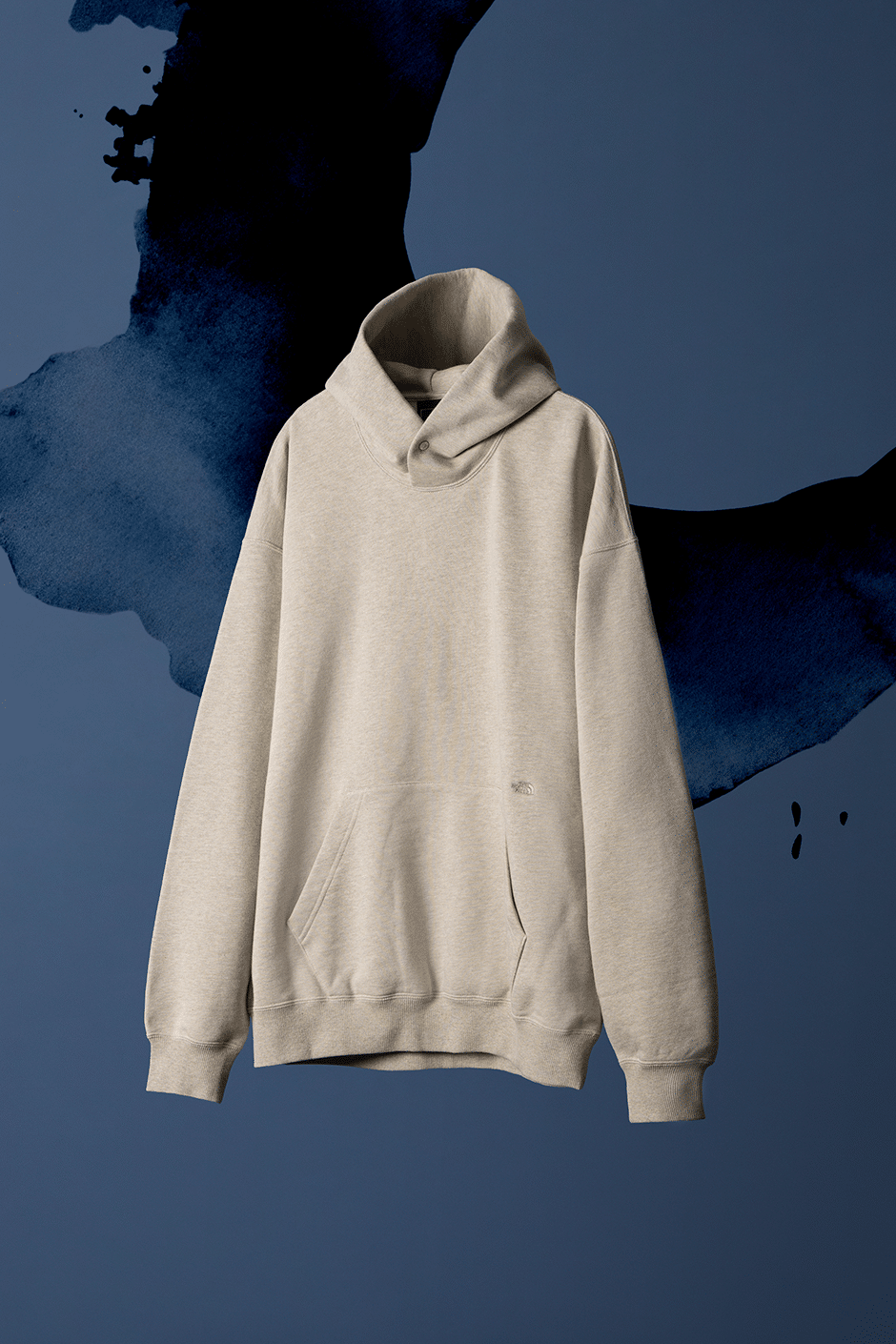
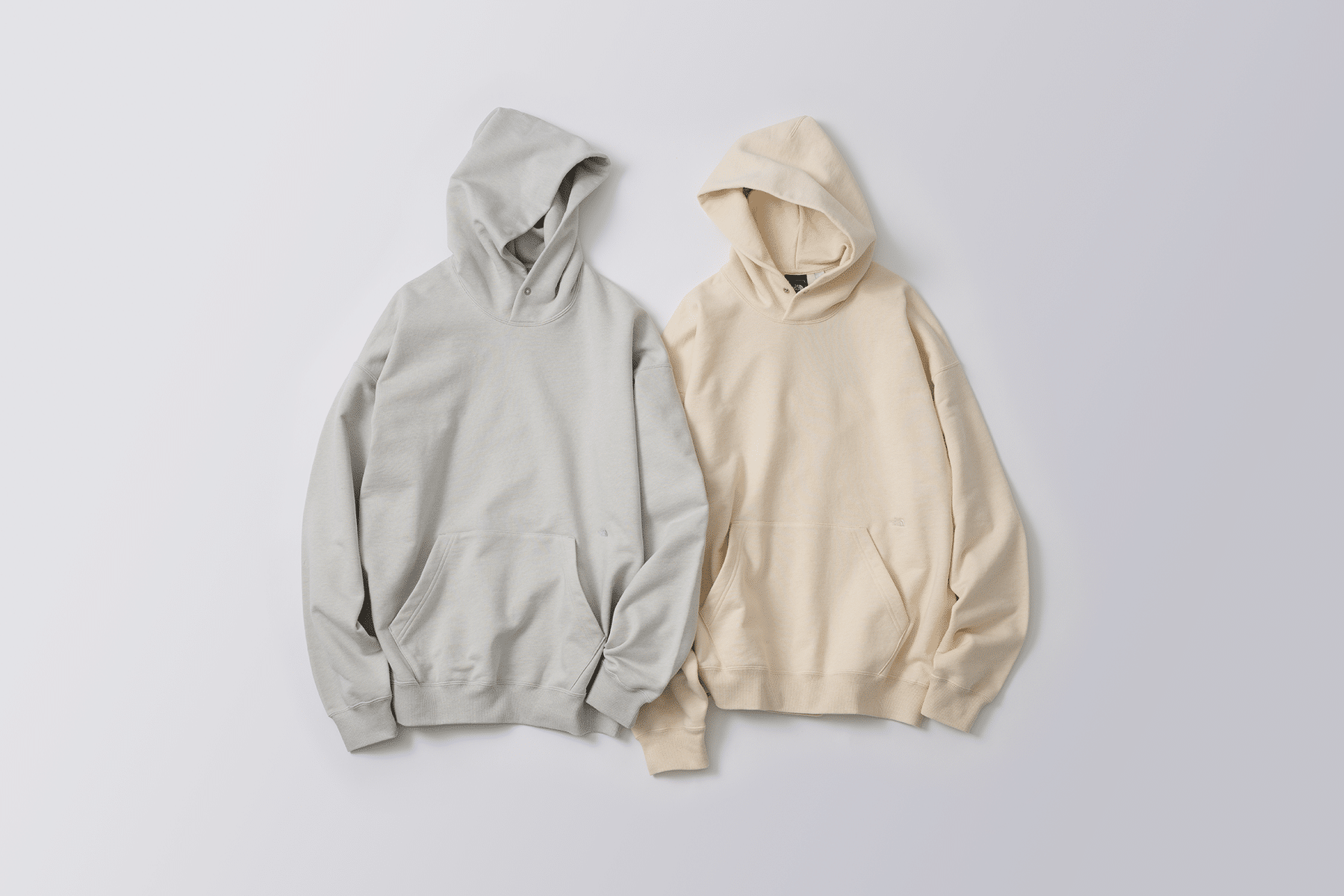
The same loopback fabric as the crewneck, with ribbed cuffs and hem defining a relaxed silhouette. From left: Driftdye Hoodie Red Turnip, Ginger ¥15,950 each.
Driftdye Hoodie Swertia ¥15,950
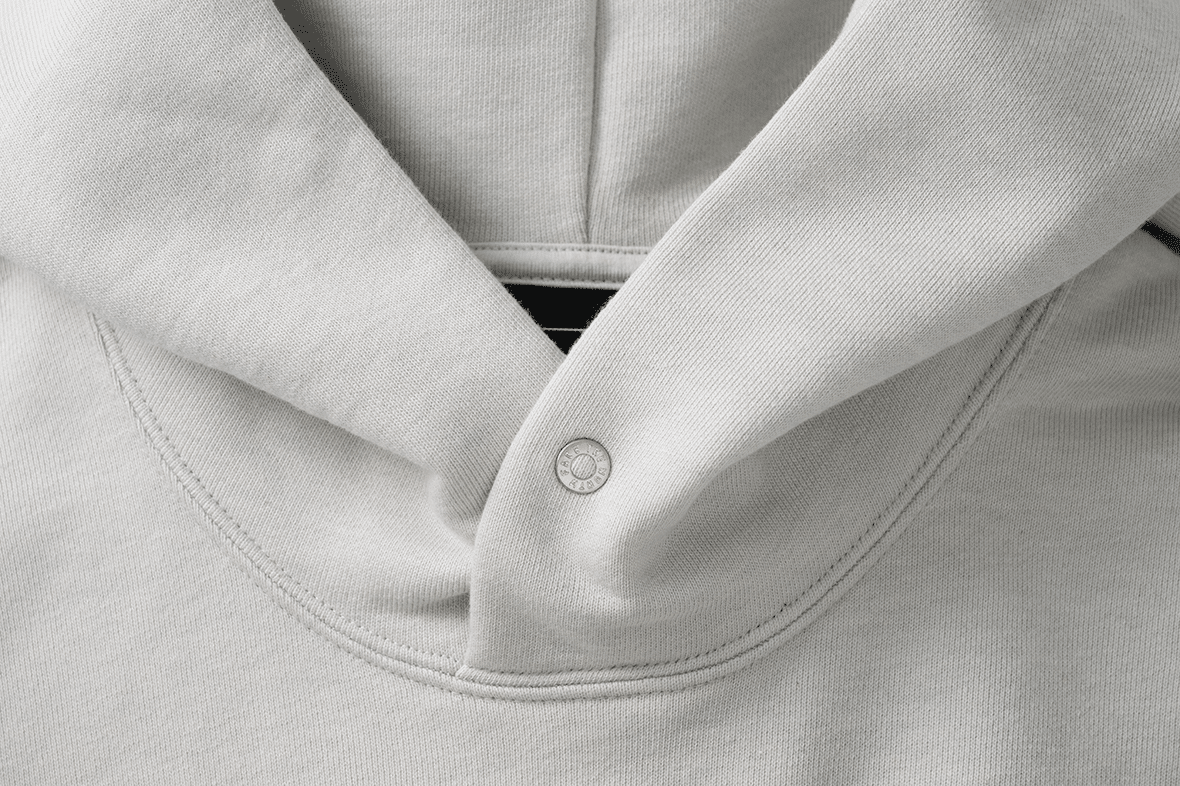
Snap buttons at the hood prevent wind intrusion.
Driftdye is available in four styles: hoodie, crewneck sweatshirt, short-sleeve T-shirt, and long-sleeve T-shirt. Precisely because these are everyday staples, they were developed with a clear focus on being garments people would want to wear for a long time.
TNF
While recycled and upcycled fibers offer clear environmental and functional advantages, durability can sometimes be their weak point. For the JAPAN COLLECTION, where long-life manufacturing is a core principle, overcoming this was crucial. Although polyester was initially considered for its practicality and cost, cotton was ultimately selected for its compatibility with natural dyes, its feel against the skin, and its softness with wear. Recycled polyester from UpDRIFT® is also used selectively, ensuring a balance between environmental care and performance.
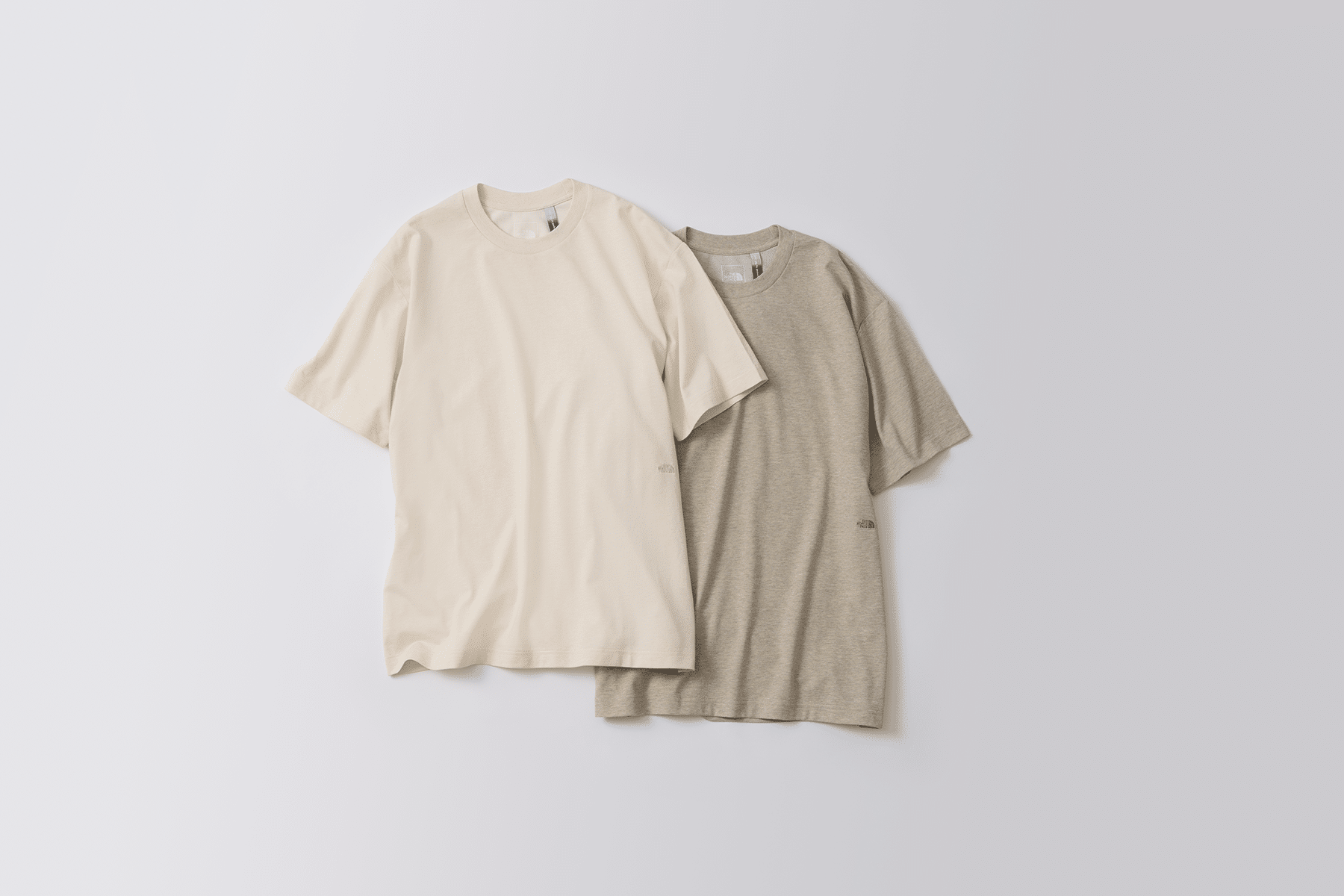
Moderate-weight cut-and-sew fabric suitable for layering or standalone wear. From left: Short Sleeve Driftdye Tee Ginger, Swertia ¥8,800 each.
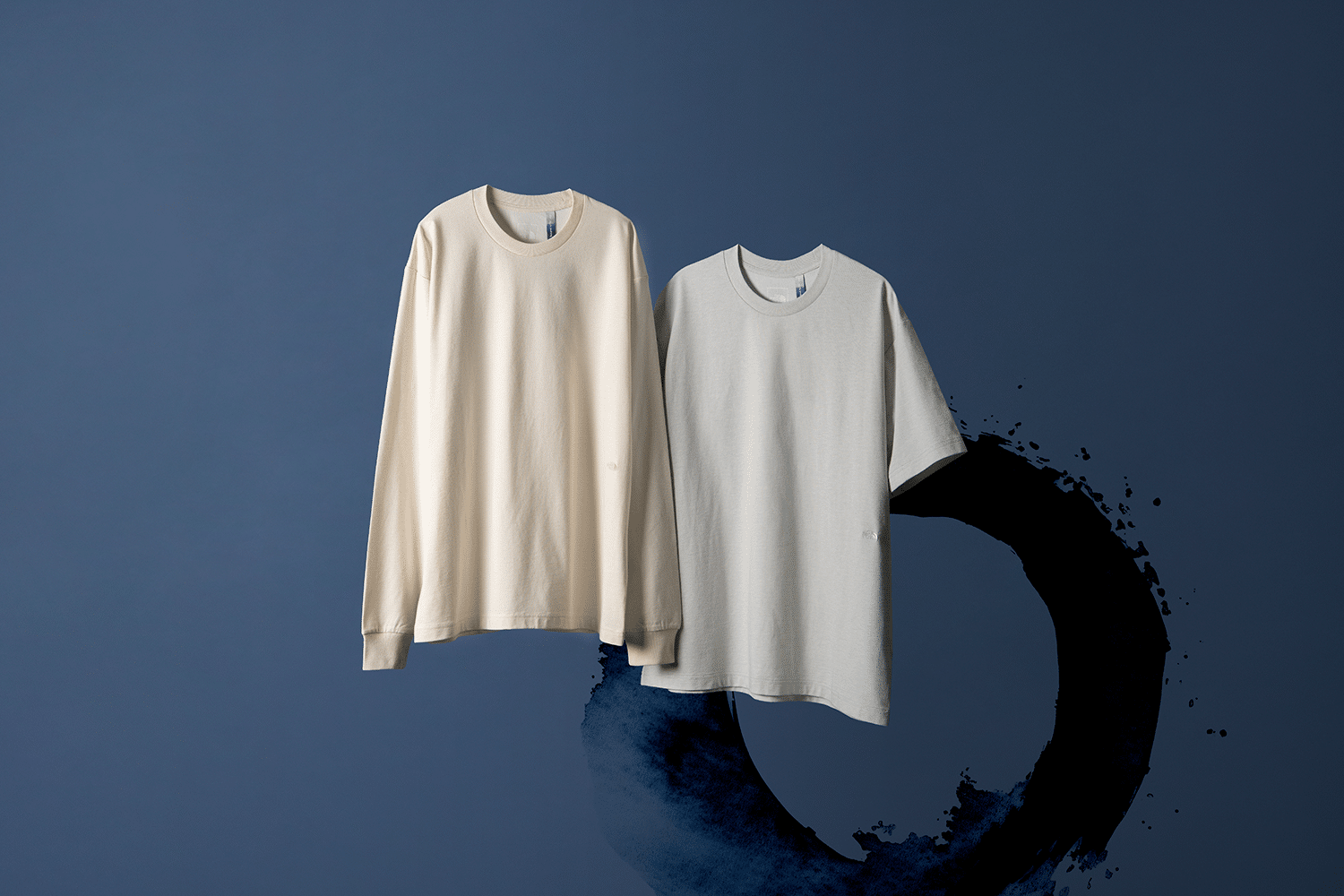
Slightly longer body length with ribbed cuffs on long-sleeve T-shirts. From left: Long Sleeve Driftdye Tee Swertia, Red Turnip ¥10,450 each.
A tonal embroidered logo placed on the right side, matching the sweatshirt design.
Although the dyes used in FOOD TEXTILE are derived from unused or off-spec vegetables, they are by no means inexpensive. Achieving consistent, stable dyeing requires advanced techniques and careful, time-intensive processes, and in some cases can cost more than conventional dyes.
Even so, THE NORTH FACE chose to embrace the potential of these materials within the JAPAN COLLECTION. When a global outdoor brand makes that choice, it expands the possibilities of UpDRIFT® and FOOD TEXTILE—reframing discarded resources as materials with renewed value.
Shaped by technology, ideas, and Japan’s enduring mottainai spirit, these materials are reborn as garments made to be lived with over time. In Driftdye, the journey itself becomes a story—one that gently resurfaces every time the garment is worn.
“We don’t just sell products—we sell memories and stories. If that creates value beyond the product itself, then we consider it a success.”
As expressed in Iijima’s words, the philosophy of THE NORTH FACE is woven into the development of the JAPAN COLLECTION.
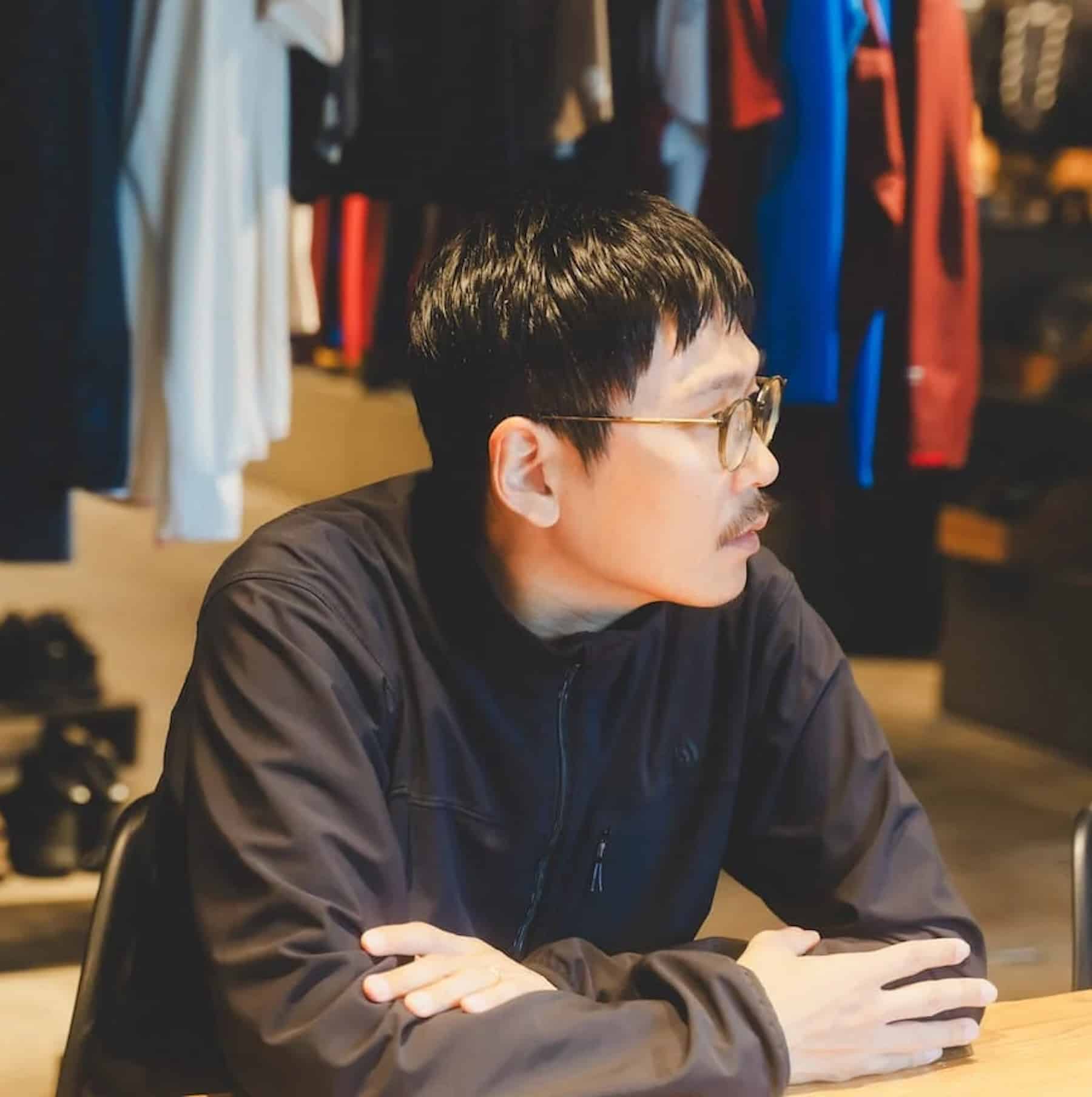
As MD of the Apparel Division of "THE NORTH FACE", mainly in charge of the lifestyle wear department. Involved in a wide range of tasks related to brand management, such as forecasting product demand, inventory control, and factory inspections throughout Japan.
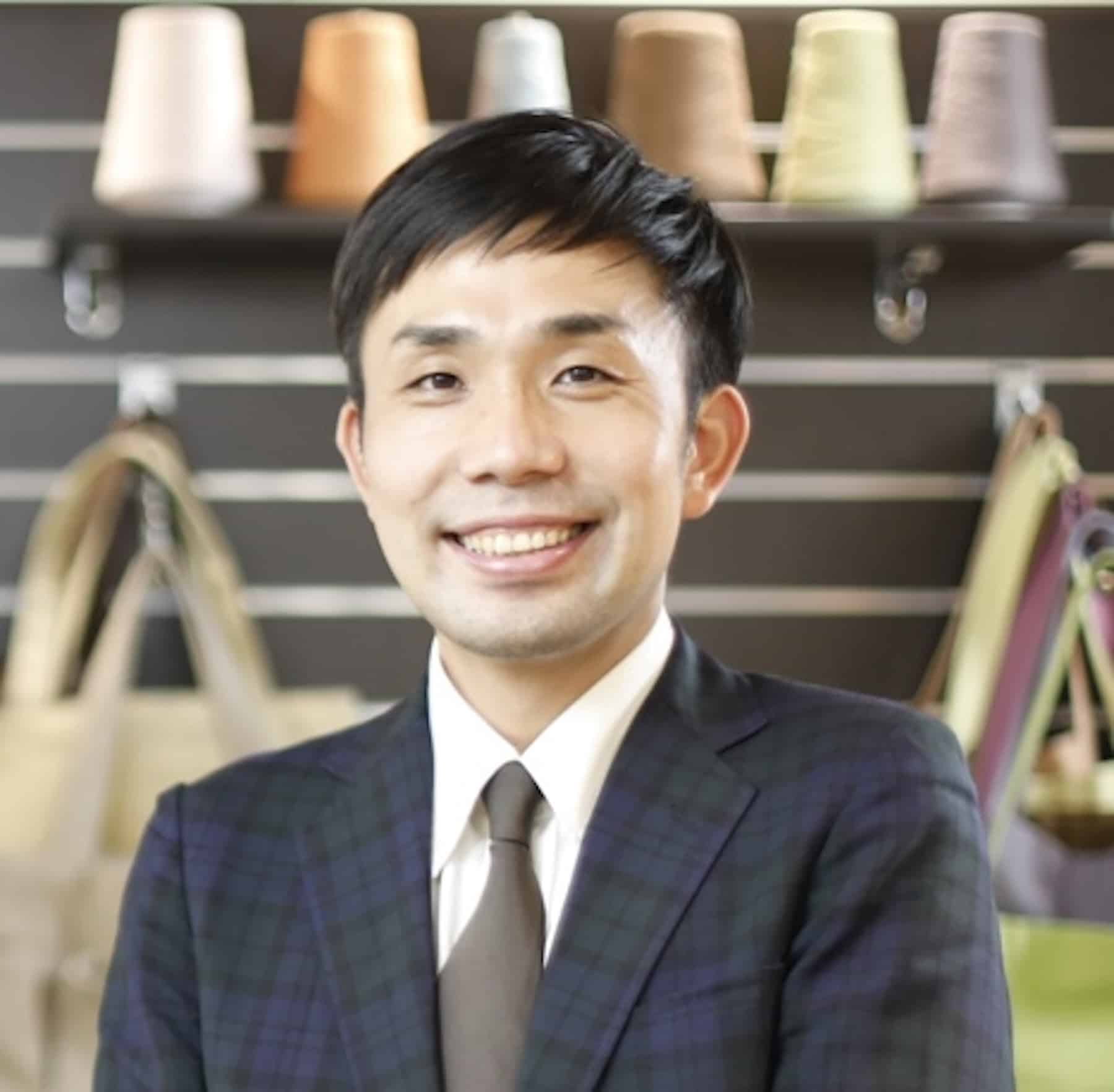
He is a member of the Sales Planning Office of Teshima Corporation, a lifestyle proposal trading company that deals mainly in textiles. He is the project leader of the food textile business and is also involved in the development of Updraft ®️.