DEEPTOKYO
magazine

EN


AREA
DEEPTOKYO
magazine
EN
AREA

2026.01.07
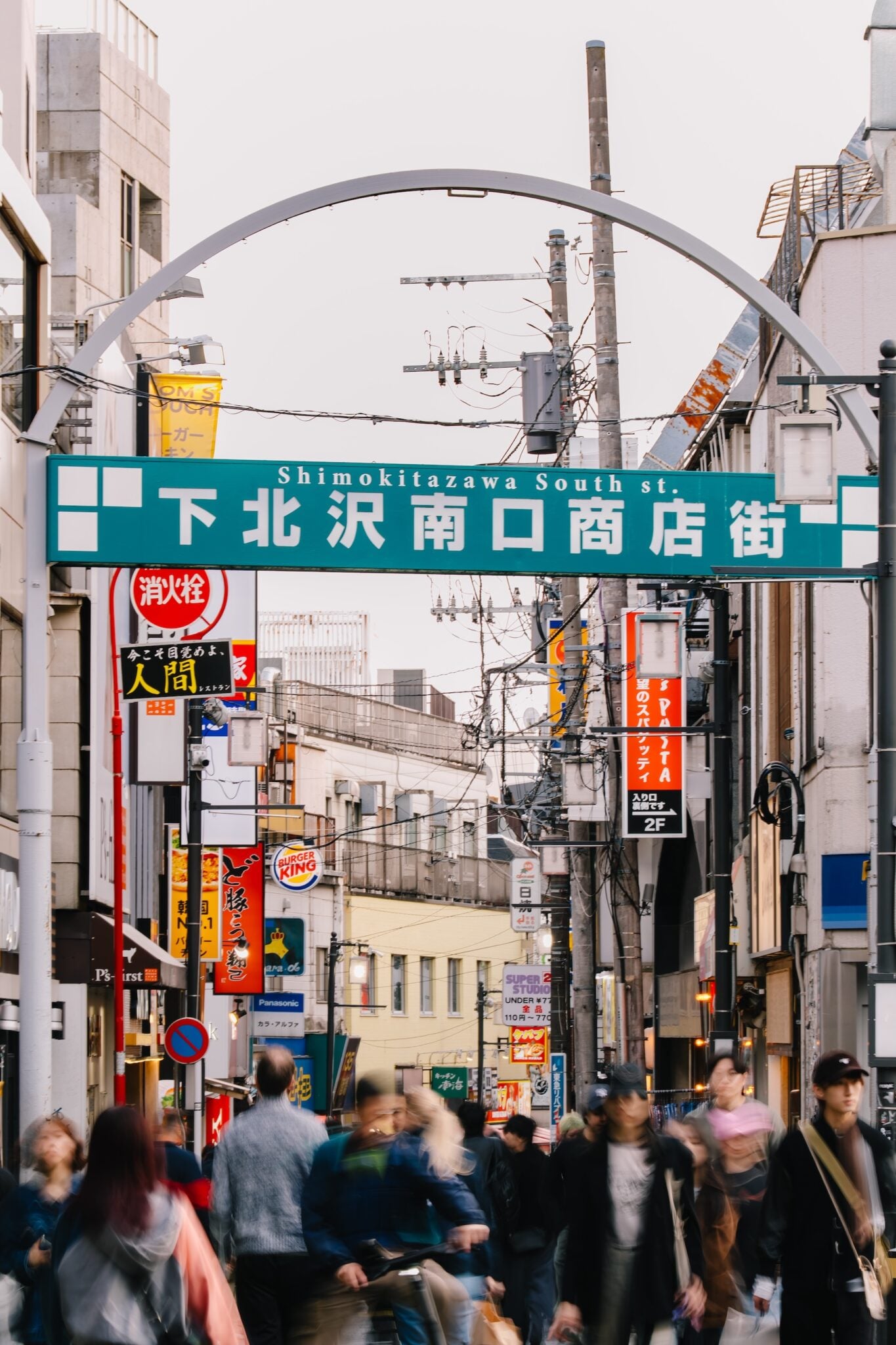
Located in Ueno’s Ameyoko district, mita sneakers has been a central force in Tokyo’s sneaker culture since the 1990s. While remaining firmly grounded in its “Tokyo local” identity, the shop continues to introduce fresh ideas that have earned deep trust from both customers and industry partners. We spoke with director Shigeyuki Kunii about the shop’s long journey.
SHARE


The history of mita sneakers dates back to the early Taishō era (1912-1926). In Nezu, Bunkyō Ward, the Mita family operated Mita no Tsumakawaya, which produced and sold components for traditional Japanese footwear, such as zōri sandals and geta clogs. Their specialty was tsumakawa—a protective leather covering attached to the fronts of zōri or geta to shield tabi socks and toes from rain or mud.
As the times changed, the family business closed. Kōsaburō Mita, father of the current generation and predecessor of today’s mita sneakers, shifted direction. With leftover zōri and geta inventory entrusted by a footwear wholesaler they had previously worked with, he transitioned into a business similar to a modern-day sales rep. Soon after, he restarted as a retailer, opening Mita Shōten in Ueno’s Ameyoko district. This marked the beginning of what would eventually become mita sneakers.
For some years, Mita Shōten continued to sell traditional Japanese footwear, but in the 1980s, sneakers gradually took up more space in the store’s lineup. Anticipating the future, Mita renamed the shop “Sneaker no Mita” and boldly decided to transform it into a dedicated sneaker store. Not long after, the sneaker boom arrived, and when Shigeyuki Kunii joined the business in the mid-1990s, that wave was at its peak. The store was later renamed mita sneakers, the name it carries today.
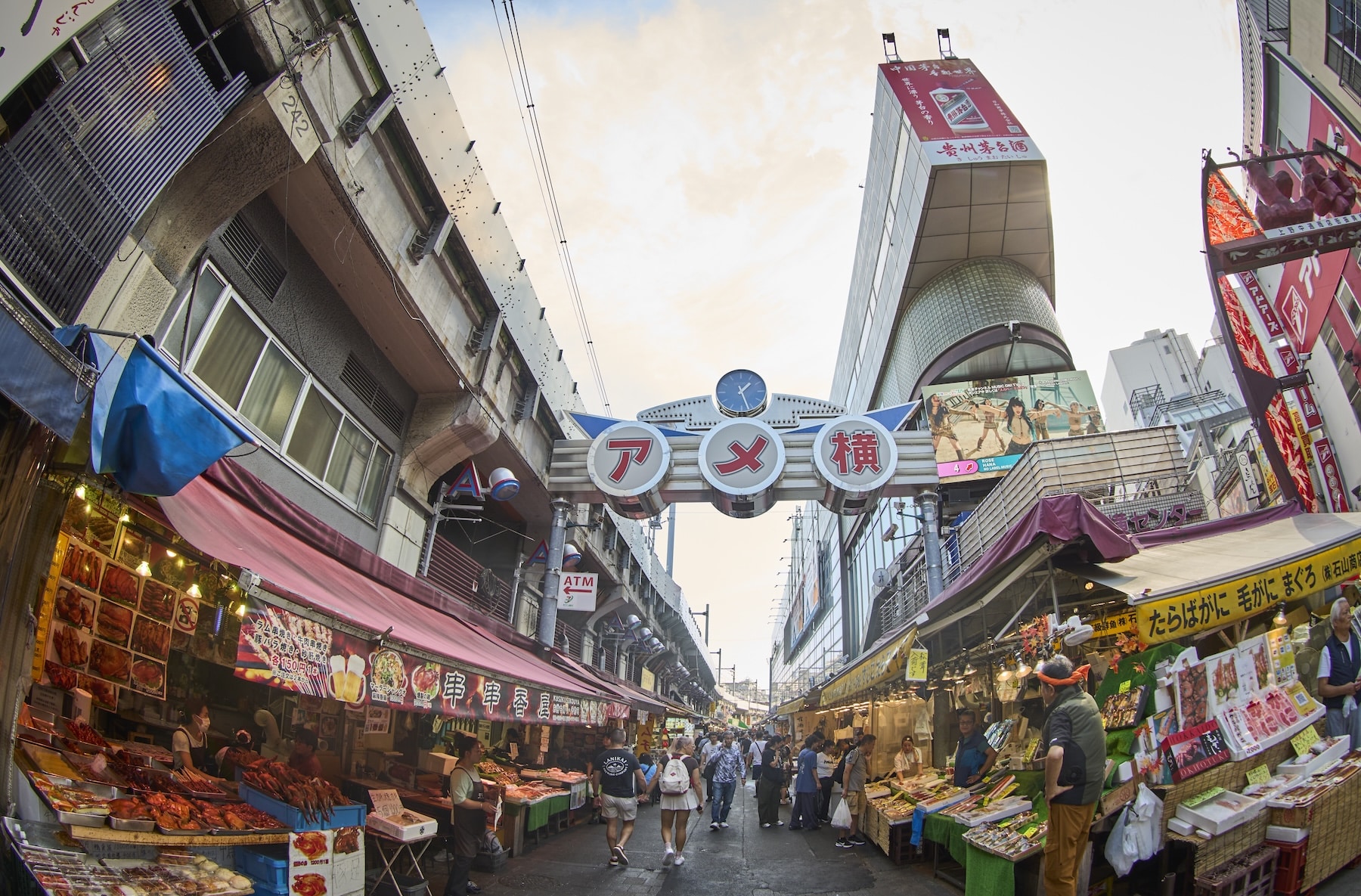
Ueno’s Ameyoko shopping street offers a broad mix of stalls selling street food, dried goods, fresh produce, seafood, clothing, and more.
Ueno originally developed as a center for imported goods, owing to its postwar history as a black-market area where U.S. military surplus flowed. Stores selling denim, workwear, military items, leather jackets, and imported goods became prominent. Because of this background, Kunii recalls that Ueno in the 1990s was “a place where trends were forming before they spread elsewhere.”
“Back then in the 1990s, during the dawn of the internet, official information mainly came from magazines. Enthusiasts and buyers who wanted news faster than monthly print cycles relied on online message boards or personal sneaker websites. Harajuku sneaker shops—selling parallel imports—often priced rare models at a premium. But many stores in Ameyoko sold sneakers at standard retail prices, so customers would visit early every morning to check arrivals.I still remember how, when a delivery truck stopped in front of the shop, and boxes were unloaded, customers gathered immediately, expecting new releases. We often had to ask them to disperse before we even opened the boxes for inspection. In that sense, Ueno wasn’t just for sneaker fans—it was a place where buyers, writers, stylists, and anyone seeking the latest information came to gather.”
Kunii’s first major project was the Ueno City Attack series, developed together with friends from other sneaker shops in Ueno and pitched directly to Nike. Although the initiative was revolutionary within sneaker culture, it was actually born from a sense of crisis as the sneaker boom was fading.
“At the time, store-exclusive sneaker projects existed mostly among major U.S. sports chains and weren’t common in Japan. When we felt the sneaker bubble deflating after models like the Air Max 95, we approached Nike—armed only with youthful confidence and energy—with a proposal for a new, Tokyo-driven idea. The Nike representative who listened to us was open-minded about doing something with no precedent, and we were fortunate to meet an adult willing to encourage us.”
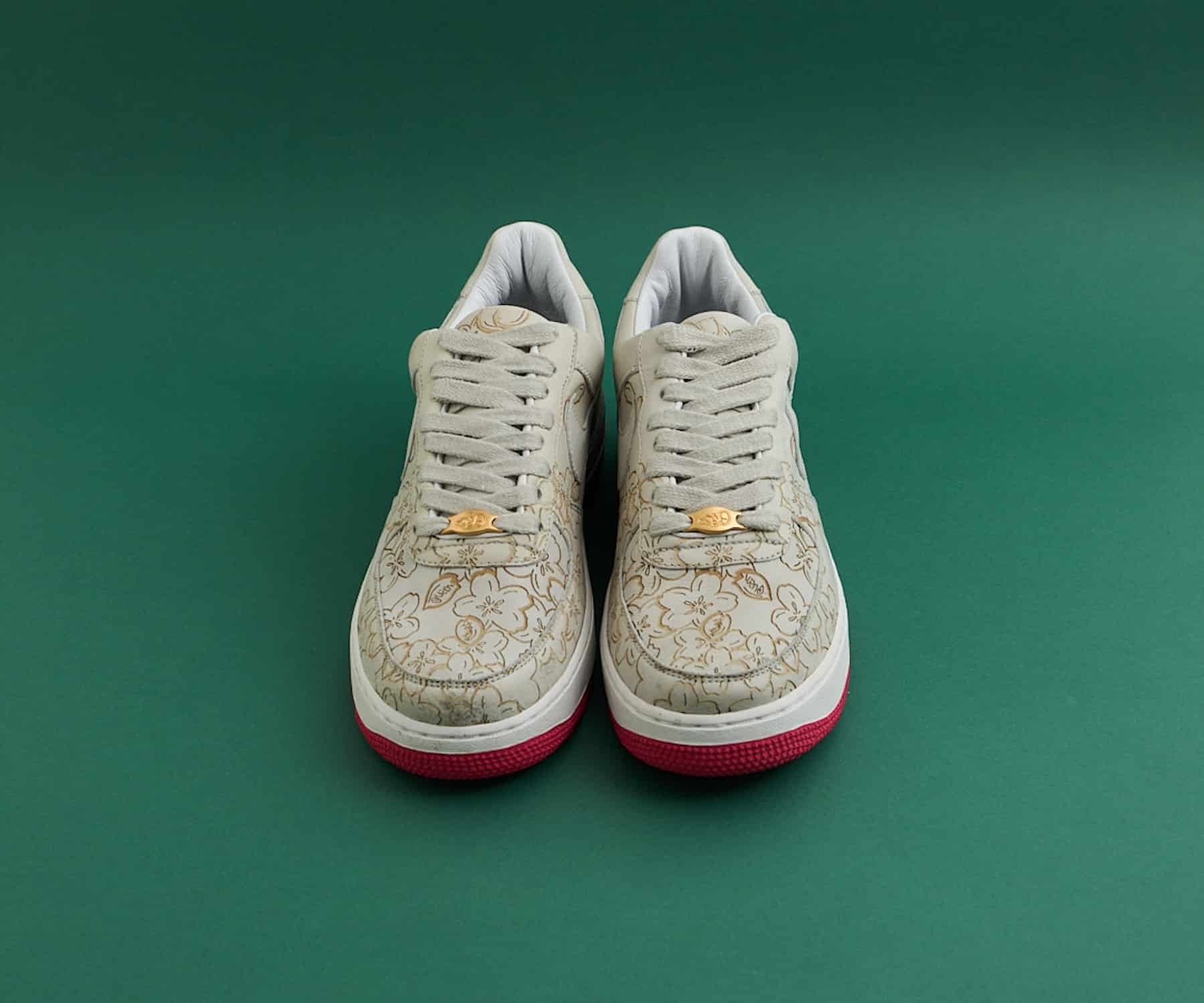
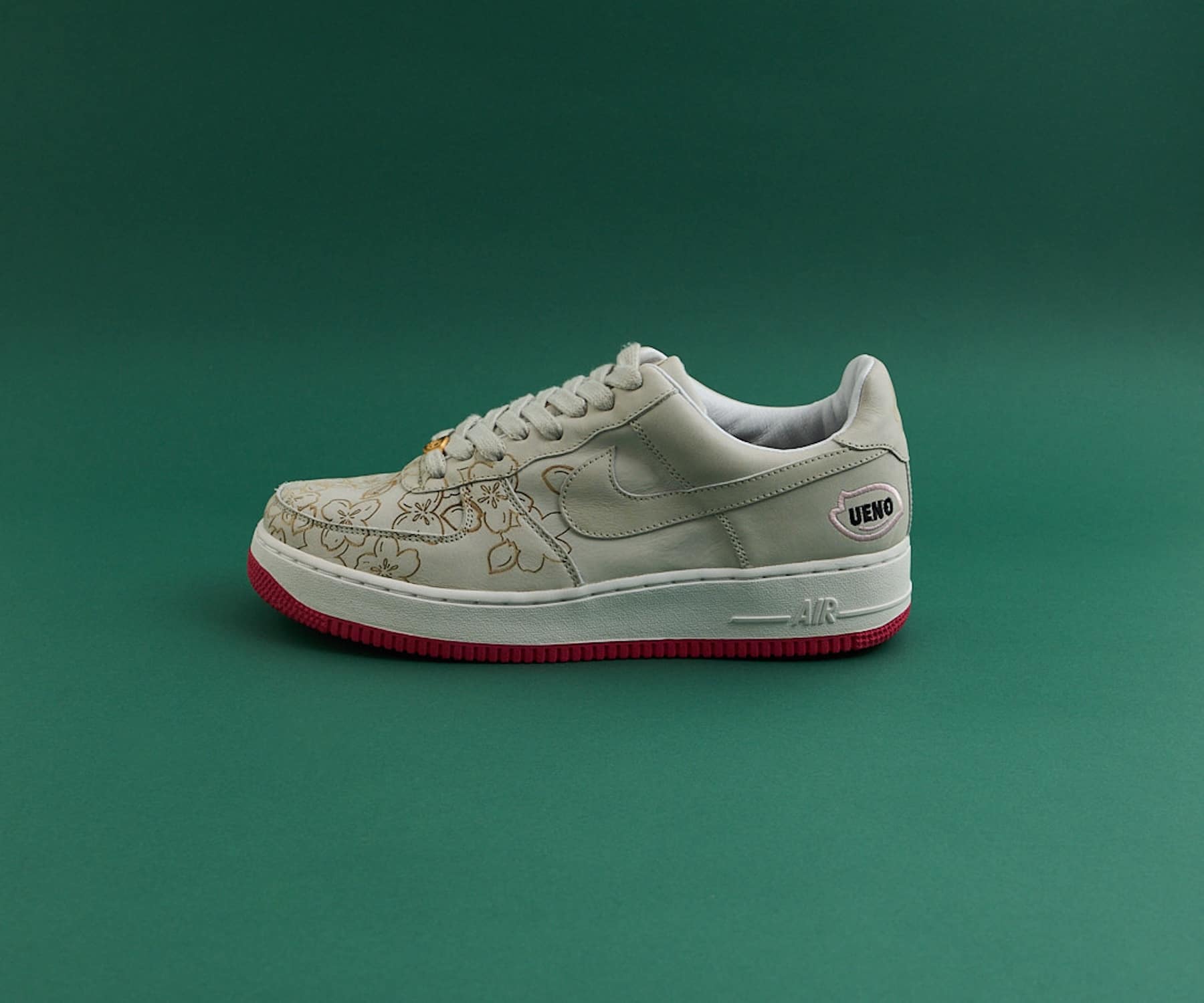
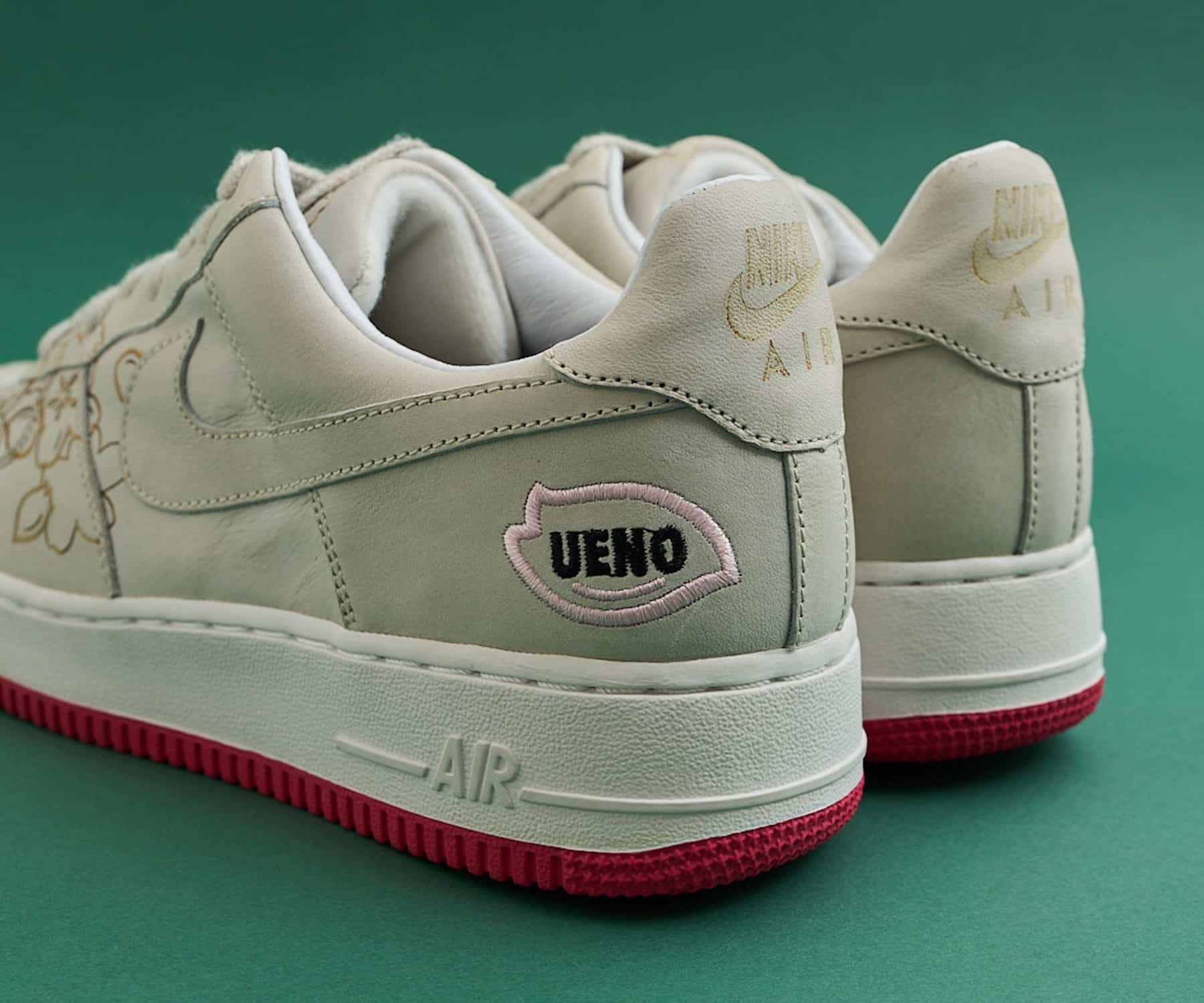
The Ueno City Attack series was released intermittently from 1999 to 2009. Shown here is the second release from 2005, the limited NIKE AIR FORCE 1 “SAKURA” “UENO CITY ATTACK,” inspired by the cherry blossoms of Ueno Park and designed to express the fleeting beauty of falling petals.
Following this first project with Nike, the shop continued producing collaborations—triple collaborations with Tokyo street brands, and projects themed around Ueno—centered on the idea of “Tokyo Local.” Although early releases faced challenges, such as media coverage appearing only after product launch, repeated projects made pre-release announcements expected, and long lines formed on launch days. As reselling became a social issue, mita sneakers introduced countermeasures such as lotteries and dress code requirements for purchases, which drew significant public attention.
Meanwhile, as Nike began seriously pursuing hybrid strategies—releasing new models by combining parts from existing ones—the Nike Trainer Dunk High, for which Kunii provided development-stage feedback, was released in 2007. By fusing epoch-making models from the Air Trainer 1, Dunk, and Free Trail categories, this hybrid style showed a new direction beyond simply reviving past models. The project expanded Kunii’s work as an external advisor to various brands and further established mita sneakers' presence.
“While many praised these accomplishments, negative opinions and issues also existed. Looking back, the history of collaborative sneakers is also a history of sales methods. When we introduced a dress code as a purchase requirement for a triple collaboration with A Bathing Ape and Reebok, it was widely reported. Even the now-standard lottery system faced backlash at first, with some customers saying the shop was ‘choosing who gets to buy.’ But we simply wanted to ensure our products reached true sneaker fans. Each time criticism arose, we tried to find ways to address it.”
Although the shop received many invitations to open in other regions, mita sneakers ultimately did not expand because Ueno’s location itself had become a core part of its identity. As online retail grew, the role of physical stores was reconsidered—and the shop remained firmly Tokyo Local.
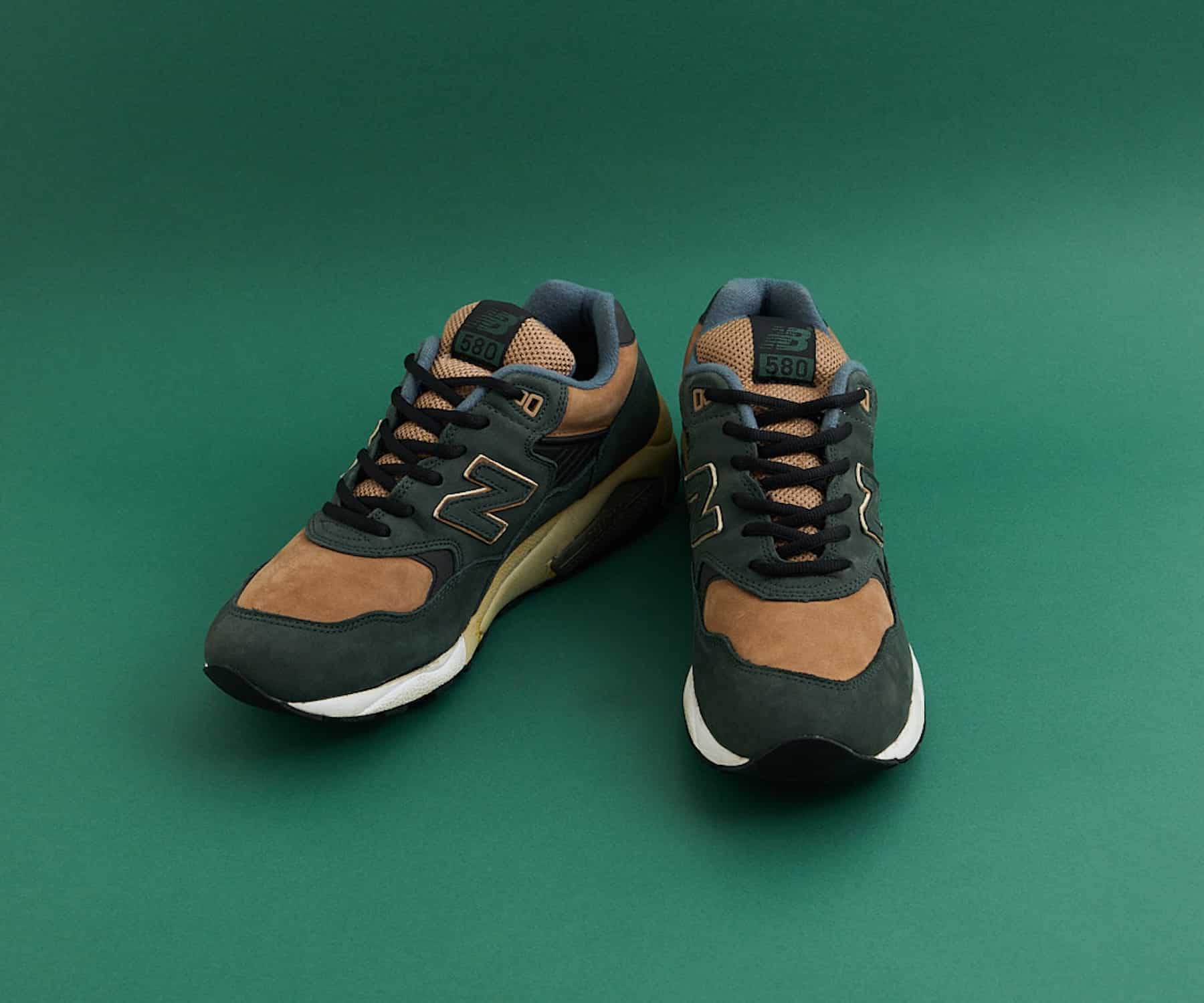
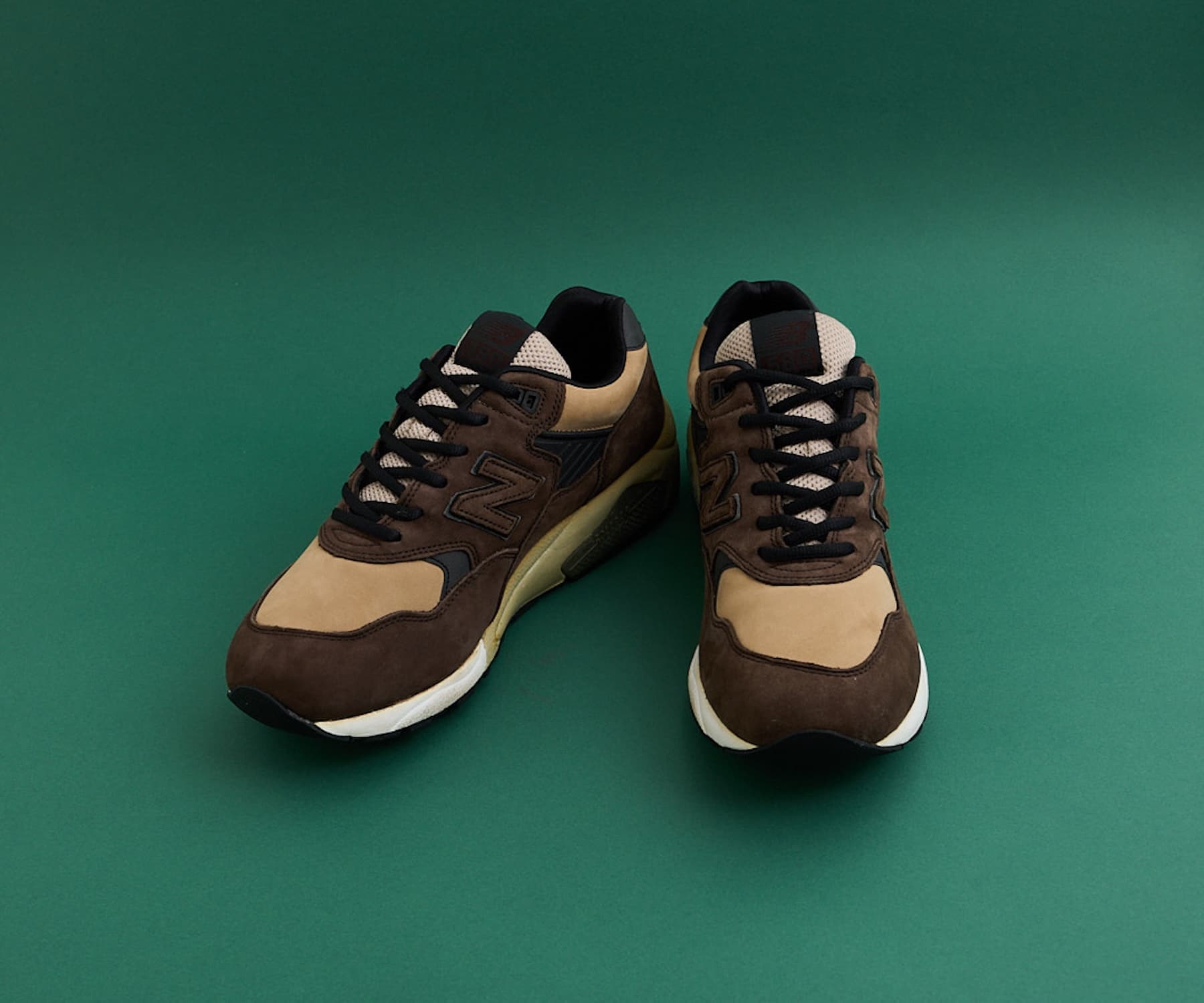
The NEW BALANCE MT580 “HECTIC × mita sneakers,” released in 2000, was a triple collaboration with Harajuku street brand HECTIC and New Balance. The MT580 was a Japan-modified version of the M585 released in the U.S. in 1995. The collaboration brought significant attention, and the series continued until 2010.
Around this time, an “urban trail” aesthetic was emerging in the street scene. Support for the MT580 grew simultaneously among Kunii’s peers, and this collaboration propelled the once lesser-known model into global sneakerhead fame.
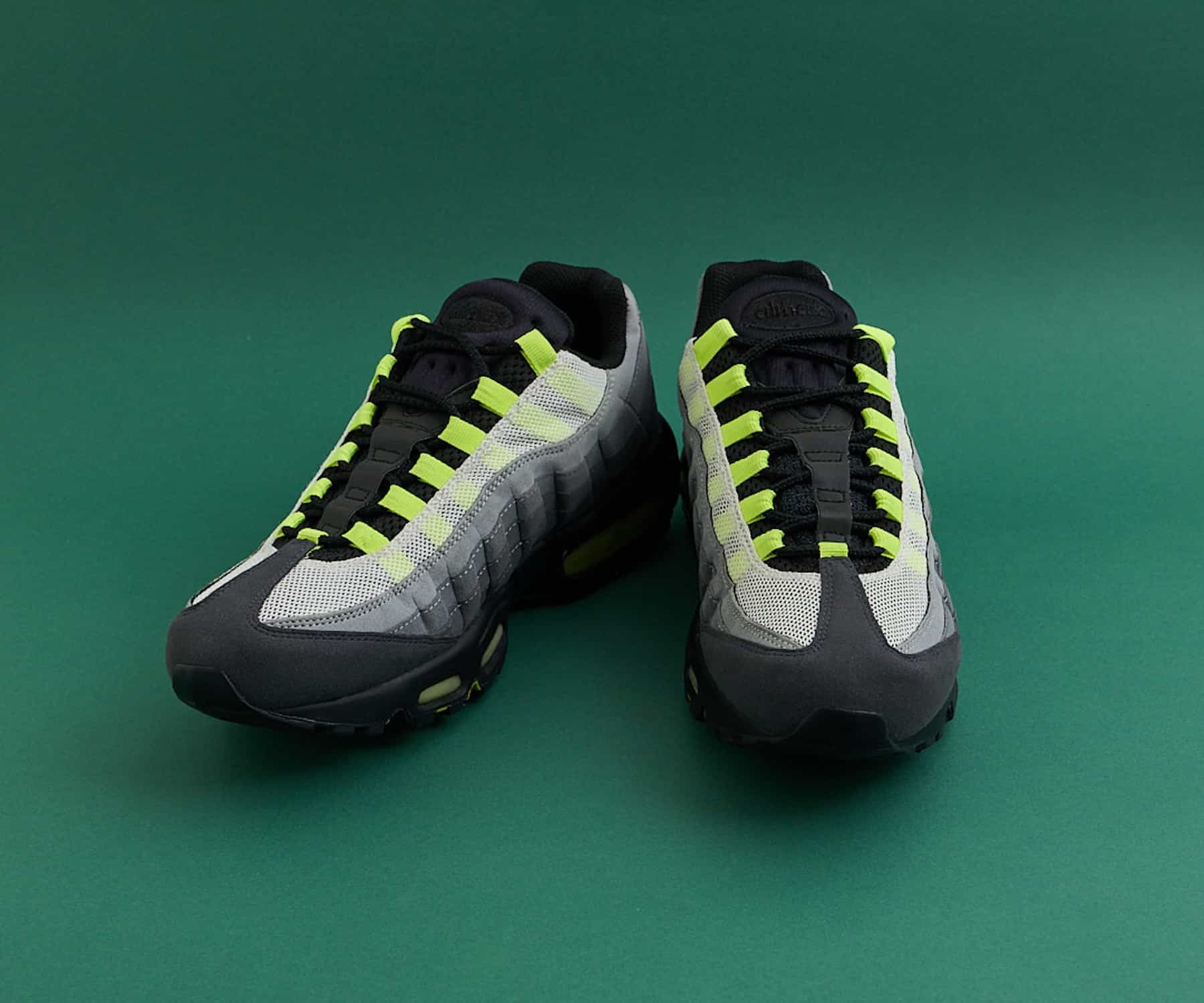
Released in 2013, the NIKE AIR MAX 95 "PROTOTYPE" "mita sneakers" drew inspiration from sketches found on designer Sergio Lozano’s desk. With a black tongue matching the prototype and a lining embroidered with cherry-blossom petals and a custom UENO logo, the shoe became a legendary release among sneaker enthusiasts worldwide.
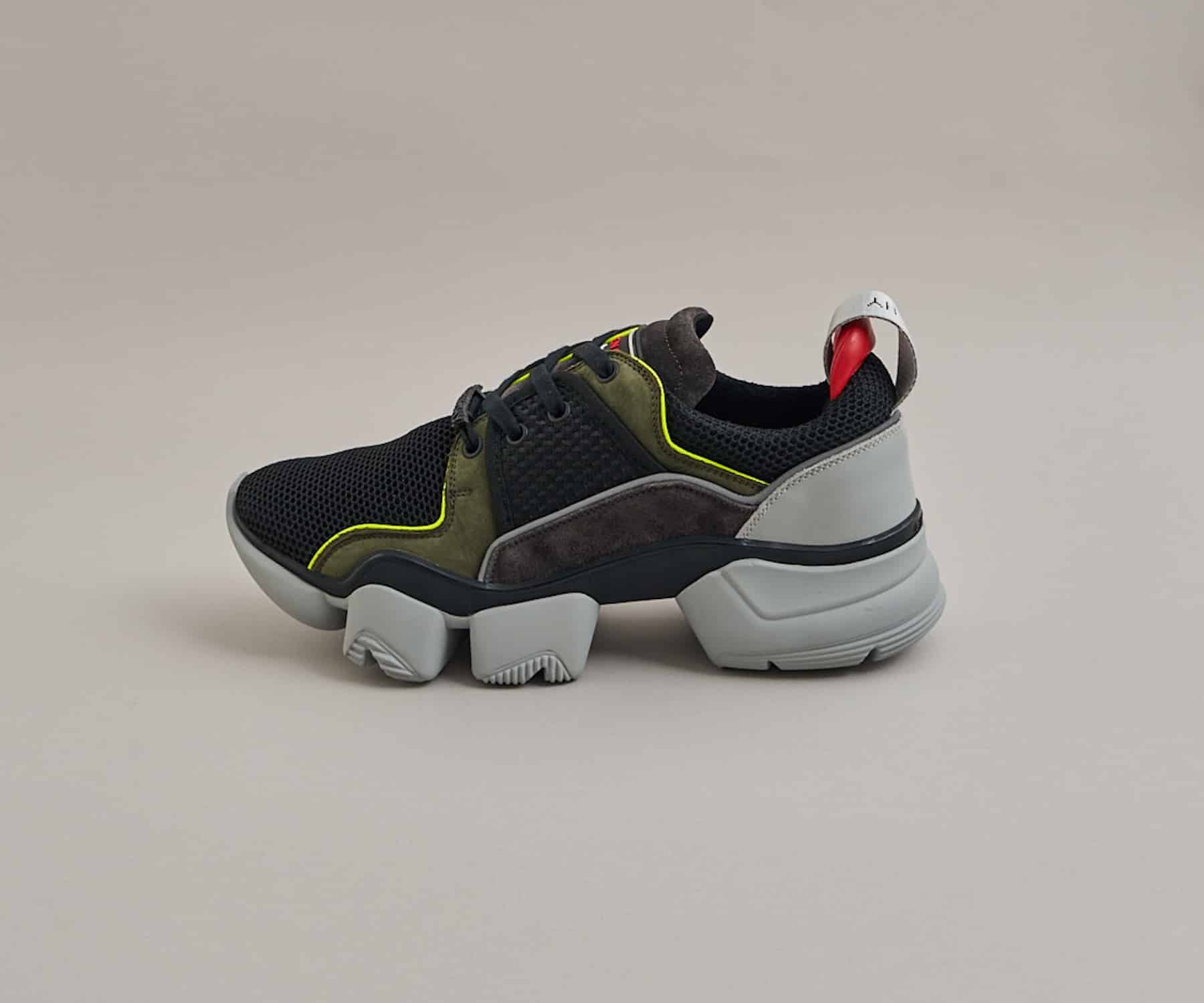
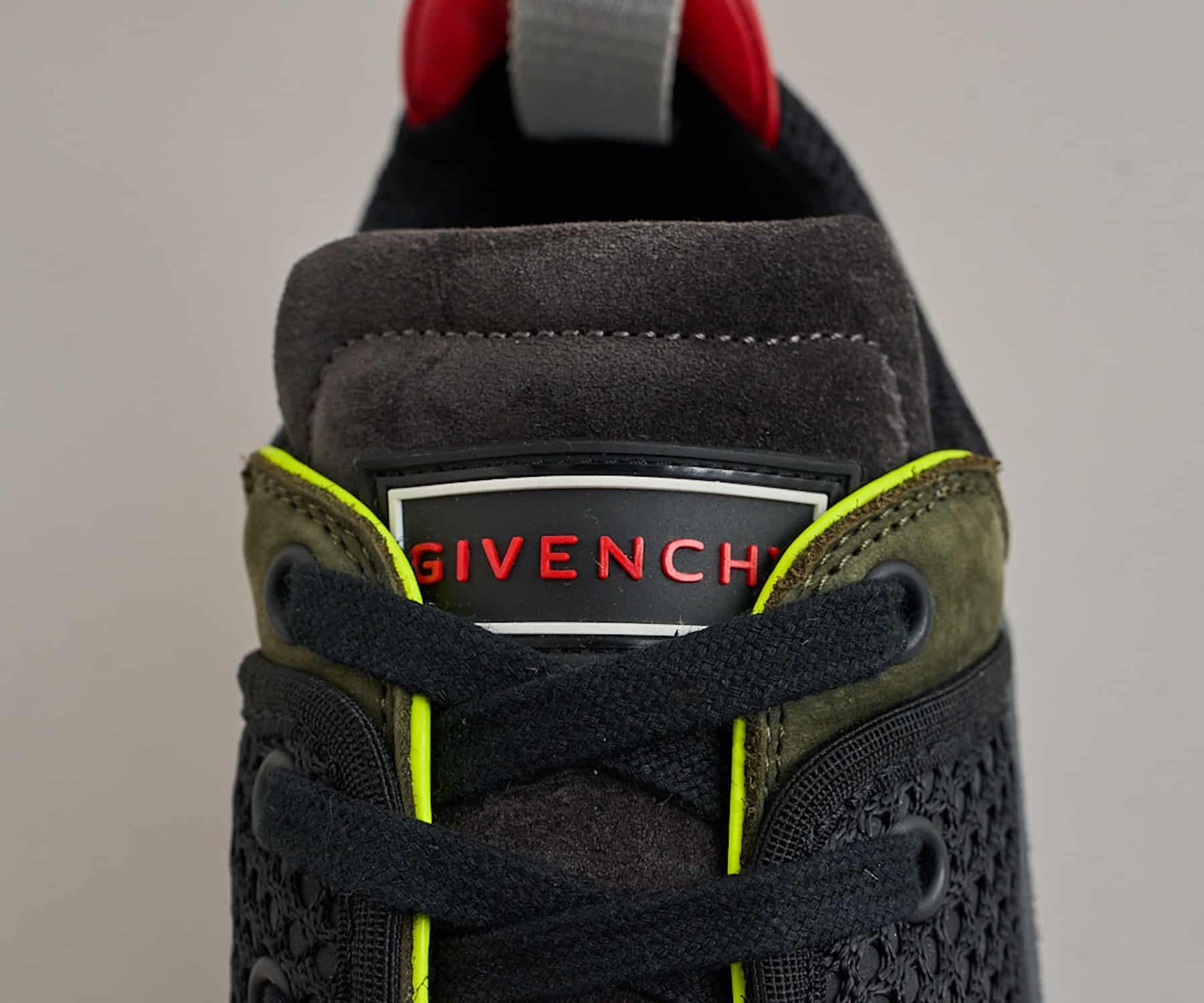
In 2018, Kunii received a request from the luxury brand Givenchy to produce a collaboration sneaker; he was one of only three creators worldwide selected for the project.
“The brand contacted me suddenly, asking for feedback on an early prototype of a Givenchy sneaker. Their representative even traveled from France to Ueno. I gave them my straightforward opinions—points that caught my attention, suggestions for improvement. About an hour after the meeting ended, I received another call asking if I could meet at a hotel in Shinjuku. For a moment, I suspected it might be some sort of collaboration scam,” he laughs.Looking back, I think they were testing my perspective and attitude toward sneakers from that very first contact. When I was shown into a large conference room at the hotel, Clare Waight Keller—who had just become Givenchy’s creative director—was there waiting. Through our conversation, I sensed her genuine understanding of sneaker culture and her respect for what we had been doing. That’s why I accepted the project on the spot.”
In this project as well, Kunii successfully fused a theme rooted in Tokyo, Japan, and mita sneakers with Givenchy’s creative direction.
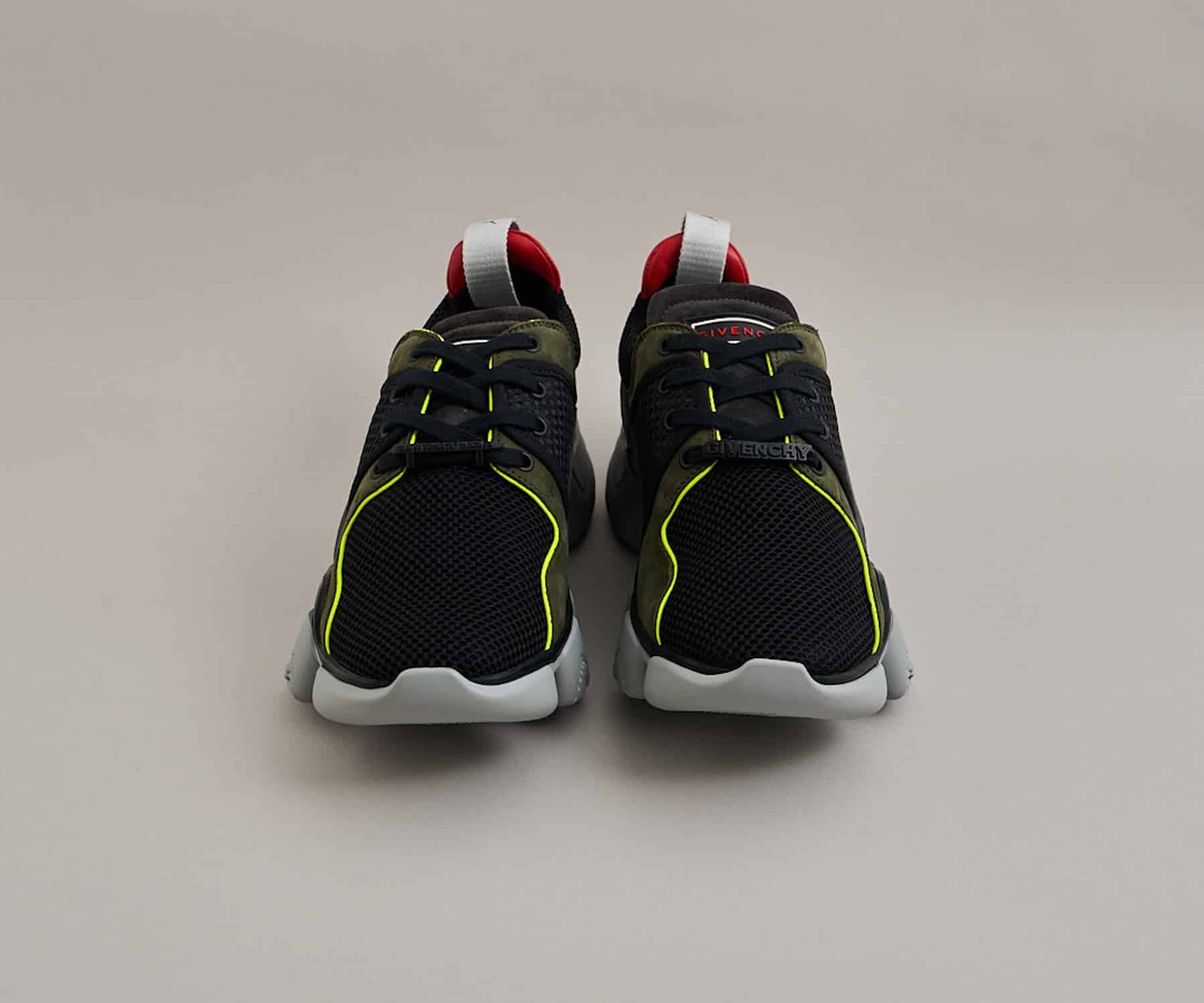
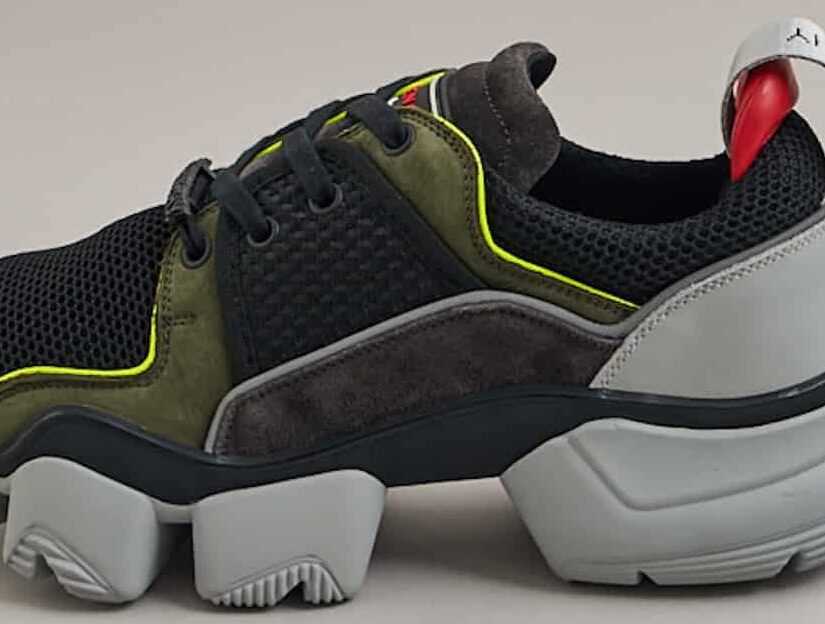
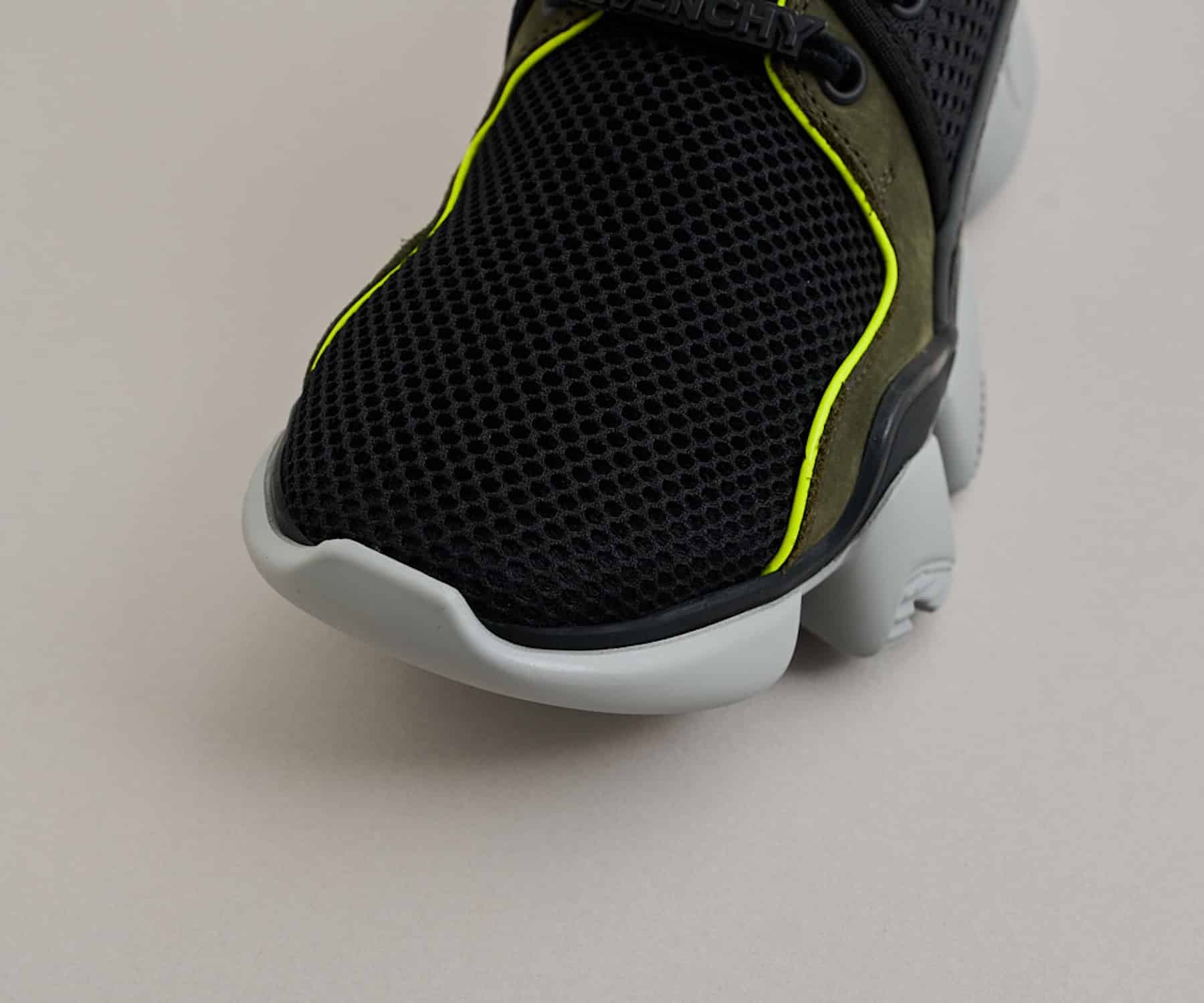
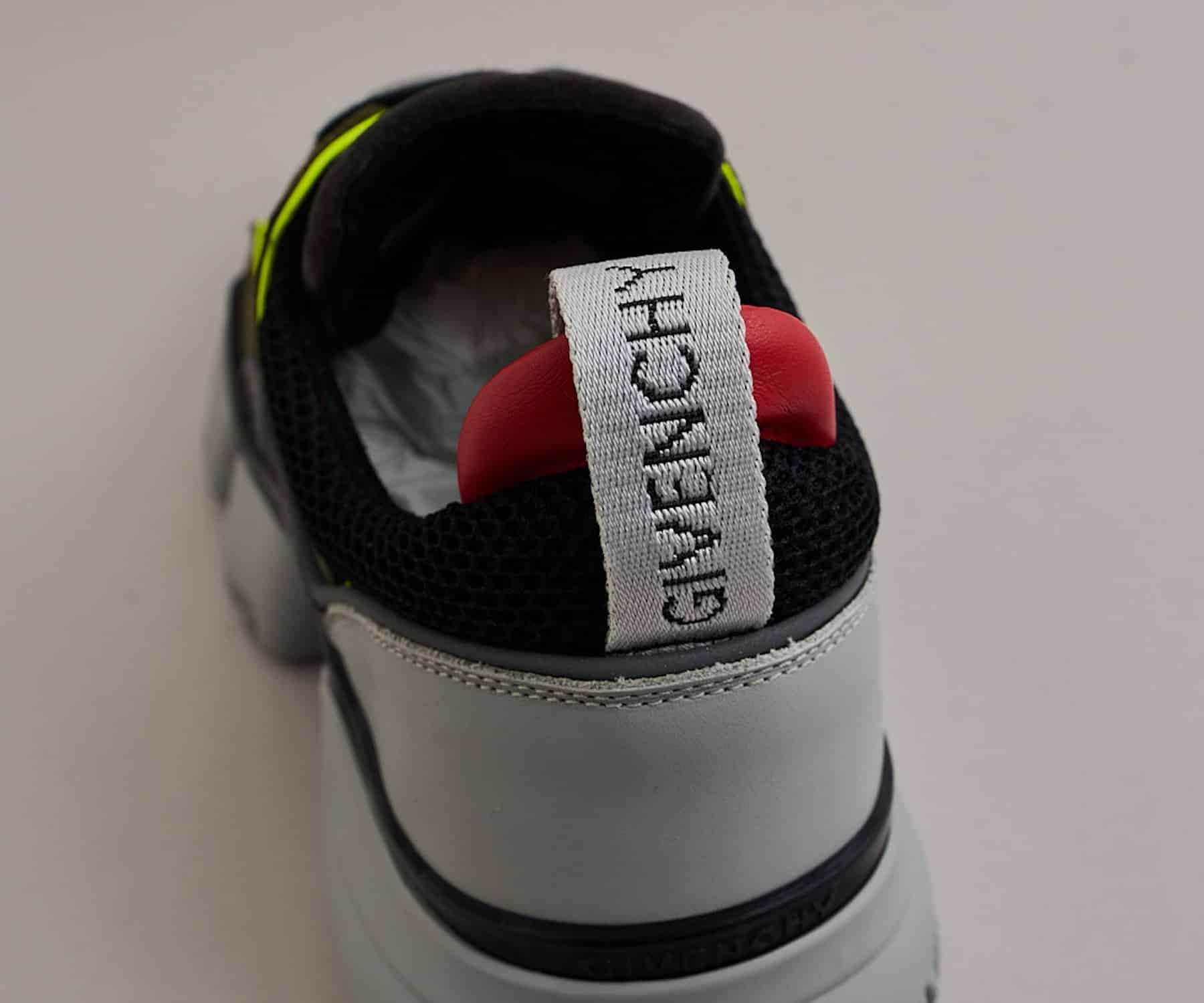
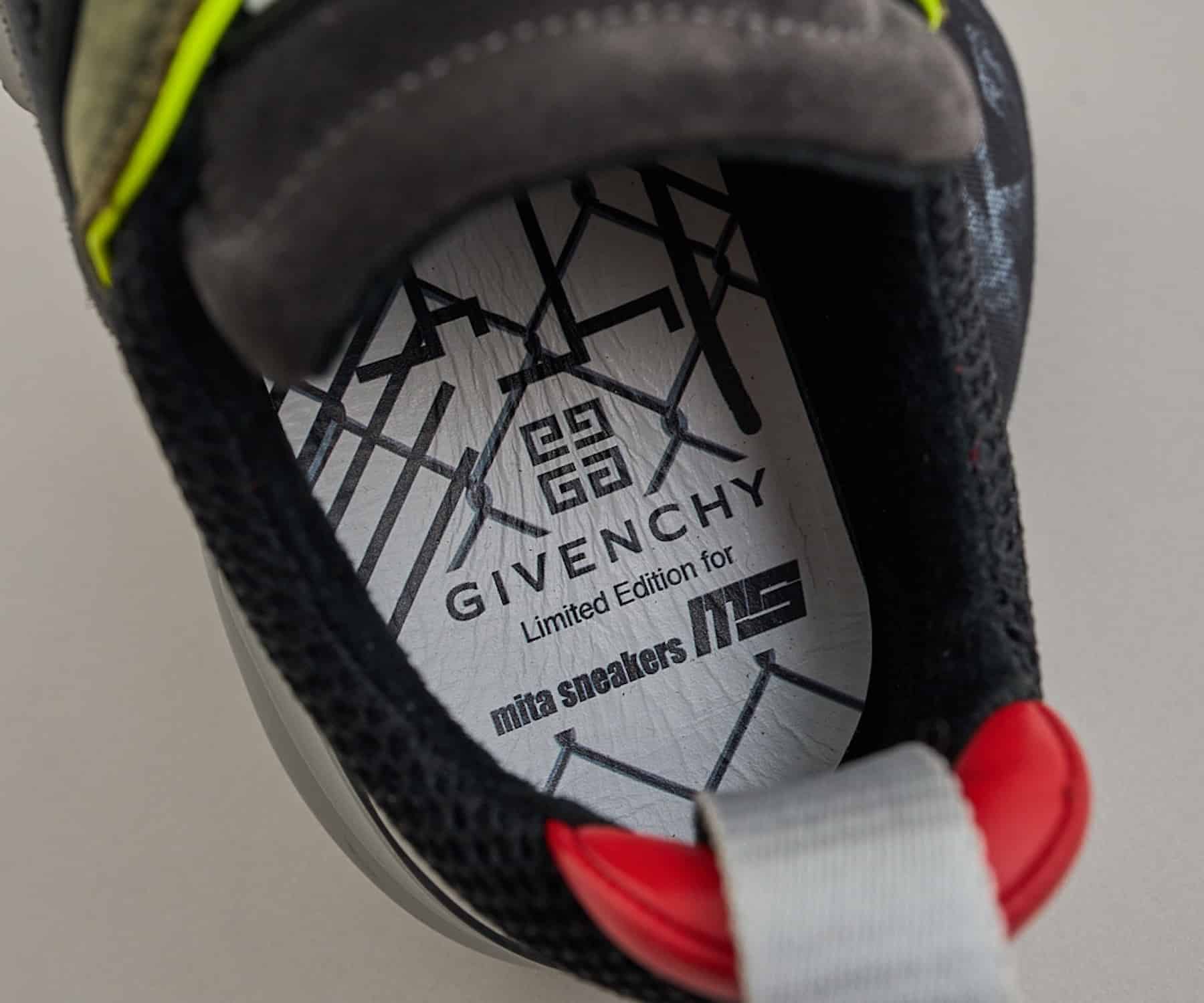
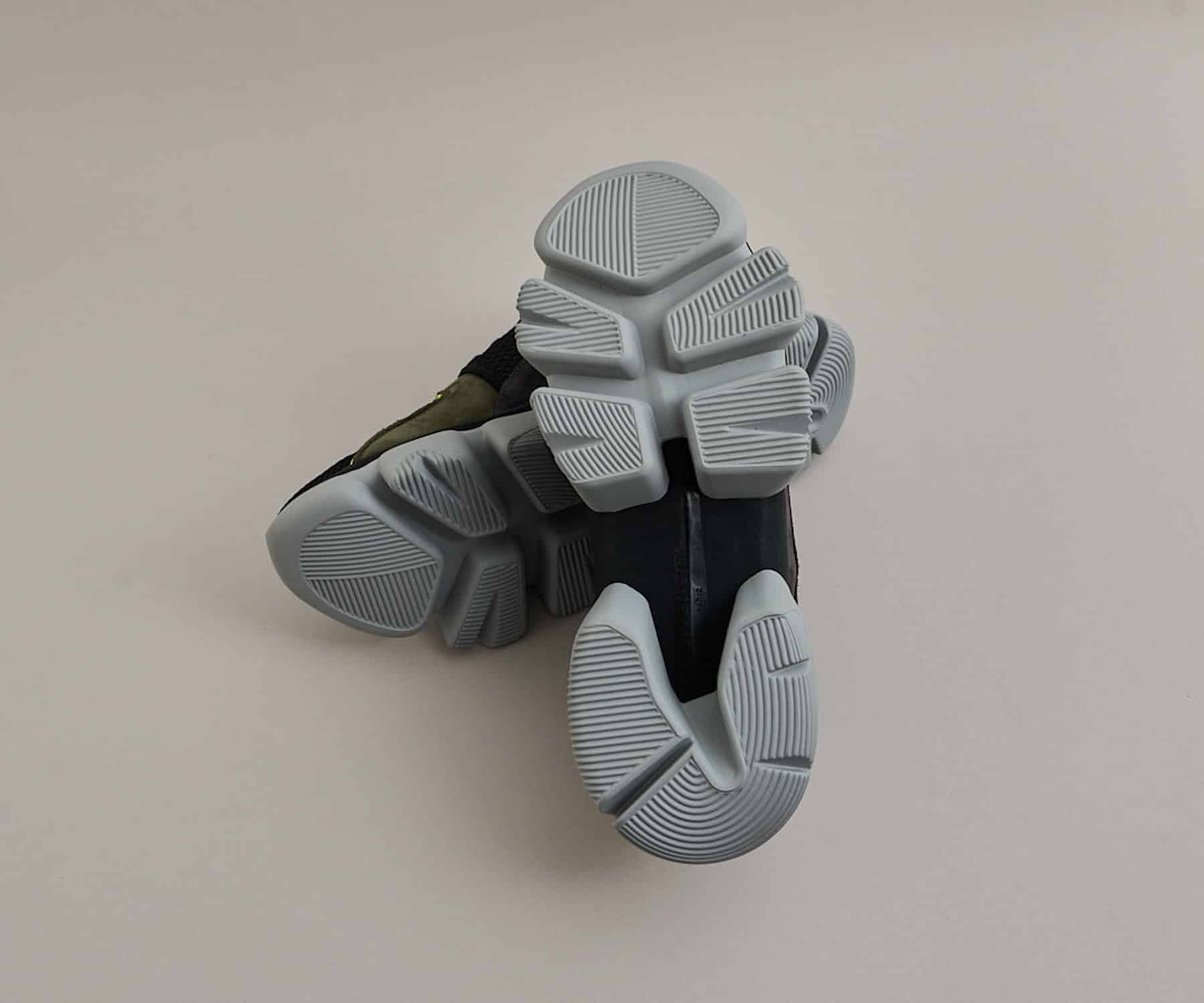
The 2018 GIVENCHY JAW SNEAKER LOW “Made in Italy” “mita sneakers” was themed around hanafuda, traditional Japanese playing cards illustrated with seasonal motifs such as pine, cranes, turtles, and the rising sun. “I felt it was a gamble for Givenchy to work with such a small Tokyo shop,” Kunii says. These motifs inspired accents throughout the design.
The upper features breathable double-russell mesh, premium suede, and nubuck. Reflective materials and fluorescent enamel piping add both visibility and accent.
Its color-blocking reinterprets the January hanafuda card “Pine and Crane” in a modern balance, with the rear view evoking the motif directly.
The insole features original graphics incorporating both brand logos and mita sneakers’ signature chain-link fence motif.
The distinctive split sole—designed to resemble shark teeth—is what gives the JAW model its name.
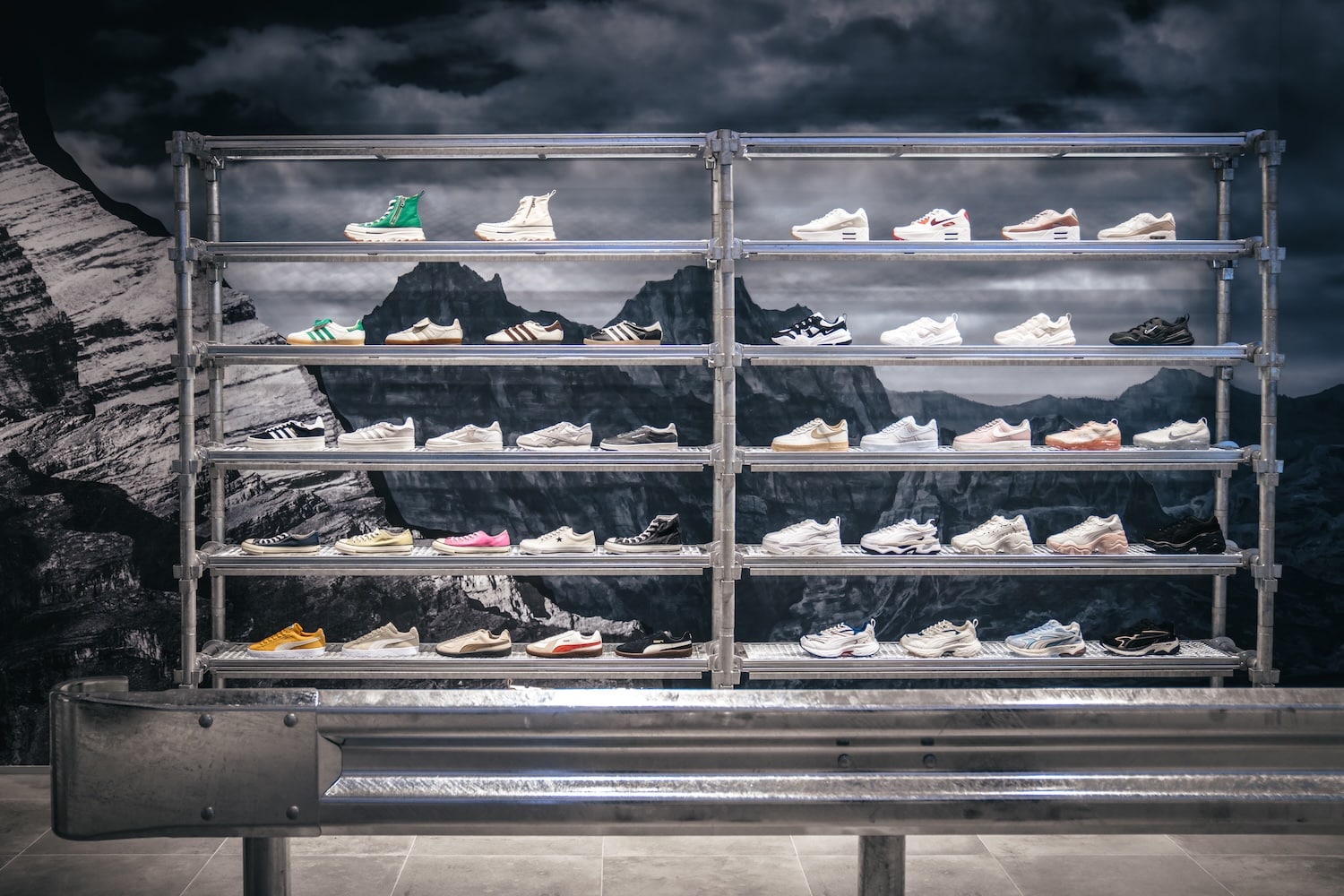
Kunii has also gained attention for Herringbone Footwear, a shop for which he serves as external director. Operated by Baycrews, a major apparel company, this footwear-focused shop is located in Toranomon Station Hills. Kunii says the meaning of his involvement comes precisely from the fact that his customer base and environment are so different from those of mita sneakers.
“Historically, the sneaker scene was male-centered, but Herringbone Footwear’s selection is gender-neutral. Toranomon’s environment and customer base are completely different from Ueno's. I was also intrigued by Baycrews’ wide-ranging expertise across fashion, food, lifestyle, and beauty. And although I’ve done many types of sneaker-related work, I had never built a sneaker shop from scratch. The fact that its approach differed from mita sneakers was also significant to me.”
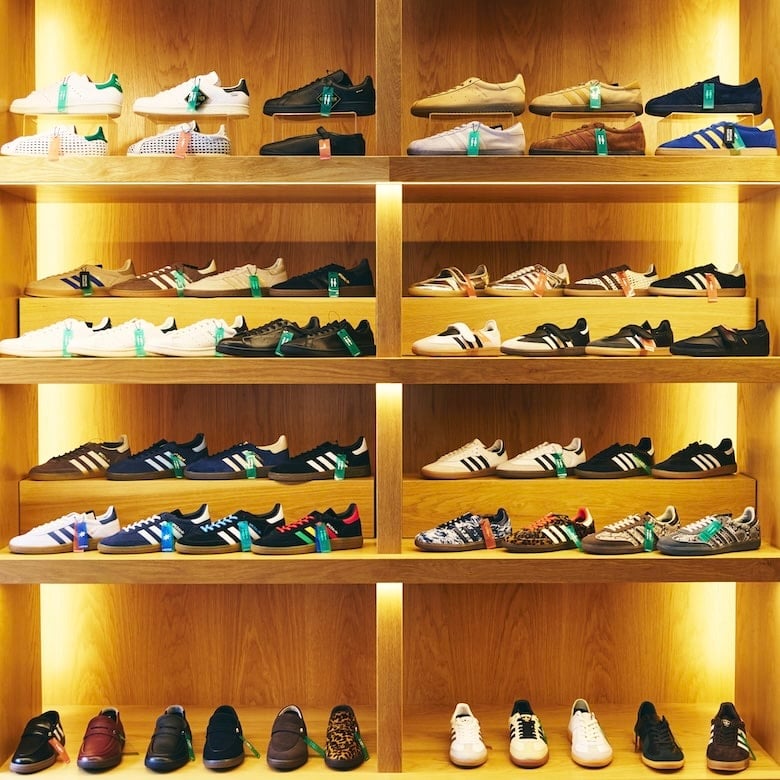
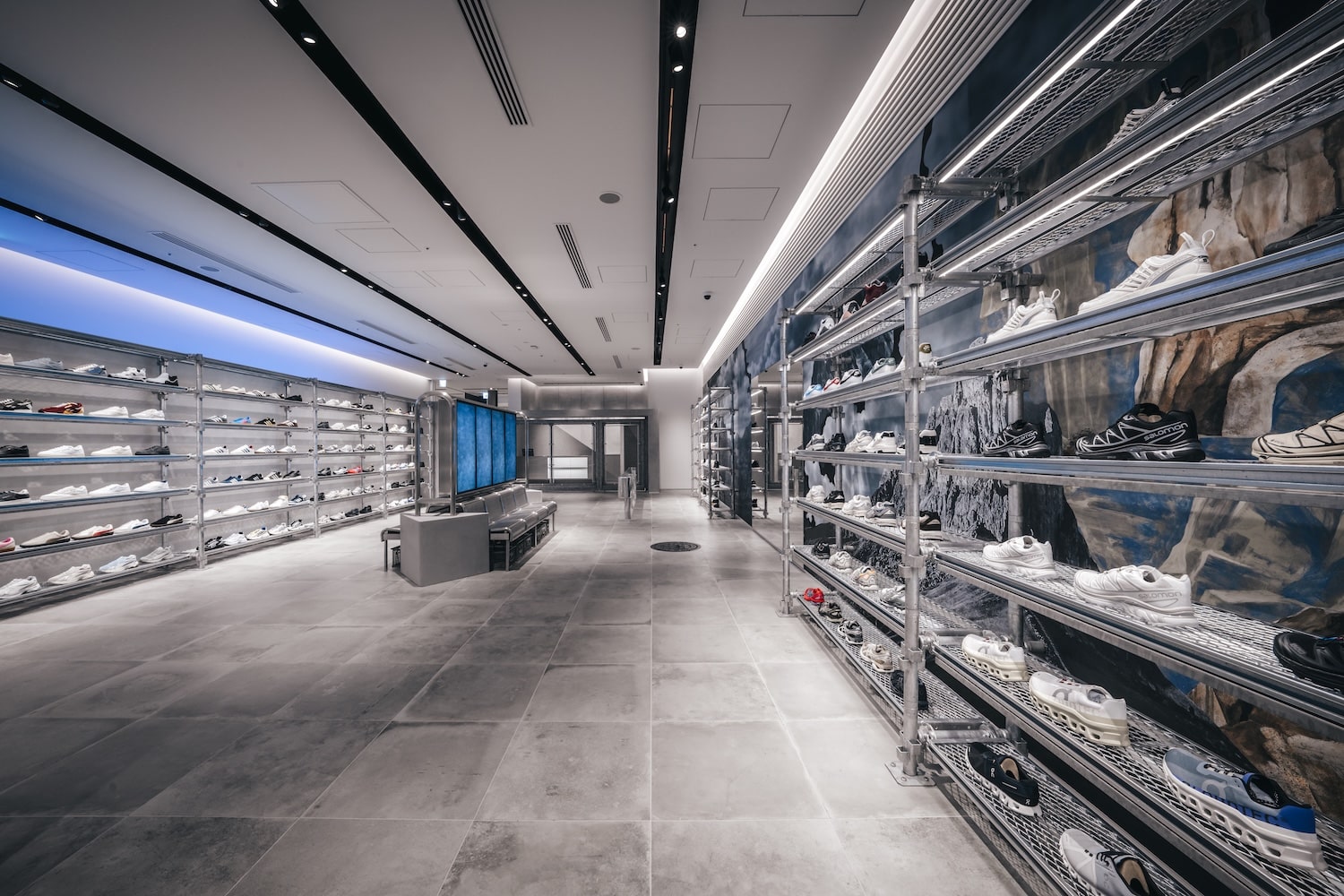
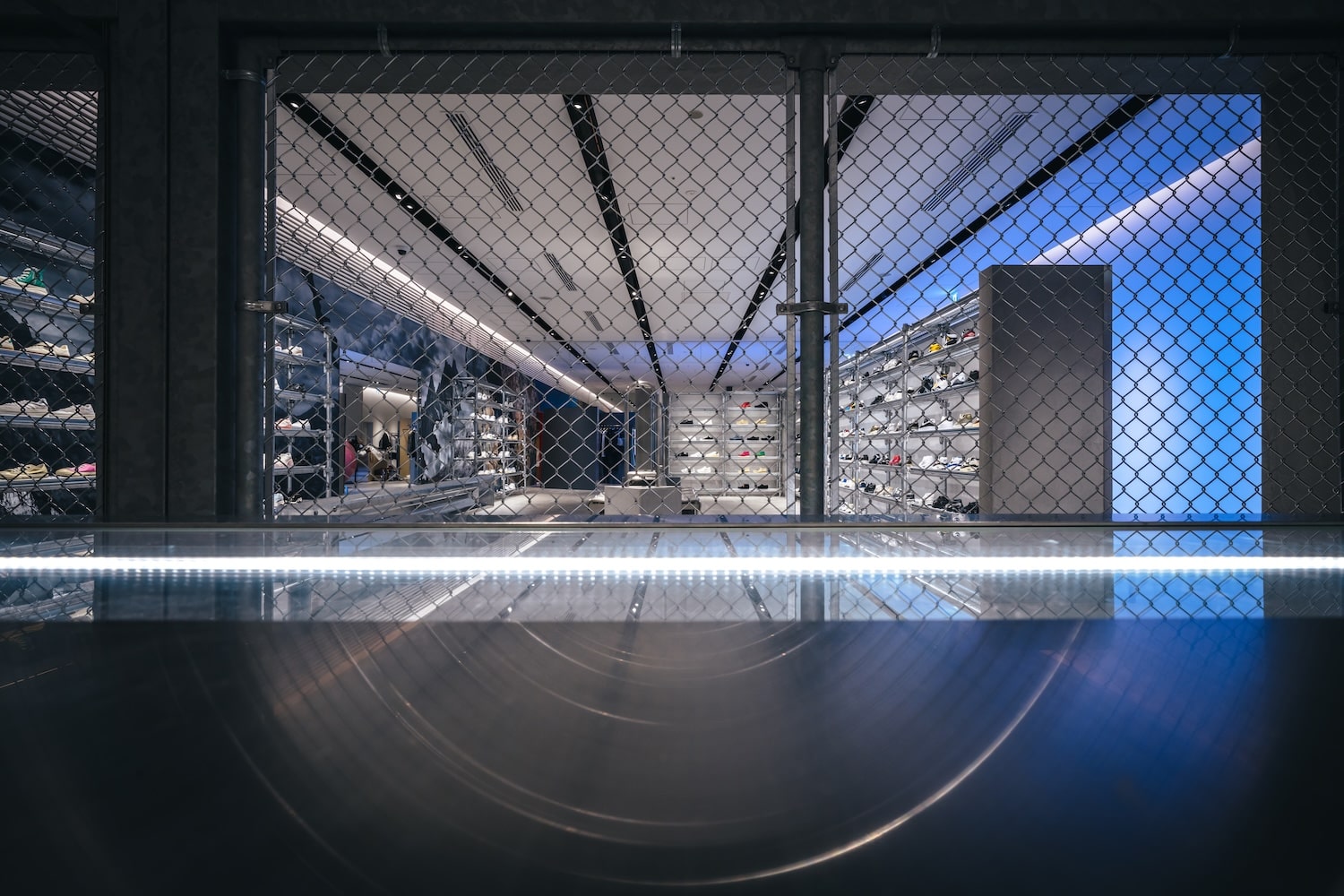
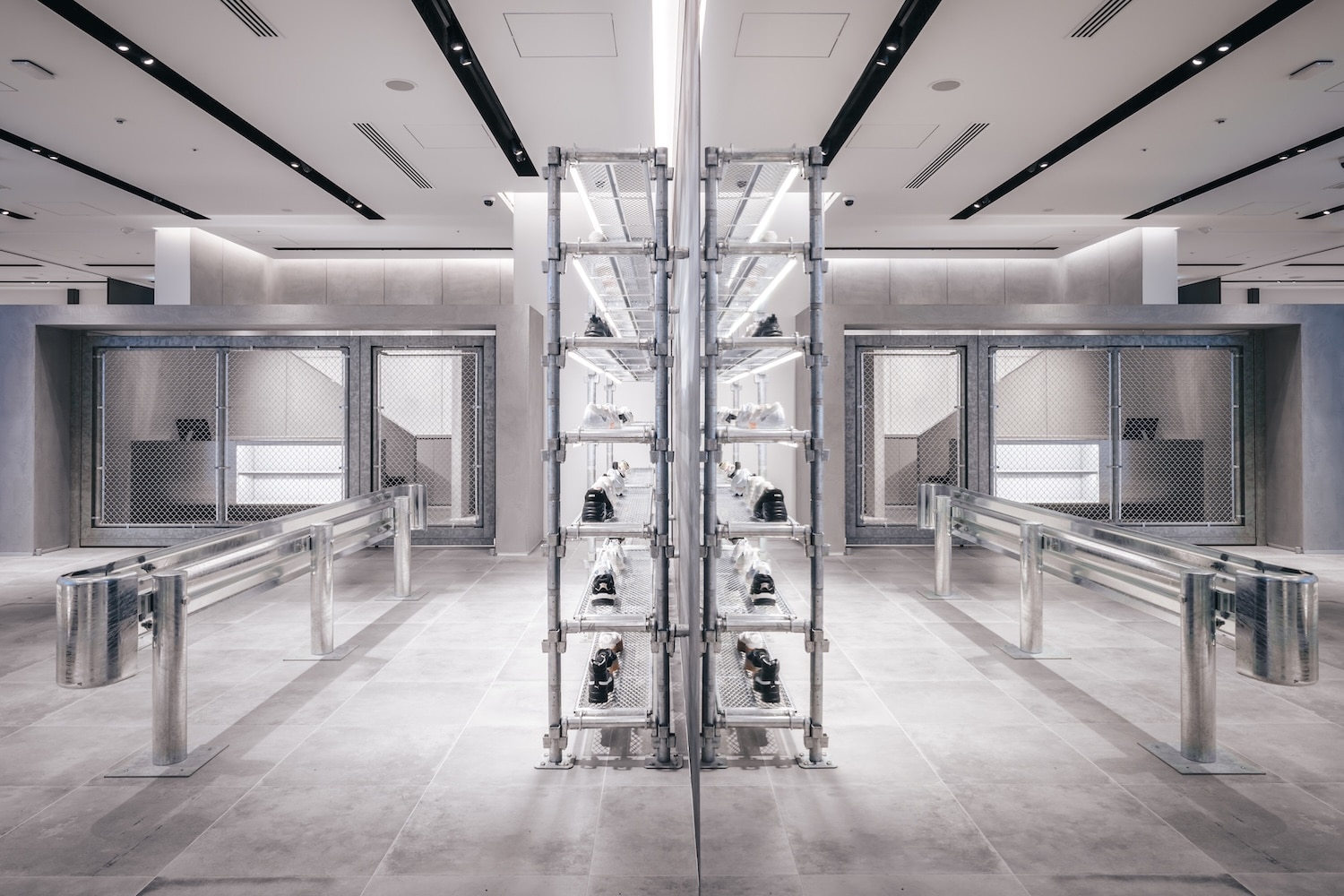
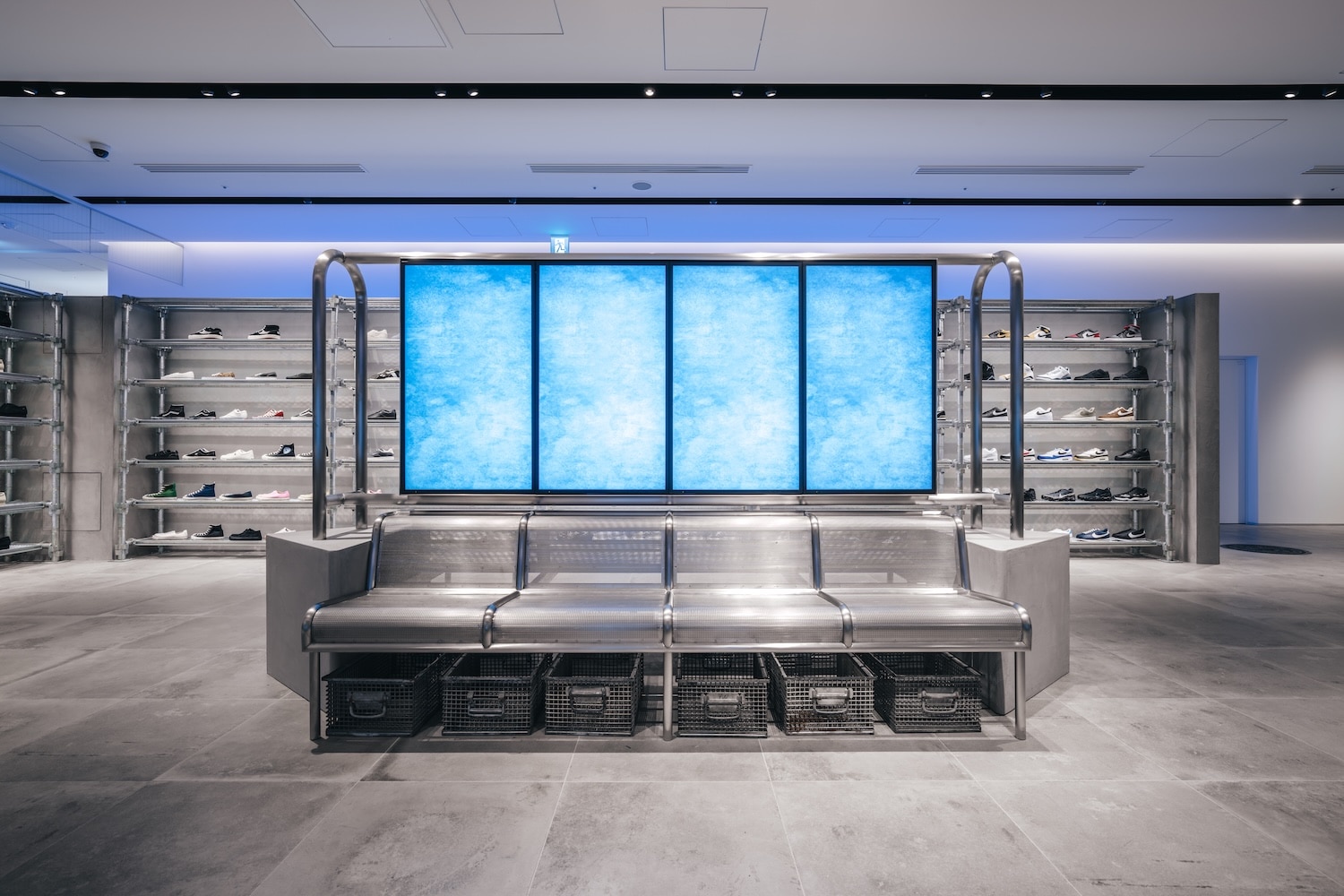
Herringbone Footwear operates as an independent shop within SELECT by BAYCREW’S, occupying two floors of Toranomon Station Hills. Drawing on Kunii’s long experience in the sneaker industry, the shop offers a balanced selection. Its name comes from the “herringbone pattern” commonly used in sneaker outsoles across generations—symbolizing heritage, innovation, and universality beyond brand boundaries.
Decades of running a store, developing hundreds of collaborative sneakers, serving as an external advisor to manufacturers, creating products with luxury brands, directing a sneaker shop for a major apparel company—what insights emerged from working across such a wide range of channels?
“At mita sneakers, our customers include not only young people but also many who have visited us for years. Some come back after a long time; others bring their families. That only happens because we have continued to operate in the same location. I feel the significance of remaining unchanged in that sense. As for collaborative products, our stance doesn’t change whether we work with a sports brand or a luxury brand, and we never create products simply because something is trending or feels timely. The same applies to our selection at mita sneakers and Herringbone Footwear. I still believe our role is to bring new perspectives and concepts that our partners did not previously have, and we have consistently continued doing so. And to repay the support of our longtime customers, mentors, and all the professionals who have collaborated with mita sneakers, I intend to keep evolving without hesitation.”
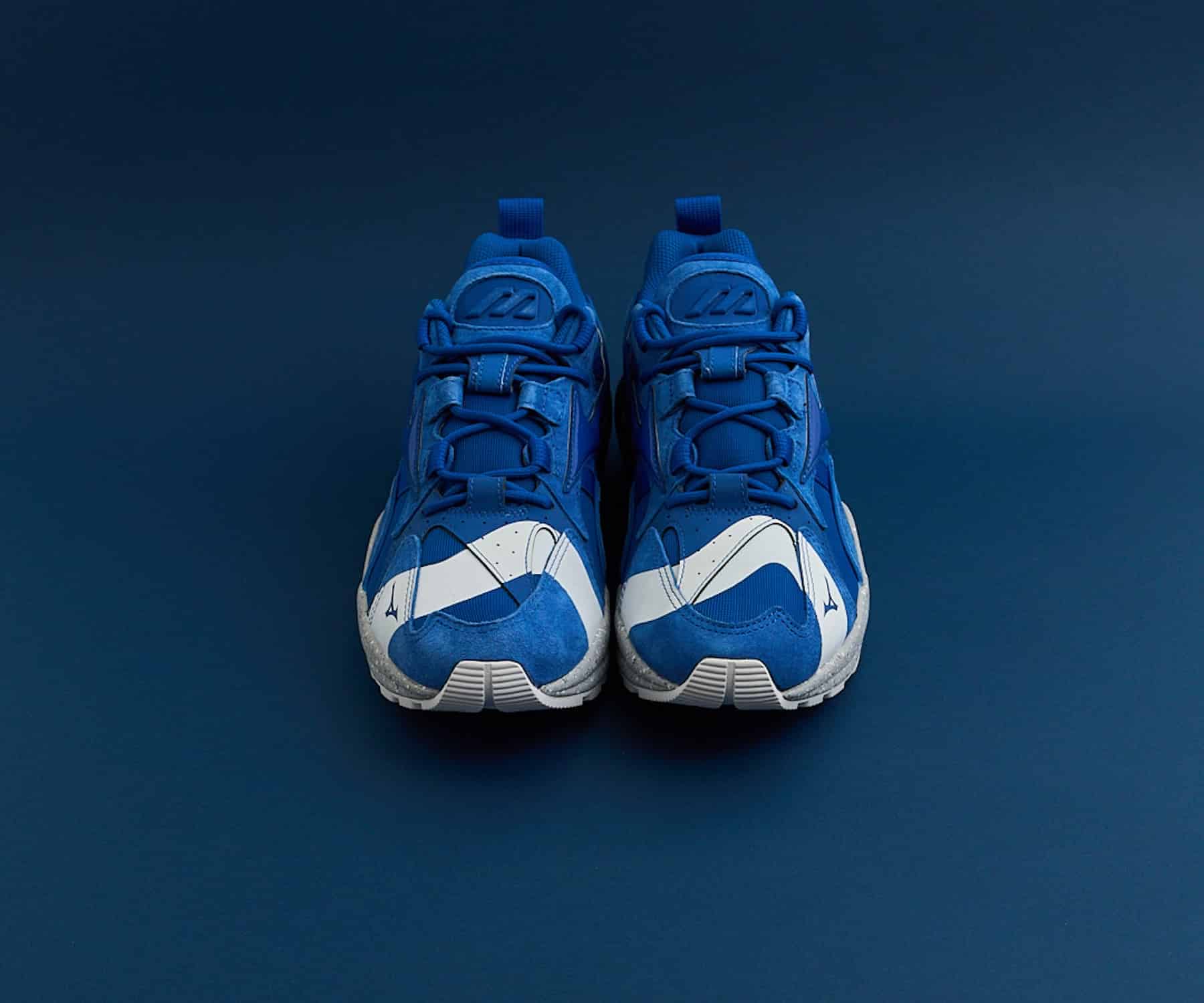
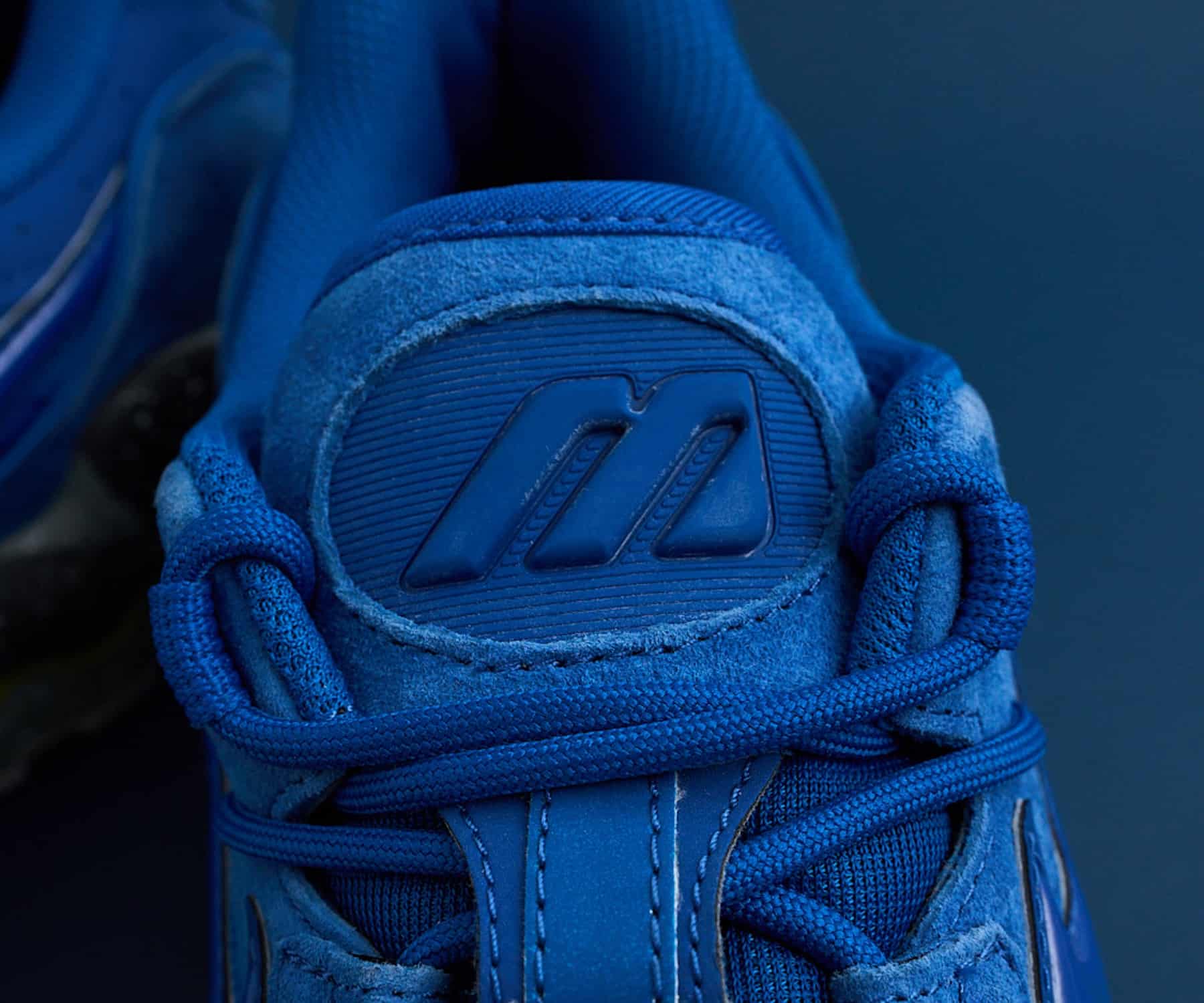
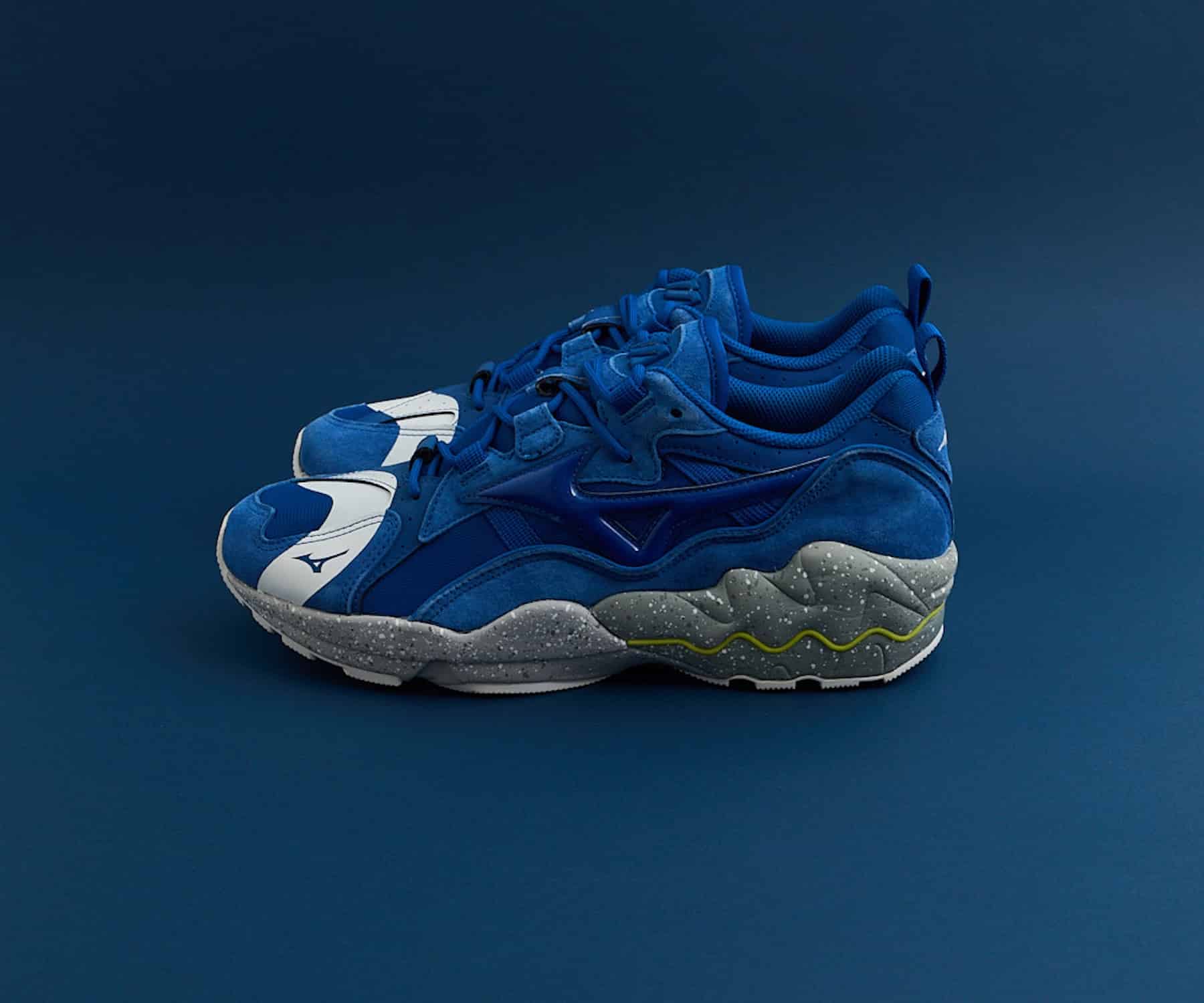
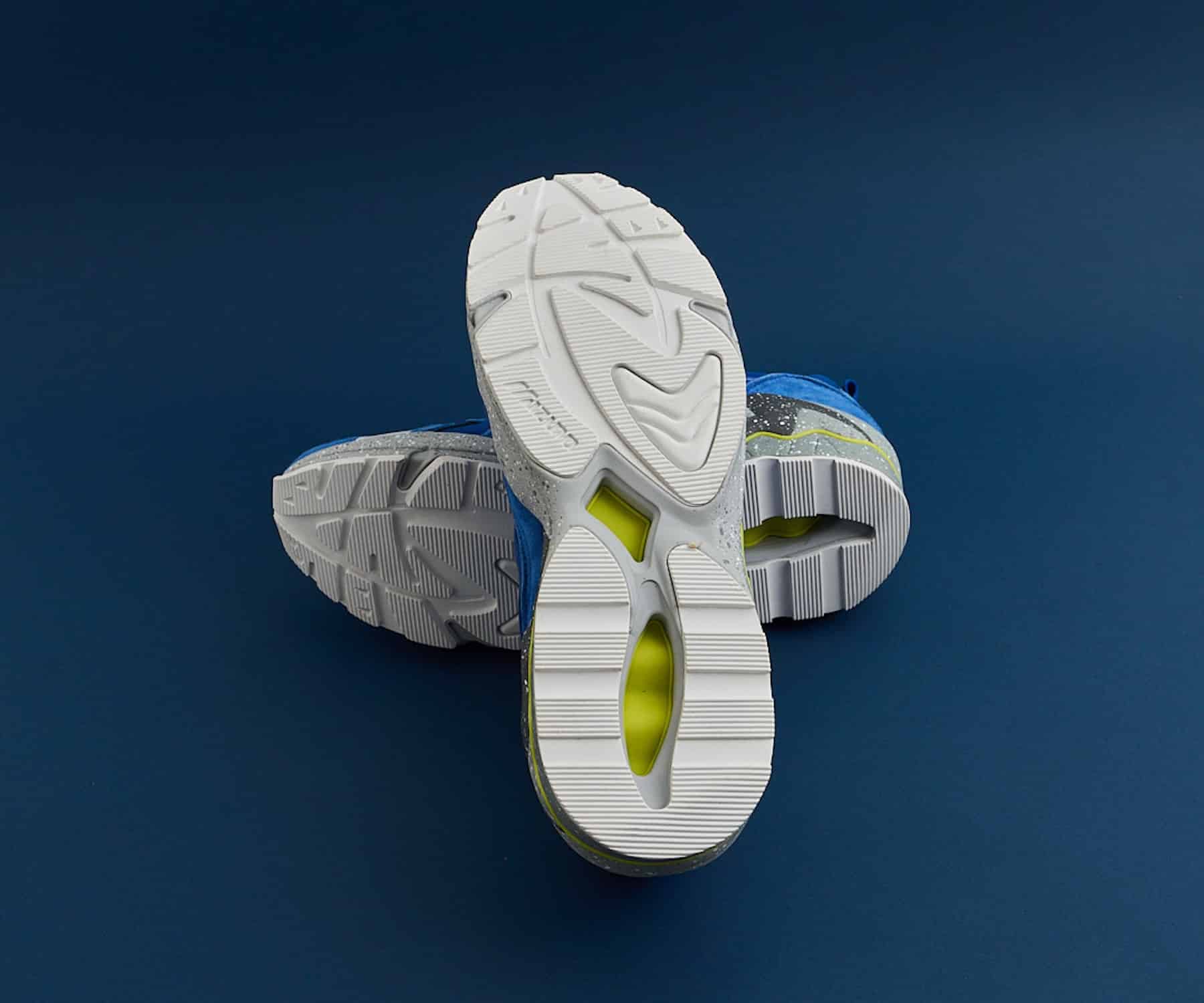
Released in 2018, the MIZUNO WAVE RIDER 1 “NO BORDER” “mita sneakers” is a revival of the 1997 WAVE RIDER, the first performance shoe to feature Mizuno’s innovative “MIZUNO WAVE” technology.
The model name “NO BORDER” expresses the idea of moving seamlessly between Mizuno’s sports domain and mita sneakers’ street-driven world.
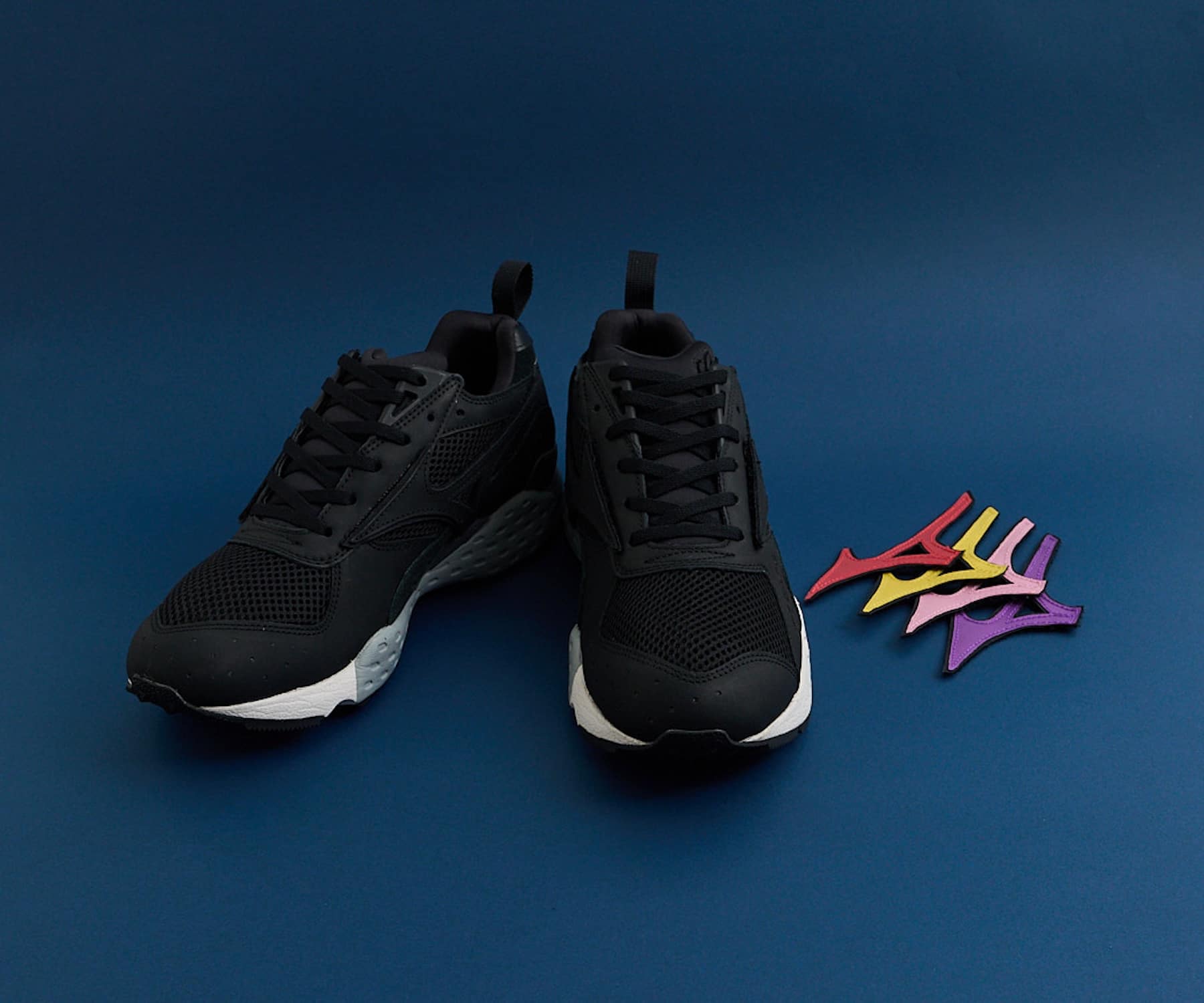
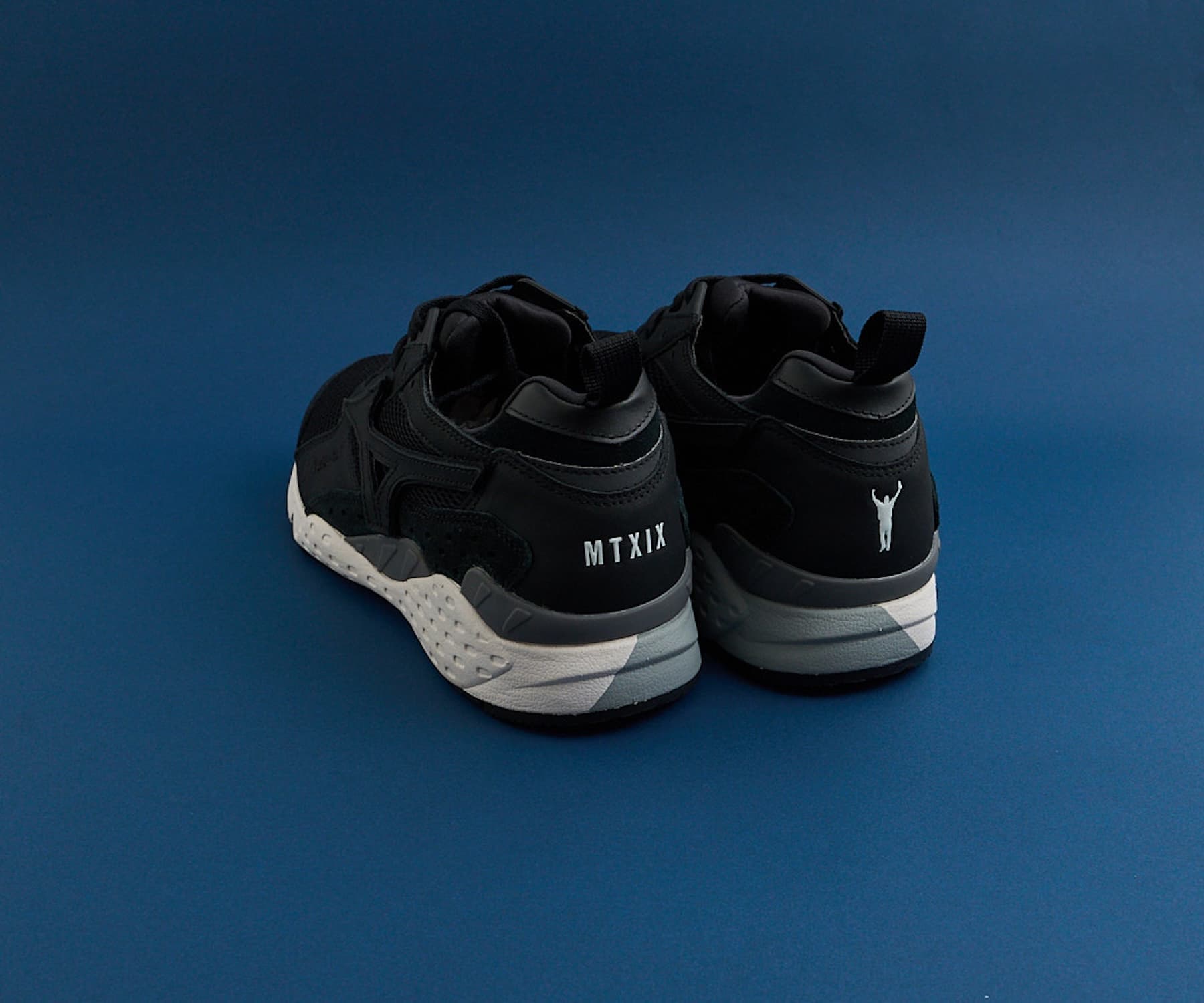
Released in 2020, the MONDO CONTROL MTXIX “Masahiro Tanaka × Momoiro Clover Z × mita sneakers” was a four-way collaboration featuring MLB pitcher Masahiro Tanaka and the idol group Momoiro Clover Z.
Based on the 1995 running shoe MONDO CONTROL, the design includes interchangeable Velcro Runbird logos in red, yellow, pink, and purple—colors representing the members of Momoiro Clover Z—and features Tanaka’s brand logo and his silhouette on the heel.
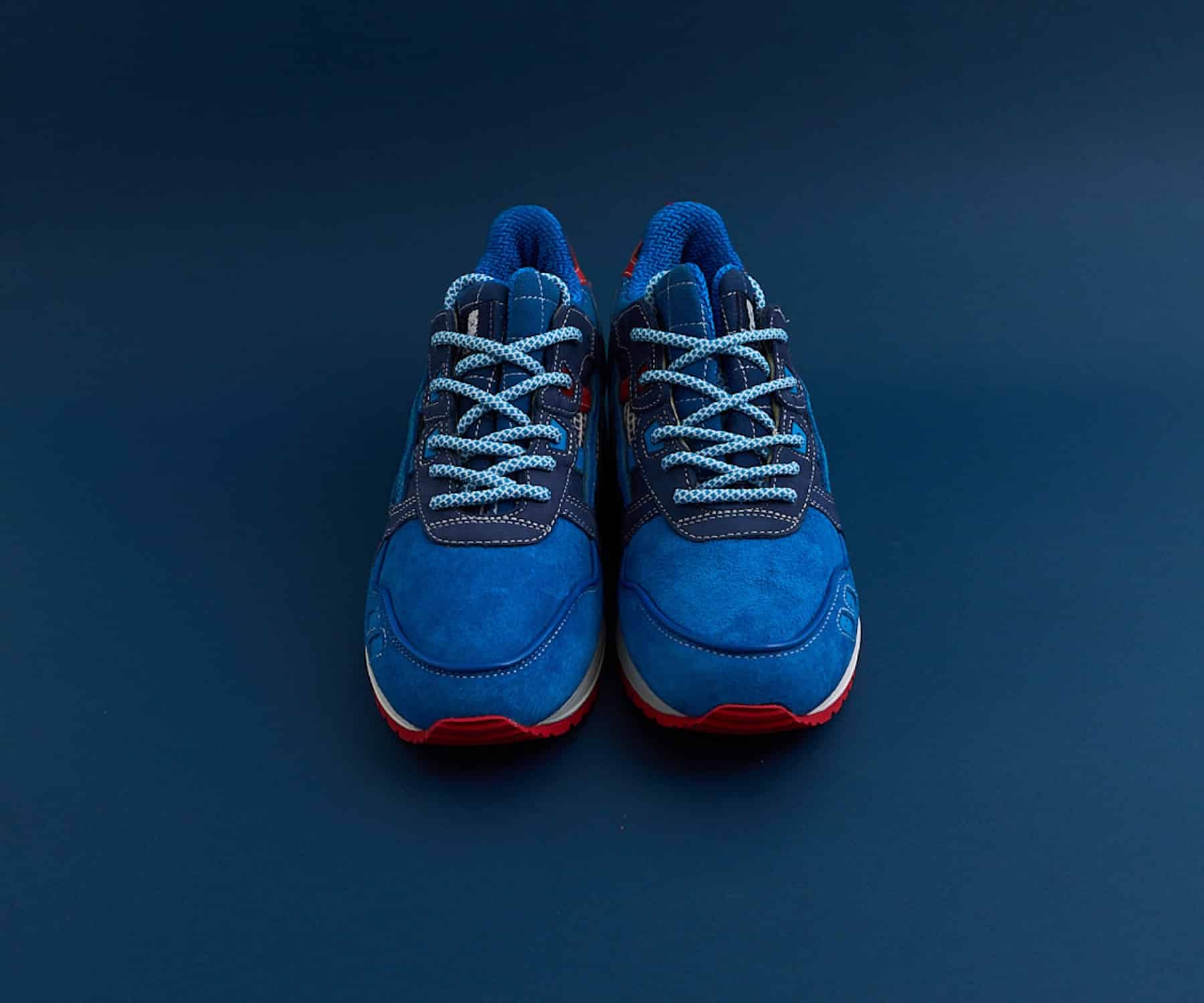
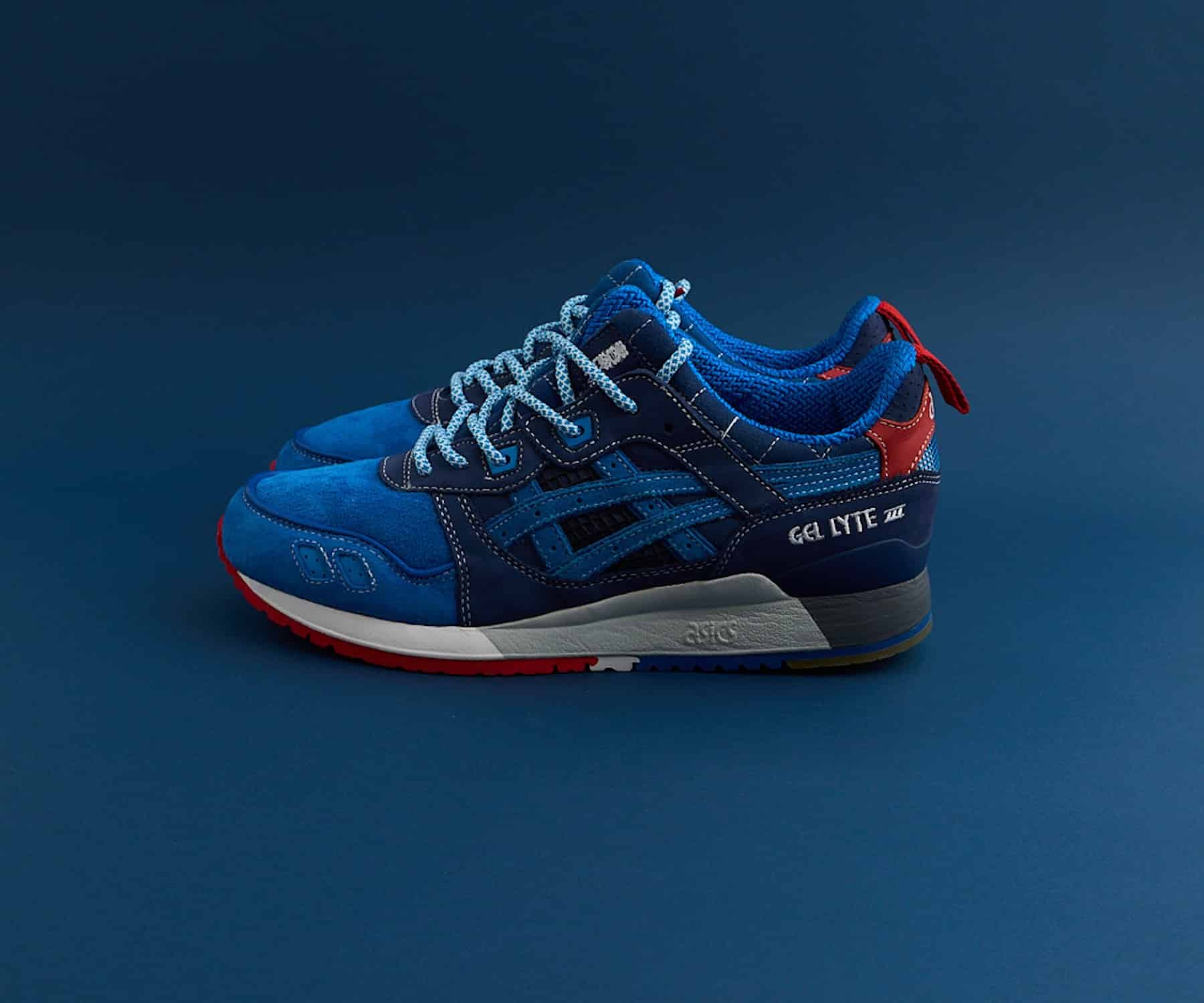
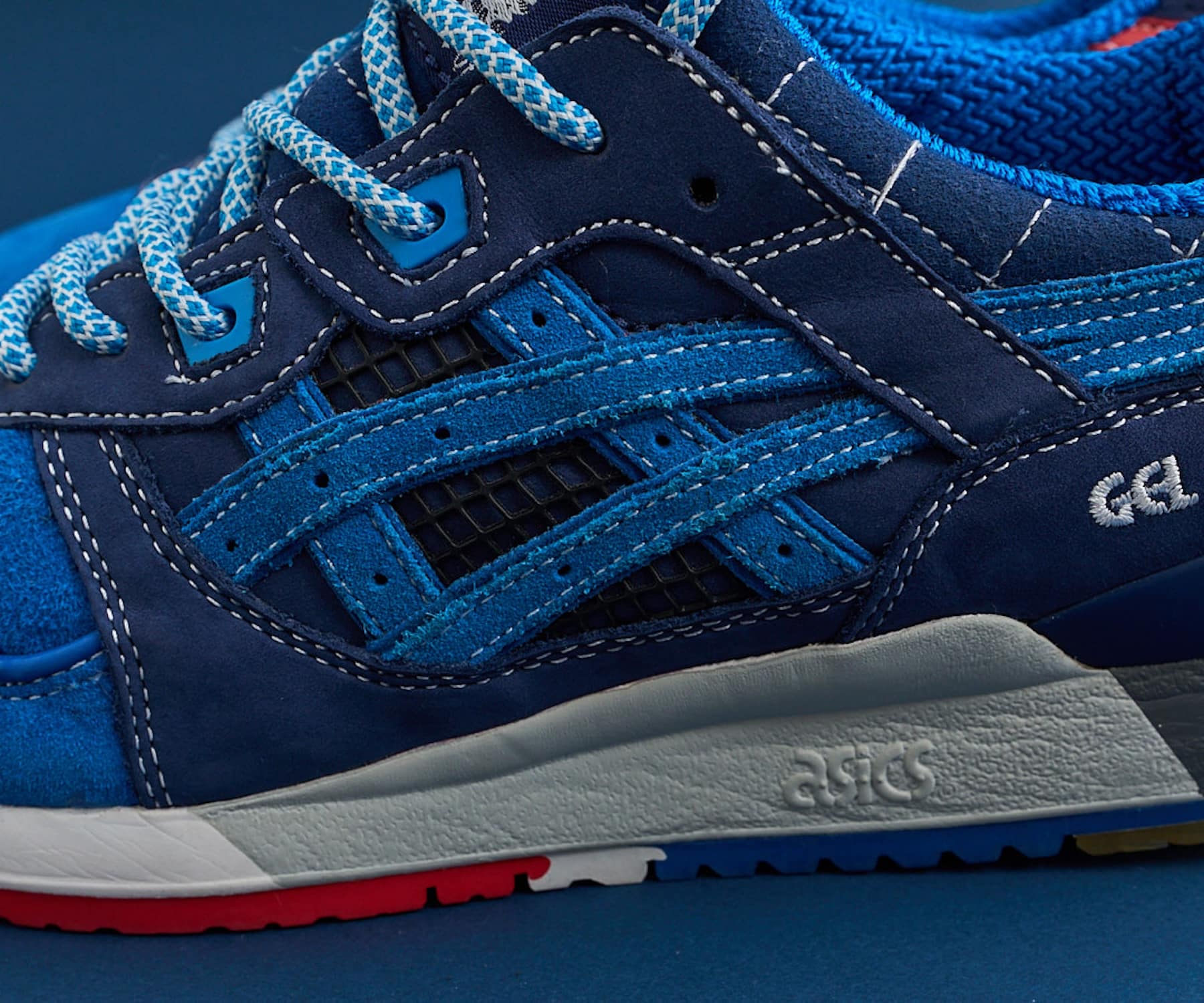
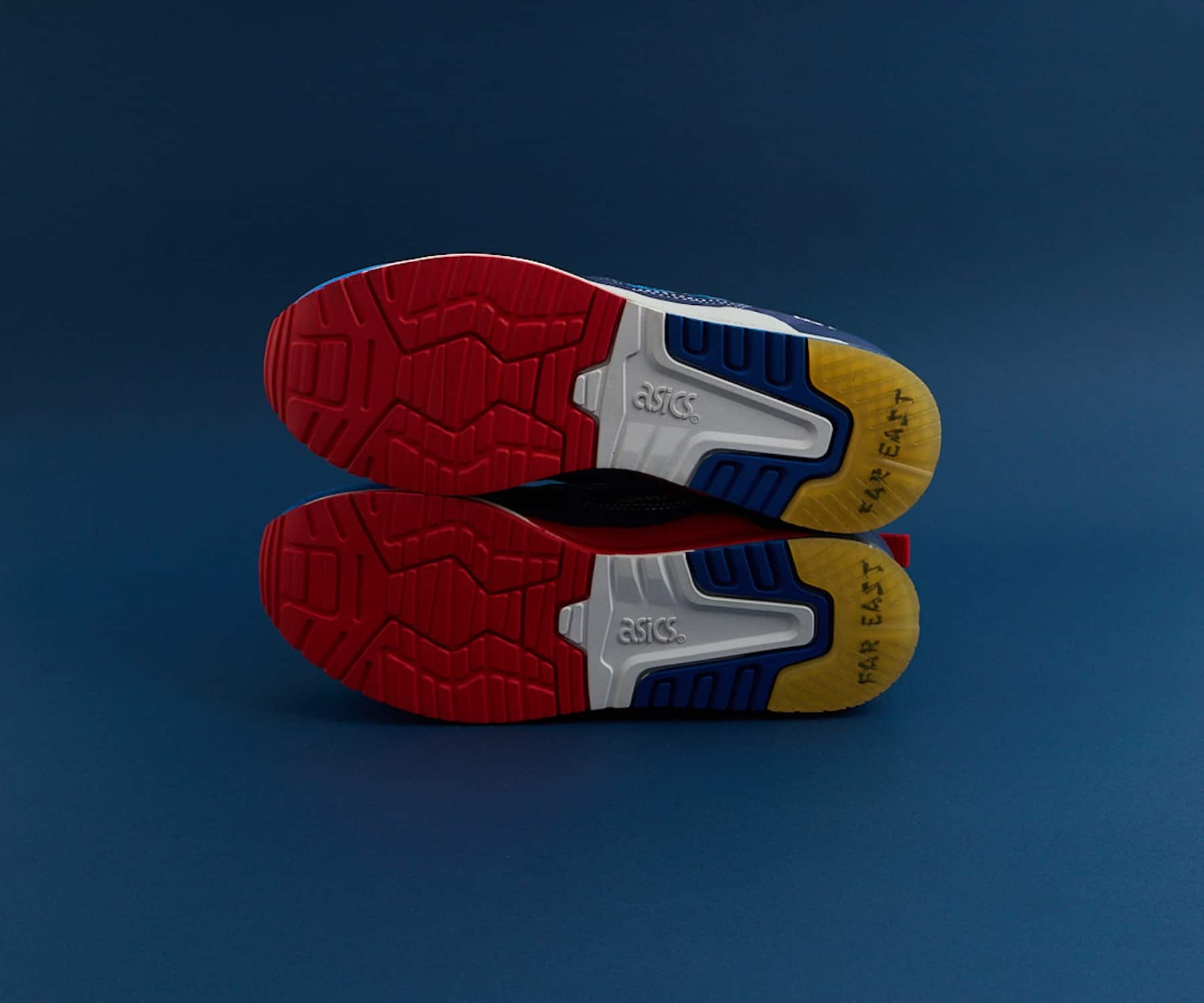
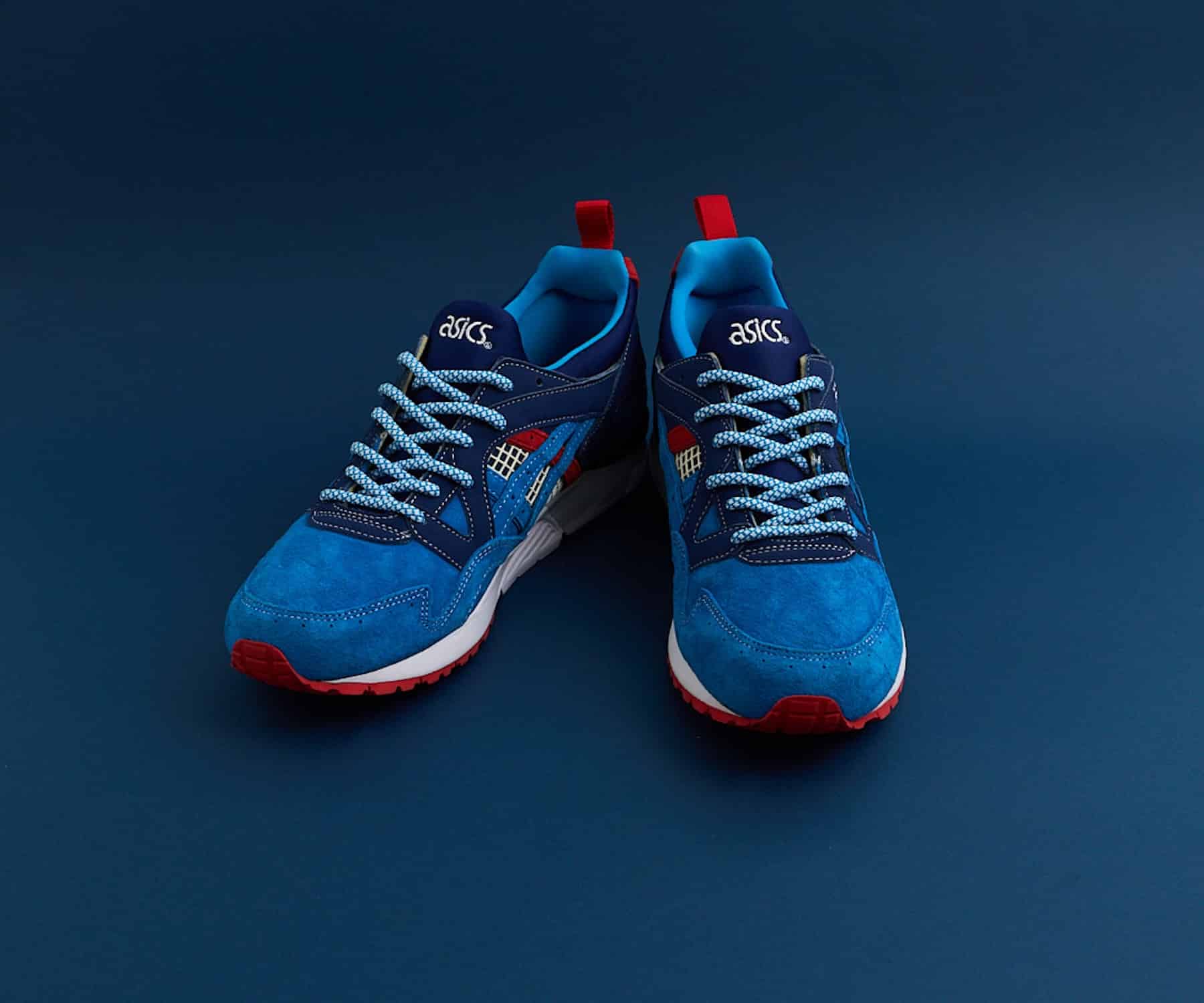
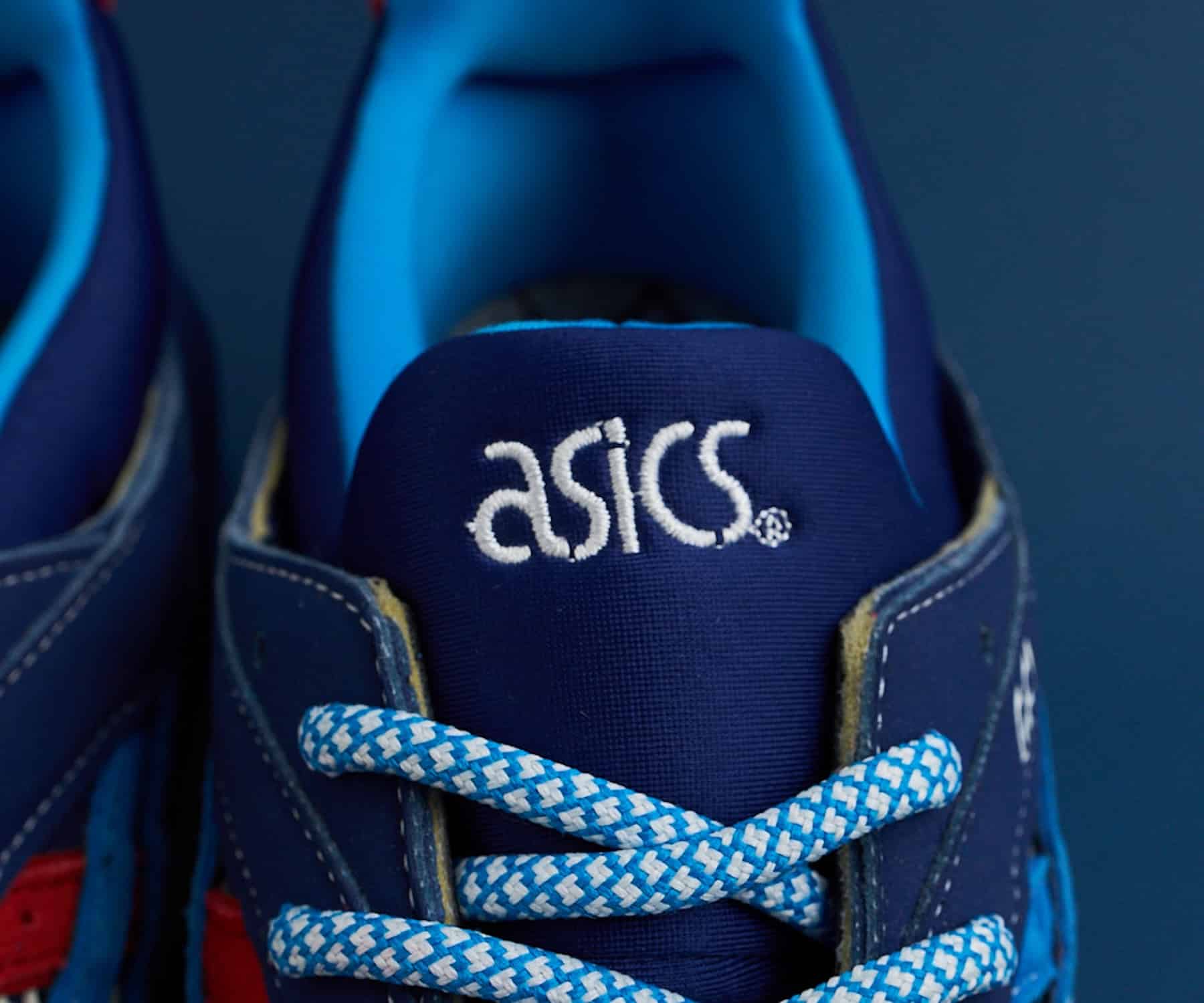
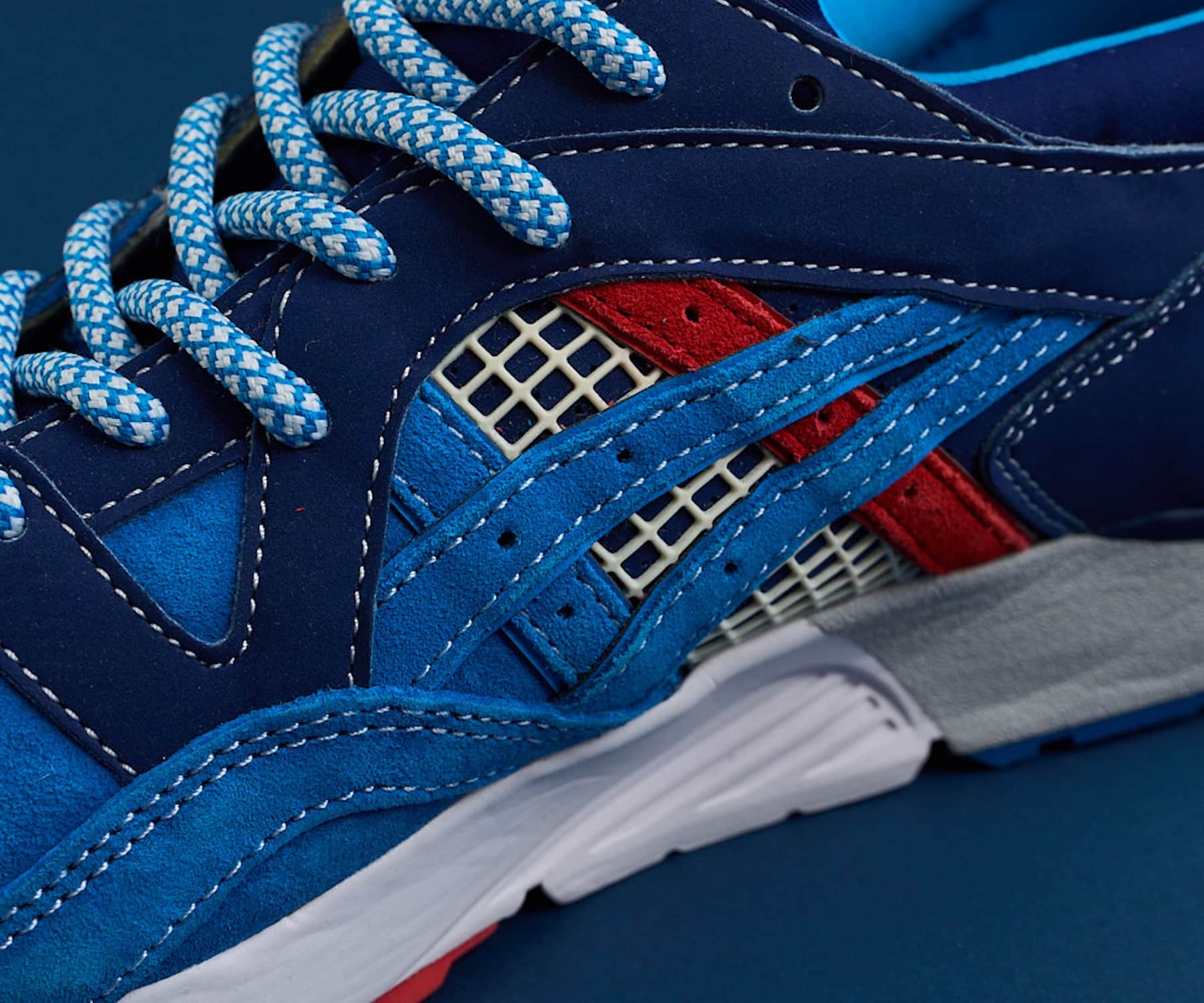
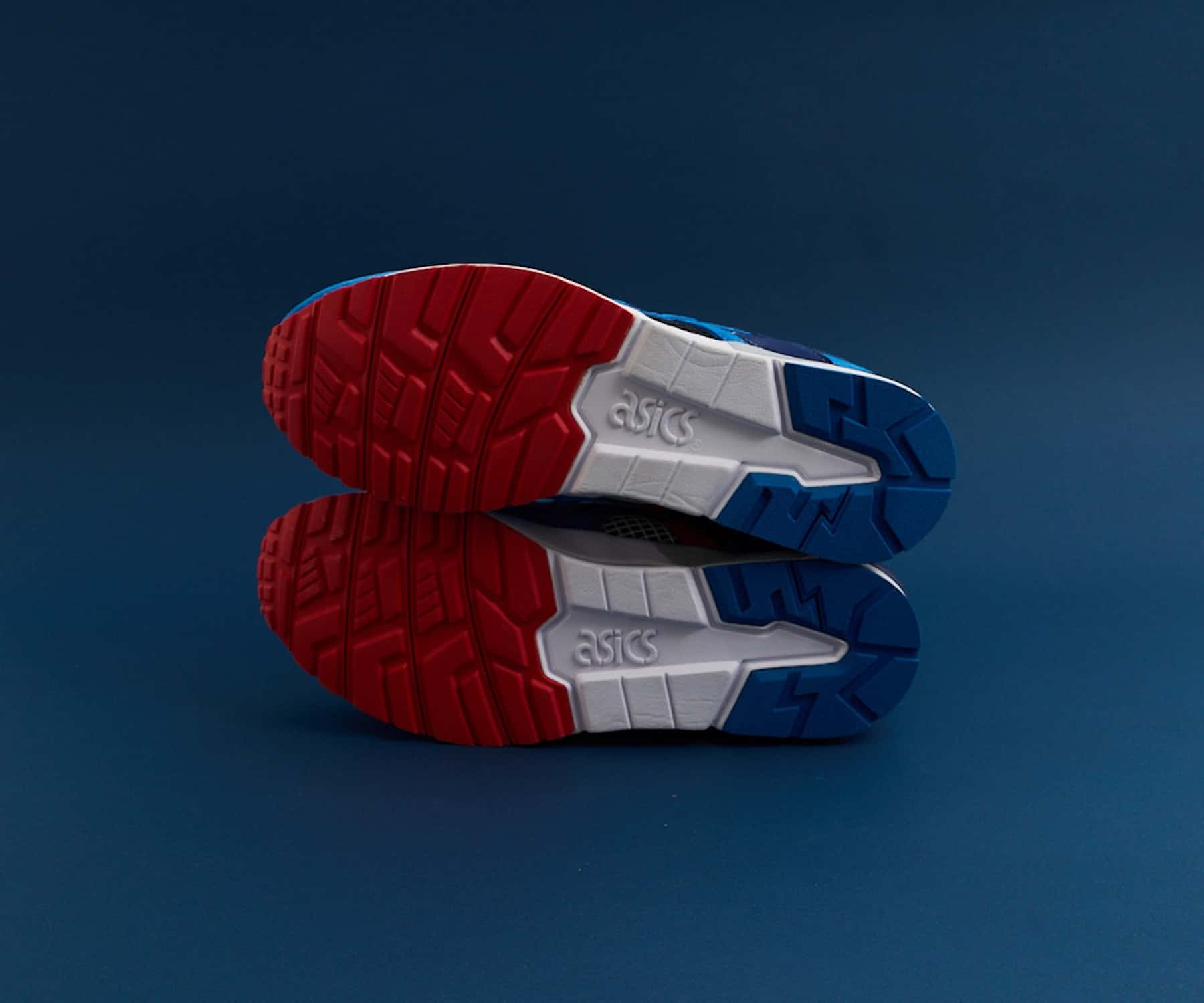
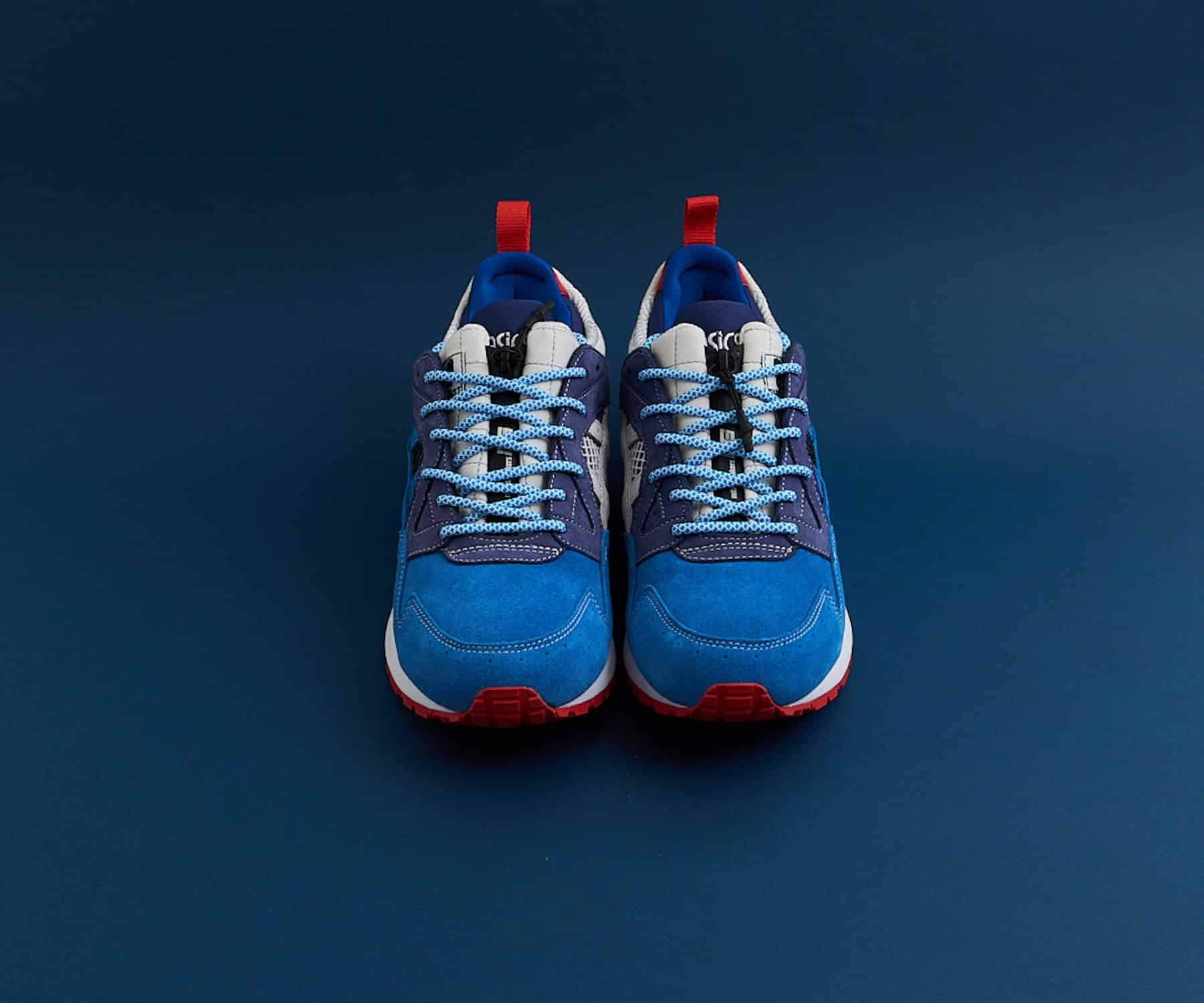
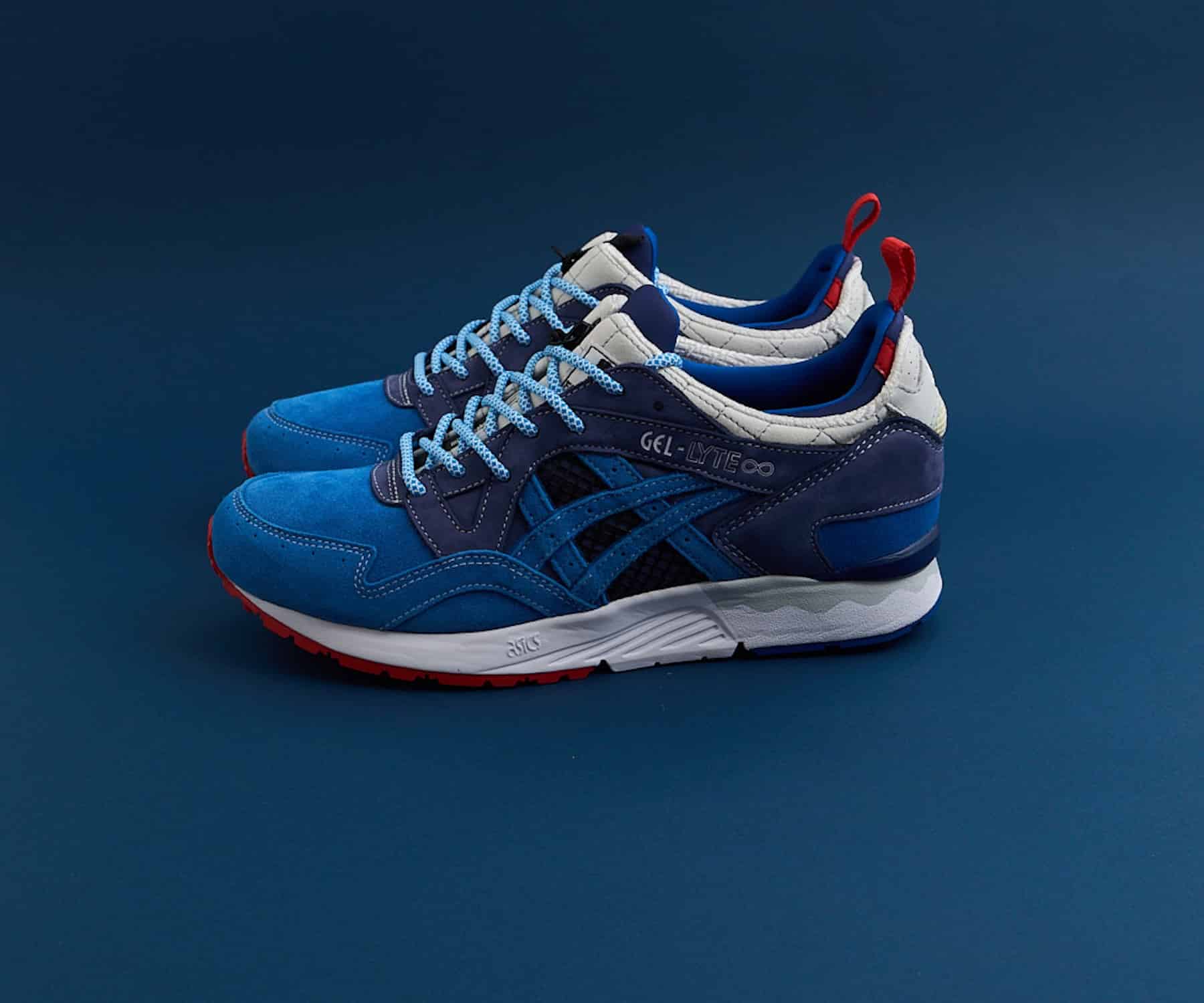
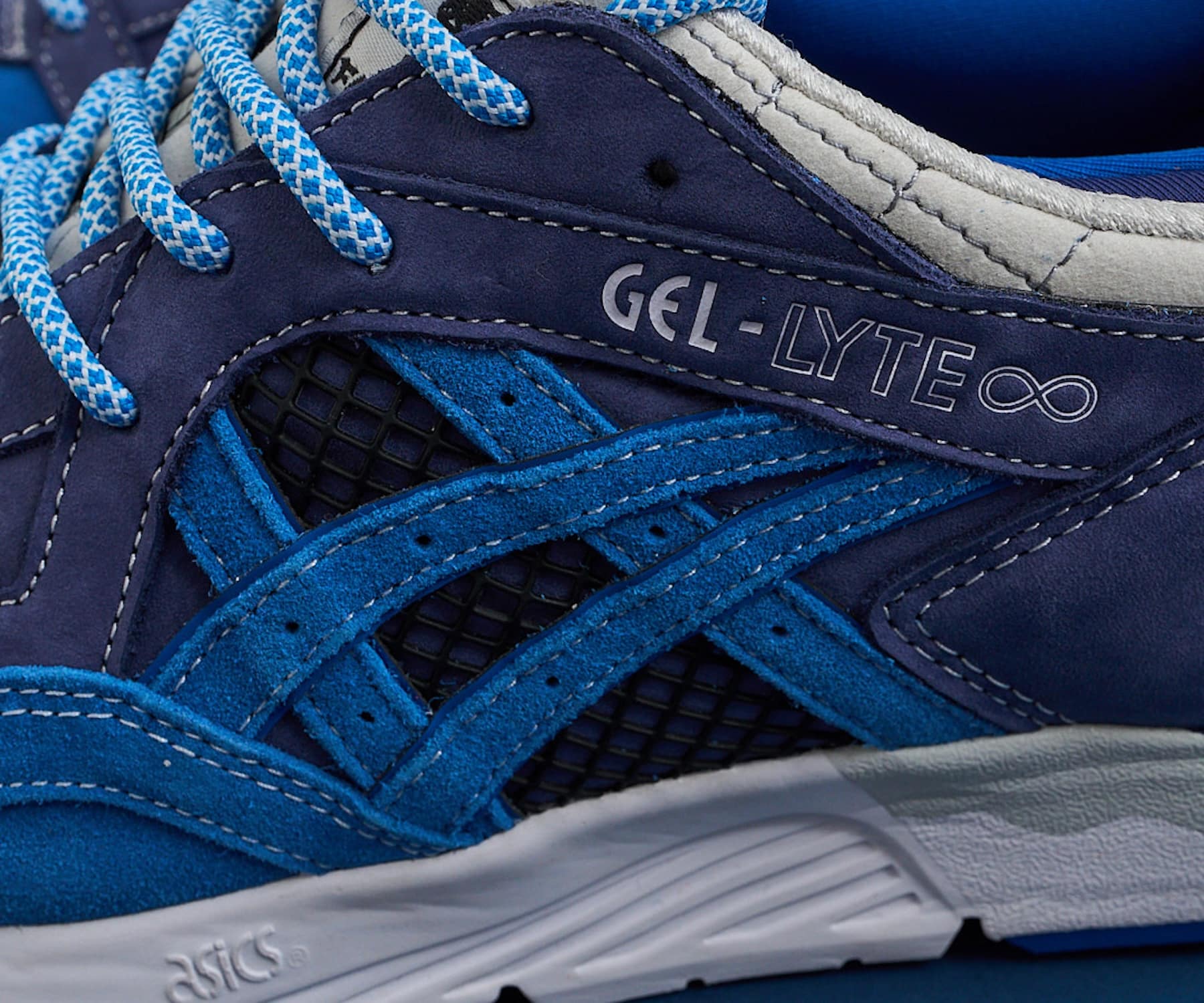
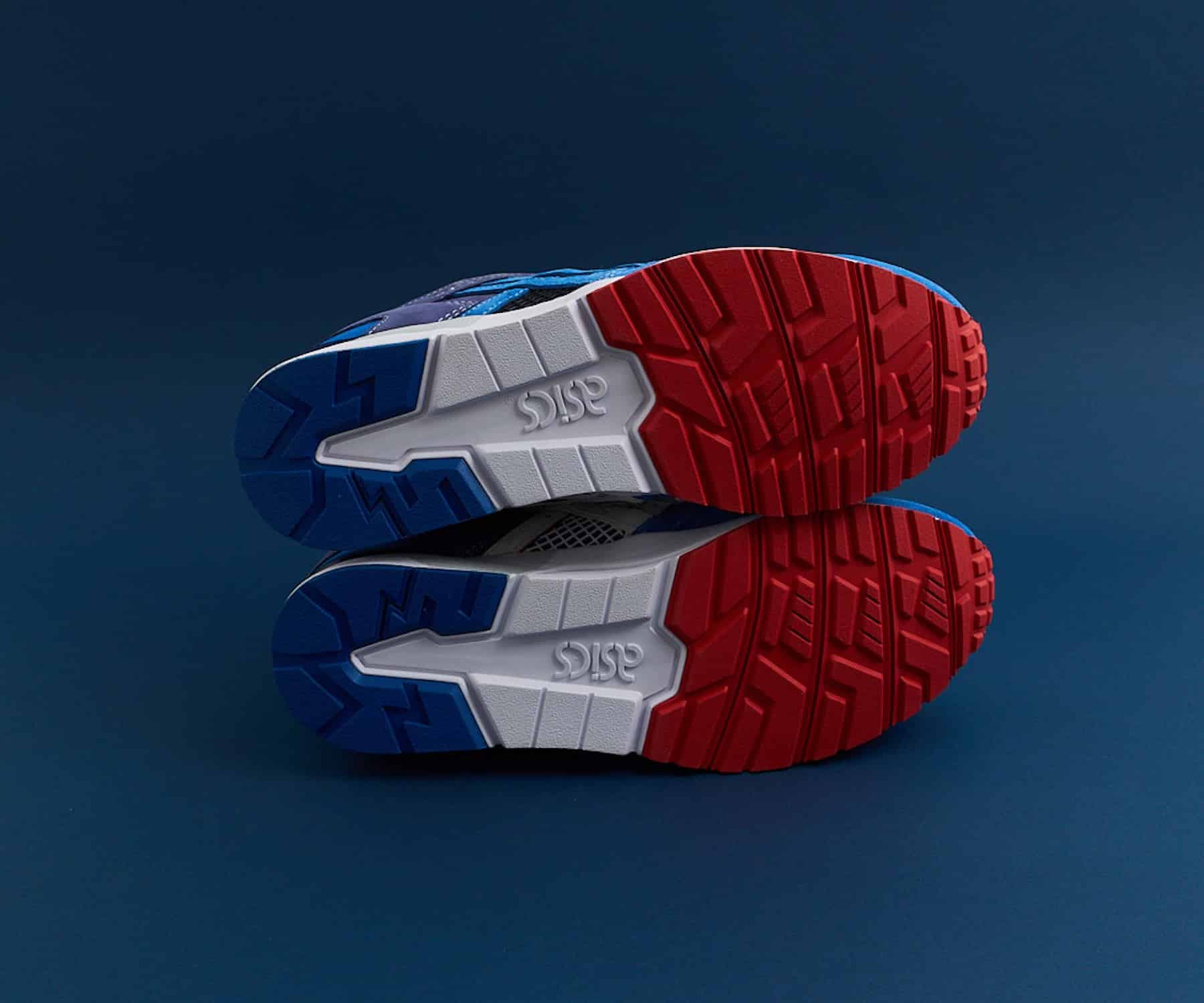
The GEL-LYTE III “TRICO” “mita sneakers,” released in 2015, commemorates the 25th anniversary of ASICS’ 1990 GEL-LYTE III, known for its signature split-tongue design.
Released in 2016, the GEL-LYTE V “TRICO” “mita sneakers” built on the updated fit of the V—whose design integrated and refined the split-tongue construction of the III—while carrying over the anniversary color-blocking. The model quickly became a favorite among fans.
The 2025 GEL-LYTE ∞ “TRICO” “mita sneakers,” with Kunii supervising the upper design, feature layered fit concepts inspired by the III and V, like tree rings. Its name “∞” comes from adding 3 and 5 to make 8, symbolizing infinity.
”People often focus on our collaborations, but we’re a shop, not a brand. Our main mission—past and present—is to share the appeal of each brand’s inline models through our own storytelling.” Kunii continues.
“Now that online shopping is the norm, suggesting products directly in-store, even to a few customers, helps broaden their perspective on sneakers. I believe this steady work is important to the future of the sneaker scene. Meanwhile, in my personal work, I want to take on challenges entirely different from mita sneakers and continue evolving. There is beauty in staying the same, but I also want to keep changing.”
The unwavering philosophy and the willingness to evolve reflect Kunii’s unique ability to understand the essence of things—an ability that shapes both his creative work and his professional approach.
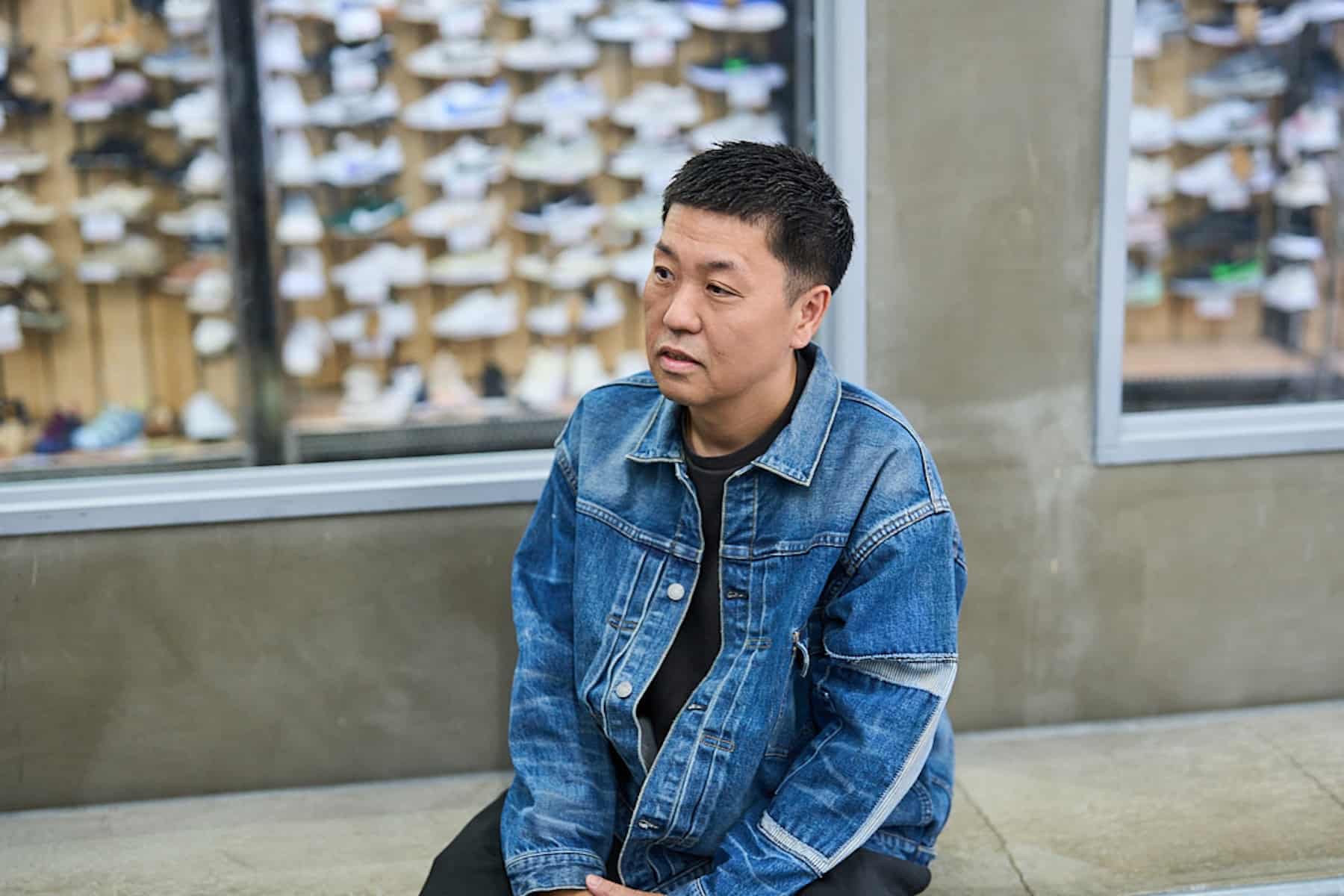
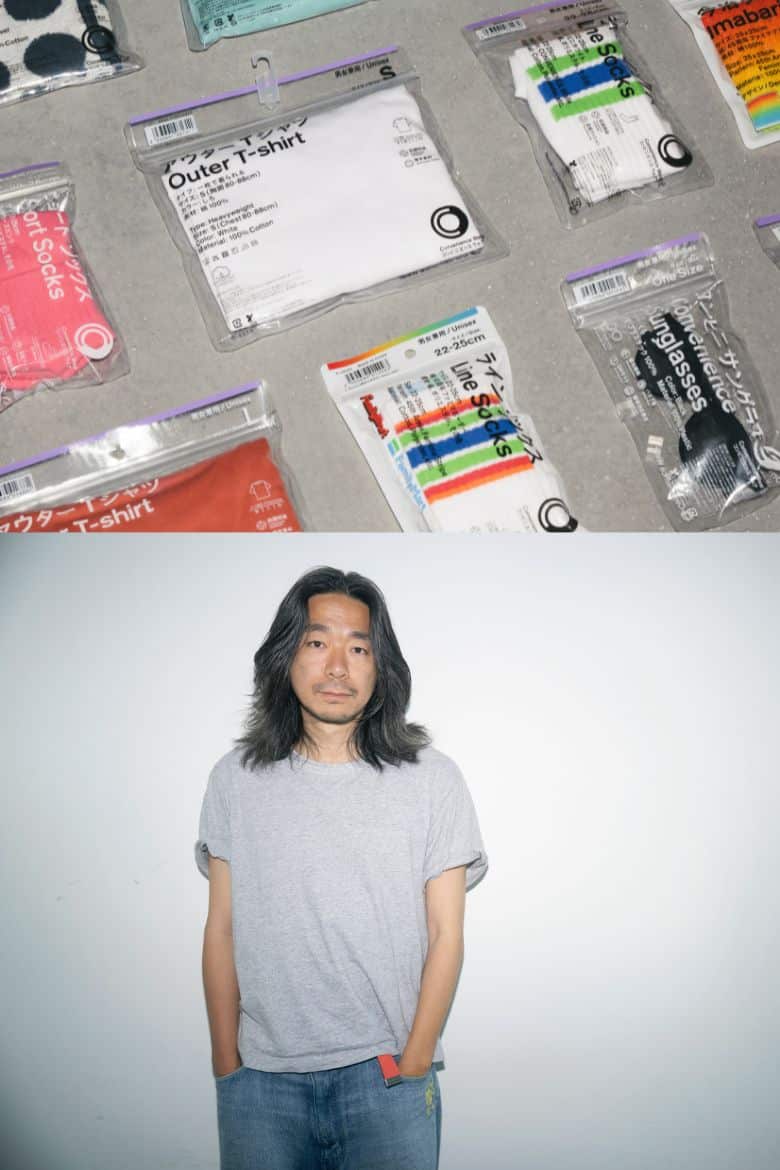
He is the director of mita sneakers, a Tokyo-based sneaker shop in Ueno known for influencing sneaker culture worldwide. His work spans global projects across sports, outdoor, fashion, and luxury brands, as well as advisory roles for Japanese manufacturers’ inline models. He also serves as an external director at Herringbone Footwear at Toranomon Station Hills.



.jpg)
スマホ.jpg)