DEEPTOKYO
magazine

EN

DEEPTOKYO
magazine
EN
2026.01.19
A long-established specialty store offering high-quality kitchen tools, including knives crafted by artisans across Japan


 Nearest Station

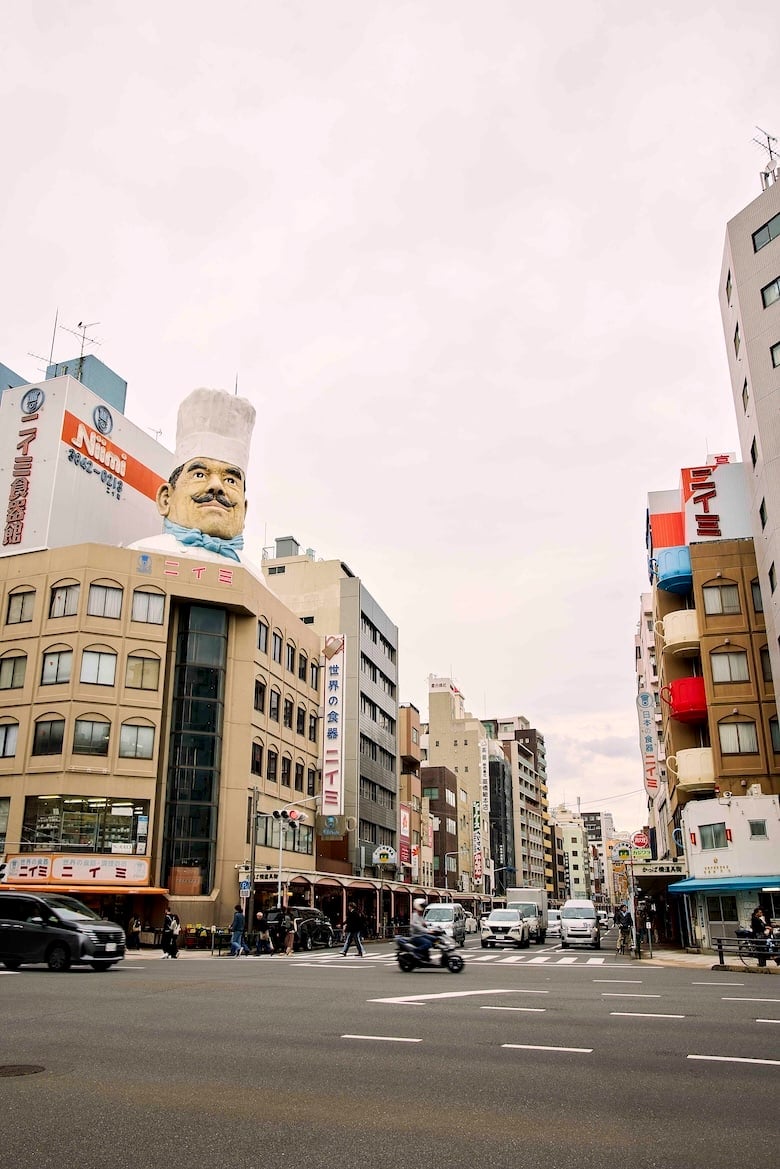
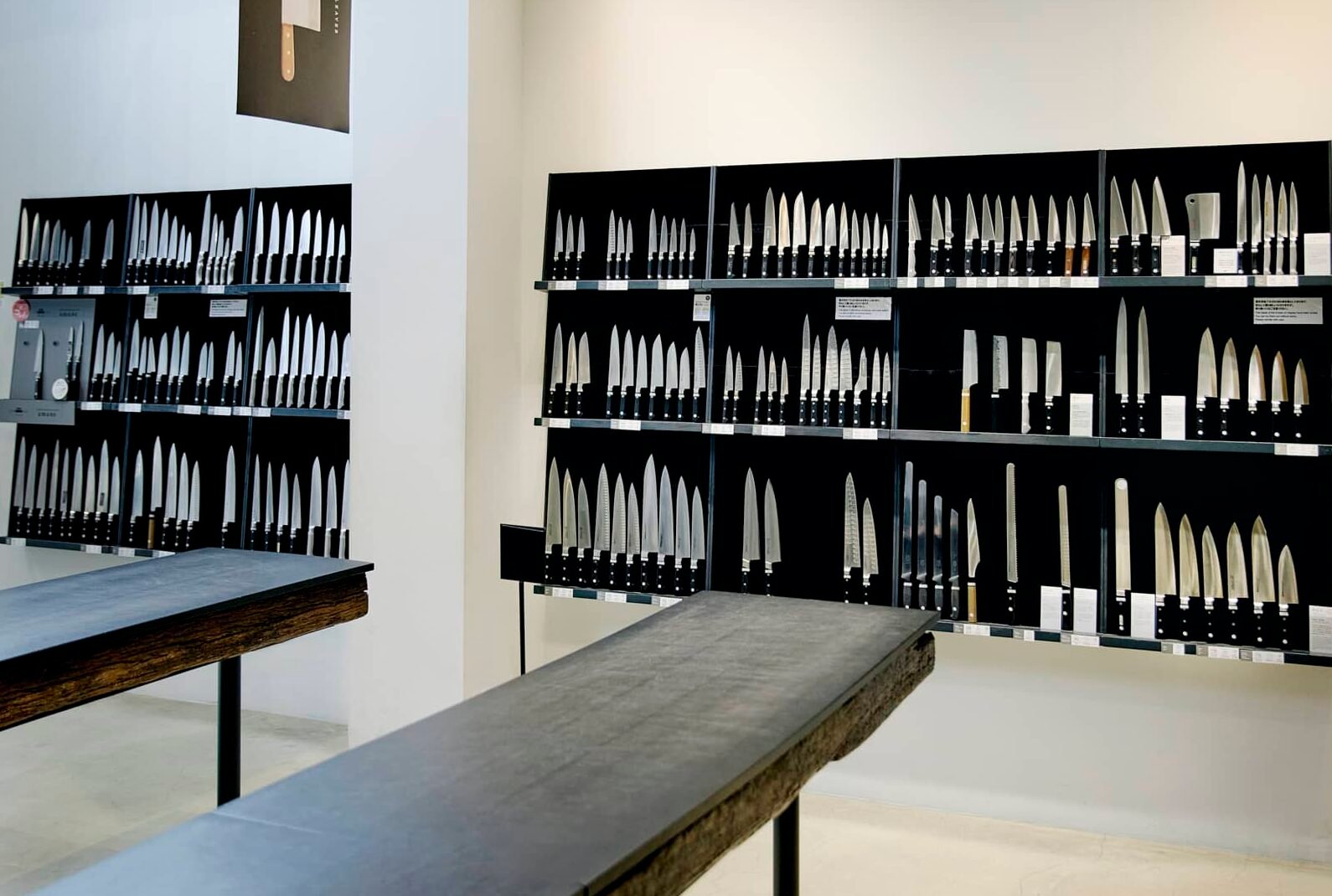
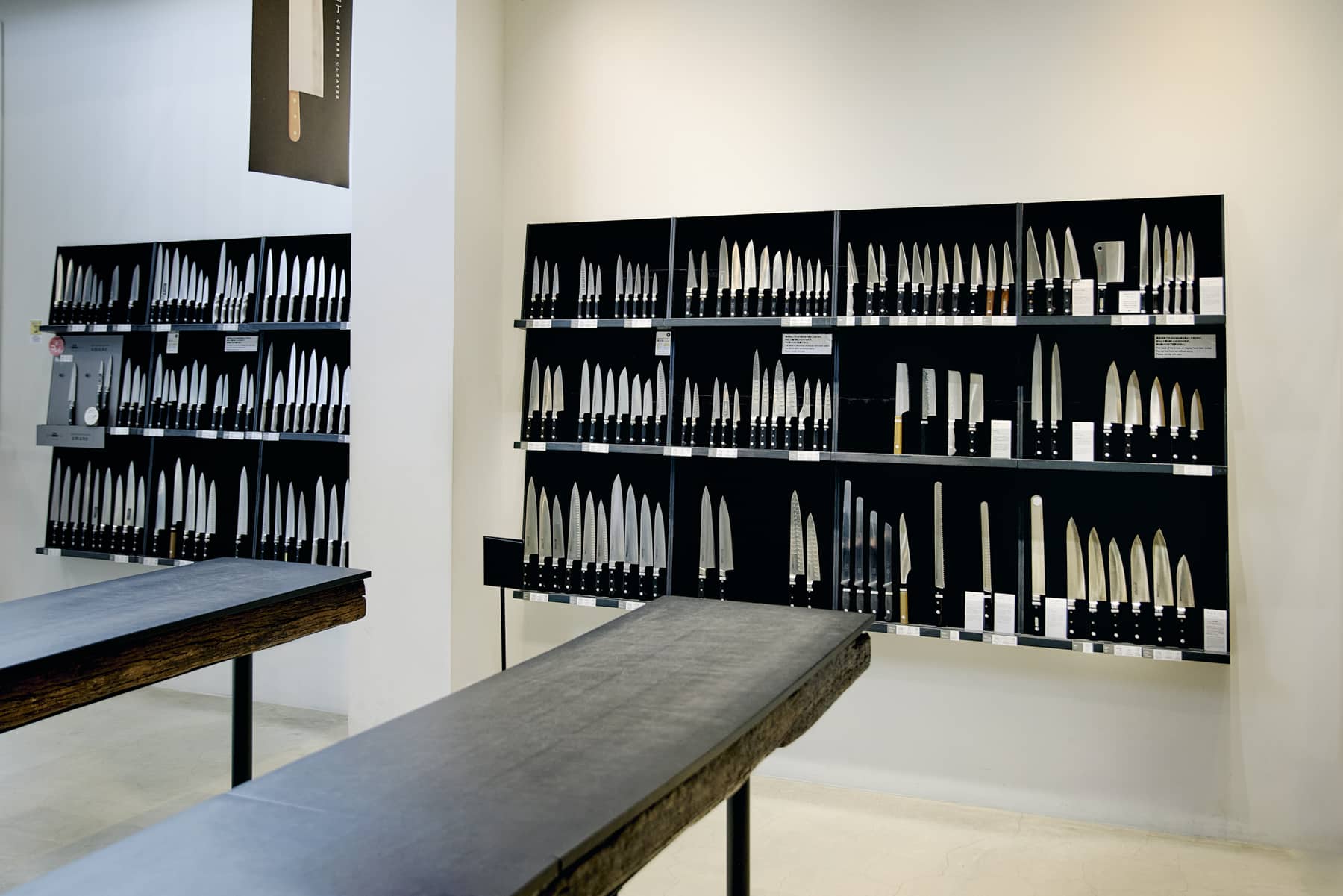
Founded in 1908, KAMA-ASA is a specialty store for knives and kitchenware located in Kappabashi, Tokyo’s renowned kitchenware district. The knife shop and the kitchenware shop stand side by side, allowing customers to explore both in one visit. The knife section in particular offers around 60 types and more than 1,000 Japanese-made knives, carefully selected from production areas across Japan. The kitchenware selection is equally well curated, featuring high-quality tools crafted by skilled artisans and manufacturers from various regions of the country. One of KAMA-ASA’s greatest appeals is the opportunity to encounter kitchen tools of proven quality, chosen with a discerning eye.
SHARE


Knives made in Japan are characterized by their thin blades and exceptionally sharp cutting edges. Combined with the meticulous handcraftsmanship and high standards upheld by skilled artisans and manufacturers, Japanese knives have earned widespread recognition and continue to attract growing attention from overseas. Kappabashi, one of Japan’s largest kitchenware districts, is a place where everyone—from professional chefs to home cooks—can purchase such high-quality knives. Among the many stores in the area, KAMA-ASA stands out as a long-established specialty shop with over 110 years of history. Inside the store, an extensive selection of knives carefully crafted in traditional production areas such as Seki City in Gifu Prefecture, Niigata Prefecture, and Fukui Prefecture is beautifully displayed.
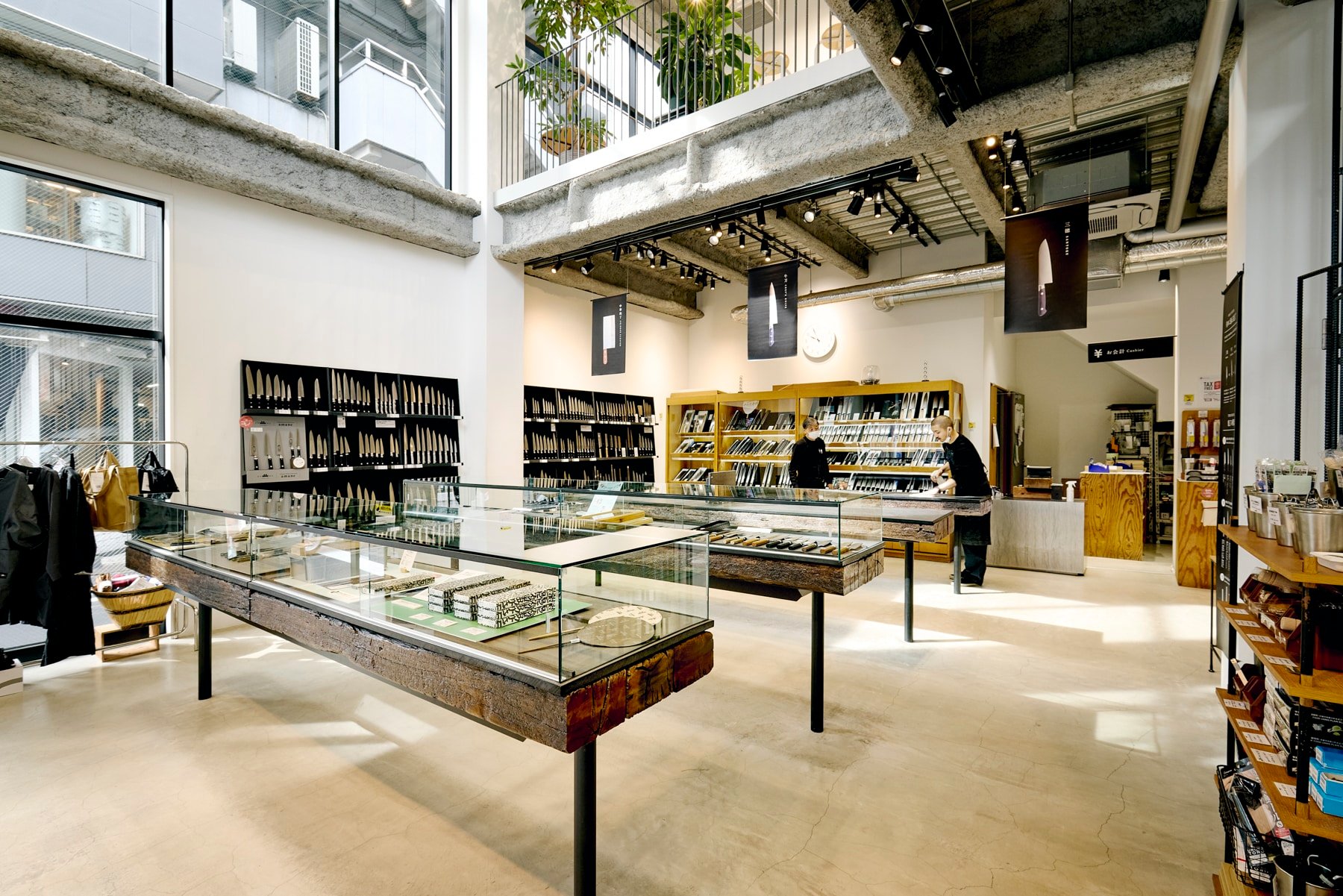
A bright and spacious interior filled with natural light streaming in through large windows on the second floor.
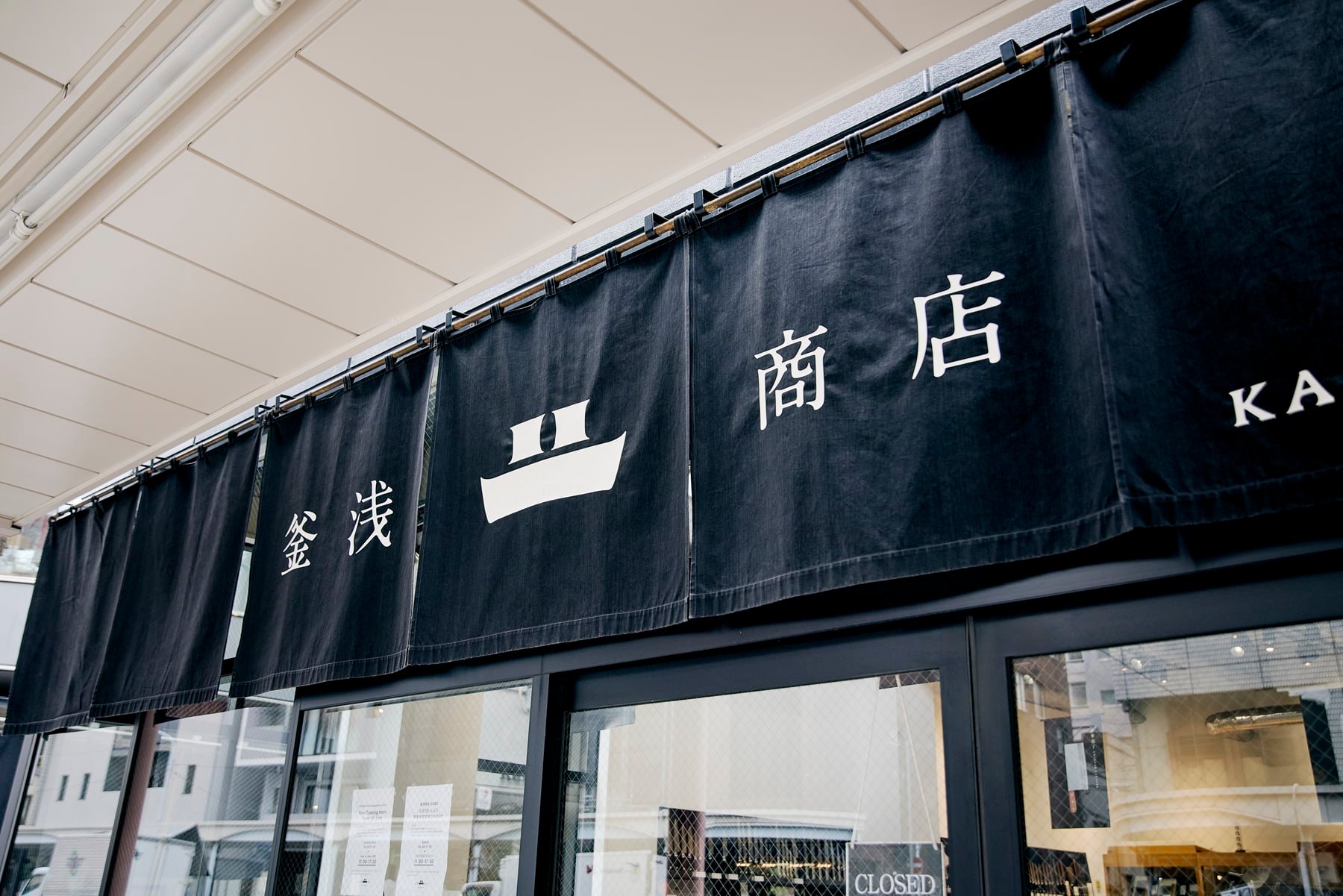
Noren curtains featuring a logo inspired by a kettle lid welcome visitors at the entrance.
When asked about knives popular among international visitors, staff explain that many customers look for shapes not found in their home countries, making uniquely Japanese knives particularly popular.
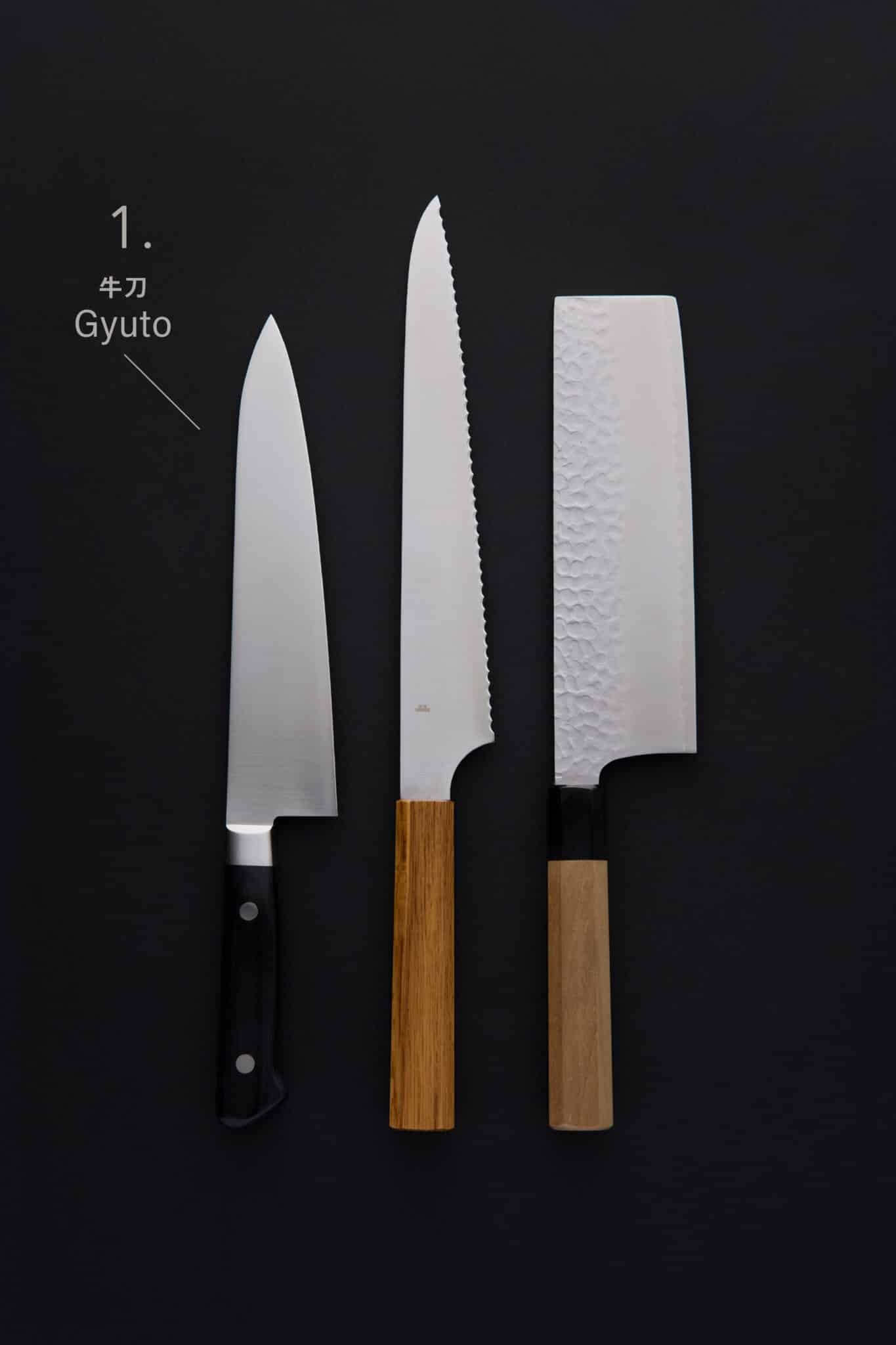
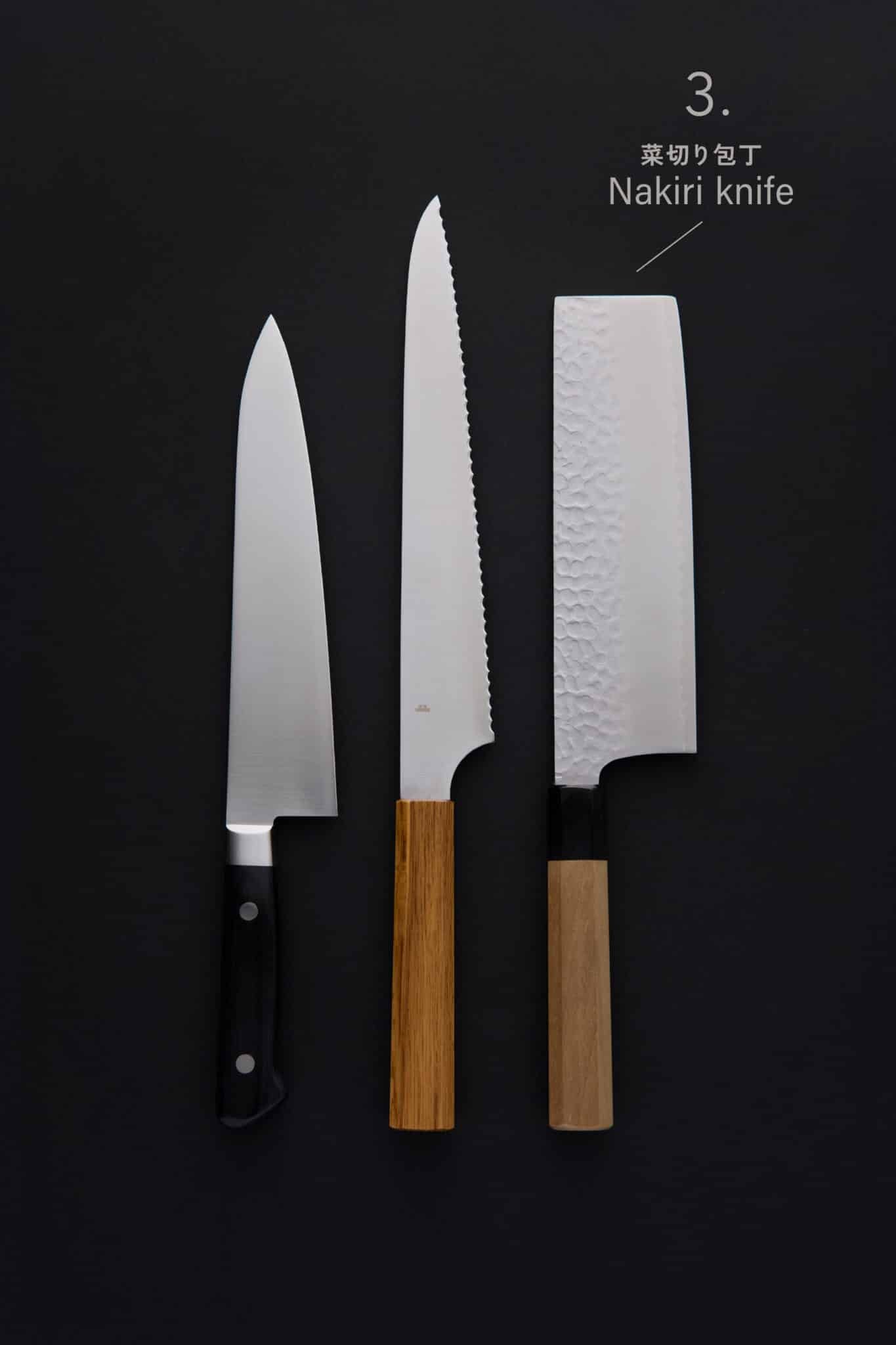
1. An original gyuto knife jointly developed by a manufacturer in Seki City, Gifu Prefecture—Japan’s leading knife-producing area—and KAMA-ASA. It uses VG10 steel, known for its high hardness and long-lasting sharpness. amane Gyuto 210mm 24,420 yen
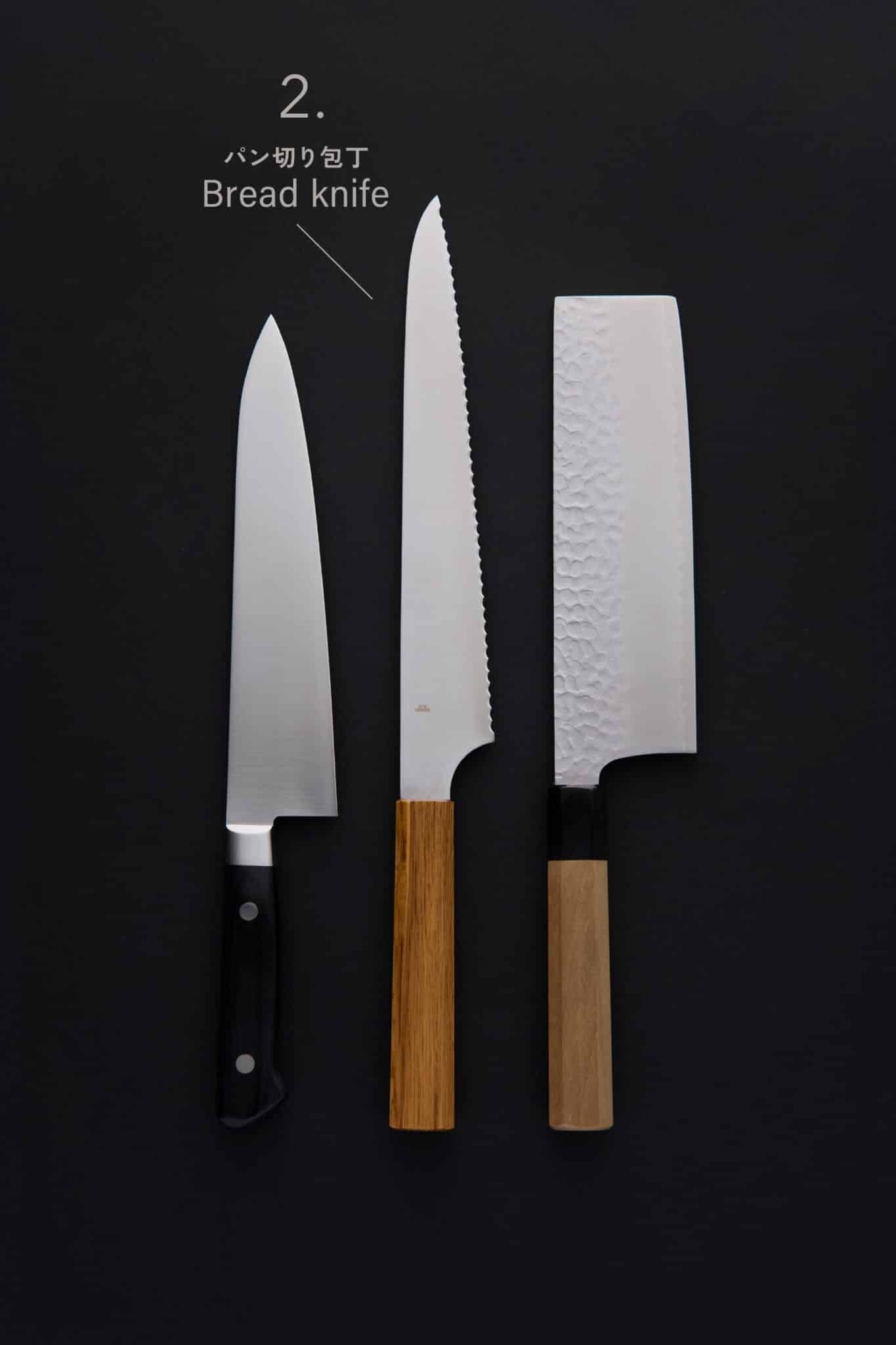
2. A bread knife with sharper-than-usual serrations, allowing bread to be sliced cleanly without crushing it. Also made in Seki City, Gifu Prefecture. After the serrated edge has been fully used, it can be resharpened and used long-term as a sujihiki knife. Sanetsu Oak-Handled Japanese-Style Bread Knife 240mm 13,860 yen
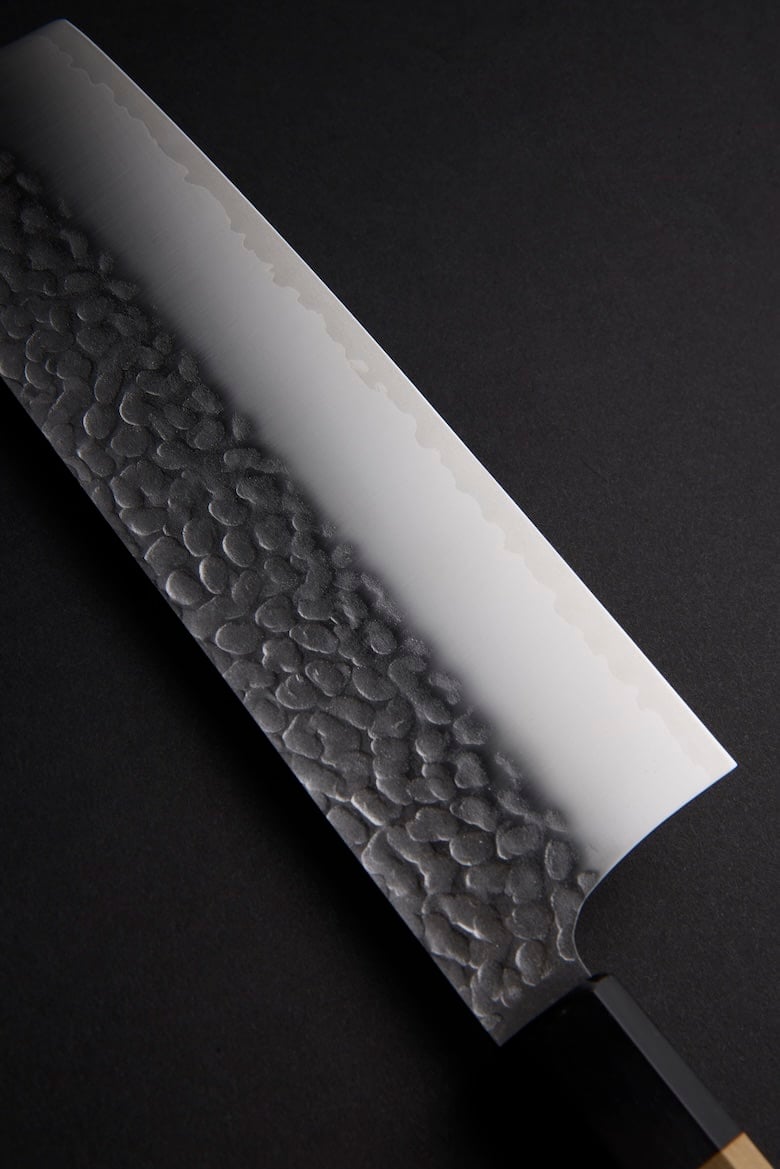
3. A nakiri knife, a traditional Japanese vegetable knife featuring a distinctive square shape unique to Japan. Its flat blade makes full contact with the cutting board, making it ideal for straight-down chopping, as well as julienning and mincing vegetables. Sumikama VG10 Hammered Thin Nakiri 180mm 19,360 yen
Knives with flat blades—where roughly two-thirds of the edge contacts the cutting board—are unique to Japan. This nakiri knife is also made by a manufacturer in Seki City, Gifu Prefecture, and many customers reportedly decide to purchase after learning about its place of origin.
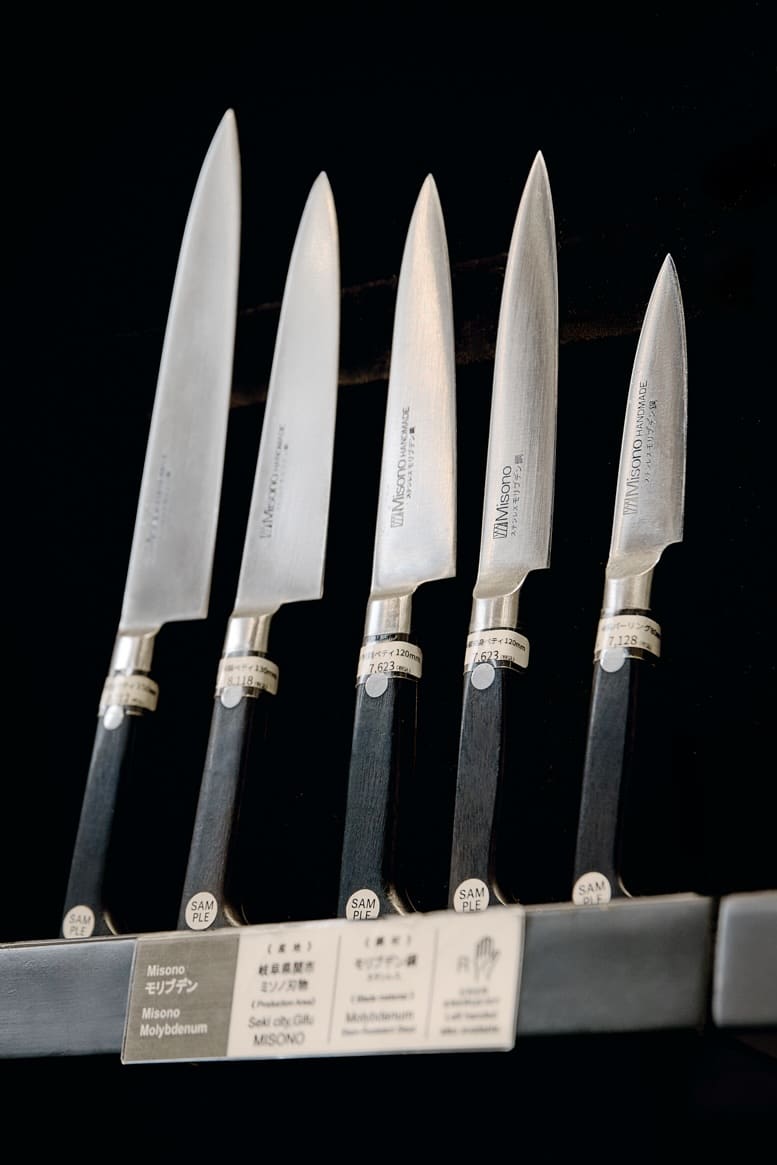
A wide selection of petty knives and paring knives, commonly used overseas, is also available. These are made by a manufacturer in Seki City, Gifu Prefecture, which holds the top domestic market share for Western-style knives, and their sharpness goes without saying. Misono Molybdenum Steel (From left)Petty Knife 150mm 8,712 yen, Petty Knife 130mm 8,118 yen, Petty Knife 120mm 7,623 yen, Petty Knife 120mm 7,623 yen, Paring Knife 80mm 7,128 yen
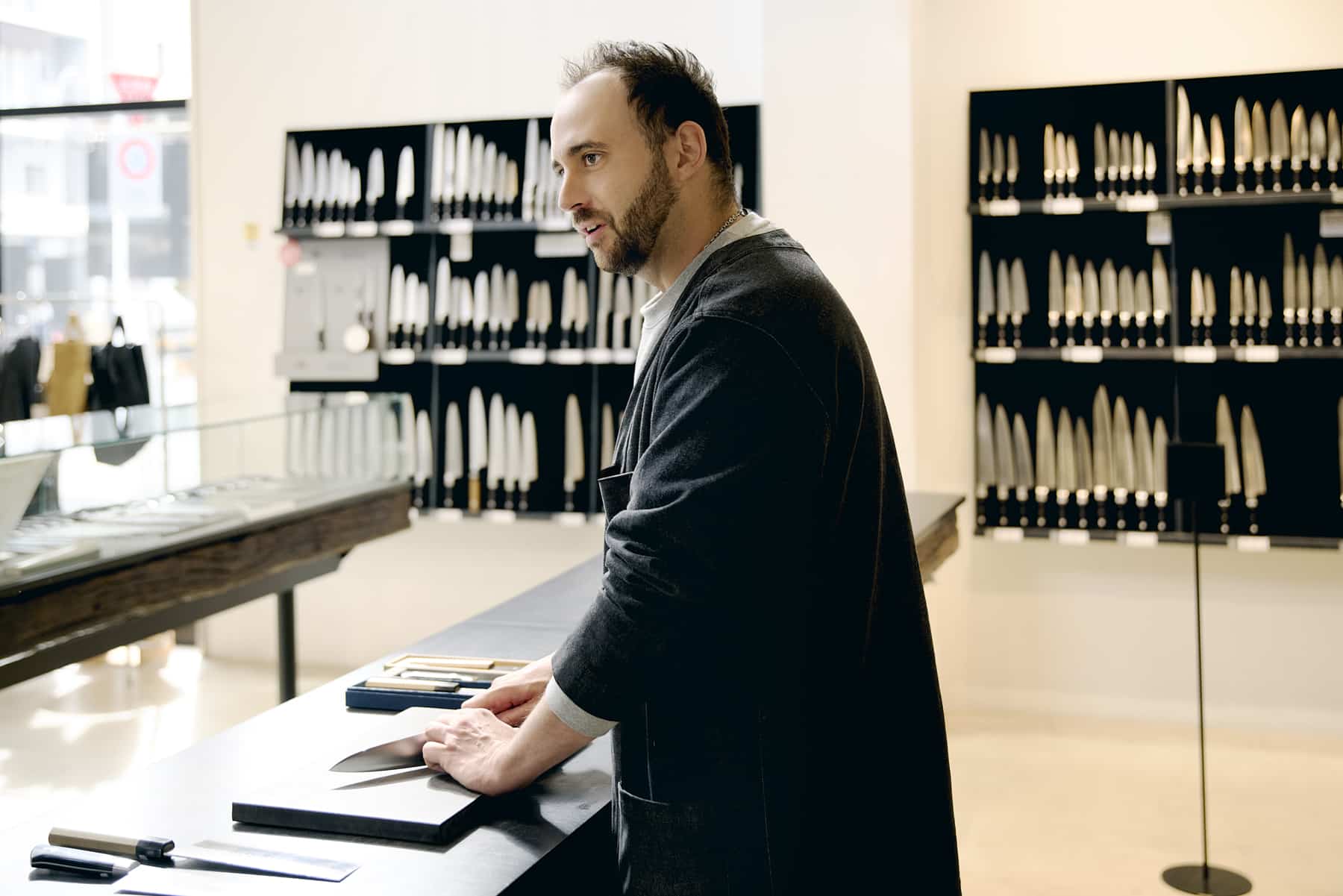
At the center of the knife section is a long table surfaced with the same material used for cutting boards. One of KAMA-ASA’s defining features is that customers are encouraged to actually hold and test knives at this table. By consulting with staff about intended use and preferred size, customers can compare differences in grip comfort and blade feel—even among knives of the same type—allowing them to take their time and choose a knife they are truly satisfied with. Multilingual staff are also available, making it easy for visitors who are not confident in Japanese to select a knife with peace of mind.
The large table is made from the same material as a cutting board.
Customers can place the blade directly on the board to check how it feels in actual use.
Jeremy is a multilingual staff member who speaks English, French, Spanish, and Japanese. He has worked at KAMA-ASA for over 10 years and possesses extensive knowledge of Japanese knives.
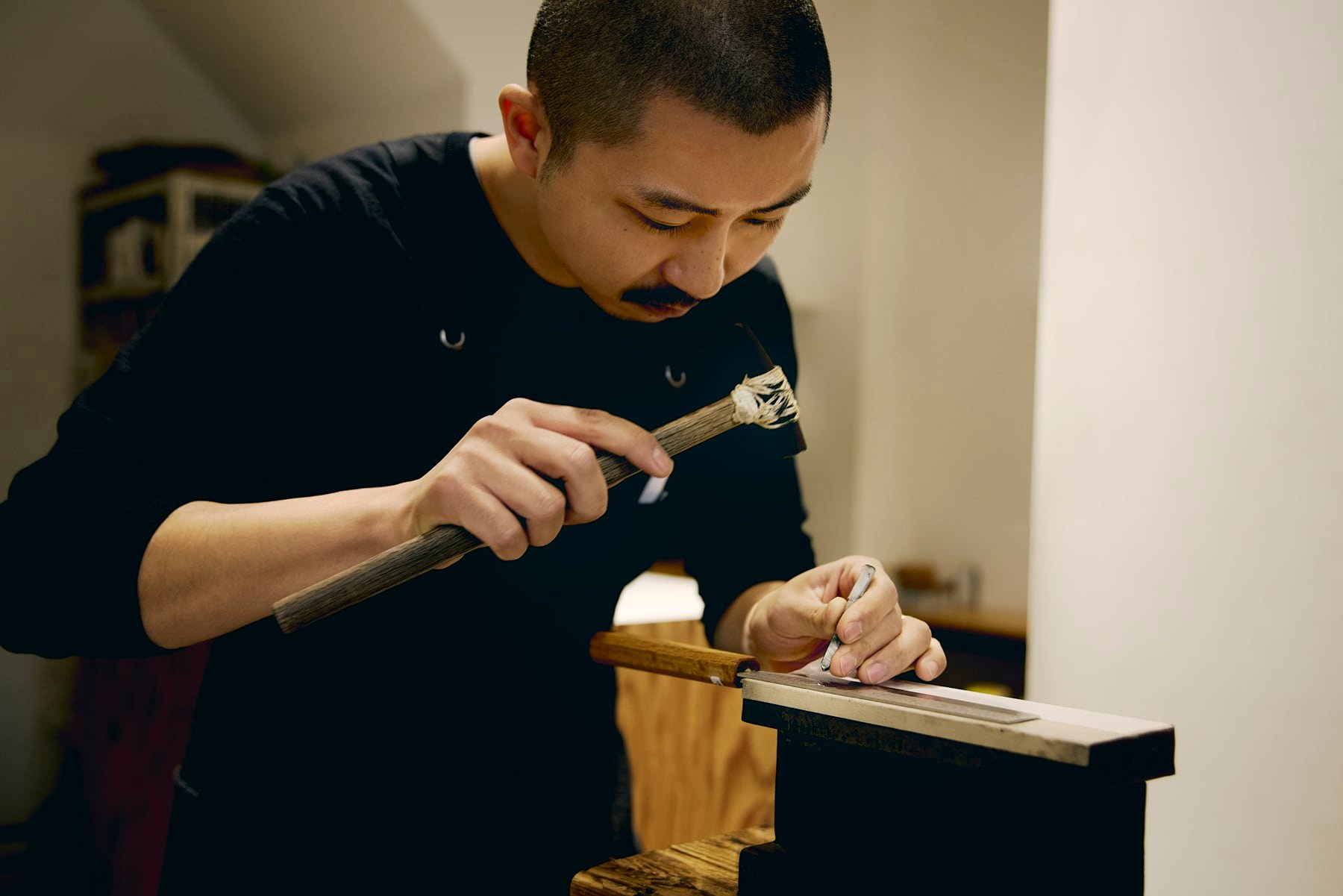
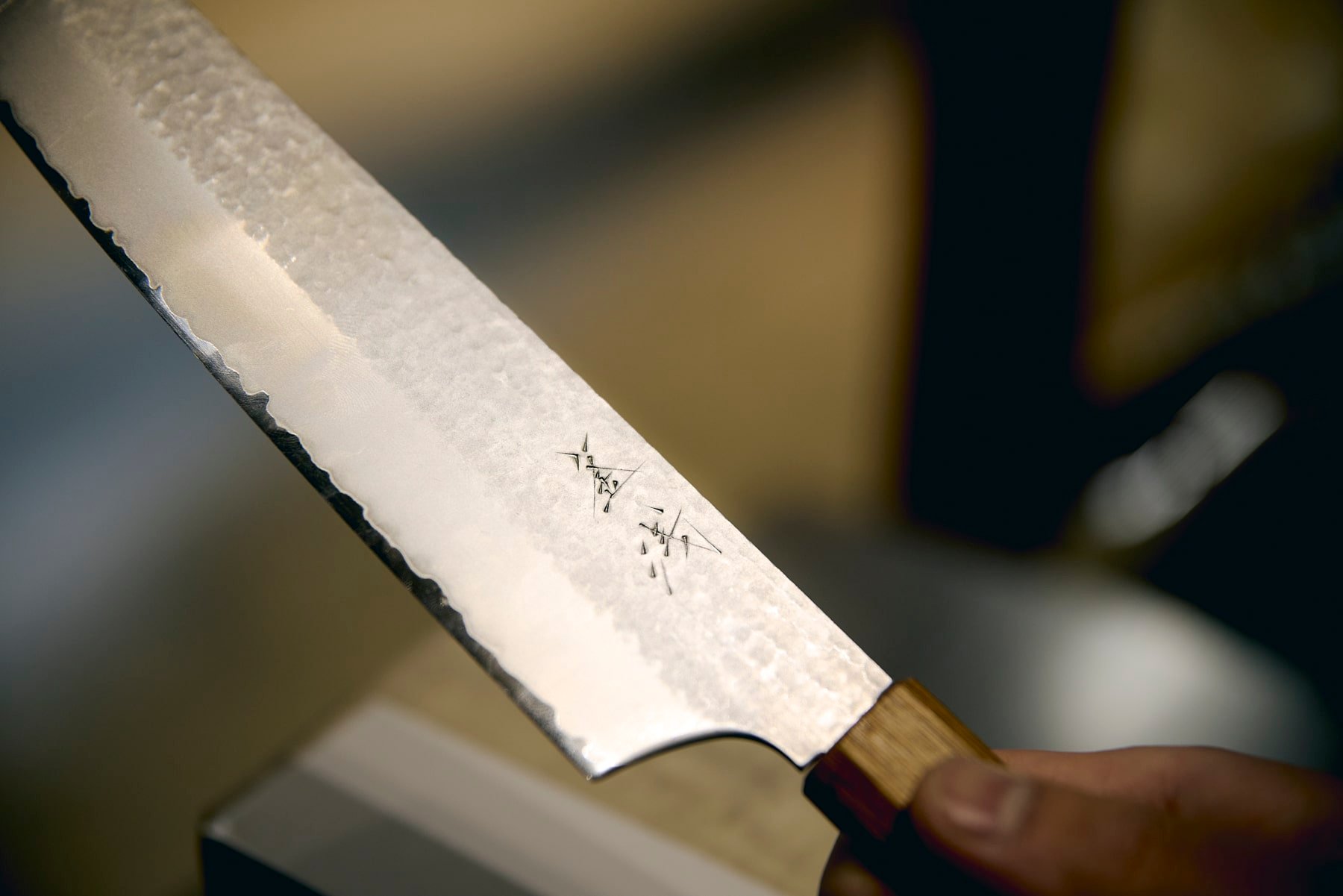
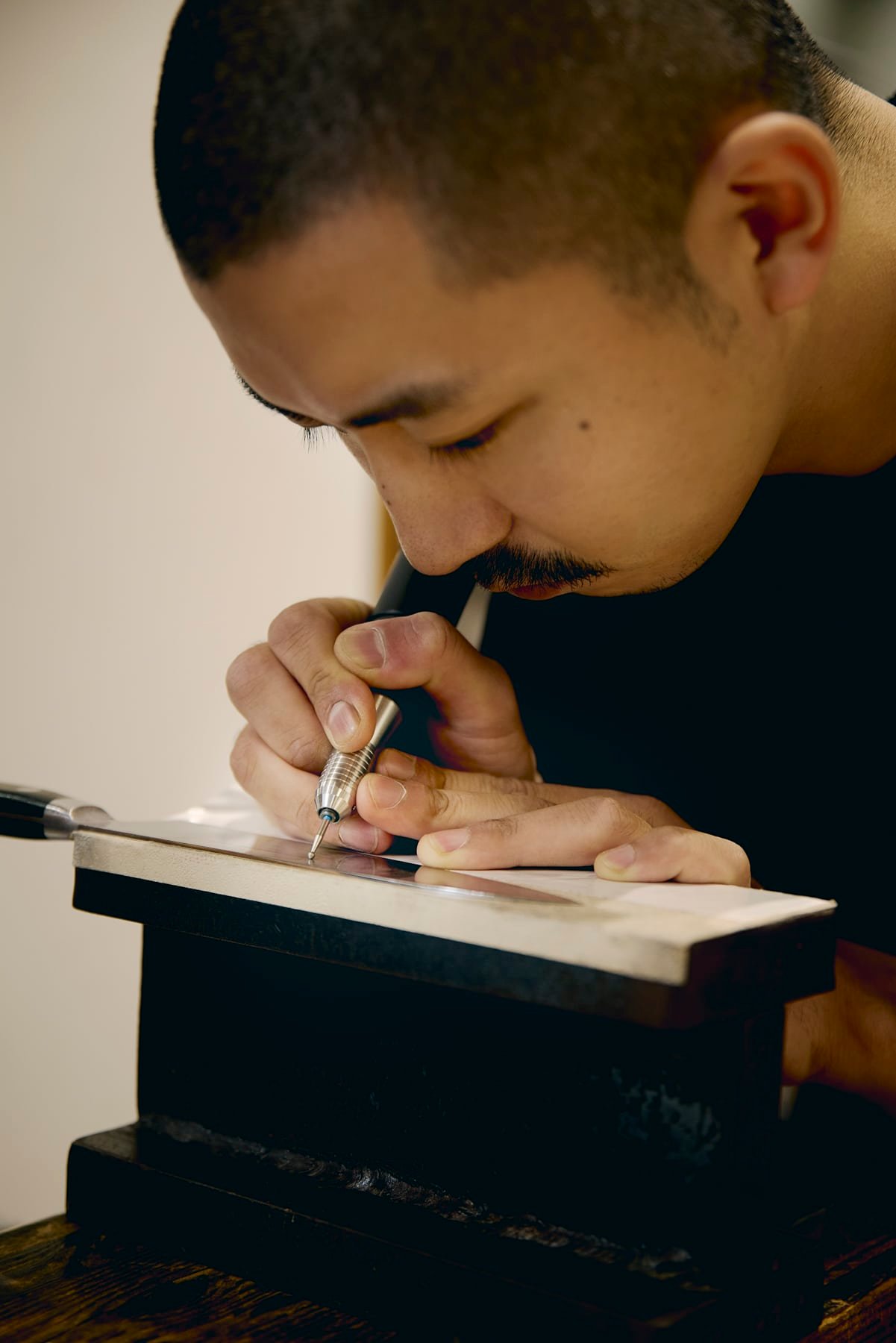
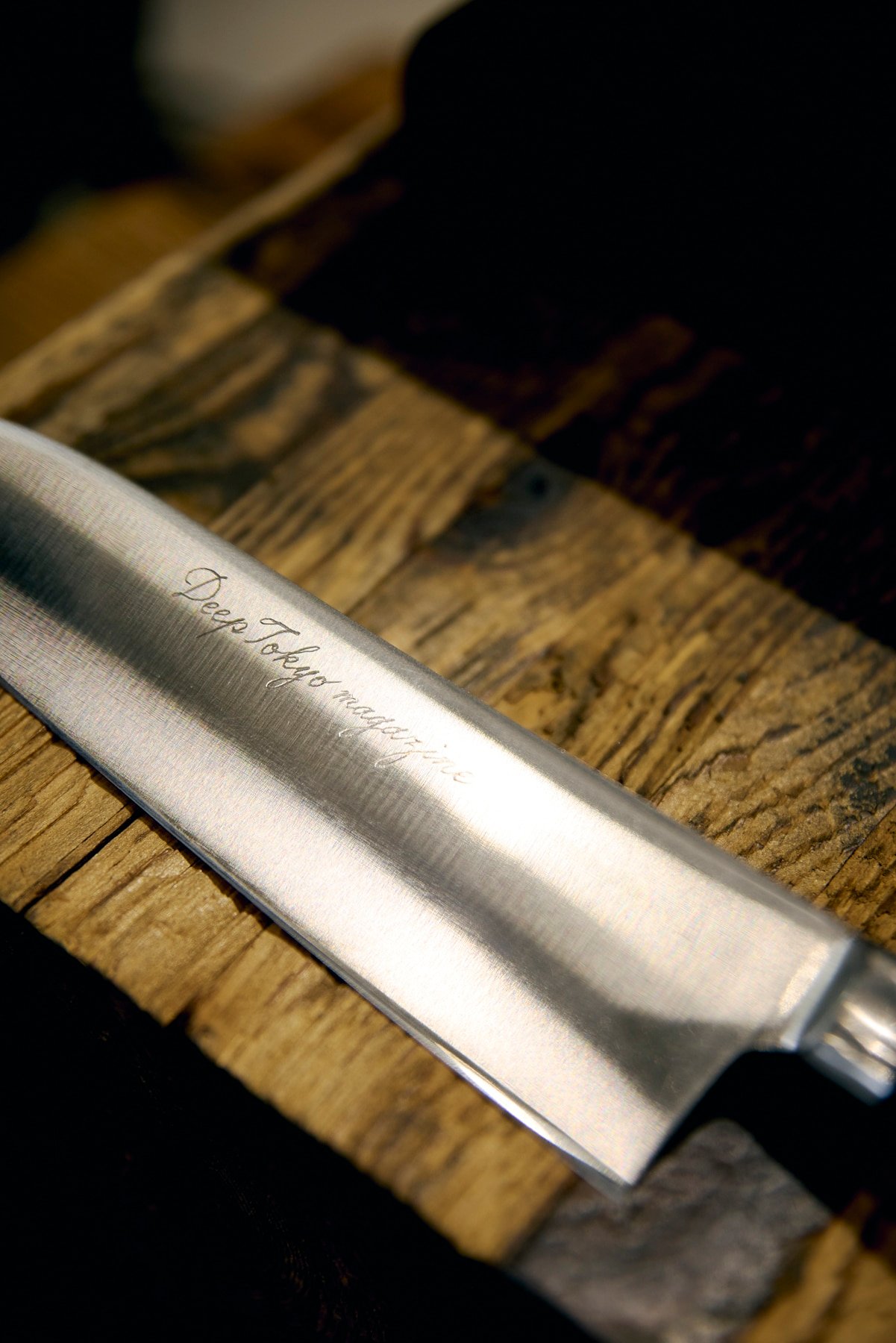
When purchasing a knife, customers can enjoy the popular engraving service free of charge. Names or messages can be engraved on the blade or bolster, creating a truly personal and special knife.
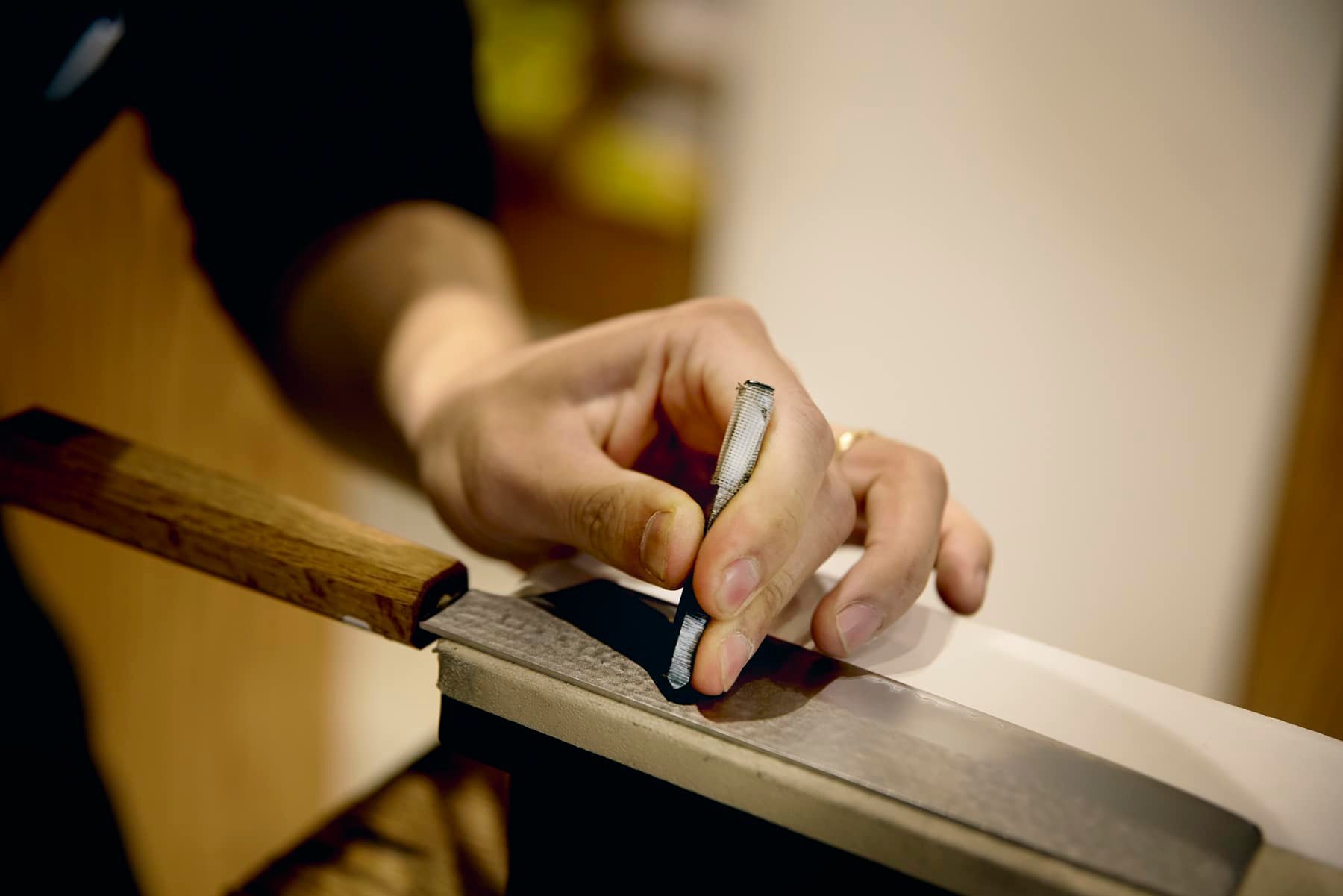
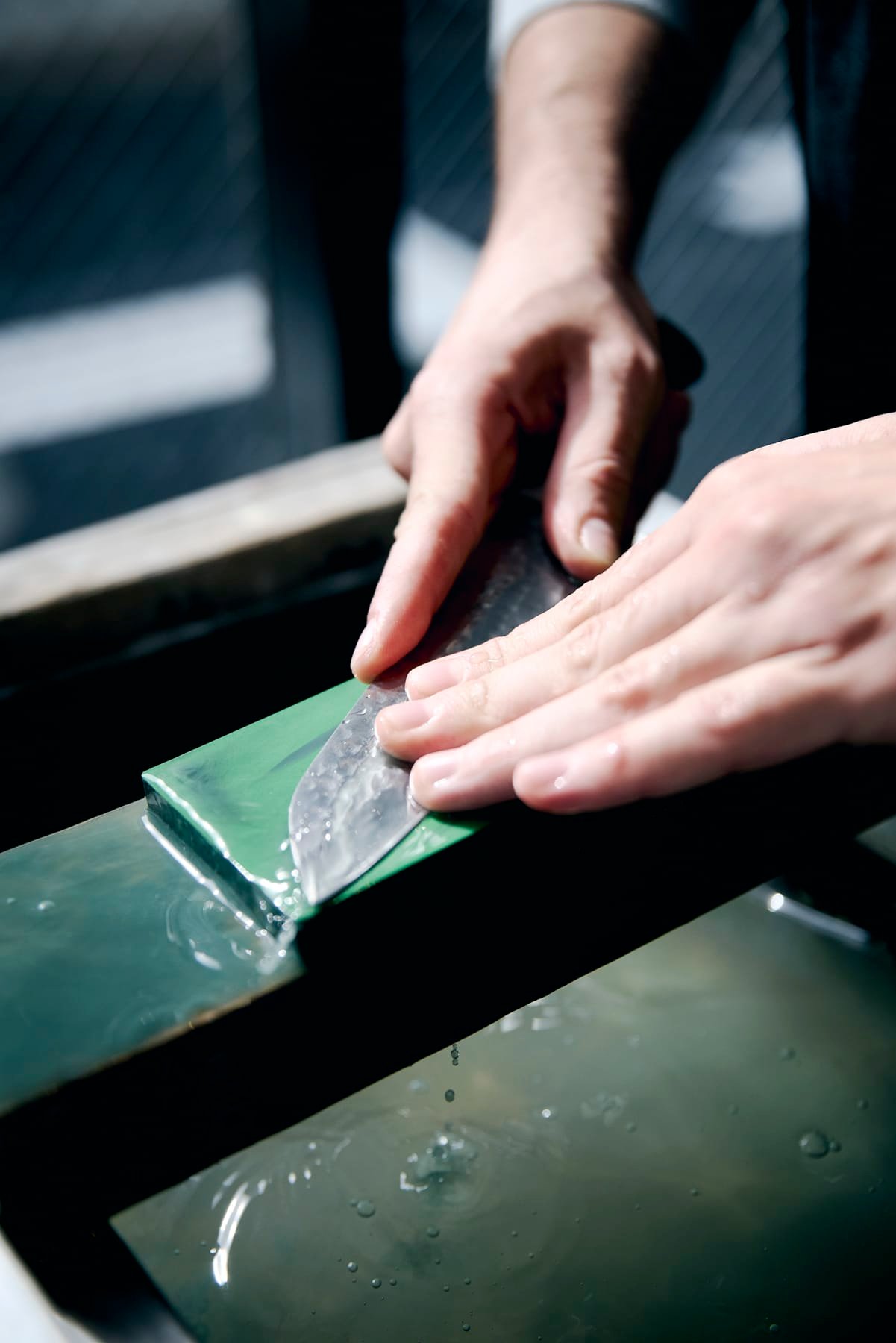
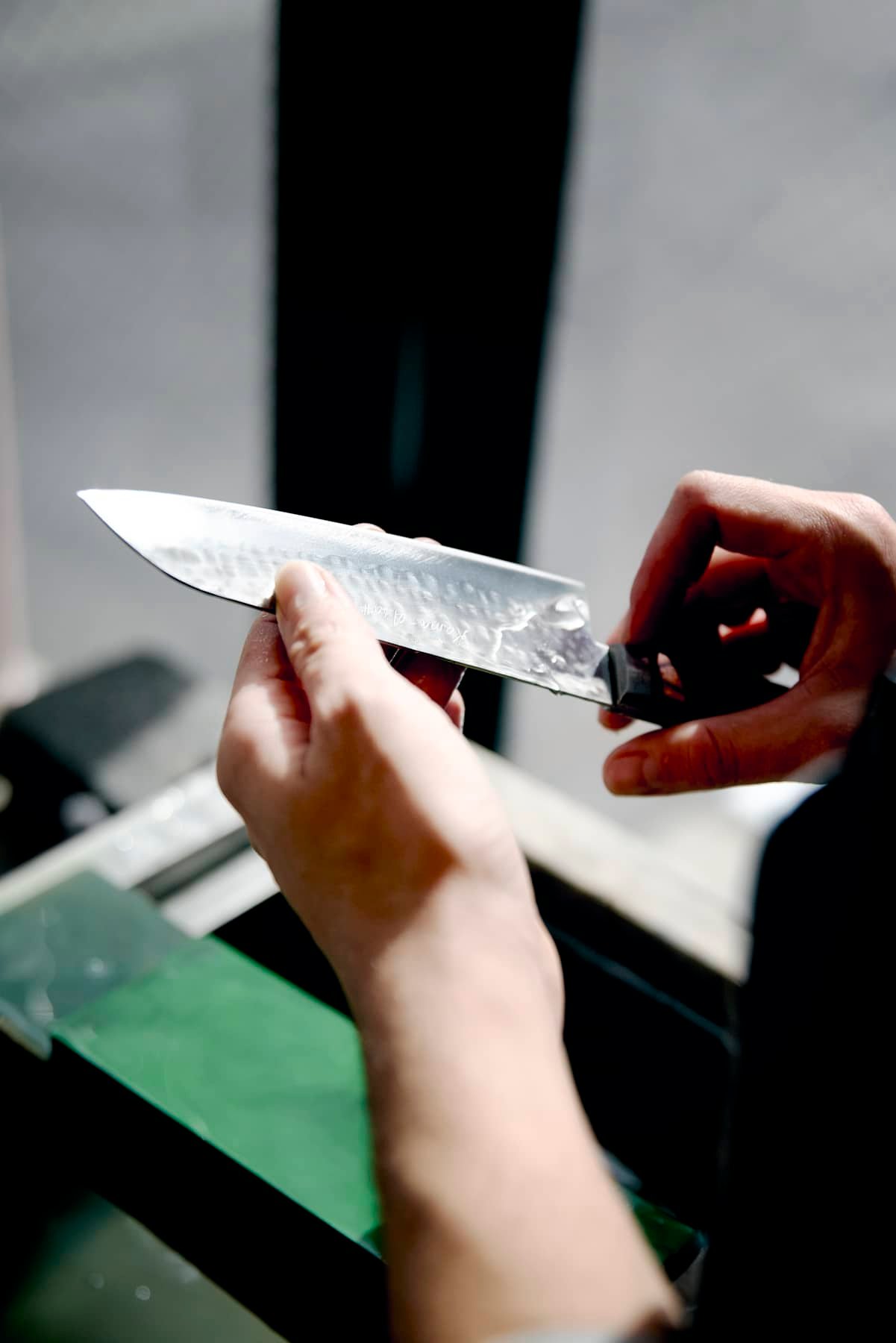
A paid knife sharpening service is also available. In addition to restoring dull blades, the service includes rust removal and repair of chipped edges. Japanese knives are often said to last longer than those made overseas, and the availability of such comprehensive aftercare is another major attraction.
For Japanese or katakana engravings, staff carve the characters entirely by hand using chisels and hammers.
For alphabet engravings in cursive script, each letter is carefully carved one by one using an electric hand grinder.
Knife sharpening is carried out by staff members by hand, one knife at a time, in a dedicated in-store workshop. Some regular customers even send their knives from overseas to have them sharpened.
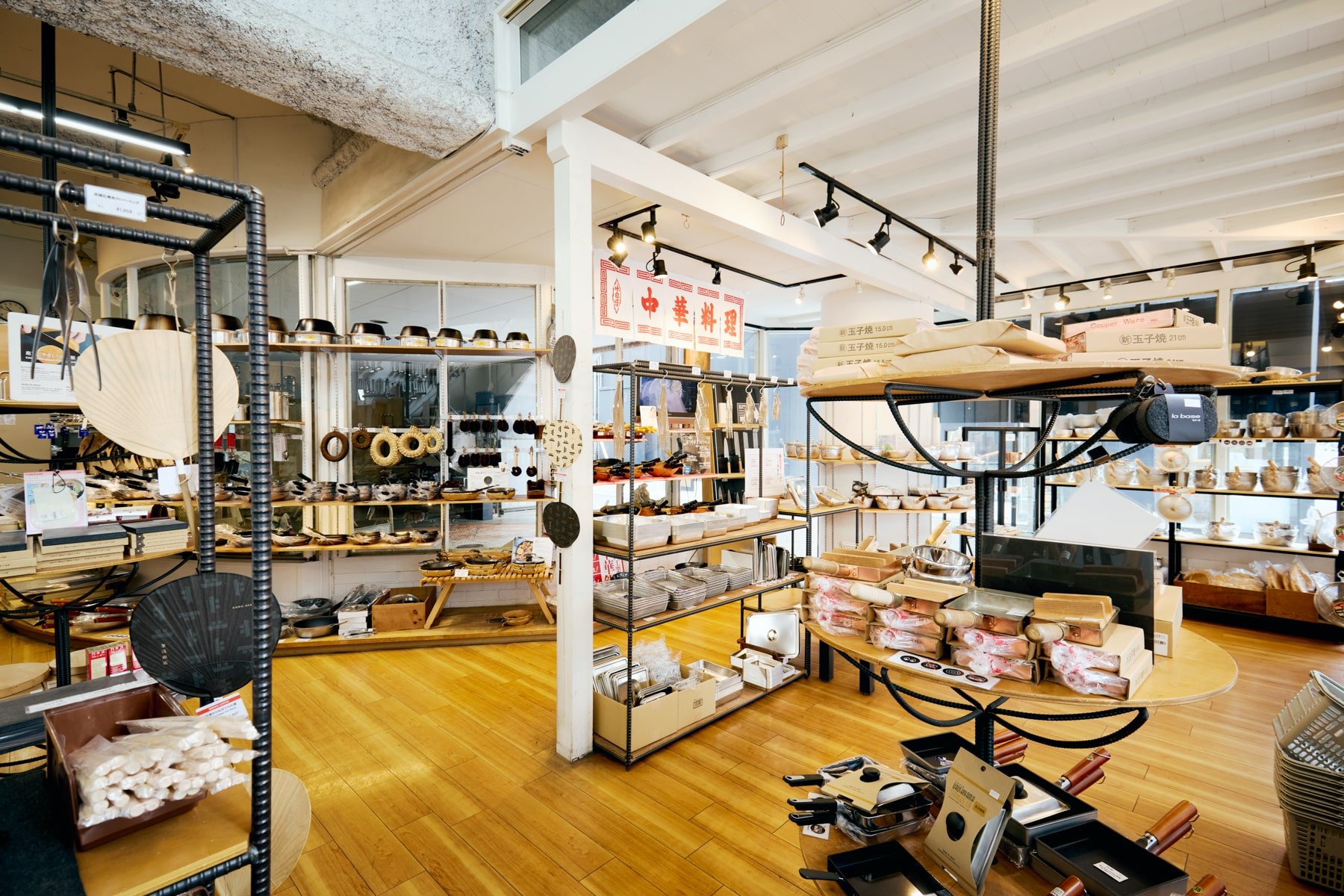
Because the knife shop and the kitchenware shop are located side by side, customers can purchase a complete range of high-quality kitchen tools in one visit. The kitchenware section, like the knife shop, features many Japanese-made tools favored by professional chefs. It also offers a strong lineup of products jointly developed with production areas and skilled craftsmen across Japan.
From pots and trays to ladles and scrub brushes, a wide variety of Japanese-made kitchen tools fill the shelves.
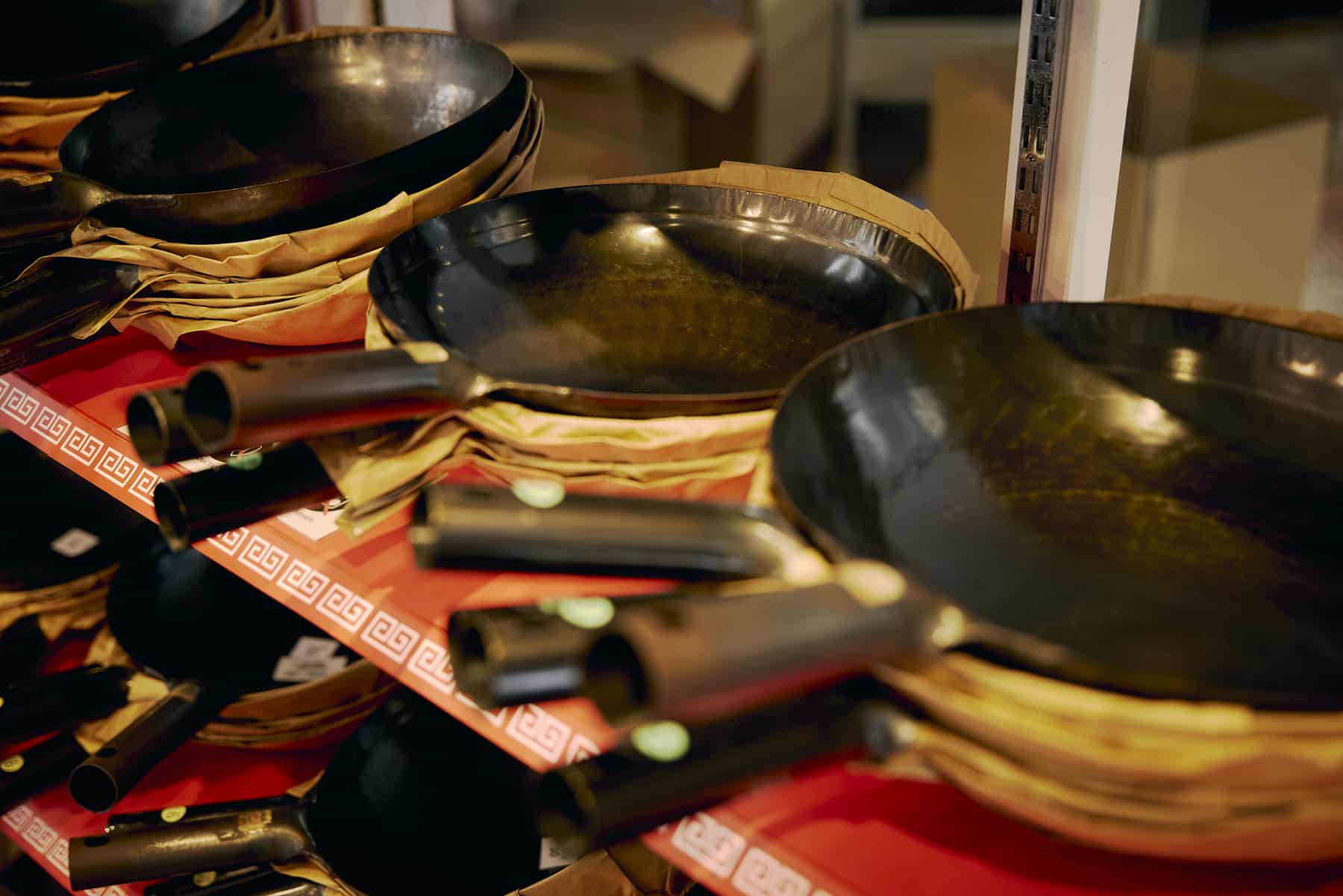
A full selection of Chinese woks from Yamada Kogyosho, a manufacturer gaining attention even within Japan. Produced using a machine hammering process, these woks are extremely durable, and their textured surfaces allow oil to spread easily. From 3,476 yen
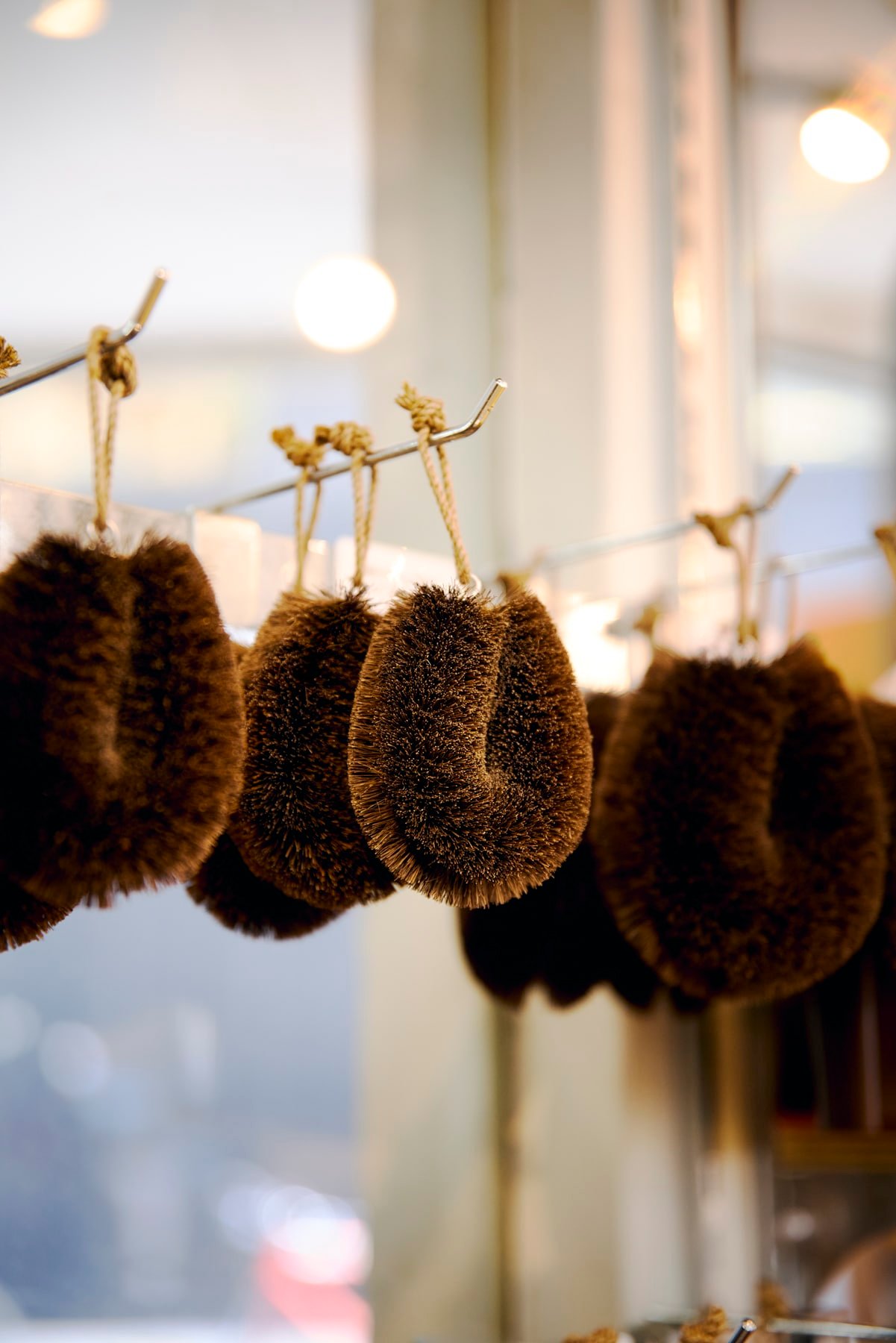
Scrub brushes for maintenance, ideal to purchase alongside Chinese woks and iron frying pans. Made from shuro palm fiber, they combine softness with firmness and are finished entirely by hand by craftsmen. From 1,100 yen
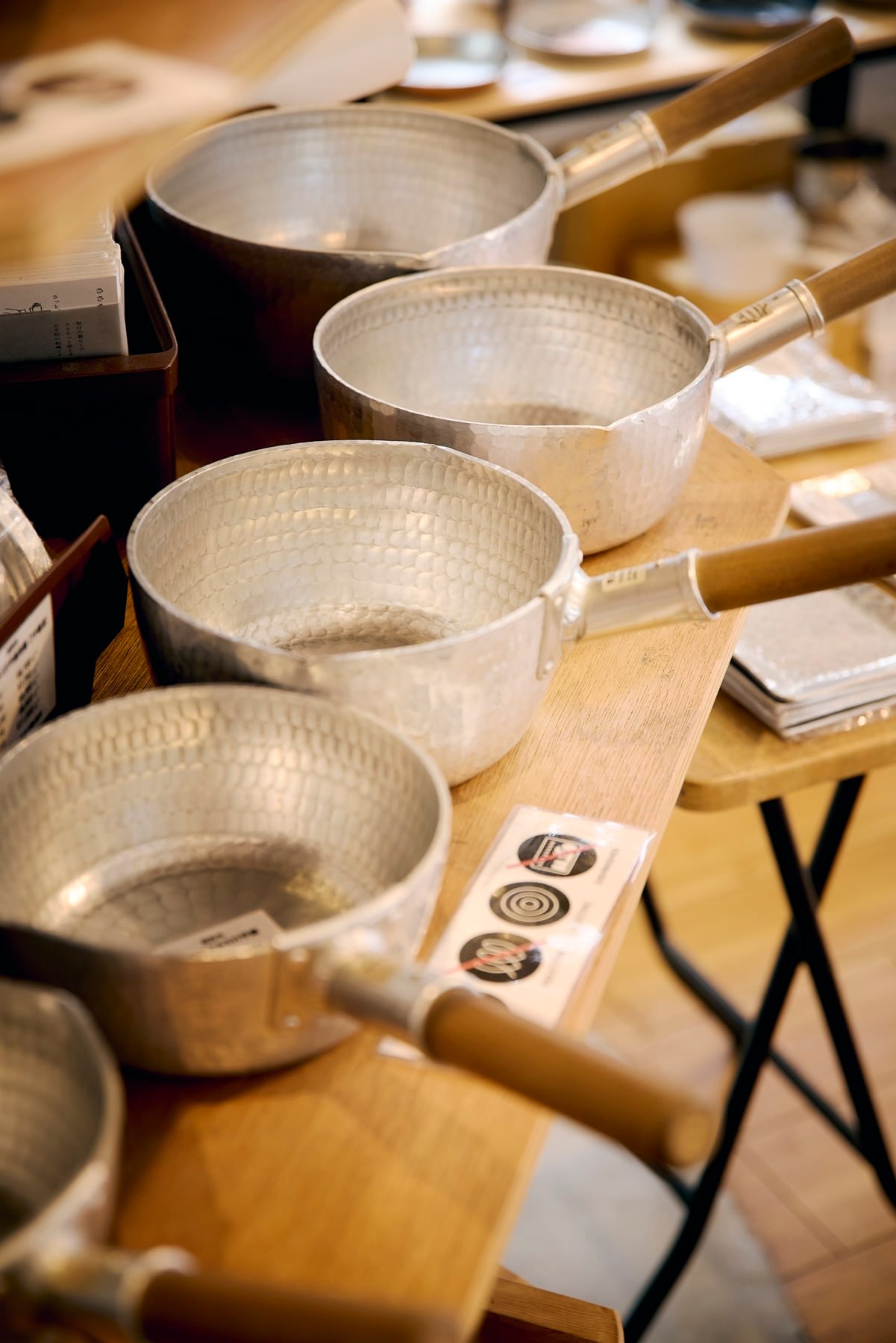
Hand-hammered yukihira saucepans by “Himeno-saku.” are also popular items. The beautiful patterns created by hammering each piece by hand increase the surface area of the pan, improving heat conductivity and allowing heat to be distributed evenly to ingredients. It is said that only a handful of craftsmen in Japan are capable of this hammering technique. From 12,100 yen
This article was updated on January 19, 2026 (at the time of publication)



.jpg)
スマホ.jpg)