DEEPTOKYO
magazine

EN


AREA
DEEPTOKYO
magazine
EN
AREA
2026.09.29
A Directly Operated Store of One of Japan’s Leading Home-Dye Brands


 Nearest Station

“somenova” is the directly operated store of MIYACOZOME, a home-dye brand founded in Nihonbashi, Tokyo, in 1890. MIYACOZOME is one of Japan’s leading dye brands, producing highly safe, environmentally conscious dyes at its own factory in Japan. In addition to selling dyes, somenova offers workshops where visitors can enjoy more than 10 dyeing techniques, including shibori, tie-dye, and furoshiki dyeing, making it easy to experience Japanese dyeing culture.
SHARE


The dye brand MIYACOZOME was founded in 1890 as a dye merchant in what is now Nihonbashi, Tokyo.At a time when goods were not as abundant in Japan as they are today, people commonly re-dyed faded kimono, suits, and other garments at home so they could continue using them for longer. To meet this demand, the company evolved into a dye manufacturer and began producing dyes that were easy to use at home.
Later, dyeing became widely established as a method for handicrafts and remaking clothes. Responding to the changing needs of the times, MIYACOZOME has continued to develop as one of Japan’s leading home-dye brands.
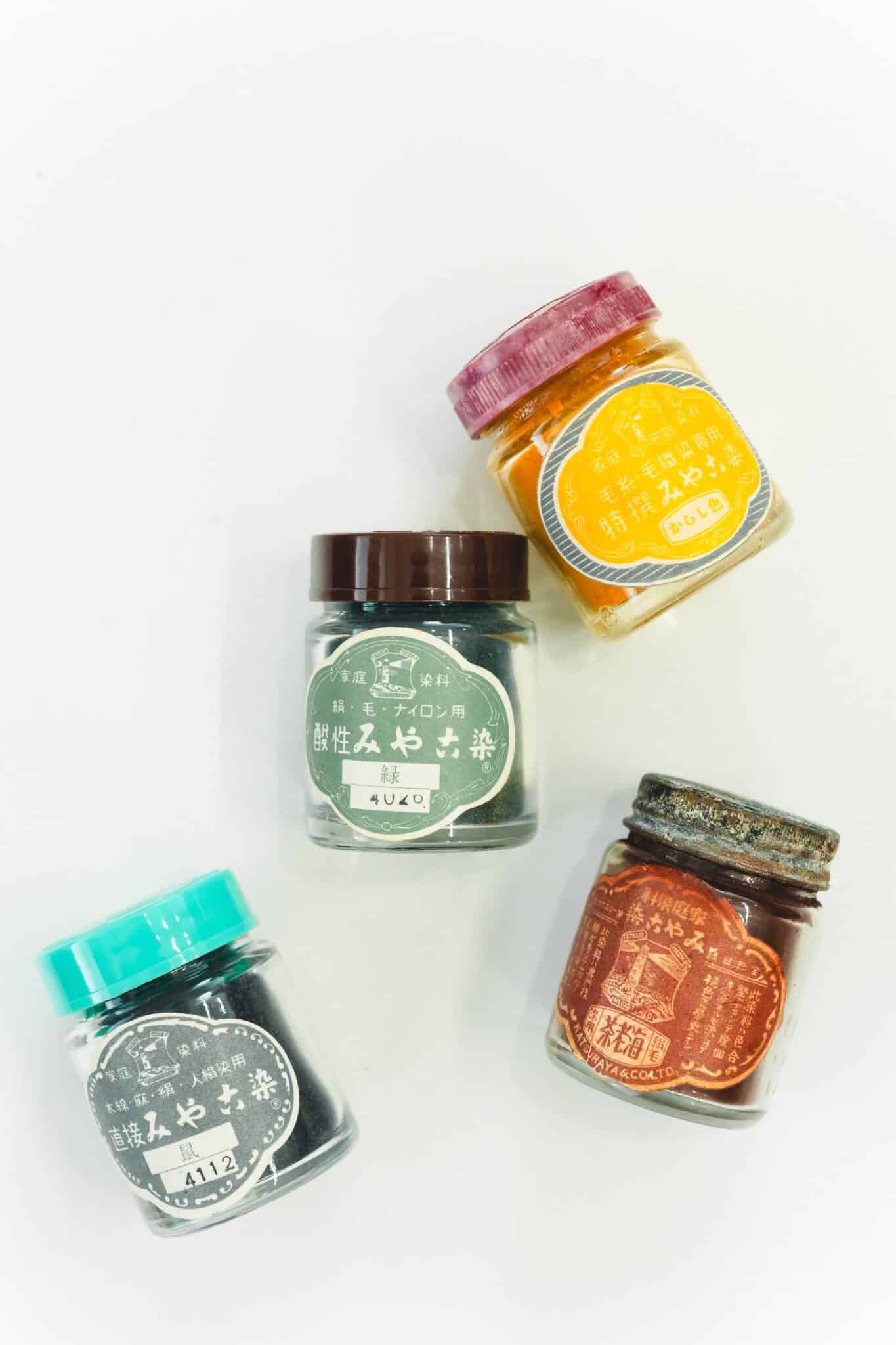
Valuable dyes sold when the company was first established. Glass bottles were apparently rare at the time.
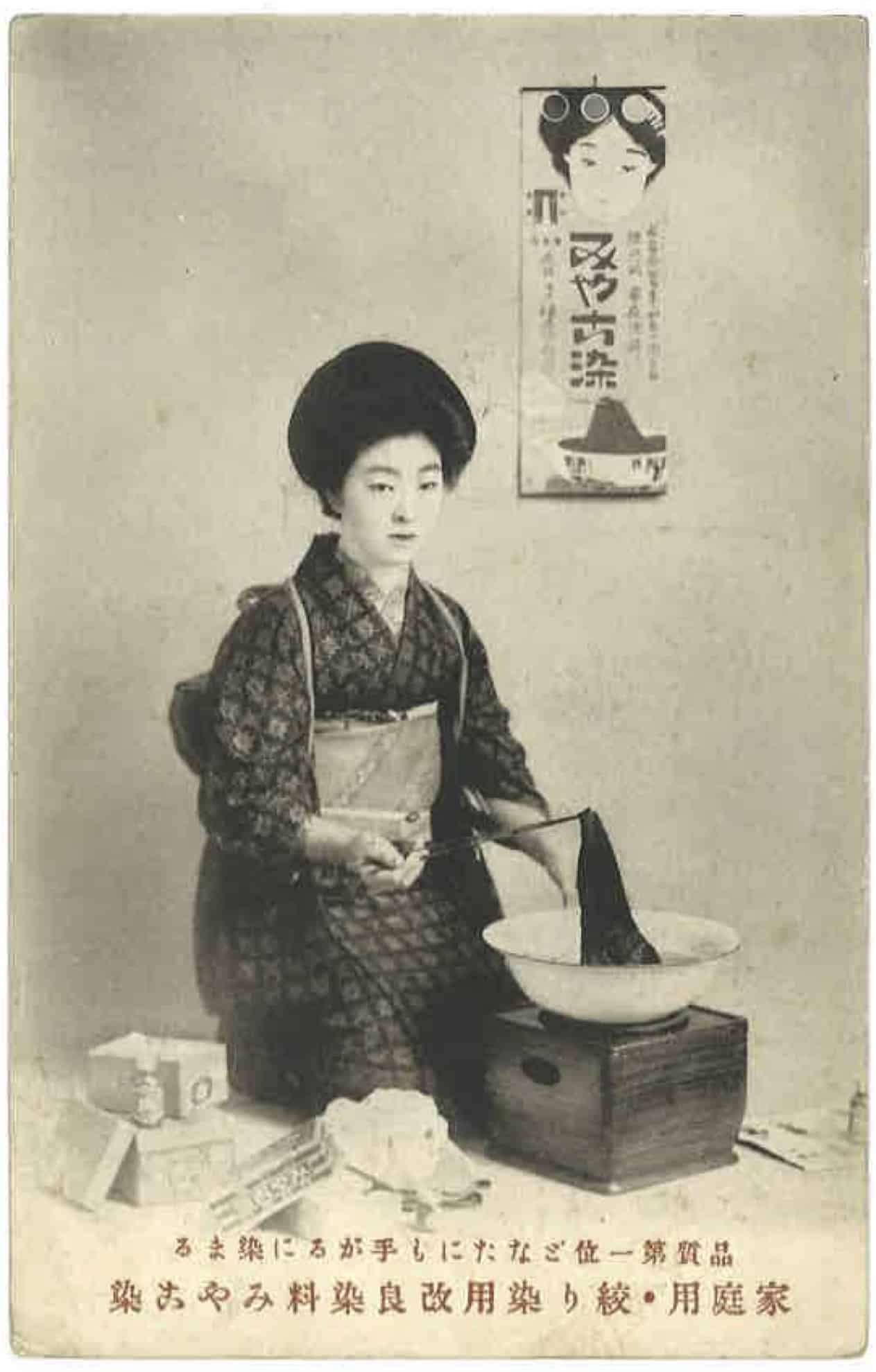
An advertisement for the company’s products from a time when women commonly wore their hair in traditional Japanese styles and dressed in kimono.
MIYACOZOME dyes are characterized by their high level of safety and consideration for the environment. They are manufactured at the company’s own factory in Chigasaki, Kanagawa Prefecture. As awareness of safety increased, the company launched ECO dyes containing no designated hazardous chemical substances in 2005. It later became the first in the world to obtain ECO PASSPORT, an international certification indicating dye safety, for its home-use dye, and has continued to improve its products in response to the changing needs of the times.
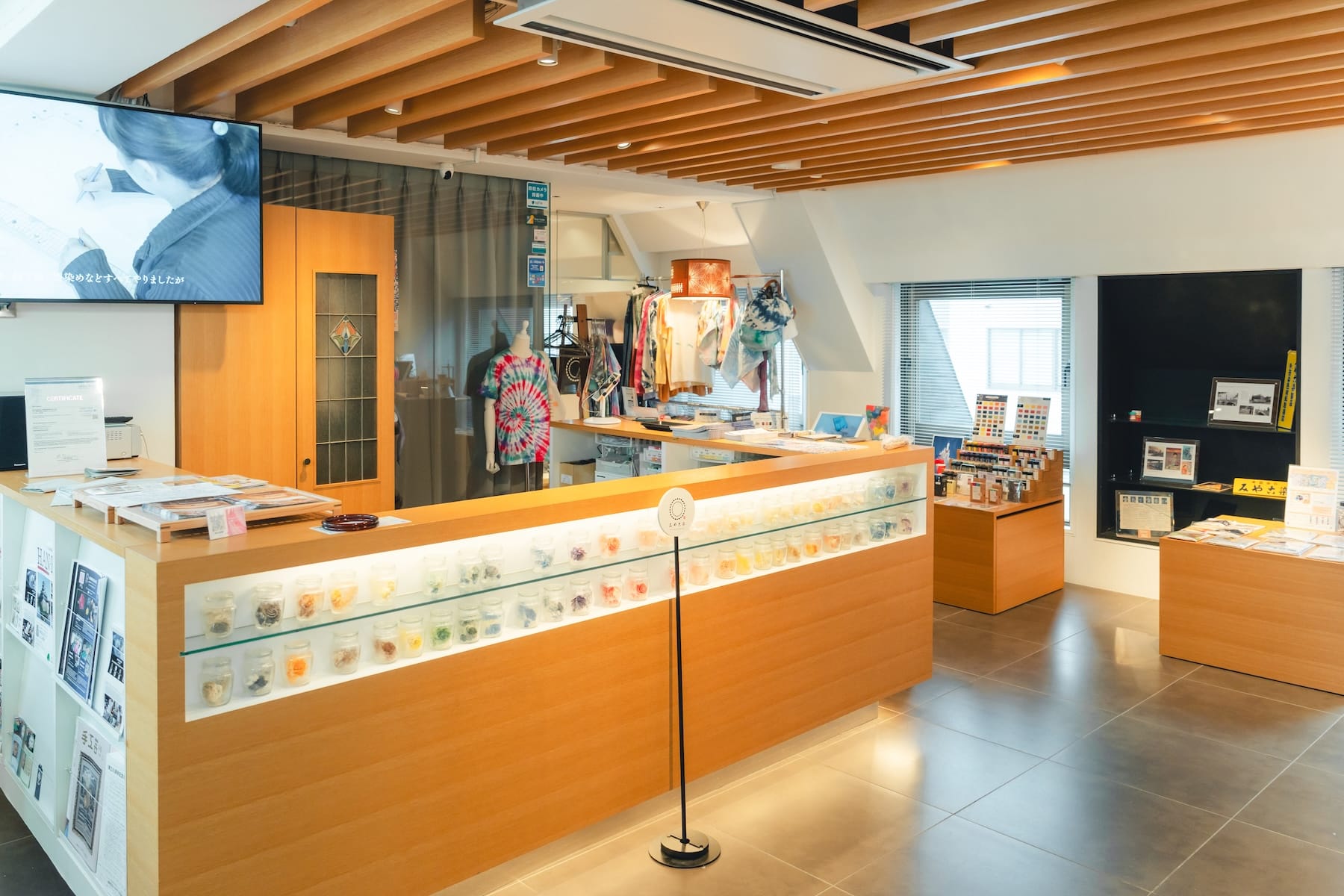
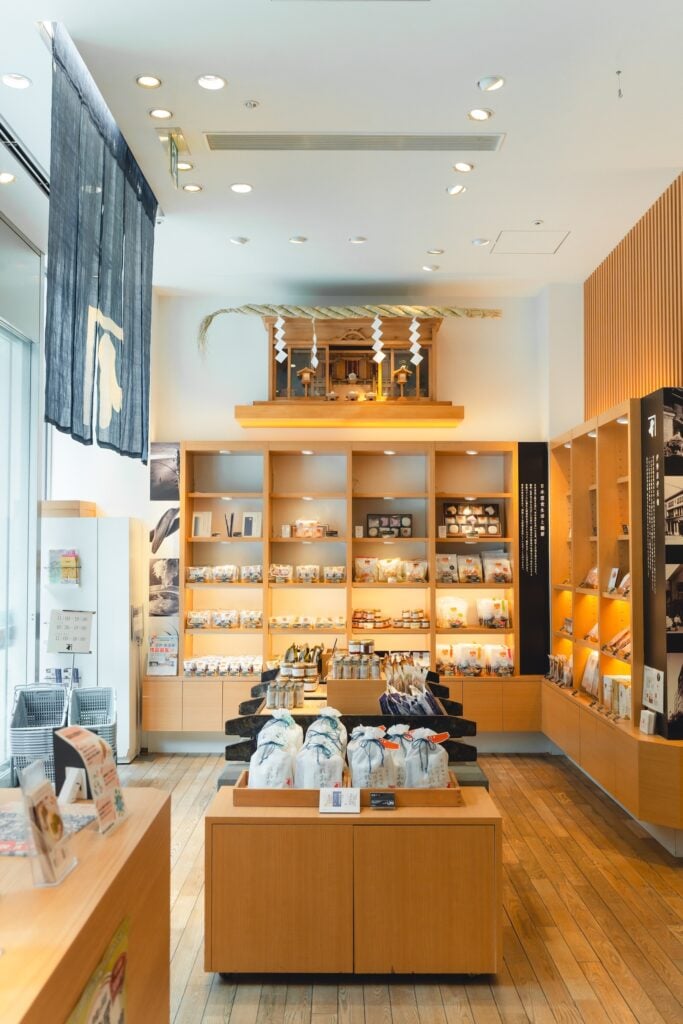
A space designed around warm wooden tones. At the back is a retail area displaying dyes and kits.
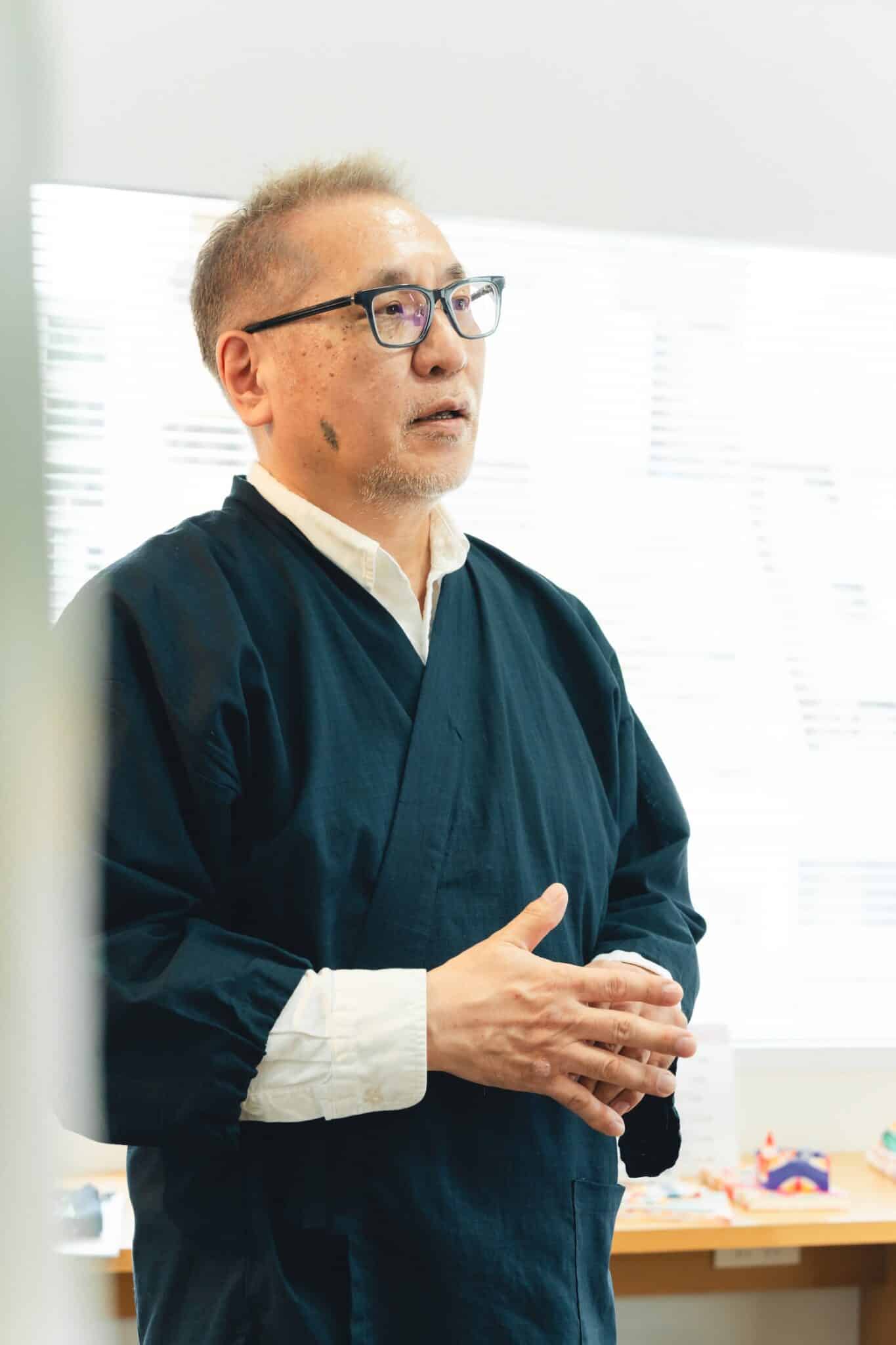
Shinichi Aoyama, the fifth-generation company representative.
According to company representative Shinichi Aoyama, MIYACOZOME has recently been gaining popularity among new types of customers as well.
“More and more people are coming to buy dyes because they want to achieve the exact colors they have in mind when remaking or creating costumes for cosplay. In response to these needs, we have expanded our lineup to include dyes for polyester and fluorescent colors,” says Aoyama.
The store also carries products such as kits that allow people to experience traditional dyeing techniques without specialized tools, making it easy even for first-time users to dye successfully.
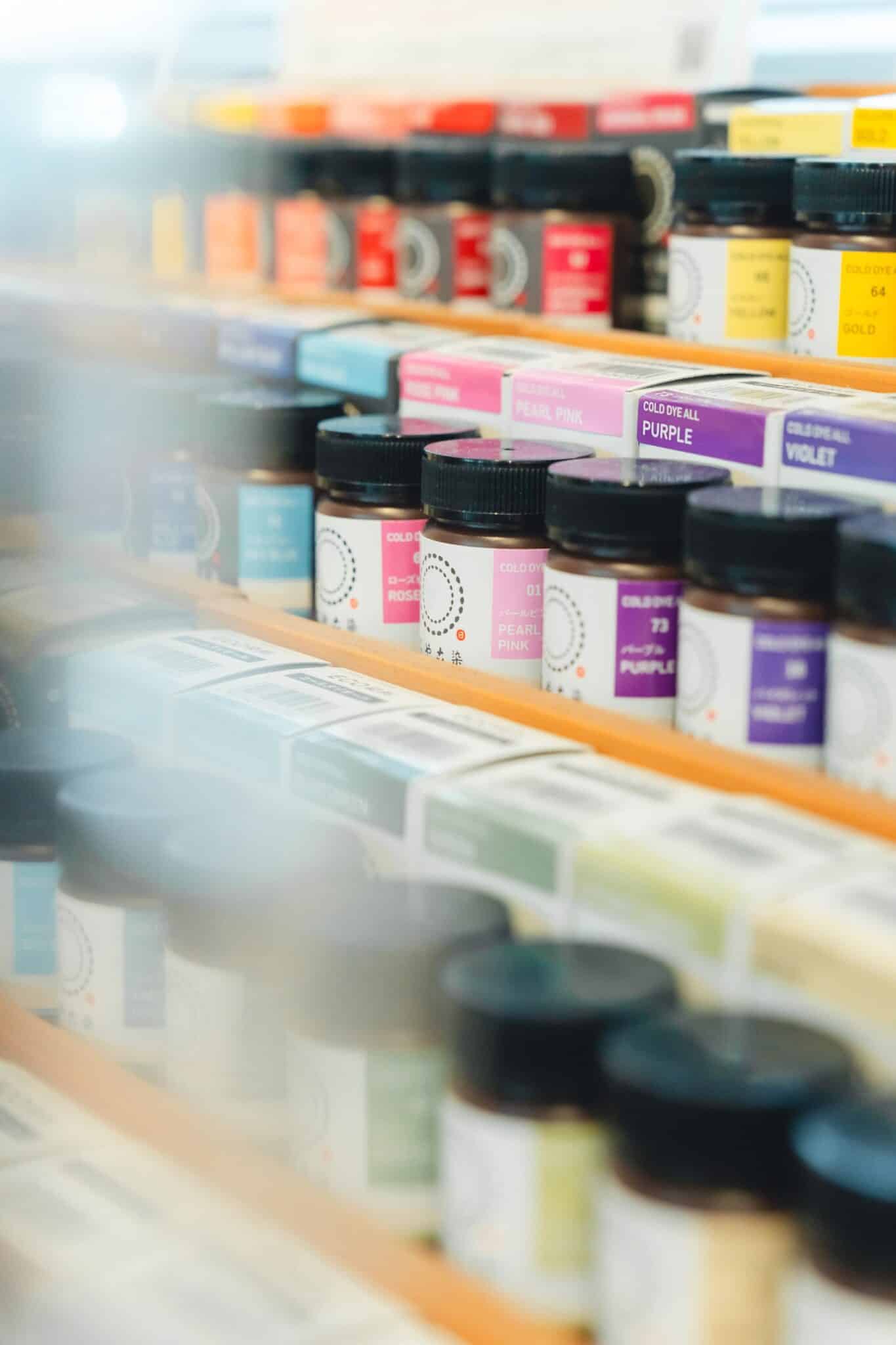
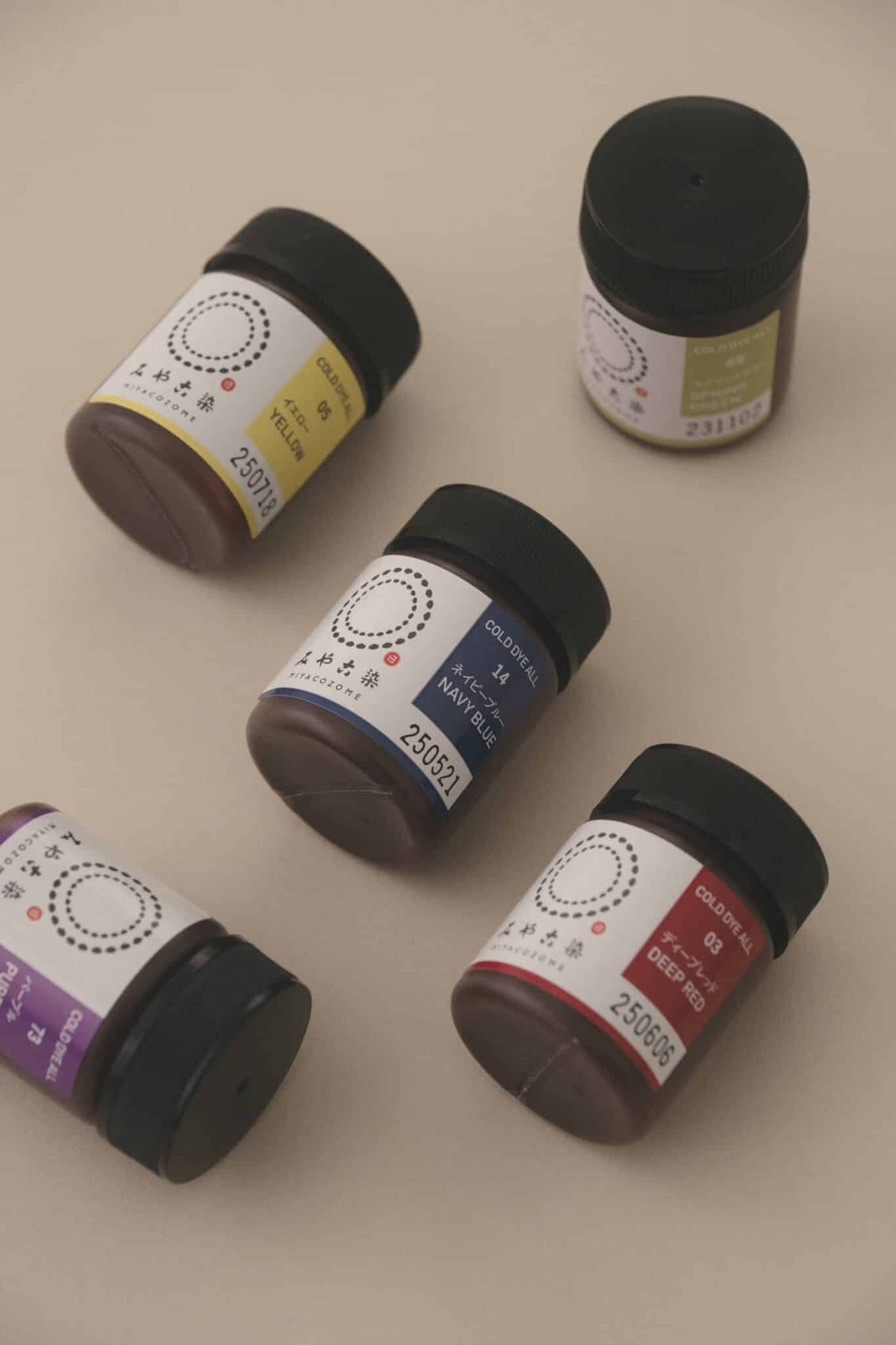
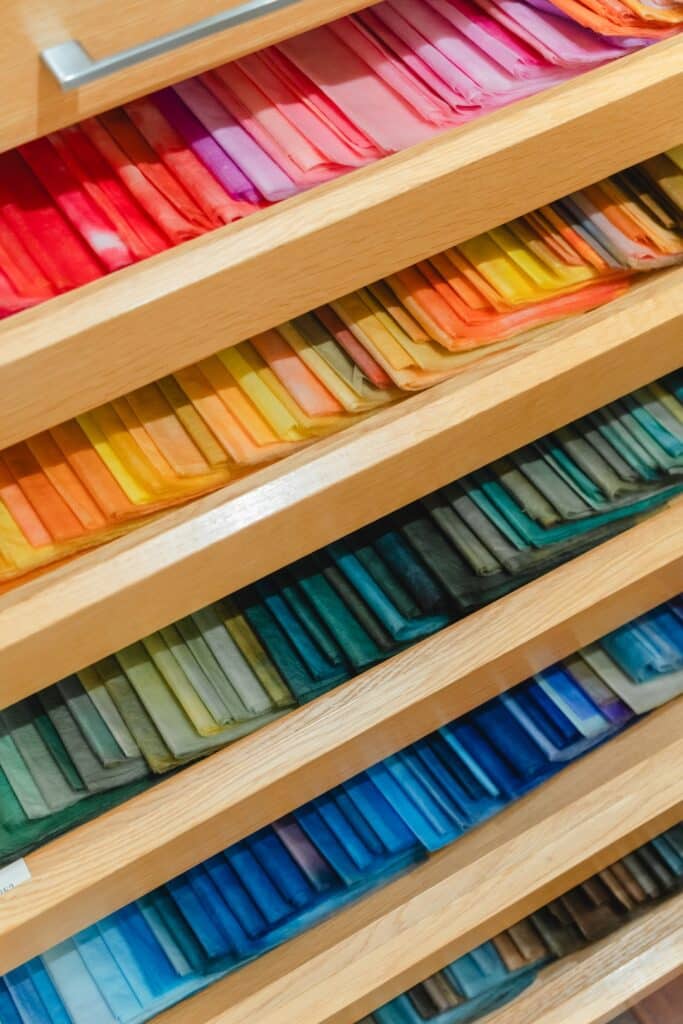
COLD DYE ALL, a long seller since 1975, can dye a wide range of plant, animal, and synthetic fibers without ingredients harmful to people or the environment. It works in warm water in just 20 minutes, making it easy for children to use. Available in 28 colors. ¥792 each.
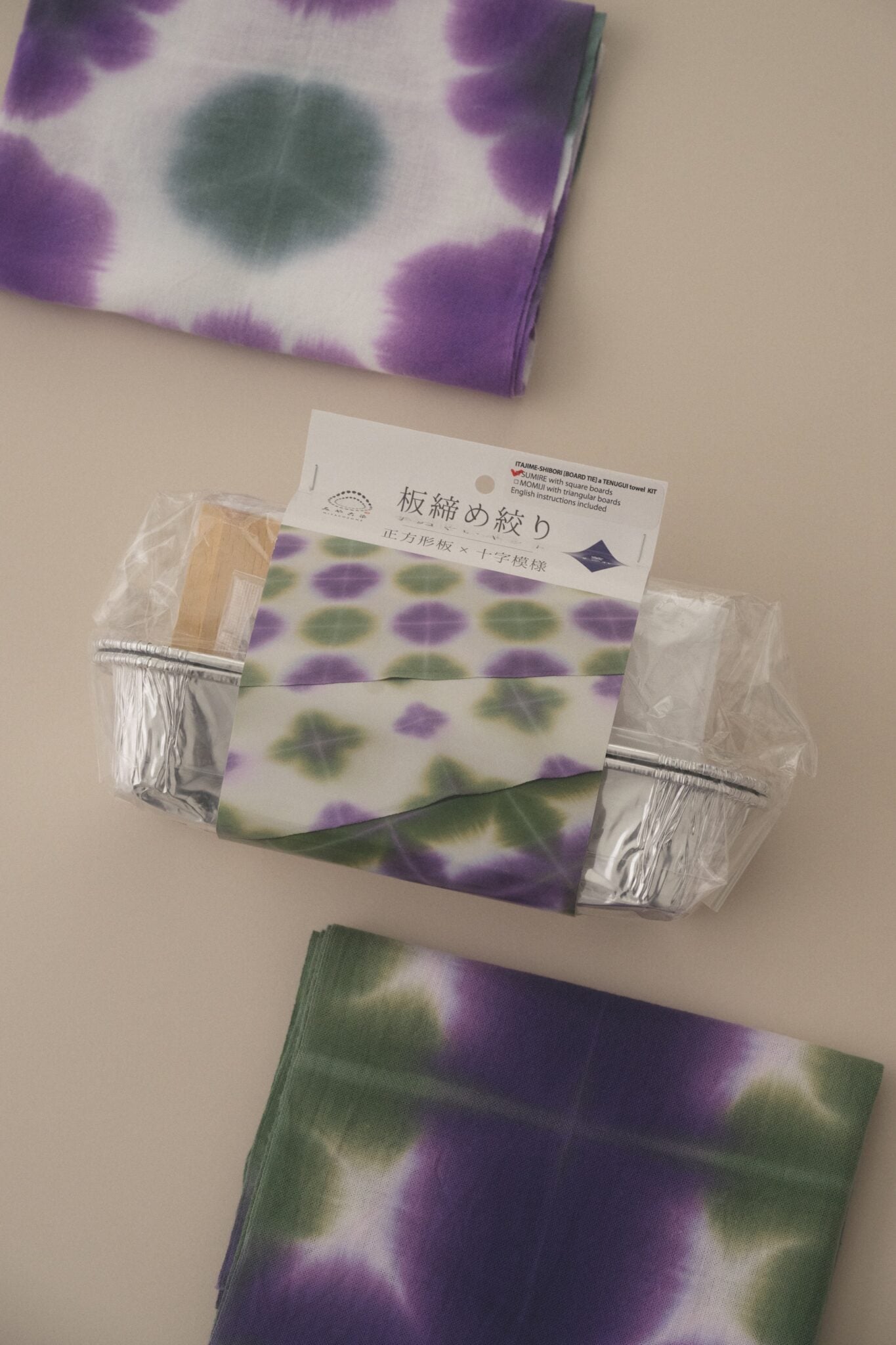
A kit for experiencing “itajime shibori,” a traditional Japanese dyeing technique. The fabric is folded, clamped between boards, and dyed to create beautiful patterns. ¥1,980.
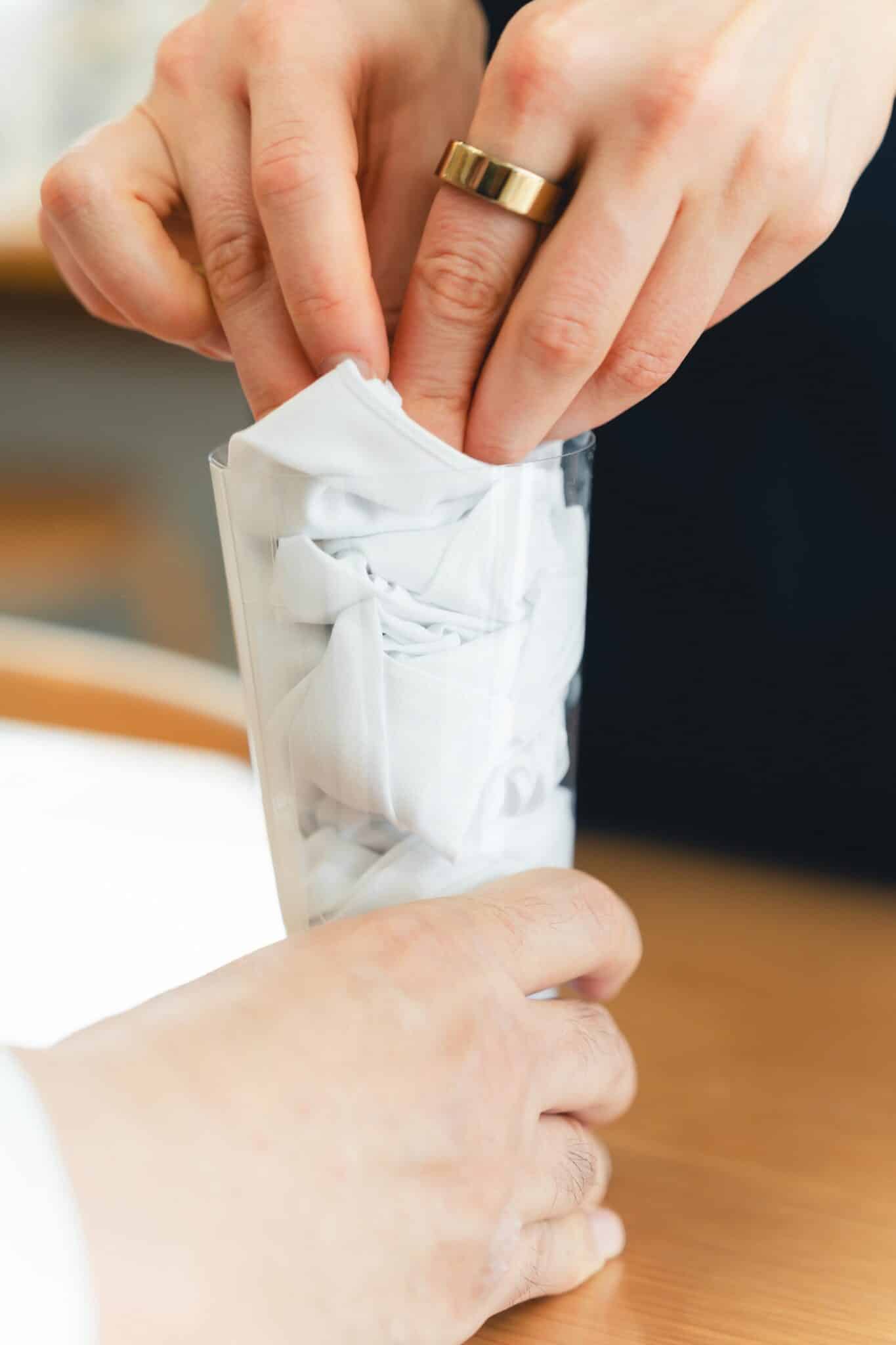
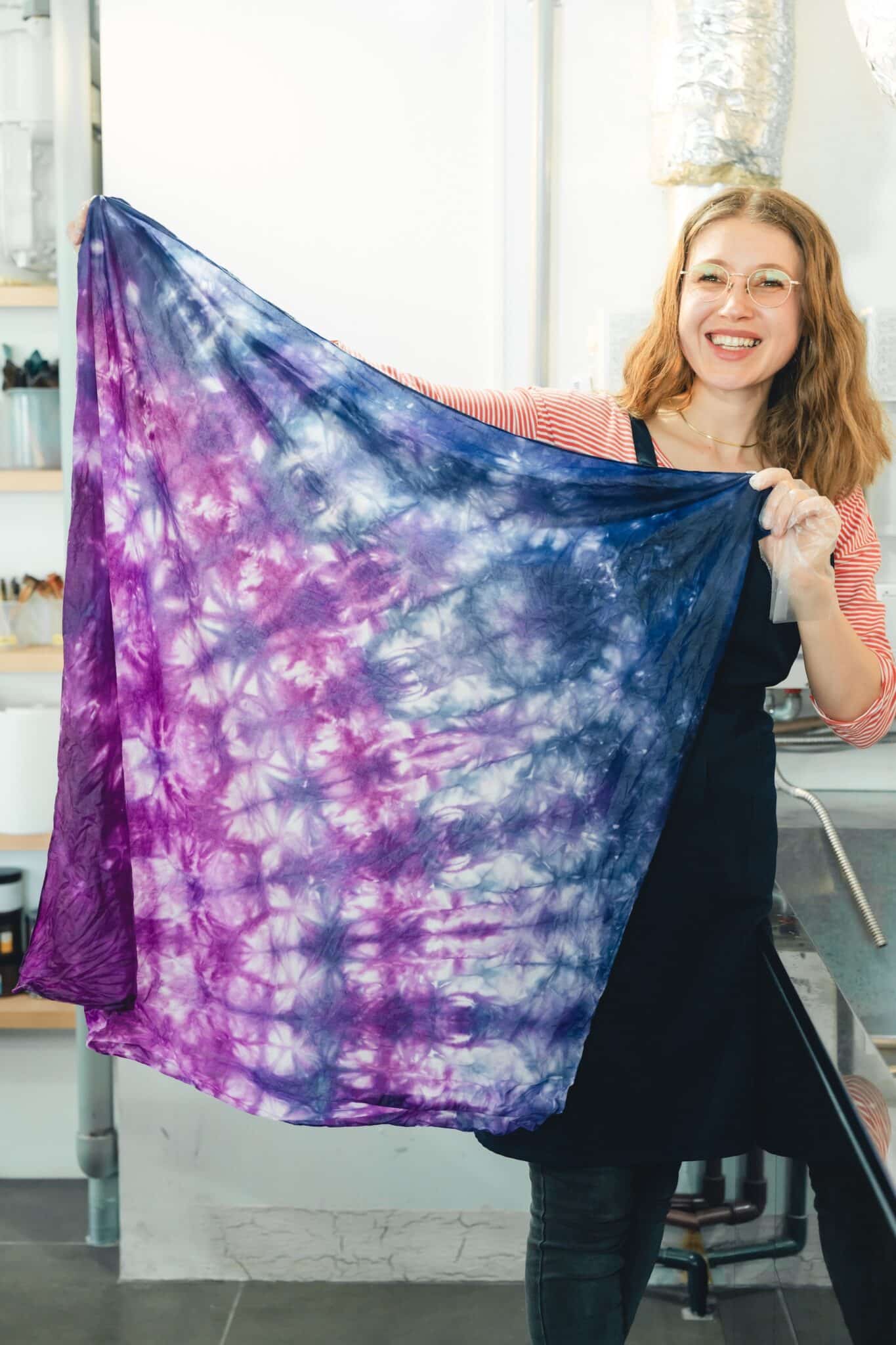
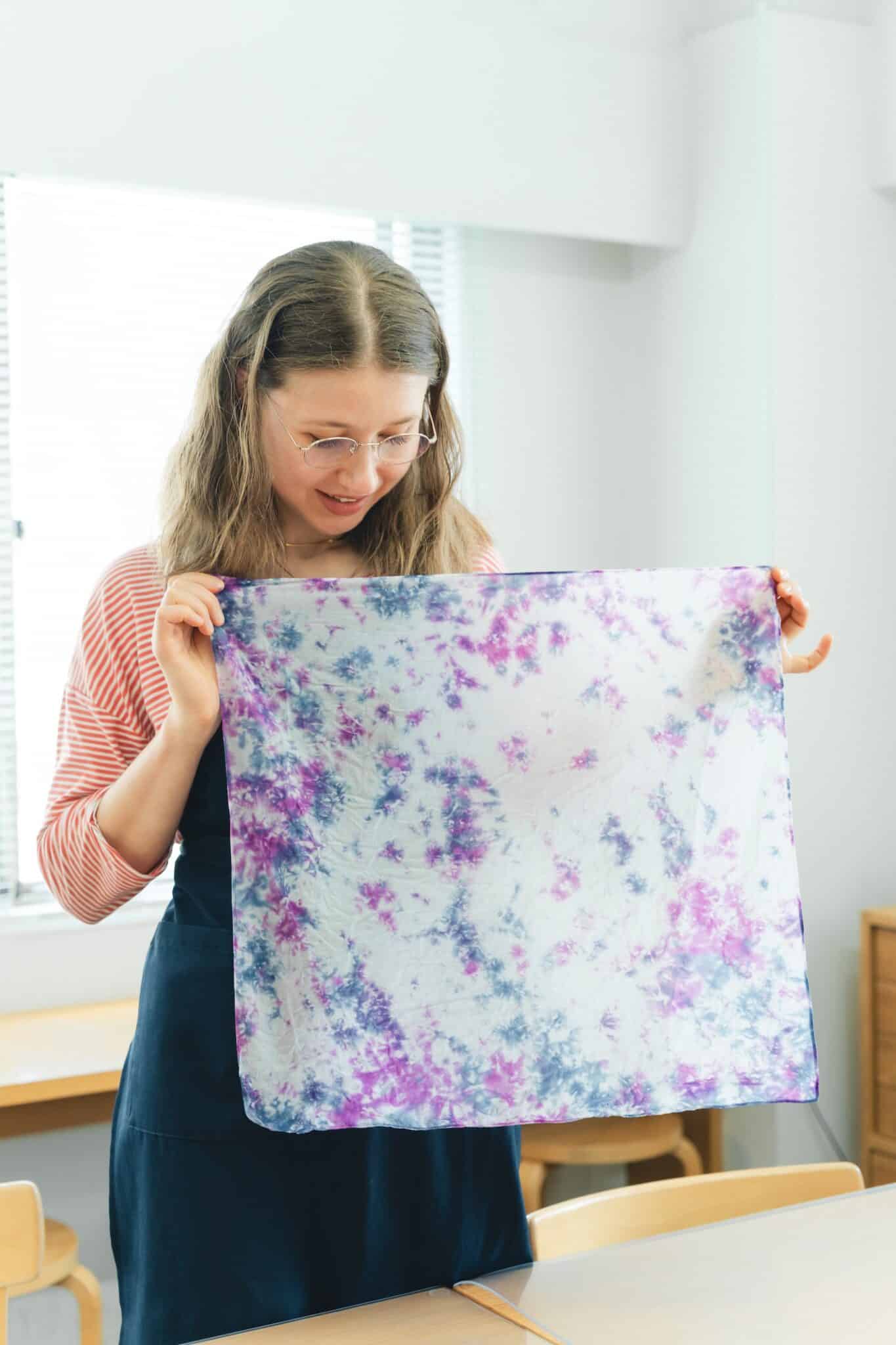
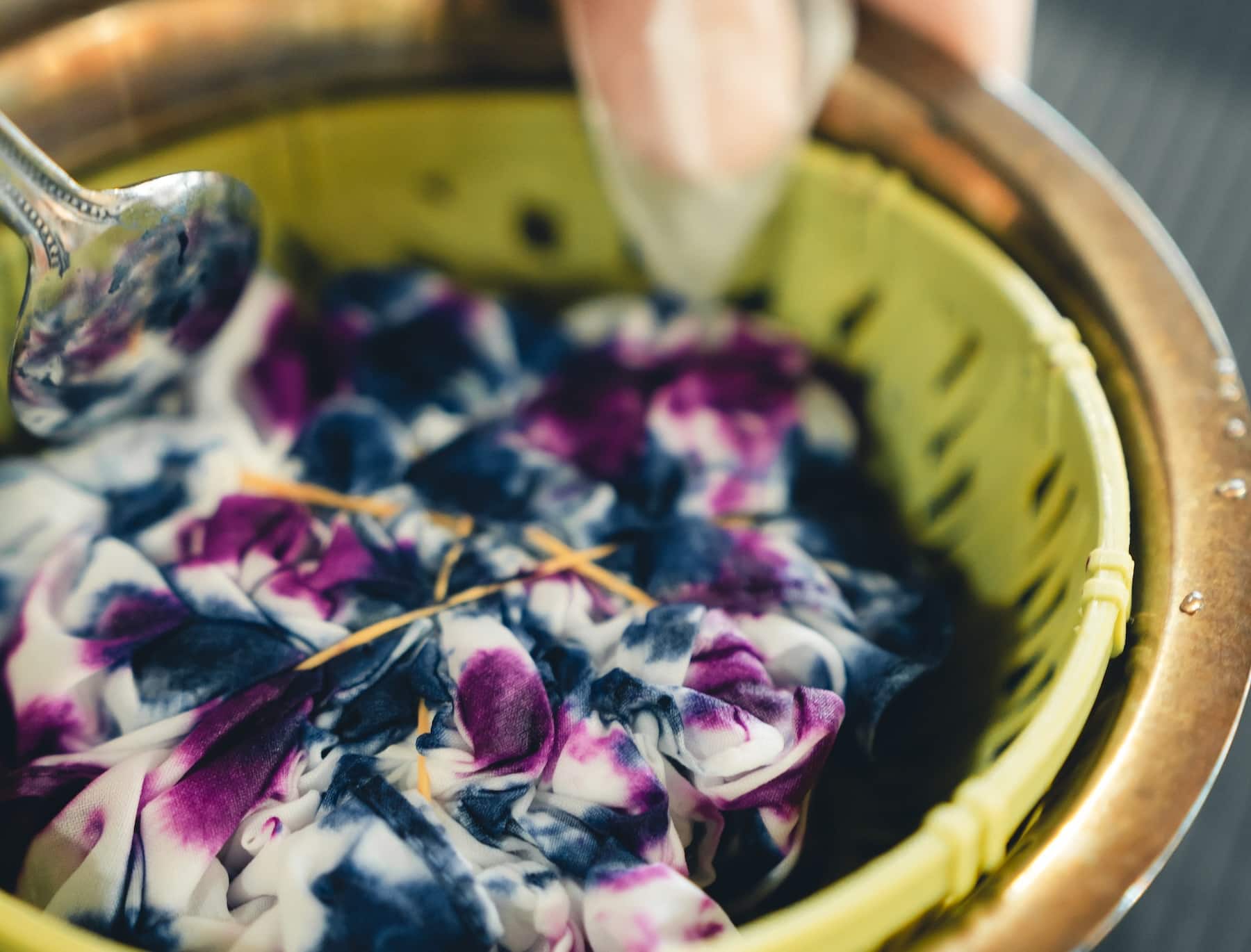
We tried nagashi-zome, a technique used here to dye a large piece of fabric the size of a furoshiki wrapping cloth and another piece the size of a handkerchief. White fabric is packed into a tube, and two dyes selected from 22 colors are poured over it to create patterns. Grittner Miriam, who is from Dortmund, Germany, and is in her ninth year living in Japan, tried Japanese dyeing for the first time. “The process is simple, but I find it fascinating how different patterns emerge depending on the combination of colors and how the fabric is gathered!”
White fabric is packed into a special tube developed by MIYACOZOME, and dye is dripped onto it to create distinctive patterns.
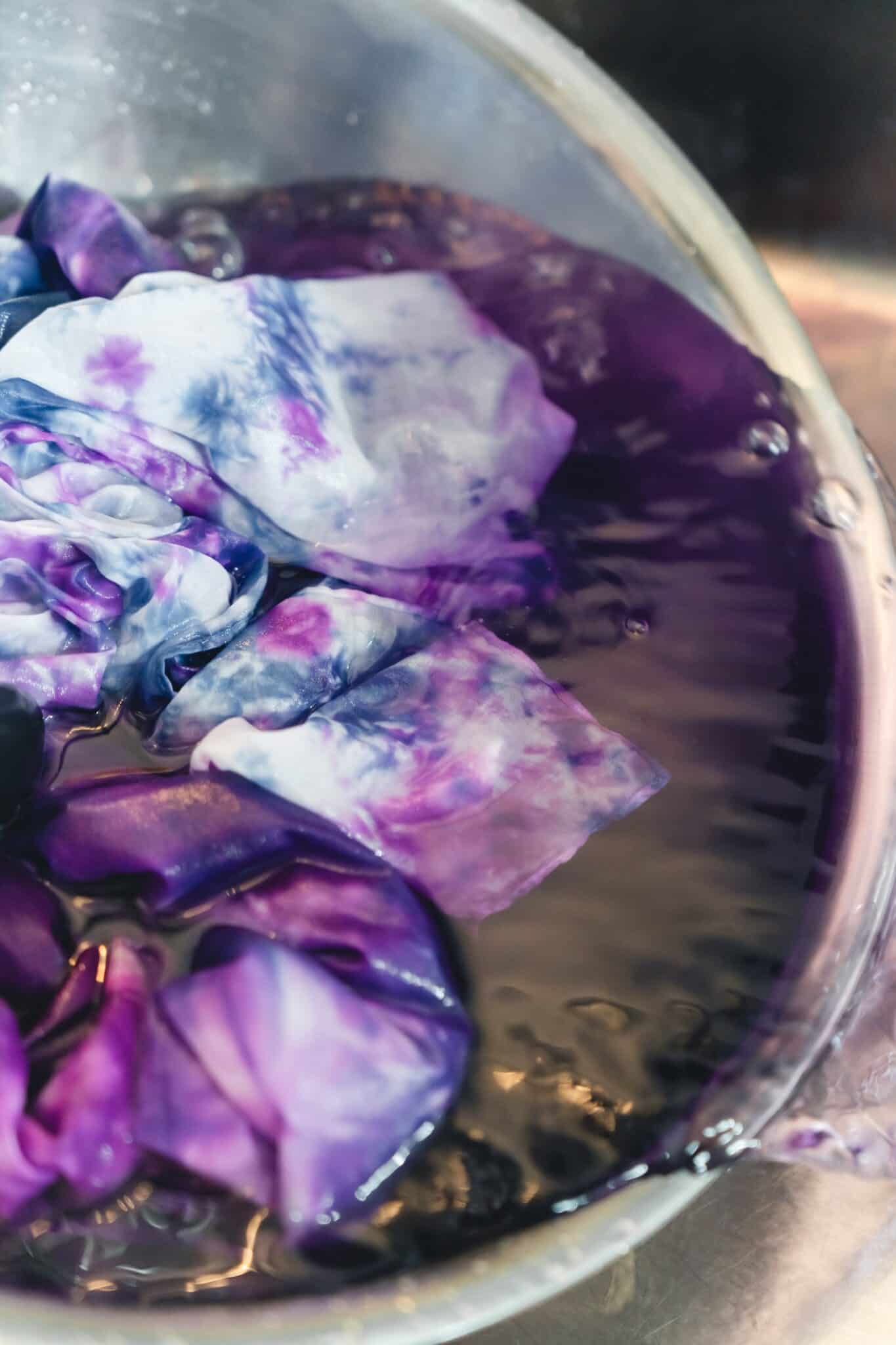
The fabric is then left for about 20 minutes to allow the dye to set before being rinsed with water until no more dye runs out.
Remove the excess water thoroughly, and it’s finished.
A handkerchief dyed with the same dyes takes on a different appearance from the furoshiki depending on how it is tied and how the colors are layered. Different dyeing methods produce a wide variety of finishes.
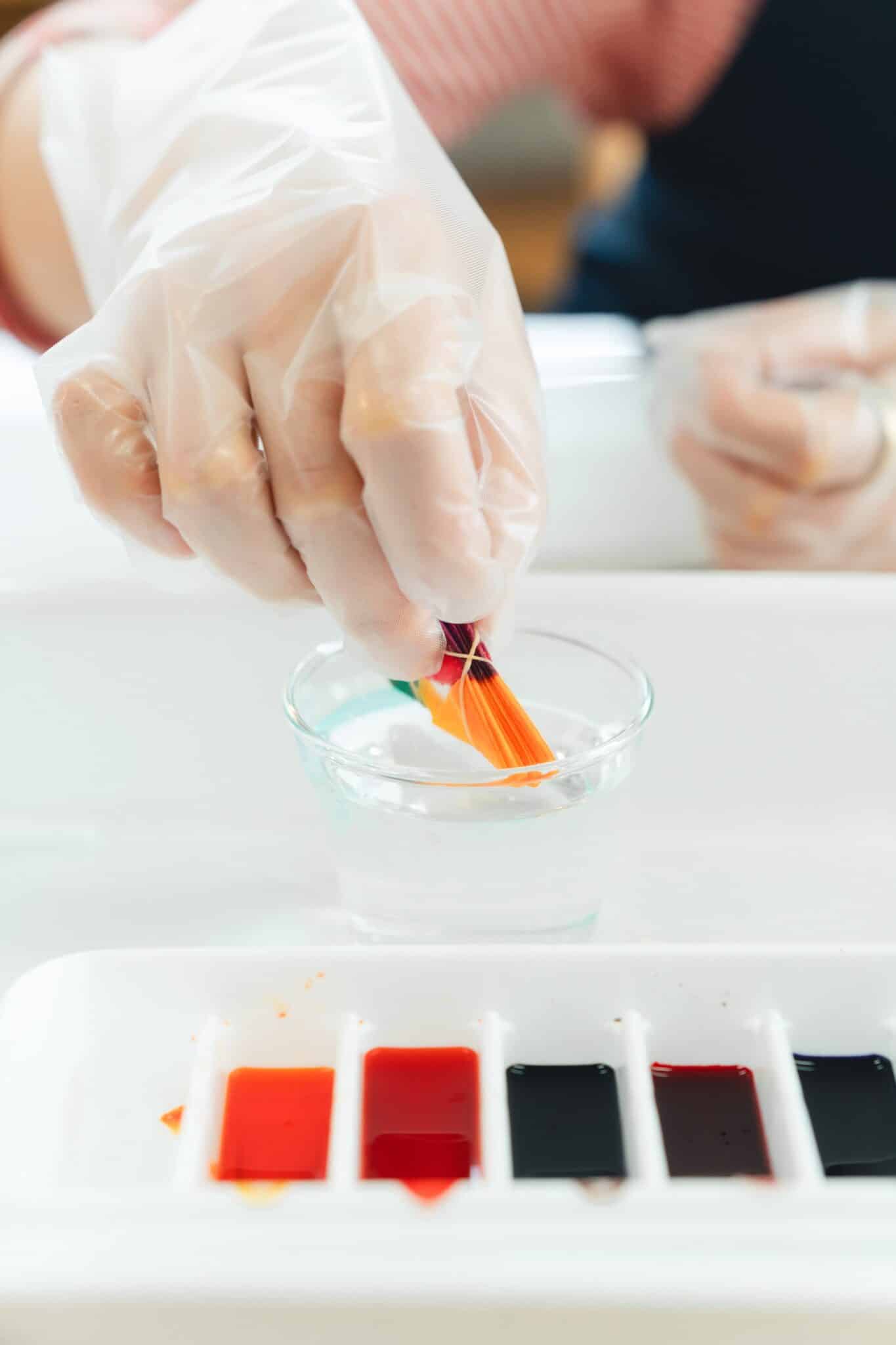
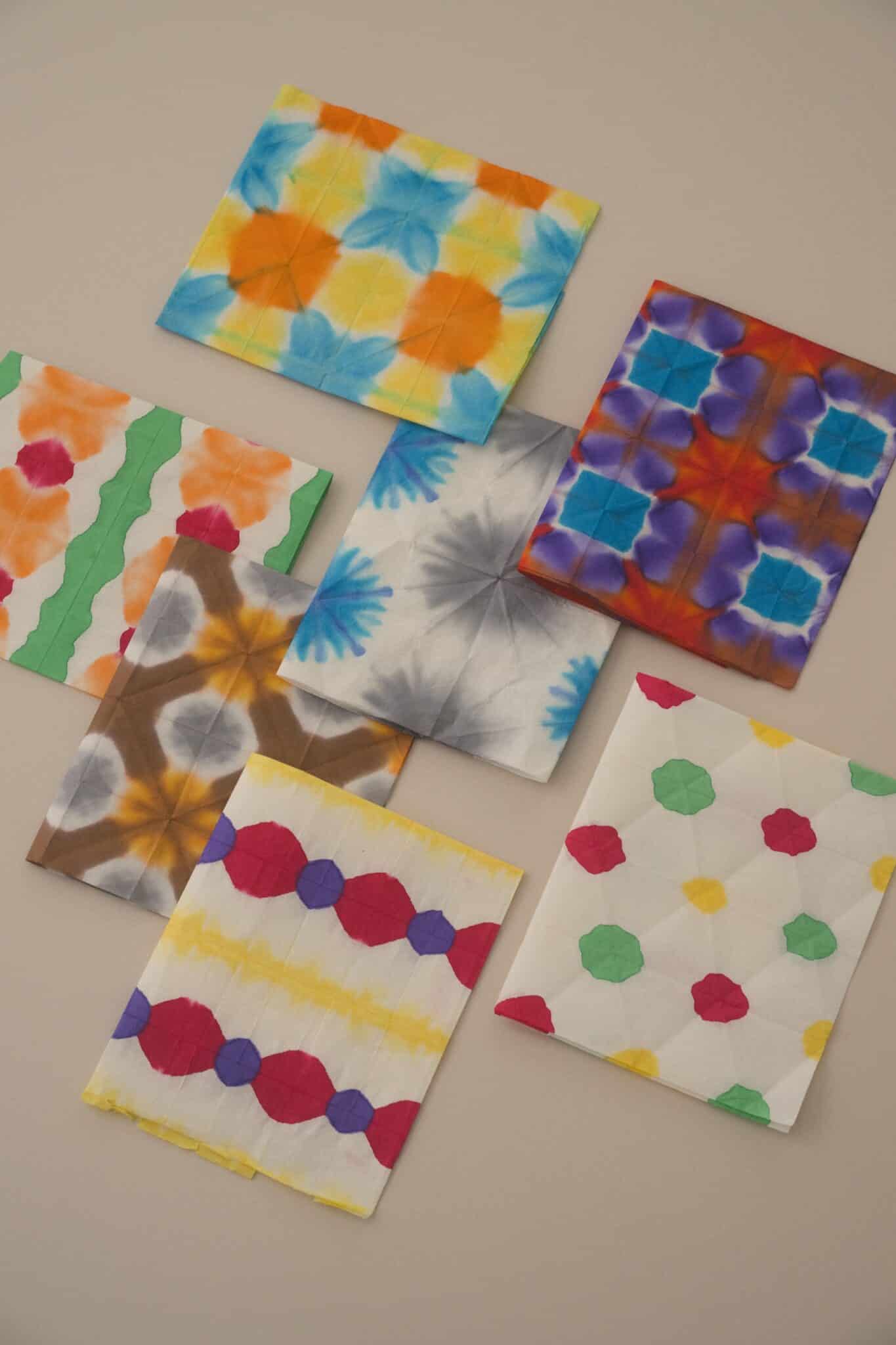
While waiting for the dye to set, visitors can also try ori-zome, a paper-dyeing technique using washi. Dye is absorbed into folded washi paper, and the patterns that appear when it is unfolded are part of the fun.
A variety of designs can be created depending on how the paper is folded and how deeply it is dipped into the dye. The finished washi can be framed or folded to fit a book and used as a book cover.
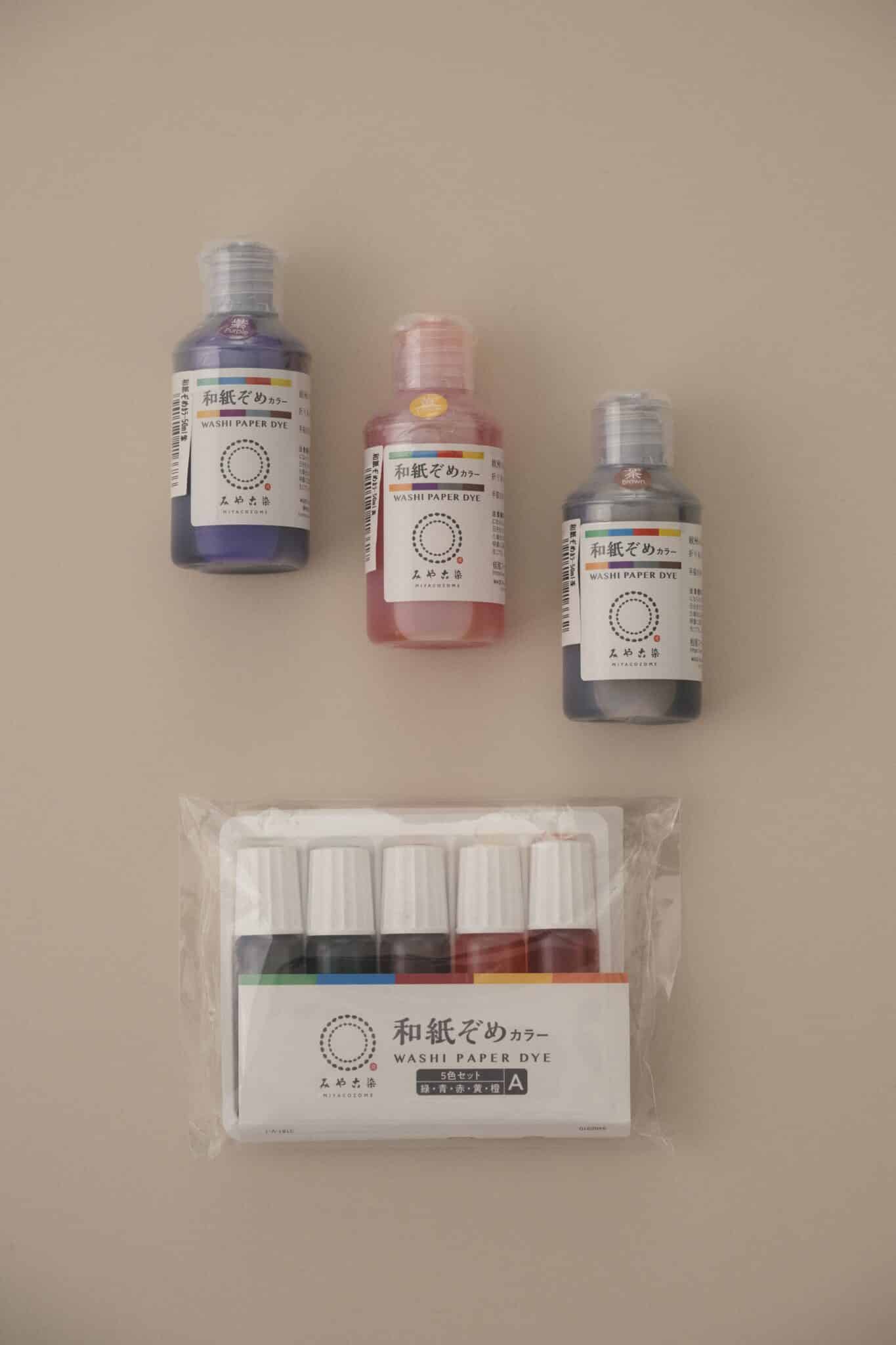
Liquid dye for coloring washi paper. Top: ¥605 each. Bottom: Set of 5 colors, ¥1,100
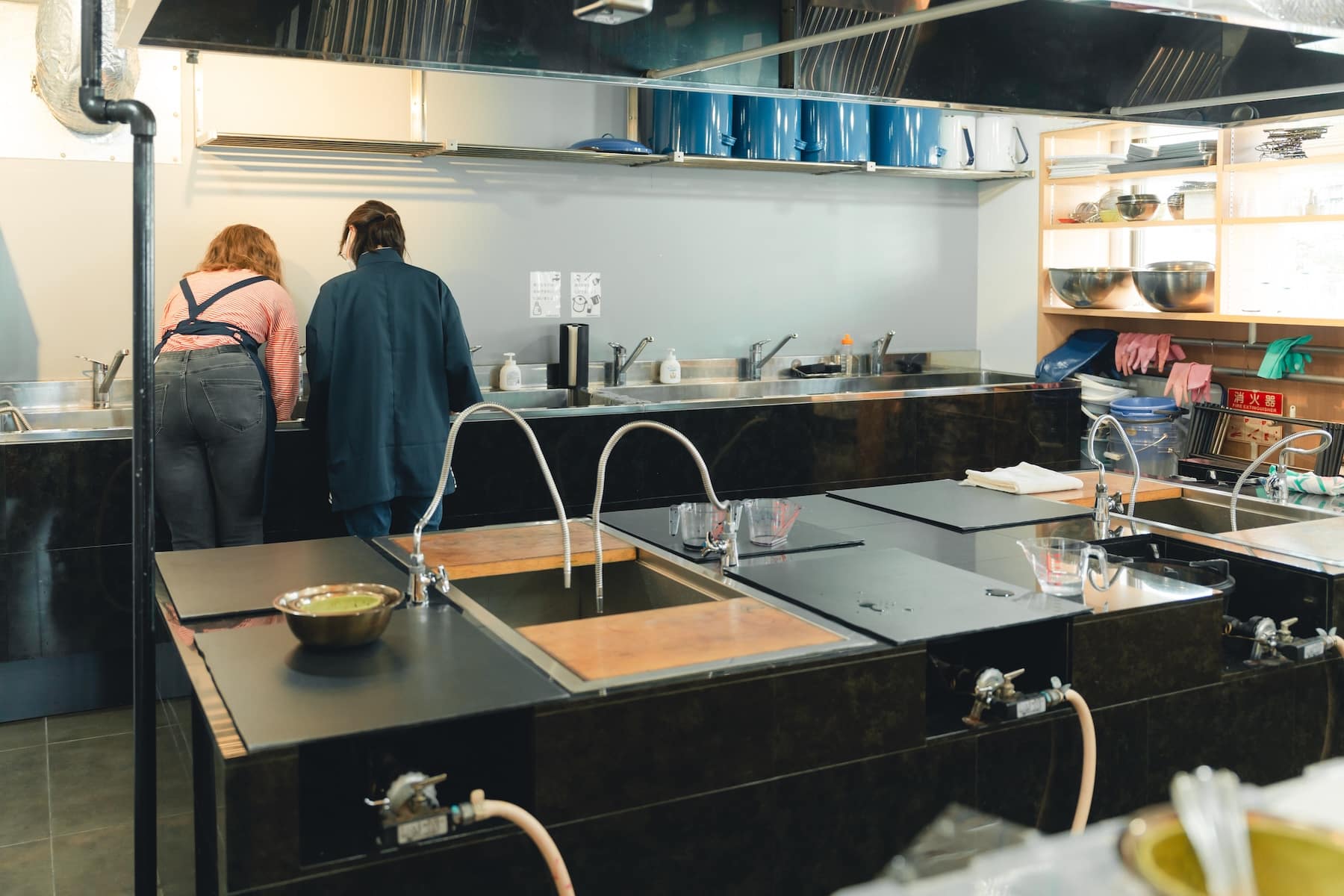
The workspace, equipped with a spacious sink, can accommodate 6–8 people.
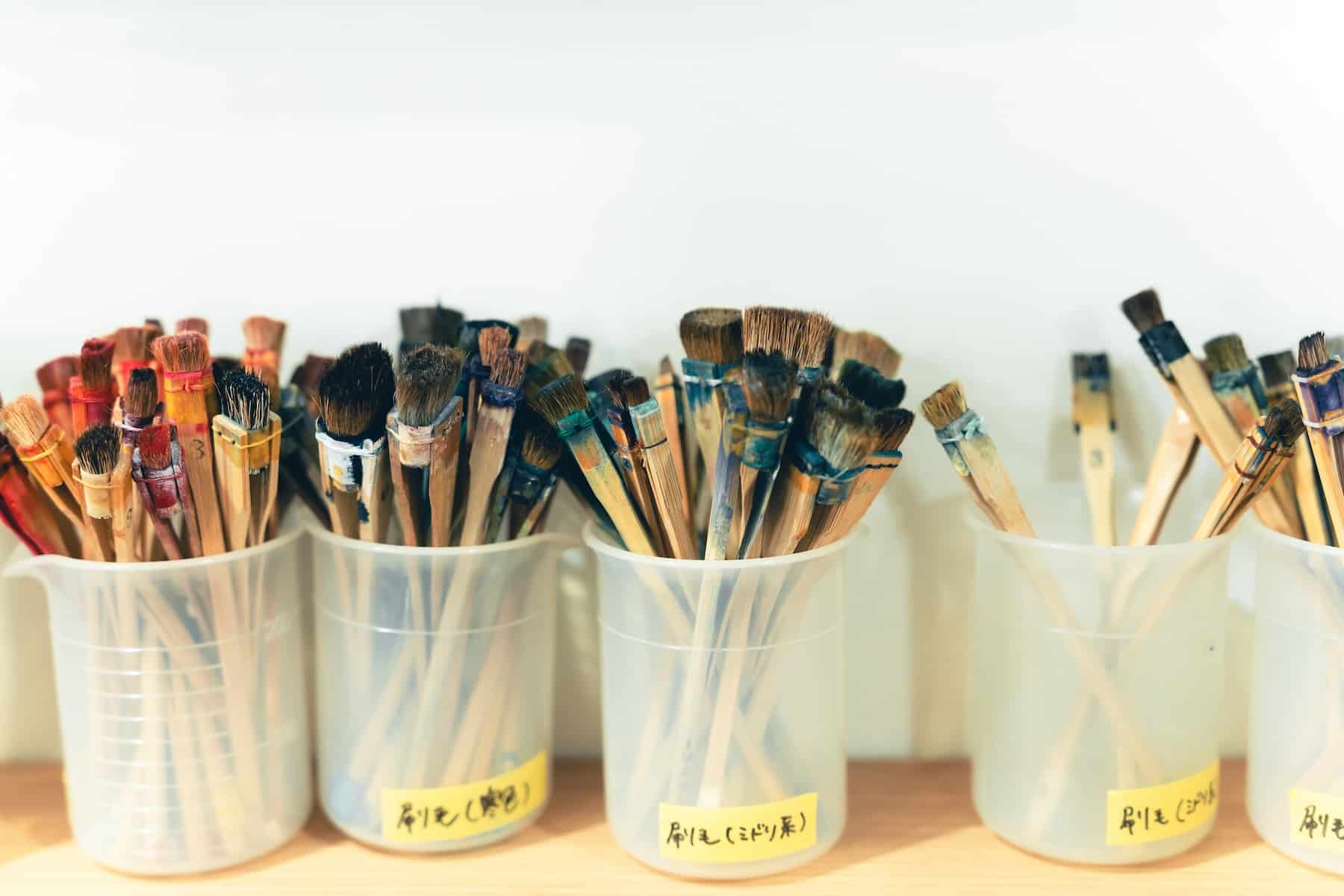
Brushes and other tools are also provided so visitors can enjoy dyeing without bringing any equipment.
The information in this article is current as of September 29, 2026 (at the time of publication).