DEEPTOKYO
magazine

EN

DEEPTOKYO
magazine
EN
2026.08.09
Japan’s First Vans Flagship Store, Home to Japan-Exclusive Models and Coveted Finds


 Nearest Station


Since its founding in 1966, “Vans” has earned strong support from street culture, starting with its skate shoes. Located in Harajuku, Tokyo, “Vans Store Harajuku” is the brand’s first multi-level flagship store in Japan and a hub for culture. In addition to its core models, the store is filled with elements that allow visitors to experience the world of “Vans,” including Japan-exclusive designs that appeal to devoted fans, apparel incorporating traditional Japanese culture, art that conveys the energy of skateboarding, and valuable archive displays.
SHARE


"Vans Store Harajuku" is located in Harajuku, a neighborhood that has long been at the forefront of Japan's street fashion scene. Inside, you'll find a wide range of Vans products, from its classic footwear to apparel and accessories.
Since its founding in 1966, “Vans” has built support on the street through its tough skate shoes. Its history has evolved not only through skateboarding, but also through deep connections with action sports such as BMX and surfing, as well as music, art, and other forms of culture.
The appeal of this store lies in the way the space allows visitors to directly feel the culture behind the brand. Elements of skateboarding and art are incorporated throughout the interior, expressing the spirit of “Off The Wall”—the unconventional mindset that “Vans” stands for—across the entire space. Rather than simply browsing products, visitors can experience the brand’s roots and worldview while they shop.
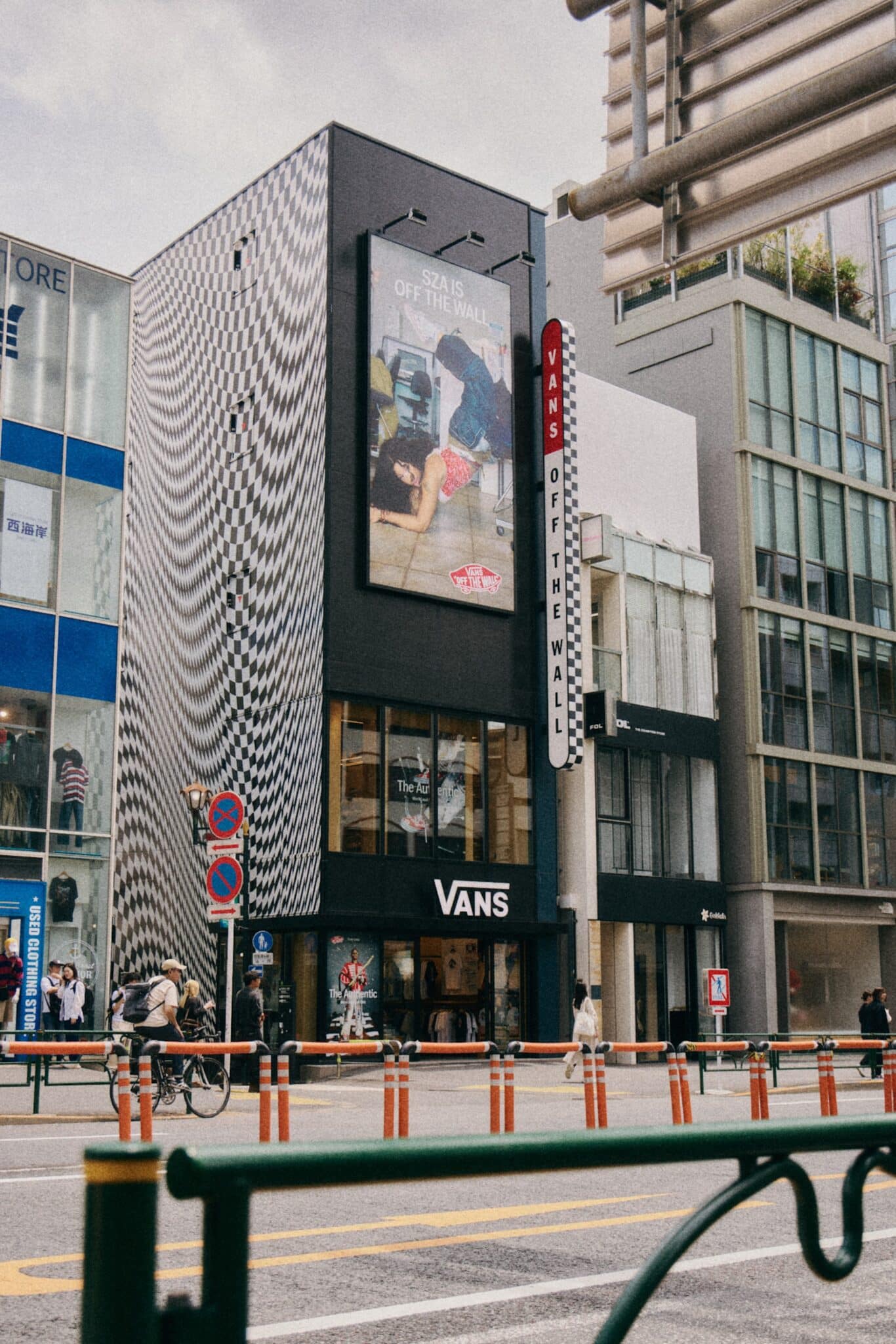
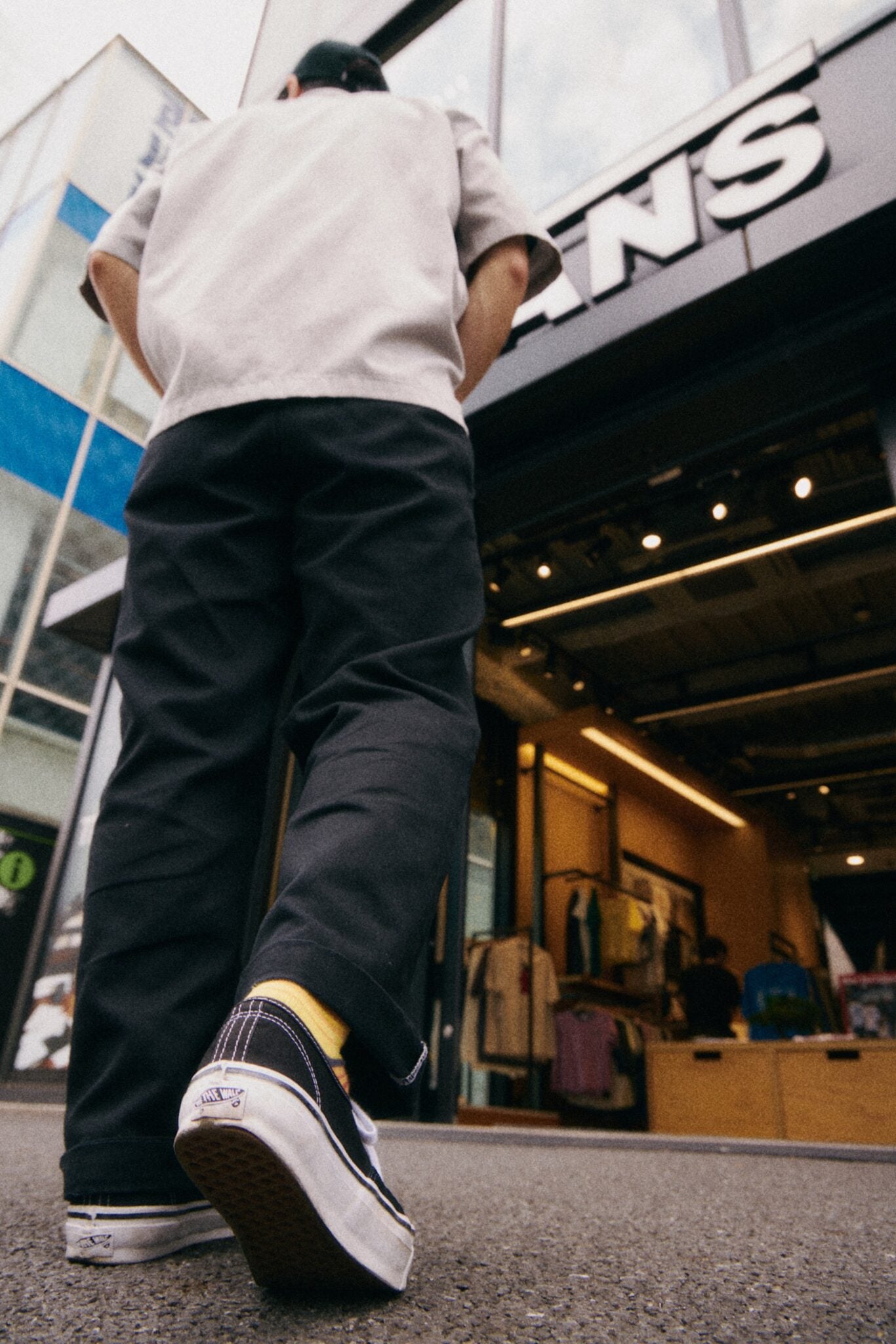
The exterior, marked by its checkerboard pattern, serves as a landmark. The large advertisement on the front also makes a strong impression.
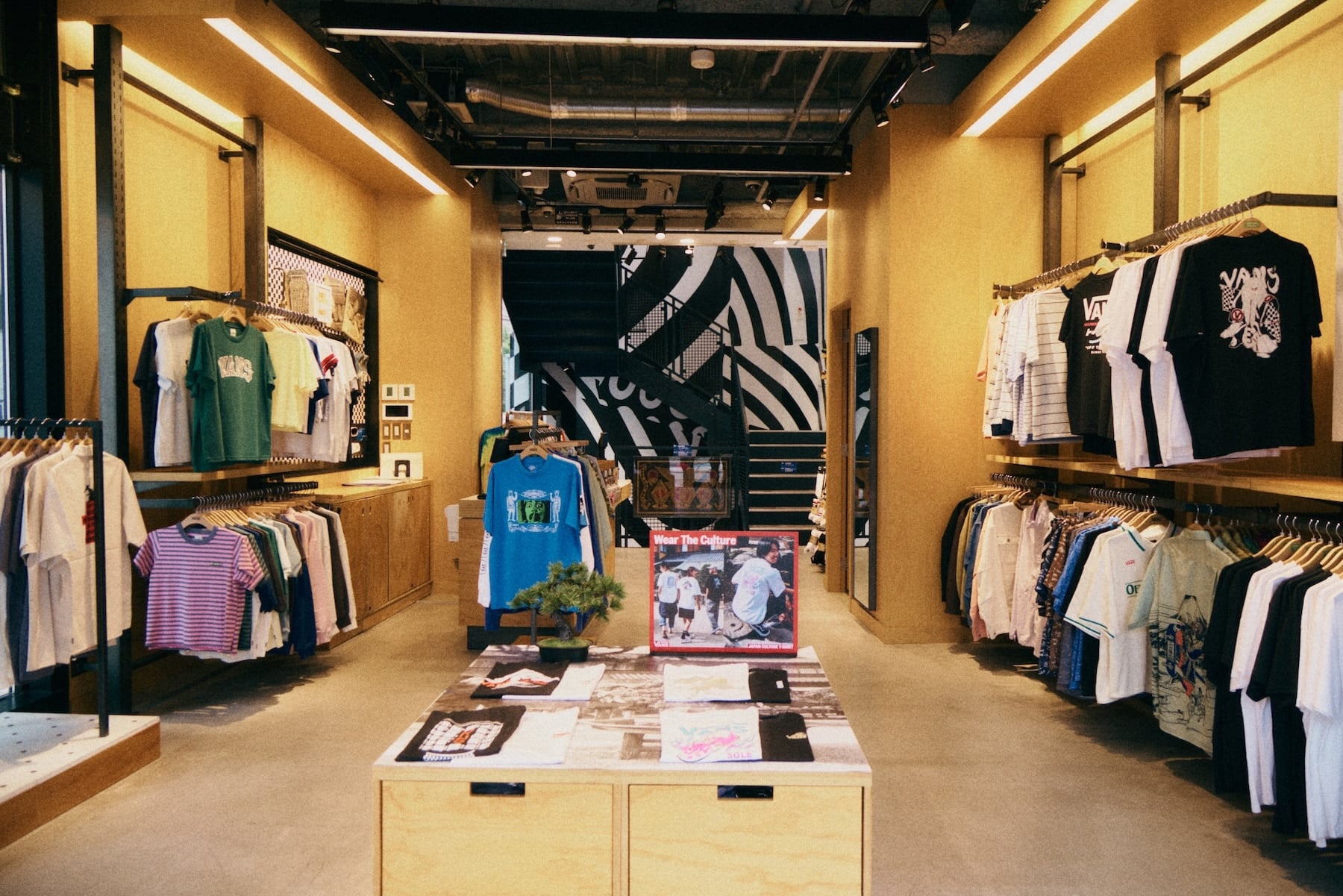
The store has three floors, from B1F to the second floor. The first floor, where the entrance is located, is an apparel floor that highlights an approach unique to Harajuku. Because this is a neighborhood where fashion and culture are constantly intersecting, the first floor is deliberately centered on apparel, creating a layout where visitors can intuitively feel “Vans culture” itself through the graphics on the items.
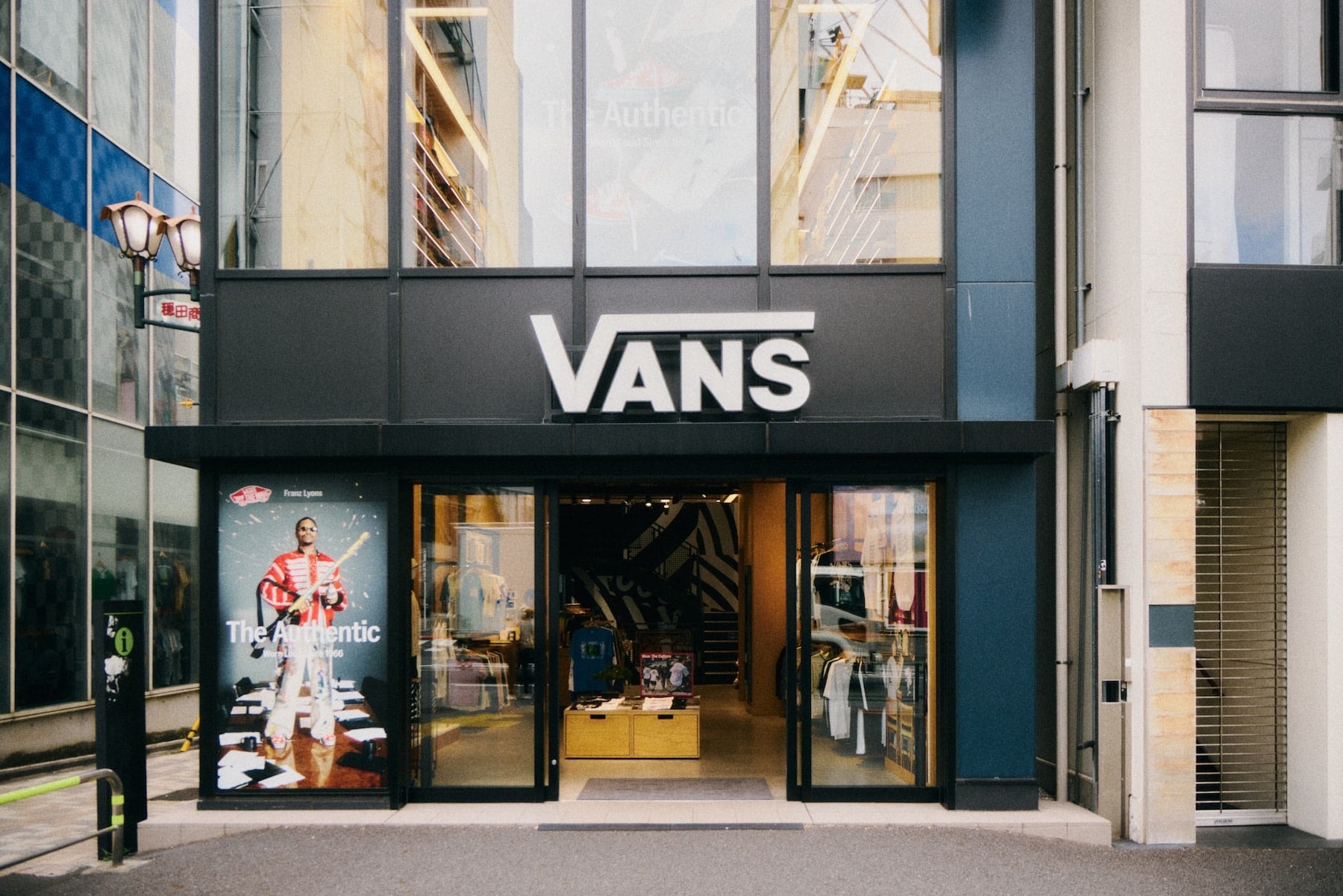
A glass-fronted entrance with an open, airy feel.
The apparel floor on the first floor. In addition to the main line and “Japan Culture Tee,” there are also many collaboration items with artists.
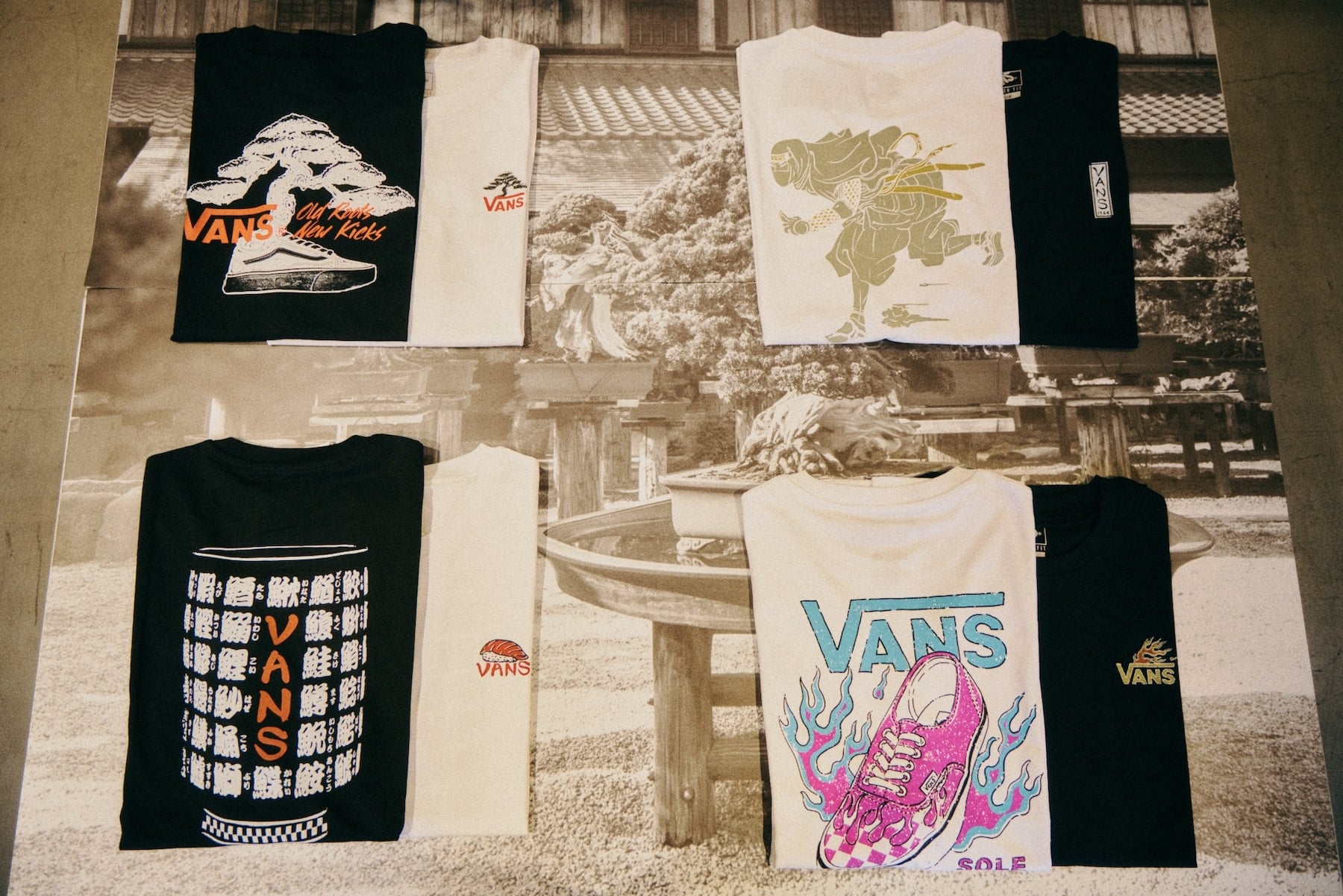
The first thing that catches your eye when you enter is the popular “Japan Culture T-Shirt” series. Featuring designs that reinterpret traditional Japanese culture through a street perspective, the series is a perfect match for Harajuku as a fashion district and for “Vans,” a brand rooted in the street. Following past motifs such as “Kabuki,” this season features graphics themed around “sushi,” which have become popular souvenirs among visitors from overseas.
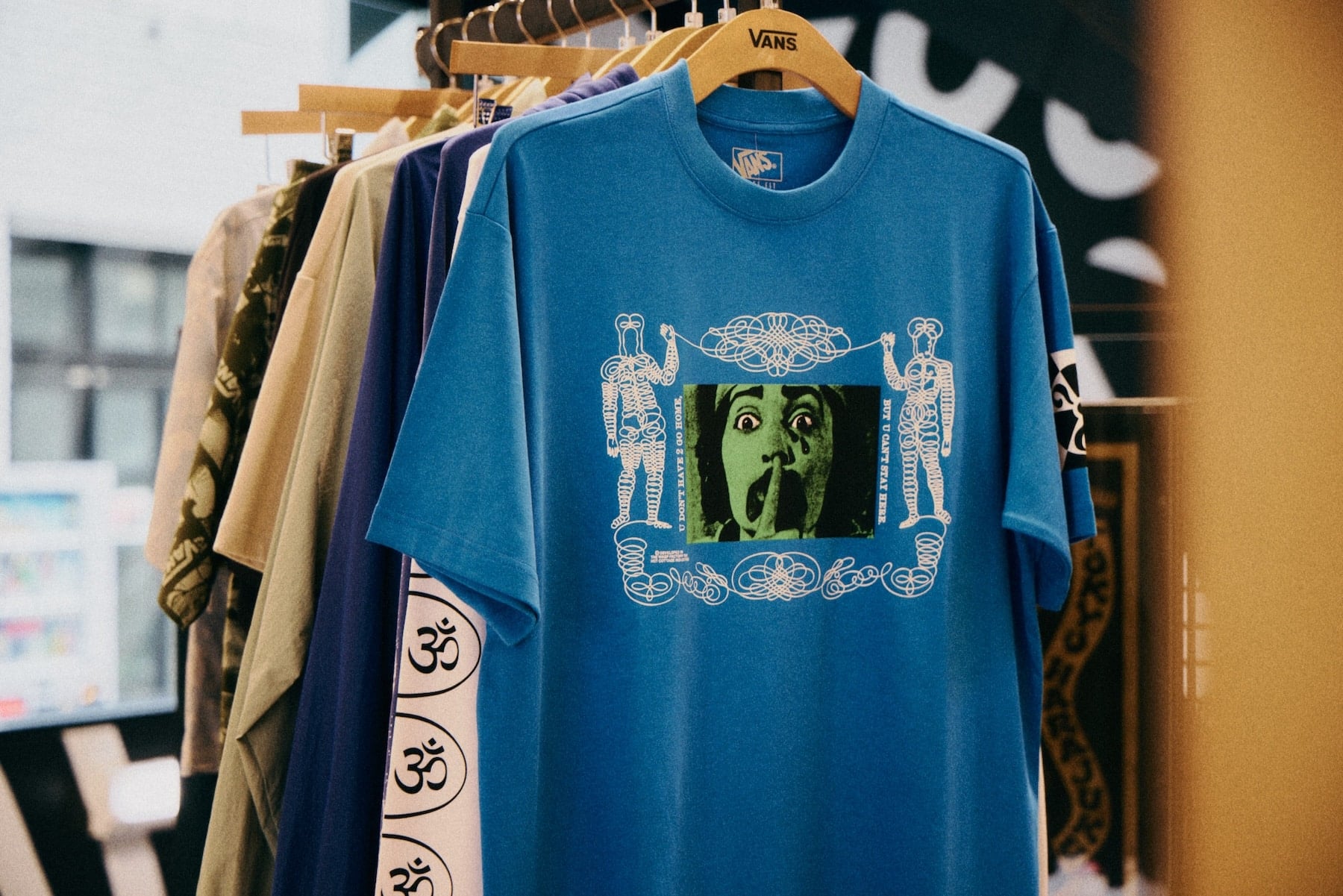
In addition, the lineup includes the “Vans Artist Collection,” which places an even stronger emphasis on fashion and art. Collaborations with artists that “Vans” is paying attention to are also attracting interest from Harajuku’s style-conscious crowd, in a neighborhood that serves as a hub for many different cultures.
When visiting the store, be sure to explore the apparel floor before looking for the shoes you came for. Through the distinctive graphics displayed throughout the shop, you can directly experience how “Vans” is not simply a shoe brand, but a lifestyle brand deeply connected to art, music, and street culture.
The “Japan Culture T-Shirt” series combines checkerboard and skate elements with traditional Japanese culture. The 2026 new releases add four designs: “Yunomi,” “Ninja,” “Bonsai,” and “AUTHENTIC.” Top right: a graphic of a ninja wearing a headband that reads “Vans” as he dashes forward. Top left: a unique design with bonsai planted in an Old Skool. Bottom right: a T-shirt boldly incorporating the Authentic, a popular model in Japan, into the graphic. Bottom left: a design inspired by a sushi restaurant teacup, arranging kanji characters with the fish radical. ¥4,950 each.
From the “Vans Artist Collection,” which invites talented artists to create shoes and apparel, this piece is by artist and designer Ed Davis, also known as the co-founder of Brain Dead. The design expresses modern life, where people are overexposed to information and constant stimulation. ¥7,370.
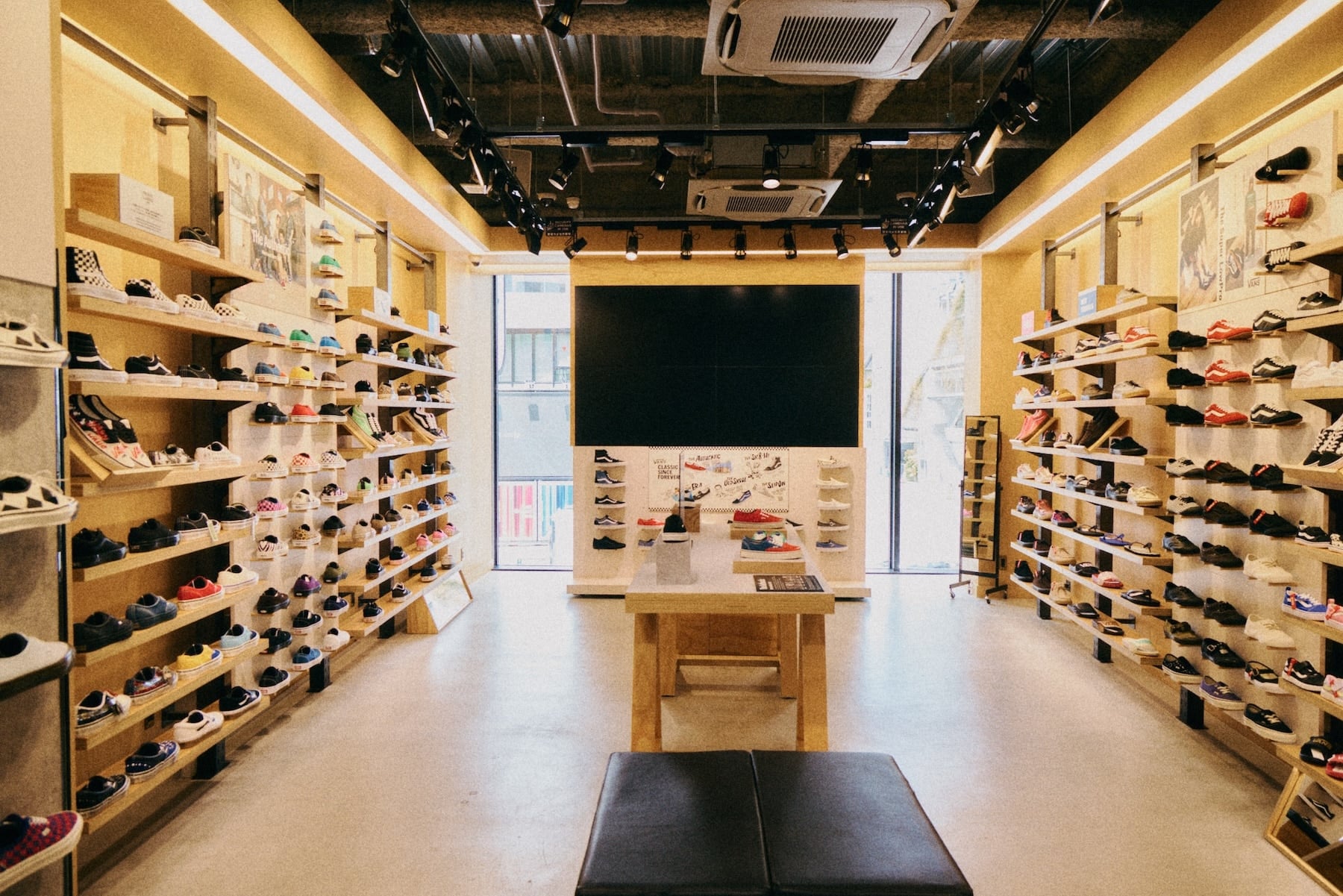
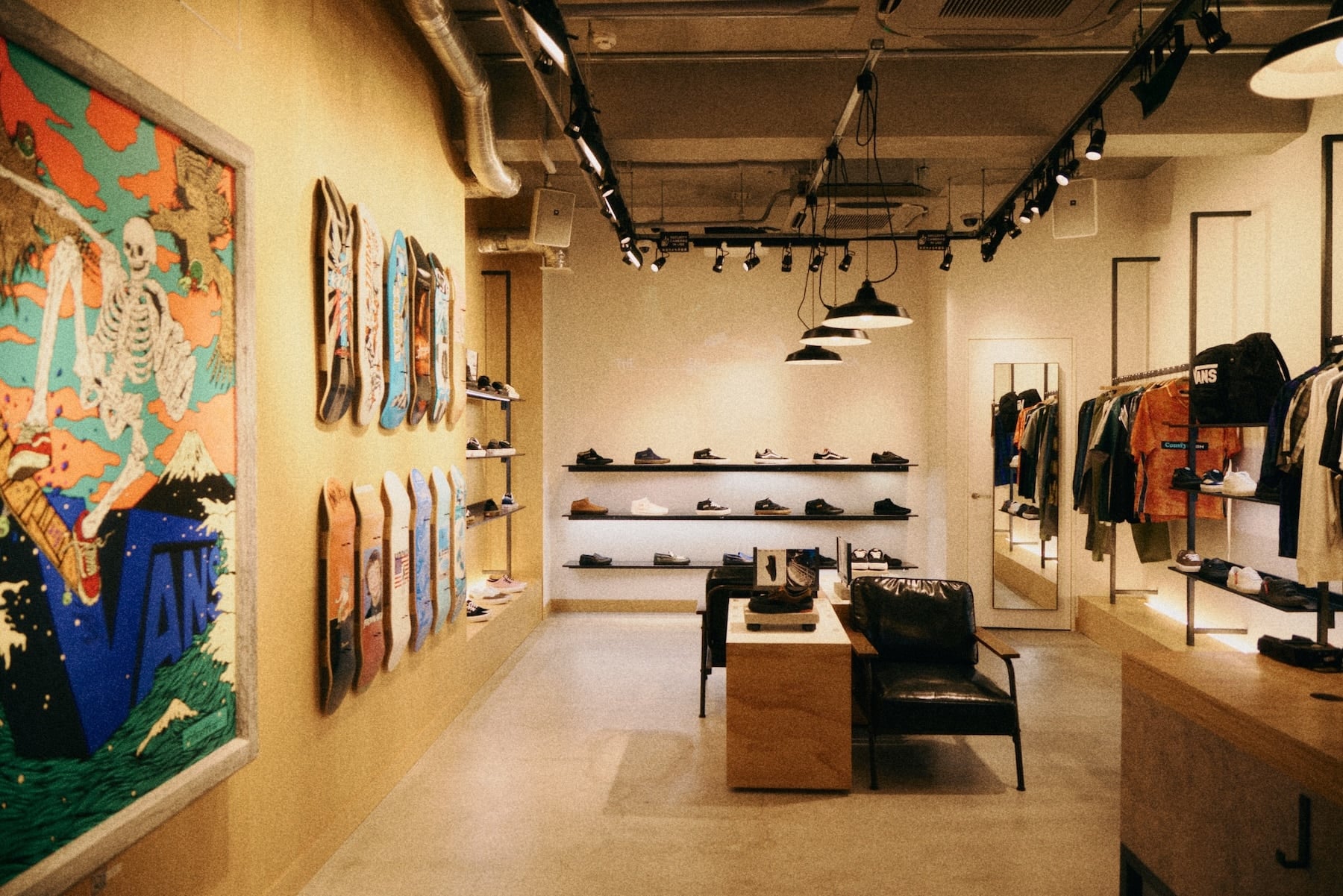
The second floor is the main shoe floor, where almost the full “Vans” lineup is available. Using the spacious wall displays, the space is neatly arranged by model, with everything from classic staples to premium lines lined up.
In addition to signature models that represent the brand, such as the “Authentic,” “Old Skool,” and “Slip-On,” there is also a full selection of the “Premium” series, which focuses on high-quality materials and refined details. The sales floor is fitting for a flagship store, responding to the needs of everyone from first-time “Vans” customers to longtime core fans and highly fashion-conscious shoppers.
On the second floor, you can see almost the full lineup, from core models to kids’ models.
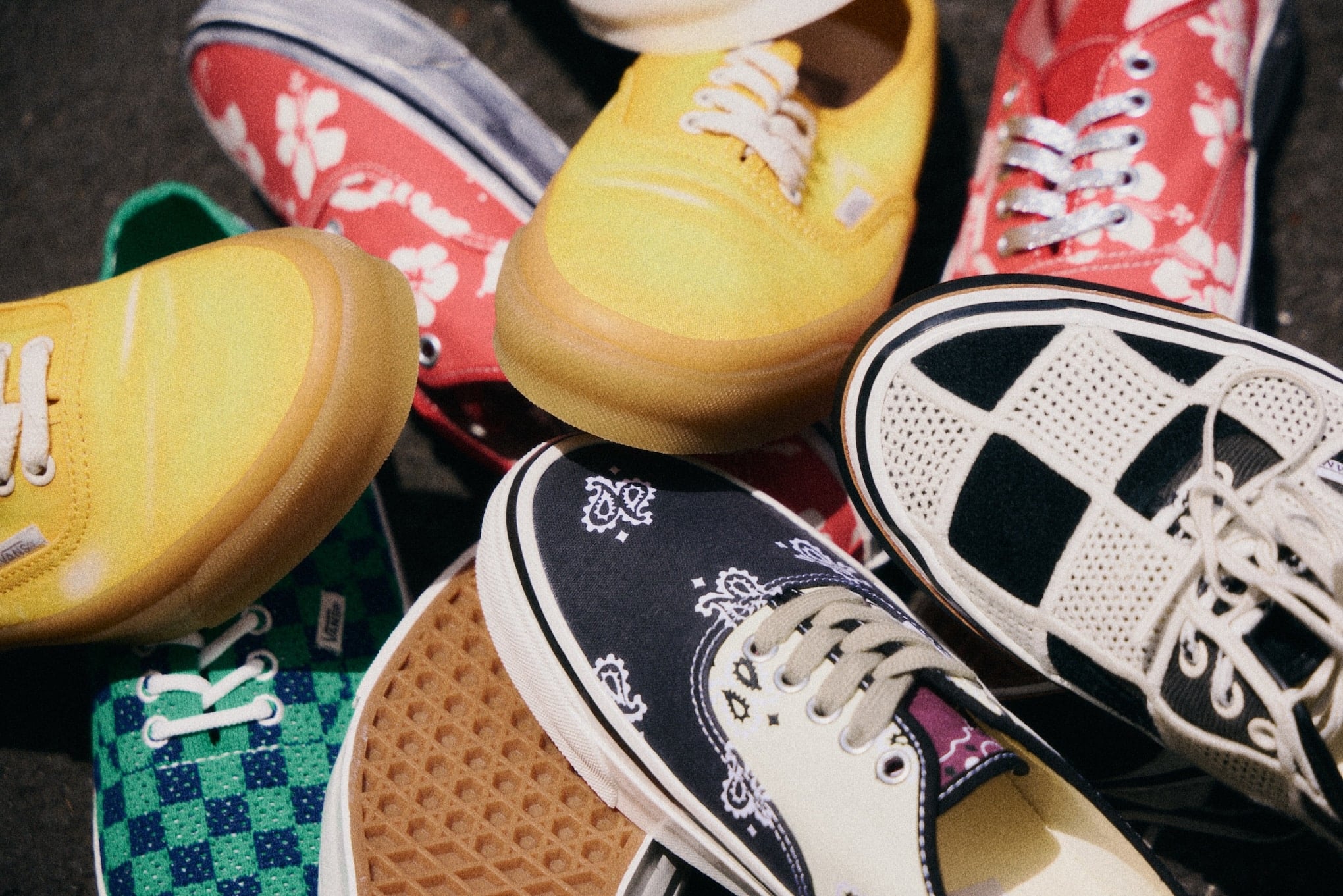
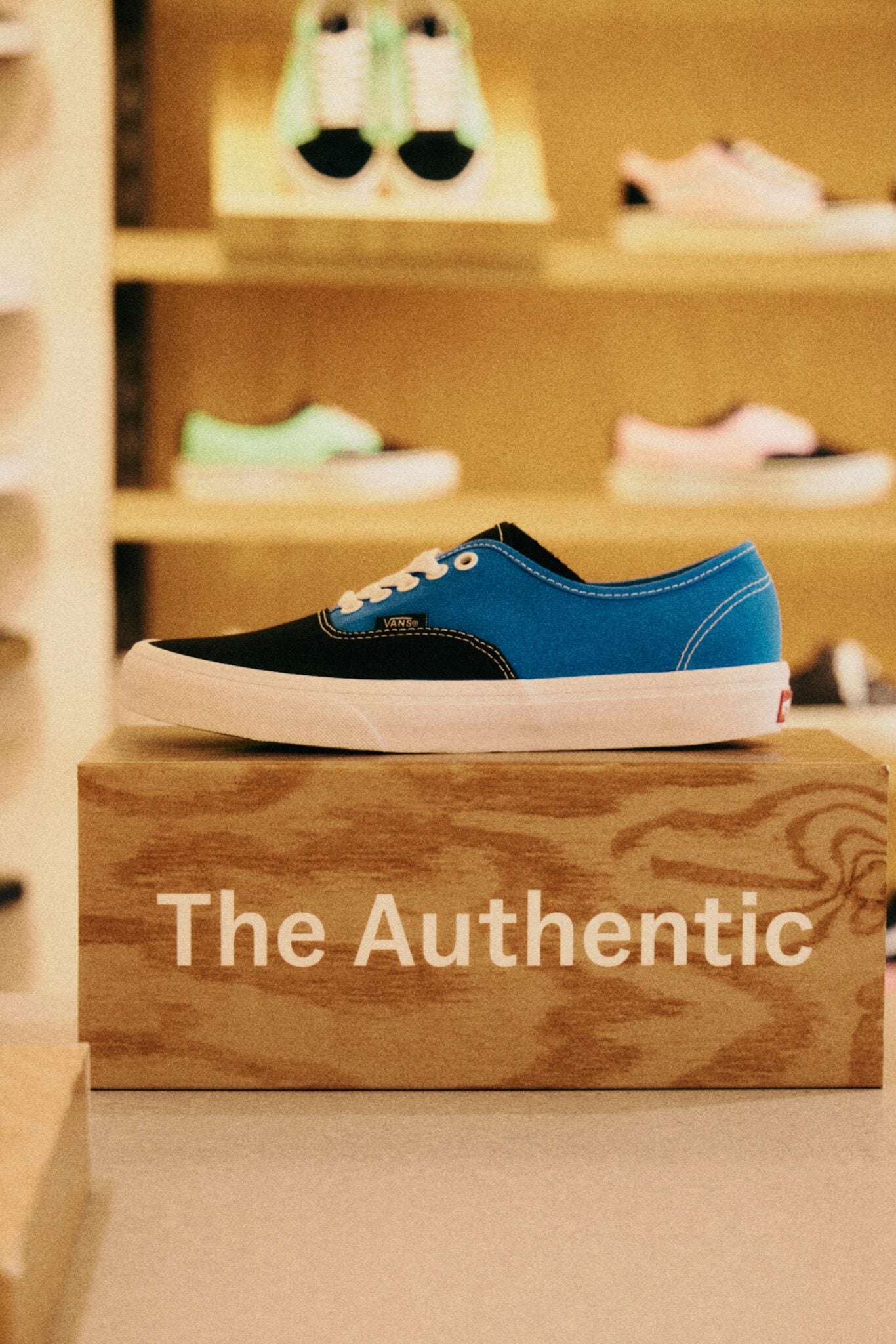
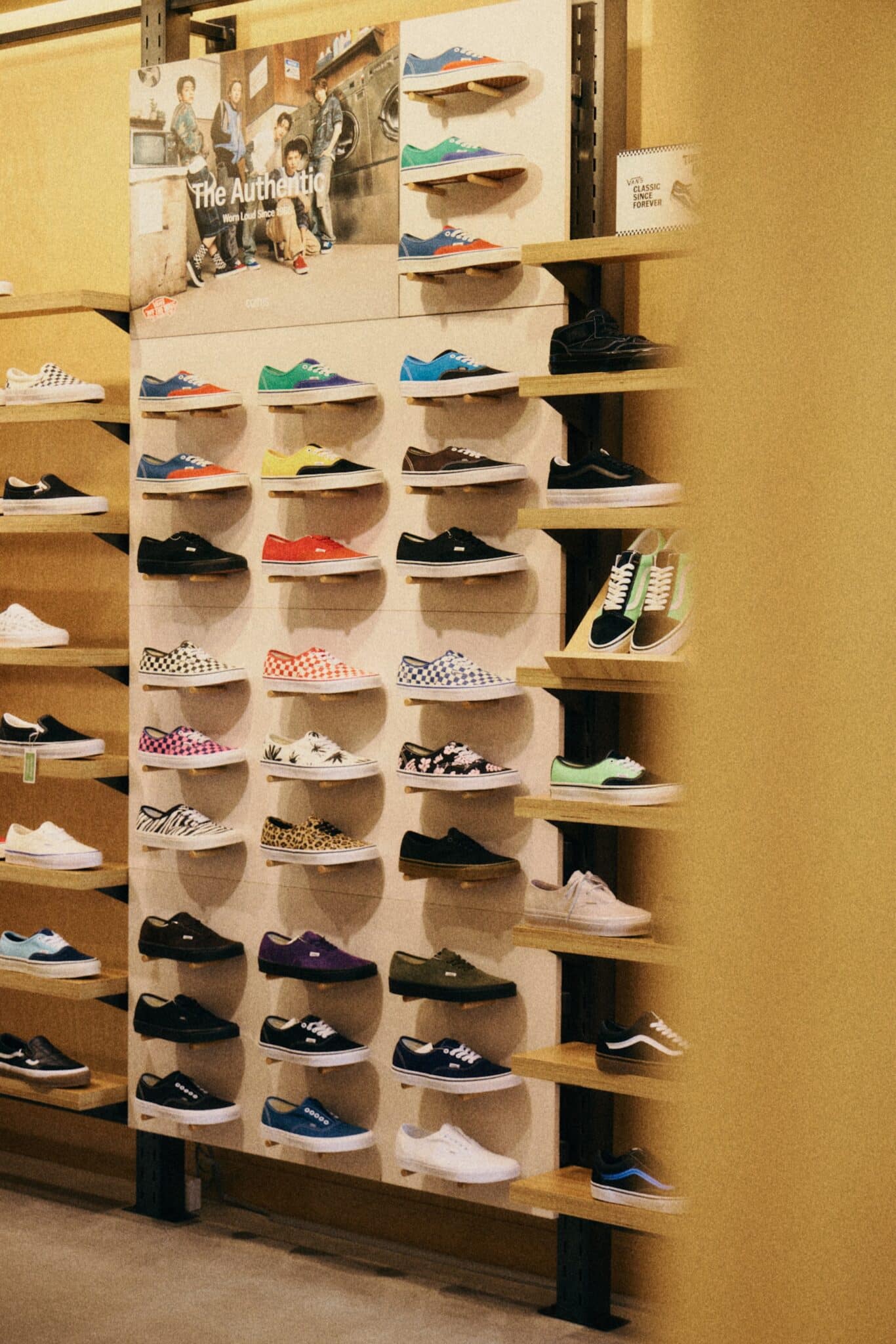
Among this extensive lineup, the “Authentic” stands out in particular. On the day of the shoot, the wall was vividly decorated with a wide range of color variations celebrating the brand’s 60th anniversary and its iconic checkerboard pattern. While the “Old Skool” is considered an enduring classic globally, the “Authentic” has apparently remained especially popular in Japan for many years.
The “Authentic,” the most popular model in Japan. A rich range of colors is displayed.
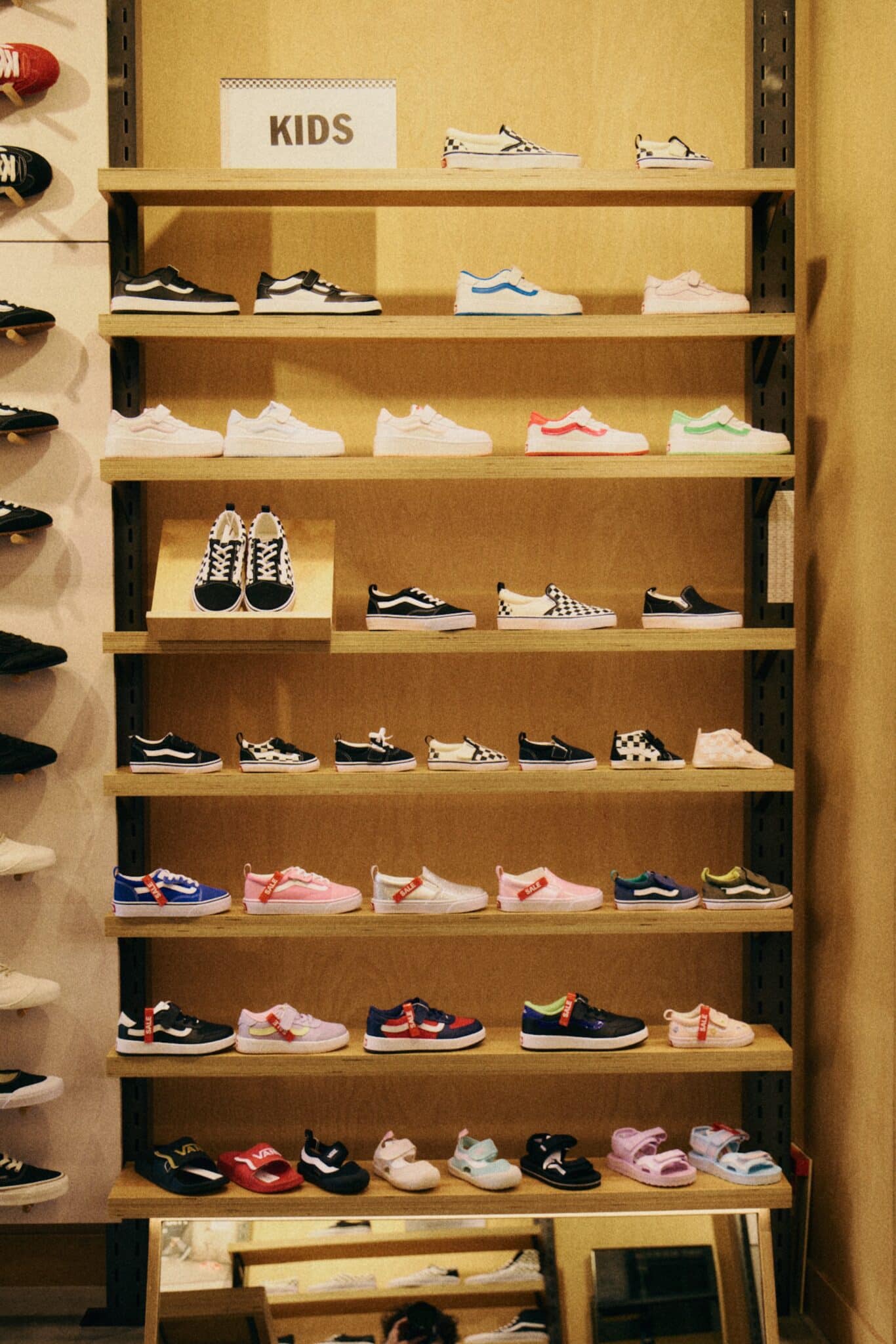
Kids’ models with stylish designs that look just as sophisticated as adult styles. They feature easy-to-wear details such as soft soles and elastic shoelaces.
Along with the latest colors for each model, loafer sneakers—whose popularity has been revived alongside the growing mood for 1990s style—are also available, and the displays clearly reflect current trends.
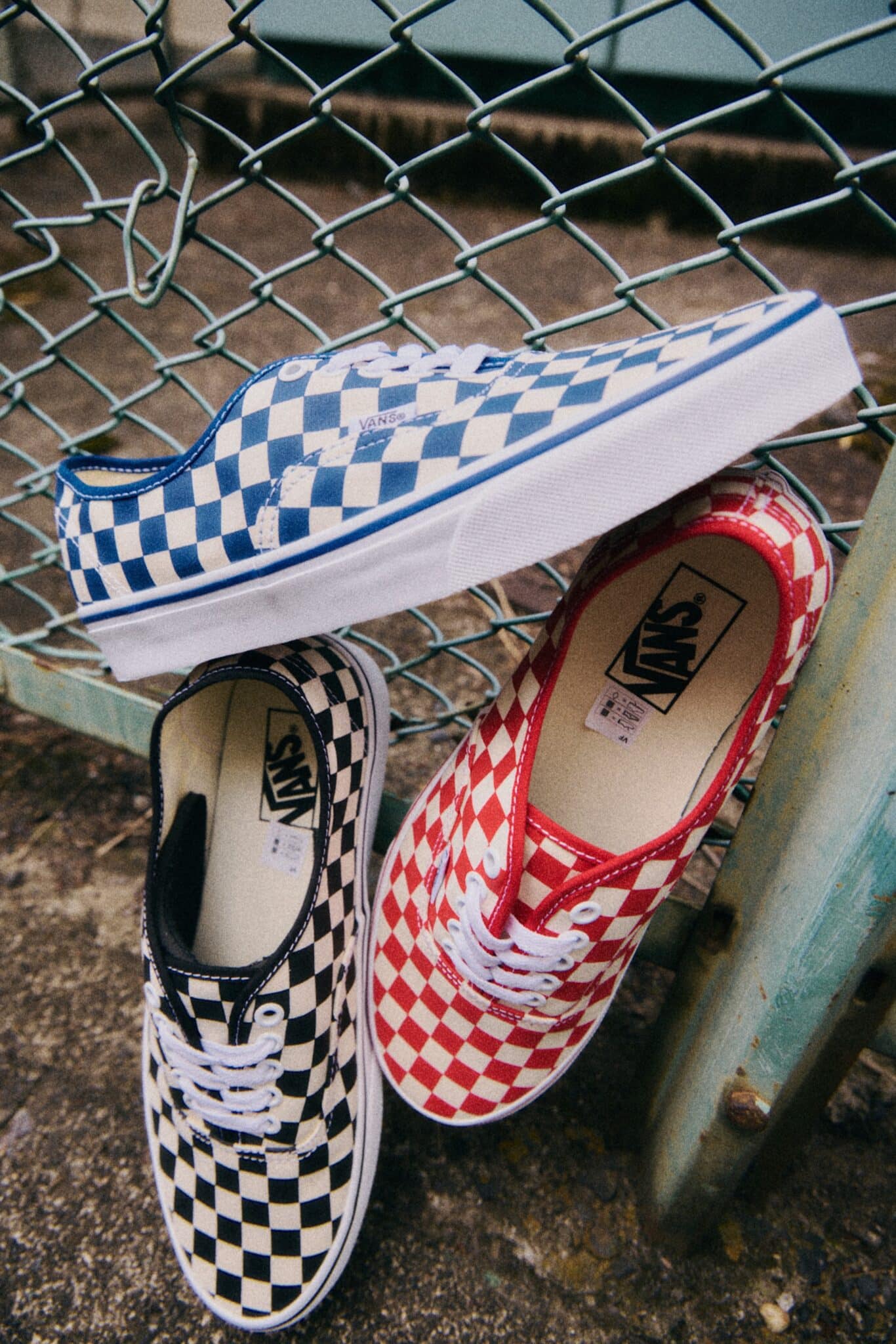
New checkerboard colors are also available for the regular “Authentic” model. “Authentic,” ¥7,150 each.
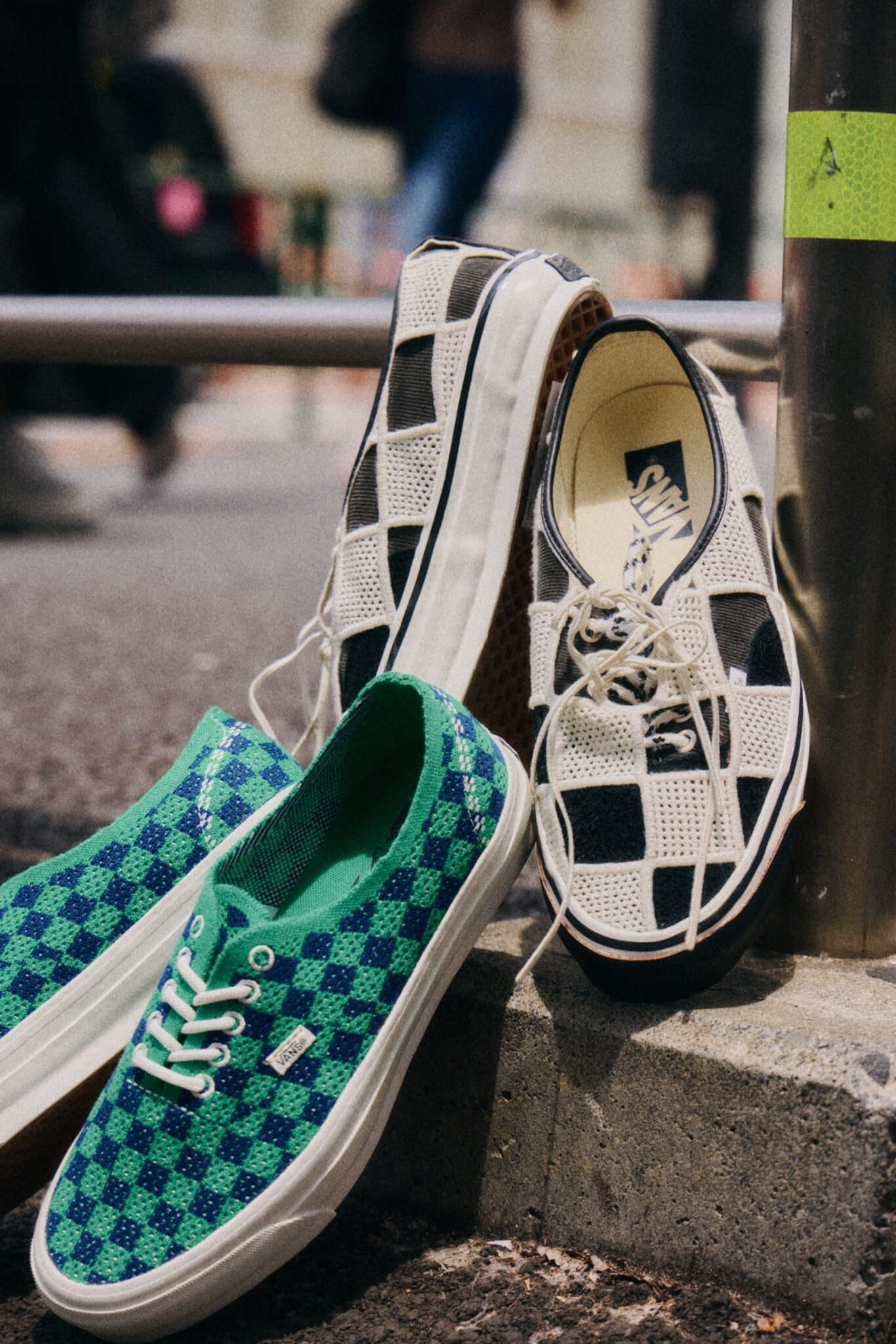
Special-color “Authentic” models celebrating the 60th anniversary. Right: the “Premium Authentic Shell Knit,” which recreates the checkerboard pattern synonymous with “Vans” using a crochet-knit technique, ¥14,300. Left: the lightweight “Premium Authentic EK,” made with knit material, ¥13,750. Both have a strong presence that can anchor an outfit, making them must-see items for fans looking for something new.
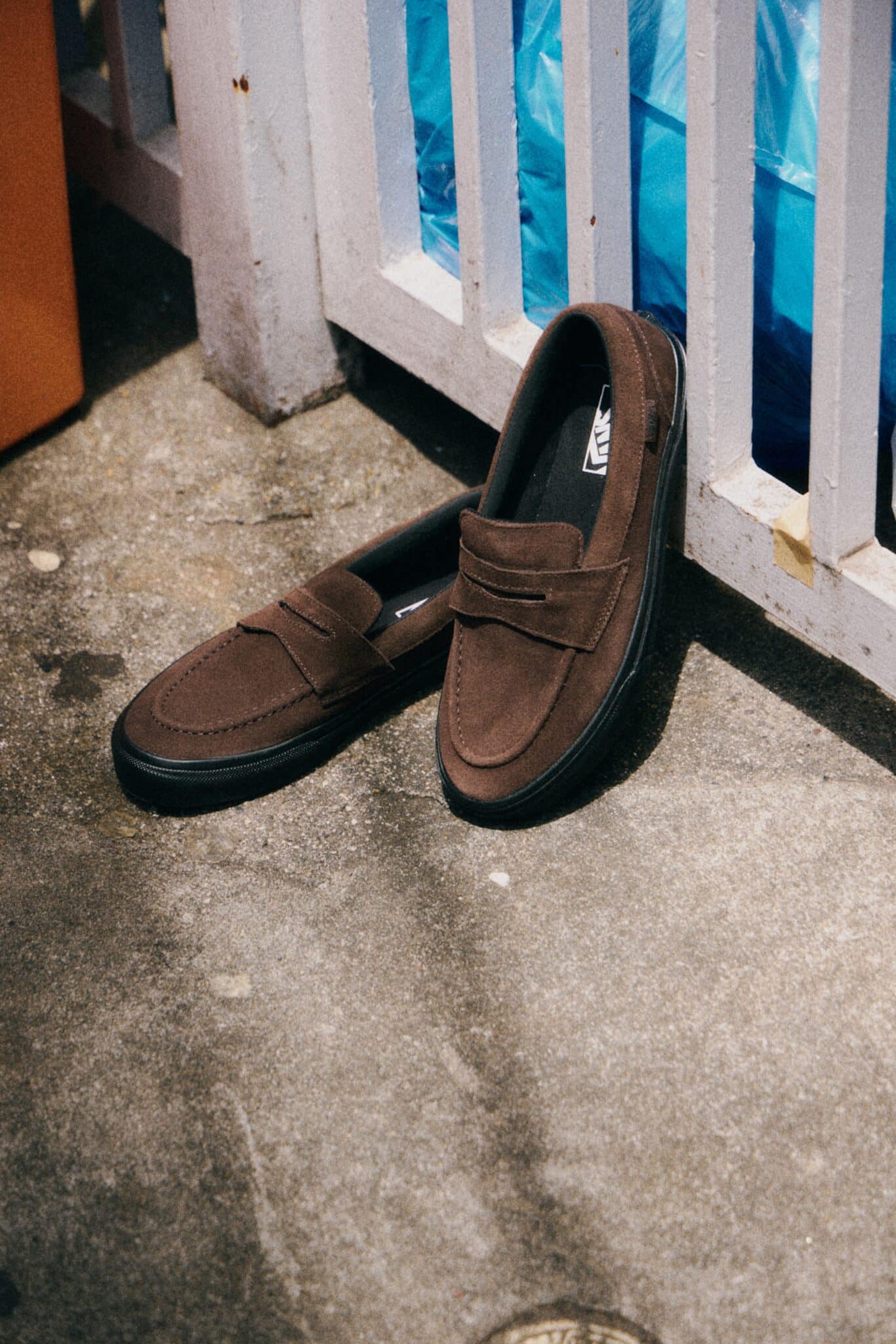
The refined suede of the “Loafer Suede” elevates a casual look from the feet up. ¥11,000.
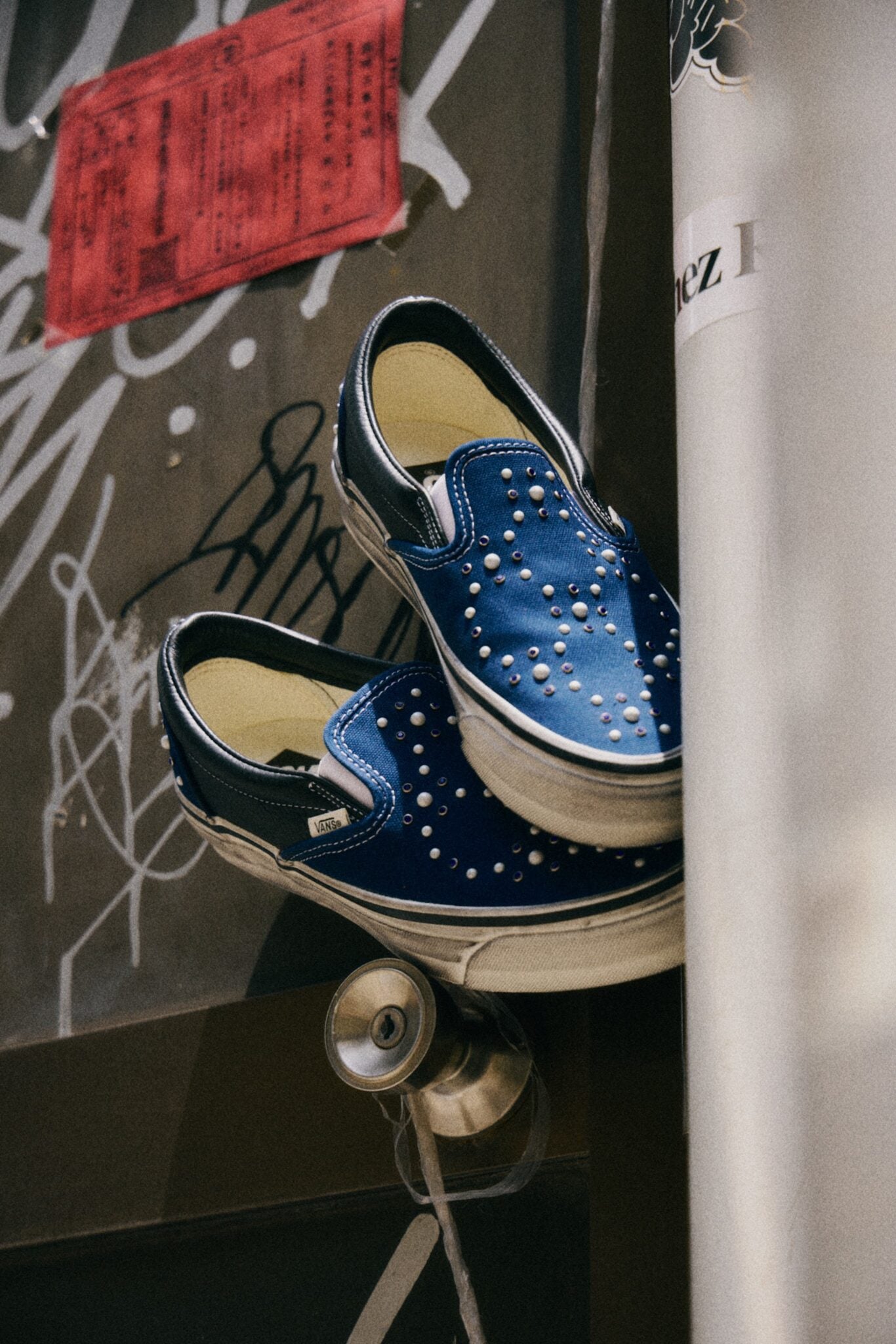
The “Premium Slip-On Pearl,” based on the Slip-On first introduced in 1979 and decorated with rhinestones and imitation pearls. ¥15,950. In addition to its trend-conscious decorative design, the allover worn-in finish is also a key point.
The true pleasure of “Vans Store Harajuku” is not only shopping, but feeling the culture firsthand. When you go down to B1F, you enter a space that strongly expresses the skate culture at the roots of “Vans.”
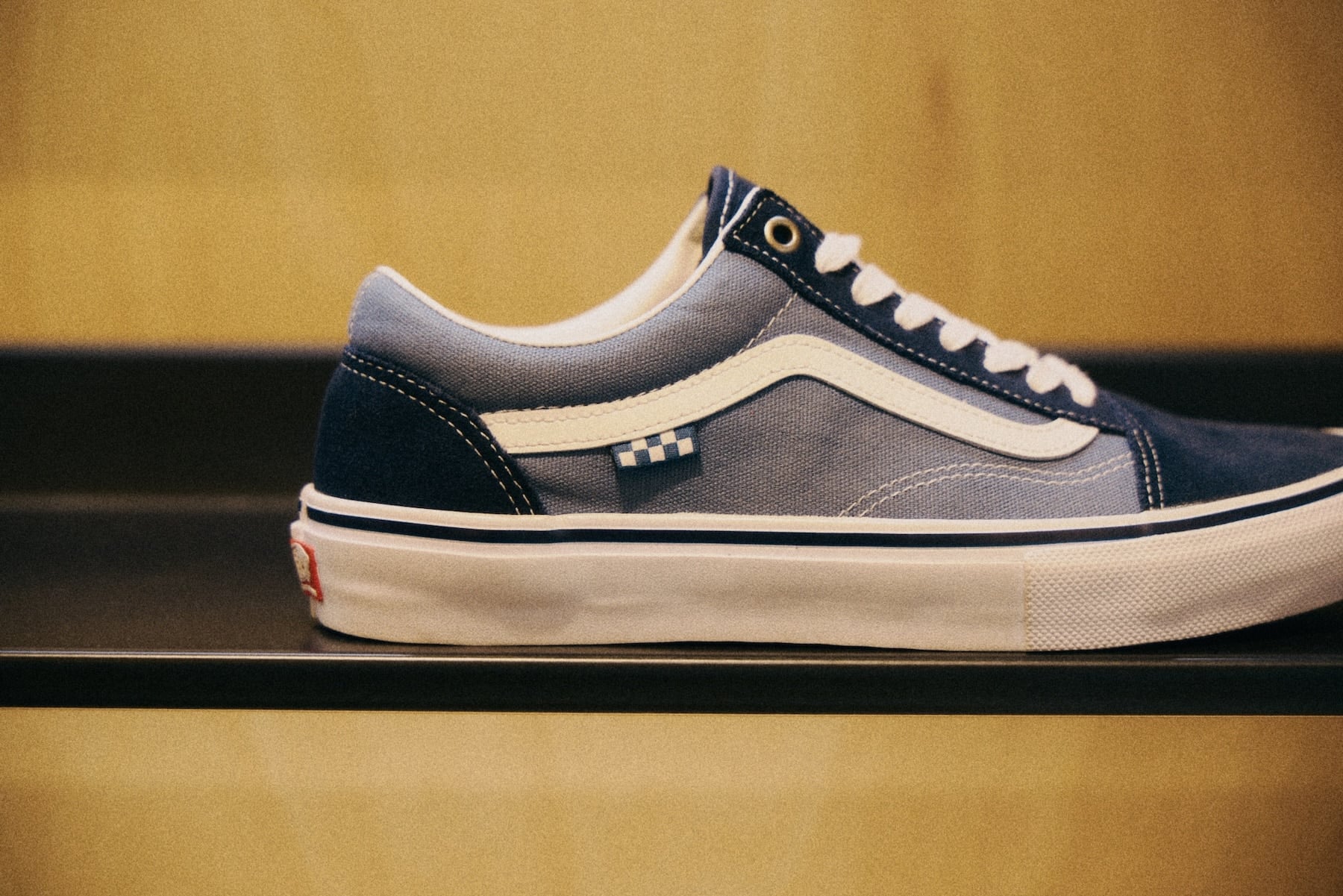
This floor features practical shoes and apparel for core skaters. Centered on the “Skate Classics” line, marked by a checkerboard side tag, the floor lets visitors check out models equipped with the latest tough technologies designed to withstand heavy professional use, all while preserving the raw atmosphere of the street.
Compared with the first and second floors, B1F is designed as a space for skaters. The displays are arranged neatly, giving the floor a special atmosphere. The apparel on this floor is apparently selected not from a fashion perspective, but specifically for skaters.
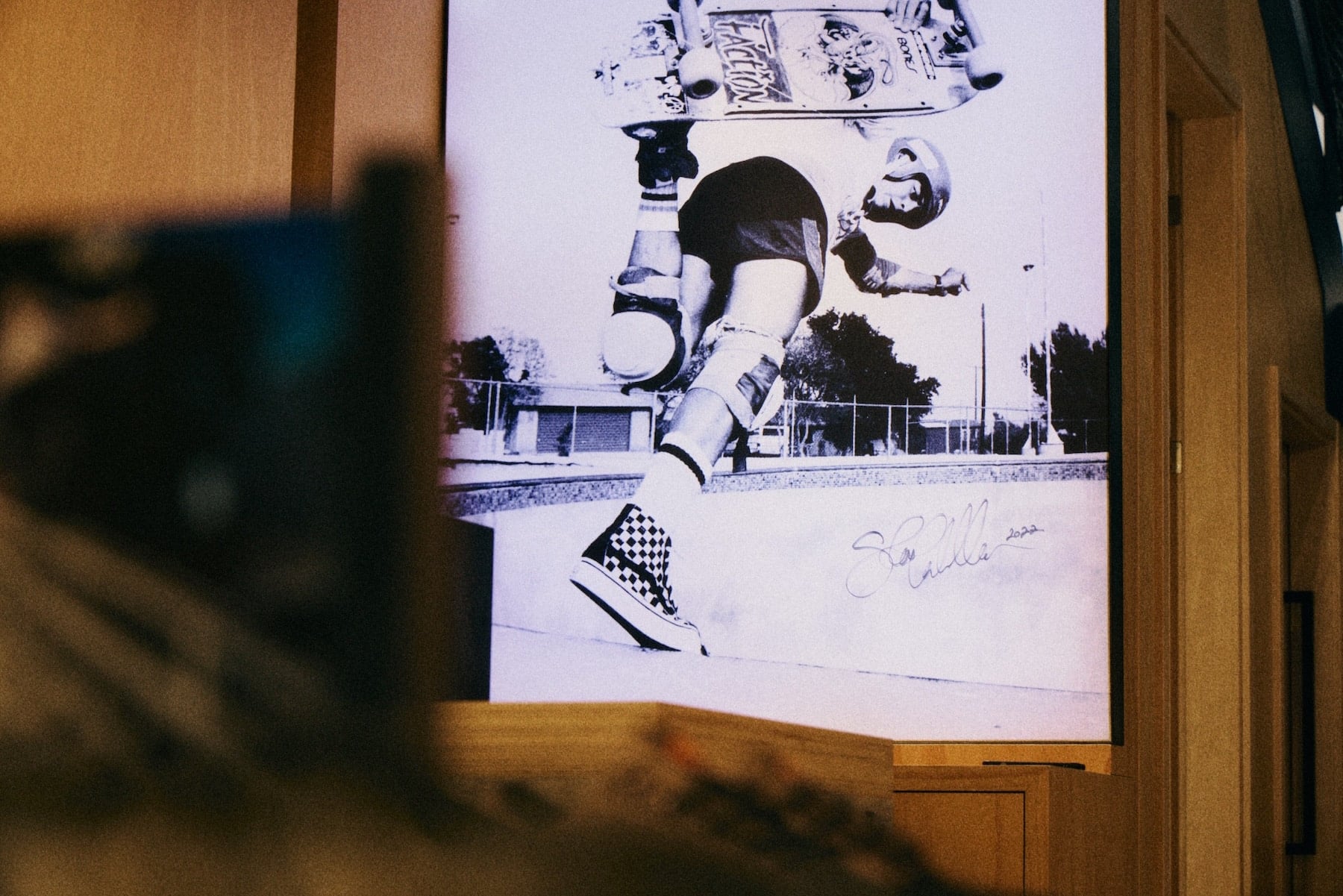
Another highlight is the numerous handwritten autographs etched into this floor, which convey the passion of skateboarding history. In addition to the autograph of legendary skater Steve Caballero on the painting behind the register, the deck stand next to the register also features an autograph from Kanna, a skater active on the world stage. It’s a special space where the “real” essence of skate culture comes alive.
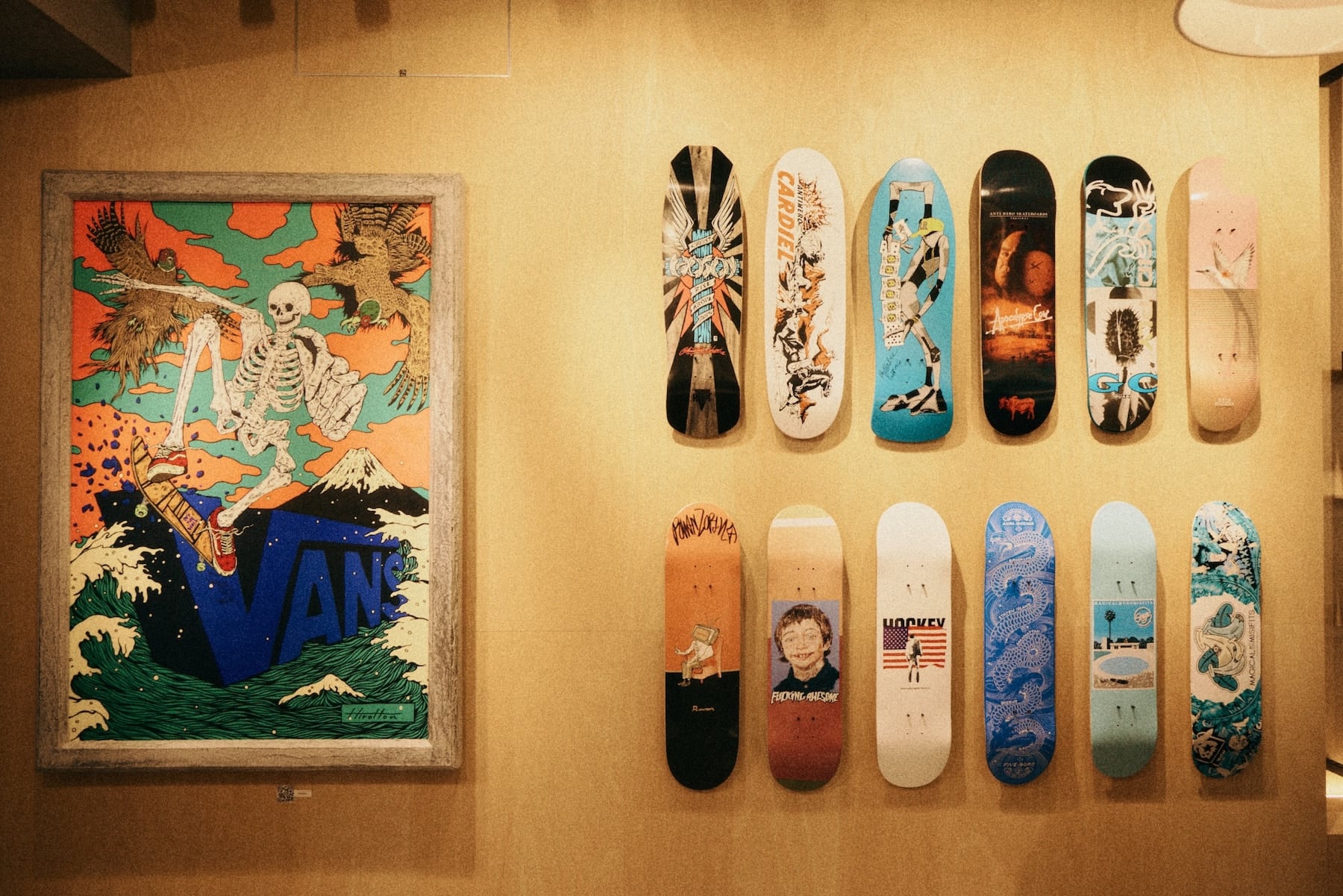
Rare decks by various riders, including Rowan Zorilla, Christian Hosoi, and John Cardiel, are displayed on the wall. Some of them are signed. On the left is artwork by “HIROTTON,” a Japanese artist who has also provided artwork for “Vans.” Shoes printed with this artwork have apparently been released in the past.
A photograph of Steve Caballero displayed on B1F. Beside it is his handwritten signature. Signatures by various other figures can also be found on other floors, so be sure to look for them.
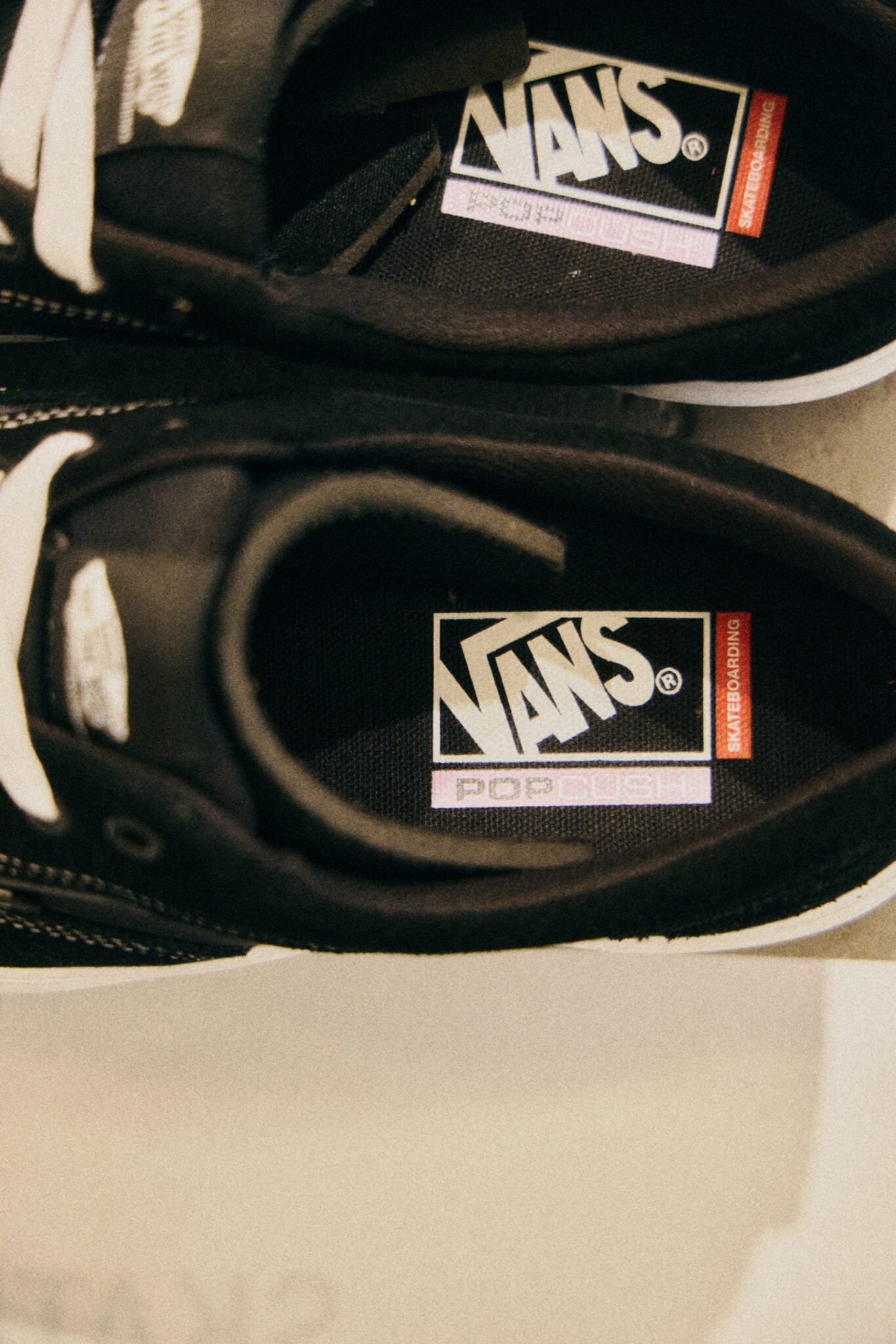
Designed for skaters, “Skate Classics” uses an insole called “PopCush V3,” which delivers even higher cushioning and rebound than regular models. With a support frame made of elastic resin material, TPU, placed from the heel to the arch, it is finished as a more high-performance insole.
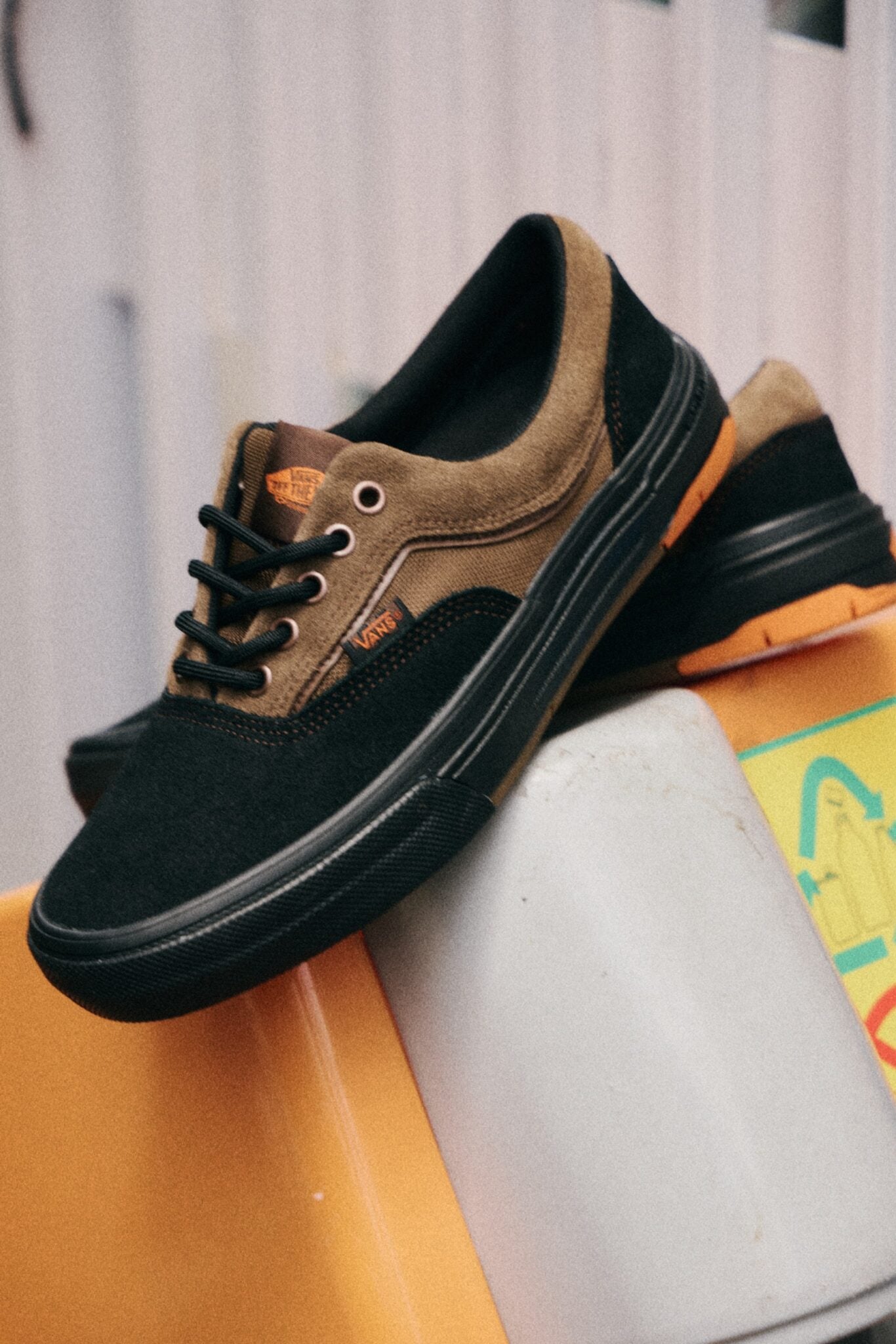
One of this season’s highlights is the “Skate Era WaffleCup,” ¥11,550, which revives the classic “Era” in a next-generation specification. WaffleCup combines the impact absorption and support of a cupsole with the flexibility and strong board feel of a vulcanized sole. While preserving the iconic style that symbolizes the Era, it has been updated into a hybrid pair.
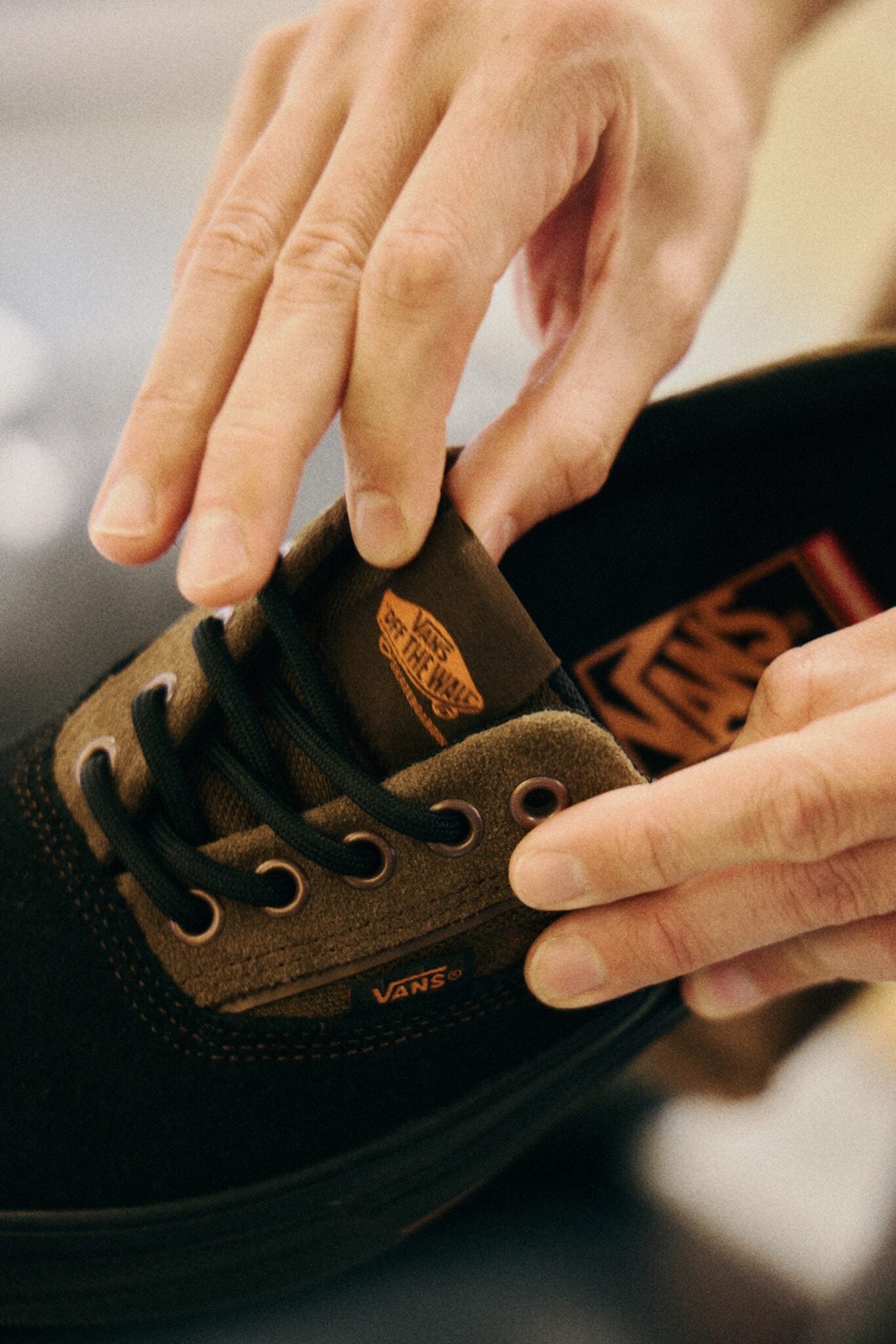
A liner has been added to the tongue area to prevent slipping and improve the sense of unity with the board. This is a detail that reflects feedback from skaters.
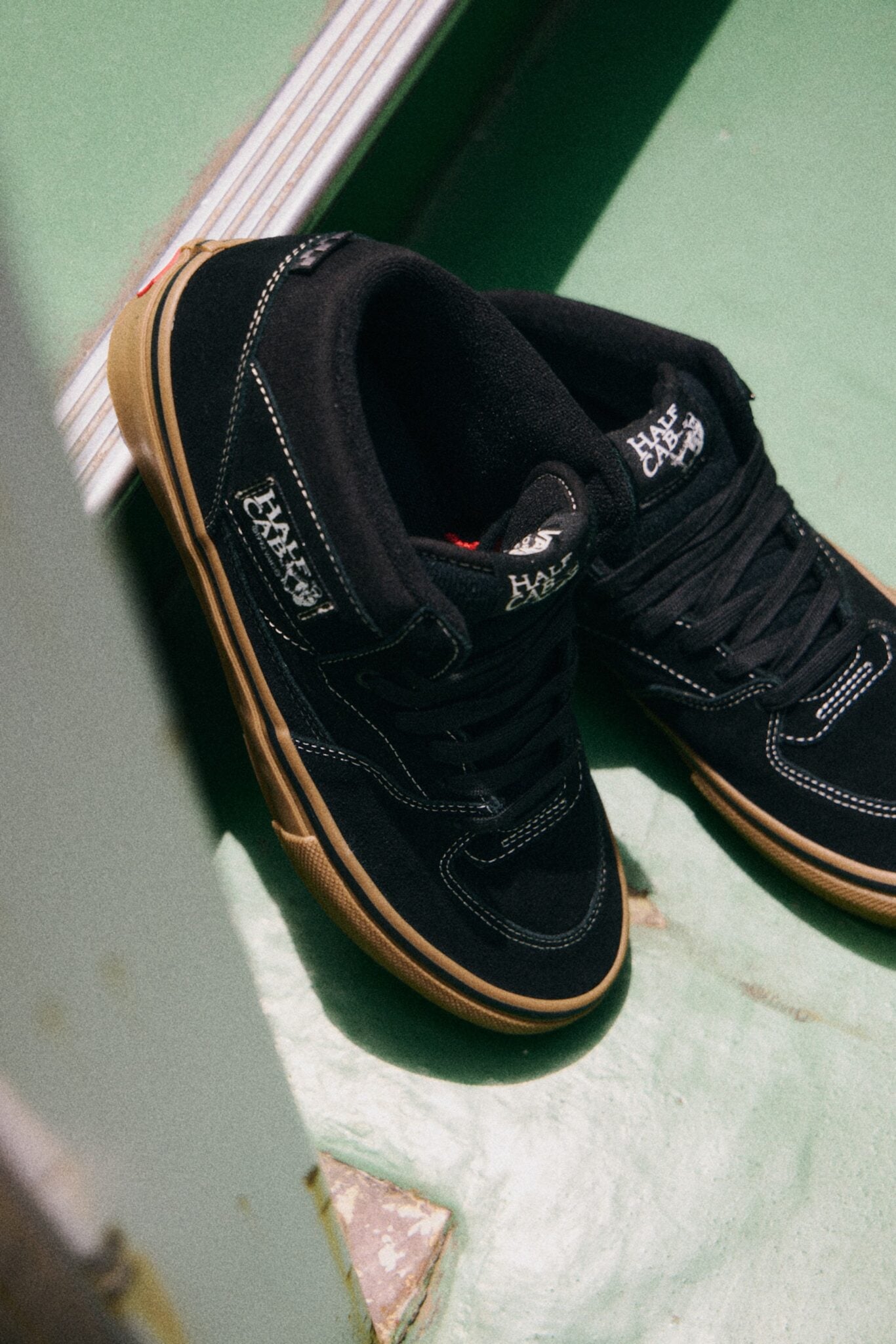
The “Half Cab” is a classic mid-cut model based on the “Caballero,” the first signature model in skateboarding history, which Steve Caballero created together with “Vans.” Today, many color variations are available, but this brown sole gives it a classic look. ¥11,550.
“PopCush V3” is customized for skateboarding and BMX, maintaining both energy return and impact cushioning. Compared with the previous “UltraCush,” it has been finished as a more high-performance insole.
One reason sneaker enthusiasts visit “Vans Store Harajuku” is its special lineup. The “Vans Premium” line, which features thicker insoles than before and greatly improved comfort, is a popular collection worldwide. Even more special, however, are the “Japan Store Exclusive” models available at directly operated stores.
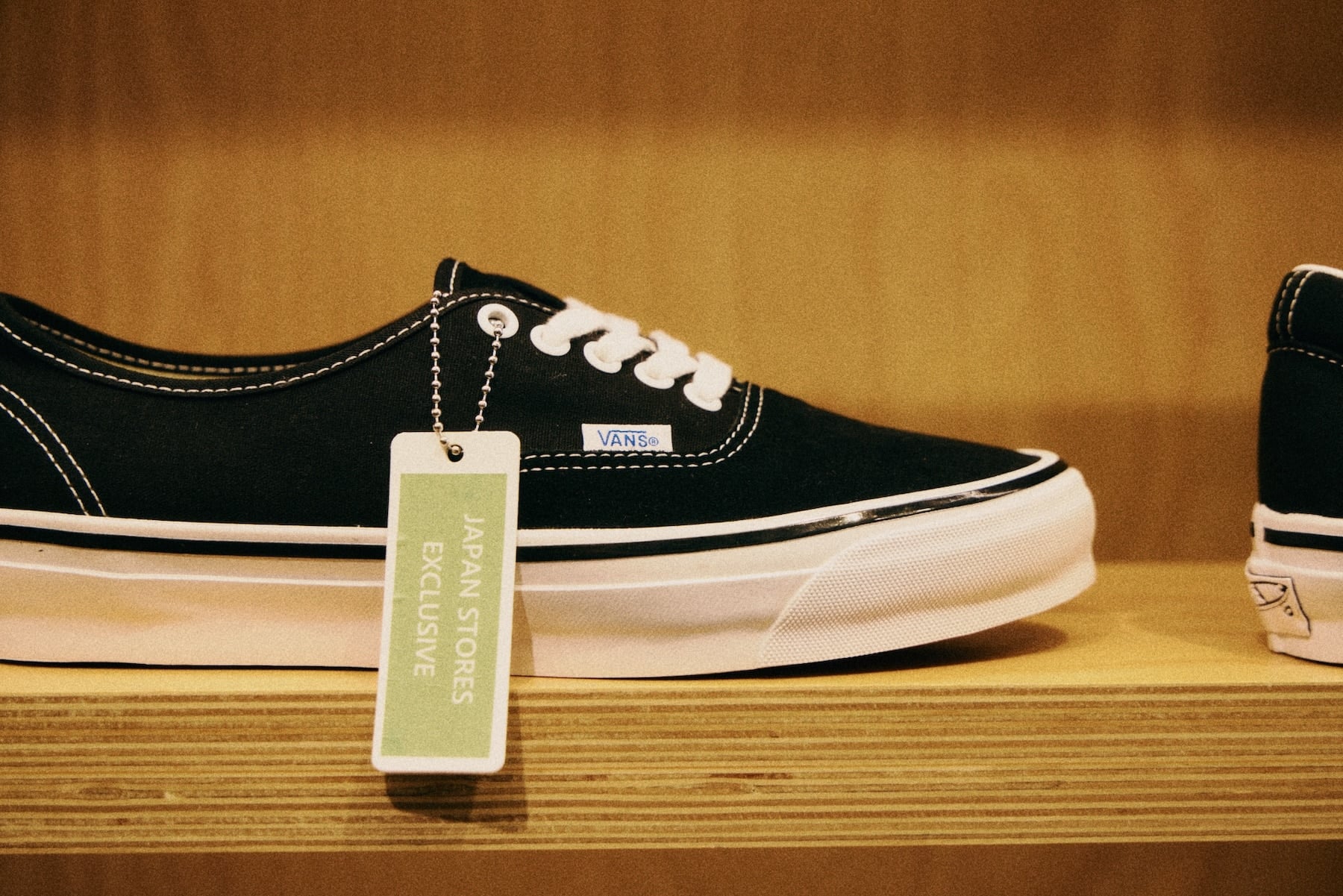
“Japan Store Exclusive” items come with a green tag, so be sure to check for it if you are interested.
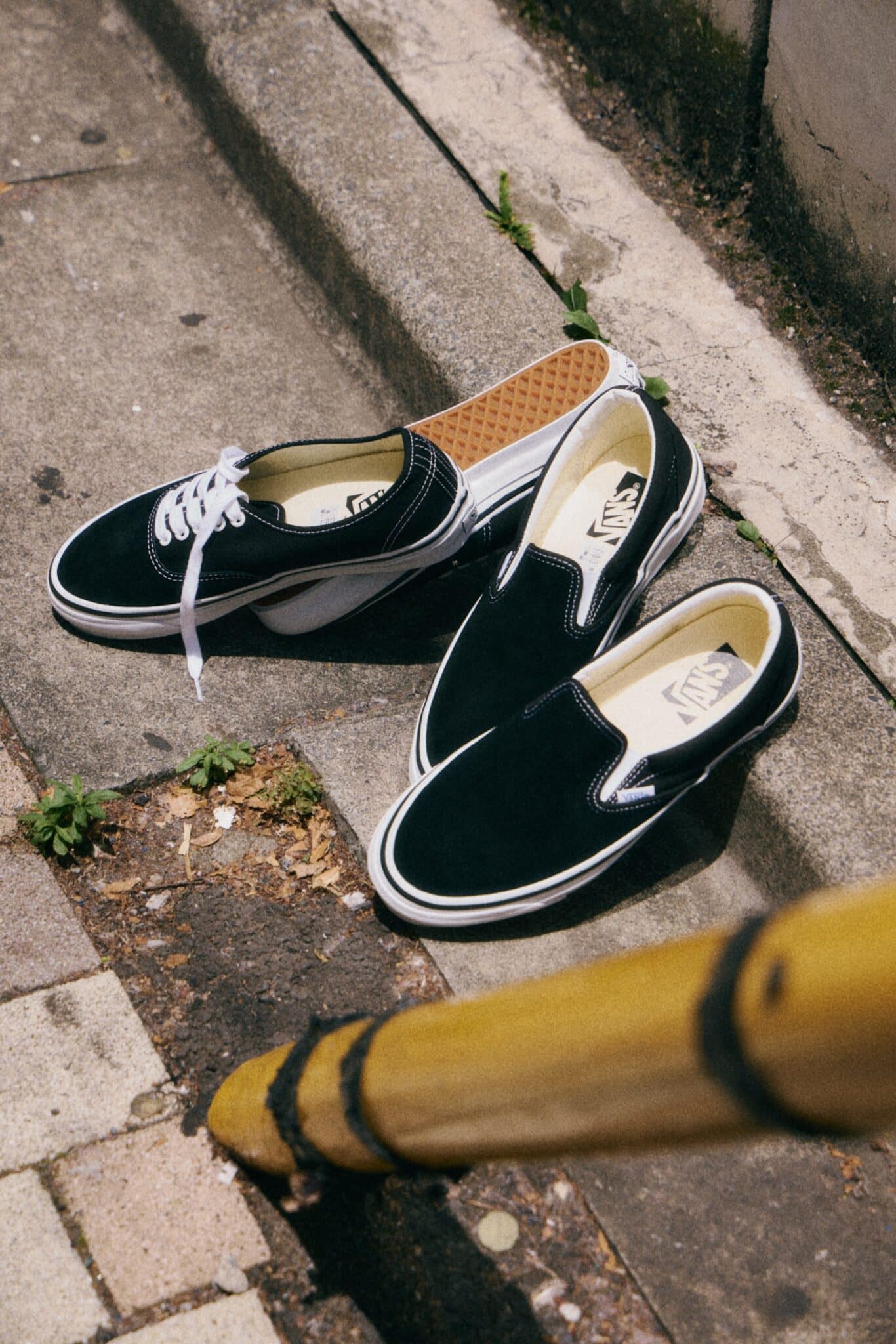
The greatest feature of the Japan-exclusive designs is the black foxing line that wraps around the side of the sole and the high-quality suede used for the upper. These subtle design choices, which create a vintage feel and sharpen the look of the feet, are special arrangements tailored to the tastes of Japanese users and are not found in overseas premium lines. The fine differences in detail are sure to excite devoted fans.
Arranged versions of the iconic “Authentic” and “Slip-On,” two representative “Vans” models. In addition to the foxing line being changed to black, both models combine premium suede on the toe with canvas material on the side panels. Both are ¥11,550.
Incidentally, the fact that the foxing line on the Premium line is now black, as on the regular versions, apparently reflects its popularity in the Japanese market. It tightens the look of the feet and works well with a wide range of fashion styles.
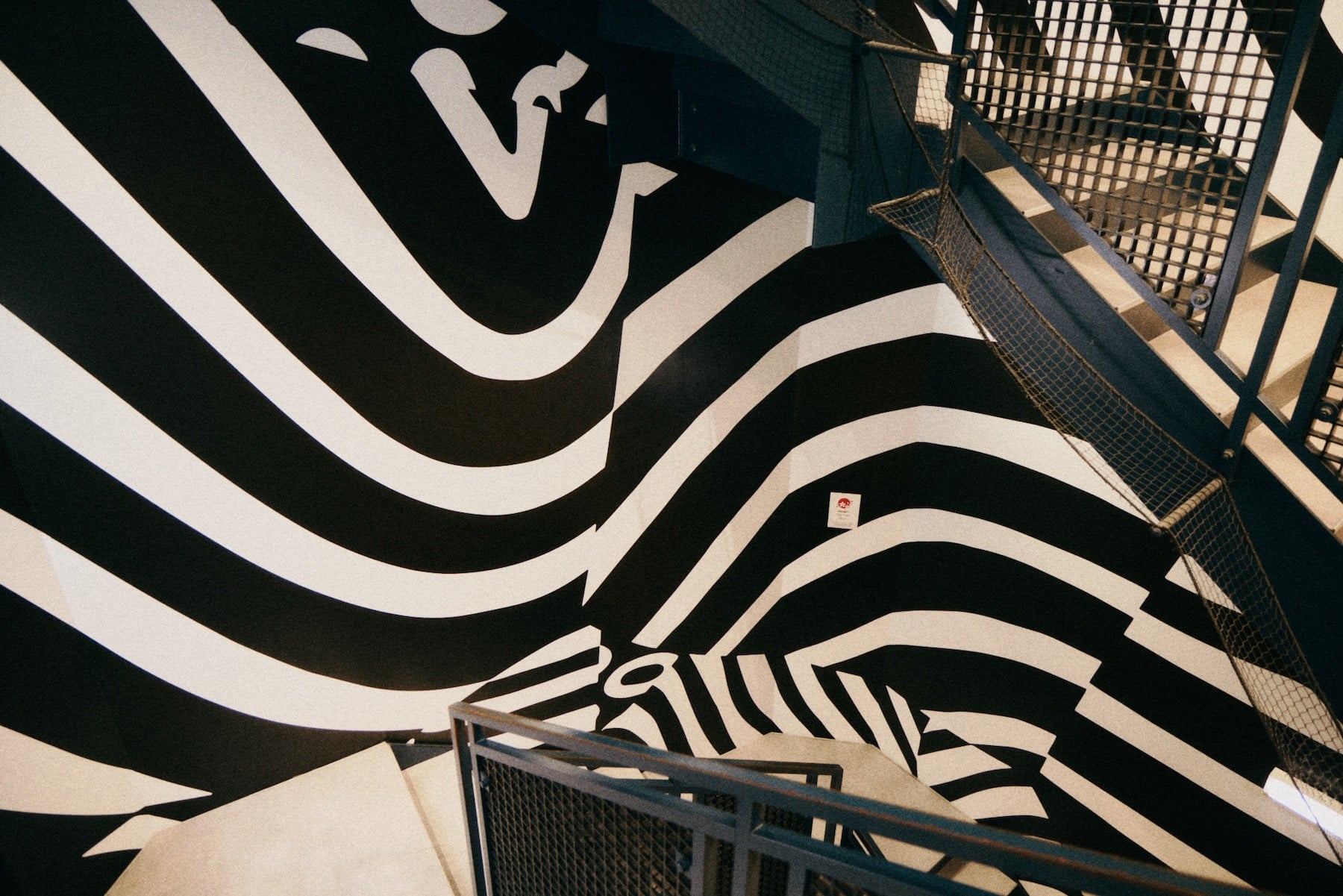
The many artworks that decorate the store and the displays that convey the brand’s history are also not to be missed. The first thing that comes into view is the large stairwell running from B1F to the second floor. Spreading across the wall here is artwork by artist Shigeki Matsuyama. Its impressive black-and-white geometric dazzle camouflage has become a photo spot for visitors.
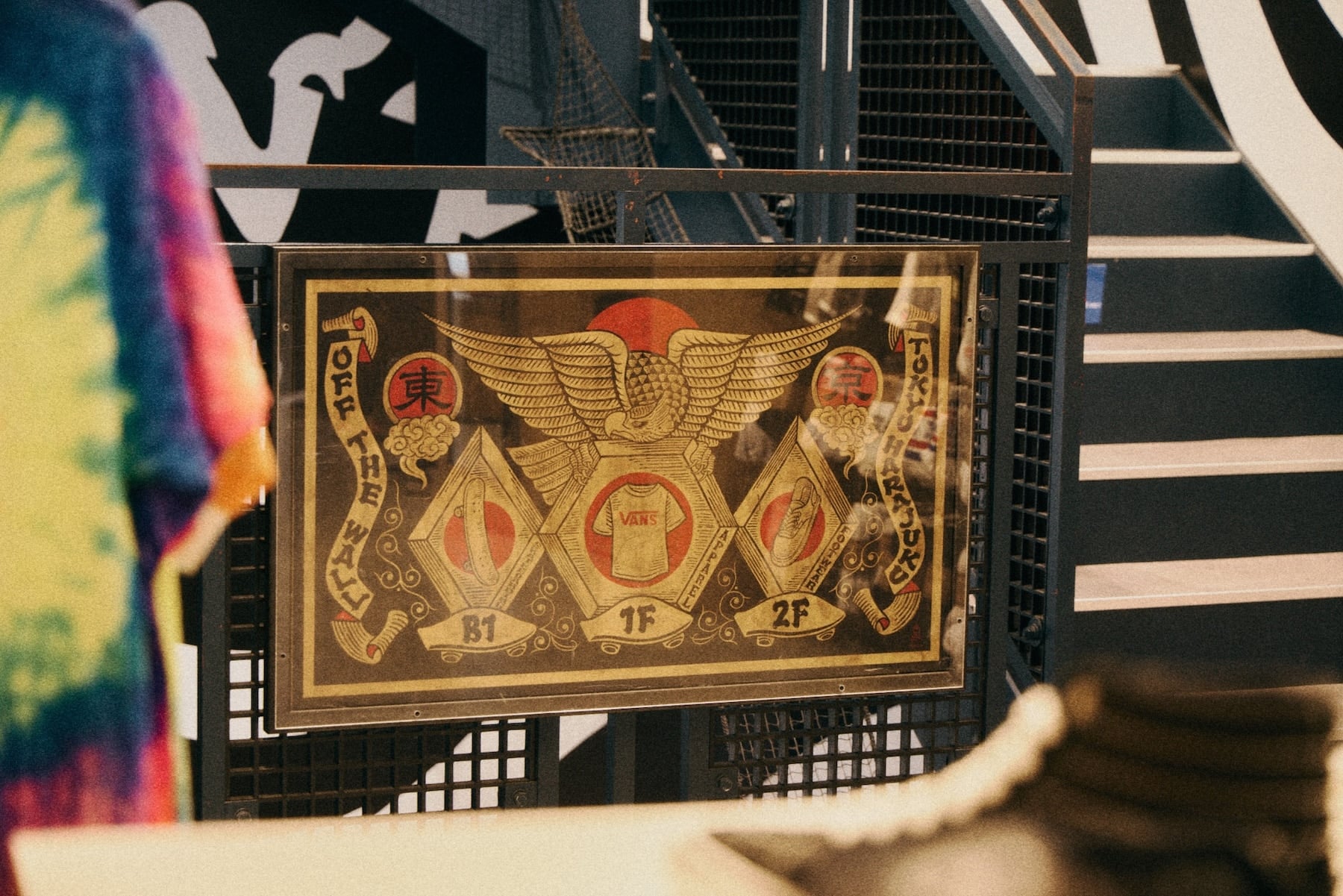
On the landing of the stairs hangs artwork featuring a hawk motif by artist Yutaka. In fact, it functions as a floor map of the store. Along with illustrations of T-shirts on 1F, shoes on 2F, and skateboards on B1F, it shows the structure of the three floors, making it a map that also stands out as a piece of art.
A work by artist Yutaka, who has watched over the store since the Harajuku location first opened. If you look closely, you will find “Vans” items drawn in fine detail throughout this playful piece.
A work by artist Yutaka, who has been watching over the Harajuku store since its opening. If you look closely, you’ll see that this playful piece features intricate depictions of “Vans” items.
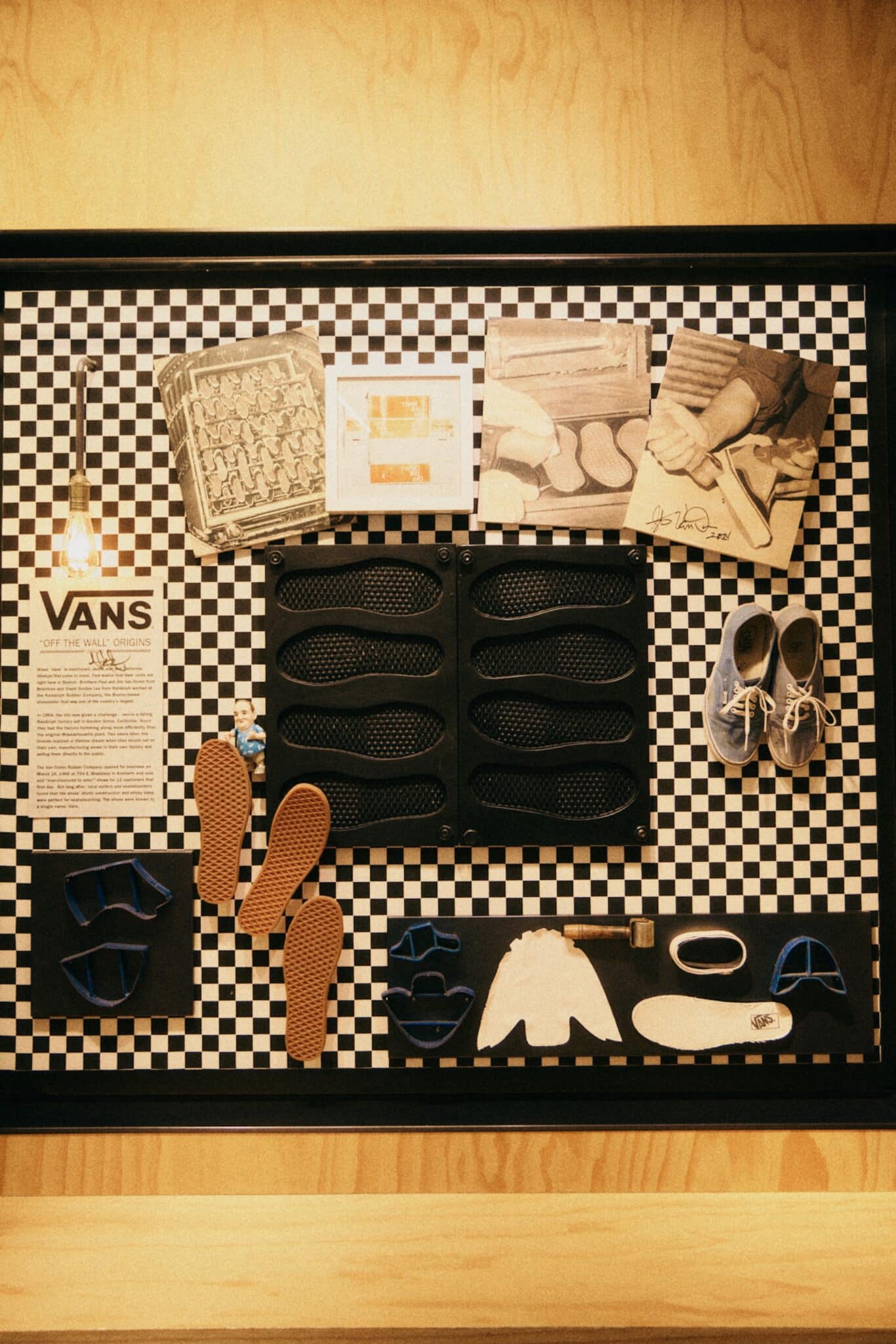
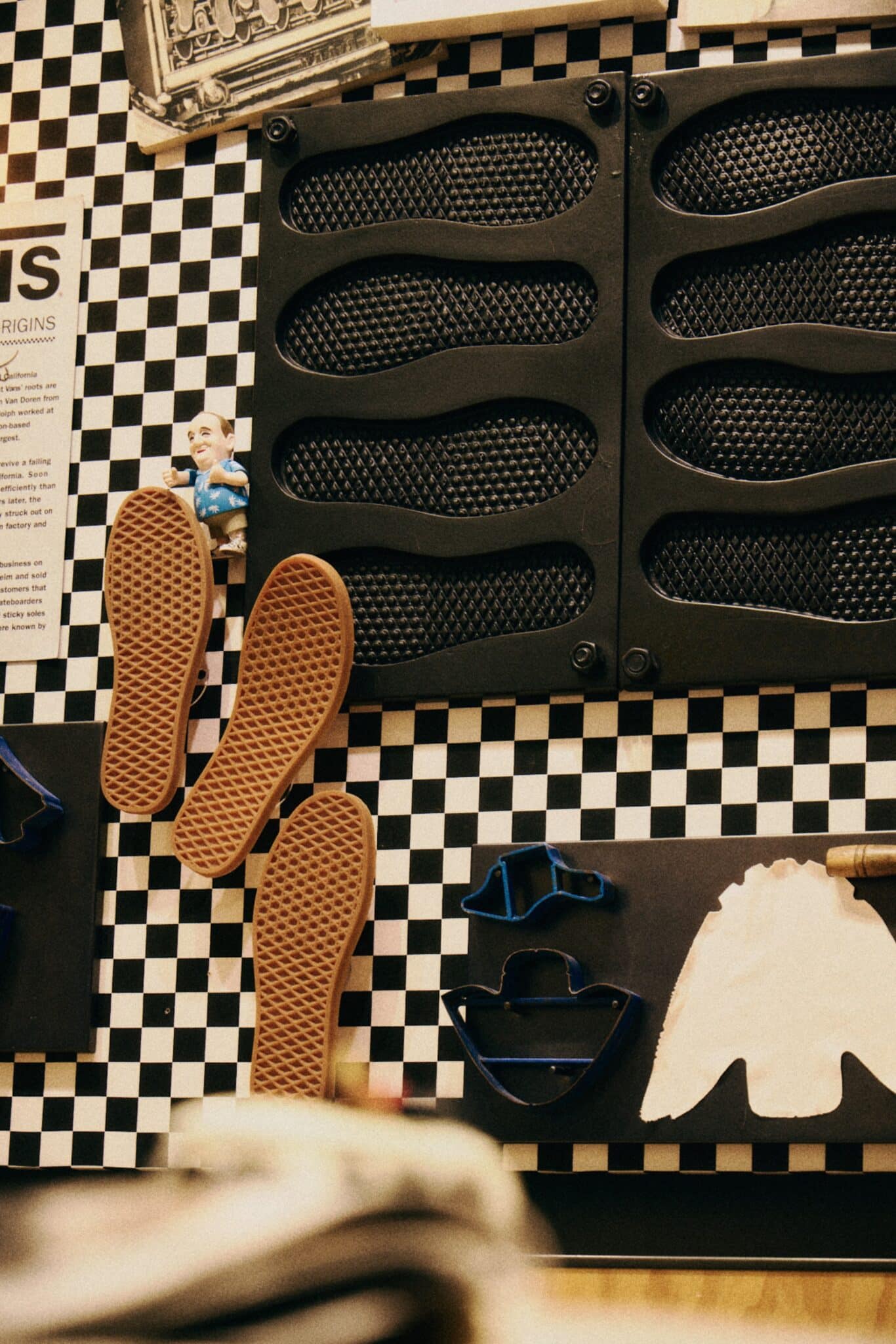
Looking further around the store, you will also find many displays that let you touch on the roots of “Vans.” Behind the register are exhibits of uppers, which are essential to shoe production, as well as molds for the waffle sole, which can be considered a symbol of the brand. You can visually understand how this sole, made by pouring material into a waffle-like mold, produced excellent grip and spread among skaters at the time.
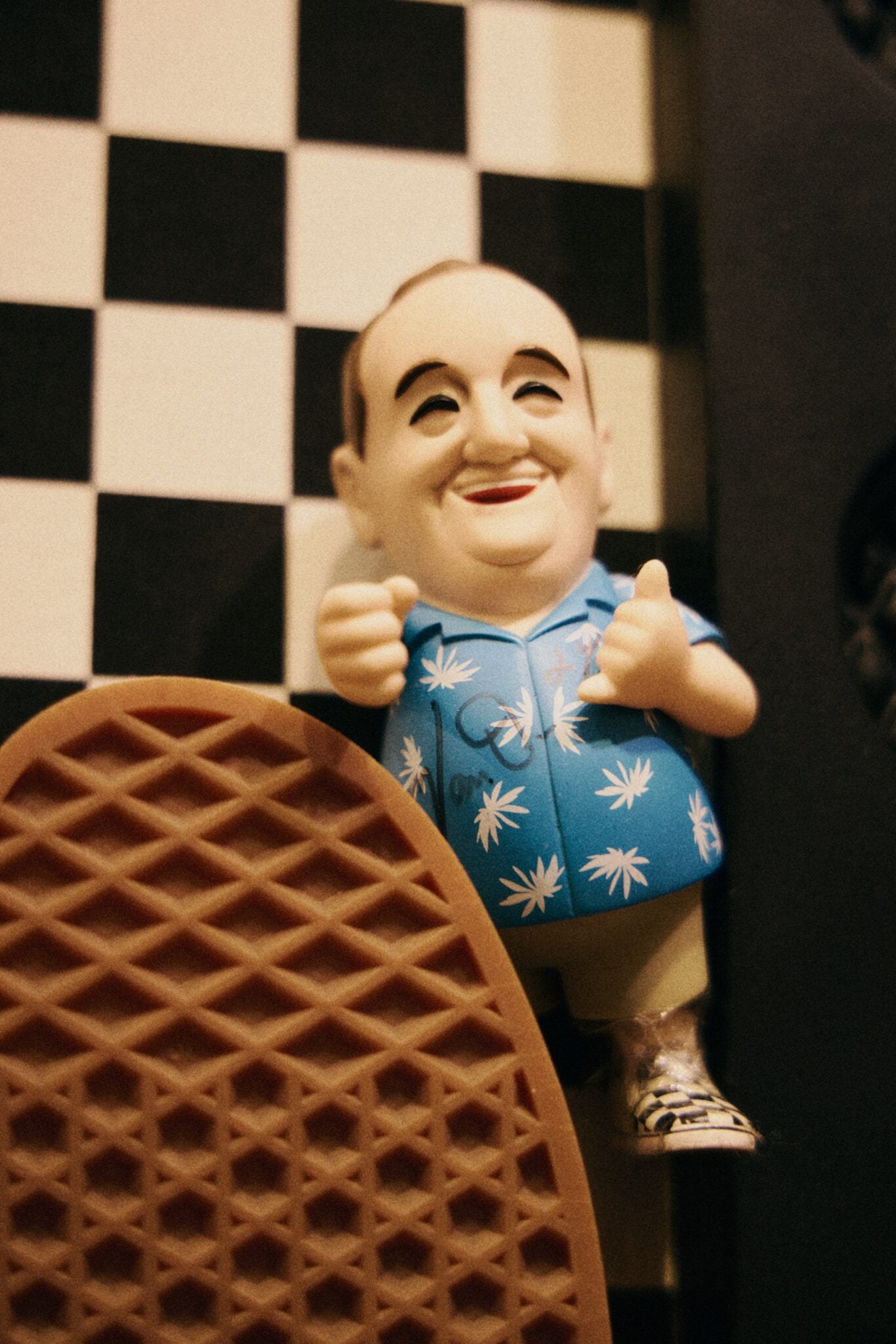
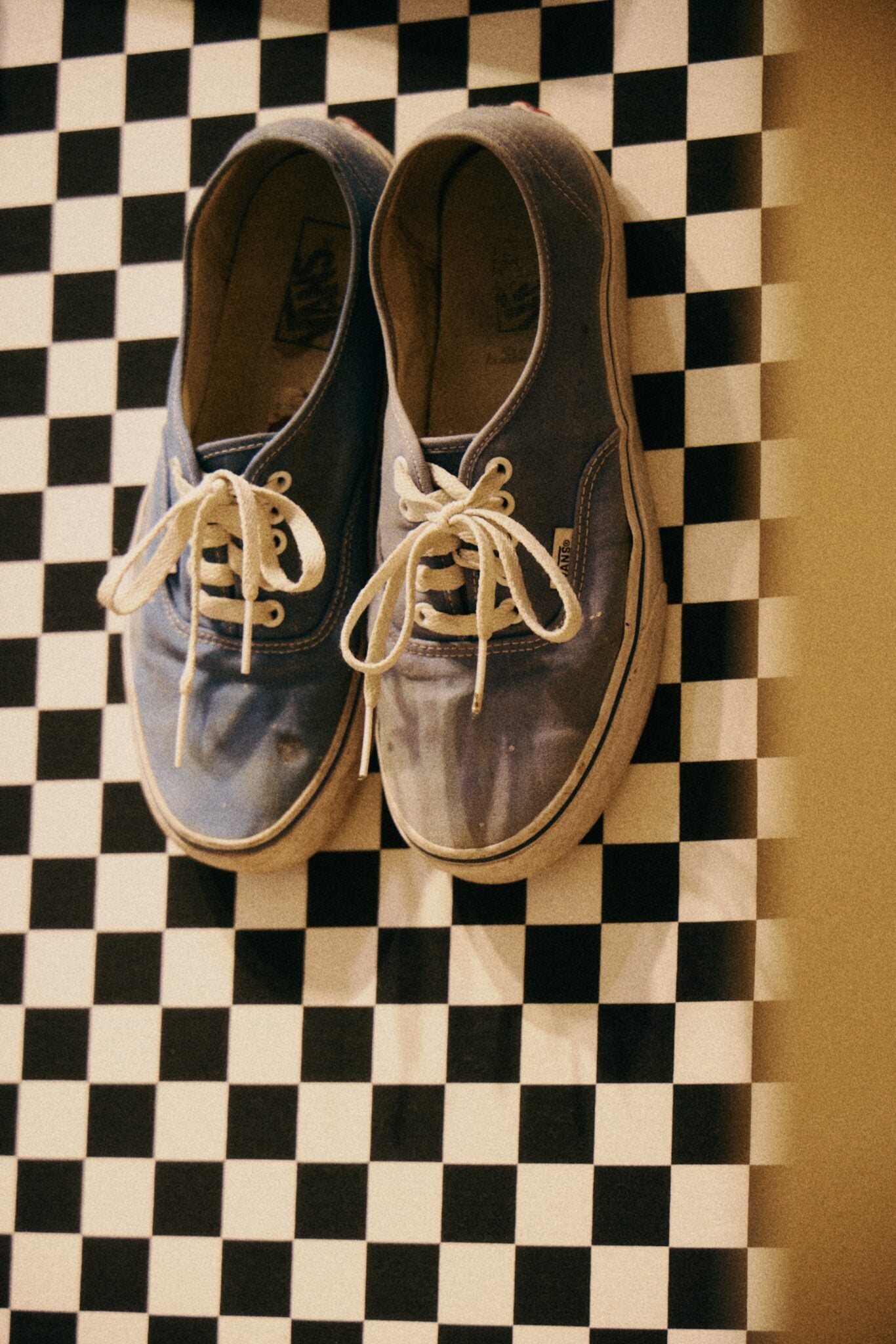
Elsewhere, valuable archive pieces are scattered throughout the store, including a vintage “Authentic” that was truly worn hard by a skater and has a hole on the side of the toe, and a figure signed by founder Paul Van Doren himself when he visited the store. The space allows visitors to fully experience the energy of street culture and the history of the brand while enjoying shopping.
Displays showcasing the soles and uppers—essential components in the making of Vans shoes—can be found behind the cashier on the first floor.
Early waffle soles were apparently designed with “not slipping on the deck” as the top priority, rather than “ease of walking.” This is the origin of the gear that earned the full trust of skaters in Southern California.
A figure of Paul Van Doren, the founder whose name became the origin of the brand name “Vans,” meaning “Van and his companions.” The handwritten signature, which seems to convey his friendly personality, is a must-see for fans.
A vintage Authentic. In the hard world of skateboarding, shoes can become worn out in just one week. The hole in the toe, deeply marked by traces of tricks, is proof that “Vans” has walked alongside skaters.
The information in this article is current as of August 9, 2026 (at the time of publication).


.jpg)
スマホ.jpg)