DEEPTOKYO
magazine

EN


AREA
DEEPTOKYO
magazine
EN
AREA
2026.06.16
Traditional Drum Craftsmanship Supporting Tokyo’s Festivals and Performing Arts


 Nearest Station


Founded in 1861, Miyamoto Unosuke Shoten has produced instruments and equipment essential to Tokyo’s festivals and traditional performing arts, including taiko drums and mikoshi portable shrines. At its workshop in Asakusa, artisans continue to carry on traditional craftsmanship by hand, carving wood and stretching drumheads. In addition to taiko drums and mikoshi shrines, the Nishi-Asakusa store also offers original household goods and accessories that make use of traditional techniques. Another appeal of the store is the opportunity to discover products that bring Japanese culture into contemporary daily life.
SHARE


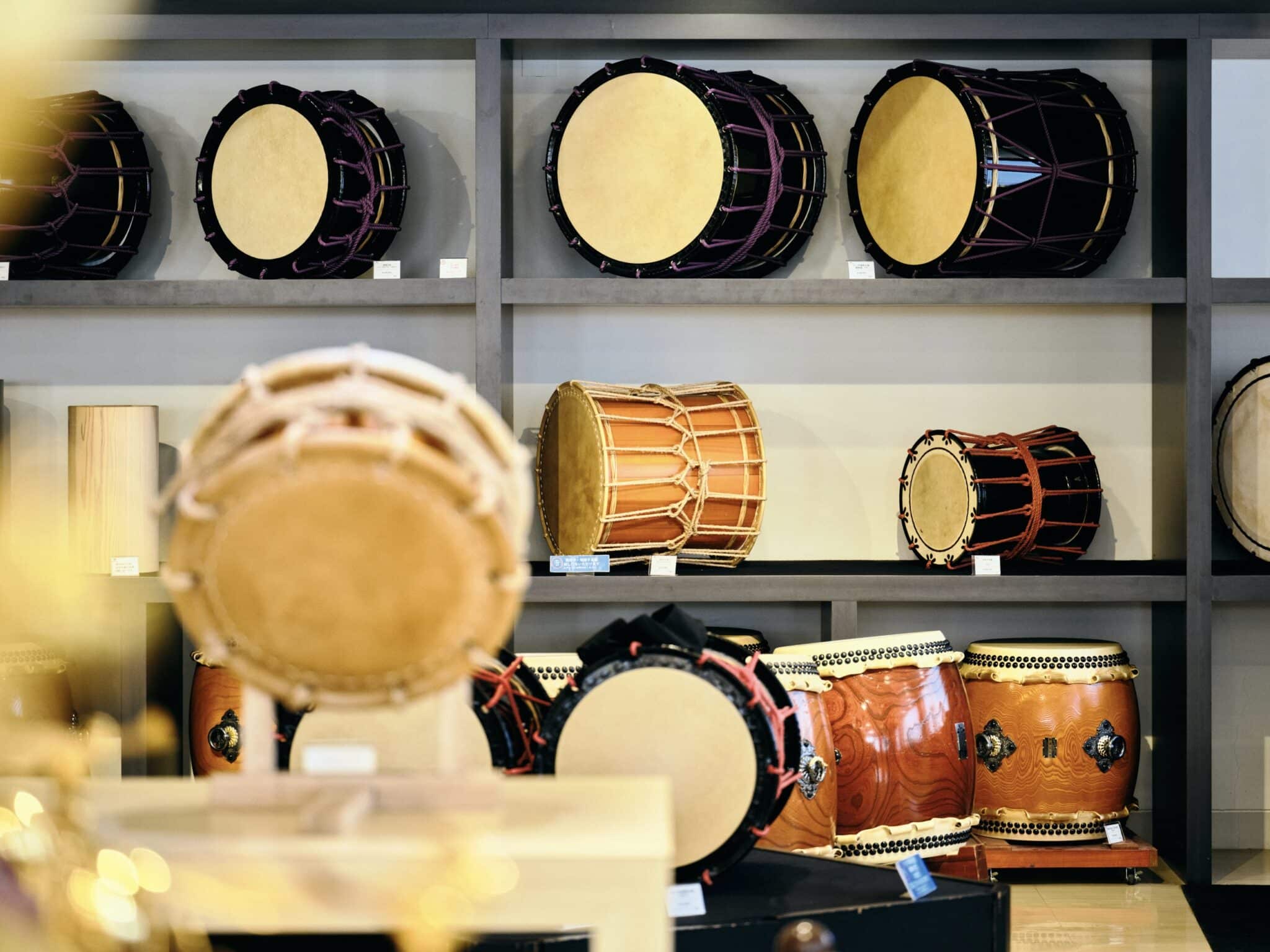
Wadaiko are instruments that play an essential role in Japanese festivals, ceremonies at shrines and temples, and traditional performing arts such as Kabuki and Noh. Their powerful sound can completely transform the atmosphere of a place, uplifting people’s spirits or, at times, creating a sense of solemn tension. There are many different types of wadaiko. These include the nagado-daiko, known for its deep bass tones that resonate through the body, the shime-daiko, which produces a high, piercing sound, and the okedo-daiko, a lightweight drum often used in performances that incorporate dance. Different types are used depending on the purpose and style of performance.
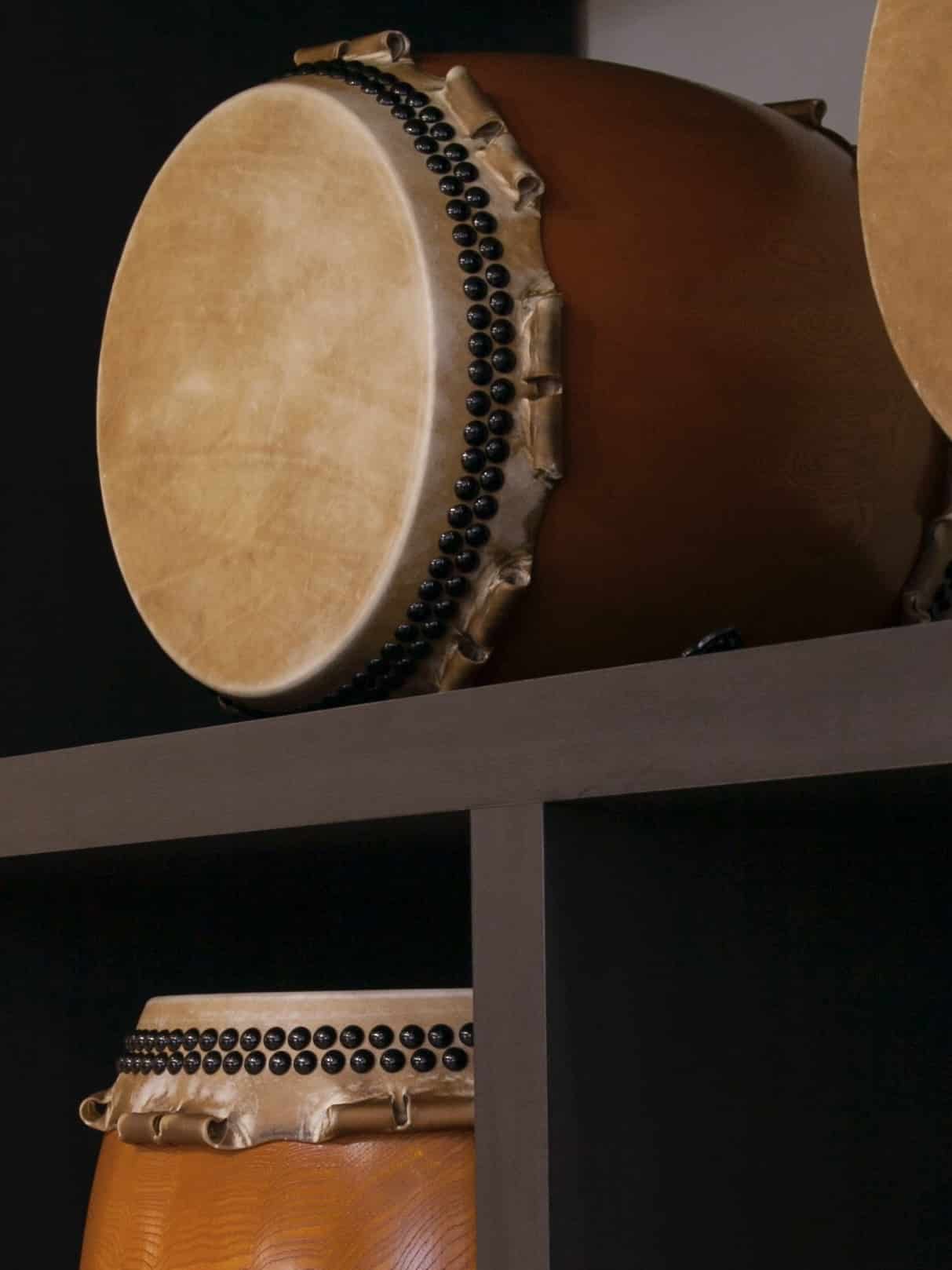
The nagado-daiko is the type of drum most familiar in appearance. Sizes range from around 30 centimeters in diameter to more than 90 centimeters.
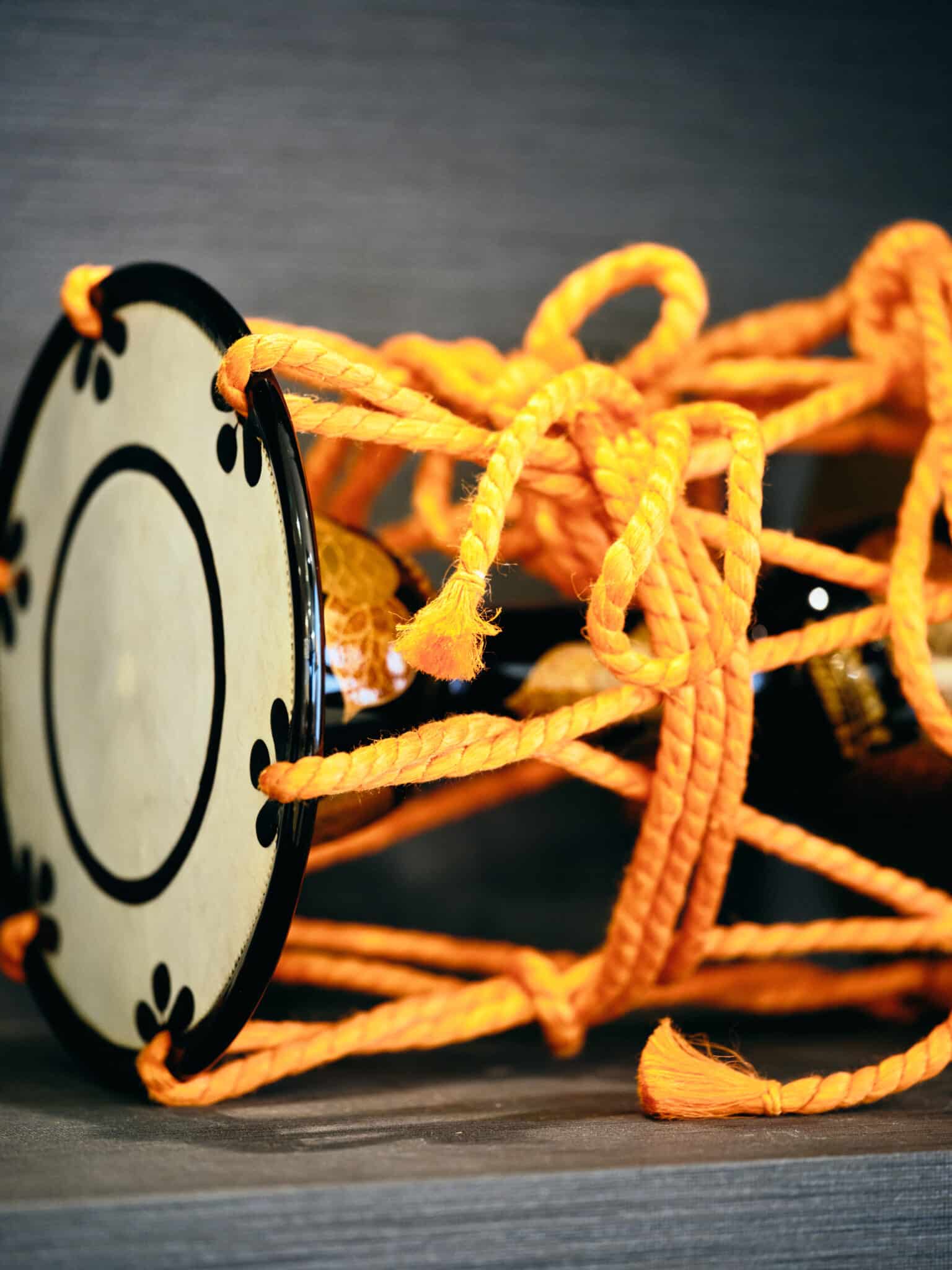
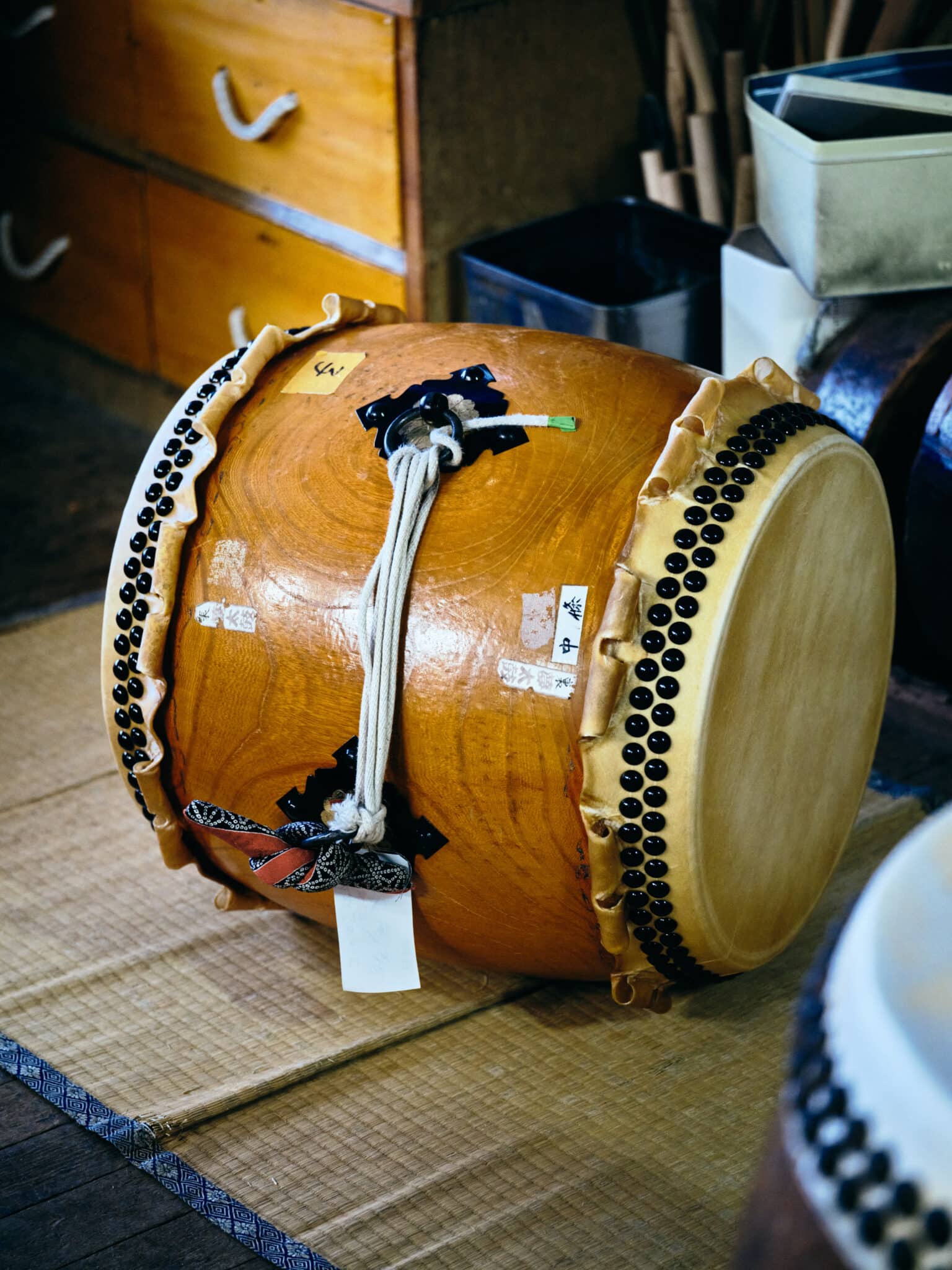
Instruments played with drumsticks are called taiko, while those played by hand are called tsuzumi. The photo shows a Noh and Nagauta drum used in Noh theater and Kabuki.
Miyamoto Unosuke Shoten has produced not only these various types of wadaiko but also mikoshi shrines, flutes, and other items essential to Japanese festivals and traditional performing arts. The company was founded in Ibaraki Prefecture in 1861 and relocated to Asakusa in 1893. For more than 130 years, it has supplied drums and mikoshi shrines to institutions including the Imperial Household Agency, Kabukiza Theatre, the National Theatre, Asakusa Shrine, and Meiji Jingu Shrine, supporting Tokyo’s festivals and traditional performing arts.
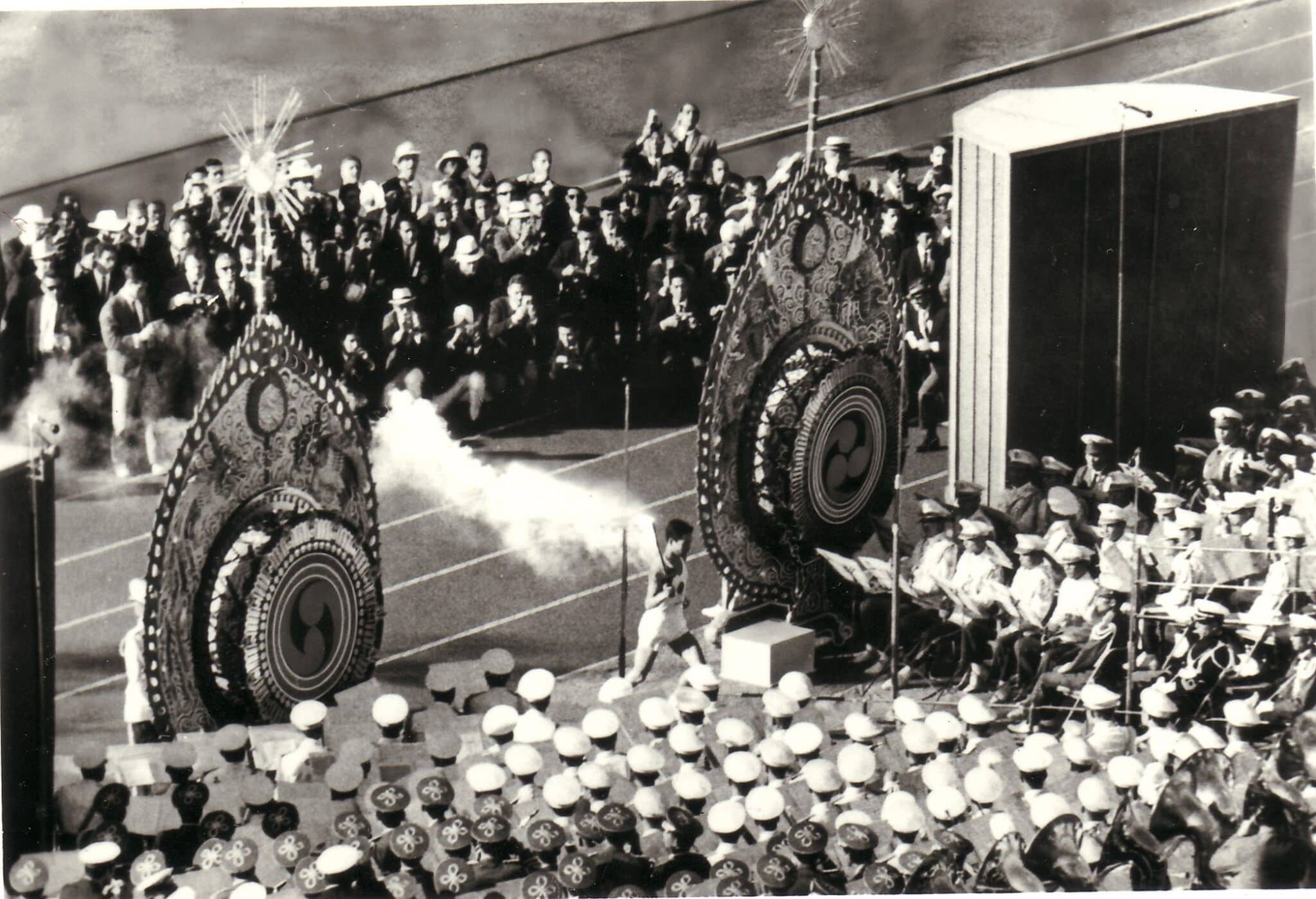
For the opening ceremony of the 1964 Tokyo Olympics, the company produced a complete set of dadaiko drums measuring eight meters in height. Their elaborate decoration and powerful sound captivated audiences.
In 1950, the company produced the main mikoshi shrines used in the Sanja Matsuri festival at Asakusa Shrine. In 1996, it also carried out their large-scale restoration.
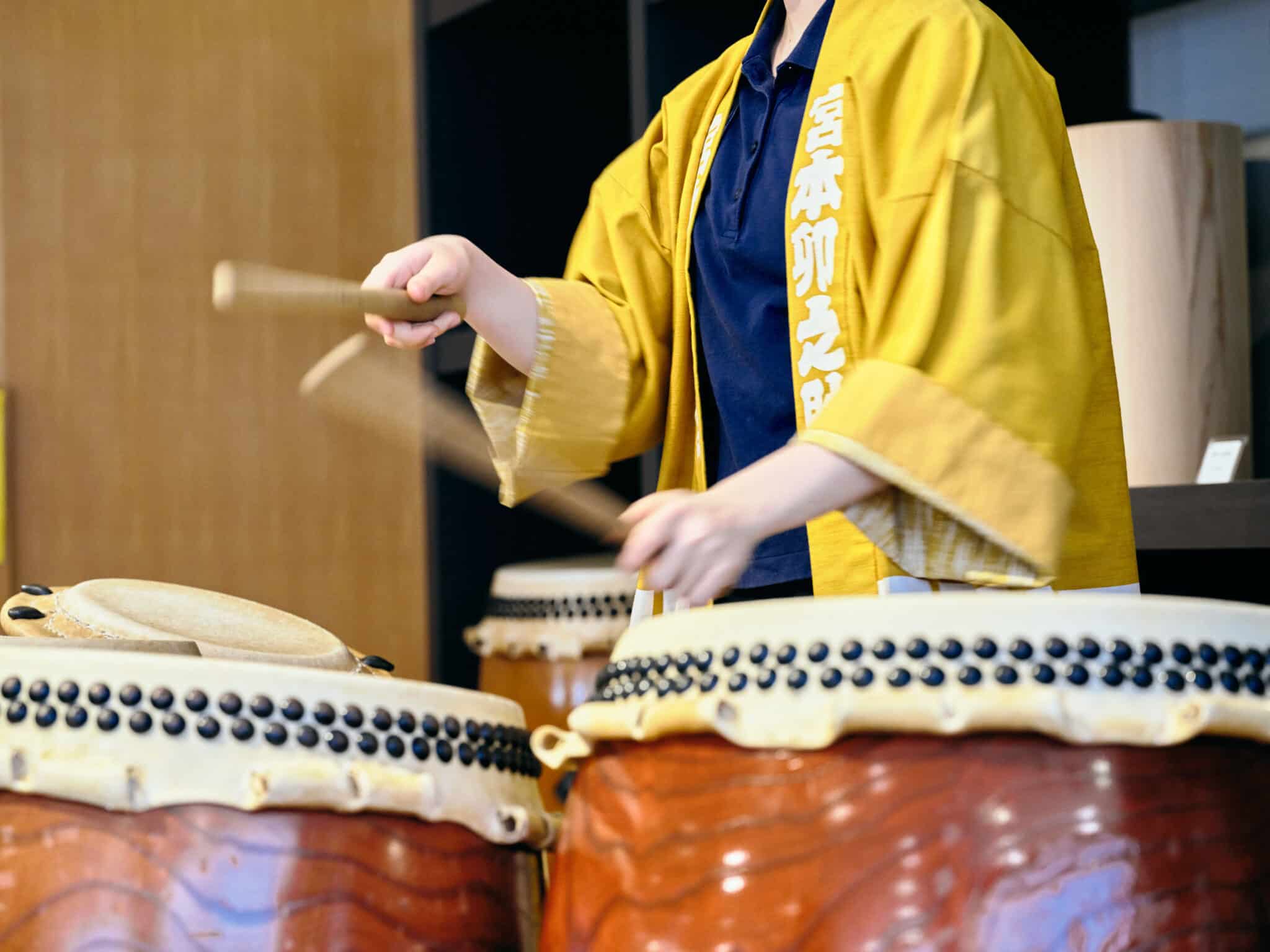
A performance by the “Iyasaka Project,” a Japanese traditional music entertainment project produced by Miyamoto Unosuke Shoten. It is part of the company’s efforts to share the values embedded in Japanese festivals and traditional performing arts with a wider audience.
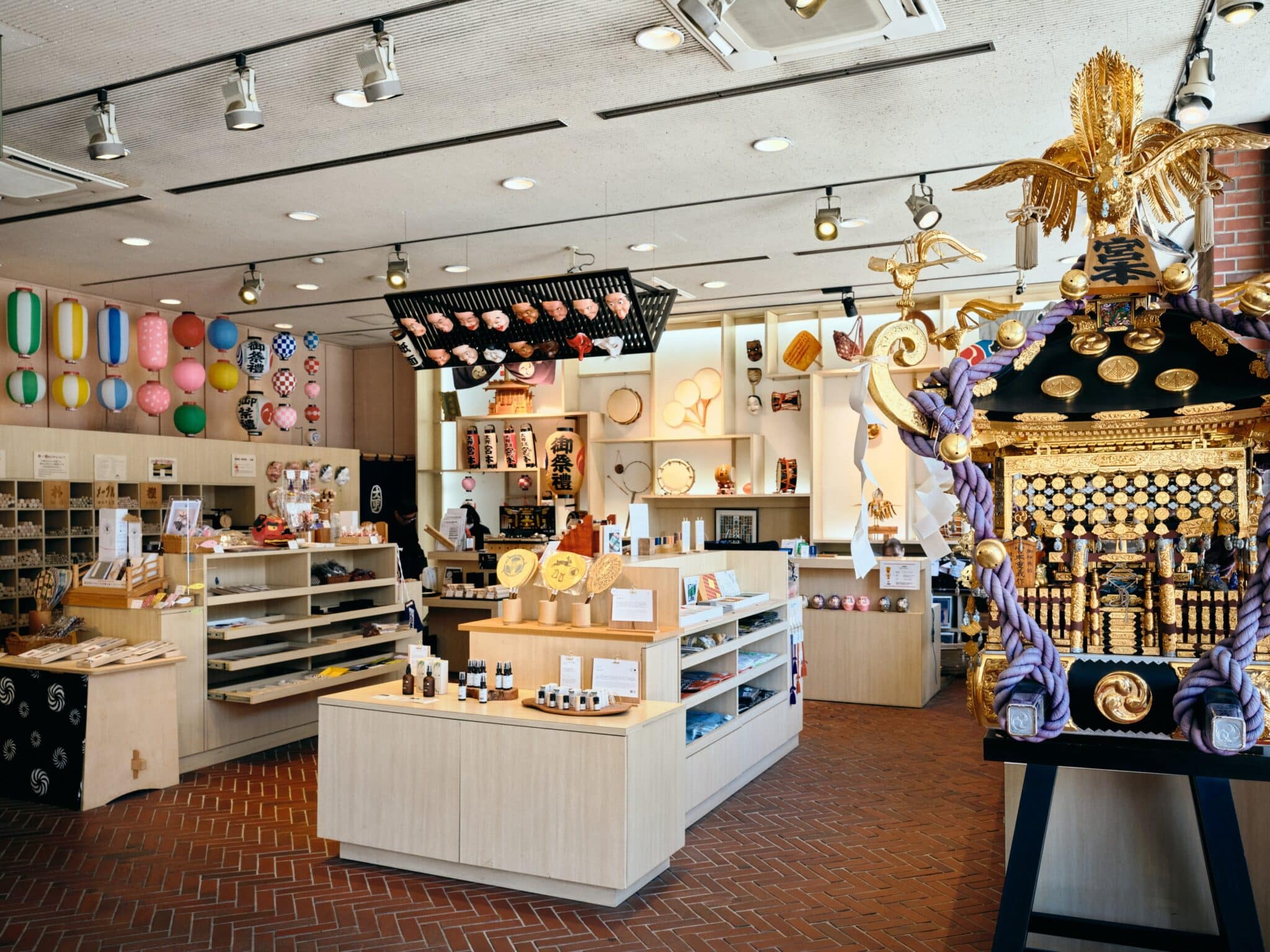
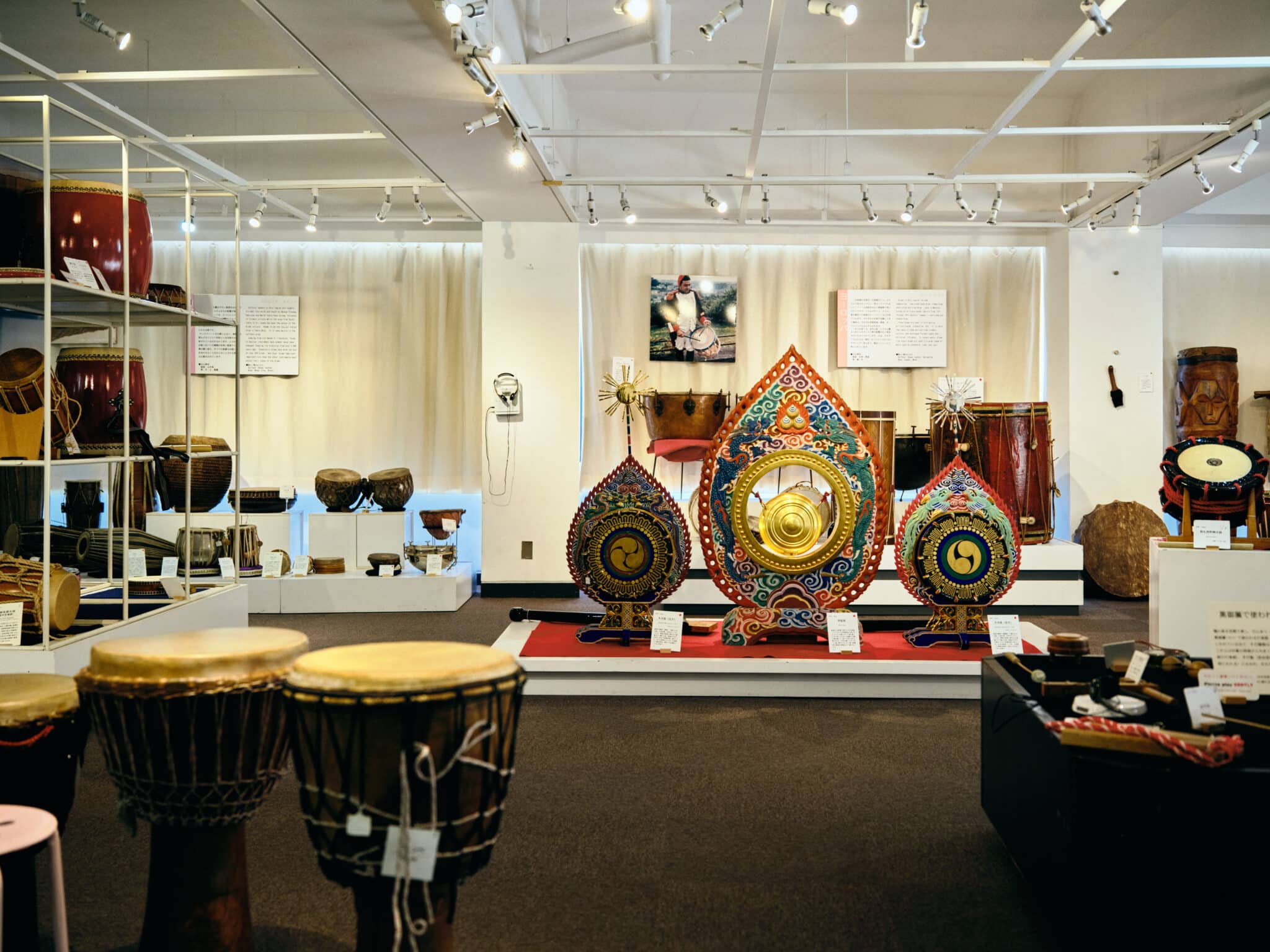
The Nishi-Asakusa store was created as a place where Miyamoto Unosuke Shoten’s products could be introduced to a wider audience. The first floor is a shop area that carries drumsticks used for playing taiko, vertical flutes, masks, and original accessories. The second floor is a showroom where customers can try large drums before purchasing them. The fourth floor houses Taikokan, the world’s first taiko museum, which displays rare drums from around the world. Rather than viewing taiko drums and mikoshi shrines only from a distance as something special, the company hopes visitors will experience their appeal up close by seeing, touching, and listening to them. The Nishi-Asakusa store serves as a base for sharing that vision.
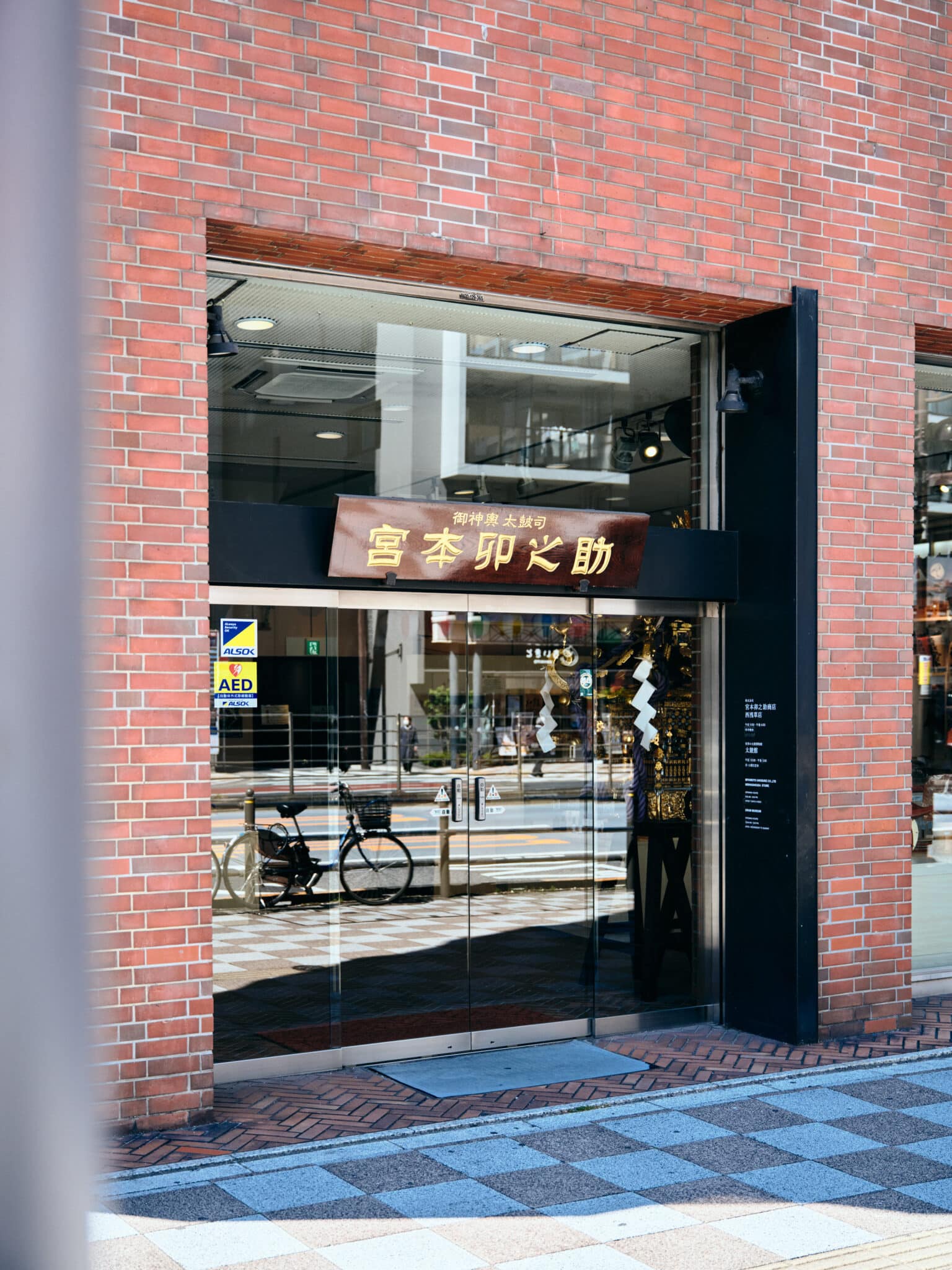
The Nishi-Asakusa store stands along Kokusai Street, an area with heavy foot traffic. Located between Senso-ji Temple and Kappabashi Kitchen Town, both popular sightseeing destinations in Tokyo, it attracts many visitors from overseas.
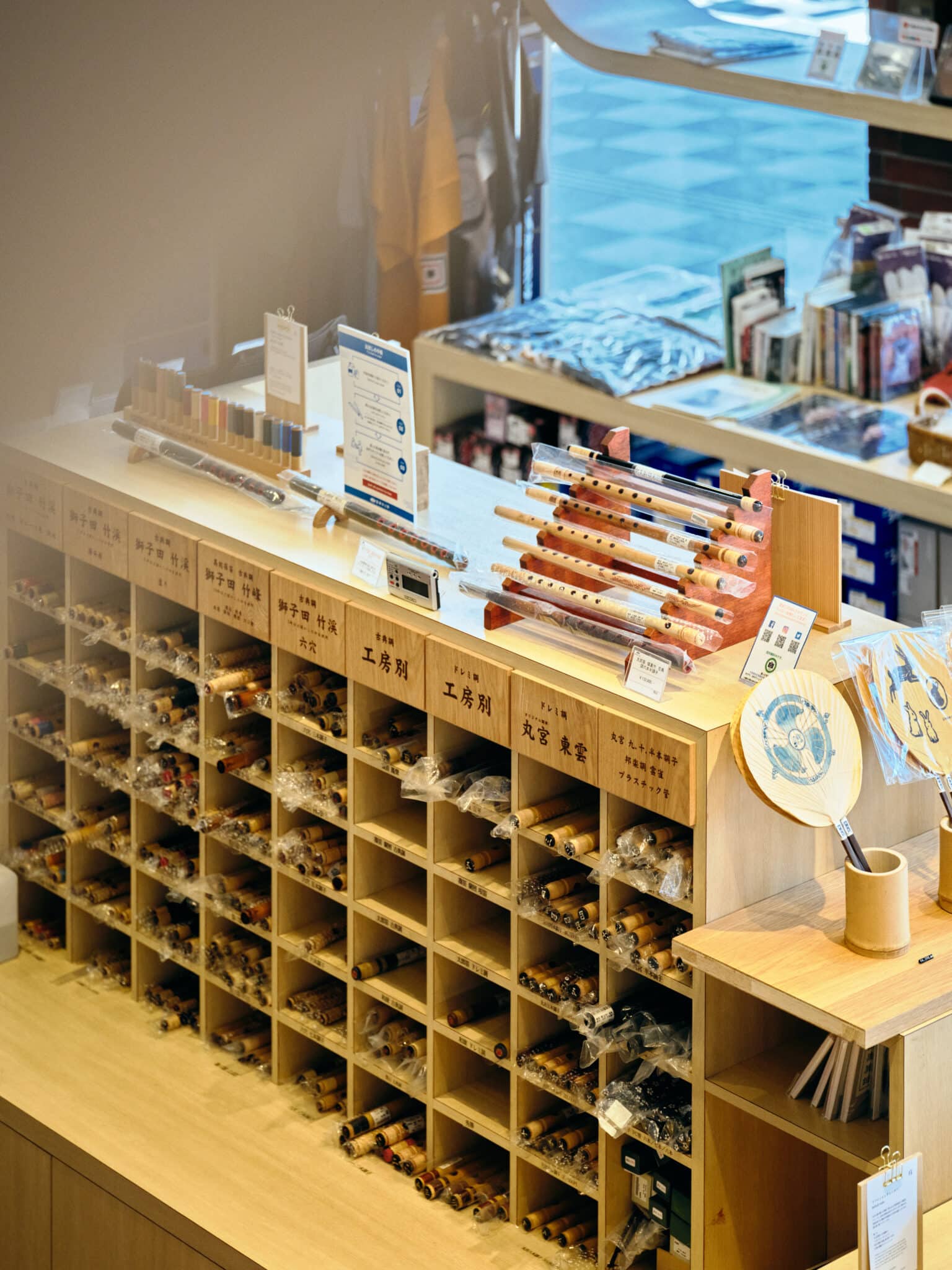
The first floor offers a wide range of products, including drumsticks, vertical flutes, masks, bells, and original accessories.
On the second floor, drums of various sizes are displayed throughout a spacious showroom. Since international shipping is available, many overseas customers purchase large drums as well.
If you ask a staff member, you can try playing any drum that interests you.
The fourth floor is home to Taikokan, which displays approximately 800 drums collected from around the world. Admission is ¥500 for adults and ¥150 for elementary school students.
The first floor also offers a variety of everyday goods, including aroma oils made from cedar used in taiko drum construction. They are also recommended as souvenirs that convey the essence of Japanese culture.
A section dedicated to shinobue flutes used in festival music. Visitors can hold them and check their weight and tone.
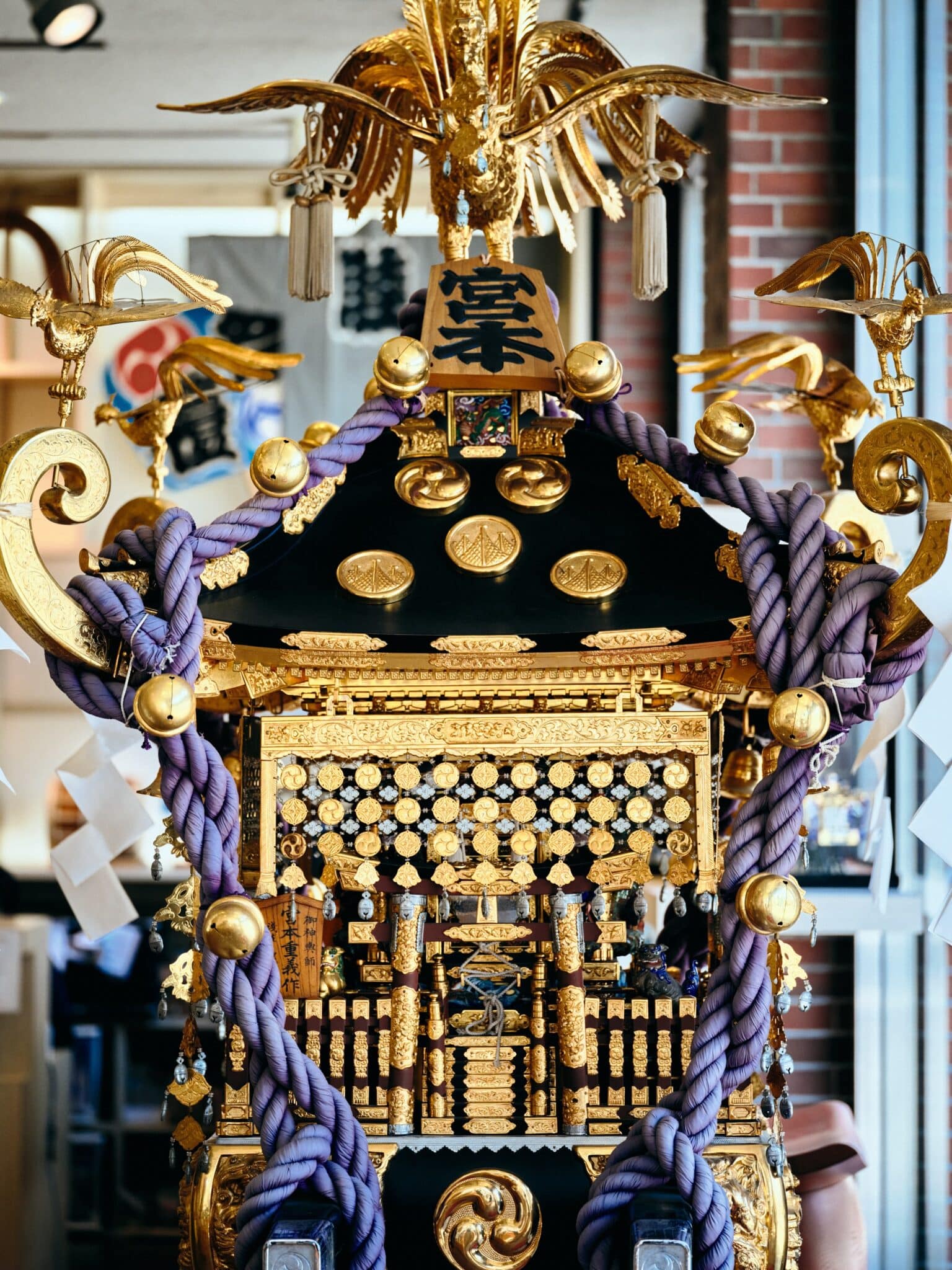
A large mikoshi shrine is displayed immediately after entering the store.
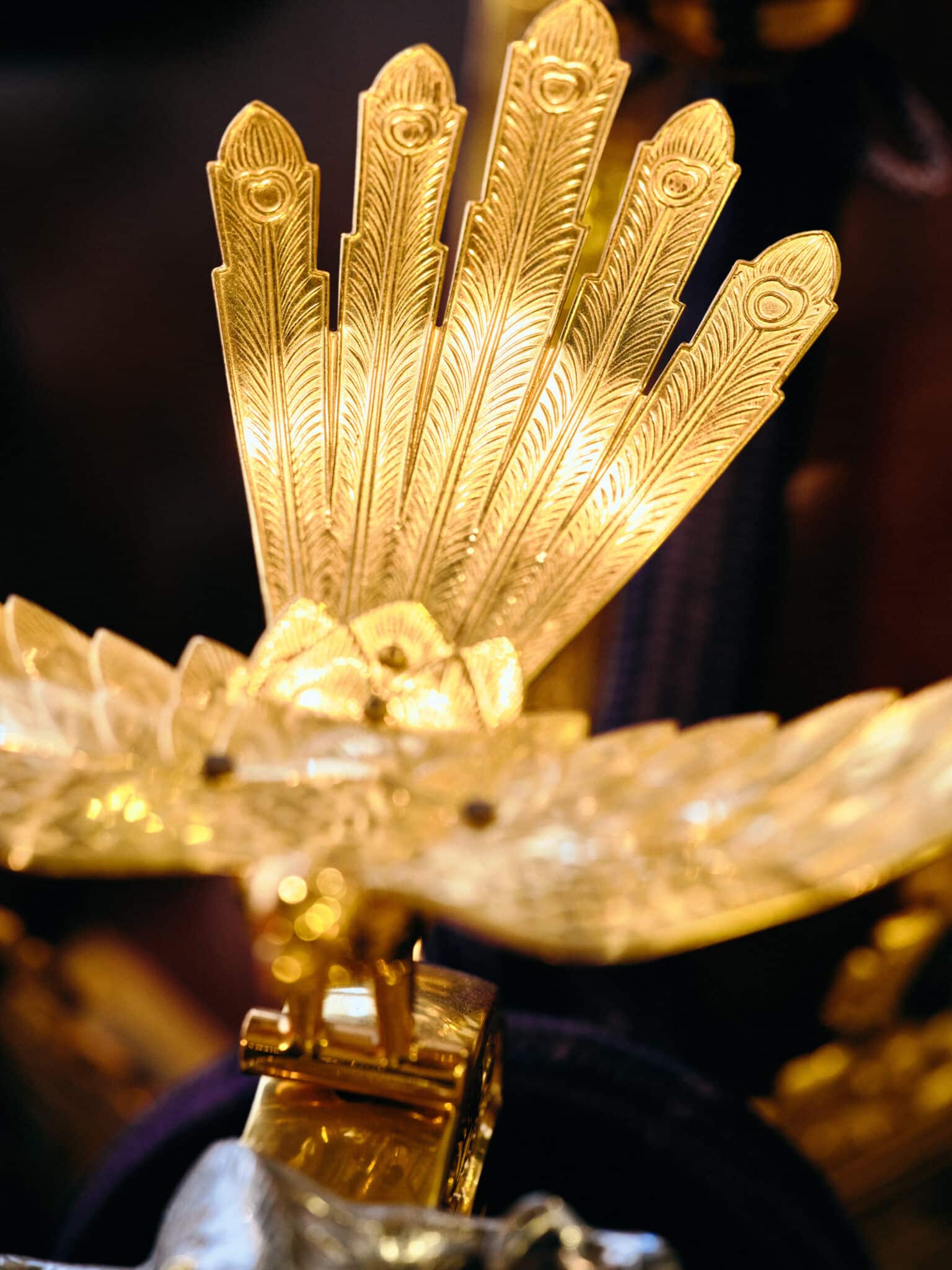
Visitors can admire the metalworking craftsmanship seen in every detail, including the golden phoenix at the top.
At Miyamoto Unosuke Shoten, artisans continue traditional handcraftsmanship at the company’s main workshop, located about a 20-minute walk from the Nishi-Asakusa store. The workshop is home to specialists in a variety of fields, including wood-carving artisans known as kezuri-shoku, drumhead-stretching artisans known as hari-shoku, lacquer artisans, mikoshi artisans, and metalworking artisans.
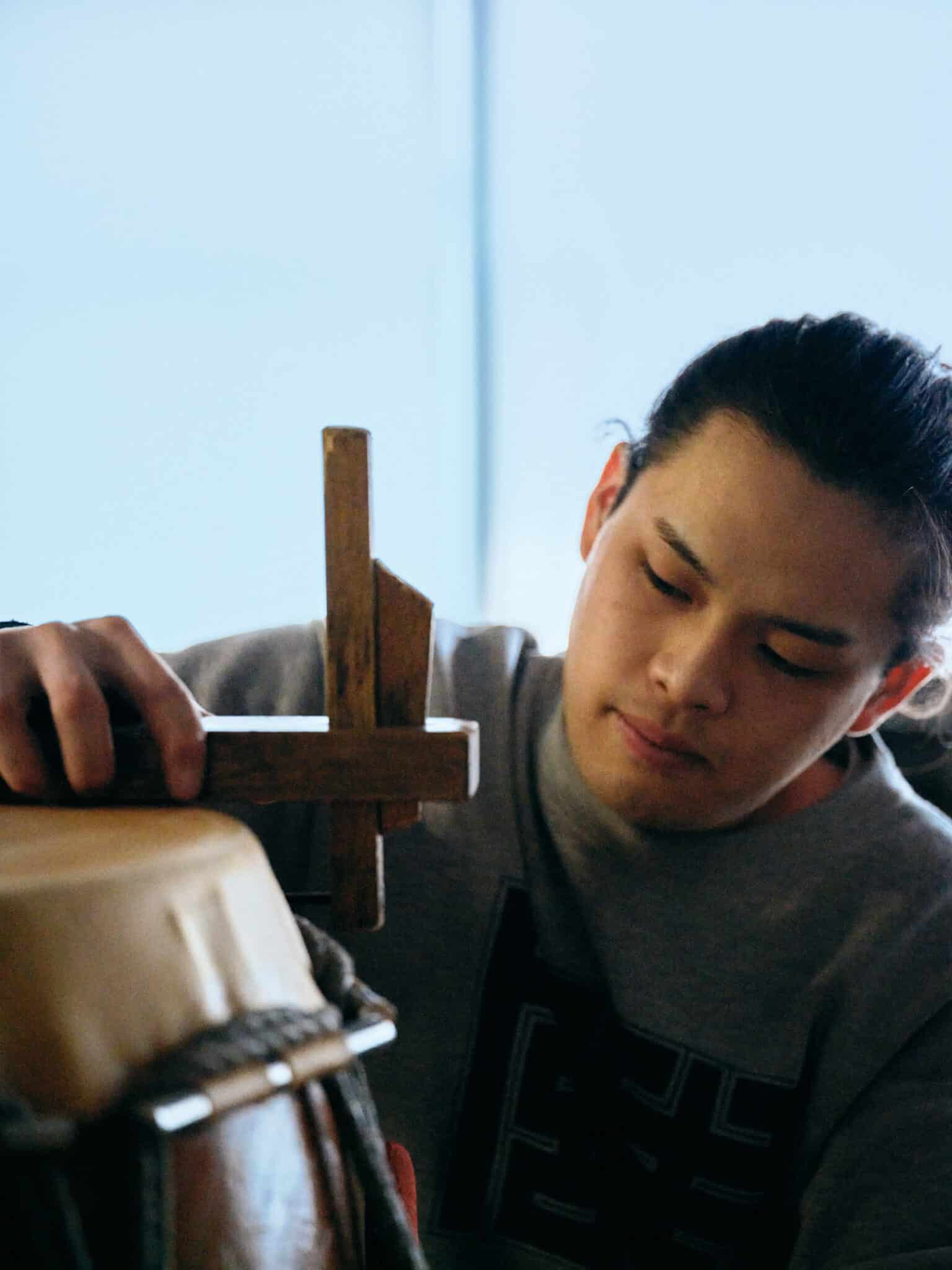
The wood used for taiko drum bodies comes from large trees that are more than 100 years old. After rough shaping, the wood is first dried slowly in storage for approximately five years to gradually remove moisture from deep within the timber. The drum body is then roughly shaped on a lathe before moving on to the hand-finishing stage carried out by artisans. Using a tool called a kanna plane, artisans carefully shape the curved surface of the drum body by hand.
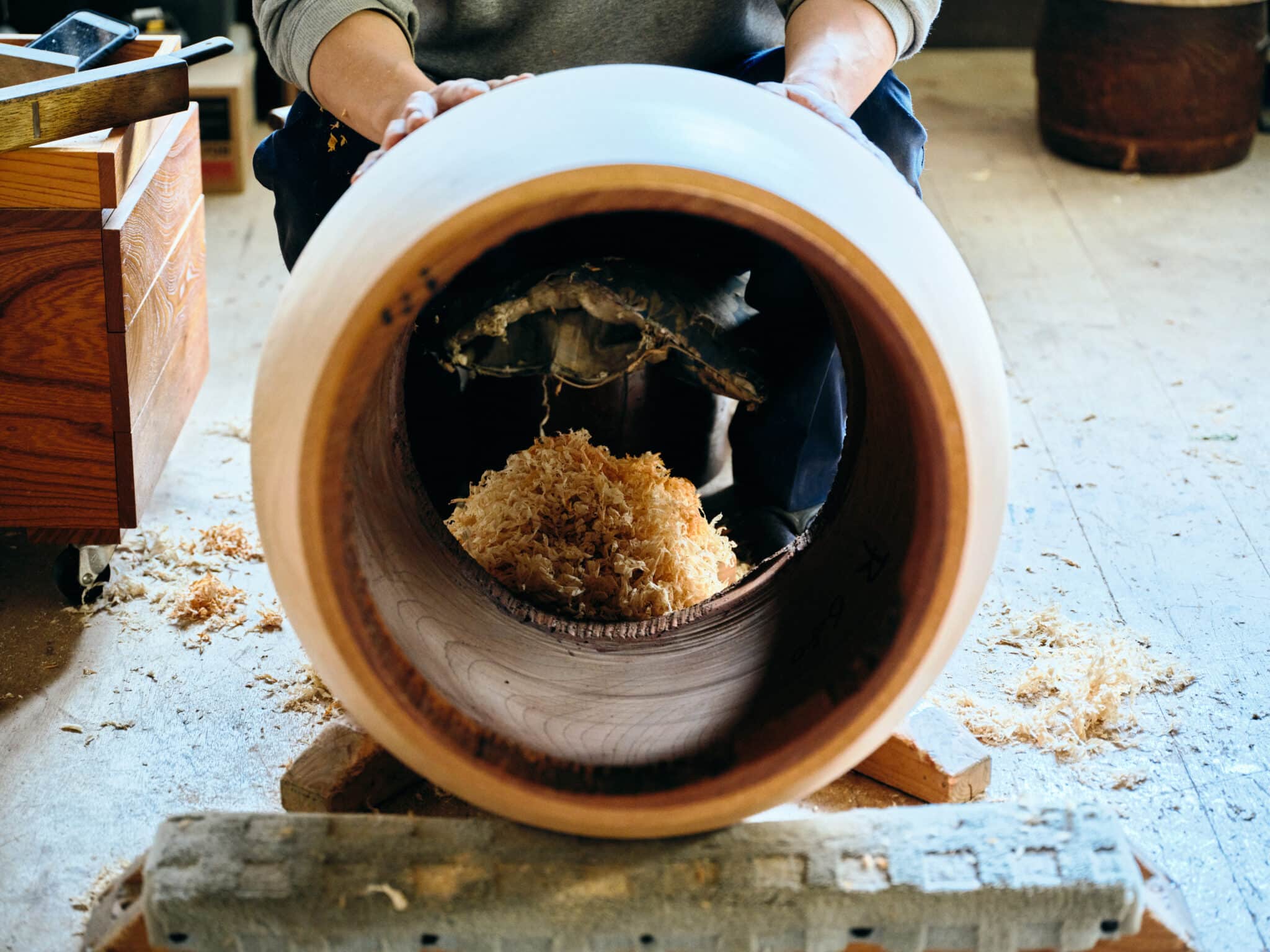
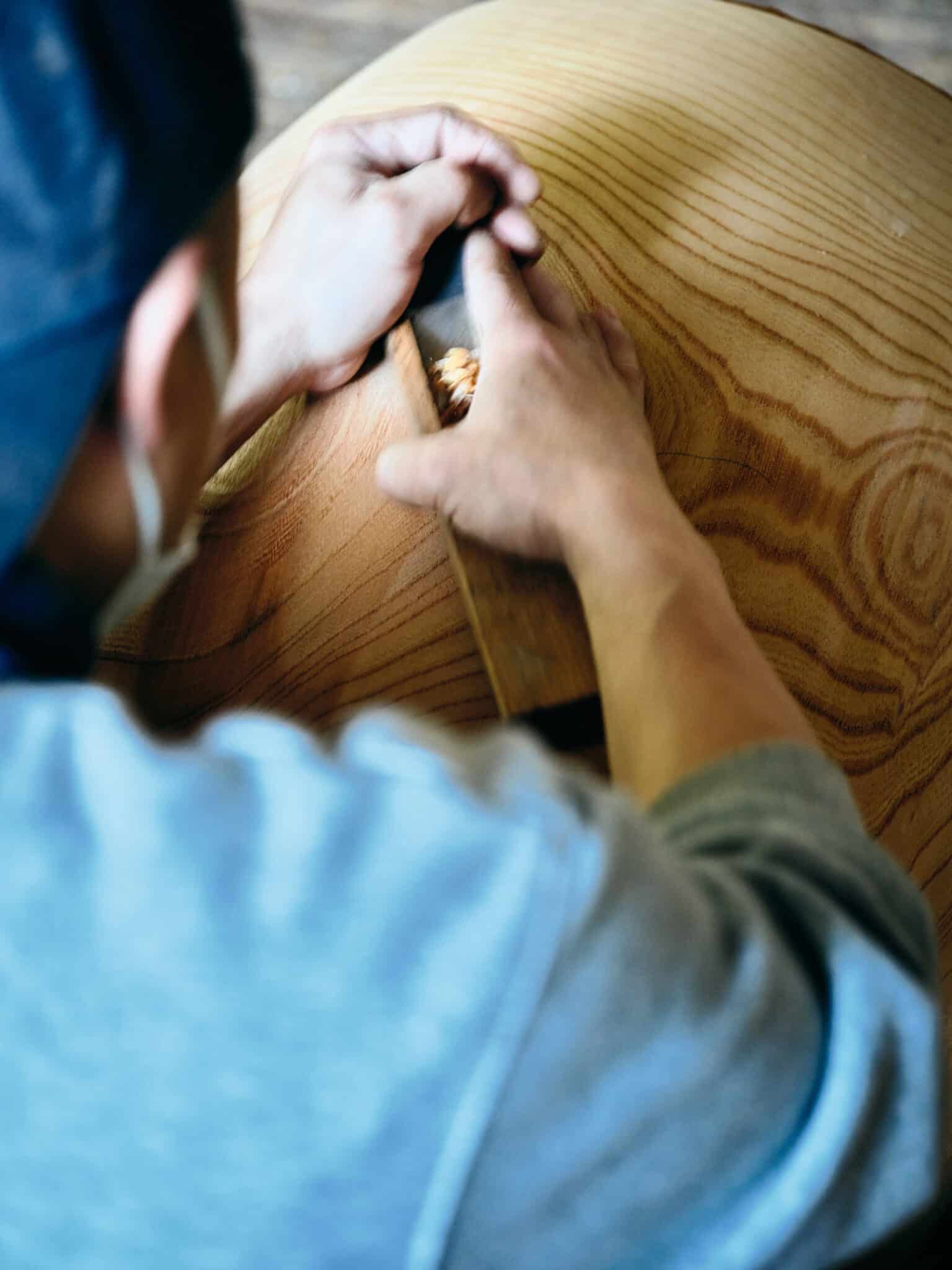
A kezuri-shoku artisan shaping a taiko drum body. The drum body is laid horizontally while the planing work is carried out.
While pressing the plane against the drum body, the artisan repeatedly moves it up and down to shave the surface.
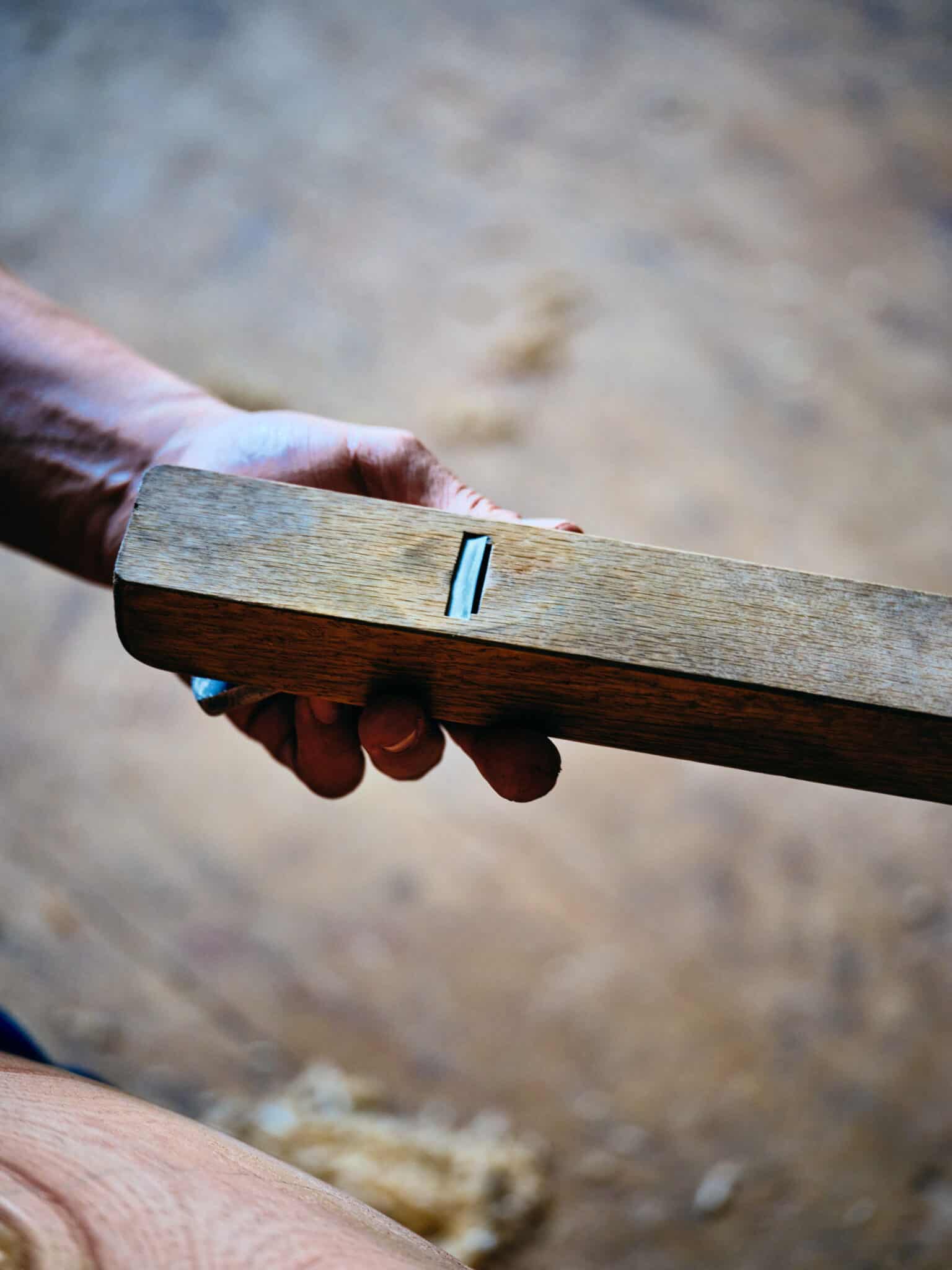
The blade of the plane has a flat shape. If an arched blade were used on a curved surface, some areas would be cut while others would not, making it impossible to achieve an even finish.
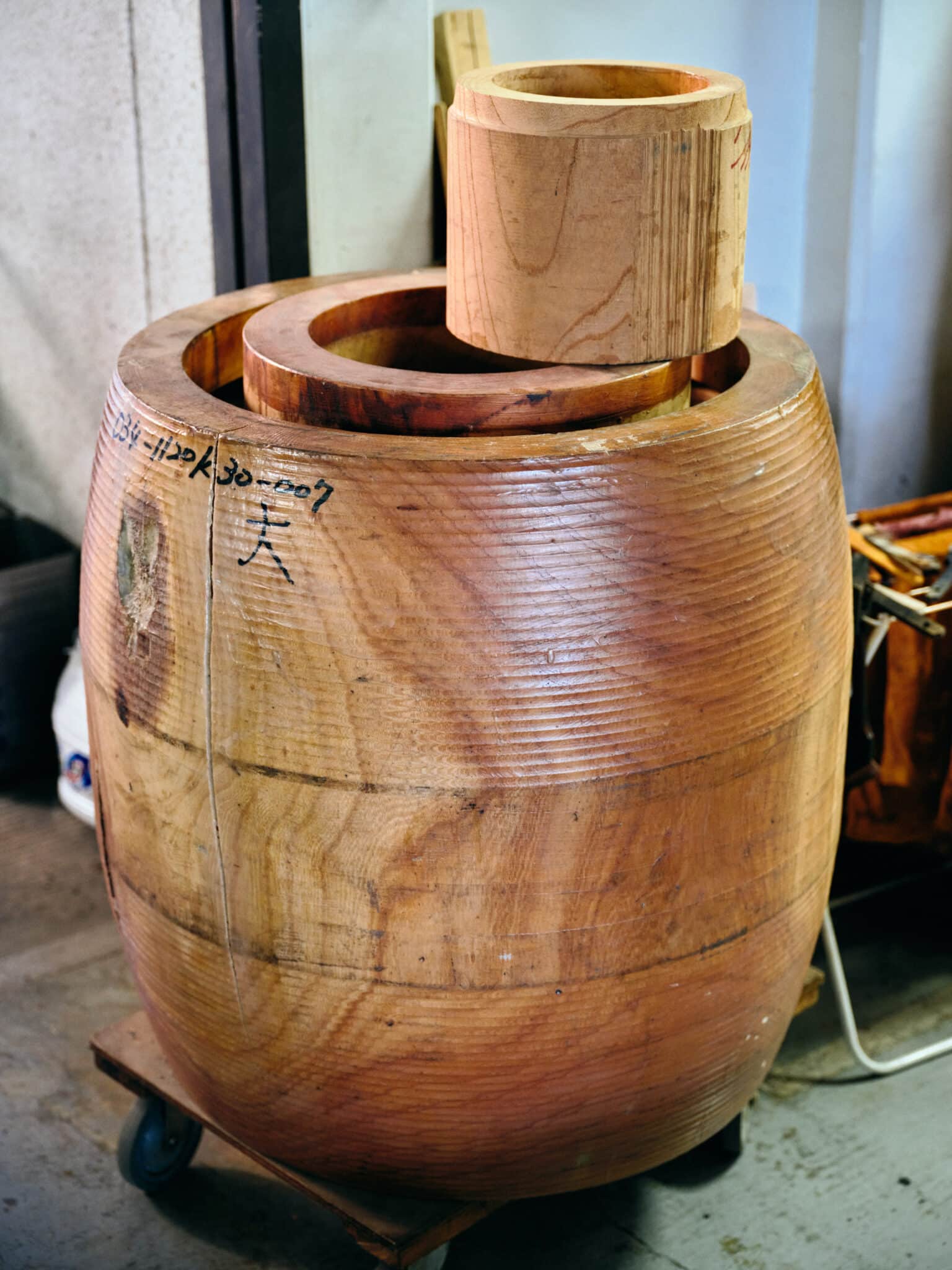
A drum body after rough machine shaping and before hand planing. The surface is uneven and rough.
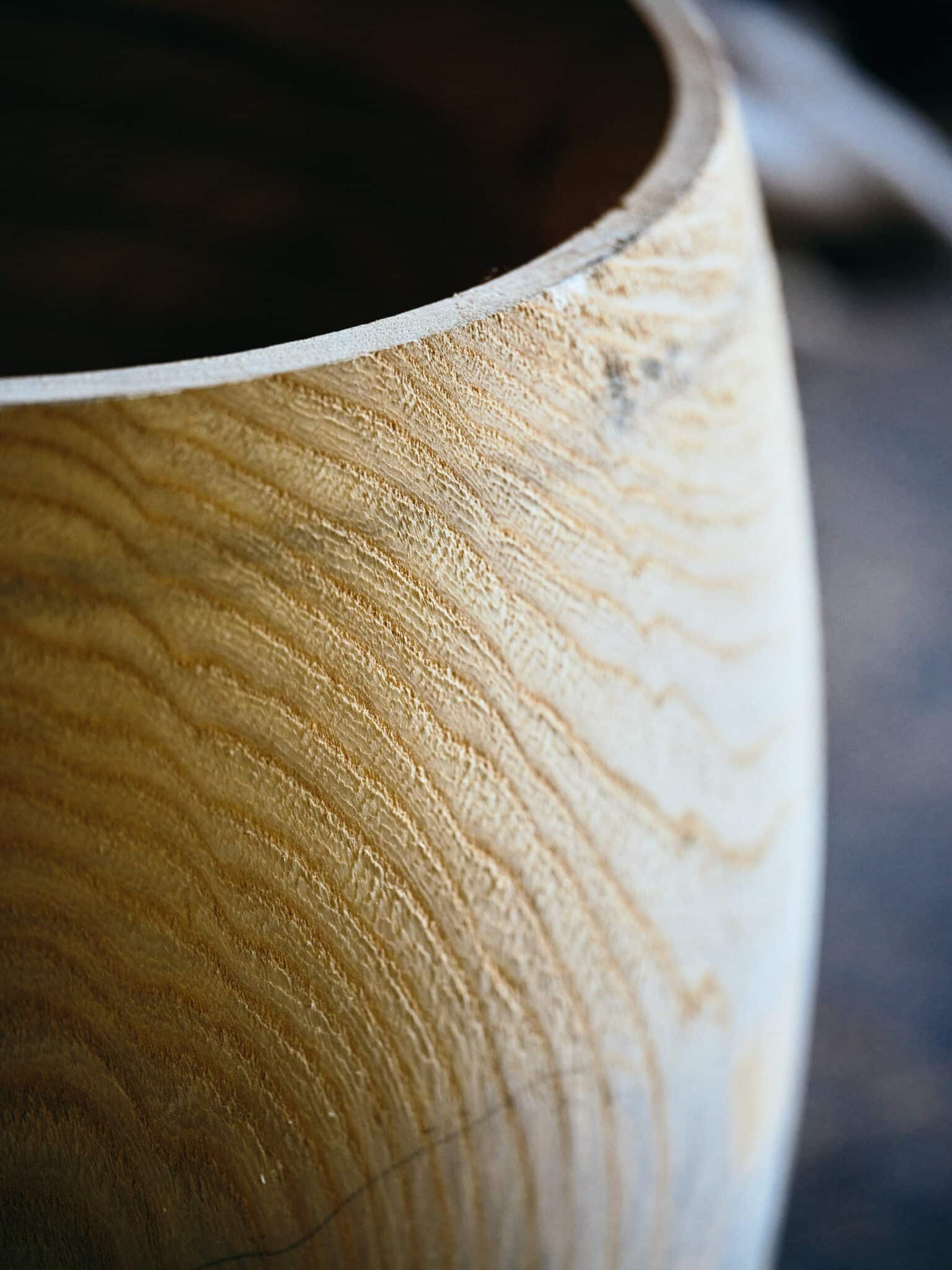
A drum body finished by an artisan with a plane is remarkably smooth. Creating a smooth surface helps prevent moisture from penetrating the wood, contributing to the durability of the drum.
After the carving is complete, a material called tonoko is applied to prepare the wood surface. The drum body is then colored a golden-brown shade. Many manufacturers apply a urethane coating at this stage. However, Miyamoto Unosuke Shoten instead applies layers of natural lacquer varnish known as lac nish. This allows the wood to breathe while providing both luster and durability.
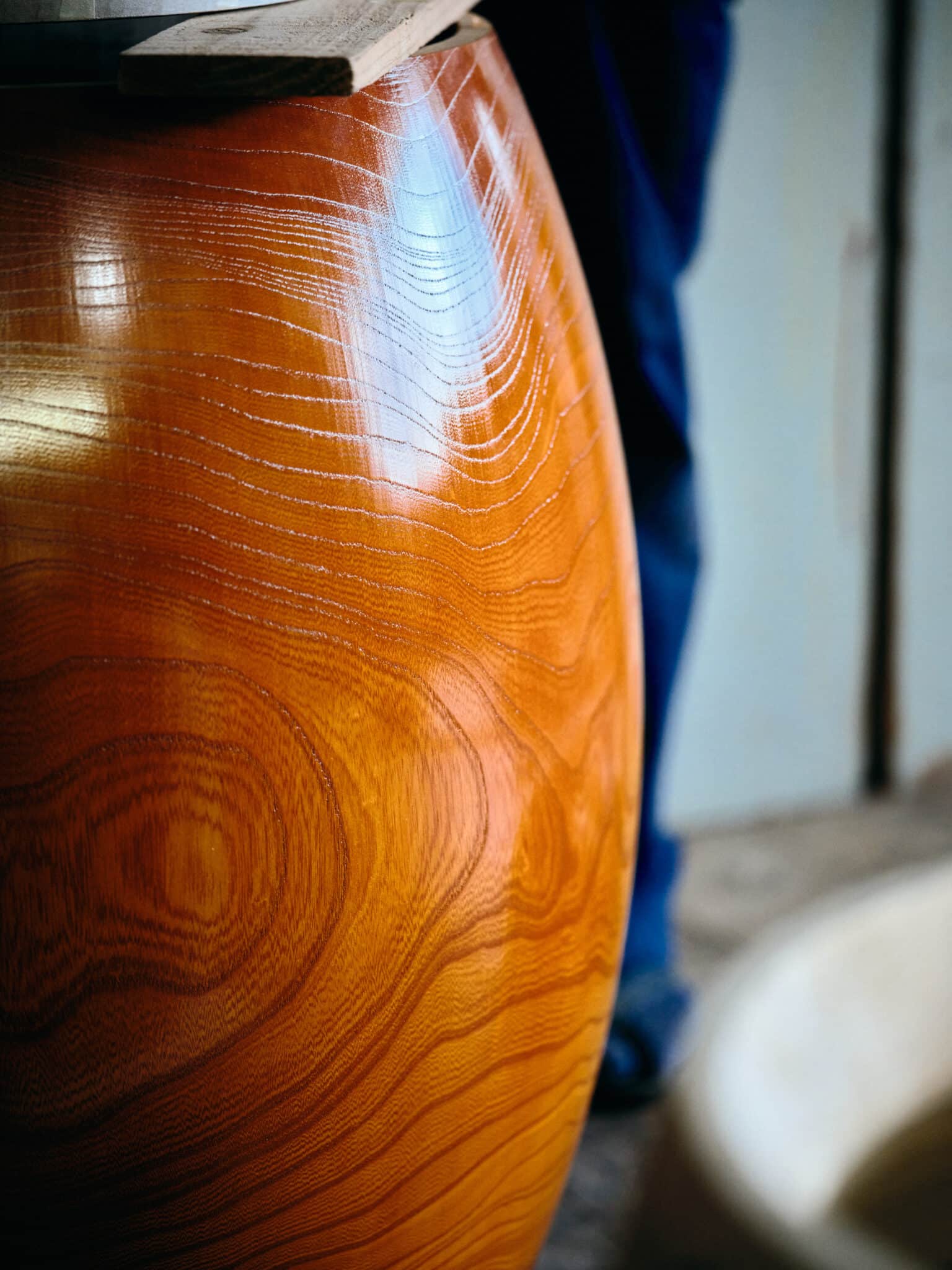
A drum body after being coated with tonoko and lacquer varnish and left to dry. The finish gives the surface a beautiful sheen and makes the wood grain stand out more clearly.
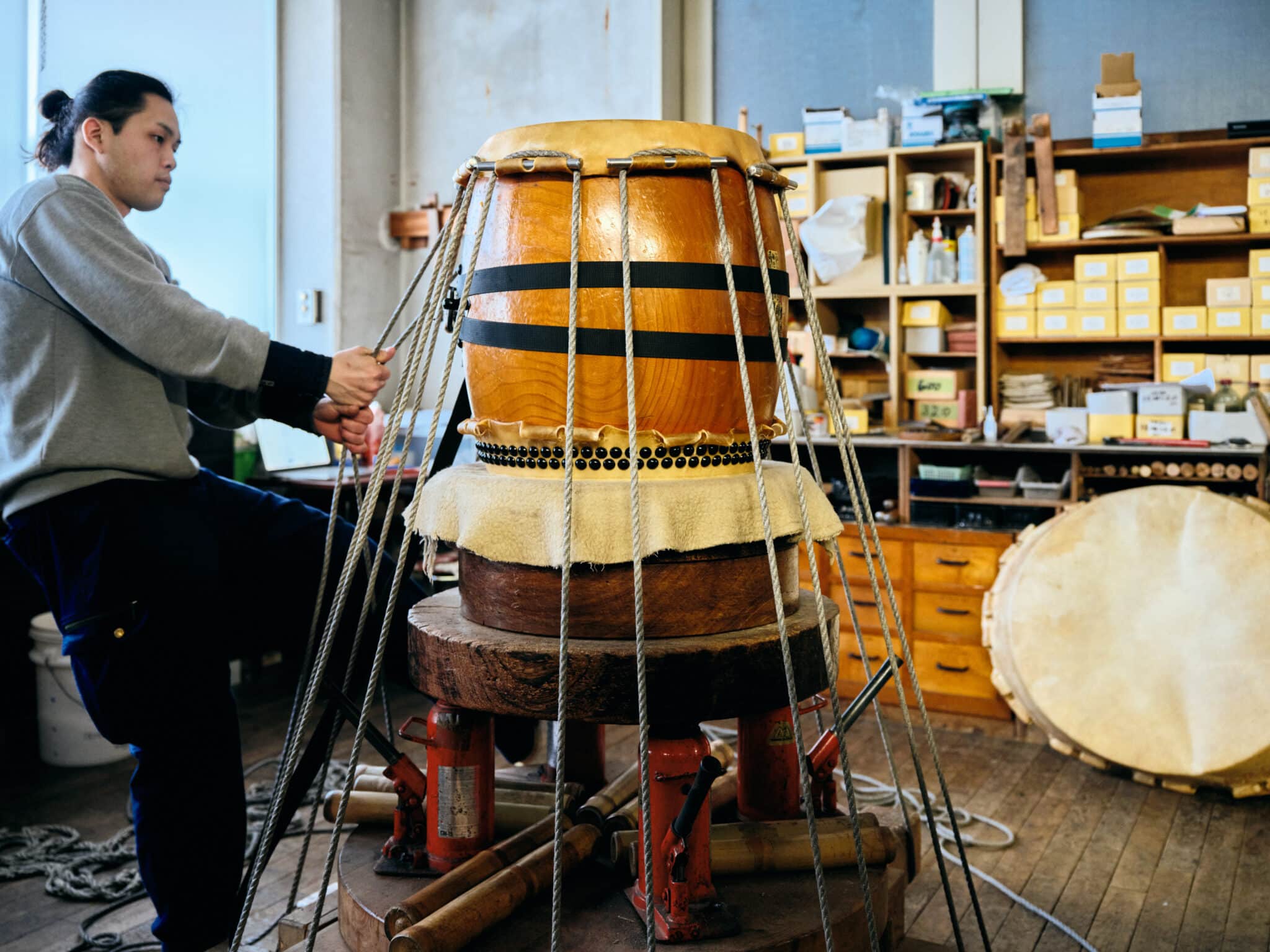
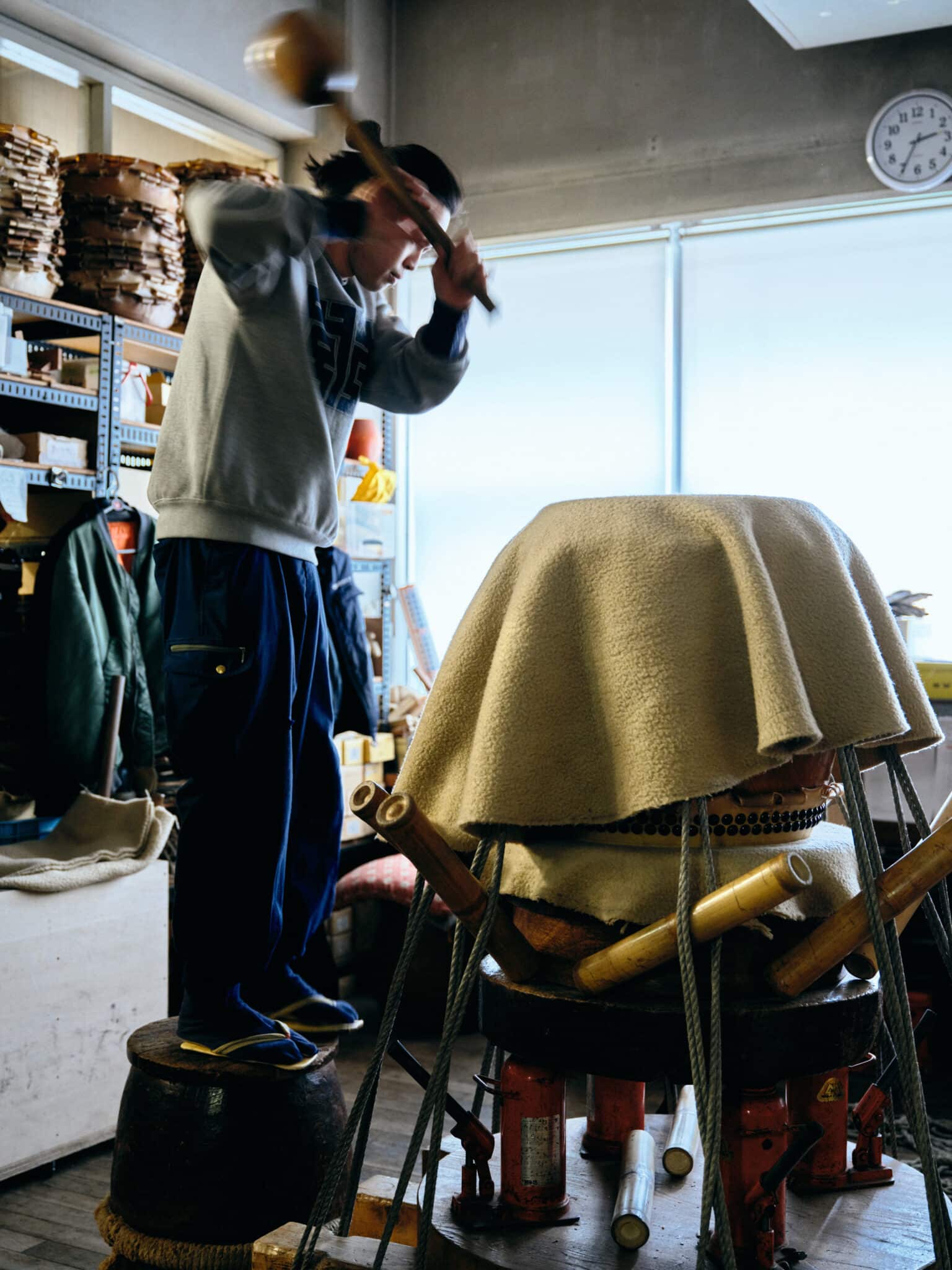
The next stage is kawahari, the process of stretching drumheads onto the completed drum body. The drum body is first secured to a special frame. A dried and hardened cowhide is then placed over it. A metal rod is inserted through the rolled edge of the hide, known as the en. Ropes are attached and secured to the frame. After that, tension is gradually applied by striking the edge with a wooden mallet called a kakeya and a piece of oak wood.
After the drum body is secured to the frame, a metal rod is inserted through the ear-like section known as the en. Ropes are then tied to it and pulled downward using body weight.
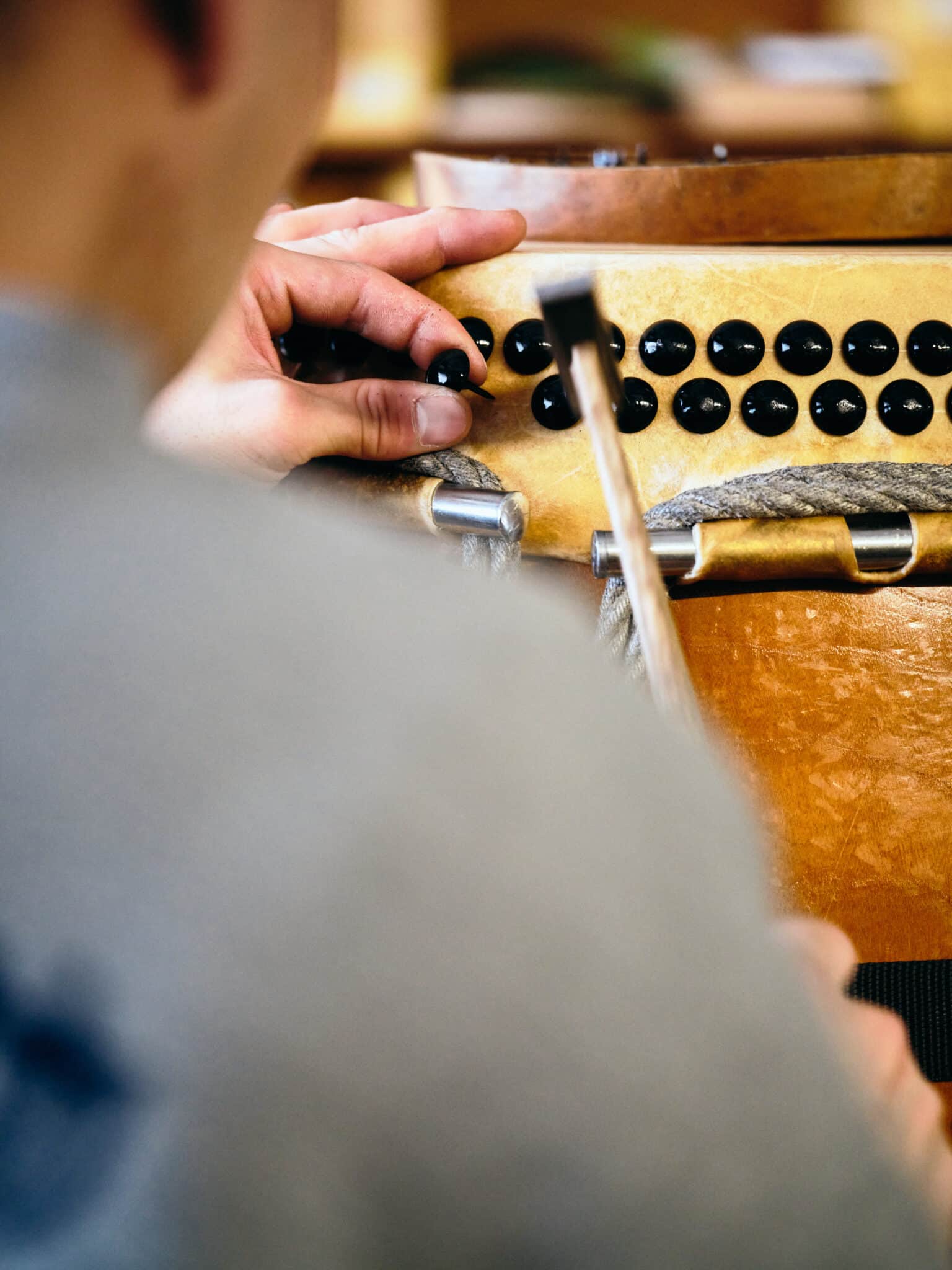
Simply pulling on the hide would cause it to tear. For that reason, the fibers must also be stretched by striking the hide through a cloth with a wooden mallet. Stretch, pull, and stretch again. As this process is repeated, the artisans strike the drum to check the tension by ear. They then tune the drum so that the sound remains consistent regardless of where it is struck. Once the desired sound has been achieved, tacks are driven in to secure the hide permanently.
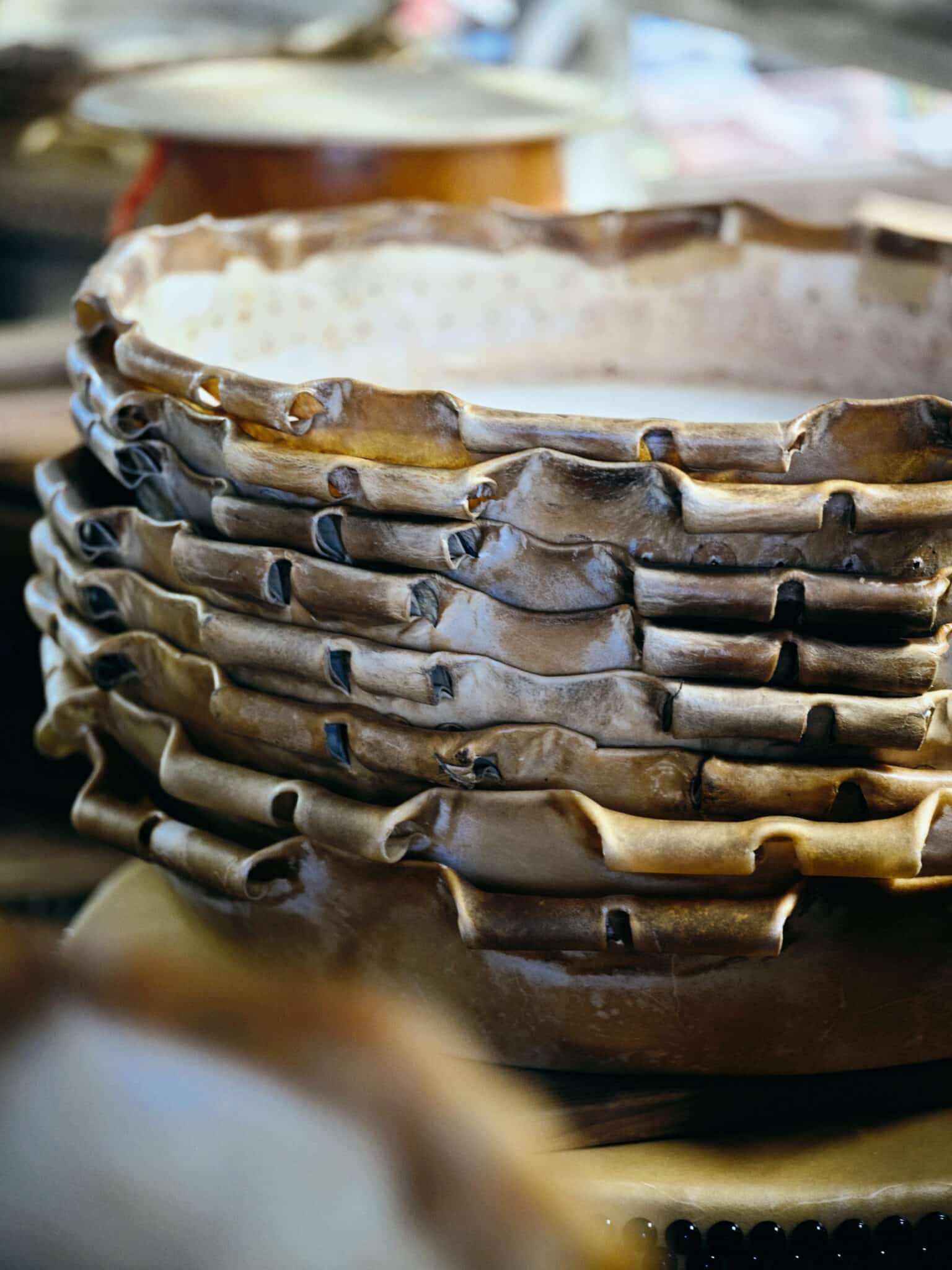
Cowhide used for taiko drums. The rolled section around the edge is called the en. For drums with adjustable heads, artisans often leave the edge intact rather than cutting it away so that the drum can be re-tightened later.
A cloth is placed over the stretched hide, which is then struck with a wooden mallet to extend the fibers.
After the hide has been stretched, a tool called a kehiki is used to draw guide lines for the tacks.
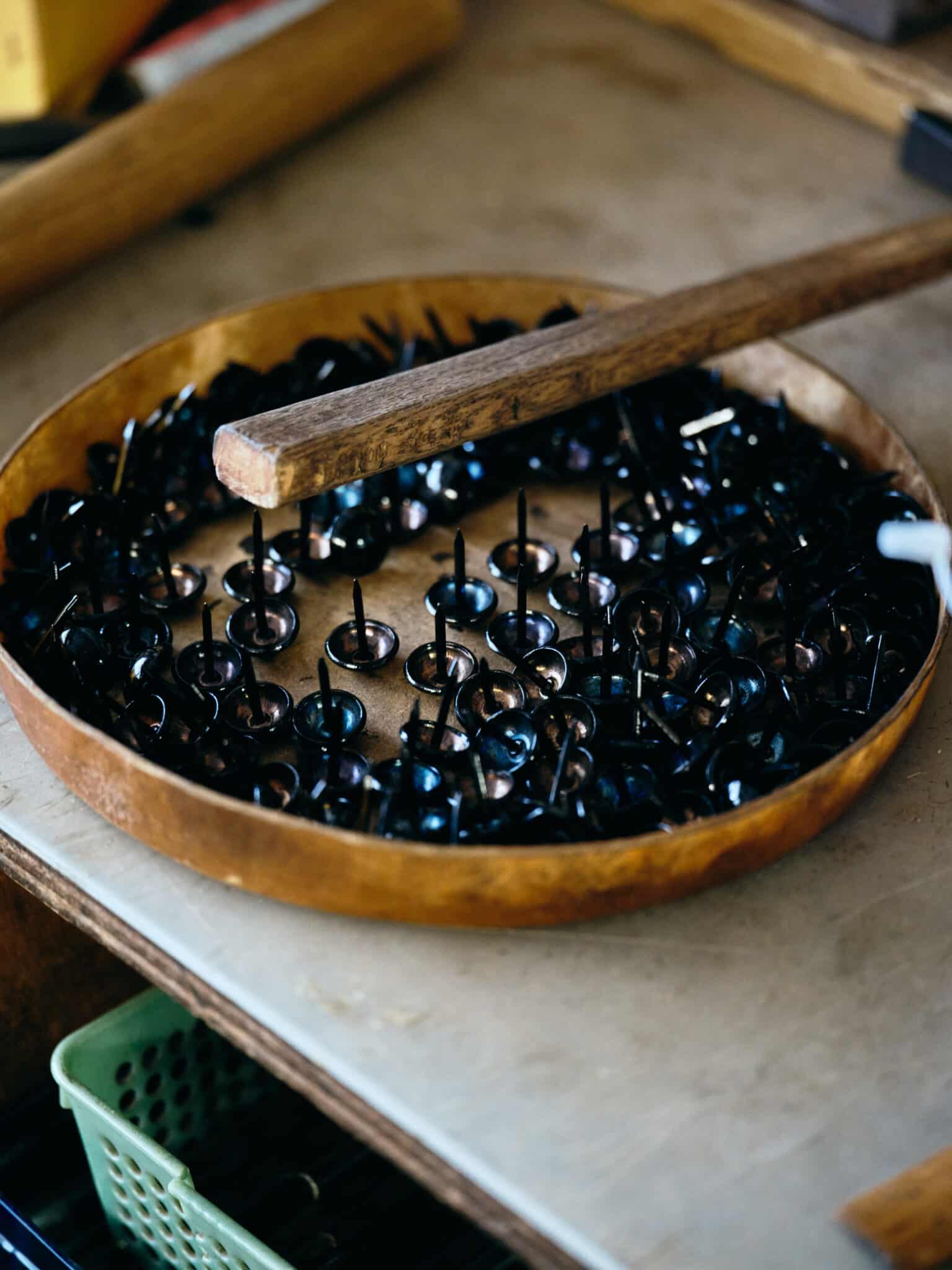
The tacks are made of lead. Different sizes are used depending on the size of the drum.
Artisans drive the tacks in with practiced rhythm and speed. More than 140 tacks are installed in less than 15 minutes.
The yellowish color of Miyamoto Unosuke Shoten drumheads comes from rice bran used when removing the hair from the cowhide. This method causes less damage than chemical treatments and leaves an appropriate amount of natural oil in the hide, resulting in better resonance.
The sound required varies according to the drum’s purpose. Drums delivered to shrines are tuned to produce a lower tone with a lingering resonance. Ensemble drums used on stage are tuned to produce a brighter and more projecting sound. The stretching stage is where a delicate sensitivity to sound is most essential. As drums are used over time, the drumheads gradually stretch and the pitch becomes lower. For this reason, the drums are intentionally tuned slightly higher than ideal at the time of delivery. Considering how the instrument will sound years into the future is also an important part of the artisan’s work.
Today, the number of artisans engaged in traditional crafts is declining significantly across Japan. Against this backdrop, Miyamoto Unosuke Shoten employs approximately 20 artisans ranging in age from their 60s to just 18 years old. What the company values most is teaching its artisans why something is made and why it is made in a particular way. Understanding the purpose behind each process not only improves the quality of the work but also encourages new ideas that can be applied to future products.
The workshop corridor is lined with drums awaiting repair and the tools used by the artisans.
At the workshop, the younger artisans carefully explained the purpose behind each stage of the process. Creating a taiko drum requires a great deal of time and handcraftsmanship, from drying the wood and shaping it to stretching the drumhead and tuning the sound. Miyamoto Unosuke Shoten is not simply a place to purchase products. It is also a place where visitors can encounter craftsmanship that has been passed down into the modern day.
At Miyamoto Unosuke Shoten, efforts extend beyond traditional festival equipment and musical instruments. The company also works to bring the skills and spirit of craftsmanship cultivated over many years into forms that can be enjoyed in contemporary daily life.
The products displayed at the Nishi-Asakusa store reinterpret artisan techniques and traditional Japanese craftsmanship in ways that are easy to incorporate into everyday living. Another unique appeal of the store is the opportunity to experience authentic Japanese culture supported by genuine craftsmanship and materials.
The original brand “Unomise,” launched in 2024, is built around the concept of bringing Japanese traditions from Asakusa into everyday life around the world. Working together with makers from across Japan, the brand develops household goods and accessories that naturally fit into modern lifestyles. The products are not supplied to other retailers, and with the exception of a limited number of items, they are not sold online. As a result, they are offered as Asakusa souvenirs that can only be purchased at this store.
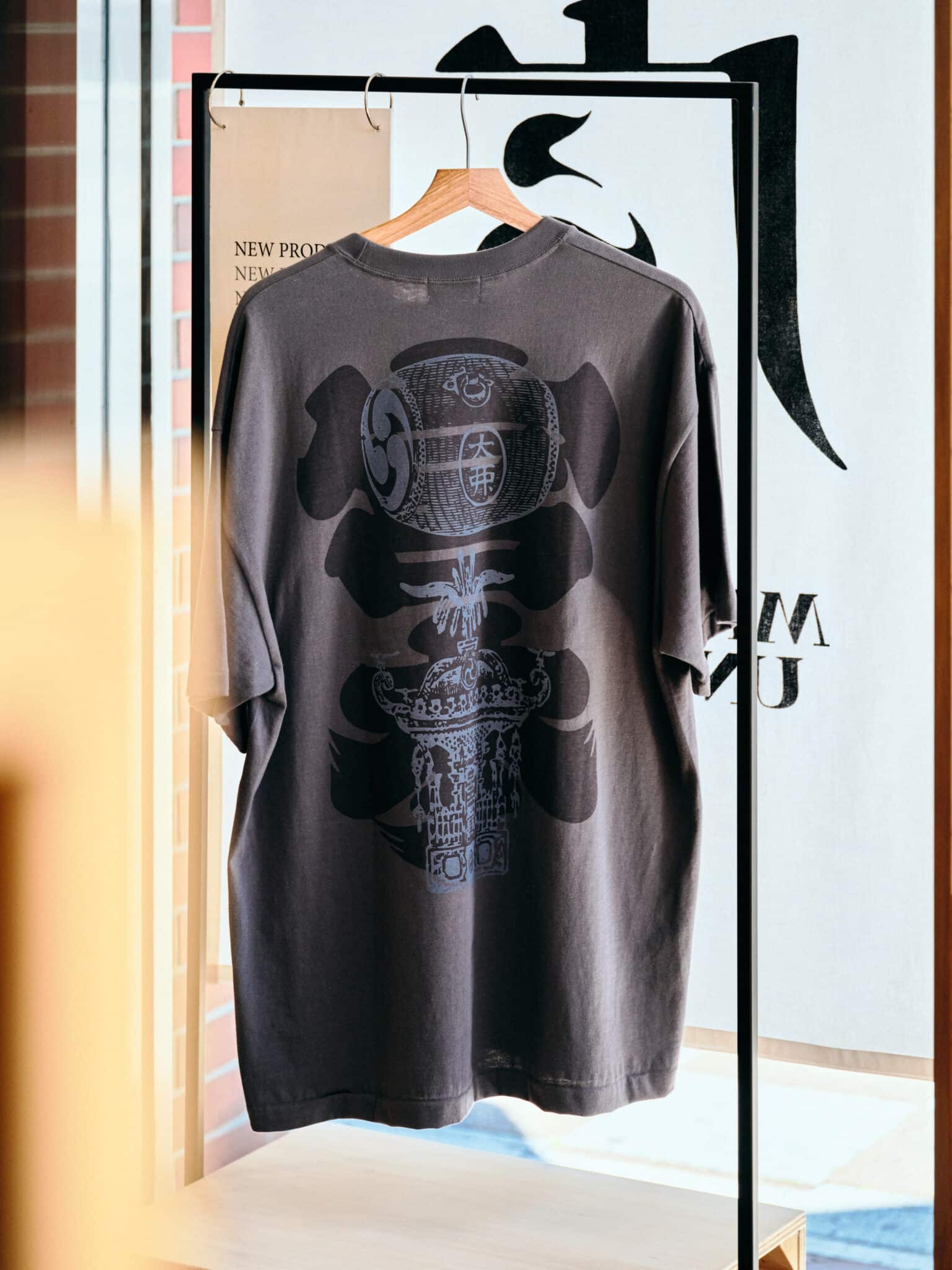
A collaboration T-shirt created by Unomise and Kume Sen-i, a company often described as the originator of Japanese-made T-shirts. The back features a design that combines the kanji character “Miyamoto” with a woodblock-style illustration of a mikoshi shrine and taiko drum that appeared in Miyamoto Unosuke Shoten catalogs during the Showa era. ¥7,810.
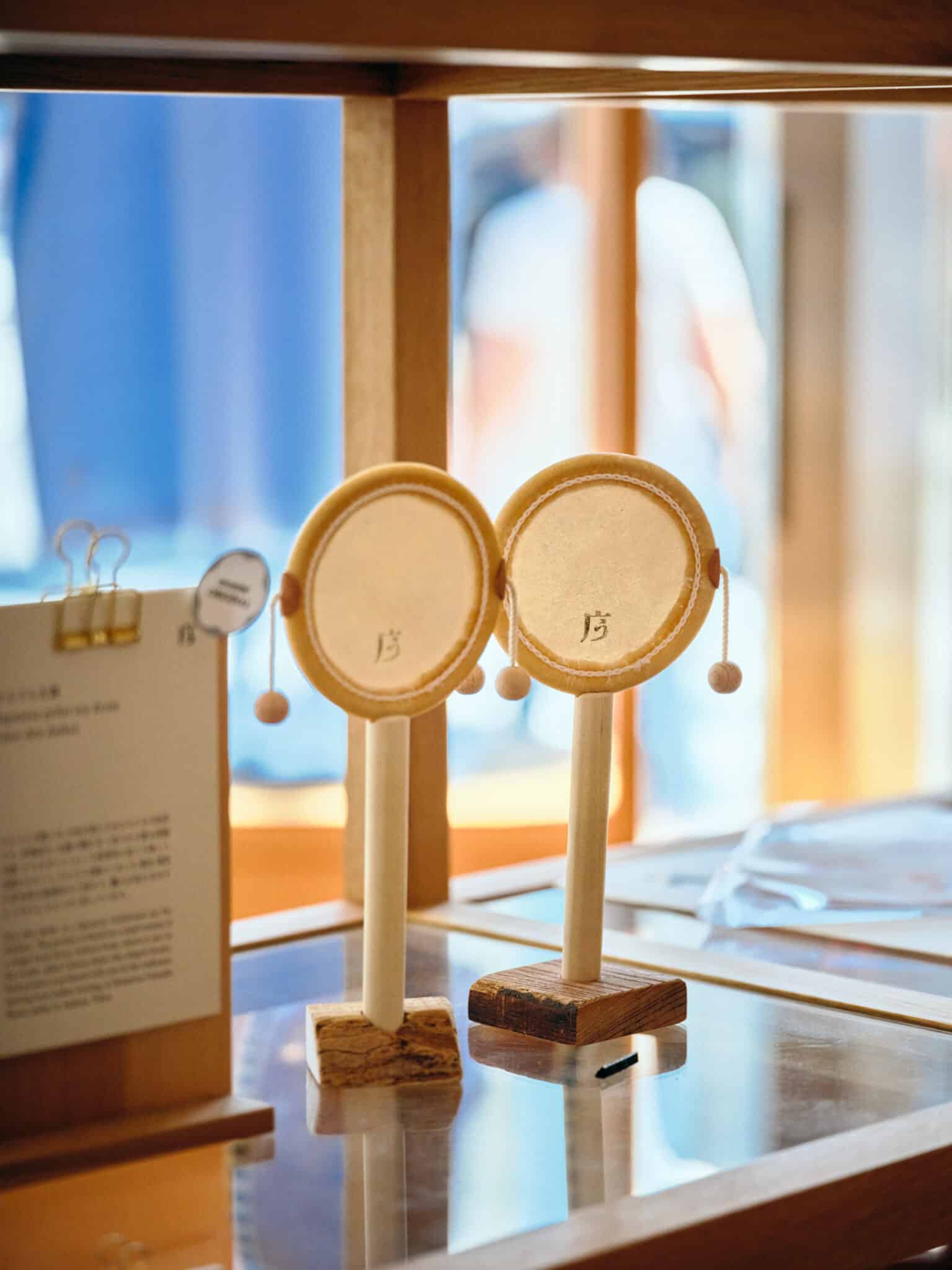
A product inspired by the traditional uchiwa-daiko, a drum made only with a drumhead and no body. It reimagines the instrument as a miniature version of the traditional Japanese toy known as a denden-daiko. ¥9,900 each.
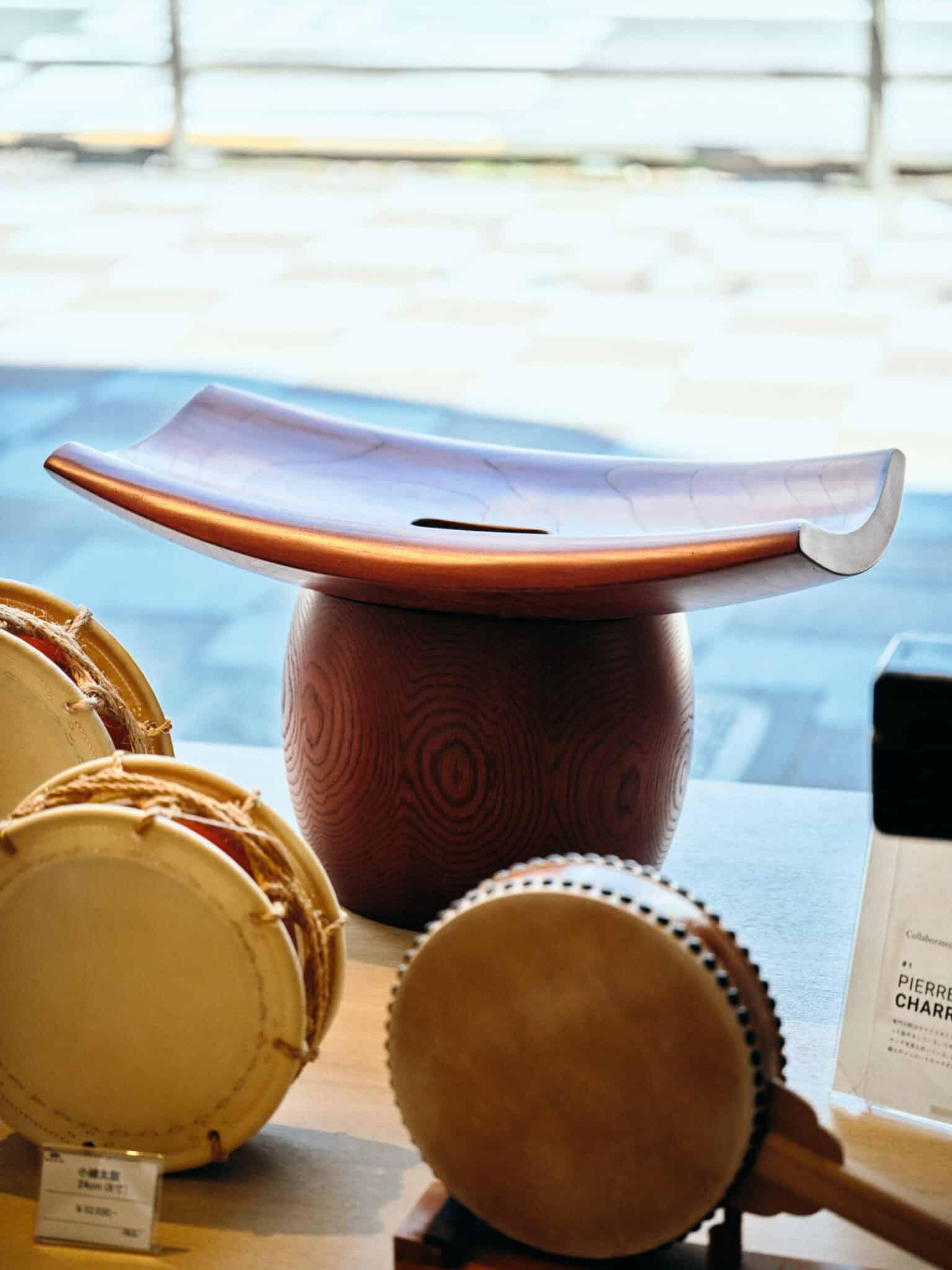
The Curve is a project that gives new value to drum bodies that developed cracks or warping during the drying process and could no longer be used as musical instruments. Products in The Curve collection are made to order. The stool shown in the photo was designed by French designer Pierre Charrié. It is finished by artisans using the same hand-planing techniques employed in shaping taiko drum bodies. The surface is exceptionally smooth and also highly water resistant.
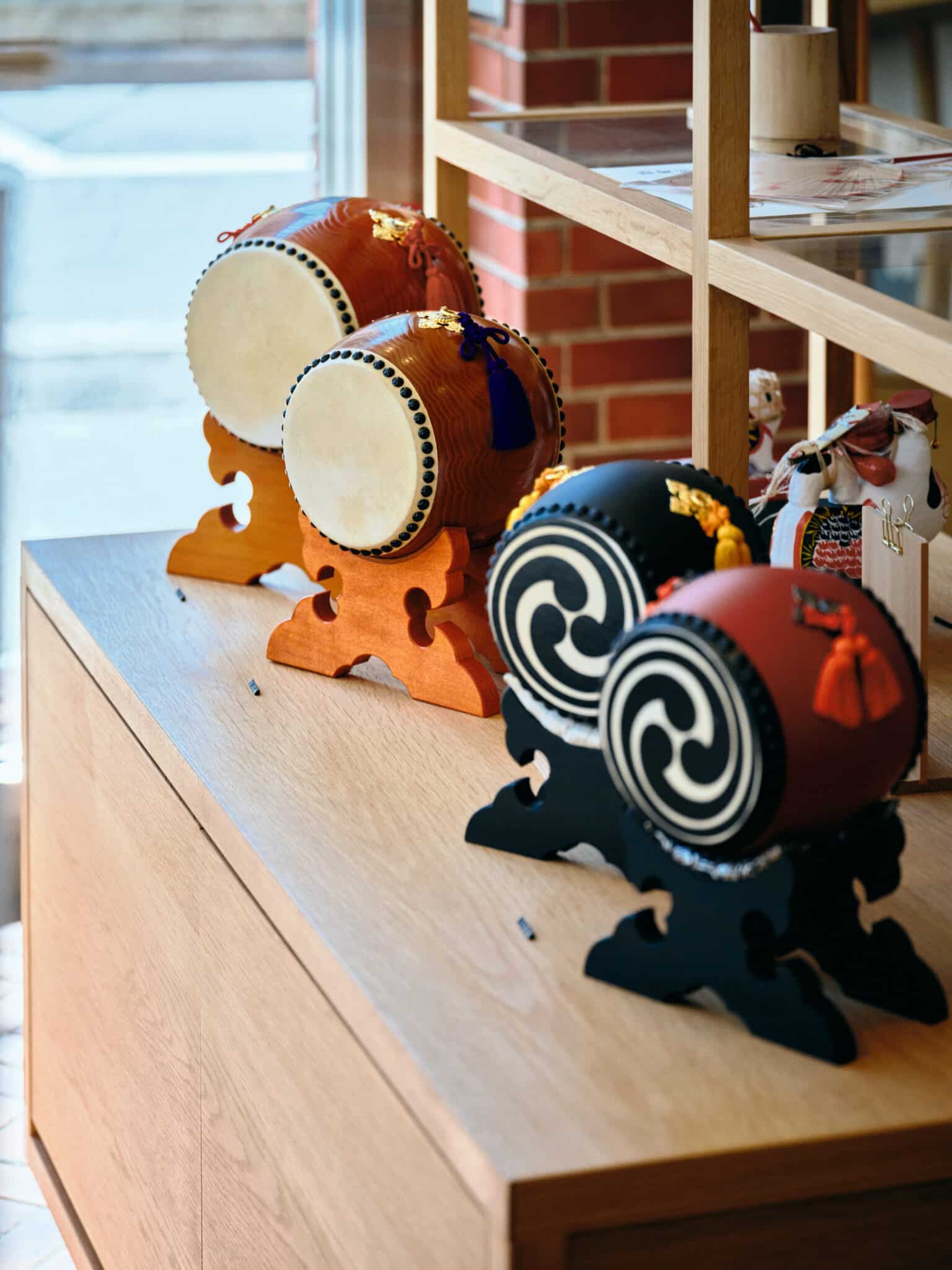
A toy drum measuring approximately 15 centimeters in diameter. It is produced using the same process as a full-sized nagado-daiko, allowing it to produce an authentic sound despite its compact size. It makes an excellent gift for children and is also attractive as an interior decoration. Prices start from ¥21,780.
The information in this article is current as of June 16, 2026 (at the time of publication).






.jpg)
スマホ.jpg)