DEEPTOKYO
magazine
EN

DEEPTOKYO
magazine
EN
2026.05.21
A long-established yoshoku restaurant in Nihonbashi Ningyocho, famous for katsudon and over 100 years of history


 Nearest Station
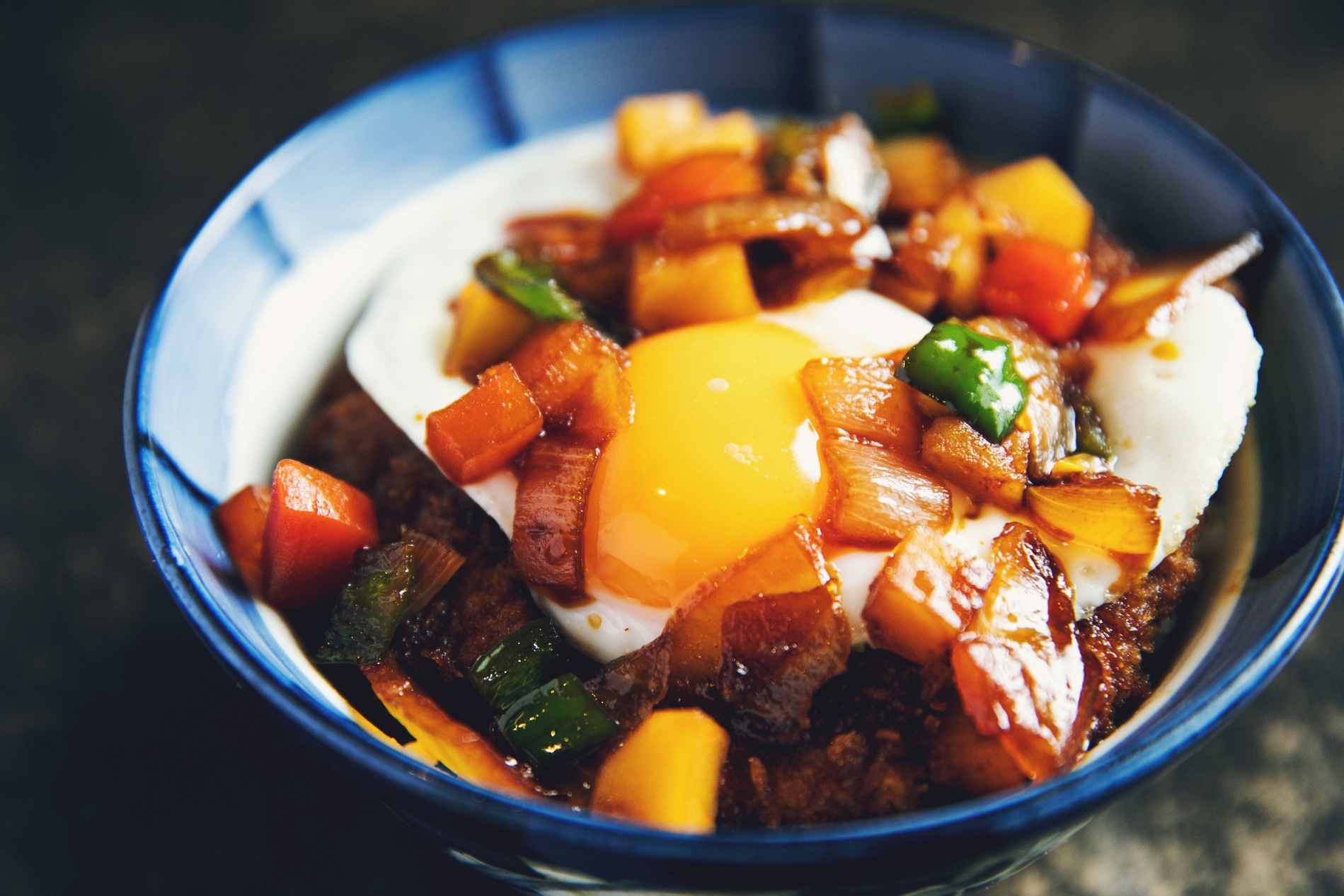
Koharuken is a representative long-established yoshoku restaurant in Nihombashi Ningyocho, founded in 1912. Its specialty is “Koharuken Special Katsudon.” This katsudon is served with cutlet, a sunny-side-up egg, and vegetables arranged separately on top of rice. It has a different style from ordinary katsudon, in which the cutlet is simmered with beaten egg.Although it is a long-established restaurant that has been loved for more than 100 years, its motto is “Unpretentious and delicious.” The Japanese phrase used by the restaurant, “Unpretentious and delicious,” means being delicious without being formal. It is a yoshoku restaurant that combines the dignity of a historic establishment with an approachable atmosphere that makes it easy to enter.
SHARE


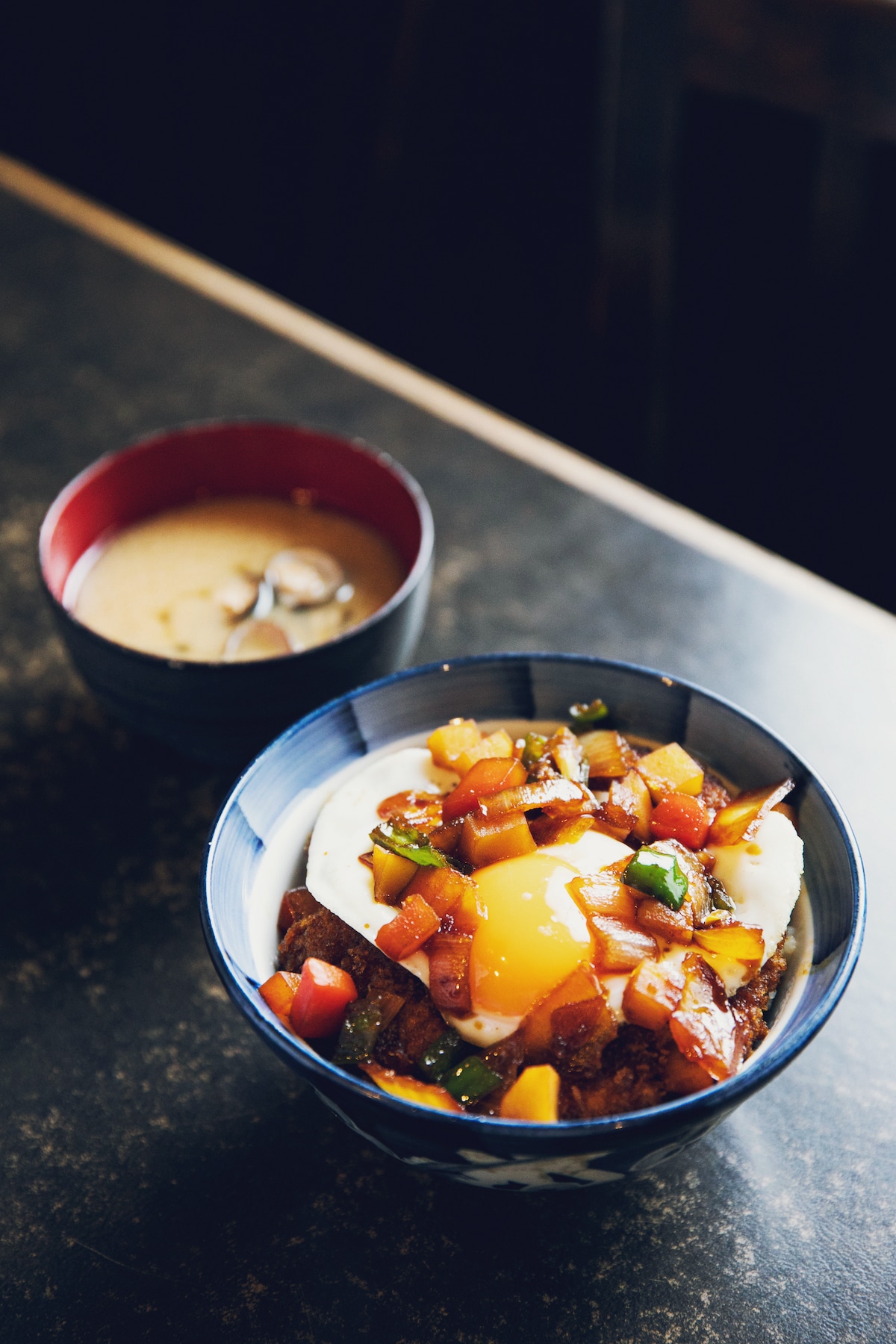
During the Edo period, Nihonbashi was a center of commerce. Even today, many long-established shops with histories of more than 100 years remain in the area. Koharuken is one of them. Since its founding in 1912, it has long been loved by office workers in the neighborhood and by local residents. Its specialty is “Koharuken Special Katsudon.” Katsudon is a dish that originated in Japan. In general, it consists of a cutlet simmered with egg and placed on top of rice. However, the katsudon at Koharuken is served with the cutlet, sunny-side-up egg, and vegetables arranged separately on top of rice. For this reason, it is slightly different from the katsudon that is widely known.
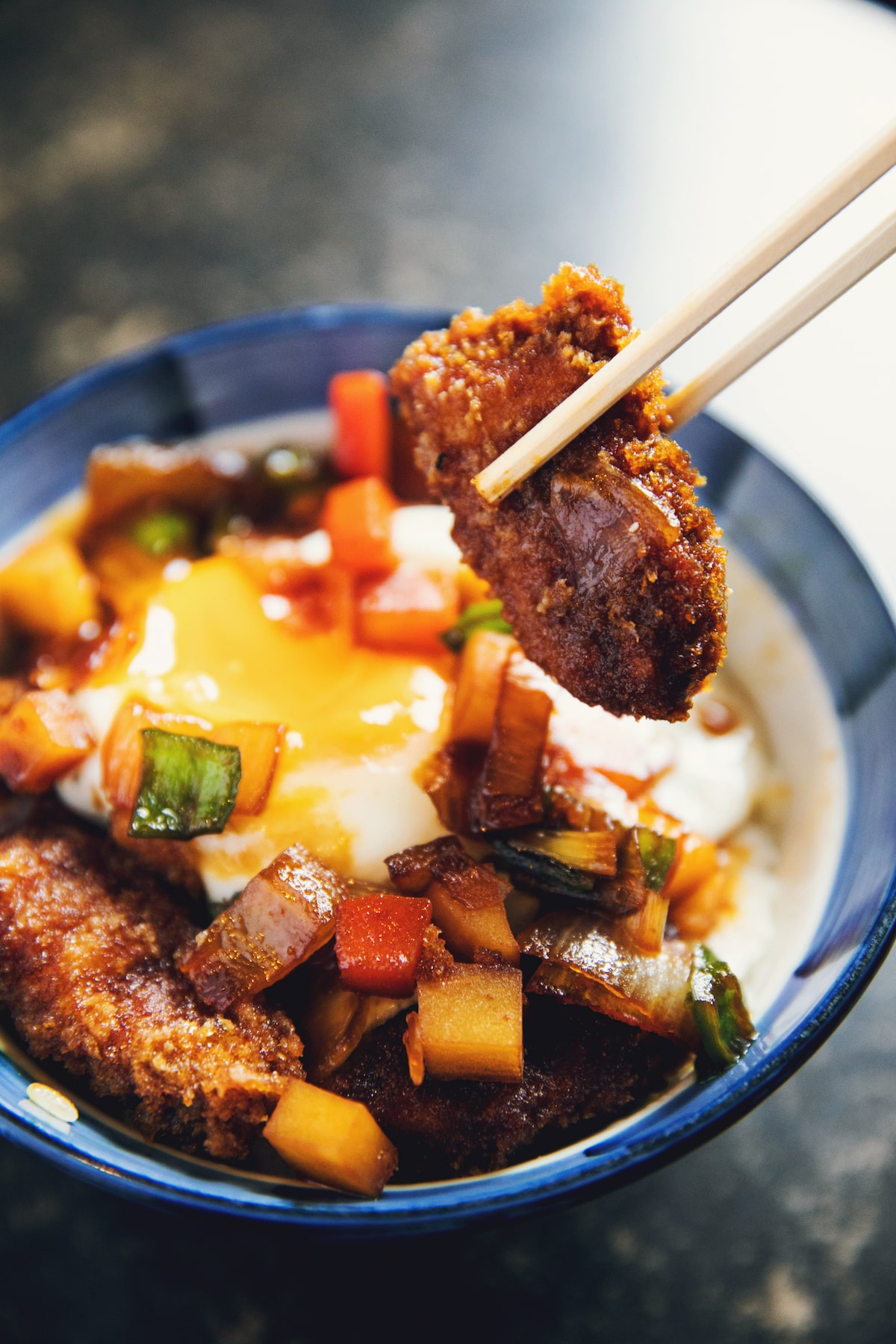
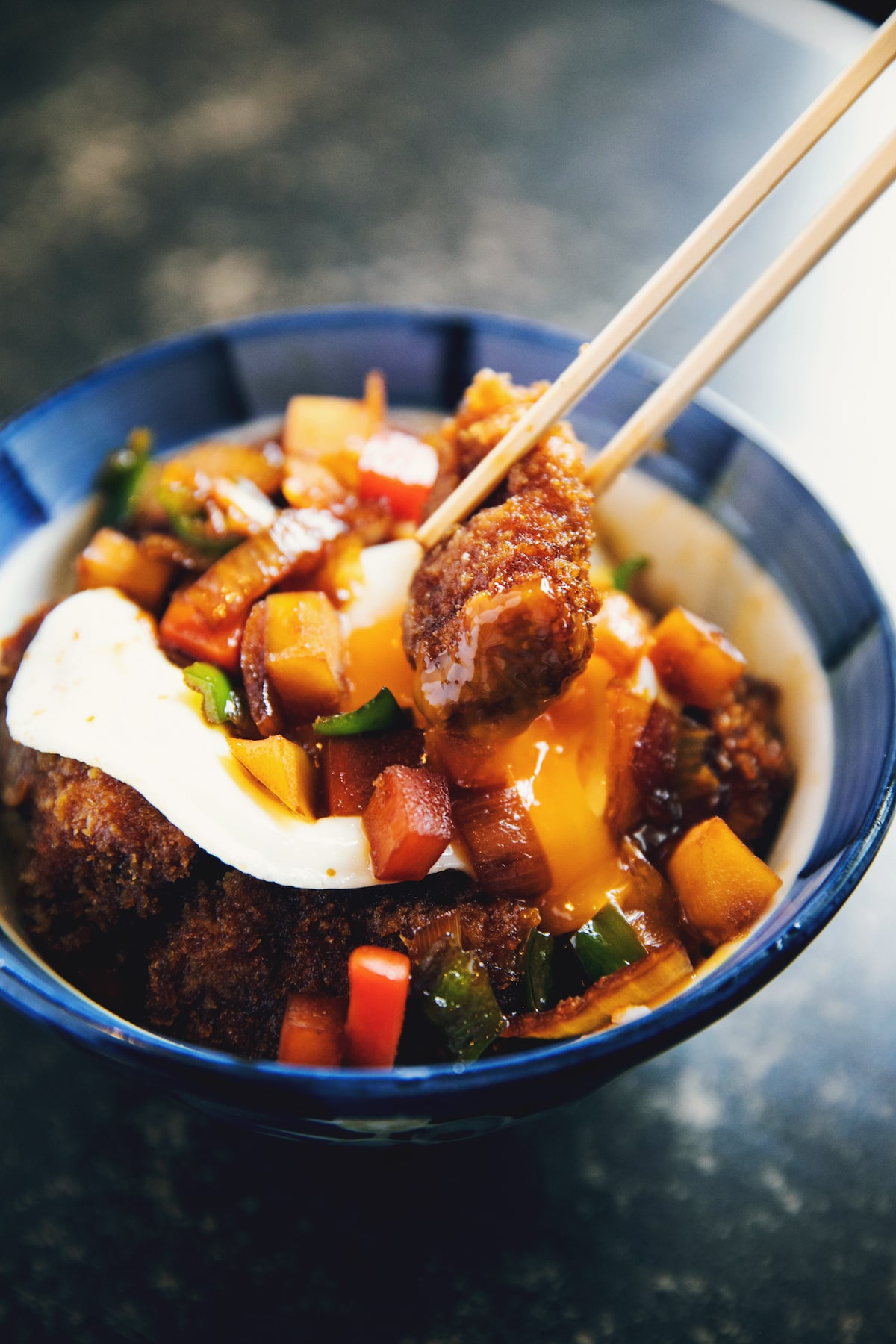
“Koharuken Special Katsudon” has as many as six bite-sized pieces of cutlet under the vegetables and sunny-side-up egg.
This is a consistently popular menu item that is said to be ordered by half of the customers. “Koharuken Special Katsudon” comes with shijimi clam soup and costs 1,500 yen.
The person who created this katsudon was the first-generation owner of Koharuken. However, after the restaurant temporarily closed during the war, this katsudon disappeared from the menu for a long time. The katsudon returned to the menu about 30 years ago. The occasion was the return of Yuji Kojima, the fourth-generation owner, from the restaurant where he had been training. At that time, the kitchen was being managed by only one person: his father, Mikio Kojima, the third-generation owner. With Yuji joining the kitchen, they were able to divide the cooking work. Katsudon is a dish that requires time and effort. Because it was difficult for one person to complete it during busy hours, the decision was made to revive it when Yuji returned. Mikio was the only person who had eaten the katsudon made by the first generation. They therefore relied on Mikio’s memory, made repeated test versions, and completed the current flavor over about one month.
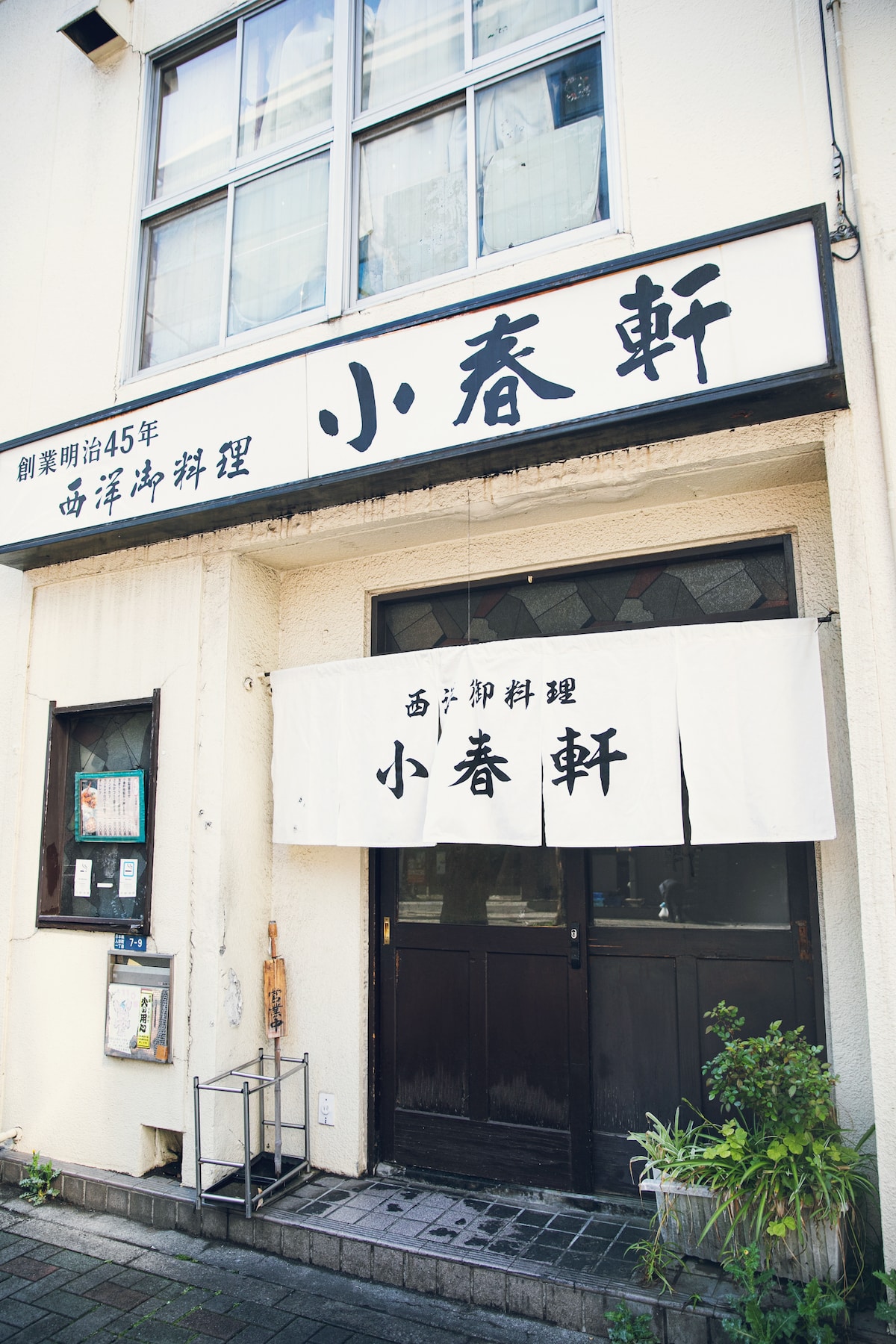
Koharuken is located near Ningyocho-dori Street. Its calm exterior has the look of a long-established restaurant, and the white noren curtain with the restaurant name written on it serves as a landmark.
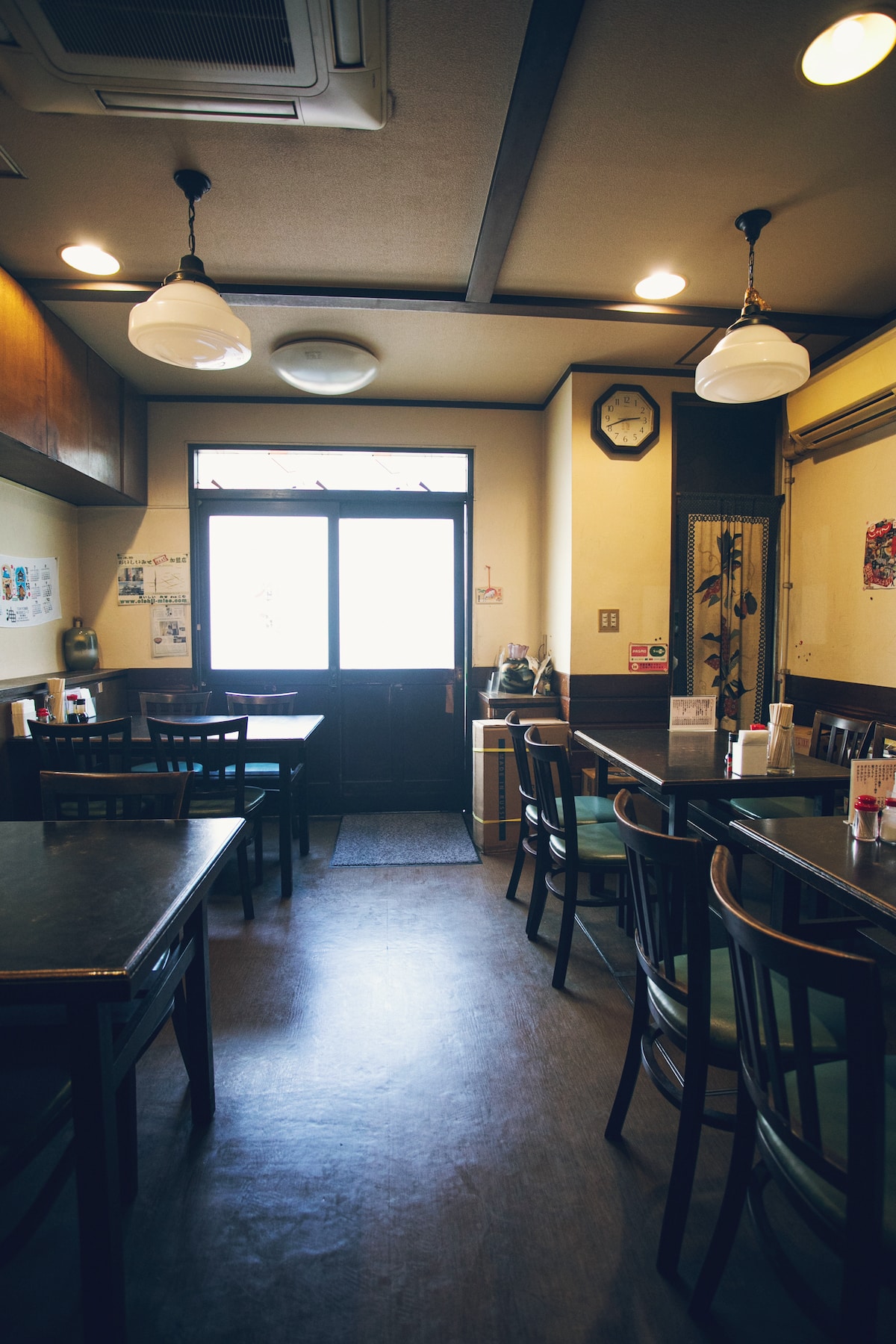
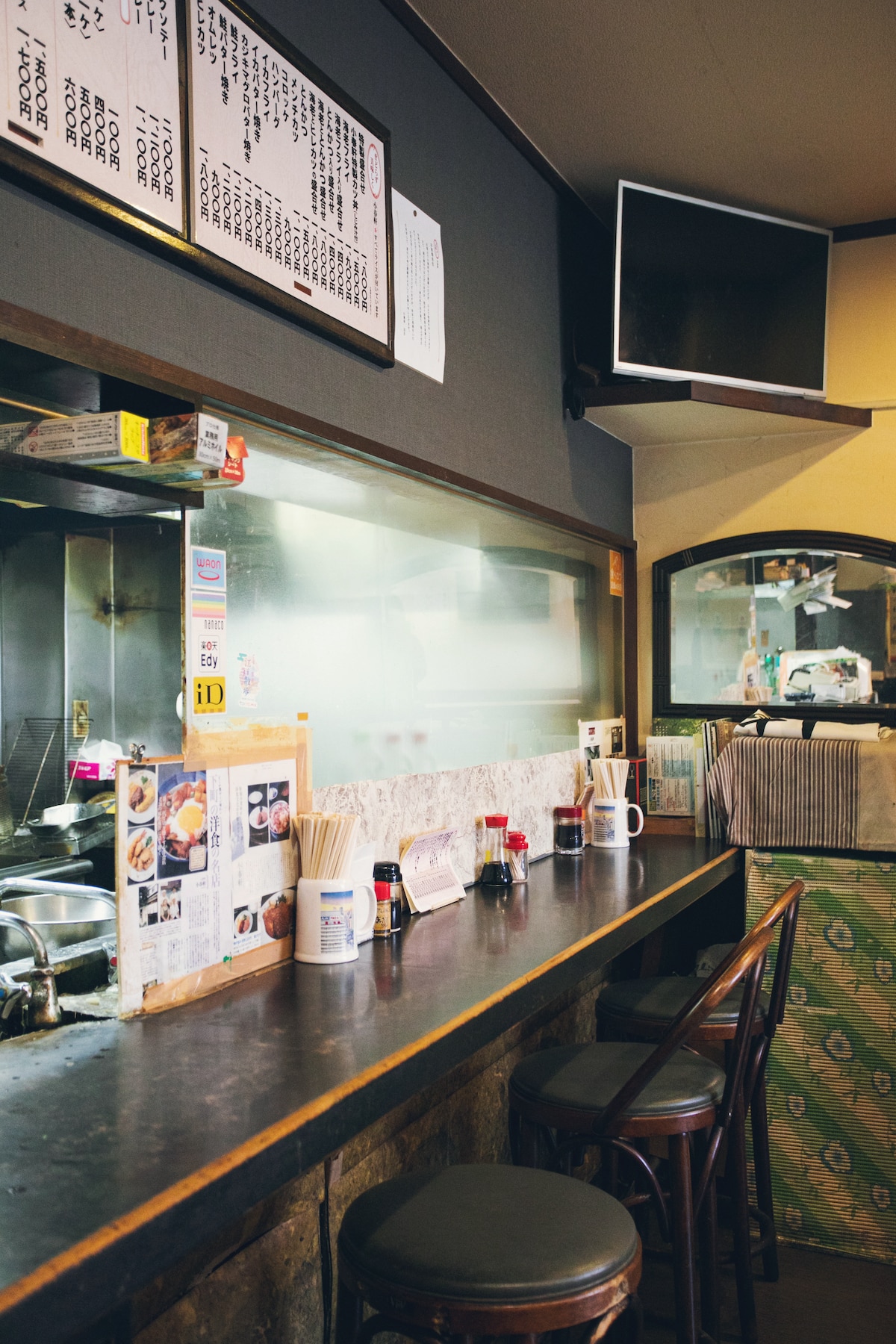
The interior is a small space with about 20 seats, but it has a comfortable atmosphere. It becomes especially crowded at lunchtime, so customers may sometimes be asked to share tables.
There are counter seats in front of the kitchen. From here, customers can watch the cooking process up close.
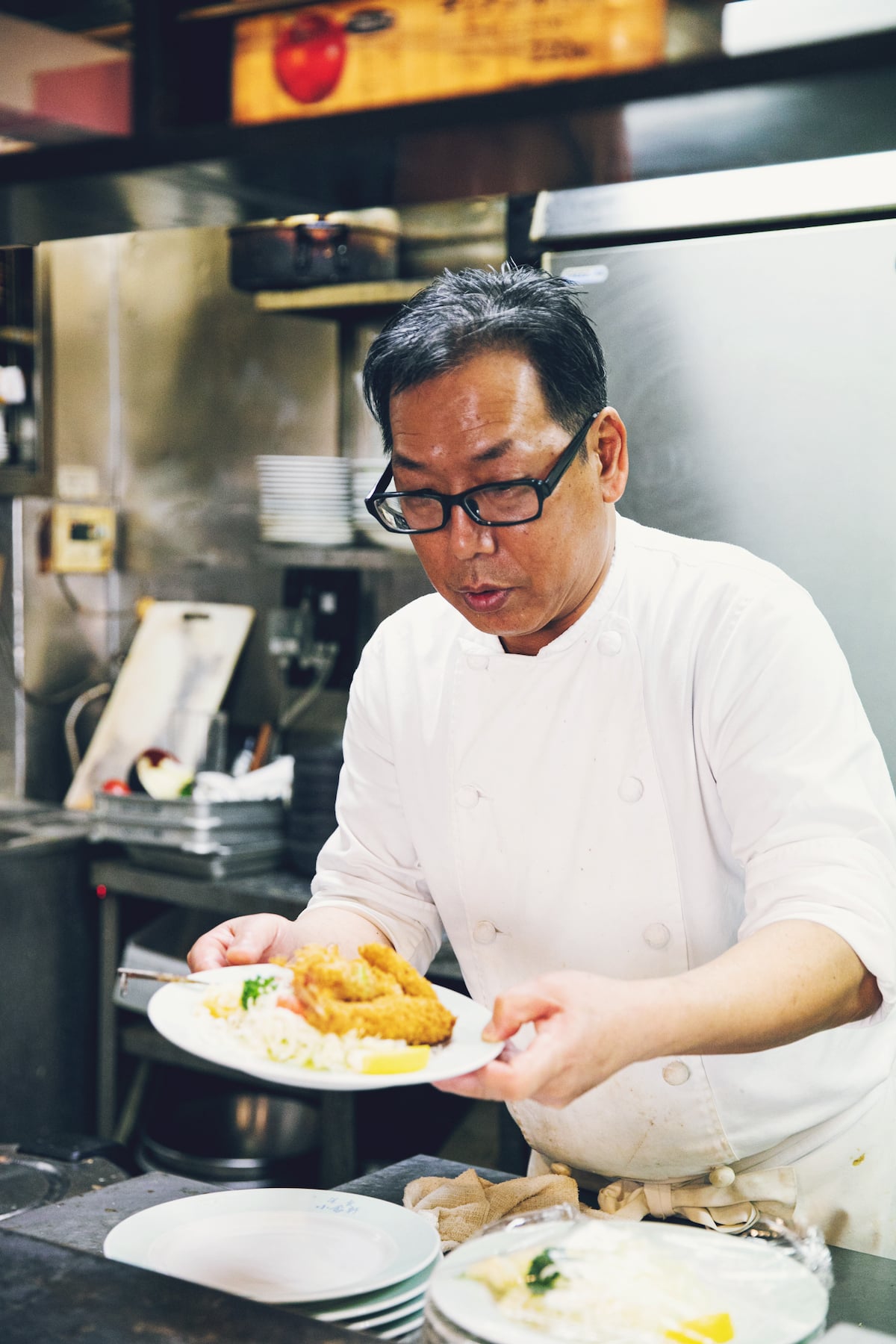
Fourth-generation owner Yuji Kojima gained about 10 years of experience at the restaurant where he trained, starting at age 19. After that, he entered the kitchen of Koharuken, where he has continued to work for more than 30 years.
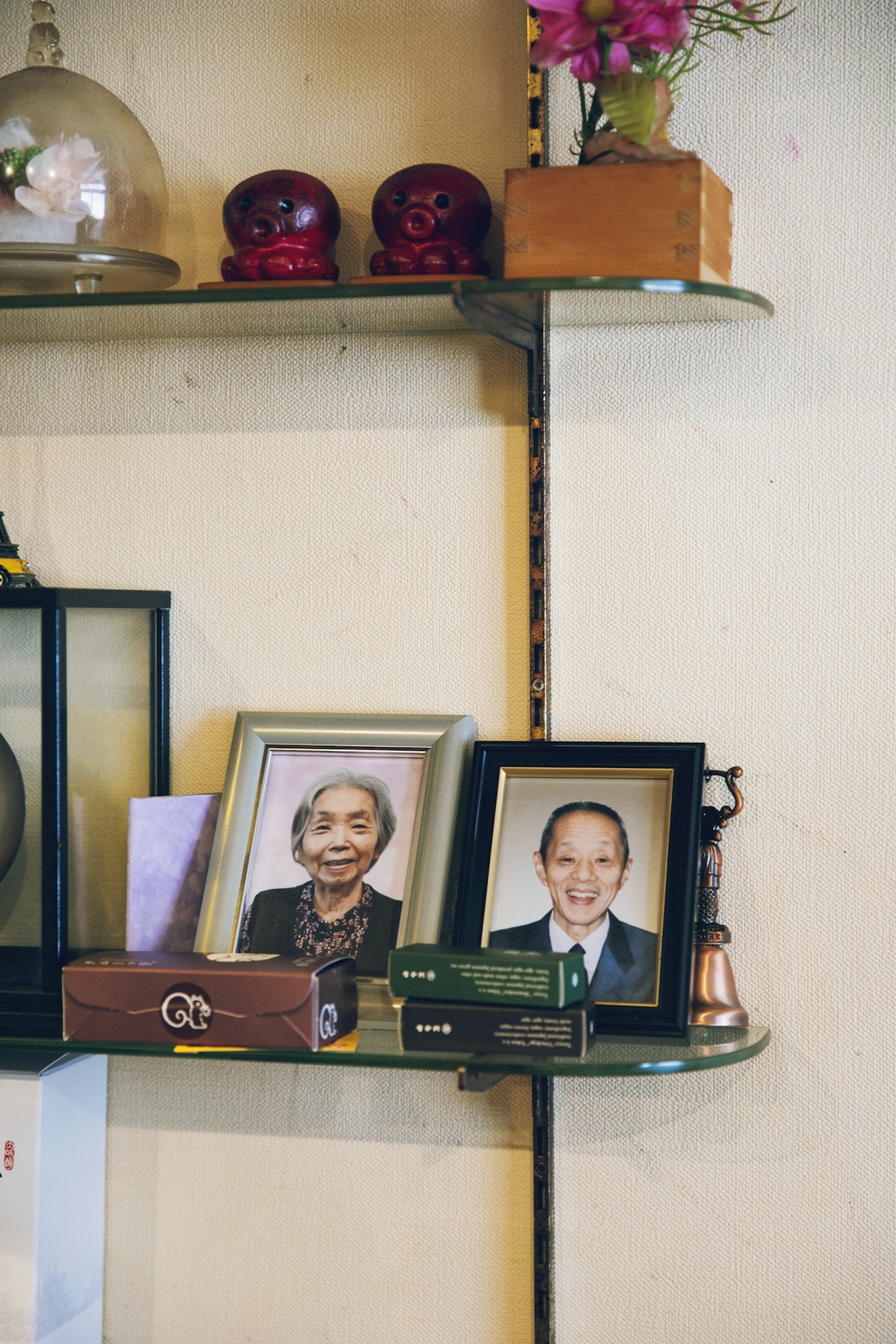
Inside the restaurant, photographs are displayed of Mikio Kojima, the third-generation owner who revived the katsudon, and his wife, Kinuko Kojima. Kinuko helped in the dining area and was loved by customers.
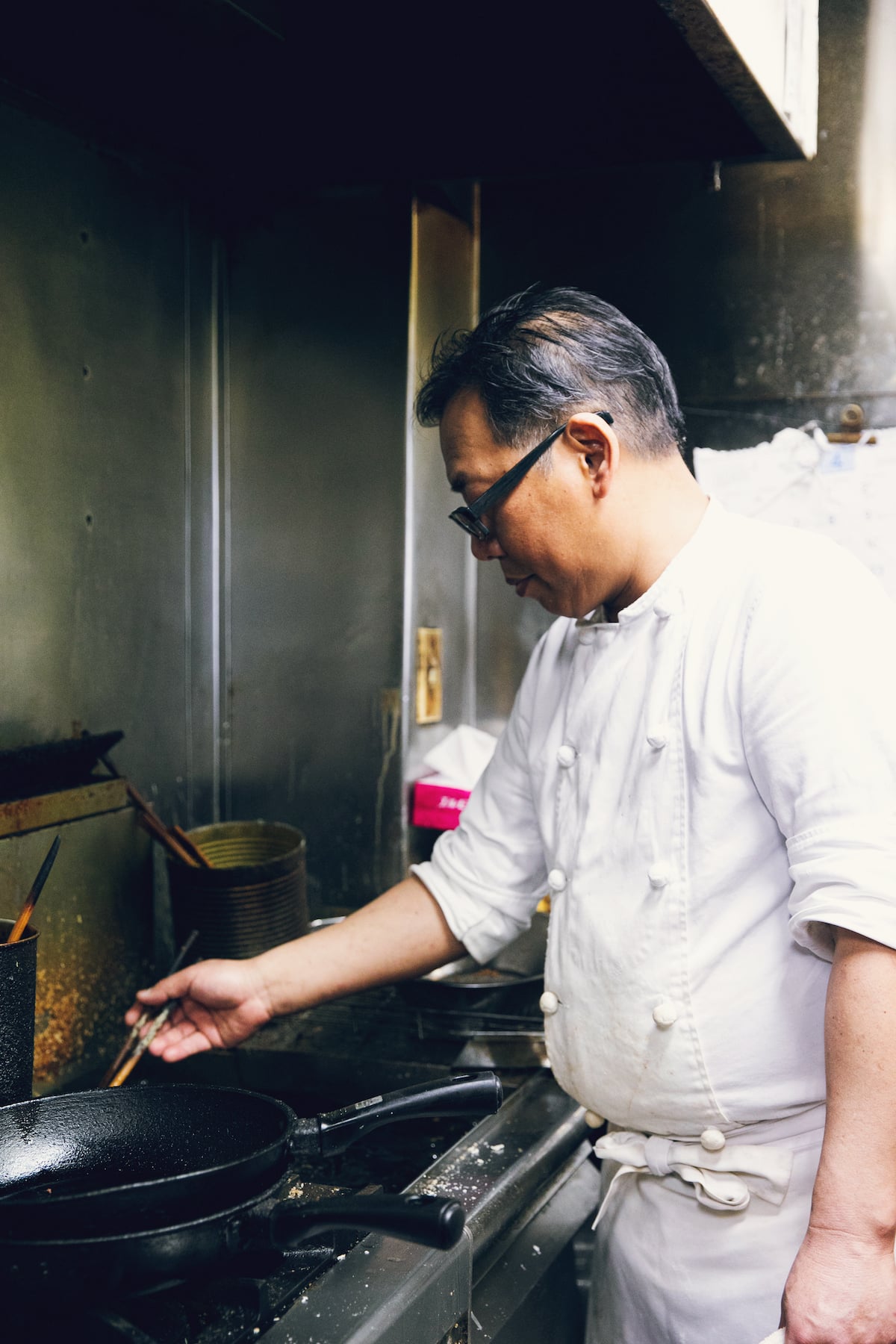
What supports the deliciousness of “Koharuken Special Katsudon” is skilled craftsmanship. Frying the cutlet, simmering the vegetables, and cooking the sunny-side-up egg so that the yolk remains soft are three separate processes. Each is brought together at the best timing and assembled into one bowl. To finish everything in its best condition, judgment based on many years of experience and efficient, practiced work are essential. In the kitchen of Koharuken, fourth-generation owner Yuji Kojima and his son Yuta Kojima stand side by side, cooking while watching each other’s movements. Their impressive coordination creates an efficient workflow and smooth work in the kitchen.
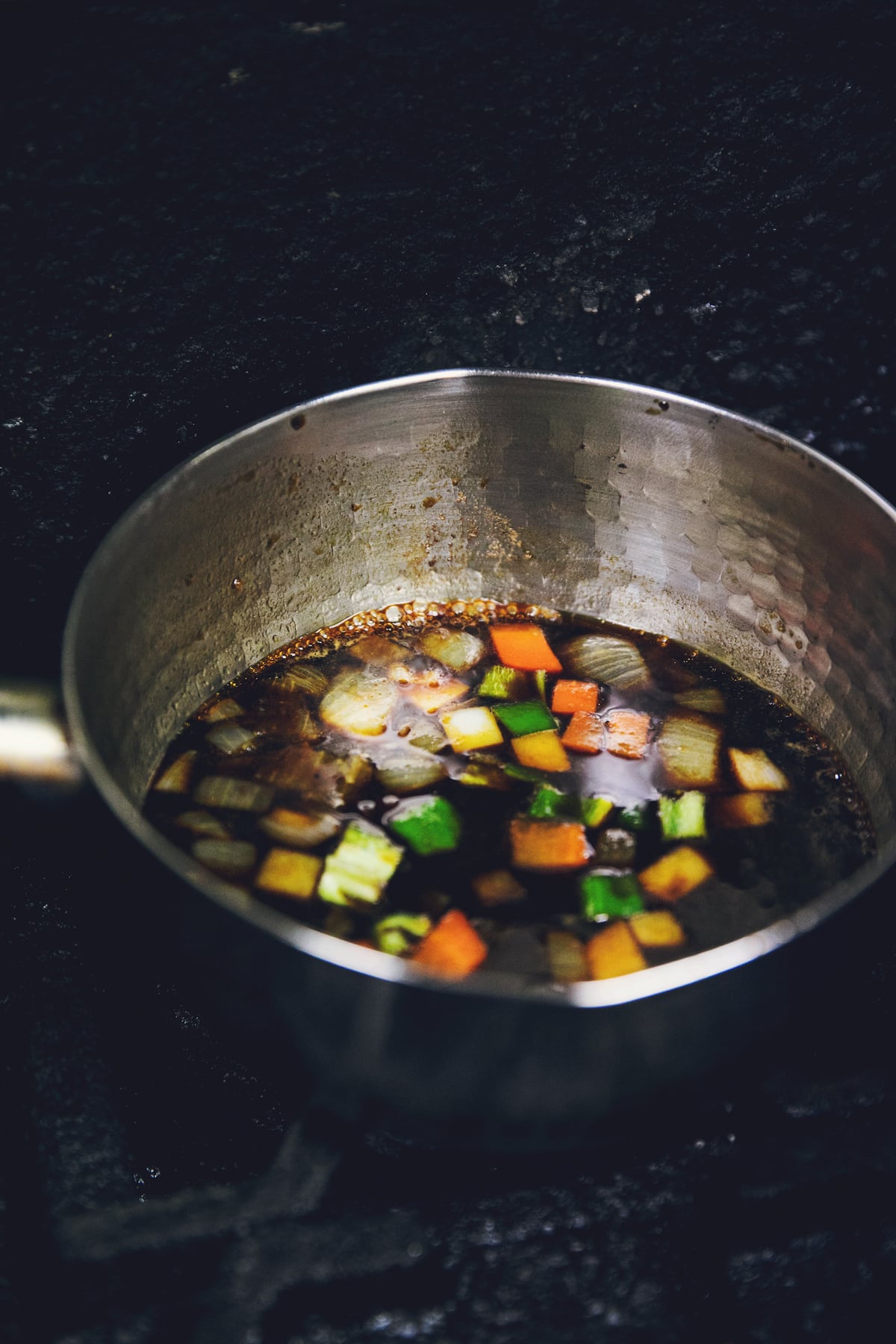
The key to the flavor is warishita, a sweet-and-savory seasoning liquid. It is made by combining bouillon, sugar, mirin, soy sauce, and demi-glace sauce. It has depth, yet the aftertaste is clean, with a sweet-and-savory flavor.
Another striking feature is that, unlike ordinary katsudon, the cutlet is not simmered with egg; instead, a sunny-side-up egg with a soft yolk is placed on top. At the time when the first generation created this dish, eggs were expensive and precious. For that reason, he is said to have used a sunny-side-up egg so that customers could see at a glance that one whole egg was being used. On top of the rice, the cutlet, the soft-yolk sunny-side-up egg, and the vegetables that have absorbed the warishita come together in layers. This combination completes a katsudon that is unique to Koharuken and cannot be found elsewhere.
The first thing prepared is the vegetables served with the cutlet. Onion, green pepper, and pre-boiled carrot and potato are slowly simmered in sweet-and-savory warishita. This allows the vegetables to absorb the flavor of the warishita.
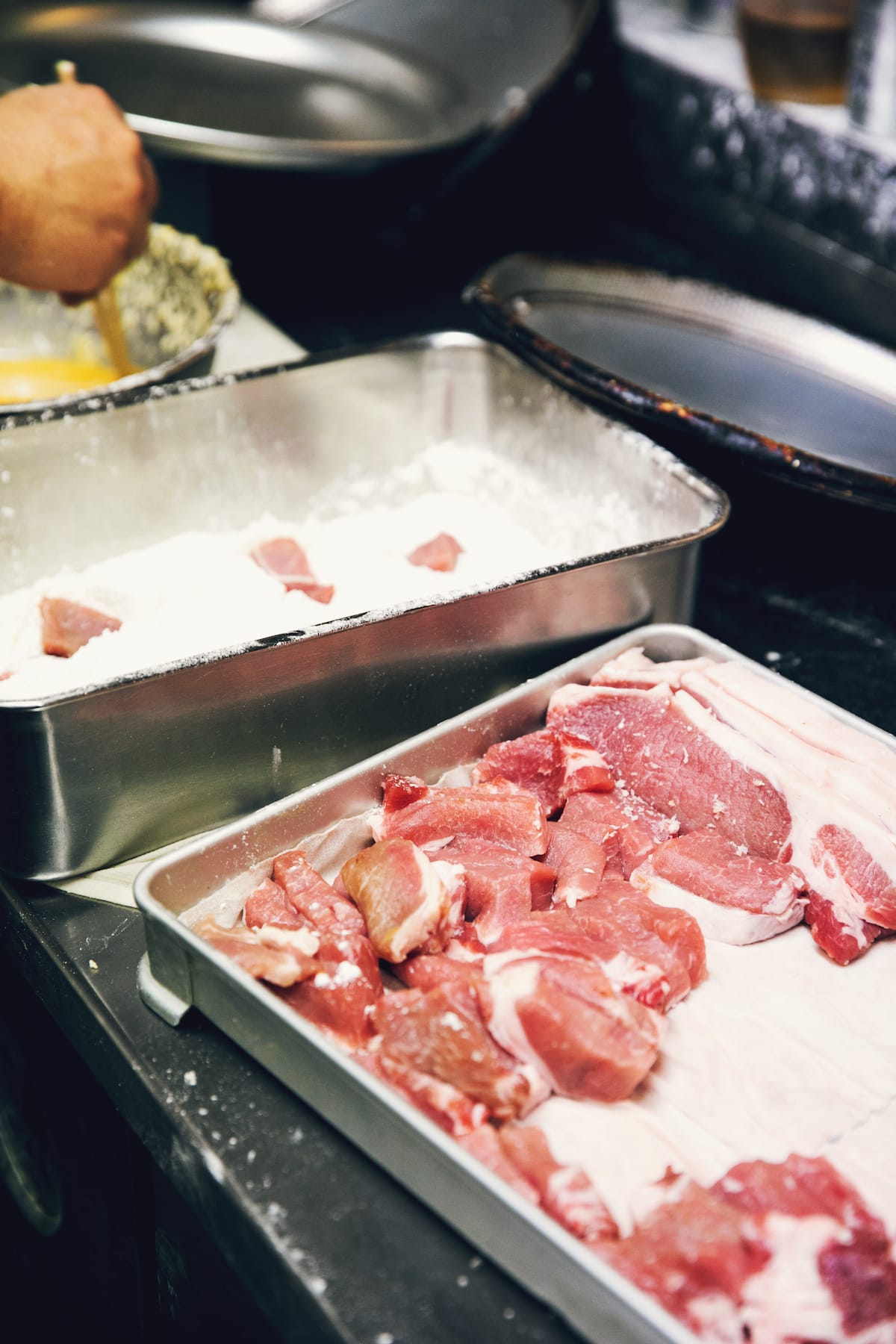
While the vegetables are simmering, the cutlet is fried. The meat used is domestic pork loin. The fat is removed, and the meat is cut into bite-sized pieces. Having less fat is said to improve the overall flavor balance of the katsudon.
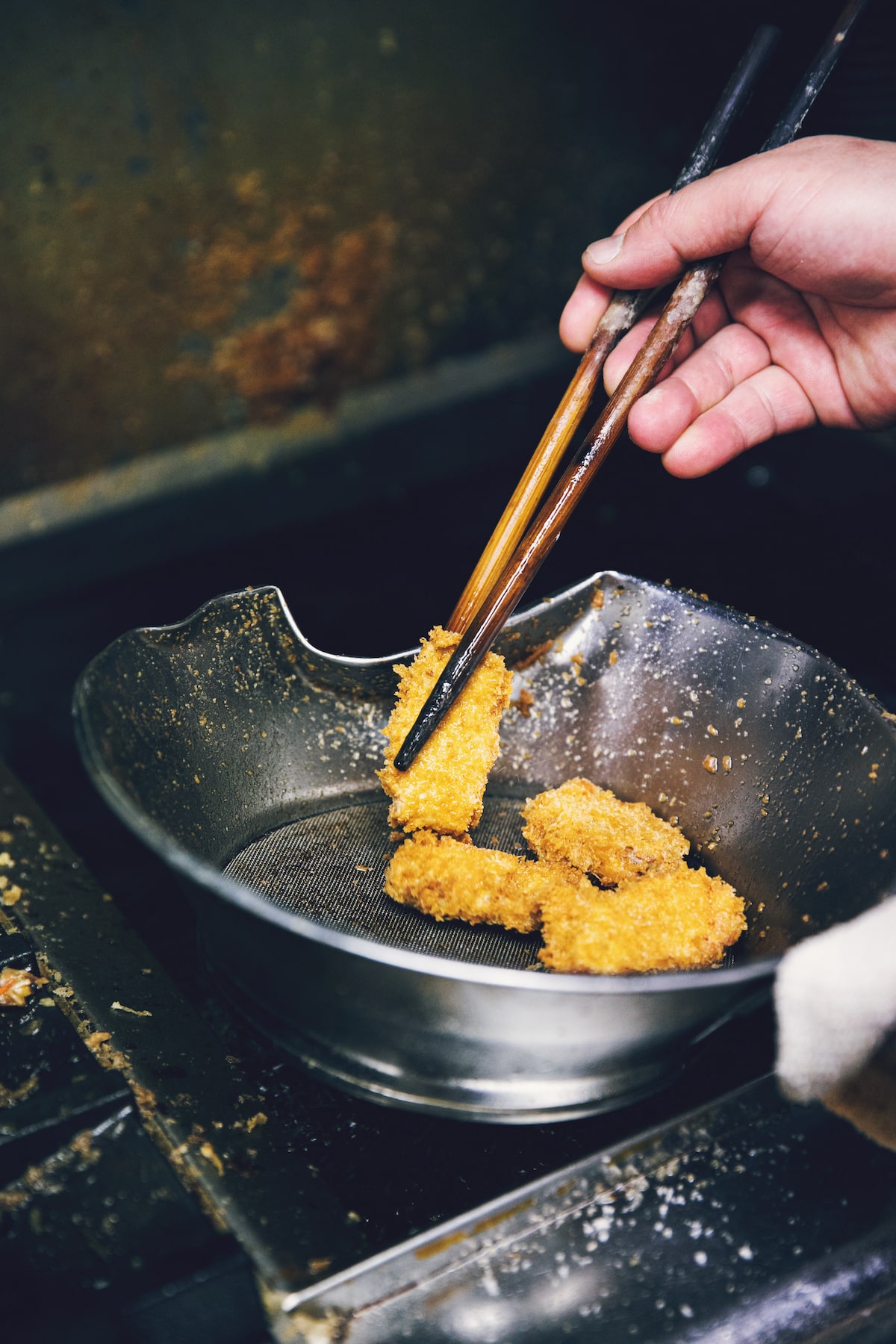
The cutlet is fried slowly in oil at a relatively low temperature. It is removed from the oil when the coating turns golden brown. “I have never measured it, but I think it is about four minutes,” says Yuji Kojima. This gives a glimpse of his skilled intuition.
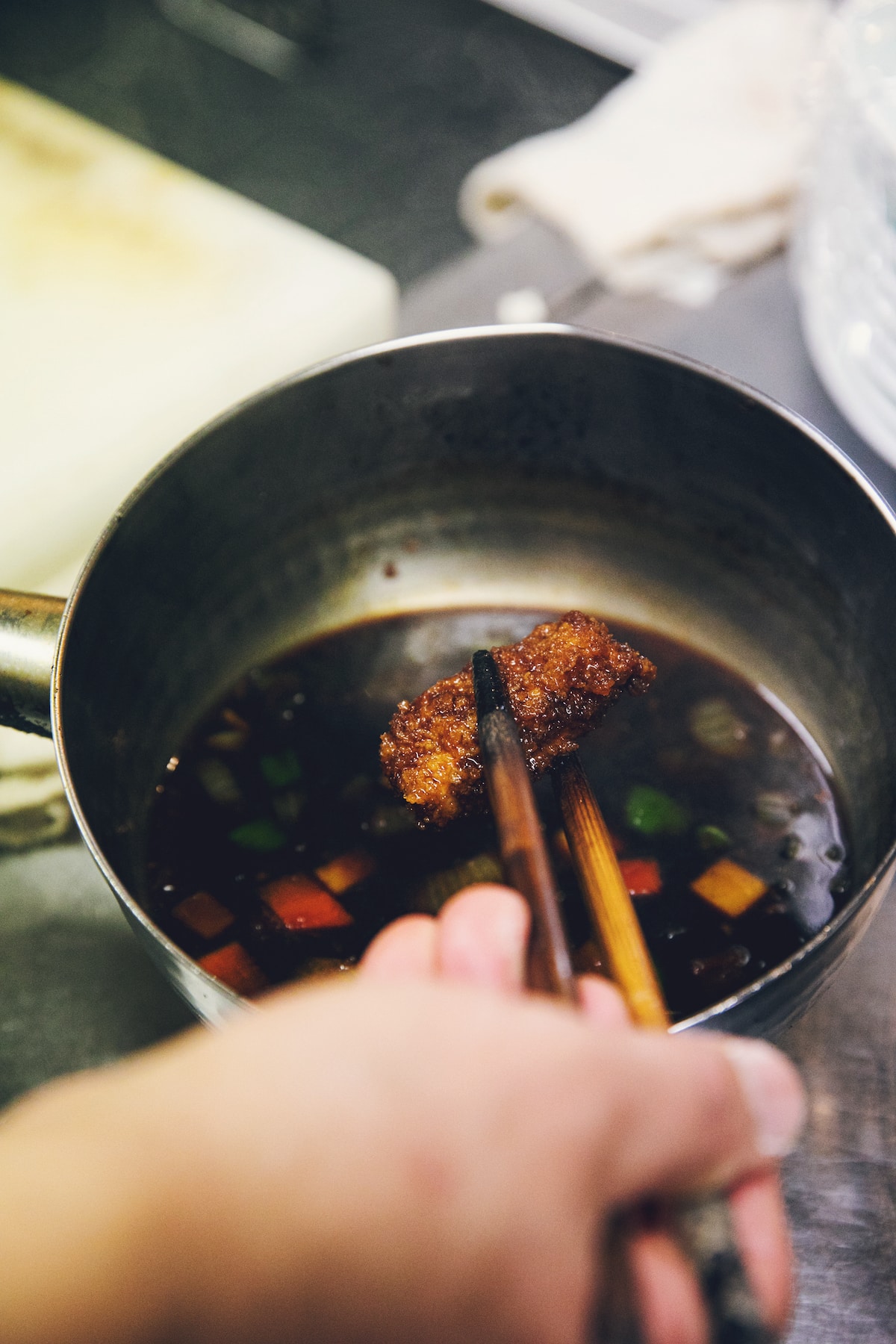
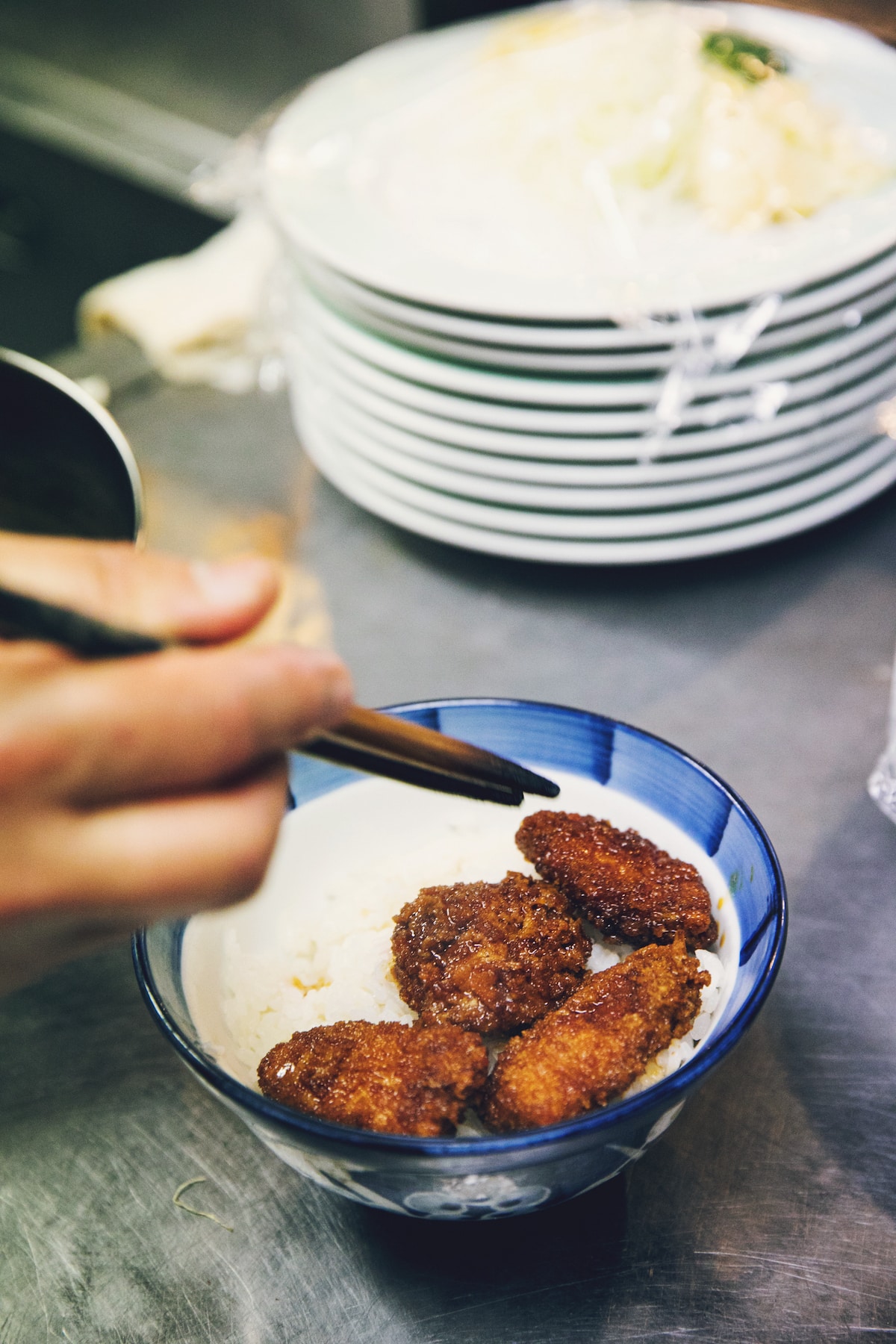
The fried cutlet is passed through the warishita in which the vegetables are simmering for about 10 seconds. The cutlet takes on just the right amount of warishita flavor, while the coating still keeps its crisp texture.
The cutlet is arranged on top of the rice. Another key point of its deliciousness is that the warishita on the cutlet soaks into the rice.
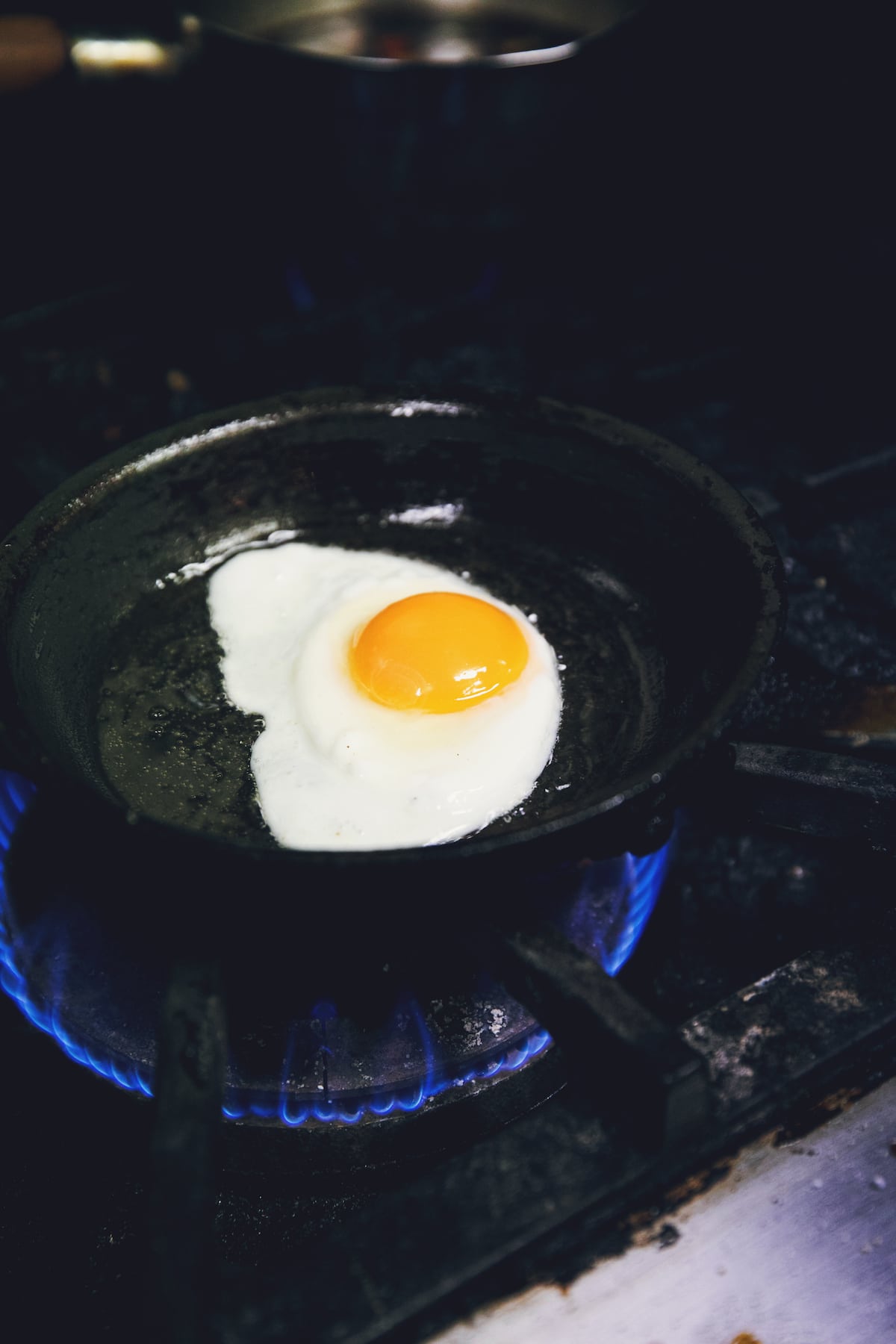
The egg is cooked slowly in a frying pan with plenty of oil. The yolk remains soft and runny, while the underside of the white is finished with just the right amount of browning.
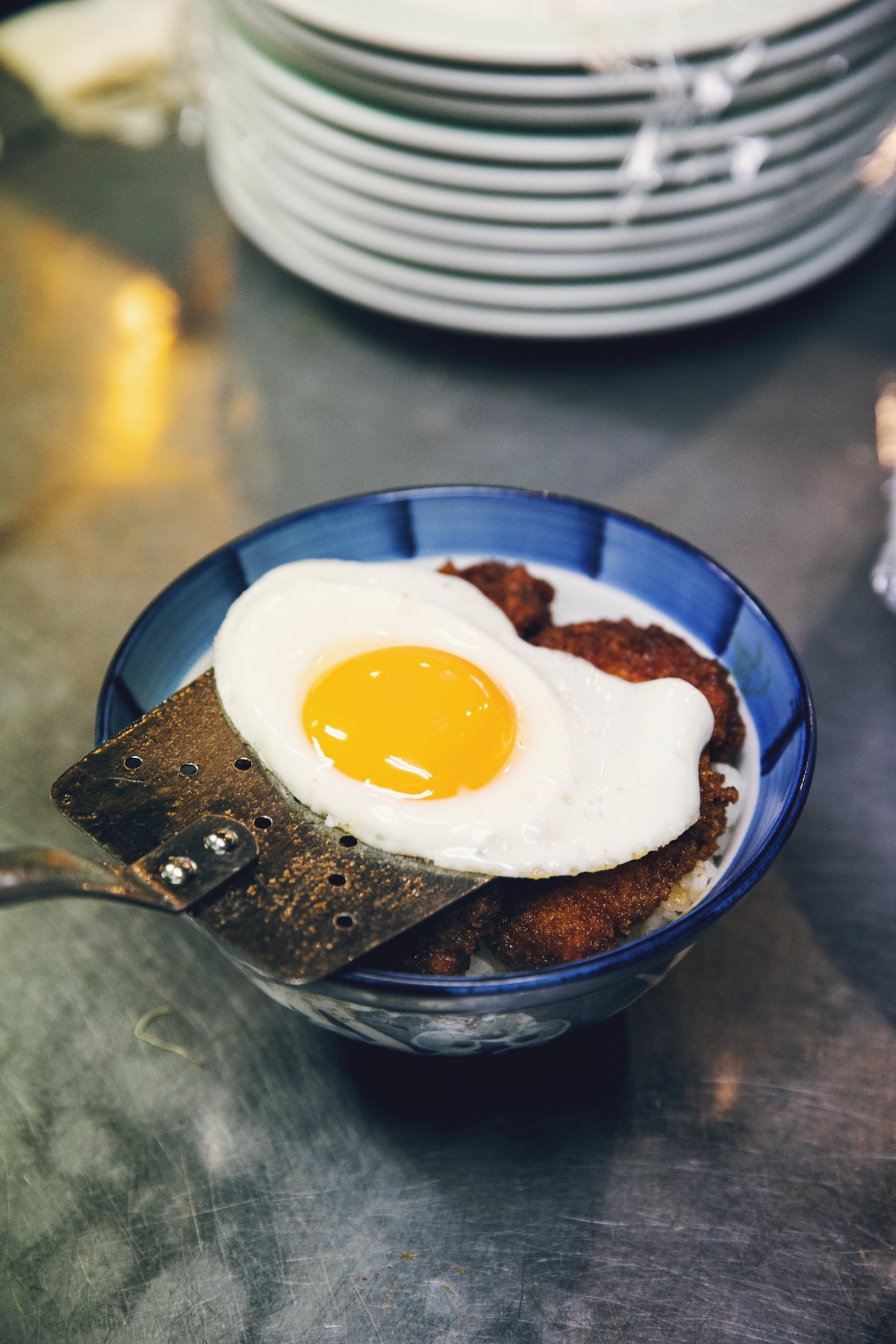
The sunny-side-up egg is quickly and carefully moved onto the cutlet so that the yolk does not break. At the time when the first generation created this menu item, eggs were expensive, so some restaurants are said to have simmered cutlets with egg diluted with water.
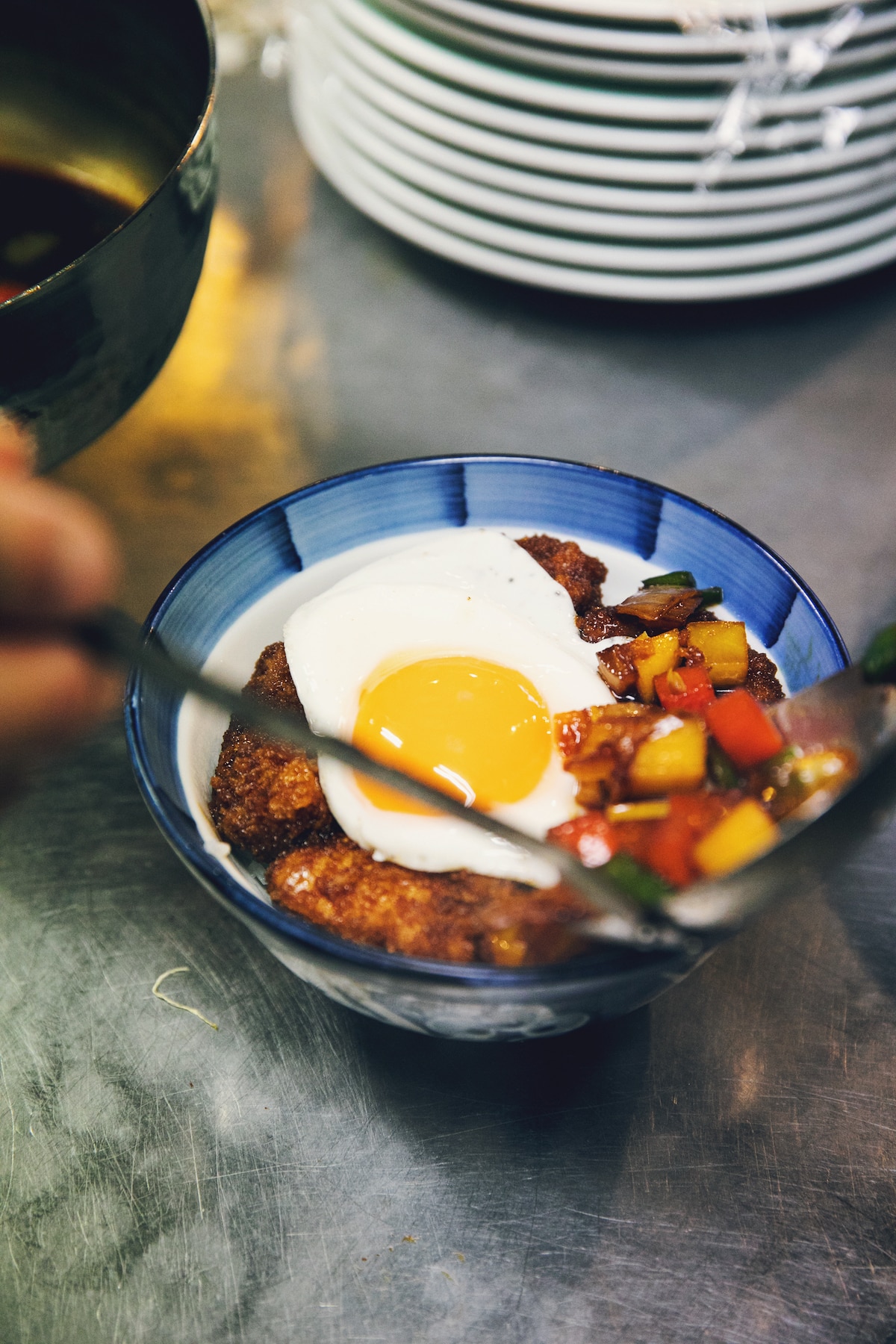
The vegetables simmered in warishita are arranged around the yolk, and the dish is complete.
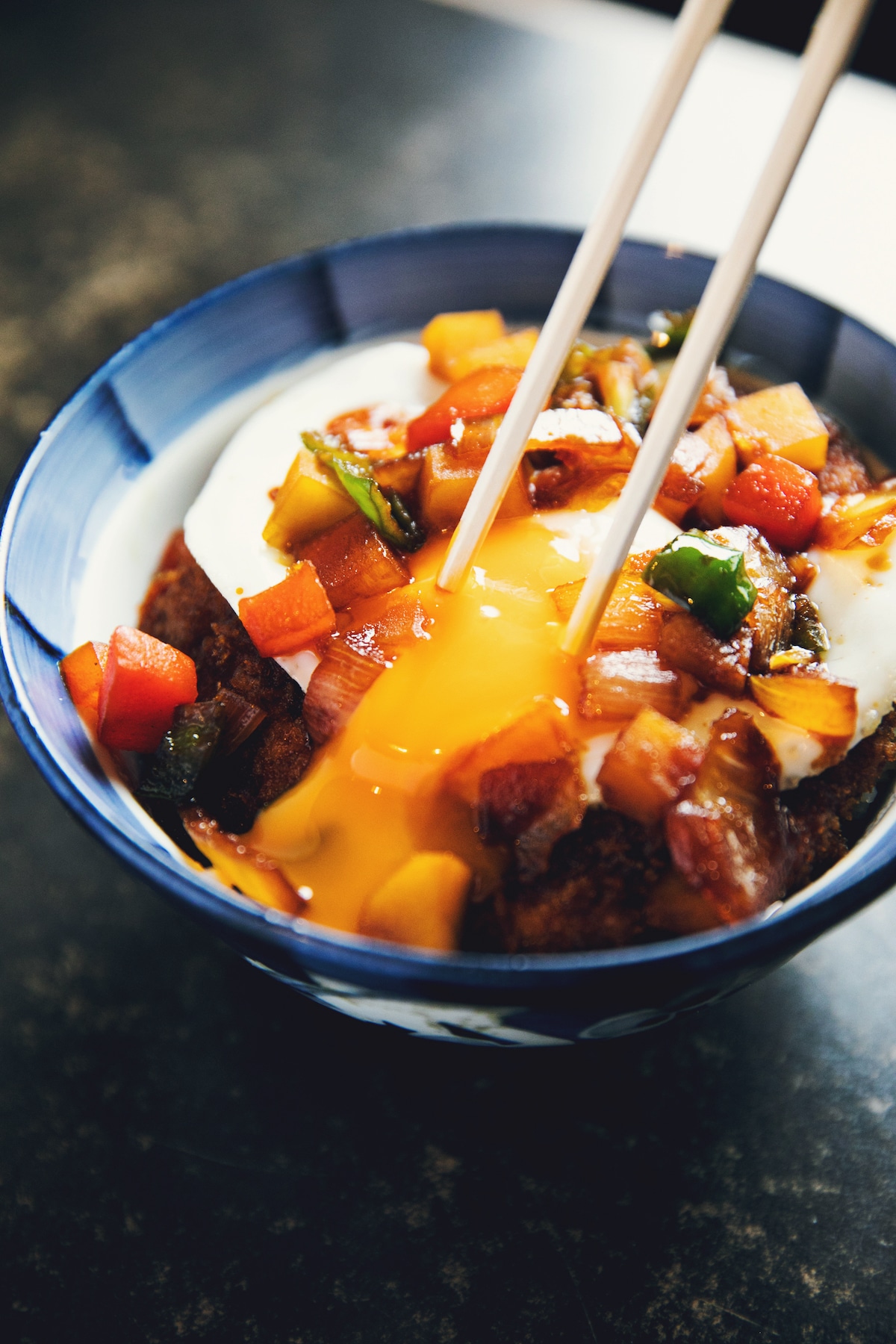
When the soft-yolk sunny-side-up egg is broken, the rich yolk flows out.
It is recommended to enjoy the cutlet coated with the yolk.
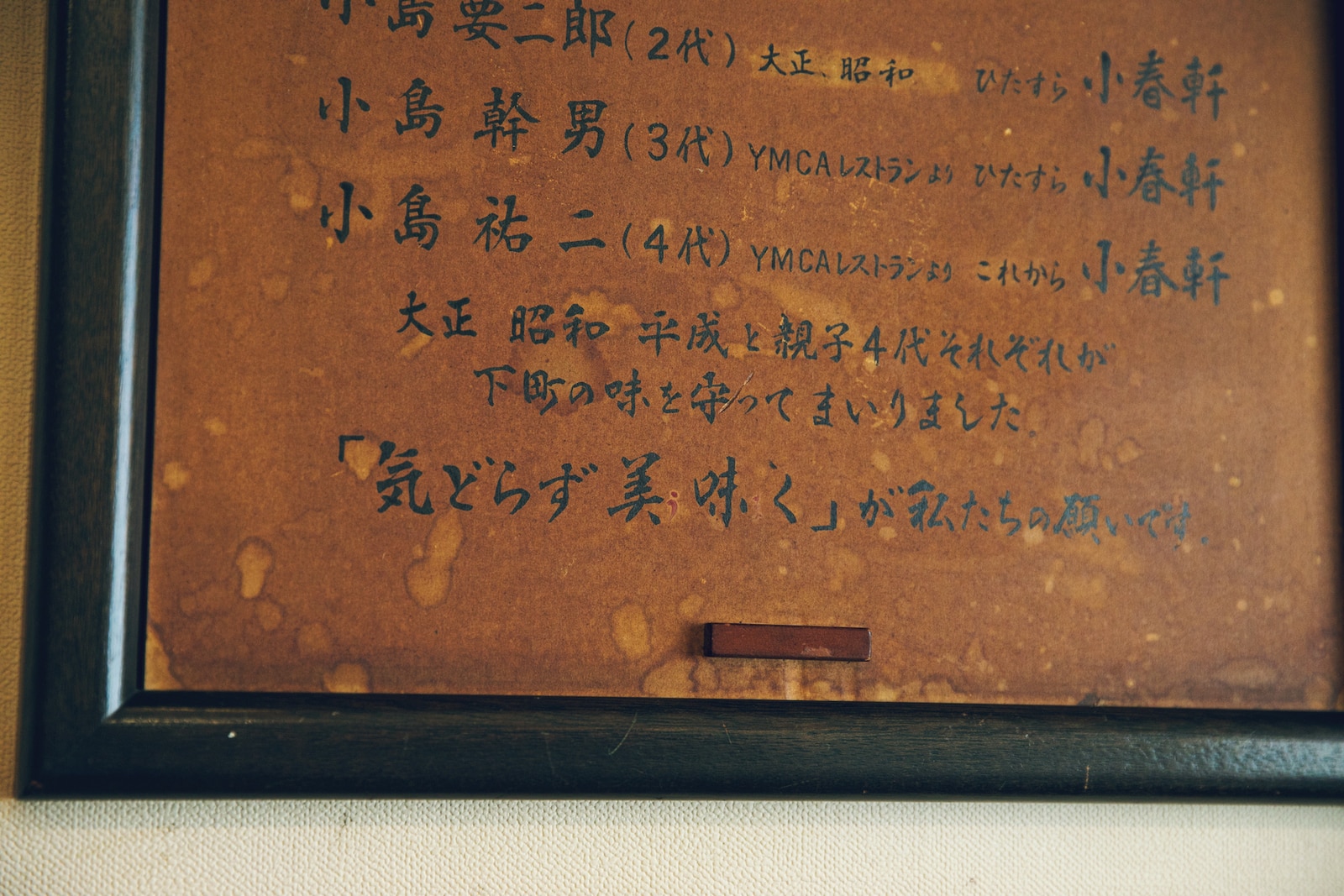
Koharuken is a yoshoku restaurant whose noren has been preserved by the family generation after generation. The restaurant’s motto is “Unpretentious and delicious.” This phrase is said to have been created by Mikio Kojima, the third-generation owner. The original Japanese phrase, “Unpretentious and delicious,” expresses the idea of not being stiff or formal and of being easy to enter casually.
Before the war, yoshoku in Japan was still a special kind of cuisine. Yoshoku restaurants had a high-class image and were not places that everyone could casually enter. After the war, however, yoshoku gradually became more familiar, and the number of yoshoku restaurants also increased. In response to these changes in the times, Mikio Kojima, the third-generation owner, thought, “I want this to be a restaurant where people can stop by more casually.” The phrase that expressed this feeling was “Unpretentious and delicious.”
Inside the restaurant, a framed piece displaying the motto “Unpretentious and delicious” and the history of the restaurant is on display.
Fourth-generation owner Yuji Kojima says the following: “We have treasured each day and simply worked as hard as we could for the customers in front of us. As we kept doing that, the restaurant passed 100 years.” He adds this with a laugh. The attitude at the foundation of the restaurant, “Unpretentious and delicious,” has been passed down within the family, just like the flavor of Koharuken. Children watch and learn from the way their parents work, and that attitude is carried on to the next generation. It is precisely this accumulation that explains why Koharuken continues today as a yoshoku restaurant that remains part of everyday life in Nihonbashi.
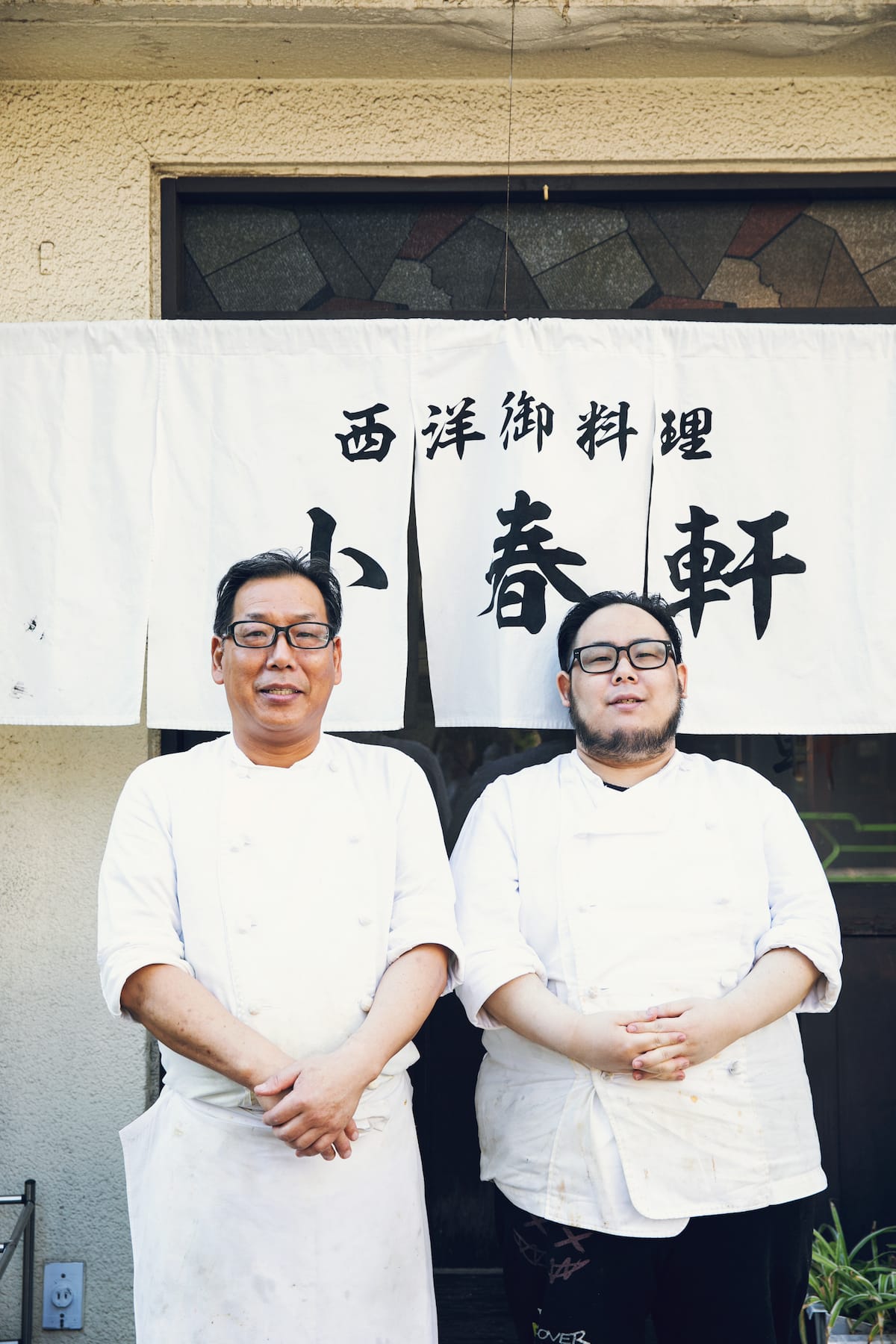
Today, fourth-generation owner Yuji Kojima (left) and Yuta Kojima (right), who is expected to succeed as the fifth generation, stand in the kitchen together. Yuji says with a laugh, “The two of us work while covering the areas where the other needs support. He sometimes says annoying things, though. I think we have the kind of coordination that only a parent and child can have.”
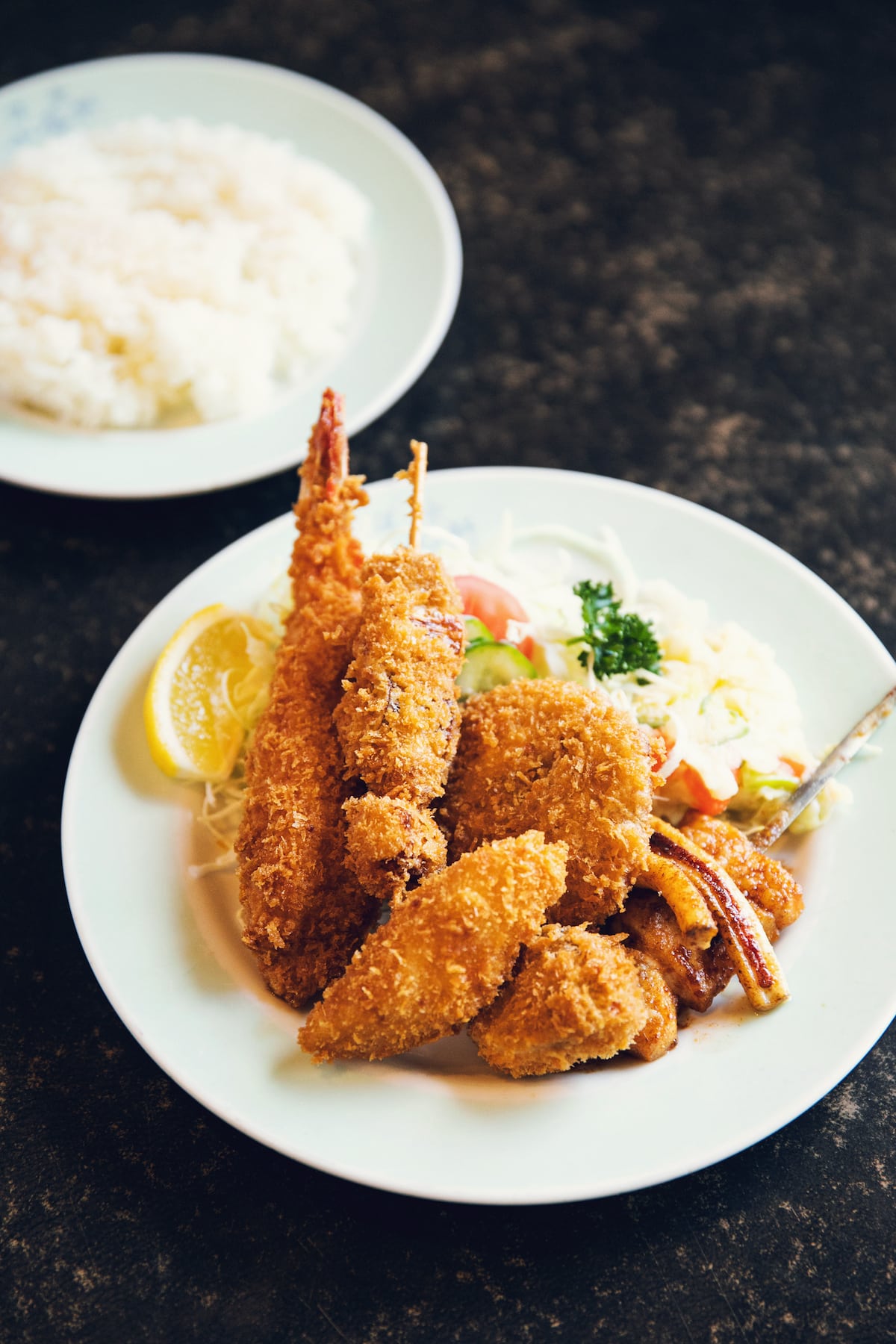
The “Special Assortment” is said to be the next most popular menu item after the katsudon. It is a hearty plate that combines two grilled items—squid and butter-grilled swordfish—with five fried items: croquette, fried shrimp, scallop, white fish, and leek. The price is 1,800 yen.
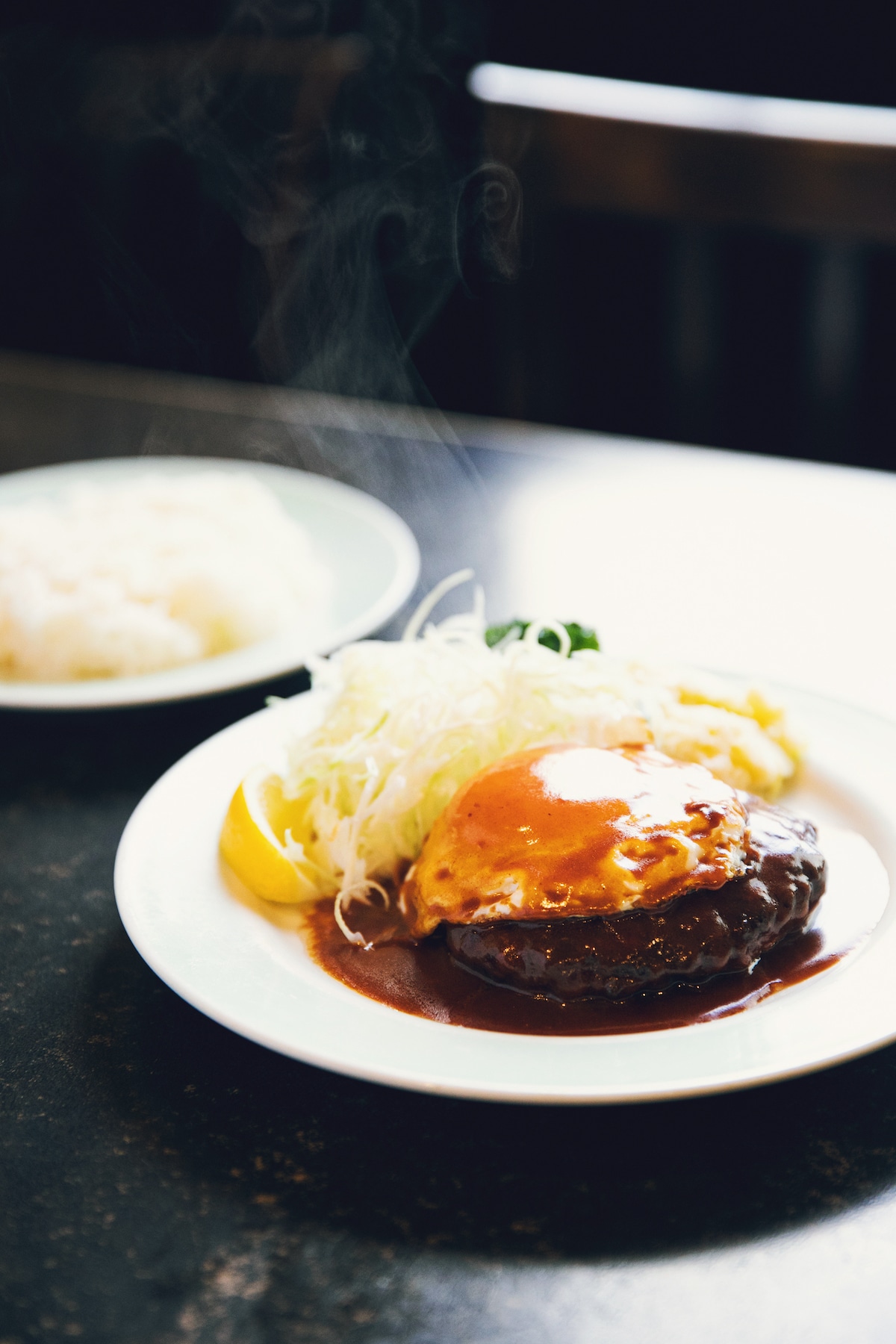
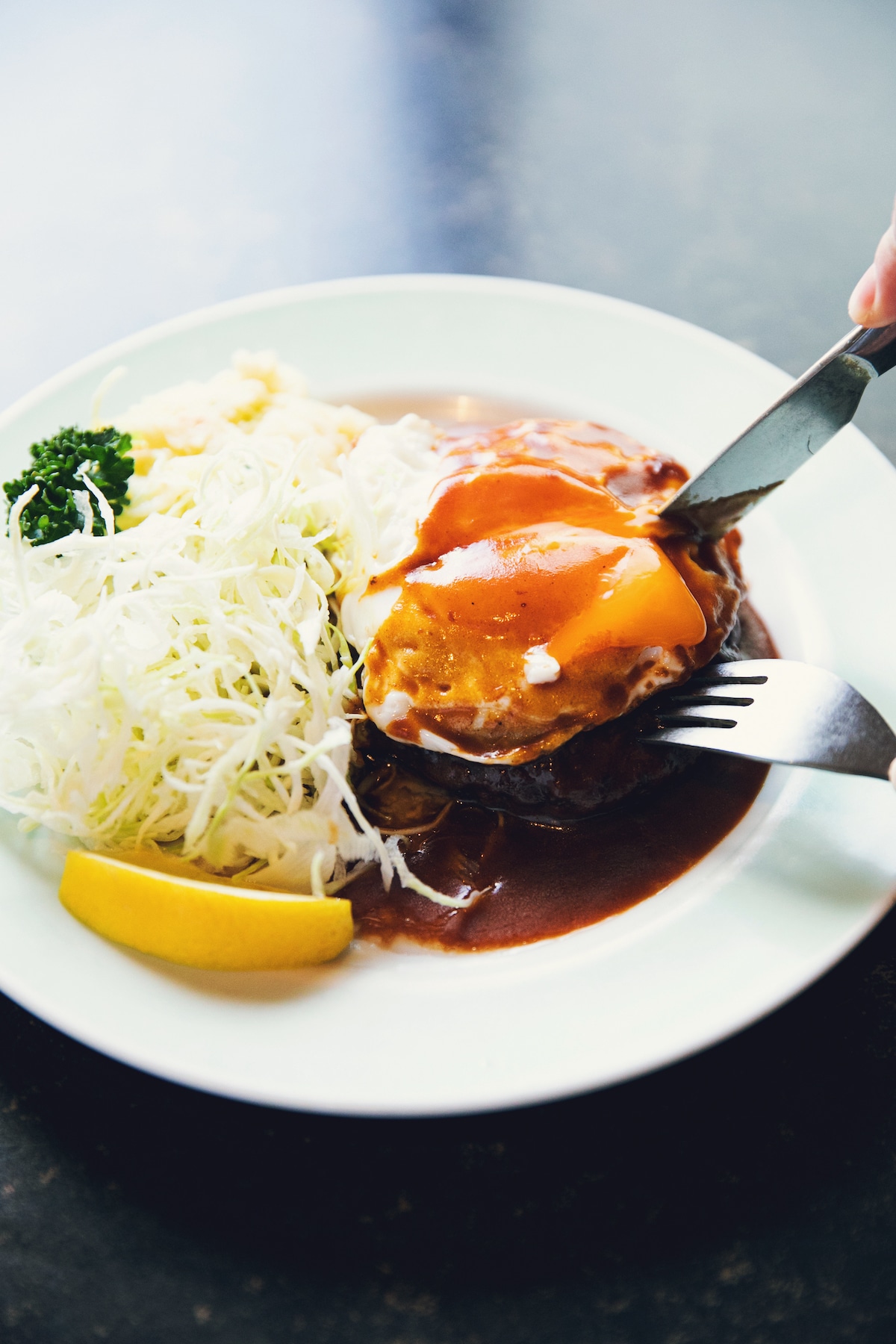
Among items other than fried dishes, the hamburger steak is popular. When it is simmered in demi-glace sauce, it is cooked slowly over time. It is a plump and juicy dish. The price is 1,300 yen.
A soft-yolk sunny-side-up egg is also placed on top of the hamburger steak.
The information contained this article was correct as of 05/21/2026 (the time of publication)