DEEPTOKYO
magazine

EN

DEEPTOKYO
magazine
EN
2026.05.27
Sharing the appeal of handwork through weaving and plant dyeing


 Nearest Station

The items at Tsubamekobo are handwoven pieces, a rarity in today’s world. The textiles, created by the owner herself using several looms, all have a rustic texture that sets them apart from mass-produced goods. Through the ingenuity of a skilled craftsperson, she creates one-of-a-kind handwoven pieces, sometimes combining materials with different shrinkage rates or pairing hand-dyed and hand-spun yarns.
SHARE


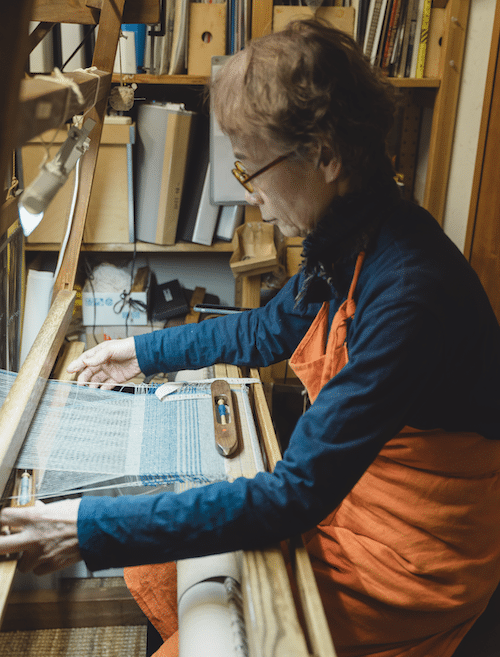
Tsubamekobo offers textiles that the owner has woven or dyed by hand. Owner Kyoko Takahashi has spent many years working as a freelance textile designer, planning products for woven fabrics and printed textiles. While continuing her office-based design work, she developed a growing desire to make things with her own hands, which led her to open a studio for weaving and dyeing.
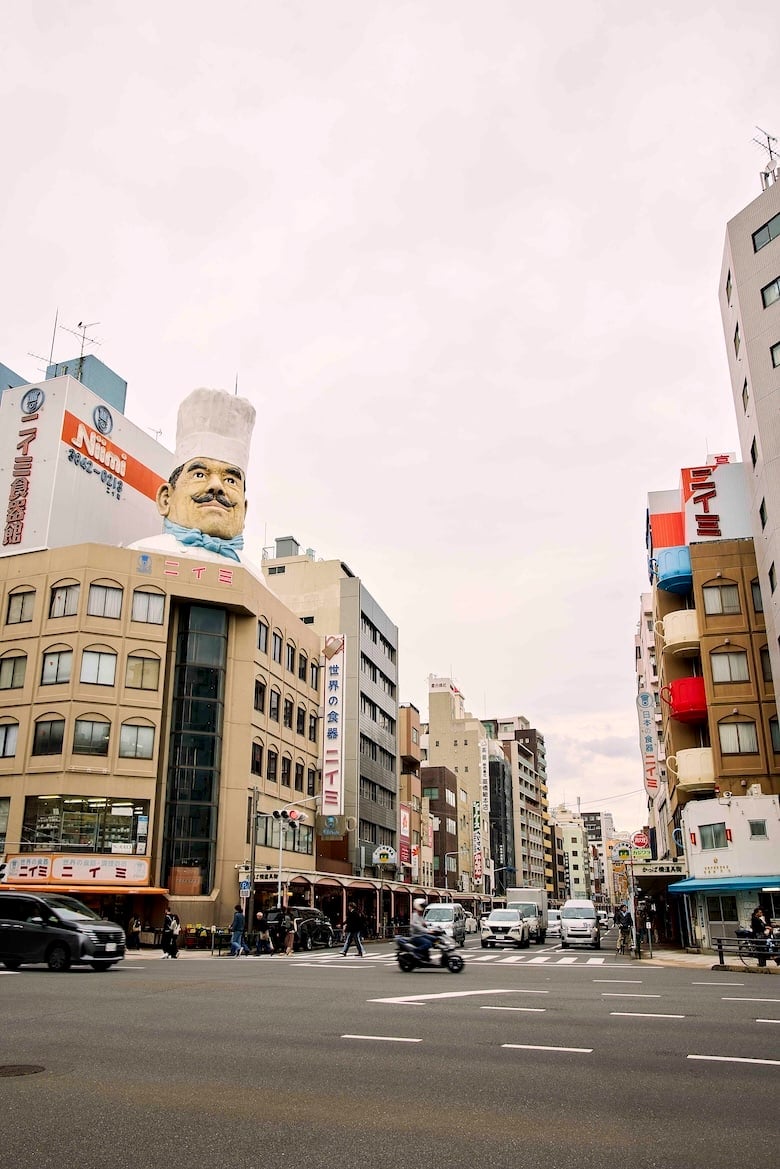
The studio was founded in Torigoe, Taito City, Tokyo, where the owner’s father had run a sewing business. The building she inherited was renovated so it could also be used as a shop. After operating there for about 16 years, the studio moved to Higashikurume City, Tokyo, in 2026.
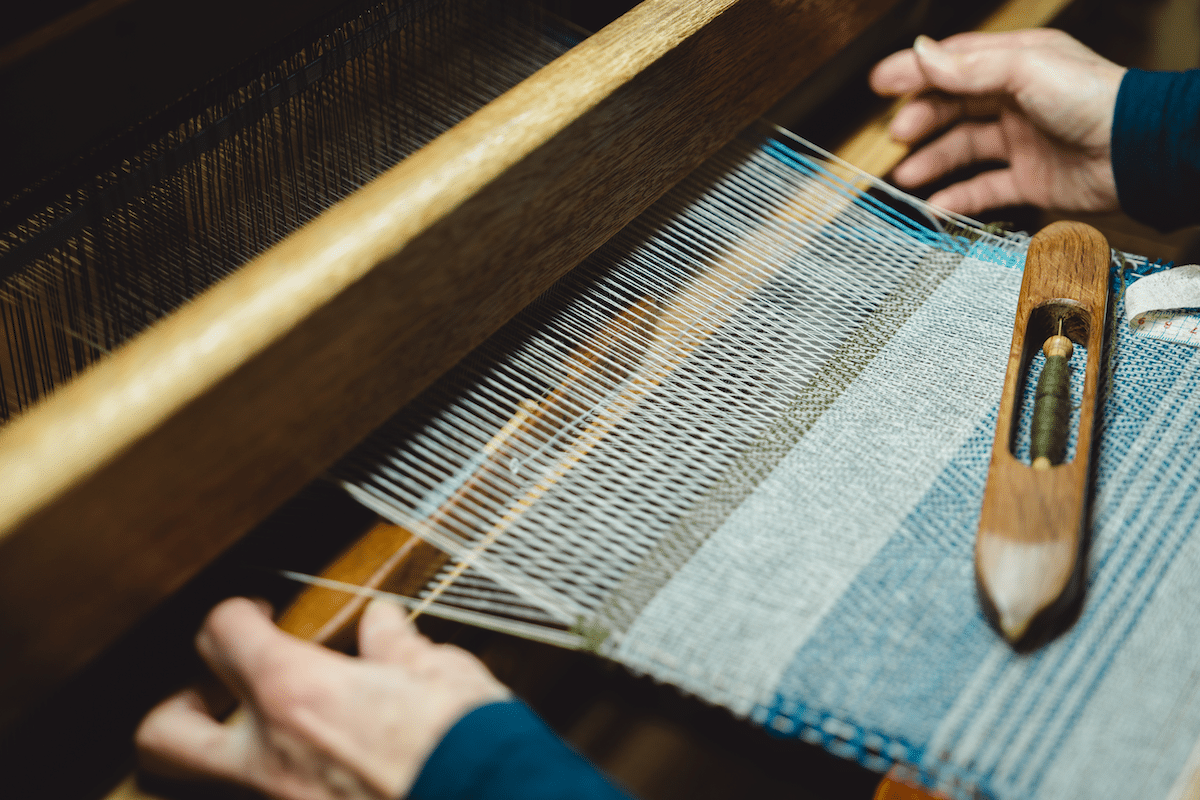
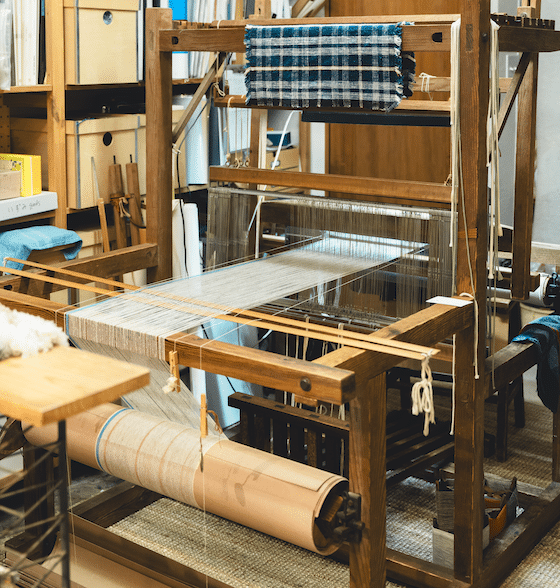
This relatively small loom is used to weave narrow textiles such as scarves. The studio uses three looms of various sizes for its work.
Although weaving may sound simple, there are many steps between choosing the yarn and beginning to weave. The yarn may be purchased ready to use, spun from raw fiber, or dyed after it is sourced. Once the yarn has been carefully selected and prepared, it is measured to suit the size of the item being made and then set on the loom before weaving can finally begin. Because old-style looms feed the yarn slowly, a moderate amount of space forms between the threads, giving the finished textile a soft texture. Another distinctive feature of Tsubamekobo’s textiles is the way different materials are combined.
“After a piece is woven, I wash it to shrink the fibers and increase the density of the weave. Cotton, linen, wool, and other materials all shrink at different rates depending on the material and how the yarn is twisted, so people usually avoid combining different materials. In my case, though, I intentionally combine yarns made from different materials. I enjoy the way the different shrinkage rates create a finely rippled surface and give the textile its distinctive texture,” says Takahashi.
Through the series of hand processes from spinning to washing, subtle irregularities appear in the thickness of the yarn, the way it absorbs dye, the spacing between the woven threads, and the degree of shrinkage. These slight variations are what give the textiles an appeal that sets them apart from machine-made products.
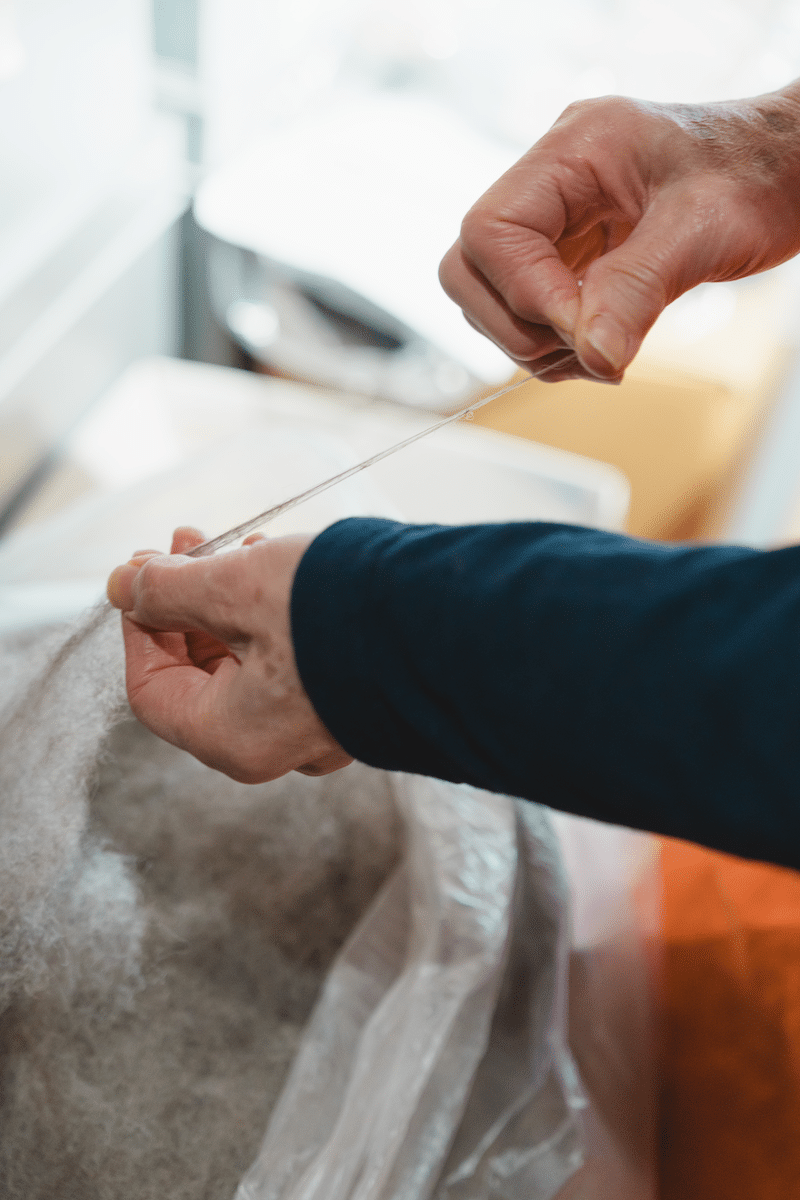
She demonstrated how hand-spun yarn is made by twisting raw fiber together. The raw fiber in the photo is yak hair, which is actually spun using tools.
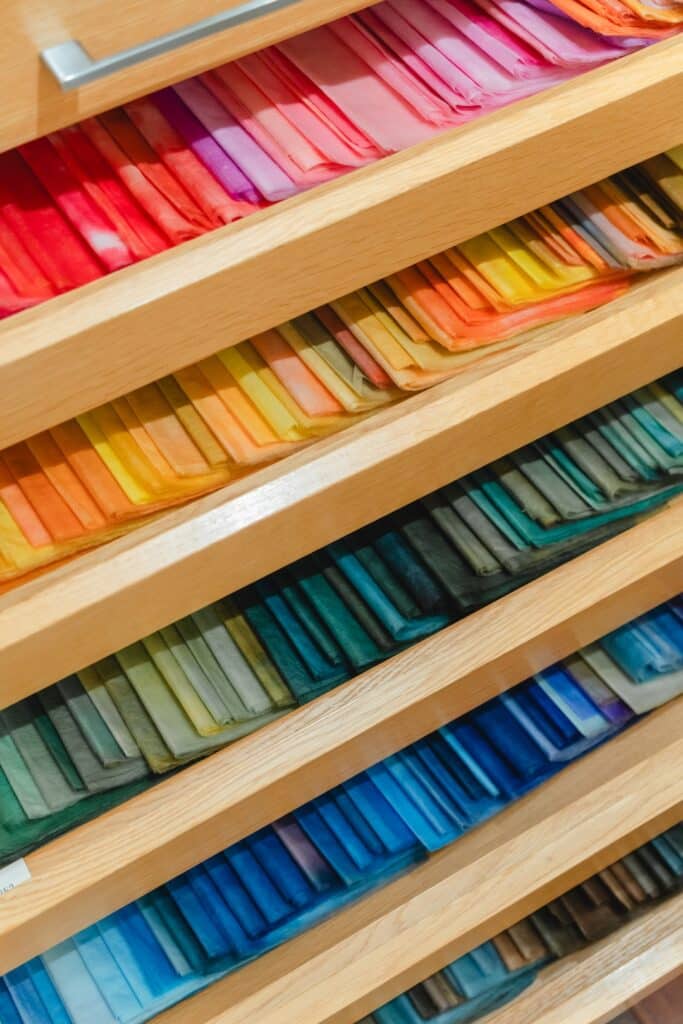
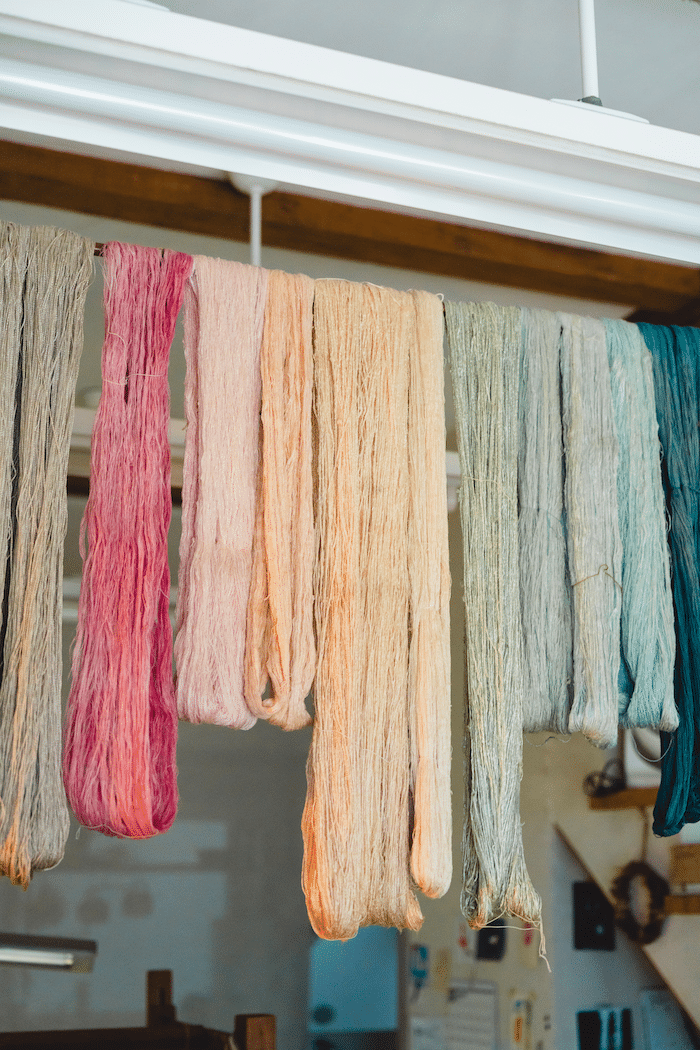
Yarn dyed by the owner herself at home and in the studio.
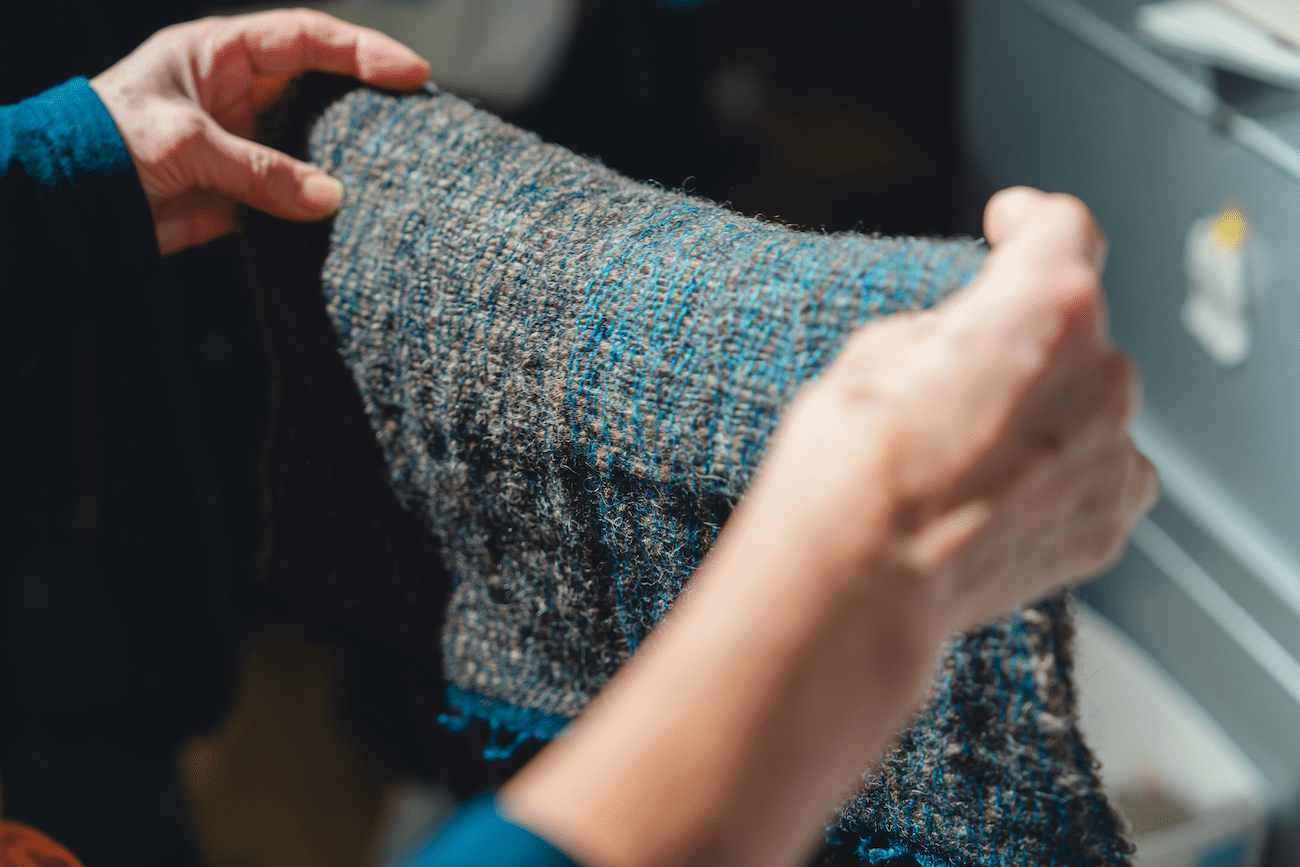
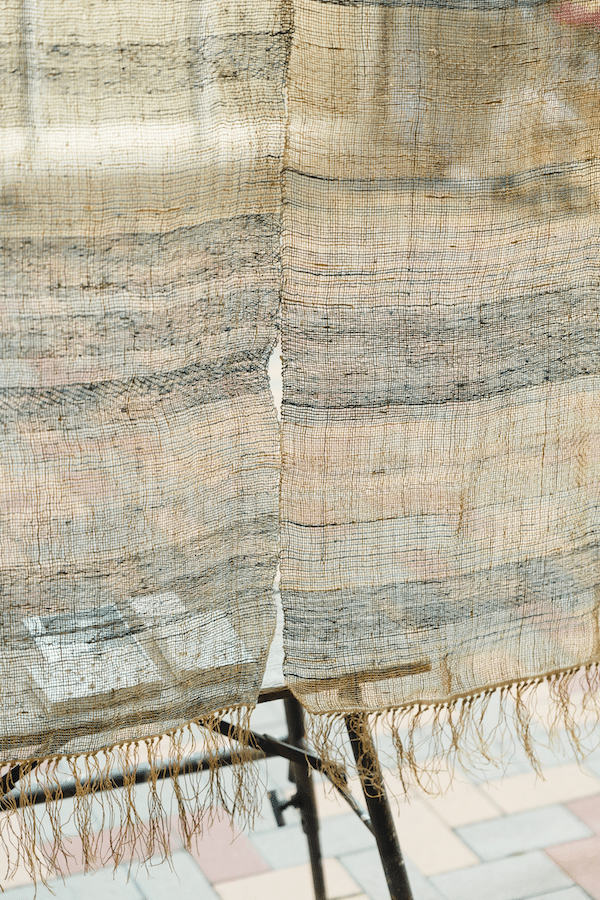
This textile is woven from hand-spun linen yarn sourced from Nepal. Its appeal comes from the uneven thickness of the fibers.
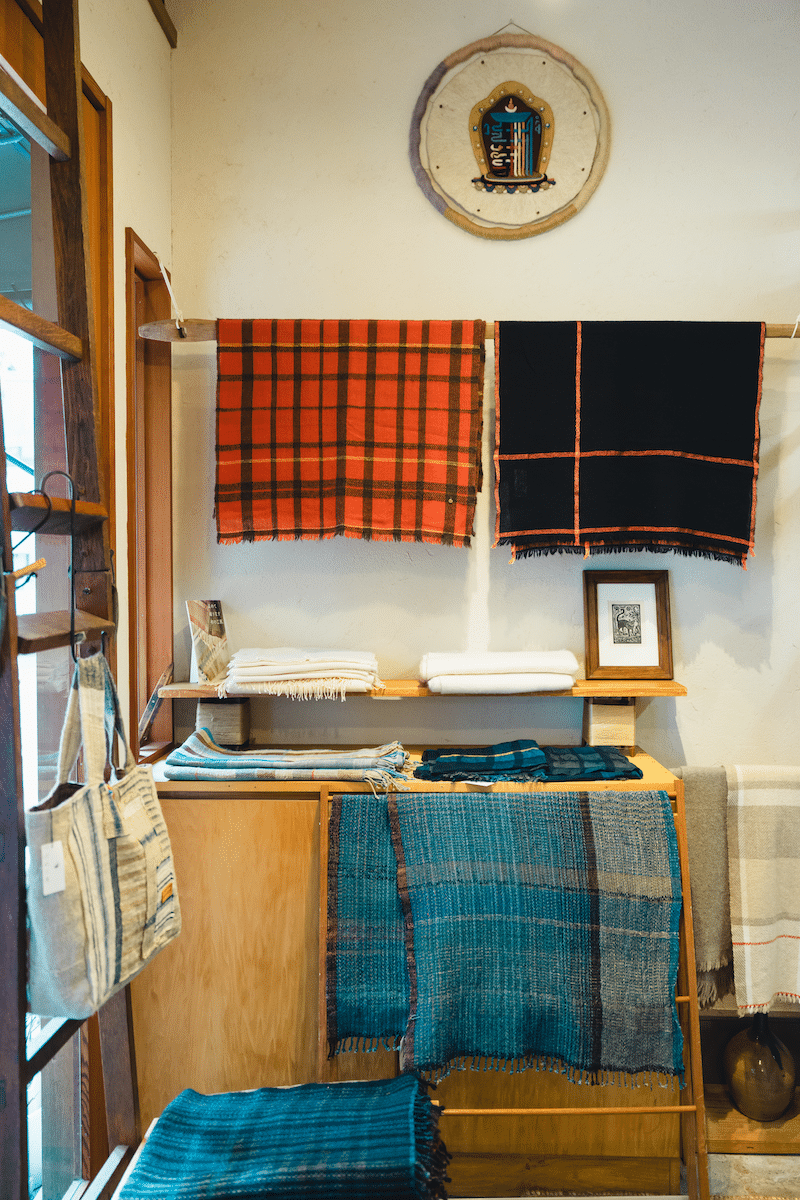
The selection mainly consists of stoles, shawls, and scarves. In spring and summer, the shop offers lightweight, breathable items made with cotton, linen, nettle, and other yarns. In autumn and winter, it carries warm items made with cashmere, wool, silk, and other yarns that gently trap air within the fabric.
“Part of the appeal of handwoven textiles is their fluffy, airy finish. Large winter stoles and scarves can feel quite heavy, but ours are very light and surprisingly warm,” says Takahashi.
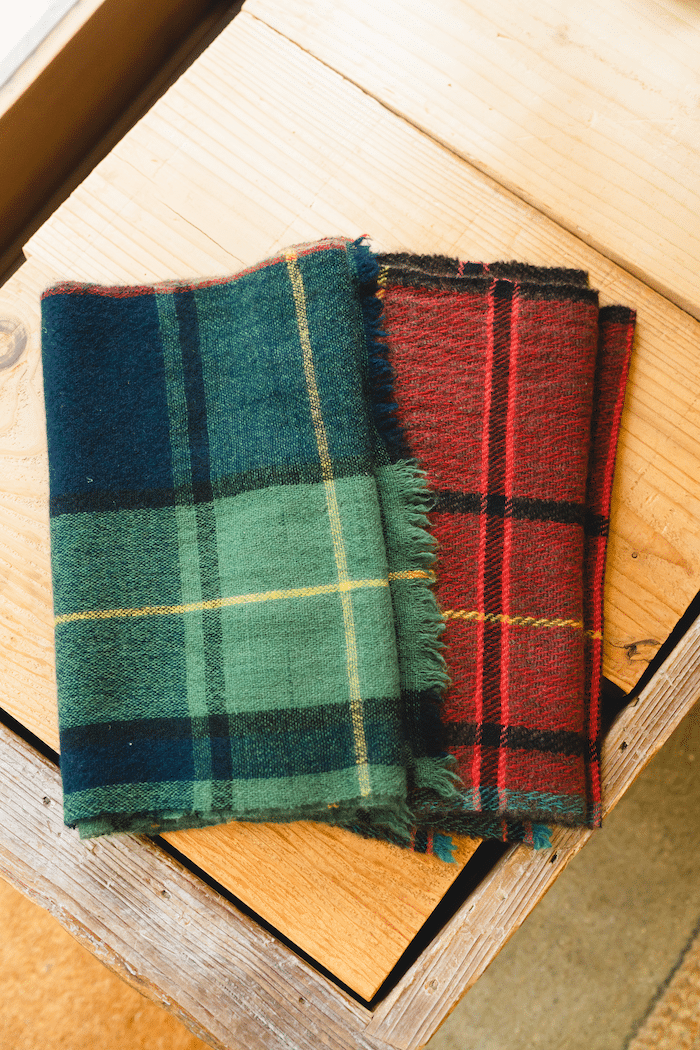
A classic tartan check pattern in green and red. 100% cashmere scarf, 33×164 cm, ¥38,000 each
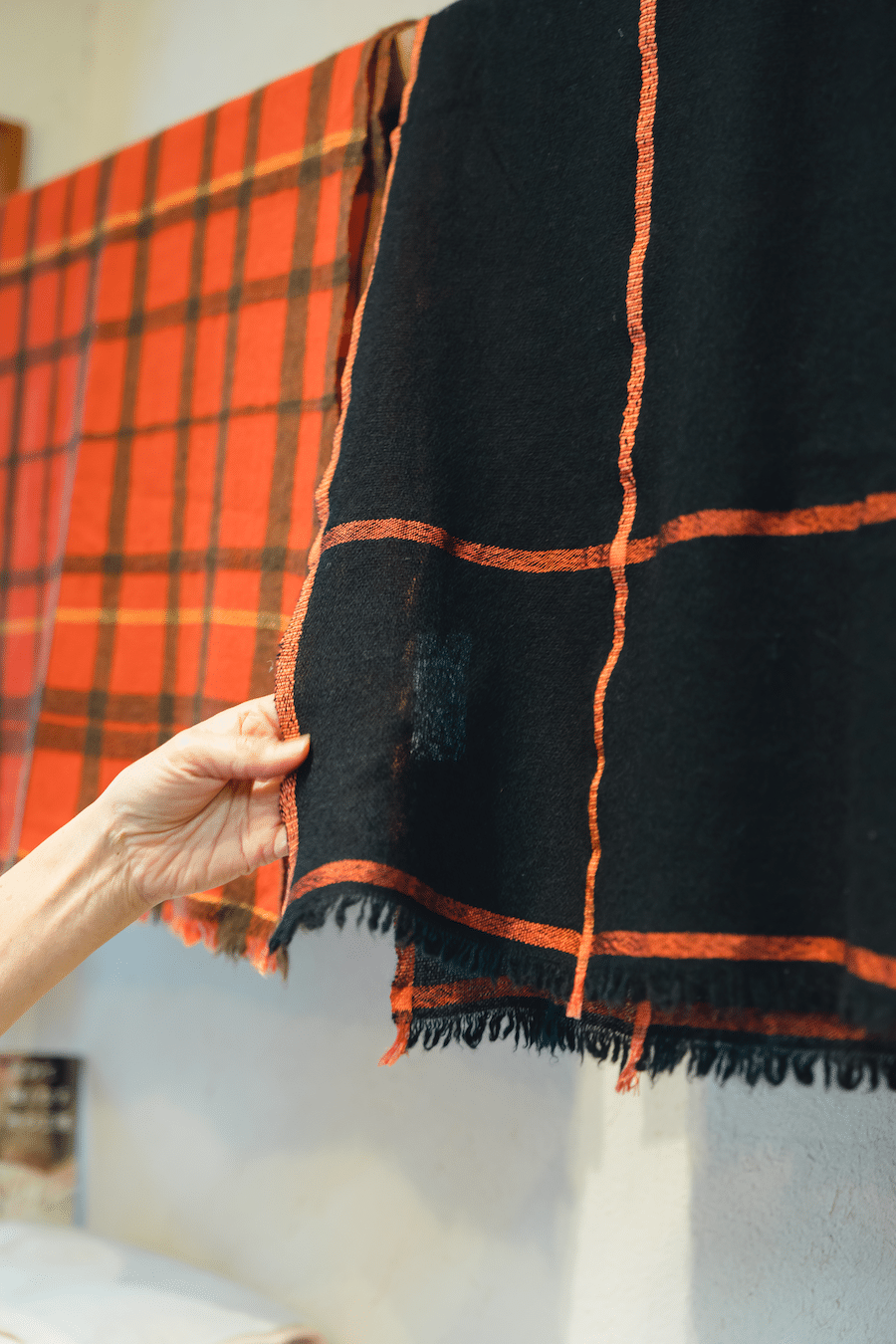
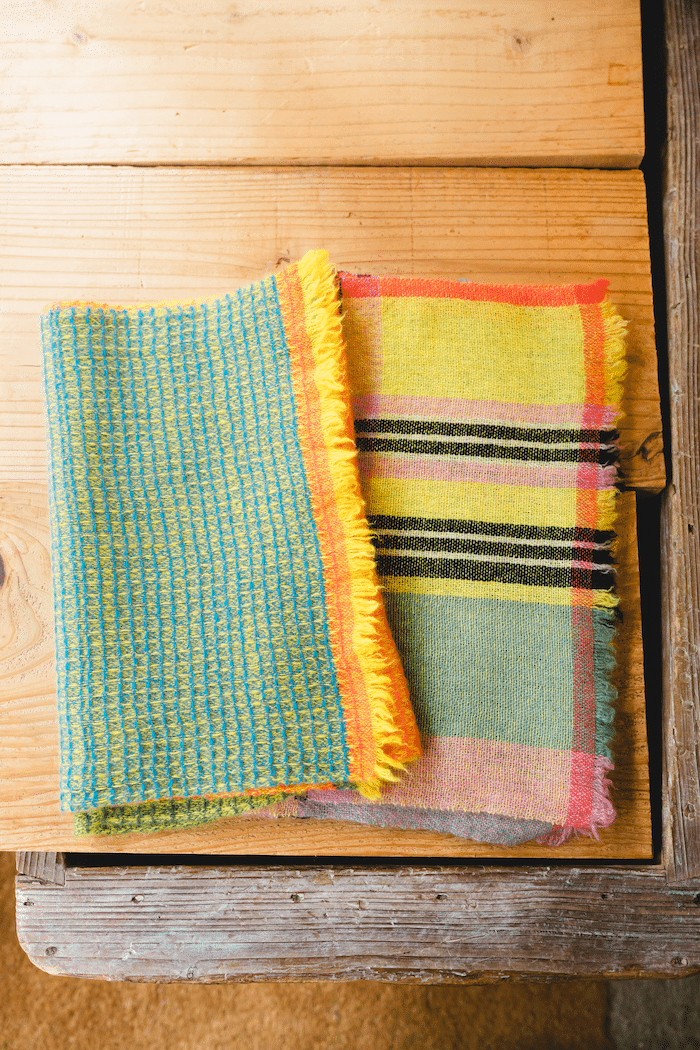
It is surprising to learn that even these vivid colors are all hand-dyed. 100% cashmere scarf, 34×170 cm, ¥38,000
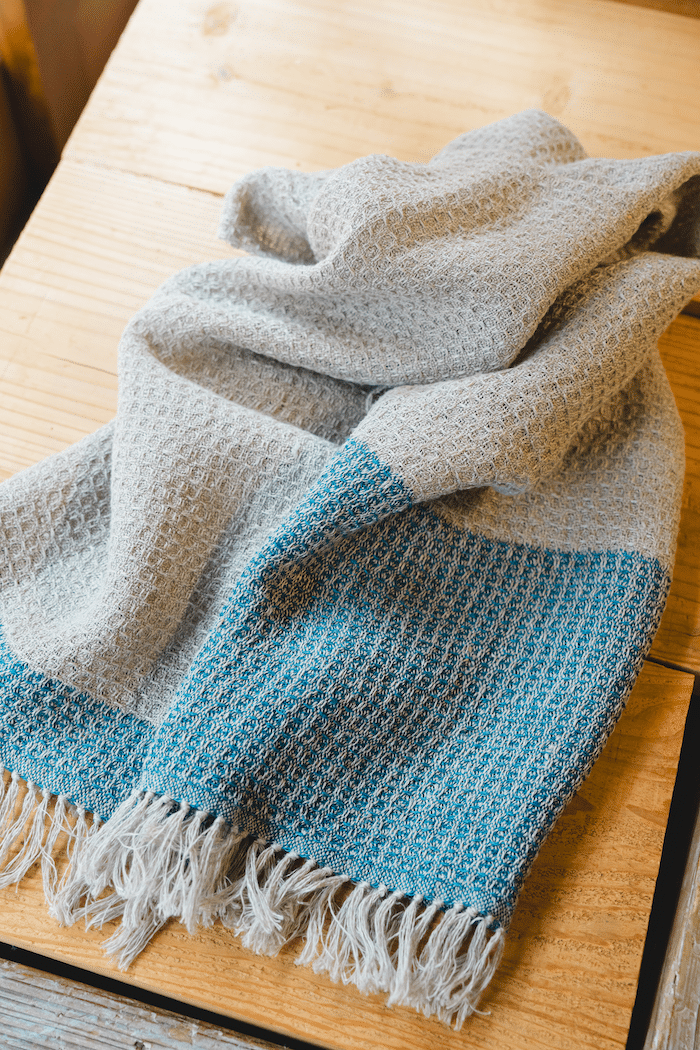
A waffle-weave textile made with undyed yarn and indigo-dyed yarn. It is highly absorbent, so it is also recommended for use as a towel. 100% linen stole, 56×120 cm, ¥25,000
In addition to items woven by the owner herself, Tsubamekobo also carries works by craft artists she knows. As a gallery that shares the appeal of handwork, Tsubamekobo is attracting attention for the work it is doing in its new location.
The information contained this article was correct as of 05/27/2026 (the time of publication)



.jpg)
スマホ.jpg)