DEEPTOKYO
magazine
EN


AREA
DEEPTOKYO
magazine
EN
AREA
A Secret Base in Nakano Recreating the Spirit of 1980s–1990s Culture


 Nearest Station

Nazo no Mise (“Mysterious Shop”) is an apparel and select shop located along the train tracks near JR Nakano Station. It is the flagship store of THUNDERBOX, the brand created by owner Tsuyoshi Morita, and a highly original space filled with deep respect for the culture of the 1980s and 1990s. Inside, the shop offers retro games, nostalgic toys, and apparel distinguished by its own unique designs. It goes beyond simple nostalgia, reconstructing past culture through a contemporary sensibility and presenting it in a new context. Today, it has become a new cultural hub in Nakano, drawing fans across generations and national borders.
SHARE


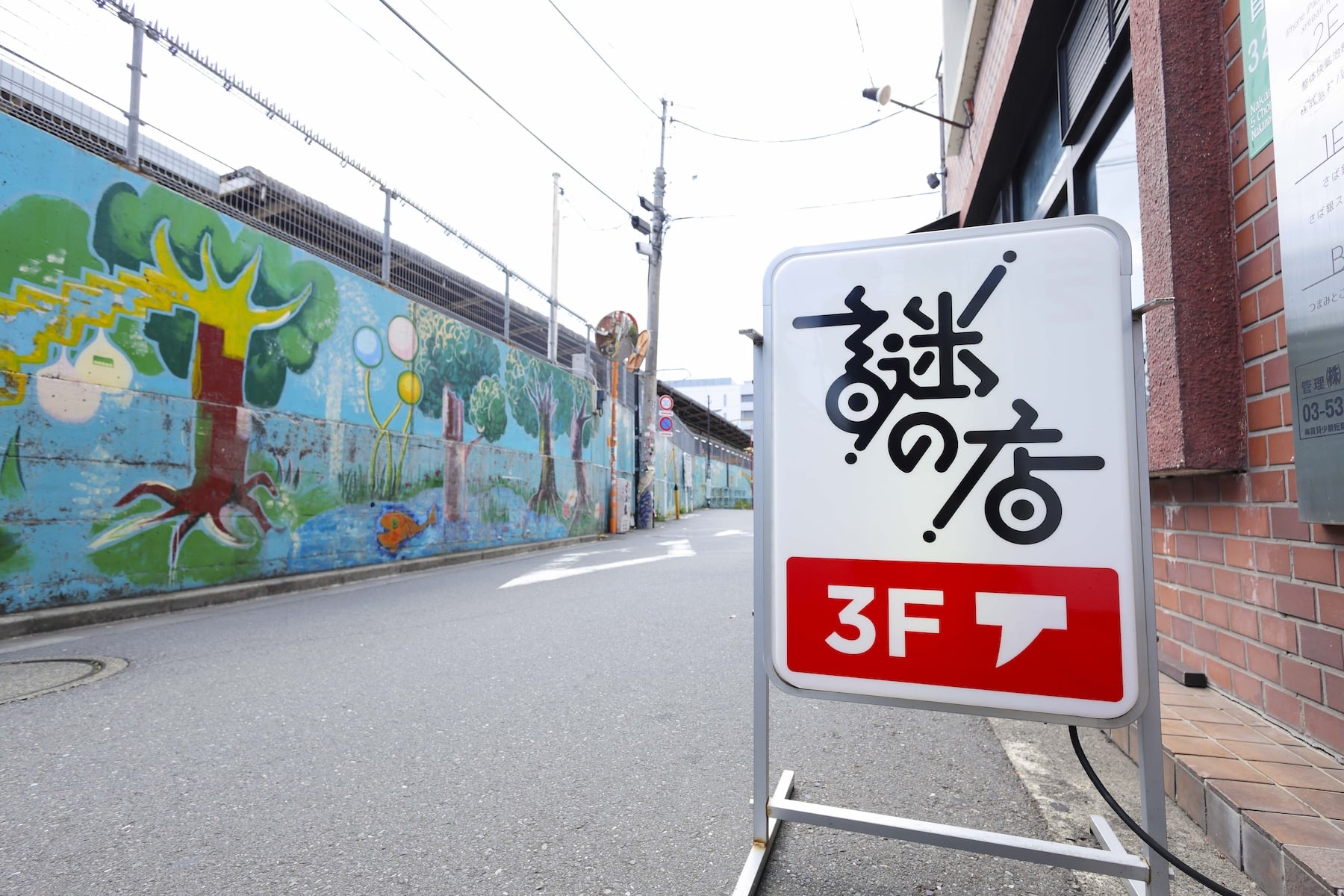
If you walk along the train tracks from JR Nakano Station, you will come across a sign whose identity is not immediately clear. The shop’s name is said to come from a hidden shop in the classic Famicom game Downtown Nekketsu Monogatari—one that is itself difficult to find. Even its location already feels like part of the playful setup that makes Nazo no Mise so true to its name. Since opening in 2015, the store has served as a place where Morita expresses his own roots through his distinctive sensibility, from the city of Nakano, which he has loved deeply for years.
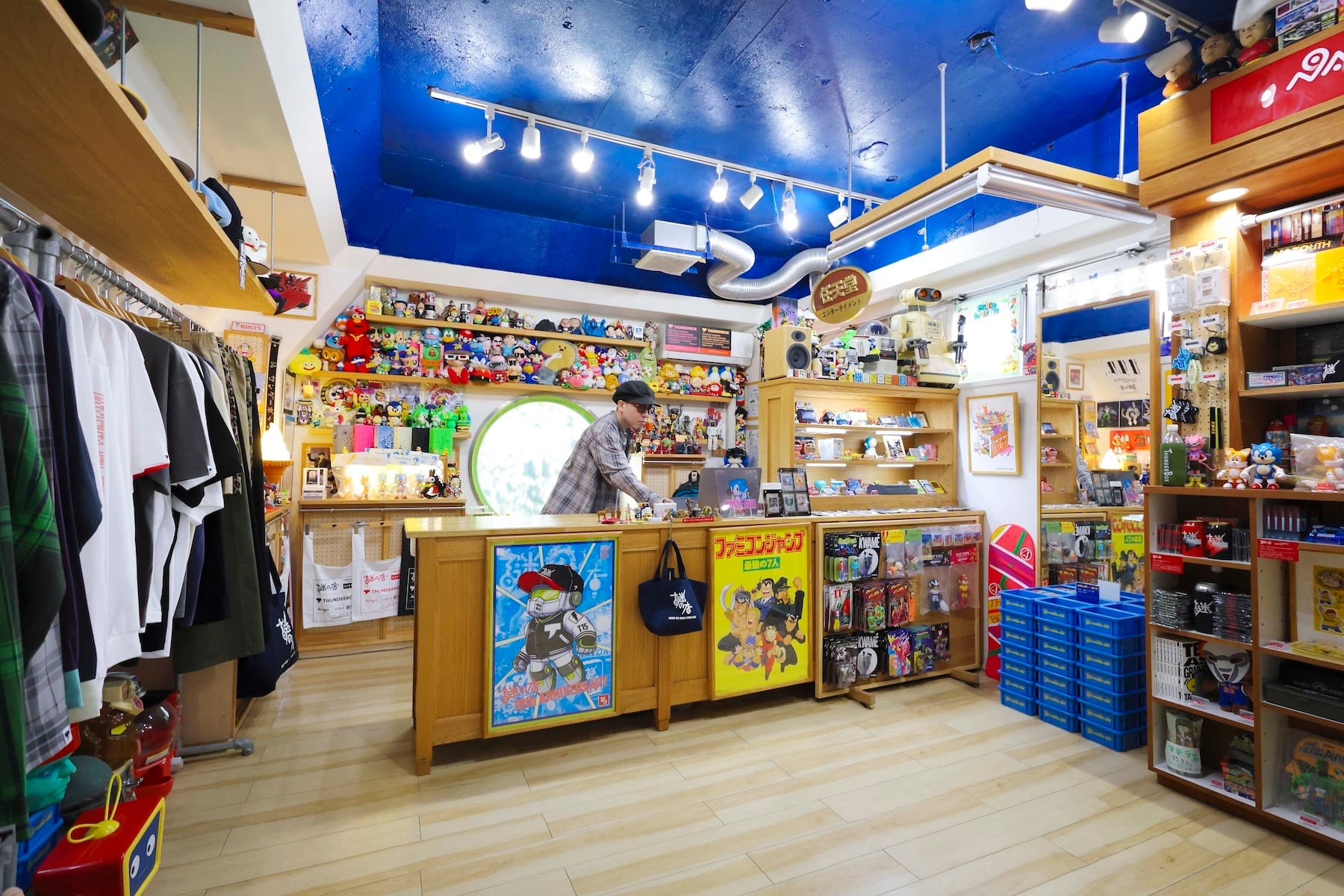
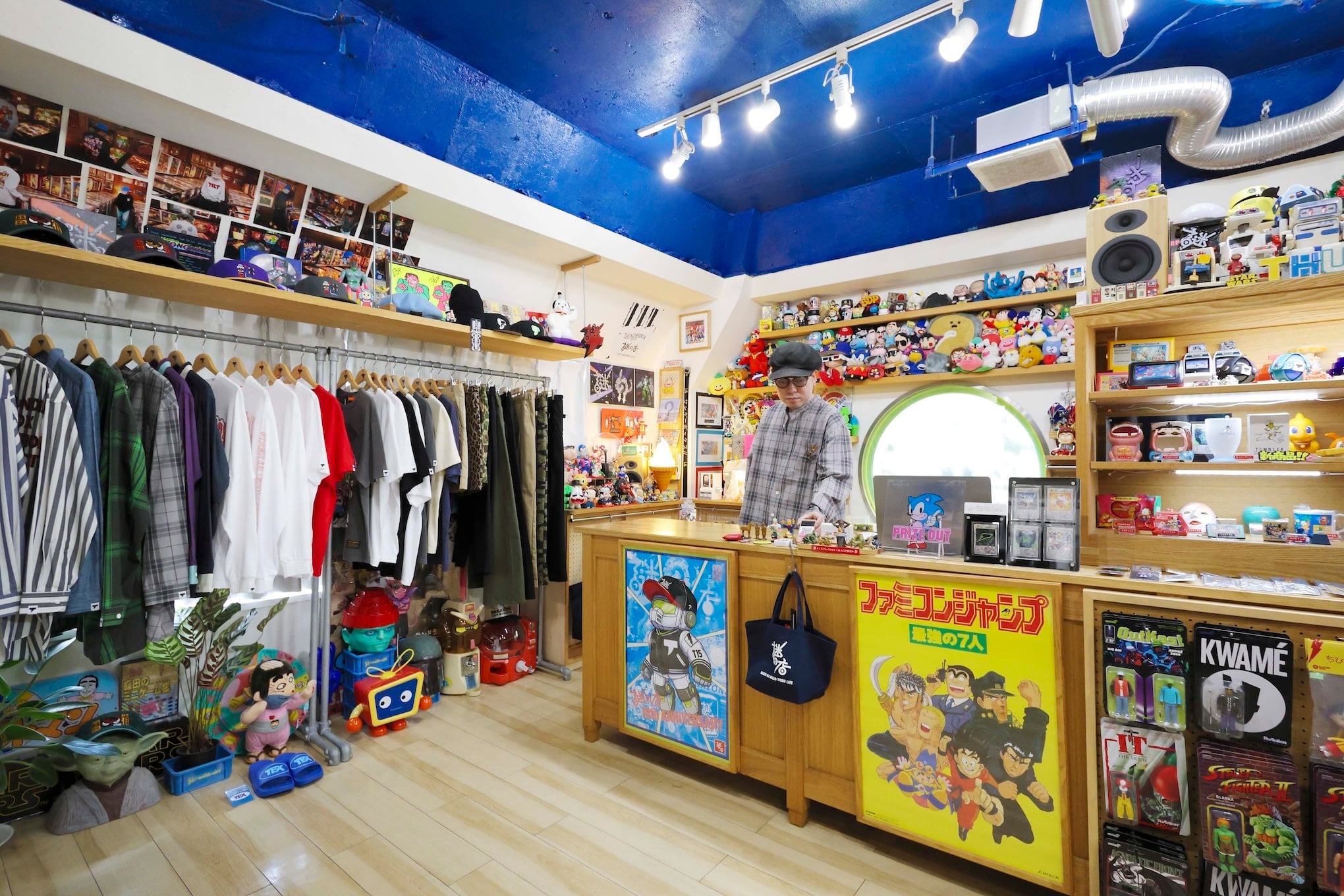
The moment you step inside, it feels as though you have traveled back in time to the 1980s and 1990s. The shop is packed from wall to wall with intriguing items.
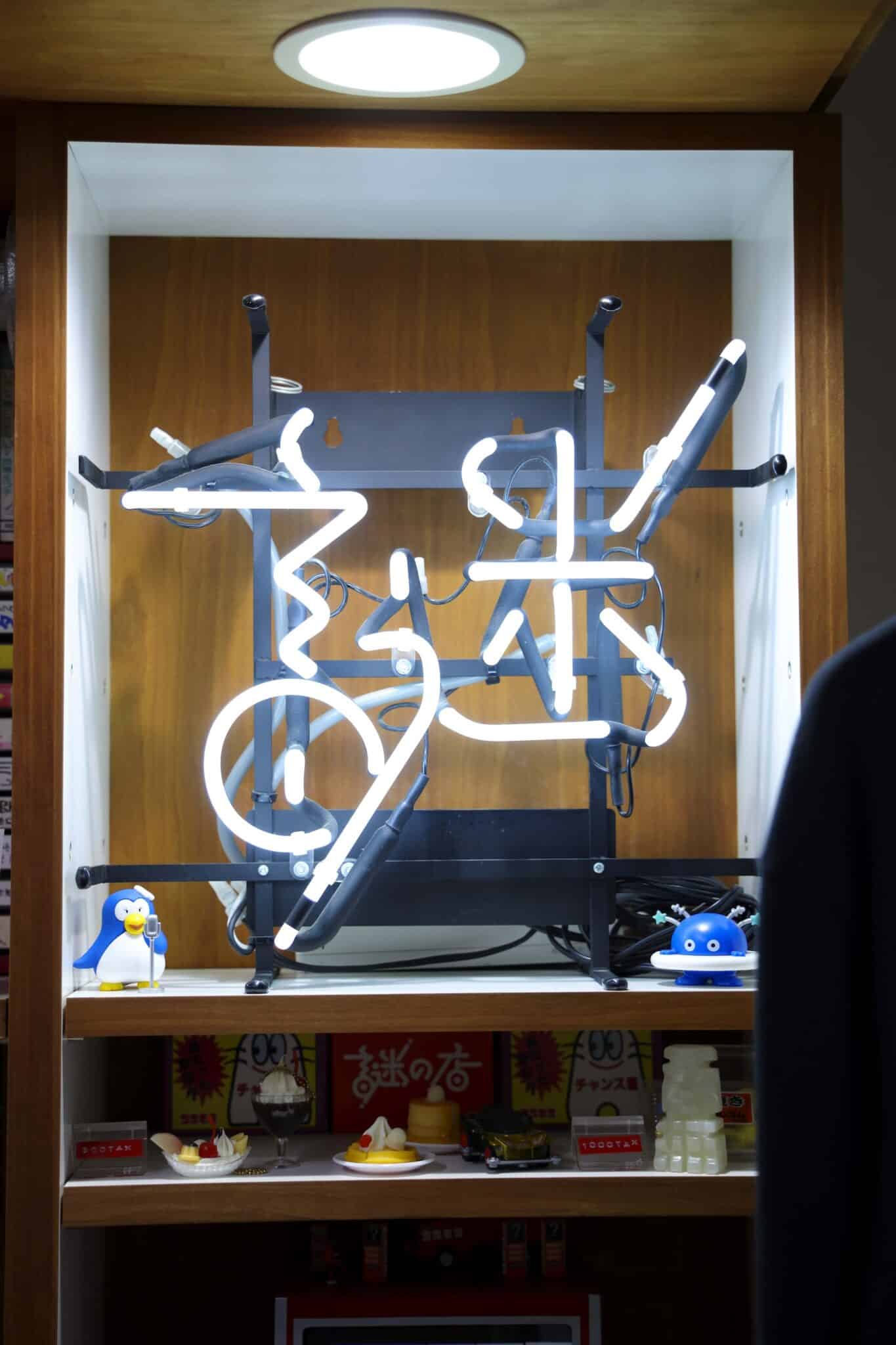
The “mystery” mark, which is both the shop’s name and its icon, is displayed inside the store.
The sign placed along the tracks serves as the shop’s landmark. With its retro atmosphere, it catches the attention of passersby.
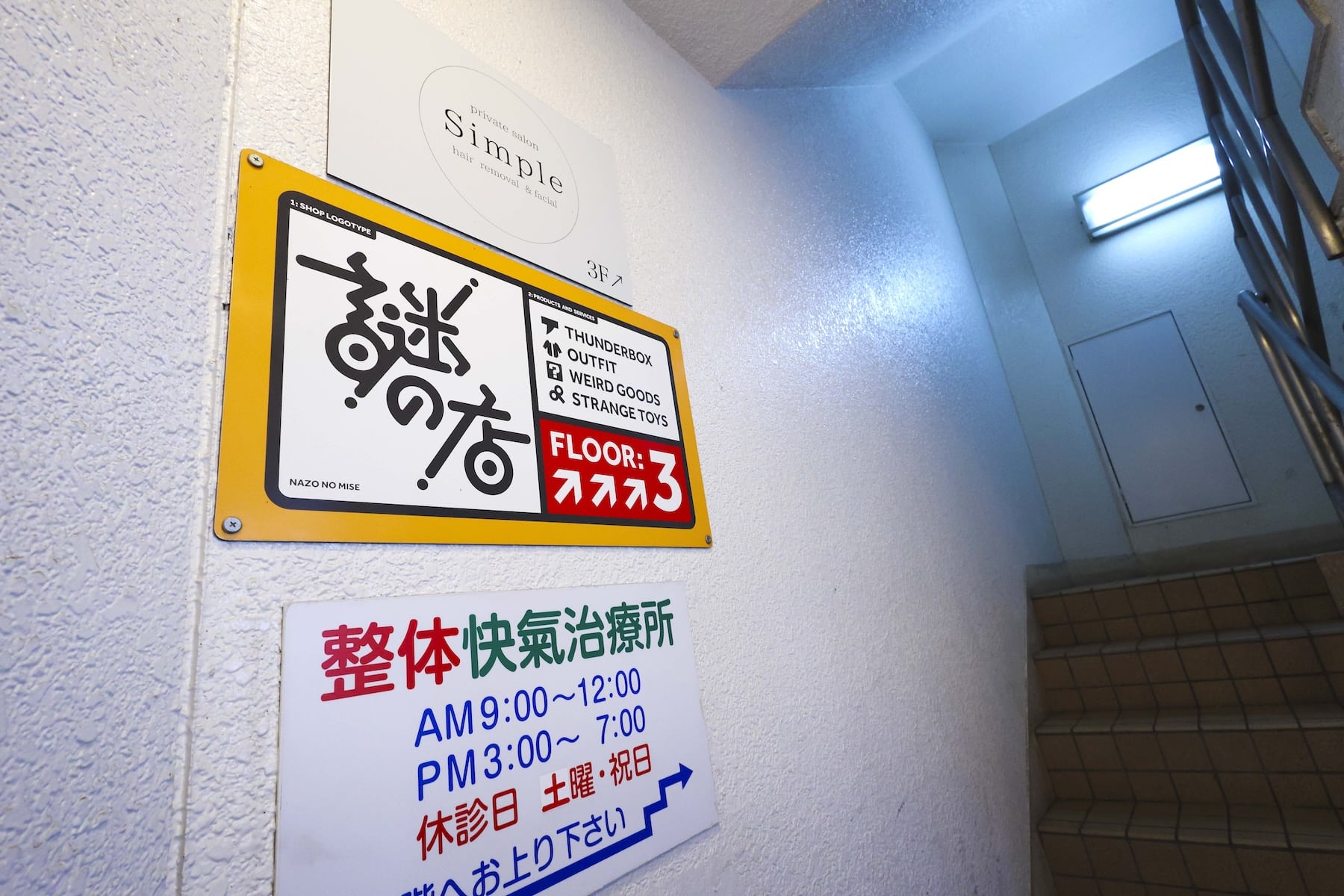
The shop is located on the third floor of the building. In addition to items from its main brand THUNDERBOX, it carries original shop products and unique goods selected by the owner. What exactly awaits inside is part of the fun.
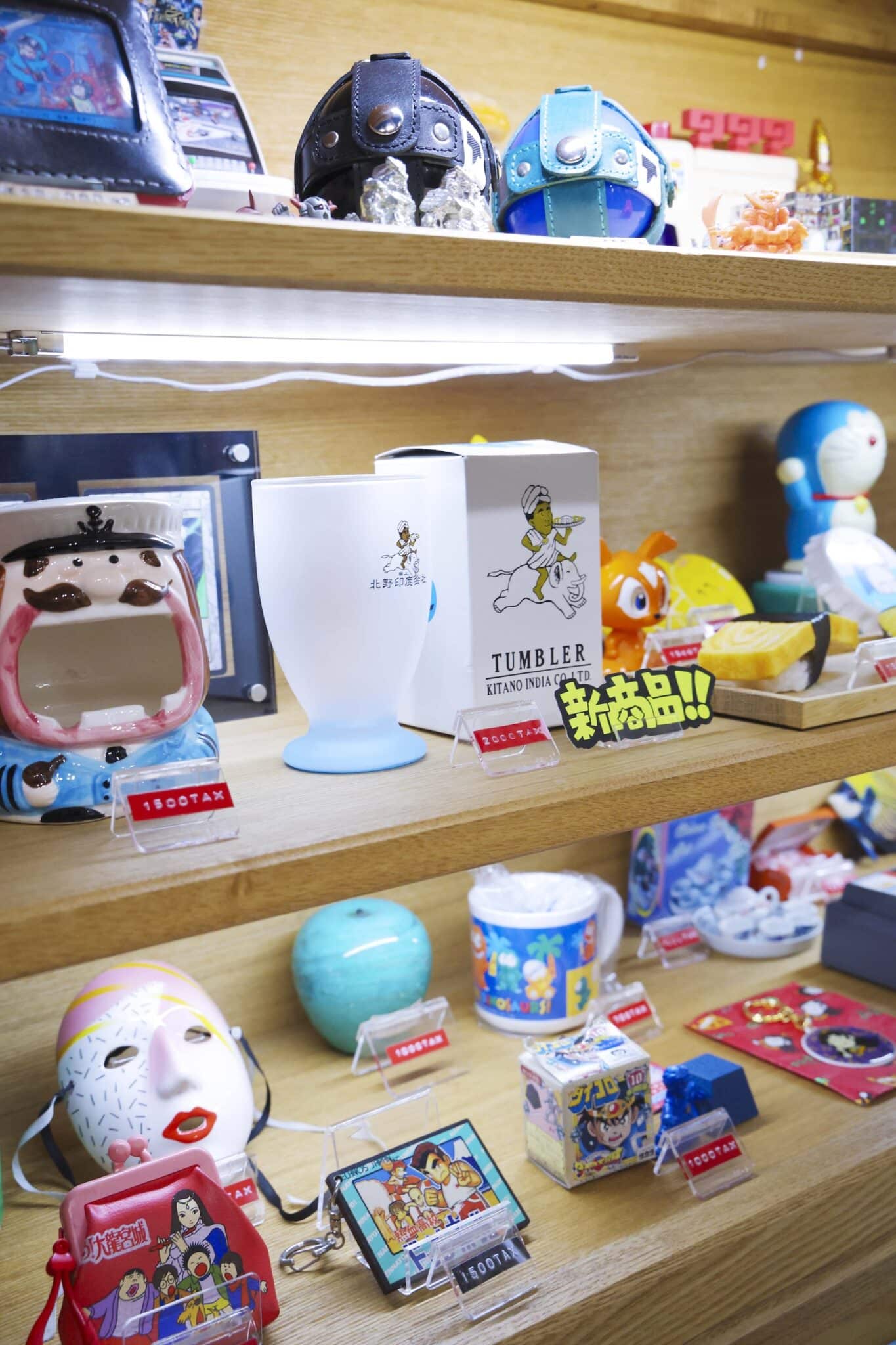
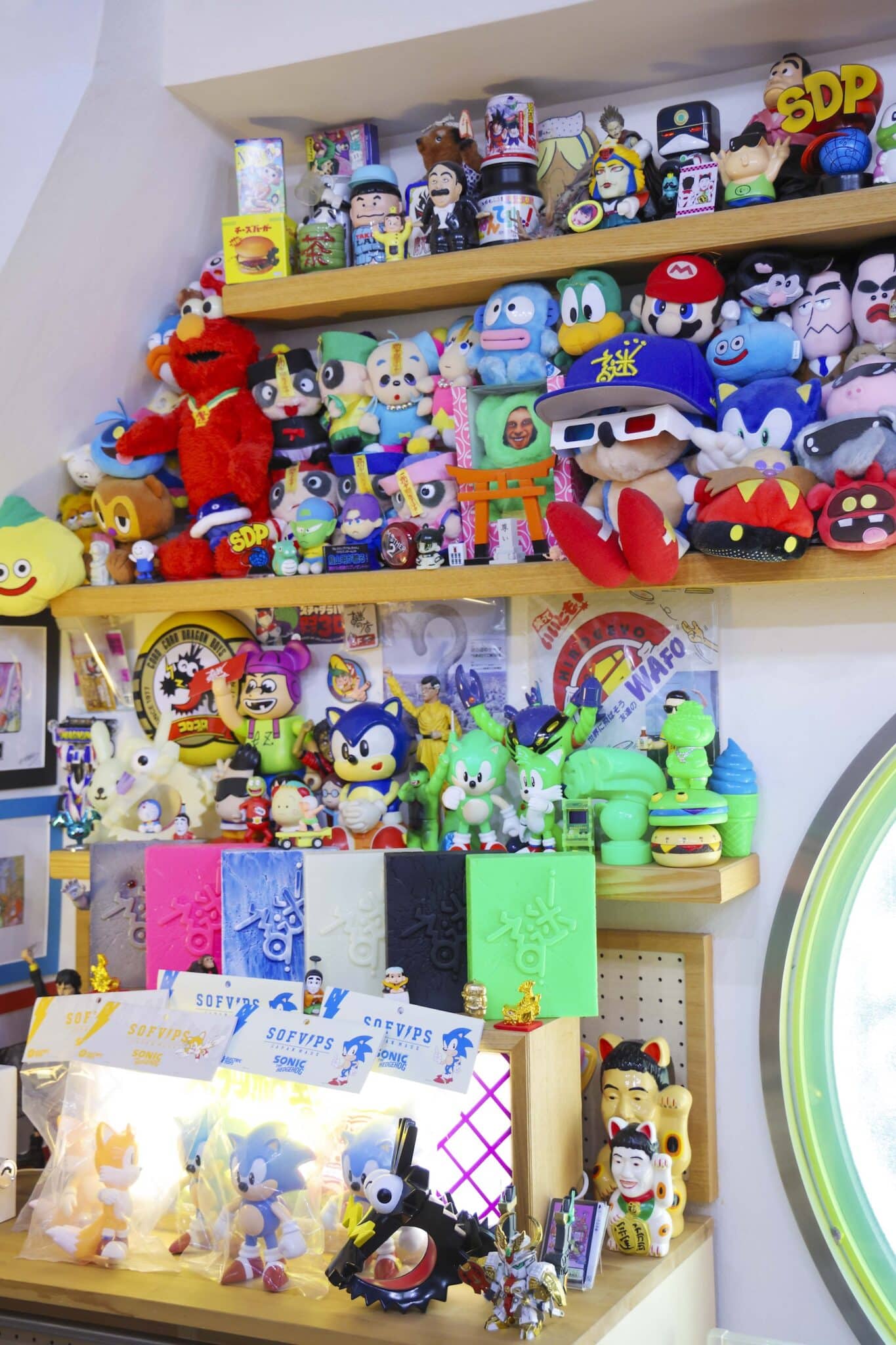
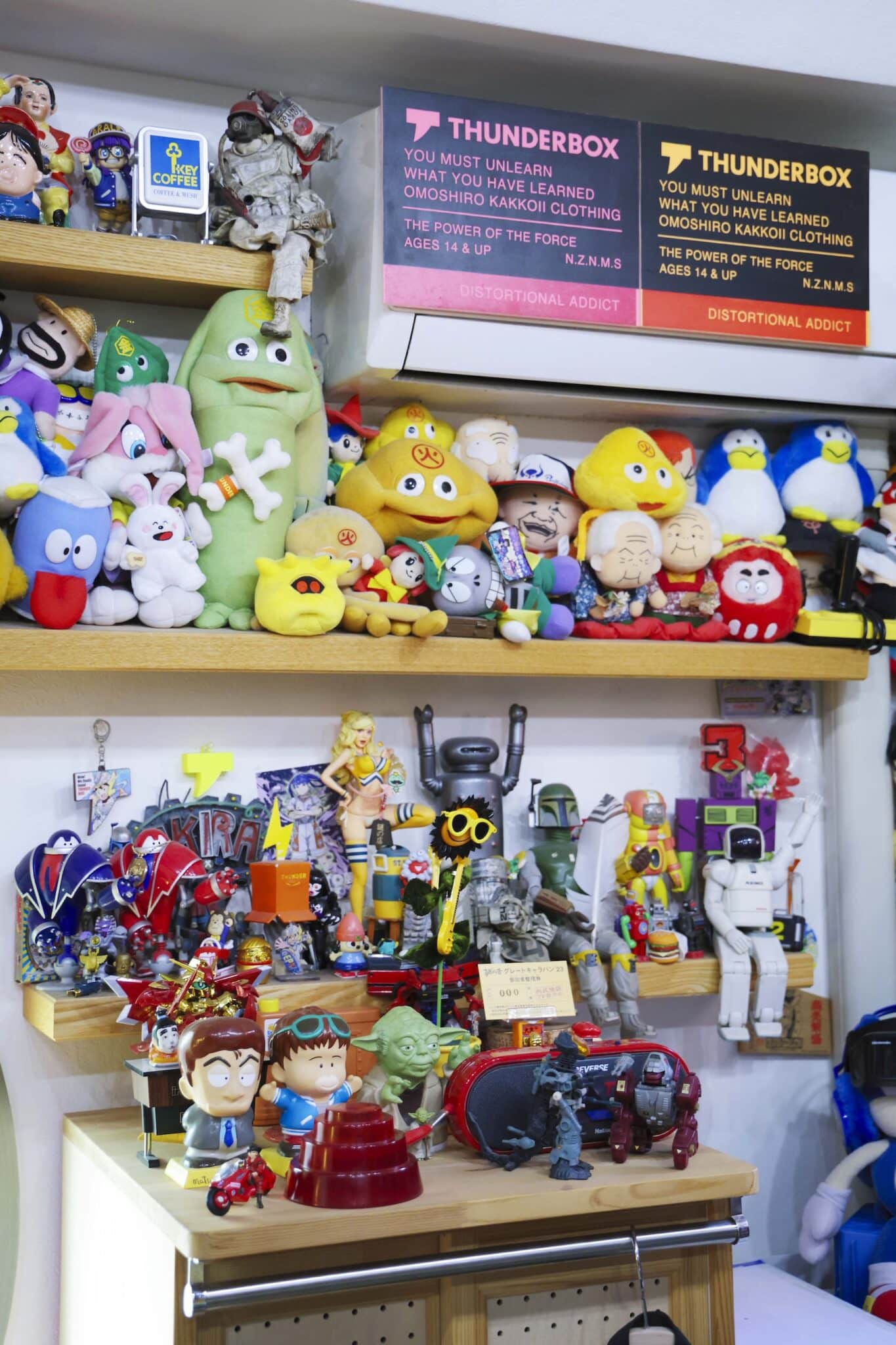
Morita says the concept of the shop is “to recreate the atmosphere that the 1980s and 1990s once carried.” Inside, elements that thrilled boys of that era—such as the manga Chibi Maruko-chan, which had a major influence on Morita, and retro games including the Famicom, Nintendo’s Family Computer console—have been reconstructed through a contemporary sensibility. Whether new or old, only the things Morita personally loves and that have passed through his own eye for beauty are chosen for this space. The result is an environment that offers visitors a pleasant sense of chaos and discovery.
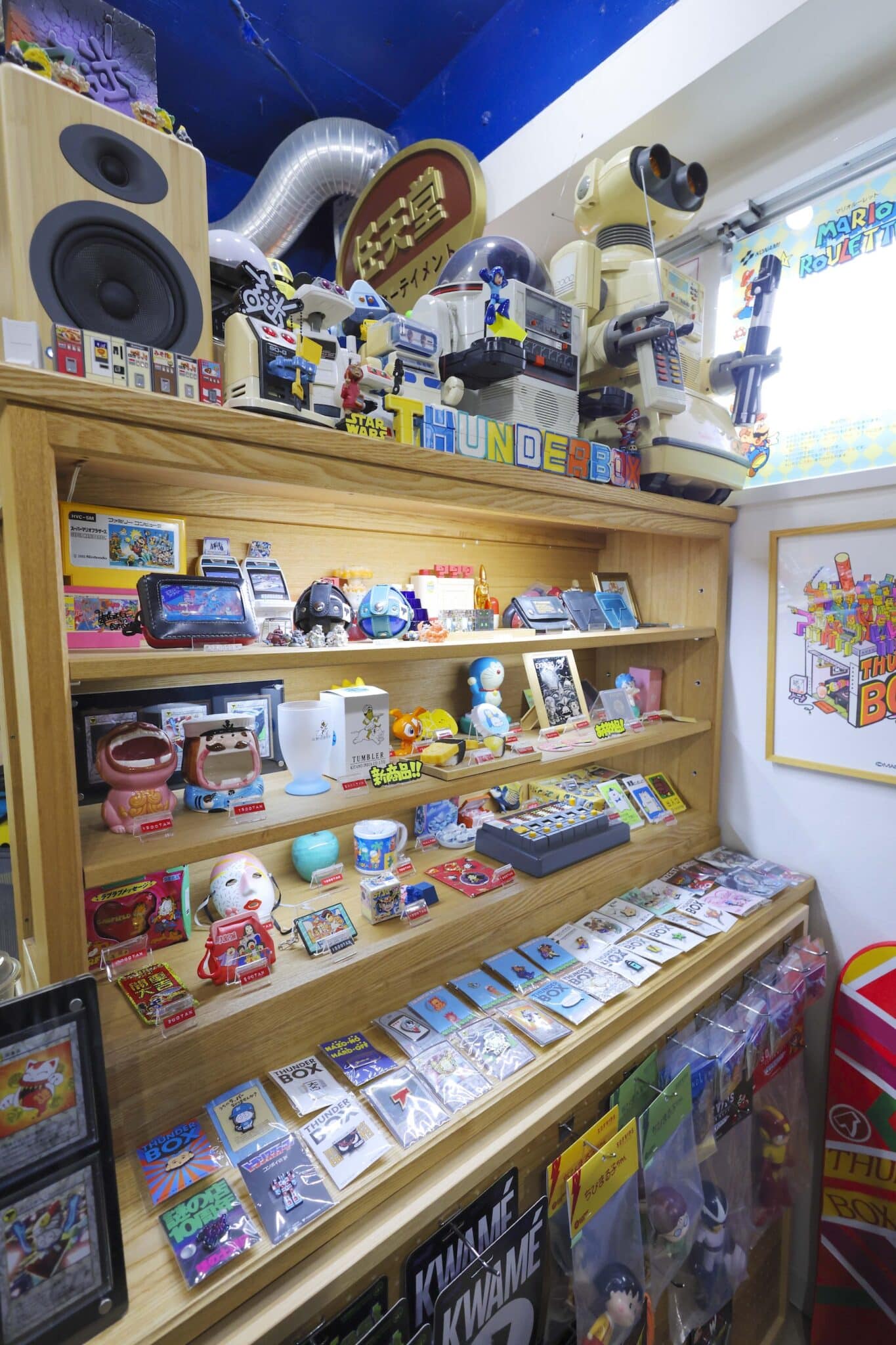
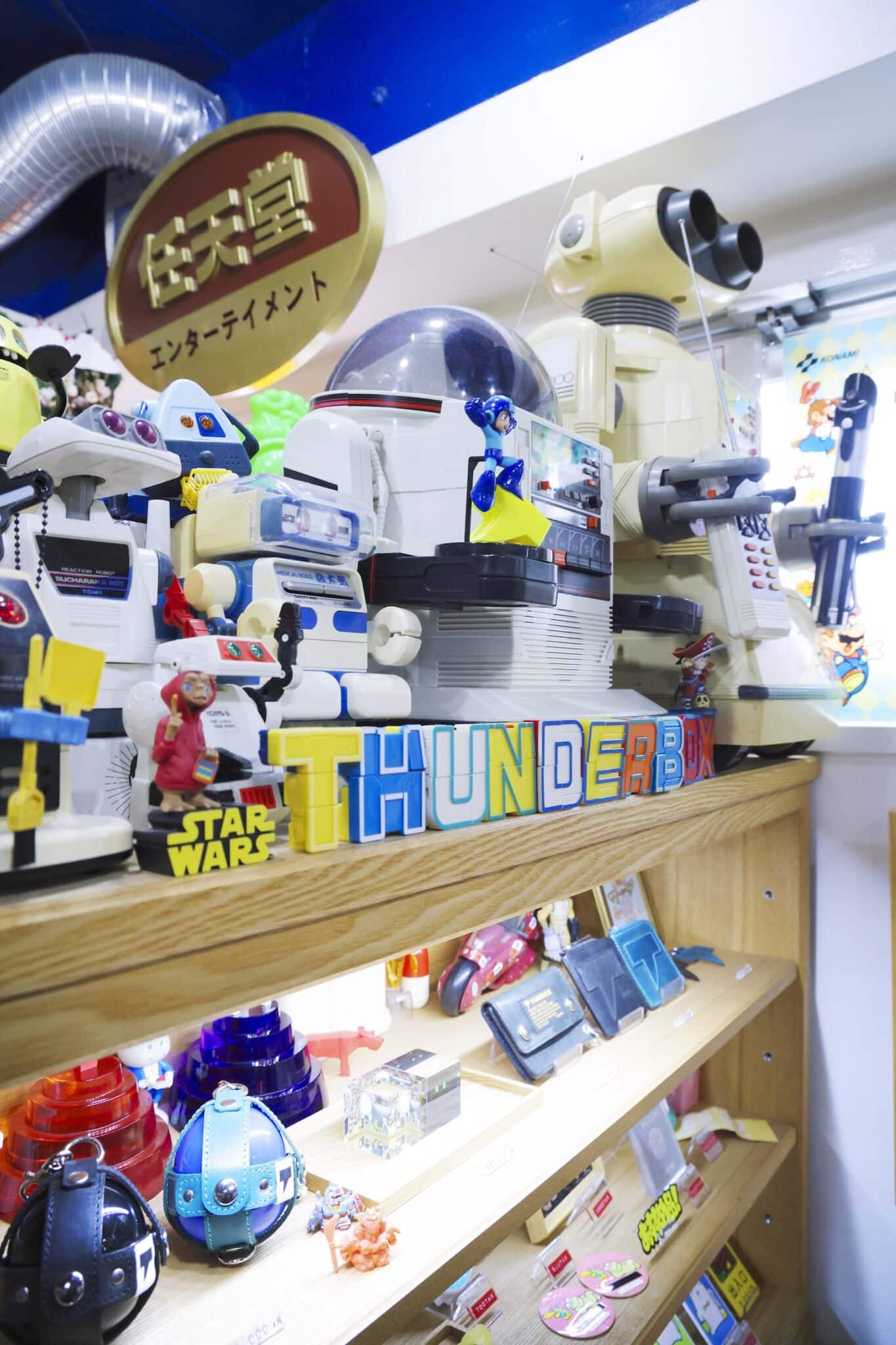
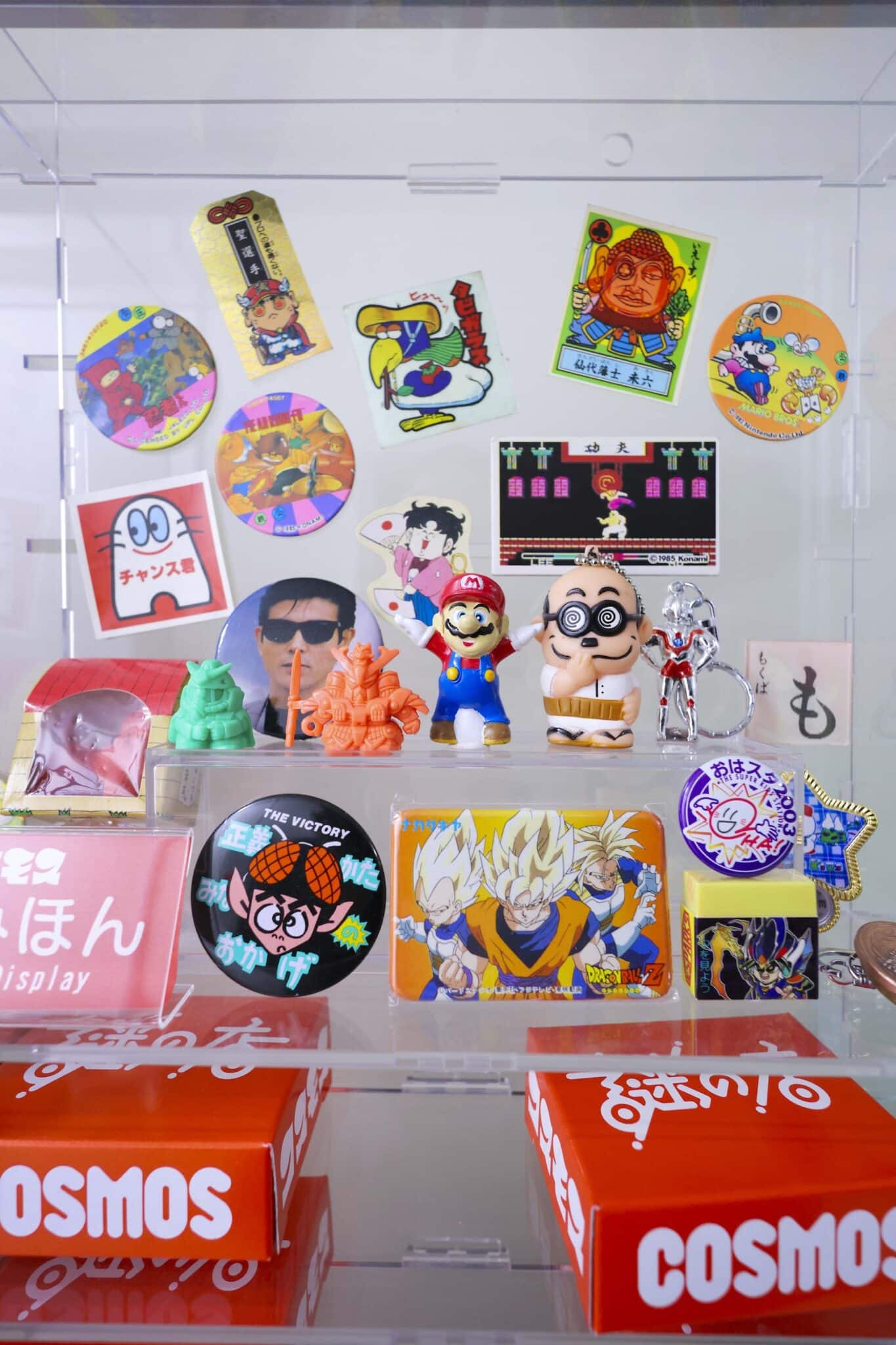
A corner lined with items that have passed Morita’s personal standards. From original pin badges to nostalgic games and TV-related goods, a wide variety of items is on display. The robot toy from the 1980s displayed here is not for sale, but apparently it still works.
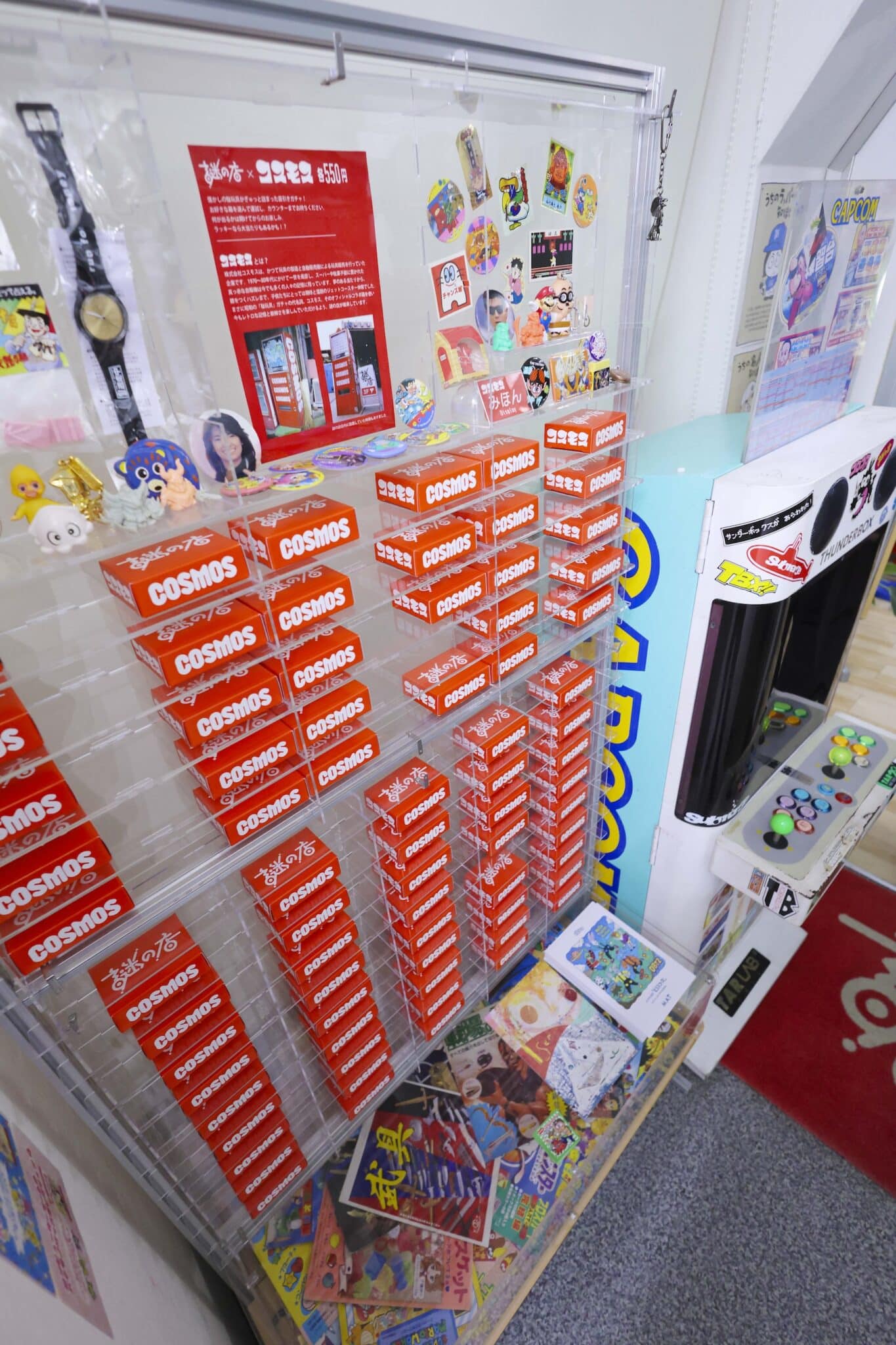
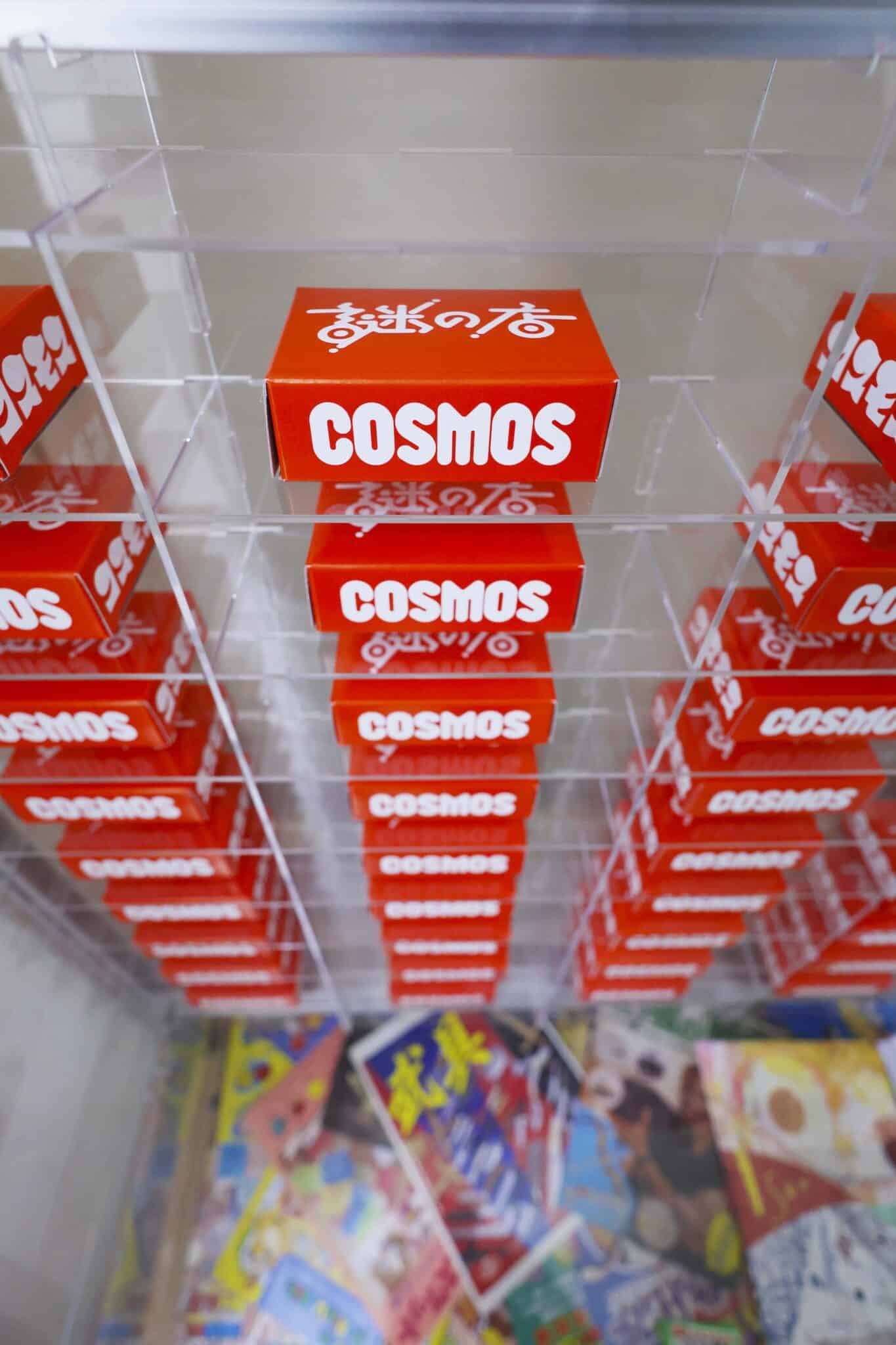
The moment you step inside, you enter a dense little universe where products old and new intermingle. At the entrance, visitors are welcomed by a collaboration corner with Cosmos, a toy vending machine brand once commonly found at Showa-era(1926〜) dagashi shops. It recreates that old excitement of never knowing what you were going to get. The capsule toys that change irregularly, the retro arcade game cabinets, and the vintage items displayed throughout the shop all evoke nostalgia for the Showa generation, while feeling powerfully fresh to younger visitors.
Greeting customers at the entrance is the collaboration corner with Cosmos. Cosmos was a toy vending machine brand that became popular in the 1980s.
Back then, you truly never knew what would come out until you bought one. This mysterious mechanism reportedly drew in countless boys and girls.
For this collaboration, several items selected from among the displayed samples are packed in at random. 500 yen per try.
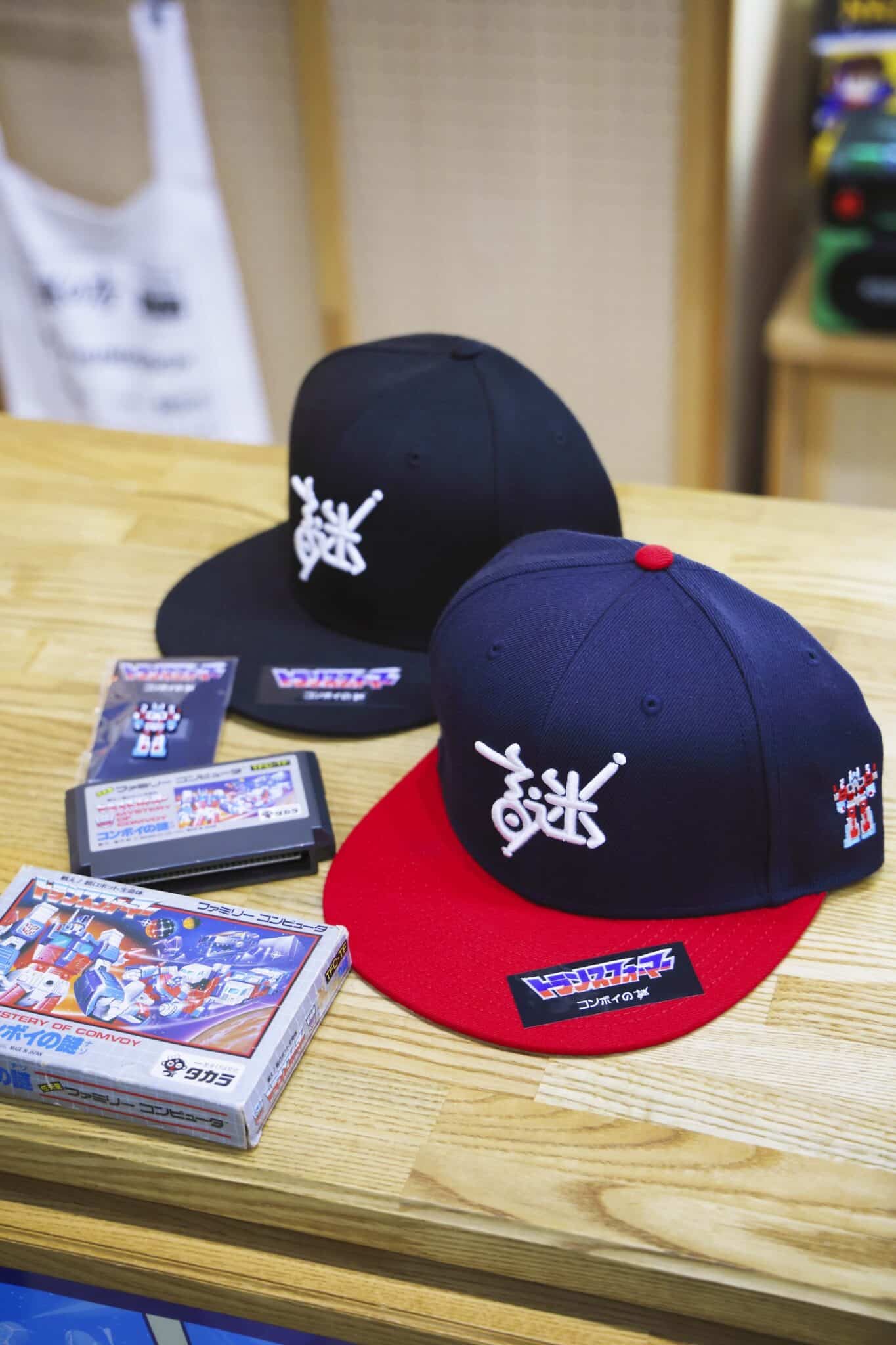
One item that deserves particular attention is the Nazo no Cap, which is not sold online and can only be purchased at this shop. The store’s original items are also not to be missed. Over the years, the shop has turned one unexpected crossover after another into reality, including collaborations with the Famicom game Transformers: Mystery of Convoy, the game Sonic the Hedgehog, the reuse shop HARD OFF, and the artist MCU, crossing freely between genres. Morita’s personal collection displayed behind the register is not for sale, but even before you get there, every corner of the store is densely packed with mysterious elements of subculture.
The Nazo no Cap, available only at Nazo no Mise. Apparently, there are collectors of these as well. More than 100 versions have been released so far, and this one is a collaboration model with the Famicom game Transformers: Mystery of Convoy 6,600 yen each.
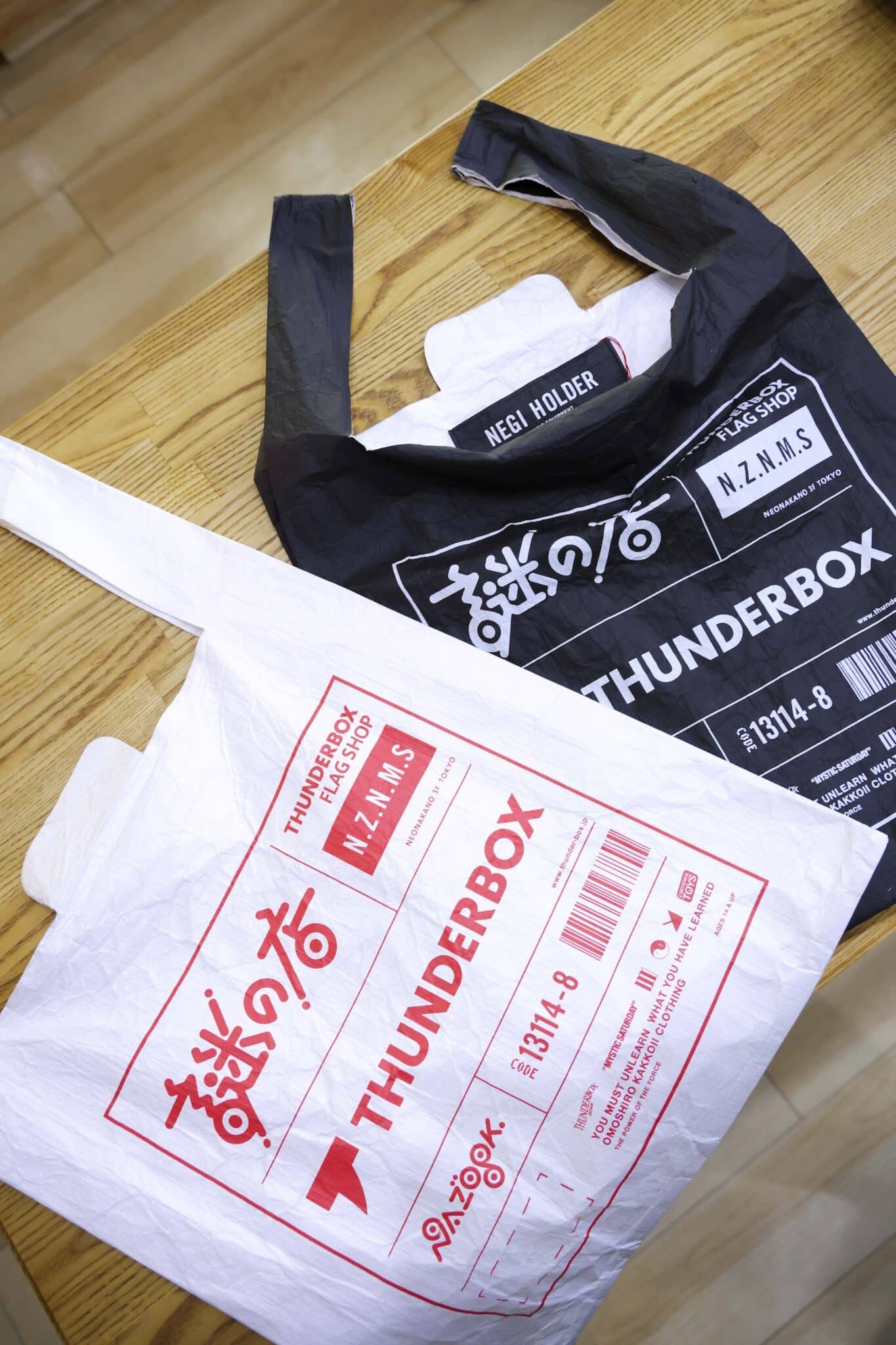
The shop’s original shopping bag uses Tyvek®, the same material used in protective clothing. It also comes with a holder inside for sticking in a green onion, commonly known as the NEGI HOLDER. 2,200 yen each.
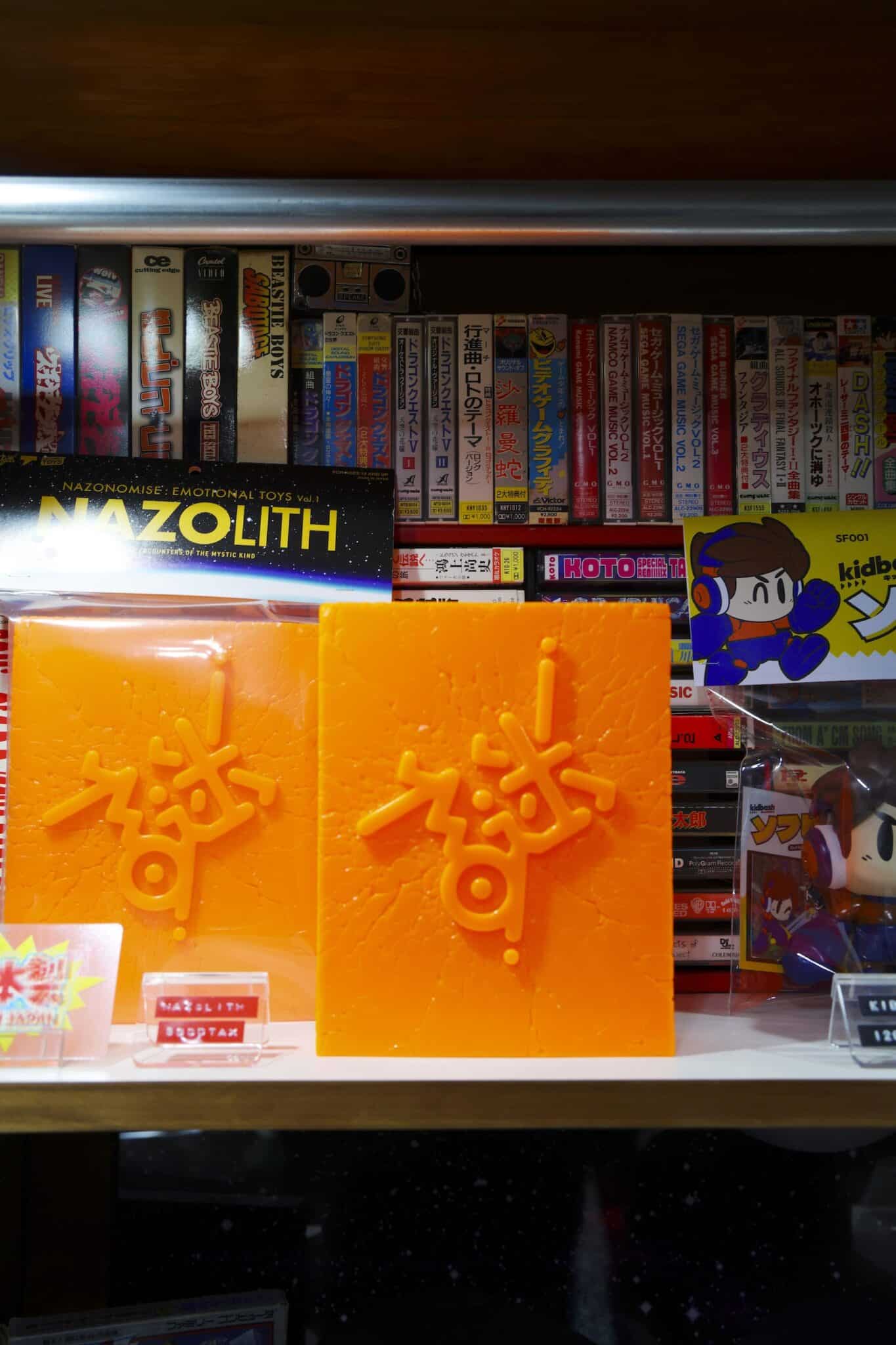
The shop’s original sofubi figure NAZOLITH, continuously released in changing colors. The new color is neon orange. 8,800 yen.
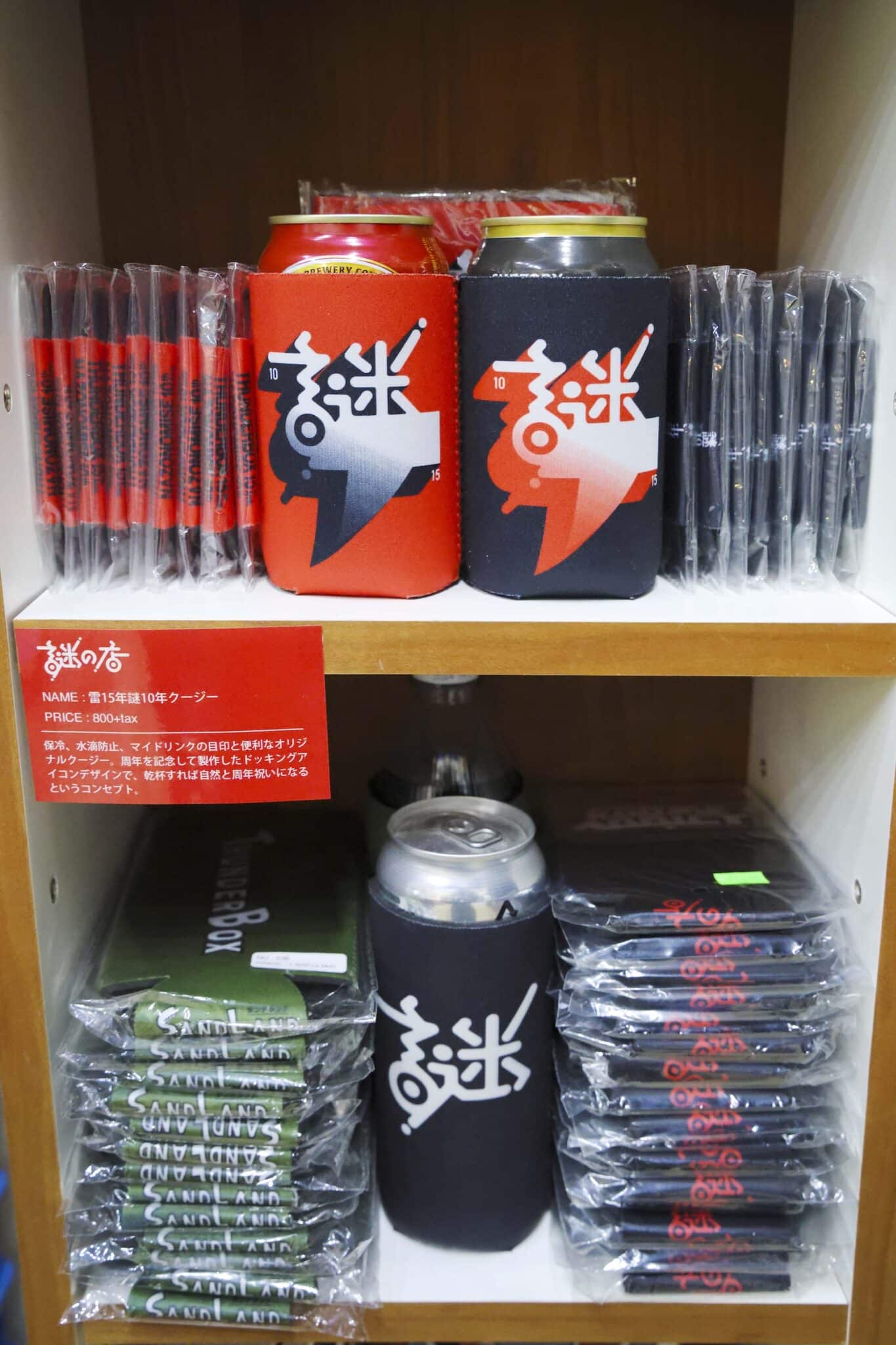
With this, you can keep canned drinks ice-cold anytime. It is a koozie featuring the shop’s original logo. 880 yen.
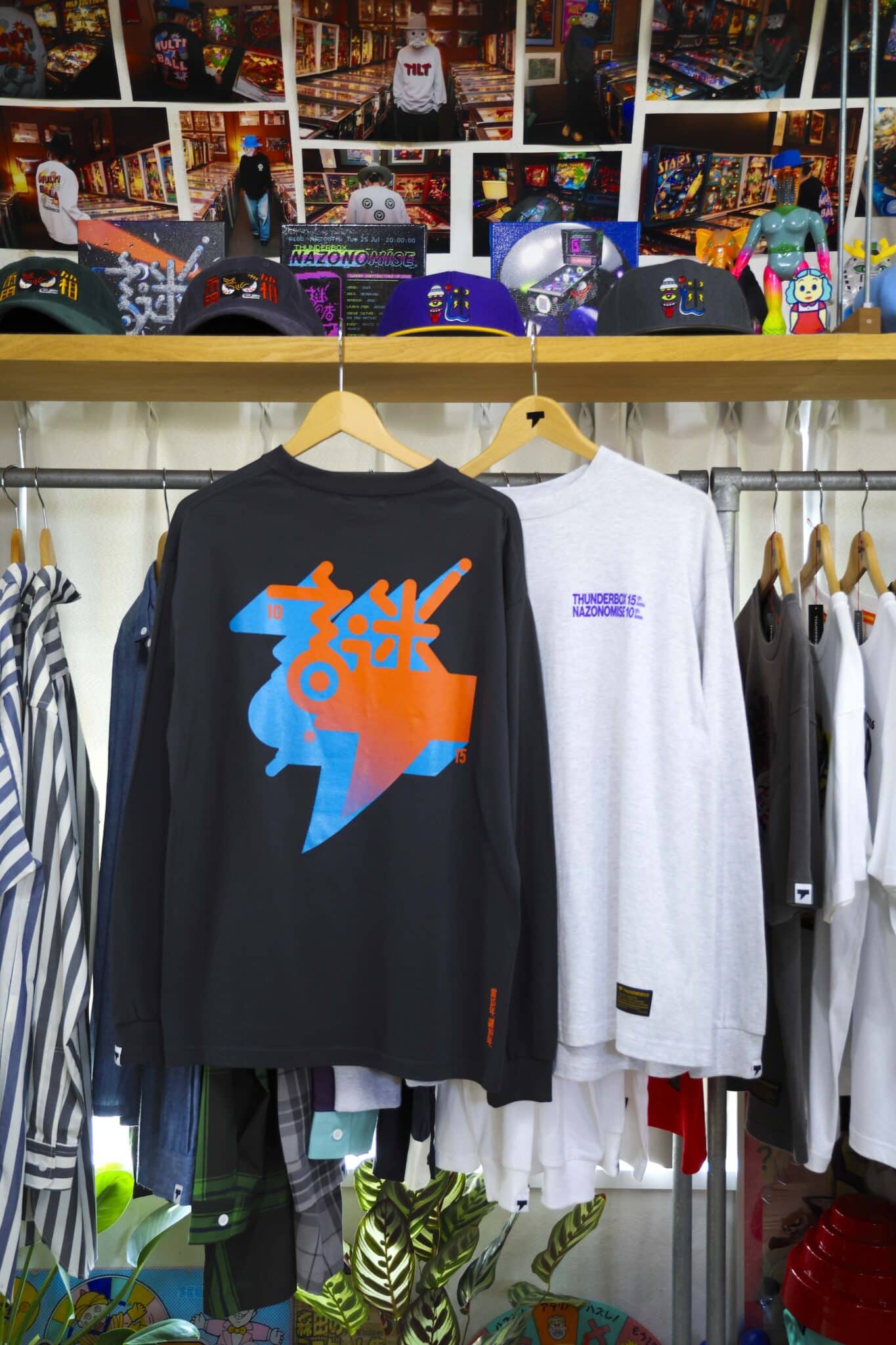
A long-sleeve T-shirt produced to commemorate the 15th anniversary of THUNDERBOX and the 10th anniversary of Nazo no Mise. The graphic on the back is especially striking. 7,700 yen.
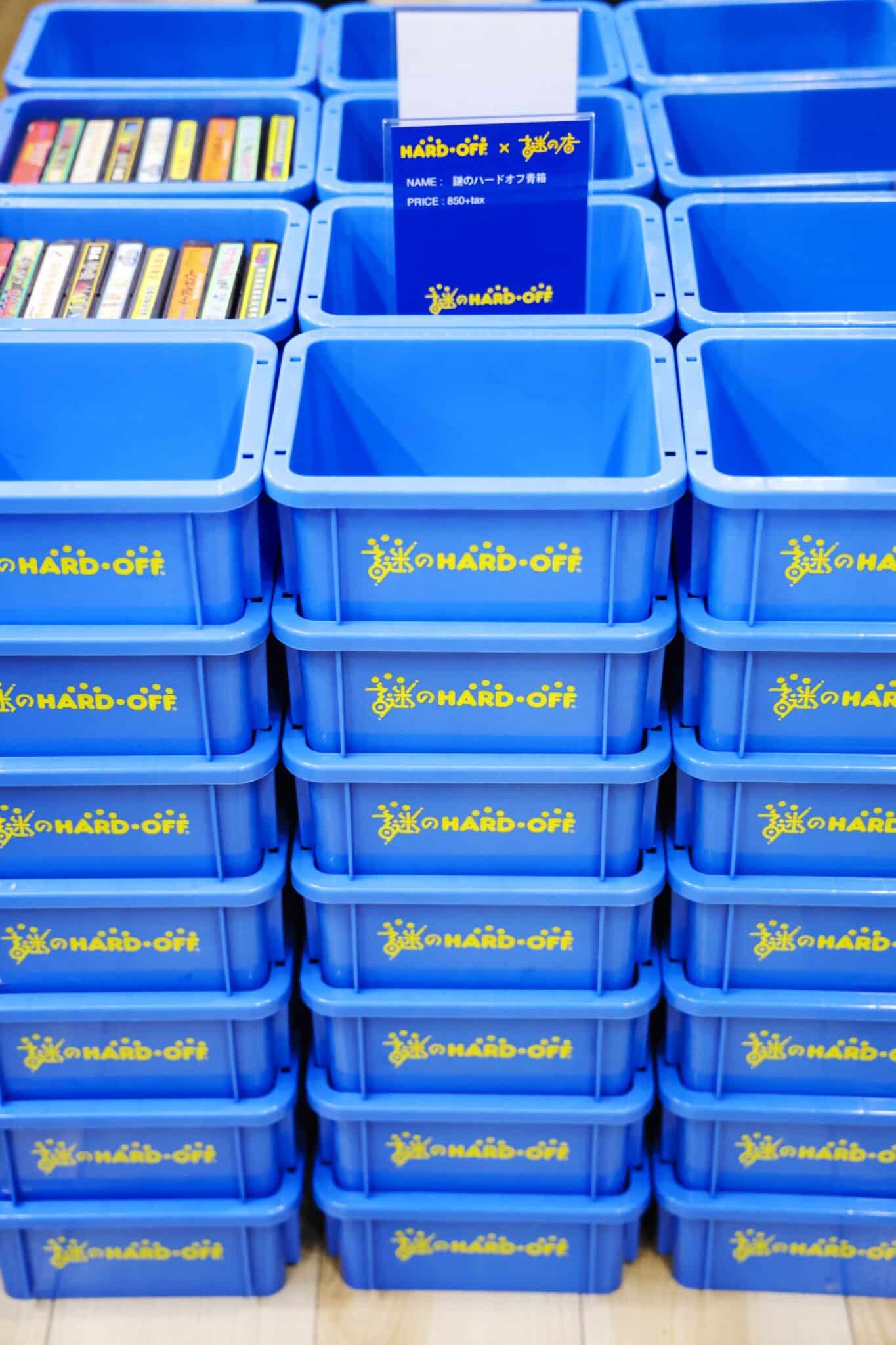
This collaboration item with the nationwide reuse chain HARD OFF is a storage box nicknamed the Ao-bako (literally, “blue box”). This compact size perfectly fits Famicom game cartridges. 935 yen each.
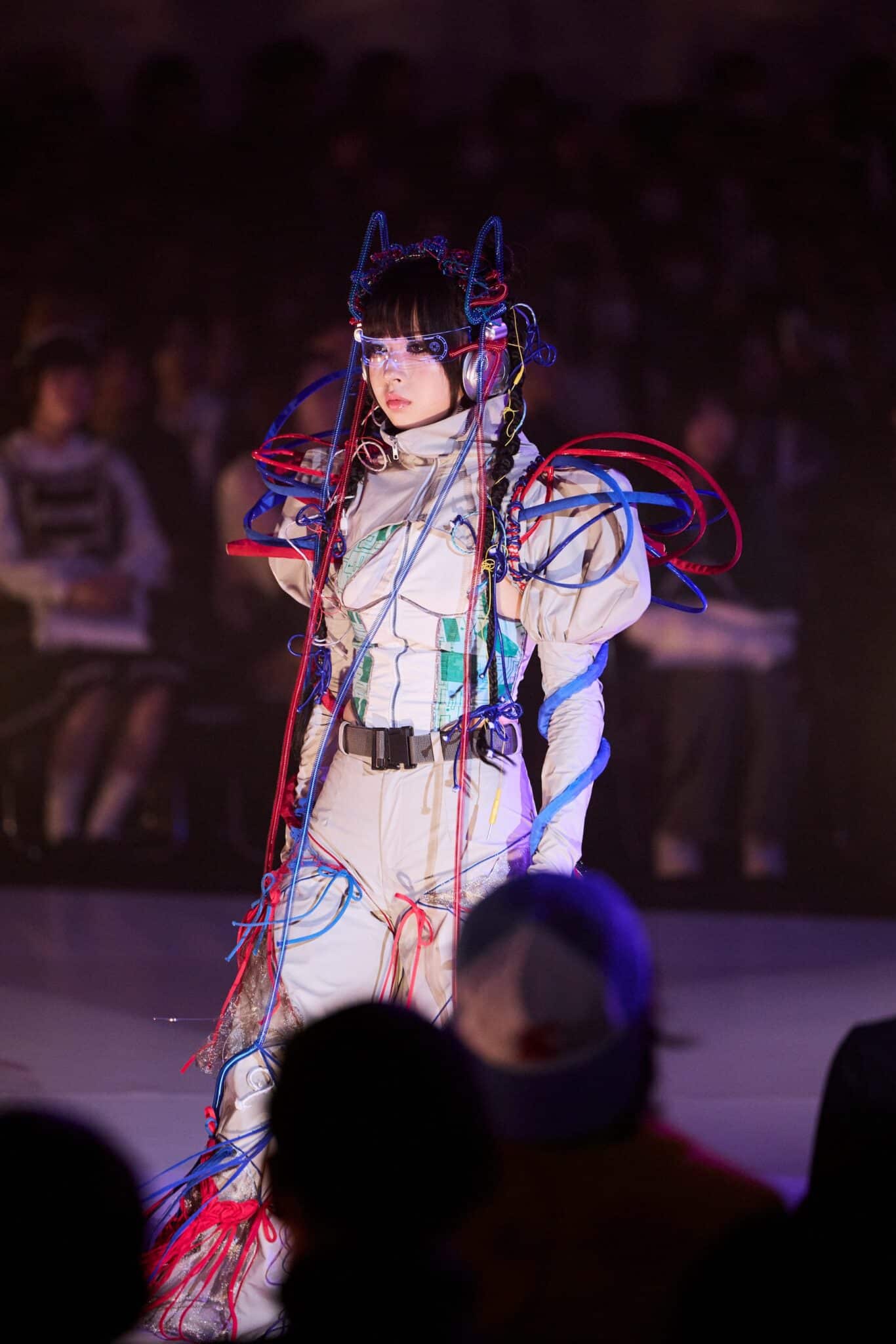
At the core of Nazo no Mise is Morita’s apparel brand THUNDERBOX, launched in 2010. Drawing on the things that made a strong impression on him in childhood—anime, games, gadgets, and more—Morita layers them with culture from music, film, and other fields. His aesthetic lies in elevating these inspirations not into mere original merchandise, but into refined fashion.
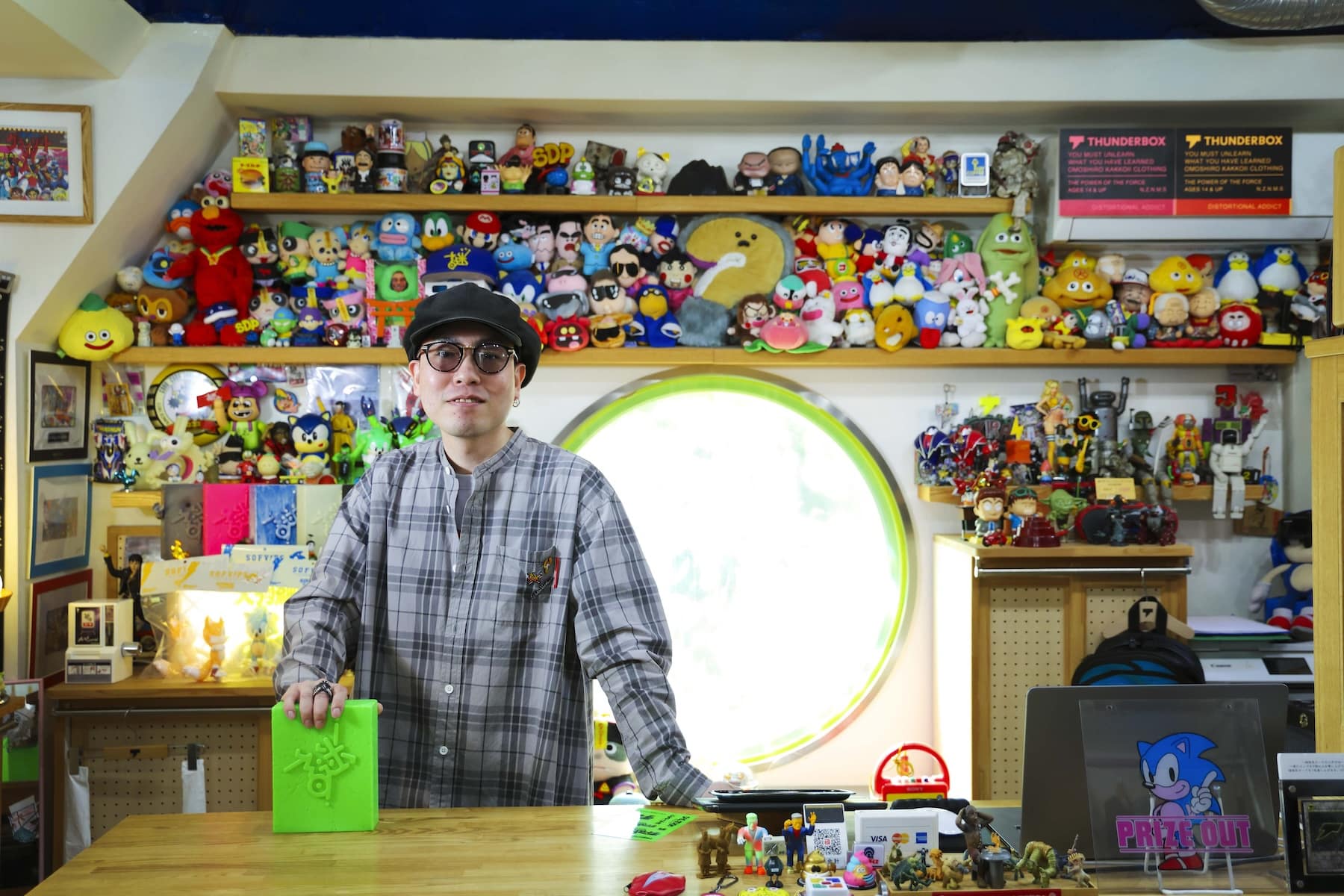
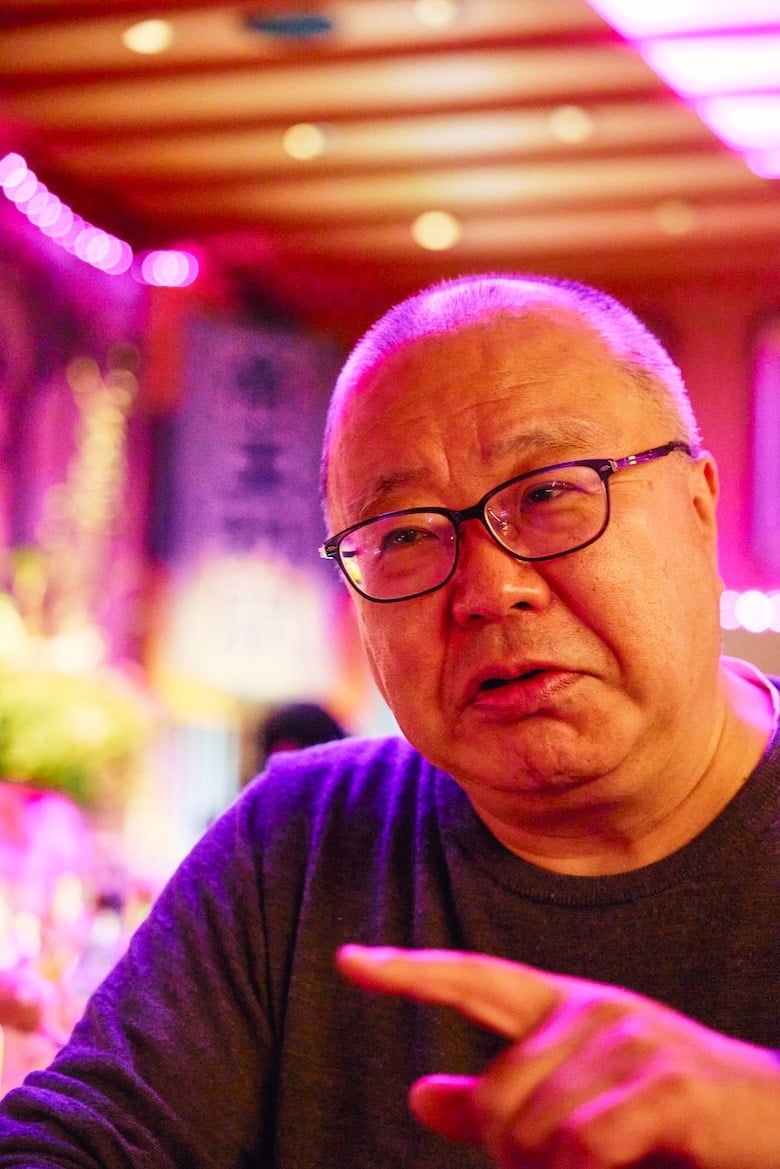
Tsuyoshi Morita, the owner of the shop and the designer of THUNDERBOX. Displayed in the back are personal items he was obsessed with as a child. They can be seen as part of the backbone that shaped him.
This attention to detail extends to every aspect of the work. The brand consistently pursues made-in-Japan production in its sewing. By wrapping playful graphics in the reliable quality of expert craftsmanship, the pieces become garments that adults can wear in everyday life. Morita says that his goal is always “to make it work as fashion.” It is precisely because of that unwavering pride that even highly niche motifs are brushed up into styles that feel at home on the street.
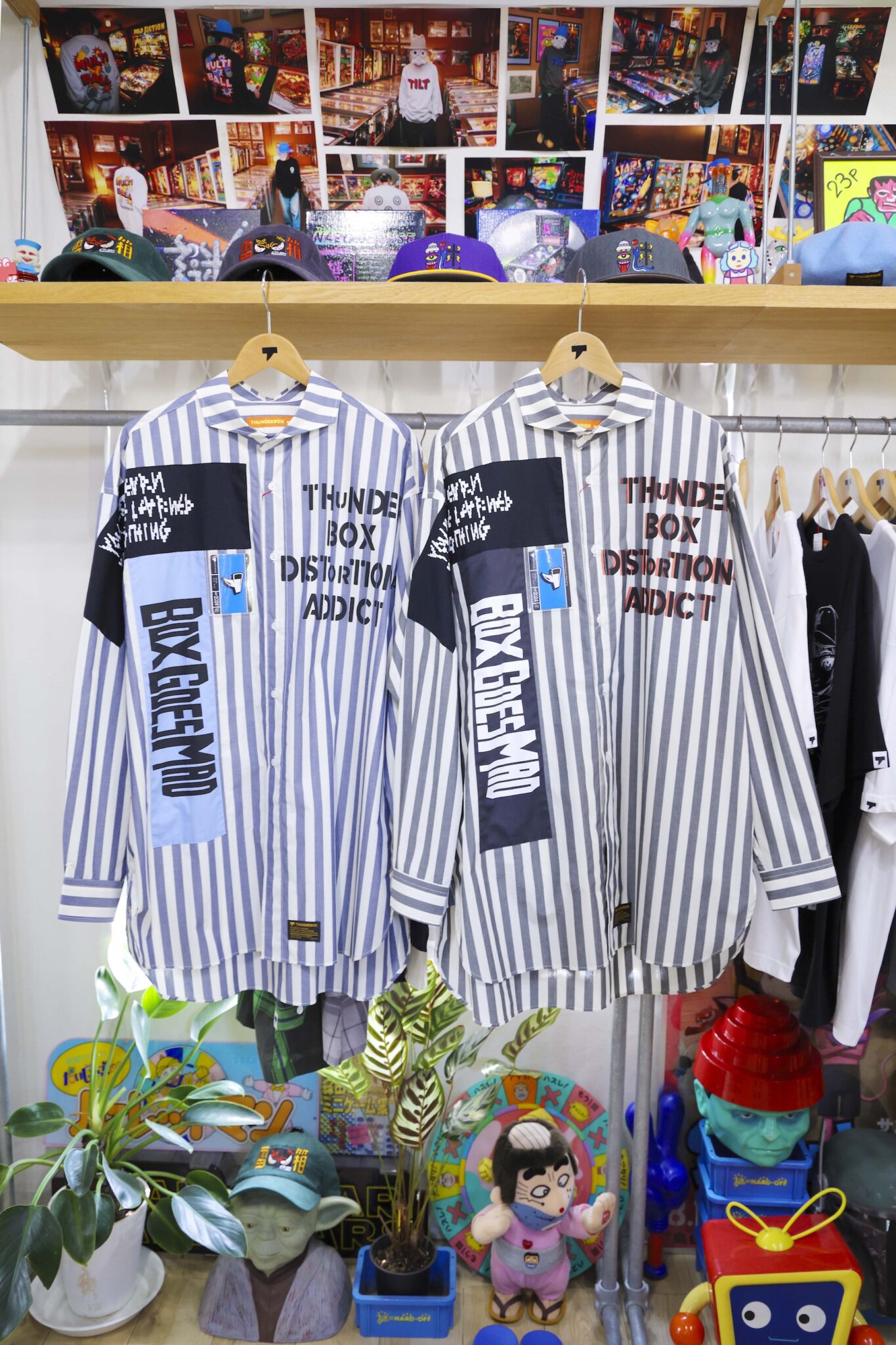
A THUNDERBOX take on the anarchy shirt, a must-have punk item. It comes with a clear pocket where you can display your favorite card as part of the design. 24,200 yen each.
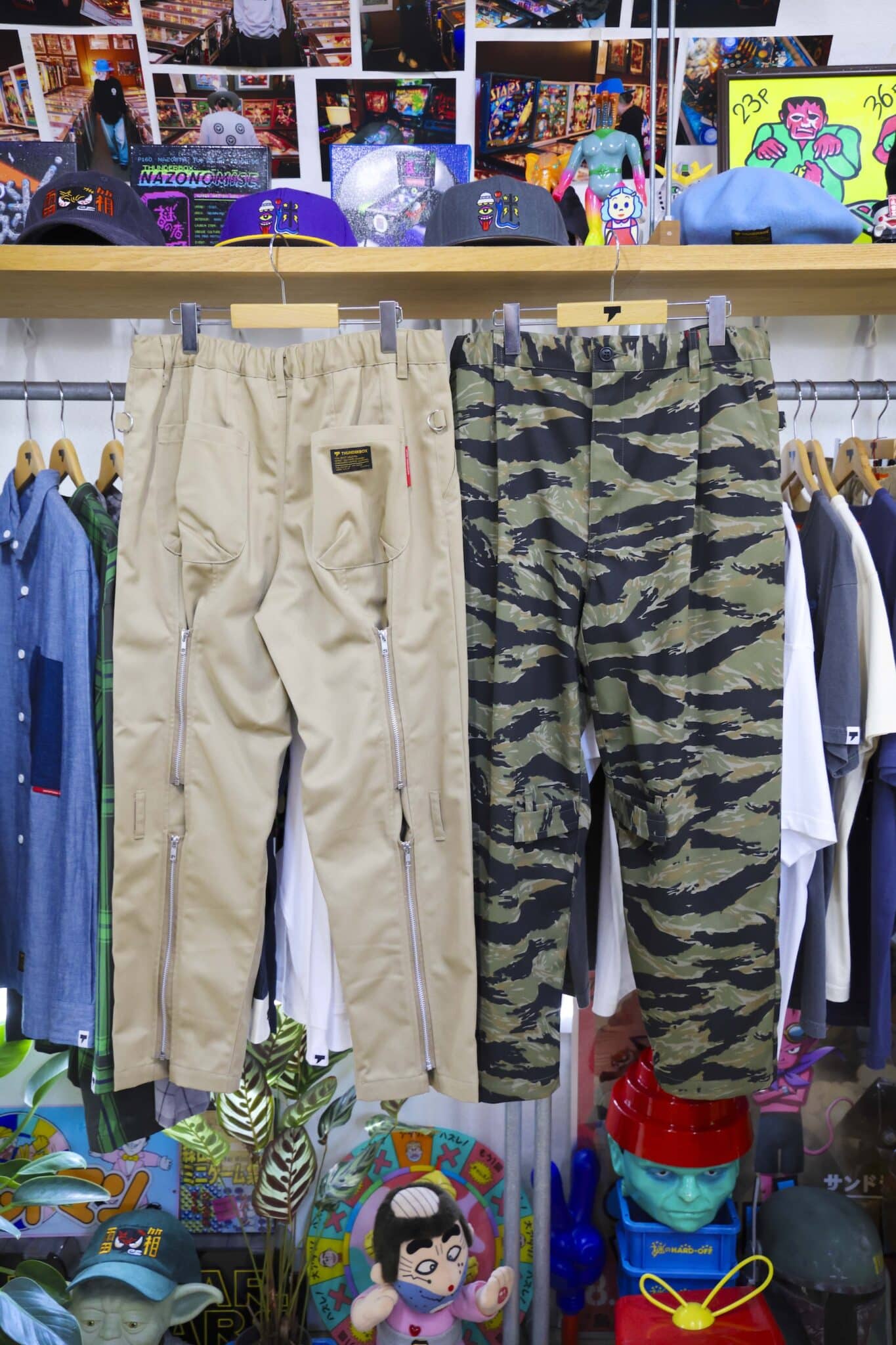
Bondage pants that reflect Morita’s deep love of music. They have been updated with a wide silhouette, and the shape can also be adjusted with the zipper on the back. 27,500 yen each.
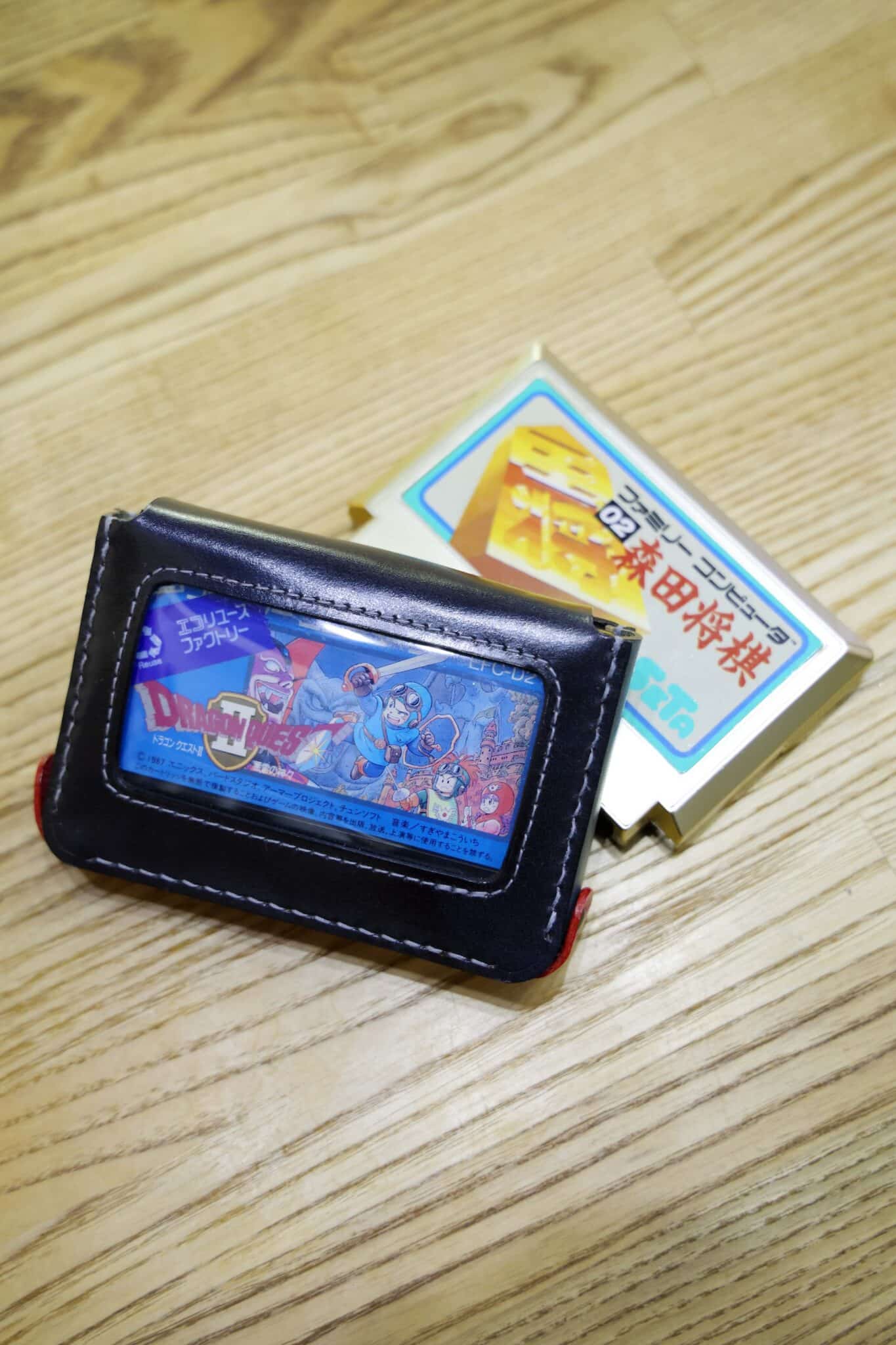
A treasured memory turned into a fashion item. This carefully crafted leather case lets you store your favorite Famicom game cartridge. 11,000 yen.
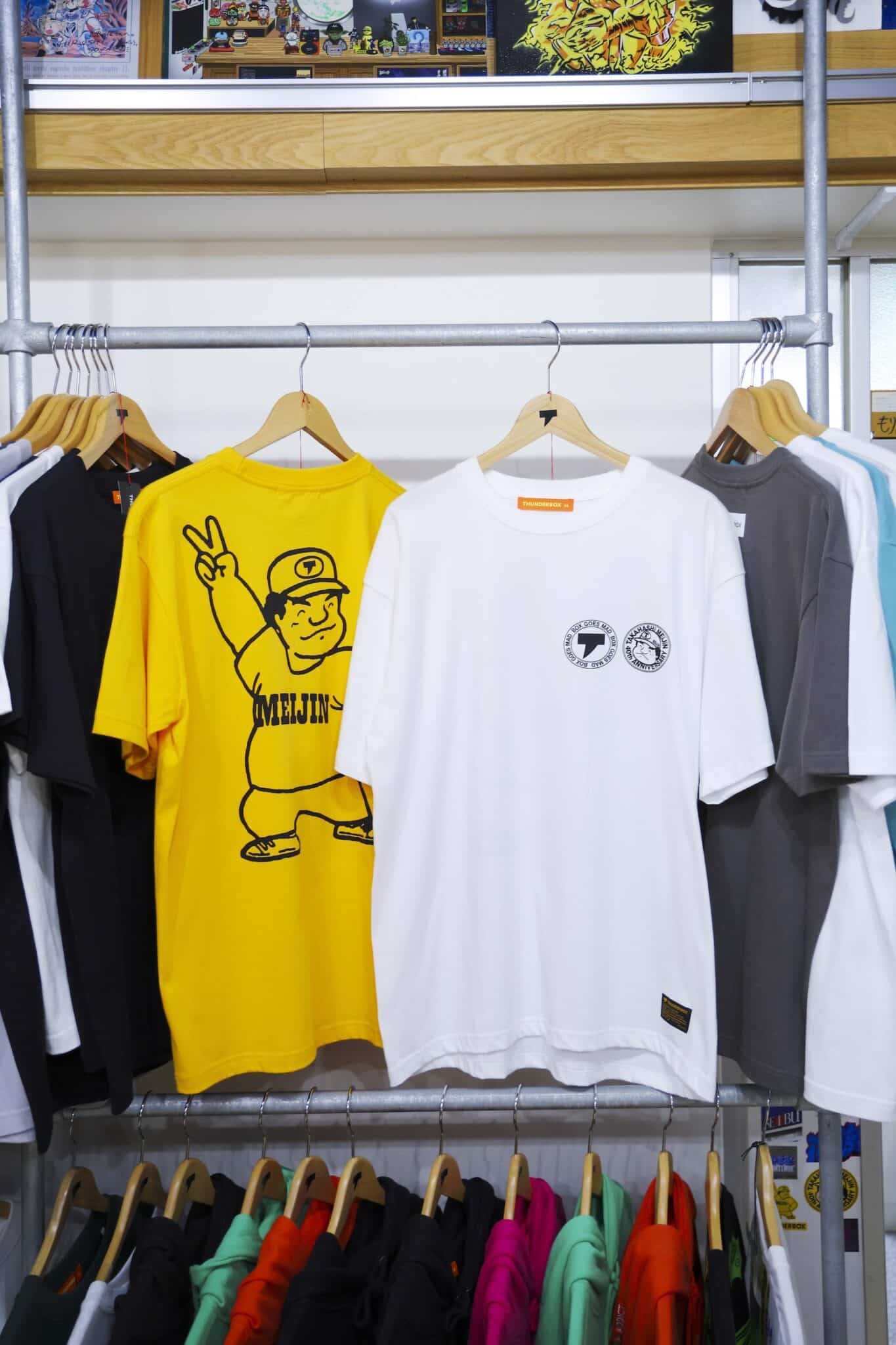
A THUNDERBOX T-shirt created in collaboration to commemorate the 40th anniversary of the activities of legendary pro gamer Takahashi Meijin, a name familiar to anyone from the Famicom generation. It reportedly has many fans overseas as well, and some international customers come to the shop specifically for this T-shirt. 5,500 yen each.
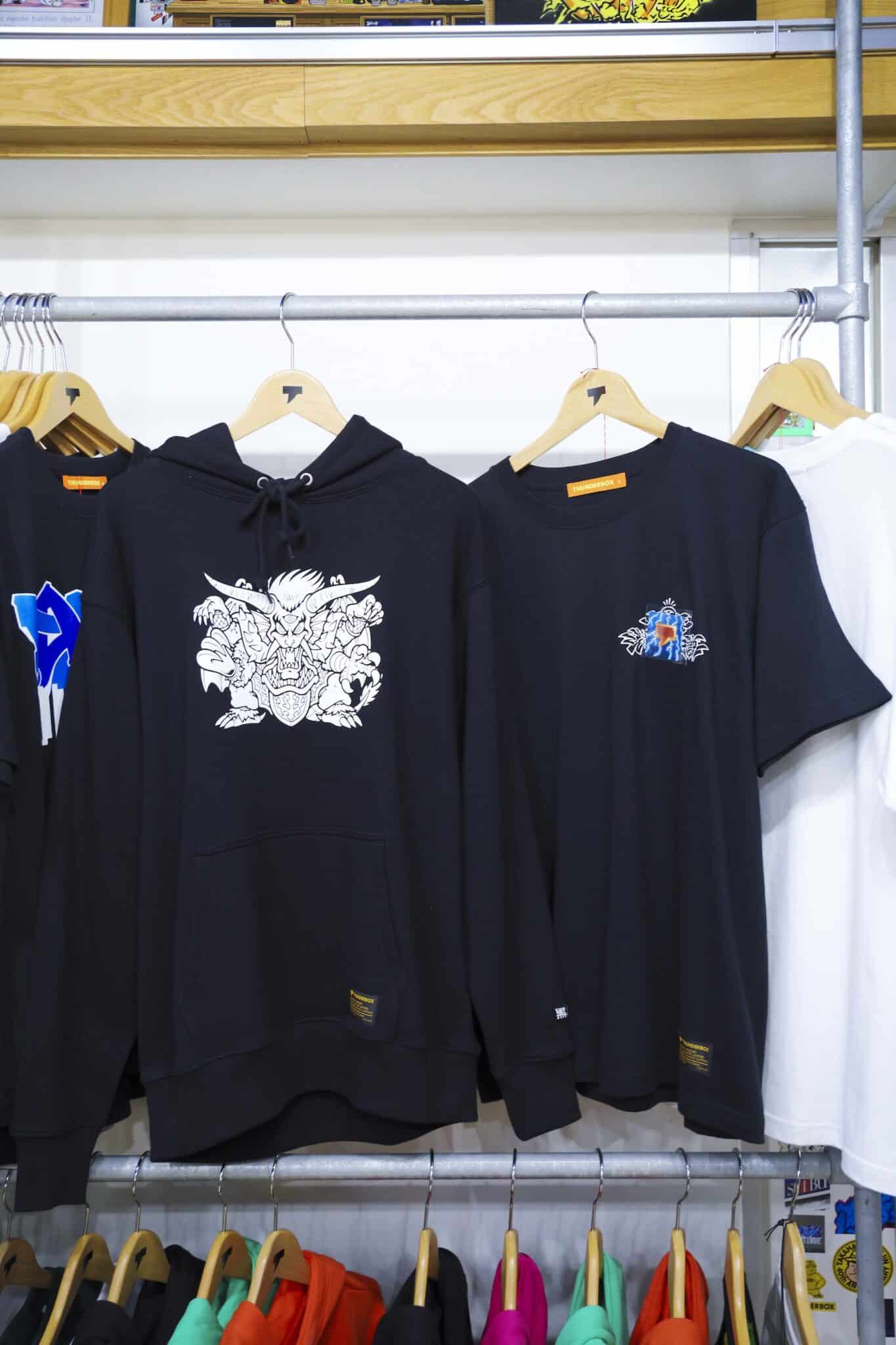
Omake stickers—the bonus stickers that sparked a huge craze in Japan in the 1980s and 1990s—were once a major phenomenon. Among them, the highly popular sticker series Nazo no Zipang Densetsu collaborated with THUNDERBOX. Because the T-shirt has a clear pocket, you can place your favorite sticker inside. Hoodie: 15,400 yen; T-shirt: 7,150 yen.
The reason Nazo no Mise enjoys such passionate support lies in the fact that it is more than just a retail space: it also functions as a community. It is not simply a place that gains attention on social media. The sight of customers who visit the store enjoying conversations with staff about games and culture is something unique to this shop. From DJ parties held in the store, to game tournaments organized elsewhere, to caravan-style events that travel to regional areas, those connections continue to expand year by year.
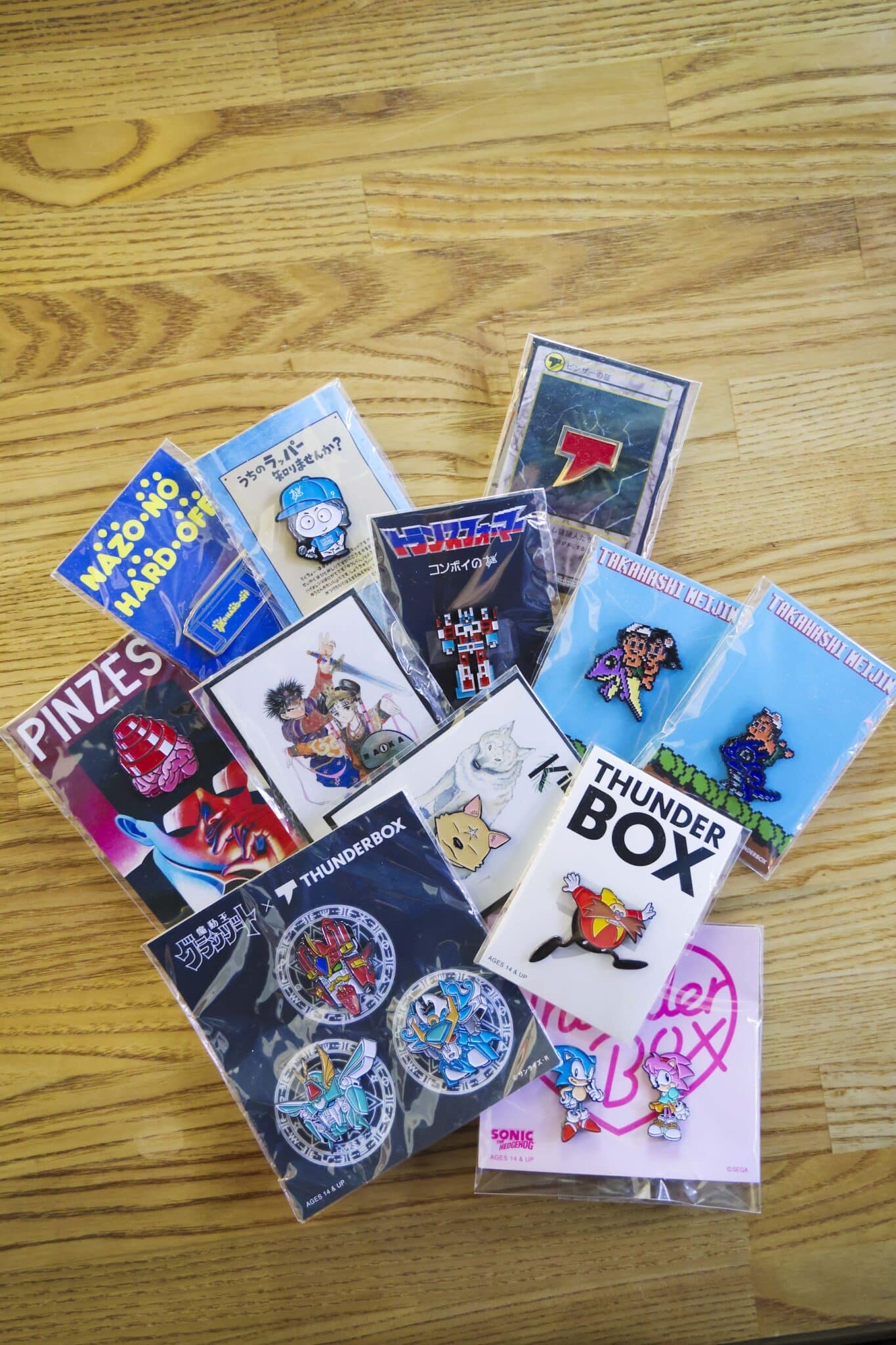
Pin badges that customers also trade among themselves. There is a wide variety, from collaborations with popular games and artists to anime. From 1,100 yen.
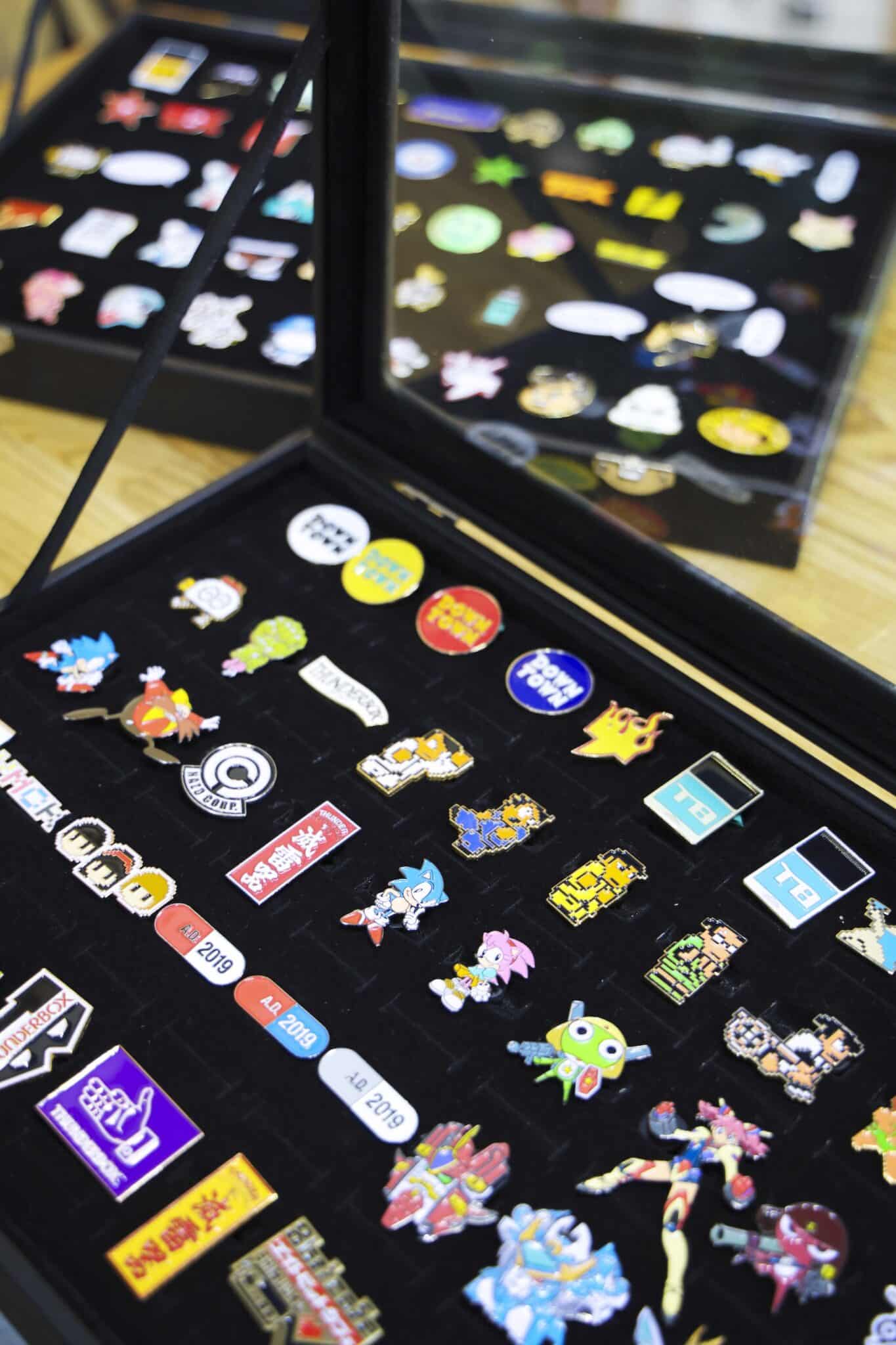
Pin badges that Nazo no Mise has carried in the past. These are not for sale. For those who love this kind of thing, the designs are irresistible.
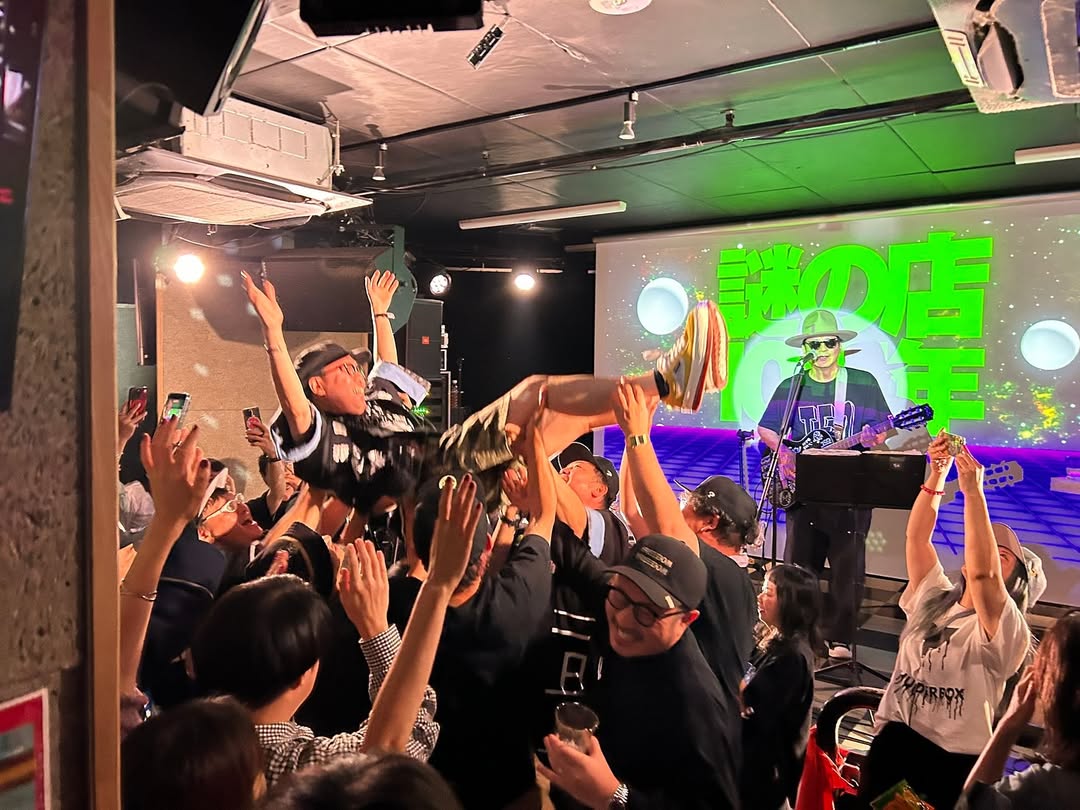
“Nazo no Saturday,” an event held to celebrate the 10th anniversary of Nazo no Mise. Many customers and friends gathered, deepening their connections with one another.
The customers who visit are incredibly diverse. Fans from Morita’s own generation, young people drawn to retro culture, and overseas travelers who love Japanese subculture all make their way to the shop.
If Nakano Broadway is an area where you can experience culture as an archive, then Nazo no Mise is a place where new culture is being created in real time.
The same excitement one might have felt as a child in an empty lot or a secret base still lives on here today.
That era which once captivated so many has been updated through a contemporary sensibility and is waiting for you. The moment you open the door, shopping turns into an adventure. For that one-of-a-kind experience only Nazo no Mise can offer, make your way into the backstreets of Nakano.
The information contained this article was correct as of 06/08/2026 (the time of publication)