DEEPTOKYO
magazine

EN

DEEPTOKYO
magazine
EN
2026.05.12
A Museum of Time and Timepieces by the Global Watchmaker SEIKO


 Nearest Station

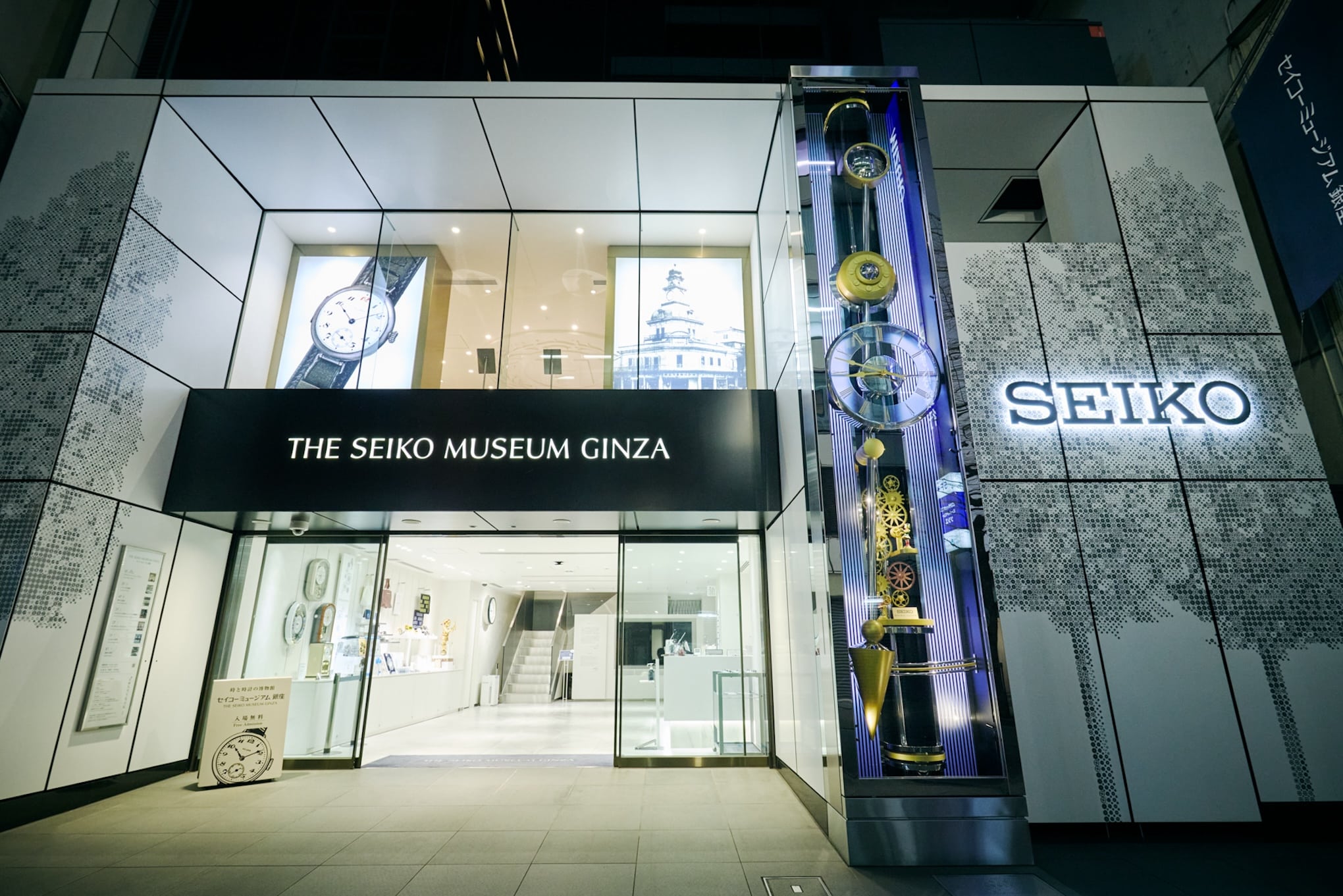
Operated by the globally renowned watchmaker SEIKO, the Seiko Museum Ginza is a museum dedicated to “time and timepieces,” created to collect, preserve, and explore materials related to horology. Through a rich collection of rare exhibits, it presents not only the history of SEIKO’s watchmaking, but also the origins of clocks and timekeeping systems. In 2024, a new museum dedicated to the luxury watch brand Grand Seiko opened within the same building. The space offers a profound sense of respect for SEIKO’s pioneers and a deep pride in craftsmanship—making it a place where visitors can experience SEIKO’s enduring respect for time and craftsmanship.
SHARE


Founded 145 years ago, SEIKO has long played a central role in the development of watchmaking in Japan. The Seiko Museum Ginza is a museum dedicated to “time and timepieces,” created to collect, preserve, and explore materials related to clocks and watches in Japan and around the world. The collection originally began as part of the company’s role as a leader in Japan’s watch industry. It was later opened to the public with the aim of encouraging broader interest in the history of time and timekeeping. Inside, the museum is organized into six themed floors, offering an in-depth look at the evolution of clocks, watches, and time systems—alongside the story of SEIKO itself.
The Seiko Museum Ginza originally opened to commemorate SEIKO’s 100th anniversary. Initially located within a factory, what was then known as the Seiko watch reference museum, it opened to the public in 2012. The museum relocated to Ginza in 2020, where its collection is now open to visitors free of charge.
By relocating to Ginza—an area that attracts visitors of all ages from Japan and abroad—the museum aimed to reach a wider audience. That aim has since been realized, with annual visitors surpassing 50,000 in 2024.
Approximately 60% of visitors come from overseas, reflecting SEIKO’s global appeal. Audio guides are available in English and Chinese.
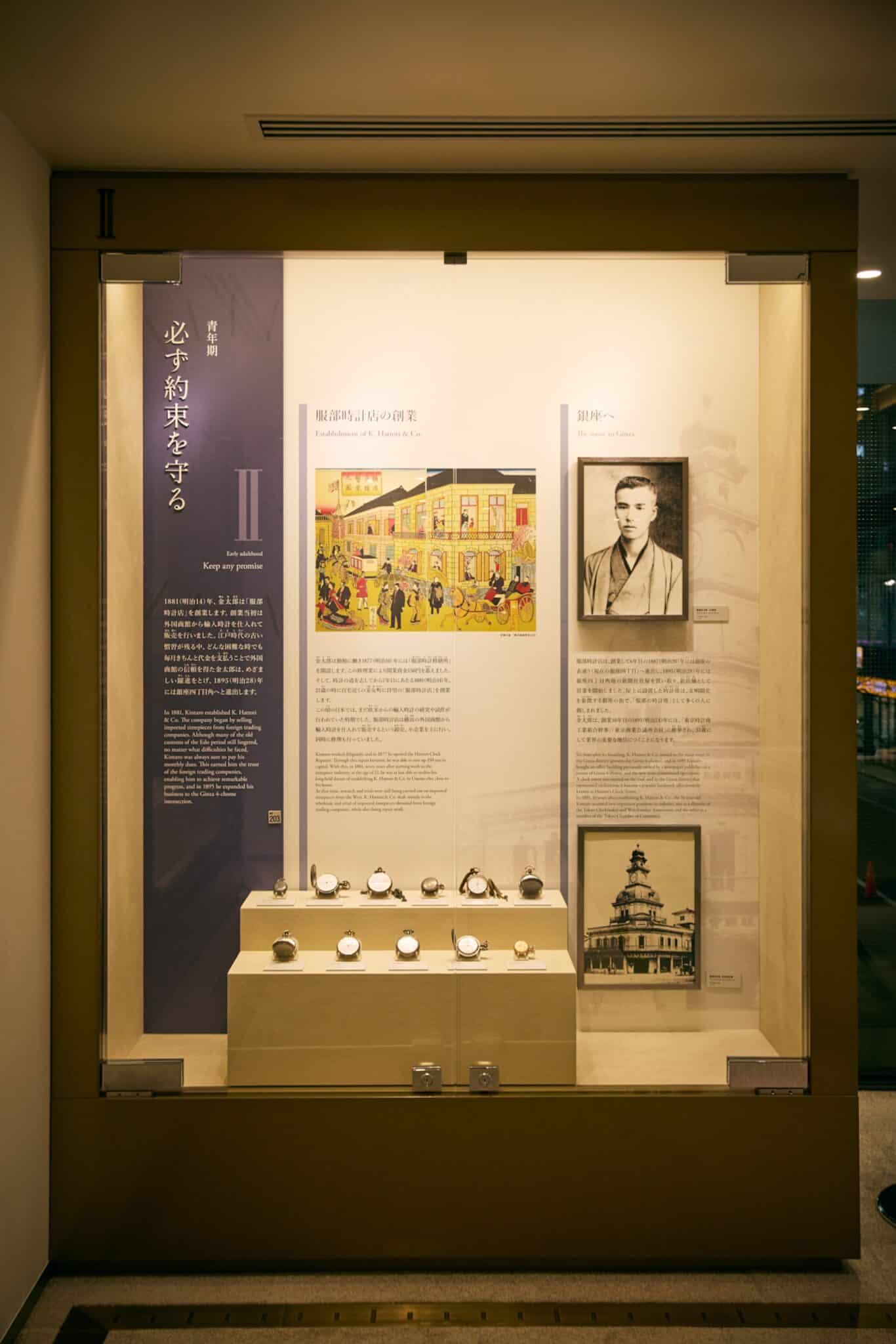
The museum’s relocation to Ginza in 2020 was partly rooted in the area’s deep connection to SEIKO’s founder, Kintaro Hattori. In 1881, Hattori established the Hattori Watch Shop, beginning with the sale of imported timepieces. In 1895, he purchased a newspaper company building on the corner of Ginza 4-chome and began operating there. At a time when wristwatches were not yet common, Hattori added a clock tower to the building to provide the time to people passing through the streets. It soon became known affectionately as the “Hattori Clock Tower.” The original tower’s mechanism was later relocated to Osaka when a new store was constructed there, where it was destroyed during wartime in 1945. Meanwhile, a second clock tower was built on the same Ginza site in 1932—today it remains a symbol of the district under the name SEIKO HOUSE.
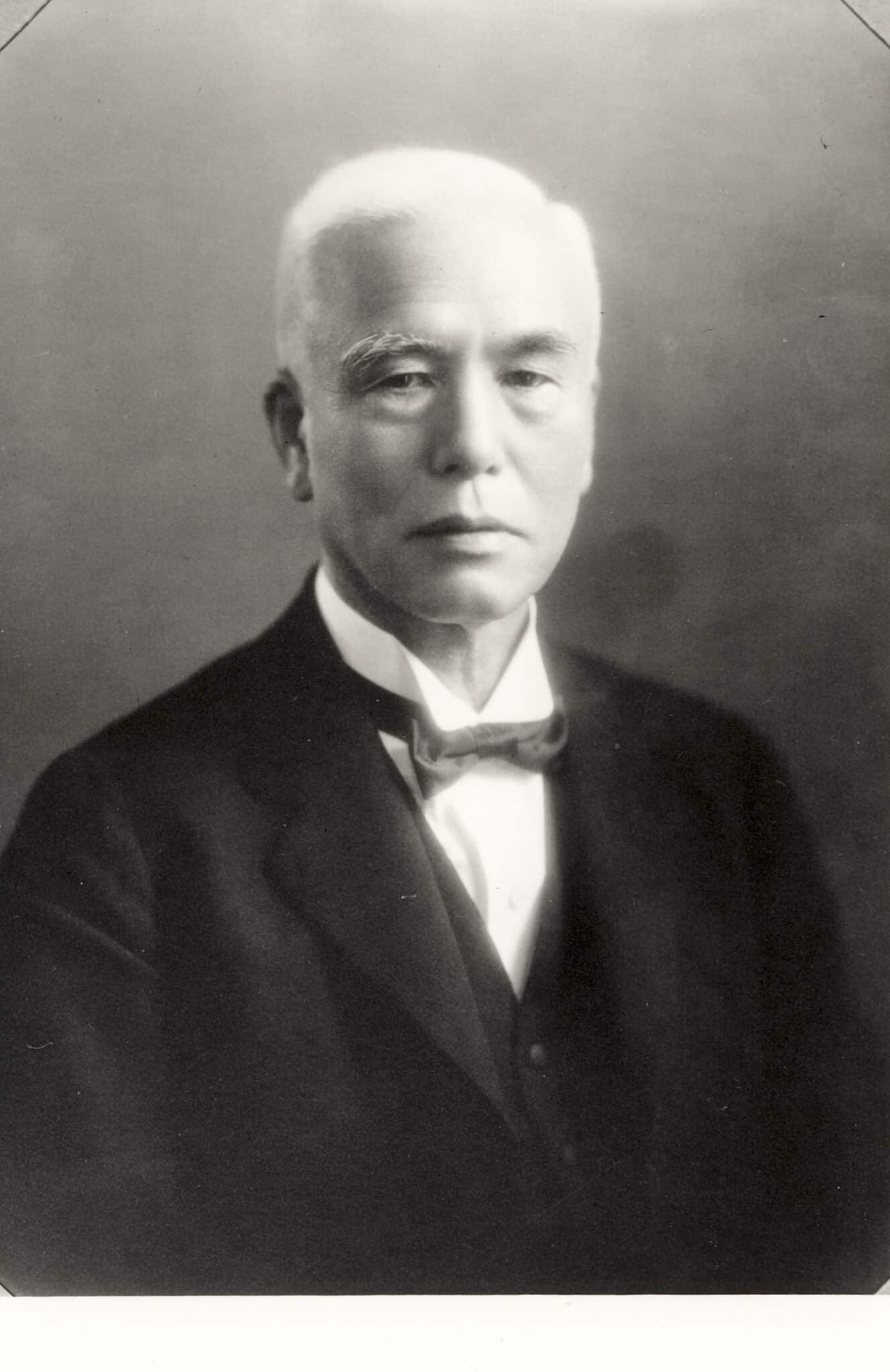
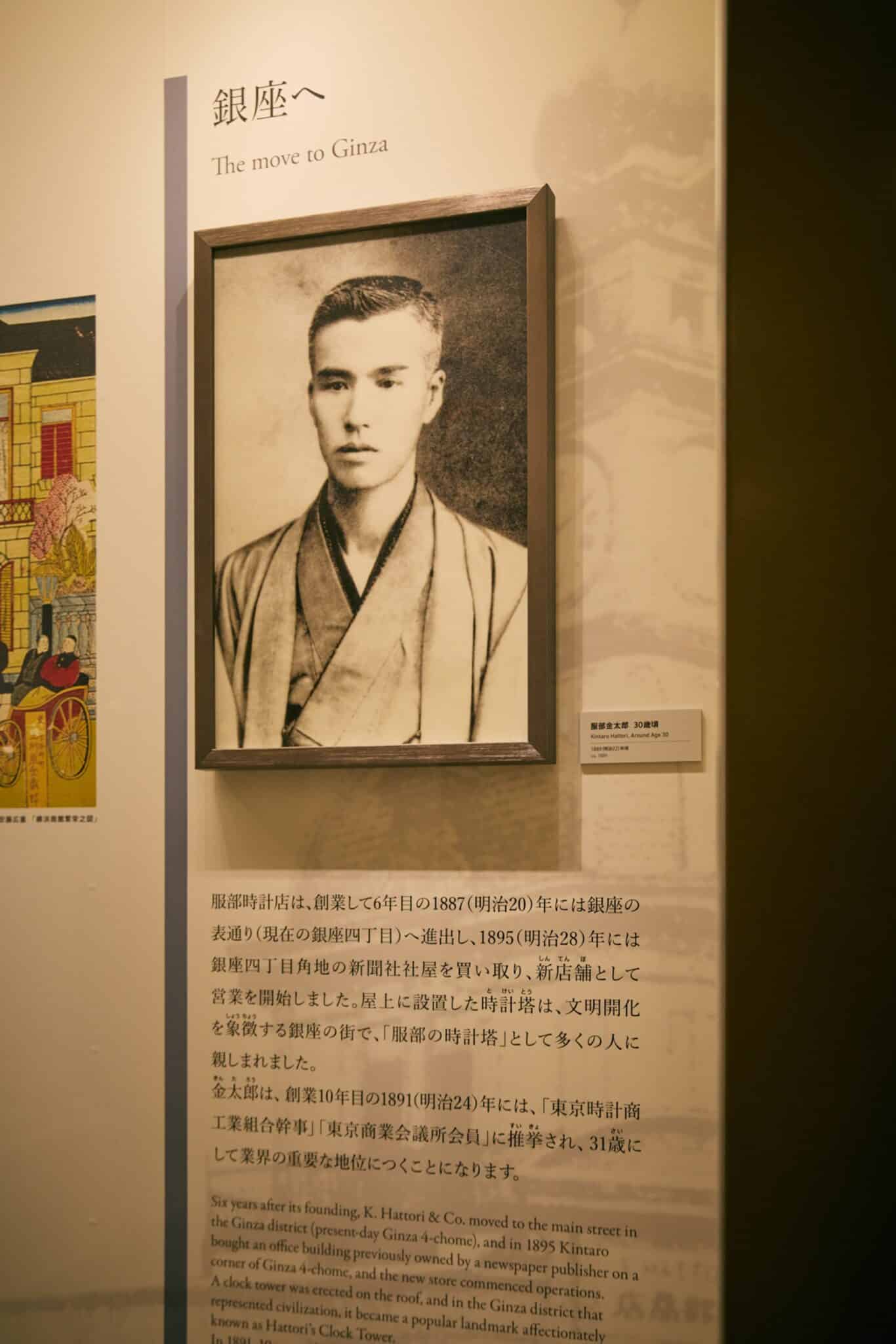
Founder Kintaro Hattori, often referred to as the “King of Watches in the East,” was born in Ginza in 1860. The museum relocated to Ginza in the year marking the 160th anniversary of his birth, a place closely associated with him. (Seiko Museum Ginza Collection)
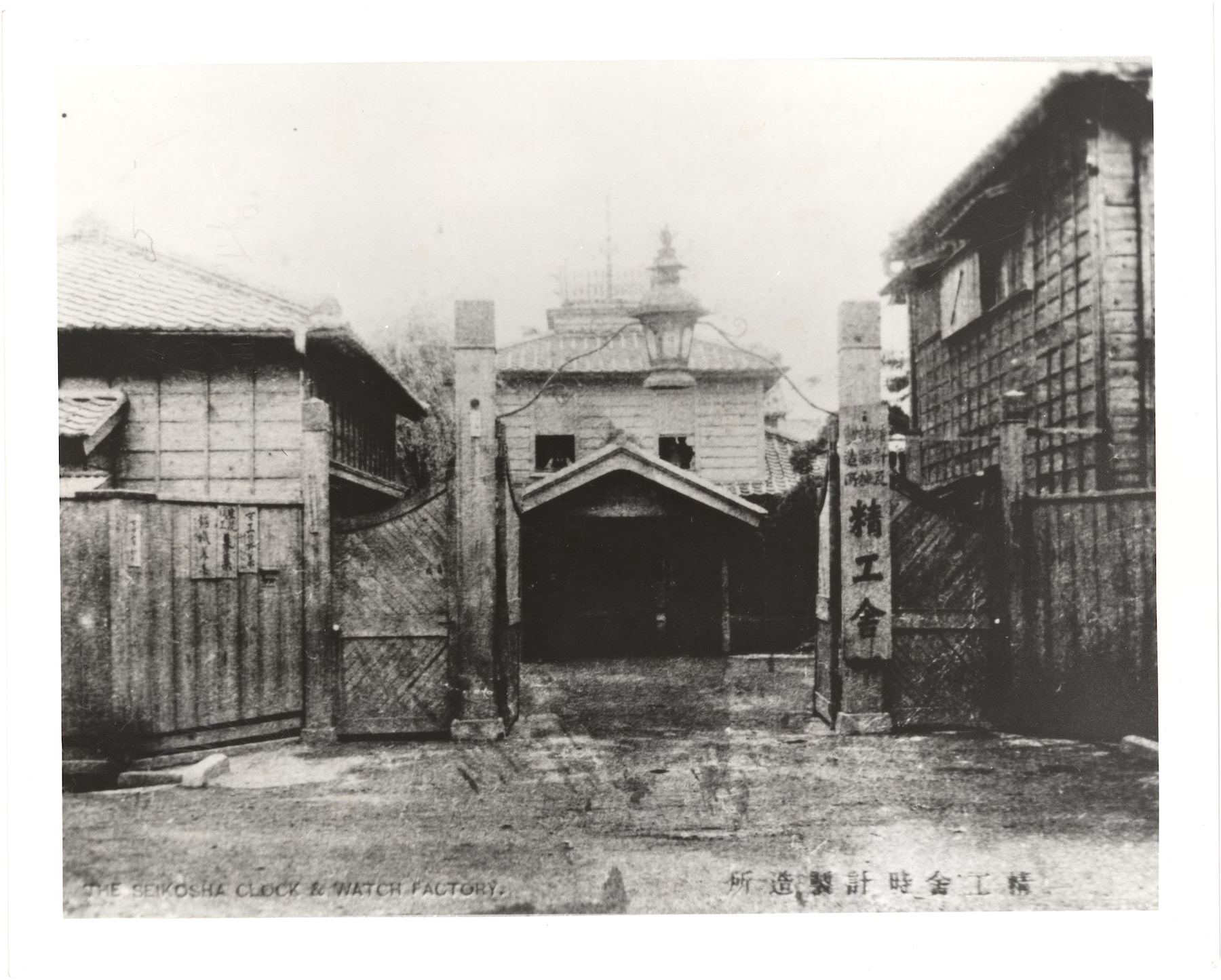
In 1892, Hattori established Seikosha with the ambition of creating finely crafted timepieces (the photograph was taken around 1897). Despite the devastation of the Great Kanto Earthquake, production resumed the following year, gradually establishing its presence in the global watch industry. (Seiko Museum Ginza Collection)
The Hattori Watch Shop, which began operating on the corner of Ginza 4-chome in 1895. The photograph shows its original clock tower, captured around 1907. (Seiko Museum Ginza Collection)
Completed in 1932, the second-generation clock tower remains a symbol of Ginza to this day. It was designed by Watanabe Jin Architects and Construction, led by architect Jin Watanabe, known for works such as the main building of the Hotel New Grand. Today, the structure is known as SEIKO HOUSE and houses Ginza Wako, SEIKO’s luxury retail store.
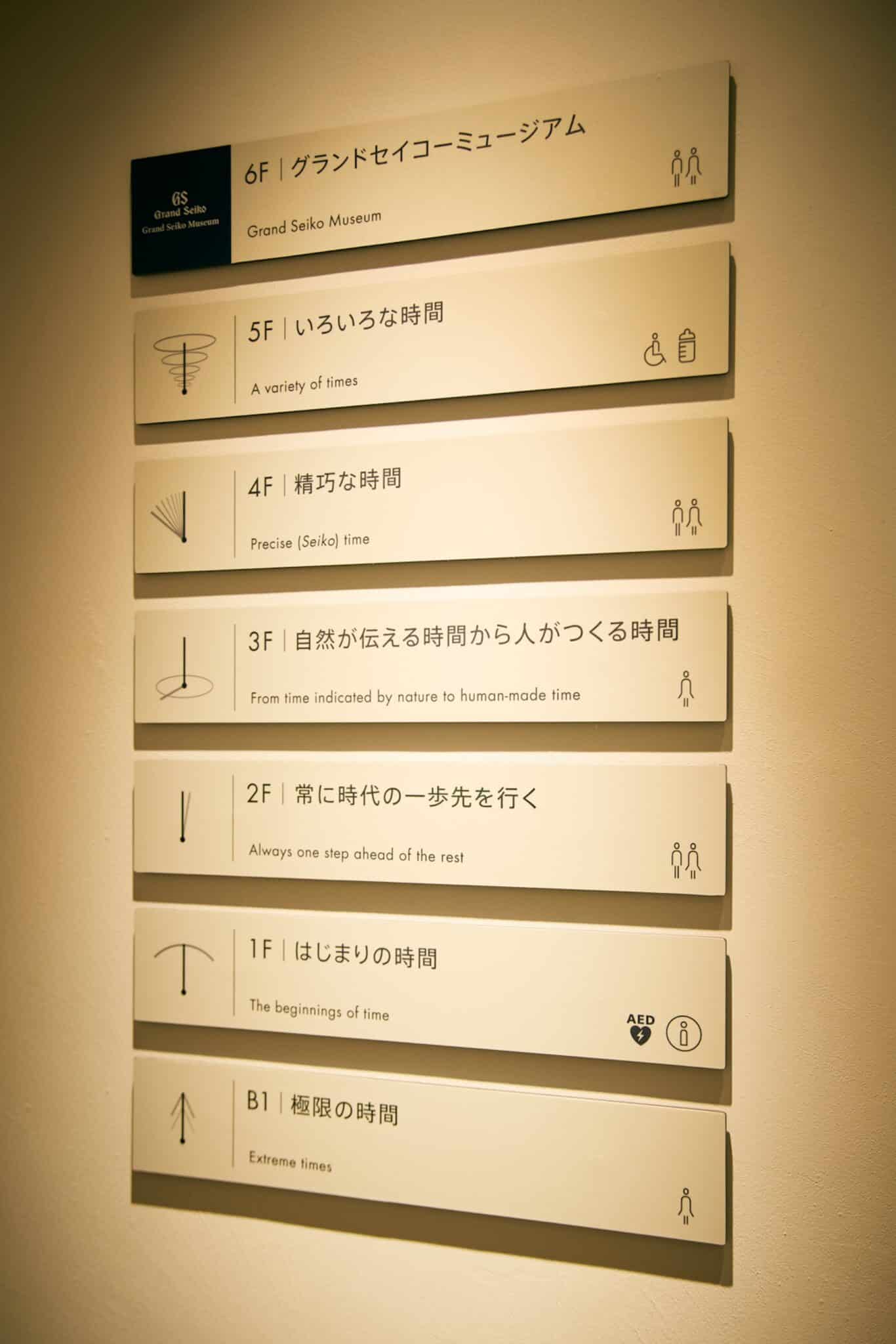
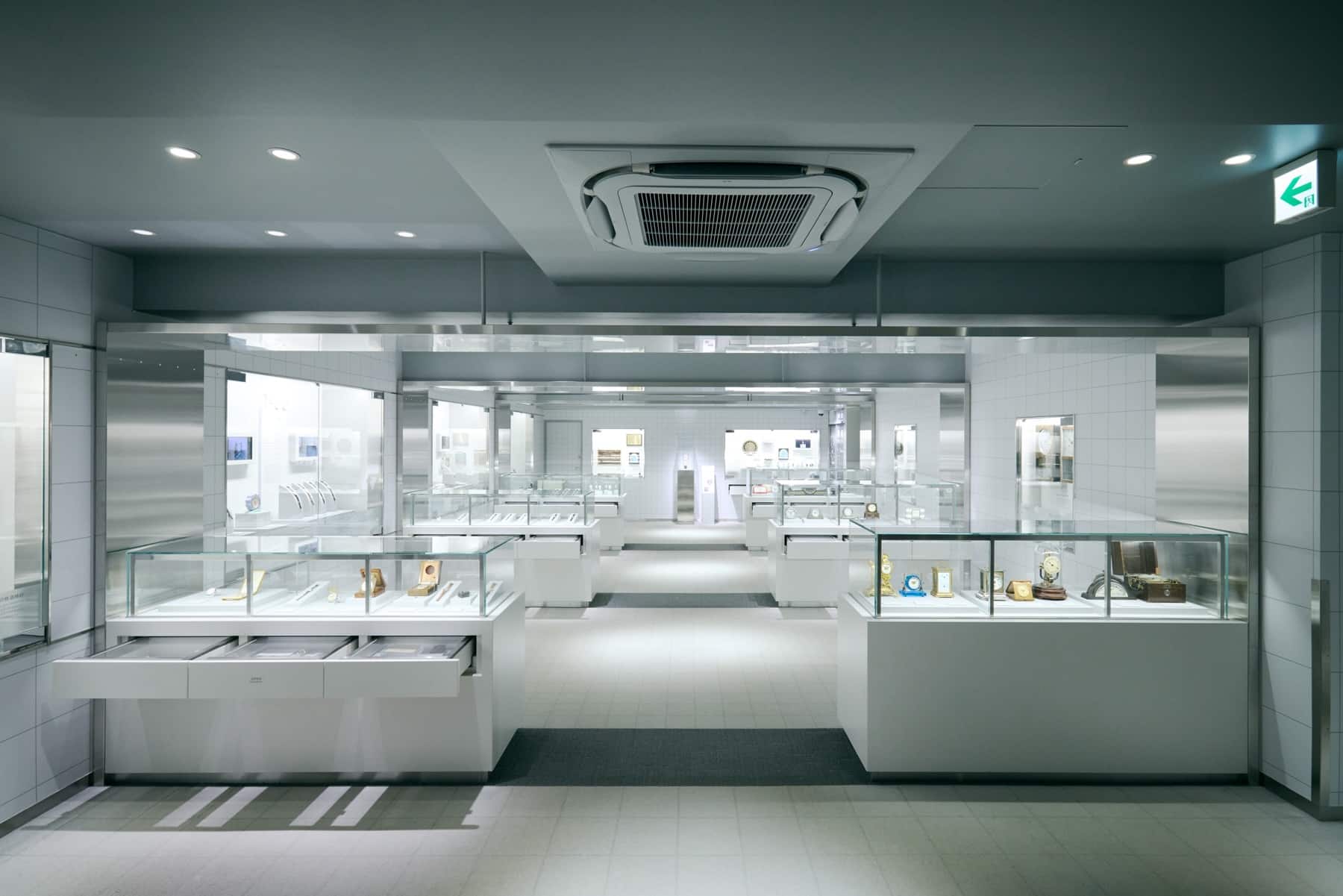
The realization of the Seiko Museum Ginza is rooted in SEIKO’s unwavering dedication to advancing Japan’s watch industry. Alongside the philosophy of its founder, Kintaro Hattori, and the company’s own history, the museum offers a broader exploration of timekeeping itself. The museum is organized into six themed floors. Starting from the 1st floor, “The Beginning of Time,” which includes the museum shop, visitors move through the 2nd floor tracing the founder’s journey, the 3rd floor exploring the evolution of clocks and time systems, the 4th presenting the history of SEIKO’s watchmaking, and the 5th showcasing a diverse range of timepieces. The journey culminates on the B1 floor, dedicated to sports timing instruments and watches designed for extreme conditions.
For first-time visitors, it is recommended to explore from the 1st through the 6th floor, and then finish on B1, as this order makes the historical progression easier to follow.
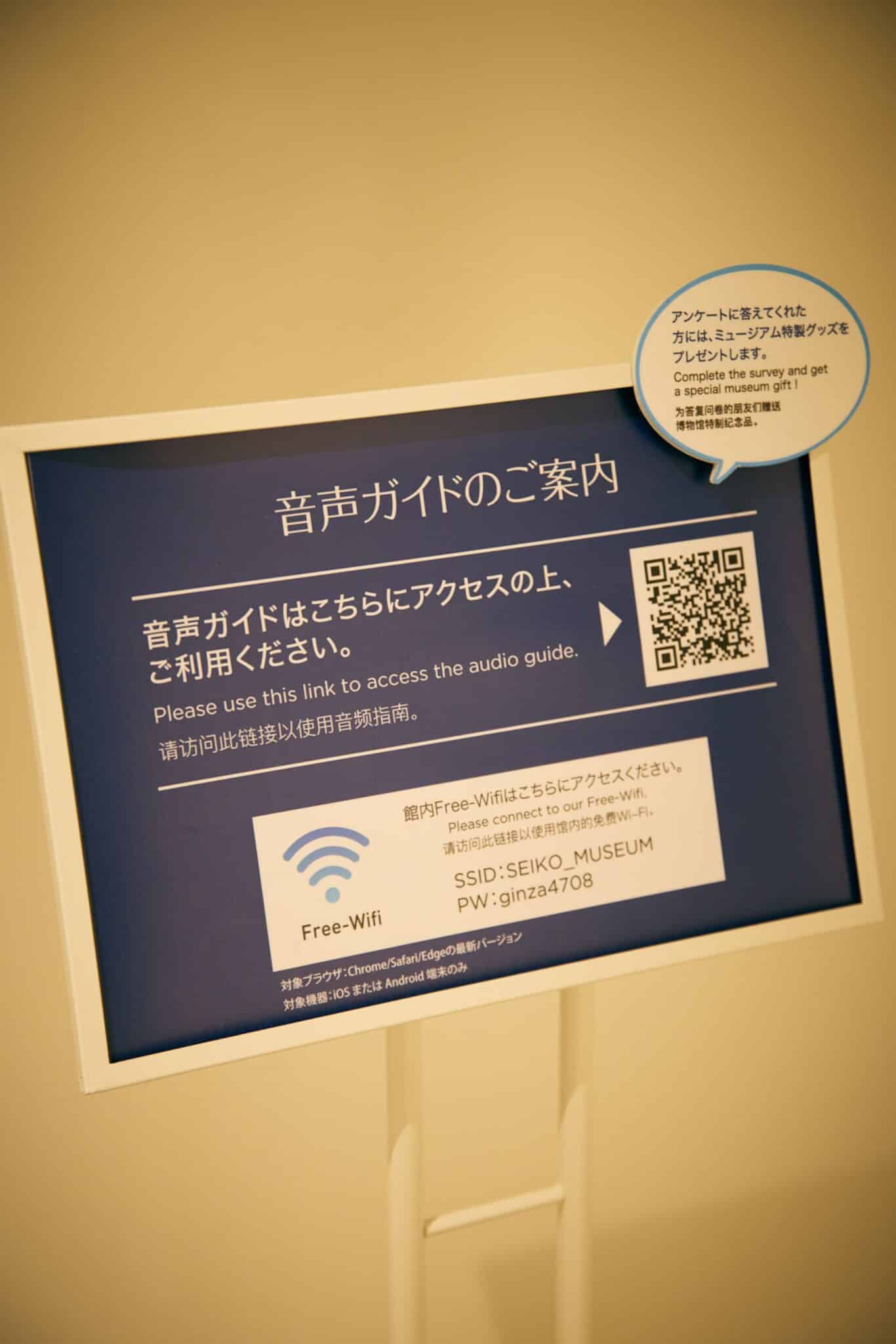
Audio guides are available via QR codes, accessible on your own smartphone.
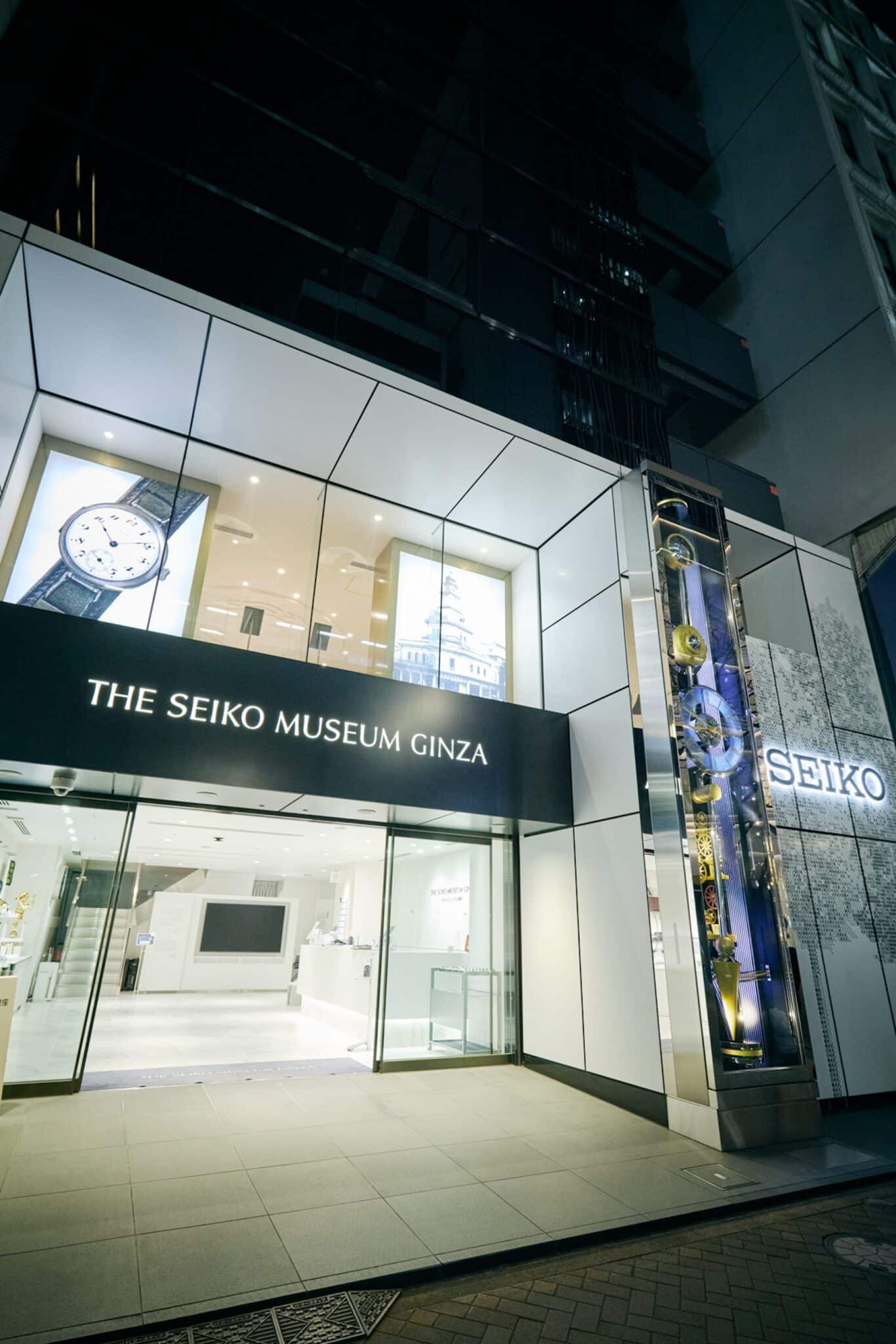
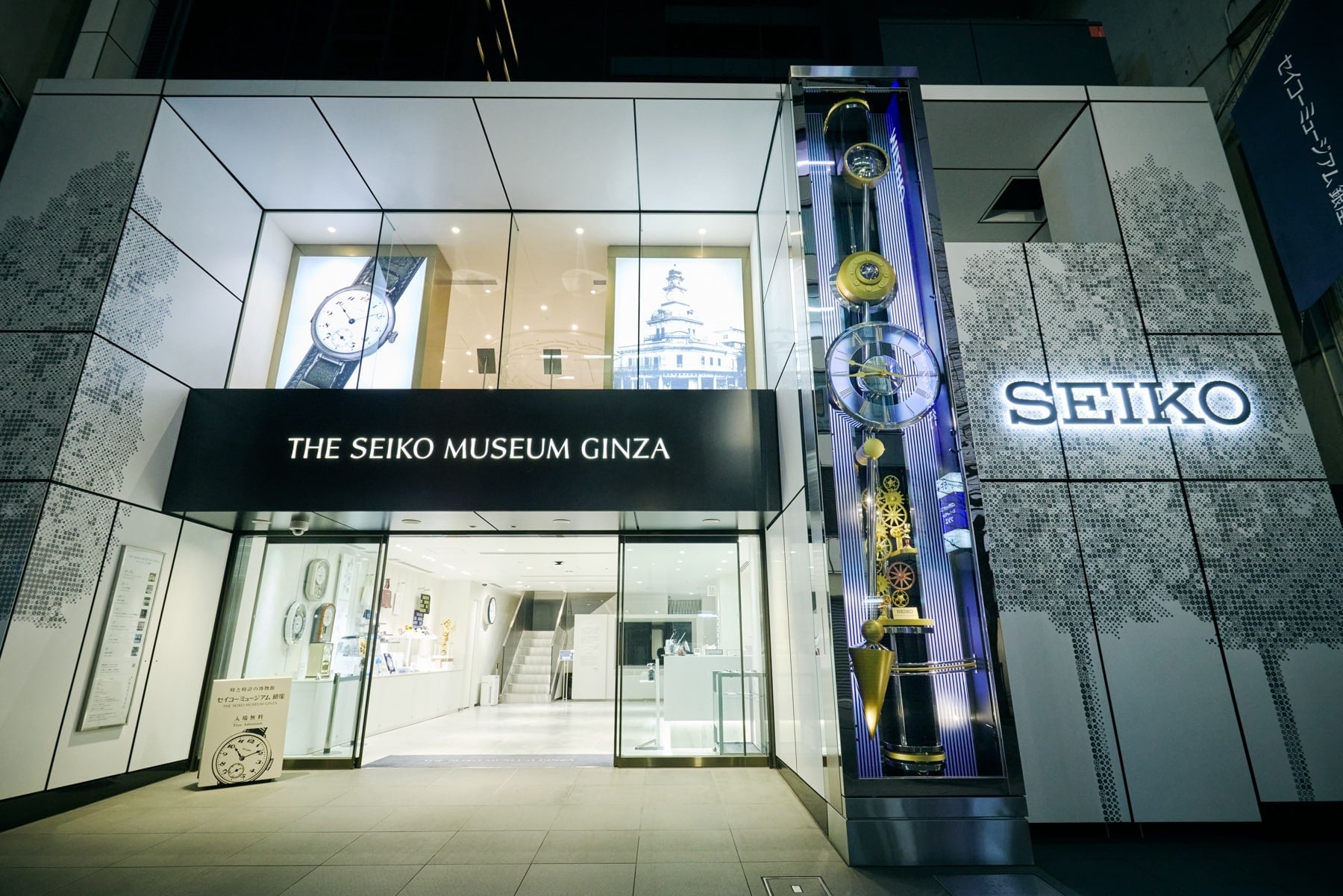
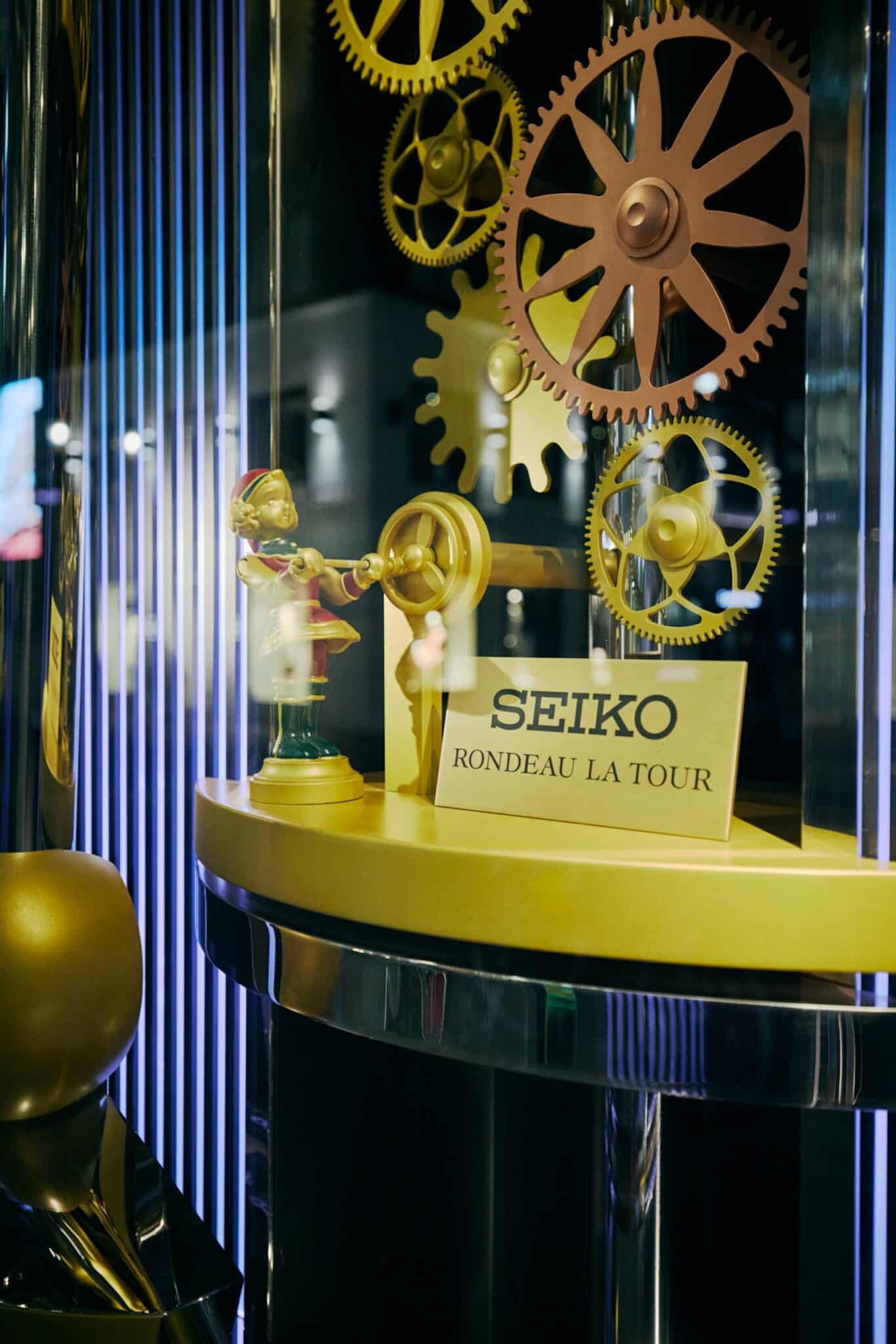
On the first floor, “The Beginning of Time,” a large pendulum clock known as Ronde la Tour welcomes visitors at the entrance.
A large pendulum clock welcomes visitors at the museum entrance, quietly setting the tone for the experience. A mural of tree-lined streets, inspired by Ginza, decorates the wall to the right.
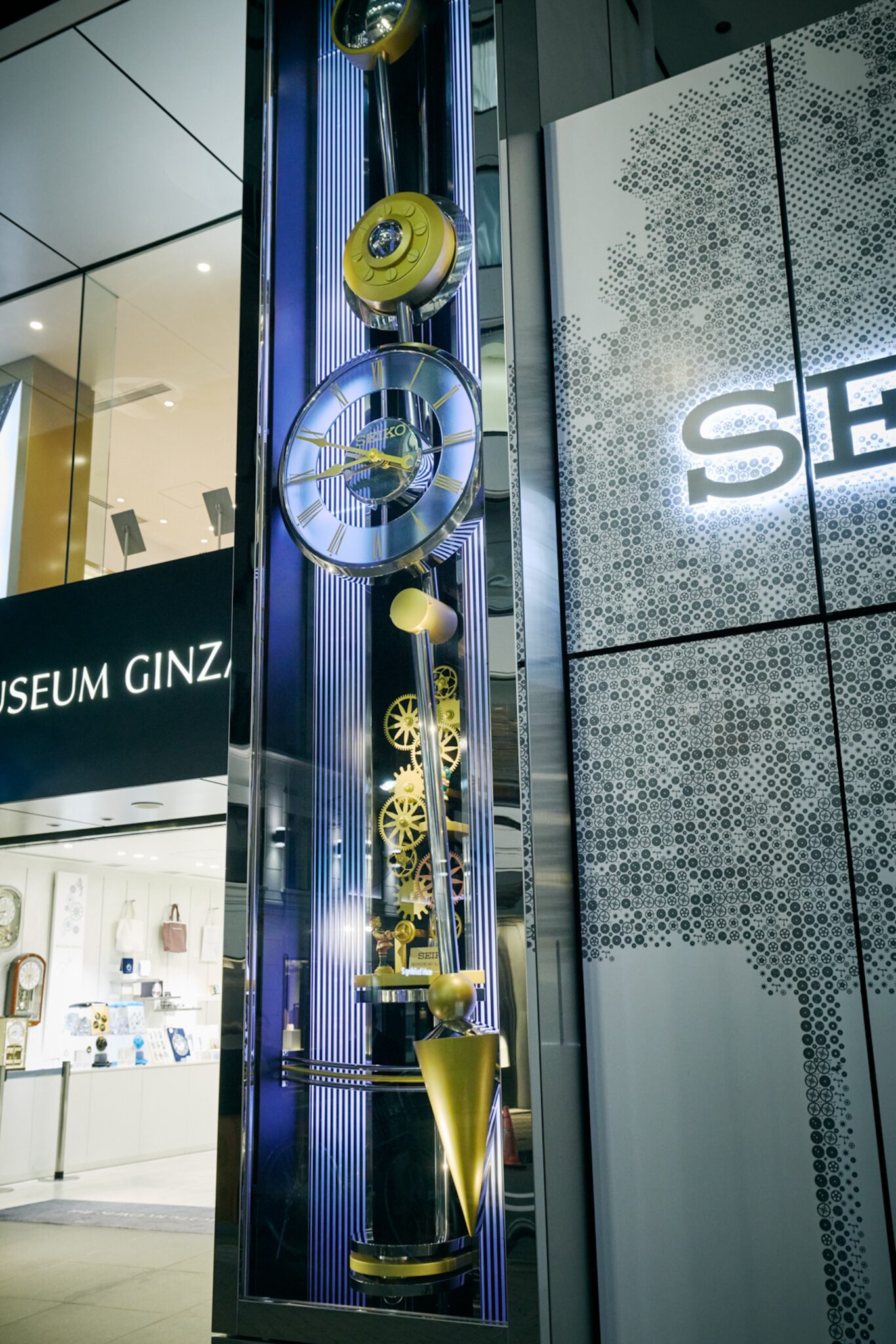
The 5.8-meter-tall pendulum clock Ronde la Tour features a 4.6-meter pendulum that moves slowly and gracefully. From 10:00 to 21:00, it plays melodies every 30 minutes, accompanied by rainbow-colored illumination.
The trees illustrated on the right wall are composed of watch components and motifs related to SEIKO. The “Watch Tree” (right) features parts used in watches such as Grand Seiko, while the “Clock Tree” (left) incorporates components used in clocks, including Yukyu.
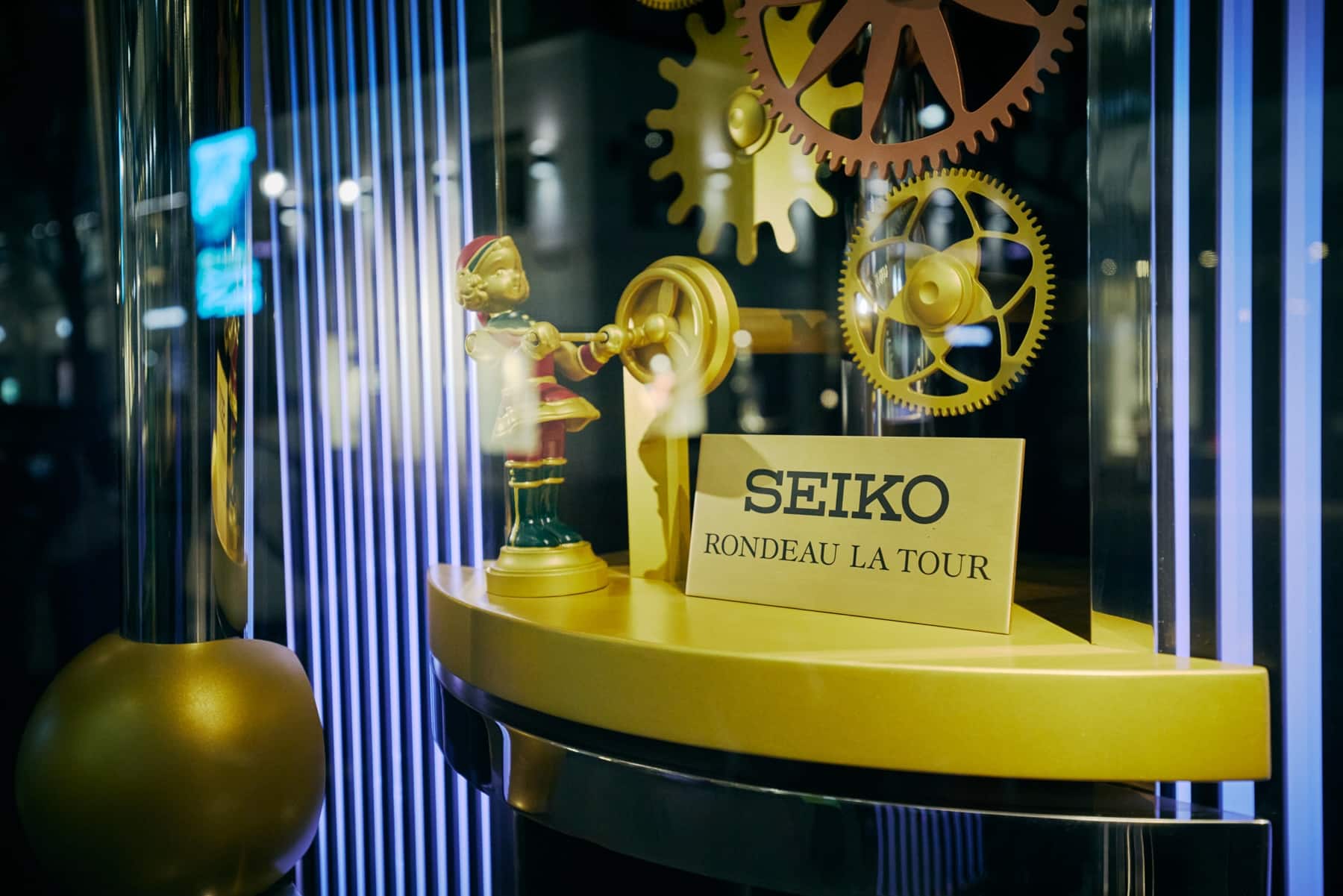
At the top of each hour, small figures begin turning the gears—a charming and endearing sight.
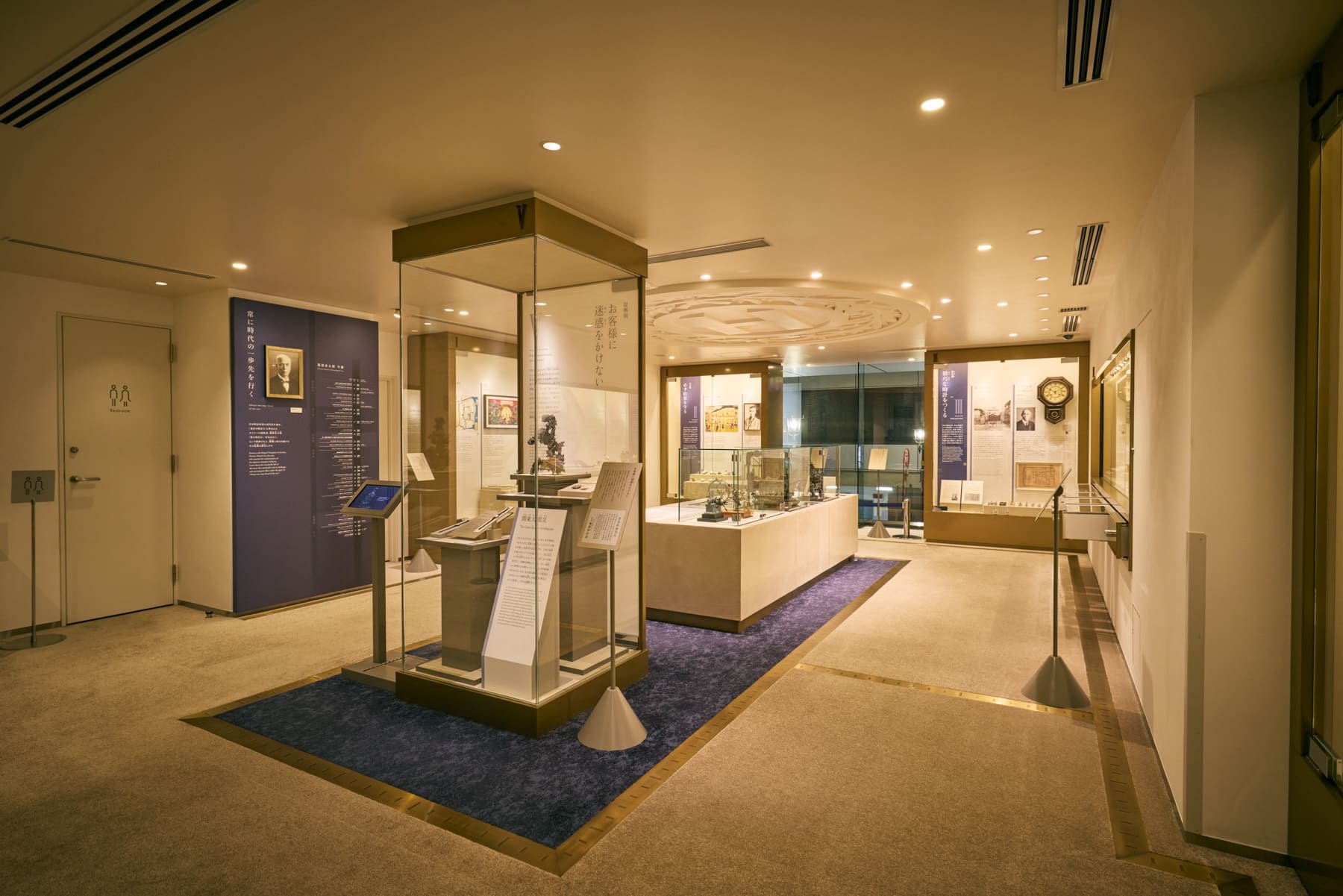
On this floor, visitors can trace the founder Kintaro Hattori’s guiding principles and his journey of perseverance and challenge through a range of archival materials and exhibits.
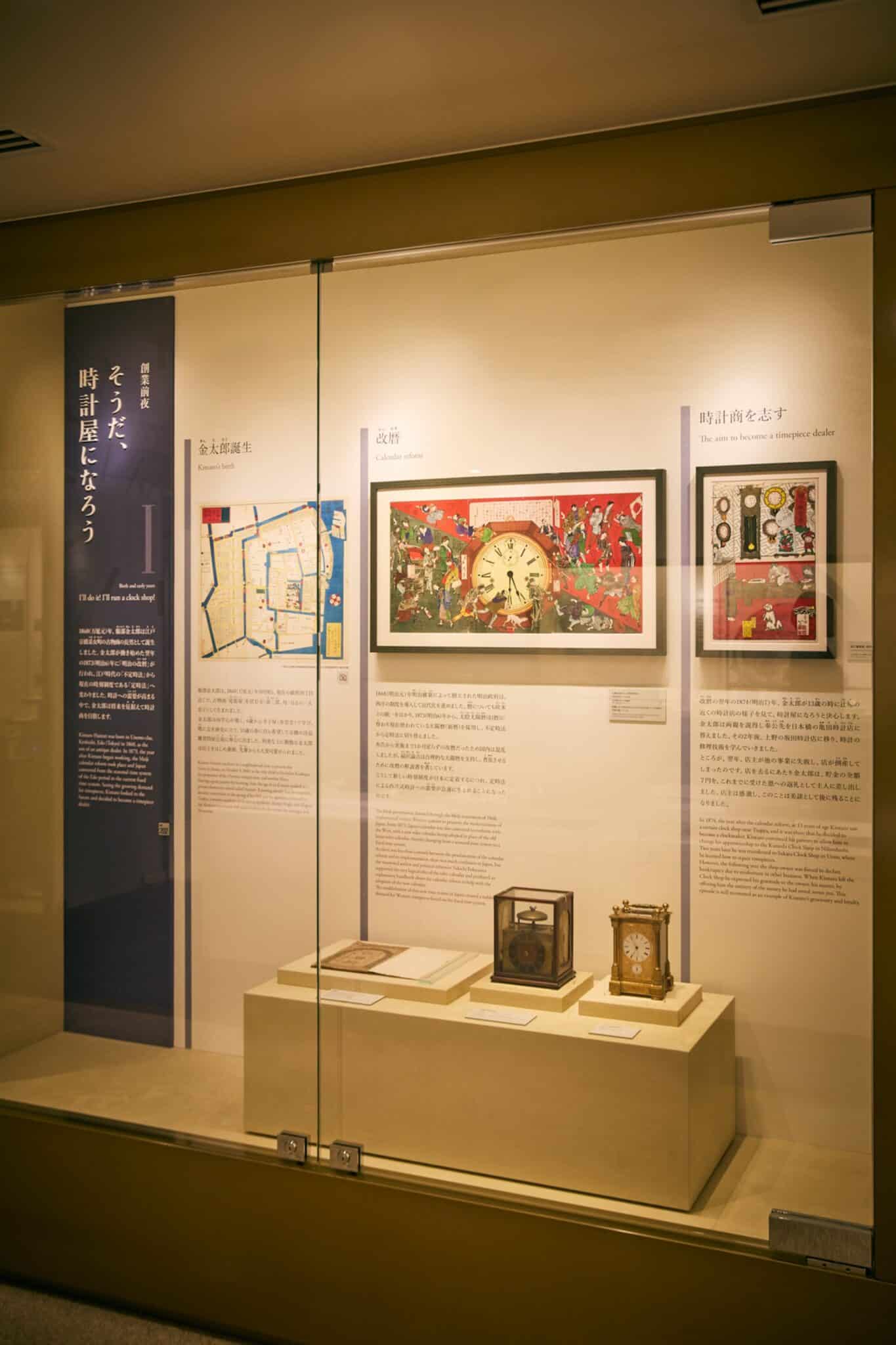
The second floor, titled “Always One Step Ahead of the Times,” is inspired by the words of founder Kintaro Hattori and presents both his life and philosophy.
Born in 1860 as the son of an antique dealer, Hattori decided to pursue watchmaking after Japan adopted the Western calendar system in 1873. He apprenticed at watch shops to learn repair techniques while saving money to start his own business, eventually opening the Hattori Watch Shop in 1881 with the goal of producing domestically made watches.
Guided by the belief that “only quality products earn customer trust,” he established Seikosha in 1892 to begin manufacturing.
His journey continued steadily, including the introduction of Japan’s first wristwatch in 1913. In 1923, however, the Great Kanto Earthquake destroyed factories and offices, along with approximately 1,500 customer repair items. In an extraordinary gesture, these were replaced free of charge with new products, further strengthening customer trust.
Hattori continued to dedicate himself to both customers and employees until his passing in 1934.
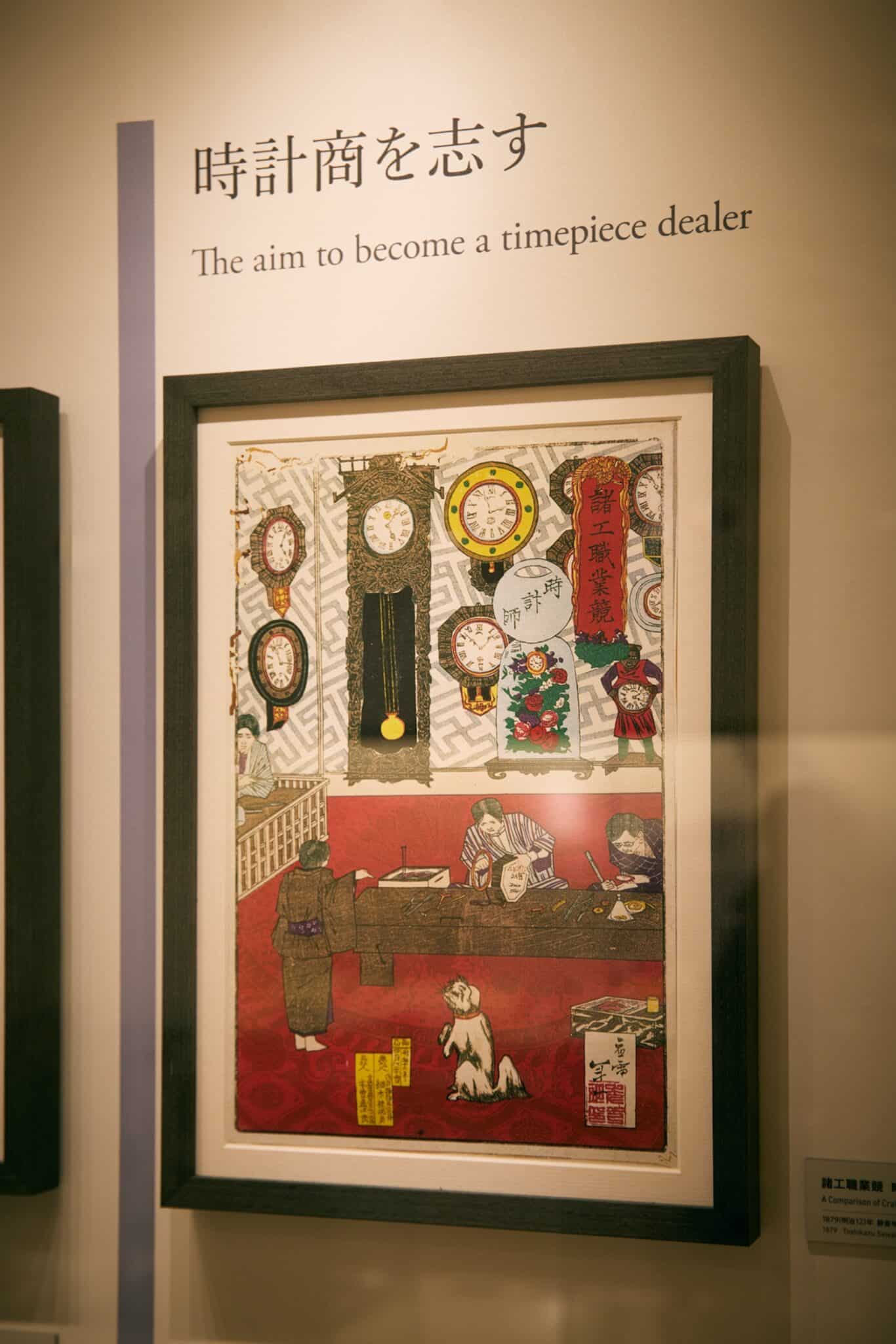
The nishiki-e woodblock print Industrial and Occupational Competition: Clockmakers (1879, by Seisai Toshikazu) depicts Japan after the calendar reform, when new timekeeping systems and Western-style clocks were becoming established. It is said that the 13-year-old Kintaro Hattori, seeing watch shops thriving at the time, decided to pursue a career in the watch trade.
Displayed at the center is Ukiyohanjyo Anasagashi (1877, by Kobayashi Shinsai), a print depicting Western-style clocks.
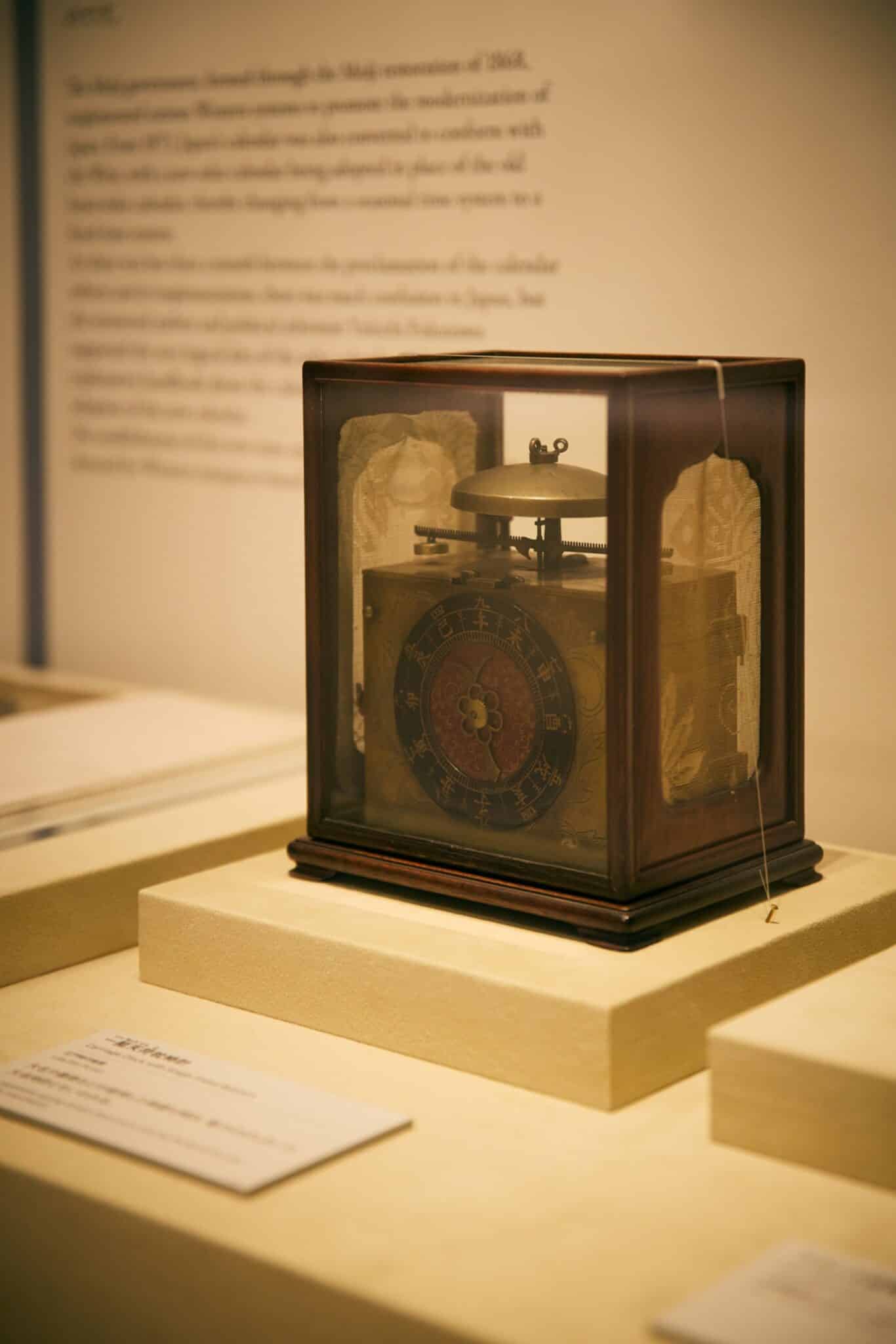
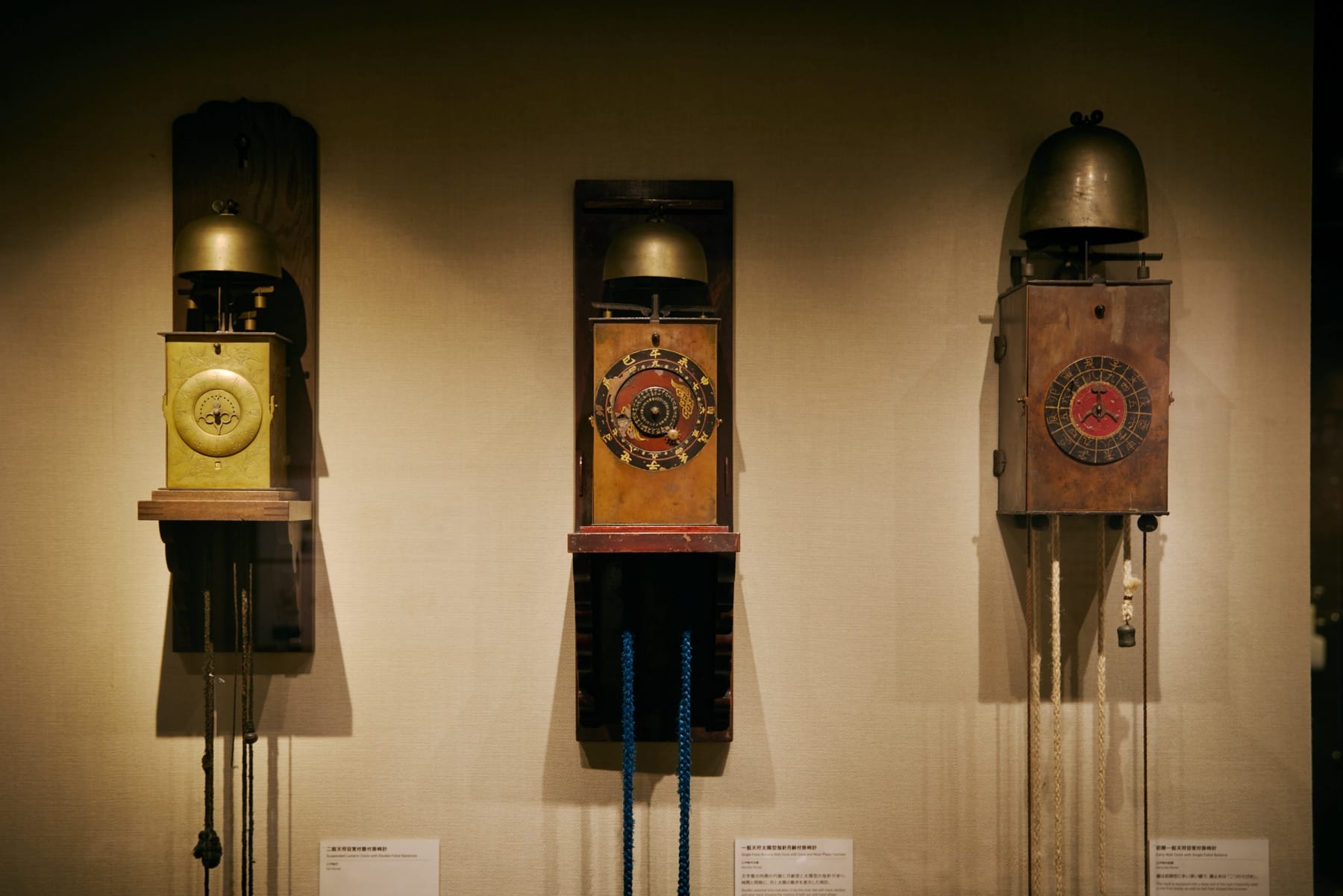
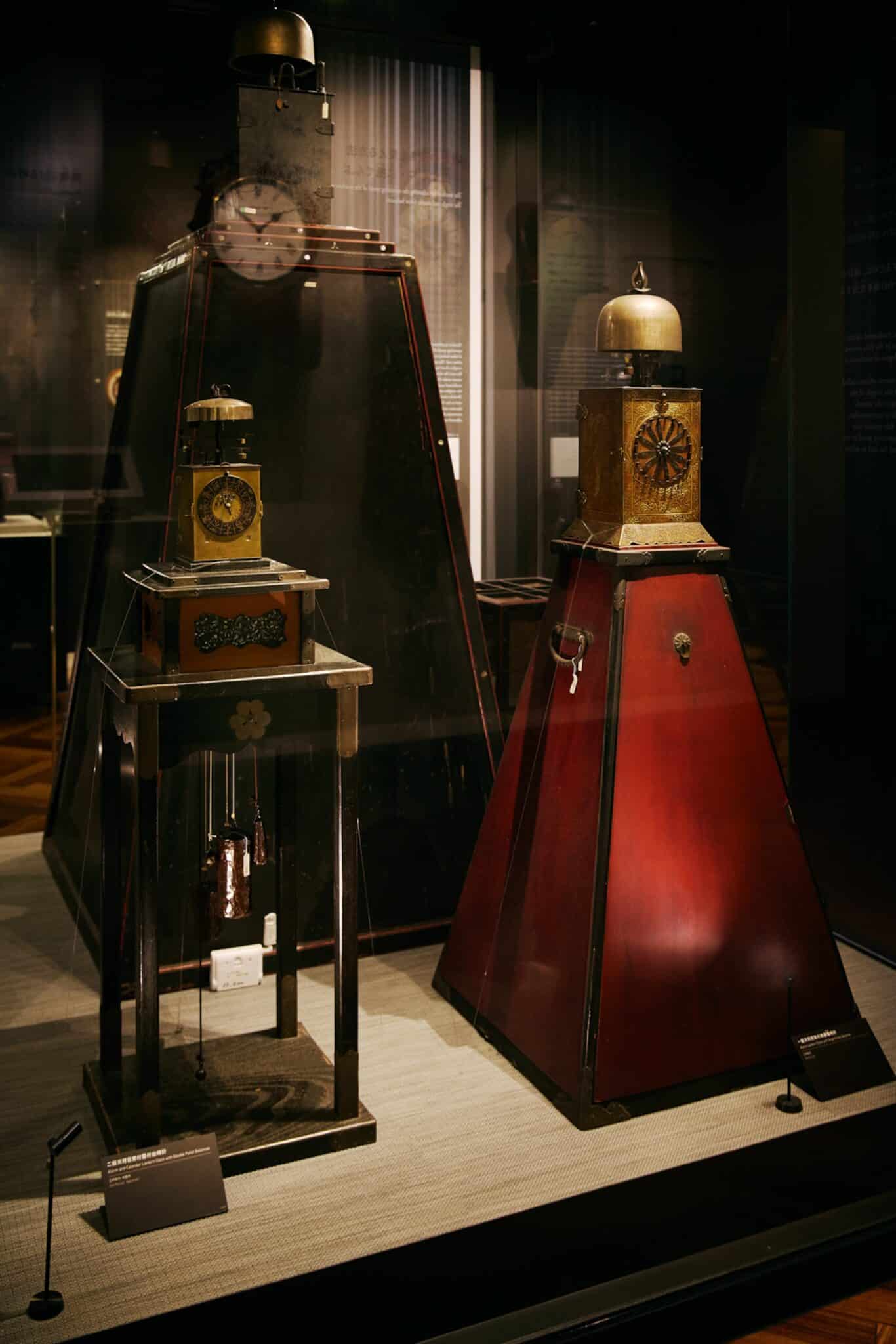
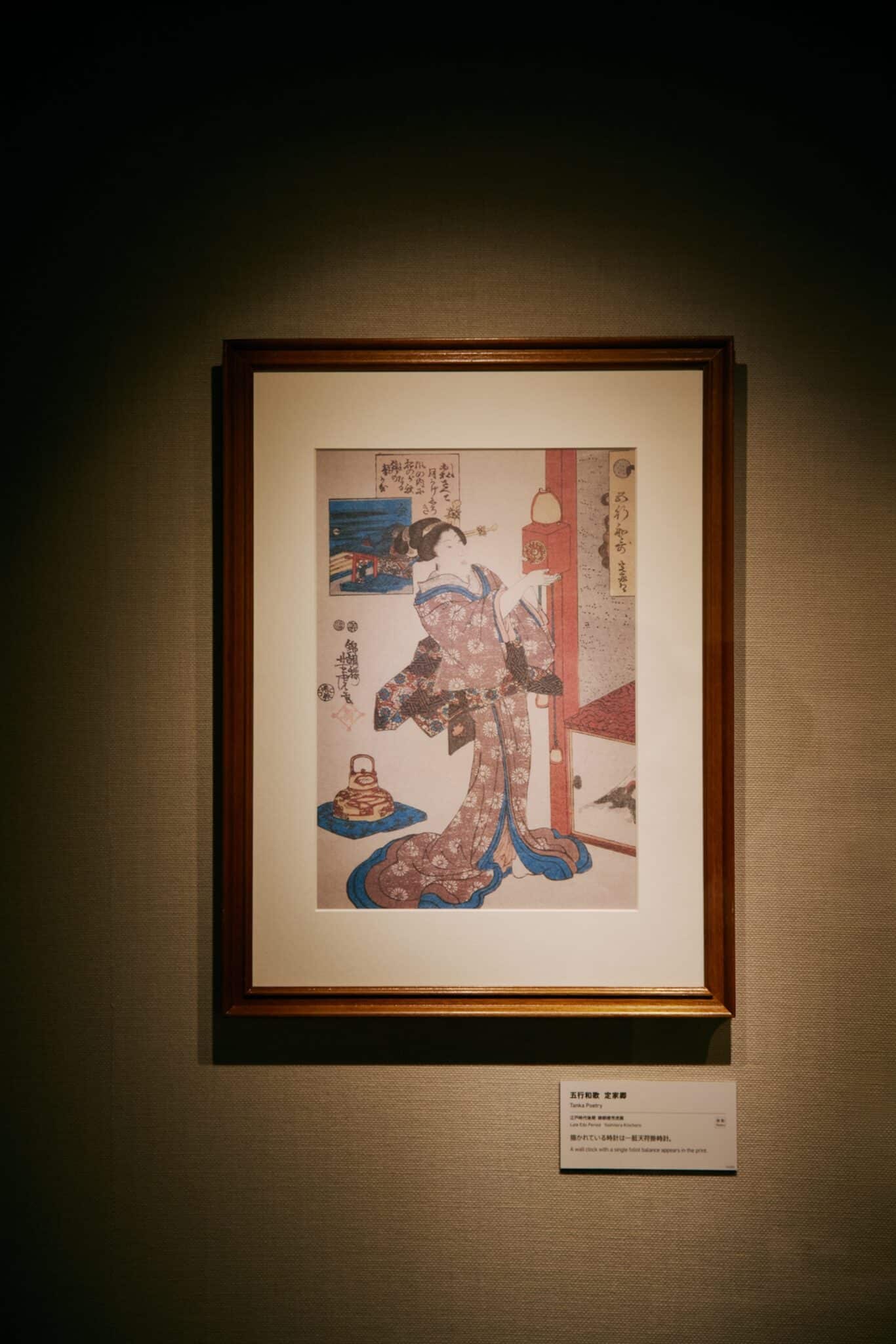
Also on display are highly prized wadokei (traditional Japanese clocks) once owned by feudal lords and wealthy merchants in the late Edo period. These clocks followed a temporal-hour system and, as seen in the Carriage Clock with Single Foliot Balance shown here, which often indicated time using the signs of the zodiac.
Having resolved to start a watch business, Kintaro Hattori apprenticed at Kameda Watch Shop in Nihonbashi and Sakata Watch Shop in Ueno, where he acquired repair skills. While working, he saved money to open his own store. He began by sourcing imported timepieces from foreign trading houses in Yokohama, beginning with wholesale and retail operations.
A portrait of Hattori around the age of 30. He relocated his shop to Ginza in 1887, and five years later established Seikosha, marking the beginning of domestic watch production. He would go on to lead Japan’s watch industry, including the introduction of the country’s first wristwatch.
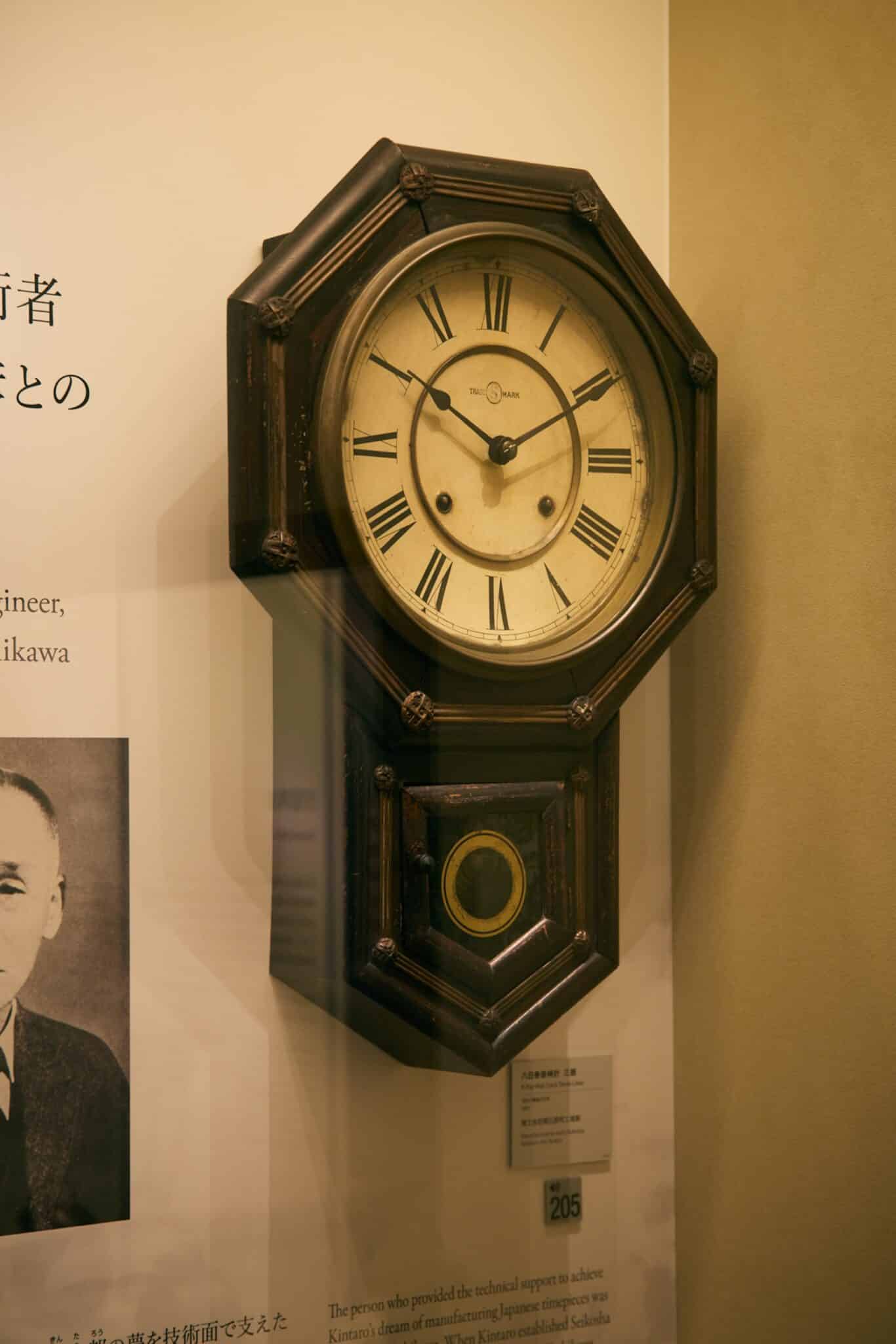
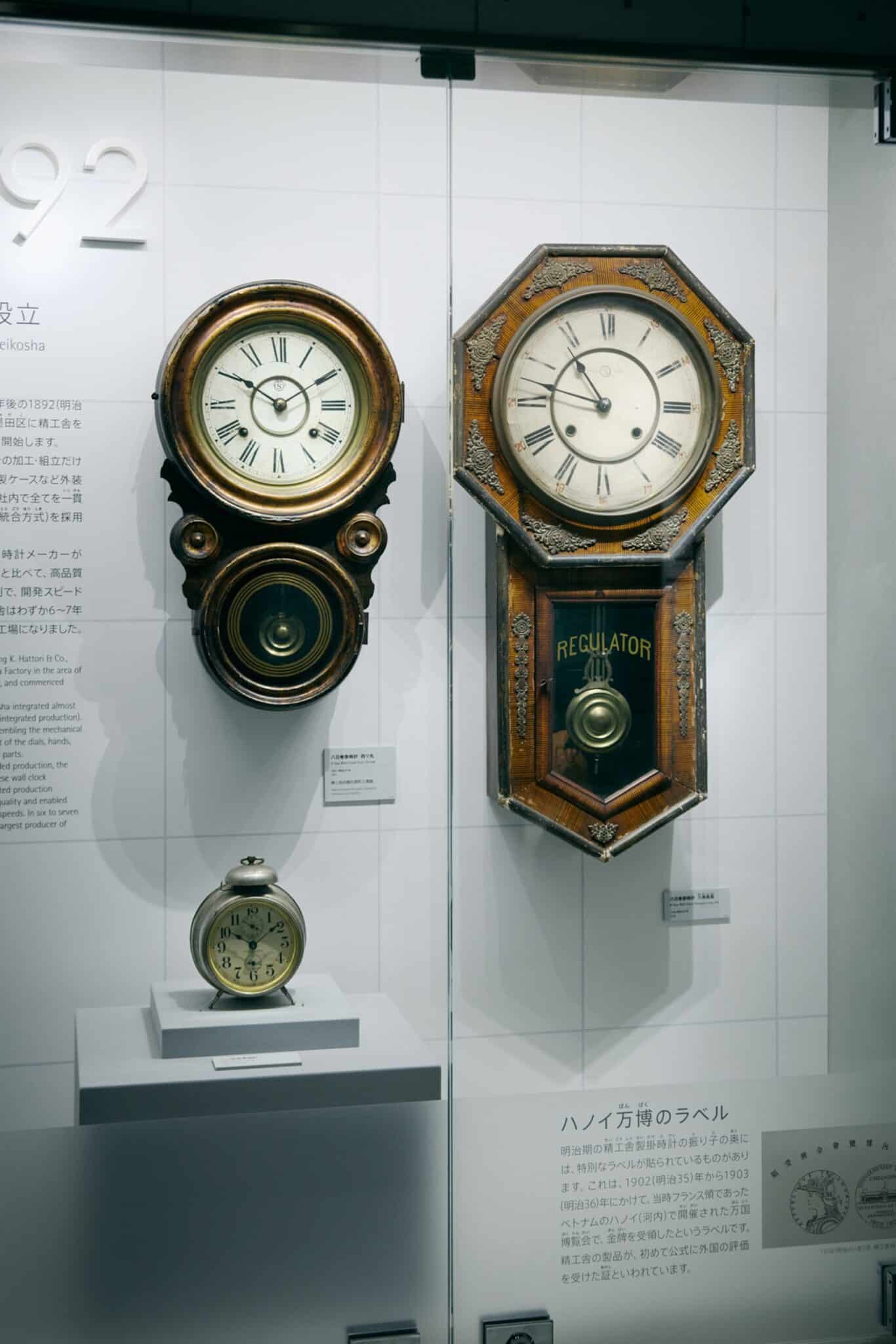
The Yokamaki Wall Clock (Mitsu-suji), with its stately, timeworn presence, was produced in 1892 at Ishihara-cho Factory, one of Seikosha’s earliest manufacturing sites. Starting with wall clocks such as this, the company went on to develop pocket watches and Japan’s first alarm clocks in rapid succession.
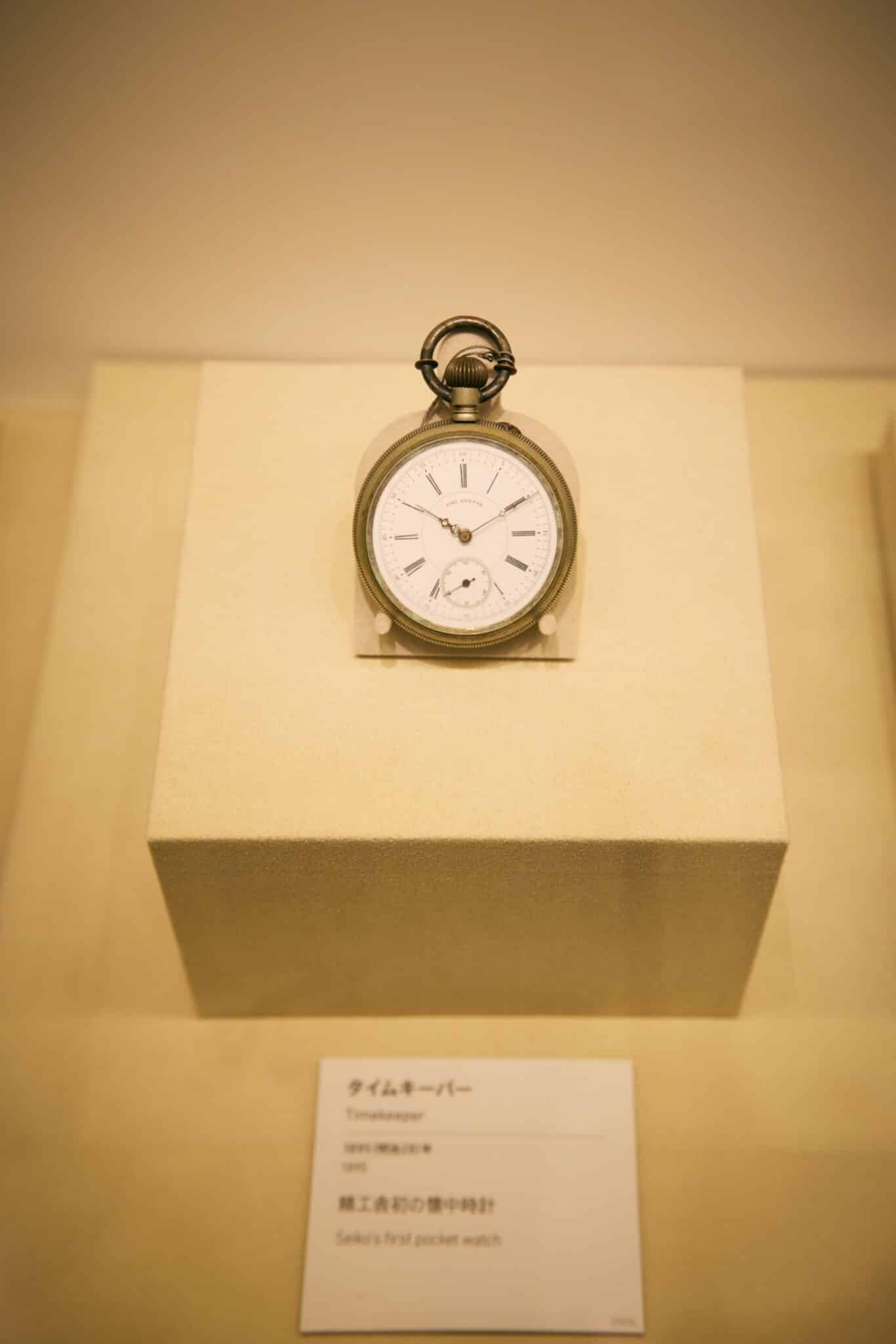
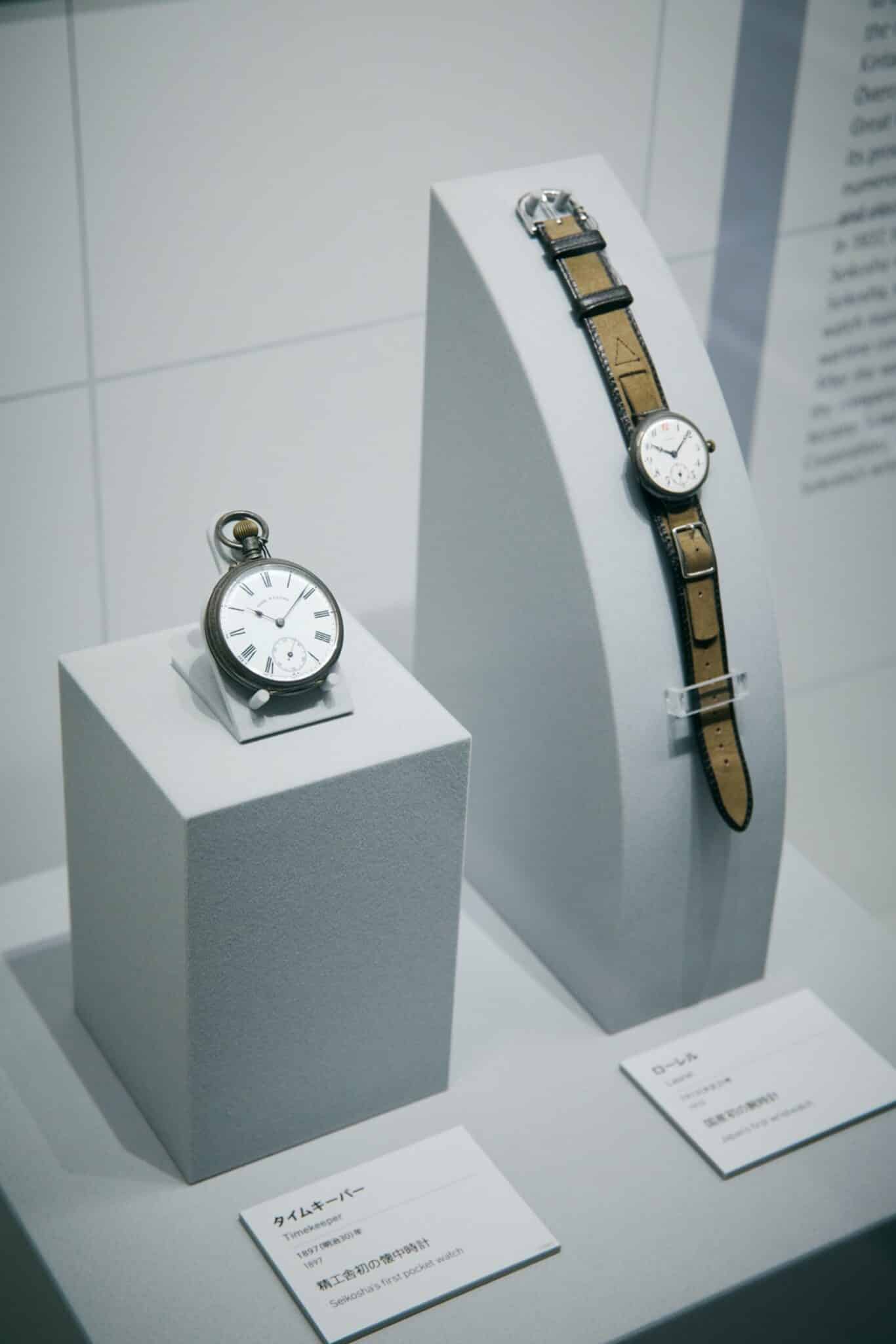
In 1895, Seikosha began producing pocket watches. The piece shown here is the Timekeeper, the first pocket watch manufactured by Seikosha.
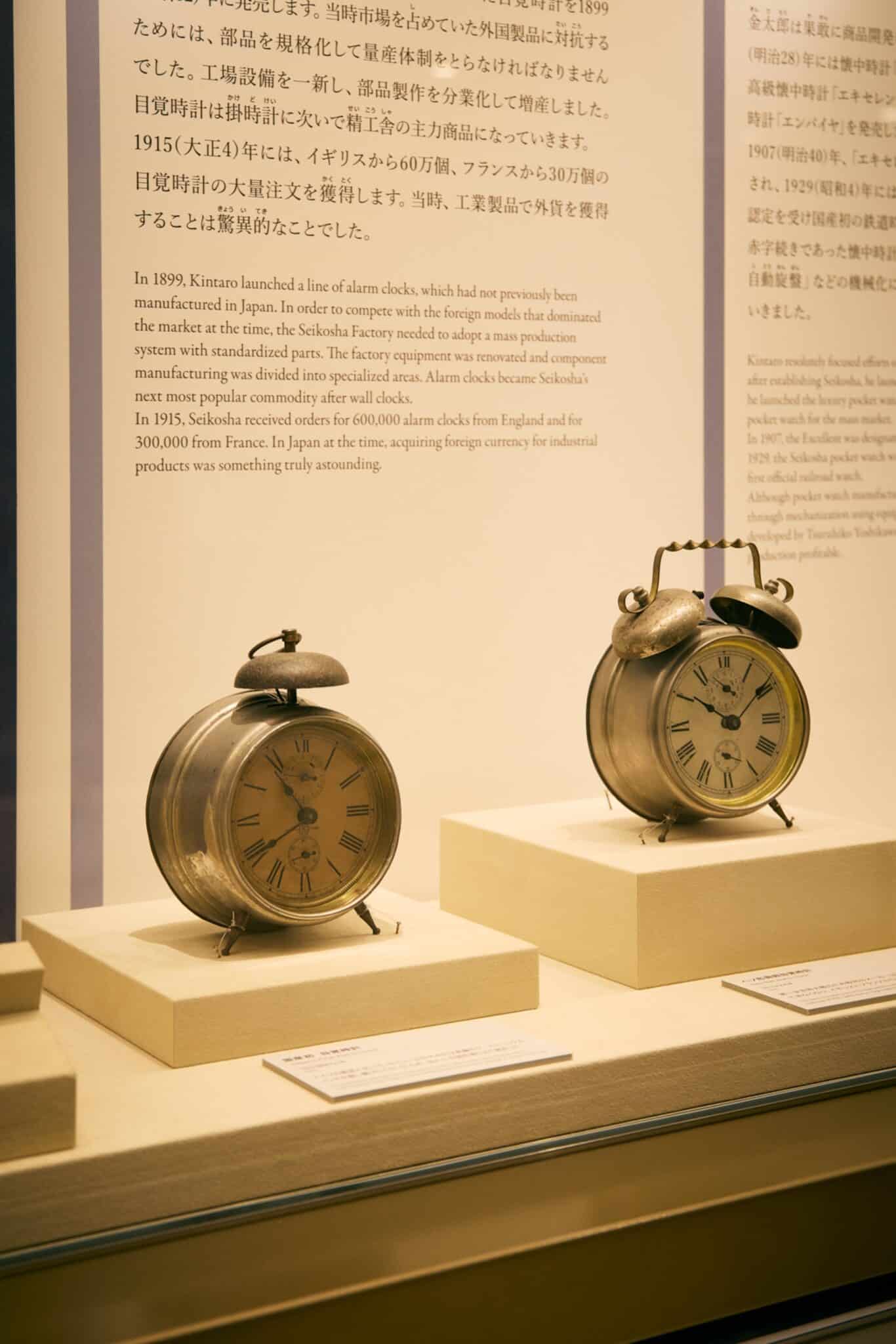
In 1899, Japan’s first domestically produced alarm clock (left) was introduced. Featuring a brass case with nickel plating, it was praised for being more resistant to rust than the German-made models that dominated the market at the time. The Twin Bell Alarm Clock (right), produced in 1915, was manufactured in response to orders from European makers, whose production had been disrupted by World War I. Remarkably, Seikosha received orders for 600,000 units from the United Kingdom and 300,000 from France.
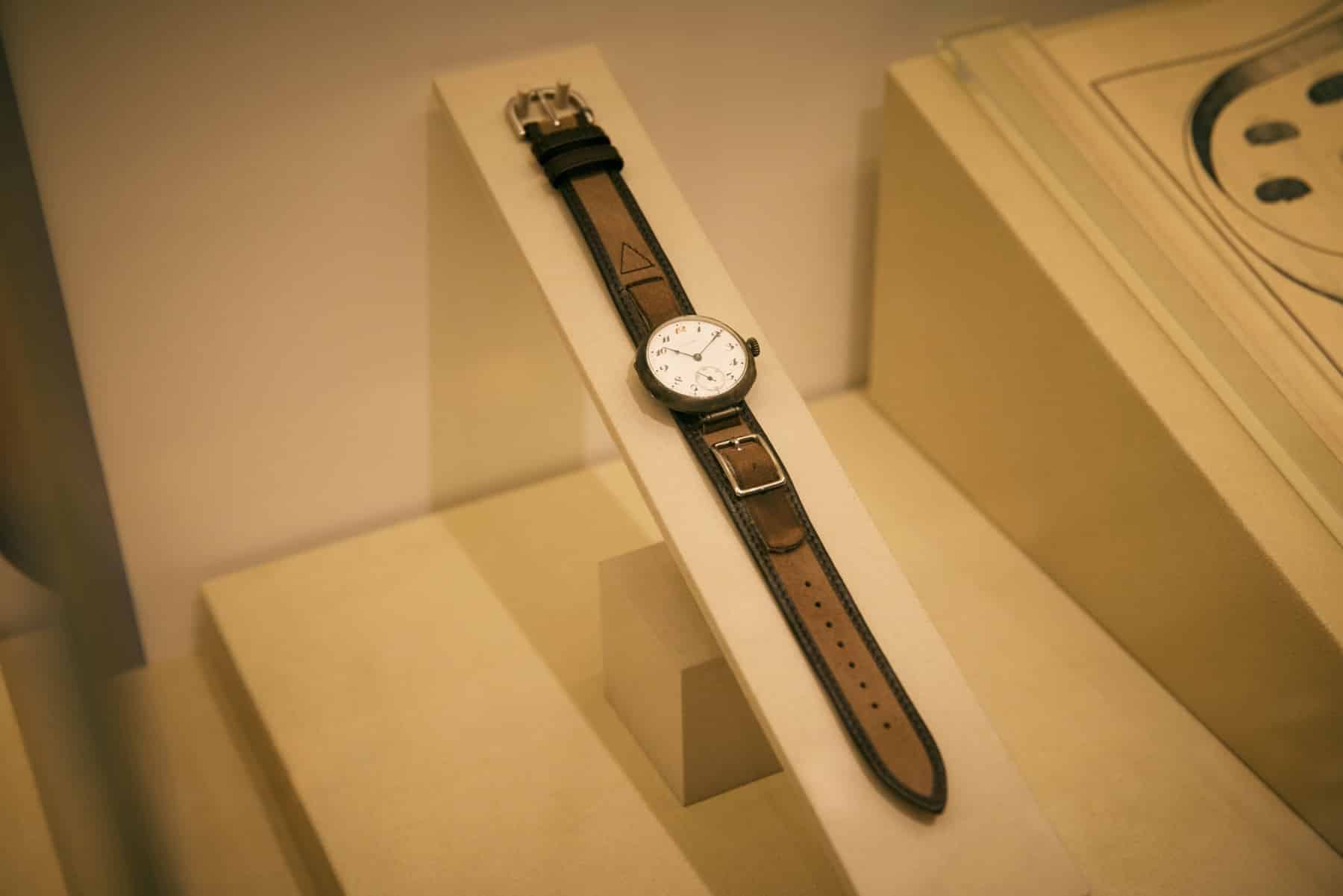
Introduced in 1913, the Laurel was Japan’s first domestically produced wristwatch. At a time when wristwatches were not yet widely used in Japan, it was developed with remarkable foresight—anticipating a future in which wearing a wristwatch would become part of everyday life.
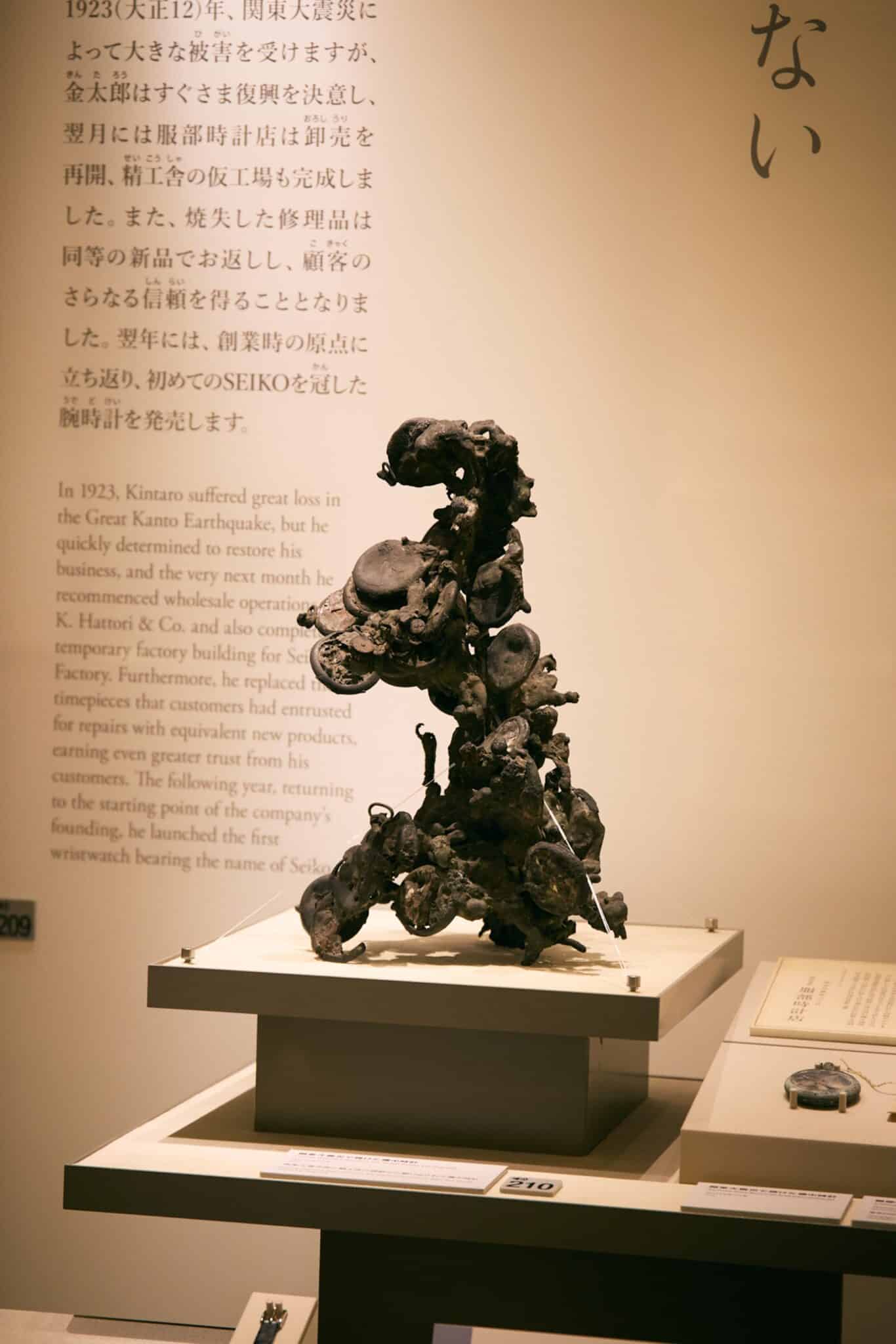
Pocket watches recovered from the burned remains of the factory, now fused into charred masses. They are exhibited under the title “Watches Damaged in the Great Kanto Earthquake.”
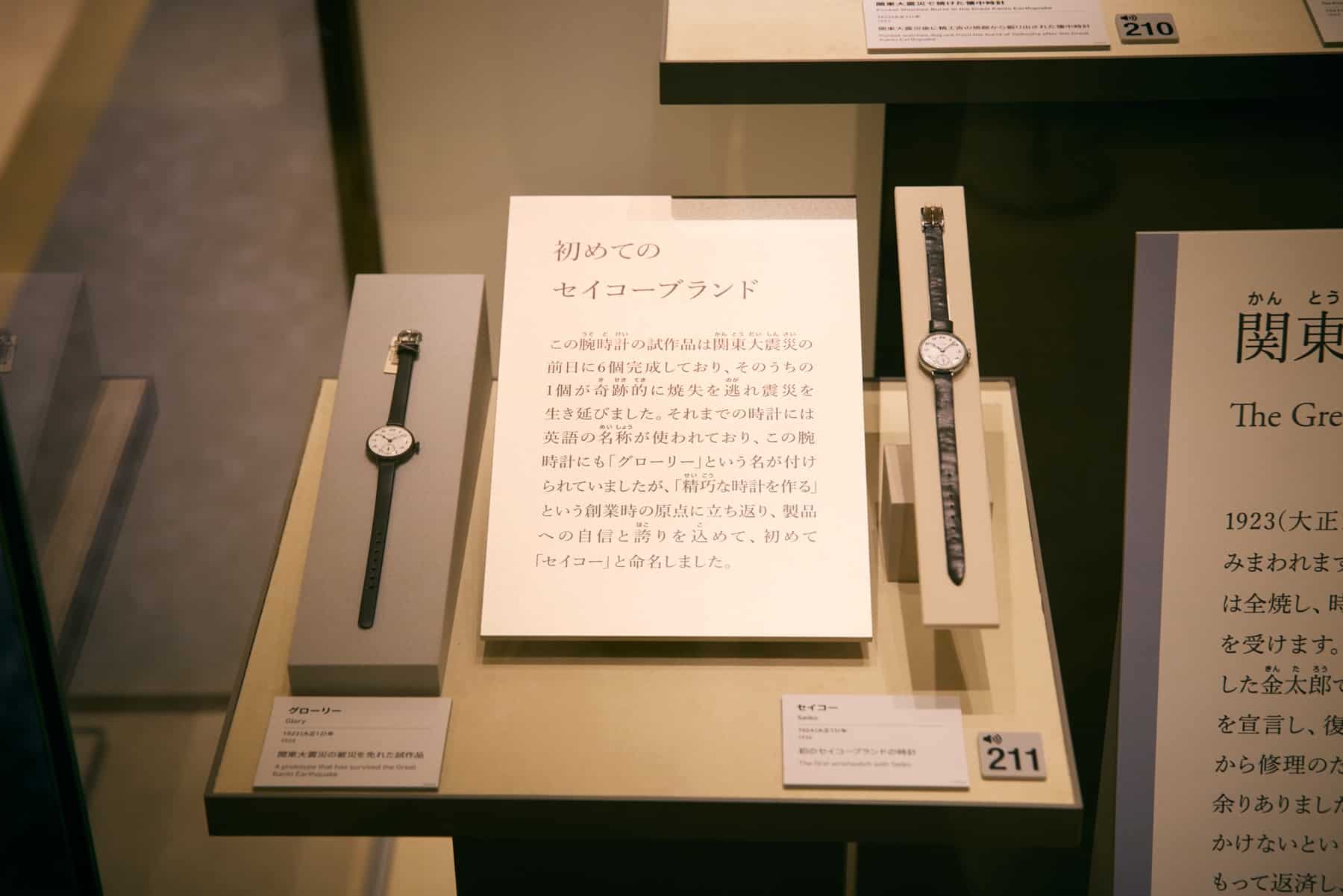
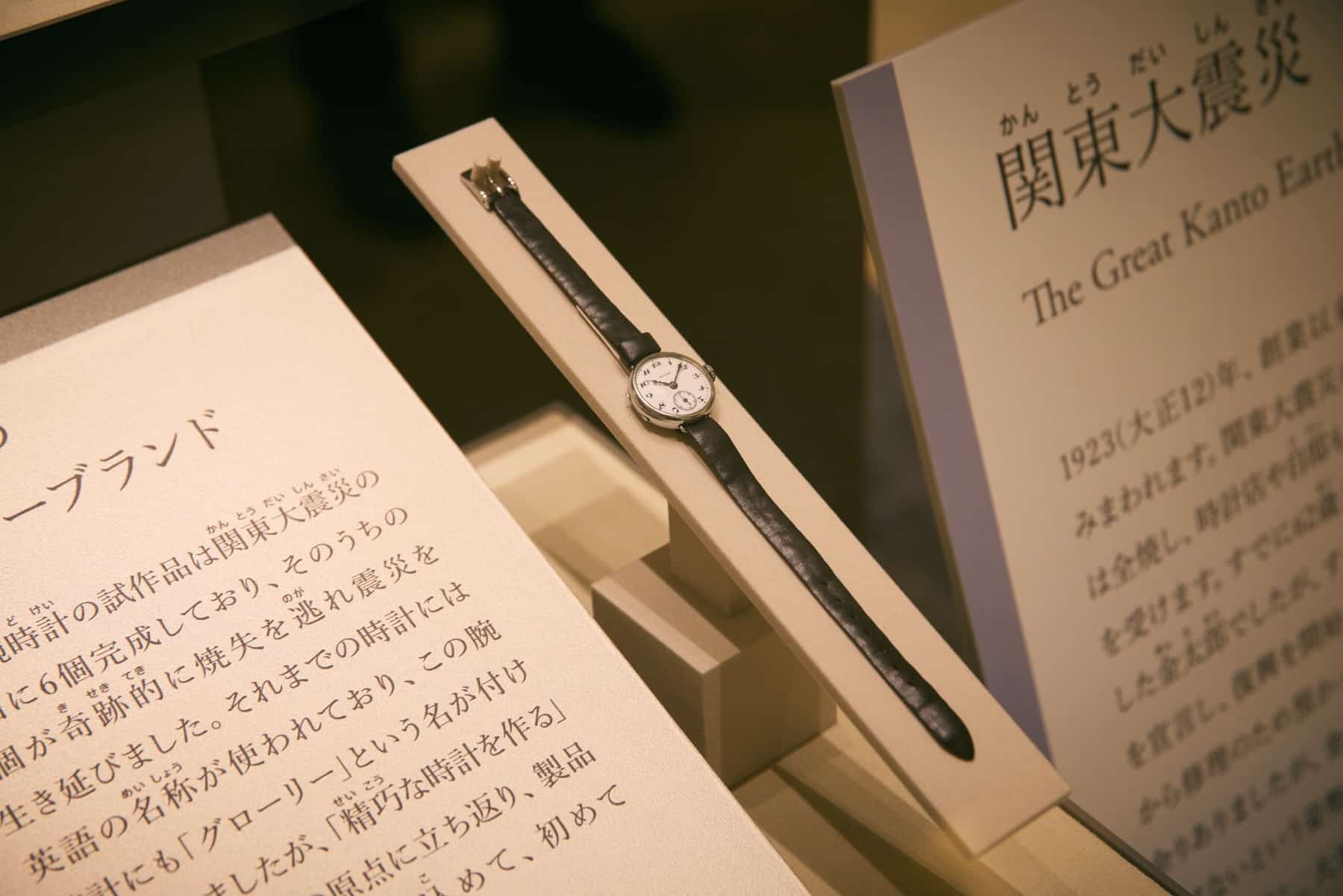
The wristwatch Seiko (right), introduced in 1924—the year following the Great Kanto Earthquake. Six prototypes had been completed the day before the disaster, two of which survived. The piece shown on the left is one of those surviving prototypes. Originally, it was named Glory during the prototype stage.
Released as the first watch to bear the SEIKO name, this model was initially called Glory during its prototype stage. In the aftermath of the earthquake, however, the company chose to adopt its own name—reflecting a renewed commitment to its founding principle of creating finely crafted timepieces.
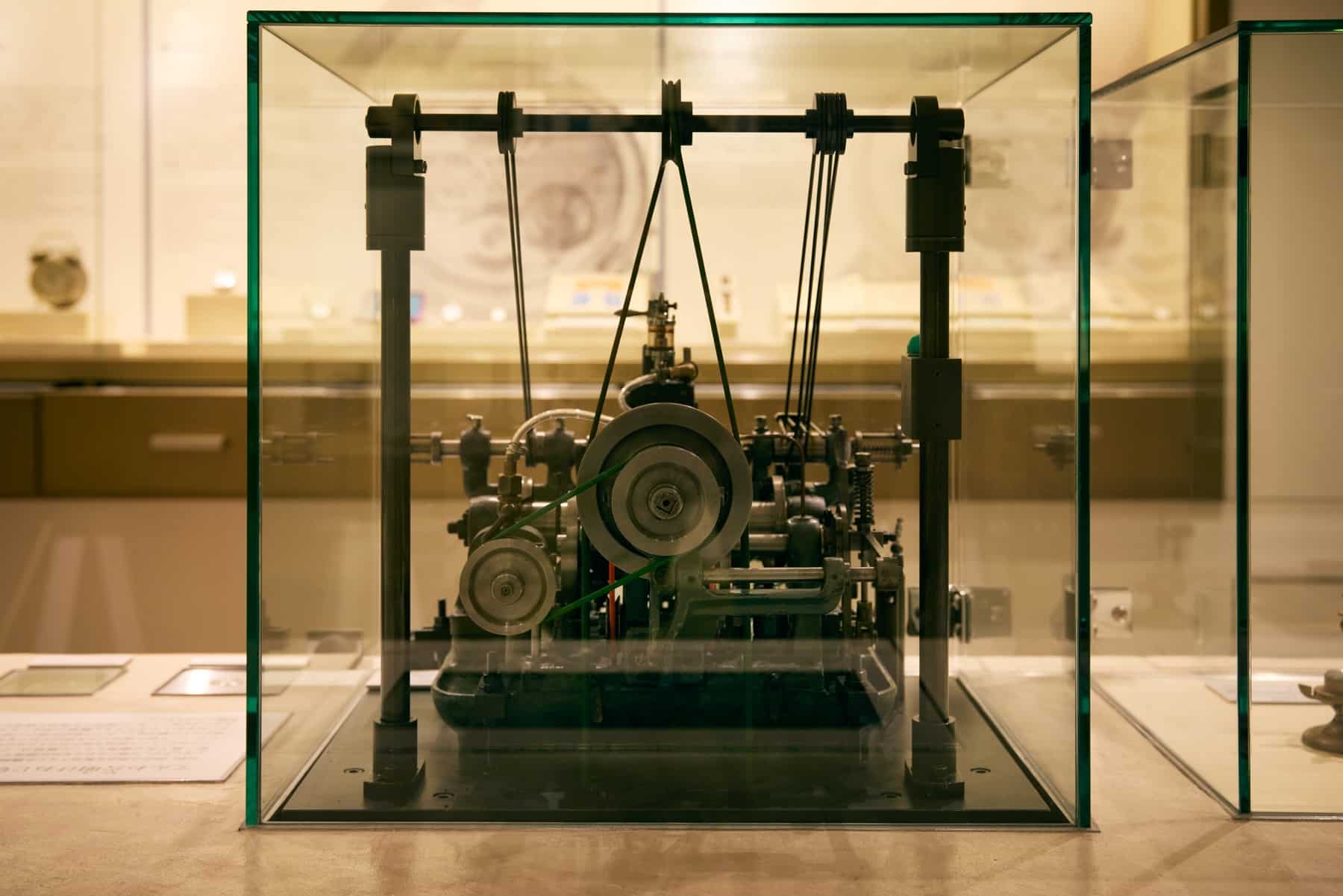
Following the disaster, SEIKO continued to advance its technology, developing machinery such as the Tenwa Automatic Drilling and Threading Machine for precision component assembly. The company went on to recover steadily, with products such as the Seikosha pocket watch being selected as Japan’s first domestically produced railway watch.
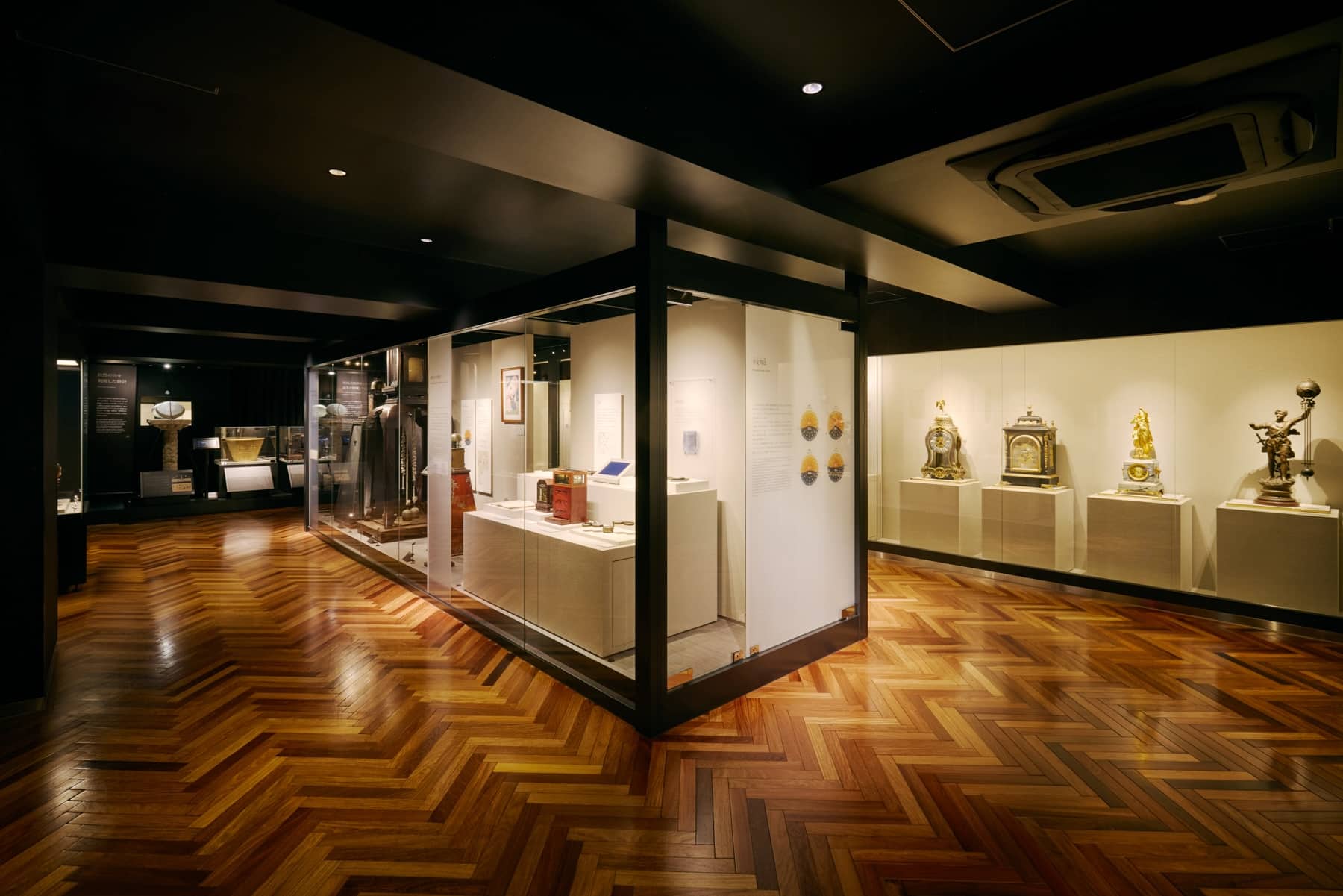
An overview of the evolution of timekeeping—from humanity’s earliest timekeeping methods to the forms we know today.
The third floor, titled “From Time Told by Nature to Time Created by Humans,” traces the evolution of timekeeping—from natural methods using sunlight, water, and sand to increasingly precise mechanical clocks.
Timekeeping is believed to date back to around 5000 BCE, beginning with natural methods such as sundials. Later innovations included water clocks in ancient Egypt, which made it possible to measure time even at night. With the invention of mechanical clocks in 13th-century Italy, accuracy and portability improved dramatically, gradually leading to the precise timepieces we know today.
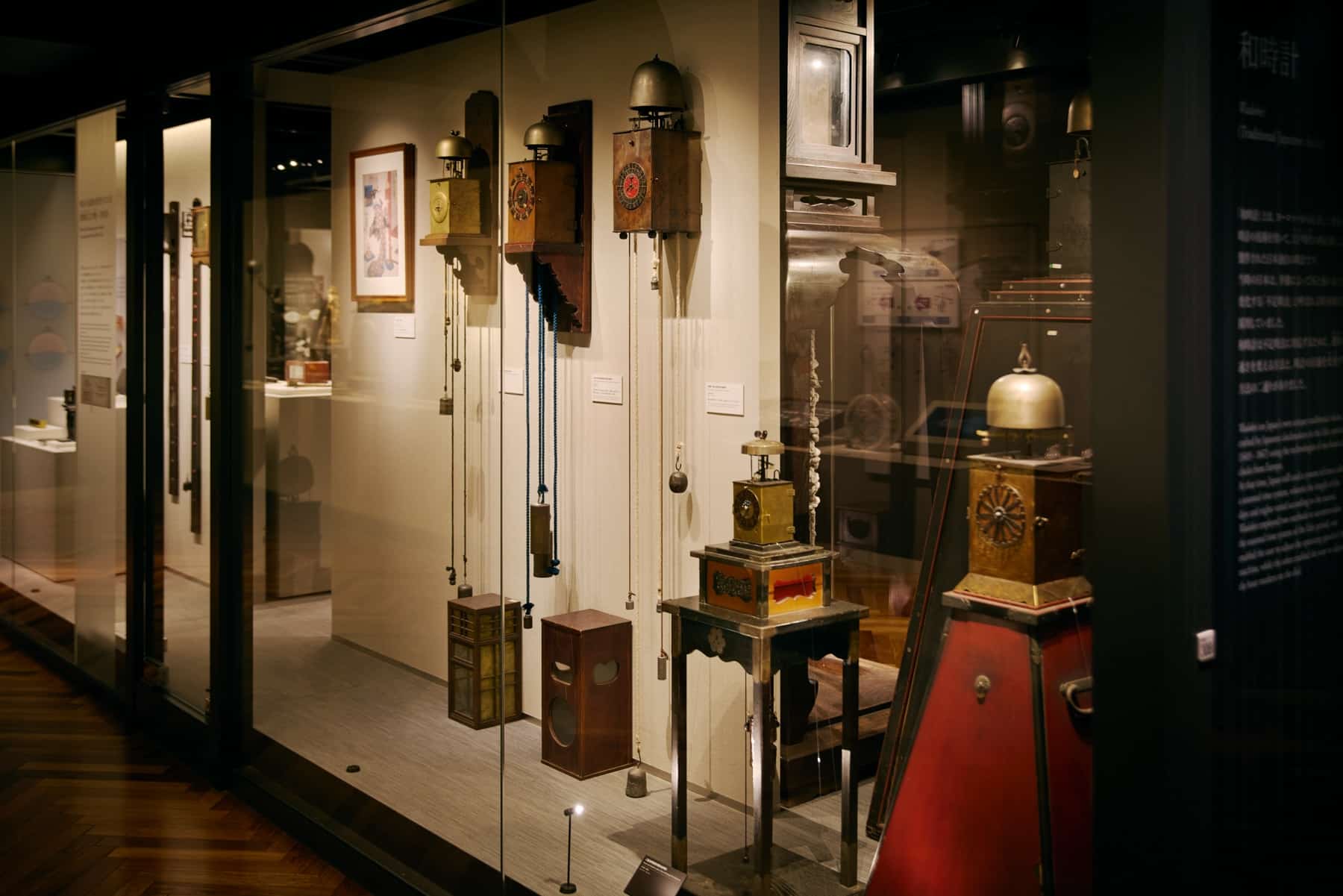
The floor also showcases uniquely Japanese wadokei (traditional Japanese clocks), which reflect Japan’s temporal-hour system based on sunrise and sunset. Their distinctive dials and refined design offer a striking glimpse into Japan’s unique approach to time.
The birth of clocks dates back to around 5000 BC. Around 1300 B.C. in Italy, mechanical clocks were invented, and their accuracy and portability evolved to become what they are today, telling time accurately. The mechanical clock was born in Italy around 1300 and evolved to accurately tell the time as we know it today. In addition, here you will also find "wadokei" clocks, which were originally made in Japan during the Edo period (1603-1868). The unique Japanese-style dials, which are based on the time of dawn and dusk, and other uniquely Japanese features are sure to catch your eye.
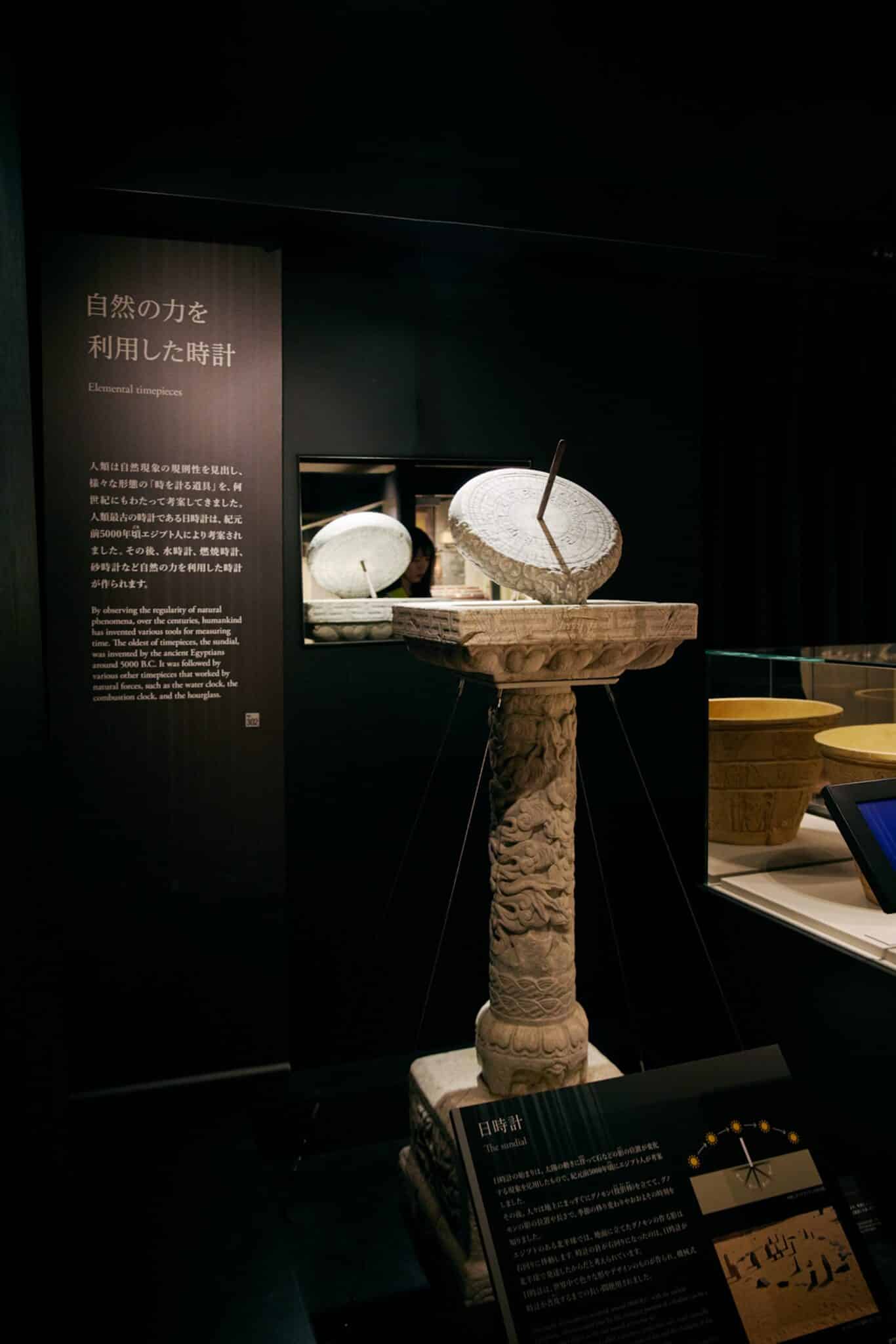
A sundial—the oldest form of timekeeping known to humanity. This example is an Equatorial Sundial, made in China in the 18th century, measuring time by the position of shadows cast by the movement of the sun.
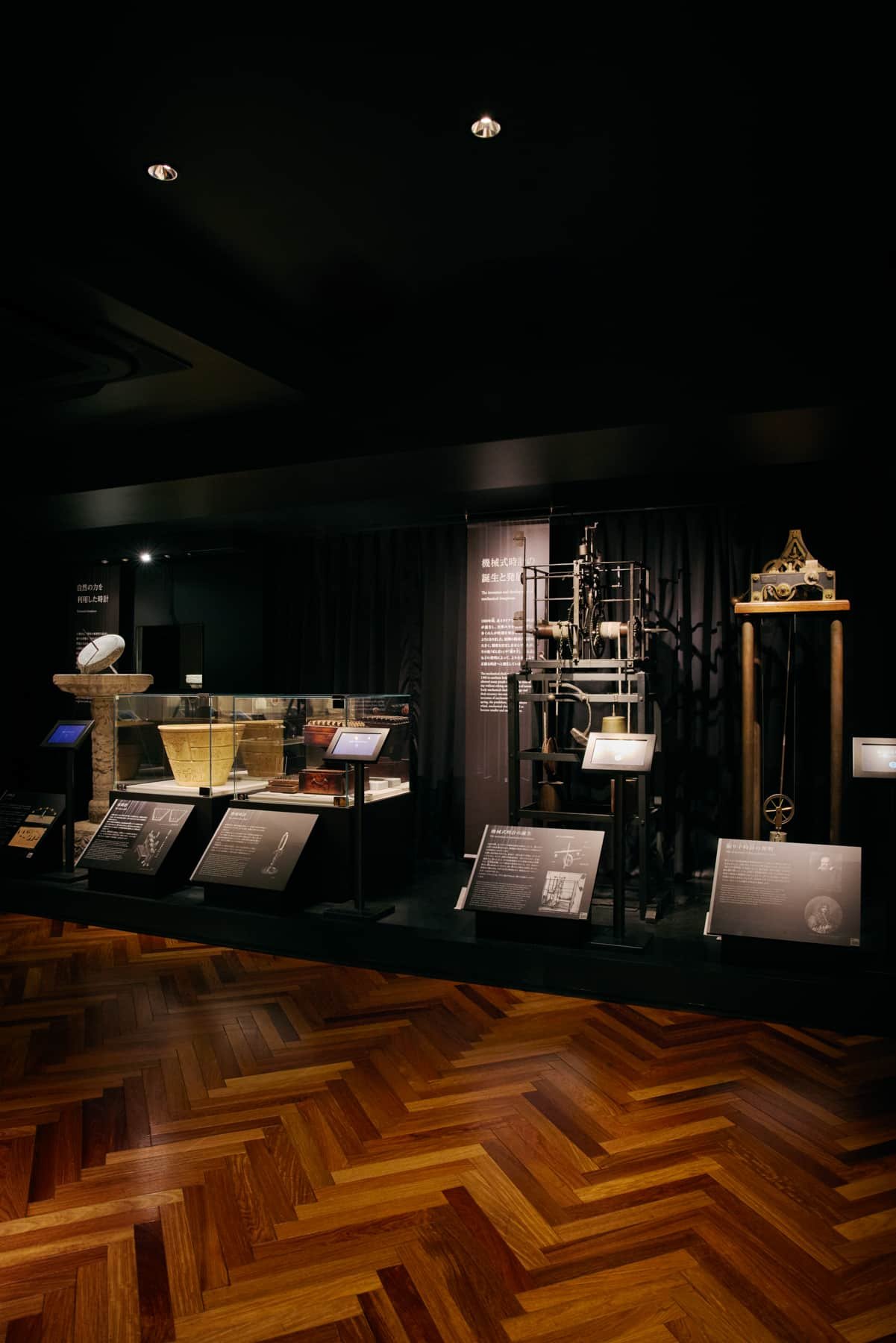
From left: an Equatorial Sundial; a replica of one of the earliest water clocks, devised in ancient Egypt around 1400 BCE; Edo-period incense clocks (Incense Clock) and stick incense clocks (Incense Stick Clock); an Iron Movement Tower Clock; and A prototype for London’s Big Ben.
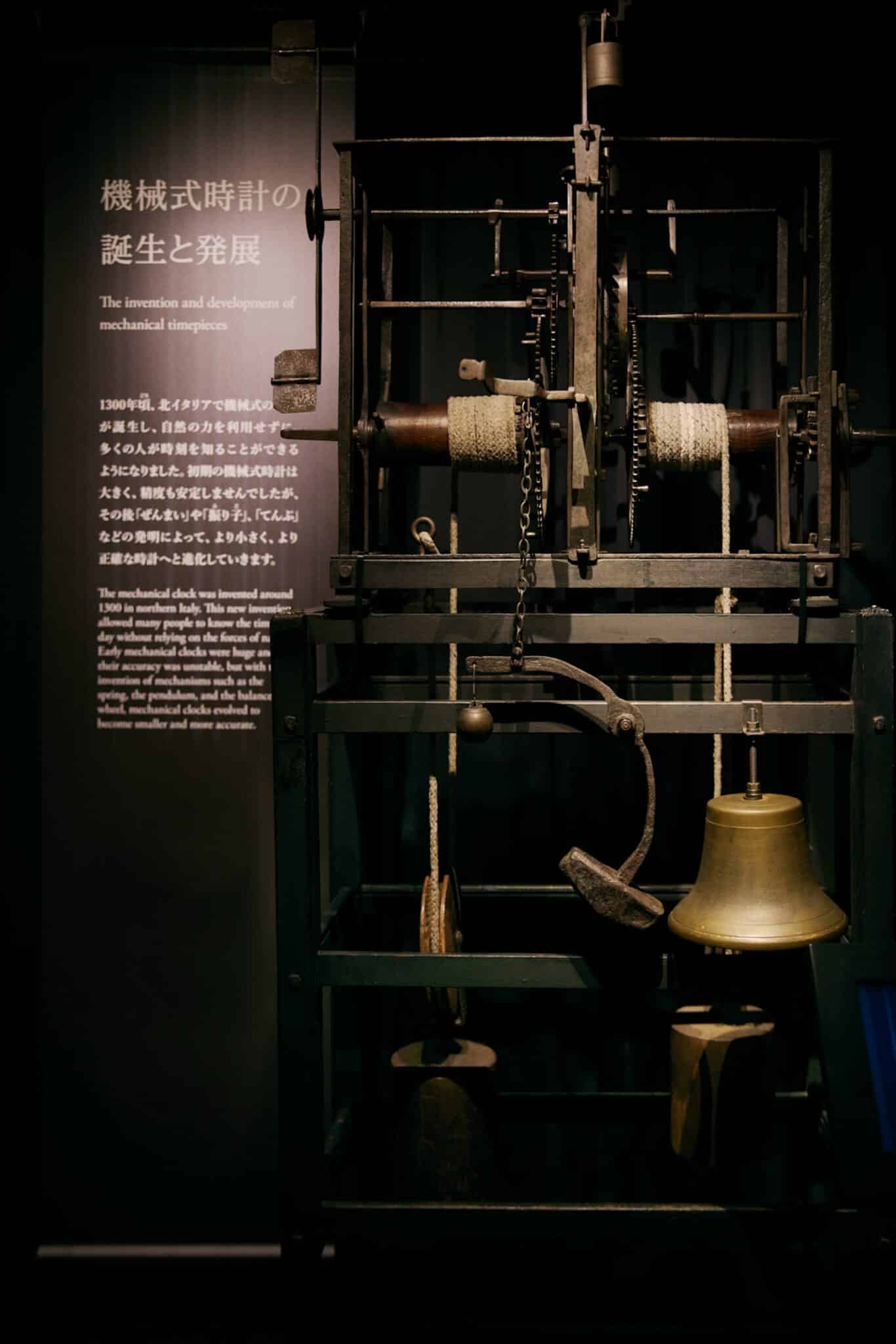
Mechanical clocks were the first to operate independently of natural forces. They are believed to have originated in monasteries and churches, where they were used to signal prayer times by striking bells. The Iron Movement Tower Clock shown here is an authentic piece from around 1500, built on the same mechanism as the oldest surviving mechanical clocks in the world.
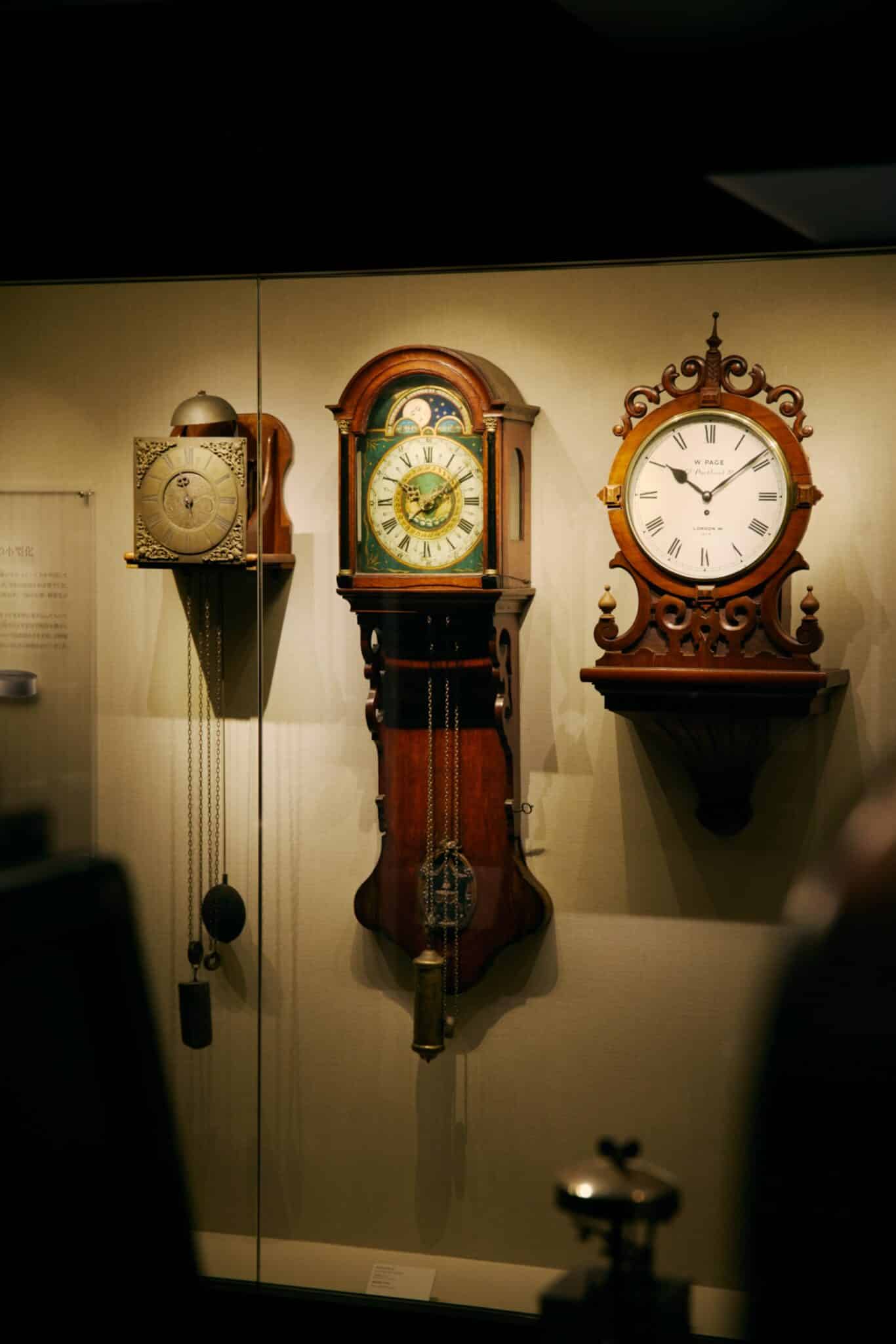
Early mechanical clocks were initially unstable in accuracy, but with the invention of components such as the pendulum, they became capable of operating at a consistent rate. By the time pendulum clocks like the one shown here were established, their accuracy had improved to within just one or two minutes per day. From there, continued miniaturization led to the evolution of the timepieces we know today.
During the Edo period, wadokei (traditional Japanese clocks) developed to suit Japan’s unique timekeeping system.
At the time, ordinary households did not own clocks, so officials would check the time at castle clocks and strike bells at regular intervals.
Edo-period wadokei (traditional Japanese clocks). Pieces such as the Lantern Clock with Double Foliot Balance (right) and a stand clock with double foliot balance and alarm and calendar functions showcase refined designs that reflect a distinctly Japanese aesthetic.
Tanka Poetry (late Edo period, by Kinchōrō Yoshitora). The print depicts a scene in which a wall clock with a single foliot balance is in use.
From the company’s earliest wall clocks to Japan’s first domestically produced wristwatch, and the world’s first quartz wristwatch introduced in 1969, this floor brings together the timepieces that define SEIKO’s legacy.
The fourth floor, titled “Precise Time,” showcases SEIKO’s most representative timepieces while tracing the evolution of its technological development—from mechanical watches to quartz, and even to proprietary mechanisms that combine the strengths of both. One of SEIKO’s greatest strengths lies in its integrated manufacturing system, established early on to develop everything in-house—from movement design to components and materials. This approach has enabled the company to pursue its vision of “creating the watches it truly wants to make” with uncompromising dedication. Even today, only a handful of watchmakers worldwide maintain such a fully integrated production system, from parts manufacturing to final assembly.
The Eight-Day Wall Clock “Hakkaku Onaga” (right), produced by Seikosha in 1908, was awarded a gold medal at the Hanoi Exposition held between 1902 and 1903. It marks the first official international recognition of Seikosha’s timepieces.
The Laurel (right), introduced in 1913 as Japan’s first domestically produced wristwatch, and the Timekeeper (left), the first pocket watch manufactured by Seikosha. In 2014, the Laurel was designated a “Mechanical Engineering Heritage” item by the Japan Society of Mechanical Engineers.
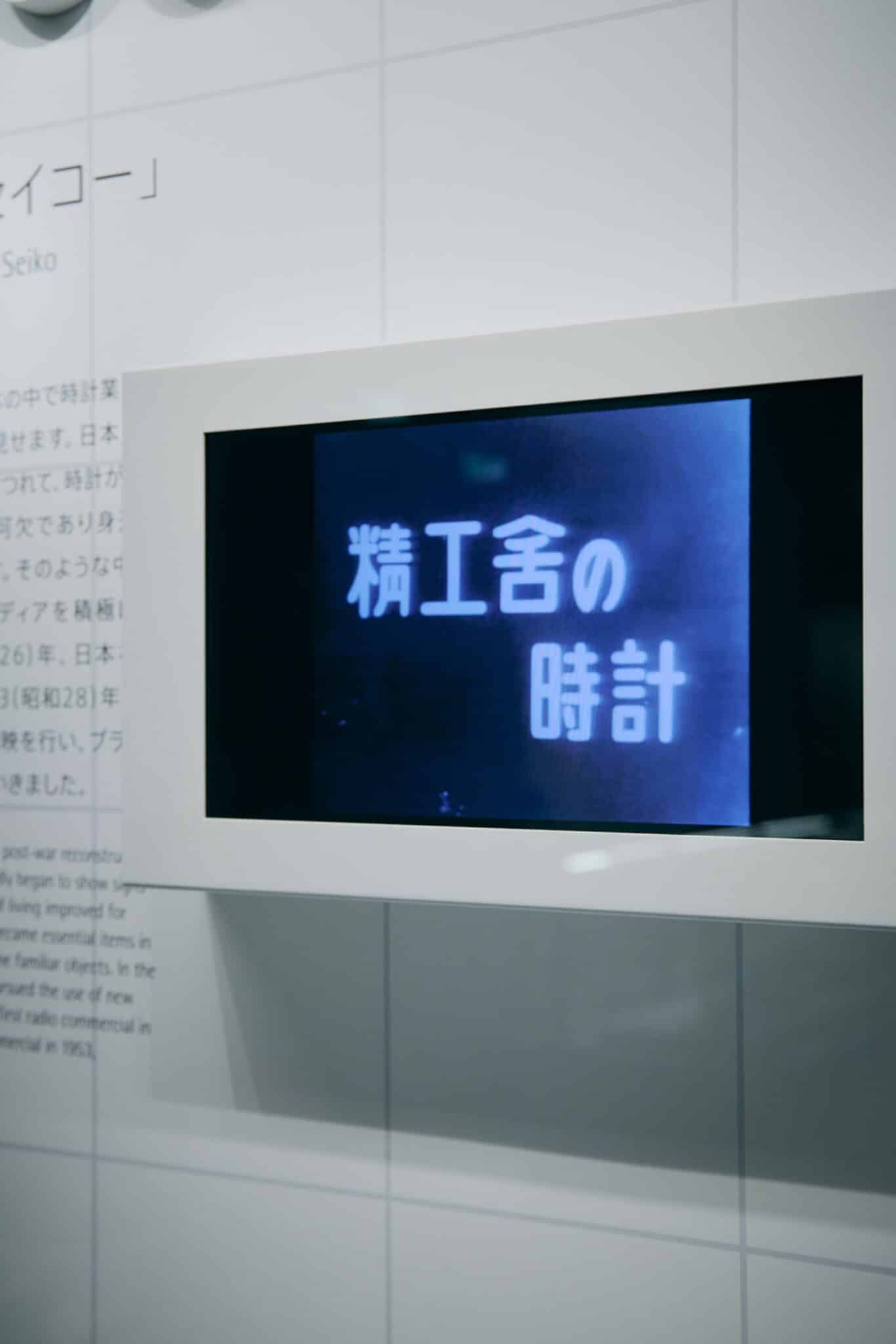
By the late 1940s, wristwatches had become increasingly common in everyday life. In 1953, Japan’s first television commercial was broadcast—marking a turning point as Japanese-made watches began attracting international attention.
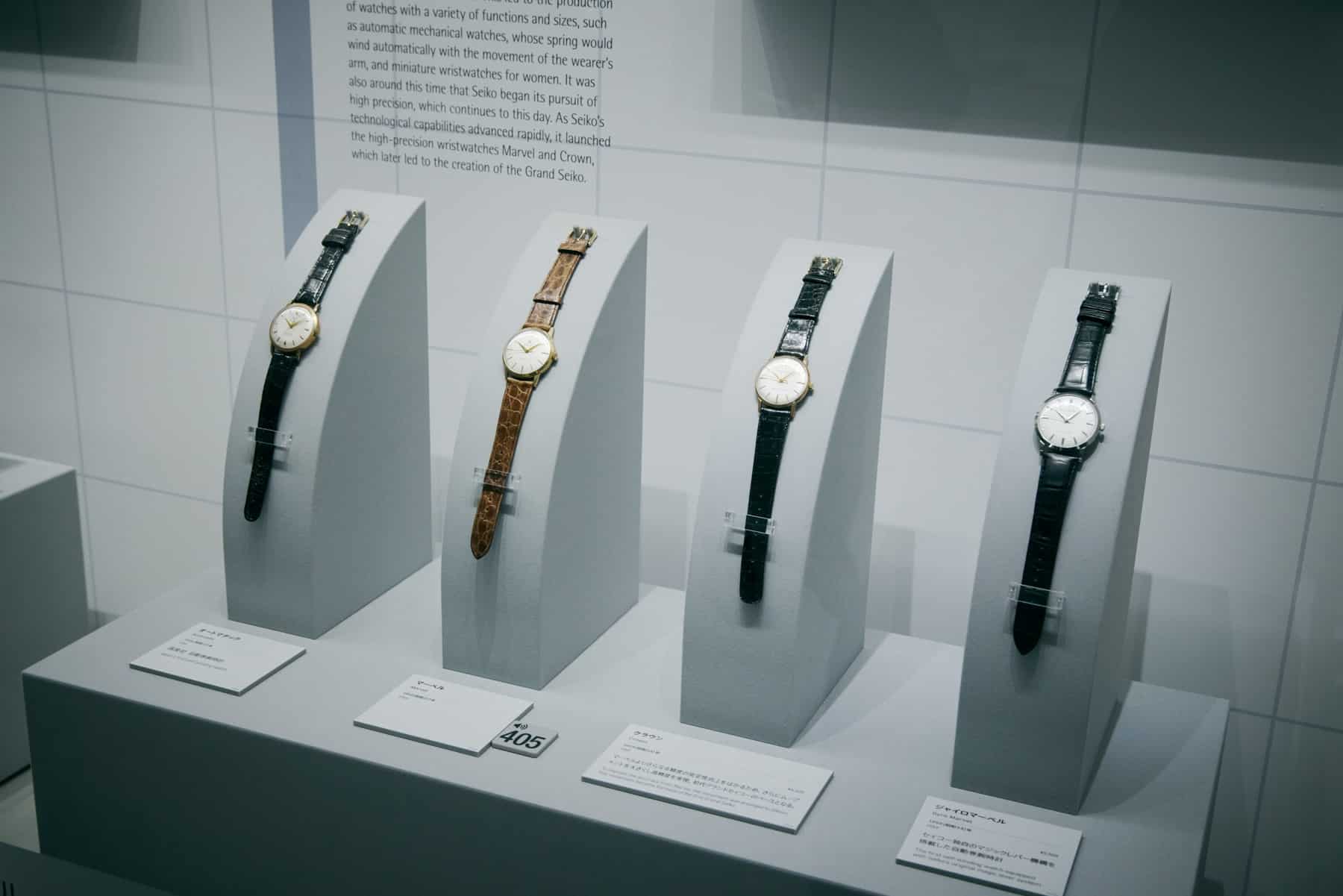
By the late 1950s, further miniaturization and technological advances—such as the development of automatic winding mechanisms—accelerated innovation. In 1959, highly accurate wristwatches began to emerge, including the Crown (third from right), which would later serve as the foundation for what is now the independent brand Grand Seiko.
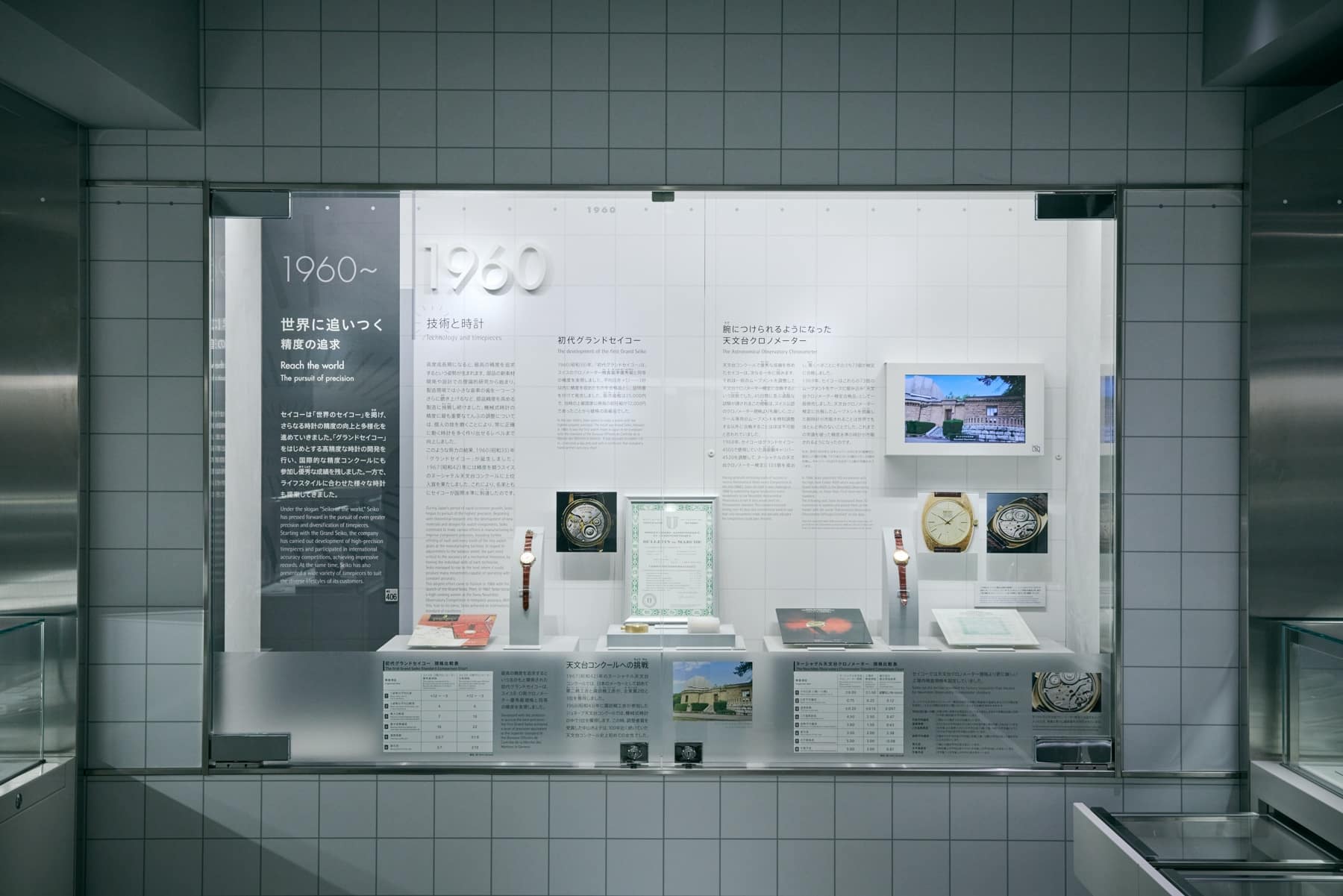
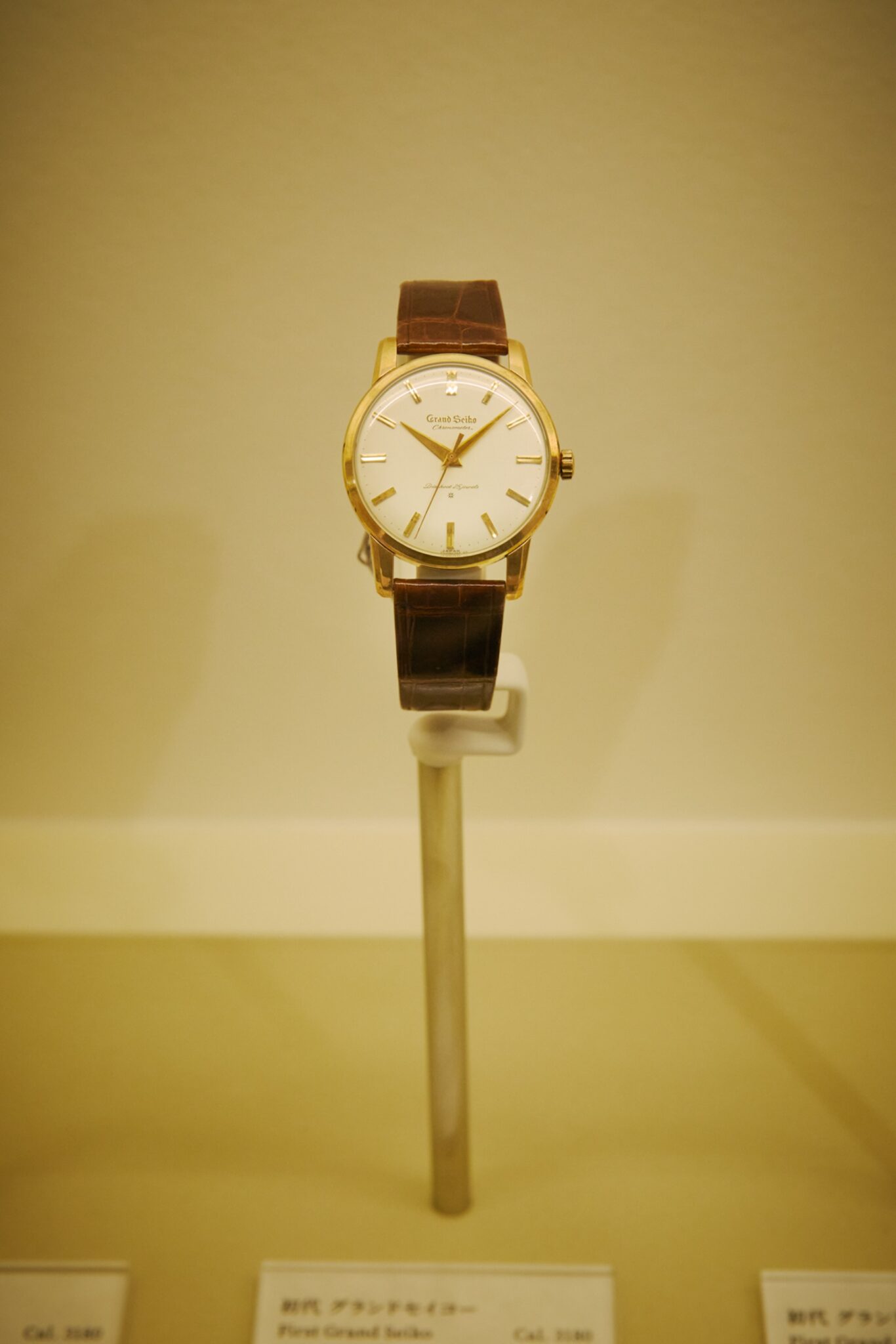
In 1960, the first Grand Seiko was introduced with the ambition of creating one of the world’s finest mechanical watches. Prior to its release, it underwent in-house testing to the same standards as Swiss chronometer certification, achieving a level of precision equivalent to the highest grade of timekeeping. It was released with an official certificate attesting to its accuracy.
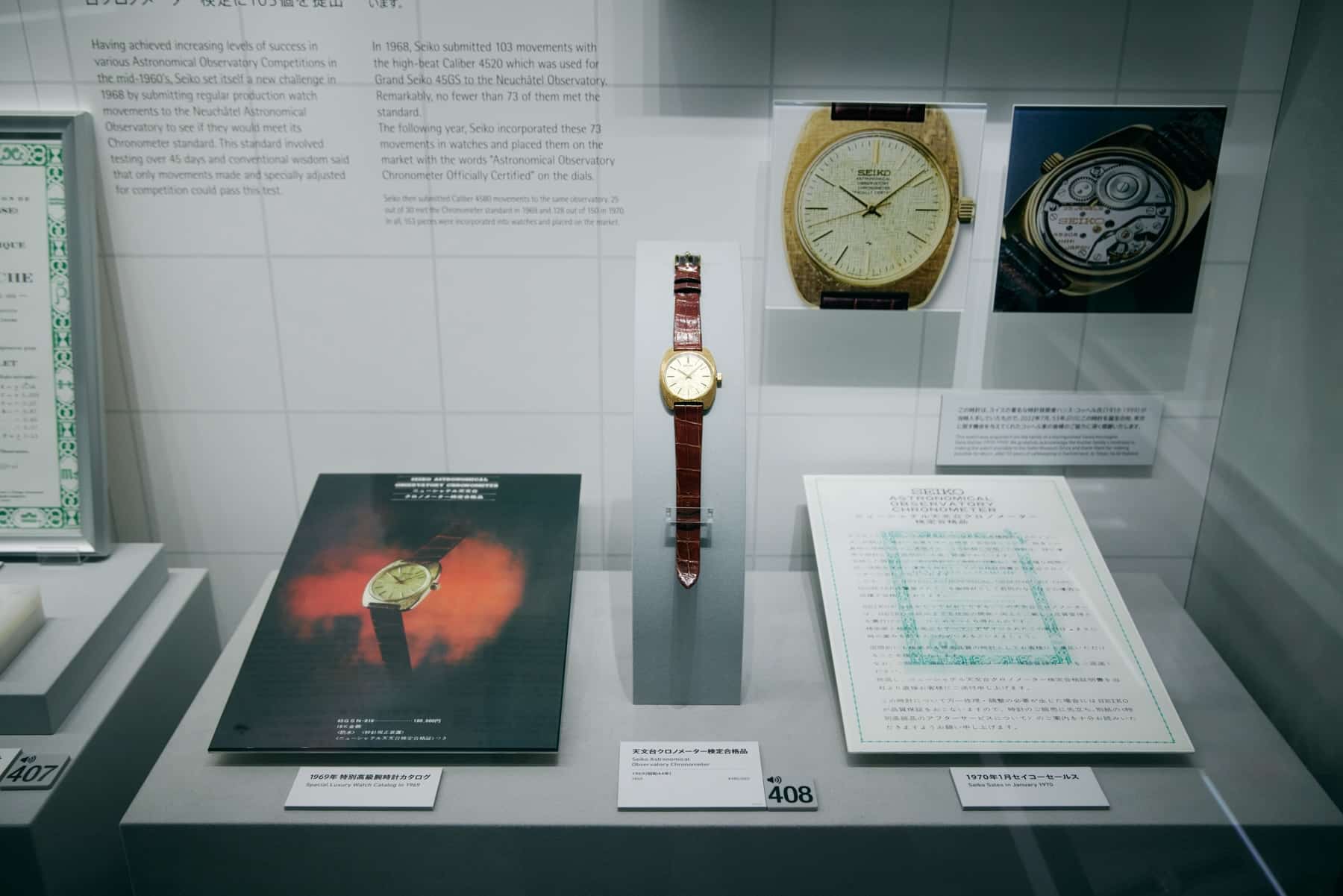
Following the debut of the first Grand Seiko in 1960, the pursuit of ever-greater precision continued.
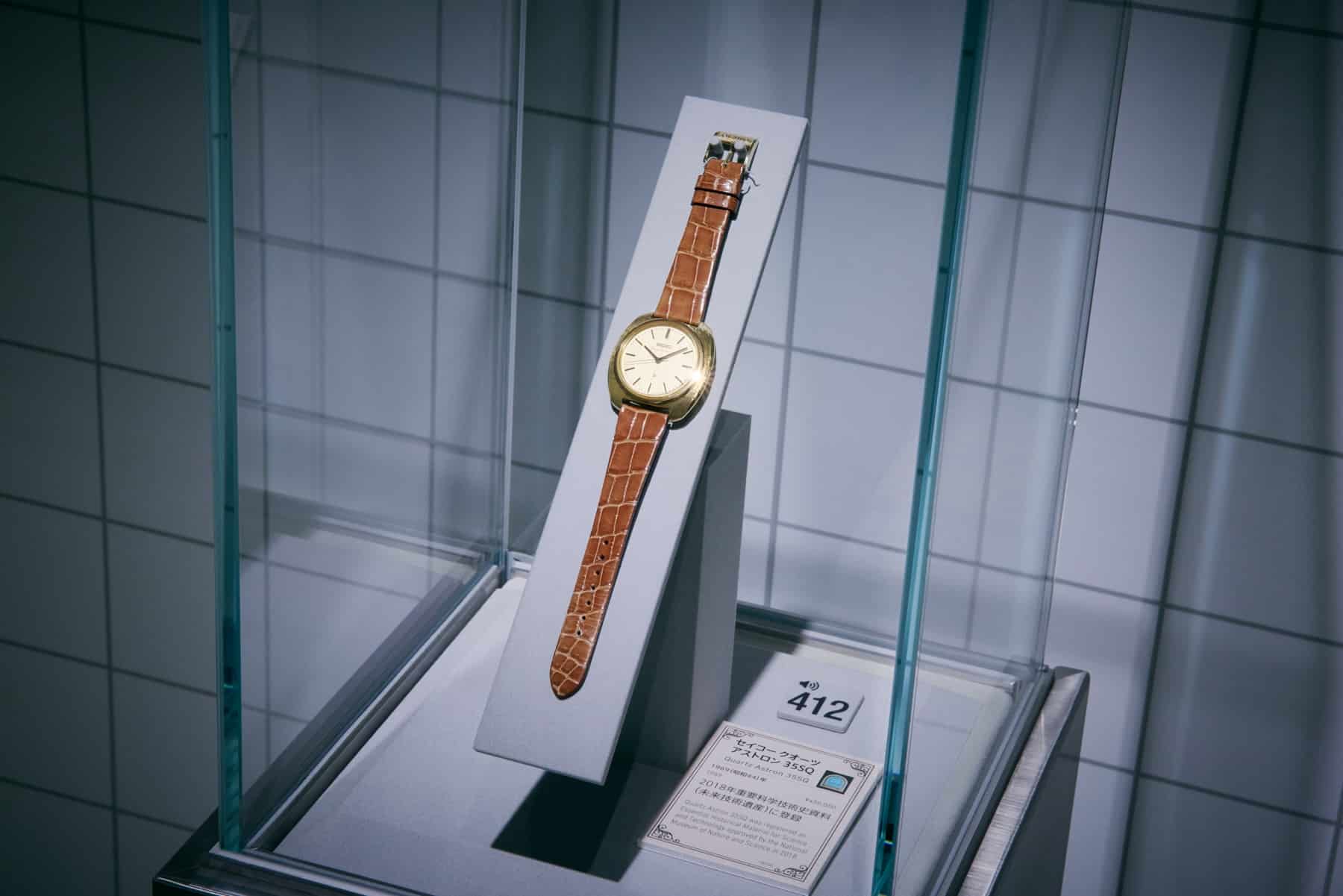
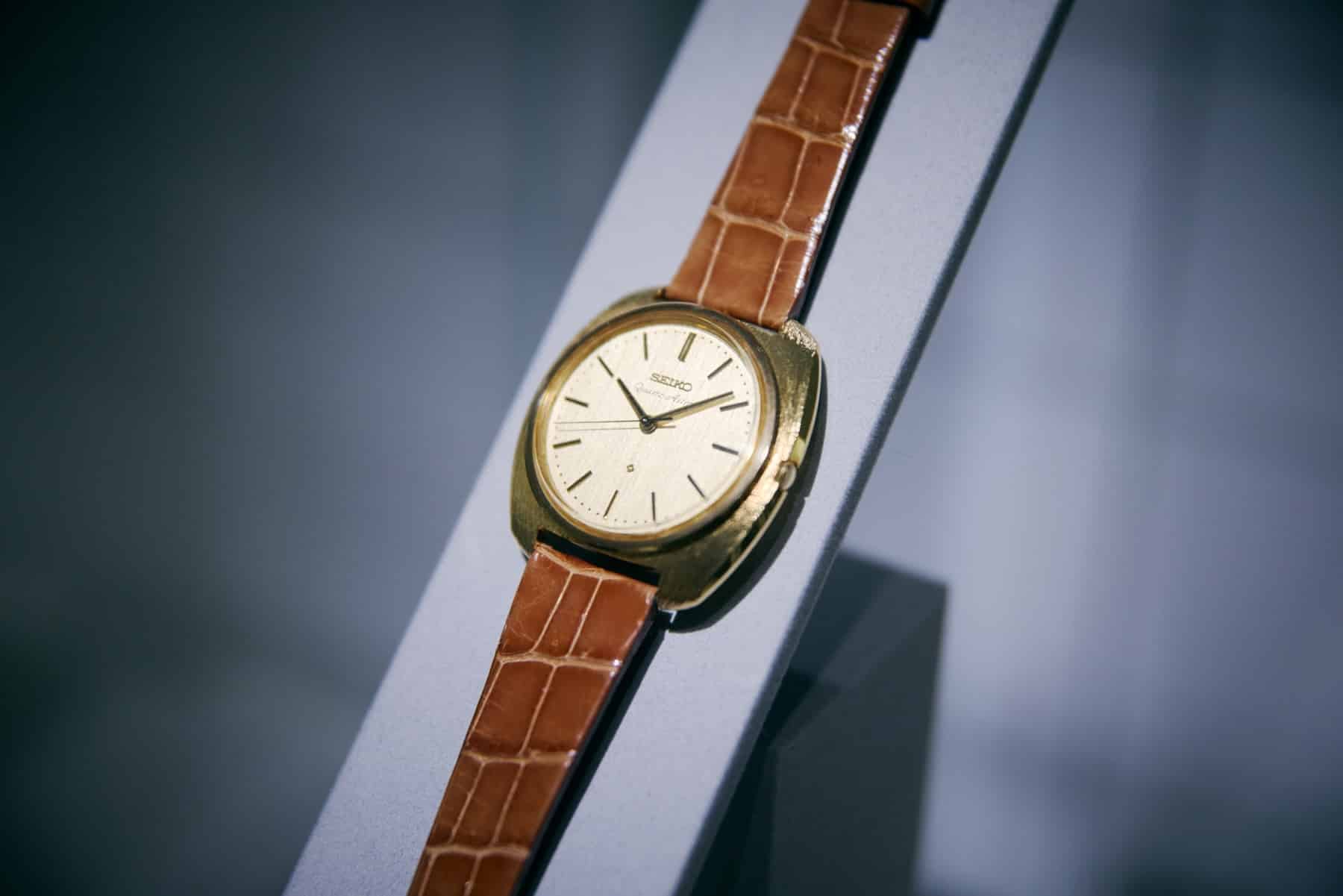
In 1969, SEIKO introduced the Quartz Astron 35SQ, the world’s first quartz wristwatch. Today, approximately 97% of wristwatches produced worldwide are quartz-powered.
By making the patents for technologies developed for the Quartz Astron 35SQ publicly available, SEIKO helped drive the global spread of quartz wristwatches. Innovations such as the tuning fork-shaped quartz crystal oscillator and the open-type step motor have since become standard in modern quartz watches.
The 5th floor, “A Variety of Time,” brings together a wide range of timepieces created by SEIKO and is a particularly popular area among younger visitors.
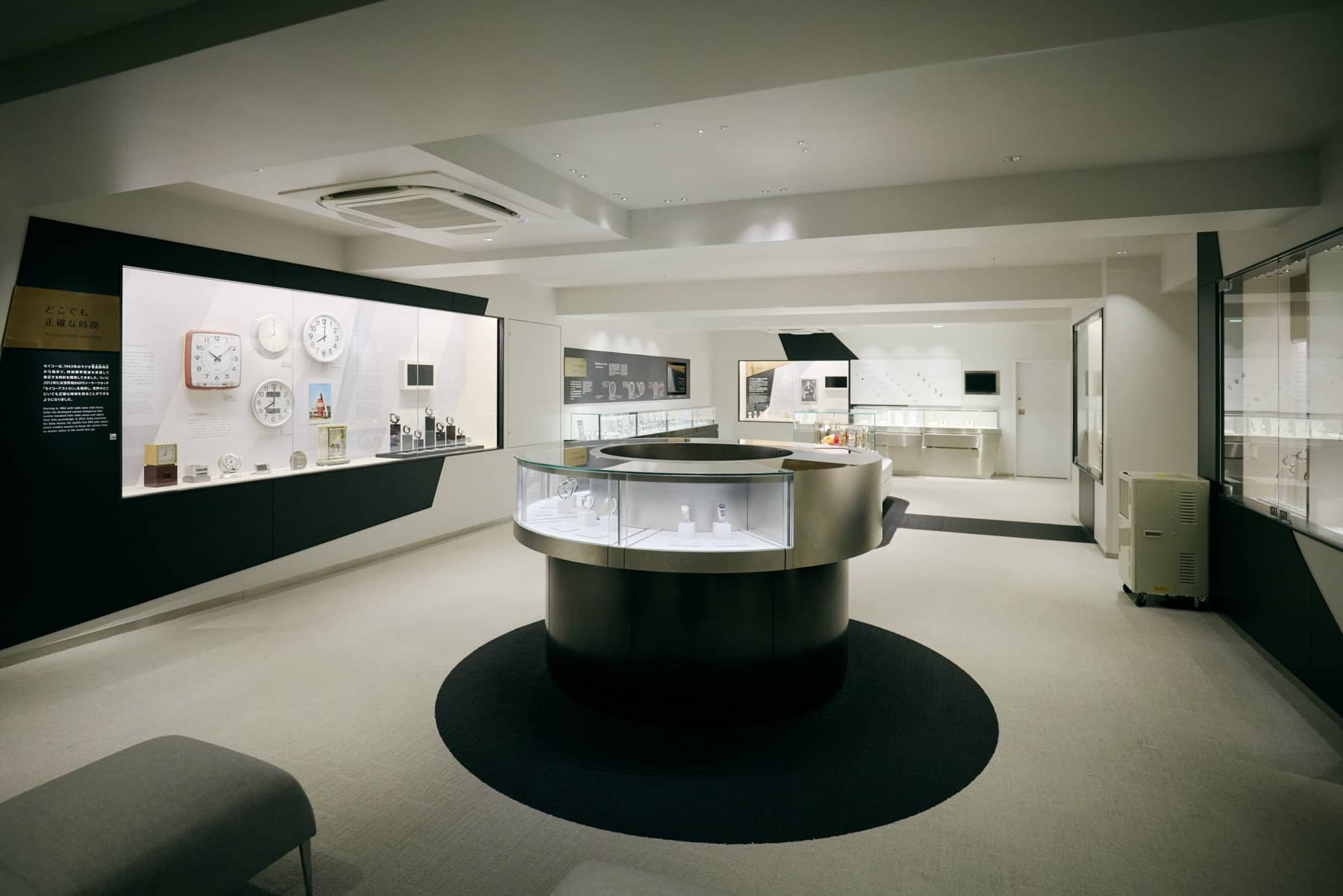
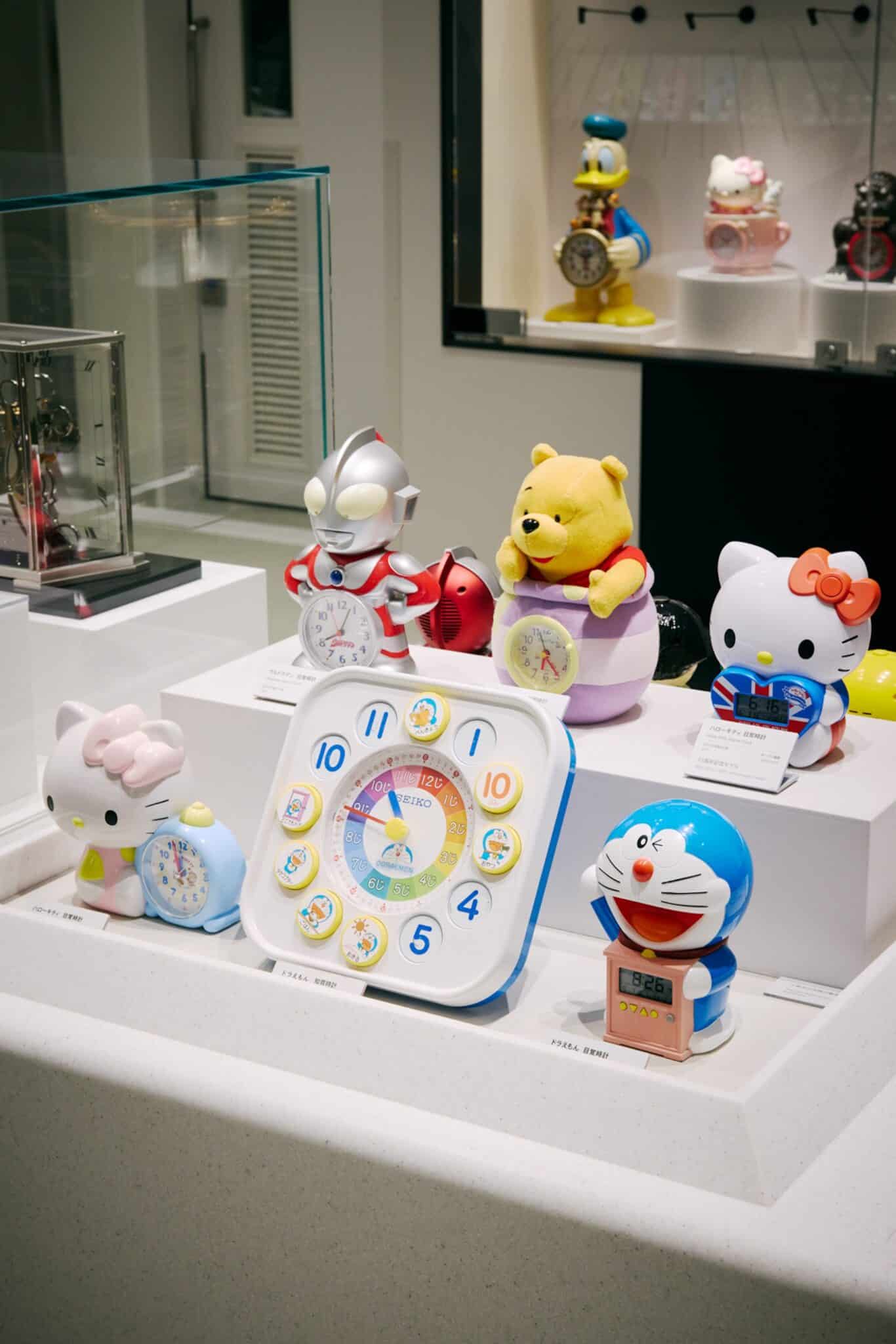
The fifth floor, titled “A Variety of Time,” offers a vivid glimpse into the diversity of SEIKO’s creations—from elegant jewelry watches to playful character designs. The displays range from battery-powered models and GPS-equipped watches to approachable designs for children and fashion-forward pieces. Also featured are highly intricate and refined timepieces that reflect Japanese aesthetics, crafted by skilled artisans. Since introducing the world’s first quartz watch in 1969, SEIKO has continued to expand its approach to watchmaking—not only pursuing functionality, but also embracing fashion, playfulness, and artistic expression. This floor reveals how timepieces have evolved to reflect a wide range of values and lifestyles.
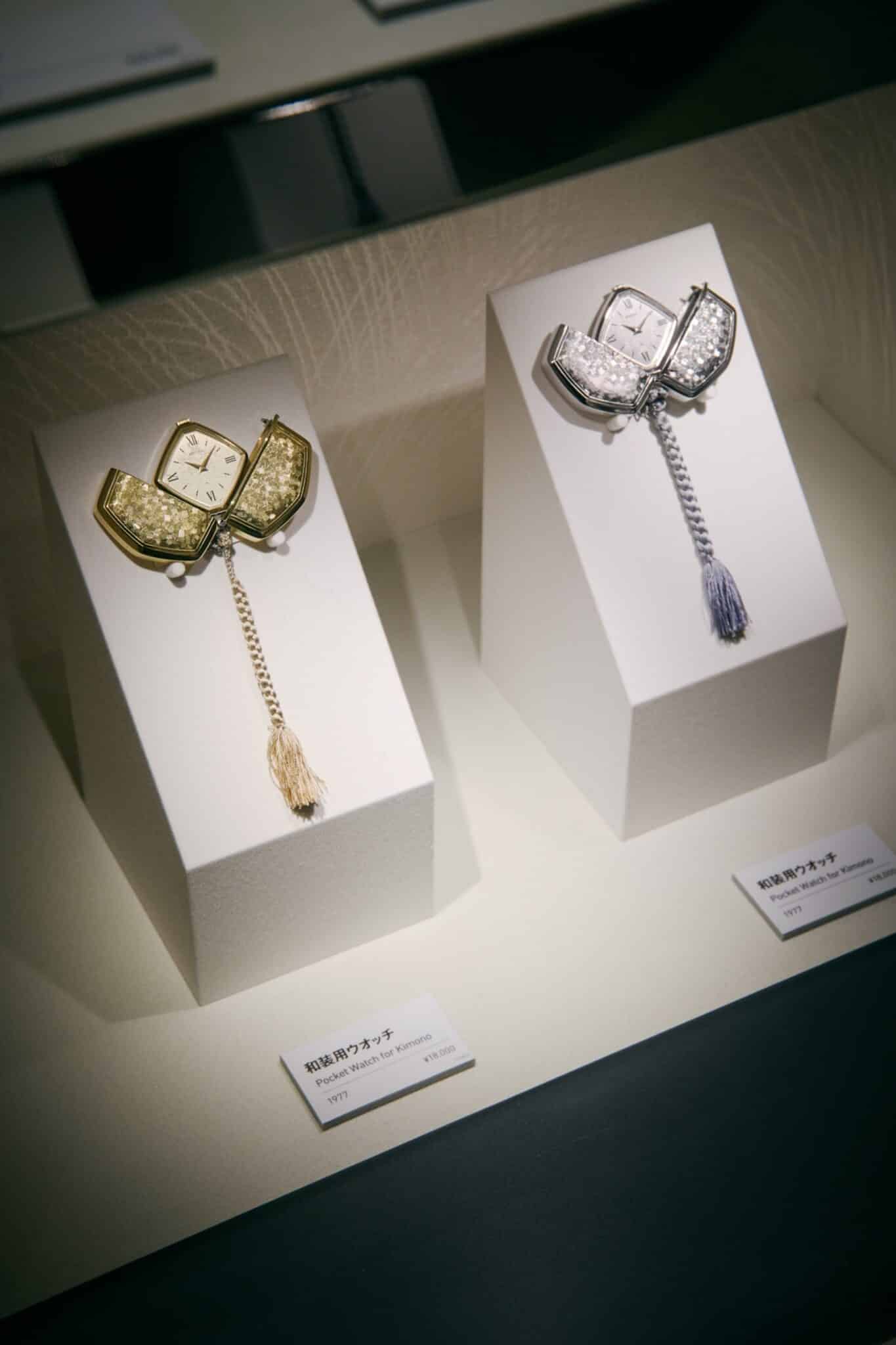
Watches designed to complement traditional Japanese attire, such as the Waso Watch released in 1977, highlight timepieces as a fashion element.
From the 1980s onward, quartz watches became widely available at affordable prices, giving rise to playful designs, including collaborations with popular characters. It was during this period that watches began to combine practicality with a sense of fun.
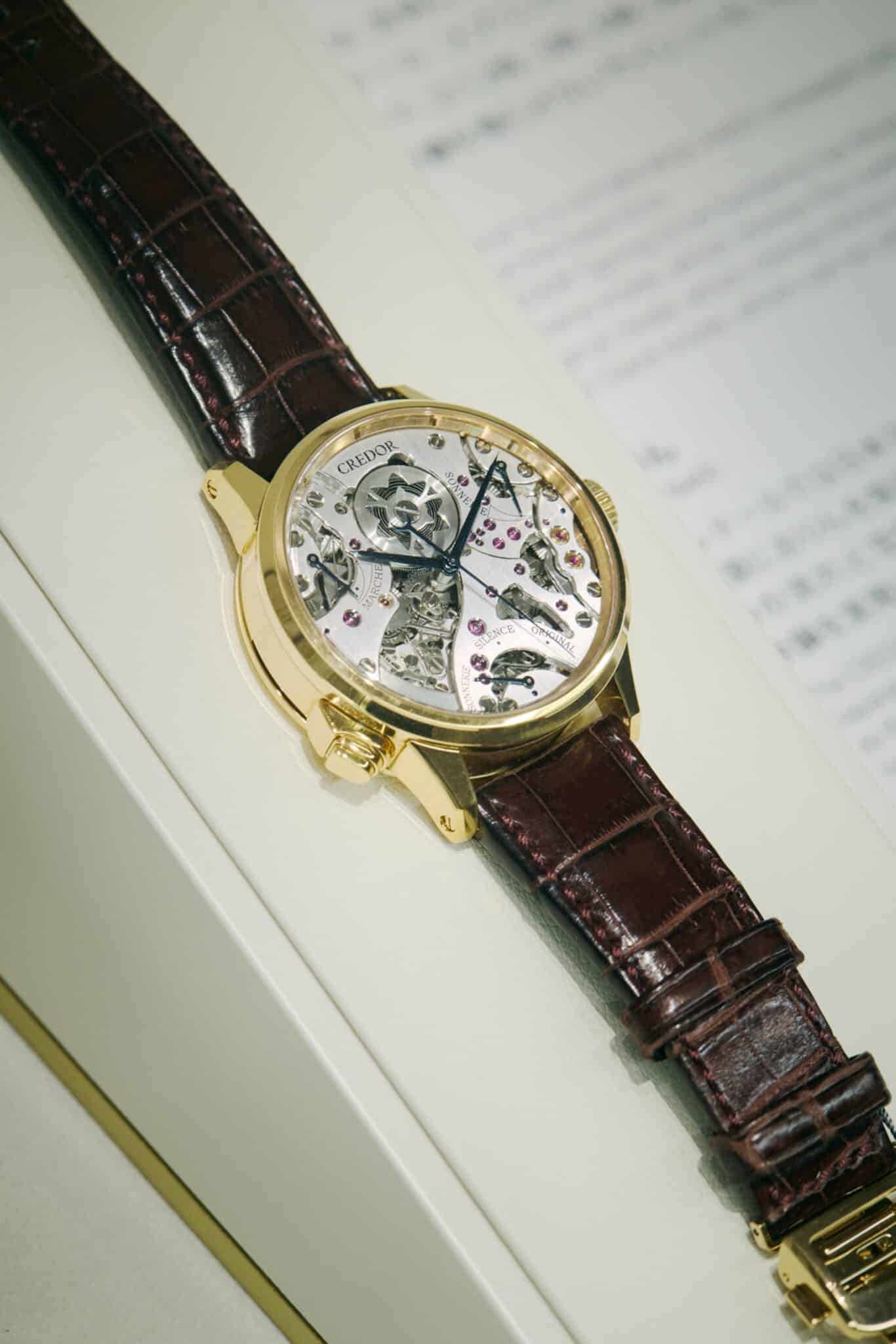
The Credor Spring Drive Sonnerie, introduced in 2006. “Sonnerie,” a French term meaning “to ring,” refers in horology to a mechanism that automatically chimes at set intervals.
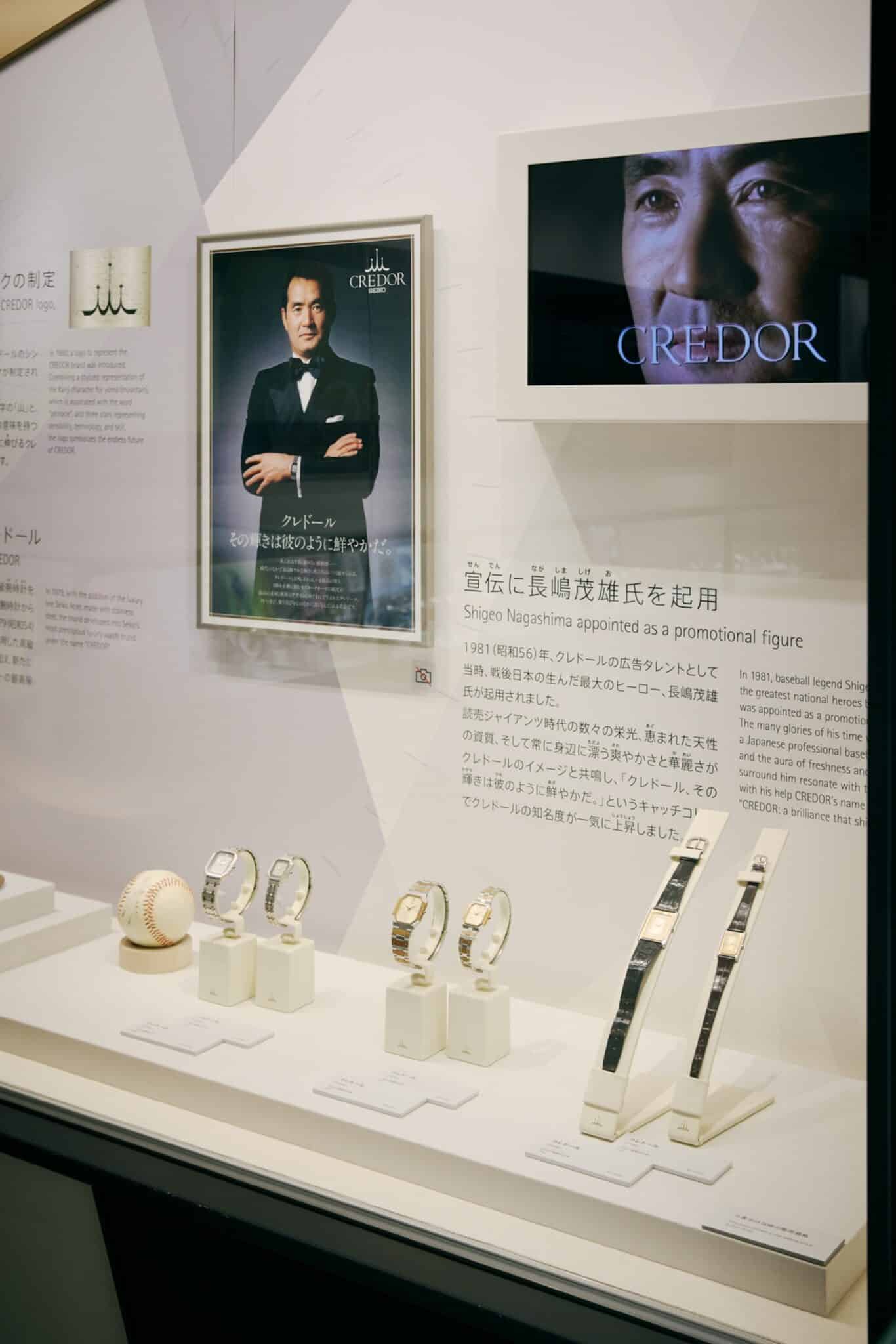
Founded in 1974, Credor takes its name from a French phrase meaning “the pinnacle of gold.” The brand embodies a strong commitment to achieving the highest standards of quality and beauty in Japanese watchmaking, through creations ranging from ultra-thin dress watches to highly intricate, artisanal timepieces. For many years, the brand’s advertising featured Shigeo Nagashima, one of Japan’s most iconic baseball figures.
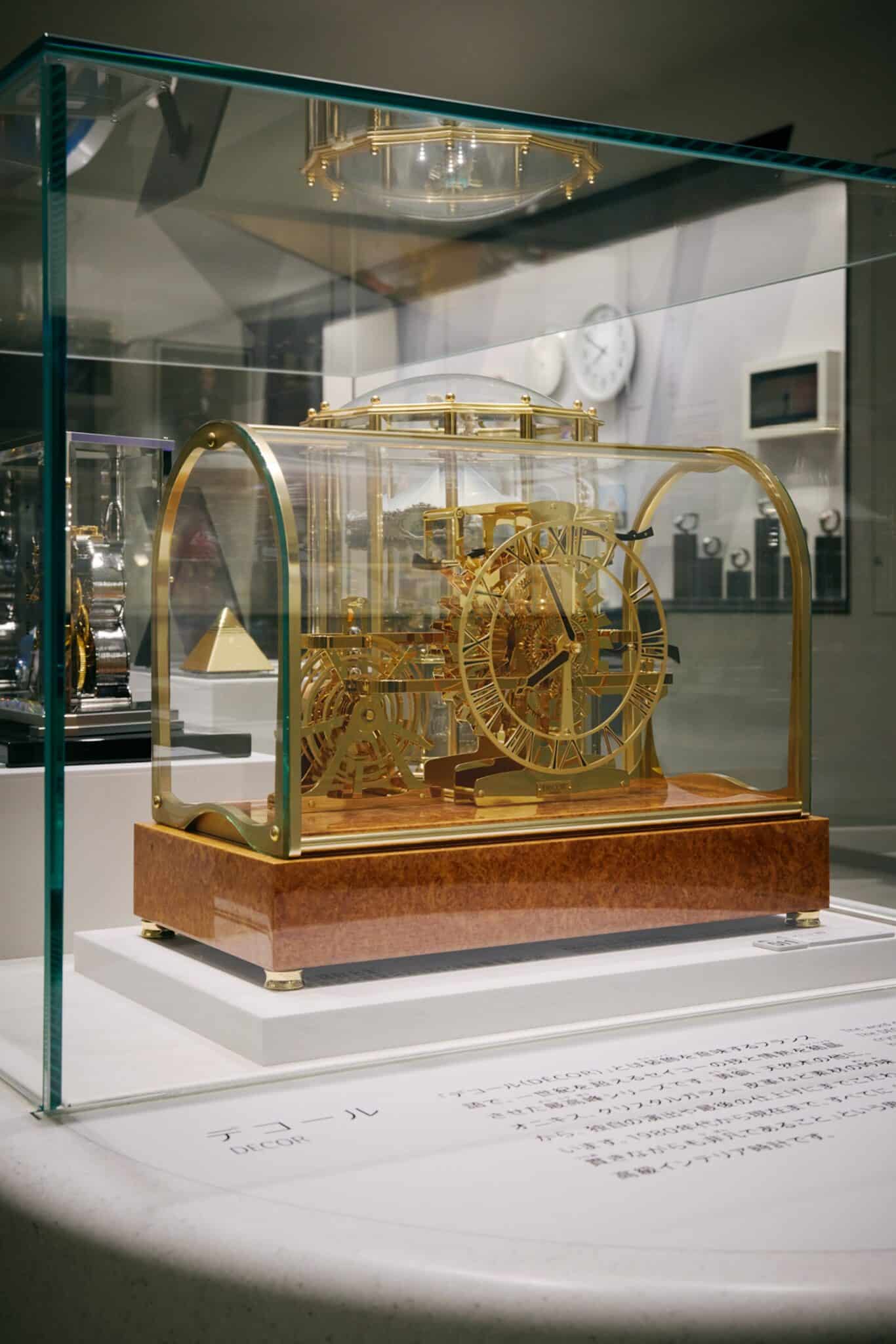
Also on display is Yukyu, a luxury table clock released in 2020, which recreates and reinterprets the mechanism of an ancient Chinese astronomical clock tower from the Northern Song dynasty over 900 years ago—often regarded as a precursor to modern mechanical clocks. Each piece is assembled by skilled artisans at SEIKO’s dedicated clock atelier.
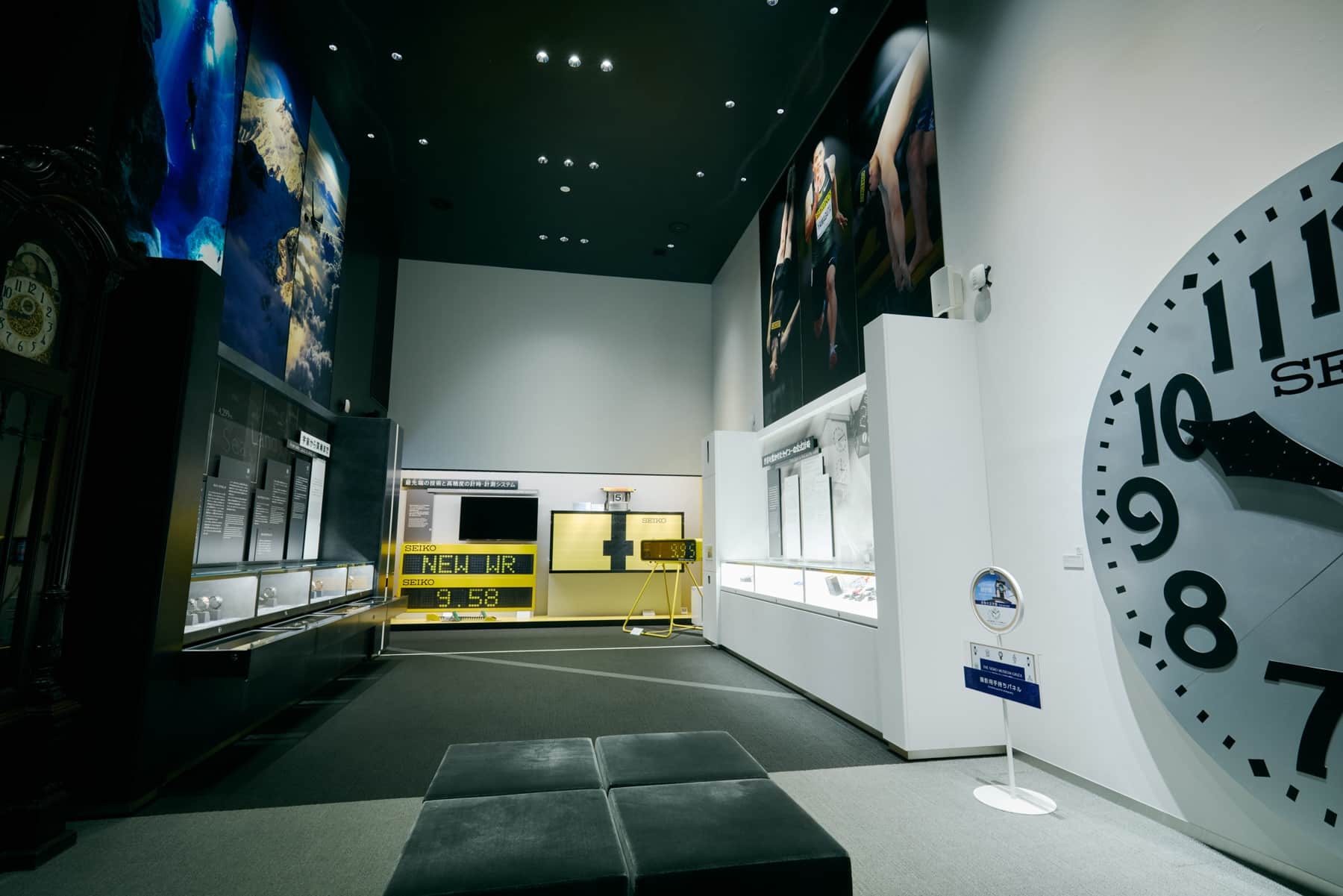
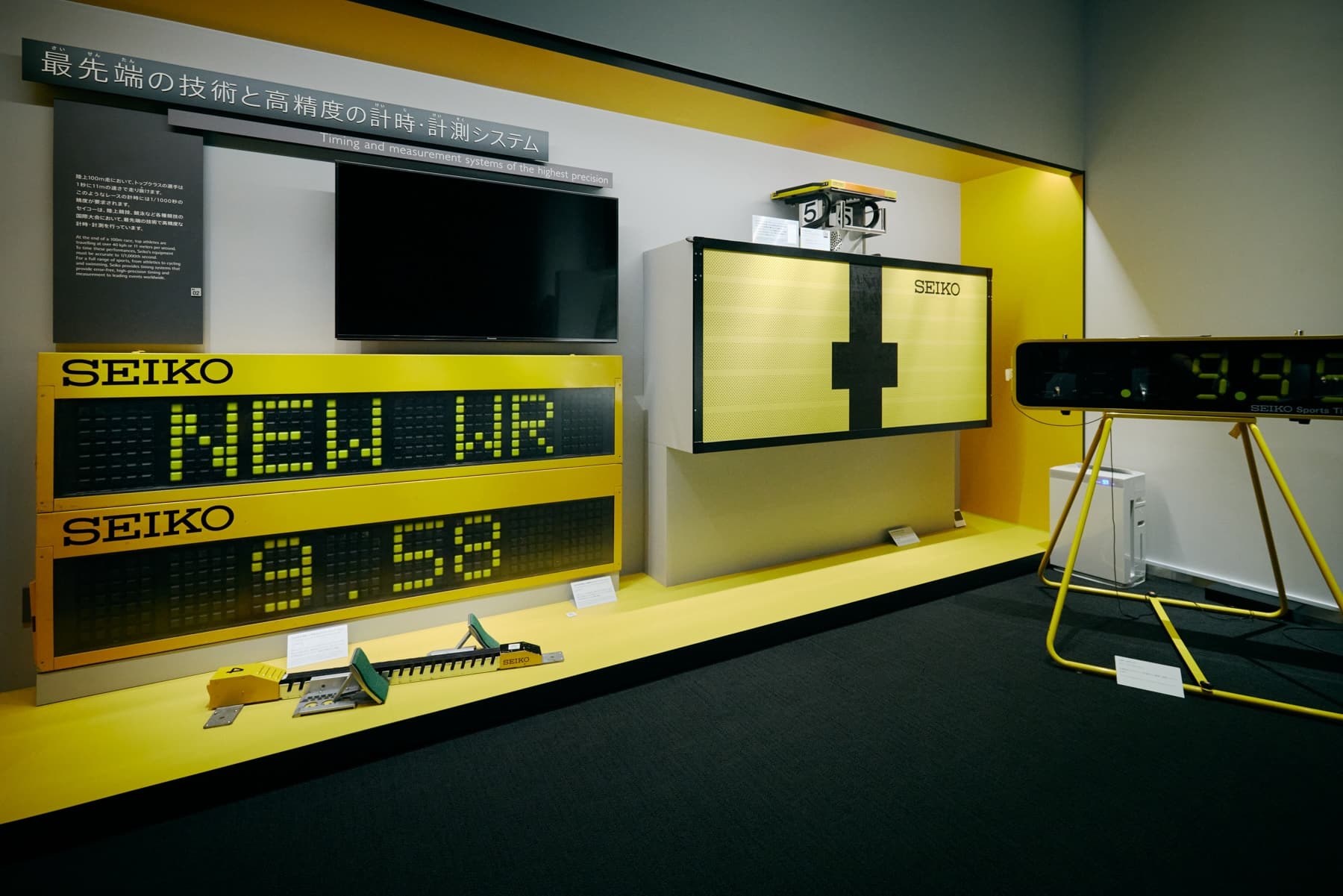
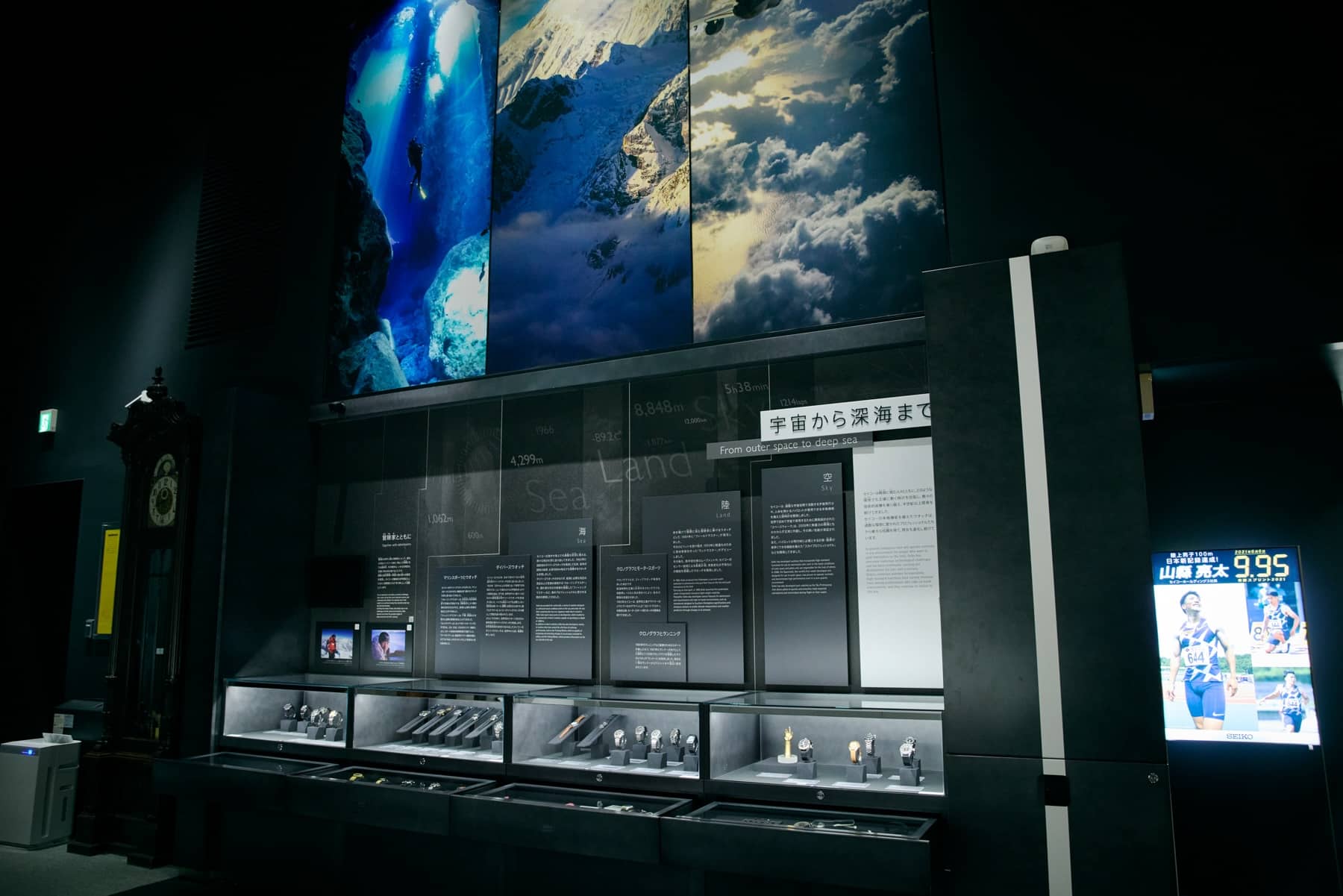
B1, “Extreme Time,” features timing equipment actually used at the World Athletics Championships, alongside specialized watches designed for use in extreme environments such as space and the deep sea.
The development of precision timing instruments represents another key facet of SEIKO’s identity. The basement floor, titled “Extreme Time,” showcases a wide range of timing devices developed by the company, alongside watches designed to perform in demanding environments such as space and the deep sea. Since the 1960s, SEIKO has been actively advancing the development of timing instruments, beginning with its role at the 1964 Tokyo Olympics. From 1987 to the present, it has served as the official timer for World Athletics events, supporting athletes at major international competitions. In parallel, SEIKO has continued to create watches capable of withstanding extreme conditions, earning the trust of astronauts, divers, and mountaineers alike. This floor offers insight into the company’s enduring pursuit of precision and its history of technological challenge.
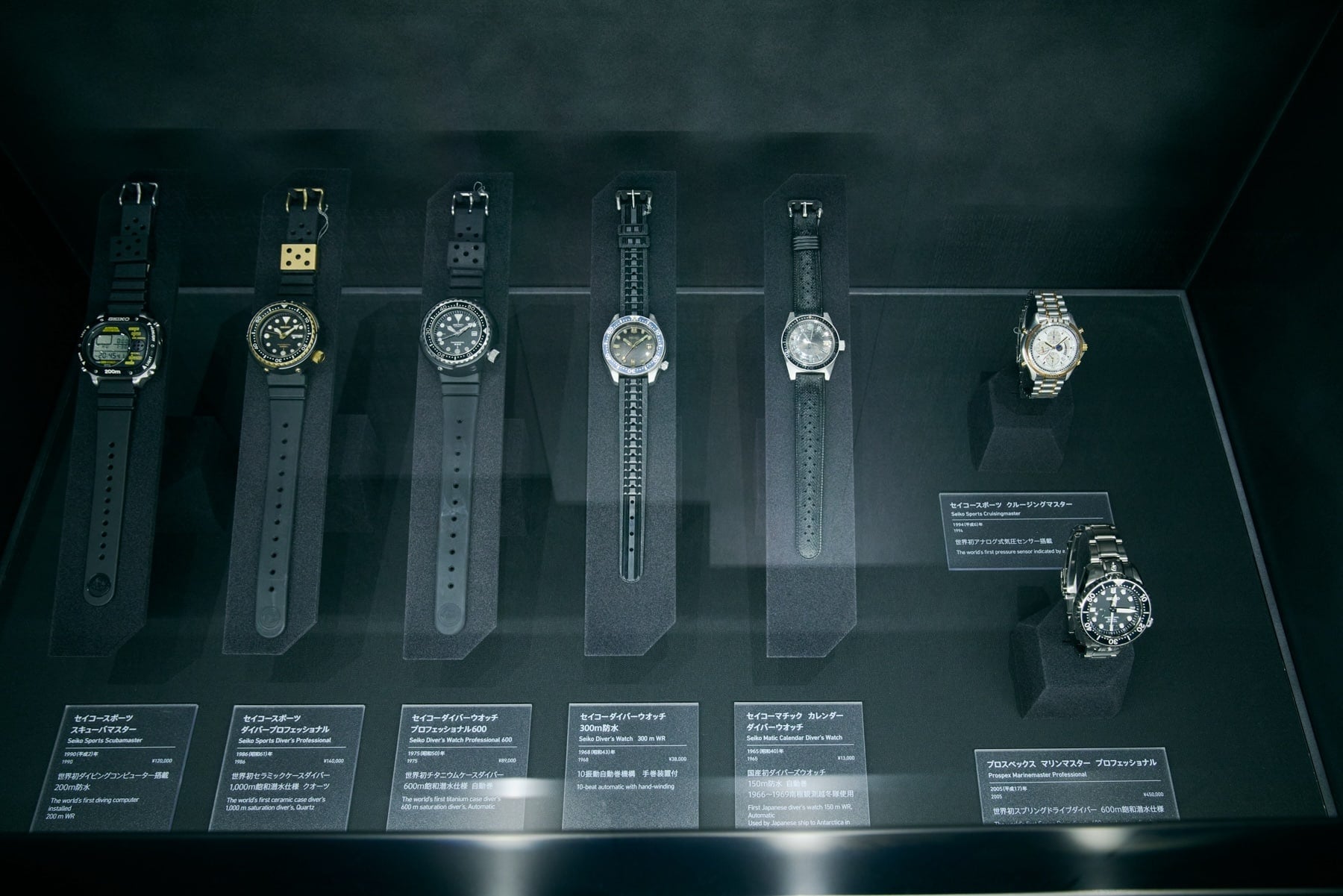
After creating Japan’s first 150m air-diving watch in 1965, SEIKO continued its development efforts, inspired in part by feedback from professional divers. Seven years later, it introduced the Seiko Diver’s Watch Professional 600 (third from left), the world’s first 600m saturation-diving watch featuring a titanium case. The exterior alone incorporates more than 20 patented innovations.
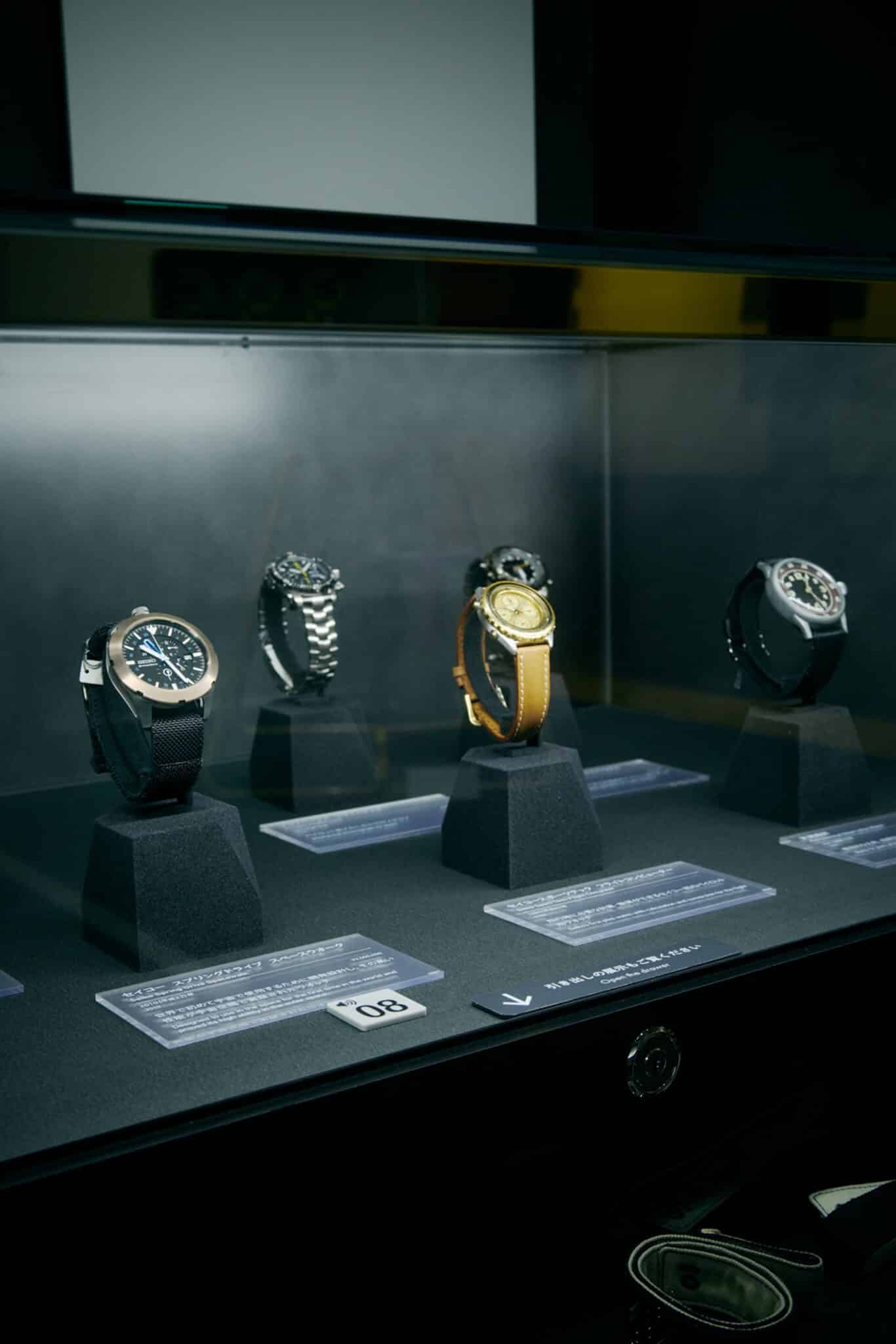
Today, SEIKO is recognized as a leading authority in divers’ watches. For more than half a century, the company has pursued relentless trial and error in developing timepieces capable of withstanding extreme environments—from outer space to the deep sea—while maintaining precise timekeeping. Their rugged designs embody that dedication and technical expertise.
After creating Japan’s first 150m air-diving watch in 1965, SEIKO continued its development efforts, inspired in part by feedback from professional divers. Seven years later, it introduced the Seiko Diver’s Watch Professional 600 (third from left), the world’s first 600m saturation-diving watch featuring a titanium case. The exterior alone incorporates more than 20 patented innovations.
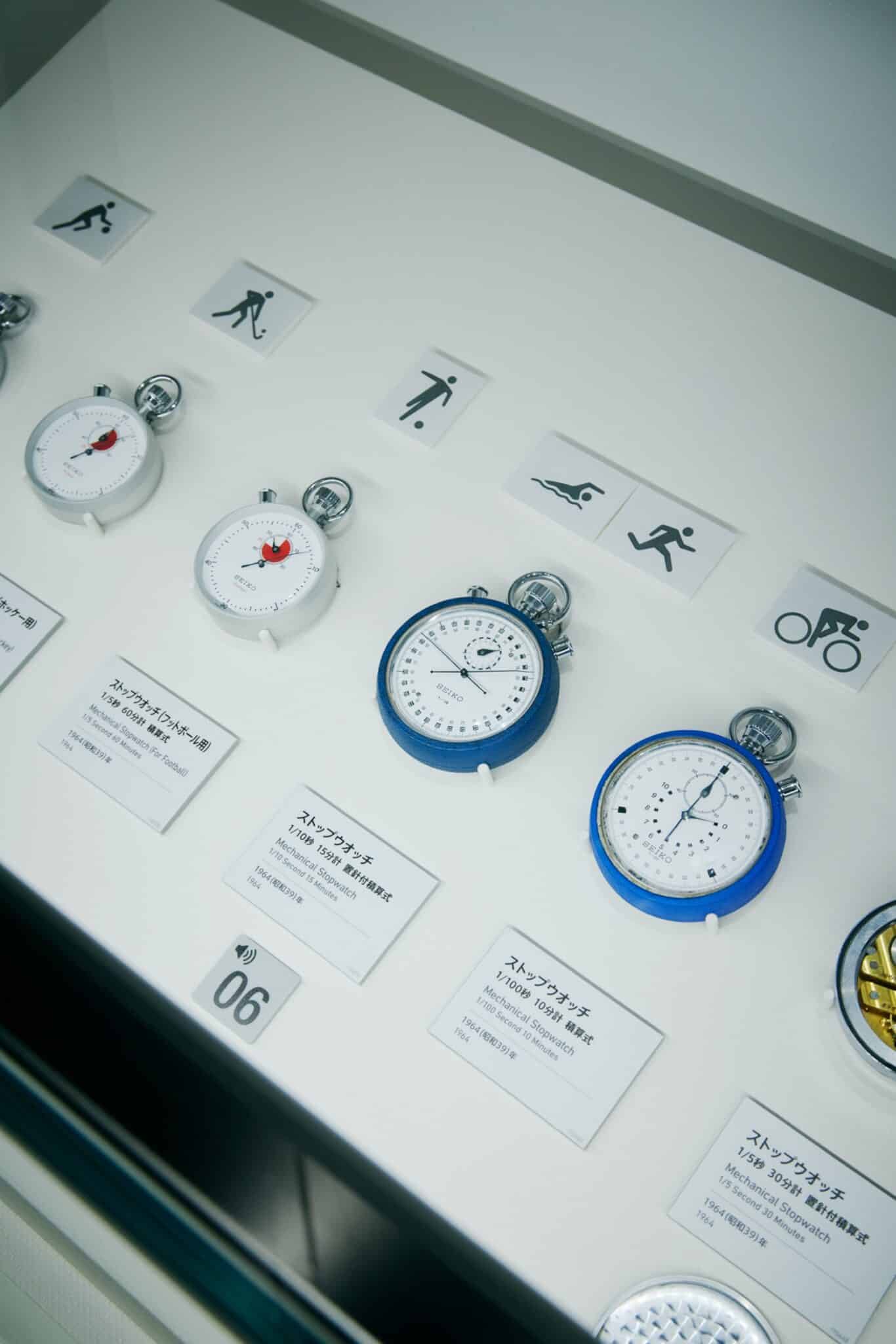
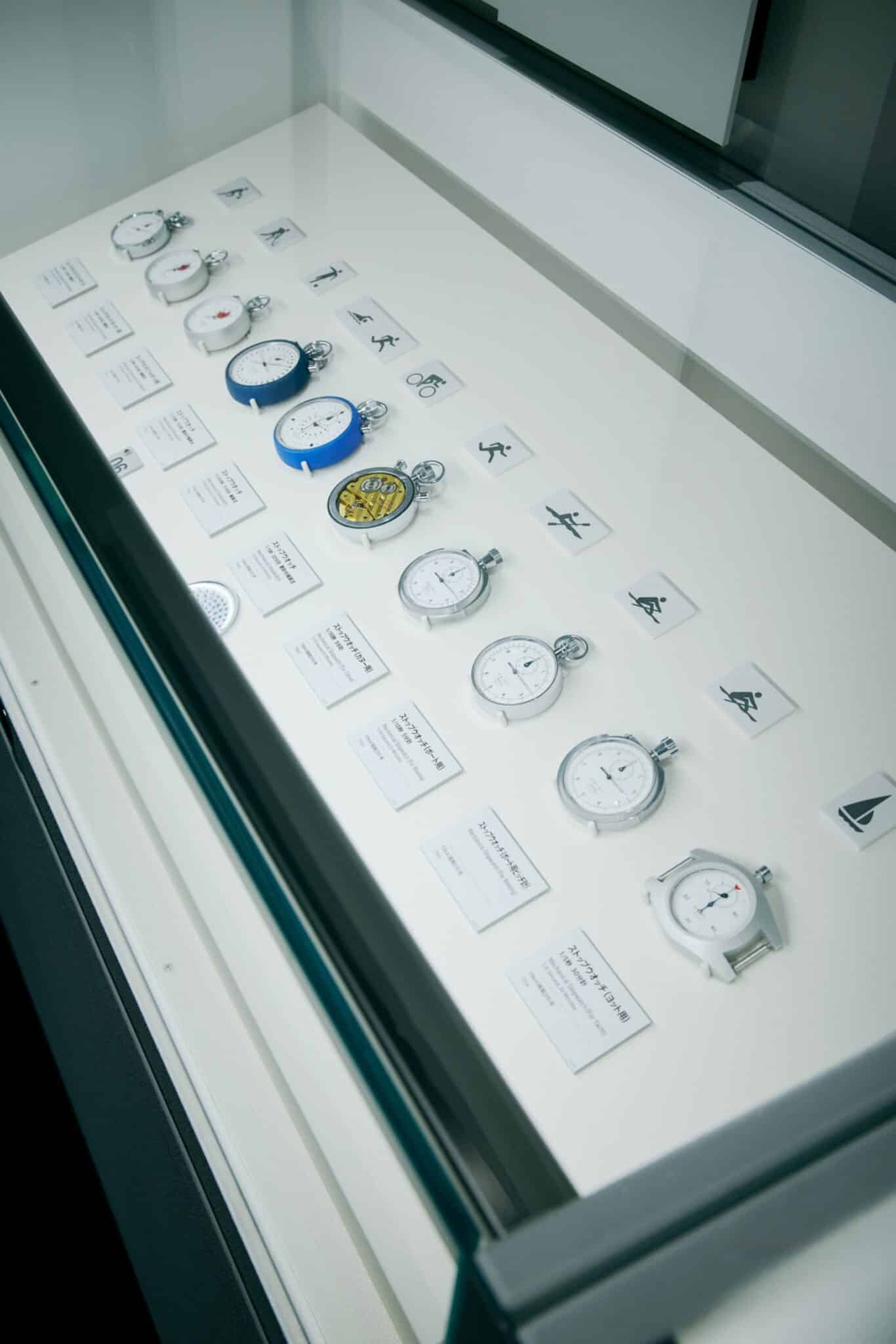
At international sporting events in the 1960s, when SEIKO began focusing on the development of timing instruments, there were no mechanical stopwatches capable of precise measurement. Using multiple devices inevitably led to discrepancies. After identifying the cause within their internal mechanisms, SEIKO introduced a stopwatch in 1962 capable of measuring time accurately to one-tenth of a second.
Stopwatches used at the 1964 Tokyo Olympics, including a 1/10-second, 15-minute model with a split-second hand (fourth from left), are displayed alongside pictograms representing the events in which they were used.
The Seiko Spring Drive Spacewalk (far left), the world’s first watch designed specifically for extravehicular activity in space. Powered by a mainspring rather than a battery, it eliminates concerns about battery failure in the extreme temperature fluctuations of space. Its performance was proven through actual use by astronauts aboard the International Space Station.
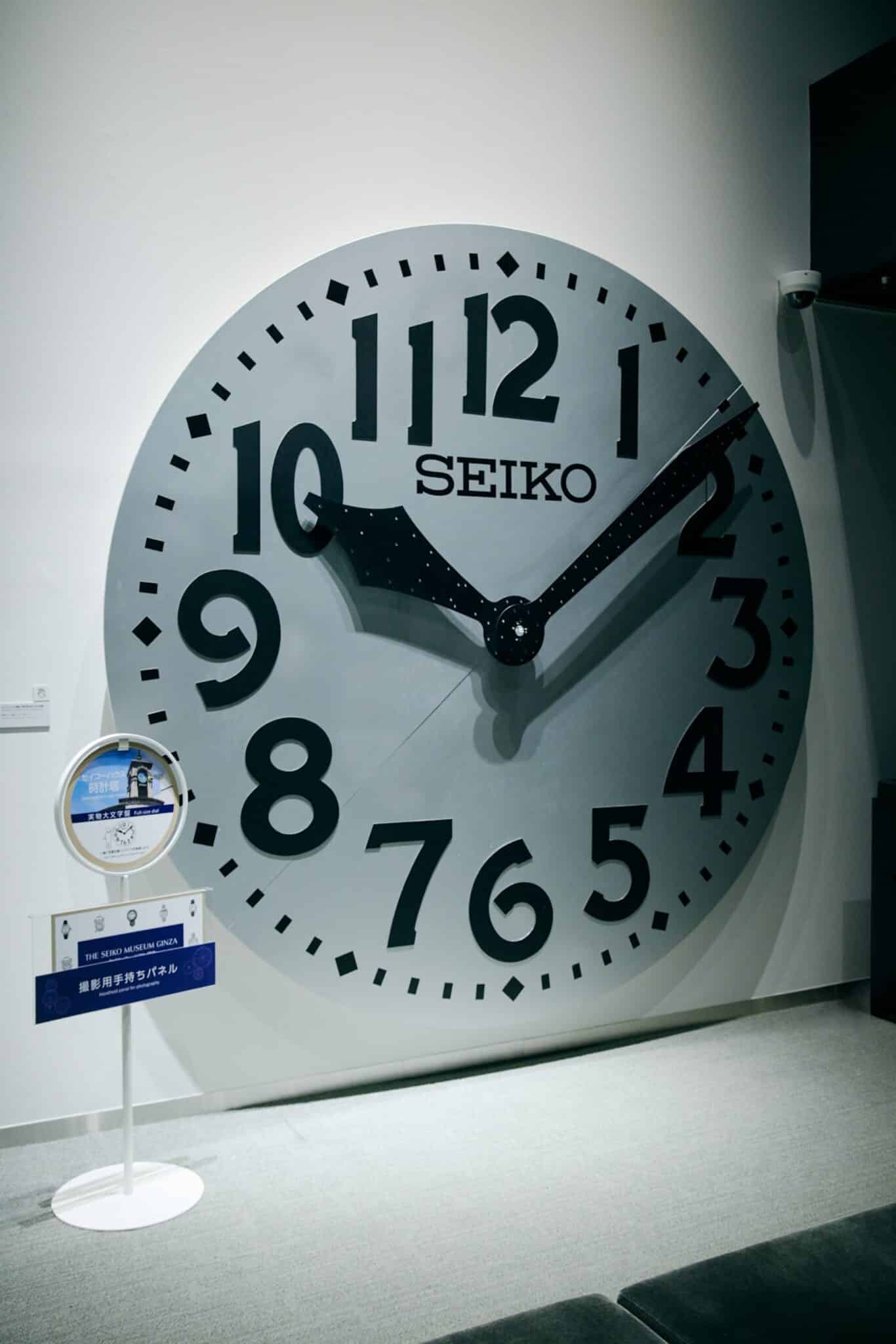
A replica of the iconic clock face of the SEIKO HOUSE clock tower—one of Ginza’s most recognizable landmarks—is also on display. As the rooftop where the original tower stands is not open to the public, this offers a rare opportunity to experience its scale up close, making it a popular photo spot.
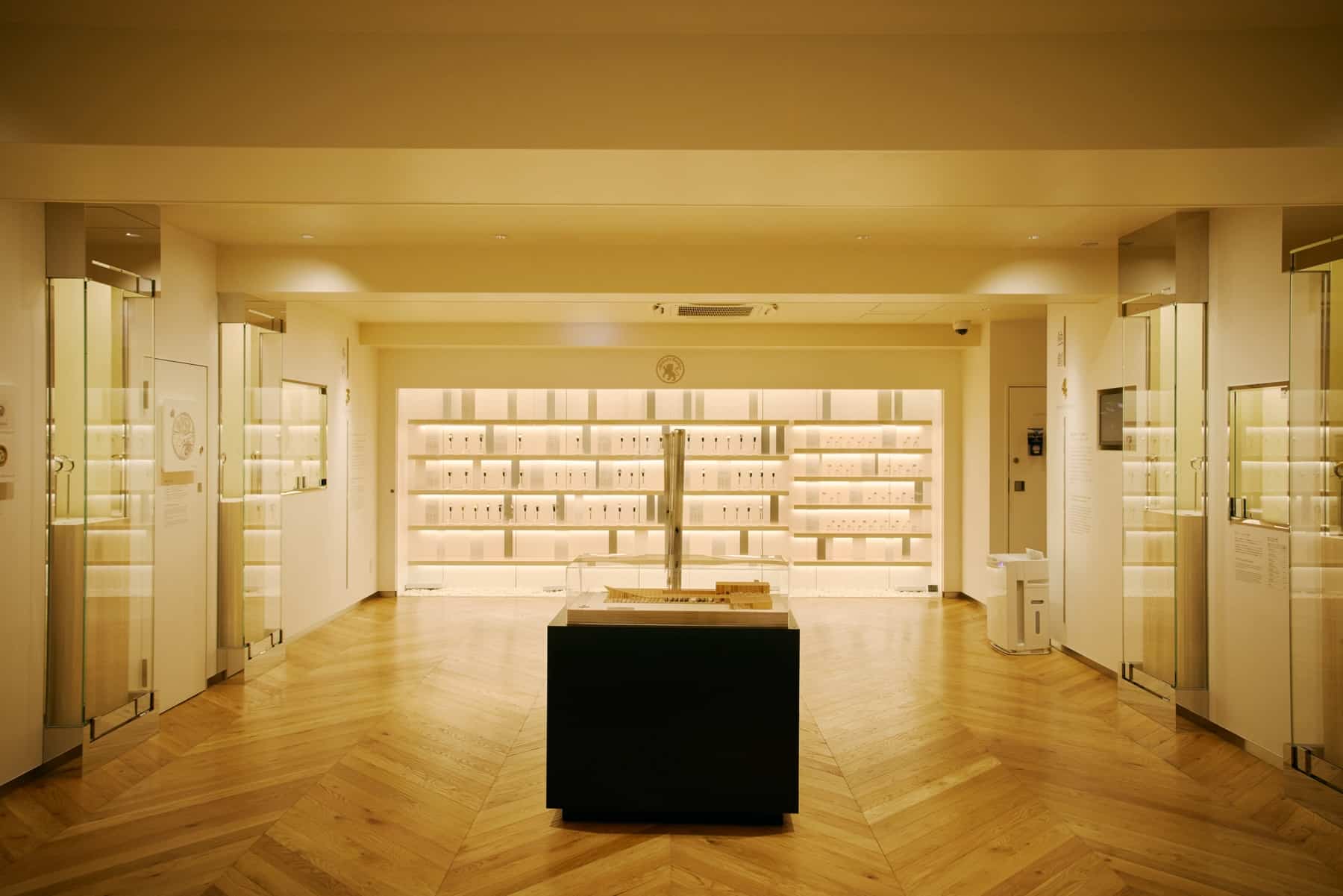
Opened in 2024 on the sixth floor of the same building, the Grand Seiko Museum presents the history and philosophy of the luxury watch brand. It explores the pursuit of precision, quality, legibility, and design that defines Grand Seiko. Founded in 1960 with the ambition of creating the finest watches Japan could offer the world, Grand Seiko brought together the highest levels of craftsmanship and aesthetic sensibility. In 1968, it gained international recognition at the prestigious Observatory Chronometer Competitions in Switzerland, and in 2017, it became an independent brand. Under its philosophy, The Nature of Time, the brand continues to create a diverse range of timepieces that embody Japanese aesthetics and spirituality—inviting visitors to experience its refined world of craftsmanship.
At the heart of the brand philosophy, The Nature of Time, lies a commitment to exploring the essence of watchmaking through Japanese aesthetics and sensibilities. This philosophy is reflected throughout the space—from a subtle fragrance inspired by traditional Japanese elements to the warmth of natural wood and the understated interiors incorporating gravel.
The first Grand Seiko underwent in-house testing based on the same standards used for Swiss chronometer certification, evaluating both accuracy and performance. Only those that met the highest chronometer standards of the time were certified. In 1966, SEIKO established its own even more stringent standards, followed in 1998 by the “New Grand Seiko Standard,” which further raised the bar.
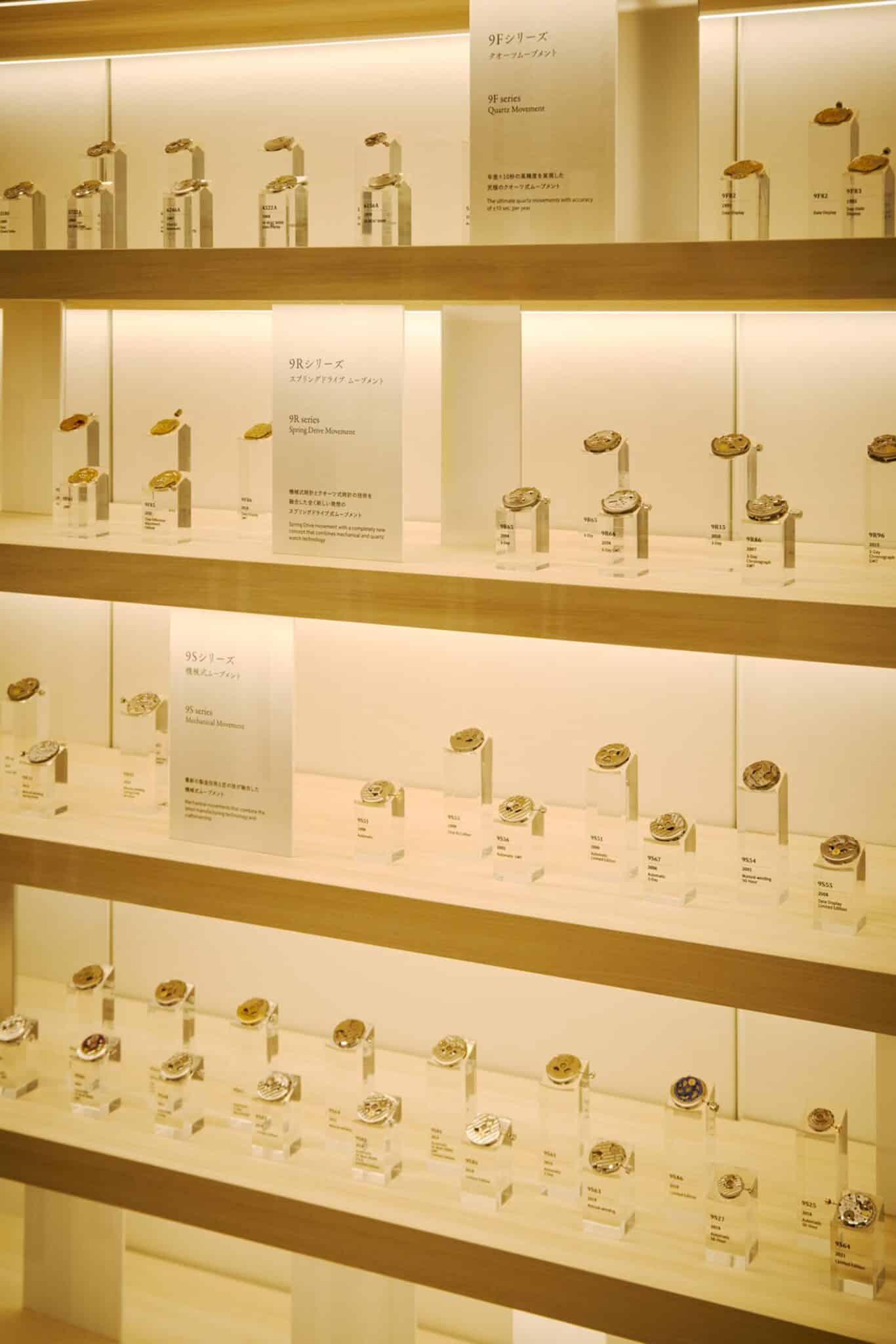
Alongside approximately 100 historical models, visitors can also examine historical movements up close. What is particularly remarkable is that even the smallest components are individually hand-finished by Grand Seiko’s watchmakers.
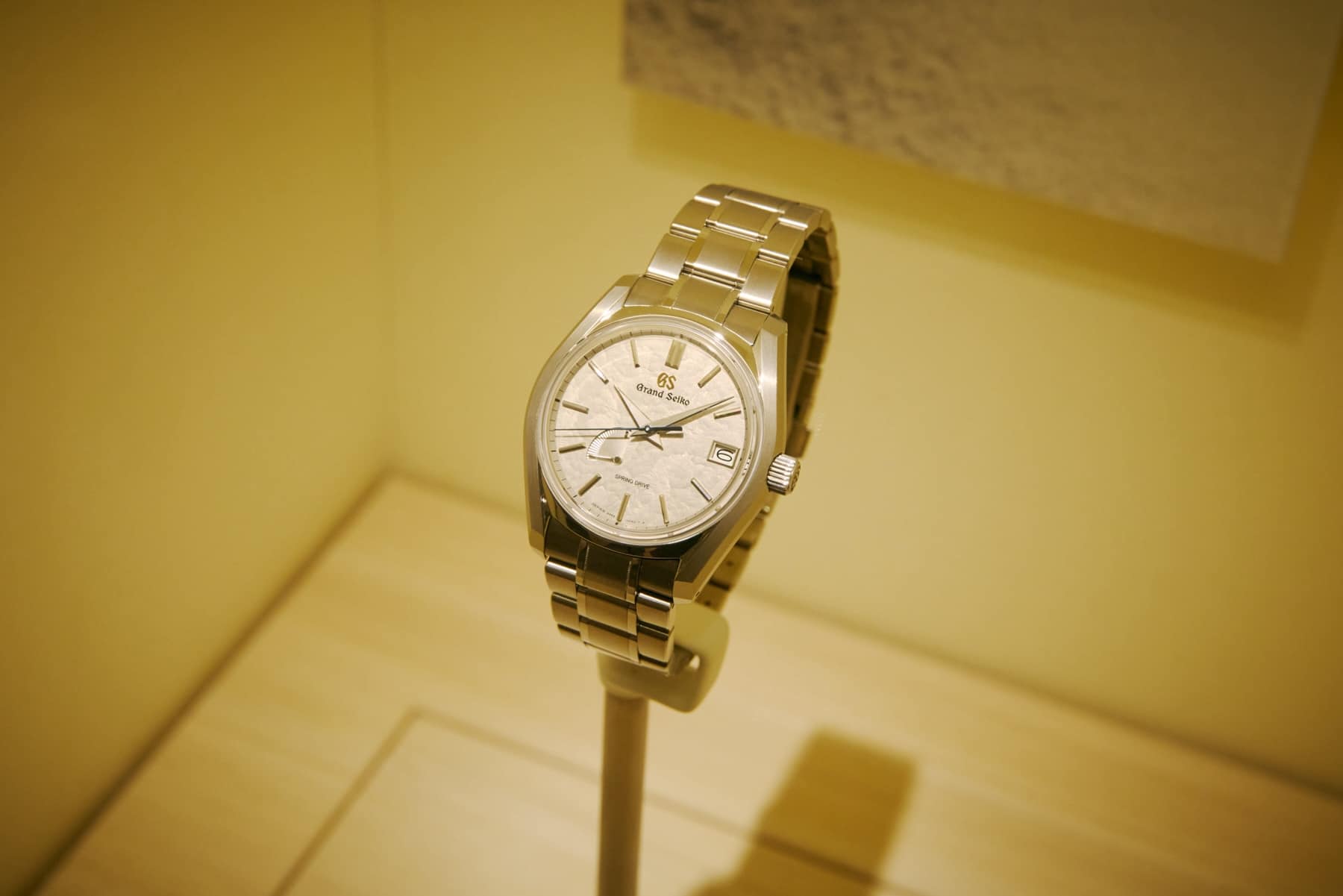
At the entrance, a series of seasonal welcome watches greets visitors. The piece shown here, Taisetsu (Major Snow), draws inspiration from one of the 24 seasonal divisions of the traditional calendar. Under the philosophy of The Nature of Time, it expresses the beauty of nature and the shifting seasons through its dial design.
On the first floor, “The Beginning of Time,” the museum shop offers a selection of original goods inspired by the exhibits. The museum also hosts workshops periodically, offering hands-on experiences that deepen visitors’ understanding of time and watchmaking. Programs range from watch classes for children aged five and up—including assembly sessions and clock-painting workshops—to mechanical watch courses for adults aged 18 and over, with guided assembly experiences. More than simply viewing the exhibits, visitors can engage with the concept of time through these interactive programs—one of the distinctive appeals of the Seiko Museum Ginza.
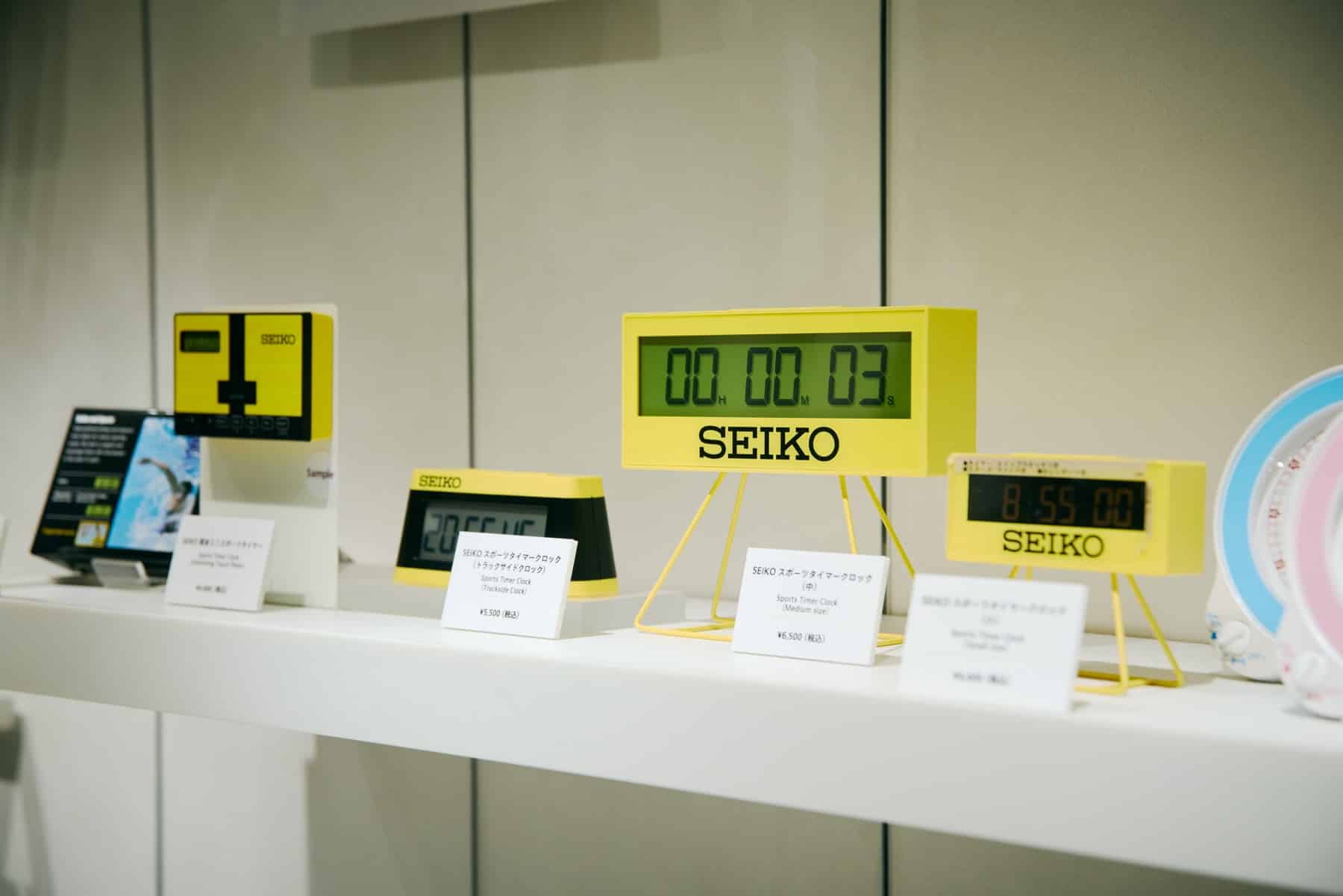
A store selling goods is located next to the reception desk. The sports tie clock (far right, small, 4,180 yen; second from right, medium, 6,500 yen), which is popular as a souvenir, would make a nice accent for your room.
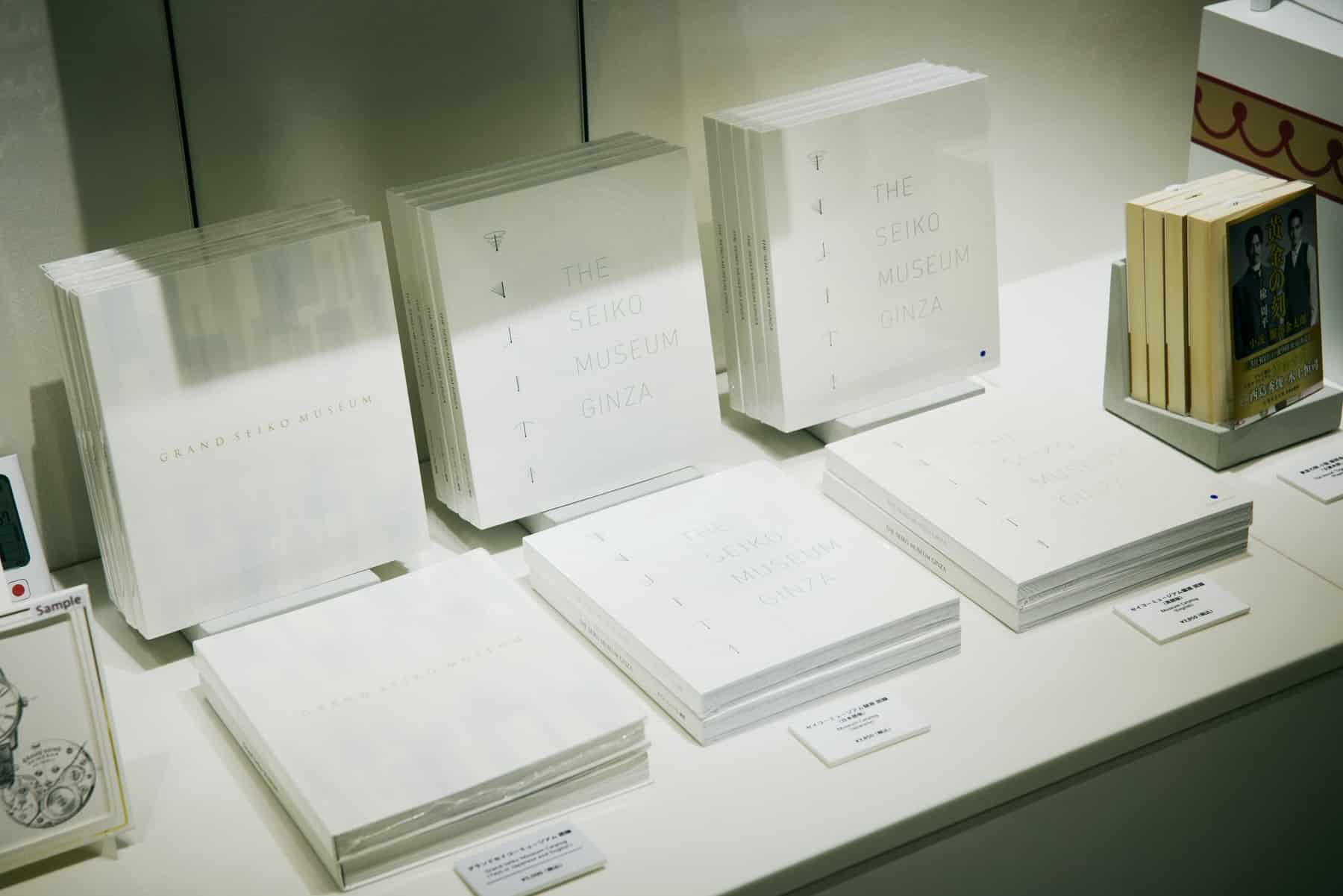
The Seiko Museum Ginza Catalogue, which provides detailed explanations of the permanent exhibitions, is available in both Japanese and English (3,850 yen). The Grand Seiko Museum Catalogue is presented in a bilingual Japanese–English format (5,500 yen). Both serve as comprehensive reference volumes, bringing together valuable archival material.
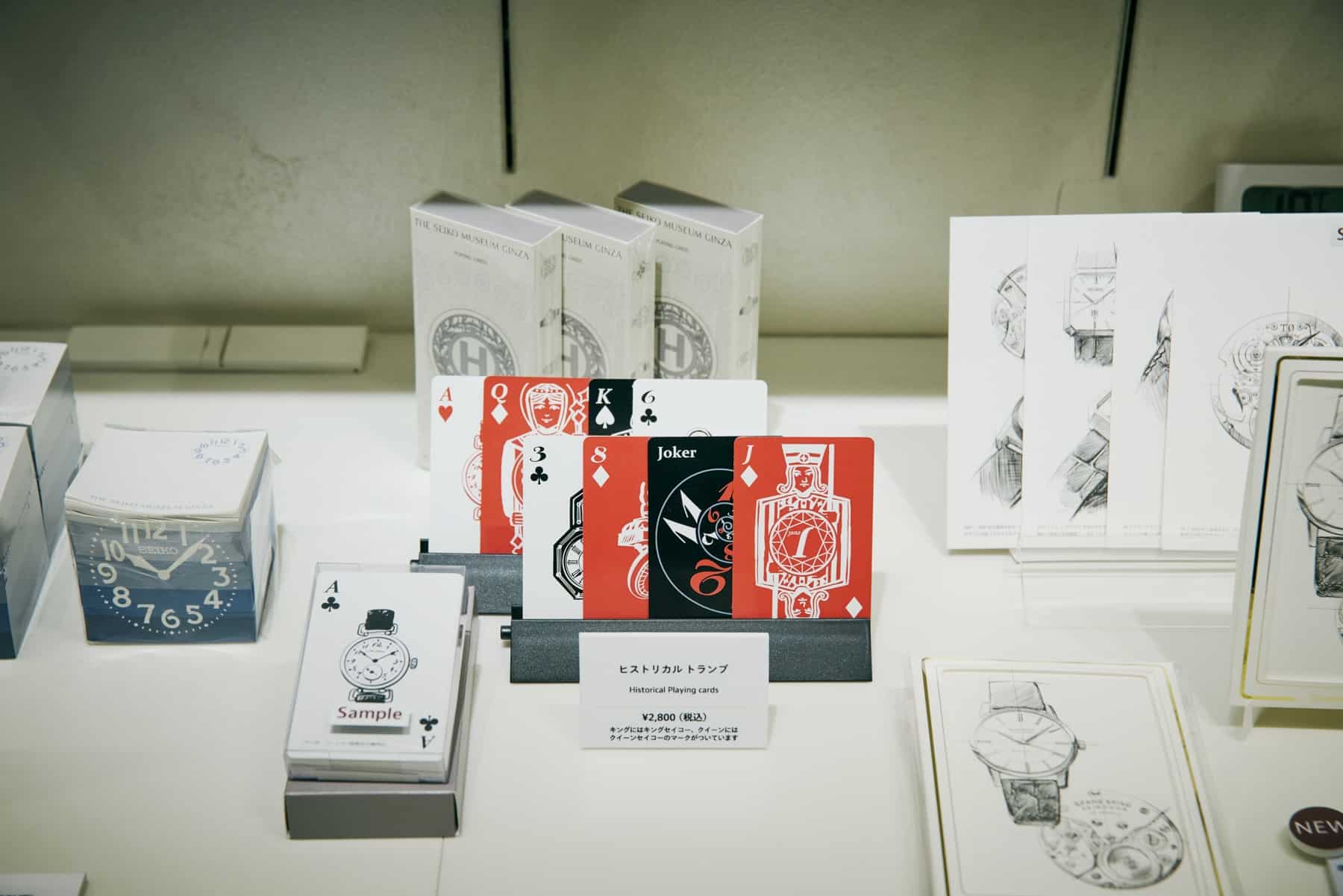
Playful historical playing cards (2,800 yen) feature cute illustrations of SEIKO's iconic clocks and watches. The king is marked with the King Seiko logo.
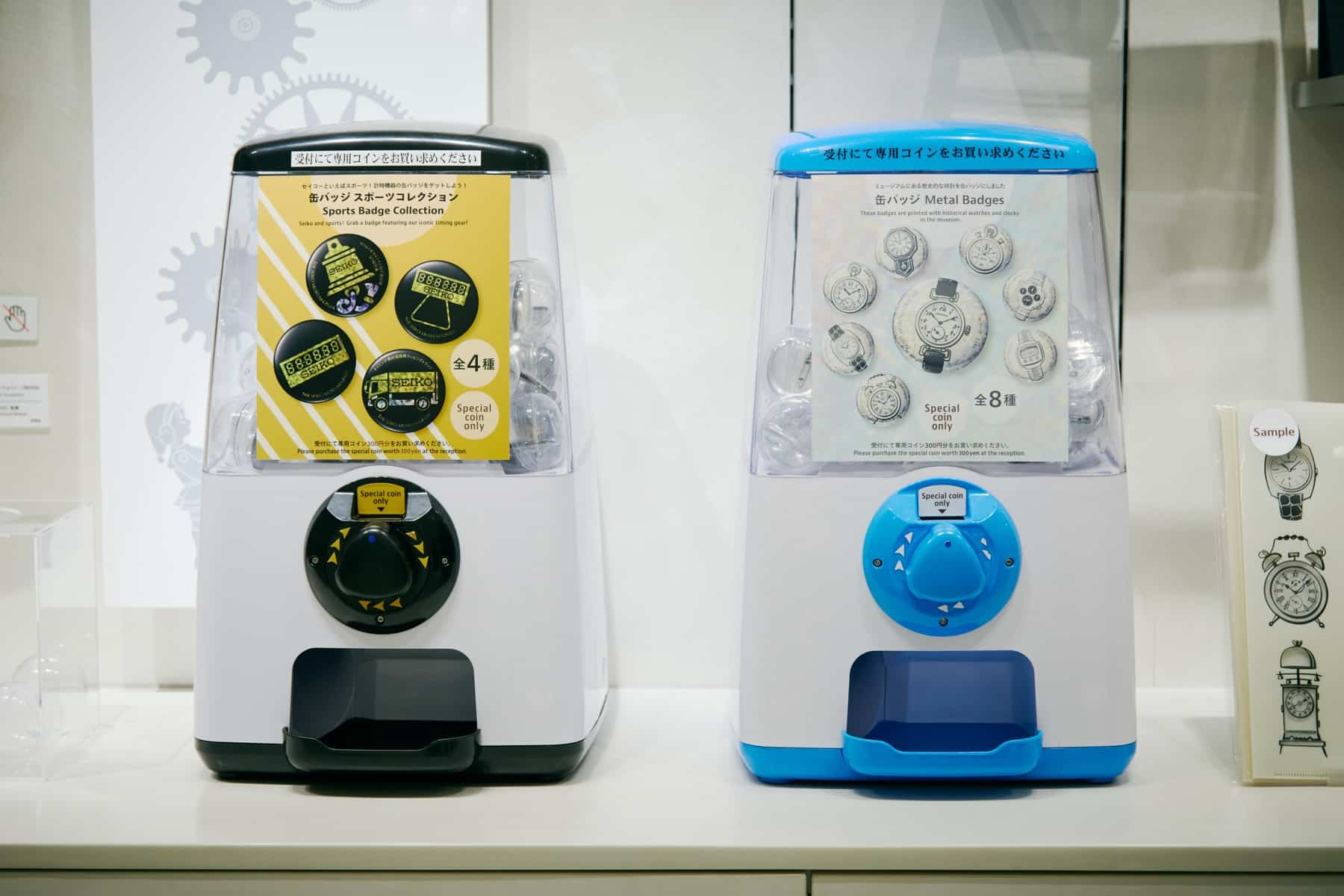
Capsule toys are also popular (300 yen each). Options include pin badges featuring iconic SEIKO timepieces (right), as well as a series depicting sports timing equipment (left).
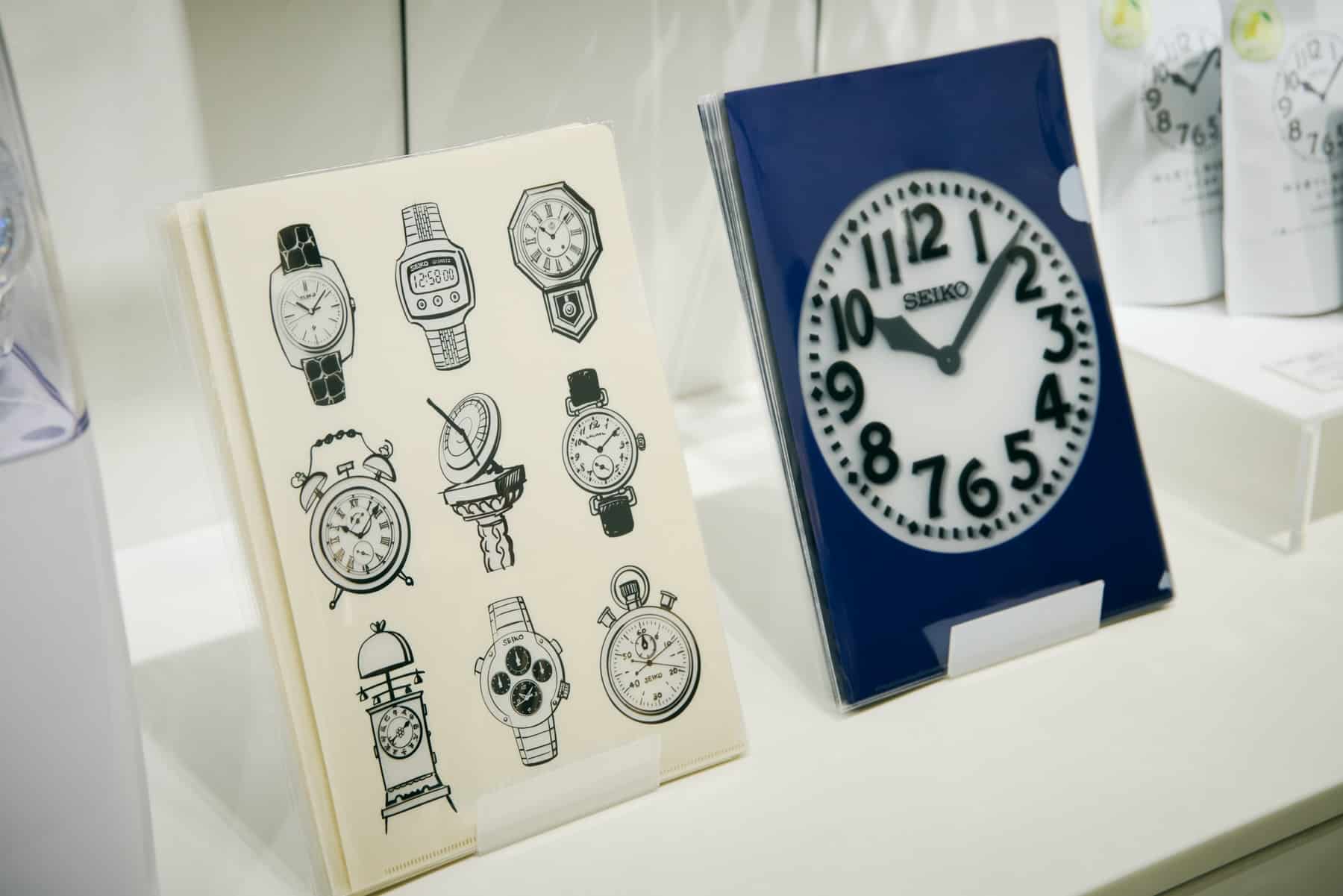
Clear file (Clock Tower) (right) with a bold design of a clock tower, and clear file (Historical) (left) depicting turning points in the history of clocks, such as sundials and quartz clocks. Both are priced at 400 yen.
The information contained this article was correct as of 05/12/2026 (the time of publication)


頃-建物看板表示-scaled.jpg)
建物全景-scaled.jpg)
.jpg)
スマホ.jpg)