DEEPTOKYO
magazine

EN


AREA
DEEPTOKYO
magazine
EN
AREA
.jpg)
2026.04.14
More and more international visitors to Tokyo are enjoying “travel runs” around the areas near their hotels and through the city itself. Compared with many major cities around the world, Tokyo is relatively safe, and with its many running routes along rivers and through lush parks, it is in fact one of the easiest cities for runners to explore on foot. This time, we introduce the “Sumida River Riverside Run,” a course where you can experience two sides of Tokyo at once: streetscapes that evoke the history of Edo and modern landmarks that stand alongside them.
SHARE


On Tokyo’s eastern side, the Joto area is where classic sightseeing spots such as Asakusa and Tokyo Skytree intersect with the warm, old-fashioned atmosphere of the city’s downtown neighborhoods. The route that runs through this area is the “Sumida River Riverside Run.”
What makes running here so interesting is the depth of the area’s history. The Sumida River, once a major logistical artery in Edo, was also known by names such as “Okawa” and “Asakusagawa,” and countless boats carrying goods and people once traveled along it. In time, a culture also developed in which ordinary people enjoyed the waterfront through things like fireworks festivals and yakatabune pleasure boats, and traces of that culture can still be found throughout the area today.
In recent years, stylish cafés and hostels created through the renovation of old warehouses and buildings have also been appearing one after another. This coexistence of history and contemporary urban scenery is one of the area’s defining characteristics.
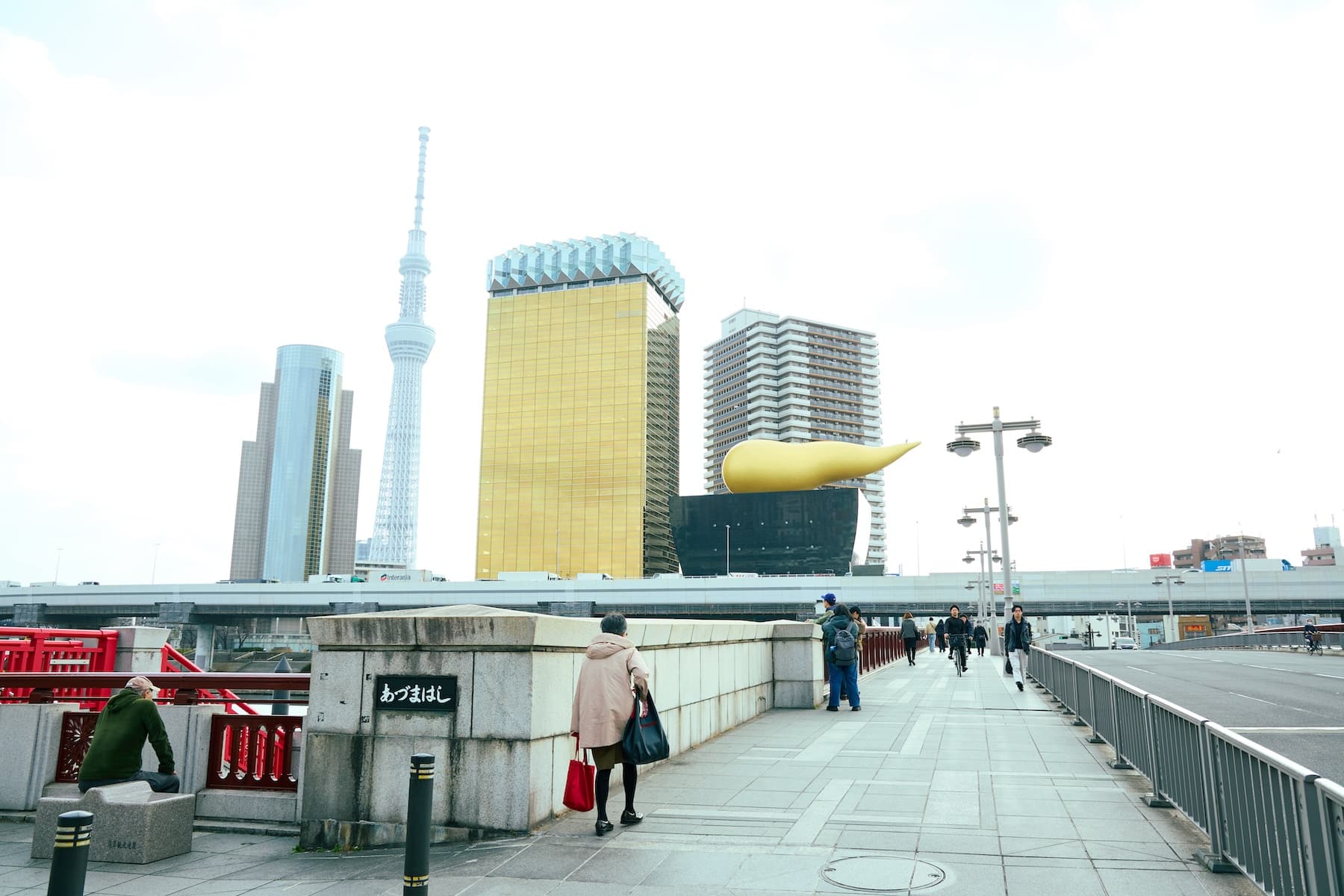
The view from Azumabashi Bridge, with Tokyo Skytree and the Asahi Beer headquarters in sight, is one of the iconic scenes of present-day Asakusa.
In the Sumida River area, a creative sensibility blends naturally into the warmth of a neighborhood still shaped by longtime local residents. If you explore the area on foot, you can feel that authentic atmosphere for yourself.
The wider area, including Kinshicho, also functions as a convenient hub with easy access in many directions—to Kiyosumi-Shirakawa, known for its distinctive coffee shops; Kuramae, where general stores and ateliers gather; and Ryogoku, the center of sumo culture.
That flexibility is also one of the main reasons runners love this area. It is easy to adjust your route freely according to your mood and energy level that day—thinking, for example, “Maybe I’ll go a little farther today and run to a roastery in Kuramae.”
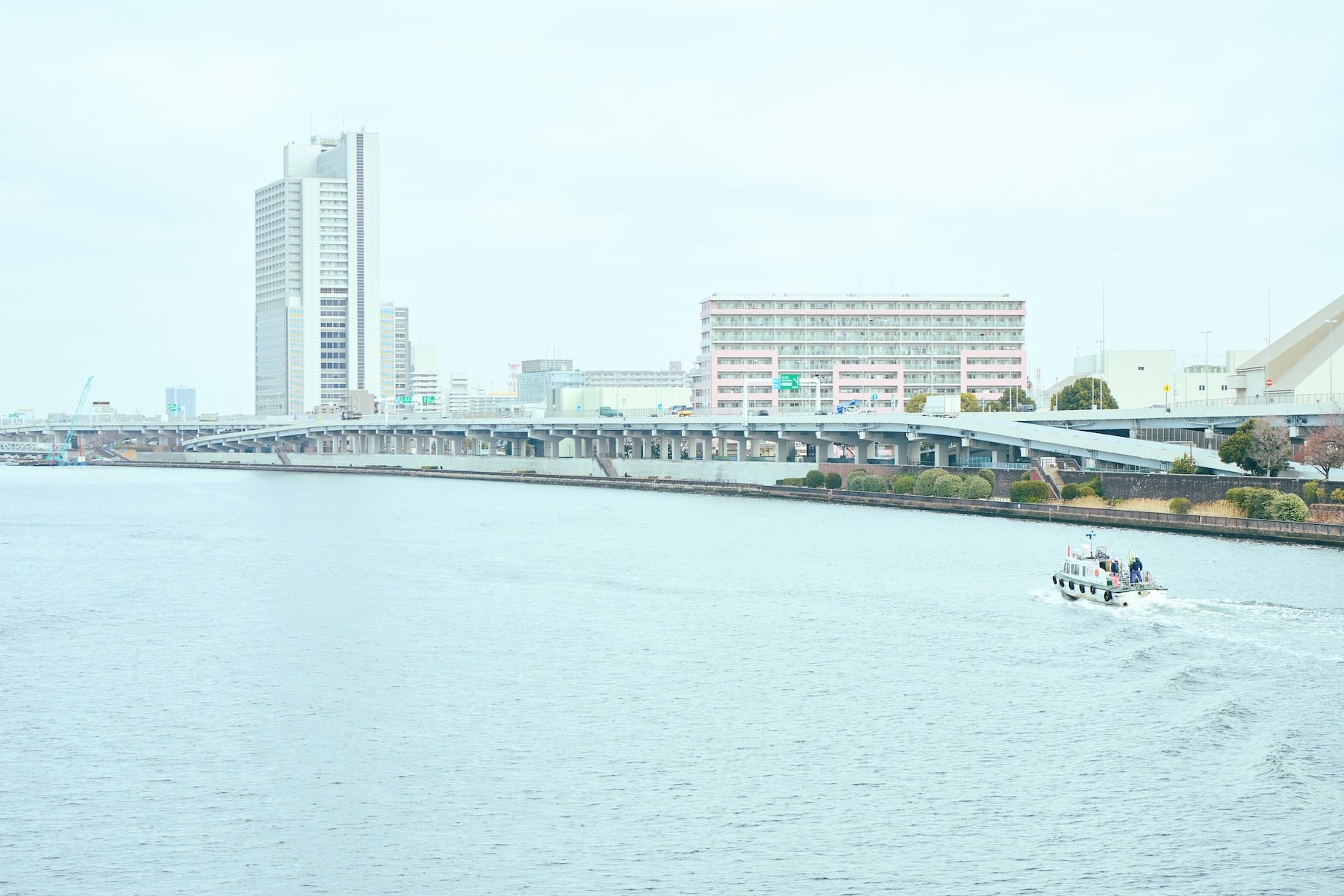
The Sumida River is broad, with sightseeing boats and work boats passing along it.
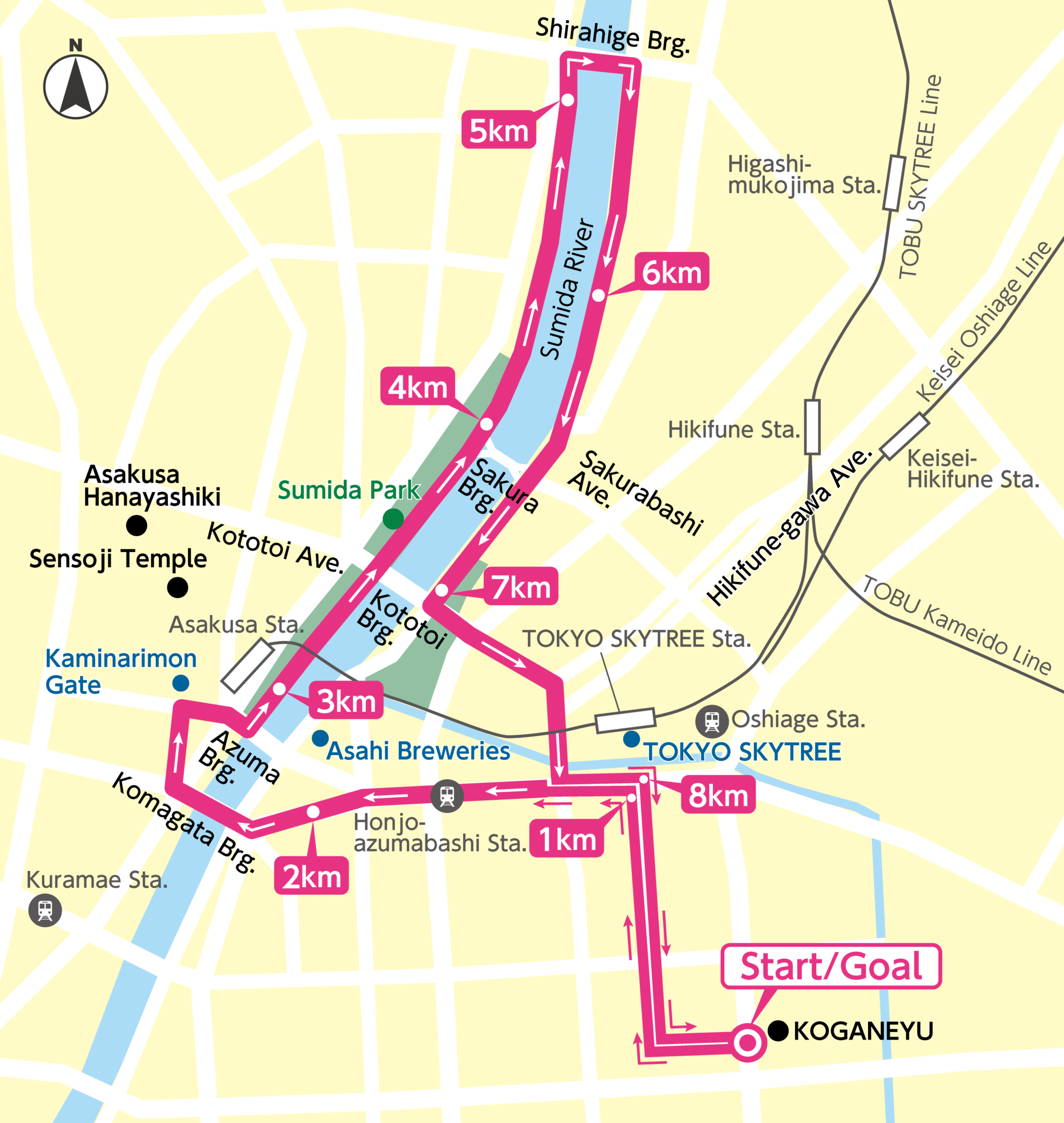
The running route introduced here starts and finishes at “KOGANEYU,” a sento public bathhouse that can also be used as a running station, and follows the Sumida River via Kaminarimon in Asakusa. The total distance is about 9 km.
【Course Profile】
Start / Goal: “KOGANEYU” (10-minute walk from Kinshicho Station)
Distance: Approx. 9 km (approx. 65–72 min at 7–8 min/km)
Elevation: Flat
Surface: Asphalt
Night running: Available
Convenience stores: Available (none directly along Sumida River Terrace)
Traffic signals: Yes
Toilets: Available
Recommended time of day: Morning ◎ / Daytime △ / Night ◎
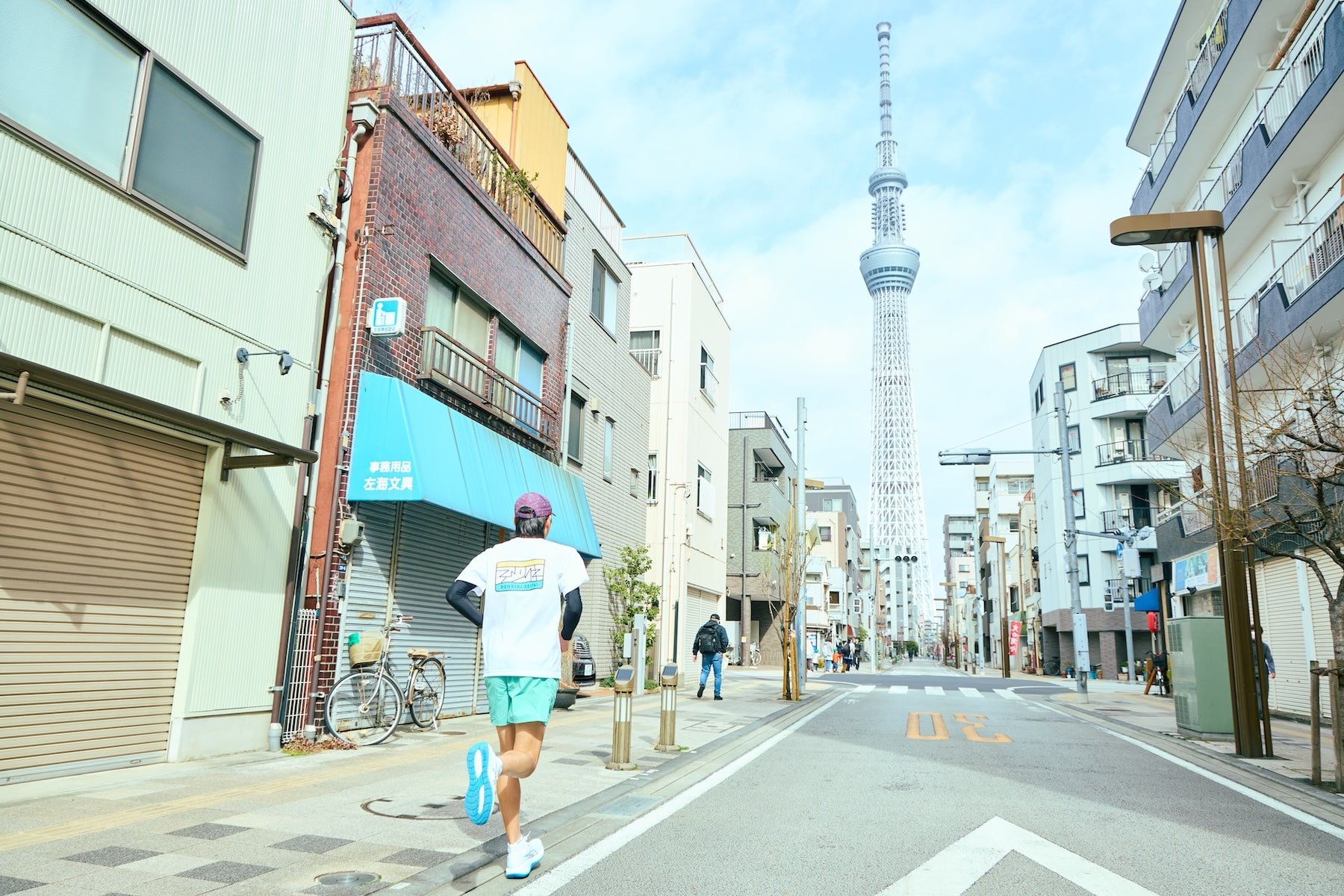
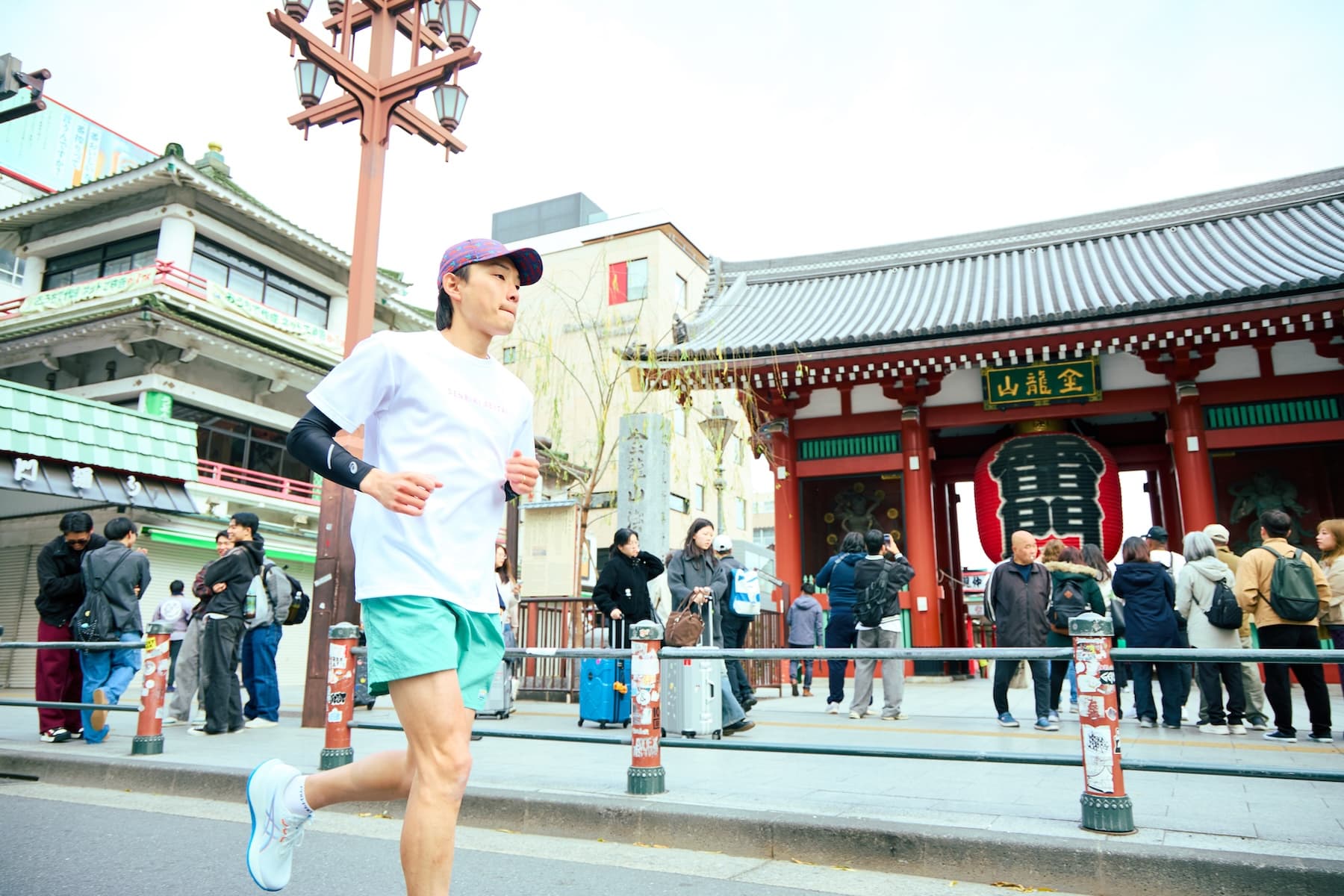
Once you start, you are immediately rewarded with a great view. You can enjoy running straight down Tower View Street with Tokyo Skytree directly ahead. After crossing Komagata Bridge from Asakusa-dori and continuing a little farther, Kaminarimon—the main outer gate of Senso-ji—comes into view ahead. If you want to take commemorative photos before the crowds arrive, the 8 a.m. hour is recommended. The main hall of Senso-ji opens from 6 a.m., so if you are doing a sightseeing run, it is well worth stopping by.
Tower View Street, where you can run straight toward Tokyo Skytree.
When people think of Asakusa, they think of Kaminarimon. Early in the morning, there are only a few people around, making it easy to run.
What defines this route, however, is not just the scenery, but also how easy it is to run.
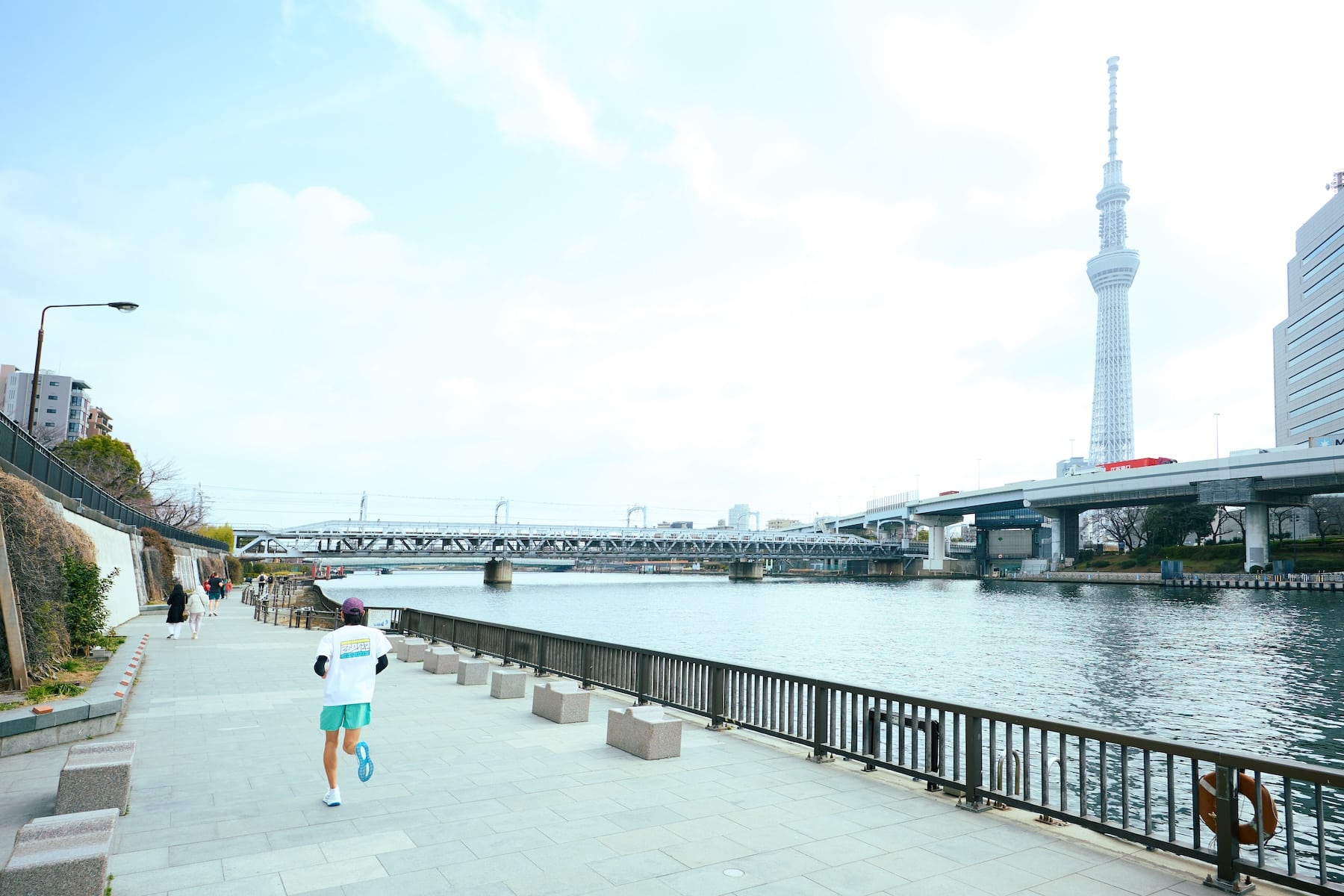
After passing Kaminarimon, the riverside promenade known as “Sumida River Terrace,” which begins at Azumabashi Bridge, offers a beautifully maintained, completely flat course along the river. Because there are no traffic lights, it is ideal for everything from an easy jog to a pace run. As you go, you can enjoy the refreshing feeling of running while taking in the subtly changing scenery on both banks, along with bridges of many different designs, such as Azumabashi, Sakura Bridge, and Shirahige Bridge.
Although this route is about 9 km, it can easily be adjusted—for example, by extending the distance along Sumida River Terrace or by going farther to Kappabashi Dougu Street. There are also toilets located along Sumida River Terrace, and if you step only slightly off the route, you will find convenience stores as well, so it is easy to refuel along the way.
The route this time is approximately 9 km, but it can be arranged as you wish, such as extending the distance along the Sumida River Terrace or extending the route to the Kappabashi Tool Street. There are restrooms scattered along the Sumida River Terrace along the course, and convenience stores are located a little off the course, so you will have no trouble finding supplies.
“Sumida River Terrace” runs along the river on a neatly paved path, making it extremely comfortable to run.
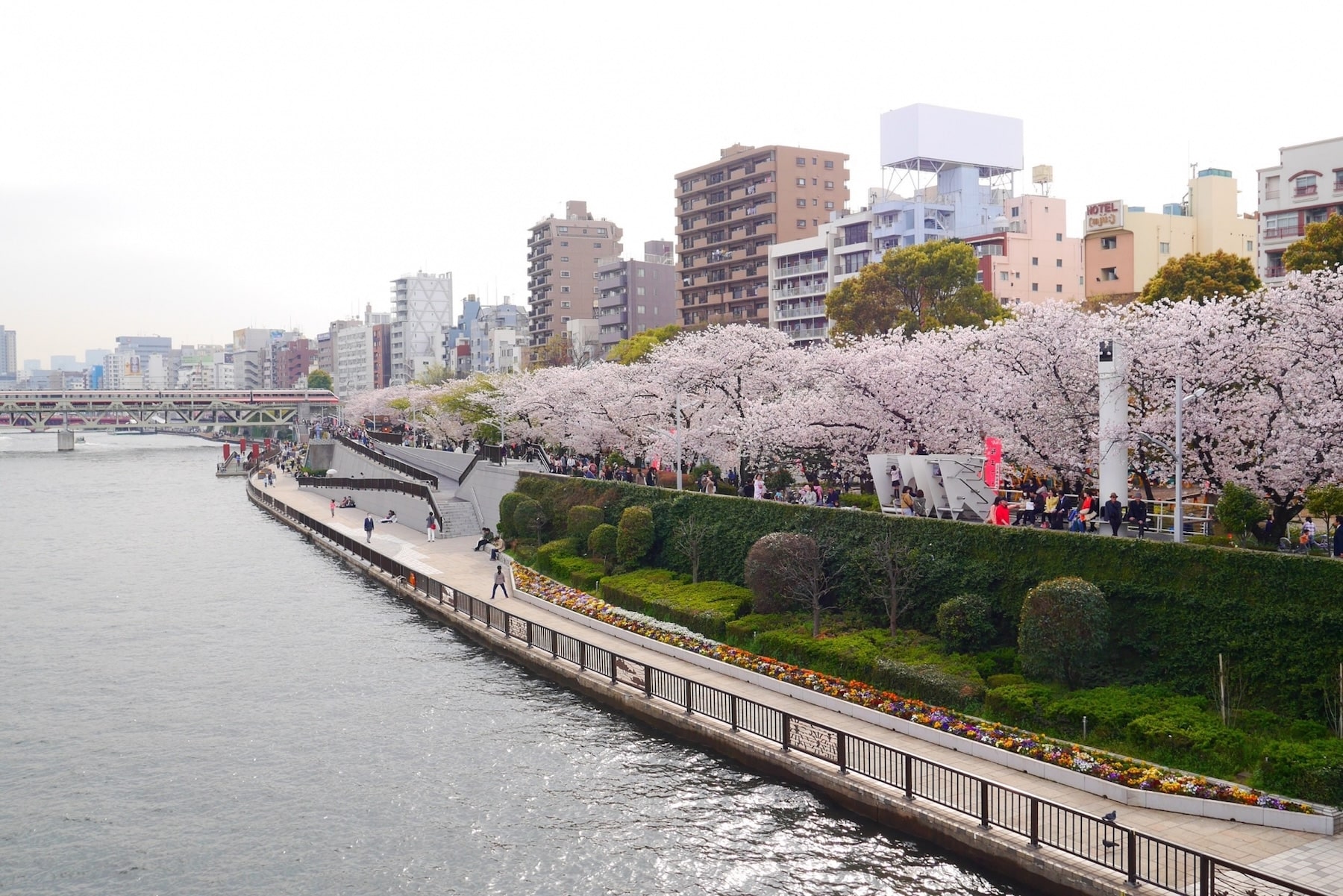
Another special feature of a riverside course is how dramatically it changes depending on the time of day and the season. In the morning, the water sparkles, making it ideal for a refreshing run that lets you feel the start of a new day. At night, the illuminated Skytree, bridges, and the lights of yakatabune boats shimmer on the water, creating a magical night-running experience. In spring, the cherry trees along the river in Sumida Park near the end of the course bloom pink, offering yet another seasonal pleasure.
With its beautiful blend of Asakusa’s historic atmosphere and Tokyo’s modern symbols, this 9 km route—run while feeling the pleasant river breeze—is sure to become a memorable running experience.
Sumida Park in spring. Cherry blossoms bloom, turning the riverside pink.
One distinctive feature of Japan is the presence of “running stations” throughout the country—facilities equipped with lockers and shower rooms for runners. If you are running in the Sumida River area, one of the best places to use as a base is “KOGANEYU,” a sento in Kinshicho.
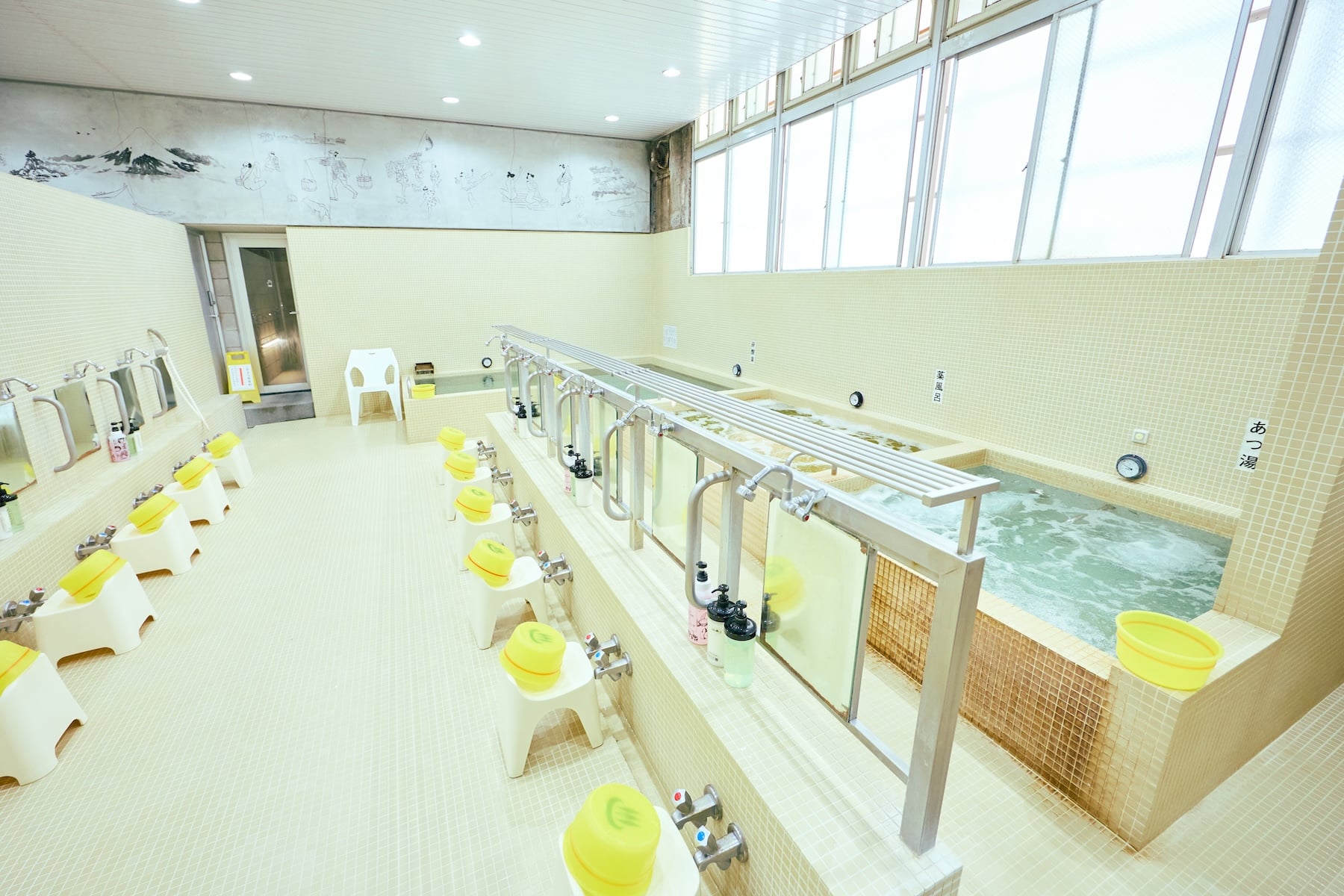
The indoor bath at “KOGANEYU.” Body soap and shampoo are provided, so you can come empty-handed.
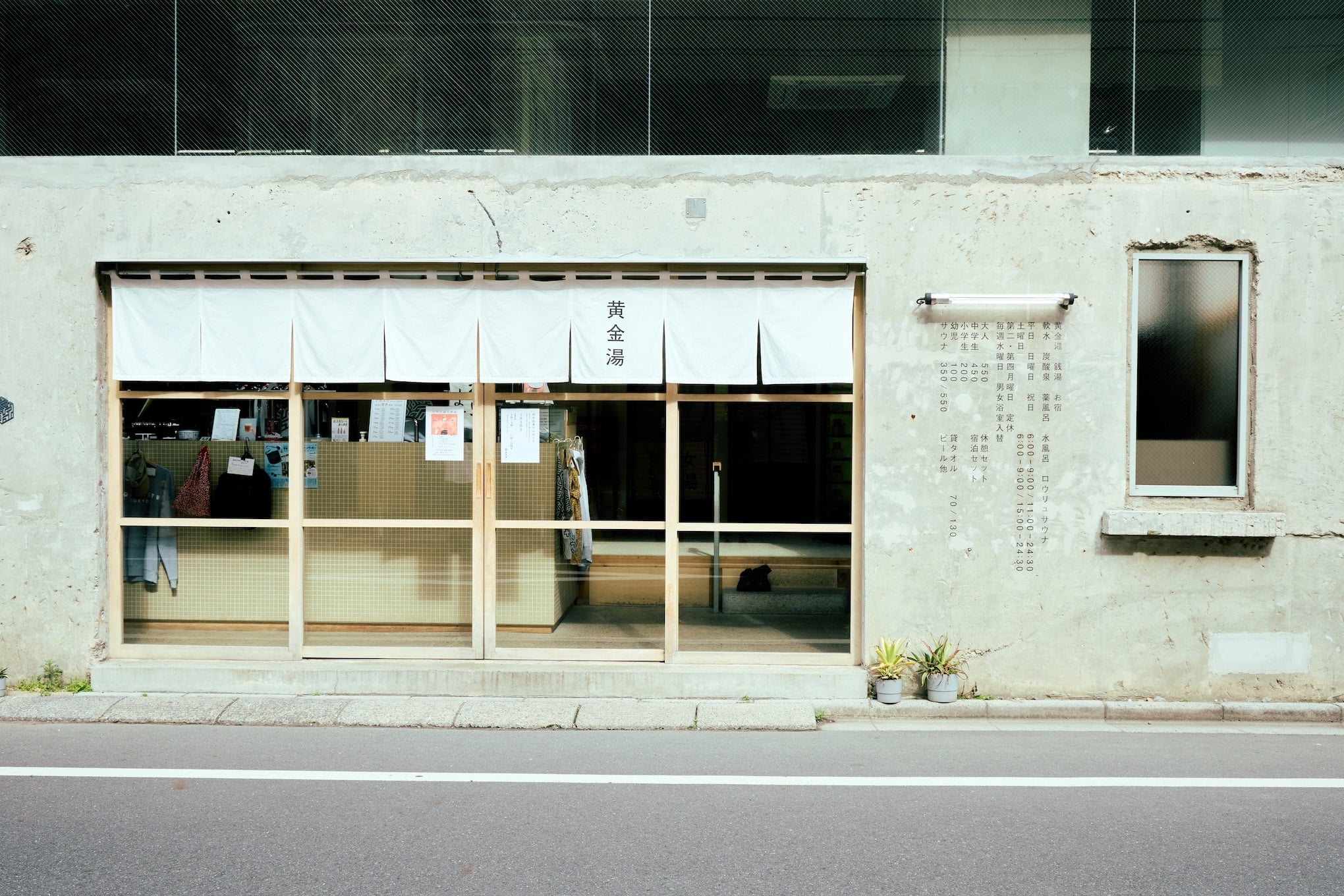
The exterior of “KOGANEYU.” It was designed by Jo Nagasaka of Schemata Architects, a firm known for its renovation work.
This is a spot that has drawn attention as more than just a sento. Known as a “stay-over sento,” it is equipped with a DJ booth, beer bar, and lodging facilities, and has become one of the leading examples of contemporary Japanese sento since reopening after renovation in 2020. What makes it especially appealing for runners is that it also functions as a running station, available free of charge to sento users. After changing in the dressing room and leaving your belongings in a dedicated locker, you head out for your run. When you return after working up a good sweat, not only the bath but also a carefully designed sauna and cold bath await you.
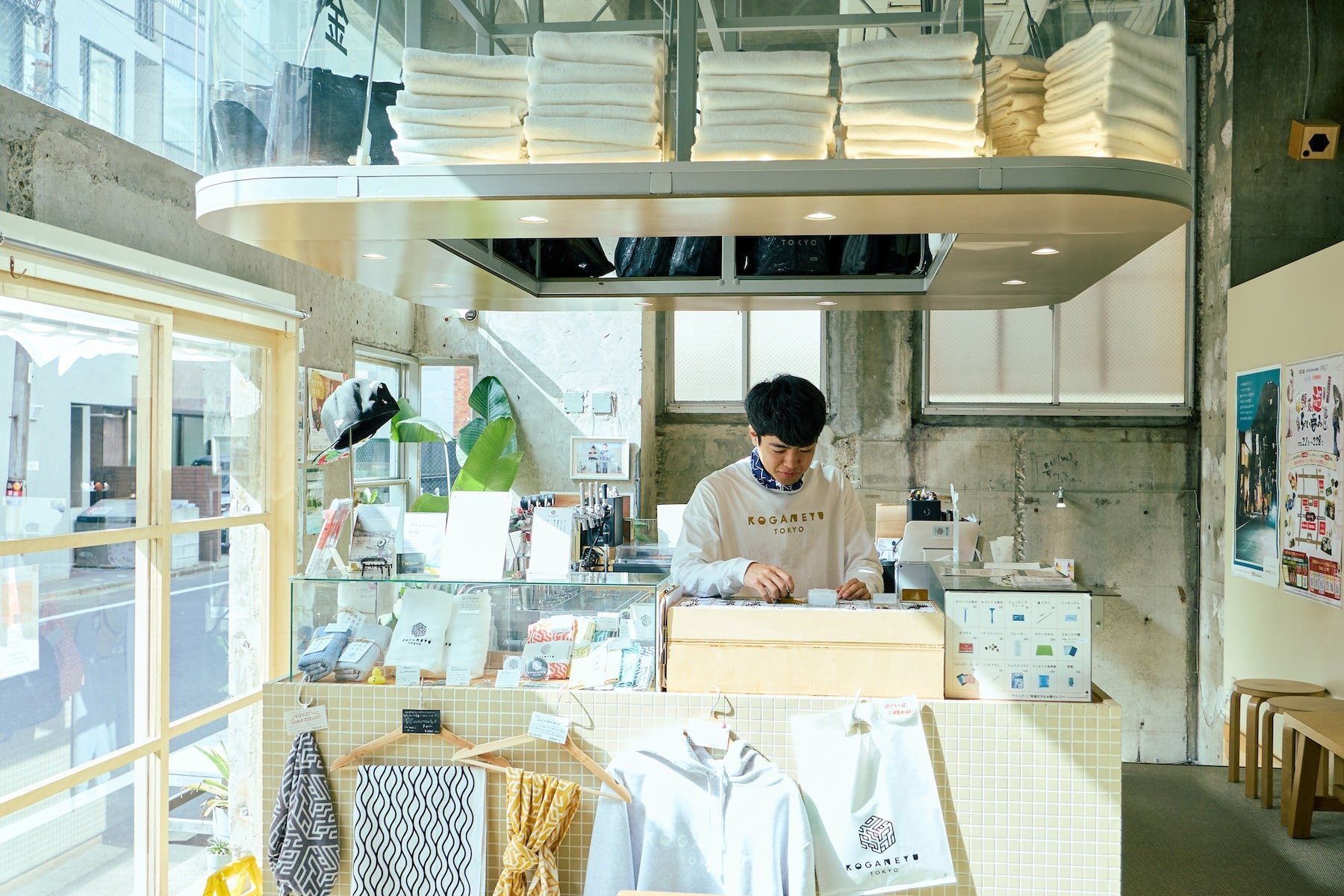
The reception area is bright and open, with a beer bar and DJ booth attached.
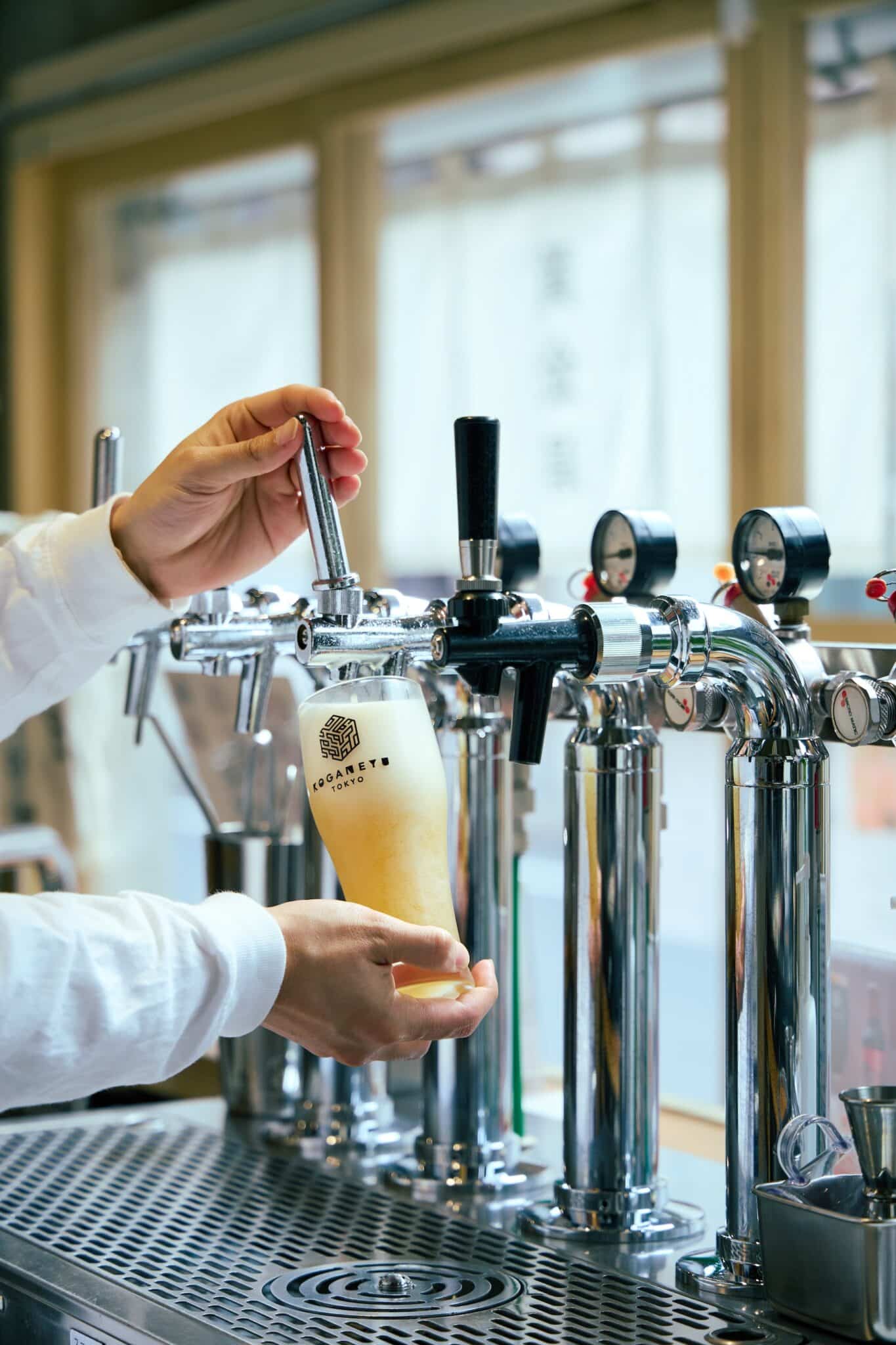
The craft beer served here is even brewed in-house. You can enjoy a drink available nowhere else. From ¥700.
The moment when you loosen your tired muscles and enjoy the supreme feeling of being fully reset is pure bliss. After your bath, you can enjoy house-brewed craft beer at the beer bar by the front desk, and the attached “KOGANE KITCHEN” also serves carefully prepared dishes such as the popular “Lamb Lamb Keema.” It is an ideal running base where you can deliciously recharge the energy you used up while running.
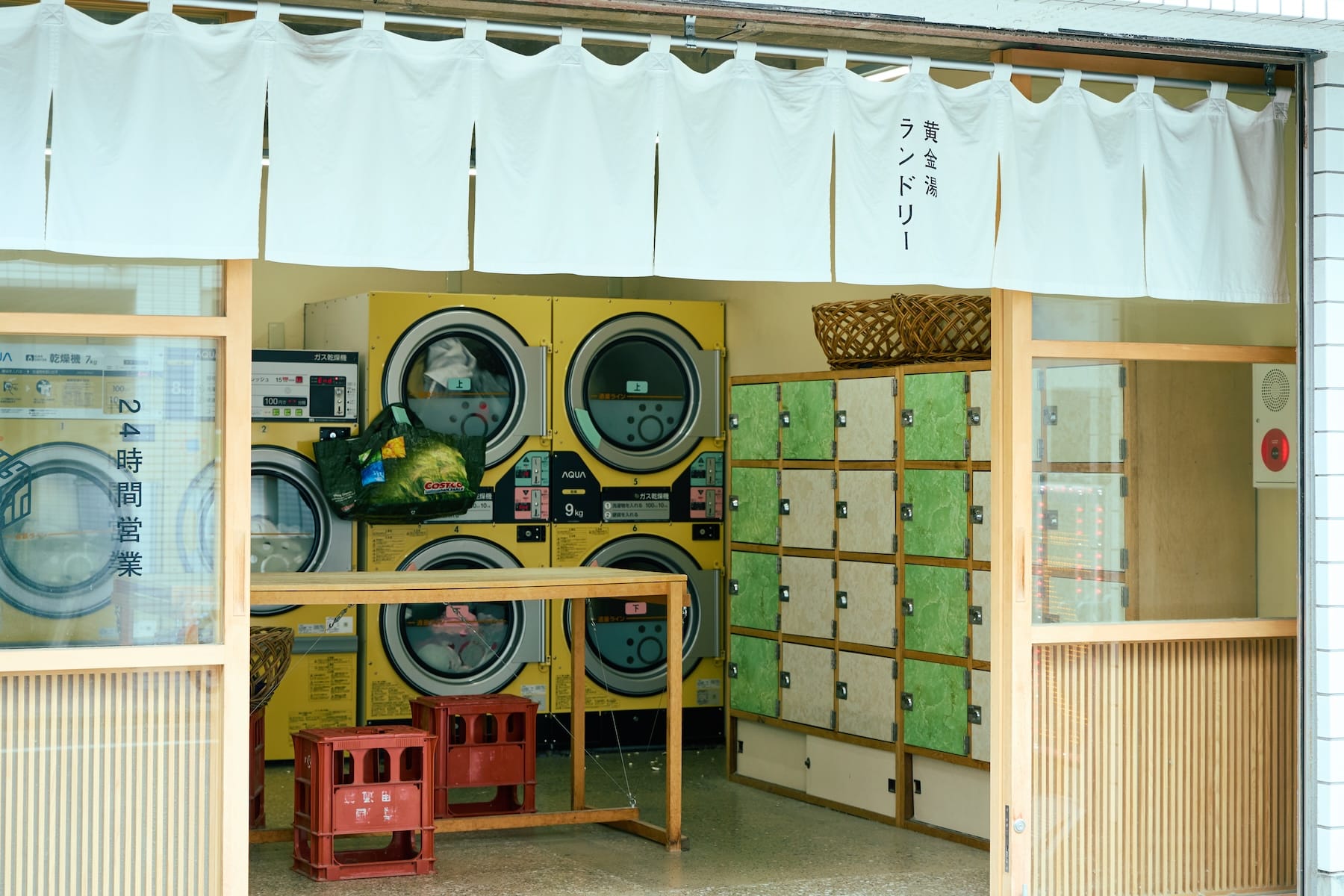
The dedicated lockers for runners are reused lockers from the old “KOGANEYU.” It is a thoughtful detail that lets you feel the atmosphere of a traditional sento.
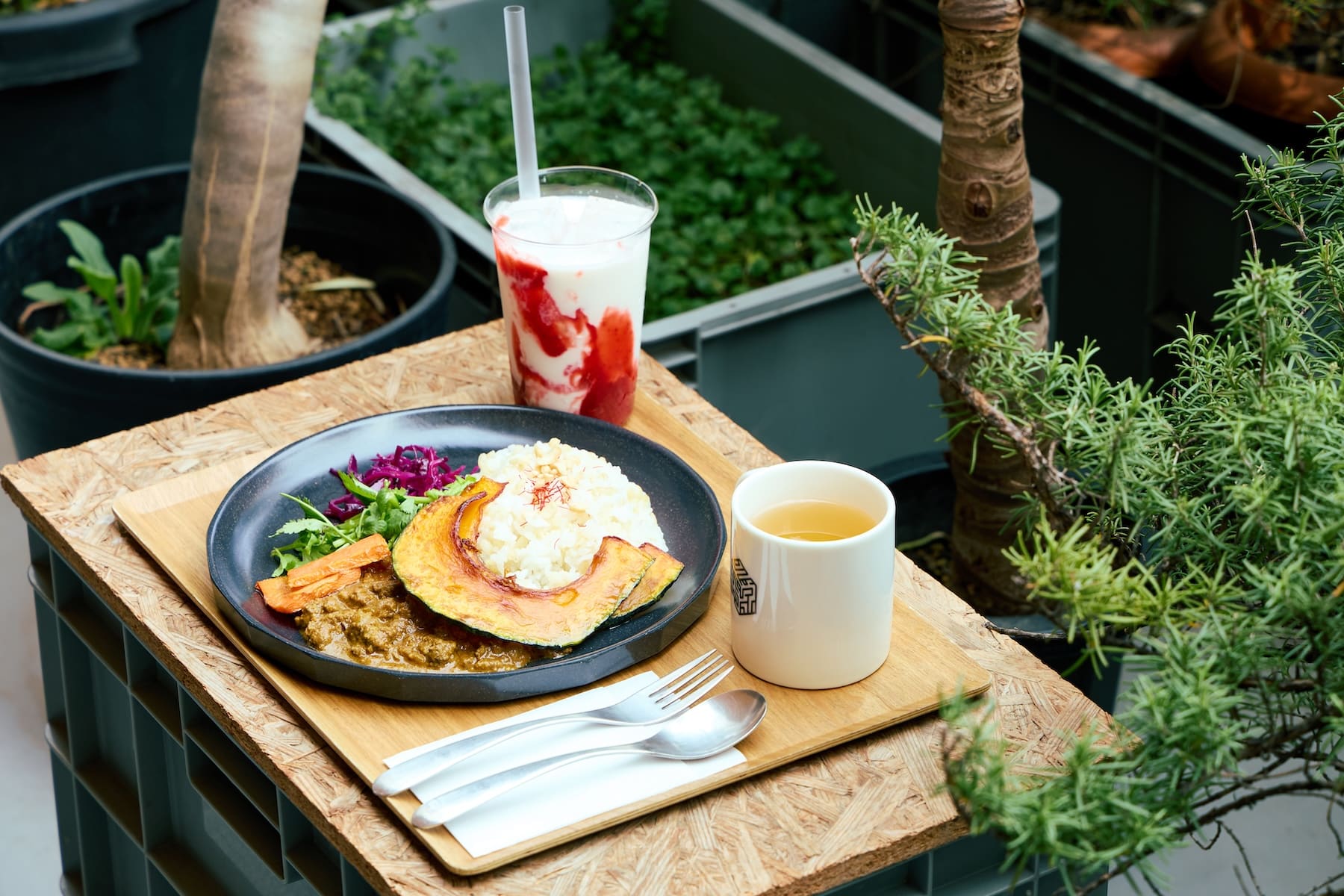
Popular sauna food served at “KOGANE KITCHEN”: “Lamb Lamb Keema,” ¥1,280, and house-made “strawberry milk,” ¥500.
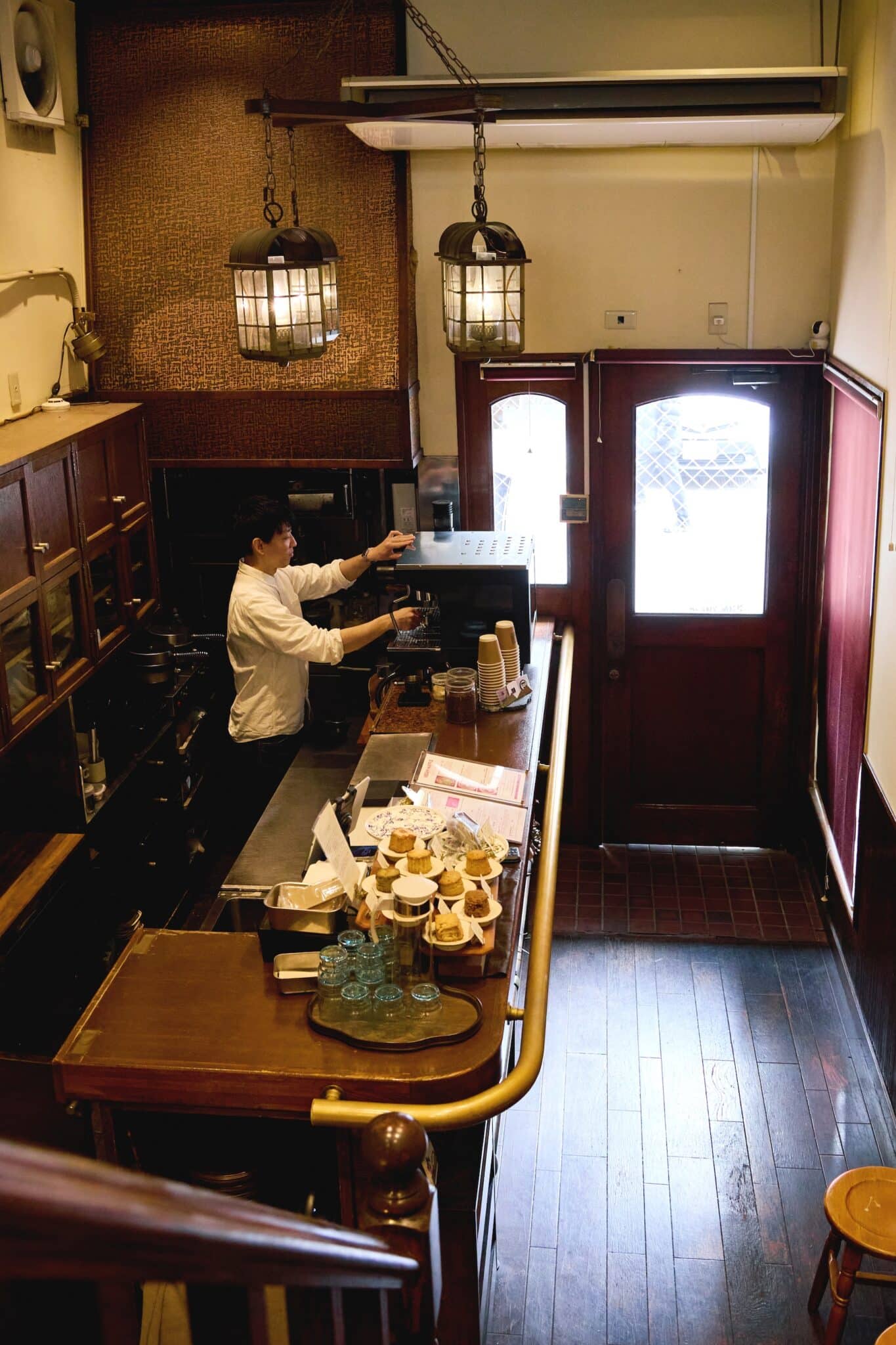
Another appeal of the Joto area is its rich mix of both old and new kissaten coffee shops. Spending some quiet time in a café is also highly recommended. Within walking distance of “KOGANEYU” is the café “mute,” a retro space that has preserved almost all of the interior of a kissaten that stood there for 40 years. Open from 7:30 in the morning, it is also popular with runners as a morning stop after an early run or after the sauna.
A retro interior that makes use of the original décor from the kissaten that stood here 40 years ago.
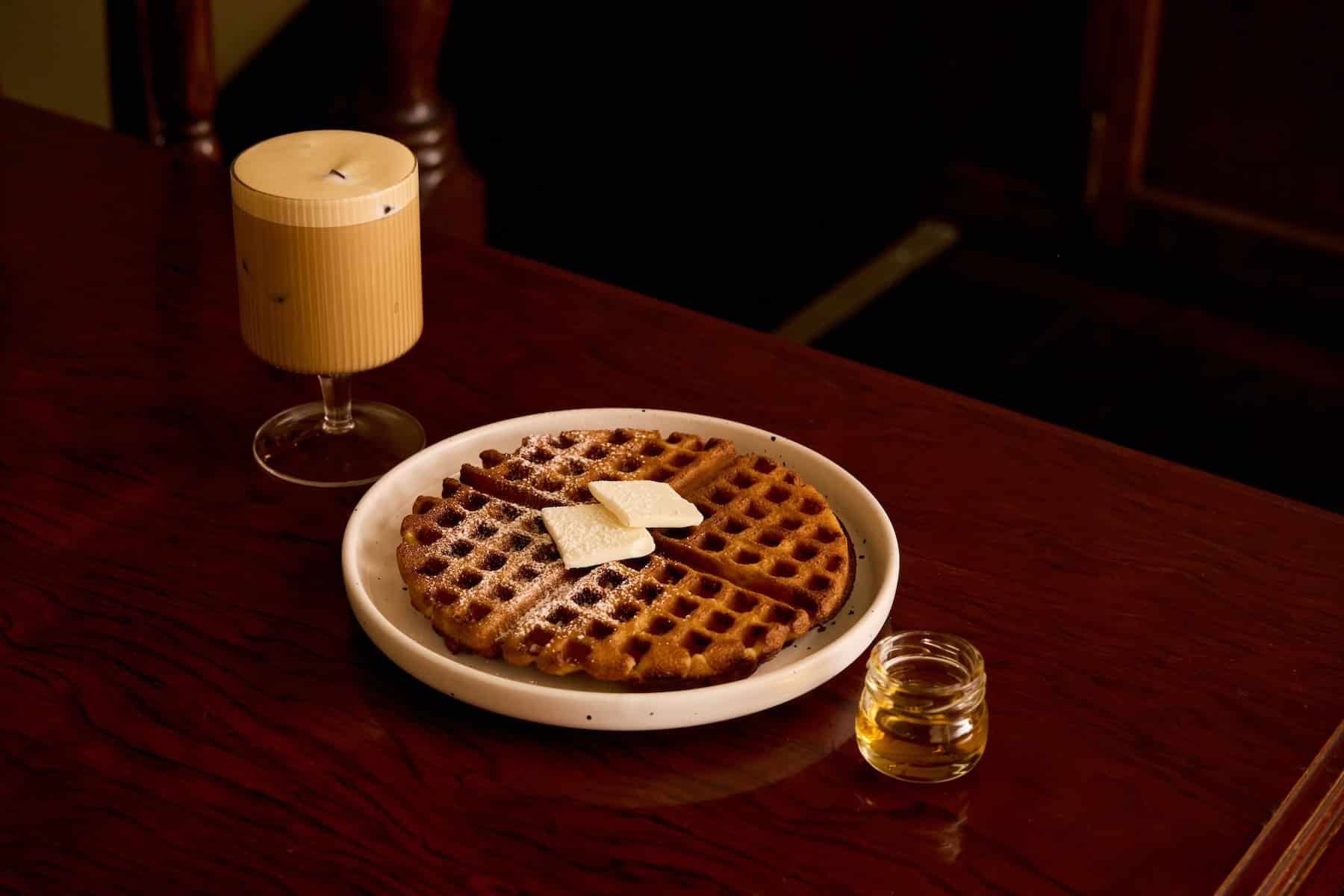
Vegan Waffle Plain (maple syrup and vegan butter), ¥1,100; Milk Coffee, ¥900.
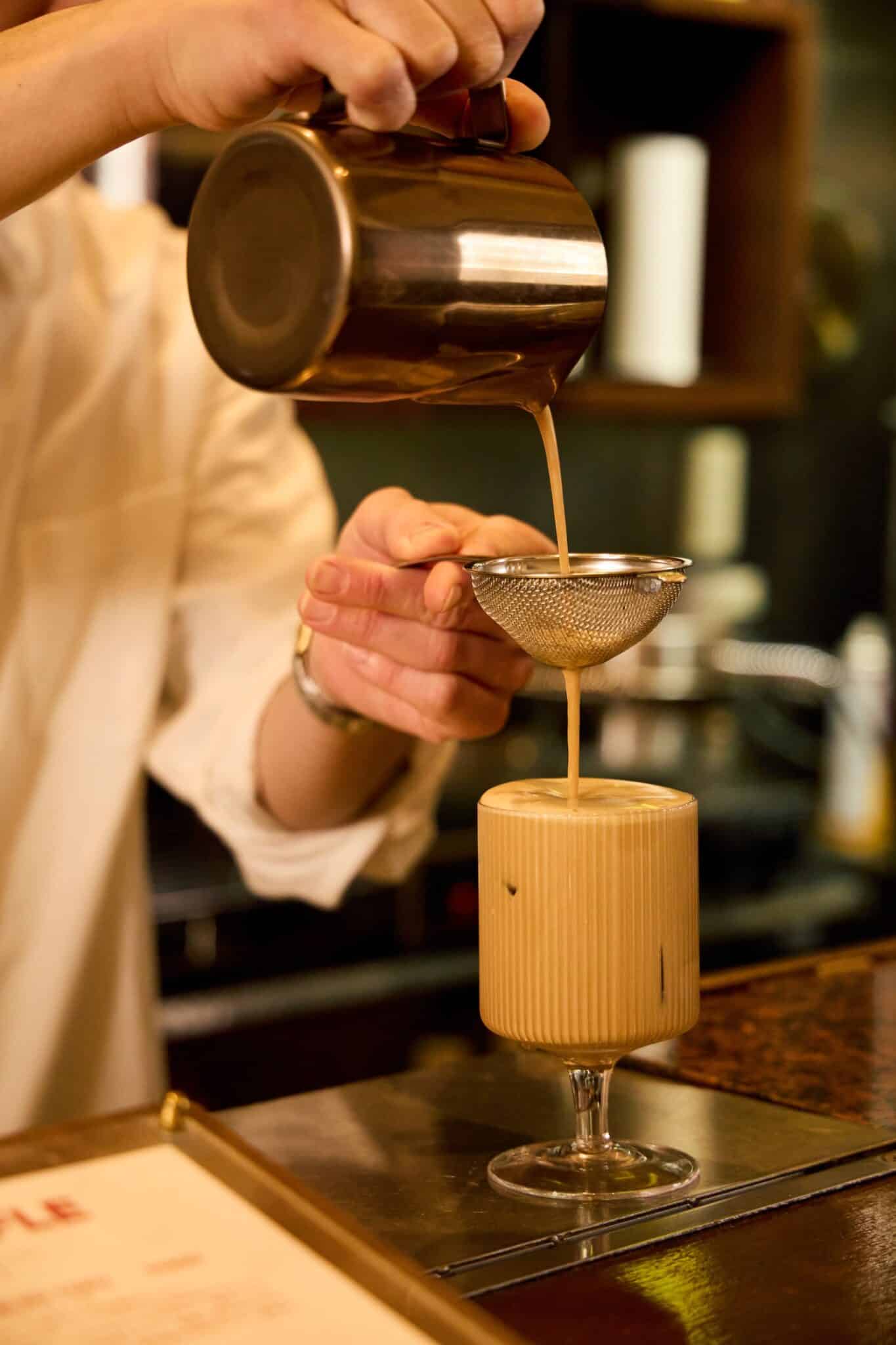
The highlights here are the gentle “milk coffee,” specially designed for oat milk, and the plant-based vegan waffles. The coffee is offered in a style that does not require any difficult knowledge about origin or roast level; instead, you can simply choose according to your mood that day, such as “clean” or “full-bodied.” Pairing it with the vegan waffle, which brings out richness through shio koji (salted rice malt seasoning) without using animal-derived ingredients, creates a recovery time that is gentle on the stomach and perfect for runners.
By using naturally sweet oat milk, the drink achieves a gentle mouthfeel reminiscent of milk tea.
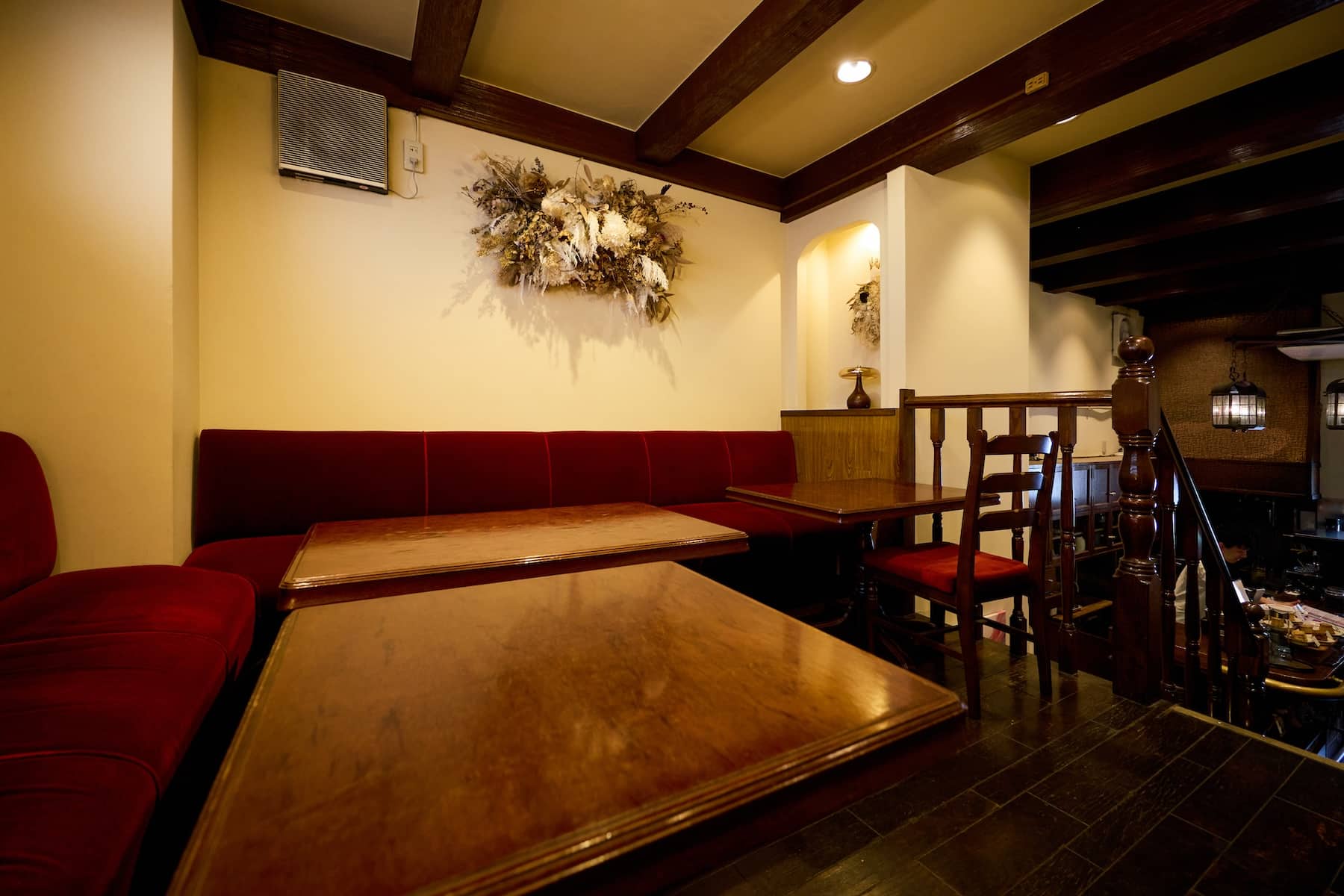
The café has two floors, with both sofa seating and table seating available.
After working up a sweat on a riverside course that is exceptionally easy to run, you can enjoy a blissful recovery with a sento experience and stomach-friendly coffee after the finish. Be sure to enjoy a fulfilling day of “run + α” that lets you fully experience both running and the charm of Tokyo’s old downtown.



スマホ.jpg)