DEEPTOKYO
magazine

EN

DEEPTOKYO
magazine
EN
2026.01.06
A specialty shop where you can discover Japanese pottery from renowned ceramic regions across Japan


 Nearest Station

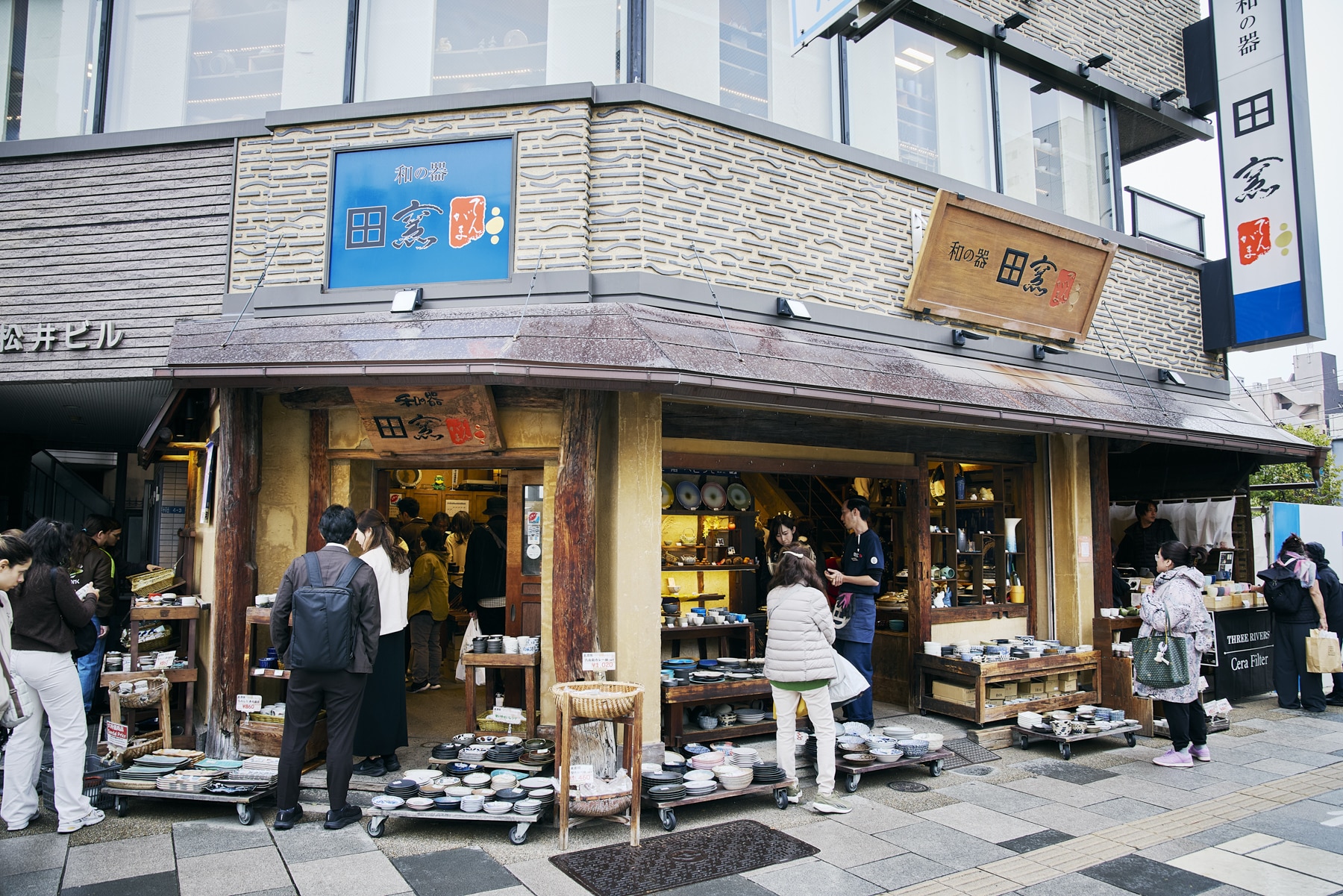
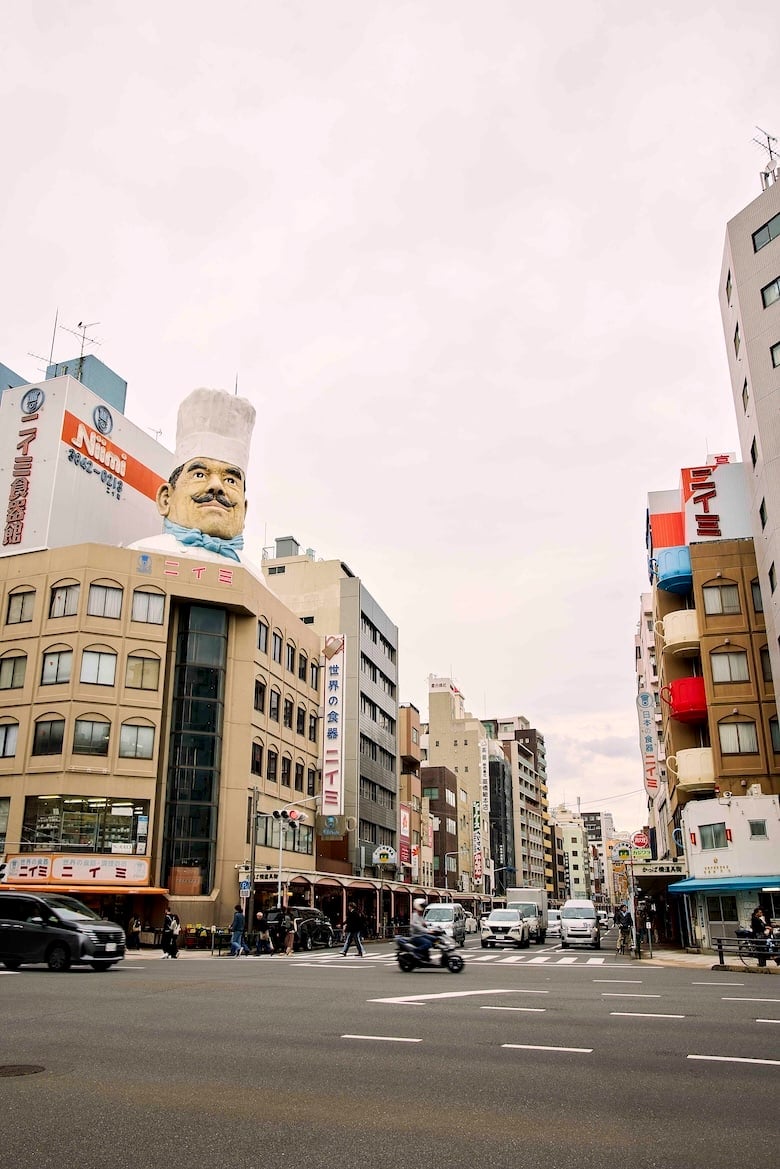
DENGAMA is a Japanese pottery specialty shop located in Kappabashi Dougu Street, where the owners purchase wares directly from kilns across Japan. Spanning two floors, the shop is densely lined with tableware unique to Japan. From one-of-a-kind pieces that carry on traditional patterns and techniques to modern designs that fit seamlessly into contemporary living, the selection is impressively diverse. The shop also offers many reasonably priced items, such as chopstick rests, making it an ideal place to look for distinctly Japanese souvenirs.
SHARE


Among the shops lining Kappabashi Dogu Streer, DENGAMA stands out as one of the liveliest and most popular destinations. Specializing in Japanese ceramics purchased directly from kilns throughout the country, the shop is known for the remarkably wide range of production areas it represents. Notable examples include Arita ware from Saga Prefecture, Kutani ware from Ishikawa Prefecture, Mino ware from Gifu Prefecture, and Hasami ware from Nagasaki Prefecture. Because visitors can encounter ceramics from many different regions in one place, the shop enjoys strong popularity among international travelers. The lineup spans everything from affordably priced pieces suited for everyday use to unique one-of-a-kind works by individual artists, allowing customers to select tableware according to their preferences and intended use.
The shop’s energetic storefront, with products displayed all the way out to the eaves, makes it easy to spot.
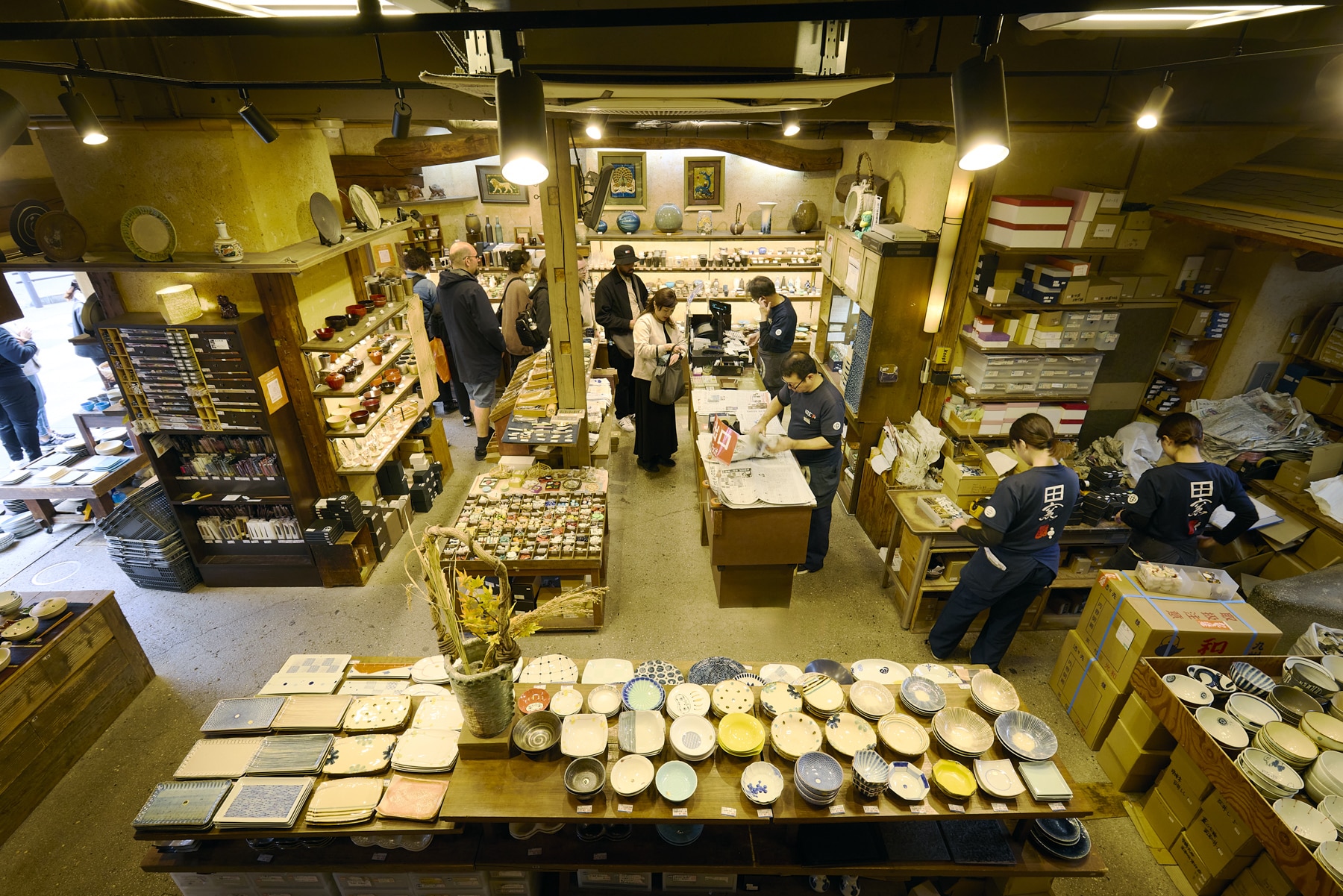
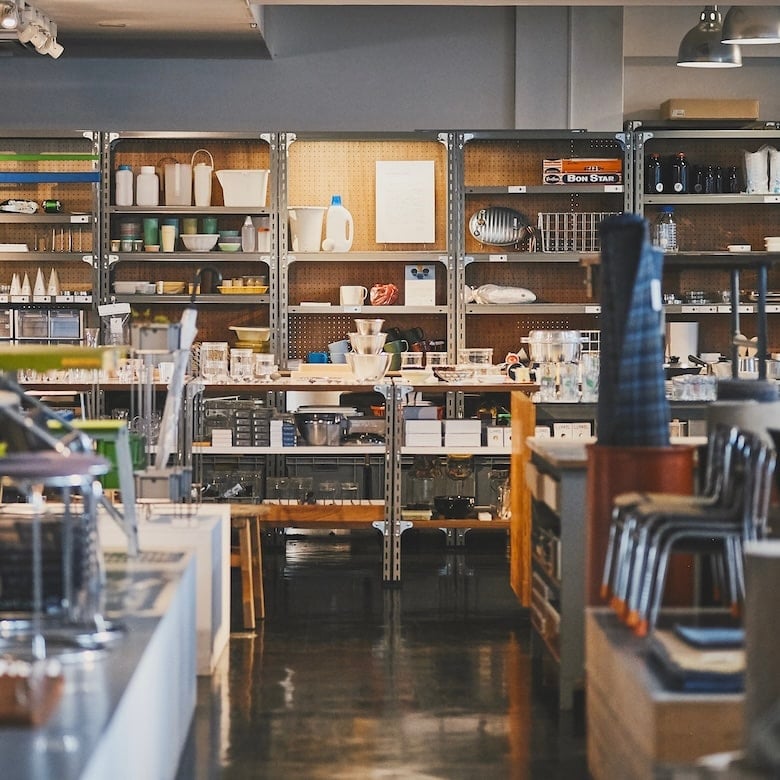
The interior is divided between the first and second floors, both packed wall to wall with ceramics.
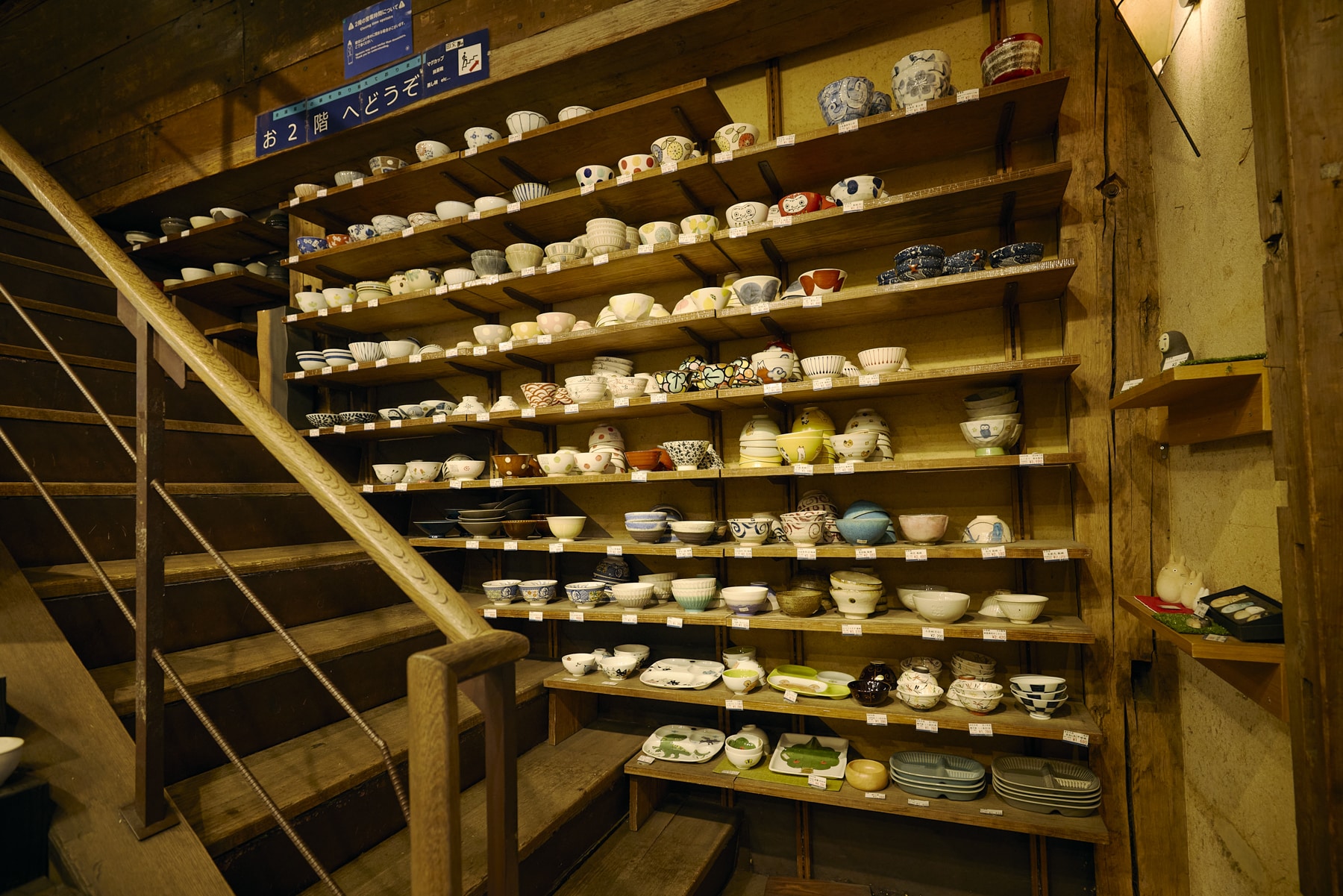
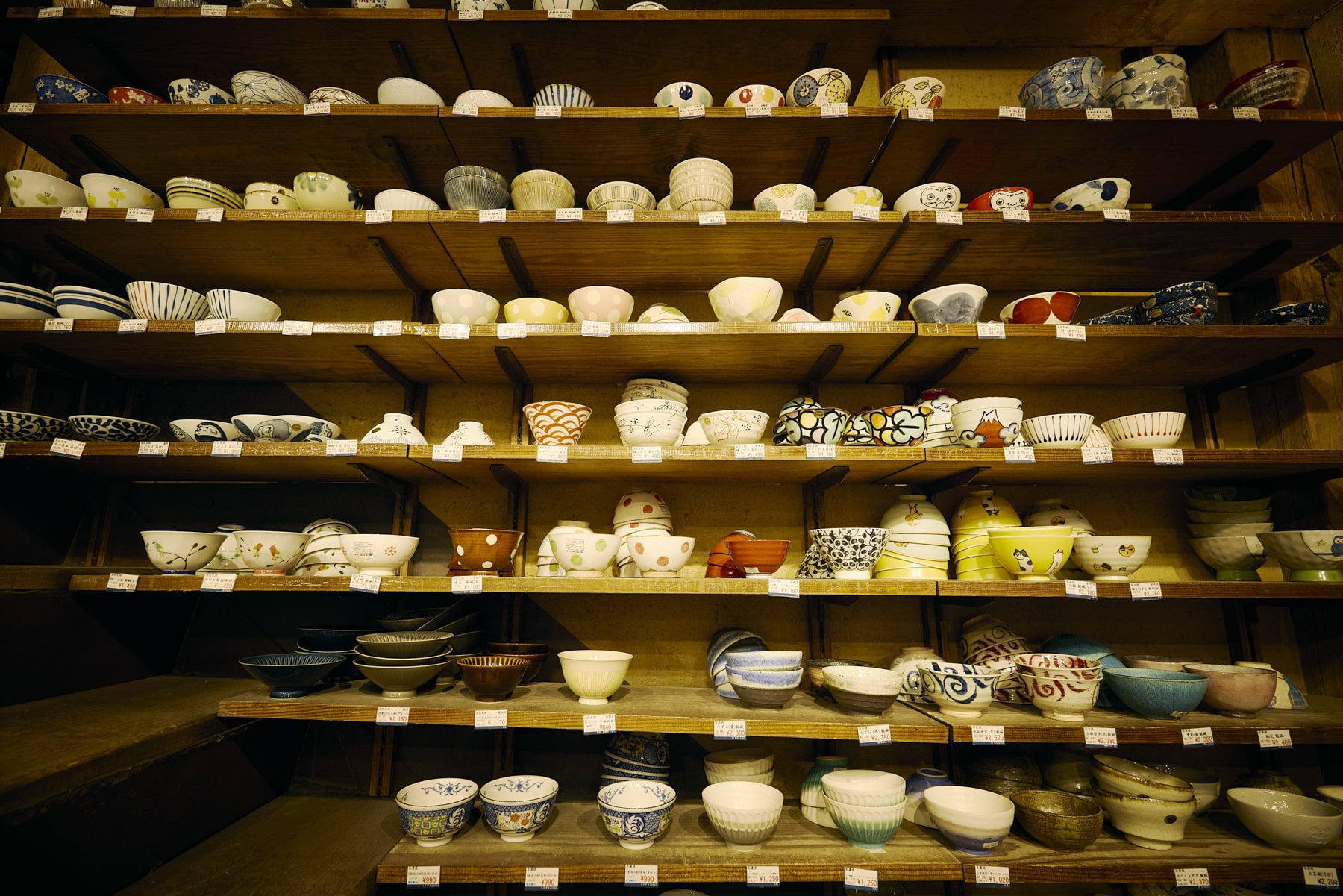
Shelves along the staircase are also filled with tableware, including chawan(Japanese rice bowls), creating a non-everyday atmosphere surrounded by an abundance of pieces.
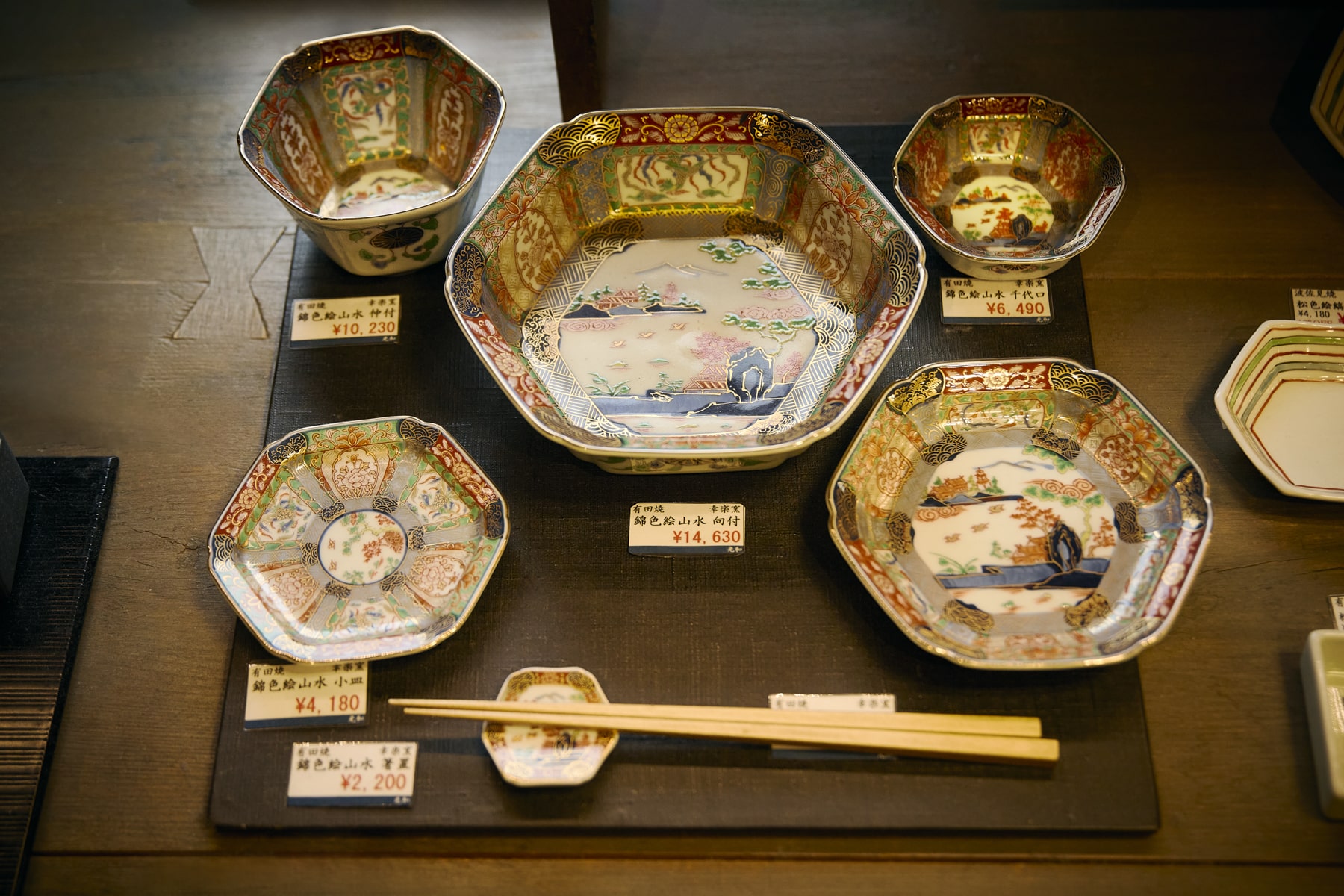
Arita ware from Saga Prefecture is made of porcelain, which is harder and more durable than earthenware, and is also known as the region where porcelain production first began in Japan. Its defining feature is the translucent white porcelain body, decorated with vibrant overglaze enamels in red, green, yellow, and other colors. During the Edo period, these wares were exported overseas through Imari Port, which is why they are also referred to as Imari.
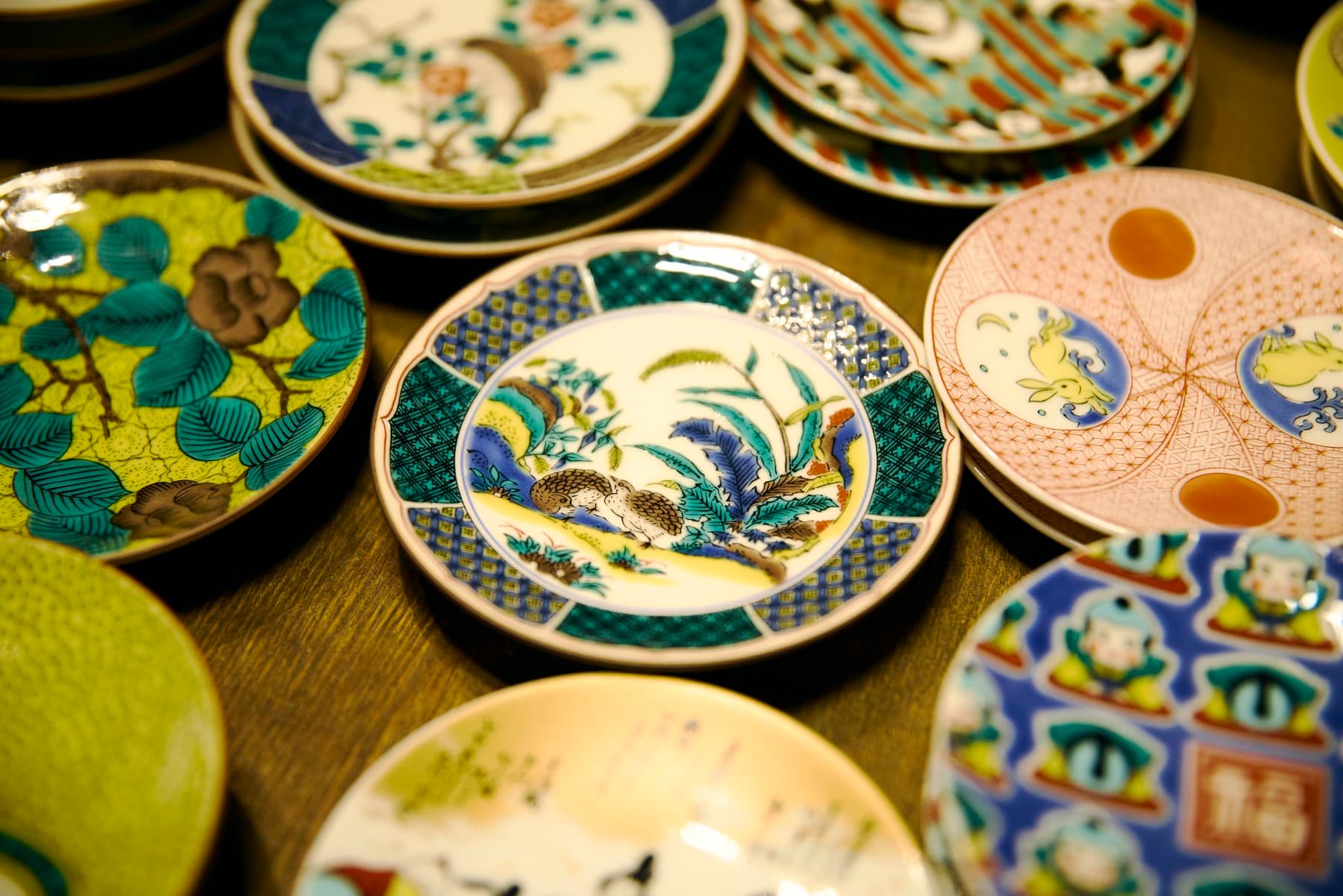
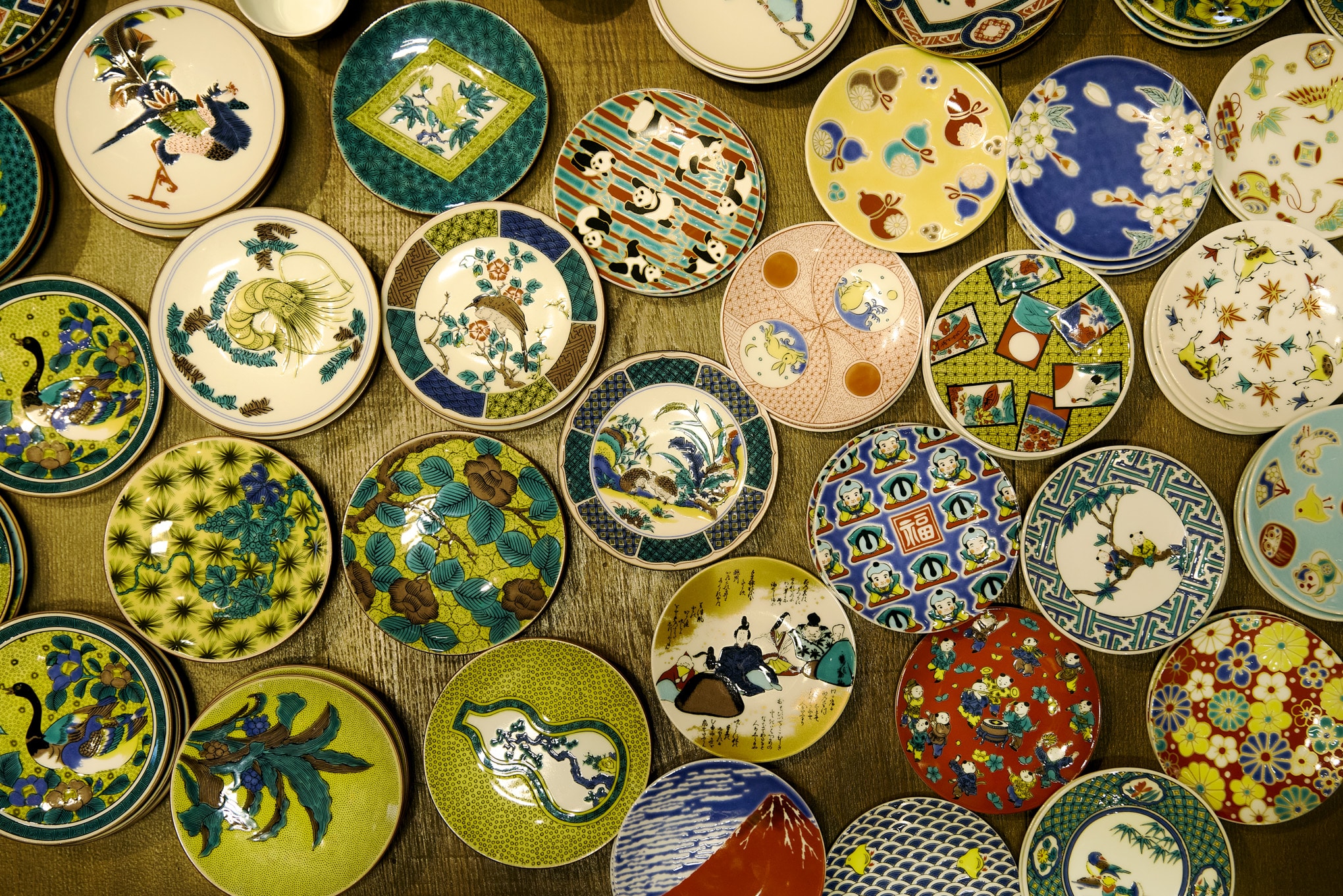
Kutani ware from Ishikawa Prefecture is distinguished by its bold and vividly colored designs. The technique known as Kutani Gosai, which uses five colors—red, yellow, green, purple, and deep blue—is applied in thick layers, creating a glossy, glass-like finish. Many pieces feature painterly compositions, and some are valued as fine art. The photo shows small plates by Seikogama, a popular Kutani ware kiln (¥1,190 each).
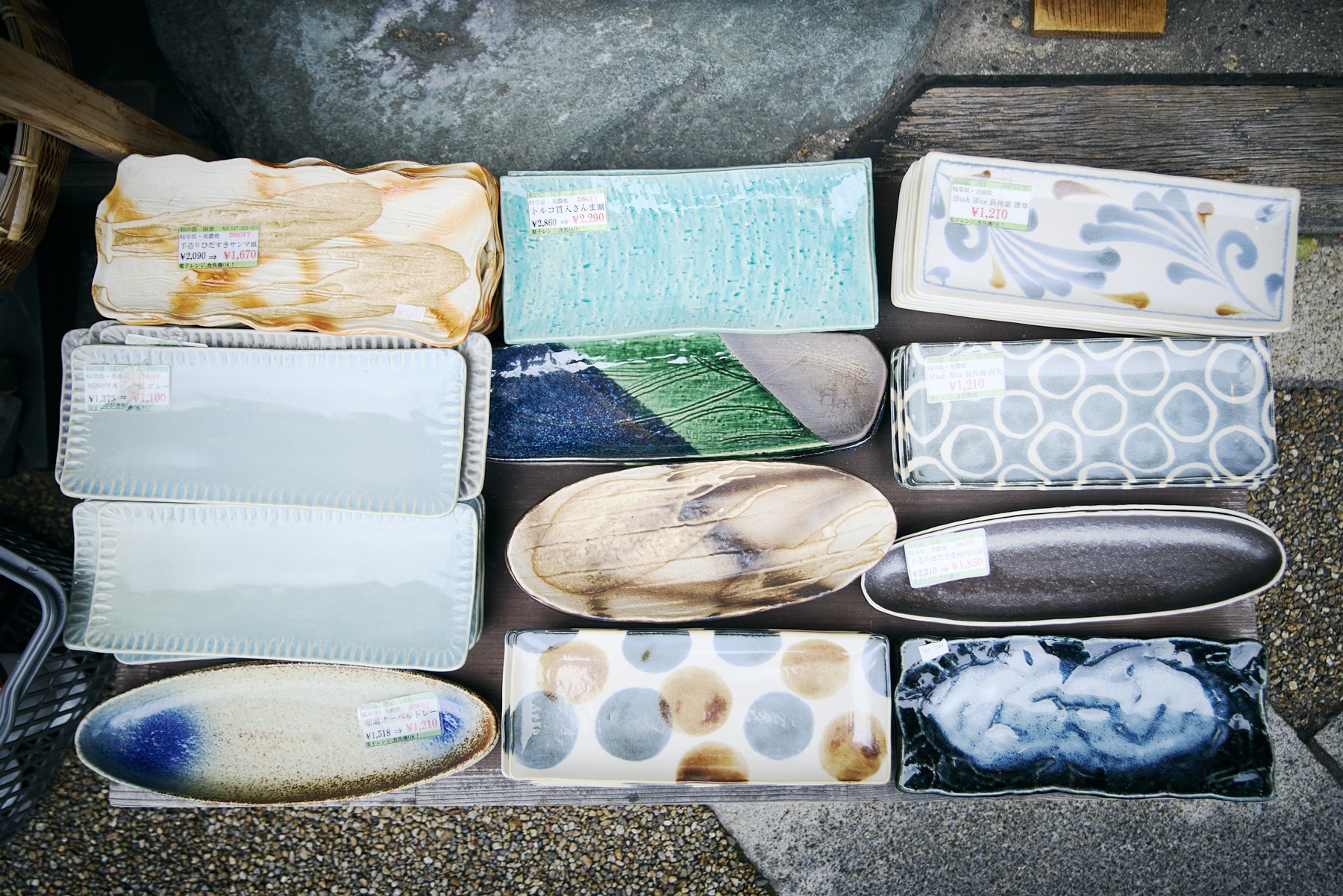
Mino ware from Gifu Prefecture is the most widely produced type of Japanese ceramics. Thanks to the wide variety of clays and glazes used, its designs are exceptionally diverse. Through continuous technical innovation and creative freedom that respond to changing lifestyles, Mino ware now accounts for approximately 60% of Japan’s tableware market. At “DENGAMA”, many Mino ware pieces are available at accessible price points.
Hasami ware from Nagasaki Prefecture developed as everyday tableware for ordinary people and is best known for its indigo blue underglaze decoration. In recent years, many modern designs have emerged, allowing these pieces to fit naturally into contemporary lifestyles. Chopstick rests made from Hasami ware are especially popular as small souvenirs to share.
When people hear the term Japanese tableware, many may imagine pieces featuring traditional patterns and techniques. However, DENGAMA also offers a wide selection of modern designs that harmonize with contemporary lifestyles and interiors. Representative examples include simply designed Mino ware and Hasami ware, which are popular for daily use and available at reasonable prices. At the same time, the shop carries one-of-a-kind works by renowned kilns and individual artists. This broad lineup allows each visitor the chance to encounter a truly once-in-a-lifetime piece.
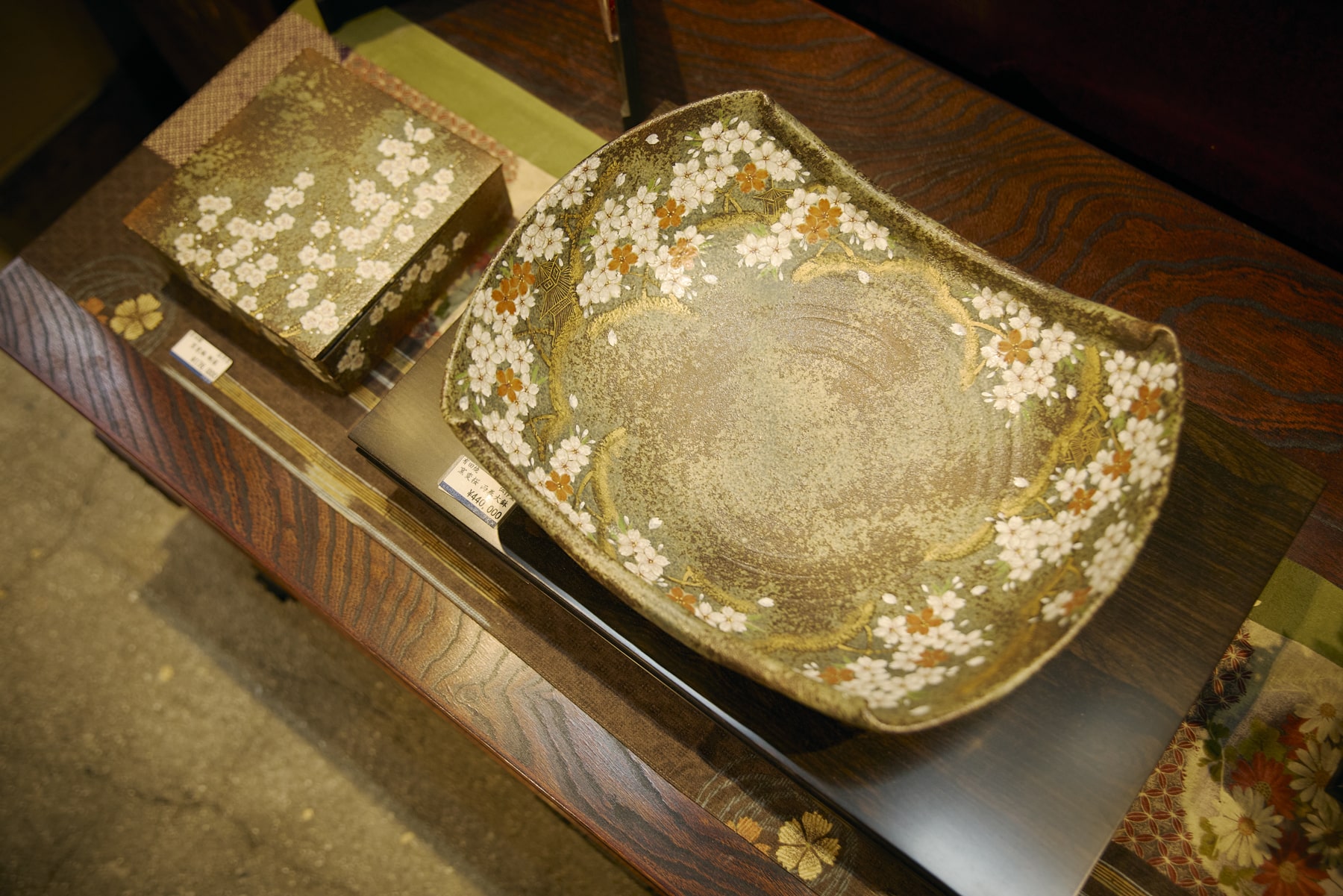
The large bowl on the right, made by Densakugama of Arita ware, uses a technique known as yōhen (kiln transformation). Irregular changes in color and texture that occur during firing result in a unique finish for every piece. Arita ware, Densakugama Kiln-transformed cherry blossom large bowl 440,000 yen
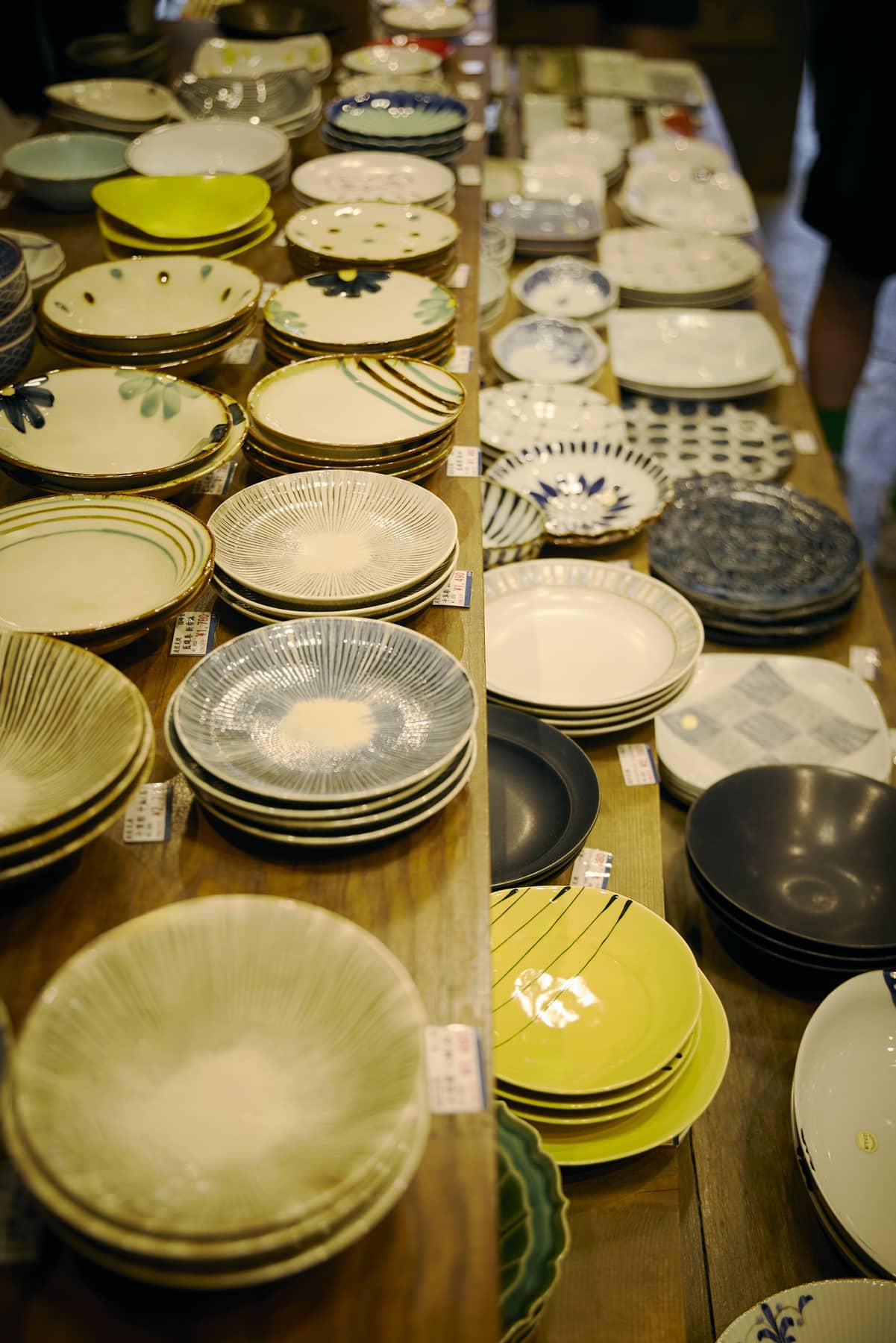
Even among small plates, Hasami ware offers a wide variety of patterns and designs. Being able to choose pieces that suit one’s taste or home interior is part of its appeal.
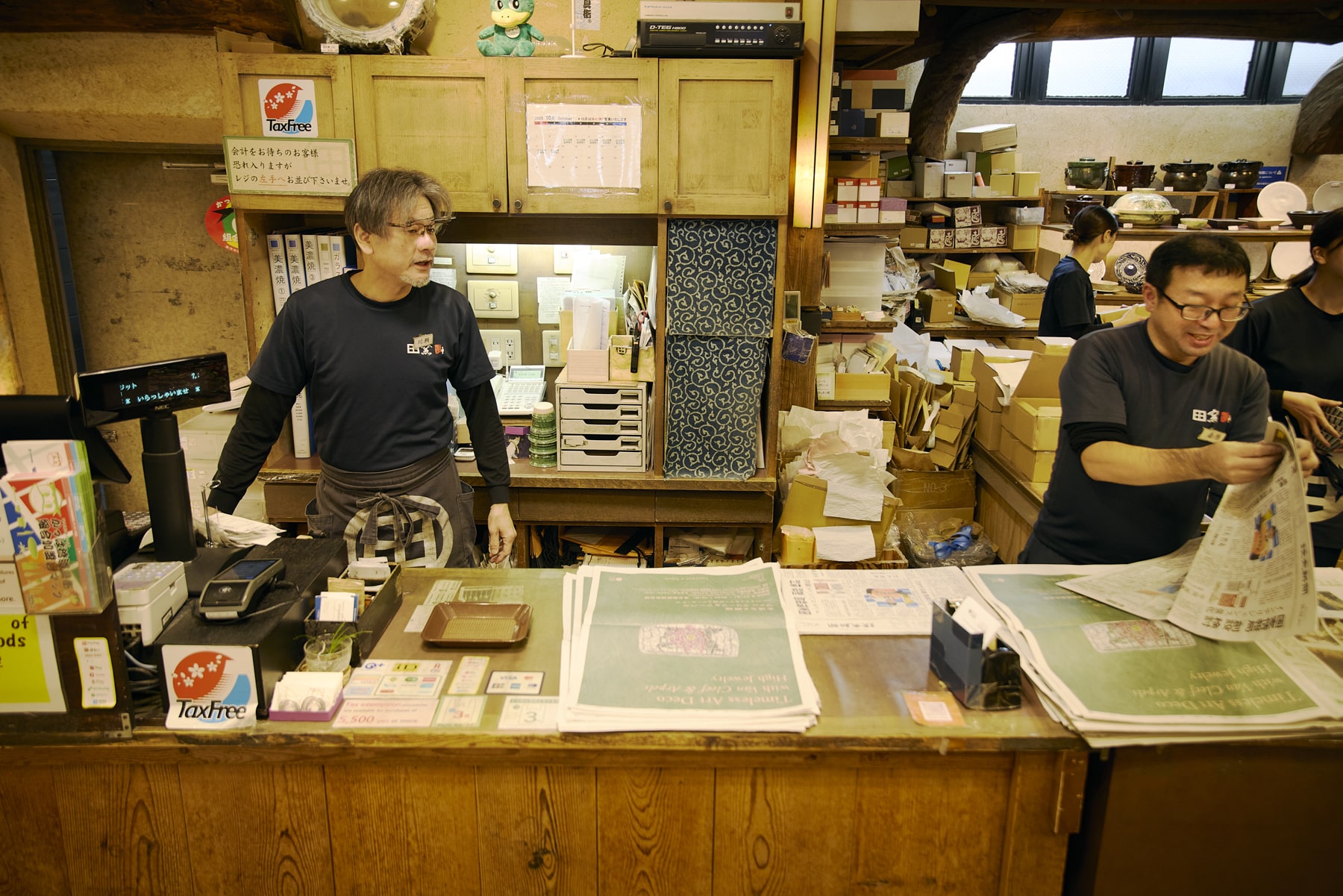
Purchased items are carefully wrapped one by one using Japanese newspaper, ensuring they can be taken home safely.
With its wide range of designs, from traditional to modern, DENGAMA offers something for everyone. Among these, items featuring uniquely Japanese forms are especially popular as souvenirs among overseas visitors. Typical examples include yunomi (tea cups), chawan(rice bowls), and chopstick rests. chopstick rests, in particular, are the top choice for souvenirs to share, as they are small, easy to carry, and affordably priced. As tangible keepsakes of a journey, Japanese tableware remains a popular souvenir choice for many travelers.
An impressive number of chawan(rice bowls) line the shelves beside the staircase. With a wide range of production areas and price points, visitors are sure to find a favorite piece.
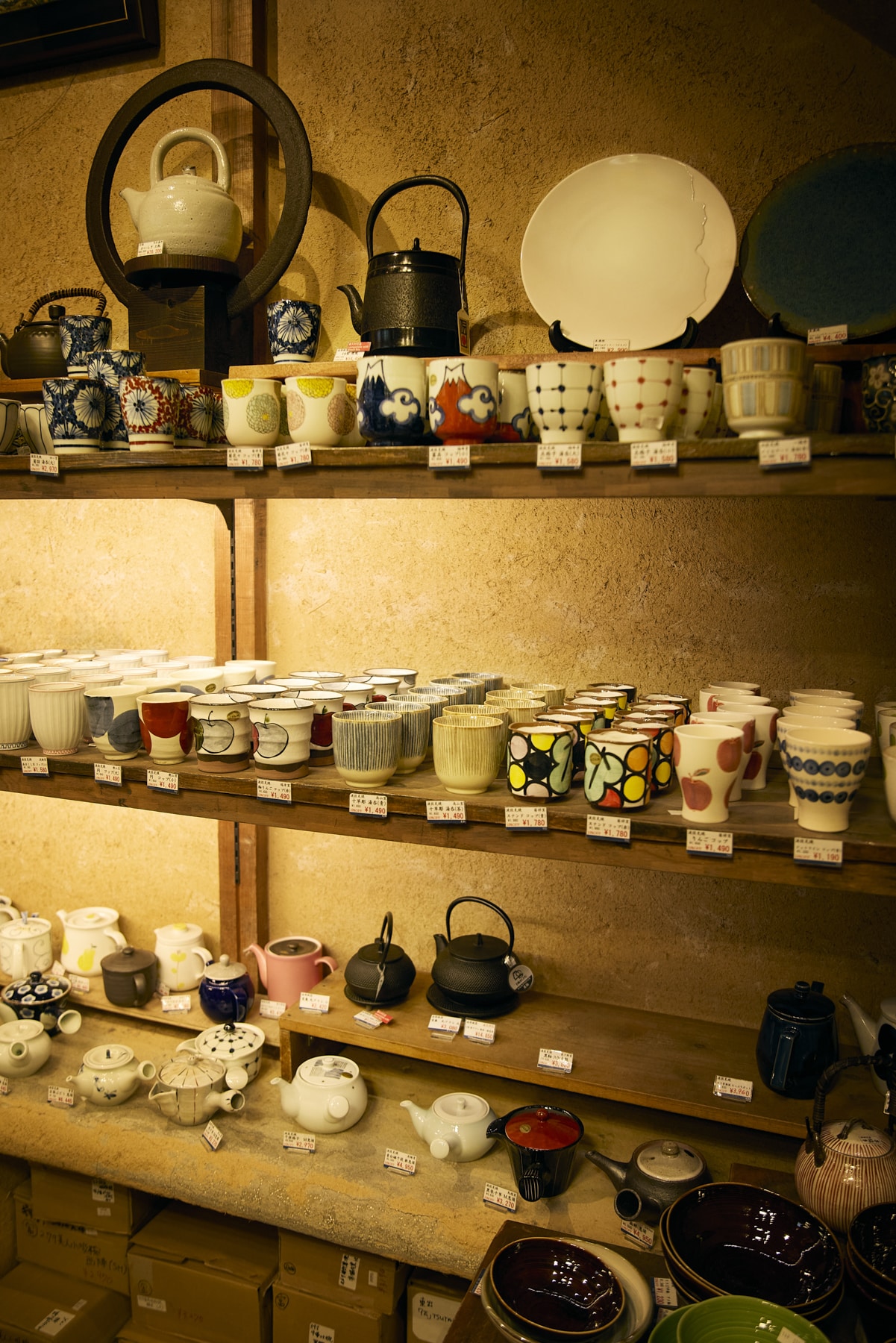
Yunomi designed for everyday use are gathered toward the back of the first floor. Pairing them with a teapot is also recommended.
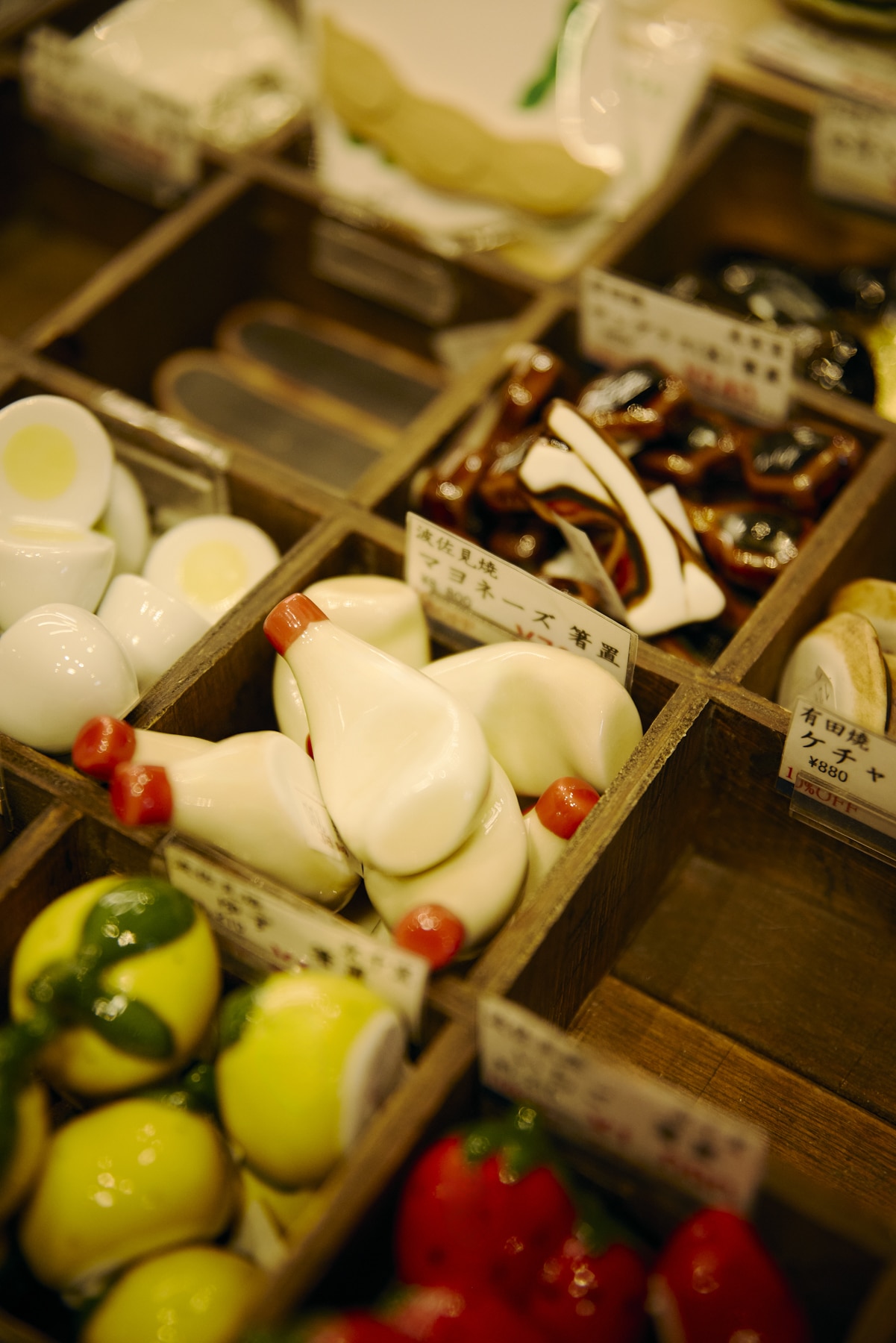
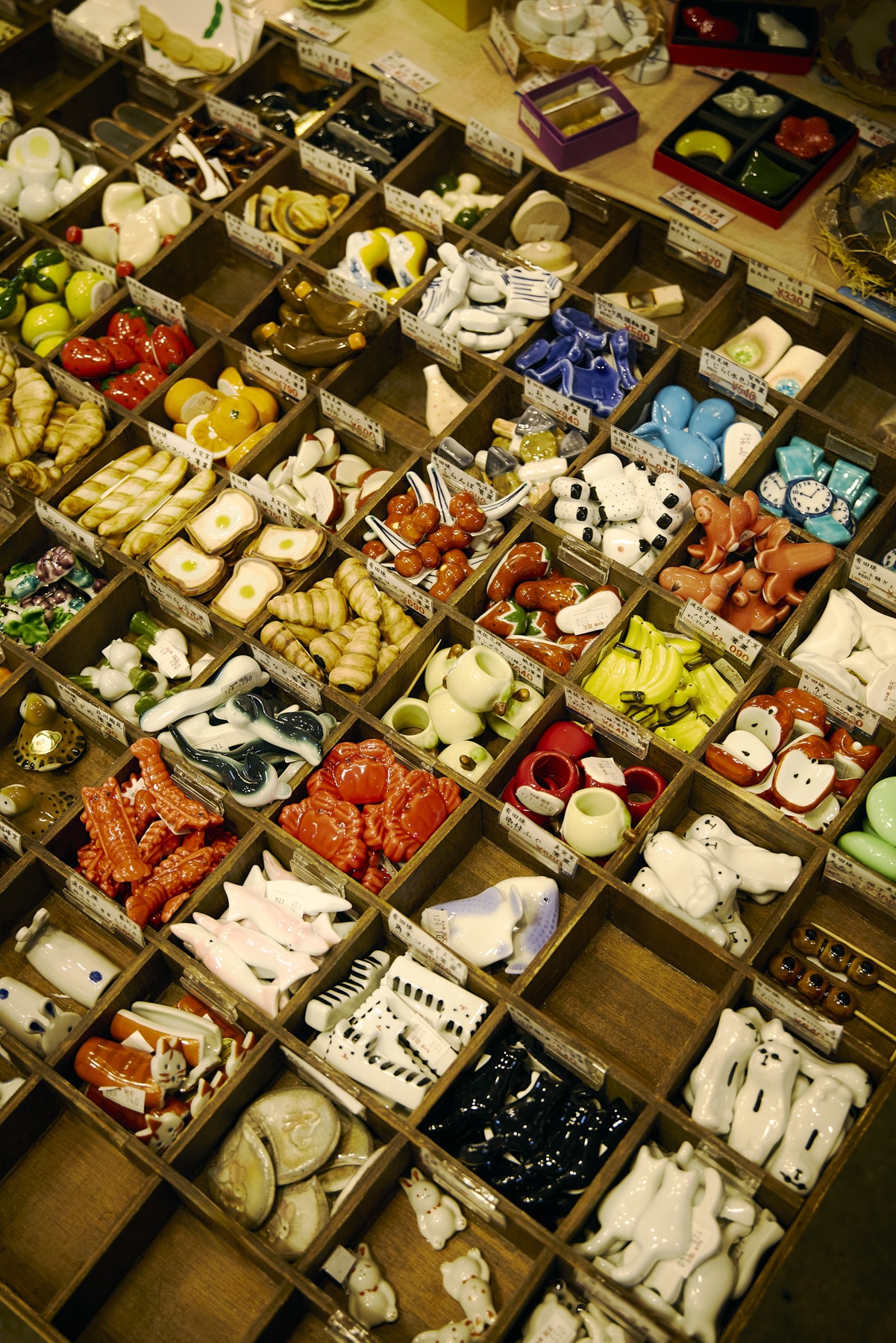
The extensive variety of chopstick rests is a pleasure to browse. Motifs shaped like food and animals are especially popular, and most items are priced under 1,000 yen. Many people also enjoy displaying them as decorative objects.
This article was written on January 06, 2026 (at the time of publication)