DEEPTOKYO
magazine

EN


AREA
DEEPTOKYO
magazine
EN
AREA
2026.08.12
In Japan, convenience stores are part of everyday life. Beyond food and daily necessities, they offer services ranging from ticketing to parcel pickup. In recent years, they've also become an unexpected place to shop for daily wear, including socks and T-shirts. Leading the way is Convenience Wear, the original apparel brand of the convenience store chain FamilyMart. Rather than creating clothes for one-time emergencies, the brand set out to make pieces people would genuinely want to wear every day. We spoke with Hiromichi Ochiai, designer of FACETASM and the brand's Creative Director, about the thinking behind the project—and how it is creating a new culture around convenience store clothing.
SHARE


FamilyMart, one of Japan's leading convenience store chains, has recently attracted growing attention for its original apparel brand, Convenience Wear.
Launched nationwide in March 2021, Convenience Wear is built around a simple philosophy: "Good Materials, Good Techniques, Good Design." Since then, the brand has continued to develop clothing and accessories designed for everyday life. In fiscal 2025, annual sales exceeded 20 billion yen, with the brand maintaining year-on-year growth of more than 30 percent.
Clothing has long been available at convenience stores in Japan. Socks, stockings, and T-shirts could always be picked up in a pinch—after an unexpected overnight stay, a spilled drink, or any number of minor emergencies. But Convenience Wear has changed what convenience store clothing can be. Made with quality materials, designed with comfortable silhouettes, and finished with details that bring a little more enjoyment to getting dressed, Convenience Wear has redefined what people expect from clothing sold at convenience stores. Rather than something bought simply to get through the moment, it has transformed convenience store clothing into everyday essentials that people choose to wear again and again.
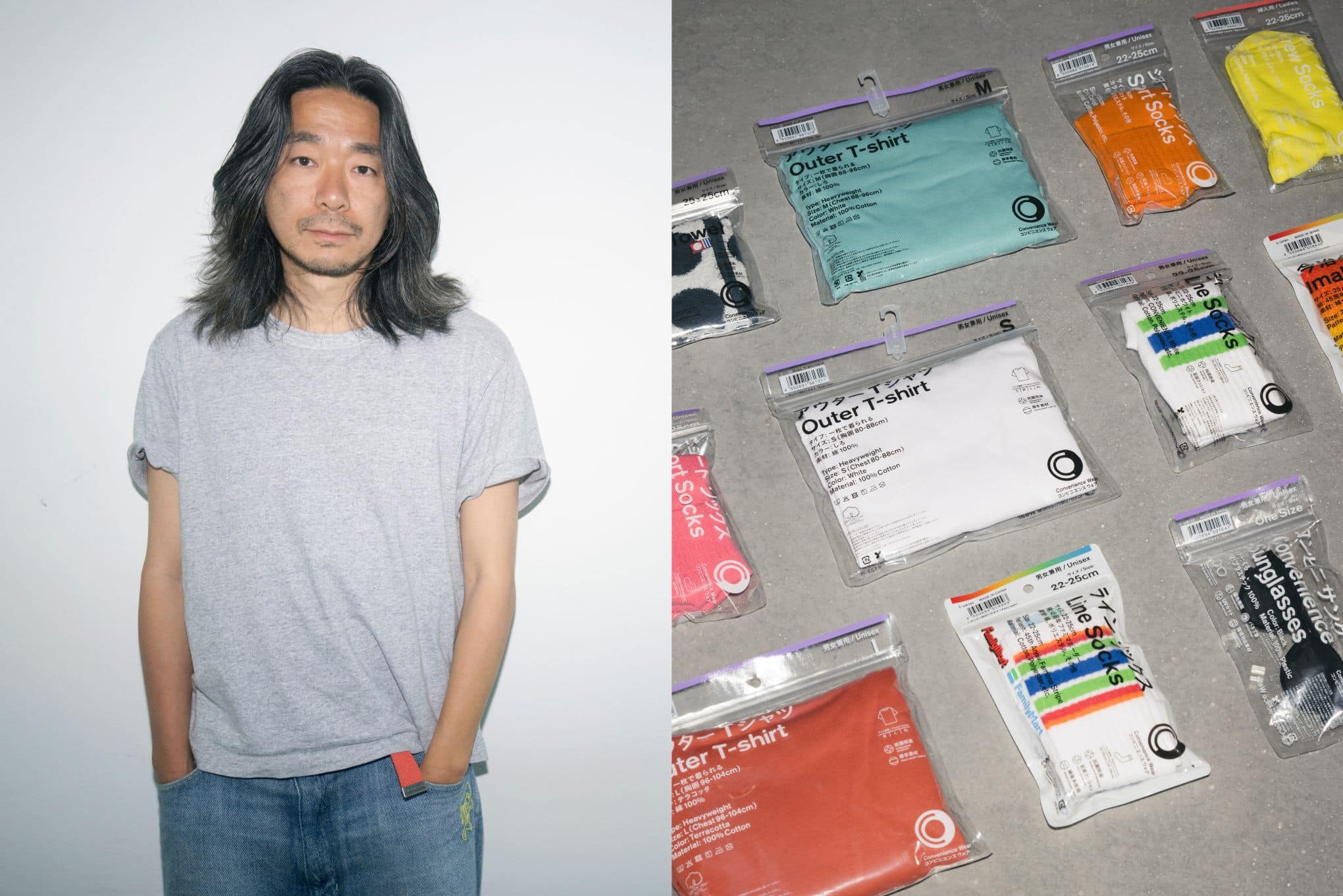
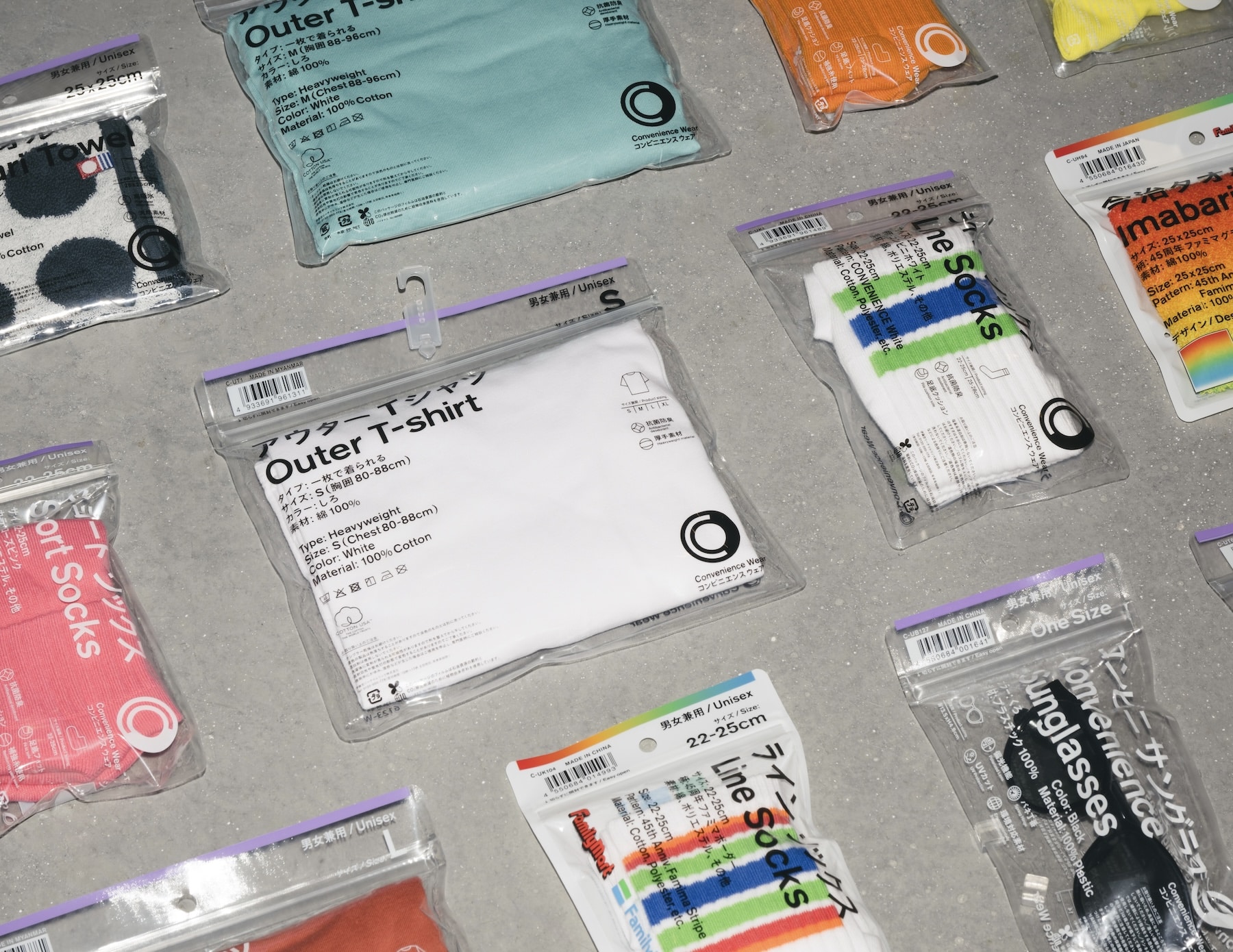
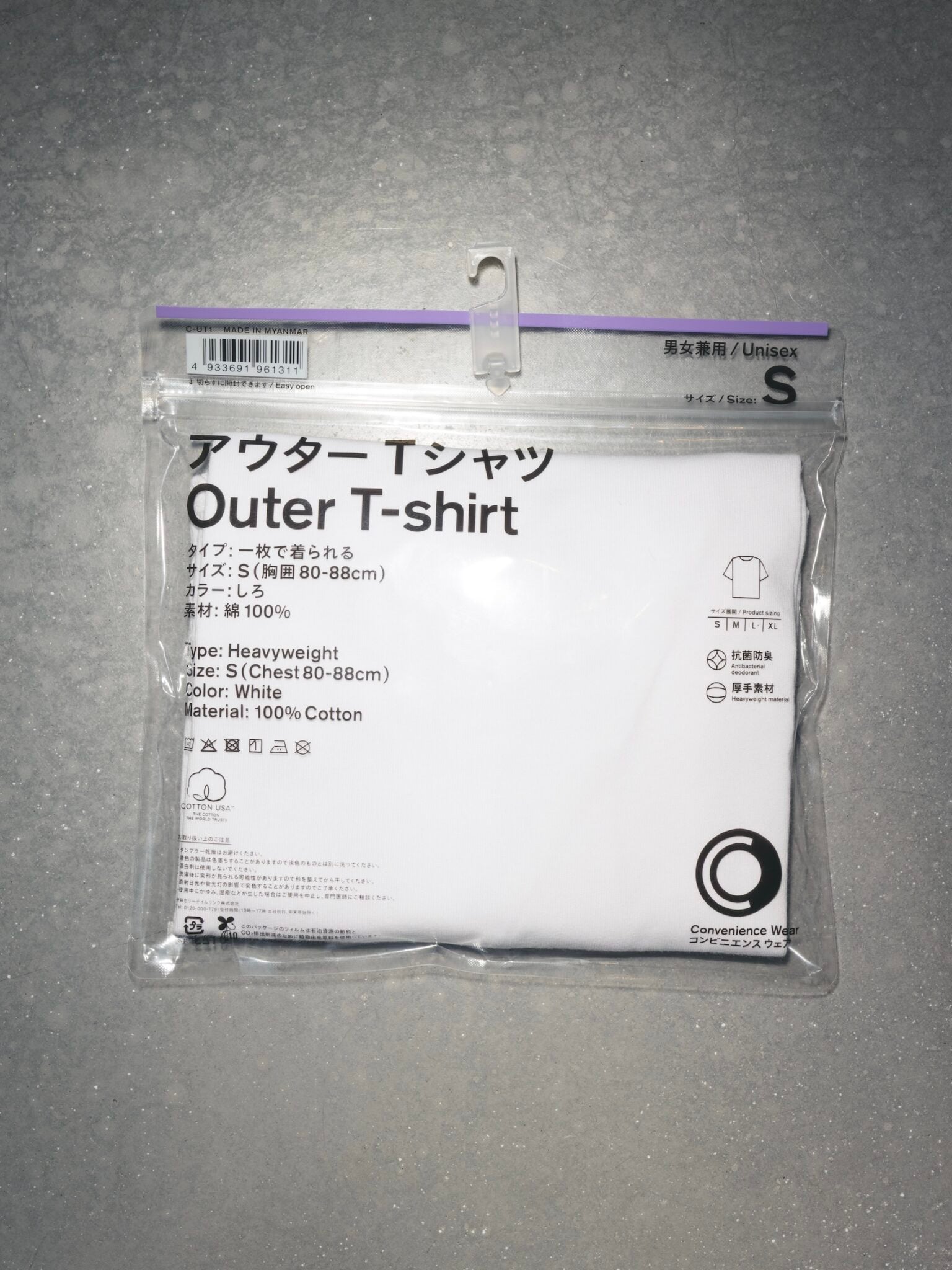
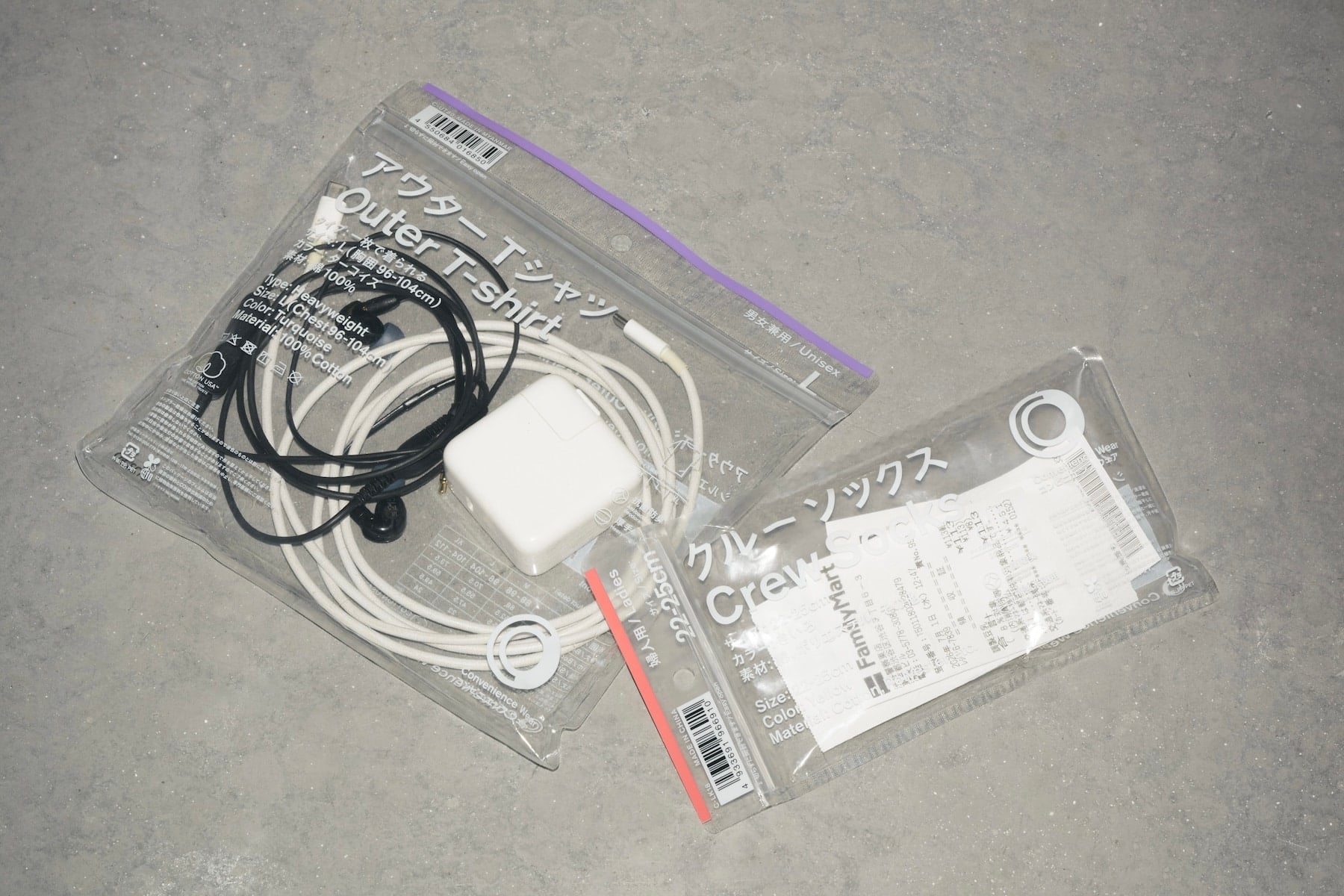
Convenience Wear products are packaged in transparent resealable bags.
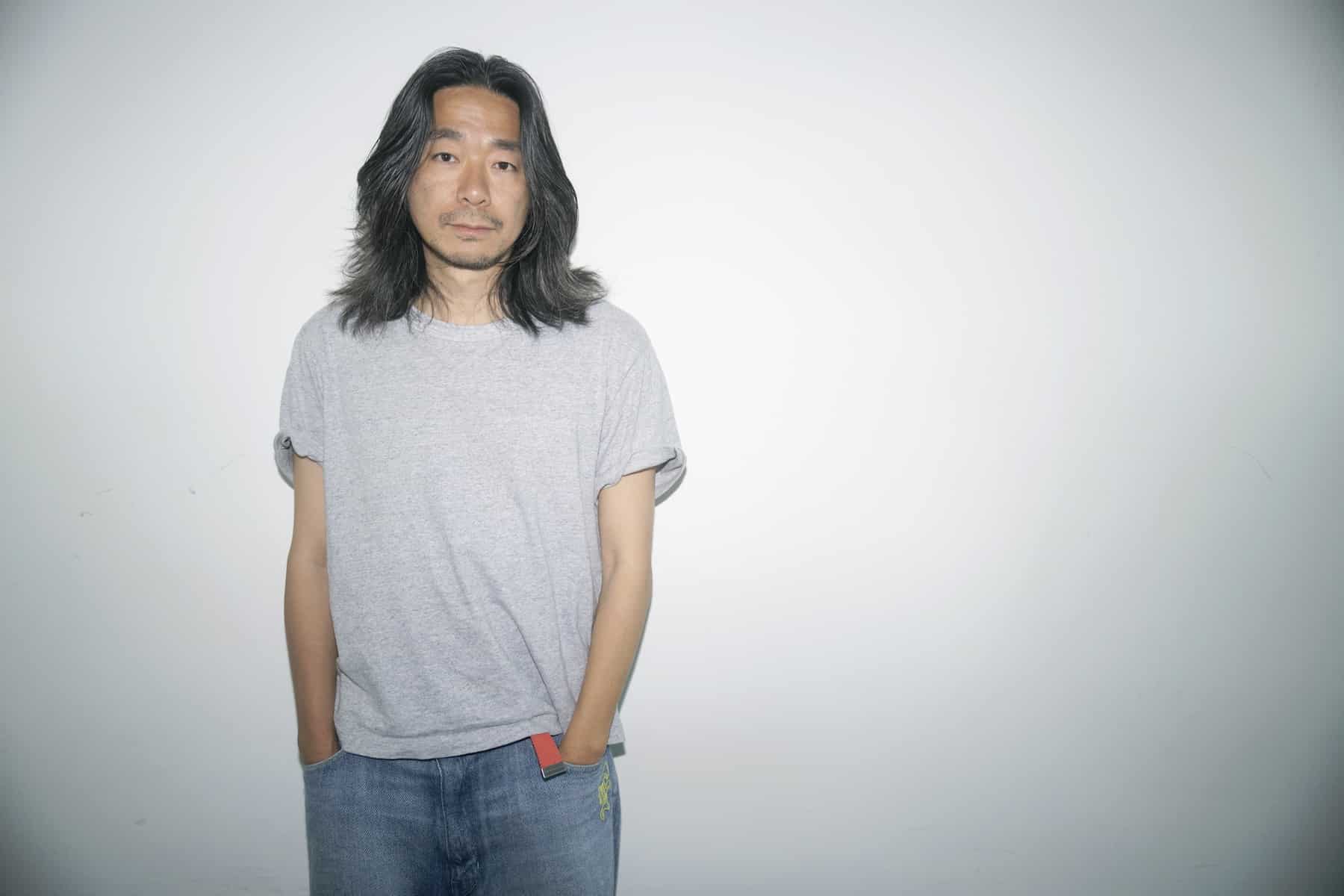
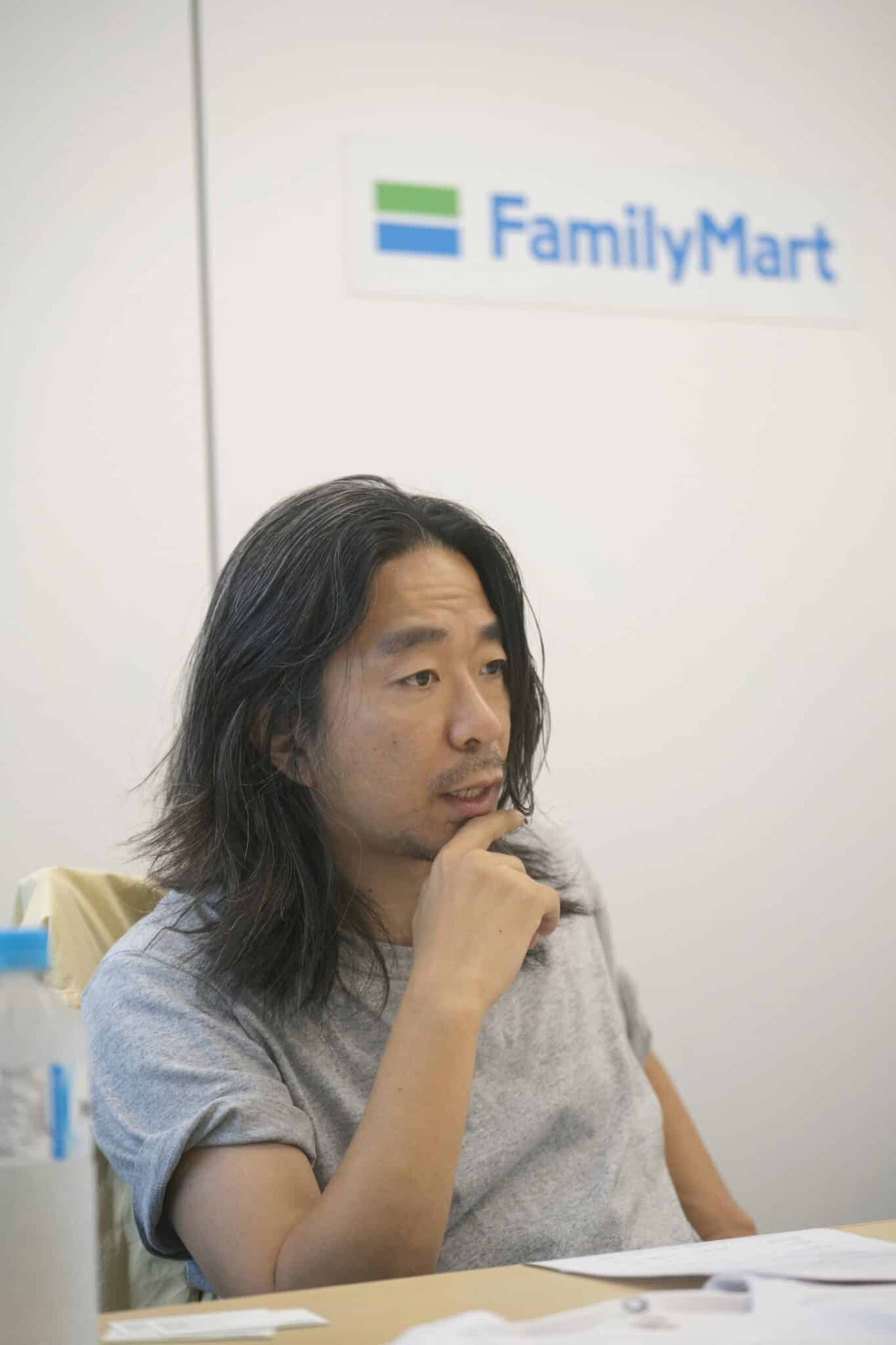
Serving as Convenience Wear's Creative Director is Hiromichi Ochiai, designer of the fashion label FACETASM. His work spans a wide range of creative fields, including designing costumes for the Closing Ceremony of the Rio 2016 Olympic and Paralympic Games.
"When FamilyMart approached me with the idea of creating a culture of buying clothes at convenience stores, my answer was an immediate yes. As a designer, the opportunity to deliver something genuinely good through more than 16,400 stores across Japan felt incredibly exciting. At the same time, I was aware that putting too much emphasis on 'design' in a convenience store could easily put people off. Before anything else, we needed to earn people's trust. So I visited stores across the country, spent time getting to know how they operated, talked with the staff, and held roundtable discussions with franchise owners. It was important that everyone shared the same vision and moved forward together."
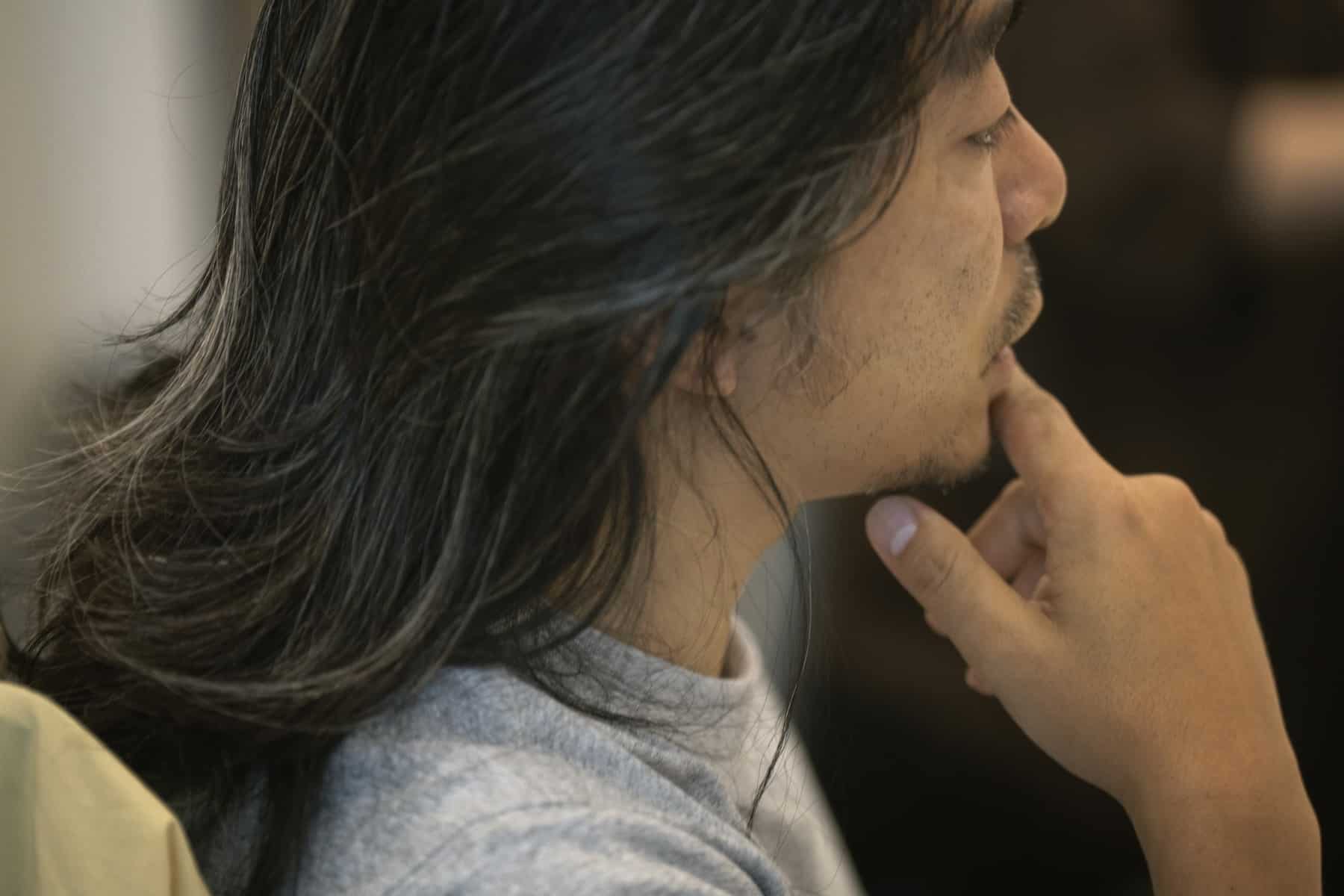
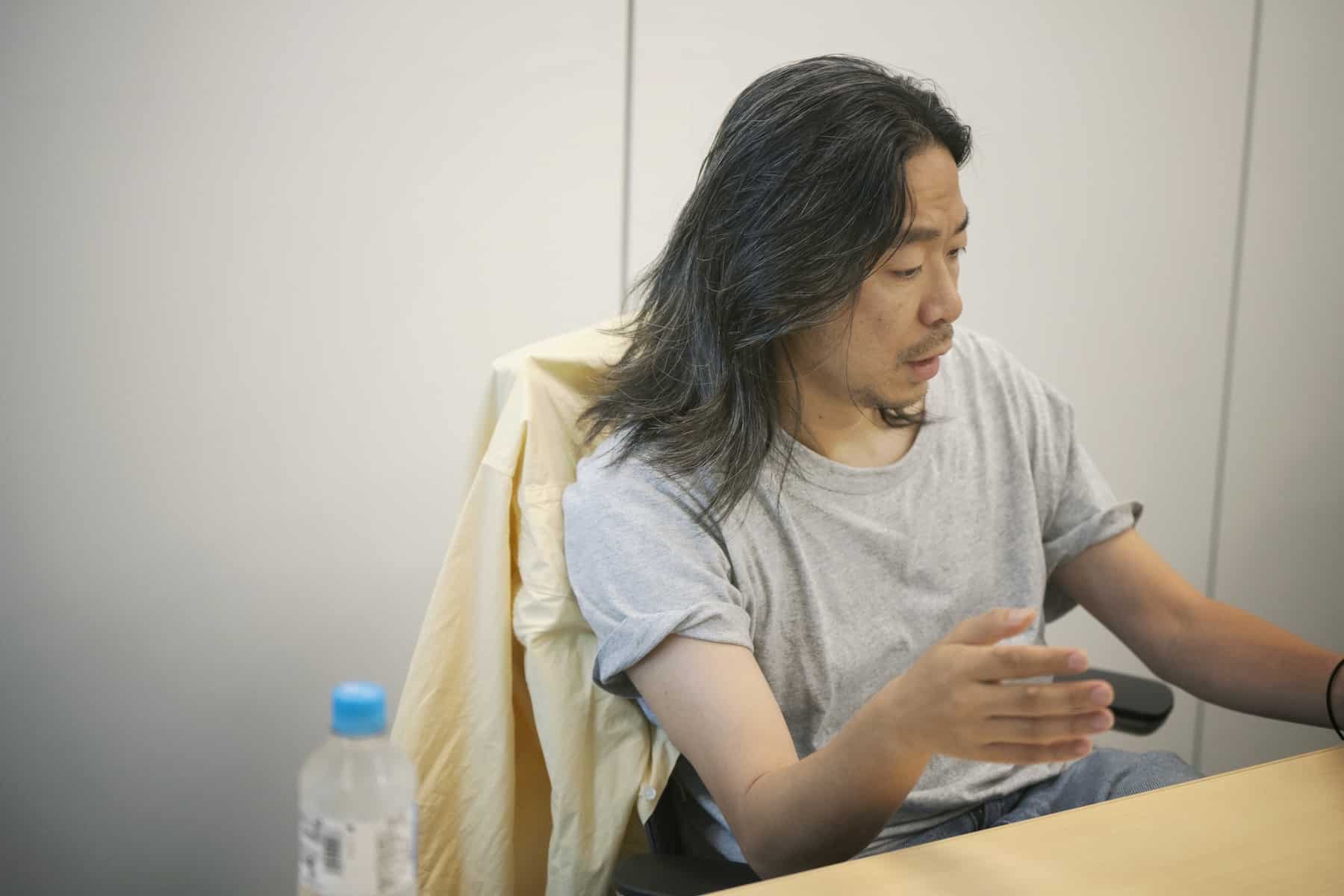
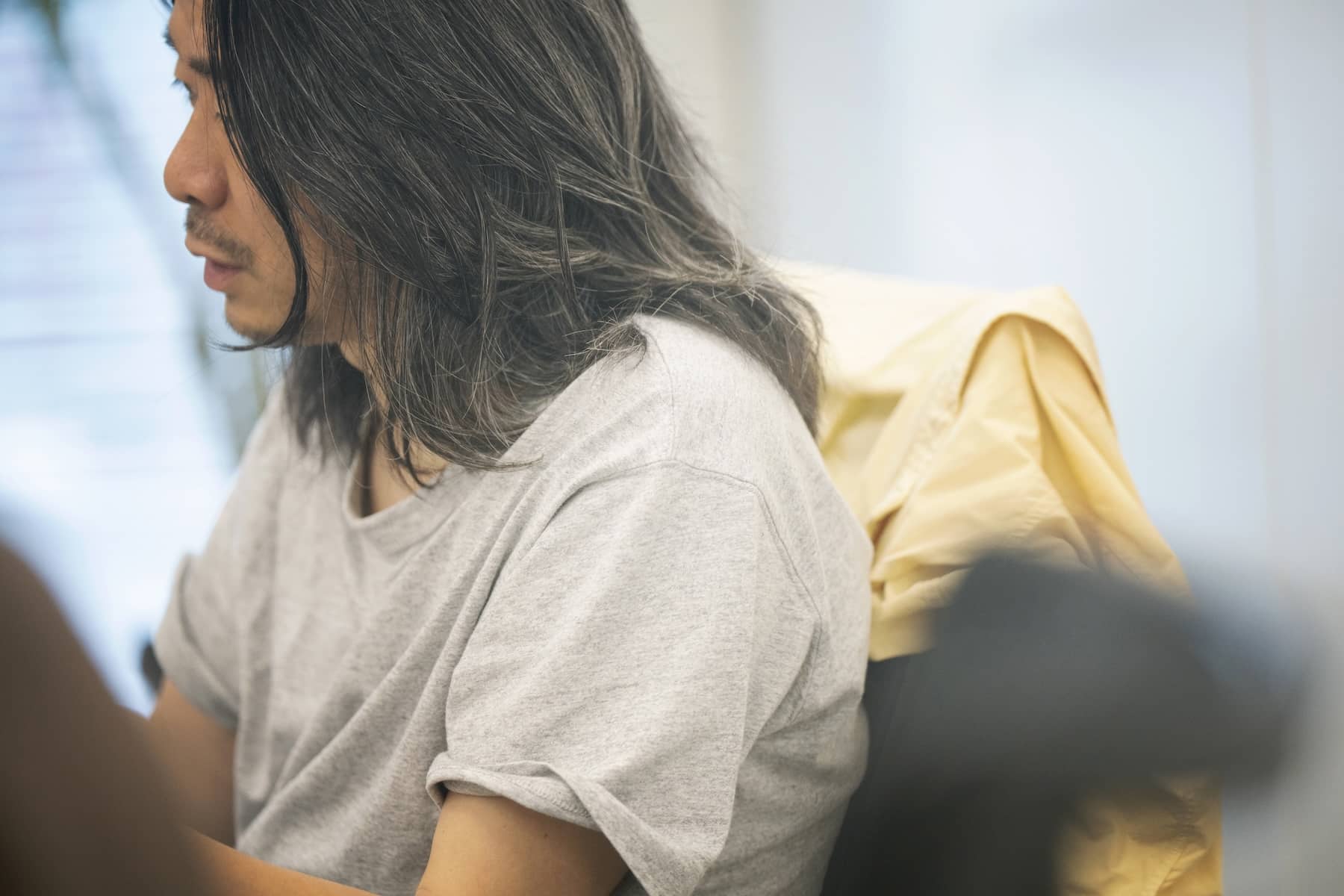
Hiromichi Ochiai, Creative Director of Convenience Wear.
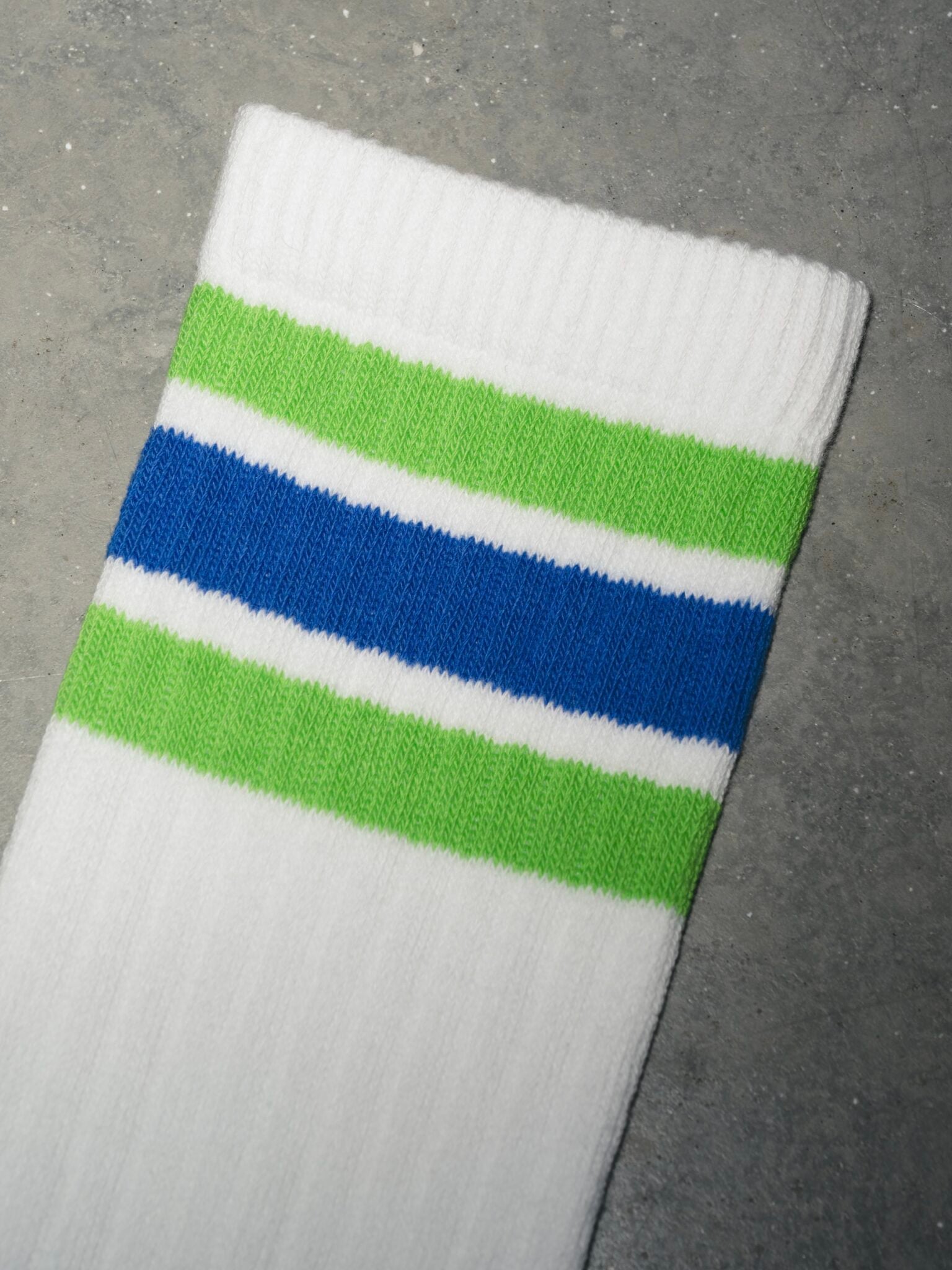
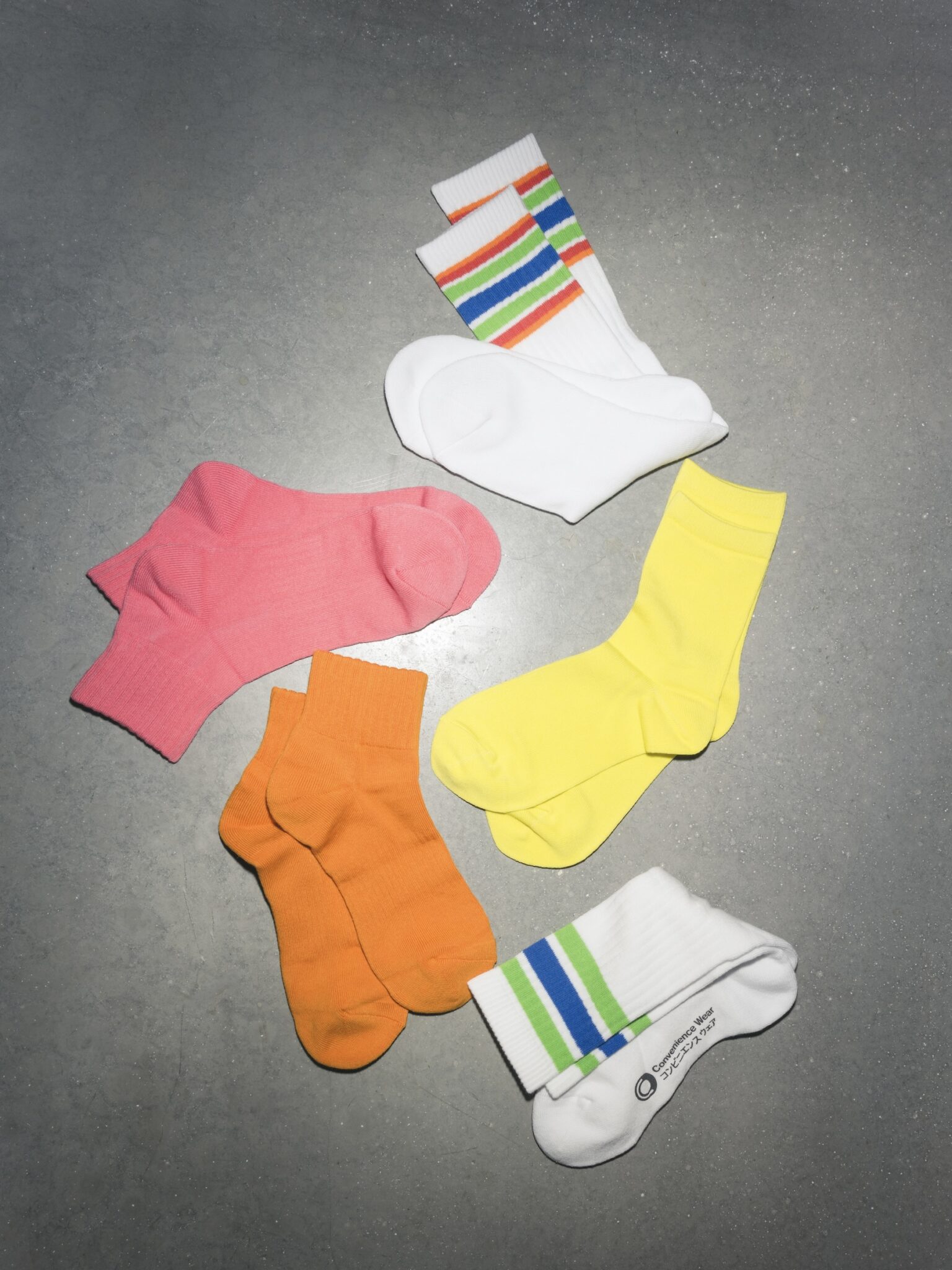
The first product introduced under the Convenience Wear label was Line Socks, featuring FamilyMart's signature blue and green colors. Their thick, durable construction and eye-catching colorway quickly made them a hit, with some stores selling out on the day they were released. Today, cumulative sales of the brand's sock collection, including Line Socks, have surpassed 36 million pairs. They're also a popular souvenir among international visitors, many of whom purchase several pairs at a time. Now recognized both in Japan and overseas, Line Socks have become one of Convenience Wear's signature products.
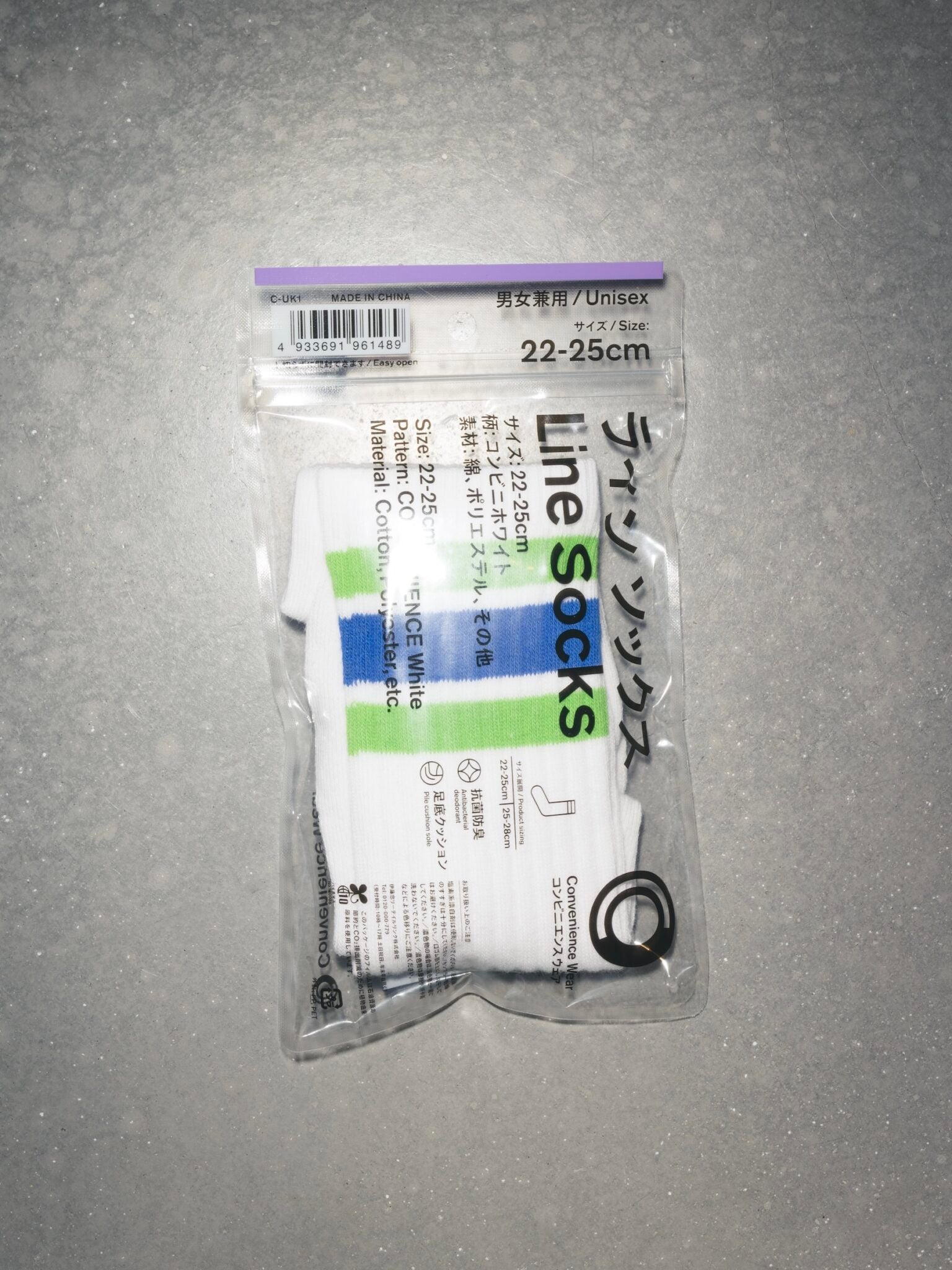
Line Socks (CONVENIENCE White) (429 yen). The thick pile-knit sole offers extra cushioning, while antibacterial and deodorizing finishes make them comfortable enough for daily use.
The width of each stripe was refined down to the millimeter to achieve a clean, balanced look.
In addition to the original Line Socks, the collection also includes Short Socks and Crew Socks (429 yen each). Seasonal colors are introduced throughout the year.
Yet the idea was met with skepticism at first. For people in Japan, the blue and green stripes on a white background were simply too familiar as the colors of a convenience store. Few could imagine them becoming part of everyday fashion. Ochiai, however, saw them differently. To him, they were a uniquely Japanese design with the potential to become iconic.
"At the time, I kept telling franchise owners and FamilyMart employees that one day these stripes could become an icon recognized around the world in the same way people instantly recognize the logo of a global brand. They embraced the idea, and now we're seeing people overseas embrace it as well. I think we've been able to give those familiar stripes a new meaning, turning them into a design that has come to represent FamilyMart—a convenience store brand born in Japan."
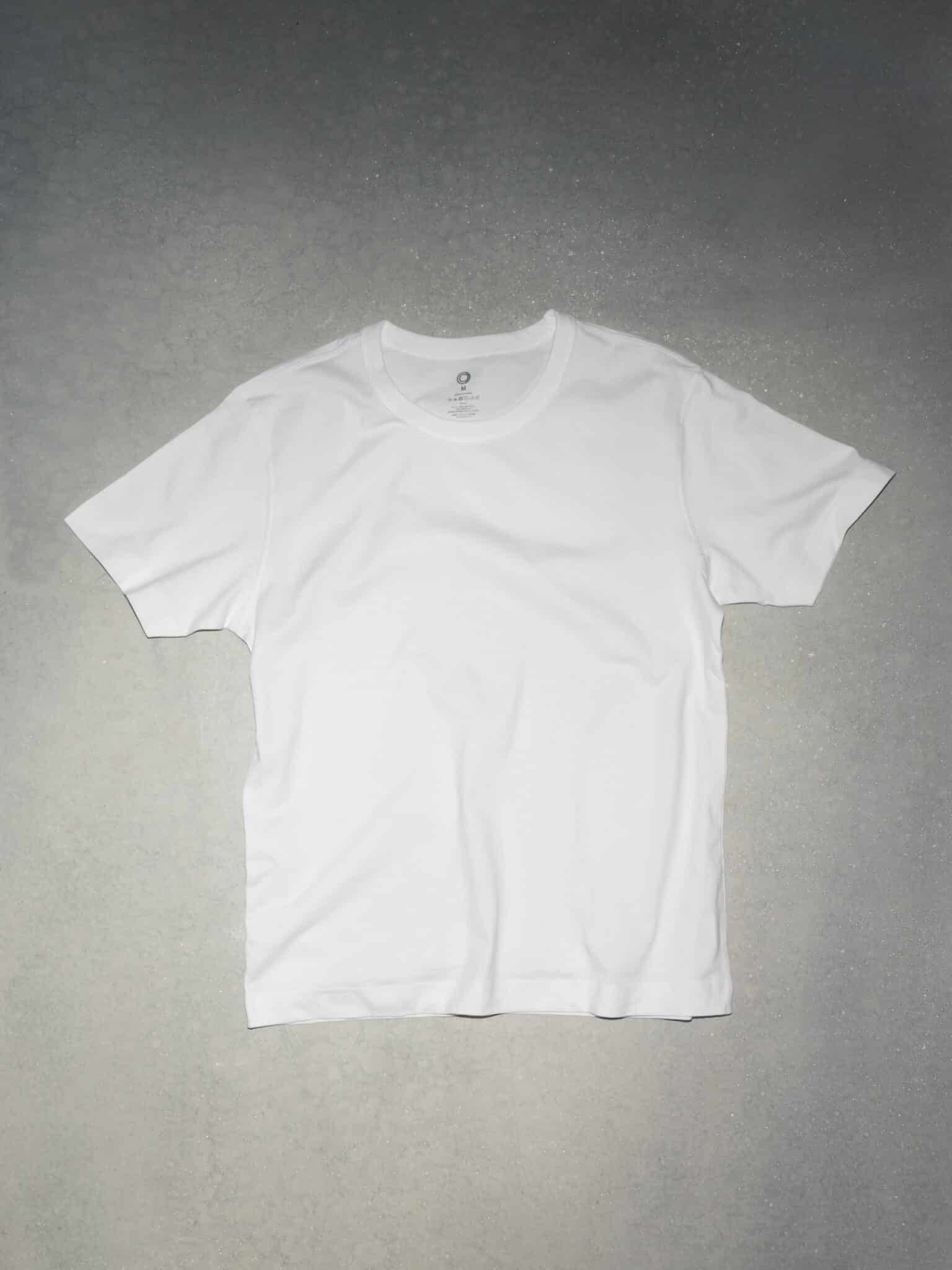
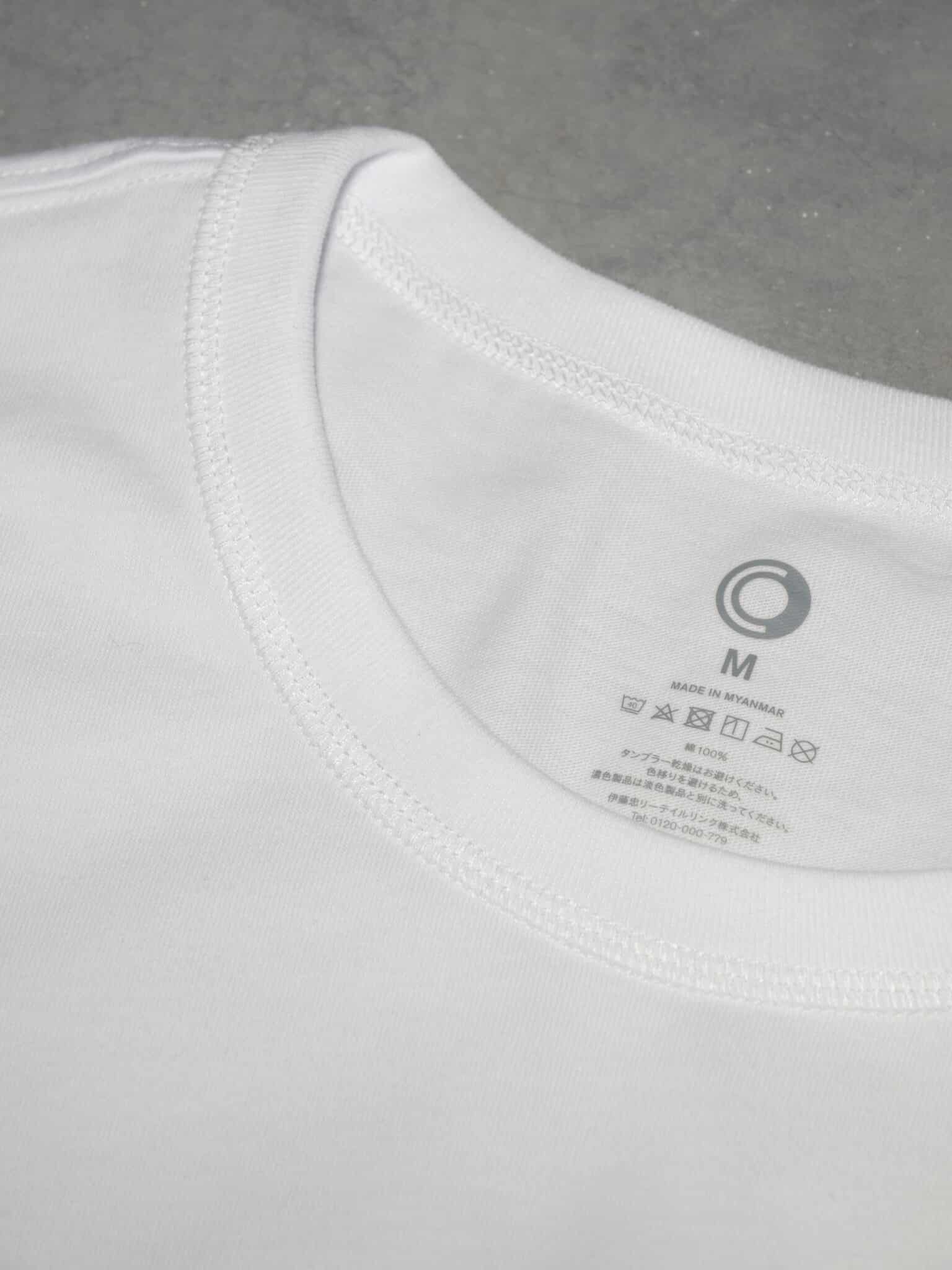
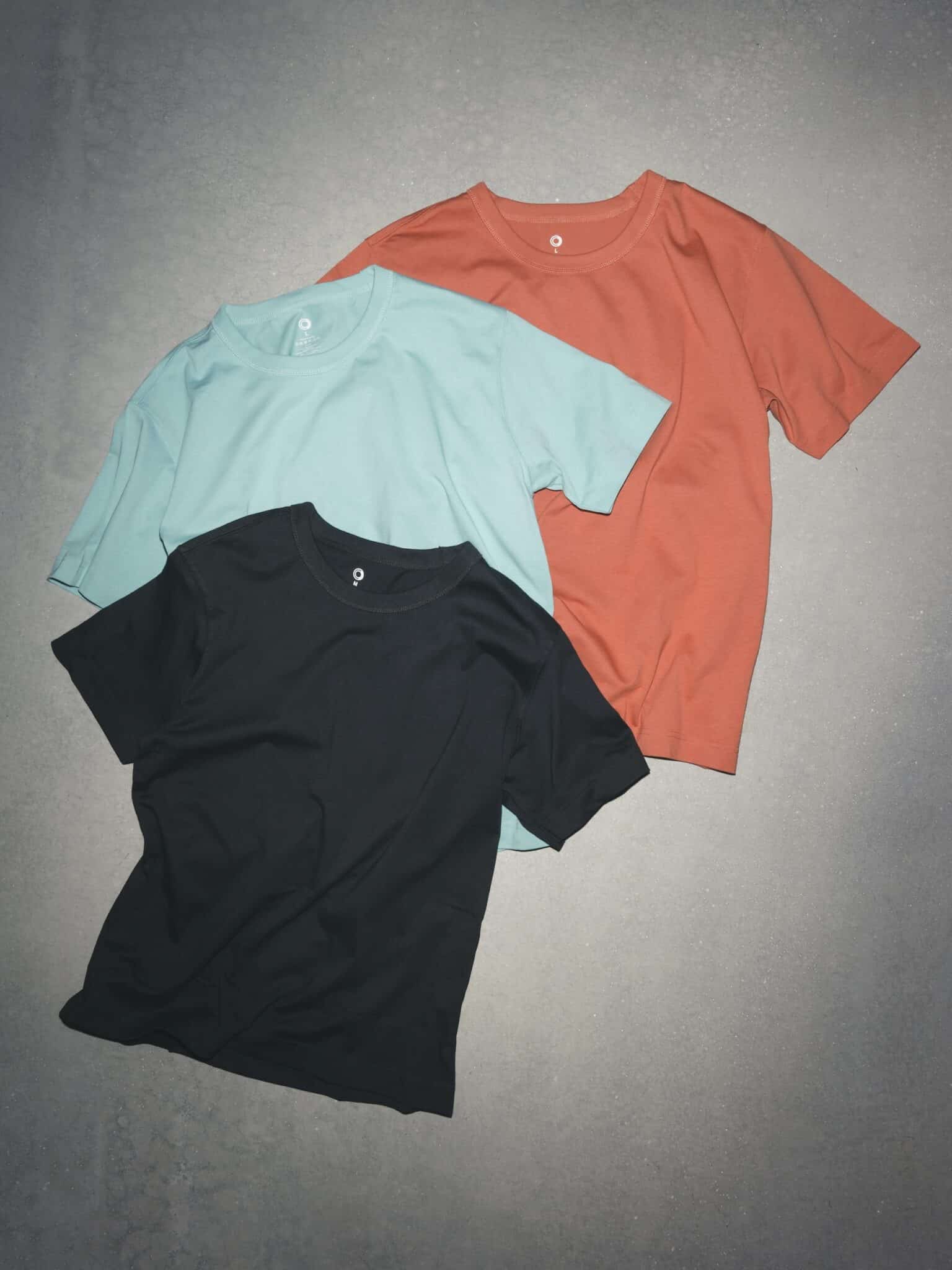
Another signature item is the Outer T-Shirt, made with premium USA cotton. Its substantial fabric, careful construction, and on-trend oversized silhouette make it hard to believe it's priced in the 1,000-yen range. Every detail, from the way the shoulders fall to the length of the sleeves, has been carefully considered.
The unisex Outer T-Shirt (1,498 yen) is made from 100% cotton for a soft, comfortable feel, and finished with antibacterial and deodorizing treatments.
The shirt's crisp, structured feel comes from the use of premium USA cotton.
A reinforced ribbed neckline helps the shirt maintain its shape, even after repeated washing.
In addition to classic black, seasonal colors such as terracotta and turquoise are introduced throughout the year.
"I've always admired products that have stood the test of time—Levi's 501 jeans, Hanes T-shirts, Converse All Stars, and Nike Air Jordan 1s. I hold them in the same regard as high fashion. I hope Convenience Wear products, especially the Line Socks and the Outer T-Shirt, will one day become the kind of products that are cherished for generations."
With more than 16,400 stores across Japan and over 5.5 billion customer visits each year, FamilyMart is part of the country's everyday infrastructure. Any product sold there must meet equally high standards, giving every customer the confidence to buy it, regardless of who they are or why they need it.
"People who visit convenience stores come from every imaginable background and every part of Japan. We wanted to create something that would resonate with everyone from children to older adults the moment they picked it up. That meant carefully considering every element: the colors, the silhouette, the materials, even the packaging. With the Line Socks, for example, the width of each stripe was refined down to the millimeter, and the colors were made slightly brighter so they'd catch the eye more naturally. For the Outer T-Shirt and our sweatshirts, we chose fabrics that continue to develop character over time, allowing people to enjoy the way they age with wear. Even if someone picks up an item because they suddenly need it, the experience can become a positive one if the product proves better than expected. That's the level of quality we've always aimed for."
Convenience Wear is produced on a much larger scale than most apparel brands. Manufacturing in such high volumes makes it possible to use premium materials and construction techniques that would normally be difficult to justify at this price point. At the same time, large-scale production comes with its own responsibilities. Environmental considerations, a stable supply chain, and consistent quality all become essential when producing at this scale.
Because these products are made for millions of people, materials, design, and craftsmanship all deserve the same careful attention.
Convenience Wear also collaborates with some of Japan's most respected manufacturers and production regions, including Imabari, the country's leading towel-making region, stationery maker KOKUYO, and watchmaker CITIZEN. These partnerships go beyond simply placing two brand names on the same product. Each collaboration brings together its partner's expertise with the everyday accessibility of the convenience store, making outstanding Japanese craftsmanship more accessible.
According to Ochiai, much of Convenience Wear's success comes from working with partners who share the same design philosophy while making it possible to deliver products to more than 16,400 FamilyMart stores nationwide.
It means customers can encounter outstanding Japanese craftsmanship and thoughtful design during an ordinary visit to their neighborhood convenience store. That's another part of what makes Convenience Wear unique.
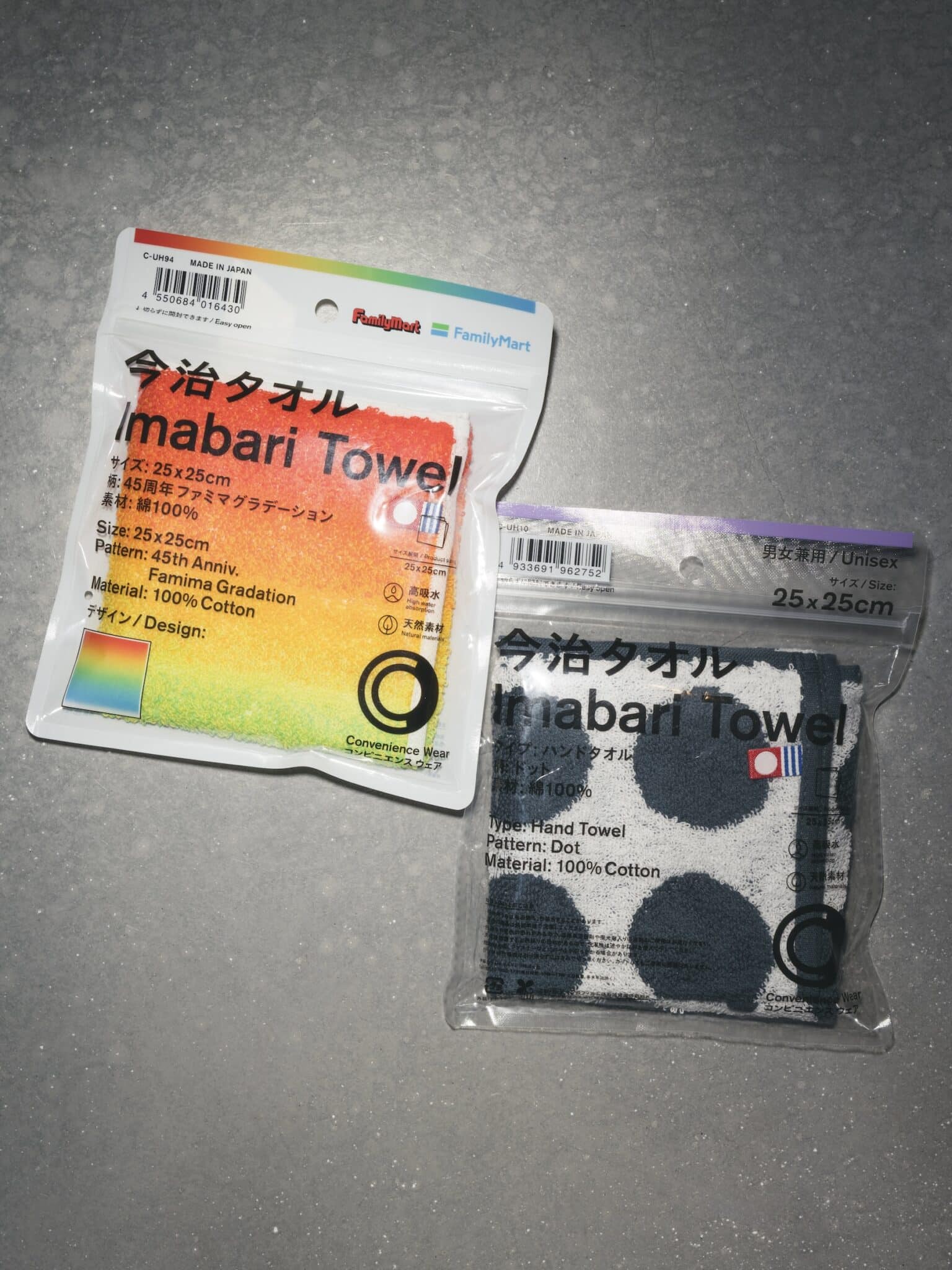
Imabari towels are renowned for their exceptional absorbency and remarkably soft texture. The beautiful gradient effect is created by carefully arranging threads dyed in different colors.
Imabari towels are known for their high absorbency and soft texture. Their beautiful gradient colors are created by meticulously arranging threads, each of which has a different color.
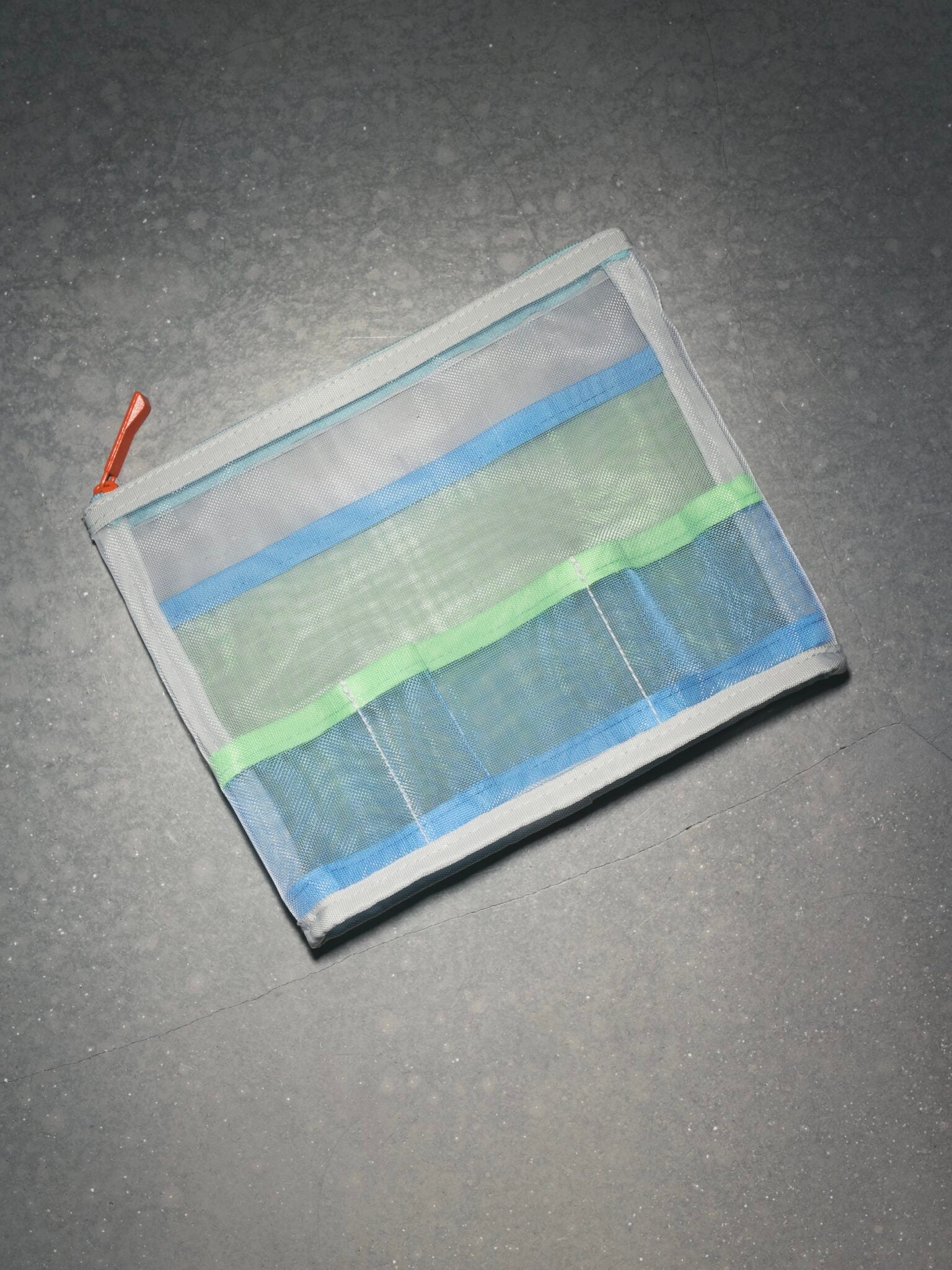
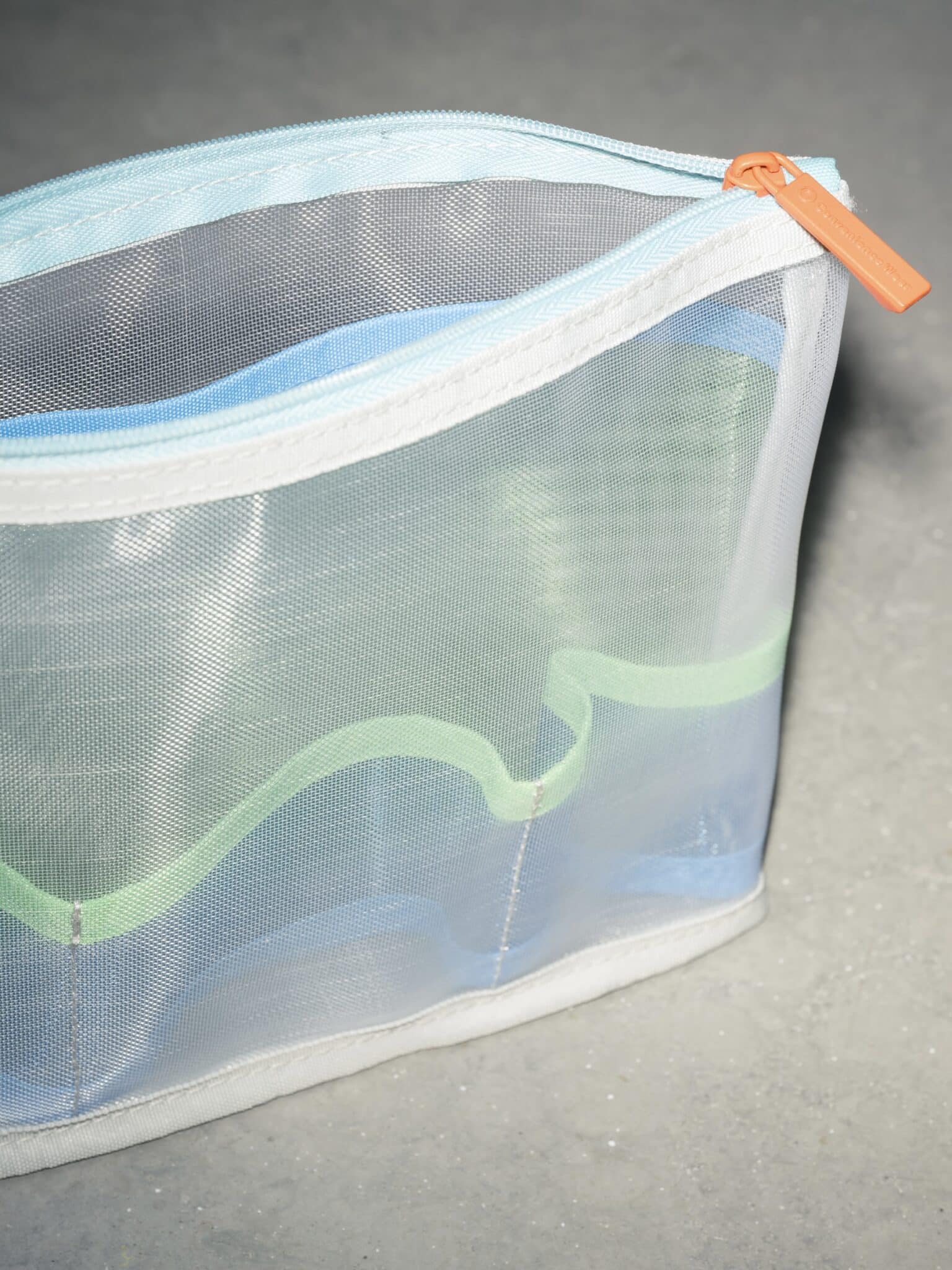
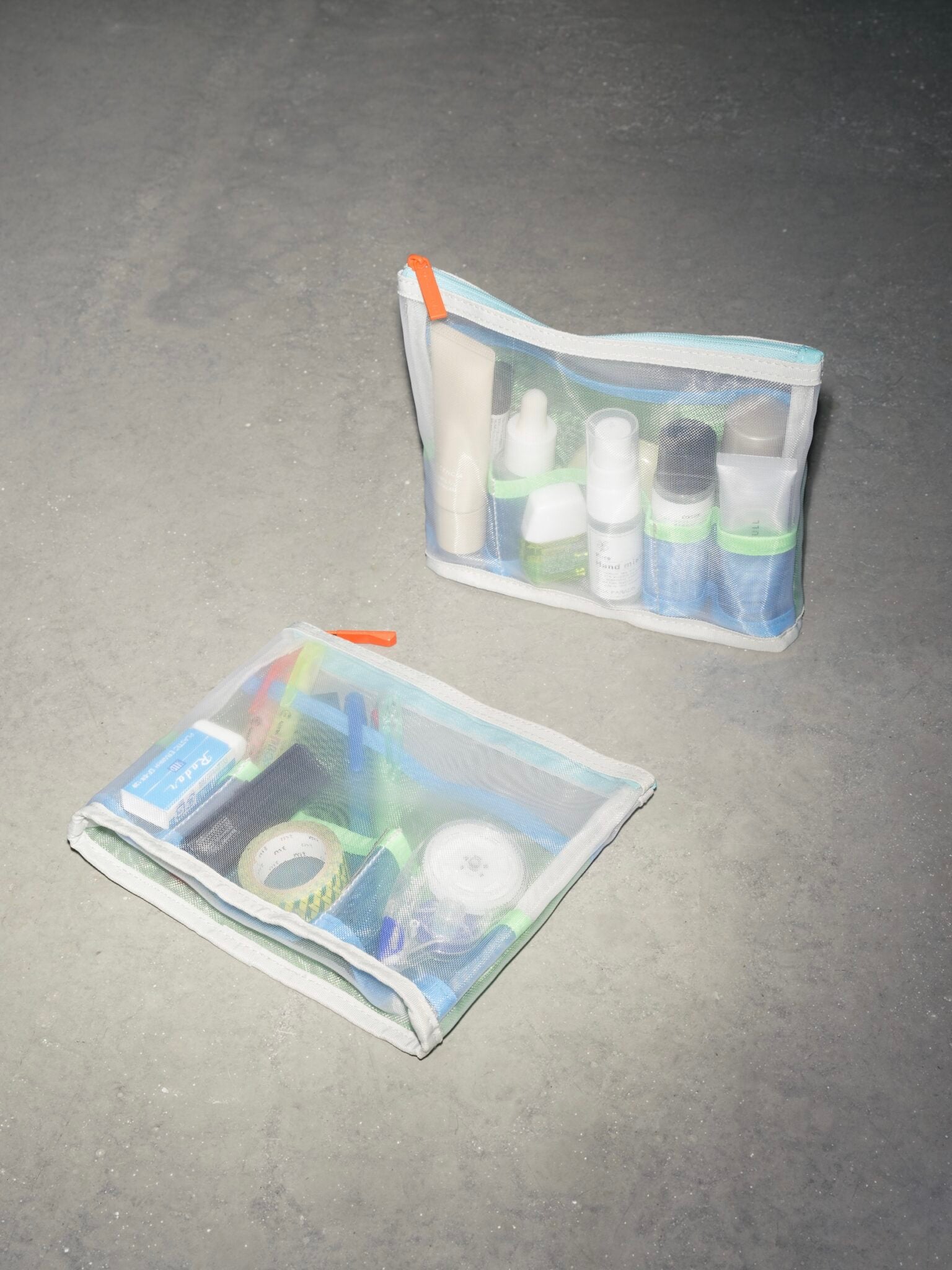
Mesh pouch developed with Japanese stationery company KOKUYO (790 yen). The lightweight mesh material makes it easy to see what's inside.
The interior is divided into two main compartments, with three small pockets on one side to help keep everything organized.
Spacious enough for stationery, gadgets, cosmetics, and more. The pouch also stands upright on its own.
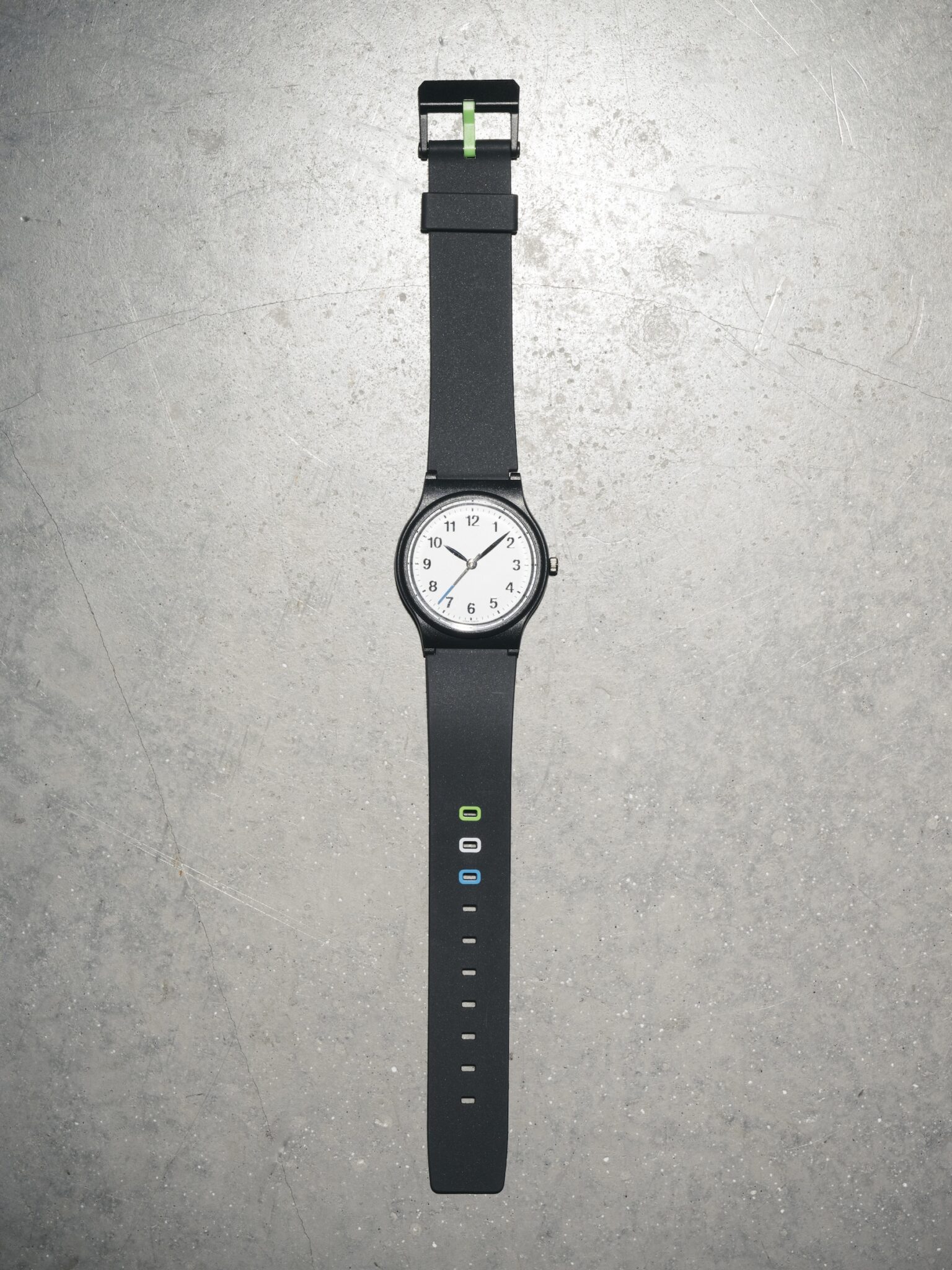
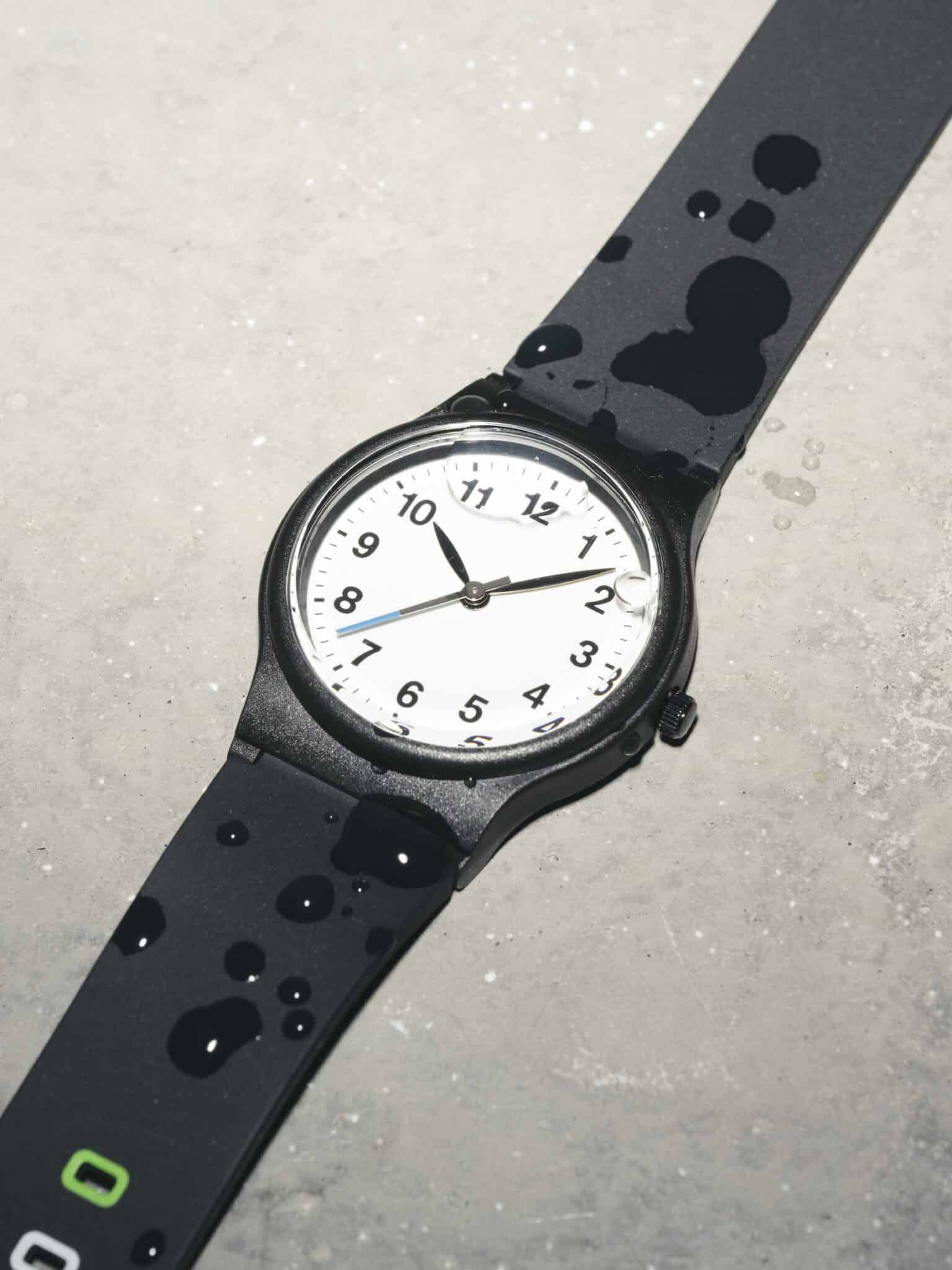
Wristwatch developed with Japanese watchmaker CITIZEN (1,998 yen; scheduled to return in September 2026). FamilyMart's signature colors appear on the second hand, buckle, and strap holes.
Water resistant to 10 ATM, making it suitable for swimming as well as everyday wear.
One of Convenience Wear's most recognizable features is its transparent resealable packaging. According to Ochiai, it serves a purpose that goes far beyond protecting the product.
Because convenience stores are open 24 hours a day and products are handled by countless customers, fully enclosed packaging is essential for maintaining quality. At the same time, however, Ochiai didn't want to create packaging that felt wasteful, or that imposed a particular view of sustainability on customers.
"We wanted to create packaging that people would naturally want to keep rather than throw away. If someone thinks, 'This is useful—I can use it again,' then it has already served a purpose beyond packaging. It can hold charging cables, receipts, pens, or even wet items. Everyone will find their own use for it. Without making a conscious effort, they end up reusing it again and again, and that quietly becomes an environmentally friendly choice. That's the kind of packaging we wanted to create."
Packaging made from plant-derived materials, featuring a resealable zipper at the top.
The packaging also brings together everything from material composition and care instructions to sizing information and fit images in a clean, easy-to-read format. Clear sans-serif typography and bilingual Japanese-English labeling make it accessible to a wide range of customers.
"To me, the packaging is part of the brand's media. One of the things that makes Japan unique is its writing system—hiragana, katakana, and kanji all exist side by side. I wanted to include as many forms of Japanese writing as possible to communicate that this is a Japanese brand. Convenience stores are also workplaces for people from many different backgrounds. We also hoped Convenience Wear would eventually expand overseas, so including English from the beginning felt important. That's how we approached the design—from many different perspectives."
Convenience Wear has also become known for collaborations with music festivals, sporting events, and other cultural events. One of the brand's goals extends beyond creating clothing. It also hopes to introduce people to cultural experiences they might not otherwise encounter. Among its most celebrated collaborations is FUJI ROCK FESTIVAL, Japan's largest outdoor music festival. First launched in 2023, the partnership returns for its fourth edition in 2026.
"FUJI ROCK FESTIVAL is often described as one of the cleanest music festivals in the world. It's truly one of Japan's cultural treasures, so it's an honor for us to be involved. More than anything, I believe design creates opportunities for communication. Today, algorithms tend to show people more of what they already like. With fewer magazines and increasingly personalized social media feeds, there are fewer chances to stumble across something completely new. Someone might buy a FUJI ROCK collaboration item simply because they like the design. Then they take it home, and a family member or partner says, 'Oh, that's FUJI ROCK—I went years ago,' or starts talking about an artist they saw there twenty years ago. Maybe the conversation turns to this year's lineup instead. If a single design can spark conversations like that and introduce someone to a culture they might never have encountered otherwise, then I think we've accomplished something meaningful."
Convenience stores welcome everyone—not only people who are passionate about music or festivals, but customers from every walk of life. That is precisely why collaborations like these matter. By bringing culture into a place people visit almost every day, Convenience Wear creates opportunities for people to discover cultures they might otherwise never encounter.
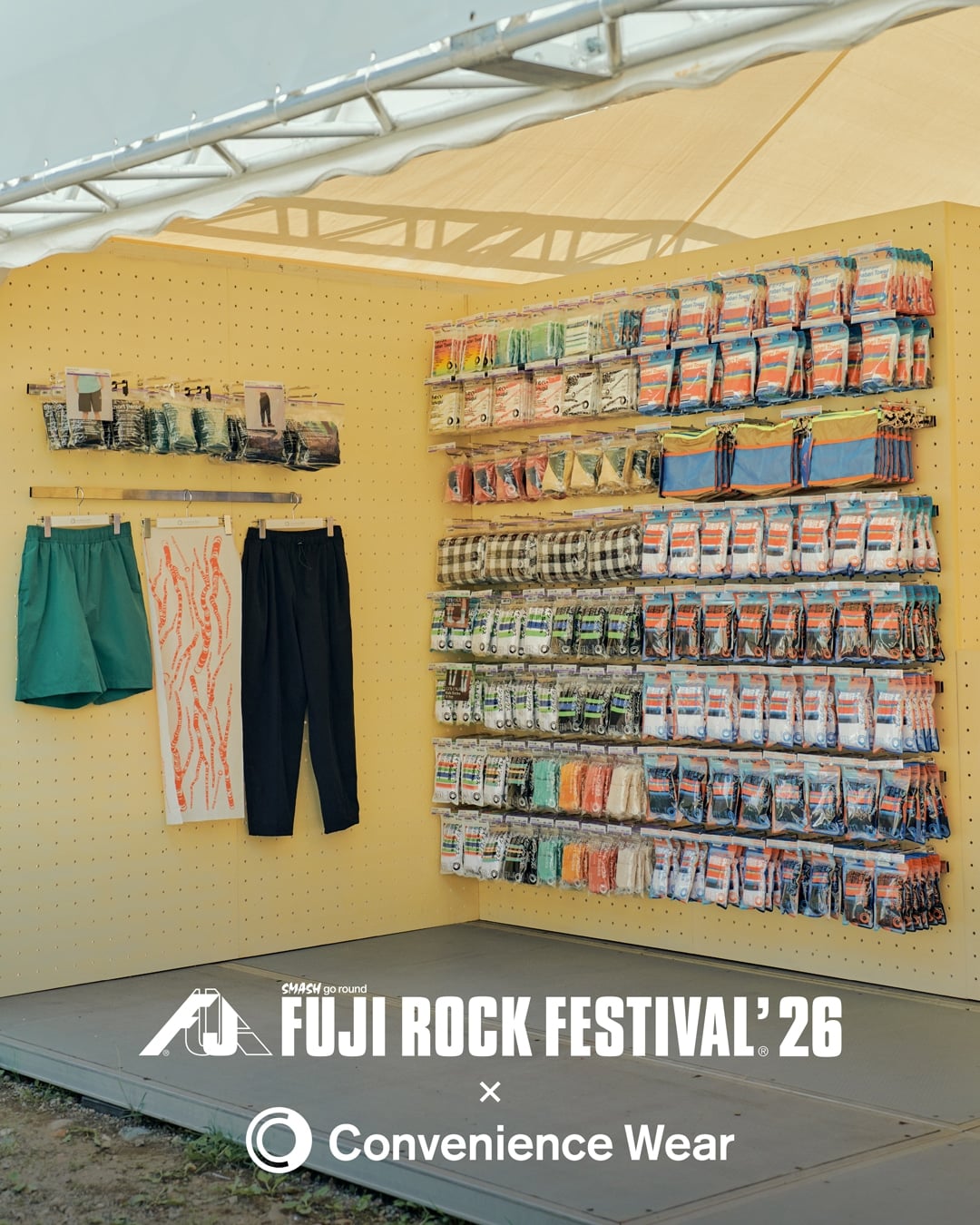
A special Convenience Wear booth at Naeba Ski Resort in Yuzawa, Niigata, home of FUJI ROCK FESTIVAL. Each year, exclusive editions of the brand's signature Line Socks, Imabari Towel Handkerchiefs, and Imabari Muffler Towels are released in colors inspired by the festival's annual color theme.
Convenience Wear began with a simple ambition: to create a culture where buying clothes at a convenience store feels completely natural. Today, that vision is already taking shape across Japan.
"Every spring and summer, I find myself noticing more and more people wearing our Line Socks around the city. It feels as though I'm creating Convenience Wear together with hundreds of thousands—perhaps even millions—of people. Because FamilyMart operates convenience stores nationwide, we receive sales data almost immediately. We can see which colors people responded to, what worked, what didn't, and use that information to shape the next collection. In a way, it feels like we're creating convenience store clothing while having a real-time conversation with people all across Japan."
Convenience Wear's growth is no longer limited to Japan. Since November 2024, the collection has also been available at FamilyMart stores in Taiwan, with plans to expand into more international markets. Looking ahead, Ochiai shared his thoughts on the future of Convenience Wear.
"Convenience store fashion will continue to evolve for decades to come. It's exciting to watch a brand with such a simple name—Convenience Wear—grow from Japan to Asia, and eventually the world. One day, Convenience Wear may become a brand loved around the world. The idea that a brand like that could emerge through the convenience store network is remarkable. I hope people will keep an eye on where it goes next."
Ochiai also believes convenience stores themselves are becoming an unexpected stage for creativity.
"Convenience stores are home to more and more great design every year. FamilyMart continues to experiment in many different ways, from Convenience Wear to its new collaborative store developed with NIGO®. I think more and more creative people, both in Japan and overseas, will want to design for convenience stores and use them as a place to showcase their work. I'd love to see convenience stores become places where creative people aspire to share their ideas. In many ways, I think they're already beginning to."
Convenience Wear has transformed convenience store clothing from something people bought only when they had no other choice into everyday essentials designed to be worn and enjoyed for years. In doing so, it has added a new chapter to the history of Japan's convenience store culture, where thoughtful design, Japanese craftsmanship, and cultural discovery come together in a place that is open to everyone. What began as a simple idea is now growing into a new fashion movement born in Japan.
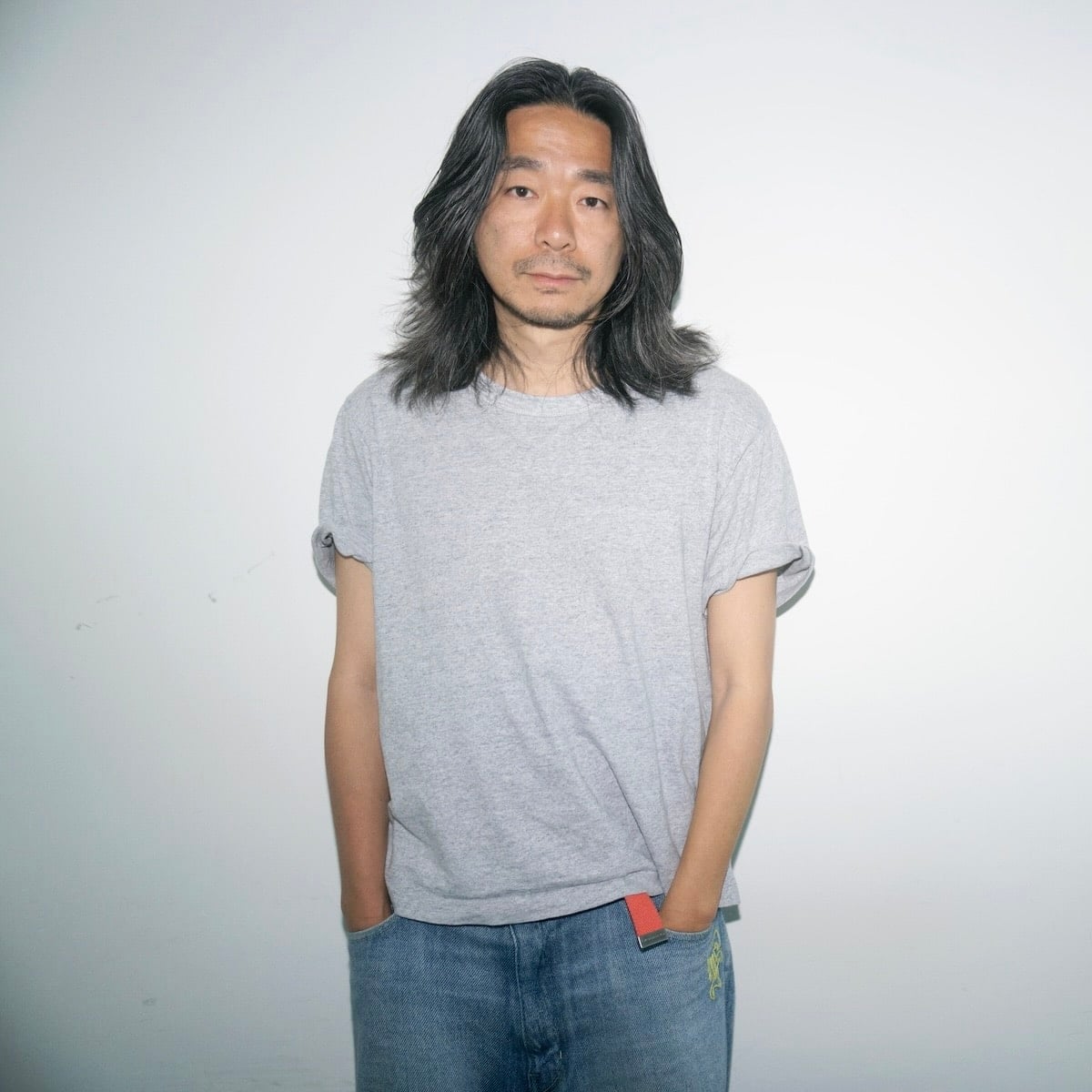
Born in Tokyo in 1977, Hiromichi Ochiai graduated from Bunka Fashion College before launching his own fashion label, FACETASM, in 2007. In 2016, he won the Grand Prix at the 34th Mainichi Fashion Awards, one of Japan's most prestigious fashion honors. The same year, he designed the costumes for the Flag Handover Ceremony at the Closing Ceremony of the Rio 2016 Olympic and Paralympic Games. Since 2021, he has served as Creative Director of Convenience Wear.
Instagram:@ochiaihiromichi



.jpg)
スマホ.jpg)