DEEPTOKYO
magazine

EN

DEEPTOKYO
magazine
EN
2026.02.04
A Long-Established Red-Lantern Izakaya Offering Classic Drinks and Traditional Bar Snacks
 Nearest Station

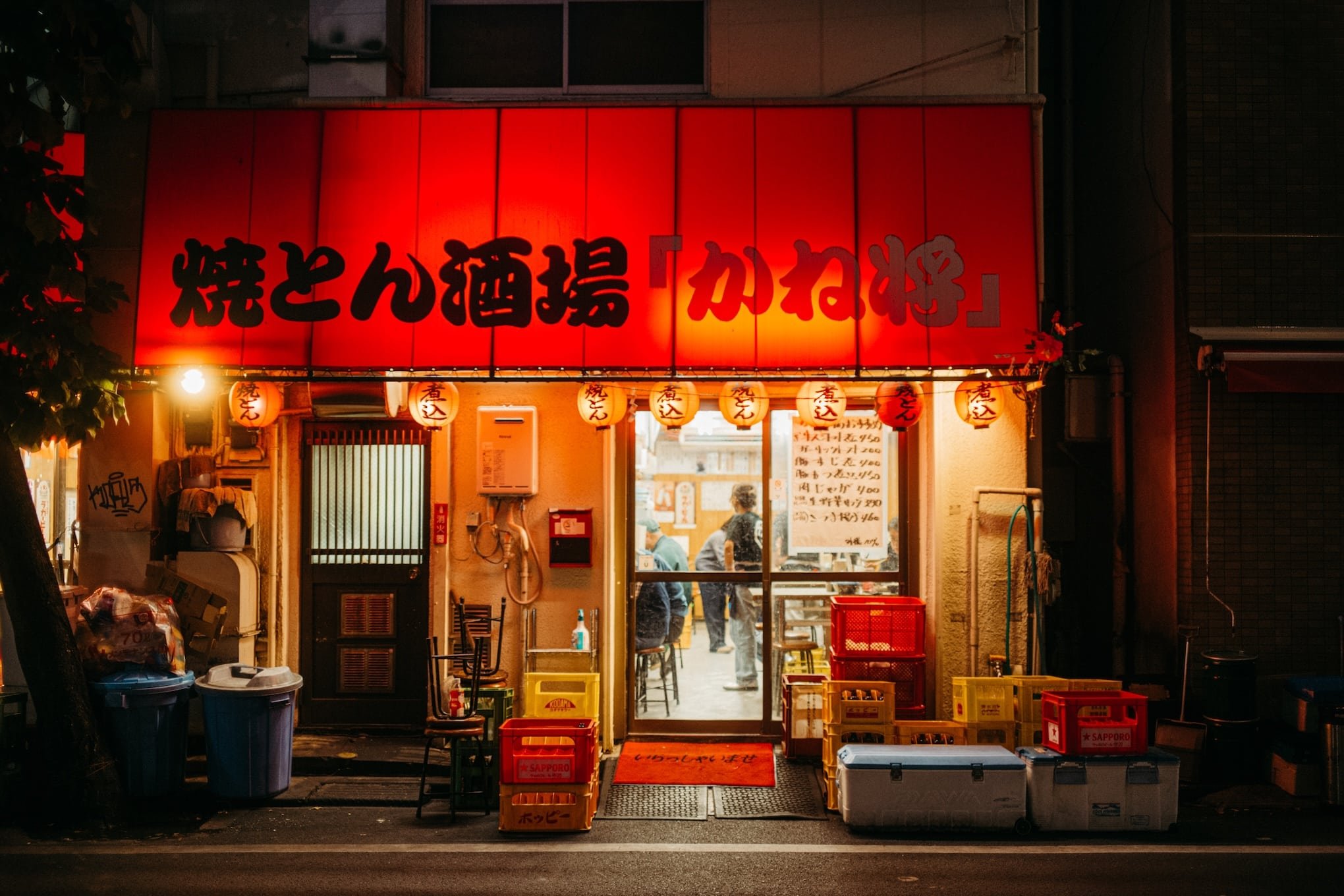
Kanesho is a long-established red-lantern izakaya located just steps from Gotanda Station, now marking its 42nd year in business. With its weathered exterior marked by a glowing red lantern and an interior that strongly evokes the atmosphere of the Showa era, the shop offers an authentic taste of traditional Japanese izakaya culture. Two of its defining features are the self-mixed drink service known as the “Naka–Soto style” and its exceptionally fresh yakiton (grilled pork offal) and sashimi sourced directly from the market. While these dishes may appear to be izakaya staples, each one reflects the owner’s meticulous attention to ingredient selection, preparation, and cooking.
SHARE


Kanesho is a neighborhood izakaya that has been loved by locals for over four decades, located just a short walk from Gotanda Station. The shop was opened when its now 70-year-old owner, Shoji Kaneko, was 28, with motsuyaki (grilled pork offal) as its main offering. A red-lantern izakaya refers, as the name suggests, to an izakaya marked by a red lantern at its entrance—an iconic symbol of traditional, casual drinking establishments in Japan. There are several theories about the origin of the red lantern, but one widely held view traces it back to the Edo period, when merchants hung conspicuous red lanterns as signboards to attract customers and pray for prosperity.
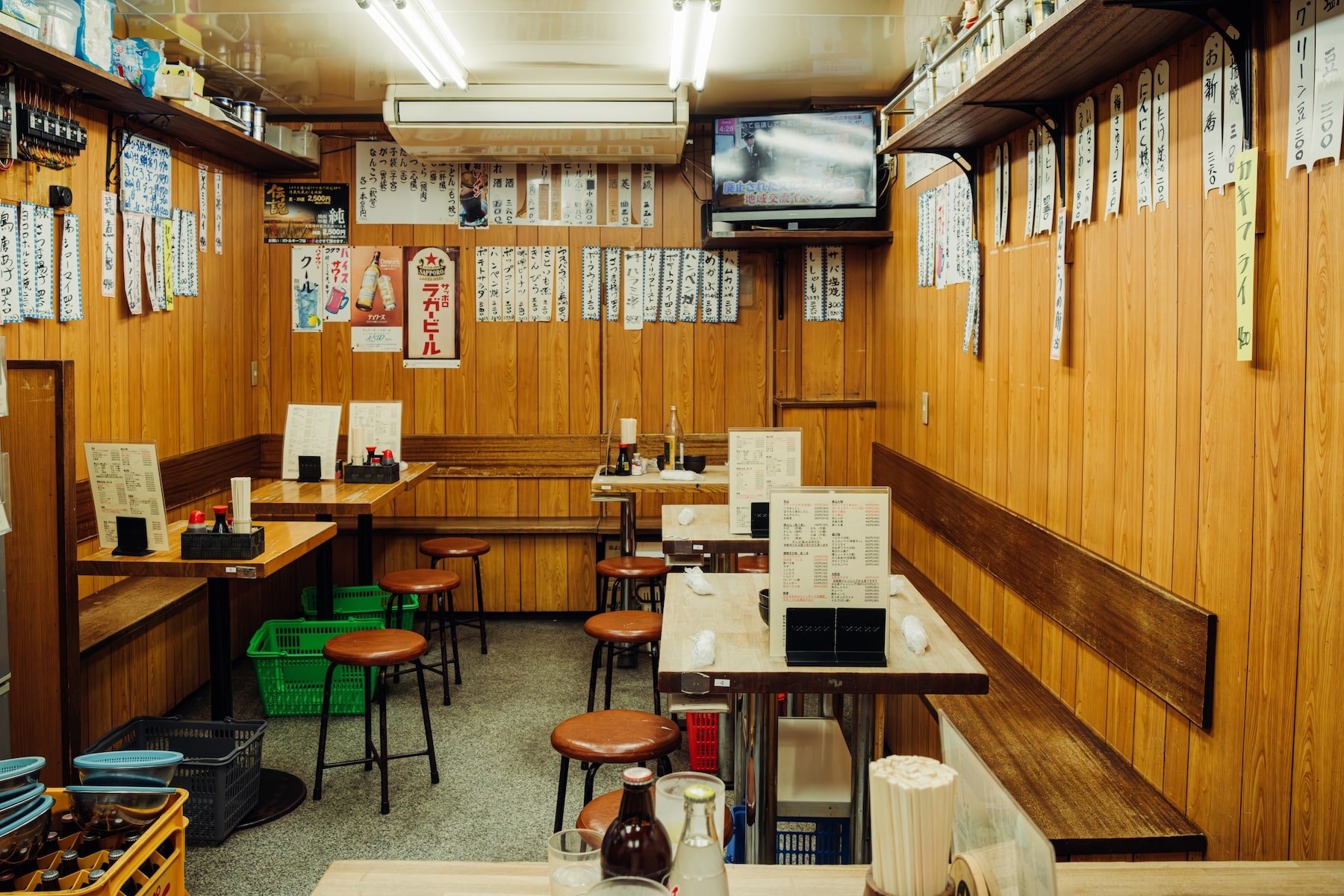
The appeal of a red-lantern izakaya lies not only in the food and drinks, but also in the atmosphere that fills the space. Inside Kanesho, handwritten menu strips (tanzaku) covering the walls create a scene that feels quintessentially like a classic red-lantern izakaya. Simple tables and well-worn pipe chairs further enhance the natural Showa-retro mood. At the large communal tables, sharing seats with strangers is common, and conversations often strike up naturally between neighboring diners. These chance encounters—brief yet memorable—are part of the unique charm of red-lantern izakayas.
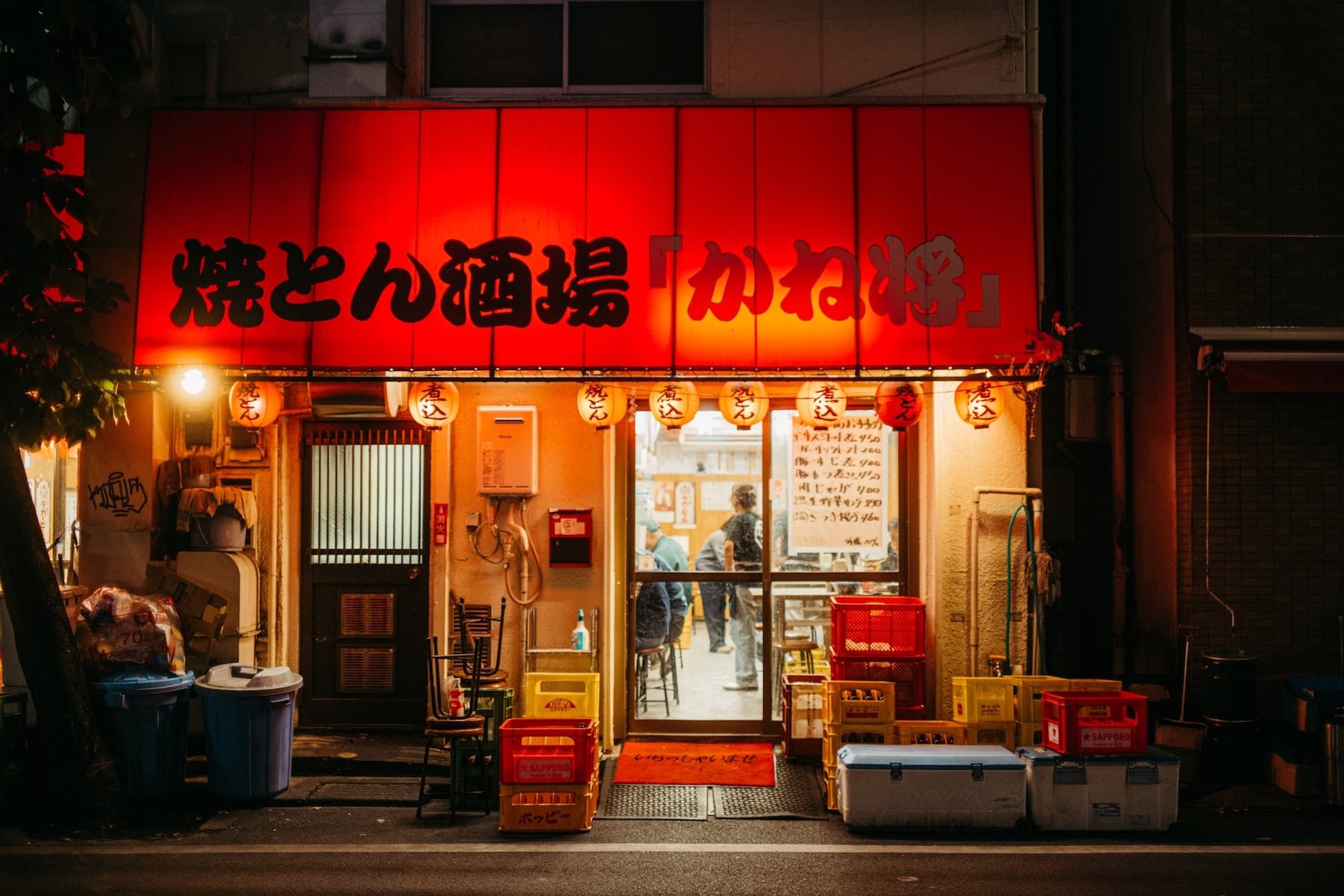
The aged red sign and the red lantern hanging at the entrance serve as the shop’s unmistakable landmark.
While retaining its retro character, the interior is kept clean and welcoming. With a combination of counter and table seating, the shop accommodates around 50 guests.
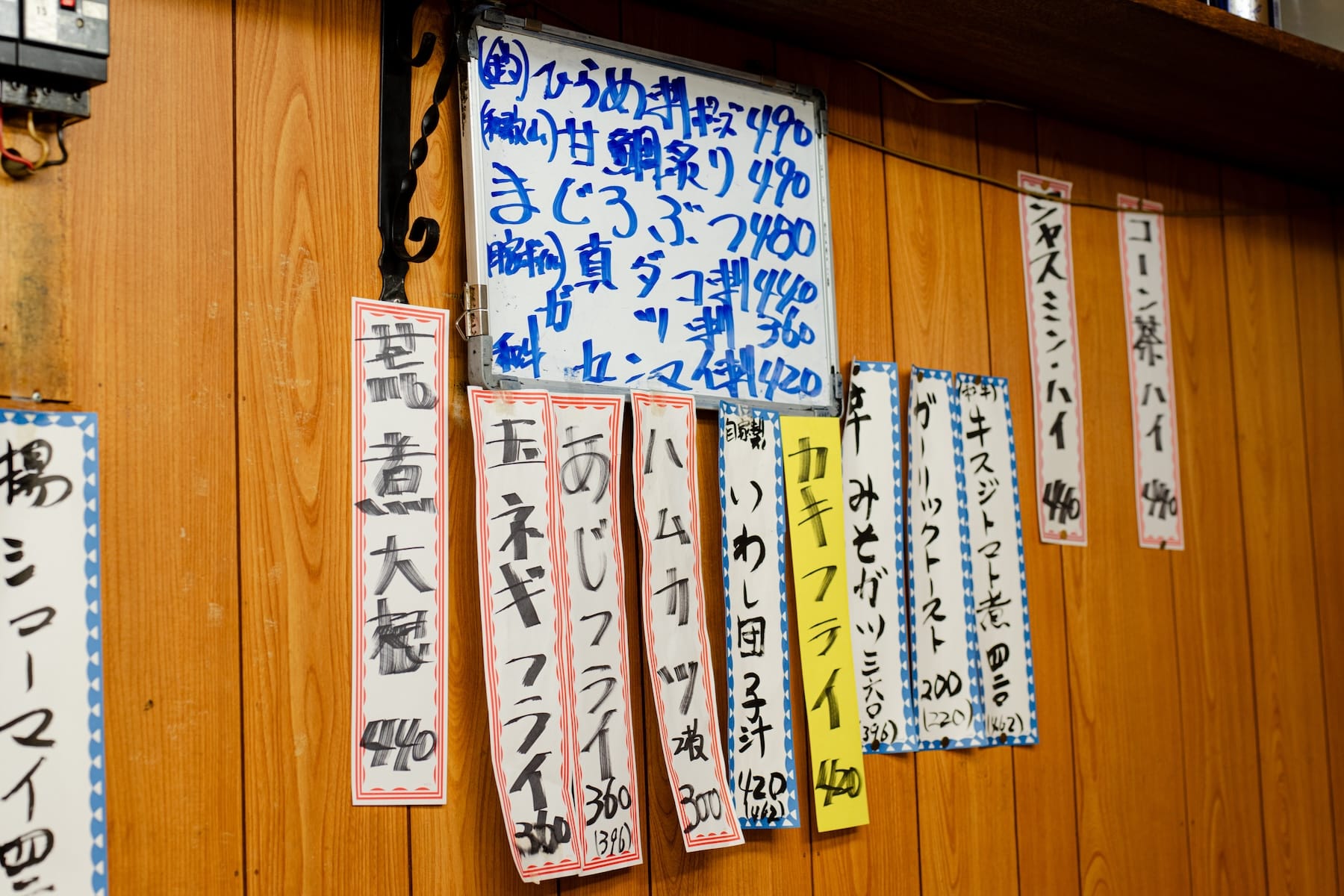
Handwritten tanzaku menus cover the walls. On the whiteboard, sashimi selections change daily depending on the day’s market purchases.
It’s not uncommon for conversations to flow naturally with the person sitting next to you. Enjoying these once-in-a-lifetime encounters is part of what makes this place special.
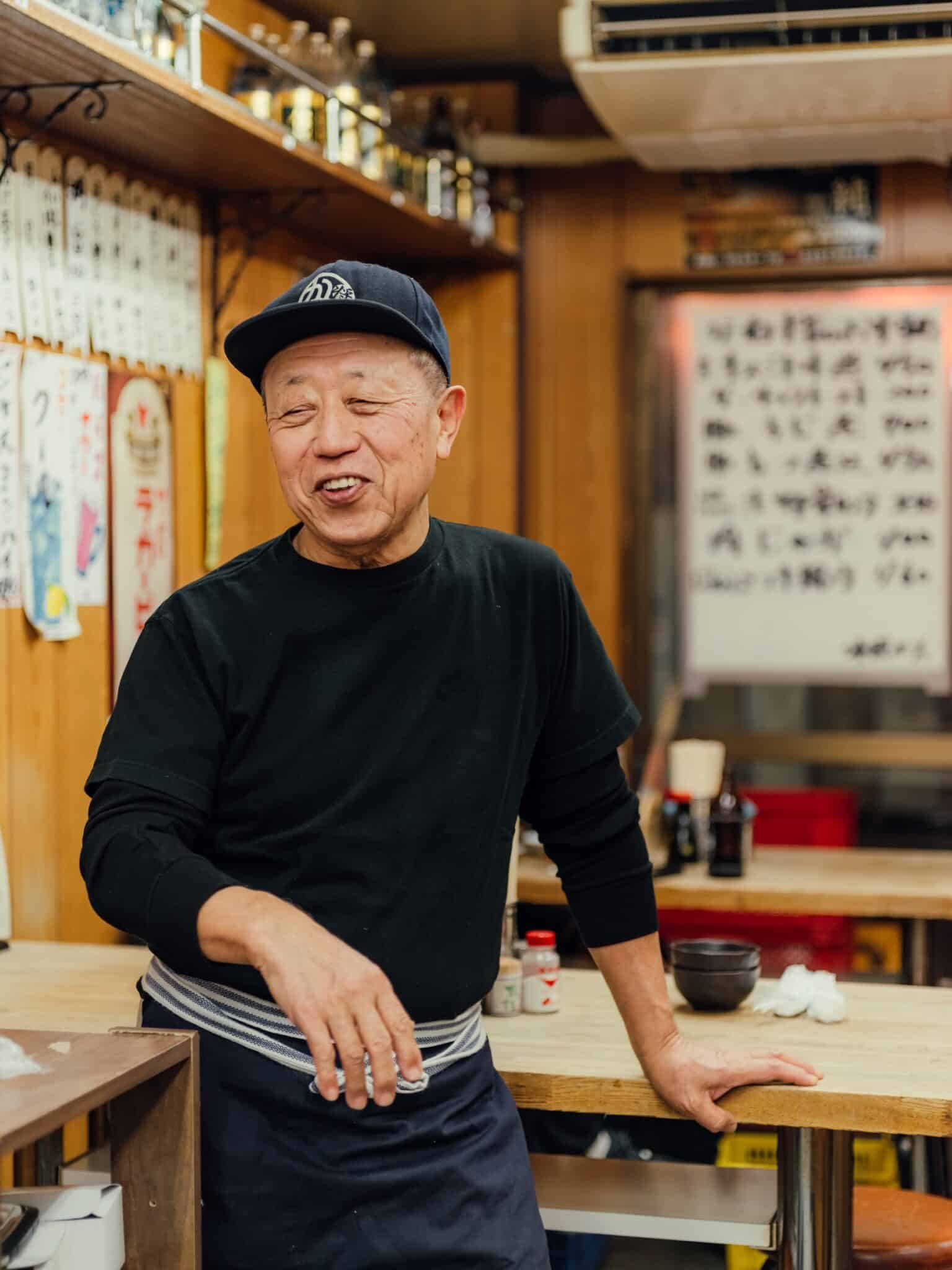
The iconic owner, Shoji Kaneko. These days he mainly focuses on preparation and spends less time on the floor, but whenever he appears, lively exchanges with regulars soon follow. Across the street is a second location run by his son, offering rice dishes perfect for finishing a meal—so many customers enjoy hopping between the two shops.
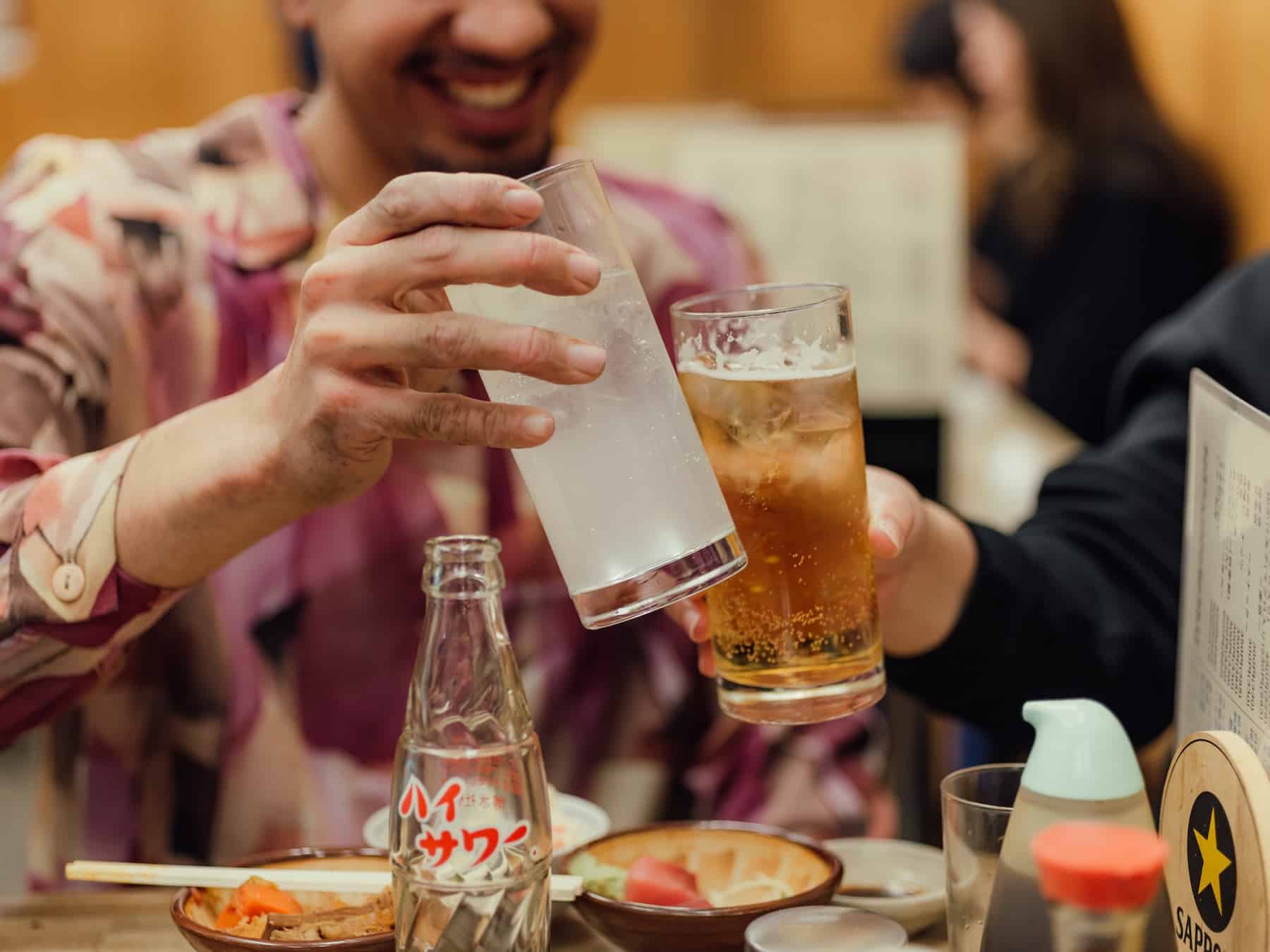
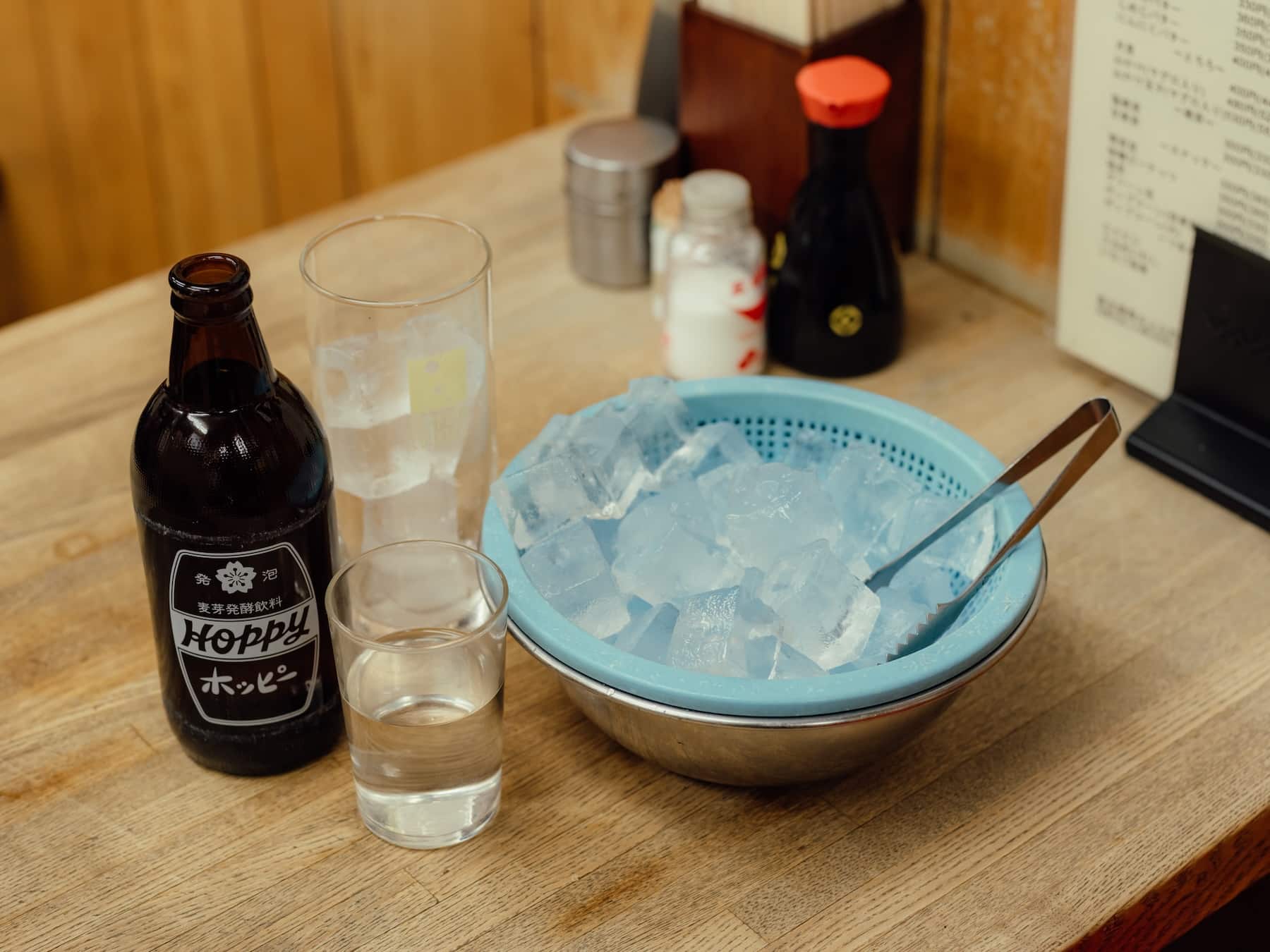
One of the greatest attractions of Kanesho is the chance to experience the traditional “Naka–Soto style” of serving alcohol. When you order a sour, you are served a mug filled with ice, a small glass of shochu, and a bottle of mixer—each brought separately. Guests mix the “naka” (shochu) and the “soto” (mixer) themselves, adjusting the balance to their liking. At Kanesho, a basket filled with extra ice is also provided. This style developed from a desire to let guests enjoy their drinks at their own pace, without feeling rushed, even in a lively and casual izakaya setting.
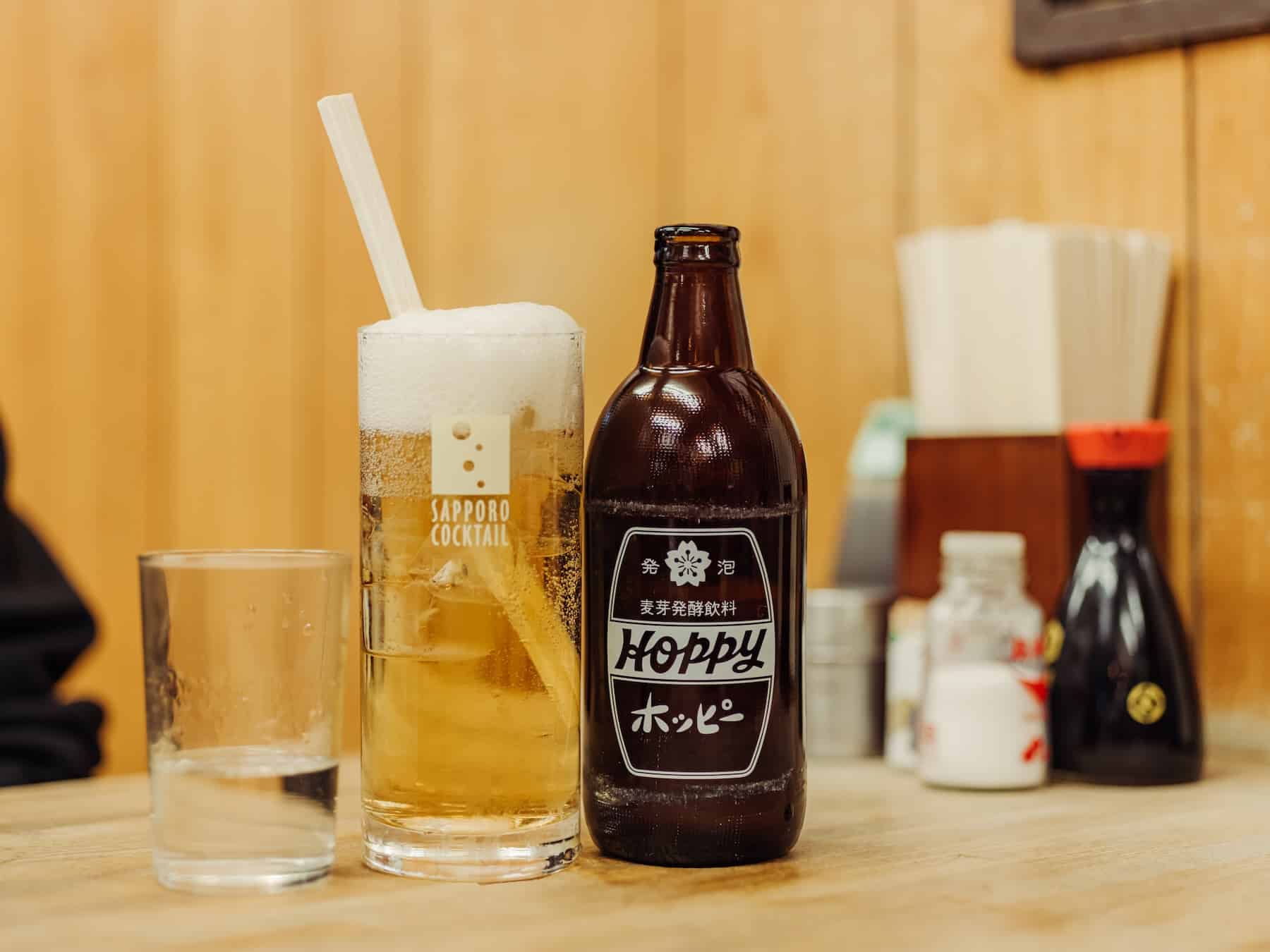
This is the “Naka–Soto style.” A mug with ice, a small glass of shochu, a bottle of mixer (Hoppy), and a basket of ice are served as one set. Naka (shochu): 275 yen / Hoppy (white): 319 yen
No stirrer is provided—mixing with disposable chopsticks is the house style.
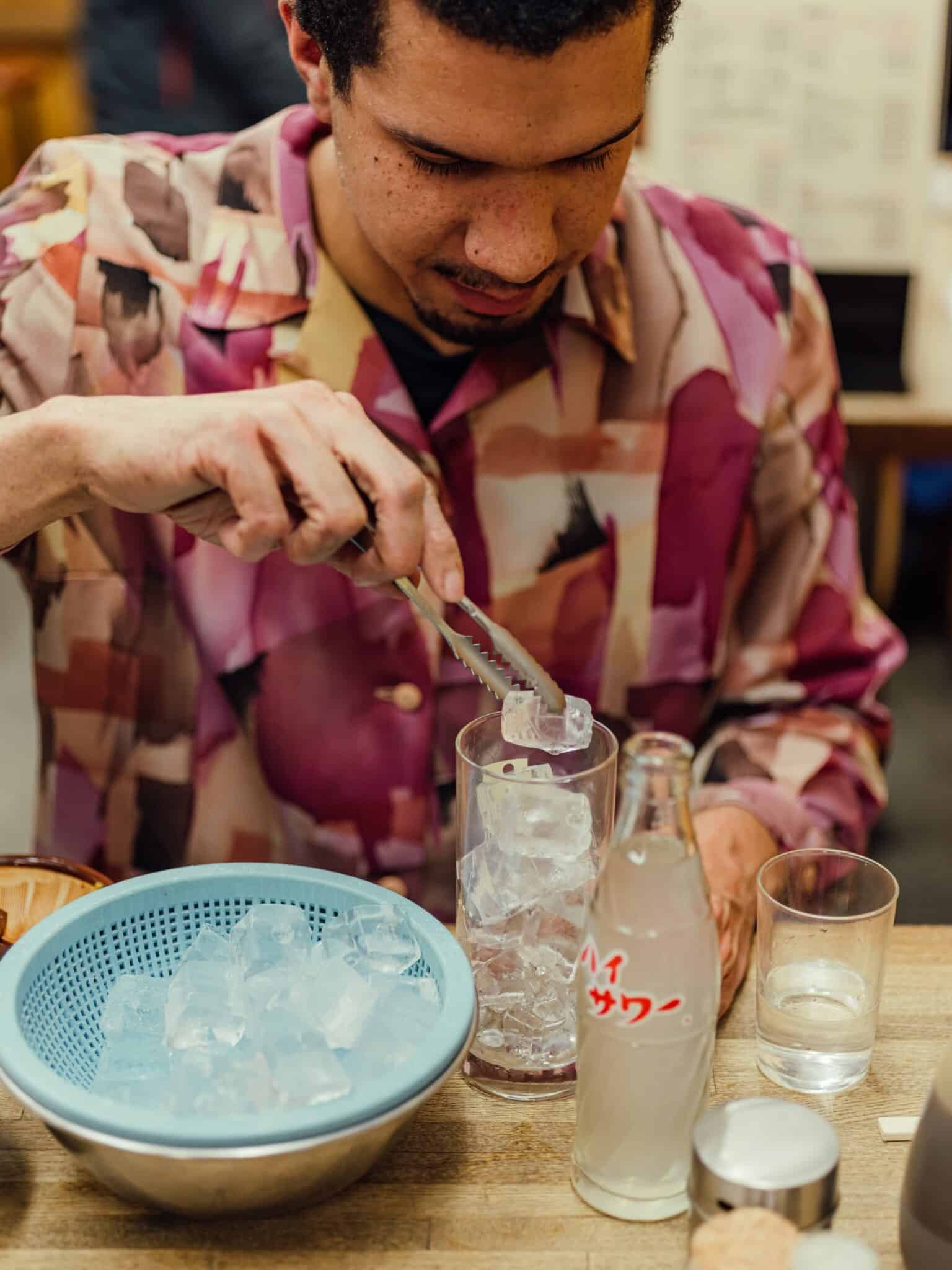
From the second drink onward, you simply add more ice yourself and continue making your drinks in the same way.
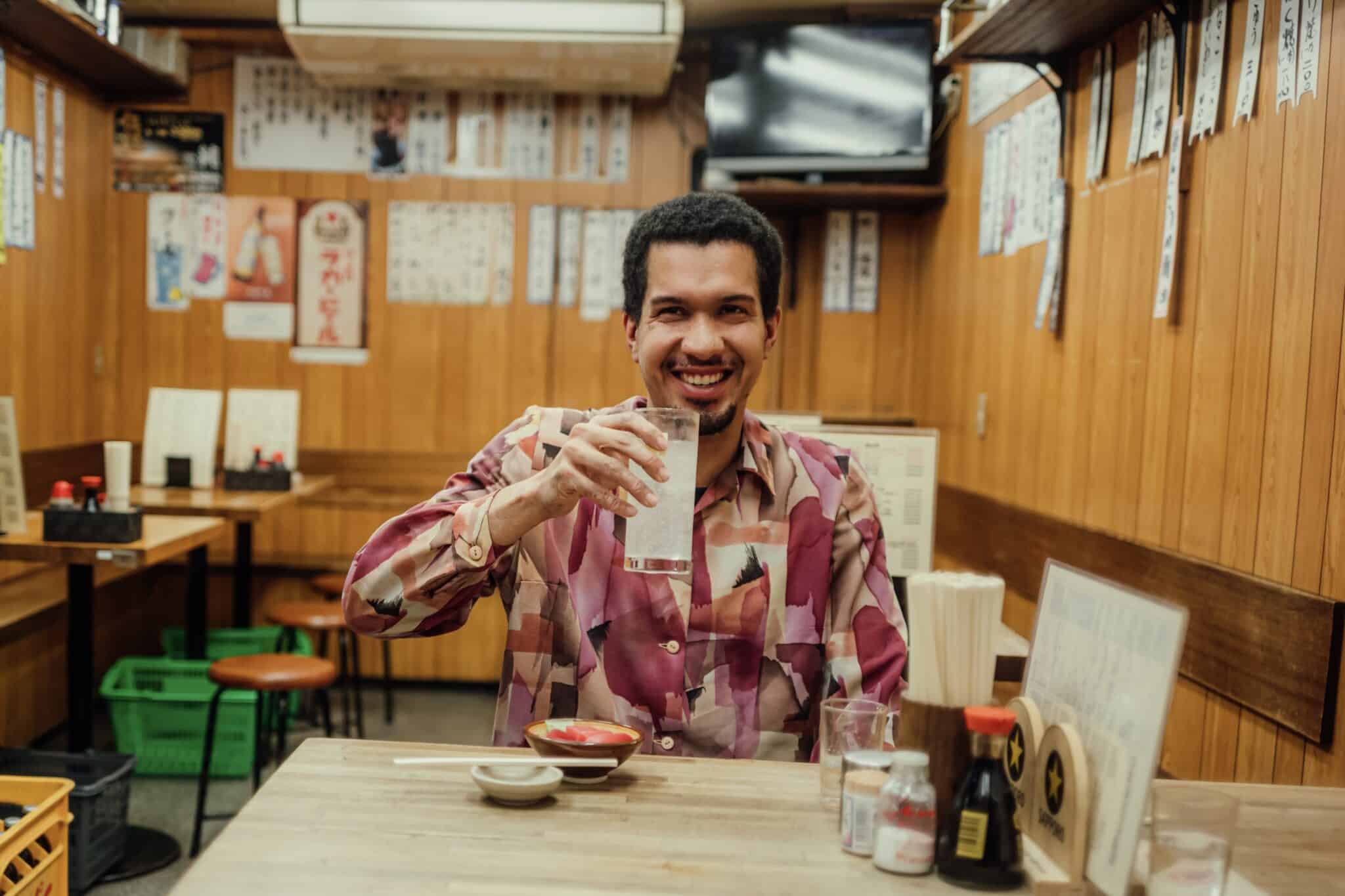
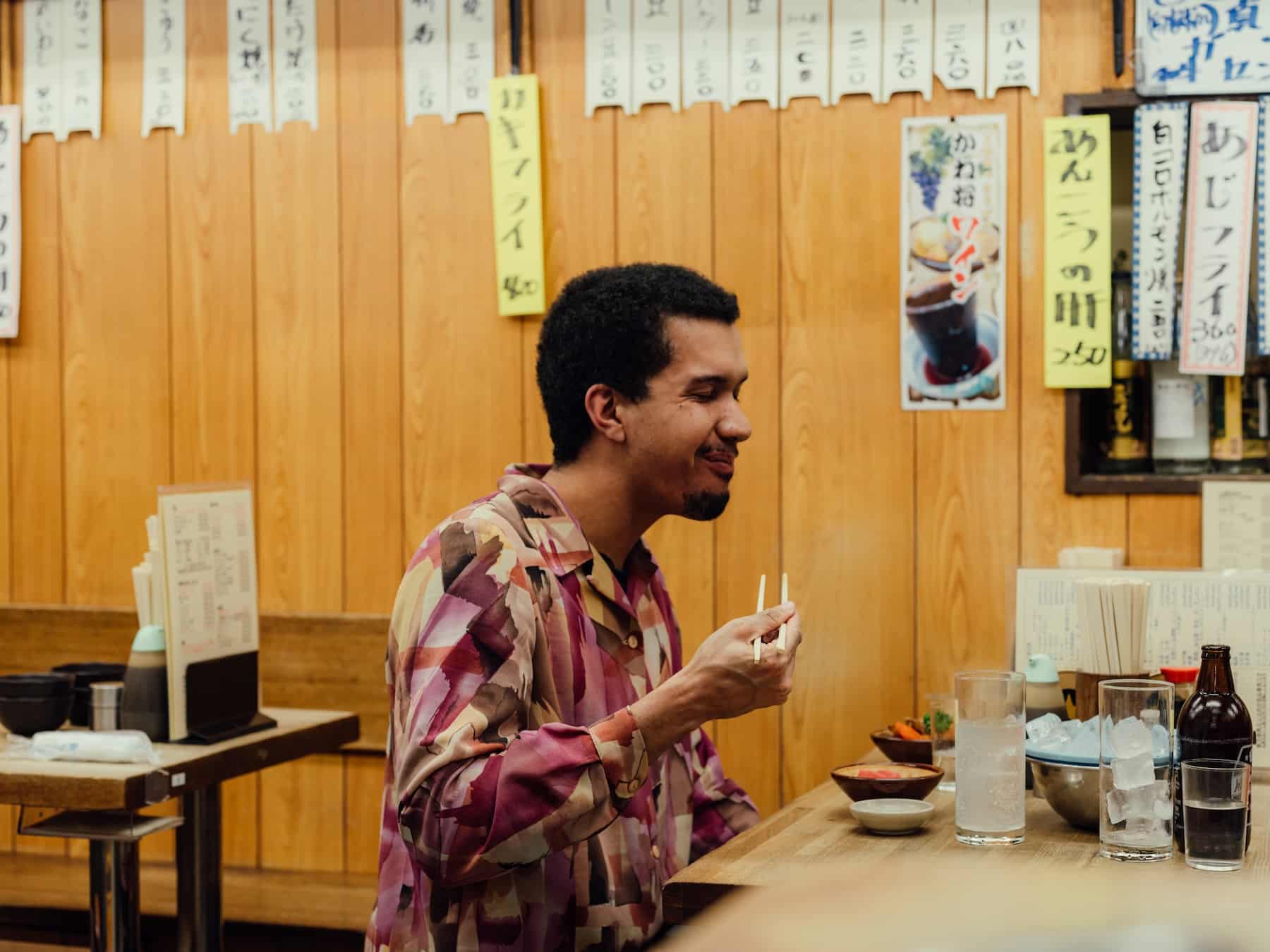
Jojo, who has lived in Japan for many years and loves izakayas, starts with a lemon sour. “Making your own drink like this is really fun!”
At Kanesho, great importance is placed on the freshness of ingredients and careful preparation. The pork offal used for their signature yakiton is sourced directly from a butcher at Shibaura Market, ensuring exceptional freshness with no unpleasant odor. The fish used for sashimi is also selected personally by the owner, who visits Toyosu Market himself to assess the quality of the day’s catch.
As a result, guests can enjoy seasonal fish at peak freshness. Every morning from 6 a.m., the owner and his wife prepare the ingredients together with great care. Even dishes that may appear to be standard izakaya fare are distinguished by thoughtful ingredient selection, meticulous preparation, and careful cooking—an accumulation of effort that has earned the shop its long-standing popularity.
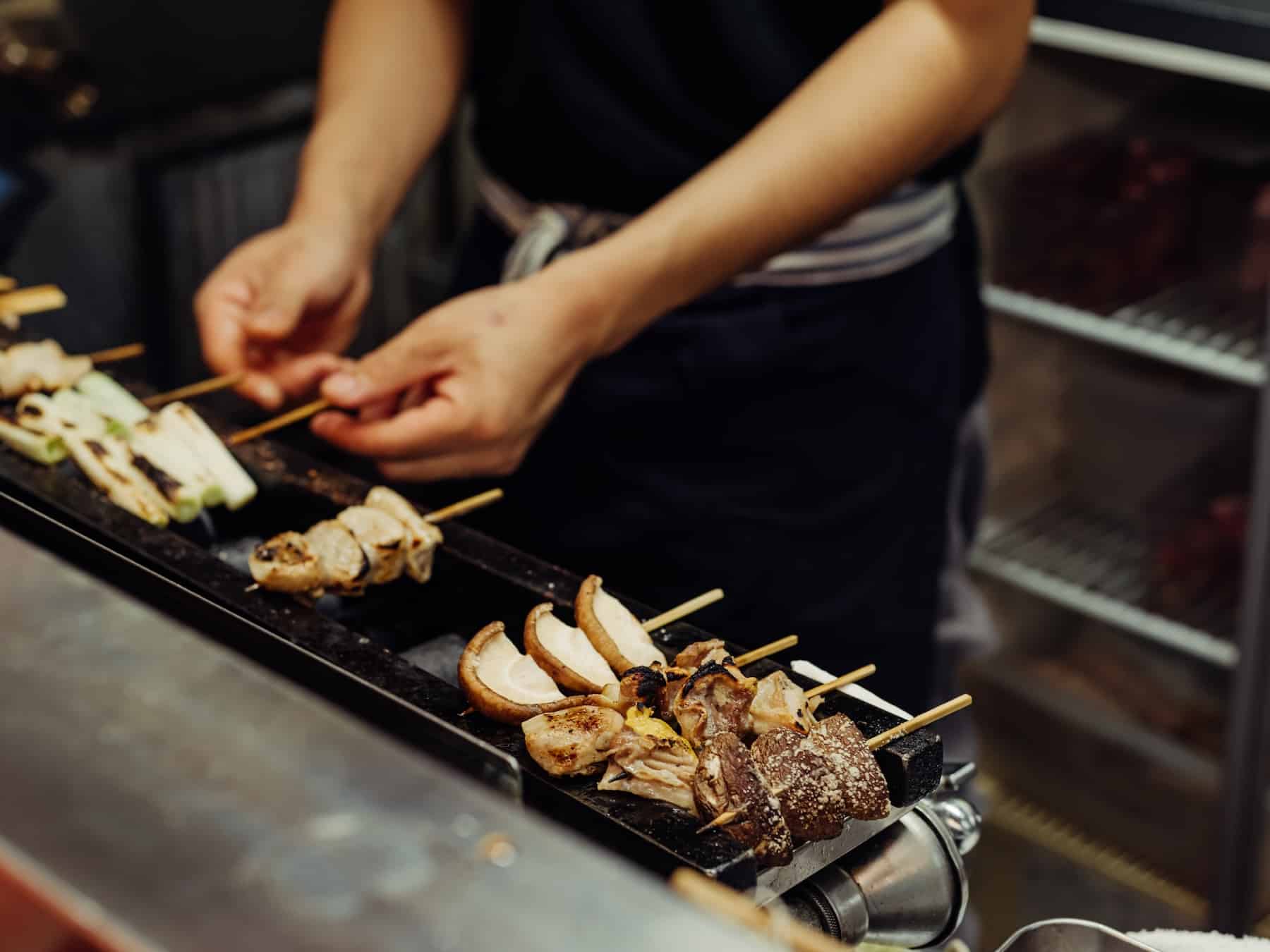
Signature yakiton and skewers are grilled one after another at the counter, sending up fragrant smoke.
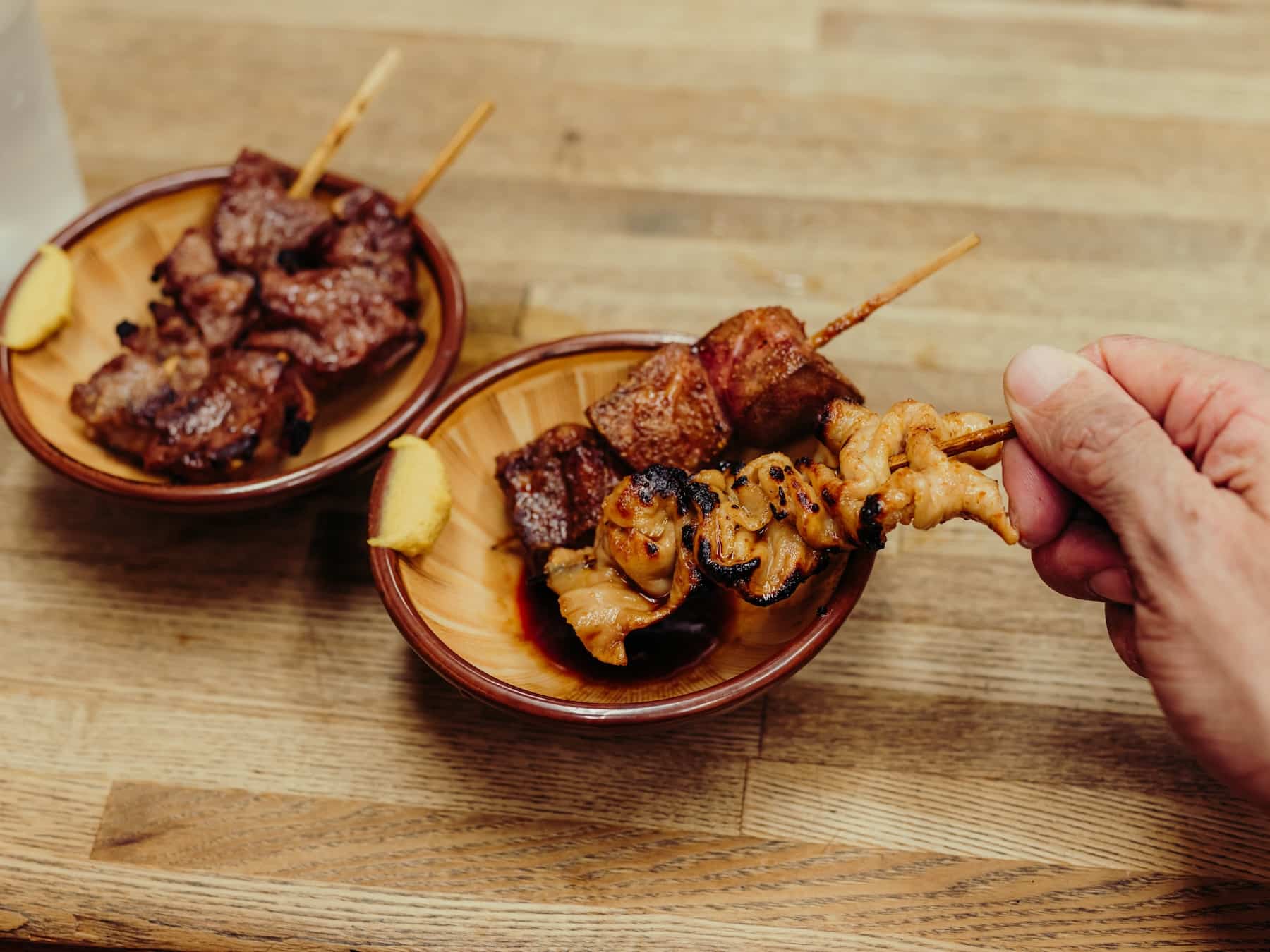
The famous yakiton is parboiled in-house from fresh raw pork offal, resulting in absolutely no odor. Choose between salt or sauce. From left: tongue and head meat (salt), liver and large intestine (sauce) — 165 yen each
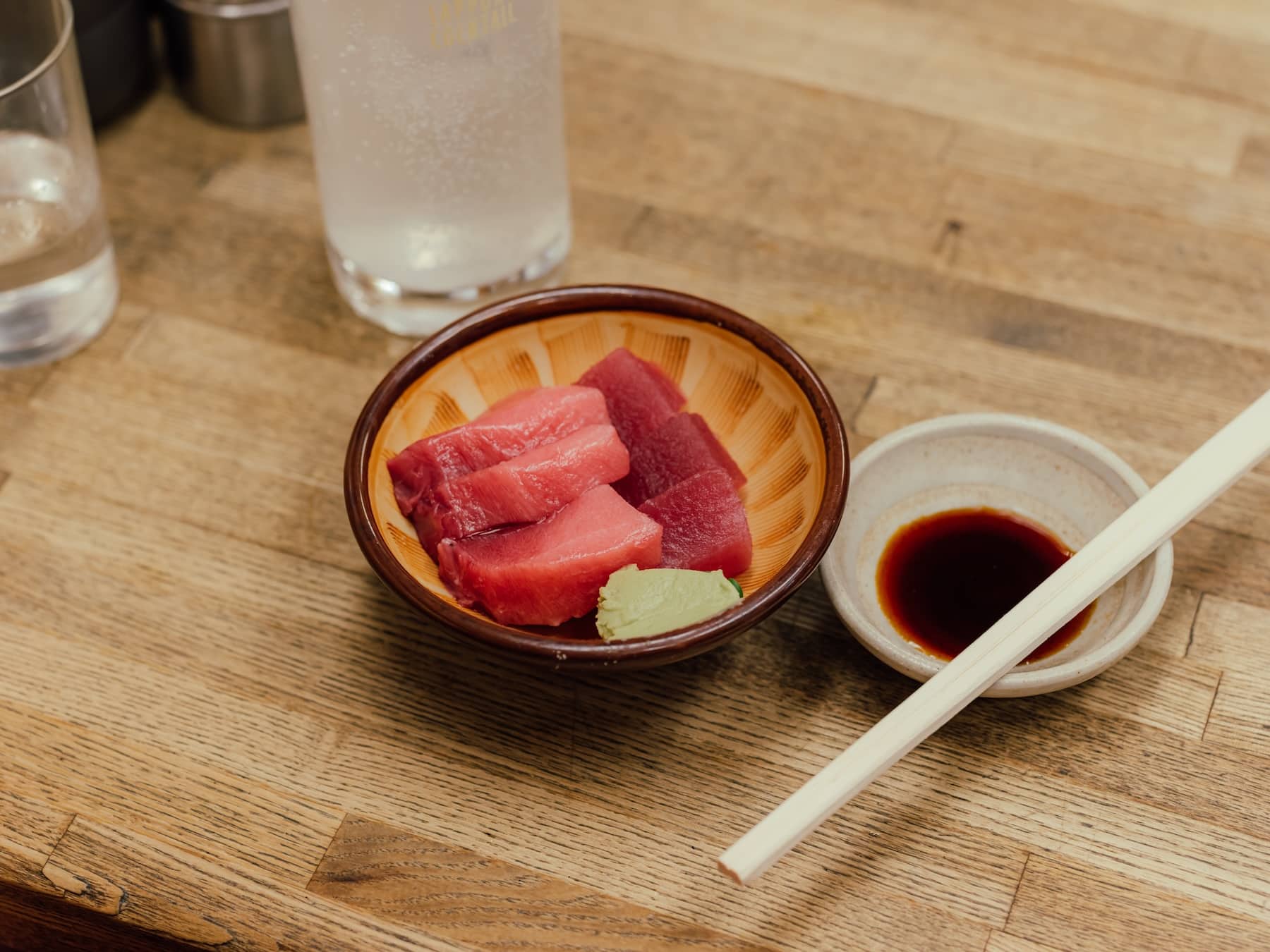
Fresh sashimi still personally sourced by the owner at Toyosu Market. True to its roots as a casual izakaya popular with solo drinkers, sashimi is served in small portions. Tuna chunks: 480 yen
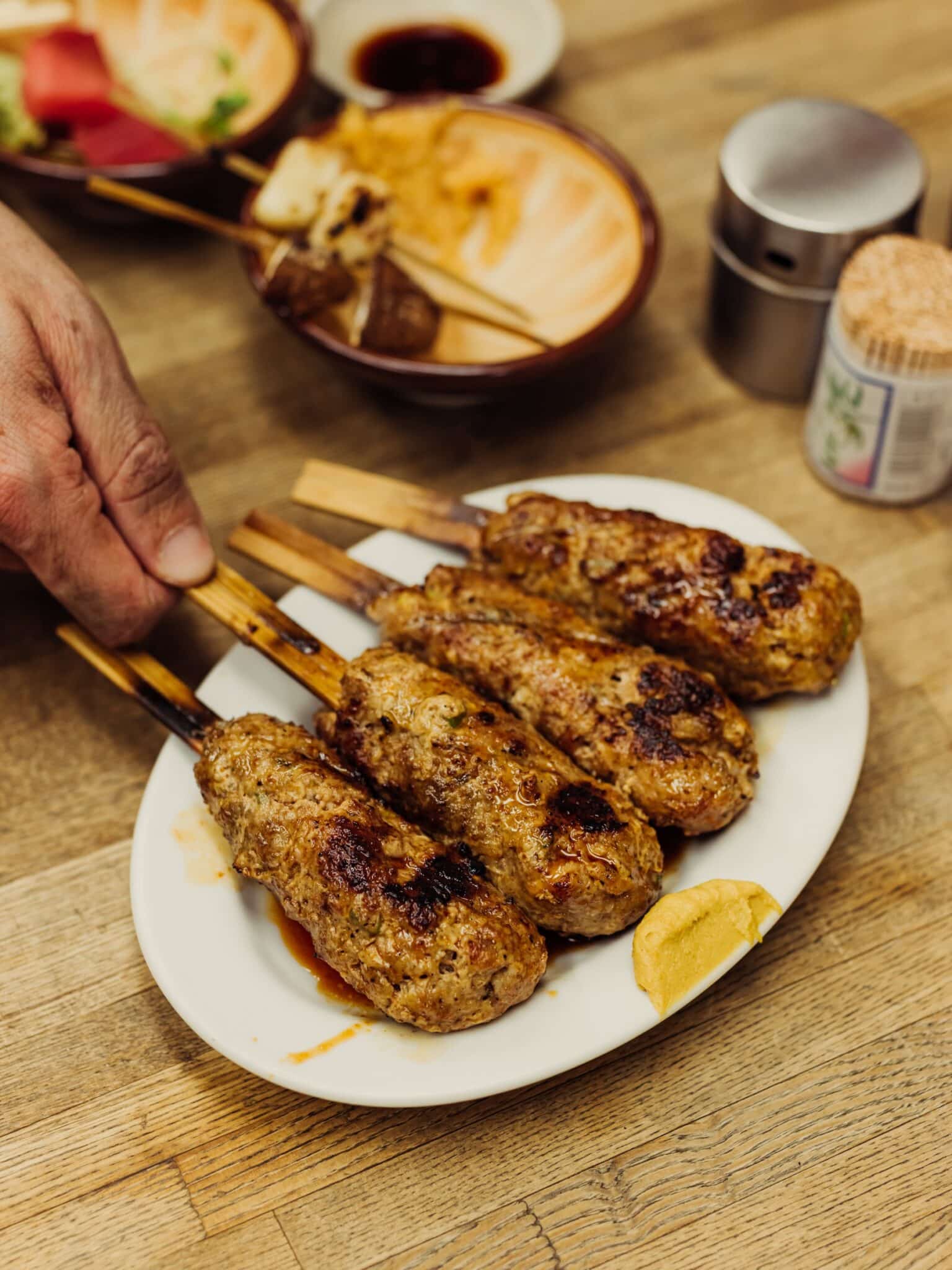
Homemade tsukune meatballs (319 yen each), generously sized and satisfyingly filling. The sweet-and-savory sauce, continuously replenished over time, coats the skewers perfectly and pairs wonderfully with drinks.
In addition to classic dishes, Kanesho offers a wide range of original menu items. Among them, the most popular is the “Beef Tendon Tomato Stew.” This dish was inspired by an idea from the owner’s wife, who is from the Philippines. Drawing on adobo, a Filipino home-style dish, it incorporates the use of vinegar to enhance the natural flavors of the ingredients—a technique well suited to hot climates. As a result, it has a distinctive taste unlike typical tomato stews.
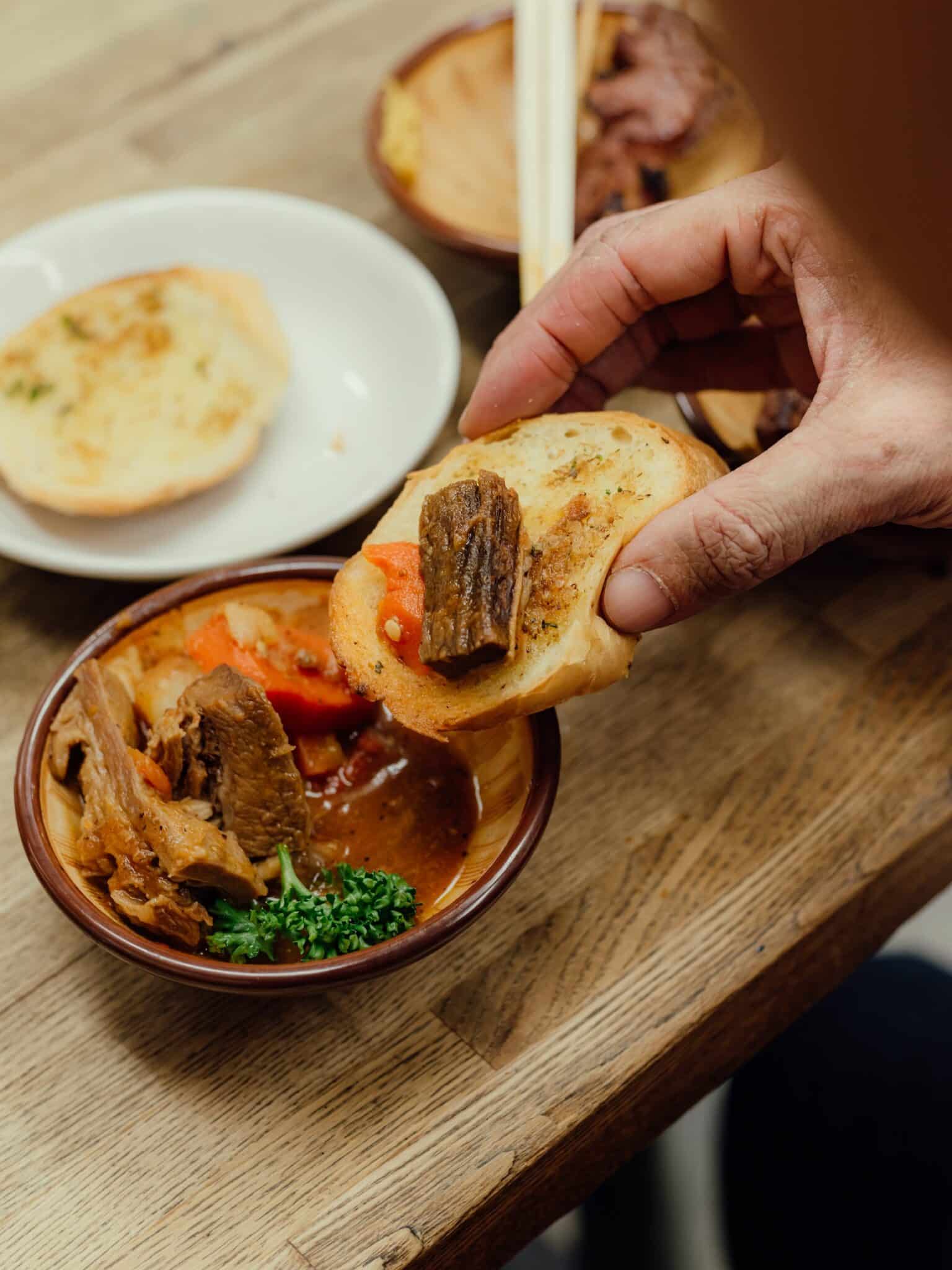
Regulars often order it with garlic toast, either spooning the stew over the bread or dipping it into the sauce.
“Beef Tendon Tomato Stew” (495 yen) features slow-simmered beef tendon that melts in your mouth. With carrots and potatoes included, it offers the hearty satisfaction of a beef stew, while subtle aromas of Asian herbs add a unique twist. It’s highly recommended with the garlic toast (two pieces, 220 yen), topped with breadcrumbs for an extra touch.
“It felt warm and welcoming, almost like coming home. The yakiton was incredibly fresh, with no odor at all—it was truly delicious!”(Jojo)
The information contained this article was correct as of 02/04/2026 (the time of publication)