DEEPTOKYO
magazine

EN

DEEPTOKYO
magazine
EN
2026.01.09
A confectionery wholesaler open to the general public, offering even rare dagashi treats


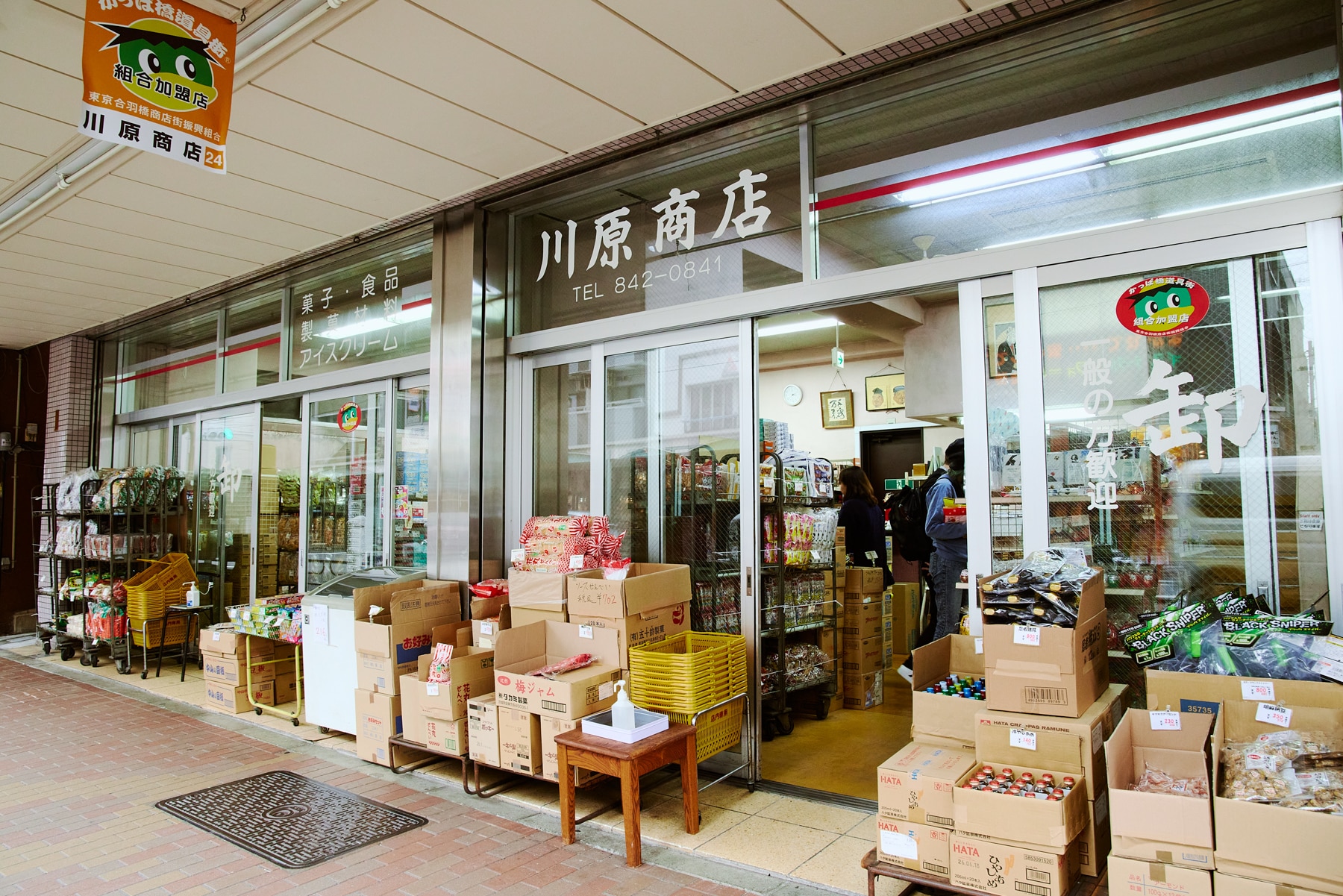
Among the many stores lining Kappabashi Dougu Street, which is best known for its concentration of kitchenware specialty shops, Kawahara Shoten stands out as a rare presence that deals in food products. A wholesaler is a business model in which goods are purchased directly from manufacturers and sold to retailers. At Kawahara Shoten, however, general customers are also welcome to shop. Inside the store, shelves are packed with dagashi—inexpensive, nostalgic sweets that many Japanese people associate with childhood memories. Familiar favorites with high name recognition overseas, such as “KitKat” and “Pocky,” are also available. True to its nature as a wholesaler, products can be purchased individually or in full boxes, allowing customers to buy quantities that suit their needs.
SHARE


Founded in 1928, Kawahara Shoten is a confectionery wholesaler located on Kappabashi Dougu Street. In an area lined with shops specializing in kitchenware, the presence of a store that handles food products is particularly rare. At the time of its founding, the shop mainly dealt in ingredients for making sweets. Over time, however, its lineup evolved, and today Kawahara Shoten carries a wide range of dagashi, confectionery, and small novelty toys. A wholesaler is generally defined as a business that purchases products directly from manufacturers and sells them to retailers. At Kawahara Shoten, individual customers are also welcome: items can be purchased one by one or in full boxes. Because the shop sources products directly from manufacturers, prices remain relatively affordable—one of its major attractions.
Many products are displayed in front of the shop as well, creating a lively atmosphere characteristic of a wholesaler.
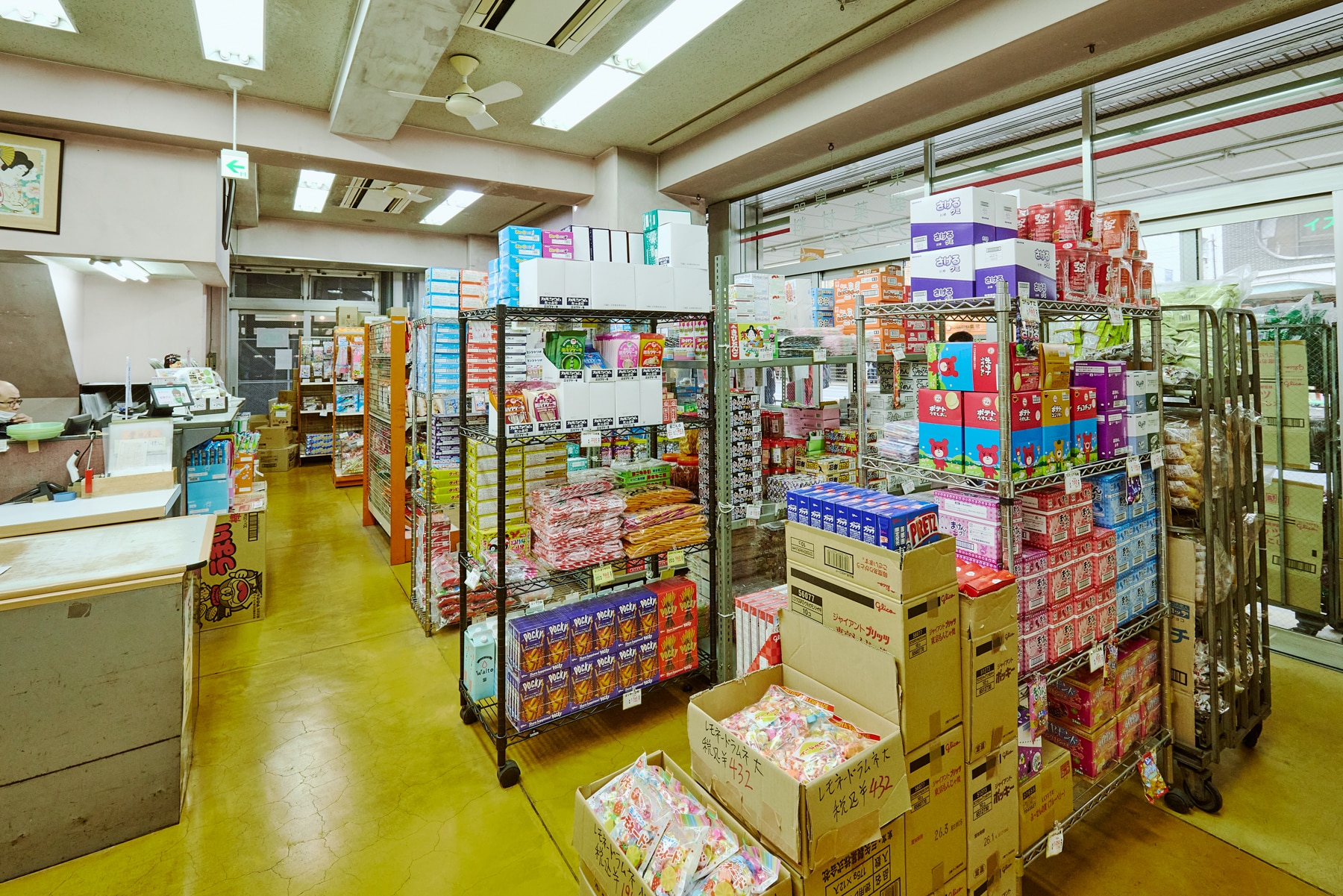
Inside the store, which is typical of wholesalers, the products are displayed in boxes.
The dagashi mainly handled at Kawahara Shoten are inexpensive, approachable sweets originally made for children. Long-selling items such as prize-winning chewing gum are still available today for around 12 yen per piece. During the Showa era (1926–1989), small neighborhood shops known as dagashiya could be found throughout Japan, bustling with children and forming part of the country’s nostalgic everyday landscape. However, with the spread of convenience stores and the effects of a declining birthrate, the number of dagashiya has decreased dramatically. Today, dagashi are typically found in only limited varieties at convenience stores and supermarkets. A wholesaler where such a large selection is gathered in one place has therefore become an extremely valuable presence.
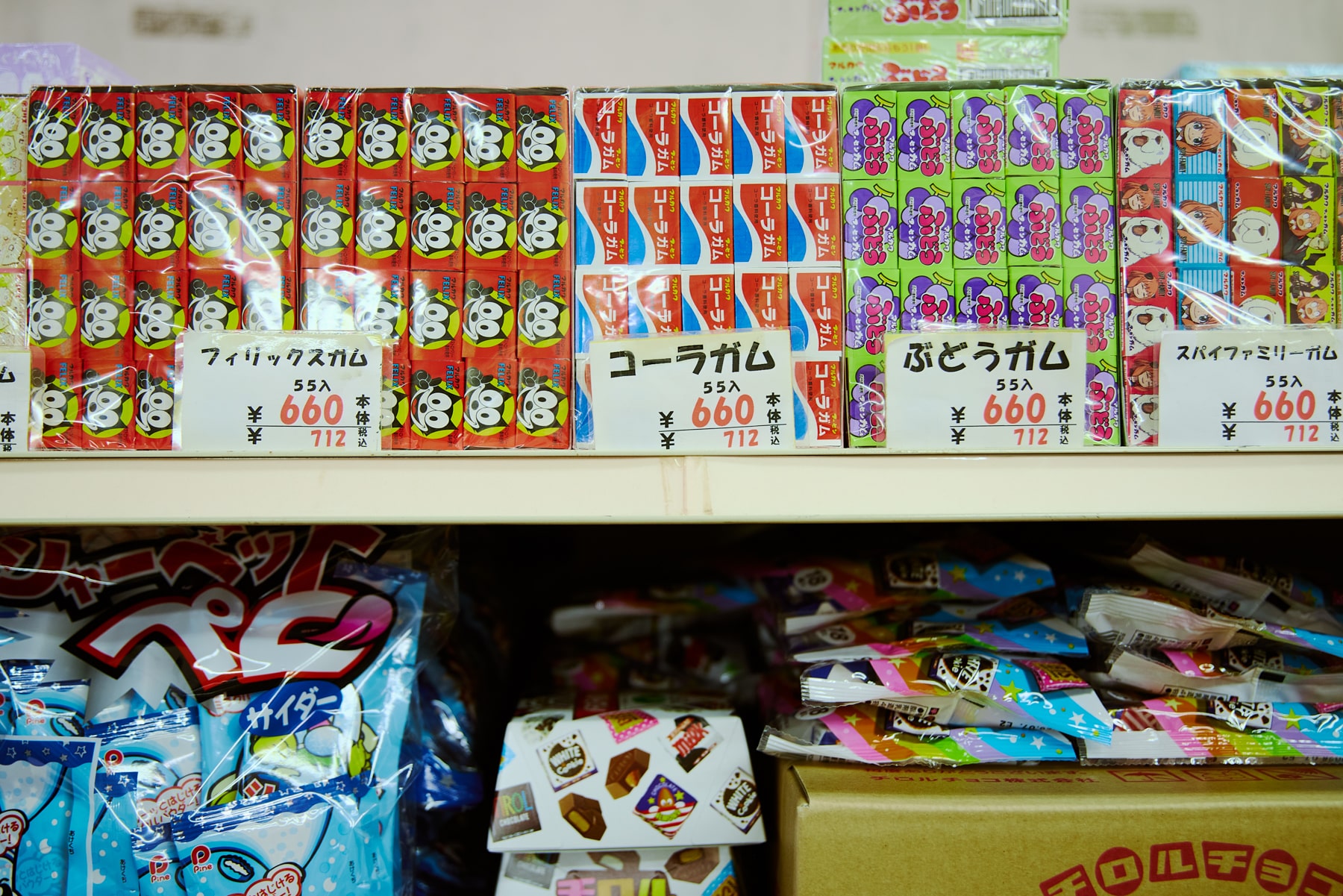
Classic chewing gums such as “Felix Gum” and “Cola Gum” are still available for 12 yen each. At Kawahara Shoten, a full box containing 55 pieces can be purchased for 712 yen.
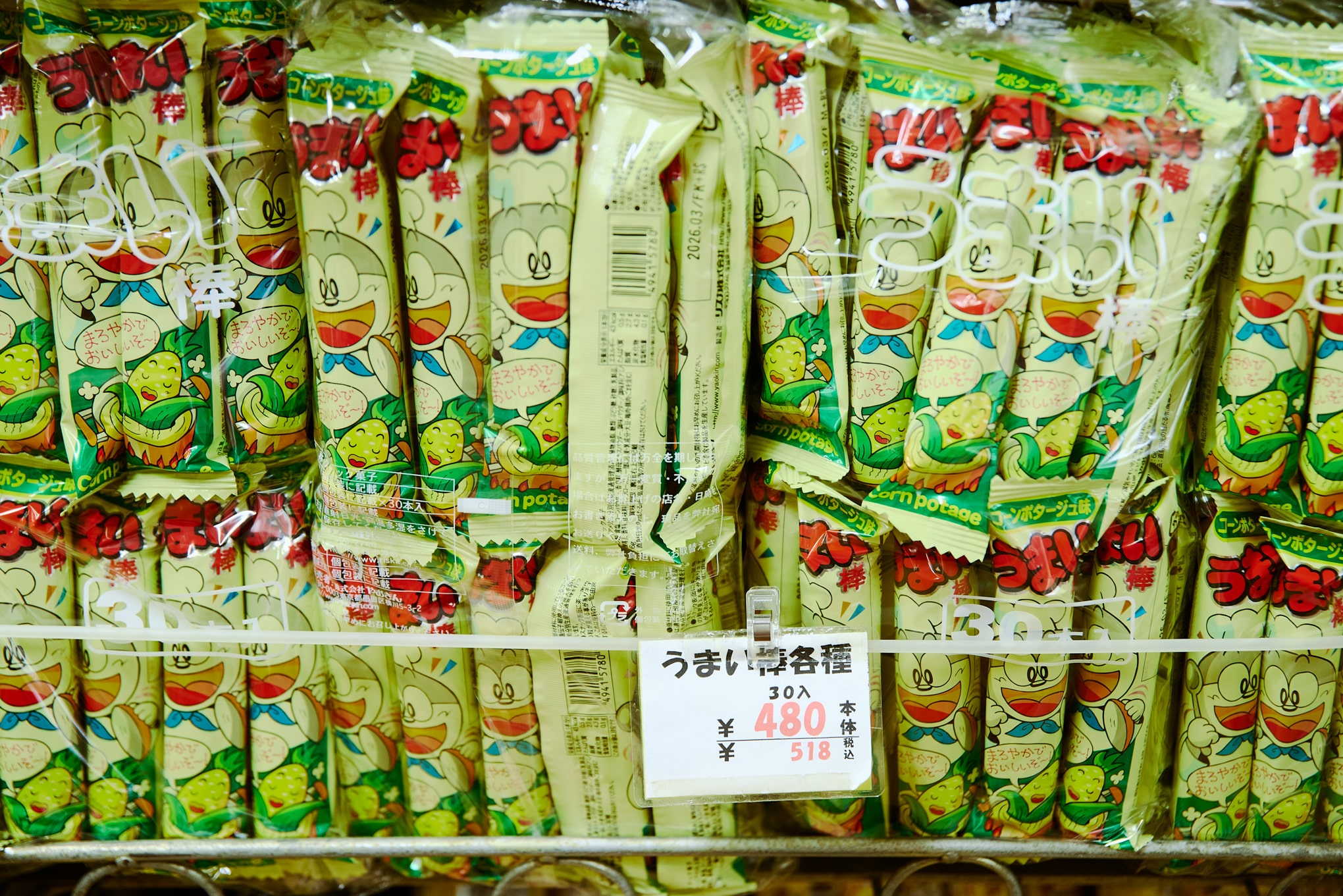
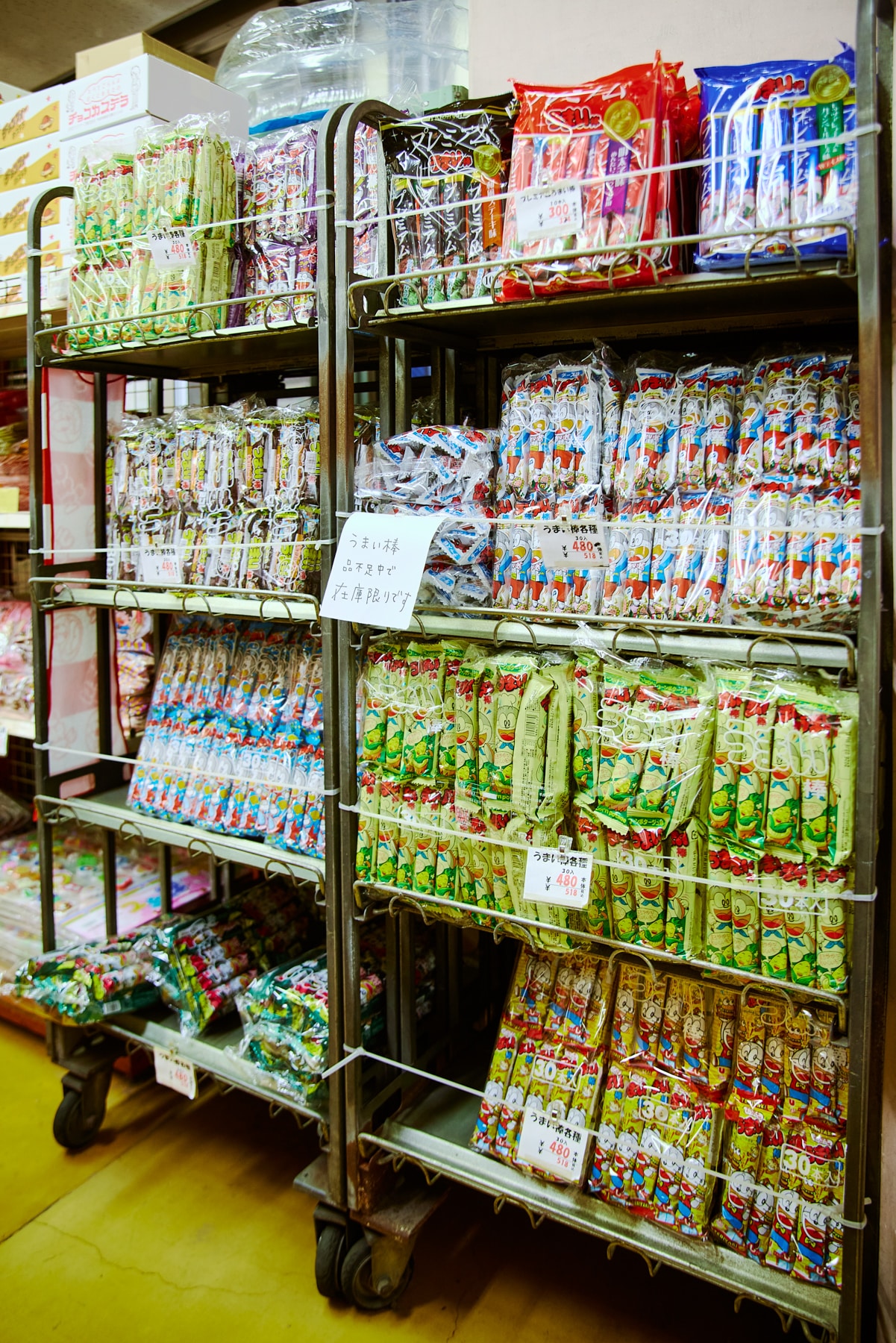
“Umaibo,” a snack with high name recognition overseas, is sold in boxes of 30 for 518 yen. In recent years, growing demand from international visitors seeking souvenirs has boosted its popularity, and some flavors are reportedly sold out continuously.
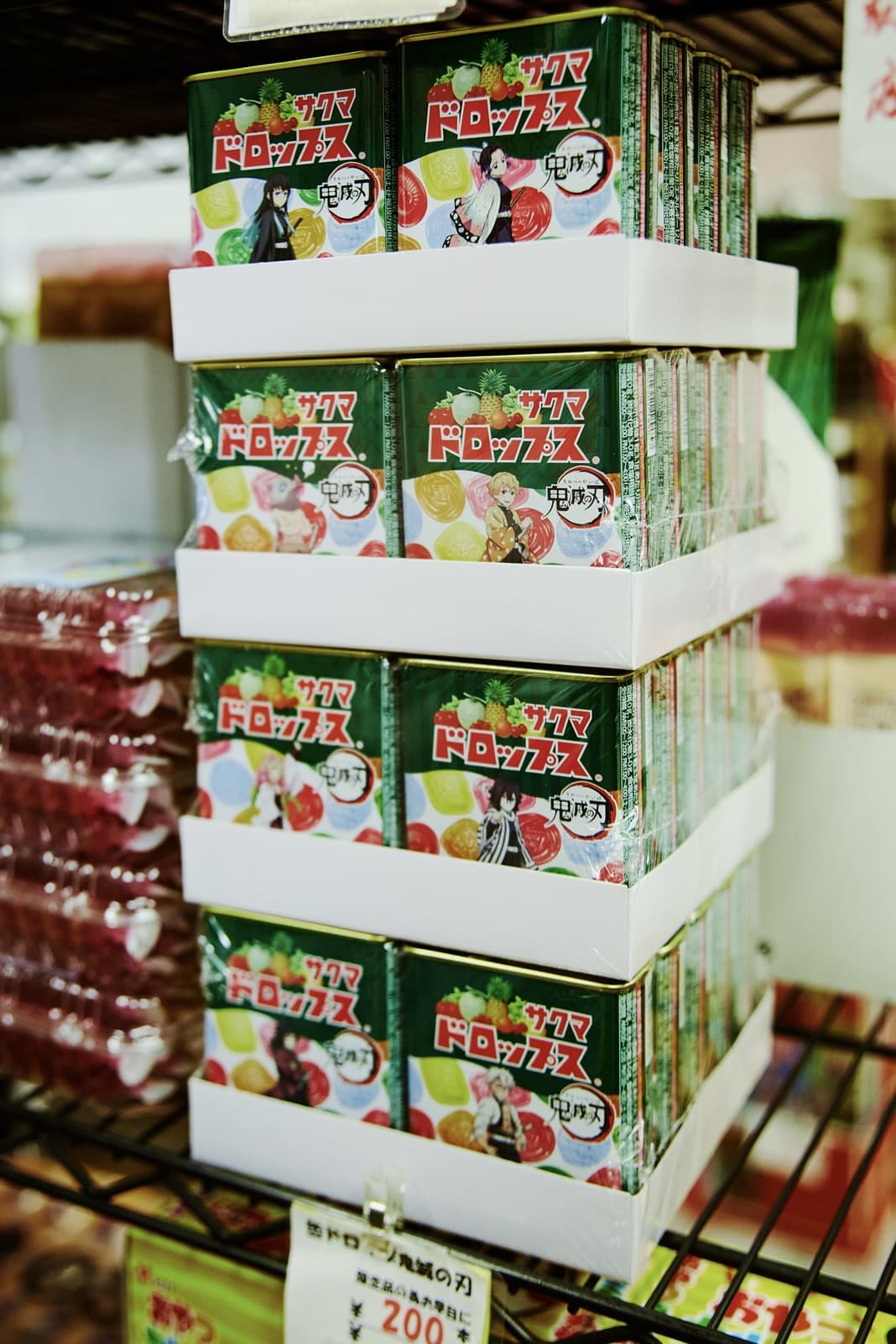
First introduced in 1908, “Sakuma Drops” (216 yen) is a candy with a long history. It is currently sold in designs featuring “Demon Slayer: Kimetsu no Yaiba,” and often sells out shortly after restocking.
Not only has the number of dagashiya declined across Japan, but the variety of dagashi themselves has also been shrinking year by year. Contributing factors include a shortage of successors at long-established manufacturers and aging production equipment. Although a wide variety of dagashi still fills the shelves of Kawahara Shoten, some products may already be discontinued by the time you visit again. “If you find a dagashi that catches your eye, we encourage you to pick it up on the spot,” say staff members Oyama and Nemoto.
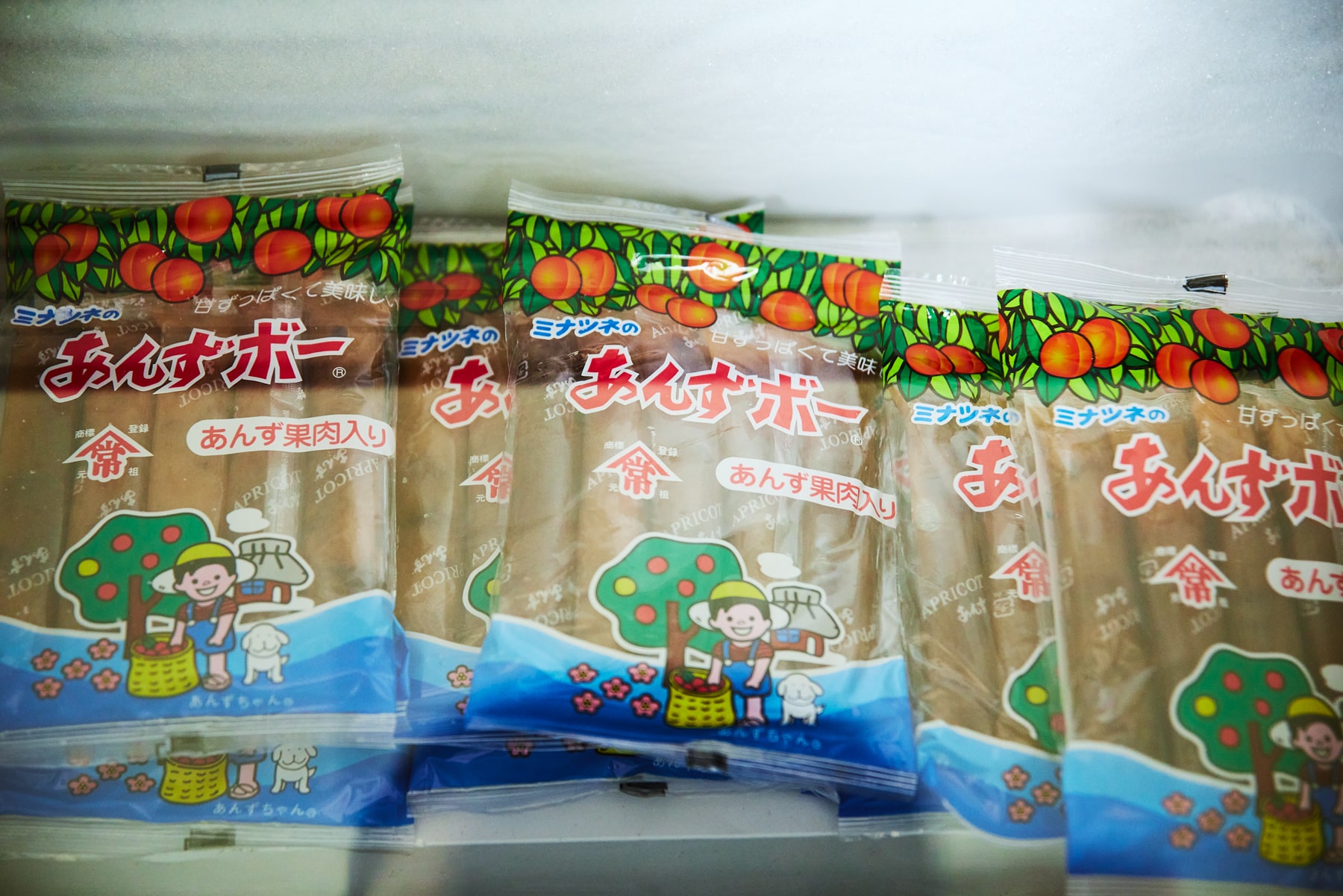
One dagashi with a particularly devoted fan base—often mentioned as something people hope will never be discontinued—is “Anzu-bo” (216 yen for five pieces). Because apricots spoil easily, this rare sweet has been sold mainly in the Kanto region since its release around the mid-Showa era. At Kawahara Shoten, it is still available today.
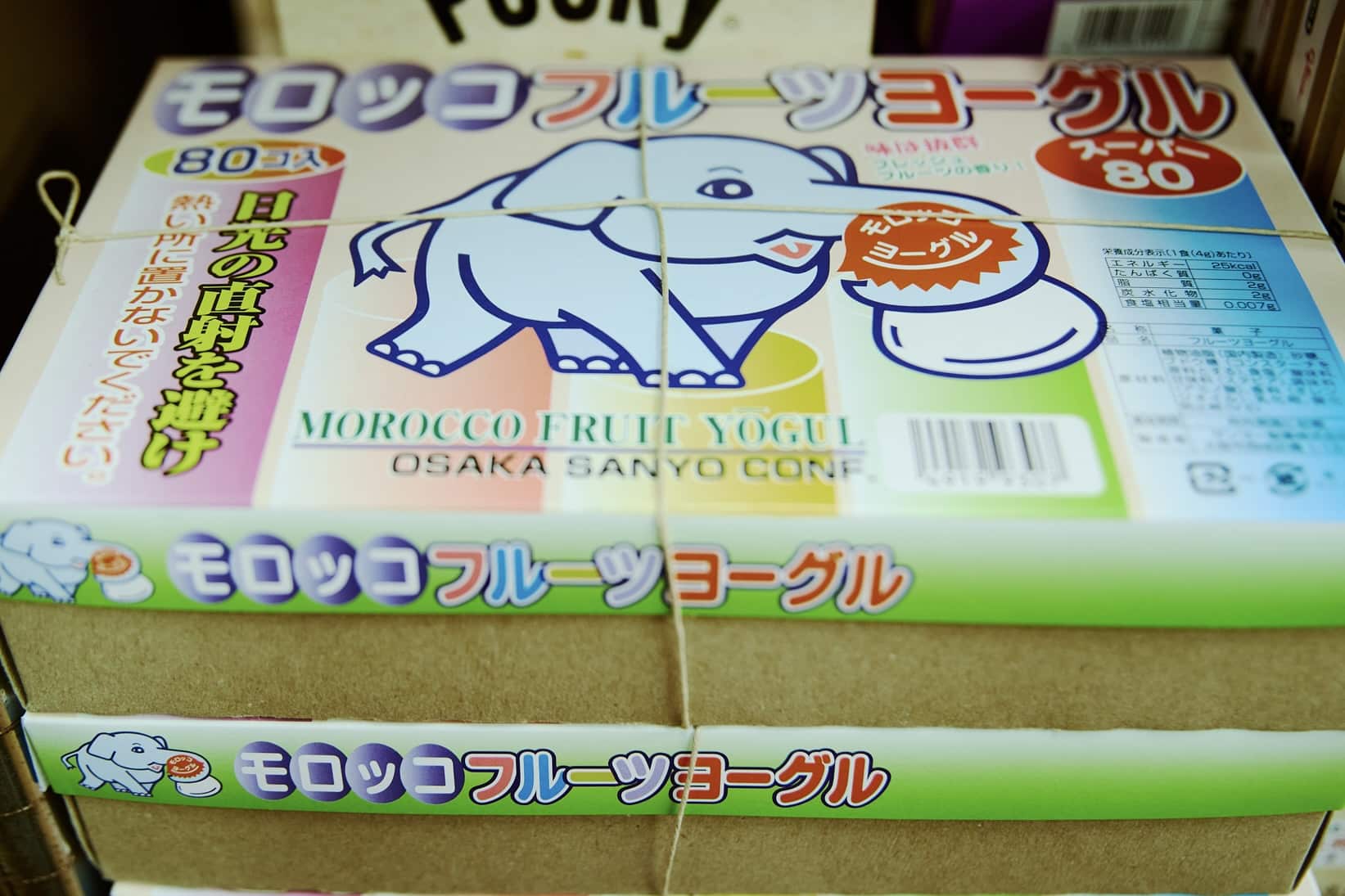
“Morocco Fruit Yogurt” (2,592 yen for 80 cups) is a yogurt-flavored cream sweet served in small cups. In the past, production temporarily declined due to manufacturing equipment issues, making it difficult to obtain. During that period, false rumors of discontinuation even spread—proof of how deeply loved this sweet is.
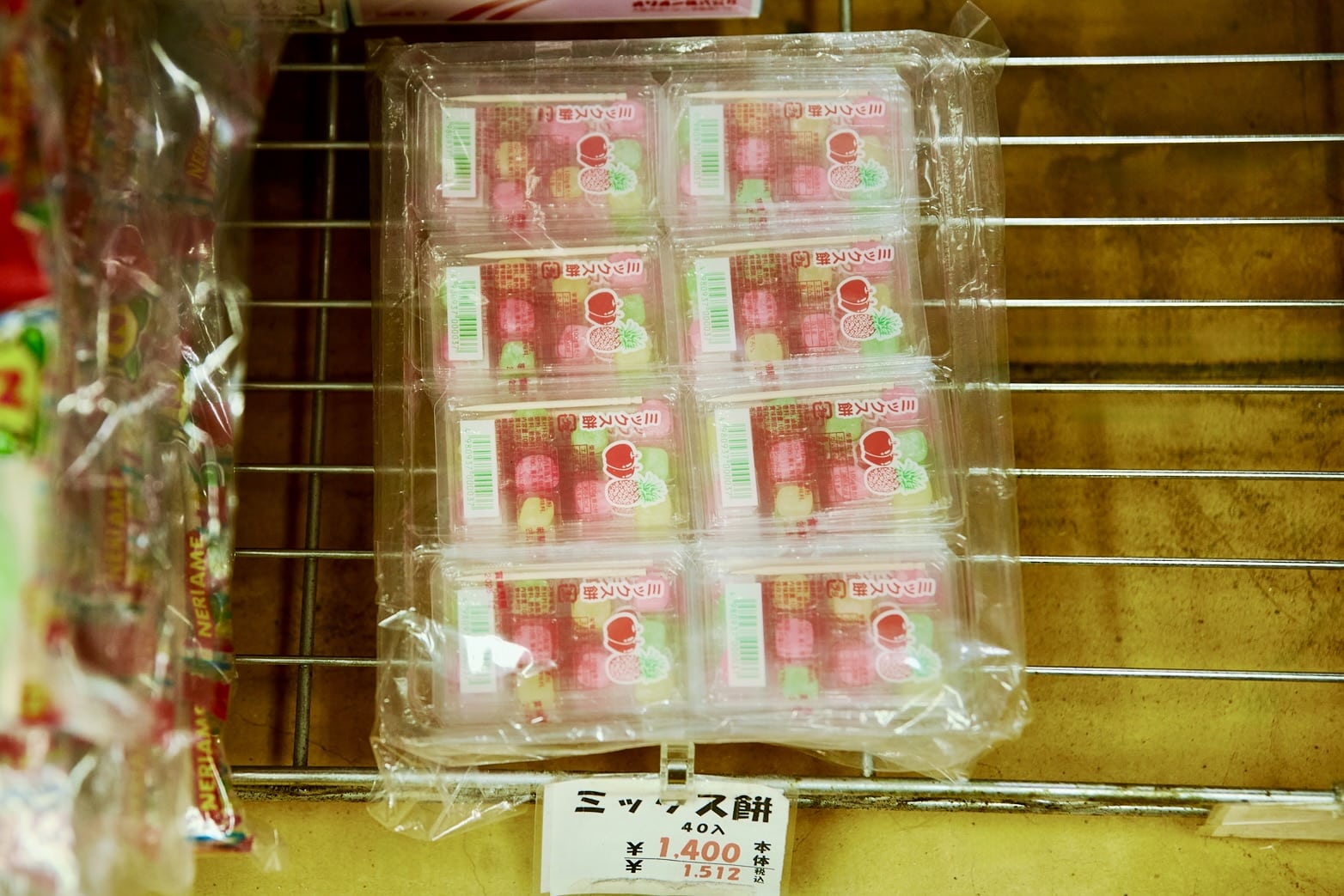
“Mix Mochi” (1,512 yen for 40 pieces) is a classic dagashi. This chewy candy, with a texture somewhere between mochi and gummy candy, can quickly become addictive.
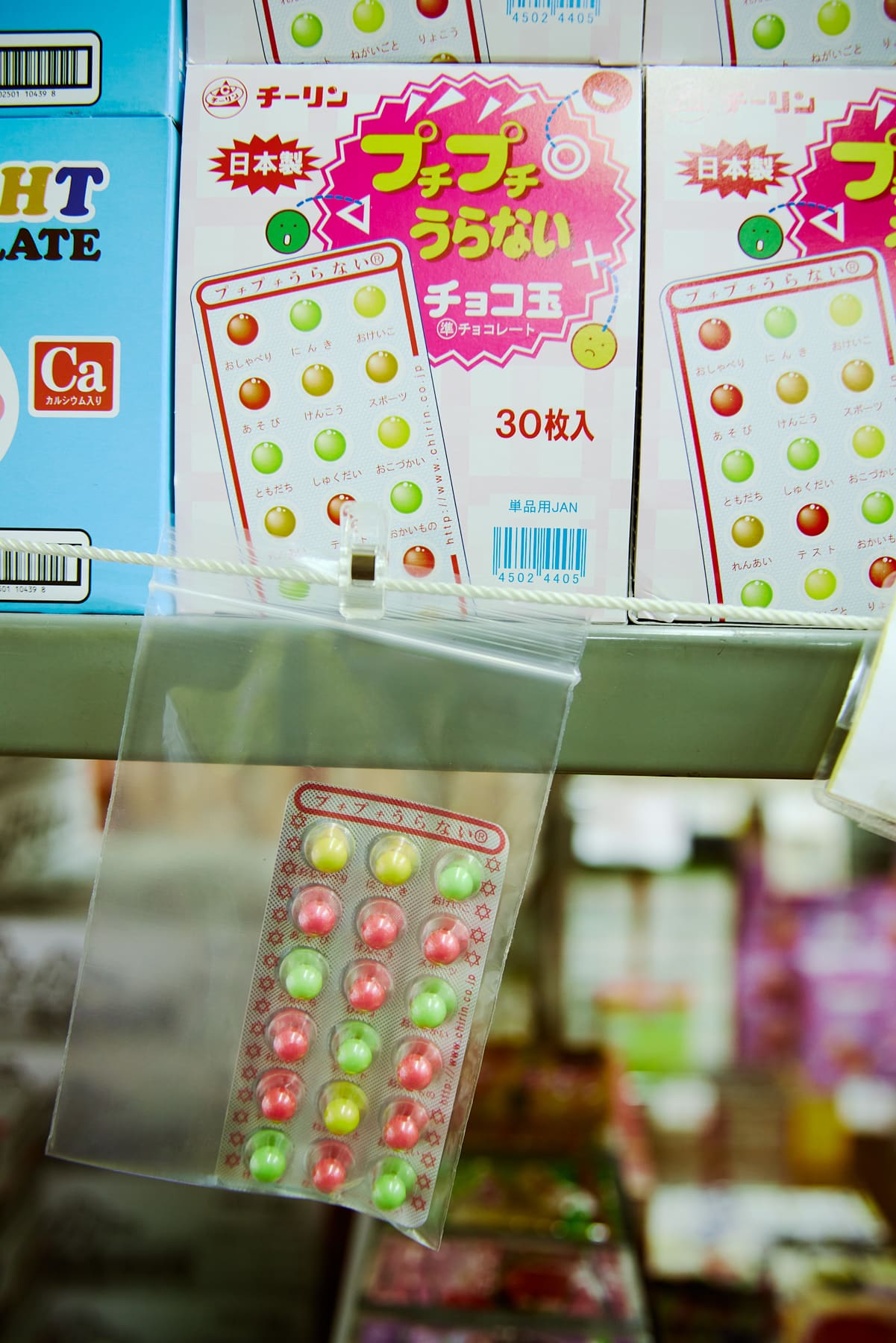
“Puchi Puchi Uranai Choco” (912 yen per box of 30 sheets) is a chocolate sweet featuring fortunes in 18 categories, including popularity, health, and romance. When you push out the chocolate, the fortune appears on the back. Many visitors may recall fond childhood memories of sharing this treat with friends.
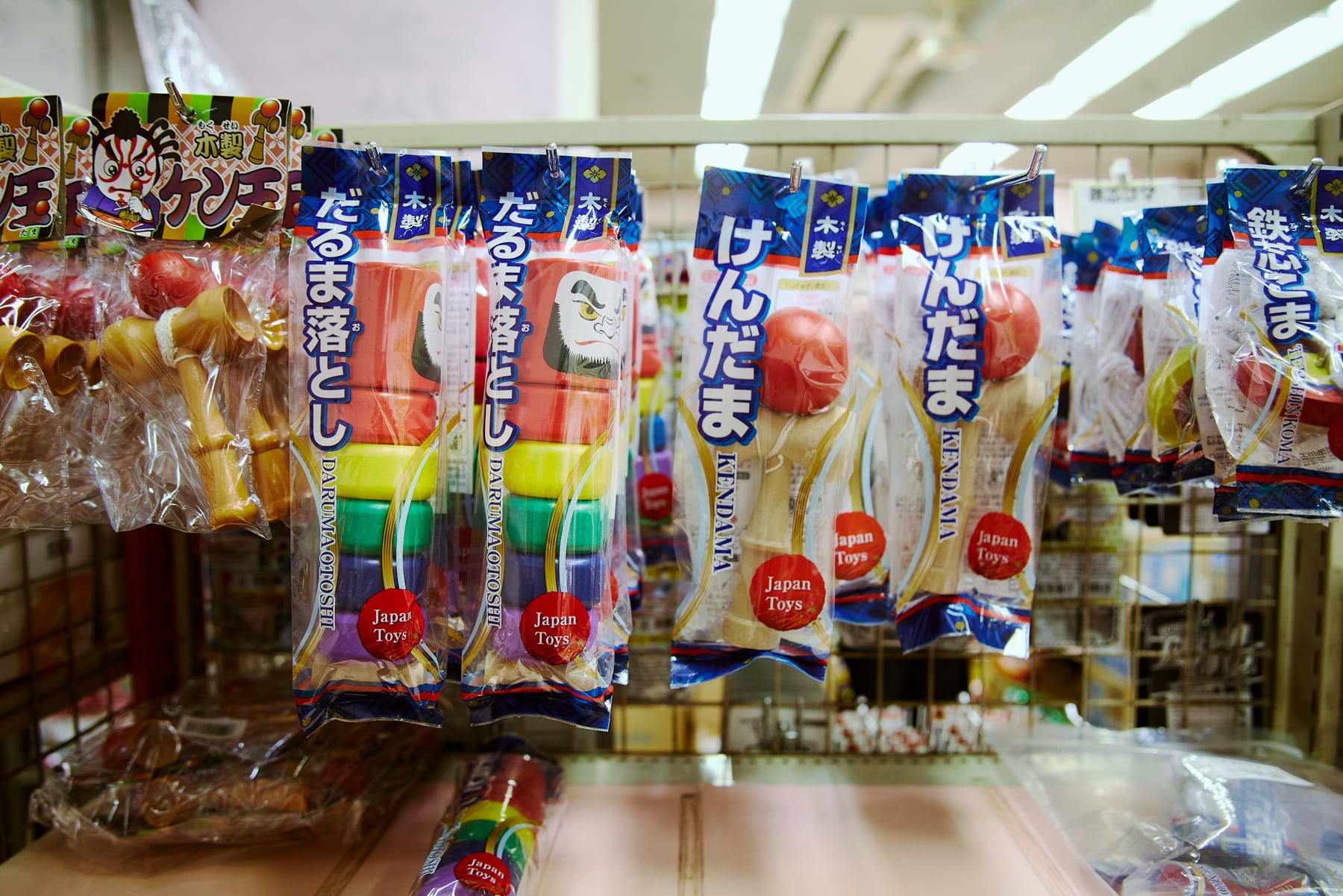
In addition to dagashi, Kawahara Shoten also sells small, easy-to-play toys known as komono gangu. In Japan, these toys have long been familiar items, often sold at festival stalls or used as event prizes. Because many of them—such as kendama and daruma otoshi—are traditional Japanese toys, overseas visitors sometimes purchase them as souvenirs. Another appealing feature is the affordable pricing typical of a wholesaler.
Traditional Japanese toys such as daruma otoshi, kendama, and spinning tops are displayed together in one place.
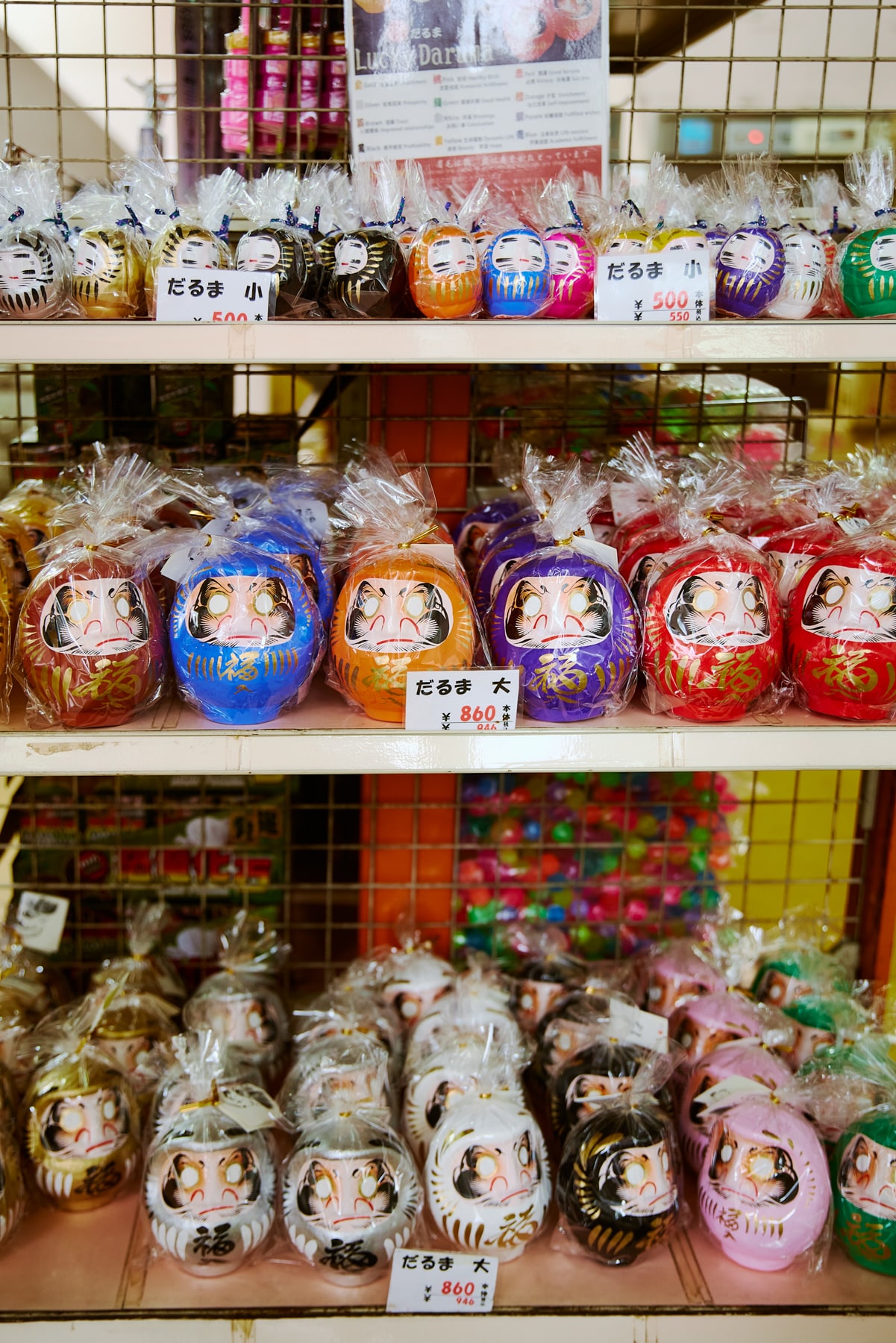
Daruma dolls, known as lucky charms to which people entrust their wishes, are also popular souvenir choices. Their colorful designs are especially eye-catching for children.
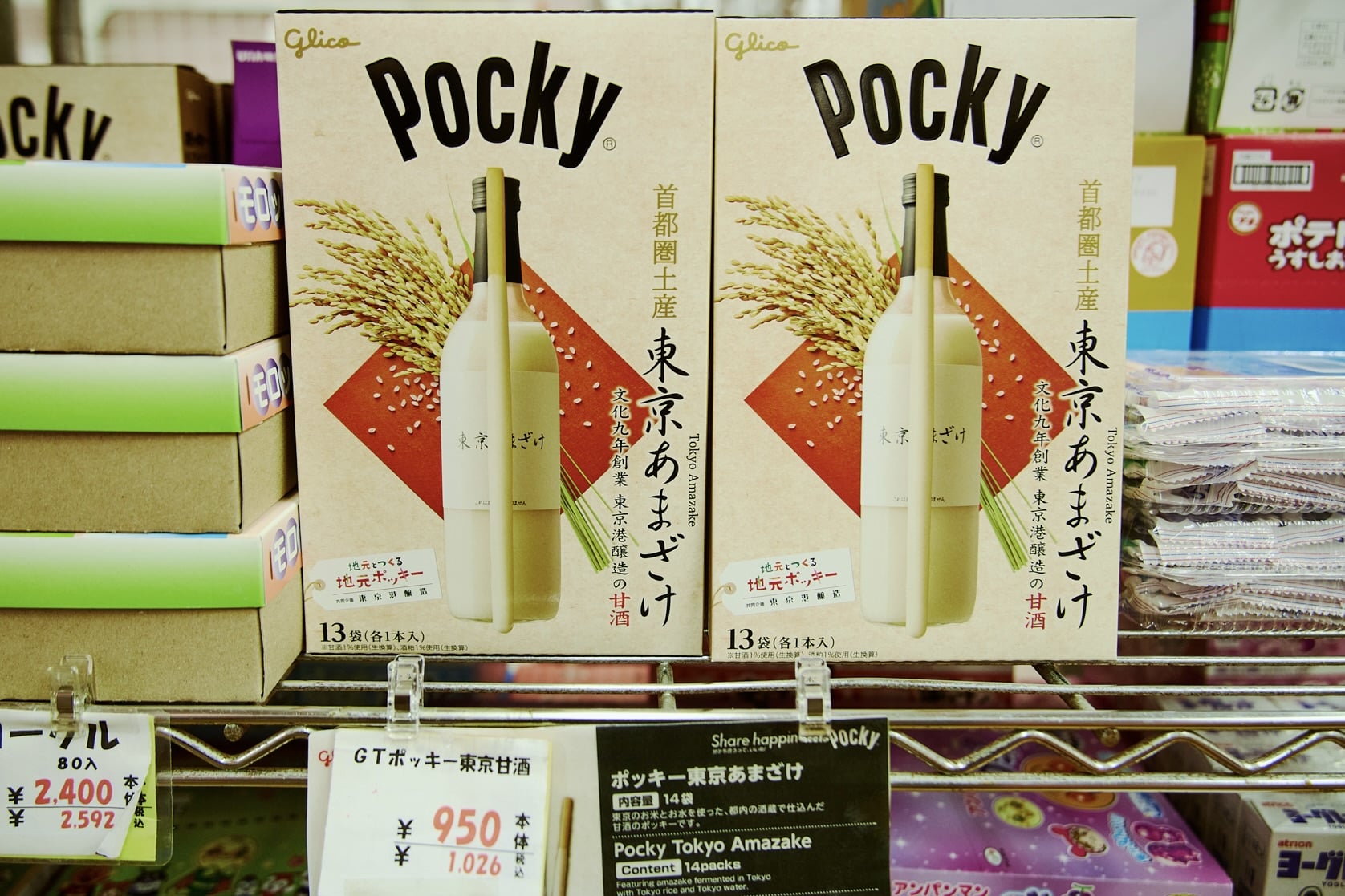
In addition to dagashi, standard Tokyo souvenirs such as the metropolitan-area-exclusive amazake-flavored “Giant Pocky” (1,026 yen) are also available at wholesaler prices.
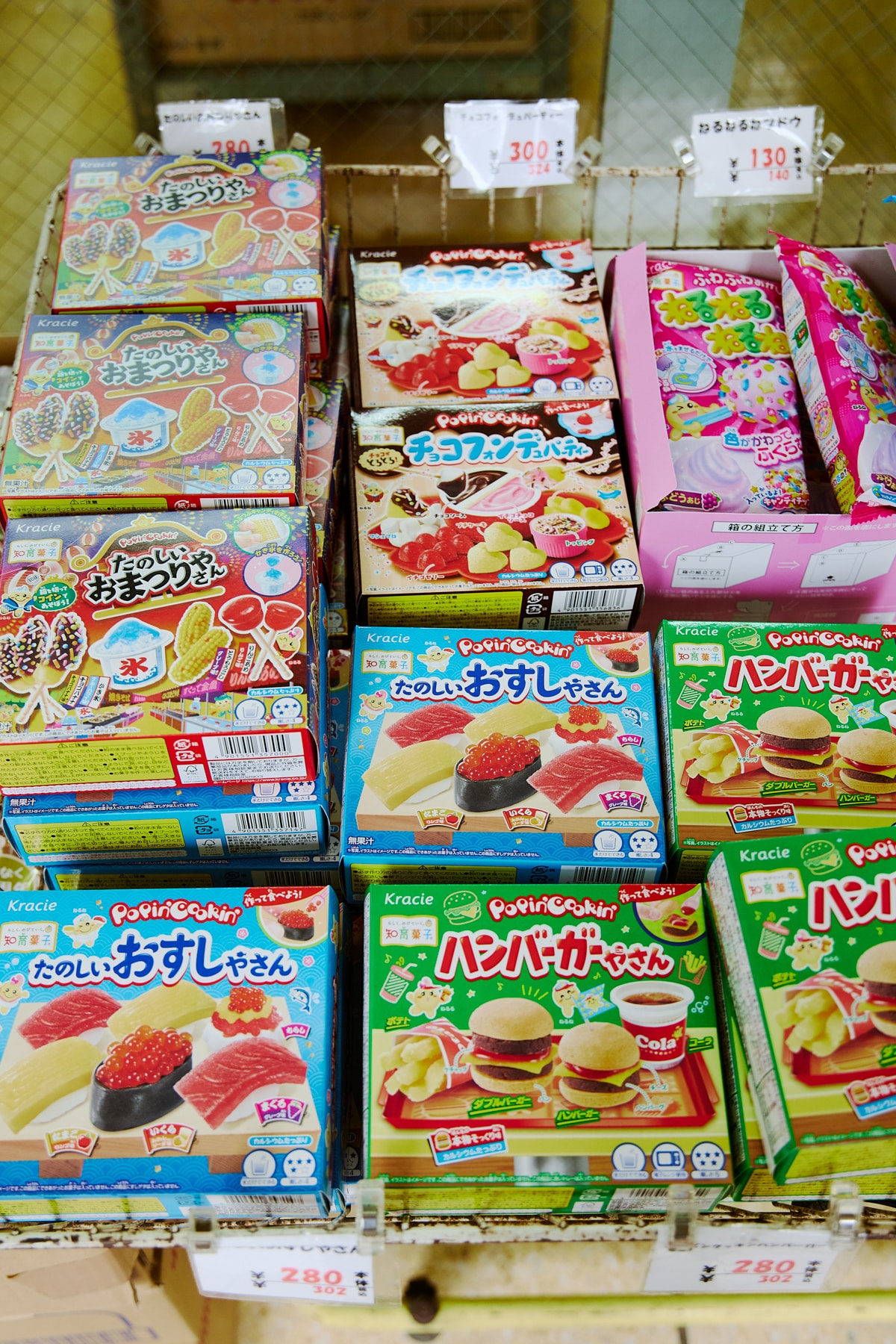
“Chiiku-gashi,” educational sweets that children make by mixing, kneading, and shaping ingredients, are also popular with overseas visitors thanks to their playful appearance. Kawahara Shoten offers a wide selection of these interactive sweets.
This article was written on January 09, 2026 (at the time of publication)




.jpg)
スマホ.jpg)