DEEPTOKYO
magazine

EN

DEEPTOKYO
magazine
EN
“Nihonbashi Cruise” is a popular activity that lets visitors enjoy Tokyo’s history and cityscape from the river. During the Edo period, water transportation using rivers and canals supported the movement of goods in Nihonbashi. Numerous boats once traveled along the Nihonbashi River carrying rice, fish, lumber, daily necessities, and other goods, helping sustain the area’s prosperity. Today, Nihonbashi is a commercial center where department stores, long-established businesses, banks, and the headquarters of major companies are concentrated. However, the rivers were at the heart of the area’s development. On this cruise, you can take in views of central Tokyo from a different perspective while sensing traces of the Edo period. This time, we boarded the “90-Minute Kanda River Cruise,” which departs from the Nihonbashi pier and travels along the Nihonbashi River, Kanda River, and Sumida River.
SHARE


Nihonbashi is a lively commercial center where department stores, long-established businesses, banks, and the headquarters of major companies are concentrated. Several railway lines run through the area, which is also known as the starting point of Japan’s road network. Yet Nihonbashi has another attraction that can be easy to miss when simply walking through its streets: the rivers that supported the area’s development.
The Nihonbashi area, lined with long-established businesses and commercial facilities, is bustling with office workers, tourists, and many other people.
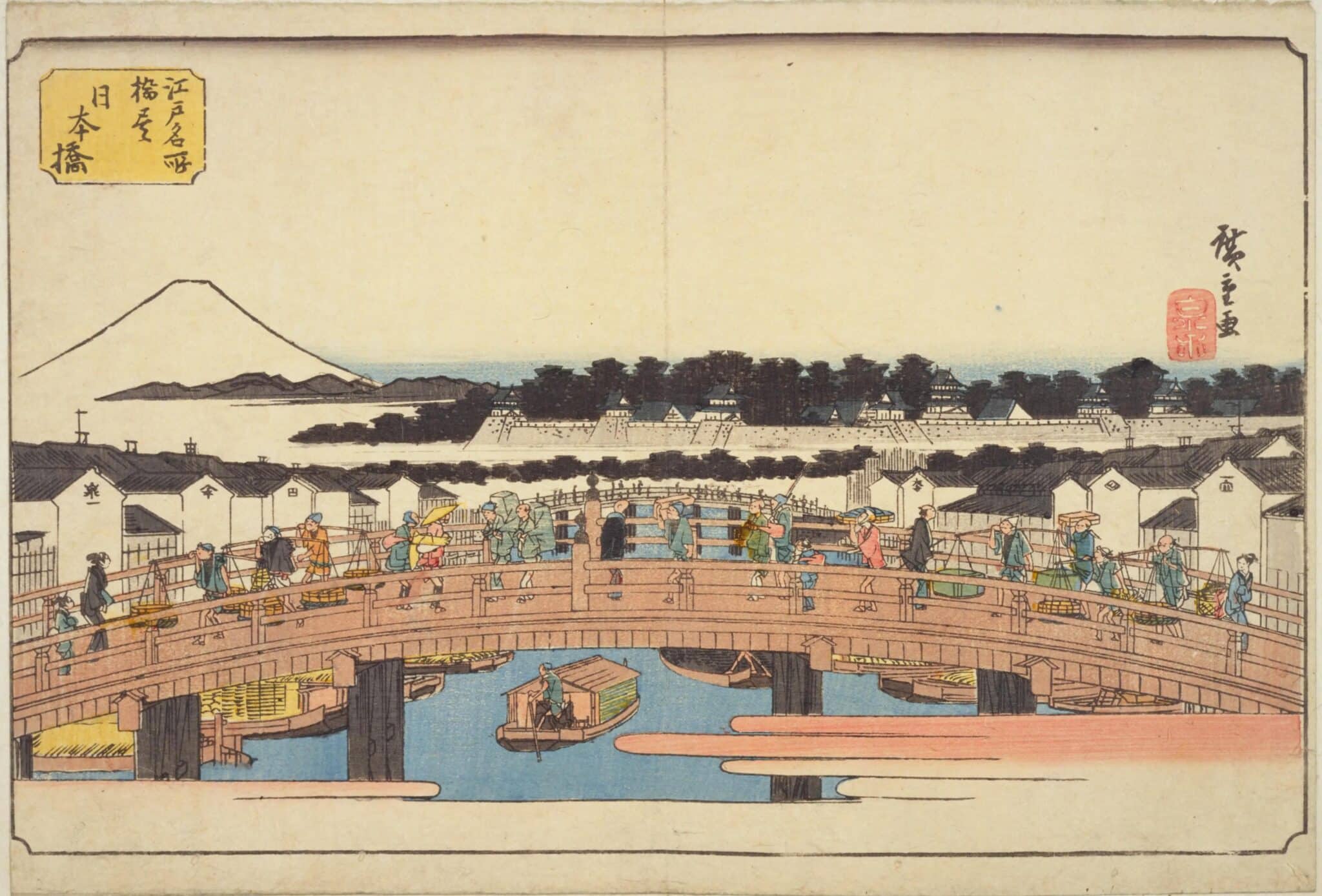
Nihonbashi during the Edo period (Hiroshige, “Edo Meisho Hashizukushi,” National Diet Library Digital Collections https://dl.ndl.go.jp/pid/1302095)
The history of Nihonbashi dates back more than 400 years to the Edo period. Edo was the former name of present-day Tokyo. At the time, Edo developed as Japan’s political and economic center, and Nihombashi was one of its central districts. As people and goods began arriving from across the country, the Gokaido, or Five Highways, were established as major routes connecting different regions of Japan with Nihonbashi. At the same time, water transportation using rivers and canals also flourished. Numerous boats once traveled along the river beneath Nihonbashi, carrying goods such as rice, fish, lumber, and daily necessities.
These historic rivers can be explored by cruise boat. Departing from Nihonbashi, the cruise passes beneath numerous bridges along the way, offering views of Tokyo’s cityscape from an unusual perspective.
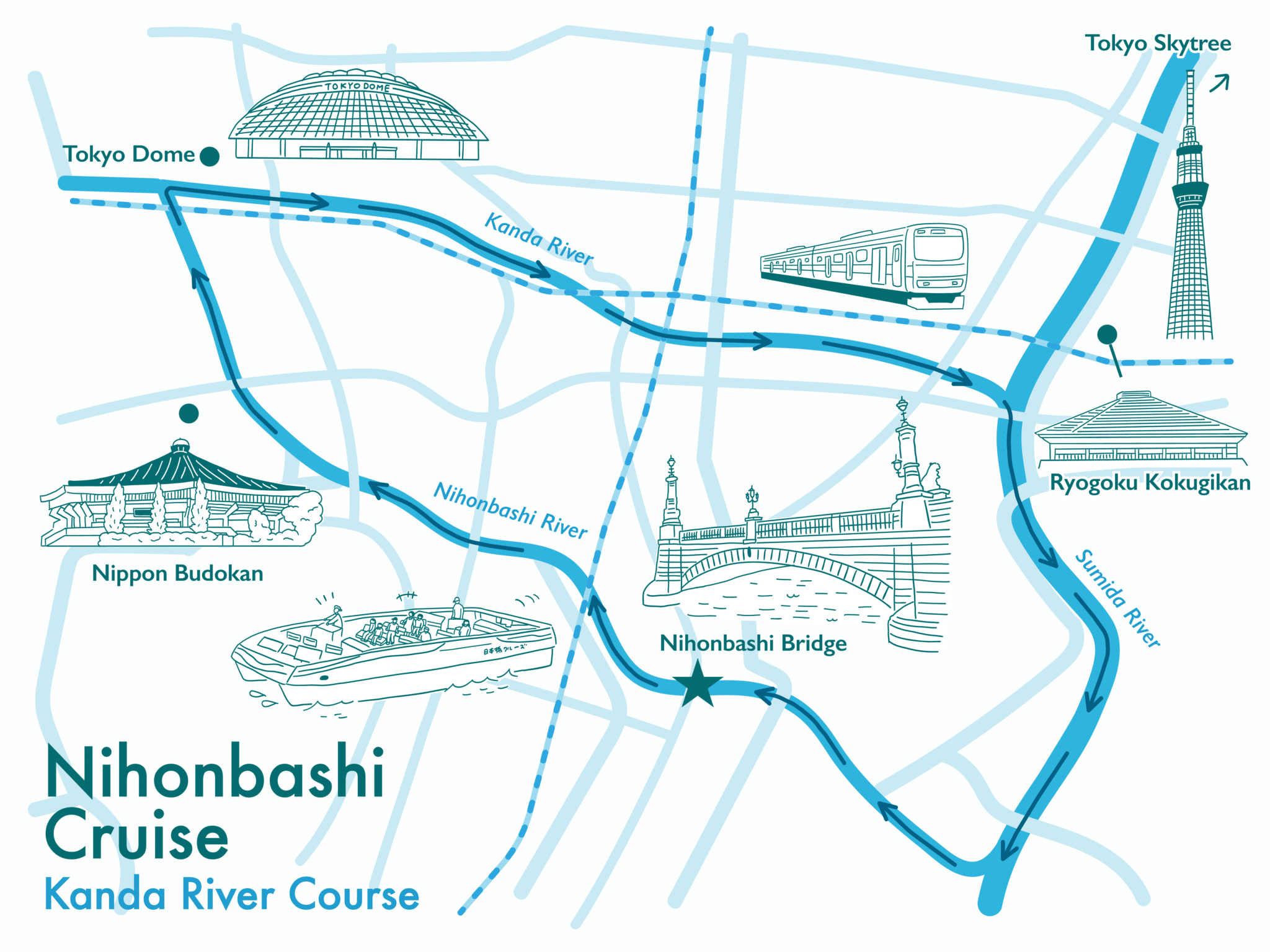
The course we are taking is the “90-Minute Kanda River Cruise,” which departs from Nihonbashi and travels along the Nihonbashi River, Kanda River, and Sumida River. On the Nihonbashi River, you can sense traces of the Edo period, while the Kanda River is rich with history. By contrast, the Sumida River offers modern views of Tokyo, including high-rise buildings. A guide accompanies the cruise, allowing passengers to enjoy the ride while hearing about the history of each area and stories connected to the bridges.
Starting at Nihonbashi, the “90-Minute Kanda River Course”—which takes you along the three rivers flowing through central Tokyo—is one of the most popular tours among the many available options. The surrounding area is dotted with famous landmarks such as the Tokyo Dome, the Nippon Budokan, the Ryogoku Kokugikan, and the Tokyo Skytree.
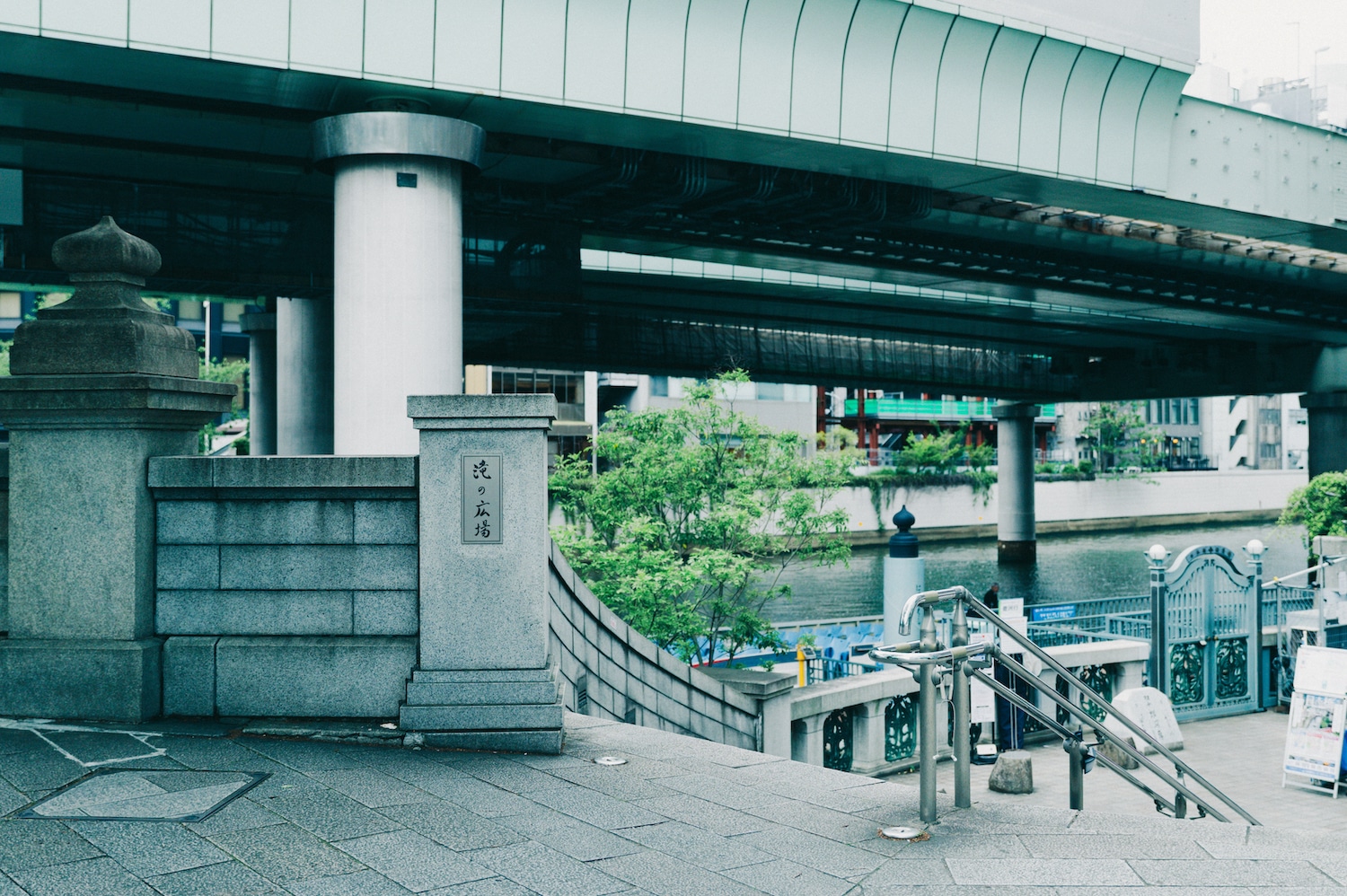
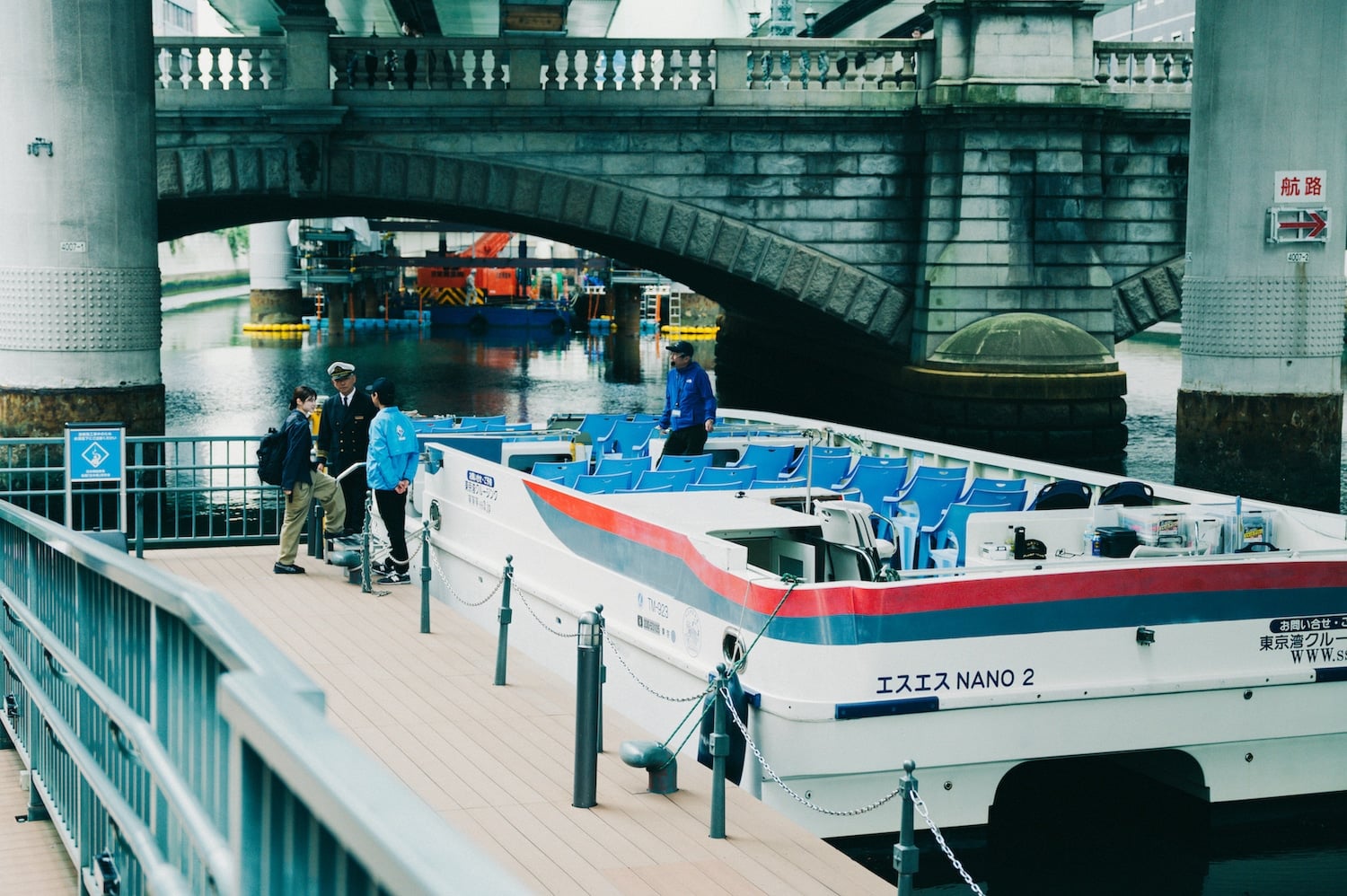
The meeting point is “Taki no Hiroba,” located beside Nihonbashi Bridge.
If seats are available, tickets can also be purchased directly at the reception desk on the day of the cruise. However, booking online and paying in advance makes the process smoother. After checking in, passengers board in order. The cruise boat has no roof and offers an open, 360-degree view, allowing passengers to see the bridges and cityscape up close.
Measures are also in place for hot and cold weather. Straw hats are available to borrow free of charge in summer, while blankets are provided in winter. The boat is also equipped with a restroom, so passengers can feel comfortable even on longer cruises.
“Taki no Hiroba” is located along the Nihonbashi River at the bottom of a flight of stairs.
Passengers are called in reservation order and board the boat.
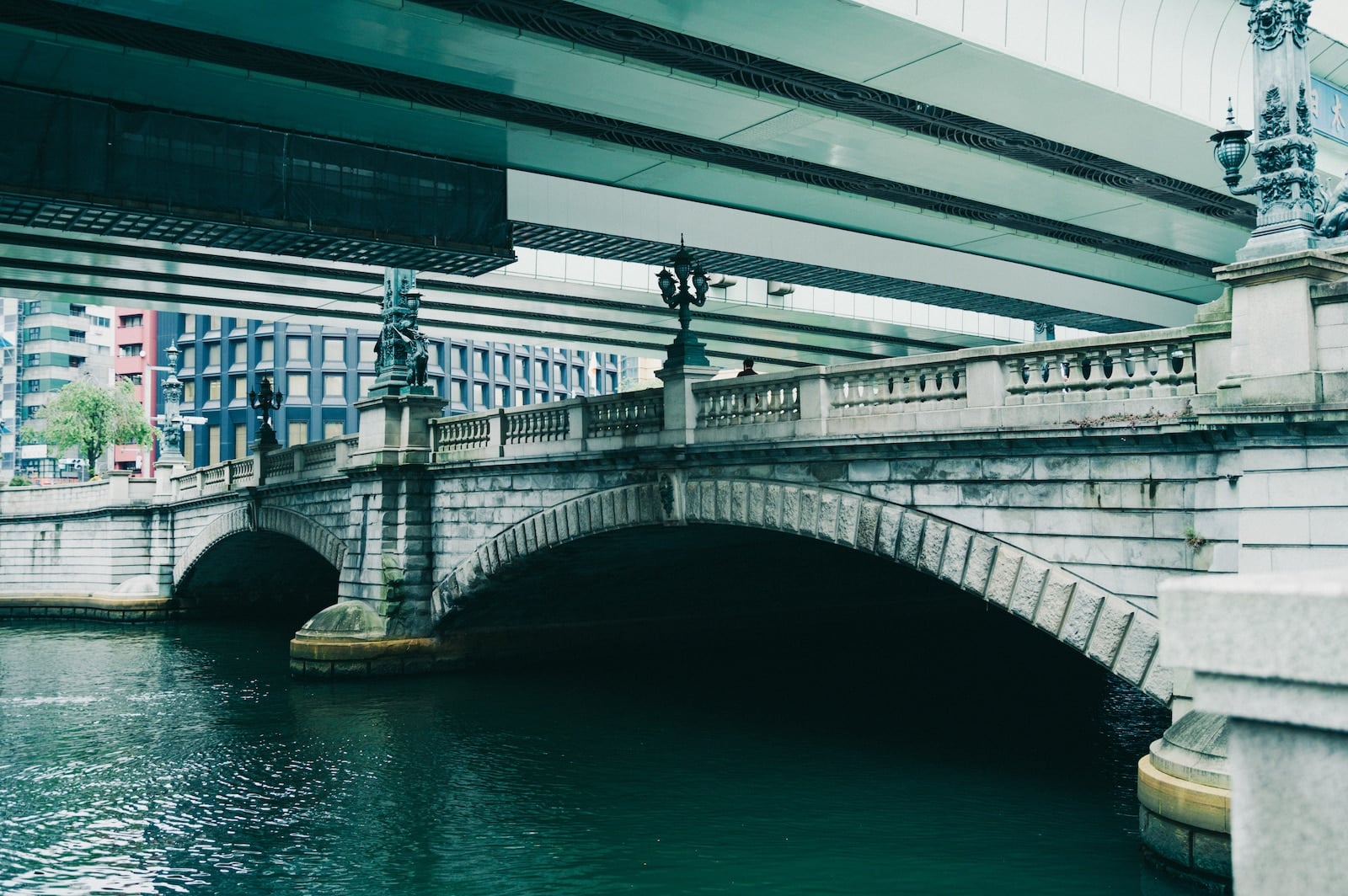
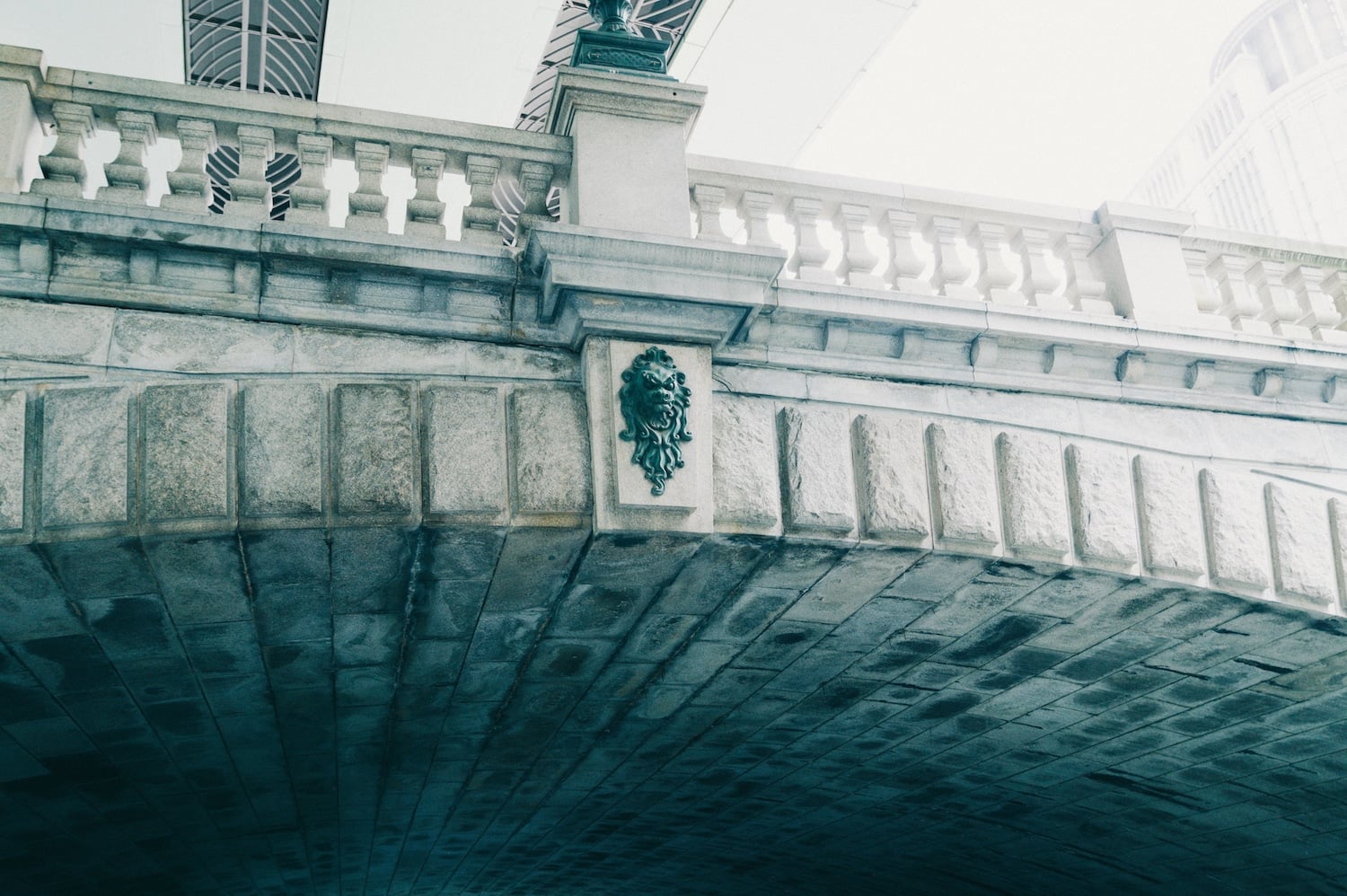
The cruise finally begins as the boat passes beneath Nihonbashi Bridge. At each of the bridge’s four corners are lion statues created as guardian symbols of Tokyo. Lion faces also decorate the centers of the arches along the sides of the bridge. This is a detail that can only be seen from a cruise boat passing underneath. It is a rare opportunity to see one of Tokyo’s most iconic bridges up close from below.
The present Nihonbashi Bridge was rebuilt in 1911. Its overall design is said to be distinctive for combining Western and Japanese styles.
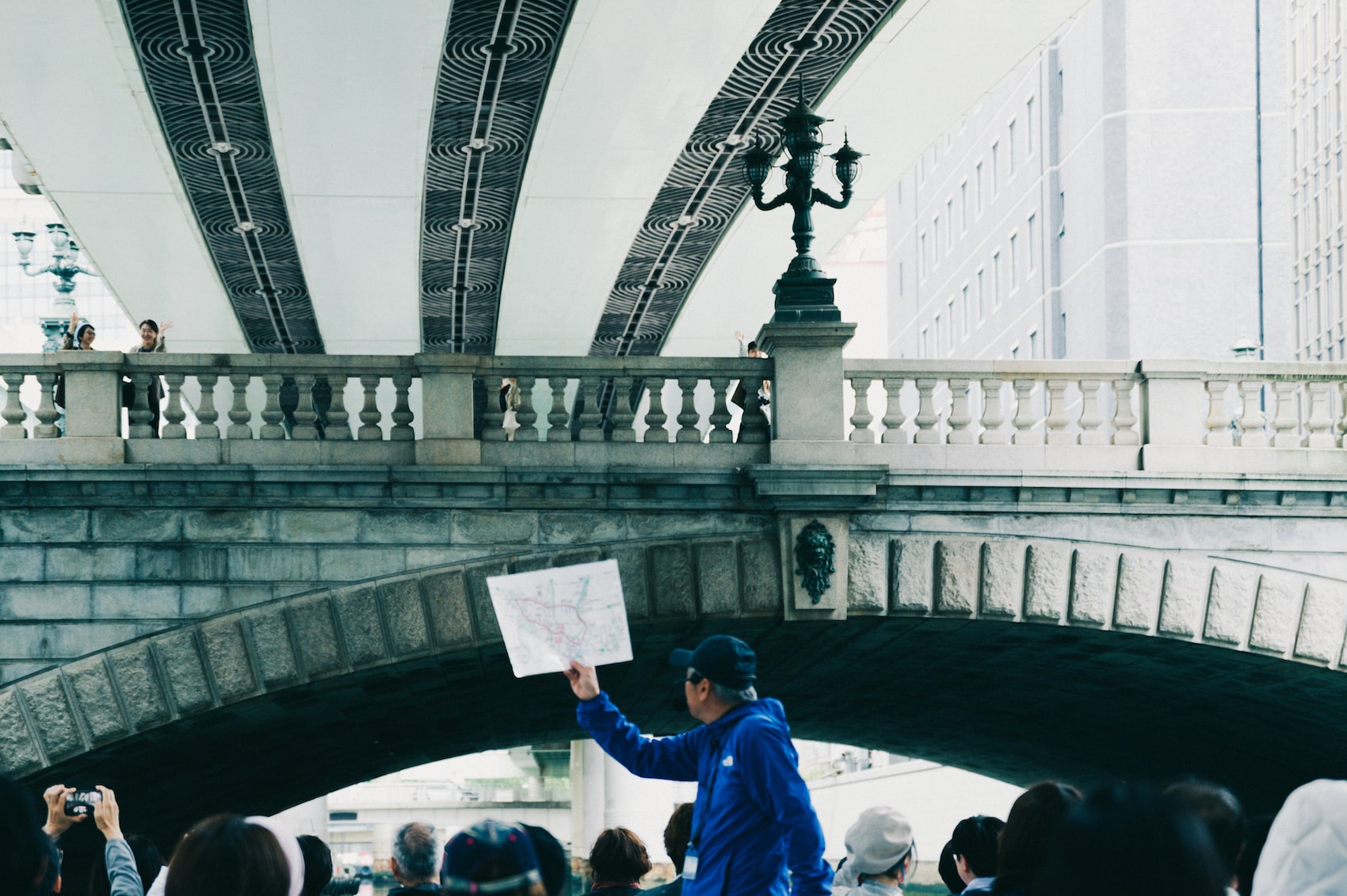
The guide explains the history of Nihonbashi and its rivers using photographs and other materials.
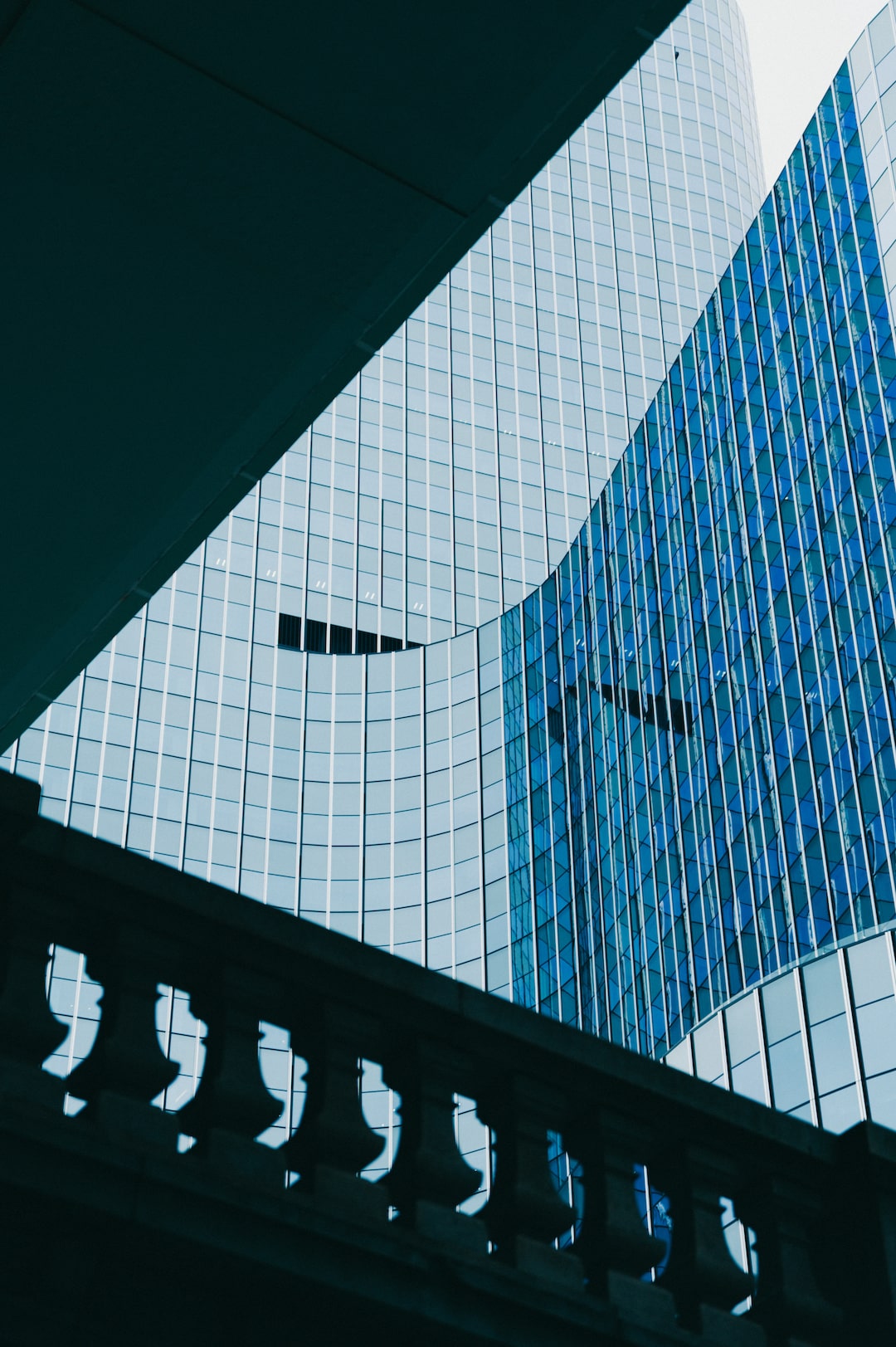
Office buildings and high-rises can also be seen from the historic Nihonbashi River.
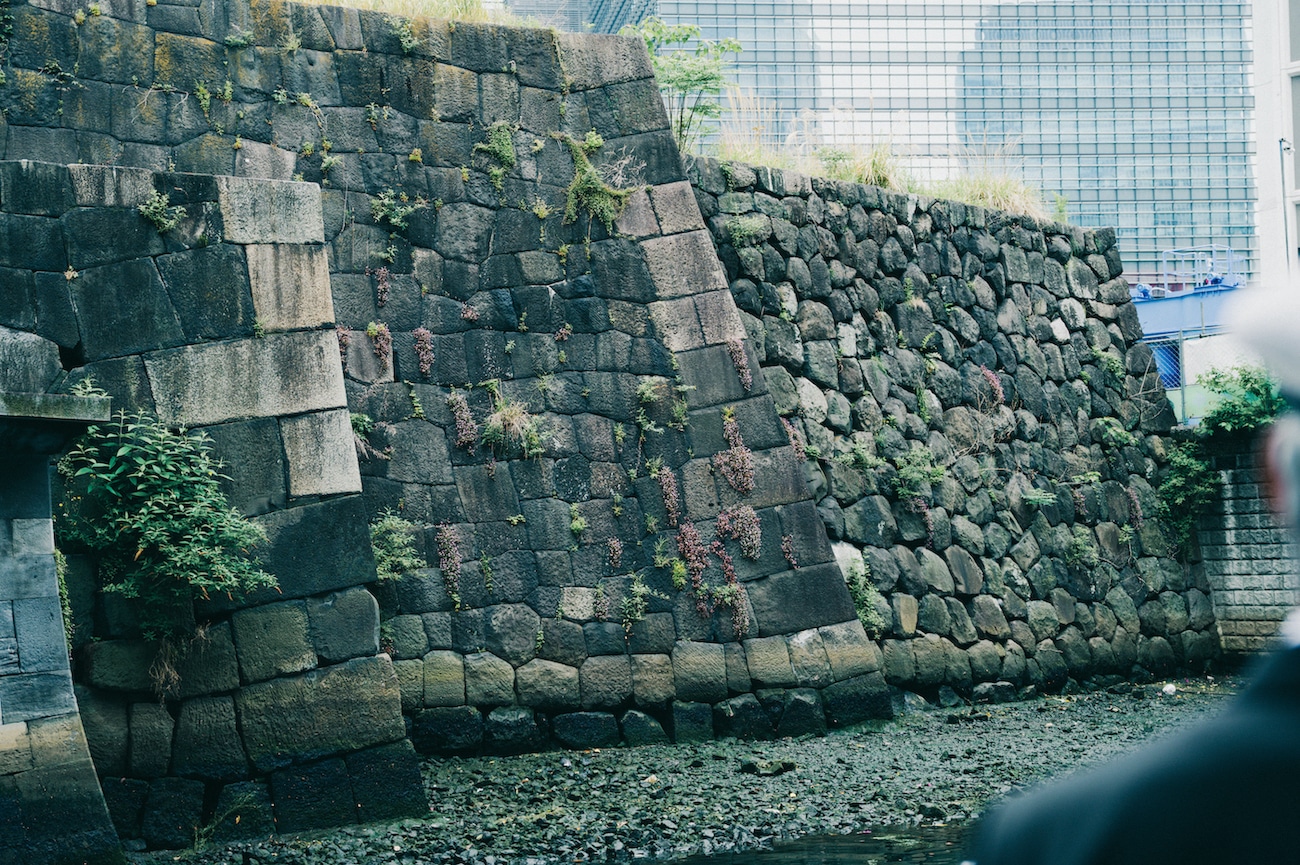
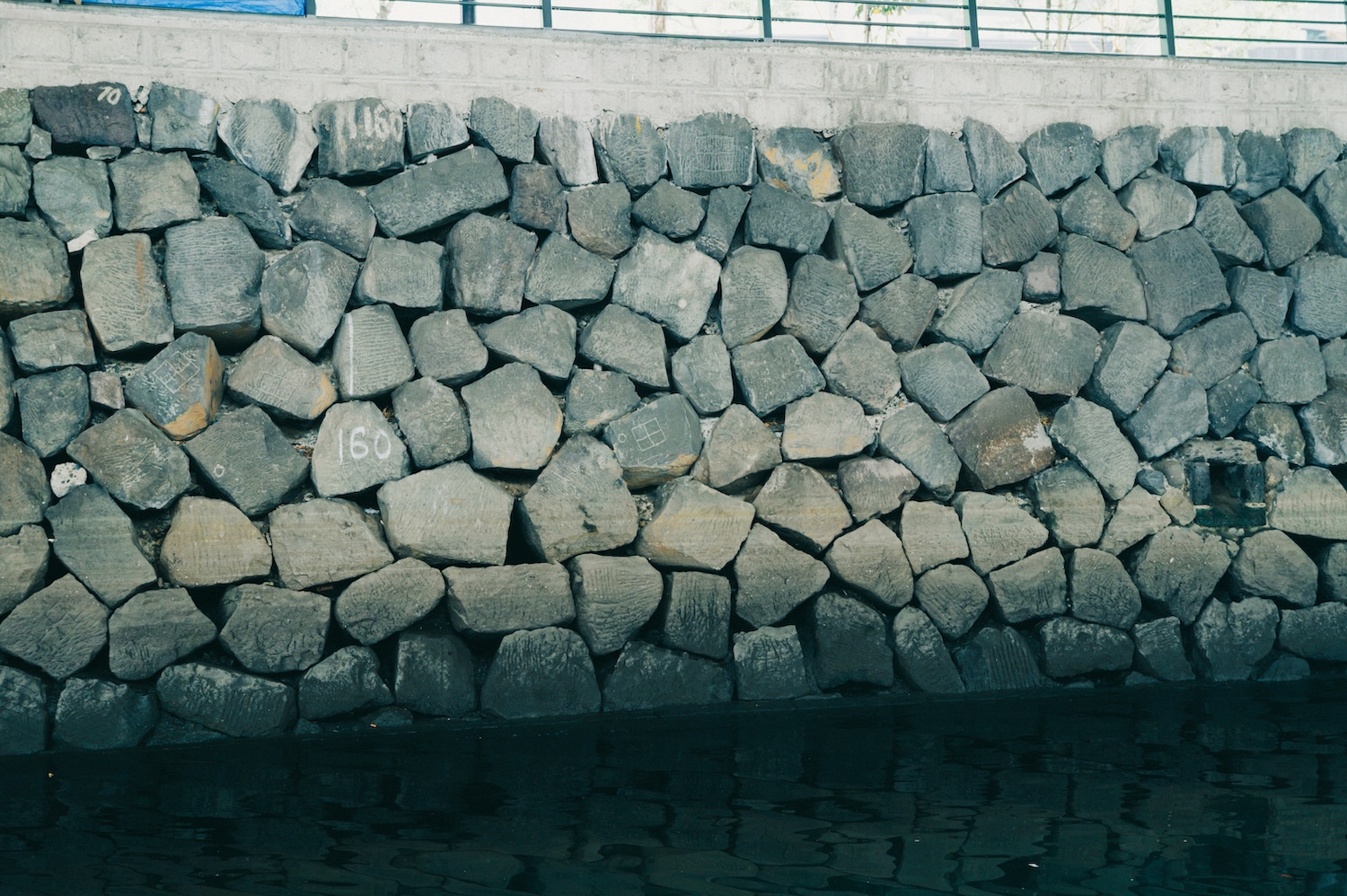
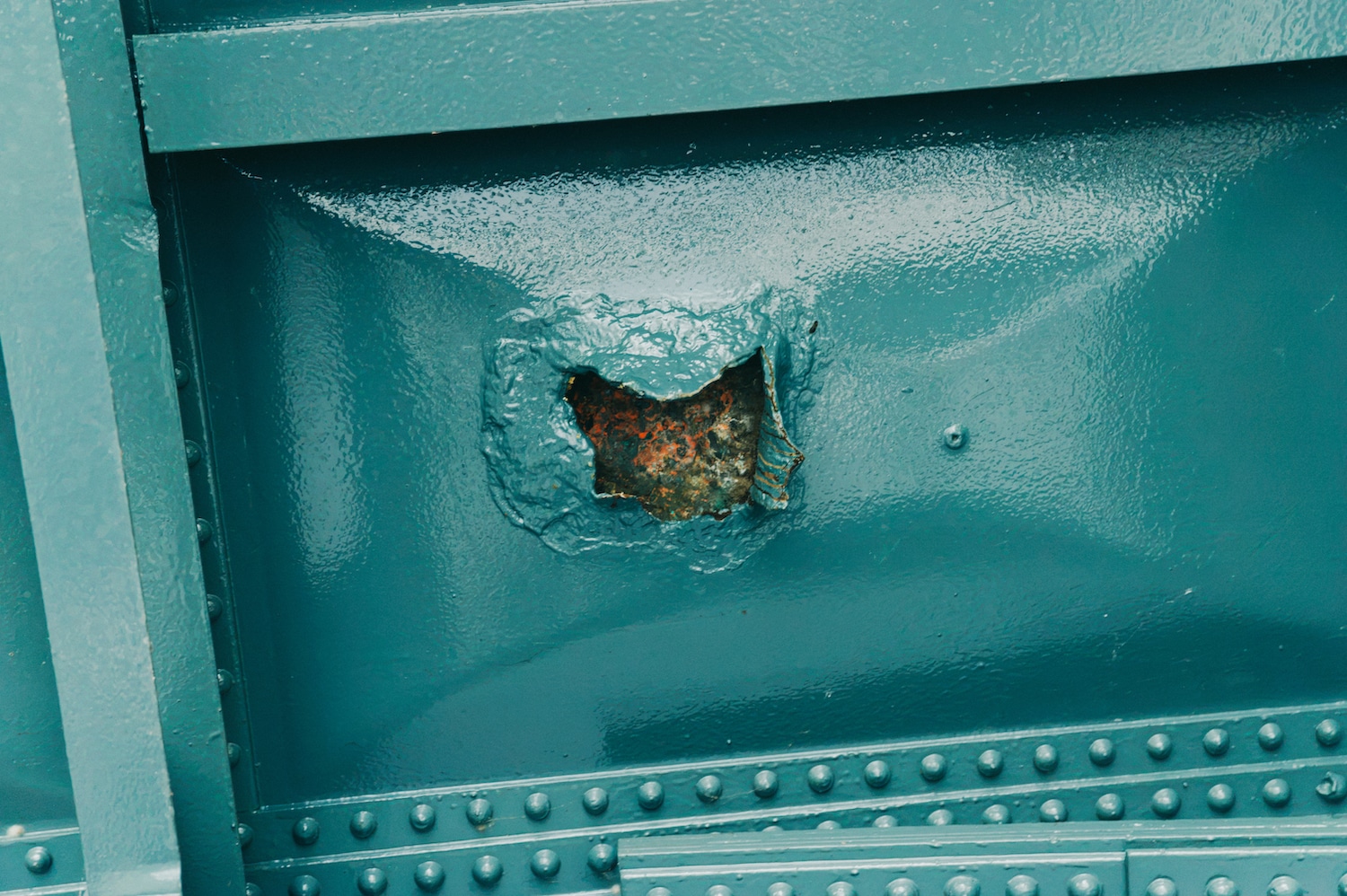
In the Nihonbashi River area, you can see sections of the outer moat of Edo Castle that still remain today. The stonework of the moat differs from place to place. You can also see “kokuin-ishi” or “inscribed stones,” bearing the family crests or identifying marks of the daimyo feudal lords who took part in building the moat. These features offer glimpses of the Edo period that remain in Tokyo today. After leaving the Nihonbashi River and entering the Kanda River, Koraku Bridge comes into view. The bridge still has a hole made when a bomb pierced it during a wartime air raid. This trace of history can only be seen from beneath the bridge.
On the right side of the photo is uchikomi-hagi stonework, in which the surfaces of the stones are flattened, and small stones are driven into the gaps for reinforcement. On the left is kirikomi-hagi stonework, in which stones are precisely cut and stacked without gaps.
Stones with marks such as “田” and “卍” carved into their surfaces are known as “kokuin-ishi” or “inscribed stones.”
A hole in Koraku Bridge made when a bomb pierced it during a wartime air raid.
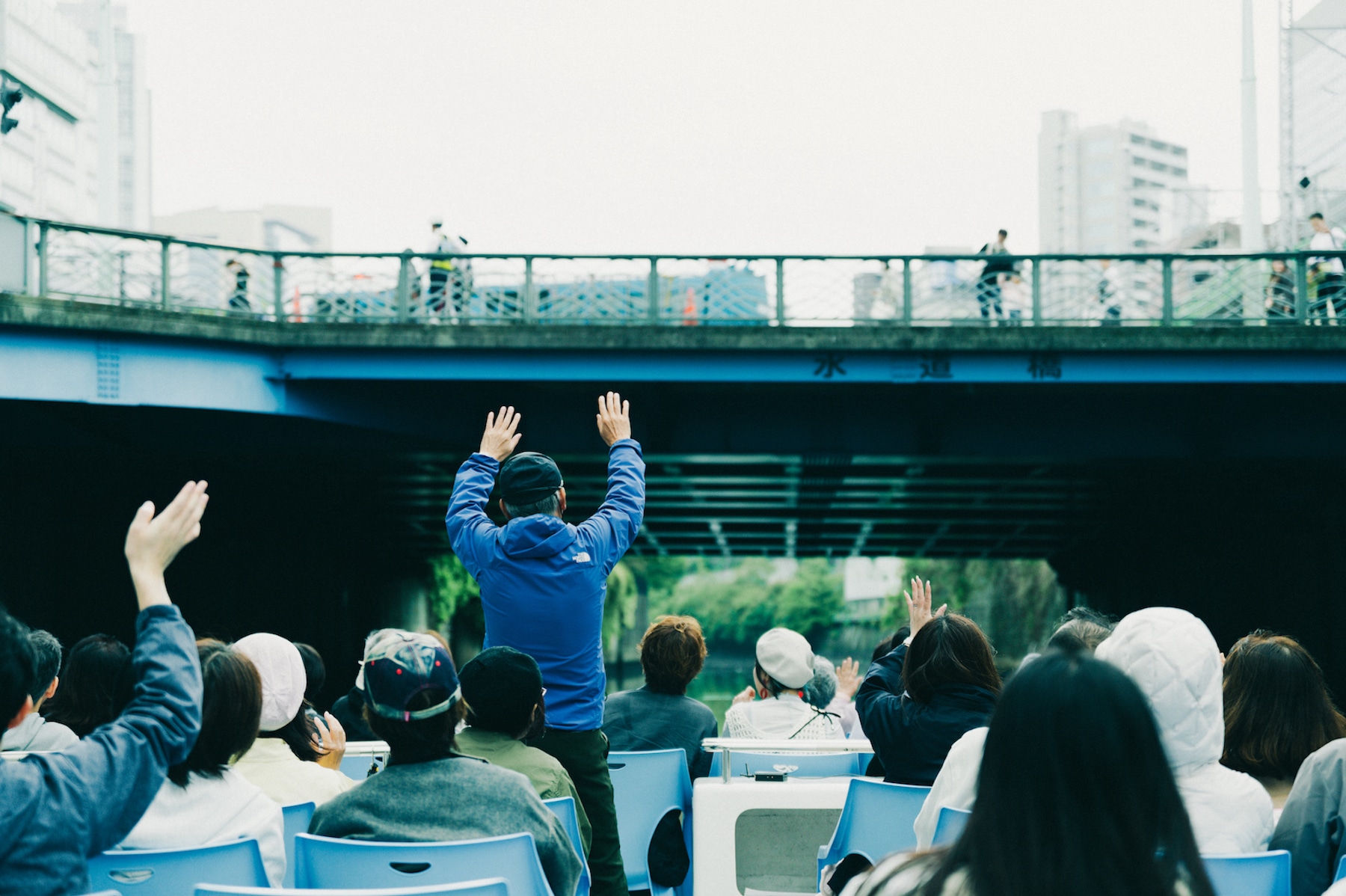
During the cruise, many people waved to us from the bridges above!
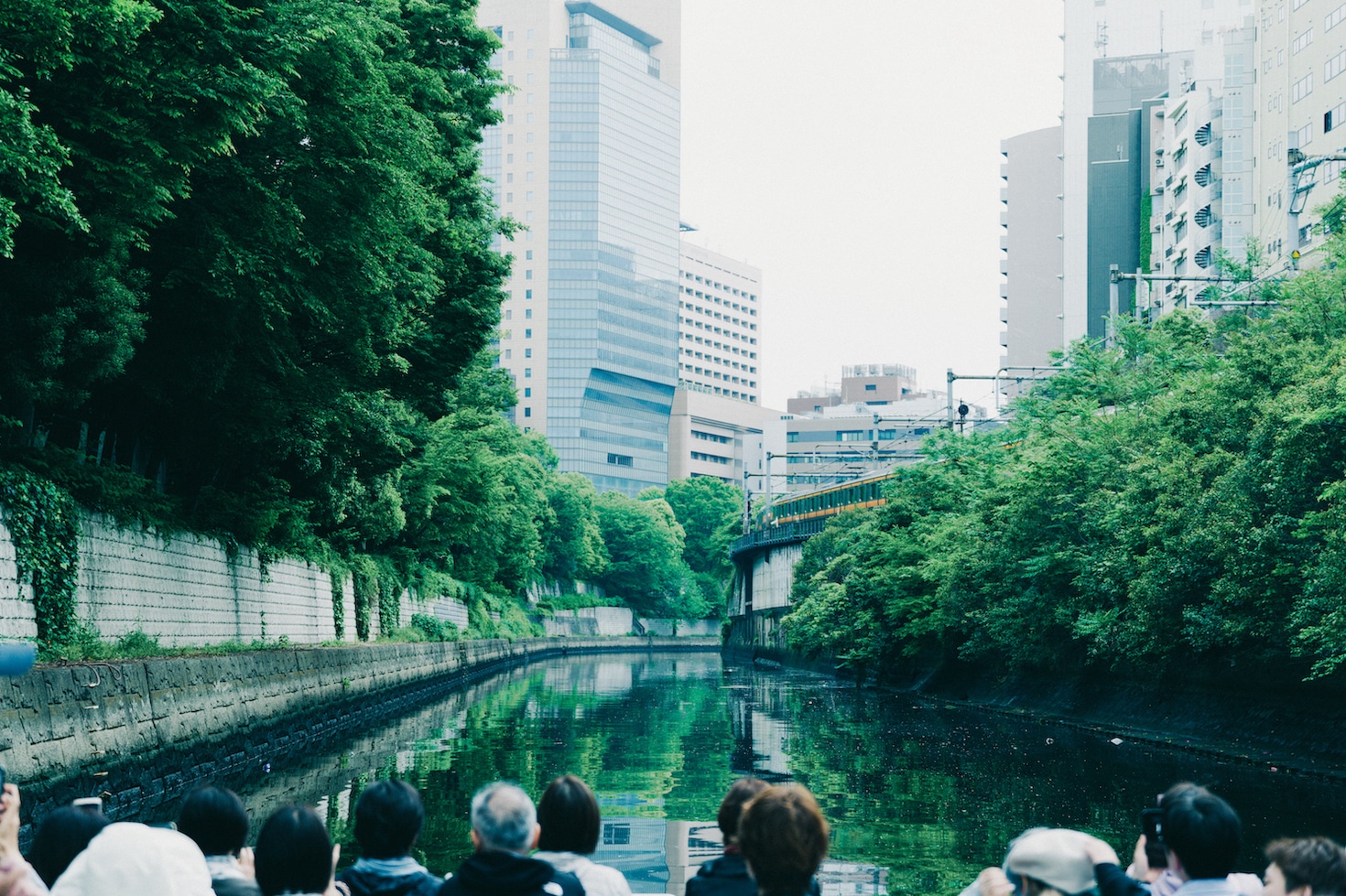
After passing Suidobashi, the “Ochanomizu Gorge” comes into view. This gorge was not formed naturally. It was created during the Edo period by cutting through a hill. The area was excavated by hand to protect the city from flooding and strengthen the defenses of Edo Castle, giving visitors a sense of the scale of urban development during the Edo period. It is an unusual space where riverside greenery, trains running overhead, and the surrounding buildings all come into view at once.
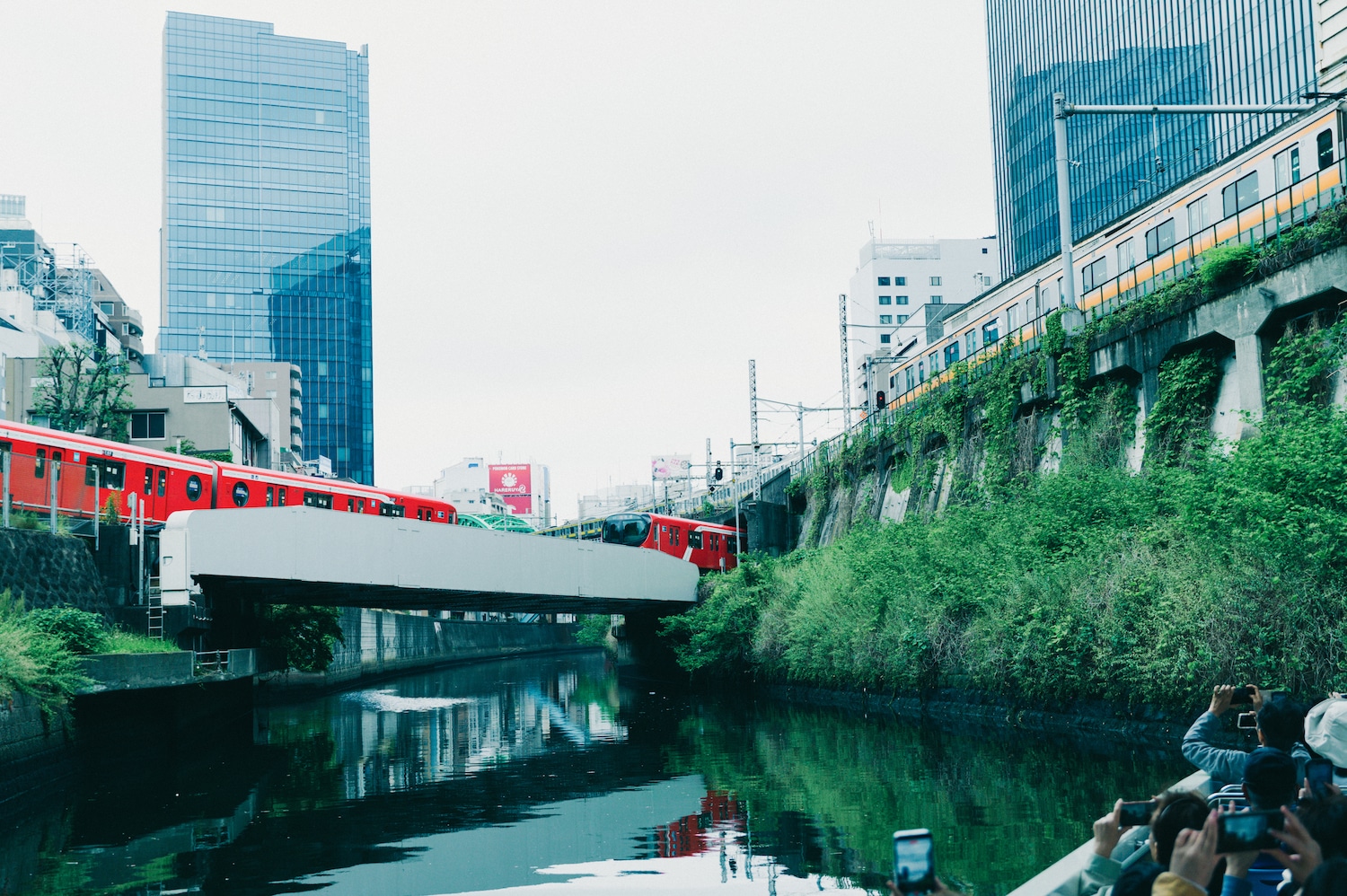
Near Ochanomizu Station, there is a spot where three railway lines come together: the JR Chuo-Sobu Line (Local), JR Chuo Line (Rapid), and Tokyo Metro Marunouchi Line. The cruise boat waits briefly for trains to pass, giving passengers a chance to watch them rush by right in front of them.
The boat turned sideways so that everyone on board could take photos easily! On this day, we were able to see three trains on the Marunouchi and Chuo lines pass through the same view at once. According to the guide, we were quite lucky to witness it.
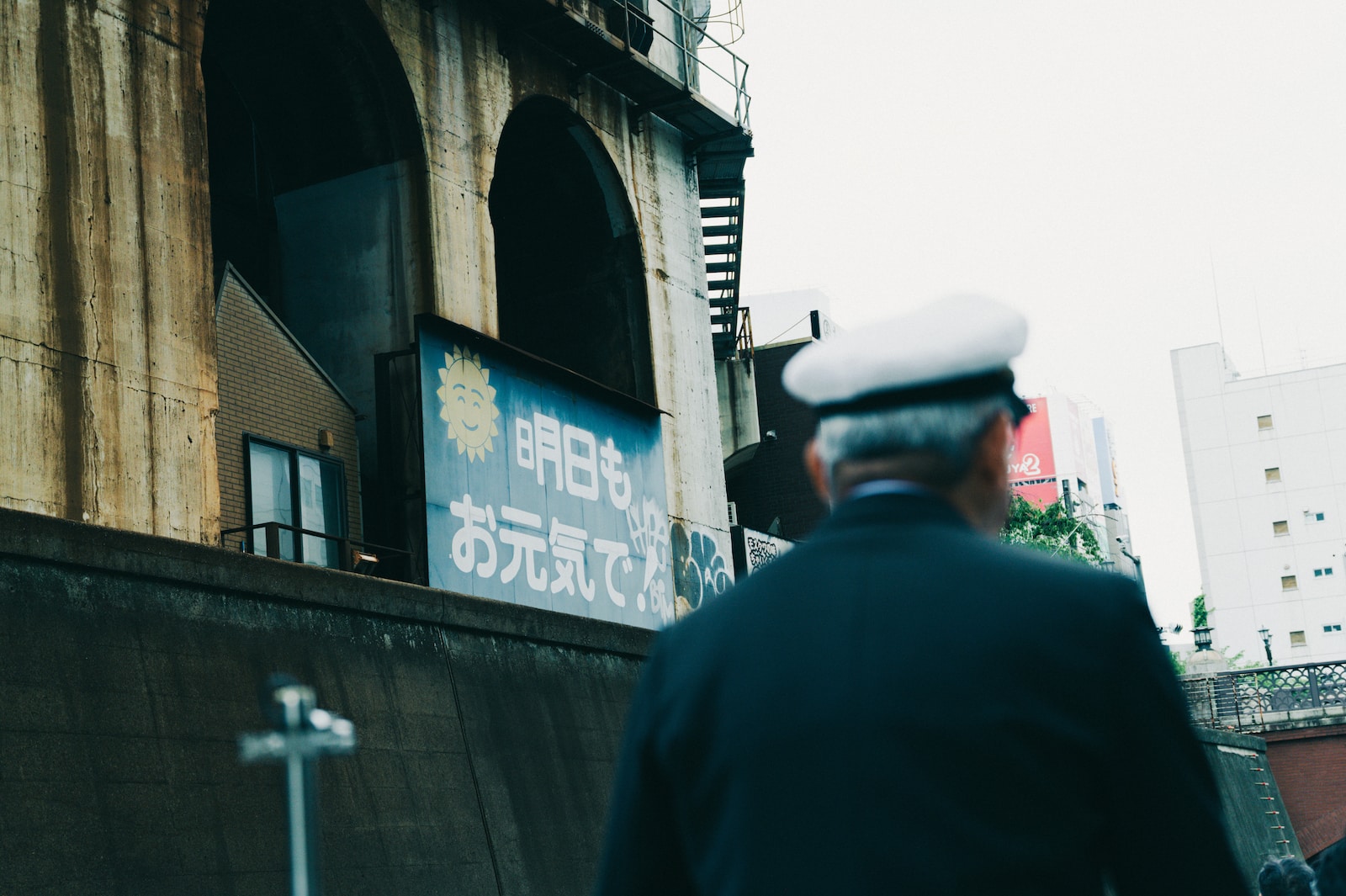
As the boat travels along the Kanda River, a sign reading “Stay Well Tomorrow, Too!” comes into view. The sign displays a slogan from “Taiyo Kisho Seisakusho,” a company that makes trophies and other items, and has a somewhat nostalgic feel.
Near where the Kanda River joins the Sumida River is Yanagi Bridge. The area around Yanagi Bridge flourished as a hanamachi, a traditional entertainment district associated with geisha, from the Edo period through the Meiji period. A hanamachi was an area where ryotei, traditional Japanese restaurants, and similar establishments gathered, and guests could enjoy meals accompanied by geisha dance, music, and conversation.
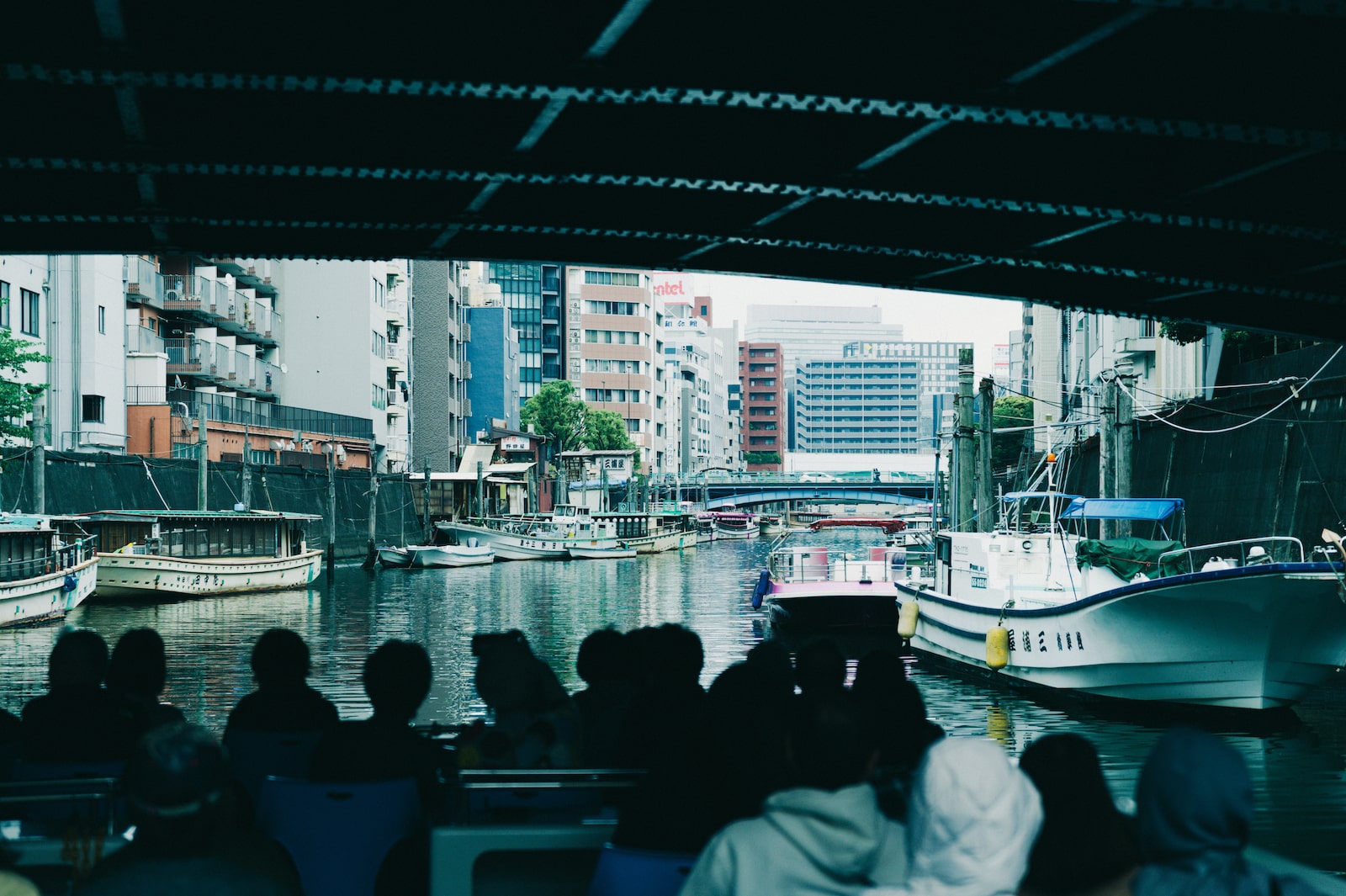
In the past, ryotei lined the area and many geisha came and went. It was also bustling with people arriving by boat on the Sumida and Kanda rivers, as well as people dining aboard yakatabune, traditional Japanese pleasure boats. Boat operators still remain along both banks today, and several yakatabune are moored there, preserving the area’s atmospheric waterside scenery.
During the Edo period, yakatabune were popular with samurai and wealthy merchants as places to enjoy sightseeing cruises and banquets.
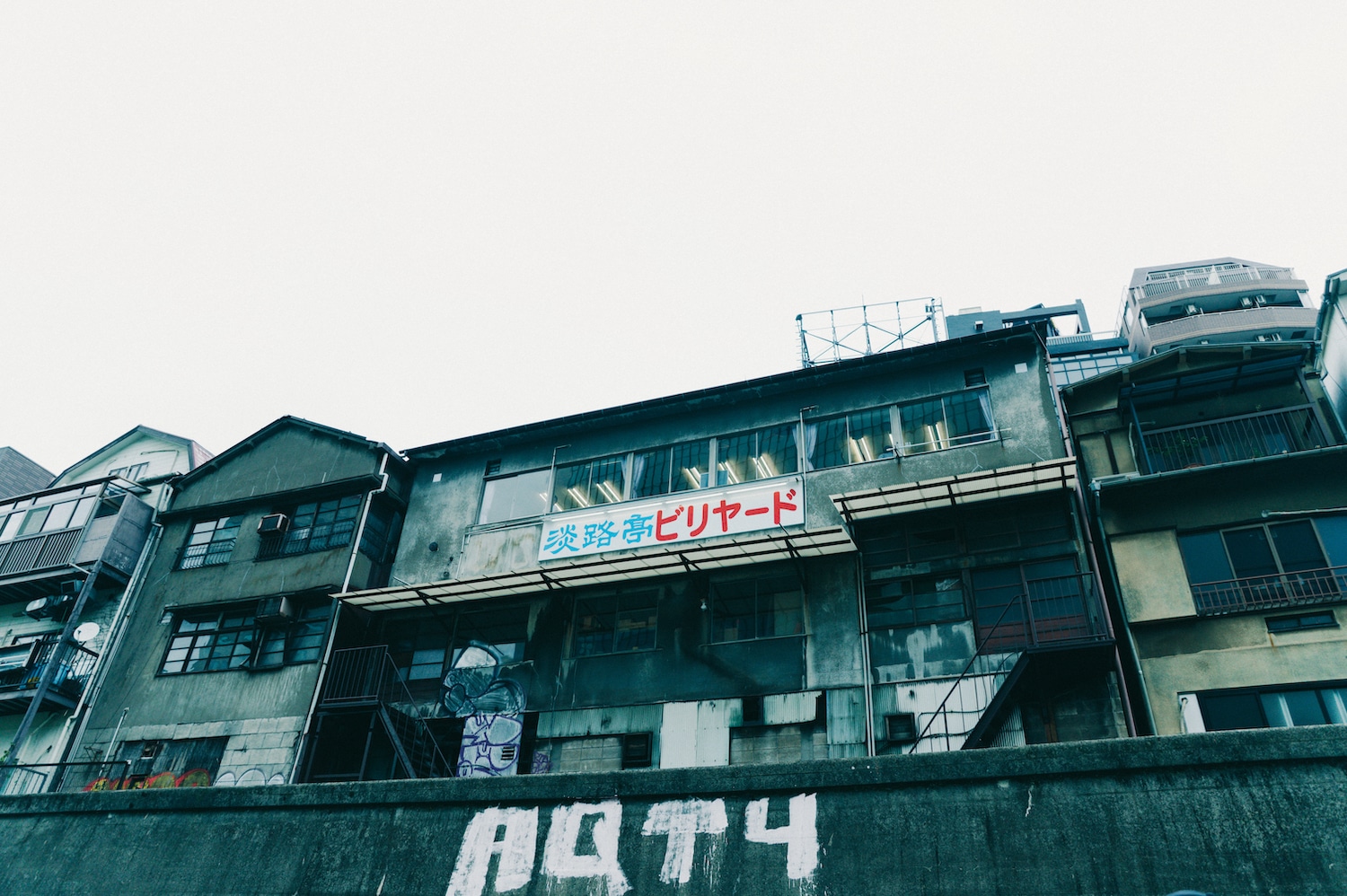
The building of “Awajitei,” a long-established billiards hall founded in 1960.
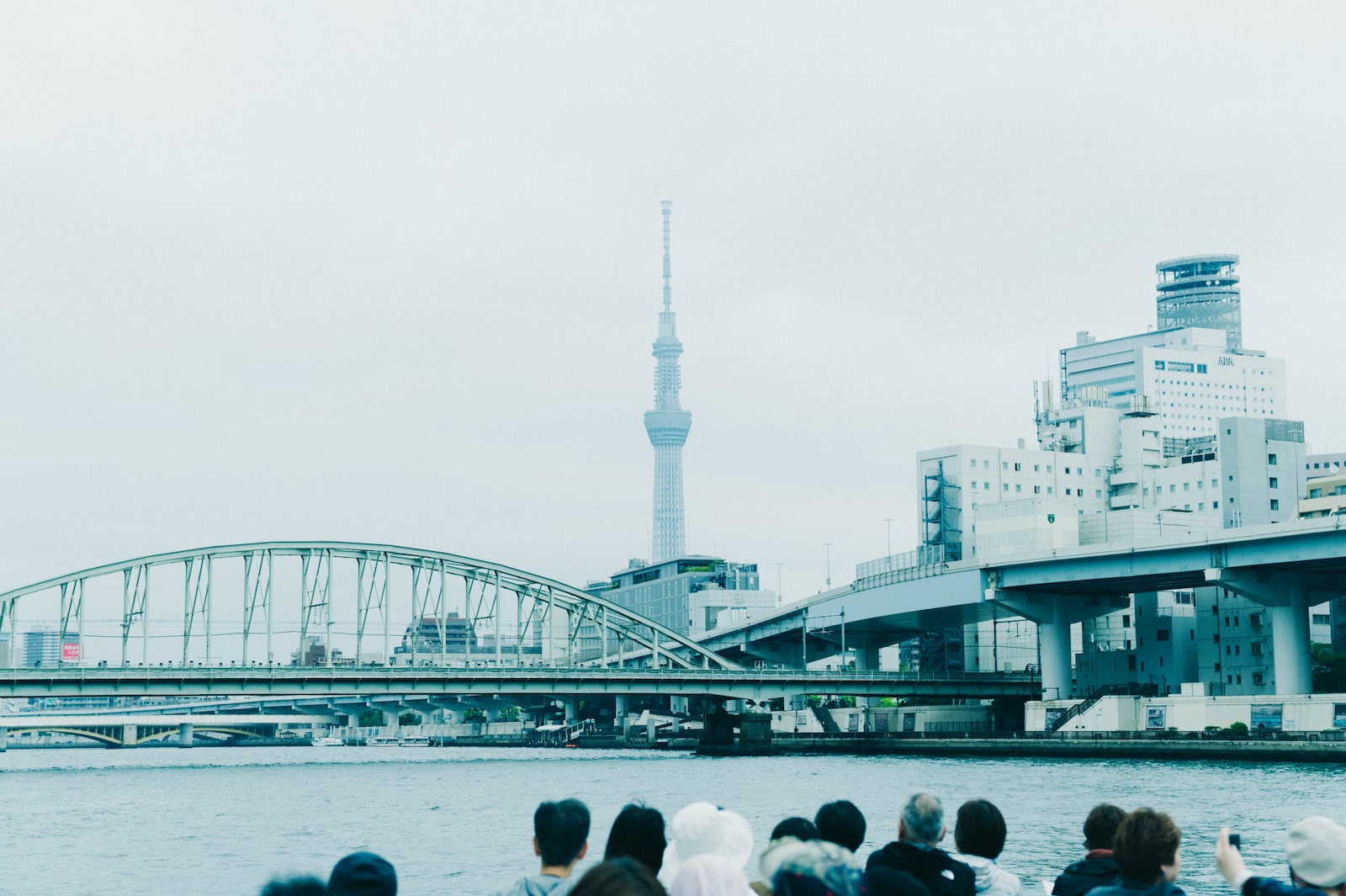
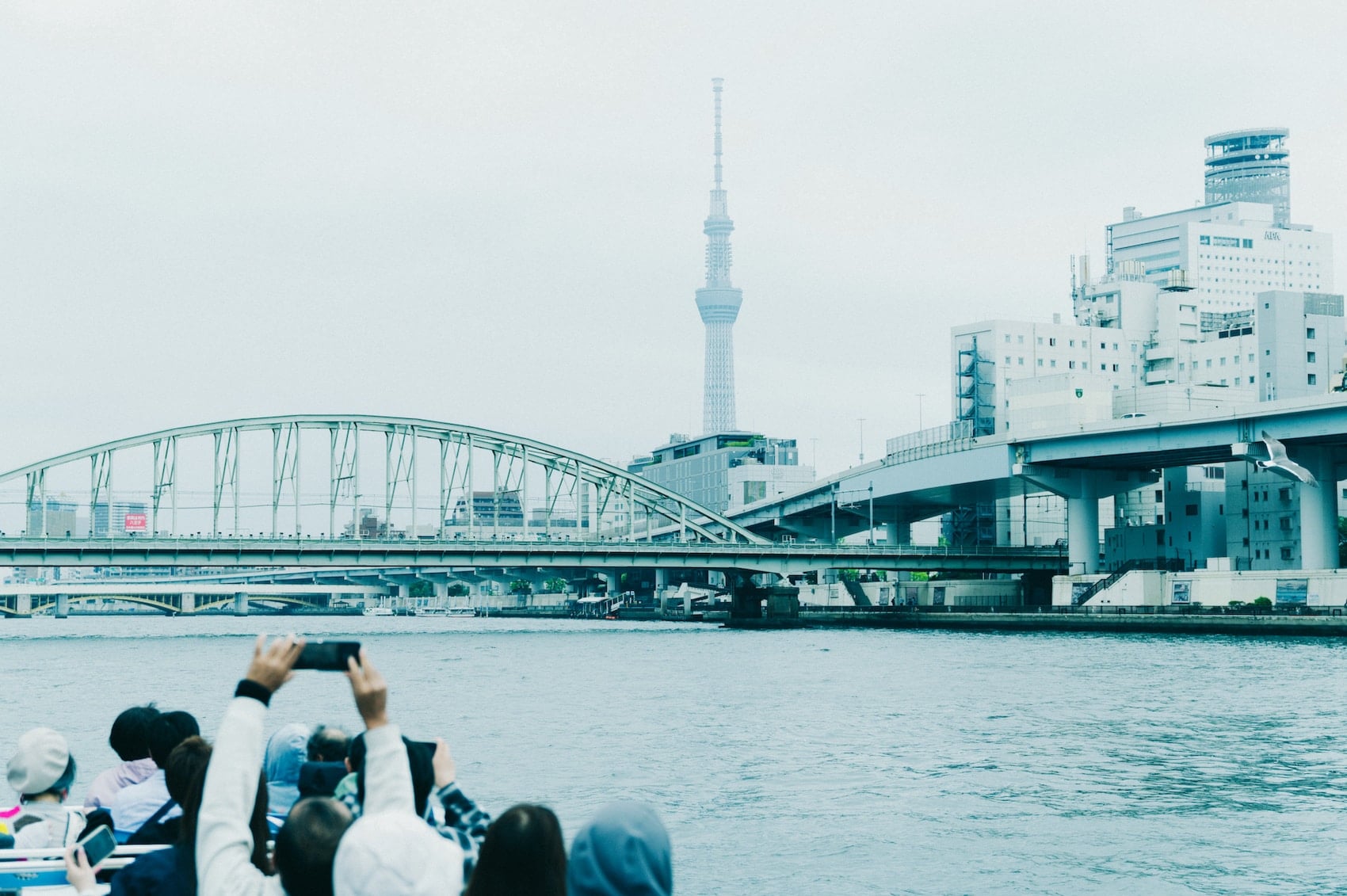
After leaving the Kanda River and entering the Sumida River, “Tokyo Skytree,” the world’s tallest freestanding broadcasting tower, comes into view. Tokyo Skytree is said to be one of the most popular photo spots on the cruise. Here, too, the boat pauses so that passengers can take photos more easily. High-rise residential towers and office buildings also line the Sumida River. Unlike the Nihonbashi and Kanda rivers, where traces of the Edo period remain, the scenery here feels distinctly like modern Tokyo.
Tokyo Skytree, standing 634 meters tall, seen from the Sumida River.
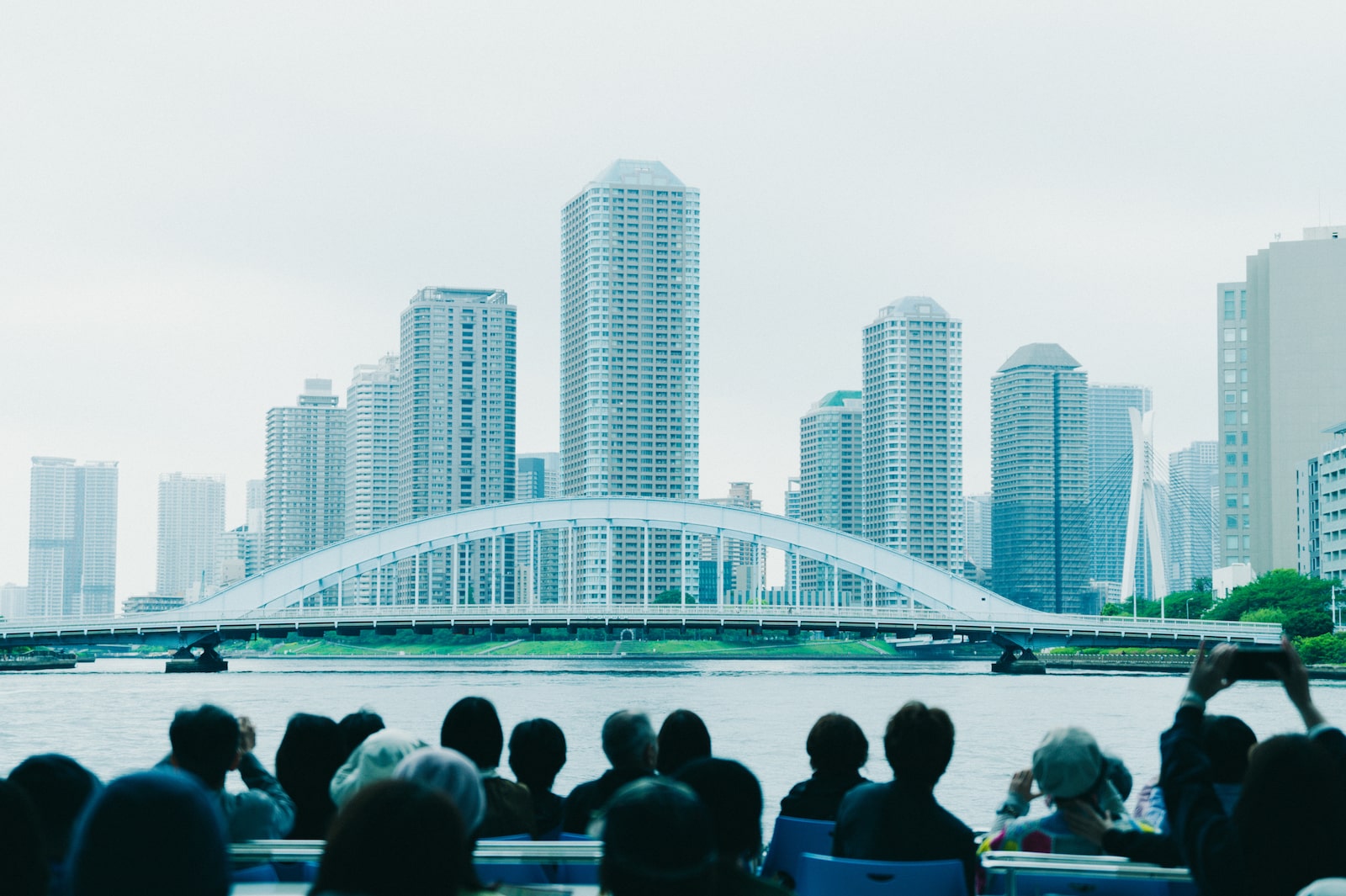
Beyond the bridge are the high-rise buildings of the Tsukuda area.
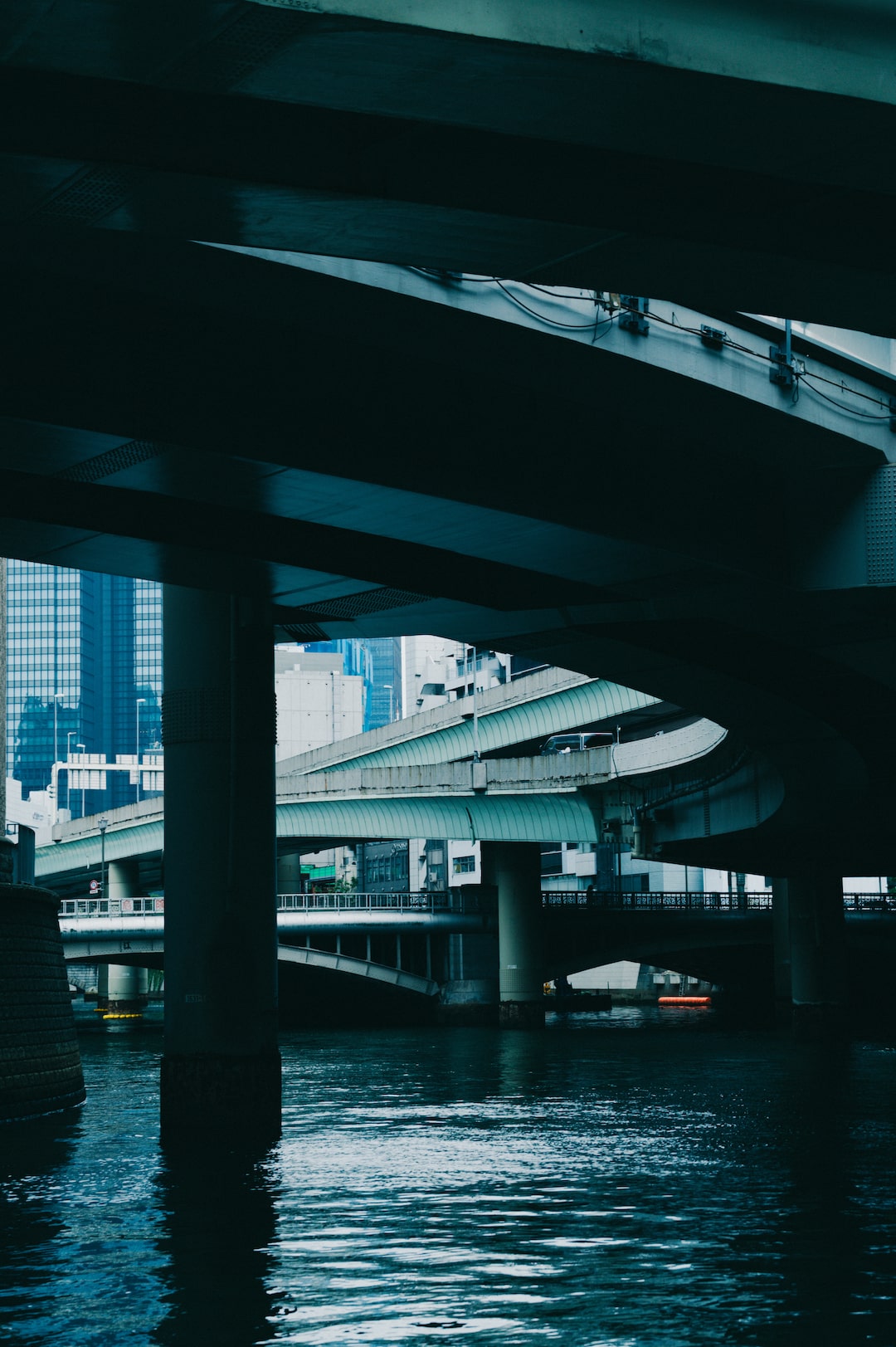
The cruise is now entering its final stretch. The boat leaves the Sumida River, enters the Nihombashi River, and heads back toward Nihombashi, where the journey began. The Metropolitan Expressway runs directly above the Nihombashi River, so you can see cars traveling overhead. It is a scene unique to a river flowing through the heart of the city.
It is said that some people once felt that the Metropolitan Expressway detracted from the scenery around Nihonbashi. At the same time, the sight of the elevated roadway from the river below has a powerful presence that also feels distinctly Tokyo. This scenery, however, is gradually beginning to change. An undergrounding project is currently underway for the section of the Metropolitan Expressway above the Nihonbashi River, and the elevated structure is scheduled to be removed in the future. This view, which will no longer be visible in another decade or so, is one of the valuable scenes that reflects Nihonbashi as it is today.
The Metropolitan Expressway, which opened in 1962, runs as if weaving between the buildings of central Tokyo.
Cars traveling on the road can be seen through the gaps in the elevated Metropolitan Expressway.
The cruise ends when we arrive back at the Nihonbashi pier. From riverside scenery that retains traces of the Edo period to distinctly modern Tokyo views of Tokyo Skytree and high-rise buildings, the 90-minute journey lets you experience roughly 400 years of change in Tokyo. The time seems to pass in an instant. Viewing the city from the river makes even familiar Tokyo scenery look a little different. Why not take a trip around Tokyo from the water yourself?
“Nihonbashi Cruise” offers cruises along historic rivers departing from Nihonbashi. Because visitors can enjoy views that are normally difficult to see, it has become a popular new way to experience Tokyo. In addition to year-round courses, seasonal fireworks cruises and cherry-blossom cruises are also available. Cruise schedules and reservations can be checked on the official “Nihonbashi Cruise” website.