DEEPTOKYO
magazine

EN

DEEPTOKYO
magazine
EN
2026.06.04
An unpretentious udon shop with character in a vintage-clothing town
 Nearest Station

Shimokitazawa is a town dotted with vintage clothing stores, live music venues, small theaters, and distinctive small shops, and the whole neighborhood carries the feeling of culture. In that town, the two owners of the vintage clothing store "sowhat vintage" recommended the udon shop "Baiso". Here, the owner serves freshly boiled udon and freshly fried tempura. Inside the shop, music chosen by the owner as “music that suits udon” plays in the background. Although the shop has an unpretentious appearance, the owner’s personality shines through in the details. "Baiso" is an udon shop that carries the atmosphere of Shimokitazawa.
SHARE


"Baiso" is located about a three-minute walk from Shimokitazawa Station. It is an udon shop on a street lined with vintage clothing stores and distinctive shops, directly across from "Village Vanguard". Shimokitazawa has long been a town where many kinds of culture, including music, theater, and vintage clothing, have taken root. As a place where people can casually stop by without dressing up, "Baiso" blends naturally into the atmosphere of the neighborhood.
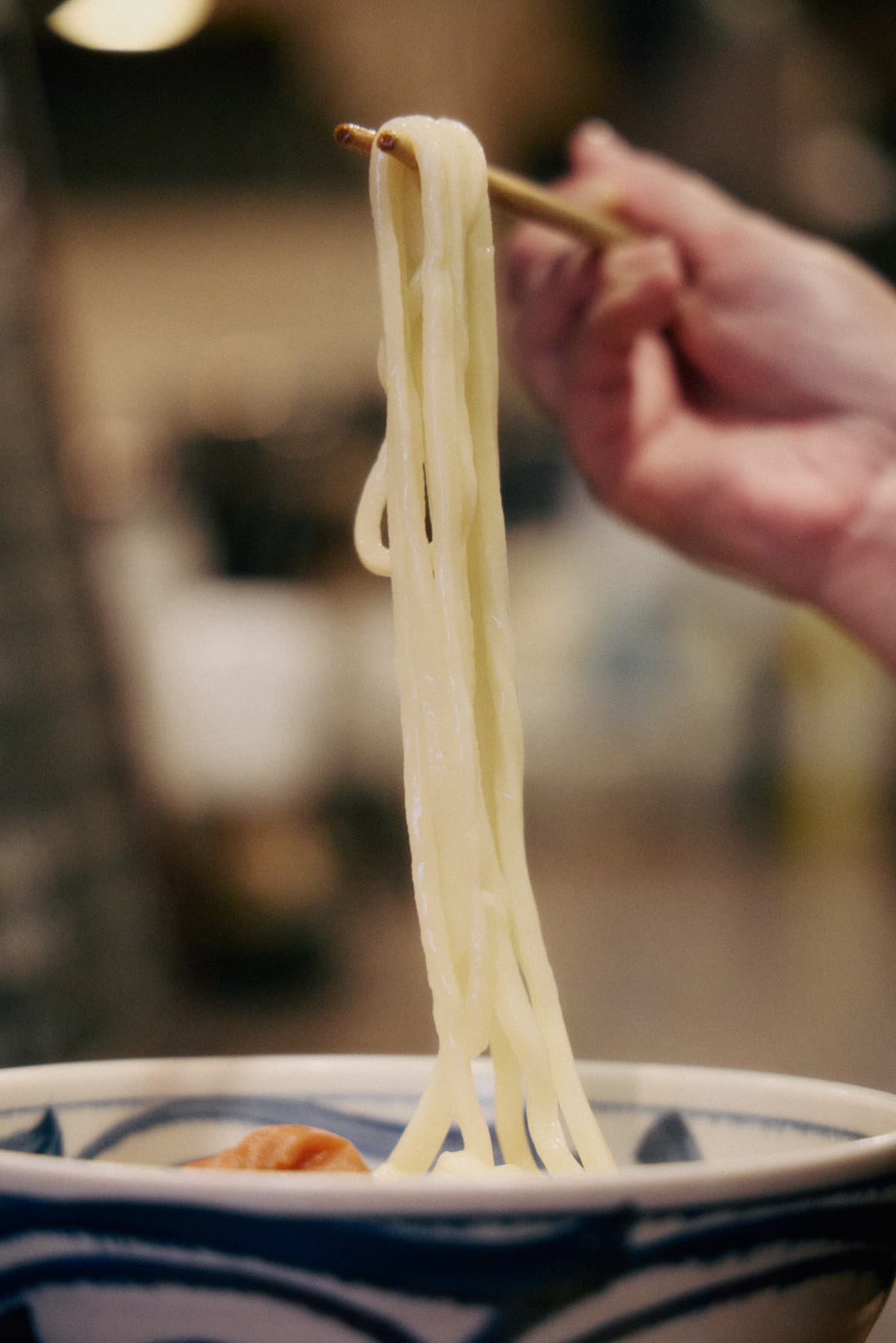
The udon at "Baiso" is characterized by elastic noodles that follow the style of Sanuki udon, a type of udon that originated in Kagawa Prefecture. In Japan, the word “koshi” is used to describe the texture of udon. “Koshi” is often thought to mean hard noodles, but true “koshi” is not simply a hard texture.
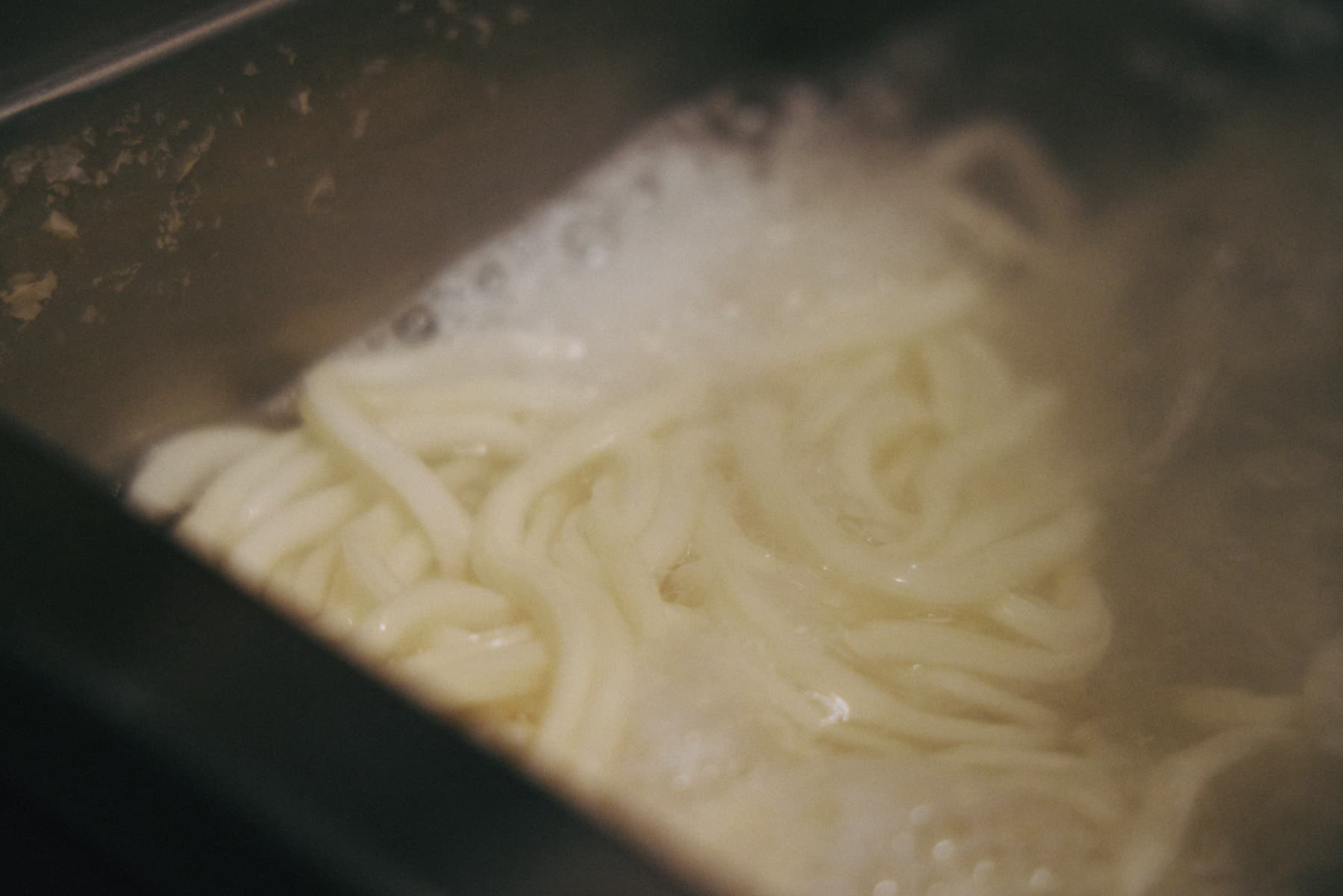
“Rather than boiling the noodles halfway, we boil them fully while keeping their elasticity and texture,” says Sato. The noodles are on the thin side, but they are boiled for about 15 minutes. By boiling them thoroughly, elasticity develops within their softness. The pleasant texture that gently pushes back when you bite into the noodles creates a bowl that feels distinctly like "Baiso".
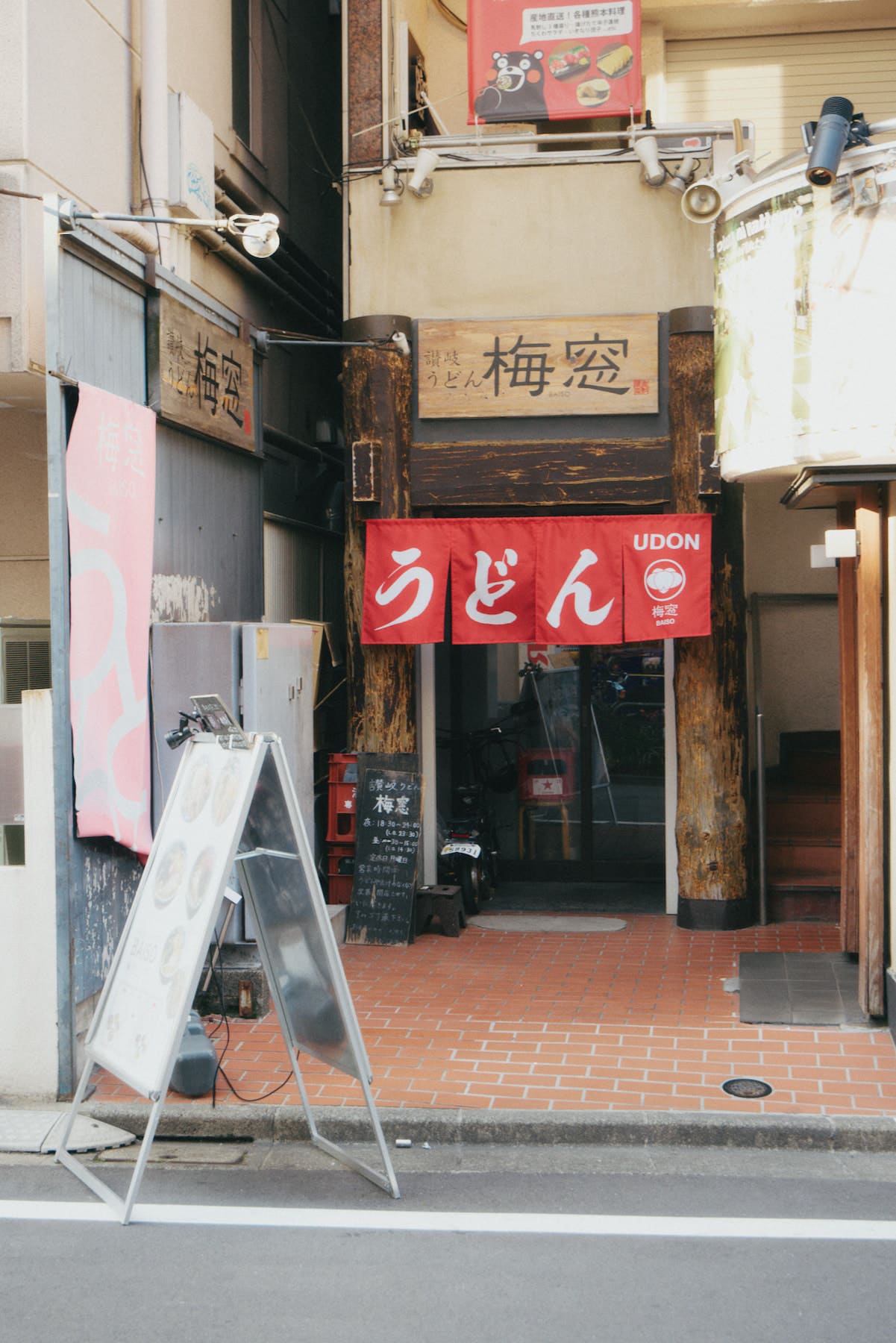
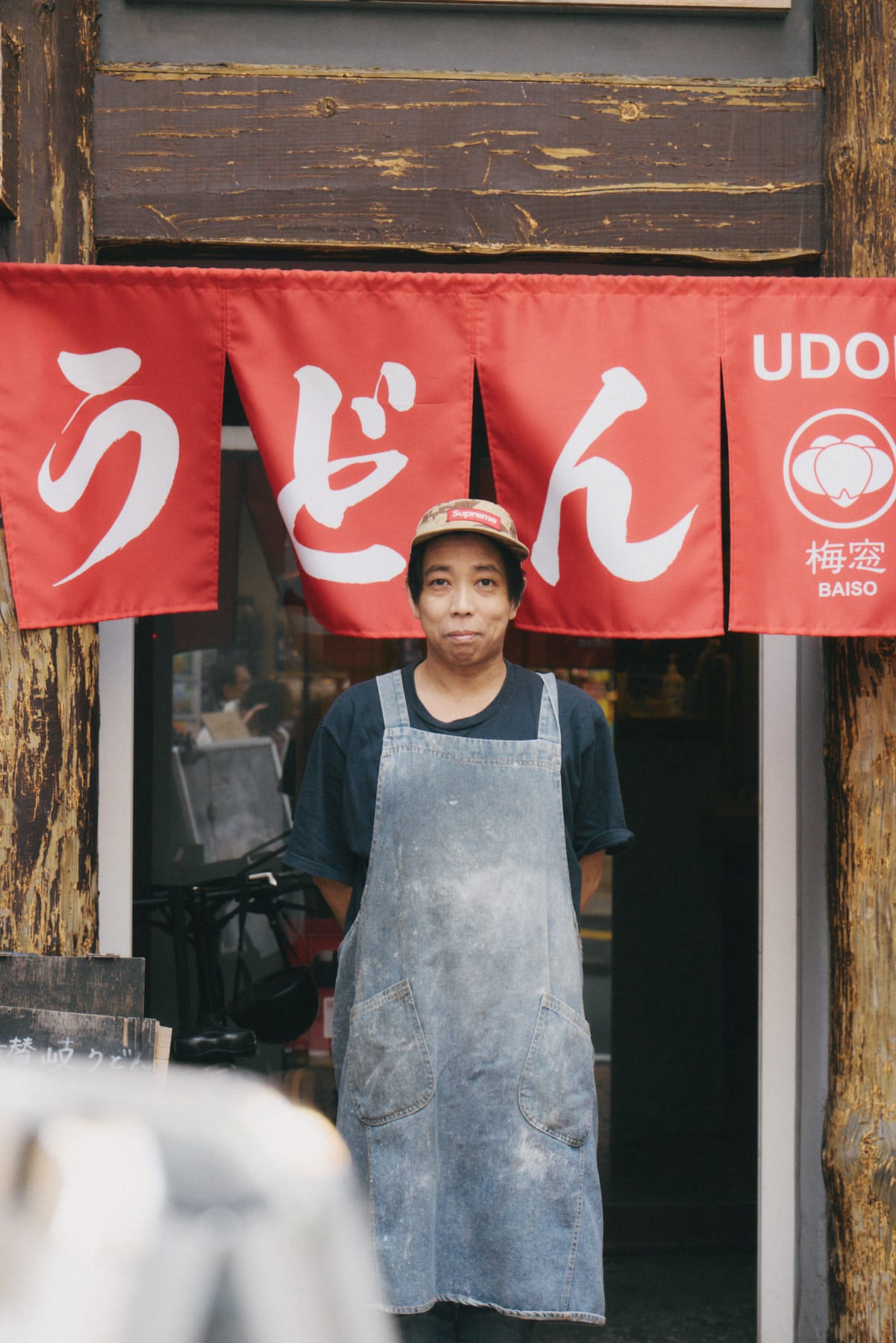
The shop is on the first floor of the building directly across from "Village Vanguard". It is set slightly back from the street, but the red noren curtain with “udon” written on it serves as a landmark.
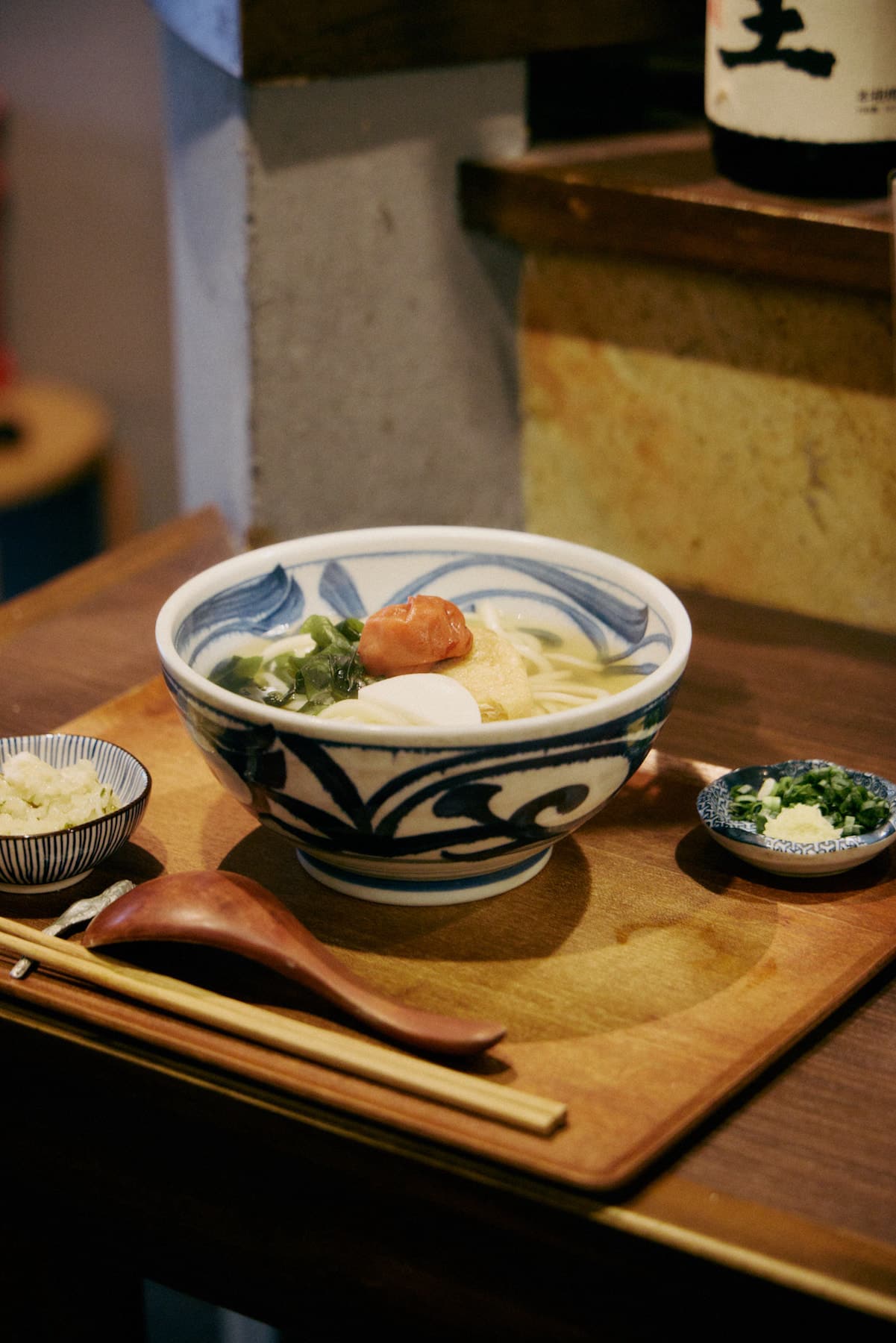
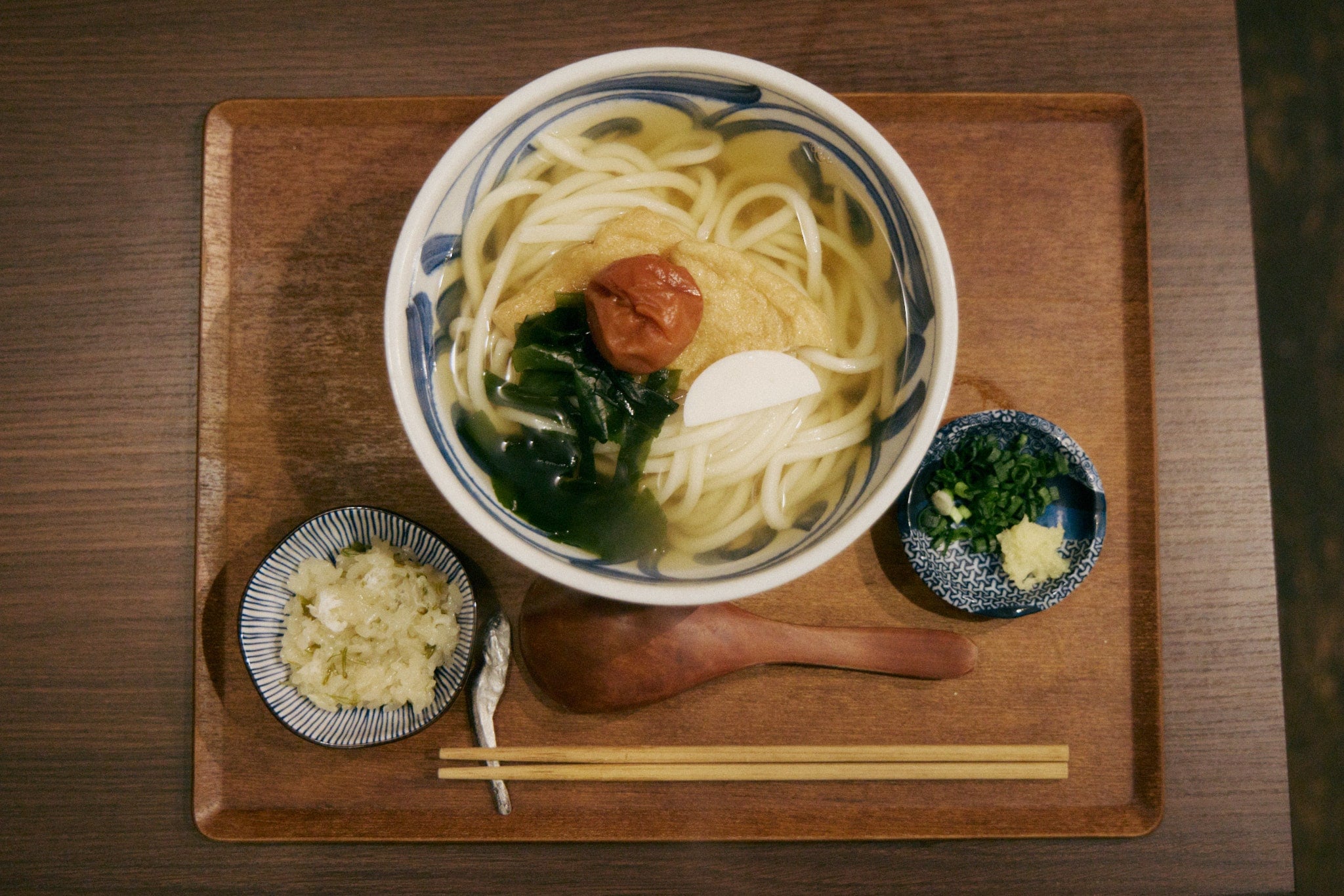
The shop’s signature menu item is "Baiso udon", topped with an umeboshi pickled plum. It is a bowl in which the tartness of the ume and the dashi-rich broth go well together. It is recommended to eat it by dissolving the umeboshi into the broth. 750 yen
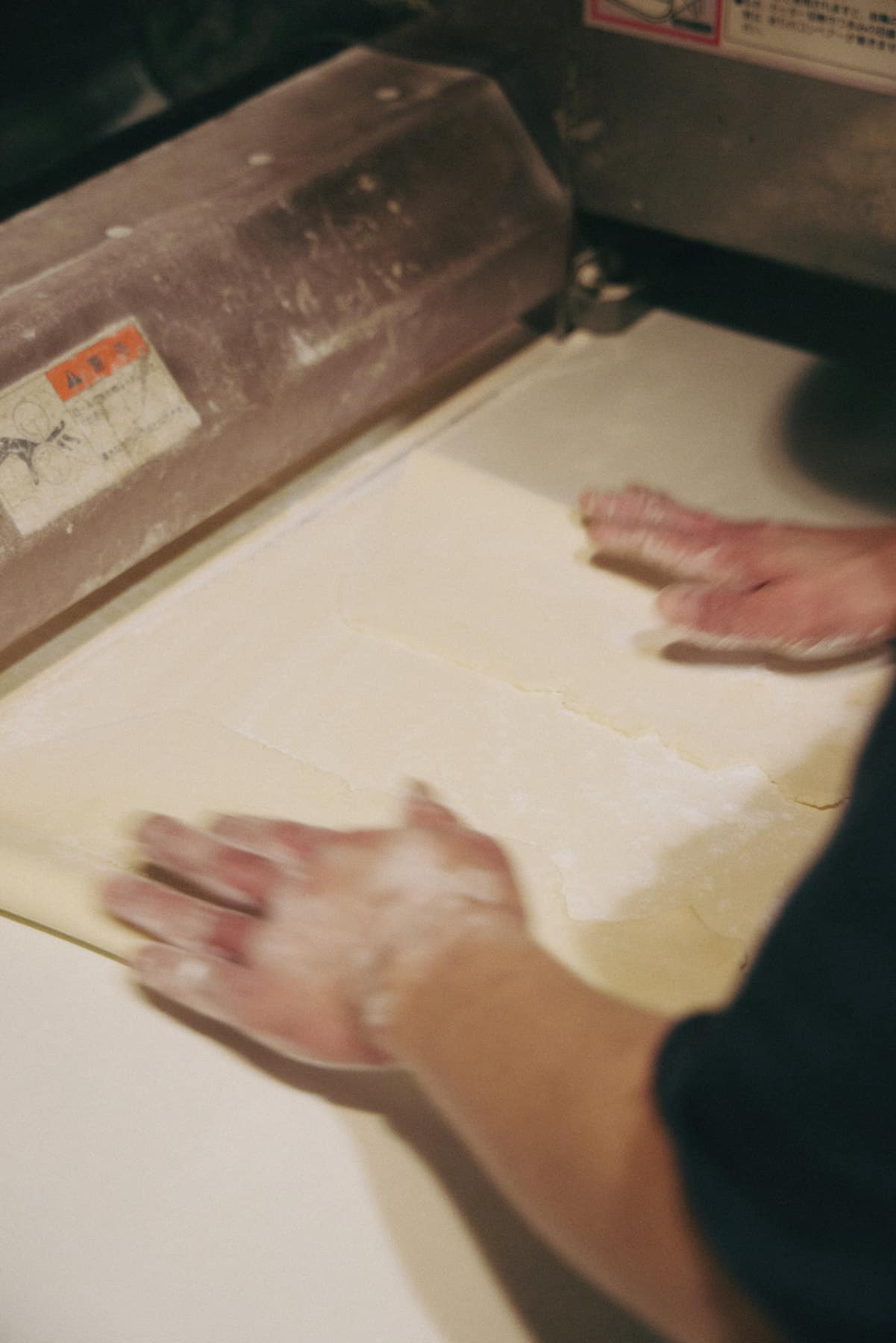
This is udon dough made using “ashibumi”, a method distinctive to Sanuki udon. “Ashibumi” is the process of putting the dough in a bag and kneading it by stepping on it with the whole foot. It is an essential step for creating the noodles’ koshi.
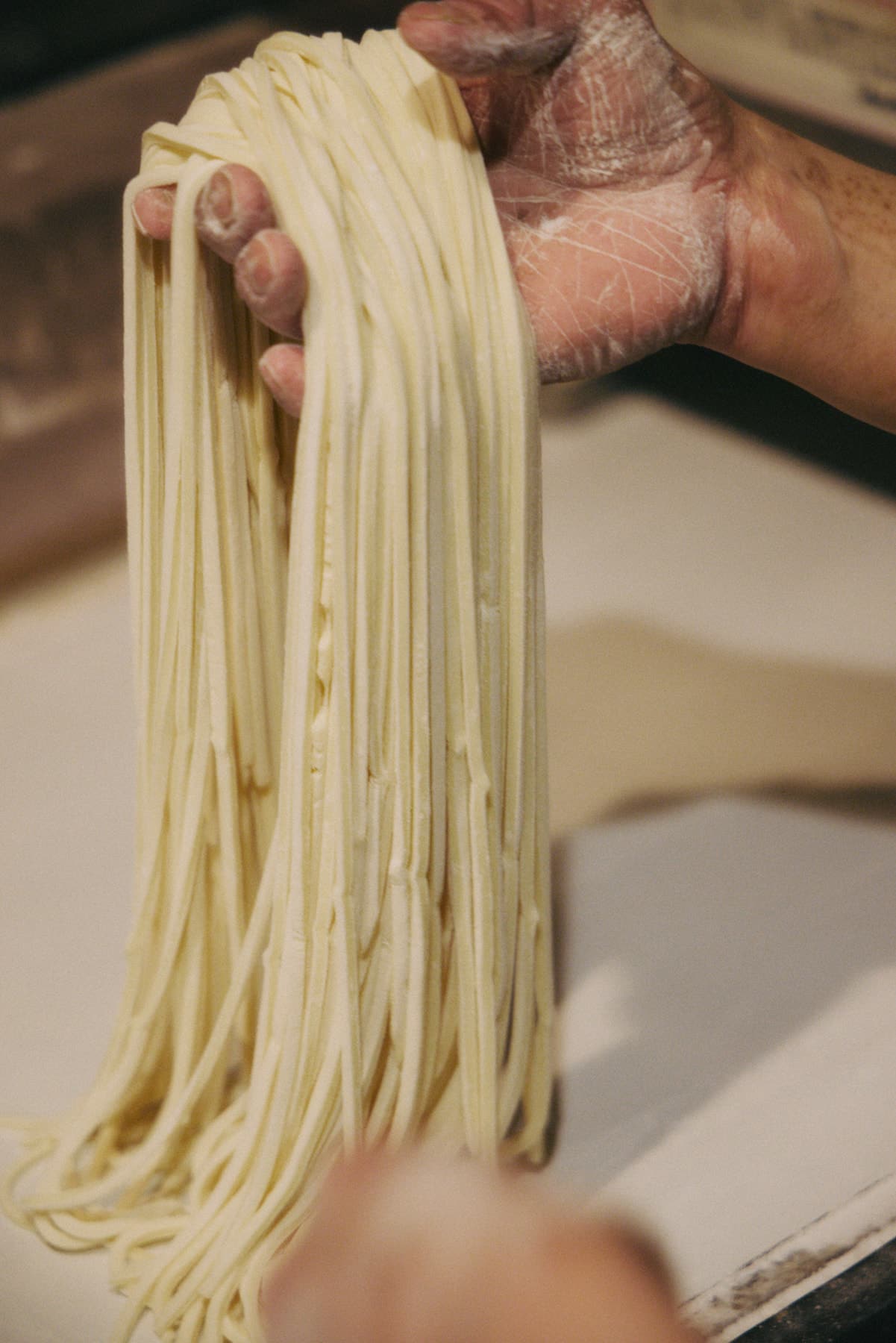
The noodles are cut thinly, with ease of eating also taken into consideration.
If too many noodles are boiled at once, the degree of boiling can become uneven. For that reason, as much as possible, the shop boils only the necessary amount after receiving each order.
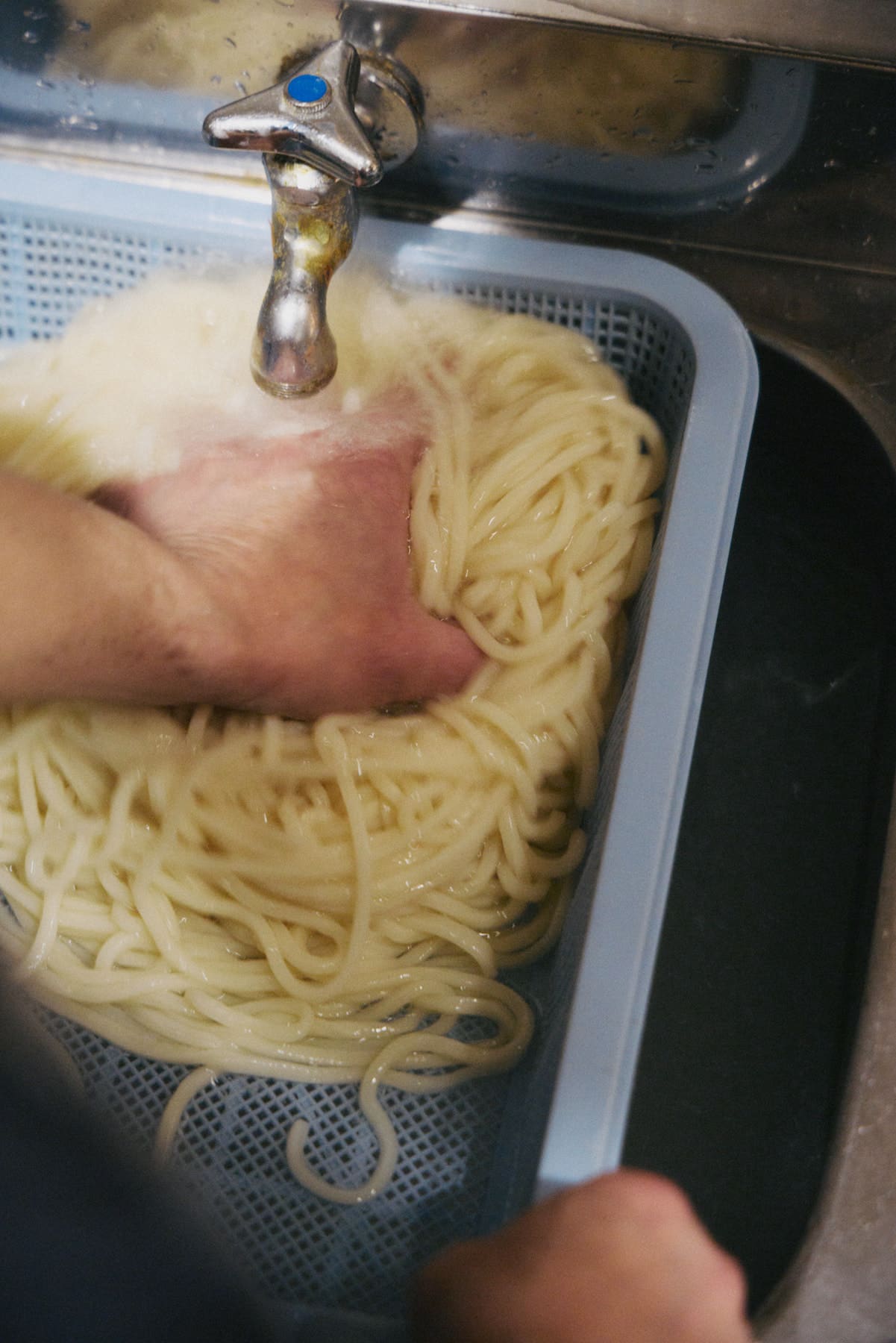
After the noodles are boiled, they are rubbed and washed in cold water to remove the sliminess from the surface. Depending on the temperature, ice water is sometimes used in summer.
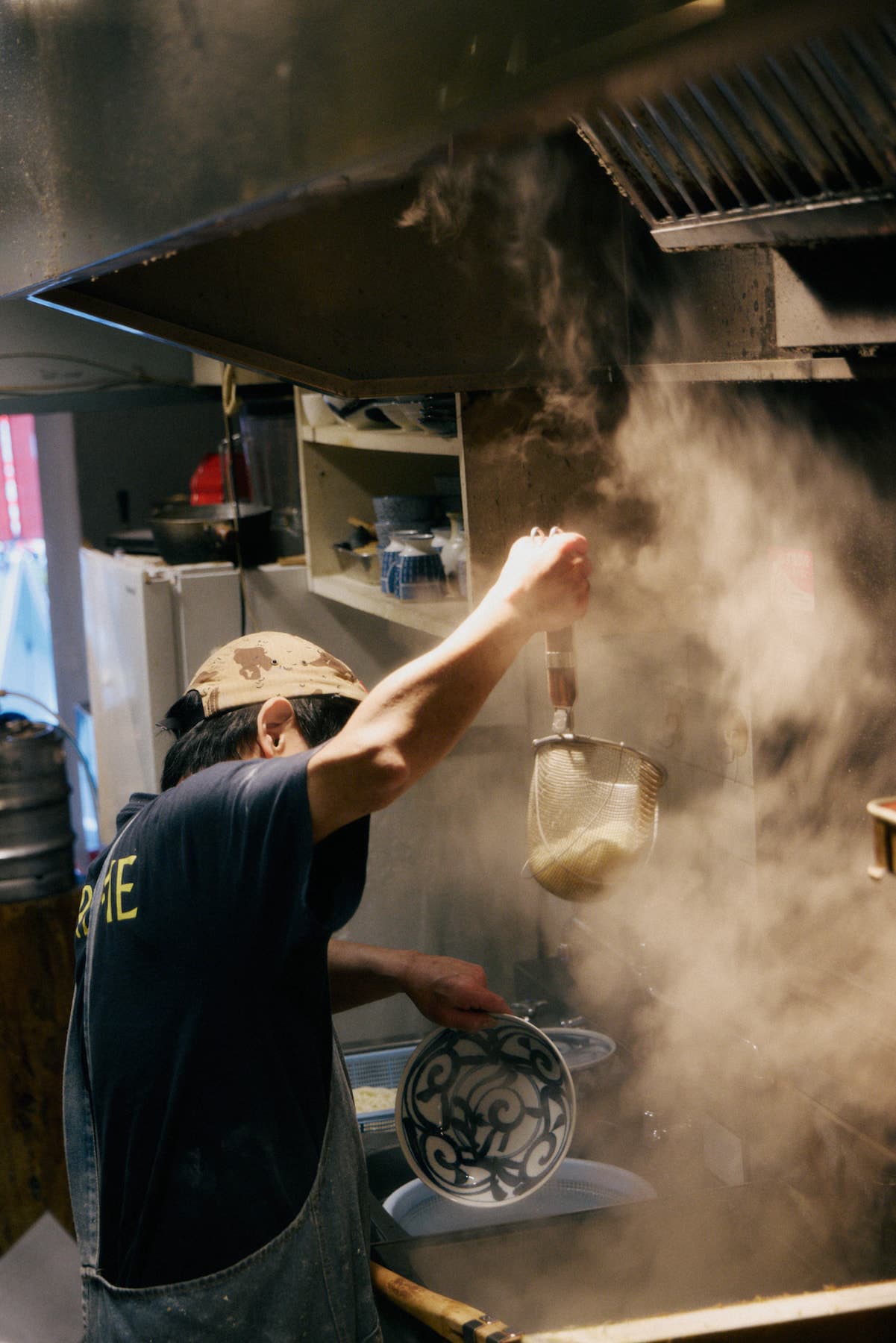
“Yugiri” is the process of removing excess water and the sliminess remaining on the surface of the noodles.
The dish to enjoy together with udon at "Baiso" is freshly fried tempura. The udon shop "Baiso" in Okayama Prefecture, where the owner Sato trained, originally started as a tempura restaurant. For that reason, Sato learned not only udon but also tempura techniques there. That experience is also reflected in the tempura at "Baiso".
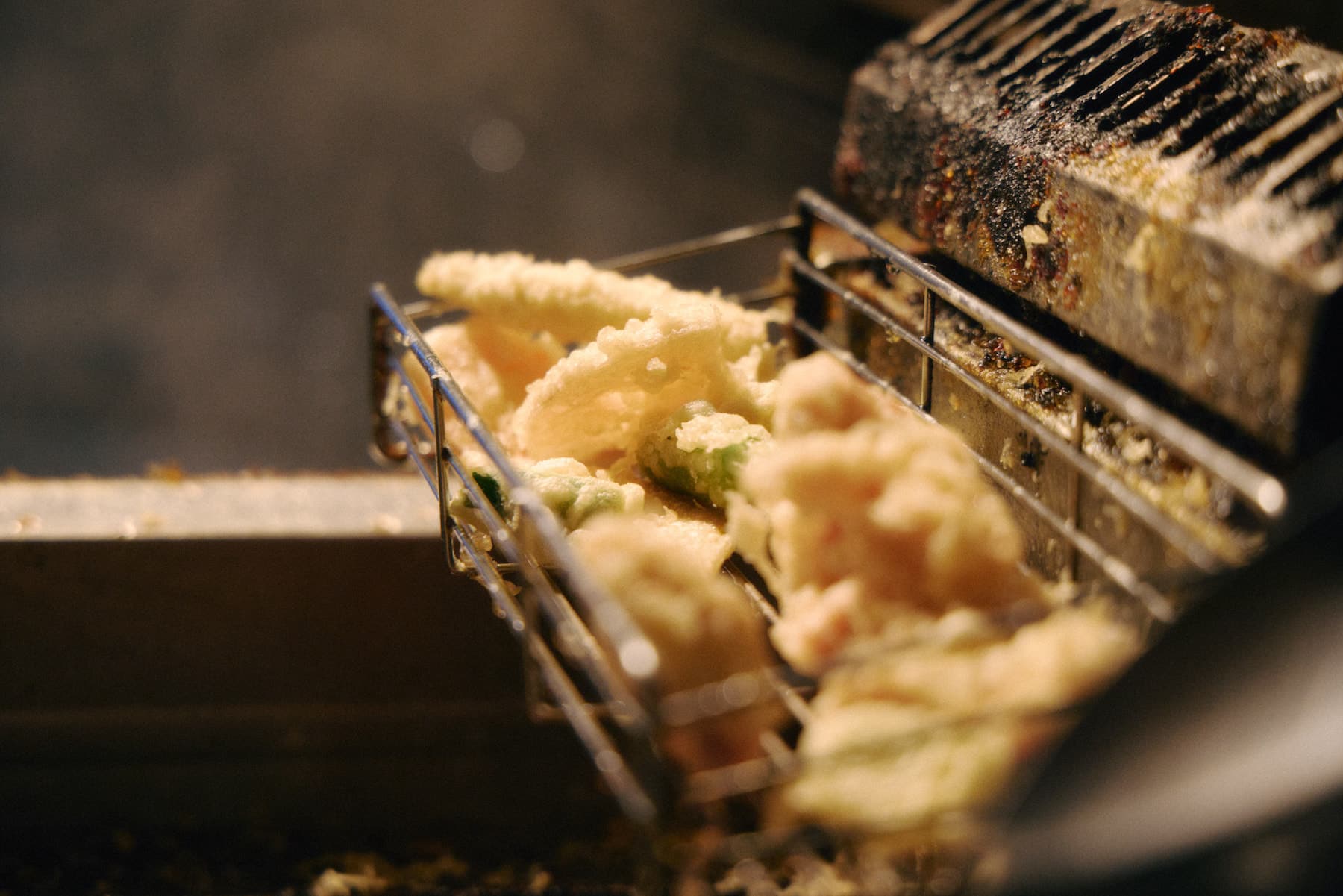
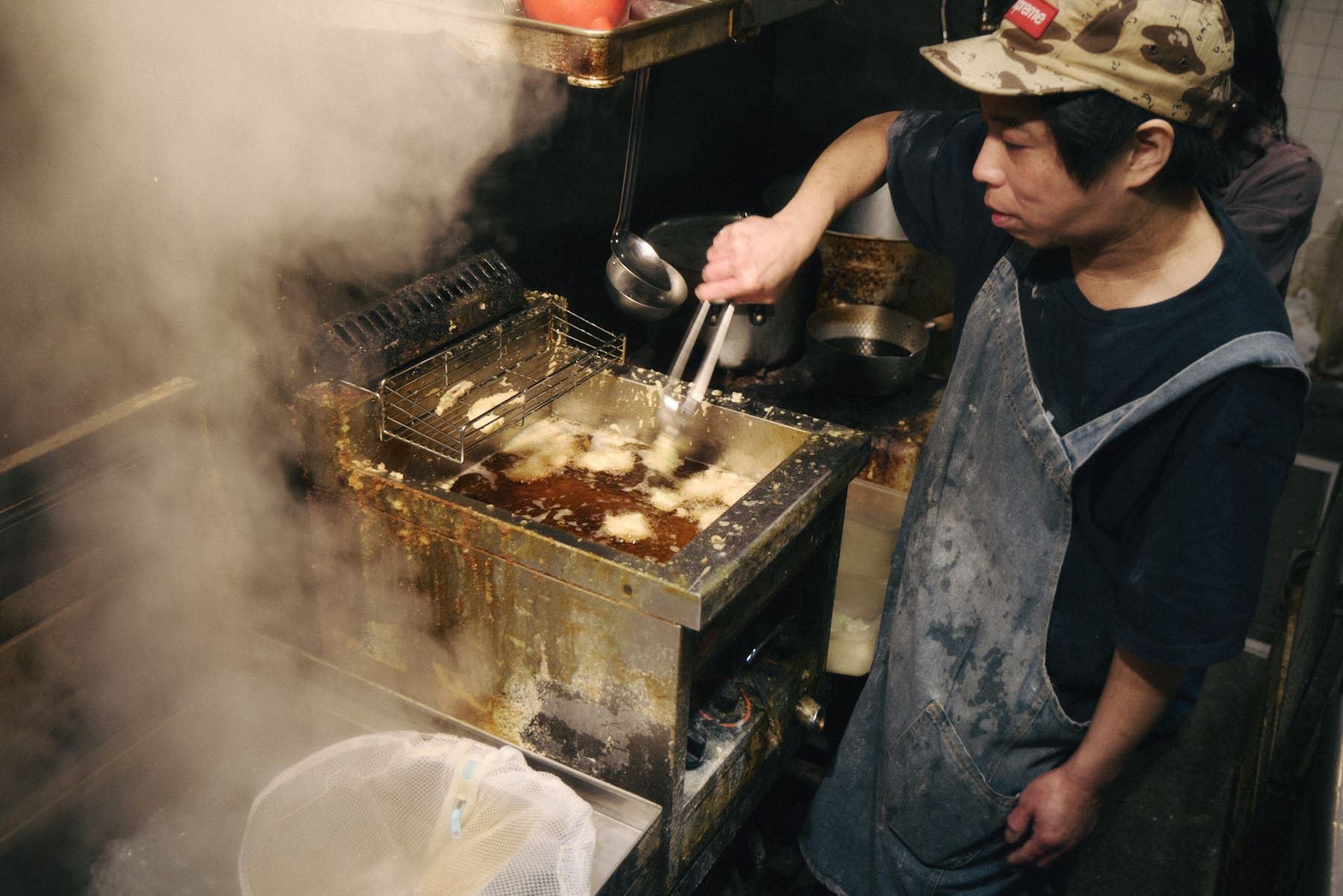
What is important for giving tempura a light, crispy texture is draining the oil thoroughly after frying. When the surface temperature drops, the batter becomes more likely to absorb oil. For that reason, "Baiso" makes a point of draining the oil while the tempura is still hot and serving it freshly fried. The tempura is freshly fried, and the noodles are freshly boiled. All of the cooking is handled by the owner, Sato. Sometimes it takes a little time before the food is served, but that is because he wants guests to taste it freshly made.
The batter is thin, with a crispy texture.
Each piece of tempura is picked up with tongs and shaken in small movements to thoroughly remove excess oil.
The udon at "Baiso" is designed with the volume of each dish in mind. Each bowl is planned so that, when you finish eating, you feel just the right level of fullness. People who want to eat more can add tempura toppings or order a larger serving of noodles. One appeal is that you can choose the amount and combination according to your mood and how hungry you are that day. Another welcome point is the small serving of okowa rice, about two bites, that comes as a complimentary service.
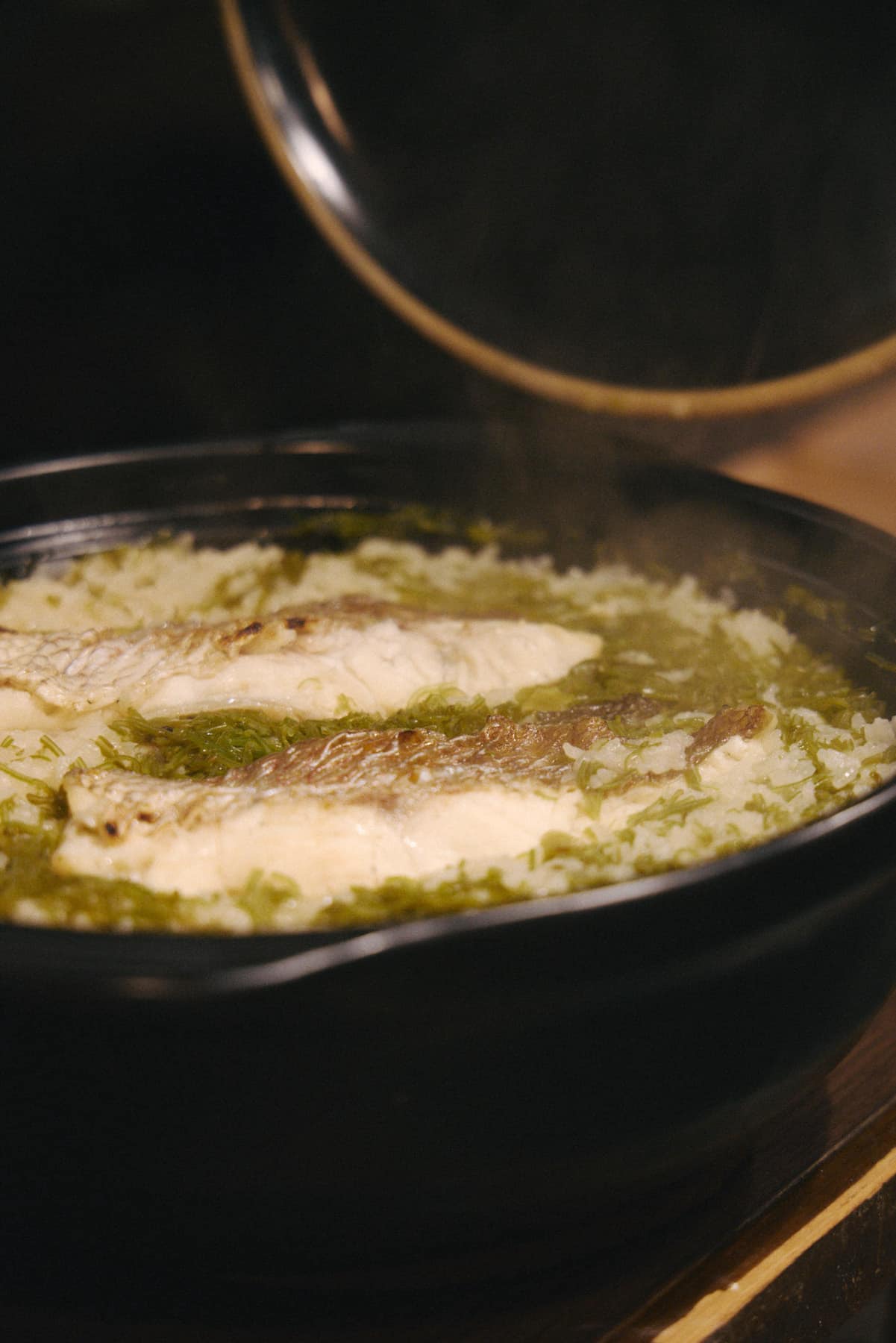
“It is only a small amount, but the okowa rice is authentic, and it is a quiet pleasure,” says Kasumi, owner of "sowhat vintage". The okowa rice is cooked in a donabe clay pot every day, and the ingredients change depending on the day. It is a modest addition, but it greatly increases the satisfaction after the meal. This kind of subtle care is also one of the reasons why "Baiso" is loved in Shimokitazawa.
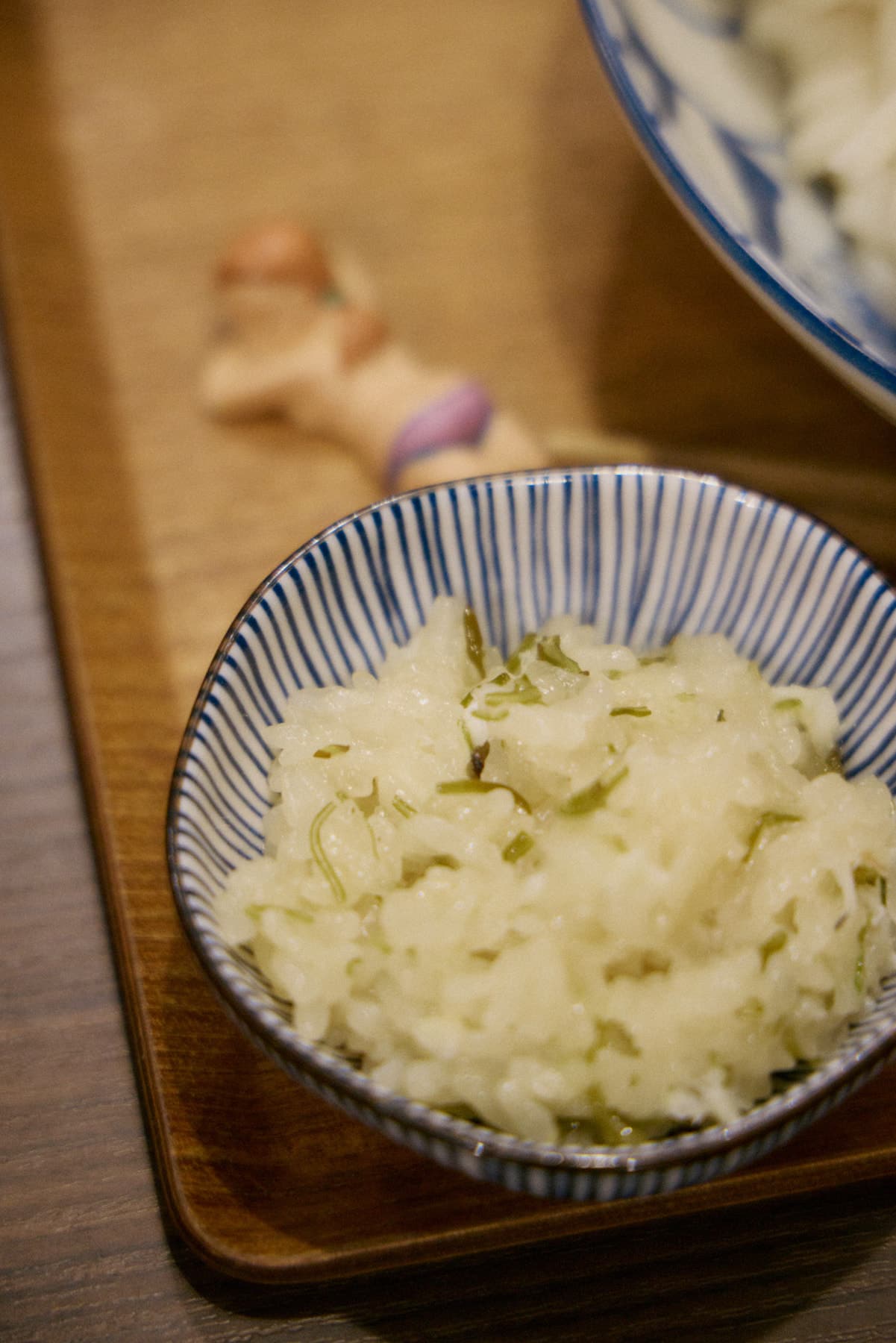
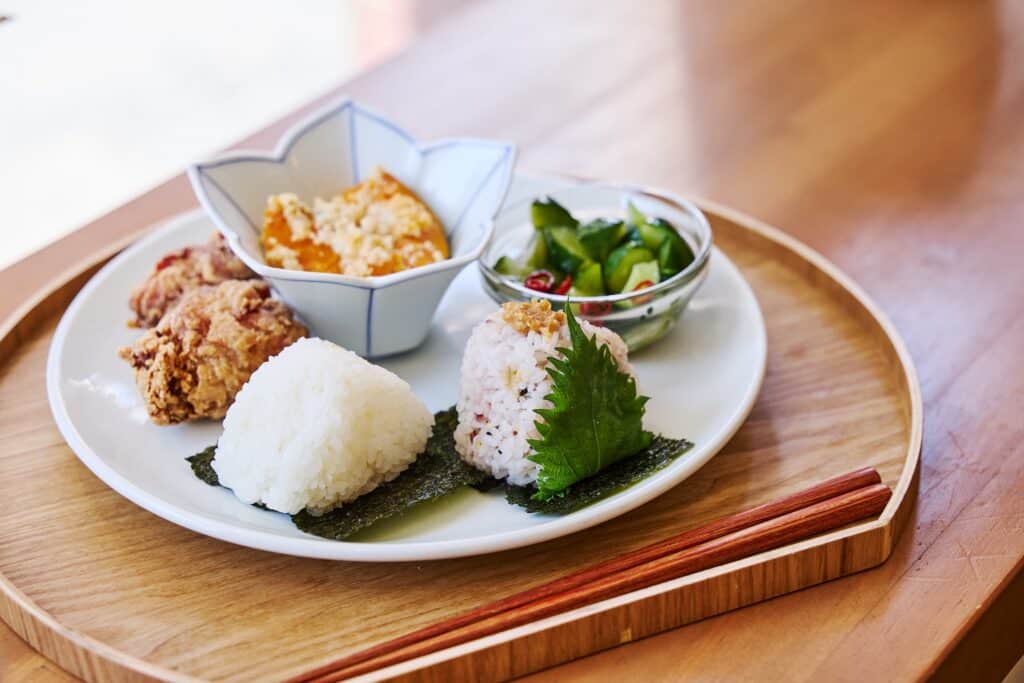
Because okowa rice is made with glutinous rice, it has a plump, chewy texture. The flavor is so authentic that it does not feel like a complimentary service. It is delicious enough to make you want another serving, but because quantities are limited, refills are not available.
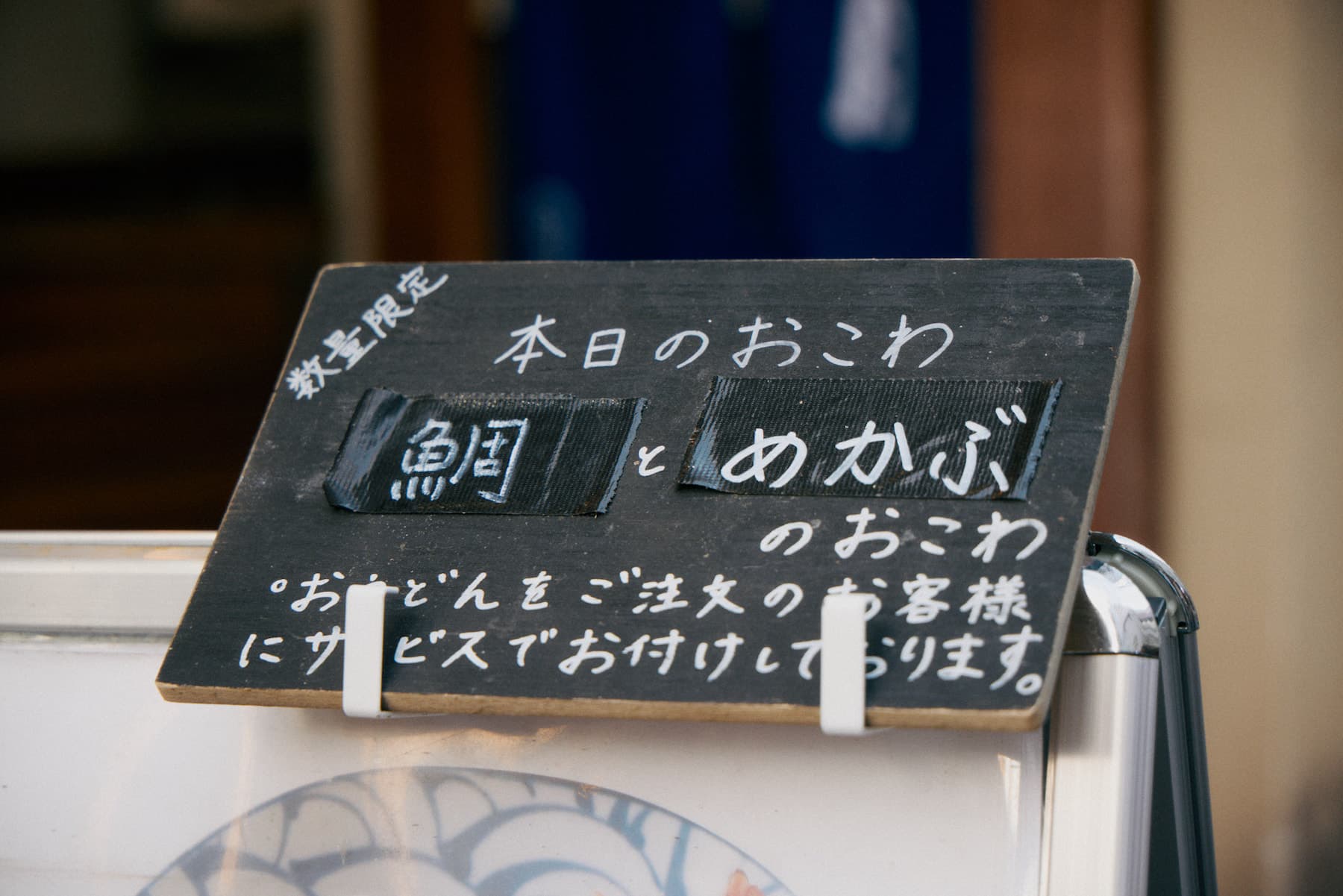
On this day, it was okowa rice with sea bream and mekabu seaweed. The shop often makes it by combining ingredients available that day.
The ingredients of the day’s okowa rice are posted on the signboard in front of the shop.
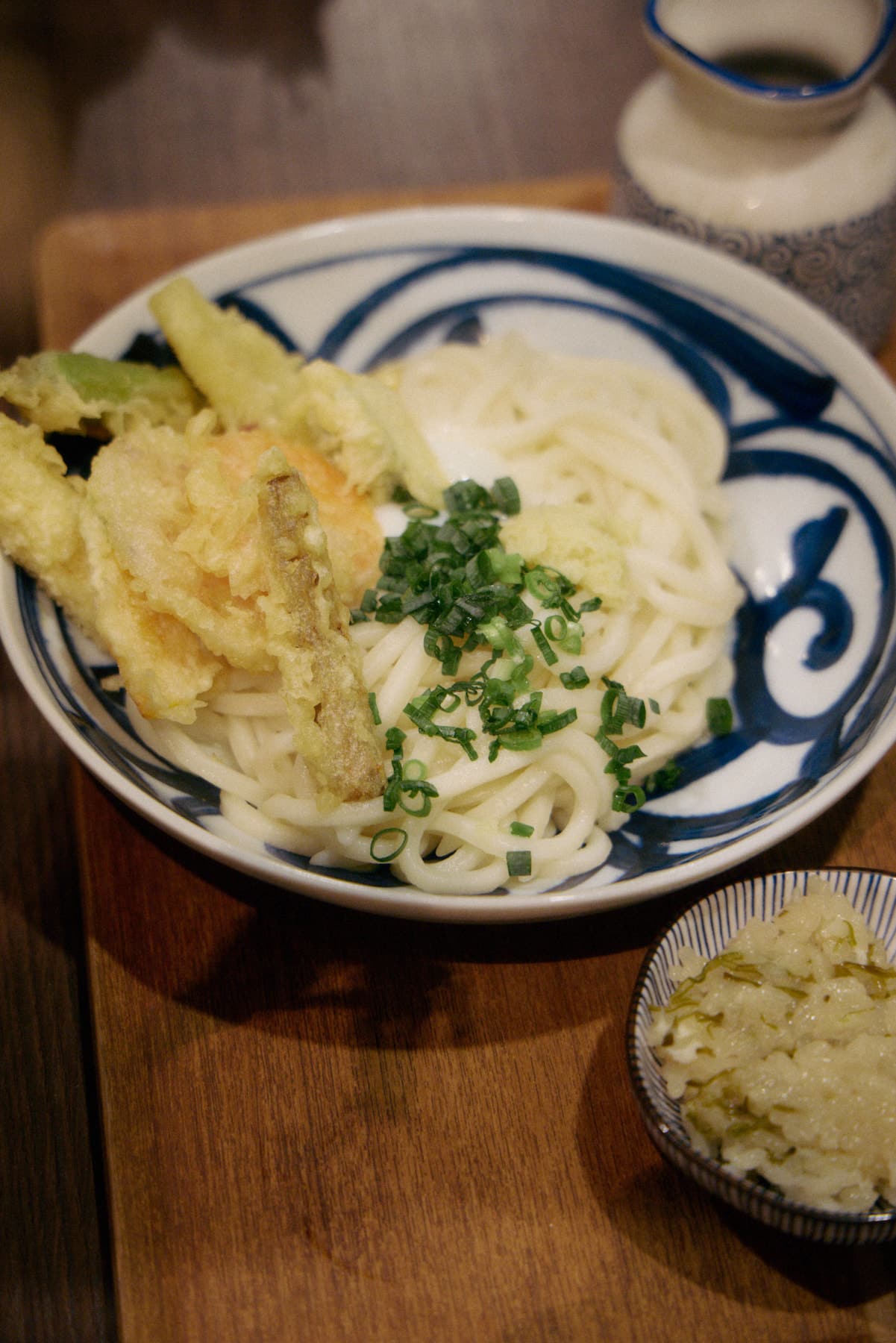
The most popular menu item is "bukkake udon with vegetable tempura". 8 kinds of vegetables including sweet potato, burdock root, young corn, etc. 950 yen
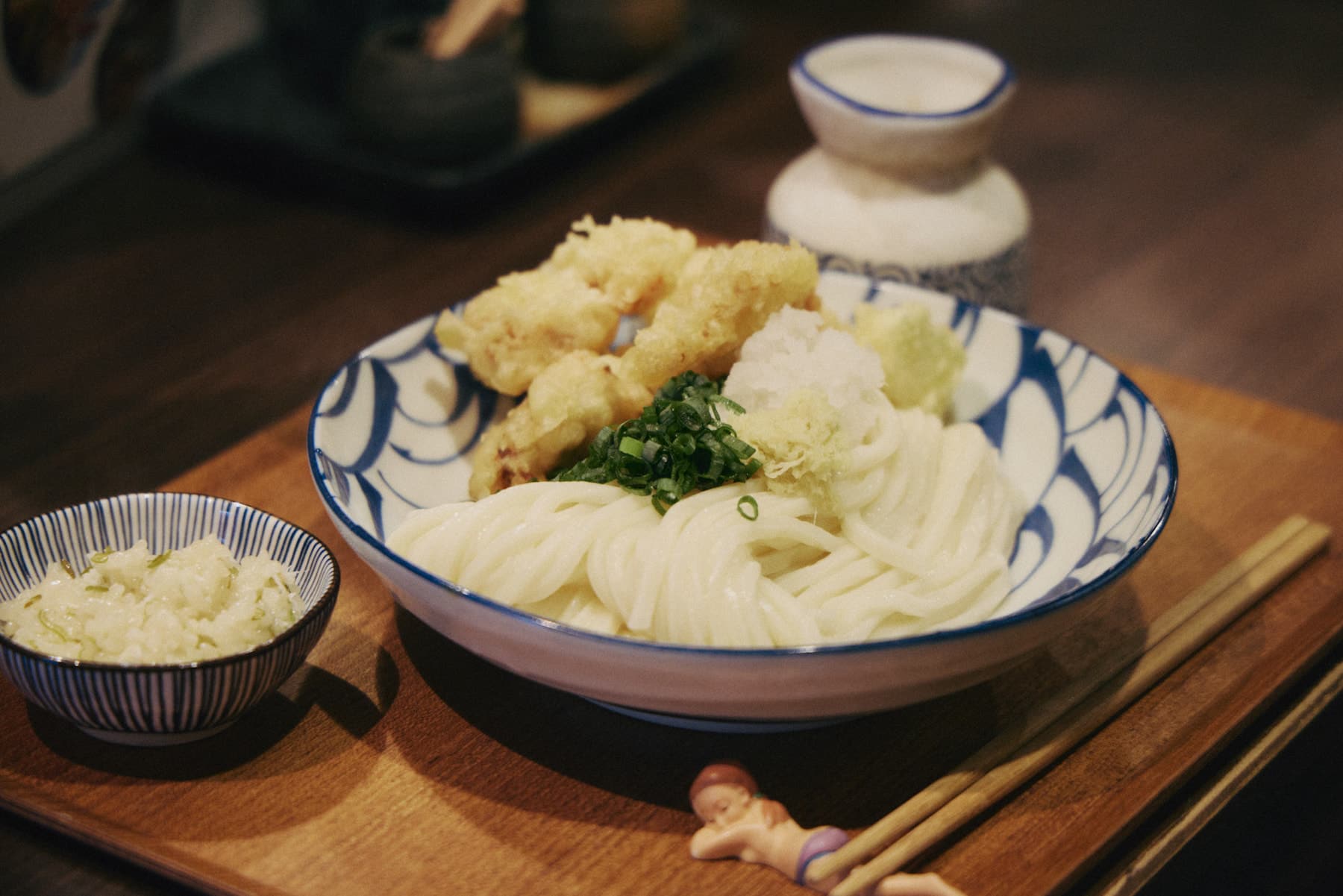
One popular menu item is “Bukkake Udon with chicken tempura”. The chicken tempura is said to be fried twice to make it juicy. 900 yen
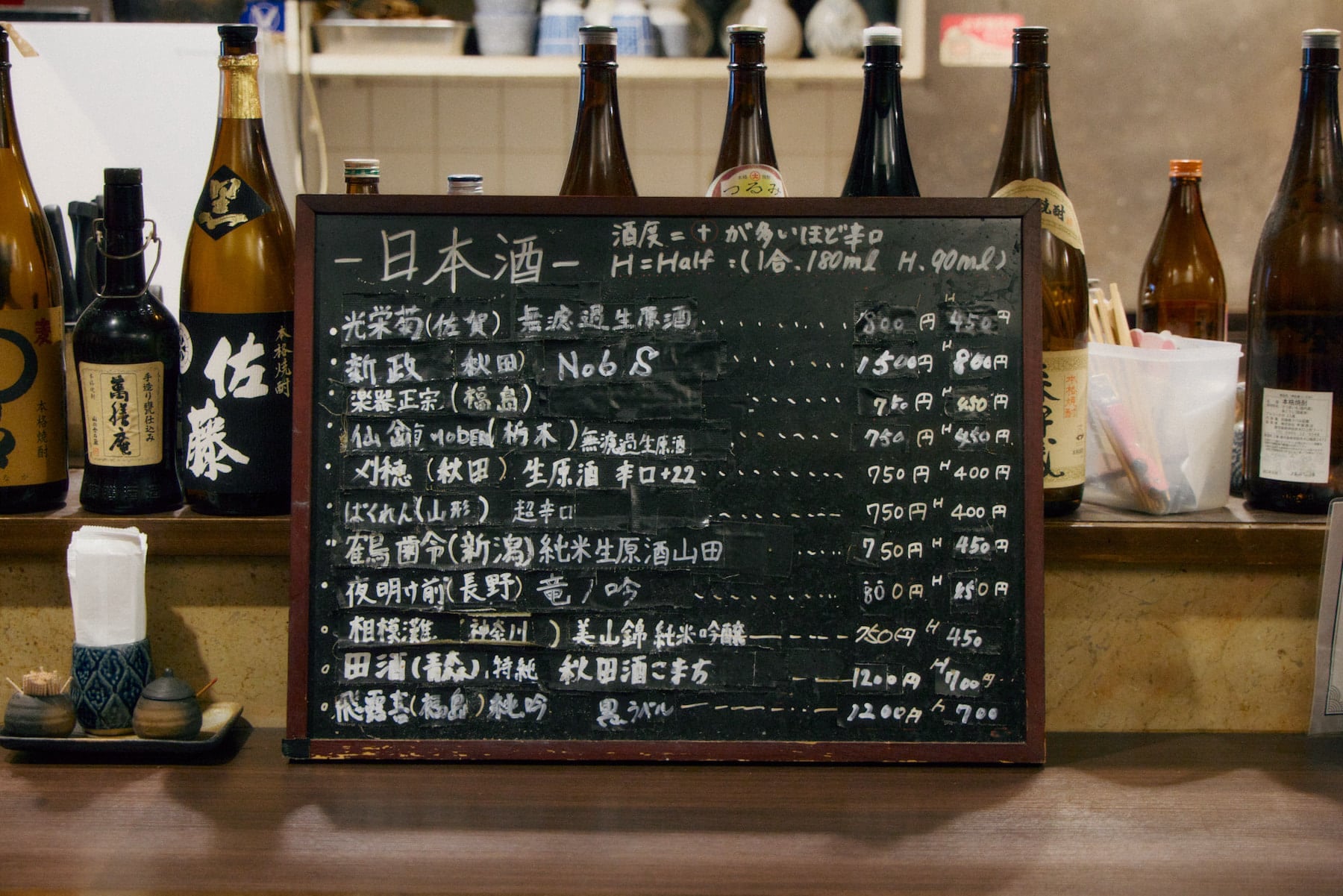
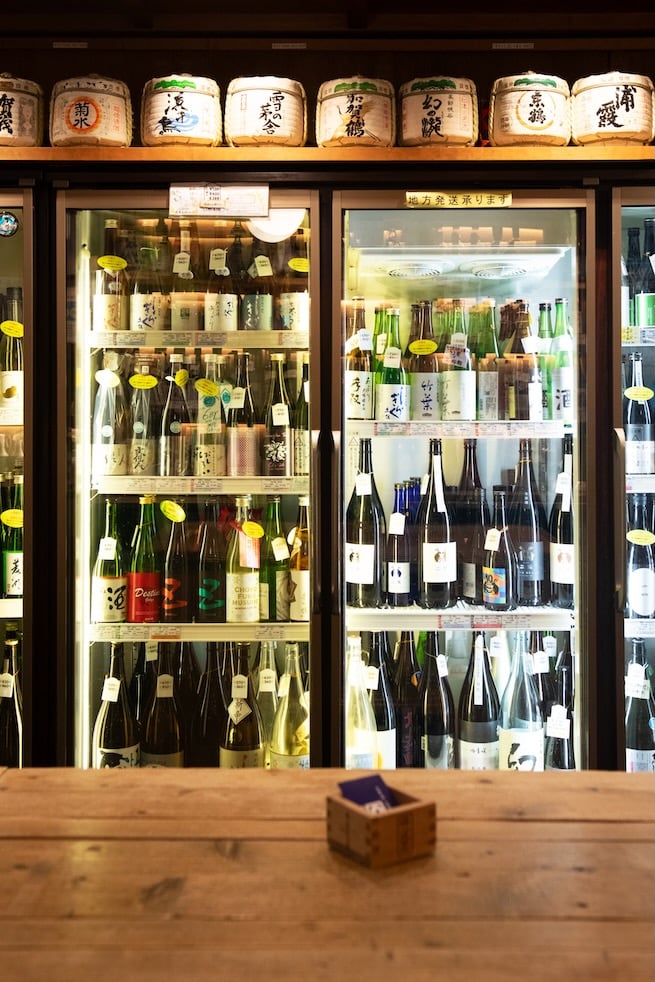
Although "Baiso" is an udon shop, it offers a variety of sake from around Japan. Because it is open until 11:00 p.m., many people visit as they would an izakaya, just to have a drink. For example, if you order vegetable tempura udon, you can ask for the tempura to be served first as a snack and have the udon served at the end. In Japan, there is a culture of eating noodles such as ramen or udon as the “shime” after drinking alcohol. “Shime” means the final dish eaten at the end of a meal or drinking gathering. You can enjoy this style at "Baiso" as well.
More than 10 kinds of sake are always available.
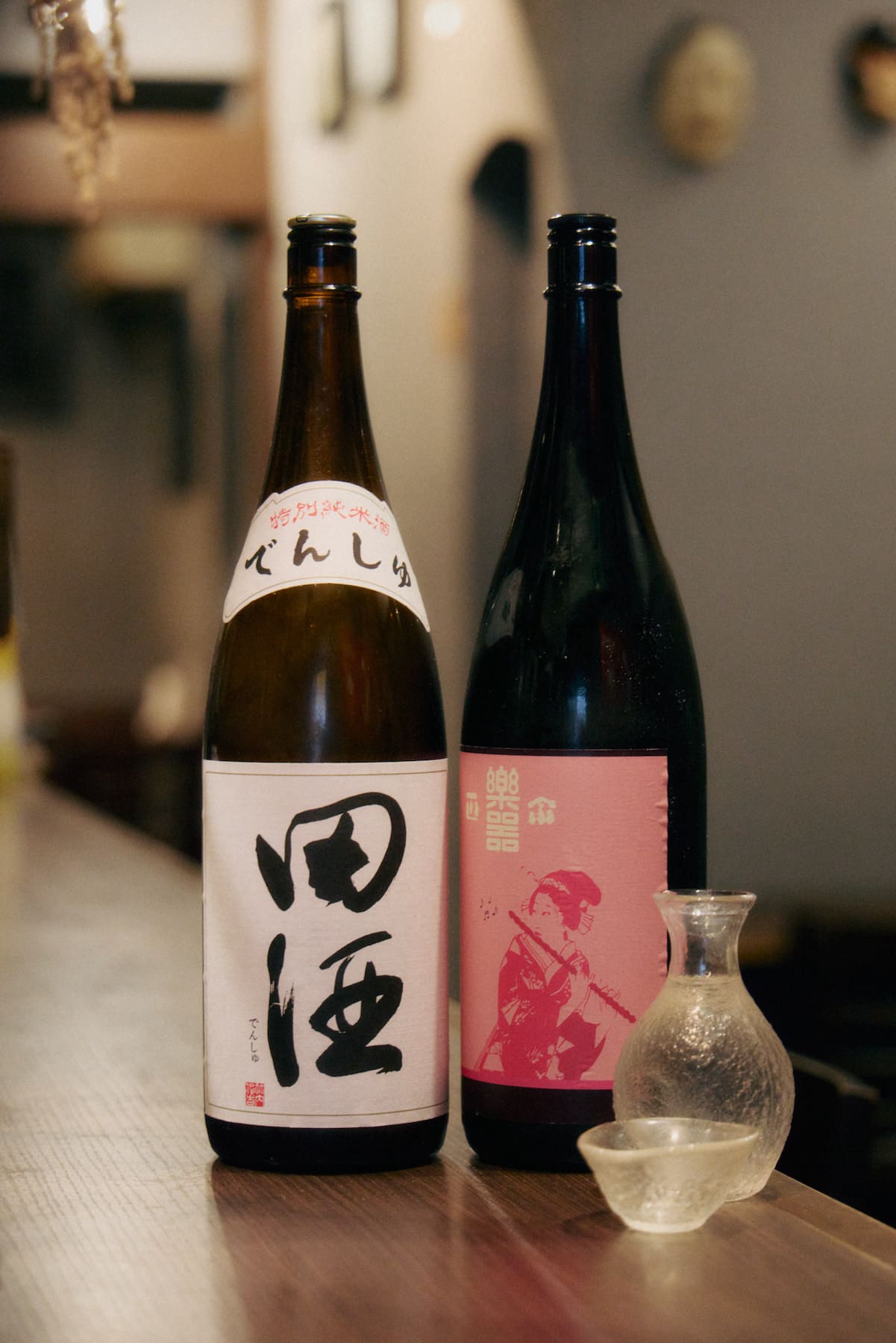
Sato’s recommended sake are "Denshu" from Aomori Prefecture (left) and "Gakkimasamune" from Fukushima Prefecture (right). " Denshu" has a rich flavor in which you can sense the sweetness of the rice. " Gakkimasamune " is characterized by a fruity flavor and easy drinkability.
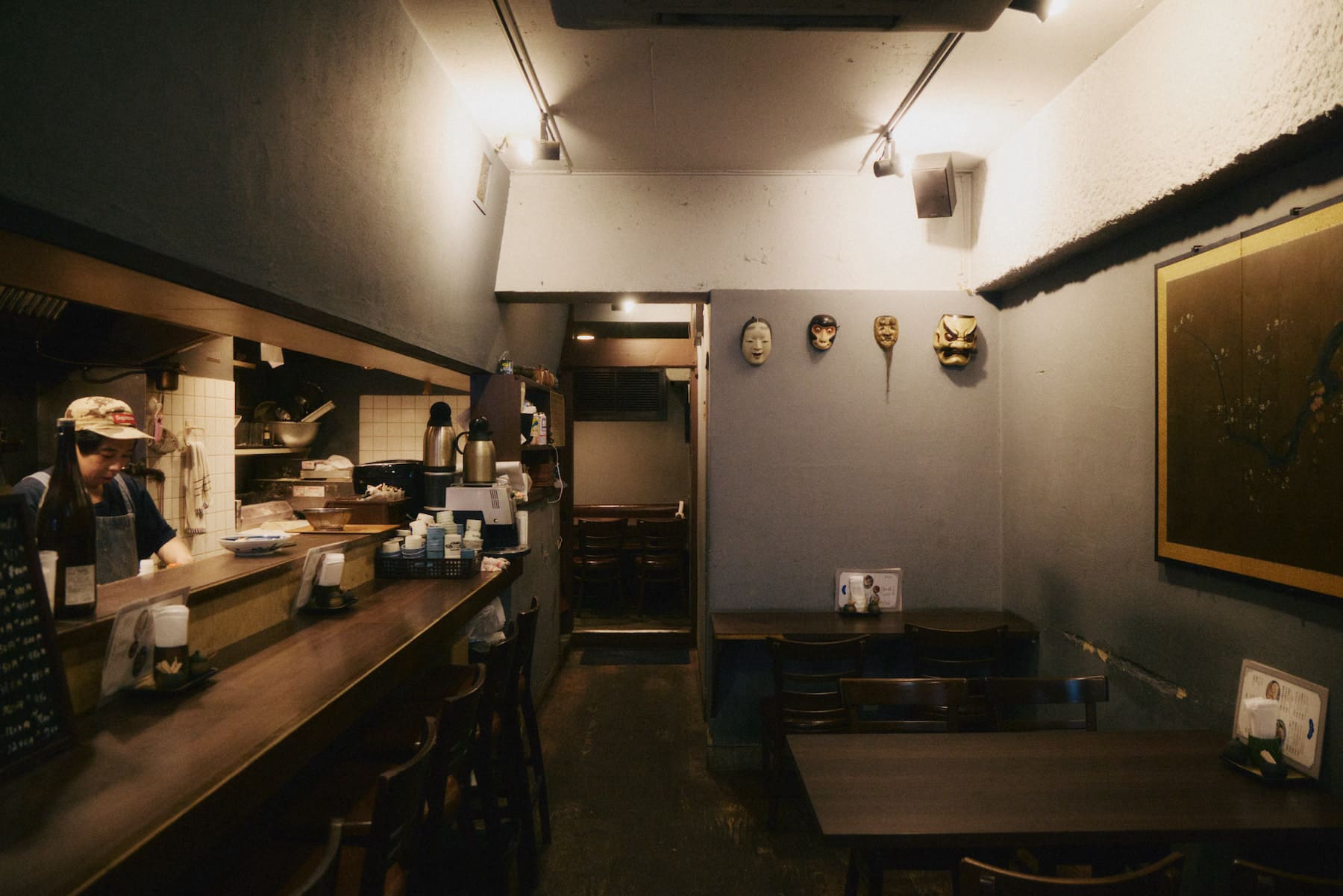
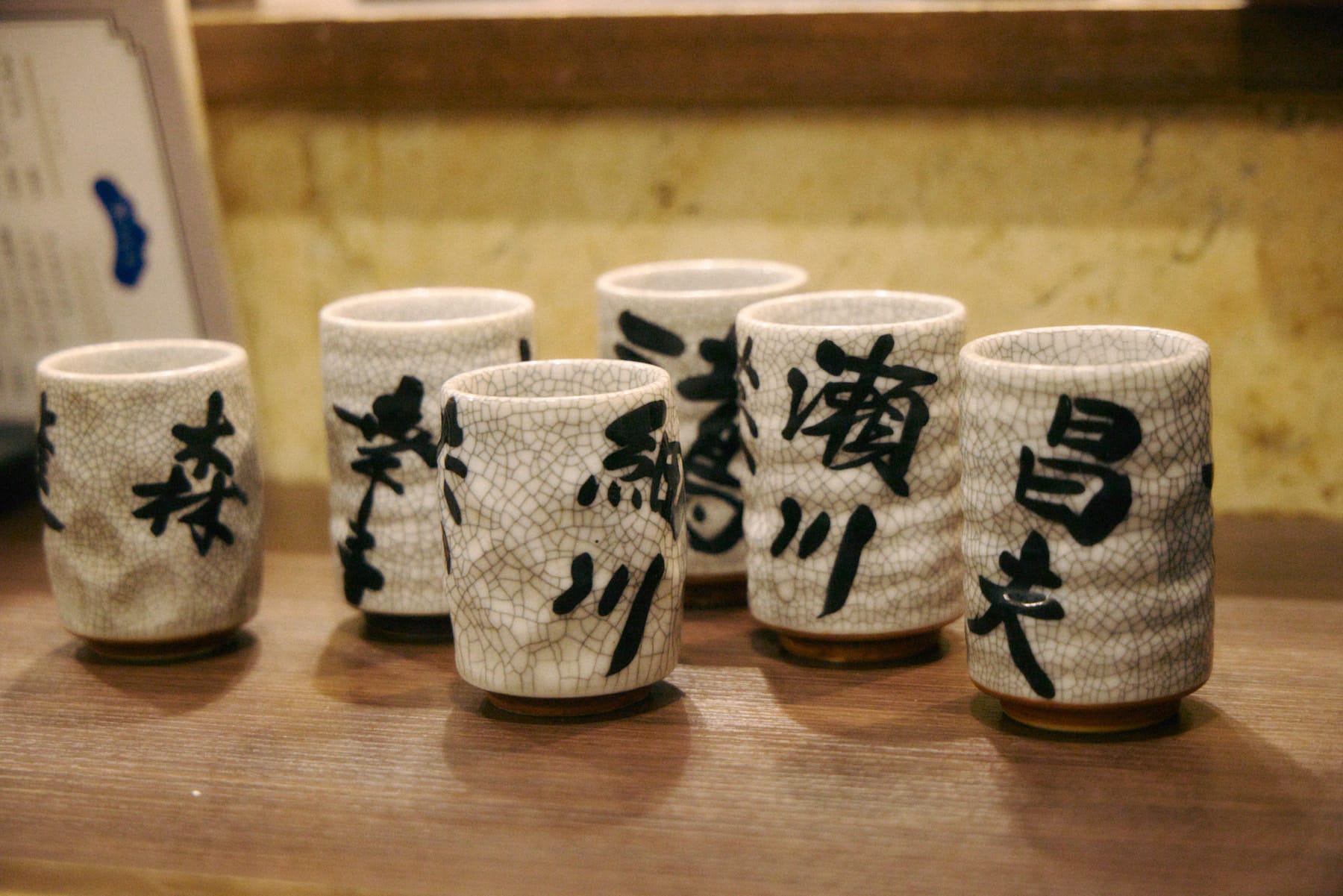
Inside "Baiso", Noh masks and folding-screen painting are displayed, creating a Japanese atmosphere. The music playing in this space includes stylish jazz and other selections chosen by Sato, who loves music, and by his senior colleague, because they thought the songs “suit udon”. The shop also displays unique items collected by Sato, including various chopstick rests with animal and fish motifs, and yunomi teacups with the names of enka singers written on them. Although it is a classic udon shop, the owner’s interests are scattered throughout the space. It is a place where a Shimokitazawa-like individuality comes through.
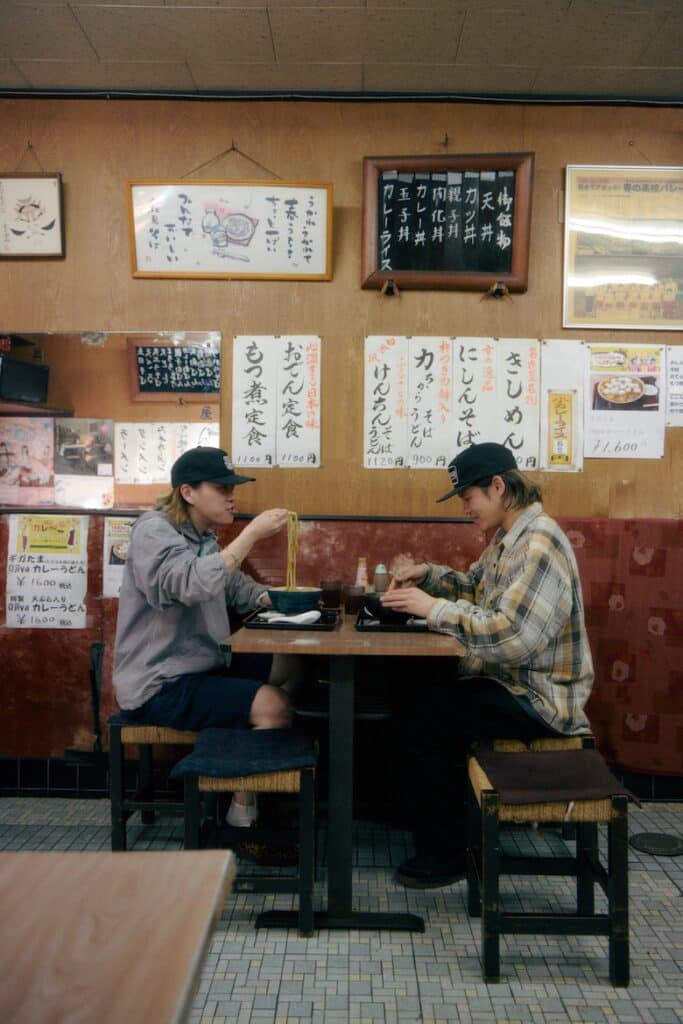
The interior has a calm atmosphere, with the lighting slightly dimmed. There are table seats and counter seats, and sofa seating is also available in the back.
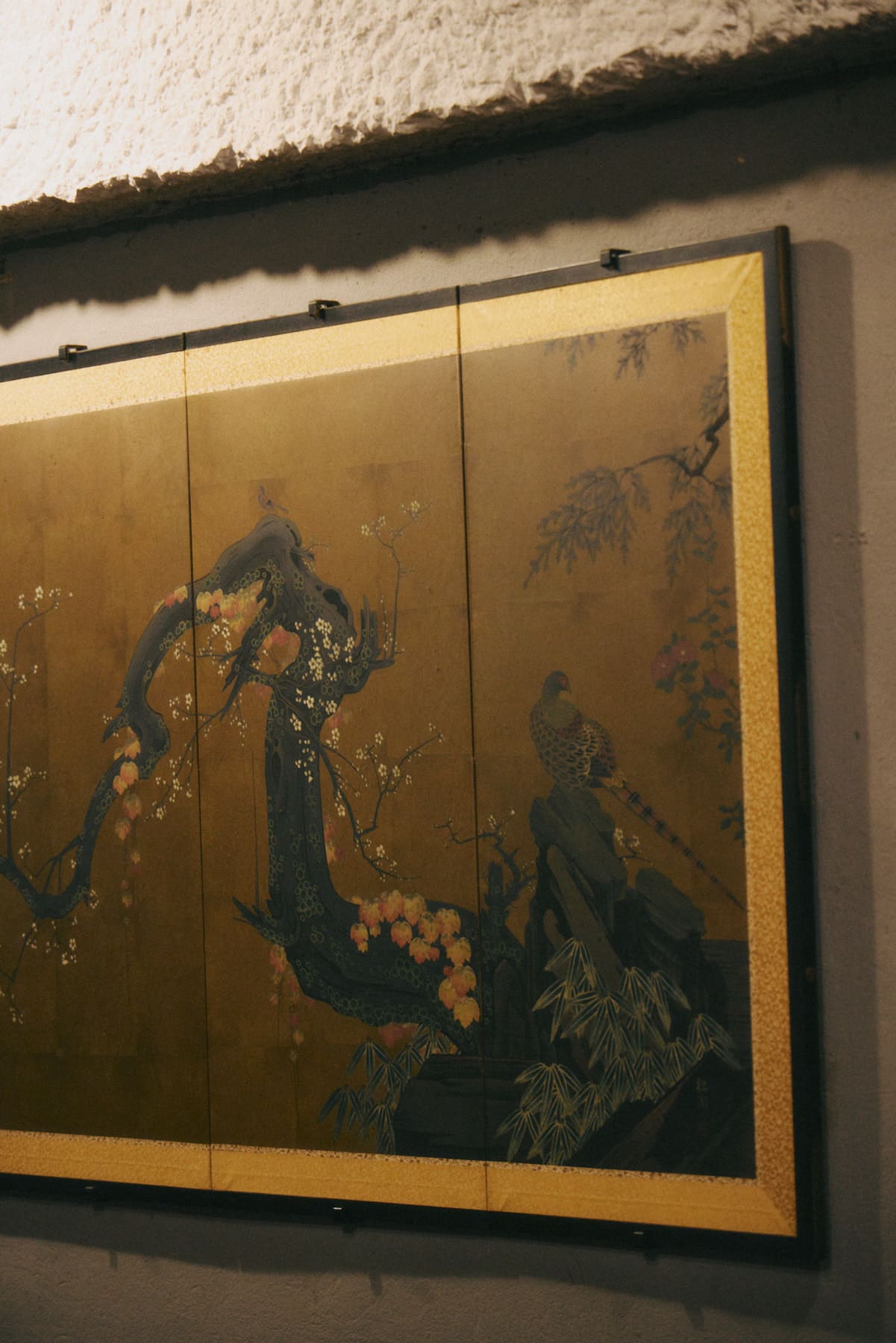
The folding-screen painting with an authentic feel was a lucky find that Sato acquired on an auction site. The purchase price is apparently a secret.
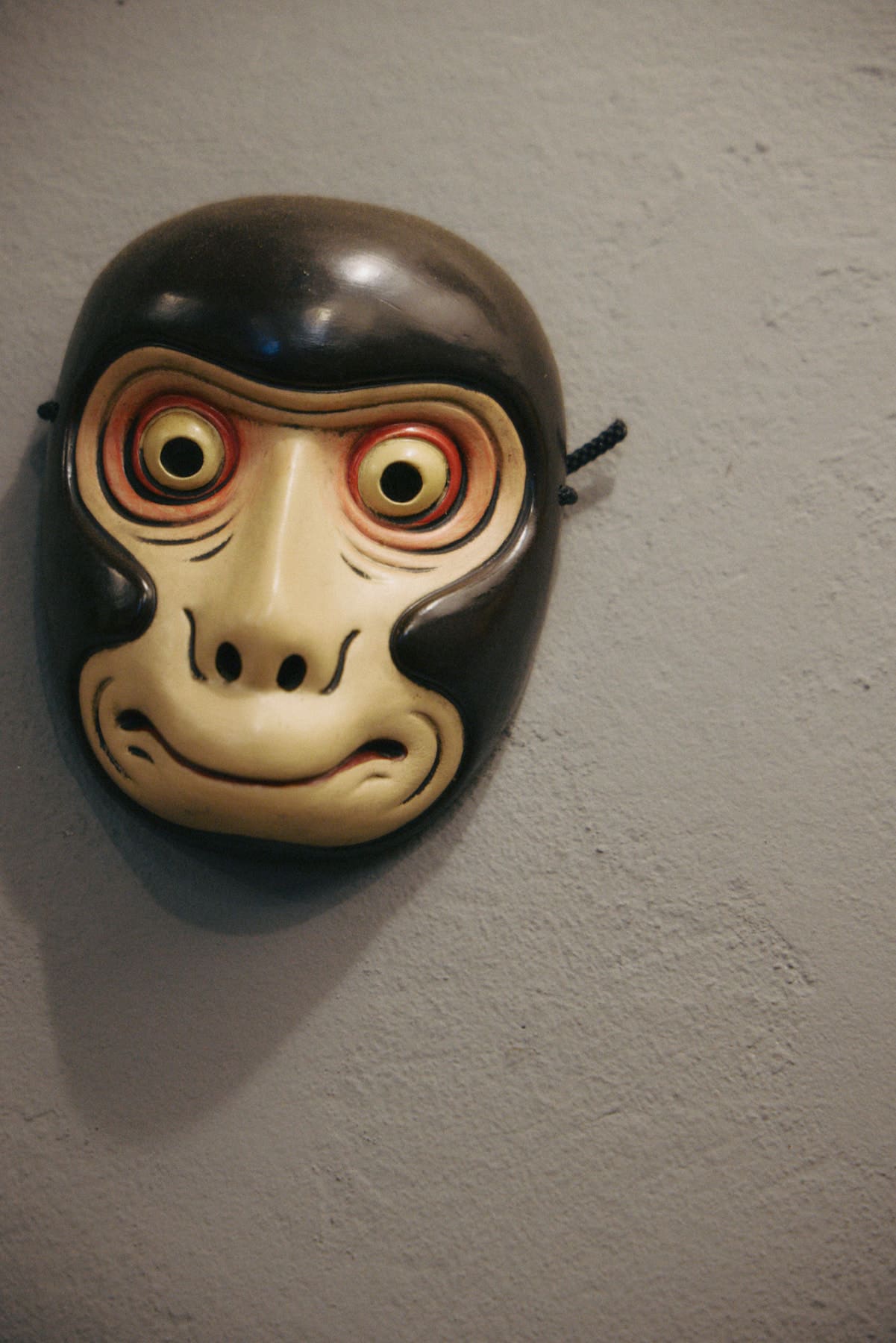
The monkey Noh mask apparently came from Sato’s family home. He also bought other Noh masks to go with this one.
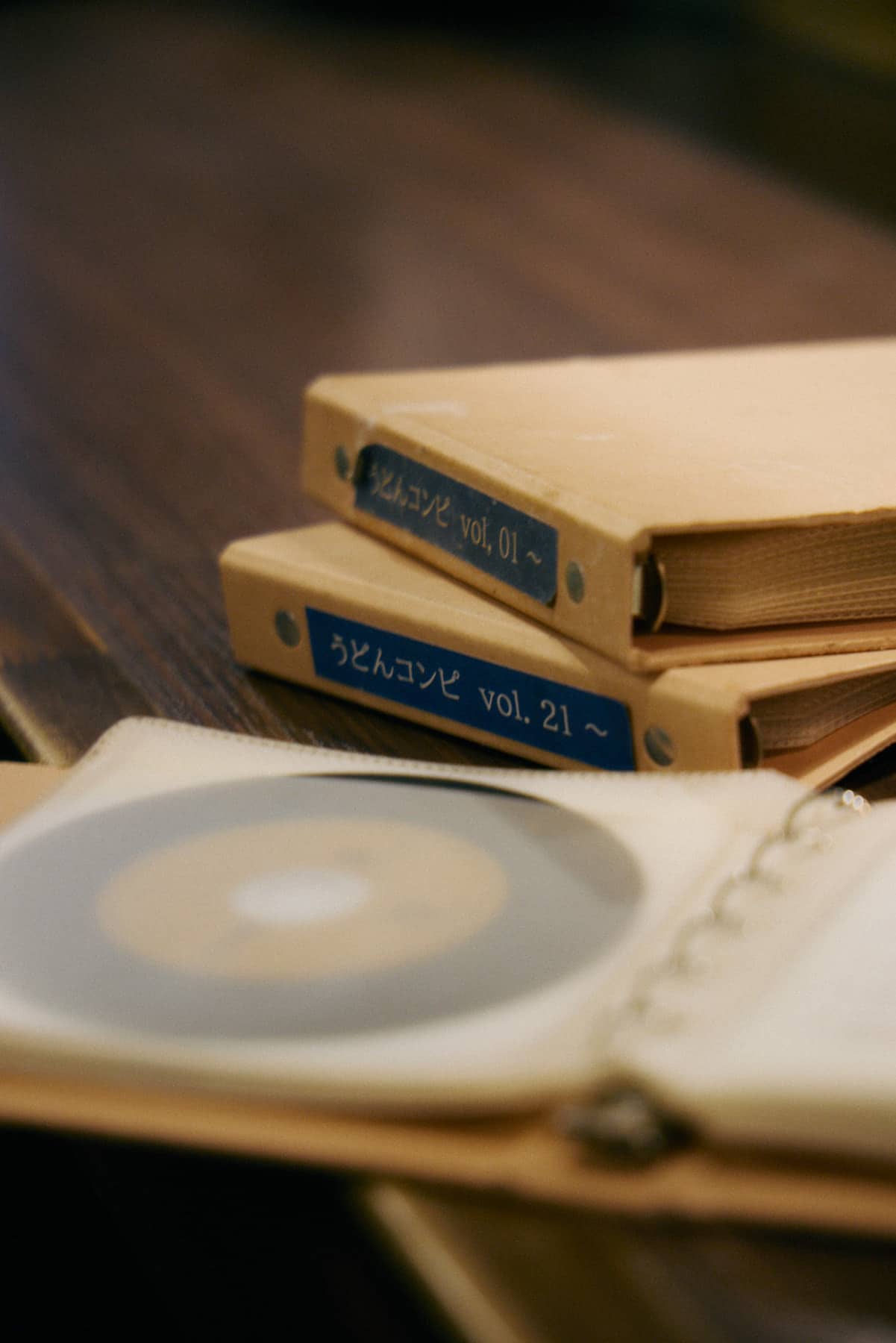
From the “udon compilation,” a selection of songs chosen by music-loving Sato and his senior colleague because they thought the music “suits udon,” songs are played according to the mood of the day. Many of the songs included in the “udon compilation” are said to be around BPM 100. The selection centers on relaxed songs with a tempo close to the pace of slurping udon. “Lately, rather than records I want for myself, I end up buying only records for the udon compilation,” says Sato.
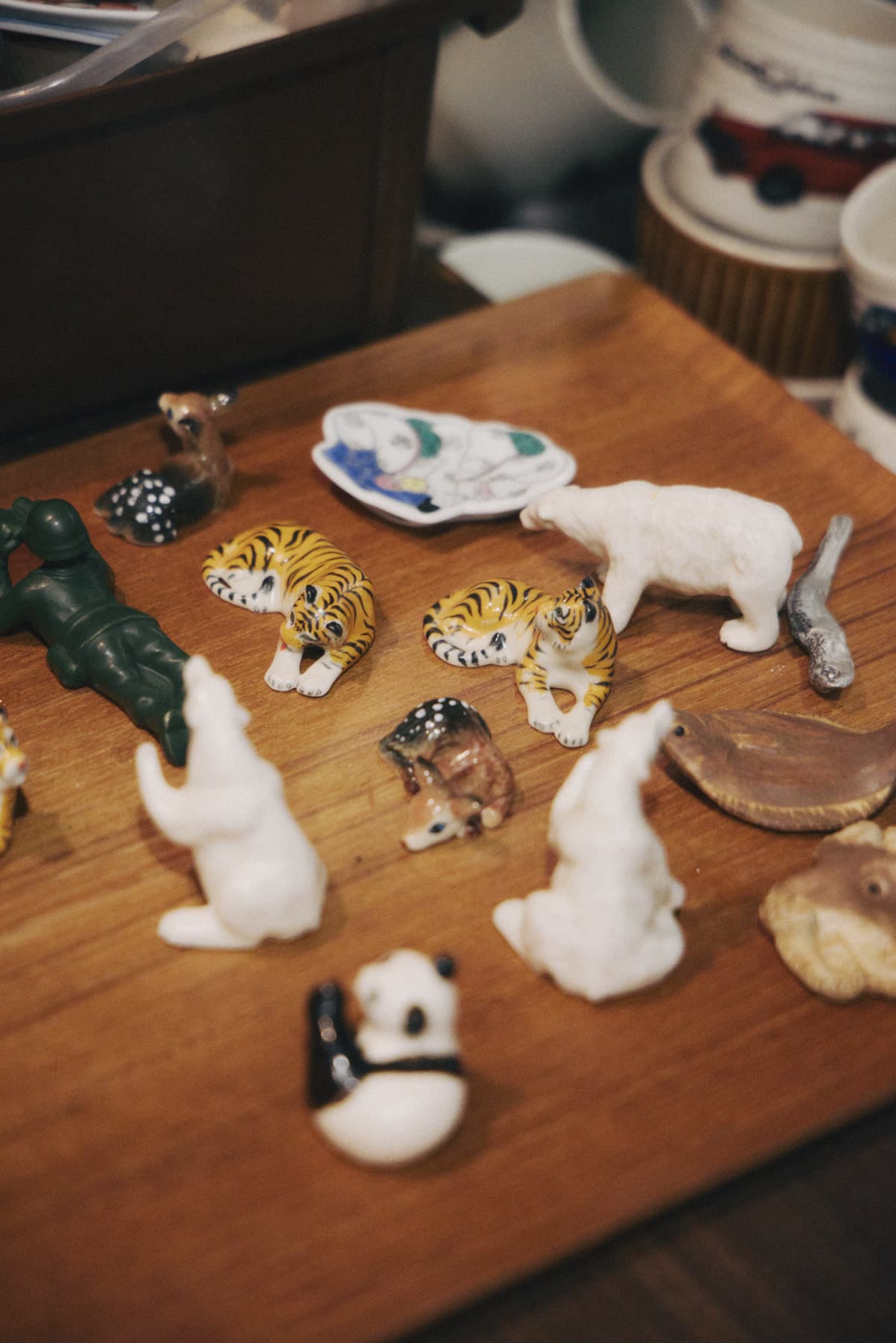
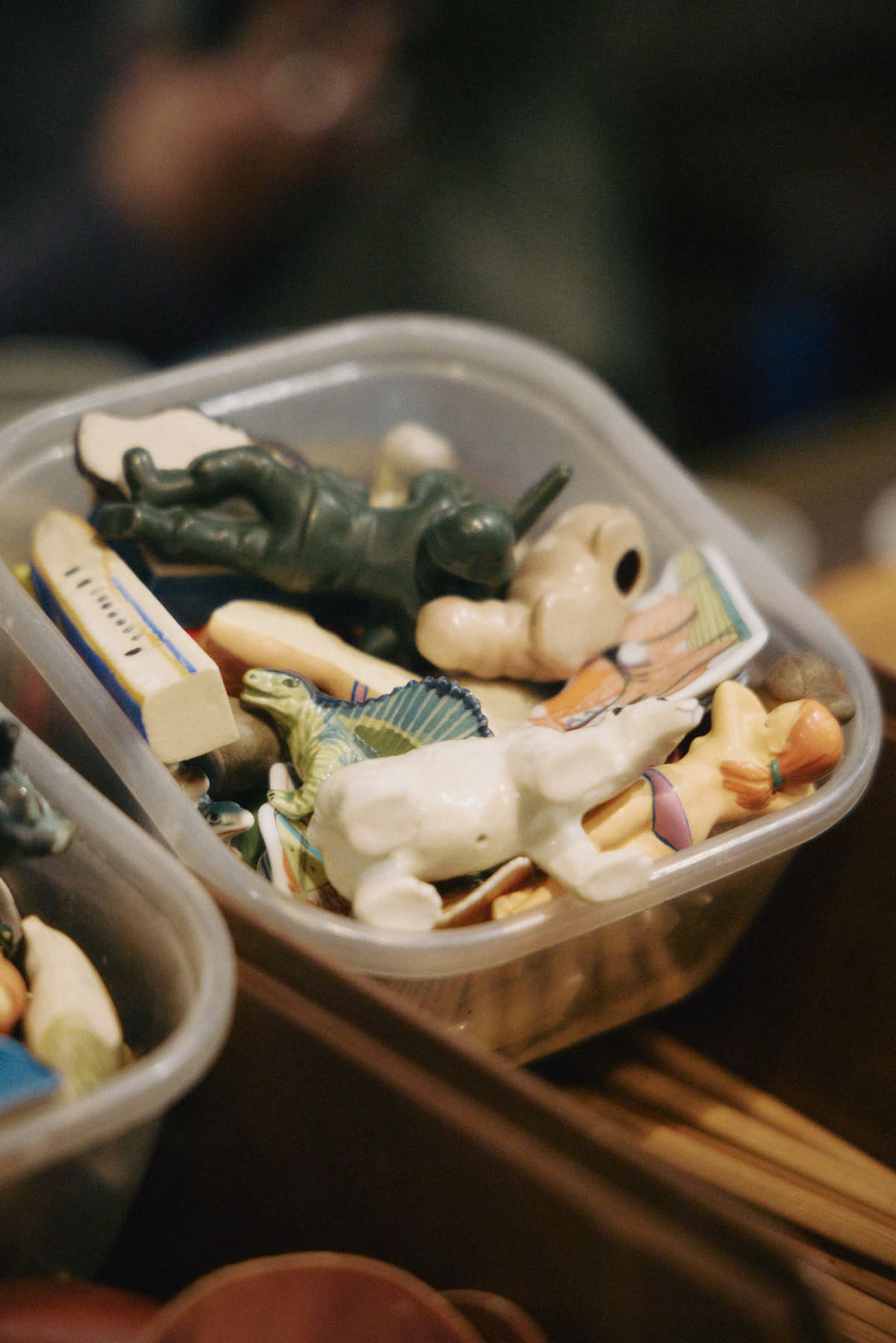
It is also part of the fun to see what kind of chopstick rest your dish will be served with. “When I see customers happy to look at the chopstick rests or taking photos of them, it makes me happy too,” says Sato.
Sato often looks for chopstick rests at flea markets and antique shops. Some are rare chopstick rests that have already been discontinued.
These are yunomi teacups with the names of Japanese enka singers such as Shinichi Mori, Takashi Hosokawa, and Eiko Segawa written on them.
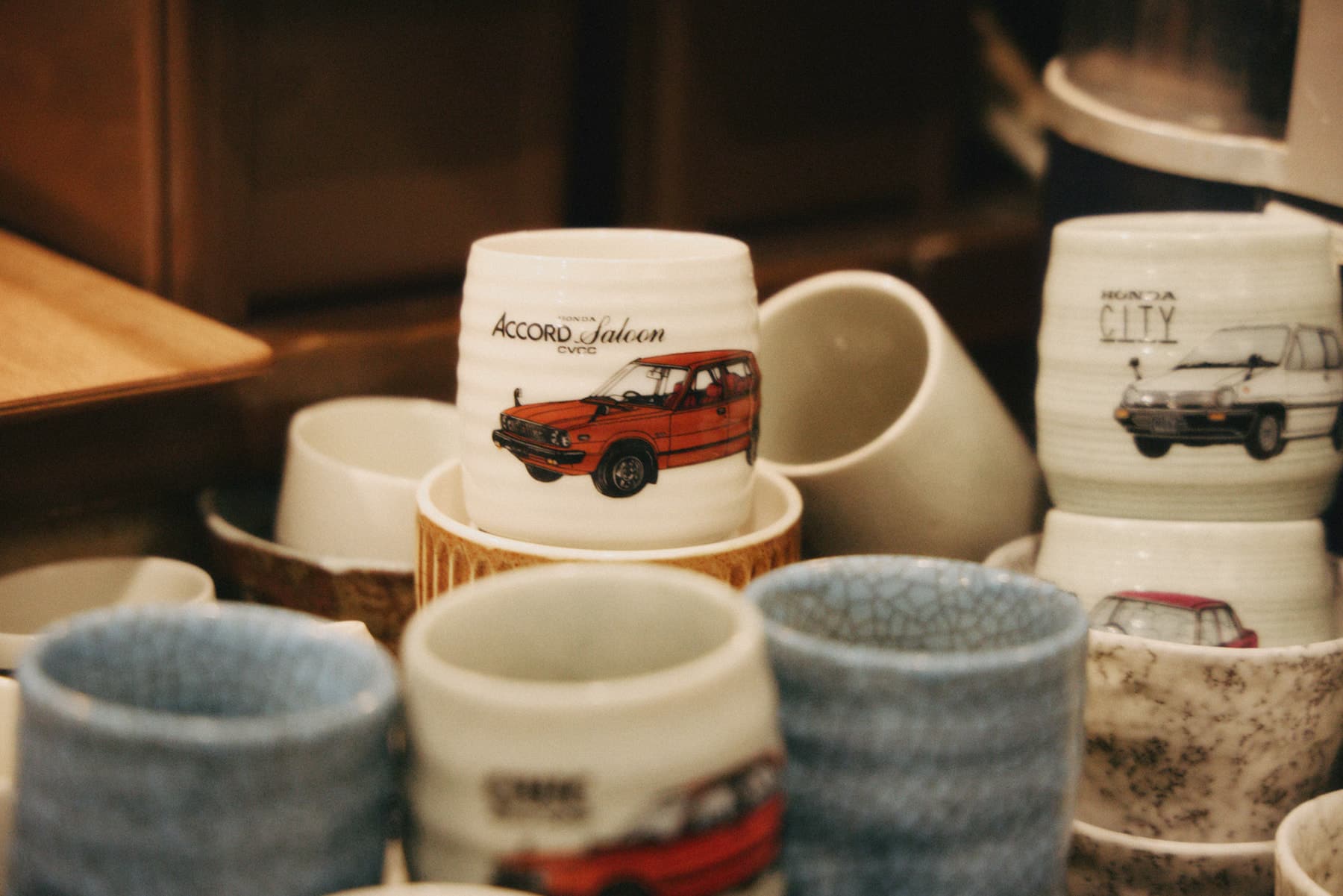
There are also cups made as novelty goods for the Japanese automobile manufacturer "HONDA".
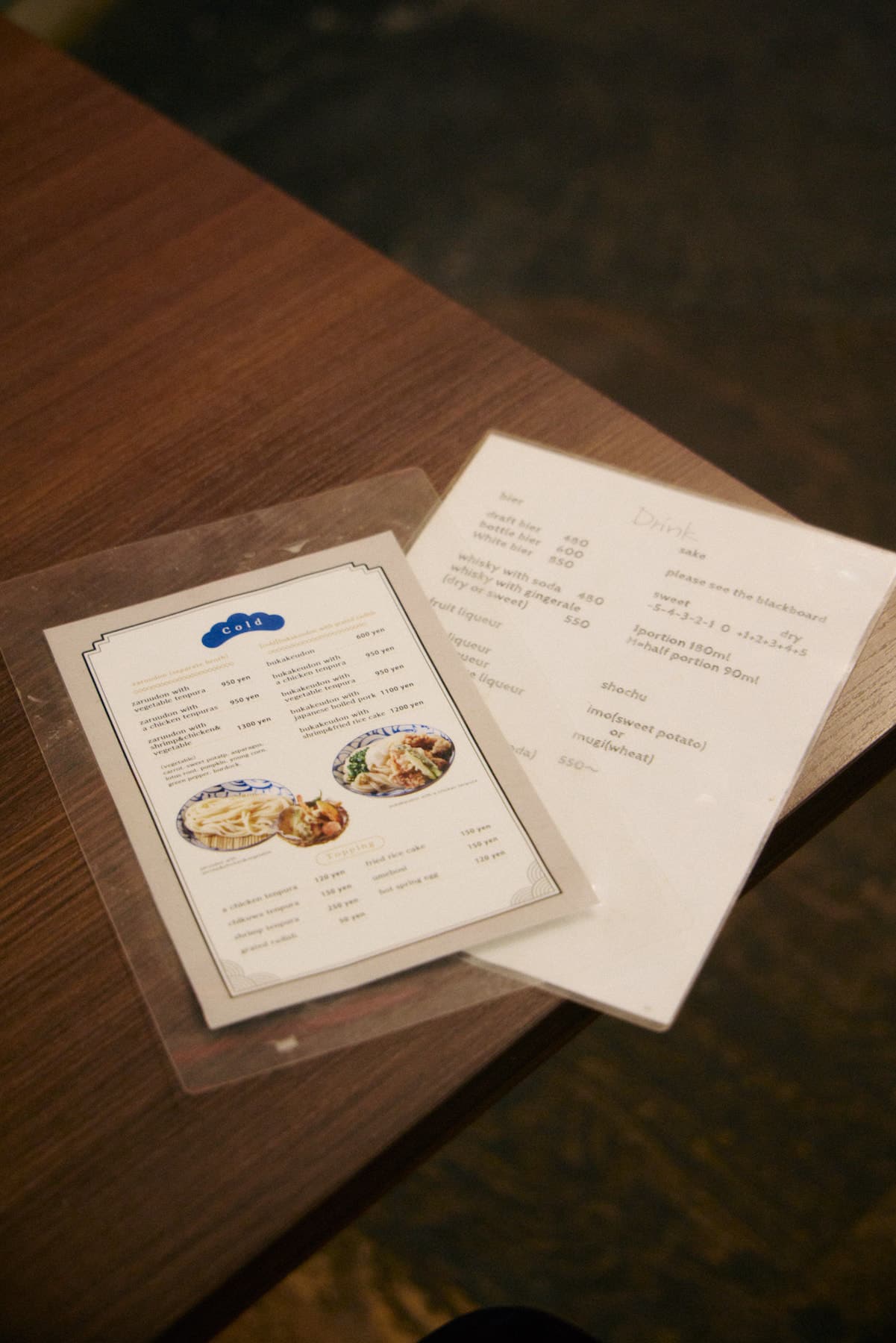
An English menu is also available.
Sato apparently had no particular connection to Shimokitazawa before opening the shop. He encountered this location through an introduction from an acquaintance and ended up opening the shop here. Although it began as a place found by chance, the many unique collections displayed inside the shop have something in common with the atmosphere of the neighborhood.

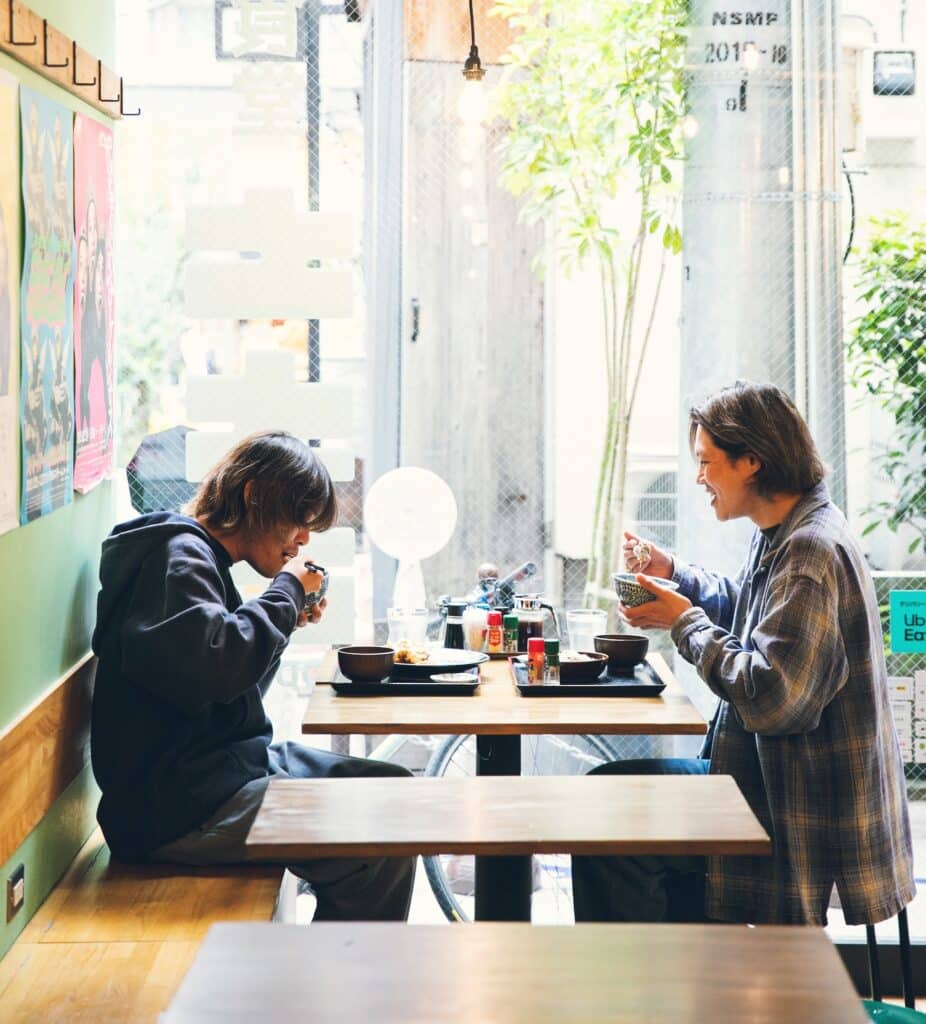
“It is a place the two of us often go to! We both always order Bukkake Udon with chicken tempura. Above all, the chicken tempura is delicious, and it is our favorite menu item. I think the reason the taste is always the same whenever we go is because the owner cooks everything by himself,” says Kasumi.
The information contained this article was correct as of 06/04/2026 (the time of publication)