DEEPTOKYO
magazine

EN

DEEPTOKYO
magazine
EN
Tokyo is a city where tradition and the future, the ordinary and the extraordinary, intertwine. Its character shifts dramatically depending on the time of day—and the perspective from which it is seen. In A-Un, photographer Atsushi Yagi contrasts Shibuya by day and by night, revealing the hidden duality within a single city. We spoke with Yagi about the inspiration behind the series and the creative process behind revealing another side of Tokyo through his work.
SHARE


Atsushi Yagi is a photographer known for his numerous fashion and beauty photographs in advertisements and magazines. His meticulous lighting techniques and sophisticated retouching—which make his subjects appear even more beautiful and powerful—are the hallmarks of his work. When he turns these honed skills toward the city, the result is not merely documentary photography, but “urban portraits” reimagined through color and composition.
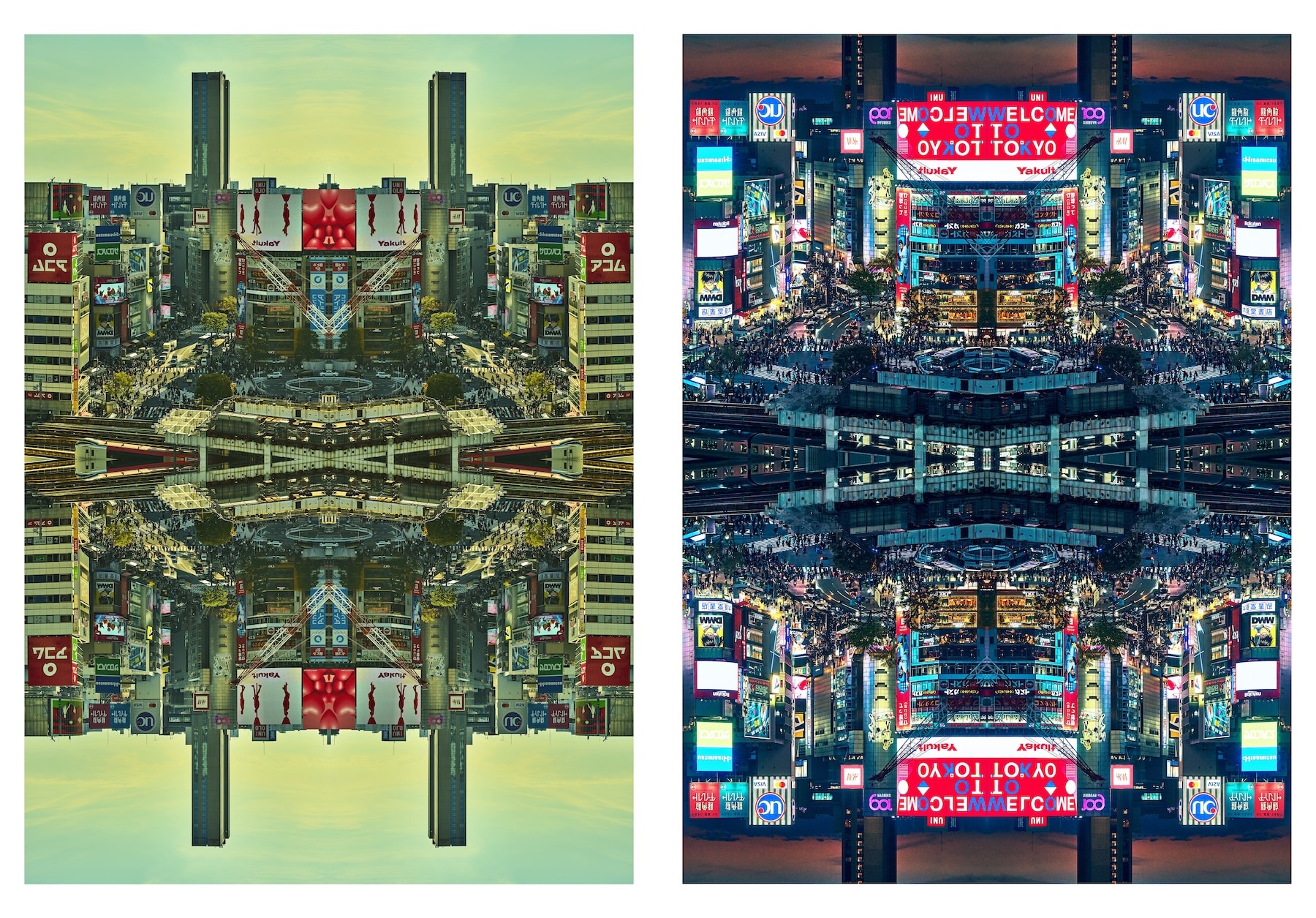
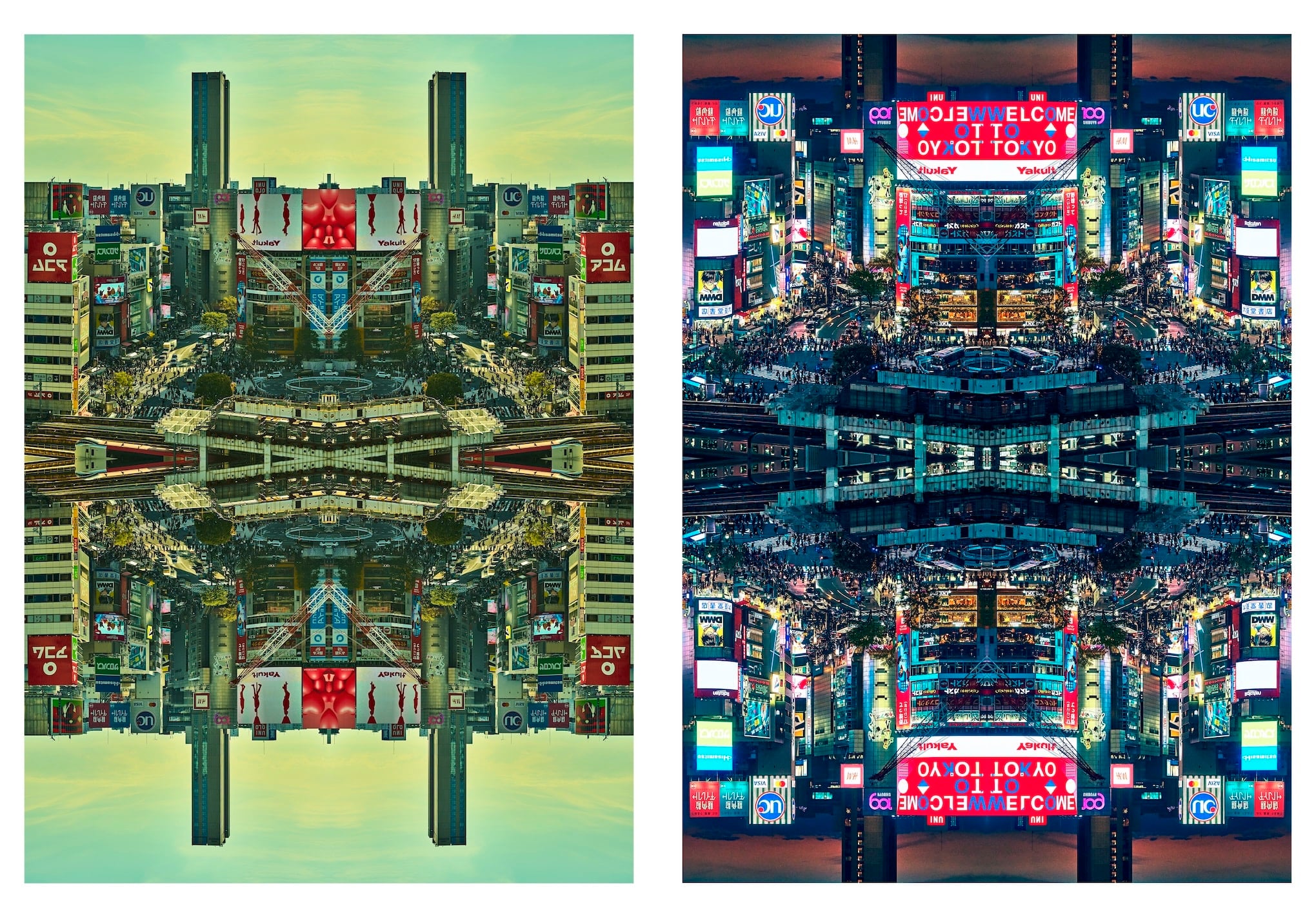
For this series, Yagi photographed some of Shibuya's most iconic landmarks, including the famous Scramble Crossing and the area around SHIBUYA109. Presented as a pair—one image captured by day and the other by night—the two photographs together form a single work titled A-Un. A-Un takes its name from the Sanskrit syllables "A" and "Un," representing the first sound made when the mouth opens and the final sound made when it closes. The term symbolizes the beginning and the end of all things, as well as the origin and completion of the universe.
We asked Yagi why he chose the title A-Un for the work.
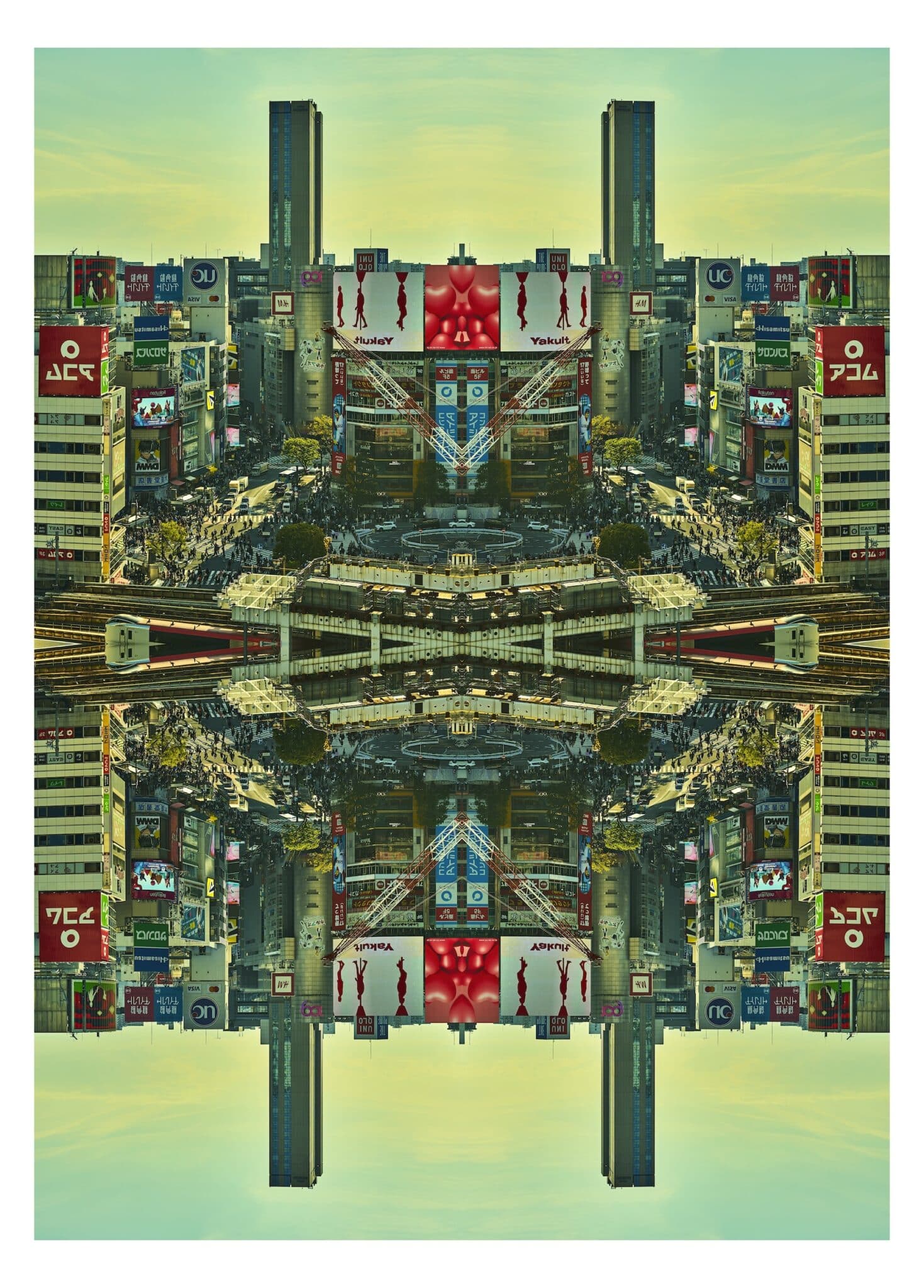
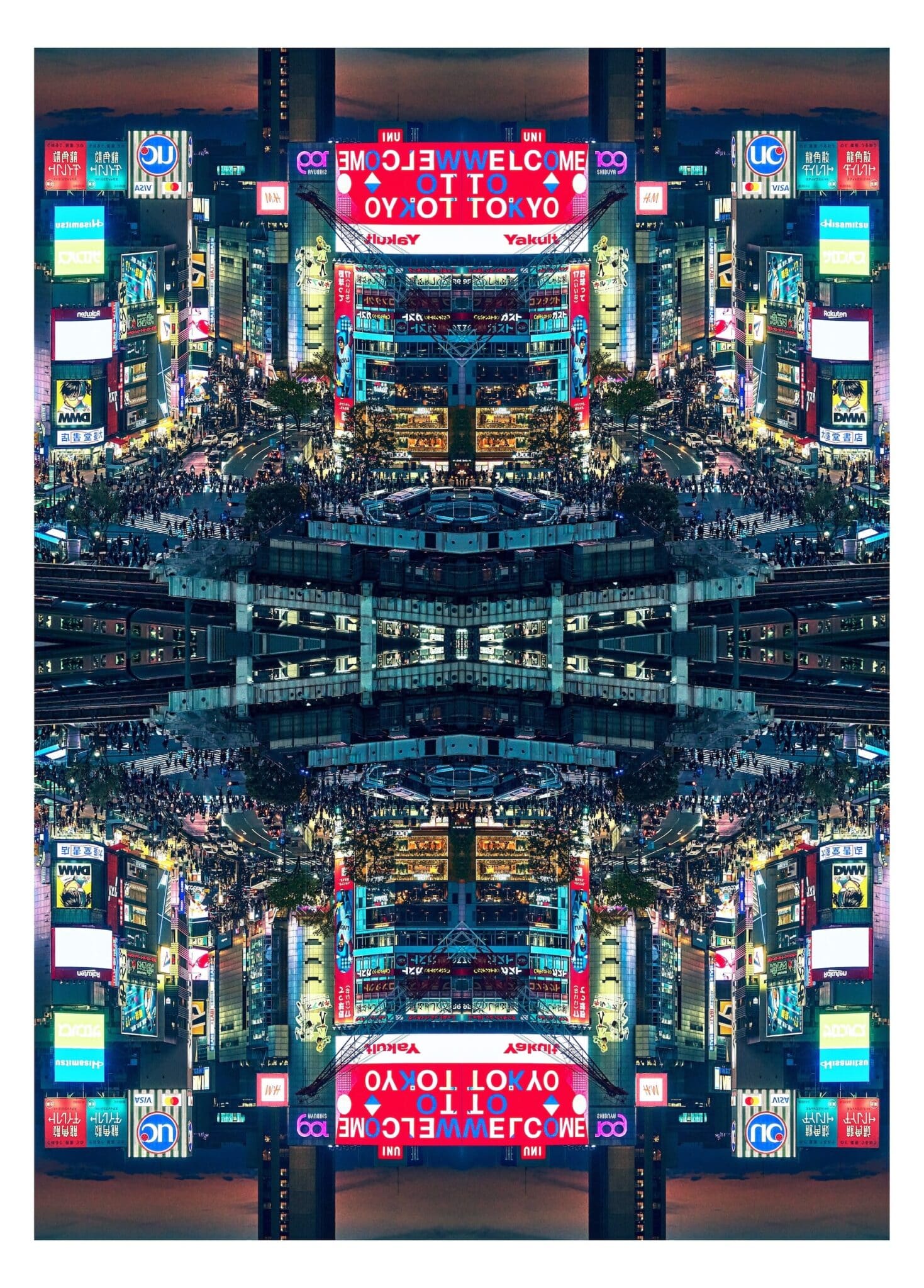
"In the daytime image, the curve of the road looked like an open mouth to me. In contrast, the lights tracing the road in the nighttime image looked almost like a face clenching its teeth. That's where the title came from. "It wasn't something I had planned from the beginning, though. Originally, I wanted the daytime image to emphasize the sky, while the nighttime image would immerse the viewer in the city's dazzling lights. But once I placed the two photographs side by side, they became something entirely different. "As I sorted through all the images I'd taken and put together a rough pairing, I realized this combination had a mysterious strength. I tried refining it afterward, but nothing felt quite right. In the end, the version that came from my first instinct was the one that worked best."
Shibuya at Noon
Shibuya at Night
It's through this contrast that Shibuya's unique character seems to emerge most clearly.
"That's exactly it," Yagi says. "Putting the two images side by side brought out both sides of Shibuya—the parts that are welcoming, and the parts that feel slightly intimidating. "During the day, Shibuya seems to open its mouth, embracing tourists and all kinds of people and activity. But at night, it feels as though it's clenching its teeth, pushing things away and refusing to let them in. I think that atmosphere has always existed beneath the surface of Shibuya itself. "To be honest, I never imagined I could capture Shibuya this way myself. It made me think, 'Shibuya is something else.'"
An open, inviting Shibuya by day. A city charged with tension after dark. Together, the two images evoke a strangely futuristic atmosphere, reminiscent of the worlds found in anime and video games.
"I knew from the start that simply presenting the city as it is wouldn't be enough. I pushed the neon lights to make them even more vivid. "I hesitate to call it 'cyber,' because that sounds a little cheap, but I was probably thinking about Tokyo's distinctive palette—perhaps even the influence of anime culture. I paid close attention to the signboards as well. You'll even find one that reads "Welcome Tokyo," he says with a laugh.
Electronic billboards, neon lights, densely packed buildings, and the presence of people layer and repeat, making Shibuya feel almost like an imagined city. Rather than transforming the landscape into something entirely different, Yagi's retouching seems to reveal another face that has always existed beneath the city's surface.
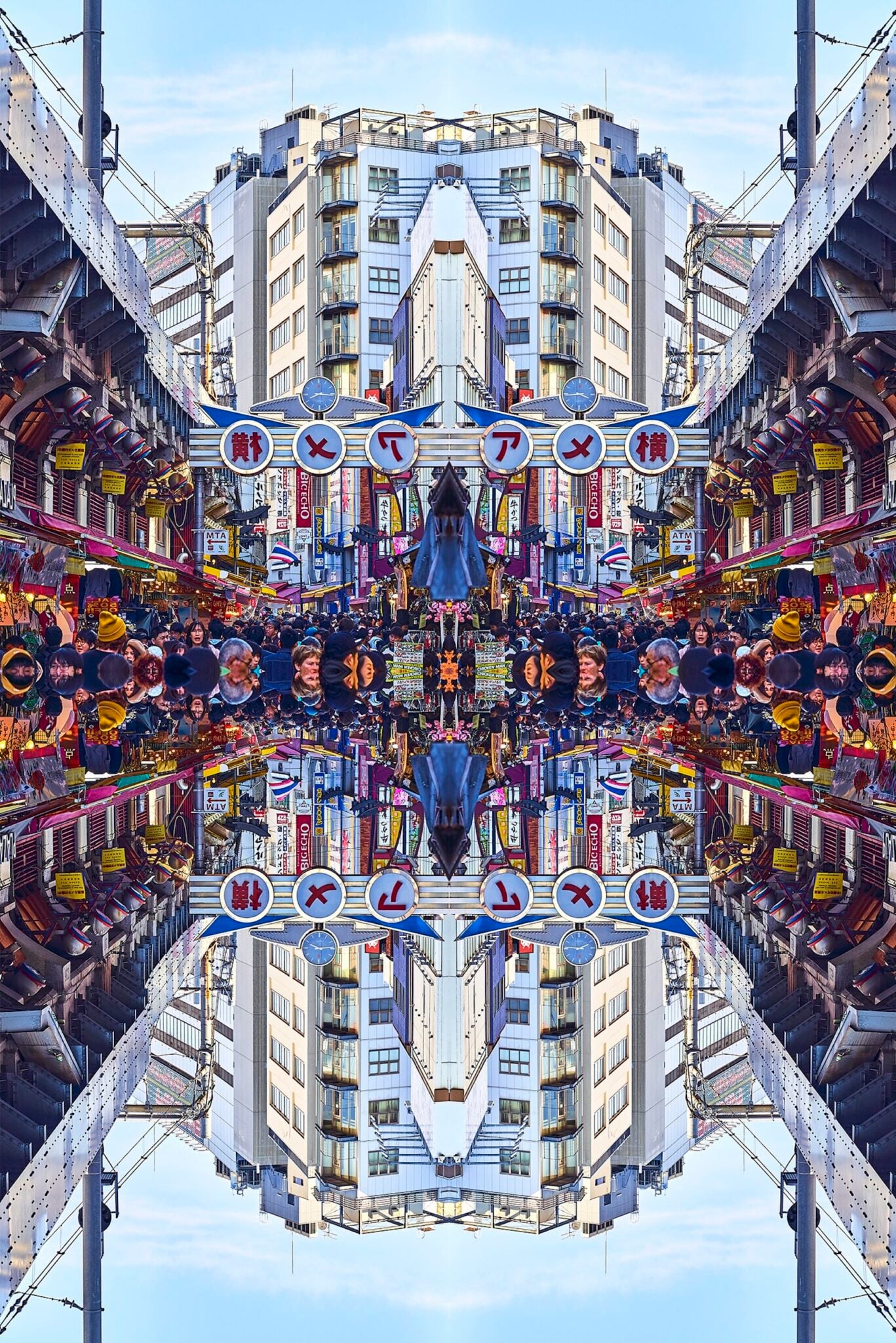
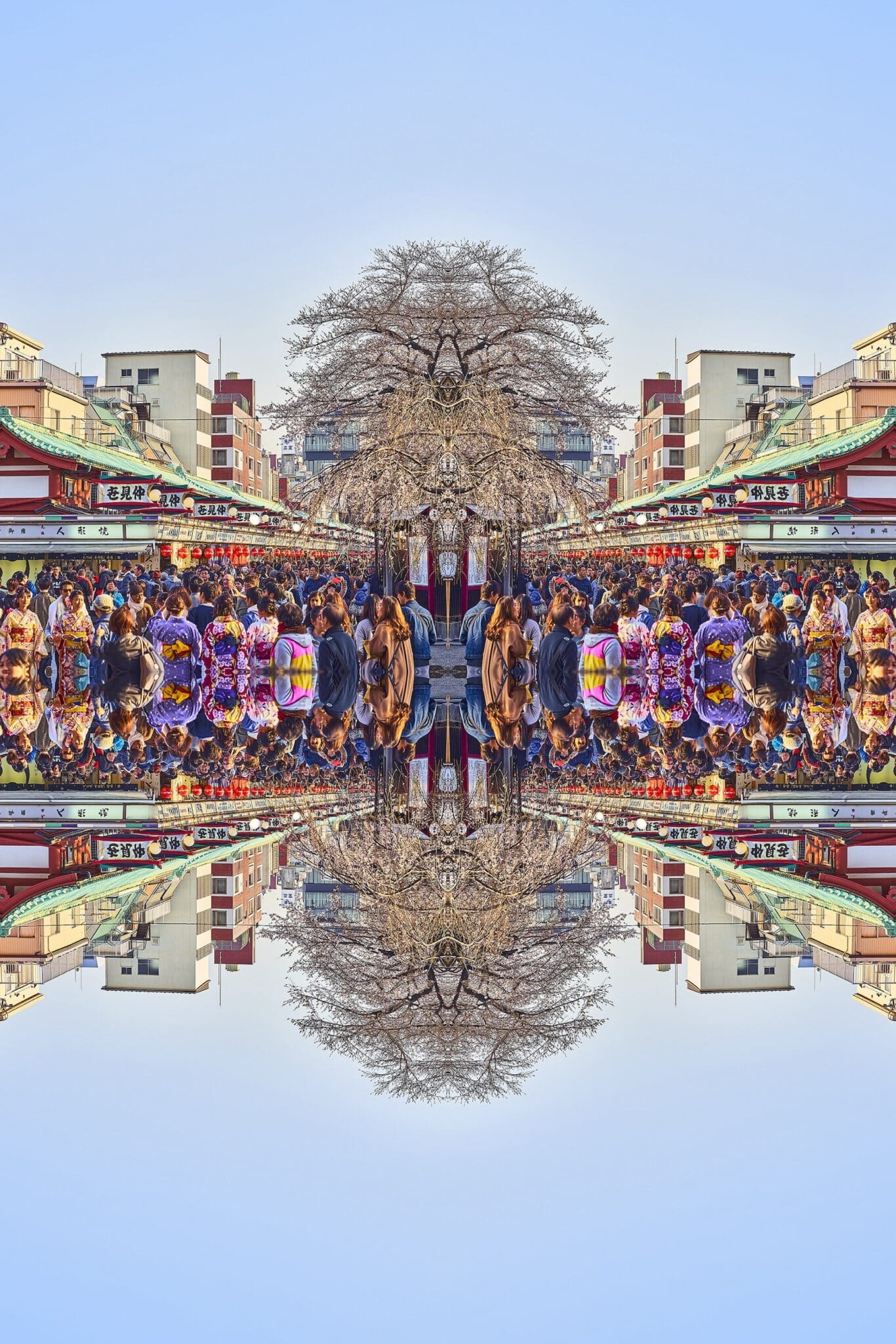
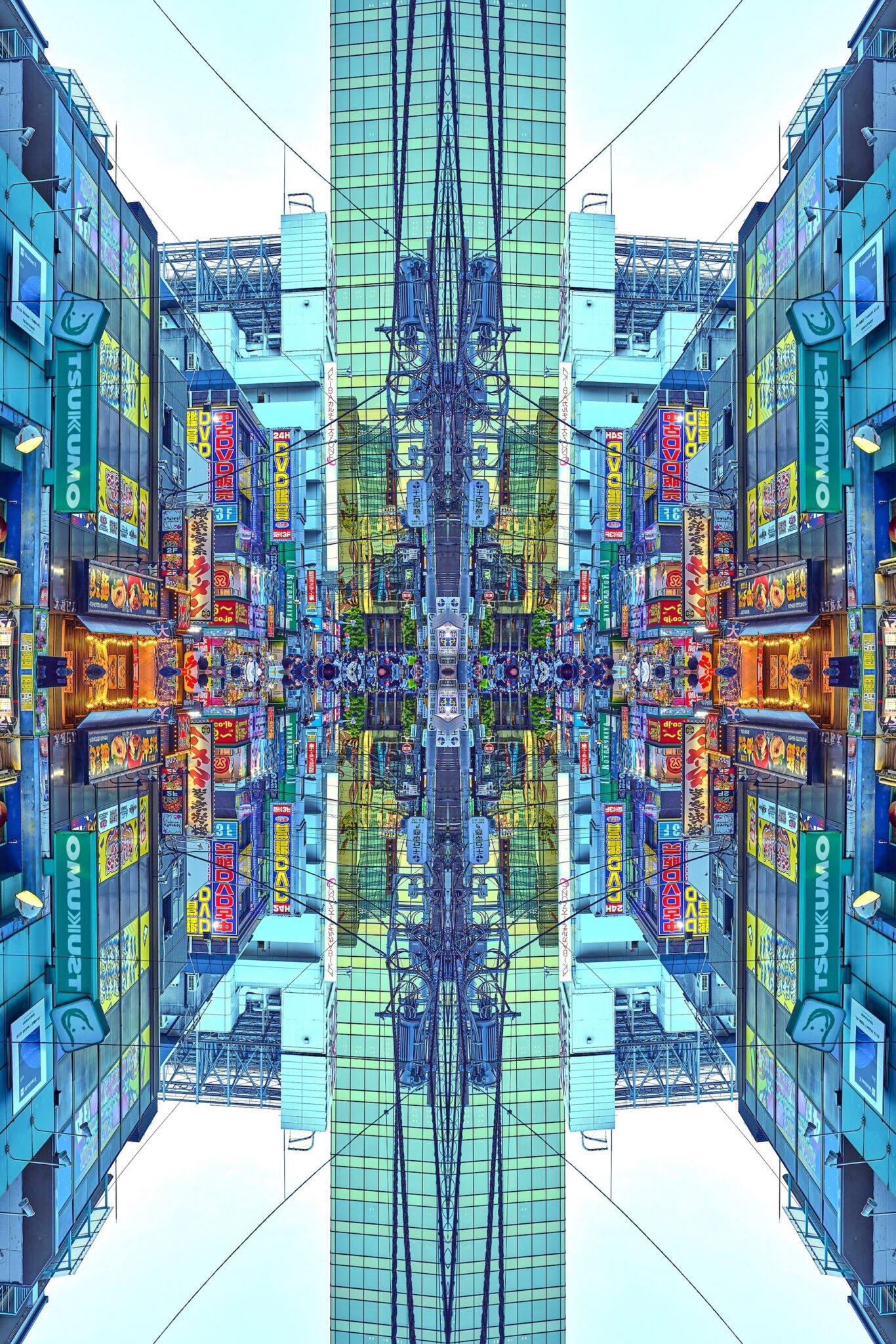
The series also includes familiar Tokyo streetscapes such as Ameyoko in Ueno, Nakamise in Asakusa, and Akihabara Electric Town. Though each is instantly recognizable, Yagi's images make them feel entirely unfamiliar—as if they belong to a city we've never seen before.
Ameyoko, Ueno
Nakamise, Asakusa
Akihabara Electric Town
Each work has a distinctly graphic quality, almost resembling a geometric pattern. Where does that powerful sense of composition come from?
"I'm very conscious of both the vertical and horizontal axes. Before becoming a photographer, I used to work in the architectural field, and I also studied interior design. Maybe that's why I've always been drawn to things that are neatly aligned or arranged with a sense of order. People often tell me my work looks like a mandala, and I've loved looking at mandalas ever since I was young. I suppose my work is really a distillation of the things I've always loved."
So your carefully balanced compositions seem to be rooted in your background in architecture and interior design. On top of that, there's your distinctive sense of color.
"I'm always searching for that balance—not too fantastical, but not overdone either. In the end, it all comes down to whether the images feel right to me. "At the same time, I want them to retain a sense of sophistication. When I show these works to people I've collaborated with in fashion and beauty, many of them say, 'This is so you.' Hearing that makes me realize just how much of myself is reflected in these images."
Although they depict city streets, Yagi's photographs possess the refinement of fashion imagery. Their bold colors and striking symmetry never feel excessive for the sake of spectacle alone. Instead, they reflect the visual sensibility he has cultivated through years of commercial photography.
You've built your career as a fashion and beauty photographer. What first led you to start photographing cityscapes?
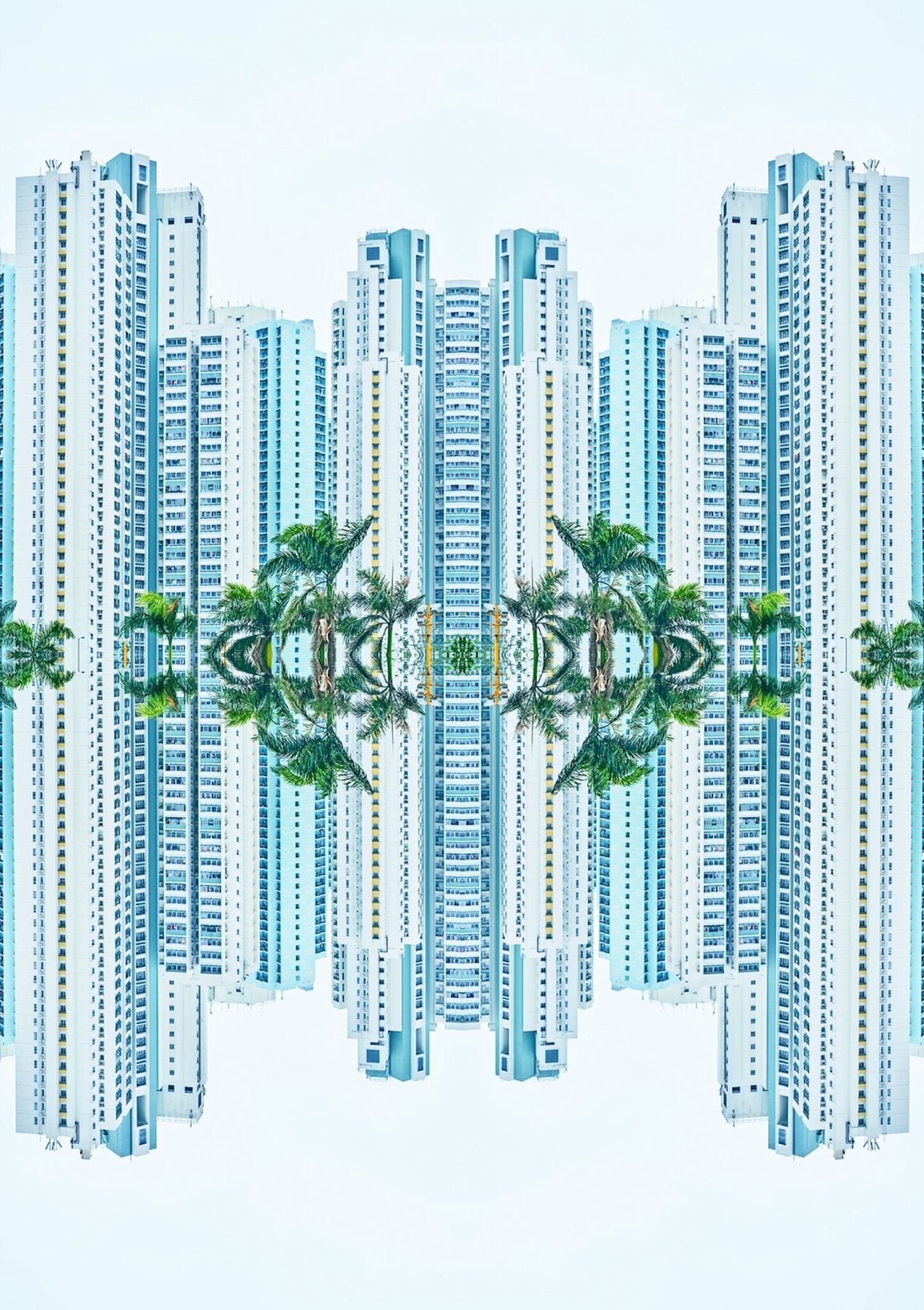
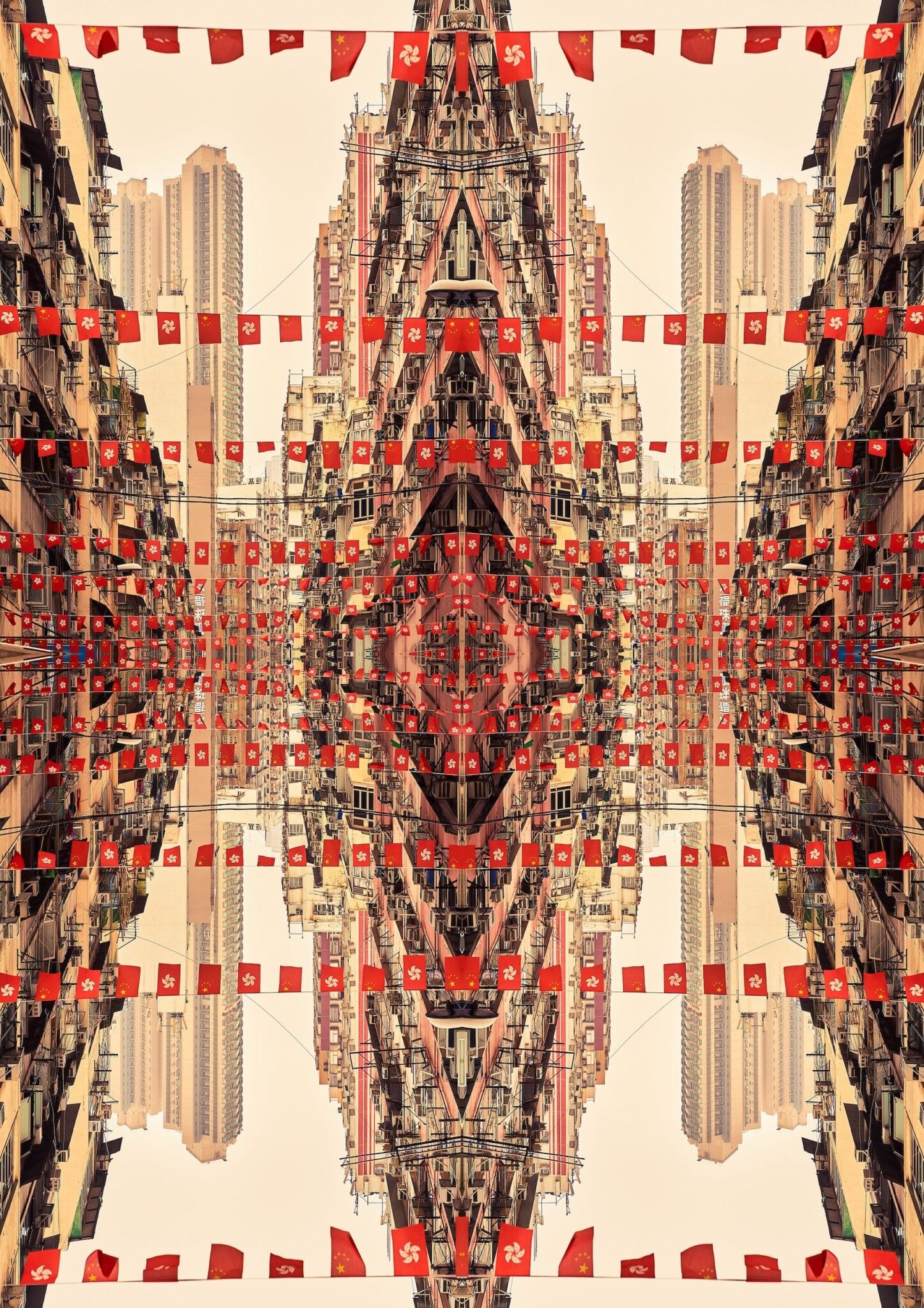
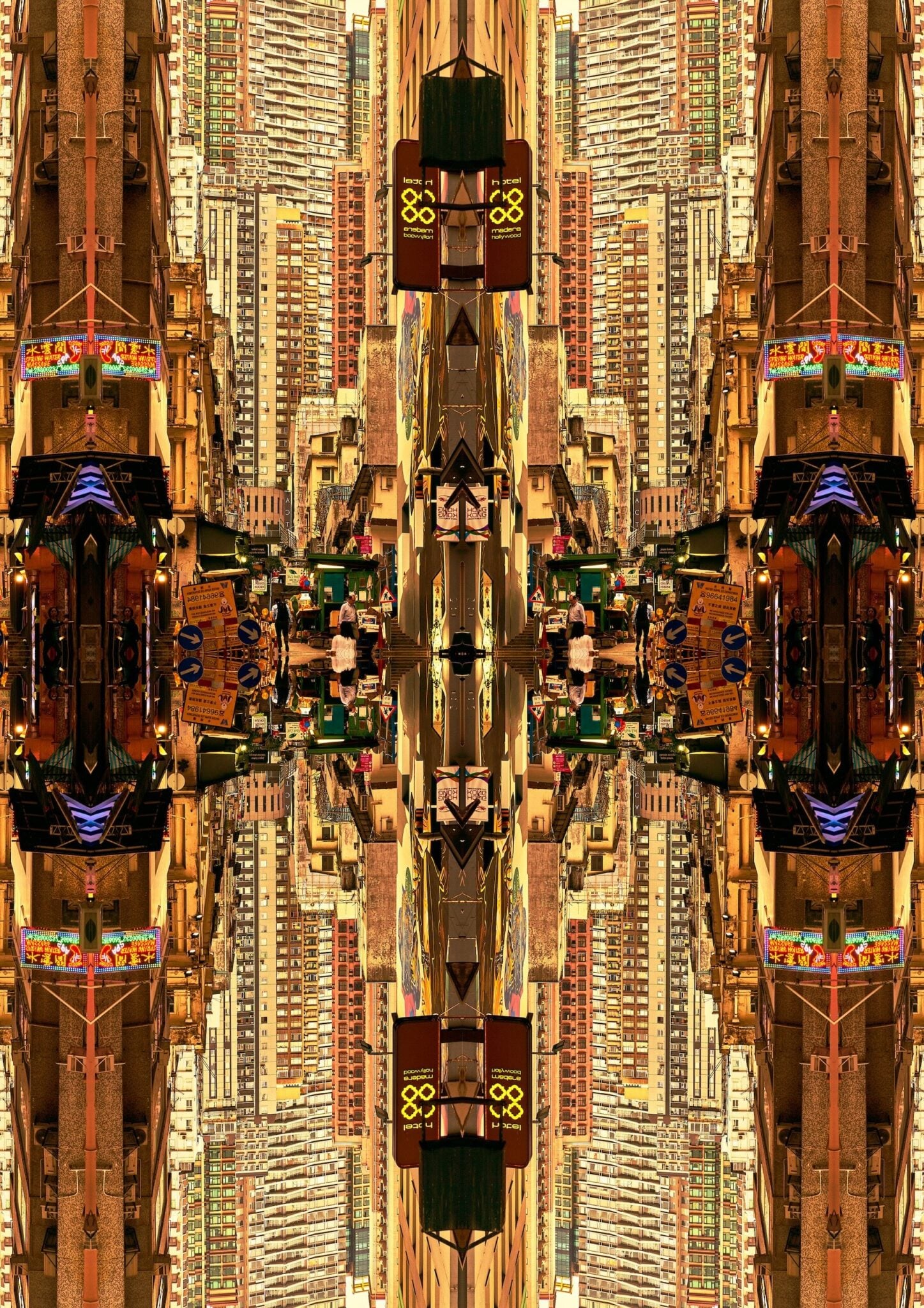
"I held a solo exhibition in 2019. The main focus was my beauty photography, but there was some extra space in the gallery, so I decided to exhibit some of my other work as well. A few years earlier, I'd visited Hong Kong and had fallen in love with the city, so I decided to photograph it. Once I'd taken the pictures, though, I found myself wanting to bring a little more of my own style into them. That's when I started experimenting with different ways of reworking the images."
"Hong Kong's cityscape is filled with tall buildings rising side by side, so I wondered if there was a way to make people see it differently. Through a lot of trial and error, I gradually arrived at this technique. "It's actually a very simple technique, but the results were far more visually powerful than I'd expected. Hong Kong is full of older architecture, yet applying this technique suddenly gives the city a futuristic feel. It completely transforms the mood of the scene. That was my discovery."
By introducing just a subtle shift in perspective, familiar streets reveal an entirely different expression. What Yagi discovered in Hong Kong would eventually lead to his series exploring the streets of Tokyo.
Are there any places you'd like to photograph in the future?
"I'd love to photograph places in different countries, especially across Asia. Taiwan, South Korea, even temples in Thailand—I think they'd all make fascinating subjects. "Everyone photographs famous landmarks. But rather than avoiding them, I'd like to photograph places everyone already knows and present them from a different perspective. To me, that's what it's all about—changing the way people see familiar places."
Meticulous composition, vivid color, and the refined retouching techniques honed through years of commercial photography—through Atsushi Yagi's distinctive perspective, even the most familiar cityscapes reveal entirely new expressions. In A-Un, the duality of Shibuya unfolds through the contrast between day and night. Perhaps what the work ultimately reveals is Tokyo itself—a city that is constantly evolving.

Born in Miyagi Prefecture, Atsushi Yagi apprenticed under photographer Masamitsu Tomita in 2003. After spending a year in the UK in 2006, he returned to Japan and launched his professional career in 2007. Drawing on years of experience in beauty photography, Yagi creates images that capture the essence of his subjects—from people and products to, more recently, automobiles. Combining meticulous lighting with sophisticated retouching, he continues to produce highly refined visual work in both photography and film.
https://signo-tokyo.co.jp/artists/atsushi-yagi/
<風景写真アカウント>
https://www.instagram.com/yagiatsushi08/