DEEPTOKYO
magazine

EN

DEEPTOKYO
magazine
EN
2026.05.26
A Kissaten Where Visitors Can Fully Enjoy Classical Music While Experiencing the Lingering Atmosphere of a Legendary Meikyoku Kissa
 Nearest Station


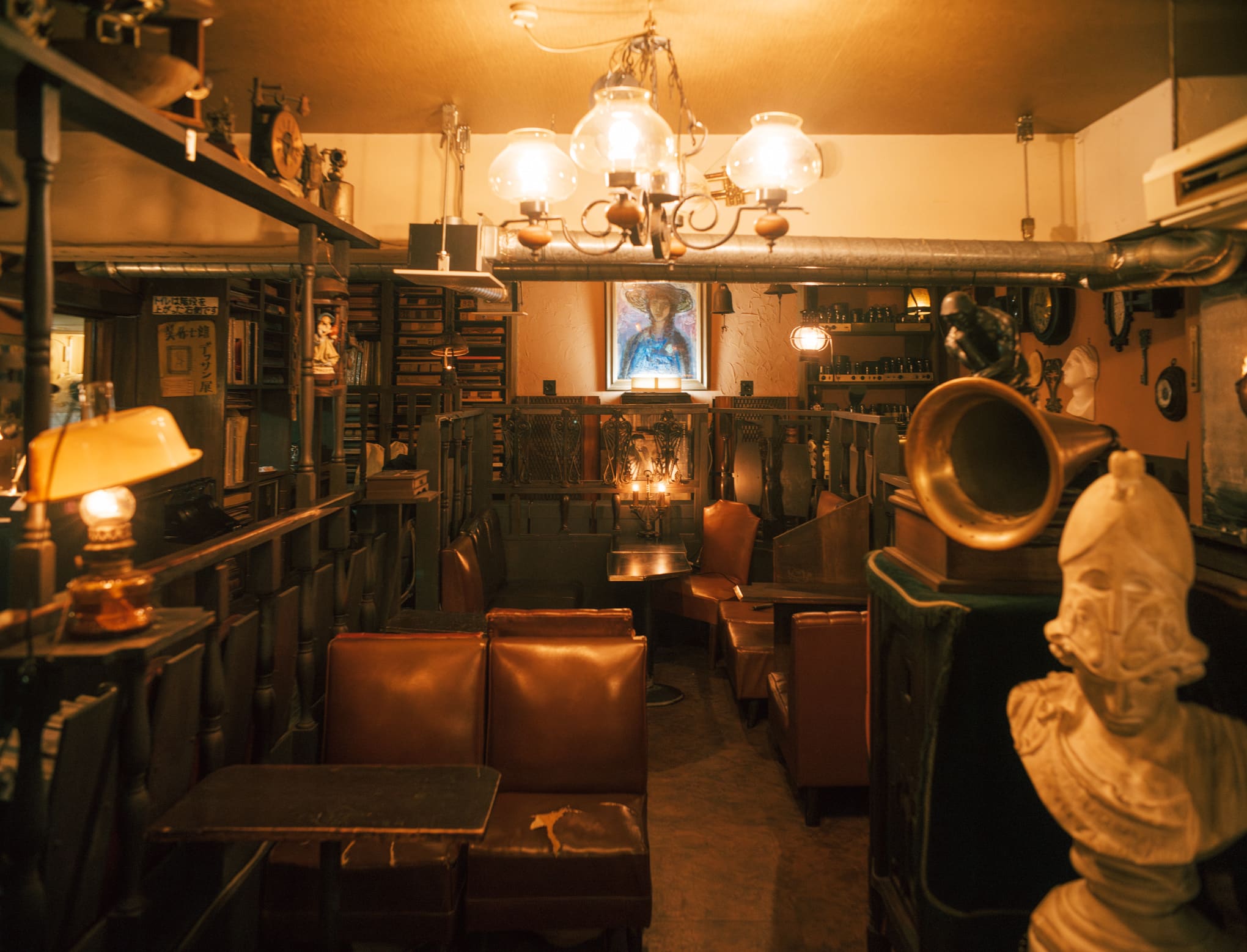
“RENAISSANCE” in Koenji is a meikyoku kissa, a Japanese classical music kissaten, that inherited some of its interior furnishings and record collection from “CLASSIC,” a much-missed meikyoku kissa once located in Nakano. Inside, surrounded by timeworn furnishings that make you feel as if you have slipped back into the Showa era, you can enjoy coffee while listening to classical music records played at high volume.
SHARE


Tucked away underground in Koenji, “RENAISSANCE” is a meikyoku kissa with a retro Showa-era atmosphere. A meikyoku kissa is a uniquely Japanese form of kissaten culture where guests enjoy coffee or tea while listening to classical music played at high volume through high-quality audio equipment. “RENAISSANCE” opened in 2007, taking over part of the interior and record collection from “CLASSIC,” the legendary meikyoku kissa that closed to the regret of many.
Although there are places overseas where people can listen to live performances, the culture of the meikyoku kissa—where customers sit quietly and listen closely to records—is said to be extremely rare outside Japan. In recent years, many international visitors have also come in search of the quiet, profound experience that only this shop offers.
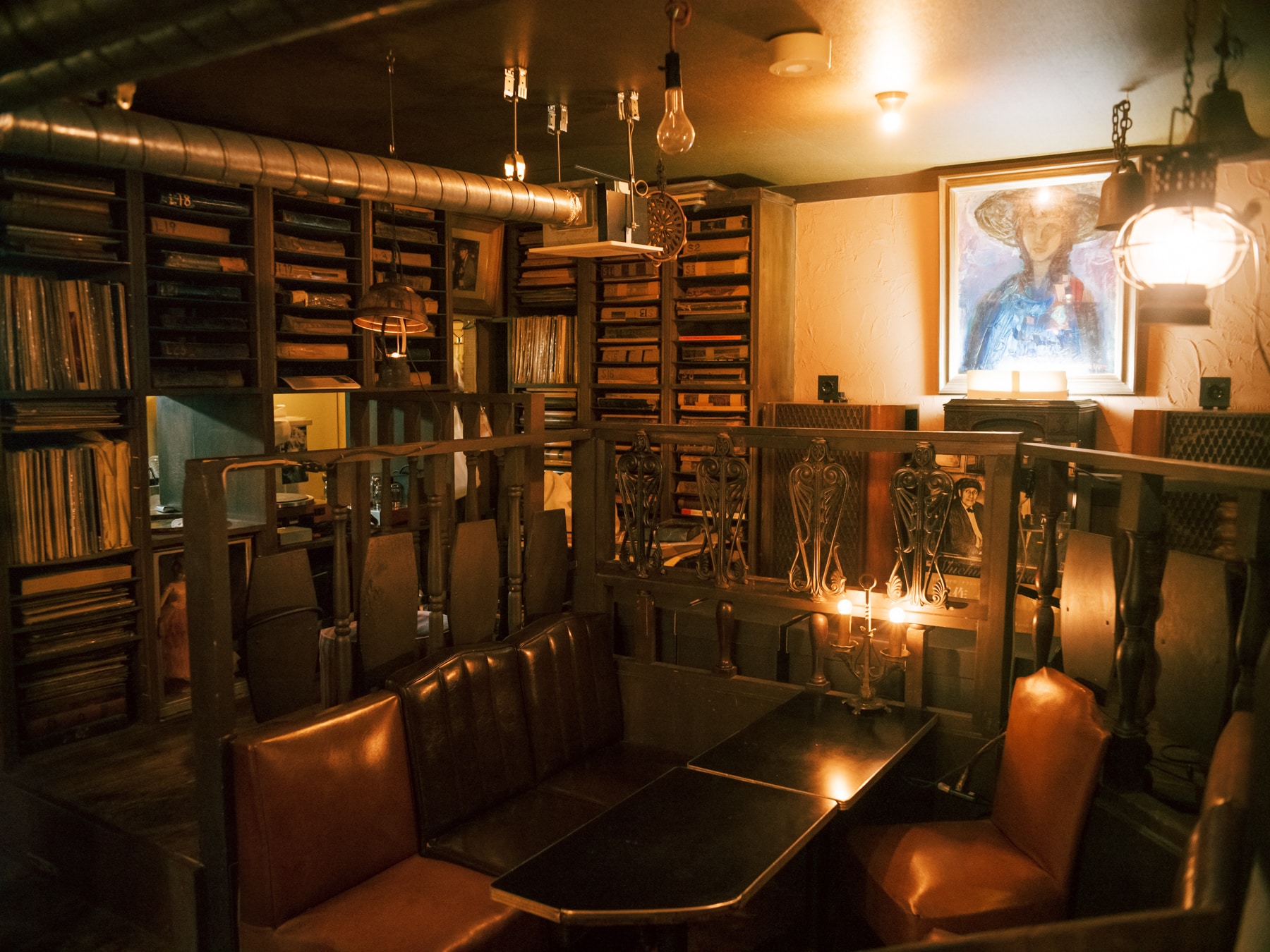
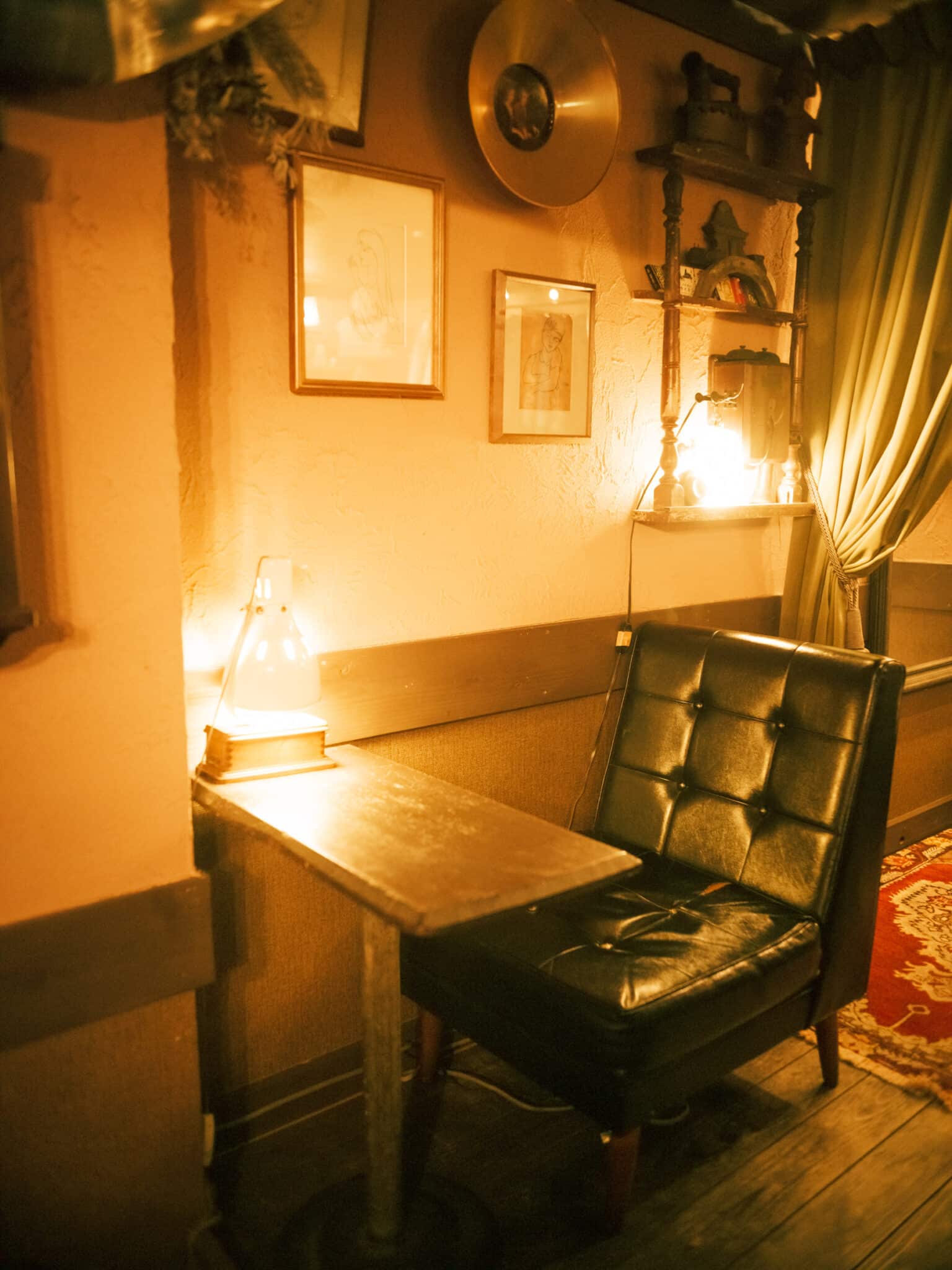
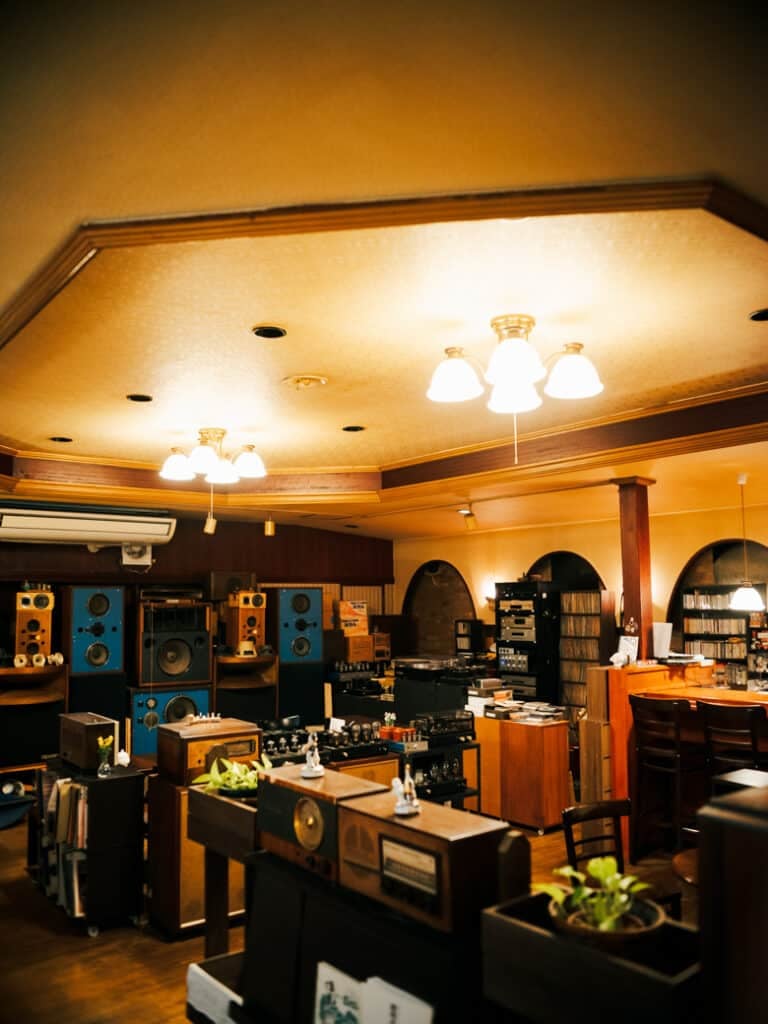
A dim interior lined with amber-brown furniture whose color has deepened over the years. The floor has different levels, and the chairs and tables are angled slightly differently, creating a layout that allows customers to enjoy the music on their own without meeting one another’s gaze.
“CLASSIC” was a meikyoku kissa that once radiated a striking individuality from a back alley in Nakano and was beloved by many cultural figures. Its owner was Shichiro Misaku, who was also known as one of the “three eccentrics of Nakano.” Raised in a wealthy family in Kumamoto, Misaku came to Tokyo aspiring to become a painter. He was skilled enough to hold a solo exhibition at a gallery in Ginza, while also showing a talent for invention. With his handsome appearance, he even worked as a model—a truly multifaceted figure.
Misaku passed away in 2005. Afterward, his daughter Ryoko, the second-generation owner, steered “CLASSIC” toward becoming “an ordinary kissaten.” Through that period of change, “RENAISSANCE” inherited the spirit of “CLASSIC” both physically and spiritually. The owner of “RENAISSANCE,” Makiko Hiyama, worked at “CLASSIC” intermittently from her teens through her thirties. Surprisingly, she says she had no interest in classical music at all at the time. However, after opening “RENAISSANCE” as her own shop in 2007, she spent a lonely year with almost no customers, studying music catalogues and continuing to play records. Through that time, she says, she awakened to the greatness of classical music.
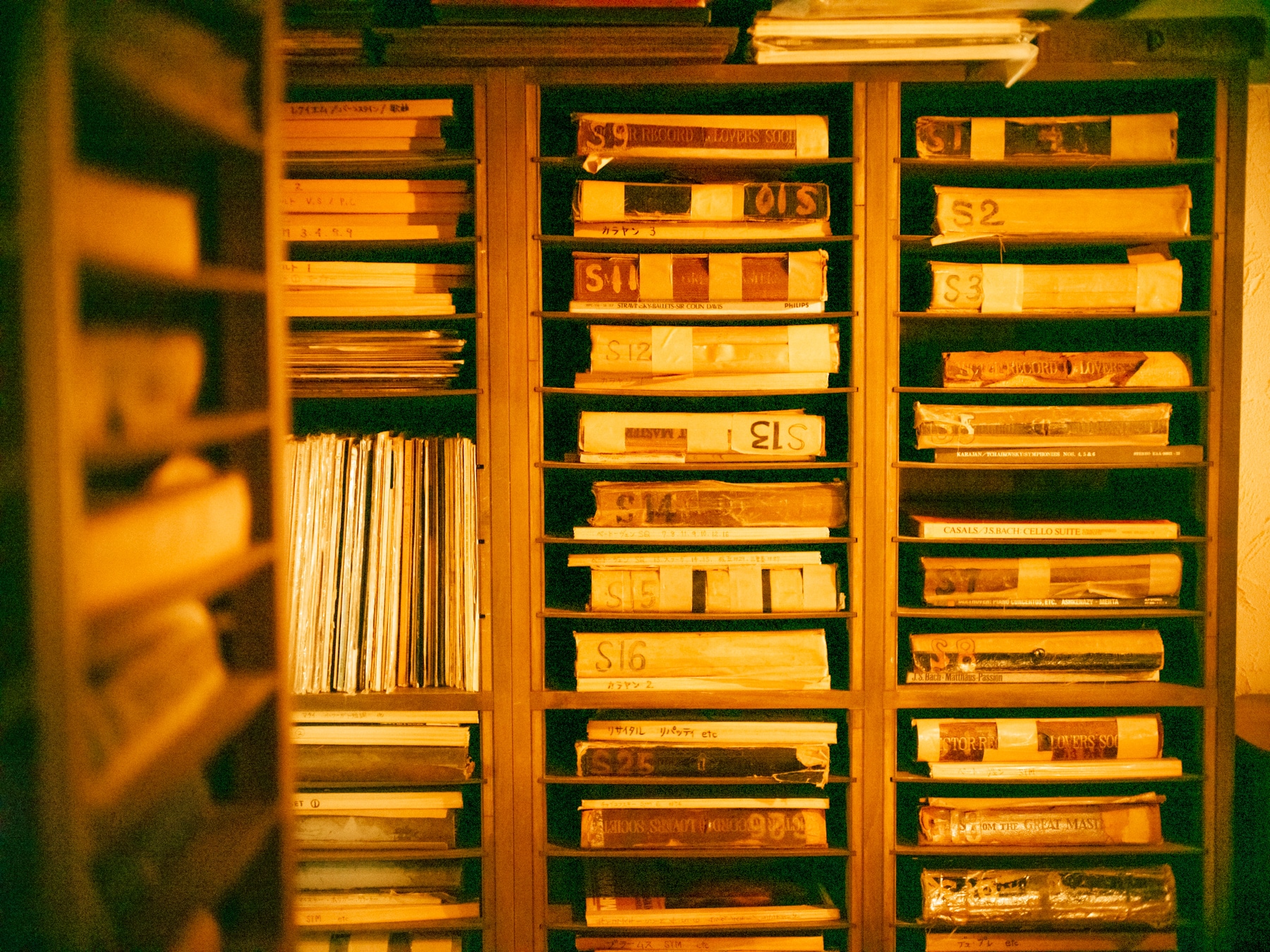
The shop inherited several thousand records from “CLASSIC.” Even Hiyama herself does not know the exact number.
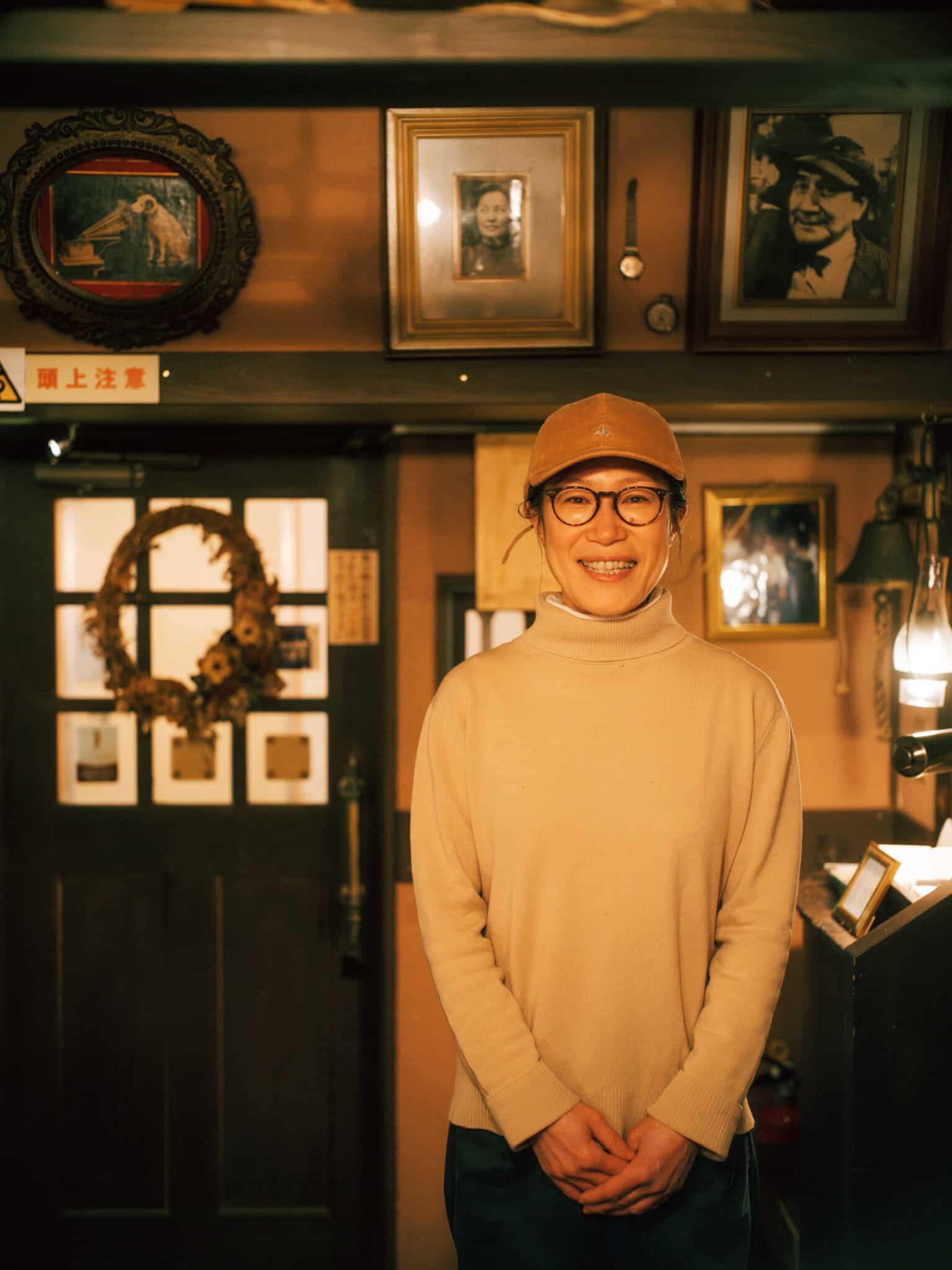
Makiko Hiyama, the owner. Hiyama says she worked intermittently at “CLASSIC” from her late teens through her thirties.
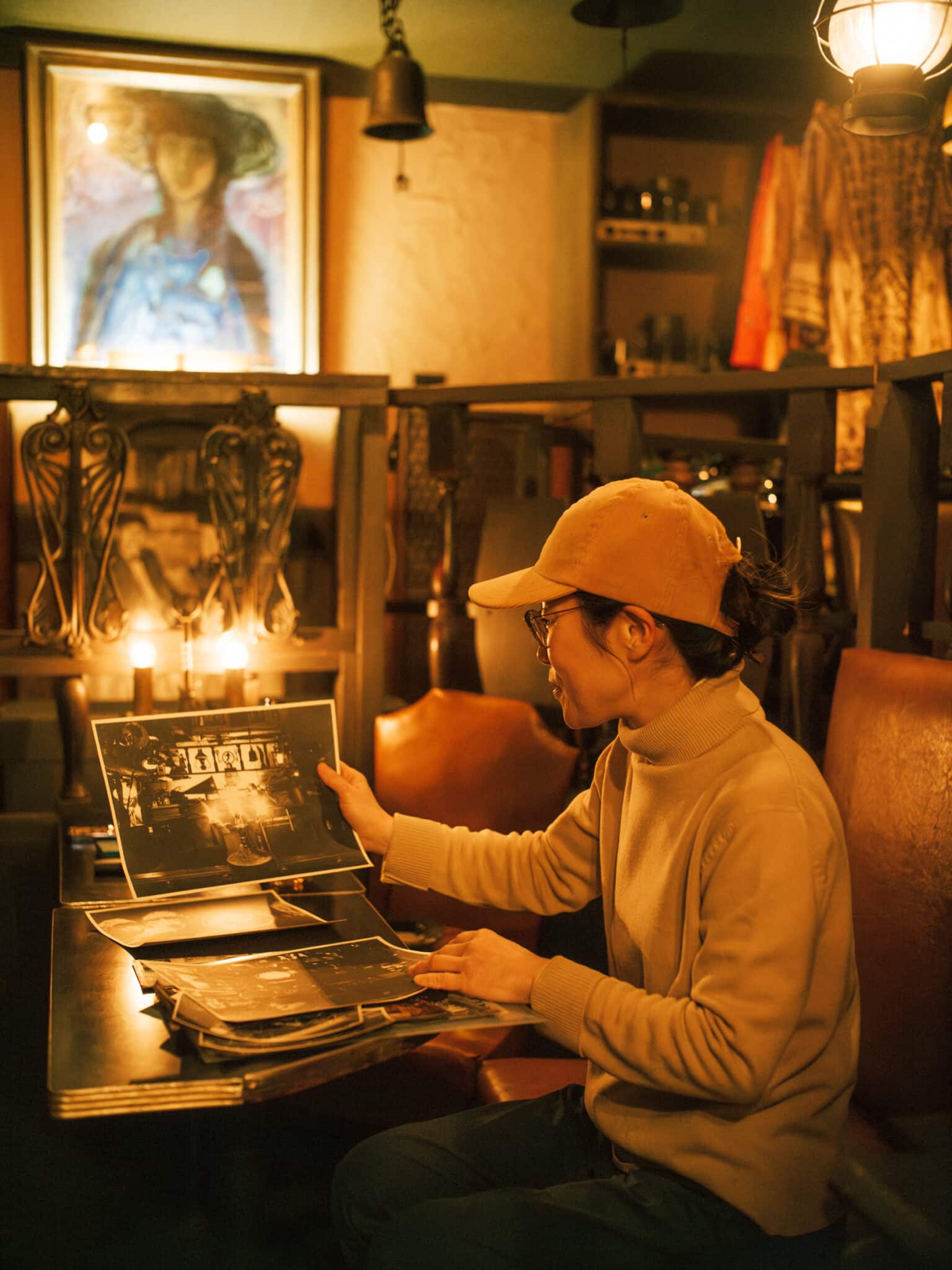
Holding precious photographs from the days of “CLASSIC,” Hiyama spoke about the interior furnishings that have been passed down to “RENAISSANCE.”
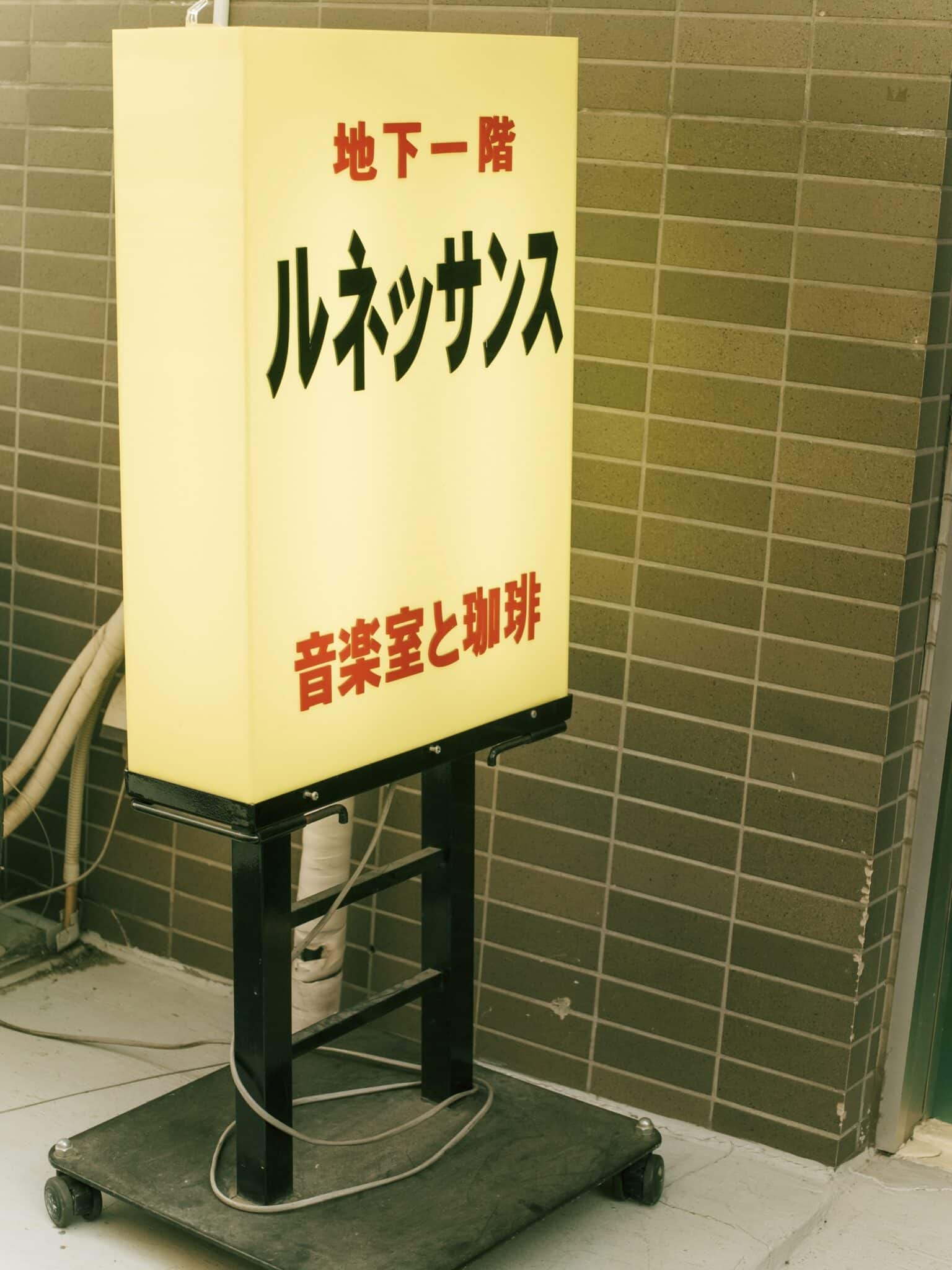
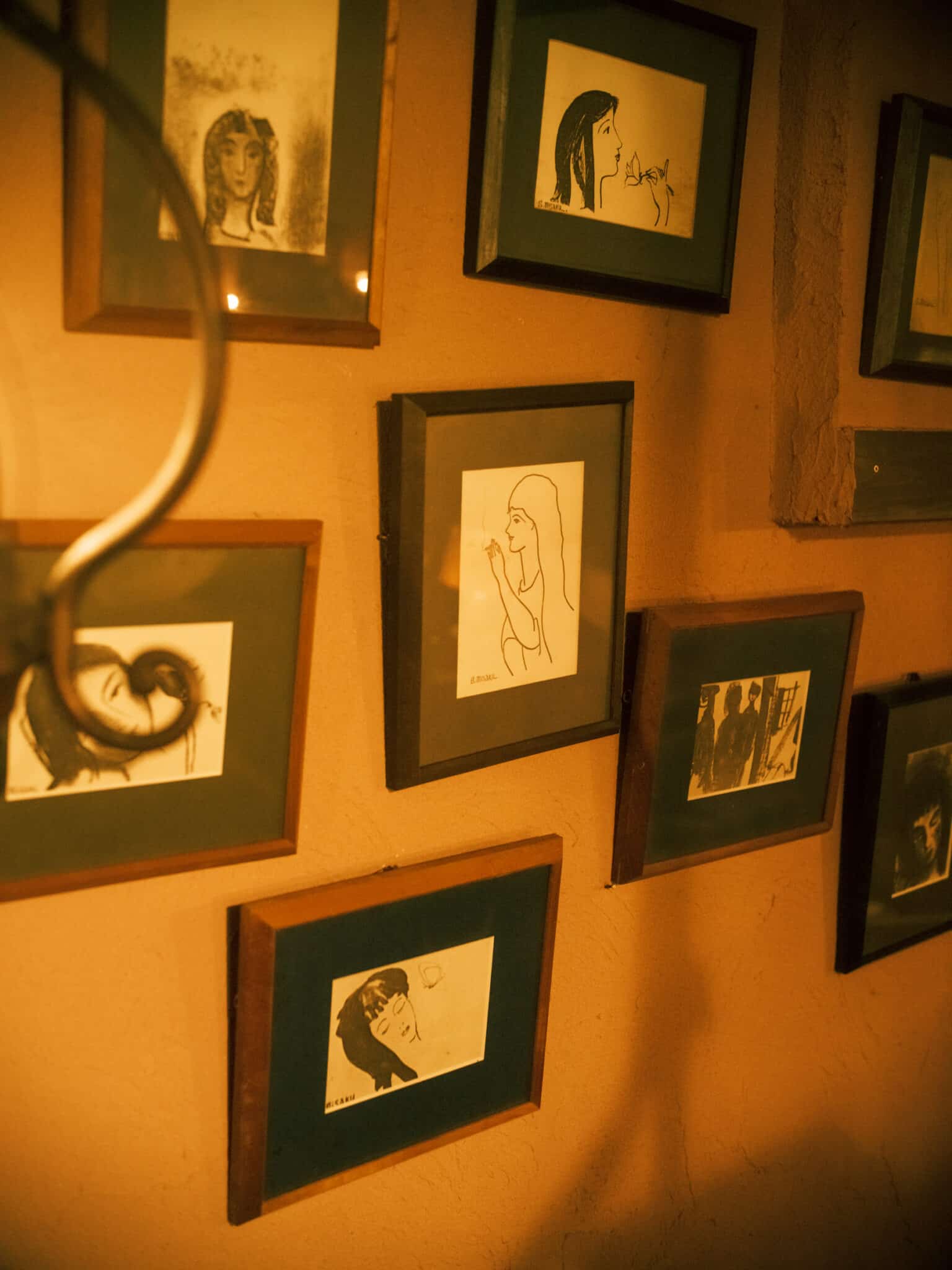
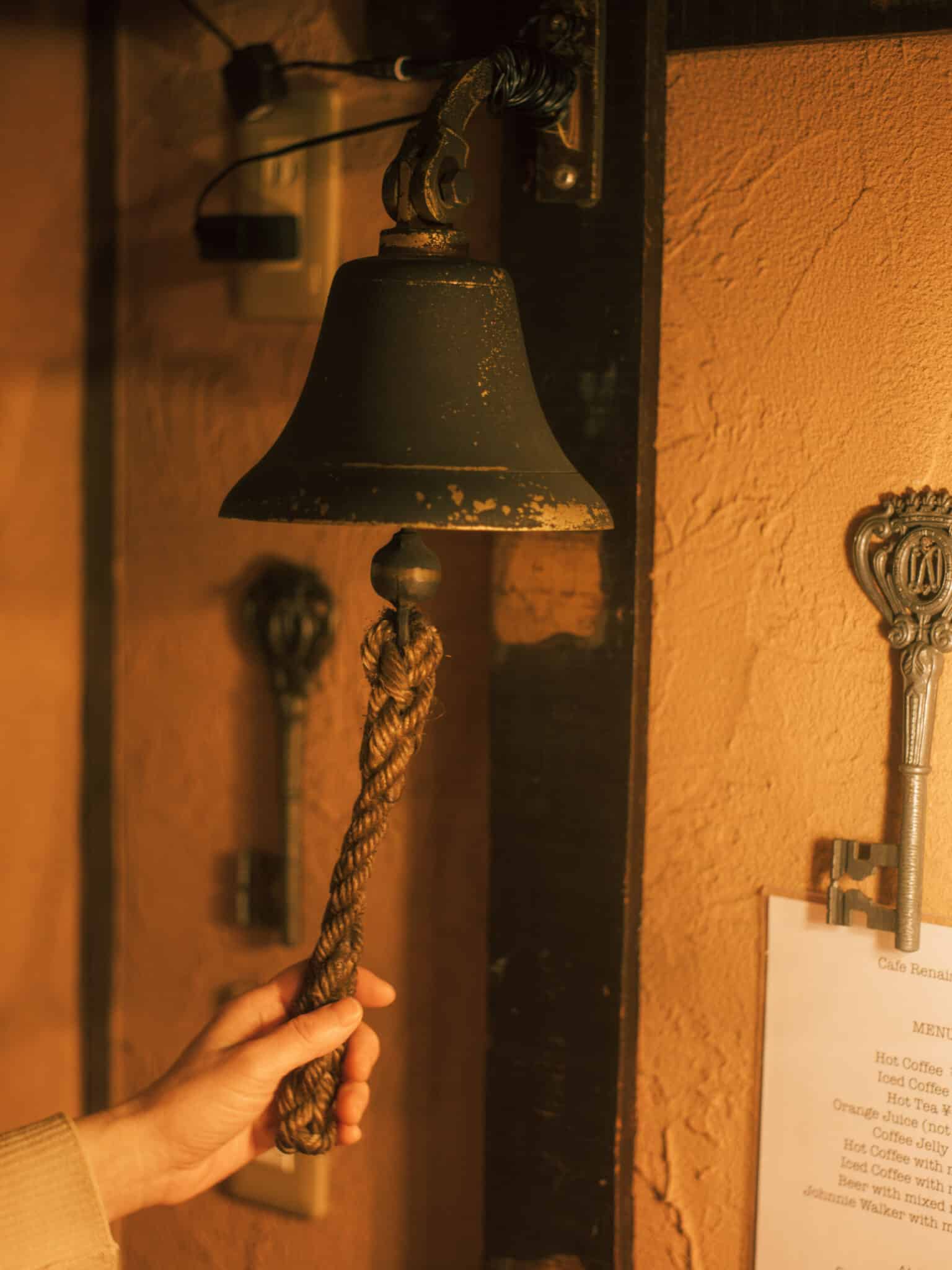
When you open the door of “RENAISSANCE,” fragments of “CLASSIC”—objects that evoke the shop as it once was—are scattered throughout like jewels. The window frame at the entrance uses a door from the former shop, while the yellow-and-black sign faithfully recreates the design of that era, when the lettering was carved into acrylic board rather than printed. The paintings on the walls are works that Ryoko, the second-generation owner of “CLASSIC,” sold at the time for 5,000 yen each. Many are prints, but some original works are mixed in as well. Beside the cash register, there is also a bell that once signaled closing time at 9:30 p.m. Together with a stopped clock, it quietly watches over the customers.
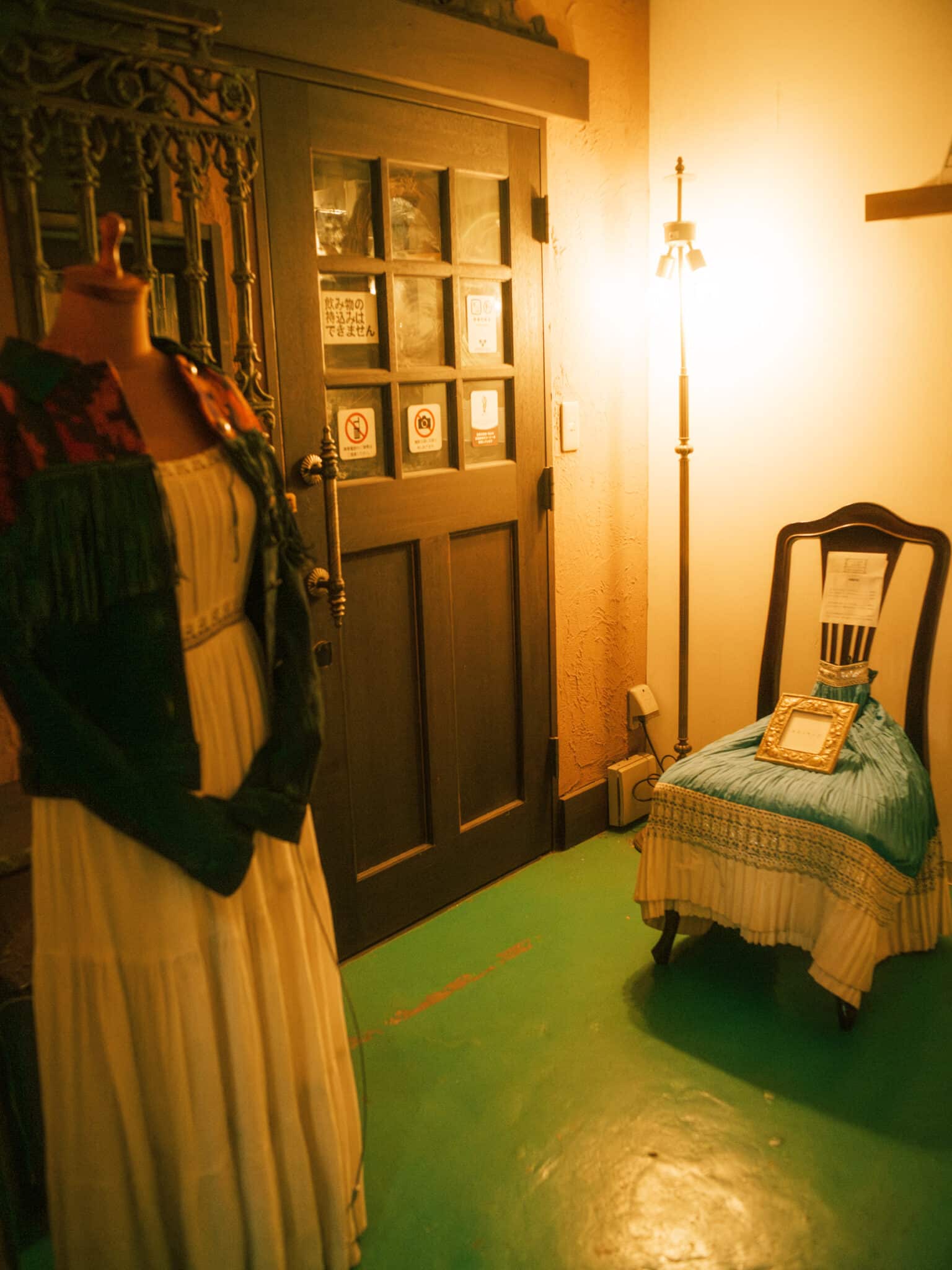
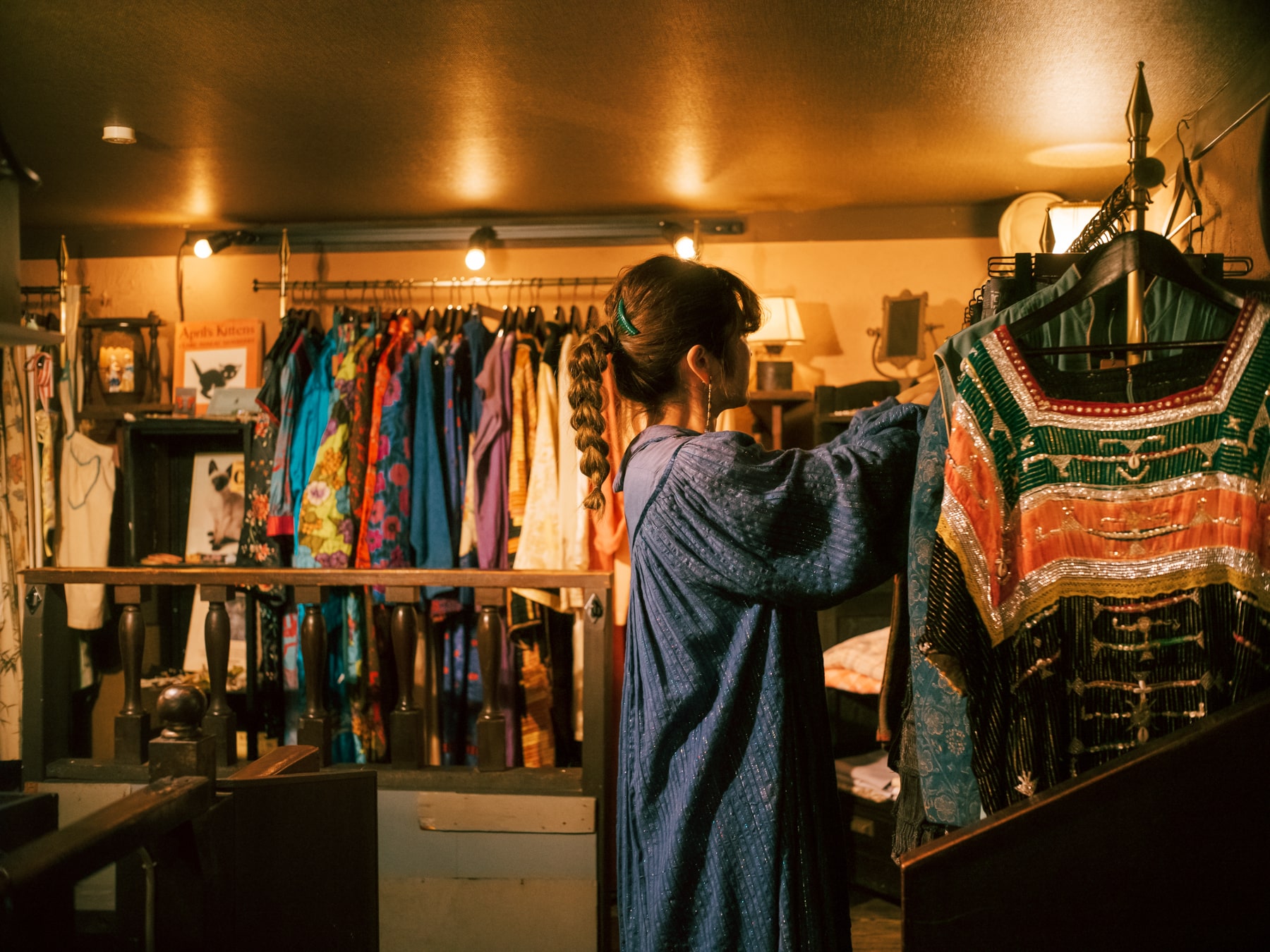
Because the shop is underground, the entrance is not immediately easy to spot, giving it the feel of a hidden retreat. Since 2025, “Kai” (解), a shop selling handworked vintage clothing, has also joined one corner of the interior, with torsos displayed near the entrance.
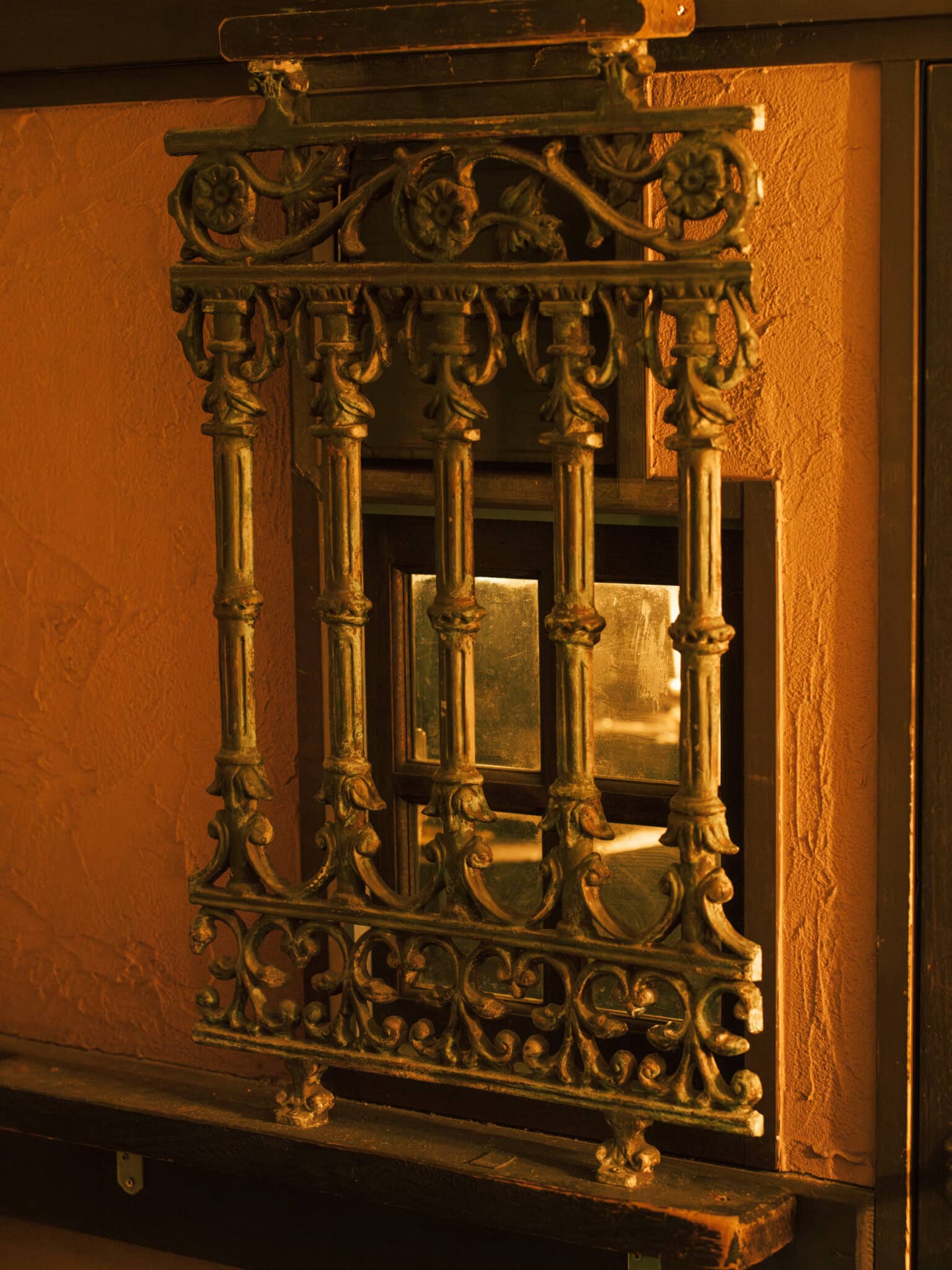
A striking window grille inherited from “CLASSIC.”
A sign with an impressive contrast of yellow and black.
Paintings by Mimasaka, the owner of "Classic," are displayed in a corner of the restaurant.
A small bell that no longer rings sits quietly, as if telling the history of the shop.
A popular single-person seat on the upper floor. Here, guests can quietly retreat into their own world while listening closely to great pieces of music or reading.
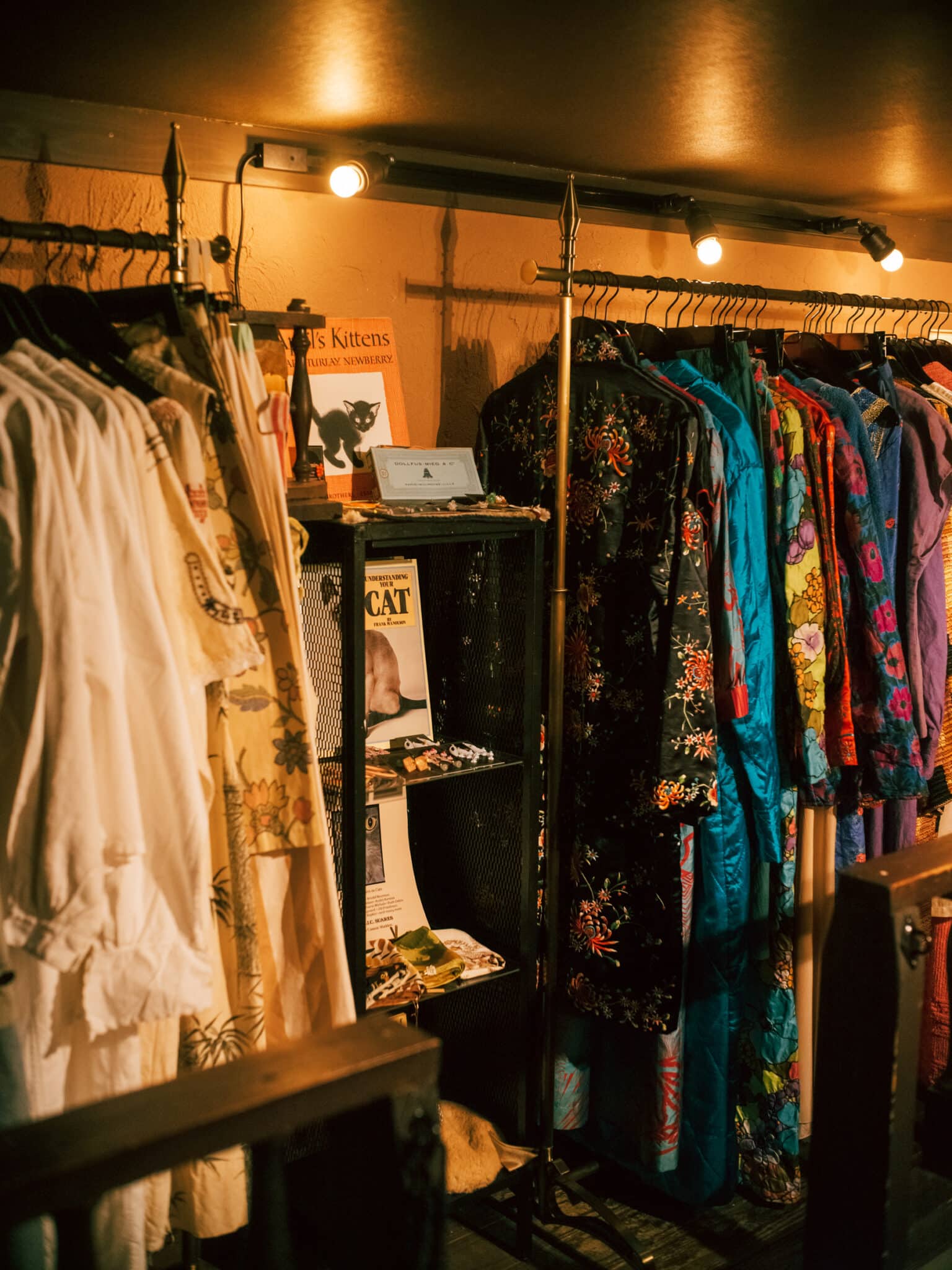
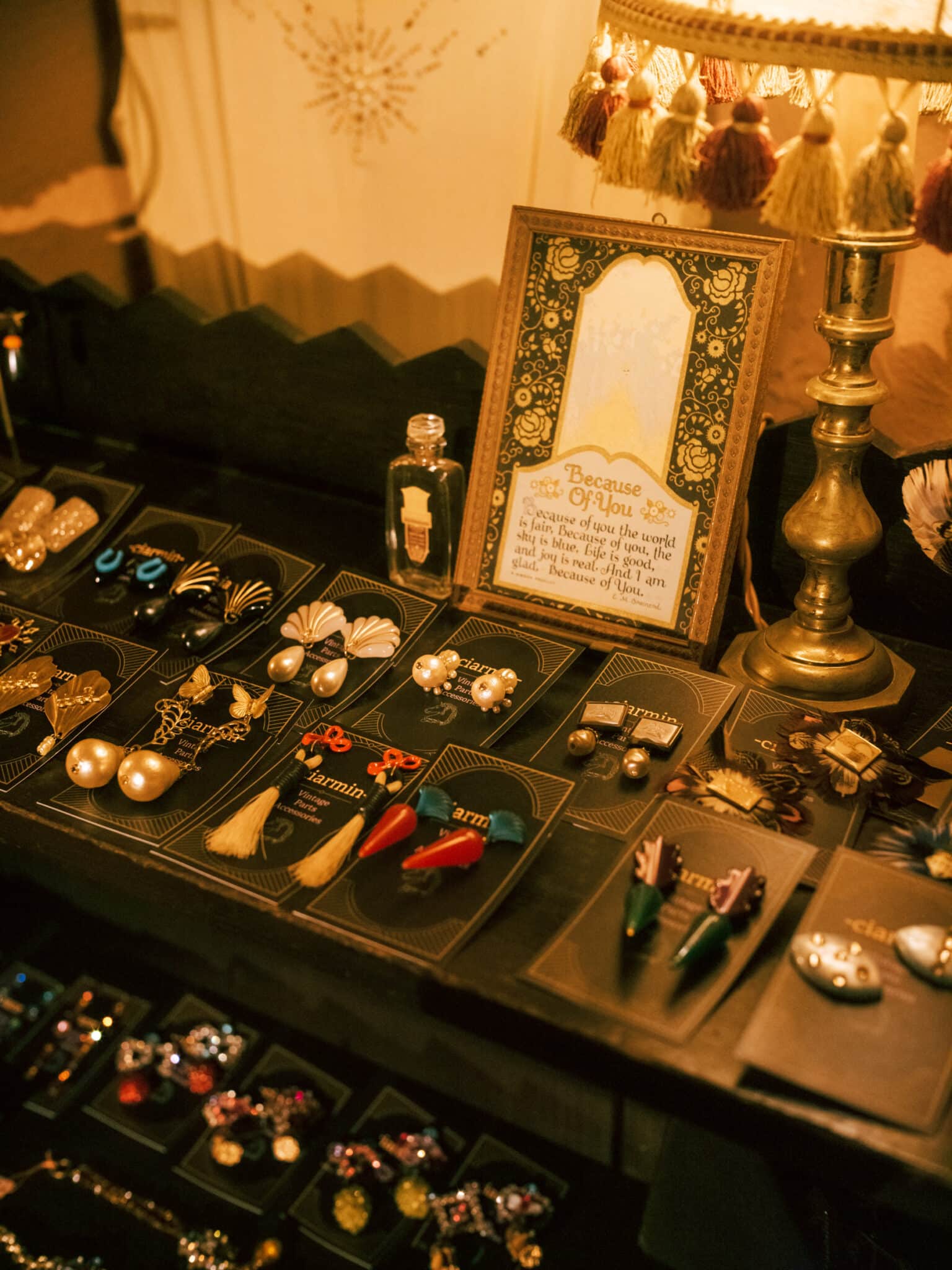
Since the spring of 2025, a vintage clothing shop by Miki Irie, “Kai” (解), has joined one corner of the space. Lined with handmade embroidery and remade accessories using vintage parts, this area adds a new layer of sensibility to the tradition of the meikyoku kissa.
Irie is also said to have once worked at “CLASSIC.” Since “Kai” has different business days and hours from “RENAISSANCE,” please check Instagram before visiting. The online shop is also available.
Instagram: https://www.instagram.com/kai_koenji/
ONLINE SHOP:. https://kaivintage.base.shop
The shop mainly carries vintage clothing gathered from around the world, conveying the warmth of handwork.
Original accessories with a strong presence are also on display.
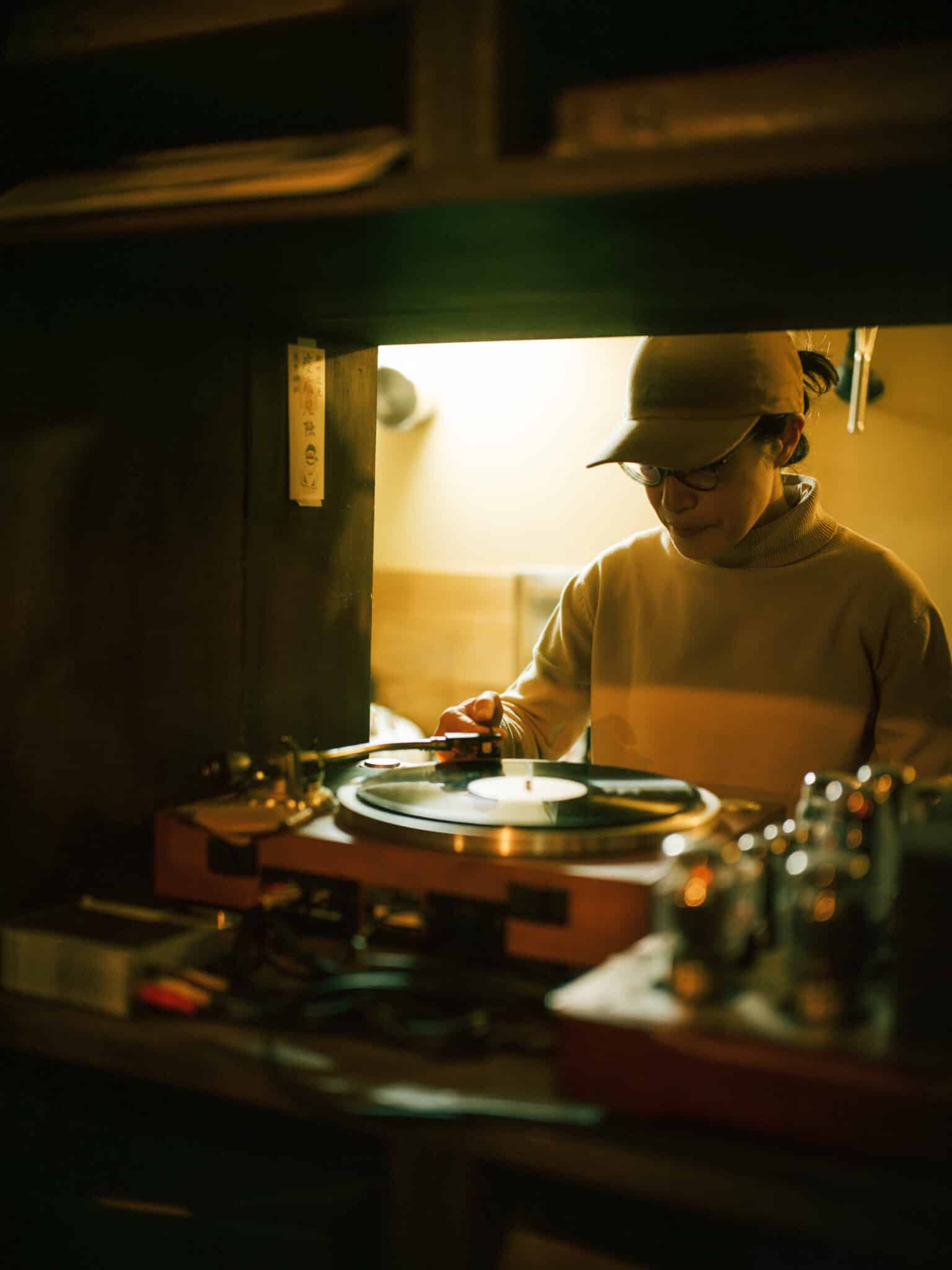
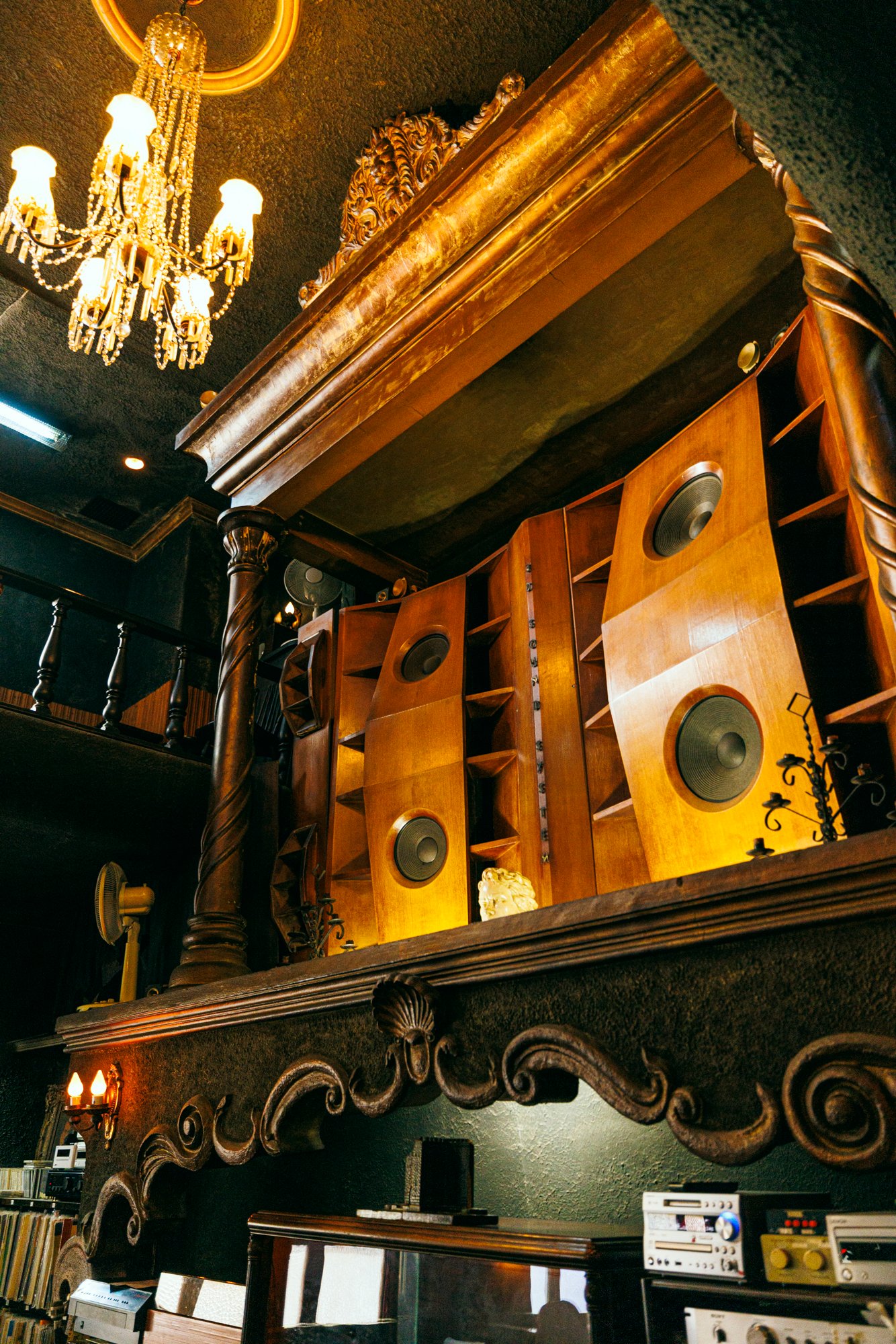
The sound system has also been carefully adjusted to suit this space. Just as Misaku once shaved bamboo needles and drew sound from them, Hiyama now fills the space with the tones of LP records by her own hand. That sound transforms the shop into something like a “concert hall.” In contrast to the intimate, close-quartered feel that “CLASSIC” once had, the present-day “RENAISSANCE” is particular about arranging its seats with plenty of space, allowing each guest to enjoy the music without worrying about the gaze of others.
At “RENAISSANCE,” each guest may request one record per visit. It is also possible to have an LP record you have brought with you played in the shop. Talking is not forbidden. However, for the sake of those surrendering themselves to the sound, keeping conversation modest is part of the etiquette here. Photography is prohibited so that the sound of a camera shutter does not break the silence.
There is no need to be knowledgeable about classical music. Here, more than knowing the title of a piece, the true way to enjoy the shop is simply to spend quiet time enveloped in sound.
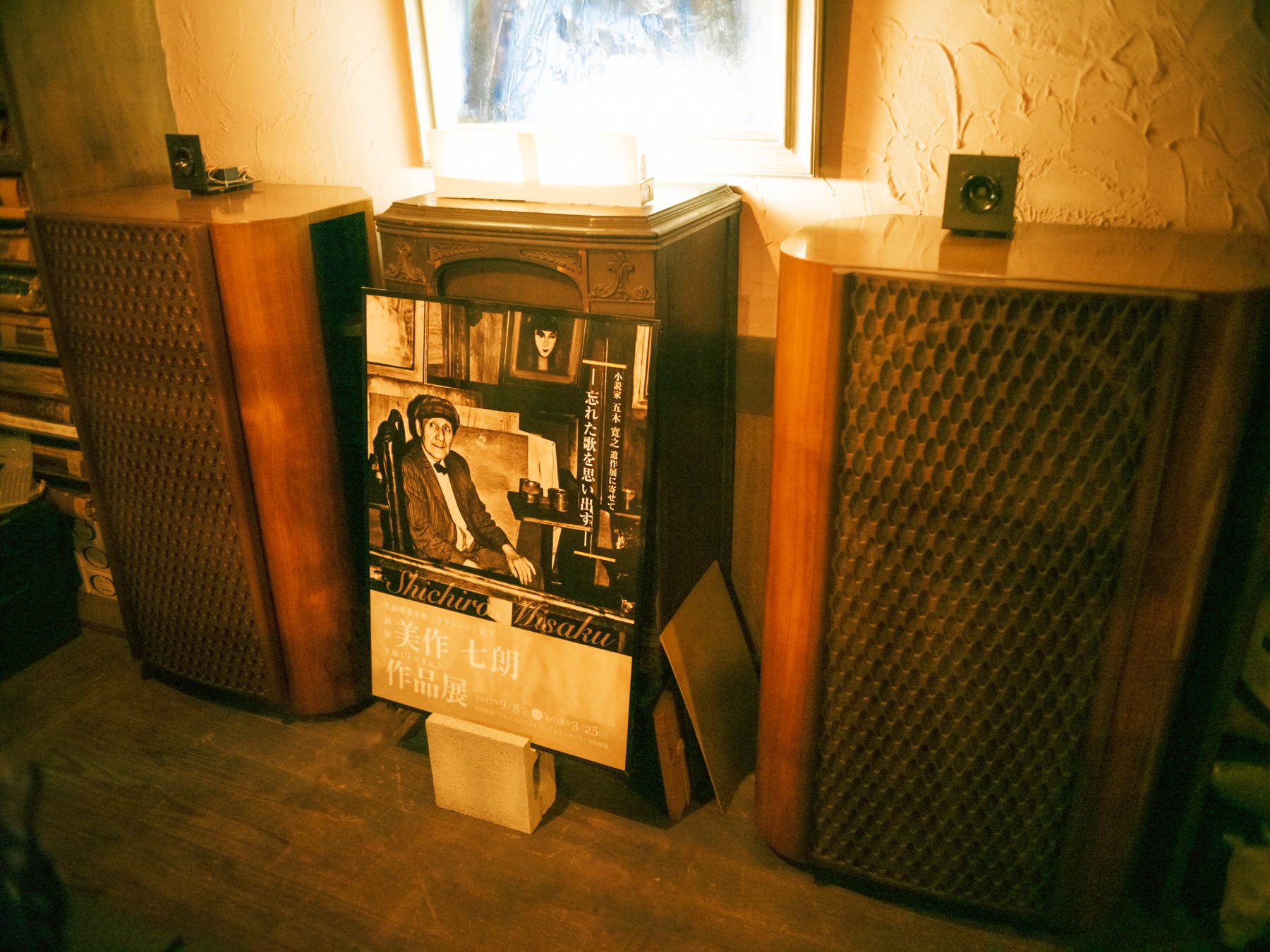
Between the speakers, a poster from an event held in memory of Misaku is displayed.
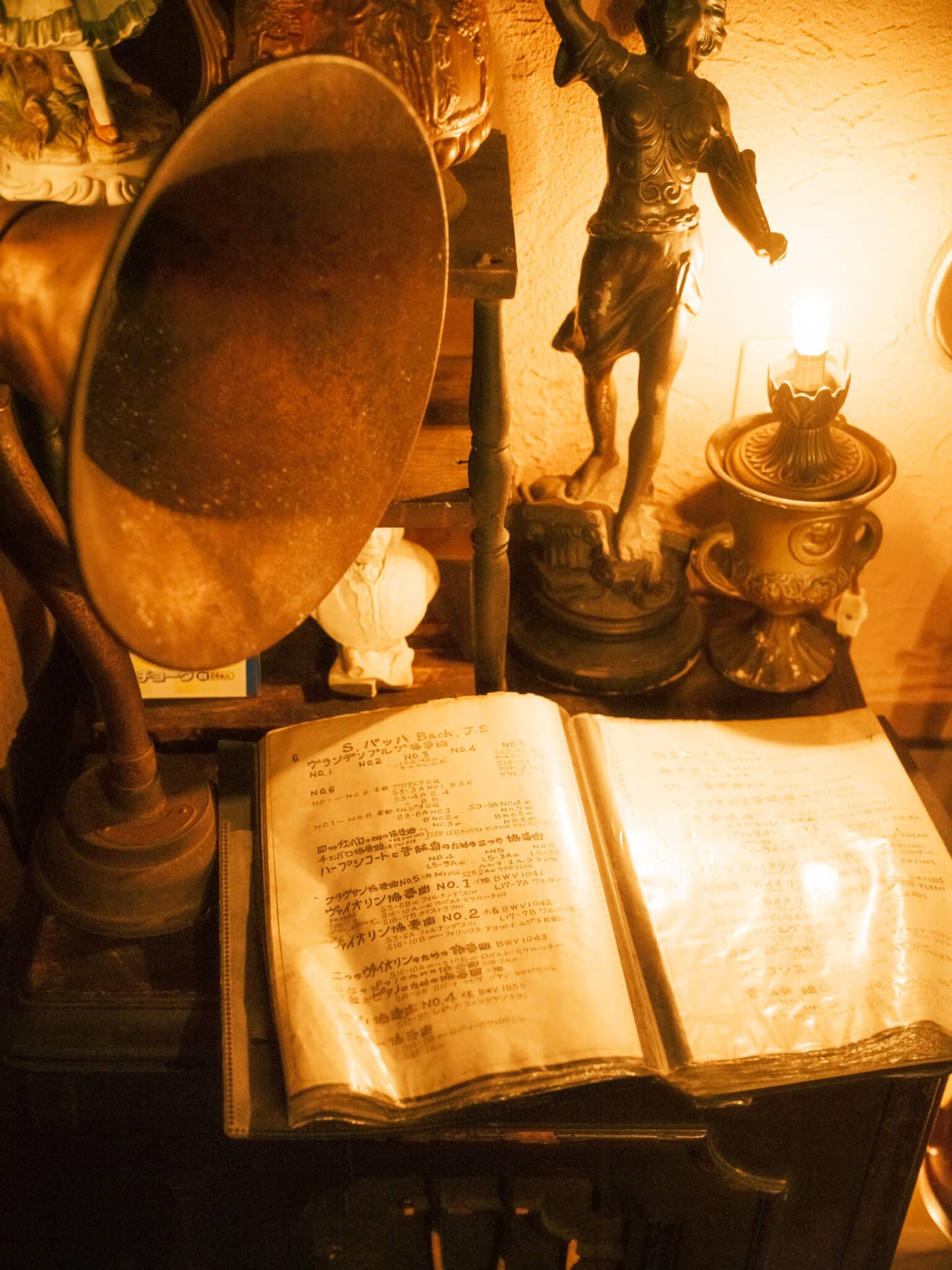
Guests can choose a piece they want to hear from a record list handwritten by Misaku and make a request.
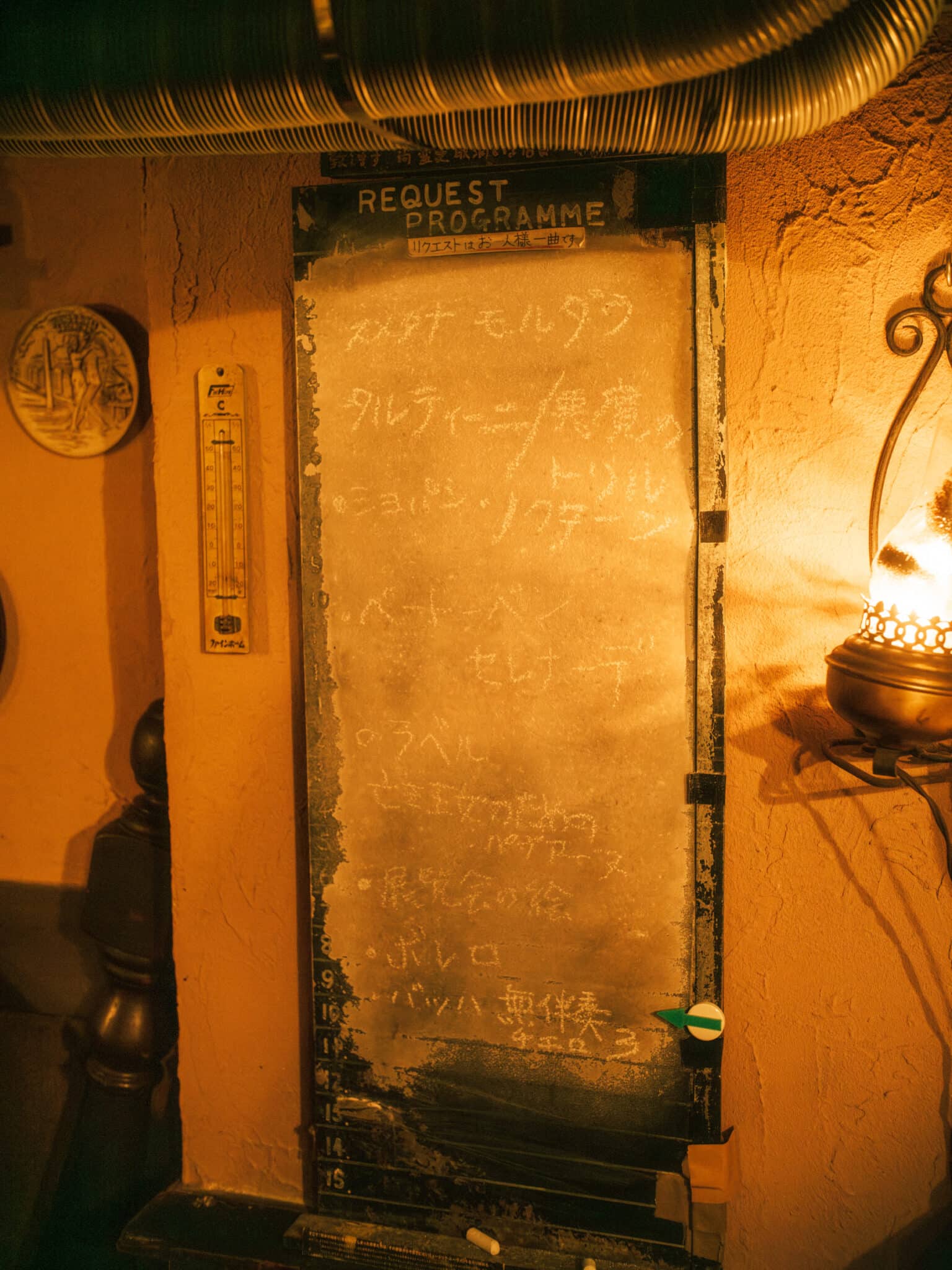
The blackboard used for writing requests was also inherited from “CLASSIC.”
Hiyama lowers the needle onto an LP. The sound of the record slowly spreads through the quiet shop interior.
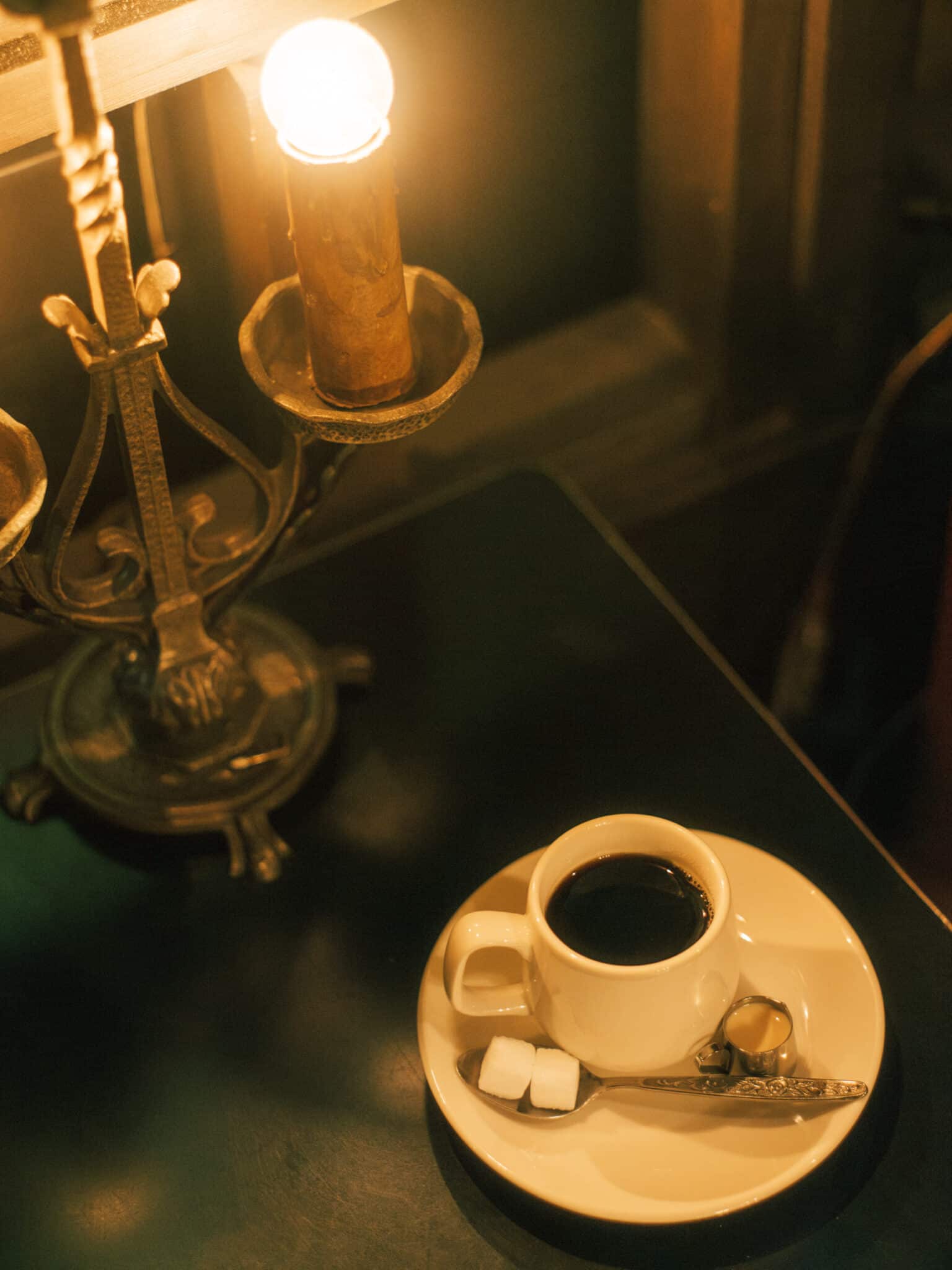
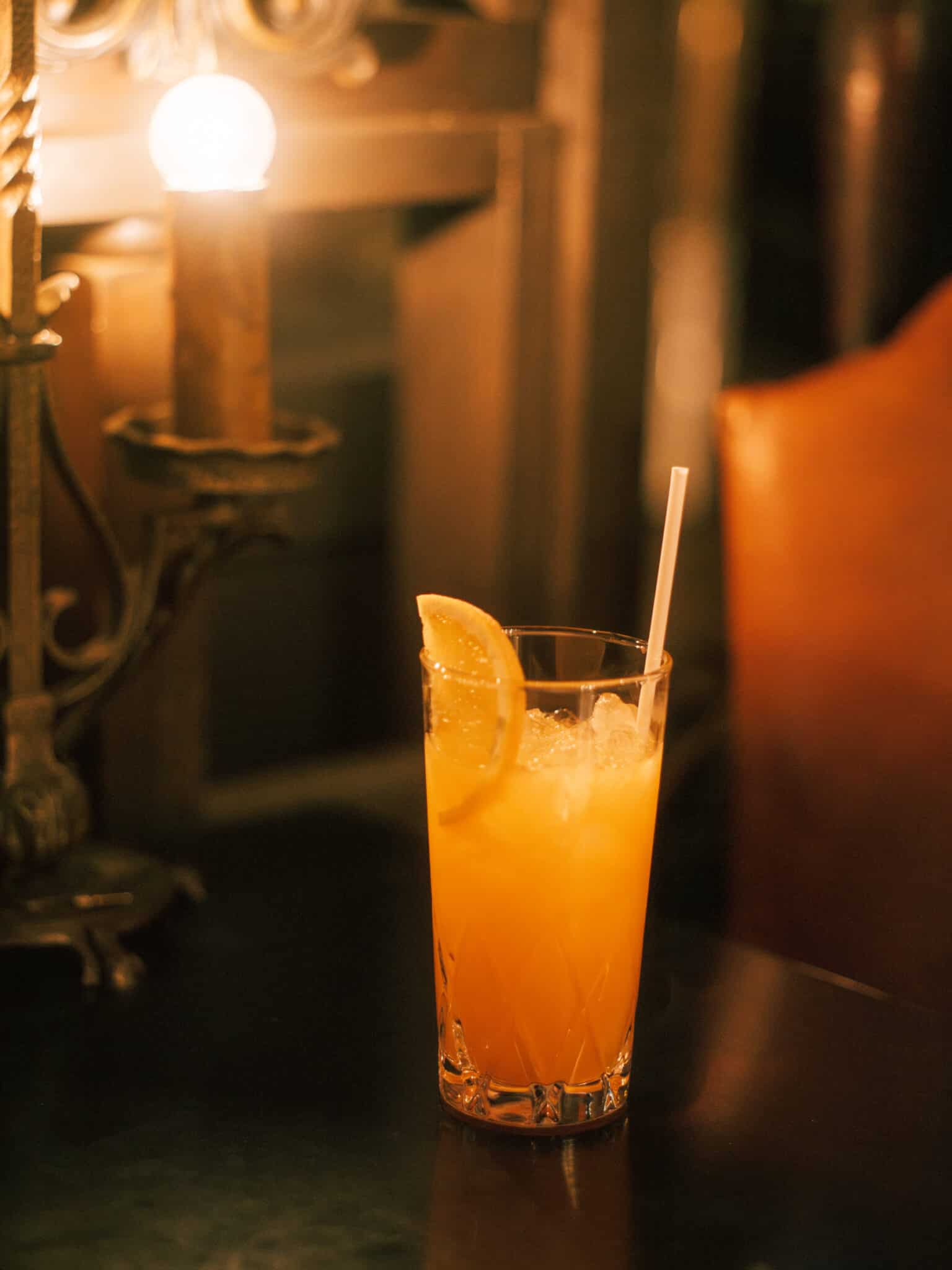
The menu also carries on the style of “CLASSIC,” with a simple, pared-down lineup of coffee, tea, and orange juice. As in the old days, two sugar cubes are gently served with the coffee. Surprisingly, guests are free to bring in food, on the condition that they take their own trash home. Items such as ice cream, chocolate, sweet buns, savory bread, and cup noodles are all allowed.
The drinks are there, above all, to accompany the time spent facing the music. Because the menu is so unadorned, the experience of listening closely becomes the main attraction.
The coffee is still ordered in the same blend as at “CLASSIC.” It uses beans from the long-established “Orihara Coffee,” which is said to have been in business for 70 years.
The orange juice is quite sweet, with a taste characteristic of old-fashioned kissaten.
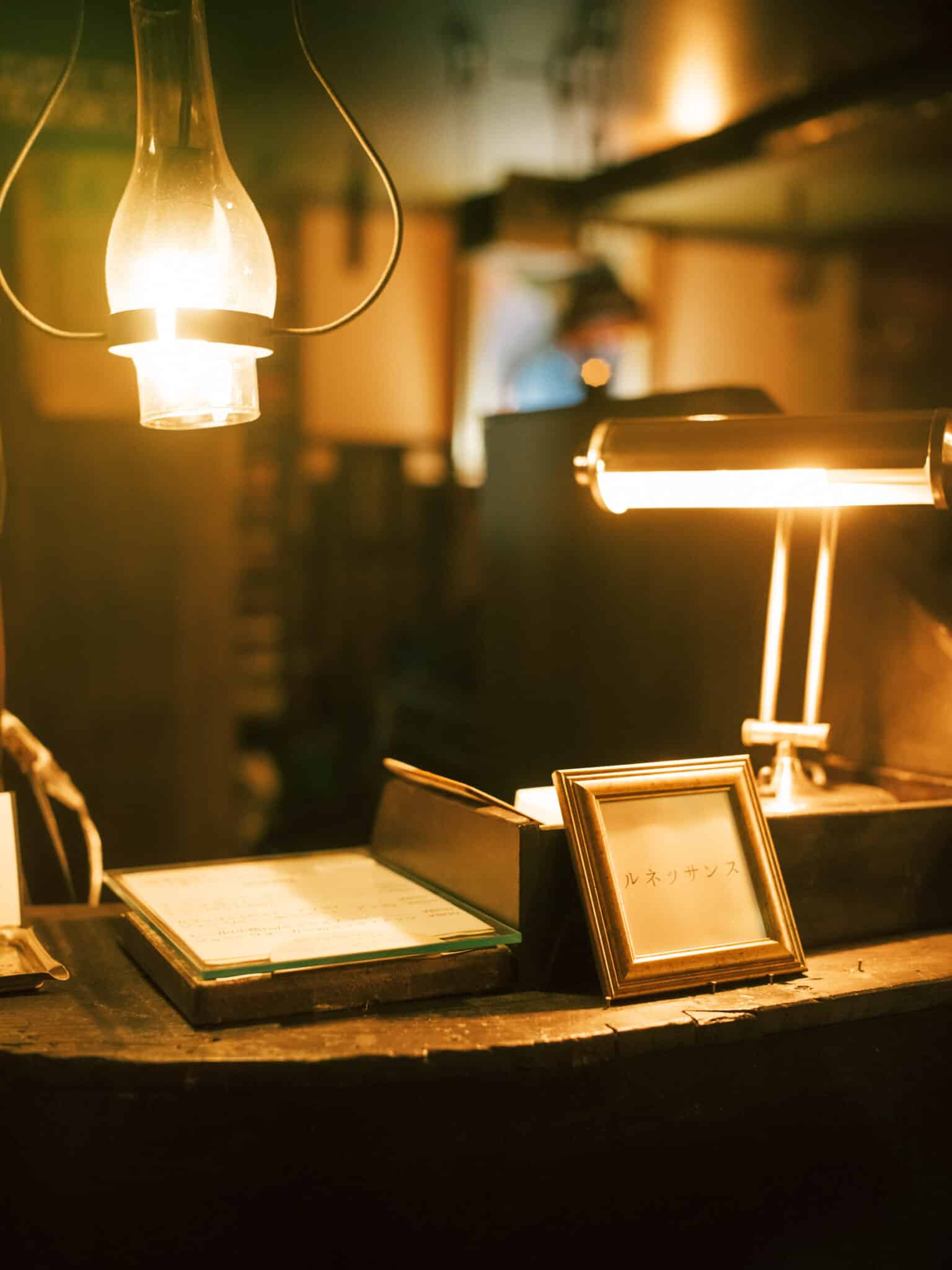
A view around the cash register, lit by gentle light.
“This culture is gradually fading, but this is a meikyoku kissa where Japanese culture remains deeply present,” Hiyama says quietly. Even as “RENAISSANCE” accepts changes in step with the times, it remains a sanctuary that gently embraces “people seeking a place to belong”—a place where they can spend time quietly and at ease. The free spirit that Misaku loved continues to live on underground in Koenji with Hiyama, as if still inscribed in the grooves of the records that slowly keep turning.
Second-generation director of the Tokyo Kissaten Research Institute. Fascinated by the lingering influence of the Showa era, she came to see kissaten—cultural landmarks in their own right—as ever-changing personal sanctuaries, akin to having a different “room of one’s own” each day. She spends her time visiting kissaten and sharing their charm with others. She has authored 15 books on jun-kissaten, including her latest title, “Jun-Kissaten Lunch,” published by Kawade Shobo Shinsha.
X: https://x.com/retrokissa
Instagram: https://www.instagram.com/retrokissa2017/
The information contained this article was correct as of 05/26/2026 (the time of publication)