DEEPTOKYO
magazine

EN


AREA
DEEPTOKYO
magazine
EN
AREA

2026.04.08
A Hub for Skate Culture, Nurtured in Jimbocho


 Nearest Station

Jimbocho is known as a neighborhood of bookstores and curry shops. Tucked away in one of its back alleys is PAGER TOKYO, a skate shop quietly thriving off the main streets. Skate decks by brands from Japan and abroad are displayed on the walls almost like works of art. The carefully selected apparel and miscellaneous goods are equally distinctive, each chosen from a skater’s perspective. This is a space that feels like a secret base, where skate culture and originality come together. It is also a hub for skaters, welcoming even beginners who are thinking of taking up skateboarding.
SHARE


Since opening in 2021, PAGER TOKYO has upheld a simple philosophy: giving back to the skateboarding community. At first glance, the shop may seem to cater to seasoned skaters, but its doors are surprisingly open. Not only experienced riders, but also beginners who are just about to start skating, naturally find their way here.
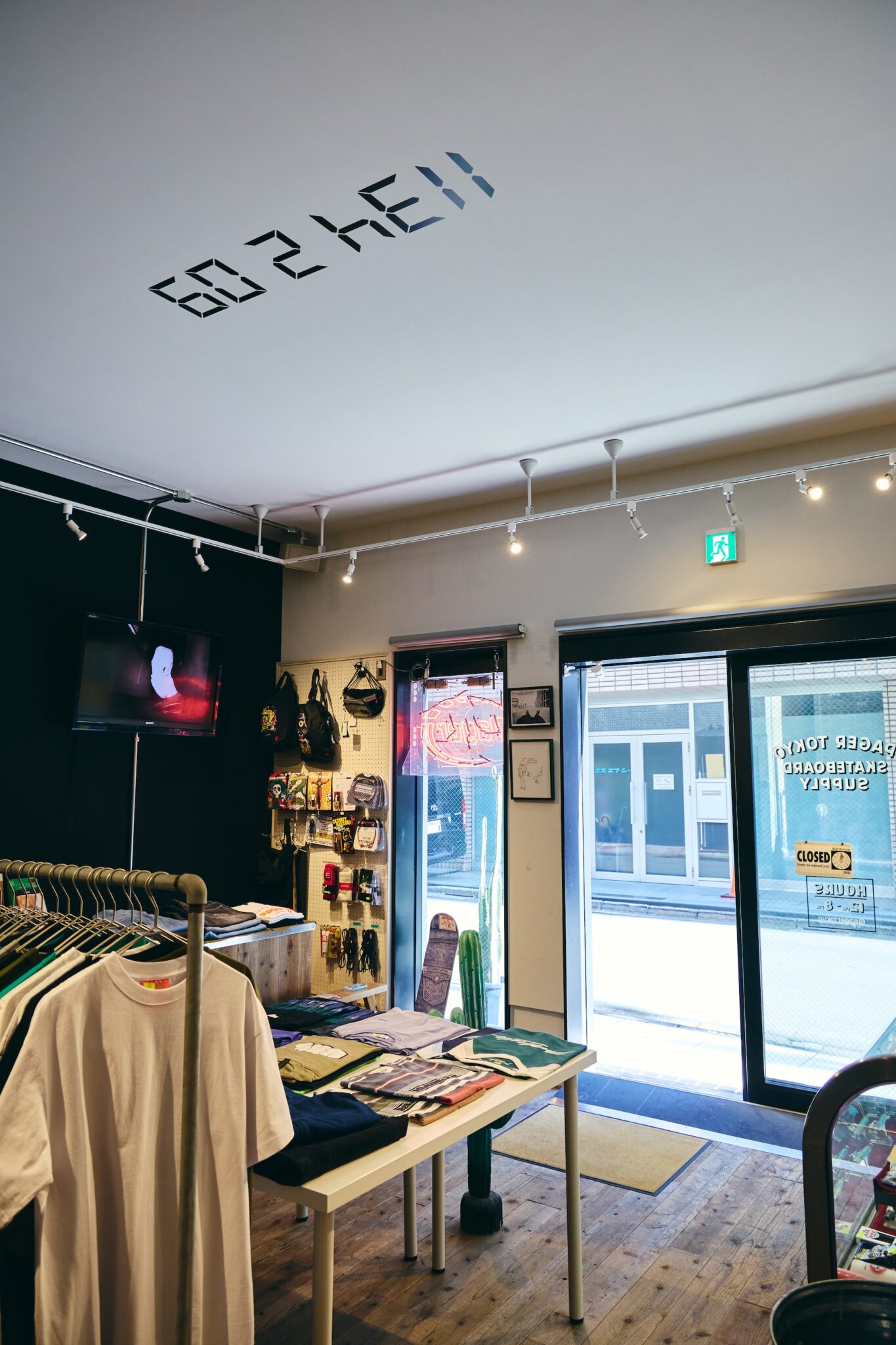
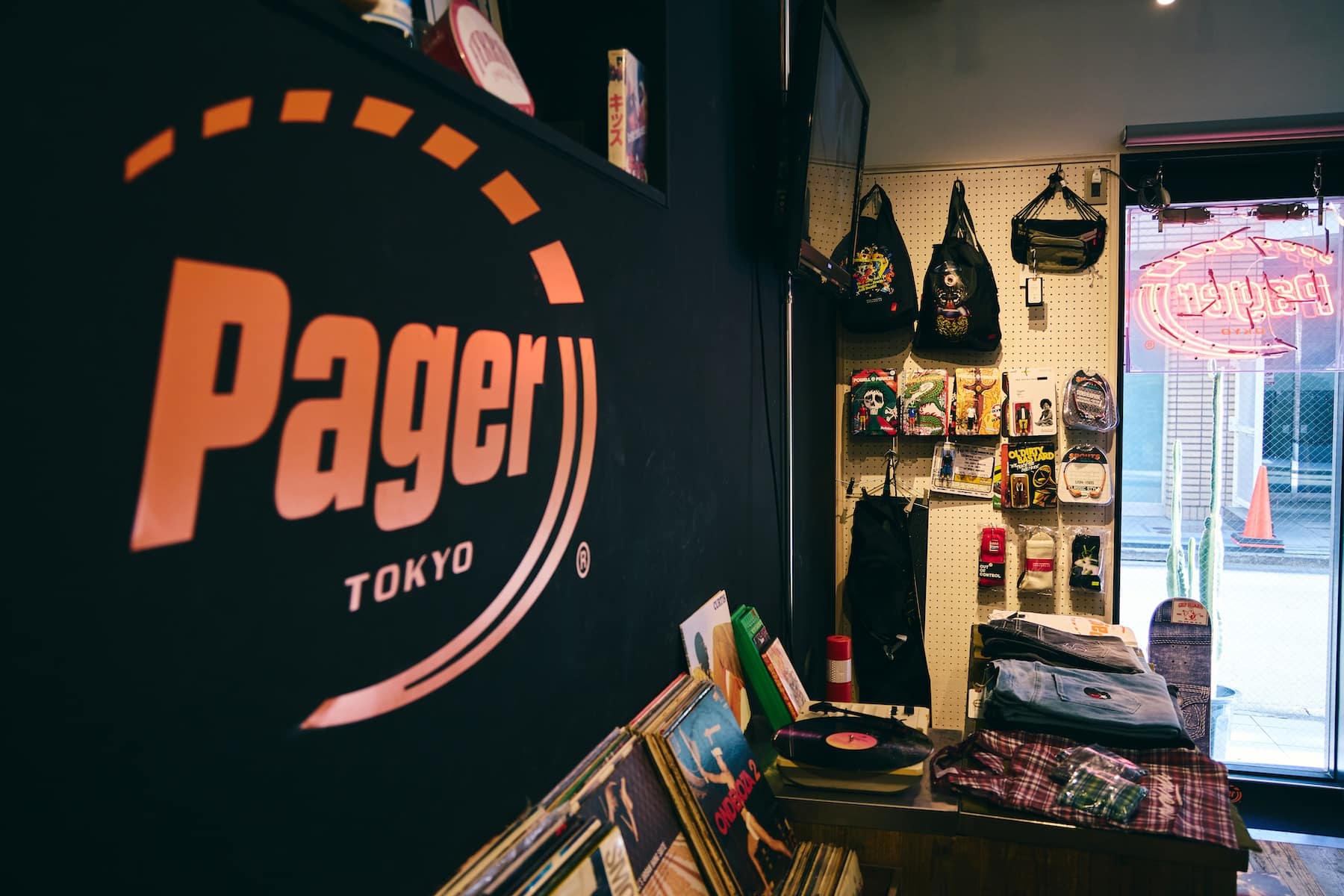
What is especially remarkable is how the shop came into being. From the neon sign that symbolizes the shop to the fixtures inside and the finer details of the interior, everything was made by hand by skaters themselves. Throughout the space, the distinctive perspective of skaters is reflected in every corner, creating a sense of comfort unique to this place. It serves not only as a place to exchange information, but also as a living room for skaters, where they can directly feel the energy of the culture.
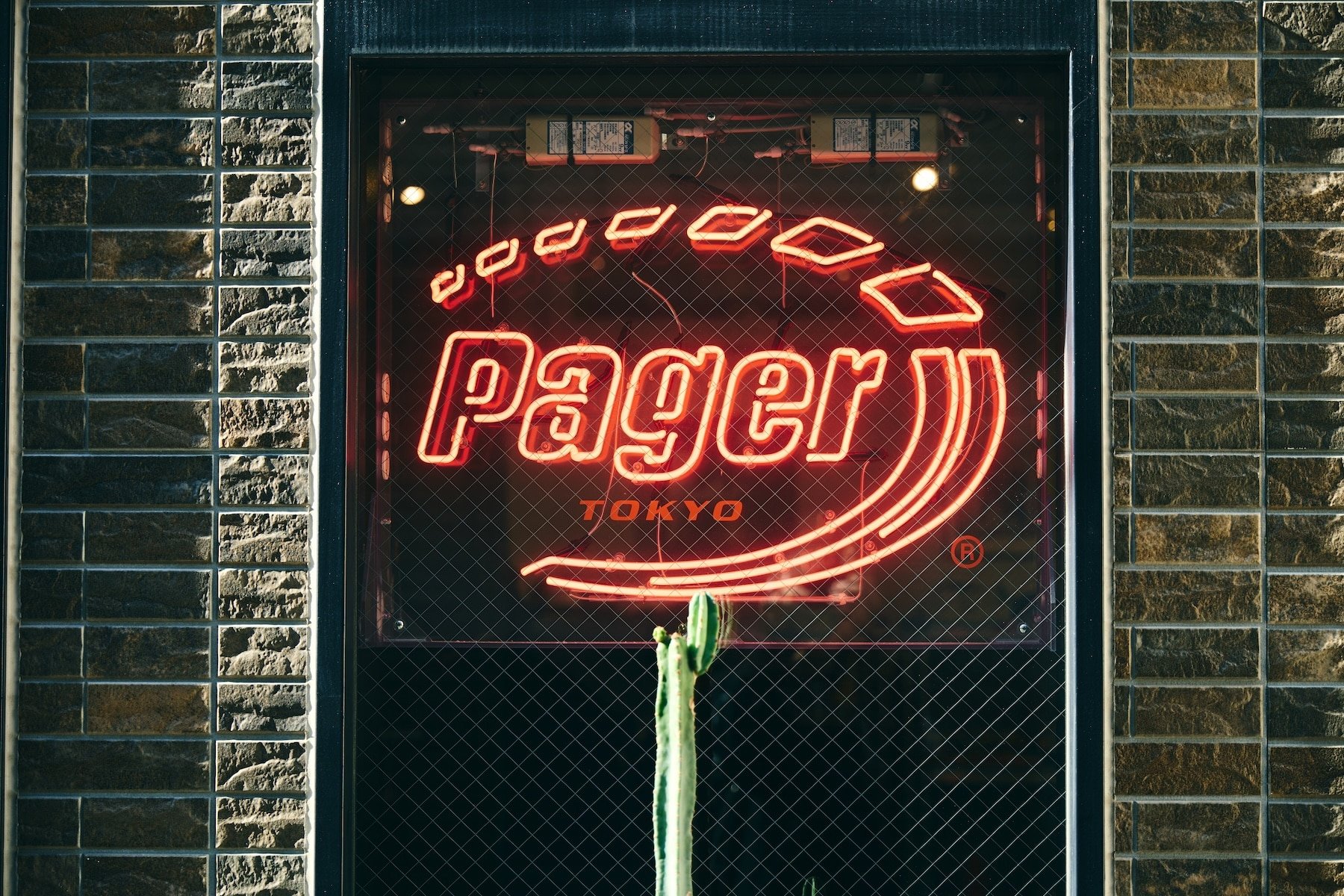
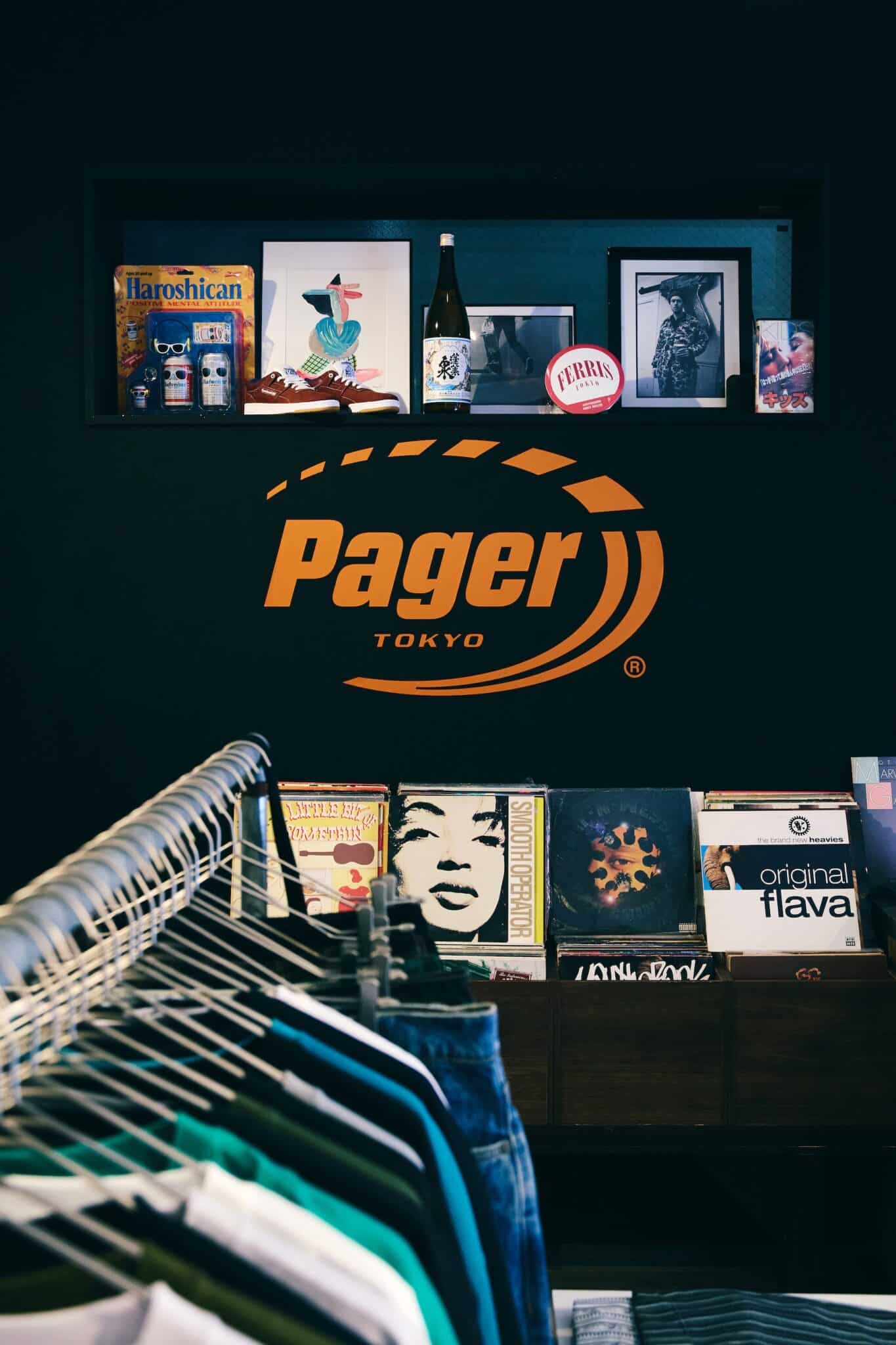
The shop’s landmark is its neon sign, with an iconic design that immediately catches the eye. This, too, was made by skaters themselves.
One of the first things to catch your eye when you step inside is the wall of skate decks on display. Each one has its own character, and they are enjoyable to look at in their own right. Of course, they are also available for purchase, and you can even have a complete deck assembled.
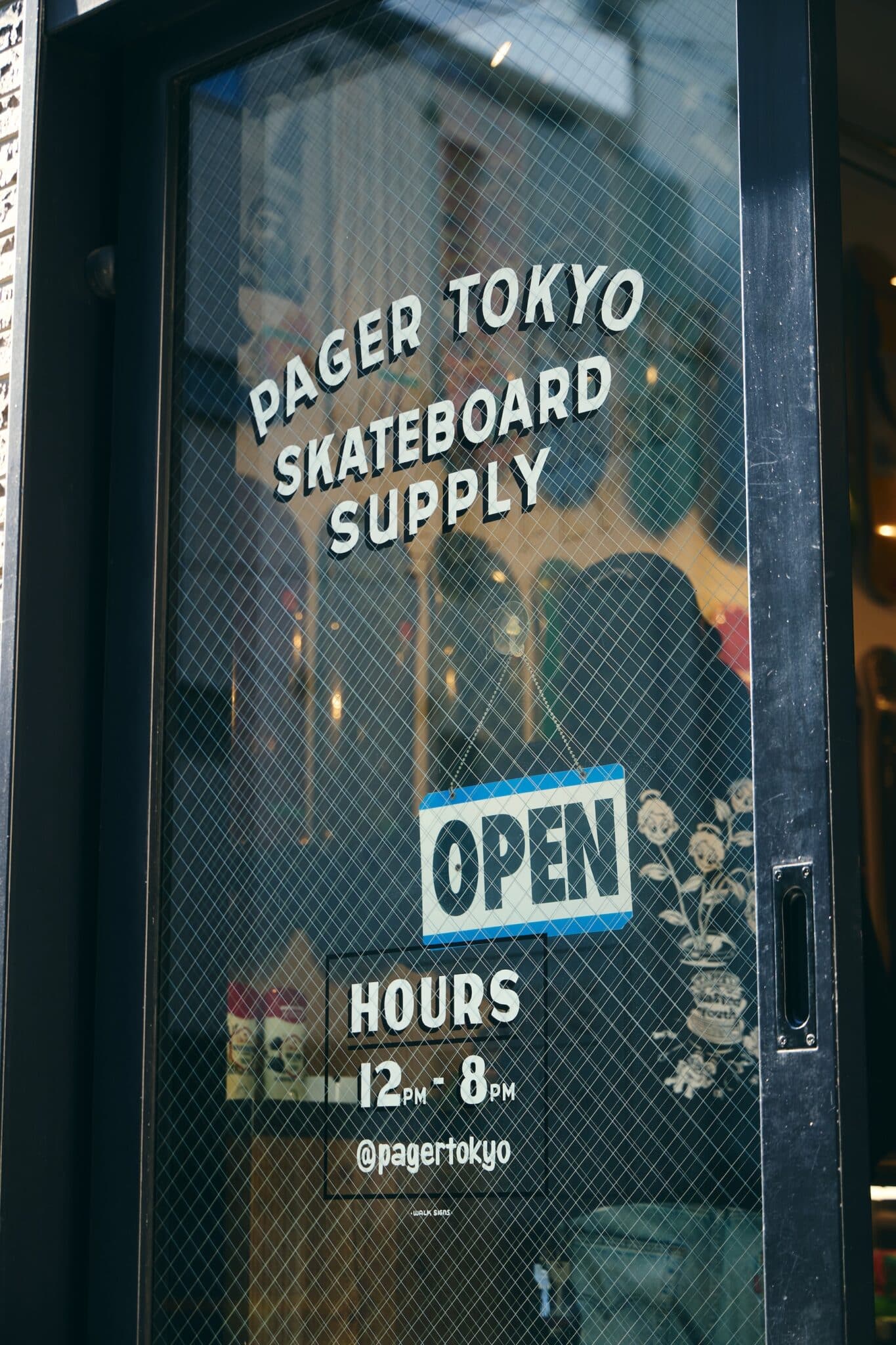
It is remarkable to learn that every aspect of the shop’s design—from the floor, fixtures, and walls to the window painting—was created through the DIY work of skaters.
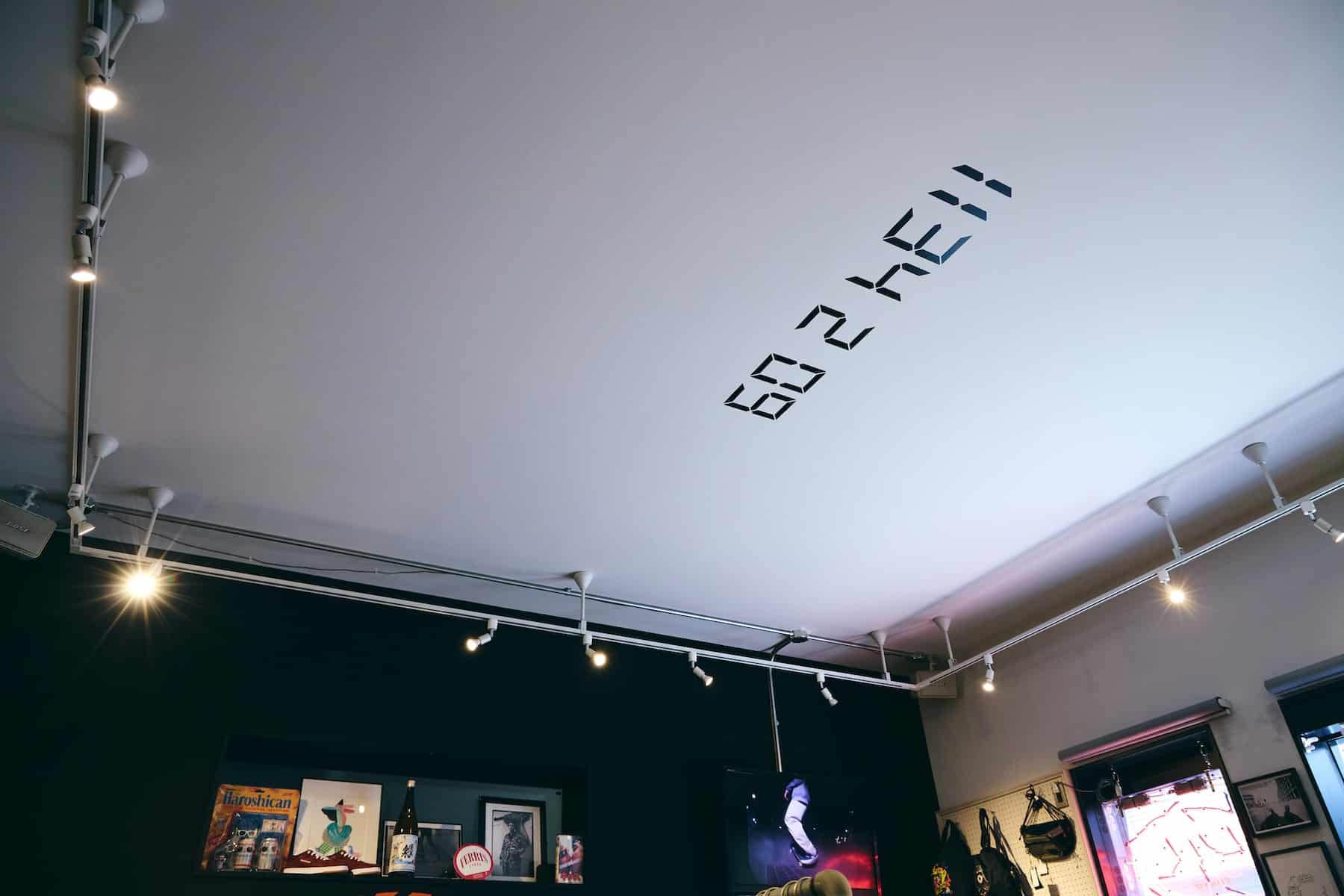
The suggestive numbers on the ceiling hide a message that feels distinctly skater-like. Be sure to check them out.
PAGER TOKYO is produced by VHSMAG, one of Asia’s leading online skateboarding media platforms. Having led skateboarding culture in the digital sphere, they deliberately created a physical space because they wanted to contribute more deeply to the culture through face-to-face communication. That is why the staff working at the shop are themselves active skaters. From advice on choosing gear to talk about skate spots, what they share comes with the authenticity of firsthand experience.
VHSMAG is a Japan-born skateboarding media platform and one of the largest in Asia. It shares information related to skateboarding online from a wide range of perspectives, both in Japan and abroad.
The people assisting customers in the shop are active skaters themselves. On this day, Kaito Sagawa (left) and Joshua Nishinomiya (right) were working in the store, and they can also assemble a complete deck for you.
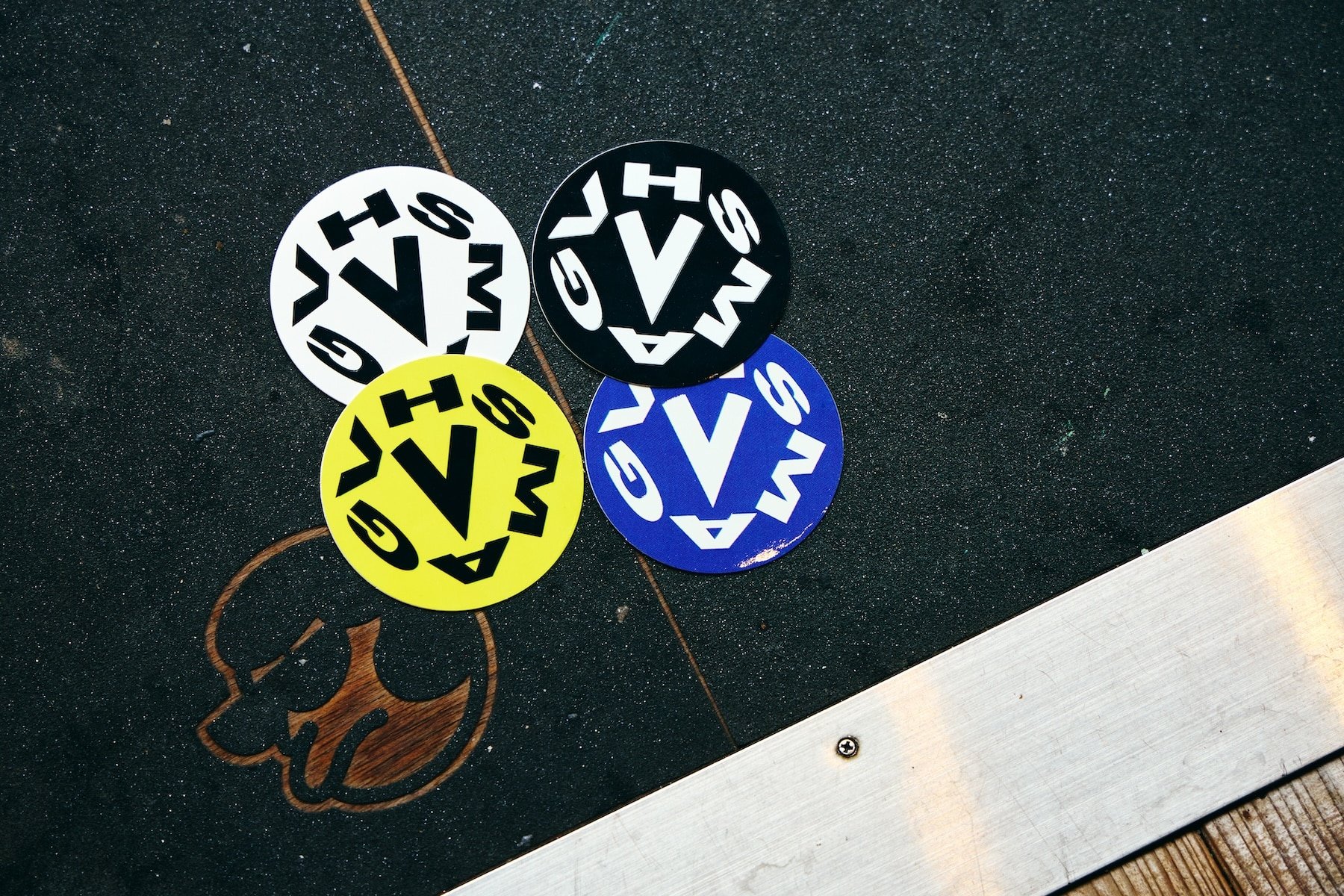
The logo design, which forms part of the identity of both the media platform and the shop, was created by Keita Ishiguro, an art director who came out of the legendary design unit Illdozer and continues to stand out across a wide range of media. The graphic world he creates gives the shop a cultural depth that goes beyond an ordinary skate shop. Naturally, he also designs the shop’s original merchandise.
The logos for VHSMAG and PAGER TOKYO were designed by Keita Ishiguro. Incidentally, the shop name PAGER TOKYO is derived from the pager, and that image is also reflected in the design.
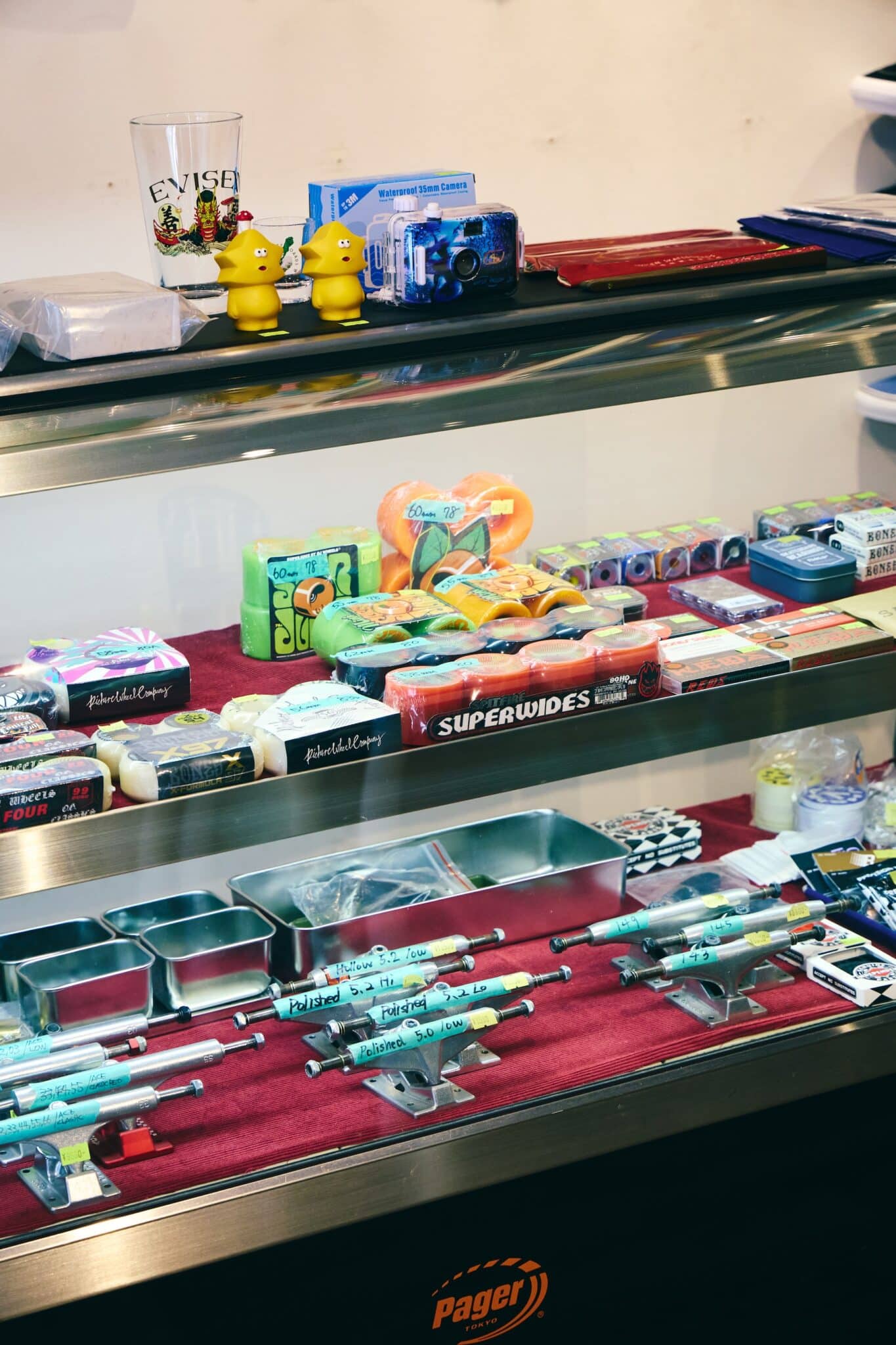
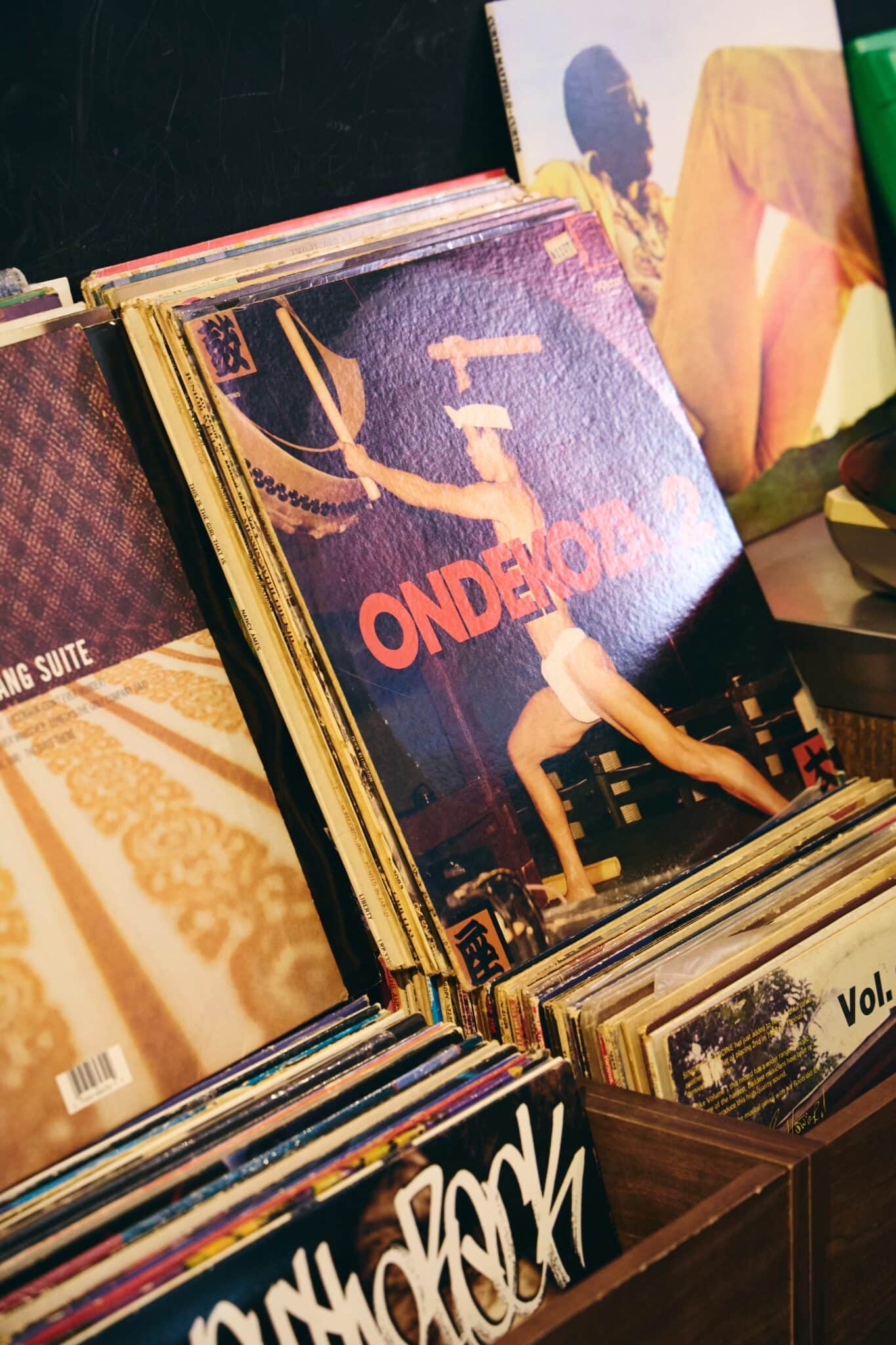
There is no compromise in the selection at PAGER TOKYO. From gear such as decks, trucks, and wheels to sharp-edged apparel and accessories centered on small brands from Japan and abroad, the shop’s lineup presents skateboarding culture from multiple angles. Also eye-catching are the records collected by the staff and the miscellaneous goods that evoke the spirit of skateboarding. Music, art, and the playful spirit of the street—all of these elements blend together at PAGER TOKYO, making it a place that feels like a distillation of contemporary skateboarding culture.
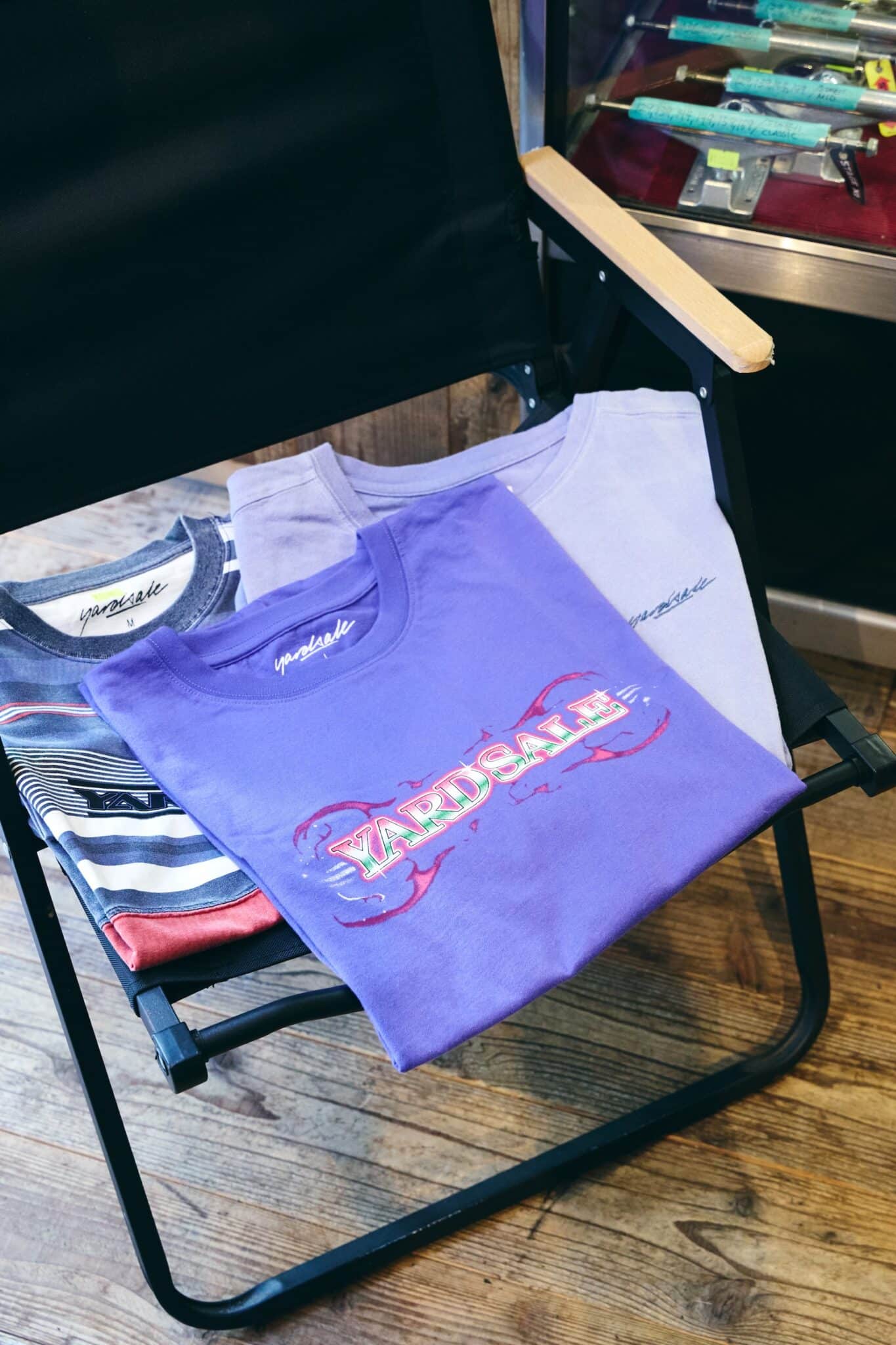
YARDSALE is a skate brand founded by skater Daniel Kreitem and developed globally from its base in London. There are few shops in Tokyo that carry such a wide selection of the brand, so it is well worth noting. From left: T-shirts, 9,900 yen, 7,150 yen, and 8,250 yen.
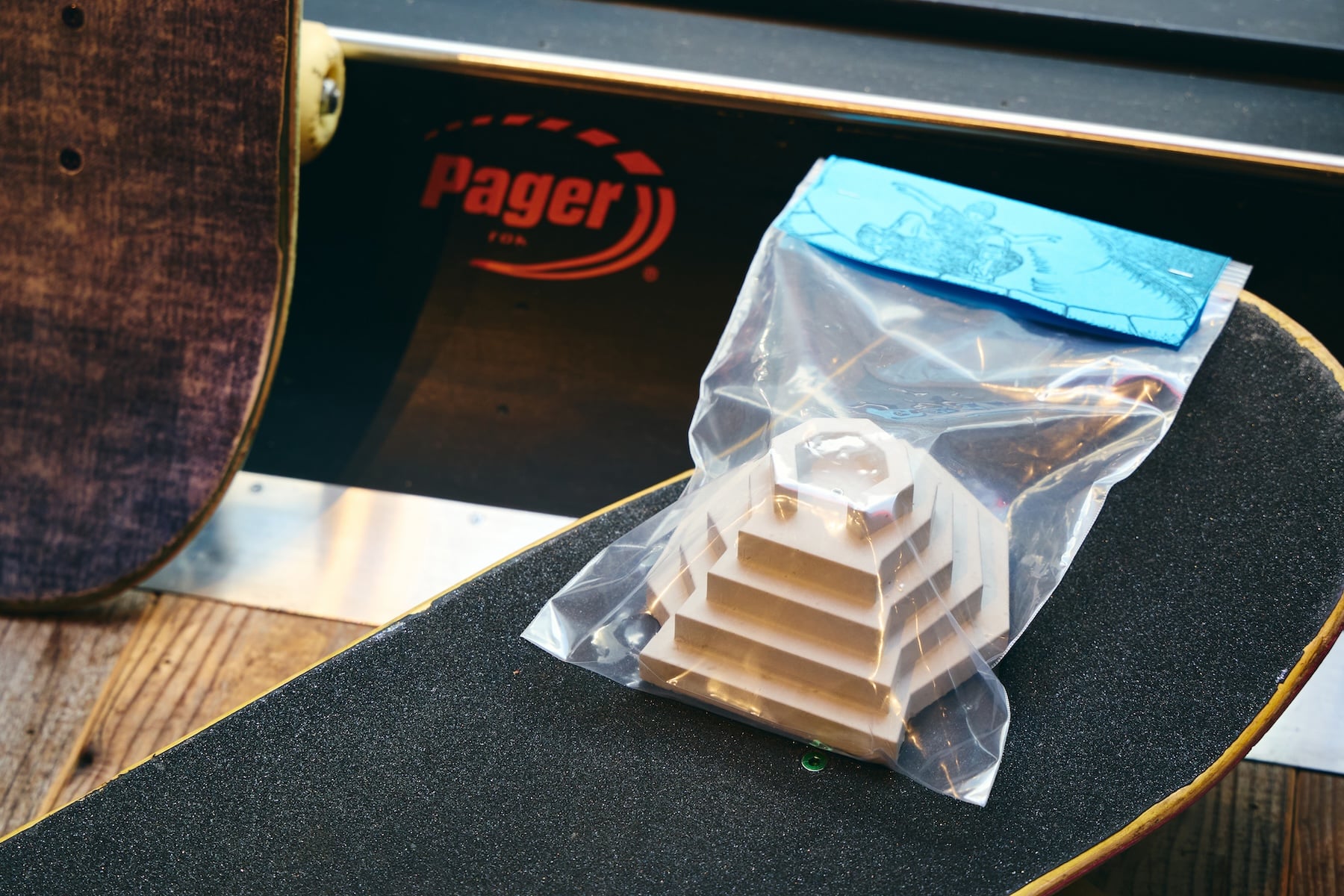
This item turns a famous section at EMB, known as a skateboarding mecca in the 1990s, into an incense holder. Incense holder by KCV, 4,950 yen.
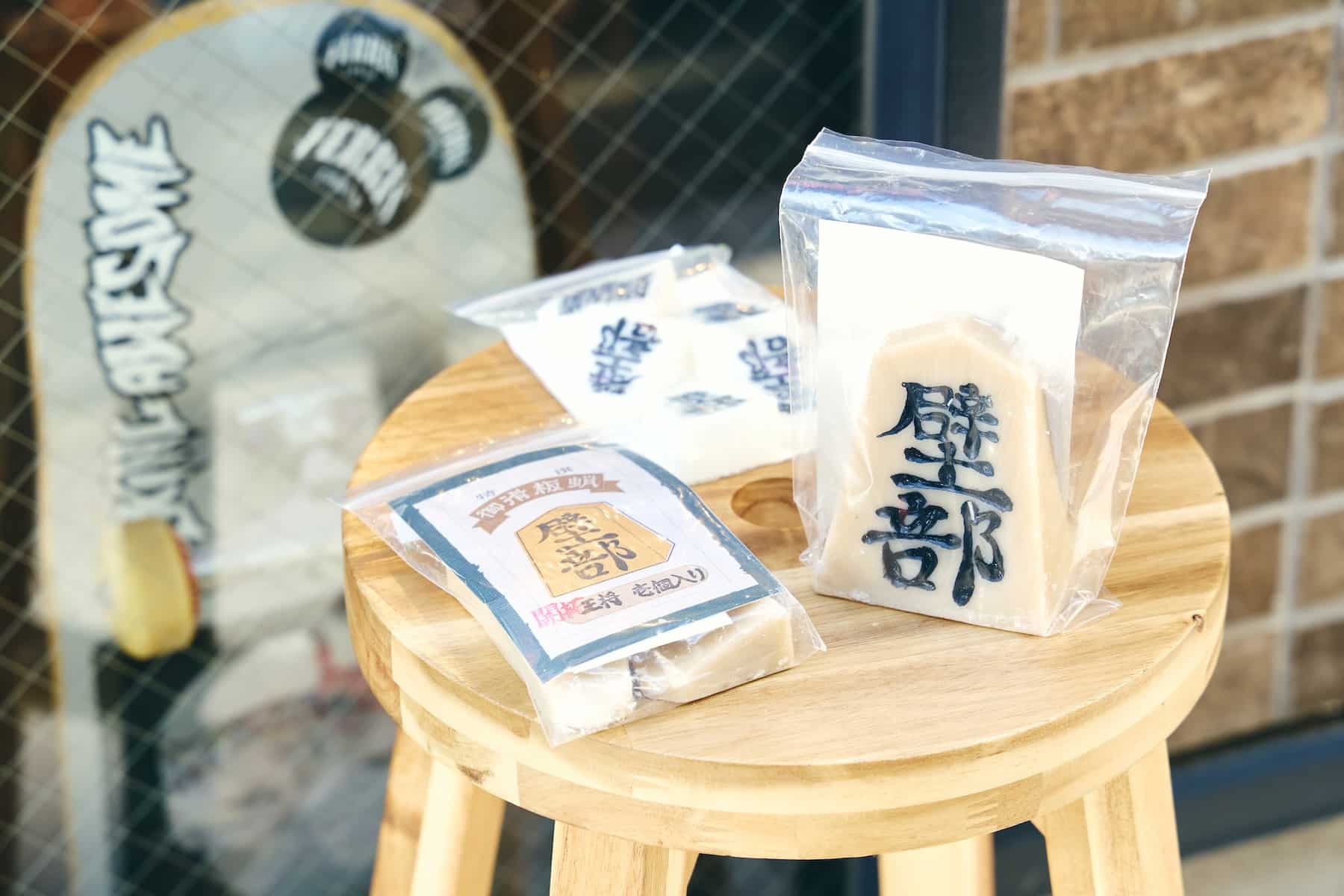
This skate wax by KABEBU features a highly distinctive design inspired by shogi pieces. The product name is “WAX Gokunameri.” 660 yen each. Shogi is a traditional Japanese board game often described as Japanese chess.
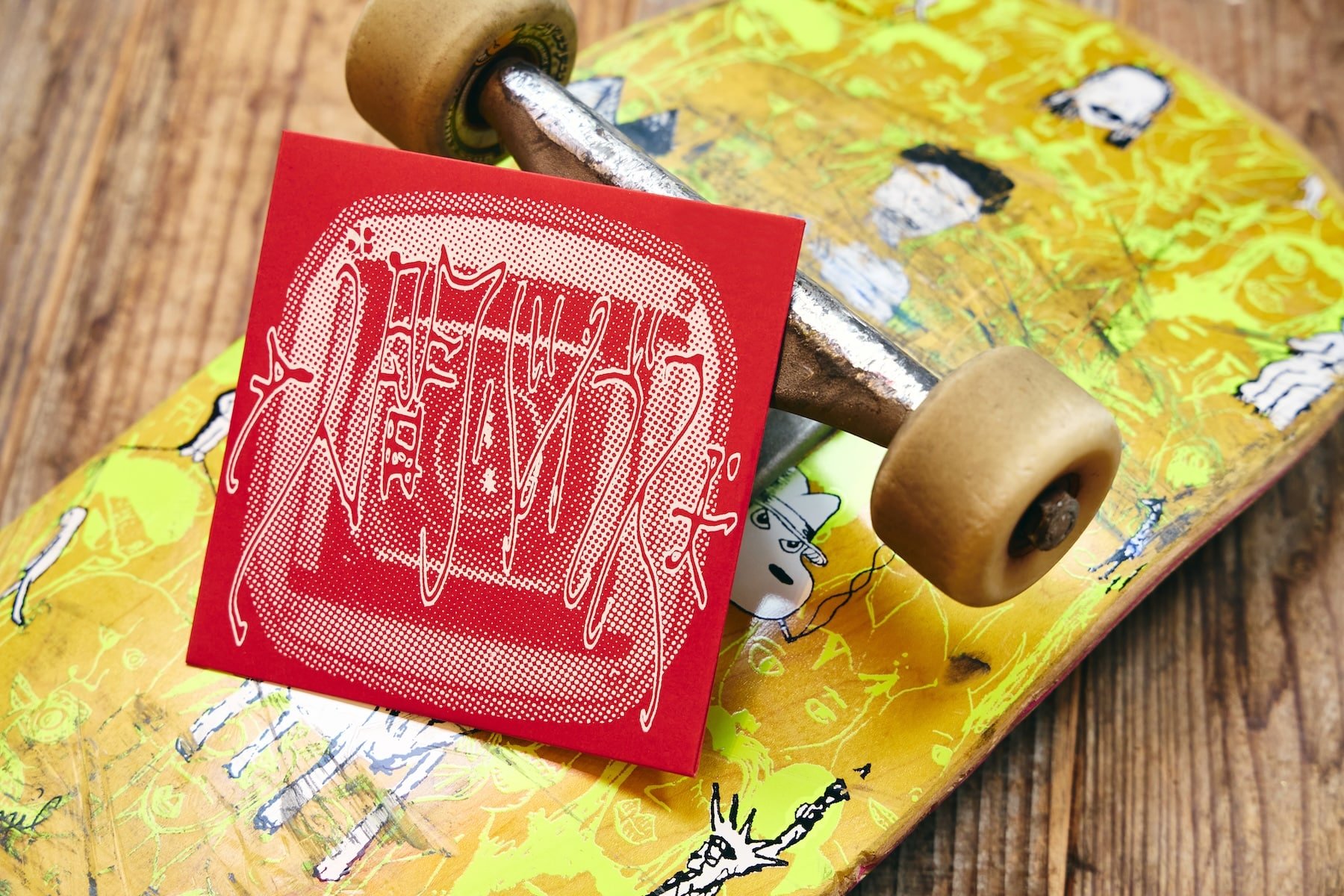
Ningen Vibes, a skateboarding DVD released in 2025 by the Osaka-based skateboard crew DOGGY PISS. 2,420 yen.
These are signature decks for Japanese skaters released by overseas brands. Today, Japanese skaters are active on the world stage. From left: a Shogo Zama deck released by the French brand Magenta Skateboards, 15,400 yen; a Taiho Tokura deck released by GX1000, a brand from San Francisco, USA, 15,400 yen; and a Yuto Horigome deck released by the American brand APRIL, home to some of the world’s top riders, 14,300 yen.
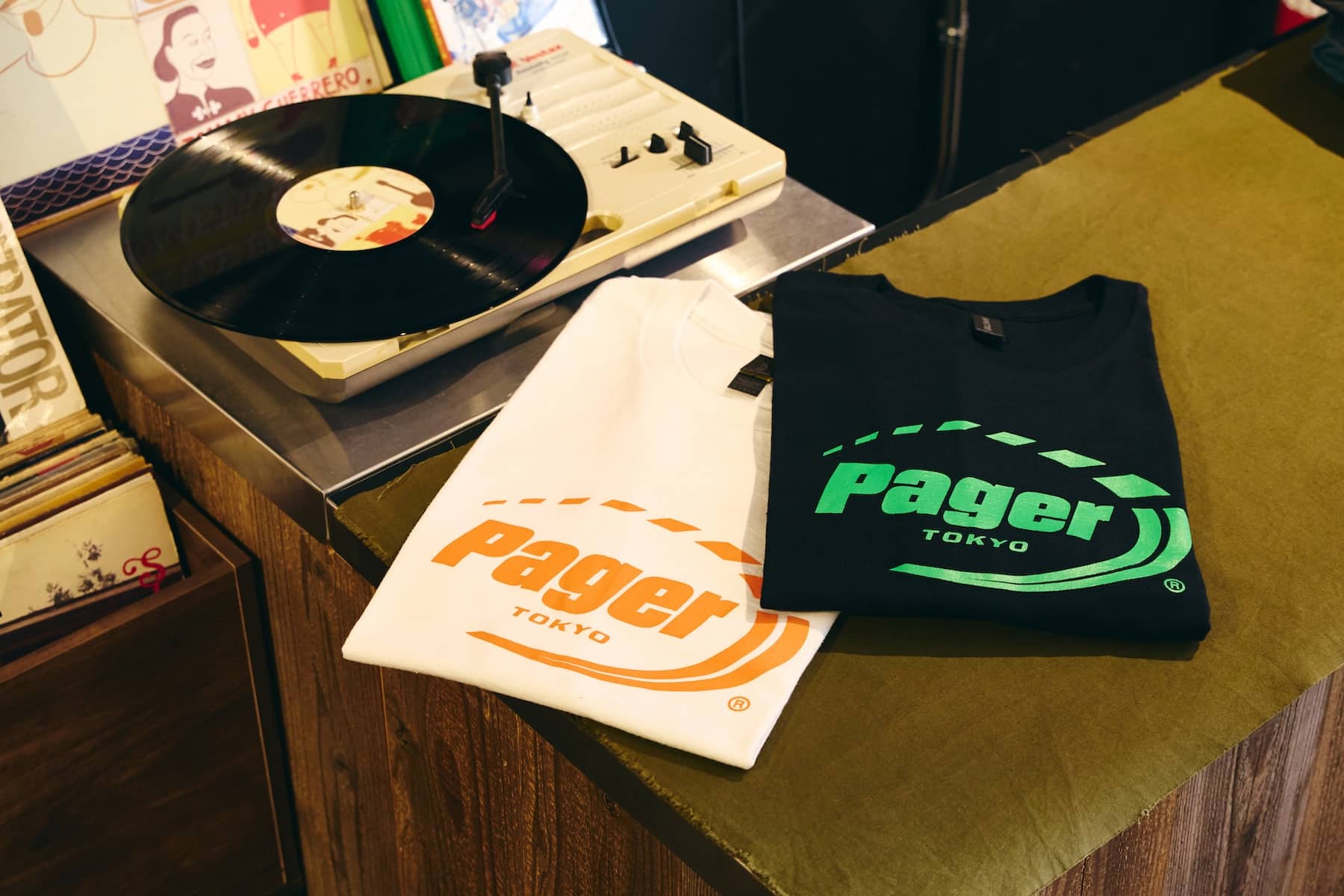
The shop’s original logo T-shirts come in a wide range of colors. The design, of course, is also by Keita Ishiguro, and they are popular items. 4,180 yen each.
The records available for listening in the shop were also selected by the staff. They are for sale as well, so if anything catches your interest, be sure to give it a listen.
Beyond the act of buying something lies the experience of feeling the skateboarding culture behind it, and the energy that runs through it. In a back alley of Jimbocho, why not step into this deep and fascinating world for yourself?
The information contained this article was correct at the time of publishing on 04/08/2026